Snake Tattoos: Symbolism, Style and Placement
Shedding, rebirth, danger, medicine: the snake carries more meaning than almost any motif. Styles, placement and symbolism for a serpent worth wearing.
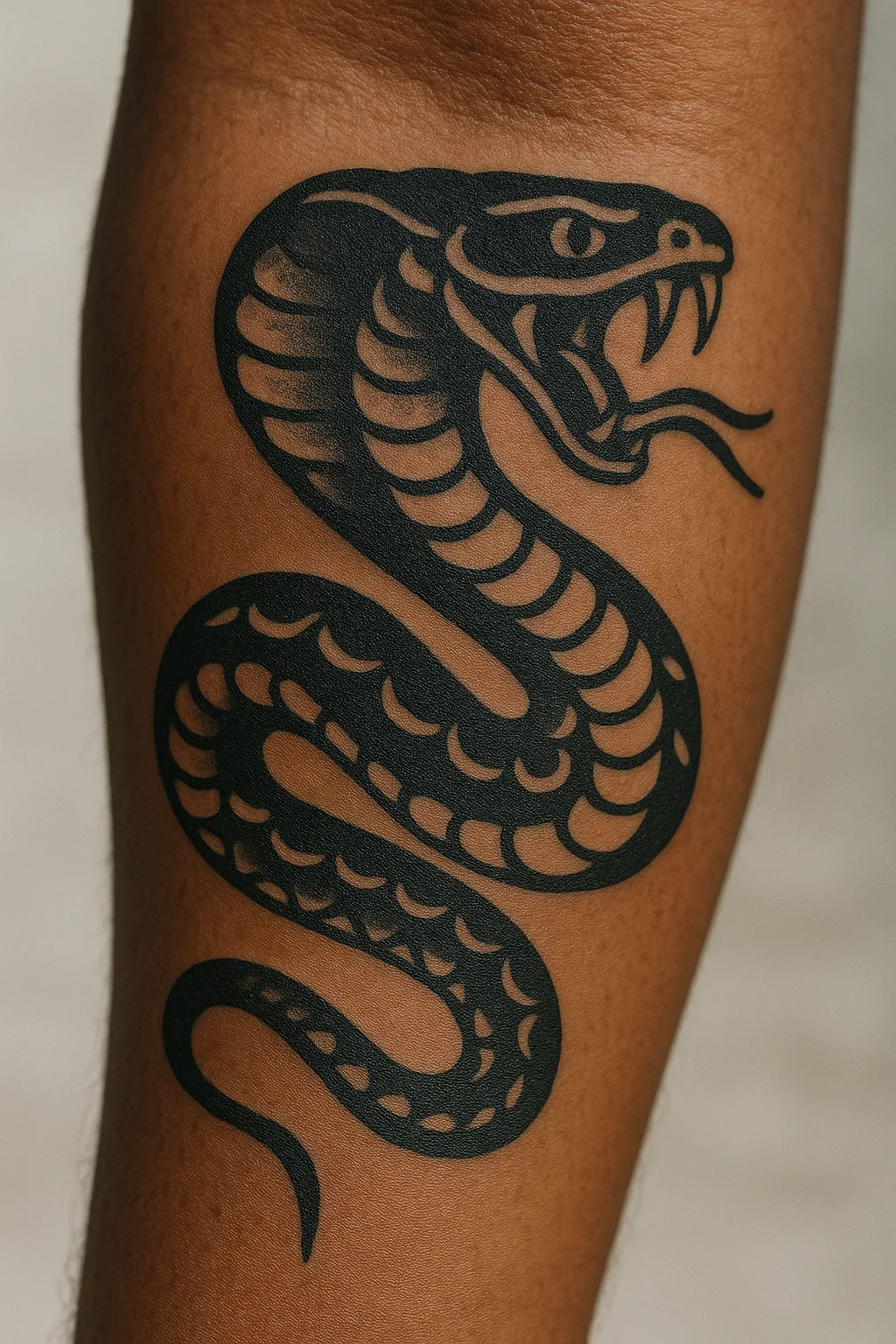
What the serpent has meant across cultures
Few images carry as much accumulated meaning as the snake. In Greek healing cults it wrapped the staff of Asclepius, which is why it still marks pharmacies today. In Japanese tradition the hebi is a guardian against misfortune and illness. Norse myth coils Jormungandr around the whole world; the ouroboros bites its own tail to draw eternity. And because snakes shed their skin whole, nearly every culture reads them as renewal: the creature that walks out of its old self.
That density of meaning is the practical appeal. A snake tattoo can stand for transformation, protection, danger survived, medicine, temptation or rebirth, and you get to decide which, privately, while wearing one of the most visually flexible motifs in the craft.
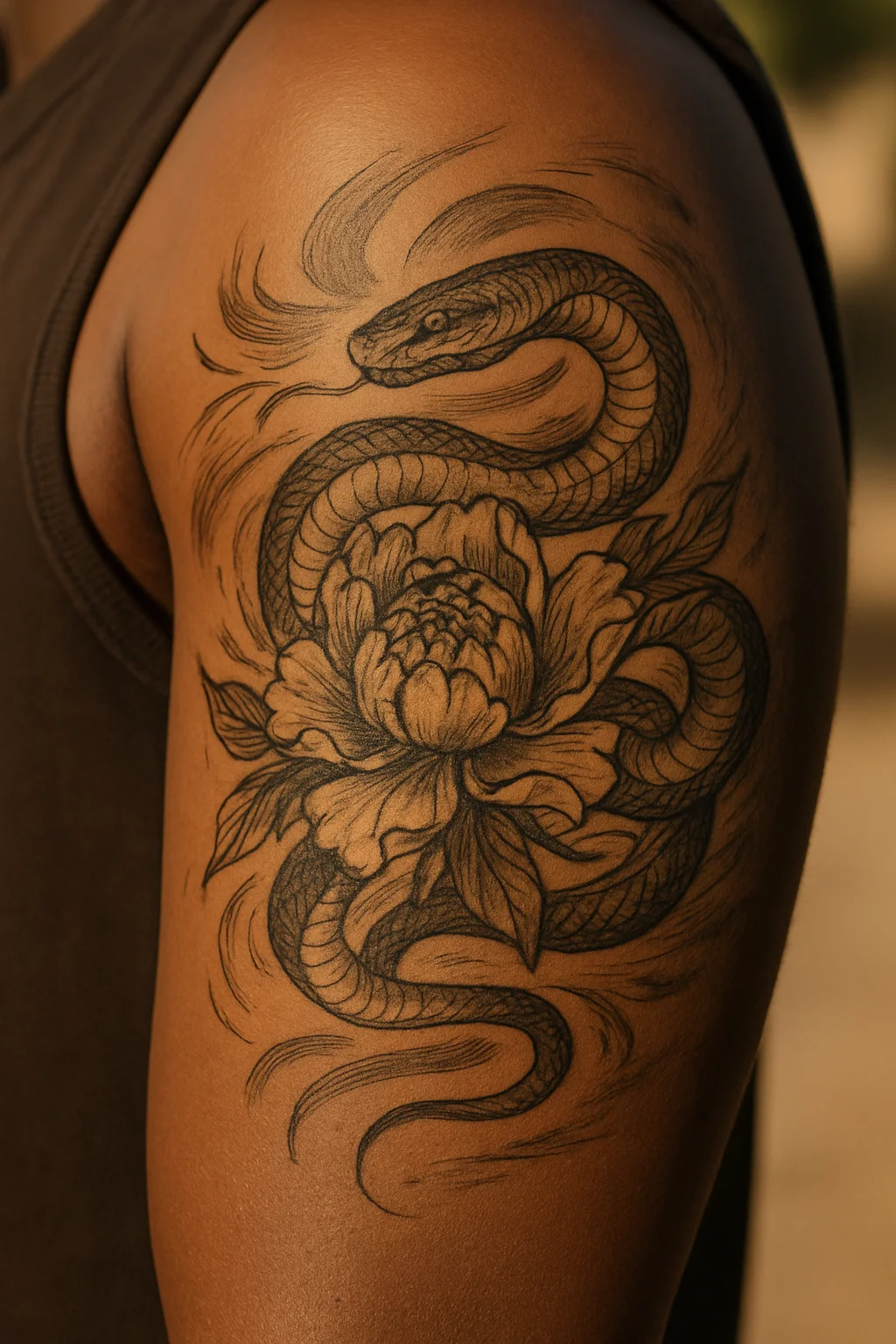
Styles: from old school to single needle
The serpent adapts to almost every tattoo tradition, which is rare among major motifs:
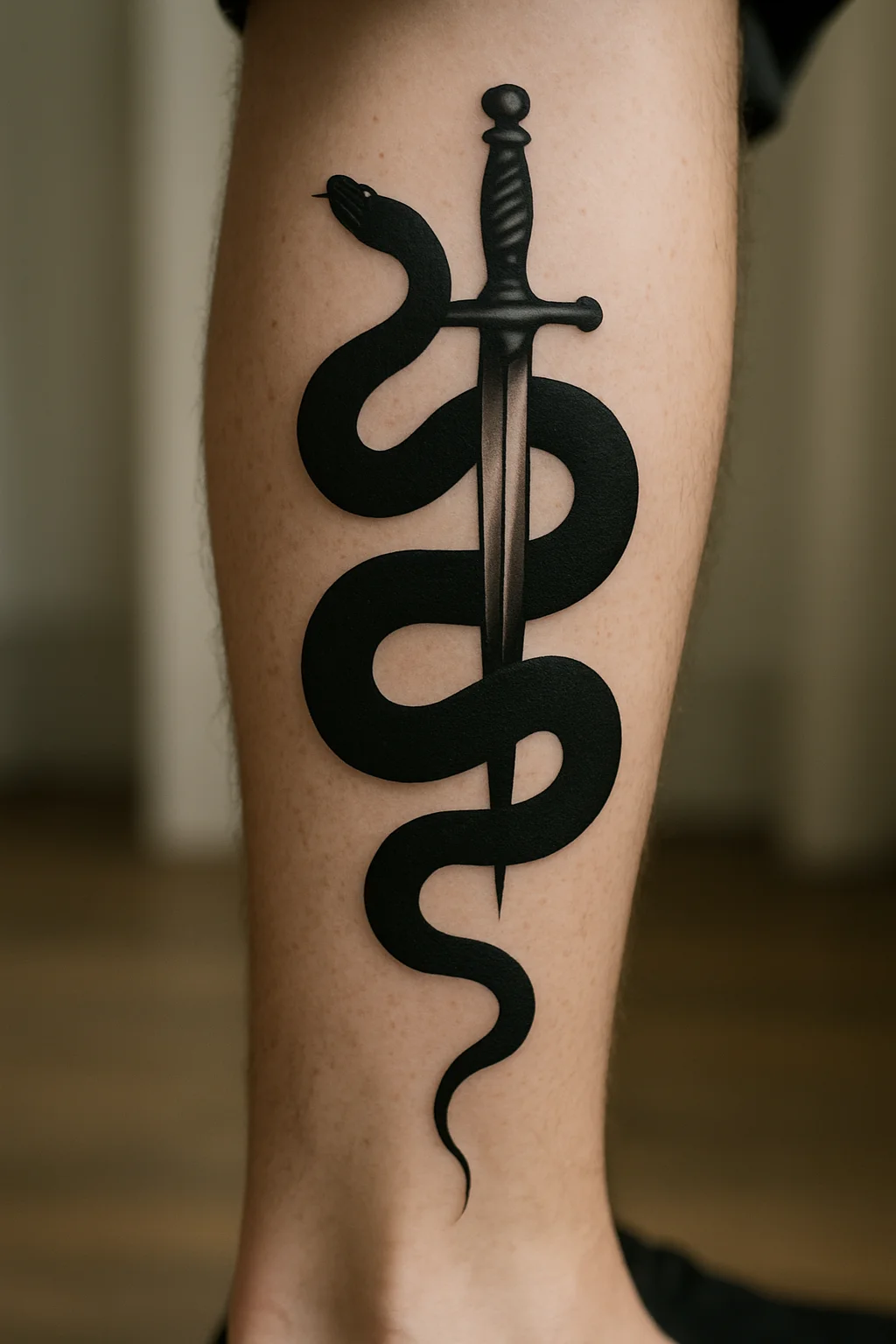
- American traditional: thick outlines, an open mouth and bold saturation, often wrapped around a dagger or rose
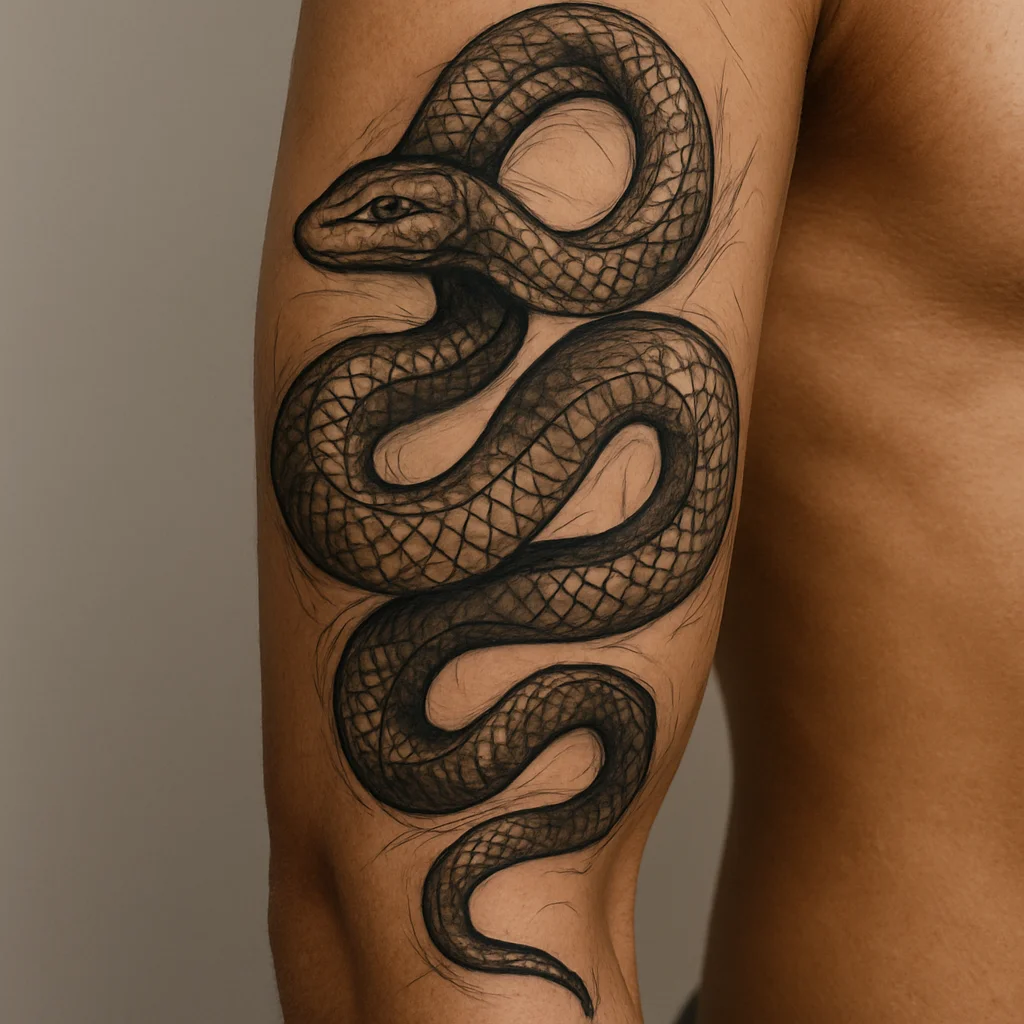
- Japanese: flowing hebi with layered scales among peonies, clouds or waves, built for large placements
- Fine line: a slender, elegant snake in single-needle linework, popular along the forearm, spine or collarbone
- Blackwork: high-contrast coils in solid black, sometimes abstracted to pure silhouette
- Dotwork and geometric: scales rendered as stippled gradients or faceted patterns
If you are undecided, let size choose the style: tiny snakes favour fine line, forearm wraps suit traditional and blackwork, and anything ribcage-sized or larger is natural territory for the Japanese approach.
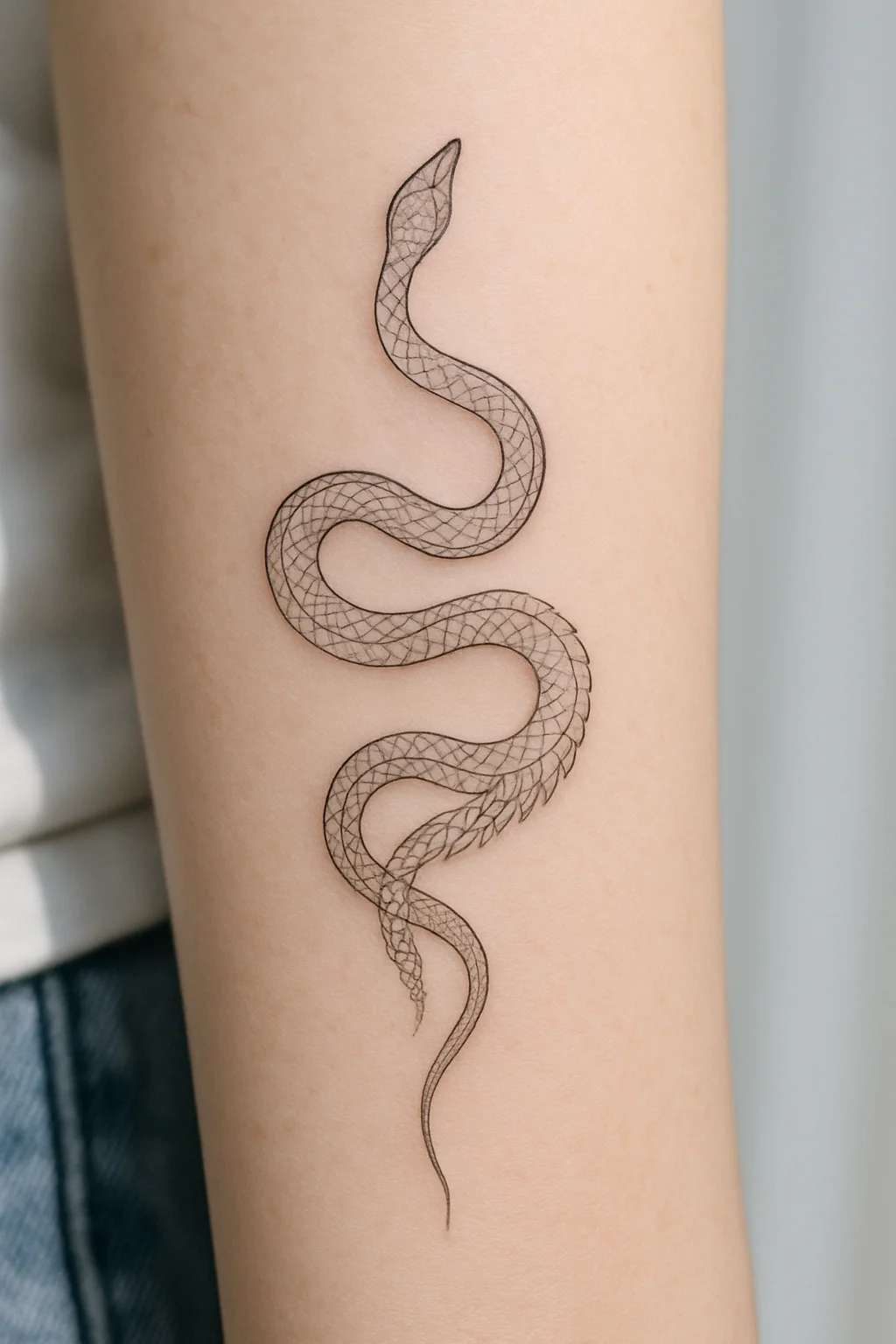
Placement: a body built to coil
The snake's gift to tattoo design is its geometry. It is the only major motif that is effectively a line, which means it can wrap, climb and slither along the body's own structure. Forearm wraps are the modern classic: two or three coils that read from every angle. The spine carries a descending serpent beautifully. Collarbone snakes follow the bone's curve; ankle snakes circle like jewellery; a large hebi can travel from shoulder blade to hip in one motion.
Because the design is directional, think about where the head points and what it faces. A head turned toward the hand reads as ready; toward the heart, as guarding it. These are small decisions with a surprising effect on how the piece feels, and they cost nothing at stencil stage.
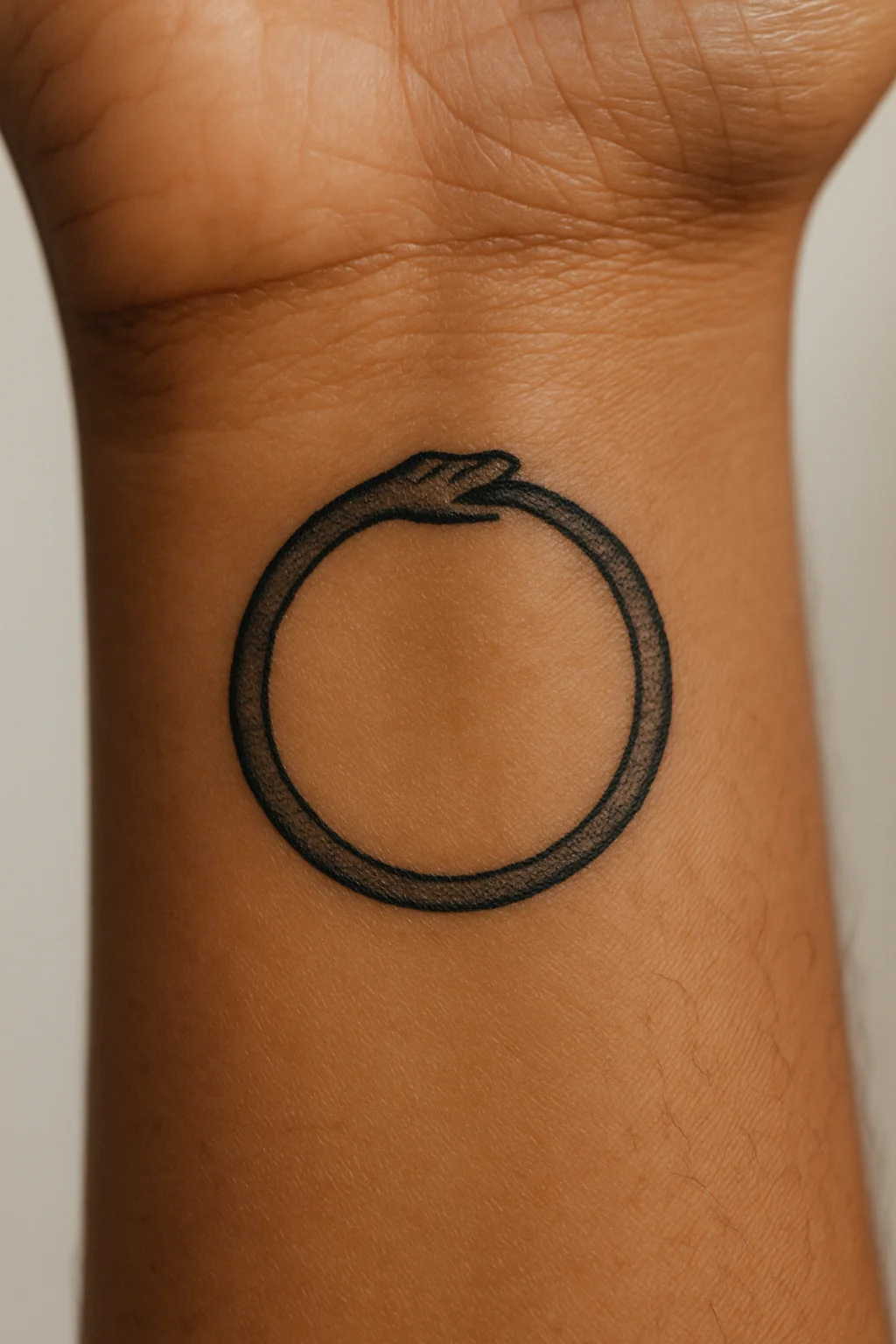
Classic pairings and what they say
The snake collaborates well, and the traditional pairings each shift its meaning. Snake and dagger is the old flash vocabulary for danger met with courage. Snake and rose sets temptation against beauty, or guards love, depending on who you ask, and that ambiguity is part of its charm. Snake and skull leans memento mori; snake and apple points straight at Eden; a snake circling a moon reads as cycles within cycles.
Composition tip: in any pairing, decide early which element leads. A snake wrapped around a focal dagger is a different design from a dagger backing a focal snake, and stencils where neither leads tend to feel crowded. Your artist will thank you for having an answer.
Briefing your artist
Bring reference images for style rather than for copying, and be explicit about the mood: menacing, elegant, protective or calm. Mouth open or closed is the single choice that changes the character most, followed by how tightly the body coils. Ask the artist to design the scales at a size that will survive; scale detail is exactly the kind of texture that blurs when it is drawn too fine.
For wrapping placements, expect the artist to stencil with your limb in several positions. A coil that aligns perfectly with a straight arm can twist oddly when the wrist turns, and the good practitioners design for the moving body, not the photograph.
Frequently asked questions
What does a snake tattoo mean?
Historically: renewal, healing, protection, danger and eternity, depending on the culture. Practically: whatever you bring to it. The motif's long, contradictory history is precisely what lets each wearer choose their own reading.
Are snake tattoos only for a particular gender?
Not remotely. The serpent is among the most unisex motifs in tattooing; a fine line snake along the collarbone and a bold traditional coil on a calf are the same animal speaking two dialects.
How much does a snake forearm wrap cost?
A wrapping design takes real drawing time because it must work from every viewing angle. Expect 400 to 900 dollars for a detailed single-colour wrap at typical city rates, and more where dense scale work or colour is involved.
The conversation
No comments yet. Got a thought about these designs? Start us off.
Want to weigh in? Join the community to comment, save designs and try them on your skin.