30 Butterfly Tattoos, Sorted by Wing Style
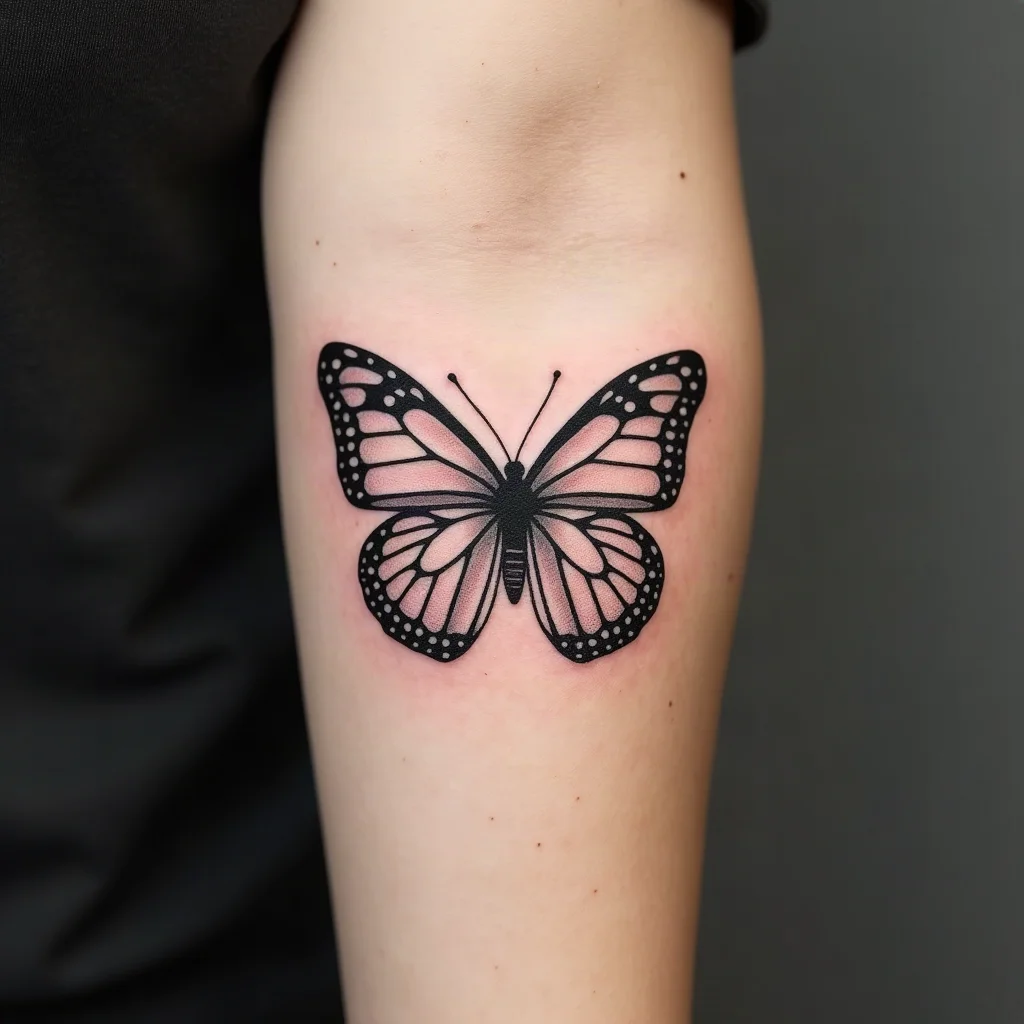
Butterflies are one of the most tattooed subjects on earth, which is exactly why the wings you choose matter more than the motif. Here are 30 designs sorted by wing style, plus how each one ages on the body.
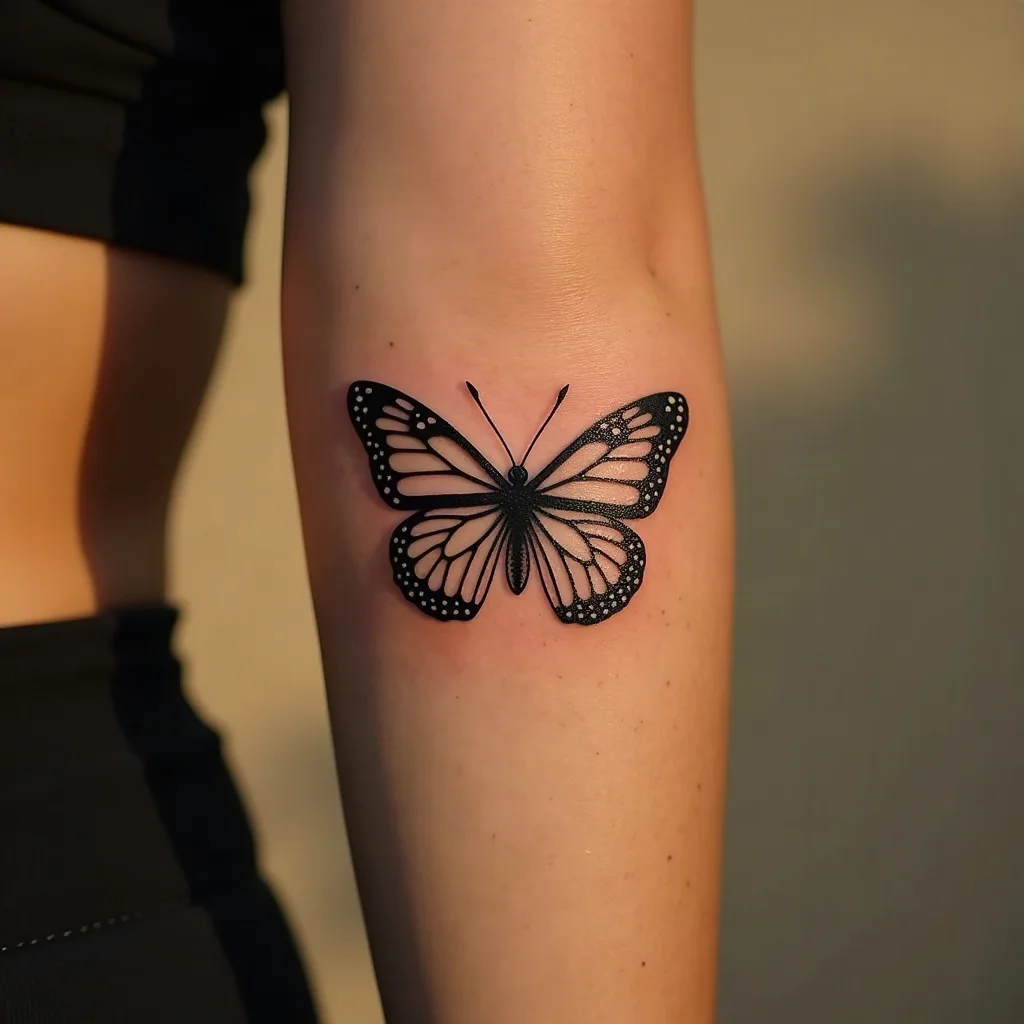
What a Butterfly Actually Says on Skin
Almost everyone who books a butterfly has a reason, and it's rarely just "they're pretty." The most common thread is transformation — the tattoo marks a version of you that no longer exists. Sobriety dates, divorces, diagnoses, moves across the world: the butterfly carries all of them without spelling anything out to strangers, which is a big part of its appeal.
Beyond that, the symbolism gets specific depending on which butterfly you pick, and good artists love being told the difference:
- Monarch — migration, endurance, returning home. Often chosen by people who left somewhere and came back changed. In Mexican tradition monarchs are widely associated with returning souls around Día de Muertos, which makes them a frequent memorial choice.
- Blue morpho — the iridescent, almost unreal one. Reads as joy, escape, something briefly glimpsed. Needs color or heavy contrast to work.
- Swallowtail — those long tail extensions give the design elegant negative space and make it recognizable even at two inches.
- Japanese chōchō — in classic Japanese imagery butterflies carry associations with the soul and with feminine grace, and they pair naturally with peonies or cherry blossoms.
- Moth crossovers — furrier body, heavier wings, a darker mood. Choose a moth if you want the same metamorphosis story with less sweetness.
Tell your artist the reason, not just the species. A butterfly drawn for grief looks different from one drawn for freedom — wing angle, line weight and whether it's landing or lifting all shift.
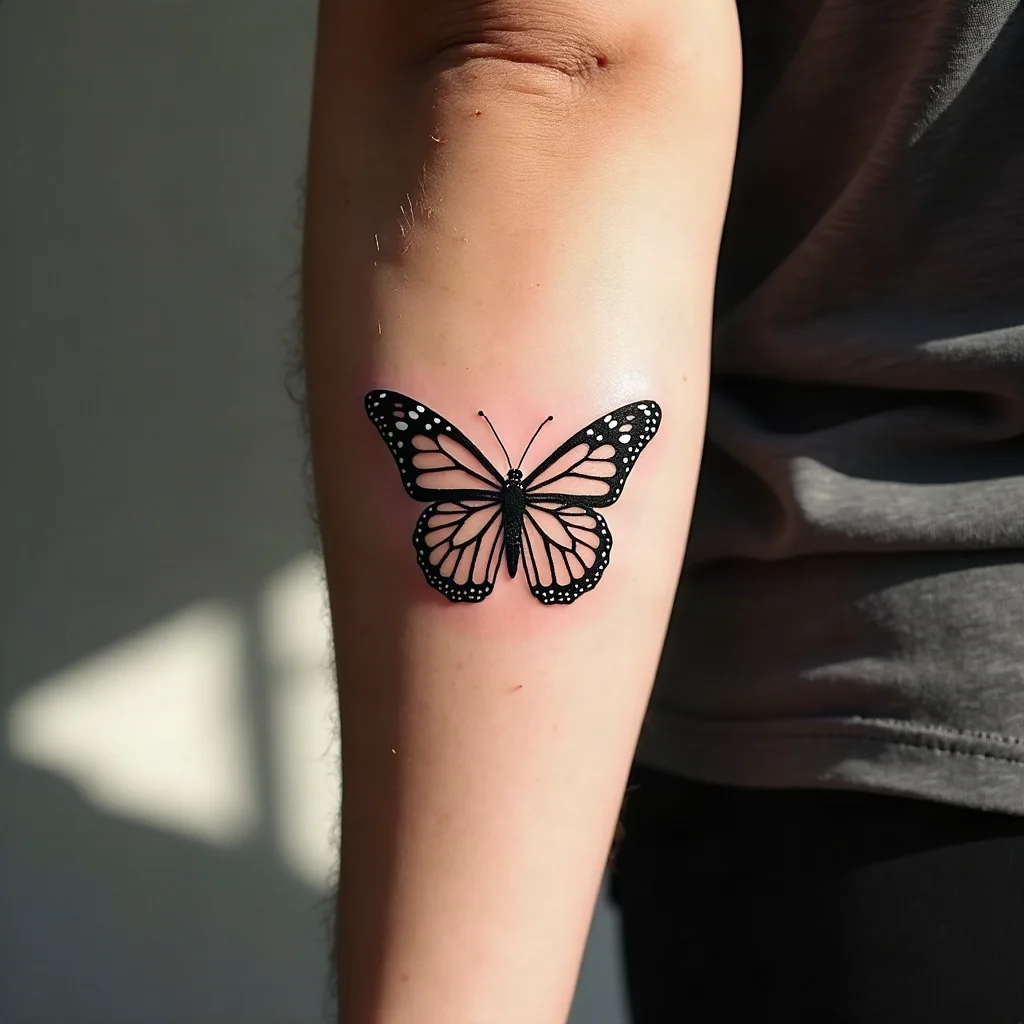
Fine-Line and Single-Needle Wings (1–8)
Fine-line is where most butterfly tattoos live now. The trade-off is honest: hair-thin lines look exquisite at three months and need respect long-term. Keep single-needle work off high-friction, sun-exposed skin if you want it crisp in ten years, and ask for a slightly heavier outer contour than the internal detail so the silhouette survives even if the interior softens.
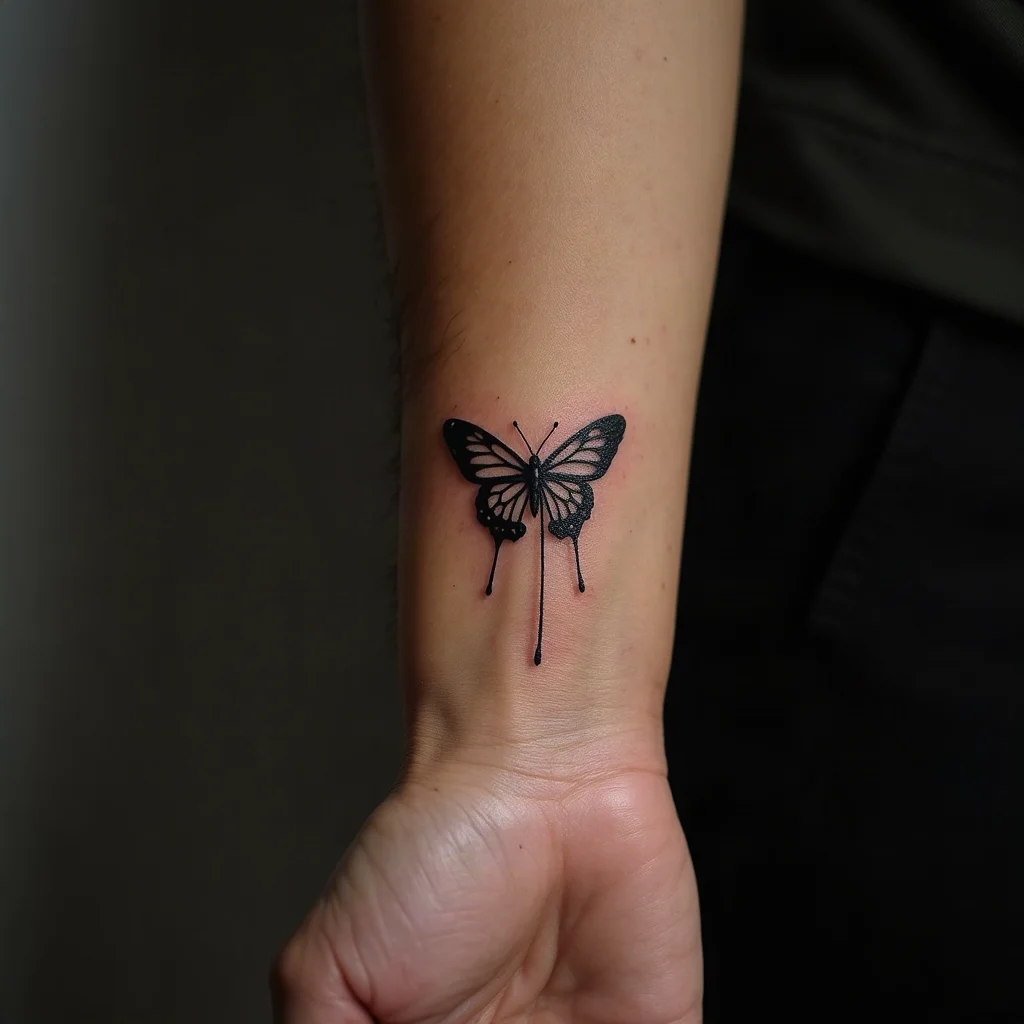
1. Single-needle swallowtail on the inner wrist
Two inches wide, tails trailing toward the palm, wing cells suggested rather than fully drawn. The inner wrist is a fast, low-cost session and heals quickly, but it's a thin-skinned spot that can blur — insist on real spacing between lines. Best for someone who wants the tattoo visible to them, not everyone else.
2. Folded-wing side profile on the side of the wrist
Instead of the usual symmetrical open wings, this shows the butterfly from the side, wings pressed together above a slim body. It reads as calm and observed rather than decorative, and the narrow shape fits the wrist's flat outer edge without wrapping. Around 1.5 inches tall is plenty.
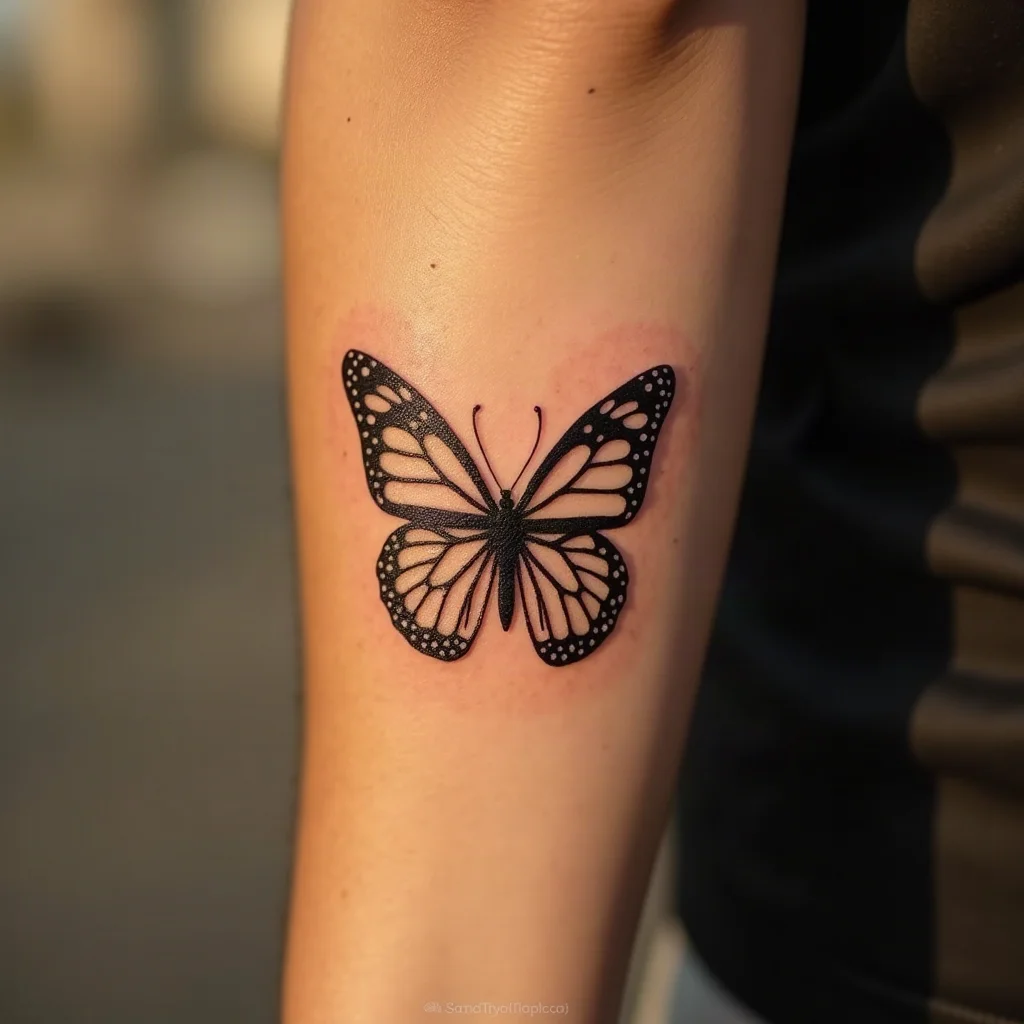
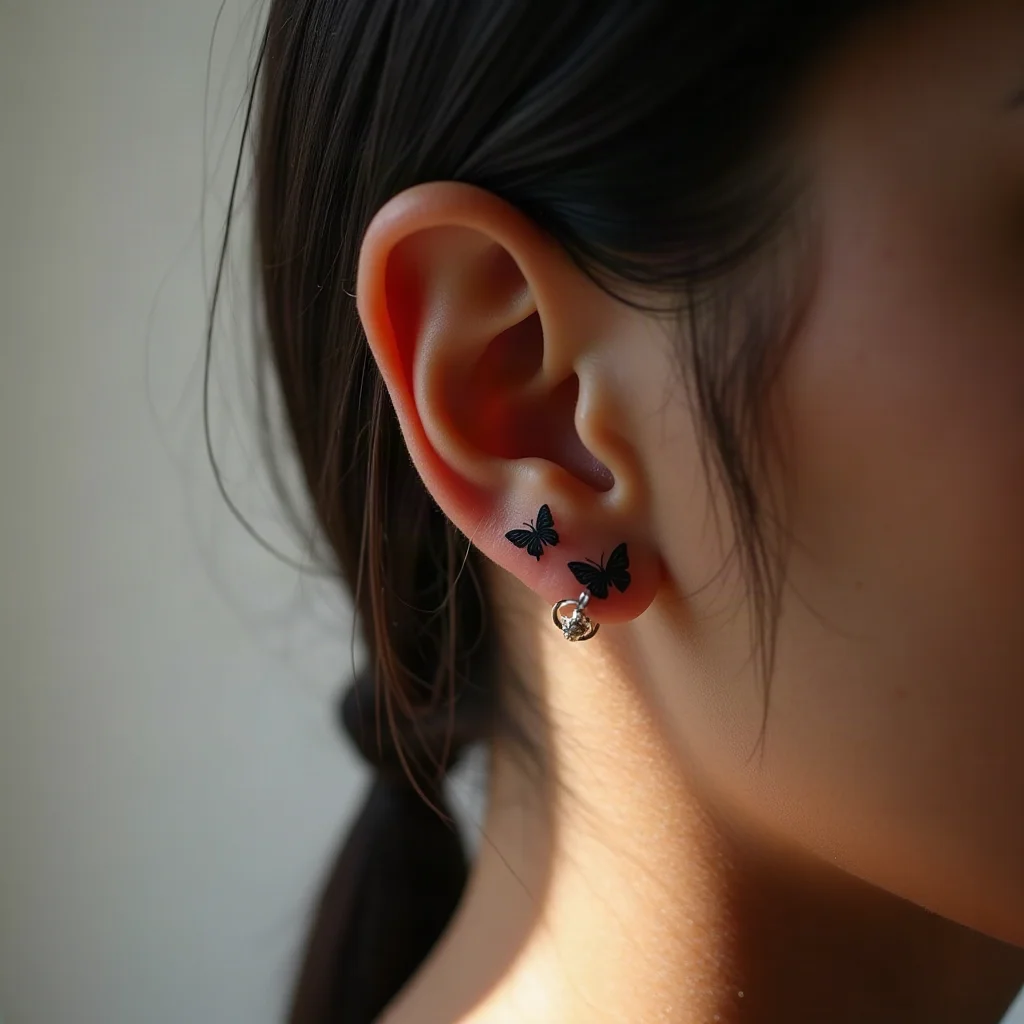
3. A pair of tiny butterflies behind the ear
Two half-inch silhouettes, one slightly higher and smaller, drifting up toward the hairline. The area is quick to tattoo but surprisingly sharp on the bone behind the lobe. Keep detail to almost nothing — at this scale, three lines per wing is the ceiling.
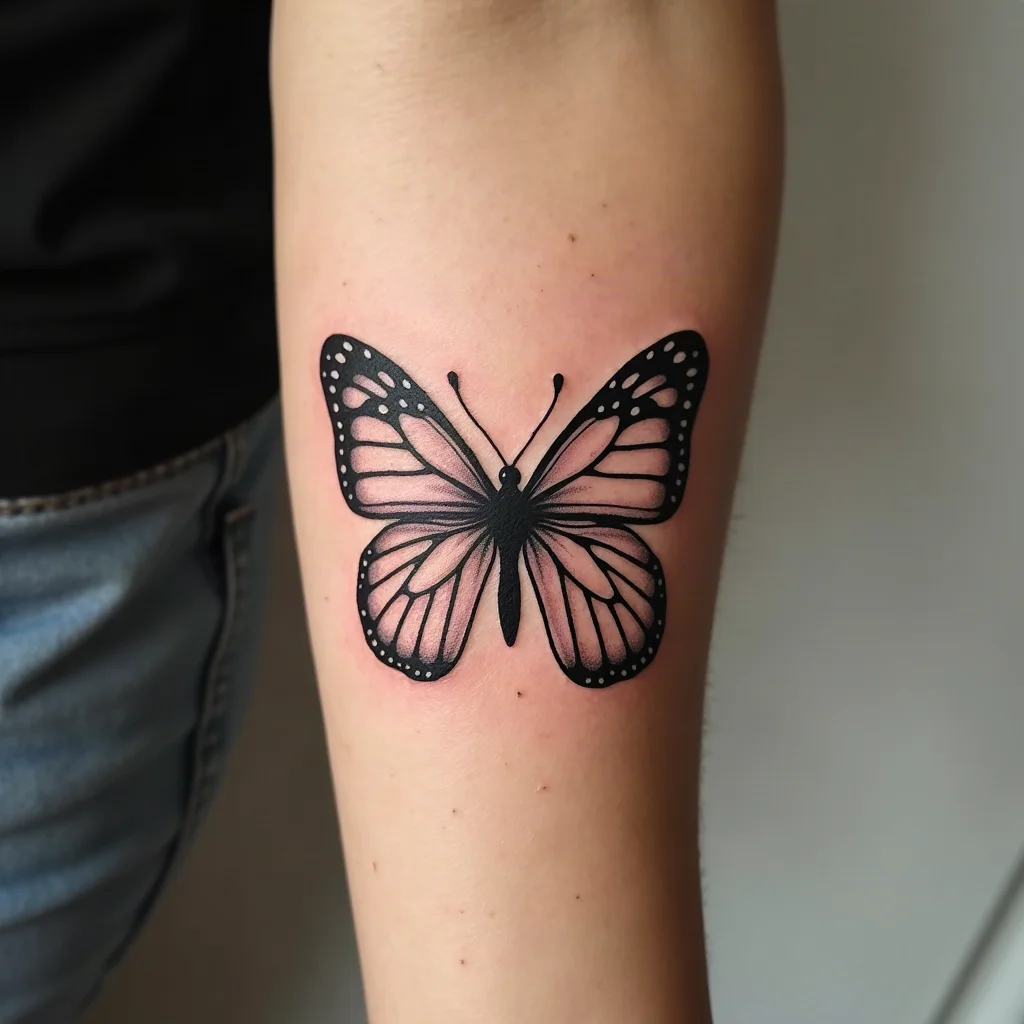
4. Dotwork-shaded butterfly on the inner forearm
Clean outline, wings filled with graduated stippling instead of solid black. Dotwork ages gently because it fades as a whole rather than bleeding together, and the inner forearm gives you a flat, sun-protected canvas at 3–4 inches. A great first medium-size piece.
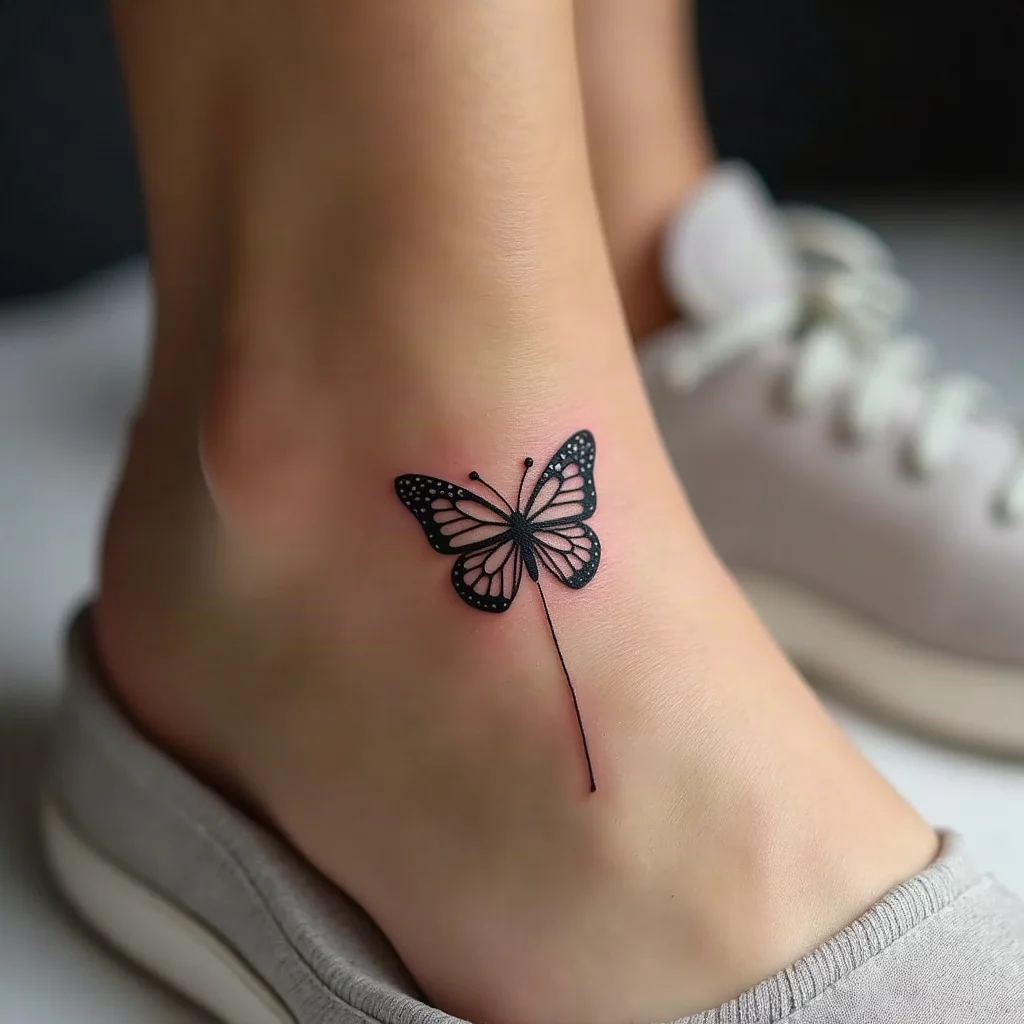
5. Continuous single-line butterfly on the ankle
One unbroken line traces both wings and body without lifting — minimal, modern, and quick. On the ankle it sits best just above the bone where the sock line won't scrub it; if you want more options there, our guide to small ankle tattoos that dodge the sock line maps the safe zones.
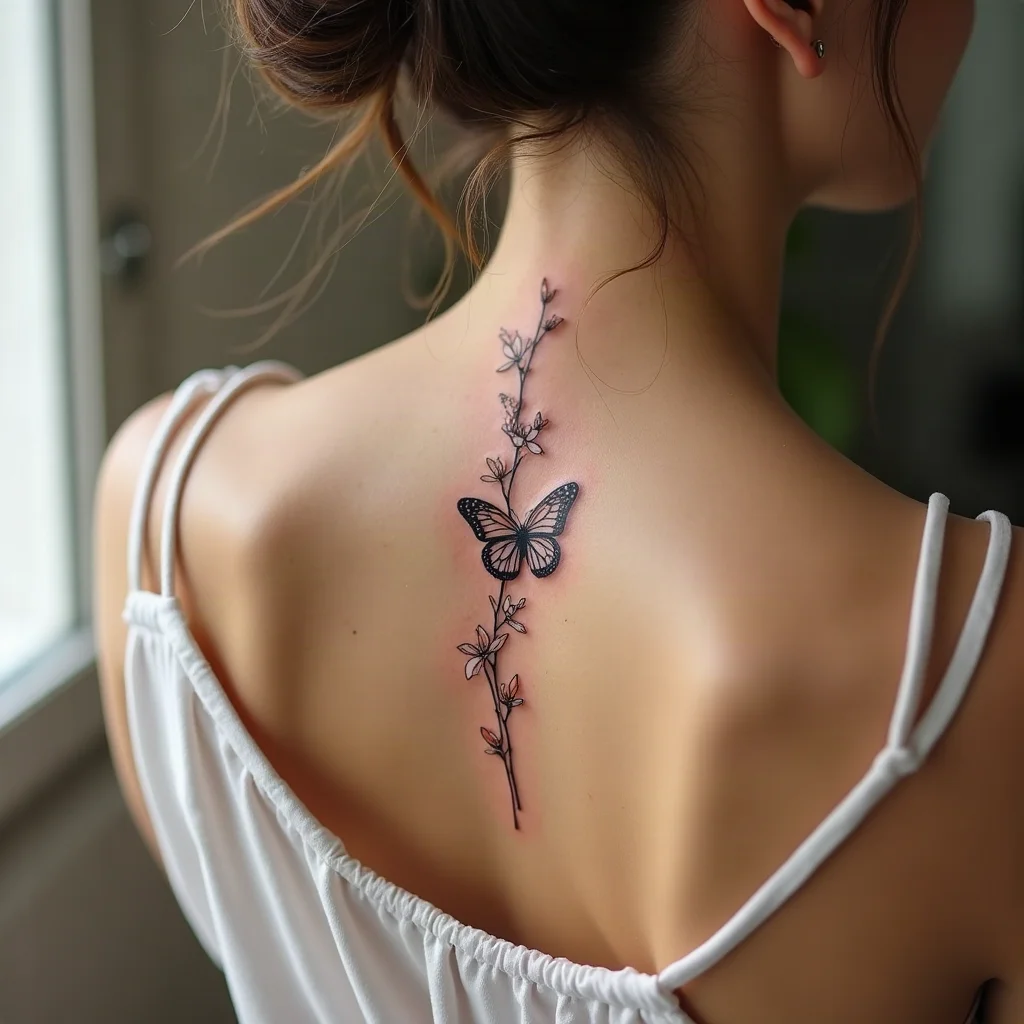
6. Botanical-bodied butterfly along the spine
The thorax becomes a sprig of baby's breath or lavender, with the stem running a few inches down the vertebrae. Vertical placement suits the design's symmetry perfectly, and it's easy to hide. Spine work stings over the bone, so budget for a session with breaks.
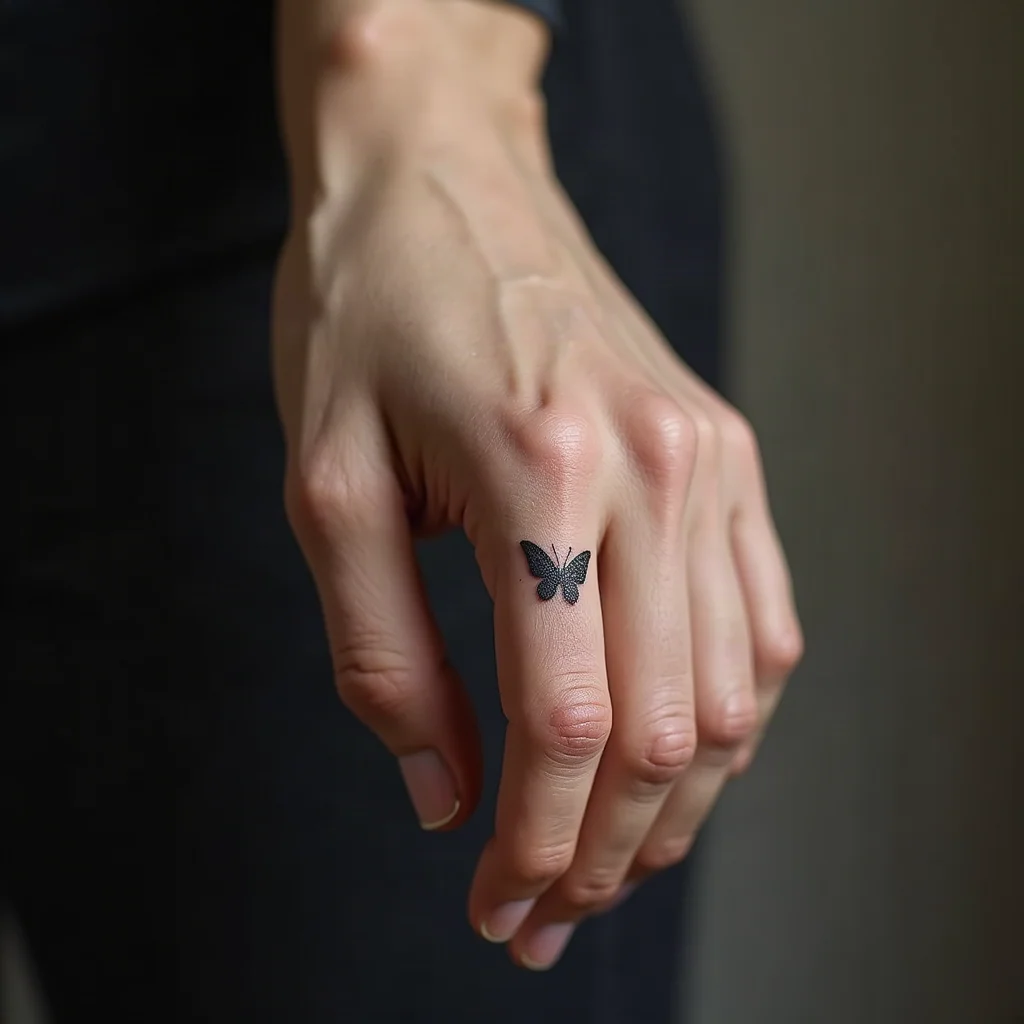
7. Micro butterfly on the finger
A half-inch silhouette on the outside of the ring or middle finger. Be clear-eyed: finger tattoos fade and often need a touch-up within a year or two. Choose it because you love the placement now, not because you expect it to look untouched forever.
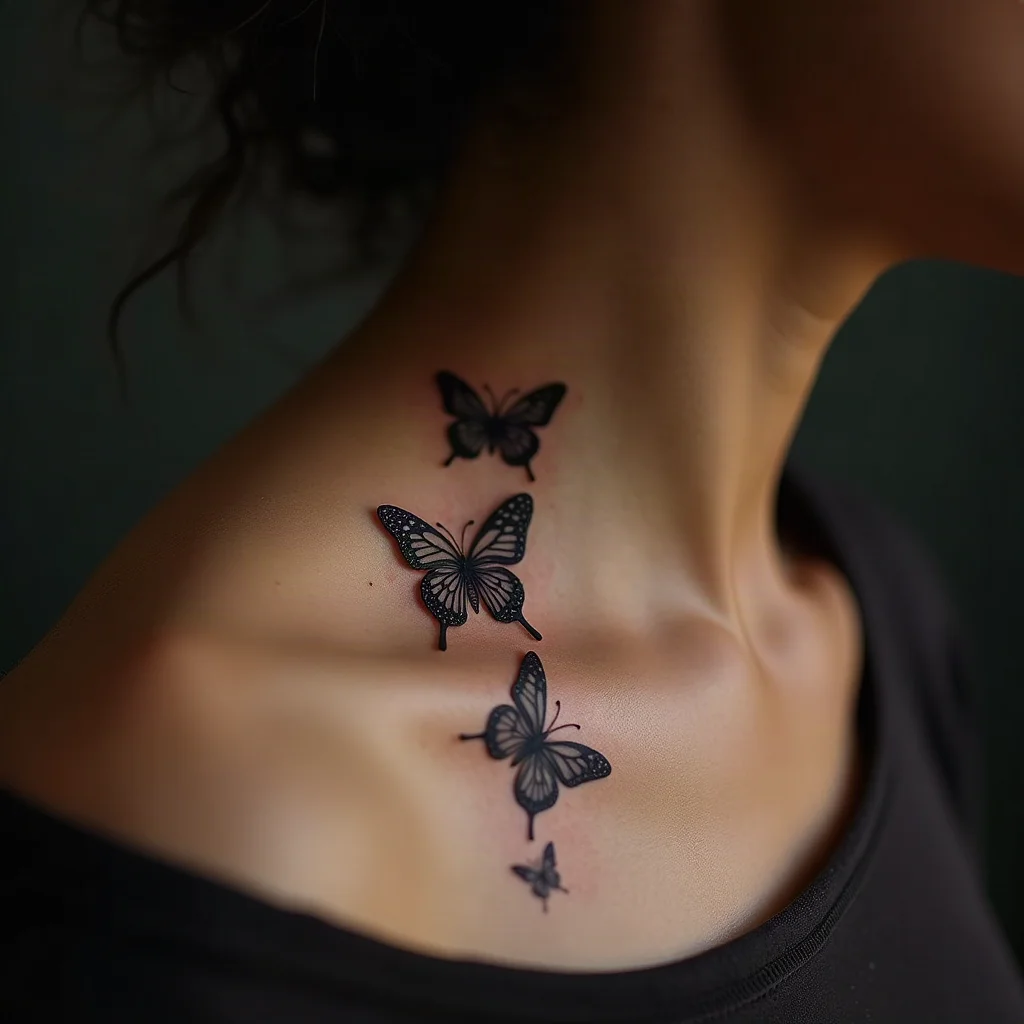
8. Ascending trio across the collarbone
Three butterflies at different sizes rising from the sternum end of the clavicle toward the shoulder, smallest first. The staggered scale creates movement, and the bone gives the composition a natural flight path. Expect a bright, bony sting and a piece roughly 5–6 inches end to end.
Blackwork and Ornamental Wings (9–16)
Solid black and ornamental butterflies are the most durable version of this motif. Bold shapes hold their read at a distance for decades, and the style lets you push into gothic, decorative or architectural territory without the design turning delicate.
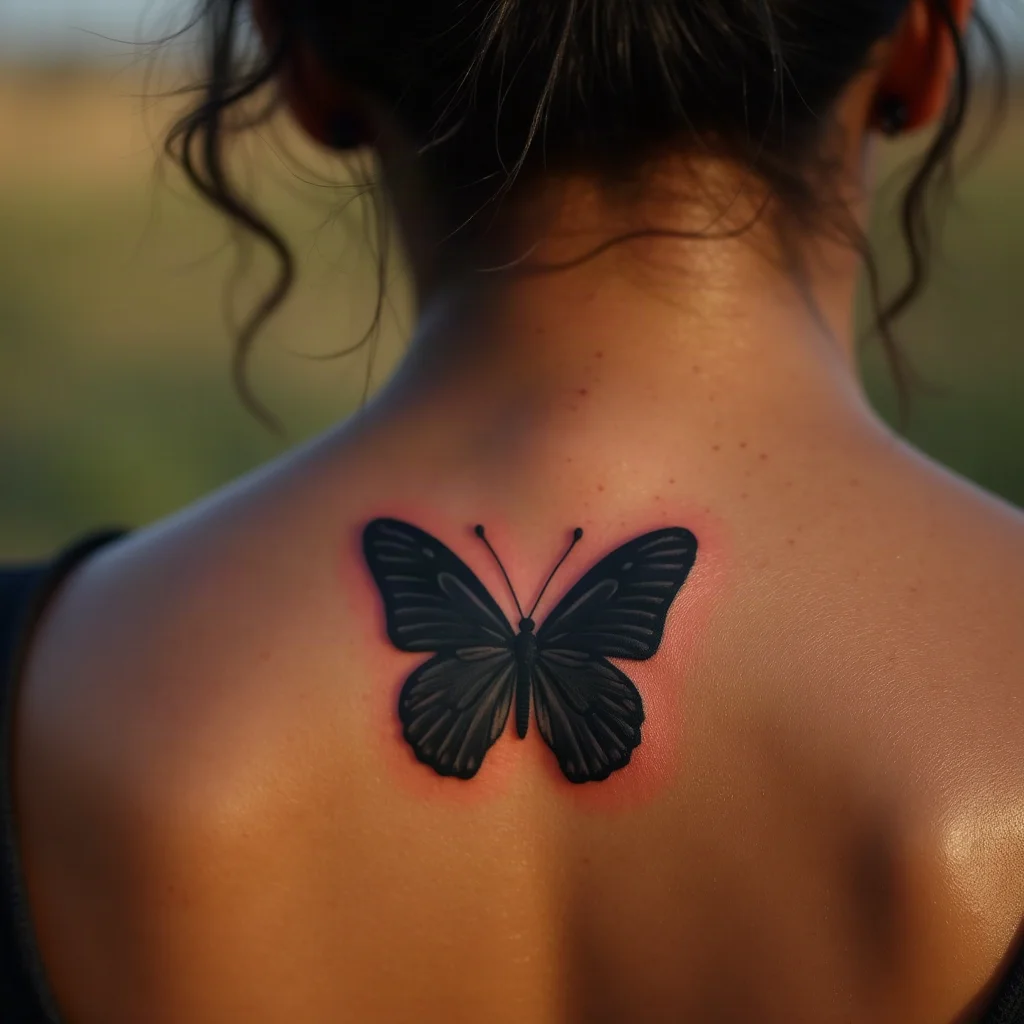
9. Solid silhouette at the nape
A filled black butterfly, two to three inches, sitting at the base of the neck where a shirt collar half-covers it. No internal detail at all — just a clean, confident shape. It's one of the best-aging small tattoos you can get because there's no fine detail to lose.
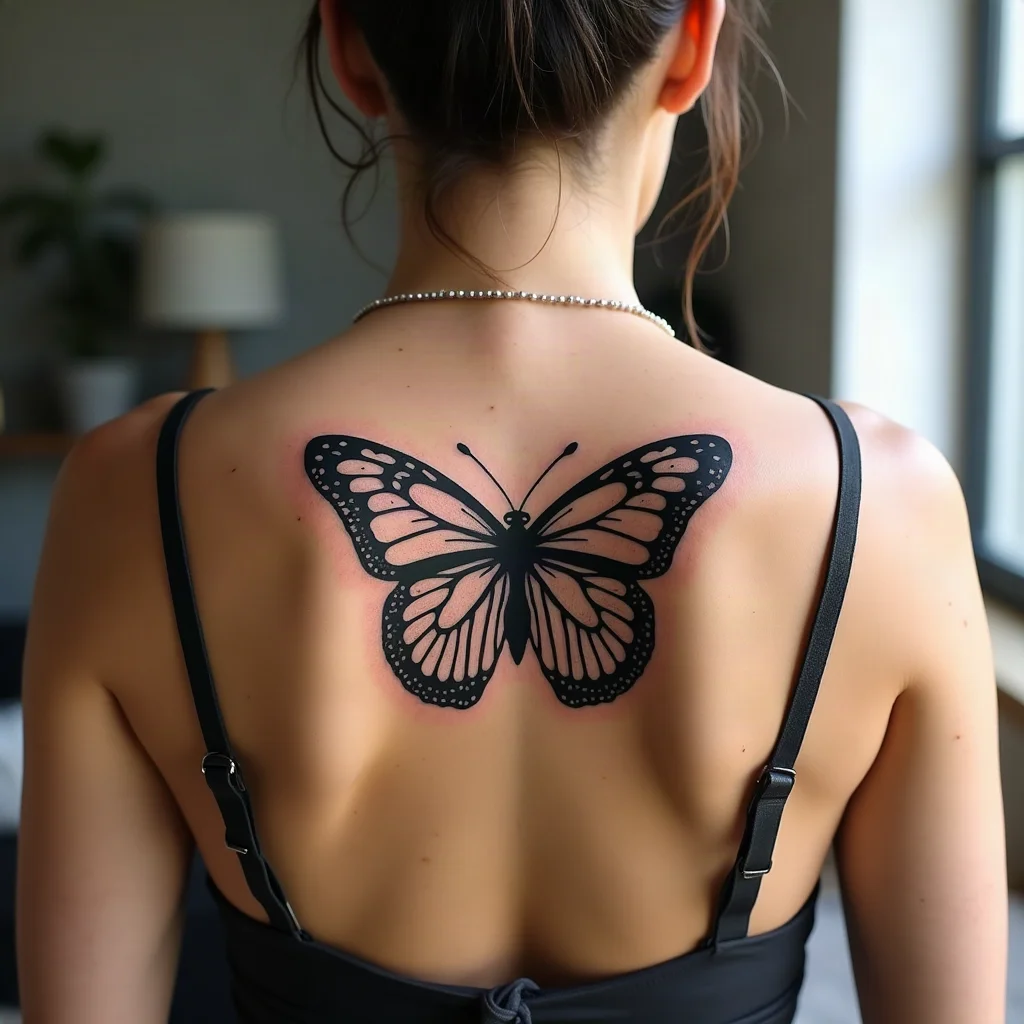
10. Mandala-winged butterfly on the upper back
The wings are built from concentric ornamental patterning — petals, arcs, dot rows — mirrored perfectly across the body. Six to eight inches gives the geometry room to breathe. Budget several hours; symmetrical linework is slow, precise, and unforgiving.
11. Negative-space butterfly in a black panel
A solid black rectangle or circle on the outer forearm with the butterfly left as bare skin inside it. Extremely graphic, extremely durable, and a strong choice if you want something that reads as design rather than decoration. The saturated black needs a careful healing window — no sun, no picking.
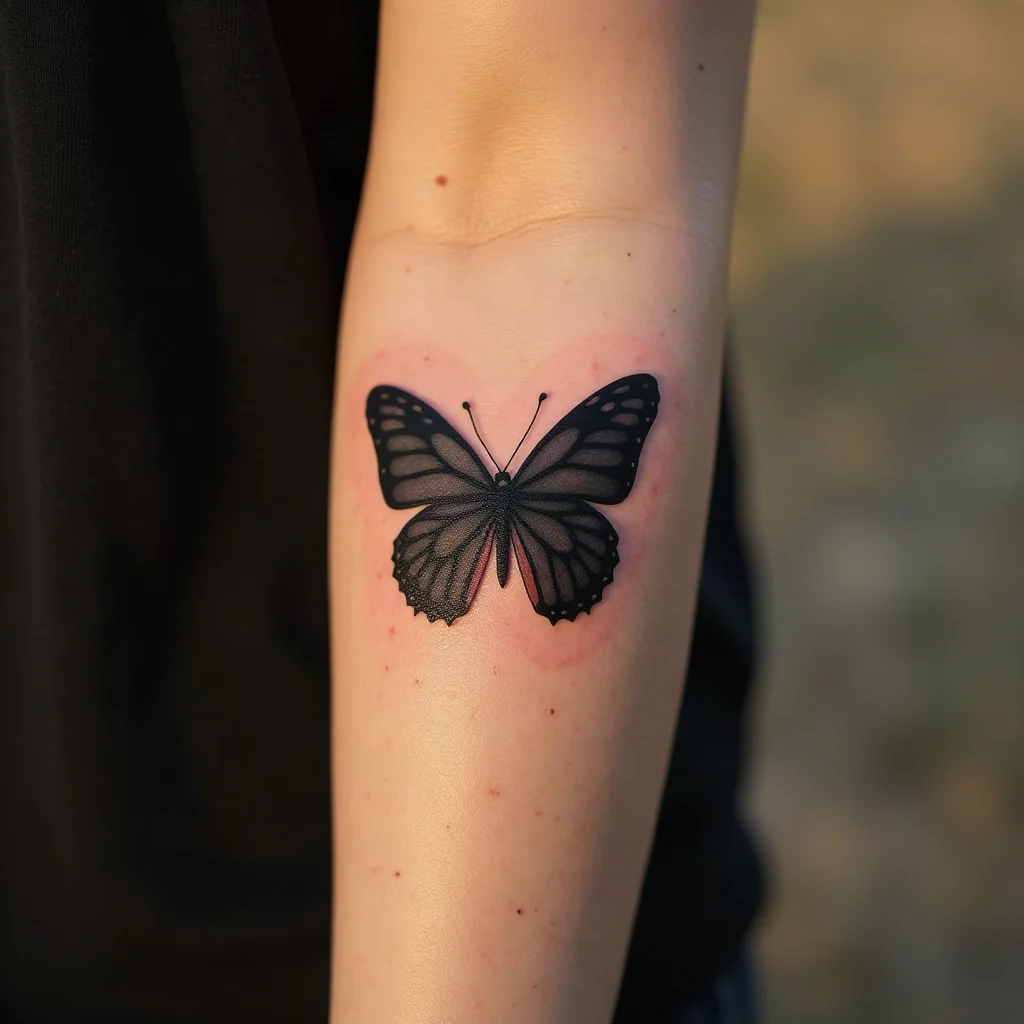
12. Skull-thorax butterfly on the chest
Wings rendered in heavy blackwork with a small skull forming the body, centered on the sternum. It's the memento mori reading of metamorphosis: change costs something. Sternum skin is thin and bony, so this is a genuinely painful sit — but the symmetry is worth it there.
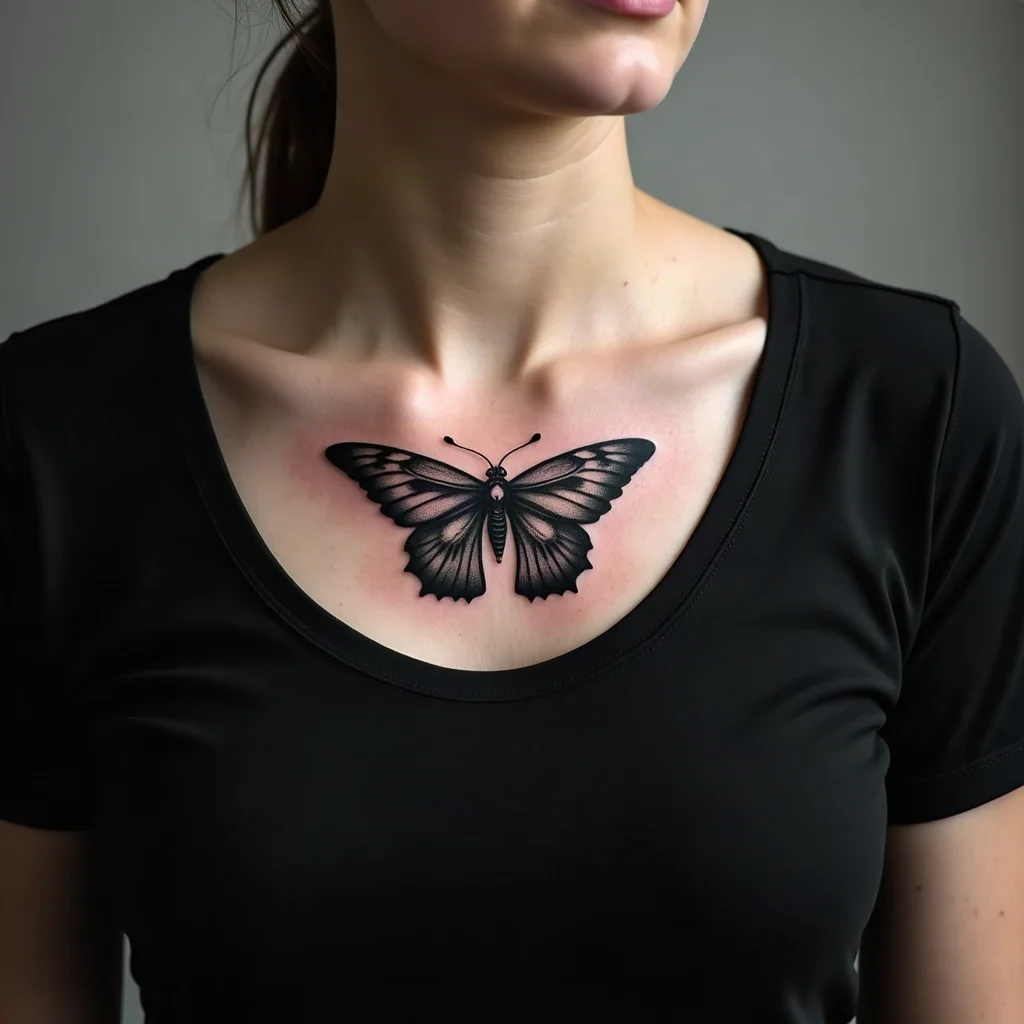
13. Whip-shaded butterfly on the shoulder blade
Black shading that fades from dense at the wing base to feathered at the edges, giving a soft, smoky finish with no color. The flat plane of the shoulder blade keeps the wings undistorted; see our breakdown of shoulder tattoos that work with the curve if you're deciding between blade and cap.
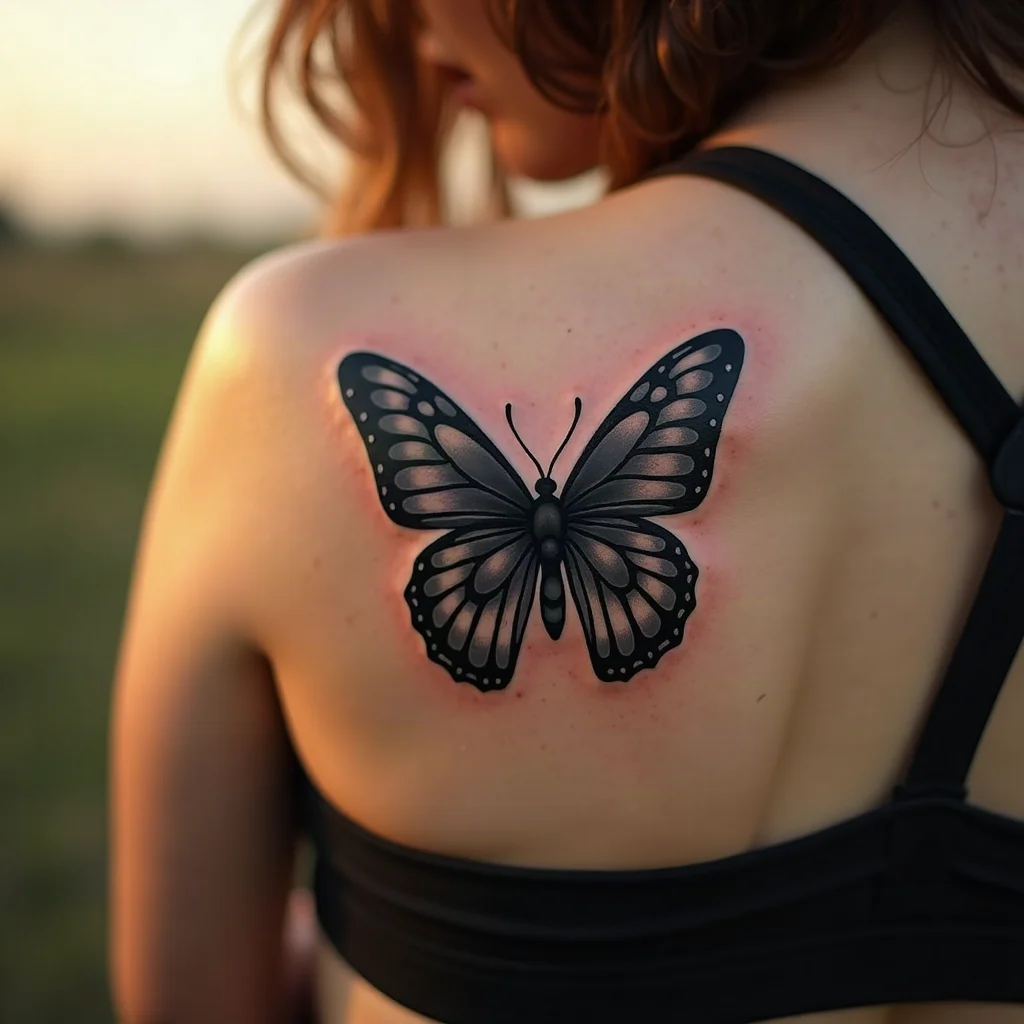
14. Lace-and-filigree wings on the thigh
Wings drawn as Victorian lace — scalloped edges, pearl strands, filigree scrollwork — at six inches or larger. The thigh's broad surface handles the detail and hides it under most clothing. One of the more forgiving spots pain-wise for a long session.
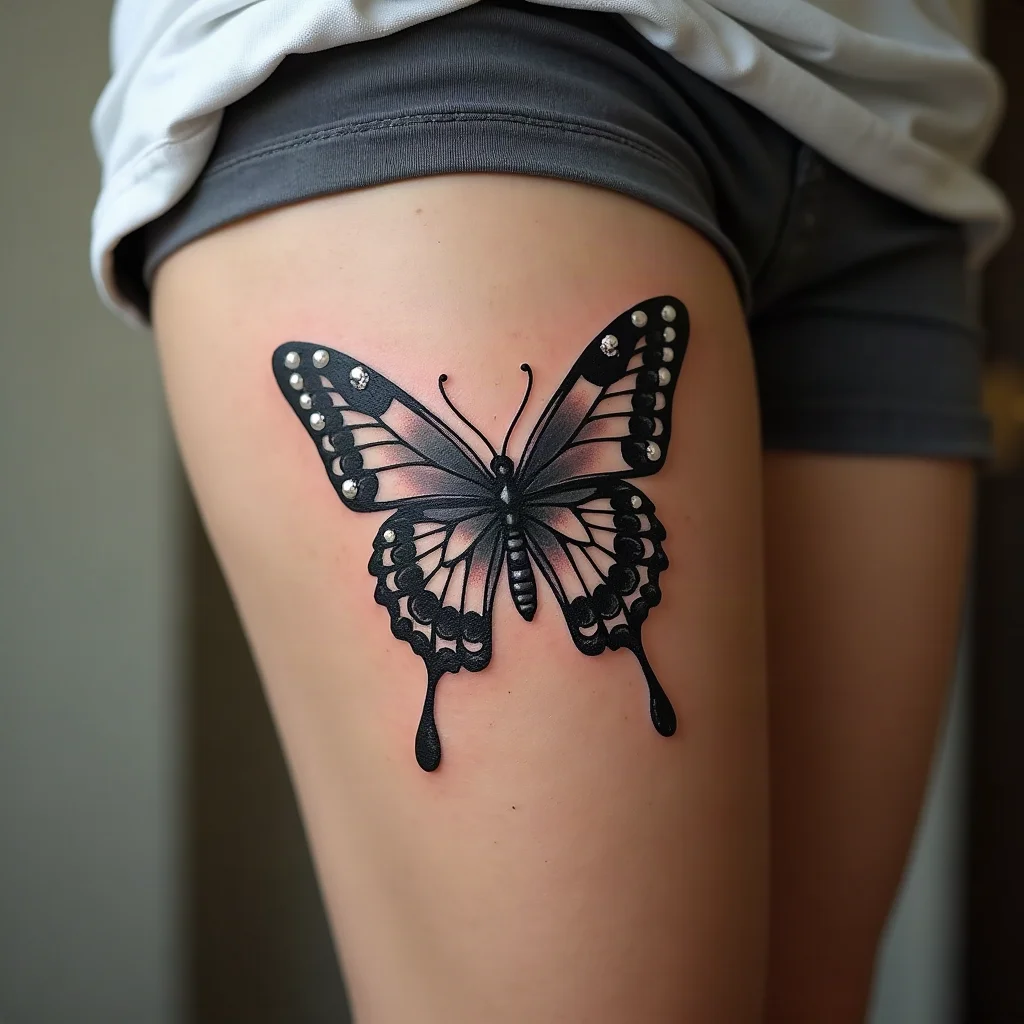
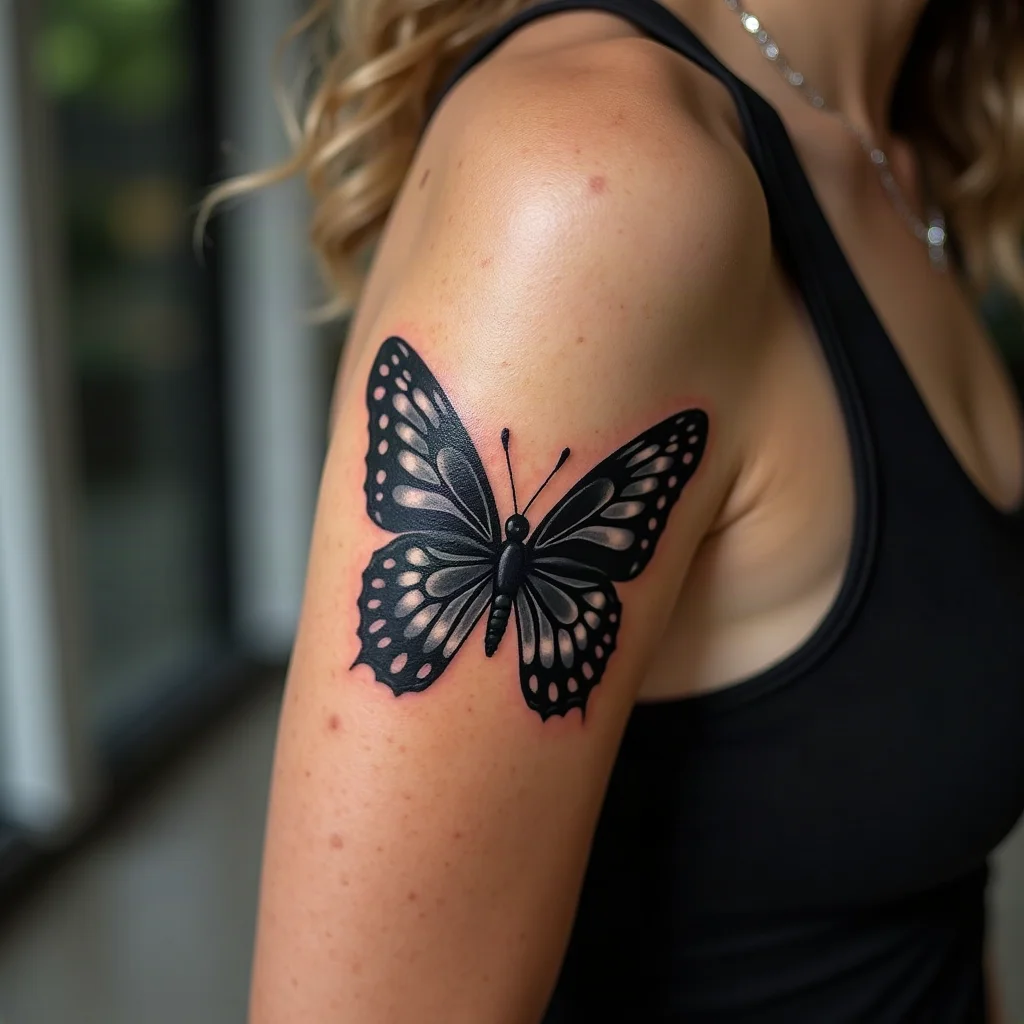
15. Heavy black wings with white-ink highlights
Dense black wings on the upper arm with white ink dropped in for wing spots and edge glints. Be realistic: white ink softens and can yellow over years, so treat the highlights as a bonus and make sure the tattoo works in black alone.
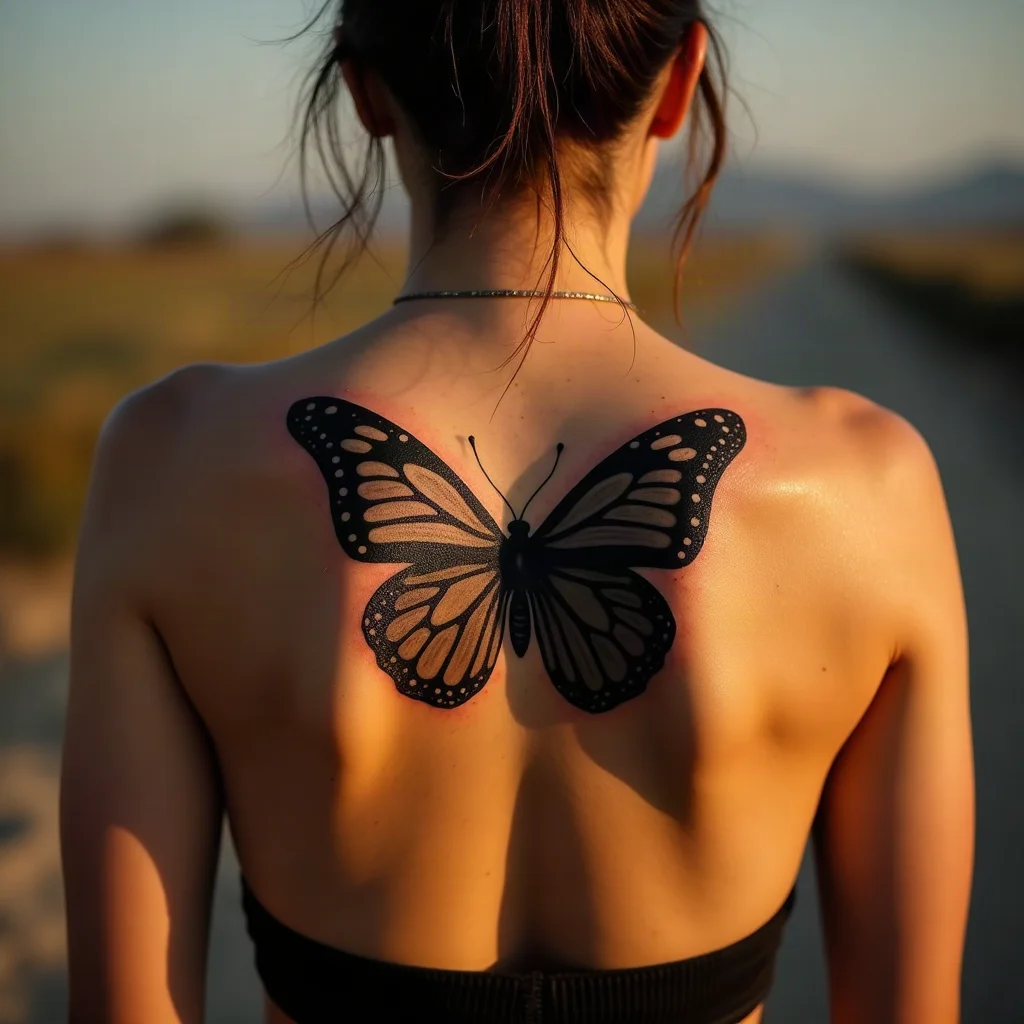
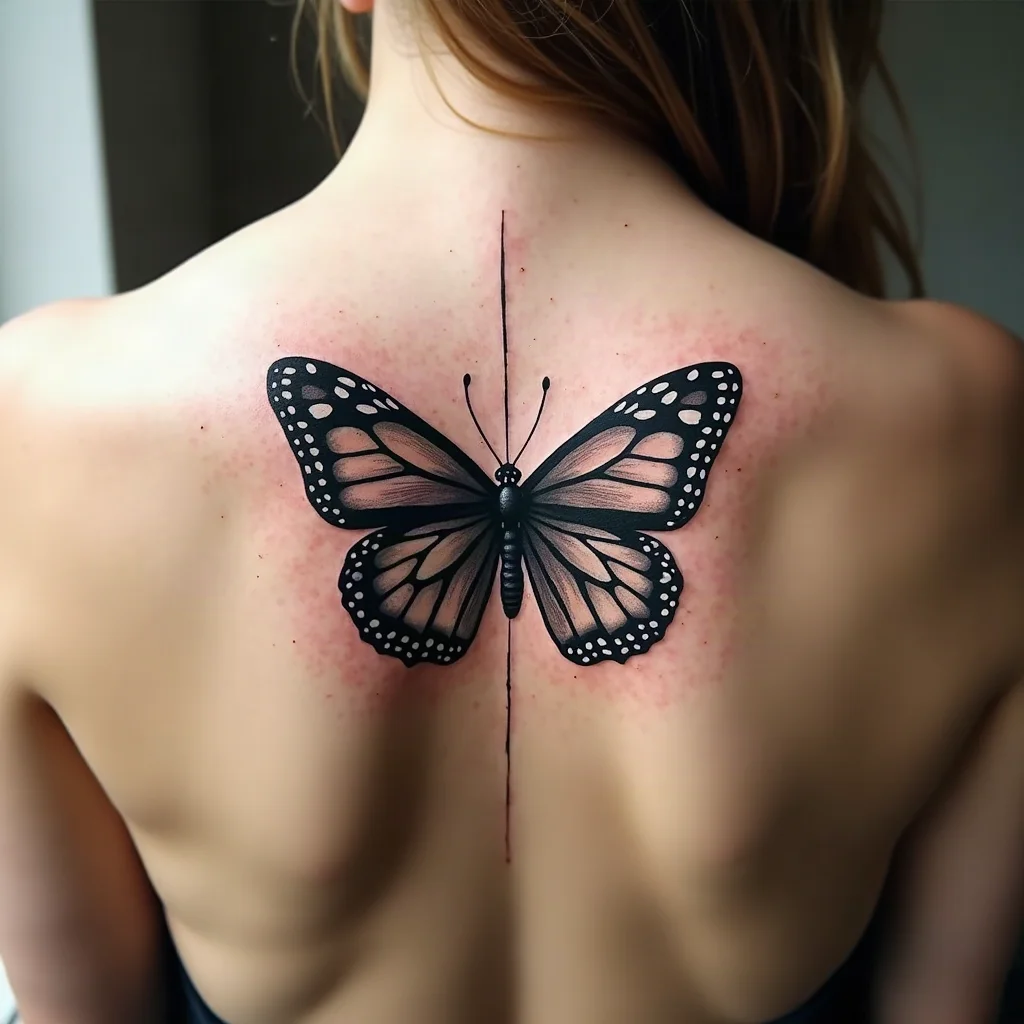
16. Spine-framing butterfly wings
Two large blackwork wings positioned either side of the spine, from shoulder blades to mid-back, with the vertebrae acting as the body. It's a commitment piece — multiple sessions, significant cost — but nothing else uses the back's natural symmetry so well.
Traditional, Japanese and Illustrative Wings (17–24)
If you want a butterfly that still looks like a tattoo from across the room in twenty years, this is the group. Bold outlines, limited palettes and time-tested shading conventions exist precisely because they survive.
17. American traditional butterfly on the outer forearm
Thick black outline, flat red-and-yellow wings, black wing spots, minimal shading. Three to four inches, no fuss. It's the cheapest and most durable butterfly on this list, and traditional artists can usually tattoo one in a single short sitting.
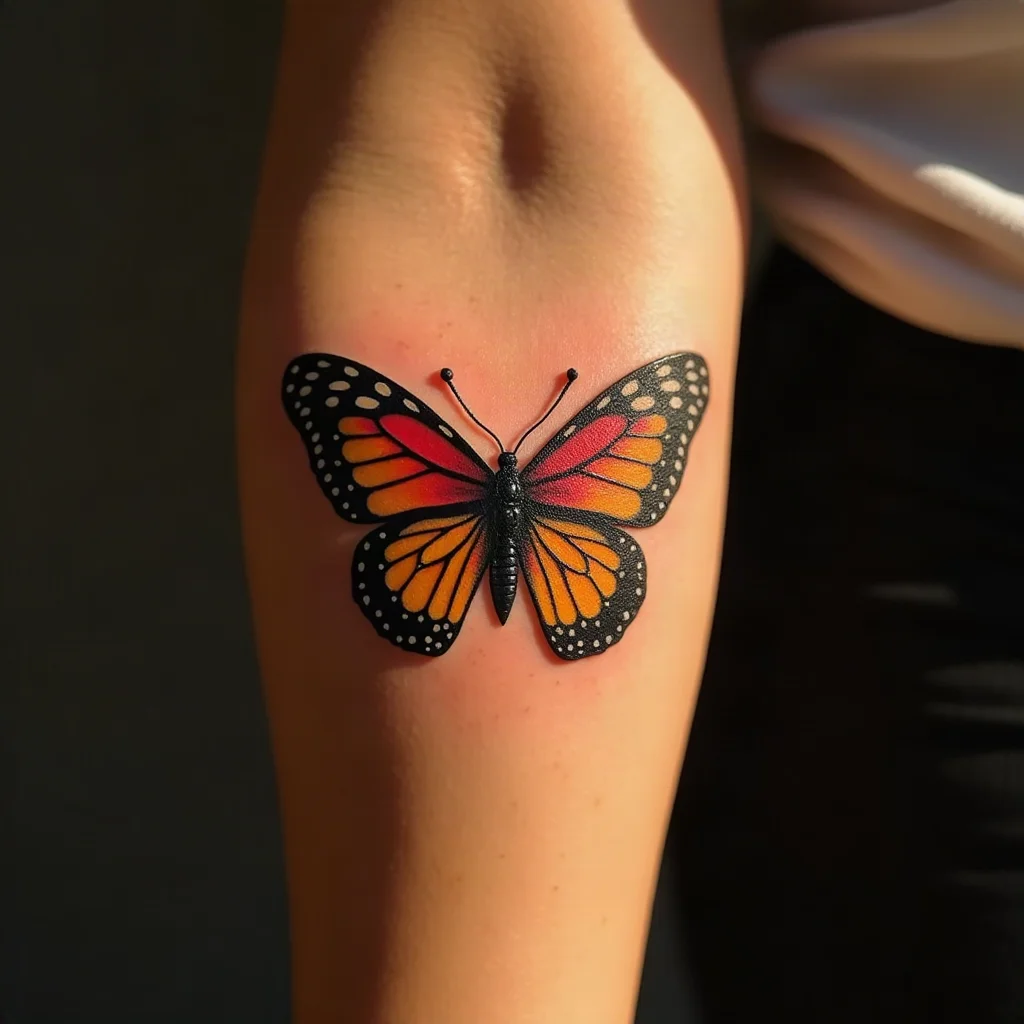
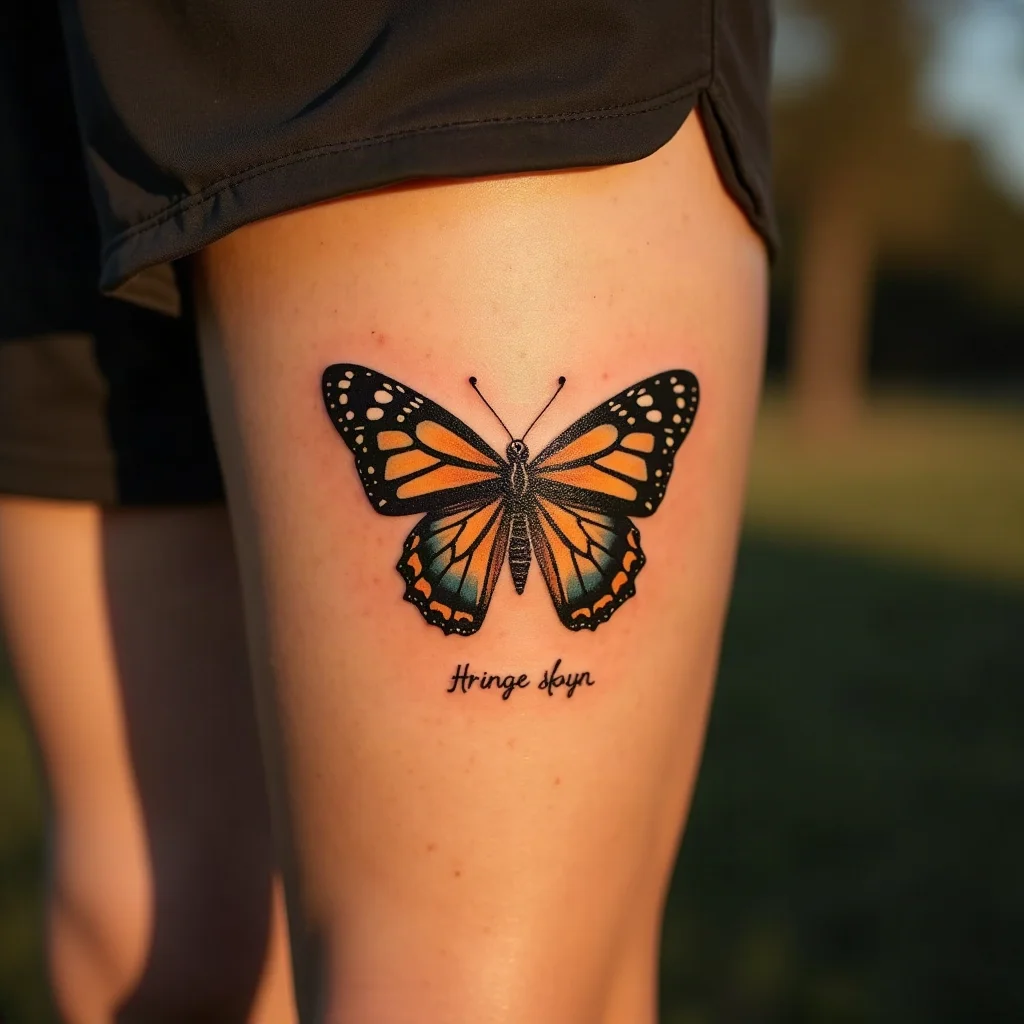
18. Neo-traditional monarch on the shoulder
Same bold-outline logic, but with rich orange gradients, deeper black borders and painterly wing veining. The rounded shoulder cap suits an open-wing pose because the wings can tilt with the muscle. Expect a longer session for the color packing.
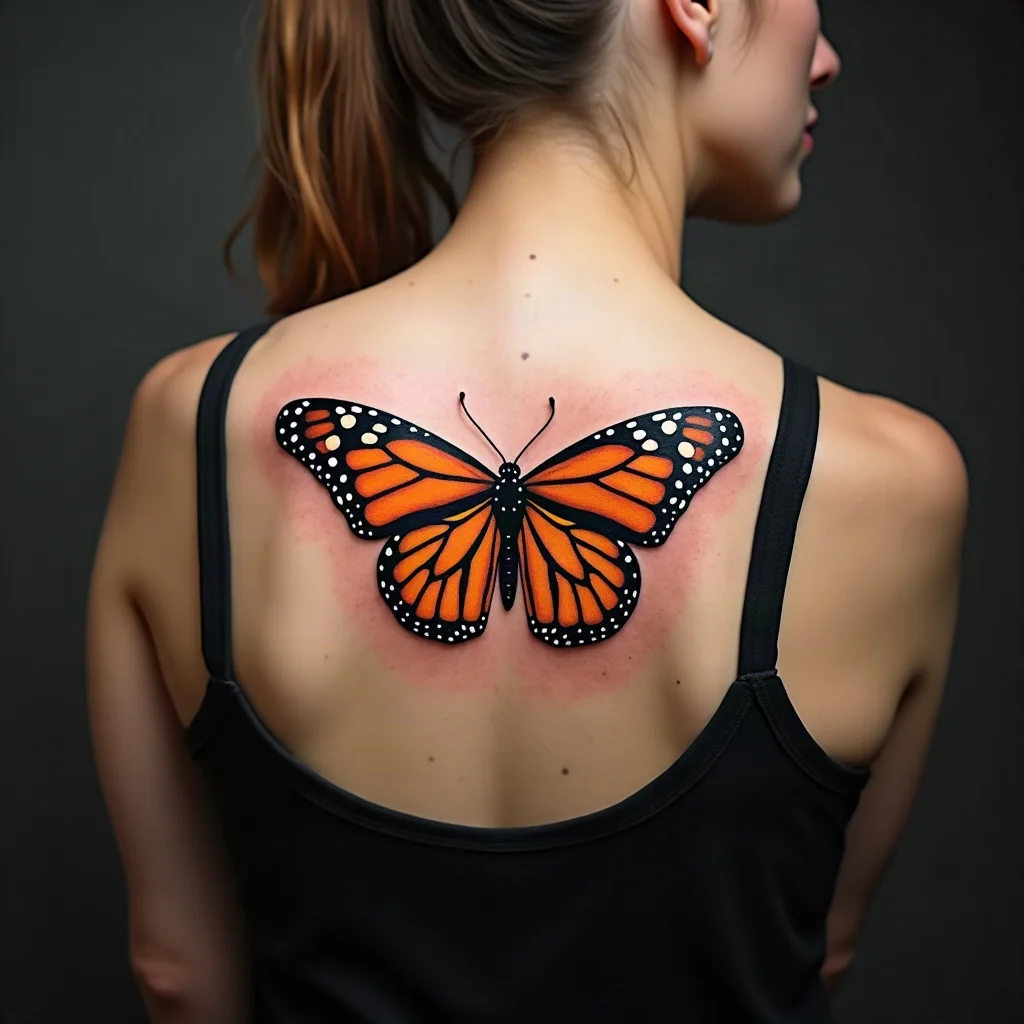
19. Blue morpho on the thigh
Layered blues from ultramarine to pale sky, with a dark border and soft white edge glow to mimic iridescence. Blue holds up well over time, but sun is its enemy — a thigh keeps it covered most of the year. Go at least five inches; morphos lose their magic small.
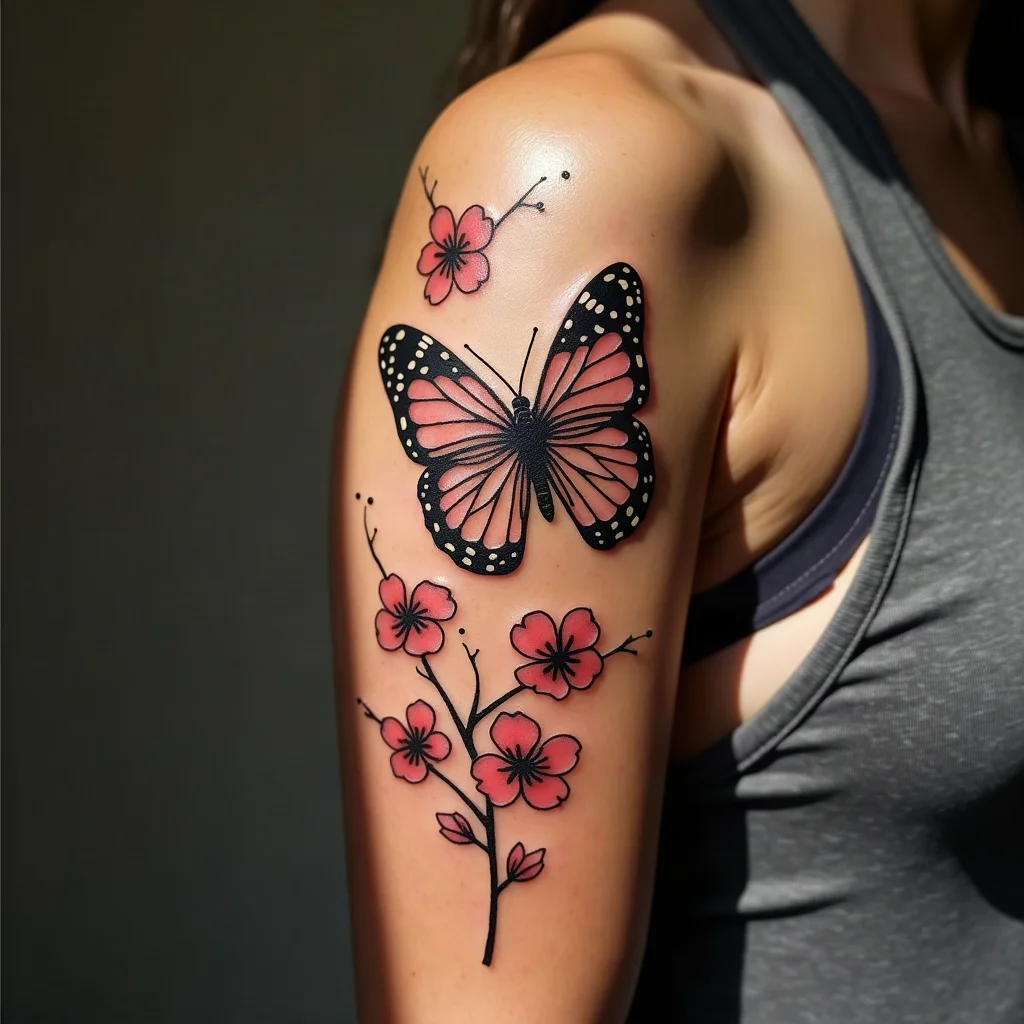
20. Japanese chōchō with cherry blossoms
A stylized butterfly among falling blossoms and thin wind-bar lines on the upper arm, drawn to flow with the limb. This one is best commissioned from an artist who works in the Japanese tradition, since the background language matters as much as the butterfly.
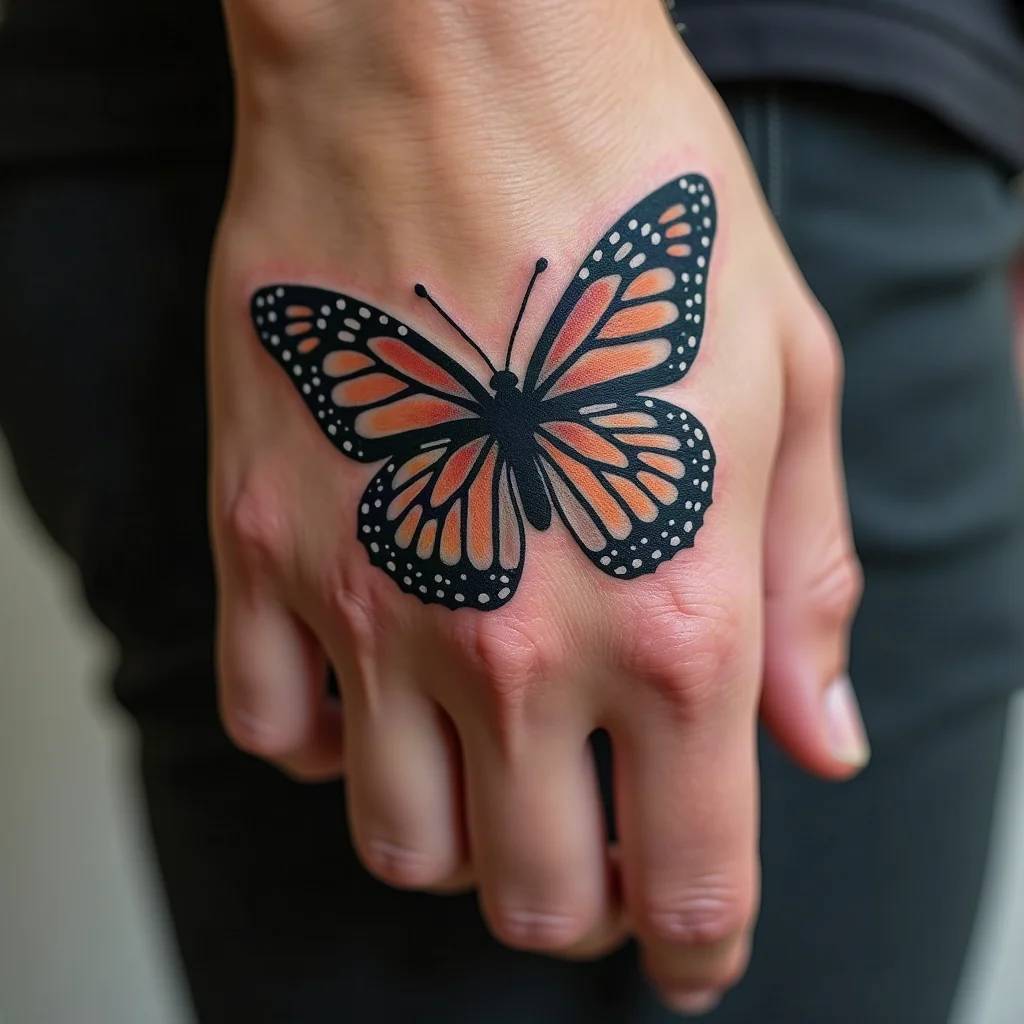
21. Realistic butterfly perched on the back of the hand
Rendered with real depth — antennae, fine leg detail, dimensional wing shadow — as if it just landed between the knuckles and thumb. Gorgeous, but hands fade faster than anywhere else; treat touch-ups as part of the plan.
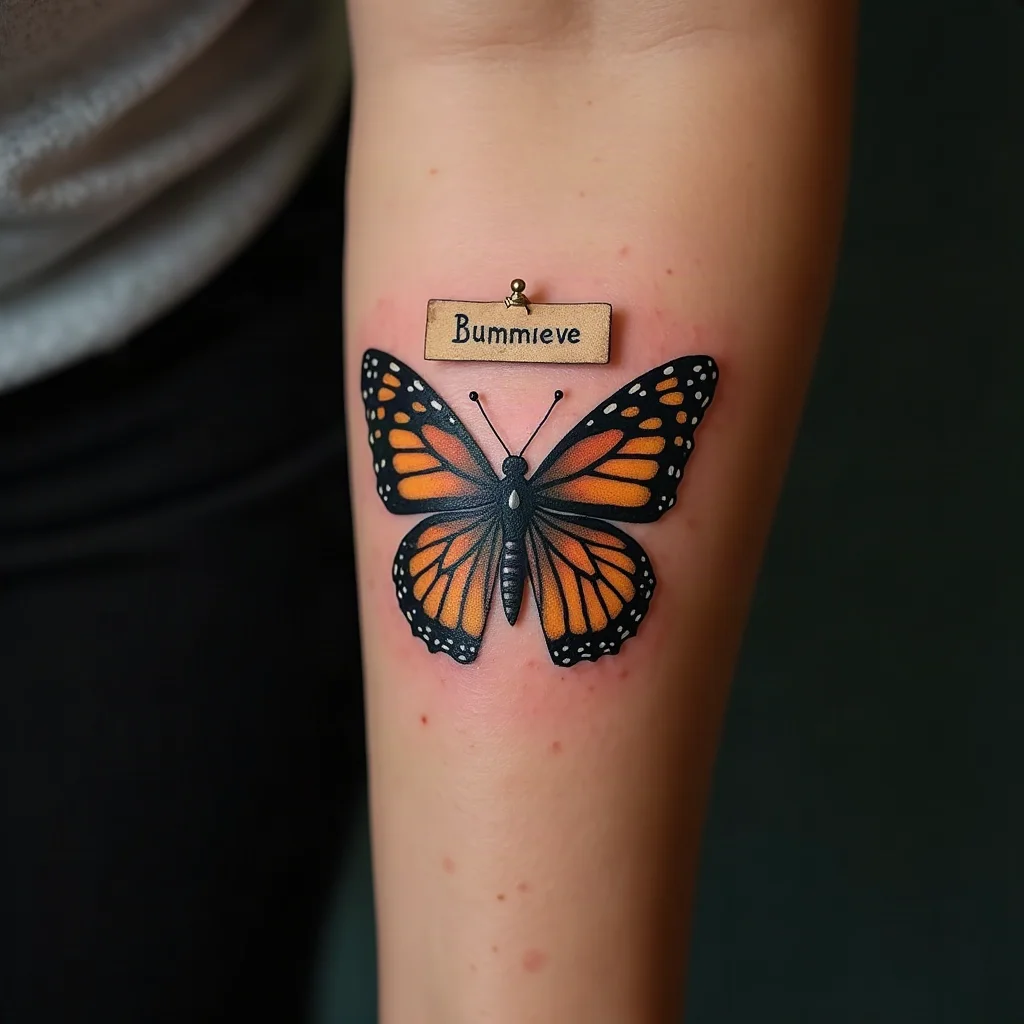
22. Pinned specimen with a label
A butterfly drawn as a museum specimen: pin through the thorax, small hand-lettered card underneath with a date or name. On the inner forearm at four inches, it turns the tattoo into a keepsake rather than an ornament. Popular as a memorial piece.
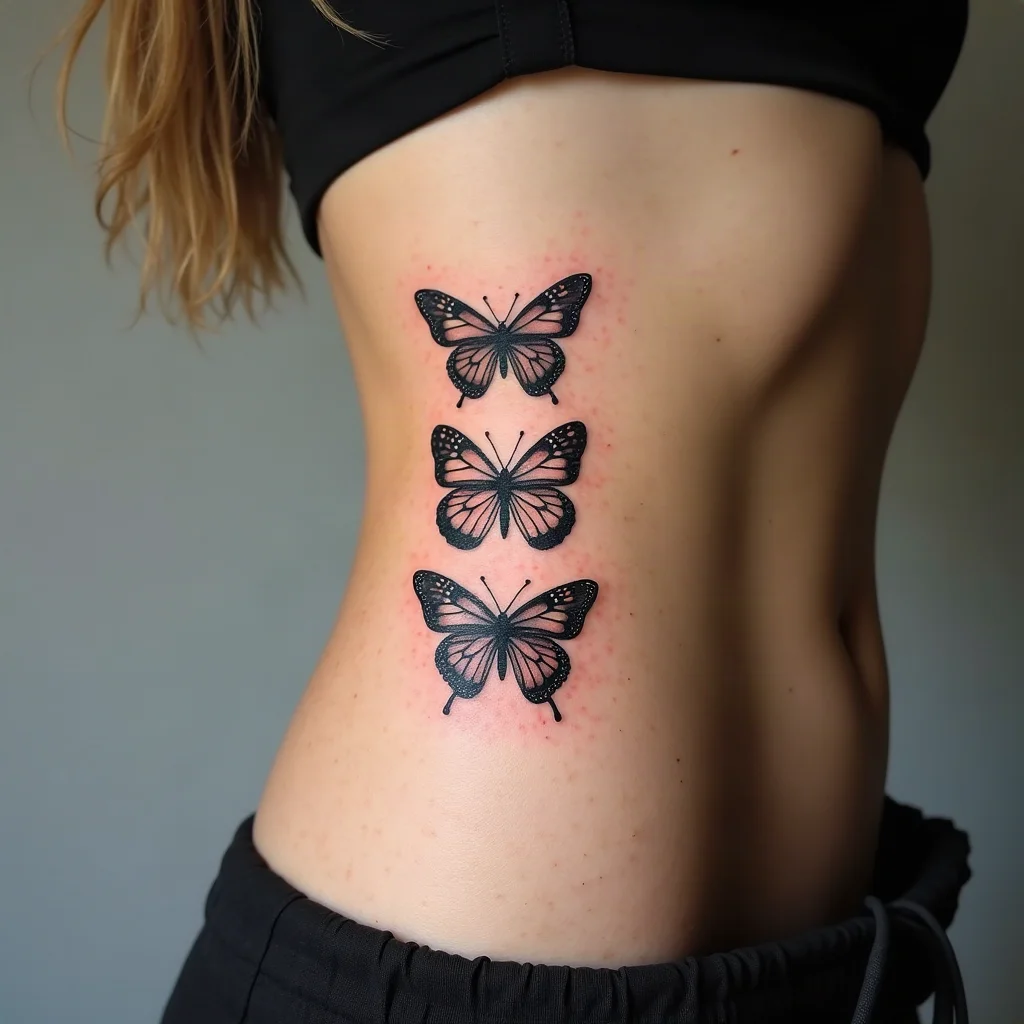
23. Butterfly and moth pair
Two insects facing each other — one bright and open-winged, one dusky and heavy — stacked vertically along the ribcage. The contrast tells a two-sided story: daylight self and night self. Ribs hurt; break it into two sittings if you're new to tattoos.
24. Vintage entomology plate on the calf
A butterfly styled like an old field-guide illustration, complete with faint hatching, a numbered corner and the Latin species name in serif lettering. The calf's long oval shape frames the rectangular plate composition nicely and takes color well.
Hybrid and Conceptual Wings (25–30)
These are the butterflies that stop being a butterfly halfway through. They take the most thought at the design stage, so bring reference for both halves of the idea and let the artist solve the seam.
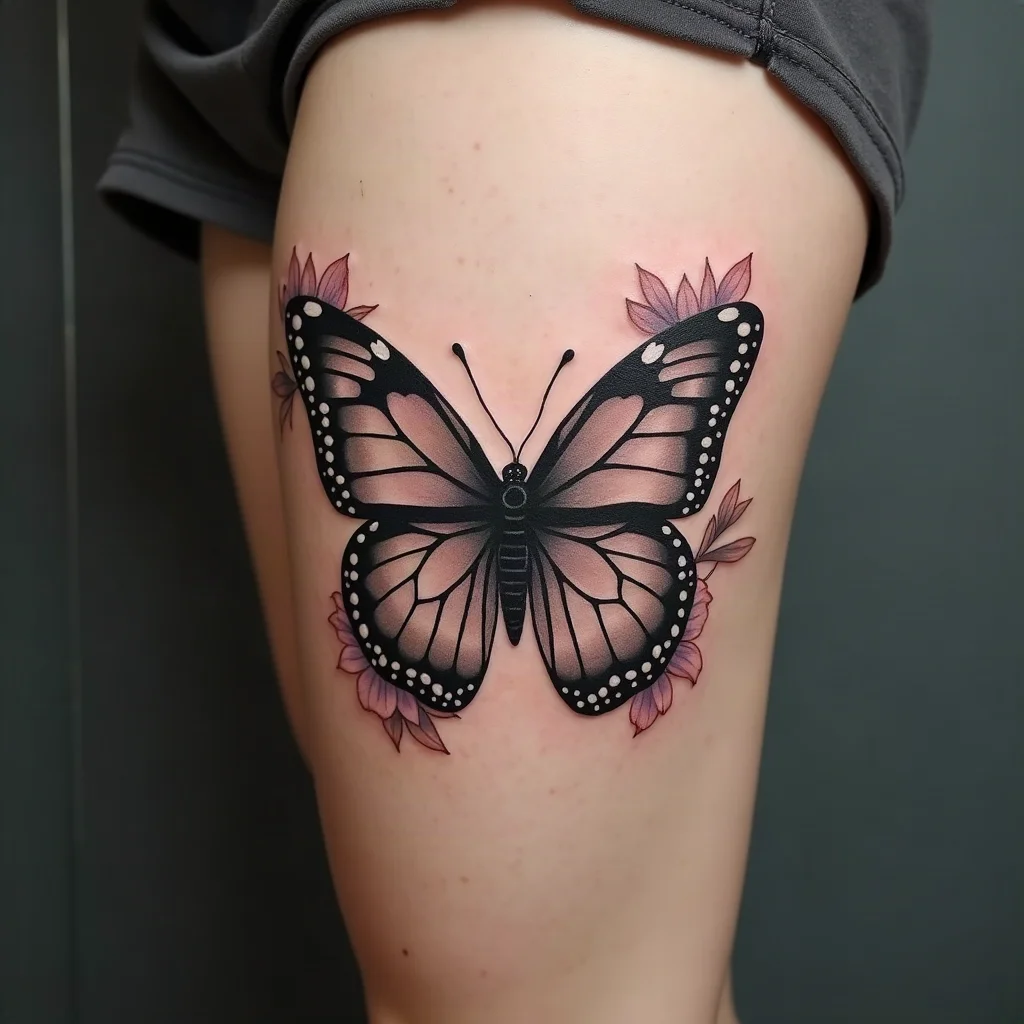
25. Wings built from flowers
The wing shapes are formed entirely by blooms — peonies, cosmos, forget-me-nots — with no wing outline at all, just the silhouette implied by where the flowers stop. On the thigh at seven inches or more, it's a stunning statement. Bring your meaningful flowers; birth blooms work beautifully here.
26. Split butterfly and skull
Divided down the centerline: one half a soft, detailed butterfly, the other half its skeletal or skull counterpart. The vertical split suits the upper back, where the spine gives a natural dividing line. Ask for the two halves to share one continuous outer contour so it doesn't read as two tattoos.
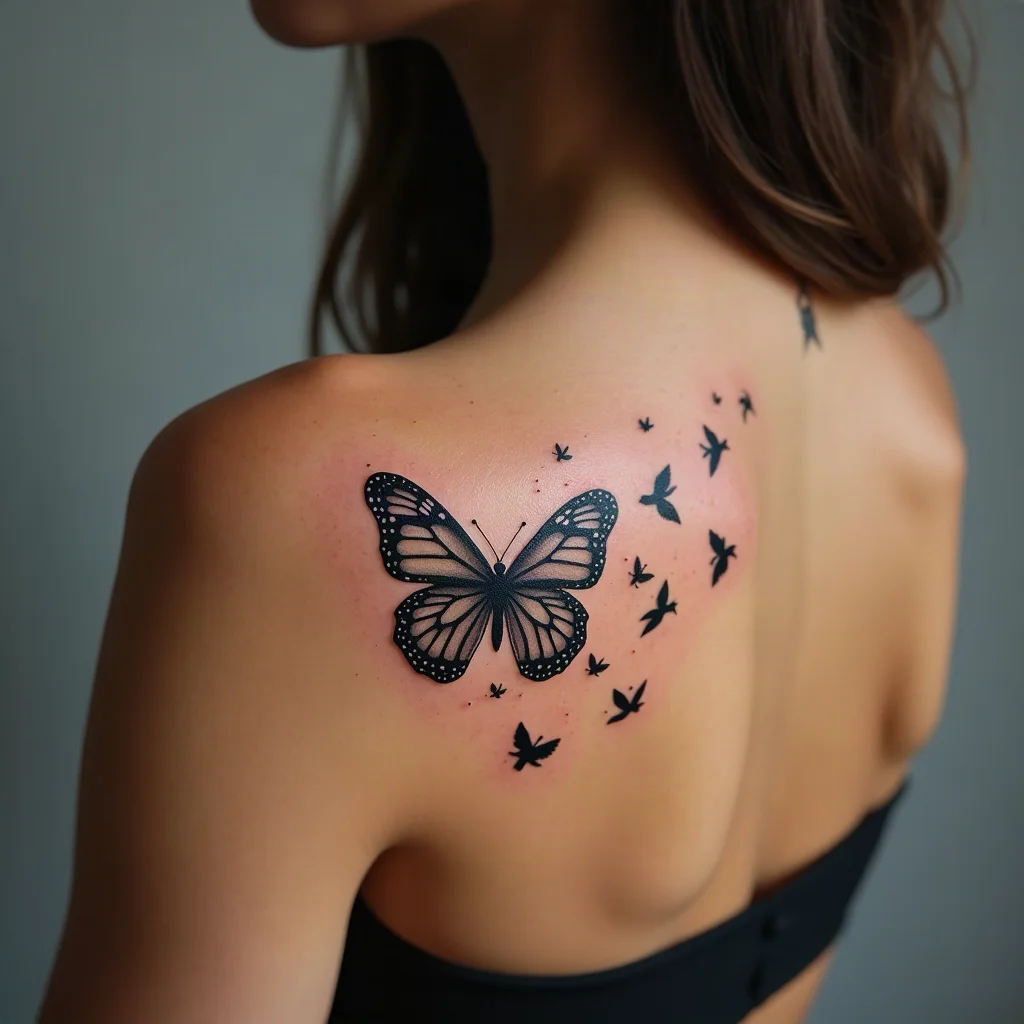
27. Butterfly dissolving into birds
One wing intact, the other breaking apart into a scatter of small birds lifting off toward the shoulder. It's the classic "letting go" composition and it works because the eye follows the scatter upward. Keep the dissolving elements simple silhouettes so they stay readable when they shrink.
28. Semicolon-bodied butterfly
The butterfly's thorax is drawn as a semicolon — the mental health symbol for a story that continued. Small, four inches or less, and it lands well on the inner forearm where you can see it. Understated enough that it only explains itself to people who already know.
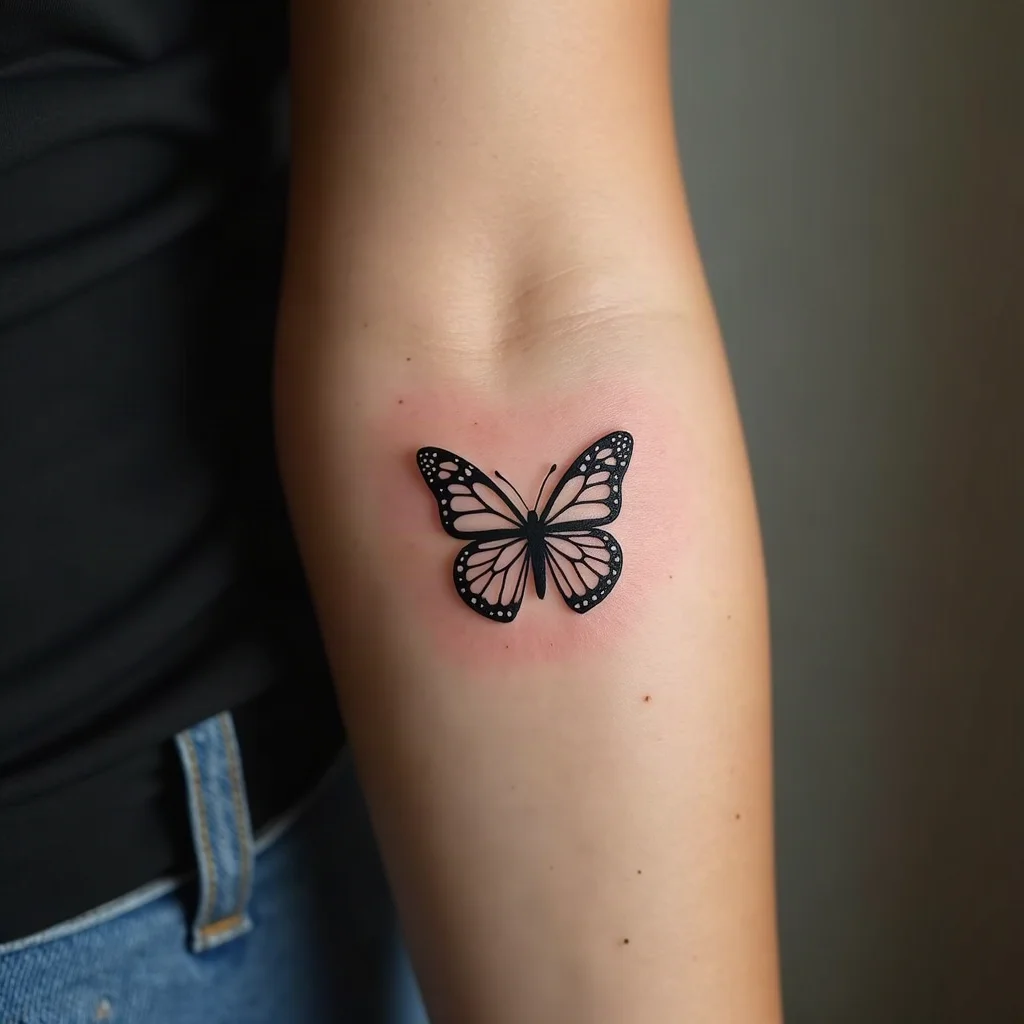
29. Wings holding handwriting
Inside the wing panels, instead of pattern, sits a line of real handwriting lifted from a card or letter, or a fingerprint whorl. On the ribcage it stays private. Bring the original scan at high resolution — photographed-off-a-phone handwriting rarely traces cleanly.
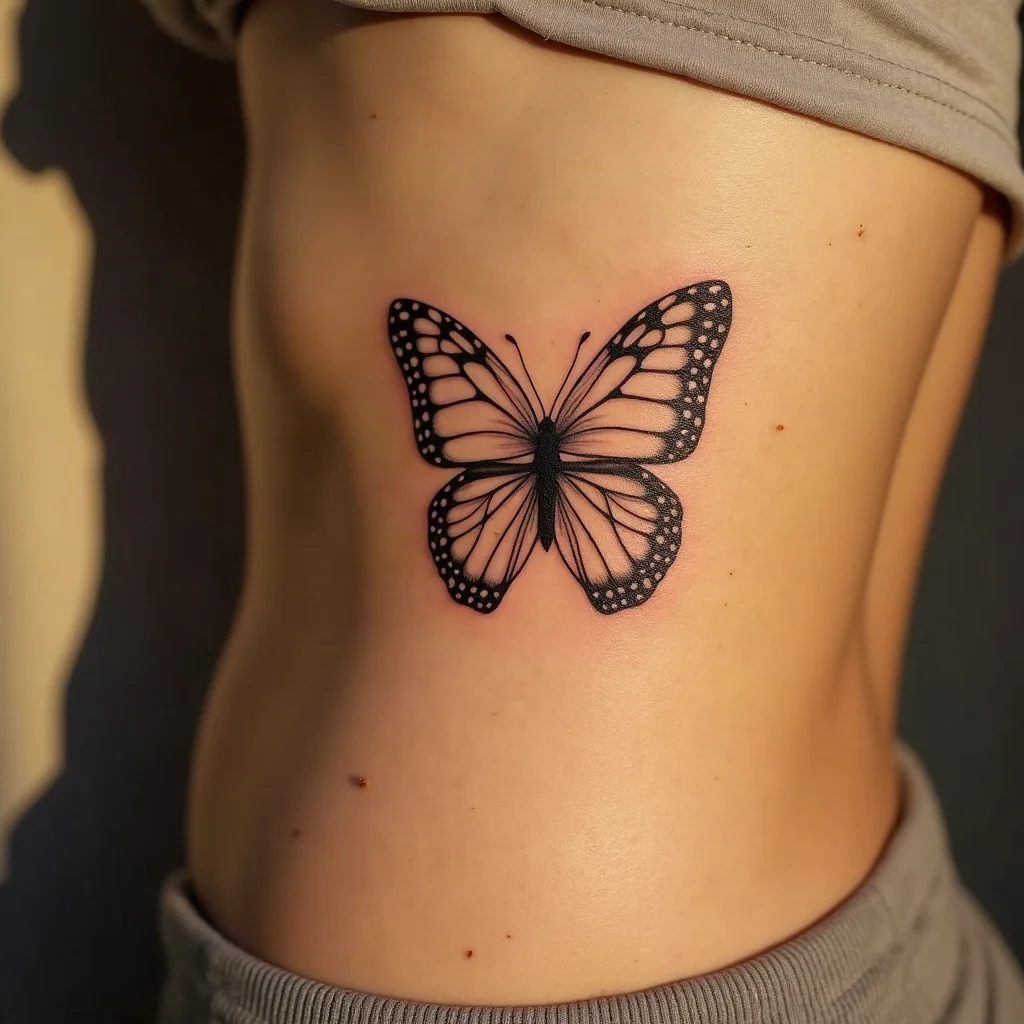
30. Mirrored pair for two people
Two butterflies designed as one composition split between two bodies: matching wing patterns, one facing left and one right, so they only complete each other side by side. Ankles or upper arms work best because you can actually line them up in photos. Same artist, same session, if you can manage it.
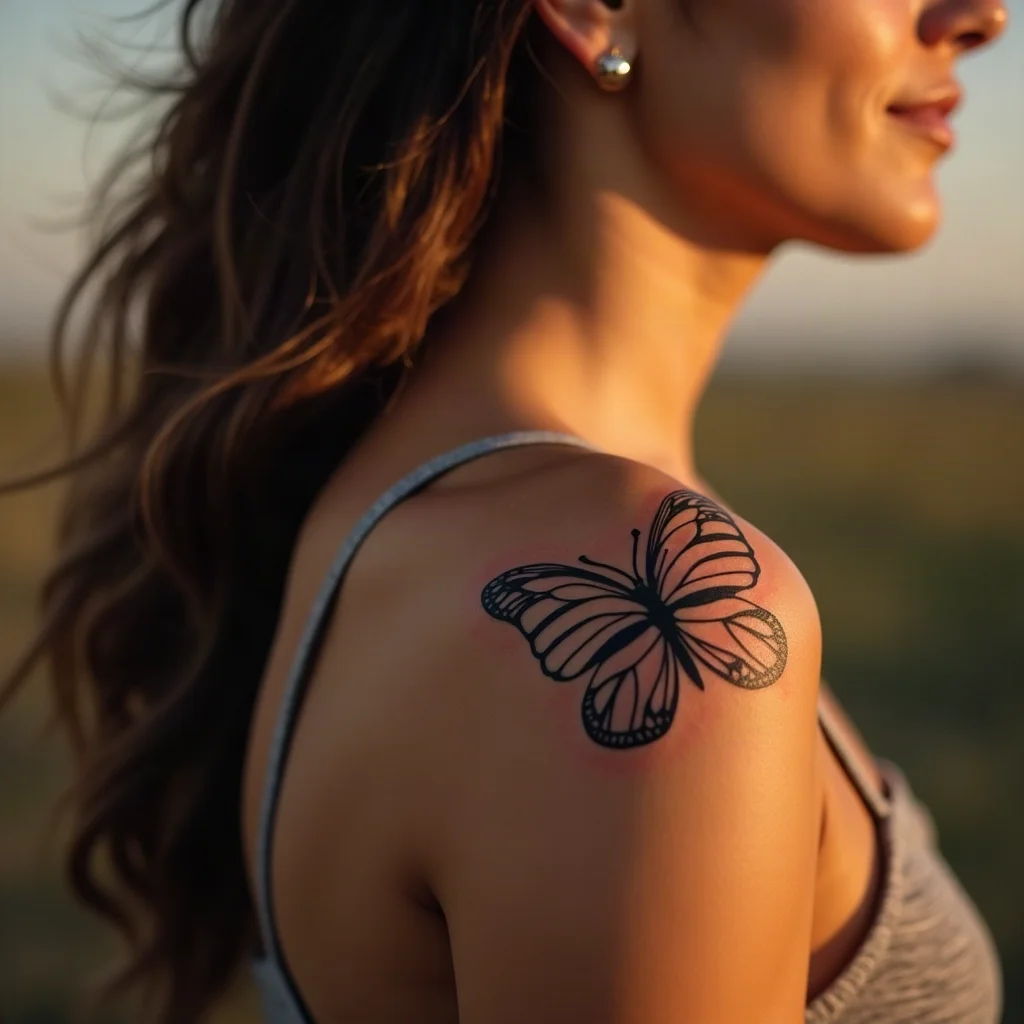
Placement, Symmetry and How Butterflies Age
A butterfly is a symmetrical object placed on an asymmetrical, curved, moving body. That single fact decides more about how your tattoo looks than the style does.
Flat planes flatter open wings. The upper back, shoulder blade, sternum, inner forearm and outer thigh all present a relatively flat surface, so a spread-wing butterfly reads correctly from straight on. Wrap an open-wing design around a bicep or a calf and one wing will visually shorten from every angle except the one your artist stenciled from.
Curved and narrow spots want angled or folded wings. Wrists, ankles, necks and ribs suit three-quarter views, side profiles or butterflies tilted mid-flight. Ask for the design to be drawn on a diagonal — it follows limb taper instead of fighting it.
Use the body's own centerline. Spine, sternum and the nape are the three placements where the body supplies perfect symmetry for free. If you want a large wing piece, these are where it will look intentional rather than stuck on.
On aging: line weight is destiny. Hairline single-needle detail on fingers, hands, feet and the outer forearm will soften within a few years, especially if you're outdoors a lot. Blackwork silhouettes, traditional outlines and dotwork all hold their shape far longer. If you're set on delicate work, put it somewhere shaded — inner arm, ribs, upper back under a shirt — wear sunscreen once healed, and accept a refresh every five to ten years as maintenance, not failure. One more practical note: butterflies are a common cover-up subject, so if you're placing one over old work, expect a bolder, larger design than you had in mind. Wings need mass to hide anything.
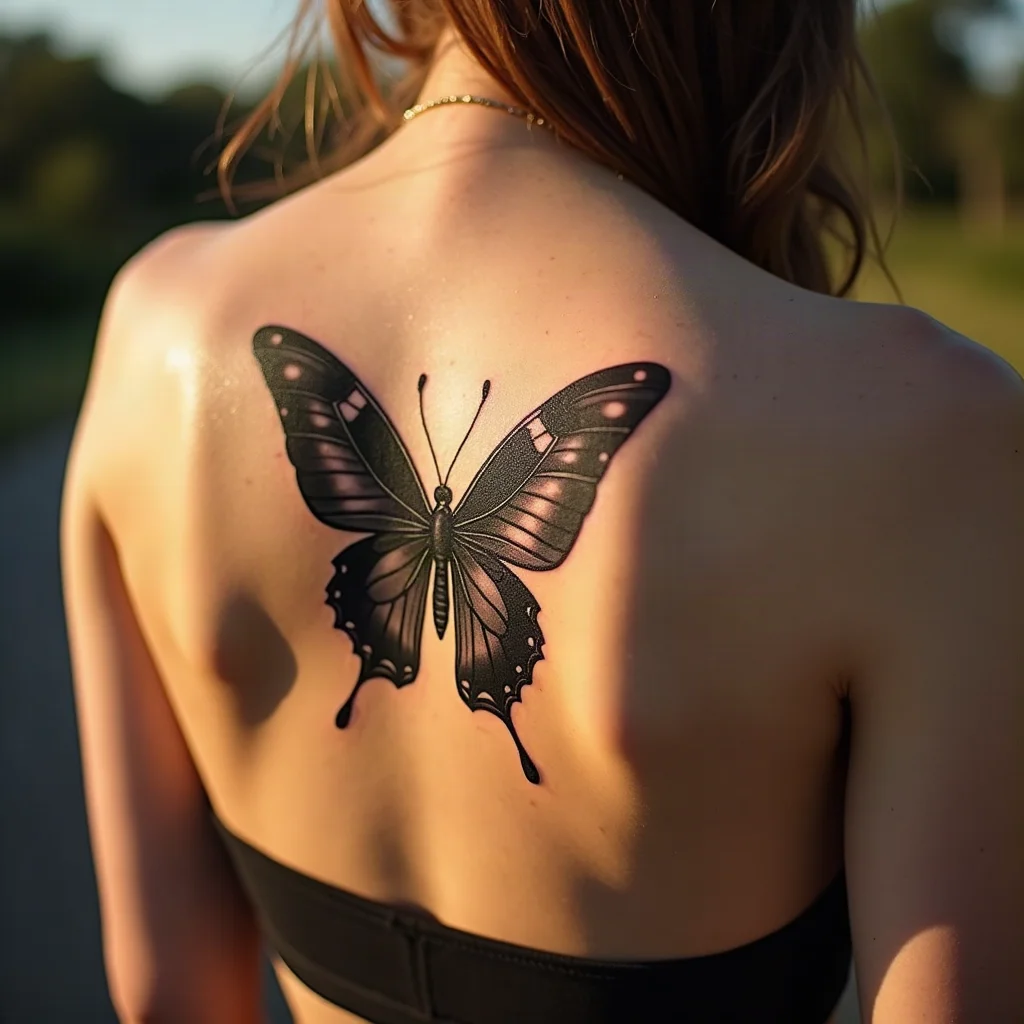
Pain, Cost and Getting the Brief Right
Pain, honestly. Outer forearm, thigh and calf are the easy end — sore, not brutal, and fine for a two-hour sitting. Shoulder blade and upper arm sit in the middle. Ribs, sternum, spine, collarbone, the top of the foot and behind the ear are the sharp ones, because there's bone right under thin skin. A small wrist butterfly is over in twenty minutes; a spine wing piece is a multi-session endurance job. Eat properly beforehand and say something the moment you need a break — a fidgeting client is a harder client to tattoo cleanly.
Cost, in ranges. Most studios have a minimum charge that covers everything tiny, so a one-inch butterfly behind the ear and a two-inch one on the wrist often cost the same. Small fine-line pieces typically land in the low end of a studio's pricing. Mid-size color or ornamental work on a shoulder or forearm usually means a half-day rate. Large back, spine or thigh pieces are quoted by the session and add up across several appointments. Custom drawing time, heavy color packing and travel to a sought-after artist all push a quote upward — ask for the full estimate, including any deposit and touch-up policy, before you book.
Briefing your artist. Bring three things: a reference photo of the actual species you want, one or two tattoos whose line weight and shading you like (not the design you want copied), and a clear statement of why you're getting it. Then let go. Say what you want the tattoo to feel like — delicate, heavy, graphic, botanical — and give the artist room to solve symmetry and flow on your body.
Aftercare. Keep the initial wrap on as long as your artist instructs, wash gently with unscented soap, pat dry and use a thin layer of fragrance-free moisturiser two or three times a day. Don't pick flakes, don't soak in baths or pools for two to three weeks, and keep it out of direct sun. Fine-line butterflies in particular look patchy around day 10 — that's normal peeling, not lost ink. Judge the result at six weeks, and book any touch-up after that.
Frequently asked questions
How small can a butterfly tattoo be and still look good?
About half an inch is the realistic floor, and only for a plain silhouette with no interior detail. Between one and two inches you can suggest wing cells and antennae; below that, fine lines sit too close together and will blur into a dark shape as the tattoo settles. If you want visible veining, spots or dotwork, plan for at least three inches.
Do butterfly tattoos hold up better in black or in color?
Solid black and bold traditional outlines age the most reliably, since they keep their shape even as edges soften. Color can last decades too, but it depends on the pigment and on sun exposure — oranges and blues fare better than pale pastels and white. Whichever you choose, sunscreen after healing is the single biggest factor in how it looks in ten years.
Where does a butterfly tattoo hurt the least?
The fleshier, flatter spots: outer forearm, upper arm, thigh and calf. The sharpest placements are the sternum, ribs, spine, collarbone, top of the foot and behind the ear, where bone sits directly under thin skin. Placement changes the experience far more than size does for anything under a few inches.
Is a butterfly tattoo a good cover-up choice?
Yes, and it's one of the most requested cover-up subjects because wings offer large areas that can absorb dark shading. Expect the new piece to be noticeably bigger and bolder than your original, and expect ornamental or blackwork wings rather than delicate fine-line. Bring a clear, well-lit photo of the existing tattoo to your consultation so the artist can plan the density they need.
How long does a butterfly tattoo take to complete?
A small fine-line butterfly on the wrist or behind the ear takes roughly twenty to forty-five minutes. A mid-size shaded or color piece on the shoulder or forearm usually runs two to four hours. Large back, spine or thigh compositions are commonly split across two or more sessions with several weeks of healing in between.
The conversation
No comments yet. Got a thought about these designs? Start us off.
Want to weigh in? Join the community to comment, save designs and try them on your skin.