26 Small Ankle Tattoos That Dodge the Sock Line
The ankle is four different tattoo surfaces pretending to be one, and the zone you pick decides how your design ages, hurts and hides. Here are 26 small, simple designs sorted by where they actually sit.
Read the Ankle Before You Pick the Design
Most people book an ankle tattoo thinking of it as one small canvas. It isn't. Within about four inches you have thin skin stretched straight over bone, a soft hollow behind each bone, a springy tendon that moves every step, and the ridge where shoe lines and sock elastic rub daily. Each of those behaves differently under a needle and over the next ten years.
Four zones worth naming before your consult:
- Inner ankle (medial bone and the hollow behind it): the most popular spot, easy to see when you cross your legs, hidden by almost every shoe. Skin is thin and it stings, but there's a flat panel just behind the bone that holds detail well.
- Outer ankle: the visible-in-sandals zone. The bone here is more prominent, so anything sitting directly on top of it takes ink less evenly than the flat area just behind or above it.
- Above the bone: the band zone, a smooth cylinder of skin two to three inches up. Best surface on the whole ankle, least friction from footwear, and the only zone that comfortably takes a wrap-around design.
- Back of the ankle: either side of the Achilles tendon. Narrow, tender, and rubbed by every sneaker collar and boot shaft you own.
Pain is honest here: sharp and buzzy rather than deep, worse over the bones, and the sessions are short enough that most people ride it out fine. A palm-size piece rarely takes more than 20 to 40 minutes. Sizing sweet spot for a simple design is roughly one to two and a half inches; go smaller and closely spaced lines can blur into each other, especially on a zone that flexes.
Inner Ankle: Designs for the Hollow Behind the Bone
The flat panel just behind and below the inner ankle bone is the best-kept secret of small tattoos. It sits away from shoe seams, it's visible when you want it to be, and the skin there is smooth rather than domed. Keep designs vertical or gently curved to follow the tendon line.
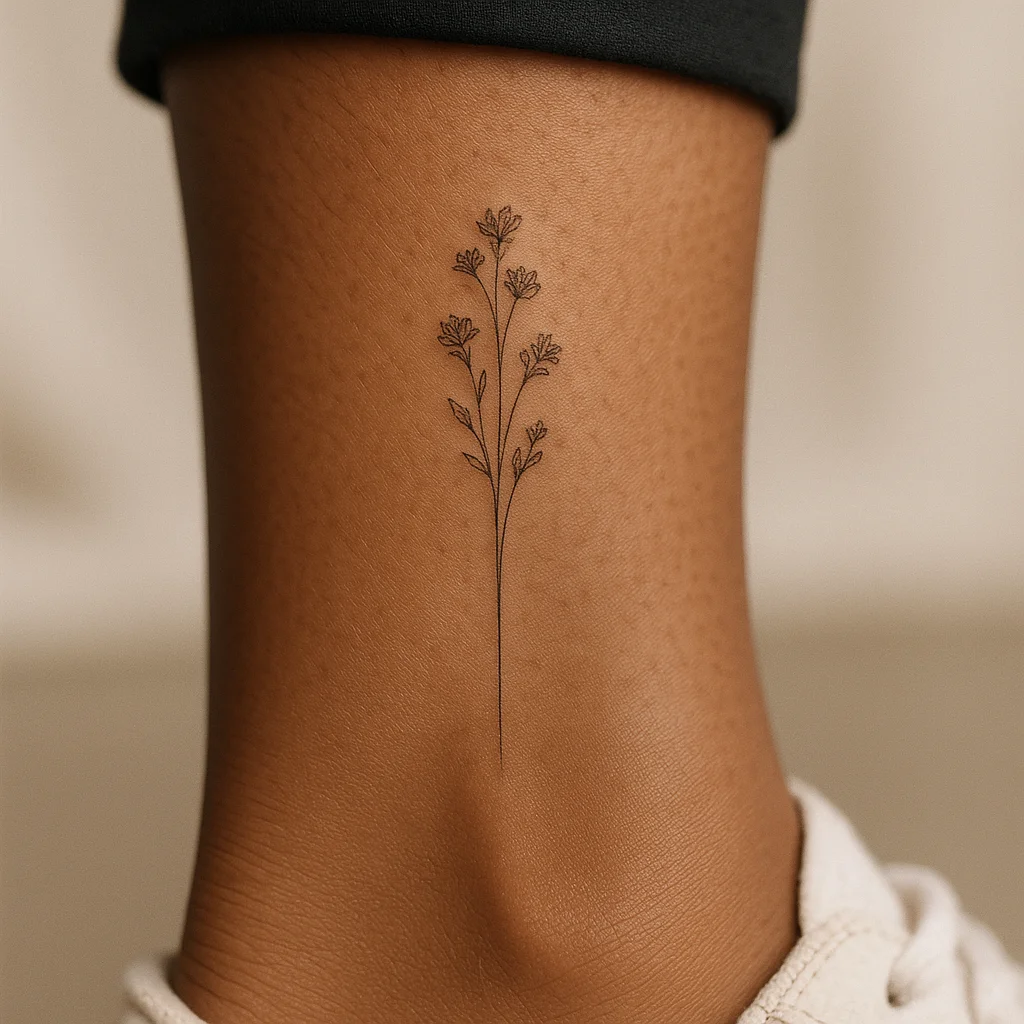
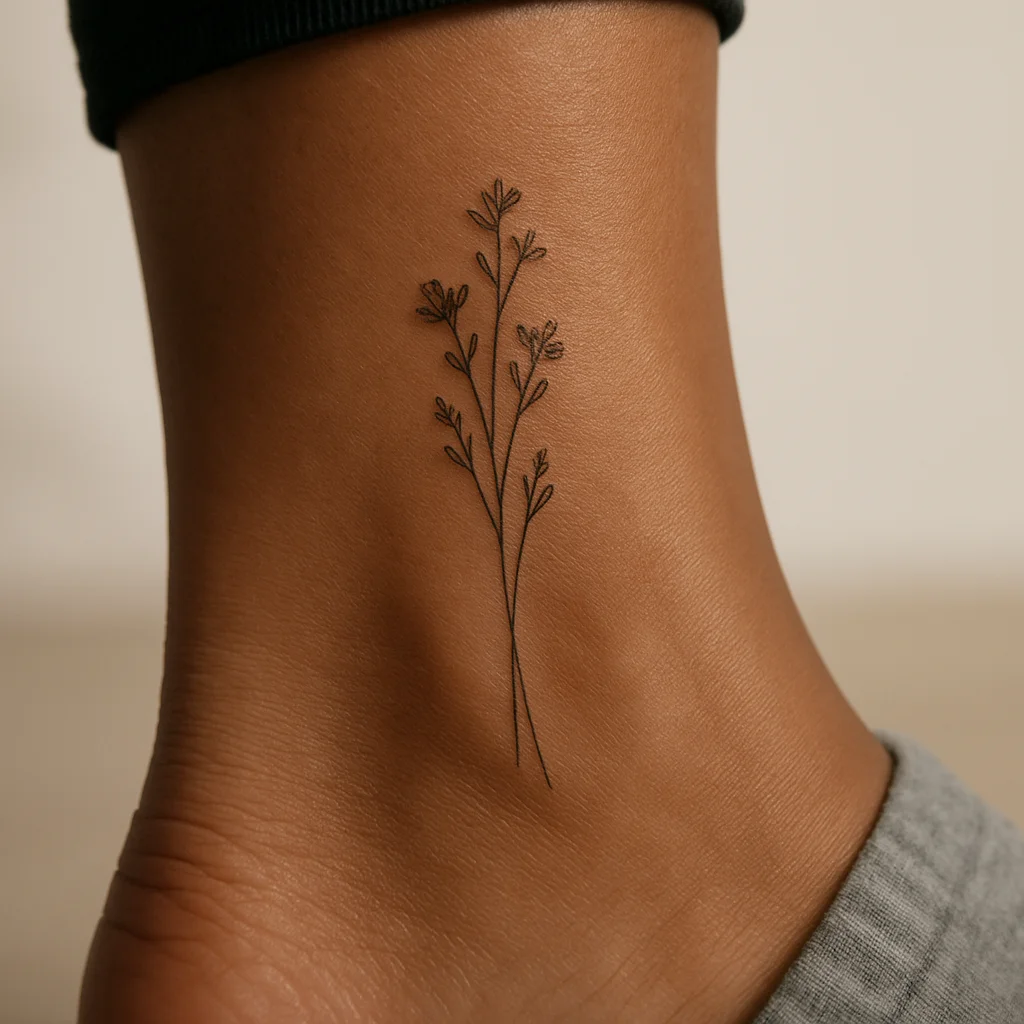
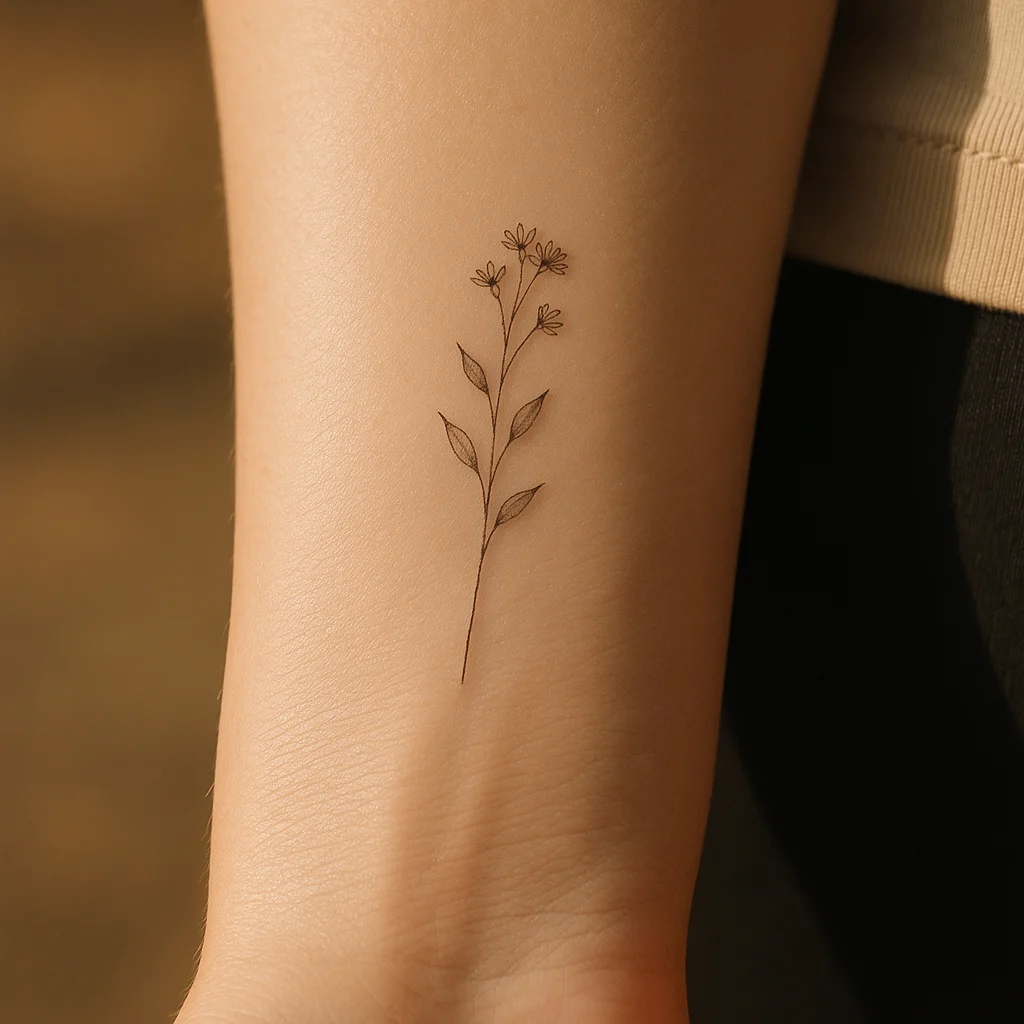
1. Single-needle wildflower sprig
Three or four stems of different heights, each with a couple of tiny buds, running upward along the tendon. About two inches tall keeps the stems readable without crowding. It's the design I see age best in this zone because the negative space between stems gives the lines room to soften.
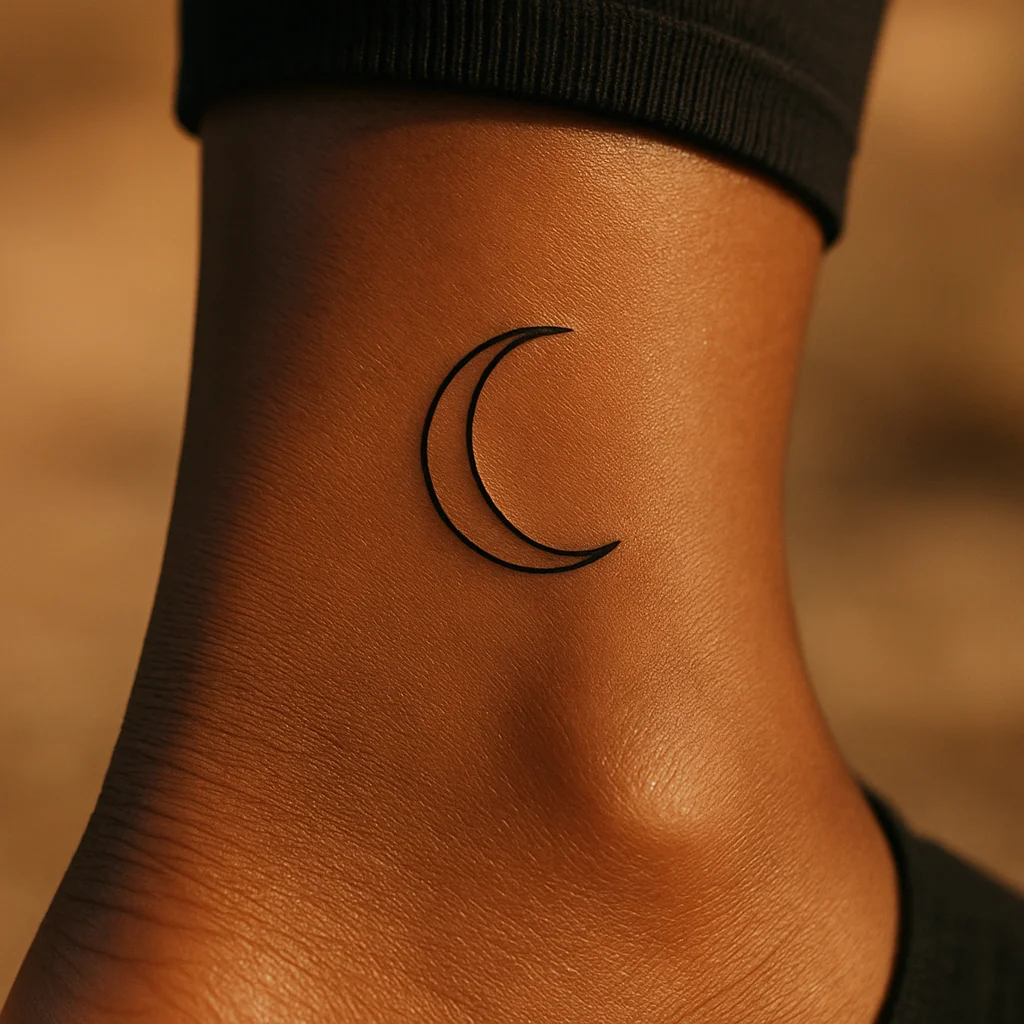
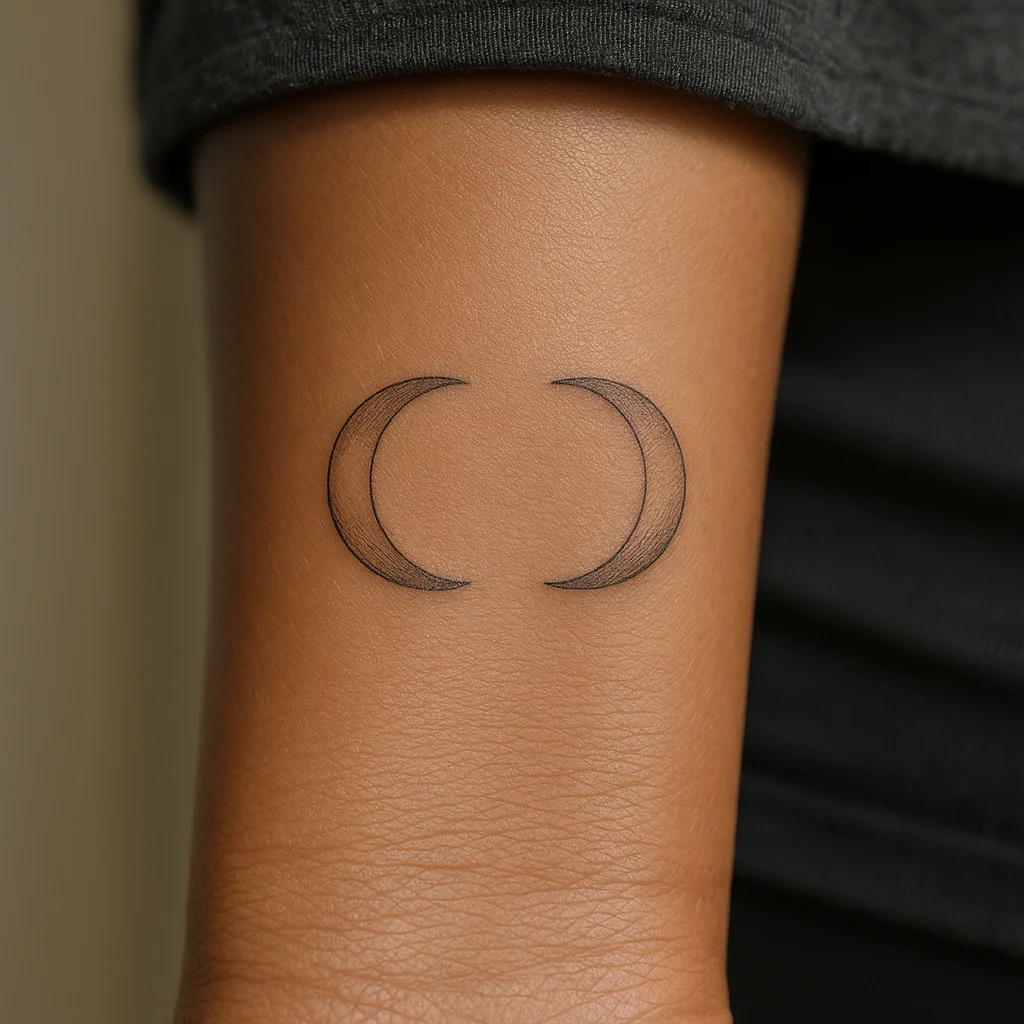
2. Crescent moon tucked behind the bone
A clean crescent, half an inch to an inch, placed in the hollow so the bone frames it. Ask for a slightly thicker outline than you think you need; hairline crescents on the ankle can fade patchy within a few years. Suits anyone who wants something symbolic but not literal.
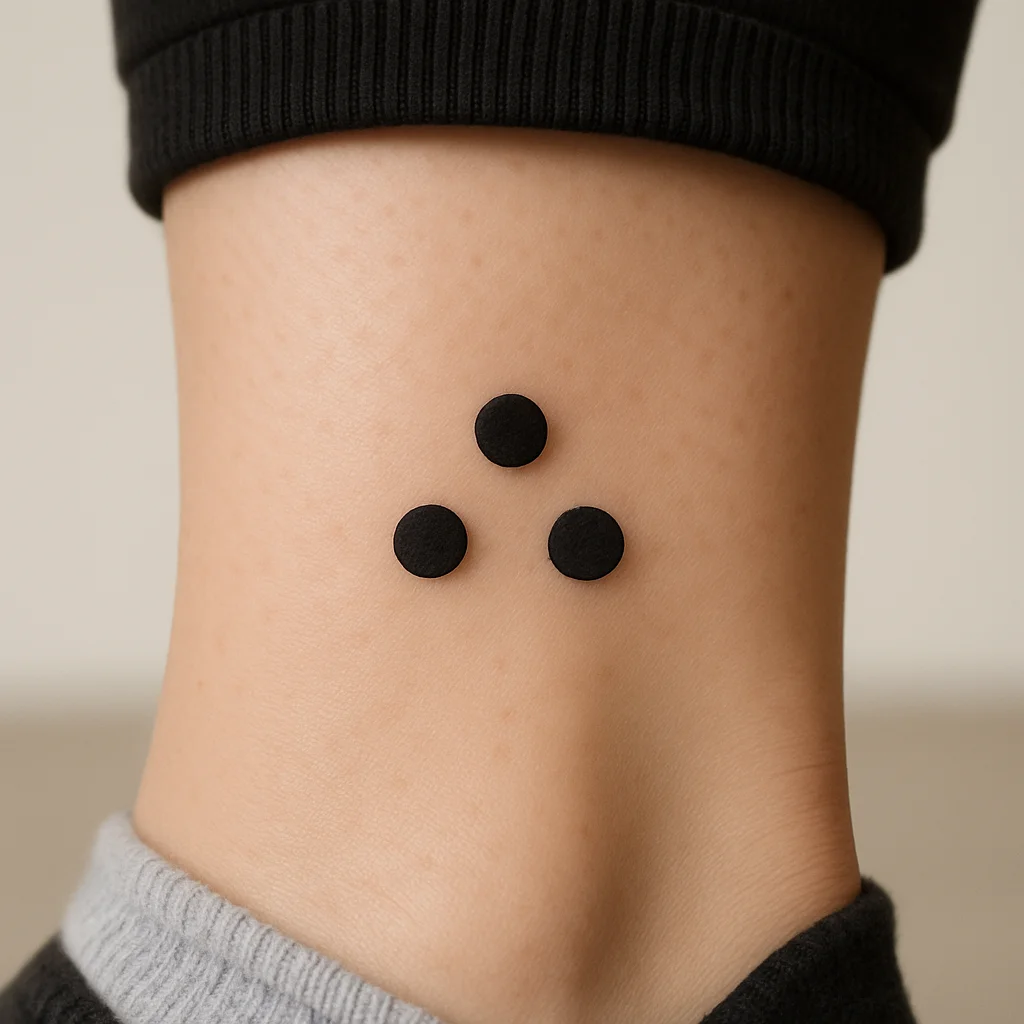
3. Three-dot cluster
Three solid dots in a loose triangle, each two to three millimetres wide. Ten minutes in the chair, and dots hold their shape better on ankles than any other mark because there are no lines to blur. Good first tattoo, good filler beside a larger piece later.
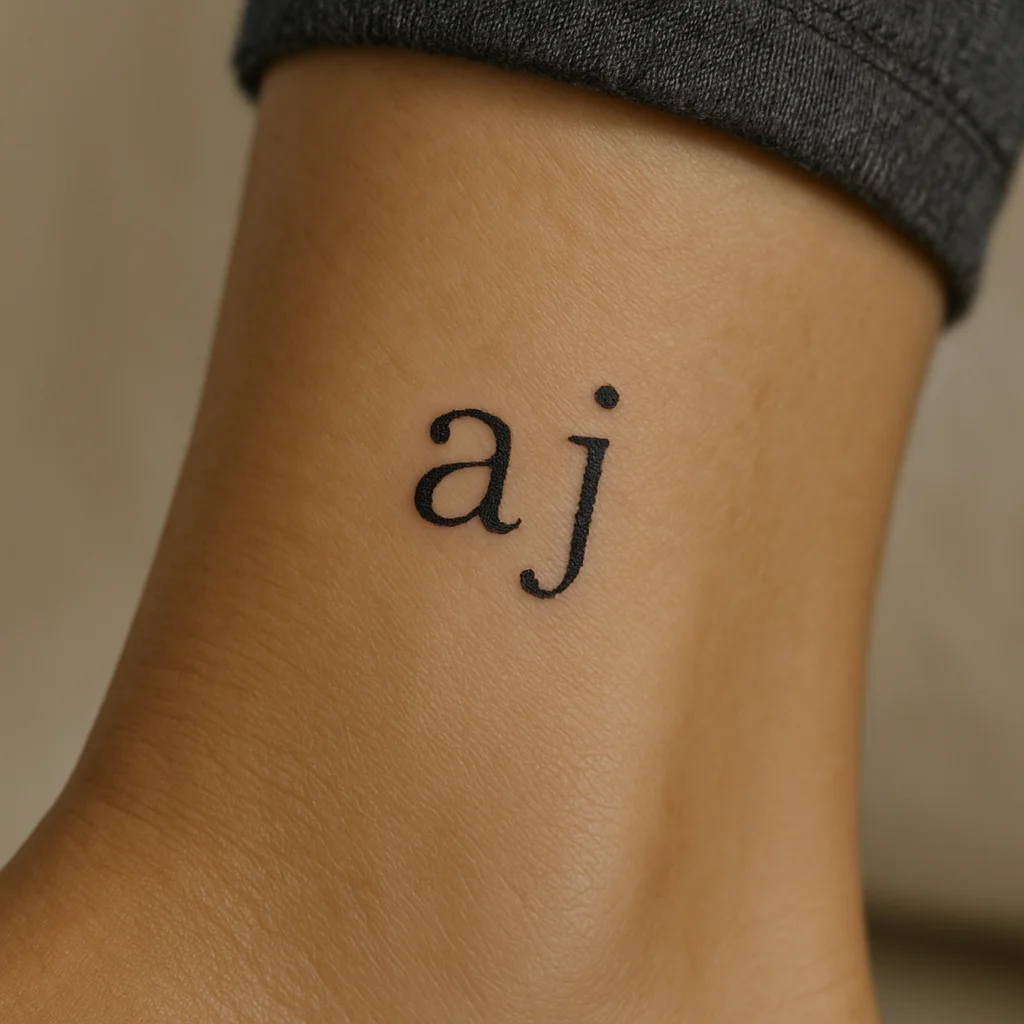
4. Two initials in typewriter serif
Lowercase initials, stacked or side by side, in a plain serif that keeps its shape as it settles. Half an inch tall each is the practical minimum. Skip cursive with tiny loops here, since the loops are the first thing to close up.
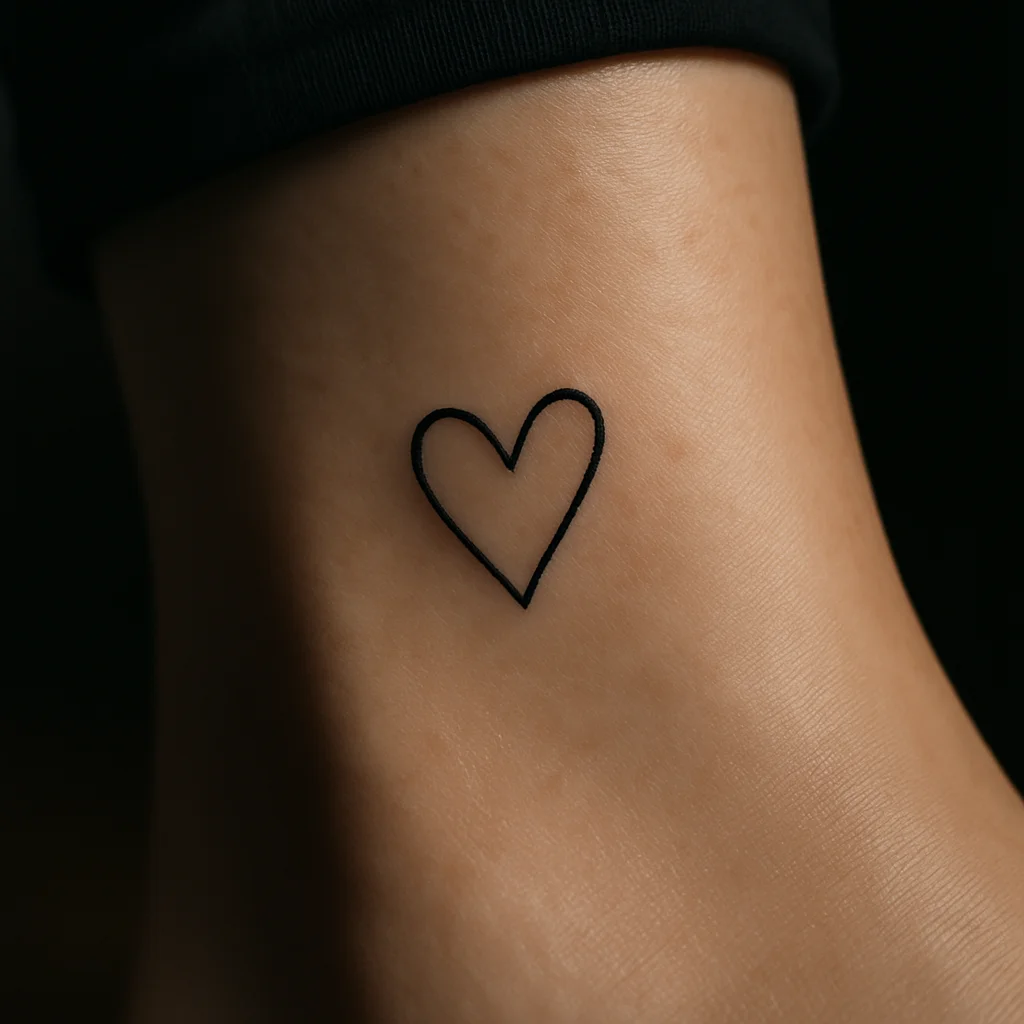
5. Micro heart outline
A simple asymmetric heart, drawn in one continuous stroke, sitting low near the bone. Under an inch, it reads as a small gesture rather than a statement. Popular as a matching piece between friends or sisters, since it's fast, cheap and universally legible.
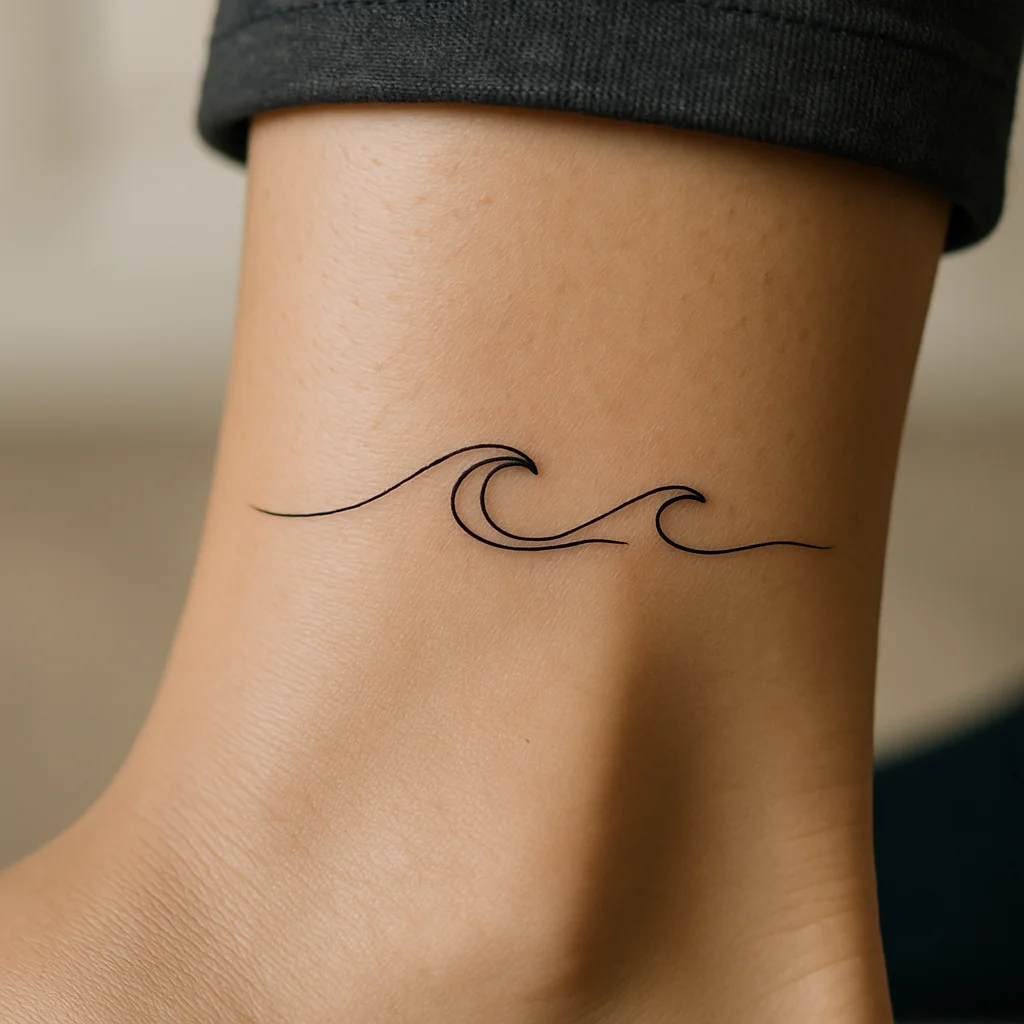
6. Single-line wave
One flowing line with two crests, running horizontally across the hollow, about an inch and a half wide. It follows the natural curve of the ankle instead of fighting it. Great for anyone who wants ocean symbolism without a full seascape.
Outer Ankle: Small Pieces for the Sandal-Season Side
This is the zone people actually see. The trade-off is the bone: ink sitting directly on the peak of the lateral malleolus can heal a touch lighter and takes more friction from low-cut shoes. Place the weight of the design just behind or just above the bone and let the bone act as a frame.
7. Small sun with short rays
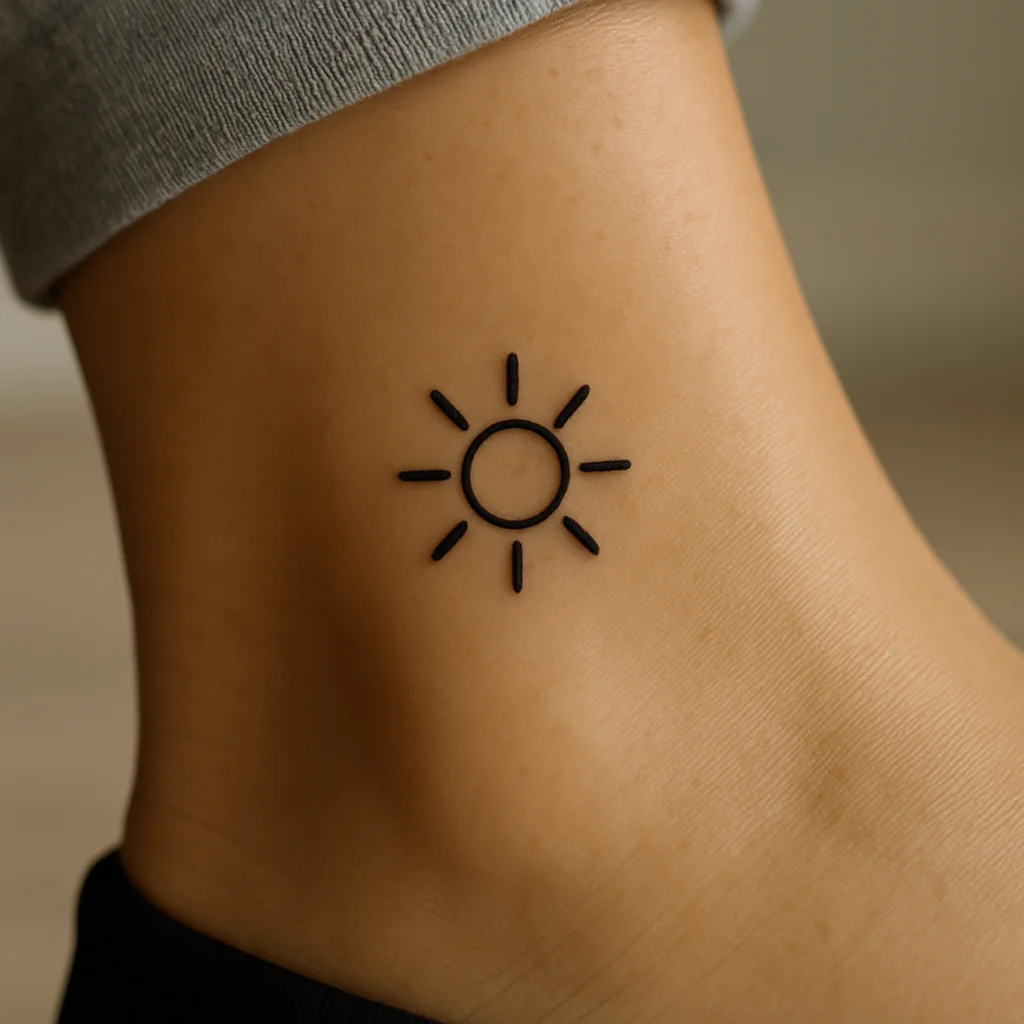
A solid or outlined disc with eight to twelve stubby rays, an inch to an inch and a half across, floating above the bone. Short rays survive better than long thin ones, which tend to soften into fuzz. Reads well with a bare foot and sandals.
8. Fine-line butterfly on the flat panel
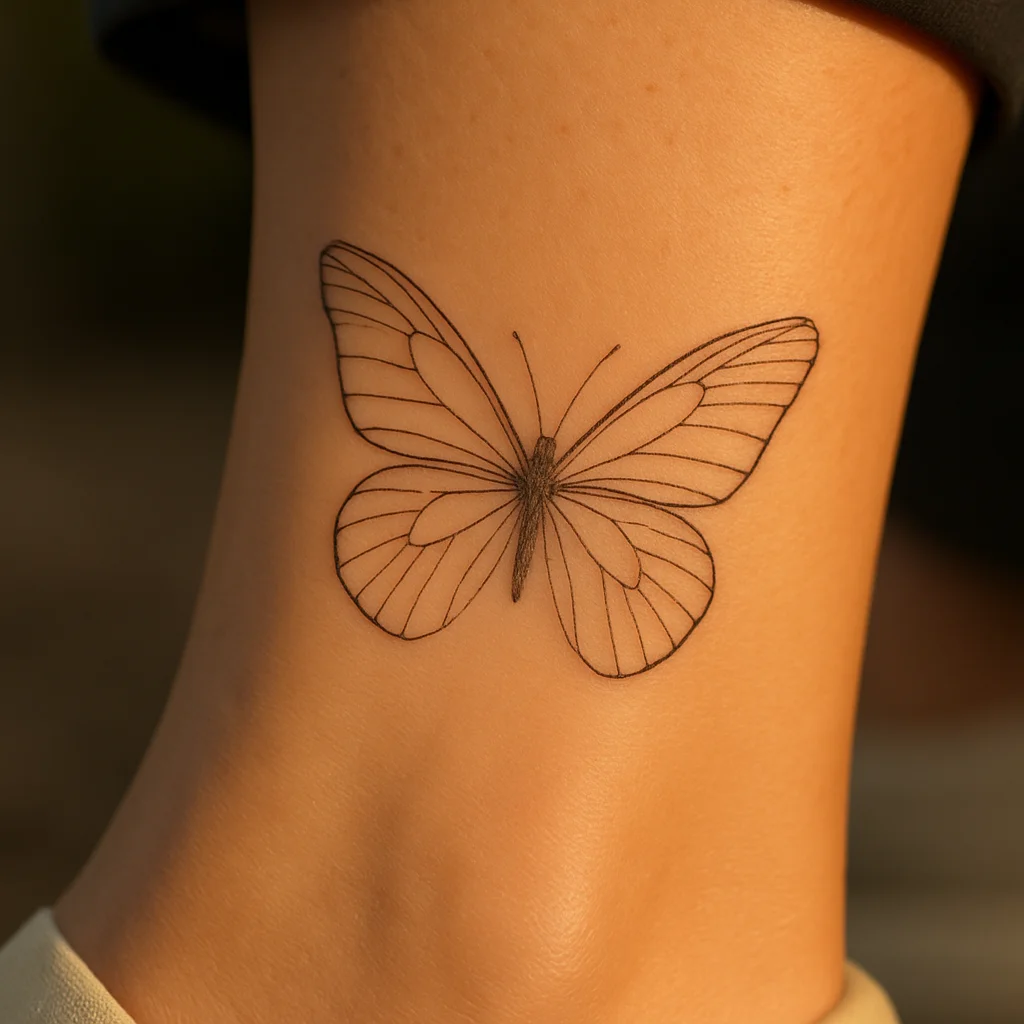
A side-profile or three-quarter butterfly, wings open, around an inch and a half tall, set behind the bone where the skin is flatter. Ask for open wing interiors with only a few internal lines rather than dense detail; crowded wing patterns are the classic small-tattoo regret. Timeless and endlessly personalisable.
9. Single-line mountain range
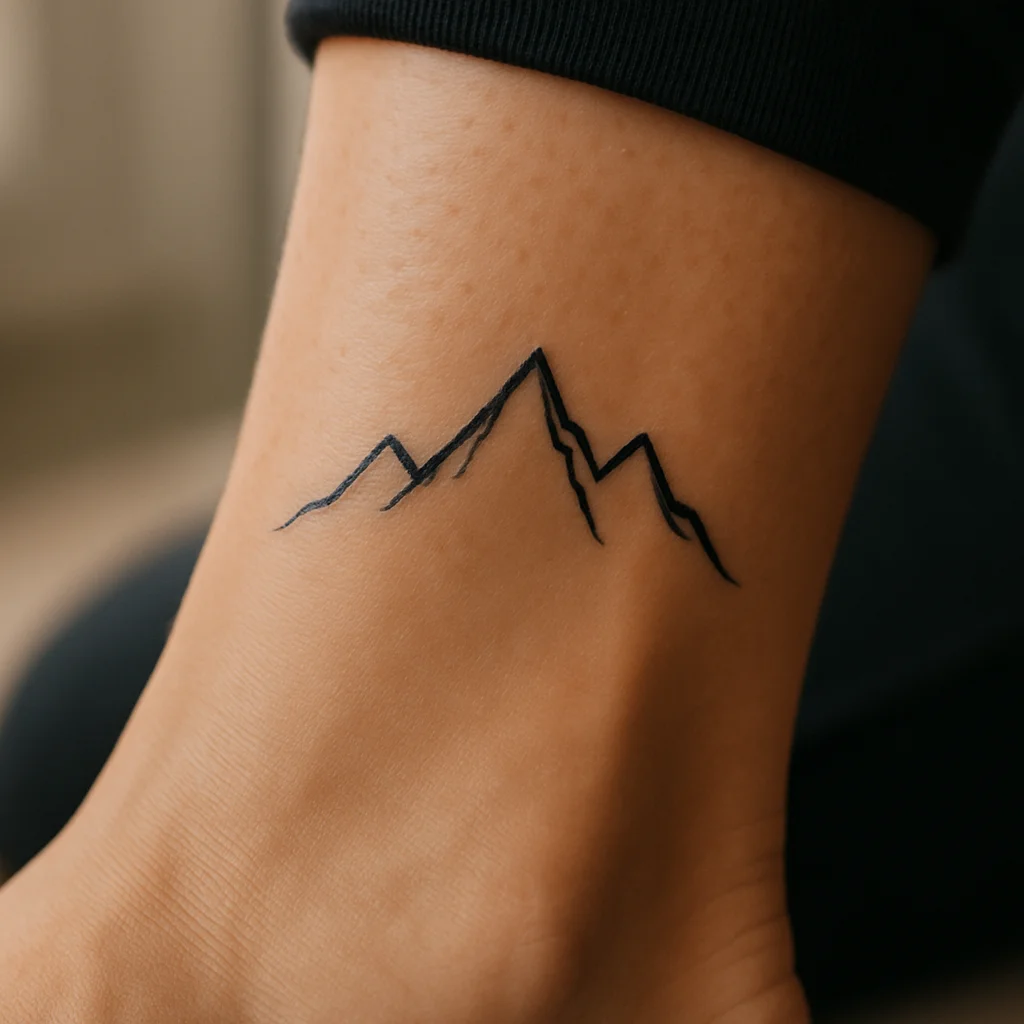
One continuous jagged line forming two or three peaks, about two inches wide, running horizontally. Add a tiny dot for a sun if you want a second element. It's simple enough to stay crisp and specific enough to mean something if the mountains are yours.
10. Four-star constellation
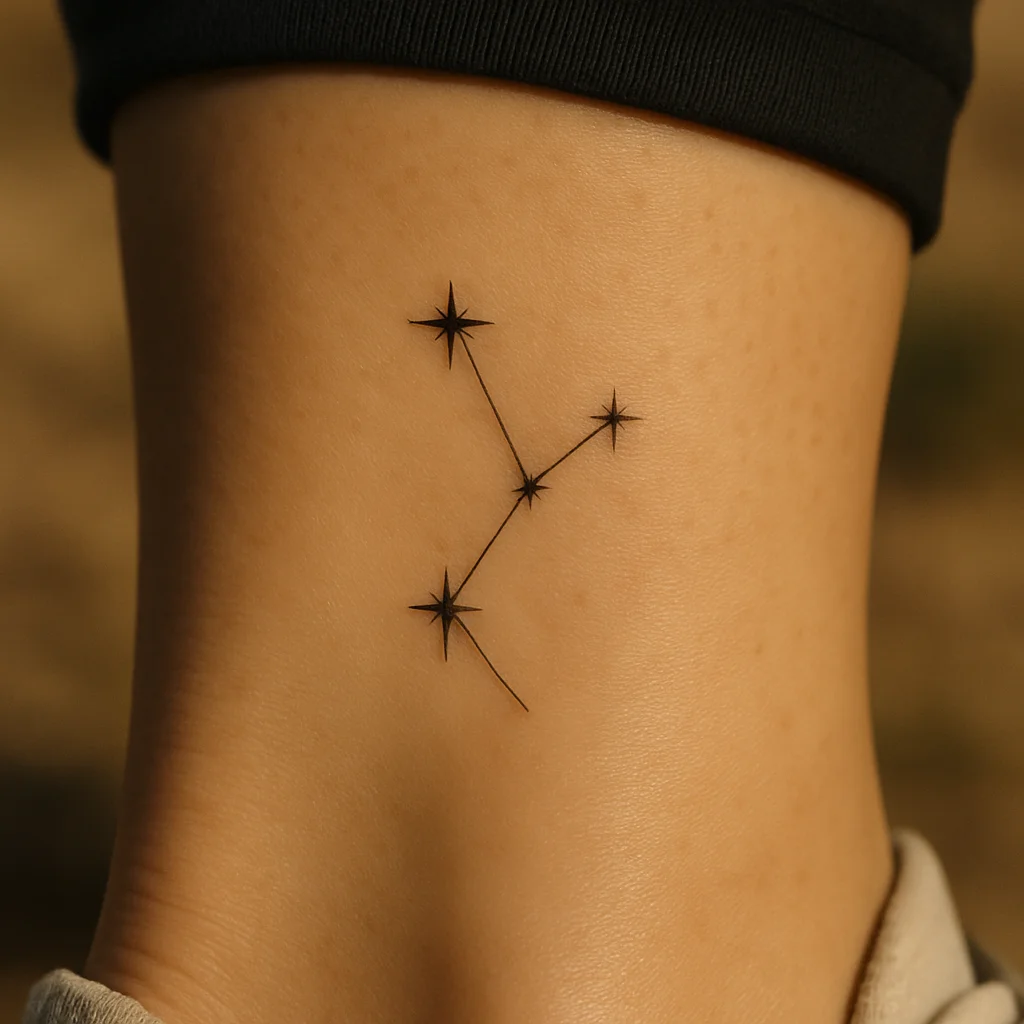
Four small stars connected by hairline strokes, mapped from a constellation that matters to you. Keep the overall shape under two inches and the connecting lines slightly heavier than hair-thin so they don't vanish. Works beautifully wrapped loosely around the bone.
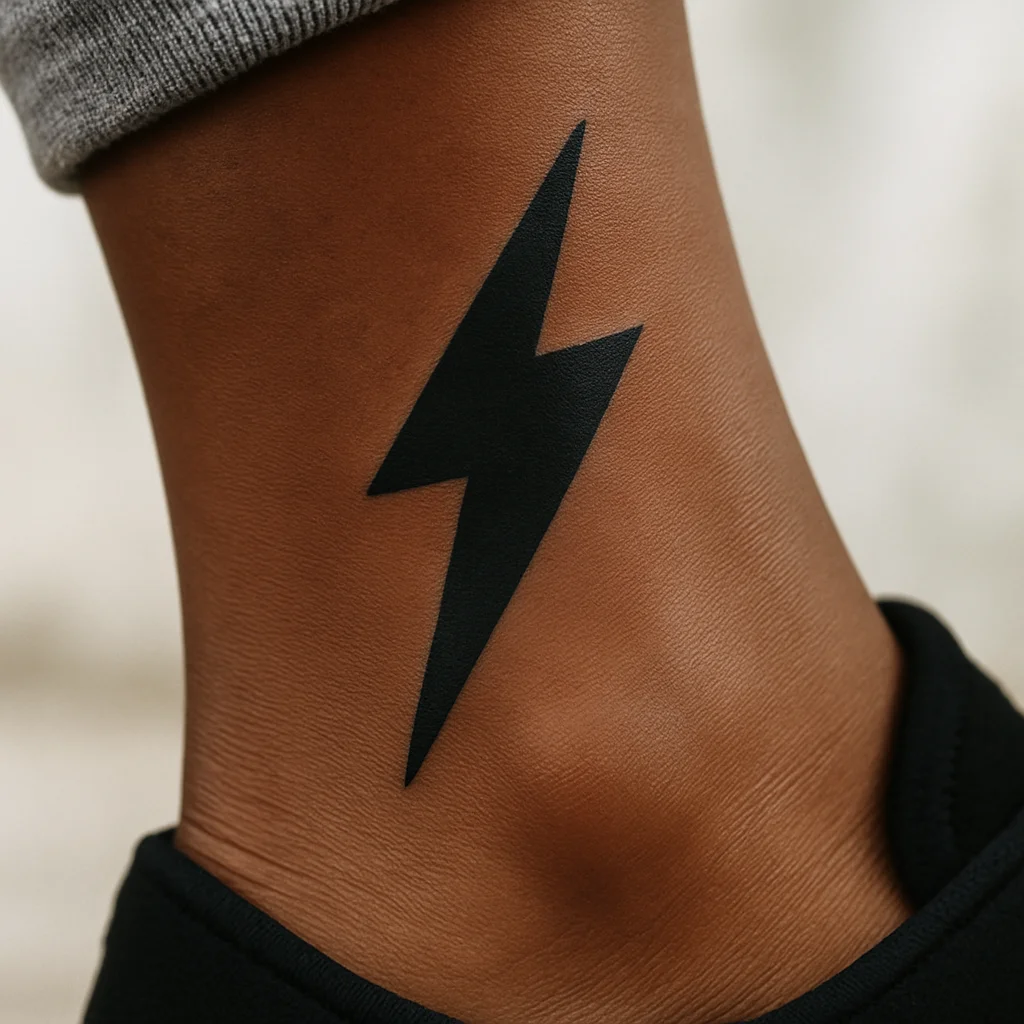
11. Tiny lightning bolt
A solid black bolt, three-quarters of an inch to an inch, angled to follow the slope of the ankle. Solid shapes are the most durable small tattoos there are, full stop. A good pick if you want something graphic and a little bit punk without any commitment.
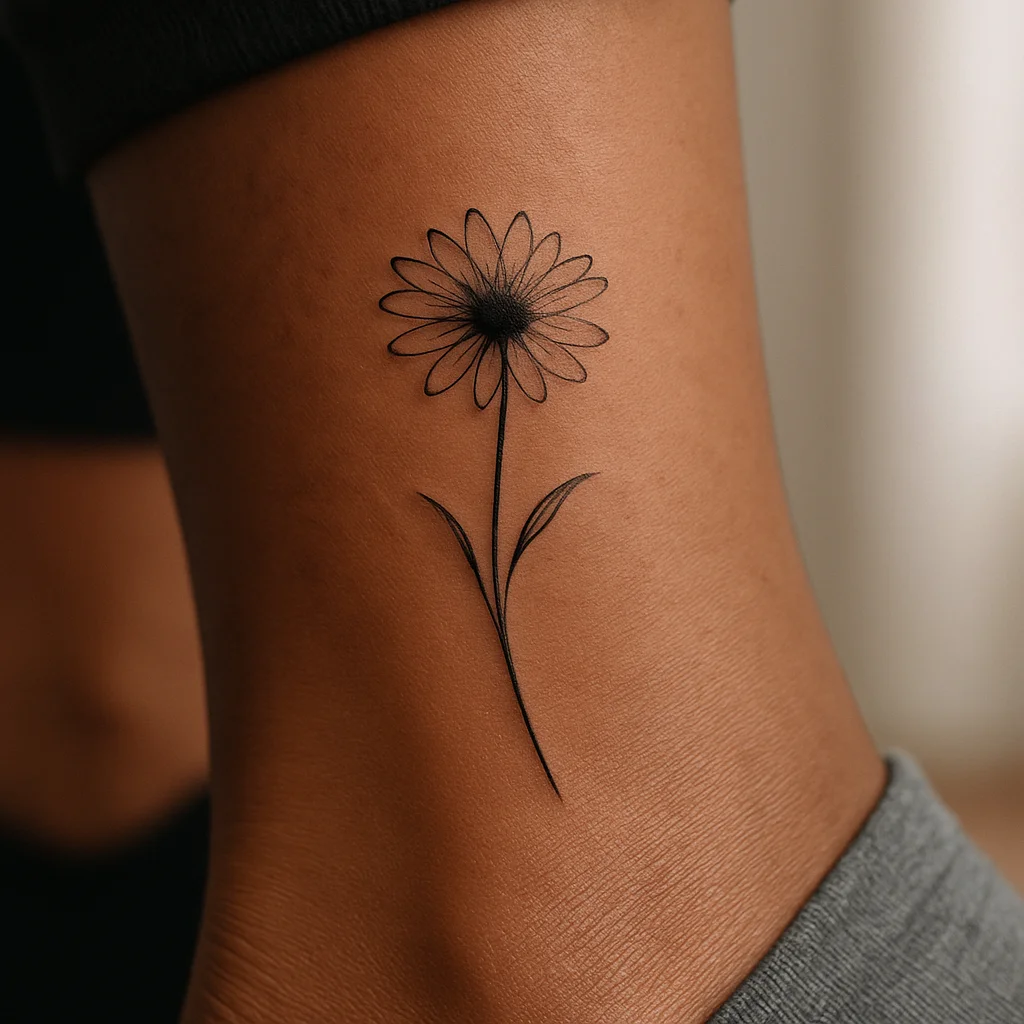
12. Single daisy in profile
One flower head with six or seven petals and a short curved stem, roughly an inch tall, sitting just behind the bone. A profile view rather than face-on keeps the petal count low and the design airy. Sweet without being cutesy, and it holds up as a standalone piece for years.
Above the Bone: The Band Zone
Two to three inches above the ankle bones you get the smoothest, most forgiving skin of the whole area, plus far less shoe contact. This is where wrap-around designs belong. Be warned that a true full circle means tattooing the shin bone and the tender inside of the leg, which is the sharpest part of the sitting — most artists will suggest a three-quarter wrap with a deliberate gap instead, and it looks more intentional anyway.
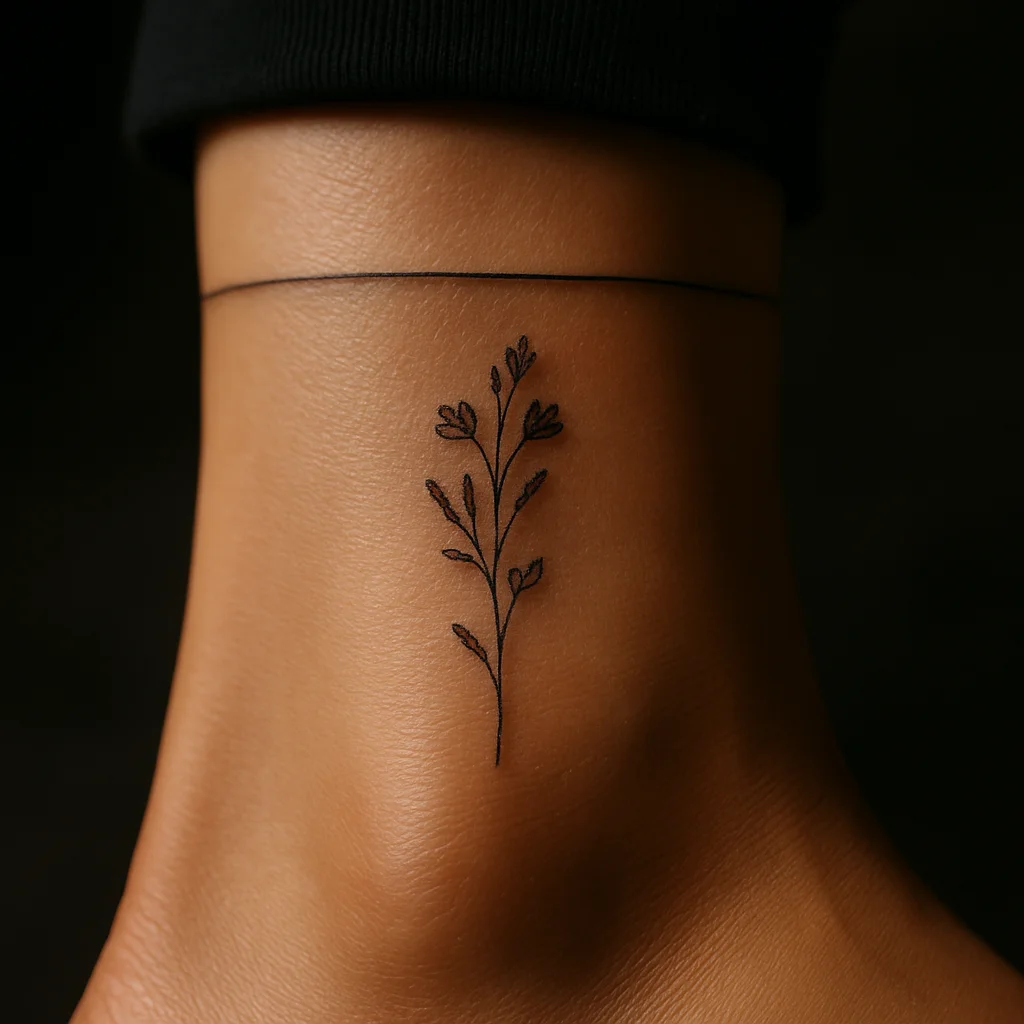
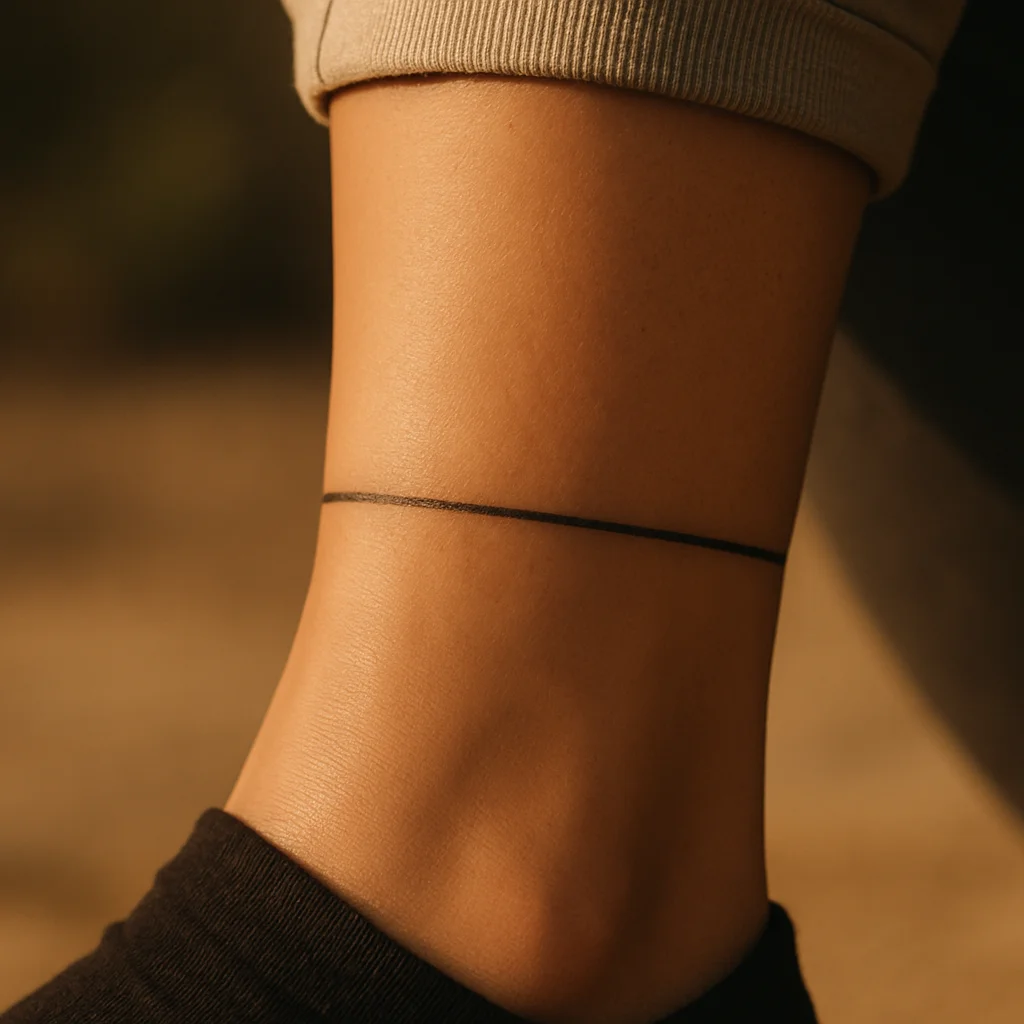
13. Thin solid band
One clean line, two to three millimetres thick, circling the leg. Thickness is the whole trick: too thin and it breaks up, too thick and it reads like a compression sock. Ask your artist to freehand the line while you stand, so it sits level rather than following the drape of a stencil.
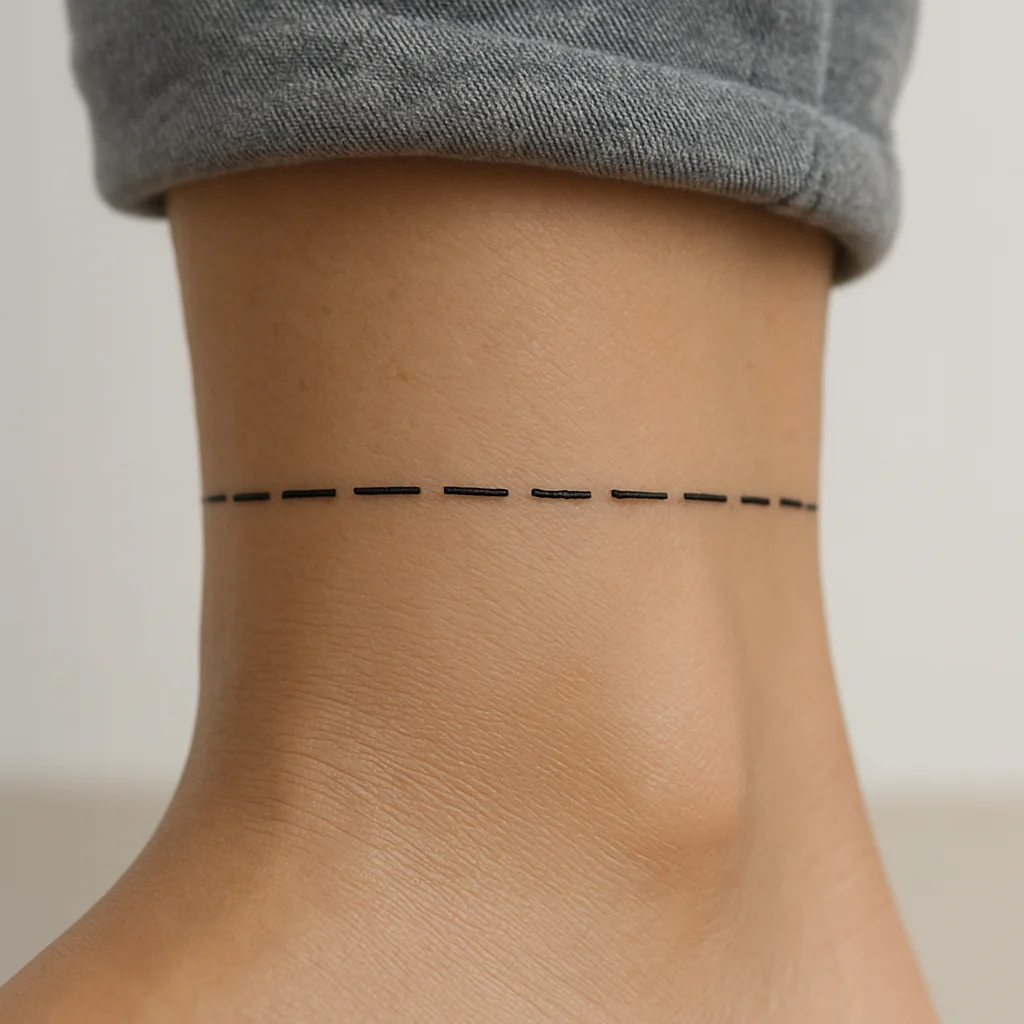
14. Dashed-line anklet
The same band, broken into short dashes with even gaps. It's softer than a solid line, hides minor unevenness, and touches up easily. Nice option if you like the anklet look but want it to whisper.
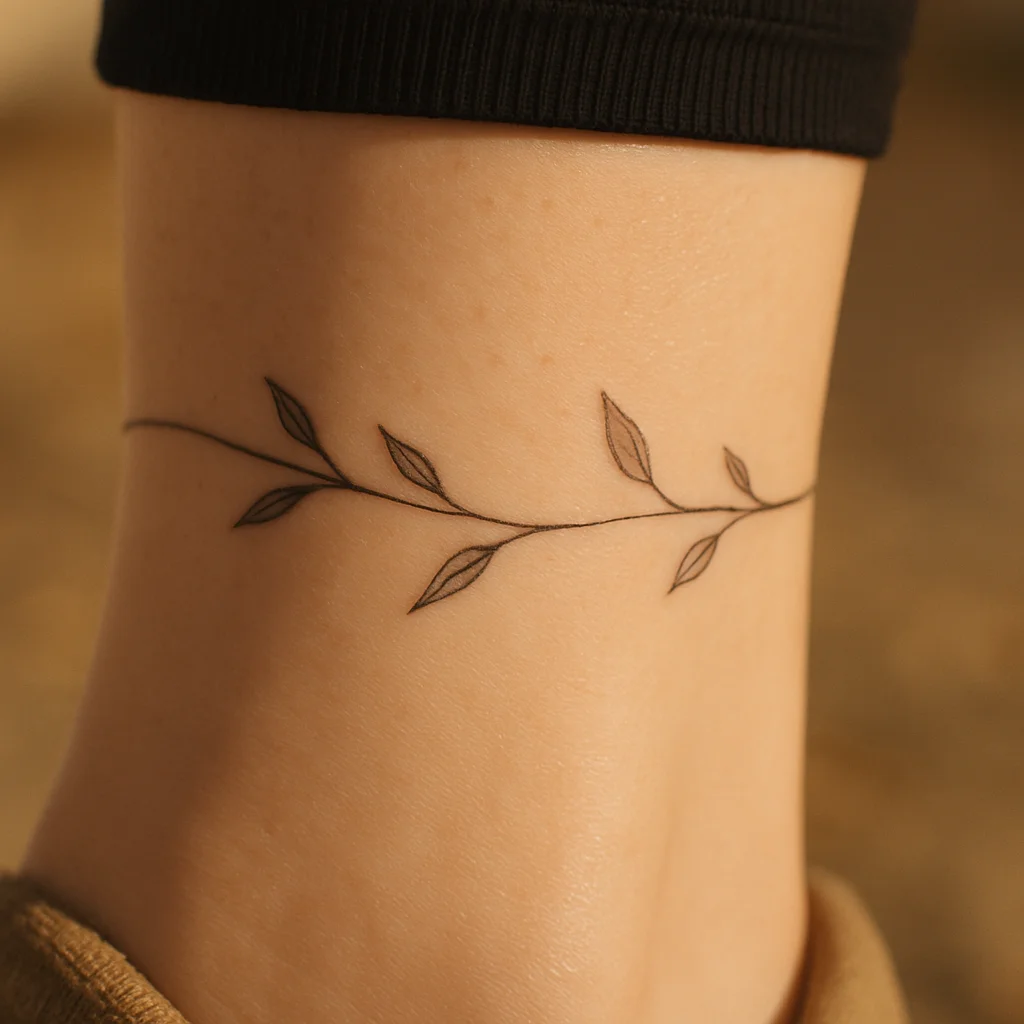
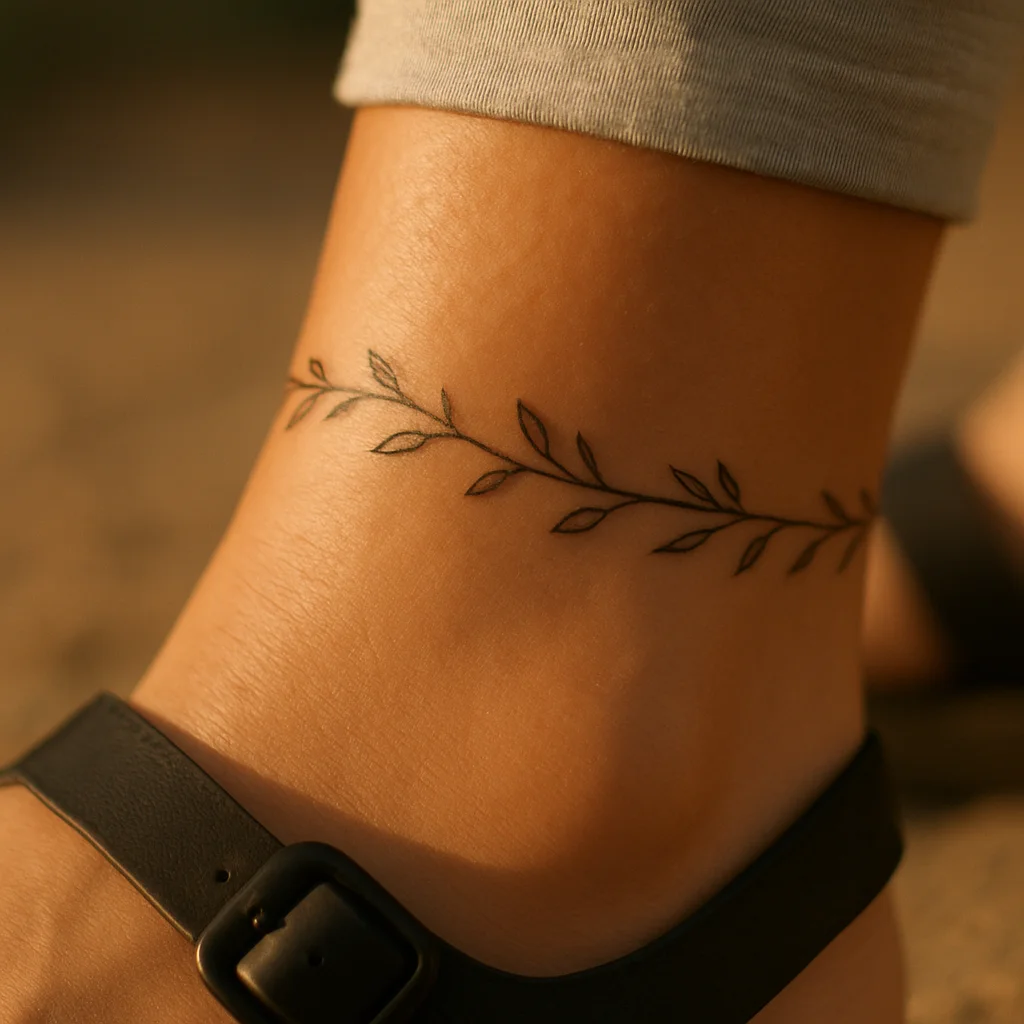
15. Vine band with five leaves
A thin stem circling three-quarters of the way around with small leaves spaced along it, ending in a leaf tip rather than a hard stop. Keep leaves at least a few millimetres apart so they stay separate as the lines settle. One of the most requested small ankle pieces, and deservedly so.
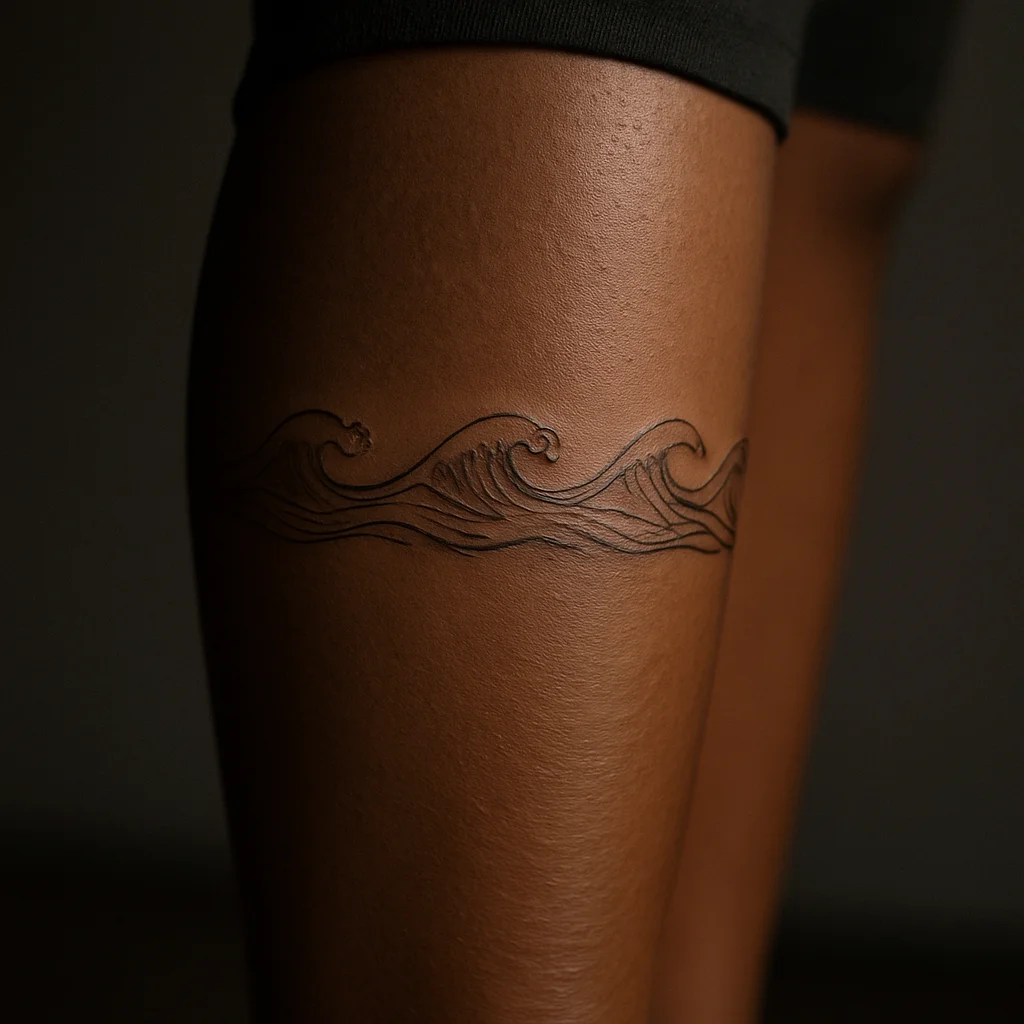
16. Wave band
A continuous gentle S-curve wrapping the leg so the crests and troughs alternate as it goes around. Roughly half an inch tall through the whole run. It has movement without needing detail, which is exactly what small tattoos want.
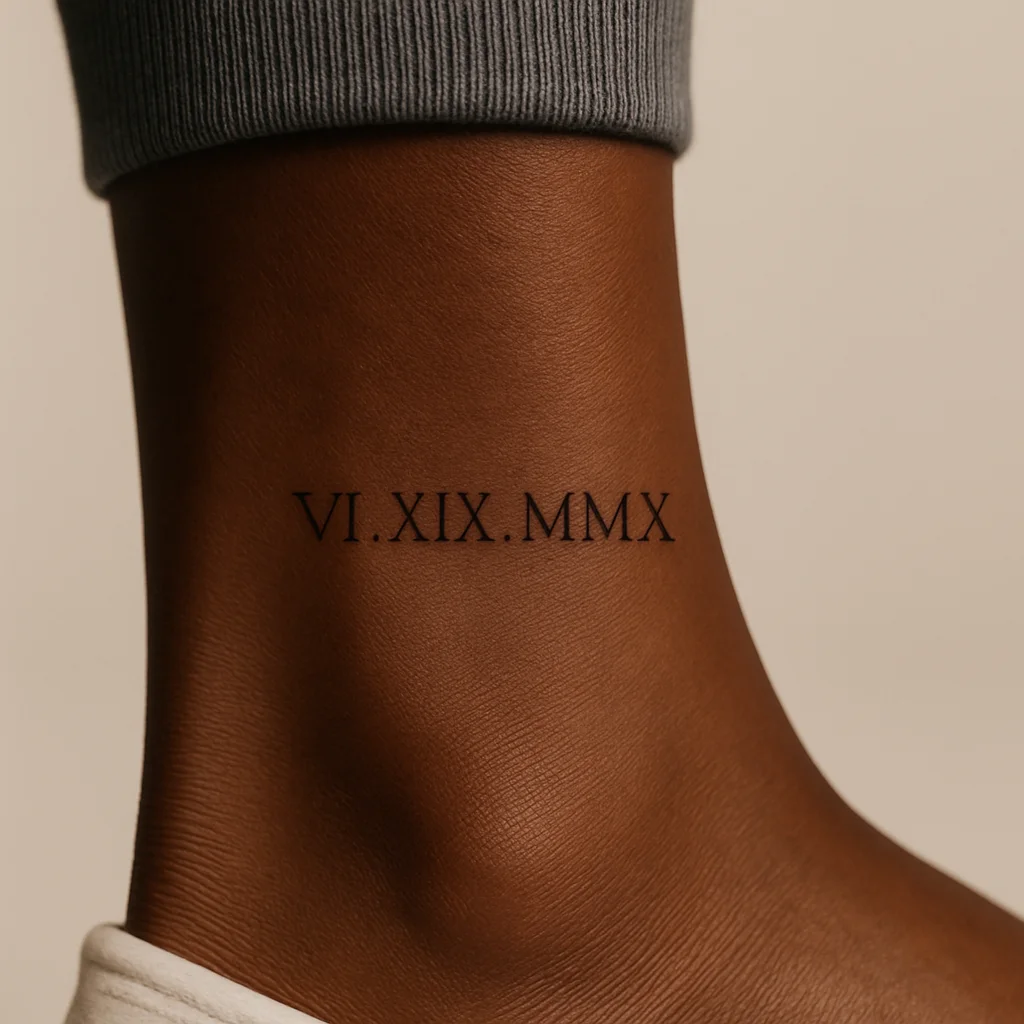
17. Roman numeral date
A date in slim Roman numerals, running horizontally across the front-outside of the leg, about two inches wide. Ask for slightly wider letter spacing than the drawing looks like it needs; tight numerals are the first thing to merge. Meaningful without being readable to strangers at a glance.
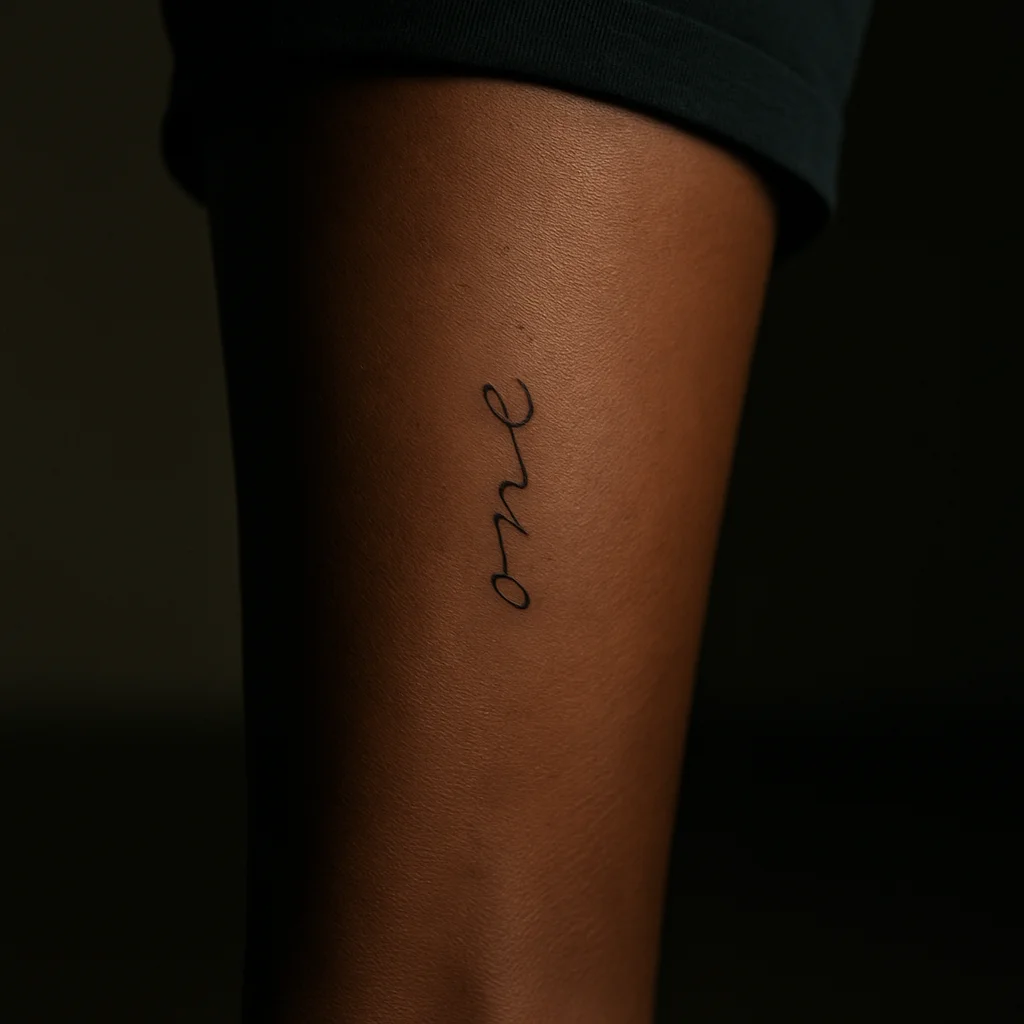
18. One word in lowercase script
A single word — a name, a reminder, a language you grew up with — in simple lowercase script, an inch and a half to two inches long, following the curve of the leg. Choose a script with open letterforms and minimal thin-to-thick contrast. For more on stripping a design down to what survives, our guide to minimalist tattoos built on subtraction is a useful companion read.
Back of the Ankle: Beside the Tendon
Narrow, tender, and the zone most likely to be scuffed by footwear while healing — plan on loose shoes or slides for a good two weeks. In return you get a naturally vertical strip that suits long, slim designs, and a placement almost nobody else has. Keep pieces to about half an inch wide and let them run tall.
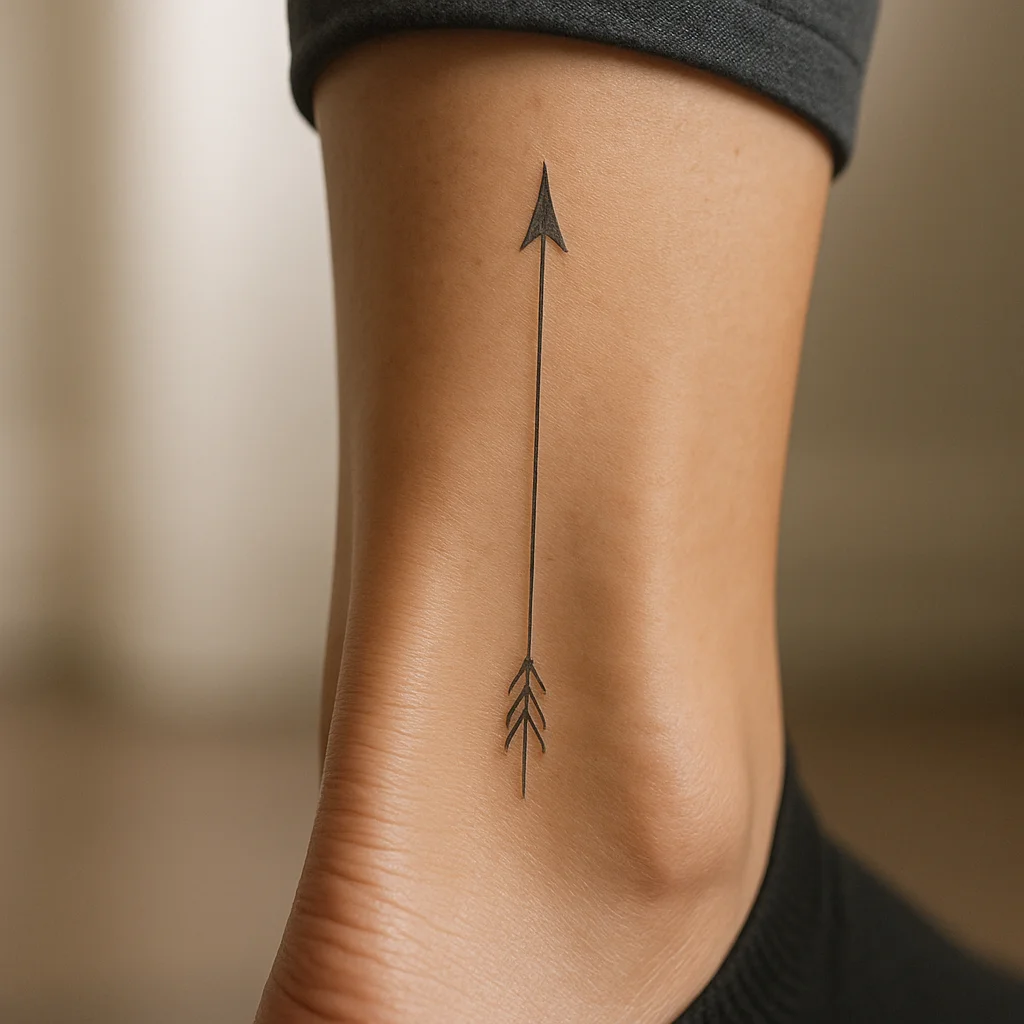
19. Vertical arrow along the tendon
A slim arrow, shaft running up beside the Achilles, two to two and a half inches tall, with a simple two-line fletching. The vertical format suits the space perfectly. Ask for the arrowhead solid rather than outlined so it stays punchy.
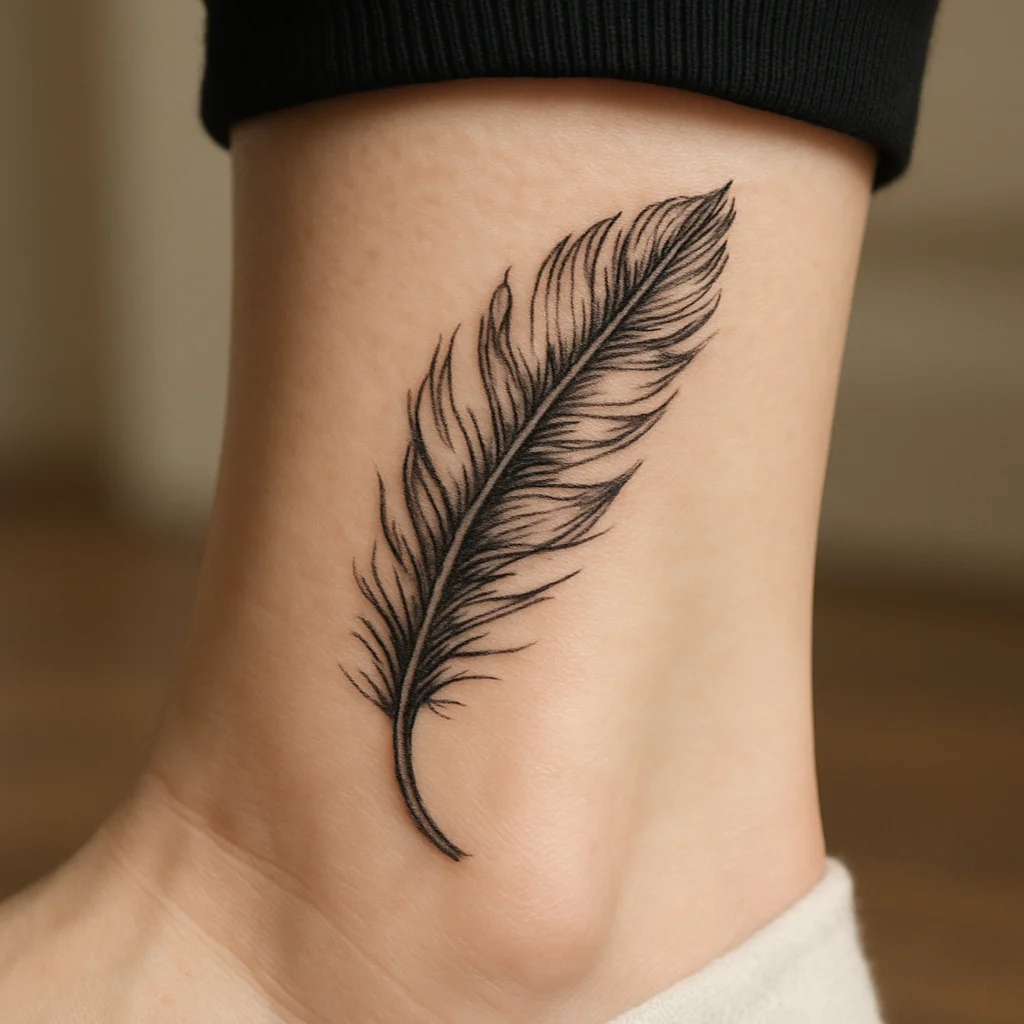
20. Trailing feather
A single feather with a curved quill and a few separated barbs at the bottom edge, angled down toward the heel. Leave gaps in the barbs rather than drawing every one; that separation is what keeps it from turning into a grey smudge. Around two inches tall.
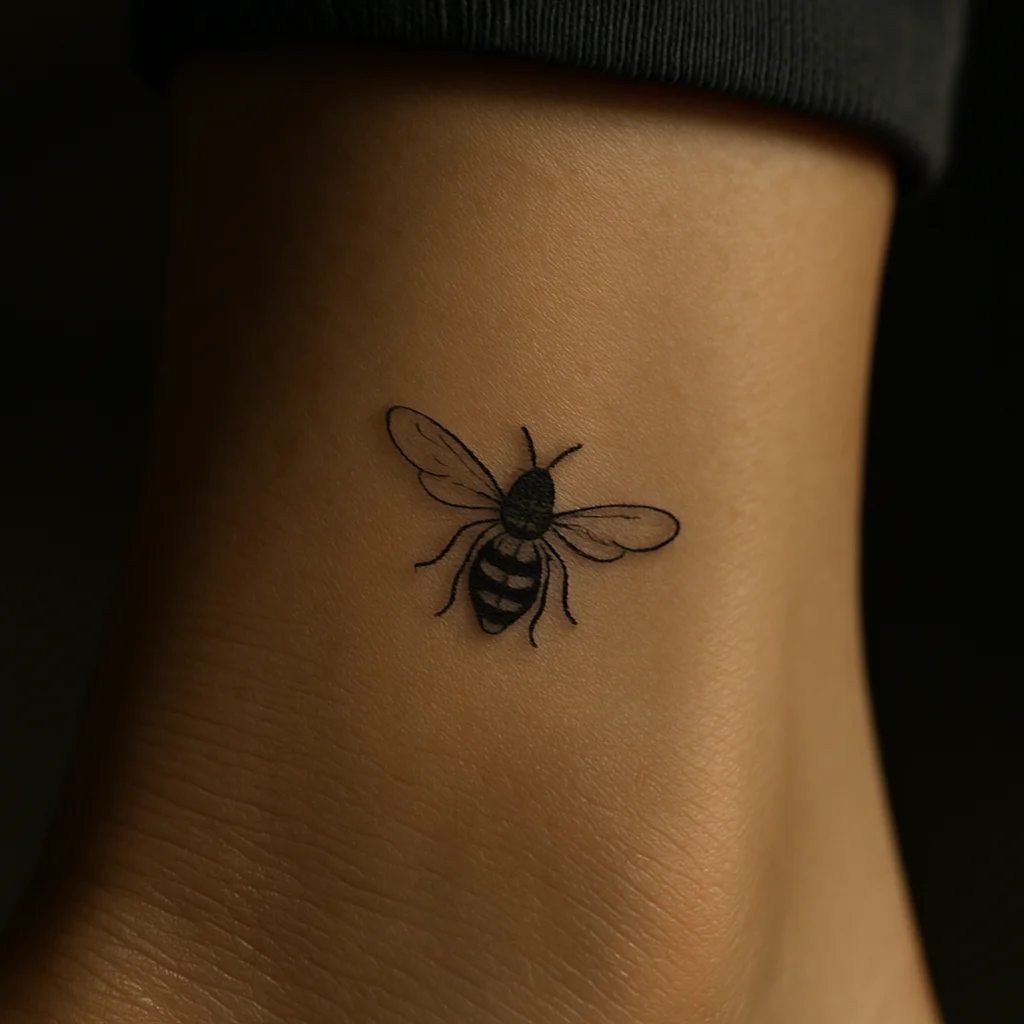
21. Small bee beside the tendon
A half-inch bee with striped body and two hairline wings, placed just to the outside of the tendon. Tiny, warm, and surprisingly durable because the stripes are solid blocks. A favourite for people who want one small tattoo and nothing more.
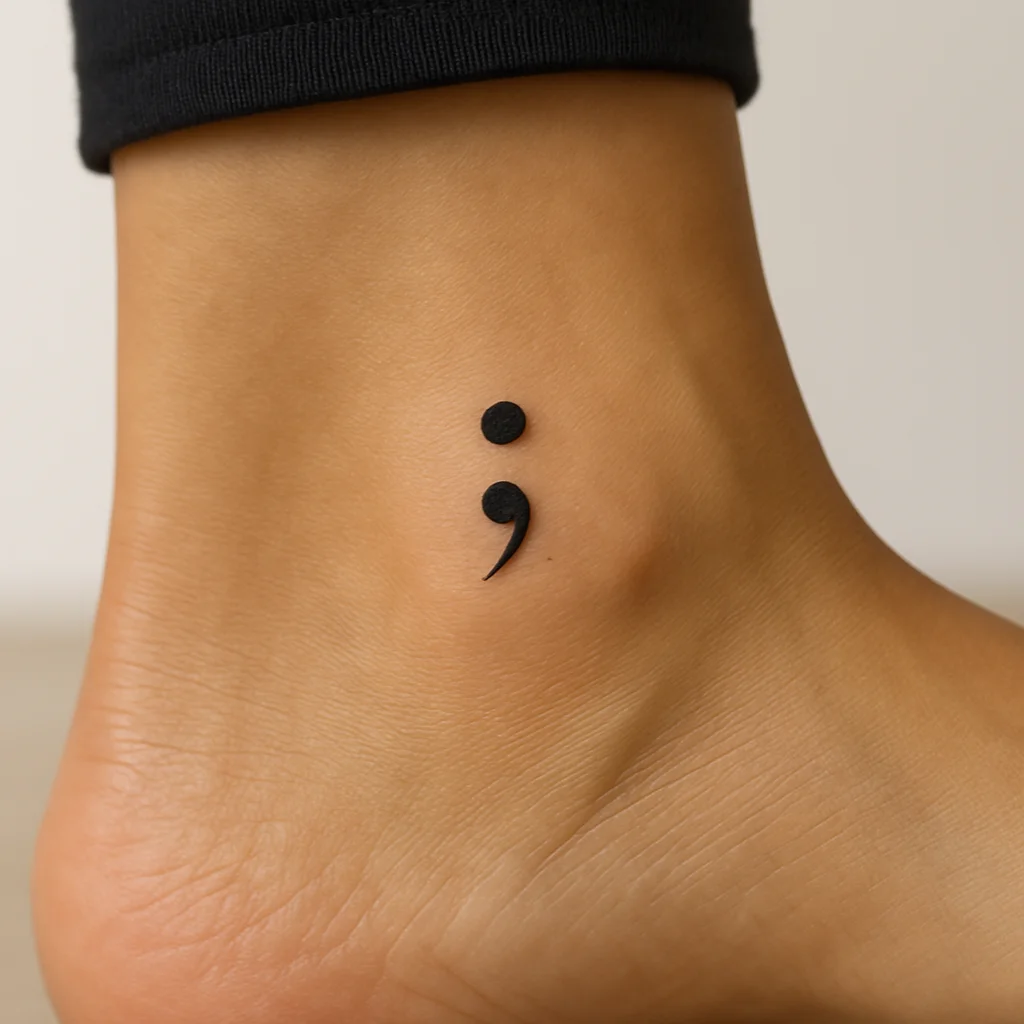
22. Semicolon or single comma
A plain punctuation mark, a quarter to a half inch, sitting low near the heel. It's about the fastest tattoo you can get and often falls under a shop minimum. Small enough to be nobody's business, permanent enough to matter to you.
Ankle to Foot: Anklet Designs That Cross the Line
Designs that bridge the ankle and the top of the foot look delicate and photograph beautifully, but be clear-eyed: the top of the foot takes ink less reliably than the leg, sits under shoe pressure constantly, and is the most common place small tattoos need a touch-up. Ask your artist to keep the heaviest linework on the ankle side of the joint and let only the light details spill onto the foot.
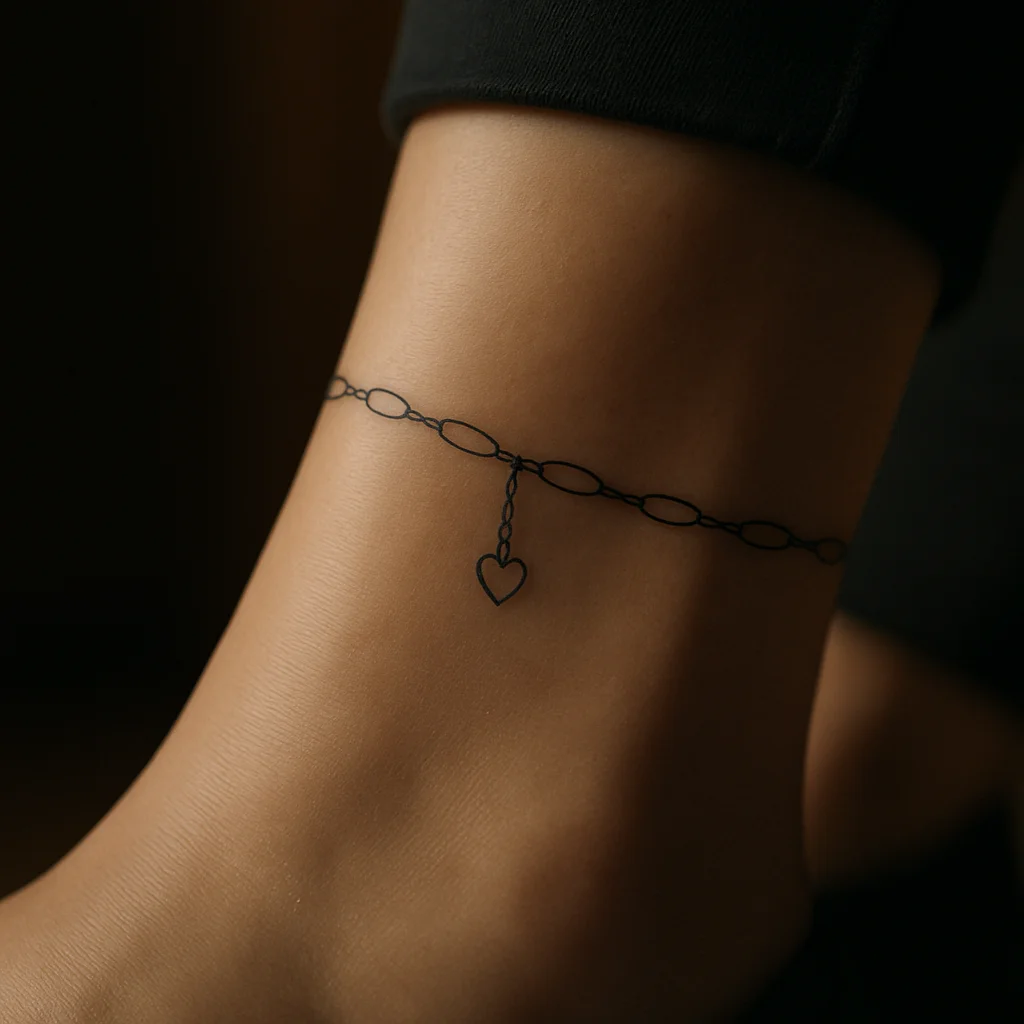
23. Chain anklet with a hanging charm
A fine chain of small linked ovals crossing above the bone, with one small charm — a heart, a star, a tiny key — hanging where it would naturally fall. Keep the links large enough to read individually, around three millimetres each. Two hours of work at most, and instantly recognisable as jewellery.
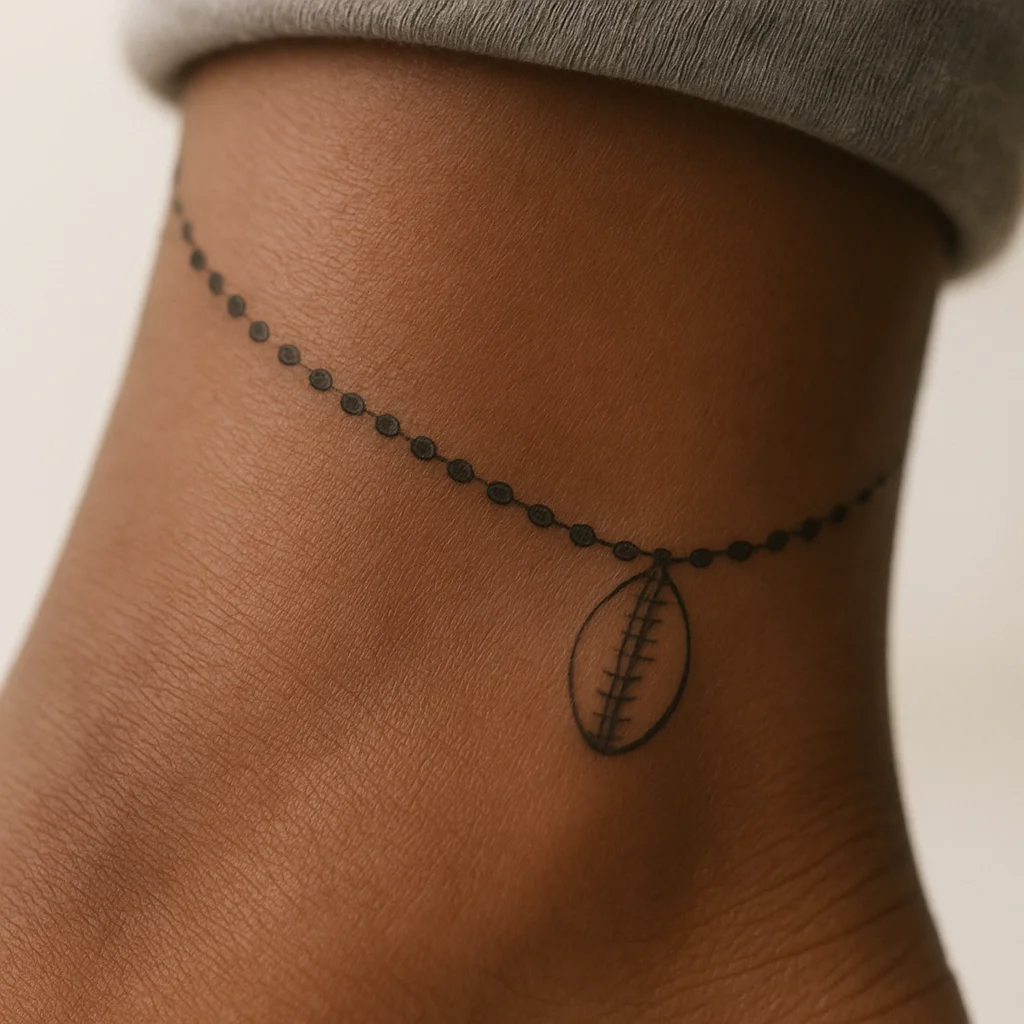
24. Beaded string with a shell
A row of evenly spaced dots as beads, curving across the ankle, finishing in a small cowrie shell on the outer side. The dots are extremely durable; the shell is the part to keep simple. Ideal for anyone chasing a summer, salt-water feeling year round.
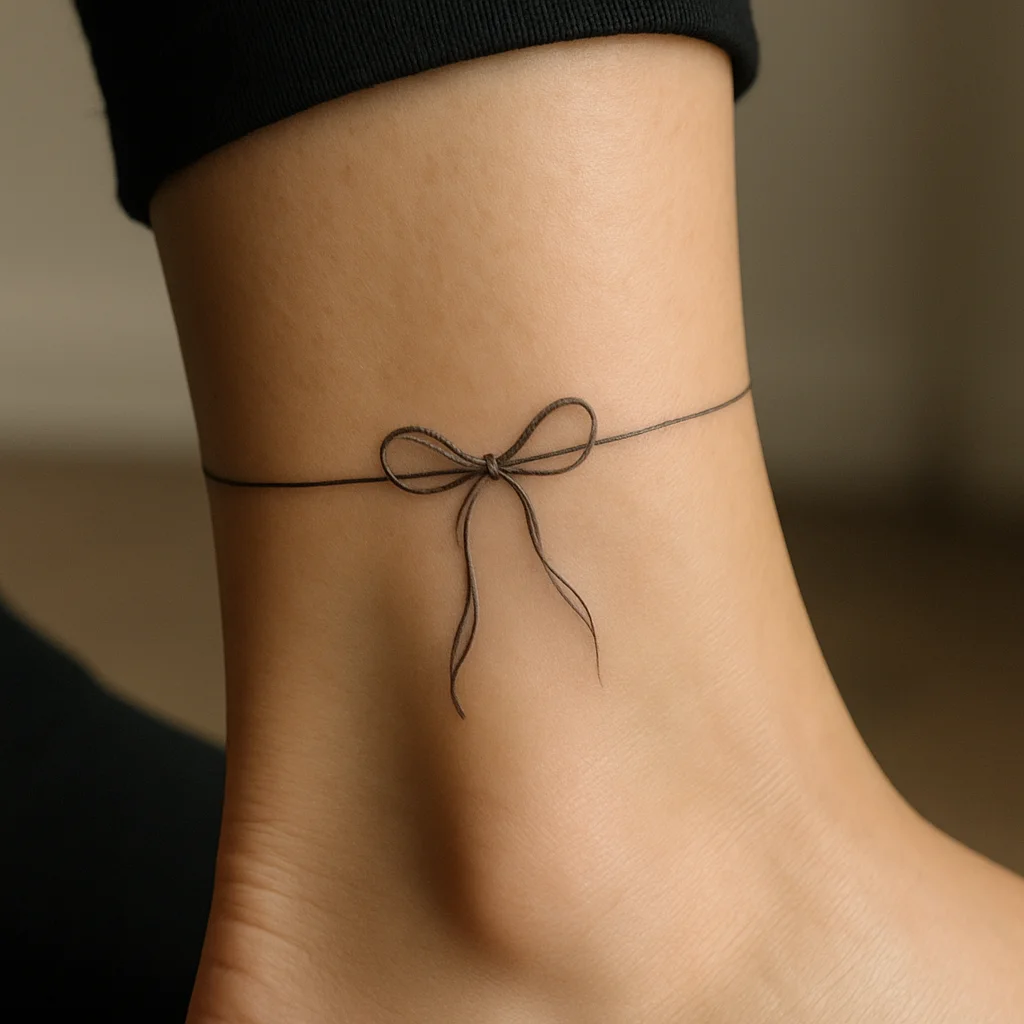
25. Thin band with a small bow
A single hairline strand around the ankle tying into a small bow on the outer side, with two short ribbon tails trailing toward the foot. Placement matters more than usual here — have the bow marked while you stand so it lands where you'd actually tie it. Delicate, feminine, and only about an inch of real detail.
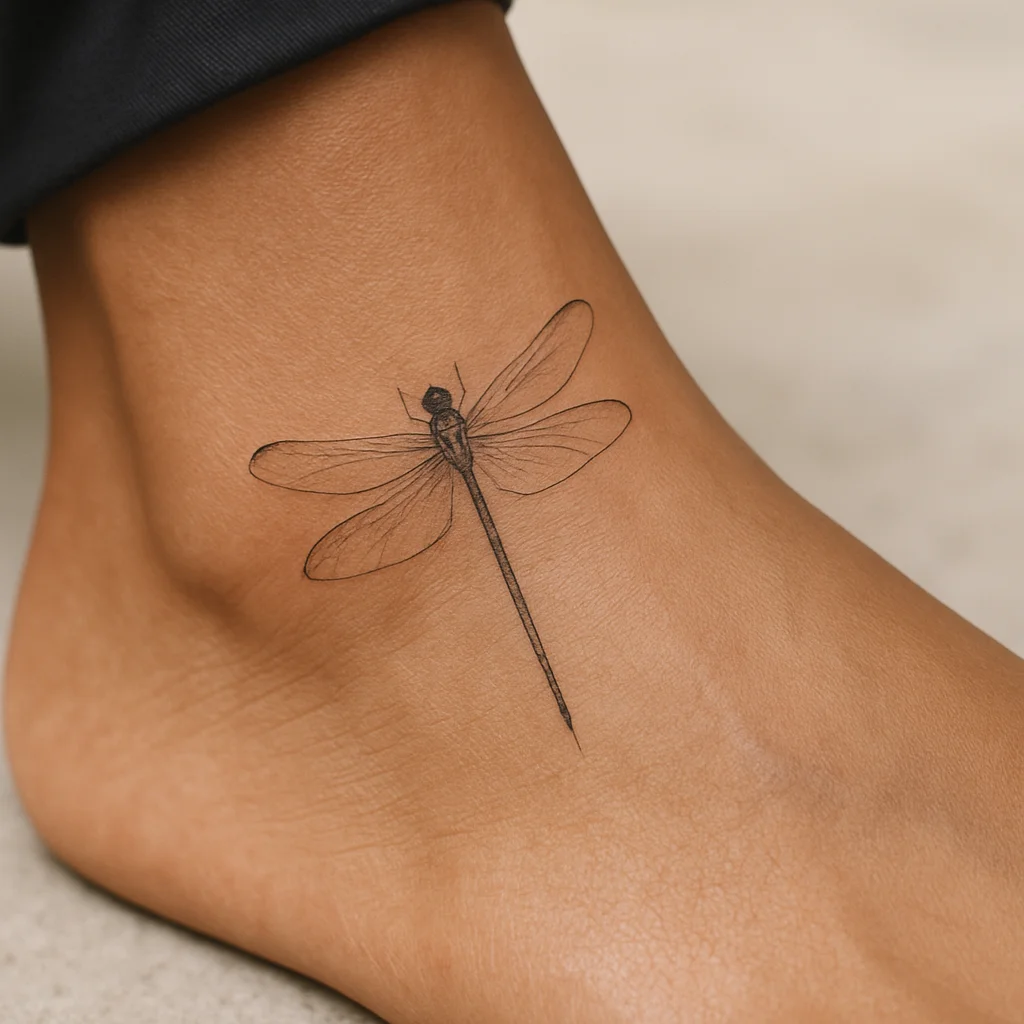
26. Dragonfly bridging the joint
A slim dragonfly with its body along the tendon line and wings opening onto the top of the foot, roughly an inch and a half long. Two clean wing outlines with one internal vein each is plenty. It's the piece to pick if you want the ankle-to-foot look with a subject rather than jewellery.
Cost, Healing and How Ankle Tattoos Age
Almost every design here falls under a shop minimum rather than an hourly rate. Minimums vary a lot by city and artist demand, commonly landing somewhere in the low-to-mid three figures in the US and UK, with a small ankle piece often costing exactly that minimum and a band or anklet running to one short hourly session. Fine-line specialists with waiting lists price higher; that premium usually buys you cleaner line weight, which on a tattoo this small is the whole product.
Healing is where ankles earn their reputation. The area swells more than an arm would, especially if you're on your feet all day, so expect a puffy first two or three days and elevate your foot in the evenings. The real enemy is friction: sock elastic, sneaker collars and boot shafts all rub exactly where you just got tattooed. Slides, sandals or loose low-cut shoes for two weeks solve most of it. Wash gently twice a day, use a thin layer of unscented moisturiser, and skip the pool, the sea and long baths until it's fully closed.
Long-term, ankle tattoos age moderately well — better than fingers or feet, not as well as inner forearms. The two things that shorten their crisp life are sun (sandals mean this area catches a lot of it, so sunscreen it once healed) and lines placed too thin or too close together. When you brief your artist, say this out loud: I want this to still read clearly in ten years, so please set the line weight and spacing for longevity, even if it means the drawing looks slightly bolder than my reference. A good artist will thank you for it. If you're deciding between ankle and wrist for a first small piece, our wrist tattoo guide sorted by zone covers the same trade-offs on the other end of the body.
Frequently asked questions
Do ankle tattoos hurt more than wrist tattoos?
They're comparable, and both are sharper than fleshier areas because the skin sits close to bone. Directly on the ankle bones and beside the Achilles tendon is the most intense, while the smooth band area two to three inches above the bones is noticeably easier. Most small ankle pieces take 15 to 40 minutes, so the discomfort is brief.
How small can a simple ankle tattoo be before it blurs?
As a working rule, keep individual lines from sitting closer than about a millimetre apart and avoid designs under roughly three-quarters of an inch that contain internal detail. Solid shapes, dots and single-line designs hold up at tiny sizes; dense butterflies, script with tight loops and multi-petal flowers do not. If you love a small reference, ask your artist to redraw it slightly larger and simpler.
Will shoes ruin a healing ankle tattoo?
They can, which is why footwear planning matters more here than almost anywhere else. Sock elastic and shoe collars rub directly across the area and can lift scabs, causing patchy healing. Wear slides, sandals or loose low-cut shoes for about two weeks, and if you must wear closed shoes, keep socks low and clean.
Which ankle zone is easiest to hide at work?
The inner ankle and the back of the ankle disappear under any sock or closed shoe, and the band zone above the bone is covered by trousers and most boots. The outer ankle is the most visible in sandals and low shoes. If you need reliable concealment, place the design low on the inner side.
How often do small ankle tattoos need a touch-up?
A well-placed ankle piece on the leg side of the joint often never needs one, though fine-line work may want a small refresh after several years. Anything spilling onto the top of the foot is far more likely to need attention within the first year or two. Many artists include one free touch-up within a few months of healing, so ask when you book.
The conversation
No comments yet. Got a thought about these designs? Start us off.
Want to weigh in? Join the community to comment, save designs and try them on your skin.