28 Wrist Tattoo Ideas, Sorted by Wrist Zone
The wrist isn't one canvas, it's four: the soft inner face, the outer bone, the narrow ulnar edge and the full wrap. Here are 28 designs sorted by zone, with honest notes on pain, sizing and how each one ages.
What the Wrist Actually Does to a Tattoo
The wrist is one of the most requested placements in any studio and one of the most misunderstood. It looks like a single small canvas, but it behaves like four different ones: the soft inner face, the flat outer plane over the bone, the narrow edge along the ulna, and the full circumference if you wrap it.
How it ages. The inner wrist sits in a flex crease and gets scrubbed constantly by hand-washing, sleeves, watch straps and sanitiser. Very fine hairlines and micro-script there will soften faster than the same design on a forearm. The outer wrist gets the most sun of any spot on your body outside your face, so black holds better than pale colour. Neither is a reason to avoid the wrist, it's a reason to build in a little insurance: slightly heavier line weight than you think you need, real negative space between elements, and letters no smaller than about 4 mm tall.
Pain. Thin skin over bone and tendon means it stings, sharply, especially on the inner wrist near the base of the thumb and directly over the wrist bone. The saving grace is speed: most wrist pieces are done in 15 to 45 minutes. A full wrap band is the harder sit because the artist has to cross the tender inner face and the bony edge in one session.
Cost. Almost every wrist tattoo lands at or near the shop minimum, which in most cities sits in the low-to-mid three figures. A wrap band, a detailed ornamental cuff or anything with fine shading pushes into an hour or two of chair time.
Sizing rule of thumb. Keep the design inside a rectangle roughly 4–6 cm wide, and leave a finger's width of clear skin between the tattoo and the hand crease so the design doesn't distort when you bend your wrist.
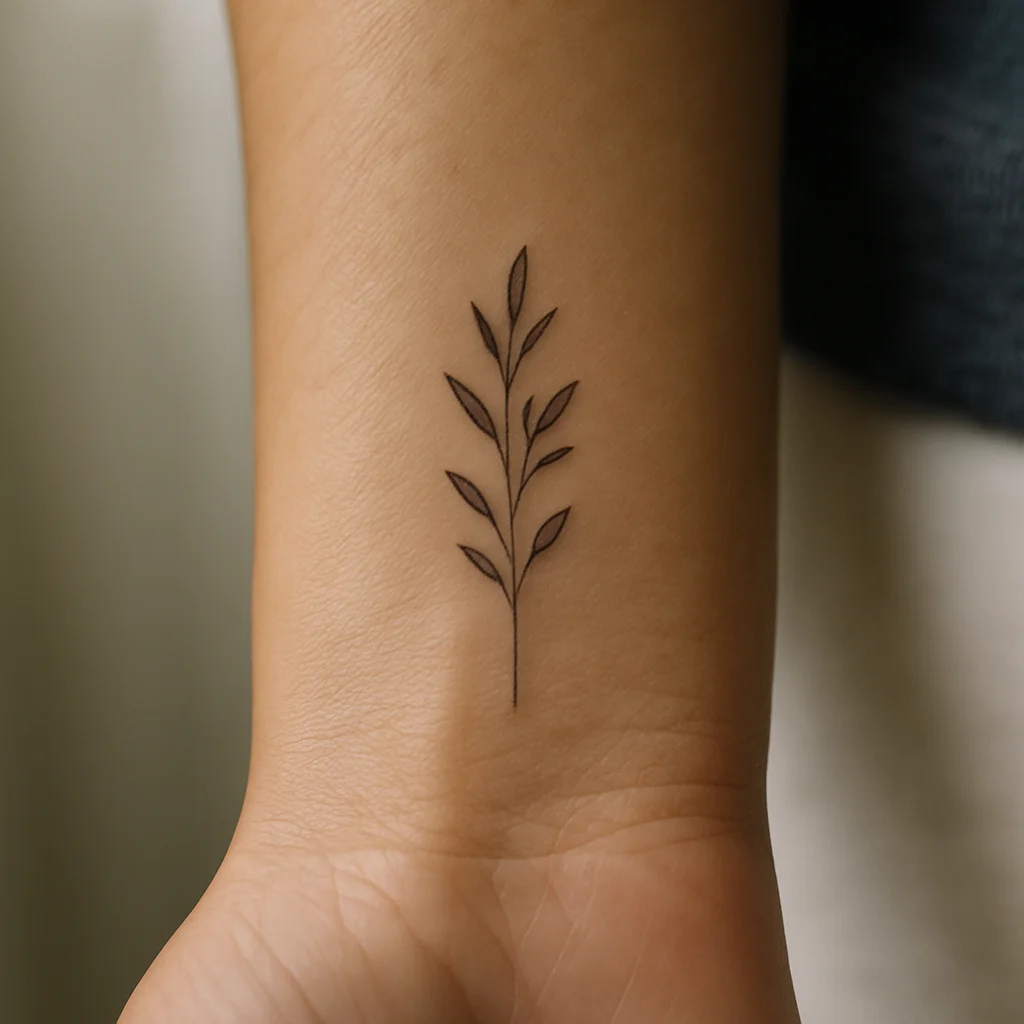
Inner Wrist: Soft, Private, Read by You First
The inner wrist faces you. That makes it the natural home for reminders, dates and small symbols you want to glance at rather than display. It's also the tenderest part of the zone, so keep compositions compact and vertical or follow the crease horizontally.
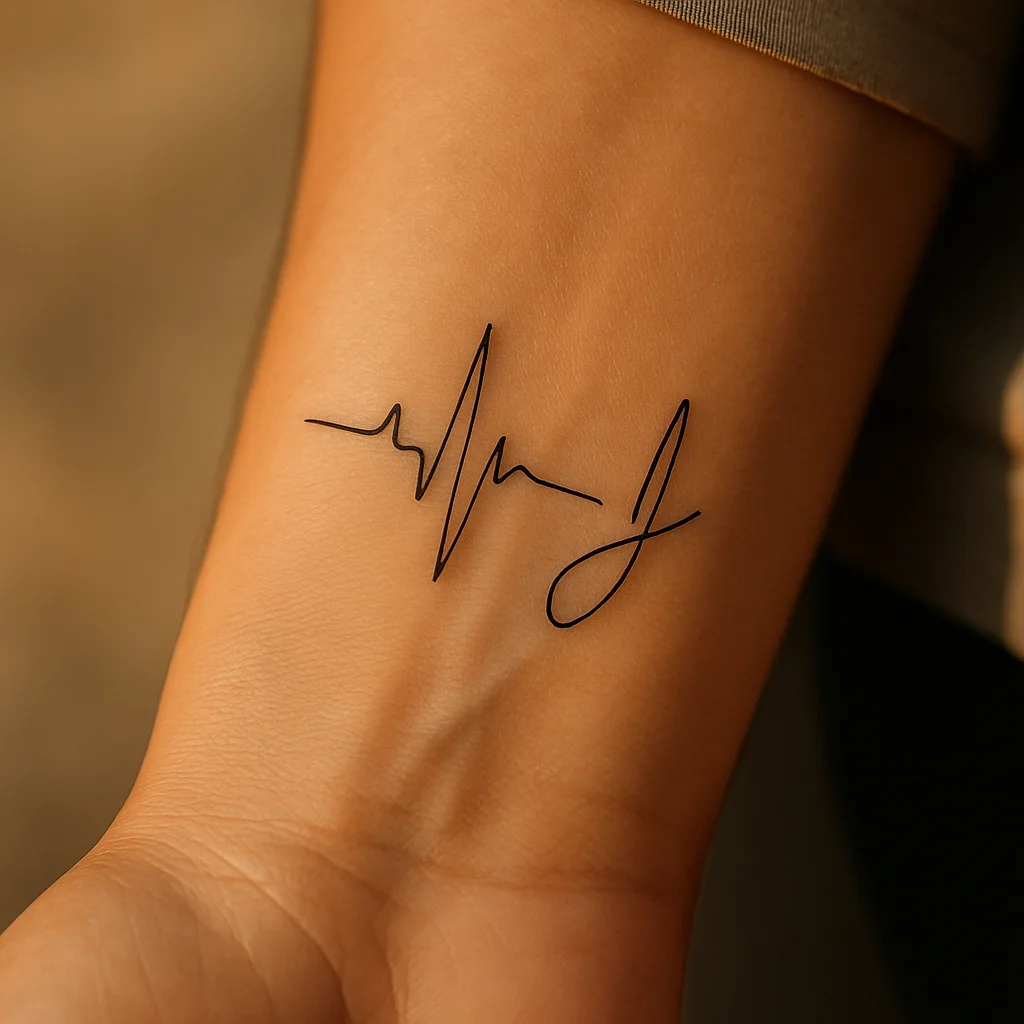
1. Heartbeat line that resolves into an initial
A single-weight ECG line runs horizontally across the wrist and its last spike becomes the first letter of a name. Roughly 4 cm wide, one needle grouping, done in twenty minutes. It suits anyone who wants a memorial piece that reads as abstract to strangers.
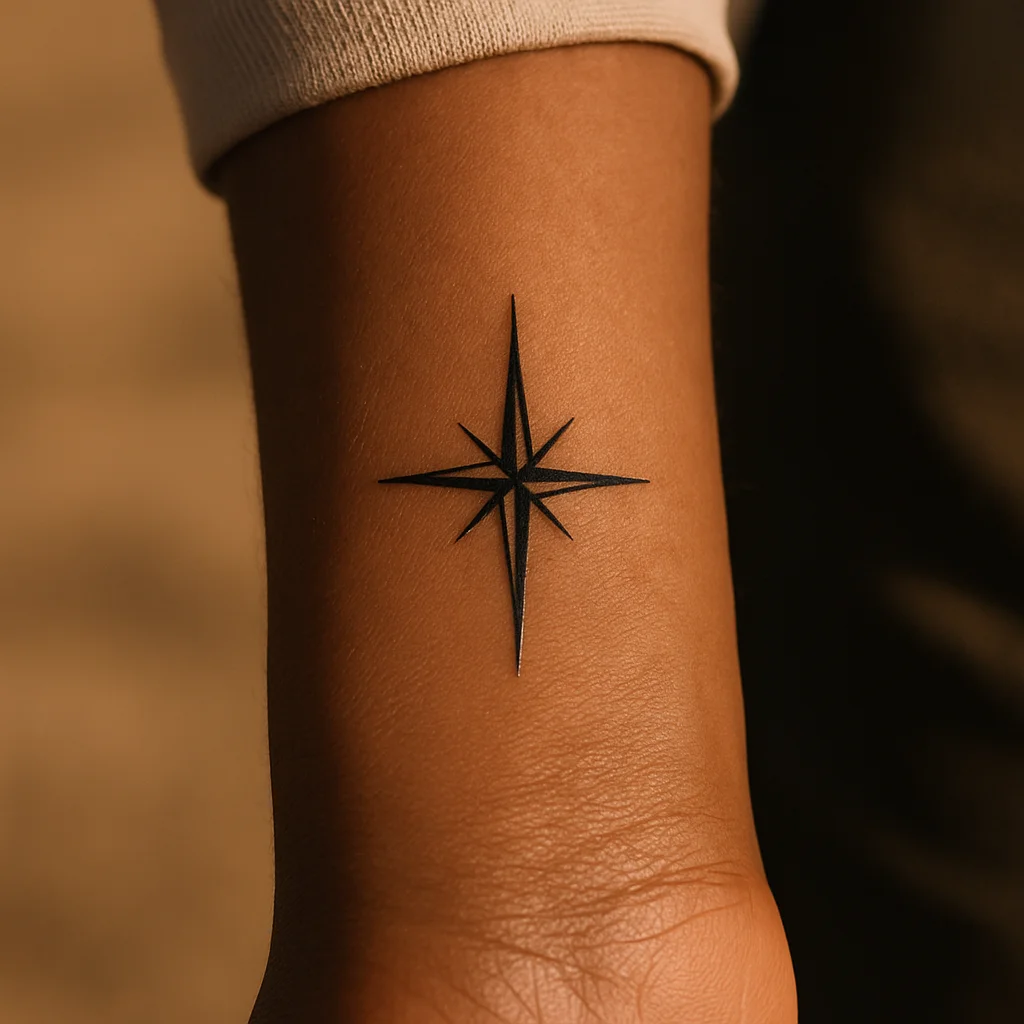
2. Thumbprint-sized compass rose
A four-point star compass about 2.5 cm across, with the north point slightly longer and the cardinal letters left out entirely. Dropping the letters is what keeps it legible at that size for decades. Great first tattoo for travellers who don't want a map on their arm.
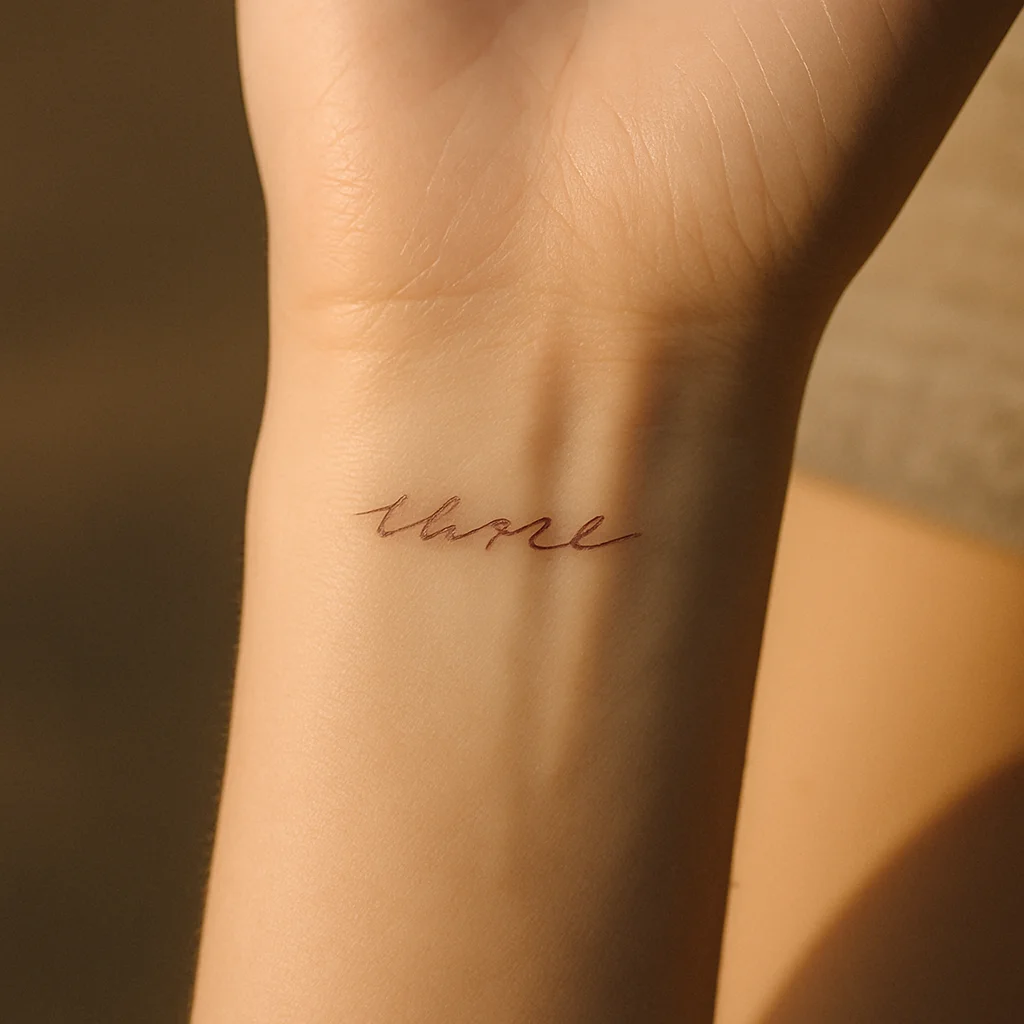
3. Three-word script along the crease
Short phrases work here, essays don't. Set three words in a light italic, x-height around 5 mm, running parallel to the wrist crease rather than up the arm. Ask for slightly open letter spacing so the words don't fill in as the ink settles.
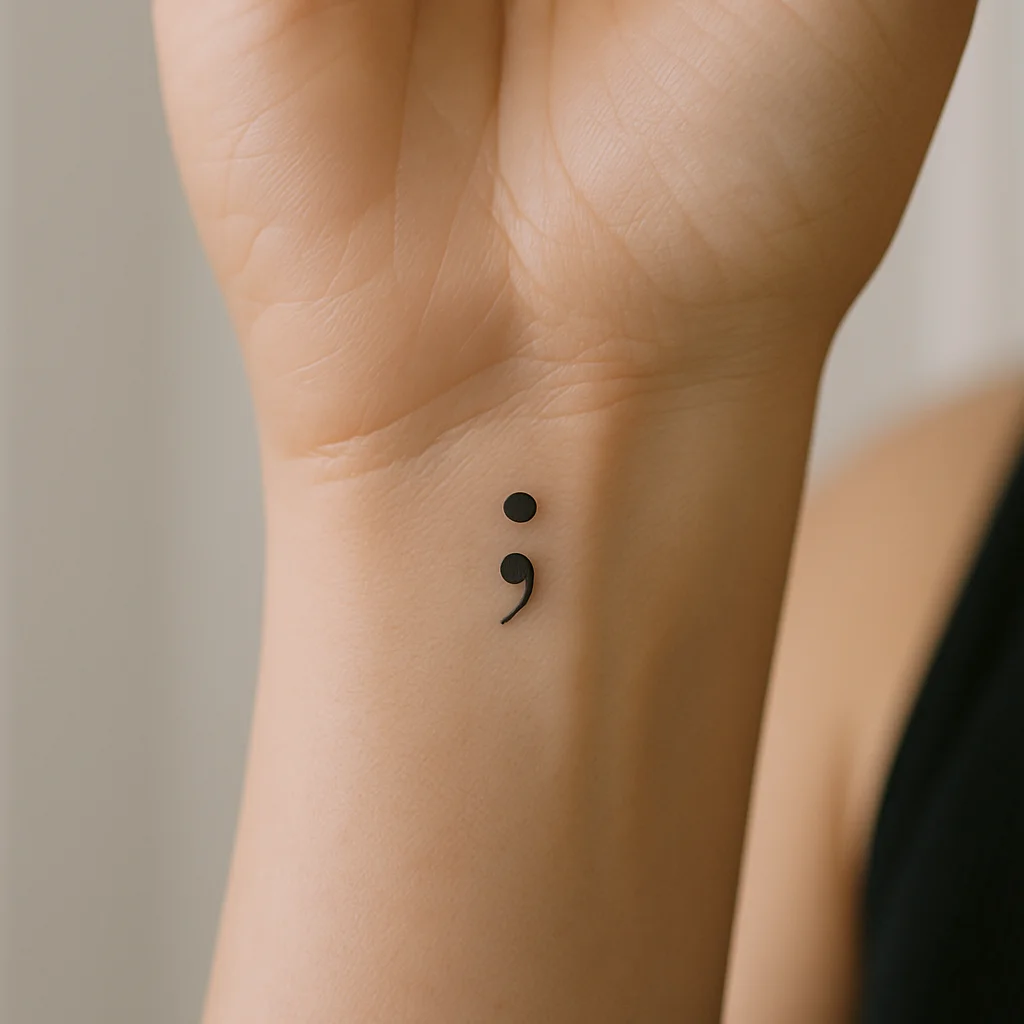
4. Semicolon at the base of the thumb
Tiny, deliberate, tucked into the soft pocket where the thumb meets the wrist. Two or three millimetres of dot and comma, done in five minutes, and one of the few genuinely micro tattoos that survives because there's nothing to blur into. Expect a sharp sting for those few minutes.
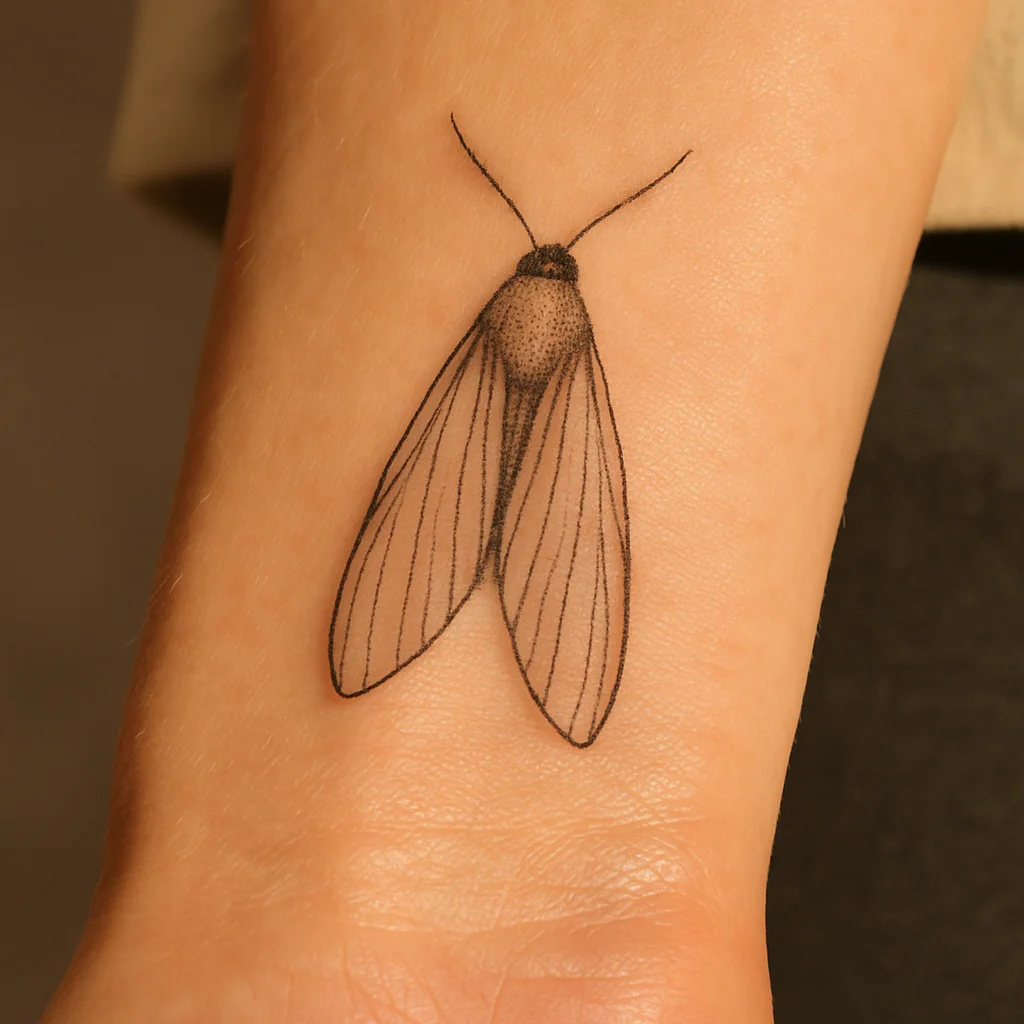
5. Fine-line moth with folded wings
Instead of a spread-wing moth that fights the narrow canvas, ask for wings folded vertically so the body runs up the arm. About 5 cm tall, stippled shading on the thorax only, outlines left clean. Reads as elegant rather than gothic.
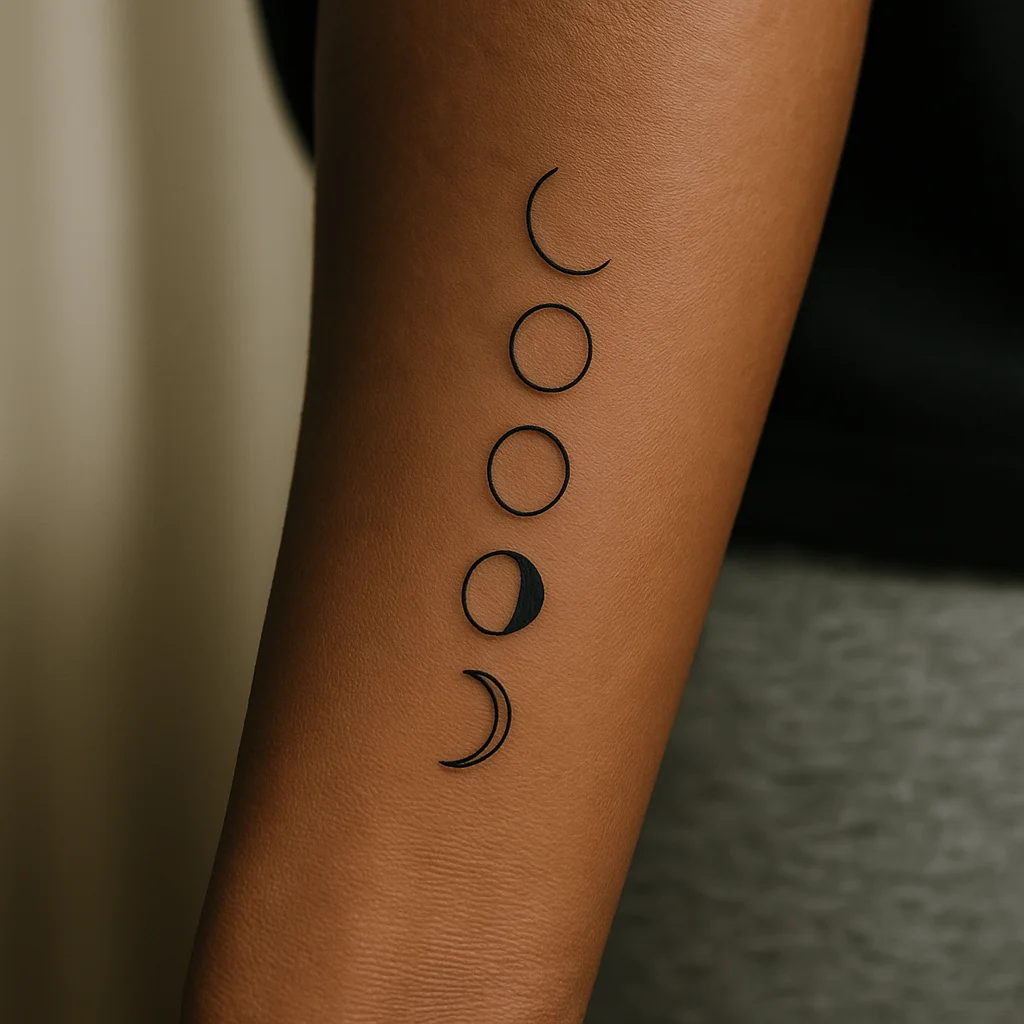
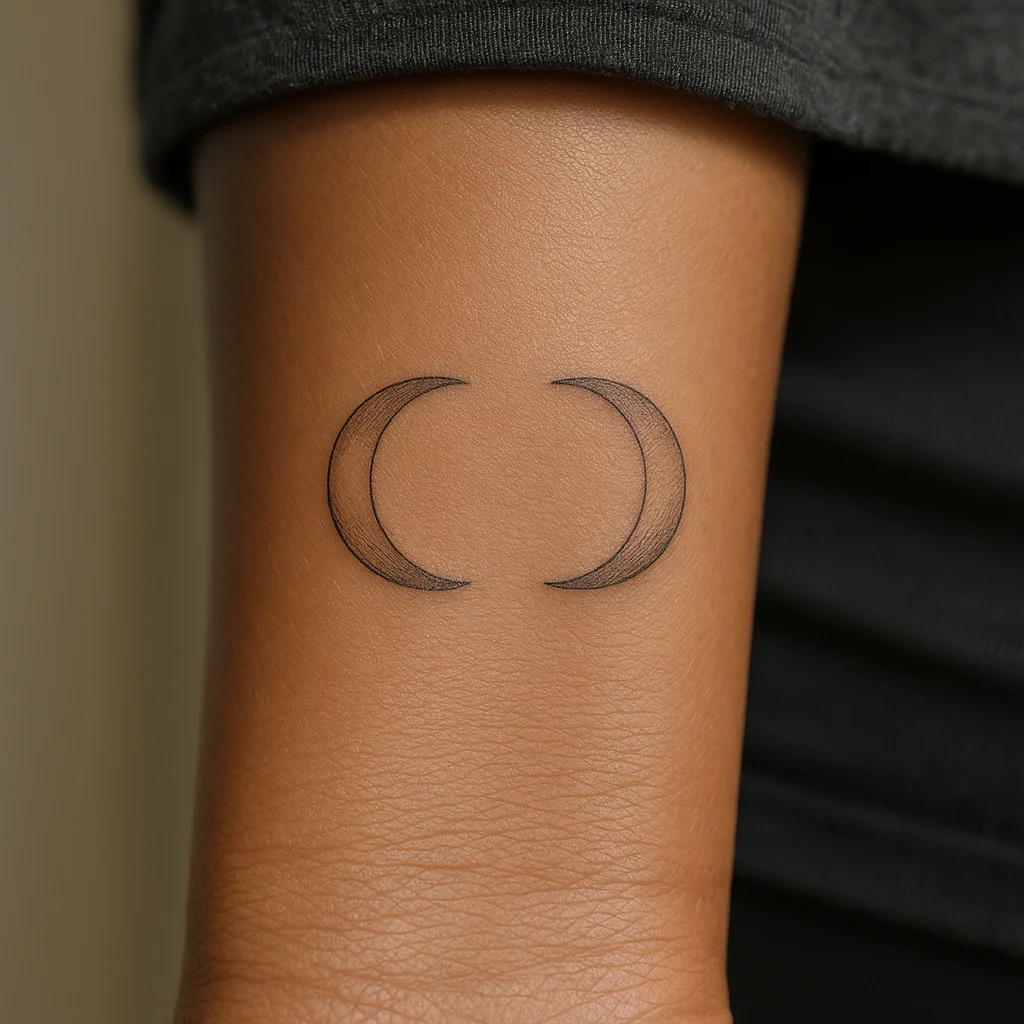
6. Moon phases running toward the elbow
Five phases, each about 8 mm, spaced evenly on a straight line from wrist crease upward. Solid black for the new-moon end, clean outline for the full, and no connecting line so it stays airy. A quiet nod to cycles that also visually lengthens the forearm.
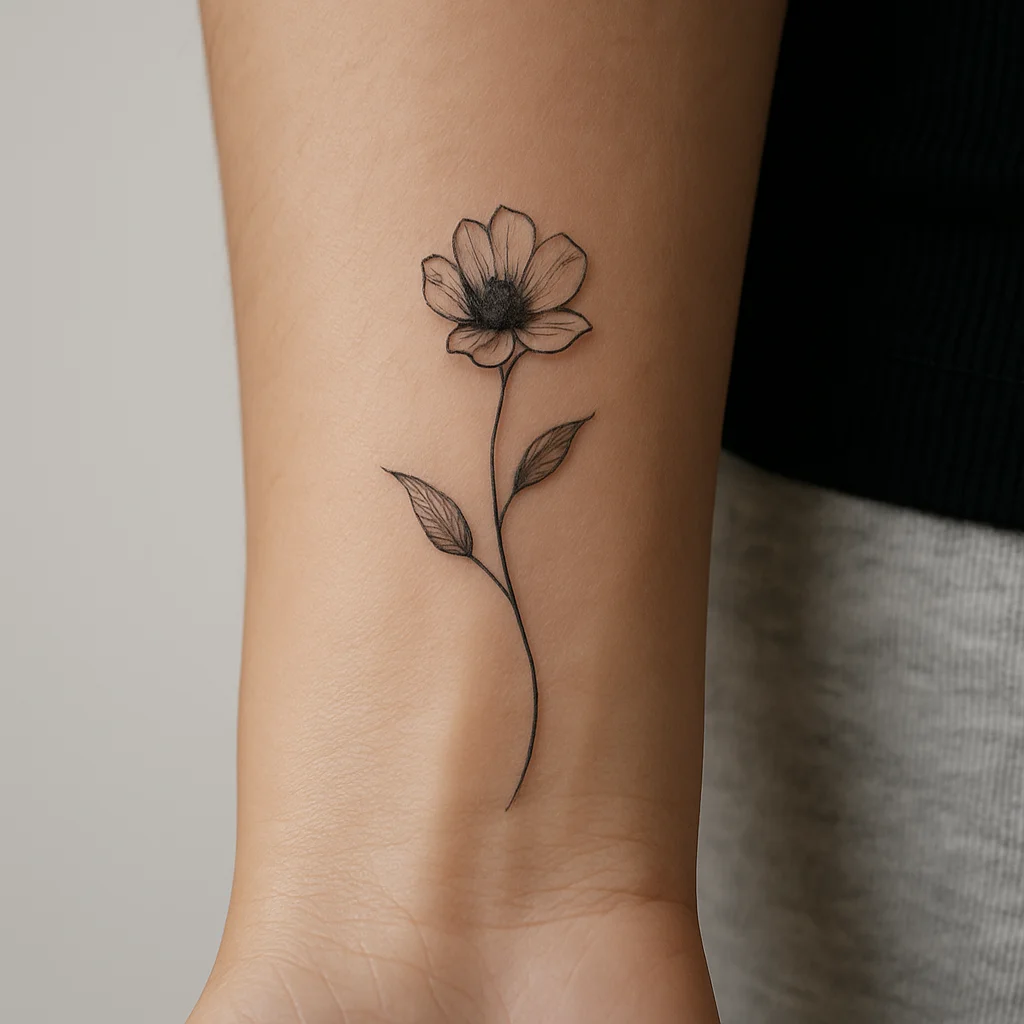
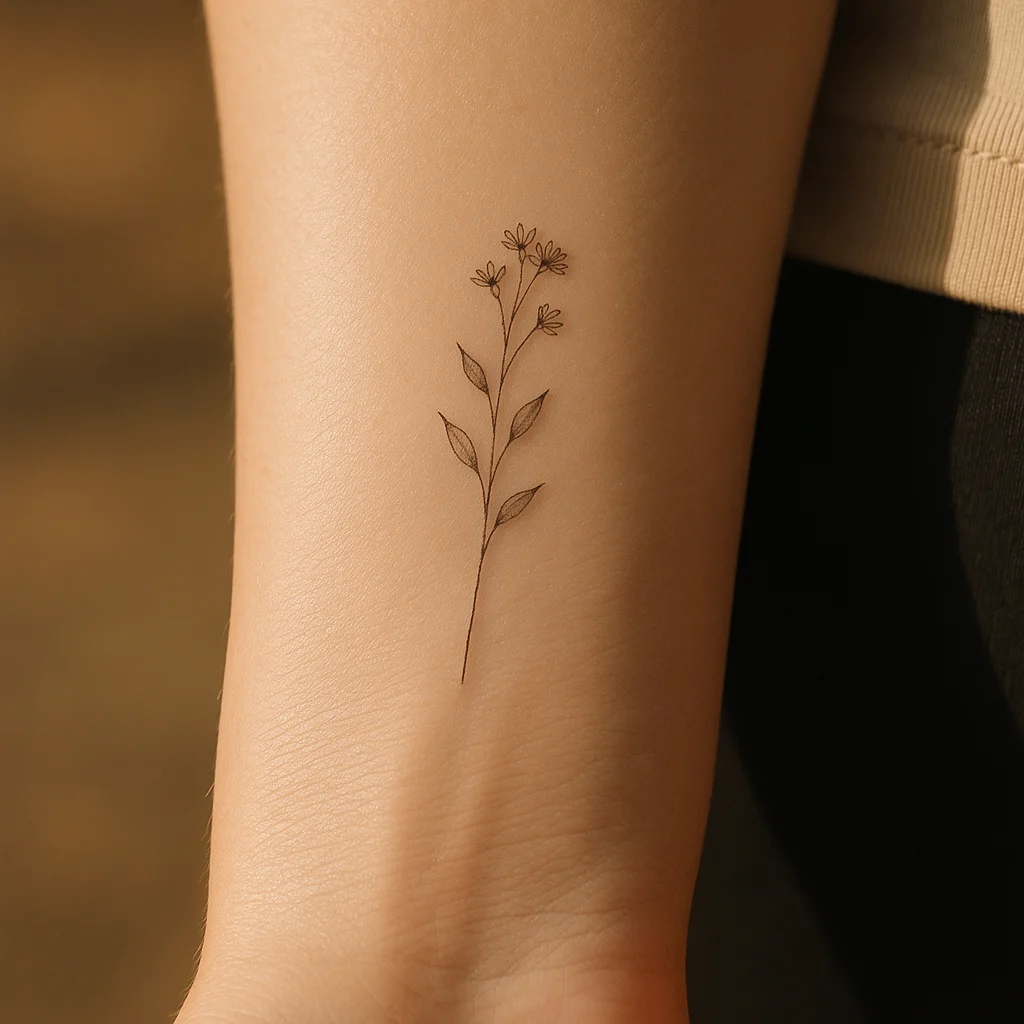
7. Birth flower sprig with a bent stem
A single stem of your birth month flower, stem curving to follow the wrist crease and two leaves breaking the outline. Keep it to one bloom and no more than three petals of detail. Excellent as one half of a matched pair with a sibling or partner.
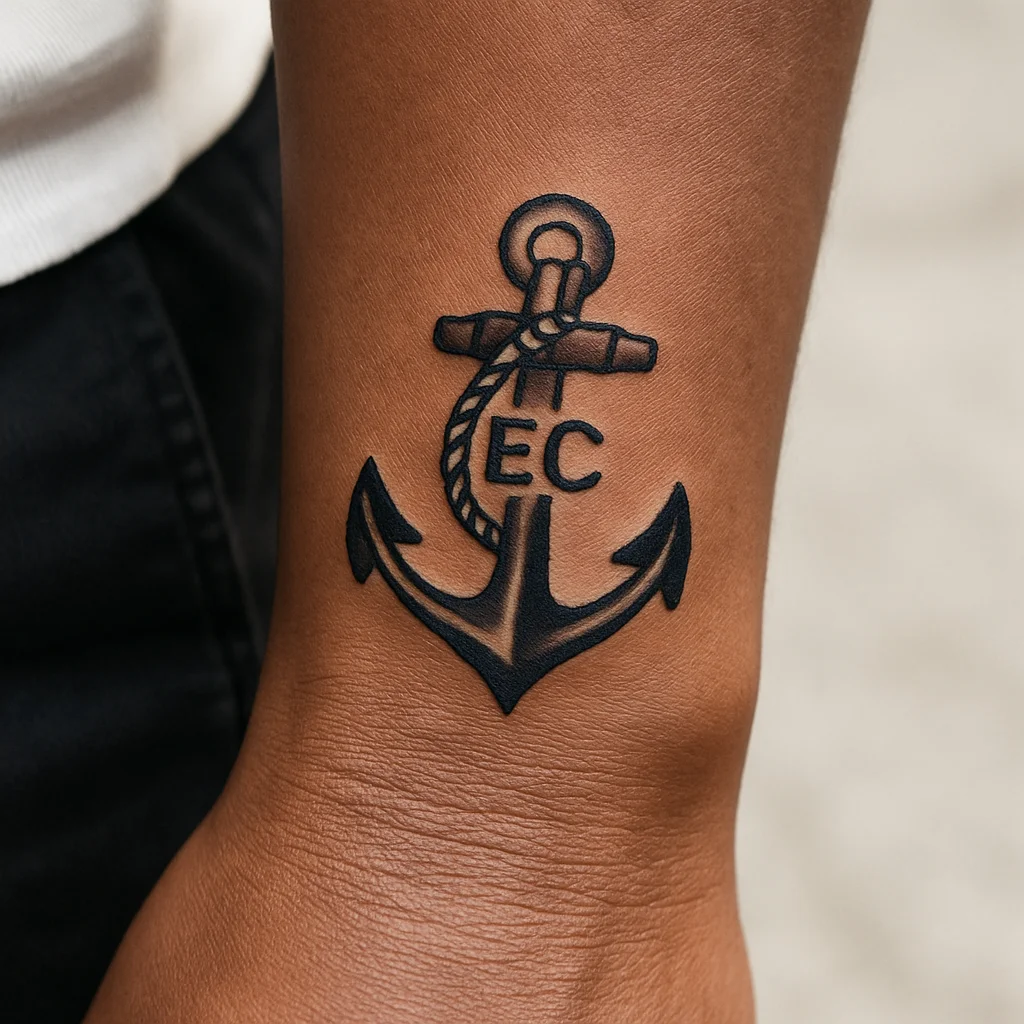
8. Small anchor with initials in the rope
A traditional-leaning anchor about 3.5 cm tall, with two initials worked into the loop of the rope instead of a banner. The bold outline is what makes this age well on the flexing inner wrist. Suits people who want traditional weight in a small footprint.
Outer Wrist: The Side Everyone Else Sees
The back of the wrist is flatter, slightly tougher and fully public. It's where you put something with graphic punch, because the plane between the wrist bone and the hand reads almost like a small badge. Watch straps live here too, so decide early whether your tattoo shares the space or replaces the watch.
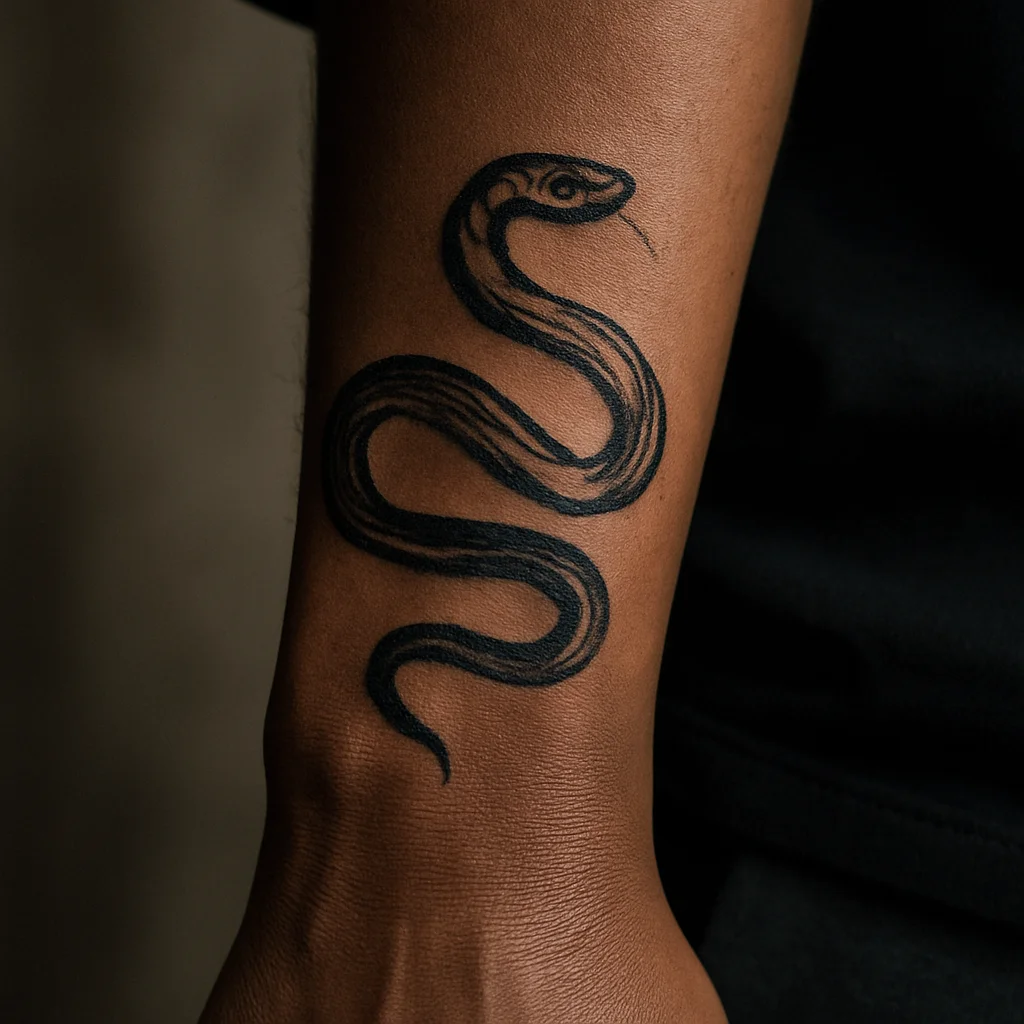
9. Snake head coiled over the wrist bone
A bold-line snake with the head resting on the ulnar knob and two coils of body curving onto the forearm, about 7 cm overall. The bone gives the head a natural raised platform. This one hurts more than its size suggests, and it's worth every minute for the way it wraps in motion.
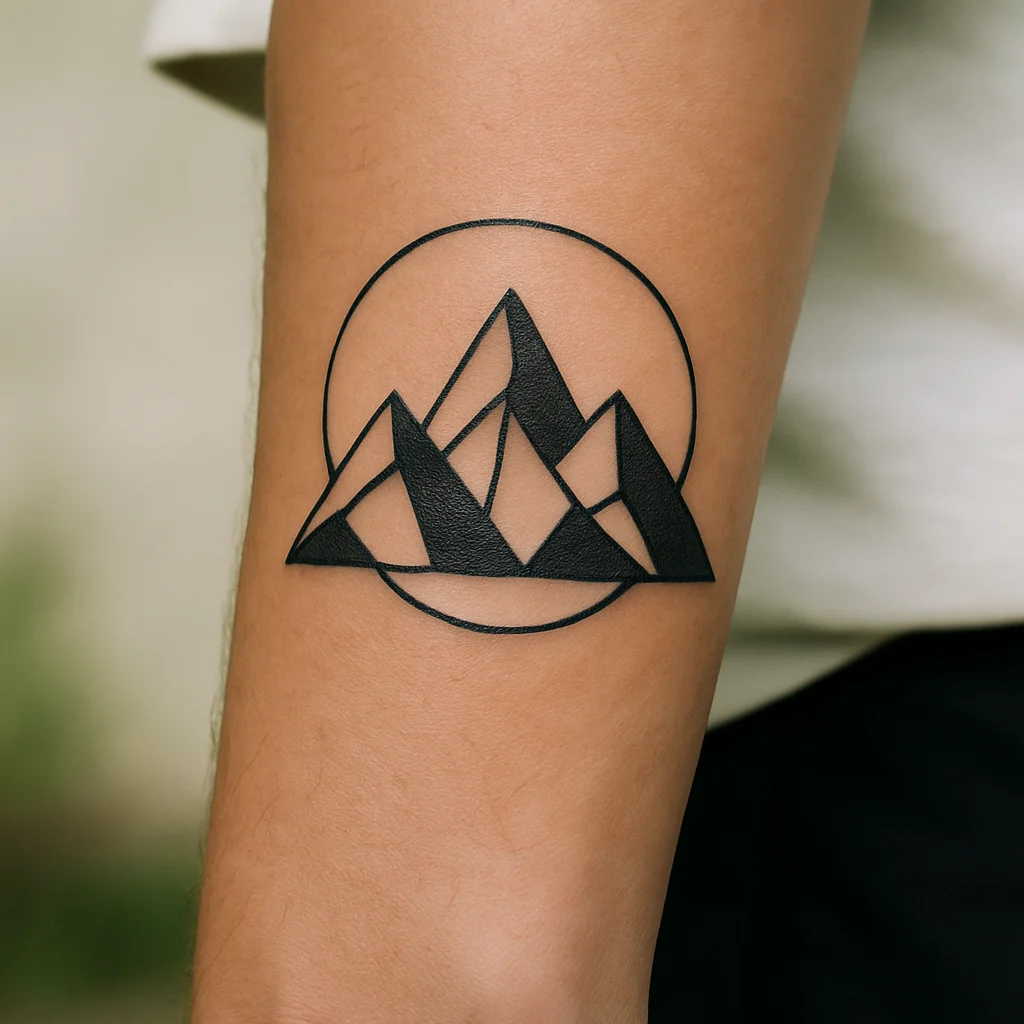
10. Geometric mountain range under a hairline sun
Three angular peaks in clean straight lines with a thin unbroken circle behind them, roughly 4 cm wide. Ask for the sun line to pass behind the peaks rather than break, it keeps the geometry crisp. Ages well because the shapes are all bold enough to hold.
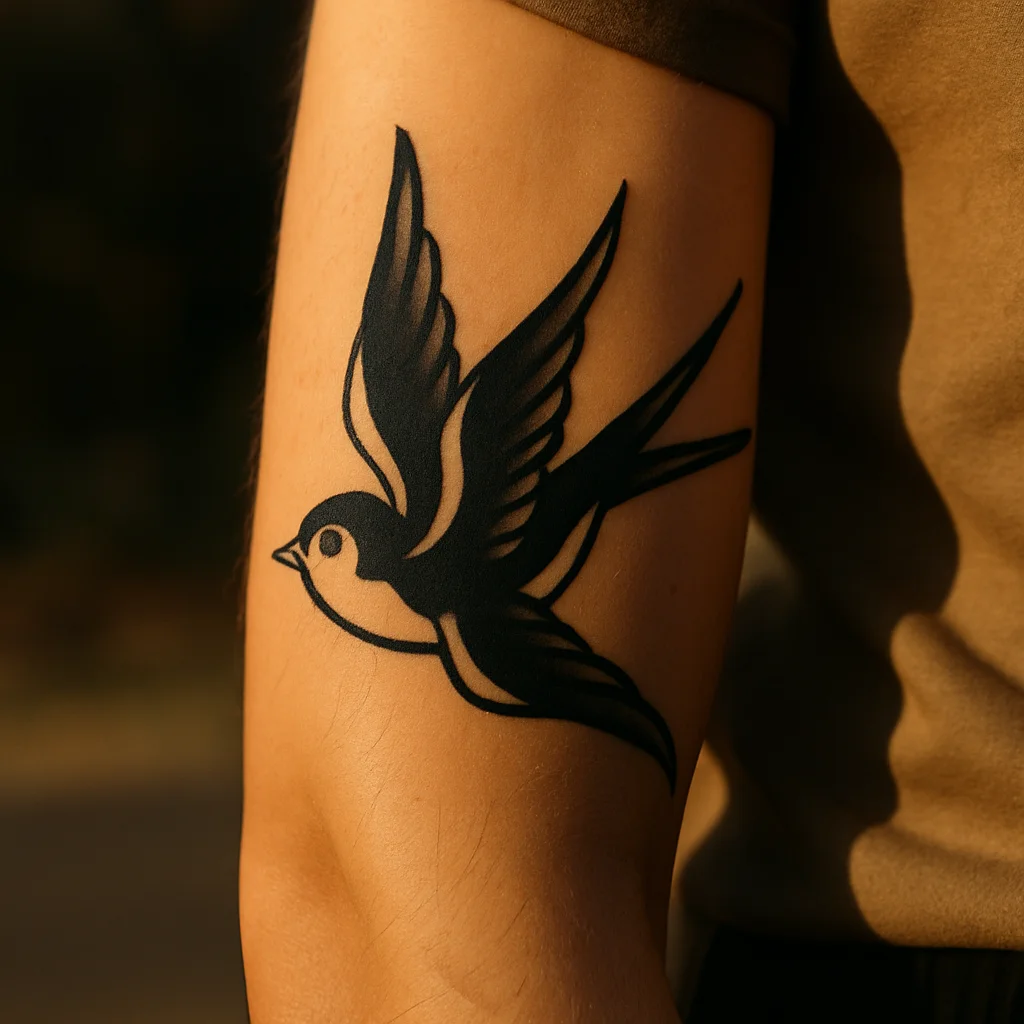
11. Traditional swallow mid-flight
A classic swallow, wings angled, about 4 cm tip to tip, with heavy black outline and either solid black fill or a single muted colour on the breast. Old-school bodies were designed for exactly this kind of high-wear spot. Perfect if you want one tattoo that still looks intentional in thirty years.
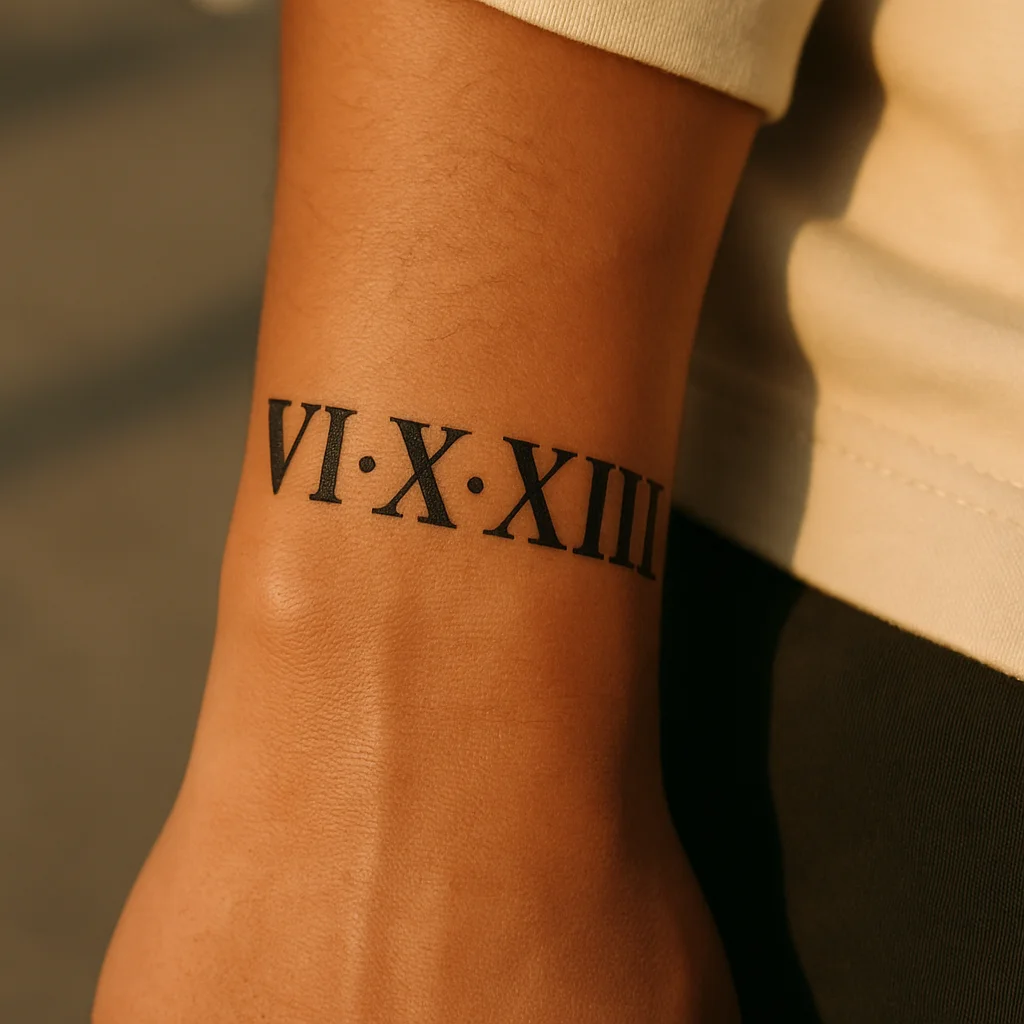
12. Roman numeral date in slab serif
A date set in a chunky serif rather than a hairline face, running straight across the outer wrist about 5 cm wide. Slab serifs keep their shape when small strokes soften. Ideal for a wedding, birth or sobriety date you want visible without explanation.
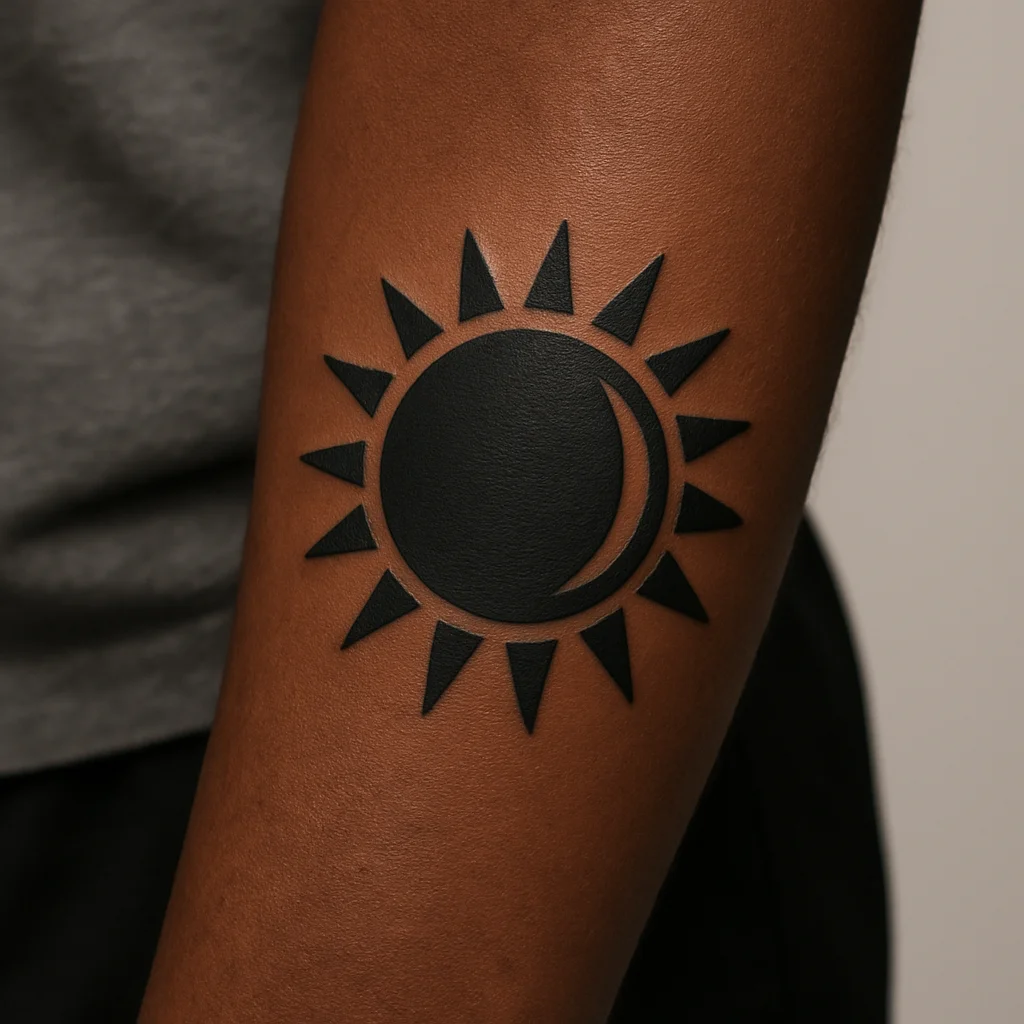
13. Blackwork sun disc
A solid black circle about 2.5 cm across with short triangular rays and a sliver of negative space carved through the middle. Bold black on the outer wrist is the single most durable thing you can get in this zone. Suits people who want impact without any linework fussiness.
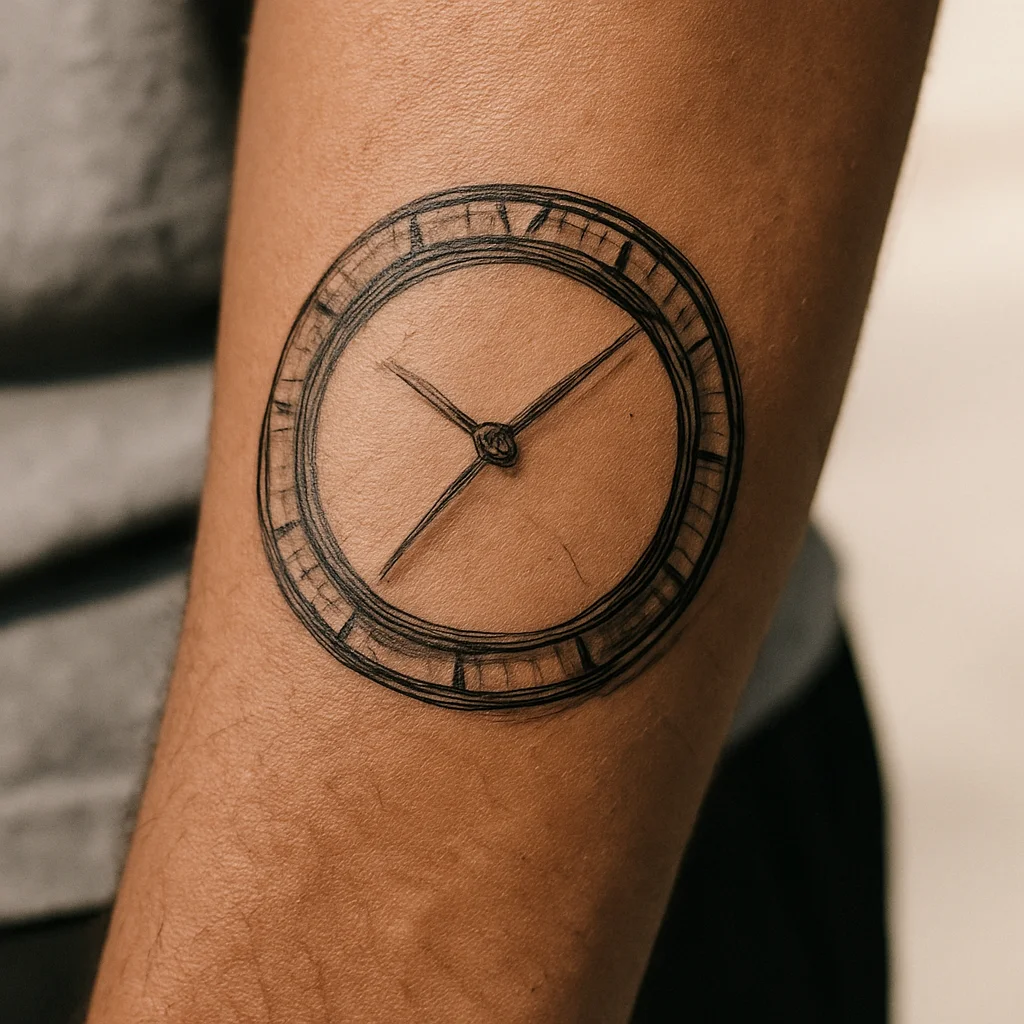
14. Watch-face outline where a watch would sit
An empty circular bezel with two hands frozen at a meaningful time, drawn in medium line weight, about 3.5 cm. Leave the numerals out and let the hands do the work. A witty, genuinely personal alternative to a date tattoo.
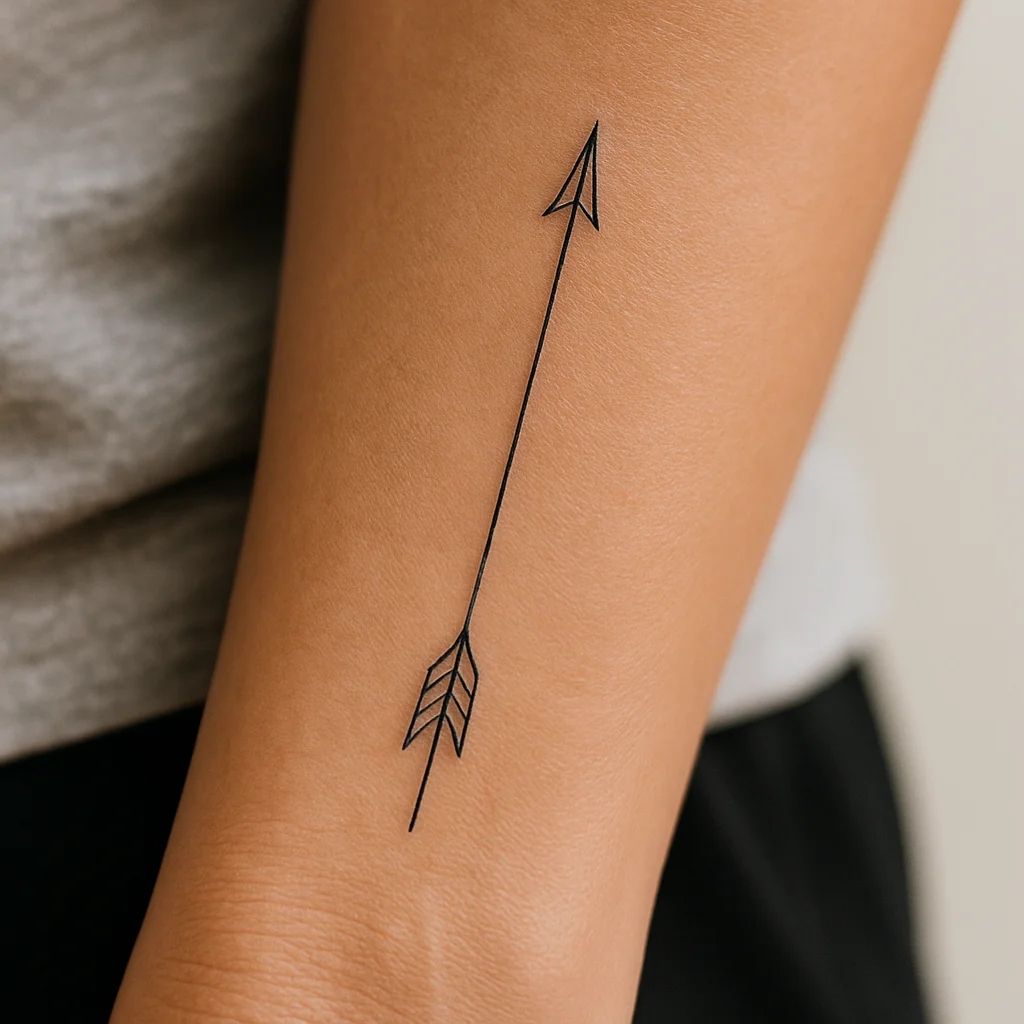
15. Arrow following the tendon line
A single slim arrow, fletching at the wrist and tip pointing toward the knuckles, about 6 cm long and aligned with the tendon that pops when you extend your hand. Movement makes it look almost drawn on the body's own structure. Clean, unisex, cheap chair time.
The Bone Edge: Narrow, Sharp, Underused
The ulnar edge, that strip running from the little finger side of the wrist up the forearm, is the most overlooked wrist zone. It's a natural vertical column, it's visible when your arms hang at your sides, and it hides completely when you turn your palm up. Designs here must be tall and narrow, never wide. Fair warning: it's bony, and the needle bouncing over that ridge is a distinct kind of sharp.
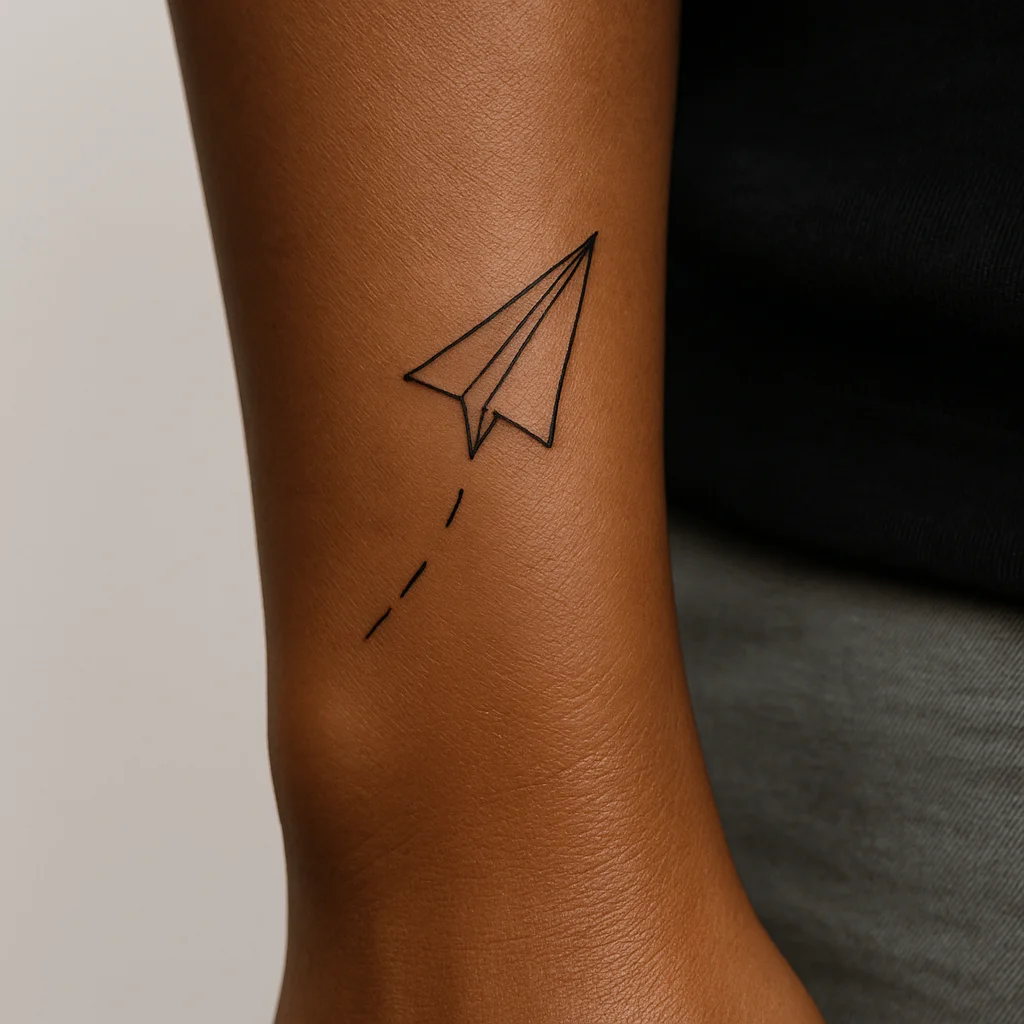
16. Paper plane over a dotted trail
A small plane at the top with three or four dashes trailing down the edge, total length about 5 cm and never more than 1 cm wide. Reads beautifully in the narrow column. A favourite for people whose defining stories happen in airports.
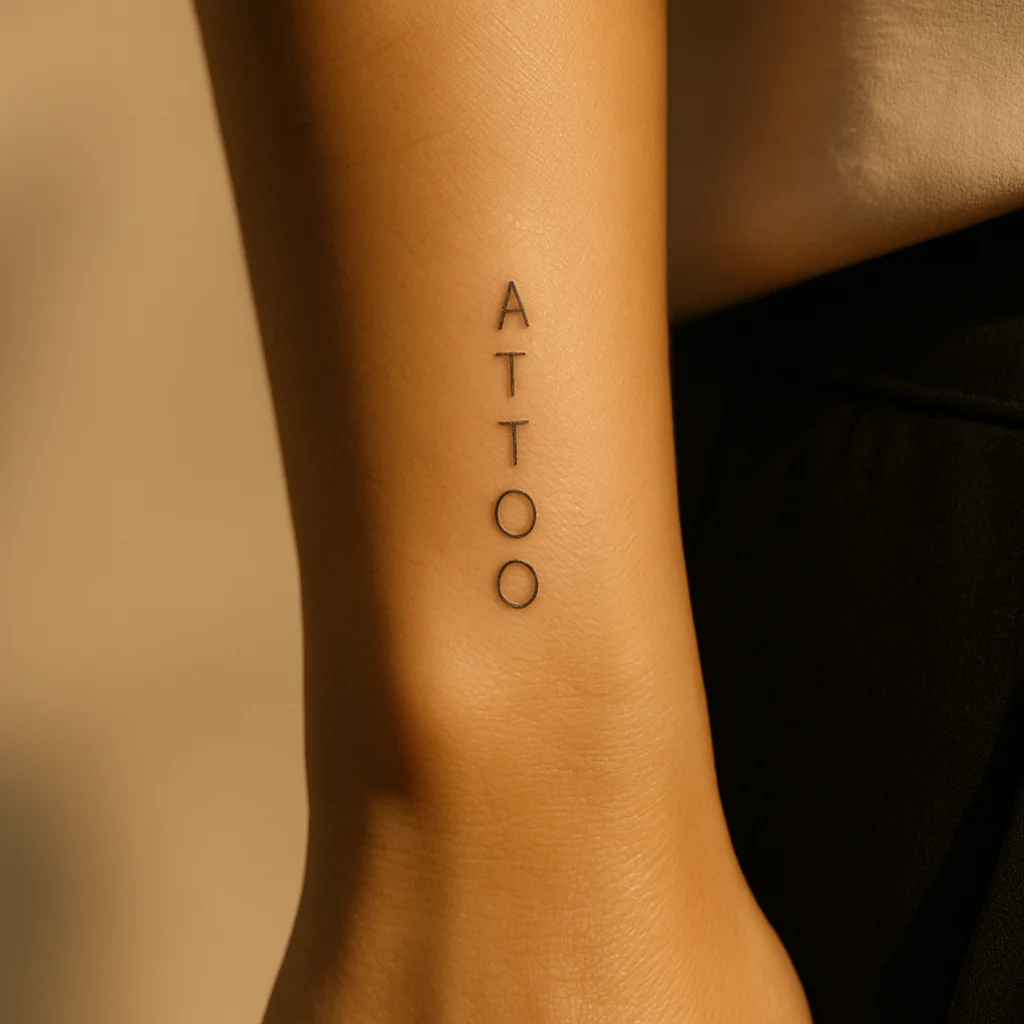
17. One word in tiny caps up the edge
A single word set vertically in 4 mm capitals, letters stacked with even gaps rather than rotated. Capitals survive small scale better than lowercase script does. Choose a word you'd still stand behind after an argument with yourself.
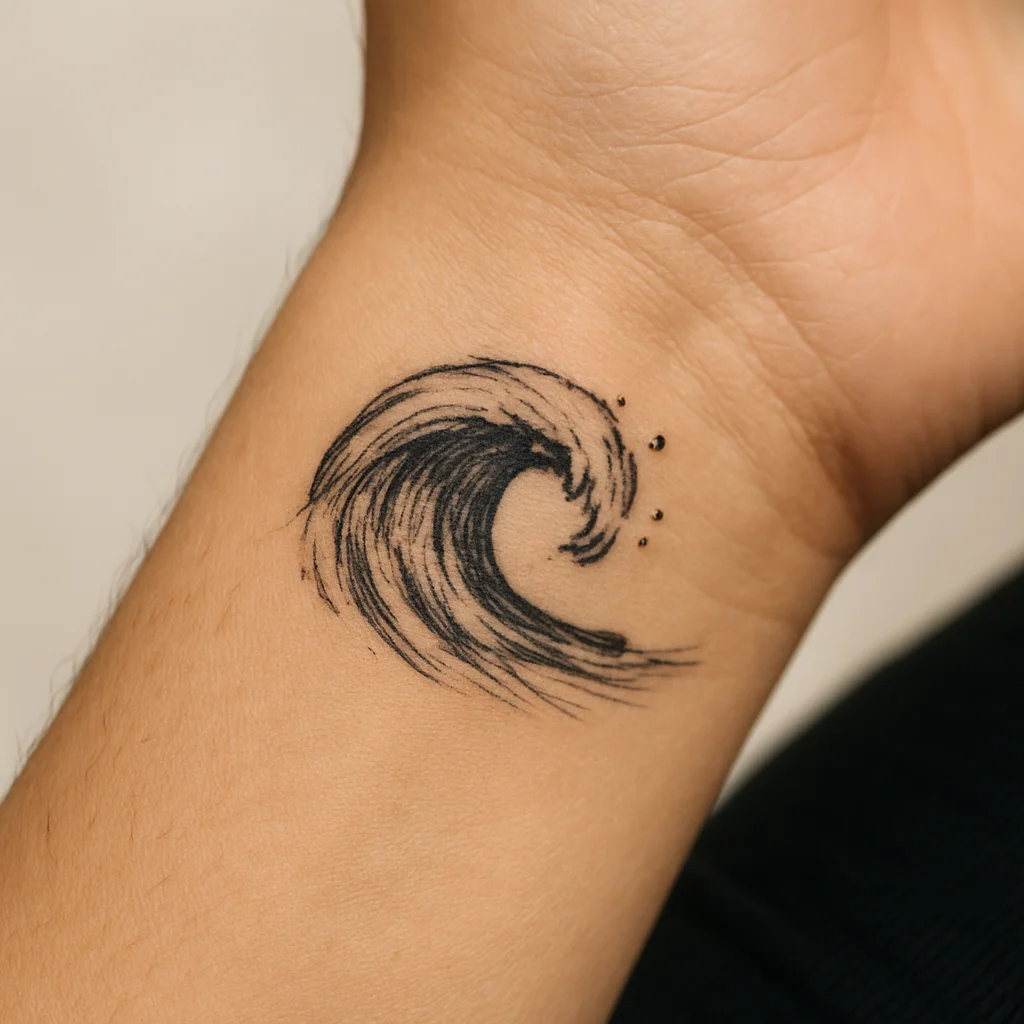
18. Wave crest curling along the bone
A single breaking wave with a curled lip and two spray dots, drawn so the curve follows the natural ridge of the ulna, about 6 cm tall. Ask for a slightly thicker line on the crest and thinner on the trailing water. It gives the whole strip movement.
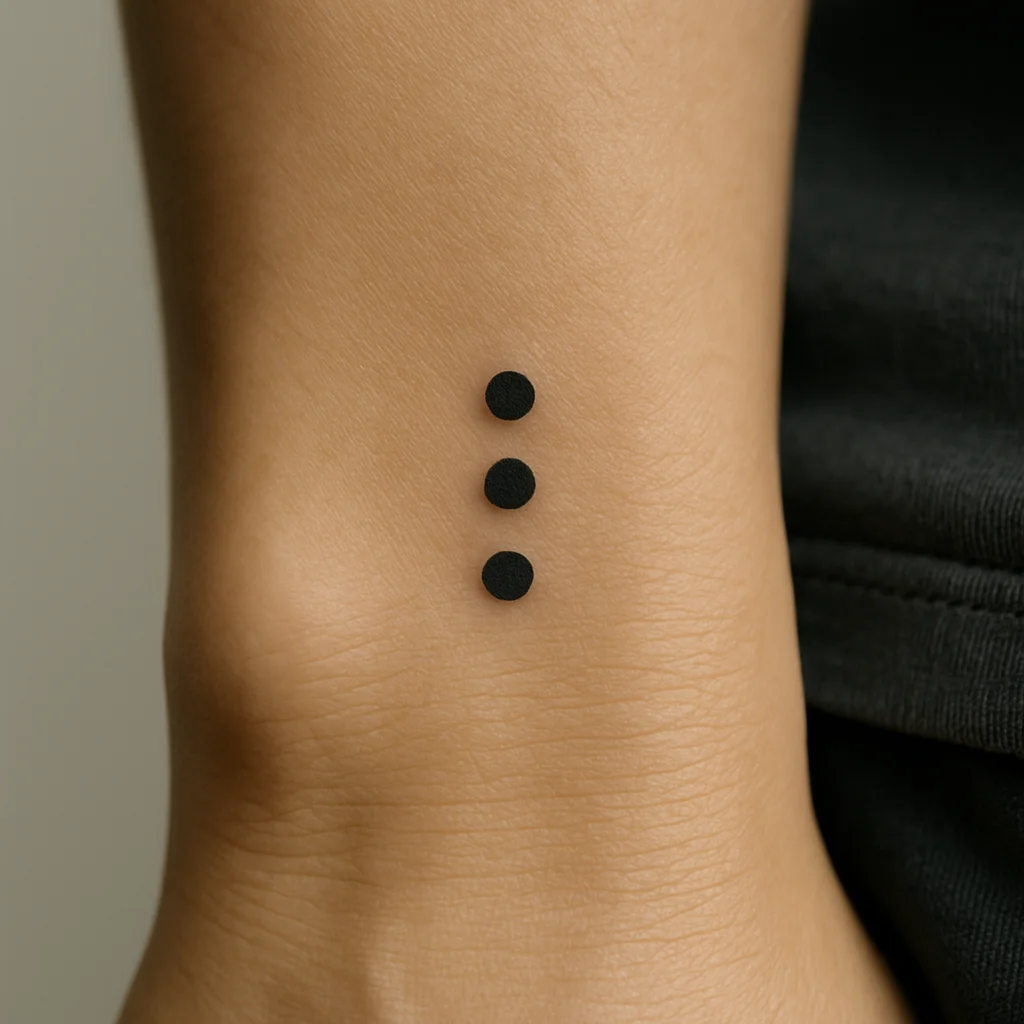
19. Three dots stacked on the wrist bone
Three solid dots, 3 mm each, placed vertically right over the bony knob. Deceptively simple and one of the fastest tattoos you can get, but the placement over bone means you'll feel all thirty seconds of it. Works as a personal counting mark, family marker or plain graphic accent.
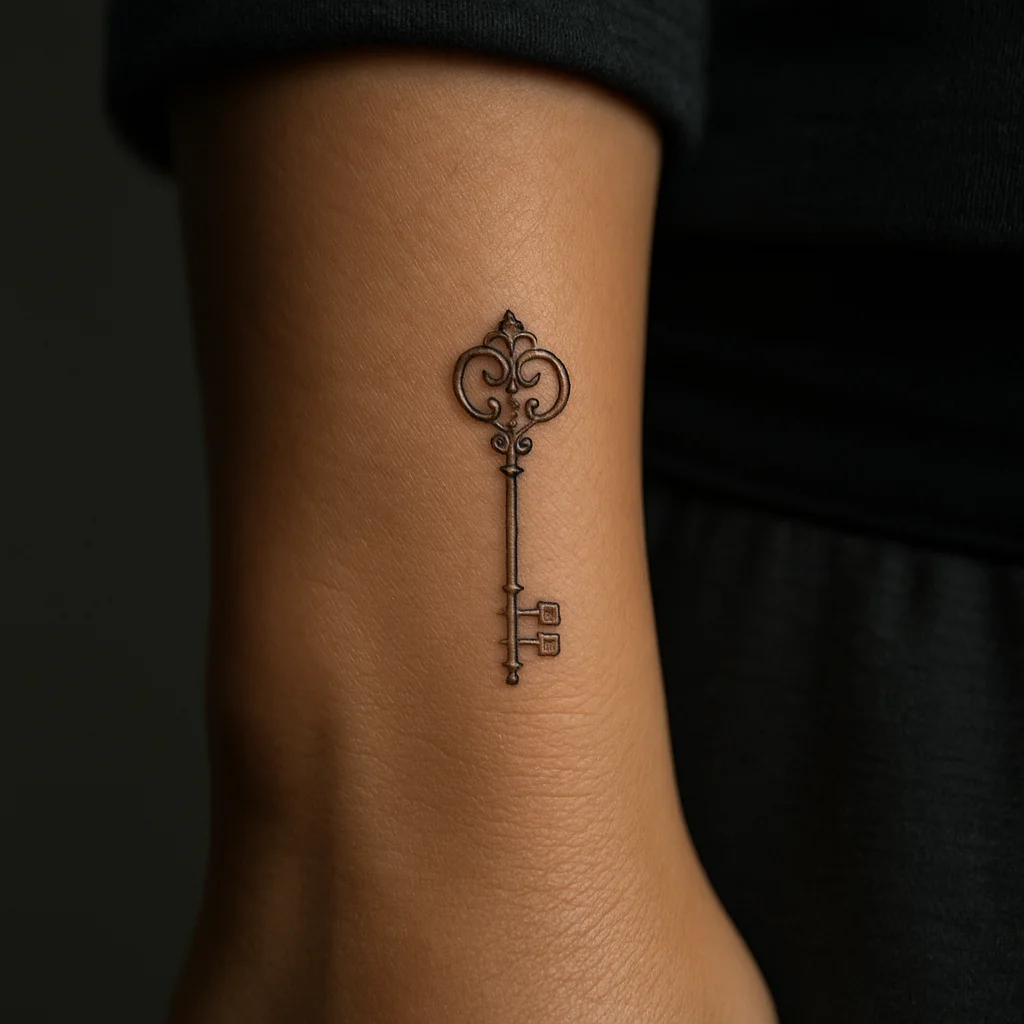
20. Small skeleton key on the pinky edge
A 4 cm key with an ornate bow and a simple shank, oriented tip-down toward the hand. Keep the interior detail of the bow minimal, two negative shapes at most, so it doesn't blur. Pairs neatly with a lock tattoo on a partner or sibling.
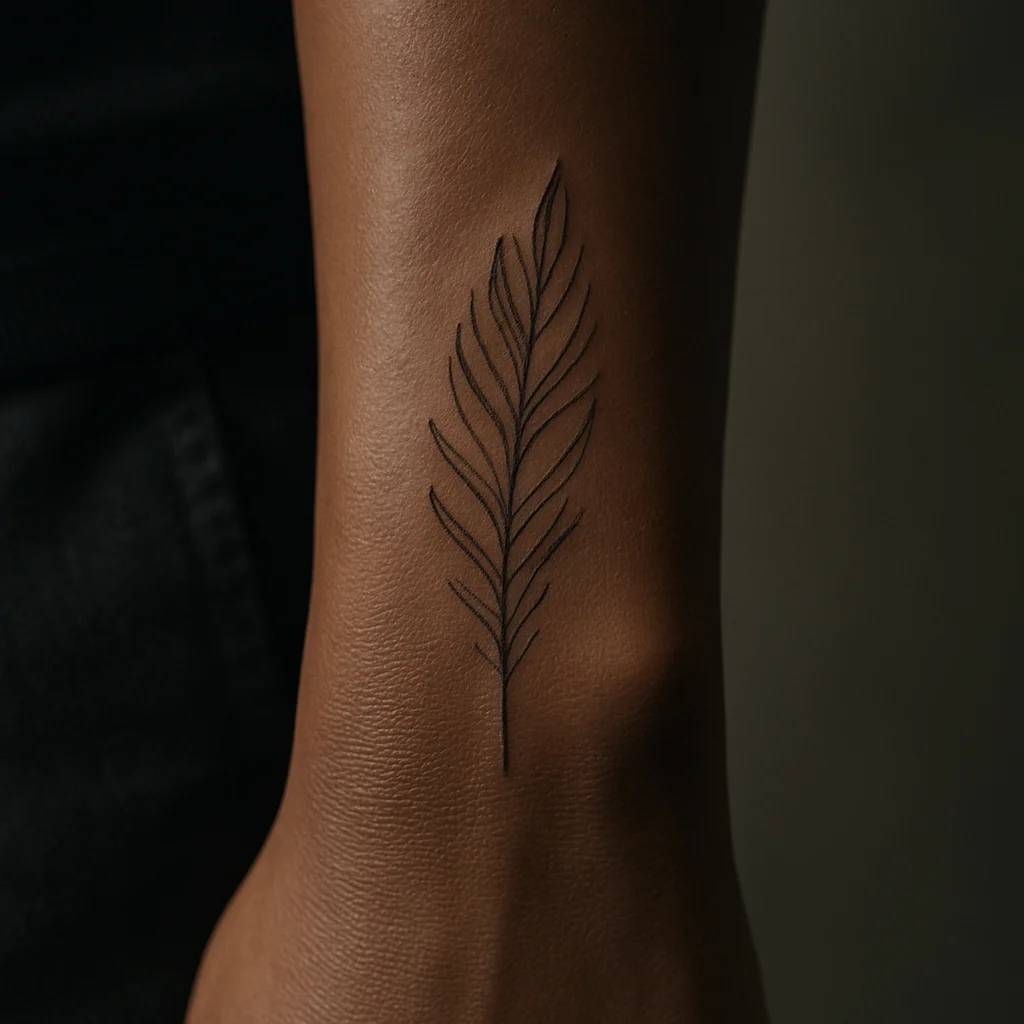
21. Feather following the bone line
A single feather, about 6 cm, with the quill at the wrist and barbs opening upward, drawn with broken lines so light appears to pass through it. Broken-line feathers age more gracefully than solid ones because the gaps are already part of the design. Soft, unfussy, easy to cover with a cuff.
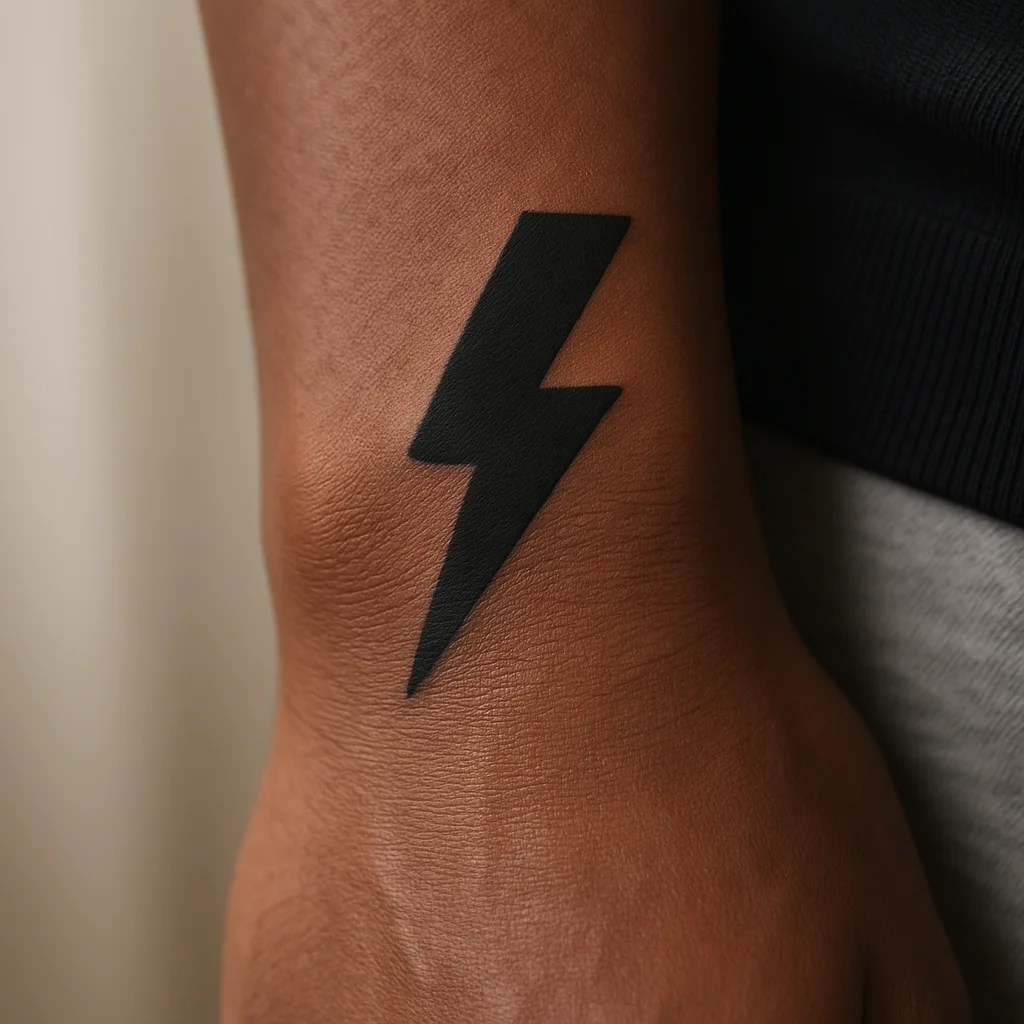
22. Lightning bolt on the thumb-side edge
A short, angular bolt about 3 cm long on the radial edge, either as a clean outline or filled solid black. It follows the natural crease line beside the thumb tendon. Small enough to be a shop-minimum add-on to a bigger session.
Wraps and Bracelets: Going All the Way Around
A wrap is the most committed wrist tattoo and the most flattering, because it treats the wrist as jewellery rather than a billboard. Two practical notes before you book: the band must cross the tender inner face, so budget an hour and a slightly worse sitting, and ask your artist to plan the join point on the inner wrist where a small break or overlap reads as intentional. Perfectly closing a circle on a joint that flexes is harder than it looks.
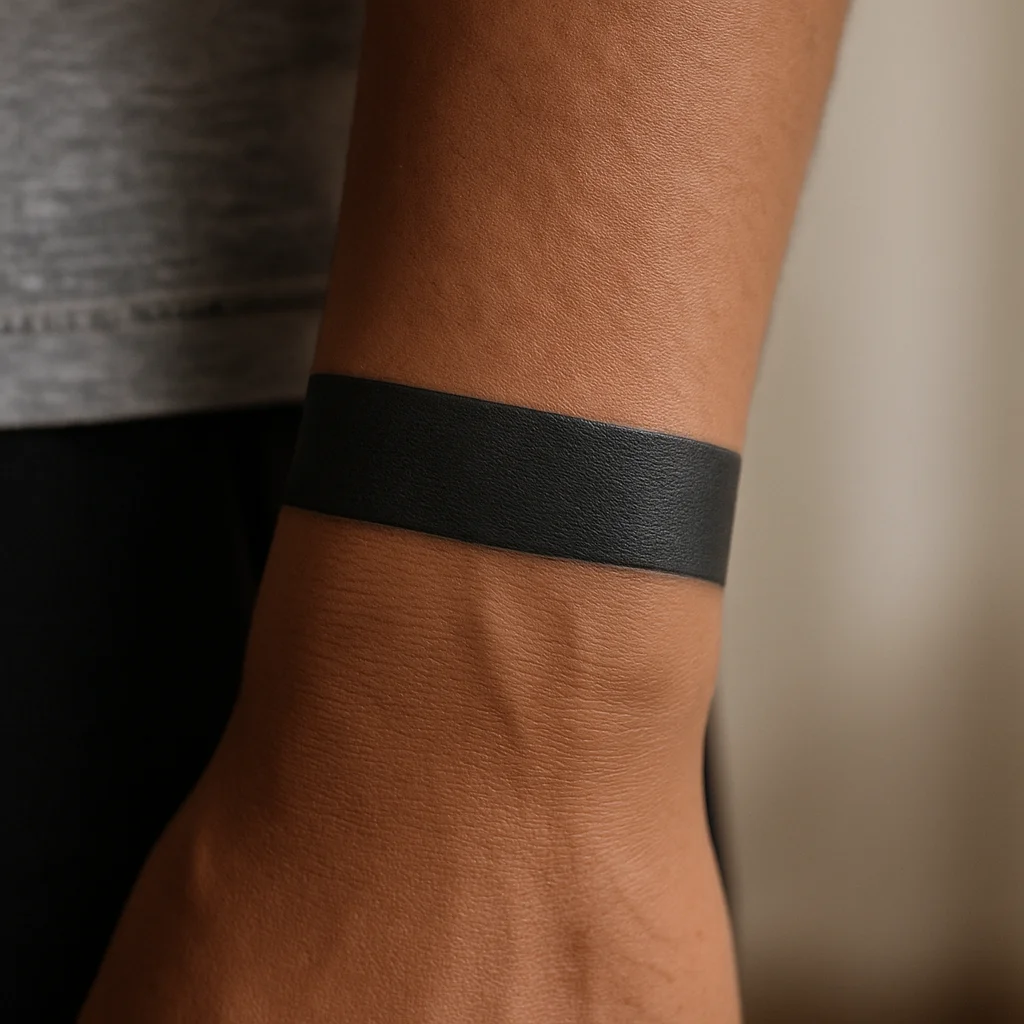
23. Solid black band
One clean ring of solid black, 8 to 12 mm wide, straight around the wrist. It's the most durable tattoo in this article and the most modern-looking, but it is also the hardest to remove or cover later, so be certain. Bold, genderless, and stunning against every skin tone.
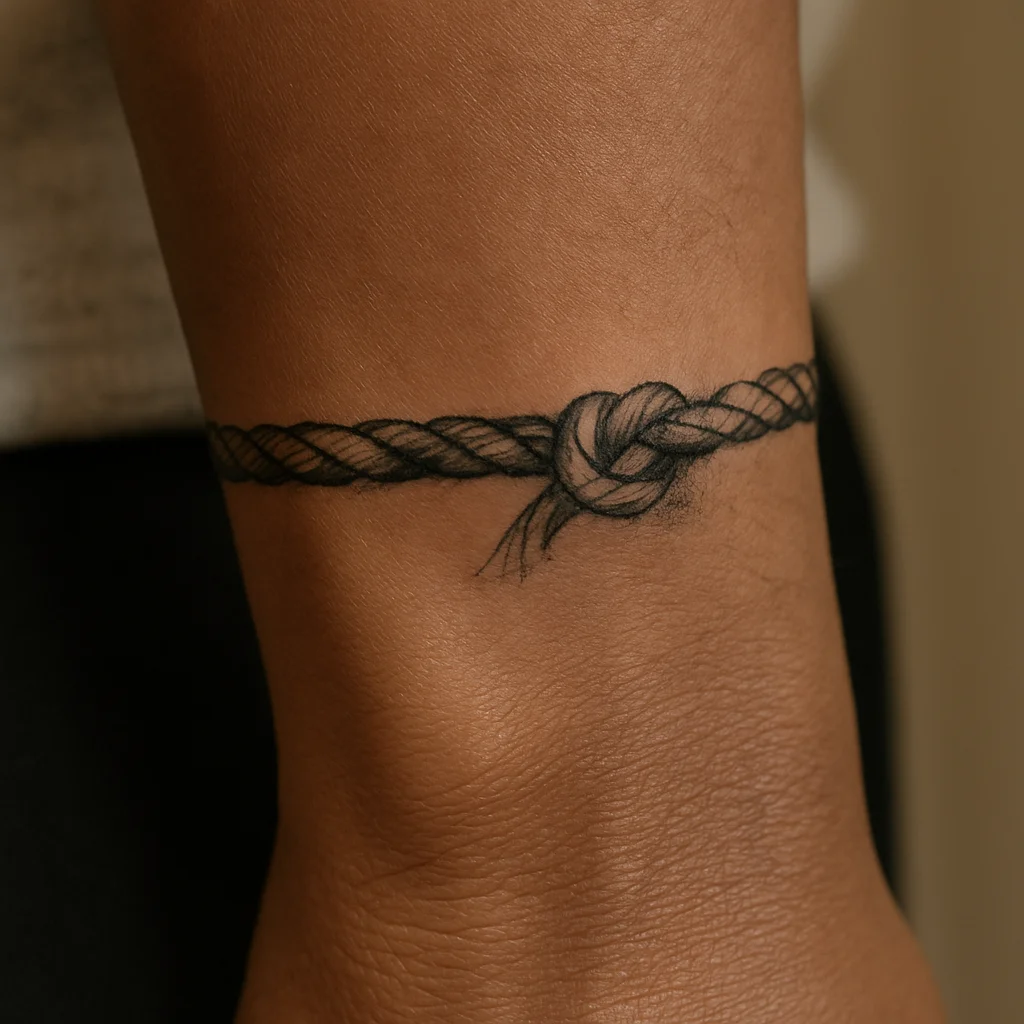
24. Rope chain with a single knot
A twisted rope drawn as repeating chevrons all the way around, with one small knot sitting on the outer wrist as the focal point. Around 1 cm wide with visible negative space between twists. Nautical without being a themed tattoo.
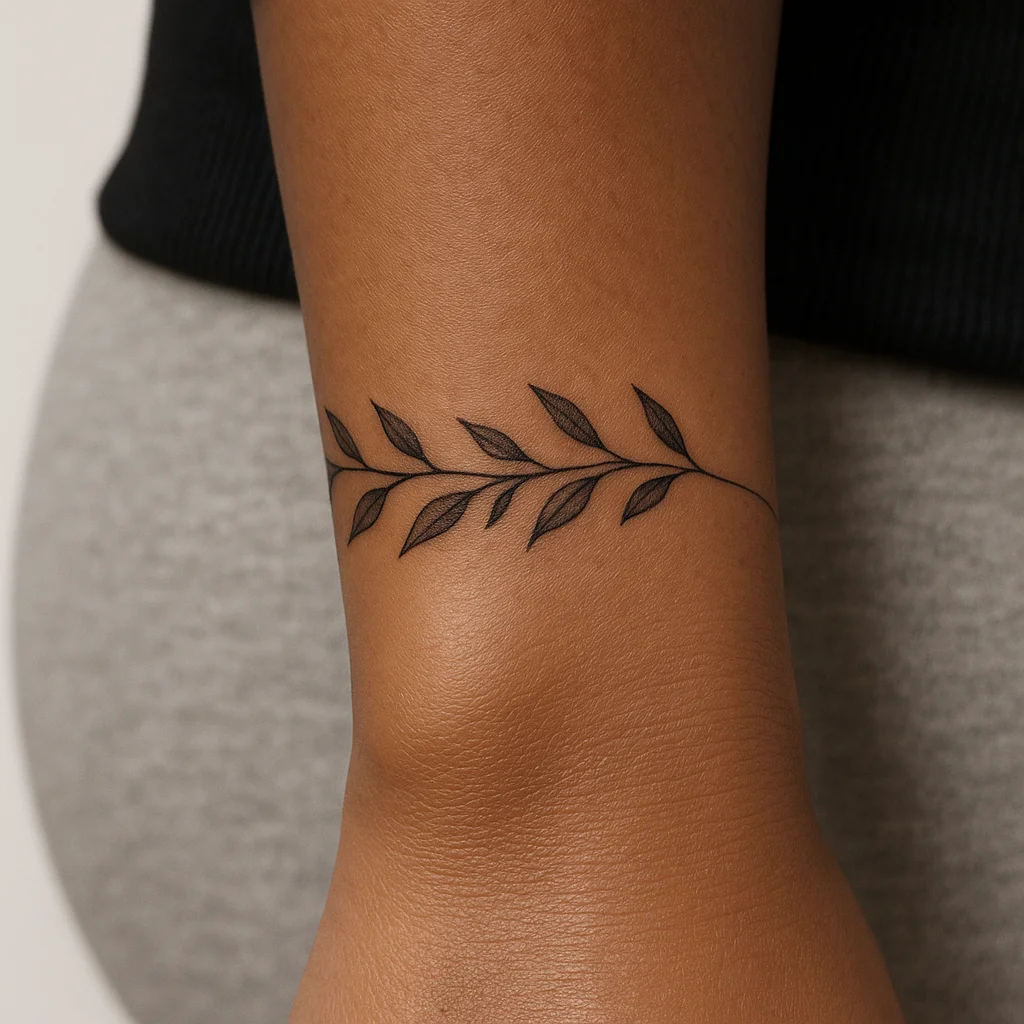
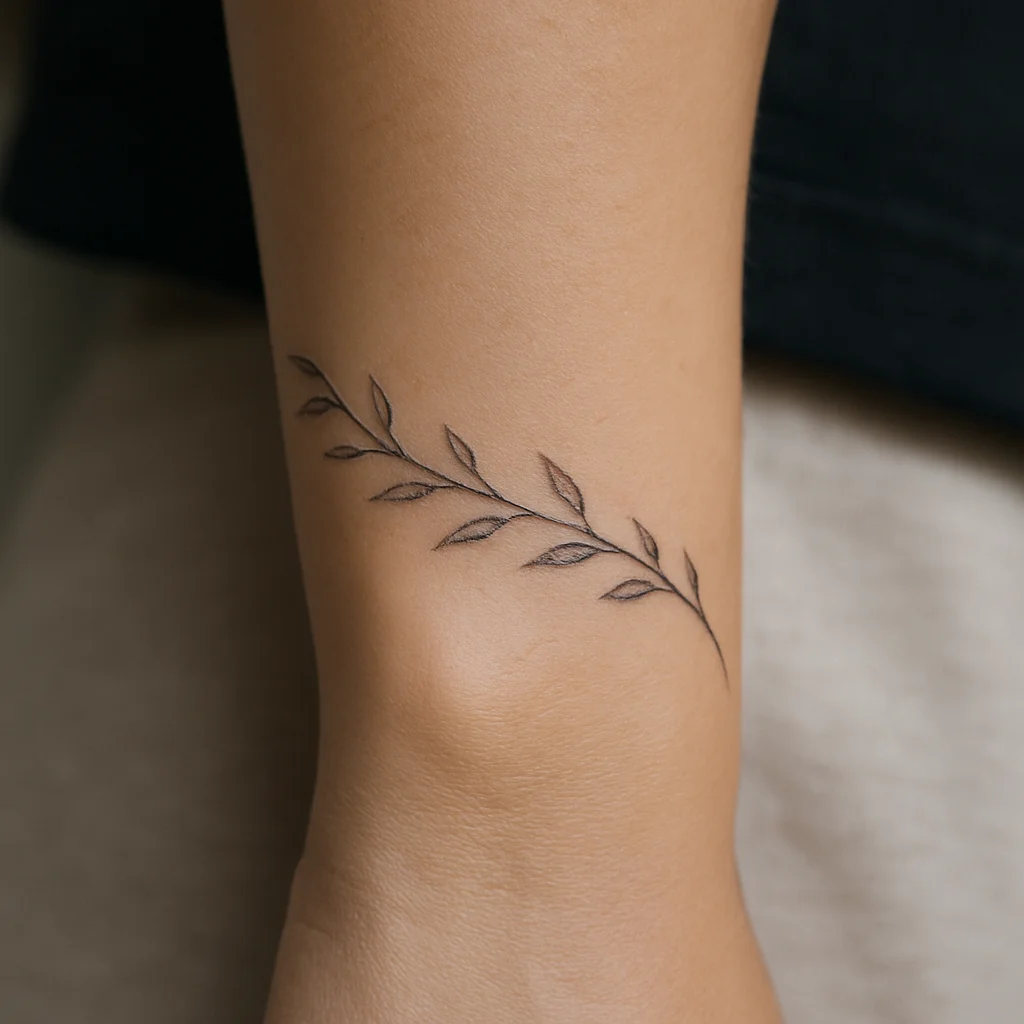
25. Botanical vine with deliberate gaps
A thin vine with small leaves that thins to nothing on the inner wrist rather than closing, so the band appears to fade behind the arm. Fine-line leaves plus one or two tiny buds keep it delicate. The most requested wrap for a reason, and it looks beautiful under a watch.
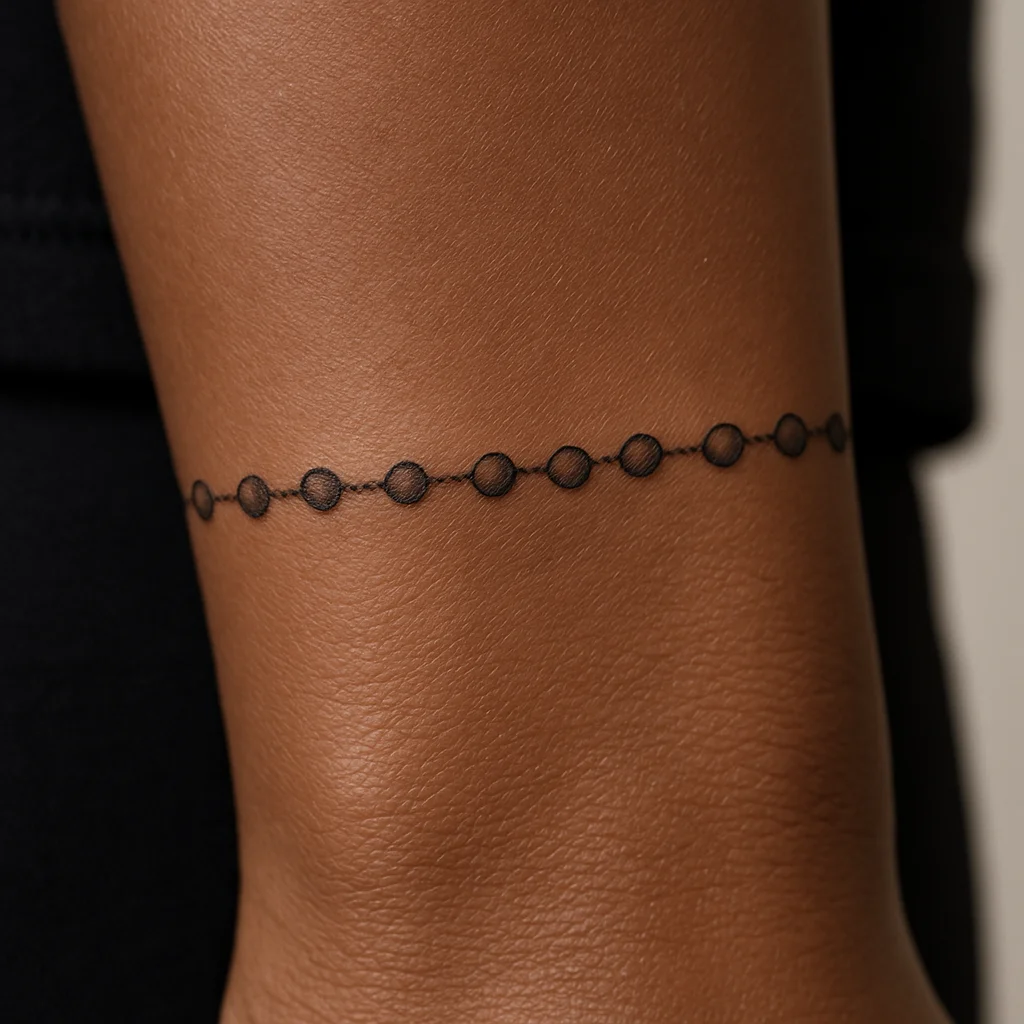
26. Beaded string with dot shading
Evenly spaced small circles, each with a tiny stippled shadow on one side, strung on a hairline. Around 5 mm bead diameter, spaced by half a bead. It genuinely reads as a bracelet from a metre away, which is the whole point.
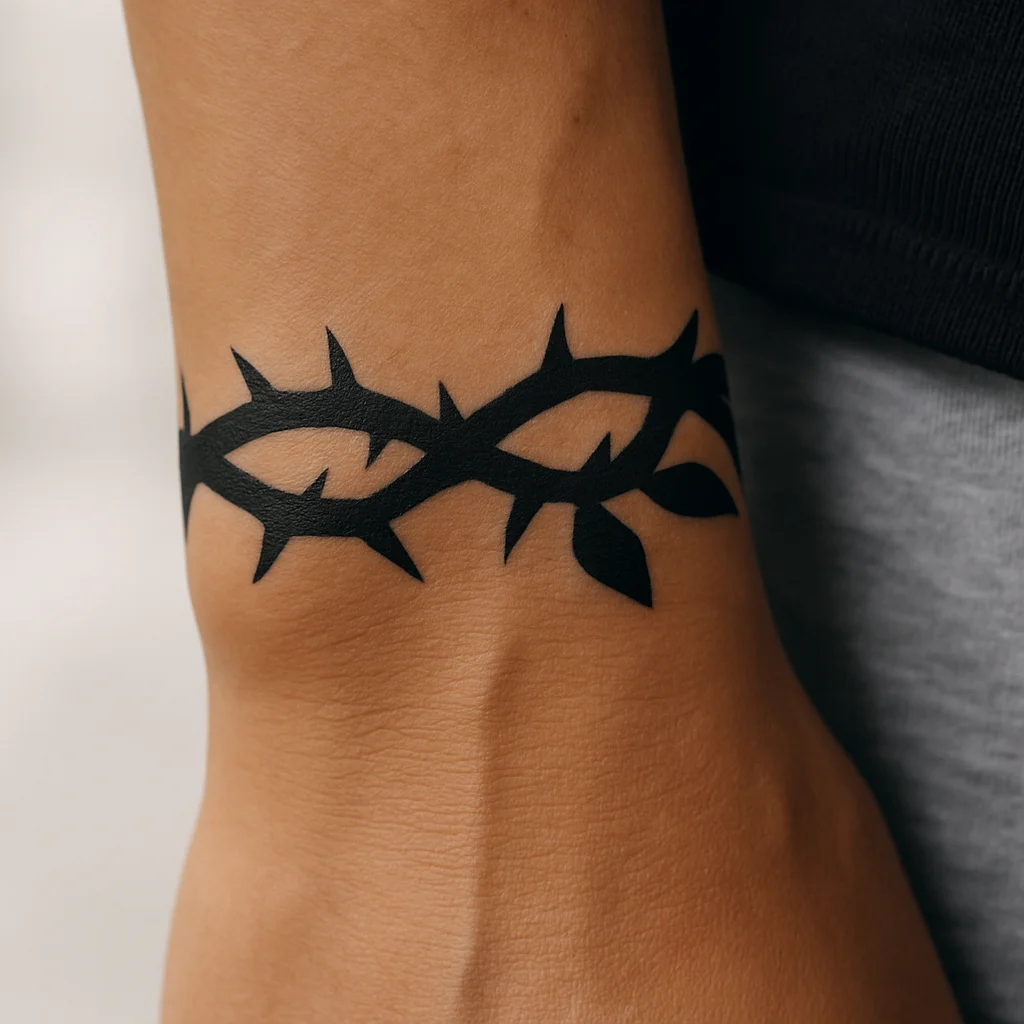
27. Thorn vine instead of barbed wire
The grown-up version of the nineties barbed-wire band: a dark thorn vine with irregular spacing and a couple of small leaves, about 1.5 cm wide, wrapping once. Irregularity is what saves it from looking dated. Handsome on broader wrists where a thin band would disappear.
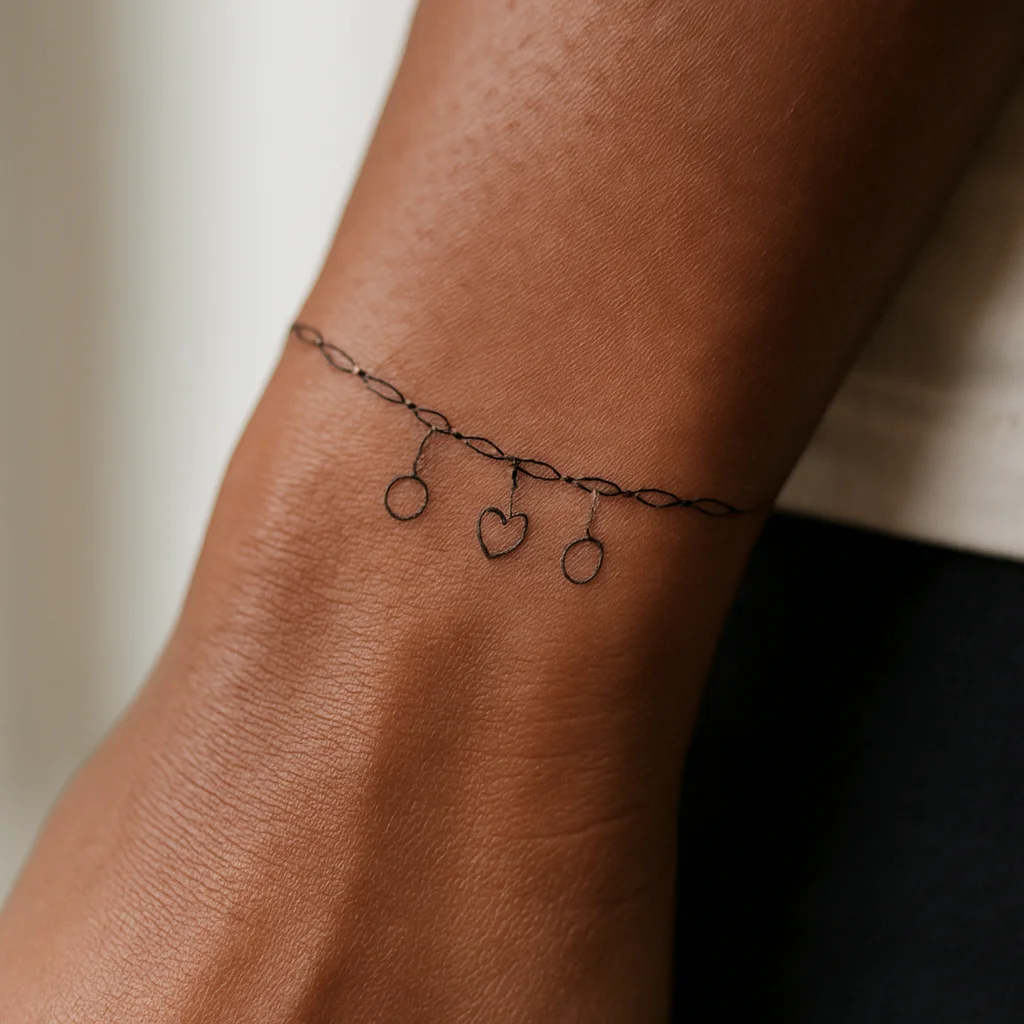
28. Charm bracelet with three charms
A fine chain around the wrist with three small charms hanging on the outer side, each one meaningful: a tiny heart, a letter, a star. Keep charms under 1 cm each and let them hang naturally with gravity in one direction. The most personal wrap you can commission, and easy to add to later.
If you'd rather keep things smaller than any of these, our roundups of tiny tattoos smaller than a coin and minimalist designs built on subtraction both scale down to the wrist neatly.
Healing, Fading and How to Brief Your Artist
Wrist tattoos heal fast and fade unevenly, and both facts come from the same source: constant use. Here's how to stack the odds.
The first two weeks. Wash gently twice a day with unscented soap, pat dry, and use a rice-grain amount of ointment. The awkward part is your hands: you'll be washing them ten times a day, and every wash soaks the tattoo. Blot it dry each time rather than leaving it damp. Skip the watch, bracelets and hair ties on that wrist for at least two weeks, because friction on a healing wrist is the number one cause of patchy lines. Gym work that loads the wrist, push-ups, kettlebells, climbing, is worth pausing for a week.
The long game. Sunscreen on the outer wrist is not optional if you want crisp black in ten years, and it's the single cheapest thing you can do for the tattoo. Expect a touch-up conversation at the one-year mark on inner-wrist fine line; most artists include or heavily discount one small touch-up, but ask before you book.
What to tell your artist
- Show them the zone, not just the design. Turn your wrist through its range of motion in the consult so they can see where creases fall.
- Ask for a slightly heavier line weight than the reference photo, especially for script and anything under 3 cm.
- Say whether you wear a watch and on which wrist, so placement doesn't fight the strap.
- Mention coverability. If work requires sleeves down or a watch over it, the inner wrist and ulnar edge hide more easily than the outer plane.
- Bring the exact wording, spelled correctly, in writing. Never leave lettering to be typed out from memory at the machine.
One last piece of studio wisdom: people rarely regret the wrist tattoo they chose, they regret making it too small and too delicate for the job it had to do. Give the design room to breathe and it will still look sharp when your hands have another twenty years on them.
Frequently asked questions
Do wrist tattoos hurt more than forearm tattoos?
Yes, noticeably. The skin is thin, there's bone and tendon right underneath, and the inner wrist near the base of the thumb is one of the more sensitive small-tattoo spots. The upside is that most wrist designs take 15 to 45 minutes, so the discomfort is short-lived compared with a forearm session.
How fast do wrist tattoos fade?
Faster than most placements, because of hand-washing, sun exposure on the outer wrist and constant friction from sleeves and watch straps. Solid black and medium-weight lines can look sharp for a decade or more with sunscreen; hairline fine-line and micro-script often need a touch-up somewhere around the one to three year mark.
What size works best on a wrist?
Aim for a design that fits within roughly 4 to 6 cm and leaves a finger's width of clear skin above the hand crease. Lettering should be at least 4 mm tall, and any illustrative detail should be simplified so no two lines sit closer than about a millimetre apart.
Can a wrist tattoo be covered for work?
The inner wrist and ulnar edge disappear under a watch, a cuff bracelet or a shirt sleeve, and are the safest choices for conservative workplaces. The outer wrist is the most visible zone in this area, and a full wrap band is essentially permanent visible jewellery, so choose that one with your career in mind.
How much should I expect to pay?
Most single wrist pieces fall at or just above the shop minimum, which typically sits in the low-to-mid three figures depending on your city and the artist's reputation. Wrap bands, ornamental cuffs and anything with detailed shading move into hourly pricing, usually one to two hours of chair time.
The conversation
No comments yet. Got a thought about these designs? Start us off.
Want to weigh in? Join the community to comment, save designs and try them on your skin.