32 Tiny Tattoo Ideas That Still Read at Coin Size
Micro tattoos live or die on how few lines they use. Here are 32 designs that still read clearly at coin size, plus the placement, pricing and aftercare details that keep them sharp.
How small is too small?
A tiny tattoo is usually anything that fits inside a coin — roughly half an inch to an inch and a half across. That constraint changes everything. At that scale you are not shrinking a drawing, you are rebuilding it with a fraction of the information.
Three rules keep micro work legible:
- Count your elements. Under an inch, five to seven marks is a comfortable ceiling. A crescent moon is one shape. A crescent moon with clouds, stars and a face is four competing shapes fighting for two millimetres each.
- Leave gaps between lines. Ink spreads slightly as it settles into skin, and it keeps spreading over decades. Lines that sit closer than about a millimetre apart tend to merge into a smudge. Artists who do a lot of micro work deliberately open up spacing that would look too airy on paper.
- Favour solid shapes and clean outlines. Tiny areas of soft grey wash, micro-dot shading and hair-thin cross-hatching are the first things to blur. A filled black silhouette at 10 mm will still be a silhouette in fifteen years.
Script is the classic trap. A single word in a simple sans-serif can work at around three-quarters of an inch tall, but a delicate cursive quote crammed into that space will close up. If you want words tiny, ask for wider letter spacing and drop the flourishes.
Everything in the tattoo ideas that follow is designed to survive at coin size — no dense detail, no lines fighting each other. Screenshot the ones you like and bring them as a group; your artist will spot the through-line.
Sky and celestial (6 designs)
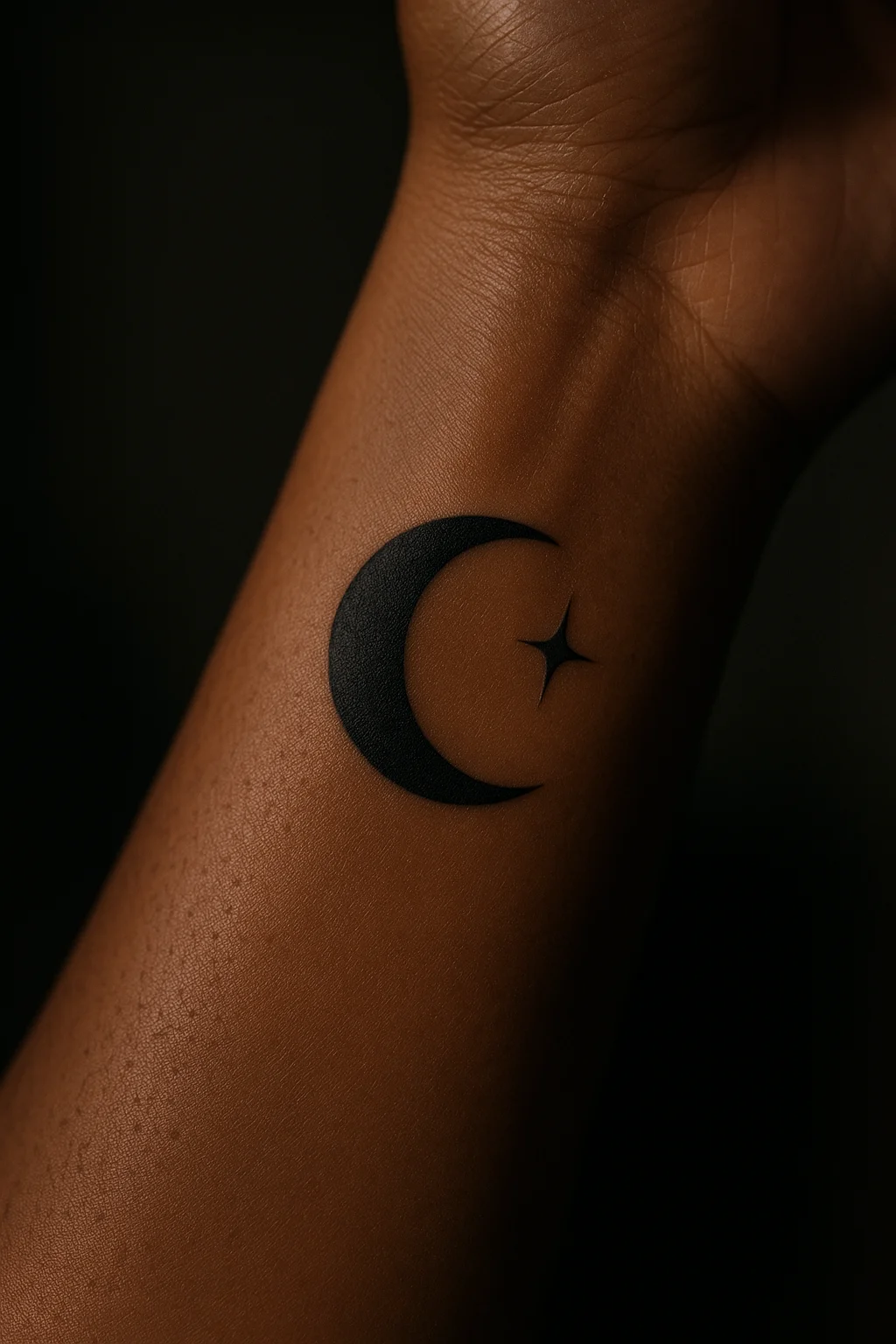
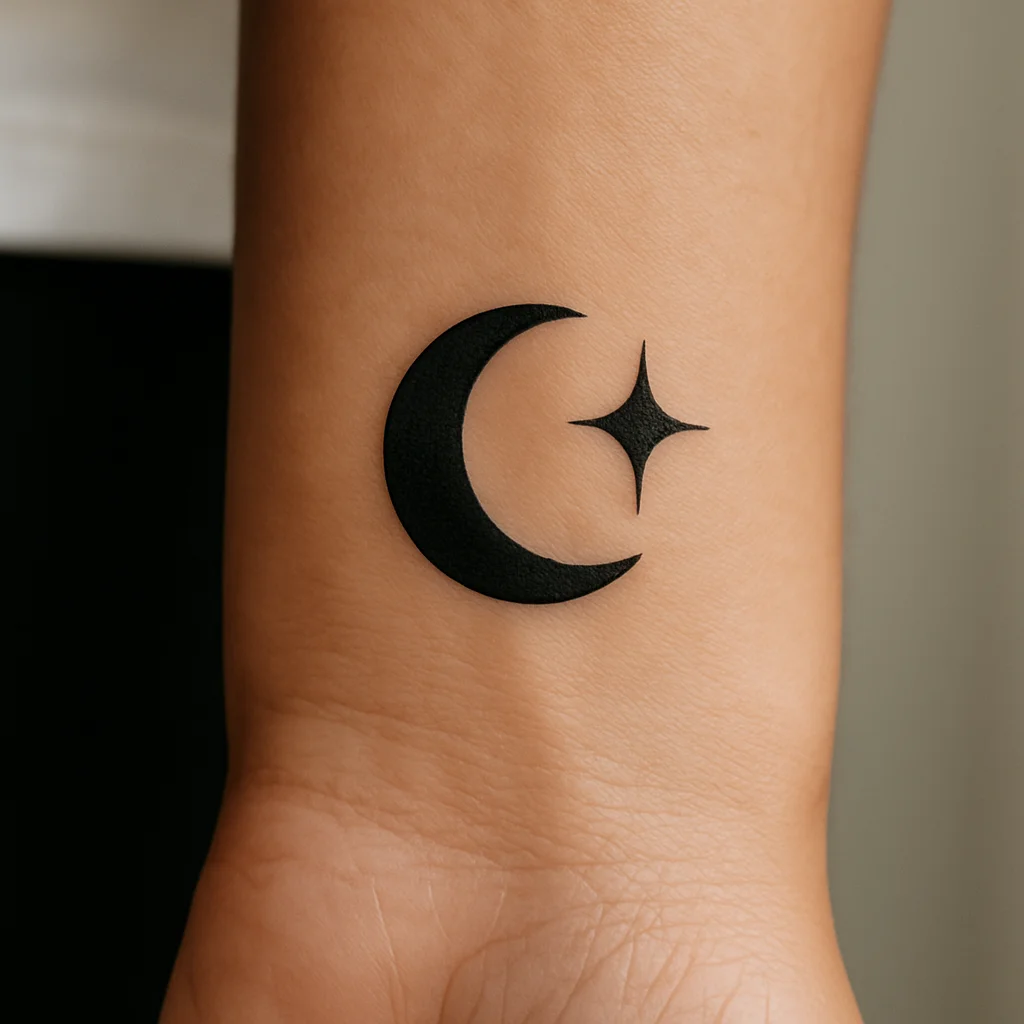
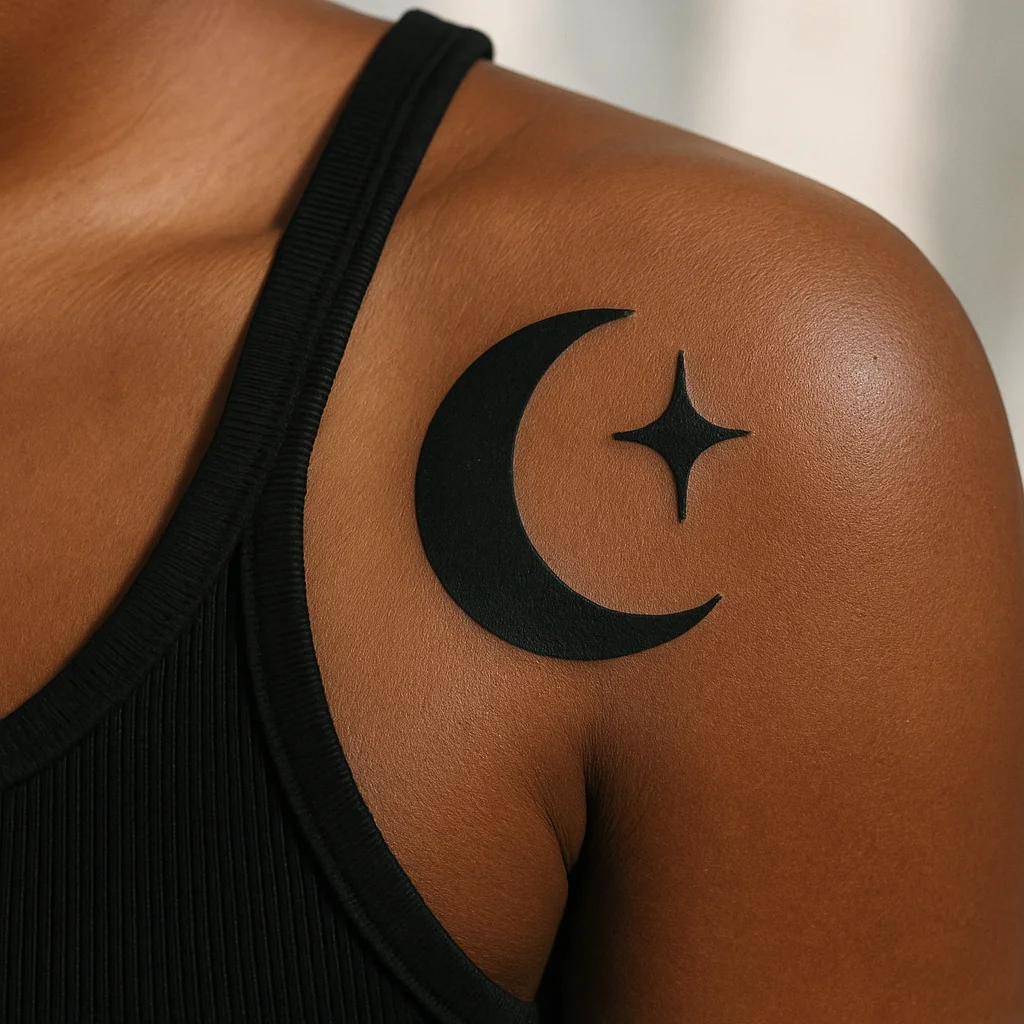
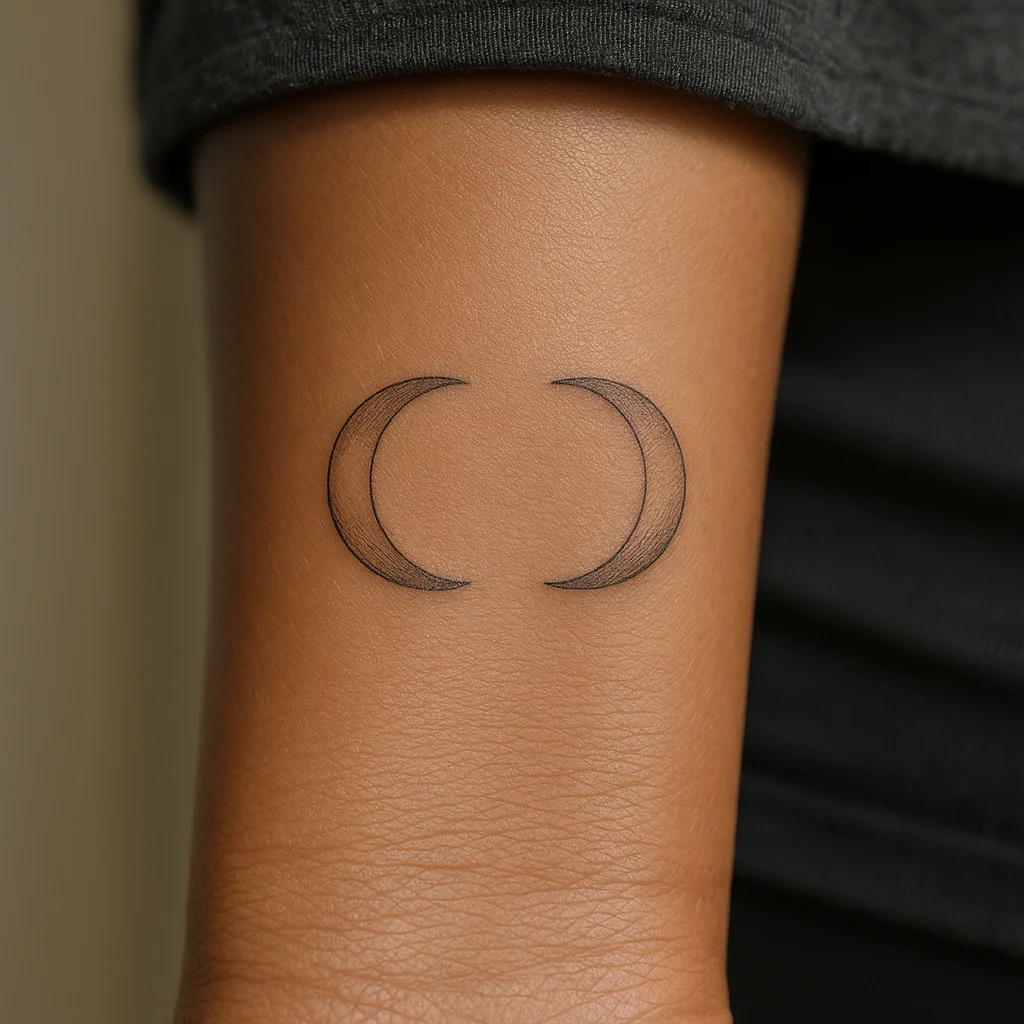
1. Solid black crescent moon with a four-point star
One shape, one pass, endlessly readable. Pair the moon with a single four-point sparkle star a centimetre away and you get a two-piece set that reads as a whole scene.
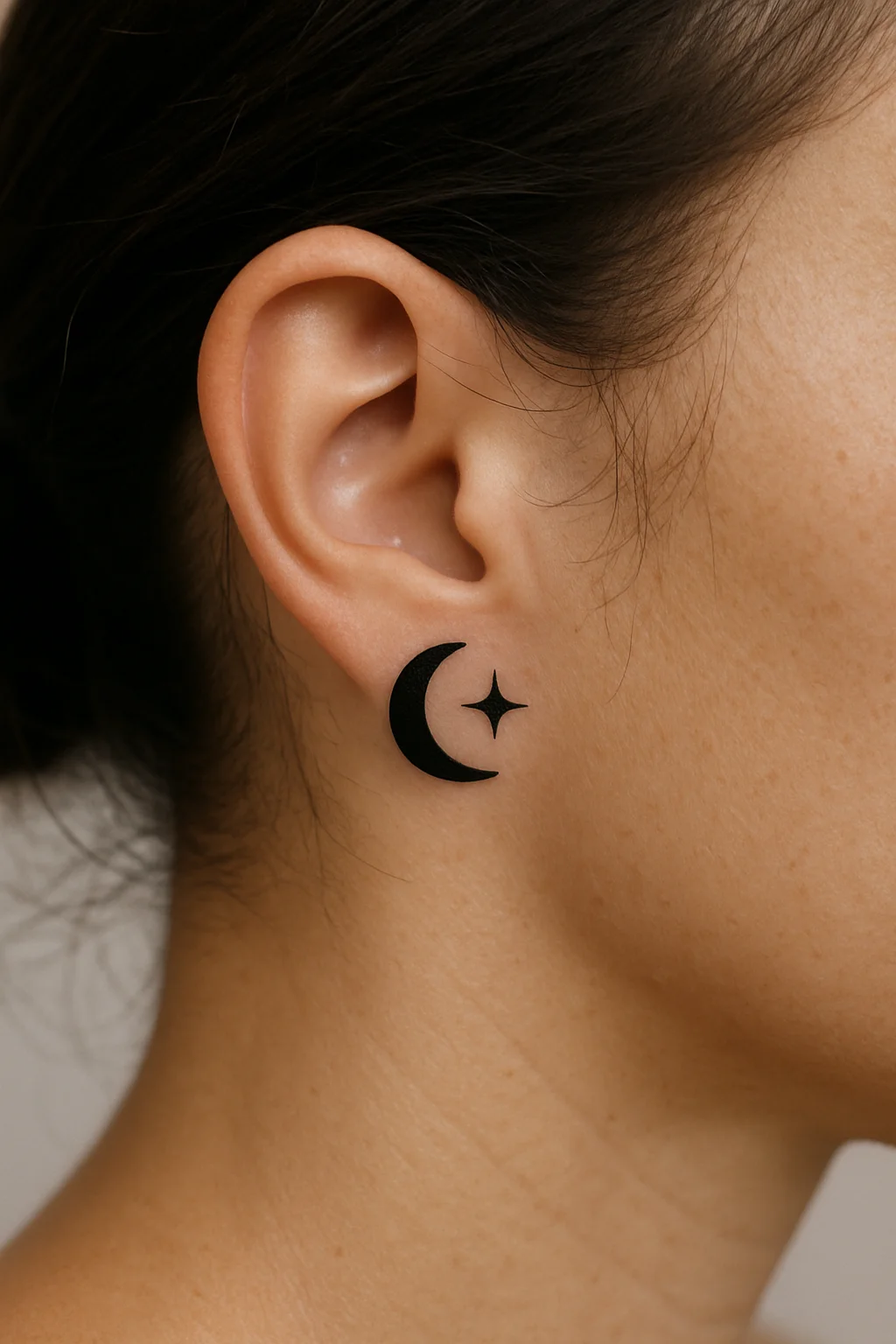
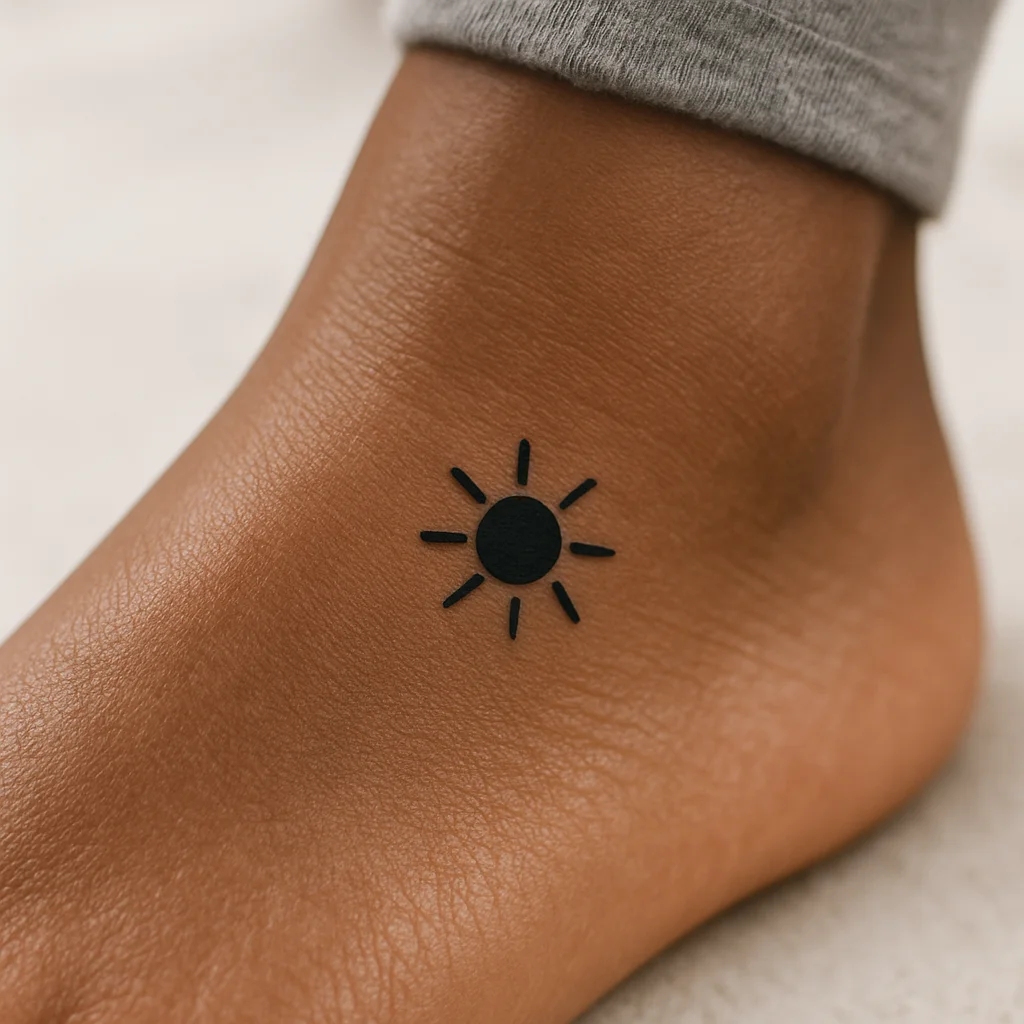
2. Tiny sun with six straight rays
A small filled circle with short dashes radiating out. Nothing here can close up, which is why it works behind the ear or on the top of the foot.
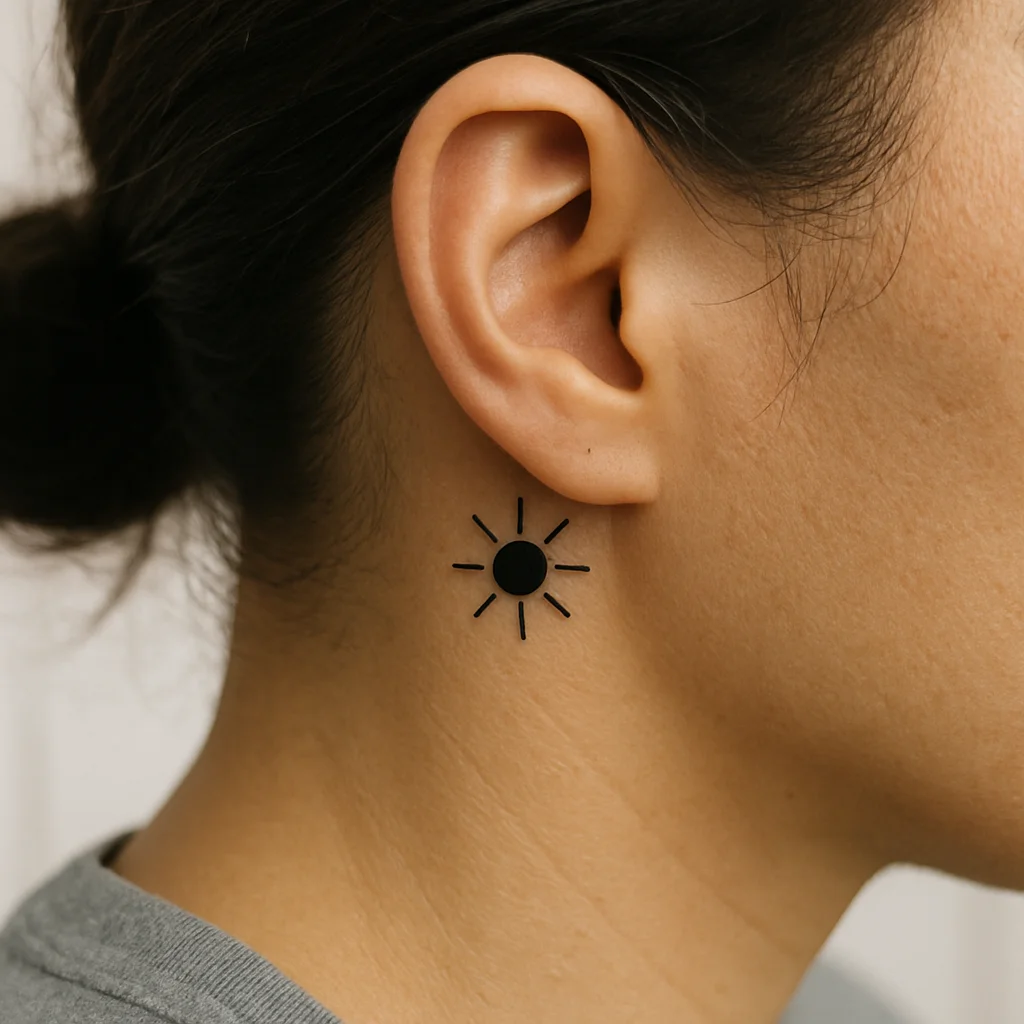
3. Single cloud outline
Three bumps and a flat base, nothing more. Resist the urge to add rain or shading — the empty middle is what keeps it crisp.
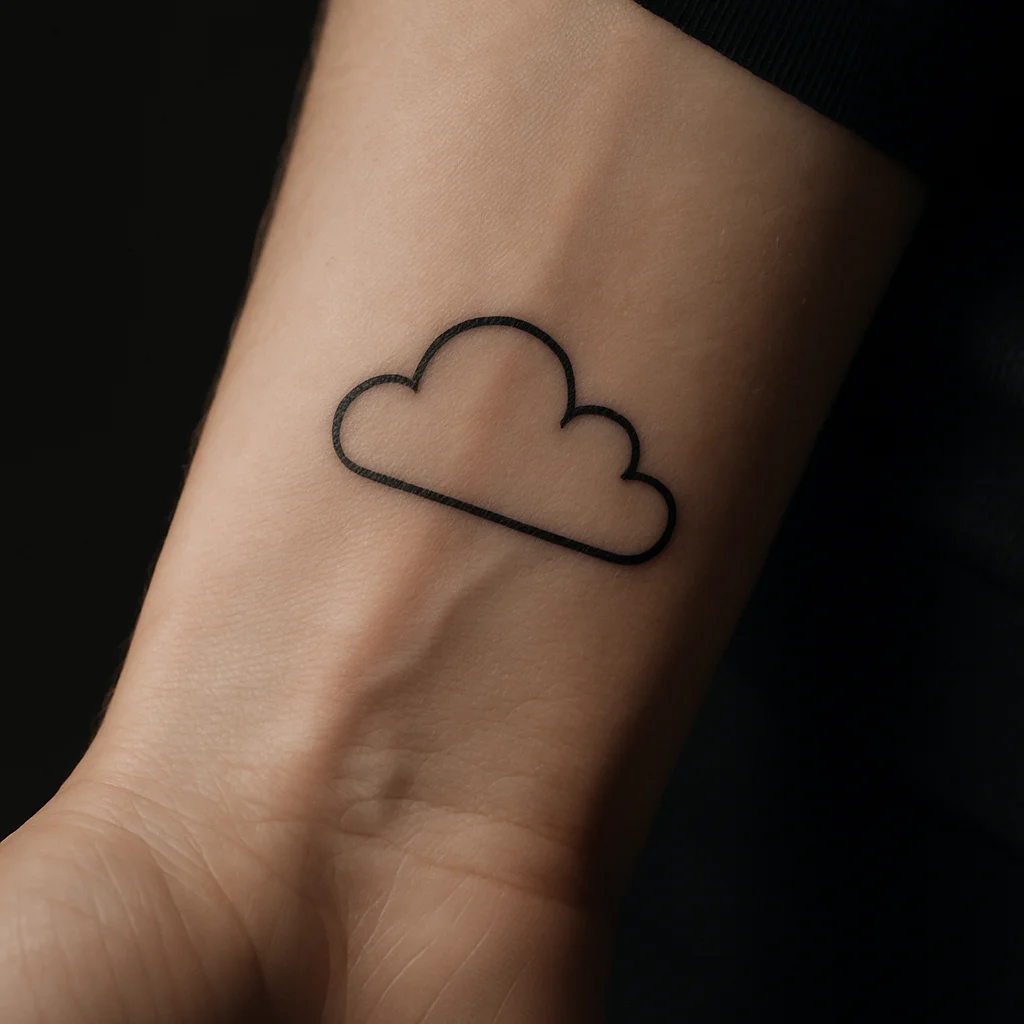
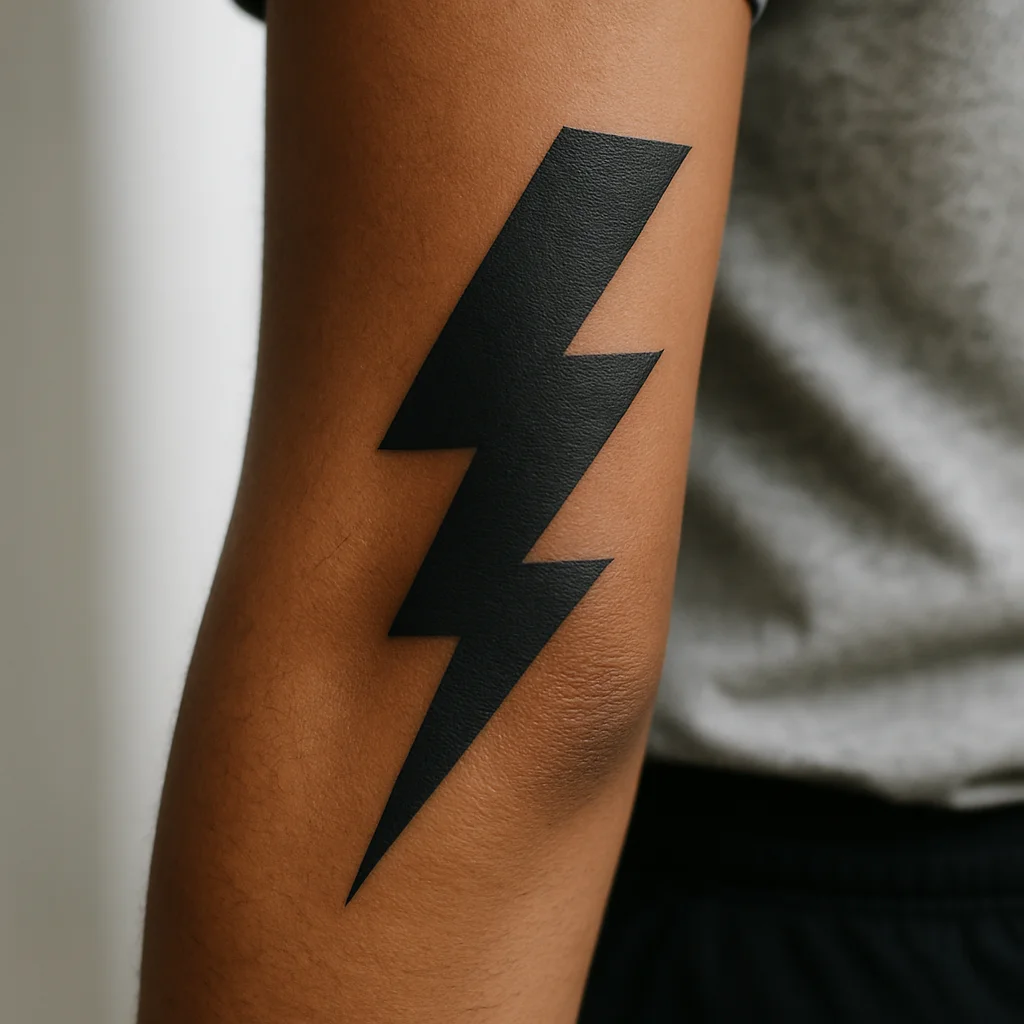
4. Lightning bolt
Solid black, sharp angles, immune to ageing. One of the few micro designs that arguably looks better a decade in.
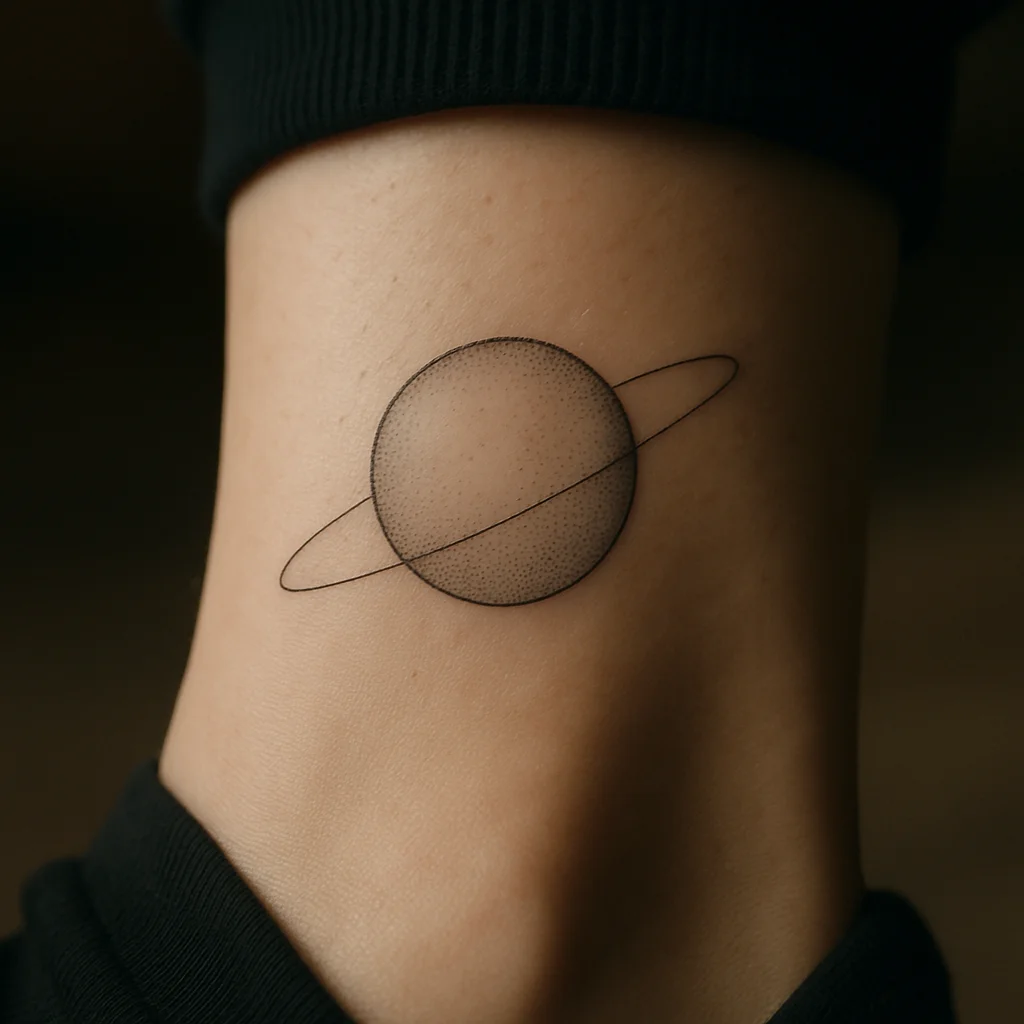
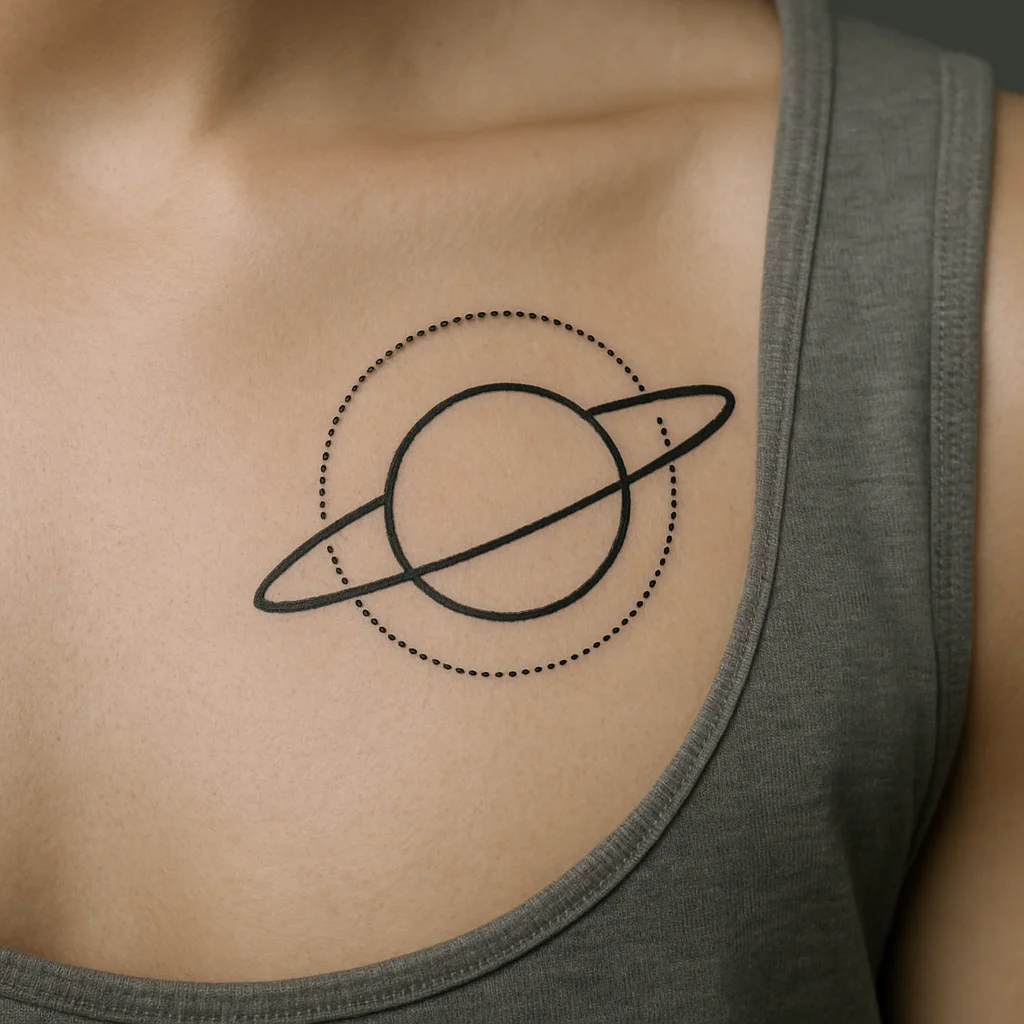
5. Saturn with one ring
A dotted circle crossed by a single ellipse. Keep the dots generously spaced so the ring never merges into the planet.
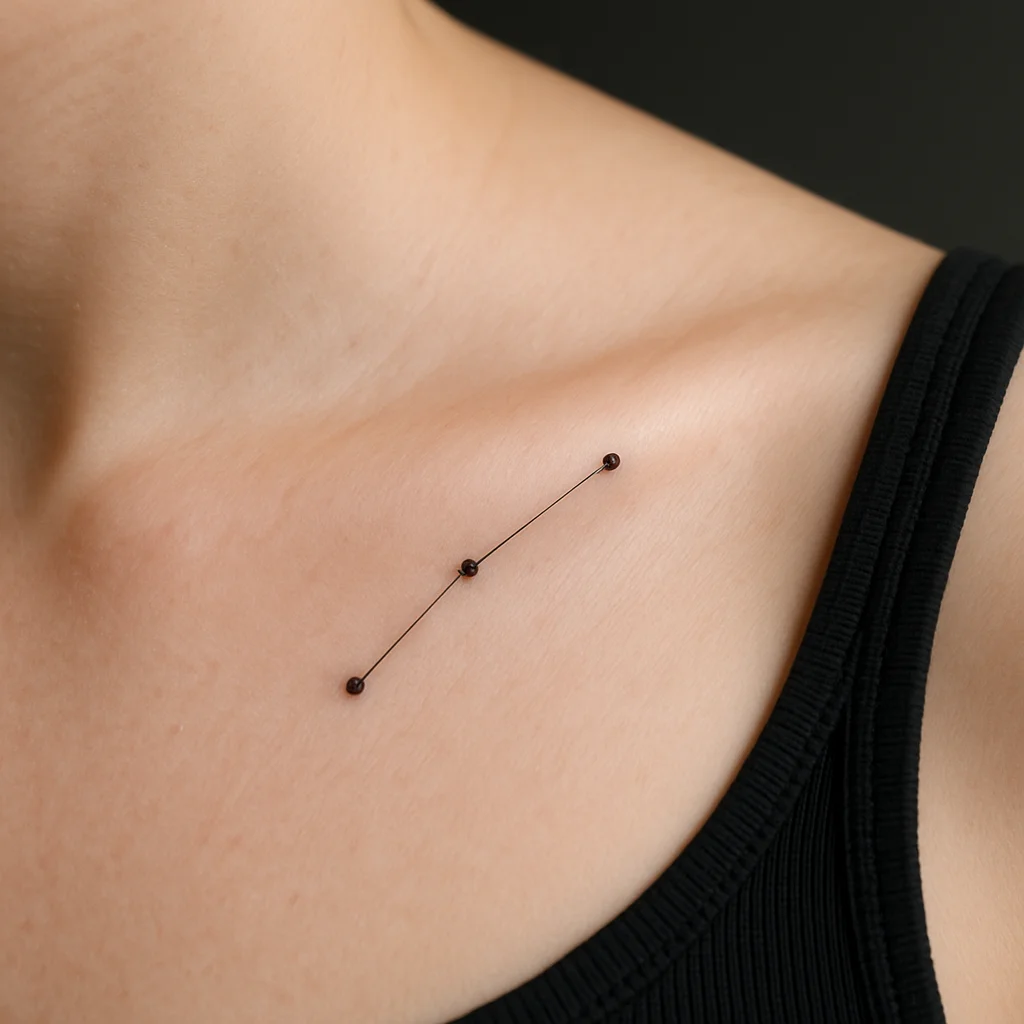
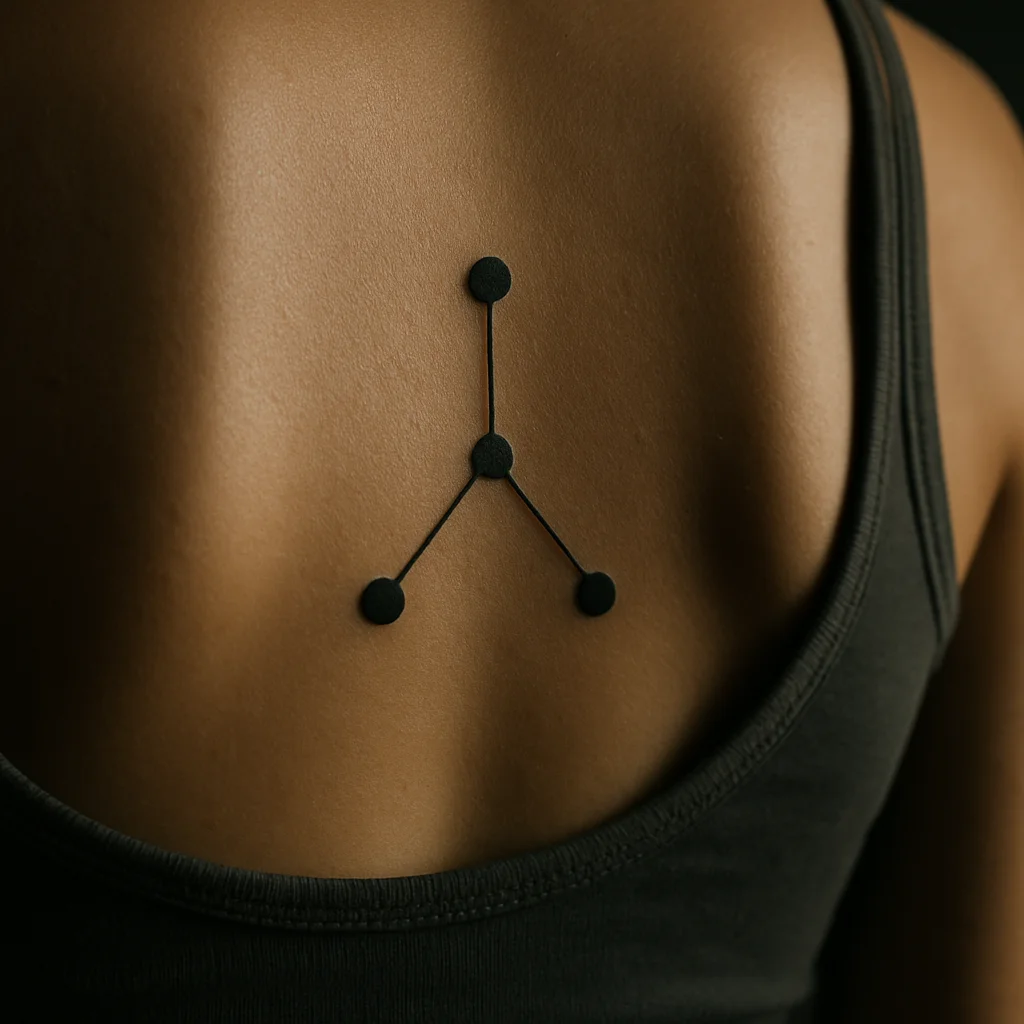
6. Constellation of three dots and two connecting lines
The smallest possible star map. It sits beautifully along a collarbone or the spine, where a straight-ish line has room to run.
Plants and landscape (6 designs)
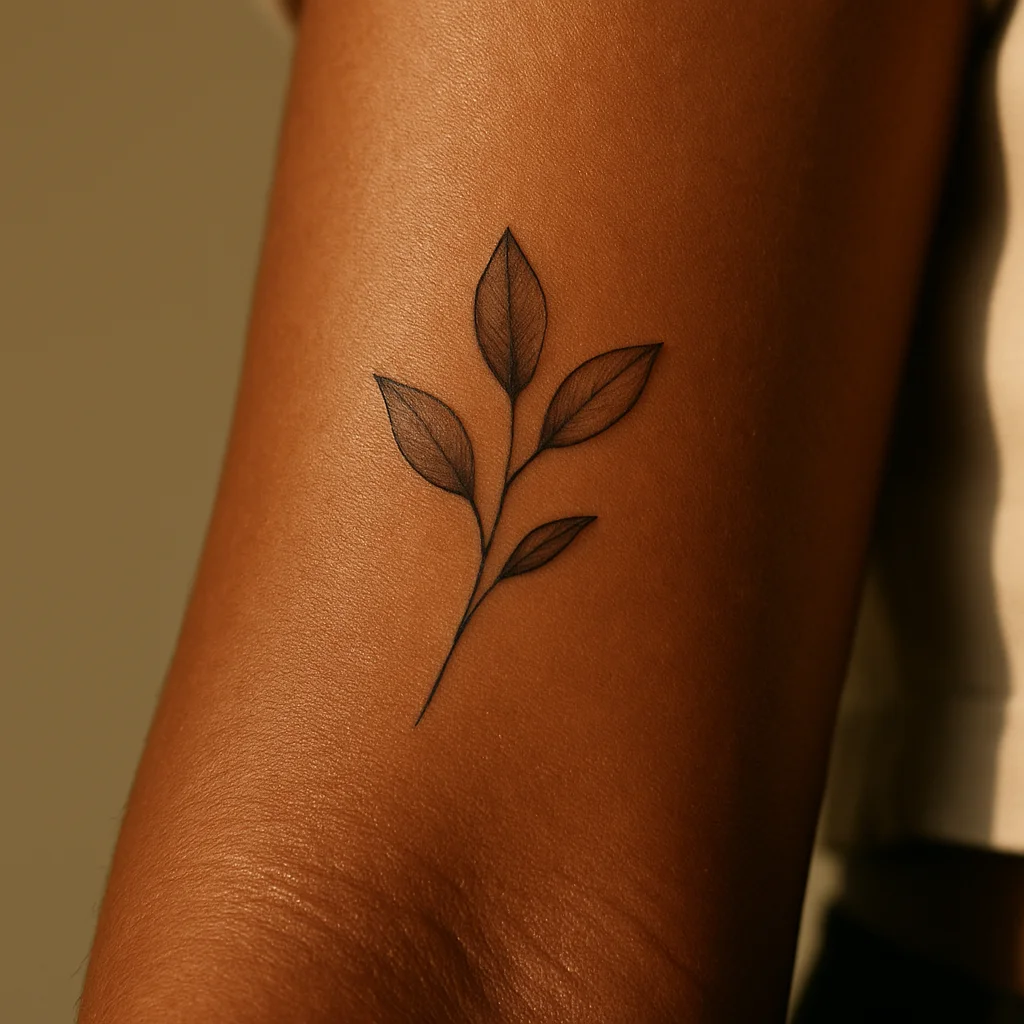
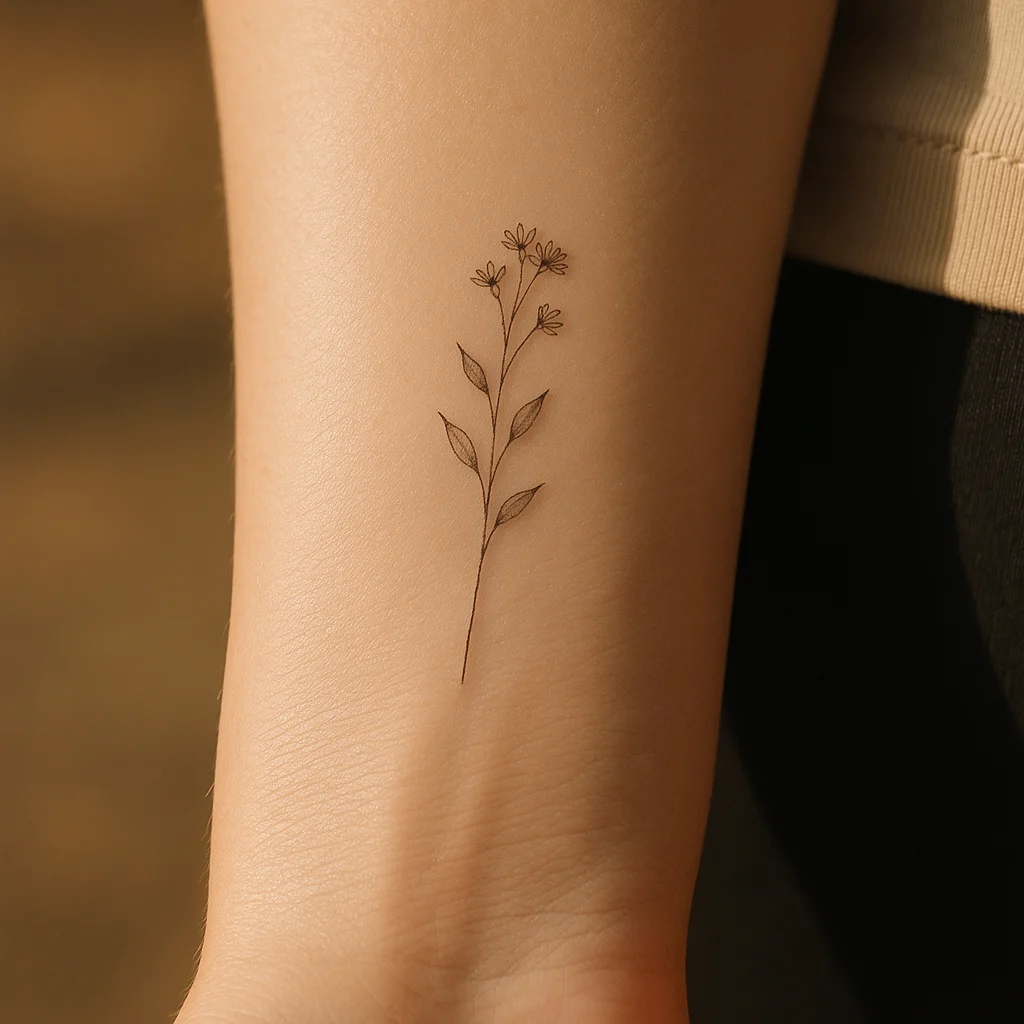
7. Three-leaf sprig
A curved stem with three simple leaves — the workhorse of micro botanicals. Ask for one clean outline per leaf rather than internal veining.
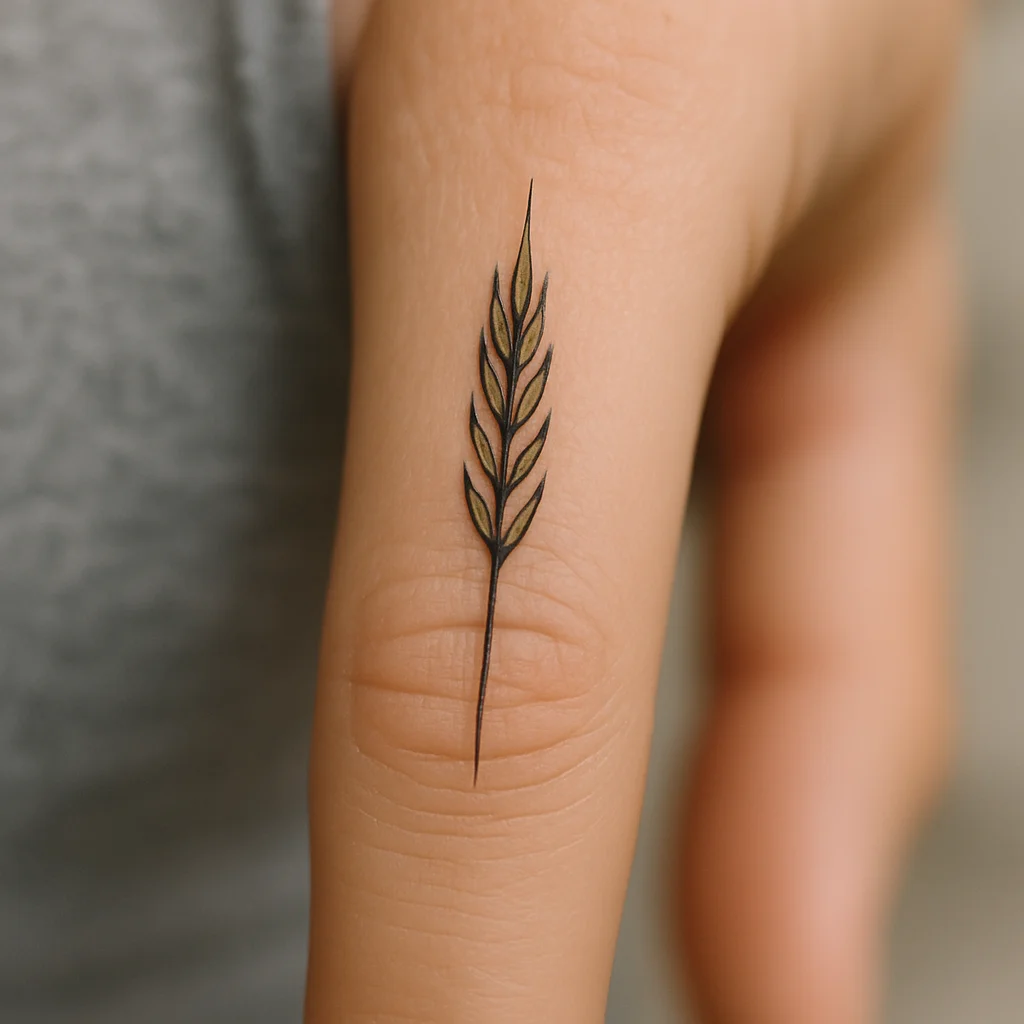
8. Single grain of wheat
A vertical stem with paired strokes, elegant on a finger or the edge of a wrist. The repetition reads as texture without needing detail.
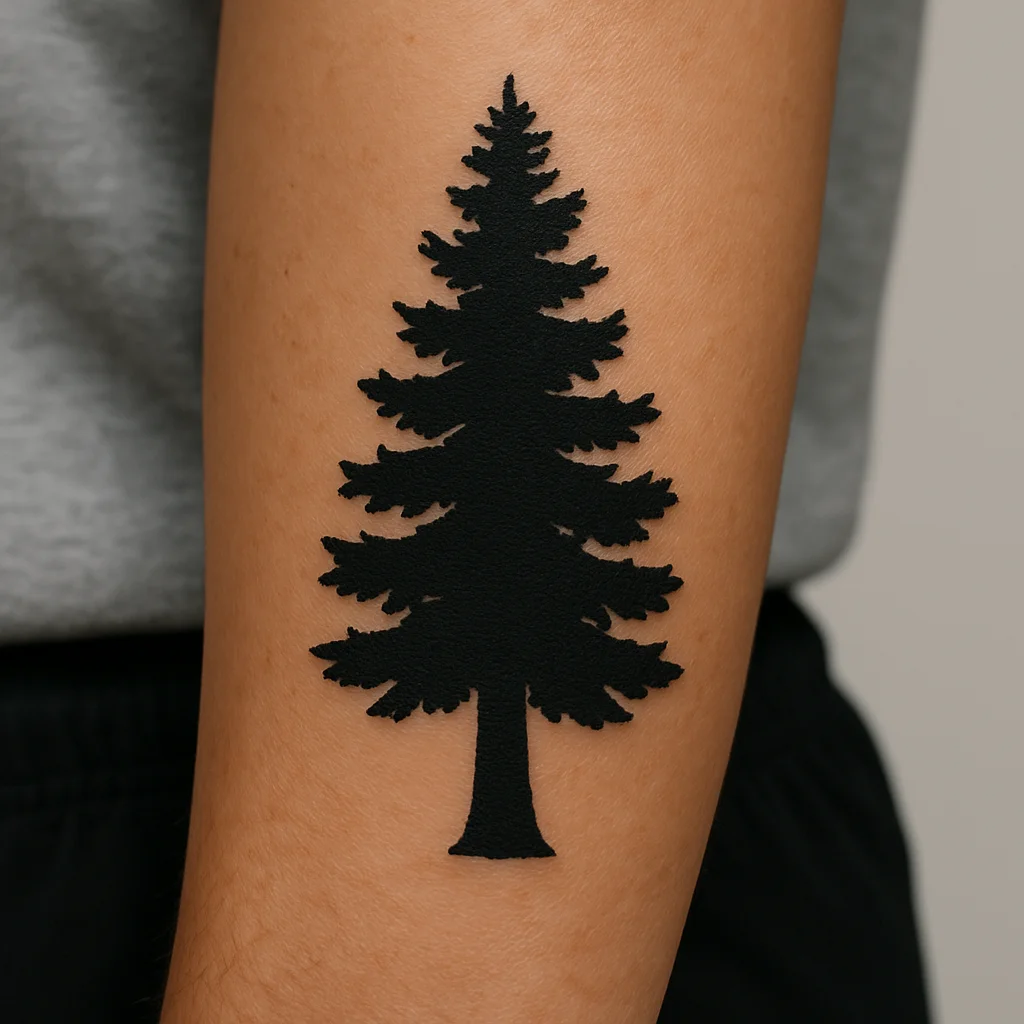
9. Pine tree silhouette
A filled black triangle-ish body with a stubby trunk. Solid fill is exactly what survives at 10 mm.
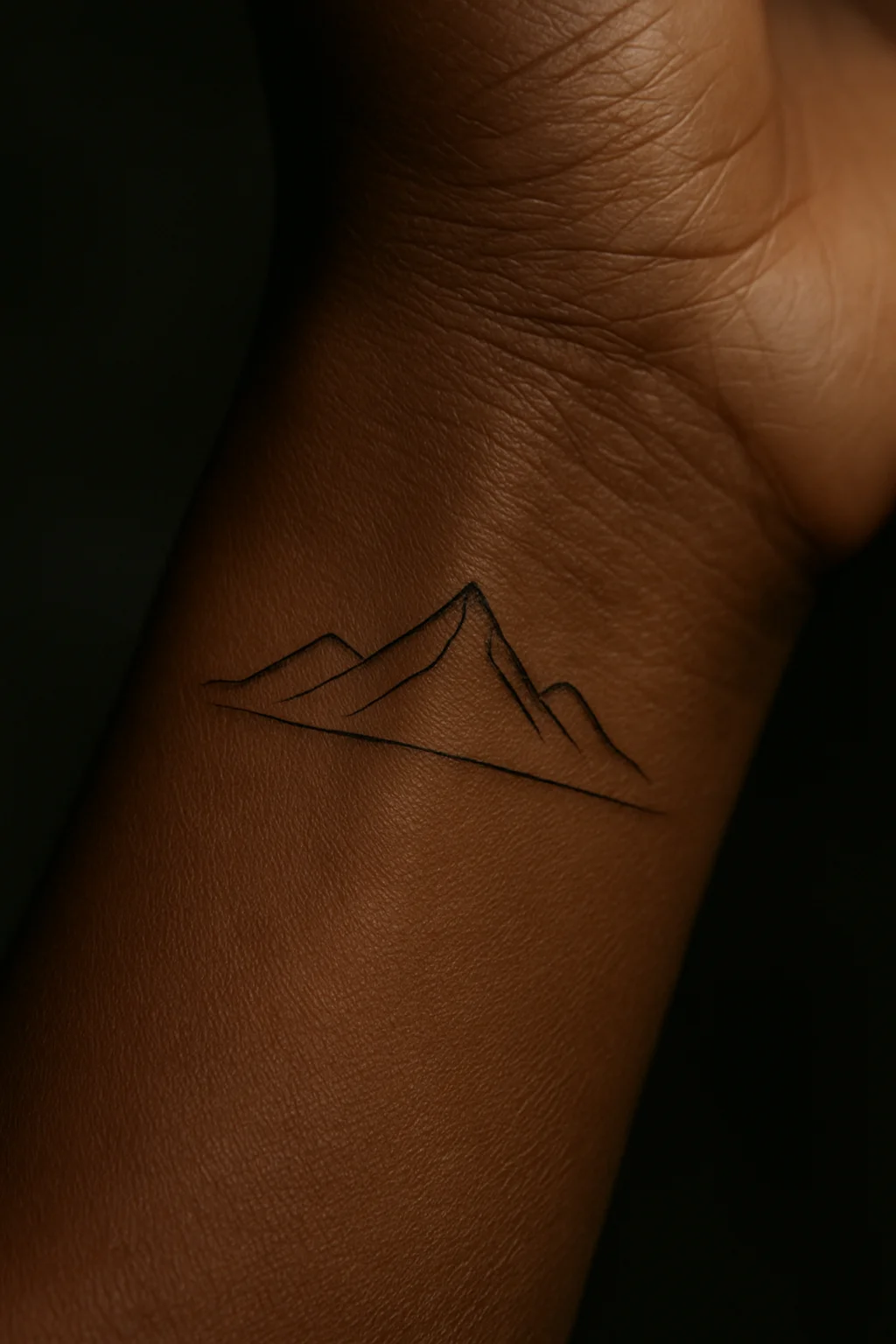
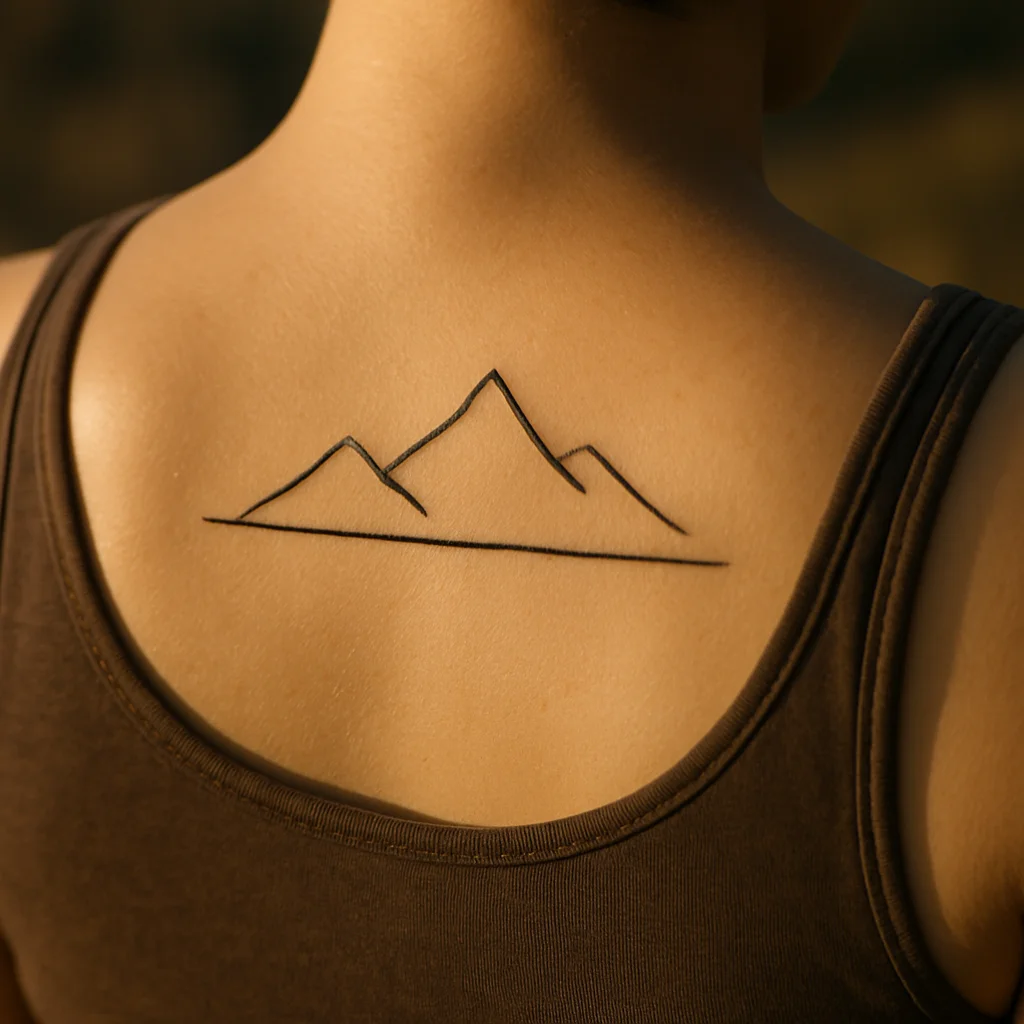
10. Three-line mountain range
Two peaks and a horizon, no shading. It works small on the side of the wrist and equally well scaled up across the upper back.
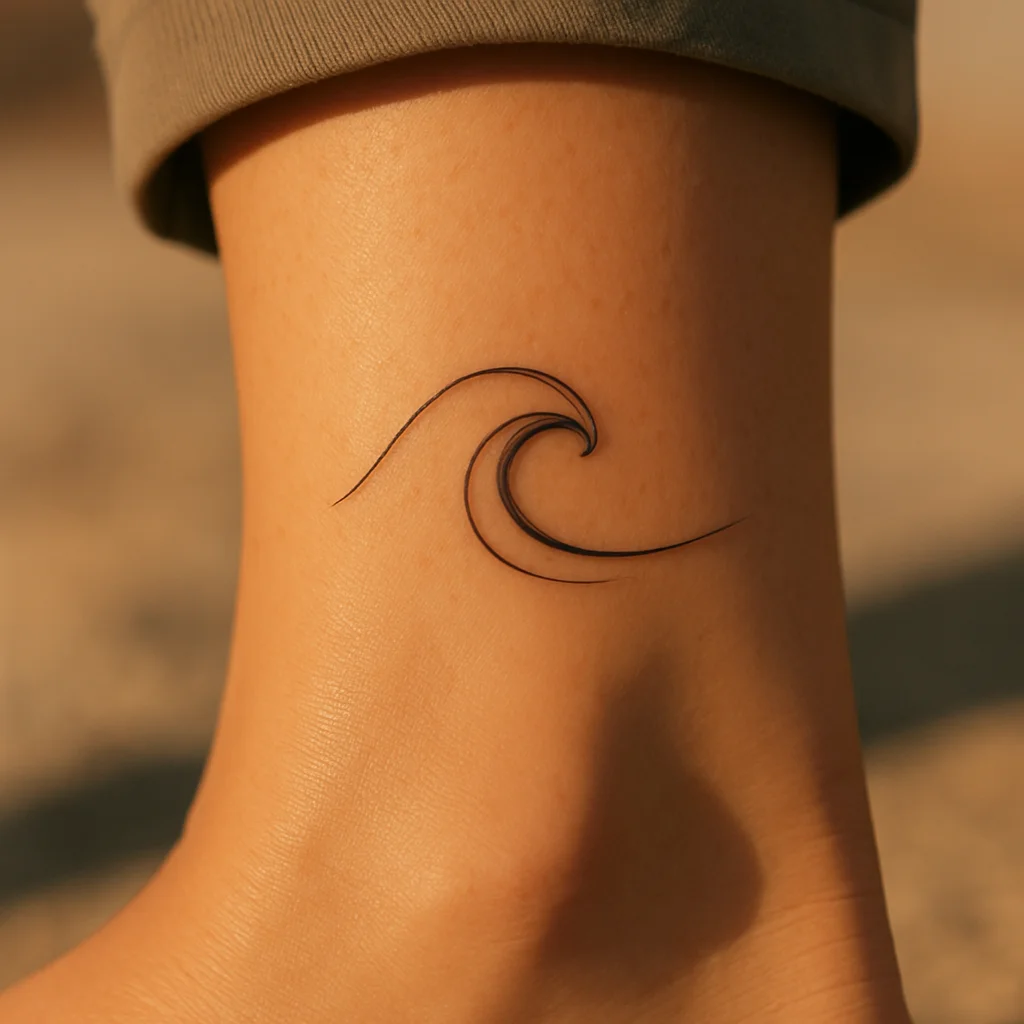
11. Wave curl
One spiralling line that suggests a breaking crest. A single-line design like this is the cleanest way to get movement into a coin-sized piece.
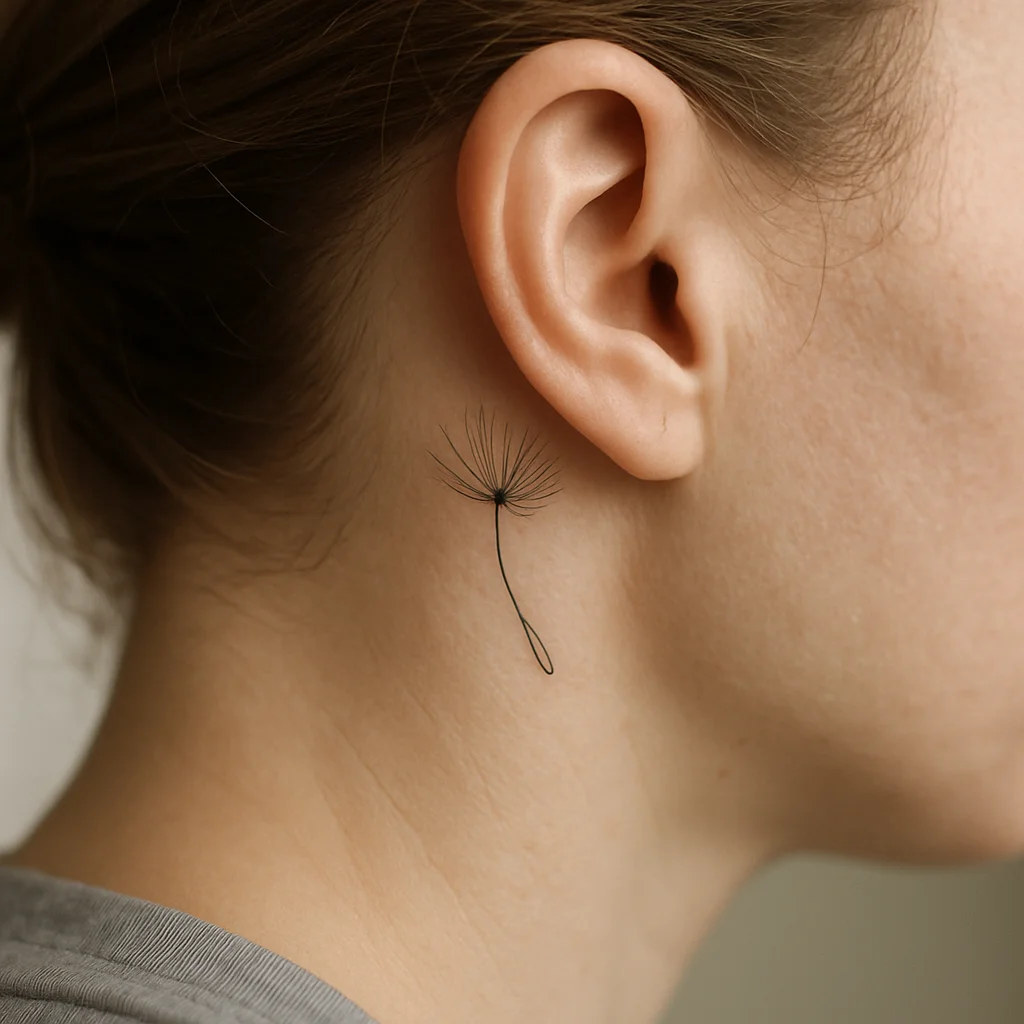
12. Dandelion seed in flight
A tiny tuft and a thin curved stalk. Keep the tuft to a handful of marks — a full seedhead is where this design dies.
Creatures (6 designs)
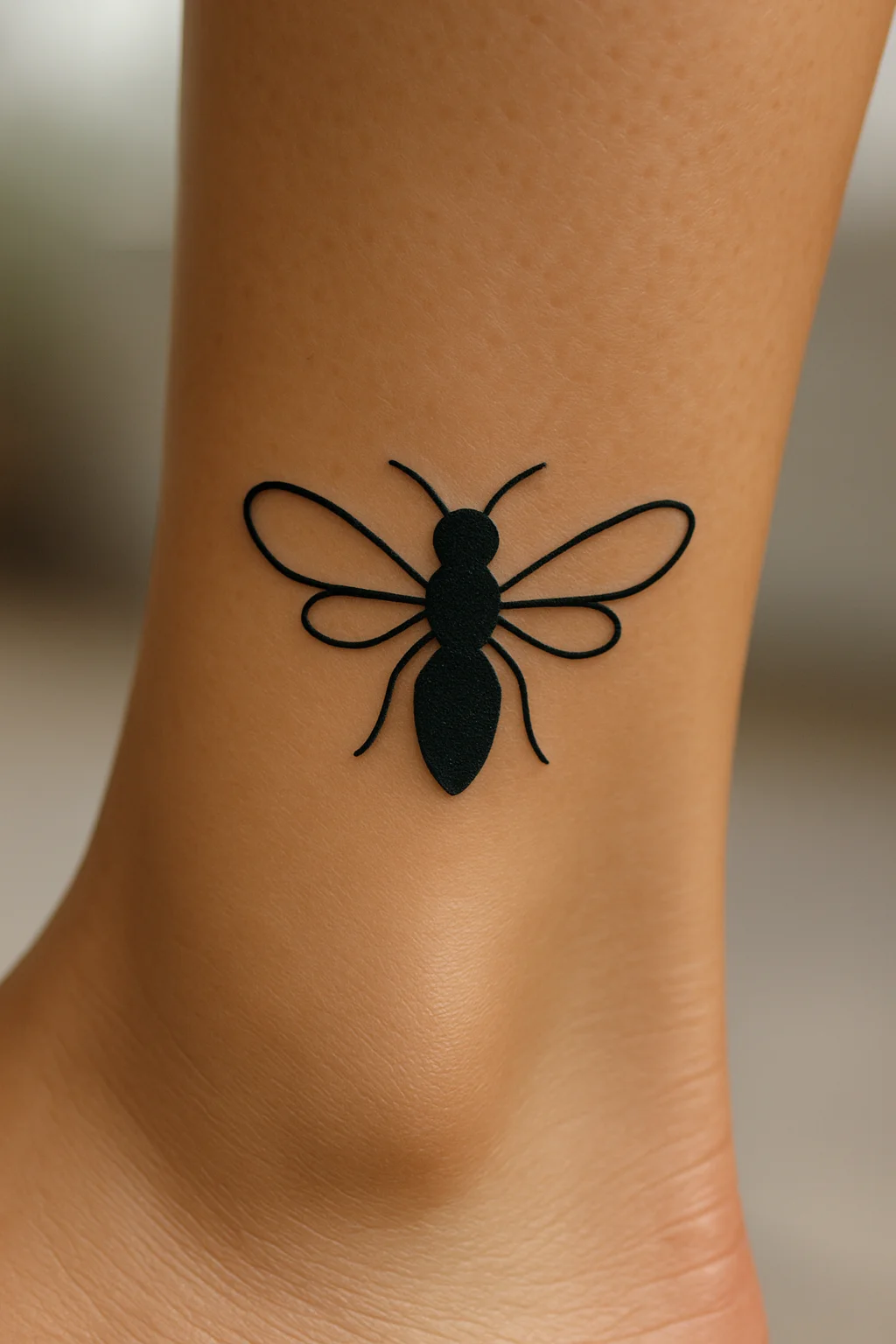
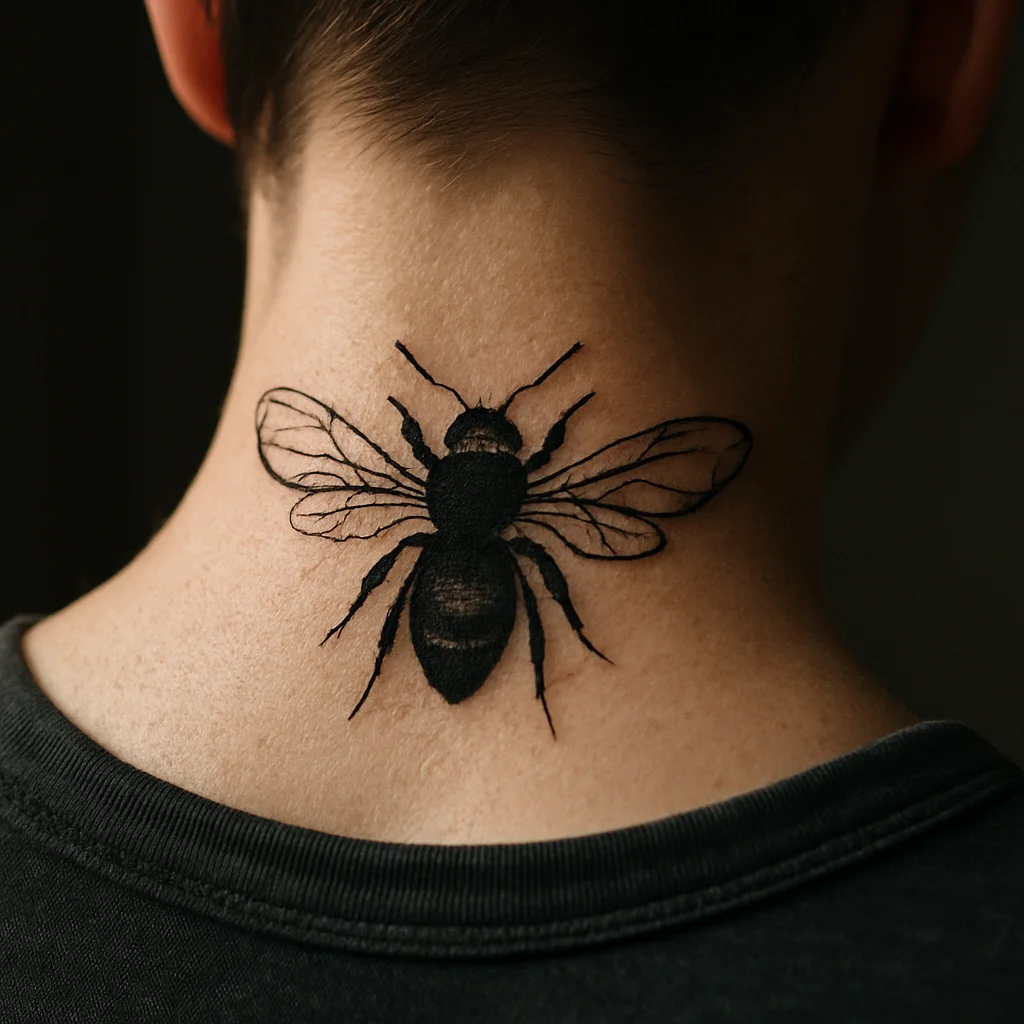
13. Bee with a solid black body and two open wings
The body carries the visual weight while the wings stay as outlines. That contrast is what stops it turning into a blob.
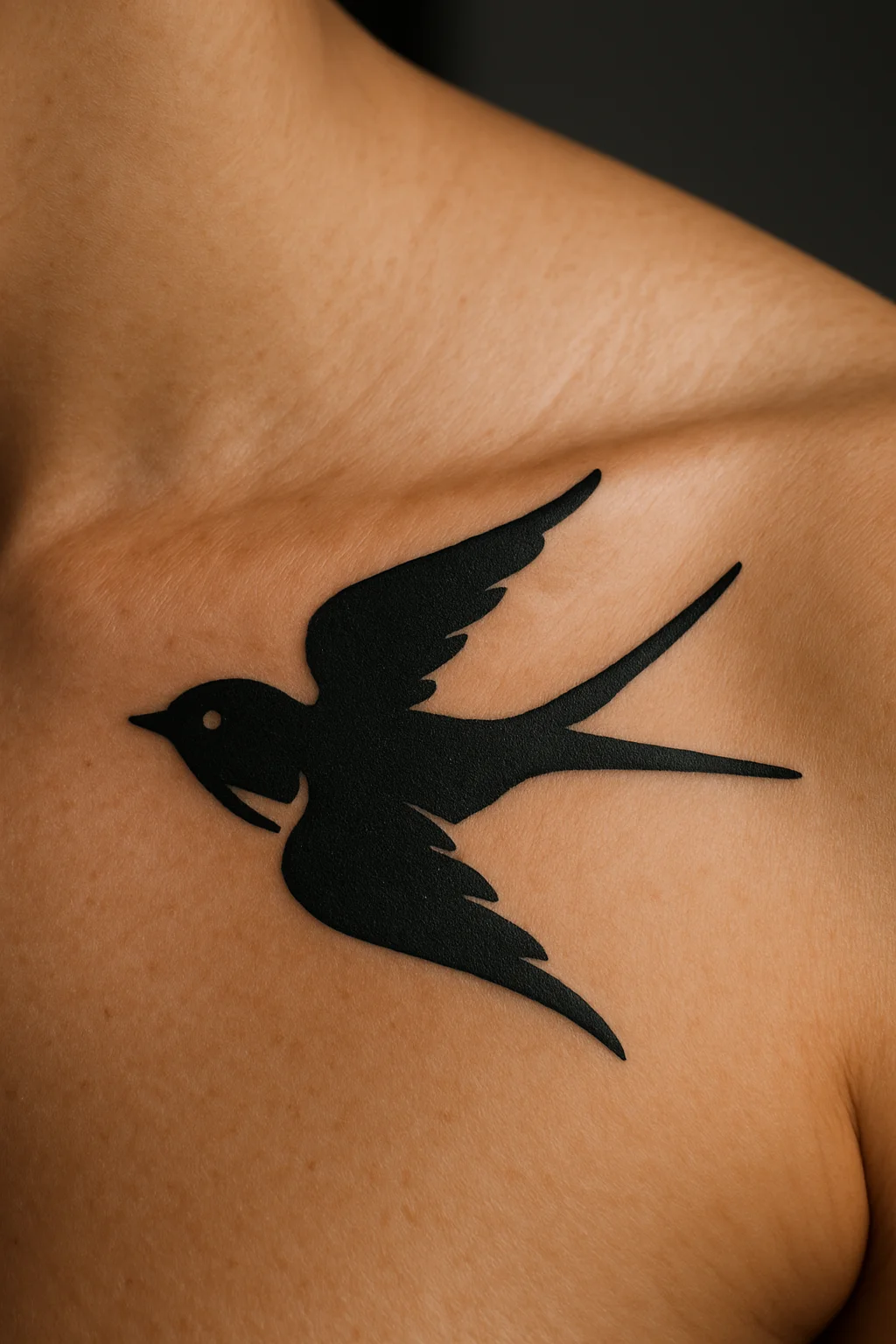
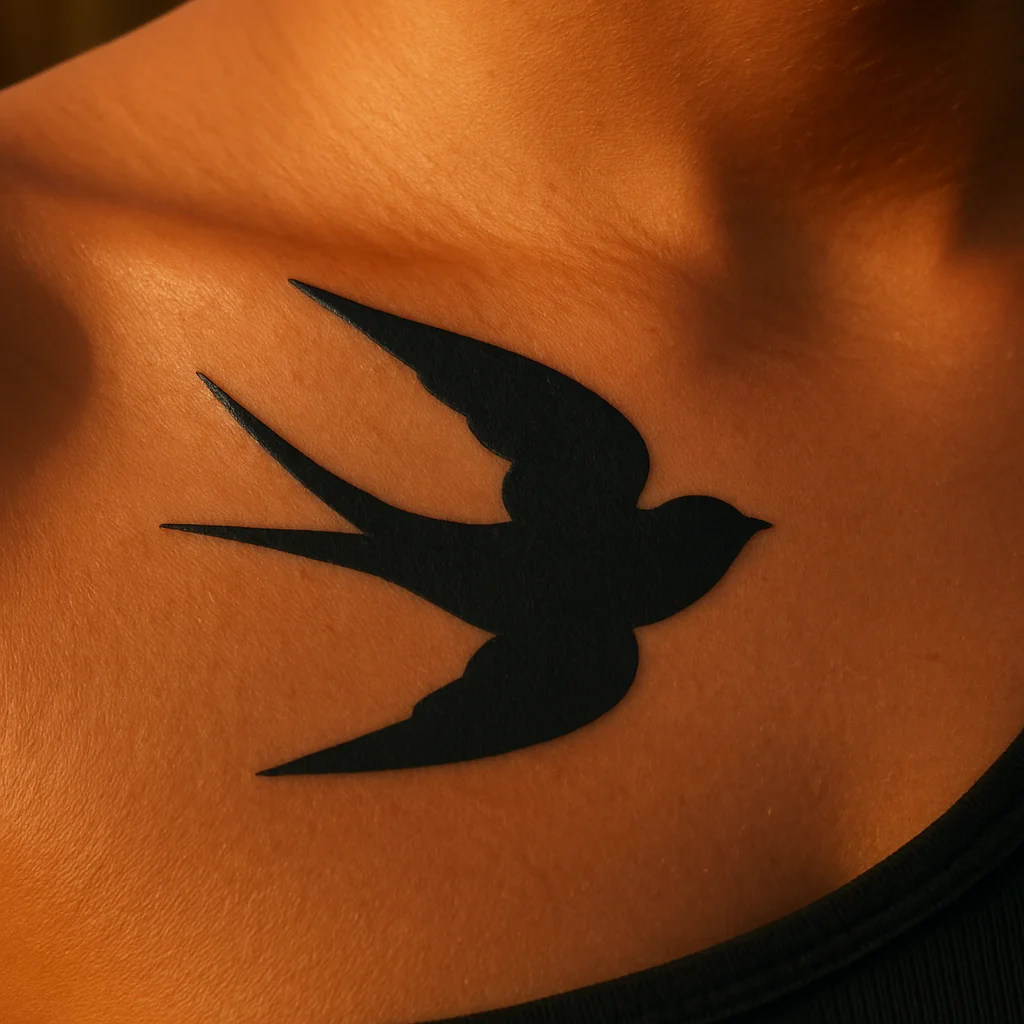
14. Swallow silhouette
A filled crescent-and-fork shape, readable from across a room. It follows the collarbone naturally, which is half the reason it never goes out of style.
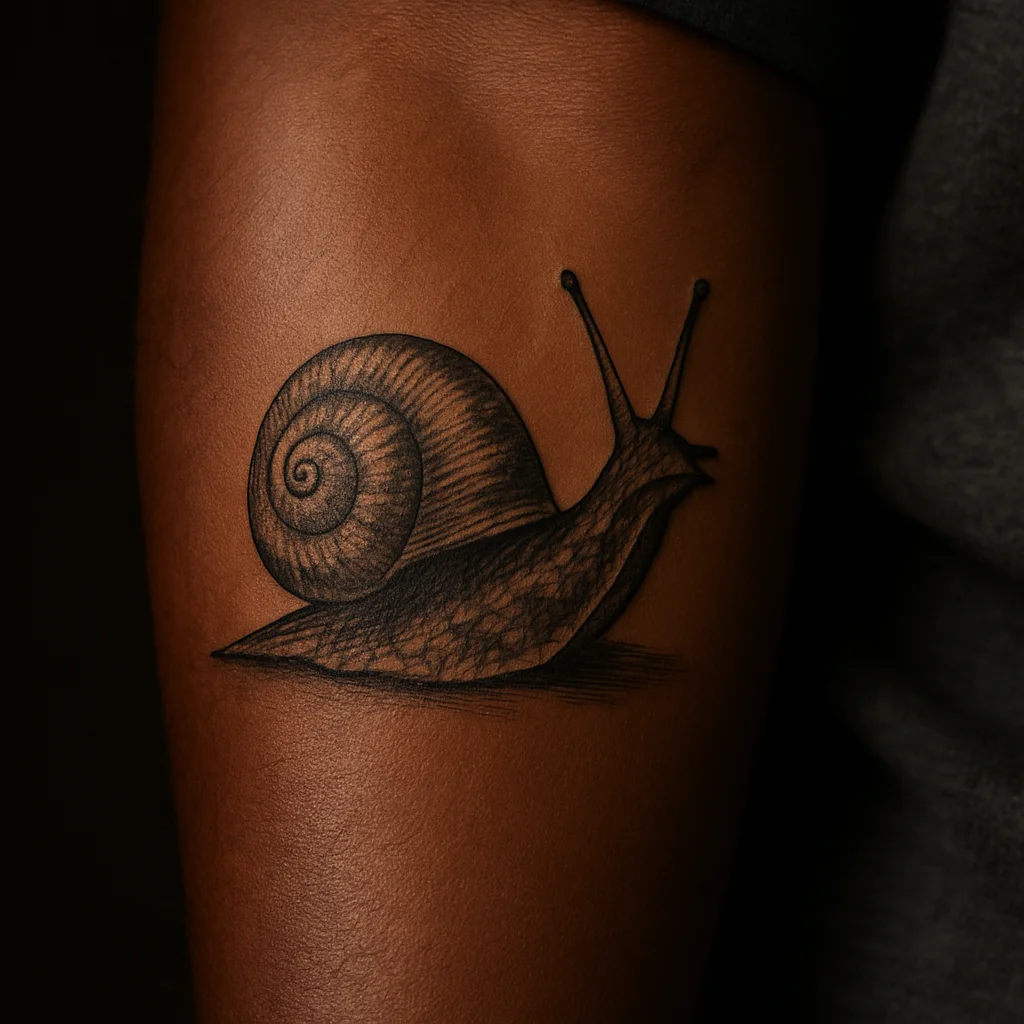
15. Snail
One spiral shell and a low arc for the body. Ask for the spiral to be drawn with wide turns so it doesn't fill in over time.
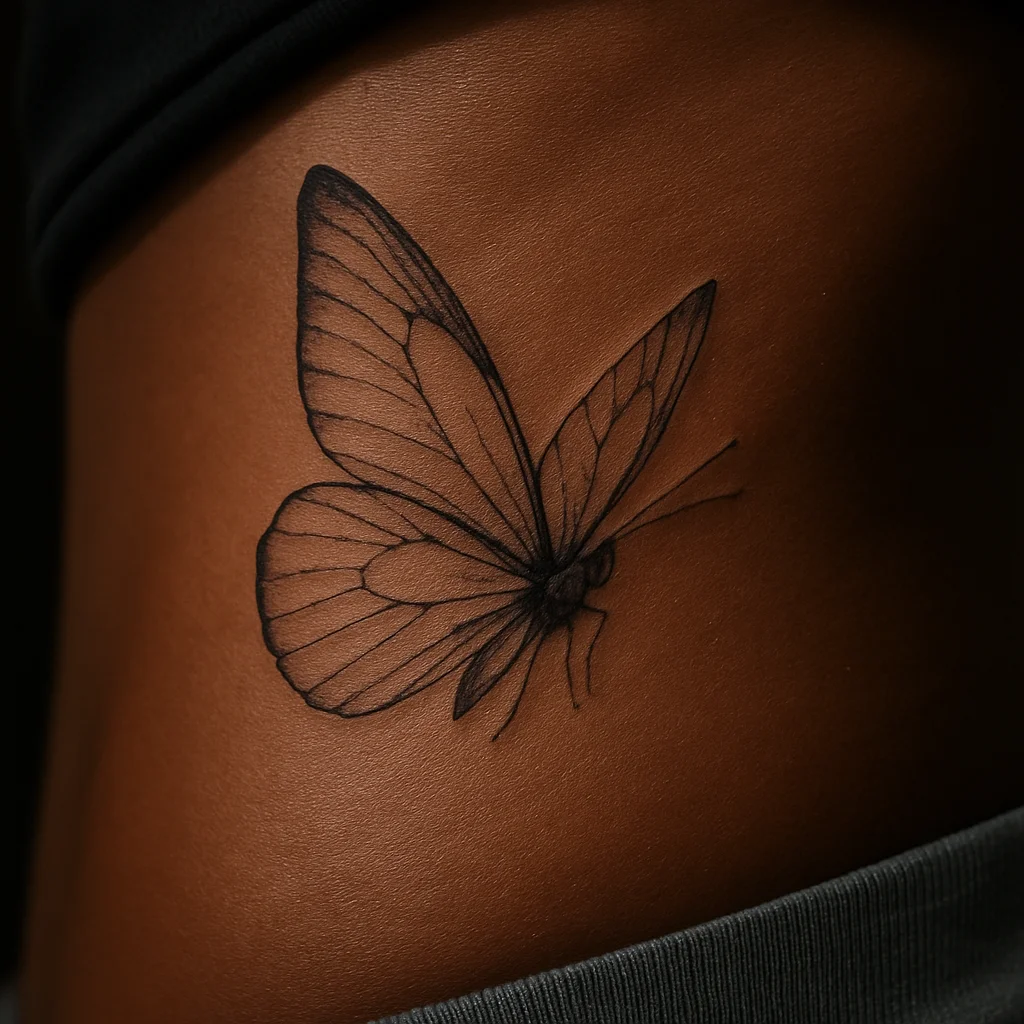
16. Butterfly in side profile
Far cleaner tiny than the symmetrical top-down version, because you're drawing two wings instead of four. Ribs and the side of the torso suit it well.
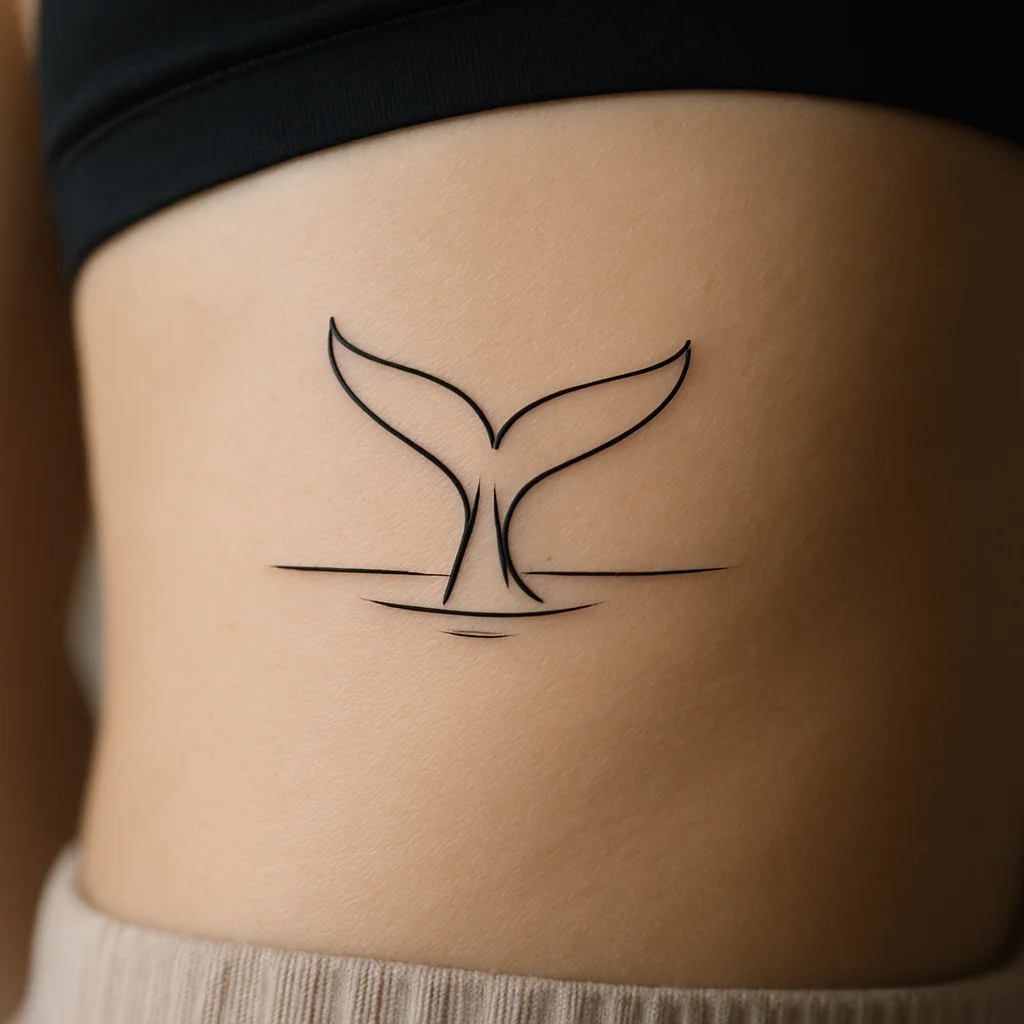
17. Whale tail dipping below a single water line
Two shapes, one huge implied scene. This is the best argument in the article for leaving things out.
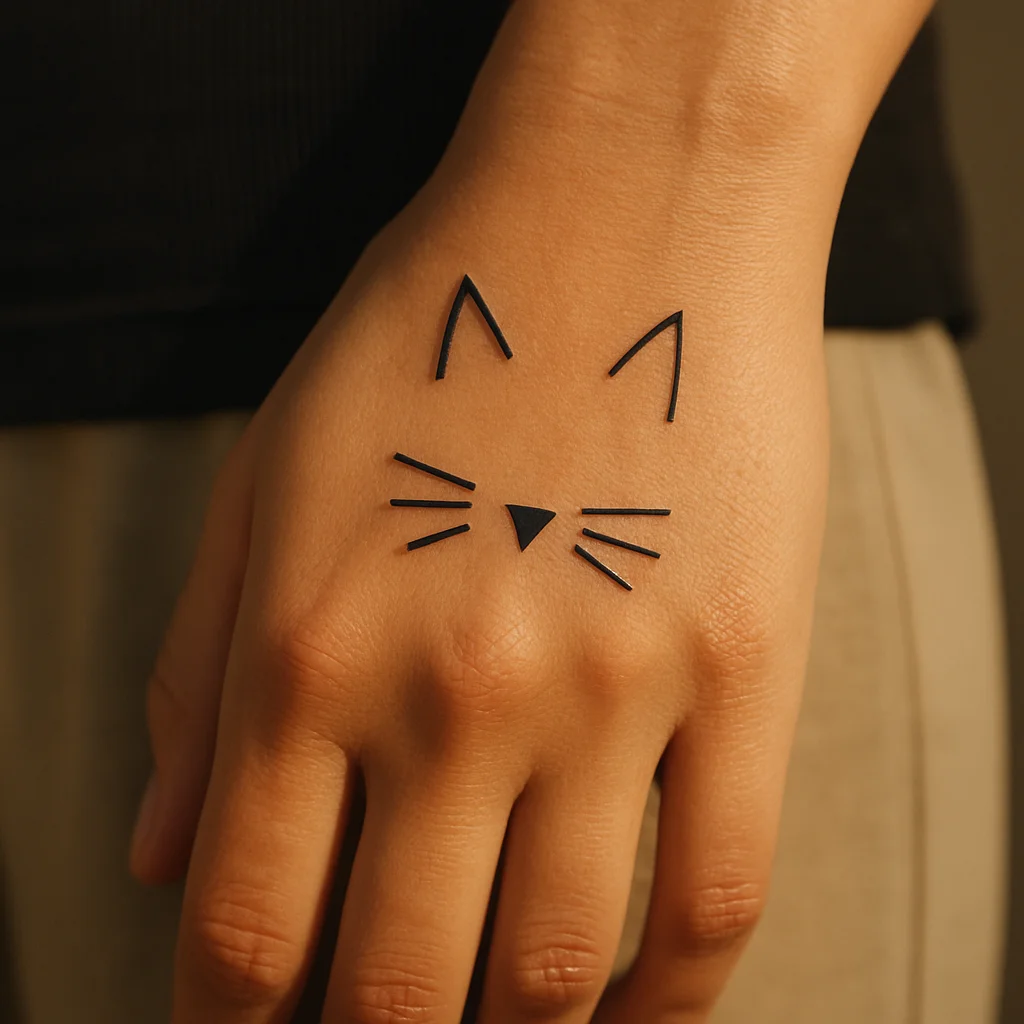
18. Cat's face reduced to two triangle ears and three whisker lines
Cartoonish in the best way. On the back of the hand, expect to accept some fading as part of the deal.
Objects and everyday things (6 designs)
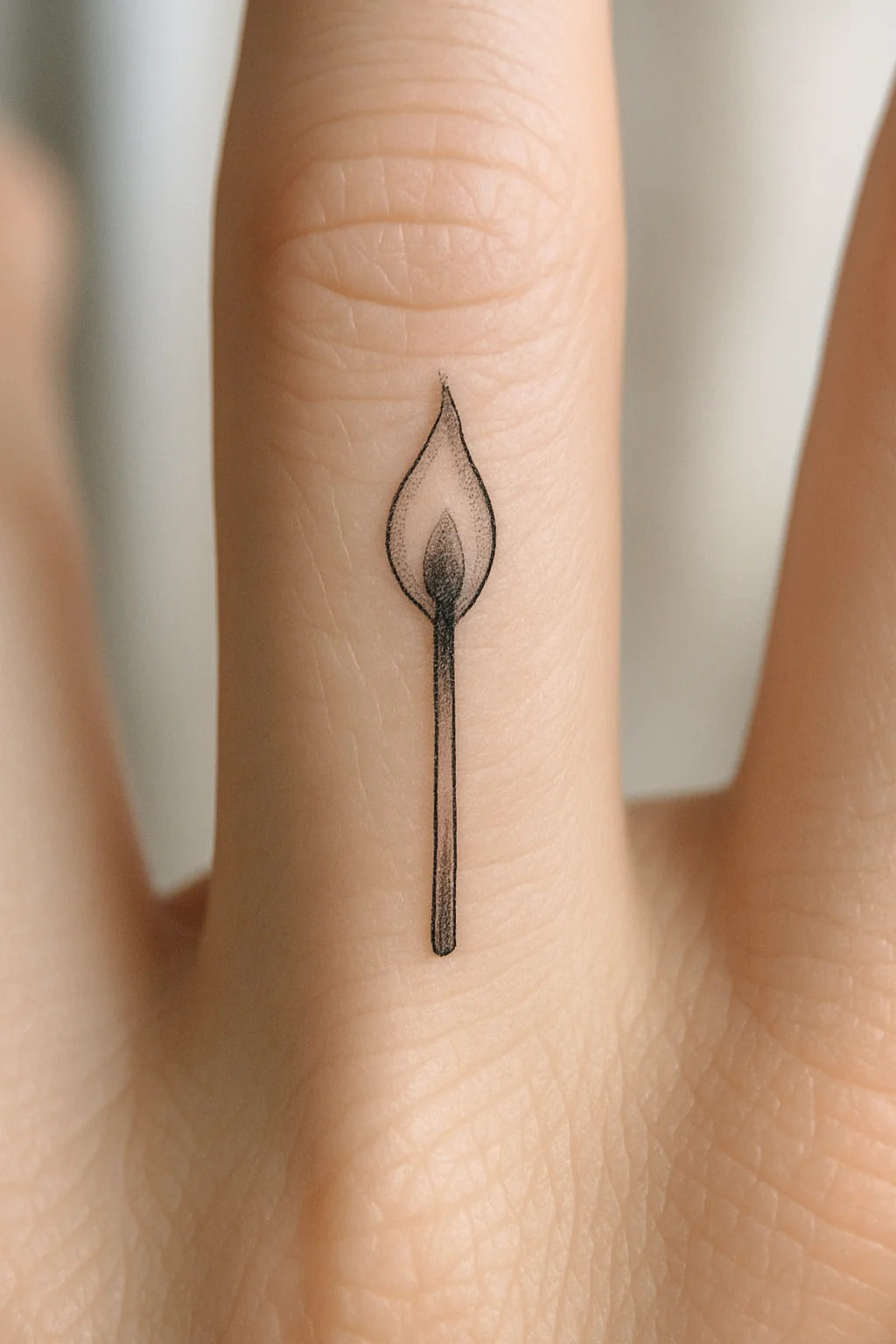
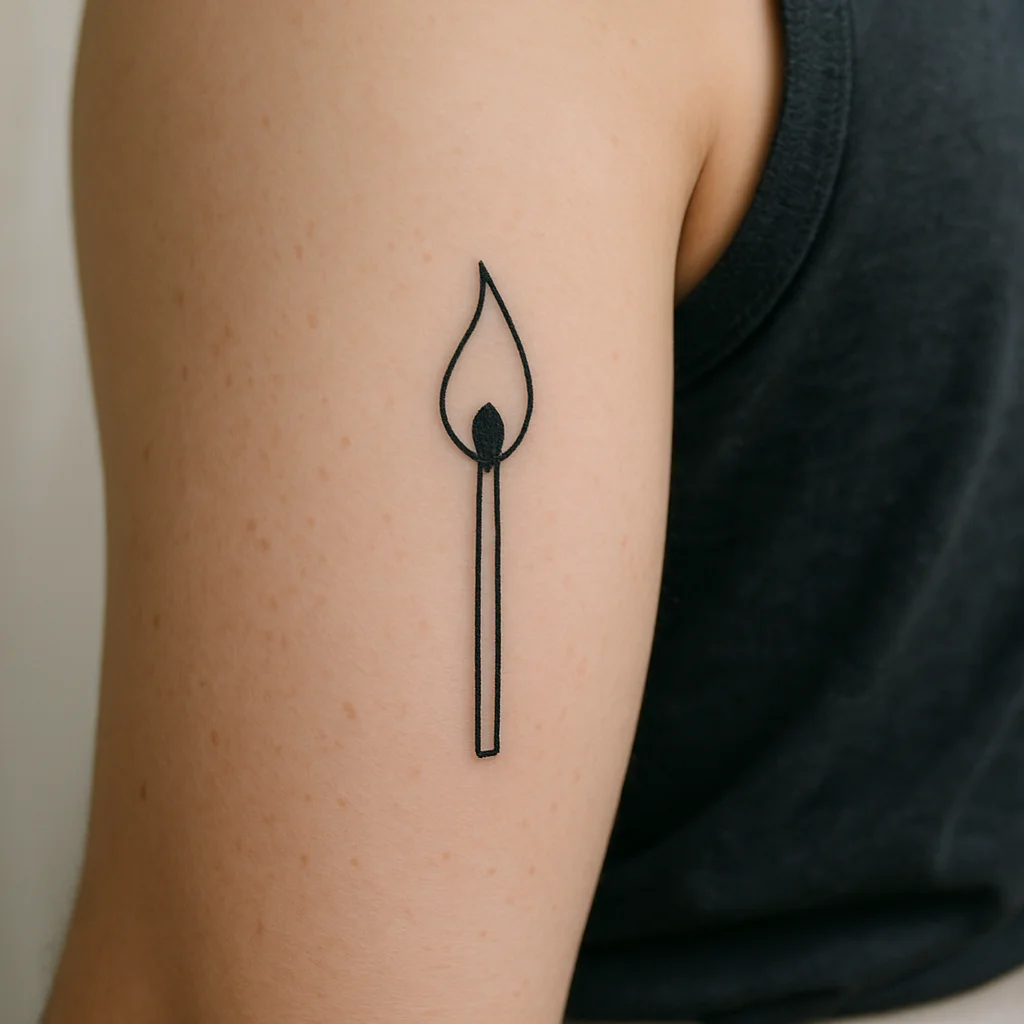
19. Matchstick with a single flame
A straight line, a solid tip, one teardrop. Three marks total, which is about as efficient as tattooing gets.
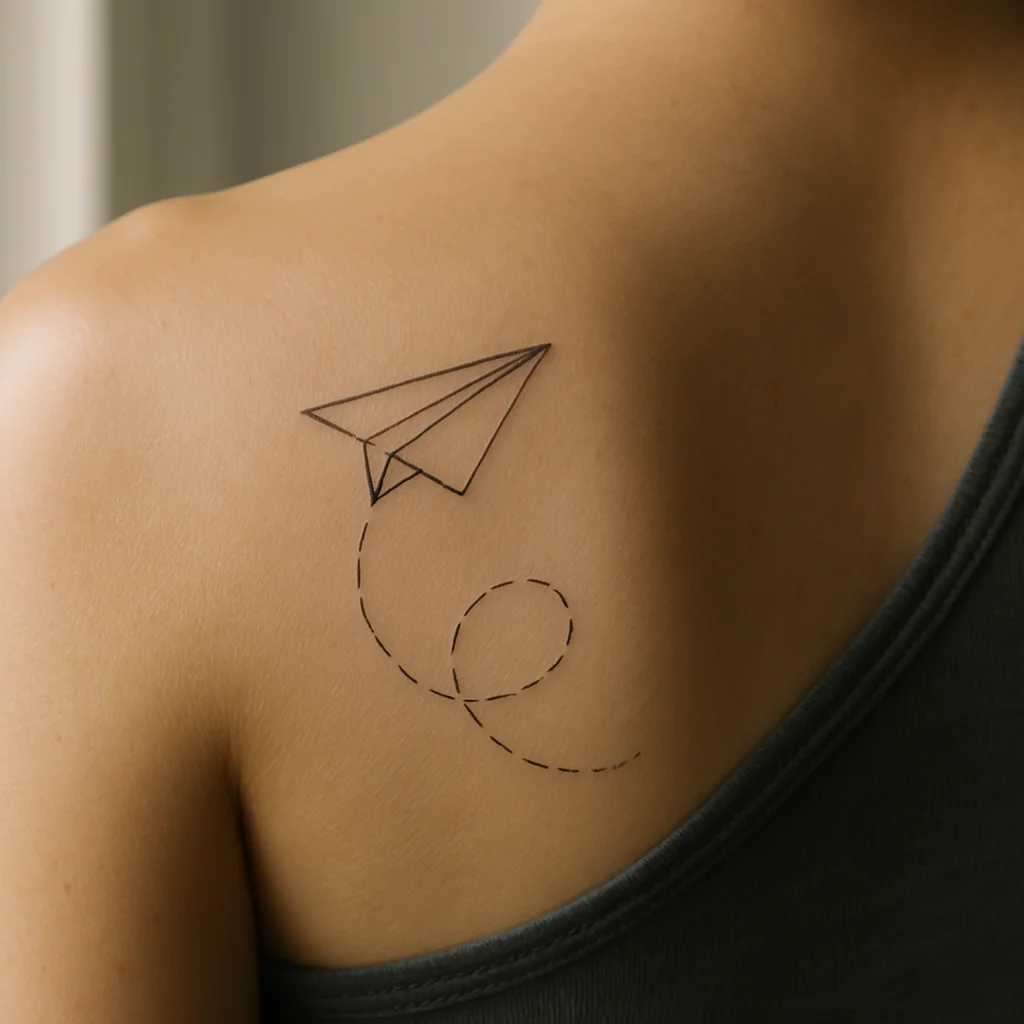
20. Paper plane with a dashed flight line
The dashes give movement without adding detail. Keep them widely spaced so they stay dashes rather than a solid streak.
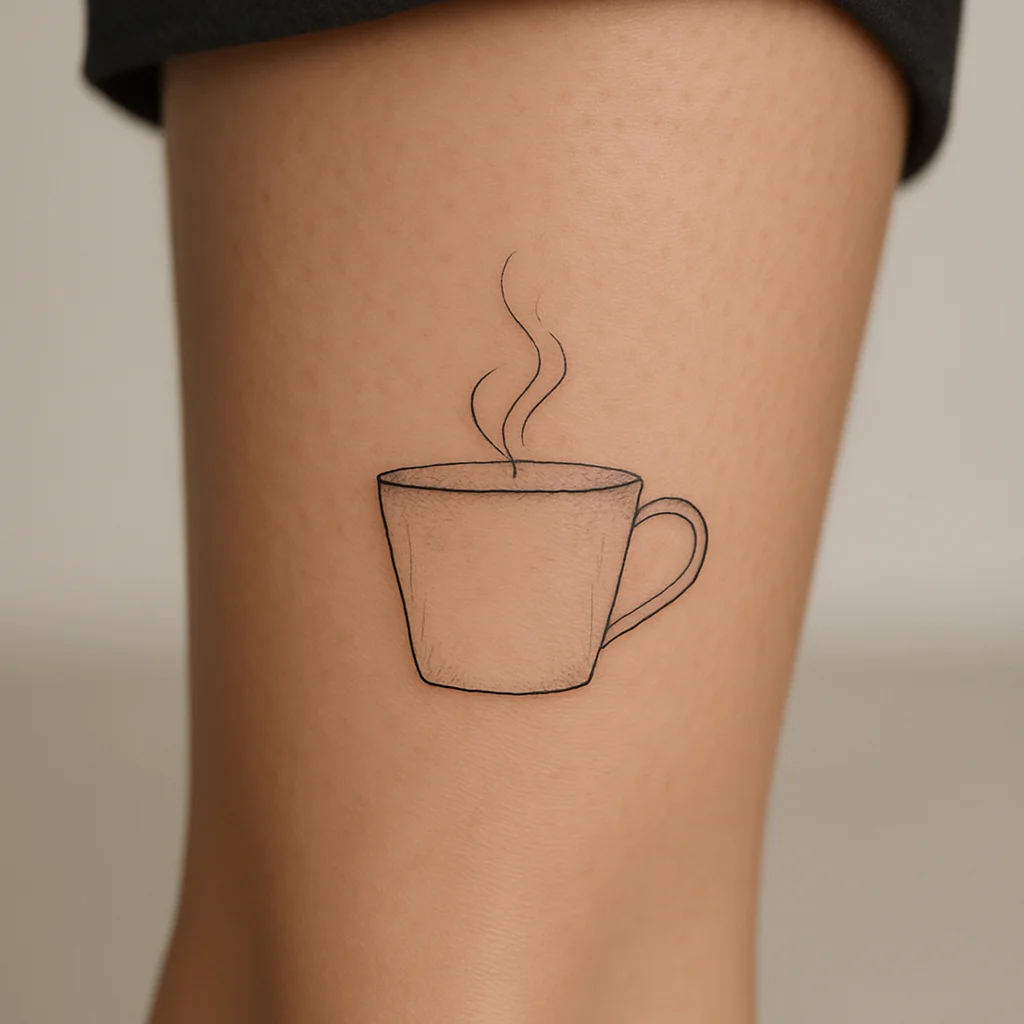
21. Coffee cup seen from the side
Trapezoid, handle, two steam curls. Side-on beats a top-down cup every time at this size.
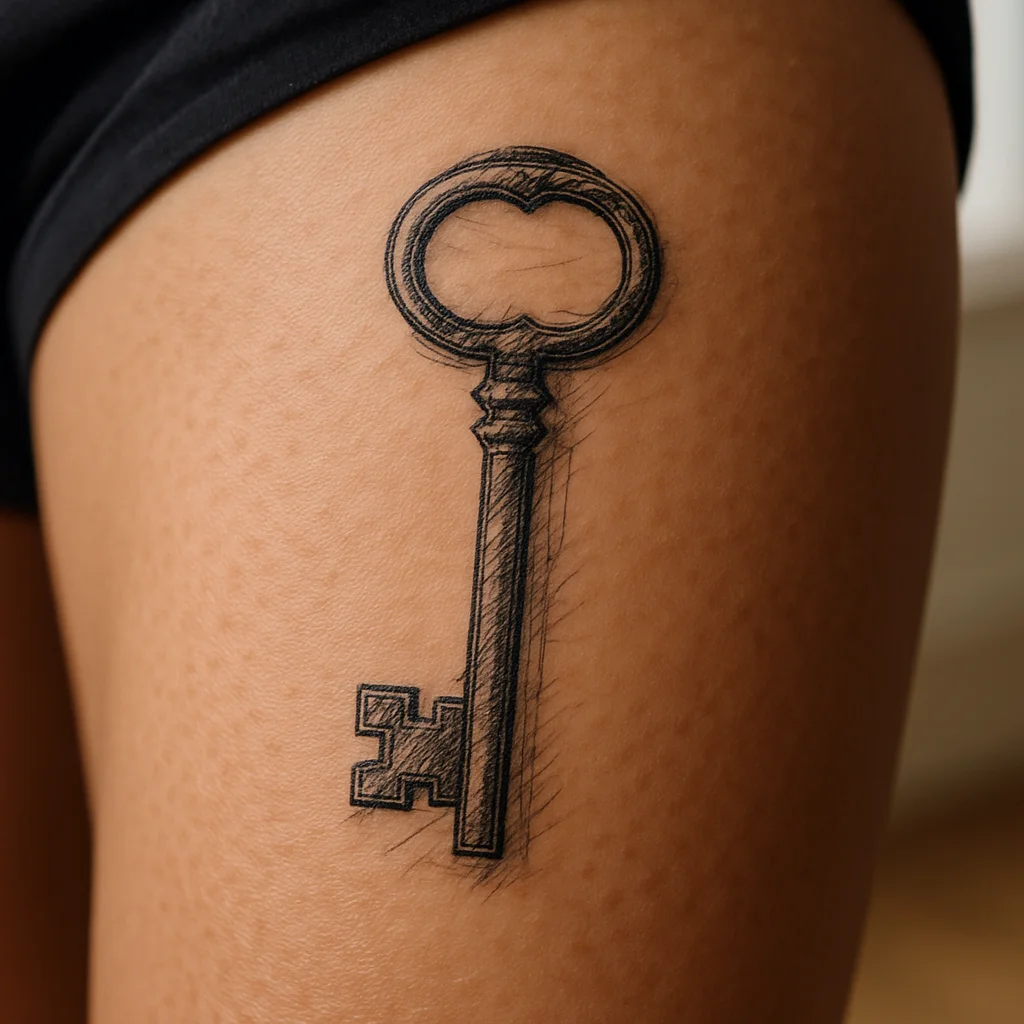
22. Old-fashioned key
One shaft, one loop, two teeth. Skip decorative filigree in the bow — it's the first thing to fill in.
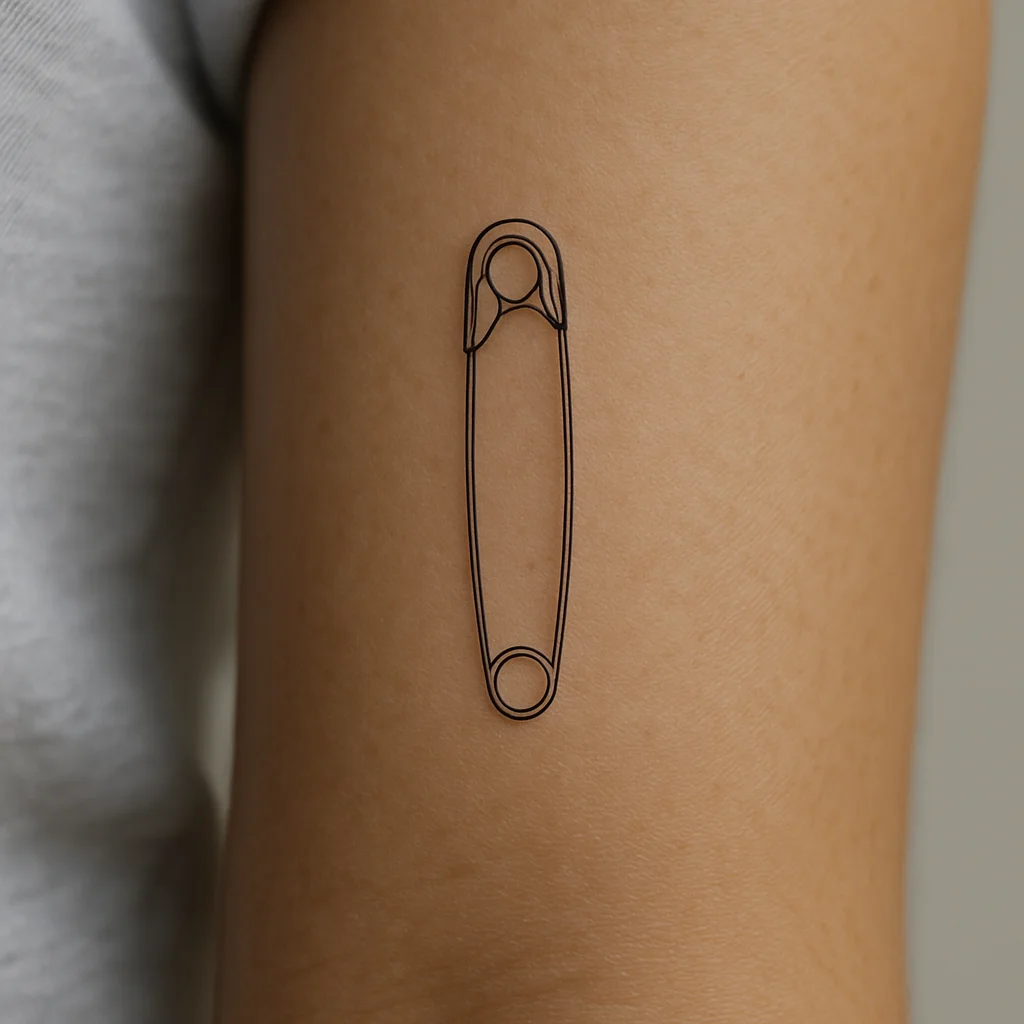
23. Safety pin
A surprisingly satisfying micro line drawing, essentially one continuous stroke. It reads well on the inner forearm where the skin stays stable.
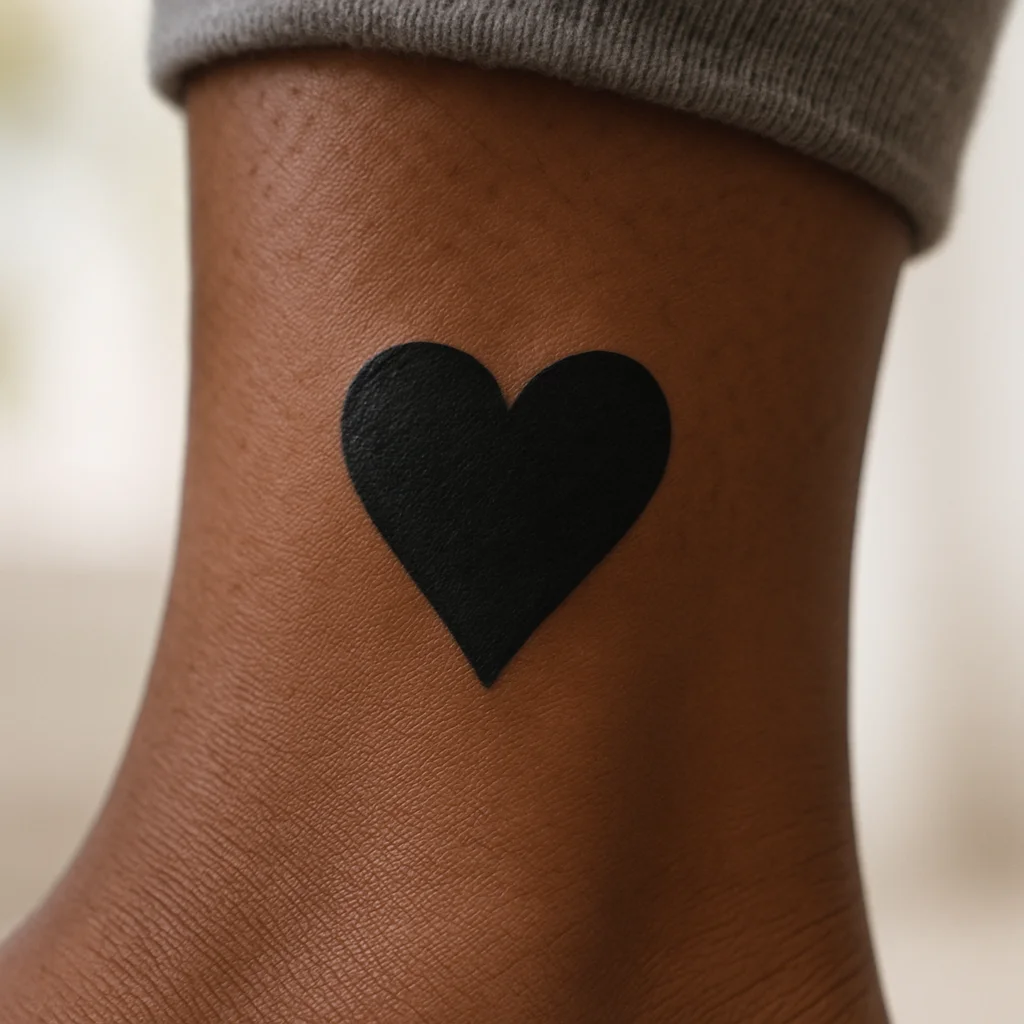
24. Playing-card heart pip
Small, solid, bold, and it never dates. Traditional shapes like this were designed to be read fast, which is exactly what tiny work needs.
Symbols and marks (5 designs)
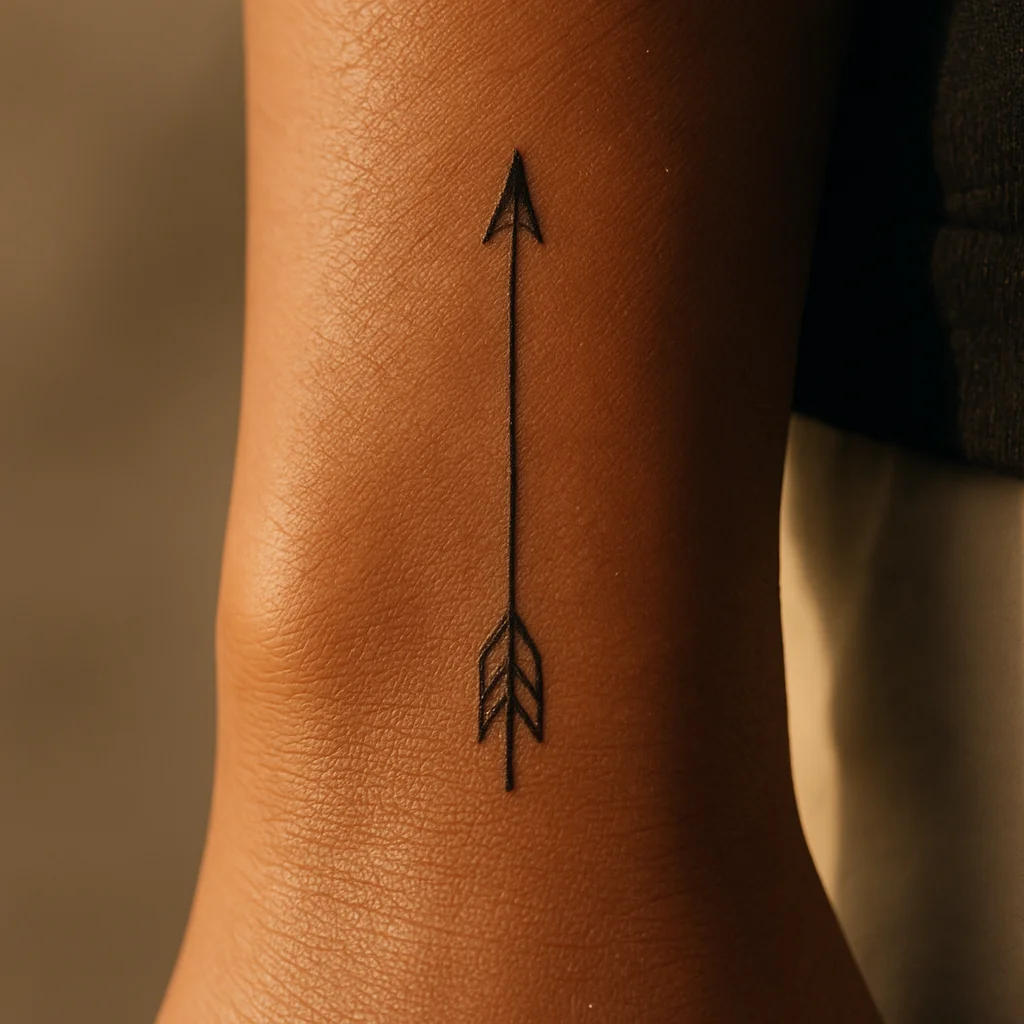
25. Arrow with a single shaft and two fletching lines
It reads at 8 mm, which very few designs manage. The side of the wrist is its natural home.
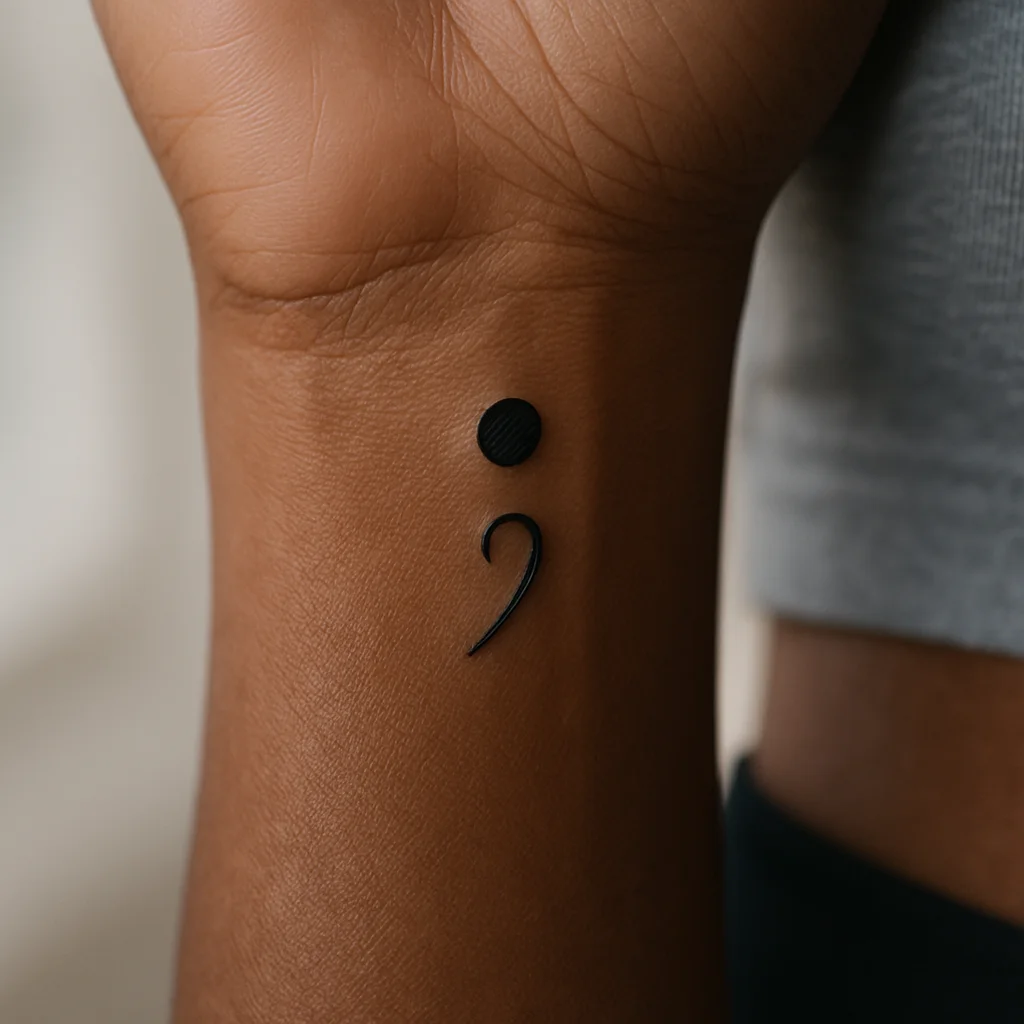
26. Semicolon
The quietest meaningful mark there is. Two elements, no ambiguity, ages fine.
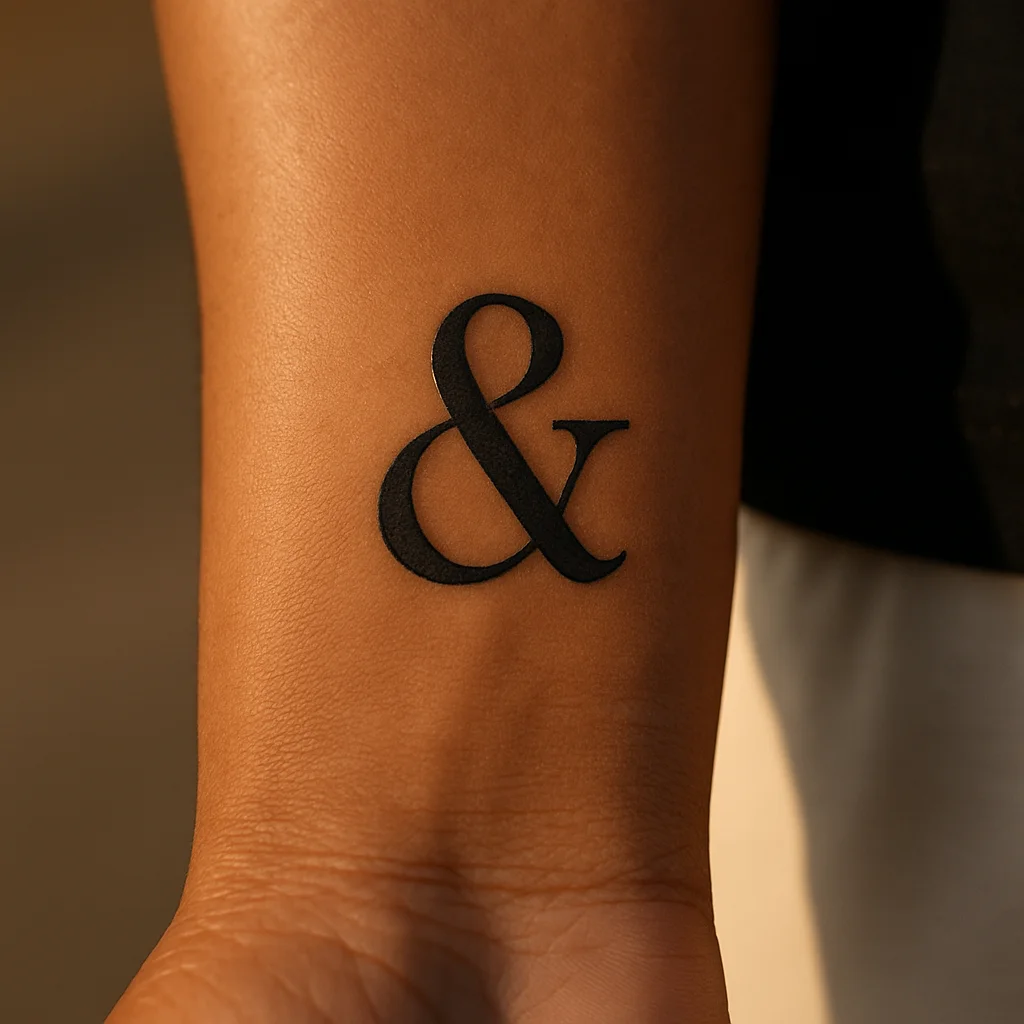
27. Ampersand in a clean serif
One glyph, done well, is a whole tattoo. Choose a serif with open counters — anything too fine or too curly will close up.
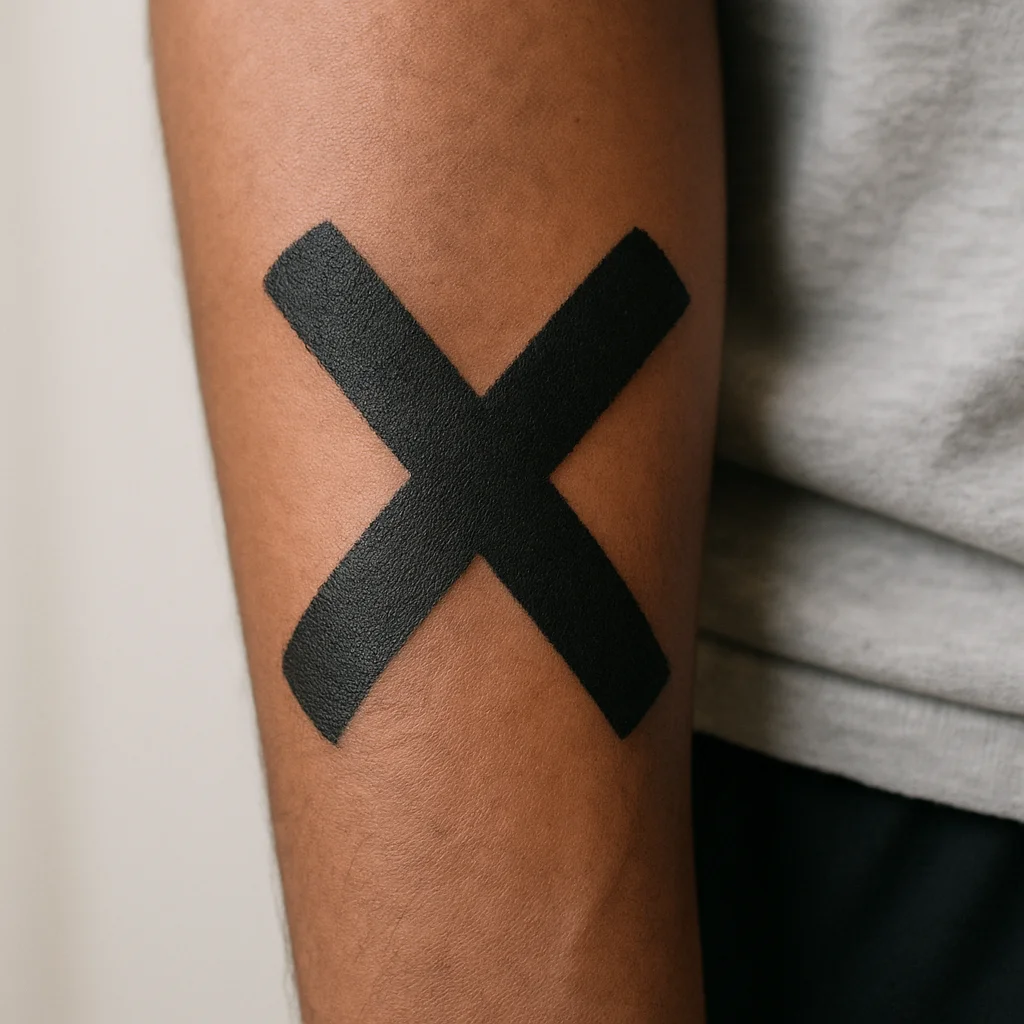
28. Cross-stitch X
Two thick strokes, a nod to something made by hand. The weight is the point here; don't let it be drawn thin.
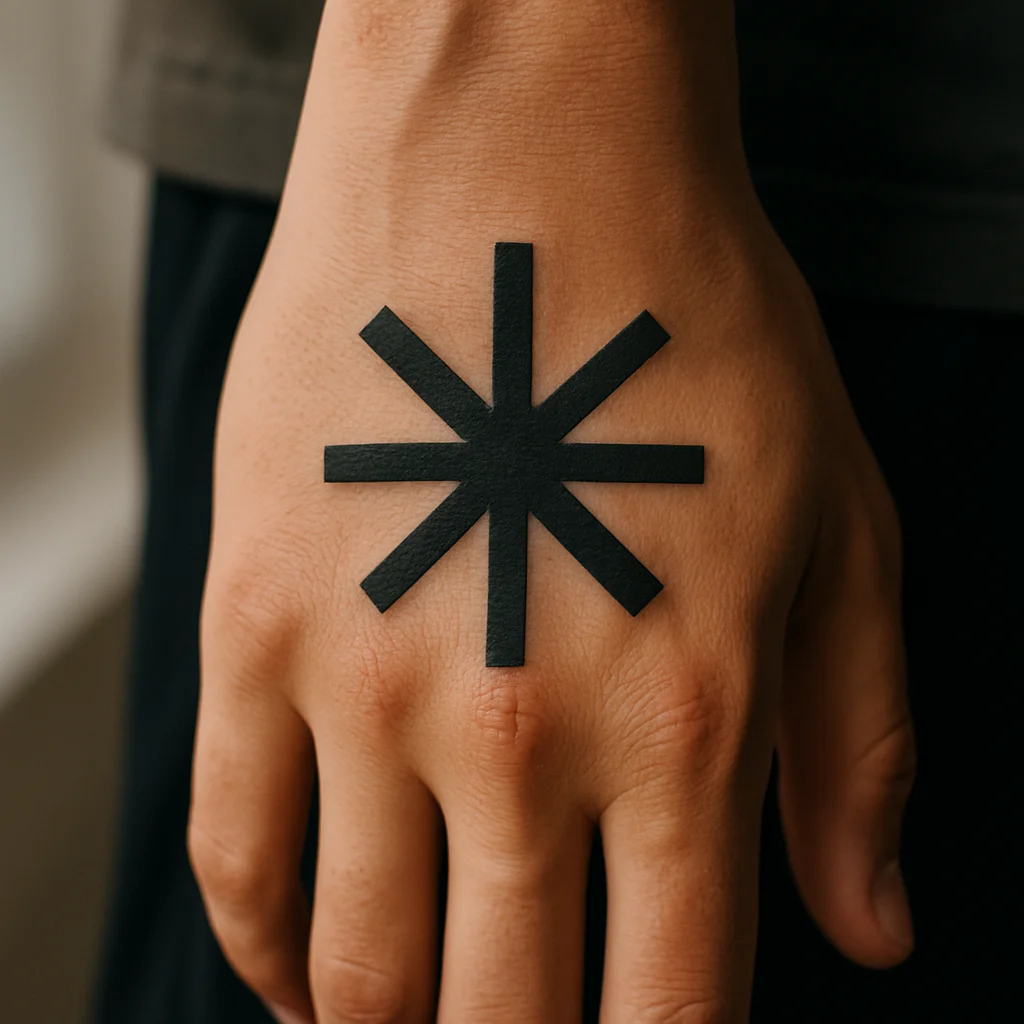
29. Asterisk or six-spoke spark
Perfect for the space beside a knuckle. Keep the spokes short and separated at the centre so it doesn't fill into a dot.
Micro marks for hands and fingers (3 designs)
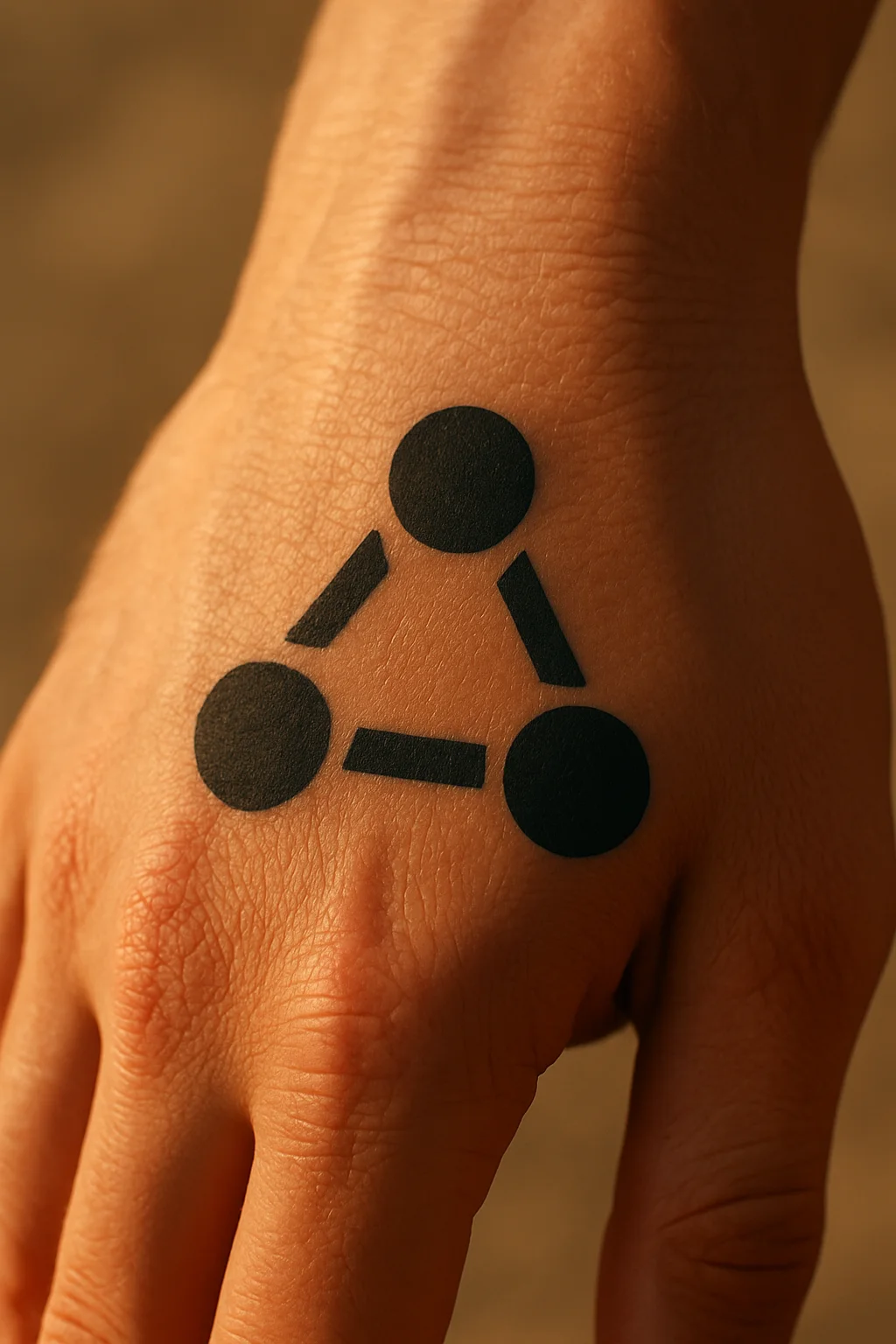
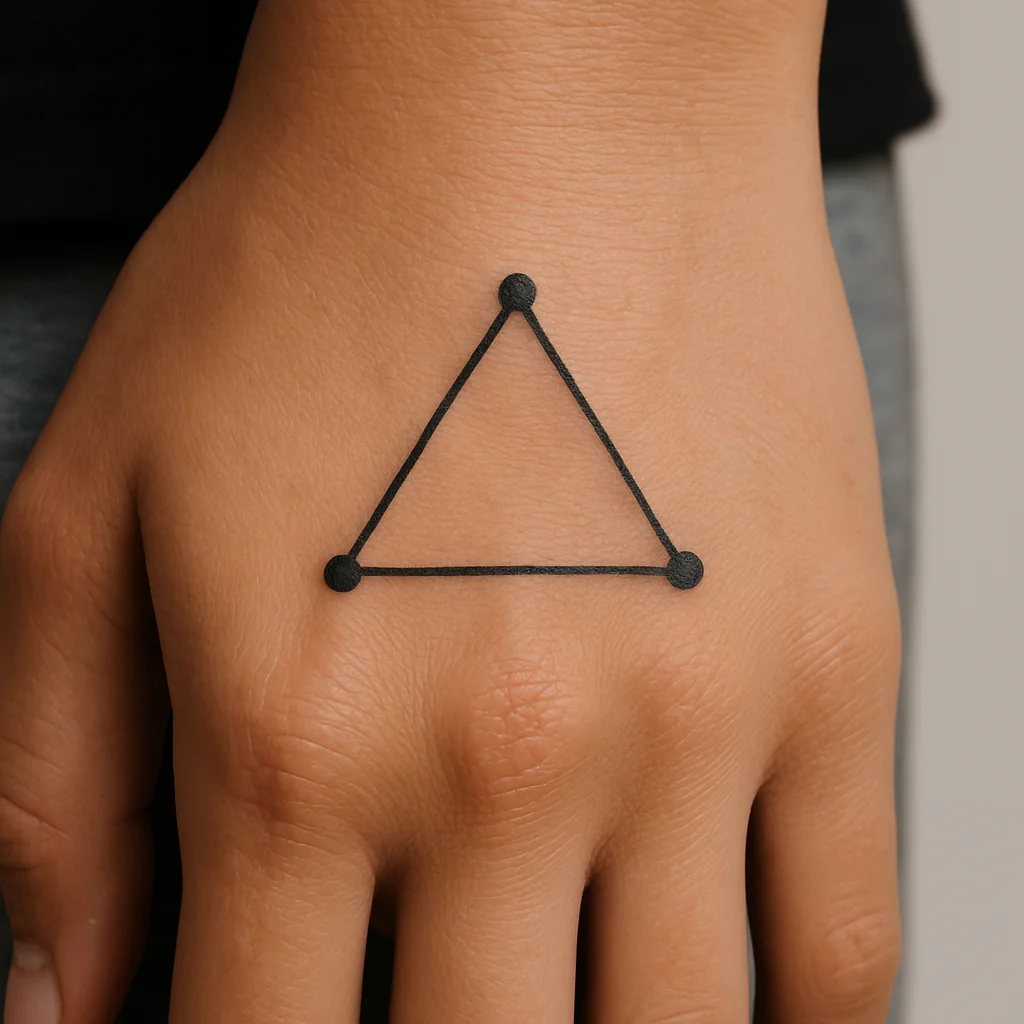
30. Triangle of three dots
Spaced generously so they never bleed together. Give them more room than looks right on paper — that gap is the design.
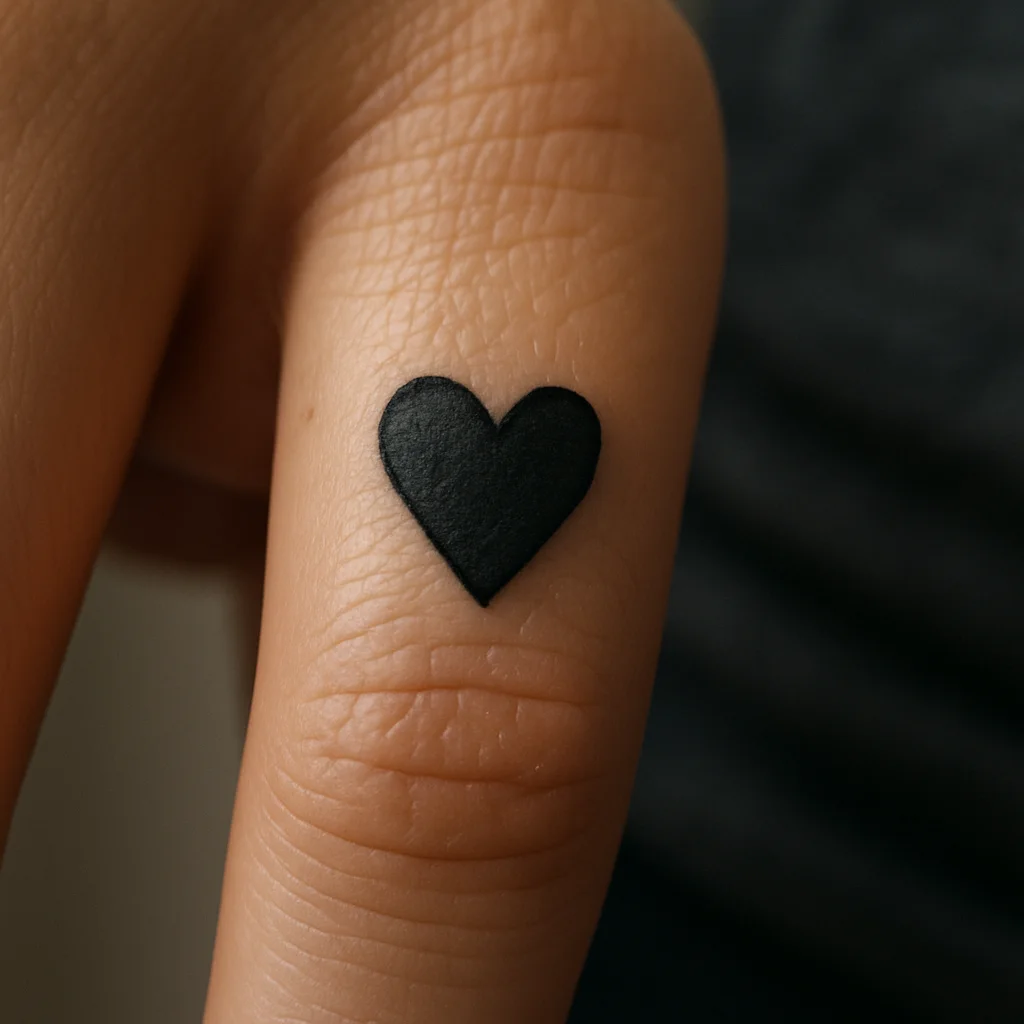
31. Solid heart, 5 mm, on the side of a finger
Expect to re-do it eventually and enjoy it anyway. Finger placements are the highest-turnover spots in tattooing.
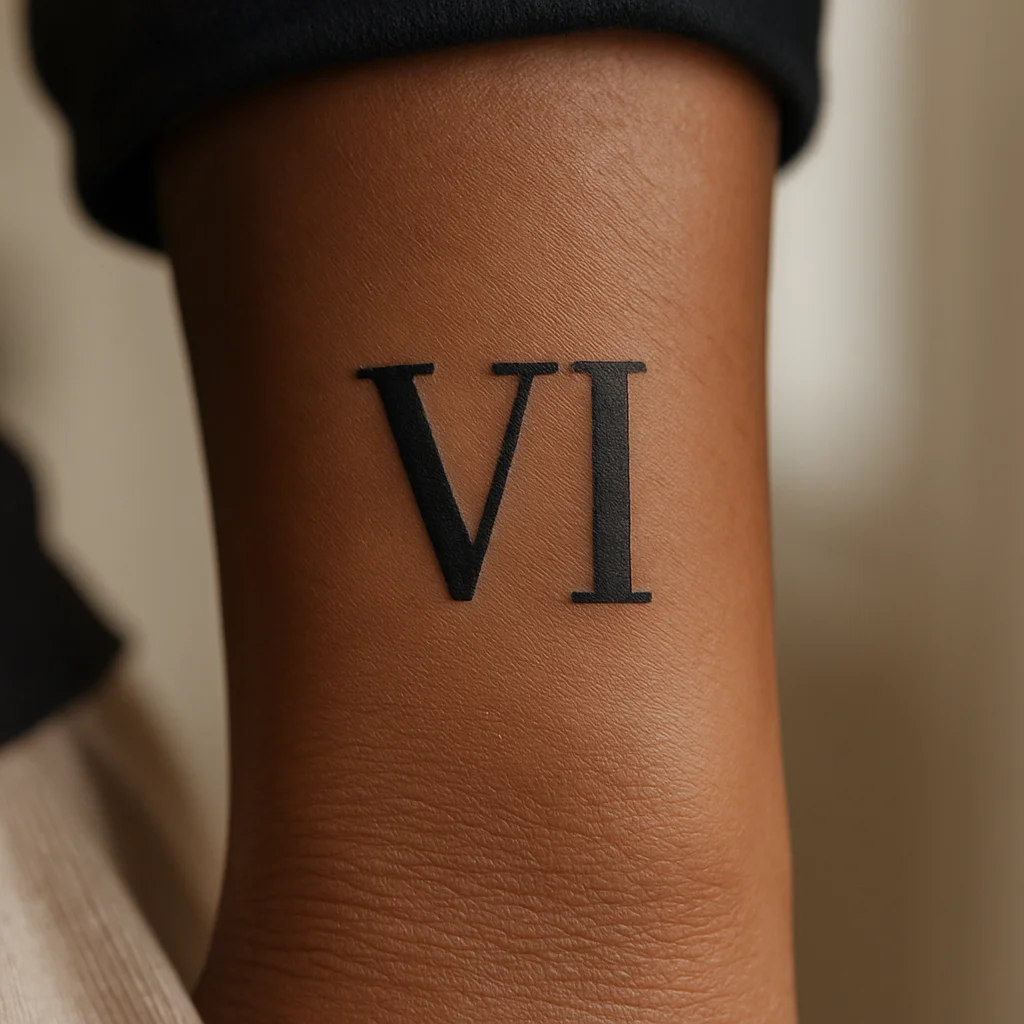
32. Single Roman numeral pair
A date reduced to two characters. Ask for wide letter spacing and a slightly heavier line than feels necessary.
Where tiny tattoos sit best — and how each spot ages
Placement matters more at this scale than at any other, because a millimetre of blur is a large percentage of the design.
- Inner wrist and side of the wrist: flat, low-friction, easy to see and easy to hide under a watch strap. The side of the wrist is one of the most reliable micro spots on the body.
- Inner forearm: the safest canvas overall. Skin here stays stable, sun exposure is manageable, and a coin-sized piece has room to breathe.
- Behind the ear and the nape of the neck: beautiful for a crescent moon or tiny sun, but often sun-hit and, behind the ear, a little awkward for the artist to stretch. Ask for slightly bolder lines than you think you need.
- Collarbone: a swallow or sprig follows the bone nicely. Thin skin over bone means sharper pain and a tendency for lines to spread if the artist pushes too deep.
- Ankle and top of the foot: lovely visually, tougher practically — shoes rub, healing takes attention, and foot tattoos are the most common candidates for touch-ups.
- Fingers and back of the hand: the highest-turnover placement in tattooing. Constant washing, sun and skin renewal mean finger tattoos often fade patchily within a couple of years. Plenty of people happily accept that; go in knowing it.
- Side of the ribcage: good for something private, though a tiny piece can look lost on a large expanse of skin. If you want subtle-and-hidden, ribs work; if you want the design noticed, choose an arm.
Two general rules: avoid areas that crease constantly, and avoid placing two tiny tattoos closer than a couple of centimetres unless they are designed as a pair — if they blur outward over time, they'll read as one confused mark.
Pain, price and how long it actually takes
Most micro tattoos are over in five to twenty minutes of needle time. The appointment still takes longer: consultation, stencil placement, checking angles in a mirror, and the wrap-up.
Pain, honestly: the inner forearm, outer forearm and upper arm are mild — a hot scratch, done before you settle in. The wrist, collarbone, ankle, top of the foot and fingers are noticeably sharper because the needle is working over bone and tendon with little padding. Ribs and the sternum are the spiciest of the popular tiny placements. The good news with micro work is that even the worst spots are a brief sting rather than an endurance test.
Cost: almost every shop has a minimum charge, and a tiny tattoo will simply cost that minimum — the setup, sterile supplies and chair time are the same whether the design is one inch or four. In most cities the minimum lands somewhere in the low-to-middle three figures in local currency, and specialists in fine-line micro work often sit at the higher end because the precision is genuinely harder than it looks. Two or three tiny pieces in one sitting usually costs less than three separate visits. For a fuller breakdown, see our guide to what tattoos actually cost.
Do not shop for the cheapest micro tattoo you can find. Tiny work punishes shaky line control more than any other size, and a wobbly 10 mm design cannot be fixed by adding detail.
Healing a micro tattoo so it stays crisp
Small does not mean casual. A one-inch tattoo is still an open wound, and because the whole design is tiny, minor healing problems have an outsized effect on how it looks.
- Keep it clean and lightly moisturised for the first two weeks — a thin layer, never a thick greasy one, which can soften lines while they settle.
- Do not pick flakes. Losing a scab early from a 10 mm design can take out a meaningful chunk of the line.
- Skip swimming pools, baths and saunas for two to three weeks.
- Sunscreen forever, once healed. Sun is the main reason tiny tattoos fade into grey ghosts. A high-SPF stick is easy to carry for a wrist or hand piece.
- Expect a touch-up conversation at the six-to-eight-week mark, especially on fingers, feet and elbows-adjacent skin. Many artists include one free touch-up; ask before you book.
Our full 30-day aftercare walkthrough covers the day-by-day detail if this is your first piece.
How to brief your artist for tiny work
The best micro tattoos come from a short, clear conversation. Bring three things: a reference or two, an exact size in millimetres, and the spot on your body you have in mind.
- Name a measurement. "Small" means different things to different people. Draw the design on paper at the size you want, or mark it on your skin with a pen and photograph it.
- Ask what to remove. A good artist will suggest simplifying — dropping the shading, thickening a line, opening up spacing. That is not them cutting corners; it is them protecting the tattoo's next twenty years.
- Ask about line weight. Hair-thin single-needle work looks stunning fresh and softens fastest. A slightly heavier line ages better. Choose deliberately rather than by accident.
- Discuss the future. If you might build a cluster of tiny tattoos on one forearm later, say so now. Your artist will place this first one so the next four have somewhere sensible to go.
- Check the stencil twice. With a design this small, a few degrees of rotation is the difference between "deliberate" and "crooked". Look in a mirror, at arm's length, before the needle starts.
If you're weighing tiny against merely small, our roundup of small tattoos that age beautifully is a useful companion — sometimes bumping a design from 20 mm to 35 mm buys you decades of clarity for the same price.
Frequently asked questions
What is the smallest tattoo an artist will do?
Most artists will go down to around 5 to 10 millimetres for a simple solid shape like a heart, dot cluster or crescent moon. Below that, needle and ink physics take over and the design closes into a blob as it heals. Many artists will decline a request that they know cannot heal legibly, which is a sign of a good one.
Do tiny tattoos fade faster than bigger ones?
They fade at the same rate, but the effect is far more visible because there is less design to lose. A millimetre of blur in a full sleeve disappears; the same millimetre in a 10 mm bee closes the gaps between wing lines. Sunscreen and slightly bolder line work are the two best defences.
How much should I expect to pay for a tiny tattoo?
Almost always the shop minimum, since setup and chair time cost the same regardless of size. That minimum varies widely by city and artist reputation, and fine-line micro specialists sit at the upper end. Booking two or three tiny pieces in one session is usually cheaper than separate visits.
Are finger tattoos worth it if they fade?
They can be, as long as you treat them as maintenance pieces rather than permanent perfection. Hands see constant washing, friction and sun, so expect patchy fading and possible touch-ups within a year or two. Keep the design to two or three thick, well-spaced marks and it will hold up far better than a detailed one.
Can I get several tiny tattoos in one appointment?
Yes, and it is often the smartest way to book. Three or four micro designs typically take under an hour of needle time and cost less than separate minimum charges. Just plan the layout together first so the pieces relate to each other instead of looking scattered.
More designs to save
32 Tiny Tattoo Ideas That Still Read at Coin Size
32 Tiny Tattoo Ideas That Still Read at Coin Size
32 Tiny Tattoo Ideas That Still Read at Coin Size
32 Tiny Tattoo Ideas That Still Read at Coin Size
32 Tiny Tattoo Ideas That Still Read at Coin Size
32 Tiny Tattoo Ideas That Still Read at Coin Size
32 Tiny Tattoo Ideas That Still Read at Coin Size
32 Tiny Tattoo Ideas That Still Read at Coin Size
32 Tiny Tattoo Ideas That Still Read at Coin Size
32 Tiny Tattoo Ideas That Still Read at Coin Size
The conversation
No comments yet. Got a thought about these designs? Start us off.
Want to weigh in? Join the community to comment, save designs and try them on your skin.