Minimalist Tattoos: 27 Ideas Built on Subtraction
Minimalism isn't the same as small. These 27 designs are organised by the principle behind them, from unbroken single-line work to negative space and stripped-back geometry, with honest notes on how each one ages.
Minimal Isn't the Same as Tiny
A lot of people walk into a studio asking for something minimalist and describe something merely small. They're different problems. A tiny tattoo is a size decision. A minimalist tattoo is an editing decision: you keep removing elements until taking away one more would break the image, then you stop.
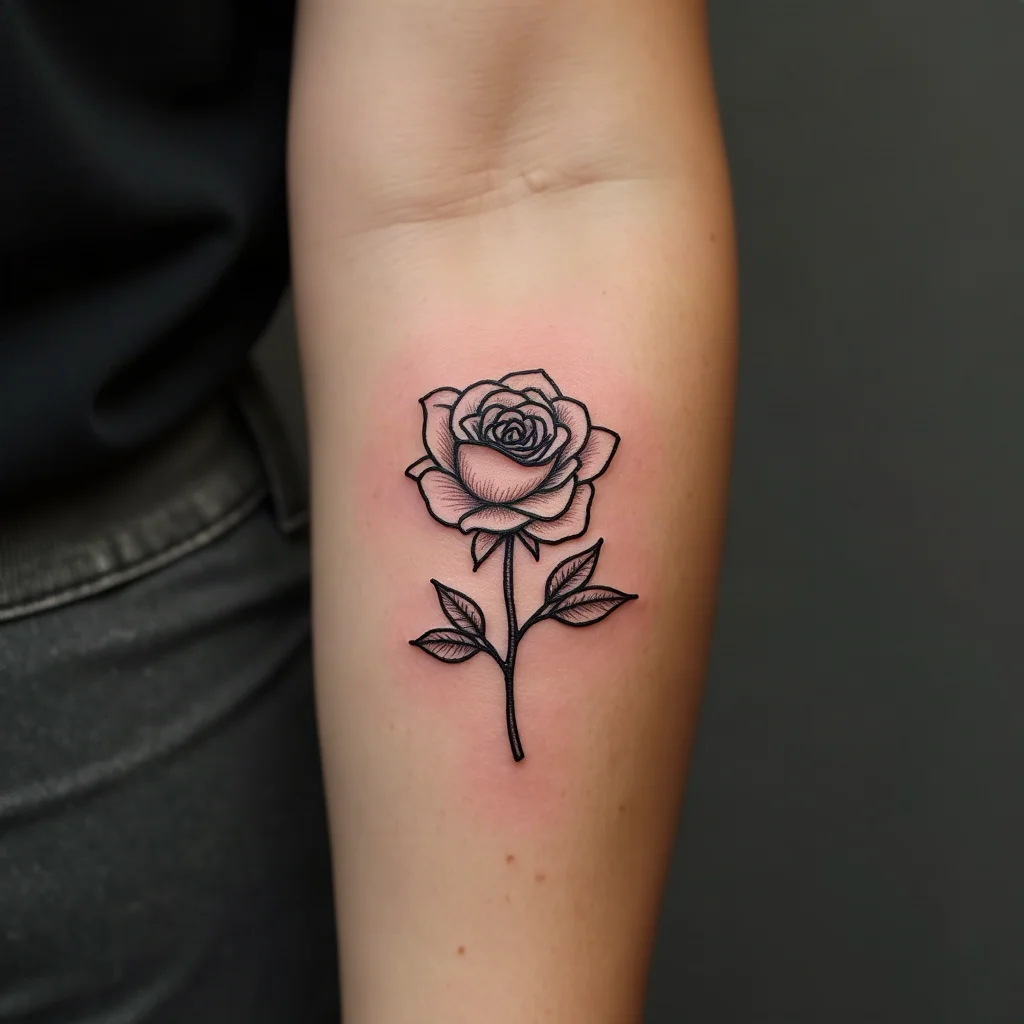
That's why the best minimalist work often sits at a generous size. A single unbroken line describing a mountain ridge across five inches of forearm is more minimal than a two-inch rose crammed with shading, even though it takes up more skin. Scale gives the line room to breathe, and breathing room is the whole aesthetic.
Three technical rules make or break these designs:
- Line weight matters more than detail. A single-needle hairline looks exquisite fresh and can soften noticeably within a few years. A slightly heavier line — still thin, just deliberate — keeps its shape for decades.
- Gaps must be wide enough to survive spread. Ink migrates a little under the skin over time. Two parallel lines sitting a millimetre apart will eventually read as one thick line. Ask your artist to widen tight negative space at the stencil stage.
- Composition carries the weight. With nothing to hide behind, placement and angle become the design. A slightly crooked horizontal line on a wrist is glaringly obvious in a way it never would be inside a busy sleeve.
The 27 ideas below are grouped by the principle doing the work — continuous line, negative space, geometry, single object, and mark-making — so you can walk into a consultation talking about method, not just motif.
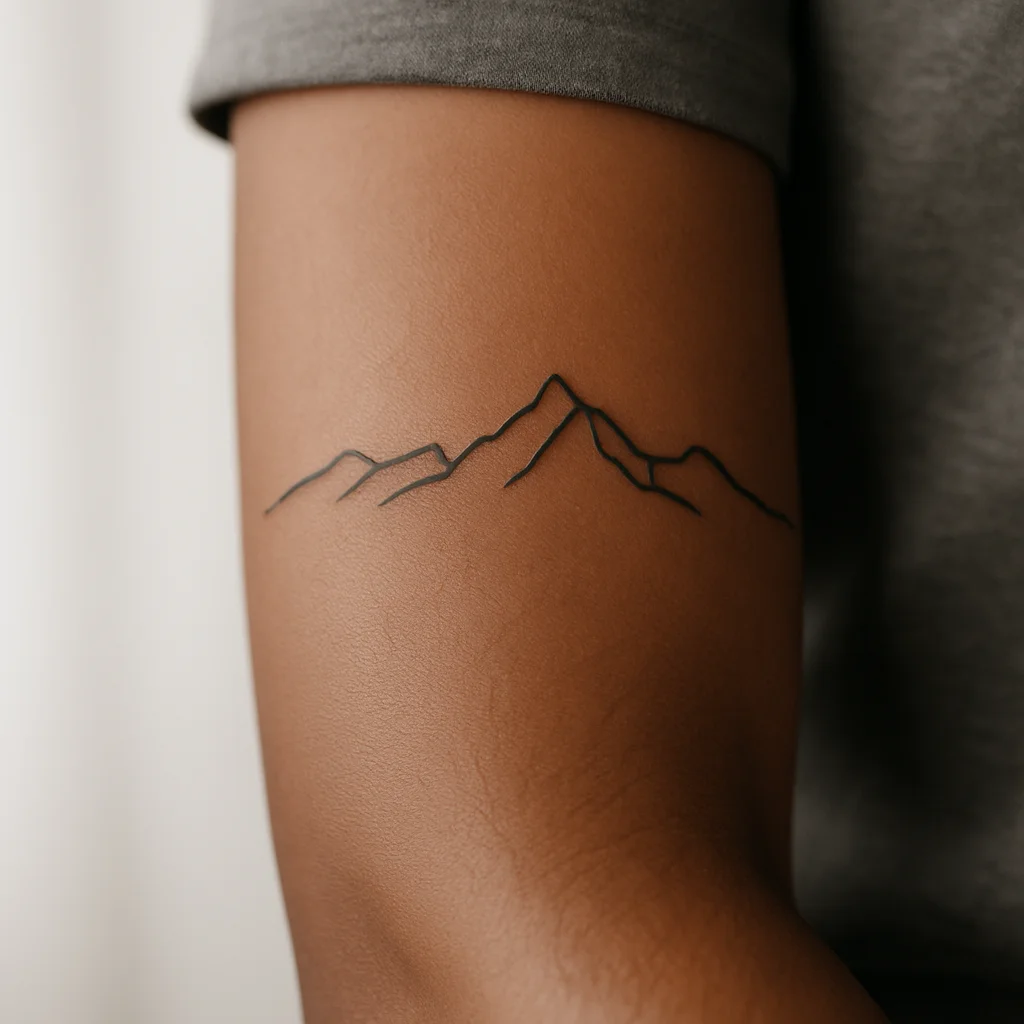
Single-Line Designs: One Stroke, No Lifting
Continuous-line work is minimalism's purest form — the artist's needle theoretically never leaves the skin, so the subject is described by one travelling stroke. It demands a confident hand and a stencil that's been simplified ruthlessly. Expect these to take 45 minutes to two hours depending on scale.
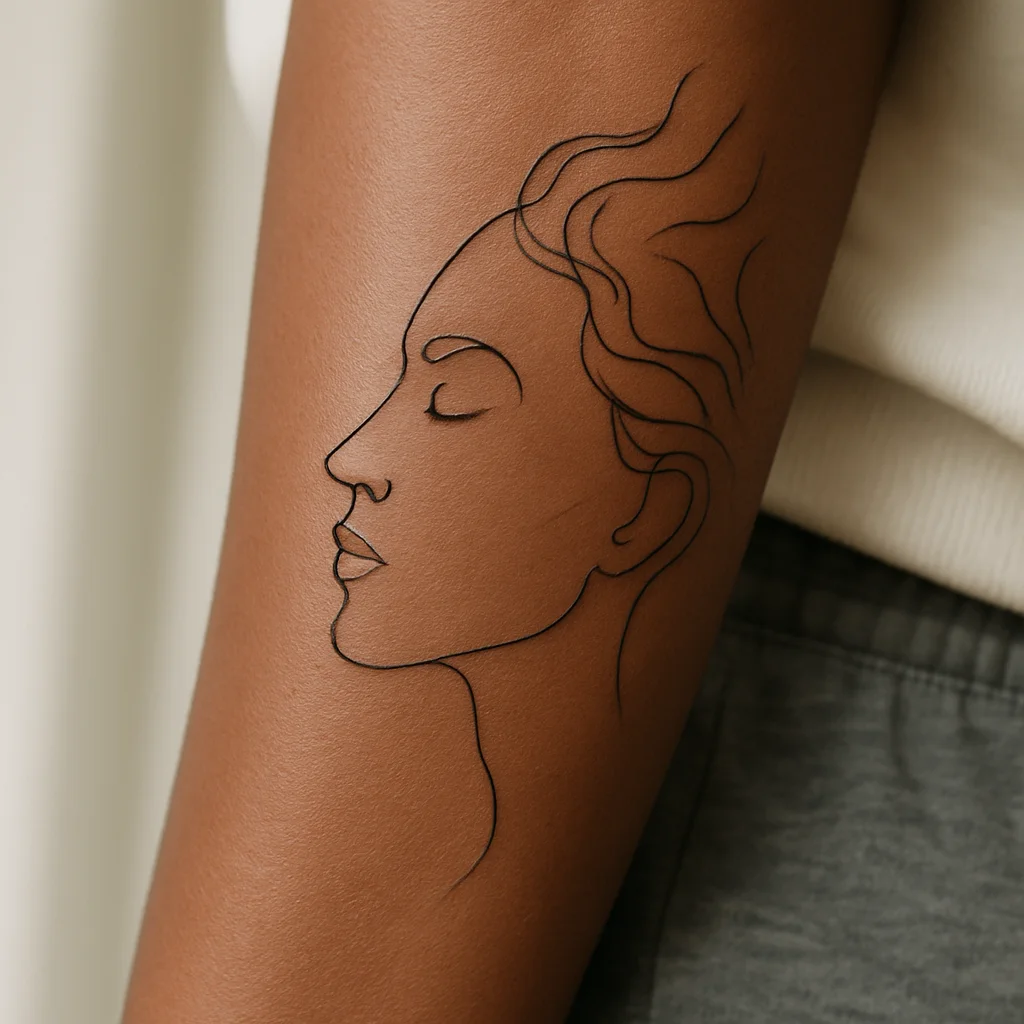
1. Continuous-line face in profile
One looping stroke sketches a brow, nose and lip, then trails off into hair. It reads as a drawing rather than a portrait, which is exactly the point — no shading, no likeness pressure. Run it 10–14 cm down the inner forearm so the curves stay generous; shrink it and the nose collapses into a blob.
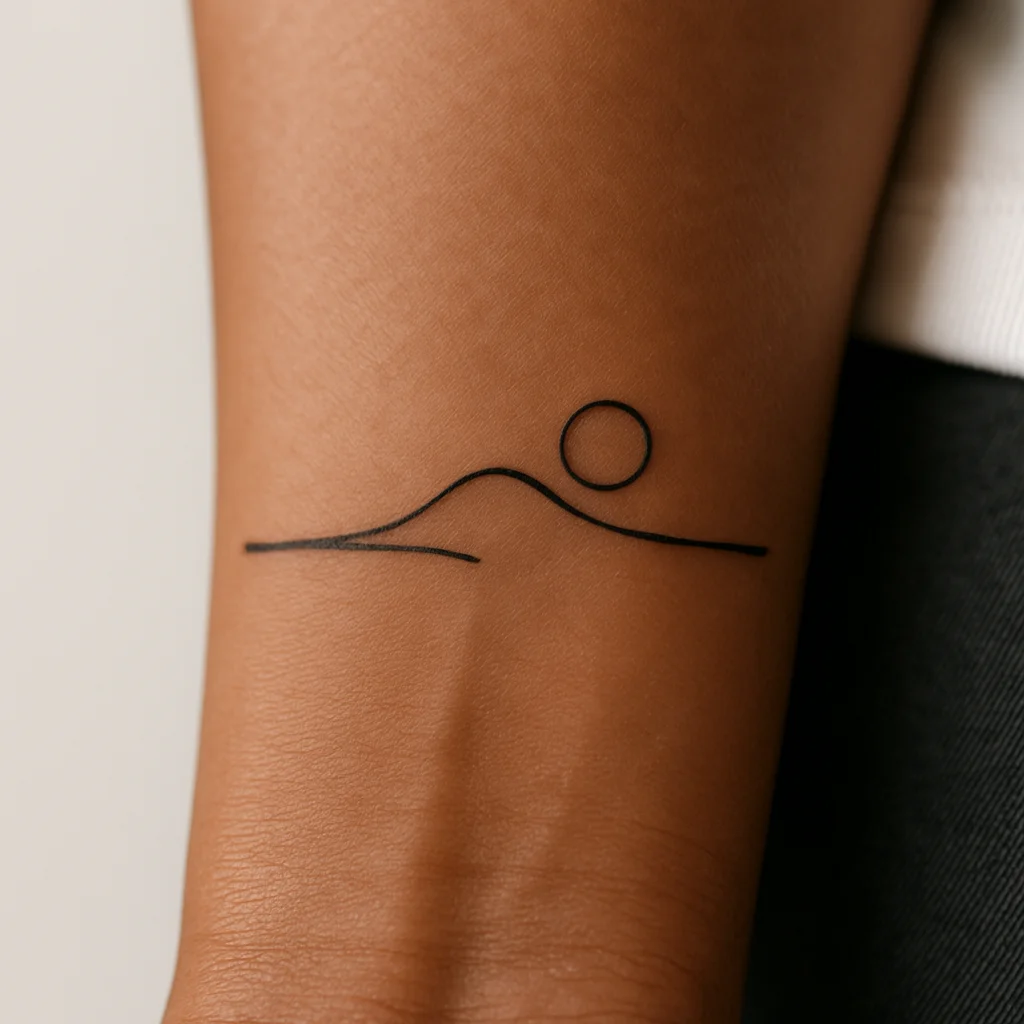
2. One-line horizon with a sun break
A single stroke rises into a low hill, dips, and closes into a small circle for the sun. It's about as legible as a tattoo gets and works beautifully at 4–5 cm on the side of the wrist, where it follows the bone rather than fighting it. Good first tattoo: quick, low pain, easy healing.
3. Single-line figure study
The classic Matisse-adjacent nude reduced to one flowing contour — shoulder, spine, hip. On the ribcage the line can echo the body's own curve, which makes the placement feel inevitable rather than applied. Budget for tenderness here; ribs are among the sharper sits.
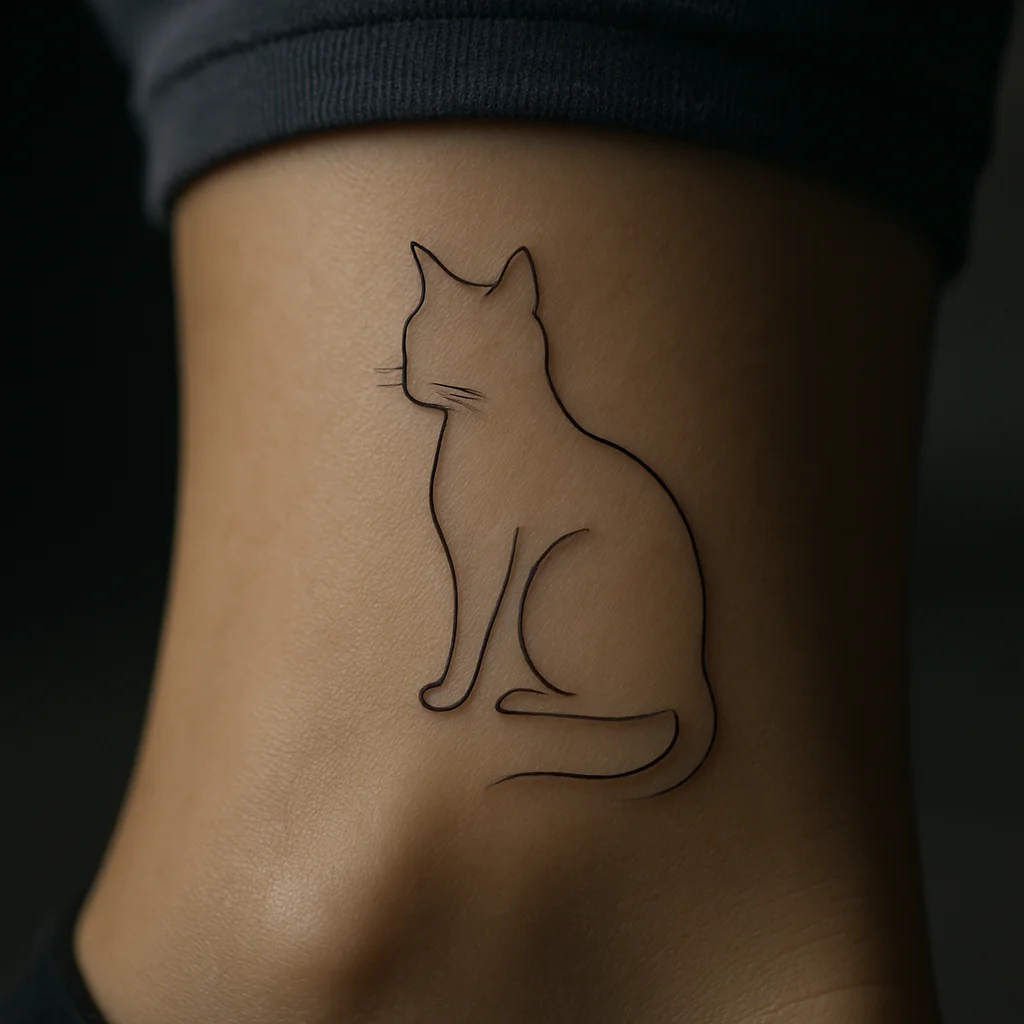
4. Unbroken cat
Ears, back, tail and one paw in a single loop, roughly 5 cm. It's the pet tattoo for people who don't want a portrait, and the looseness keeps it charming instead of twee. The ankle suits it because the shape is small and vertical-friendly.
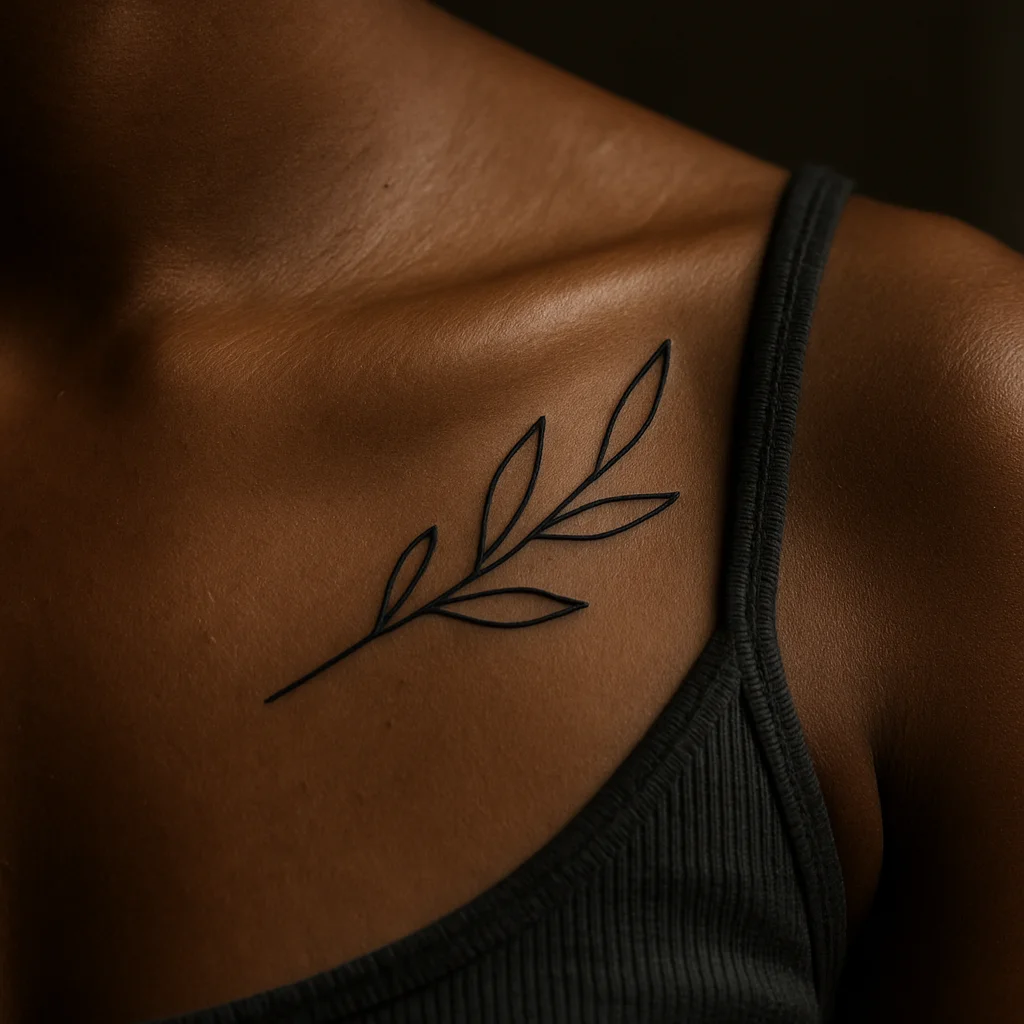
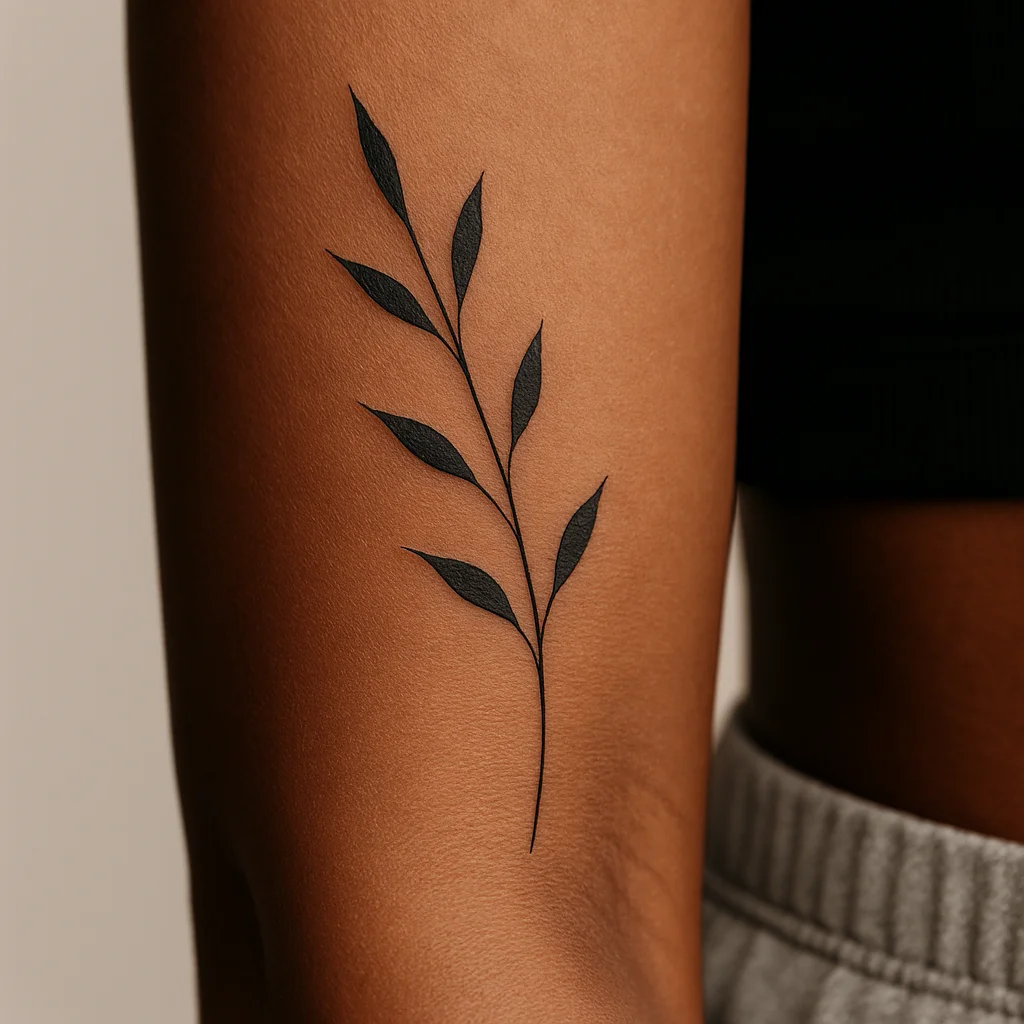
5. One-line olive branch
The stem travels out, doubles back for each leaf, and returns — no lifted needle, no filled leaves. Along the collarbone it sits like a piece of jewellery, and the horizontal placement flatters the shape. Keep leaves at least 3 mm wide so they don't close up over the years.
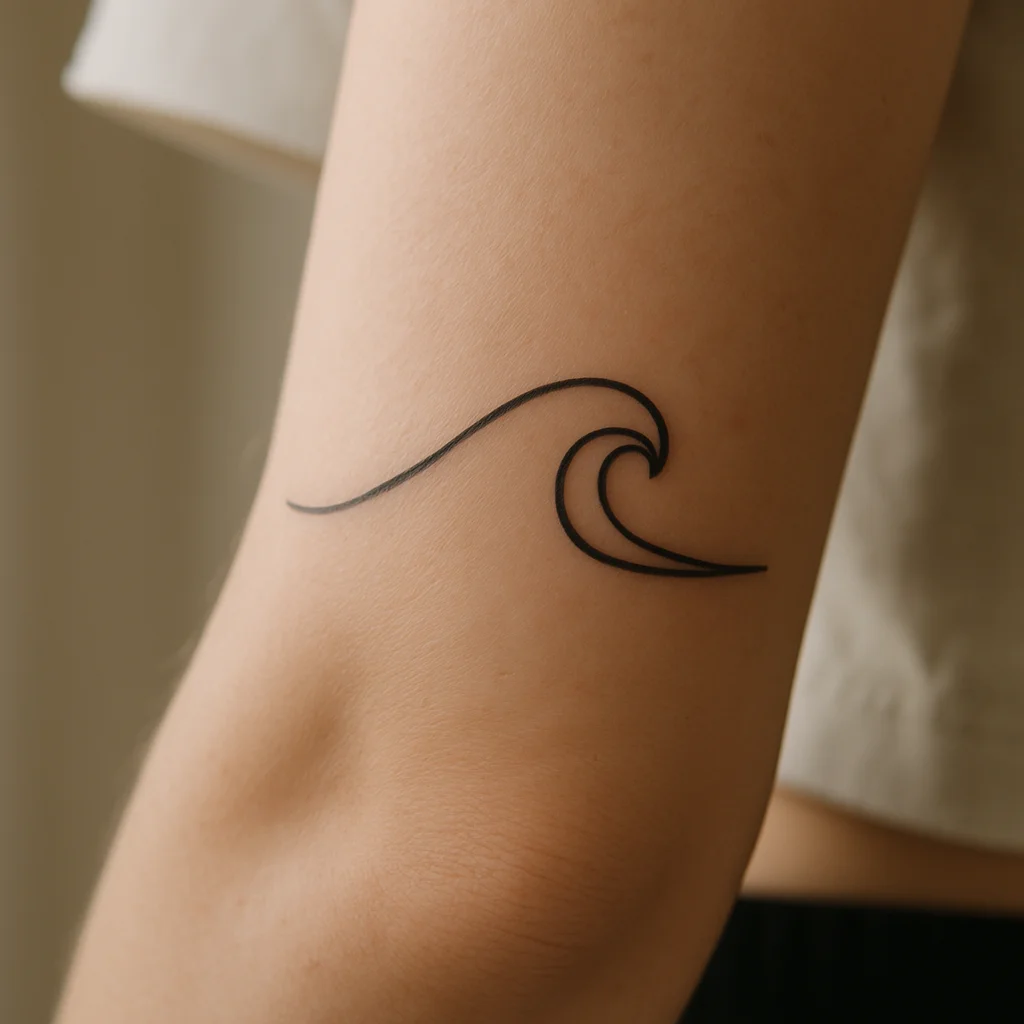
6. Continuous wave
A single line rolls into a crest, curls once, and flattens out. At 12–15 cm across the outer forearm it becomes almost graphic, and the forearm's flat plane keeps the curl from distorting. Ask for a slightly heavier weight on the curl so the tightest part of the spiral doesn't blur.
Negative Space: Letting Skin Do the Drawing
The other route to minimalism is the opposite of thin lines — solid black shapes where the unfilled skin carries the image. These age exceptionally well because bold black holds its edge, and they photograph beautifully. The trade-off is time under the needle and a slightly longer, itchier heal on the packed areas.
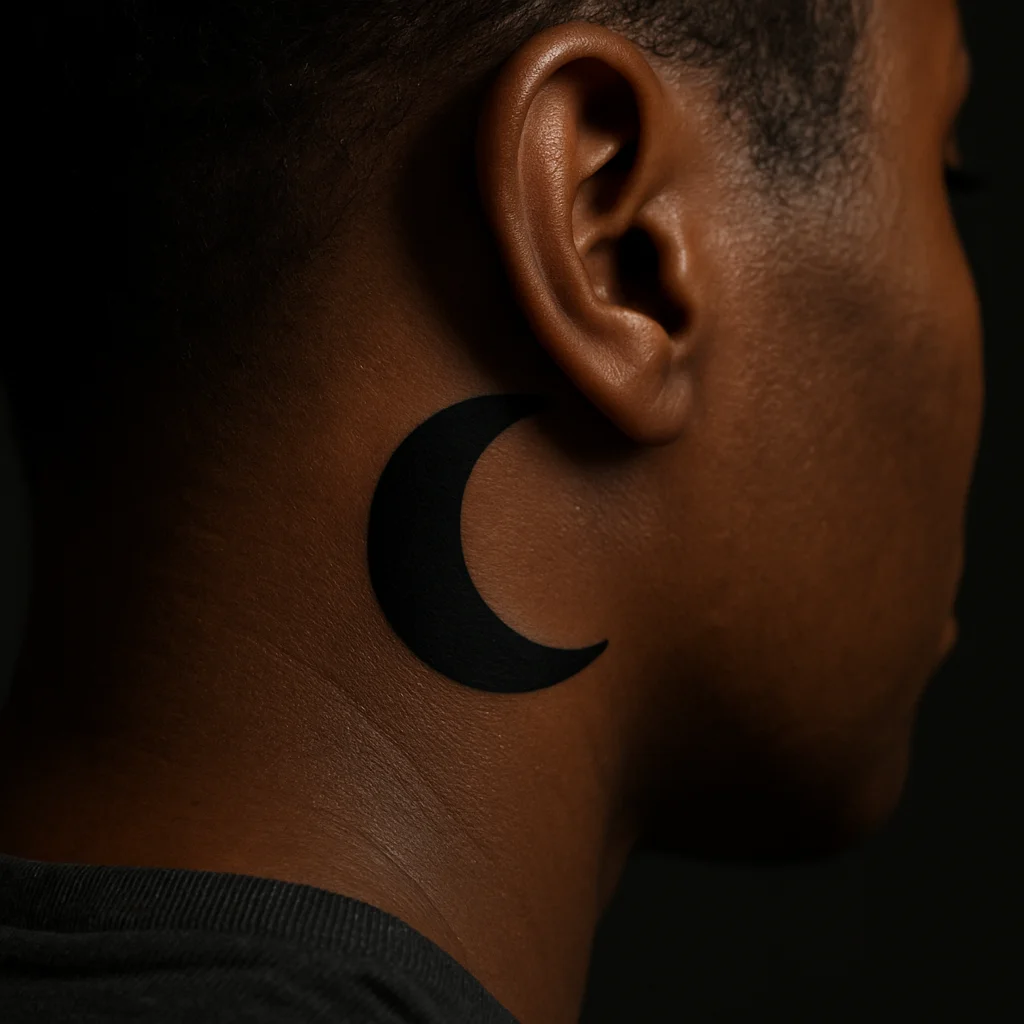
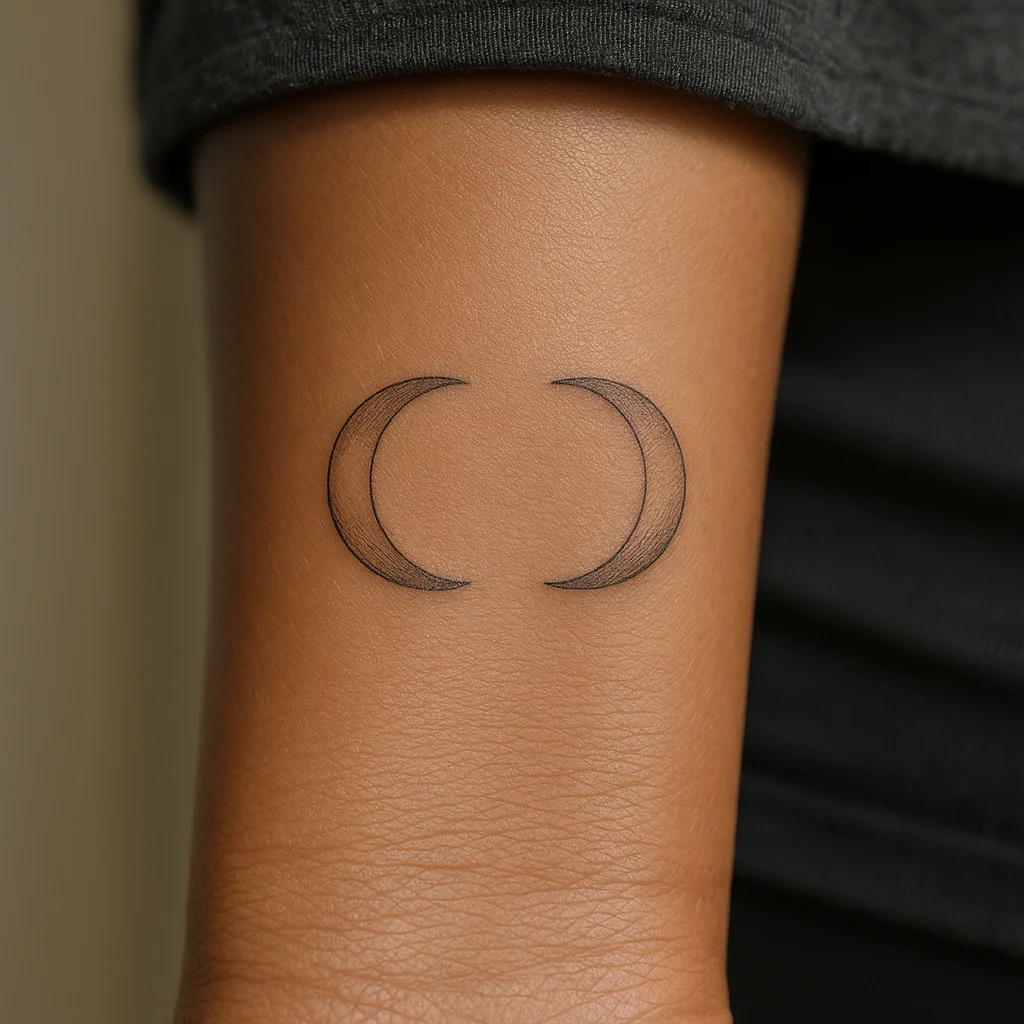
7. Solid crescent moon
A clean filled crescent, 2–3 cm, tucked behind the ear. No craters, no face, no stars — just the shape. Solid black at this size heals fast and stays crisp for decades, which makes it one of the safest small tattoos going.
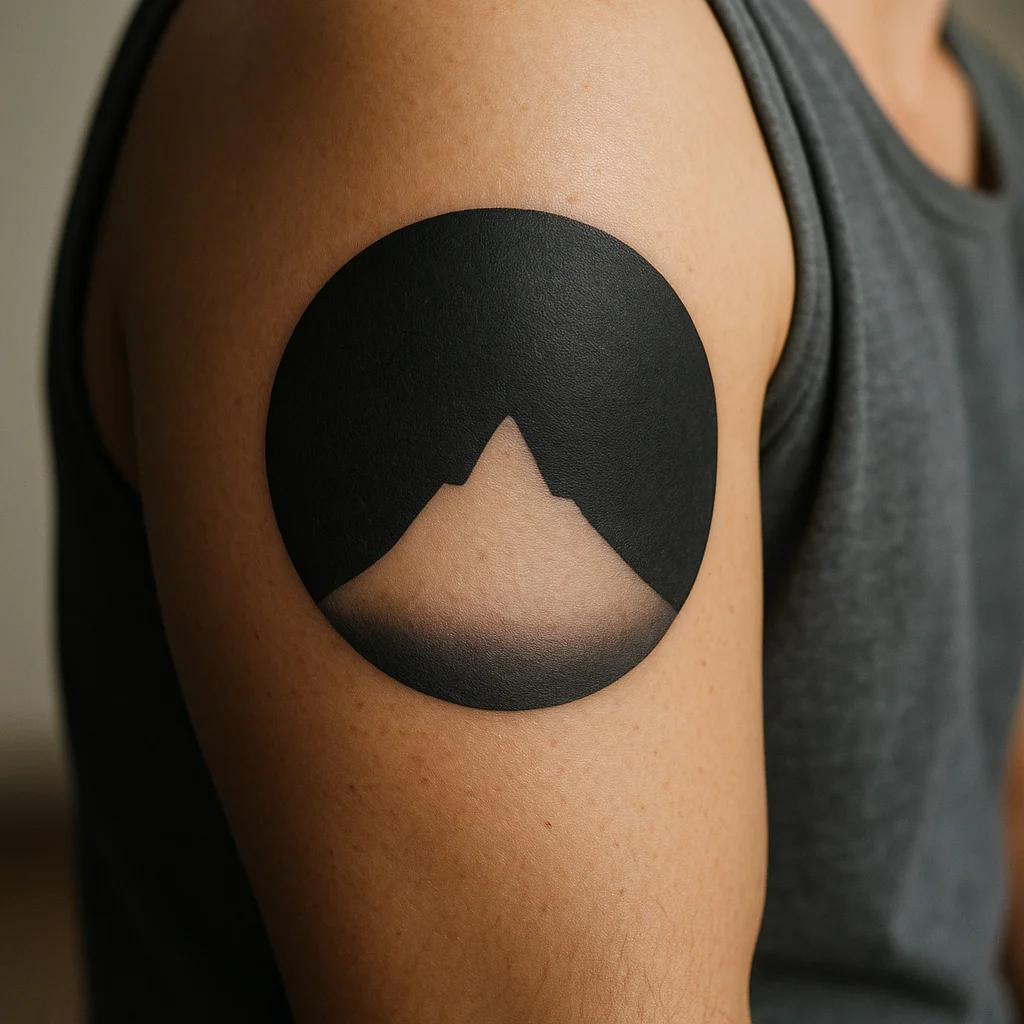
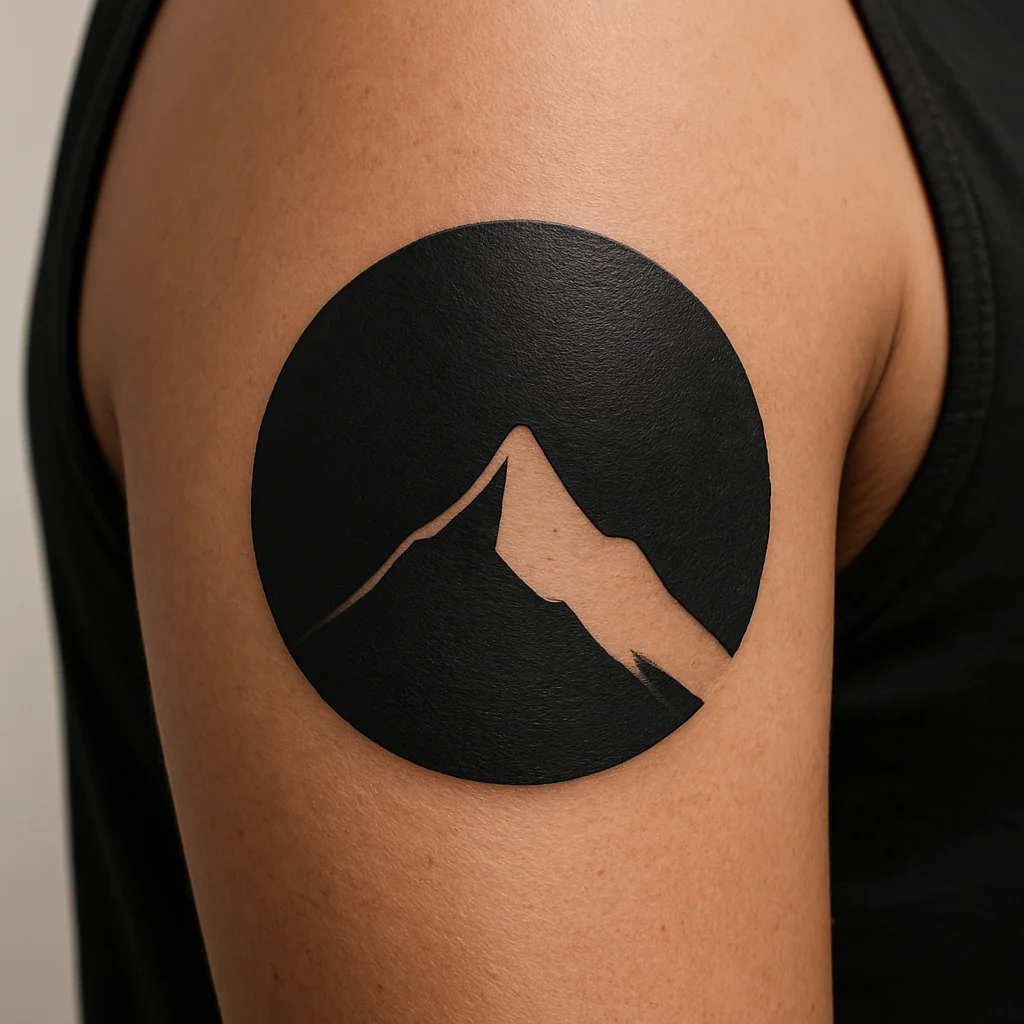
8. Negative-space mountain in a black circle
A packed black disc, 6–8 cm, with the peak and a thin sky line left as bare skin. On the upper arm the round format sits well on the muscle curve. Insist the unfilled ridge is at least 2–3 mm wide at its narrowest; anything thinner will close over.
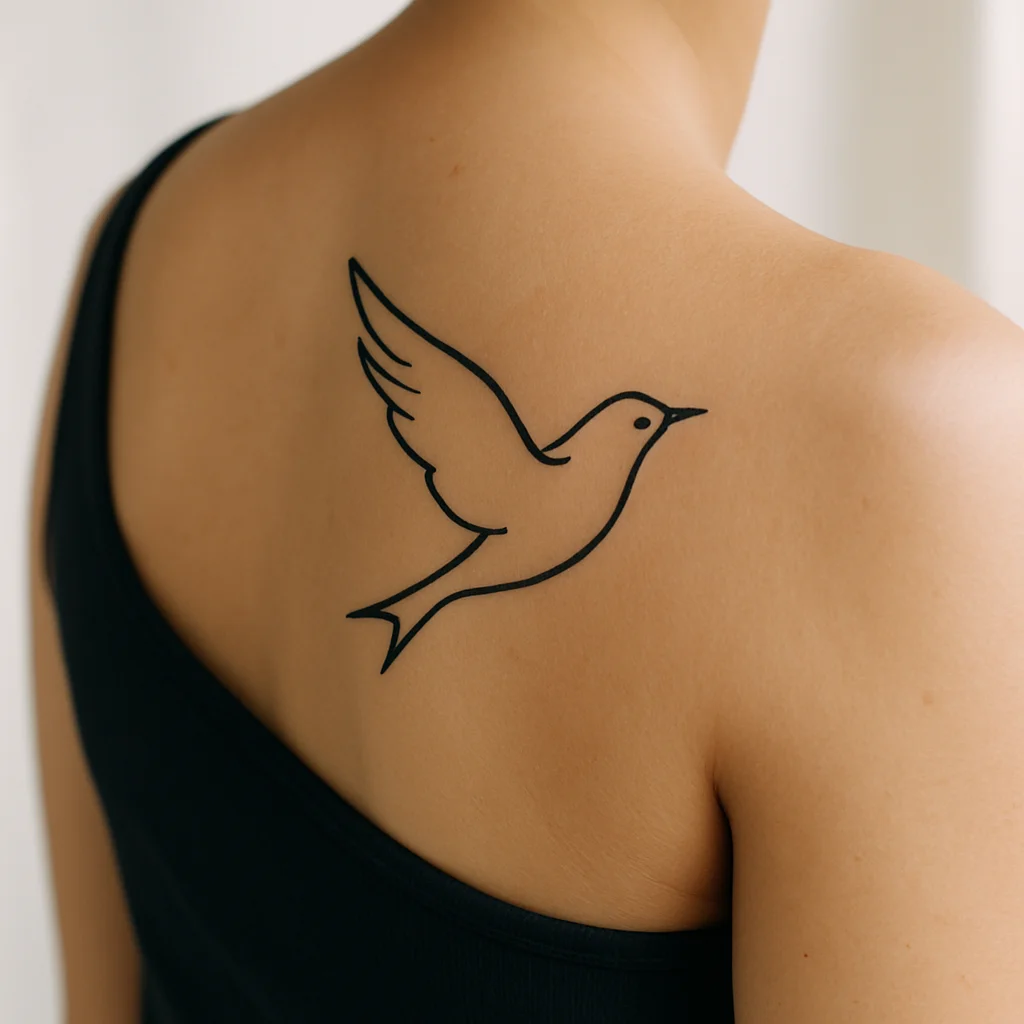
9. Bird with a dropped line
A bird in flight where the outline simply stops mid-wing and your eye completes it. It's a small trick that turns a common motif into something considered. Around 6 cm on the shoulder blade, where the flat expanse gives the missing line somewhere to disappear into.
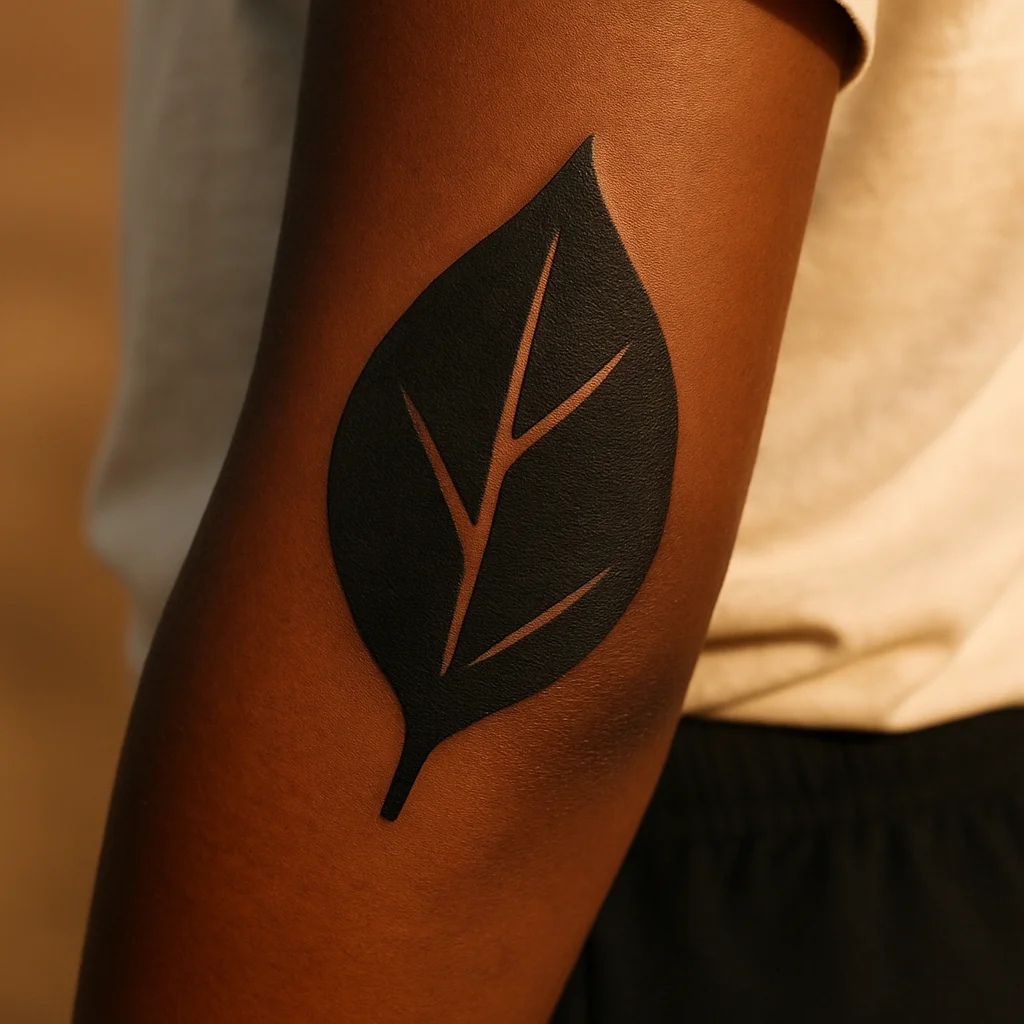
10. Leaf with unfilled veins
The whole leaf blade packed solid, the central vein and two ribs left as skin. Roughly 8 cm on the inner forearm, following the limb's length. Botanical without a single decorative flourish, and the contrast keeps it visible from across a room.
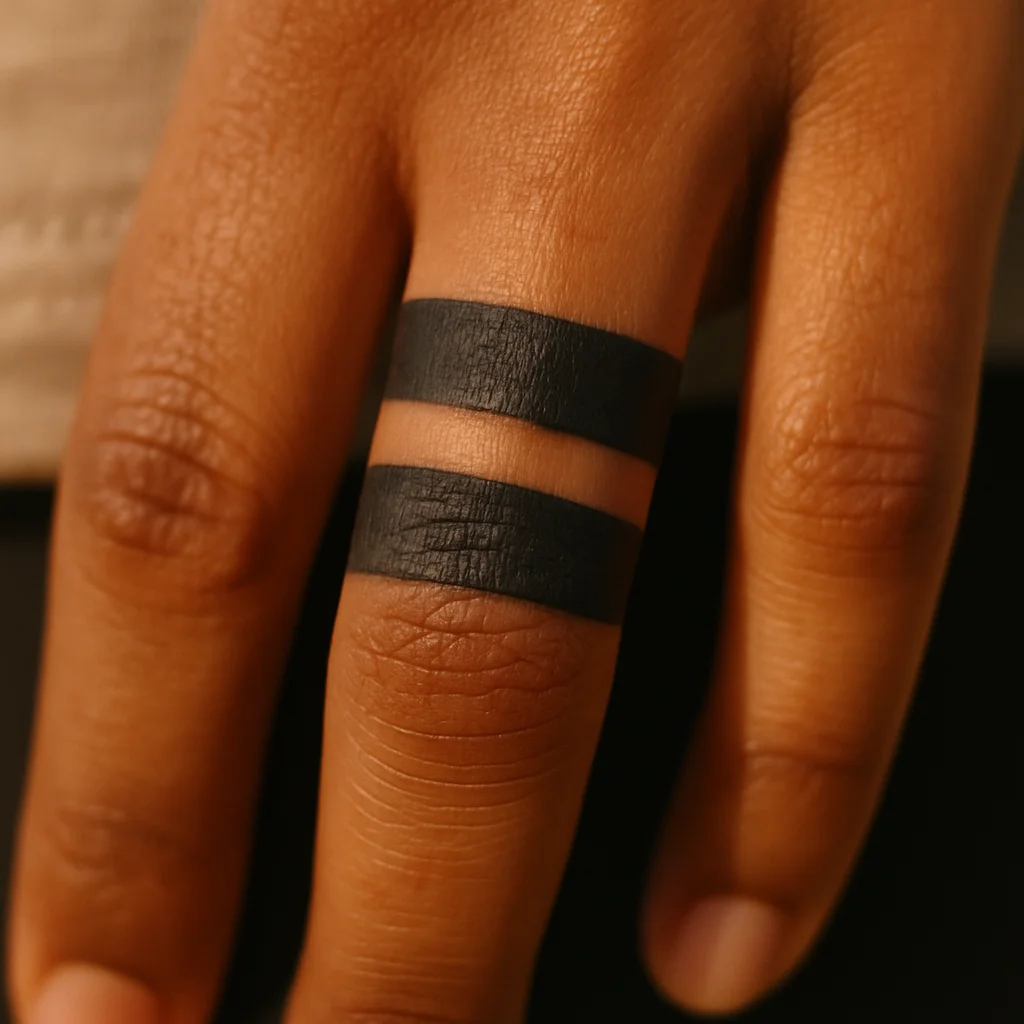
11. Black bar with one gap
A short filled bar along the finger, interrupted by a single break of bare skin. Read it as a pause, a breath, a boundary — it's abstract enough to keep its meaning private. Fingers fade faster than anywhere else, so plan on a touch-up every few years.
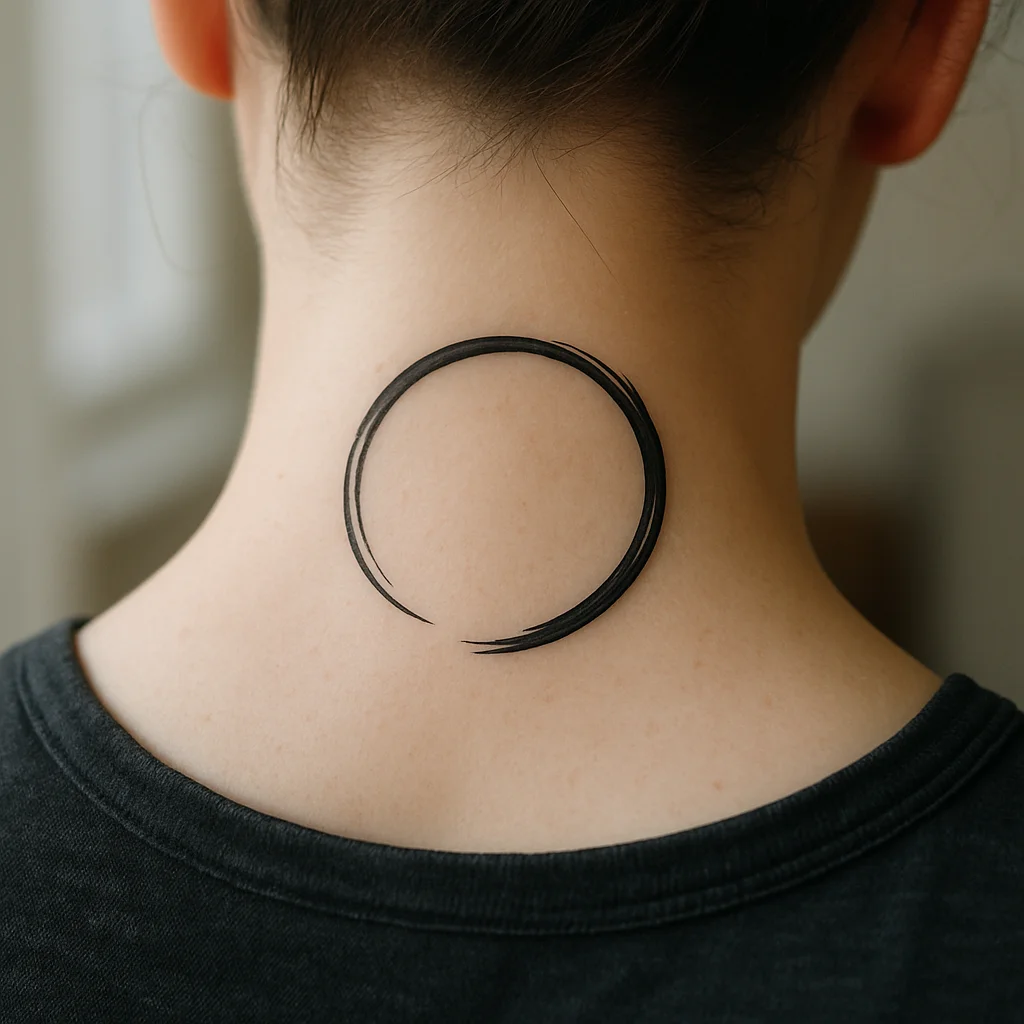
12. Open circle
A brush-weight ring that never quite closes, 5–6 cm at the nape. The gap is the design; a perfectly sealed circle would say something entirely different. Ask for a slight taper in the stroke so it feels drawn rather than printed.
Geometry Stripped to Essentials
Geometric minimalism lives or dies on execution. Straight lines and true circles expose every wobble, so this is the category where you pay for a specialist. Look for an artist whose healed photos — not fresh ones — show clean, even linework.
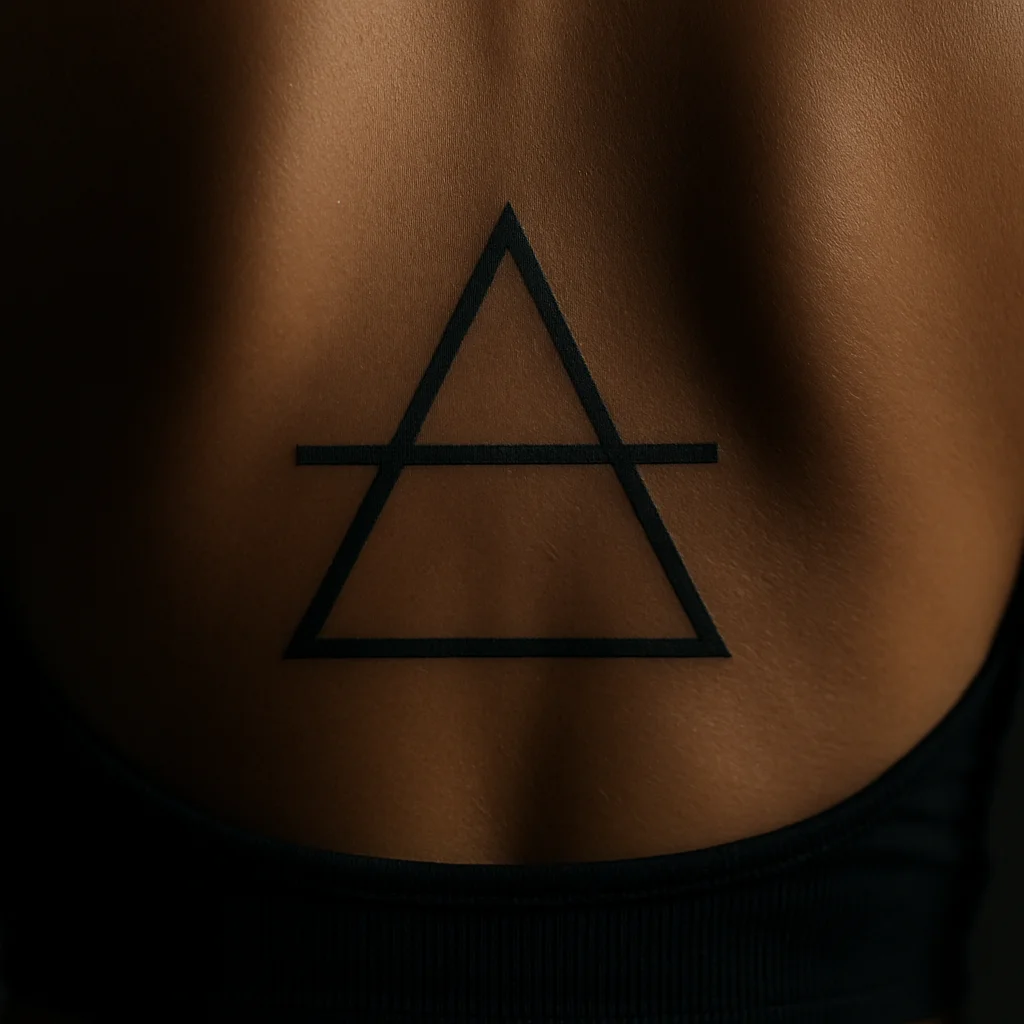
13. Triangle crossed by an offset bar
A thin equilateral triangle with a single horizontal line cutting across it, off-centre. At 4 cm on the spine it becomes a vertebra-level marker, and the symmetry of the placement does half the work. Alignment is everything: have the stencil checked standing upright, not lying face-down.
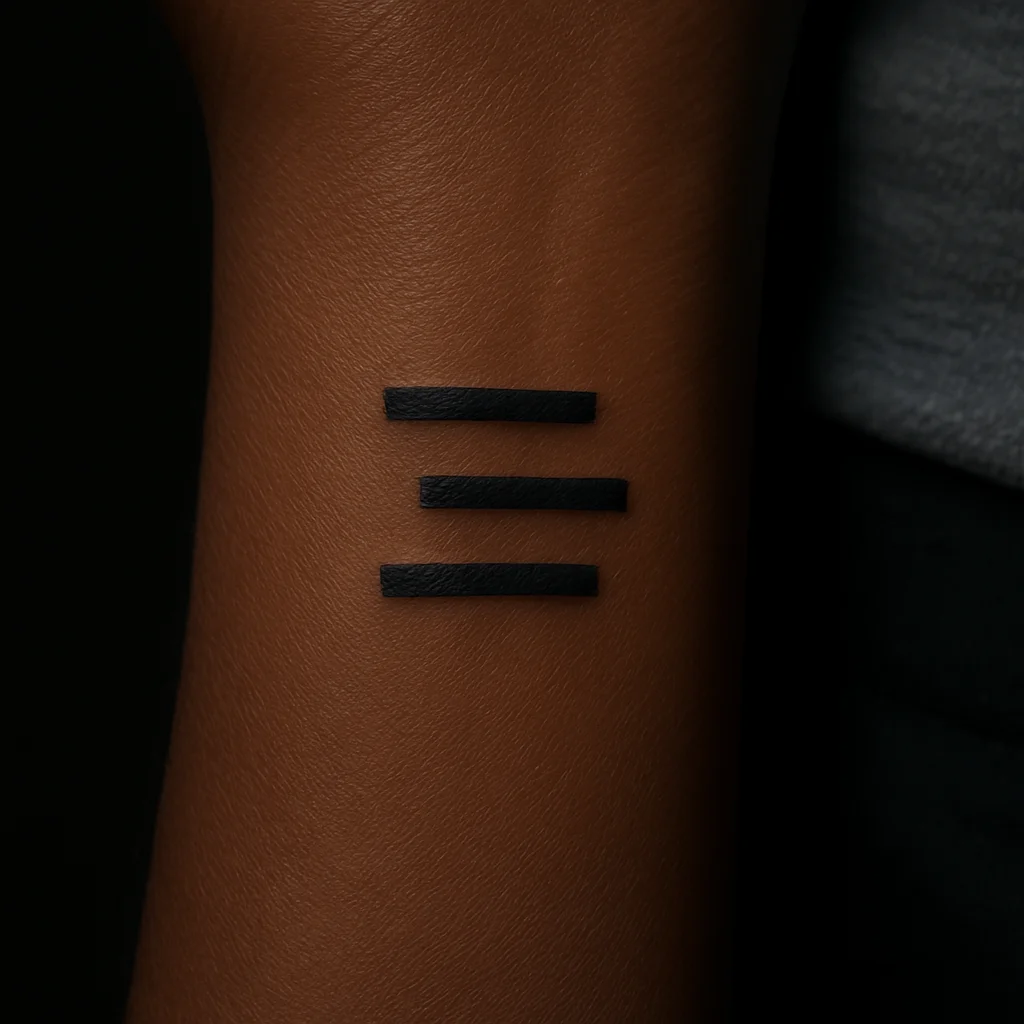
14. Three lines of unequal length
Three short horizontal strokes stacked with generous gaps, the middle one longest. It's a rhythm rather than a picture, and it sits neatly across the inner wrist at 3 cm. Simple enough to be your first tattoo, considered enough not to feel like a default.
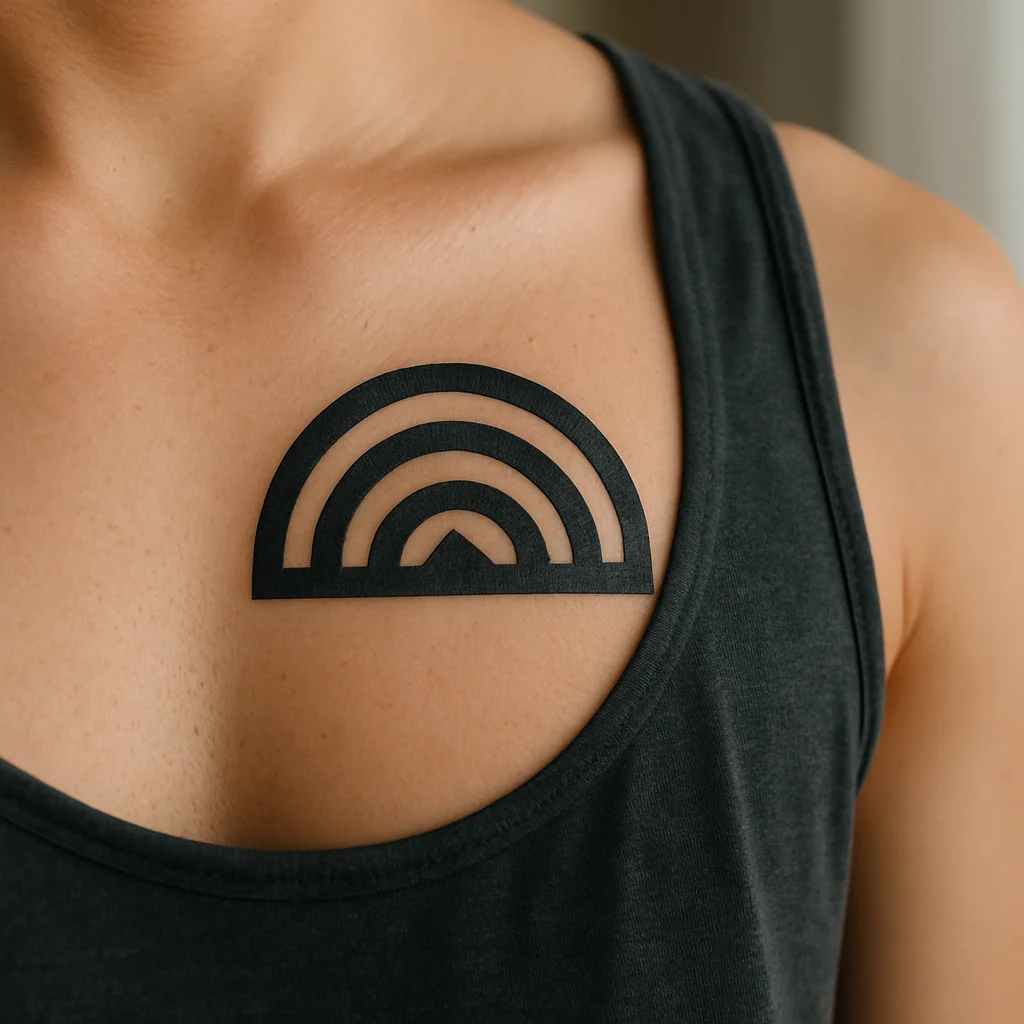
15. Concentric arcs
Four or five nested arcs suggesting a sunrise, spread 10–12 cm across the chest under the collarbone. The wide format suits the flat plane and the spacing between arcs should increase outward so it doesn't muddy with age. Chest sits closer to bone than people expect — bring your patience.
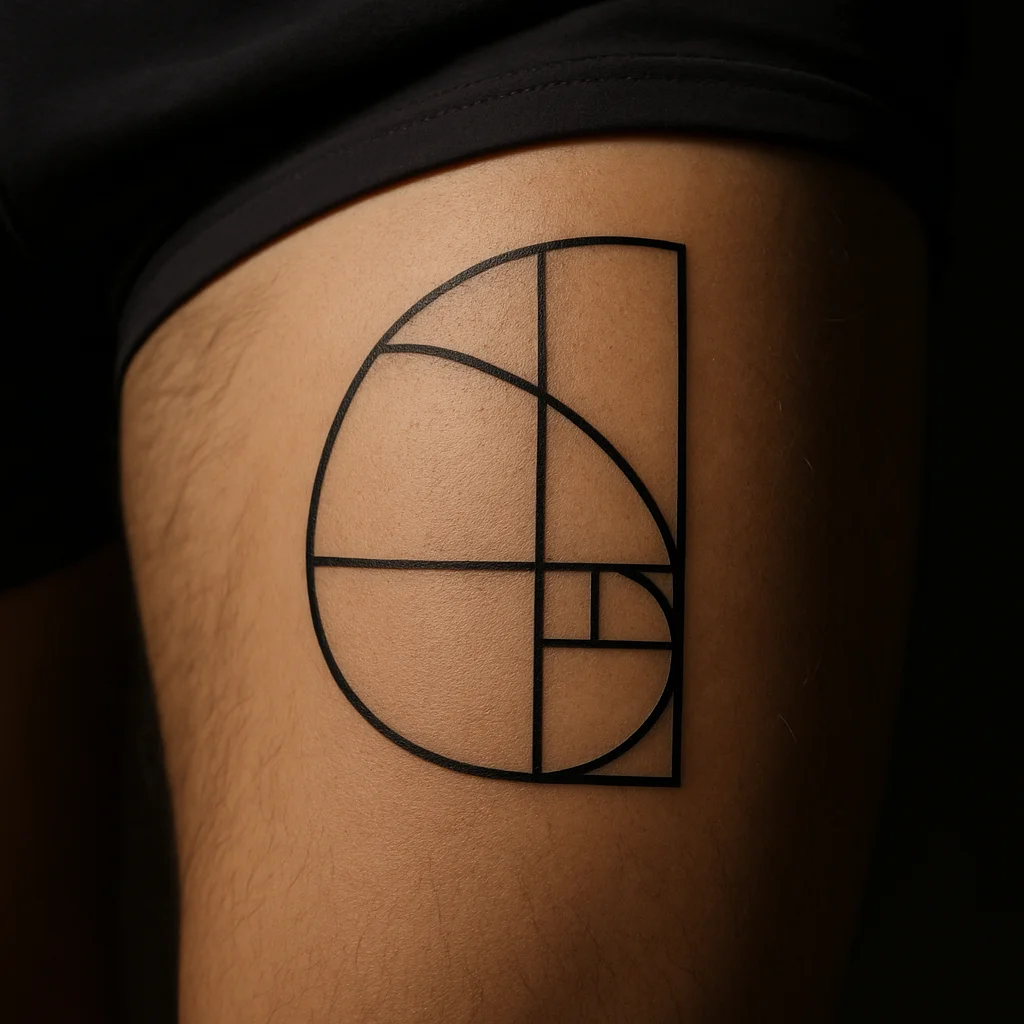
16. Spiral reduced to quarter arcs
The golden spiral drawn as four separate quarter-circle strokes rather than one continuous curl, so the construction stays visible. On the outer thigh at 12 cm it has room to expand properly. Great for anyone who likes maths but not mandalas.
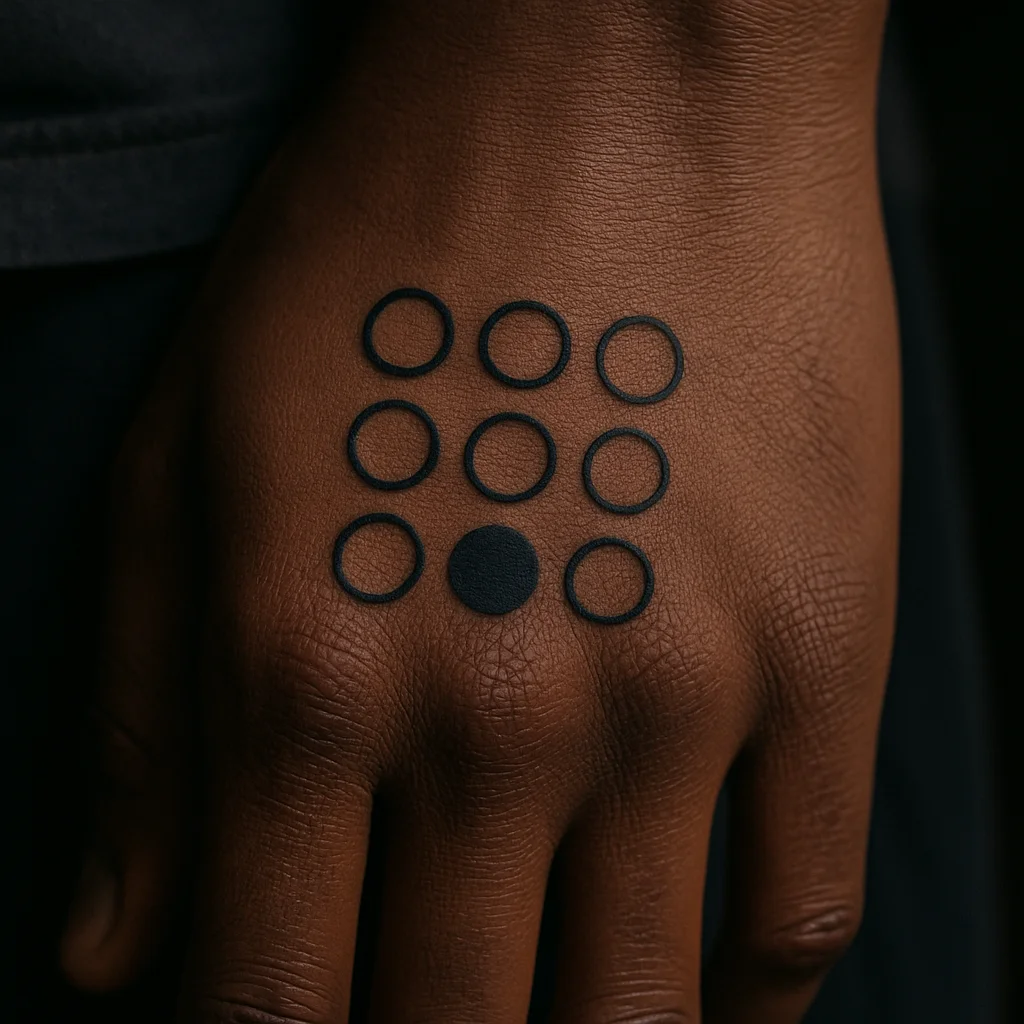
17. Nine-dot grid with one filled
A three-by-three grid of small open circles with a single dot blacked in. Roughly 3 cm on the back of the hand, where the graphic quality reads best. Keep dots at 2 mm minimum; anything smaller merges into a smudge on hand skin.
One Object, Nothing Around It
The single-object approach is minimalism for people who want a subject, not an abstraction. The discipline is refusing to add anything: no banner, no frame, no scattered stars, no drop shadow. One thing, drawn well, floating on skin. If you like this territory but want the linework even softer, our notes on fine line tattoo ideas go deeper on needle choice.
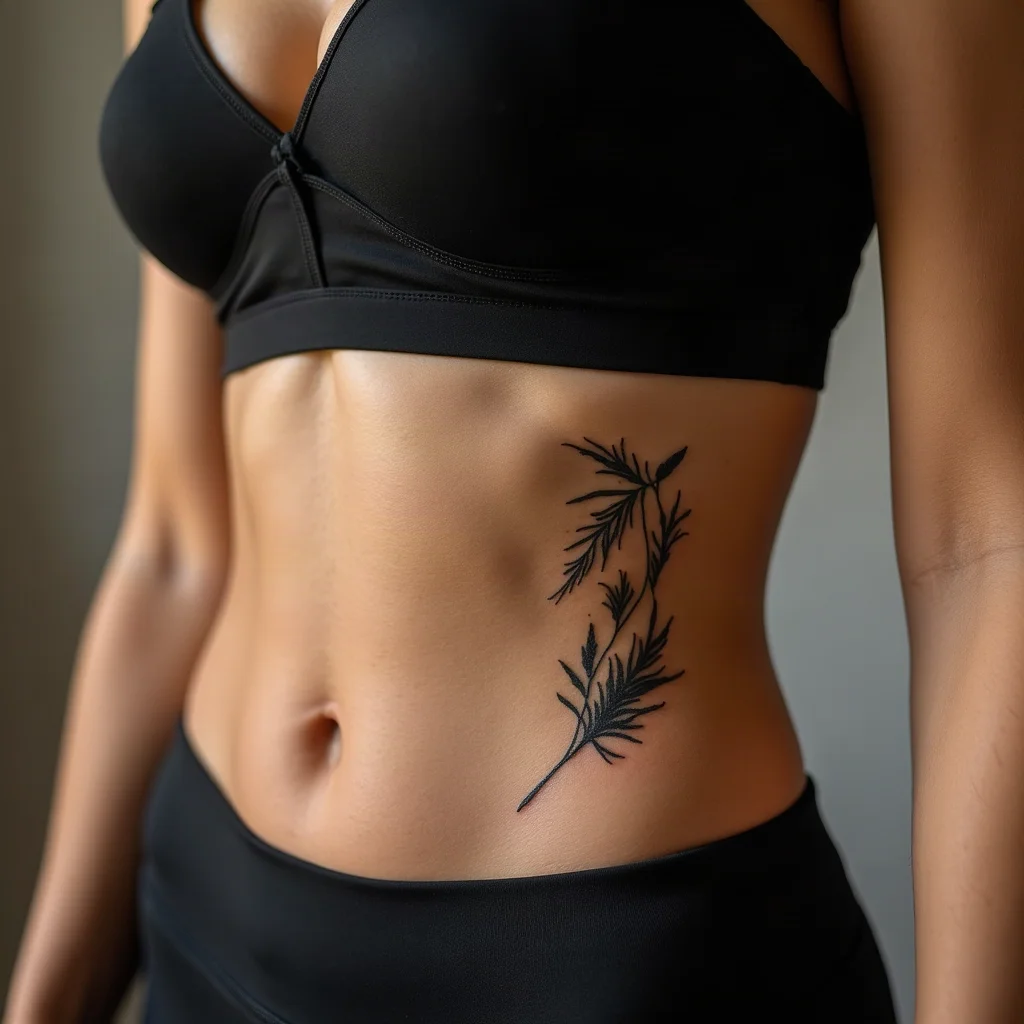
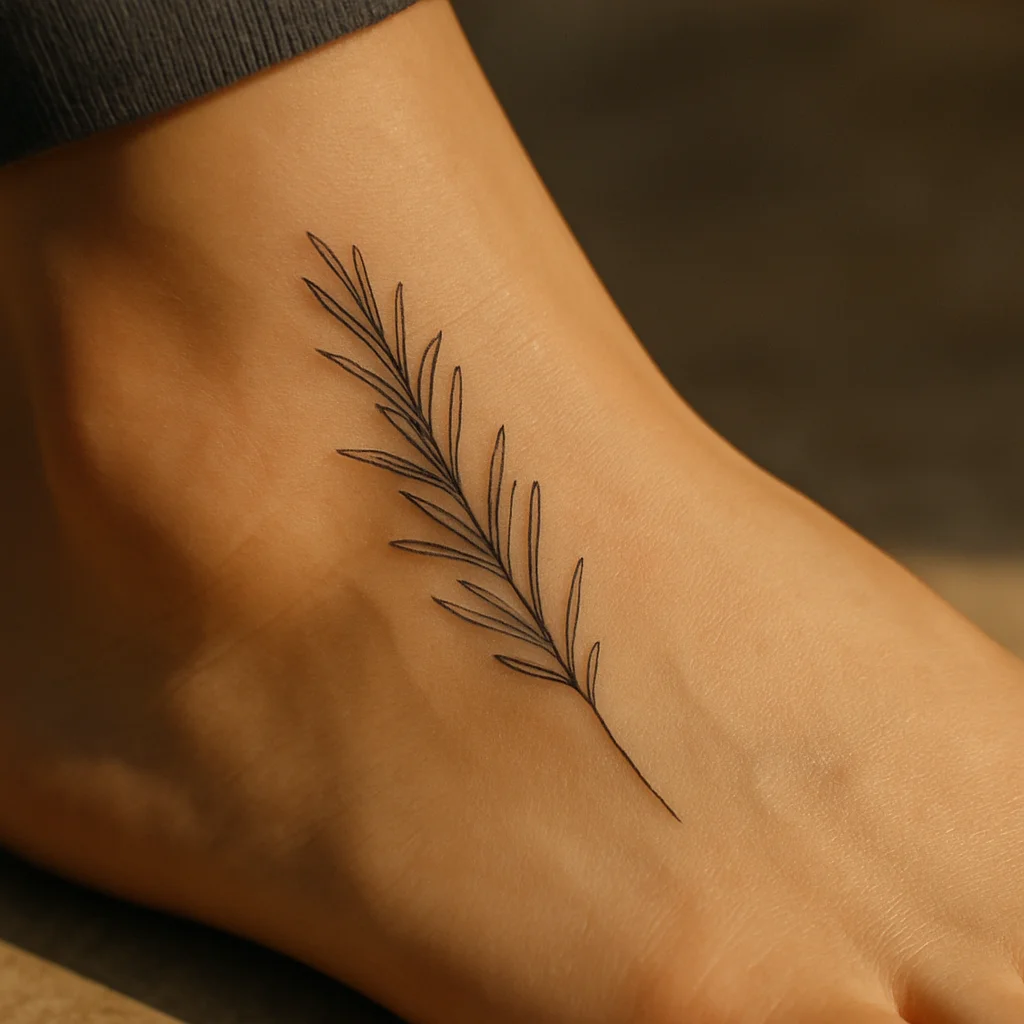
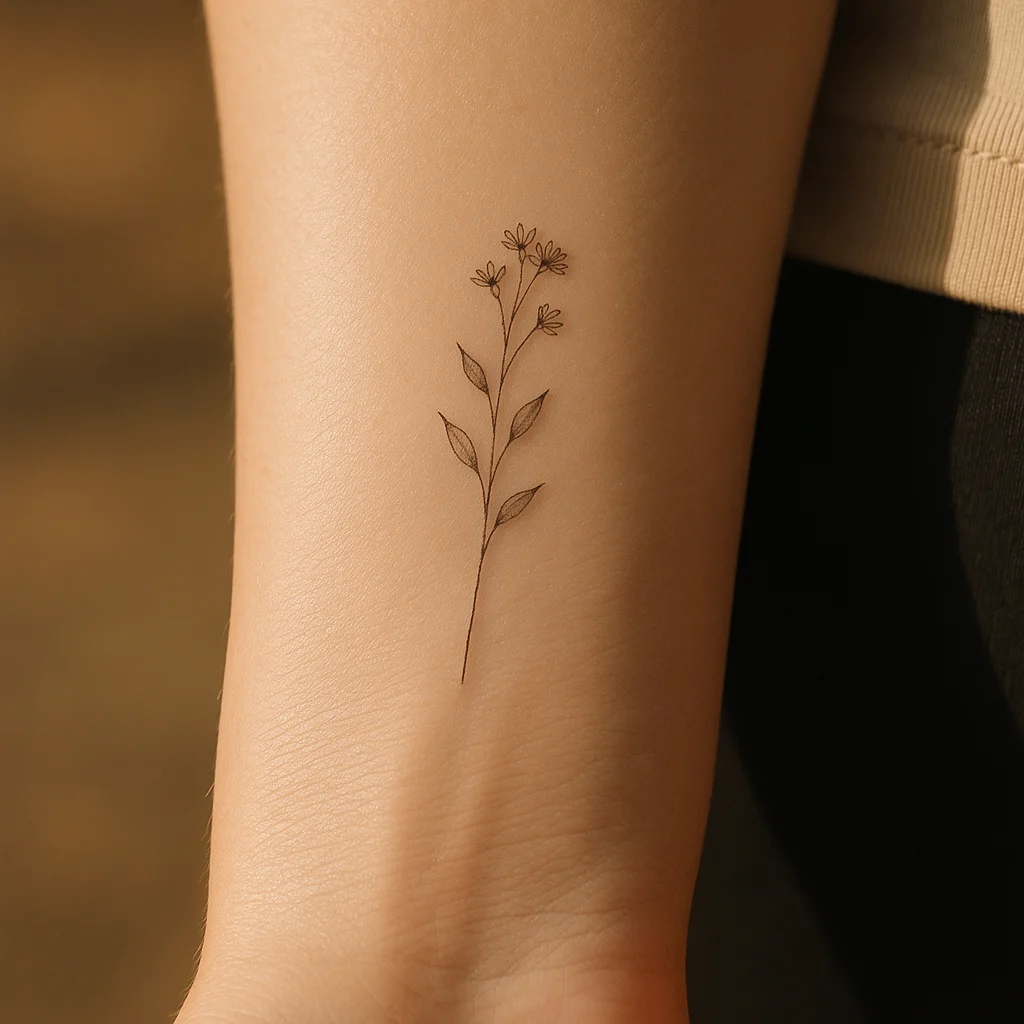
18. Single rosemary sprig
One stem, ten or twelve needle-thin leaves, no pot and no ribbon. Along the top of the foot at 7 cm it follows the tendon line naturally. Foot tattoos are sharp and slow to heal — keep it out of shoes for the first week if you can.
19. Paper aeroplane with a dotted trail
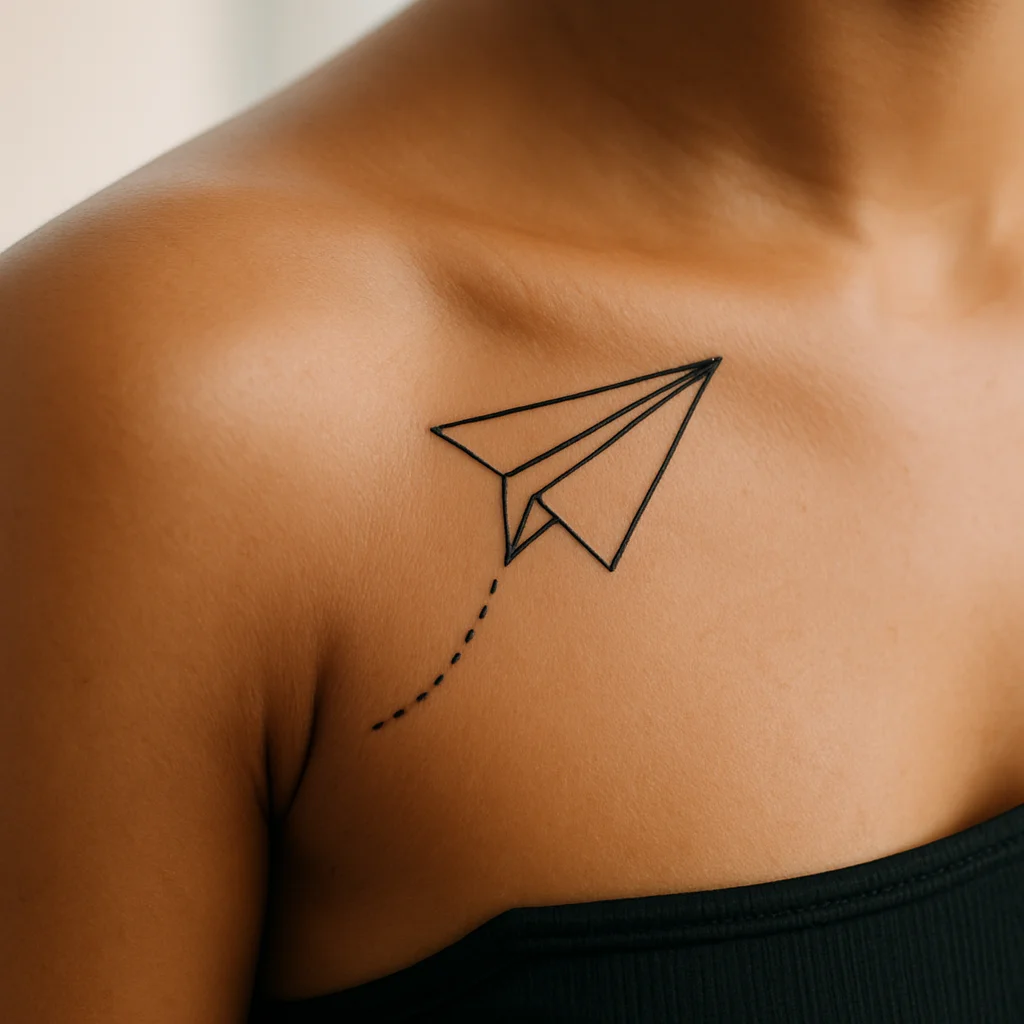
Four straight lines make the plane; a curving row of dots makes the journey. At 6 cm on the shoulder the trail can arc toward the deltoid, giving the piece direction. It's playful without tipping into cartoon.
20. Struck match
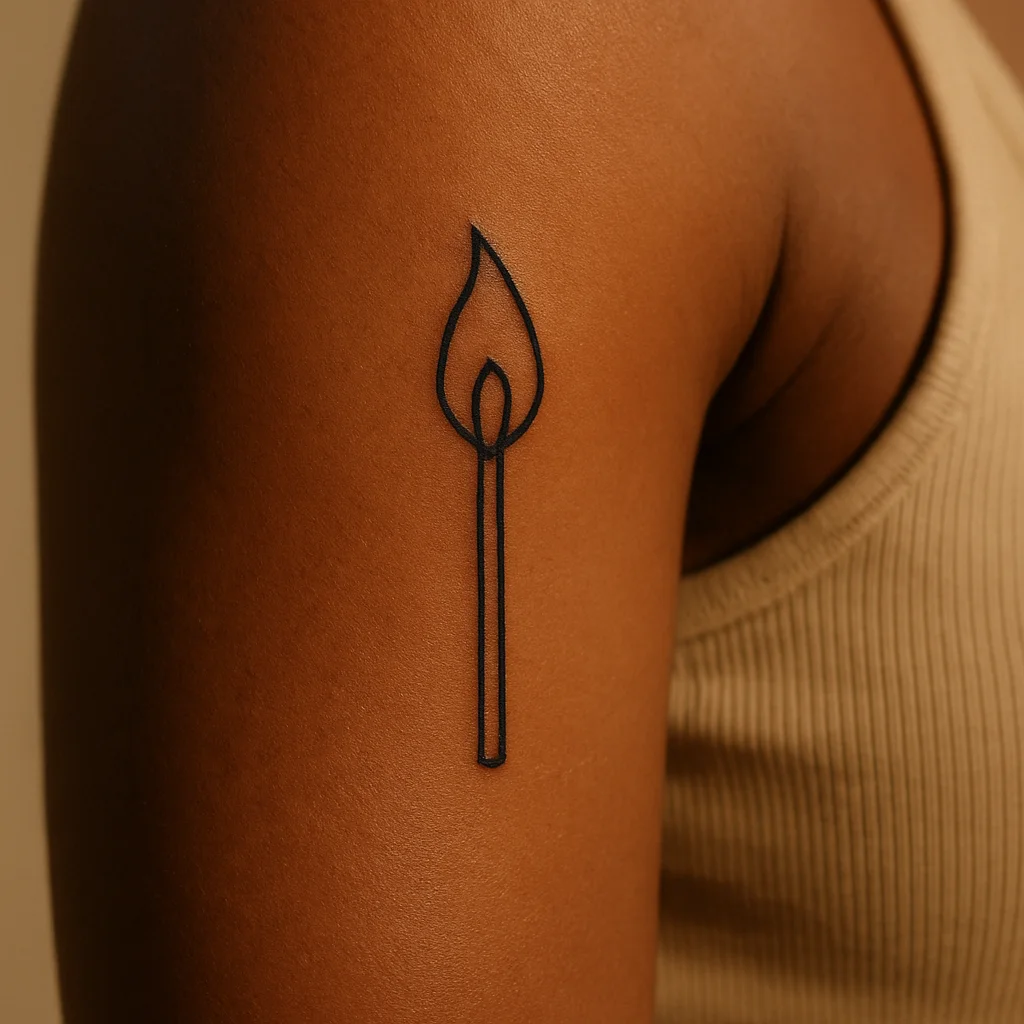
A plain matchstick with one small teardrop of flame, 5 cm on the upper arm. Leave the flame unfilled and it stays quiet; pack it solid and it becomes the focal point — decide which you want before the needle starts. Reads well on any skin tone because it relies on silhouette.
21. Four-fold paper crane
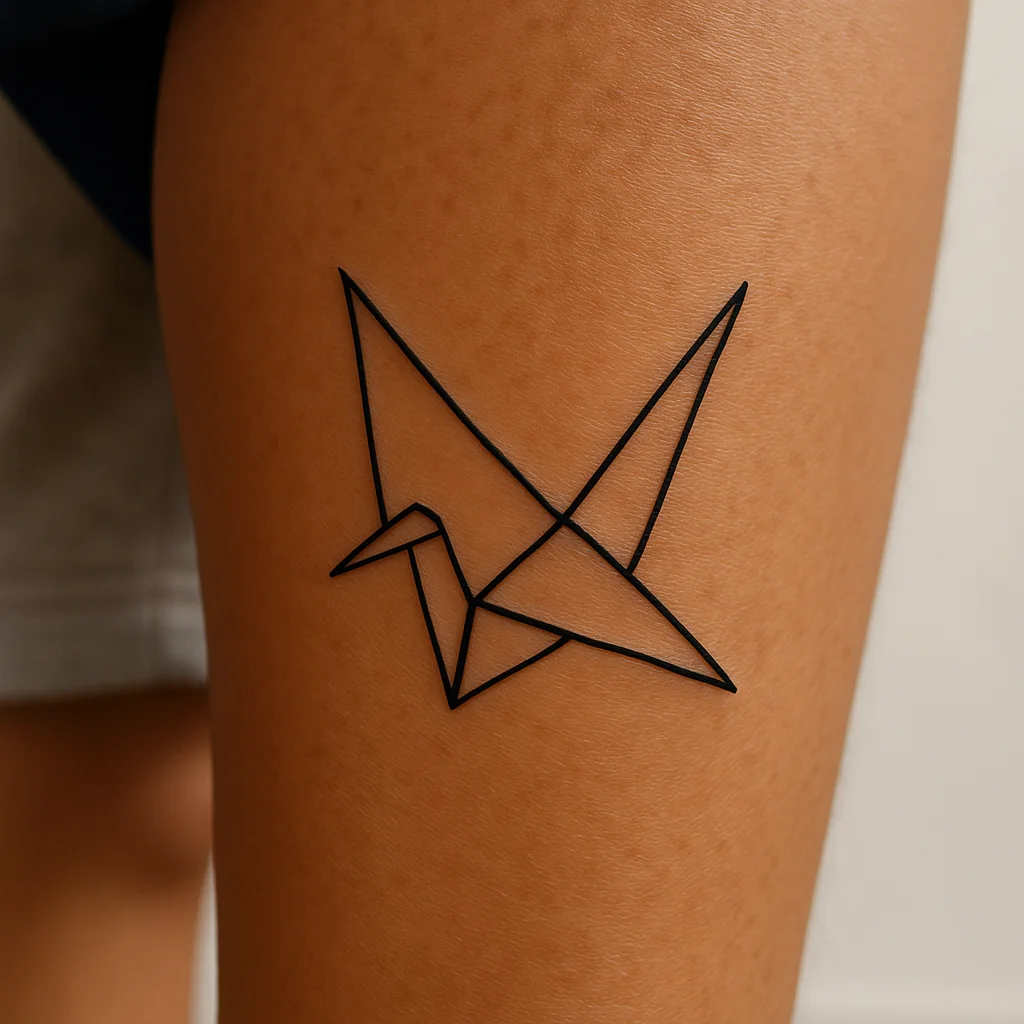
An origami crane described by only the folds that matter: beak, neck, two wings, tail. Around 5 cm on the calf, angled slightly with the muscle. Anything more than six lines and it stops looking like folded paper.
22. Wave beneath a horizon
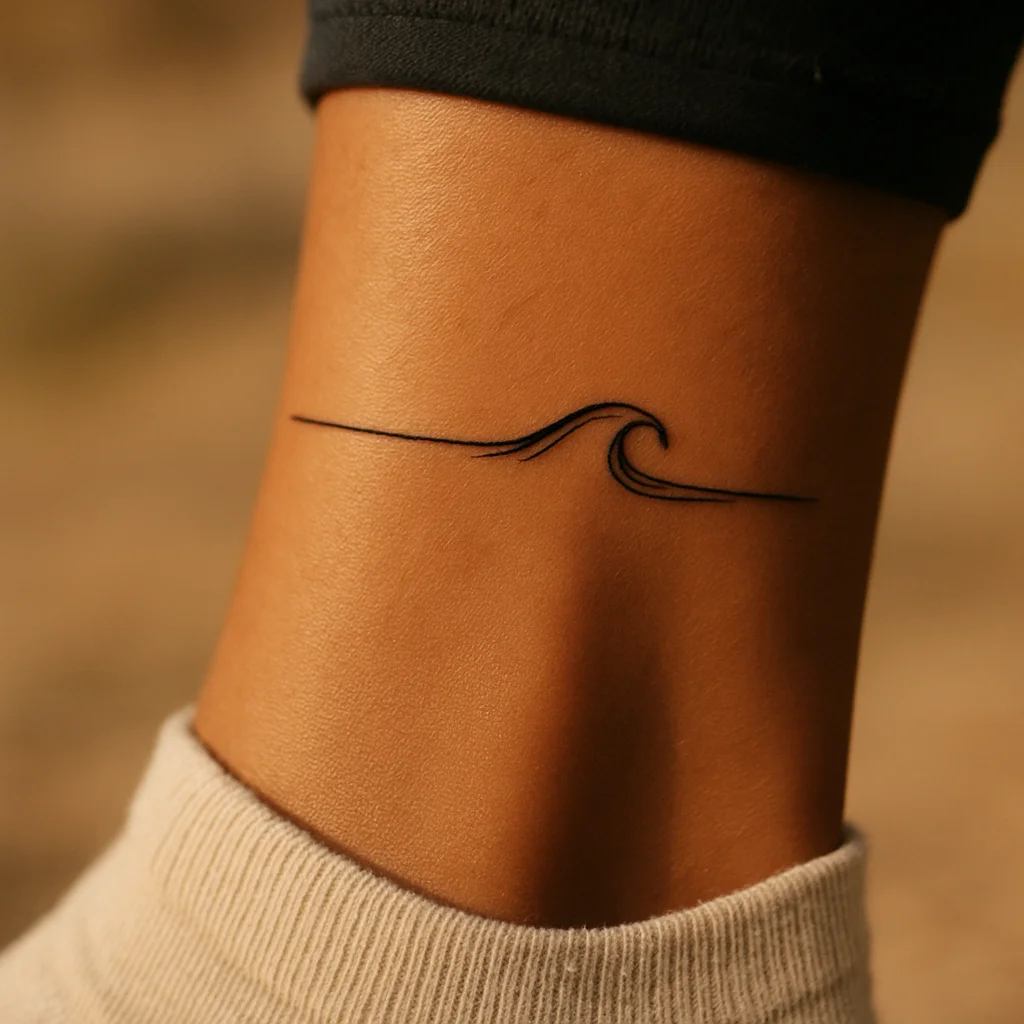
A single crest with one long straight line above it for the horizon. The gap between the two is the whole composition, so protect it — at least 5 mm at 6 cm wide. The ankle keeps it discreet and it peeks out with low shoes.
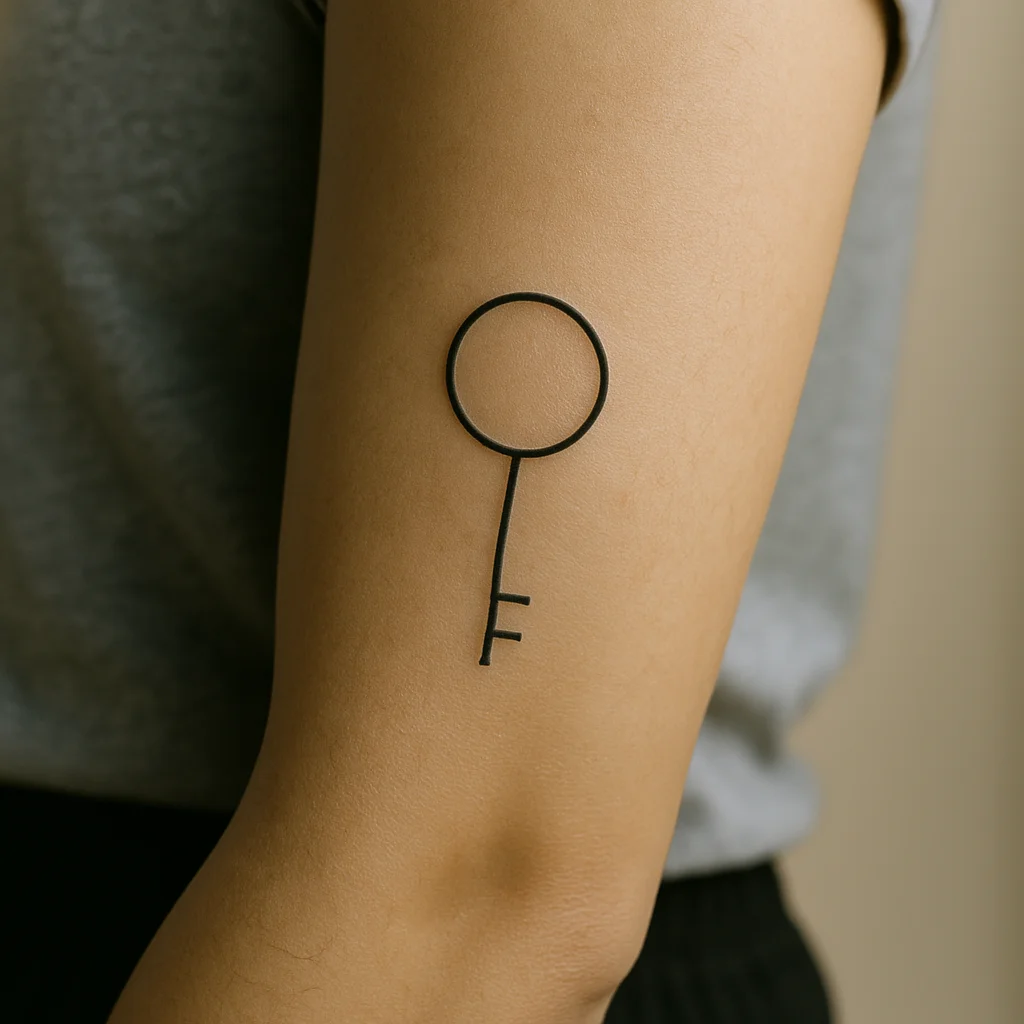
23. Key in three shapes
A circle, a shaft, two teeth. That's the whole key, 6 cm on the inner forearm. Reducing a familiar object to its minimum vocabulary is the most satisfying exercise in this entire style, and it survives blurring better than any ornate version.
Type, Dates and Marks
Text is the hardest minimalist category to get right, because bad kerning ruins a tattoo faster than a bad drawing. Ask to see the artist's healed lettering, and always request the design at final size — words that look elegant on an iPad at 300% become illegible at 4 cm.
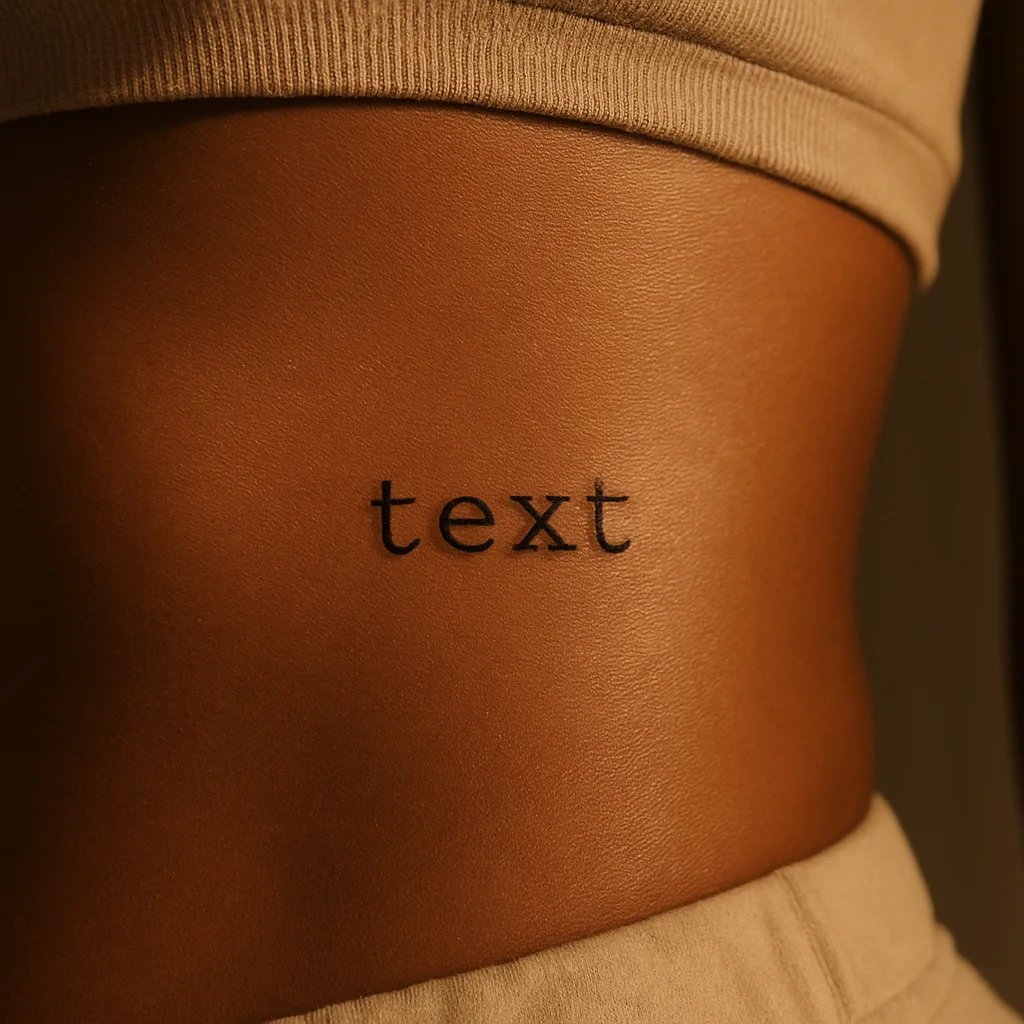
24. One lowercase word, typewriter face
A single word — not a sentence — set in a clean monospaced type at around 5 cm along the ribcage. Lowercase reads softer than caps and ages more forgivingly because the letterforms are rounder. Choose a word you'd still choose in ten years; that's the only real test.
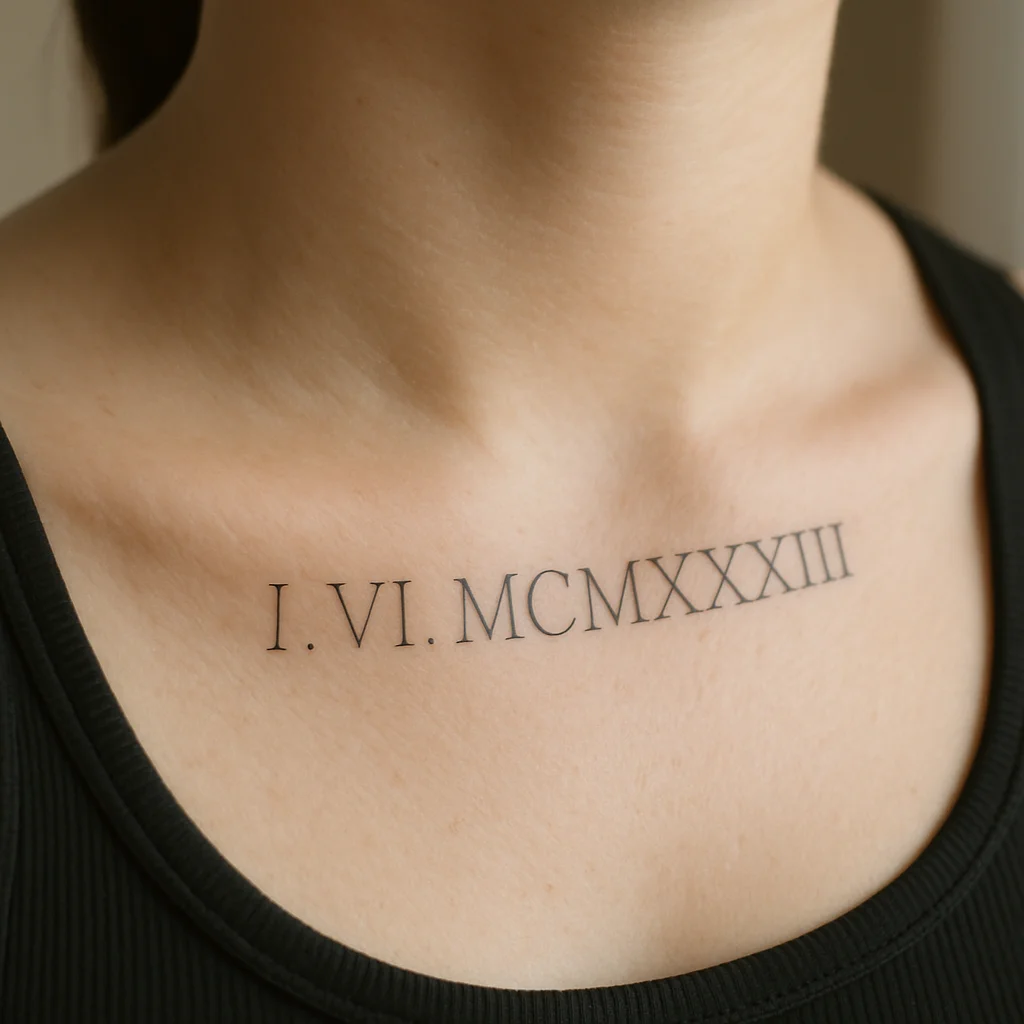
25. Roman numeral date
A date in thin serif numerals, 6–7 cm along the collarbone so the string of characters has a straight run. Serifs are small and can thicken over time, so ask for slightly generous spacing between numerals. Sans-serif is the safer long-term bet if you're unsure.
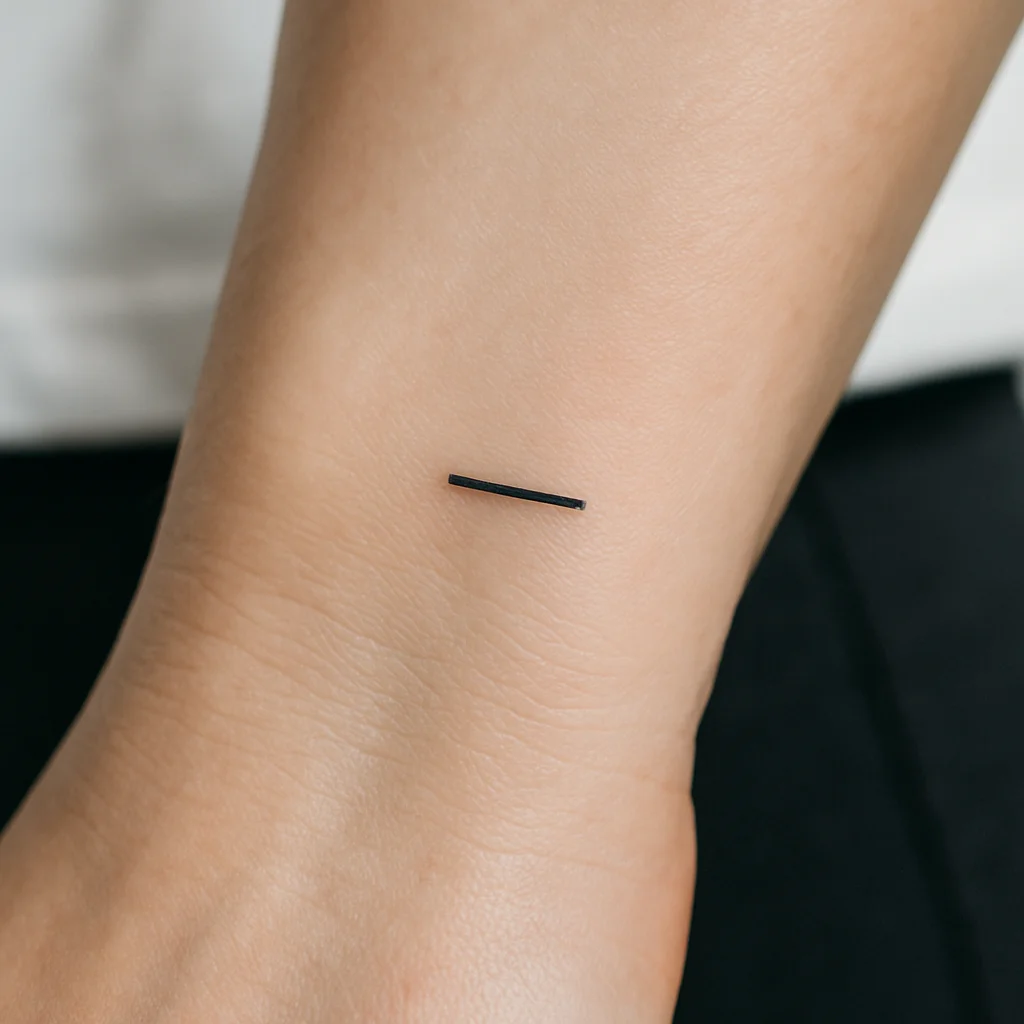
26. A single mark
One short em dash, a caret, or a small asterisk on the side of the wrist — 1–2 cm, entirely private in meaning. It's the smallest committed tattoo most people will ever get and often the one they touch most. Heavier than hairline weight, please, or it will fade to a smudge.
27. Two-letter monogram
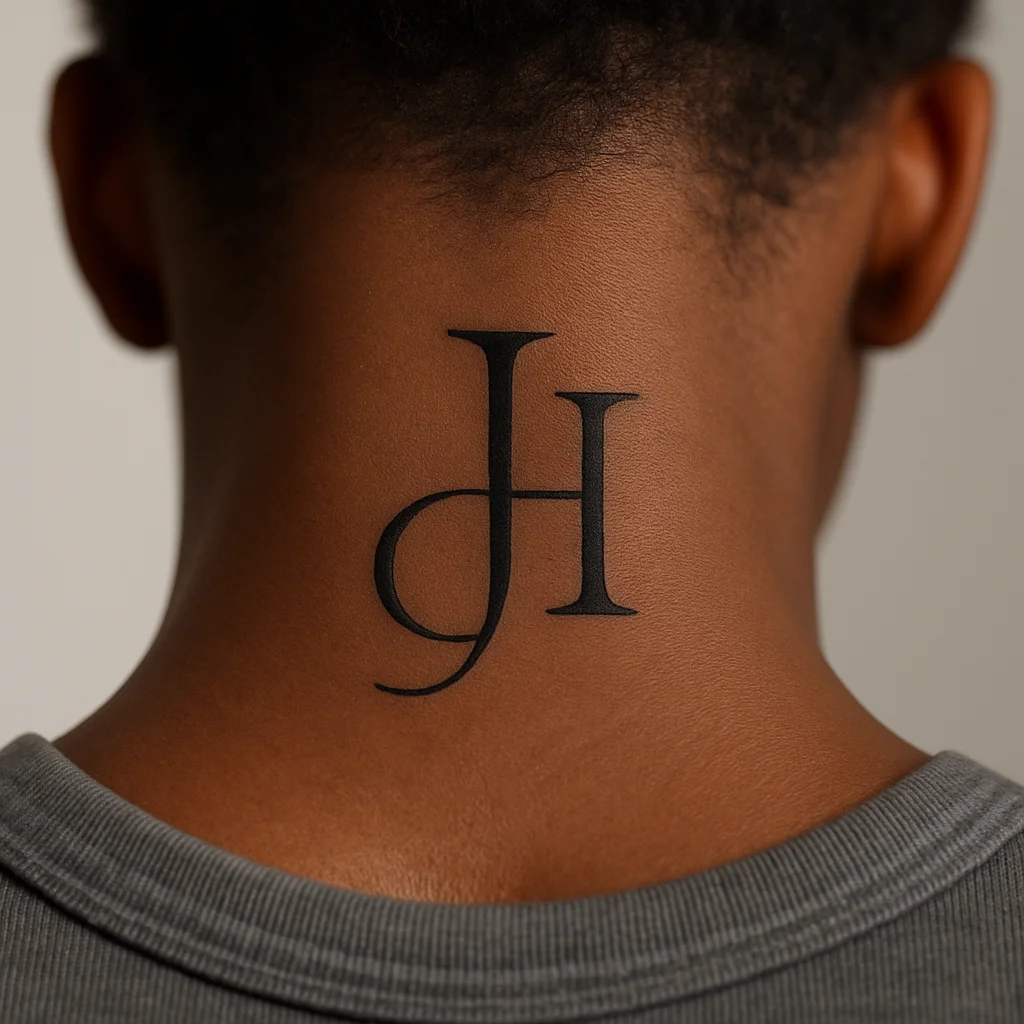
Two initials overlapped so the strokes share a stem, drawn at 3 cm on the nape. It behaves like a logo rather than handwriting, which keeps it from feeling sentimental. Have the artist test the overlap at size — letters that interlock beautifully at large scale can turn into a knot when reduced.
Placement, Pain, Cost and Keeping It Sharp
Where minimal work ages best. Skin that gets less sun and less friction keeps thin lines crisp: inner forearm, upper arm, shoulder blade, ribcage, thigh. Fingers, hands, feet and the outer edges of wrists are the fastest to fade — not because artists do them badly, but because that skin regenerates hard and rubs against everything. Choose those spots knowing you're signing up for periodic touch-ups.
Pain, honestly. Outer arm, thigh and shoulder are the mildest sits. Inner wrist and ankle are brief but sharp. Ribs, sternum, spine, feet and the nape sting properly — though a 20-minute minimalist piece is a very different proposition from a two-hour session in the same spot. Most of these designs are over before your adrenaline runs out.
Cost. Nearly everything here falls into a shop's minimum-to-one-hour bracket, which in most cities means the price of a nice dinner out to a couple of hundred. Negative-space pieces with solid packing cost more than they look like they should, because filling black takes time. Never price-shop minimalism: the whole style is execution, and a cheap wobbly line has nowhere to hide.
Aftercare that protects thin lines. Wash gently twice a day with fragrance-free soap, pat dry, and use a whisper of ointment — over-moisturising fine linework is a common way to end up with patchy healing. Don't pick flakes off a hairline stroke; you can lift ink straight out of it. After it's healed, sunscreen is the single biggest factor in whether your tattoo still looks sharp in a decade.
Briefing your artist. Bring reference for line weight, not just subject. Say how big you want it in centimetres, ask them to widen any gap they think will close, and be genuinely open when they suggest removing an element — that instinct is the style working as intended. If longevity is your main worry, the thinking in our guide to small tattoos that age well applies here directly.
Frequently asked questions
Do minimalist tattoos fade faster than other styles?
Thin-line minimalist work does soften over time, especially at single-needle weights and on high-friction spots like fingers and feet. Solid black negative-space designs hold up far better because bold shapes keep their edge. Sun protection and choosing a slightly heavier line weight are the two things that make the biggest difference.
How small can a minimalist tattoo go before it stops working?
As a rough guide, keep gaps between lines at 2–3 mm and any solid dot at 2 mm or more. Most single-object designs stop reading cleanly below about 3 cm, and lettering below 4 cm gets risky. If your artist says a design needs to be bigger to survive, believe them.
What does a minimalist tattoo usually cost?
Most sit within a studio's shop minimum to one-hour rate, so expect the range you'd pay for a good meal out up to a couple of hundred in bigger cities. Negative-space pieces with packed black cost more because filling takes time. Prices vary widely by city and artist demand, so ask for a quote from a photo reference and a size in centimetres.
Is a minimalist design a good first tattoo?
Usually yes — sessions are short, healing is straightforward, and the commitment feels manageable. Pick a low-pain, low-friction placement like the outer forearm, upper arm or shoulder for your first, and avoid fingers until you know how your skin holds ink.
Should I ask for fine line or bolder linework?
Fine line gives you delicacy now; a slightly heavier line gives you legibility in fifteen years. A good compromise is to ask for the design in a medium weight with only the smallest details rendered thin. Ask any artist to show you healed photos at three years or more before deciding.
The conversation
No comments yet. Got a thought about these designs? Start us off.
Want to weigh in? Join the community to comment, save designs and try them on your skin.