32 Shoulder Tattoos That Work With the Curve
The shoulder is a sphere, not a canvas, and that changes everything about what looks good on it. Here are 32 designs sorted by the exact curve they sit on, with honest notes on pain, sizing and how each one ages.
Why the shoulder rewards round thinking
Almost every disappointing shoulder tattoo has the same root cause: a flat design dropped onto a ball joint. The deltoid is a dome that rolls in three directions, and it changes shape every time you lift your arm. A perfectly square frame, a straight horizontal banner or a long block of script will look correct in the stencil and then bend, foreshorten or vanish over the edge once it's on skin.
Designs that thrive here are the ones built to curve. Radial shapes — mandalas, sunbursts, rosettes — sit on the cap like a badge and stay symmetrical from most viewing angles. Organic shapes with a natural sweep — branches, waves, snakes, feathers, drapery — follow the muscle instead of fighting it. And anything that wraps needs a deliberate front and back so it still reads when you're seen from one side only.
The practical upside is that the shoulder is one of the most forgiving areas on the body. Skin here is thick, well supported by muscle, and rarely stretched by weight changes the way the stomach or upper arm inner skin can be. Sun exposure is the real enemy, not sag. Cover it in summer and a good shoulder piece will still look crisp a decade on.
The four zones below each behave differently. Read them as a map: pick your zone first, then the motif, and your artist's job gets dramatically easier.
The deltoid cap: designs that sit like a badge
The crown of the shoulder is the highest, roundest point. Anything centred here is seen from the front, side and back, so symmetry and a clear circular or oval silhouette pay off. Think palm-sized to hand-sized: roughly 8 to 15 cm across is the sweet spot before the design starts spilling into the arm or the blade.
1. Mandala rosette on the cap
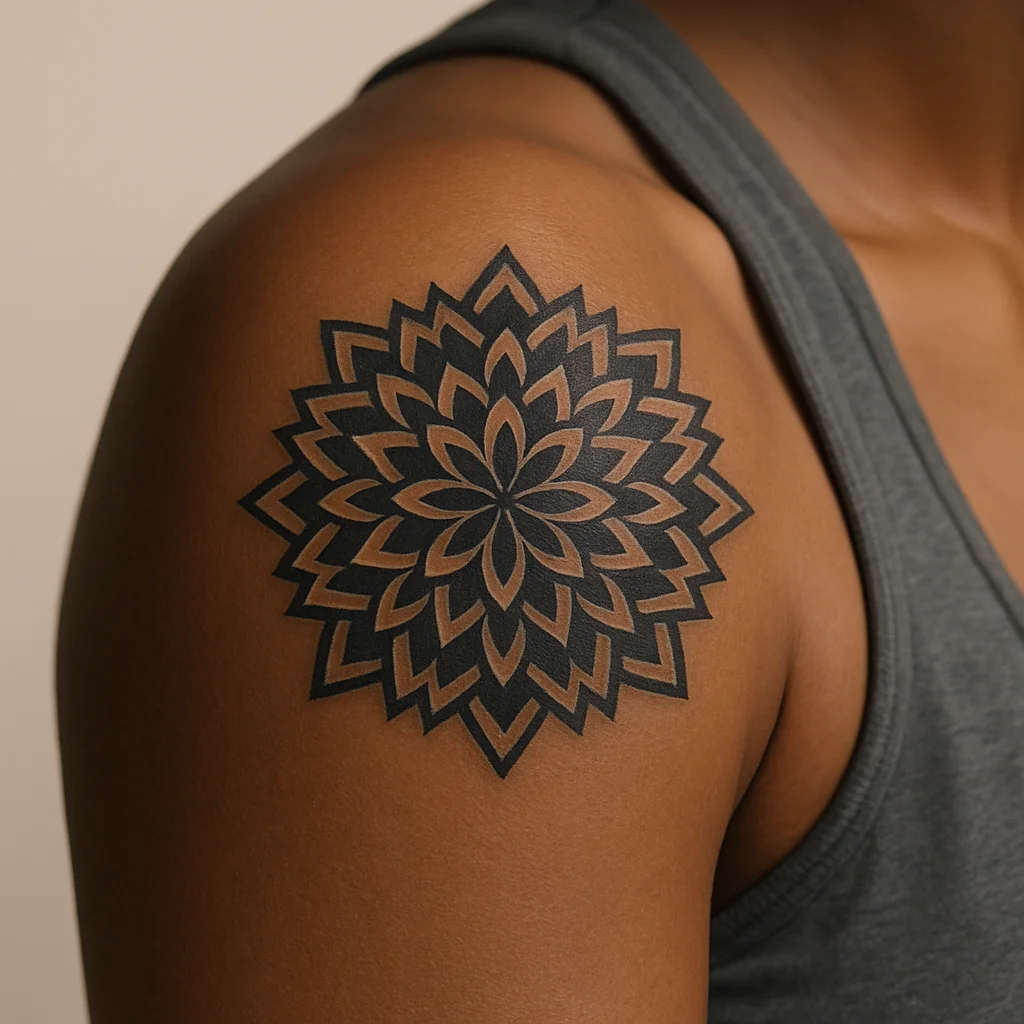
A concentric mandala with a dense dot-work centre and open outer petals is the single most reliable shoulder tattoo going, because a circle on a dome stays a circle. Ask your artist to compress the outer ring slightly on the lower edge so it doesn't read as an egg when your arm hangs down. Suits anyone who wants something ornamental without a narrative.
2. Compass rose with radiating rays
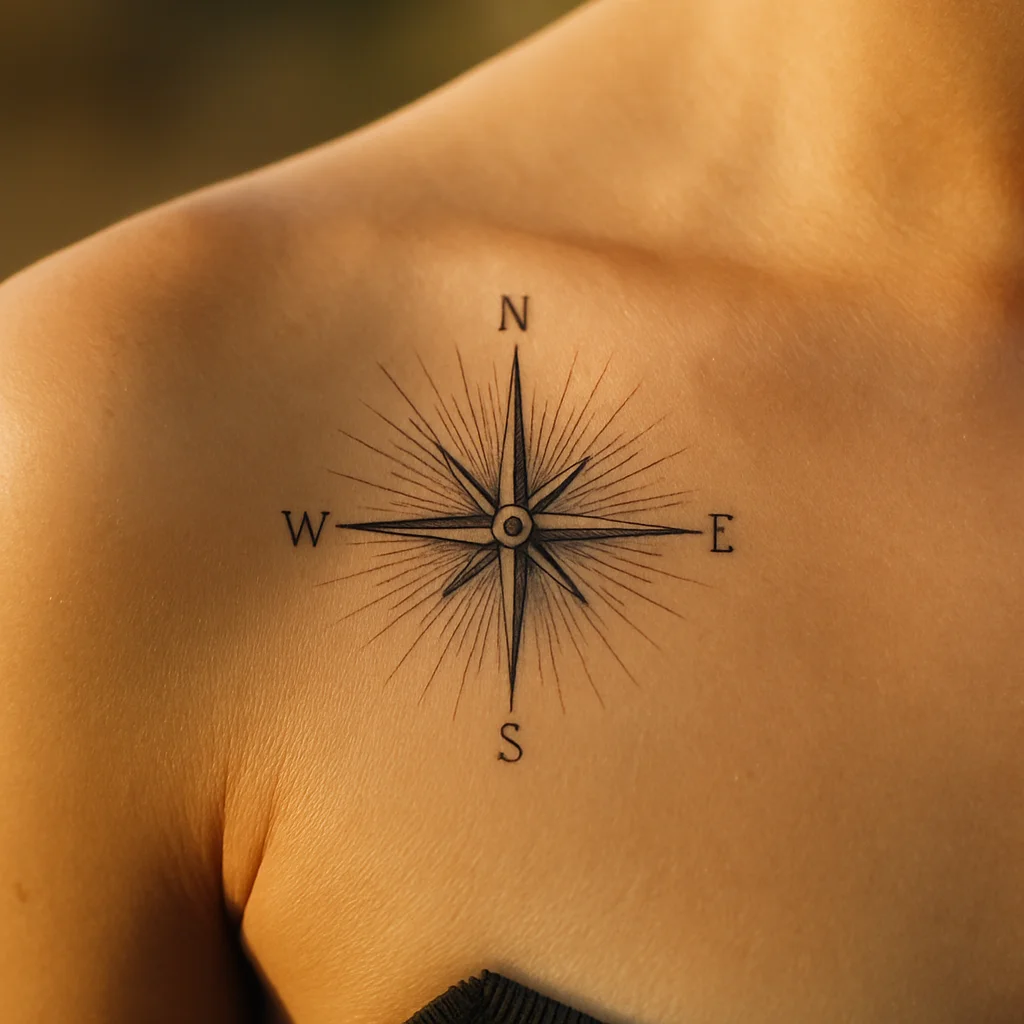
Cardinal points aligned to the vertical line of the arm, with fine hairline rays fanning outward past the main star. It has the symmetry of a mandala with a bit more meaning attached, and the rays give a natural fade into bare skin rather than a hard edge.
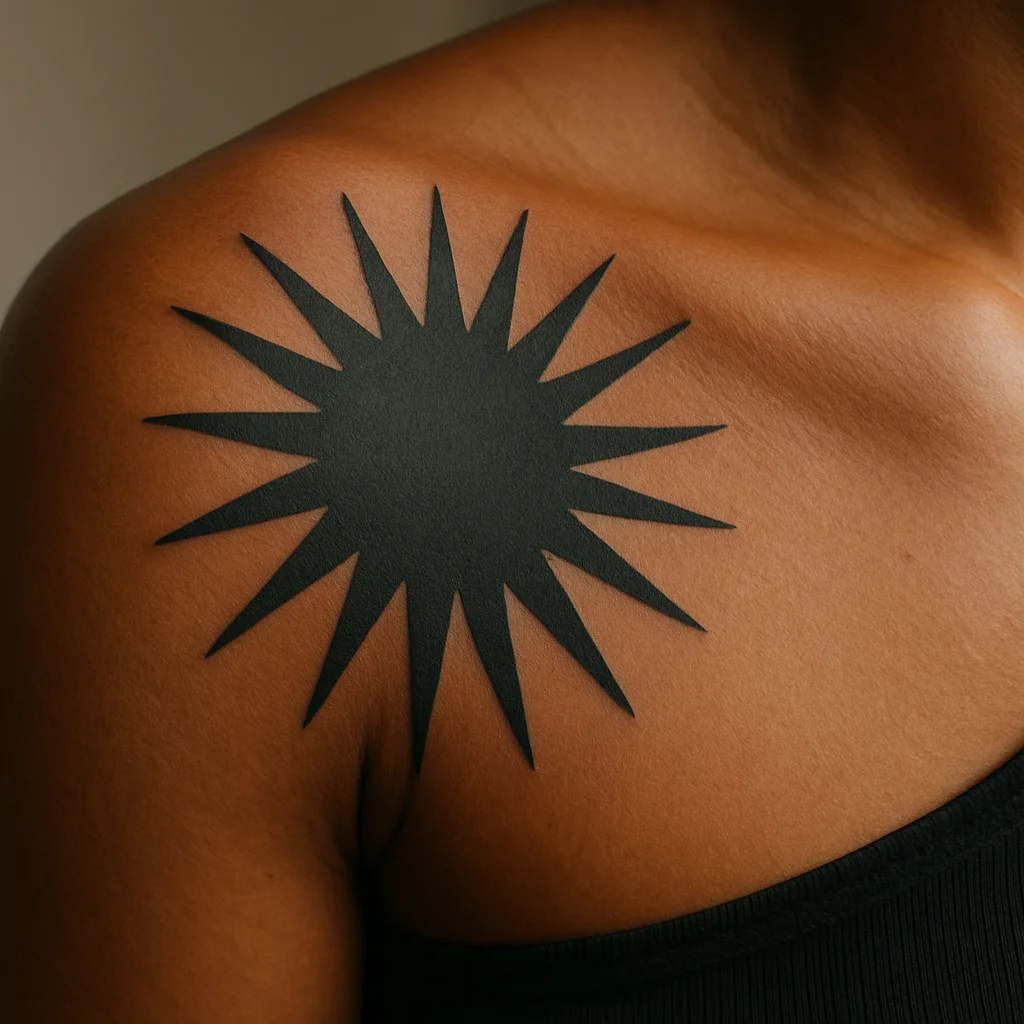
3. Blackwork sunburst
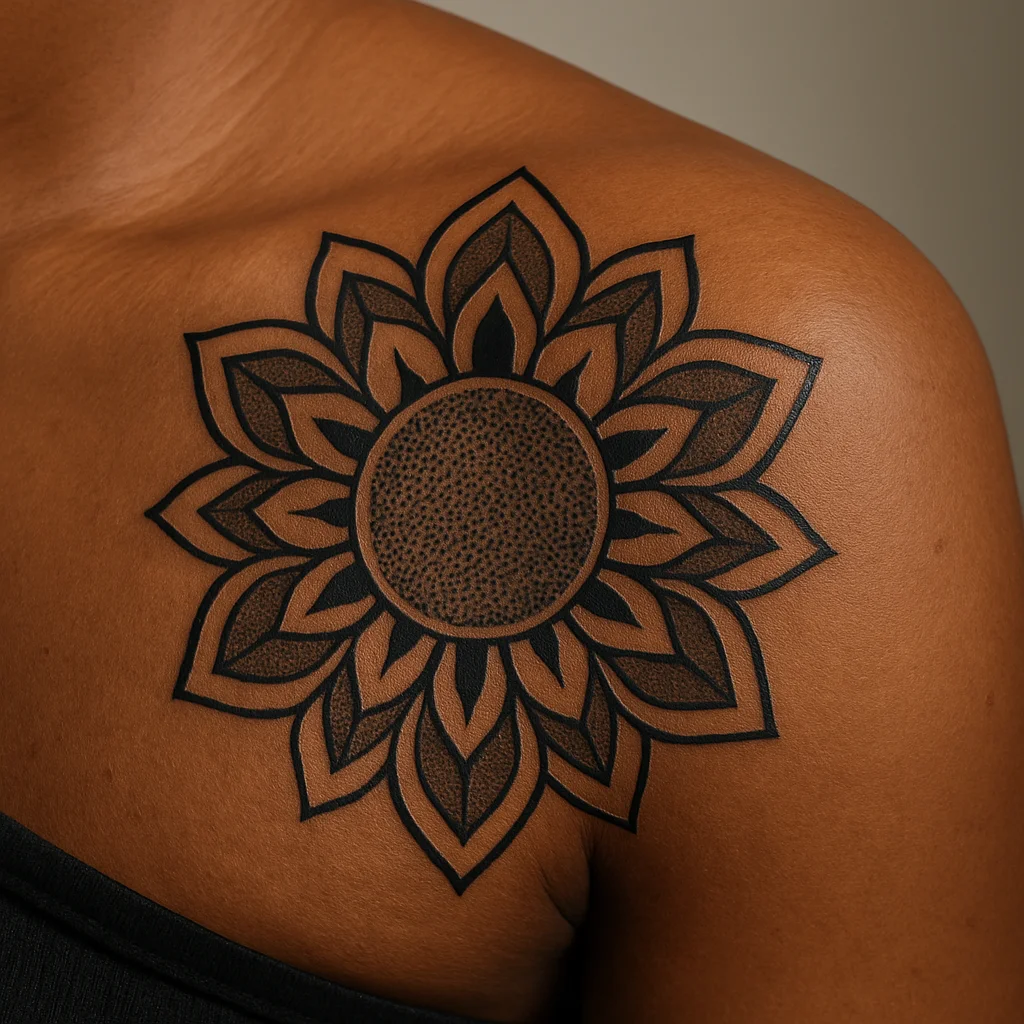
A solid black or heavily shaded sun at the peak of the deltoid with tapered linework rays reaching down the arm and back toward the blade. Bold, high contrast, and one of the best-aging shoulder pieces because there's no fine detail to blur. Expect a two to four hour sitting for a medium size.
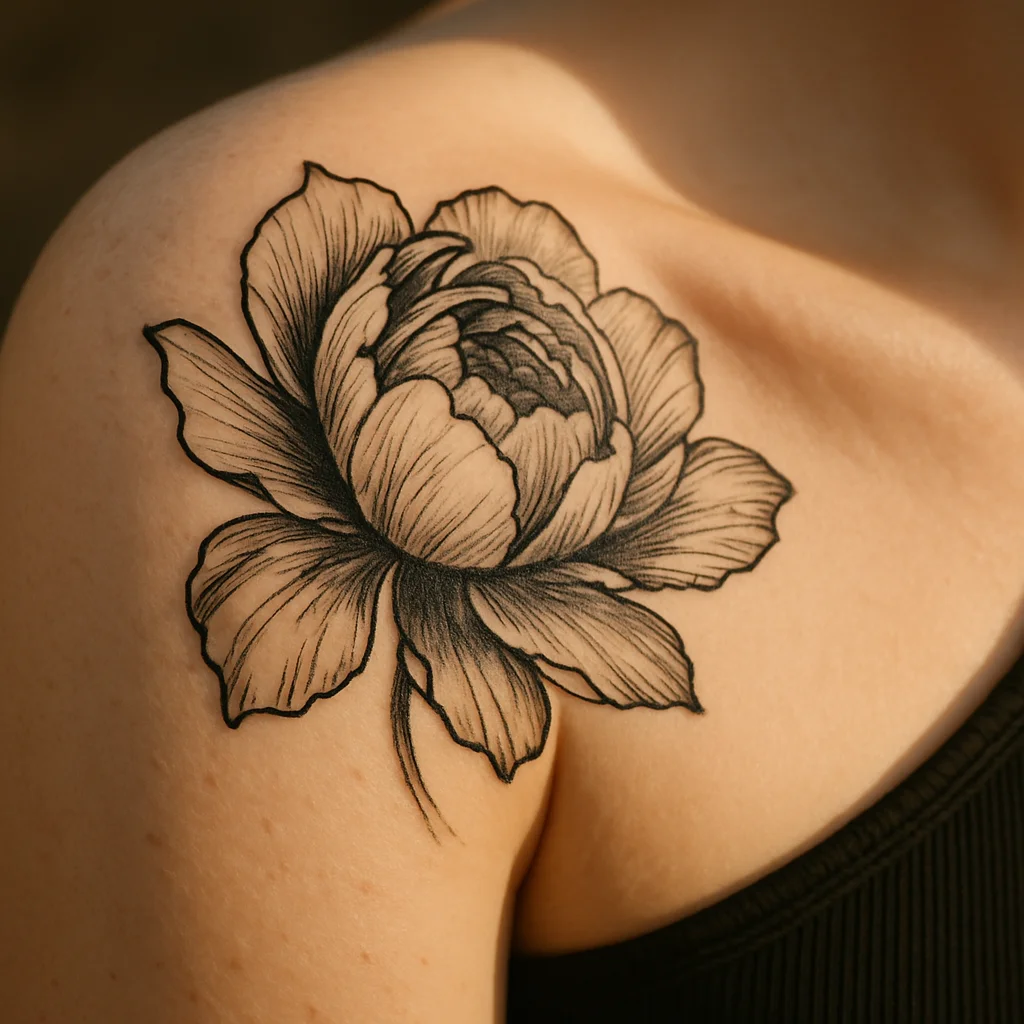
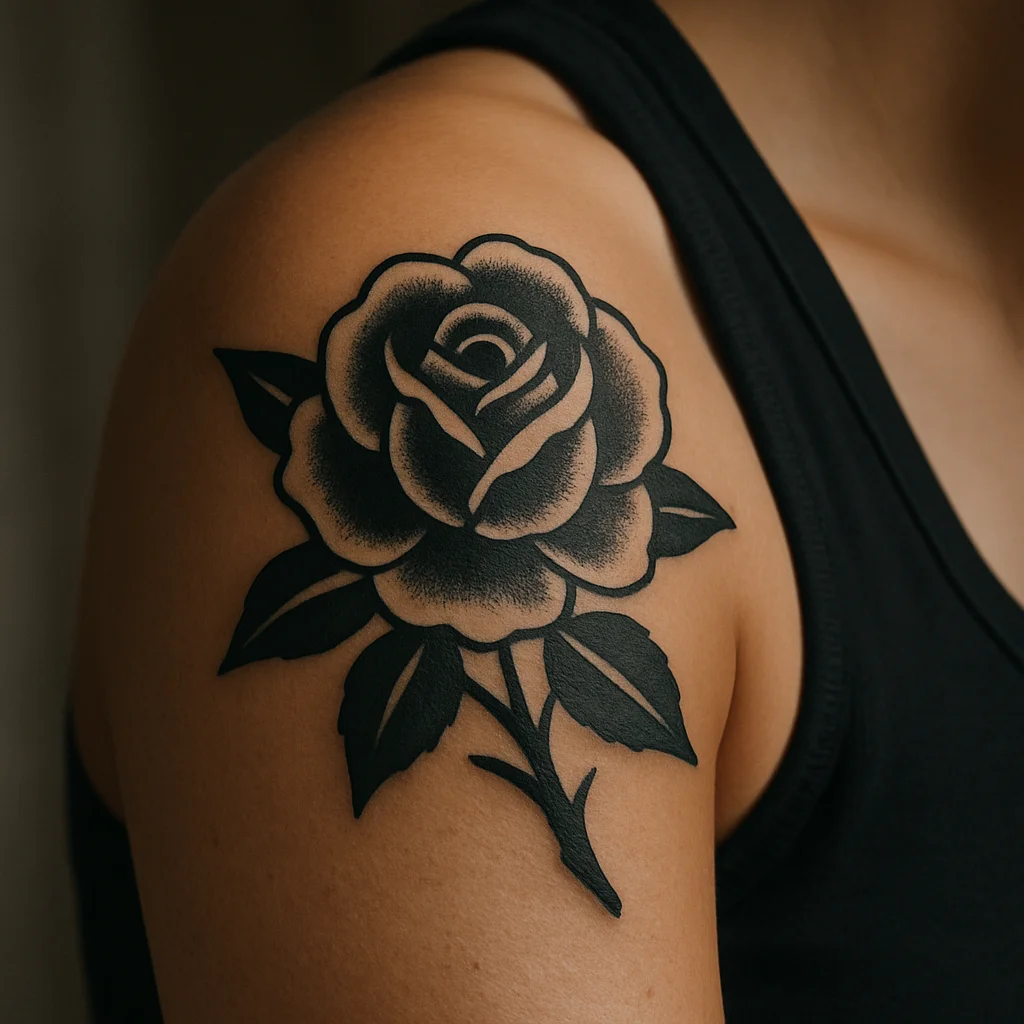
4. Full-bloom peony facing outward
One large open flower, petals unfurling around the cap so the bloom's centre sits on the highest point. The layered petals absorb the curve beautifully — nothing needs to be straight. Works in traditional bold line or soft illustrative shading depending on how much colour you want.
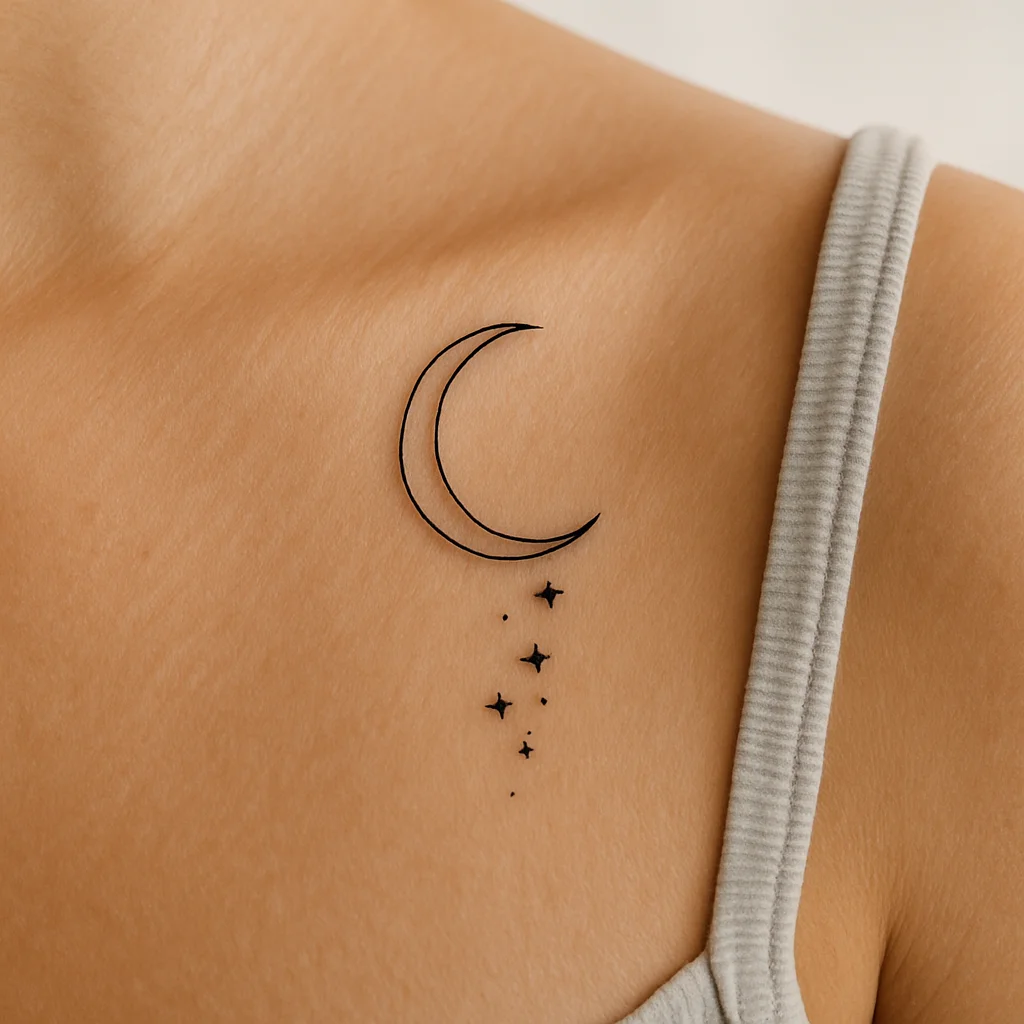
5. Crescent moon and star cluster arc
A slim crescent set at an angle with three or four stars trailing off the tip, curving with the top edge of the deltoid. This is the smallest idea in this section — 6 to 9 cm — and a great first tattoo. Keep the linework at least medium weight; hairline stars on a shoulder cap can soften noticeably in ten years.
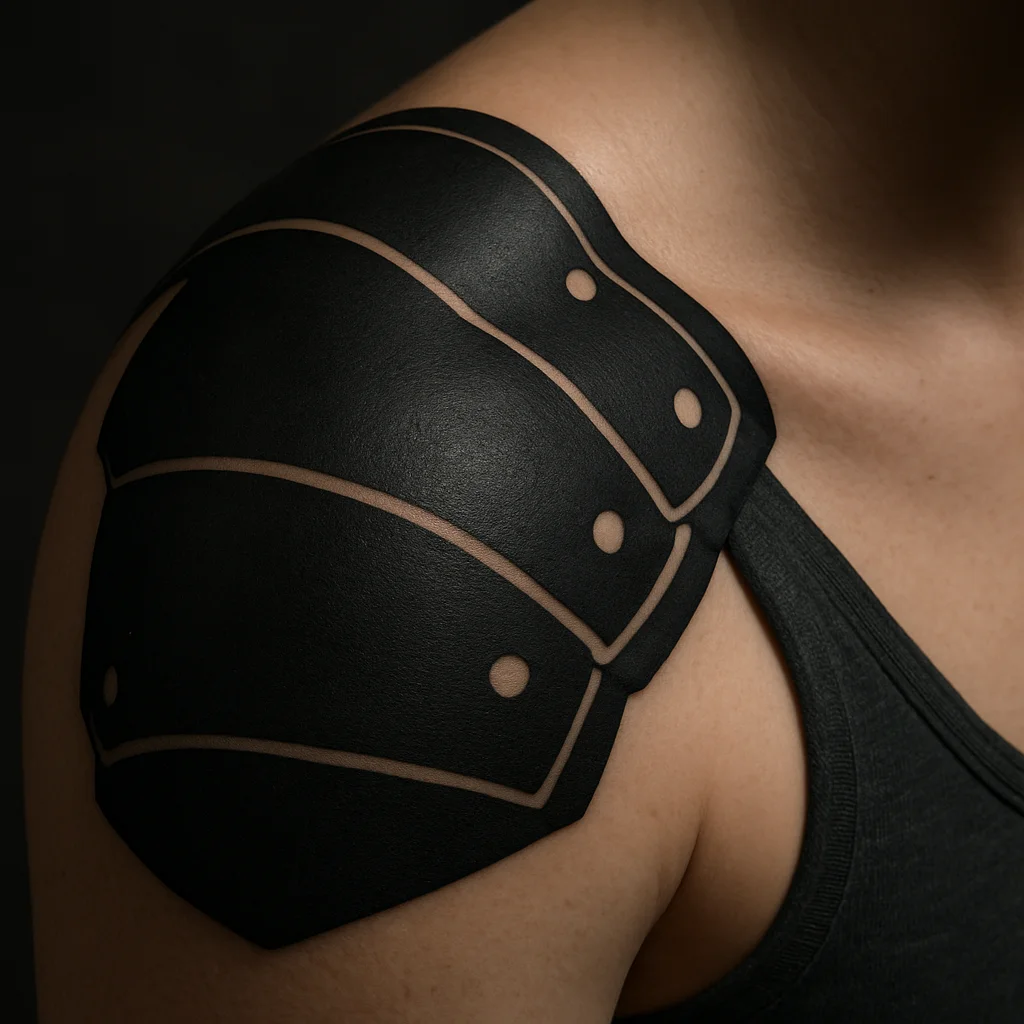
6. Blackwork pauldron
Armour plating rendered in solid black with negative-space rivets and highlights, shaped to the actual muscle so it looks fitted rather than pasted on. It's a heavy commitment in ink and chair time, but it makes the shoulder look sculpted. Best on a broader frame where the plate has room to taper.
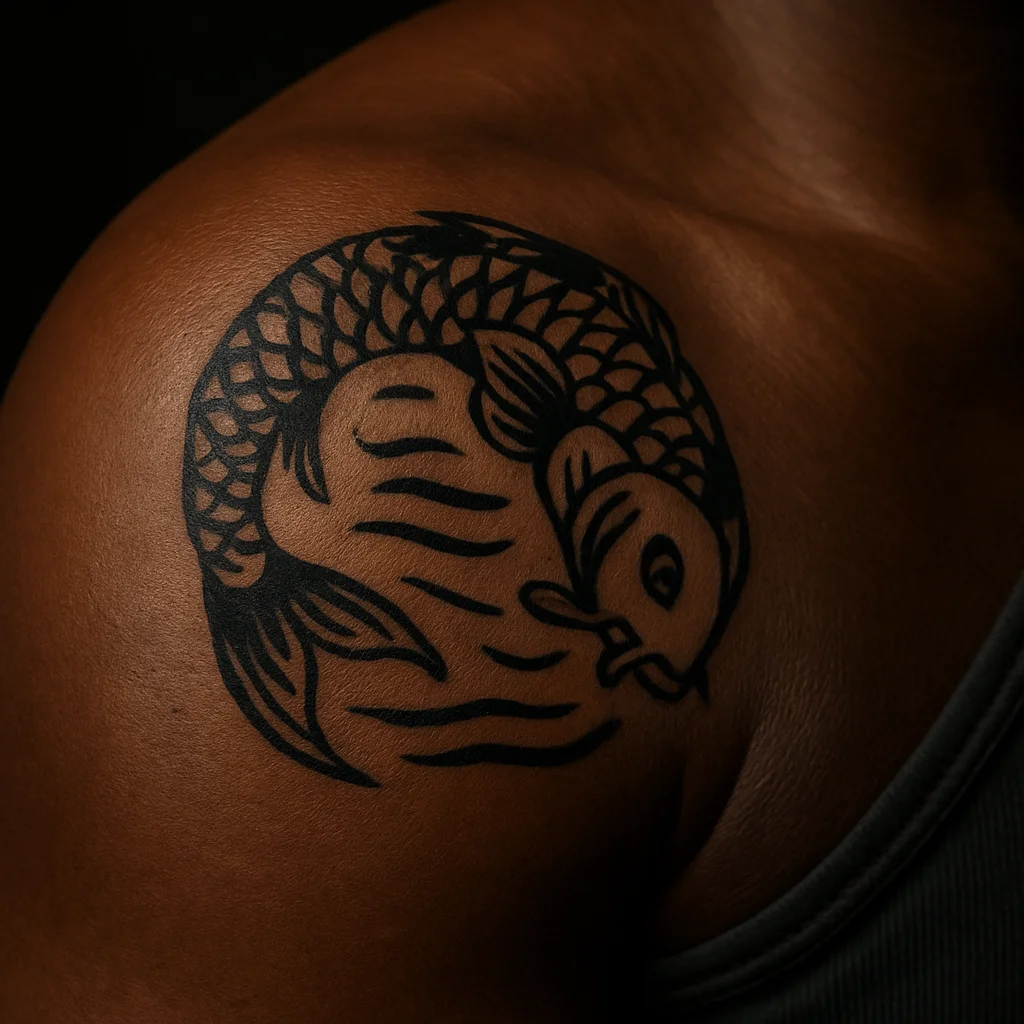
7. Koi circling the crown
A single koi curved nose-to-tail around the cap, with a few water lines to fill the negative space inside the circle. The fish's natural arc means the composition is already round. Traditional Japanese colour work keeps it legible at a distance.
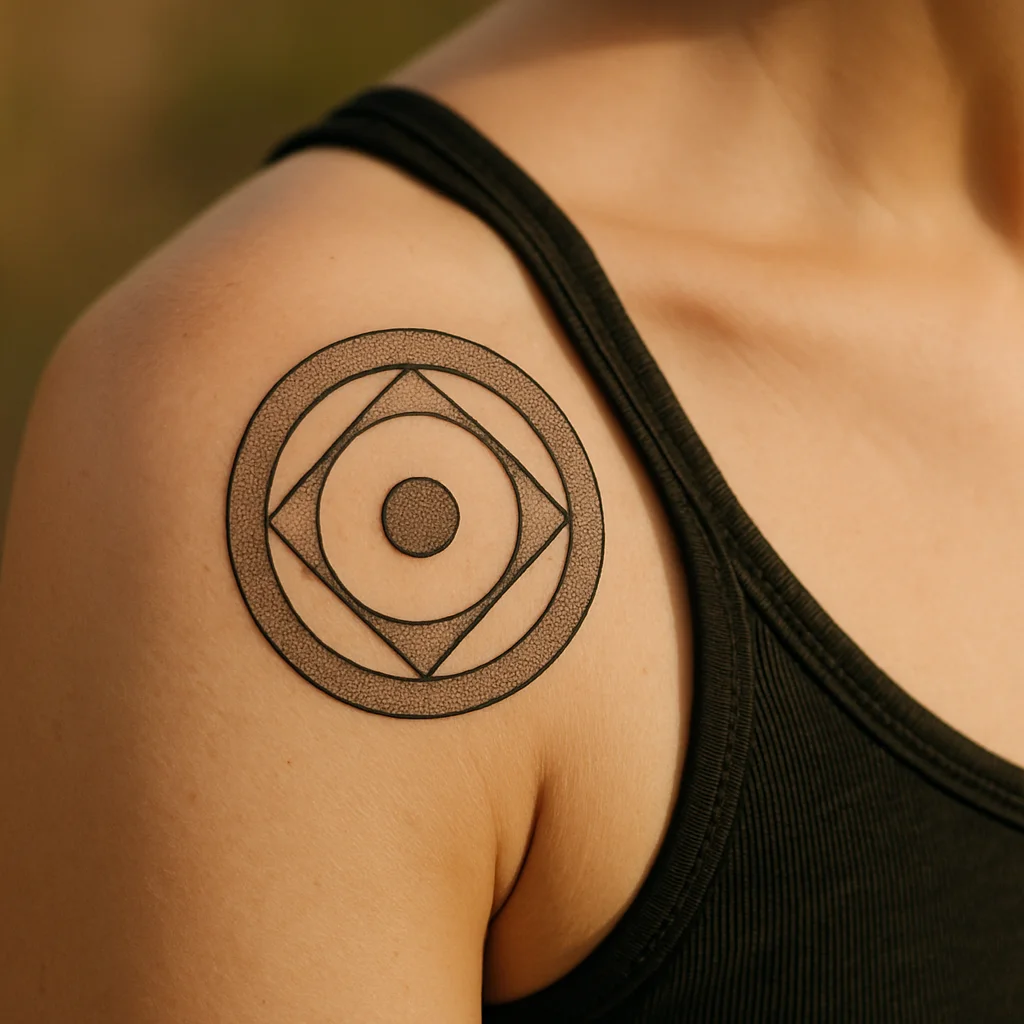
8. Dot-work halo rings
Two or three concentric rings of graded dot-work with a small solid core, nothing else. Quiet, abstract, and surprisingly striking on the shoulder because the rings sit like a ripple on the dome. Ask for stippling density to increase toward the centre so the rings have depth.
Front of the shoulder: the collarbone-to-delt slope
The anterior deltoid and the seam where it meets the chest form a natural diagonal channel. This is the zone people see in a vest, a scoop neck or an open shirt, and it's also the zone that most often connects into a future chest or arm piece. Designs here want a diagonal or vertical axis, following the seam down from the clavicle.
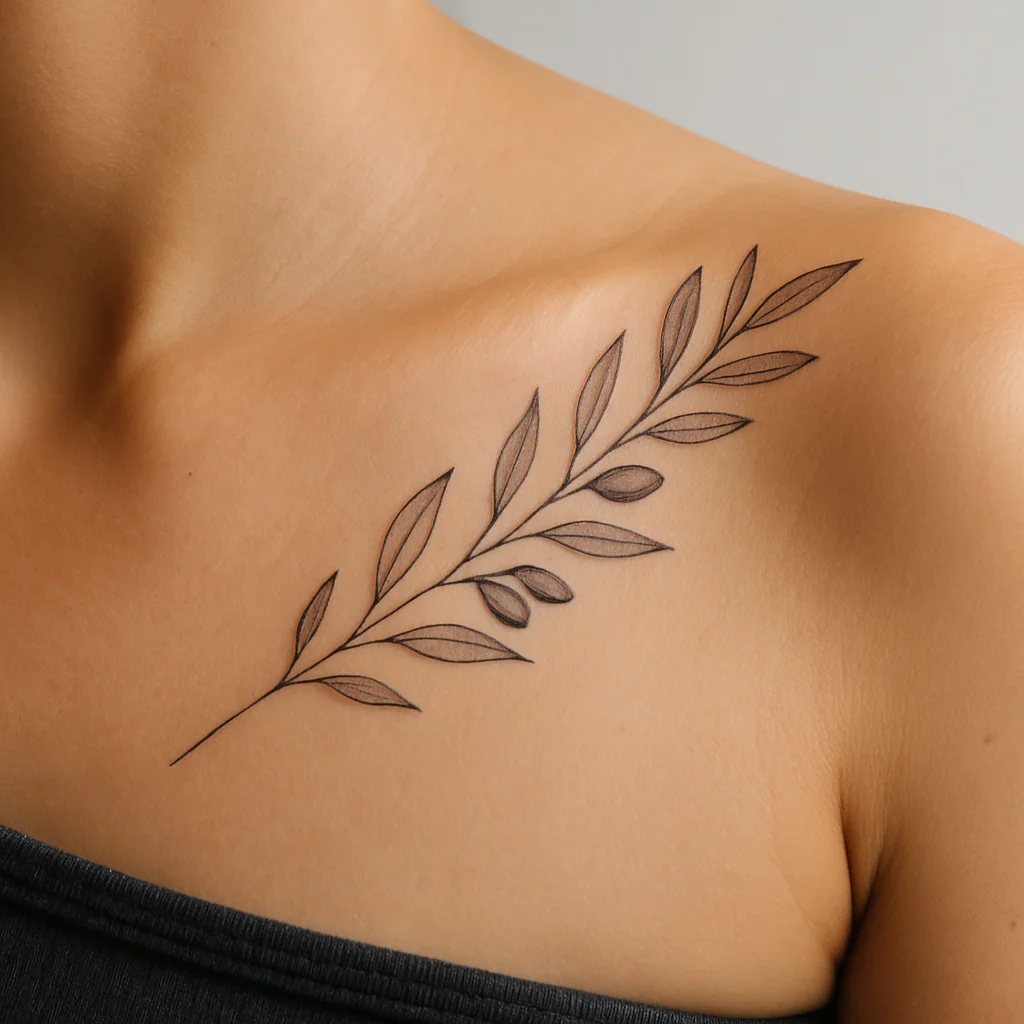
9. Fine-line branch over the collarbone
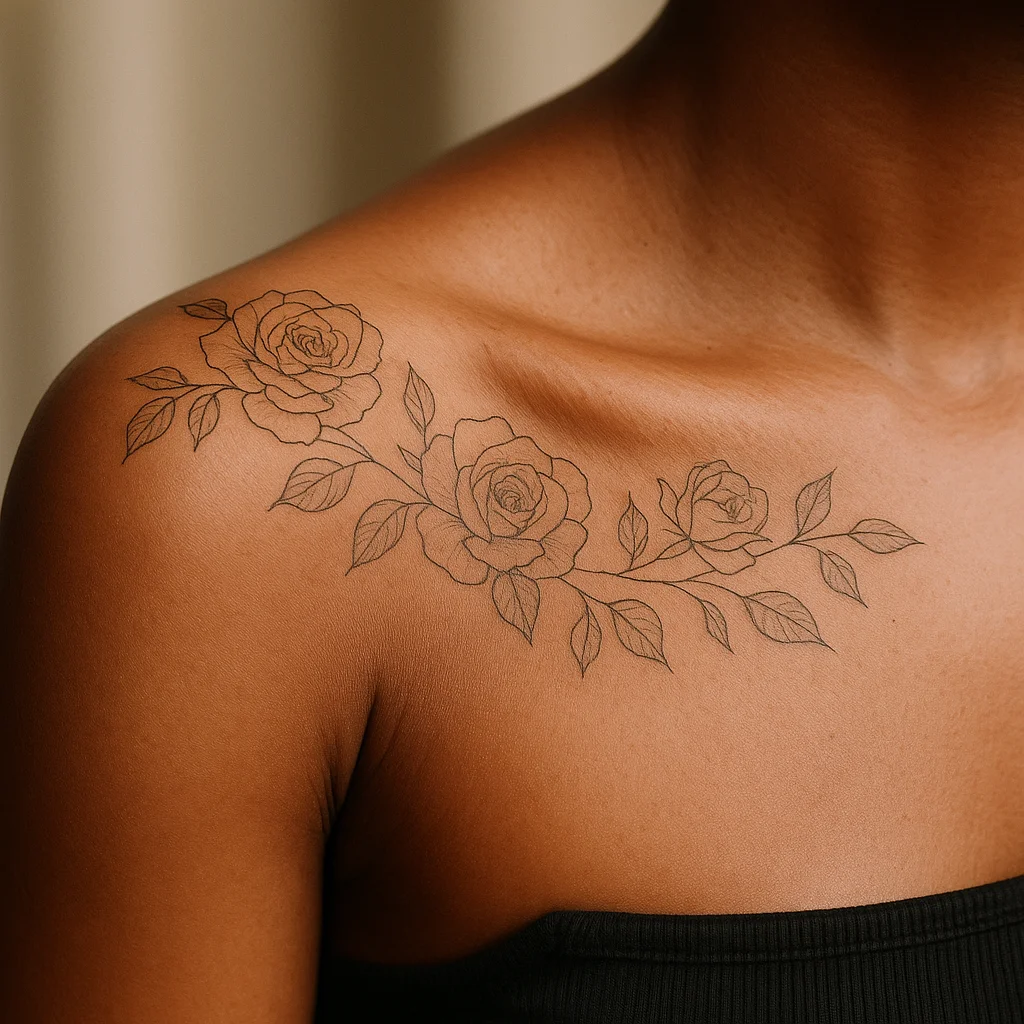
An olive or willow branch starting near the inner clavicle, sweeping over the shoulder's front slope and tapering out on the outer arm. The line follows the bone then the muscle, so it looks like it grew there. Elegant on any frame and easily extended later.
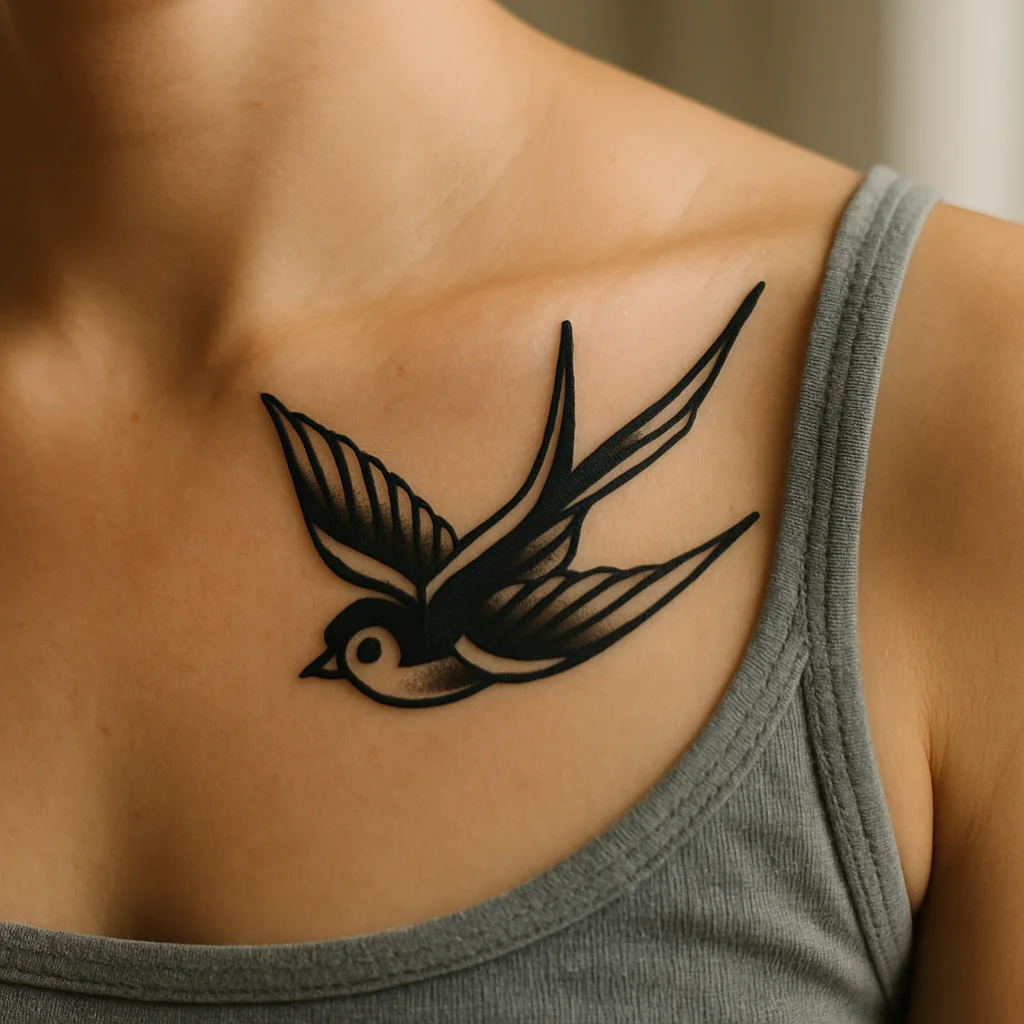
10. Swallow in flight below the clavicle
A classic bold-line swallow banking at an angle, tucked into the hollow just under the collarbone head. Small, fast, and about as timeless as tattooing gets. Pain is moderate to sharp right on the bone, but it's over in under an hour.
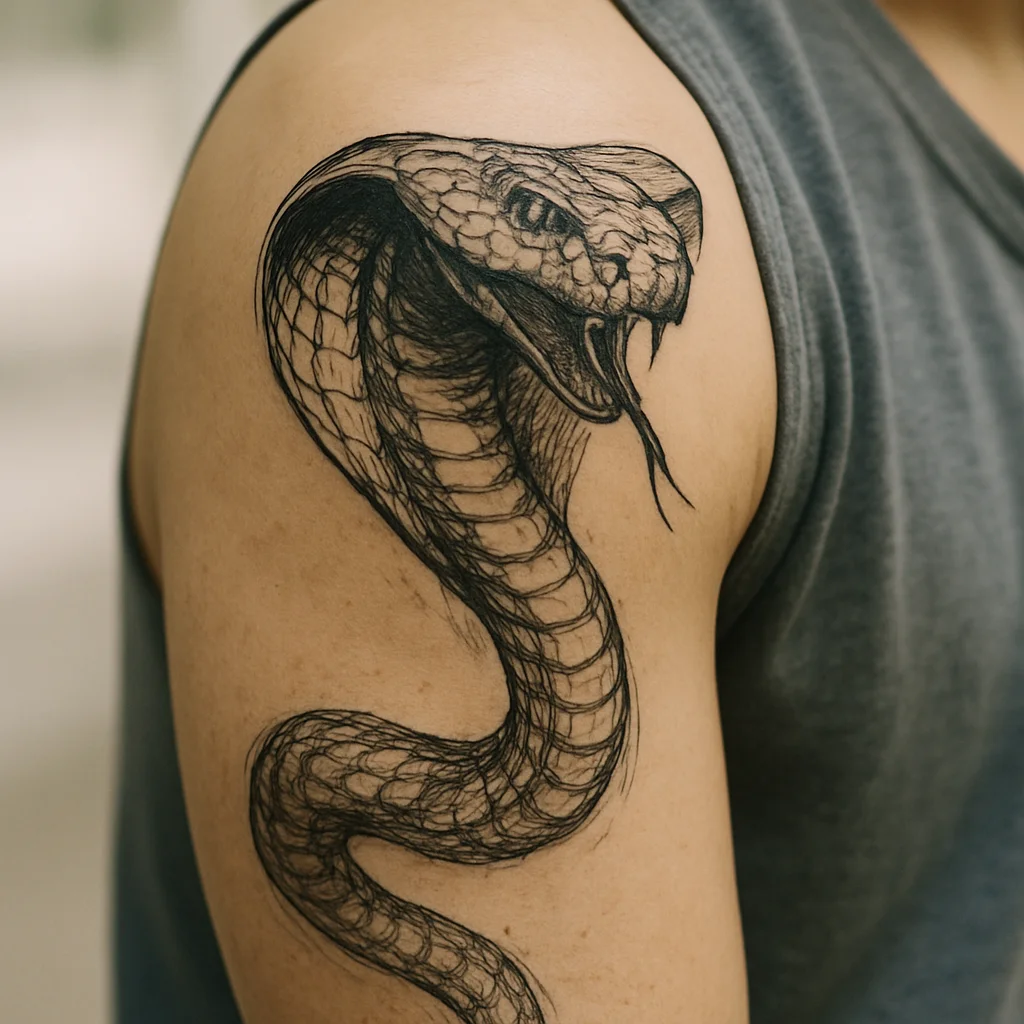
11. Snake head on the front delt
The head and hood resting on the anterior deltoid with the body descending along the bicep, jaw open toward the elbow. Because the head sits on the flat-ish front plane, the face stays readable while the body does the curving. A strong choice if you're building toward a half sleeve.
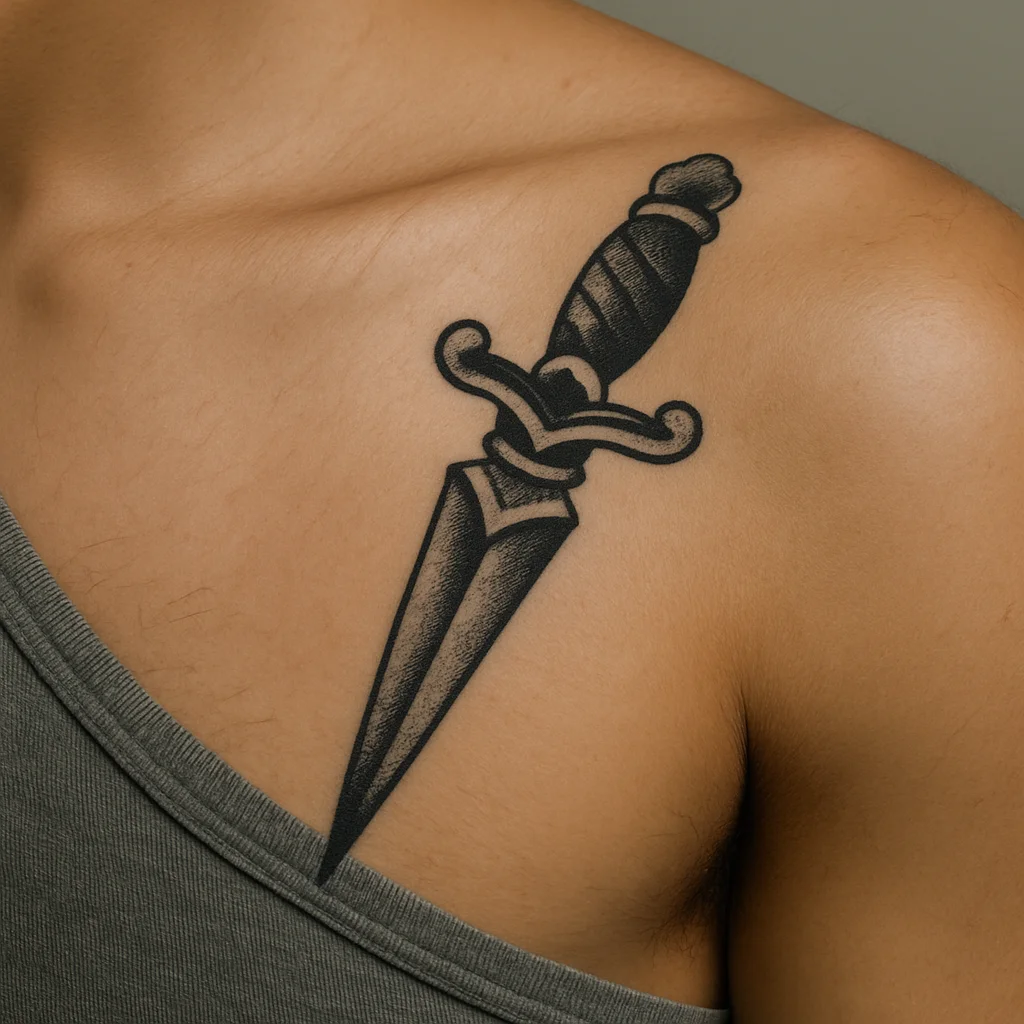
12. Dagger down the delt seam
A traditional dagger point-down, hilt near the clavicle, blade following the crease between chest and shoulder. The design's straight axis works here precisely because the seam is straight. Add a banner or a rose at the hilt if you want to soften it.
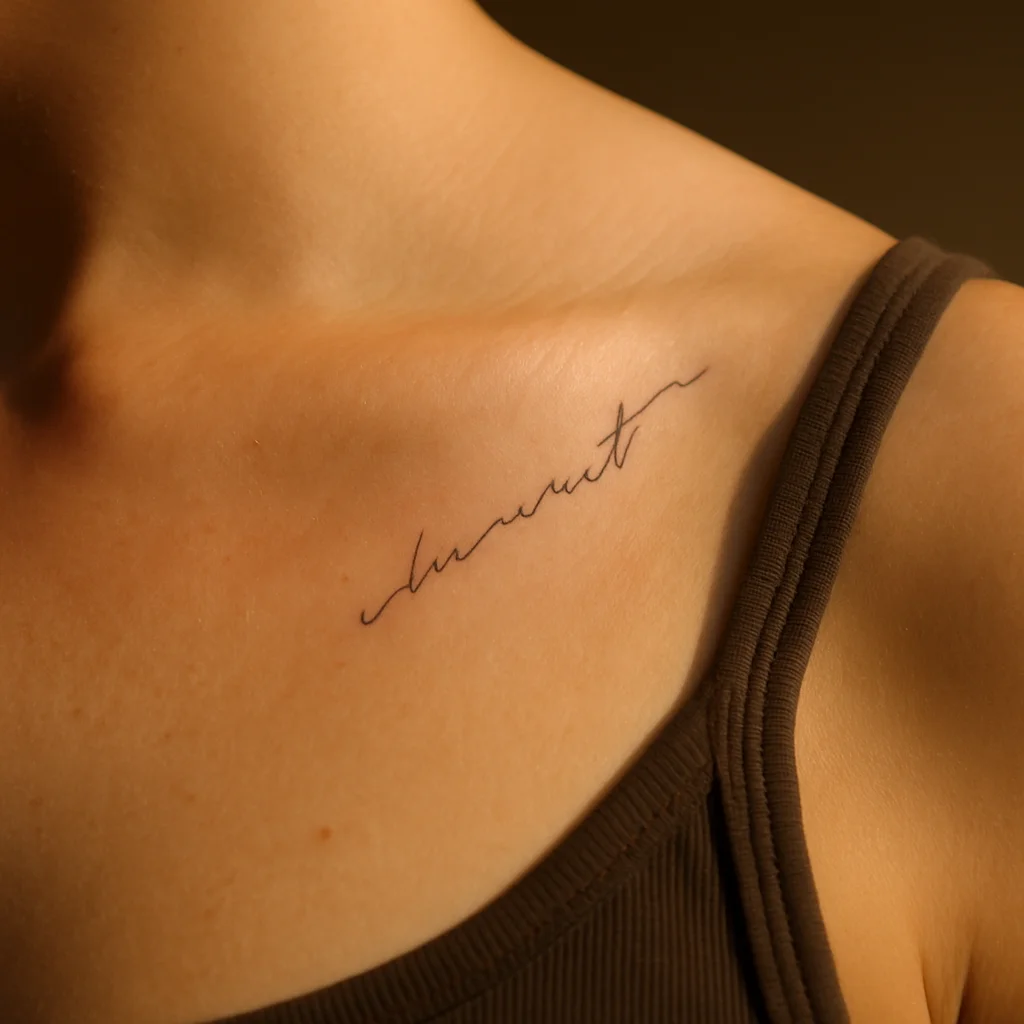
13. Script along the chest-shoulder seam
A single short line of writing set on the diagonal of the seam rather than horizontally — three to six words maximum. Longer text bends out of legibility once it climbs the muscle. Fine-line with a slight upward tilt reads best.
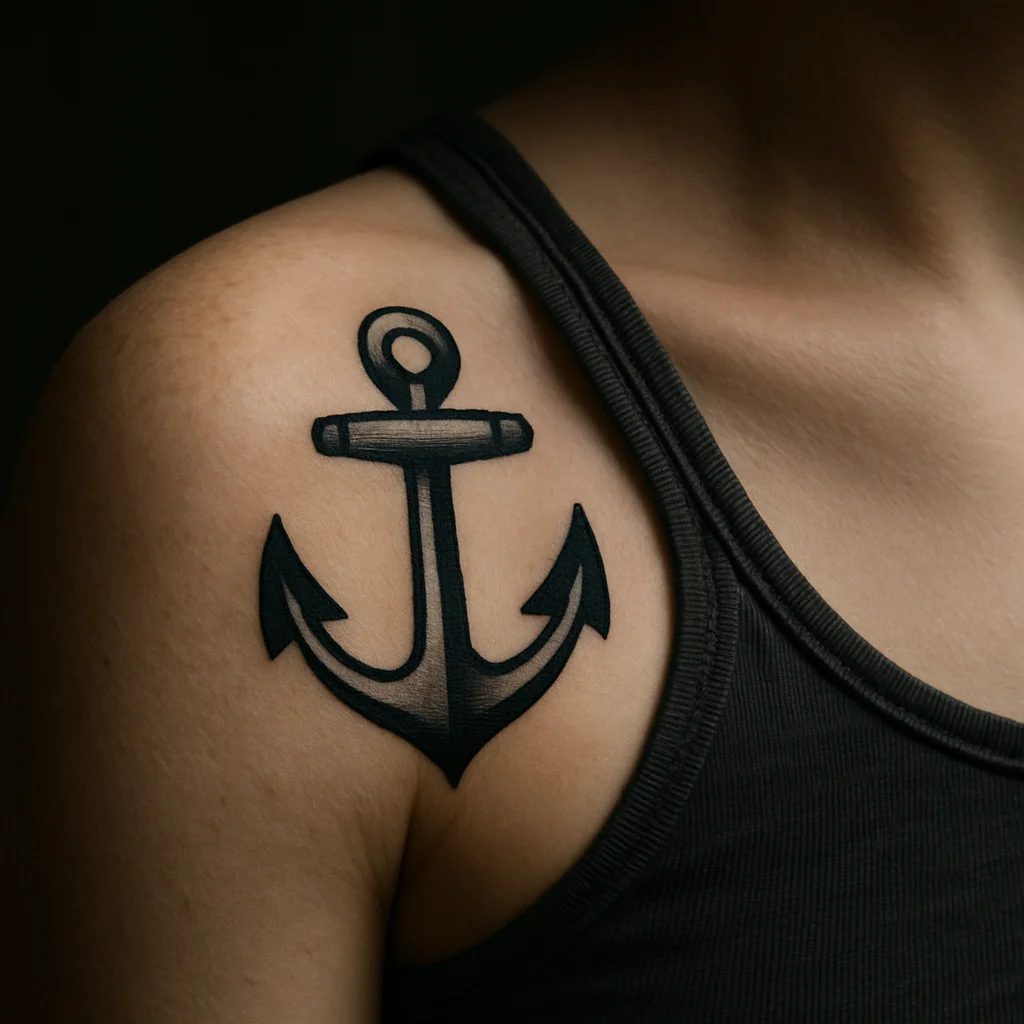
14. Small traditional anchor on the front cap
Palm-sized, heavy outline, minimal shading, sat high on the front of the shoulder where a t-shirt sleeve just covers it. Old-school and unfussy, and one of the cheapest shoulder tattoos you'll get quoted for. Ages exceptionally well.
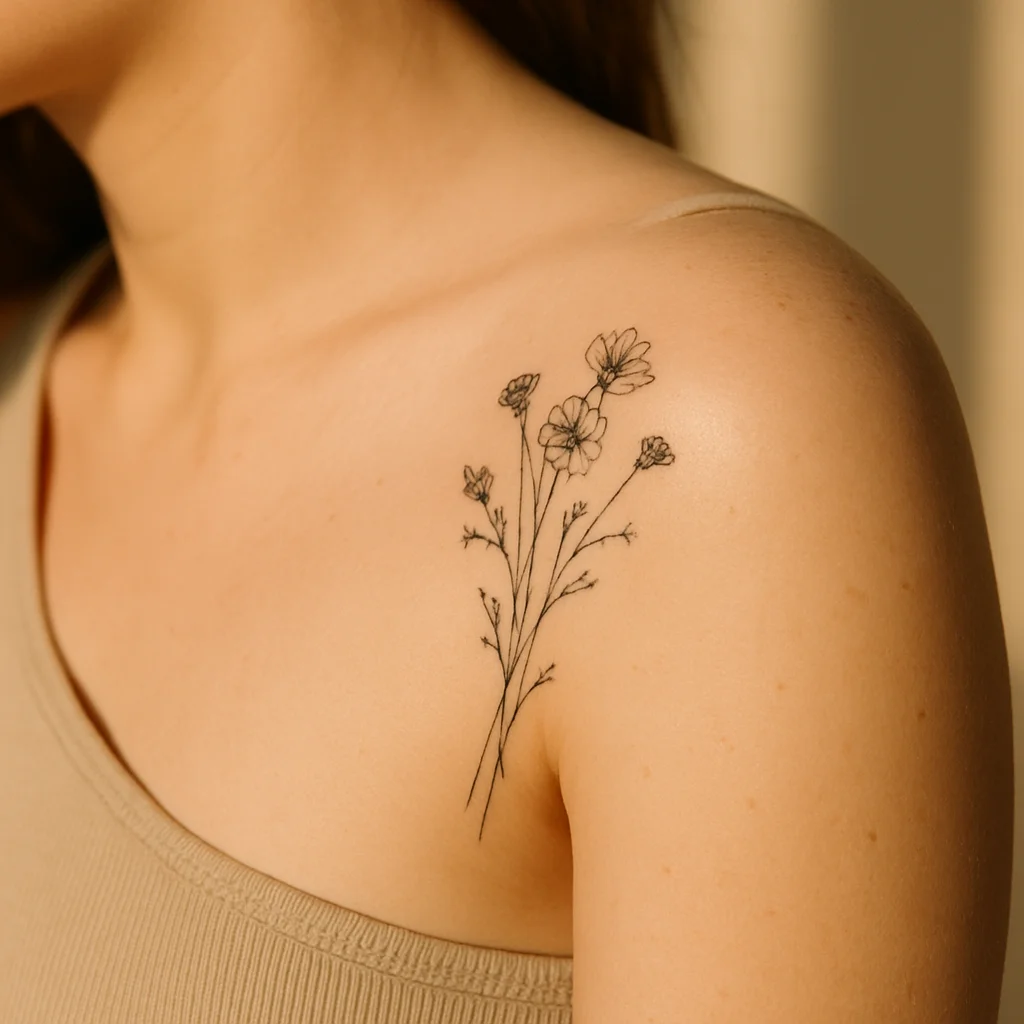
15. Wildflower bundle spilling toward the armpit
Cosmos, yarrow and grasses gathered at the front of the deltoid with stems falling toward the underarm hollow. The loose asymmetry hides the curve entirely. Note that the closer the stems get to the armpit, the sharper the sting.
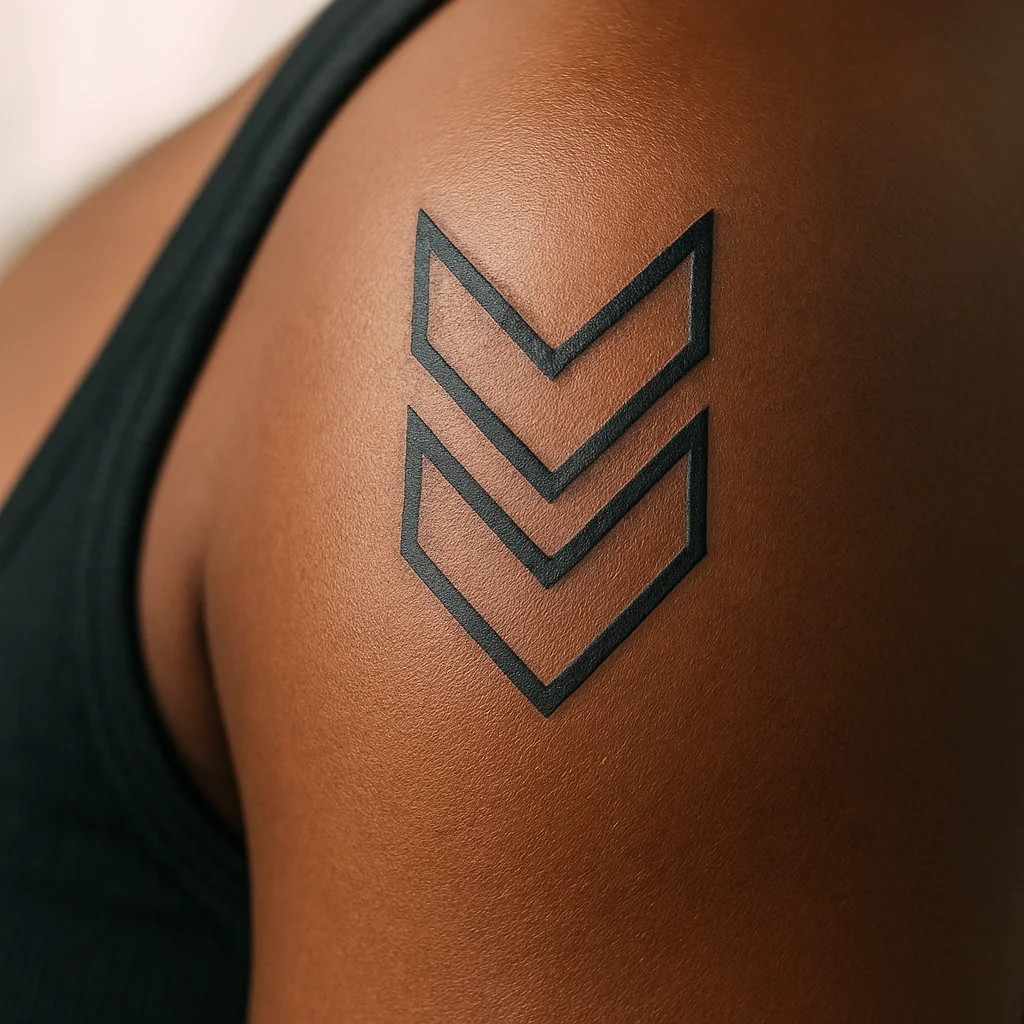
16. Stacked geometric arrows on the seam
Three nested chevrons or a slim arrow stack pointing down the chest-shoulder line, in clean equal-weight linework. Reads as a design element rather than a picture, which suits people who want structure over symbolism. Keep spacing generous so it doesn't blur into a block over time.
Rear shoulder and blade: the wide, flat option
Behind the shoulder you get the largest genuinely flat area on the upper body, plus the scapula's own ridge to work with. Detail survives better here than anywhere else on the shoulder, and healing is easy because clothing rubs less. The trade-off: you'll rarely see it yourself, and strap lines cross it.
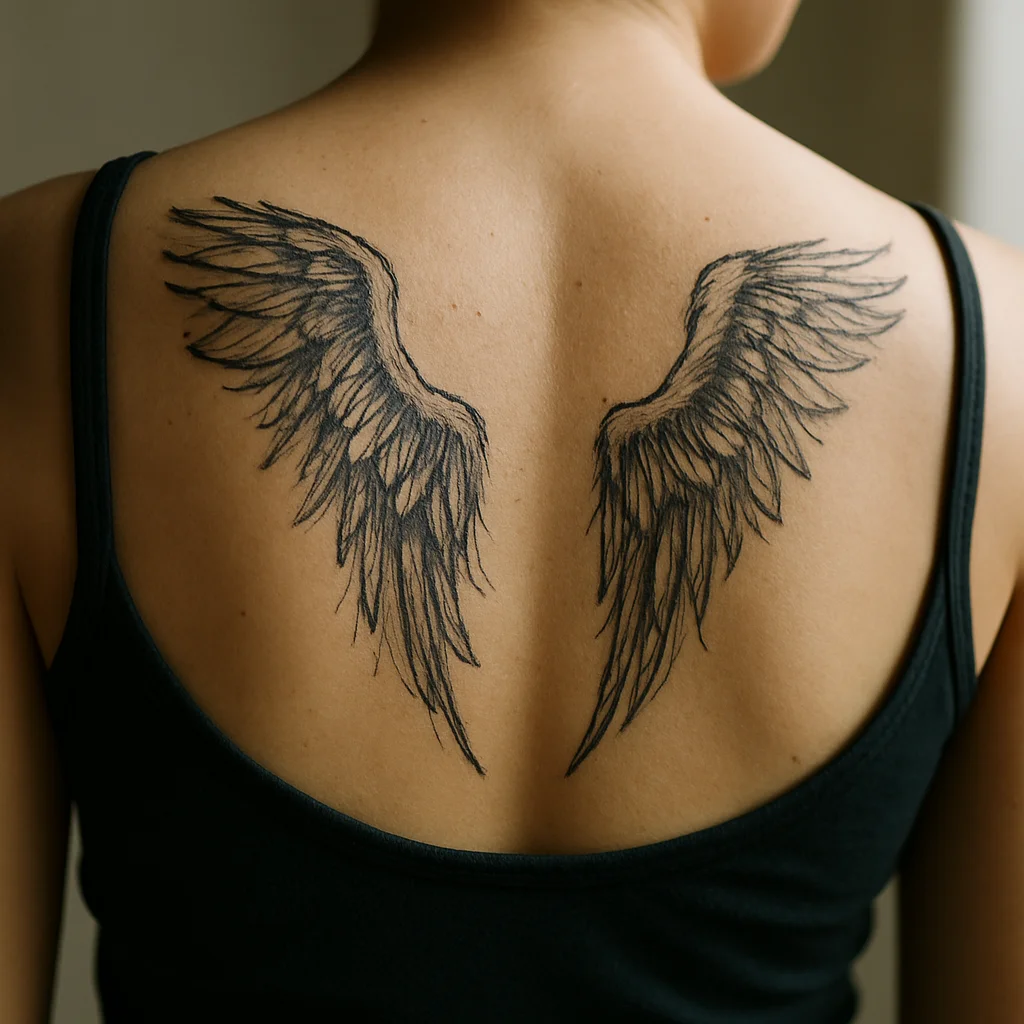
17. Feather-tip wings, one per blade
A pair of stylised wings mirrored across the spine, tips reaching up toward the traps and the widest feathers spanning the blade. Scale matters — anything under 12 cm per wing loses the feather separation. Book a full day for the pair.
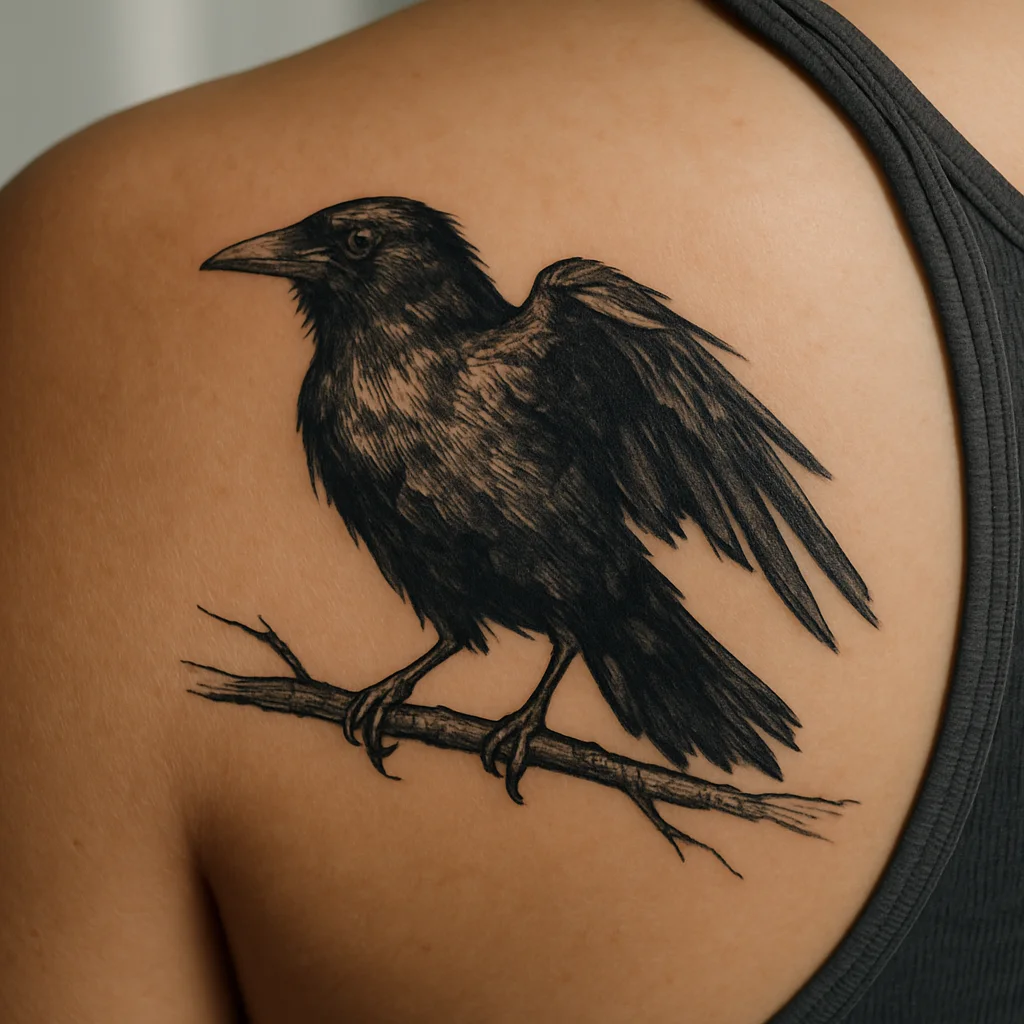
18. Crow on a bare branch
A single crow perched on a branch that crosses the rear deltoid horizontally, wings half-open. The horizontal line works back here where it would bend on the cap. Illustrative shading with a little texture in the feathers keeps it from looking flat.
19. Japanese wave over the rear cap
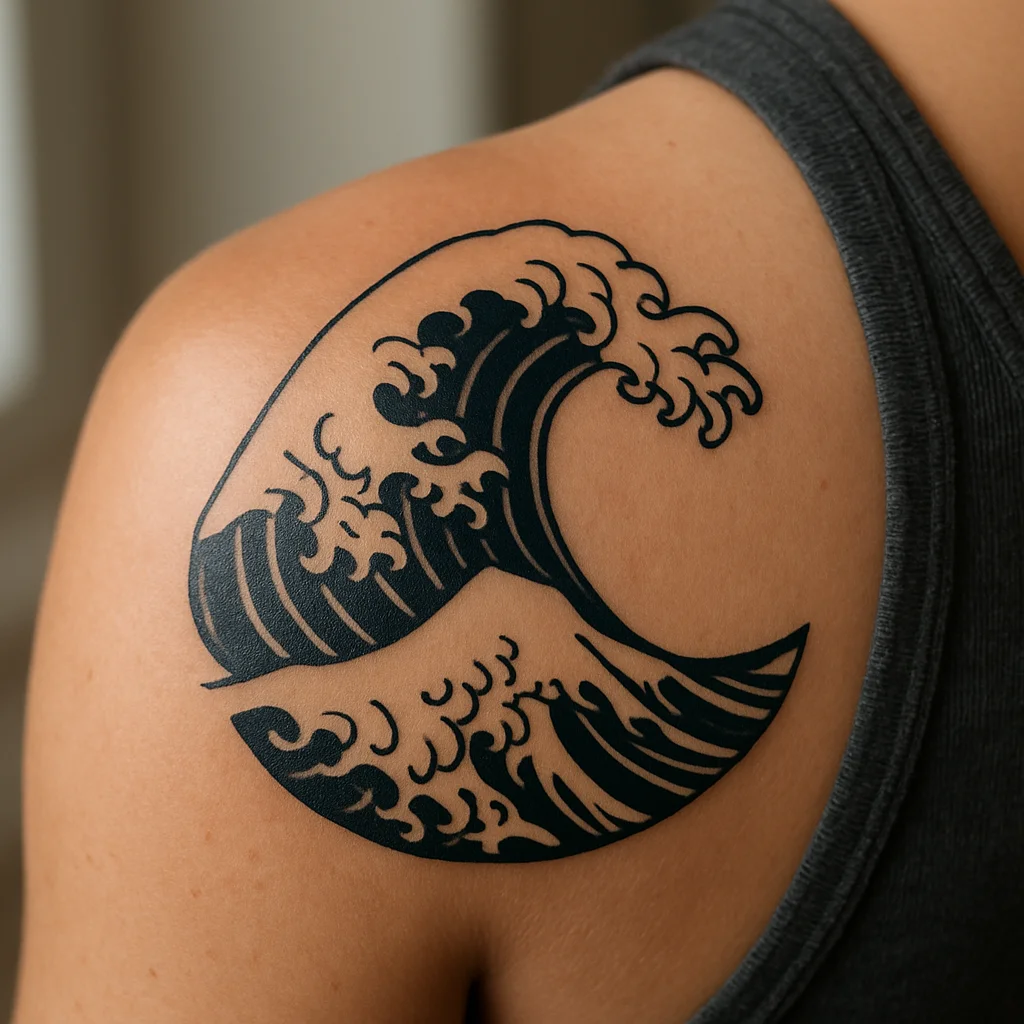
A cresting wave with curled foam fingers breaking over the back of the shoulder toward the arm. Wave shapes were built for round surfaces, which is why Japanese artists use them as shoulder caps constantly. Also the best-value filler if you later expand into a back or sleeve piece.
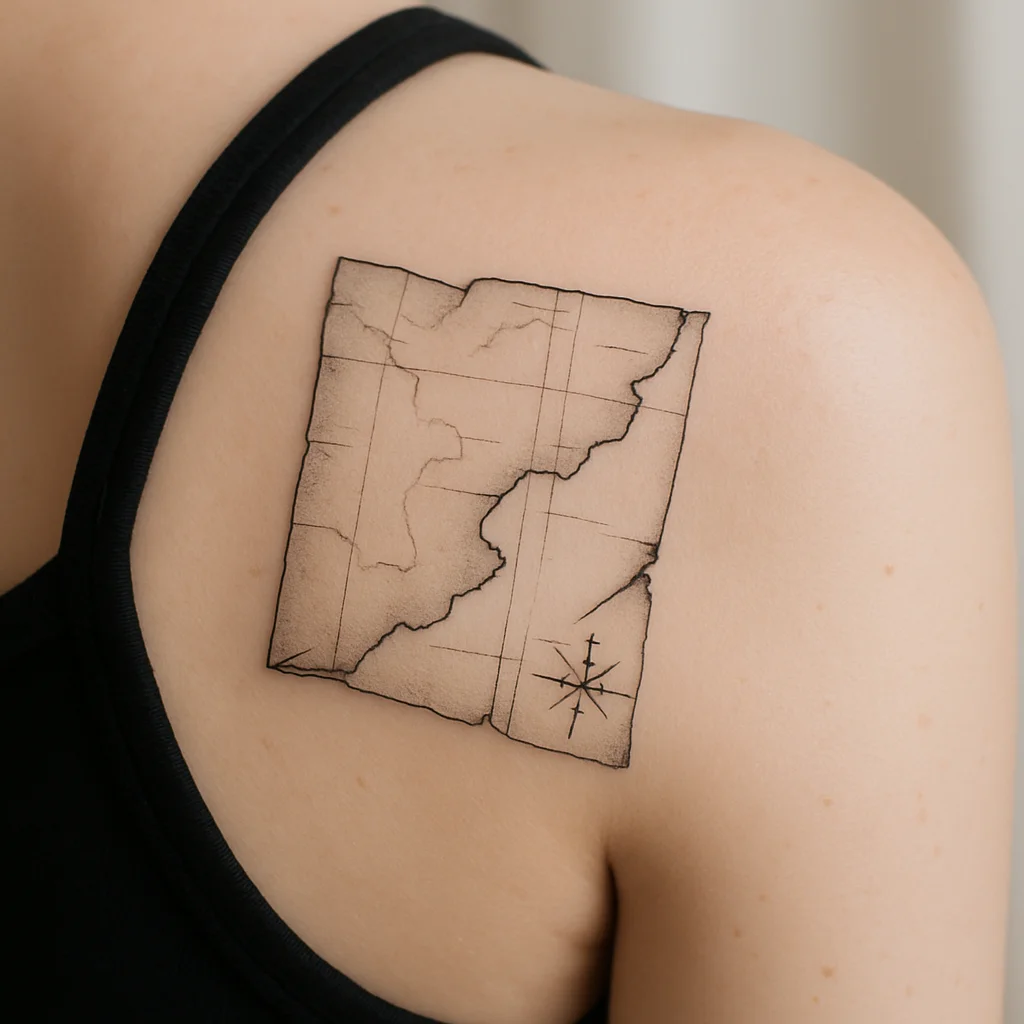
20. Fine-line map and compass on the blade
A folded map edge, a coastline fragment and a small compass rose sat over the scapula ridge. The blade's flatness lets you get away with genuinely delicate linework. Ask for slightly thicker lines than a wrist piece would use, since larger areas need weight to hold up.
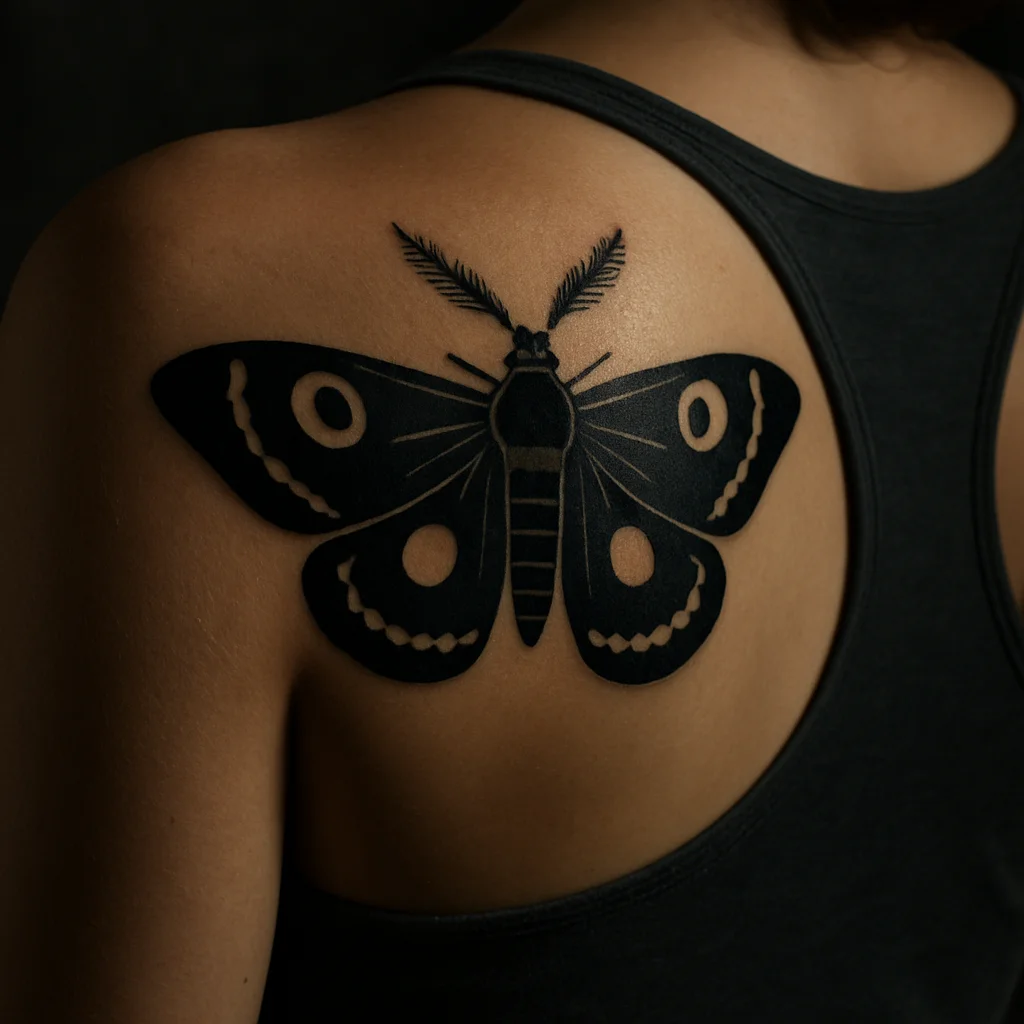
21. Moth spanning the shoulder blade
Wings open, body aligned with the vertical of the blade, patterned in dense blackwork with negative-space eyespots. The symmetry of the moth mirrors the symmetry of the bone underneath, which is why it sits so naturally. A strong standalone piece at 14 to 20 cm.
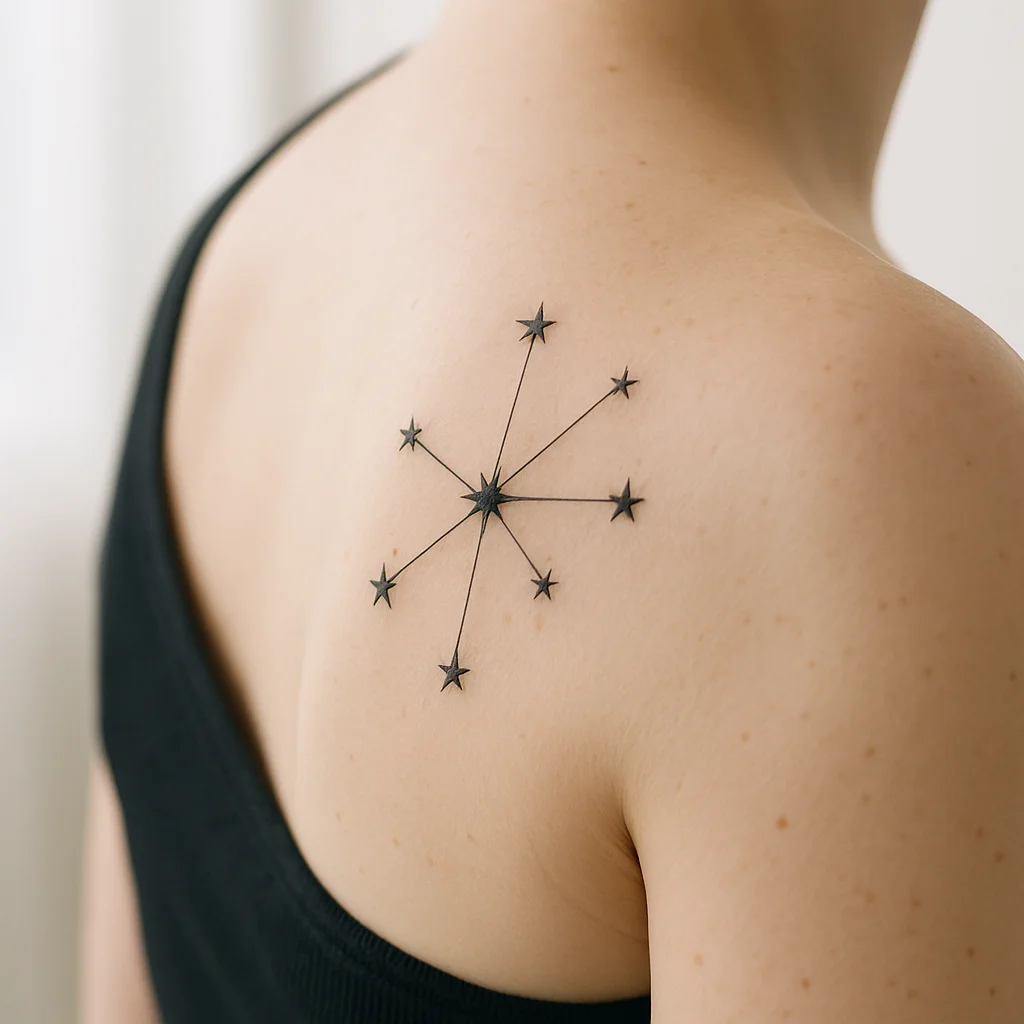
22. Constellation dot-work across blade and rear delt
Small stars of varying size joined by hairline connectors, spread across the curve from blade to shoulder. Minimal chair time, minimal pain, and it can be added to over years. Keep the dots at least pinhead-sized so they don't fade into freckles.
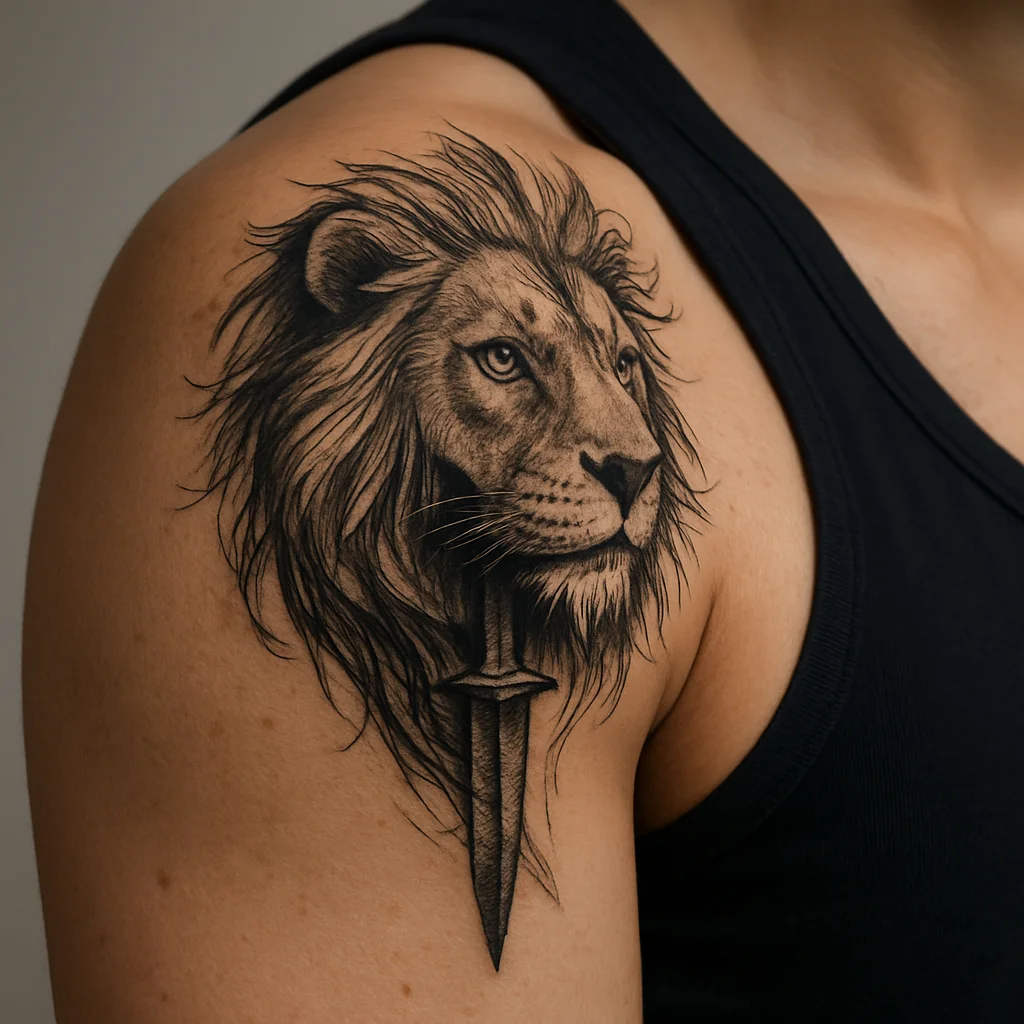
23. Lion head looking back over the shoulder
A three-quarter lion face positioned on the rear deltoid so the eyes read when you're seen from behind, mane flowing outward into the blade. Heavy black and grey work suits it best. Expect two sittings for a large one.
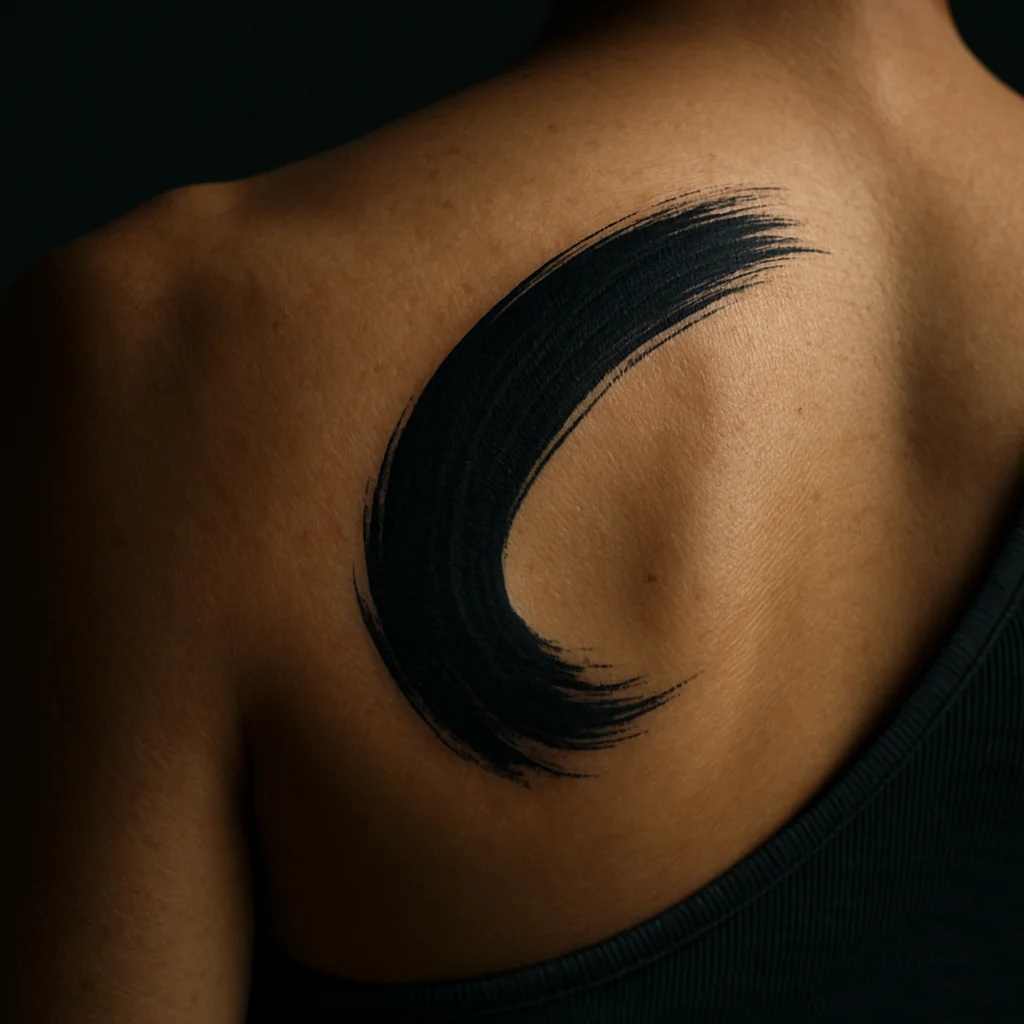
24. Blackwork brushstroke band
A single sweeping ink stroke with a dry, split-bristle edge, running diagonally across the shoulder blade. Abstract, modern and startlingly effective on skin because the tapered ends dissolve naturally. Choose a length that finishes before the armpit crease.
Wraps and connectors: shoulder as a hinge
The shoulder is where the chest, back and arm all meet, so it's the natural hinge for anything that travels. These designs deliberately cross a boundary. Plan them with a future in mind: an artist who knows you want a sleeve later will place the shoulder element completely differently than one who thinks it's a one-off. If a sleeve is on your mind, it's worth reading how half sleeves are composed before you commit to the cap.
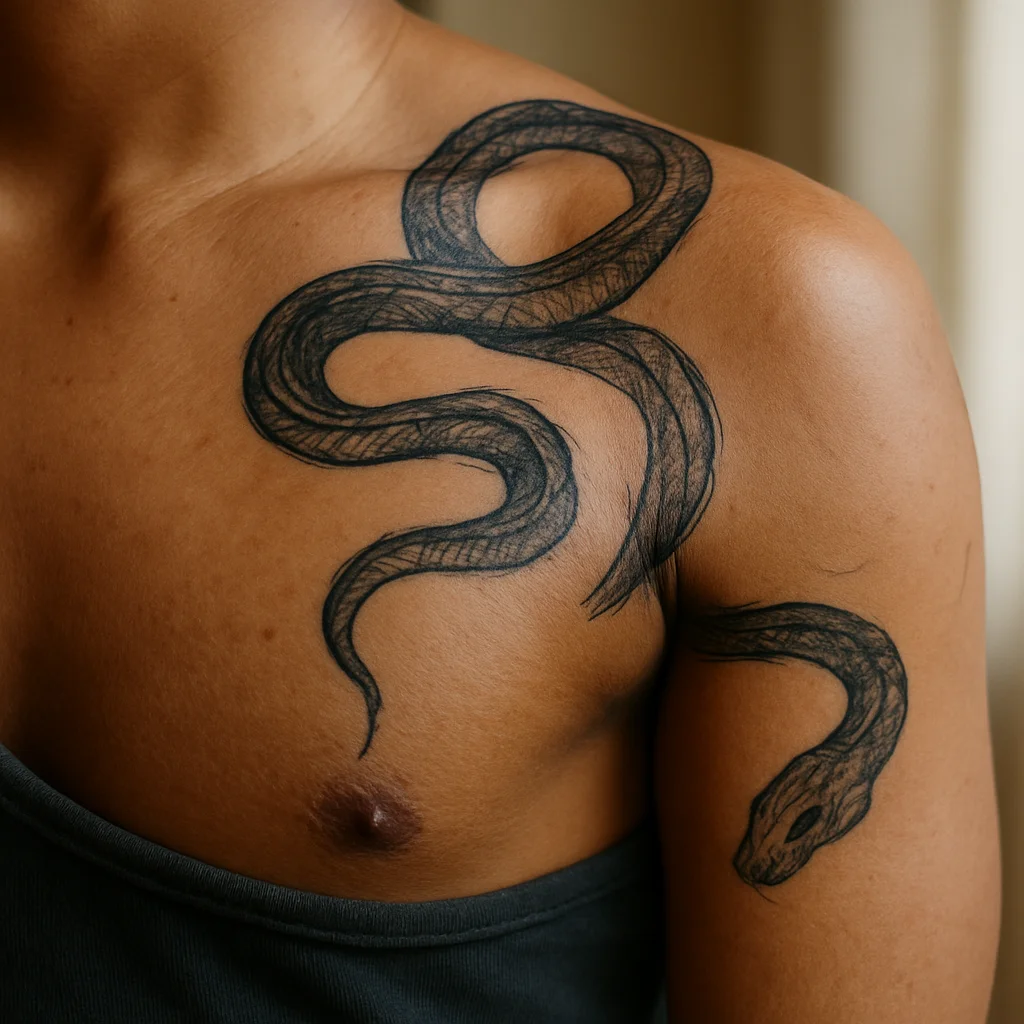
25. Snake wrapping the whole ball joint
Tail curling onto the upper chest, body spiralling over the cap, head emerging on the outer triceps. Because the snake's body is a tube, it handles the shoulder's roundness better than almost any other motif. A long project — usually two to three sessions.
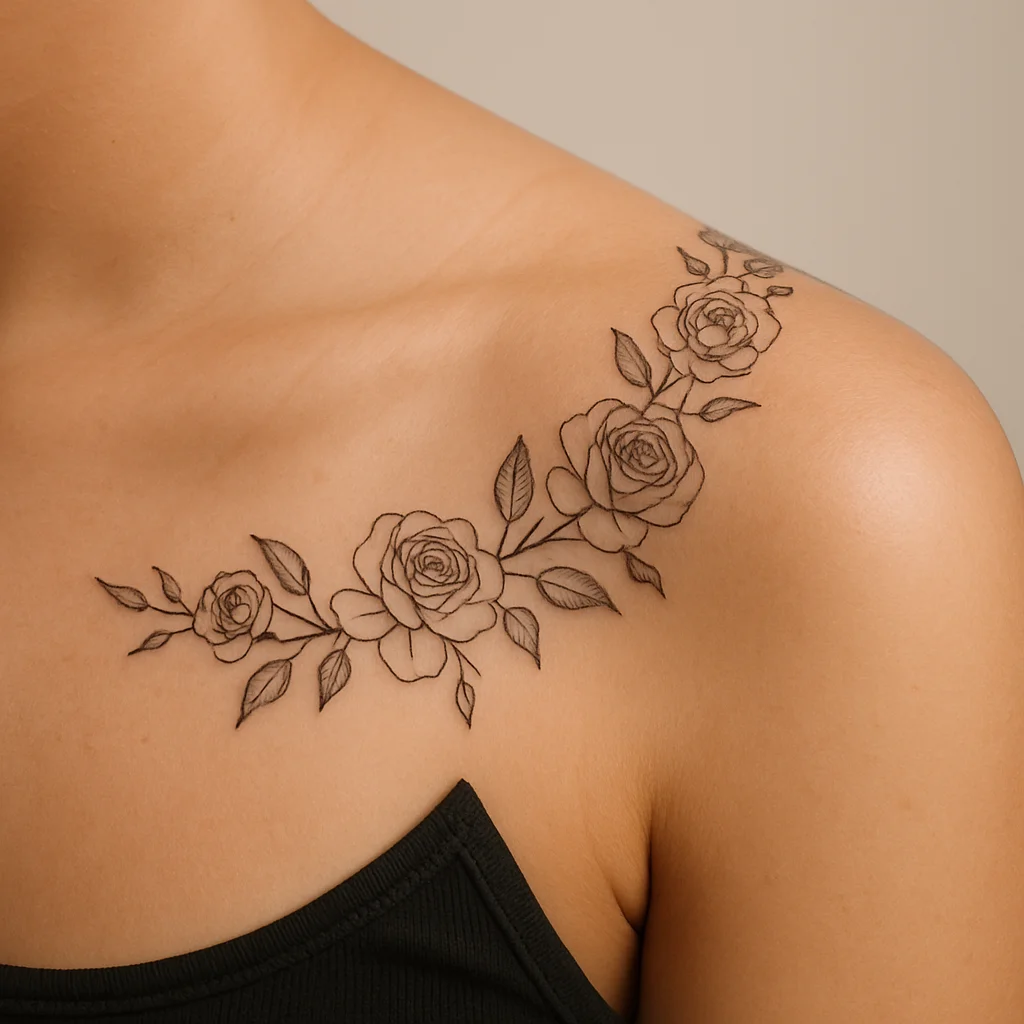
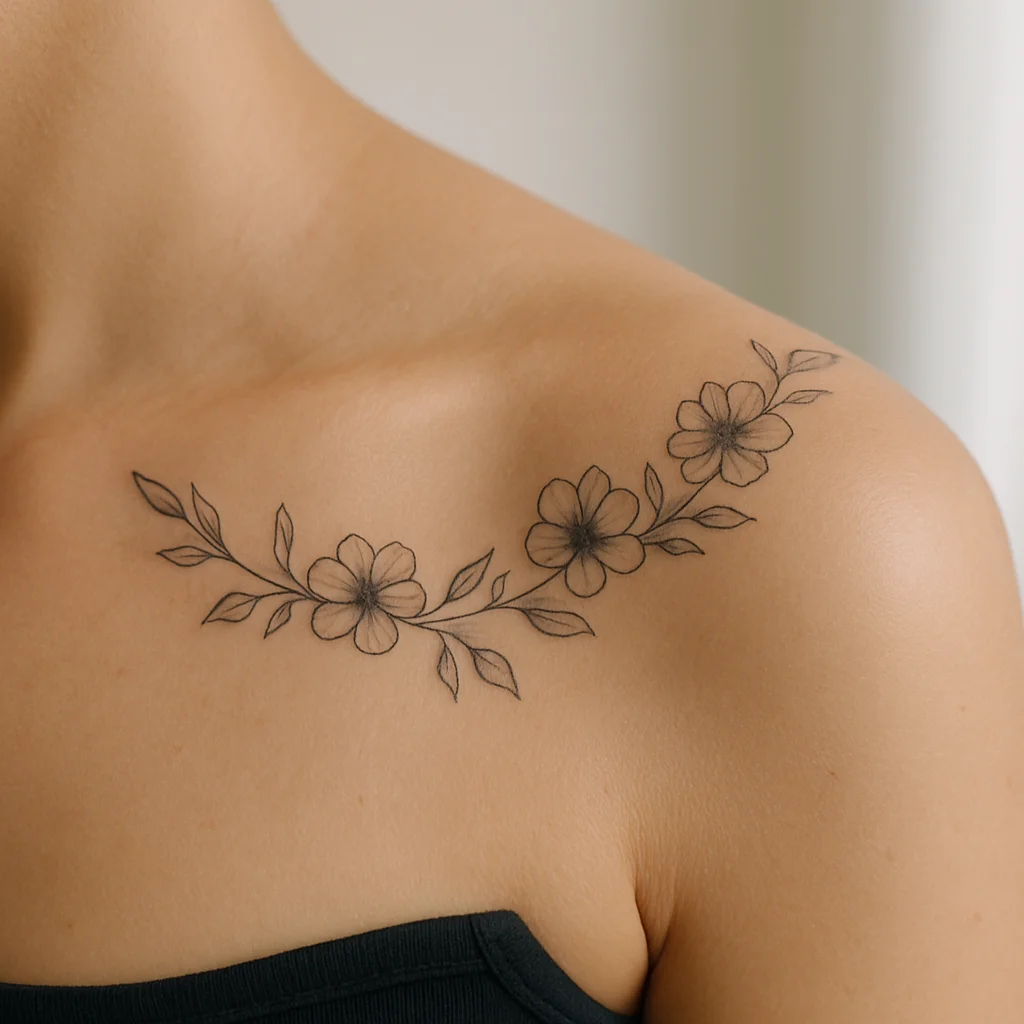
26. Floral epaulette, collarbone to blade
A garland of roses, magnolia or ranunculus running over the top of the shoulder like a strap, with buds tapering front and back. It frames the neckline in anything sleeveless and looks intentional from every angle. One of the most requested shoulder pieces for good reason.
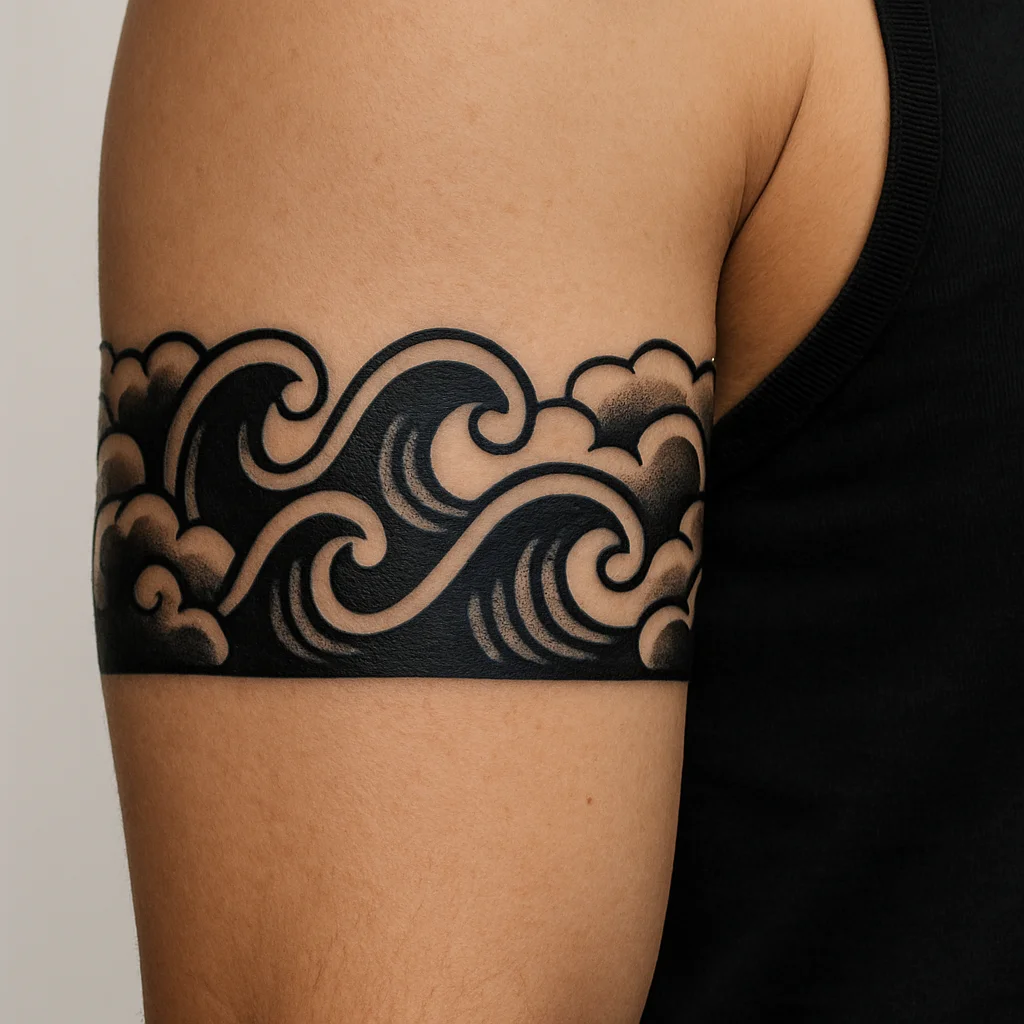
27. Cloud and wind bar as a sleeve terminator
Japanese finger waves and stylised cloud edges forming a clean band around the top of the arm, capping the shoulder and giving any future sleeve a defined upper border. Even on its own it looks deliberate rather than unfinished.
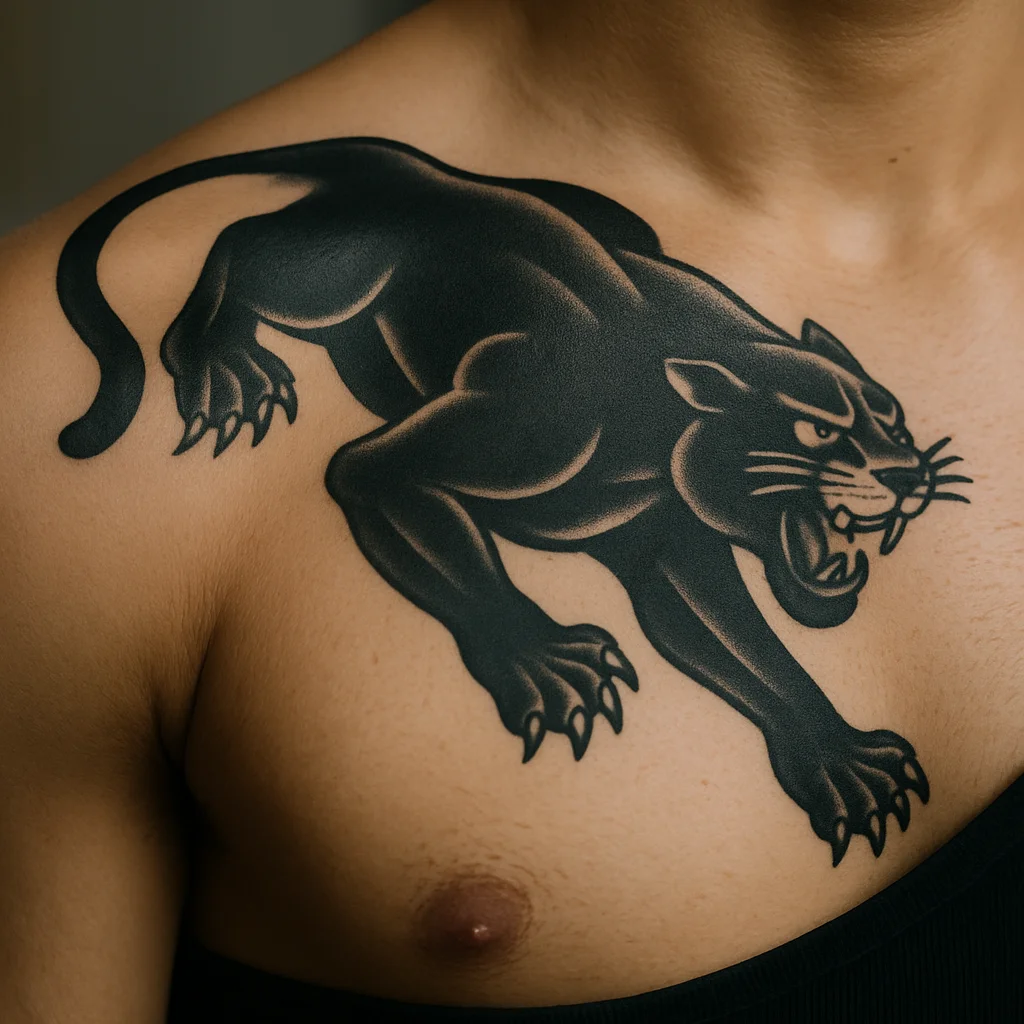
28. Panther crawling onto the chest
A traditional black panther with claws over the front deltoid and head reaching toward the pec, body anchored on the outer shoulder. The forward motion uses the curve as a slope. Bold outlines and heavy black — this is a design that will still be sharp in twenty-five years.
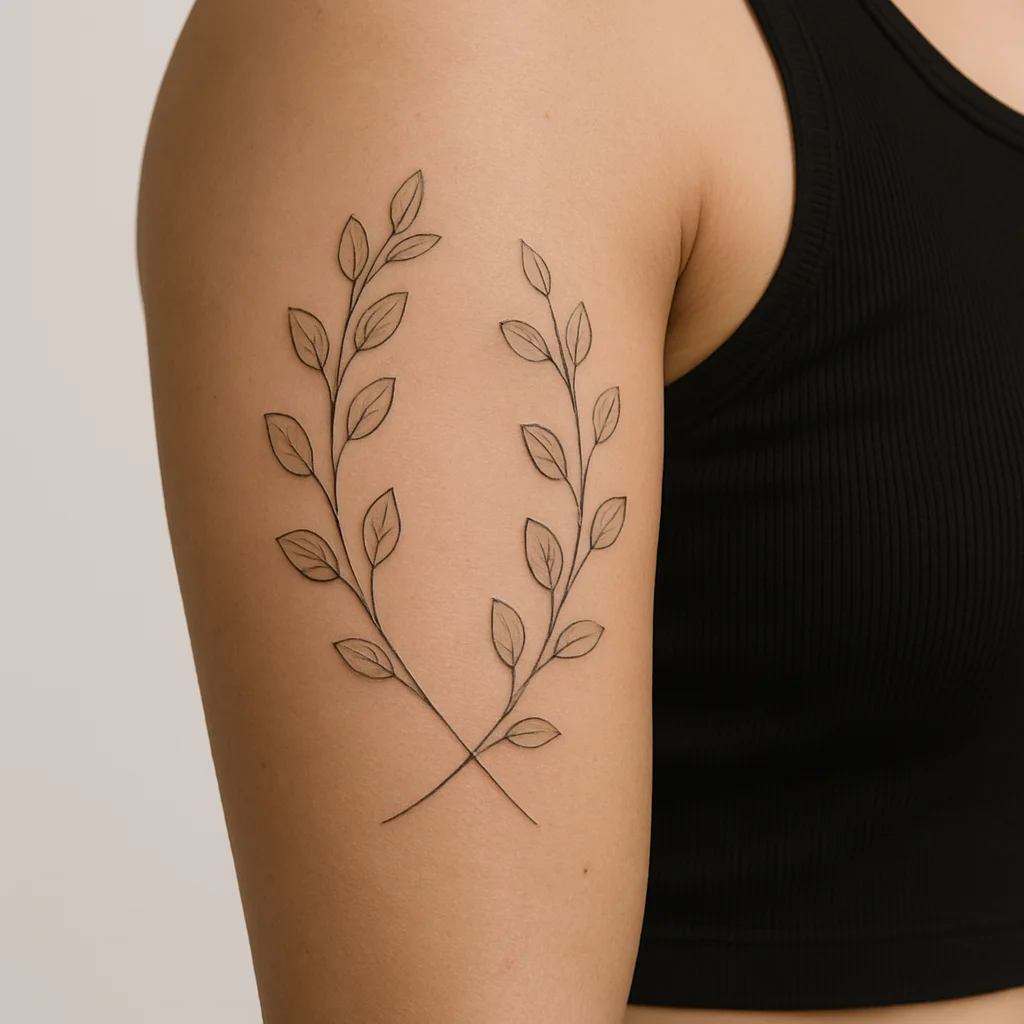
29. Eucalyptus wrap around the deltoid
Two thin stems circling the arm just below the cap, leaves alternating so the gaps let skin breathe. Softer than a solid armband and much easier to place well on a slim arm. Fine-line, but ask for a slightly heavier leaf outline so it holds.
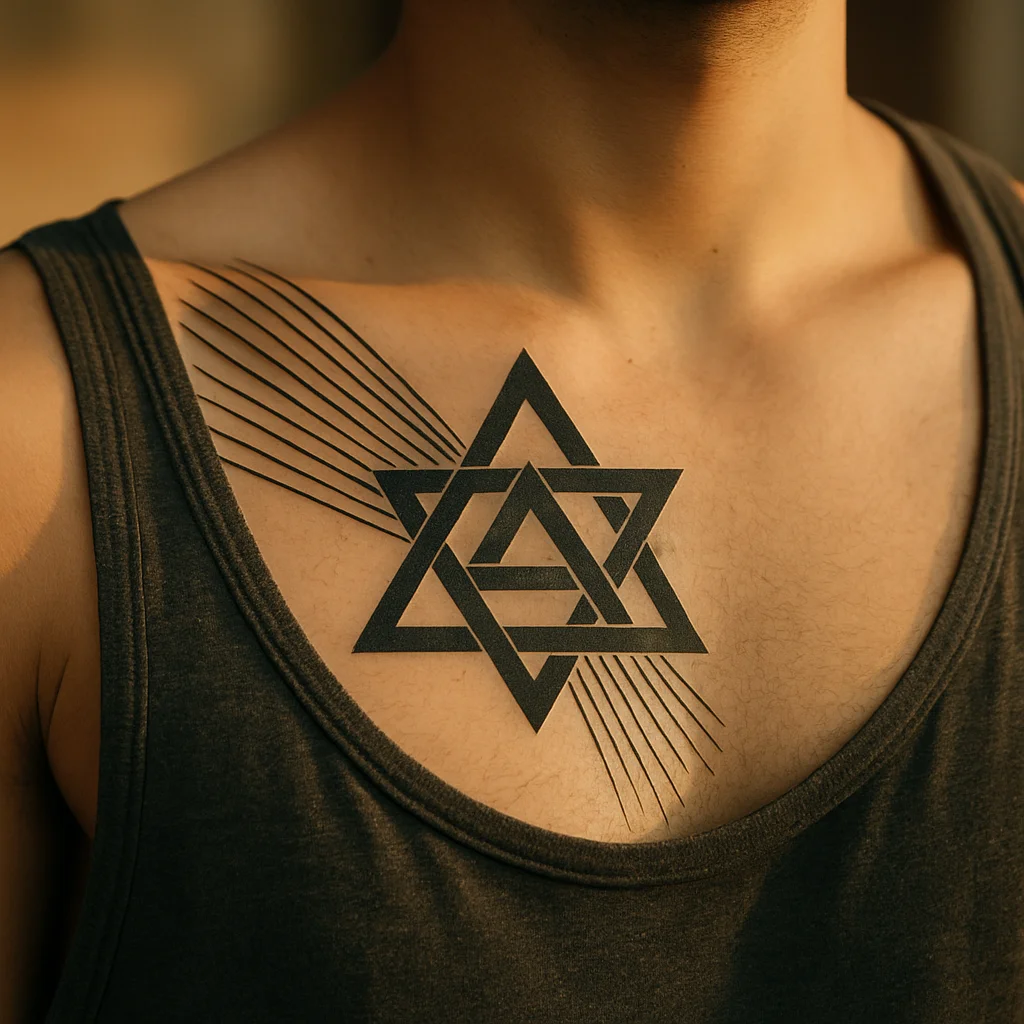
30. Geometric shoulder-to-chest plate
Interlocking triangles and thin parallel lines fanning from the cap down over the front of the shoulder, edges shaped to the pec line. Precision work — bring a picky, geometry-focused artist, because a wobbly straight line on a curve is instantly obvious.
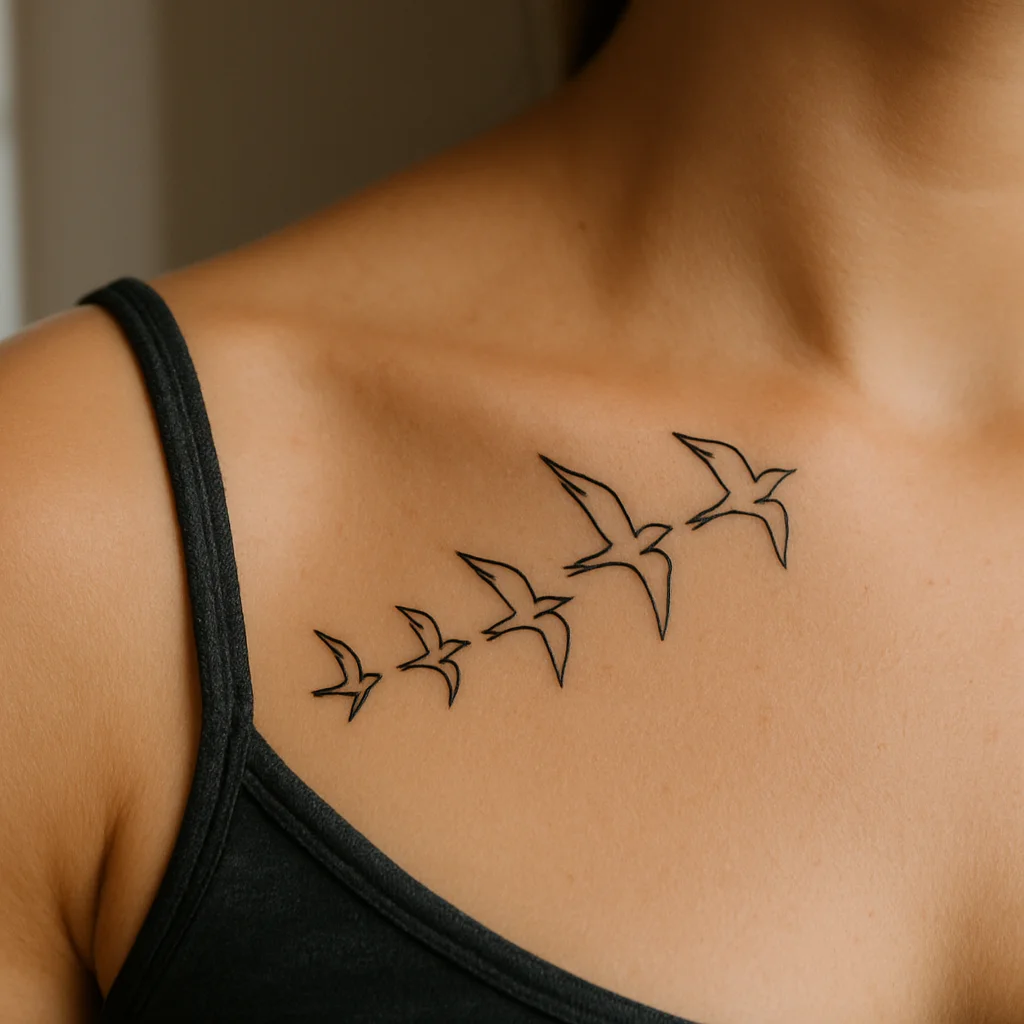
31. Birds rising from shoulder to neck
Five or six small birds increasing in size from the collarbone up over the shoulder, the largest near the trap. It reads as movement rather than as a picture and works well with existing tattoos, since it can weave between them.
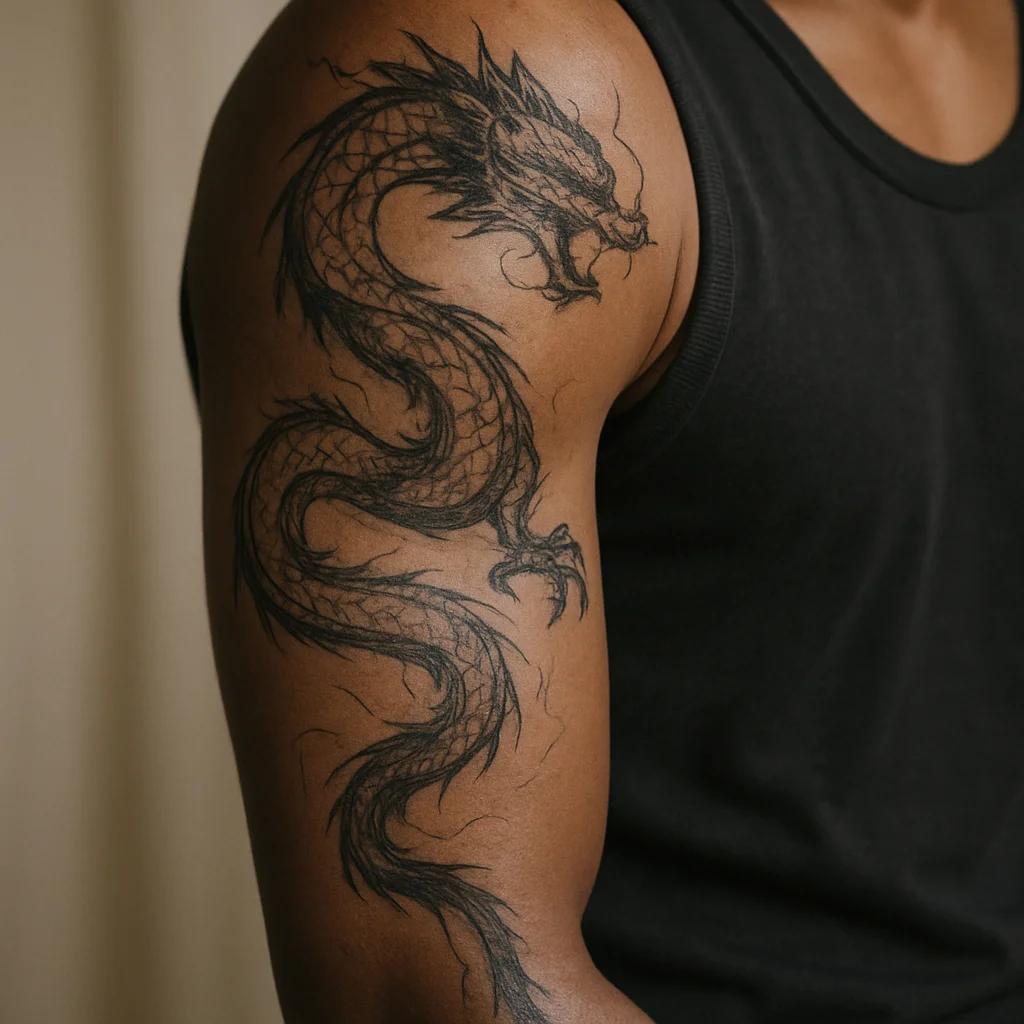
32. Dragon coiling from blade to bicep
Head on the rear shoulder, body rolling over the cap, claws and tail continuing down the outer arm — the classic Japanese solution to the ball joint. Commit to full colour or bold black and grey; a half-hearted dragon here always looks small. Budget multiple full-day sessions and a good few months of scheduling.
Pain, price and how shoulder work ages
On the honest pain scale, the outer deltoid cap is one of the kindest spots on the body — thick skin, a cushion of muscle, no bone directly underneath. Most people describe it as a warm scratch they could sit through for hours. Two areas spike: the top ridge where the shoulder meets the trapezius, which can feel nervy and dull-achy, and anywhere approaching the collarbone or armpit hollow, where thin skin over bone gets genuinely sharp. Shoulder blade sits in between, with a rattly vibration when the needle runs over the bone ridge.
Cost tracks size and detail more than placement. A small traditional motif or a simple crescent-and-stars sits at the low end of most studios' scale, often near the shop minimum. A palm-sized mandala, moth or floral cap generally lands in the mid range of a half-day rate. Full wraps, pauldrons and dragons are multi-session projects quoted by the day, and day rates vary hugely by city and artist reputation — always ask for a total estimate and a session count, not just an hourly figure.
Aging is where shoulders shine. The area rarely stretches, and muscle underneath keeps the skin taut, so linework holds its shape unusually well. The one real risk is UV. Shoulders catch direct summer sun more than almost any other placement, and faded, milky black is the result. Sunscreen on the shoulder should be as automatic as on your face. Also think about strap lines: bra straps, backpacks and bag straps sit right across the top ridge, and constant friction on a healing tattoo is a genuine problem — plan the sitting for a week when you can go strap-free.
Briefing your artist and healing it properly
Bring the zone, not just the picture. Saying "I want a floral piece that starts near my collarbone, crosses the top of my shoulder and finishes on my blade, and I want it to look right in a strappy top" gives an artist far more to work with than a reference photo of a flat drawing. Ask them to stencil it with your arm both down and raised, then look in the mirror from the front, side and back before you agree.
Three questions worth asking outright:
- Where does it end? Hard edges near the armpit or the collarbone can look abrupt. A deliberate taper or fade reads as finished.
- Will this block a future piece? If a sleeve or chest panel is even a maybe, say so now. A shoulder cap can be a beautiful start or an awkward obstacle.
- How heavy should the lines be? Fine-line on a large curved area needs a touch more weight than the same design on a wrist to stay legible long term.
Healing is easy if you respect movement. The shoulder flexes constantly, so wash gently, pat dry, use a thin layer of unscented ointment for the first few days, then switch to a plain lotion. Sleep on the other side for the first week, wear loose sleeves or none at all, skip the gym for at least five to seven days — shoulder presses and pull-ups will crack a scabbing cap fast — and stay out of pools and the sea until it's fully sealed. Keep it out of direct sun for a solid month, then keep it out of direct sun forever if you can help it. If you're weighing shoulder against just below it, our guide to upper arm placements covers how the two zones connect.
Frequently asked questions
Does a shoulder tattoo hurt more than an upper arm tattoo?
Generally no — the outer shoulder cap is one of the more comfortable spots on the body thanks to thick skin and muscle padding beneath. Discomfort rises sharply only where you approach bone or thin skin: the collarbone, the top ridge near the neck, and the armpit hollow. Most people manage a two to four hour shoulder session without much trouble.
What size works best on a shoulder?
For a standalone piece centred on the deltoid cap, roughly 8 to 15 cm across looks intentional without spilling awkwardly onto the arm or back. Smaller designs under 6 cm can look lost on such a broad, curved area unless they're placed deliberately near the collarbone or the top ridge. Wraps and blade pieces can go much larger, 15 to 25 cm and up.
Will a shoulder tattoo stretch or distort if I gain muscle or weight?
Less than most placements. The shoulder is supported by dense muscle and doesn't hold much loose skin, so it tolerates weight fluctuation and training better than the stomach, inner arm or thigh. Significant, rapid muscle gain can widen a design slightly, but it rarely distorts the shape enough to notice.
How long should I avoid the gym after a shoulder tattoo?
Plan on five to seven days minimum, longer for large or heavily shaded work. Pressing, pulling and overhead movement stretches the healing skin and can lift scabs, which risks patchy ink. Light lower-body work is usually fine sooner, but skip anything that involves straps, sweat pooling under clothing, or shared equipment against the area.
Can a shoulder tattoo be extended into a sleeve later?
Yes, and it's one of the most common ways sleeves begin — but tell your artist up front. A cap designed as a standalone badge may need a connecting element such as clouds, waves or foliage to flow into the arm, whereas a piece planned for expansion will already have an open edge to build from. Choosing an artist comfortable in the same style you'd want for the whole sleeve saves headaches later.
The conversation
No comments yet. Got a thought about these designs? Start us off.
Want to weigh in? Join the community to comment, save designs and try them on your skin.