30 Upper Arm Tattoos for Women, Sorted by Sleeve
The upper arm gives you a rare thing: a big, flattering canvas you can cover with a sleeve or show off in a tank top. Here are 30 designs sorted by exactly where they sit on the arm and how visible they'll be.
Why the upper arm is the smartest big-canvas choice
Most people who want something substantial but not public start here, and there's a good reason. The upper arm is thick with muscle, padded away from bone, and it stays relatively stable over the years compared with places that stretch and crease. Skin here doesn't fold like the inner elbow or wear like the hand, so line work stays crisp for a long time if you keep it out of the sun.
The sleeve line is the whole strategy. Draw an imaginary line where a standard t-shirt sleeve ends, usually around mid-bicep. Anything above it disappears at work; anything below it becomes part of your everyday look. Before you commit to placement, put on the shirt you wear most and mark the hem with a pen. That five-second test settles more decisions than an hour of scrolling.
Pain, honestly. The outer bicep and deltoid cap are among the friendliest spots on the body, a dull scratchy pressure most people describe as very manageable. The tricep is a step up, especially near the back of the armpit. The inner bicep is the outlier: thin, soft, nerve-rich skin that stings sharply and can make a two-hour session feel long. Nothing here is unbearable, but plan the inner arm for a morning when you've eaten and slept.
Sizing. The upper arm reads best when a design occupies a clear zone rather than floating in the middle of it. A palm-sized piece on the outer bicep looks intentional; the same piece marooned high on the deltoid can look like a sticker. If you think you might eventually build outward, sketch the whole arm's plan first, even loosely, so your first tattoo becomes an anchor rather than an obstacle.
Outer bicep and deltoid cap: the visible zone
This is the curve everyone sees in a tank top, and it rewards designs with a strong silhouette. Because the surface rounds away from the viewer, artists usually pull the composition slightly forward so it reads face-on rather than disappearing around the side.
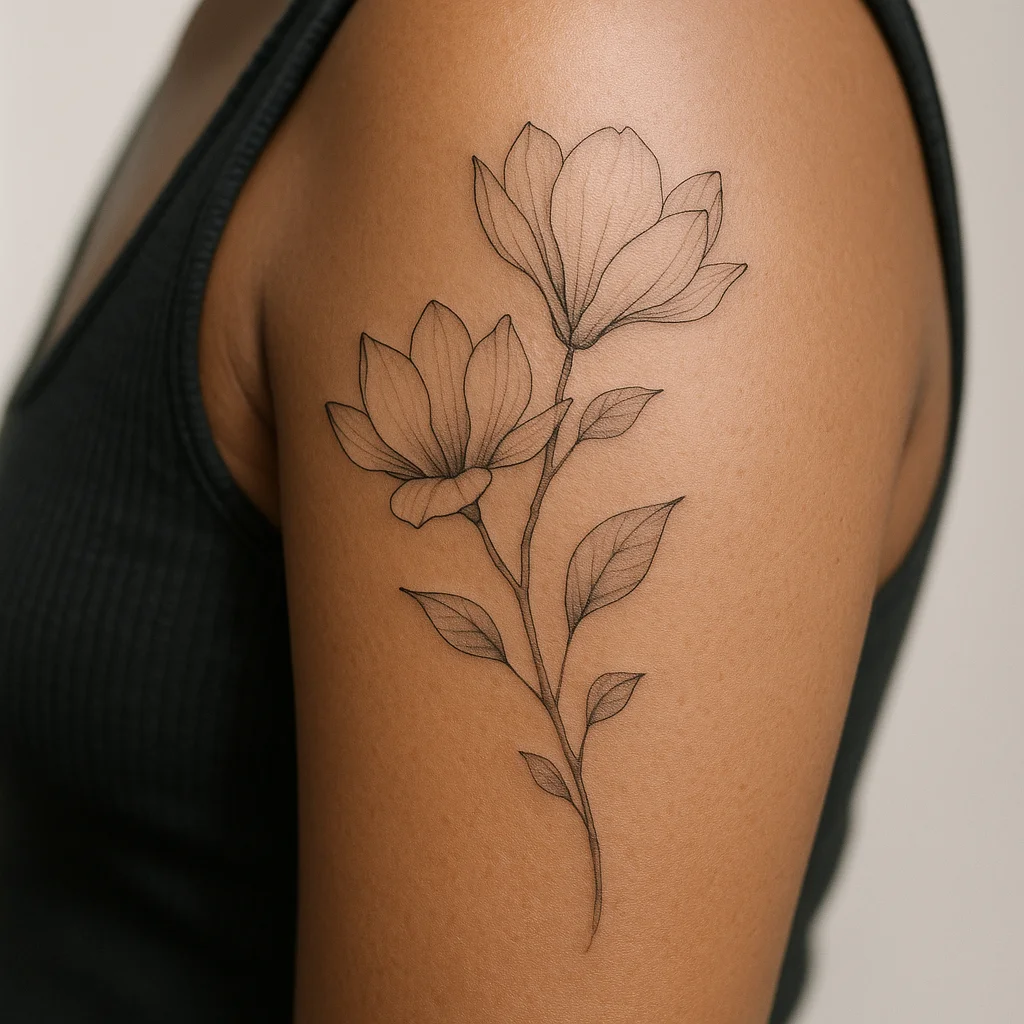
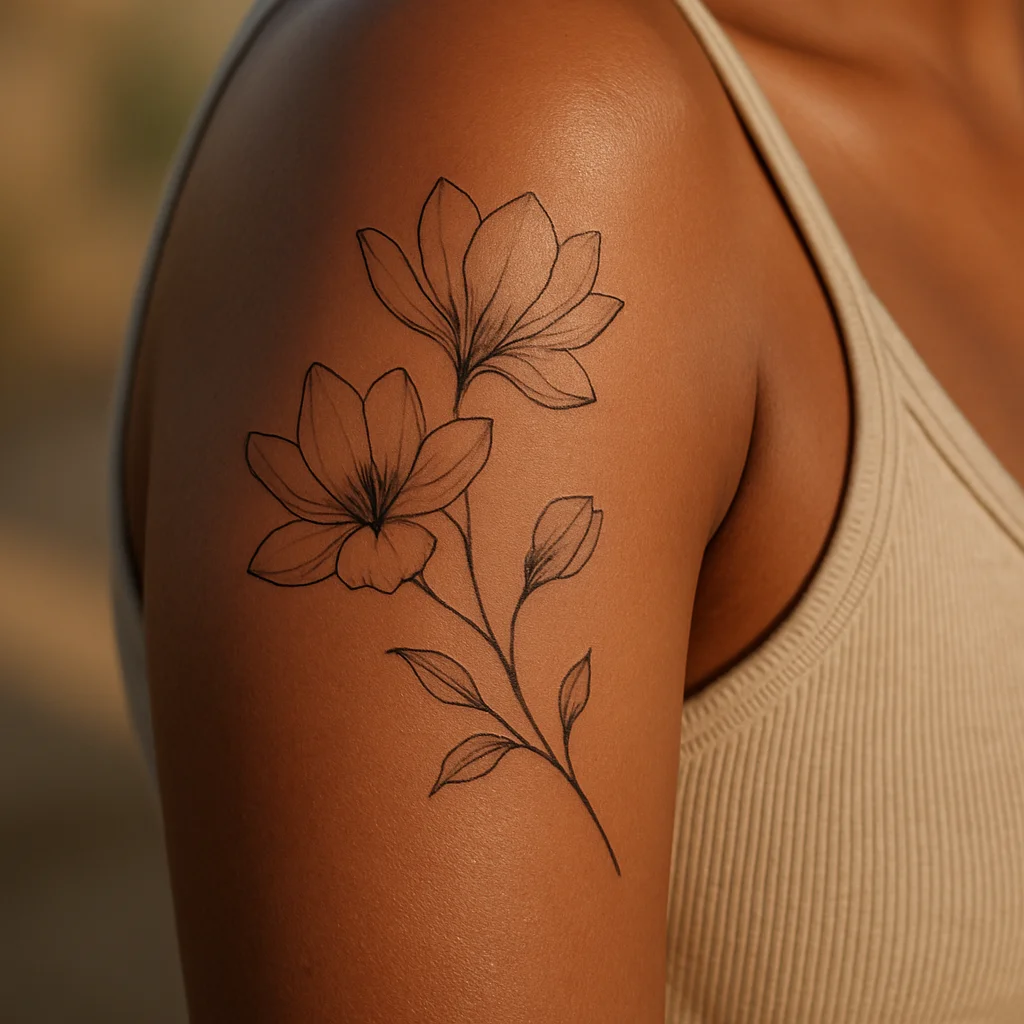
1. Magnolia branch curving over the deltoid
A single branch with two open blooms and one tight bud, arcing along the shoulder cap and tapering toward the bicep. The curve of the branch should follow the muscle rather than fight it, which is what makes it look painted on instead of pasted on. Best at hand-length or larger so the petals keep their detail.
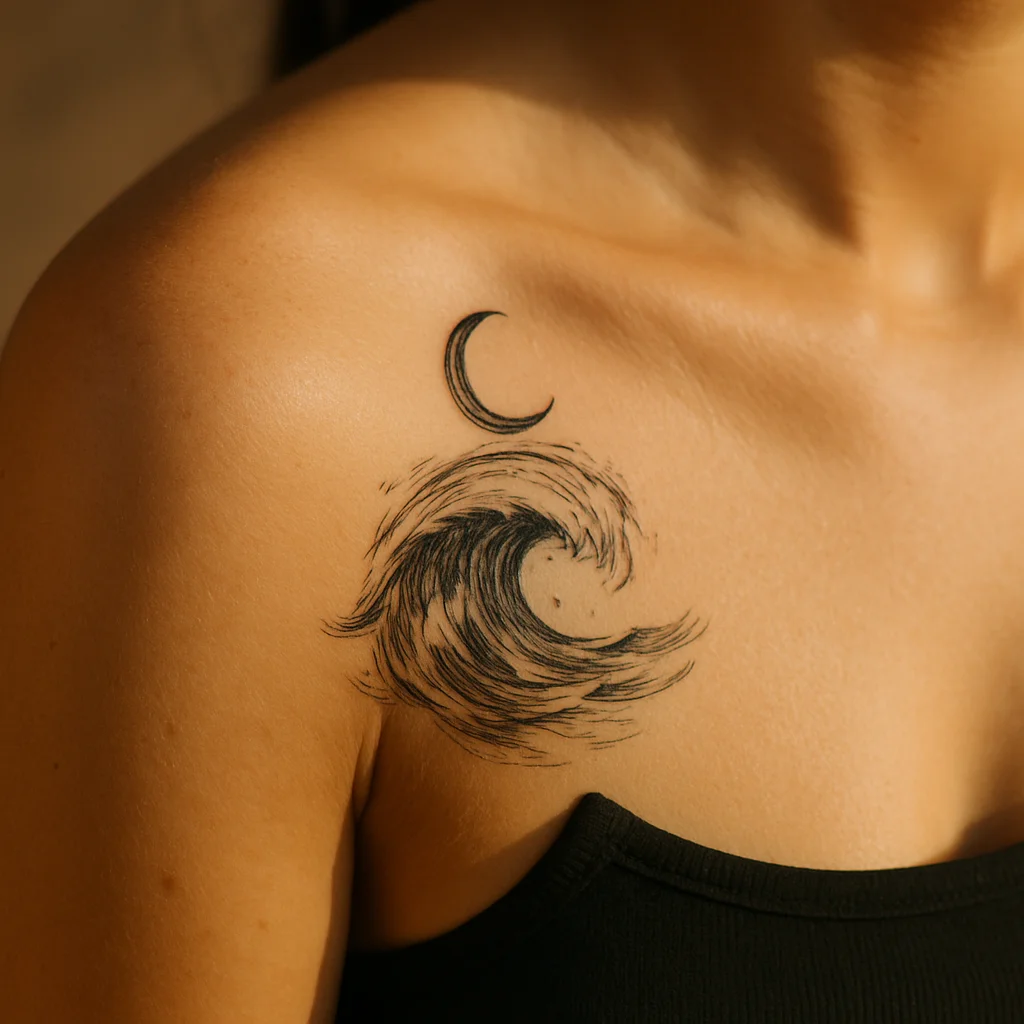
2. Wave curling into a crescent moon
An illustrative swell of water with fine linework foam, breaking under a thin crescent. It suits anyone who wants something atmospheric without a literal seascape, and the round shape sits beautifully on the deltoid cap. Ask for the darkest values in the wave trough so the moon stays clean and bright.
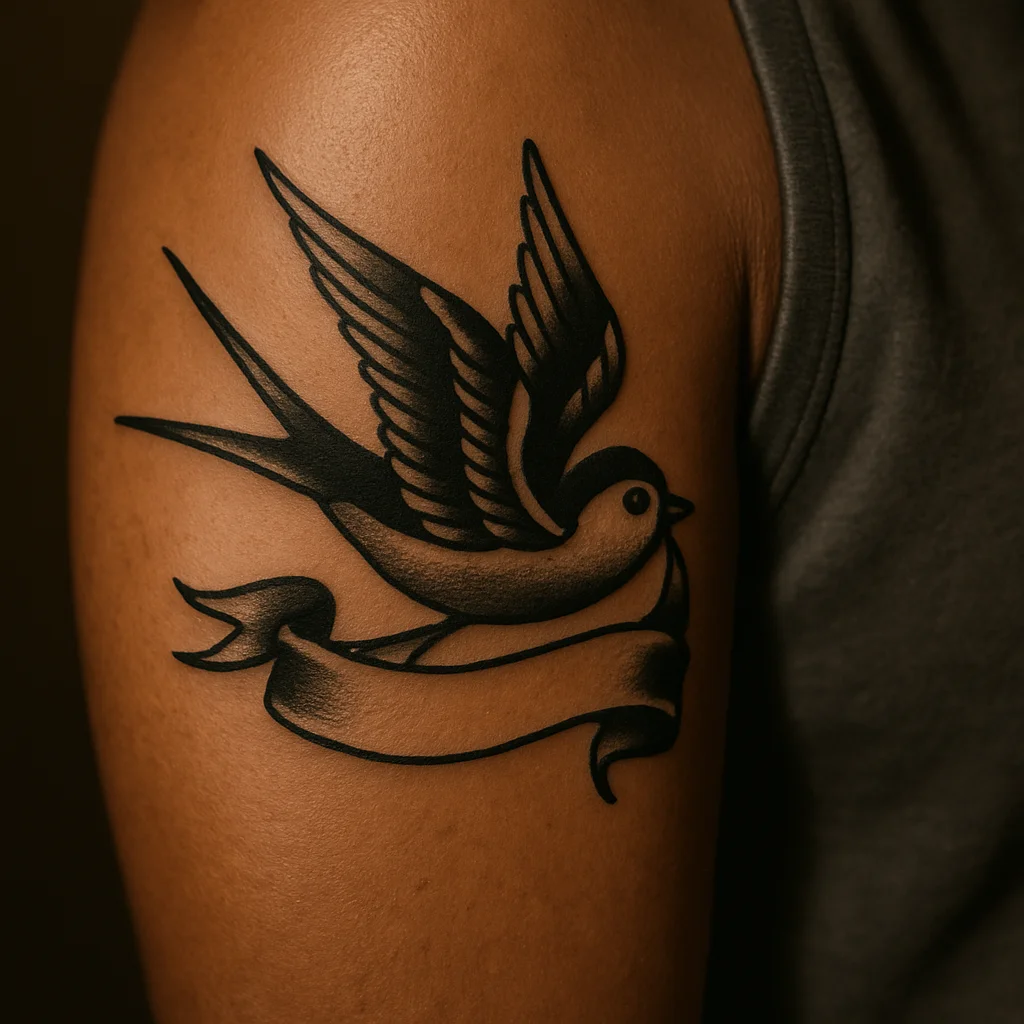
3. Traditional swallow with a small banner
Bold outlines, a few flat colours, a ribbon with a name or a single word. Old-school designs were built for exactly this placement, which is why they still look sharp on upper arms decades later. Keep it around three to four inches and resist adding fine detail that will soften over time.
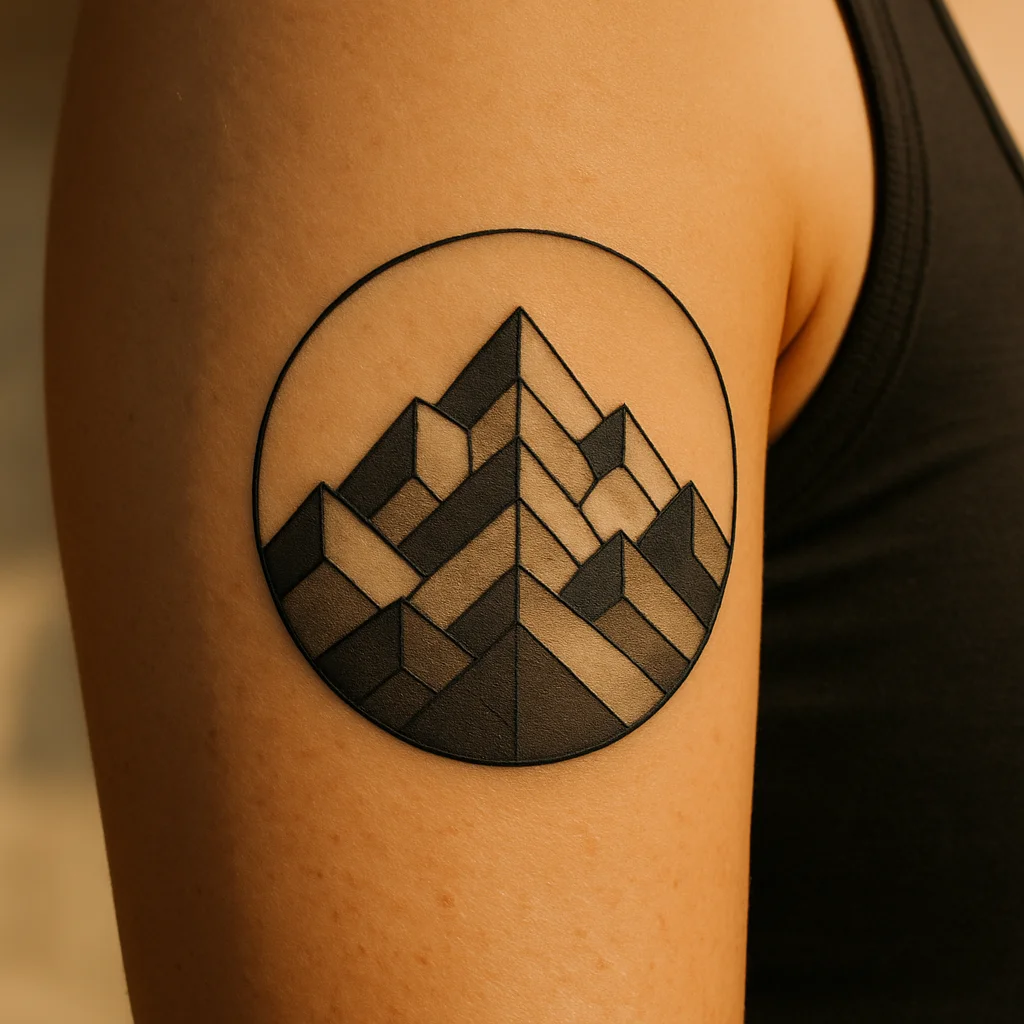
4. Geometric mountain range in a thin circle
Layered peaks with a fine sun line behind them, all contained in a single unbroken ring. The circle needs a flat-ish landing zone, so most artists place it on the outer bicep just below the shoulder curve. Clean geometry demands a steady hand, so look through an artist's healed work before booking.
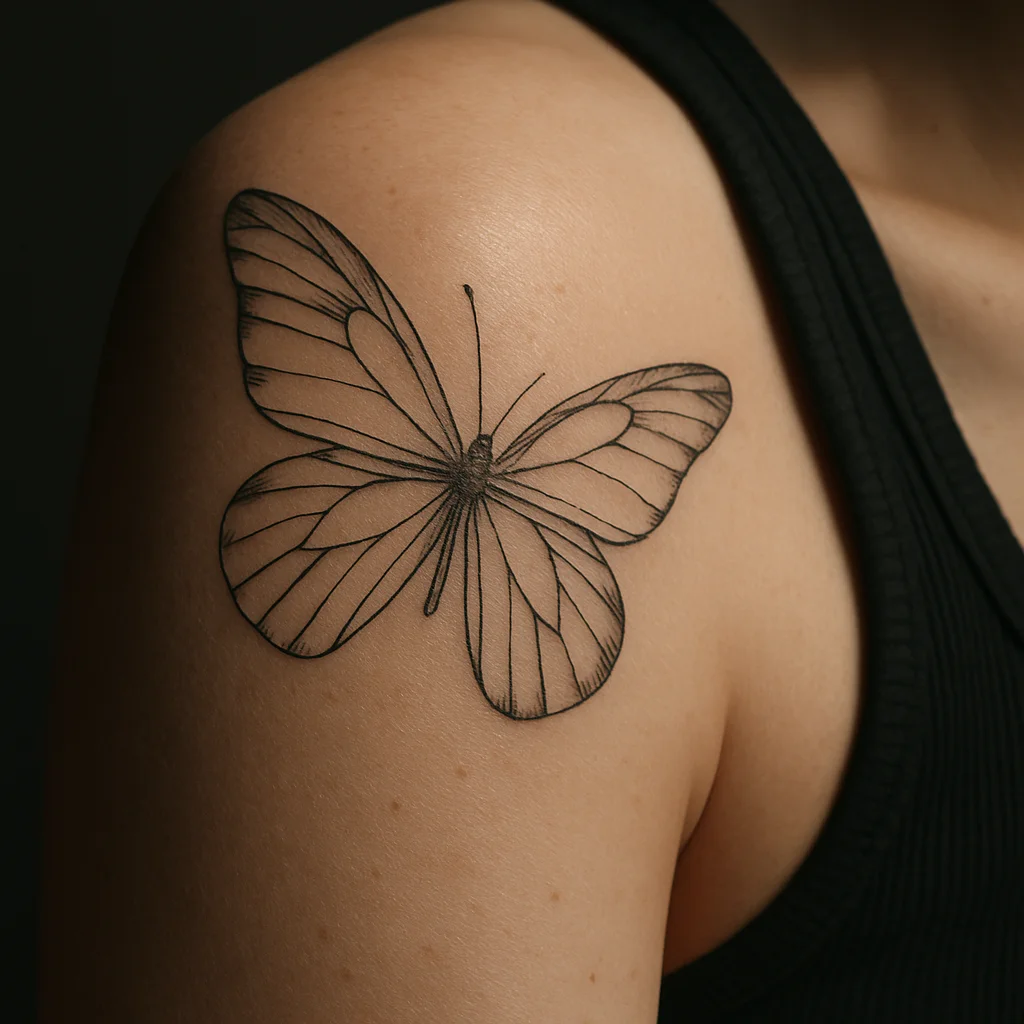
5. Butterfly with wings split across the shoulder seam
One wing on the deltoid, one dipping onto the outer bicep, so the body of the butterfly sits right on the curve. Single-needle shading in the wings keeps it delicate rather than heavy. Gorgeous in a strappy top, entirely hidden by a sleeve.
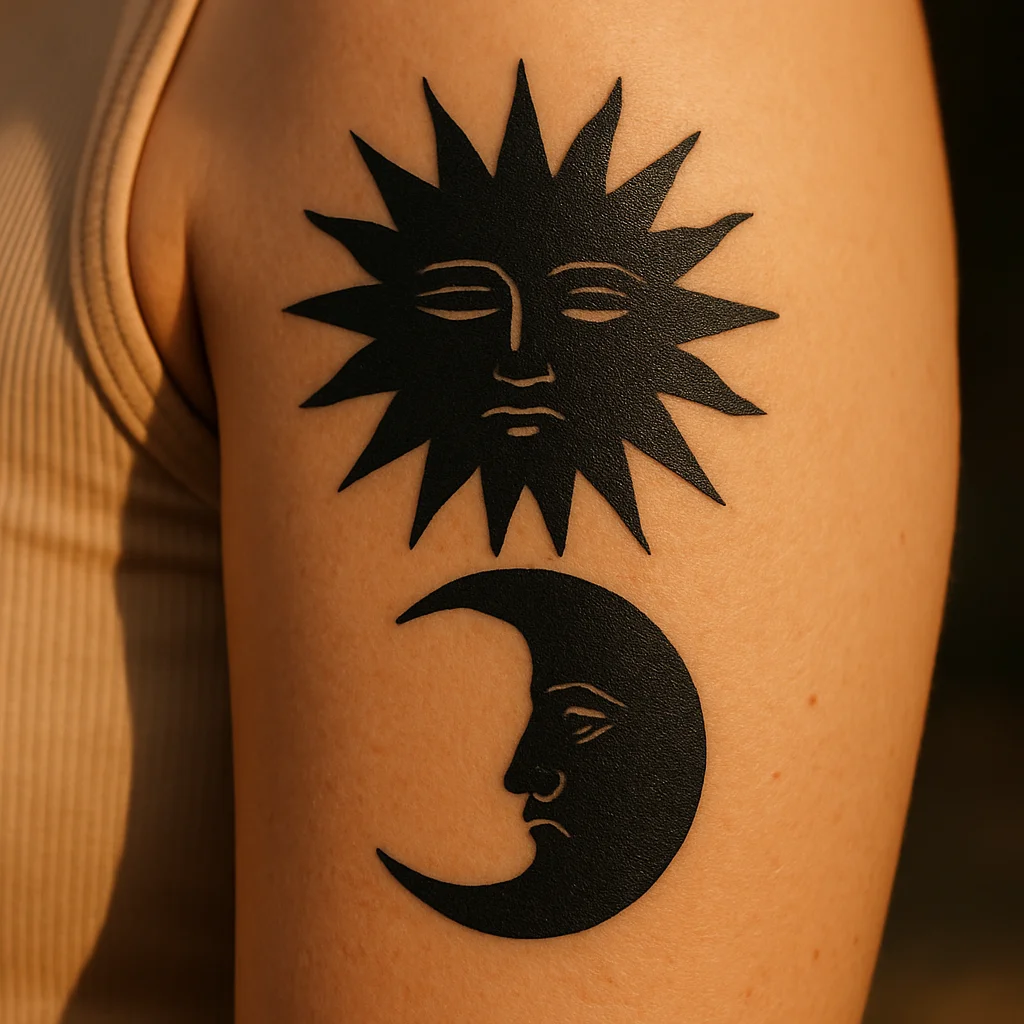
6. Blackwork sun and moon facing each other
Two solid-black circular faces, one radiant, one crescent, stacked vertically down the outer arm. The heavy black holds up remarkably well over decades and reads clearly from across a room. Give it at least five inches of vertical space so the two elements don't crowd.
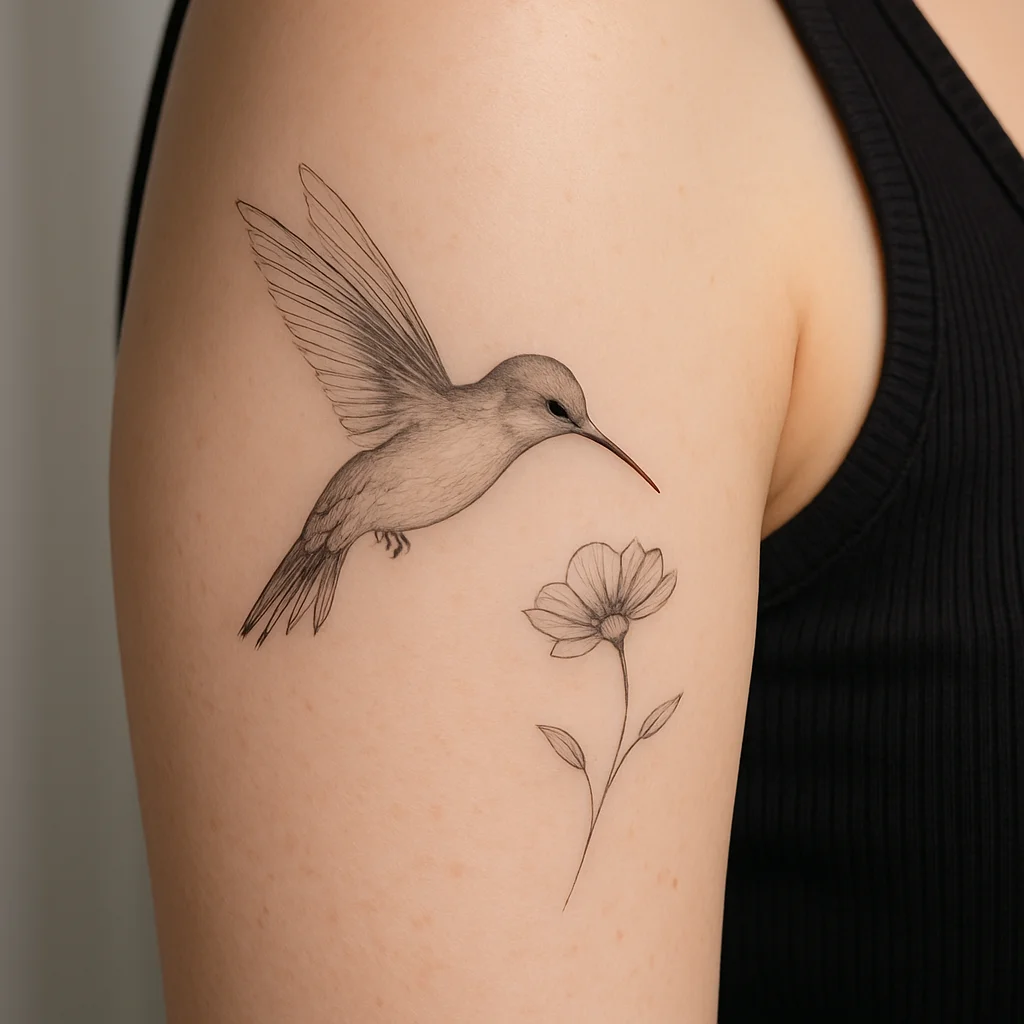
7. Hummingbird mid-hover with a trailing stem
Wings blurred with soft stipple, beak dipping toward a single fine-line flower below it. The diagonal energy suits the sloping shape of the deltoid, and it stays legible small, around two to three inches. A good pick for a first medium-sized piece.
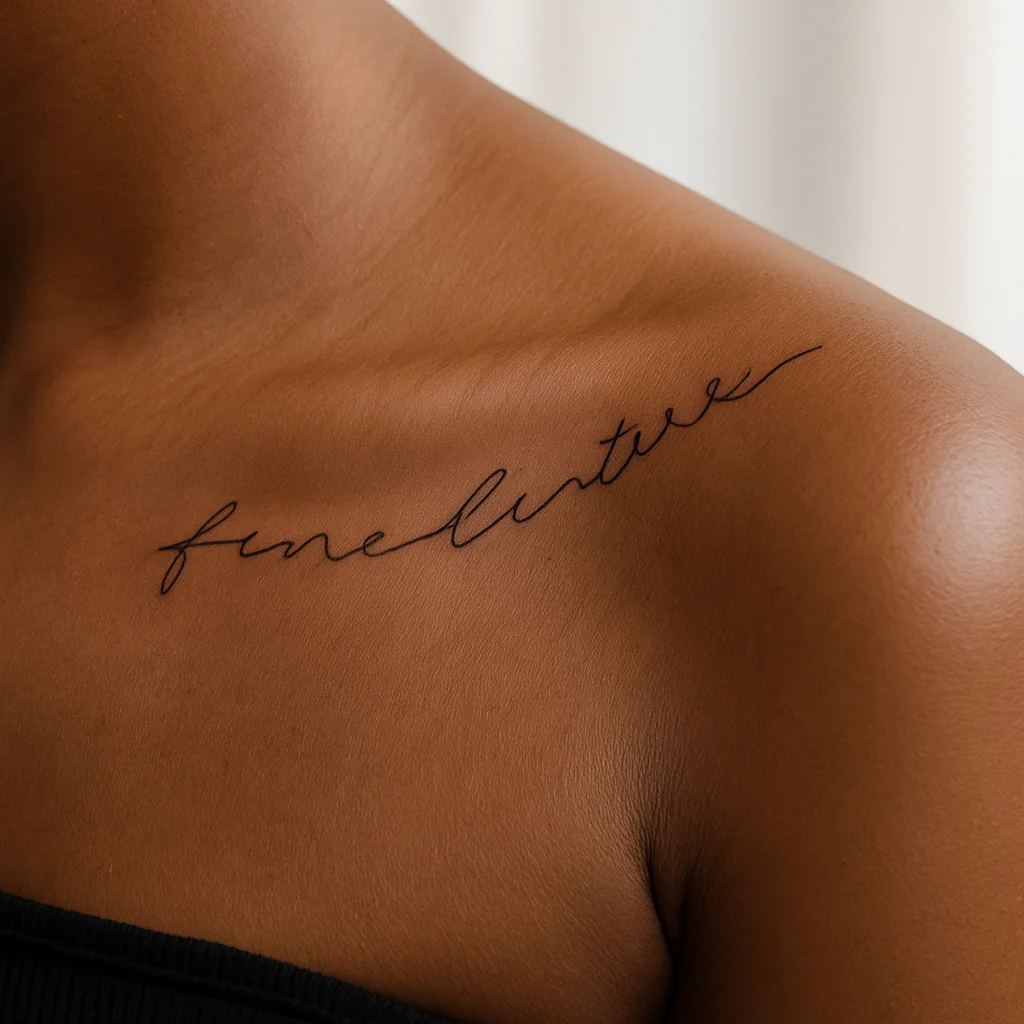
8. Arced script following the shoulder curve
A short line of text, three or four words, curving along the top of the deltoid like a collar. Script on a curve needs a mock-up drawn directly on your skin so the letters bend correctly, so expect a longer stencil session. Choose a font with some weight to it; hairline script on an active muscle can soften faster than you'd like.
Inner bicep: the private side
The inner arm is soft, pale and largely shielded from sun, which keeps colour and black looking fresh for years. The trade-off is tenderness during the session and skin that can spread very fine lines slightly, so most artists nudge the line weight up a touch here.
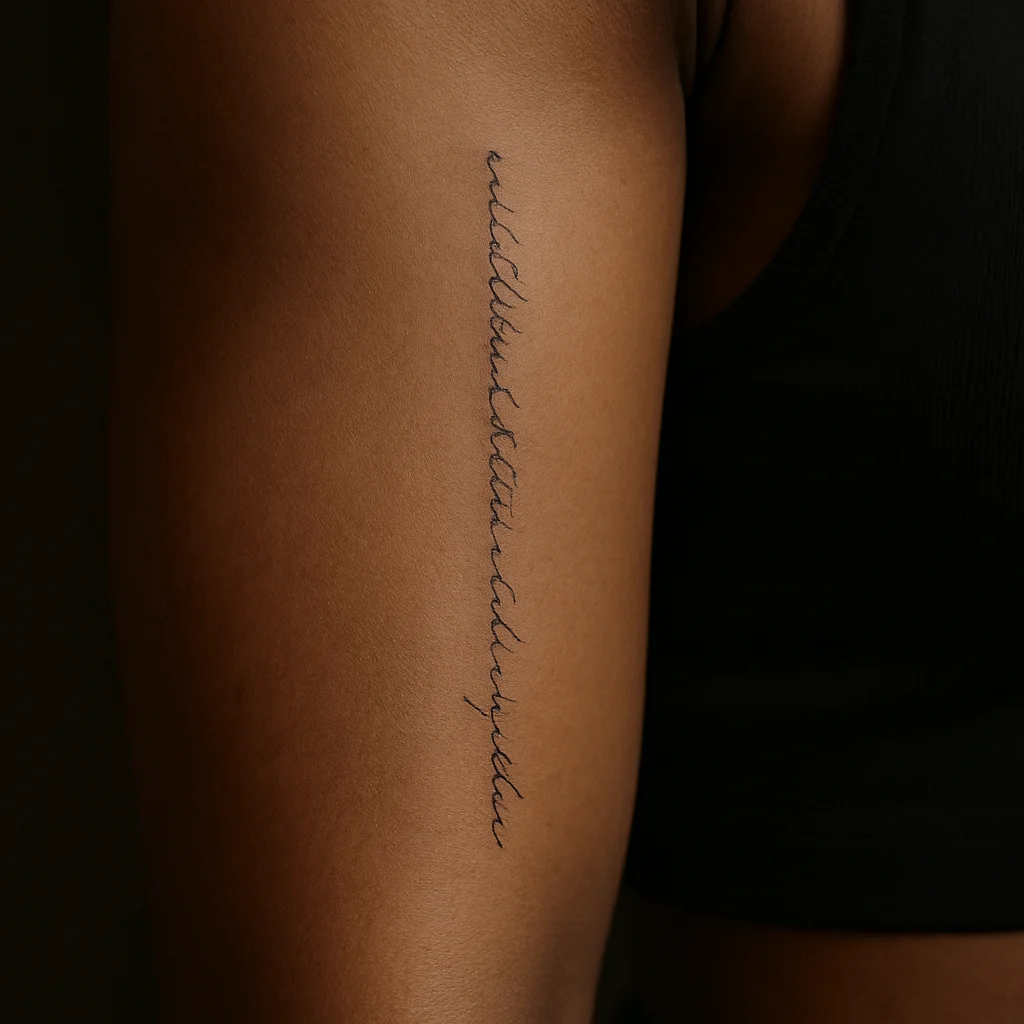
9. Vertical script quote reading top to bottom
A phrase set in a narrow column that follows the length of the inner bicep, read by turning your arm out. This is one of the few placements where longer text genuinely works, because the zone is long and flat. Keep the line count low and the font simple so it stays readable when the skin softens.
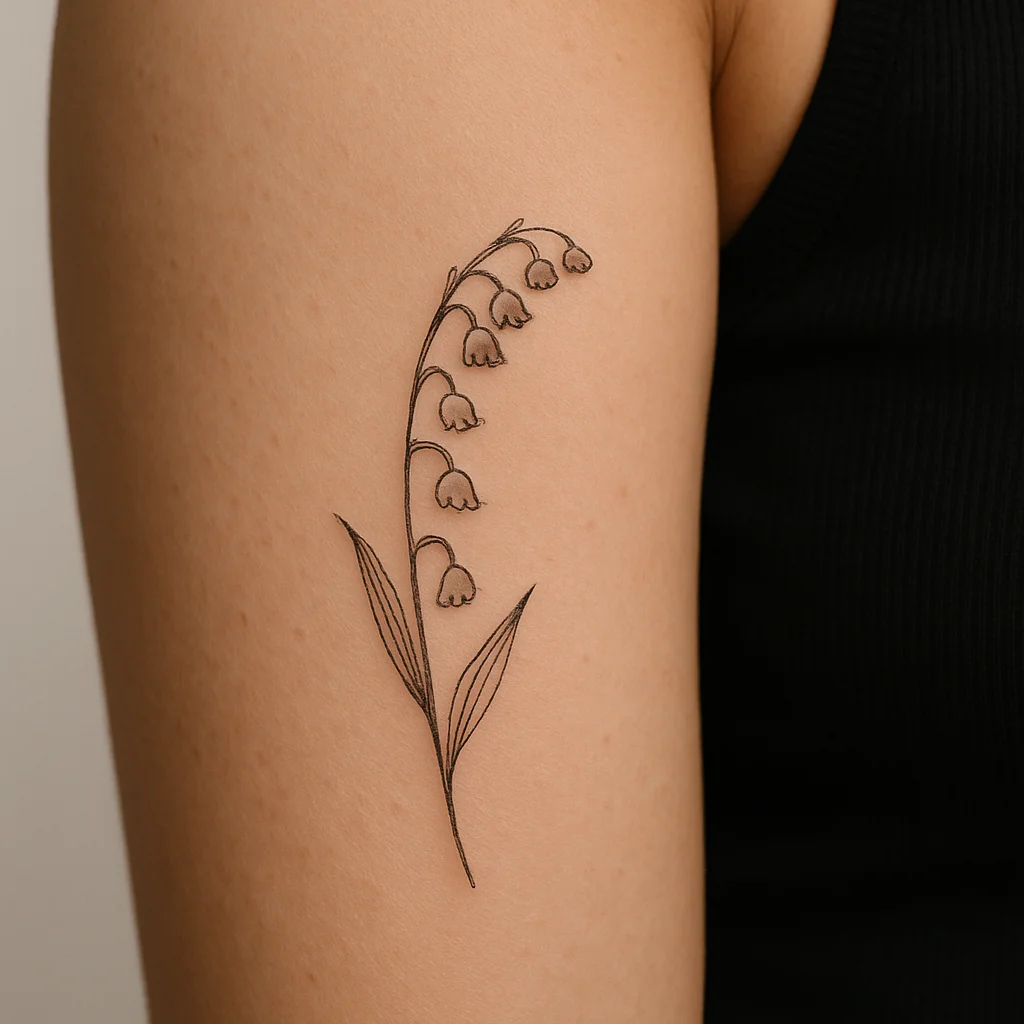
10. Lily of the valley stem
A single arching stem with a row of tiny bells and two broad leaves, running vertically. Small white-flower botanicals feel right on the inner arm because the skin tone is lighter and delicate work stands out. Around four to six inches tall is the sweet spot.
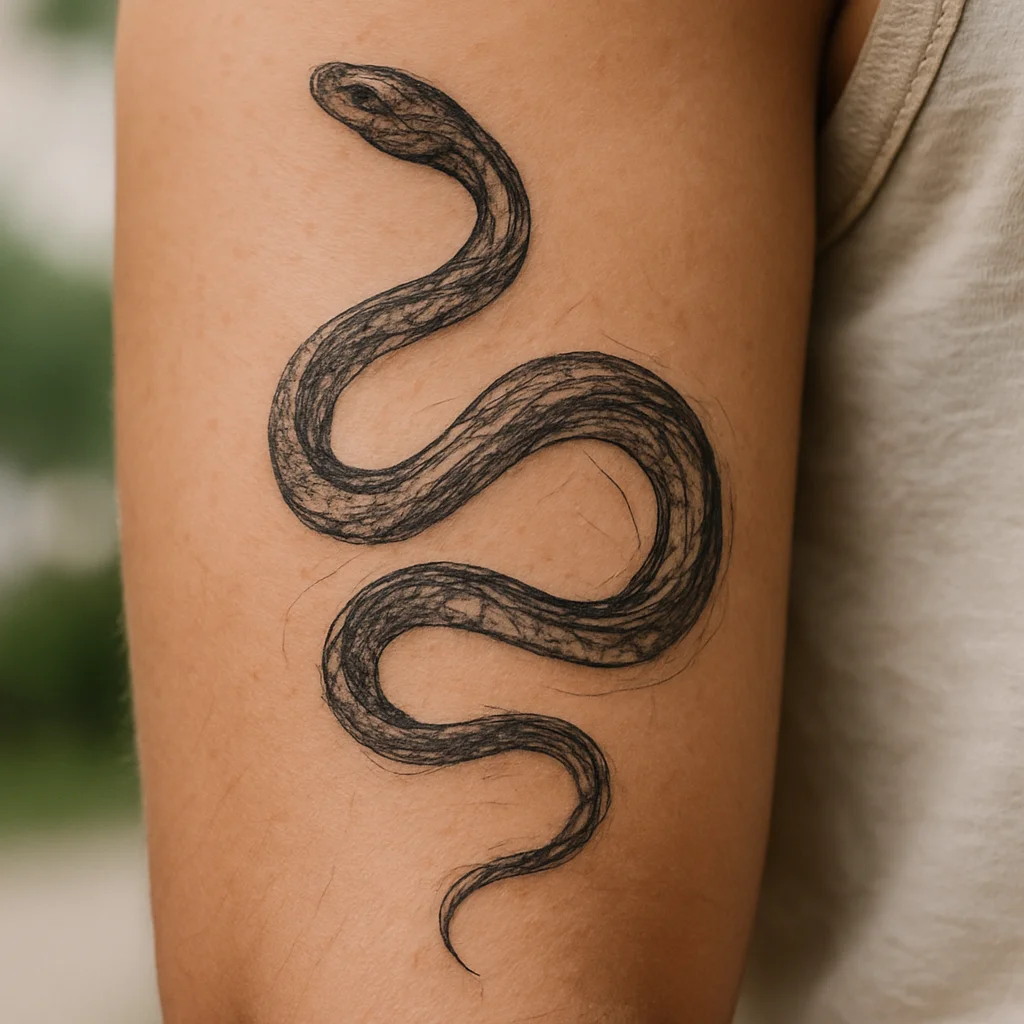
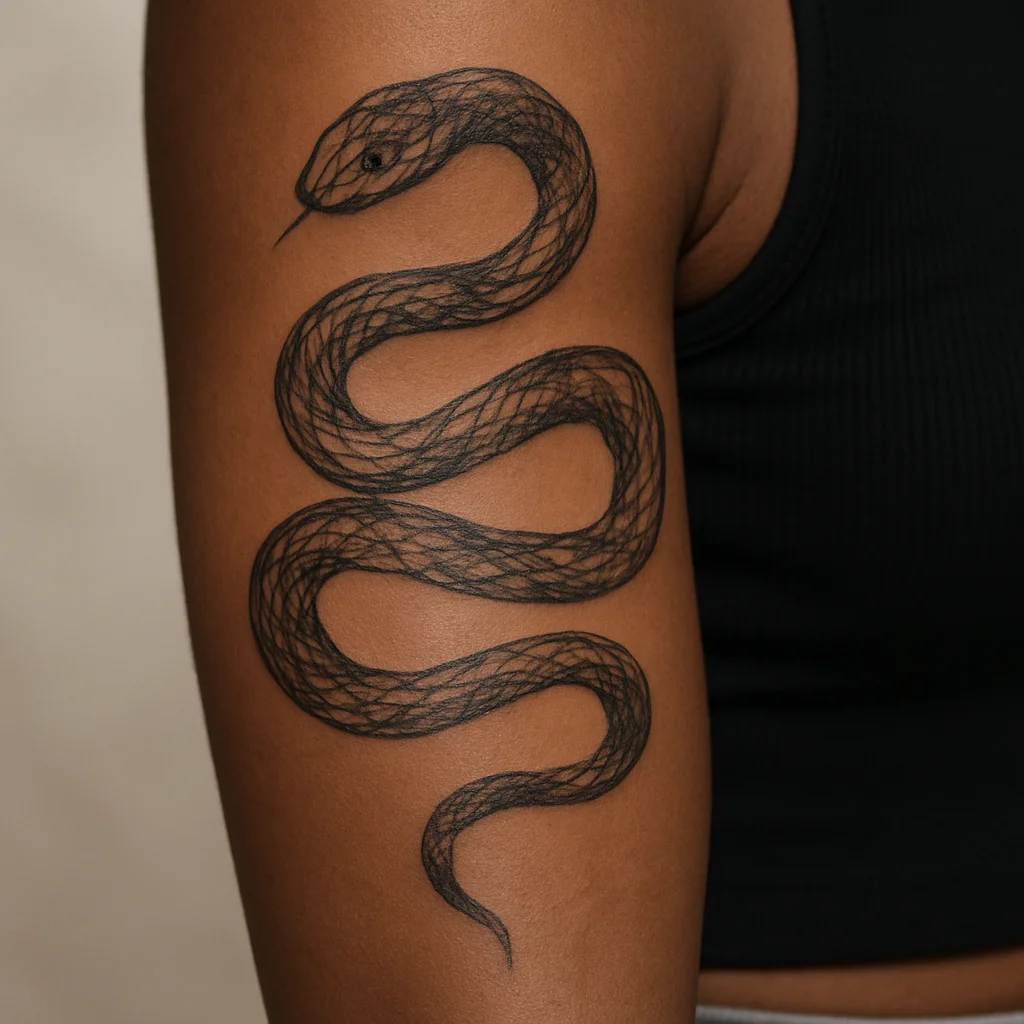
11. Snake coiled down the inner arm
A slim serpent with its body doubling back on itself, head resting near the elbow crease. It uses the length of the zone brilliantly and looks strikingly different depending on whether your arm is at your side or raised. Ask for a slightly bolder outline so the belly scales don't merge as it heals.
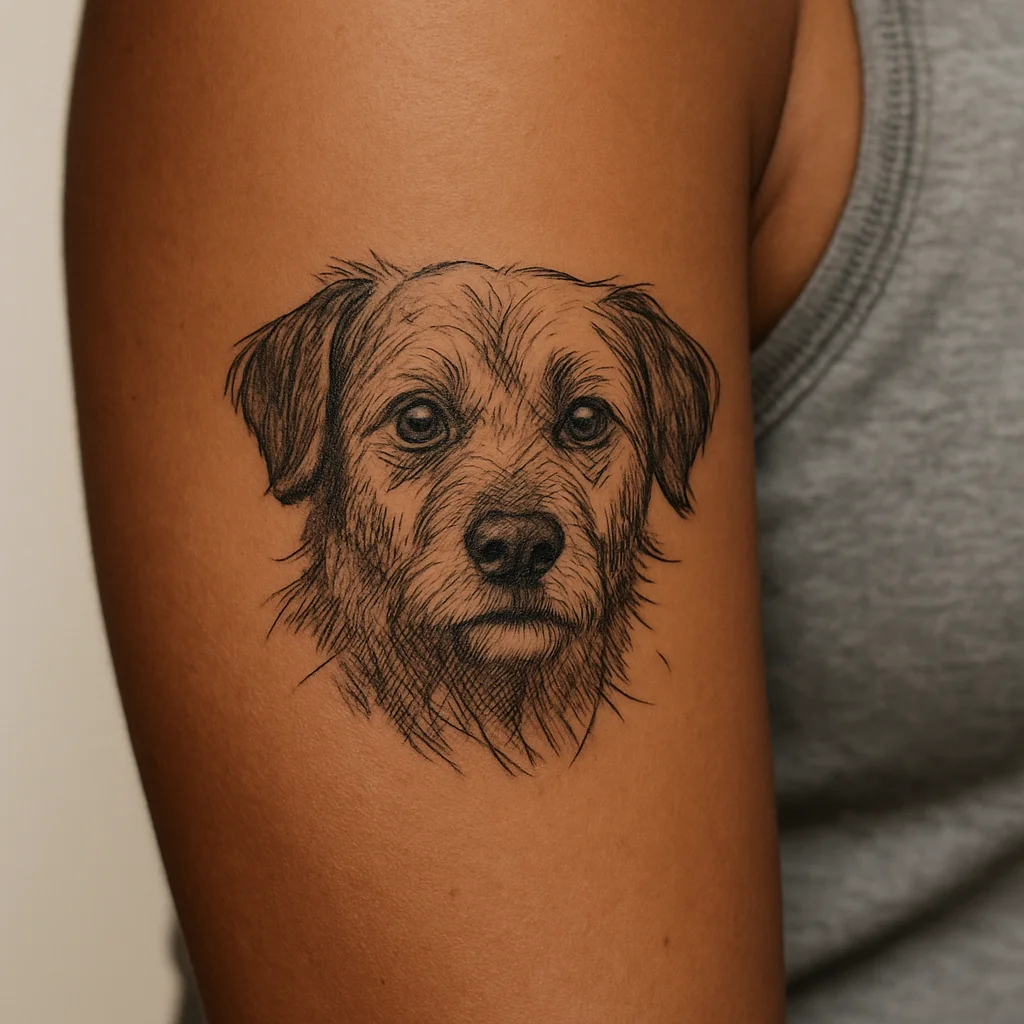
12. Micro-portrait of a pet's face
A soft illustrative rendering, palm-sized, tucked where only you and people you choose will see it. Portraits need shading room, so anything under three inches risks turning into a grey smudge in ten years. Bring several high-contrast photos, not just your favourite one.
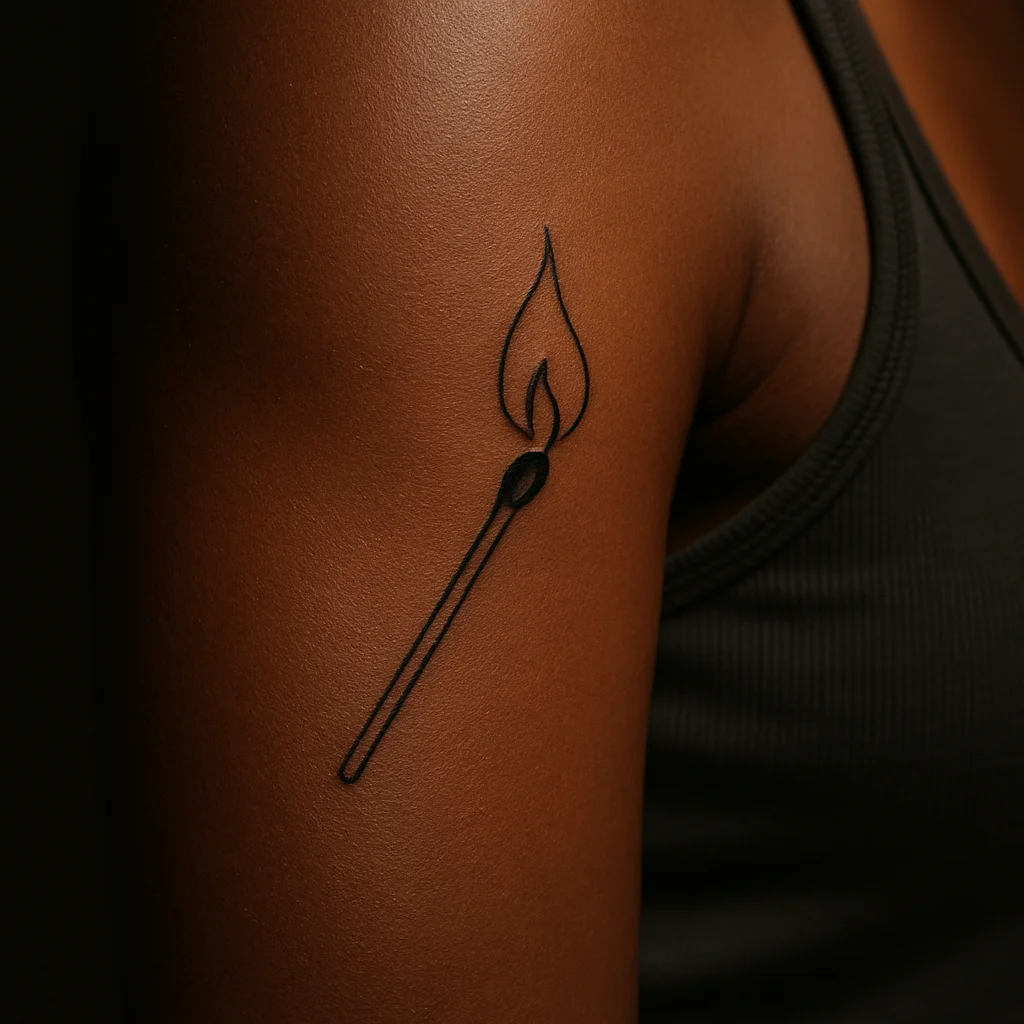
13. Struck match with a single flame
Minimal, three inches, the matchstick angled with the muscle and the flame licking upward. It's a quietly loaded image, about starting something, and it costs very little chair time. A great pick if you want meaning without explanation.
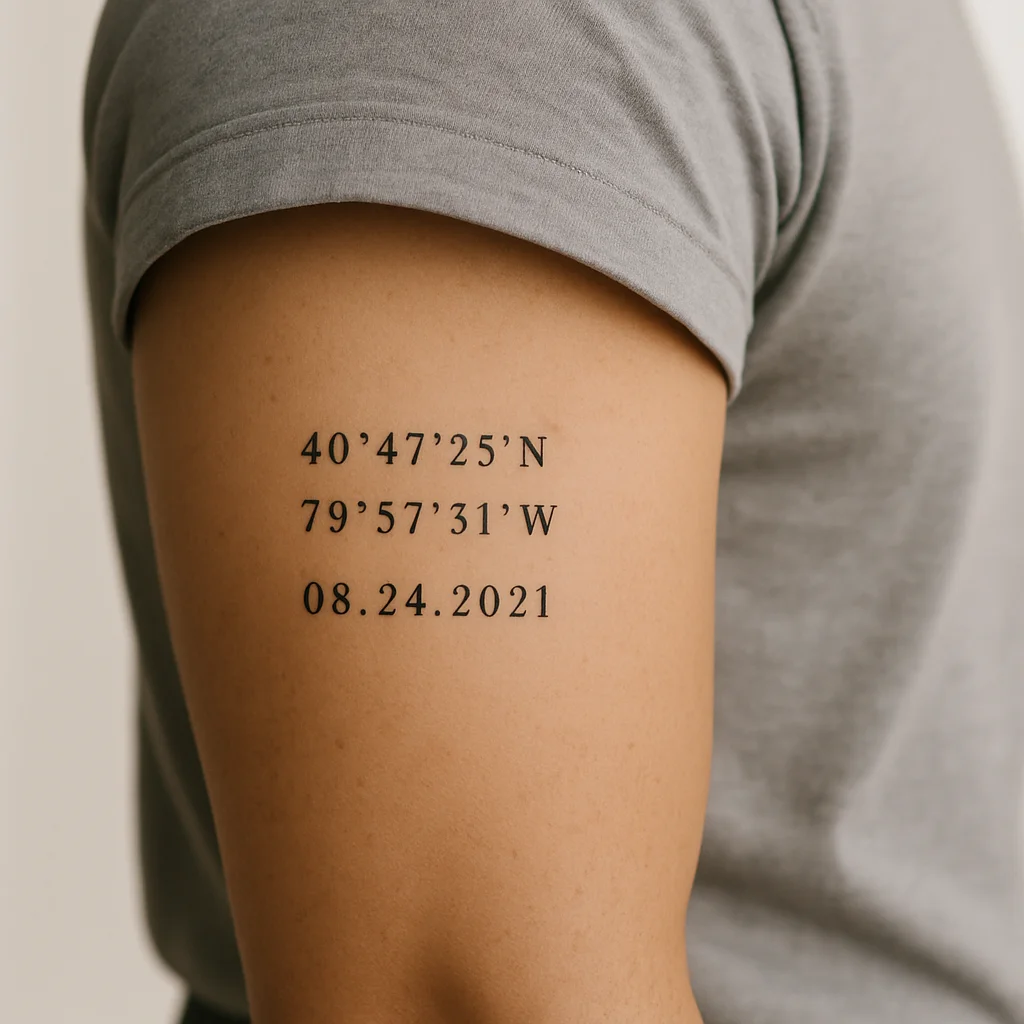
14. Coordinates and a date in small caps
Two clean lines of type, spaced generously, sitting mid inner bicep. Numbers age better than script because each character stands alone, so nothing blurs into its neighbour. Have your artist print it at actual size and hold it to your arm before stencilling.
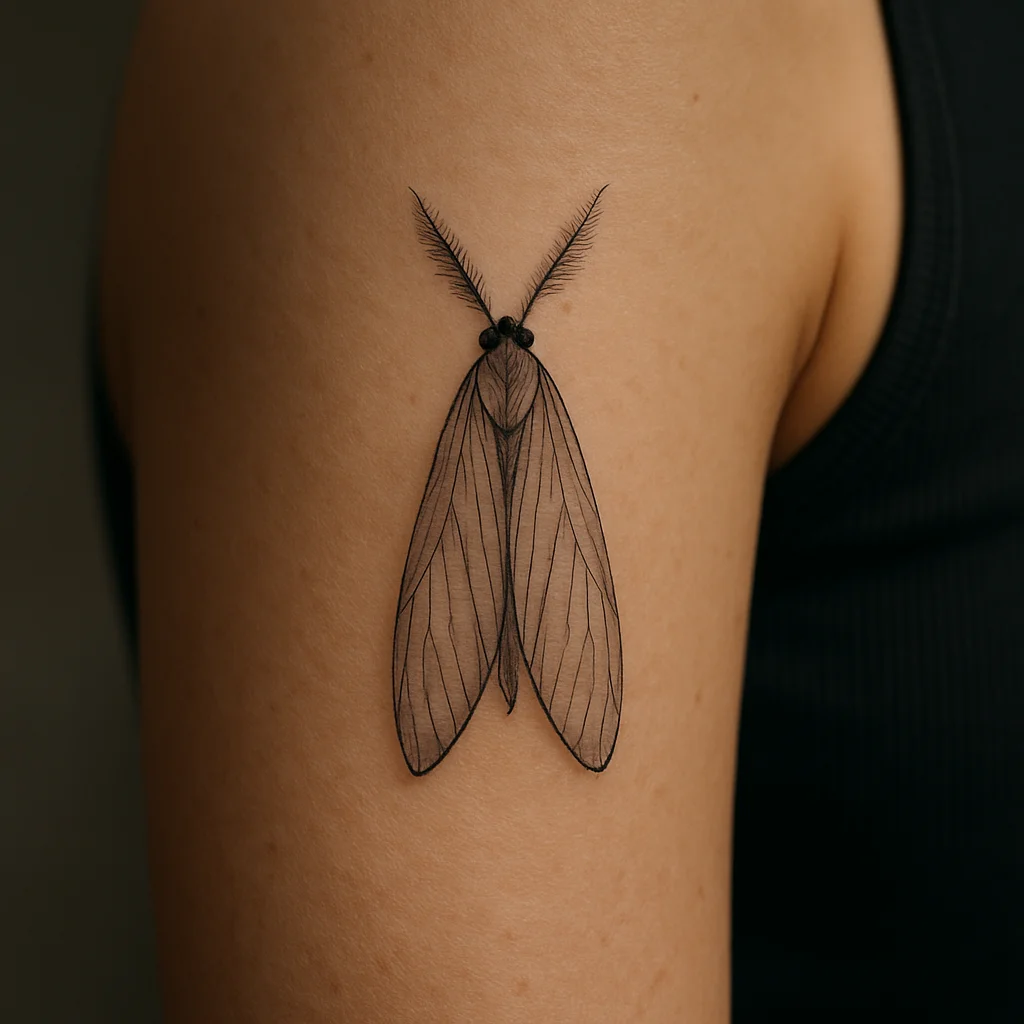
15. Moth with folded wings
Wings closed rather than spread, giving a narrow vertical shape that fits the zone perfectly. Fine stippled shading on the wing pattern keeps it soft while the body carries the contrast. Suits anyone who finds butterflies too sweet.
Tricep and back of arm: the surprise angle
The back of the upper arm is the zone you rarely see on yourself, which makes it strangely freeing. It's a long, gently tapering panel that flatters vertical designs, and it stays hidden in most clothing until you turn around.
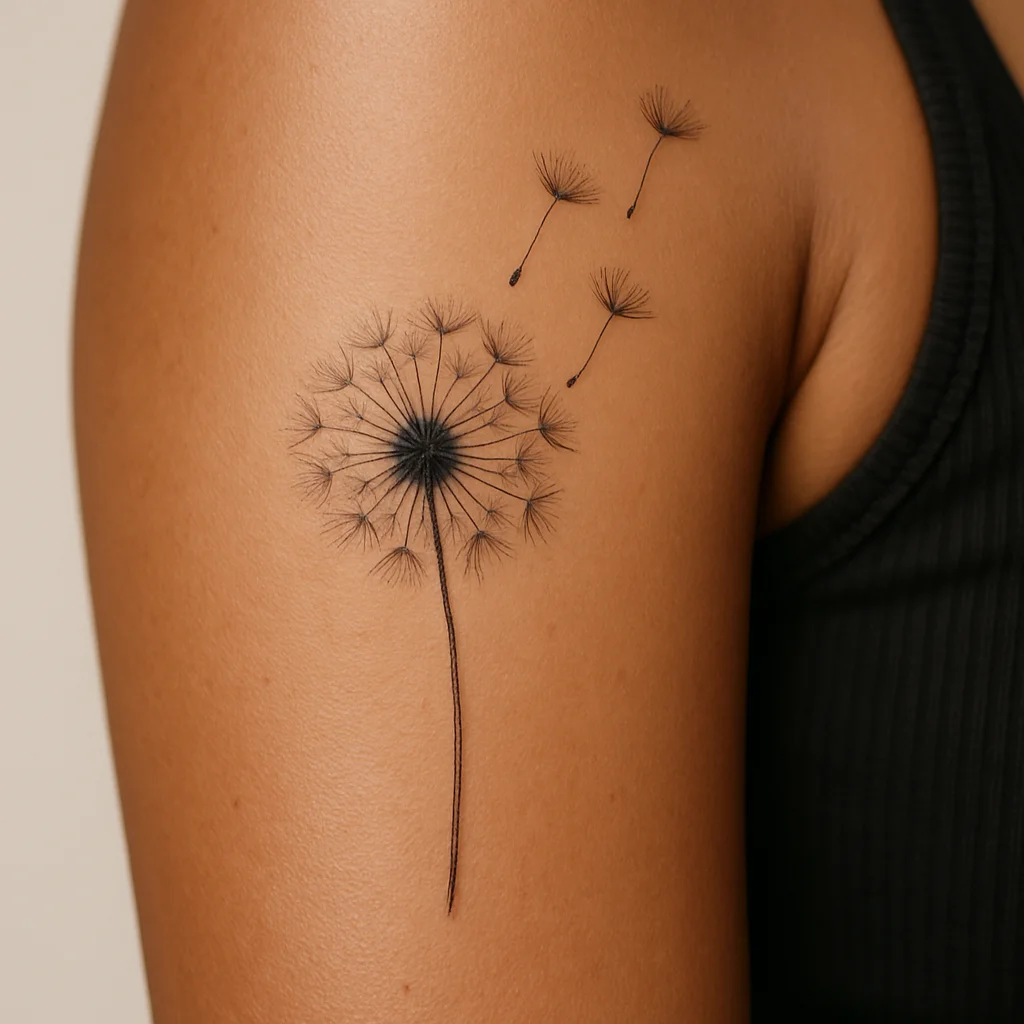
16. Dandelion releasing seeds upward
The stem sits low on the tricep with seeds drifting toward the shoulder, so the movement reads correctly when your arm hangs down. Fine-line work with a few tiny detached seeds keeps it airy. Six to eight inches gives the drift room to breathe.
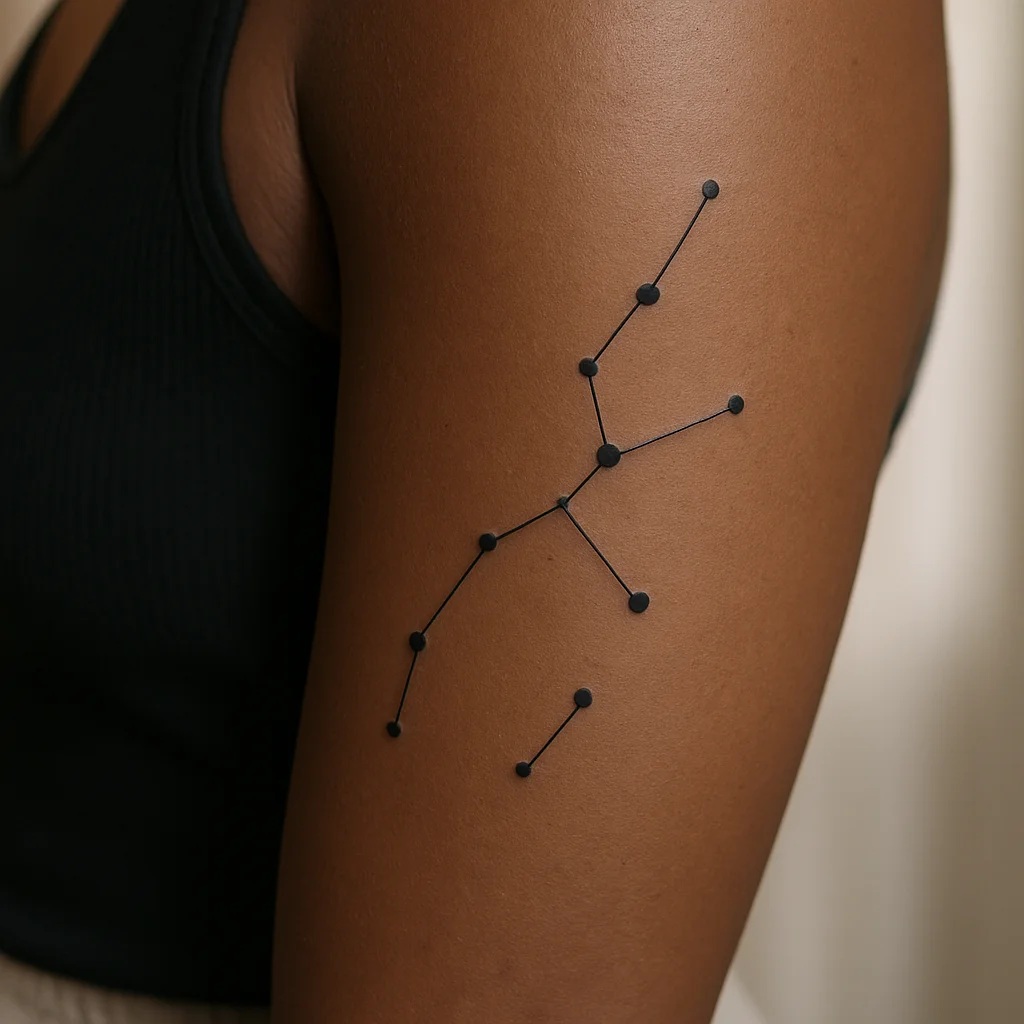
17. Constellation in fine dots and hairlines
Your chosen star pattern rendered as varied dot sizes connected by the faintest lines. It's subtle, personal and one of the cheapest meaningful pieces you can get. Ask for the brightest stars to be noticeably larger, or the whole thing flattens as it heals.
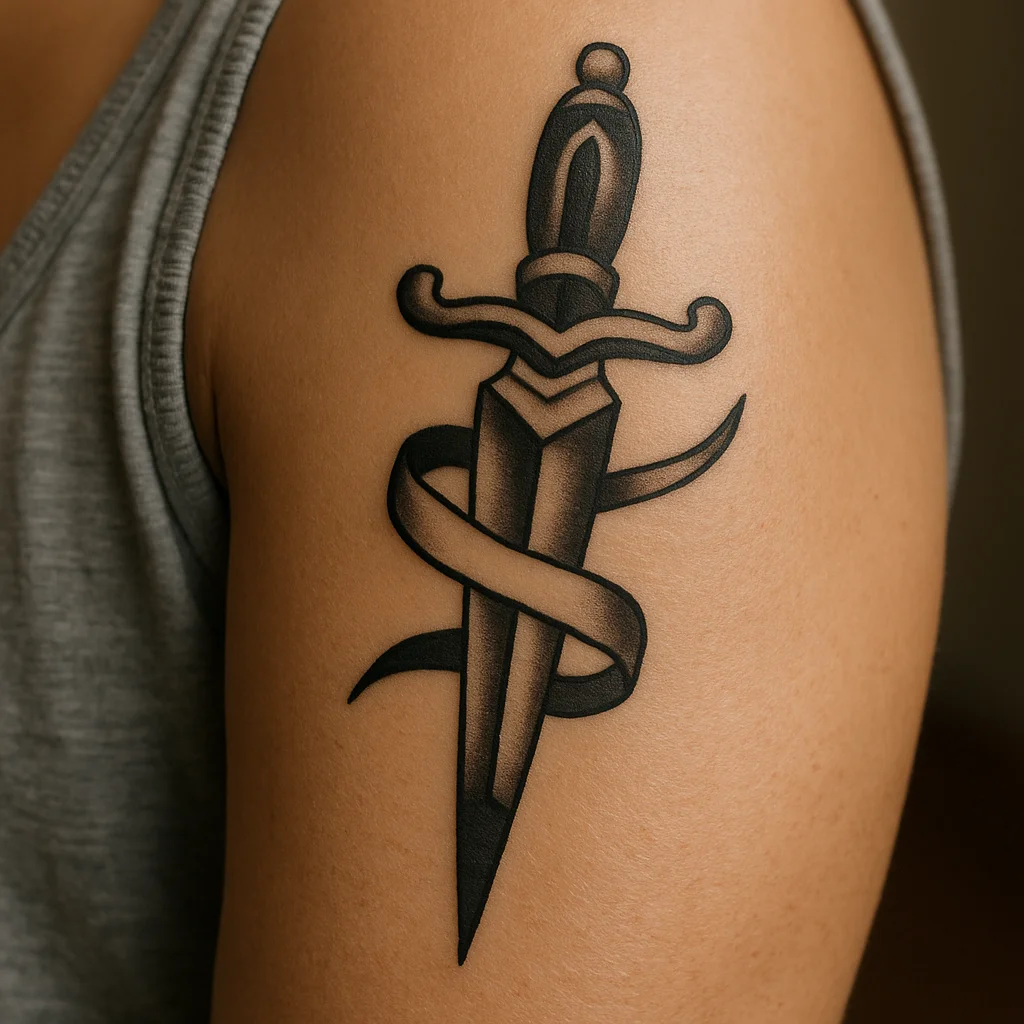
18. Traditional dagger running down the tricep
Point down, handle near the shoulder, wrapped with a thin ribbon or a sprig of leaves. The long narrow shape is a natural fit for this panel and the bold traditional line weight will still look sharp in twenty years. A confident, slightly tough choice that stays easy to cover.
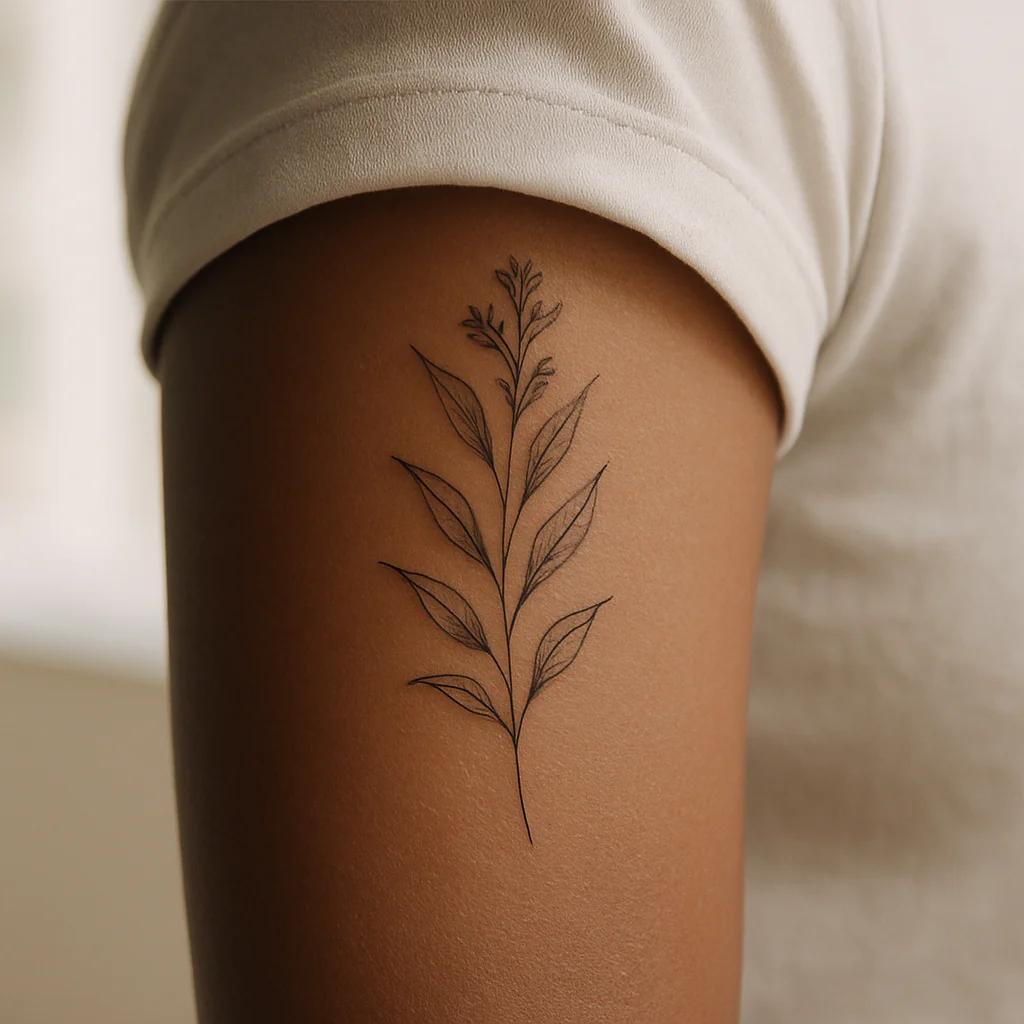
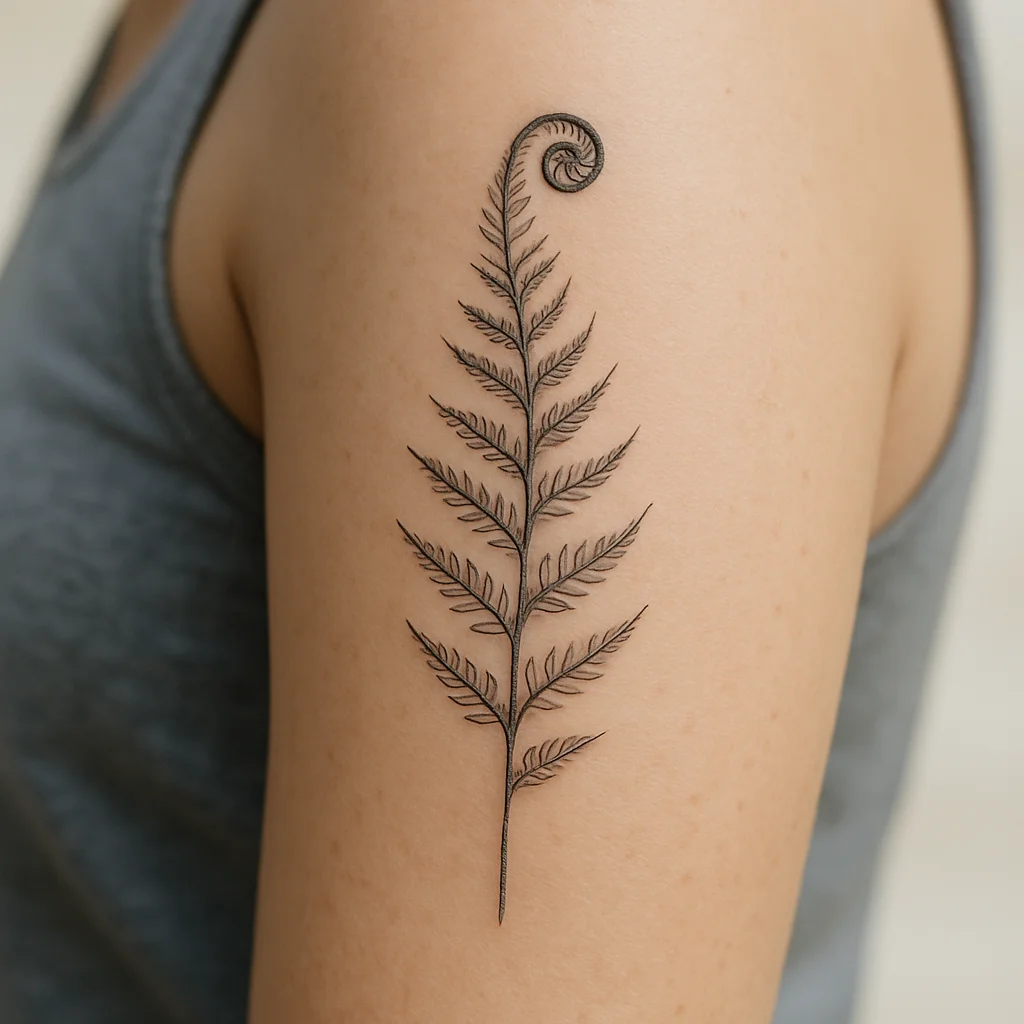
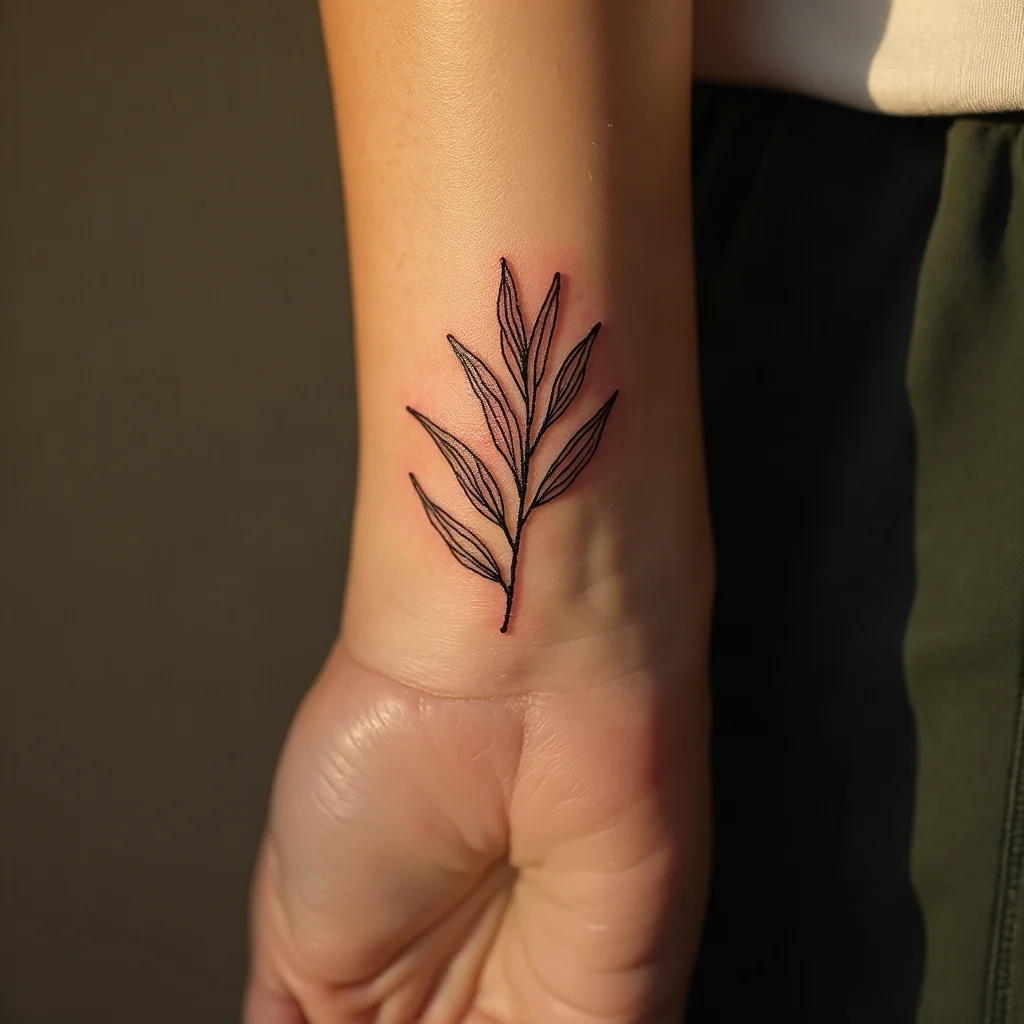
19. Fern frond with unfurling tip
A single vertical frond, leaflets shortening toward the top where the crozier curls in. Botanicals with a repeating structure look expensive here because the taper of the arm does half the composition work. Keep spacing between leaflets generous so it doesn't fill in.
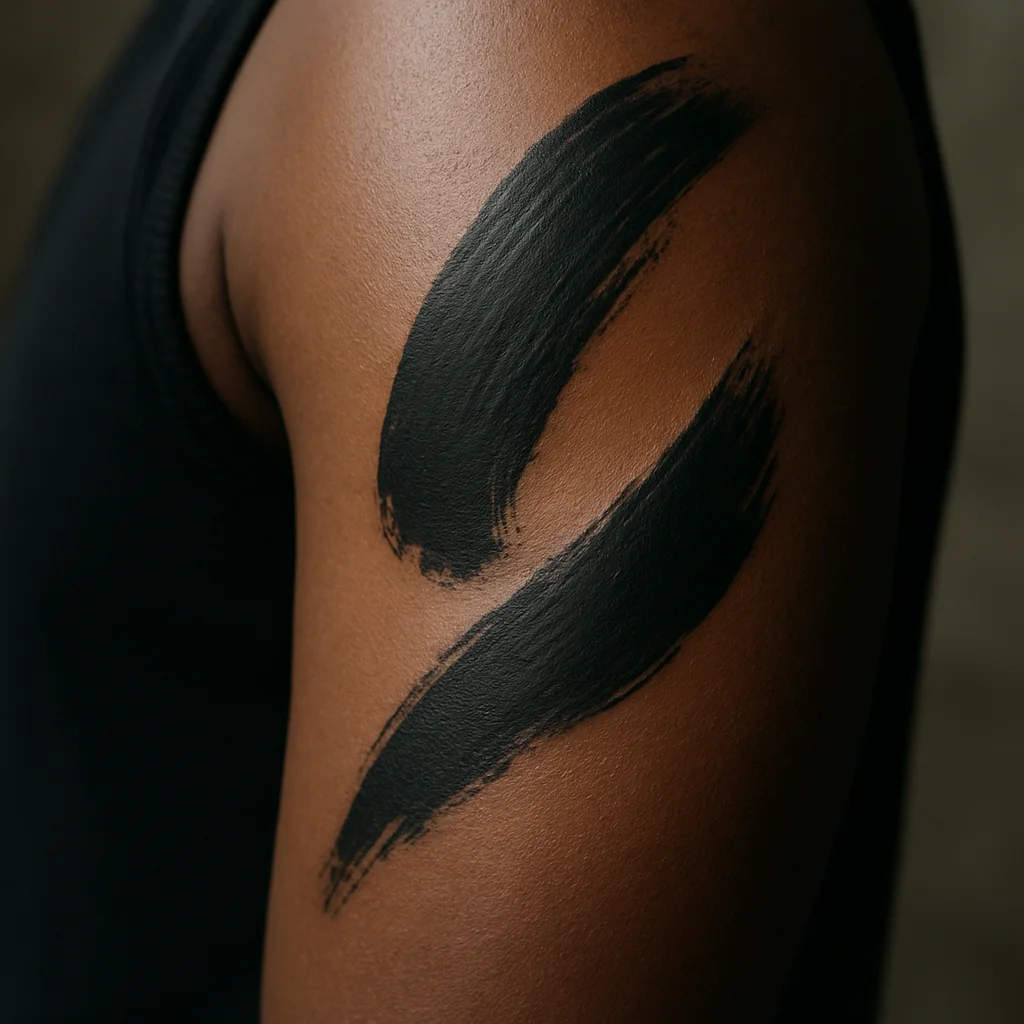
20. Abstract blackwork brushstroke
One or two sweeping strokes with dry-brush texture at the ends, laid diagonally across the back of the arm. It's modern, quick to tattoo and reads as deliberate design rather than a symbol. Works especially well on people who want ink without narrative.
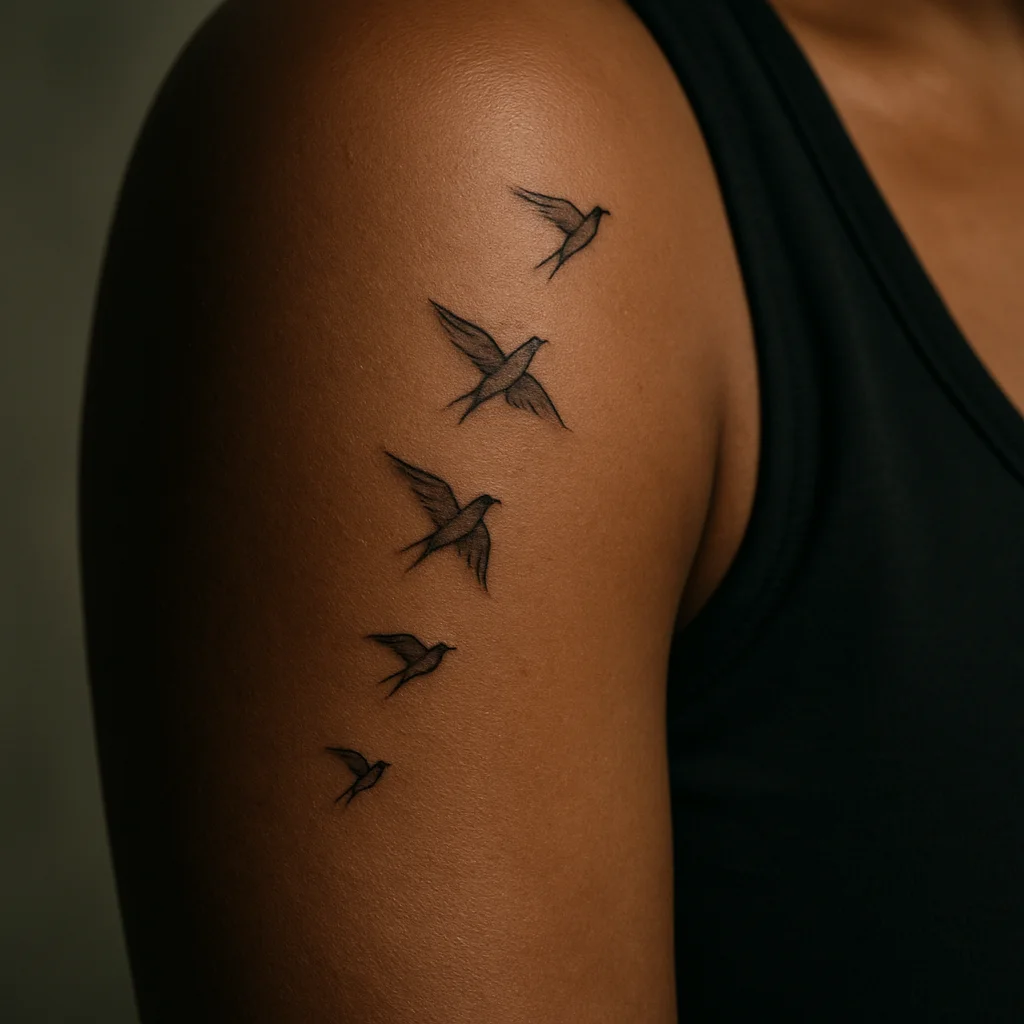
21. Scattering flock of small birds
Five to seven birds at varying sizes, tightest near the elbow and dispersing up toward the shoulder. Size variation is what sells the depth, so ask that no two birds be identical. Small enough to stay delicate, large enough in span to feel like a real piece.
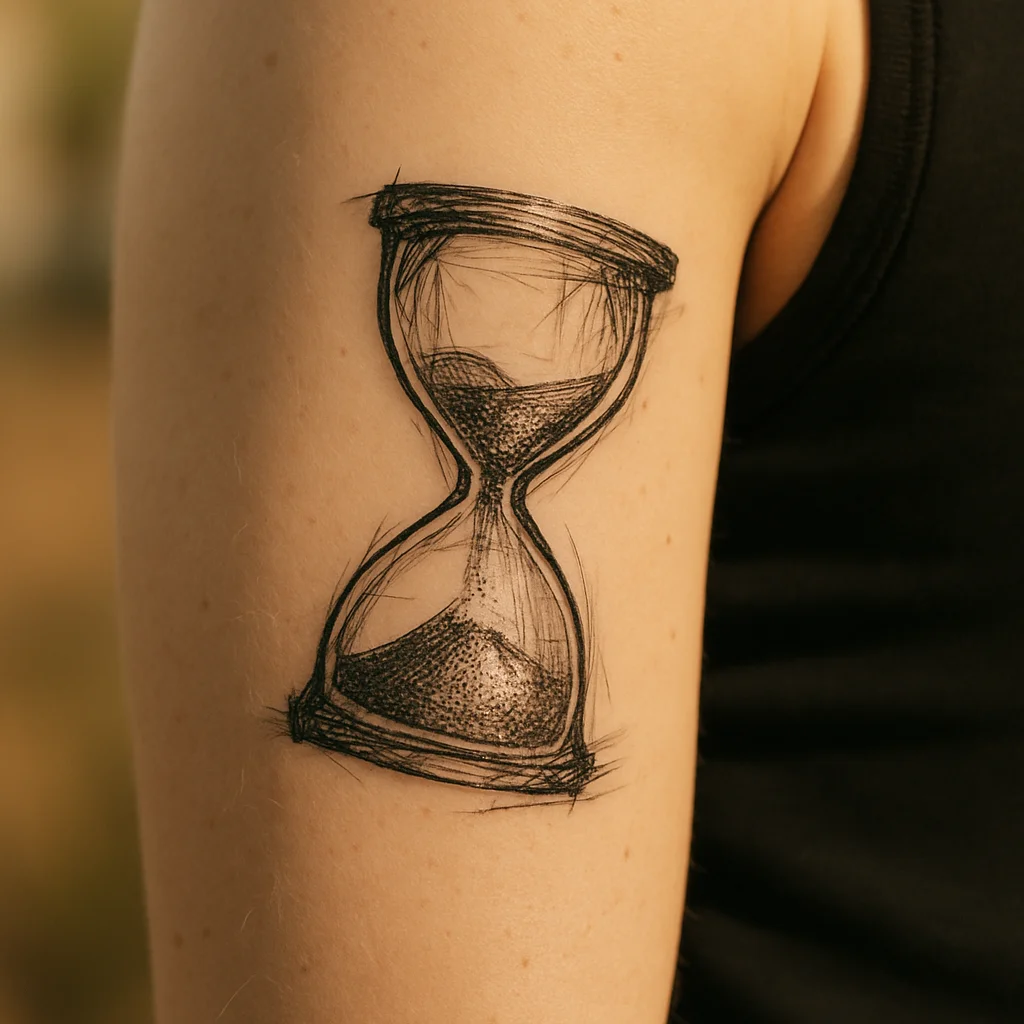
22. Hourglass with drifting sand
An illustrative hourglass, the sand rendered as loose stipple rather than solid grey, tilted slightly off vertical. It sits well at hand-height on the tricep and pairs naturally with a small floral or a date beneath. Give it enough size, four inches minimum, for the glass highlights to survive.
Bands and wraps: designs that circle the whole arm
An armband is the one upper-arm design that acknowledges the arm is a cylinder. Bands need a wrap session where your artist stencils, has you drop your arm, checks the seam from every angle and re-stencils, so budget extra time. Where the two ends meet should be a deliberate feature, not a hidden accident.
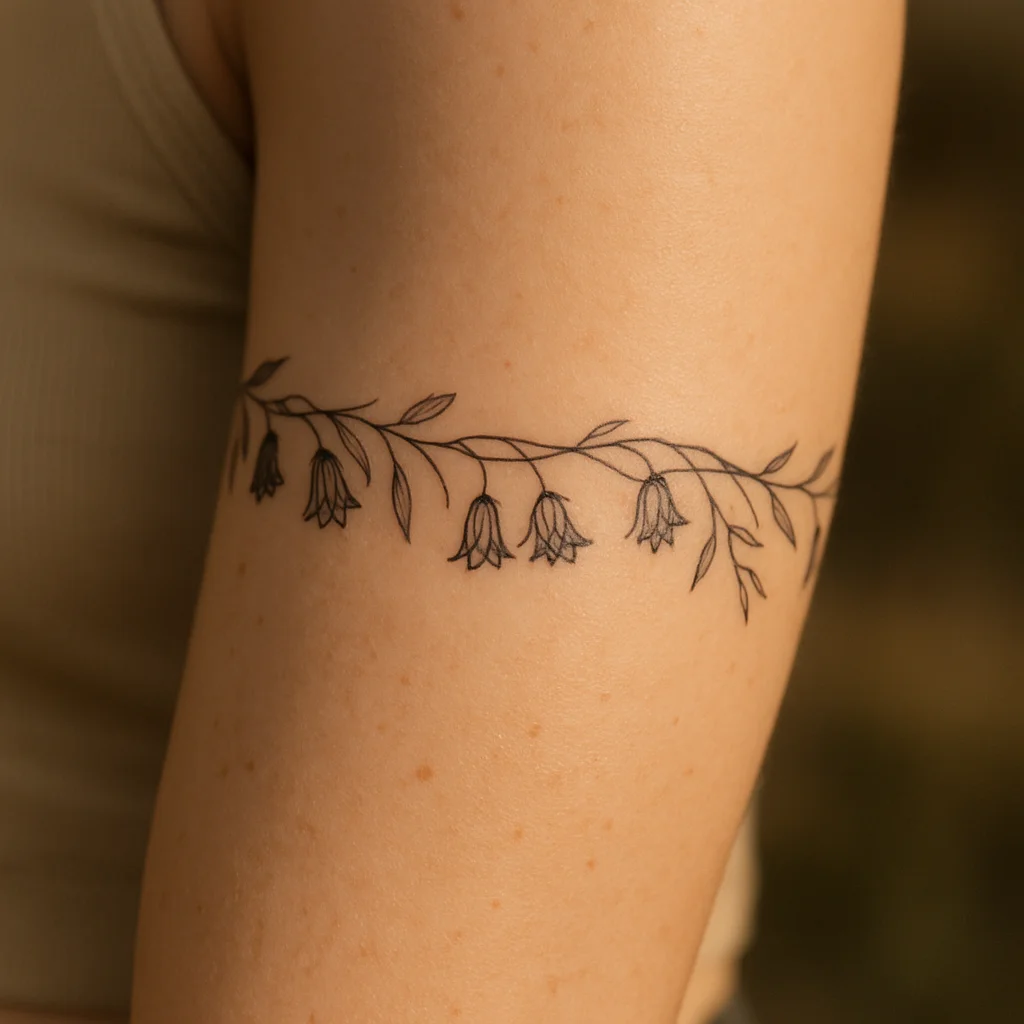
23. Floral band of bluebells and greenery
A ring of small flowers and trailing leaves that closes on the inner arm with two crossing stems. Softer and less severe than a solid band, and it flatters almost every arm shape. Around an inch and a half tall keeps it elegant rather than costume-like.
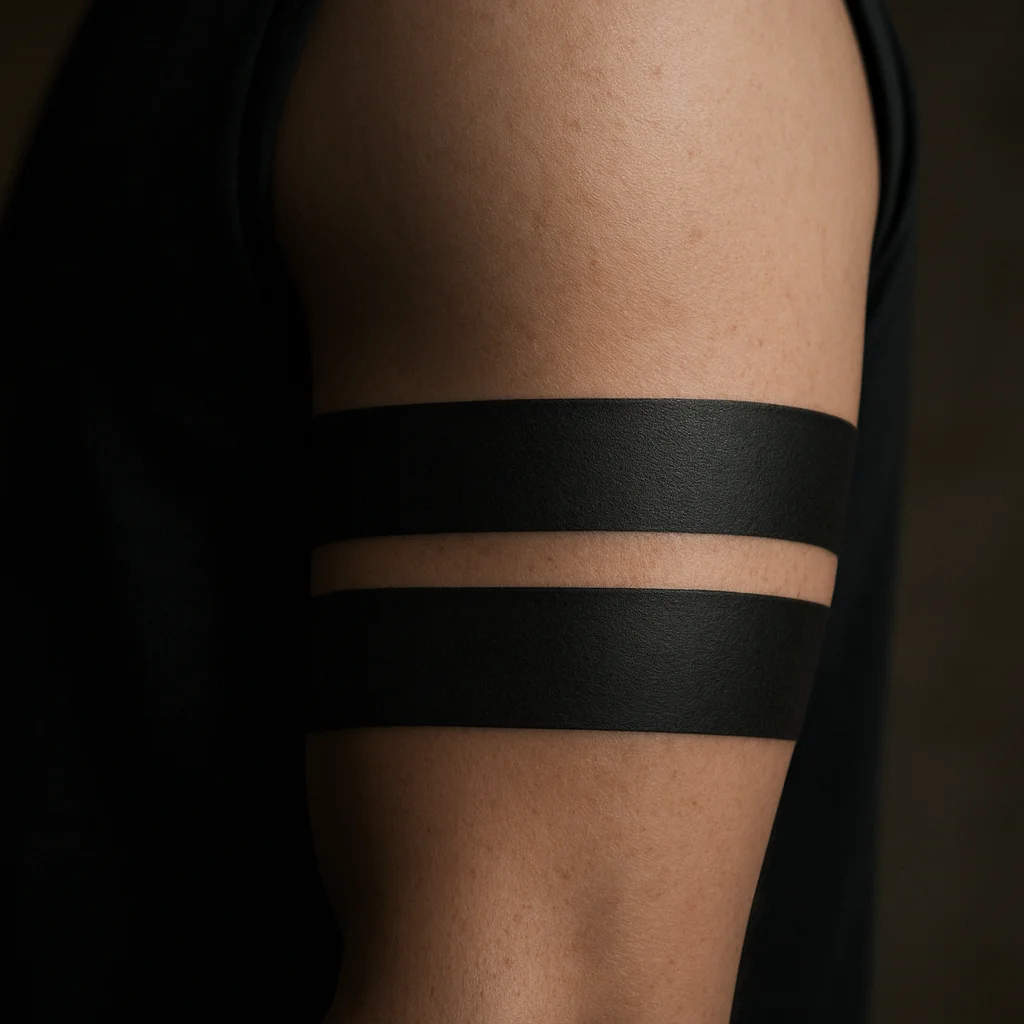
24. Solid black band with a negative-space gap
A thick blackwork ring interrupted by one clean unfilled stripe running around it. It's graphic, genuinely timeless, and the gap prevents the heavy black from looking like a bruise. Solid saturation like this takes a while and can feel hot toward the end, so break the session if you need to.
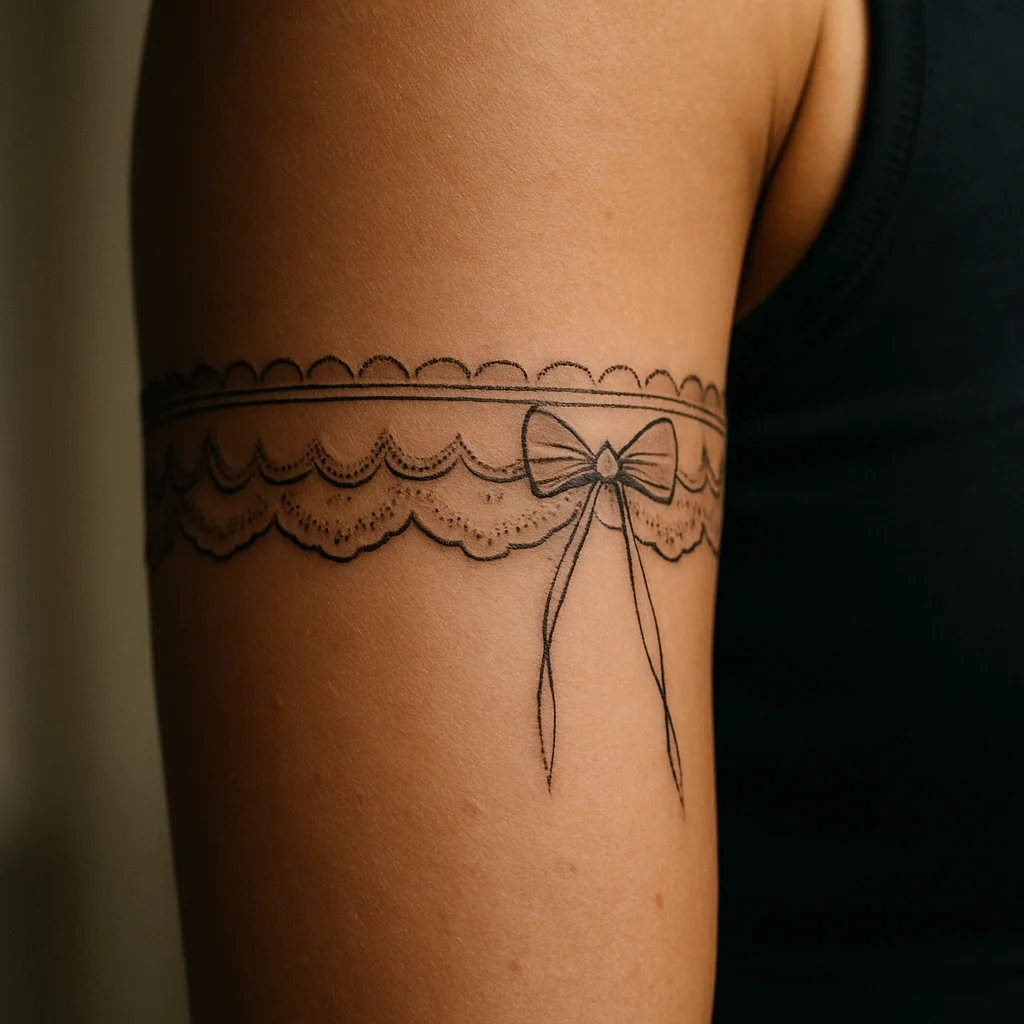
25. Lace garter band with a small bow
Fine scalloped lace with tiny eyelets, finished with a bow on the outer arm and two short trailing ribbons. It's intricate, so give it real size; lace that's too small collapses into grey within a few years. Beautiful high on the arm just under the deltoid.
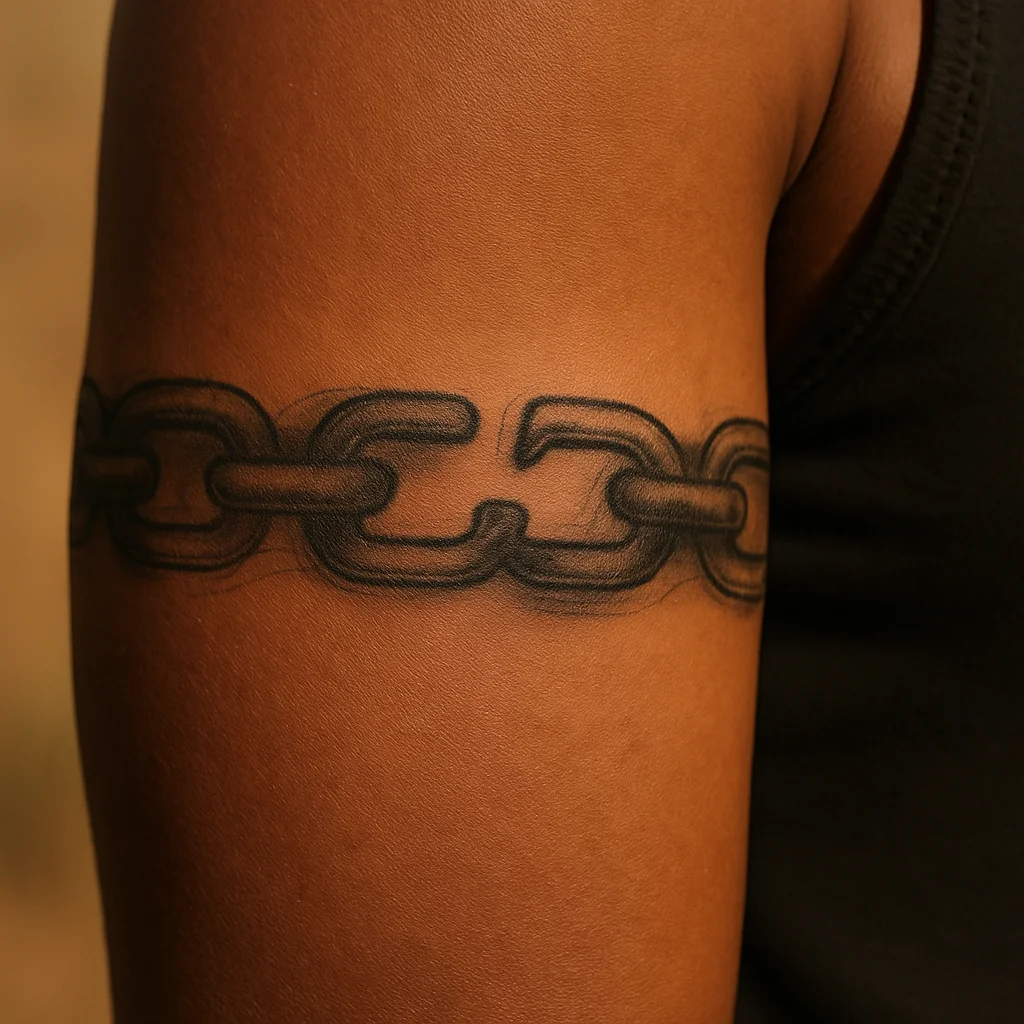
26. Chain-link band with one open link
Rendered with proper highlights so the metal looks round, with a single link broken open at the front. The illusion of volume only works if the shading wraps with the arm, which is why this design needs an artist comfortable working in the round. Reads as strength without being loud.
27. Snake spiralling around the upper arm
Head resting on the outer bicep, body winding up and behind the arm and out of sight. It's a striking use of the cylinder because part of the design is always hidden, inviting a second look. Plan for two sittings if you want detailed scale work.
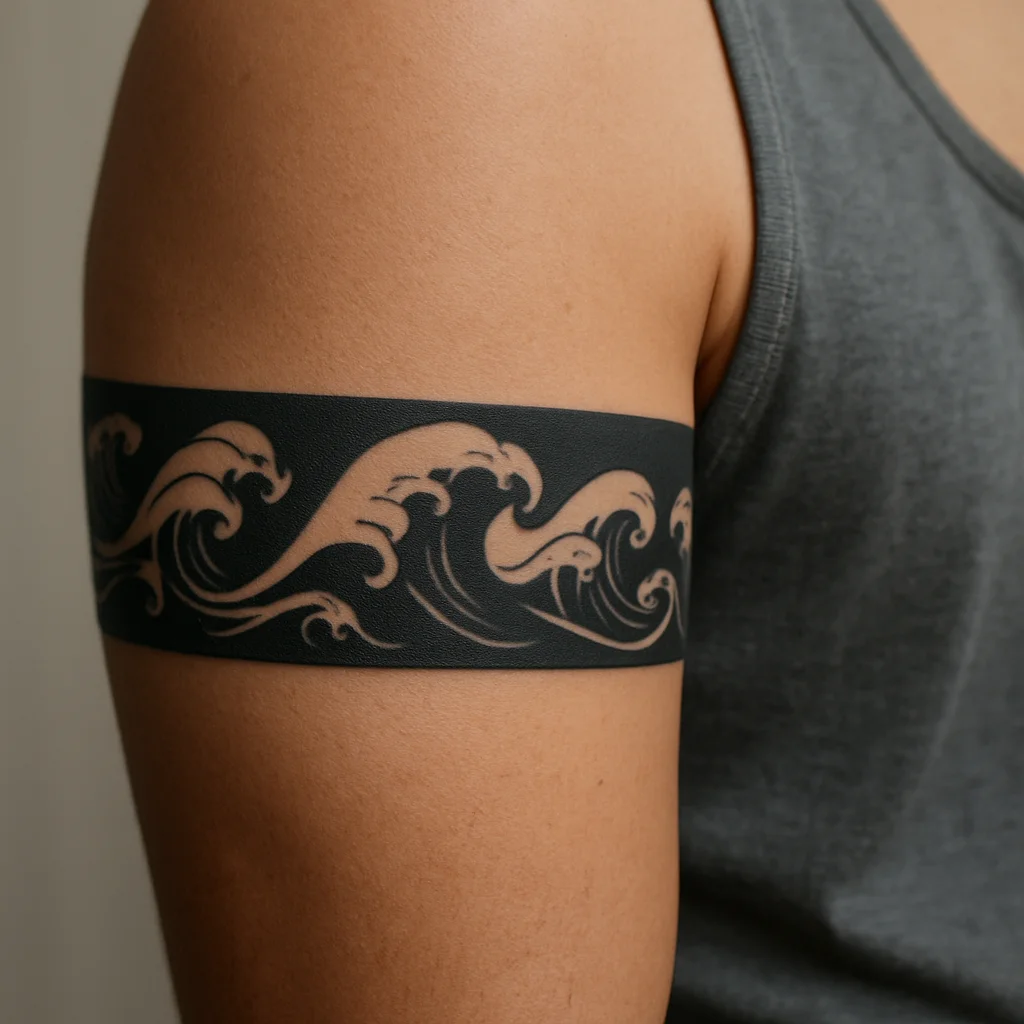
28. Water band of rolling waves
A continuous strip of stylised waves with fine white-space crests, circling once with no obvious start or end. The repeating motif hides the seam better than almost any other design. Works at any height from a slim inch to a bold three inches.
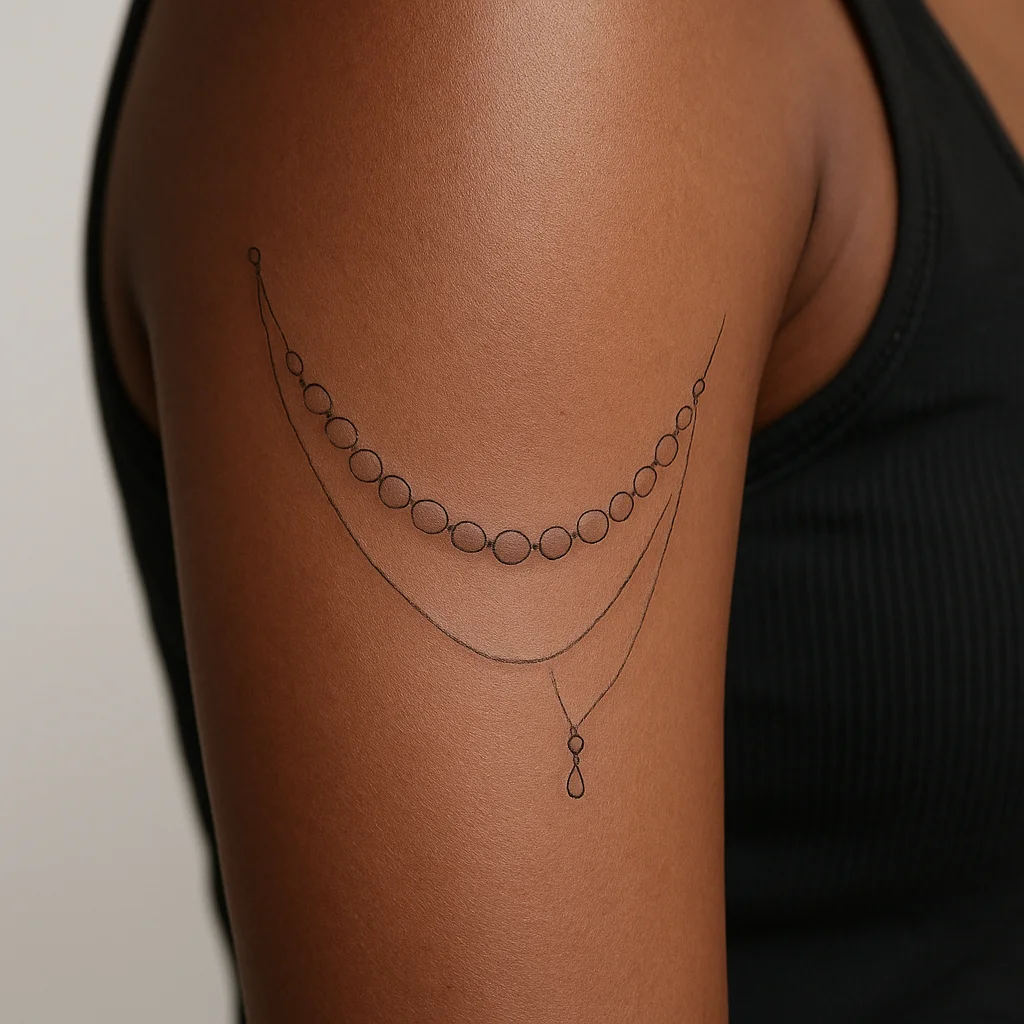
29. Pearl strand with a single charm
A dotted string of shaded pearls draping slightly rather than sitting perfectly level, with one small charm hanging on the outer arm. The drape is what makes it look real, so ask your artist to draw it freehand on skin. Delicate, feminine and easy to add to later.
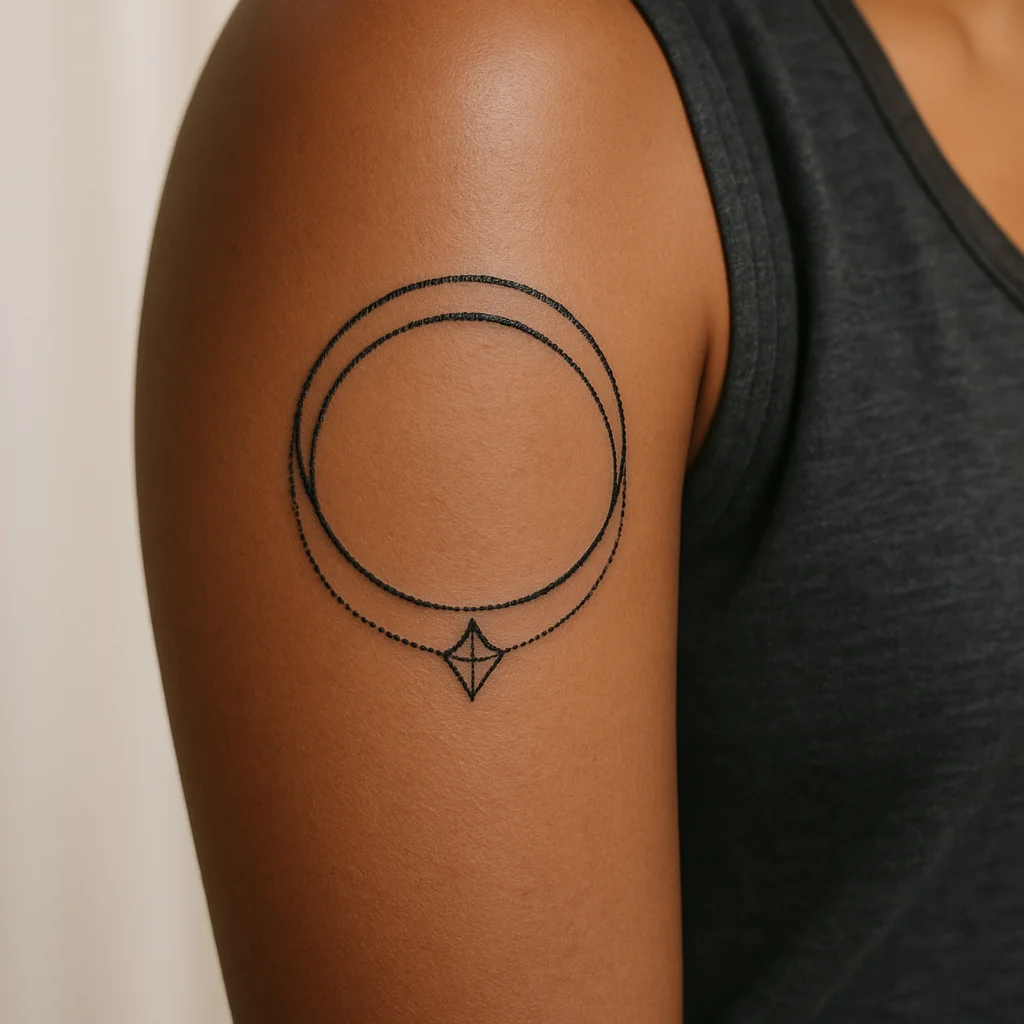
30. Geometric dot-and-line band
Two thin parallel rings with a dotted rhythm between them and one small diamond marking the front. Precise geometry on a curved surface is technically demanding, so check healed photos rather than fresh ones. Excellent as the top border of a future half sleeve.
Booking it: cost, sittings, healing and what to say
What you'll pay. Most artists in this range charge either a small flat rate for pieces under a couple of inches or an hourly rate that varies widely by city and reputation. A palm-sized fine-line botanical on the outer bicep is typically a short single sitting; a fully shaded illustrative piece or a saturated blackwork band can run several hours and land in the mid three figures or beyond. Ask for a quote as a range and confirm whether the shop has a minimum, because tiny inner-arm pieces almost always hit it.
Sittings. Anything under about three hours is comfortable for most people in one go. Wrap-around bands and detailed portraits often split into two, partly for your comfort and partly because saturated skin stops taking ink cleanly toward the end of a long day.
Healing on the upper arm. It's one of the easier areas: no constant flexing, no rubbing against a waistband. The main hazards are bra straps and tank top seams sitting right on a fresh shoulder cap, and sleeping on your side. Wear loose sleeves for the first week, keep the piece washed and thinly moisturised, and stay out of pools and direct sun until it's fully settled. Our first-30-days aftercare guide covers the timeline in detail.
Briefing your artist. Bring three things: two or three reference images for mood rather than exact copying, a note on the maximum size you'd accept, and a clear statement about the sleeve line. Say something like "I want this fully covered by a short sleeve" or "I want it visible in a tank top but not from the front." Also mention whether you might extend the arm later, because an artist planning for growth will place your first piece differently than one treating it as a standalone.
Frequently asked questions
How much does an upper arm tattoo hurt compared to the forearm?
The outer bicep and shoulder cap are generally easier than the forearm because there's more muscle padding and no bone close to the surface. The tricep is a moderate step up, particularly near the back of the armpit. The inner bicep is the sharp one, with thin nerve-rich skin that stings noticeably, so book it early in the day and eat beforehand.
Will an upper arm tattoo change shape if my arms get bigger or smaller?
Moderate fitness or weight changes cause very little visible distortion on the upper arm because the skin stretches evenly over the muscle. Significant gains or losses can widen or slacken a design slightly, and geometric shapes like perfect circles show that more than organic florals. If you're mid-way through a big body change, waiting until things stabilise is the safer call.
How wide should an armband be?
Slim bands of roughly one to one and a half inches read as jewellery and suit most arms. Anything from two to three inches becomes a statement piece and needs enough arm circumference to avoid looking like a cuff. Have your artist stencil it and check the proportion in a mirror with your arm relaxed at your side before any needle touches skin.
Can I hide an upper arm tattoo at work?
Usually yes, if you place it above your t-shirt sleeve hem. Mark the hem of the shirt you wear most often and keep the design entirely above that line, allowing an inch of margin for when the sleeve rides up. Inner bicep and high tricep placements are the most reliably concealed of all.
Is the upper arm a good spot for a first tattoo?
It's one of the best. The pain is manageable, healing is straightforward because the area doesn't bend or rub much, and you get real size options without committing to a highly visible placement. It also functions as a natural anchor point if you decide to expand into a half sleeve later.
The conversation
No comments yet. Got a thought about these designs? Start us off.
Want to weigh in? Join the community to comment, save designs and try them on your skin.