30 Outer Forearm Tattoos for Men, Panel by Panel
The outer forearm is the most-seen panel on the body, and the design has to survive sunlight, sleeves and daily glances. Here are 30 ideas sorted by how they actually read on that stretch of skin.
Why the outer forearm is the panel to get right
Look down at your own arm right now. The outer forearm is the one piece of skin you see all day, and it is the piece everyone else sees too — at a desk, on a steering wheel, holding a drink. That constant visibility is exactly why artists treat it as a display panel rather than a hiding spot.
Anatomically it gives you a lot to work with. From wrist to elbow you have roughly 9 to 12 inches of length on most men, widening from a narrow, bony wrist end to a broader muscular top near the elbow. The surface is relatively flat and firm, so line work stays crisp and shading lays down evenly. Compare that to the inner forearm, which is softer, paler and more private.
Two honest trade-offs: sun exposure is the highest of any common placement, so fine grey wash and pastel colour will fade faster here than on your ribs or thigh; and hair growth can slightly soften delicate detail as it regrows. Both are manageable with the right design weight. The ideas below are grouped by how a tattoo reads on this panel — vertical, banded, single-subject, or fully blacked in.
Vertical runs: designs that travel wrist to elbow
The panel is longer than it is wide, so vertical compositions are the most natural fit. They also read cleanly when your arm hangs at your side — the design points the same direction as your body.
1. Koi climbing the current
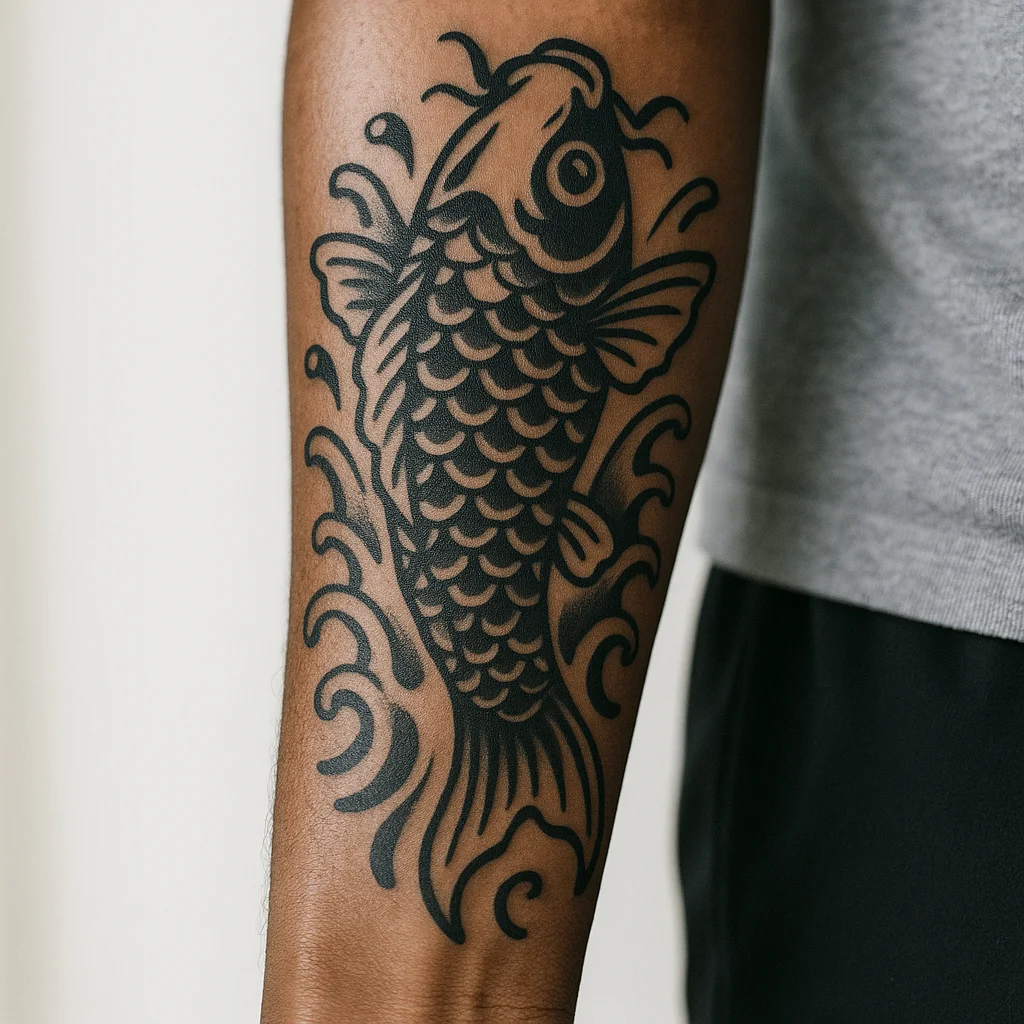
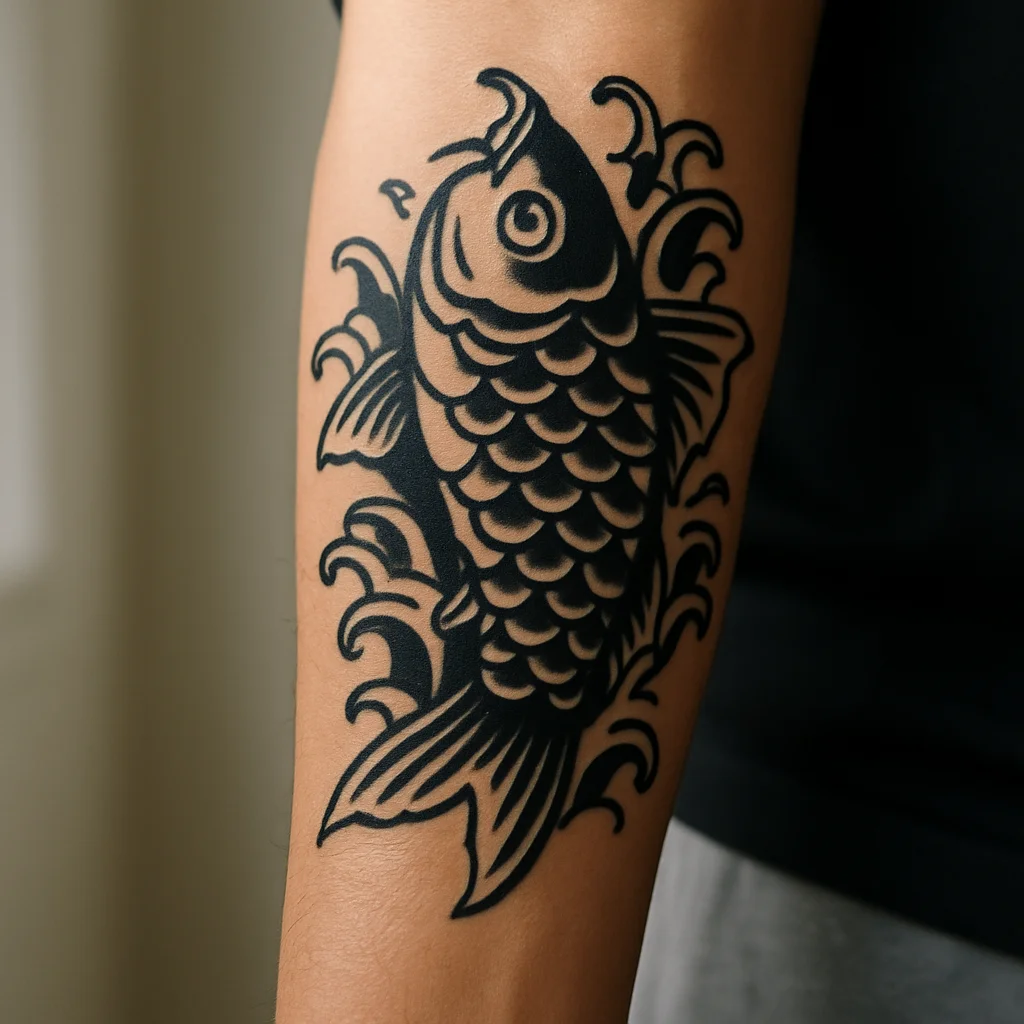
A single koi facing up the arm with water splash and finger waves behind it uses the full 10-inch run and hides nothing. Traditional Japanese artists will build the body along the muscle line and let the tail break toward the elbow. Expect three to five hours in black and grey, longer with colour on the scales.
2. Pine and mountain strip
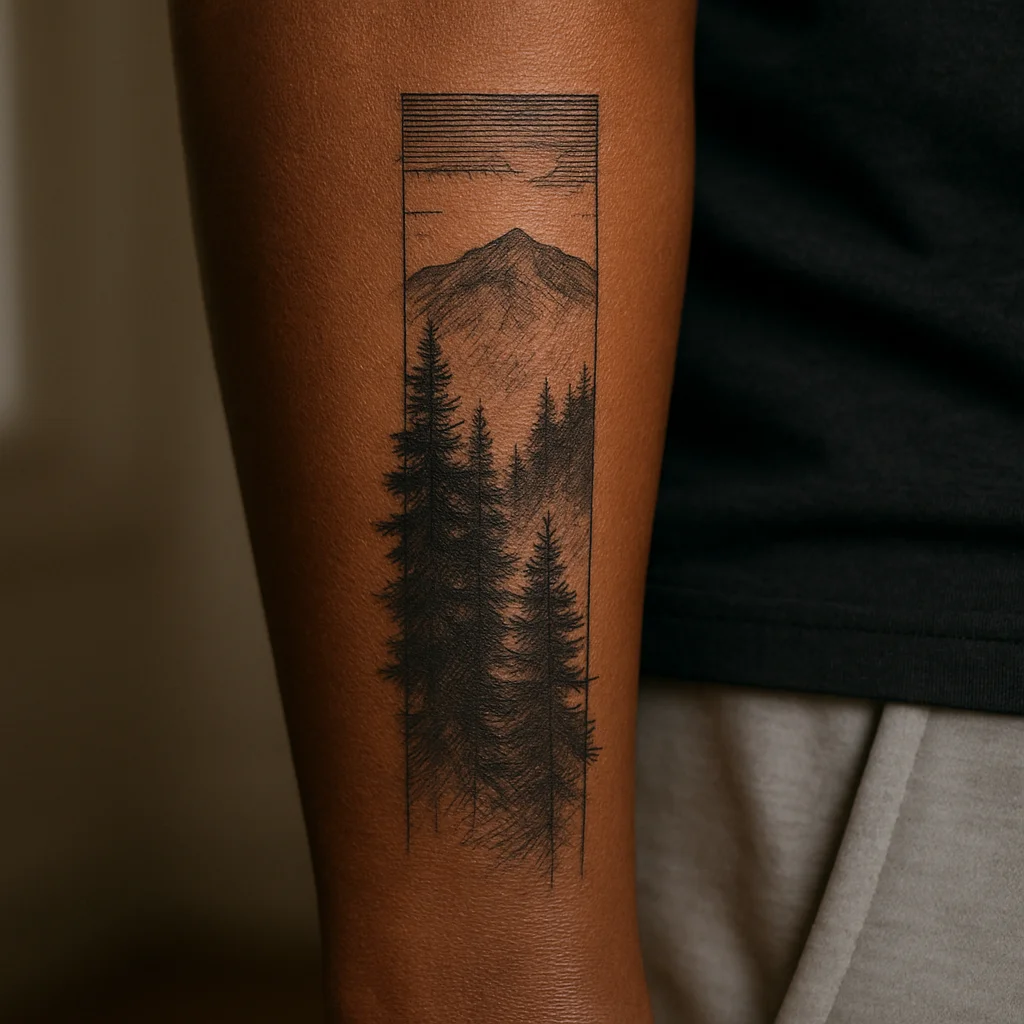
Stack a treeline at the wrist, ridgeline mid-panel and a thin band of sky near the elbow. Keep the silhouette bold and simple; overly fine grey mist in a landscape is the first thing to blur out here after a decade of sun. Great starter piece at 5 to 6 inches.
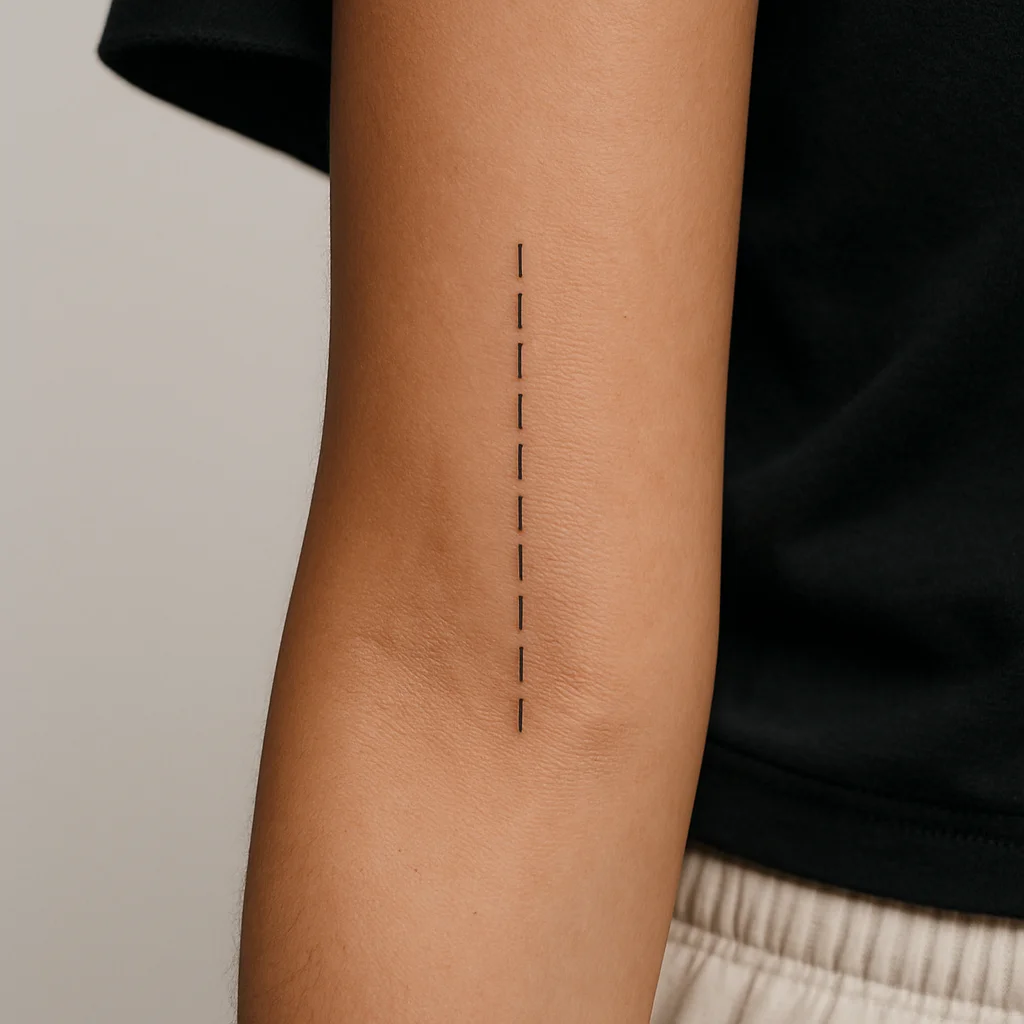
3. Single-line script column
One short phrase set vertically in a narrow, well-spaced typeface, running down the centre of the panel. Read it aloud before committing — vertical lettering is read by strangers, so length matters more than sentiment. Ask your artist to letter it freehand on skin rather than shrinking a computer font.
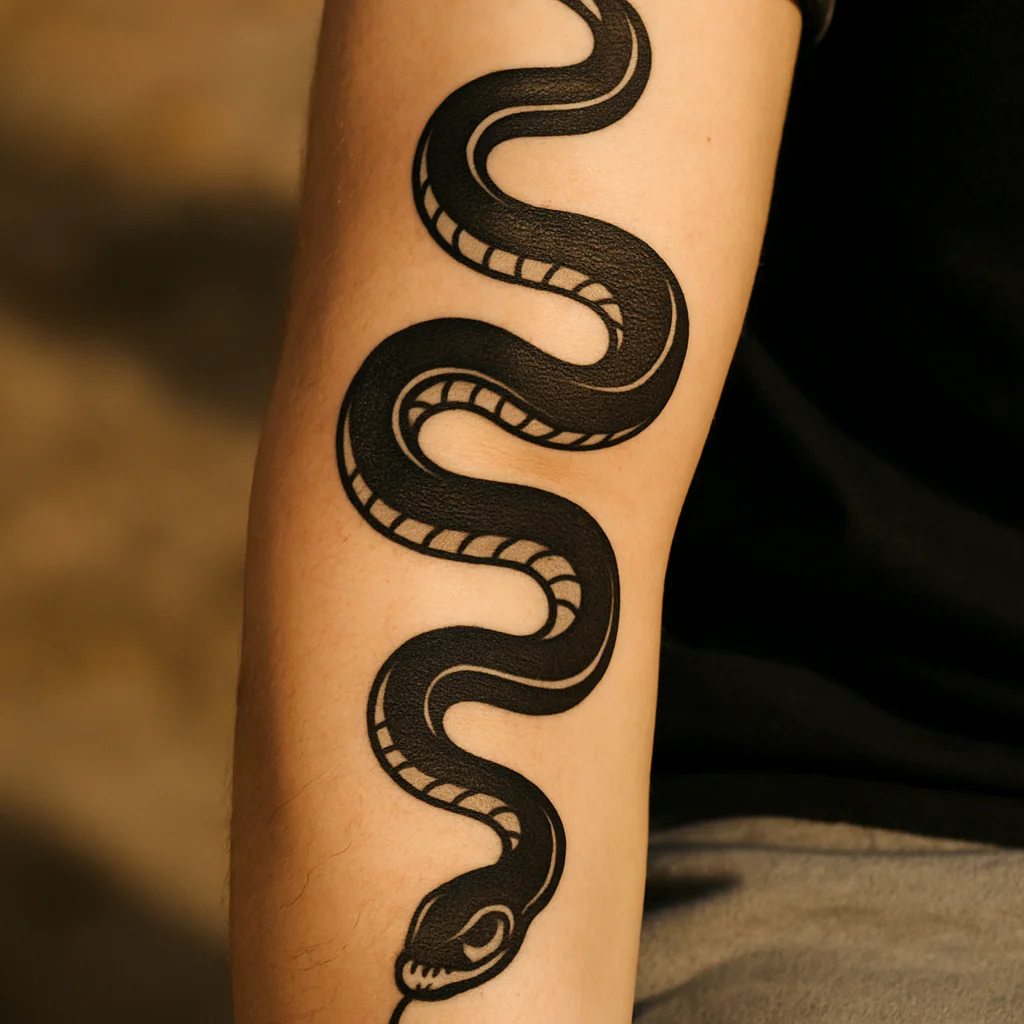
4. Snake winding the outer edge
A serpent that starts at the wrist and coils along the ulnar ridge toward the elbow follows the arm's natural taper. The head can sit face-forward near the elbow so it stares out when you flex. Works beautifully in bold traditional black with a single spot of red on the tongue.
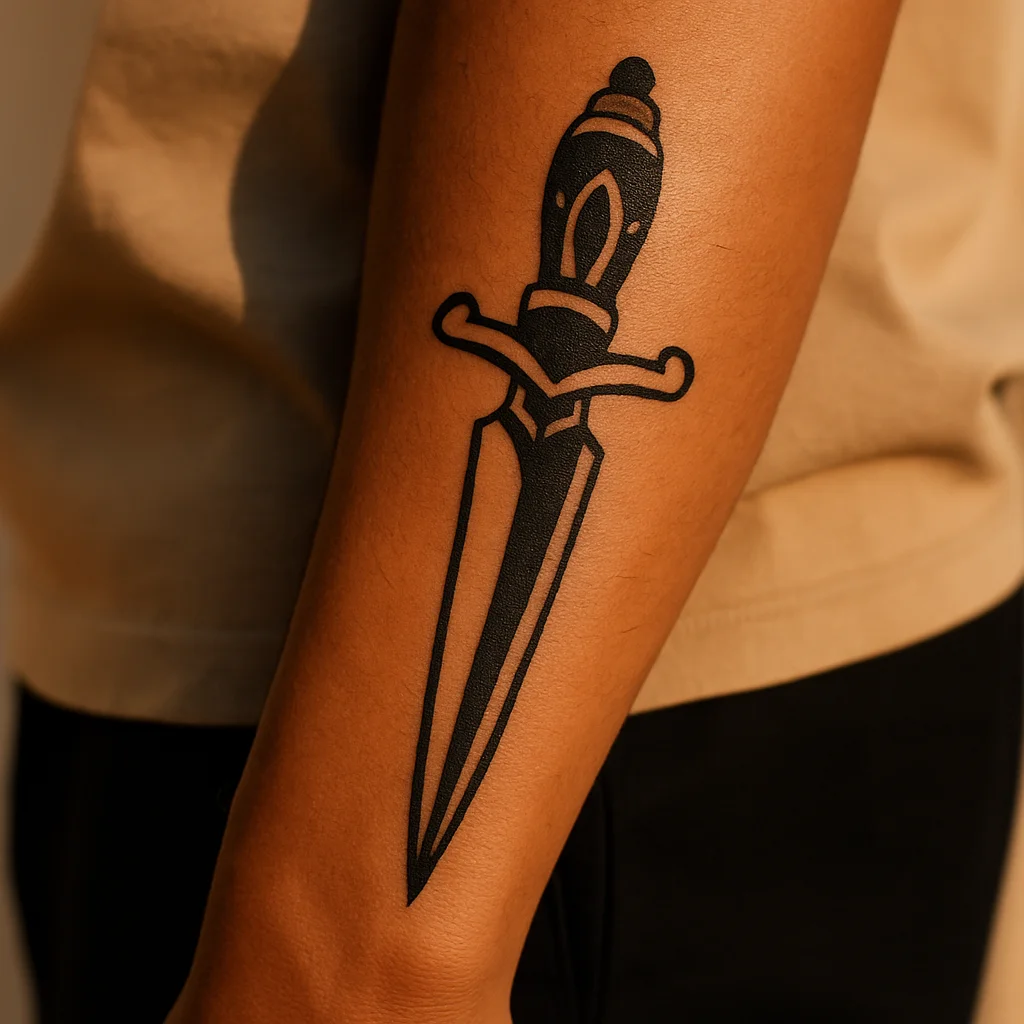
5. Dagger down the bone
Point at the wrist, handle at the elbow, blade tracked straight along the bone line. It is one of the cleanest small-to-medium ideas going and can be finished in a single two-hour session. Add a wrapped rose or a snapped chain later if you want to grow it.
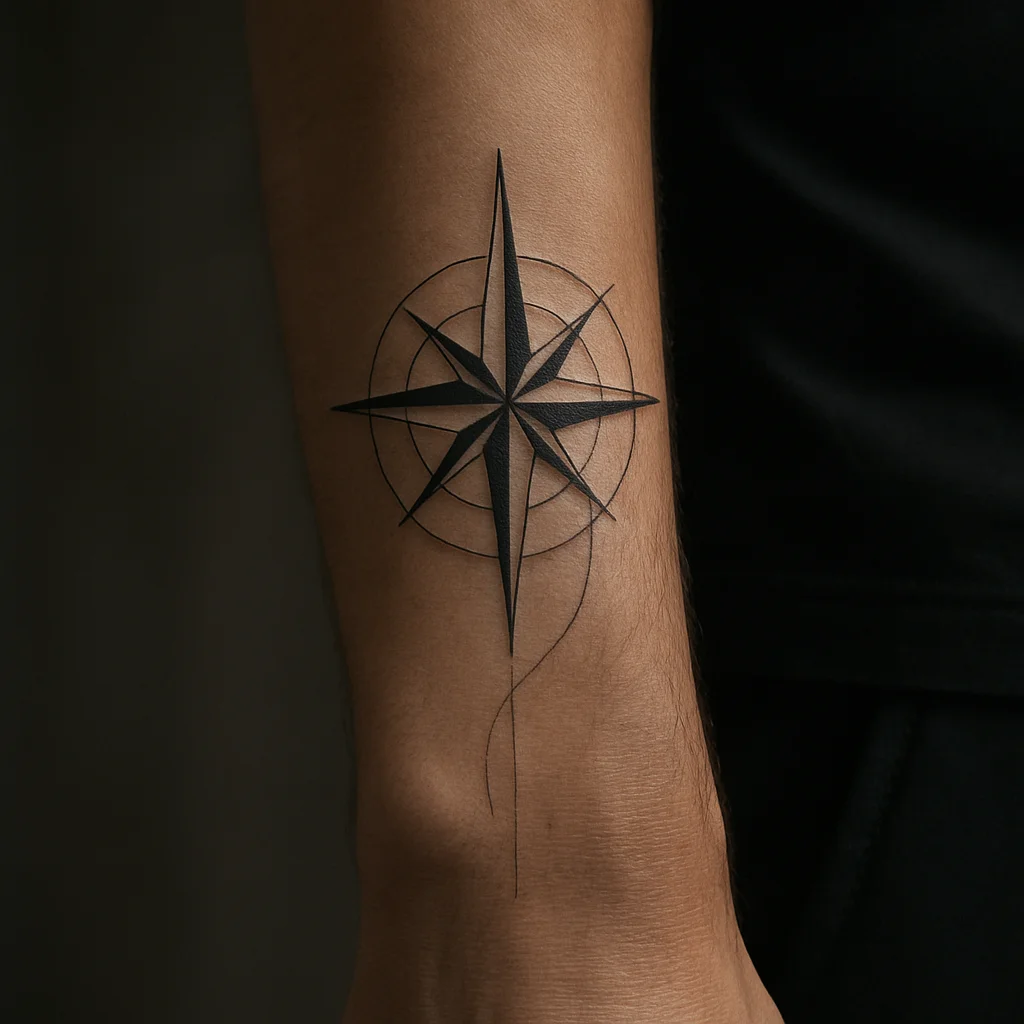
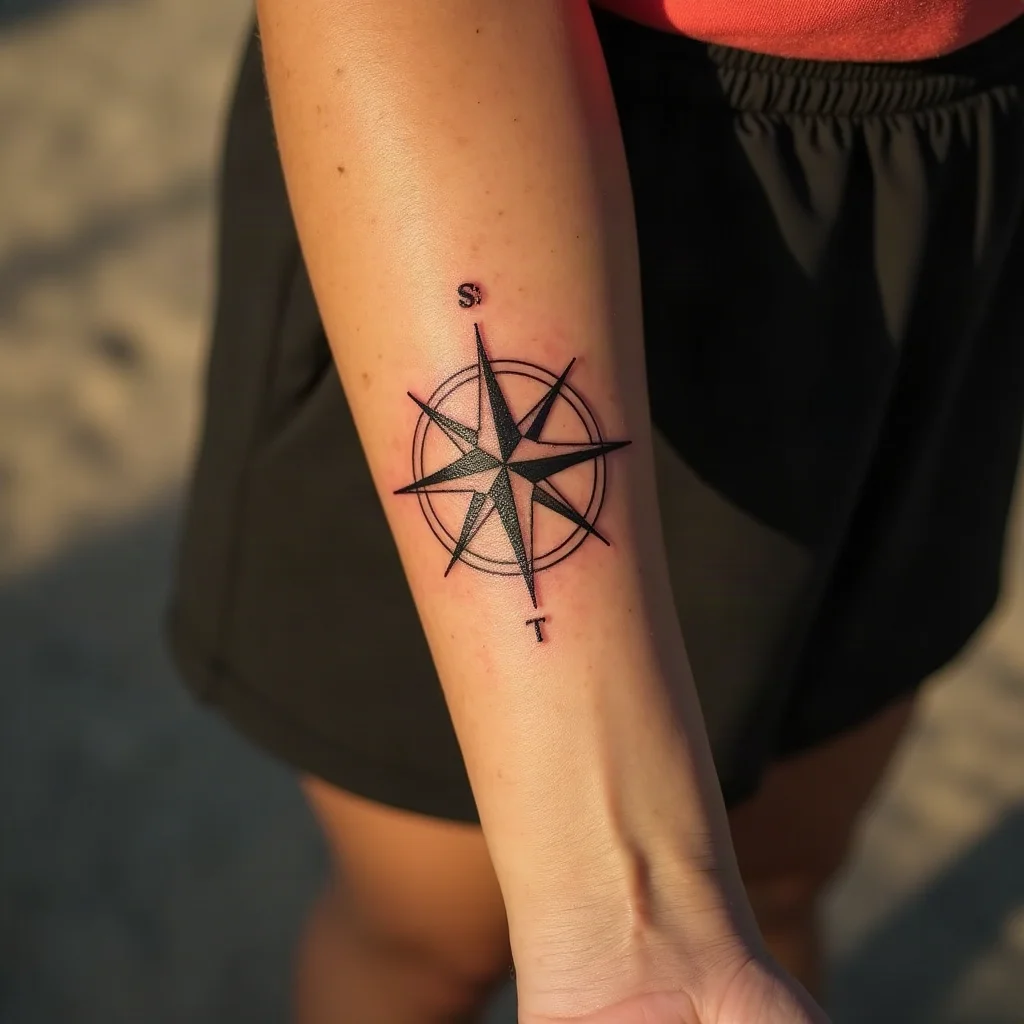
6. Compass rose with meridian lines
A compass at the widest point with thin latitude arcs trailing down toward the wrist gives structure without crowding. Geometric artists will use a stencil for the ring and freehand the arcs so they follow your arm's curve. Sizes best at 4 to 5 inches across the star.
7. Dotwork totem column
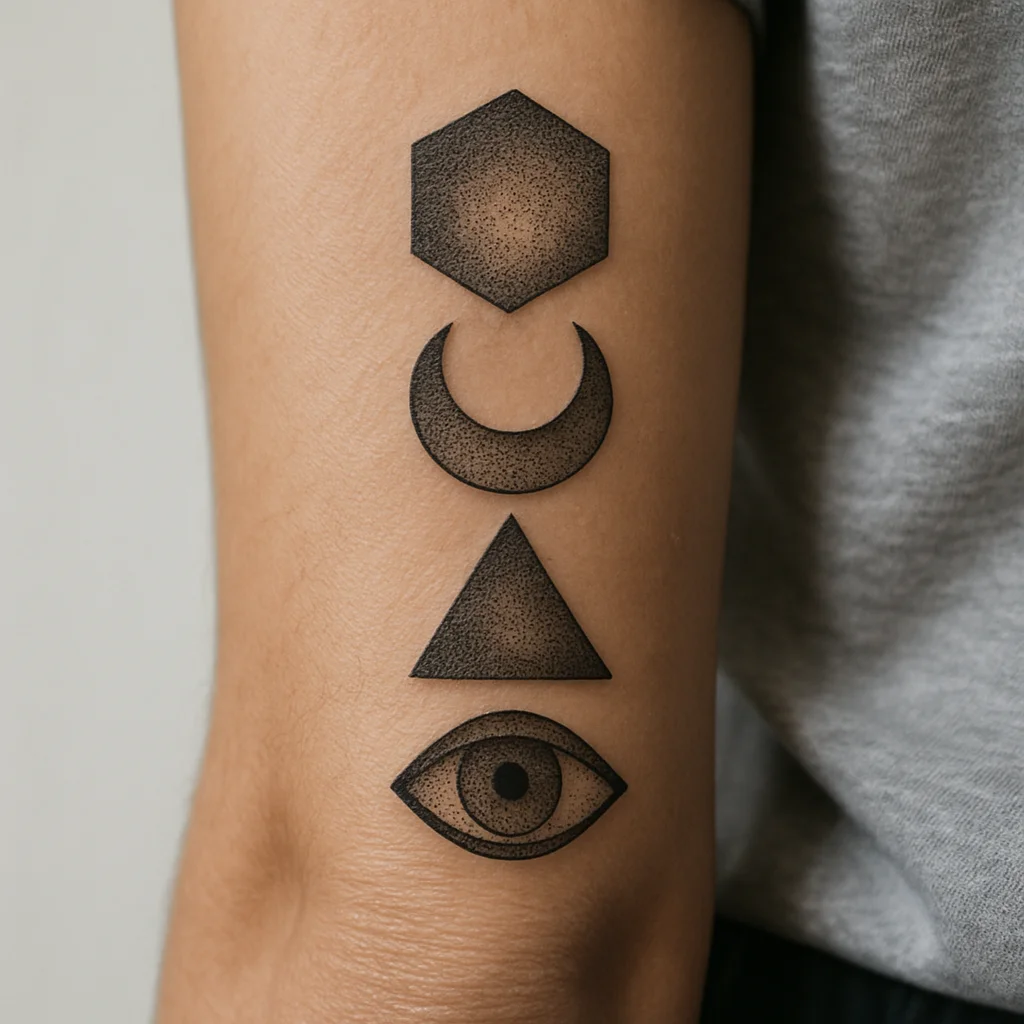
Three or four stacked geometric shapes — hexagon, crescent, triangle, eye — shaded in dotwork with clean negative gaps between them. The stack reads as one design from a distance and rewards a close look. Dotwork of this density is slow work; budget four hours plus.
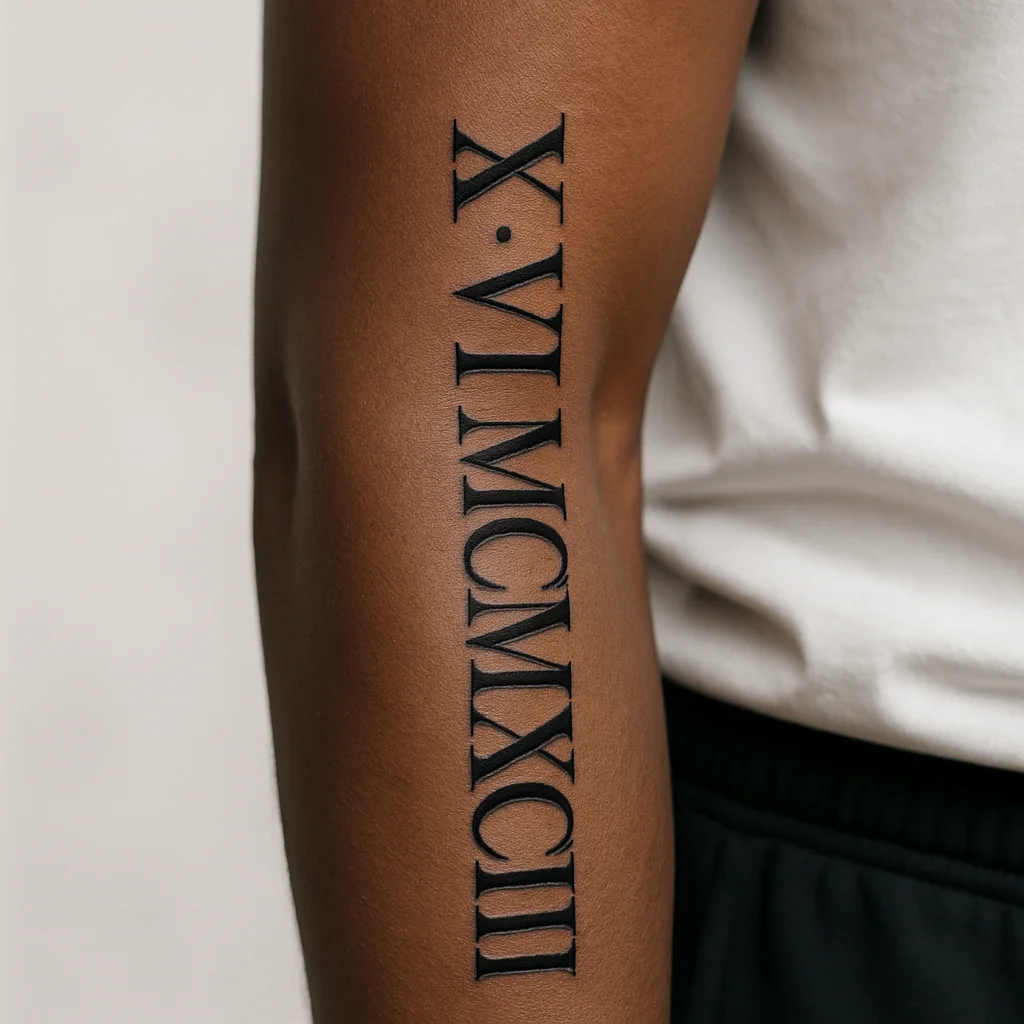
8. Roman numeral date, vertical
A single date in tall Roman numerals down the panel is understated and ages exceptionally well because the strokes are thick and separated. Ask for slightly heavier serifs than you think you want; hairline serifs on the forearm soften quickly. Half an hour to an hour of work.
Bands and horizontal reads
Bands do something vertical pieces cannot: they mark the arm's widest point and look deliberate even at small scale. They also stop cleanly, which matters if you want one tattoo rather than the start of a sleeve.
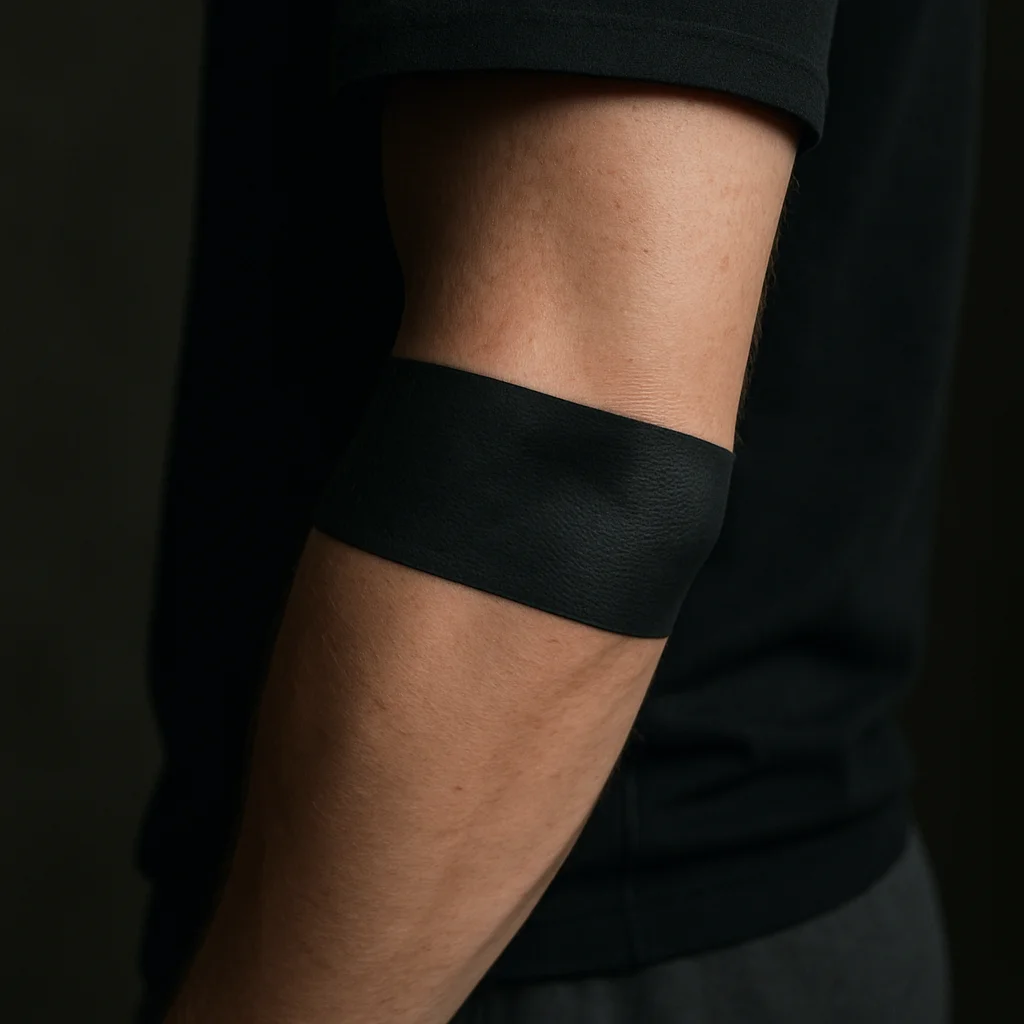
9. Solid black band across the widest point
A one-to-two-inch solid band just below the elbow is graphic, permanent-looking and surprisingly fast — often under two hours. Solid black on the outer forearm holds its edge well, but ask about a second pass; patchy saturation is the usual complaint. If you like the shape but want it higher up, our bicep armband guide covers the thin-to-solid range.
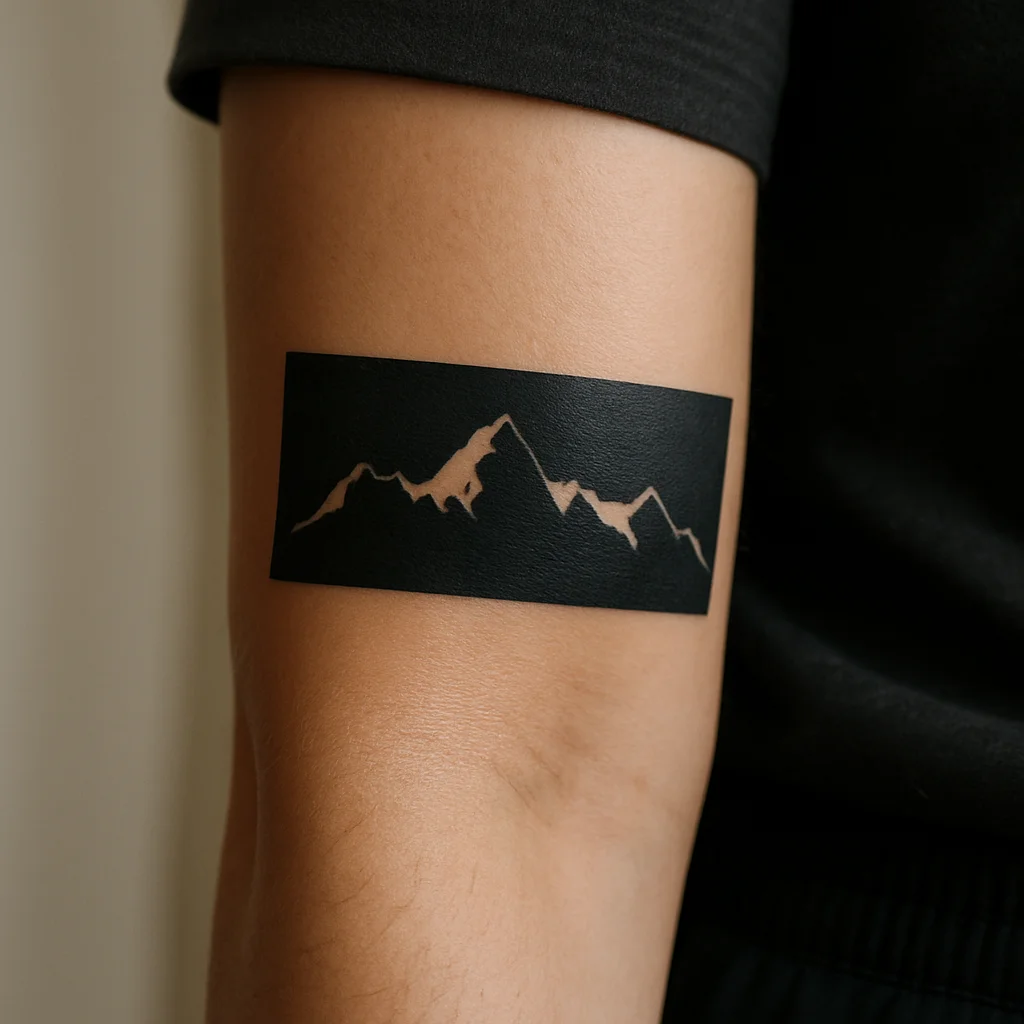
10. Mountain range horizon band
Peaks silhouetted inside a horizontal strip, with negative-space sky above and a thin ground line below. It suits men who want landscape imagery without a full panel commitment. Keep it 2 to 3 inches tall so the peaks stay legible.
11. Chain link across the arm
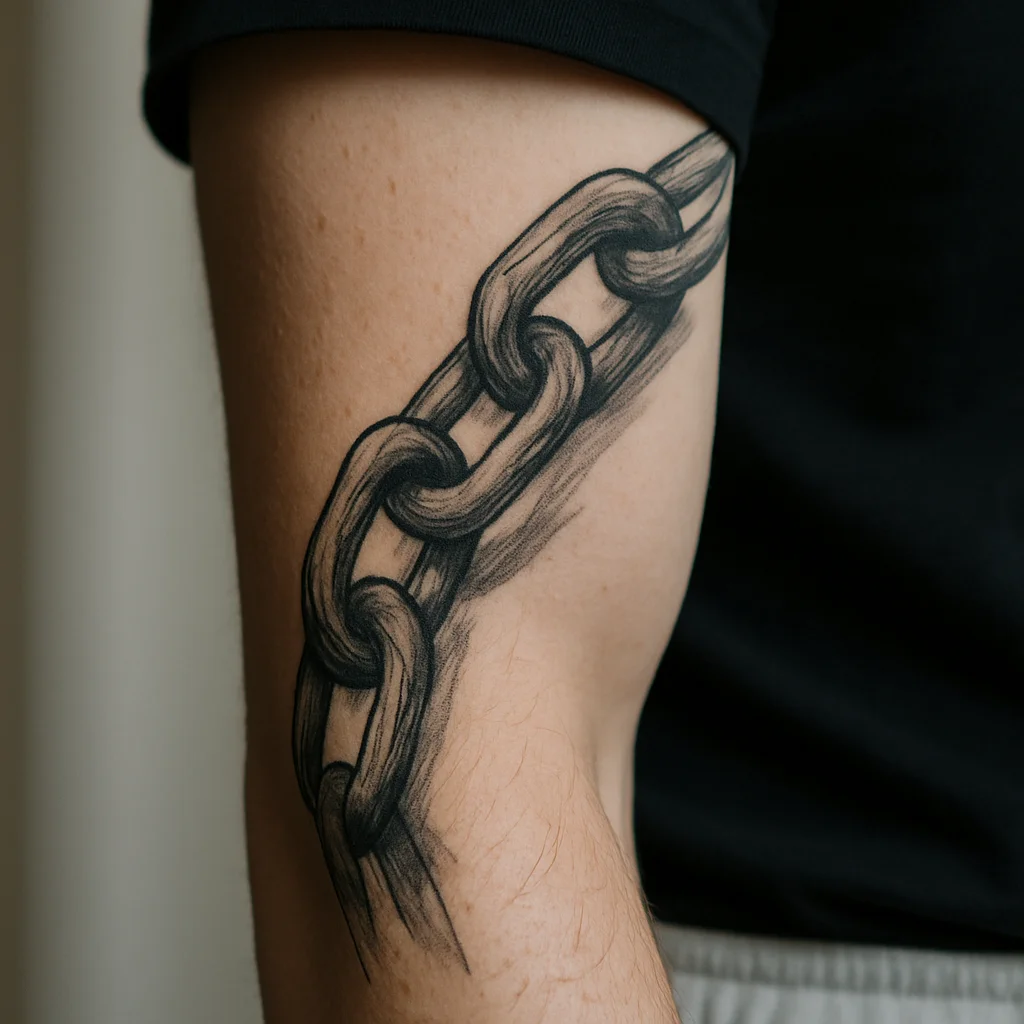
Four or five heavy chain links drawn wrapping the forearm with proper cast shadow read as three-dimensional from across a room. The trick is that the links must distort as they curve around the arm — a flat repeat looks like wallpaper. Bring reference photos of real chain, not clip art.
12. Japanese wave band
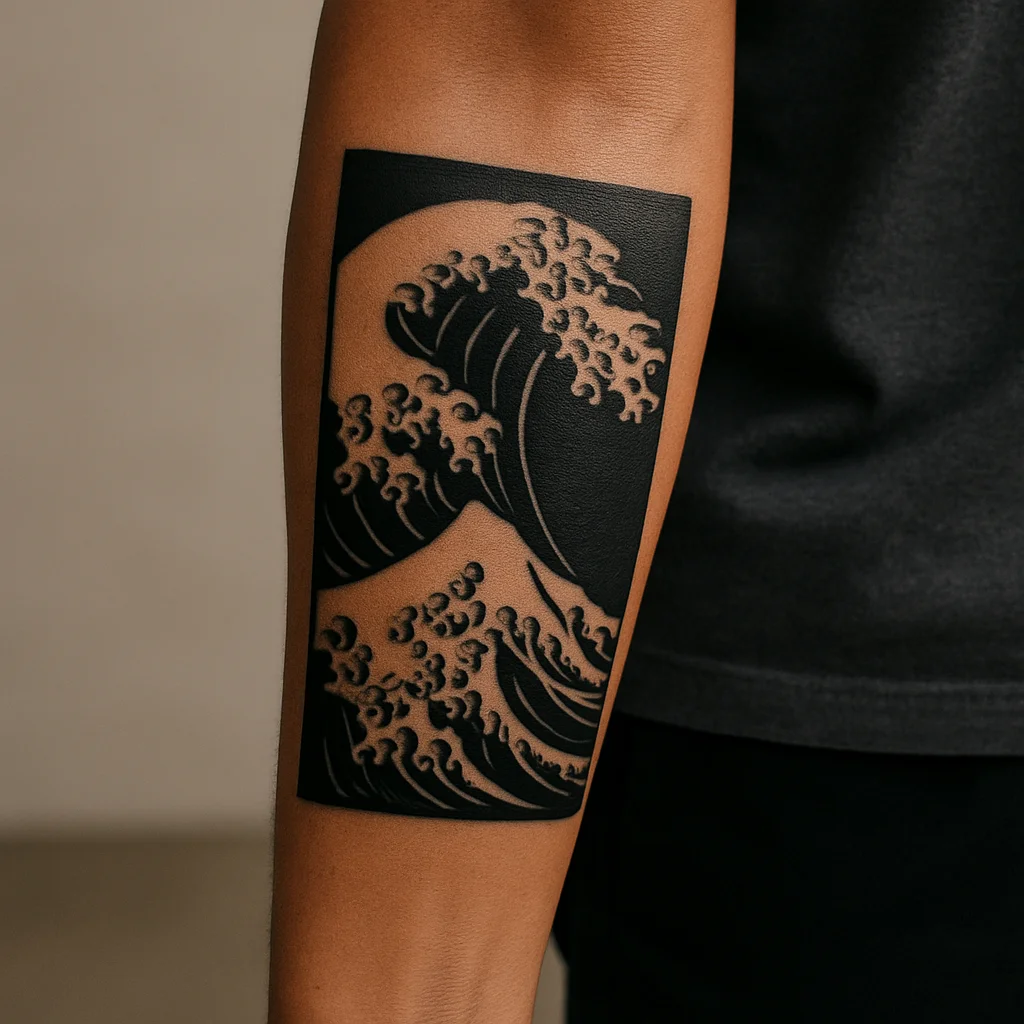
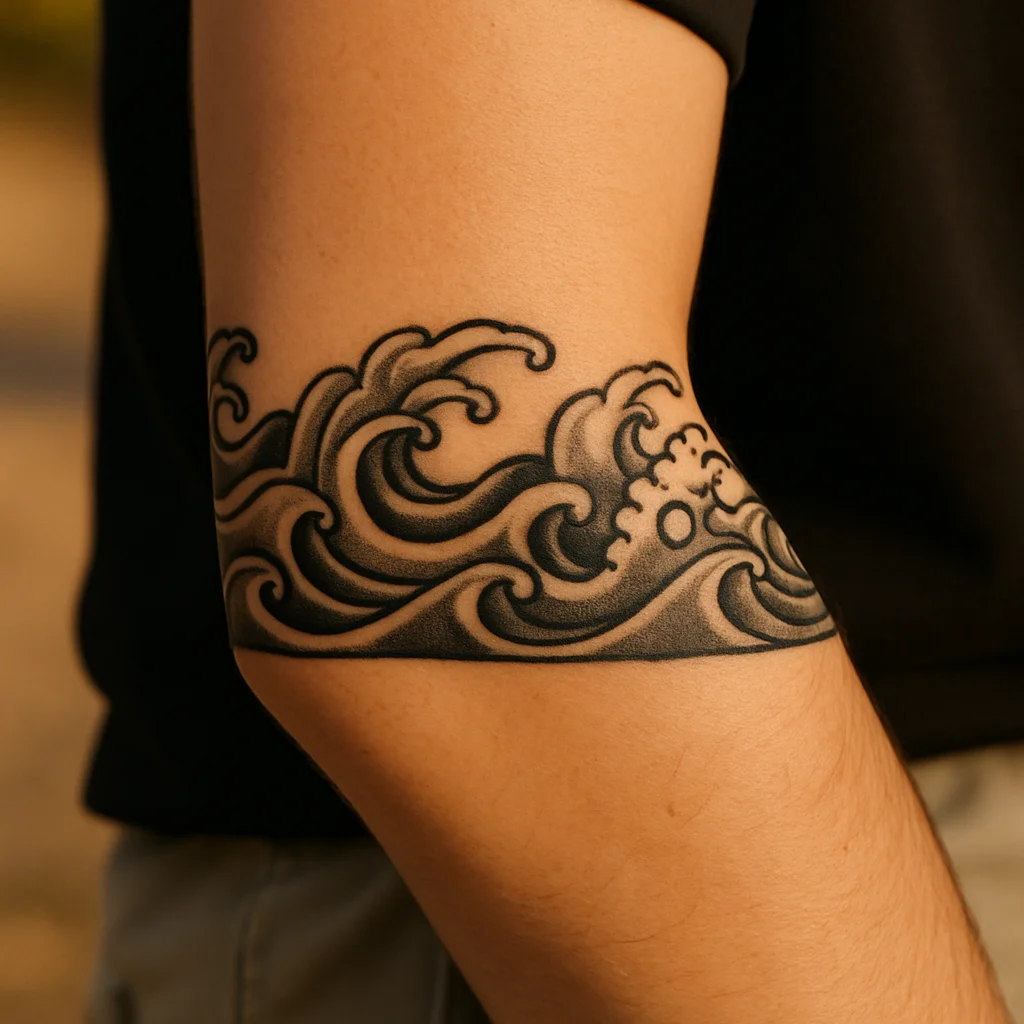
A horizontal cuff of finger waves and foam, black outlines with grey wash filling the troughs. It pairs with almost anything you add above it later and doubles as a natural border for a future sleeve. Two to four hours depending on width.
13. EKG line with a name
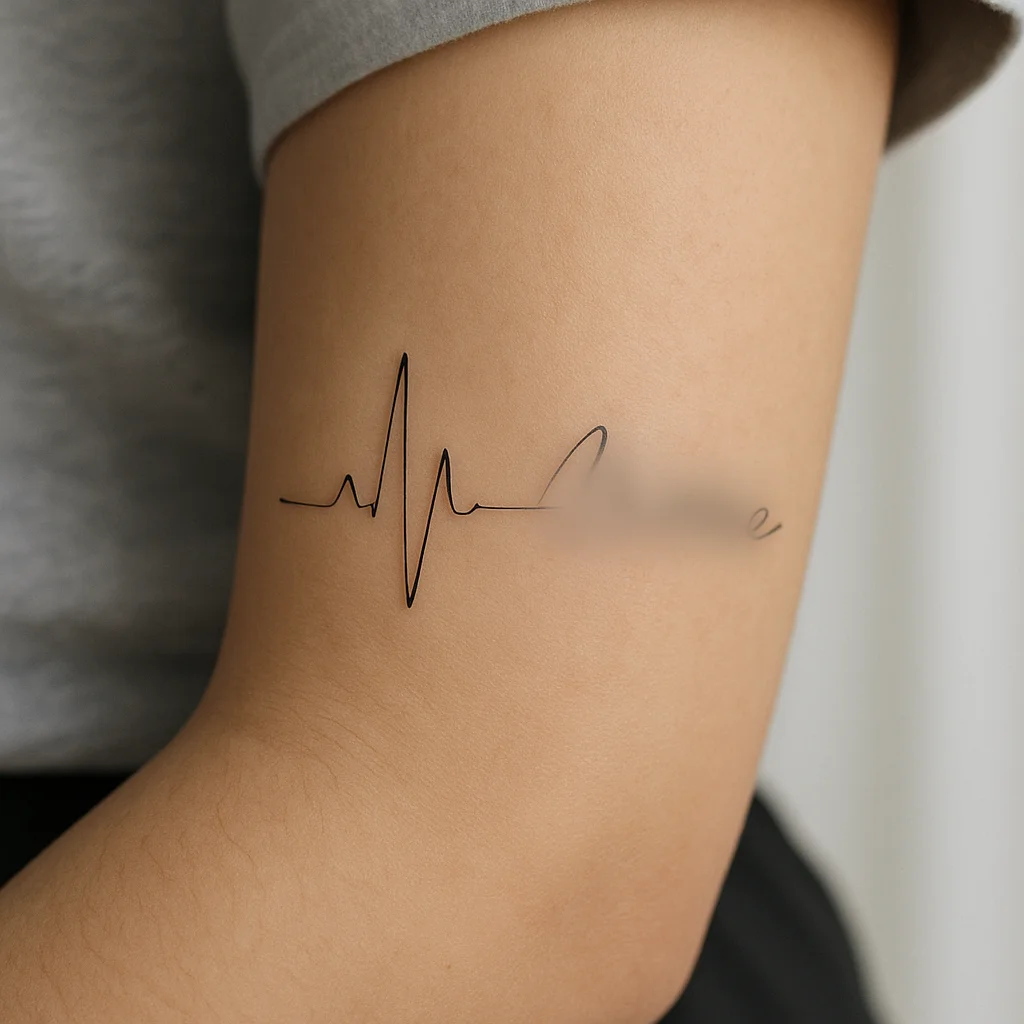
A heartbeat trace crossing the panel, resolving into a name or a single word in the flatline section. Sentimental, yes, but it works because the line is thin and the lettering carries the weight. Keep the peaks tall enough that they do not blur into each other.
14. Half mandala fanning from the edge
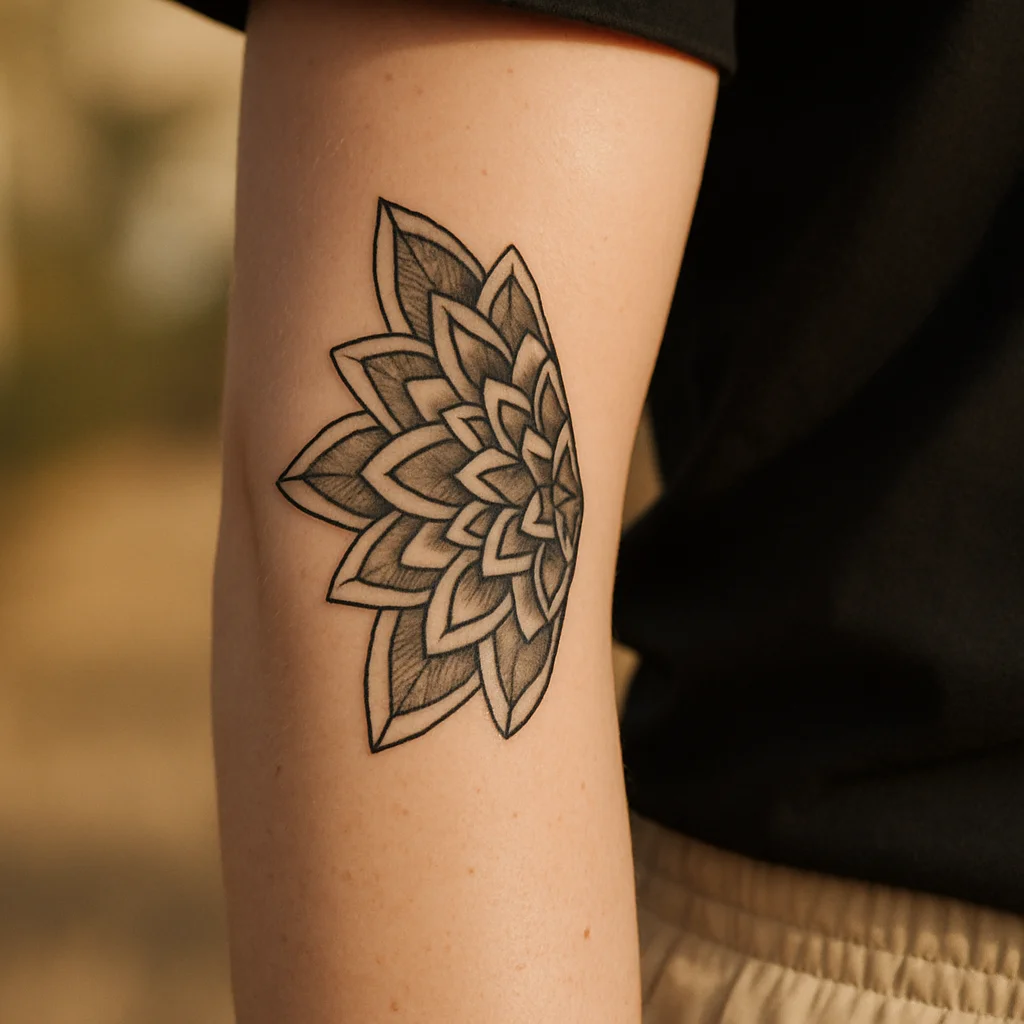
A mandala cut in half along the arm's outer edge so it fans inward, petals shrinking toward the centre of the panel. Precision matters more than size; a good geometric artist will map the spokes with a flexible ruler on skin. Expect a long single sitting.
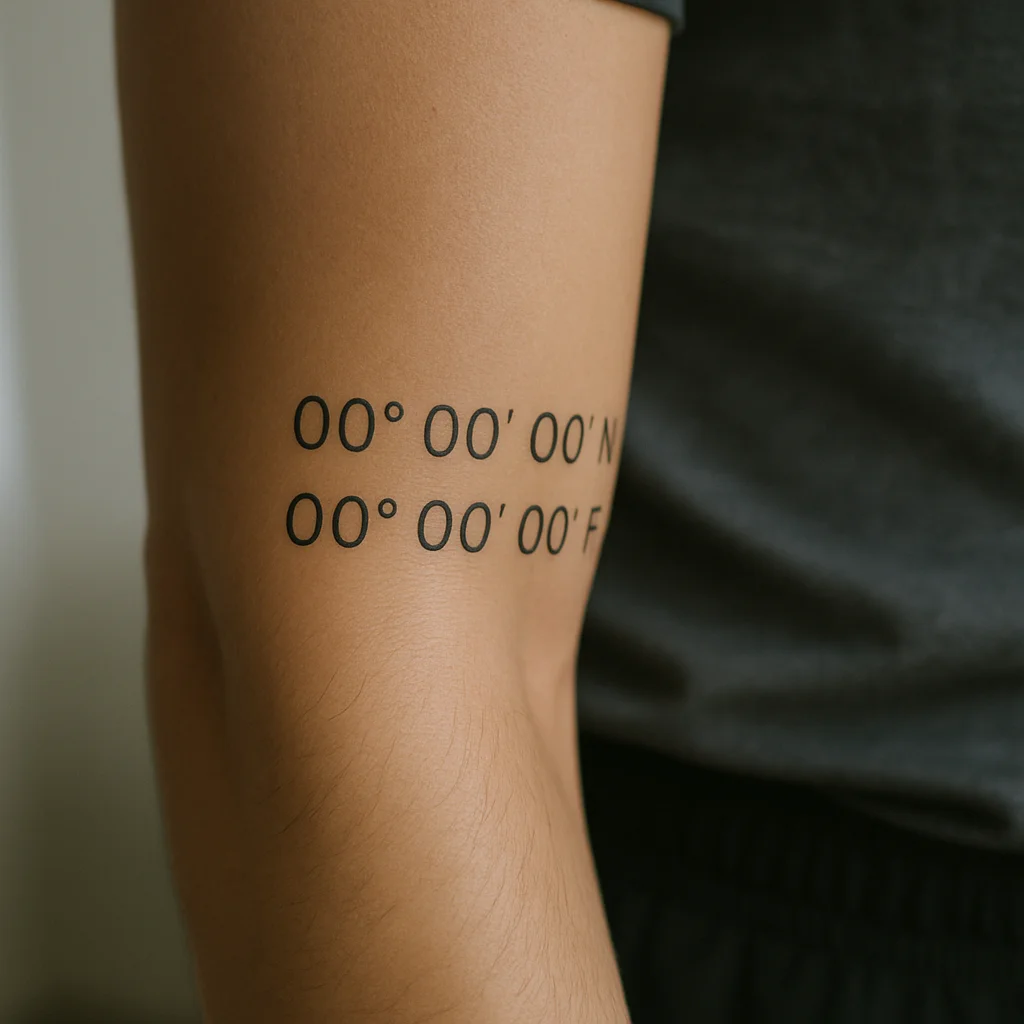
15. Coordinates in clean sans lettering
Latitude and longitude of a place that matters, set horizontally across the arm in a spaced, slightly condensed typeface. It is discreet, sits comfortably at 3 to 4 inches wide and takes under an hour. Have the artist print the numbers at final size so you can check the character spacing before it goes on.
Single-subject centrepieces
One strong subject, centred on the panel, with breathing room around it. This is the most common request in studios for a reason: it is a complete tattoo that never looks unfinished, and it leaves room to build outward in future.
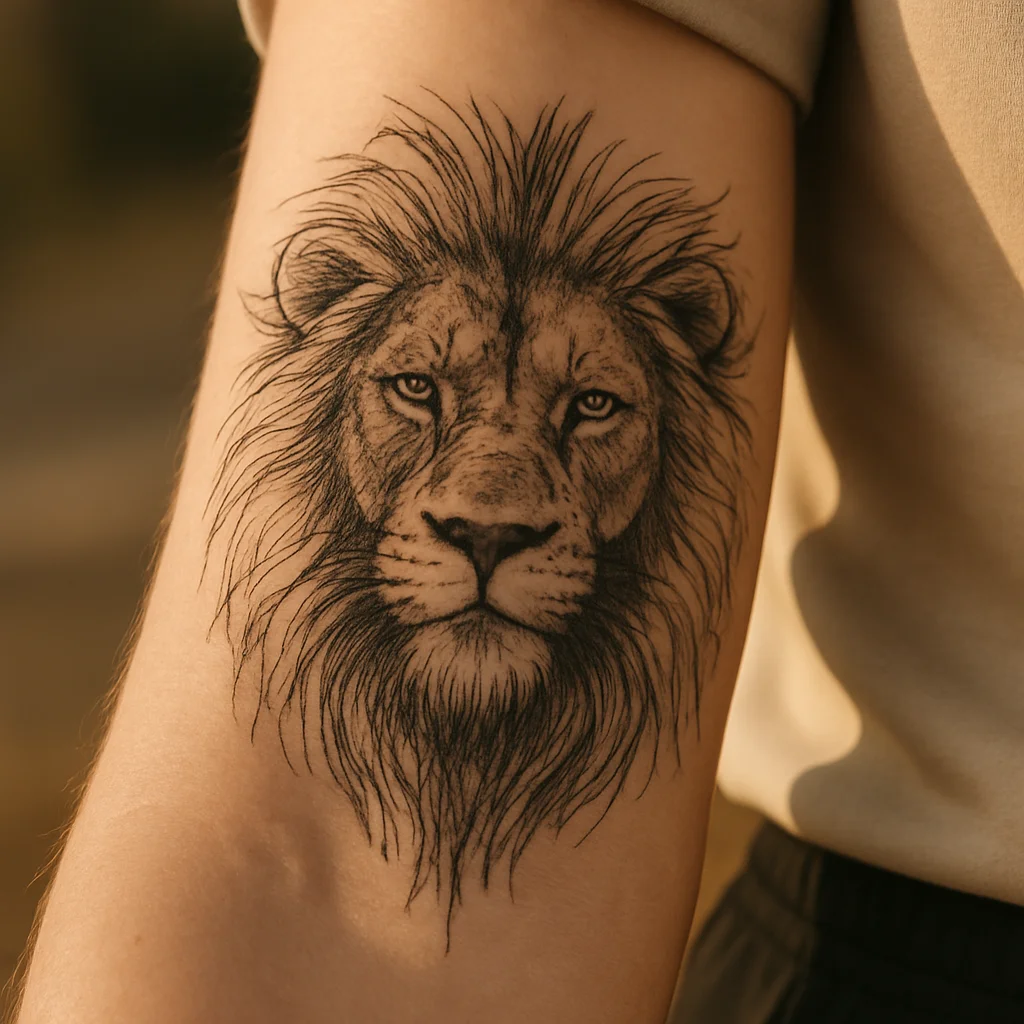
16. Lion head, mane framing the panel
Front-facing lion with the mane spreading to the arm's edges and the muzzle centred over the bone. At 6 inches tall it fills the space without touching wrist or elbow. Black and grey holds up better than colour here given the sun exposure.
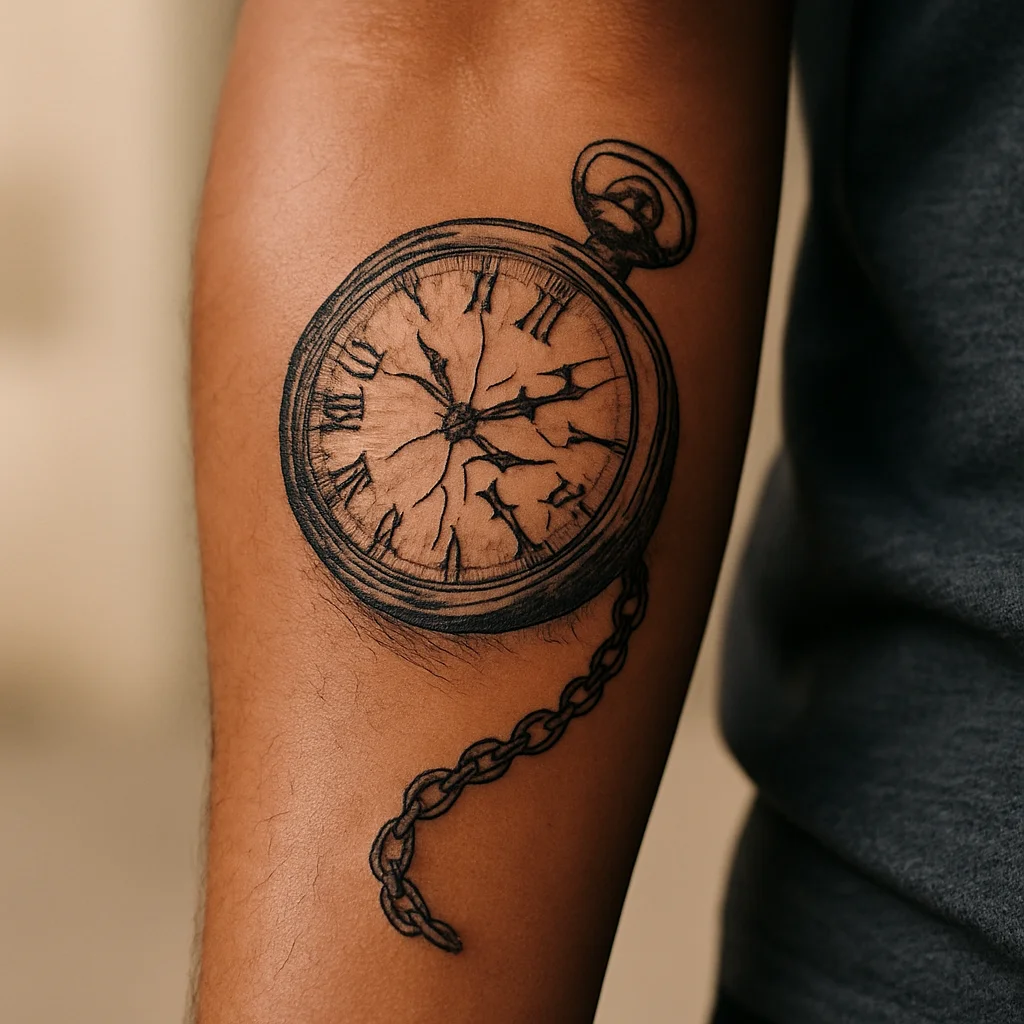
17. Pocket watch with a broken face
A watch face rendered at an angle, chain looping off toward the wrist, hands set to a time that means something. Ask for the numerals slightly oversized — tiny clock numbers are the first detail to close up. Four to six hours for a well-shaded one.
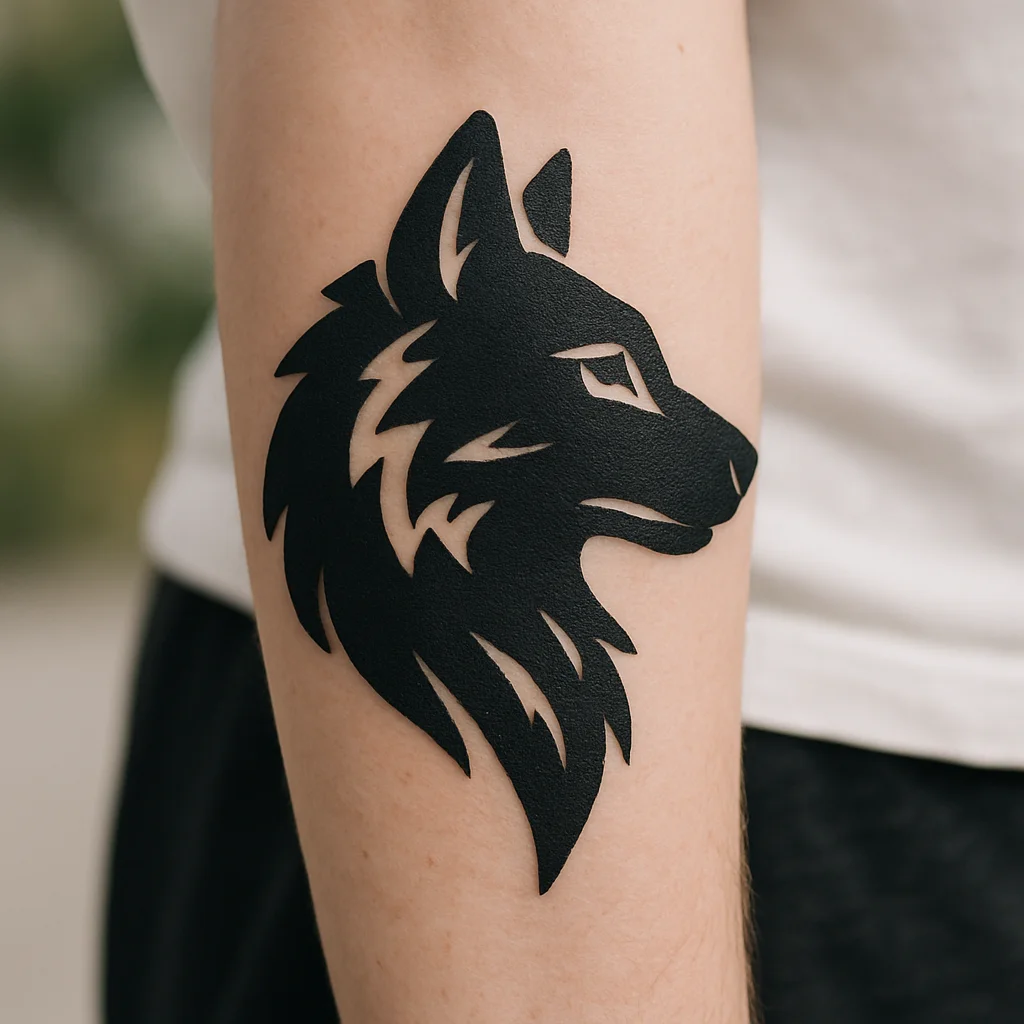
18. Wolf head in heavy black
A snarling or side-profile wolf built from bold shapes and negative-space fur rather than soft realism. This style is genuinely bulletproof on a forearm that sees daylight every day. Suits men who want impact at 5 inches.
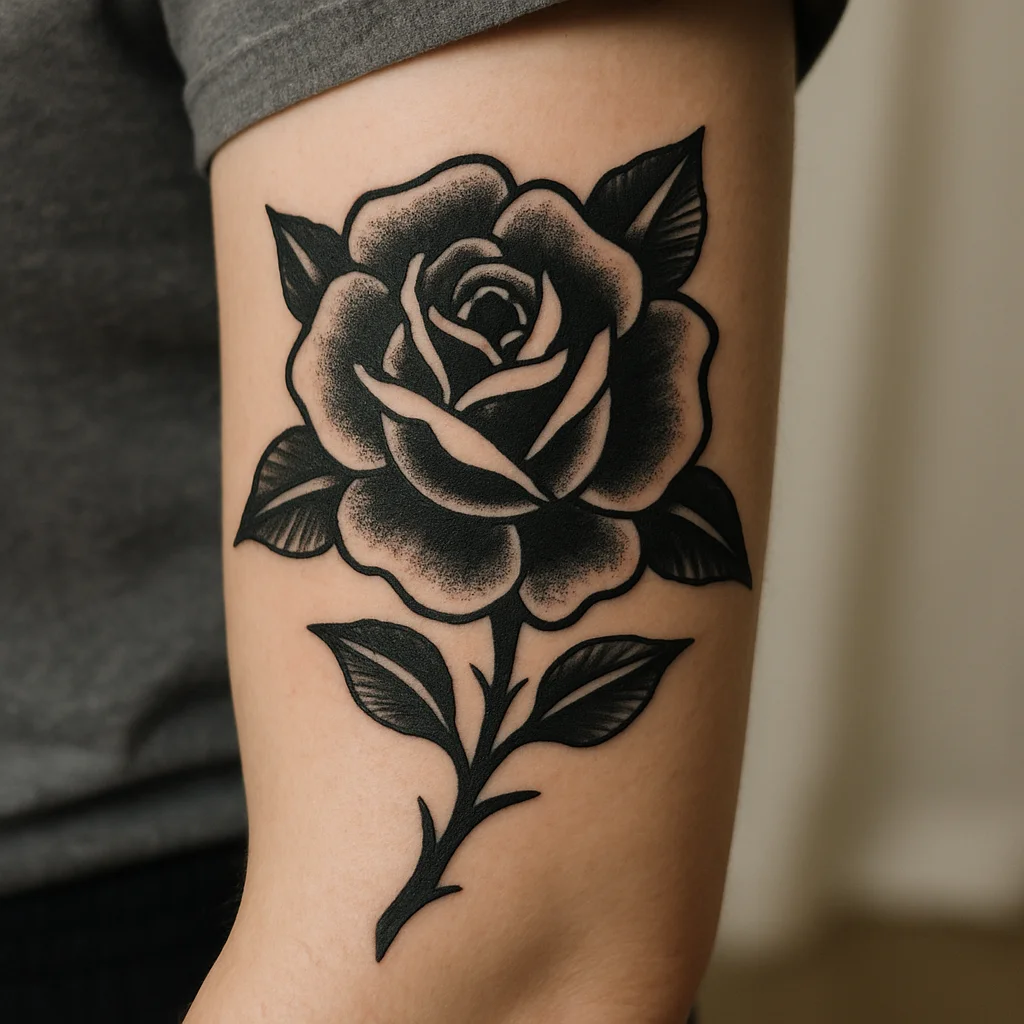
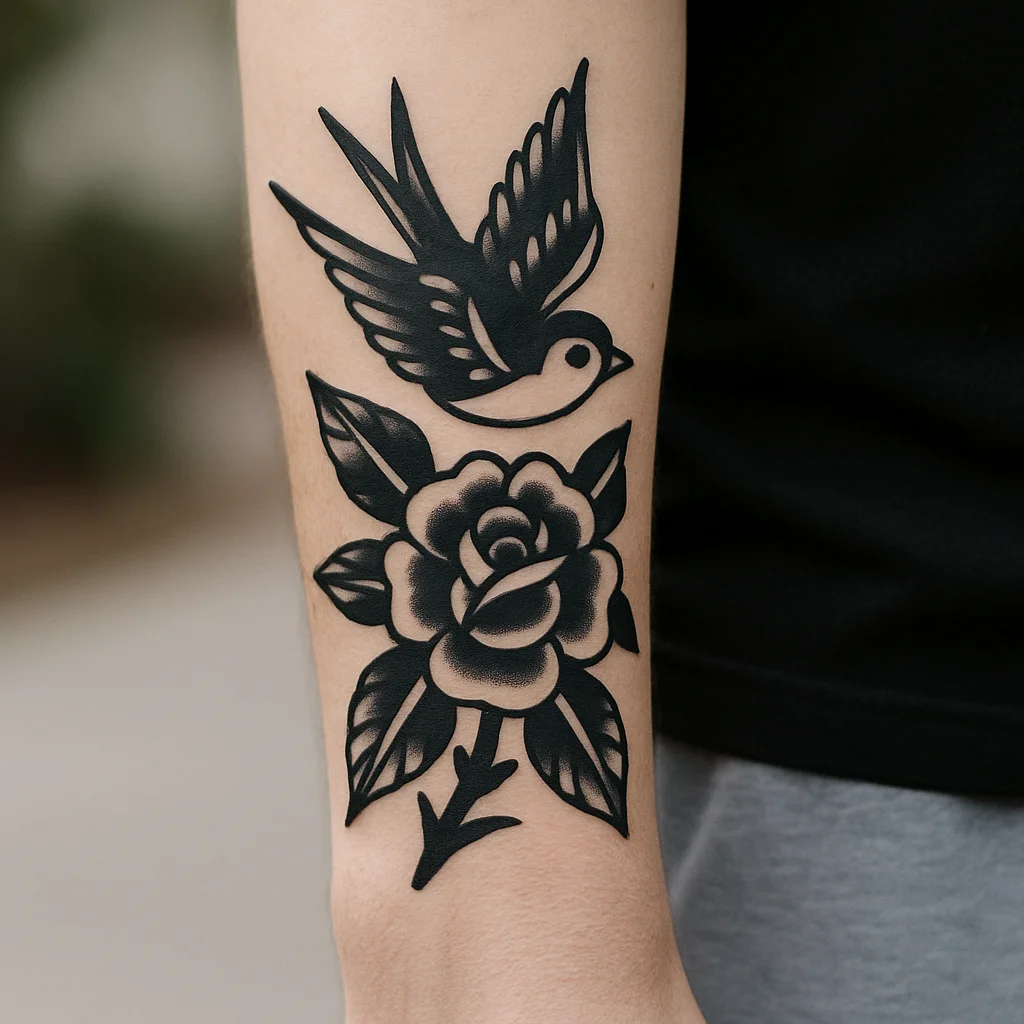
19. Traditional rose with folded leaves
Thick outlines, three or four leaf shapes, a stem angling down the panel. It is the classic outer forearm filler that also works alone, and it can be tucked against a band or lettering later. One session, two hours, done properly for life.
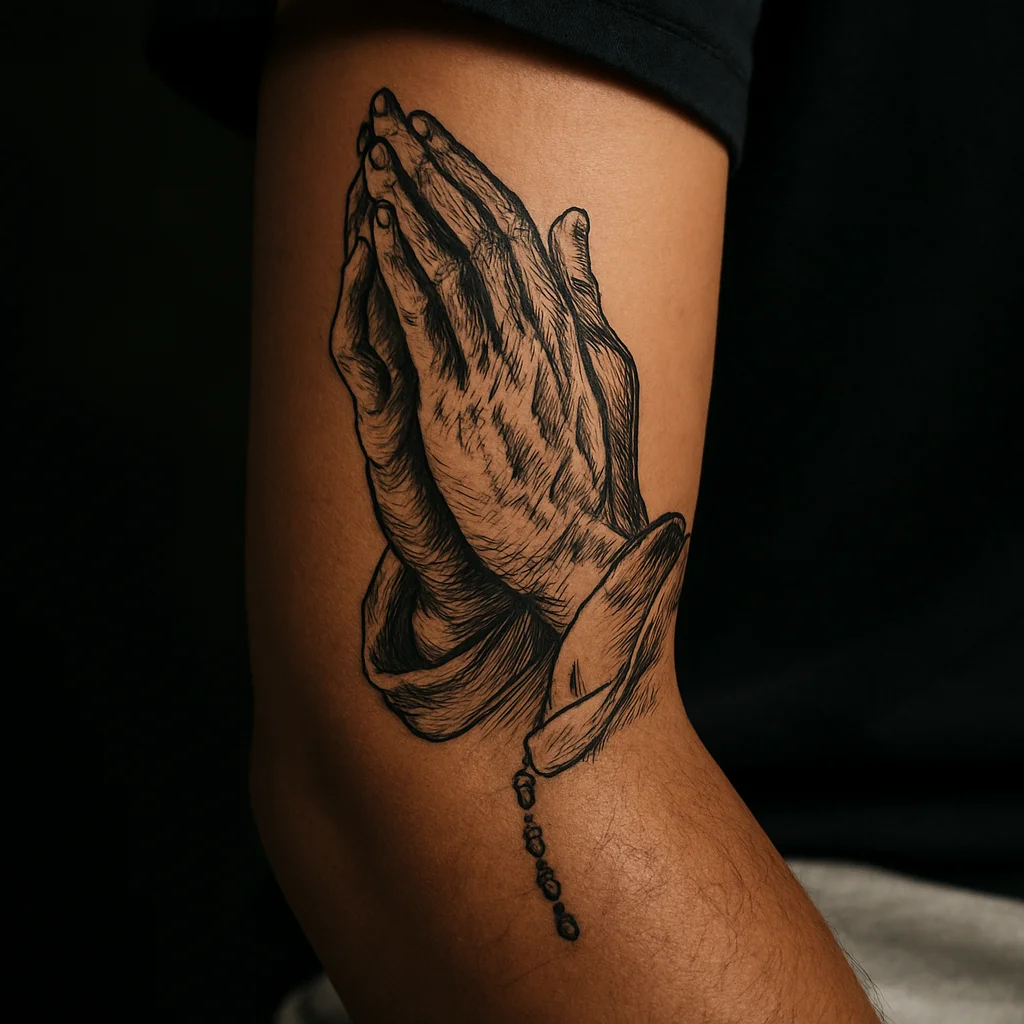
20. Praying hands with a rosary
Hands centred vertically with the beads trailing down toward the wrist, either in fine-line stipple or full black and grey realism. Position the fingertips toward the elbow so the piece reads upright to the viewer. A common memorial choice and one that ages well at scale.
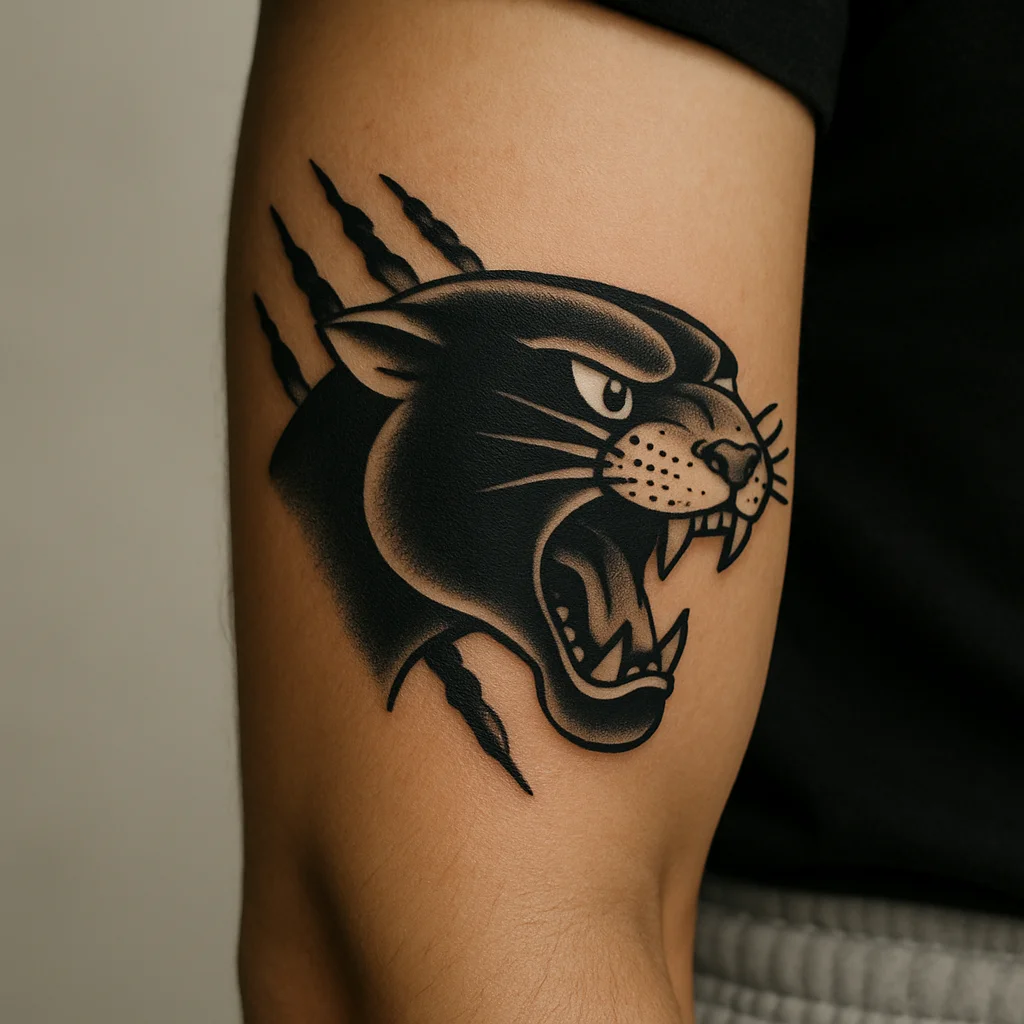
21. Old-school panther head
Jaw open, claw marks behind it, bold black lines and a hit of red in the mouth. Panthers were drawn for exactly this kind of arm placement a century ago and the shape still fits the panel perfectly. Small at 4 inches, punchy at 6.
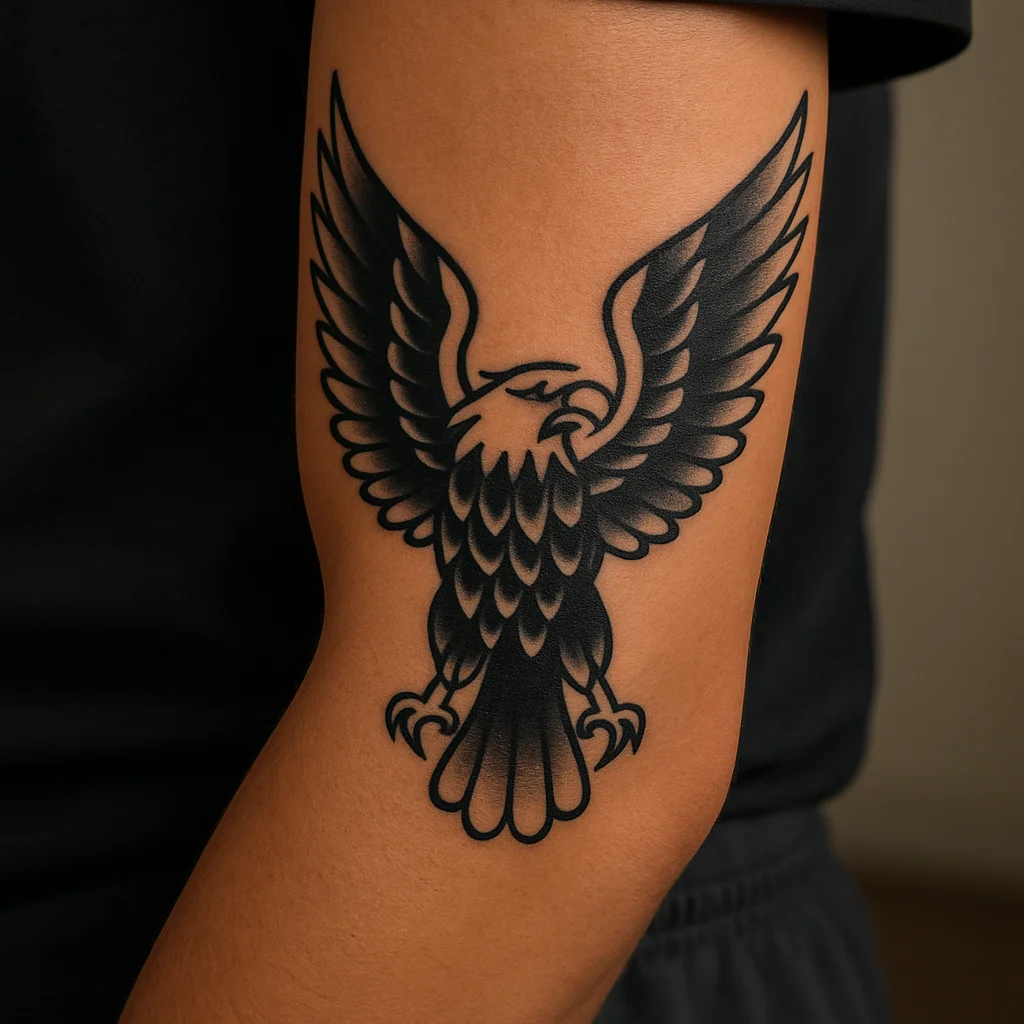
22. Eagle with wings across the width
Wings spread horizontally to fill the arm's width, body running vertically down the centre — a natural cross shape that uses the whole panel. Talk through wing tips: they should stop short of the arm's silhouette so they do not disappear when your arm rests at your side. Substantial piece, plan a full day.
23. Anchor with rope and banner
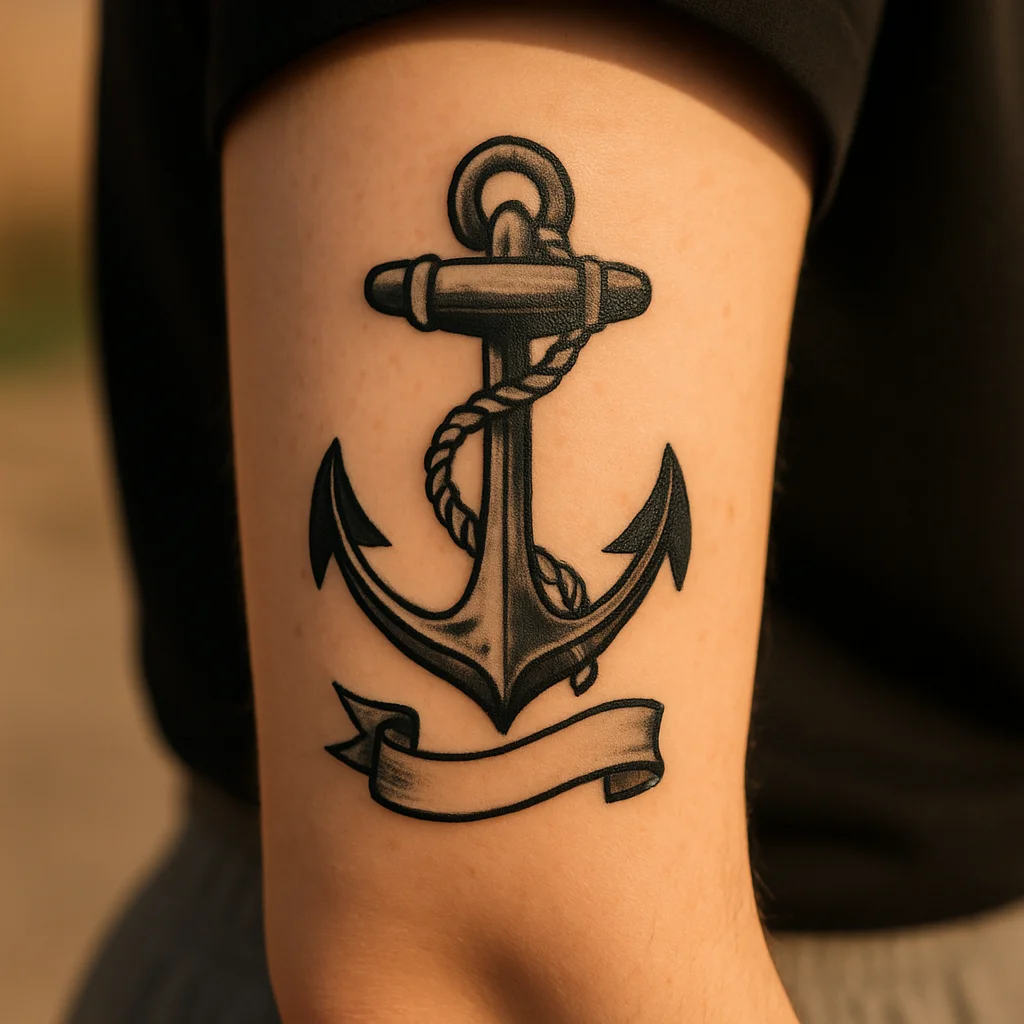
Anchor centred, rope crossing the shank, a small blank or lettered banner beneath. Traditional, forgiving to age, and easy to keep under 4 hours. Works especially well as the first tattoo in a bold-line collection.
Heavy blackwork and texture pieces
If you want the arm to look intentional from ten feet away, weight beats detail. These are the designs that read as a finished panel and that hold their edges through decades of sunlight.
24. Negative-space blackout panel
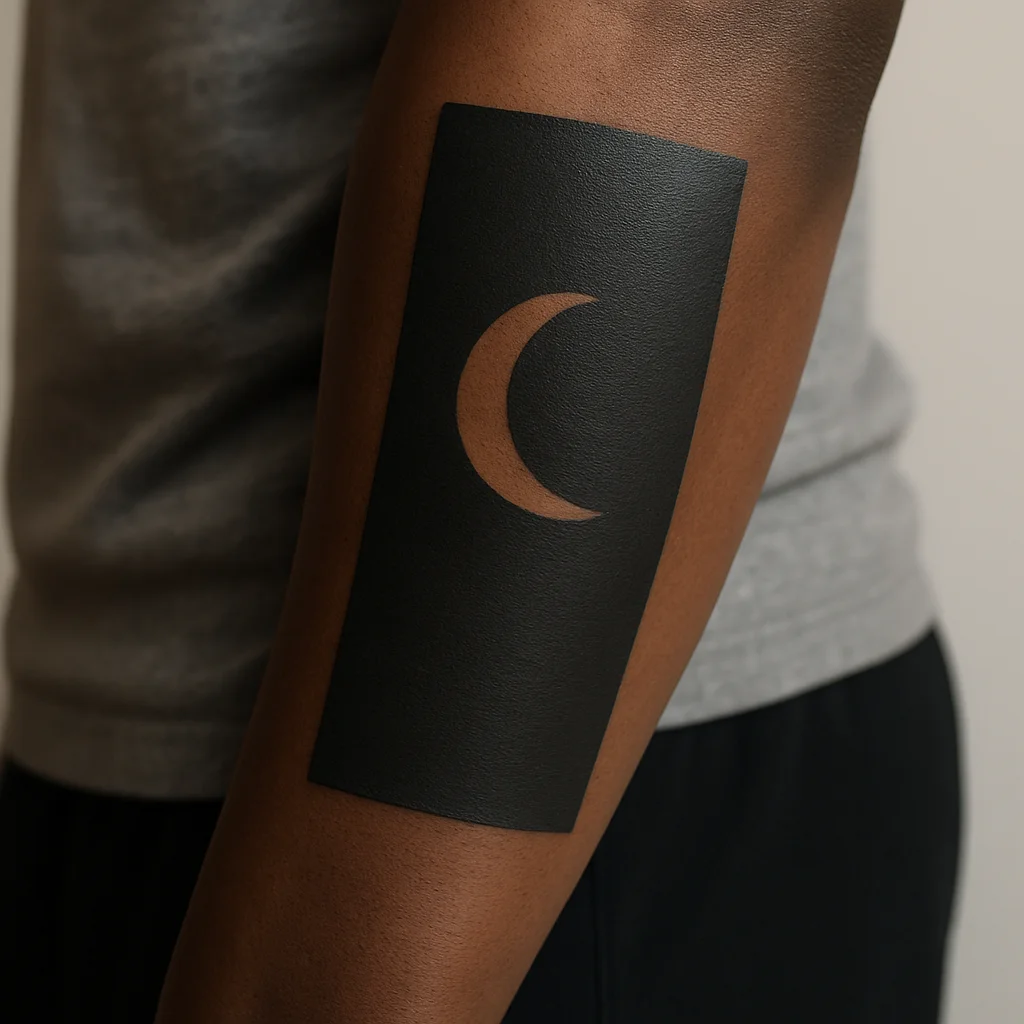
Solid black across the full outer forearm with one shape left un-tattooed — a crescent, a mountain outline, a single letterform. It is a bold decision and a difficult one to reverse or cover, so sit with the mock-up for a few weeks. Usually two or three sessions with healing time between.
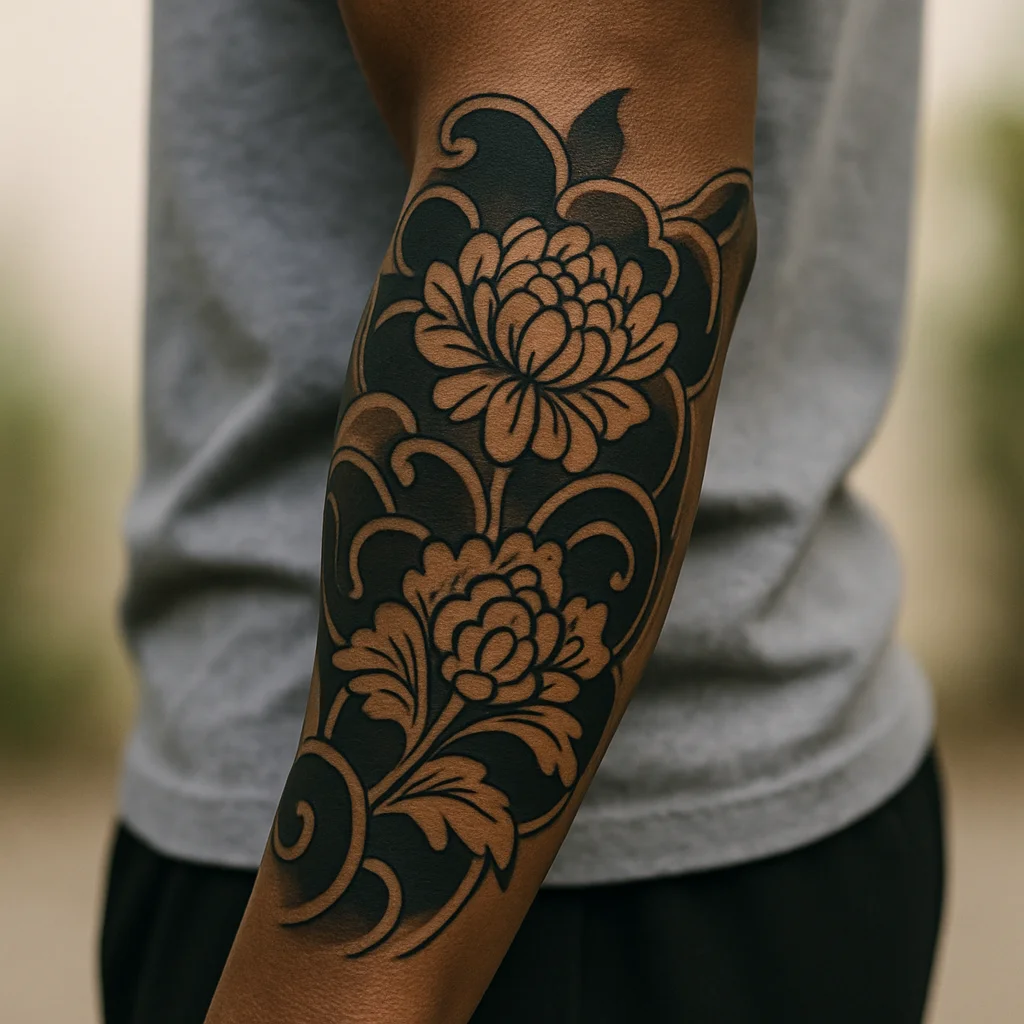
25. Polynesian-inspired panel
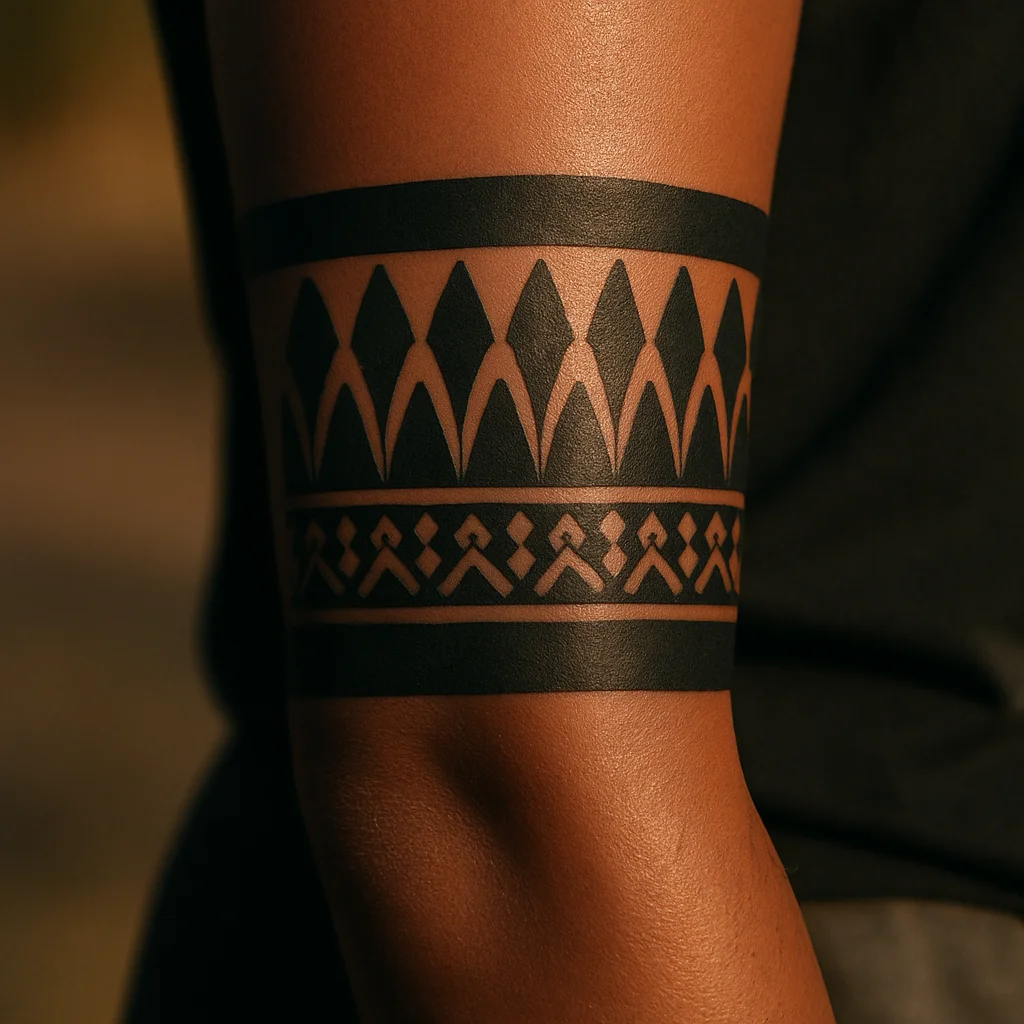
Interlocking spearheads, enata rows and lashing patterns fitted to the panel's taper, with black bands anchoring each end. Go to an artist who works in this tradition and can explain the motifs rather than copying a pattern sheet. The graphic weight makes it one of the best-ageing options on the arm.
26. Torn-skin biomechanical
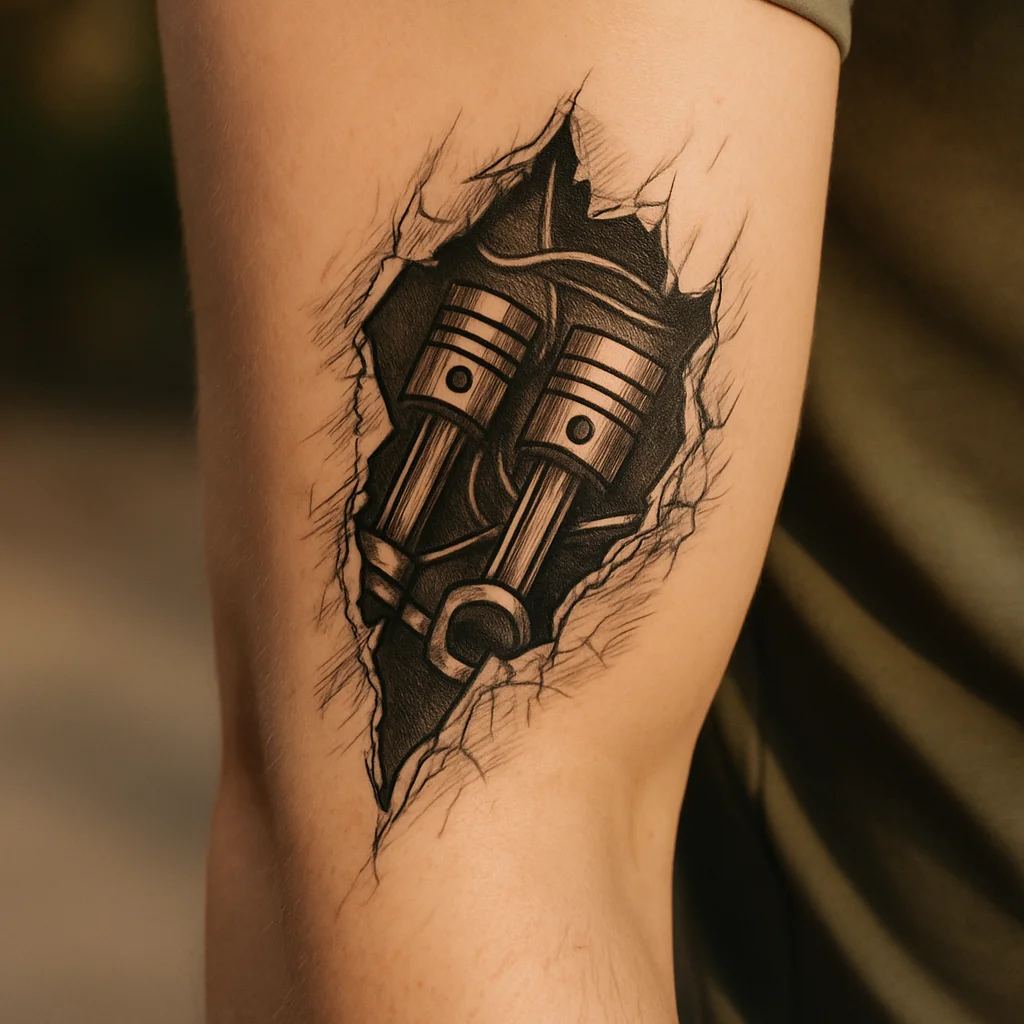
A ragged opening in the skin revealing pistons, cabling or carbon plate underneath. It needs a genuine specialist — the illusion collapses if the shadow direction is wrong. Multiple sessions, and worth every hour when it is done right.
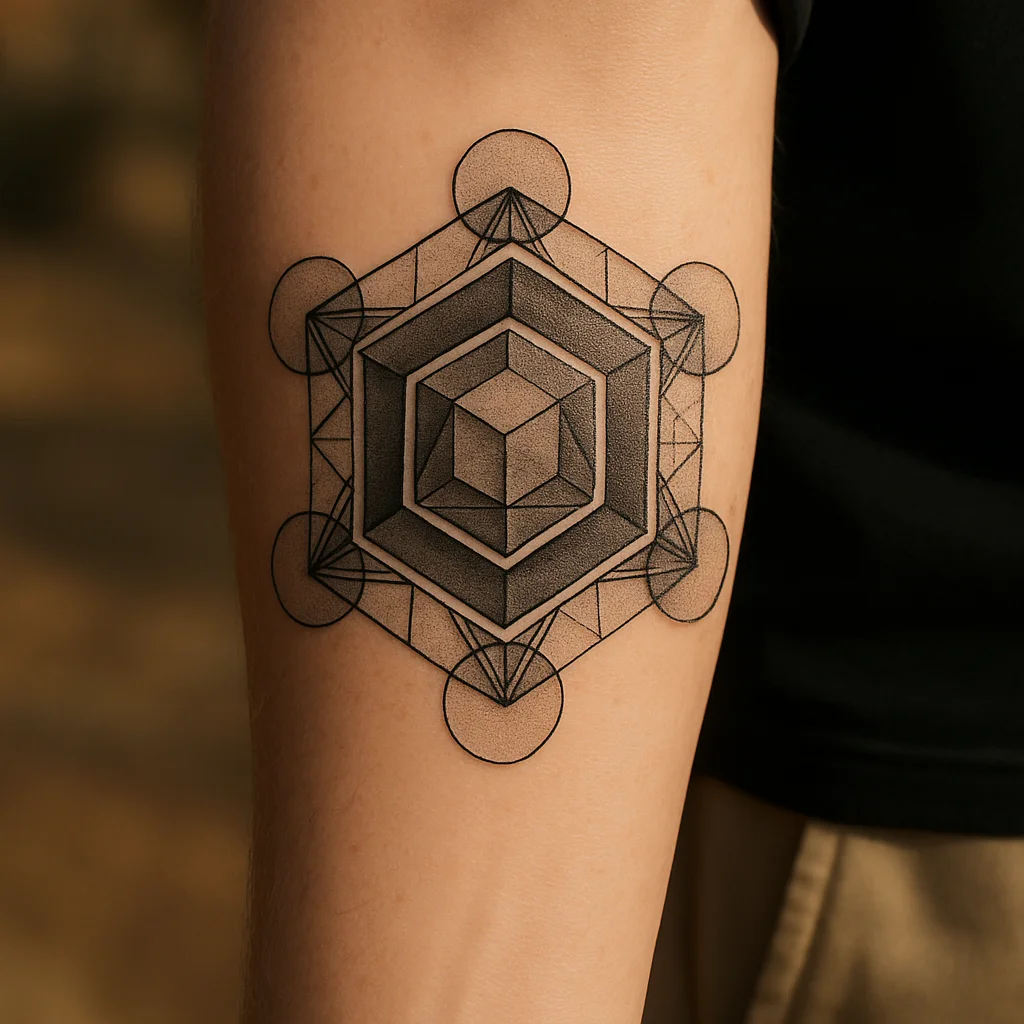
27. Sacred geometry with dotwork shading
Nested polygons and a Metatron-style grid centred on the panel, shaded with graded stipple so it reads like carved stone. Precision is everything here; ask to see healed photos, not just fresh ones, because dotwork can soften. Long sittings, high impact.
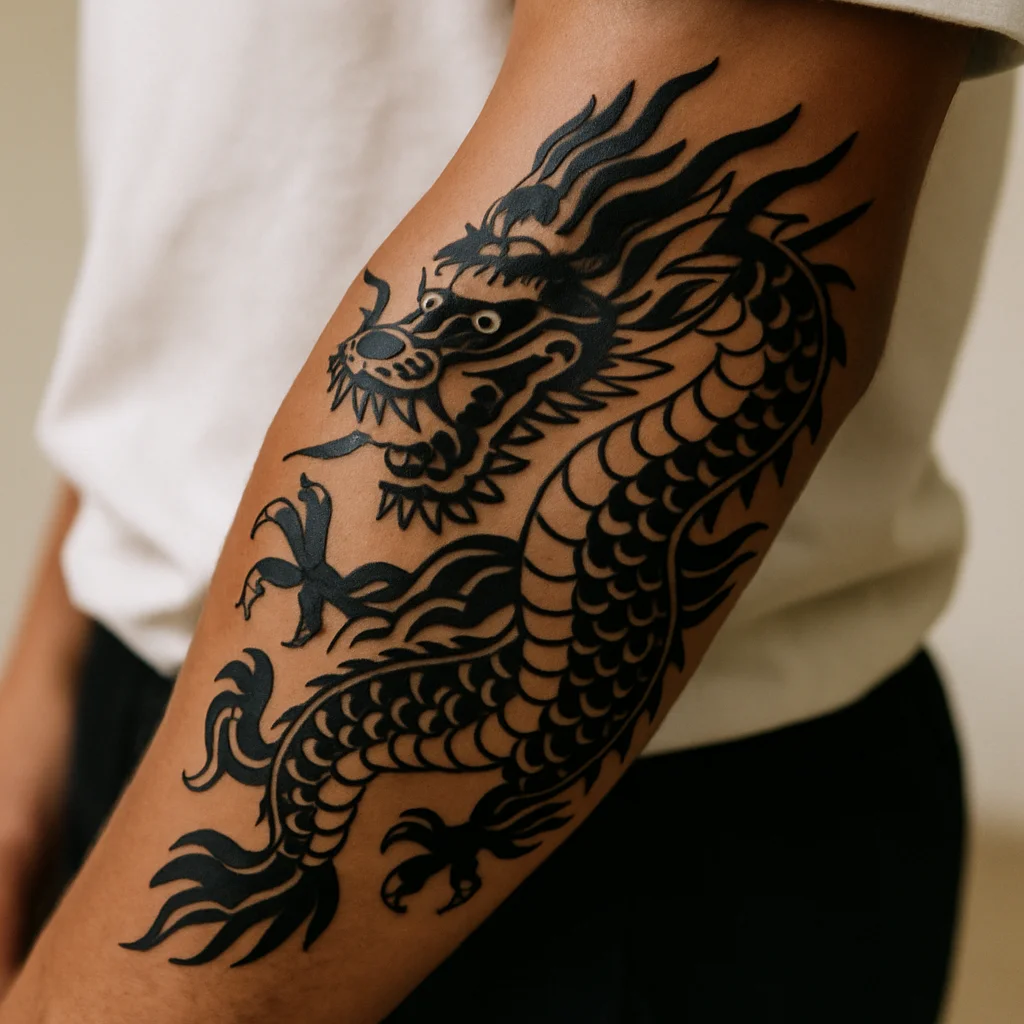
28. Japanese dragon with wind bars
Head near the elbow, body twisting down the panel, wind bars and cloud filling the gaps so nothing looks stranded. This is the classic entry point to a full sleeve because the wind bars can simply continue past the elbow later. Plan for several sessions.
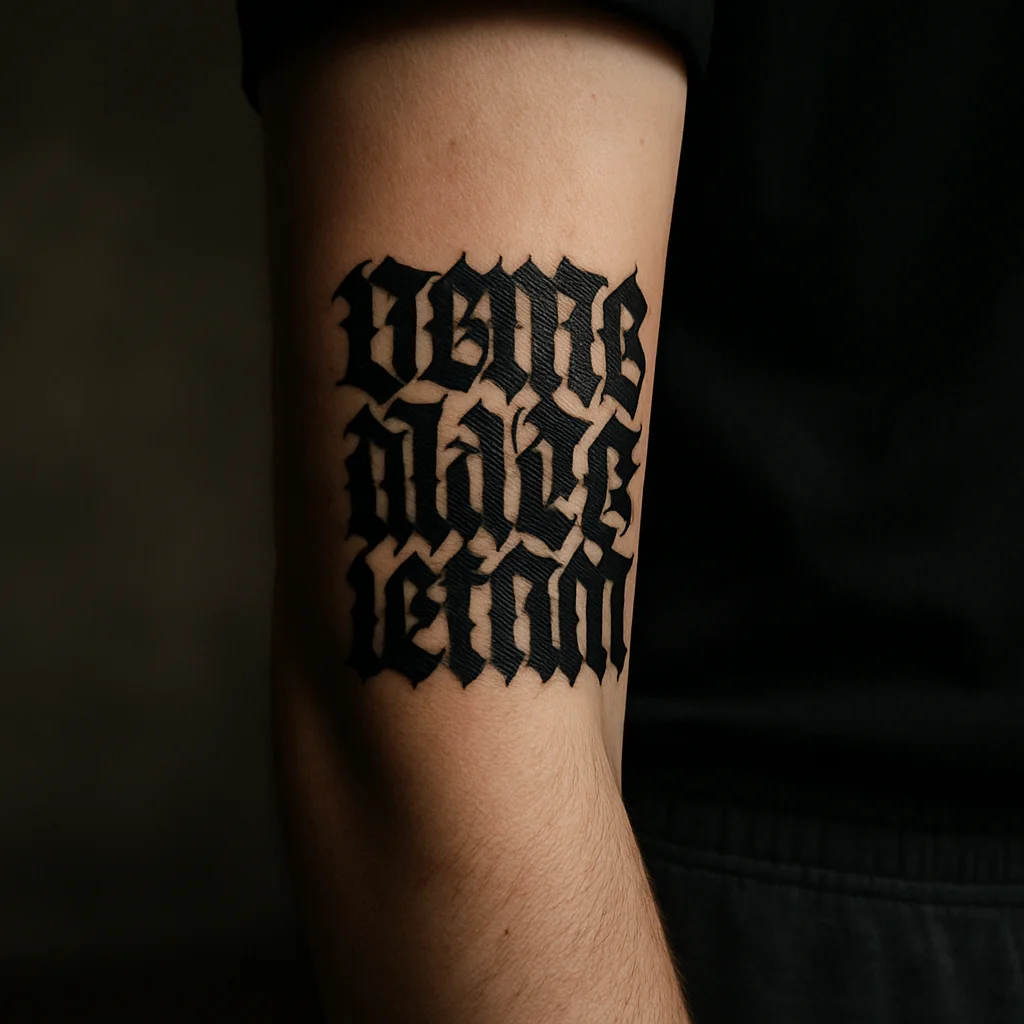
29. Blackletter manuscript block
Three or four lines of dense blackletter, set as a solid text block that fills the panel like a page. Line spacing is the whole game — too tight and it turns into a grey rectangle in fifteen years. Bring the exact wording, spelled and punctuated, to your consultation.
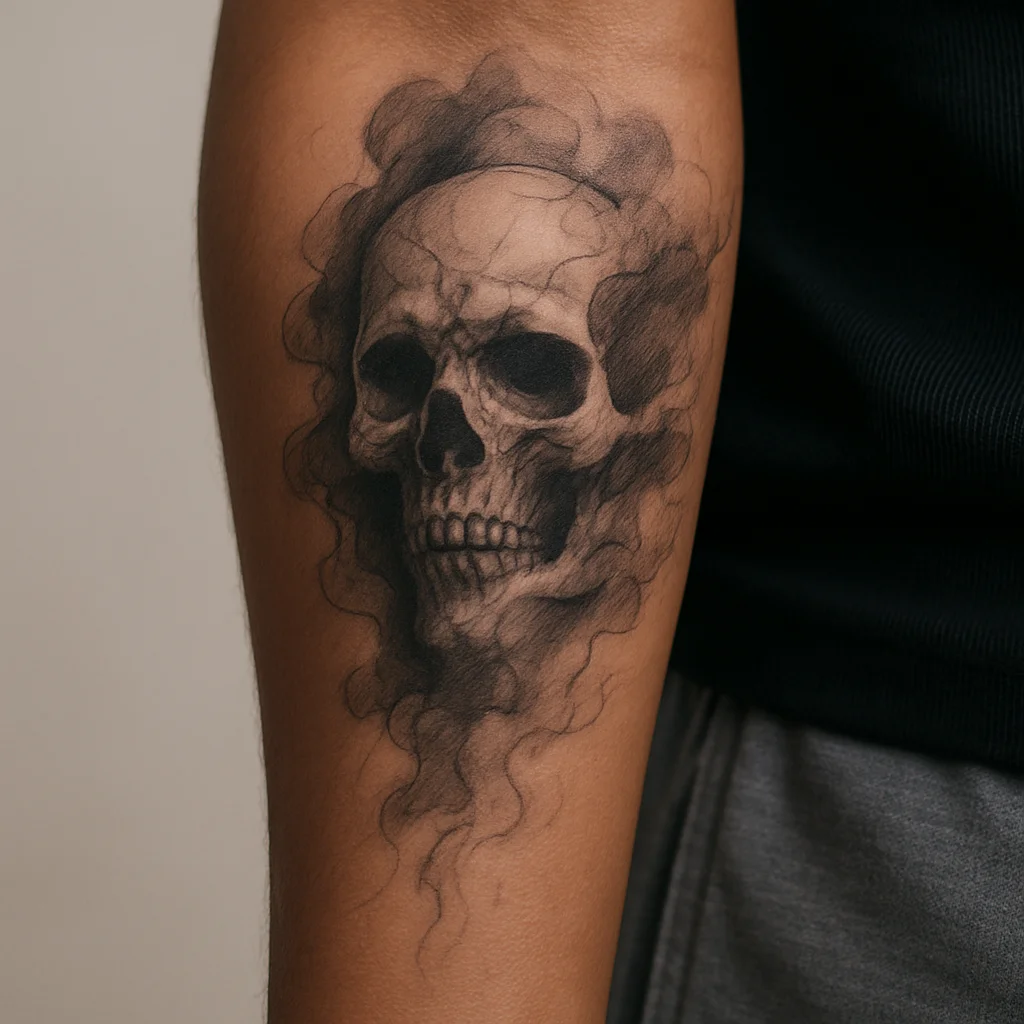
30. Dark-wash smoke and skull
A skull emerging from heavy grey smoke that dissolves toward the wrist, edges soft and undefined. Because the fade relies on smooth grey, expect a touch-up down the line if you are outdoors a lot. It pairs naturally with the black and grey half sleeve direction if you decide to keep going.
Sizing, pain and how this panel ages
Measure before you design. Most men have 9 to 12 inches from the wrist crease to the elbow crease, and the usable panel is shorter than that — leave about an inch clear at the wrist and an inch at the elbow ditch, or the design will look crowded and the elbow end will heal rough.
On pain, the outer forearm is one of the friendlier spots on the body. The muscle and fascia give you padding, and the skin is thick from daily use. Two exceptions worth knowing: the ulnar bone ridge along the outer edge, where the needle is essentially on bone, and the inner elbow ditch, which is thin, stretchy and genuinely sharp. Most men describe long sessions here as tiring rather than agonising — see our pain chart by placement if you are comparing spots.
Ageing is where the outer forearm demands respect. It takes more UV than almost anywhere else on the body, and UV is what breaks pigment down. Practical consequences:
- Bold outlines and solid black stay readable for decades.
- Soft grey wash and single-needle detail lose crispness fastest here; expect to consider a refresh in the 8 to 15 year range.
- Reds, yellows and pastels fade sooner than black or deep green.
- Line spacing that looks generous fresh will look correct in twenty years. Tight is the enemy.
Daily sunscreen on a healed forearm tattoo does more for it than any other single habit. During healing, keep it out of direct sun completely, wash twice a day, use the thinnest possible layer of ointment, and accept that this arm will be doing things — driving, lifting, sleeves rubbing — so loose clothing for the first week is not optional.
Cost, session planning and briefing your artist
Forearm work is usually priced by the hour or as a day rate, and rates swing widely by city and by the artist's demand. A small piece like a Roman numeral date or a set of coordinates typically lands in the shop-minimum-to-low-hundreds range. A medium centrepiece — a panther head, a rose, a pocket watch — commonly runs a half-day sitting. A full outer forearm panel in Japanese, Polynesian or biomech style is a multi-session project, quoted as several day rates, and the good artists in those styles book months ahead.
What actually moves the number: hours of work, detail density, colour packing, and whether you are asking for a custom drawing or something the artist already has as available artwork. Custom always costs more and is almost always worth it on a placement this visible.
How to brief well
- Bring reference for the subject and separate reference for the style. "This wolf, but rendered like these healed blackwork photos."
- Say where the design must stop. If you never want it past the elbow, say so at consultation, not at the stencil stage.
- Ask to see healed work on forearms specifically. Fresh photos hide everything that matters about ageing.
- Bring exact wording for any lettering, printed, spelled and punctuated the way you want it.
- Stand up when the stencil goes on and look at your arm in a mirror at arm's length. On the outer forearm, that mirror view is how the world will see it.
One more planning note: if there is any chance this becomes a sleeve, tell the artist now. A panel designed as a self-contained tattoo and a panel designed as the lower third of a sleeve are drawn differently, and retrofitting the second out of the first usually means dark filler you did not choose.
Frequently asked questions
Does the outer forearm hurt less than the inner forearm?
For most people, yes. The outer forearm has thicker skin and more muscle and fascia beneath it, while the inner forearm is softer and more nerve-sensitive. The sharp spots on the outer side are the bony ulnar ridge along the edge and the elbow ditch at the top.
How fast will an outer forearm tattoo fade?
Faster than a covered placement, because this panel gets more sunlight than almost anywhere else on the body. Bold black lines and solid fills can look strong for decades, while soft grey wash, single-needle detail and light colours typically want a refresh somewhere in the 8 to 15 year range. Daily sunscreen on healed skin makes a real difference.
What size design fits an outer forearm?
Most men have 9 to 12 inches between the wrist and elbow creases, and you should leave about an inch clear at each end. That gives a comfortable 6 to 9 inch design height for a centrepiece, or the full run for a vertical Japanese or landscape panel. Have your artist print the stencil at final size so you can judge it on your own arm.
Can I get a forearm tattoo if I need to cover it for work?
A long-sleeve shirt covers the whole panel, but bear in mind that the outer forearm is the first thing exposed when you roll sleeves up or wear a watch and short sleeves in summer. If discretion matters a lot, keep the design in the lower two-thirds so a rolled cuff still hides it, or consider the inner forearm instead.
Should I plan a forearm panel as part of a sleeve?
Only if you genuinely want a sleeve one day, but you should decide before the drawing starts. A stand-alone panel is drawn with its own borders and negative space, while a sleeve's lower third is drawn to flow past the elbow. Converting the first into the second usually requires dark filler that you did not choose.
The conversation
No comments yet. Got a thought about these designs? Start us off.
Want to weigh in? Join the community to comment, save designs and try them on your skin.