30 Bicep Armband Tattoos, Thin Line to Solid Black
A band around the bicep is one of the few tattoos that has to fit your anatomy before it can look good. Here are 30 designs sorted from hairline singles to full blackout cuffs, with the geometry, pain and pricing notes that decide which one works on your arm.
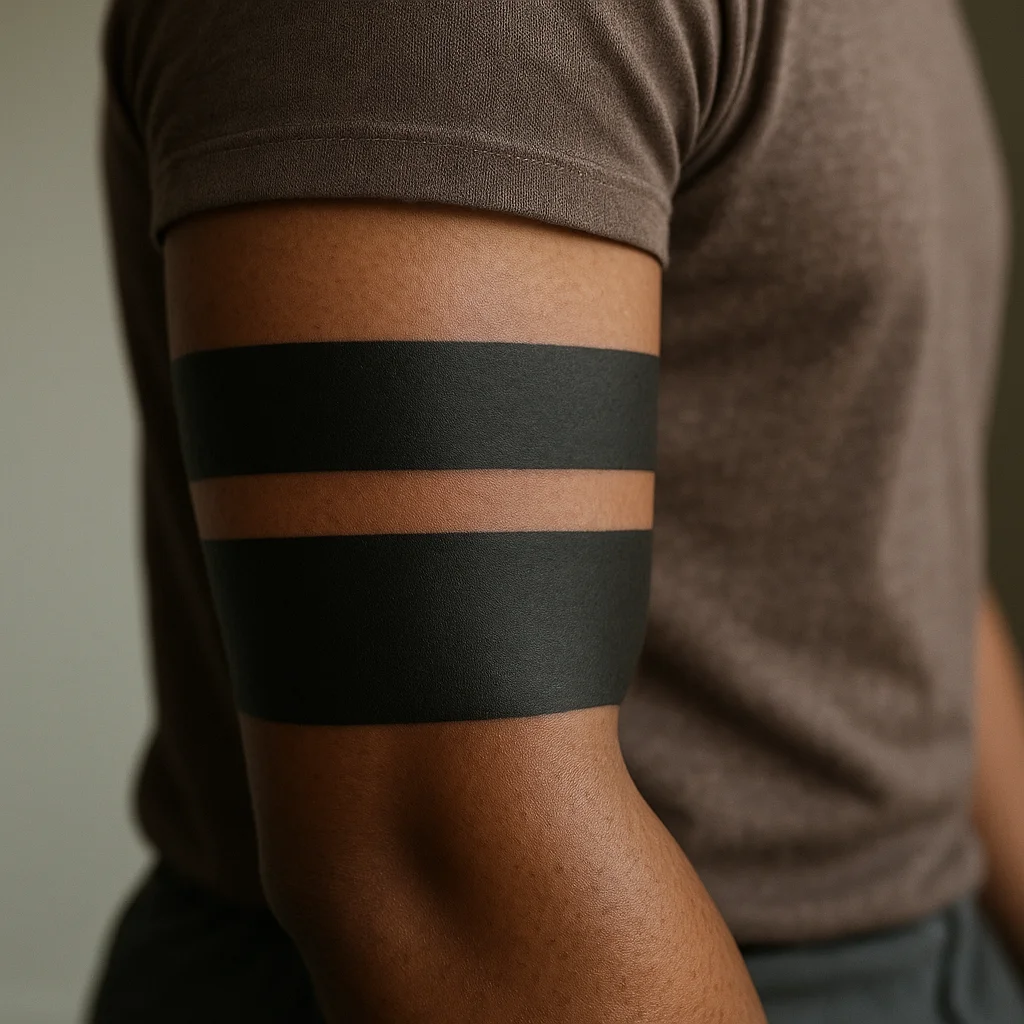
How a Band Actually Sits on a Bicep
A bicep is not a cylinder. It is a cone that tapers toward the elbow, thickens when you flex, and rotates as your arm moves. Wrap a perfectly level line around it and the band will look like it is sliding downhill on the outside of the arm. Good artists compensate by tilting the band a few degrees so it reads horizontal from the angle people actually see you: standing, arms at your sides, viewed from the front.
The second decision is whether the loop closes. A closed band has to cross the inner arm, which is the softest, most nerve-dense skin on the upper limb. An open band that stops at the inner seam solves that, and honestly nobody notices unless you lift your arm over your head. Many artists suggest closing thin bands (the inner-arm stretch is short) and leaving very wide solid bands slightly open or tapered so the inner arm does not take a full blackout hit.
On sizing: most adult biceps run somewhere around 12 to 17 inches of circumference, so even a 'small' band is a long tattoo. Width is what changes everything. A hairline single reads as jewelry. Half an inch reads as a deliberate graphic. Two inches or more reads as a statement you cannot hide under a t-shirt sleeve. Ask your artist to draw the band on with a marker and then look at it in a mirror from six feet away, arms relaxed, before any needle touches you. Placement height matters too: sitting the band at the fullest part of the bicep makes the arm look wider; sitting it higher, near the deltoid insertion, makes the shoulder look broader.
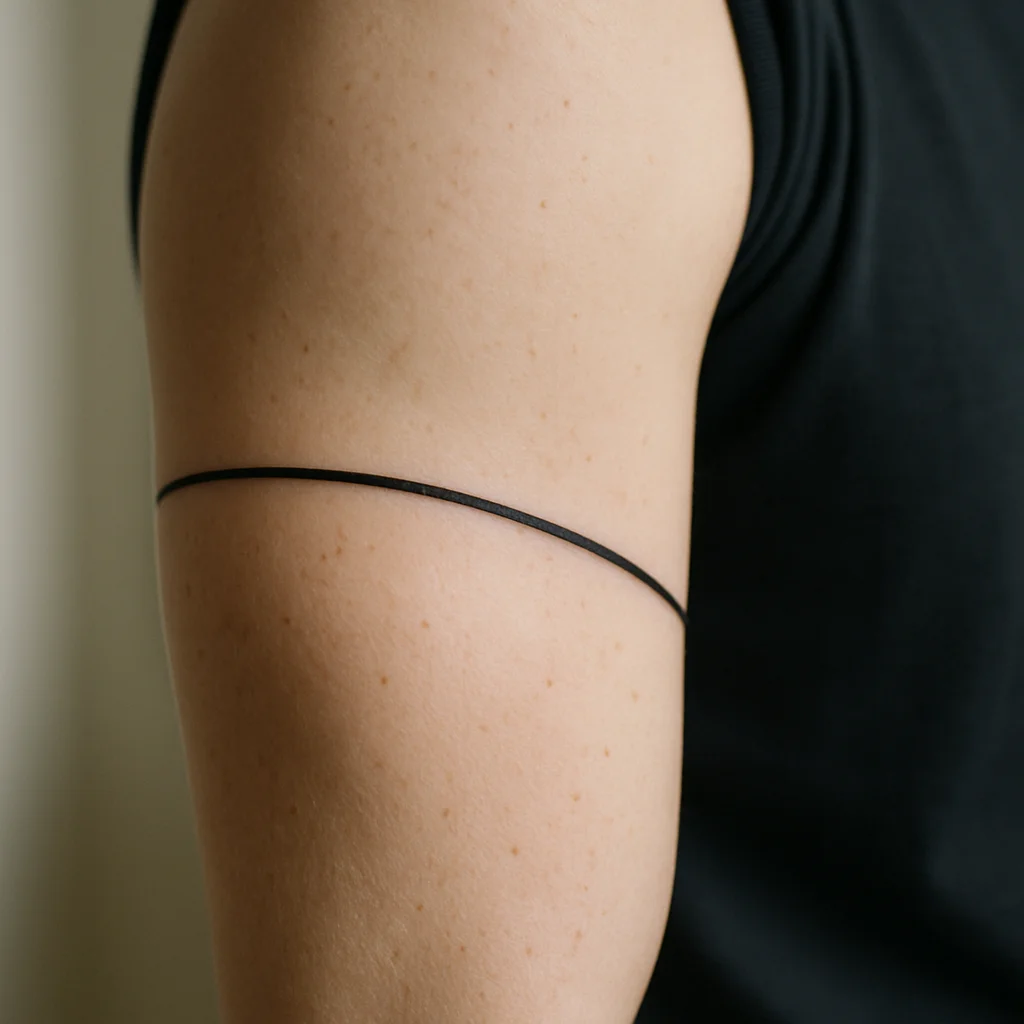
Thin Line Bands (1-6)
The lightest end of the spectrum. These heal fast, cost the least, and are the safest first band if you are not sure how you feel about a permanent ring around your arm. The trade-off is precision: with nothing to hide behind, any wobble in the line or gap at the join is visible forever.
1. Single 3mm solid band
One clean bold line, closed all the way around, sitting at the widest point of the bicep. It photographs like a bracelet and works under any shirt. Ask for the line to be laid in one confident pass rather than built up from short strokes, because stitched-together segments show as ripples once the skin settles.
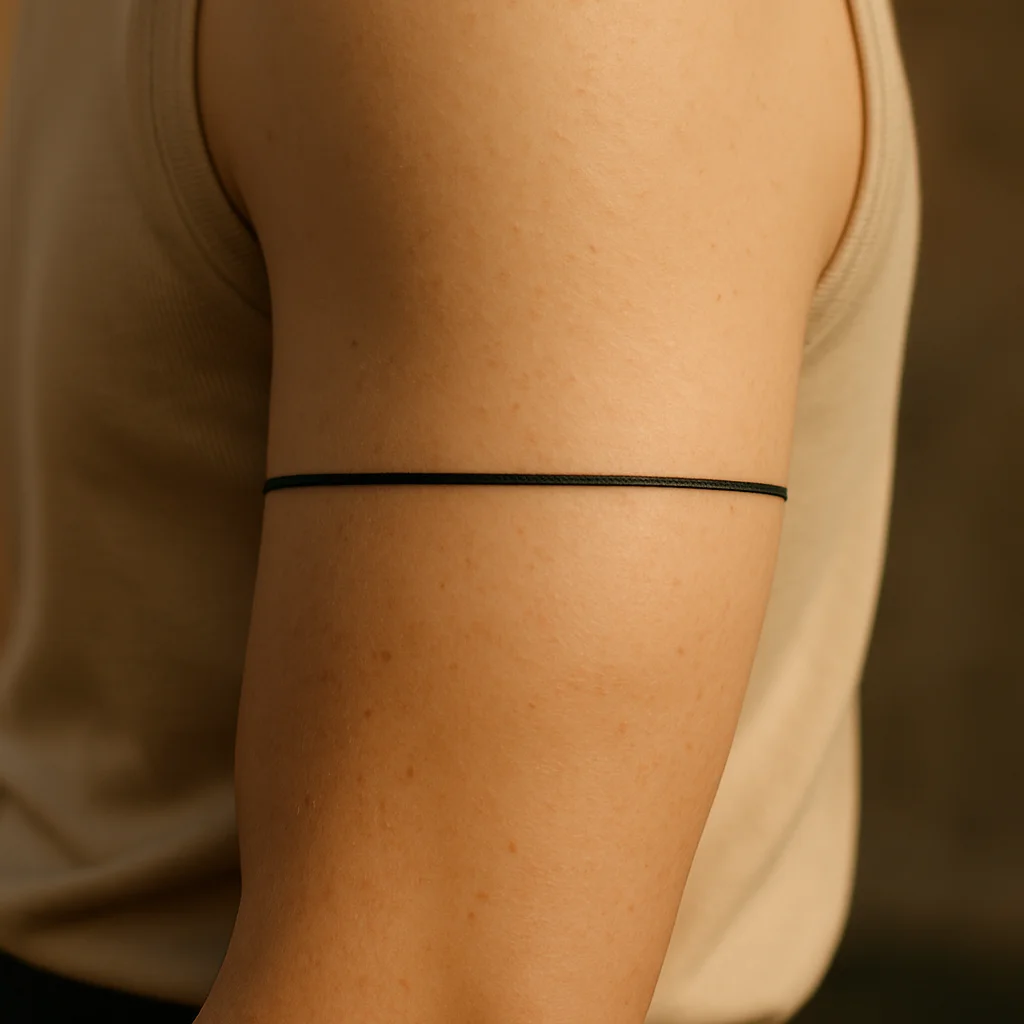
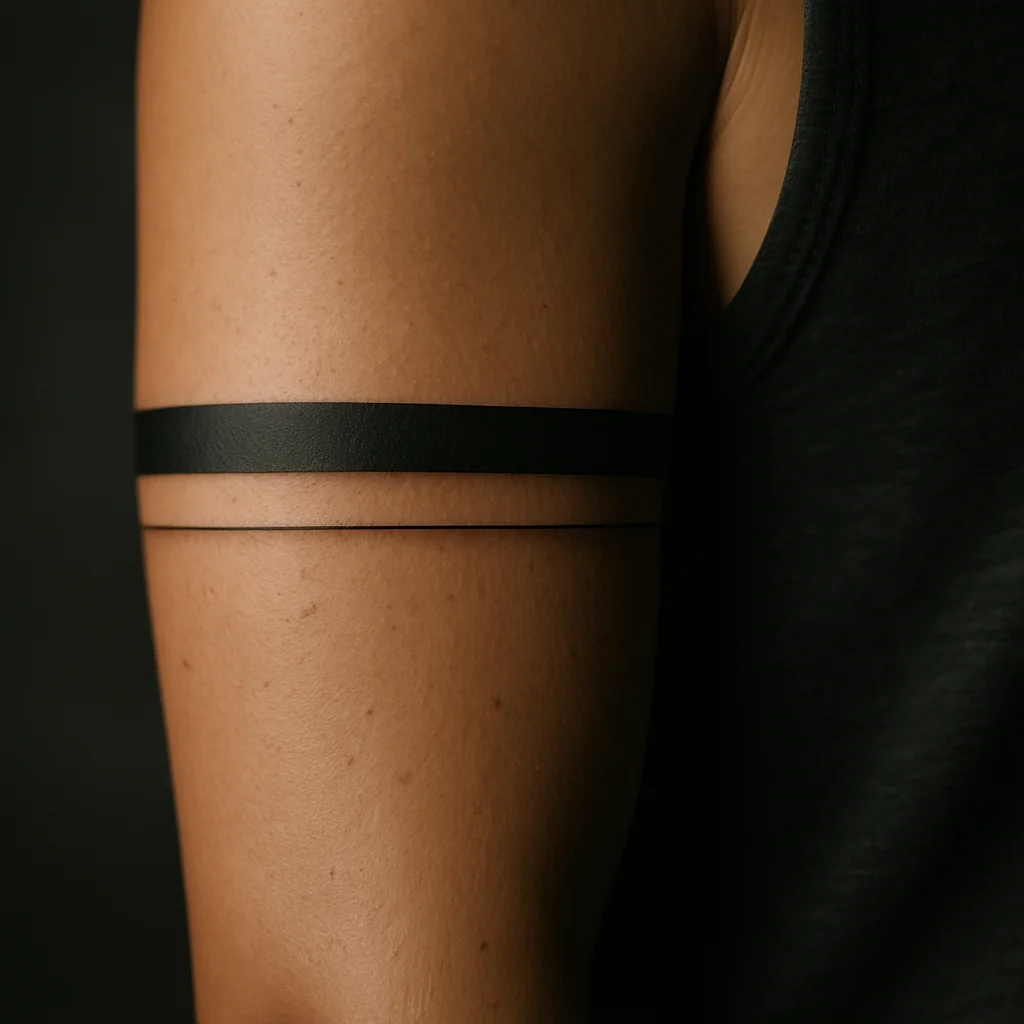
2. Thick-thin double band
Two parallel lines with deliberately unequal weight, a bold 4mm above a fine 1mm, separated by roughly a finger's width. The imbalance stops it looking like a stripe of measuring tape and gives the eye somewhere to land. Great on lean arms where a single line can look thin.
3. Triple hairline stack
Three whisper-fine lines with tight, even spacing. This is the most 'jewelry' of all bands and suits guys who want something present but quiet. Be warned: hairline work on a curved, sun-exposed surface softens over the years, so budget for a touch-up around the five-year mark.
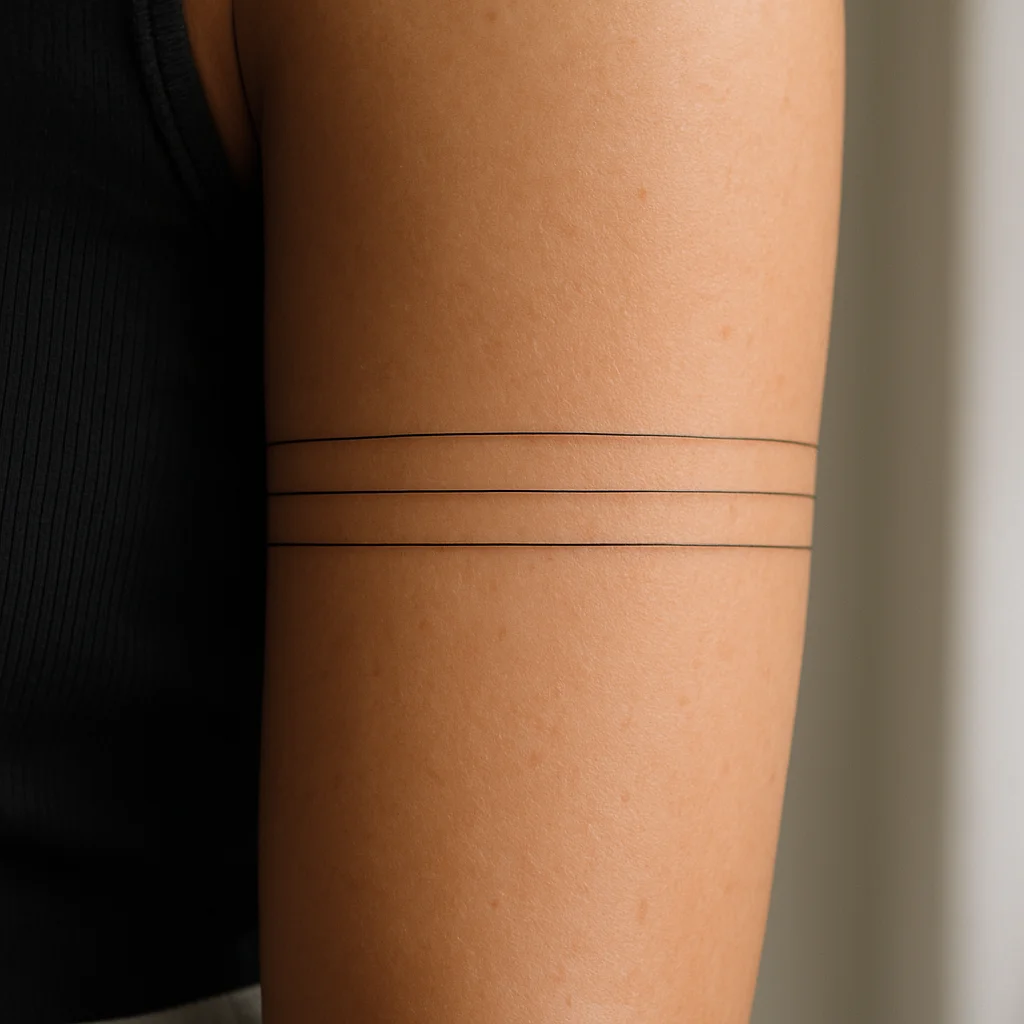
4. Open band with an inner-arm break
A bold line that wraps the outer three-quarters of the bicep and stops cleanly at the inner seam, ends squared off. You dodge the worst of the pain and the design gains a bit of tension, like an unfinished cuff. It also gives you the option to close it later.
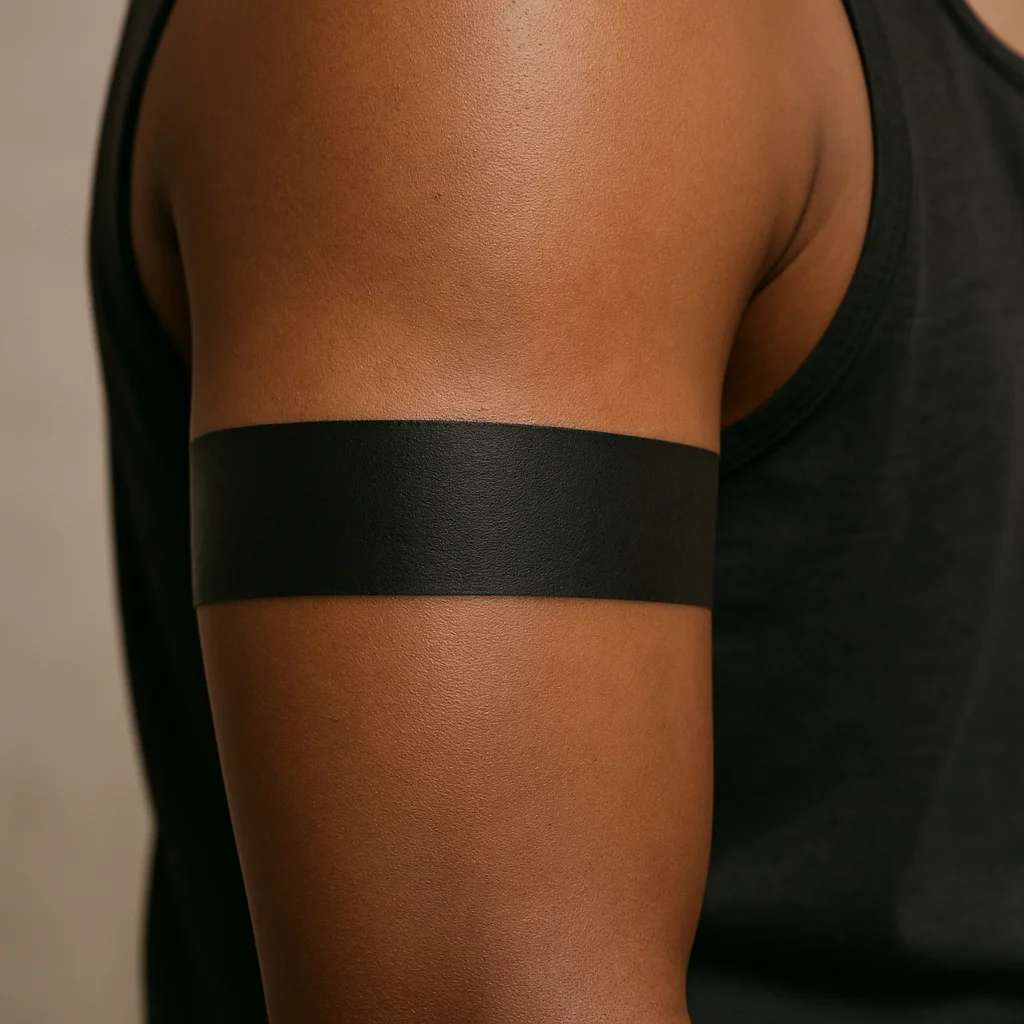
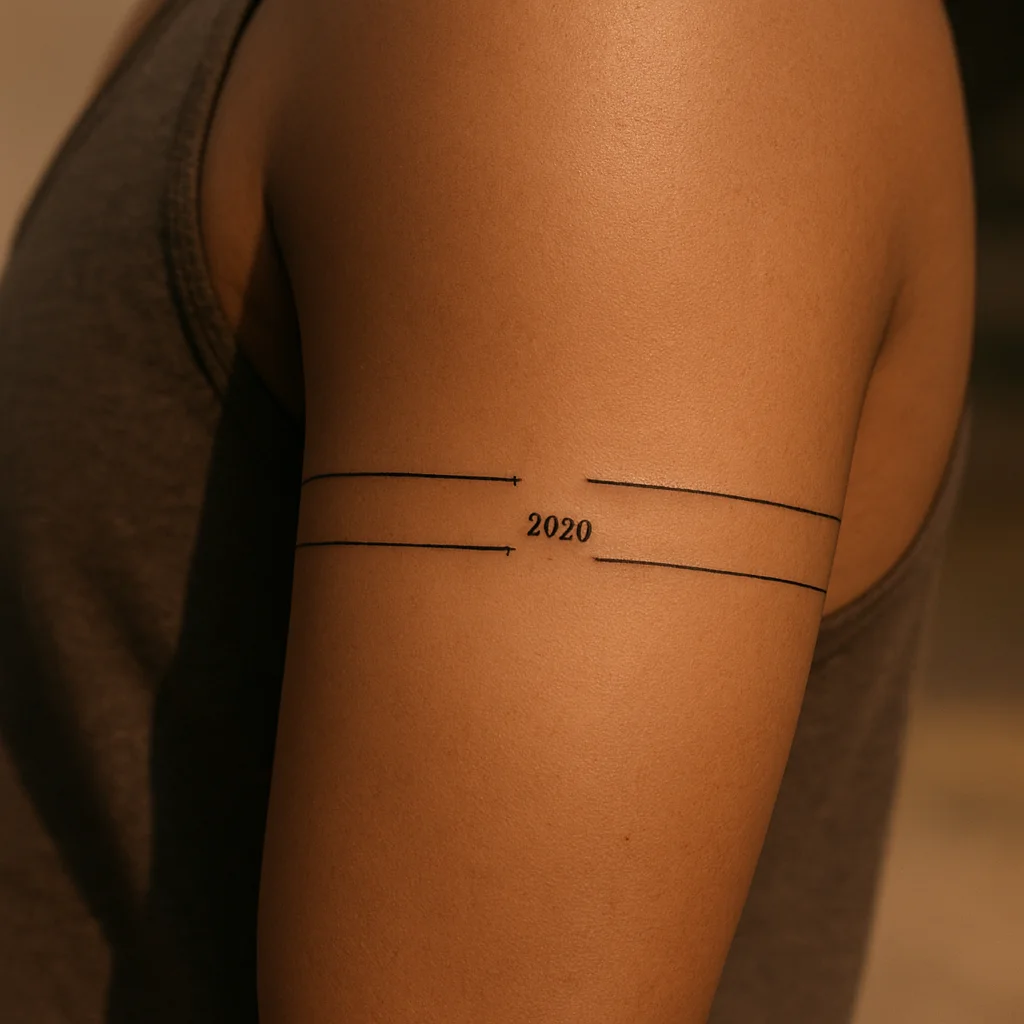
5. Broken band with a date in the gap
Same open structure, but the break sits on the outer arm and holds a small date, initials or set of coordinates in a tight sans-serif. Keep the text no smaller than about 6mm tall or the characters will blur into one another. Reads as personal without announcing itself.
6. Tapered brushstroke band
A line that swells in the middle of the outer arm and tapers to fine points at both ends, like a single loaded brush pass. It flatters a cone-shaped bicep because the thick section sits where the muscle is fullest. Works especially well paired with an existing fine-line forearm piece.
Geometric and Patterned Bands (7-13)
Pattern bands are where the bicep stops being a problem and starts being an advantage: a repeating motif has to travel around a curve, and that curve is what makes the tattoo feel three-dimensional. The critical conversation with your artist is how the pattern joins at the back or inner arm. A repeat that does not divide evenly into your arm's circumference will leave an awkward half-motif at the seam unless it is planned.
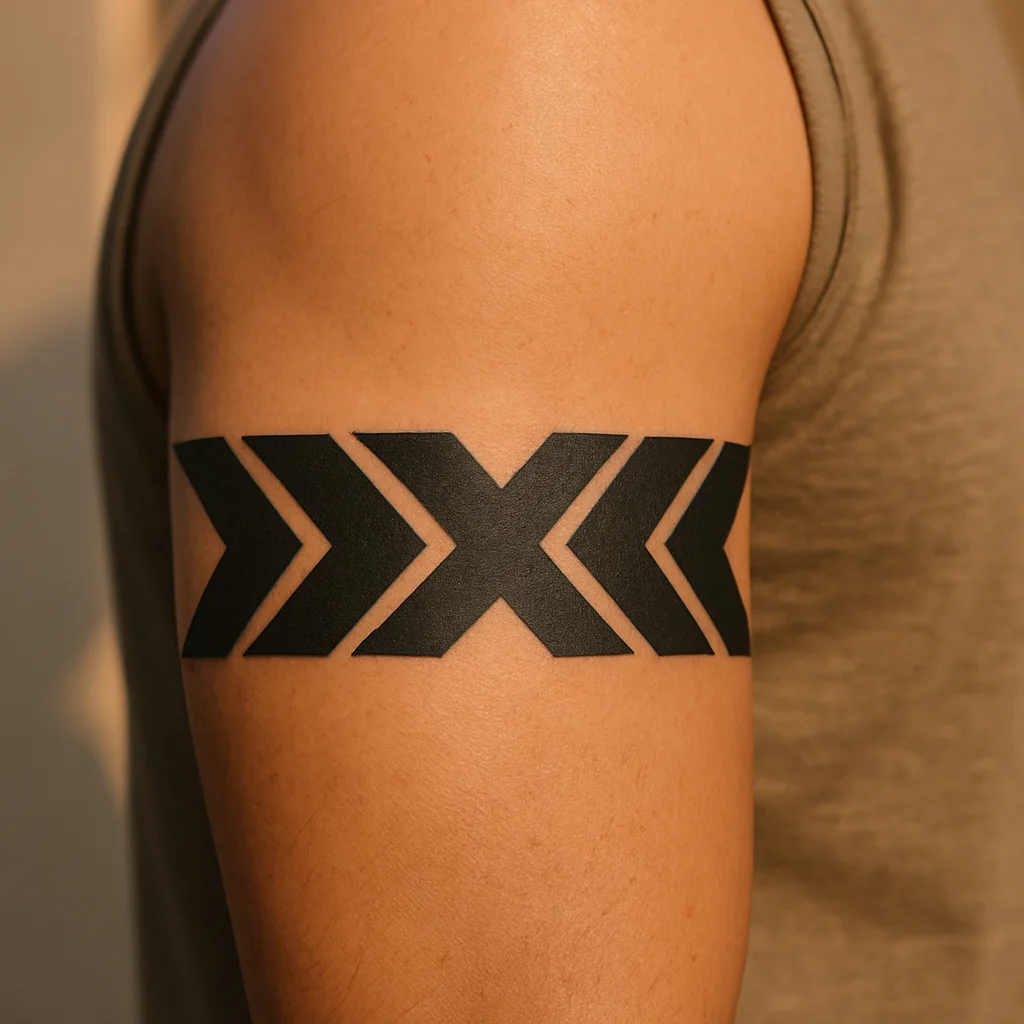
7. Chevron repeat
A row of sharp Vs marching around the arm, usually 15 to 25mm tall. Simple to draw, brutal to execute well, because the eye catches any chevron that leans differently from its neighbours. Best on arms with a fairly even taper.
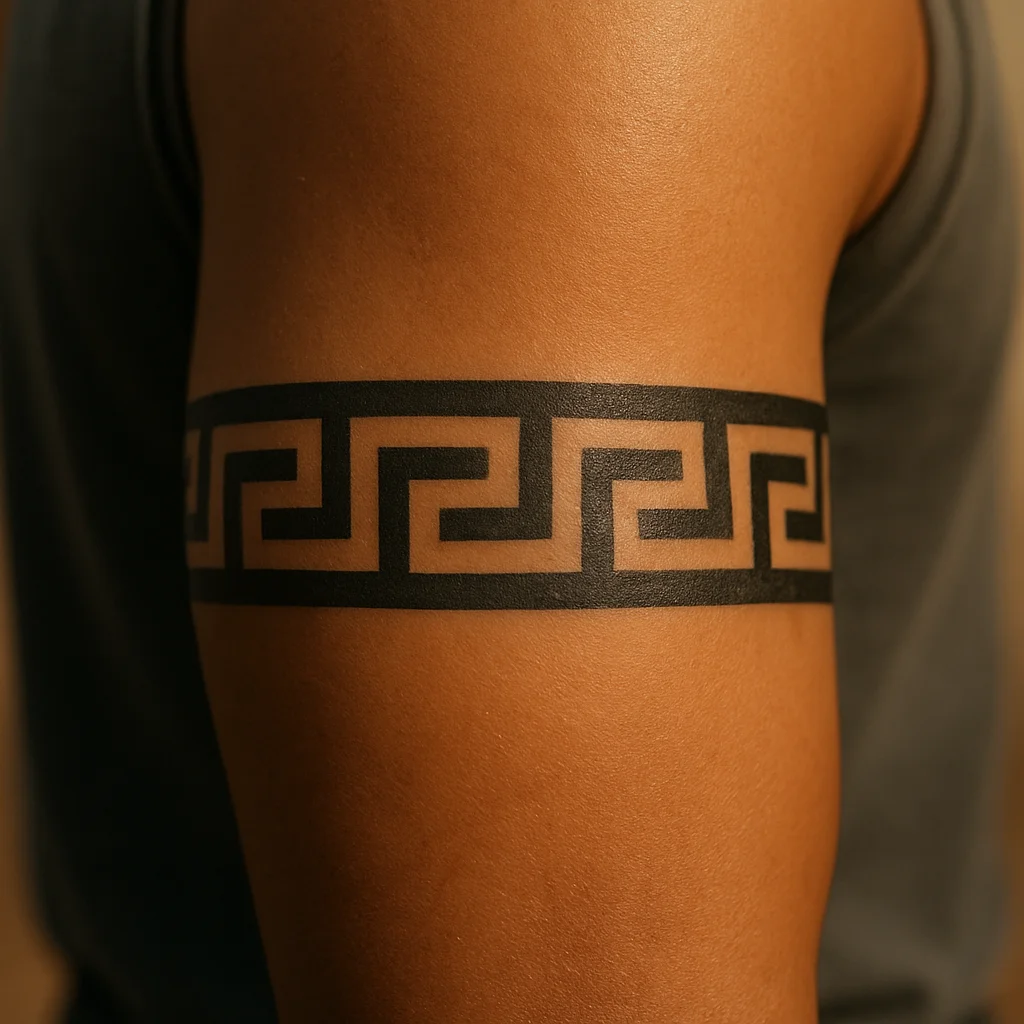
8. Greek key meander
The interlocking right-angle motif from classical pottery, run as a continuous ribbon. It looks architectural and ages beautifully because it is all bold, evenly spaced blacks. Keep the internal gaps generous or the whole band will grey out into a smudge over a decade.
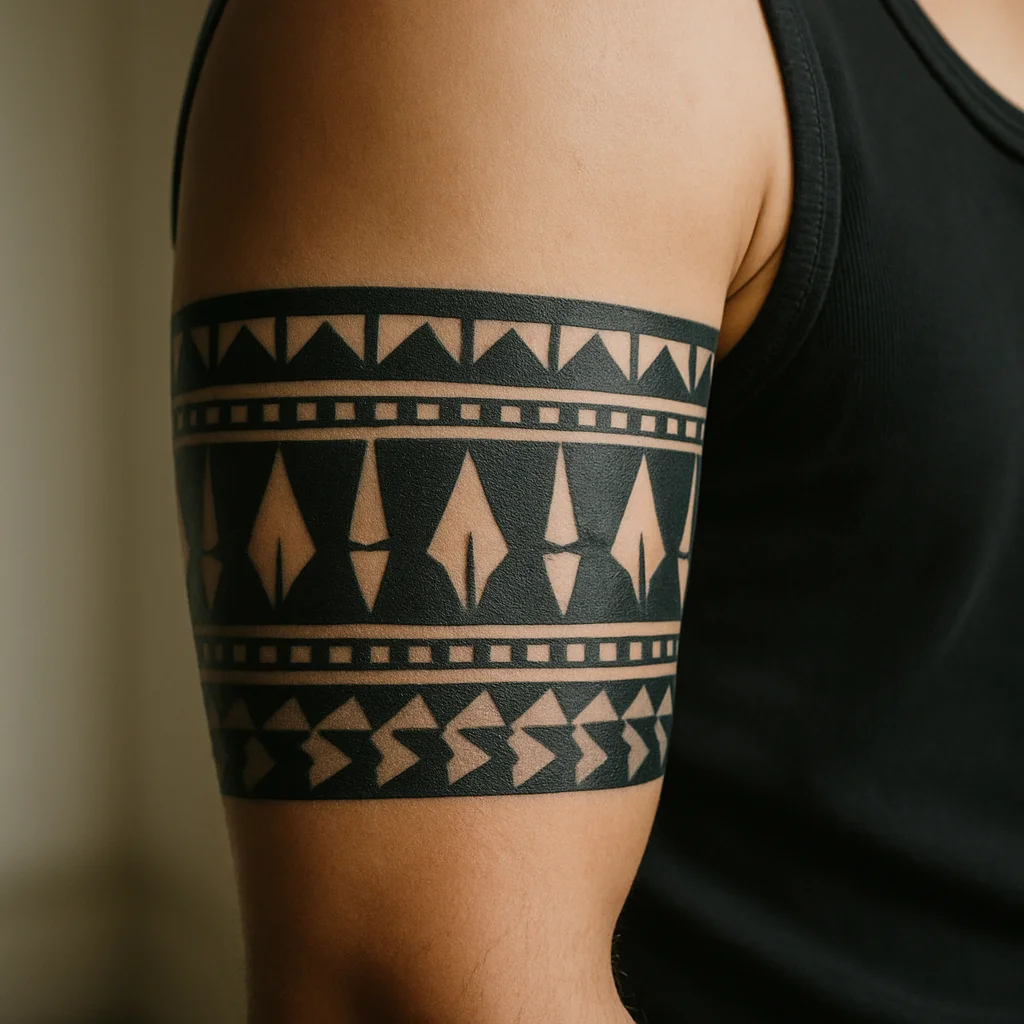
9. Polynesian-inspired custom band
Dense filled panels, spearheads and enclosure motifs arranged in a wide cuff. If you go this route, seek out an artist who works within the tradition and can explain what the elements mean rather than pulling shapes off a flash sheet. A custom band built around your own story is both more respectful and more interesting than a copy.
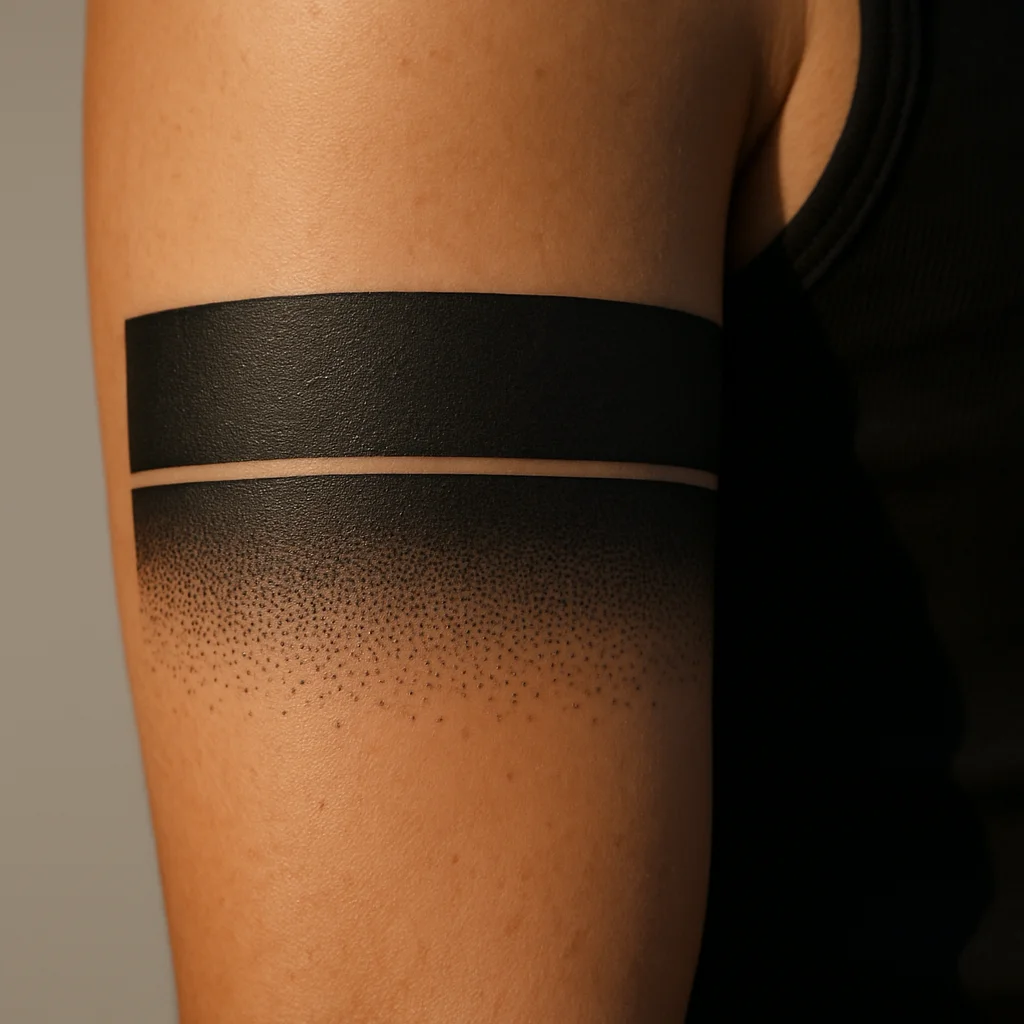
10. Dot-shaded gradient band
Two clean outer lines with stippled dotwork inside, dense at the top edge and dissolving toward the bottom. It gives you the presence of a wide band with a fraction of the saturation, so it hurts less and heals softer. Sits gorgeously on the outer bicep.
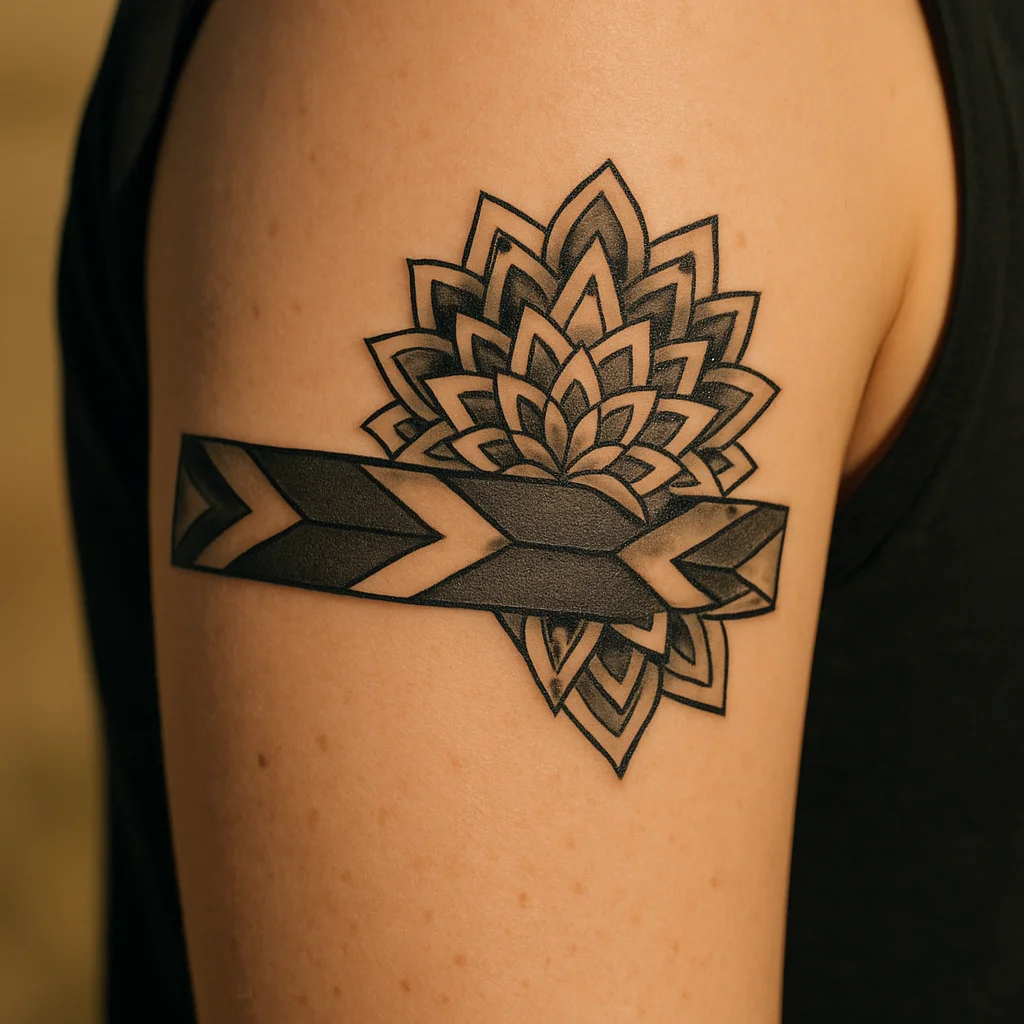
11. Mandala band with an outward-facing focal point
A geometric ribbon that wraps the arm and blooms into a half-mandala on the outer bicep, the part people actually see. The wrap keeps it feeling like a band; the focal point stops it feeling like wallpaper. Plan on a wider piece, 3 to 4 inches at the centre.
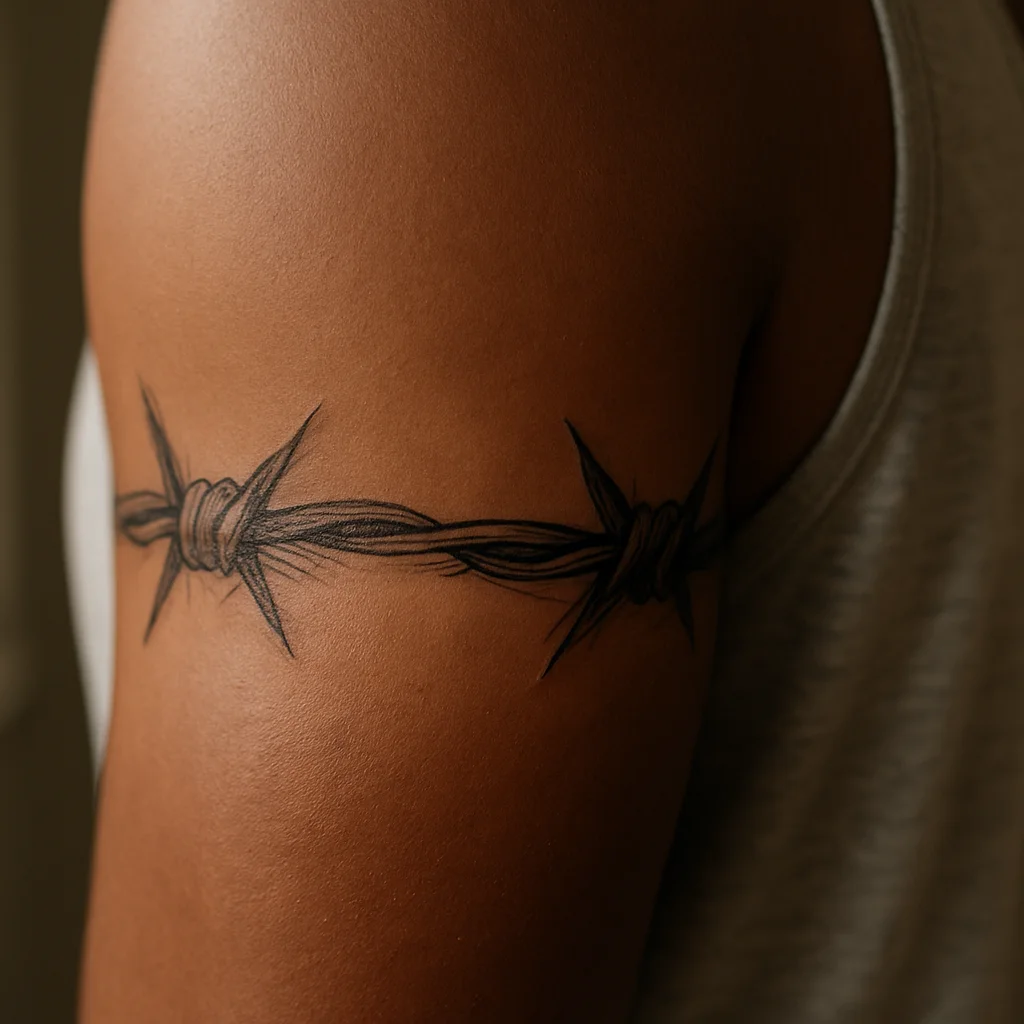
12. Modern barbed wire
The nineties classic, redrawn: cleaner spacing, a slight perspective twist so the wire passes behind the arm, and no cartoon barbs. Done with restraint it looks sharp rather than nostalgic. Ask for the barbs to be irregular, the way real wire is.
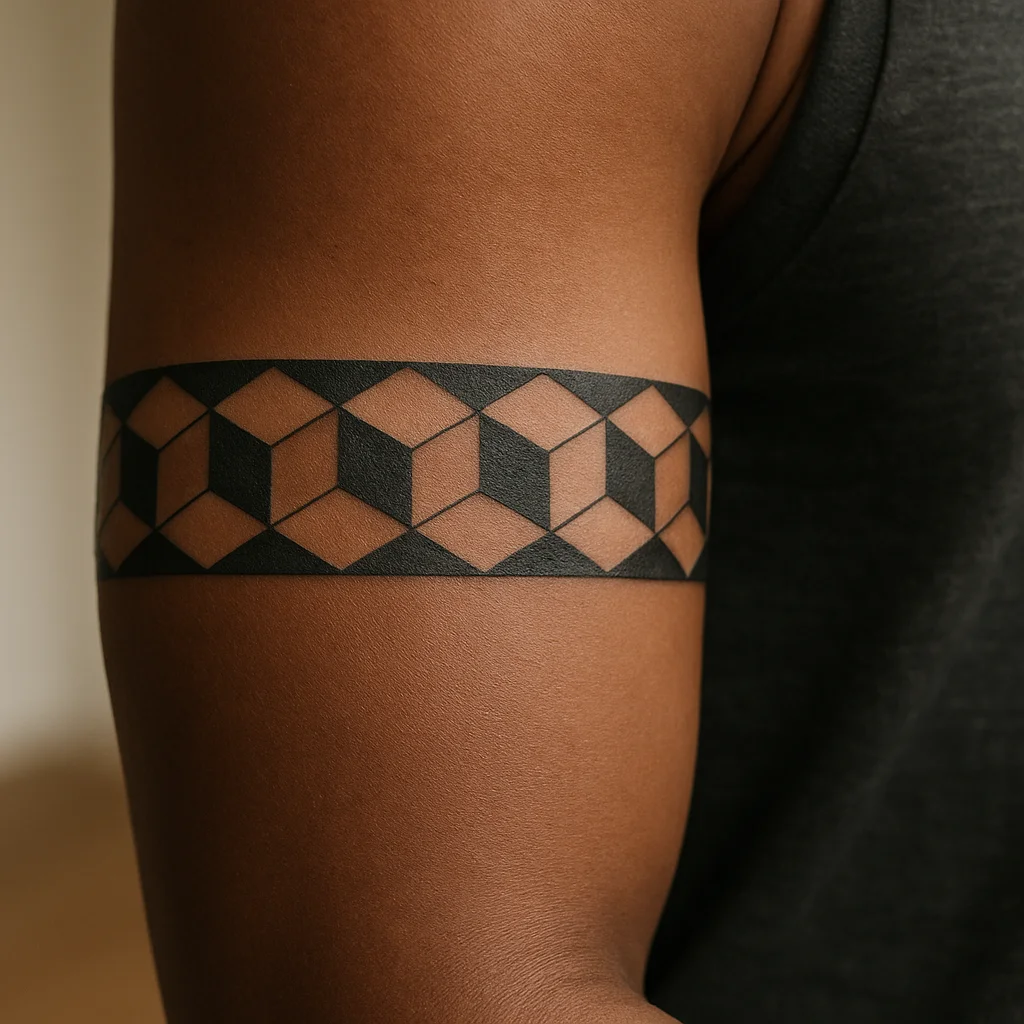
13. Negative-space cube band
Isometric cubes or interlocking blocks where the black fill and the bare skin swap roles as the band turns the arm. It creates a genuine optical effect when you rotate your wrist. Needs an artist who is comfortable with straight-line geometry on curved skin, so ask to see healed examples.
Solid Black and Blackwork Cuffs (14-20)
The heaviest option, and the one people most often get wrong by underestimating it. Solid black over a large curved area takes real saturation work, sometimes two passes across separate sessions, and it is the least forgiving tattoo to heal. Done right, it is also the boldest thing you can put on an arm and it will still look crisp in twenty years.
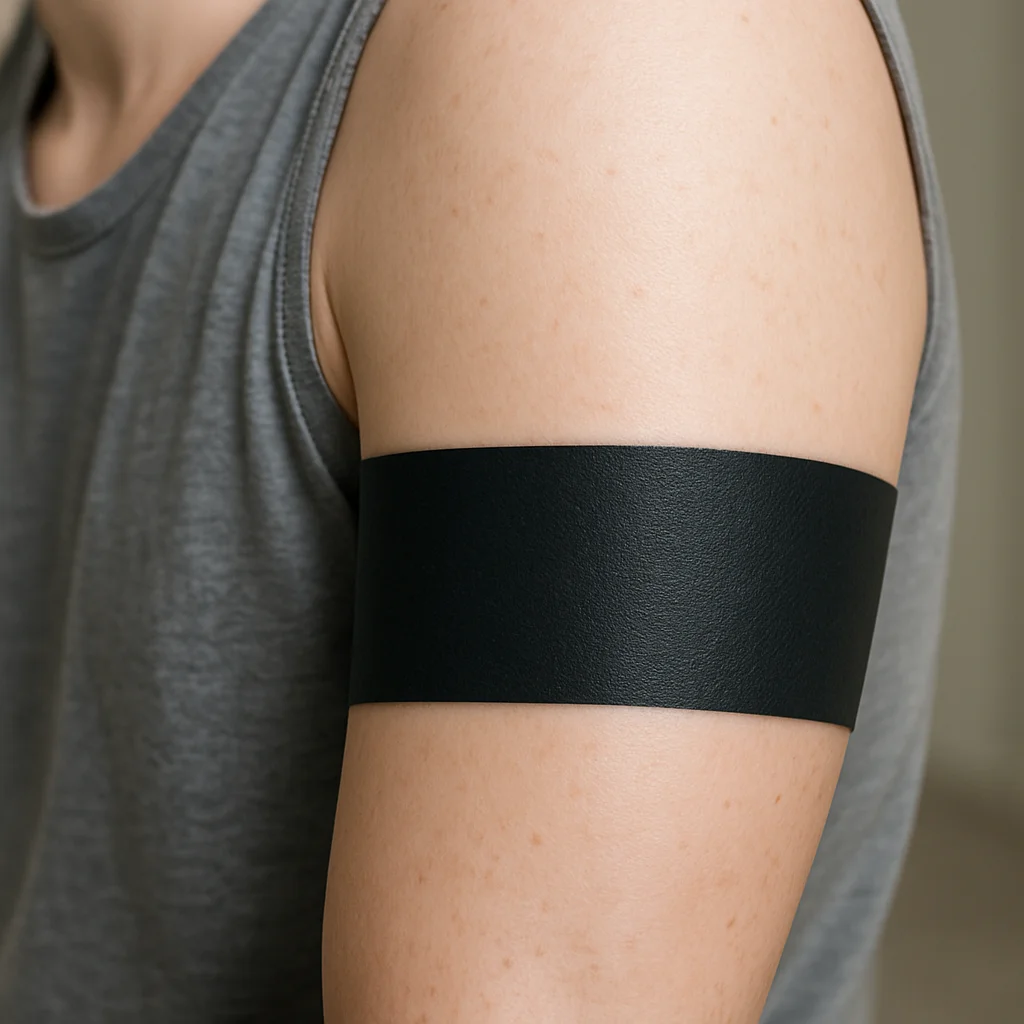
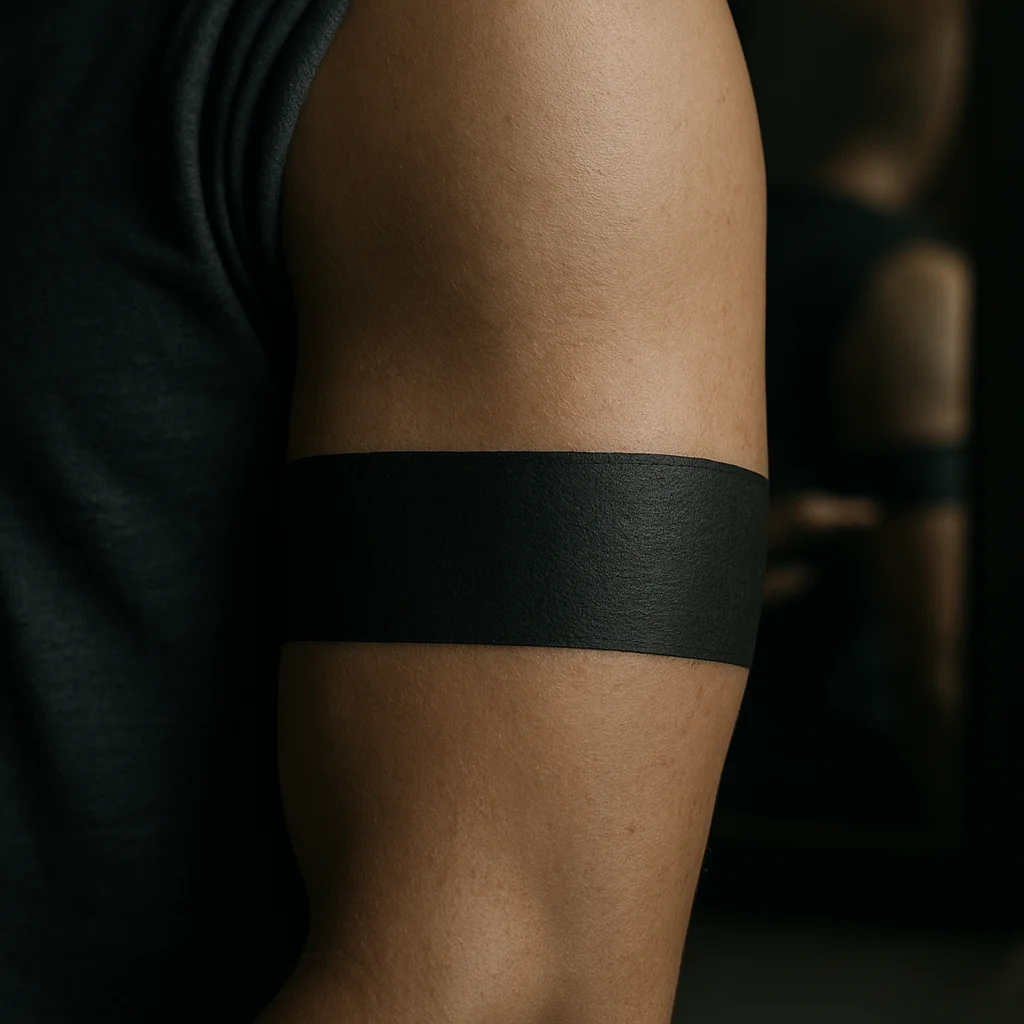
14. Single wide black cuff
Two to three inches of pure solid black wrapping the bicep, edges razor sharp. Nothing else needed. Expect a longer sitting, some swelling, and a healing period where the black looks patchy before it evens out.
15. Solid band with a negative-space stripe
A wide blackout cuff with a bare skin channel running through the middle, roughly a third of the band's width. The skin line does more visual work than any white ink ever would, and unlike white ink it will not yellow or disappear. Crisp and modern.
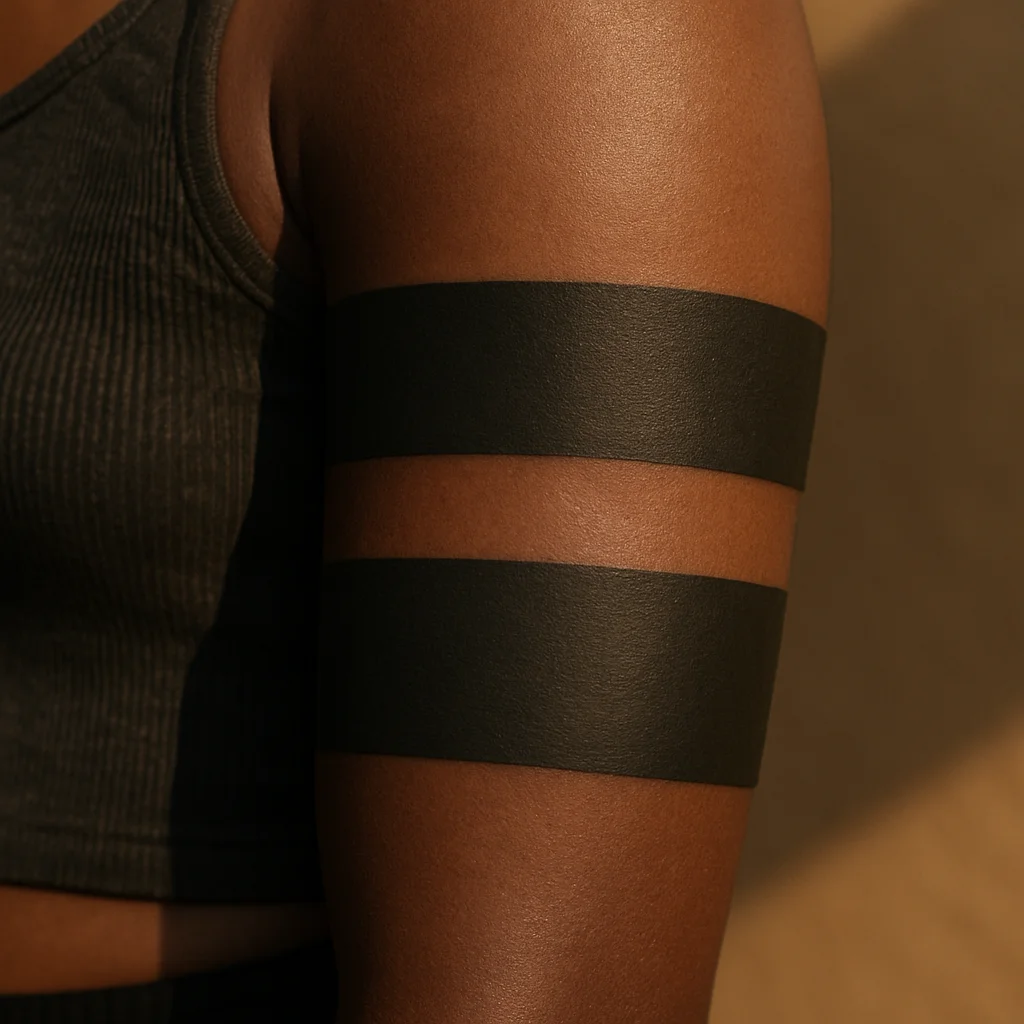
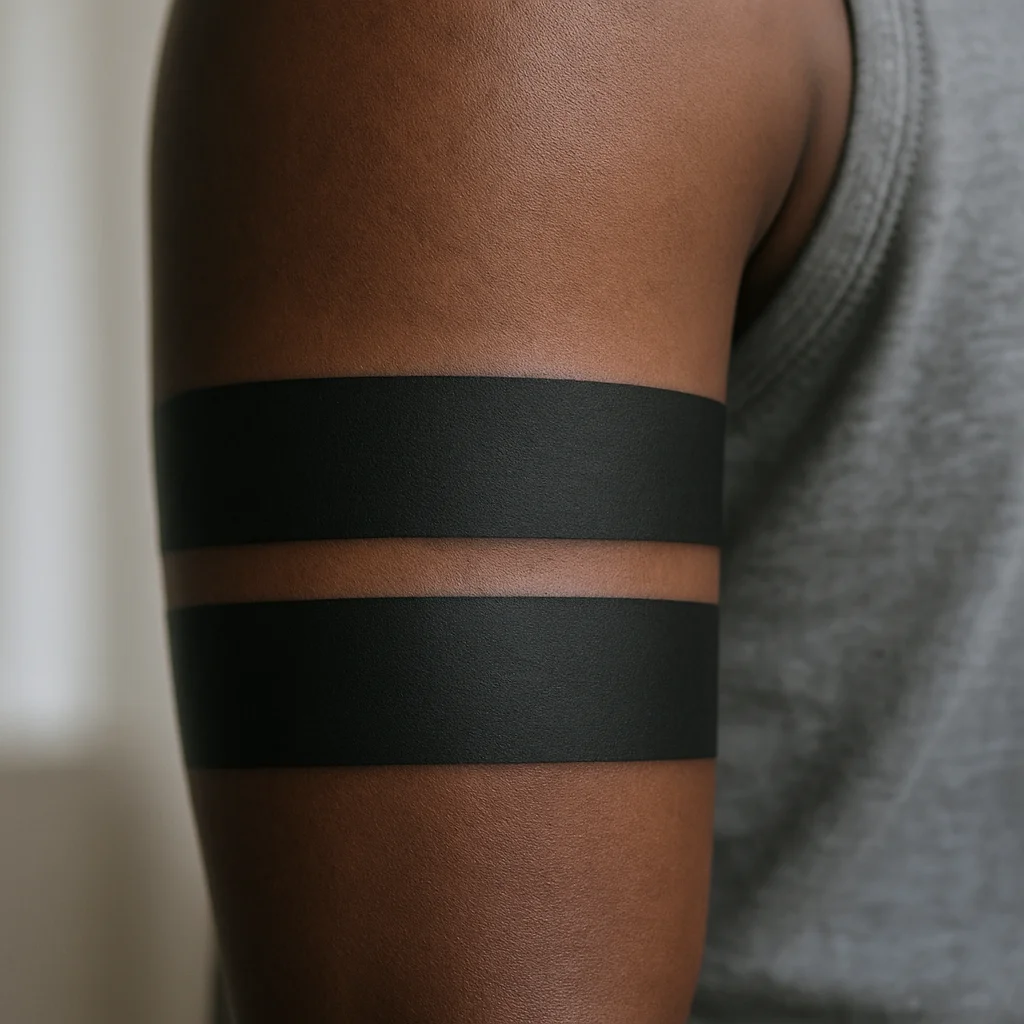
16. Twin mourning bands
Two solid black bands, each about 12mm wide, set a couple of centimetres apart. Historically a mark of loss, and still one of the most dignified ways to carry it. Some men add a single fine line between them for a person still living.
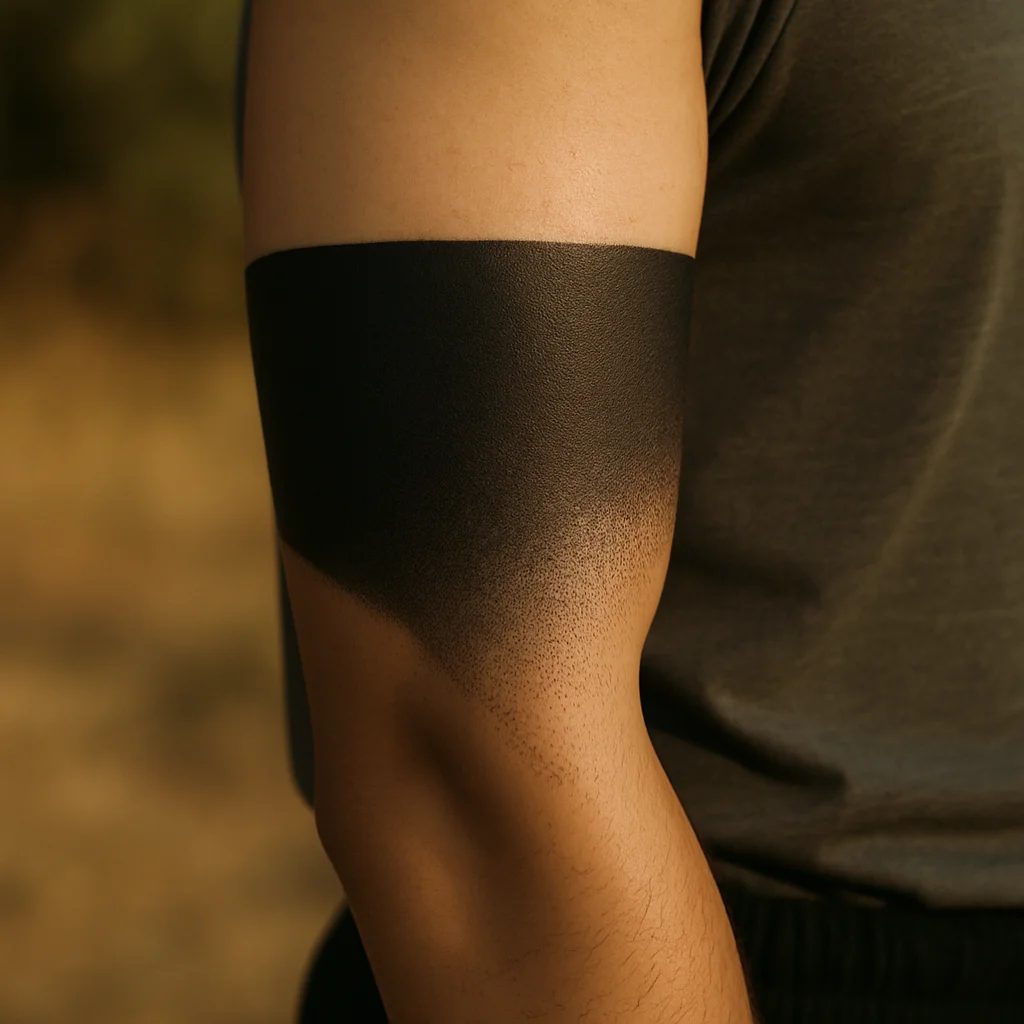
17. Gradient blackout fading toward the elbow
Dense black at the top of the band dissolving into whip shading and open skin below. It softens the hard edge that some guys find too severe and blends nicely if you later build a half sleeve beneath it. Ask for the fade to be built from fine whip strokes, not dots, if you want it to read smooth from a distance.
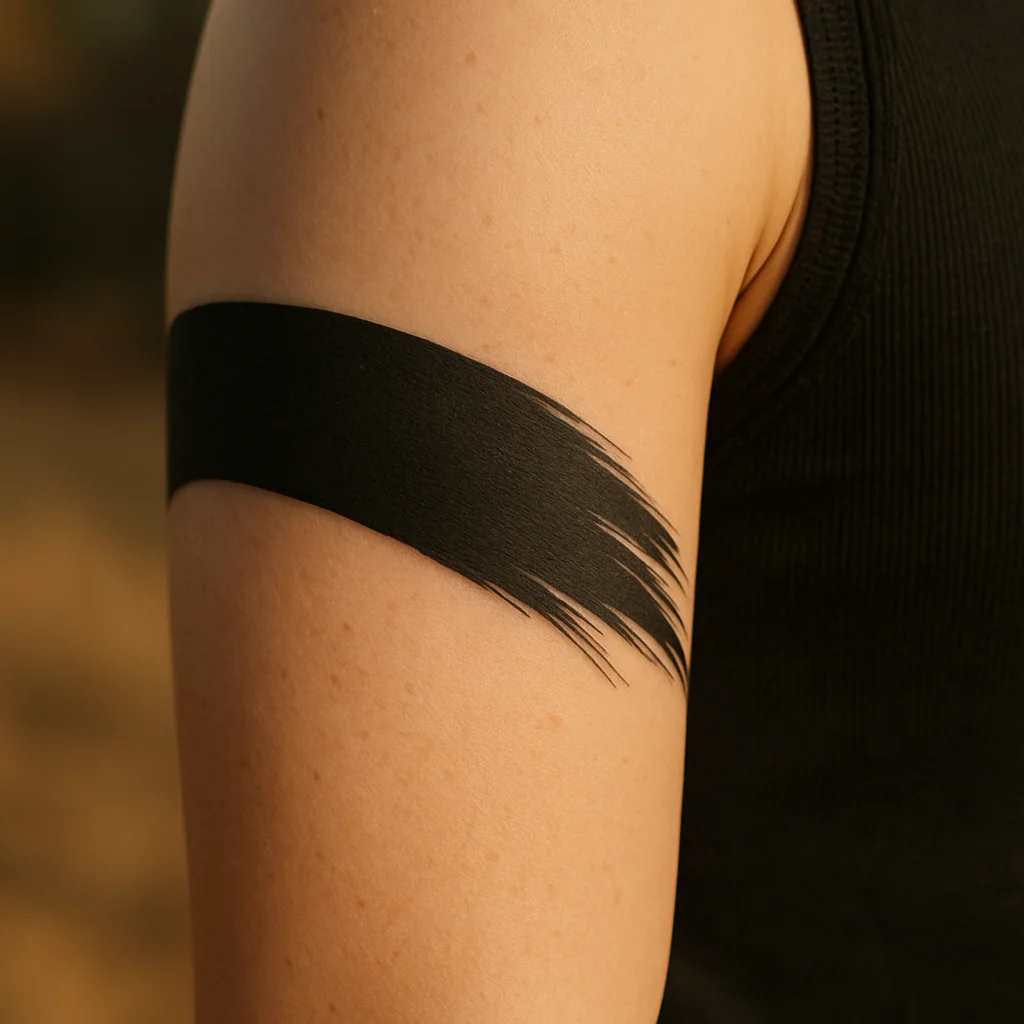
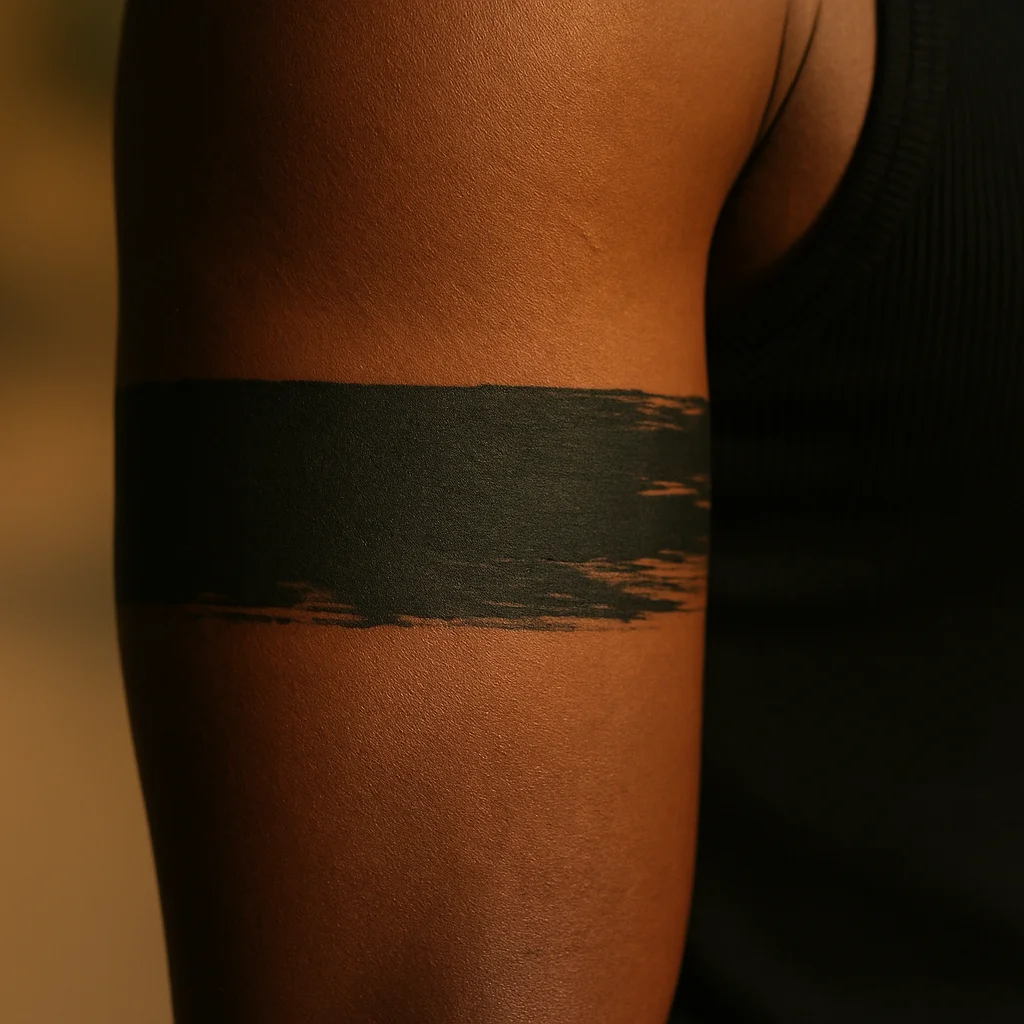
18. Textured brushed-edge band
Solid black core with edges broken into dry-brush strokes, as if painted on and dragged. It looks handmade rather than machine-precise, which suits arms with existing organic or illustrative work. Great cover option over an older tribal band.
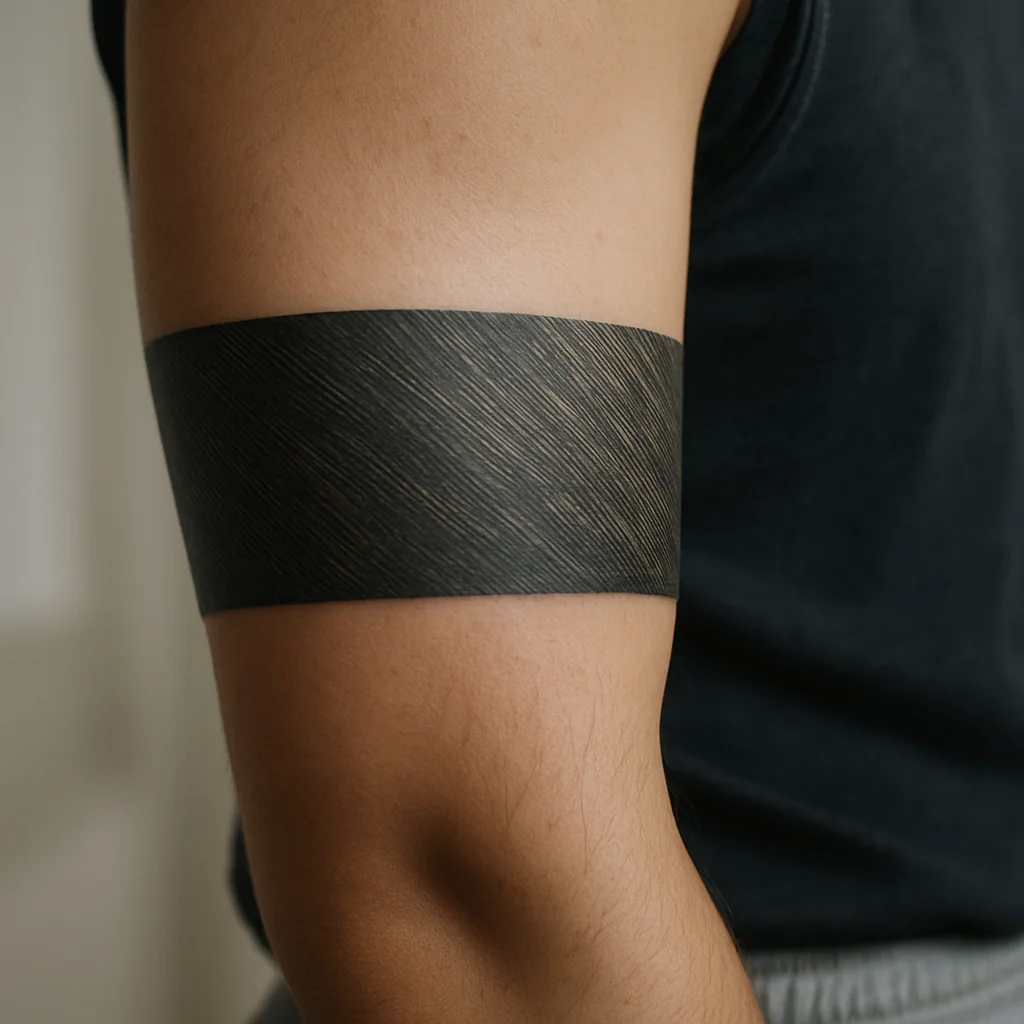
19. Etched blackwork band
A wide band filled with dense engraving-style hatching rather than flat black, sometimes with tiny etched motifs inside. Reads as deep charcoal from across a room and reveals detail up close. Slightly gentler to sit through than solid fill.
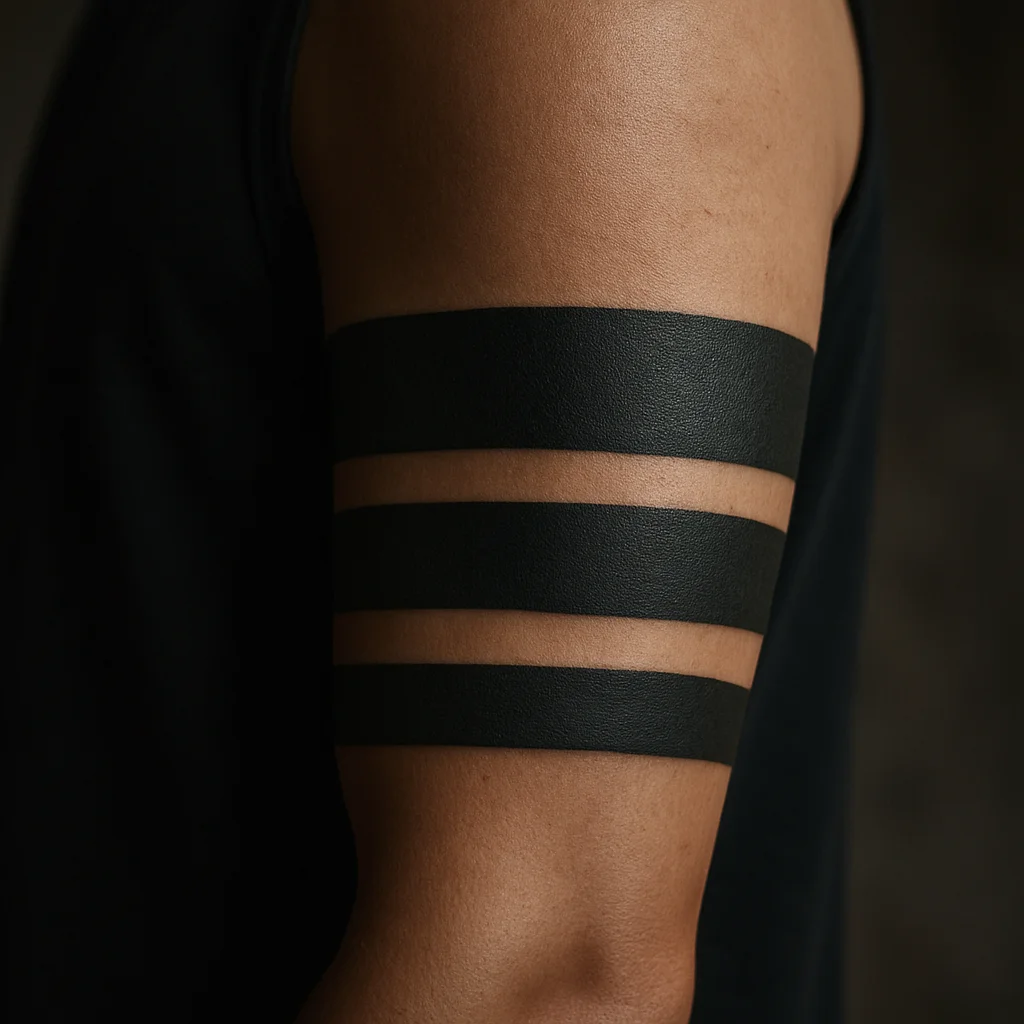
20. Stacked bands of unequal weight
Three bands in descending width, say 25mm, 12mm and 4mm, spaced tightly and running down the arm toward the elbow. The rhythm makes the arm look longer and gives a wide-band look with less total black. A strong choice if you want boldness without full blackout.
Bands That Carry Meaning (21-26)
A ring has no beginning and no end, which is why so many men use a bicep band to mark something continuous: a person, a promise, a date they count from. The design job is keeping the meaning legible without turning the band into a paragraph.
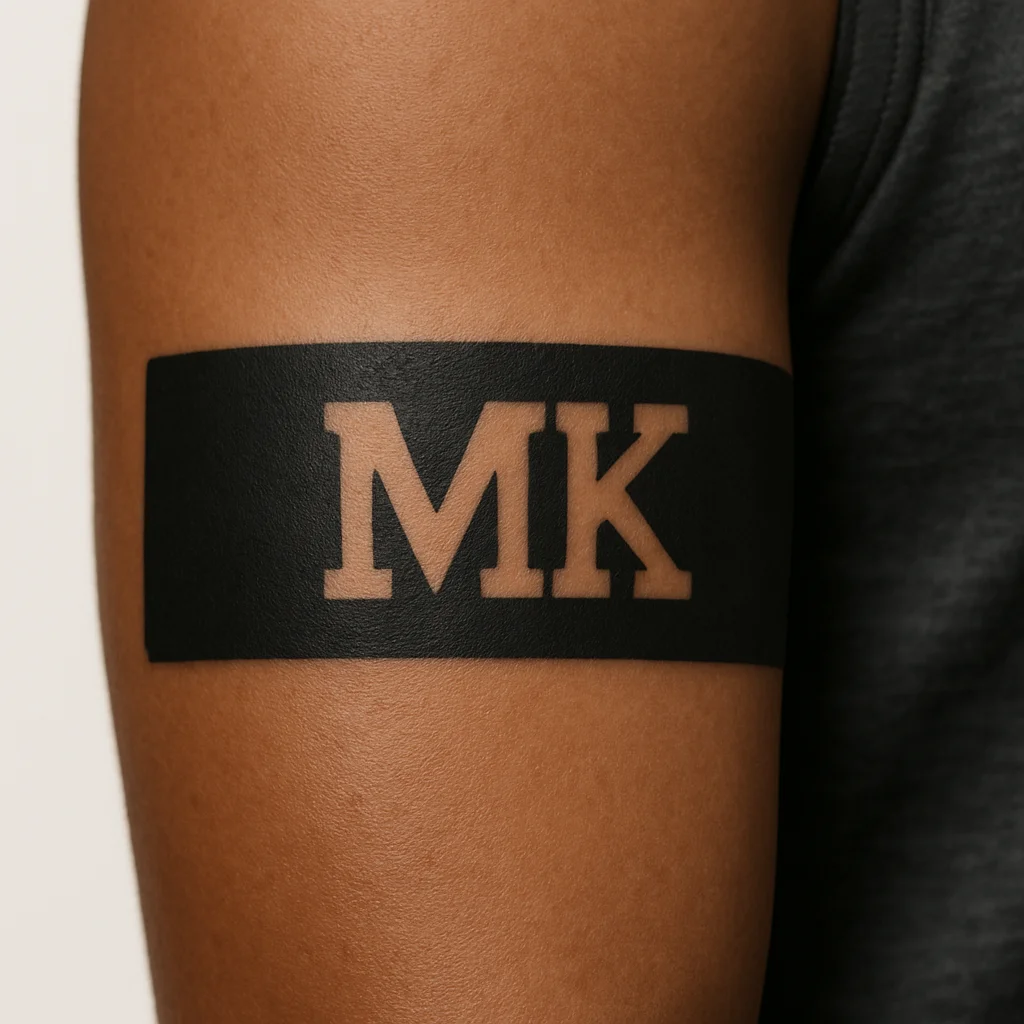
21. Initials inside a solid band
A 15mm black band with initials cut out in negative space on the outer arm. The letters need generous internal spacing to survive the years, so keep them to two or three characters and use a blocky face rather than a script. Quietly devastating in the best way.
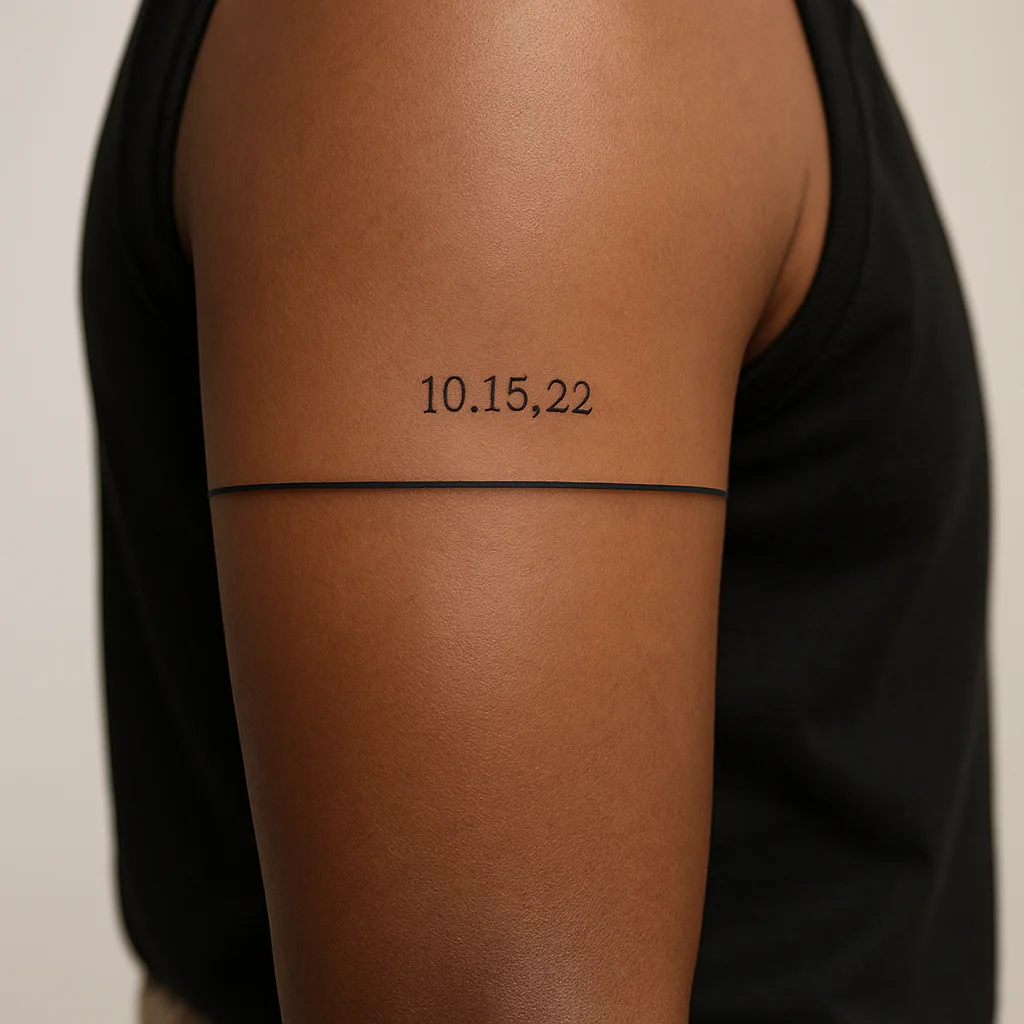
22. Sobriety date band
A clean single line with a small date set at the top of the outer bicep, sometimes with a tiny triangle or dot marker. Placed where you see it in the mirror every morning. Simple, cheap, and the kind of tattoo that earns its space.
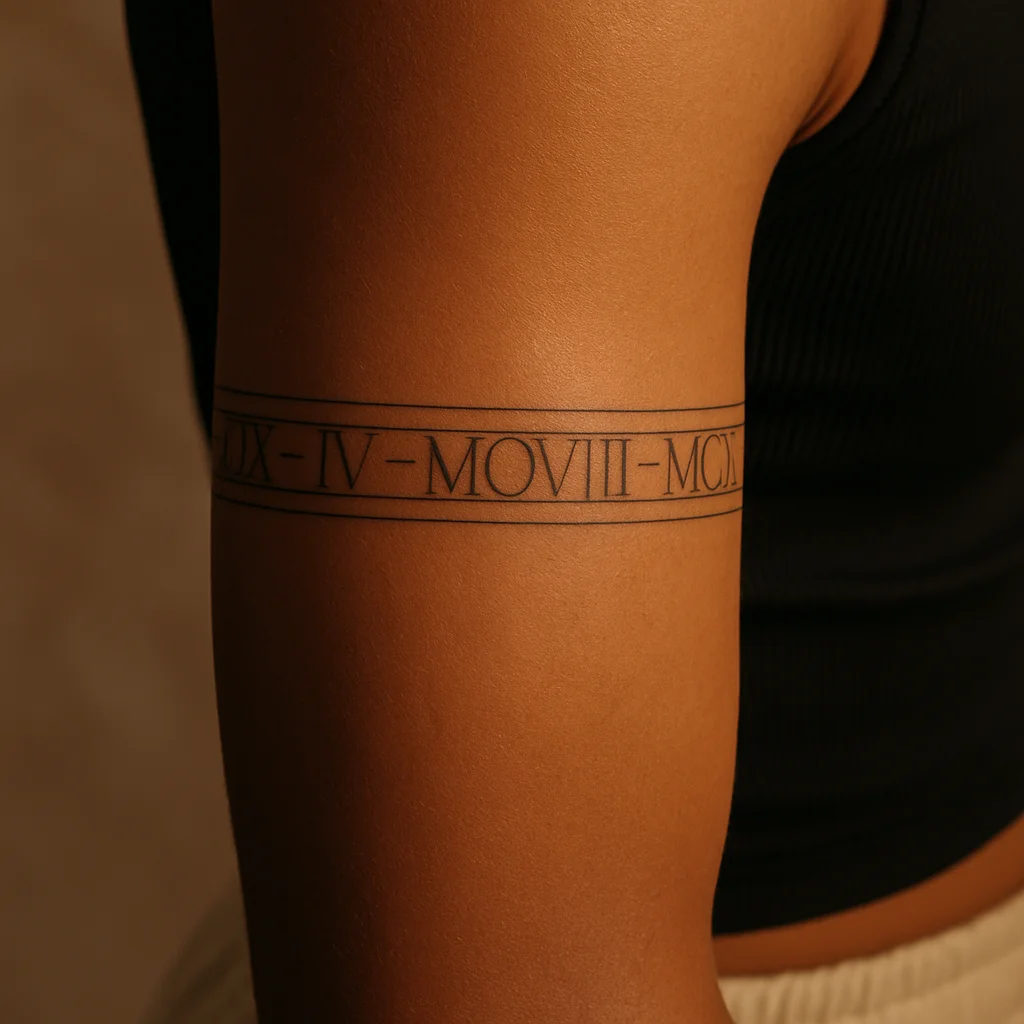
23. Roman numeral wrap
Numerals sized around 15 to 20mm tall running around the arm in place of a solid line, so the text itself is the band. Ask for even letter spacing all the way round rather than a cluster on the outer arm. Suits birthdays, anniversaries and dates you would rather not spell out.
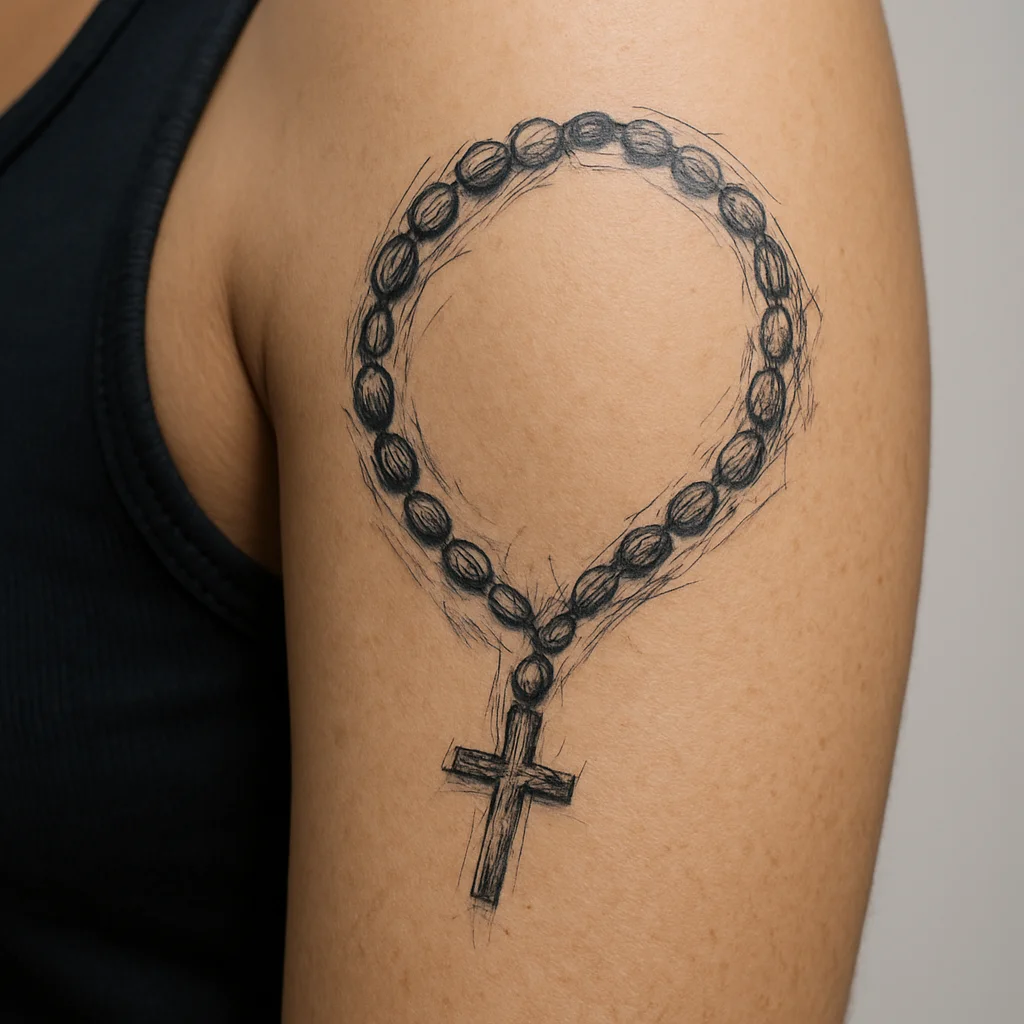
24. Rosary or prayer bead band
A loop of beads with a small cross or medallion resting on the outer bicep. Beads need real dimension to avoid looking like a chain of dots, so give the artist room, roughly 20mm of band height. A long-standing choice with genuine staying power.
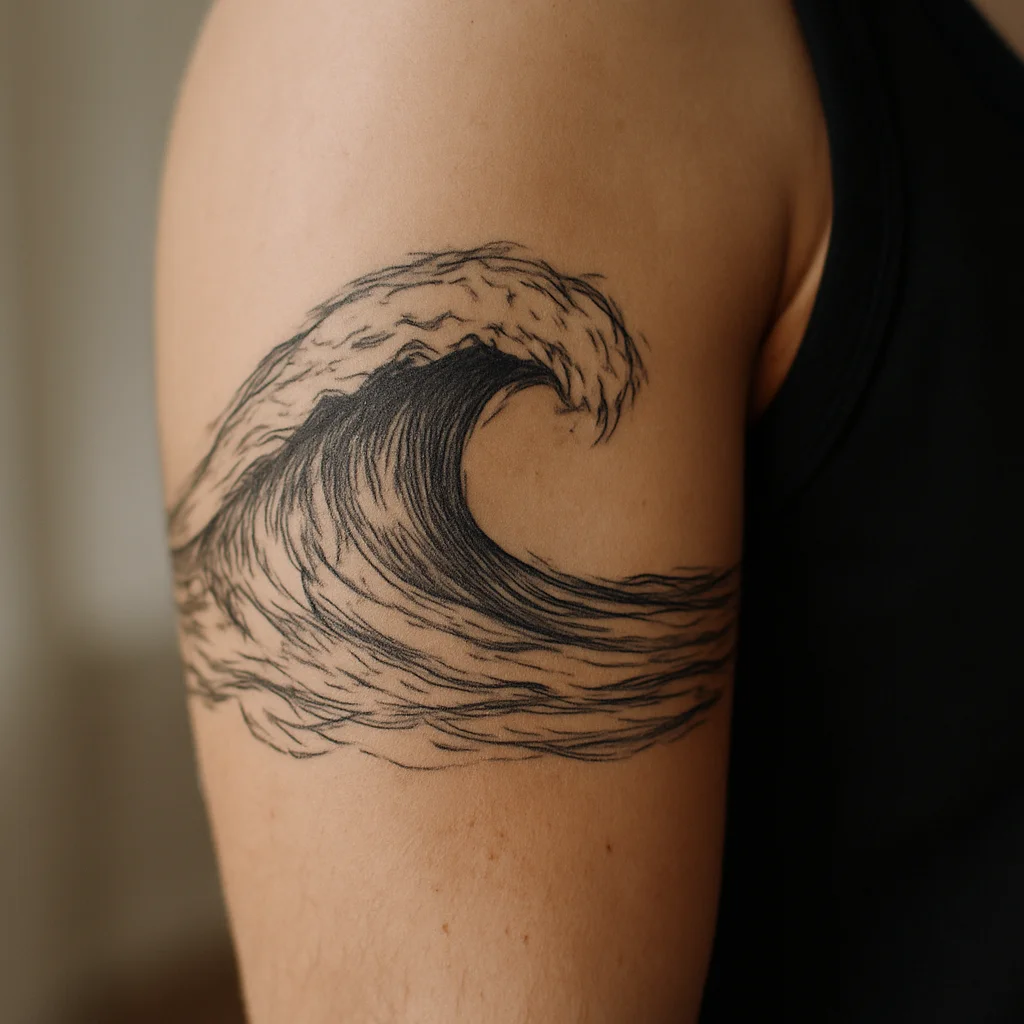
25. Continuous wave band
A single ocean swell that circles the arm, cresting on the outer bicep and flattening on the inner side. Done in Japanese-influenced line and whip shading it looks like motion around the muscle. Popular with surfers, sailors and anyone marking a place rather than a person.
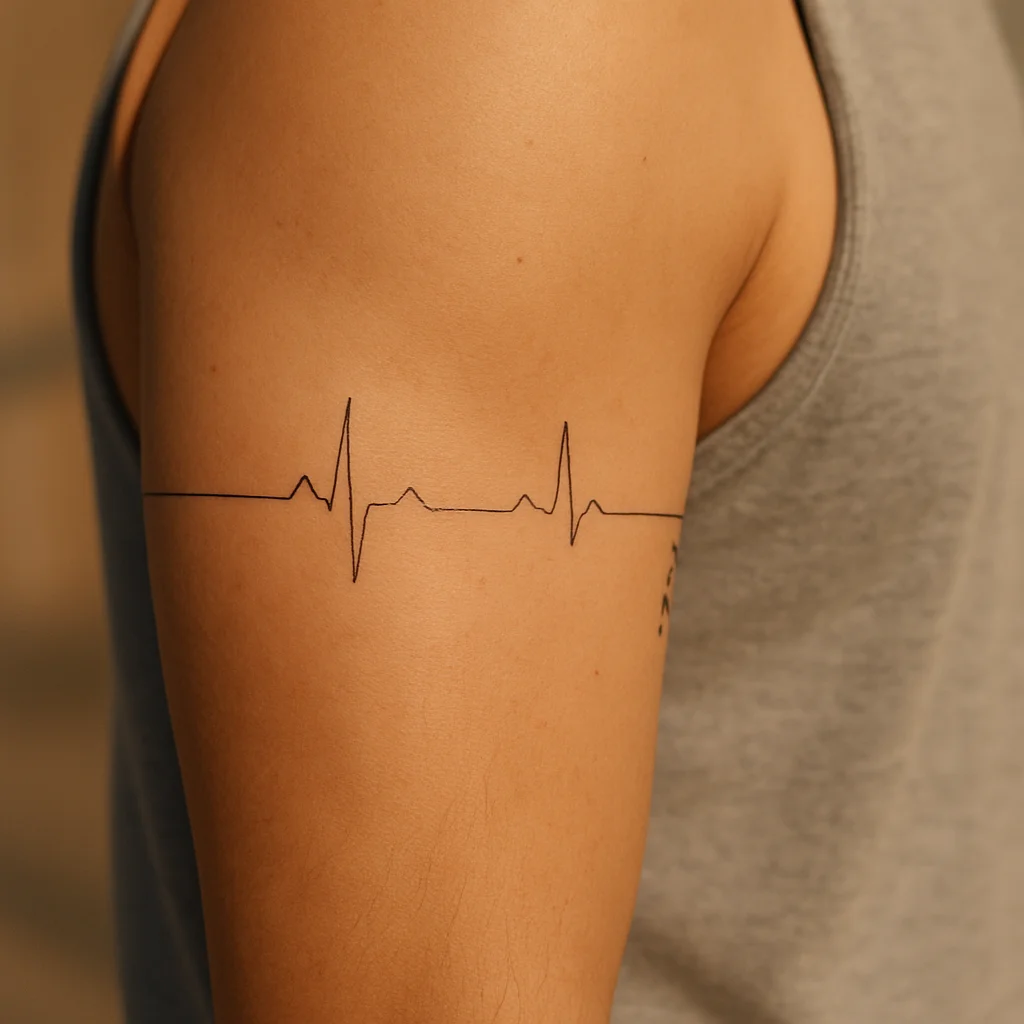
26. Heartbeat line with a name break
A fine EKG trace wrapping the arm, with the spike landing on the outer bicep and a small name or word closing the loop. Keep the trace bold enough to hold, at least 1.5mm, because thin medical-style lines can wash out. Common as a memorial or a birth marker.
Nature and Illustrative Wraps (27-30)
Not every band has to be a stripe. An object that naturally coils, grows or ranges can circle the arm and still read as a band, and these age well because they are drawn with varied line weight instead of flat geometry.
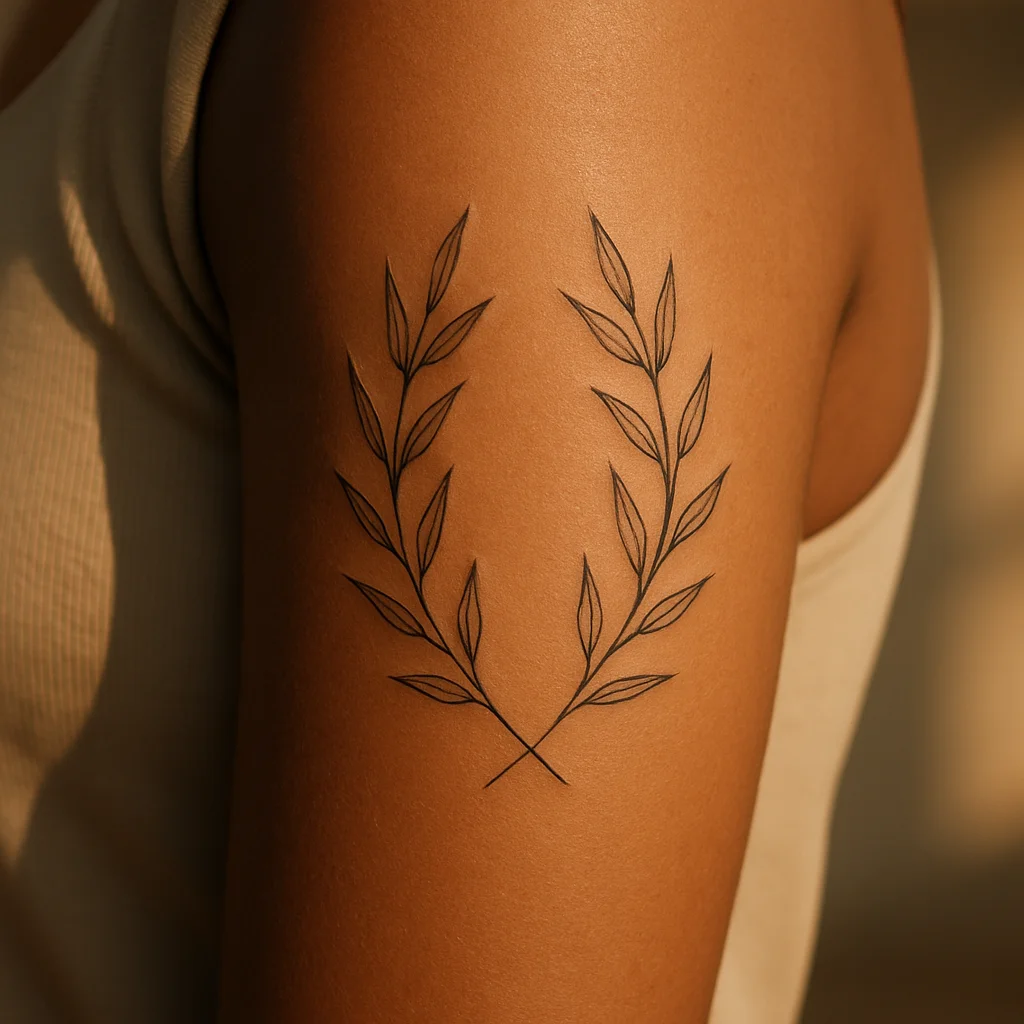
27. Laurel or olive branch wrap
Two branches meeting on the outer bicep, leaves alternating so the band never looks flat. Give it 30 to 40mm of height so individual leaves stay separate as the ink softens. Classic, understated, and it flatters a muscular arm.
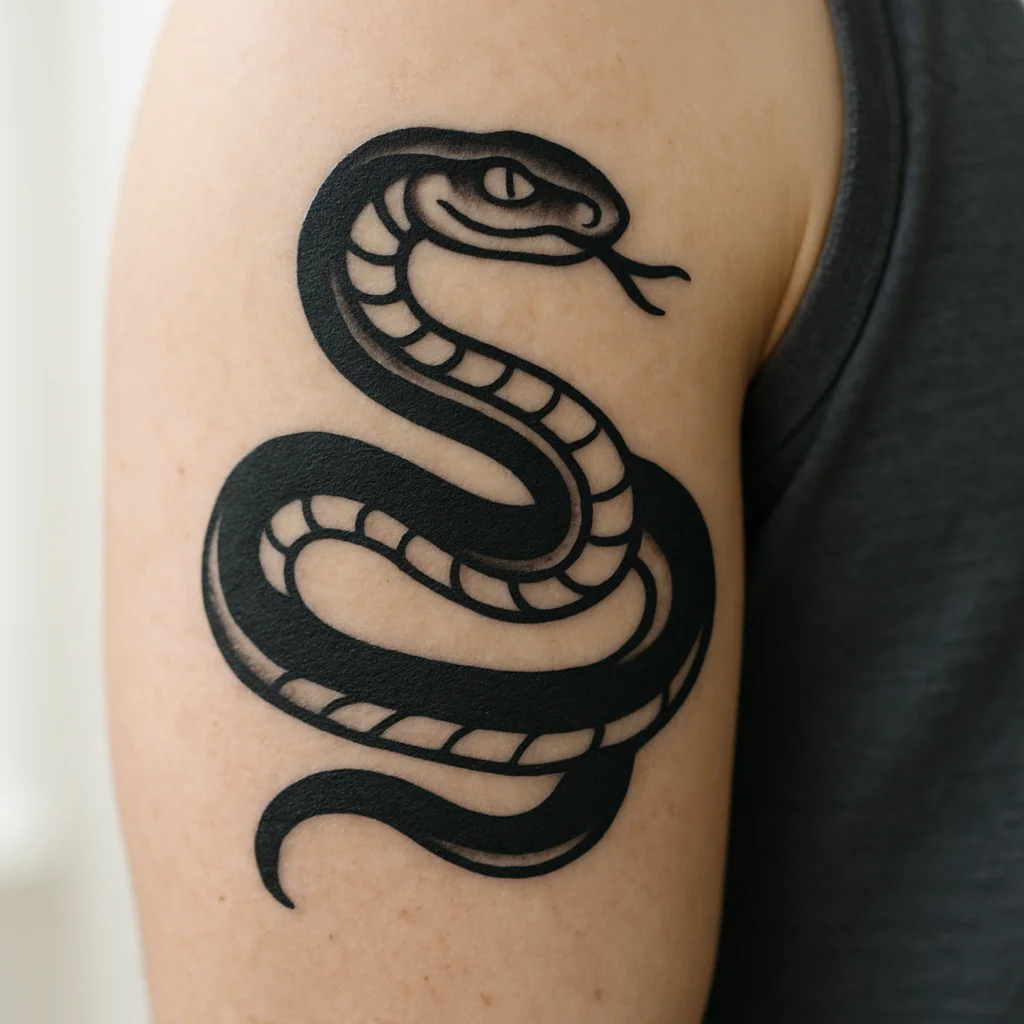
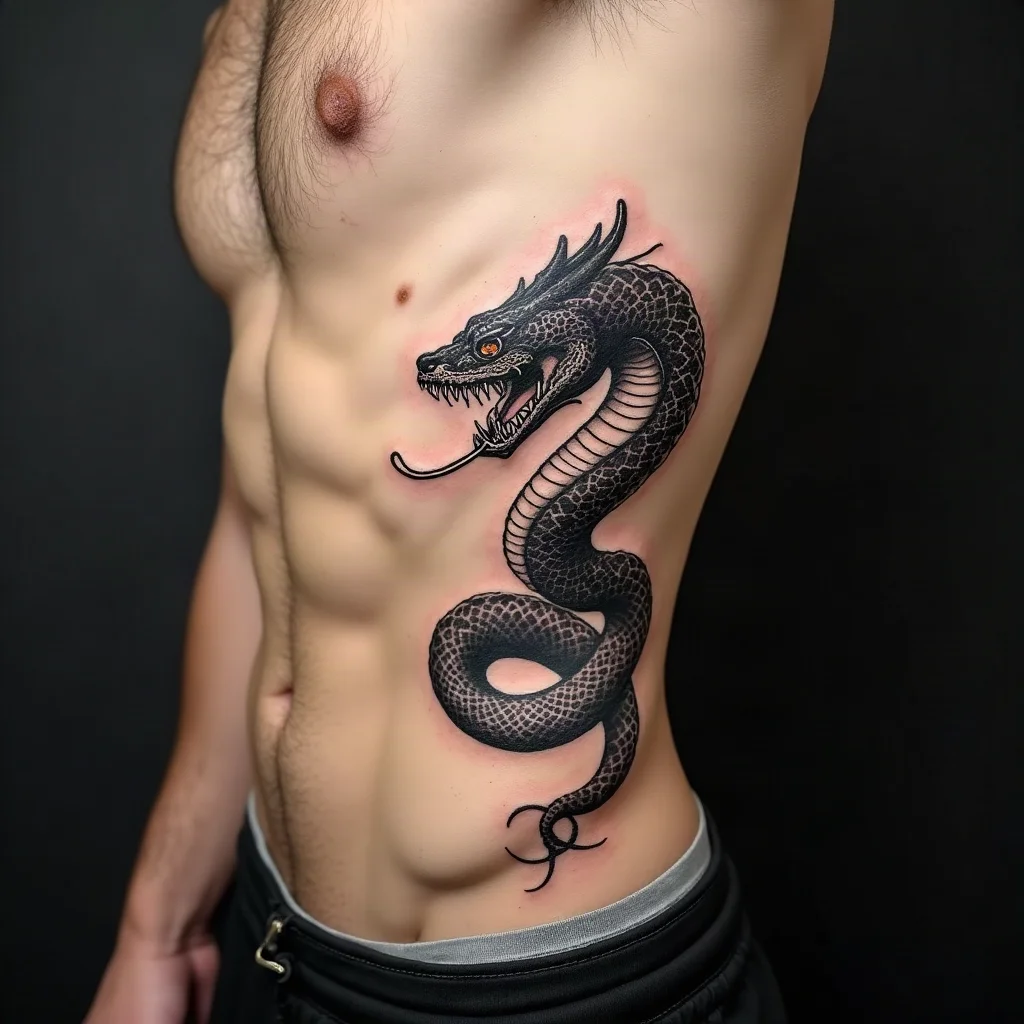
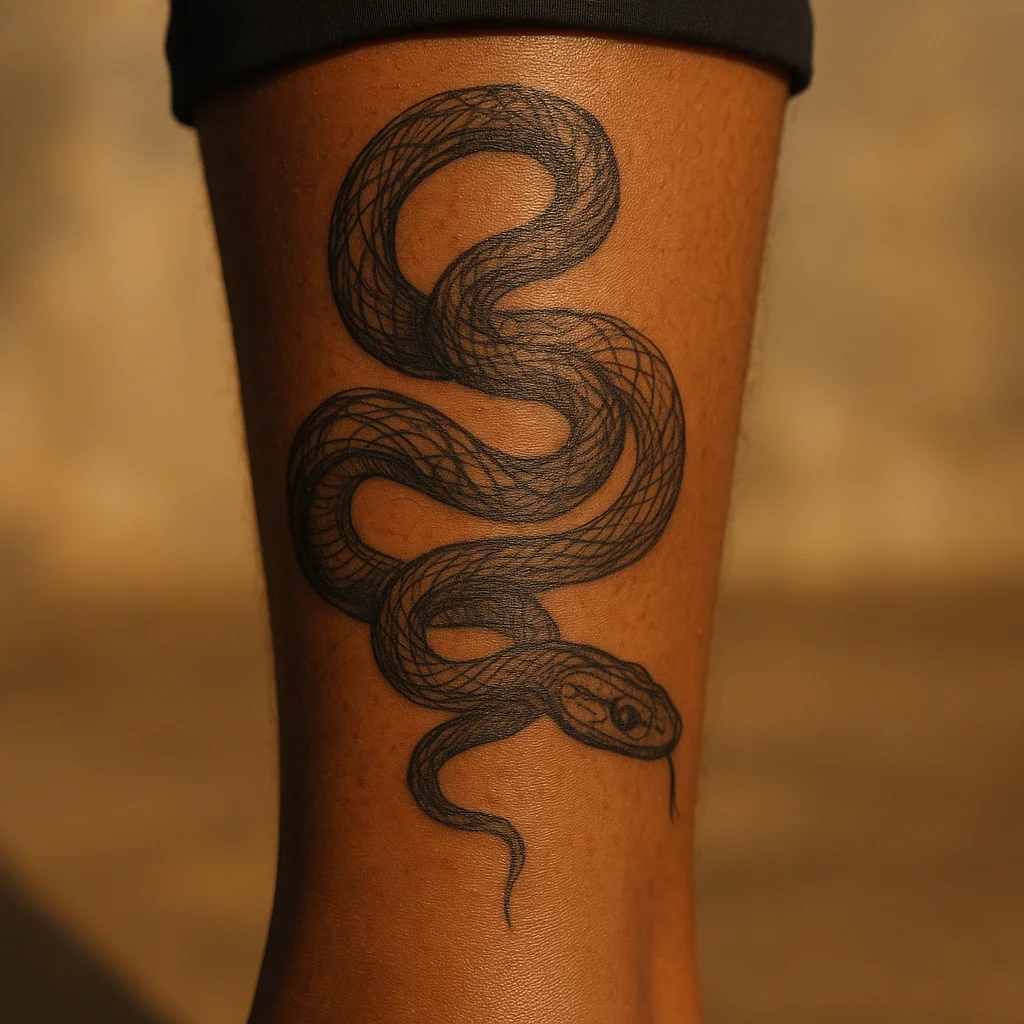
28. Snake coiling the bicep
A single snake wrapped once around the arm, head resting on the outer bicep, tail disappearing behind. In traditional styling with bold outlines it will still snap in thirty years; in fine line it will need more upkeep. One of the best uses of a bicep's curve there is.
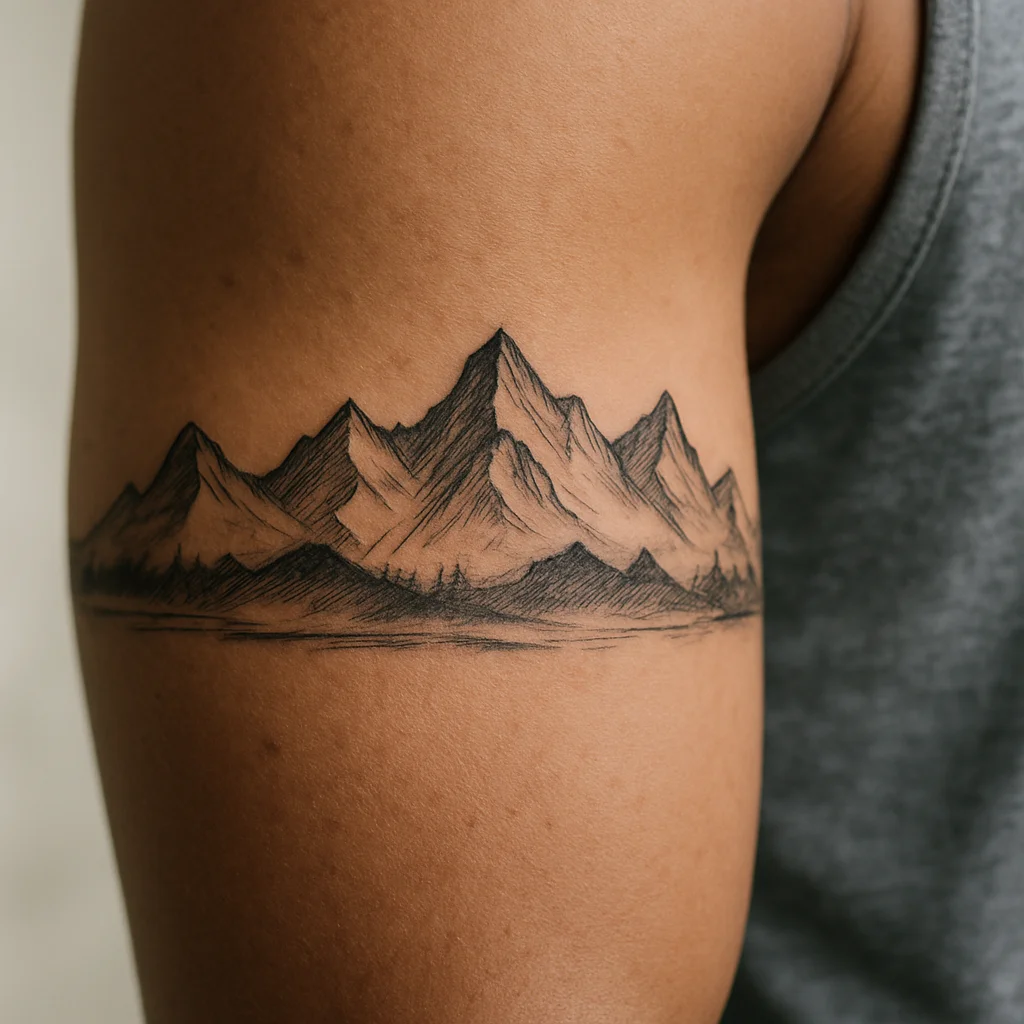
29. Mountain range silhouette band
A skyline of peaks running around the arm with a subtle tree line or a thin cloud band above. Keep the peaks varied in height and avoid perfect symmetry, which is what makes cheap versions look like a graph. Add a small break where a specific summit sits, if the range is personal.
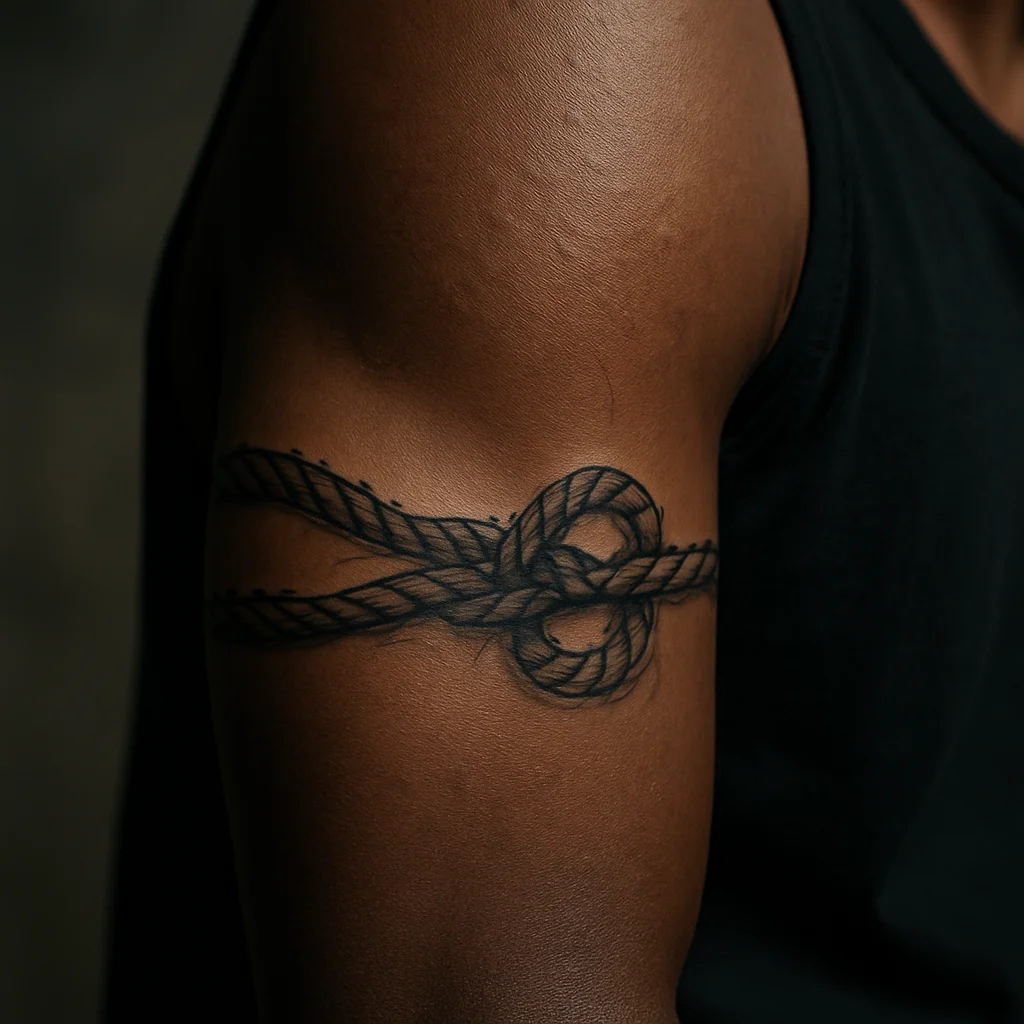
30. Rope and knot band
Twisted cord circling the bicep, closing with a bowline or figure-eight knot on the outer arm. The knot gives the piece a focal point and the twist naturally follows the muscle. Works especially well as a cover-up over an old solid tribal band, since the rope's shading can absorb existing black.
Pain, Price and Getting It Right the First Time
Pain. The outer bicep is one of the friendlier spots on the body: thick muscle, decent fat cover, no bone. The inner arm is a different story. The skin near the armpit and along the inner seam is thin and nerve-rich, and that stretch is where most men flinch. A thin closed band puts you in that zone for maybe fifteen minutes. A wide solid black cuff puts you there for a long, grinding stretch, which is why some artists split blackout bands across two sittings.
Price. Expect a simple thin band to land near a studio's minimum or a little above, in the low hundreds in most Western cities. Patterned or dotwork bands typically run a half-day of work. Wide solid black or a mandala-heavy band moves into full-day rates and sometimes a second session for saturation, so plan for several hundred to over a thousand depending on your artist's day rate. Always ask whether touch-ups on solid fill are included, because patchy blackwork is common and reputable studios usually cover the first pass.
Healing. Solid black weeps more and swells more than line work. Keep it out of the gym for the first week, especially anything that has your sleeve rubbing the band. Wash twice a day, thin layer of ointment, no soaking. Once healed, the single biggest threat is sun: an unprotected black band on a bicep that sees summer will go grey-blue faster than the same tattoo on a covered thigh.
Briefing your artist. Bring measurements of your arm, say whether you want the loop closed, and be clear about future plans. If a sleeve is even a maybe, tell them now, because a wide blackout cuff either becomes a design anchor or a wall. If you are still mapping out how the upper arm fits with everything below it, our breakdown of arm tattoos sorted by sitting length is a useful companion. Finally, ask for a stencil, wear it for ten minutes, and move your arm around before you commit. A band that looks perfect while you sit still can look wrong the moment you raise your elbow.
Frequently asked questions
Should a bicep armband go all the way around?
It depends on the width and your pain tolerance. Thin lines usually look better closed, since a visible gap on the inner arm can read as unfinished. Wide solid black bands are often left slightly open or tapered at the inner seam to spare the most sensitive skin and to avoid a heavy block of black in the armpit area.
How wide should a bicep band be?
Roughly 3 to 6mm reads as subtle jewelry, 12 to 25mm is a clear graphic statement, and anything over about 50mm becomes a blackout cuff you cannot hide under a t-shirt sleeve. Match the width to your arm size, since a band that looks bold on a lean arm can look thin on a large one. Have your artist marker it on and view it from several feet away first.
Do solid black armbands hold up over time?
Bold solid black is one of the most durable tattoos there is, provided it was packed evenly and healed properly. The usual failure points are patchy saturation, which a touch-up fixes, and sun exposure, which turns black to blue-grey over years. Sunscreen on the band once it is fully healed makes a real difference.
Can an armband cover an old tribal tattoo?
Often yes, and it is one of the most common cover-up requests on the bicep. Wide solid black, textured brushed-edge bands and rope or snake designs with heavy shading can absorb old ink well. Bring the existing tattoo to a consultation, because the artist needs to see how dark and how spread the old lines are before promising anything.
How long does a bicep band take to tattoo?
A single thin line band is often done in under an hour. Patterned or dotwork bands typically take three to five hours, and a wide solid black cuff can take a full day, sometimes split into two sessions so the skin can recover between saturation passes.
The conversation
No comments yet. Got a thought about these designs? Start us off.
Want to weigh in? Join the community to comment, save designs and try them on your skin.