26 Rib Cage Tattoos for Men That Follow the Bone
The ribs are the most unforgiving canvas on the male body and one of the most rewarding when a design is laid out to follow the bone. Here are 26 rib tattoos for men, sorted by how they use the panel, with real talk on pain, sessions and cost.
How the Rib Cage Changes a Design
Ribs are not a flat page. Between the armpit and the hip you have hard bone, soft intercostal gaps, the fan of the serratus, and a stretch of skin that moves every time you breathe. A design that looks perfect on paper can read crooked on the body if the stencil was placed while you were standing and then tattooed while you were twisted over a bench.
Three things matter more here than almost anywhere else:
- Direction. The strongest rib pieces run diagonally, following the natural line of the ribs from the spine down toward the navel. Perfectly vertical or perfectly horizontal designs fight the anatomy and can look tilted once you relax.
- Compression. Skin over the ribs shortens when you lean into the artist and lengthens when you stand tall. Good artists stencil in a neutral position, then check the design with your arm up and down before the first line goes in.
- Detail density. Ribs are thin-skinned and prone to spreading. Very tight micro-detail — hairline crosshatch, tiny lettering under a quarter inch — can blur faster here than on a forearm. Give the design breathing room.
The upside: rib tattoos age unusually well in one respect. They live under a shirt, so they get almost no UV, and black holds its punch for years. The variable that does affect them is body composition. Significant weight gain or loss, or a serious bulking phase, will stretch the lower ribs and the area near the hip more than the upper panel. If you are mid-transformation, sit tight or keep the piece higher on the cage.
Vertical Runs Down the Side
The long drop from armpit to hip is the signature rib shape. These designs use height rather than width, which keeps them narrow enough to stay hidden under a t-shirt sleeve and cheap enough to finish in one or two sittings.
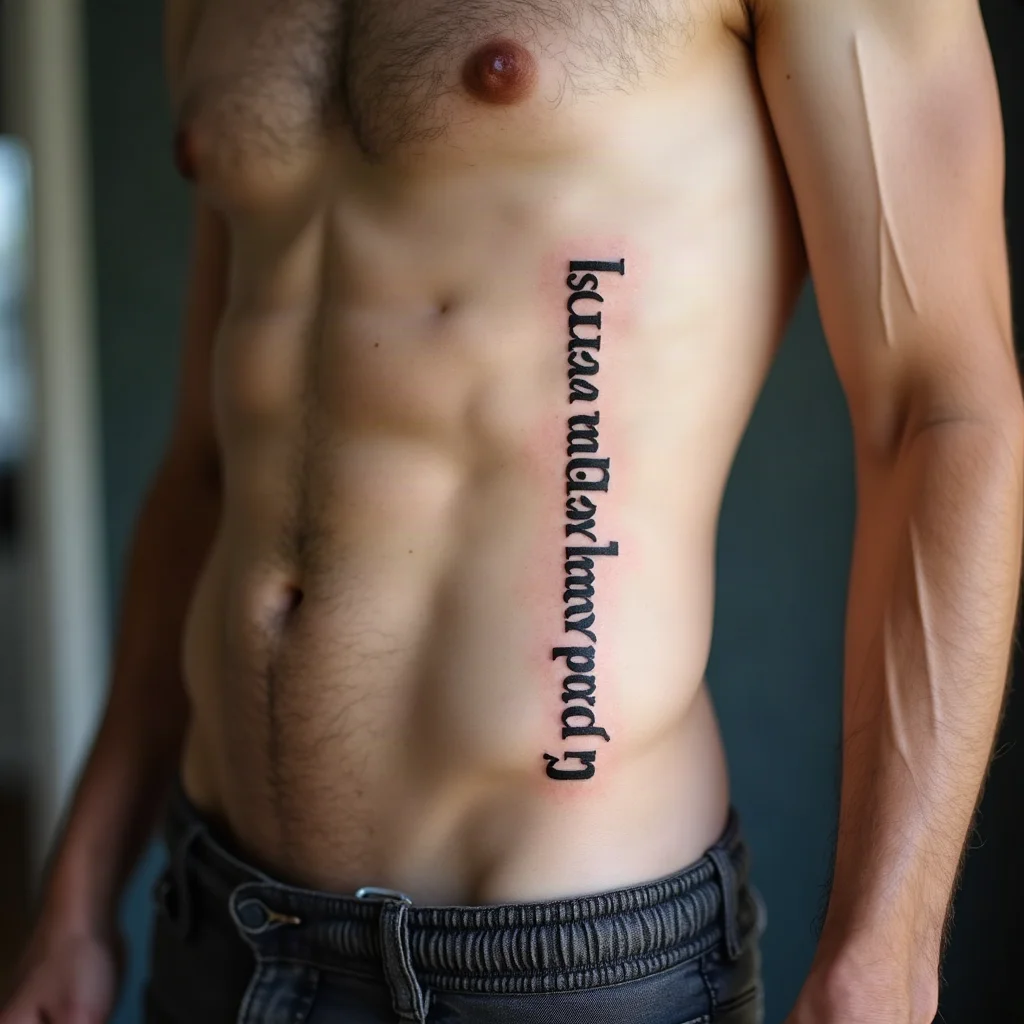
1. Blackletter script column
A short line of text set vertically, running from just under the armpit down to the last rib, in a heavy blackletter or gothic face. Keep letters at least an inch tall — anything smaller loses its serifs as the ink settles. Best for a phrase of three to six words, not a paragraph.
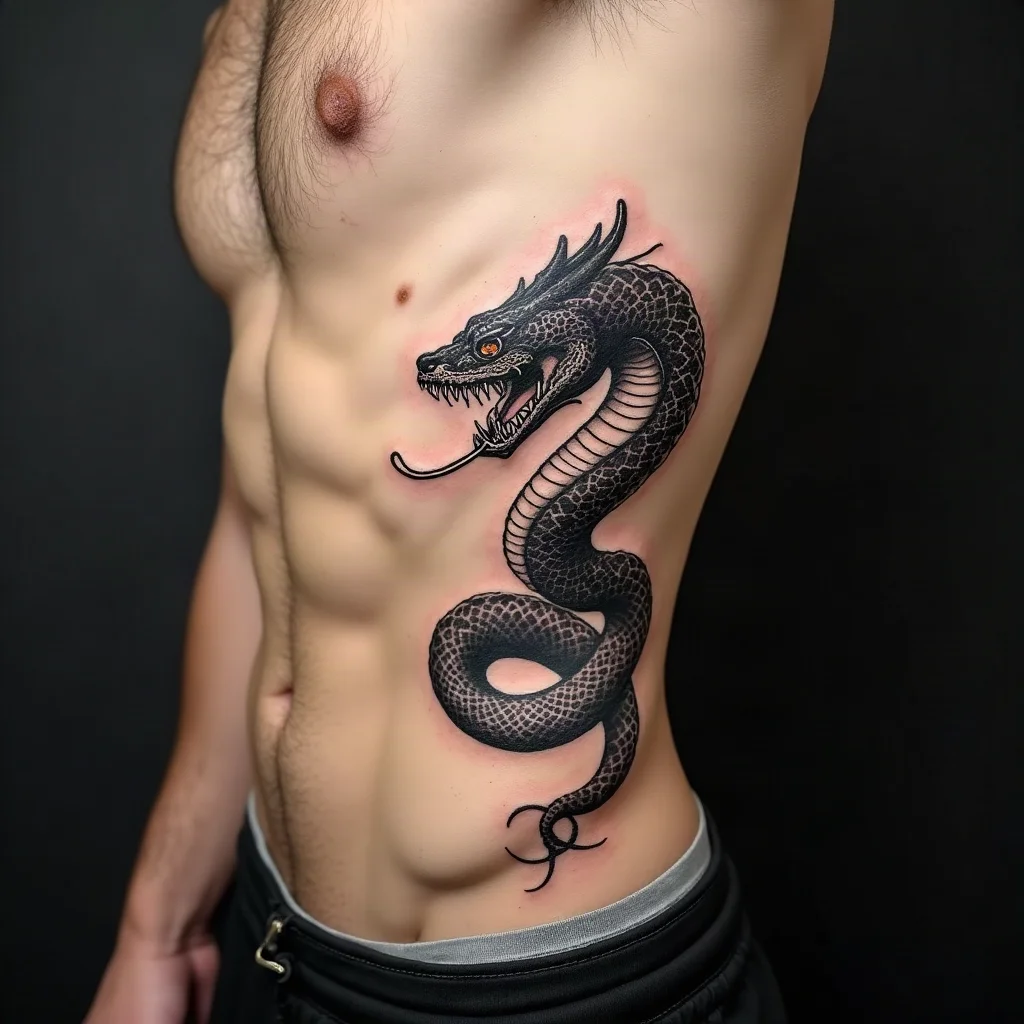
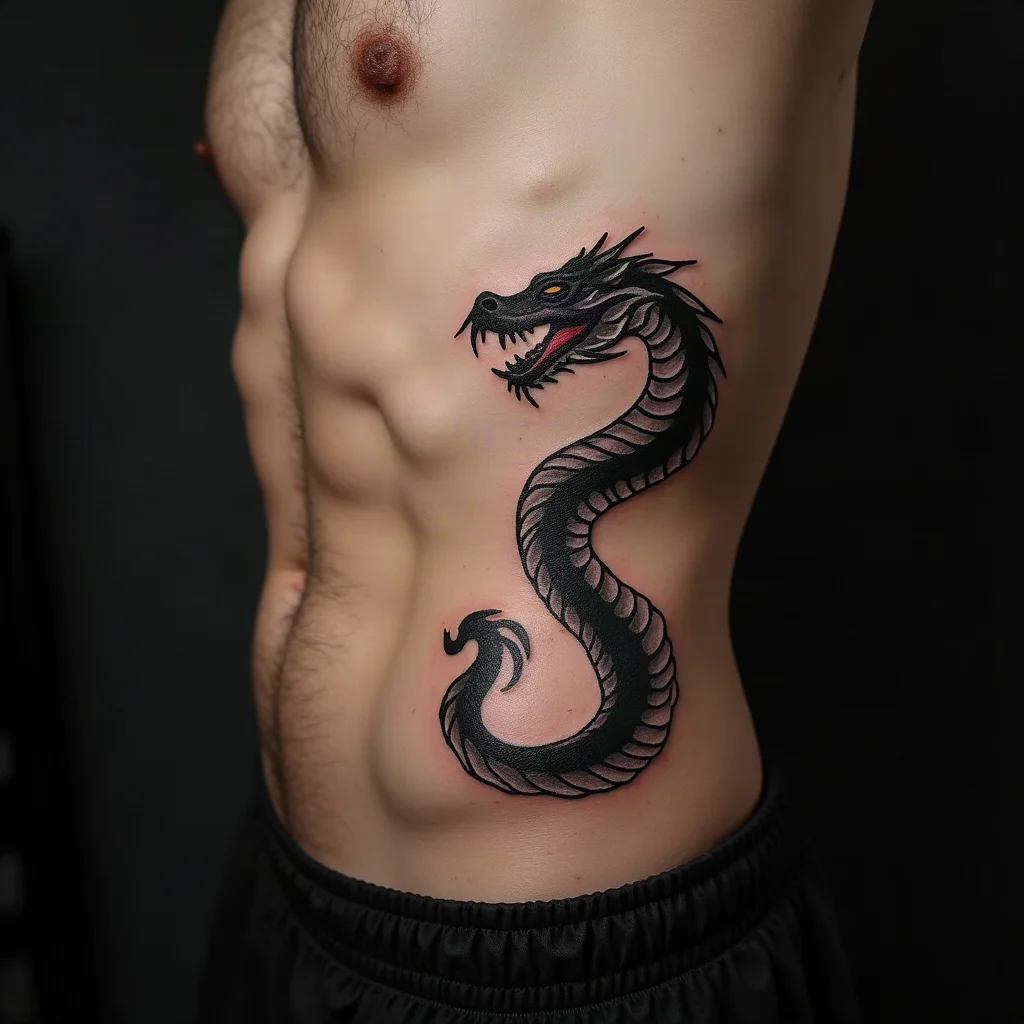
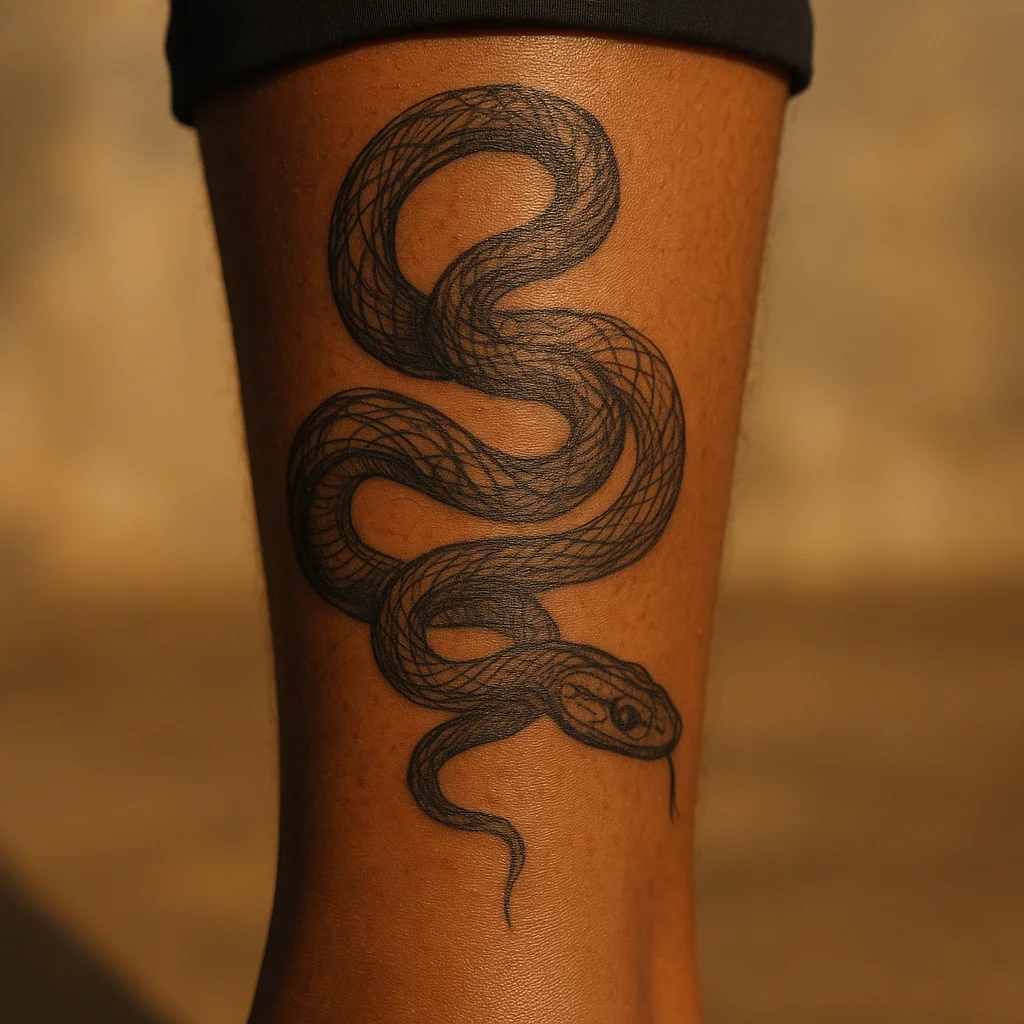
2. Serpent coiling down the rib line
A snake with its head near the armpit and body S-curving down toward the hip, scales rendered in black and grey with soft shading in the bends. The curve absorbs the movement of your torso beautifully, so it never looks tilted. Plan on 8 to 12 inches of length and two sessions.
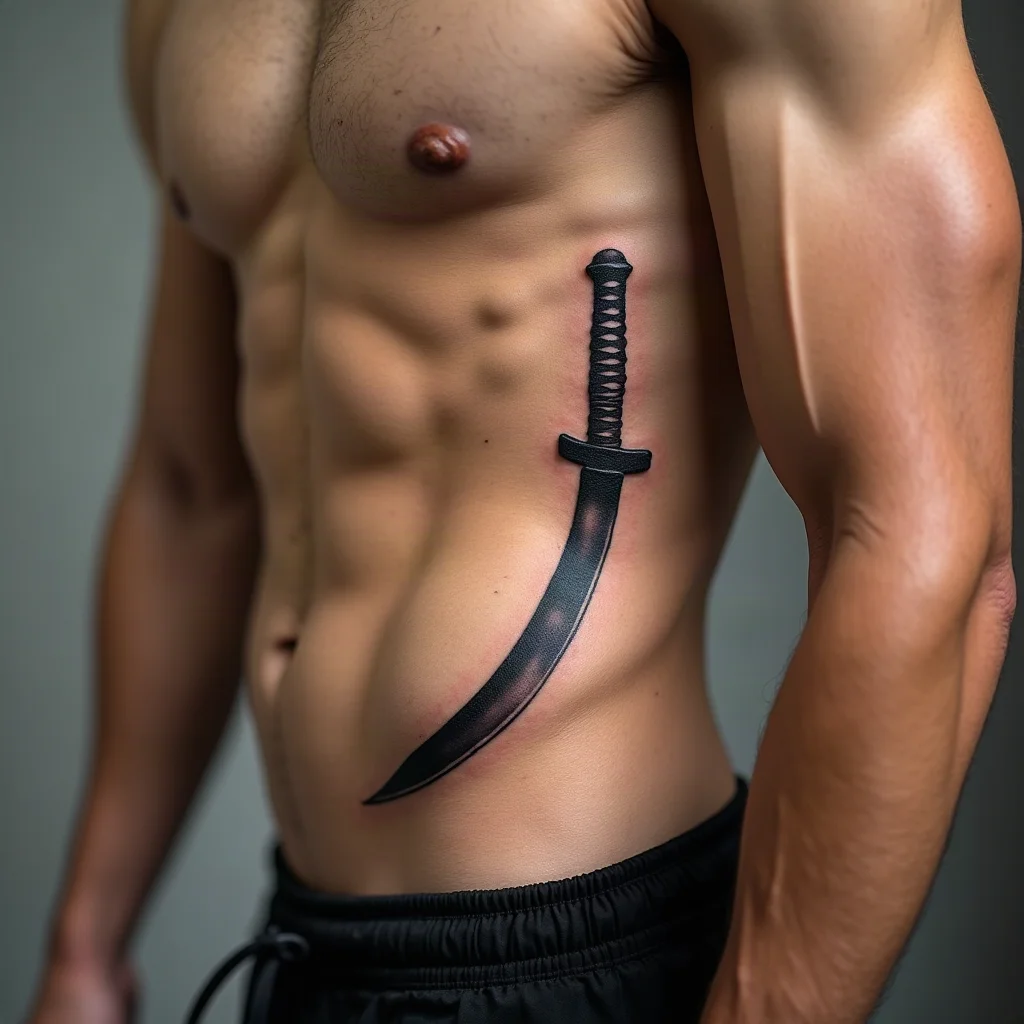
3. Katana angled along the ribs
A single blade with a wrapped tsuka, tip pointing down at the hip, laid along the intercostal groove so the steel sits in the soft channel between bones. Clean and graphic, it reads well at only two to three inches wide. Add a wisp of smoke or a cherry branch if you want the negative space broken up.
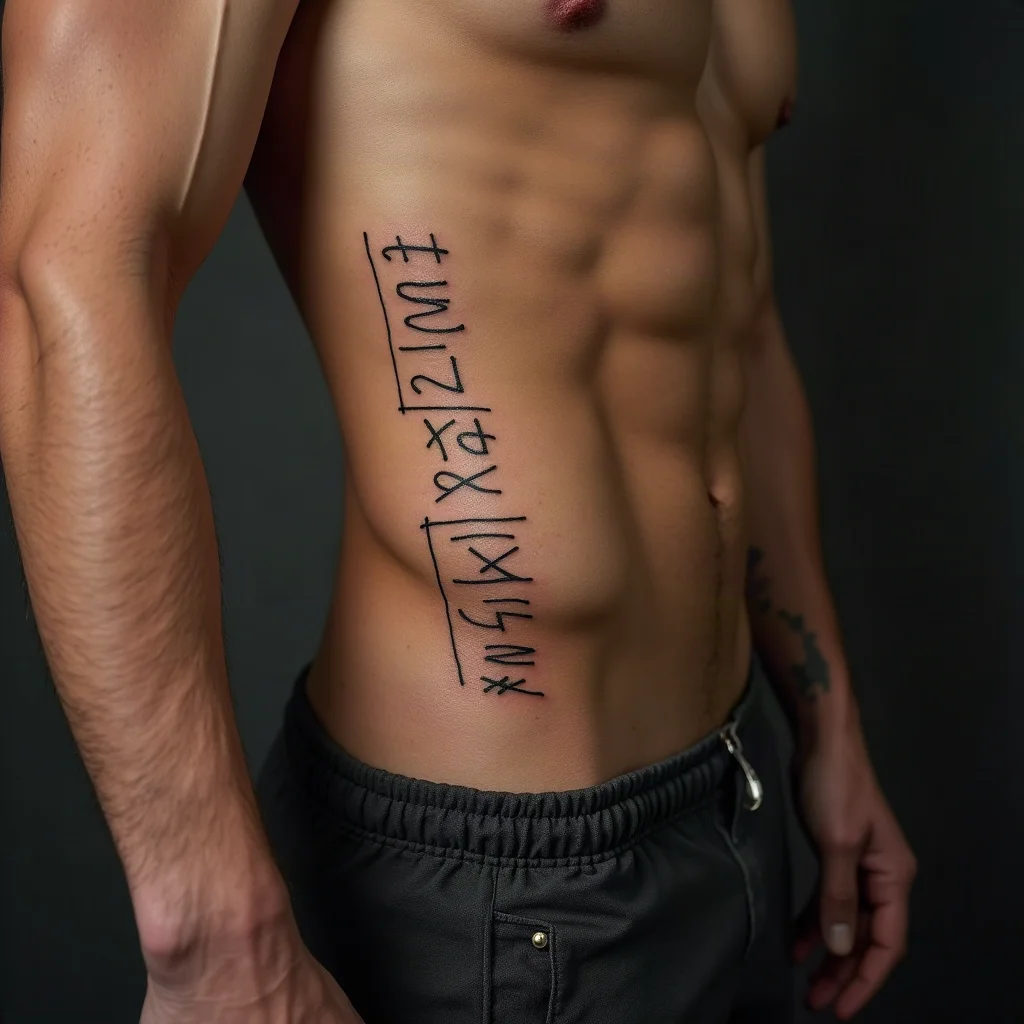
4. Stacked Roman numeral dates
Two or three meaningful dates in Roman numerals, stacked one under the other with generous spacing down the side. Fine-line works here as long as the numerals are tall; thin strokes on tiny characters are the classic rib mistake. A quietly personal piece that suits guys who do not want imagery.
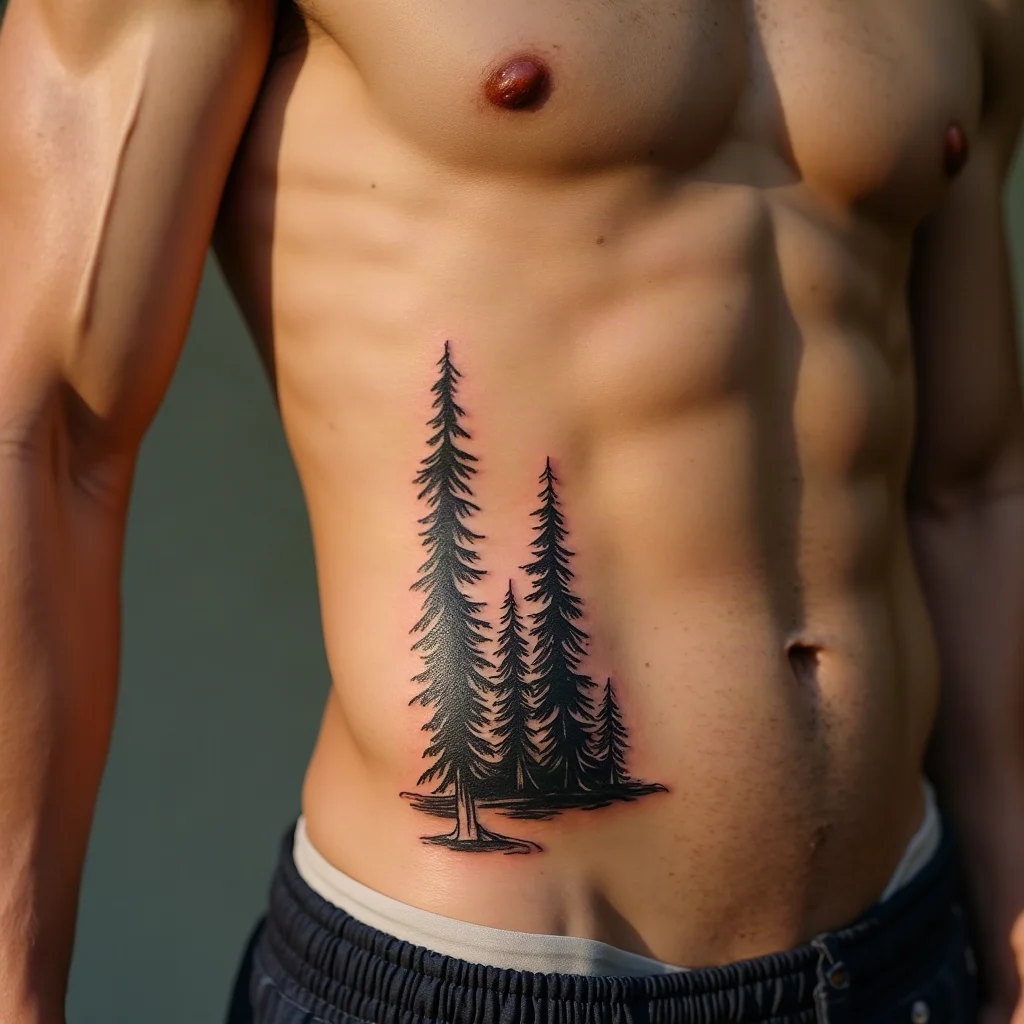
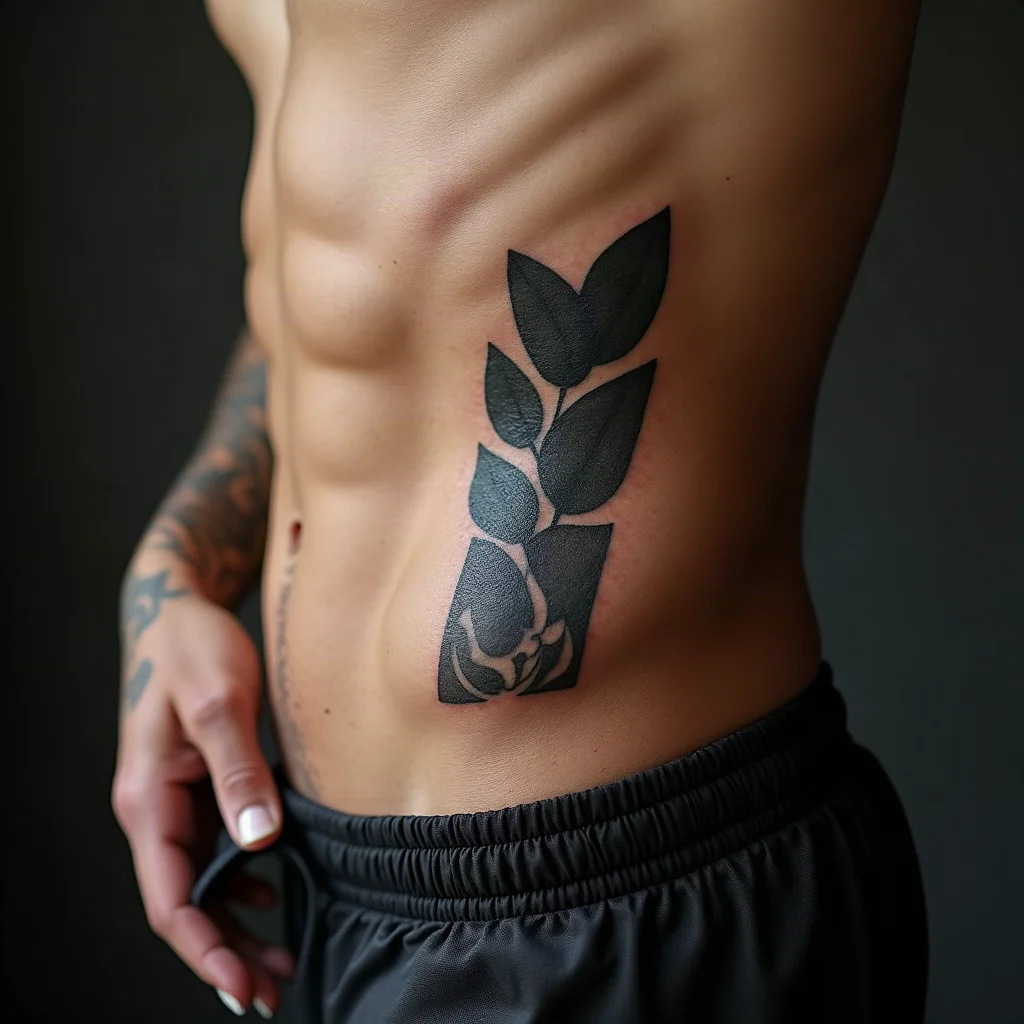
5. Pine ridgeline drop
A row of tall, narrow pines with a suggestion of ridge behind them, running the full length of the rib panel like a strip of forest seen from a moving car. Illustrative linework with a little dot shading keeps it light. Great for a first rib tattoo because it can be broken into segments if you tap out.
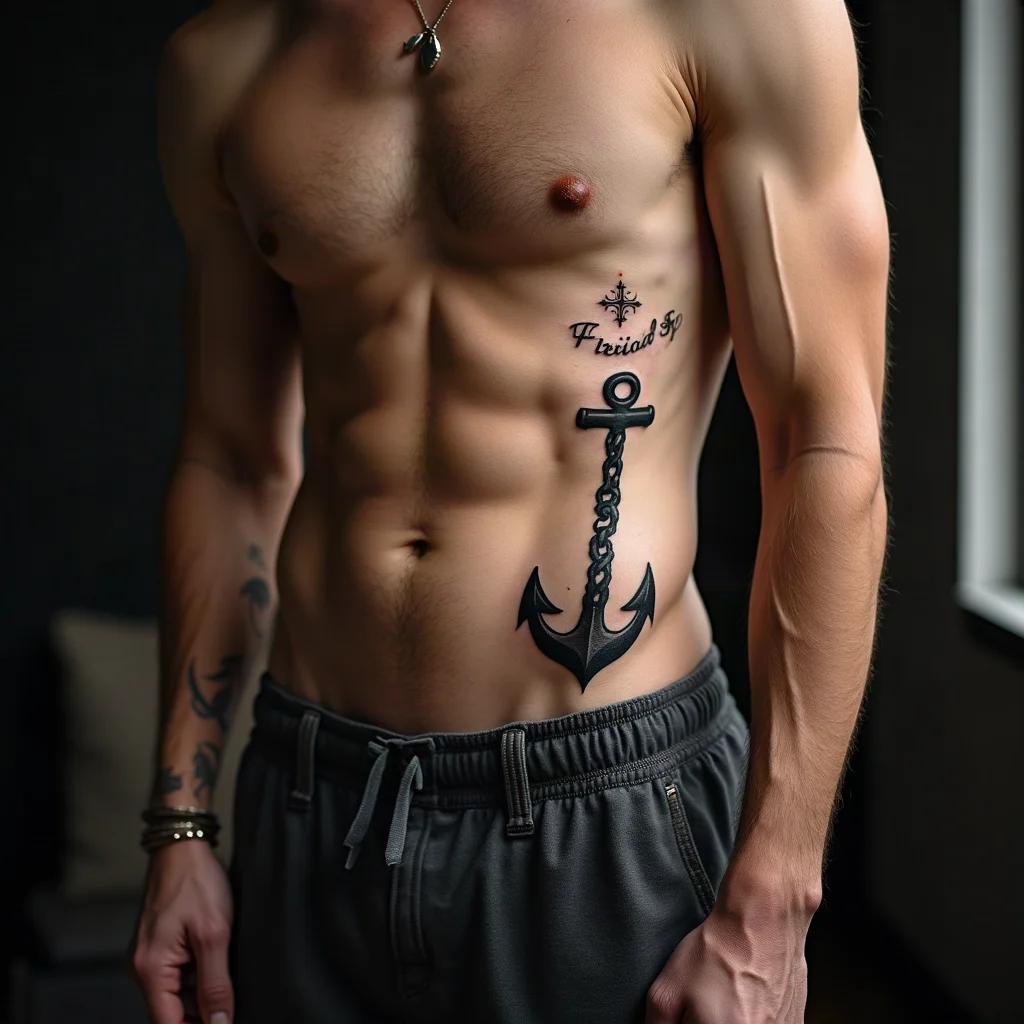
6. Anchor chain with a broken link
Heavy chain running top to bottom with one link snapped open near the lower ribs. The bold black shapes handle rib blur well and read from across a room. Works especially well on lean torsos where the ribs themselves show through.
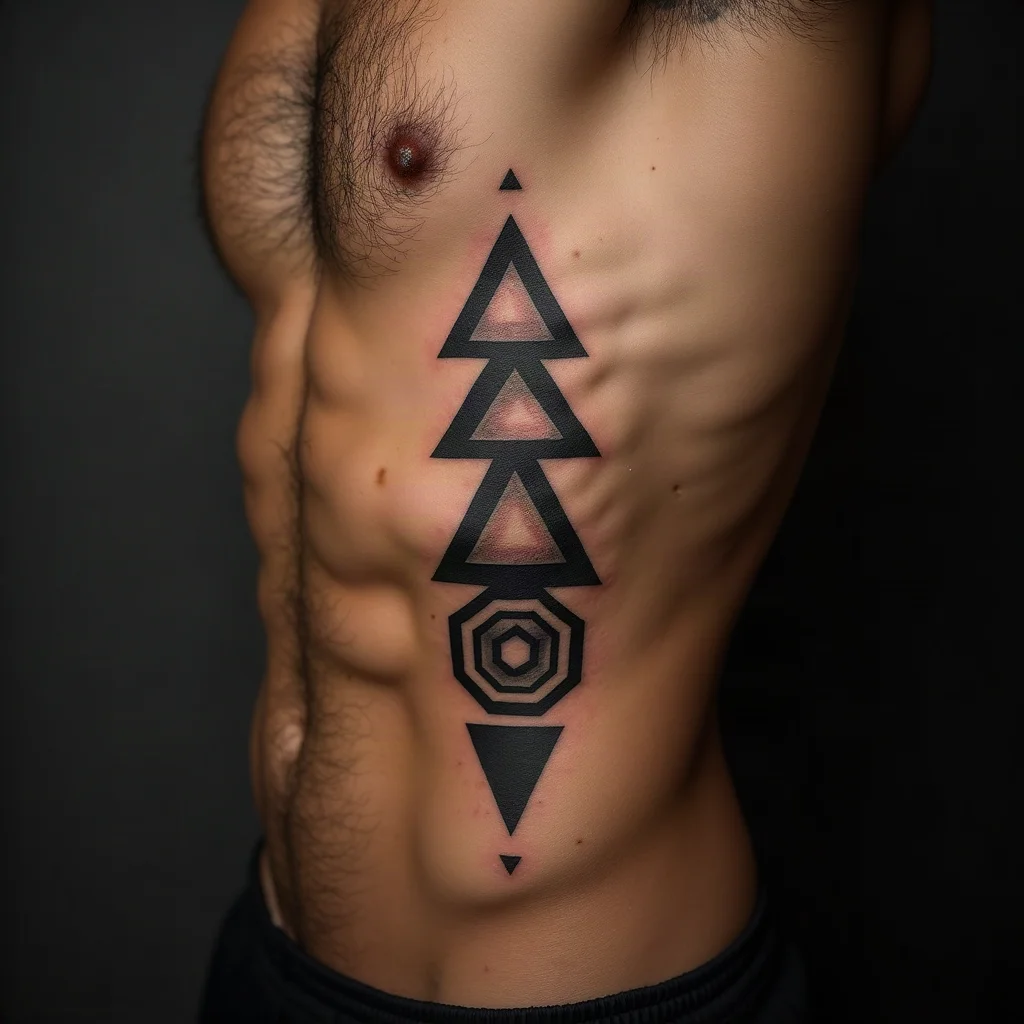
7. Geometric column of stacked forms
Nested triangles, a hexagon, and a thin band of sacred-geometry linework stacked into a narrow totem down the side. Precision is the challenge — ask your artist how they will keep straight lines true over curved bone, and expect them to freehand adjustments to the stencil.
Wide Panels That Wrap the Cage
Give up on hiding it and the ribs become one of the best large canvases on the body — a panel that can run from the lat around to the chest and down to the waistband. These are multi-session commitments, usually built to connect with a back piece or a sleeve later.
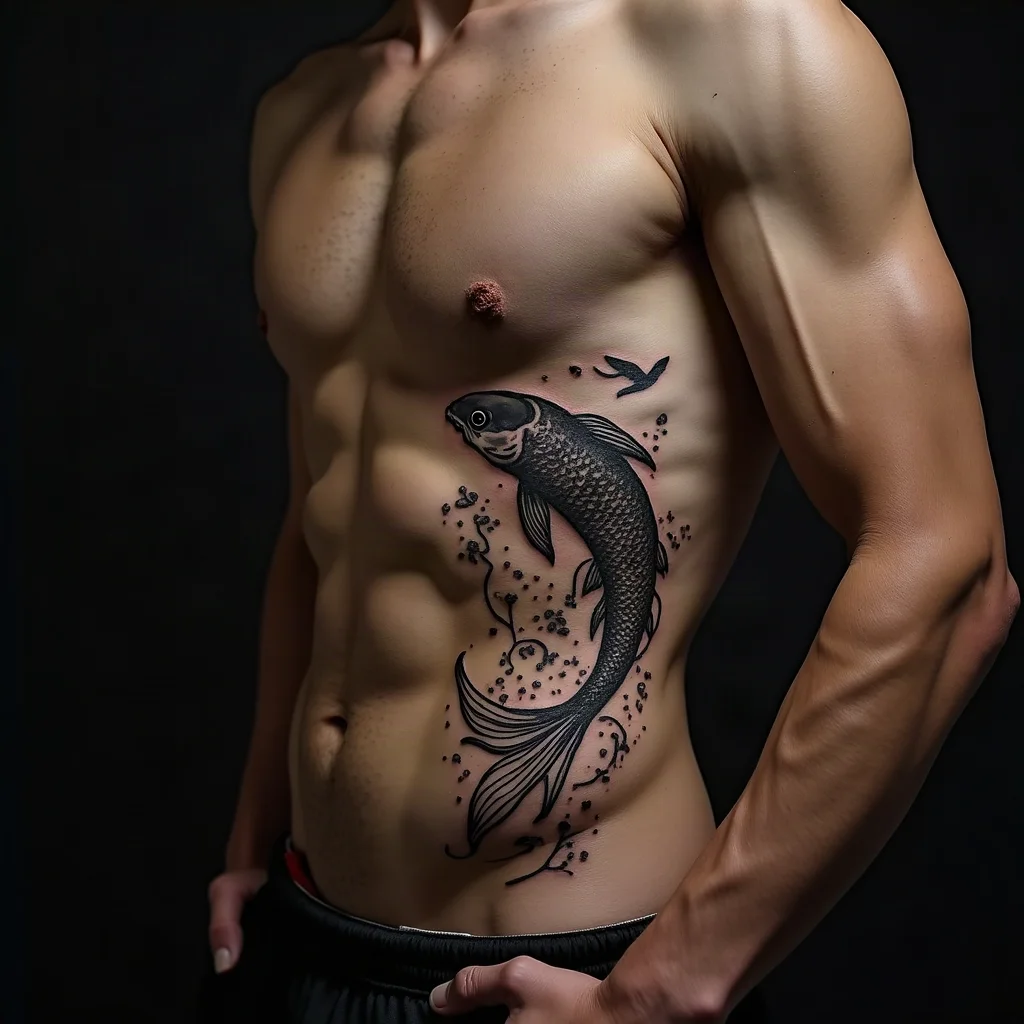
8. Koi and waves wrapping from the back
A Japanese koi swimming upward with a curl of finger waves behind it, starting at the edge of the lat and wrapping onto the ribs. The wave pattern is doing quiet structural work: it fills awkward space and hides where the panel ends. Expect three to five sessions and a plan for how it will eventually meet a back piece.
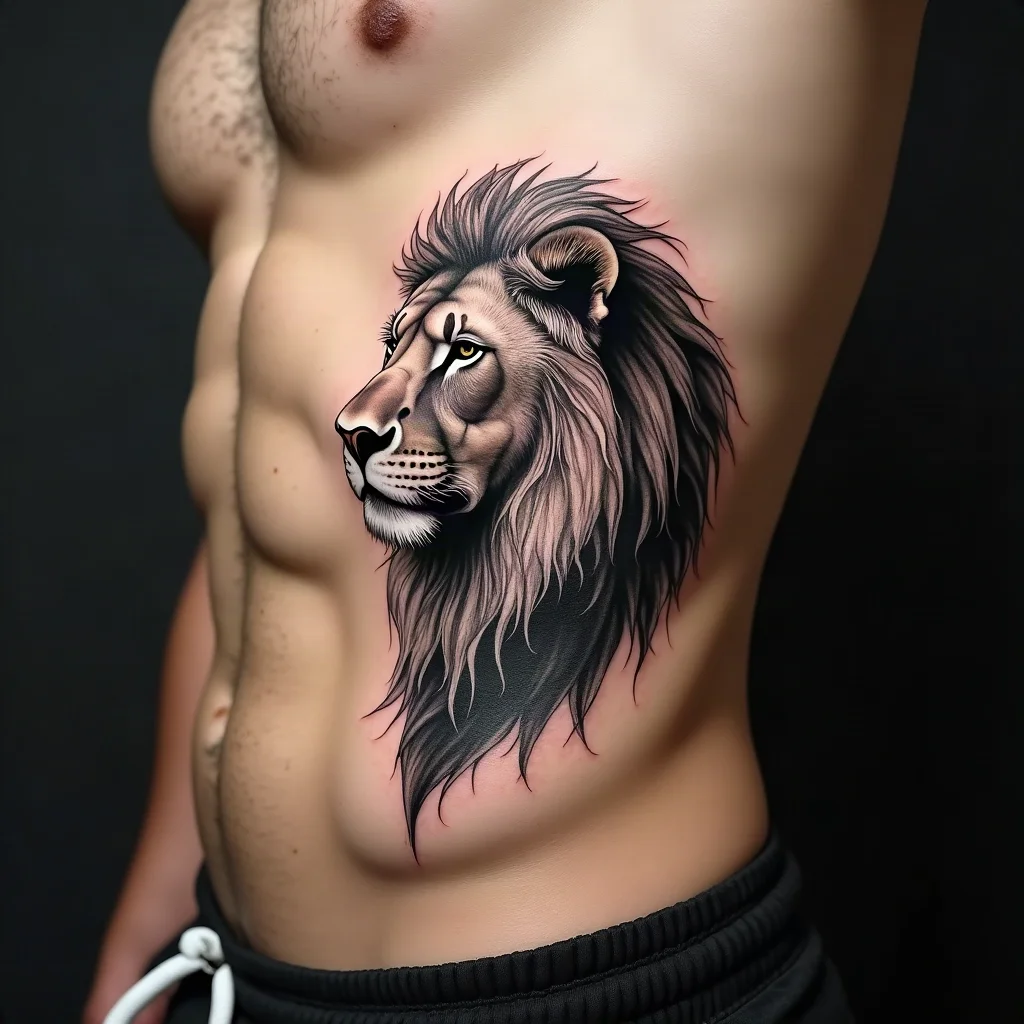
9. Black and grey lion angled along the ribs
A lion's head turned three-quarters, mane flowing down the rib line so the hair follows the bone direction rather than cutting across it. Realism on ribs needs bigger scale than people expect — under seven inches the eyes and nose muzzle together as it heals. Bring reference photos with the exact expression you want.
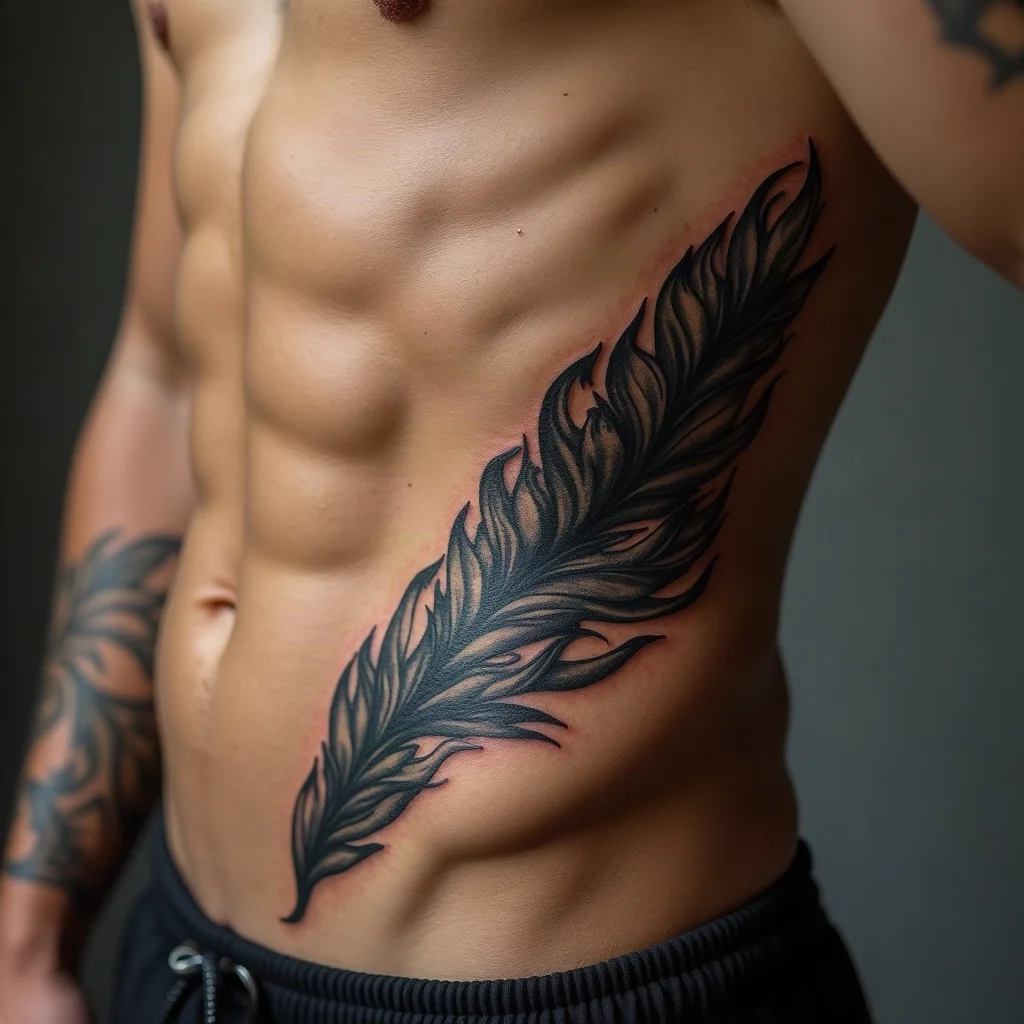
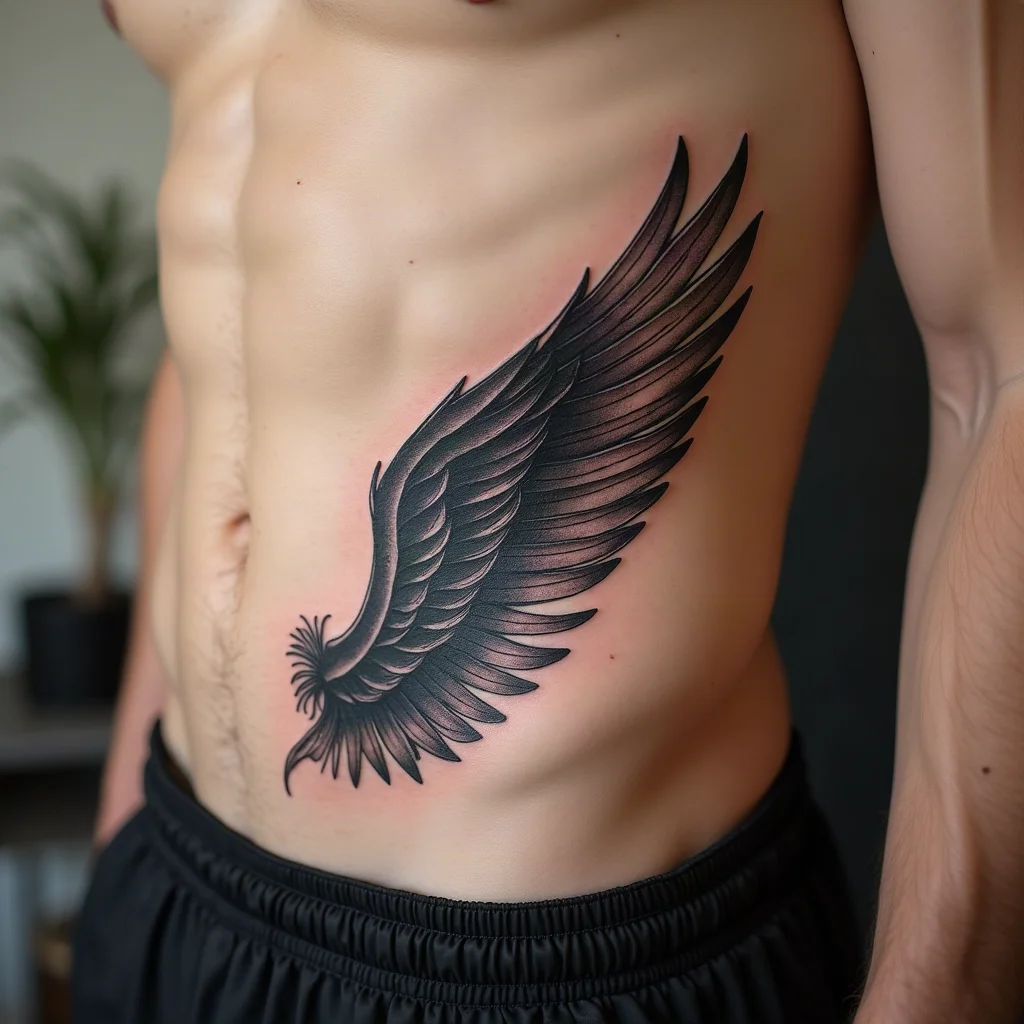
10. Single wing along the side
One large feathered wing filling the panel, shoulder end tucked under the armpit and primaries fanning toward the hip. It suits the shape of the ribs better than almost any other motif because feathers naturally taper. Some men pair it with a matching wing on the other side over time.
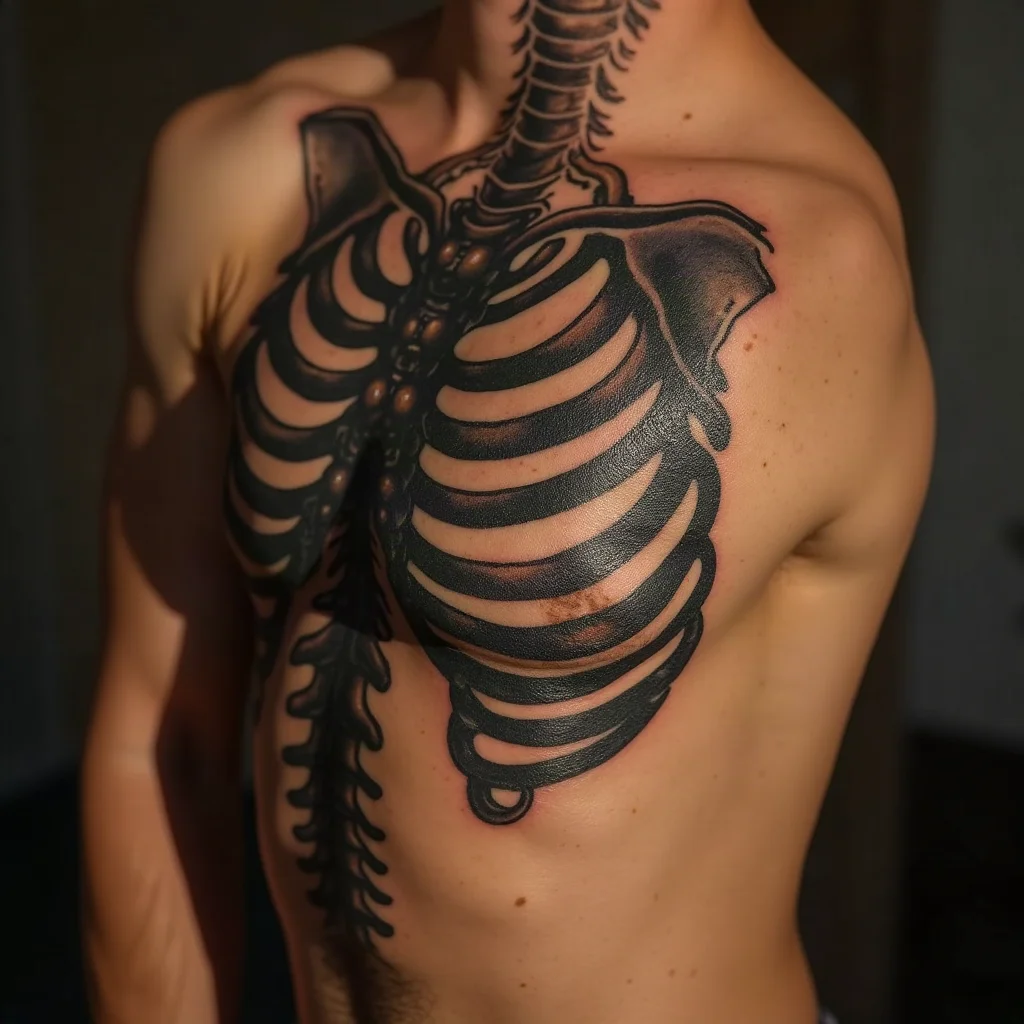
11. Skeletal rib overlay
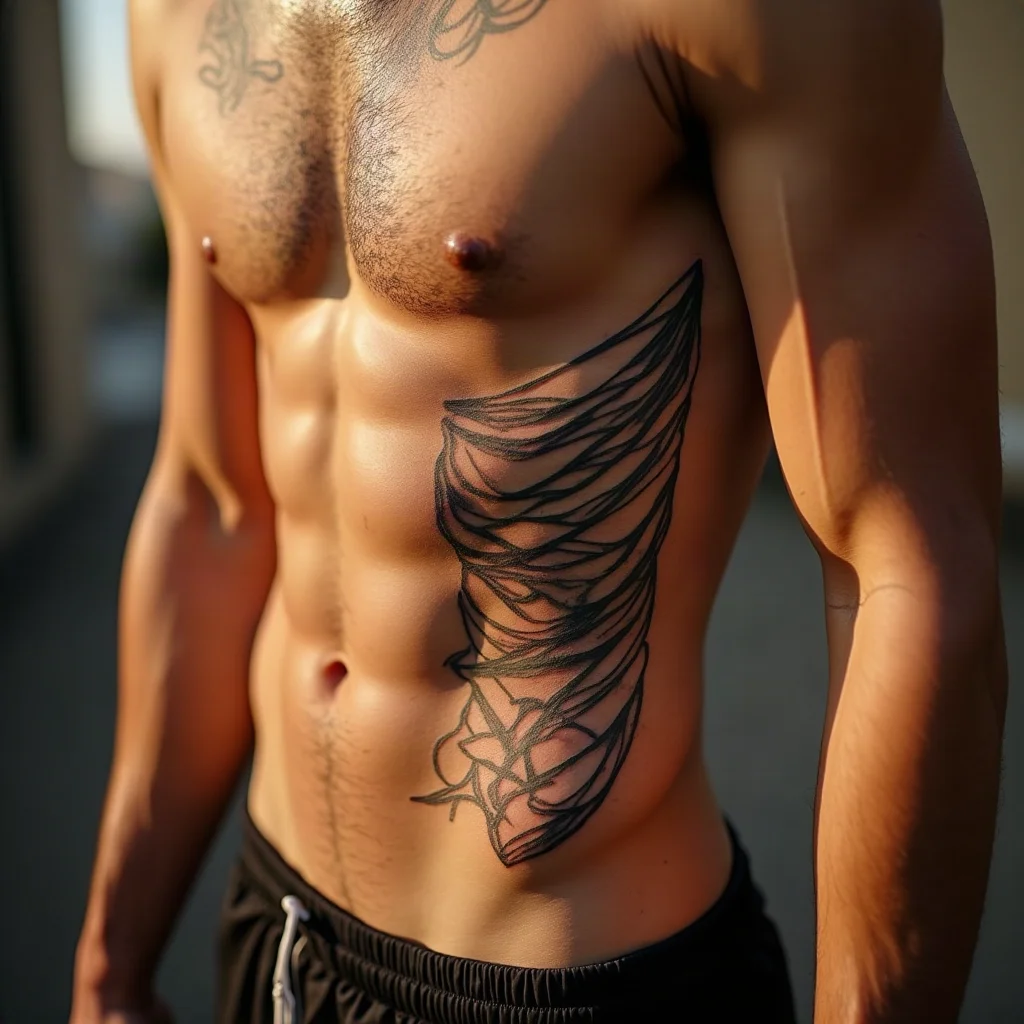
Blackwork bones drawn over your actual ribs, sometimes with a torn-skin edge or a mechanical hinge. The trick is that the tattooed bones must sit where your real ones do, so it is stenciled directly on the body with palpation. High-impact, but tell your artist how bulky or lean you plan to stay.
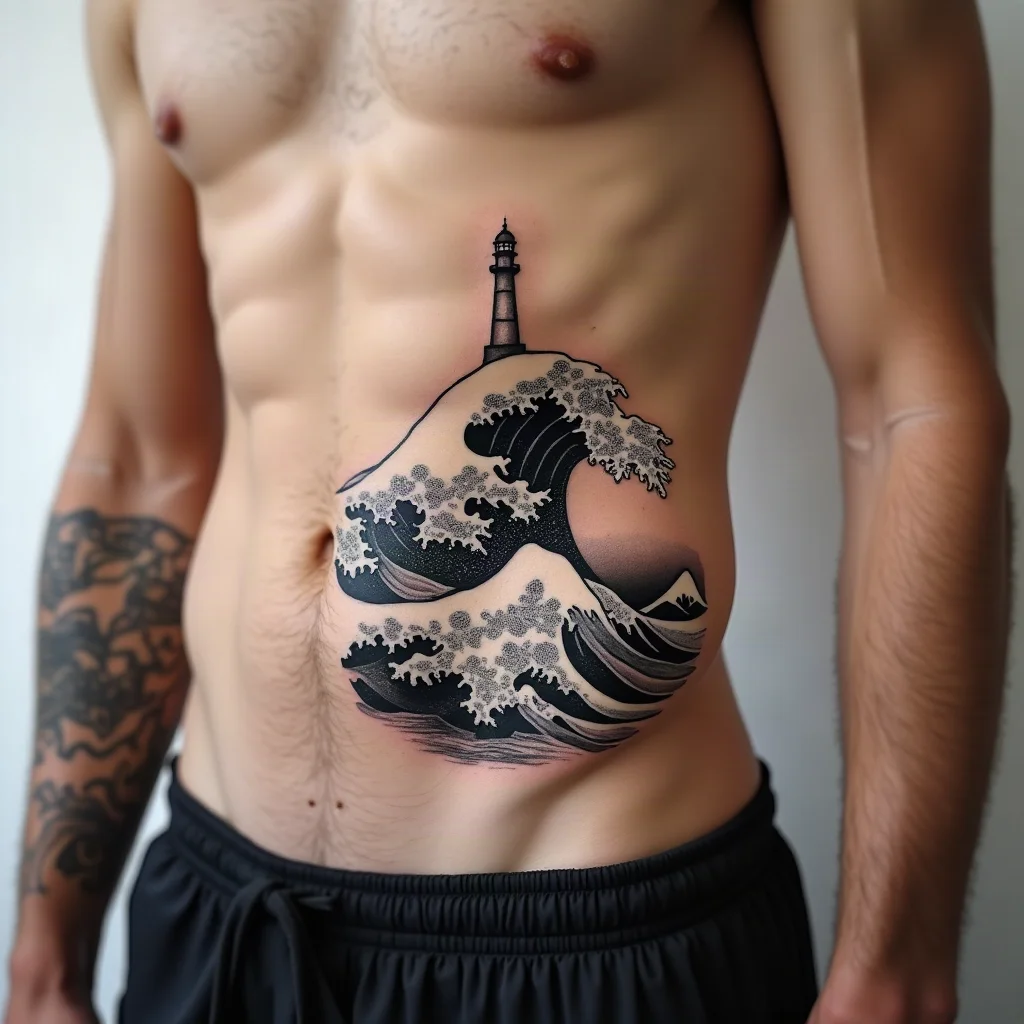
12. Storm wave with a lighthouse
A breaking wave curling across the lower ribs with a small lighthouse riding above the crest near the armpit. The horizontal energy of the water justifies a wide panel, and heavy black in the trough gives the piece weight. Reads best on a torso with some length between armpit and hip.
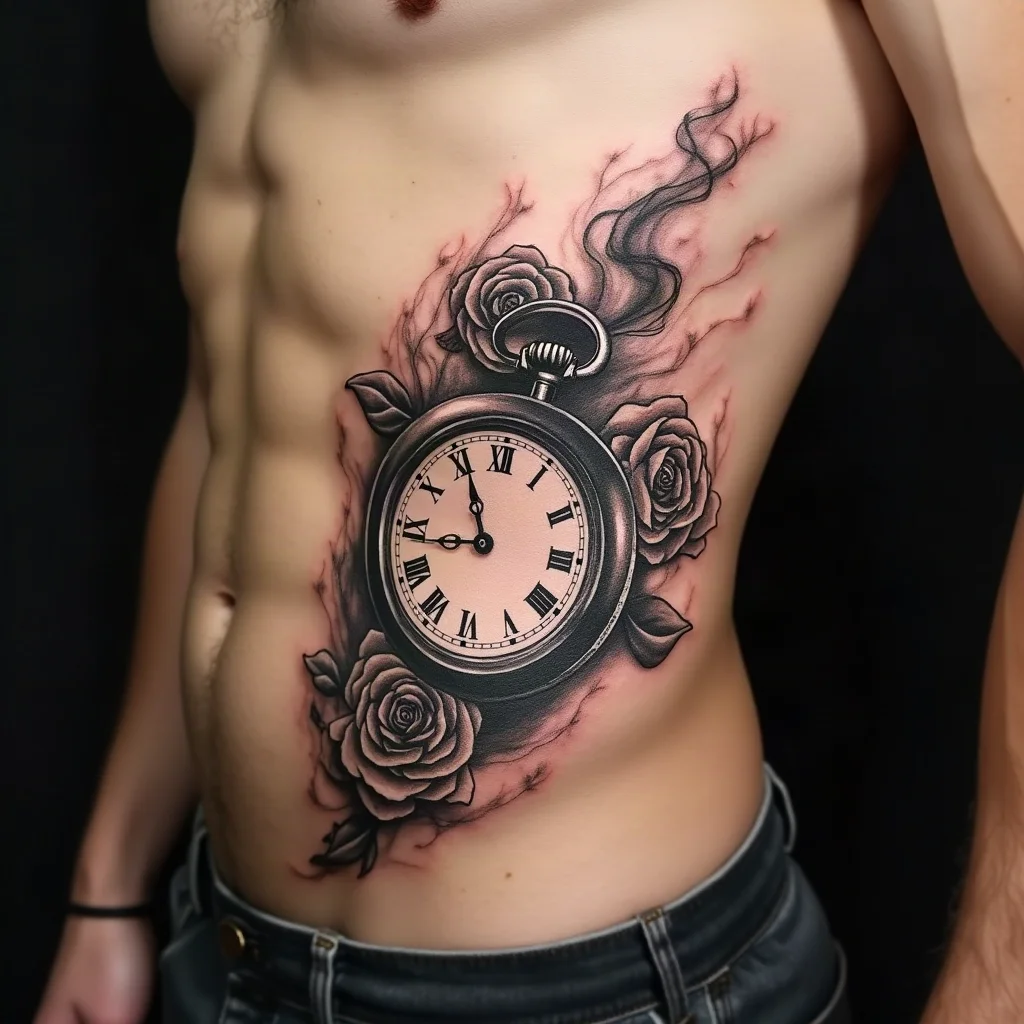
13. Clock, roses and smoke
A pocket watch anchored mid-panel with roses breaking upward and smoke dissolving toward the back. Classic black and grey realism, and a good vehicle for a meaningful time or date on the dial. Budget generously — smoke and soft grey wash take longer than clients expect.
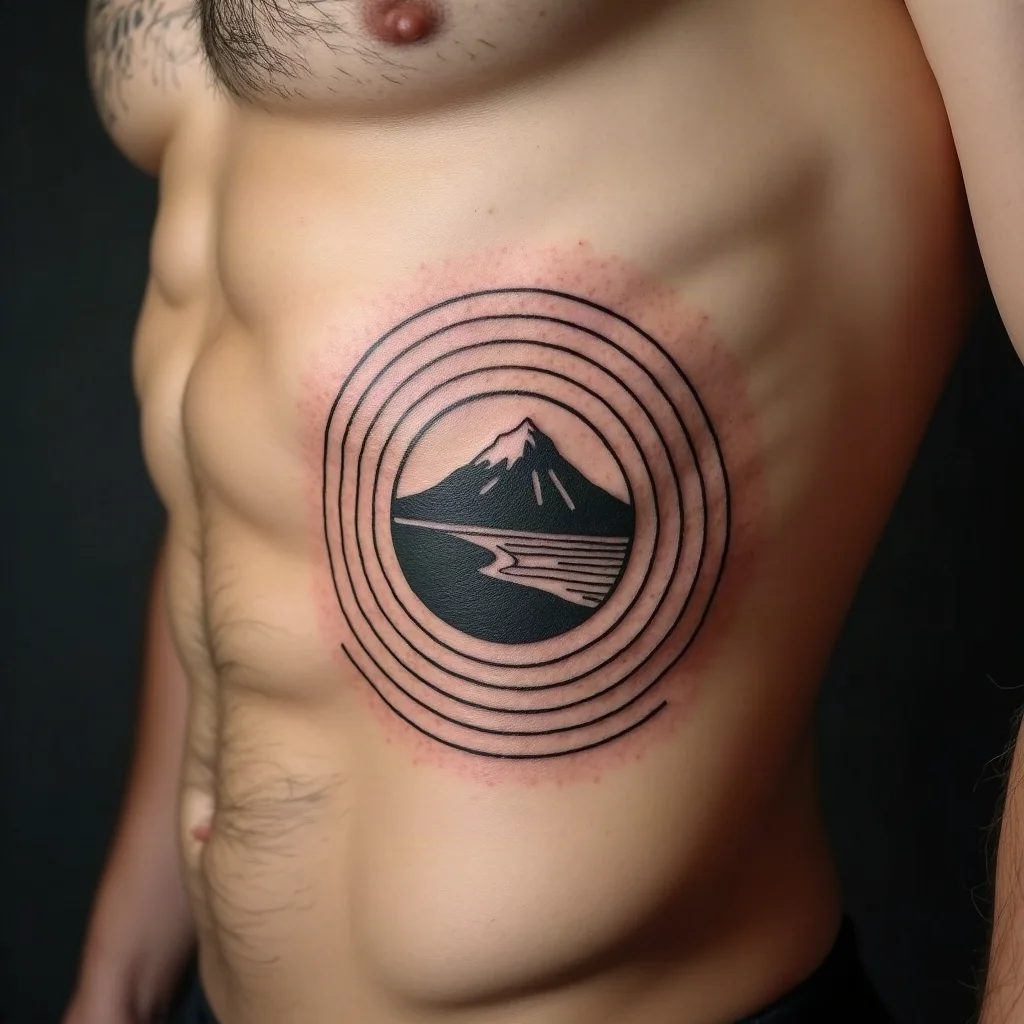
14. Topographic contour map
The contour lines of a real place — a mountain, a coastline, a hometown valley — rendered as concentric line rings across the whole panel. It is subtle from a distance and fascinating up close. Ask for slightly thicker lines than a paper map would use so the rings do not merge over the years.
Sternum and Front-Rib Pieces
The front ribs and the sternum are a different animal: symmetrical, framed by the pecs, and visible whenever your shirt comes off. Pain is sharper directly on the breastbone, but the sessions tend to be shorter because the designs are usually smaller and cleaner.
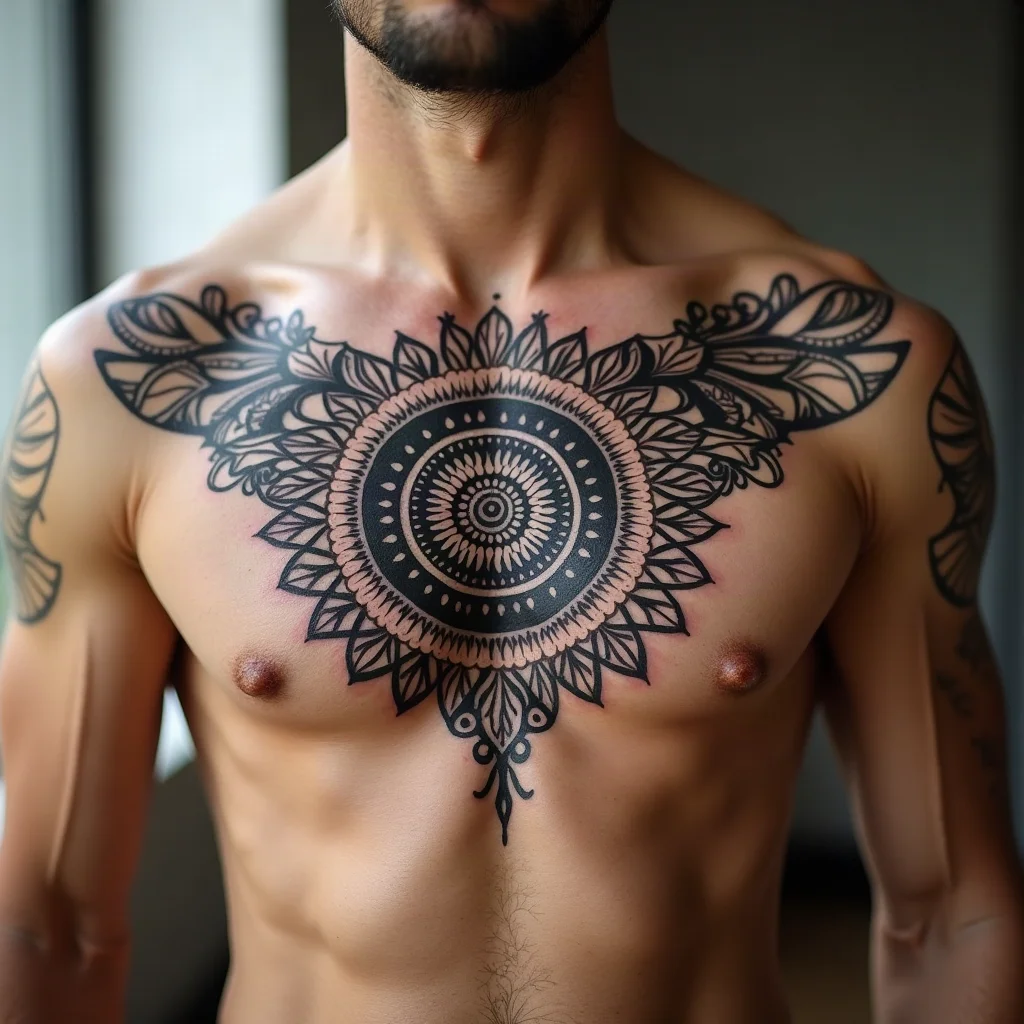
15. Ornamental sternum mandala
A symmetrical geometric medallion centered on the breastbone with lace-like arms spreading onto the inner ribs. Mirrored designs live or die on the stencil, so insist on seeing it lined up in a mirror before you commit. Typically four to six inches wide and one long session.
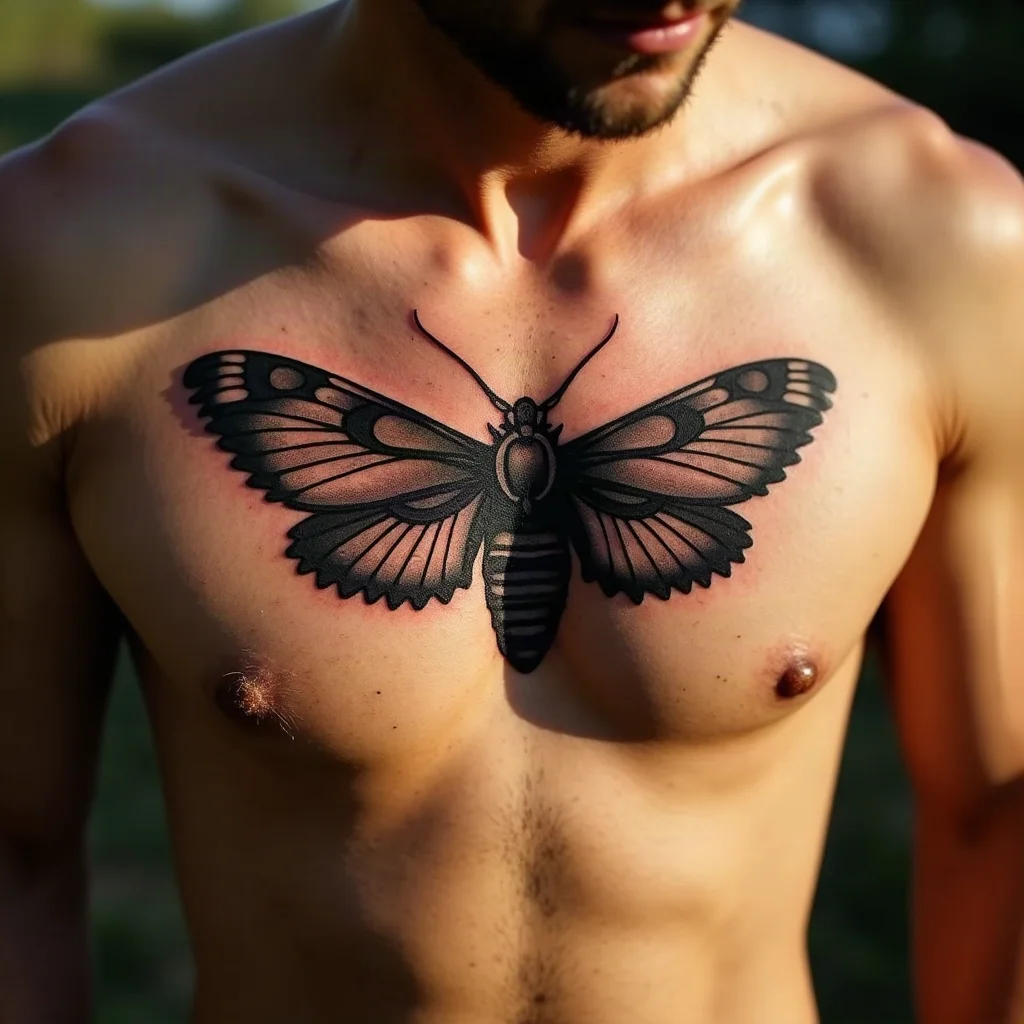
16. Moth with wings spread over the sternum
A death's-head or luna moth centered vertically, body on the breastbone and wings reaching toward each pec. The natural symmetry of the insect solves the alignment problem for you. Dotwork shading keeps it soft; heavy solid black makes it a statement.
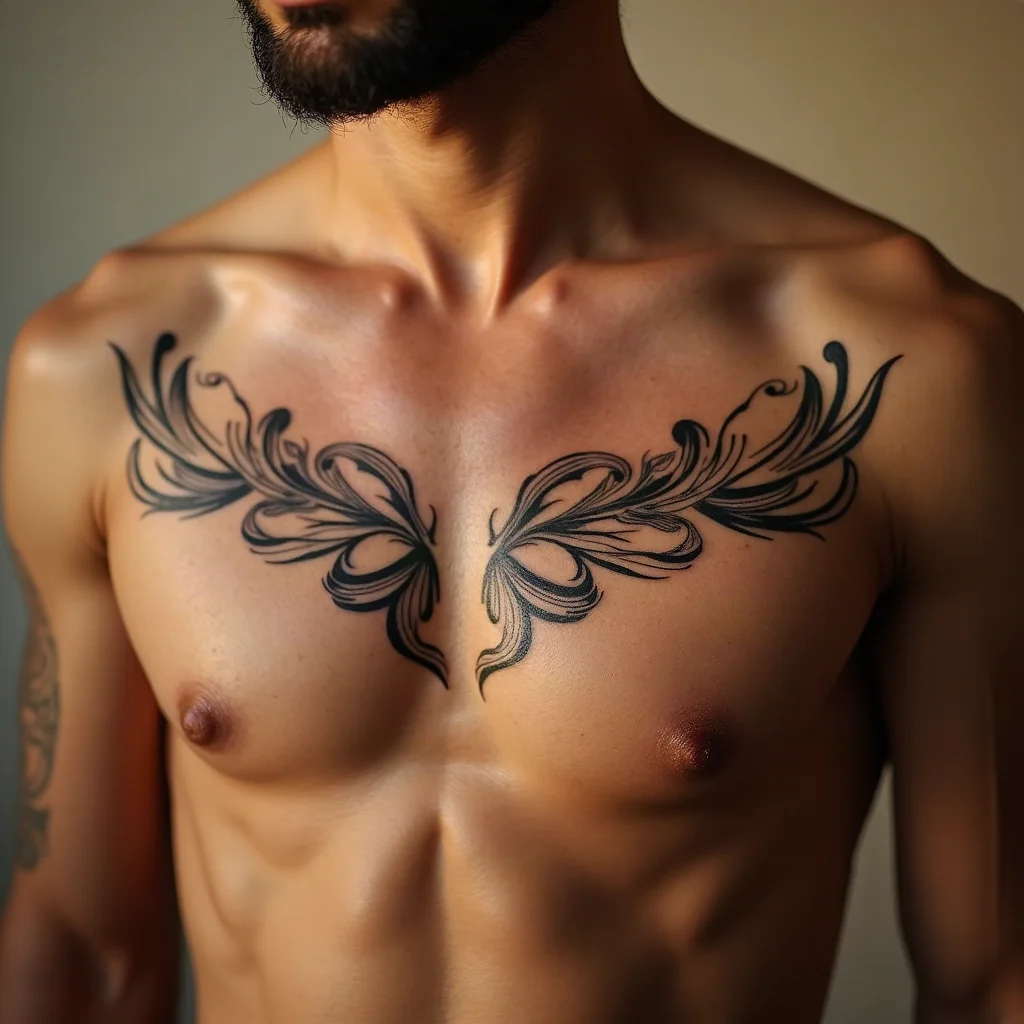
17. Twin filigree flanking the sternum
Two mirrored ornamental sweeps, one on each side of the breastbone, curving outward along the top ribs like decorative brackets. It frames the chest without covering it, and it plays well with a future chest piece. Popular with men who want ornament rather than imagery.
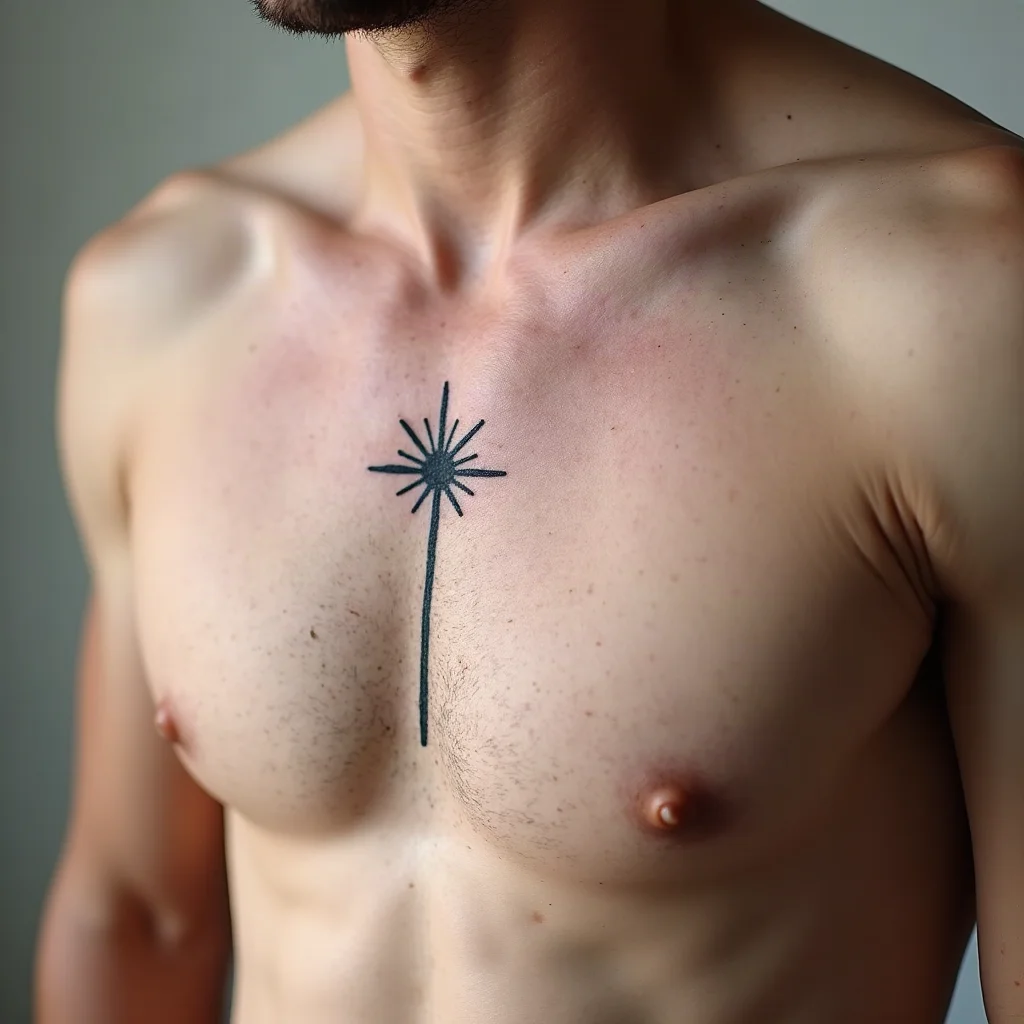
18. Rayed cross down the breastbone
A slim cross set on the sternum with fine rays fanning outward across the upper ribs. Keep the cross narrow — under two inches wide — so it does not distort when your chest expands. A quiet religious piece that sits neatly under an open collar.
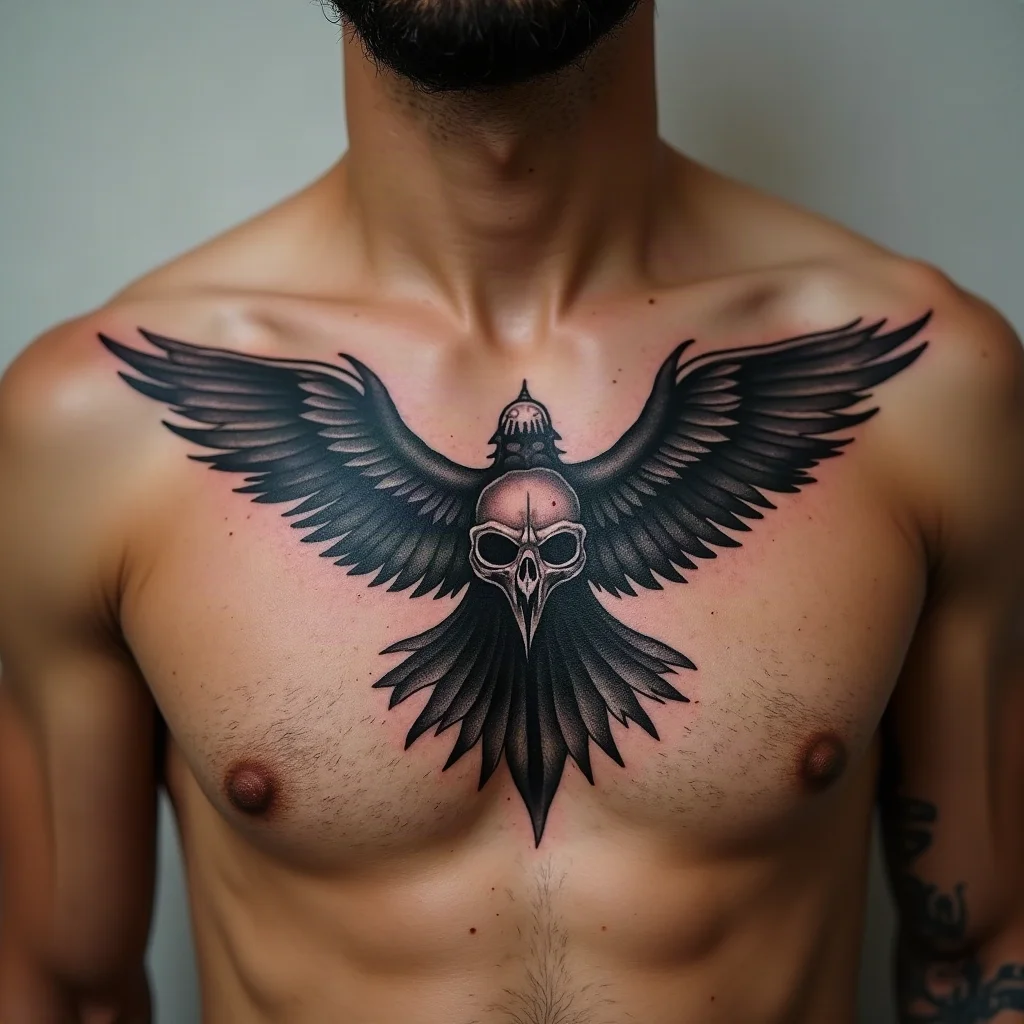
19. Raven skull between the pecs
A bird skull rendered in tight blackwork with the beak pointing down toward the solar plexus. Small enough at three to four inches, dark enough to hold. It suits lean chests where the sternum has a defined hollow to sit in.
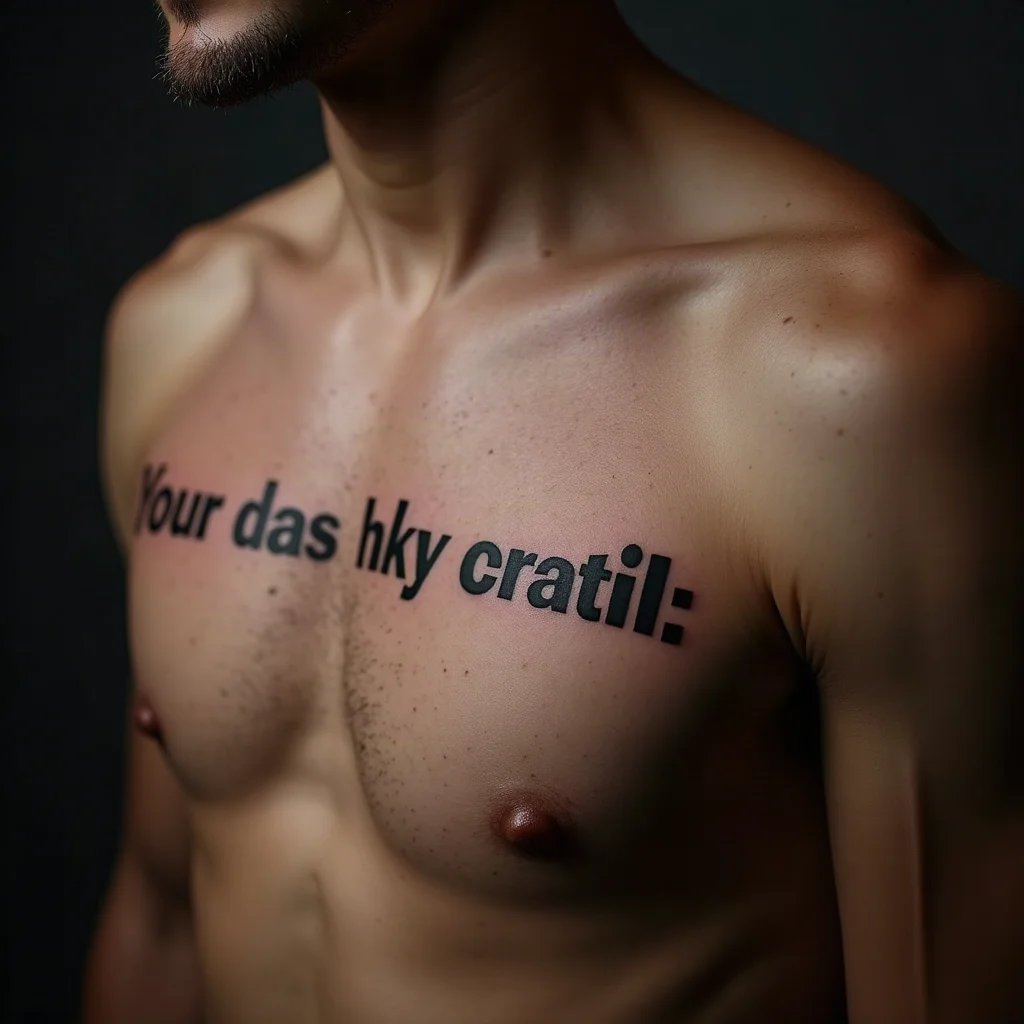
20. Arched lettering under the pecs
A short phrase curved along the underside of the chest, following the lower edge of the pectoral into the front ribs. The arc must match your own chest line, so this is a freehand-adjusted stencil job. Bold, spaced capitals hold up far better than script here.
Small and Half-Hidden Rib Tattoos
Not every rib tattoo needs to be an epic. Small pieces here are the most private tattoos a man can get — invisible in every shirt, visible only when you choose. They are also the sane way to test whether you can handle rib pain before booking a panel.
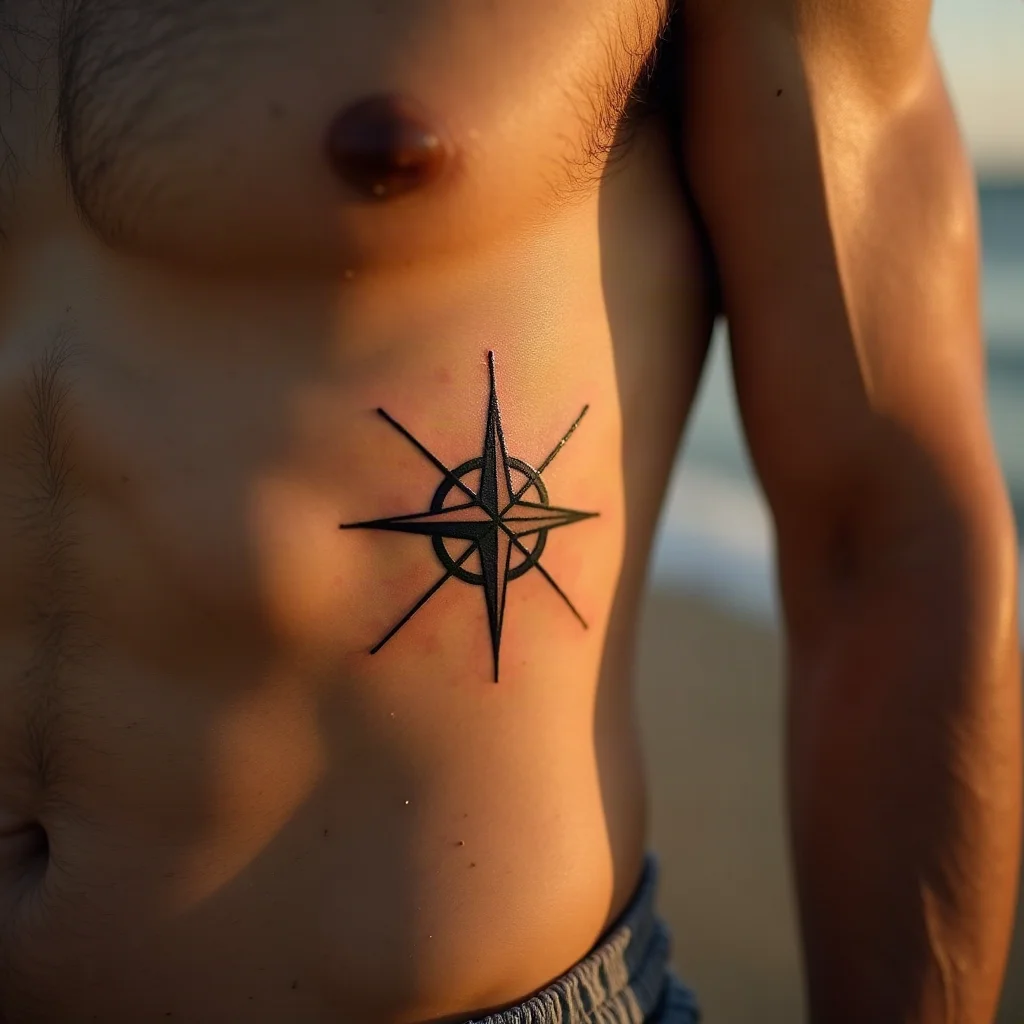
21. Palm-size compass under the armpit
A simple compass rose tucked high, just below the armpit where the lat meets the rib. Two to three inches, clean lines, no shading needed. The high placement is tender but heals fast because it rarely rubs against a waistband.
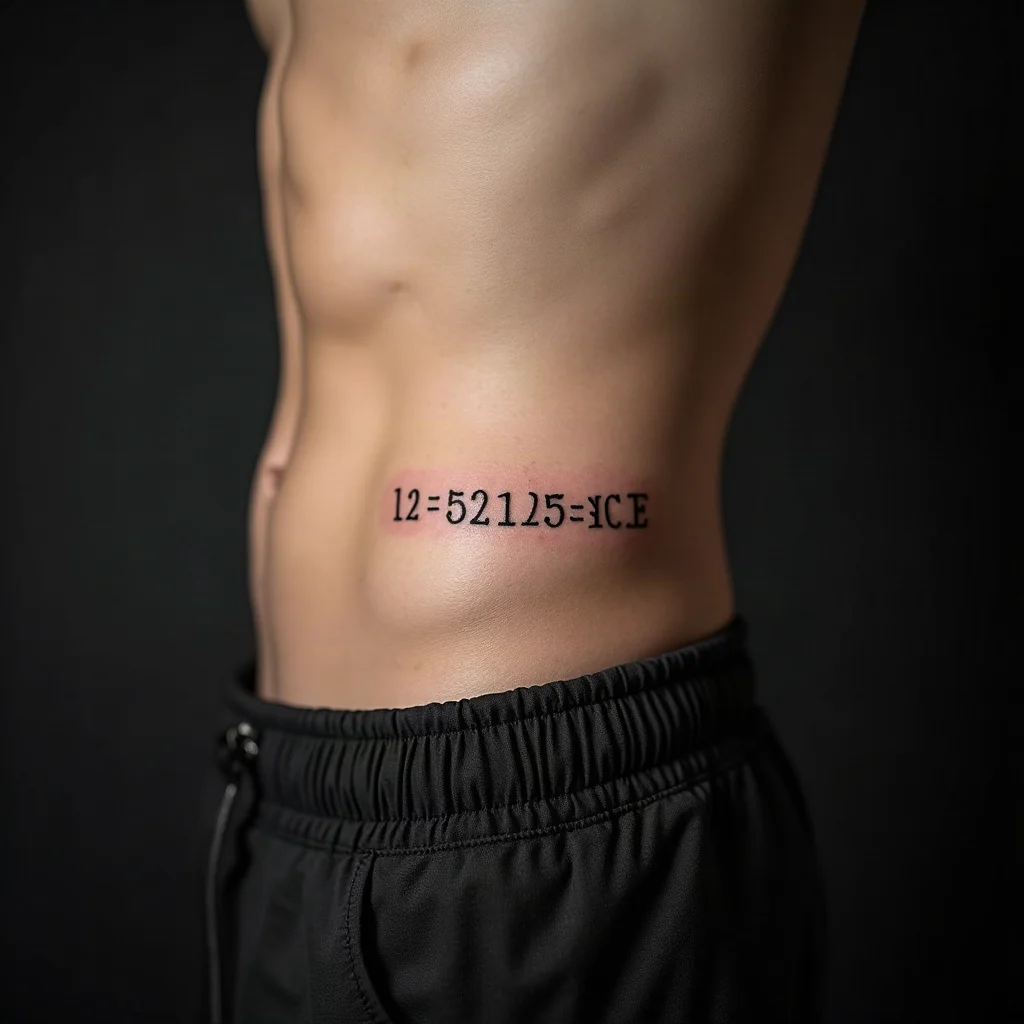
22. Coordinates along a single rib
Latitude and longitude in a typewriter or stencil face, set on one rib line so the text follows the bone rather than the floor. Keep character height around half an inch. A neat option for a place that matters without spelling out why.
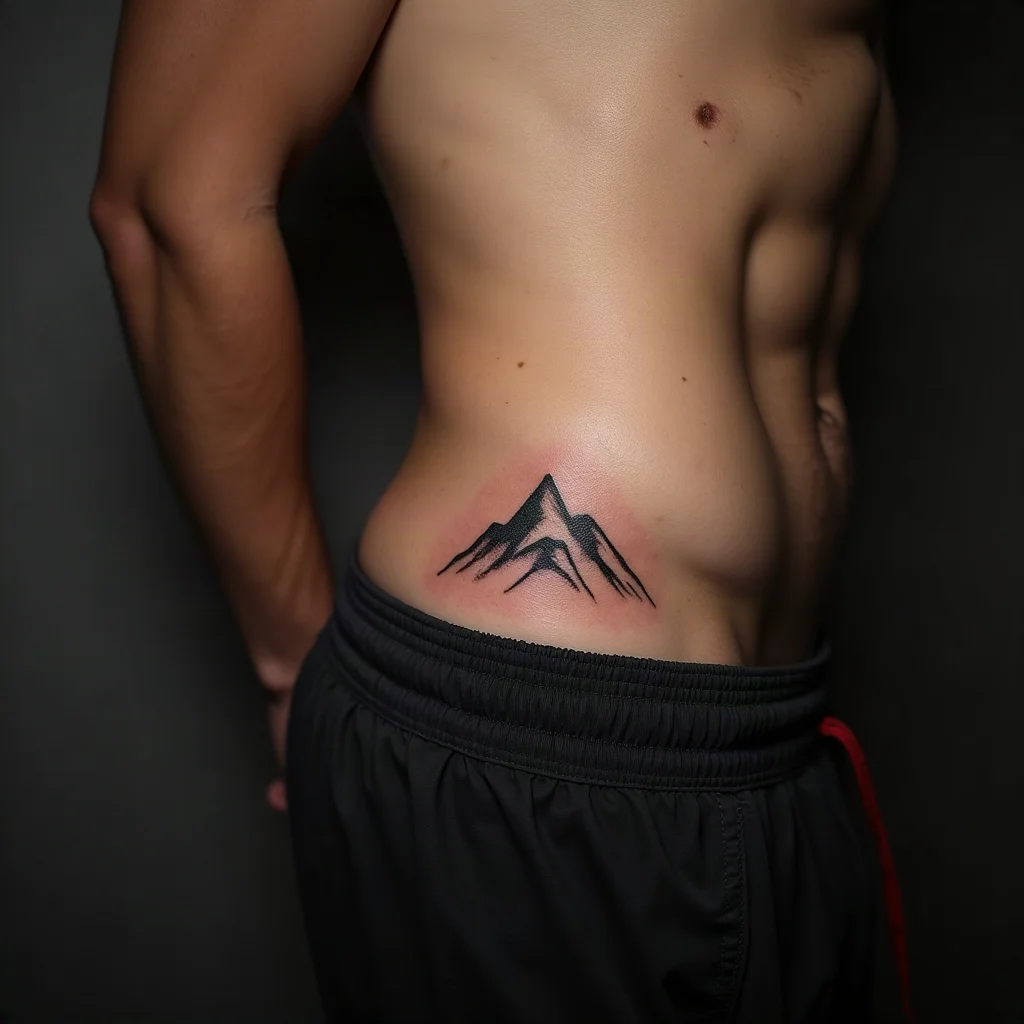
23. Minimal mountain ridge on the lower ribs
A single unbroken outline of a peak or two, three to four inches wide, sitting just above the waistband. No fill, no sky — the negative space is the point. Cheap, quick, and a good first tattoo in a tough spot.
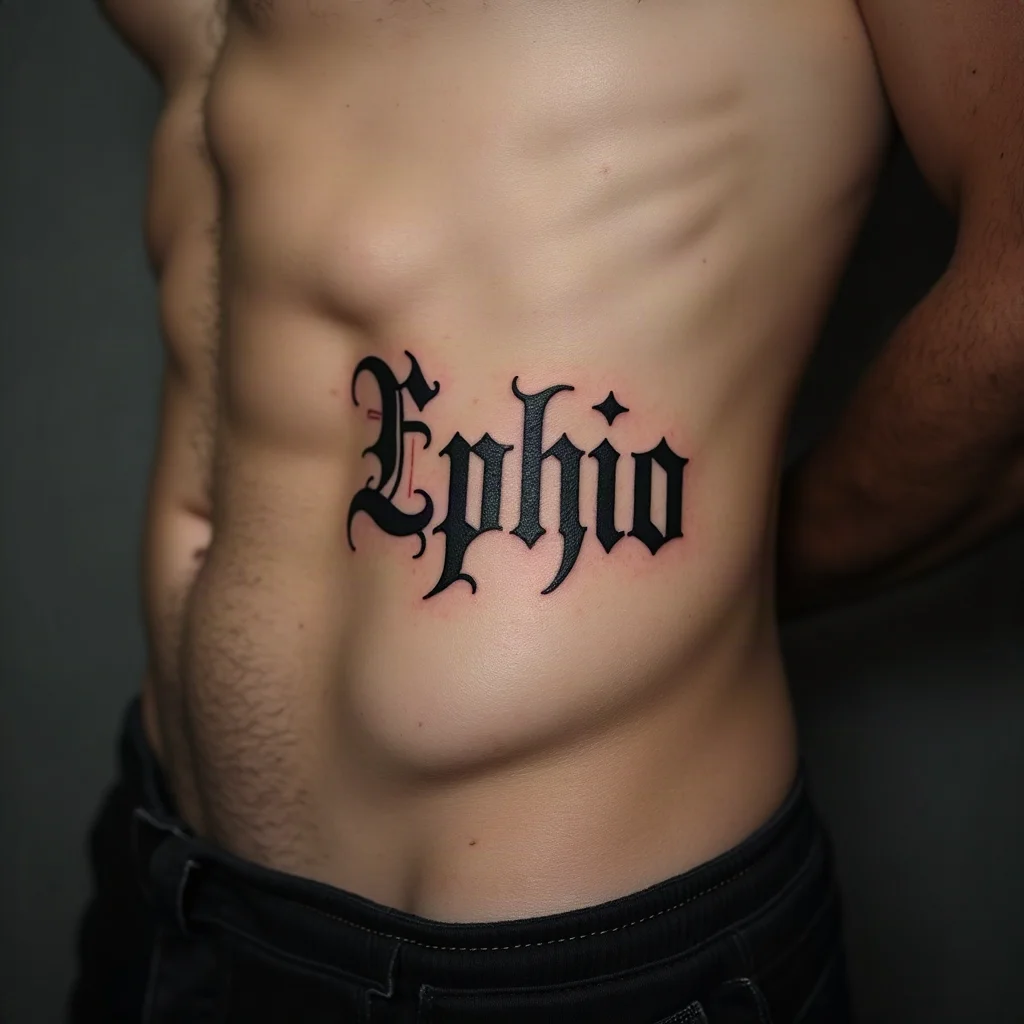
24. One-word blackletter statement
A single word in solid gothic letters running along the rib, an inch and a half tall. Because there is only one word, the letterforms carry all the weight, so pay for an artist who draws their own lettering instead of pulling a font.
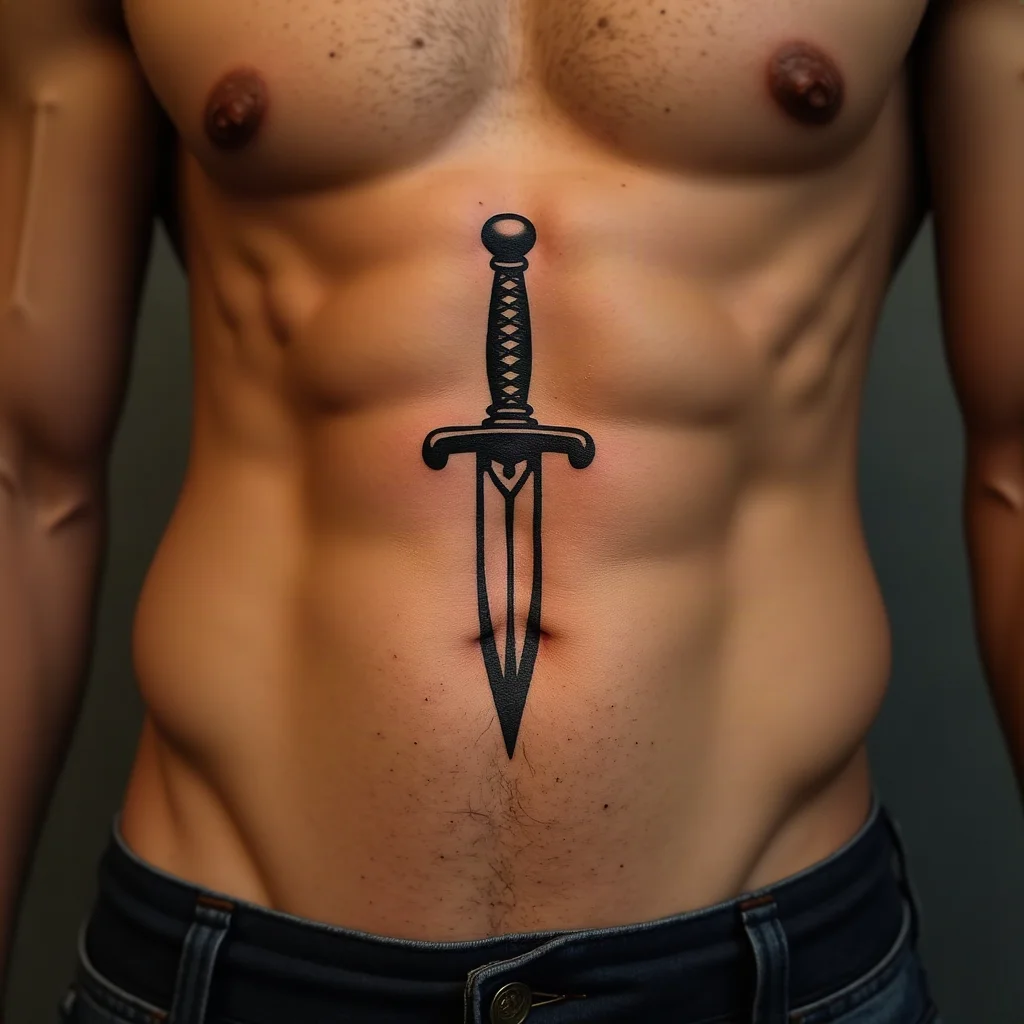
25. Small dagger in the intercostal groove
A four-inch dagger, point down, seated in the soft channel between two ribs where the needle is marginally kinder. Traditional bold line and a touch of black shading gives it staying power at small scale. Pairs well with a bigger piece added later.
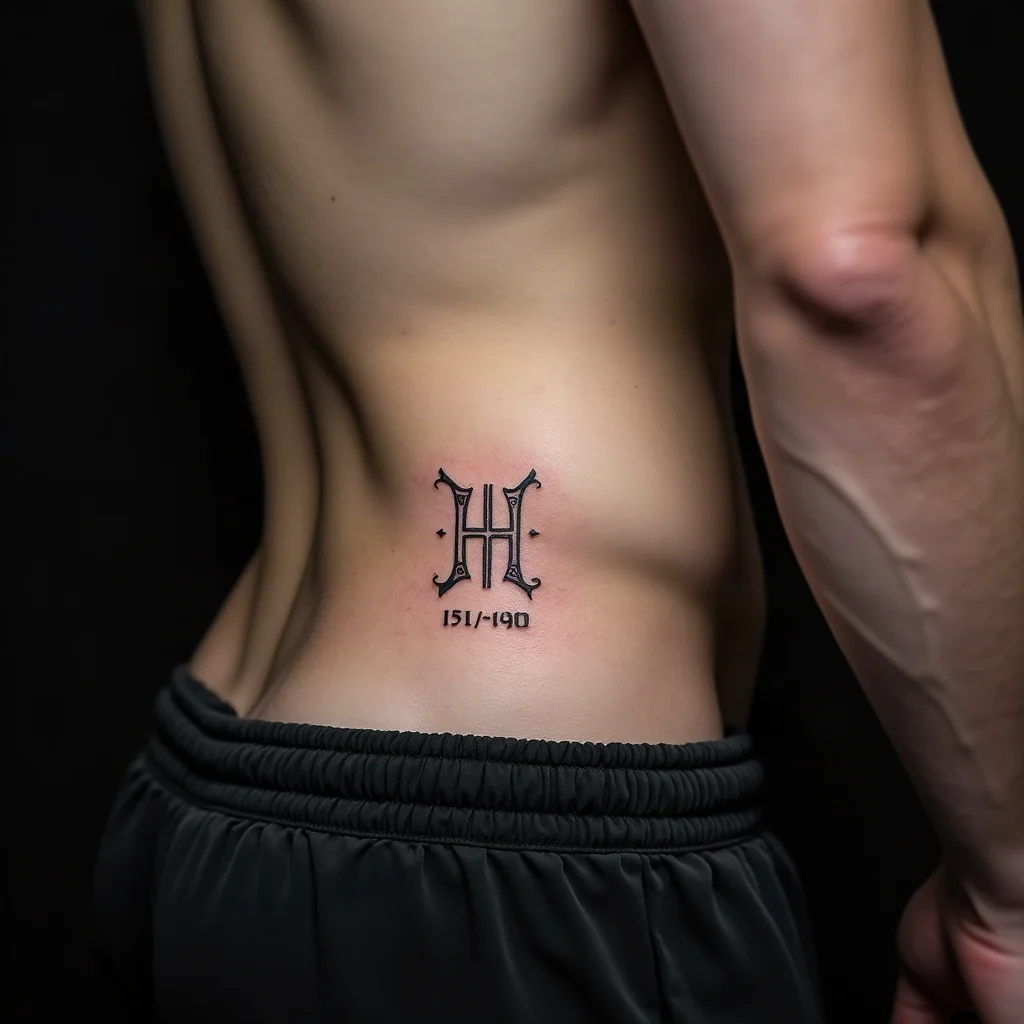
26. Initials and a date at the rib-to-hip fold
Two or three initials with a small date, placed low where the ribs give way to the hip. It is the softest part of the panel and the easiest to sit through. Just remember this zone stretches most with weight change, so avoid ultra-thin hairlines.
Pain, Sessions and What It Costs
Let us be straight: ribs hurt. Skin is thin, bone is close, and there is nowhere for the vibration to go. Most men describe it as a hot, scraping burn rather than the sting of a forearm, and the worst spots are directly on the bone, the tender patch under the armpit, and the last few inches near the sternum. The soft intercostal gaps and the lower ribs near the hip are noticeably easier. If you want a broader sense of how it compares to other placements, our breakdown of real tattoo pain scenarios is a useful reality check.
What actually helps:
- Eat a real meal an hour before and bring sugar. Blood sugar crashes are the number one reason rib sessions get cut short.
- Sleep properly the night before. Tired skin and tired nerves are a bad combination on ribs.
- Breathe slow and steady. Holding your breath tightens the whole panel and makes the artist's job harder. Ask for a break every 30 to 45 minutes rather than white-knuckling to the end.
- Skip alcohol the night before and painkillers that thin the blood. More bleeding means more wiping, and wiping on raw ribs is its own kind of misery.
On timing: a small three-inch piece is usually under an hour. A vertical column with lettering or a mid-size illustrative design typically runs two to four hours. A full wrapping panel with shading is a multi-session project, commonly three to five sittings spaced two to four weeks apart. Most men cannot do more than three or four hours on ribs in one go, and there is no prize for pushing past that.
Costs vary hugely by city and artist reputation, but the shape of the pricing is consistent. Expect a shop minimum for anything tiny, a few hundred for a decent mid-size piece, and a four-figure total for a large multi-session panel from an artist with a waiting list. Hourly rates in most Western cities land in a broad band from roughly the low hundreds up to significantly more for in-demand specialists. Always ask whether you are being quoted by the hour or by the piece, and whether the deposit comes off the final session.
Healing Your Ribs and Briefing Your Artist
Rib tattoos are annoying to heal, not because the skin is fragile but because of where the area lives. Waistbands rub the bottom edge, arms rub the top edge, shirts cling when you sweat, and side sleepers press the whole thing into a mattress for eight hours a night.
The first two weeks
- Sleep on the other side for at least the first week, or on your back with a pillow wedged against your hip so you do not roll.
- Loose shirts only. Cotton, a size up, and nothing with a seam that sits directly across the panel.
- Wear your waistband lower or higher than the bottom of the tattoo. A belt sawing across a fresh lower-rib line is the classic cause of patchy healing.
- Wash twice a day with unscented soap and cool water, pat dry with paper towel, and use a thin layer of aftercare balm. Thin means thin — a shiny, greasy tattoo under a shirt traps moisture.
- Gym on hold. Anything involving lat pulldowns, rowing or heavy twisting stretches the panel and pulls at scabs. Give it a week minimum, two if you can stand it.
Many artists wrap ribs in adhesive film for the first few days, which solves the shirt-friction problem neatly; if yours does, our guide on how long to leave second skin on a tattoo covers when to change it.
What to tell your artist
Bring three things to the consultation: the direction you want the design to travel, the boundary you do not want it to cross, and honest information about your body. Say if you are planning to bulk, cut or if a back piece is coming later — it changes where the panel should stop. Ask them to stencil while you are standing, then check it with your arm raised and lowered, and again in a mirror before the needle touches you. If something looks off in the stencil, it will look worse in ink; a good artist expects two or three stencil placements on ribs and will not be offended by the extra ten minutes.
Frequently asked questions
How bad is a rib tattoo compared to an arm tattoo?
Significantly worse for most men. The skin is thin, the bone is right underneath, and the sensation is a hot scraping burn rather than a sting. The good news is that it is survivable in chunks — most people manage two to four hours before their tolerance drops off, and the soft areas between ribs and near the hip are far easier than the bone itself.
How long does a rib cage tattoo take to heal?
The surface usually looks settled in two to three weeks, but the deeper layers keep remodelling for a few months. Ribs can be slower in practice because clothing, sweat and side sleeping keep irritating the area. Keep it loose, clean and lightly moisturised, and hold off on heavy lat or core training for at least a week.
Will a rib tattoo stretch if I gain or lose weight?
The upper ribs stay fairly stable, but the lower panel near the hip and waist stretches more than most placements. Moderate weight change rarely ruins a design, while dramatic swings can soften fine detail. If you are in the middle of a big cut or bulk, wait until you have held a steady weight for a few months.
What size should a first rib tattoo be?
Three to five inches is a sensible test run — big enough to be a real design, short enough to finish inside an hour or two. Vertical designs that follow the rib line make the most of the space without needing width. If you handle it well, you can extend the piece into a full panel later.
Can a rib tattoo connect to a sleeve or back piece later?
Yes, and it is worth planning for from day one. Tell your artist if a chest, back or arm project is on the horizon so they can leave the right edges open and keep the flow direction consistent. Wrapping motifs like waves, smoke or foliage are the easiest to extend across seams.
The conversation
No comments yet. Got a thought about these designs? Start us off.
Want to weigh in? Join the community to comment, save designs and try them on your skin.