32 Calf Tattoos for Men, Sorted by the Muscle
The calf is a curved, moving muscle, and the designs that look great on it are the ones built for that curve. Here are 32 ideas sorted by where they sit on the leg, with honest notes on pain, price and healing.
Read the muscle before you pick the design
A calf is not a flat panel. It is a teardrop of muscle that is widest about a third of the way down from the back of the knee, then tapers hard into the Achilles. Anything you put there gets stretched over that swell, so the shape of the design matters more than the subject. Tall, slightly narrow compositions with a soft S-curve follow the leg. Wide horizontal images get chopped by the sides and disappear when you walk.
Three zones do most of the work. The outer swell (the lateral head of the gastrocnemius) is the single best piece of real estate on the lower leg: flat-ish, meaty, visible from behind and from the side, and easy for an artist to reach while you lie on your stomach. The full wrap uses the whole cylinder, which means the design has to work in motion and from three angles. The centre line, running straight down the back of the calf, suits vertical subjects that read like a column.
Then there is the low ground: the Achilles, the ankle bone and the back of the knee. Bonier, thinner-skinned, tighter to tattoo, and where most people find out what pain actually means.
Practical points worth knowing before you book. Calf skin holds ink well and ages better than the hand or the foot, but it sees sun in shorts season and gets shaved, so a design with solid black and clear negative space will still read in ten years. Lines under about 1.5 mm apart on hairy, sun-exposed leg skin tend to close up over time, so scale your detail up rather than down. And if you play sport or run, plan the sitting for an off week; a fresh calf swells.
Outer calf swell: one strong subject, framed by skin
If it is your first leg piece, start here. The outer swell takes a single bold image around palm-to-hand size, heals cleanly, and leaves you room to expand later without repainting yourself into a corner.
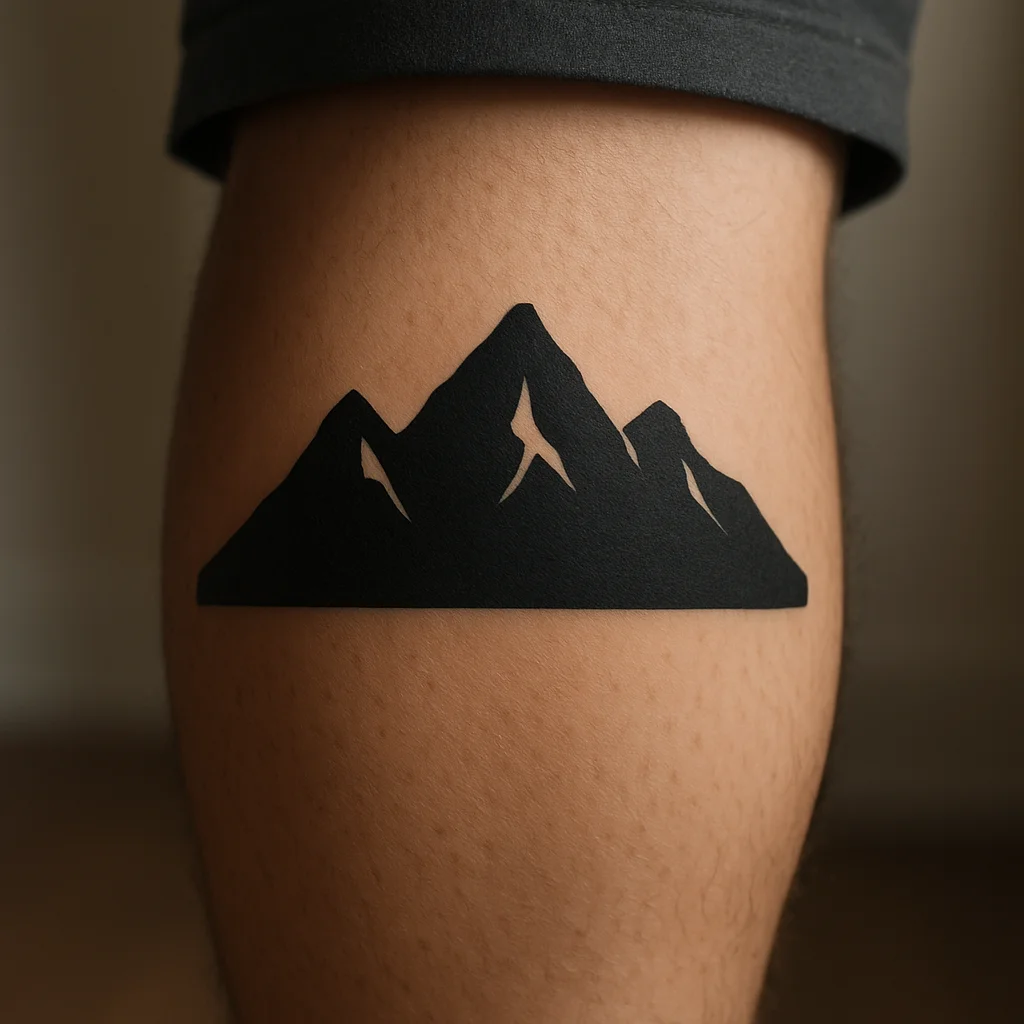
1. Blackwork mountain range with a hard horizon
Three peaks in solid silhouette, a razor-clean horizon line, and untouched skin for sky. It reads from across a room and needs almost no upkeep because there is no fine detail to blur. Works best at 12–16 cm tall so the ridgeline has room to be jagged rather than mushy.
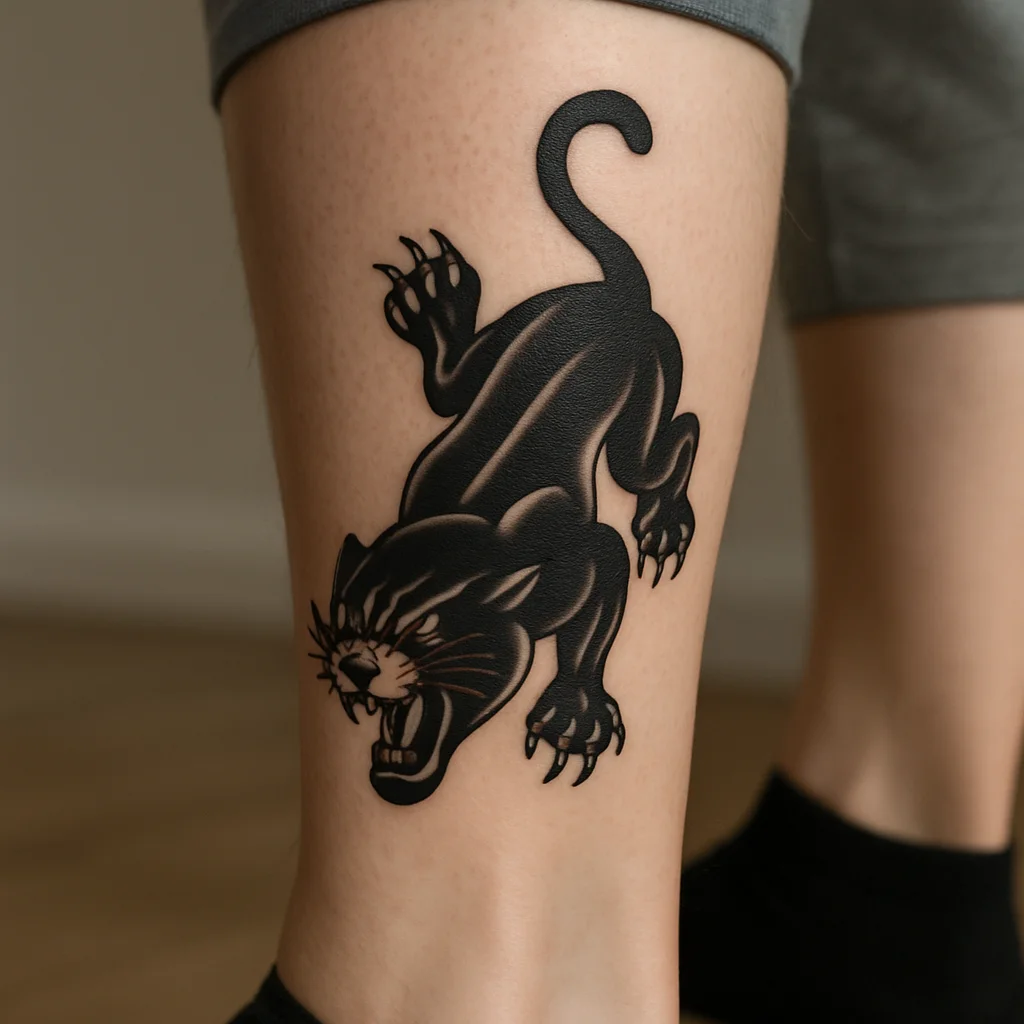
2. Traditional panther head, claws out
Old-school leg classic for a reason: heavy black outline, three colours maximum, and a shape that already curves. Set it head-down as if the panther is climbing toward the ankle and it follows the taper naturally. Ages better than almost anything else on this list.
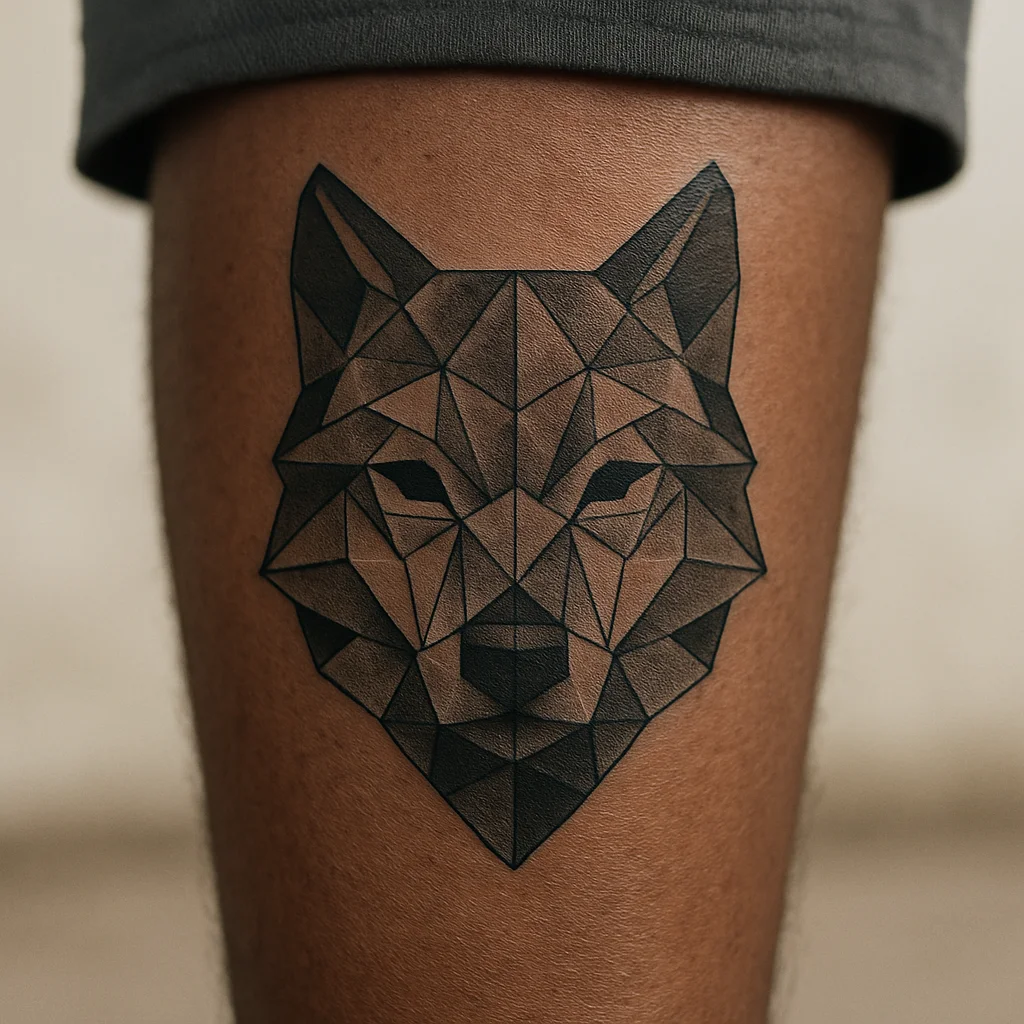
3. Geometric wolf built from flat facets
The head broken into angular planes, with the darkest facets on the muzzle so the face still resolves at a distance. Suits guys who want an animal without a photoreal portrait. Keep it under about 15 cm or the facets start looking like a wireframe rather than a wolf.
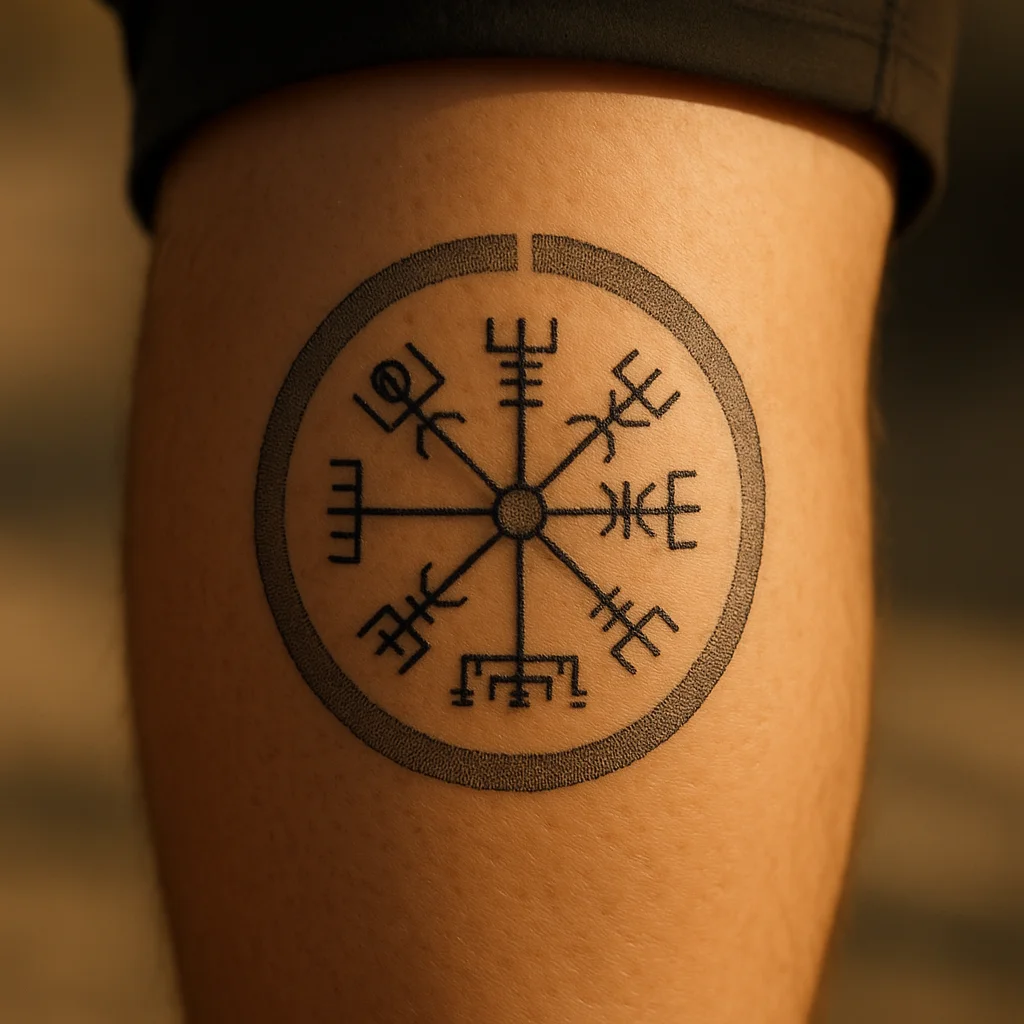
4. Dotwork vegvísir with a broken outer ring
The Norse wayfinder rendered in stippled shading, with one segment of the surrounding ring deliberately left open. It sits perfectly in the round of the muscle. Ask for the dots packed tighter at the centre than the edge, otherwise it flattens as it heals.
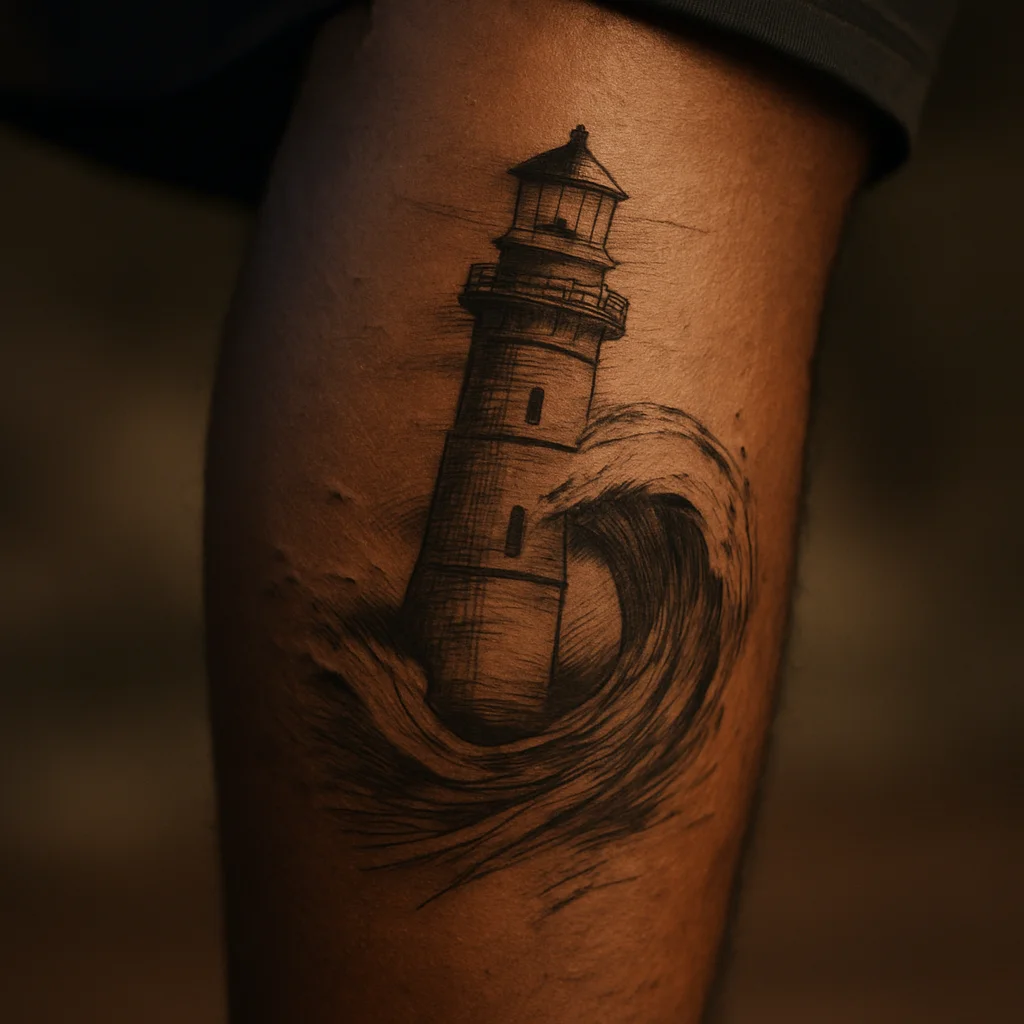
5. Lighthouse cut by a breaking wave
Vertical tower on the upper swell, wave curling across the bottom third and wrapping slightly toward the shin. The diagonal of the wave stops the composition sitting like a postage stamp. A good candidate for a splash of colour in the beam.
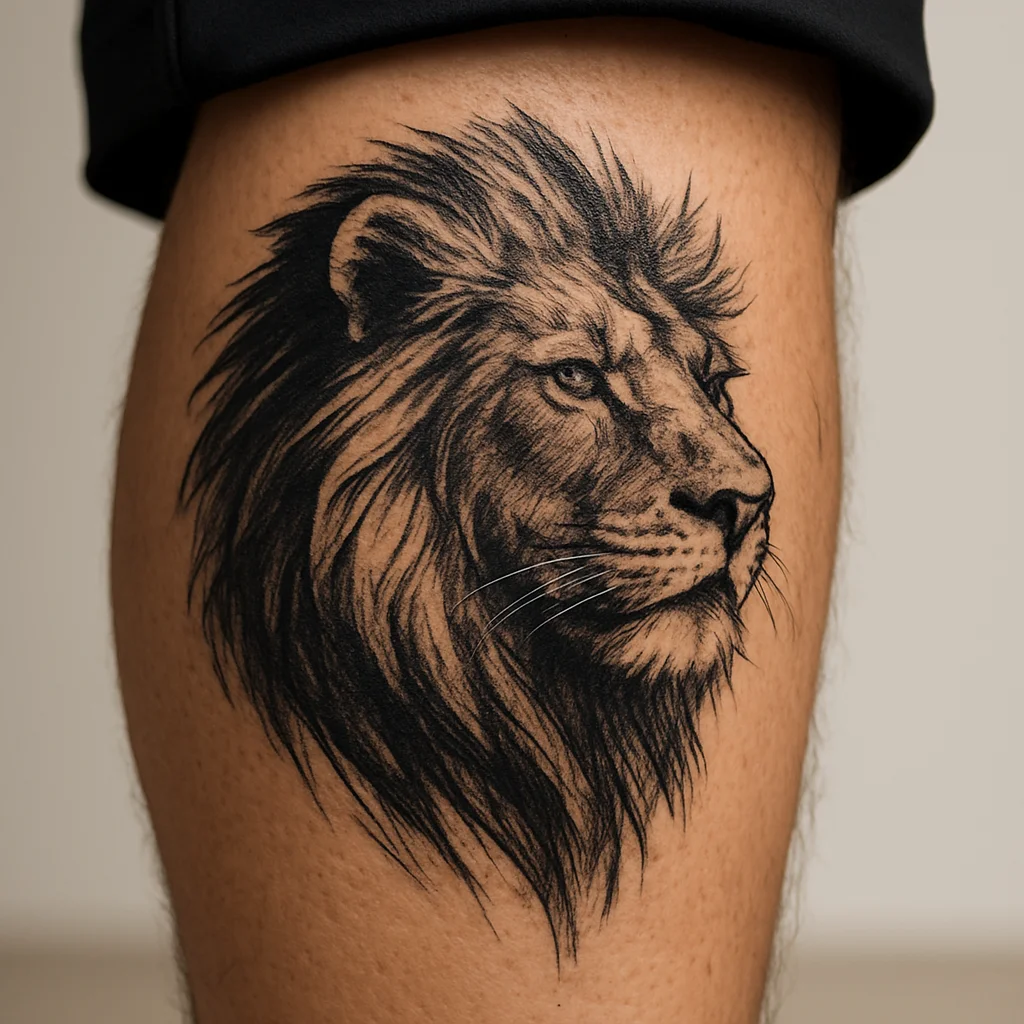
6. Illustrative lion in three-quarter view
Not a portrait — an illustration, with the mane built from directional black strokes rather than grey wash. Three-quarter angle keeps the face from distorting over the muscle's curve. Budget a long session; manes eat time.
7. Skull with a snake threading the eye socket
The skull anchored on the widest part of the muscle, the snake's body looping out and down toward the ankle. Classic pairing, and the snake gives you an easy hook for extending into a wrap later. Solid black in the sockets keeps it strong for decades.
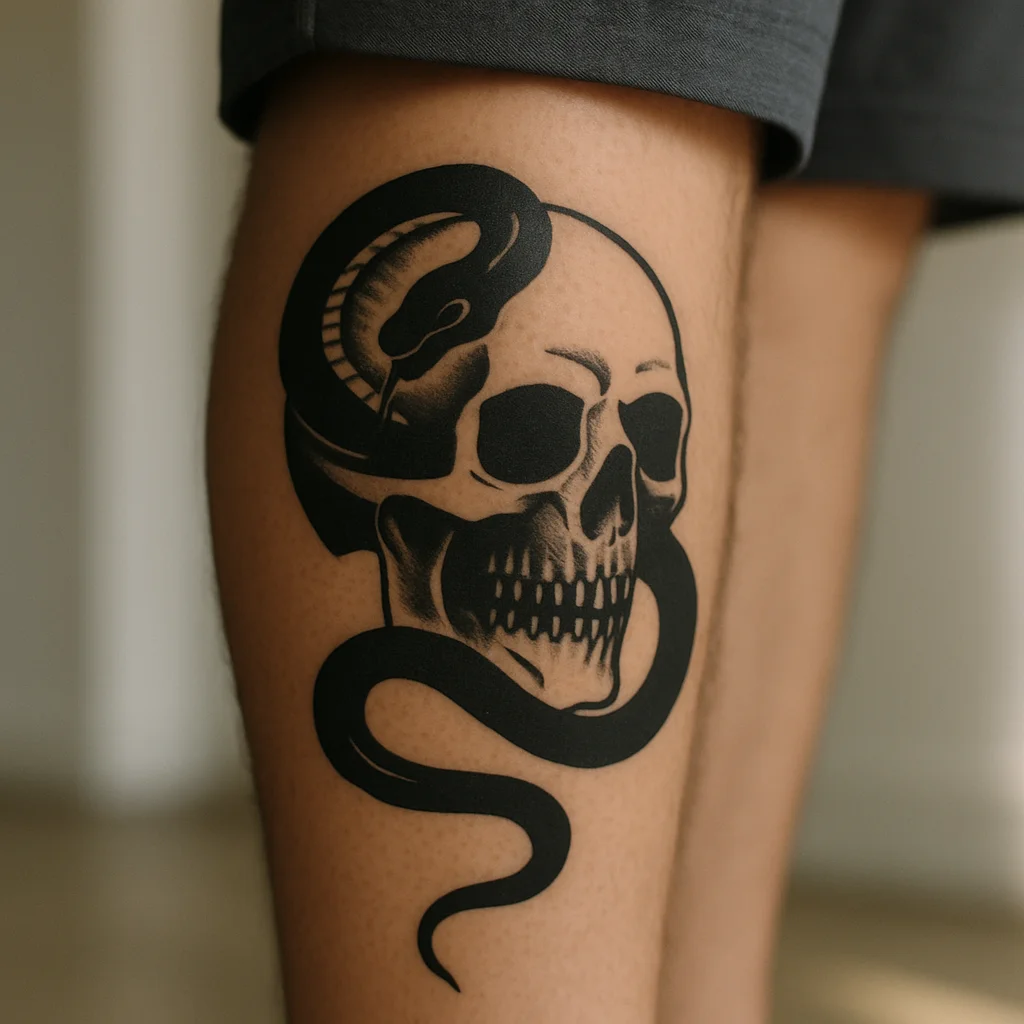
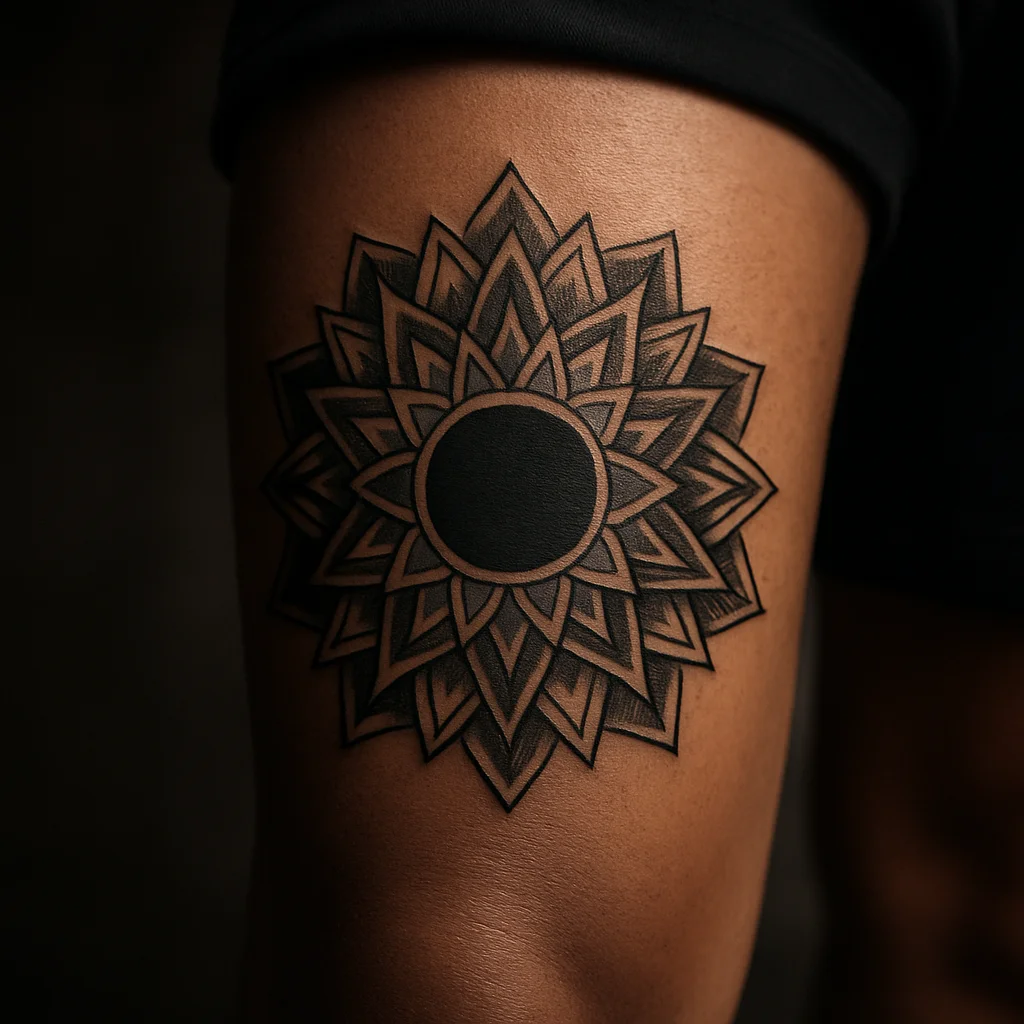
8. Mandala shield with a blacked-out core
Concentric geometry with the innermost ring filled solid so the piece has a visual weight centre. Repeats read beautifully on a rounded surface. Insist on a stencil applied while you are standing, not lying down, or the symmetry will land crooked.
Full wraps: designs that use all 360 degrees
A wrap is a bigger commitment in time, money and pain, because the artist has to work the shin and the inner calf as well as the comfortable outer face. The payoff is a piece that never looks half-finished from any angle. Expect two to four sessions for most of these.
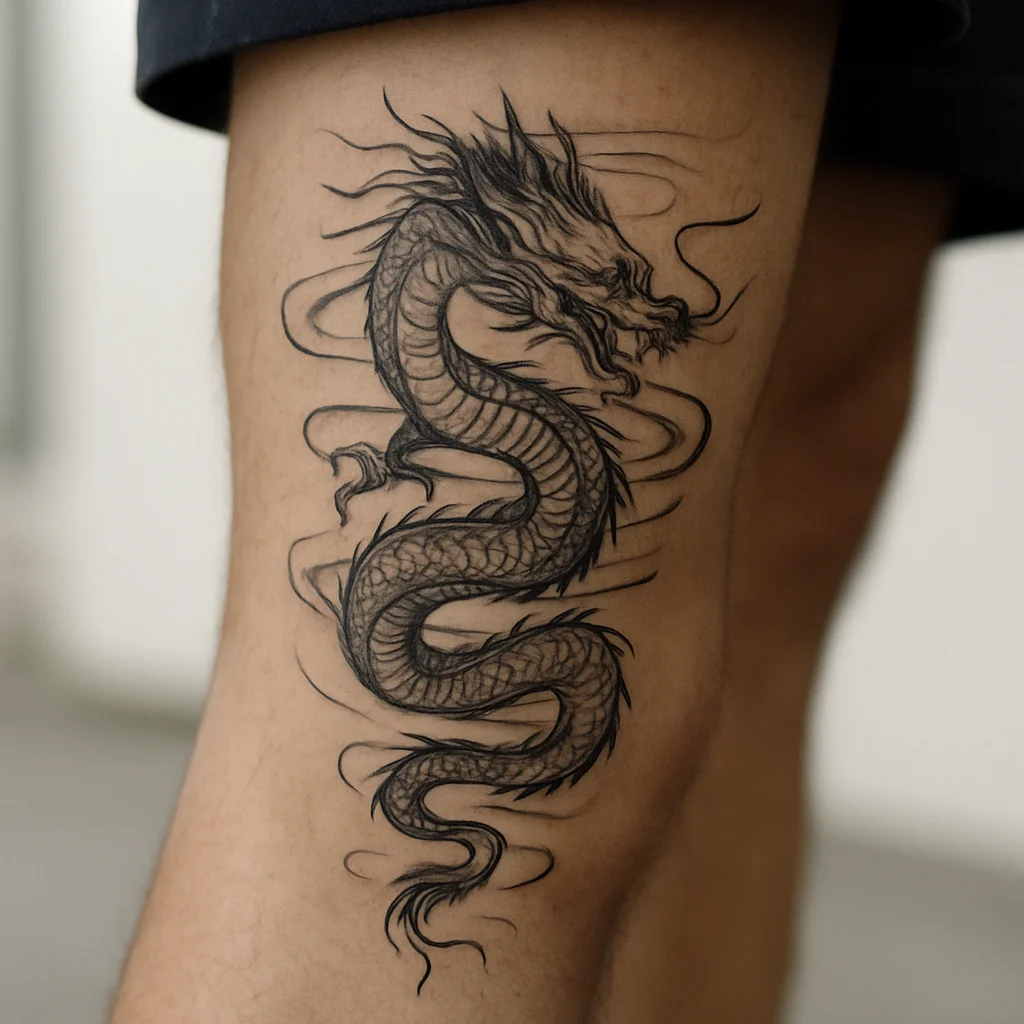
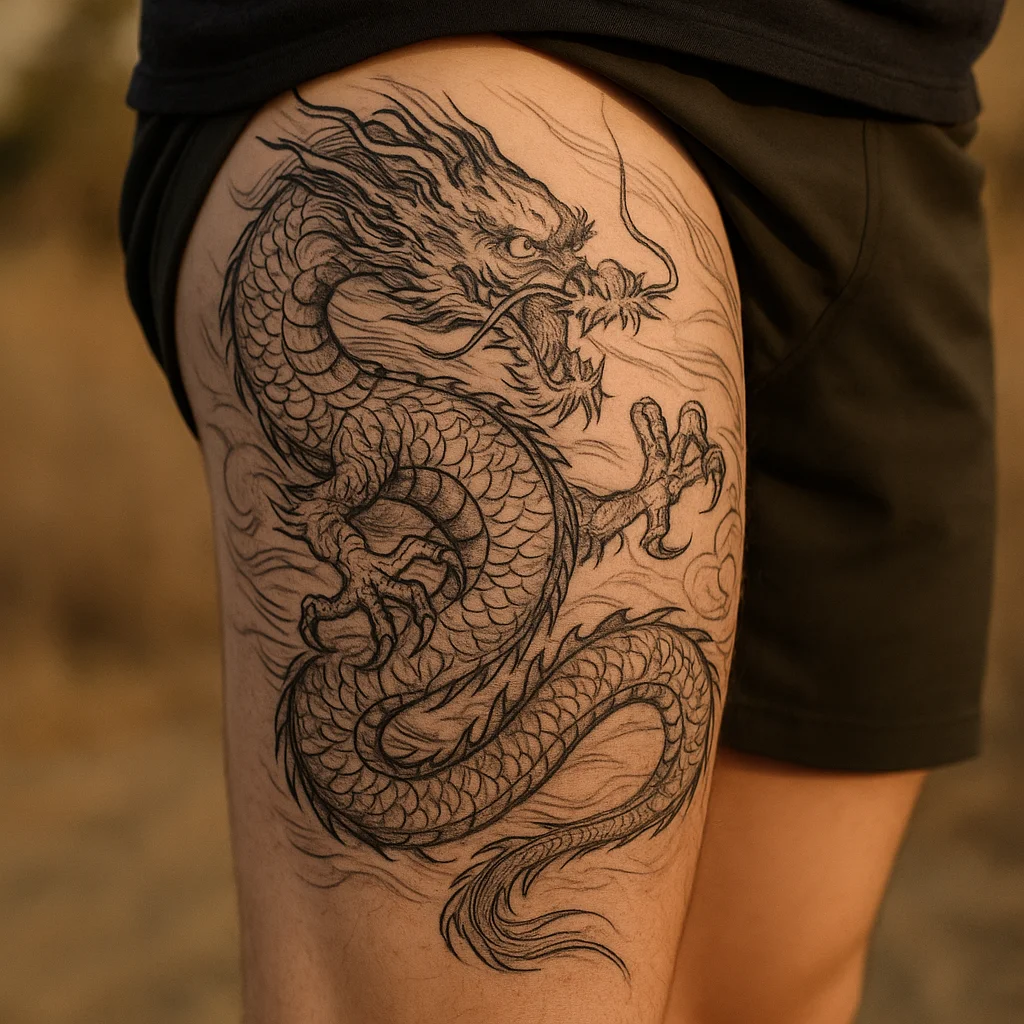
9. Japanese dragon spiralling the muscle
Head at the outer knee, body corkscrewing down so the tail finishes near the ankle bone. Wind bars and finger waves fill the gaps and hide the join lines where the wrap meets. This is the design that justifies going full colour on a leg.
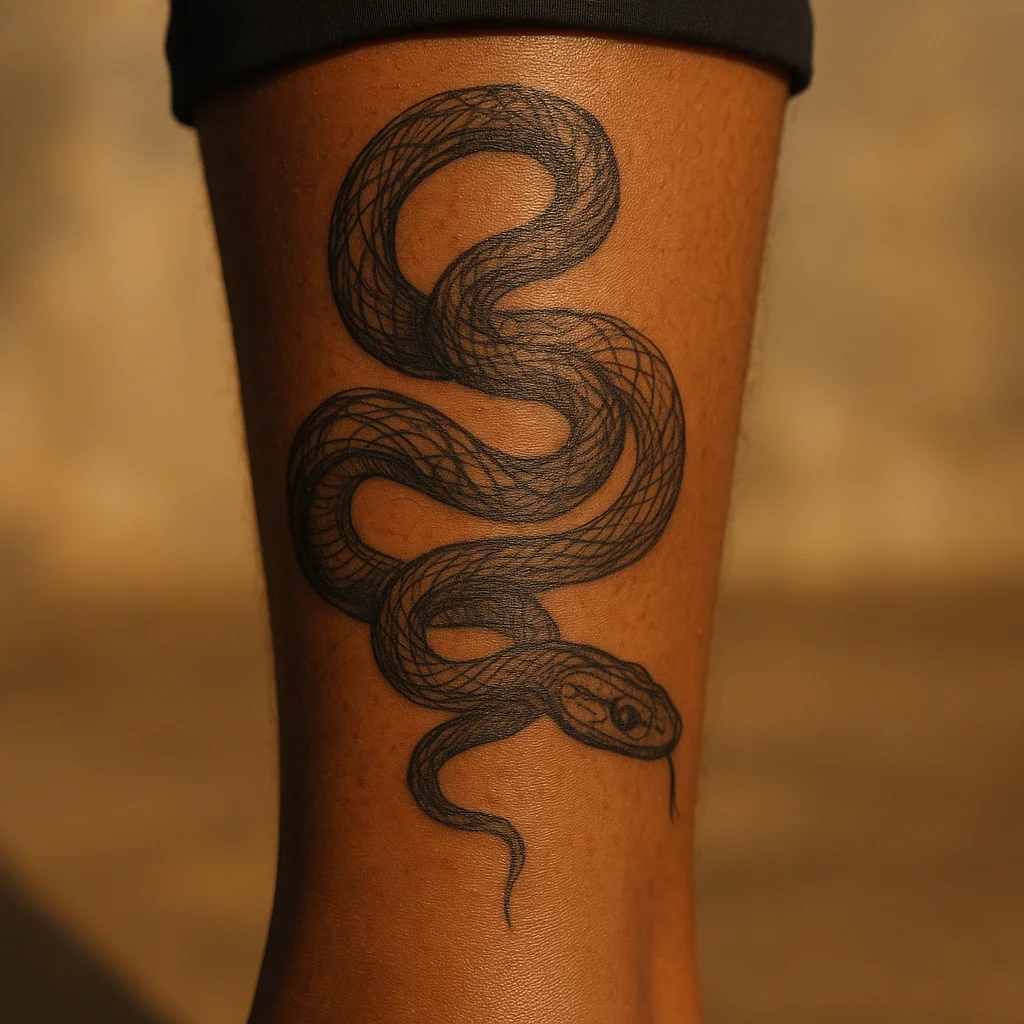
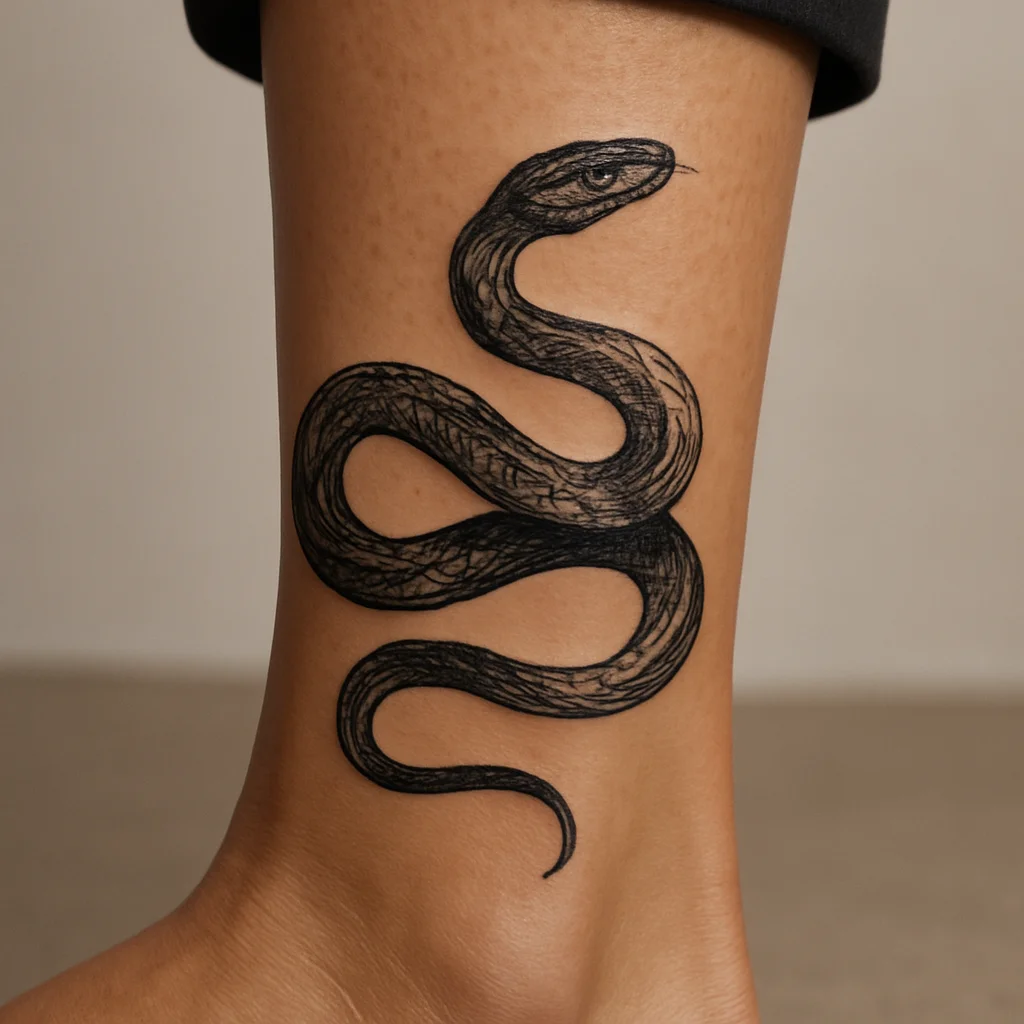
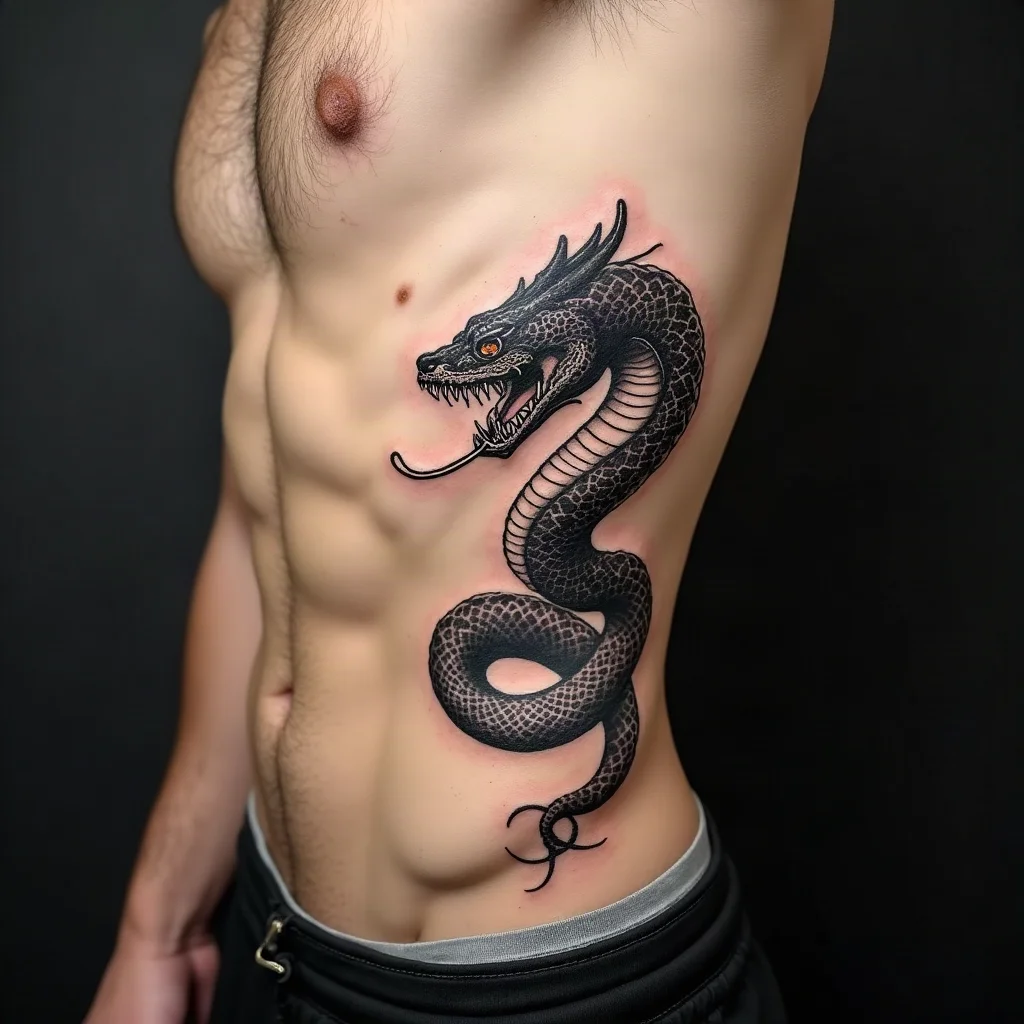
10. Snake coiled with its head over the ankle bone
Body climbing the outer calf in two loose loops, head turning outward just above the ankle with the tongue out. The coil naturally follows the taper, and the negative space between loops keeps the leg from looking heavy. Pairs well with a single peony or a dagger tucked in a gap. If you want more on the symbolism, our snake tattoo guide goes deeper.
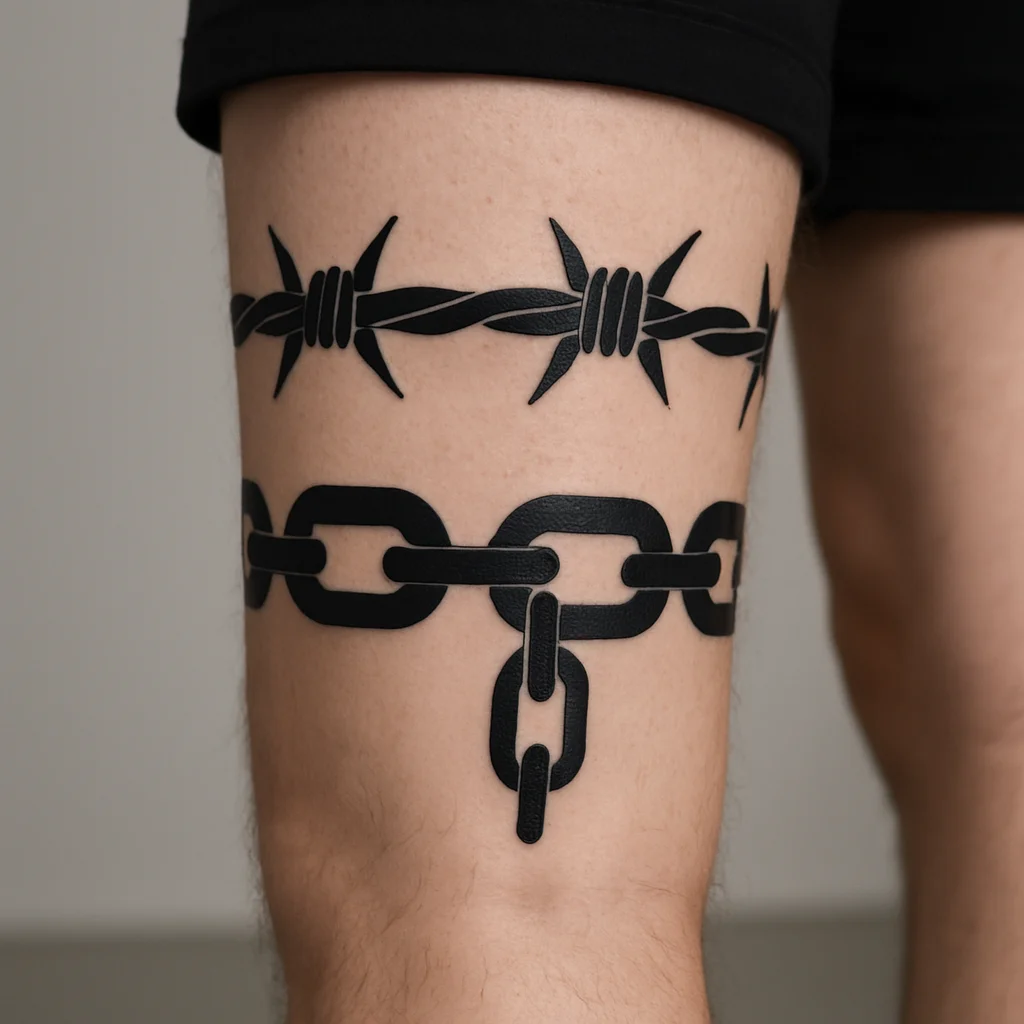
11. Barbed wire and chain band, doubled
Two bands, one just below the knee and one mid-calf, with a few links rendered as broken or hanging. Bands are the fastest way to get a wrap that reads instantly. Ask for the links to change size as they travel around the leg, otherwise the perspective looks flat on the inner side.
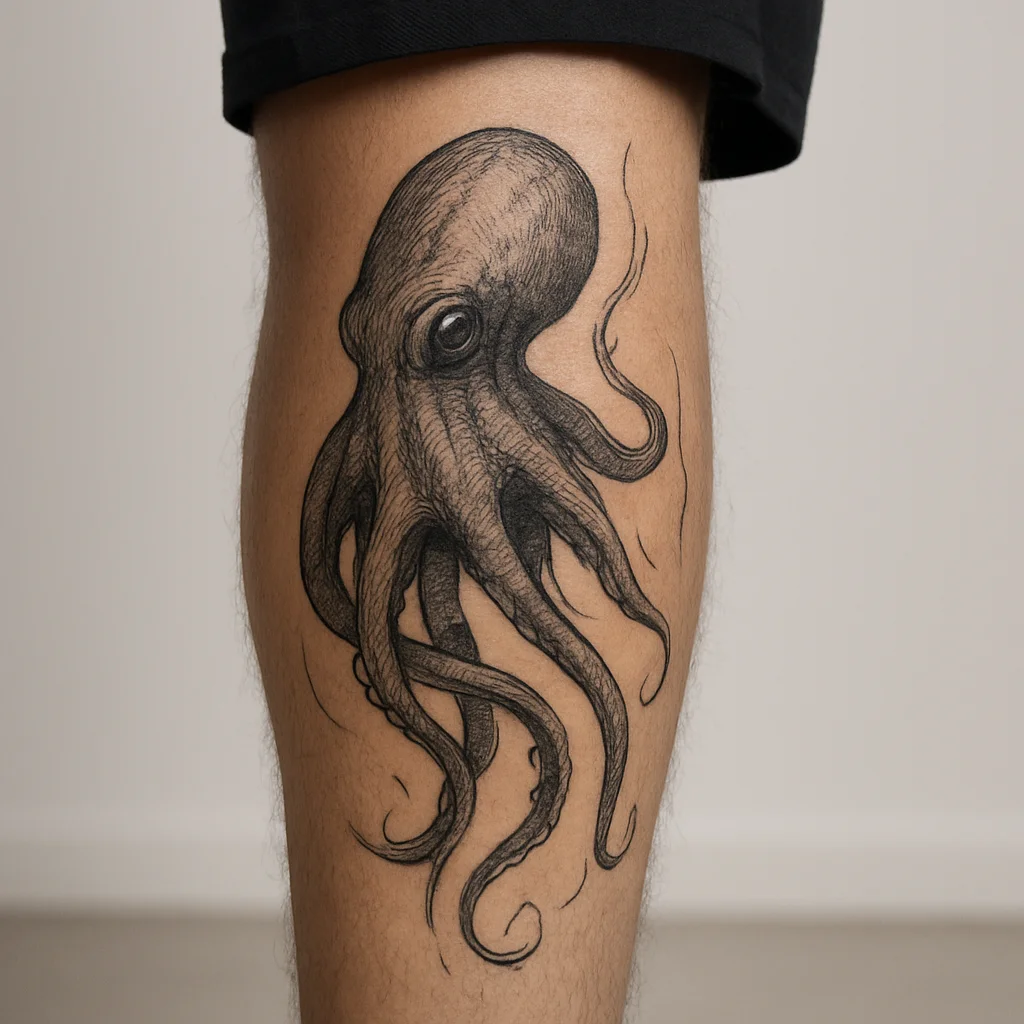
12. Octopus with tentacles reaching around the shin
Mantle sitting high on the outer swell, arms curling forward so the suckers appear on the front of the leg. It is one of the few subjects that genuinely improves from being wrapped. Keep at least two tentacles thick and dark so the piece has structure.
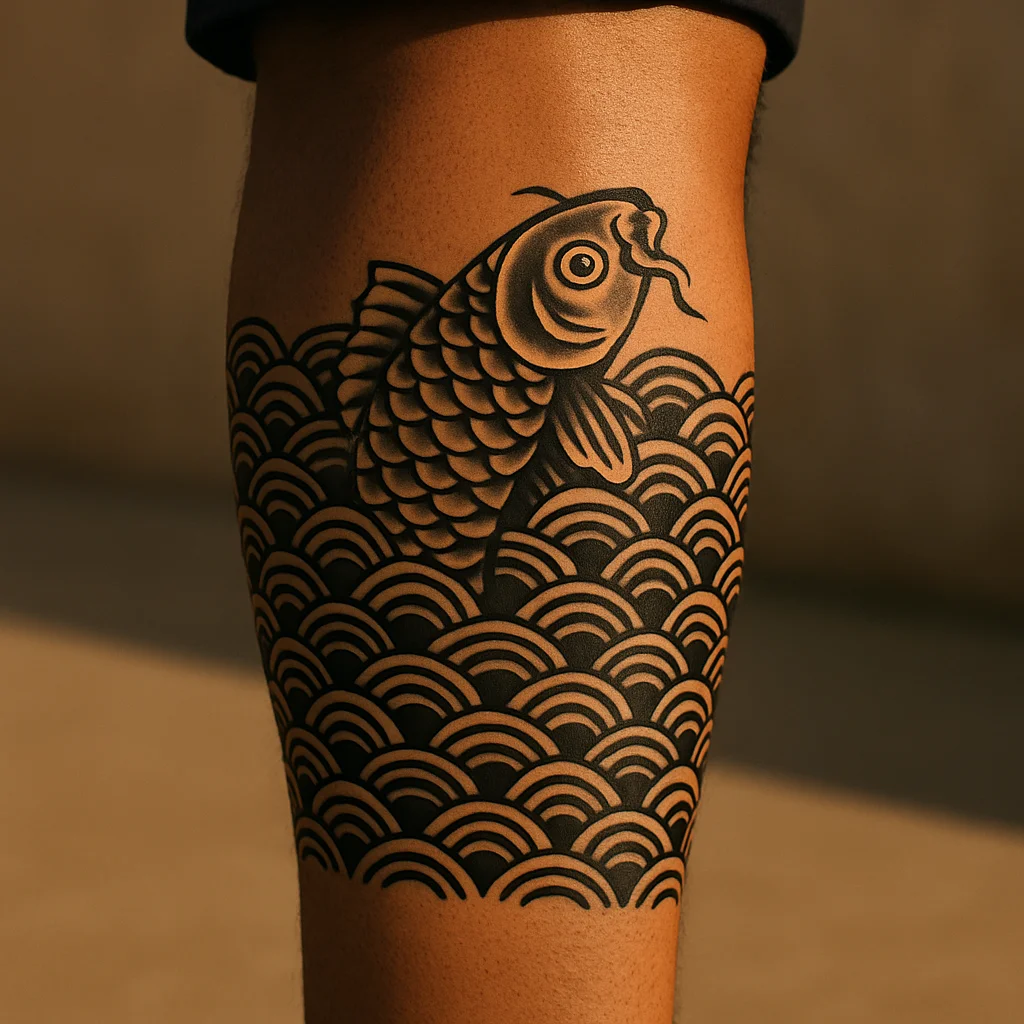
13. Traditional Japanese wave sleeve for the lower leg
Stacked seigaiha waves with white-grey crests circling the whole calf, sometimes with a single koi or crane breaking the surface. Repetition means the design tolerates the awkward inner-leg angles better than a single image would. Very forgiving as it ages.
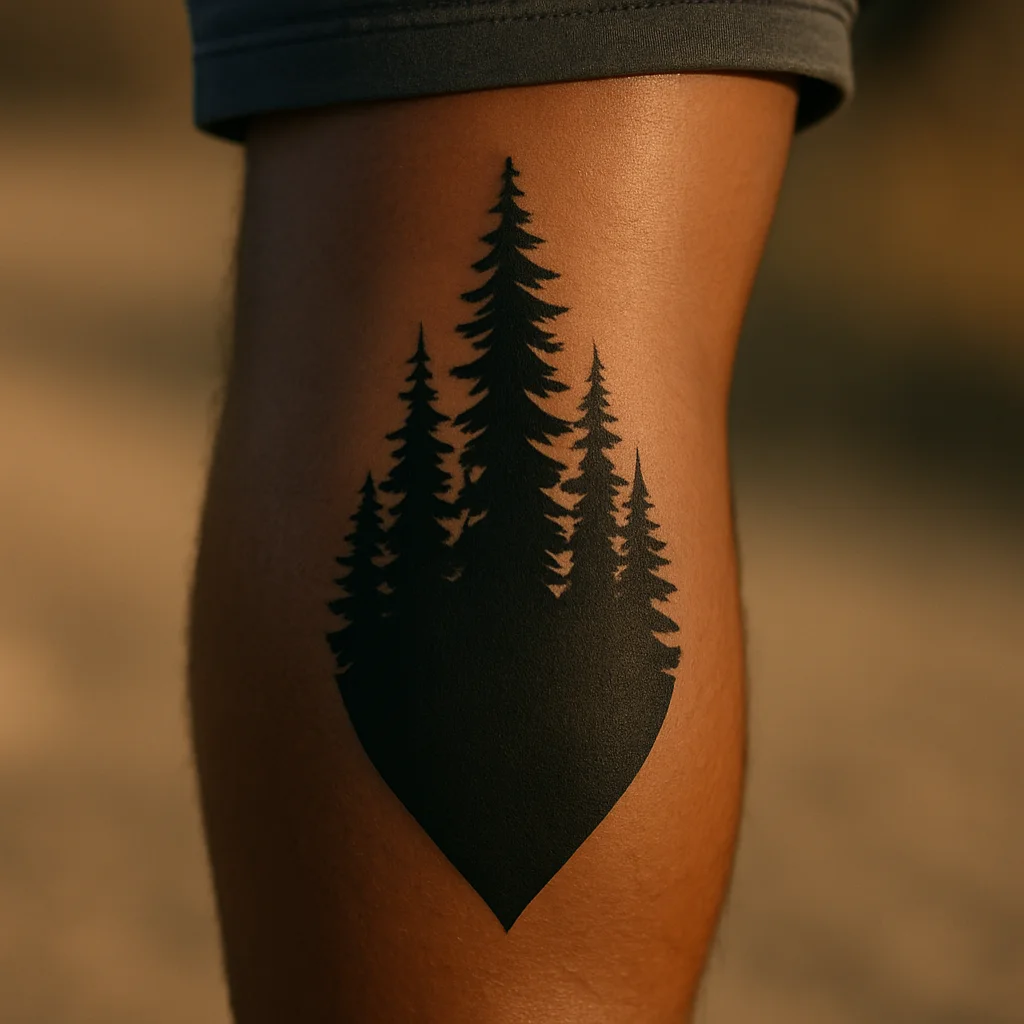
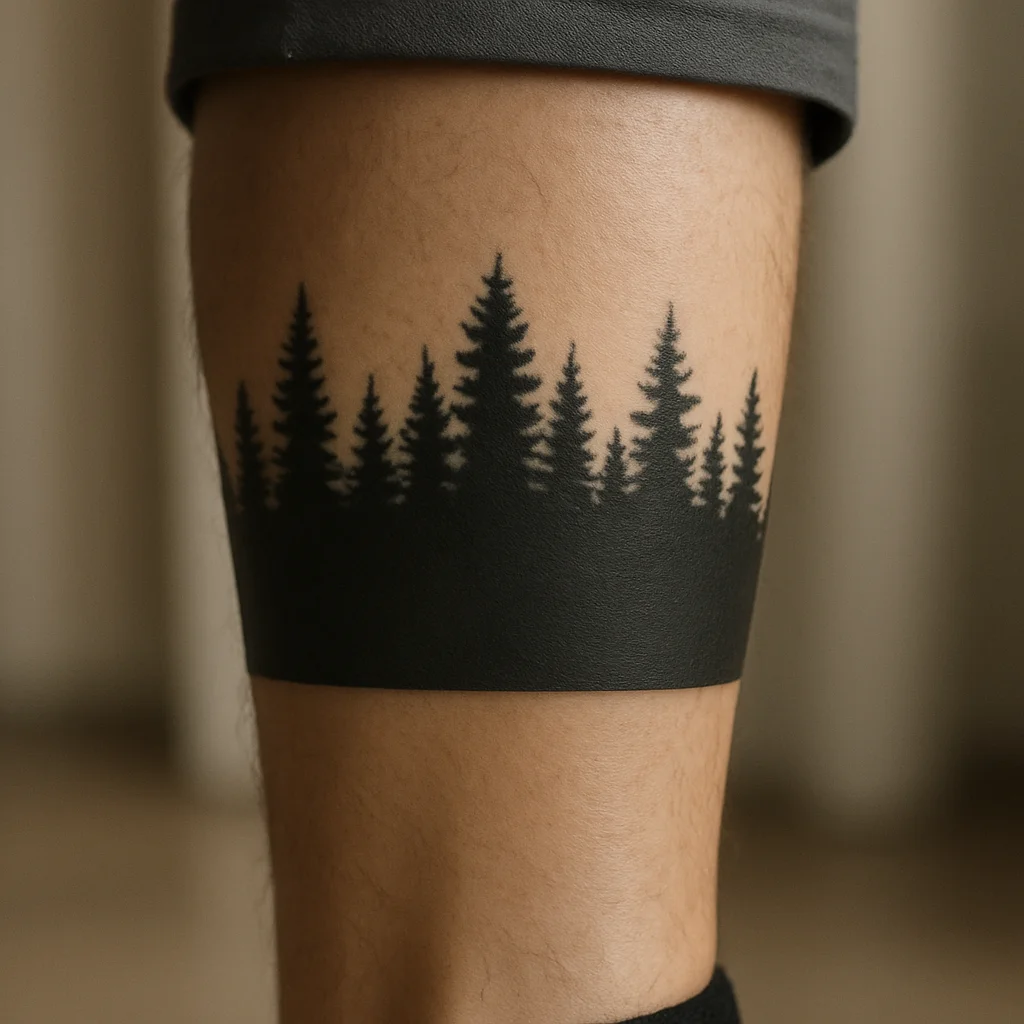
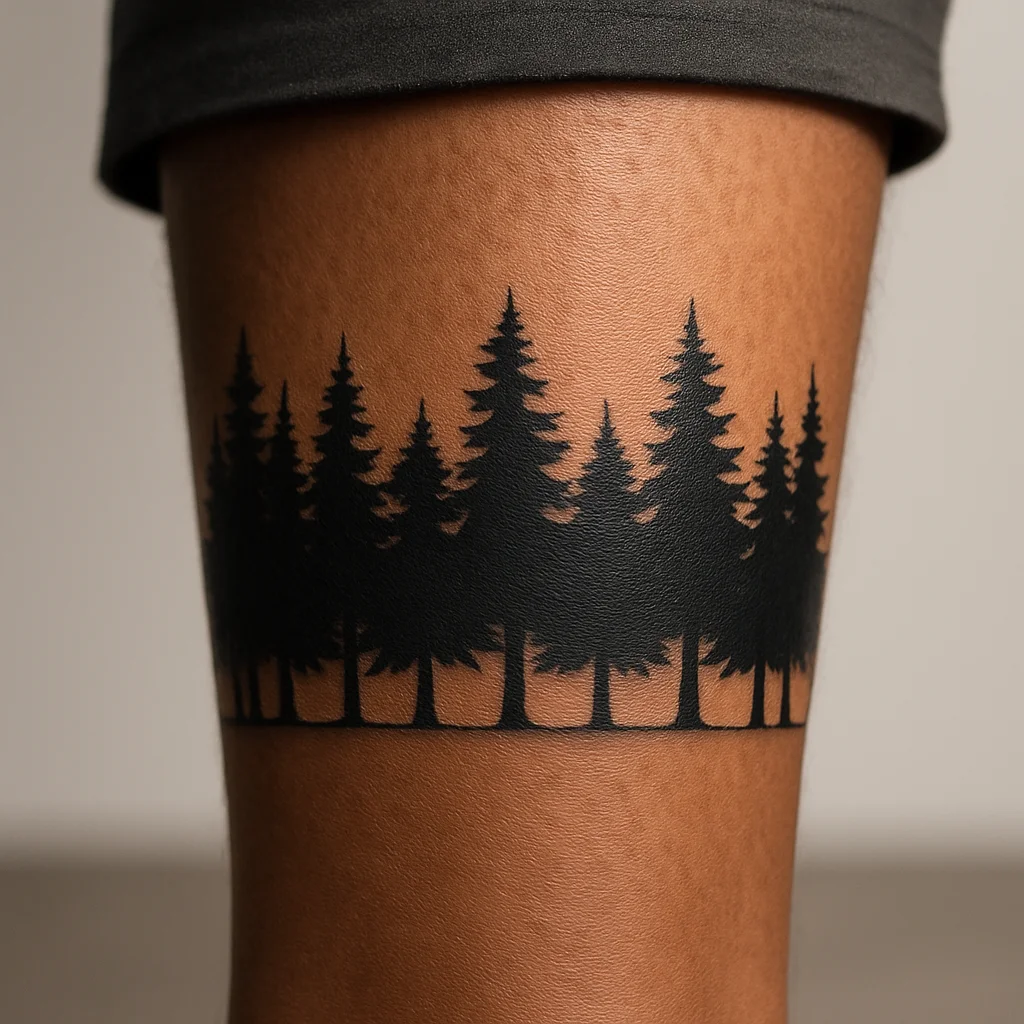
14. Blackwork treeline band
A ring of fir silhouettes around the widest part of the calf, trunks bleeding into a solid black base. Clean, modern, and quicker than most wraps — often a single long session. Looks especially sharp on a shaved calf.
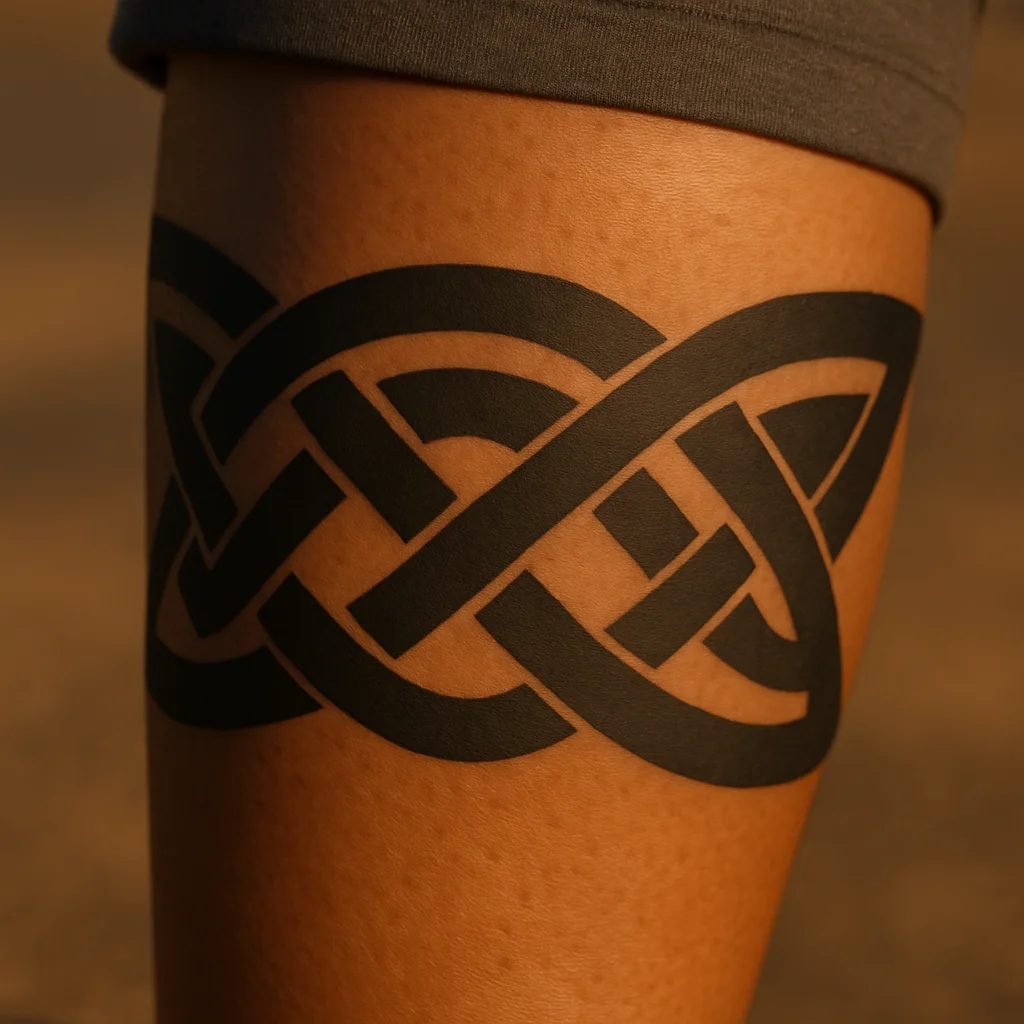
15. Celtic knotwork band with no visible start
An interlaced ribbon that loops the leg with no obvious beginning or end. The knot has to be plotted around your actual leg circumference, so measure and stencil in person; never trust a flat drawing. Bold, high-contrast, and one of the best-ageing traditional patterns going.
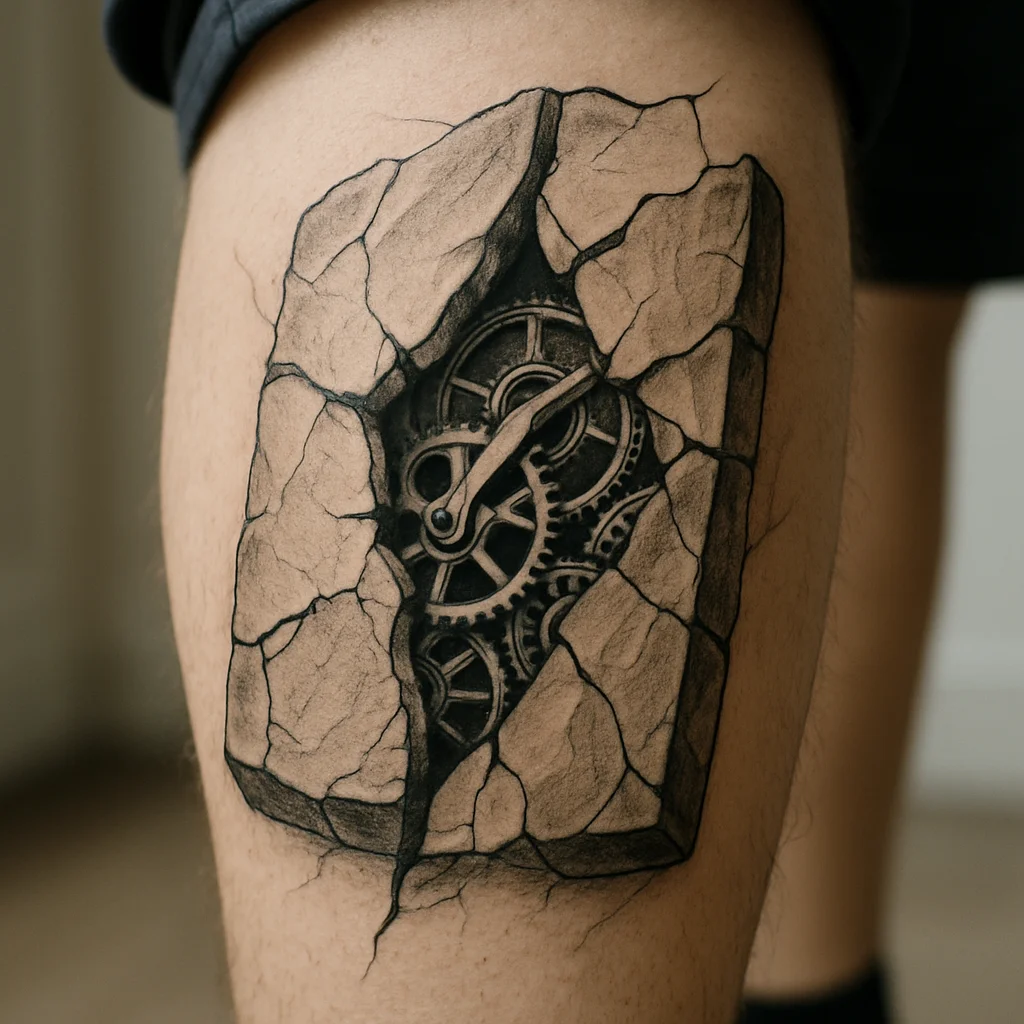
16. Cracked stone panel revealing something underneath
A slab of carved stone wrapping the outer half of the calf, split open to show clockwork, roots or bone inside. The tear line should follow the muscle edge, not cut straight across it. Needs a strong illustrator and a decent budget, but it is a real conversation piece.
Centre line: vertical columns down the back of the leg
Standing behind you, the calf is a tall rectangle. Designs that use the full height — knee crease to Achilles — look intentional in a way that a floating mid-calf image never quite does. Plan on 20–30 cm of vertical space.
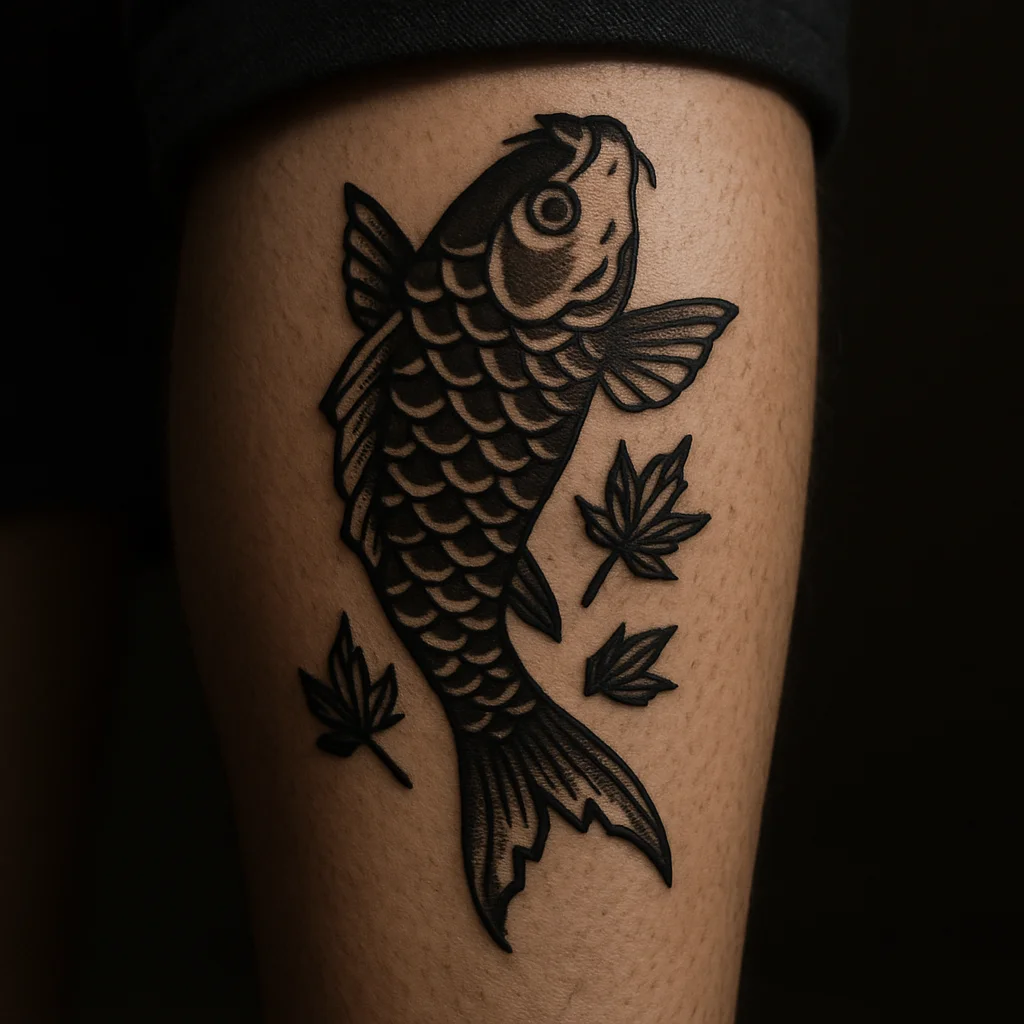
17. Koi swimming upstream with maple leaves
Head pointed up toward the knee, body flexed in an S, leaves drifting down past the tail. The upward direction is the whole meaning of the design, so do not let anyone talk you into flipping it for composition. Colour koi on a calf hold up well; the muscle sees less sun than a forearm.
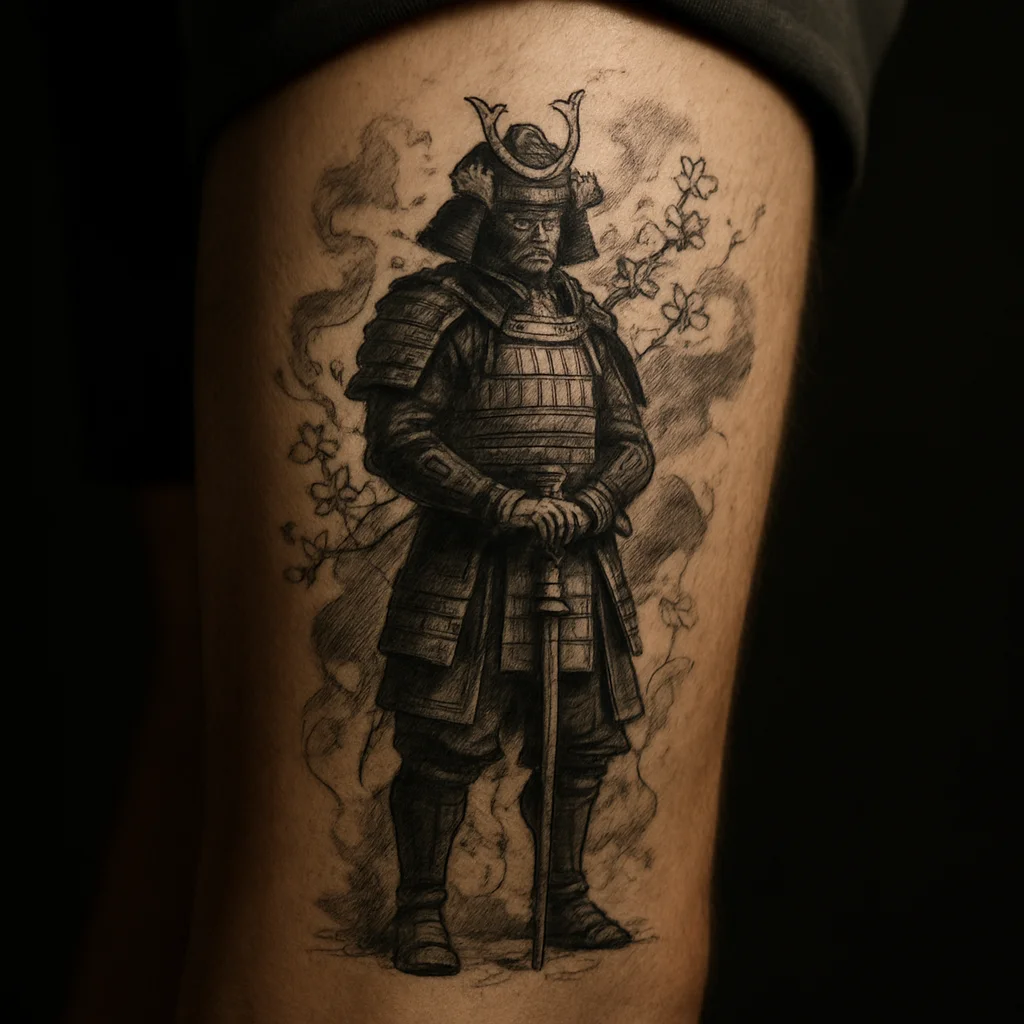
18. Standing samurai, full figure
Armoured figure from helmet to sandals, filling the length of the calf, usually with cherry blossom or smoke breaking up the background. The proportions only work if the artist stencils on your standing leg. Multi-session job and one of the most impressive things you can put below the knee.
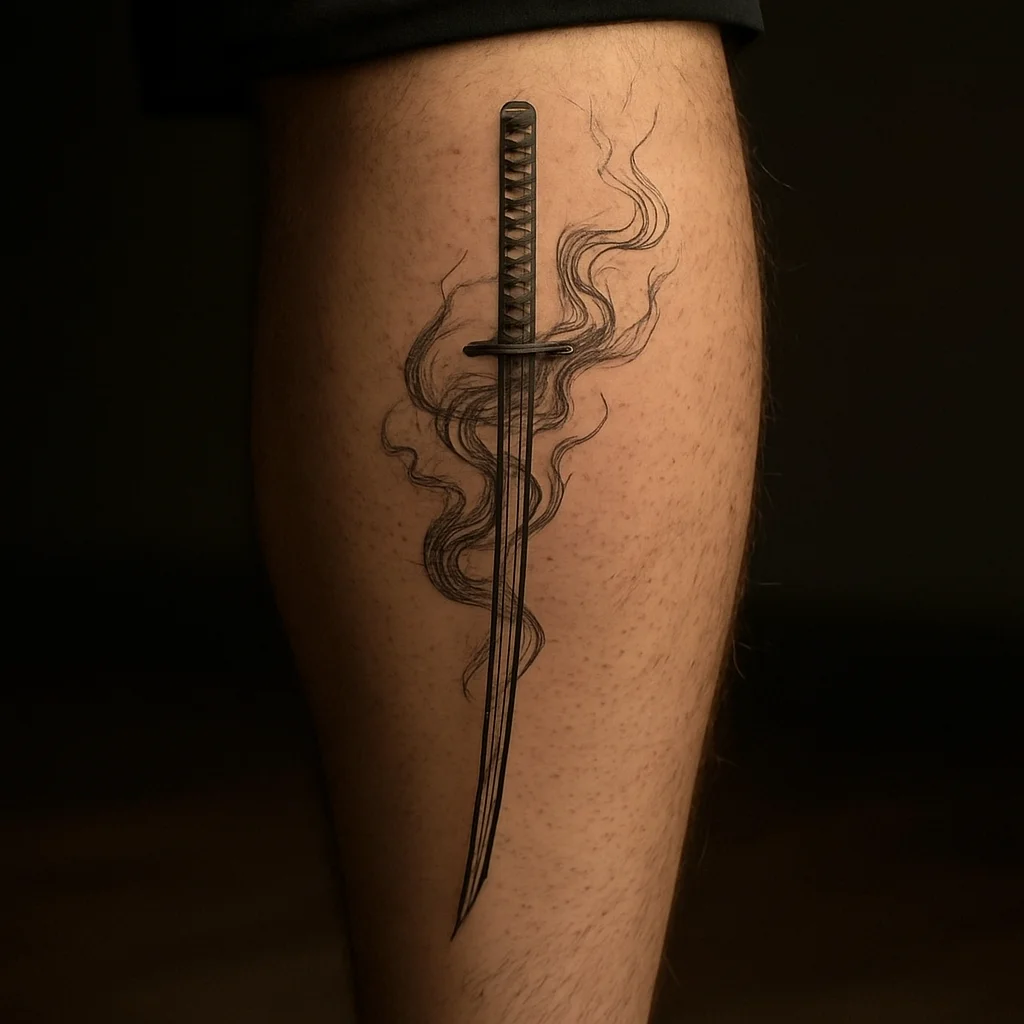
19. Katana down the centre with smoke
Blade tip at the Achilles, handle wrapped high near the knee crease, thin smoke curling off the steel to soften the straight line. Narrow enough that it leaves both sides of the calf free for future work. A great spine for a leg sleeve you build over years.
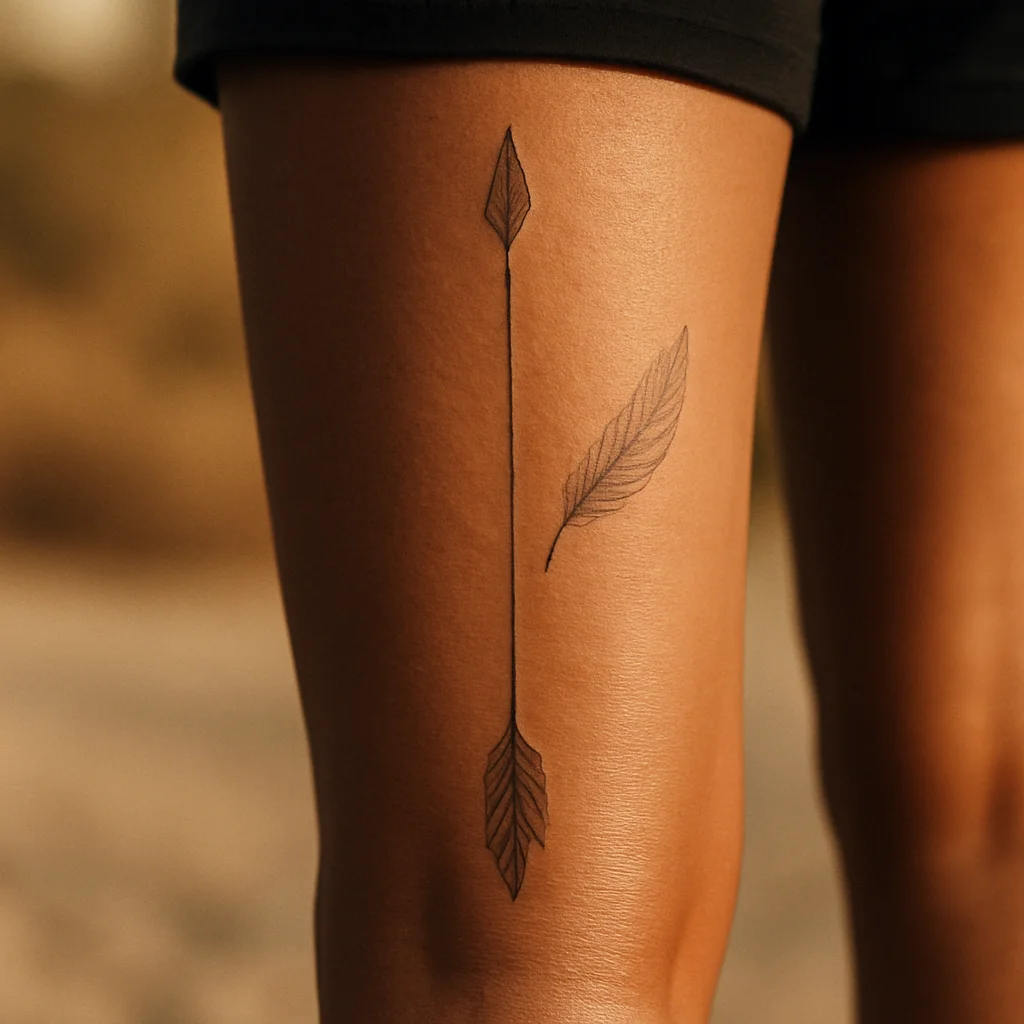
20. Arrow and falling feather
A single long arrow running the centre line with a feather breaking loose halfway down and drifting toward the inner calf. Simple, cheap by leg-piece standards, and it flatters a muscular calf by emphasising the vertical. Keep the fletching detailed and the shaft plain.
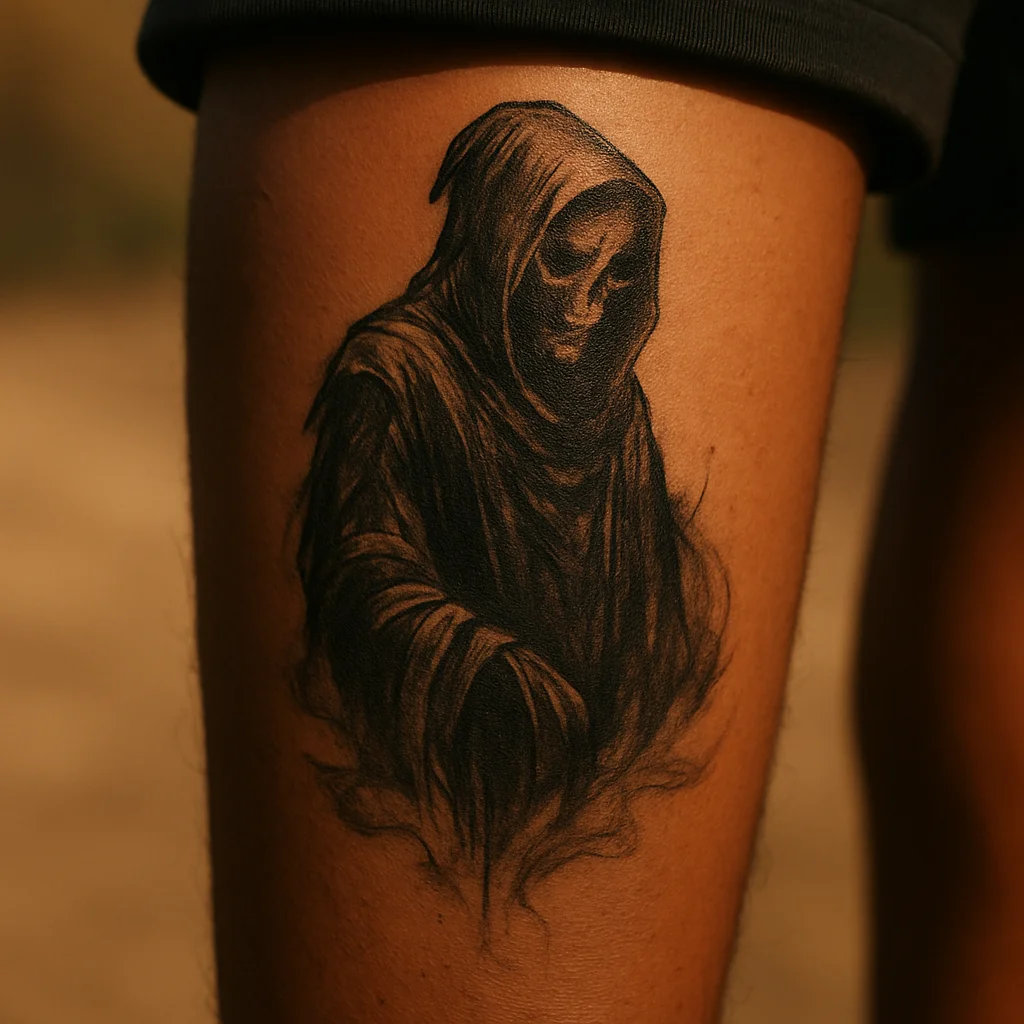
21. Illustrative reaper in a hooded robe
Figure hunched slightly so the shoulders sit at the widest part of the muscle and the robe tapers into the ankle. Heavy blacks in the hood, negative space skin for the fog. Reads brilliantly at speed because the silhouette does the talking.
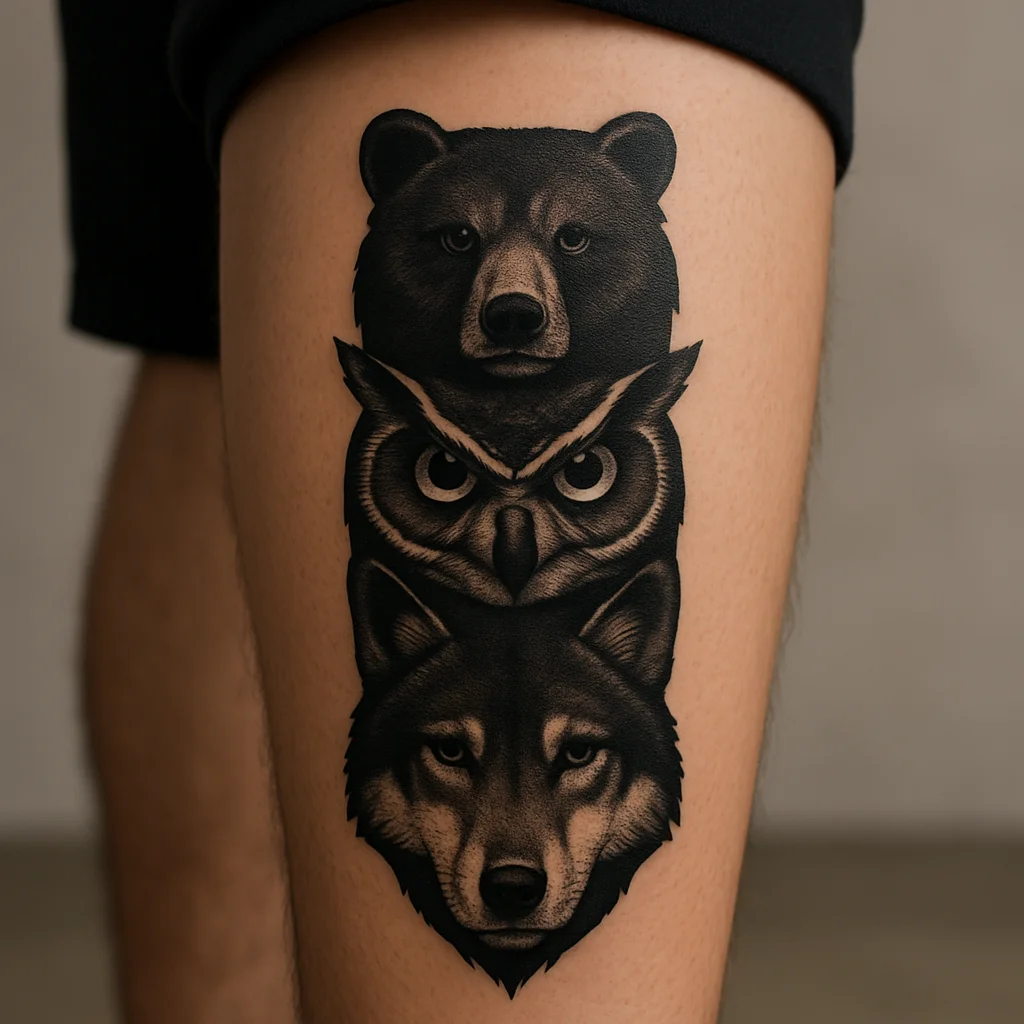
22. Totem stack of three animal heads
Bear, owl and wolf stacked vertically, each in a different rendering weight so they do not blur together. Stacked designs are ideal for the calf because the leg is taller than it is wide. Pick animals with different silhouettes — three canids will read as one grey lump.
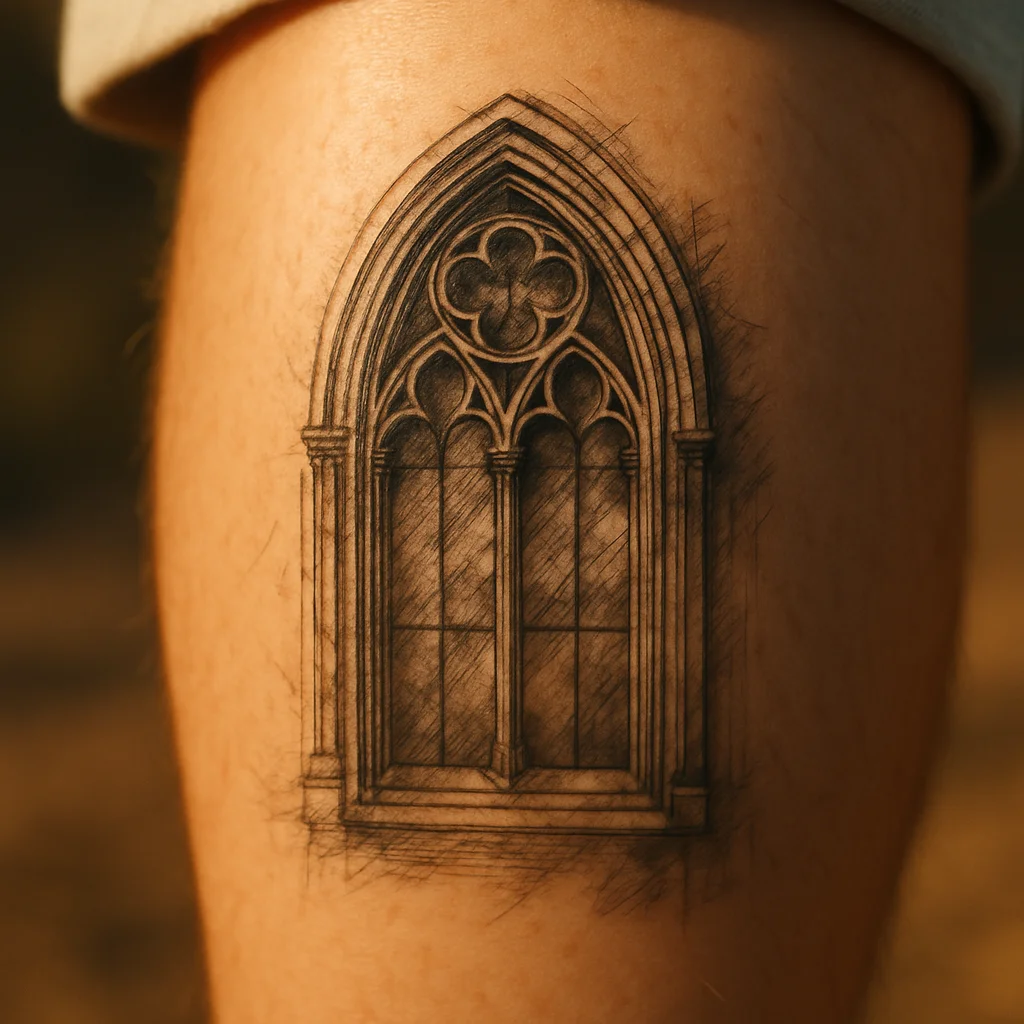
23. Gothic window column
An arched cathedral window with tracery, rendered in fine black line and grey wash, running the full height of the calf. It suits the leg's natural rectangle better than almost any other architectural subject. Ask for the stonework detail to be spaced wider than it looks on paper.
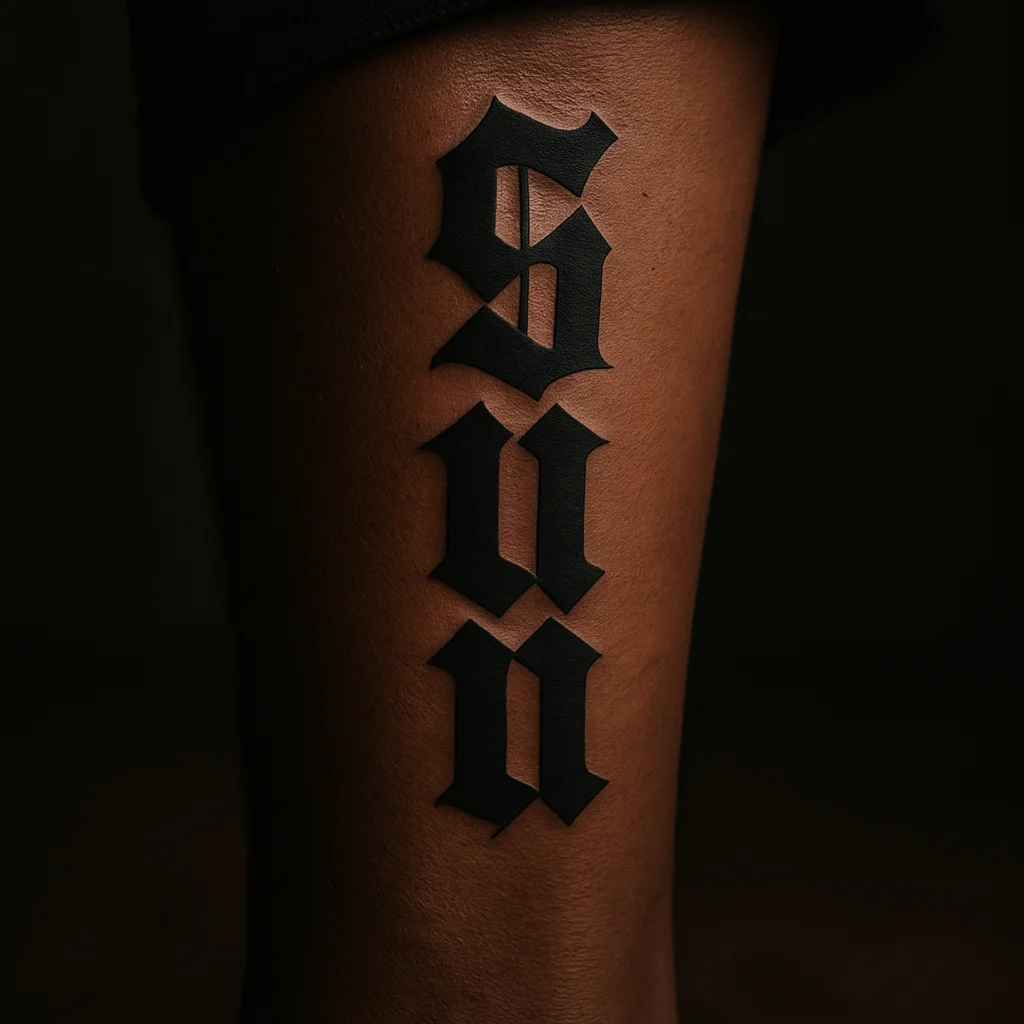
24. Vertical script running the tendon line
A short phrase or family name set in a narrow blackletter or fine serif, reading downward. Keep it to three or four words; long quotes on a calf turn into a grey stripe. Have the artist set it slightly off-centre so it follows the tendon rather than cutting the muscle in half.
Low and small: Achilles, ankle and back of the knee
Not everyone wants a leg piece you can see from thirty metres. The bottom of the calf takes small work well, hides under a sock, and gives you a way to test how your skin handles leg tattoos before committing to a wrap. Fair warning: everything down here hurts more than the muscle belly.
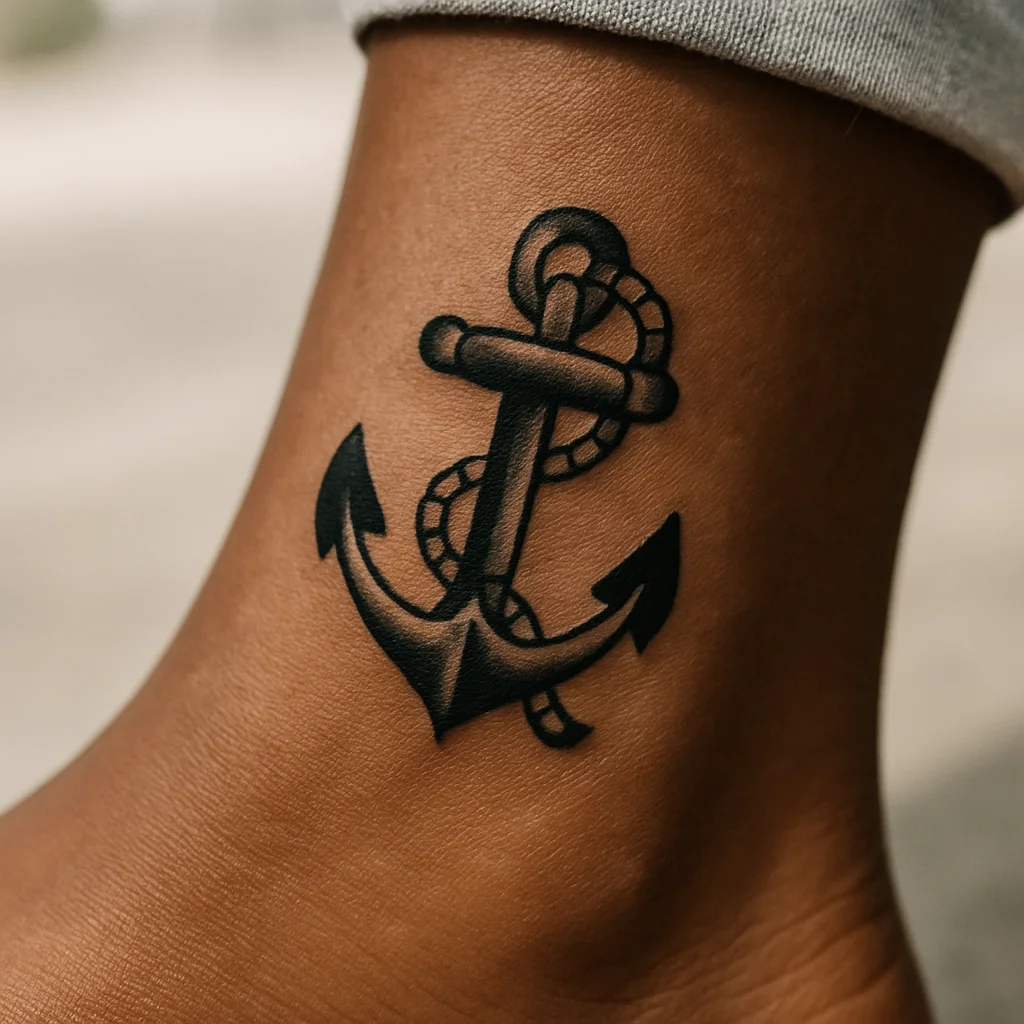
25. Small traditional anchor above the ankle bone
Palm-height, heavy outline, a bit of rope curling around the stock. It is a classic sailor placement and the bold line survives the thinner skin down there. Give it 6–8 cm; anchors shrunk smaller lose the crossbar.
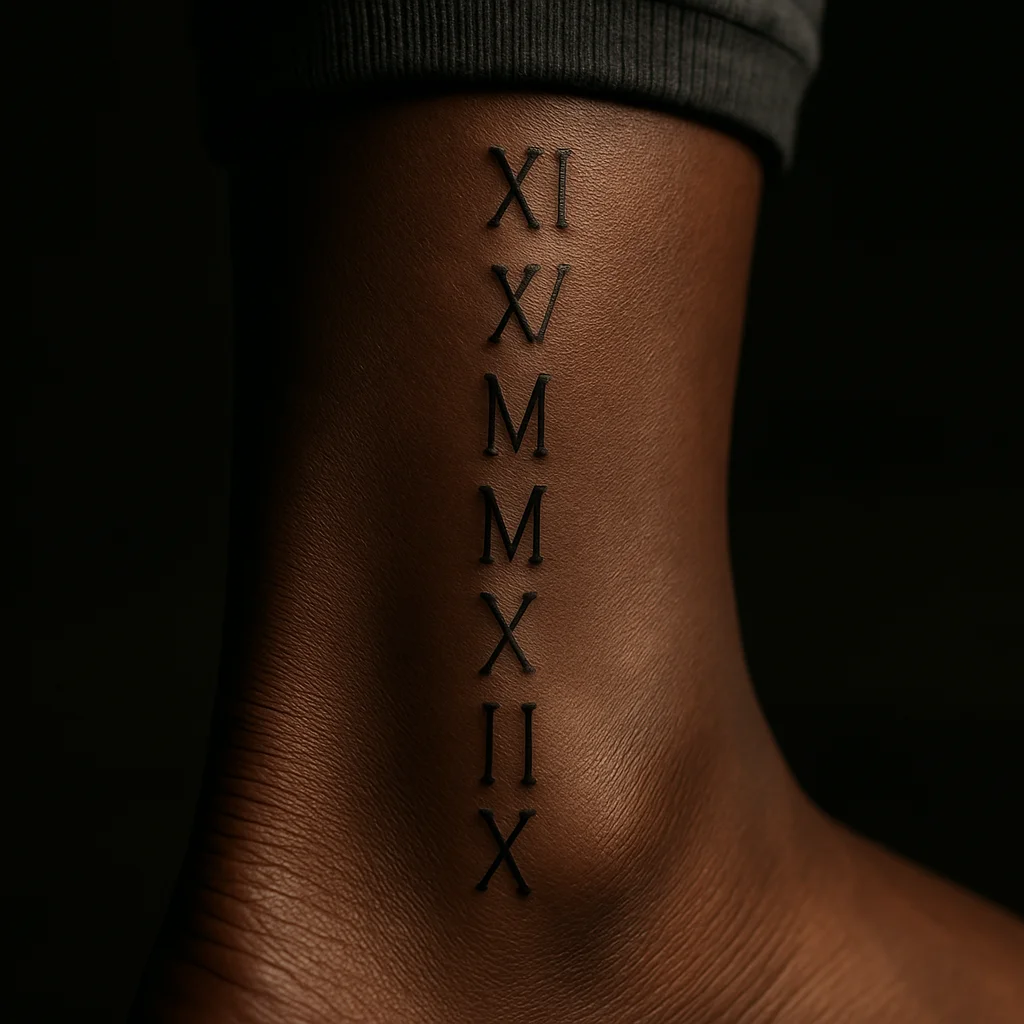
26. Roman numerals along the Achilles
A date set vertically in a narrow serif, running the length of the tendon. Discreet, easy to cover, and quick — often a shop-minimum job. Skip anything under about 5 mm tall per character because tendon skin moves constantly.
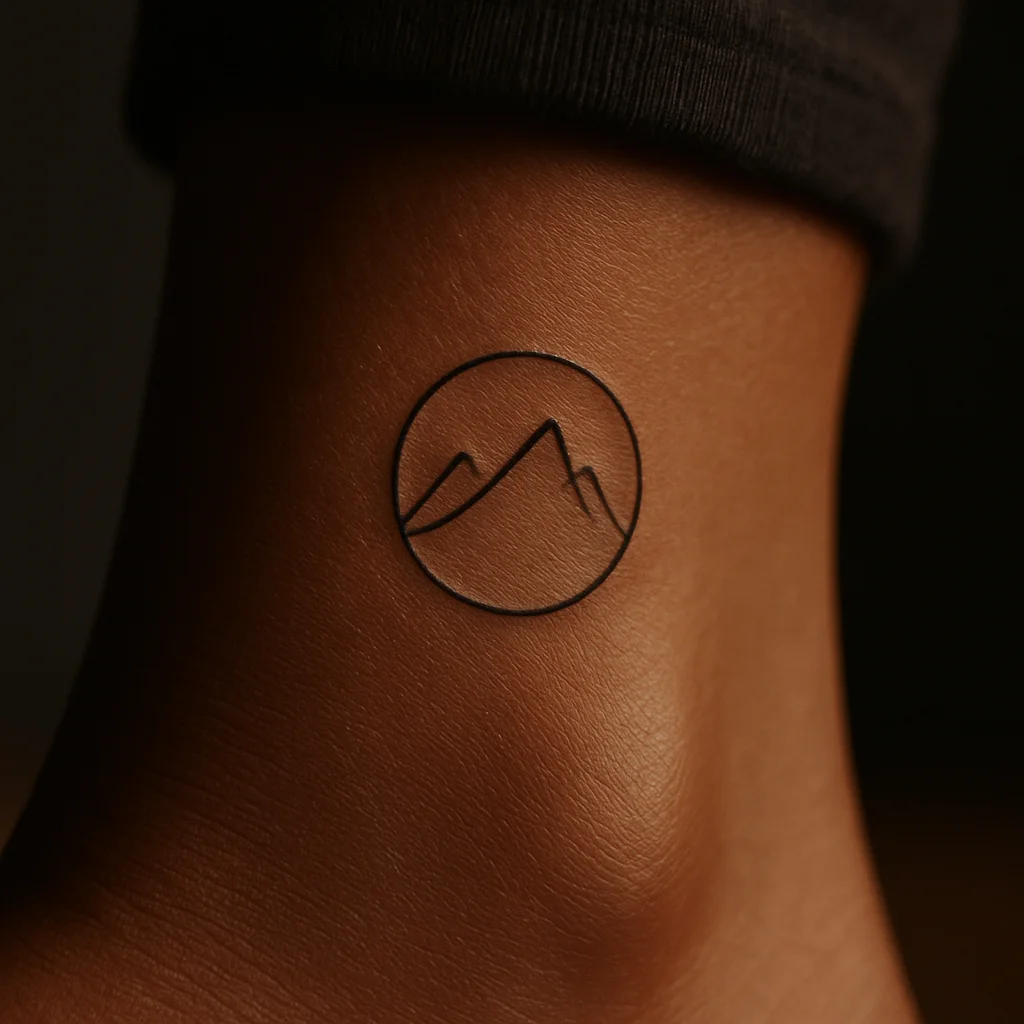
27. Single-line mountain outline on the outer ankle
One continuous stroke rising into two peaks, no shading, about the size of a bottle cap. Perfect first tattoo, and it sits well just above the ankle bone where trousers half-cover it. Have the artist thicken the line slightly more than they would on a forearm.
28. Moth behind the knee
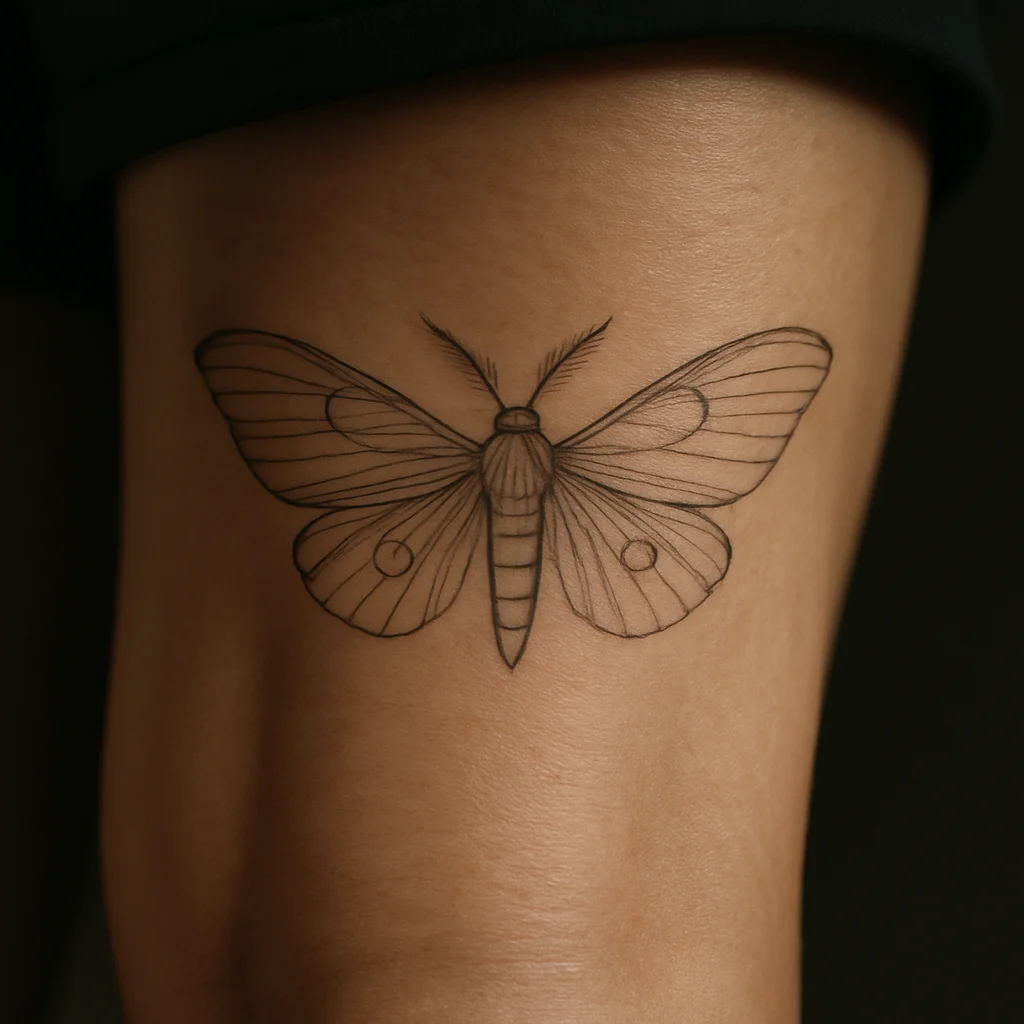
Wings spread across the crease, body aligned with the leg's centre. Beautiful placement, genuinely one of the sharper spots on the body, and it creases every time you sit — expect patchier healing and possible touch-ups. Worth it if you want something few people have.
29. Paper plane with a dotted flight path
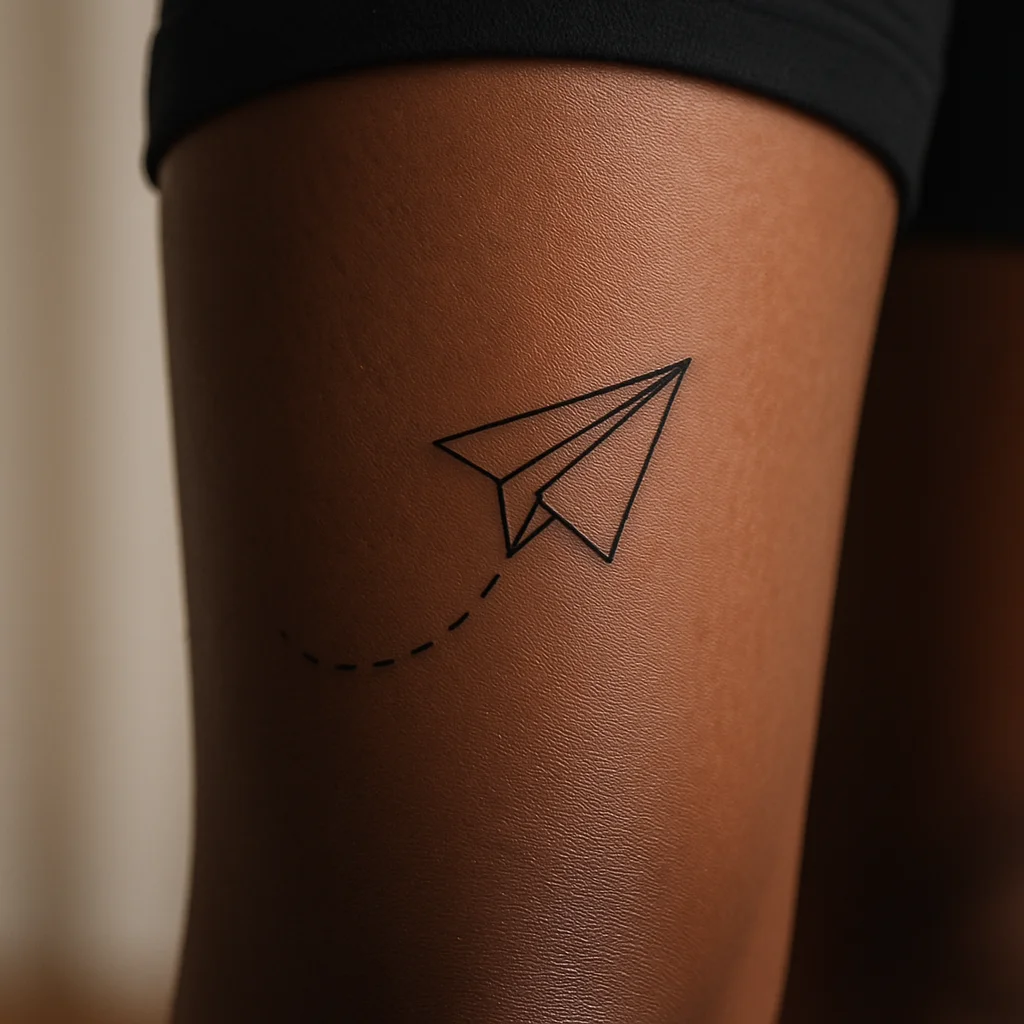
Small folded plane on the lower outer calf with a dashed arc trailing up toward the muscle. Light, cheap and easy to add to later. Ask for the dashes slightly longer than the design sketch shows; short dashes merge into a solid line over years.
30. Minimal wave line at the Achilles
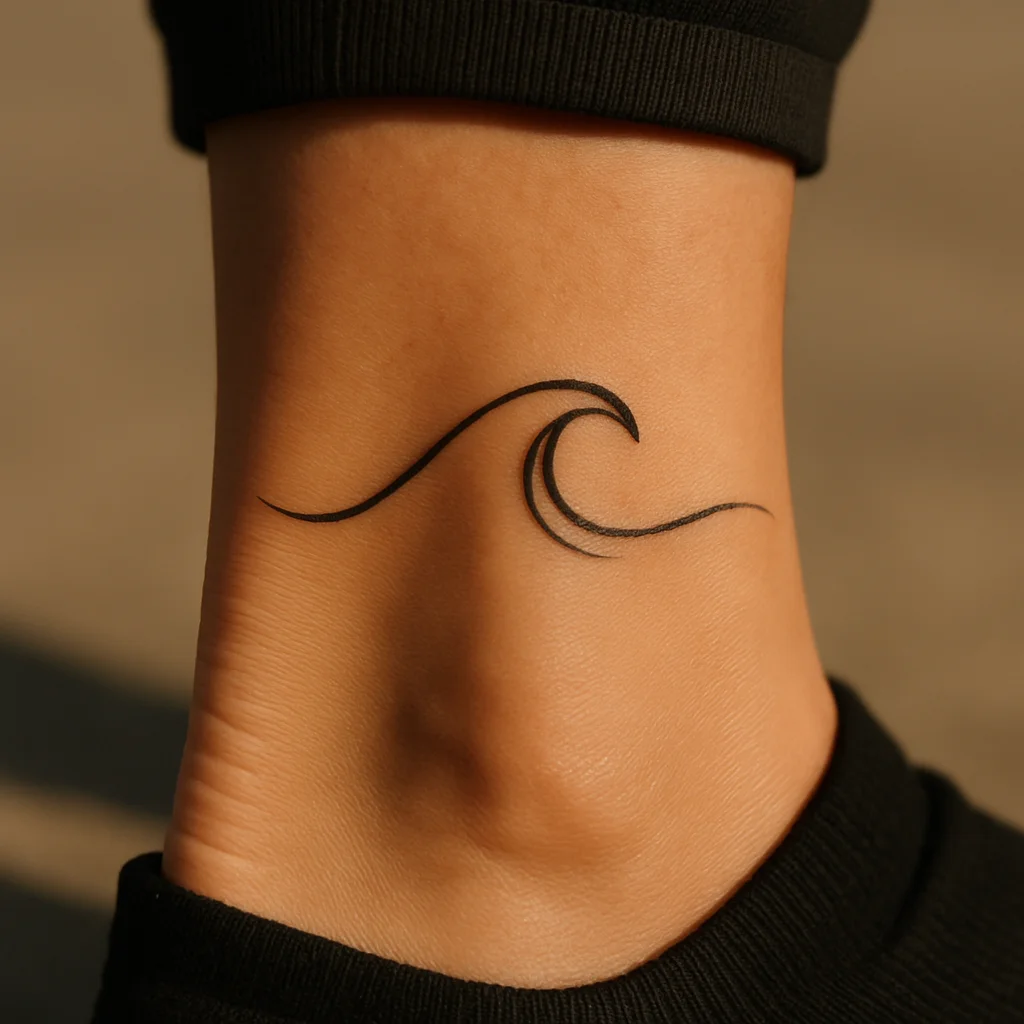
A single flowing wave stroke, 4–6 cm, wrapping slightly around the tendon. It suits swimmers and surfers who want something that peeks out over a trainer. One of the fastest tattoos you can get, and it hurts for about four minutes.
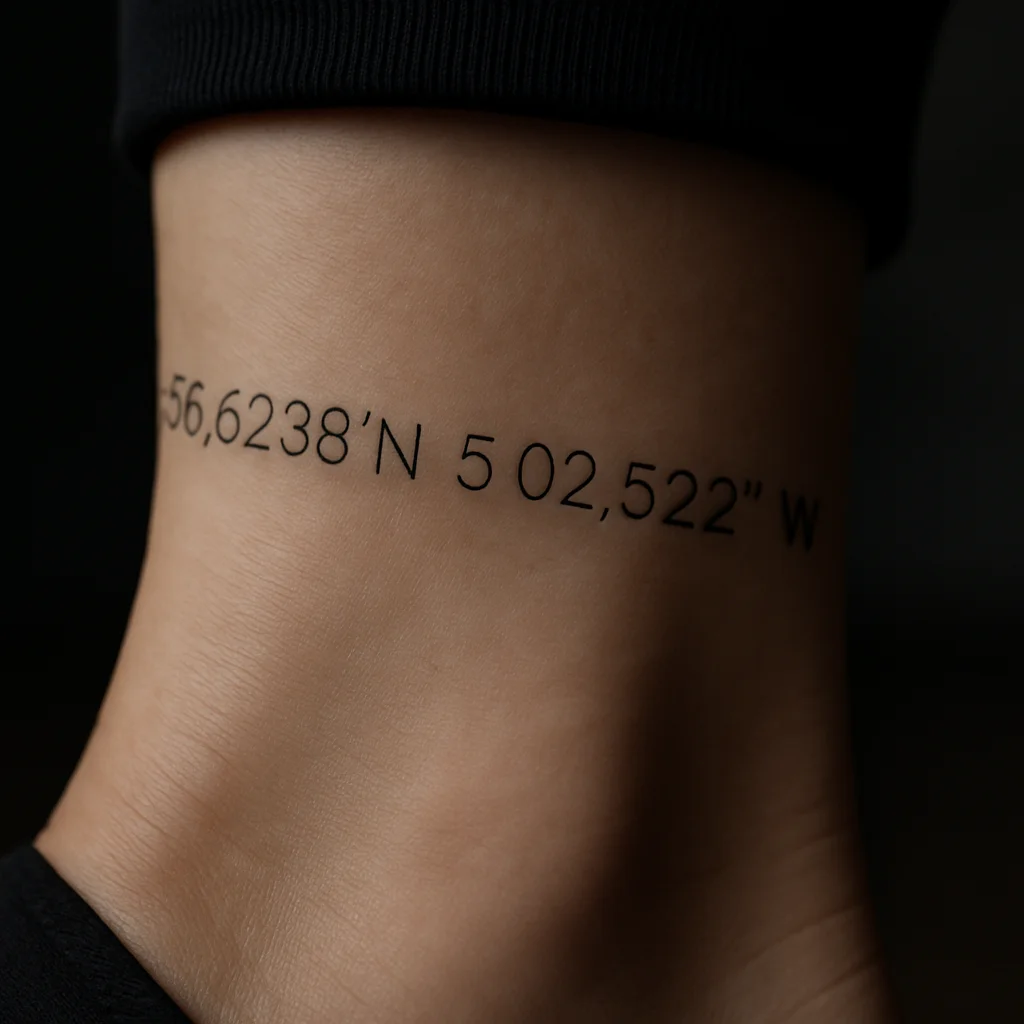
31. Coordinates band above the ankle
Numbers set in a small clean sans-serif, curving around the leg like a bracelet. Choose a place that will still matter in twenty years, and print the coordinates yourself to check them — transcription errors are the most common regret in this style.
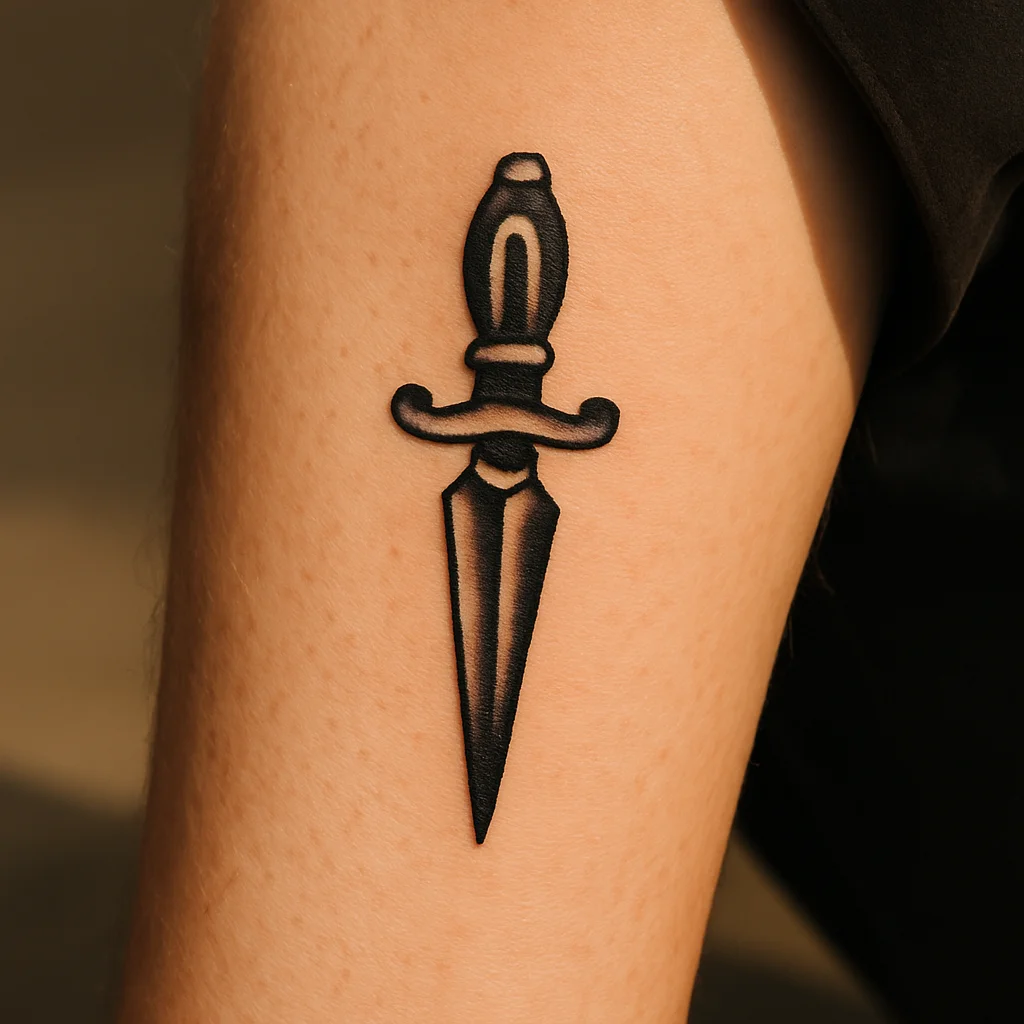
32. Small dagger on the inner lower calf
Point down, hilt up, about 8 cm, tucked on the softer inner side where only you usually see it. The inner calf is more tender than the outer face but heals fast. A good spot for something personal you do not want to explain at work.
Pain, sitting time and what a calf piece really costs
Calves are middle of the road for pain, which surprises people who expect leg work to be brutal. The muscle belly — the fleshy outer and back part where most of these designs sit — is one of the more tolerable spots on the body, comparable to the outer thigh. Shading over it is a dull burn rather than a sharp one, and most guys manage two to three hours without much drama.
Where it turns is at the edges. The shin bone side, the Achilles, the ankle bones and the soft hollow behind the knee are all thin skin over bone, tendon or nerve, and they bite. A full wrap will include some of that, so budget your mental energy for the last hour rather than the first. Vibration also travels through the leg more than the arm, which some people find more unpleasant than the needle itself.
On sitting: you will be face down or side-lying for most of it, sometimes with your foot propped. It is more comfortable than it sounds, but your leg will go numb, so ask to reposition every 45 minutes or so. Eat properly beforehand — leg sessions tend to run long.
Cost depends on your city and your artist's rate far more than on the design. As a rough map: a small ankle or Achilles piece usually lands at the shop minimum, a palm-sized outer calf design runs the equivalent of one to two hours, a detailed centre-line column typically fills a full day session, and a full colour wrap is a multi-session project that climbs into four figures in most markets. Hourly rates for a solid mid-level artist commonly sit in the mid hundreds per session, with named specialists charging considerably more and booking months ahead. For a broader breakdown, see our guide to what tattoos actually cost.
Healing a leg piece without wrecking it
Legs heal differently from arms for one simple reason: gravity. Fluid pools in a fresh calf tattoo, and it is normal for your ankle and foot to puff up for two or three days after a long session. Elevate the leg when you are sitting, walk gently rather than not at all, and do not panic if the swelling is worse in the evening than the morning.
The practical rules for the first two weeks:
- Keep it uncovered where you can. Tight jeans and long socks drag across a healing calf all day. Loose shorts or wide trousers for the first week save you a lot of scabbing.
- Skip leg day and long runs. Repeated flexing of the gastrocnemius pulls at fresh lines, and gym equipment is filthy. Give it at least a week, longer for a wrap.
- No pools, sea or baths until it is fully sealed — typically two to three weeks. Showers are fine.
- Thin layers of moisturiser only. A heavy greasy coat on a leg that is already sweating under clothing is how people get irritation bumps.
- Shave carefully afterwards. If you shave your legs, wait until all peeling has finished, then go with the grain over the tattoo.
Long term, sun is the enemy. Calves catch a surprising amount of it in shorts and on bikes, and unprotected black shading fades to a soft grey faster than most people expect. Sunscreen on the finished piece from month two onward, every time it is exposed, will keep it looking sharp far longer than any aftercare balm. Our 30-day aftercare walkthrough covers the timeline in more detail.
Frequently asked questions
Do calf tattoos hurt more than arm tattoos?
On the muscle belly, no — the fleshy outer and back of the calf is comparable to the outer thigh and easier than the inner bicep for most people. It gets significantly worse near the shin bone, the Achilles, the ankle bones and the hollow behind the knee, where the skin is thin over bone and tendon. A full wrap includes those areas, so expect the last stretch of the session to be the hardest part.
How long does a full calf tattoo take?
A palm-sized single image on the outer calf is usually one to two hours. A detailed vertical column such as a samurai or koi typically takes a full day session, sometimes two. A full 360-degree wrap in colour is a multi-session project, commonly two to four sittings spaced a few weeks apart to let each area heal.
Will a calf tattoo stretch if I build muscle?
Moderate muscle gain will not distort a well-placed calf tattoo in any noticeable way — the skin adapts gradually. Rapid, extreme changes in leg size or significant weight swings can soften fine detail over time. If you are actively bulking or cutting hard, it is worth telling your artist so they scale line weight accordingly.
Can I run or go to the gym after getting a calf tattoo?
Give it at least a week, and longer for a wrap. Repeated flexing of the calf muscle stresses fresh linework, sweat irritates healing skin, and gym surfaces carry bacteria you do not want on an open tattoo. Light walking is fine and actually helps with the swelling.
Is the calf a good spot for a first tattoo?
It is one of the best. The pain is manageable, the area heals reliably, it is easy to cover for work, and it takes a decent-sized design without you having to commit to a visible arm or hand piece. Start with something on the outer swell and you leave yourself room to expand into a full leg piece later.
The conversation
No comments yet. Got a thought about these designs? Start us off.
Want to weigh in? Join the community to comment, save designs and try them on your skin.