30 Thigh Tattoos for Men, Small to Full Leg
The thigh is the biggest uninterrupted canvas most men never use. Here are 30 designs sorted by how much leg you're ready to commit, from a palm-sized motif above the knee to a full wrap that starts a leg sleeve.
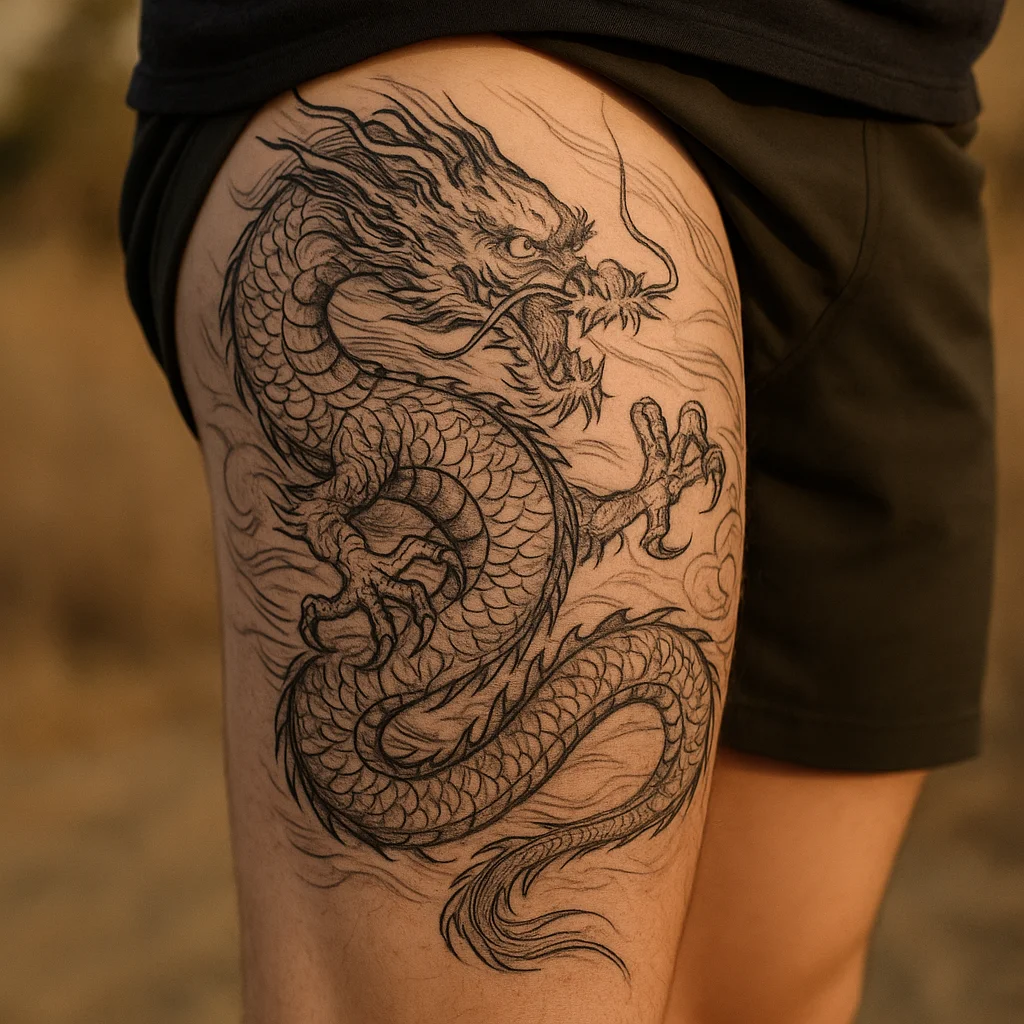
The thigh gives you room nothing else does
Ask any artist where they'd rather put a big illustrative piece and most of them will say the thigh before the arm. The quad is a broad, gently curved surface with no bone directly under the skin, no joint chopping it in half, and enough square inches to hold detail that would collapse on a forearm. A dragon that needs 14 inches to breathe gets it here. A portrait that needs subtle grey wash gets a flat surface to sit on.
It also ages well. Thigh skin sees very little sun for most of the year, and sun is what fades tattoos fastest. Compare a ten-year-old hand tattoo with a ten-year-old thigh panel from the same artist and the difference is embarrassing. The trade-off is that thighs change shape more than arms do. Serious weight swings, heavy squatting cycles and age all move this area, so avoid rigid grids and perfect circles if your body composition is in flux, and favour organic subjects that can flex a little.
Coverage is the other draw. Everything above mid-thigh is invisible in almost any trousers and most shorts, which makes this the standard choice for men in conservative workplaces who still want a large, serious piece. You control when it's seen.
The list below is sorted by scale rather than subject, because scale is the decision that actually determines your budget, your number of sittings and whether the piece can later grow into a full leg. Start where your commitment honestly is.
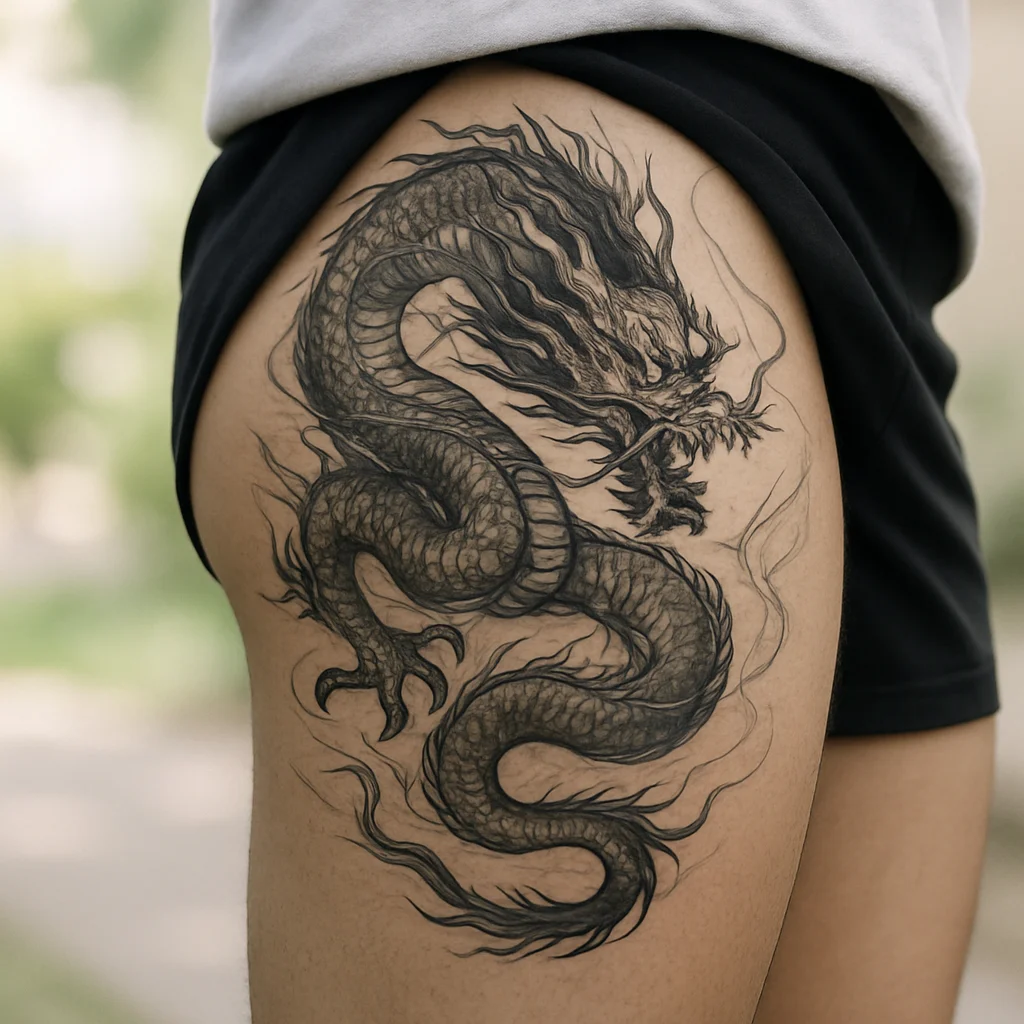
Stage one: standalone motifs (palm to hand-sized)
These are one-sitting pieces, roughly 3 to 6 inches, that read as finished on their own. They're also the smartest way to test how you heal on the leg before you book anything big.
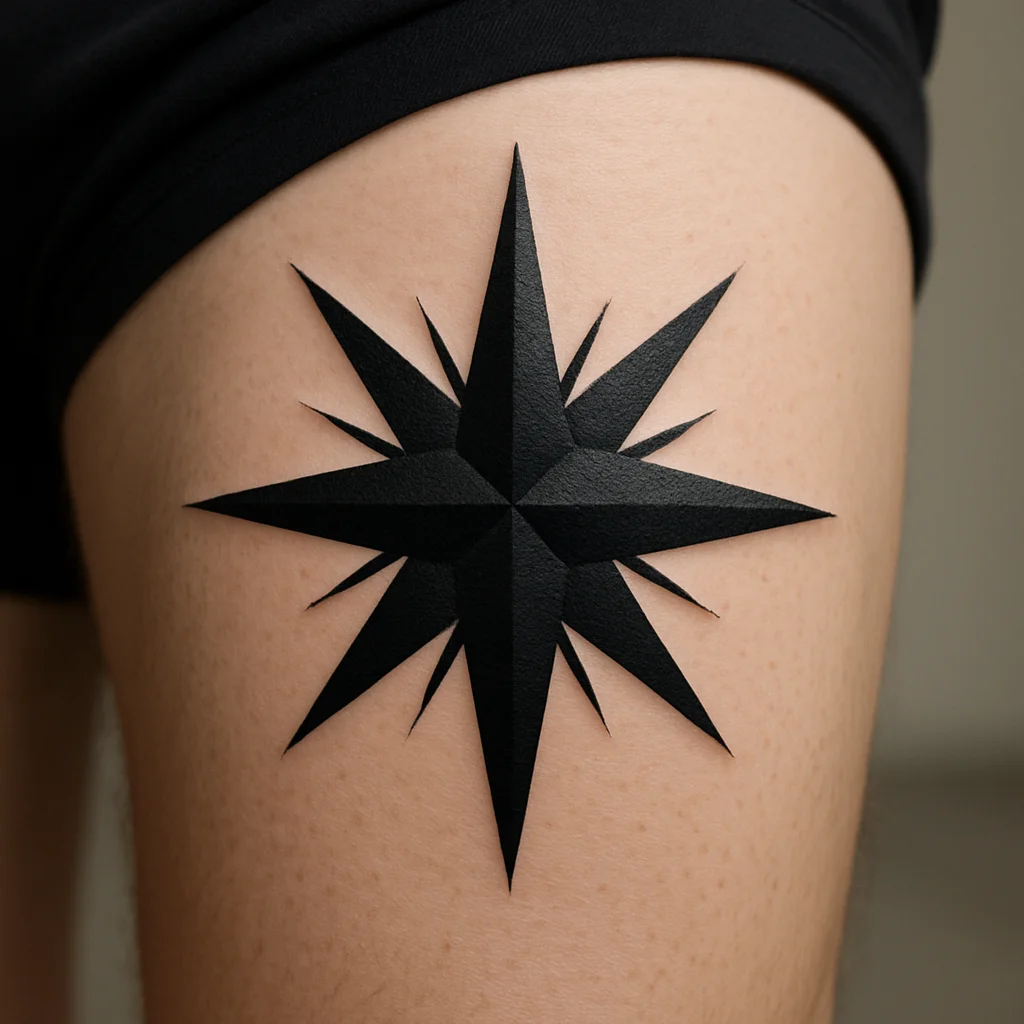
1. Blackwork compass rose above the knee
A solid eight-point compass with heavy black fills and clean negative-space rays sits perfectly on the flat plane just above the kneecap. Keep it around four inches so the points don't crowd the knee crease. It suits anyone who wants one clean graphic mark rather than a scene, and it holds up for decades because it's built from bold shapes.
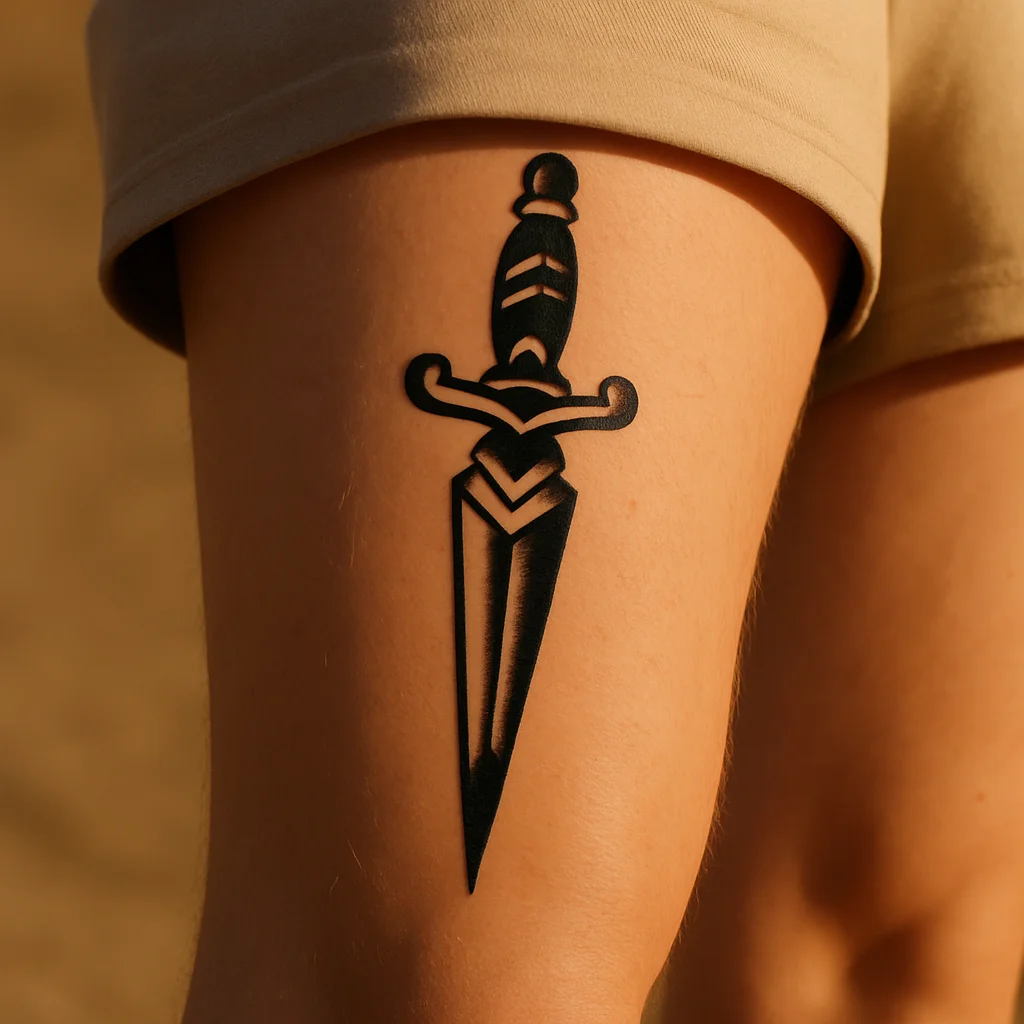
2. Traditional dagger down the outer seam
A classic American traditional dagger, six inches, point down, following the natural line where the outer thigh meets the seam of your jeans. Bold black outlines with a single spot colour on the handle wrap keeps it readable forever. It's the cheapest real tattoo on this list and one of the toughest.
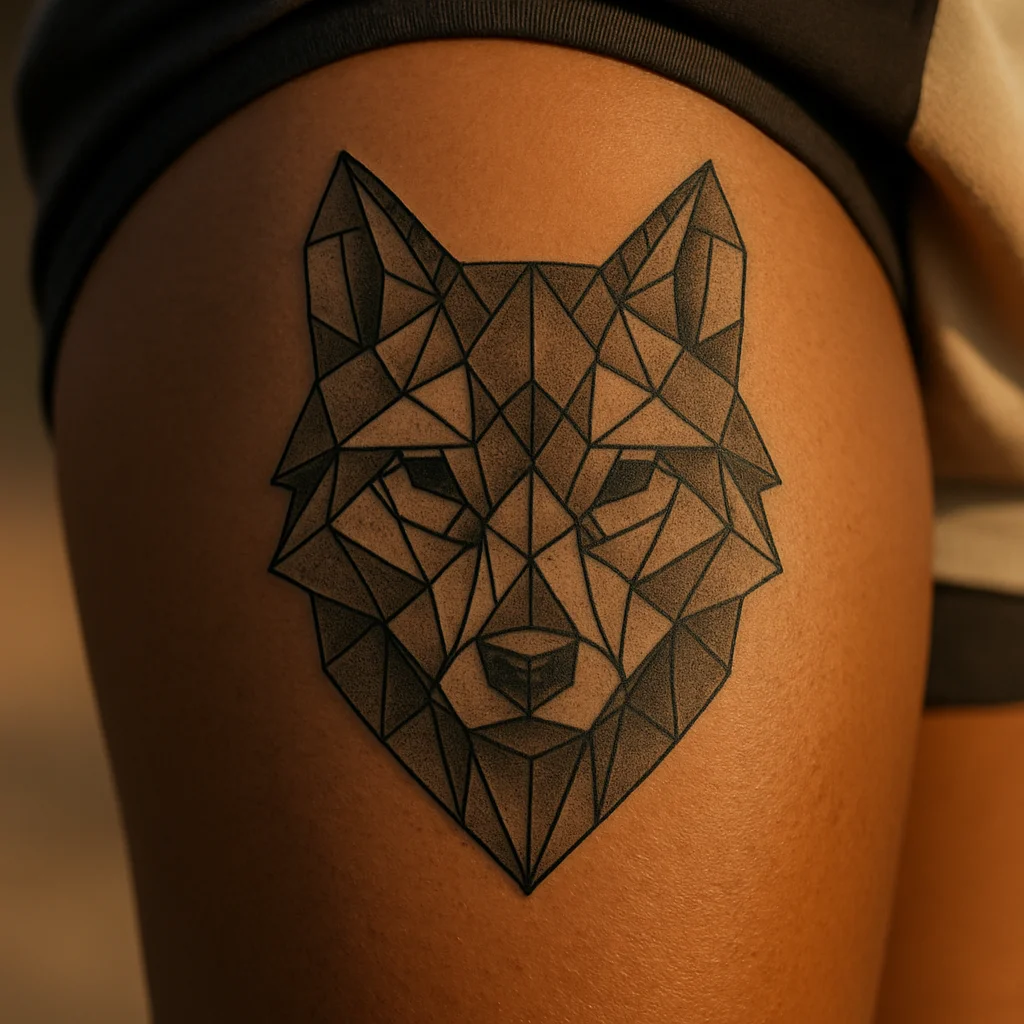
3. Geometric wolf head on the quad
A wolf built from faceted planes and dot shading, five inches tall, centred on the meat of the quad. The angular construction suits men who want an animal without full realism, and the flat quad surface keeps the geometry from distorting. Ask for a slightly heavier outline than the reference photo you bring, because thin geometric lines soften with age on the leg.
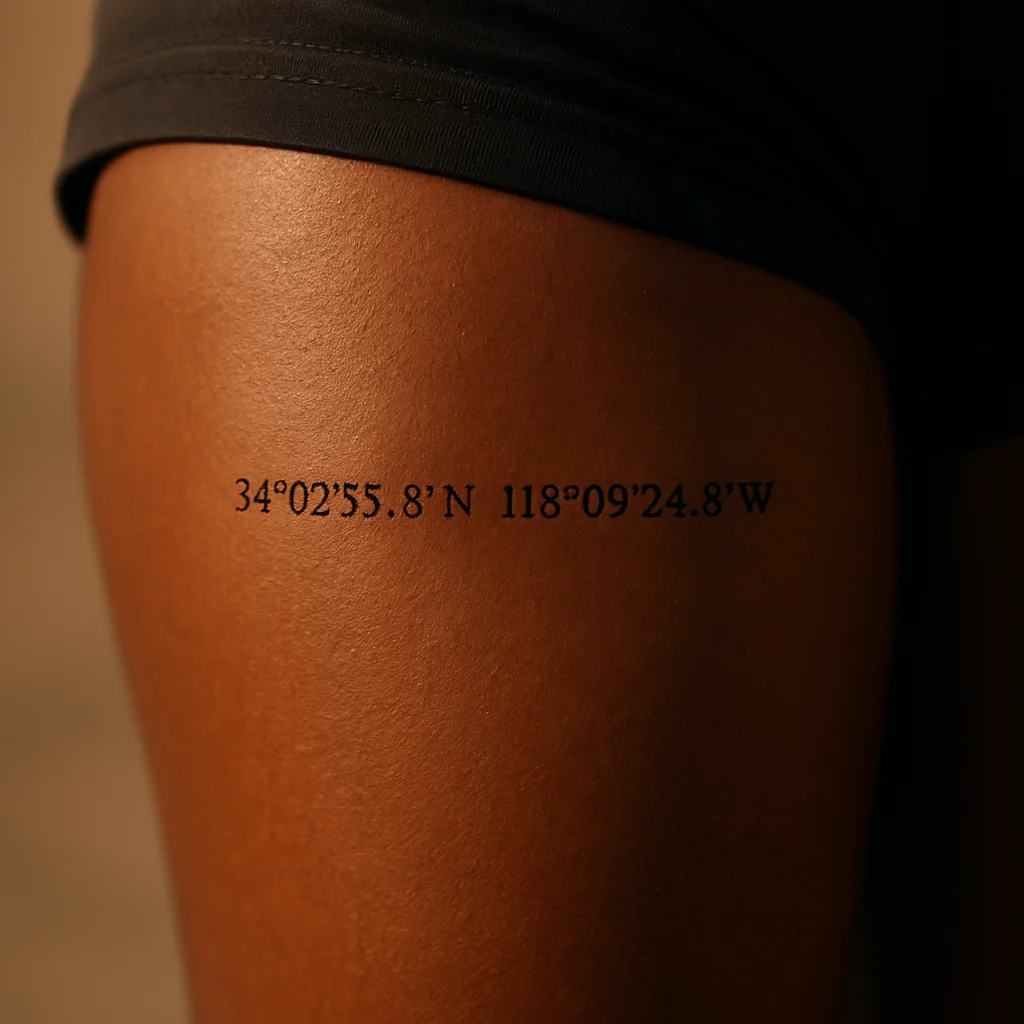
4. Coordinates or a short script band across the top of the thigh
A single horizontal line of text — coordinates, a date, a few words in someone's handwriting — running across the upper thigh. It should sit high enough to disappear under boxer shorts if you want privacy. Keep letters at least a quarter-inch tall; script that's too fine on the leg goes fuzzy within a few years.
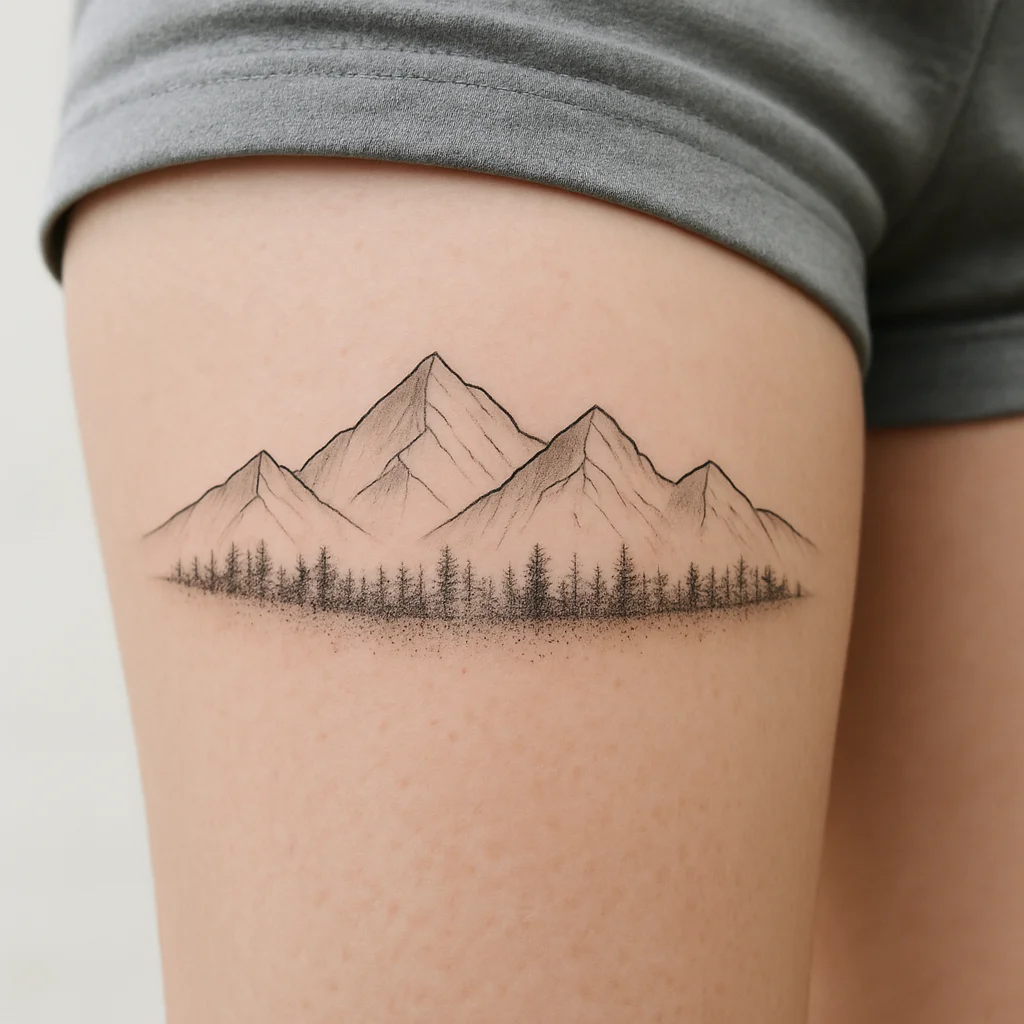
5. Fine-line mountain range with a treeline
A low, wide range with a single-needle horizon and stippled snow, about six inches across, placed on the outer thigh so it stretches along the muscle rather than against it. Great for hikers who don't want the usual forearm version. Ask for varied line weights so the peaks in front read closer than the ones behind.
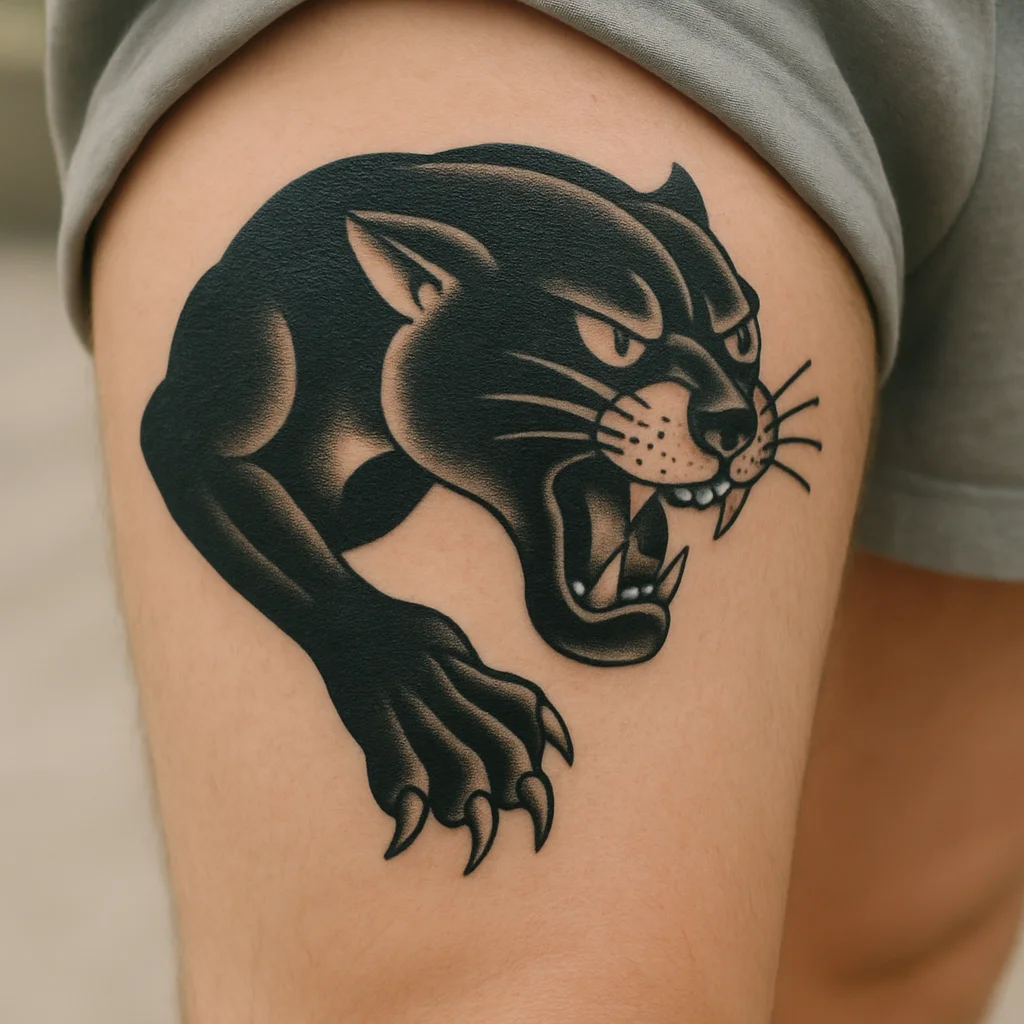
6. Old-school panther head crawling down the quad
A snarling panther head with a bold black body of shading and a red mouth, angled diagonally down the front of the thigh as if it's climbing. This is a hundred-year-old design that still looks brutal on big muscle. Five to seven inches is the sweet spot.
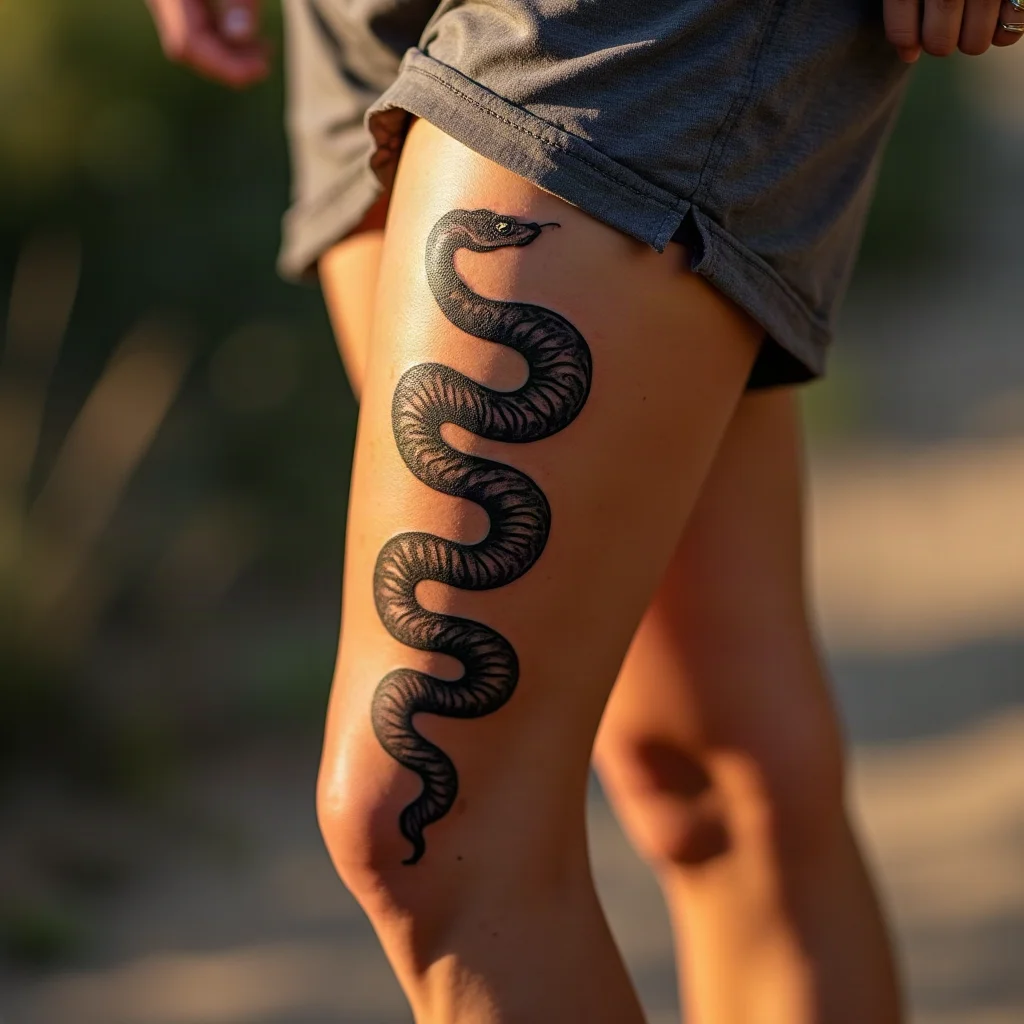
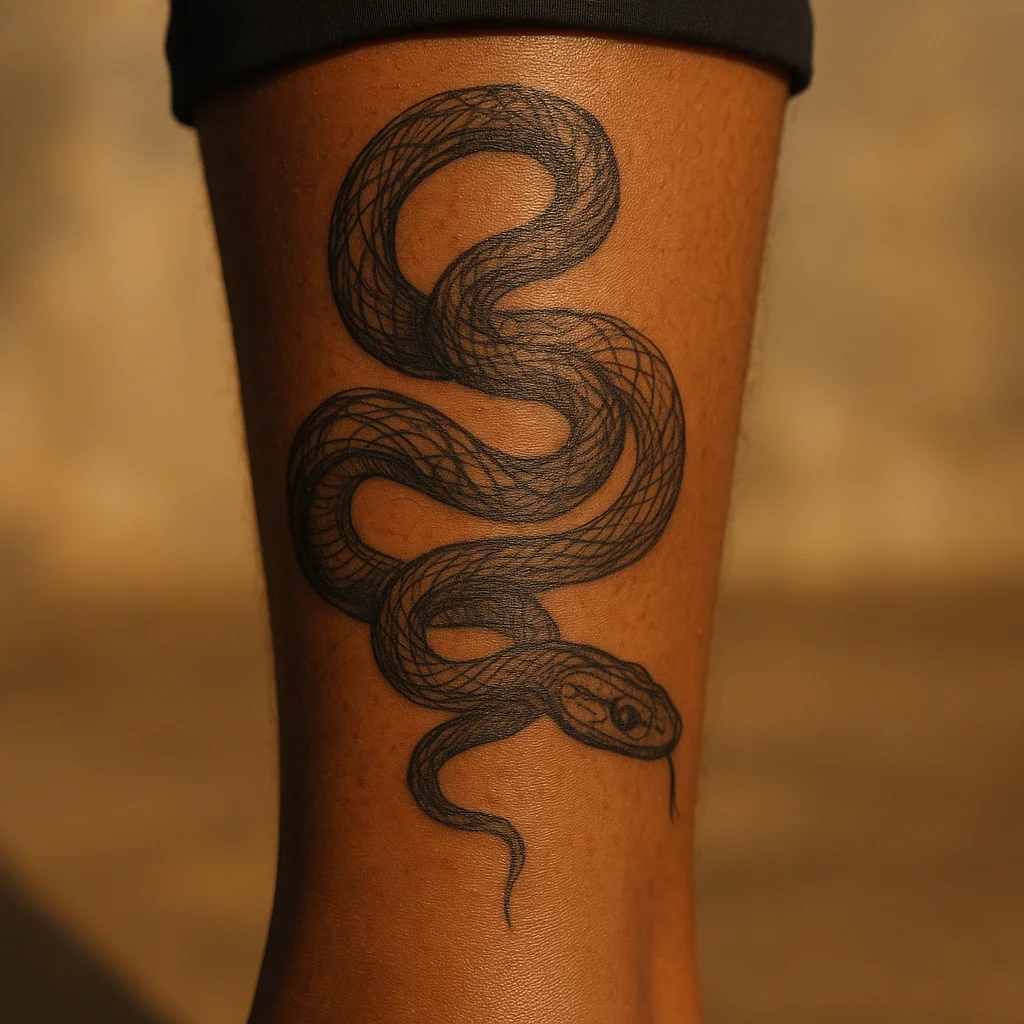
7. Minimalist coiled snake on the outer thigh
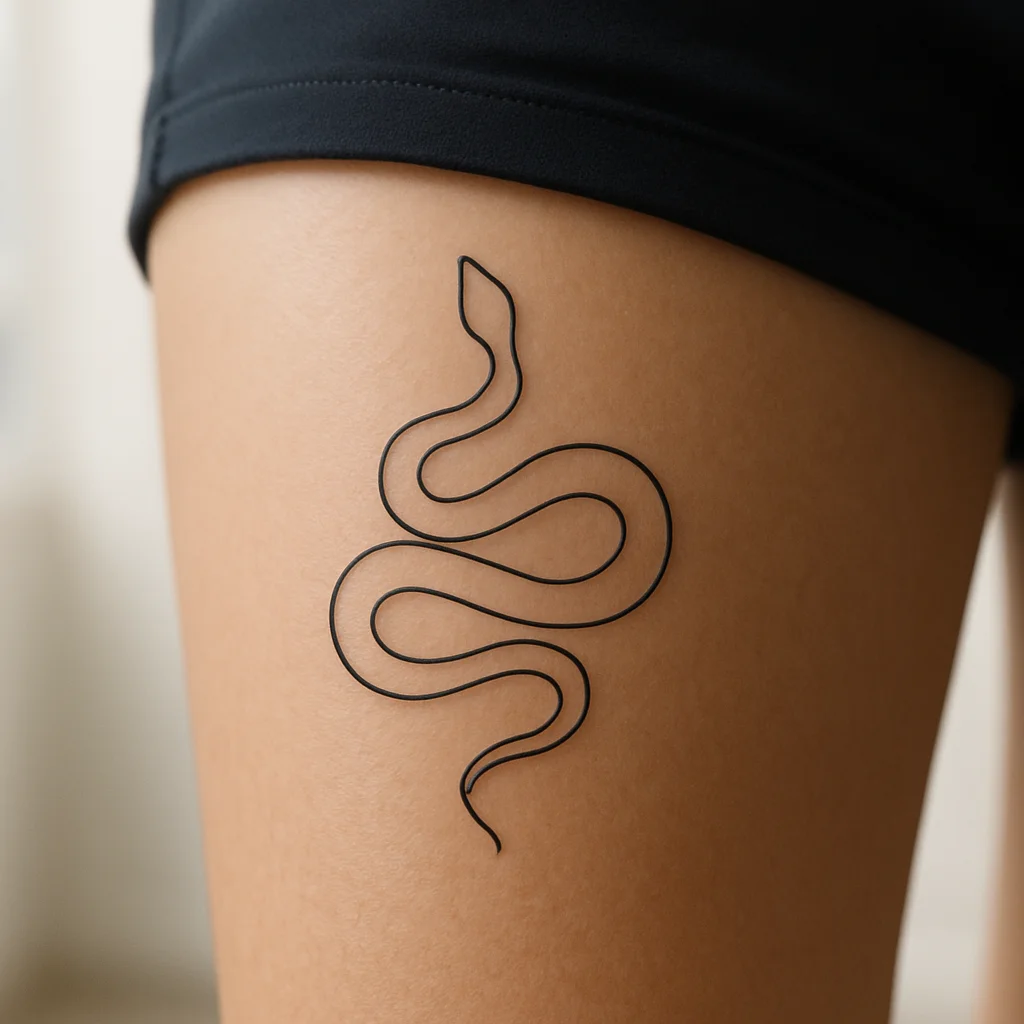
A simple coiled serpent drawn in one continuous weight of line, no shading, four inches across. It suits guys who want something that reads at a glance from across a locker room. Because it's pure outline, pick an artist whose linework you've seen healed, not just fresh.
8. Illustrative skull with a cracked jaw
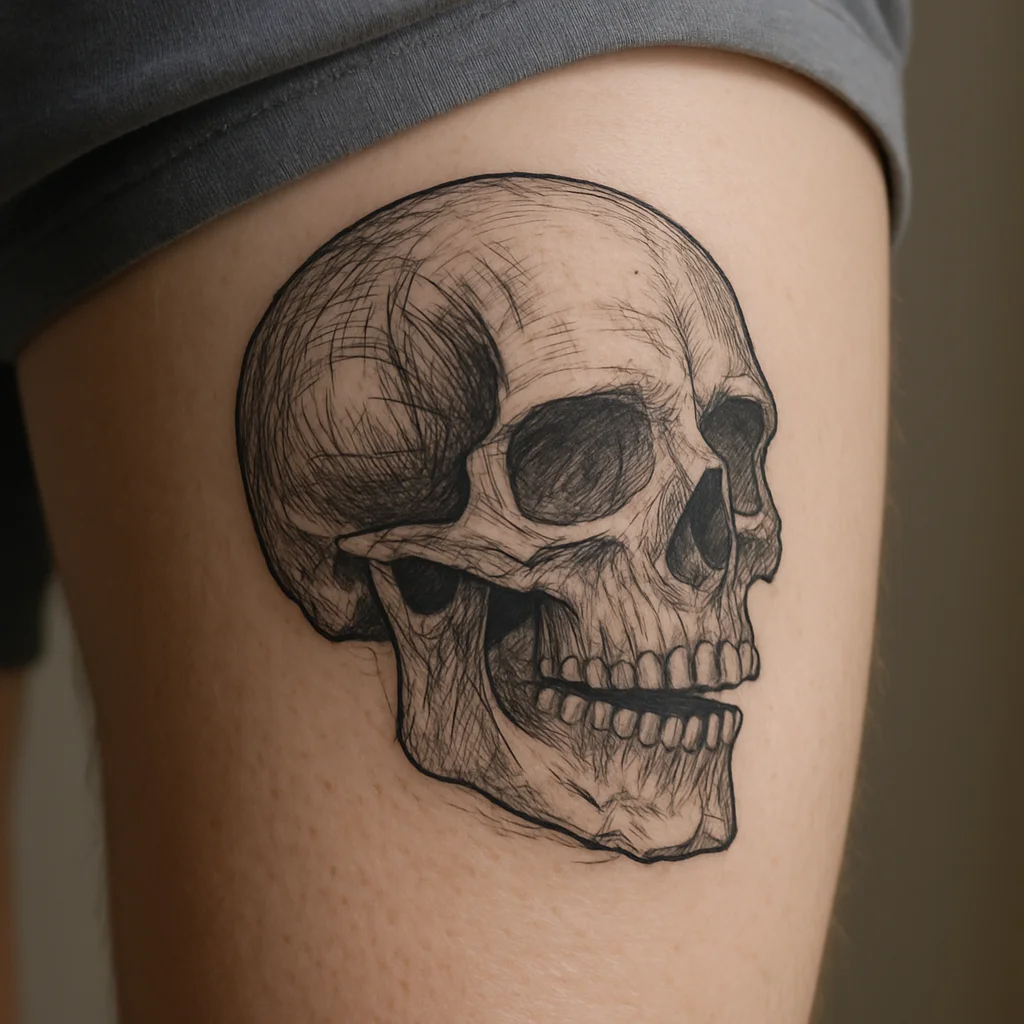
A hand-sized human skull in loose etched shading, tilted three-quarters, on the front of the thigh. The etching style hides the natural texture of leg skin better than smooth grey wash does. Perfect as the first element of a future larger panel — it can be built around later without being covered.
Stage two: half panels (one to two sittings)
Now you're covering roughly the top half of the thigh or a vertical strip down the outside — eight to twelve inches of work, usually two sittings, and the point where you should be booking on portfolio rather than price.
9. Hannya mask on the outer thigh
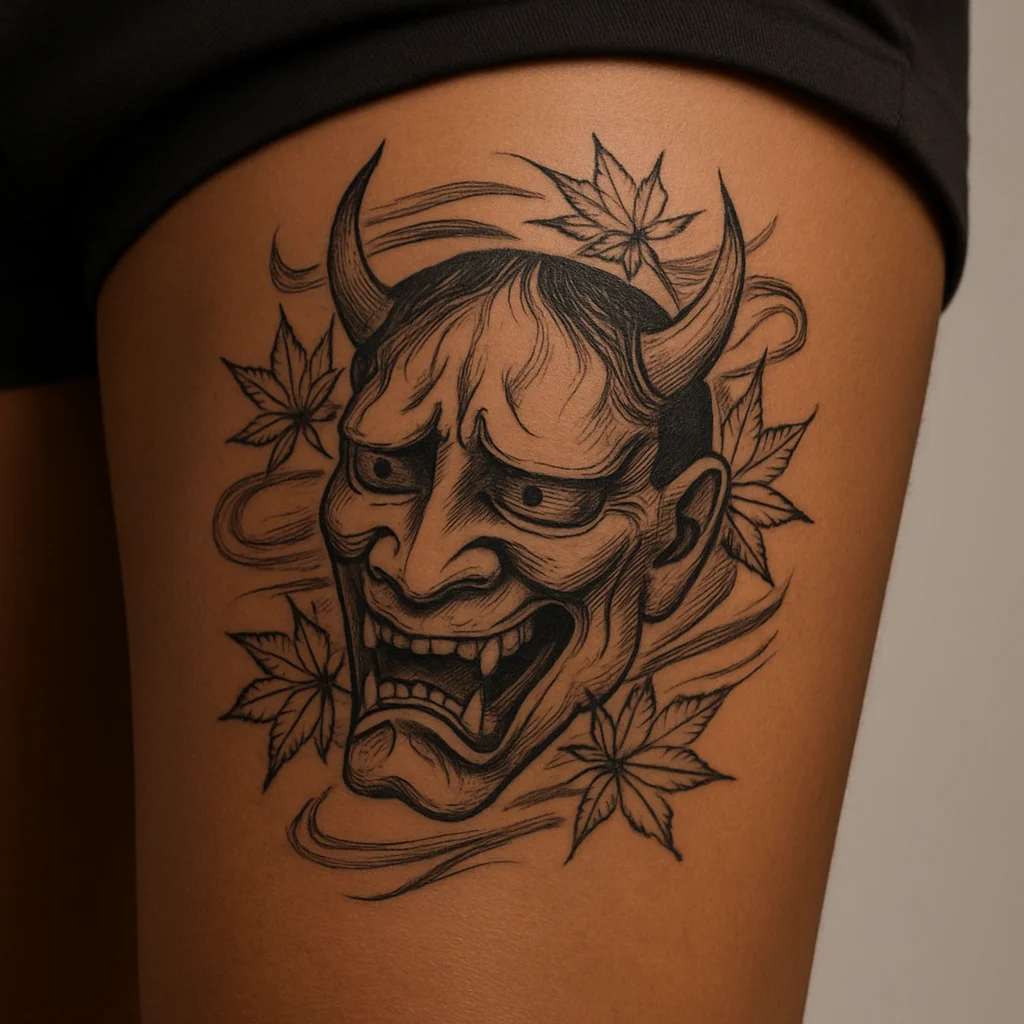
The Japanese jealous-demon mask sits beautifully at a slight angle on the outer thigh, framed with maple leaves or wind bars. Ten inches gives the horns and teeth room to be legible. Traditional Japanese work is designed to be viewed at distance, which is exactly how legs get seen.
10. Dotwork mandala over the quad sweep
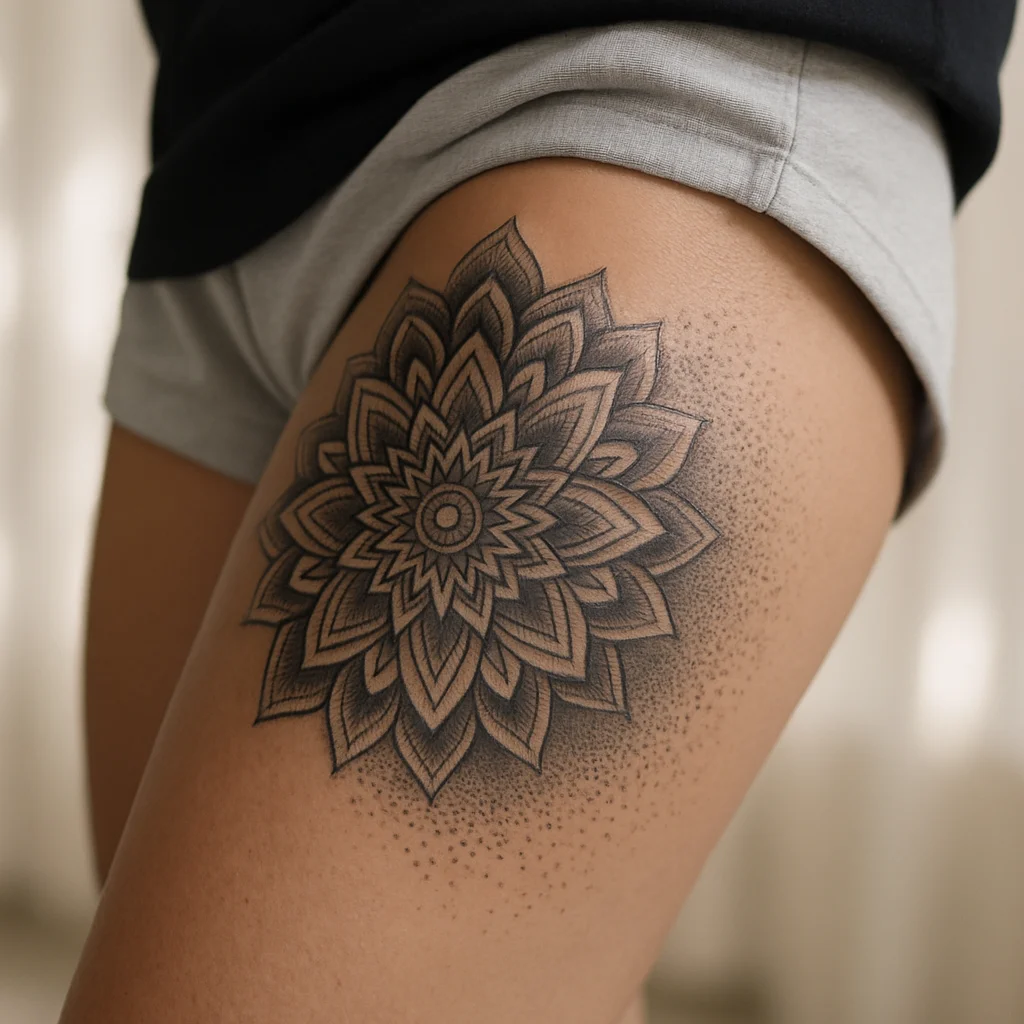
A half-mandala radiating from the outer hip and fading into stipple as it crosses the quad. It flatters the muscle because the rings follow the sweep rather than fighting it. Keep the densest black at the outer edge — that's the part still visible when you're in shorts.
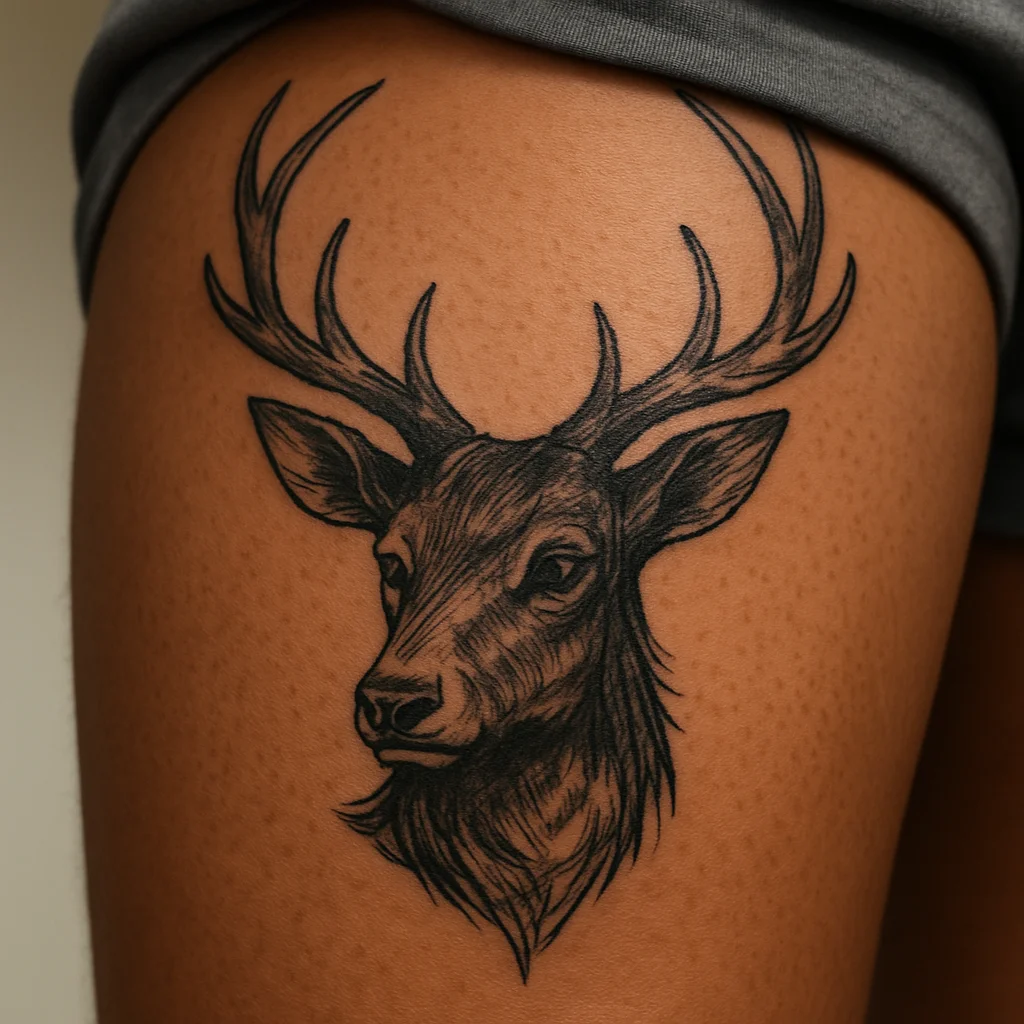
11. Neo-traditional stag with framing antlers
A stag head with heavy antlers that arc outward to form the top border of the piece, rendered in muted earth tones with bold outlines. Around ten inches tall on the front quad. The antler frame gives the design a natural edge, which stops half panels from looking like they were cut off.
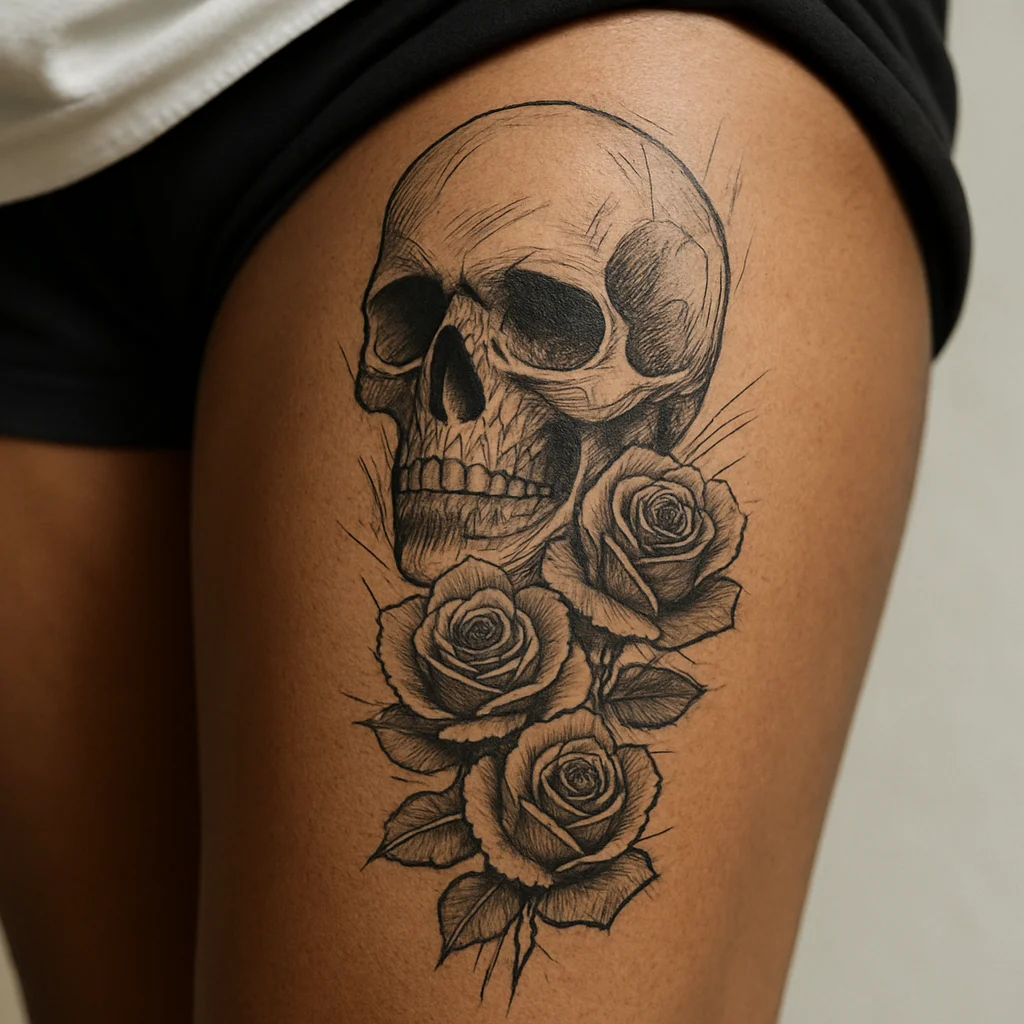
12. Skull and roses stacked vertically
Two or three roses beneath a skull, stacked down the centre of the front thigh in black and grey. The vertical stack suits long legs and can be extended downward later. Ask for the roses at different sizes and rotations so it doesn't read like a pattern.
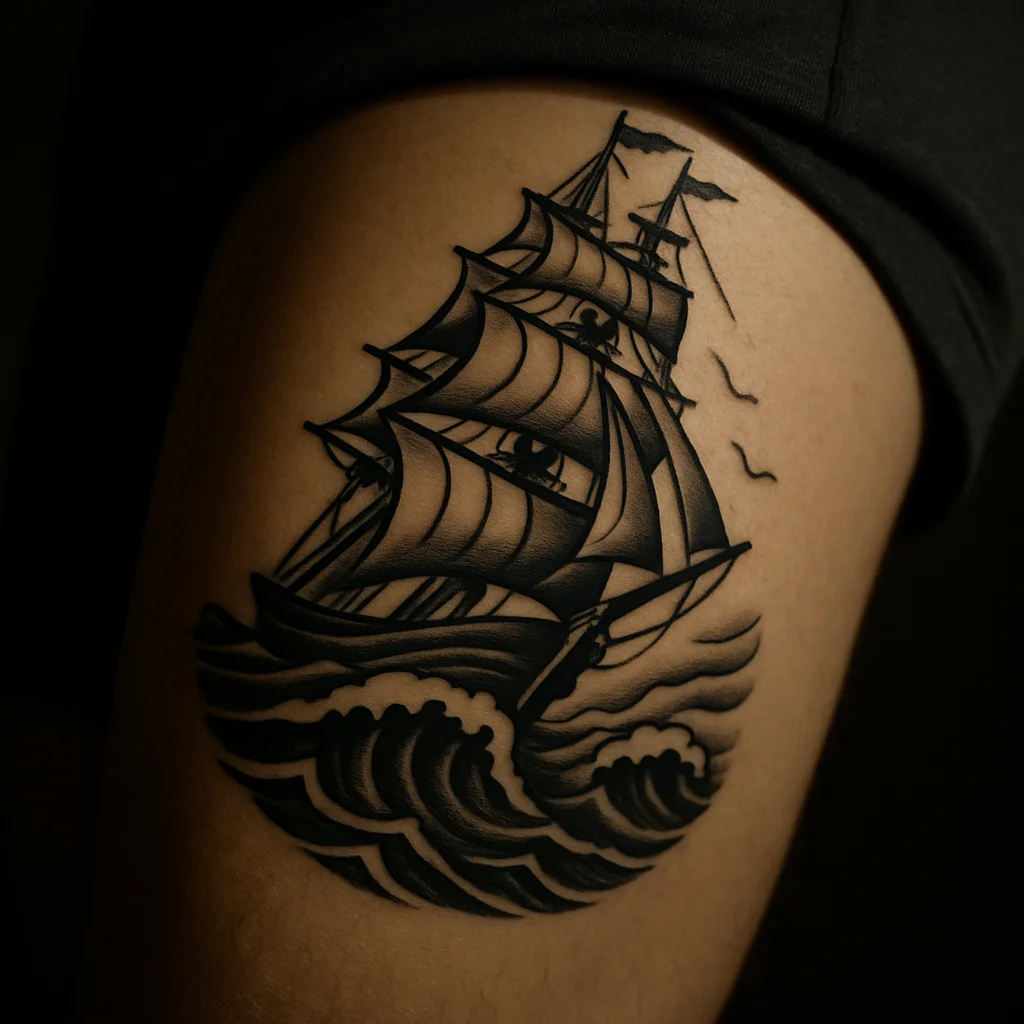
13. Ship in a storm on the outer thigh
A rigged ship heeling over in heavy swell, waves crashing up the lower edge, nine to twelve inches. Traditional or black-and-grey illustrative both work. The curved outer thigh gives the water somewhere to wrap, which sells the movement.
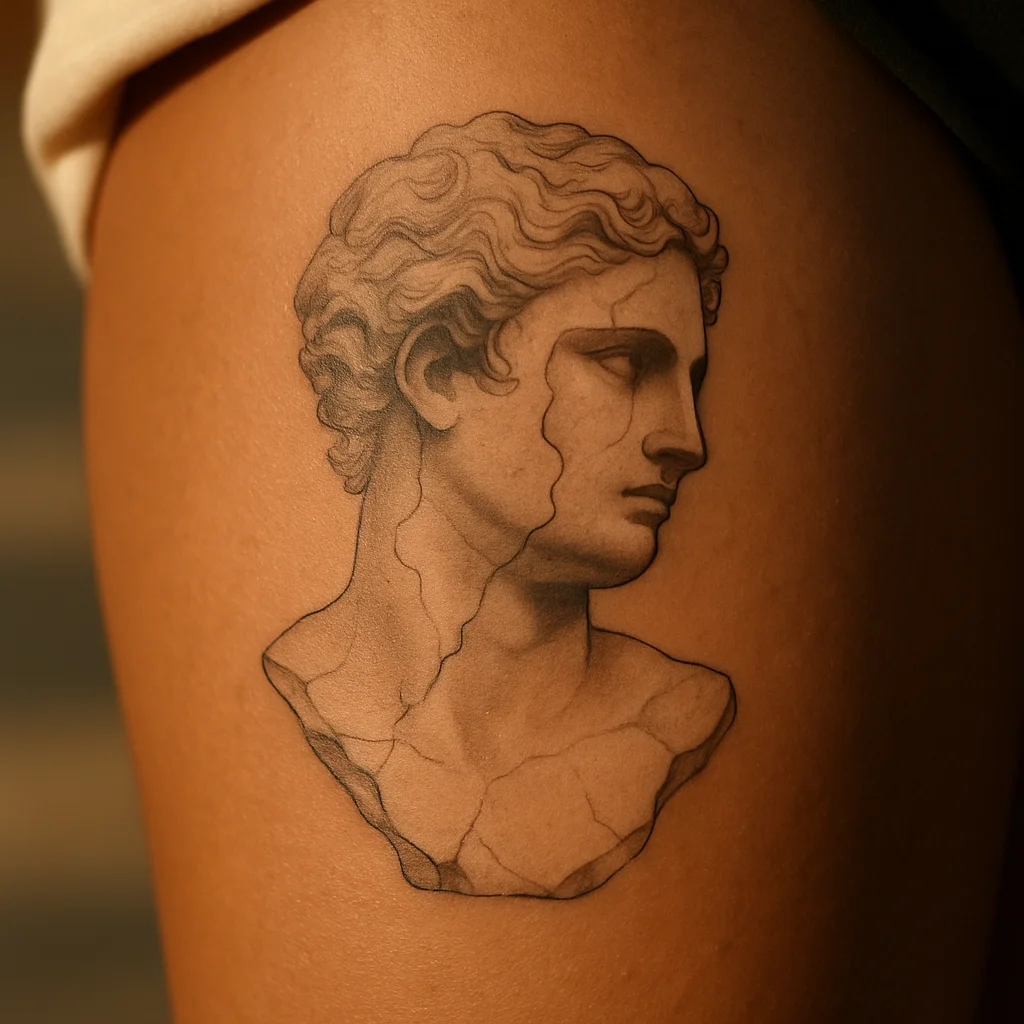
14. Marble statue fragment
A broken classical bust or a statue hand rendered in soft grey wash and fine line, ten inches on the front quad. It needs smooth, even skin and an artist who can hold subtle greys — check healed photos before you book, because pale wash on the leg can patch during healing.
15. Biomechanical panel following the quad
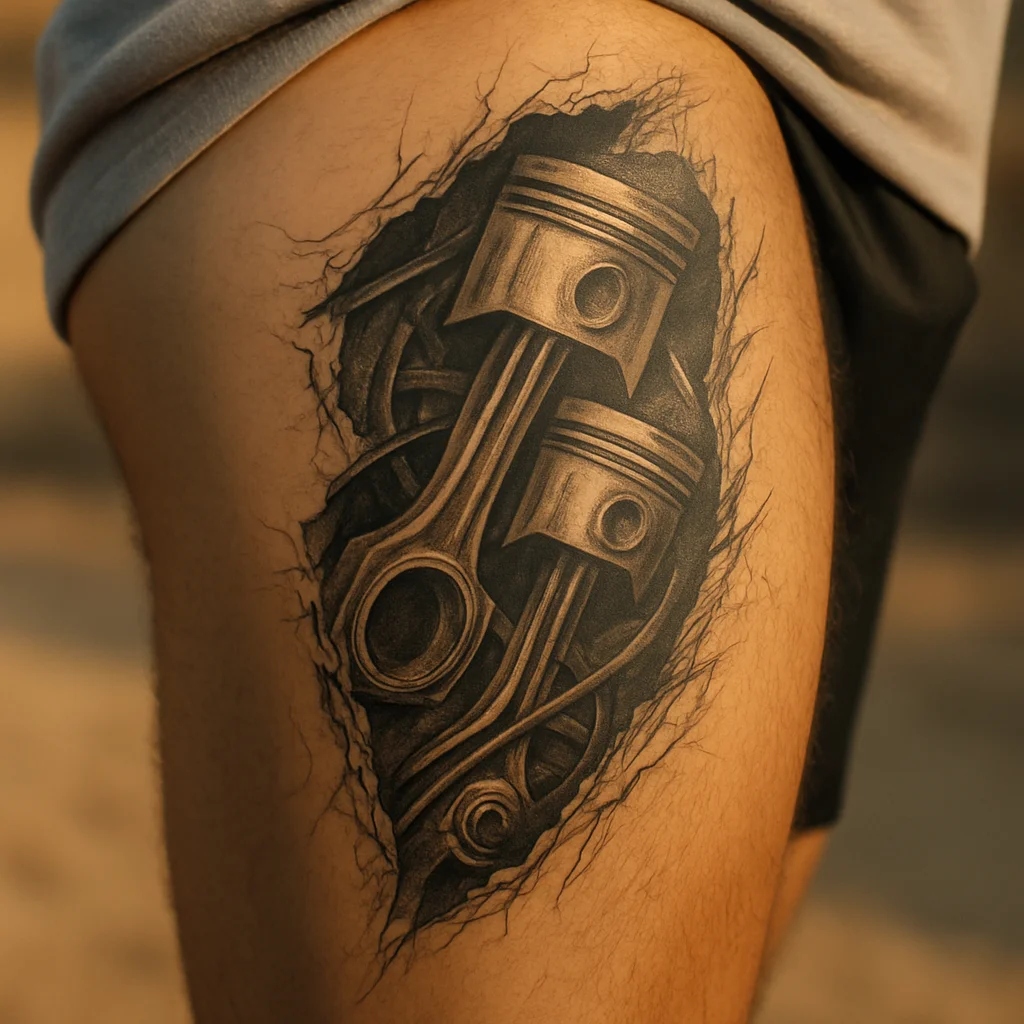
Pistons, cabling and torn skin arranged so the mechanical forms track the actual line of the vastus muscle. This style lives or dies on anatomy, so let the artist draw freehand on your leg rather than working from a flat stencil. Best on men with visible muscle definition.
16. Ornamental filigree strip down the outer seam
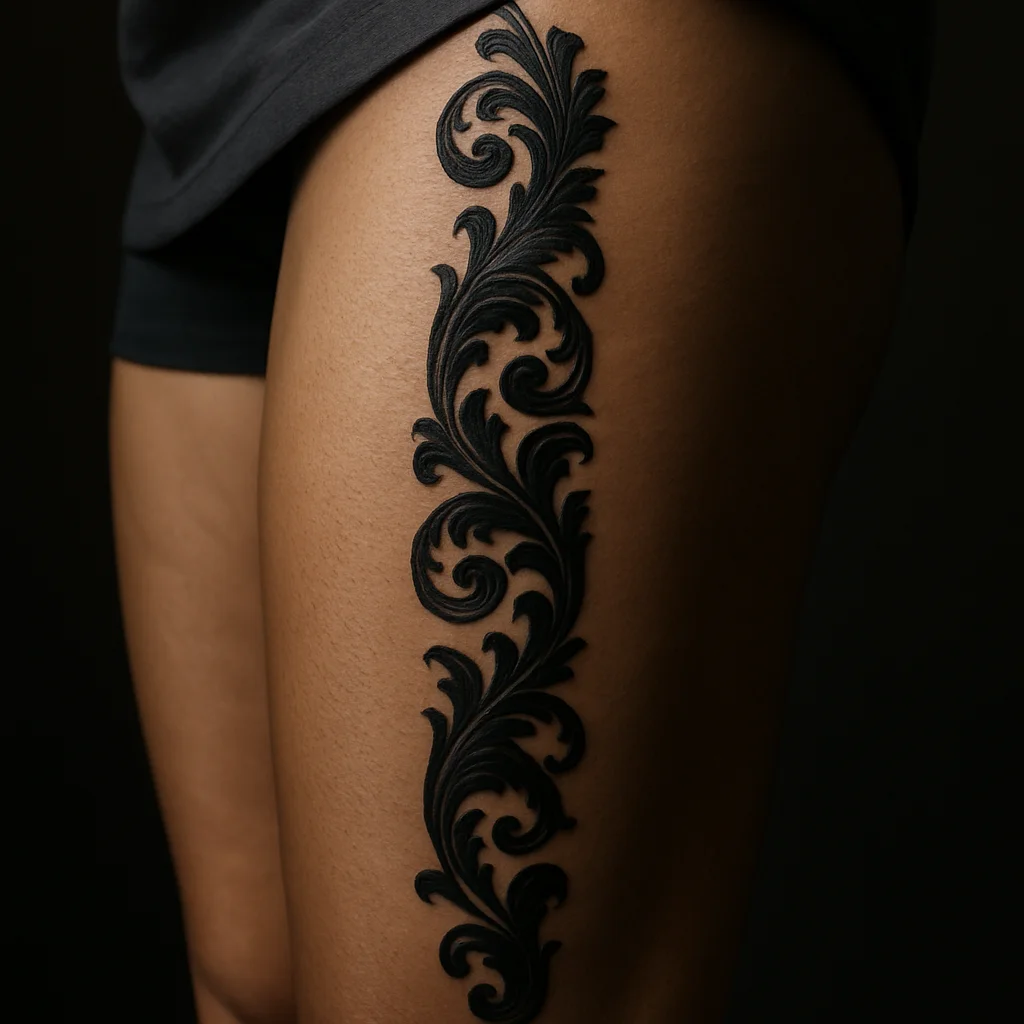
A long, narrow band of baroque scrollwork and beading running from hip to knee, three to four inches wide. It's elegant, it's black, and it reads as intentional design rather than a collection of pictures. Pairs unusually well with an otherwise bare leg.
Stage three: full thigh panels (three sittings and up)
A full panel covers the front and outer thigh from hip crease to just above the knee. Expect multiple sessions, a real deposit and a design consultation before any needle touches you. These are the pieces people build a leg around.
17. Full Japanese dragon wrapping the quad
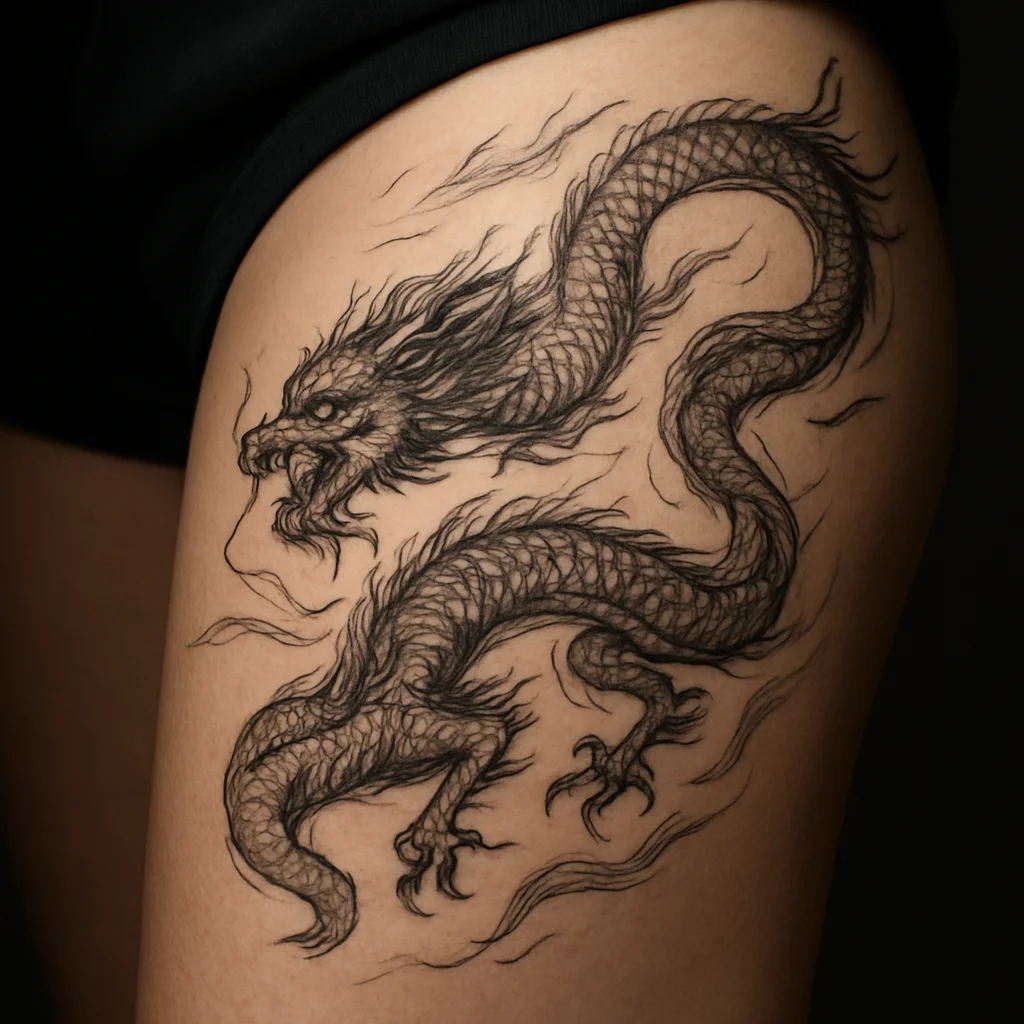
Head at the hip, body spiralling down and around the outer thigh, tail finishing above the knee, with wind bars and cloud finger filling the background. Japanese background is what makes it look like one piece rather than a sticker, so budget for it. This is the most classic full-thigh subject there is and it wears brilliantly at every age.
18. Hooded reaper on the front thigh
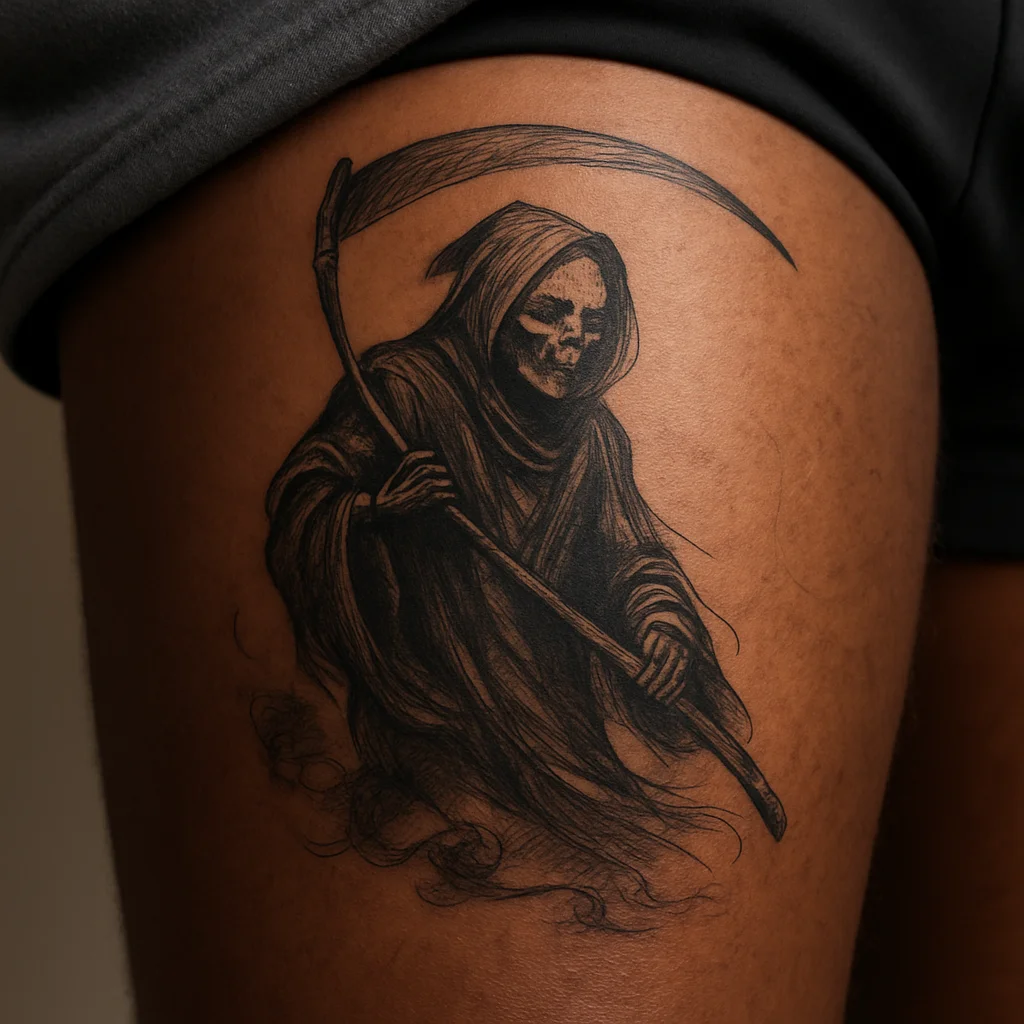
A full-length hooded figure with a scythe crossing the piece diagonally, rendered in deep black and grey with smoke at the base. The vertical body shape matches the thigh's proportions almost perfectly. Ask for strong contrast — mid-grey mush is what kills big black-and-grey work over ten years.
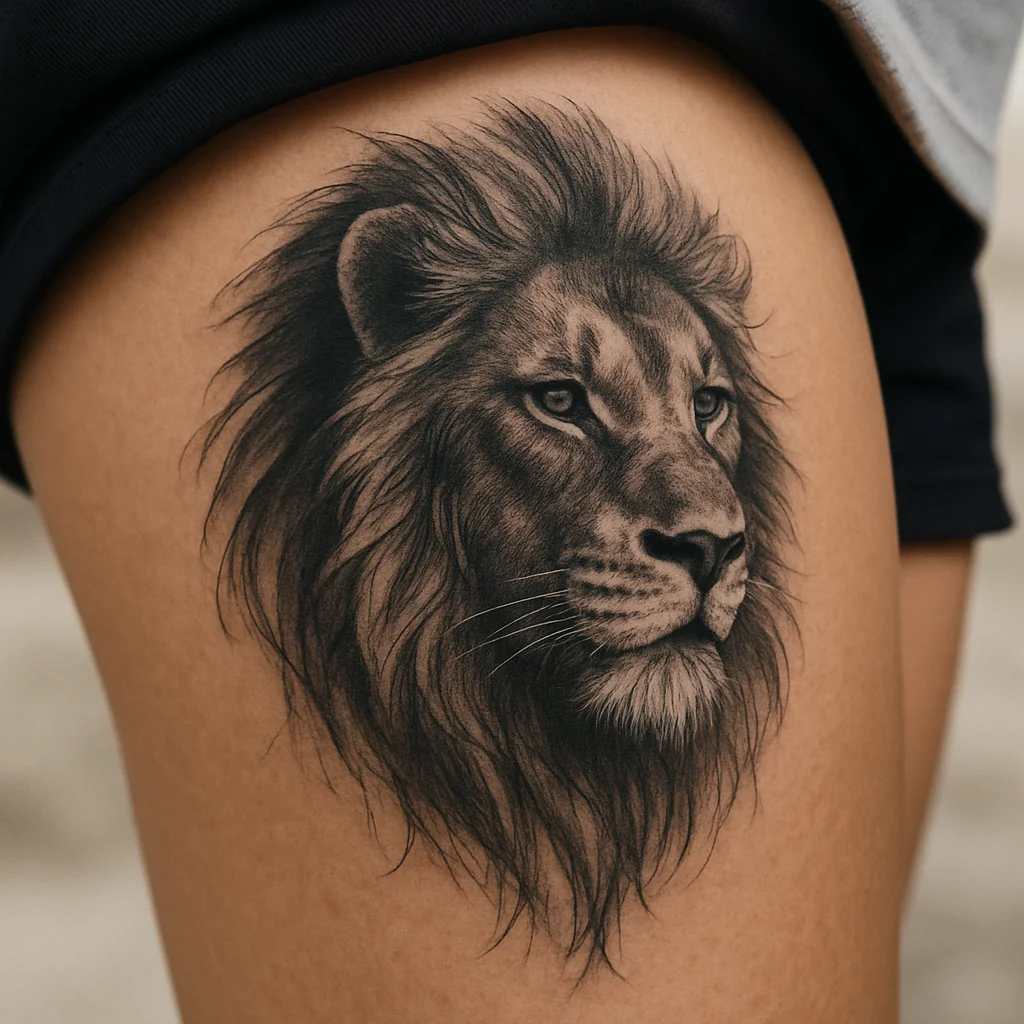
19. Black and grey lion, chest to mane
A realistic lion filling the quad, mane spilling toward the outer thigh, eyes placed high so they're at eye level when you're standing. Realism needs size, and the thigh is one of the few places on a man's body that can host a convincing animal head at scale. Book an artist who specialises in it; generalists struggle with fur.
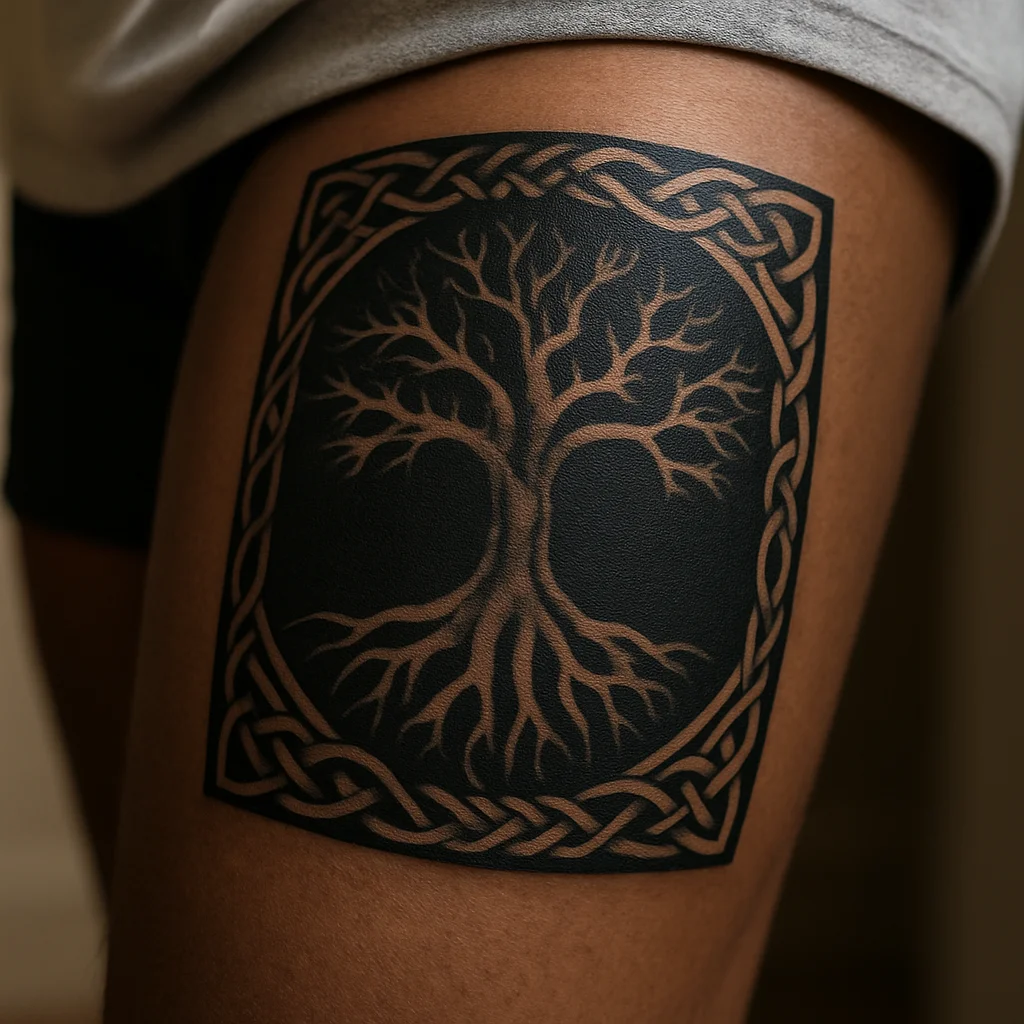
20. Norse panel with Yggdrasil and runes
The world tree with roots spreading toward the knee, a runic border, and knotwork filling the gaps. Heavy black with dotwork shading holds up better than fine engraving for this subject. Bring your own sources for the runes — artists usually can't verify meaning for you.
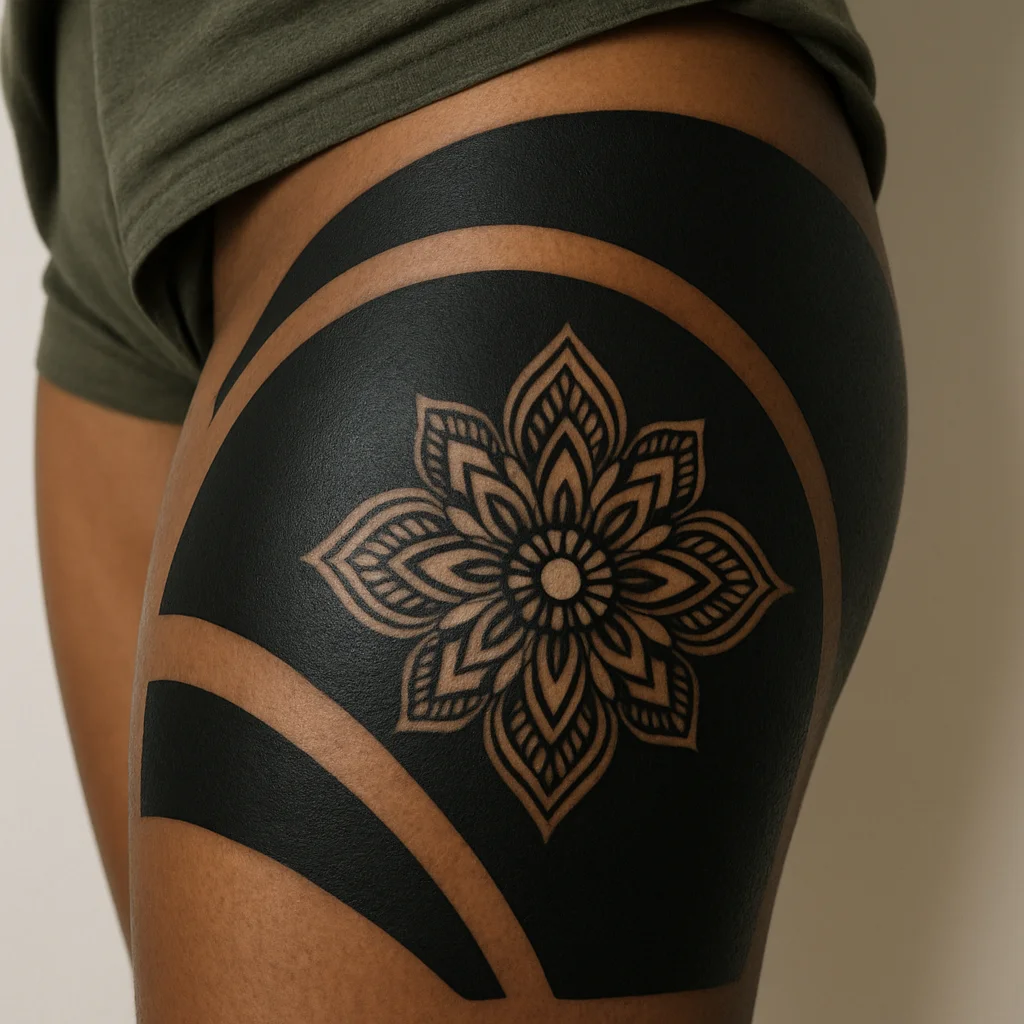
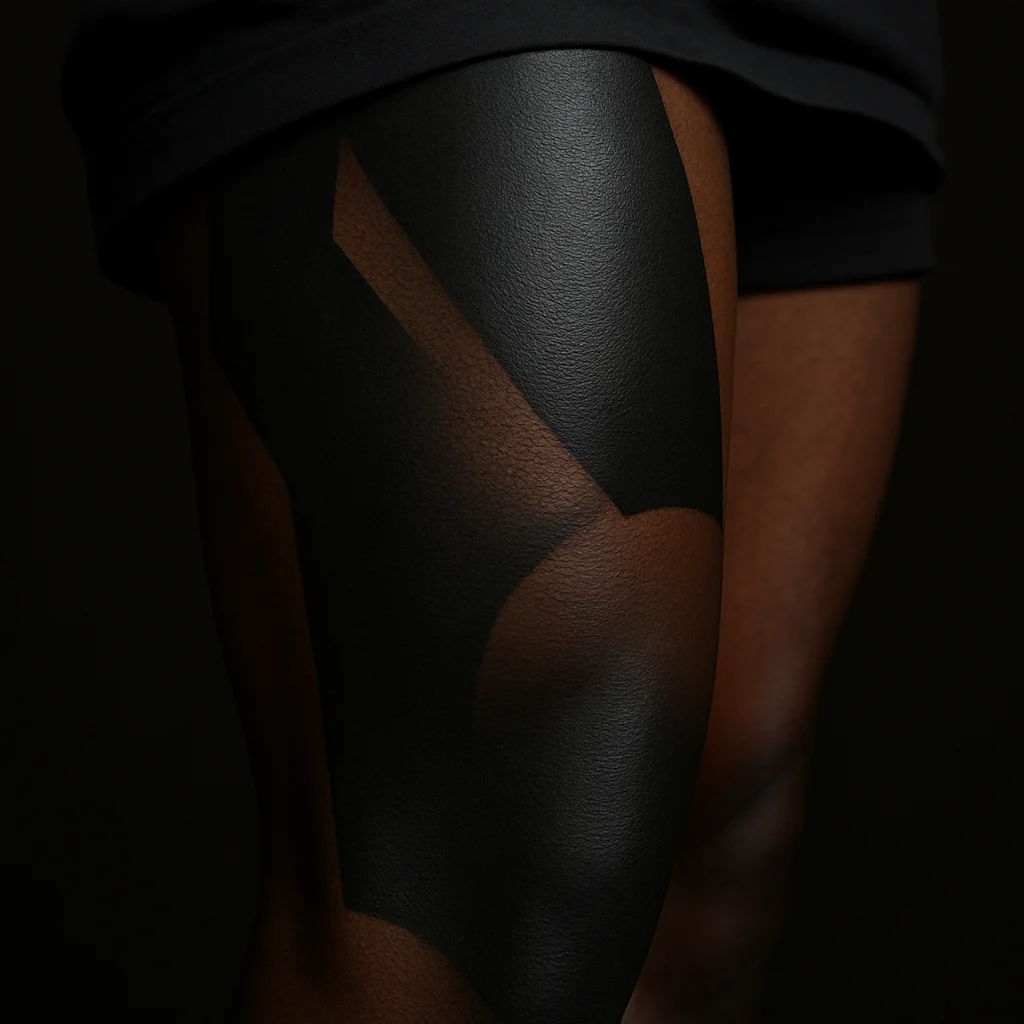
21. Blackout thigh with negative-space geometry
Solid black across the outer thigh with unshaded skin left as lines, arcs or a mandala shape. It's a serious commitment, painful in long stretches, and hard to cover later, but nothing else looks like it. Insist on an artist with proven blackout healing photos, because patchy solid black is the worst outcome in tattooing.
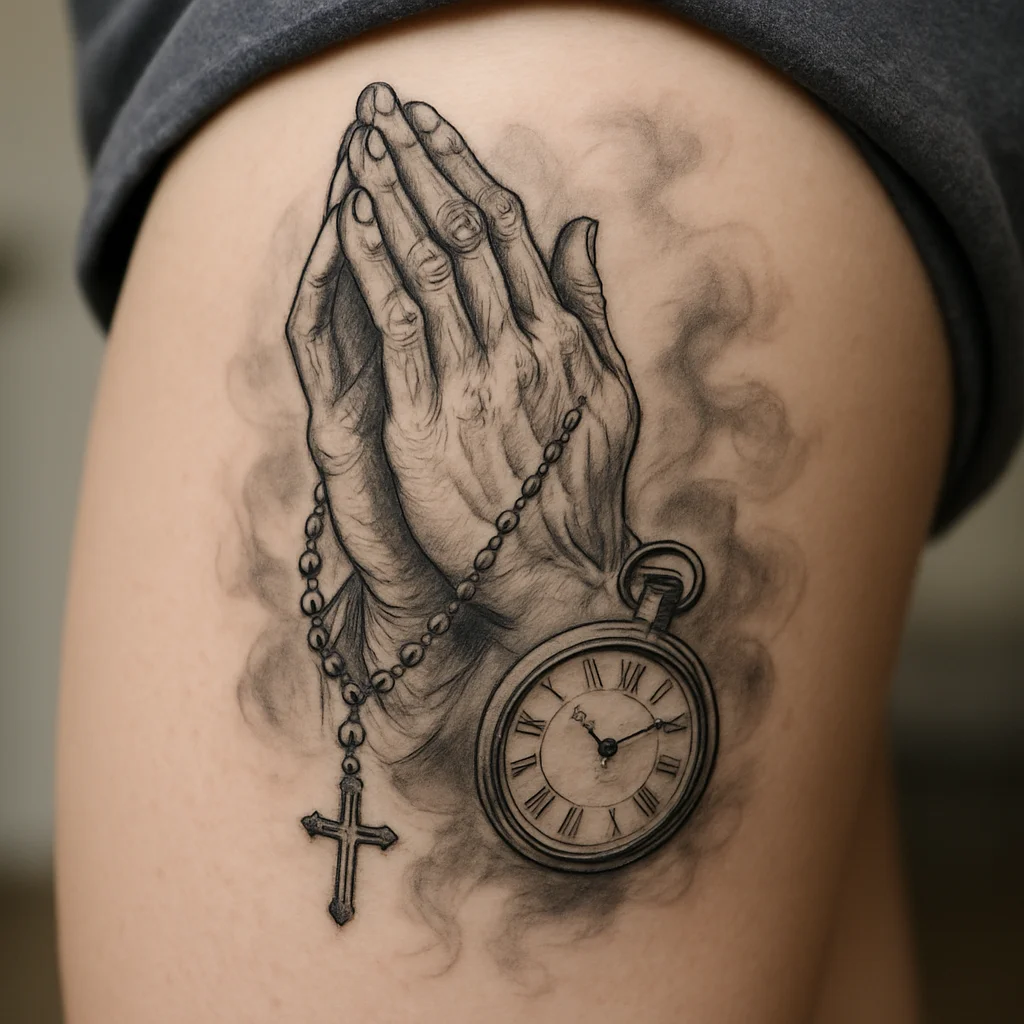
22. Chicano-style religious composition
Praying hands, a rosary, a pocket watch and a rose arranged down the front thigh in fine black and grey with soft smoke transitions. The style relies on smooth gradients, so leave extra healing time between sessions. It suits men who want a memorial piece with real weight to it.
23. Landscape panel with a river running to the knee
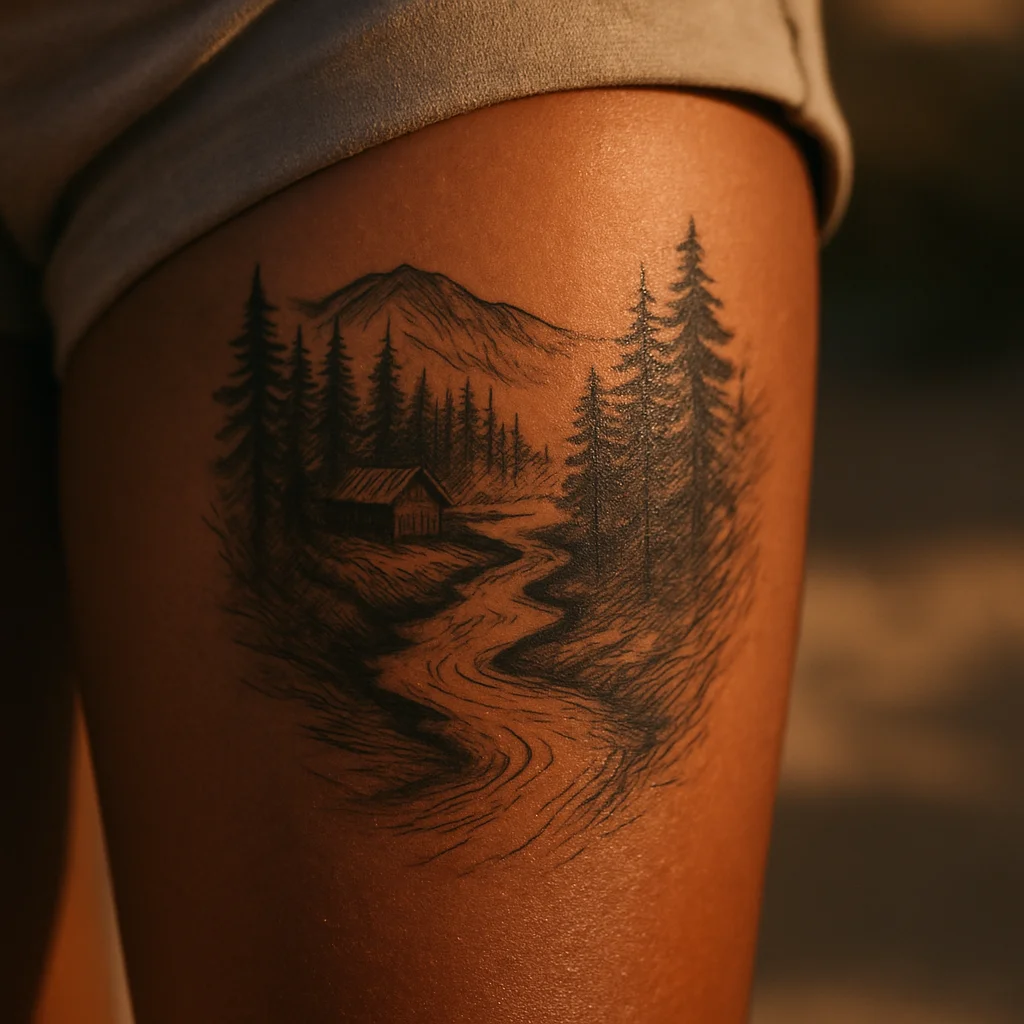
Pines, a ridgeline at the hip, a cabin mid-thigh, and a river that narrows as it runs down toward the knee. The vertical taper of the leg does the perspective work for you. Choose one light source and stick to it, or the whole scene flattens.
24. Samurai warrior on the full quad
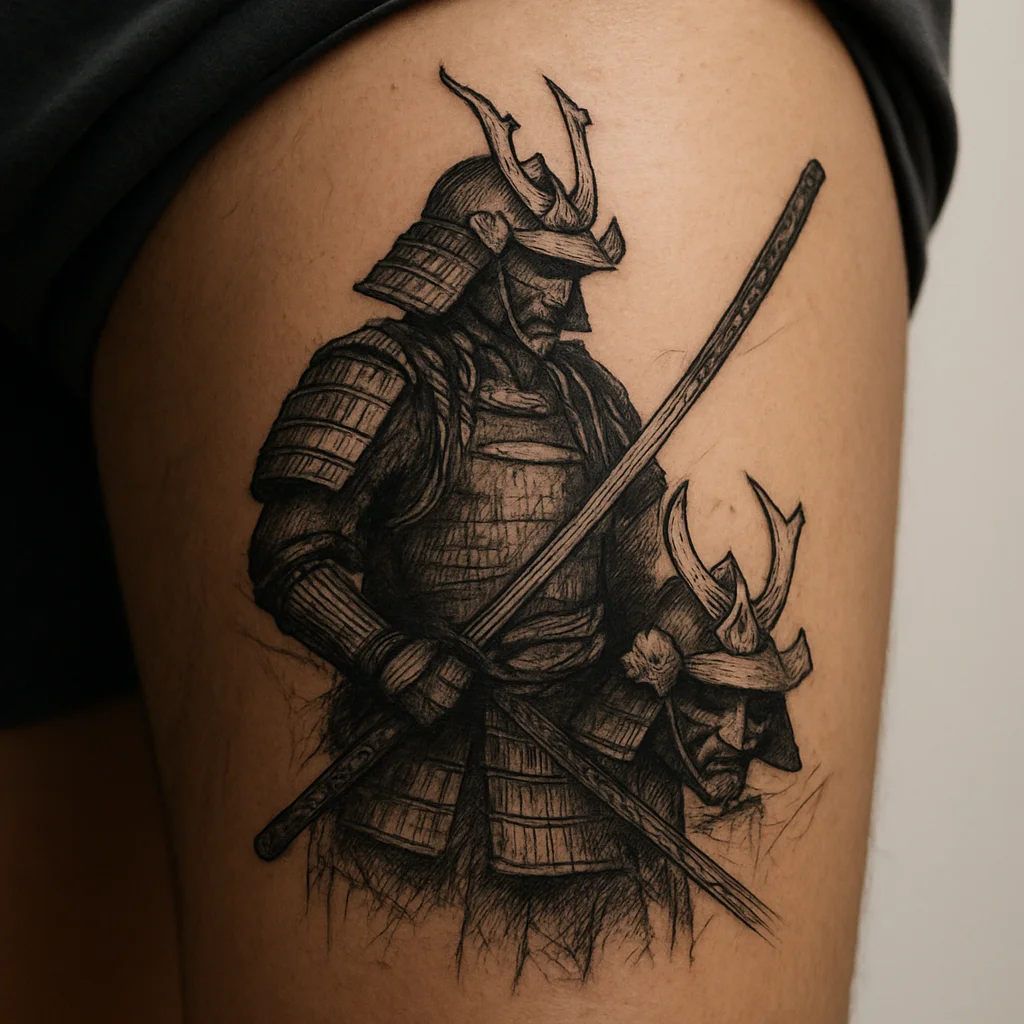
A seated or striding samurai in armour, kabuto helmet at the hip, sword crossing the piece, with wave or wind background filling the sides. Armour detail needs space, so anything under ten inches will turn into a grey blob in a decade. This one pairs naturally with a matching back-of-thigh or calf continuation later.
Stage four: wraps and leg-sleeve starters
Once you go around the leg, you've stopped getting a tattoo and started building a leg. Wraps hurt more, cost more and need planning for where they'll eventually stop — usually at the knee, occasionally continuing into a calf piece to finish the full sleeve.
25. Japanese wave wrap from hip to knee
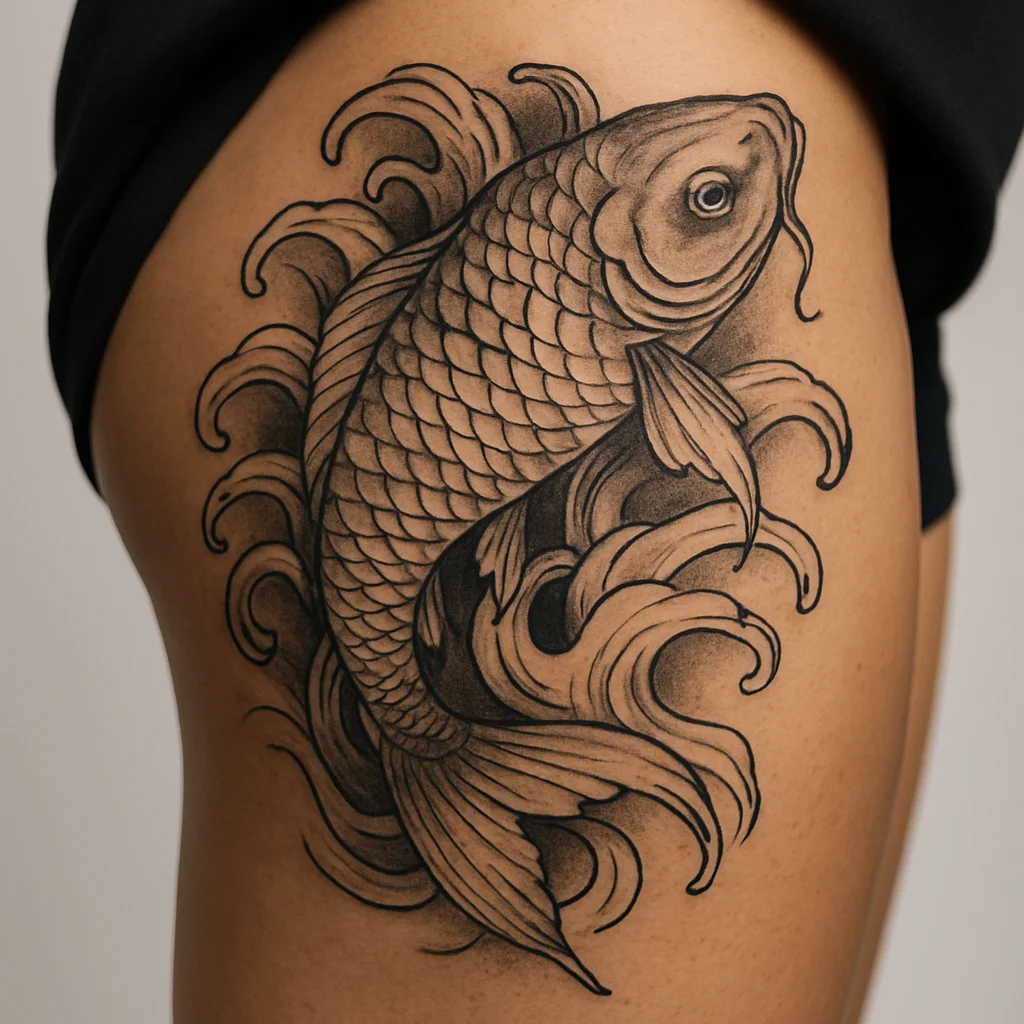
Traditional finger waves circling the whole thigh, with a koi, a tiger or a snake as the main subject and the water carrying the composition around the back. The wrap is what makes Japanese leg work look complete from every angle. Plan for four to eight sittings.
26. Marquesan-style band around the upper thigh
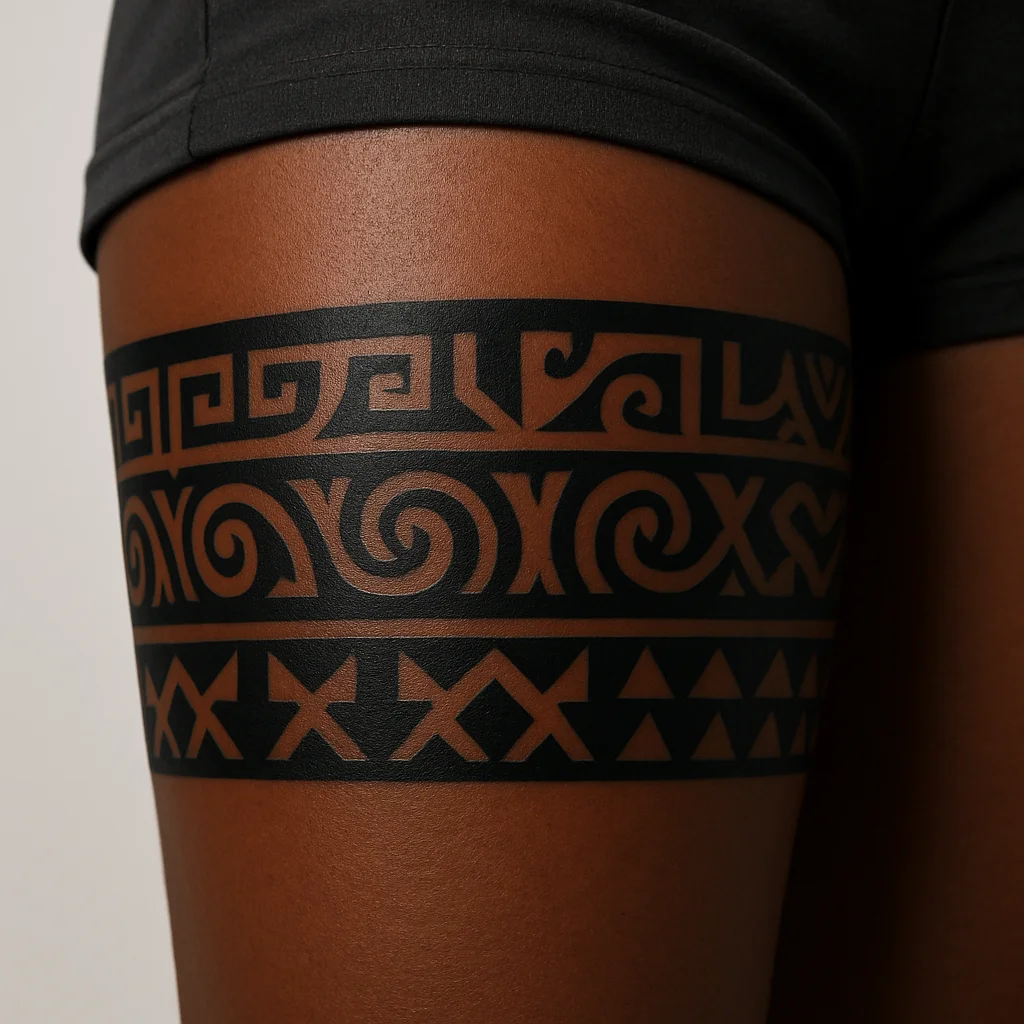
A broad band of Polynesian-inspired blackwork, four to six inches deep, circling the leg high enough to sit under shorts. Patterns should be drawn freehand on your body so they meet correctly at the back. If you want authentic motifs rather than decorative ones, seek out a practitioner from that tradition.
27. Blackwork thigh-to-calf transition with a bare knee
Heavy dot-shaded blackwork covering the thigh, a deliberate gap of bare skin at the knee, then the design resuming on the calf. The break makes the knee bearable to sit through and gives the leg visual rhythm. It also lets you finish the thigh and stop, without looking unfinished.
28. Snake coiling the entire thigh
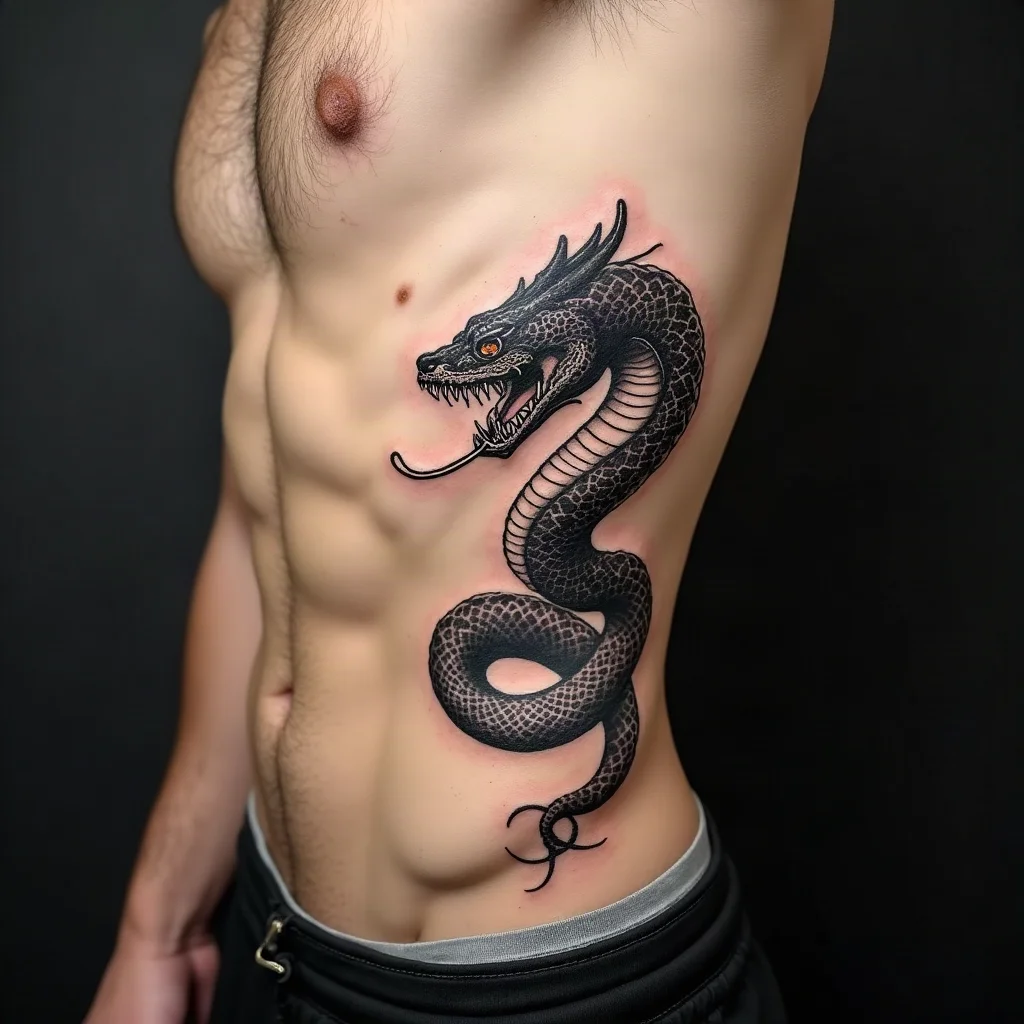
A single serpent spiralling from the hip crease down to the knee, its body crossing front, outer and back surfaces. Because it's one continuous form, it reads clearly even where the leg curves away from view. One of the best wraps for men who want maximum impact with a single subject.
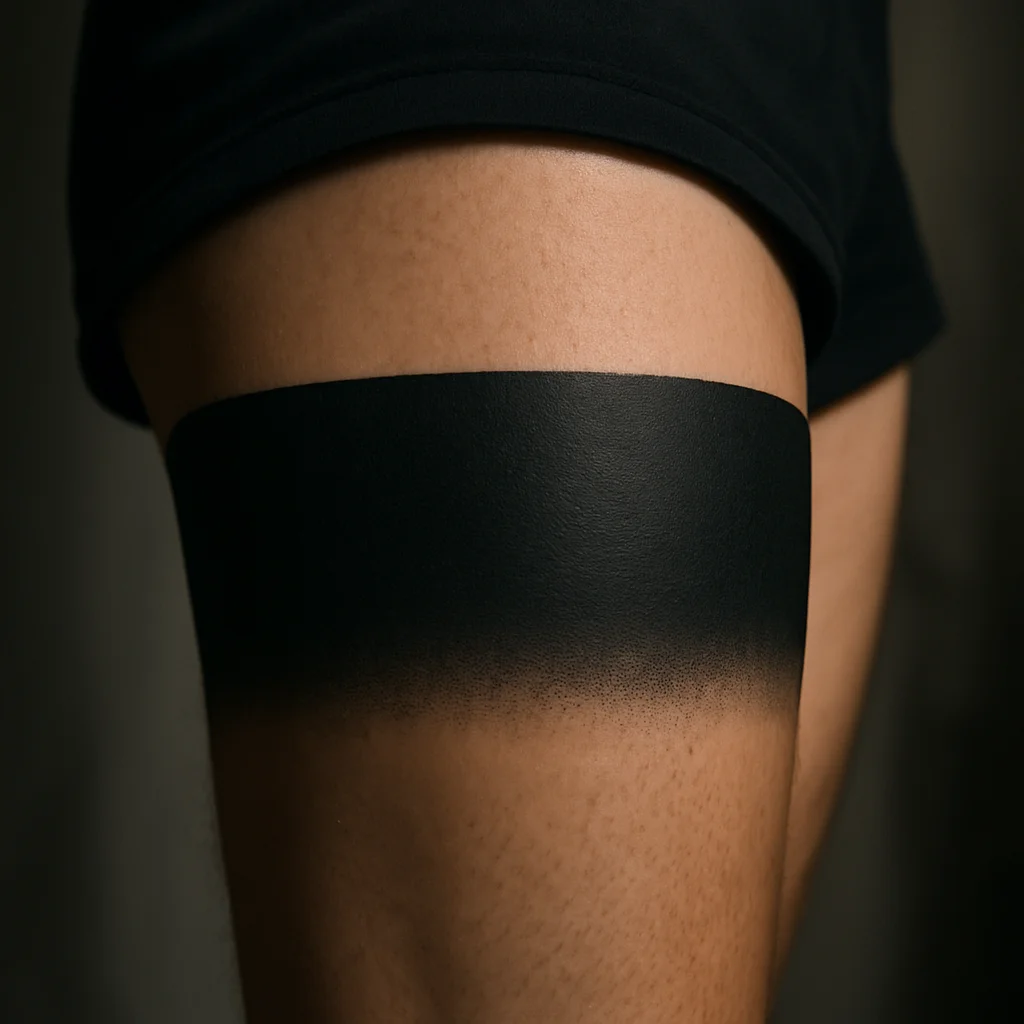
29. Solid blackout band on the upper thigh
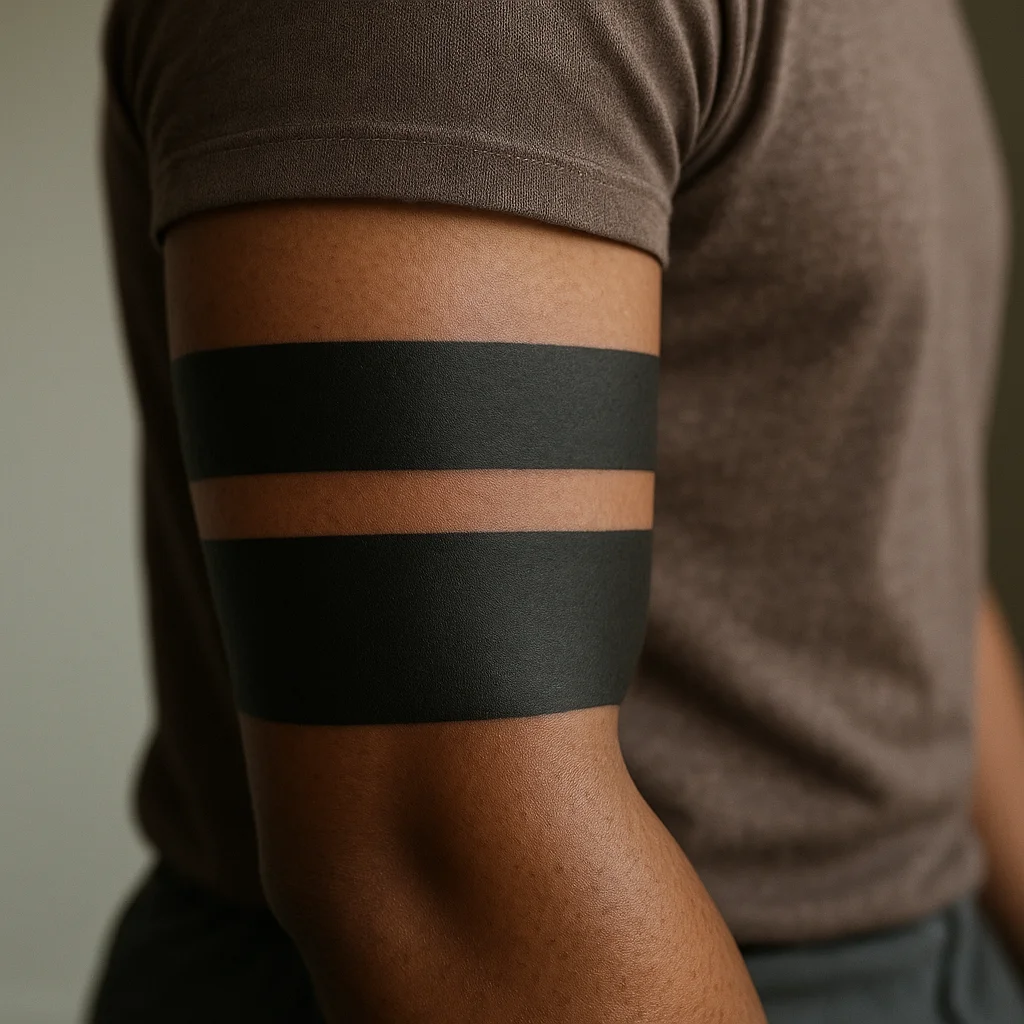
A wide ring of solid black around the top of the thigh, sometimes with a soft feathered lower edge that fades into bare skin. It's a statement, it's long sittings, and it's essentially permanent. Do it only with an artist who packs black cleanly and only after seeing their work healed at a year.
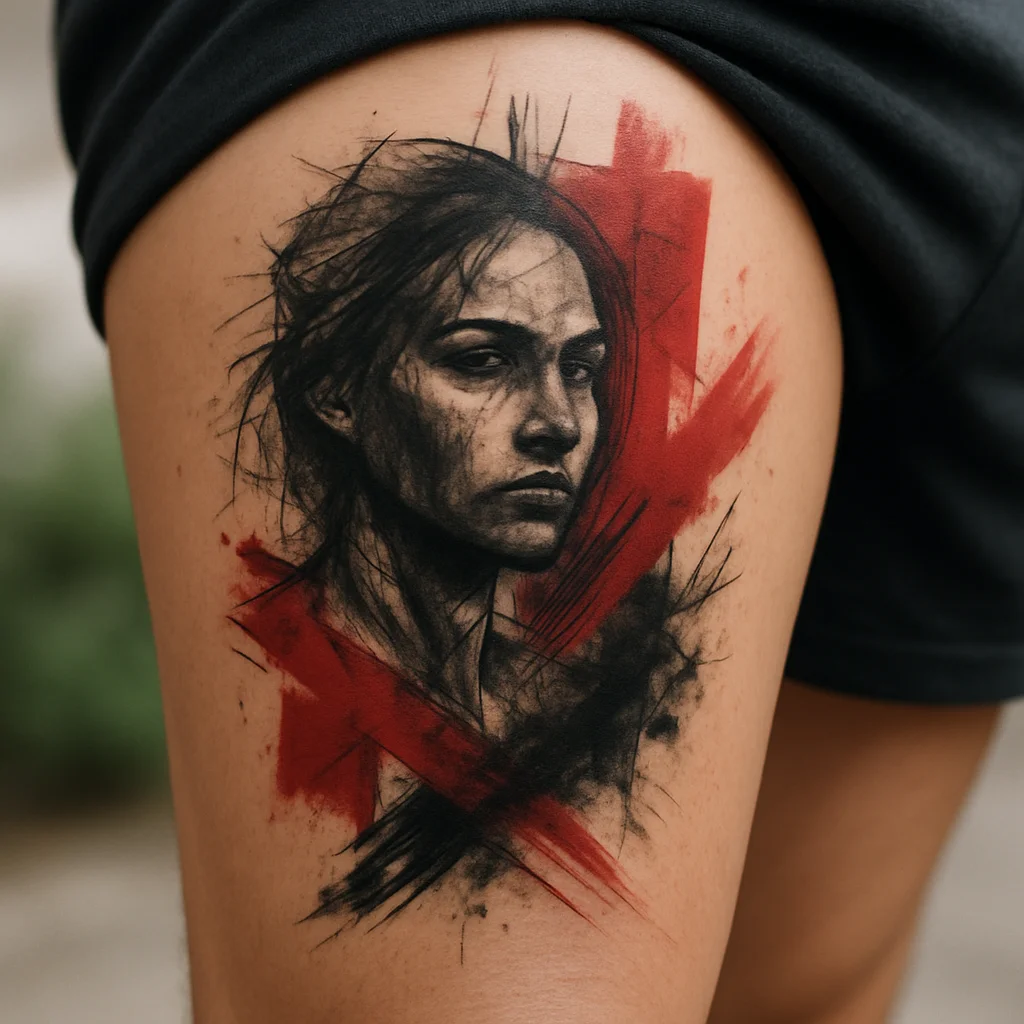
30. Trash polka wrap with graphic slashes
Black realism elements — a face, a clock, a raven — cut through with red blocks, barcode bars and painterly slashes that run around the leg at angles. The asymmetry works well on a wrap because it never needs to line up neatly at the back. Best on men who want something loud and contemporary rather than classical.
Pain, sittings and what a thigh piece really costs
The thigh is one of the friendlier large placements, but it isn't uniform. The outer thigh and the meat of the quad are genuinely manageable — dull, warm, boring rather than sharp. The inner thigh is a different animal: thin skin, sensitive nerves, and a fold that some artists have to stretch to work on. The last two inches above the knee and the hip crease are the two zones men underestimate most.
Endurance matters more than peak pain here, because thigh pieces are long. Four hours on a quad is standard; six is common for panel work. Eat properly beforehand, bring sugar, and wear shorts you don't mind ruining.
On cost, think in hours rather than in flat prices. Most established artists in mid-sized cities charge a rate that lands somewhere in the low-to-mid hundreds per hour, with sought-after specialists well above that. A hand-sized standalone motif is usually a shop-minimum-to-couple-of-hundred job. A half panel typically runs one to two full sittings. A full thigh panel realistically means fifteen to thirty hours spread over months, which puts it in four-figure territory almost everywhere, and a full wrap more again. If a quote for a full leg panel sounds cheap, that's information, not a bargain. Our breakdown of what tattoos actually cost goes deeper on how rates are set.
When you brief the artist, tell them three things: how far down the leg you're willing to go now, whether you want the option to extend later, and whether the piece needs to be invisible in shorts. Those three answers shape the layout more than the subject does.
Healing a thigh tattoo through jeans, sweat and squats
Thighs heal well and get abused more than any other placement. Fresh work spends the whole day in contact with clothing, a chair, or both. Plan for it.
- Days 1–3: expect swelling and heat, especially with big blackwork. Loose shorts or joggers only. Denim on a fresh quad panel drags on the plasma layer and pulls ink out.
- Sitting: a full front-thigh piece rubs on the seat edge every time you sit down. Keep a clean towel on your chair for the first week and stand up more than you'd like.
- Training: no squats, deadlifts, cycling or running for at least a week to ten days on a large piece. Sweat, stretching skin and gym equipment are the three fastest routes to a patchy heal. Upper-body work is usually fine after a few days.
- Washing: lukewarm water, unscented soap, two or three times a day, then a thin layer of fragrance-free moisturiser. Thin is the operative word — heavy cream traps moisture under clothing and causes irritation bumps.
- Peeling: around days 5 to 10. It will itch badly on the leg. Slap, don't scratch, and never pick where a scab has formed over solid black.
- Sun: the thigh sees sun rarely, which is why these pieces stay sharp — but the first beach day after healing should still involve SPF 30 or higher.
Full healing at the skin's surface takes two to three weeks; the deeper settling takes two to three months. Don't judge a large black-and-grey panel until it's had a full month, and book any touch-up after that window, not before. If a section healed light, most artists will fix it free or for a nominal fee — it's normal, especially on solid black over a joint-adjacent area.
Frequently asked questions
Do thigh tattoos hurt more than arm tattoos?
For most men, the outer thigh and quad hurt less than the inner arm, ribs or elbow ditch — the muscle padding takes the edge off. The inner thigh and the area just above the knee are the exceptions and can be sharper than anything on your arm. The real challenge is duration, since thigh pieces usually run four to six hours per session.
How long does a full thigh tattoo take?
A full front-and-outer thigh panel typically takes fifteen to thirty hours depending on detail, style and how densely it's shaded. Artists usually split that across three to six sessions with two to four weeks of healing between them. A full wrap that includes the back of the thigh will add several more hours.
Will a thigh tattoo stretch if I gain muscle or weight?
Gradual muscle gain barely affects a well-drawn thigh tattoo, since the skin adapts slowly. Rapid weight change, however, can distort rigid designs like grids, tight geometry and perfect circles. If your body composition is changing fast, choose organic subjects with flowing lines and tell your artist about your training plans.
Can I start a leg sleeve with just the thigh?
Yes, and it's the smart order. Design the thigh piece with a deliberate stopping point at or above the knee so it looks intentional if you never continue. Tell your artist upfront that you may extend to the calf later, so they leave background elements and flow lines that can connect.
How soon can I go back to the gym after a thigh tattoo?
Upper-body training is usually fine after two or three days as long as you don't sweat heavily onto the fresh area. Leg training, cycling and running should wait at least a week to ten days on a large piece, because stretching skin and sweat both interfere with healing. Swimming and hot tubs wait until the tattoo is fully closed, typically two to three weeks.
The conversation
No comments yet. Got a thought about these designs? Start us off.
Want to weigh in? Join the community to comment, save designs and try them on your skin.