Second Skin on a Tattoo: How Long to Leave It On
Second skin is the easiest way to heal a tattoo badly if you get the timing wrong. Here is how long each sheet should stay on, when to swap it, and how to read your own film like an artist would.
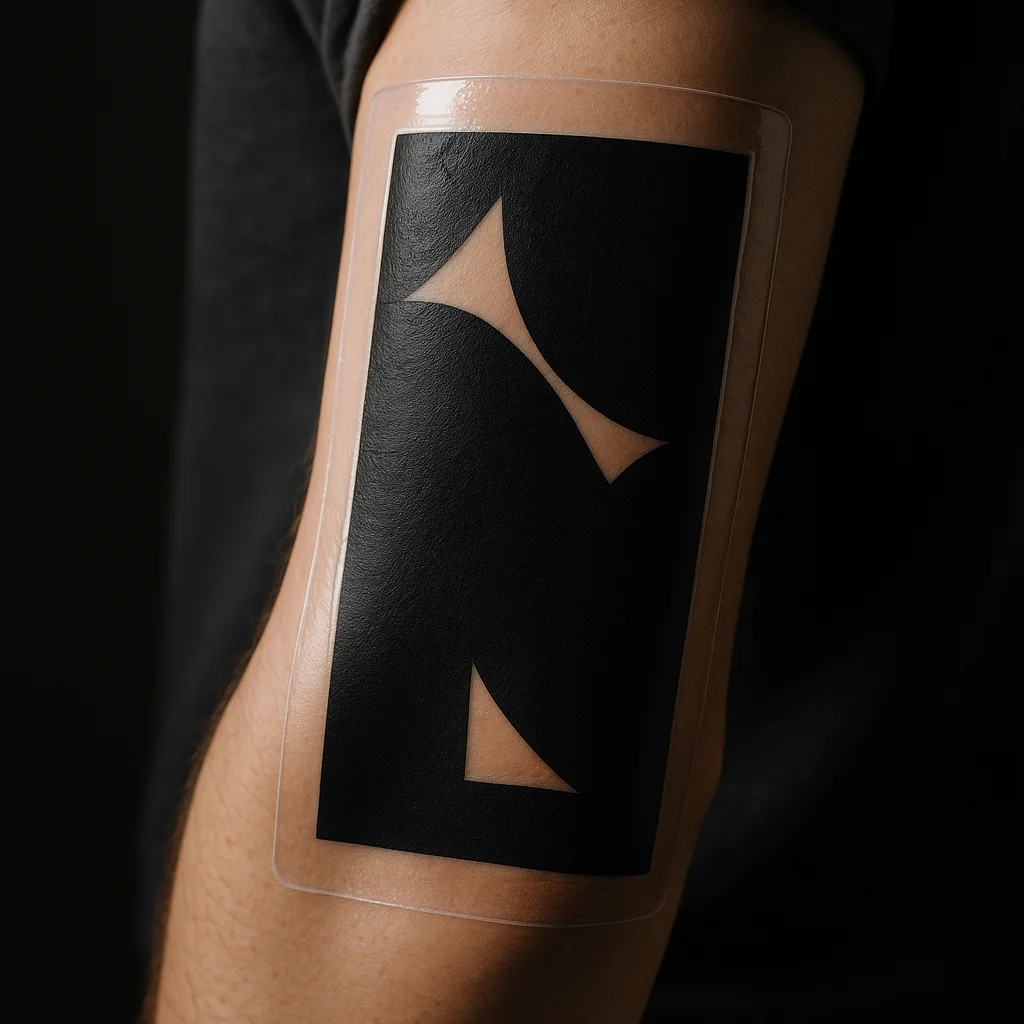
The short answer, with the caveats artists actually care about
Most studios run second skin in two rounds. The first sheet, applied at the studio over the fresh tattoo, comes off after roughly 8 to 24 hours — long enough to catch the plasma, ink and lymph that weeps out on day one. The second sheet, which you apply yourself on clean, dry skin, stays on for 3 to 5 days, occasionally 6 if the seal is still perfect. Total time in film: about 4 to 7 days, and no single sheet should live on your skin past day six.
Brand instructions vary a little. Saniderm, Dermalize, Hydrofilm and the studio's unbranded roll all behave slightly differently in thickness and stretch, so read the sheet your artist actually used rather than a random forum post. What does not vary: film is only doing its job while the border is fully sealed. The moment fluid can escape at an edge, the bandage is a wick for bacteria instead of a barrier.
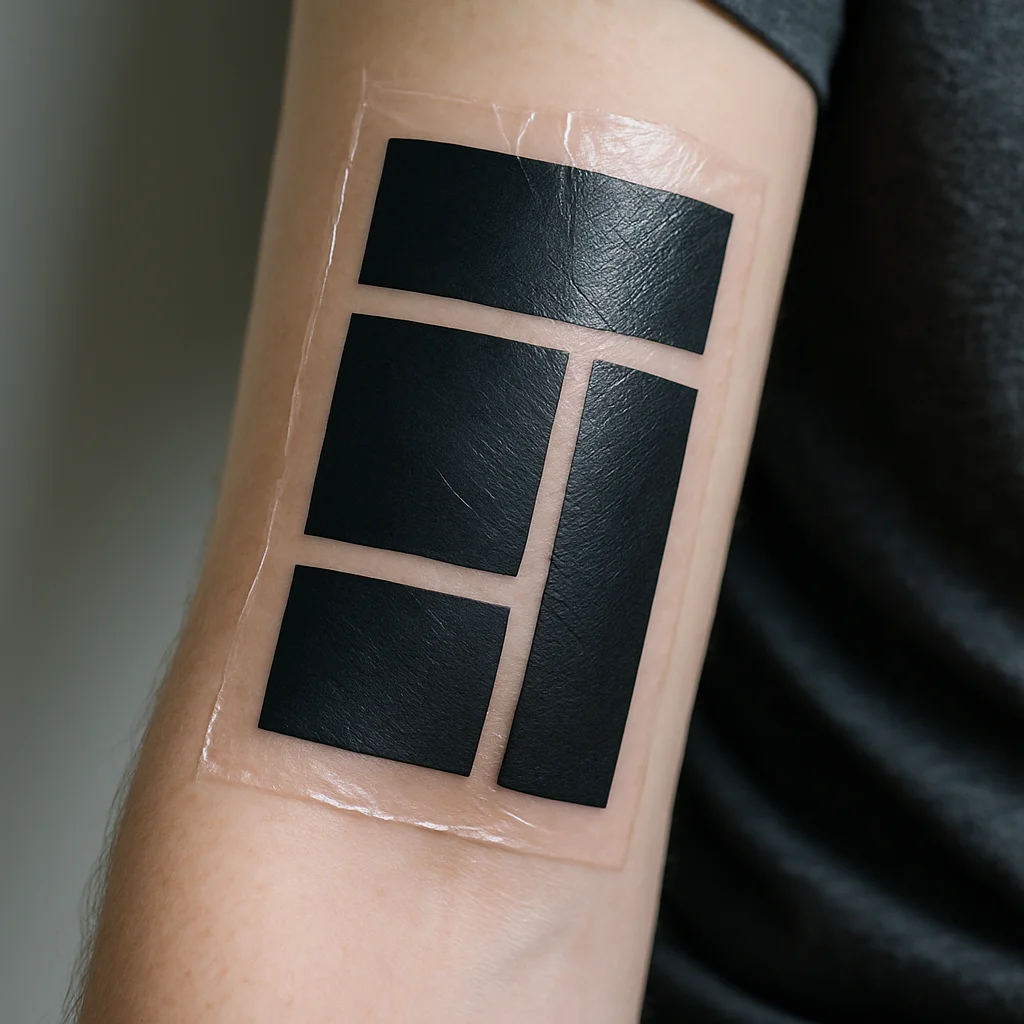
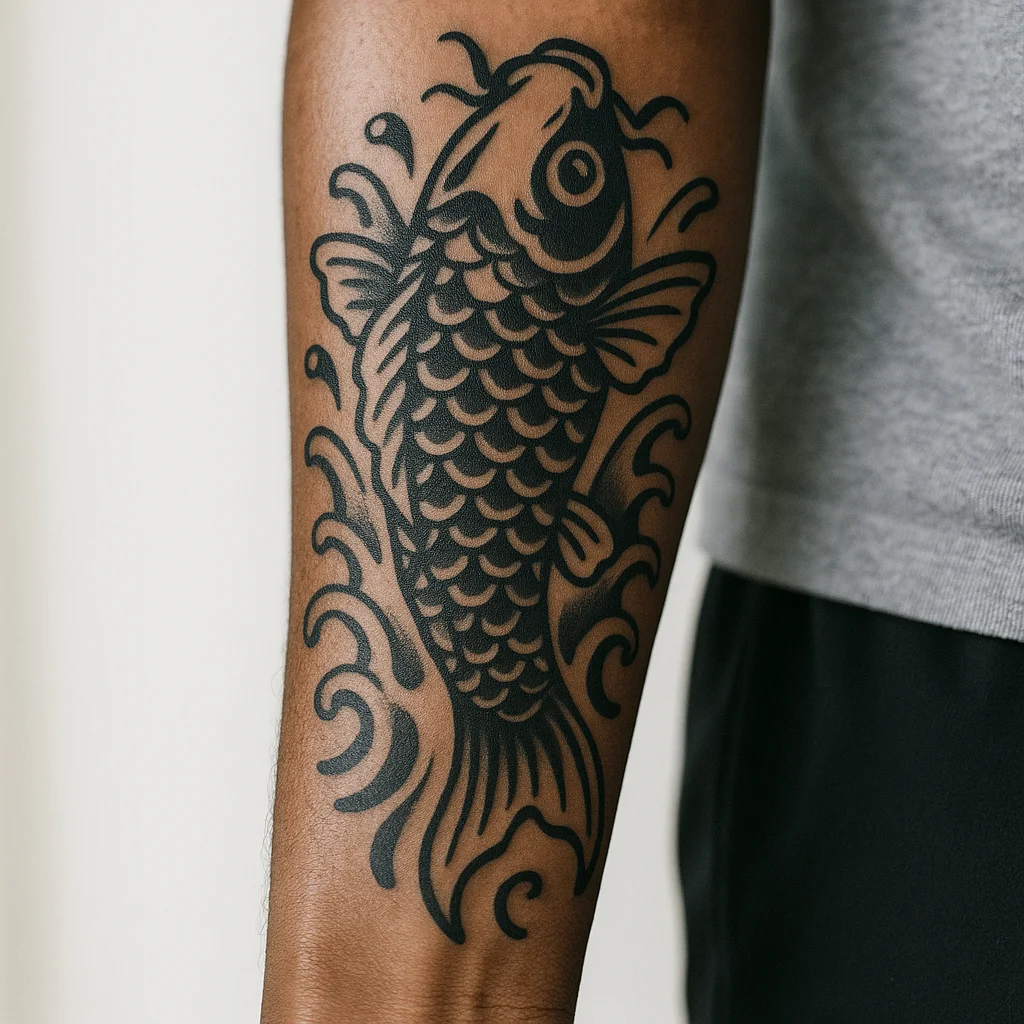
Volume of ink matters more than most people expect. A heavy blackwork forearm panel with dense fill and long saturated lines weeps far more in the first 12 hours than a palm-sized fine-line piece, and that first sheet may balloon with fluid by hour six. A light single-needle tattoo can sit comfortably in one sheet for four days with barely a smear under it. Your job is not to hit a number on a calendar — it is to keep sealed film over the tattoo for the weeping phase, then get it off before the skin underneath starts to macerate.
The first change: reading the fluid under your film
Day one is the messy one. Within a few hours you will see a pool of red-brown fluid collecting under the film — plasma tinted with excess pigment. That looks alarming and is completely normal. What you are watching for is volume and pressure: if the pool is spreading toward the edge of the sheet or lifting the adhesive border, change it early rather than waiting for a set hour.
A practical routine for the first swap:
- Take the sheet off in a warm shower, ideally between 8 and 24 hours after the tattoo was finished.
- Wash the tattoo with clean hands and unscented liquid soap, rinsing until the surface feels squeaky rather than slippery.
- Pat dry with paper towel, then let it air dry 15 to 20 minutes. Trapped moisture is the single most common reason a second sheet fails.
- Apply the new film with a generous 2 to 3 cm margin of clean skin all the way round, smoothing from the centre outward.
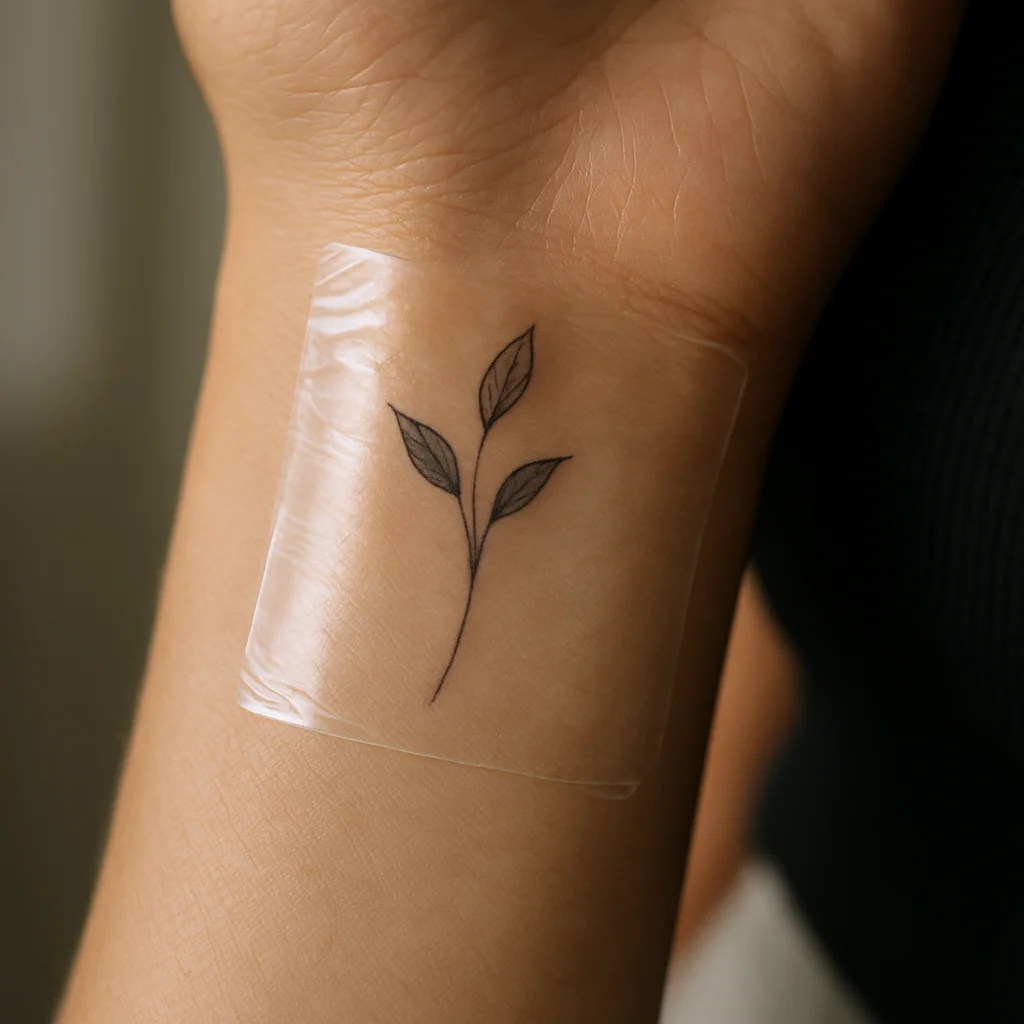
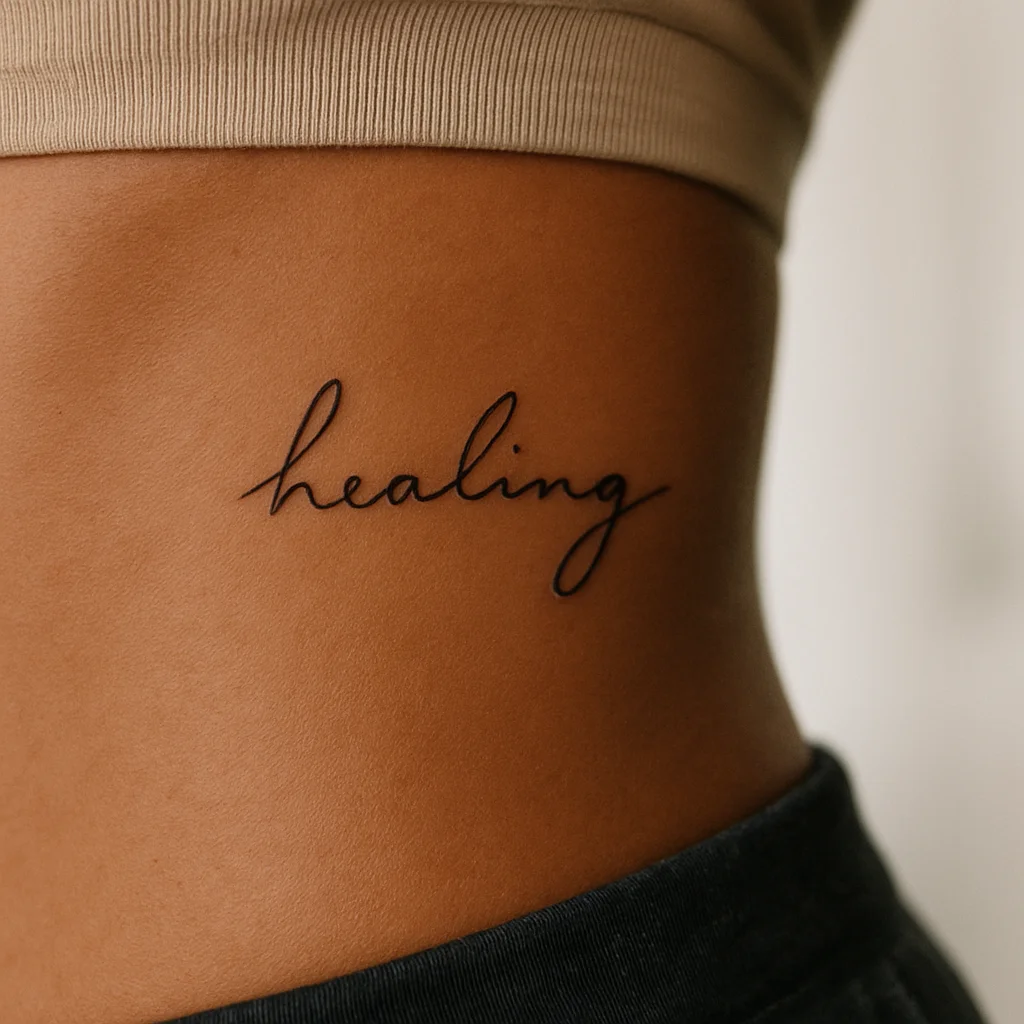
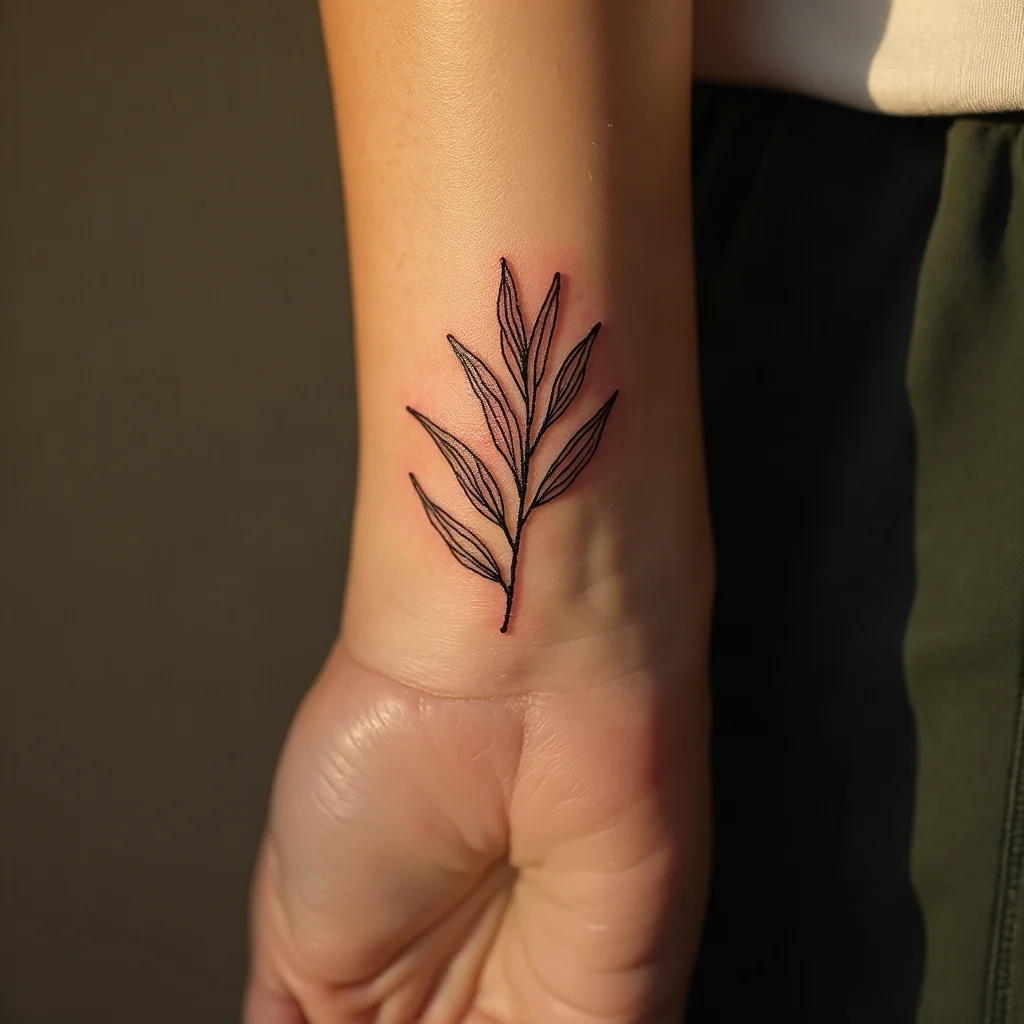
Do not moisturise under second skin. Ointment breaks the adhesive bond and turns the space under the film into a warm, greasy pocket. A fine-line botanical on the inner wrist is a good example of how little you need: one thin sheet, no product, and the piece heals almost invisibly because it never gets scrubbed or scabbed.
If you were sent home with only one sheet, ask your artist whether they sell extras. Most studios sell pre-cut pieces for a few dollars each, and a roll from a pharmacy or online supplier costs roughly the price of a couple of good tubes of aftercare balm — cheap insurance for a piece you paid hundreds for.
How long the film really lasts, area by area
Second skin is a mechanical product, and mechanics change with the body part. The number your artist gives you is a best case for skin that does not fold, sweat or rub.
Flat, low-movement panels: 4 to 6 days
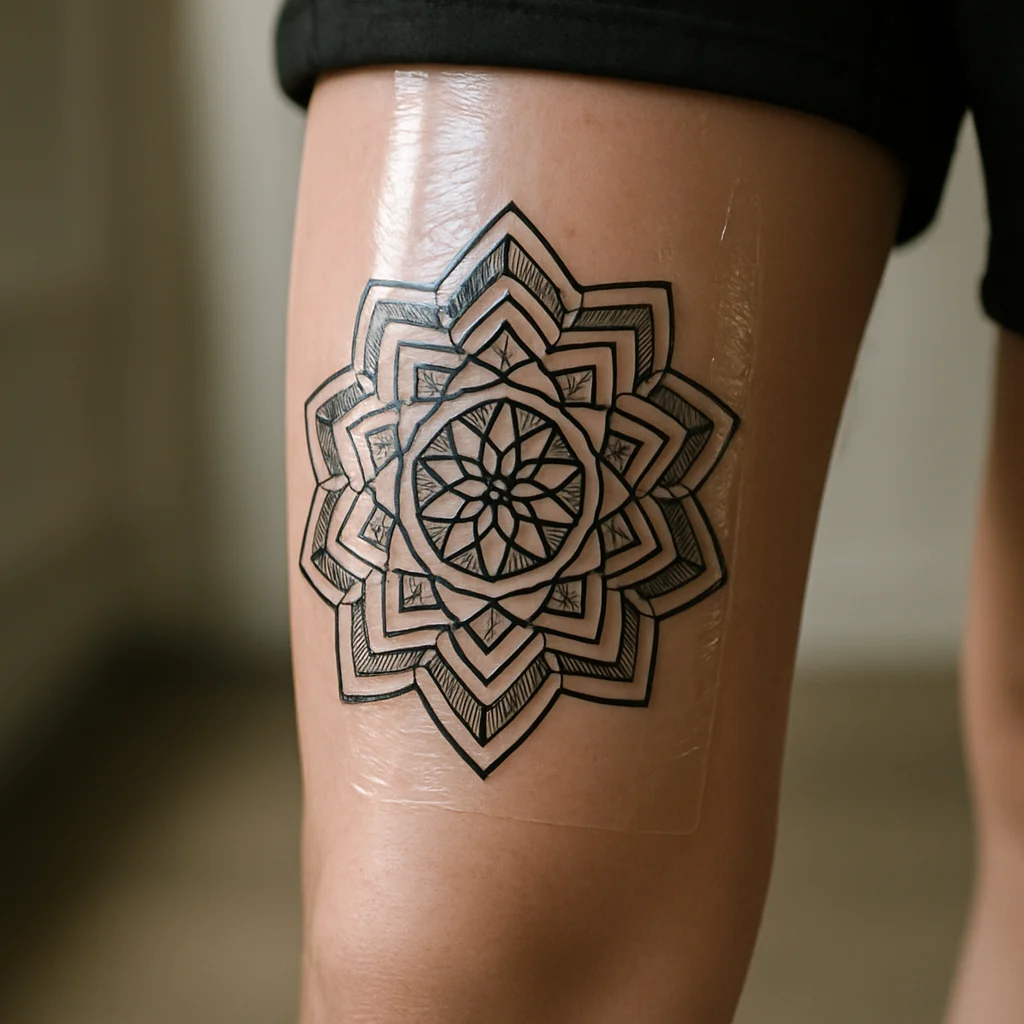
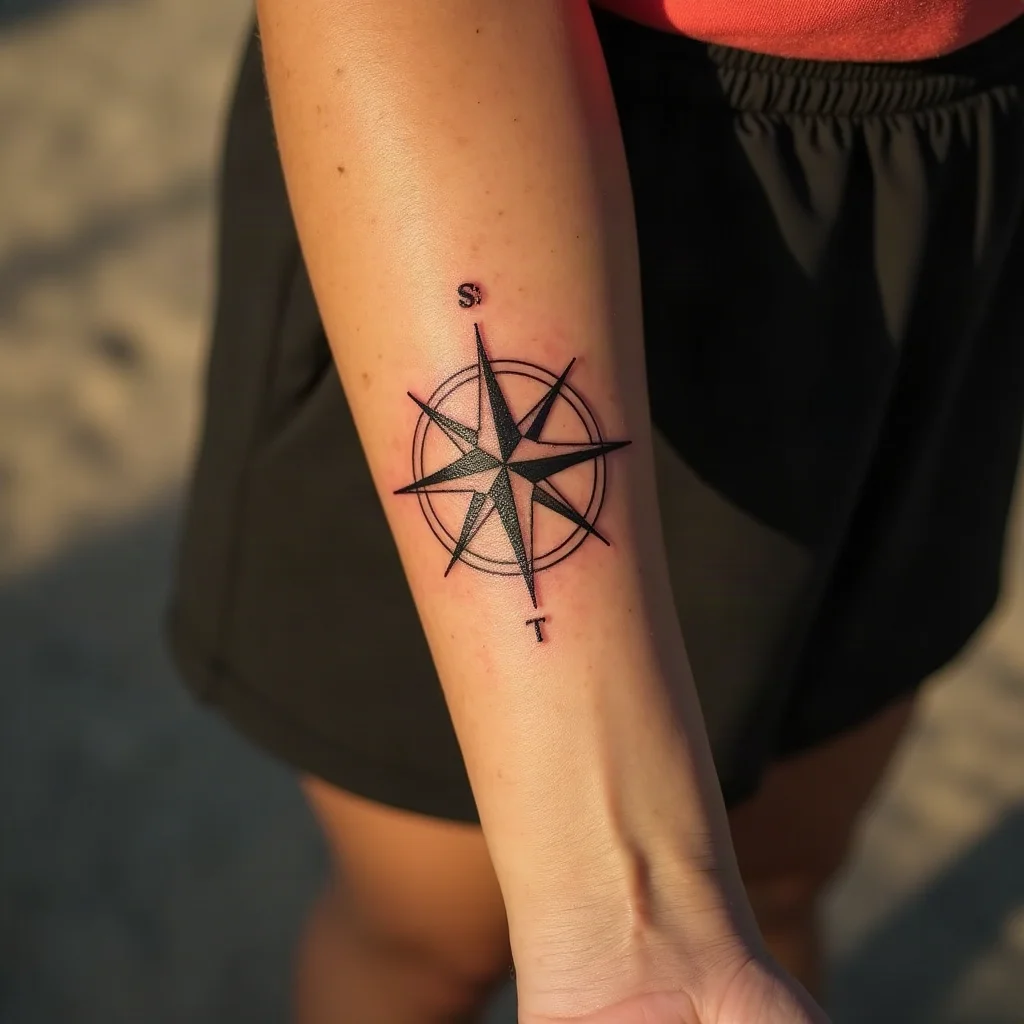
Outer forearm, upper arm, thigh, calf, shoulder blade, upper back. Here the adhesive gets a clean run and a well-applied sheet often survives the full window. A geometric calf mandala sitting over the muscle belly is the easy case — good seal, minimal friction, one sheet from day one to day five.
Flexing and folding areas: 2 to 4 days
Inner elbow, back of the knee, wrist crease, armpit side of the ribcage, ankle. Every bend pumps the edge of the film and the seal fatigues. Expect to change it once mid-week and plan for it rather than being annoyed by it.
High-friction and sweat zones: 1 to 3 days, or skip it
Hands, fingers, feet, neck and anywhere clothing seams sit. Fingers in particular are hopeless — the film rolls off within hours. Many artists send hand and finger clients home with the traditional wash-and-thin-balm routine instead.
Chest, stomach and large backs: staged sheets
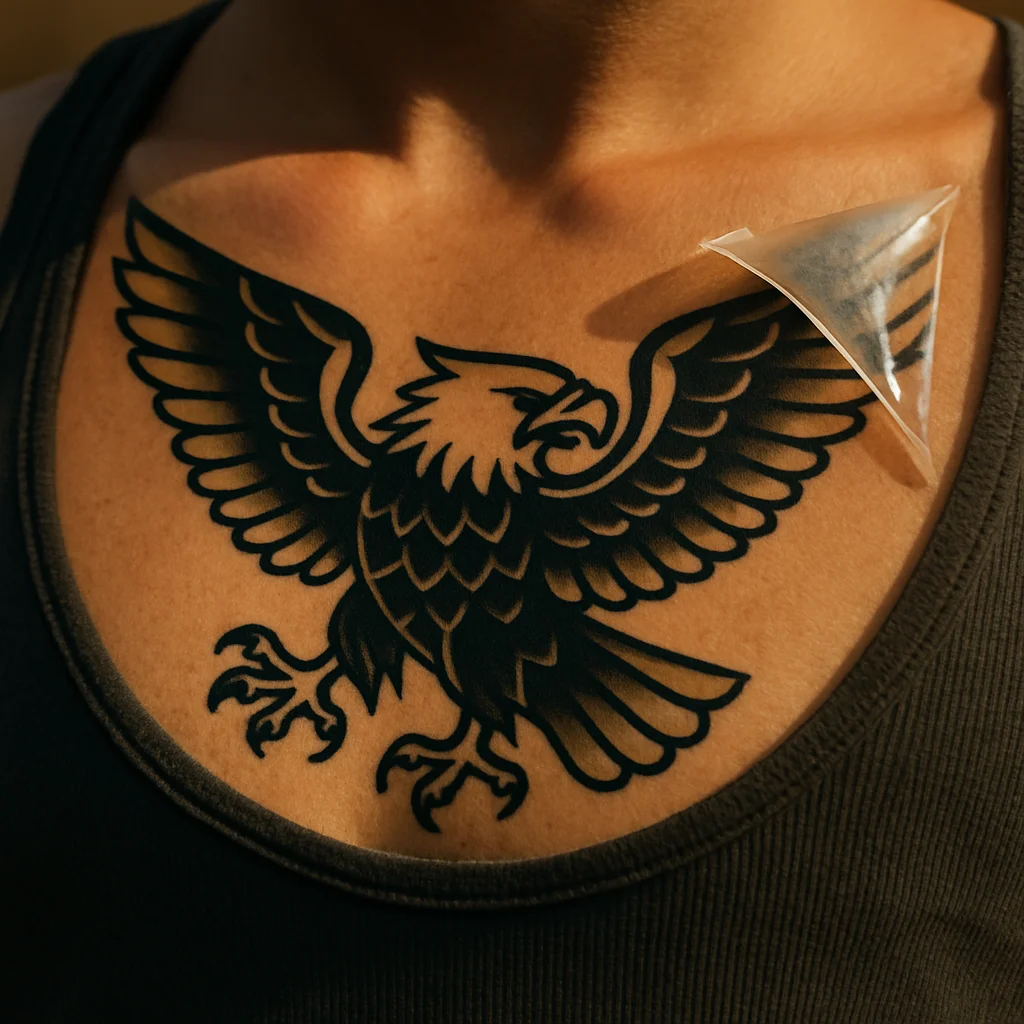
Big pieces often need overlapping sheets, and overlaps leak. A traditional eagle across the chest may be filmed in two or three panels with a slight tile overlap at the top edge, so gravity drains fluid away from the joins instead of into them. If one panel fails, replace that panel only.
Whatever the area, the ceiling is the same: get everything out of film by around day seven and let air finish the job. For what to expect once the plastic is gone, our day-by-day healing breakdown lines up neatly with this timeline.
When to take it off early
Timing rules bend to symptoms. Pull the film sooner than planned if you see any of these:
- A broken seal. Any lifted edge with fluid escaping means the barrier is gone. Remove, wash, re-film or switch to open healing.
- Fluid that has turned cloudy, yellow-green or genuinely smelly once you open it. Plasma smells faintly metallic; infection does not smell faint.
- A red, bumpy, itchy border tracing the exact shape of the adhesive. That is a contact reaction to the glue, not a tattoo problem. Take it off, wash, and heal dry with a thin balm.
- Burning, throbbing pain that increases after day two, spreading warmth, or red streaks running away from the tattoo. Off, and call a doctor.
- White, wrinkled, waterlogged skin at the edges — maceration from the sheet being on too long or applied over damp skin.
Also take it off early for practical reasons: if it soaked through at the gym, if you fell asleep on it and the pool has smeared across the whole panel, or if you simply cannot get a good look at the tattoo. Second skin is a tool, not a commitment. There is no healing penalty for finishing the last two days in open air with clean hands and a light unscented lotion — that is how tattoos were healed for decades before film existed.
One more honest note: a bit of ink smudging under the film, a slight blur to the lines through the plastic, and a faint shadow around bold black are all normal. Judge saturation at week three, not day three.
Taking it off without wrecking the lines
Ripping second skin off dry is how people pull scabs, and on a fresh piece that can lift pigment. Do it in the shower, every time.
- Stand under warm water for two or three minutes so the adhesive softens. Warm, not hot — hot water makes a healing tattoo throb.
- Find a corner and lift it, then fold the film back on itself so you are pulling at a low angle, almost parallel to the skin, rather than straight up.
- Pull slowly in the direction of your hair growth, stretching the skin behind the film with your other hand as you go.
- If it grips, run water directly into the gap or work a little unscented oil or lotion into the edge and wait a minute. Never speed-peel a stuck section.
- Wash the tattoo with unscented soap to remove the adhesive residue and the film of plasma, then pat dry and air dry.
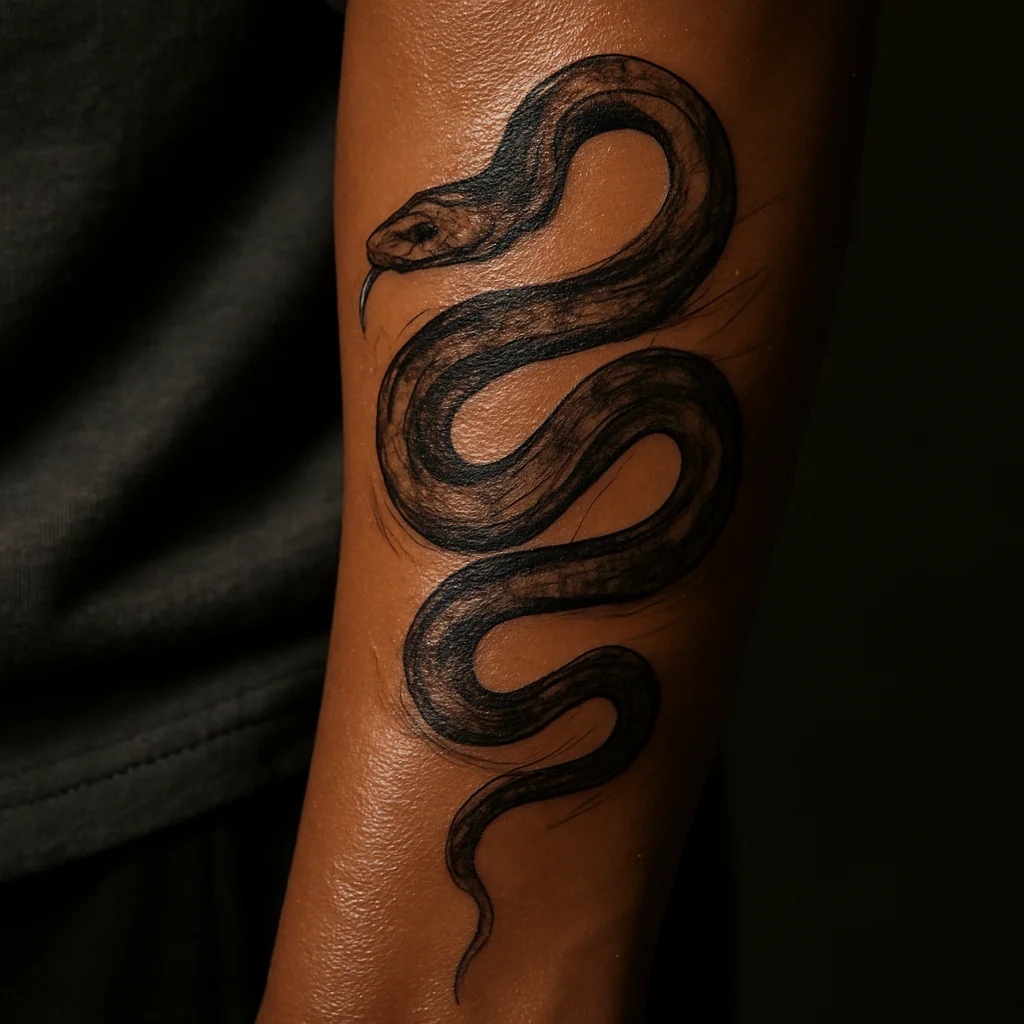
Expect the tattoo to look dull, slightly shiny and a touch shrivelled straight after removal. That is normal rehydration territory, and it settles within a day. An illustrative snake wrapping the outer forearm will look strangely faded at the moment the film comes off and be back to full contrast by the evening.
Sensation-wise, removal is a mild sting on flat skin and genuinely unpleasant over bony spots like the ankle, ribs and collarbone, where the skin has nothing to brace against. Slow and wet beats fast and dry every time. Save the film in case you need to check it — and take a photo of the tattoo the day it comes off, so you can track healing without guessing.
The days after the film: what actually decides how it heals
Film out around day five to seven puts you in the peeling phase, and that stretch decides how crisp your lines look at a month. The routine is boring on purpose:
- Wash twice a day with unscented liquid soap, clean hands only, no washcloths or loofahs.
- Thin layer of unscented lotion or balm two to three times a day — enough to look matte, not glossy. Over-moisturising causes pimply bumps.
- Let it flake off on its own. Picking a peel during week two is the fastest route to a patchy line.
- No pools, baths, lakes, saunas or hot tubs for two to three weeks. Showers are fine from day one.
- Gym: light training after a few days, but keep the fresh area out of sweaty equipment contact and skip anything that grinds the skin. Ribs and inner arm pieces hate rowing and pull-ups early on.
- No sun on the fresh tattoo for a month, then SPF 30 or higher forever if you care about black staying black.
Second skin does not make aftercare optional, and it does not replace healing time — a tattoo is still closing over for two to three weeks and remodelling underneath for two to three months. What film buys you is a cleaner first week: less scabbing, less rubbing on sheets and sleeves, less ink lost to a towel.
Brief your artist before the needle goes in. Tell them if you have had an adhesive reaction, if you work in a kitchen or on a building site, or if you cannot get to a mirror to re-film your own back. A good artist will either send you home with two or three pre-cut sheets or advise a dry heal from the start — and both routes end in the same clean tattoo when the timing is right.
Frequently asked questions
How long should the first piece of second skin stay on?
Usually 8 to 24 hours, because that is when the tattoo weeps most and the sheet fills with plasma and ink. Change it earlier if the pool is pushing against the adhesive border or the seal has lifted anywhere. After that first swap, a clean sheet applied to dry skin can stay on for 3 to 5 days.
Can I leave second skin on for a full week in one go?
Not with one sheet. A single application over a fresh tattoo traps day-one fluid, and by day five or six that pocket macerates the skin and stops being sterile. Total film time of up to about seven days is fine, but it should be split across at least two sheets.
Is it normal for fluid to build up under the film?
Yes. Red-brown, slightly cloudy plasma mixed with excess pigment is exactly what the bandage is designed to hold. Worry only if the fluid turns yellow-green, smells foul when opened, or the area gets increasingly hot and painful after day two.
Can I shower with second skin on?
Showering is fine and expected, since the film is waterproof. Avoid pointing a hard jet at the edges, keep the water warm rather than hot, and pat the outside dry afterwards. Baths, pools and hot tubs are out until the tattoo is fully closed.
What if I am allergic to the adhesive?
A red, itchy, bumpy border in the exact shape of the sheet is a contact reaction, not an infection. Remove the film, wash gently with unscented soap, and heal the tattoo in open air with a thin layer of unscented lotion. Tell your artist before your next session so they skip film entirely.
The conversation
No comments yet. Got a thought about these designs? Start us off.
Want to weigh in? Join the community to comment, save designs and try them on your skin.