Swimming After a Tattoo: How Long to Really Wait
A fresh tattoo is an open wound, and a pool is a shared body of warm, chemically treated water. Here's the real timeline, the signs that say you're cleared, and what to do if you already got in.
The honest timeline: two weeks minimum, three to four to be safe
Most artists give the same answer, and it isn't marketing caution: stay out of the pool for at least two weeks, and ideally wait until the full surface heal is done, which for most people lands somewhere between three and four weeks. The skin has to be closed. Not scabbed over, not almost there — closed, with no flaking, no weeping, no raw patches.
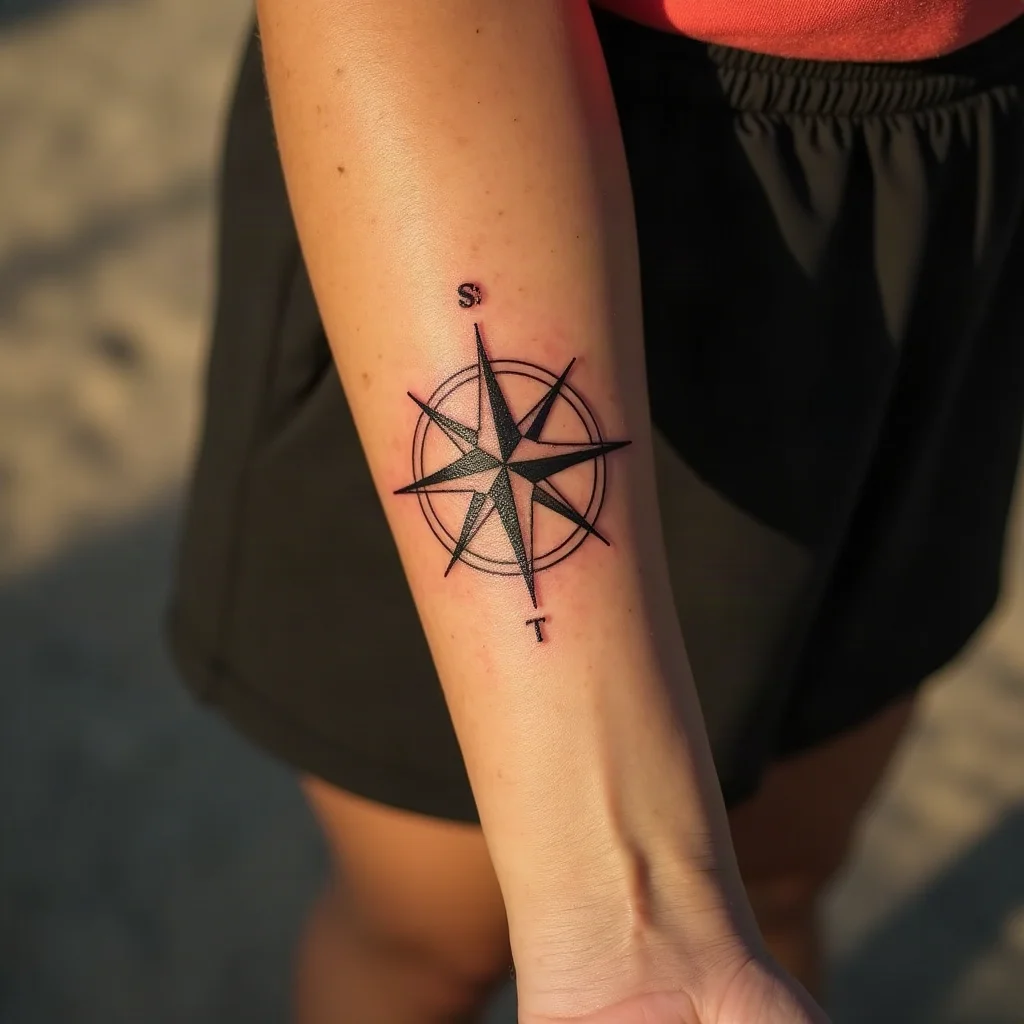
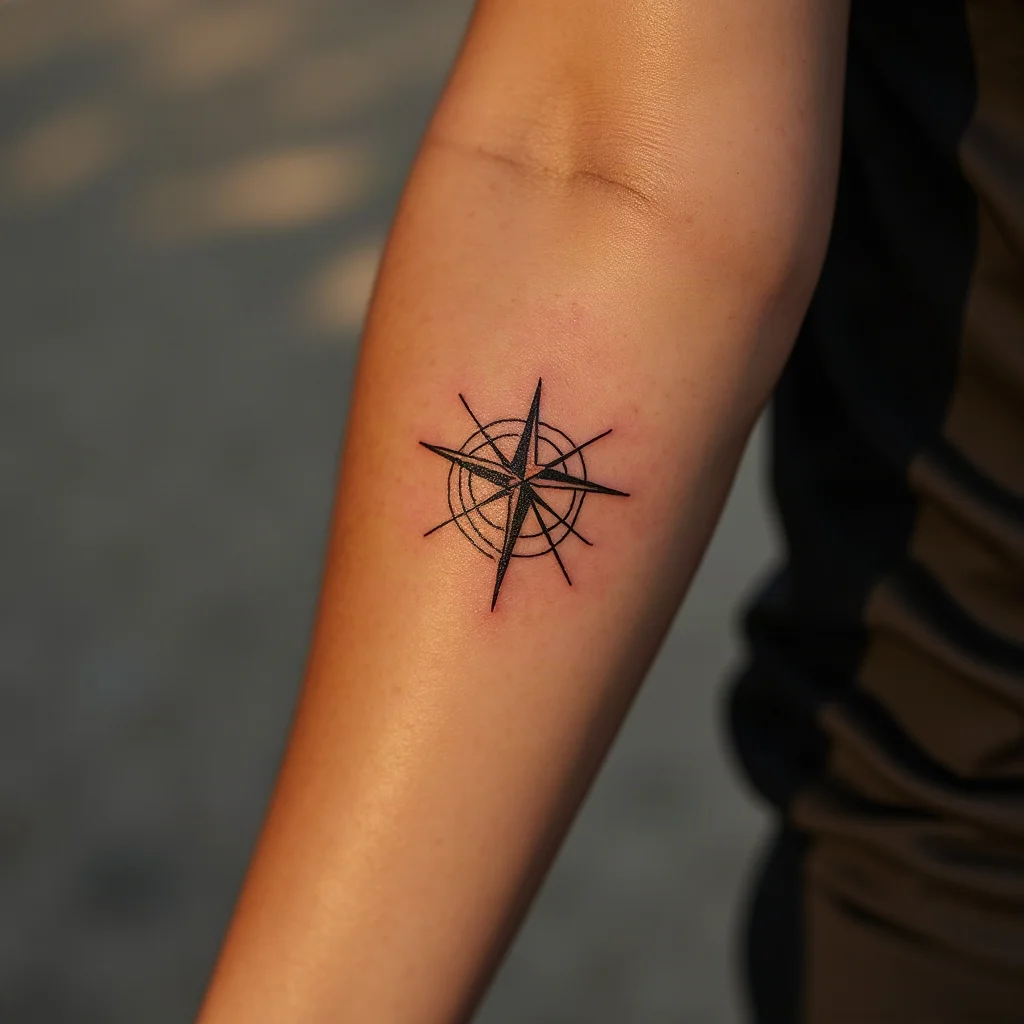
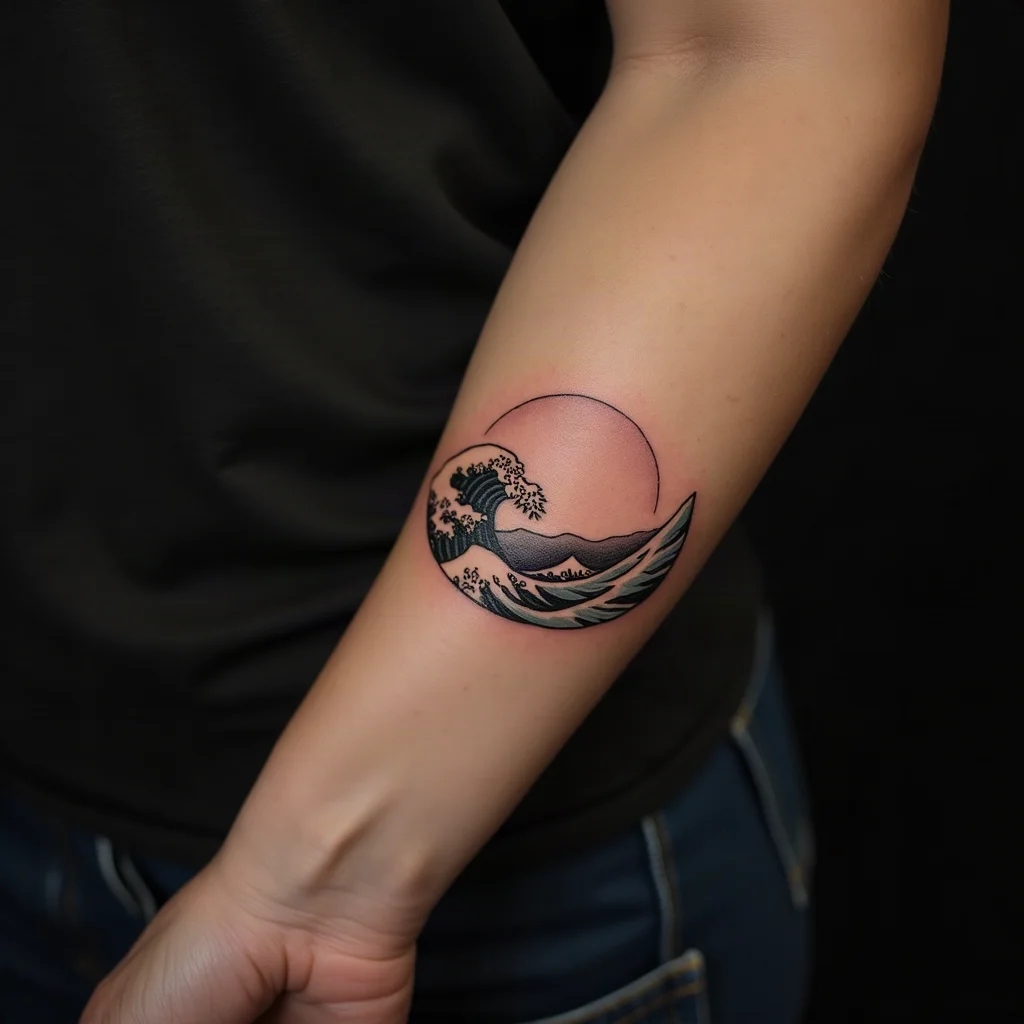
Why the range? Because tattoos don't heal on a fixed clock. A delicate piece like a fine-line wave curling around a small compass on the inner forearm, done in one light pass, can be surface-healed in about 10 to 14 days. A heavily shaded or solid-black piece, or anything on a high-friction spot, can still be shedding at day 18. Bigger sessions mean more trauma, more plasma, longer scabbing.
Understand what "healed" means here, too. The outer layer closes in two to three weeks, but the deeper dermis is still remodelling for months — the reason your tattoo can look slightly cloudy or shiny well past week three. Swimming is about the outer barrier, not the deep layer, so once the surface has fully knitted and shed you're clear. If you want the full picture of what's happening underneath, we've mapped it in the 3–6 month healing timeline.
When in doubt, add three days. Nobody has ever regretted swimming slightly later.
What pool water actually does to a healing tattoo
Two separate problems, and people usually only think about one.
The infection risk. An unhealed tattoo is a wide, shallow wound with no intact skin barrier. Public pools are chlorinated, but chlorine is not instant and it doesn't reach everything — biofilm in filters, water on the deck, the handrail you grab climbing out. Hot tubs are worse: warm water degrades chlorine fast and is a known home for Pseudomonas, the bug behind "hot tub rash." On broken skin that's not a rash, that's a real infection, and it can mean antibiotics and a permanently patchy tattoo.
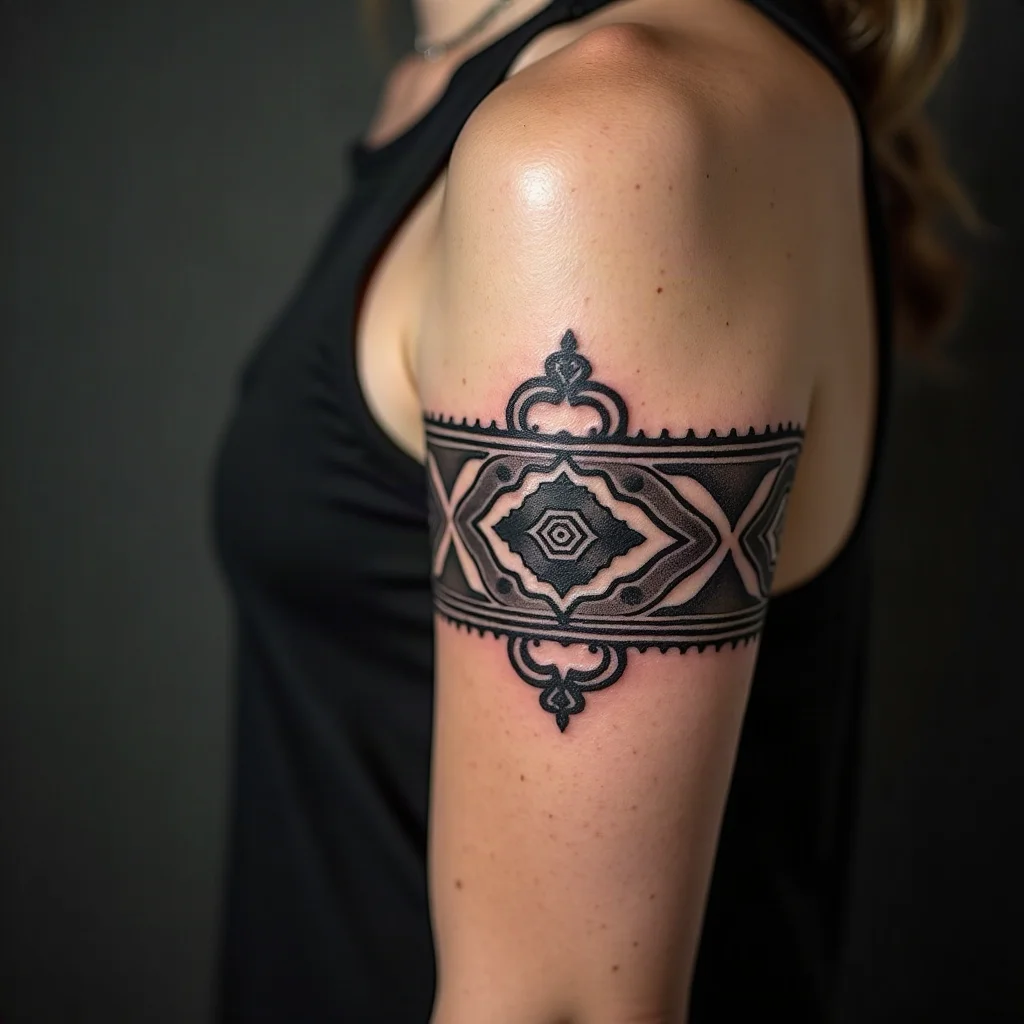
The ink risk. Chlorinated water pulls moisture out of skin and softens scabs. Softened scabs come off early — in the pool, on a towel, against a lane rope — and every scab that leaves before it's ready takes pigment with it. That's how you get the pale blotch in the middle of an otherwise crisp piece, like a hole in the black fill of a bold ornamental band on the upper arm. Prolonged soaking also swells the epidermis and lets serum leach out, which is why people describe skin as "washed out" after an early swim.
Lakes, rivers and the ocean aren't a loophole. Natural water carries bacteria that chlorine at least suppresses; warm brackish water in particular is a bad match for an open wound. The ocean's salt does not disinfect a tattoo, and sun exposure at the beach compounds the damage.
How to tell your tattoo is genuinely ready
Forget the calendar for a second and read the skin. Do this in daylight, not bathroom light.
- No scabs, anywhere. Not even the thin papery ones along a heavy black outline. If a fingertip catches on any texture, you're not done.
- No flaking or peeling. The snake-skin stage must be fully over, including the stubborn corners near joints.
- The surface is matte, not shiny. A tight, glossy sheen means new epidermis is still forming underneath.
- No pink halo around lines, no warmth, no tenderness when you press.
- The itch has passed. Deep itching usually signals the last of the repair work.
The one exception to "looks fine": if a section still looks slightly cloudy or milky over the ink but is completely smooth and matte, that's the deeper layer, and it doesn't hold you back from swimming. Cloudy plus flaky does.
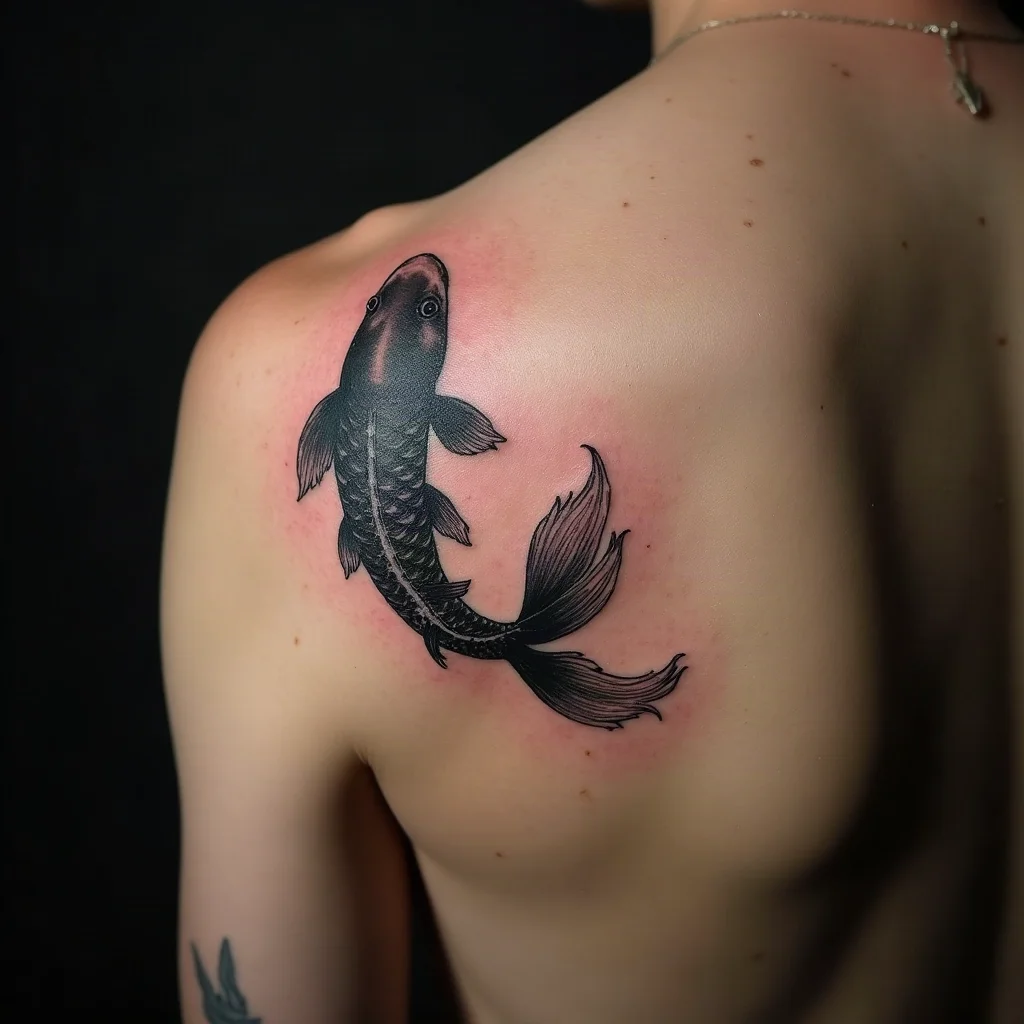
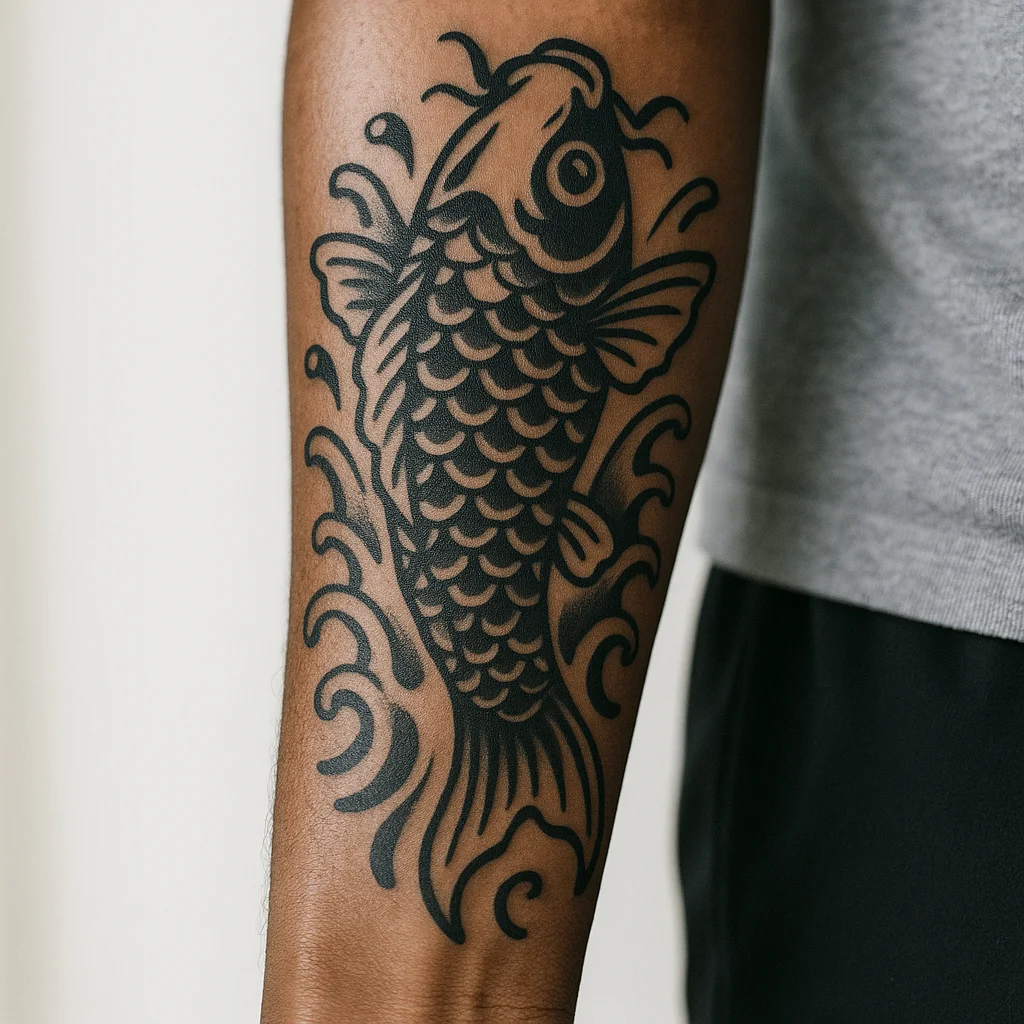
Check the whole tattoo, not the best-looking part. On something like an illustrative koi curving up the shoulder blade, the fine grey wash on the fins usually heals days before the packed black on the body. Your clearance date is set by the slowest square inch. And if you've had a session that scabbed heavily — common with dense colour packing — give it a few extra days beyond the point where it looks done, because a scab that's just released can leave skin that's still fragile underneath.
Placement changes the answer more than you'd think
Where the tattoo sits decides how much abuse it takes in the water and how quickly it closes in the first place.
- Outer forearm, upper arm, calf: flat, low-friction, well-behaved. These tend to hit the two-week mark cleanly and are the easiest to keep out of direct contact with straps and seams.
- Shoulders, upper back and chest: fine for healing, but swimsuit straps and backpack-style rash guards rub exactly there. Even after clearance, wear something that doesn't cross the piece for the first couple of swims.
- Ribs and hips: thin skin, constant movement from breathing and stroke rotation, plus waistbands. Add a few days.
- Feet and ankles: the slowest healers and the worst offenders for pool-deck contact. A foot tattoo picks up moisture, friction from sandals, and everything on the changing-room floor. Three weeks minimum, and four is smarter.
- Hands and fingers: constantly wet anyway, constantly in contact with surfaces. These need the longest patience and touch-ups are common regardless.
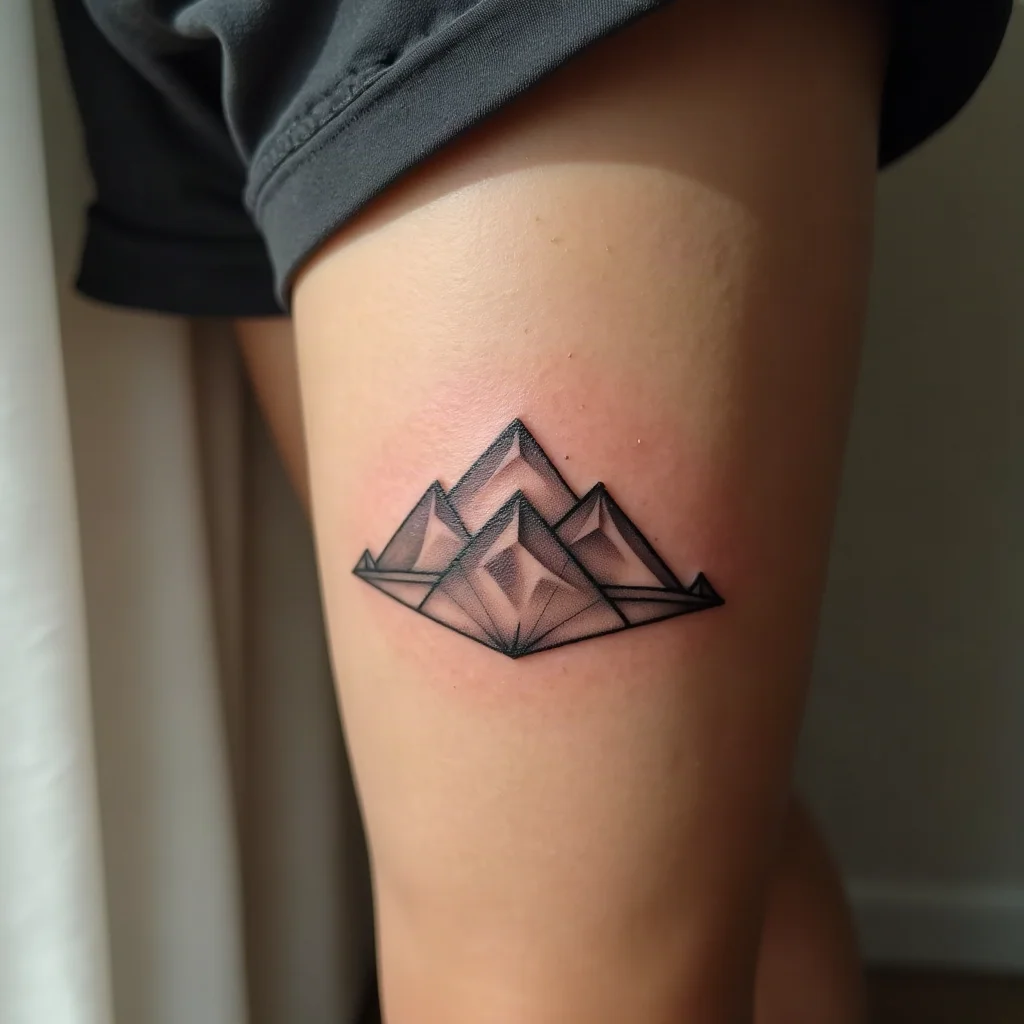
Size matters too. A palm-sized geometric mountain range on the calf is a different healing project from a half-sleeve. Long sessions mean more inflamed tissue and a longer weep phase, so a big piece can trail a small one by a week even with identical aftercare.
If you swim competitively or train daily, tell your artist at the consultation. A good one will plan the placement and session length around your season, and may split the work so you're never out of the pool for a month straight.
Waterproof bandages, and why they aren't a swim pass
Adhesive healing film — the Saniderm, Dermshield or Tegaderm family — is genuinely waterproof against a shower spray. That's the use case: a rinse, standing up, water running off. It is not rated for submersion, and shops that use it are near-unanimous that it does not clear you for a pool. Submerged, the edges lift, warm water works under the film, and you end up with a sealed pocket of contaminated water sitting on an open wound. That's worse than no barrier at all.
If you are in a genuinely unavoidable situation — a lifeguard shift, a swim test, a paid job — the harm-reduction version looks like this:
- Wait as many days as you possibly can first. Day 12 is a very different risk from day 3.
- Apply a fresh, generously oversized piece of film on clean, completely dry skin, with at least an inch of margin on every side.
- Keep exposure short, avoid hot tubs entirely, and don't push off walls with the tattooed limb.
- Remove the film immediately after — in warm water, peeling low and flat, never ripping upward.
- Rinse with lukewarm water and unscented soap, pat dry with a clean paper towel, then a thin layer of your usual ointment.
Accept that this is a compromise, not a solution. And if your skin reacts to the adhesive with a red, itchy border, stop using film altogether and go back to a rinse-and-dry routine — the same one covered in our guide to showering with a new tattoo.
Your first swim back, and protecting the ink long term
When you're cleared, build a small routine and the tattoo will never notice pool season. Rinse with fresh water before you get in — damp skin absorbs less chlorinated water. After you get out, shower promptly with a mild unscented wash, pat dry rather than rub, and moisturise while the skin is still slightly damp. Chlorine is drying, and dry skin makes any tattoo look duller than it is.
The long game is sun, not chlorine. Years of UV does far more visible fading than a swimming habit ever will, especially to fine linework and pale colour. Once healed, use a high-SPF mineral sunscreen on the piece every time you're at an outdoor pool, and reapply after swimming. A rash guard over a fresh-ish half sleeve is not overkill for the first summer.
Worth planning around: if you know you want a large piece and you swim all summer, book it for autumn or winter. You'll heal in long sleeves, avoid the sun problem entirely, and be ready by spring.
If you already swam too early
Don't panic and don't scrub. Rinse thoroughly with lukewarm water and unscented soap, pat dry, apply a thin layer of ointment, and watch it for 48 hours. Spreading redness, heat, swelling that increases rather than decreases, yellow-green discharge, red streaks or a fever mean a doctor, not a tattoo forum. If it heals clean but comes out patchy, most artists will fix it — touch-ups within the first few months are often included or charged at a small fraction of the original price, and a fading-related repair on an older piece usually runs as a short shop-minimum session.
Frequently asked questions
Can I swim one week after getting a tattoo?
No. At day seven most tattoos are still flaking or scabbing, which means the skin barrier is open. Swimming then risks both infection and pigment loss where softened scabs come off early. Two weeks is the absolute floor, and three to four is the safer call.
Is a hot tub worse than a pool for a new tattoo?
Considerably worse. Warm water breaks down chlorine quickly and encourages bacteria like Pseudomonas, and the heat increases swelling and soaking of fragile skin. Skip hot tubs, saunas and jacuzzis until the tattoo is fully surface-healed, which usually means four weeks.
Does chlorine fade tattoos once they're healed?
Regular chlorine exposure dries skin and can dull the look of a tattoo over many years, but it's a slow, minor effect compared with sun damage. Rinse and moisturise after swimming and use sunscreen at outdoor pools, and a healed tattoo holds up fine for a lifetime of swimming.
Will a waterproof bandage let me swim sooner?
Not reliably. Adhesive healing films are made for showering, not submersion, and the edges lift in warm water, trapping contaminated water against the wound. Use them only as harm reduction if swimming is genuinely unavoidable, and remove and clean the tattoo immediately afterwards.
What should I do if I accidentally got my new tattoo wet in a pool?
Rinse it with lukewarm water and unscented soap, pat it dry with a clean paper towel, and apply a thin layer of your usual ointment. Watch it for two days for spreading redness, heat, swelling or discharge, and see a doctor if those appear. If it heals patchy, ask your artist about a touch-up.
The conversation
No comments yet. Got a thought about these designs? Start us off.
Want to weigh in? Join the community to comment, save designs and try them on your skin.