32 Black and Grey Half Sleeves, Light to Heavy
Black and grey half sleeves live or die on tonal value, not subject matter. Here are 32 designs sorted from airy grey wash to near-solid black, with placement, sizing and aging notes for each.
Why tone matters more than subject
Ask ten men what they want in a black and grey half sleeve and nine will answer with a noun: a lion, a clock, a Greek statue. Artists think in a different language. They think in value — how dark each area sits on a scale from bare skin to solid black, and how those values are spaced so the piece still reads from across a room in five years.
Black and grey is built from one pigment. Artists either dilute black into a set of grey washes or build tone through density: whip shading, stippling, tight pepper work. There is no colour to separate one shape from the next, so separation comes from contrast. A sleeve where everything sits in the mid-greys turns into a smudge as it settles. A sleeve with a clear plan — bare skin here, mid-grey there, a spine of true black holding it together — keeps its structure for decades.
That is why the ideas below are sorted by how dark they run, not by theme. Light-wash sleeves feel open and modern but demand a careful artist and steady sun discipline. Heavy black sleeves are the most durable tattoos you can get on an arm, but they commit you: once an upper arm is 60 percent black, your future options narrow. Mid-grey realism sits between the two and is the most common request in most shops.
One more practical note before the list. A half sleeve usually means shoulder cap to elbow or elbow to wrist. Both are roughly 10 to 25 hours of work depending on detail. Pick your tonal lane first, then choose the subject that fits it — that order saves you money and regret.
Light grey wash and open skin (1–8)
These sleeves leave a lot of skin untouched. They photograph beautifully, look expensive when done right, and are unforgiving of a heavy hand — book an artist whose healed grey wash work you have actually seen, not just fresh photos.
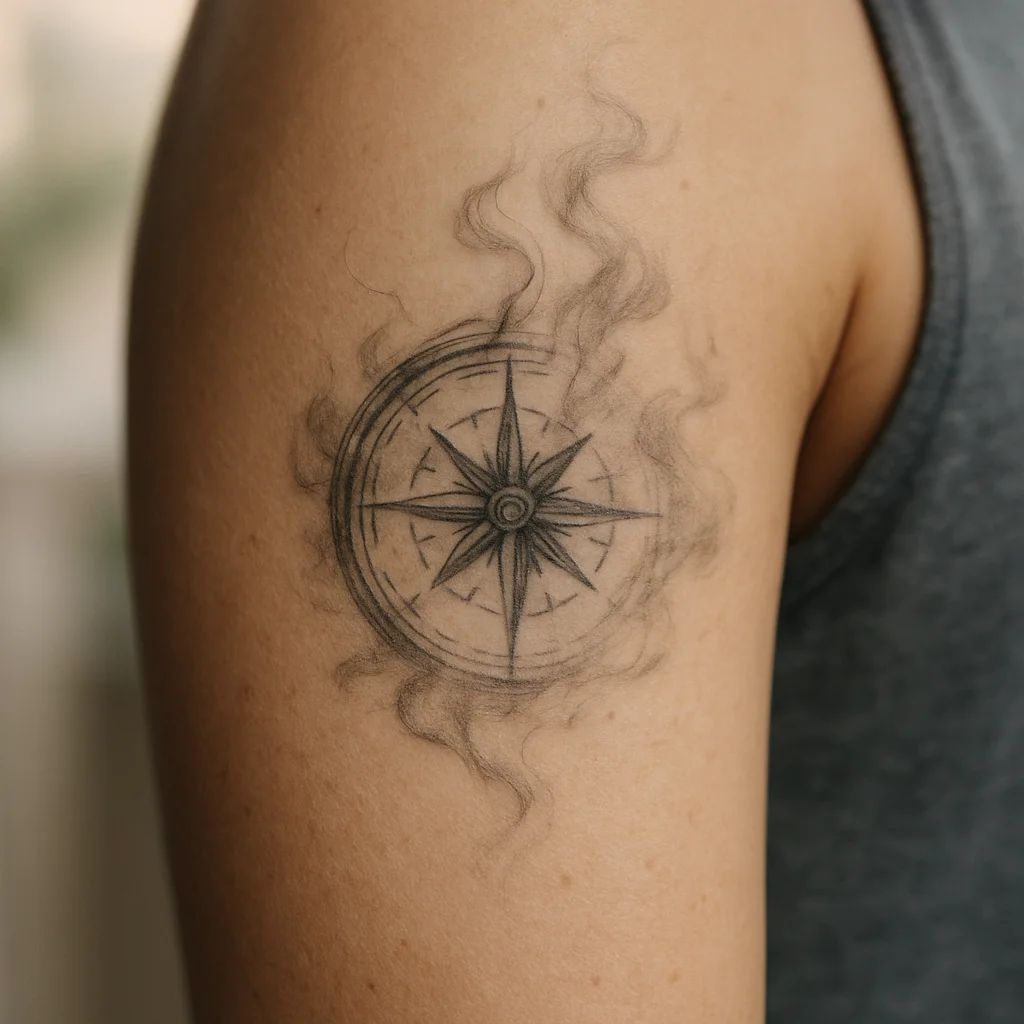
1. Compass floating in smoke
A single navigational compass rendered in soft grey, with smoke curling out from behind it and dissolving into bare skin at the edges. The compass face carries the only crisp linework; everything else is atmosphere. Best on the outer upper arm where the round shape sits flat and the smoke can wrap toward the tricep.
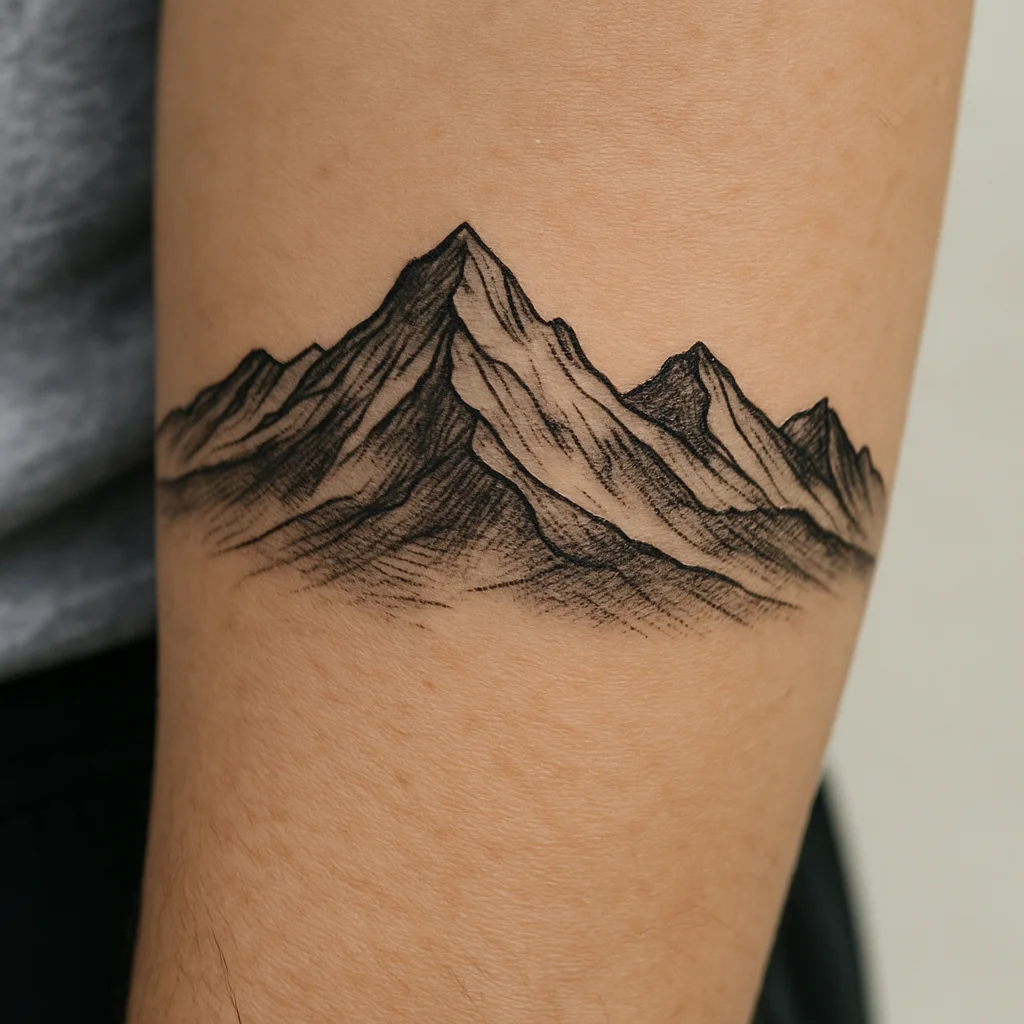
2. Whip-shaded mountain range with an empty sky
Peaks built from short, tapering whip-shade strokes, with the sky above them left completely bare. The negative space does the work — no clouds, no birds, no filler. It suits the outer forearm as a half sleeve, roughly 15 cm tall, and reads cleanly from a metre away.
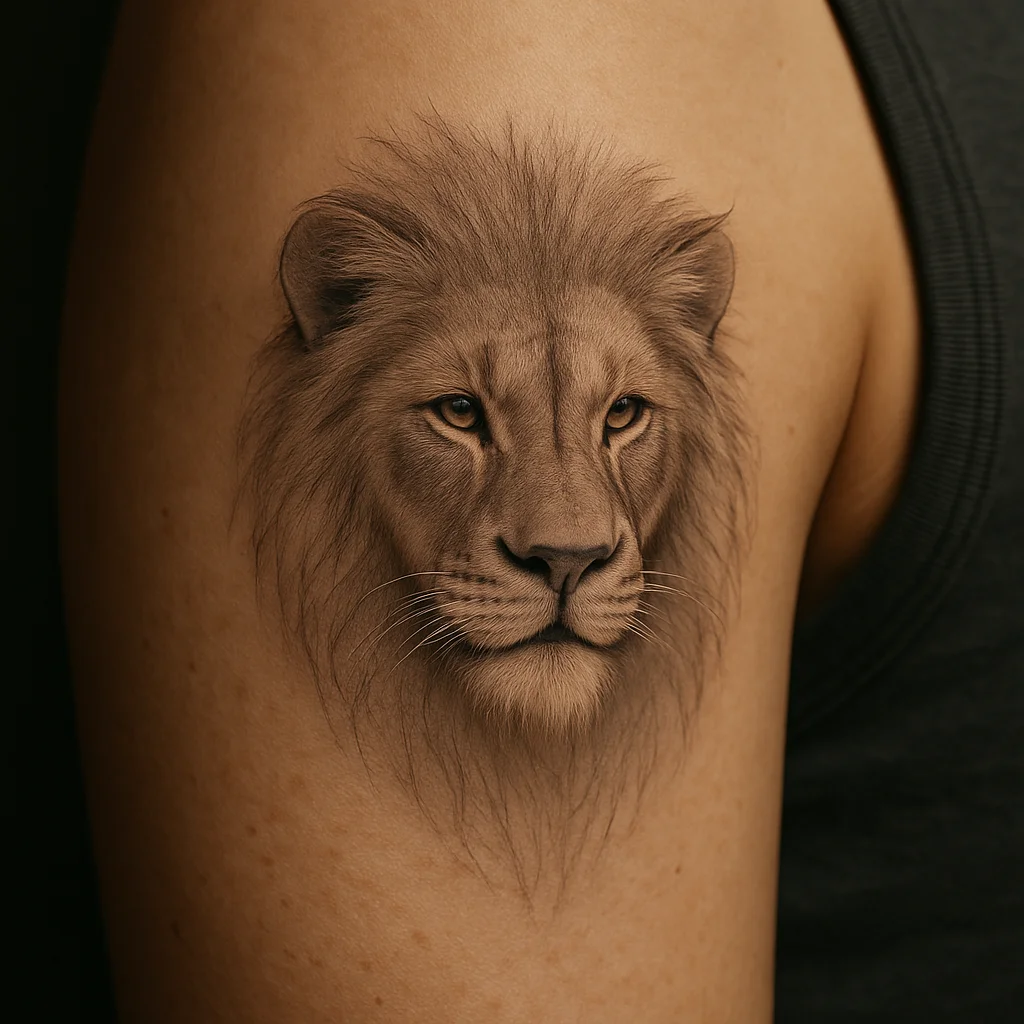
3. Single-needle lion in soft focus
A lion's head where only the eyes and nose are worked to full contrast and the mane fades outward into pale grey. It flatters the outer bicep, where the muscle gives the face a natural curve, and it avoids the flat sticker look of a fully outlined lion. Ask for the mane to break rather than end in a hard boundary.
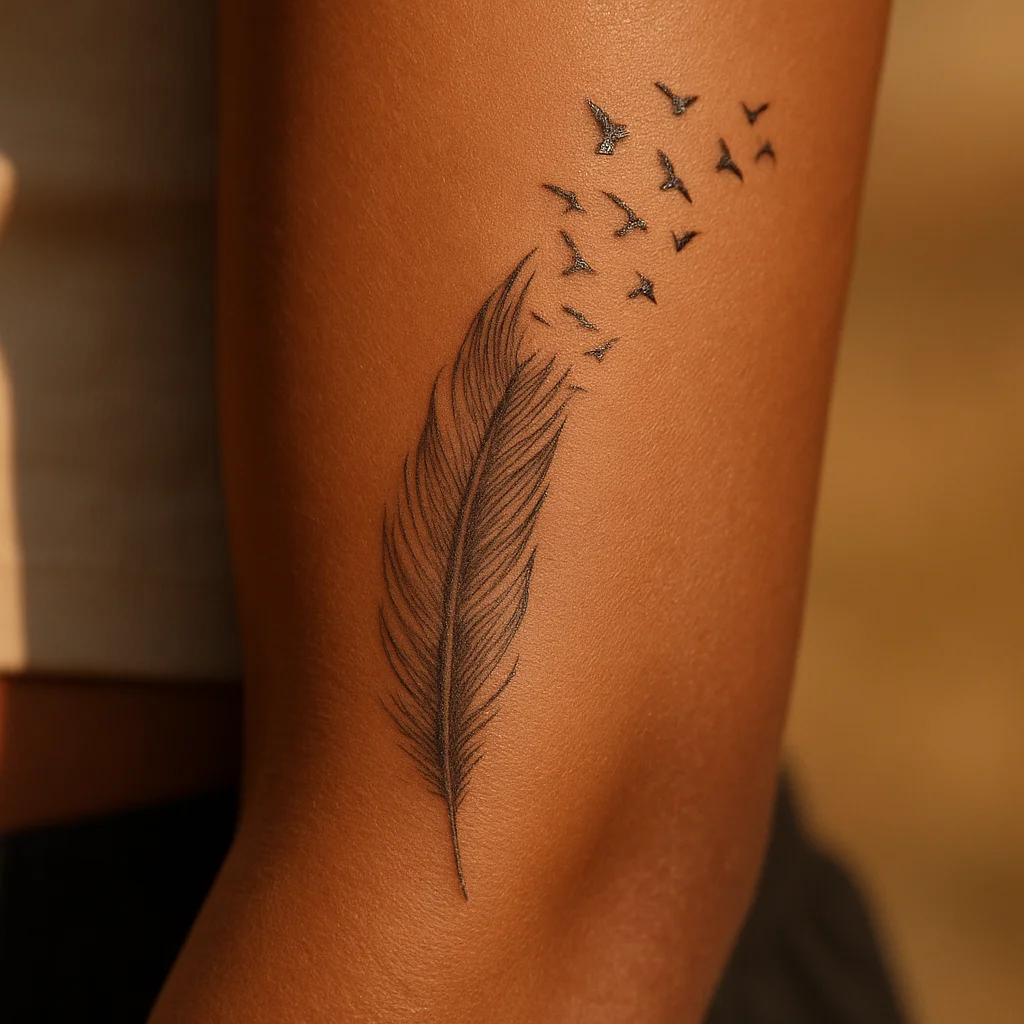
4. Feather breaking into birds
A long feather down the inner forearm with its upper barbs lifting off as small birds scattering toward the elbow. Kept in light grey it feels quiet rather than sentimental. The inner forearm holds detail well but sees less sun, which helps pale washes stay pale rather than patchy.
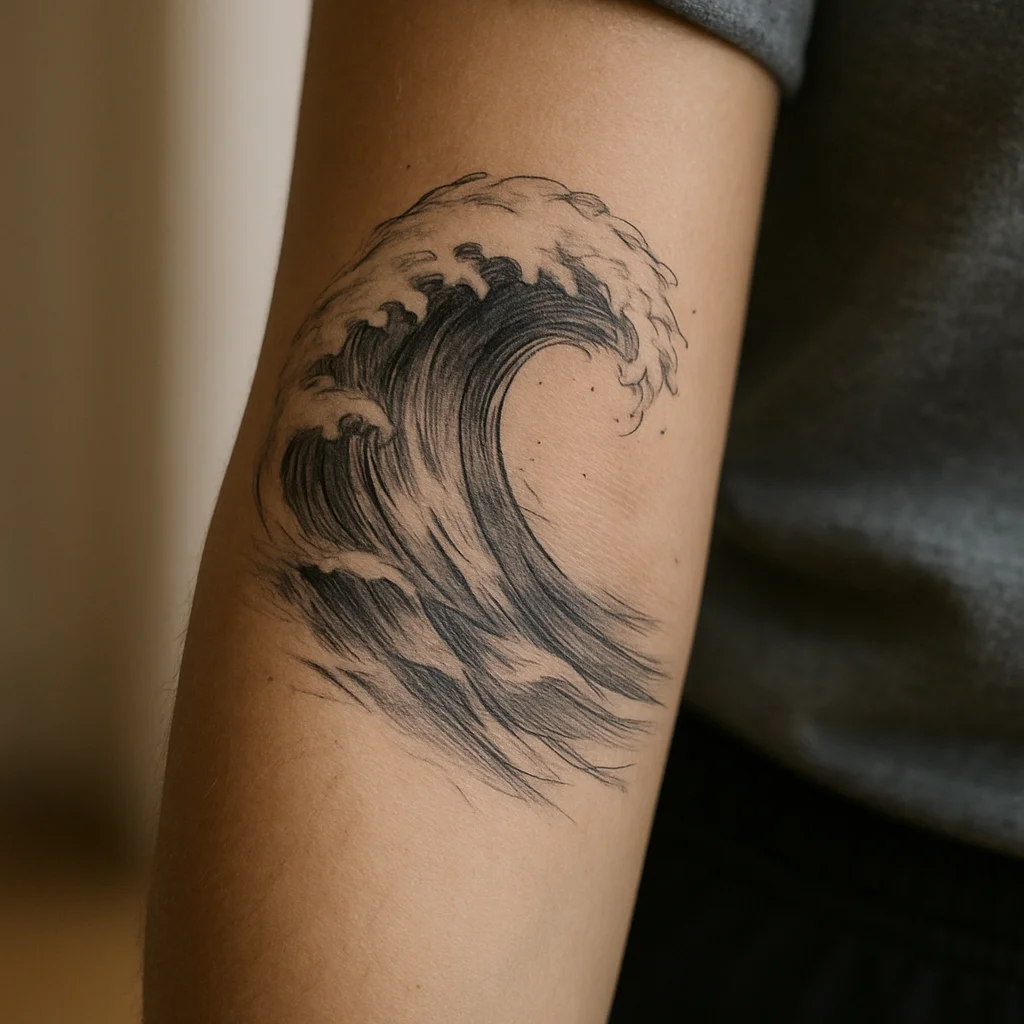
5. Ocean wave with foam left as bare skin
A cresting wave where the water body is grey wash and the foam is untouched skin, defined only by the shading around it. This is the classic negative-space test of an artist's control. Works across the outer forearm, wrapping about two thirds around.
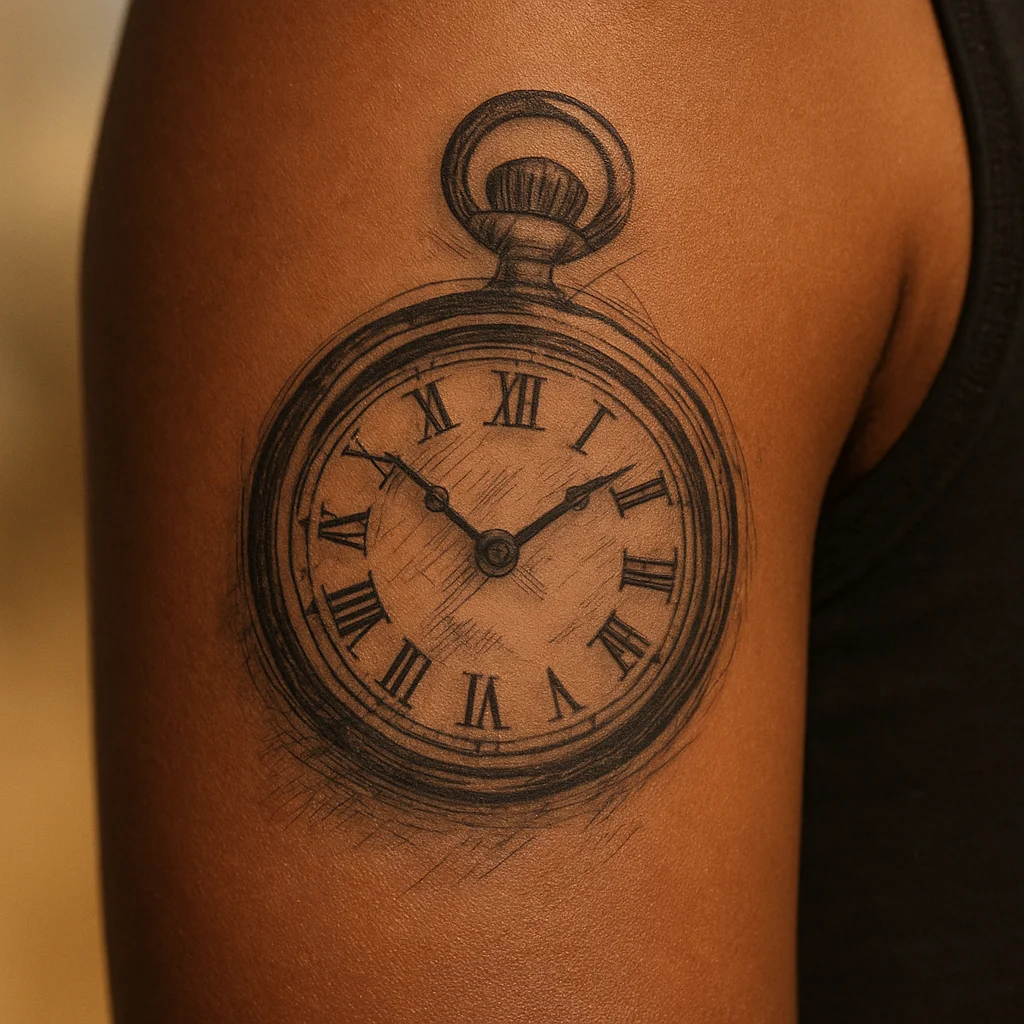
6. Pocket watch with a soft-focus background
A pocket watch rendered in mid-grey against a hazy, out-of-focus backdrop, like a photograph with a shallow depth of field. The chain can trail toward the elbow ditch and vanish. On the upper arm it gives you a clear focal point without committing the whole panel to darkness.
7. Wind-bent pine and mist
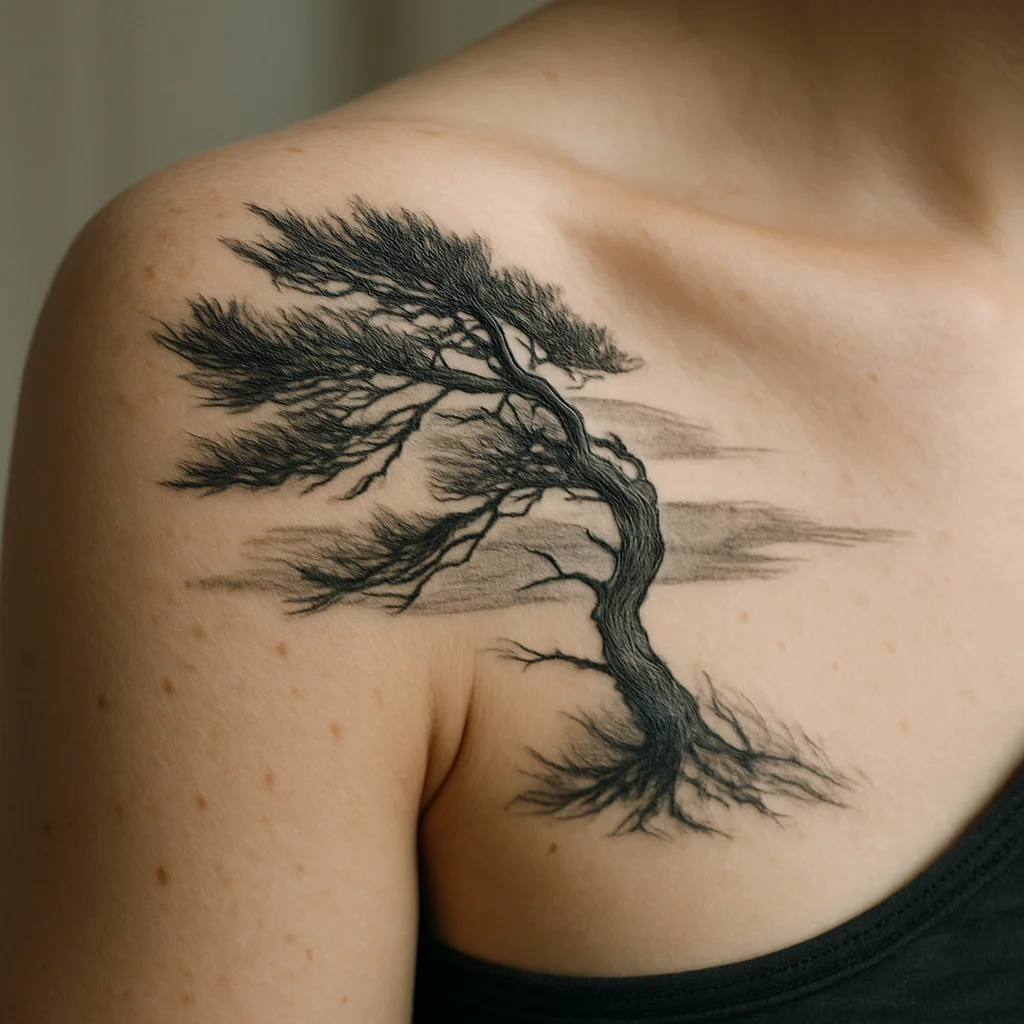
A lone pine leaning against the wind, with mist bands crossing the trunk in pale grey. Japanese-influenced in shape, but far lighter than a traditional Japanese sleeve. Draped over the shoulder cap it follows the deltoid curve and looks intentional in a t-shirt.
8. Statue hand dissolving into wash
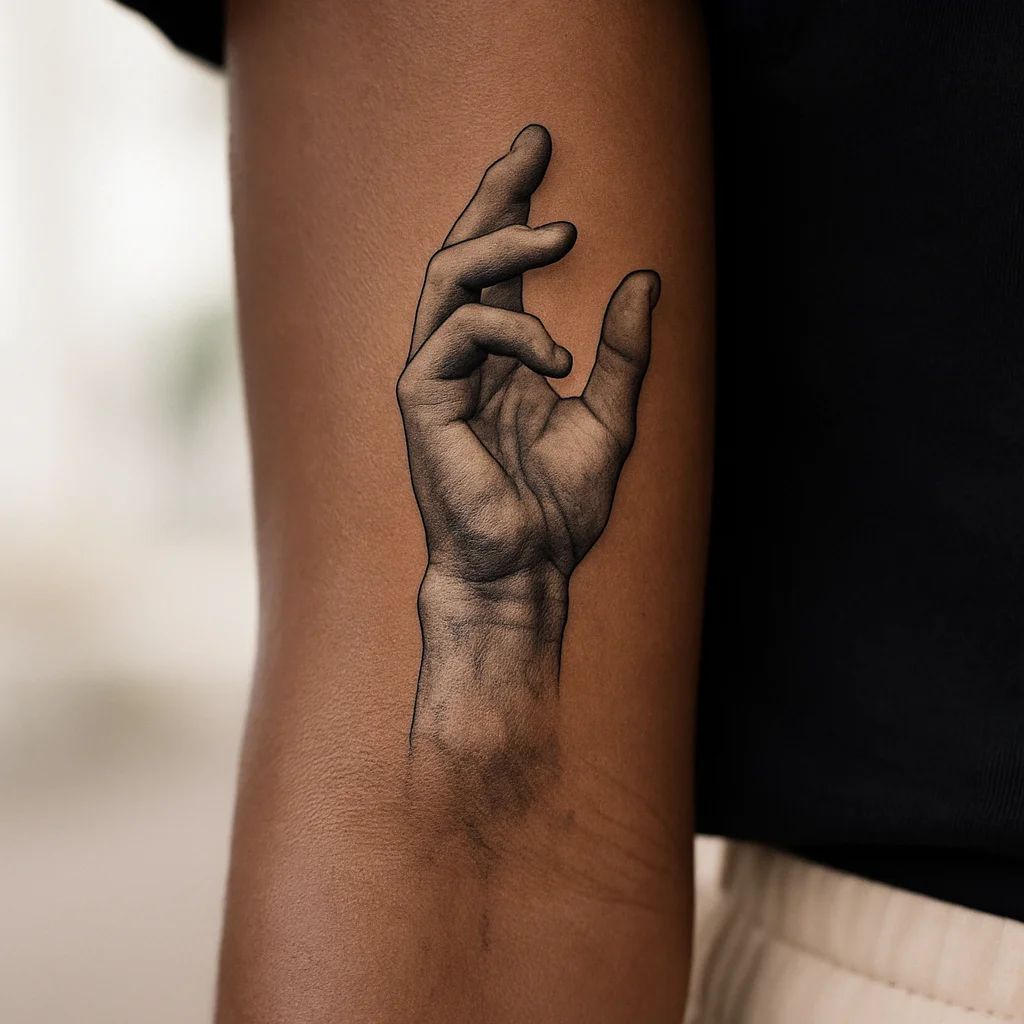
A marble hand reaching upward, sharply rendered at the fingers and fading into grey nothing at the wrist. Because only one small area carries detail, it stays readable at a modest size — around 12 to 14 cm on the inner forearm. It also leaves obvious room to expand later.
Mid-grey realism and portrait work (9–16)
This is the heartland of black and grey: smooth gradients, believable texture, faces that look like faces. Realism needs size. Anything below about 12 cm of face height loses the detail within a decade, so give these room and expect several sittings.
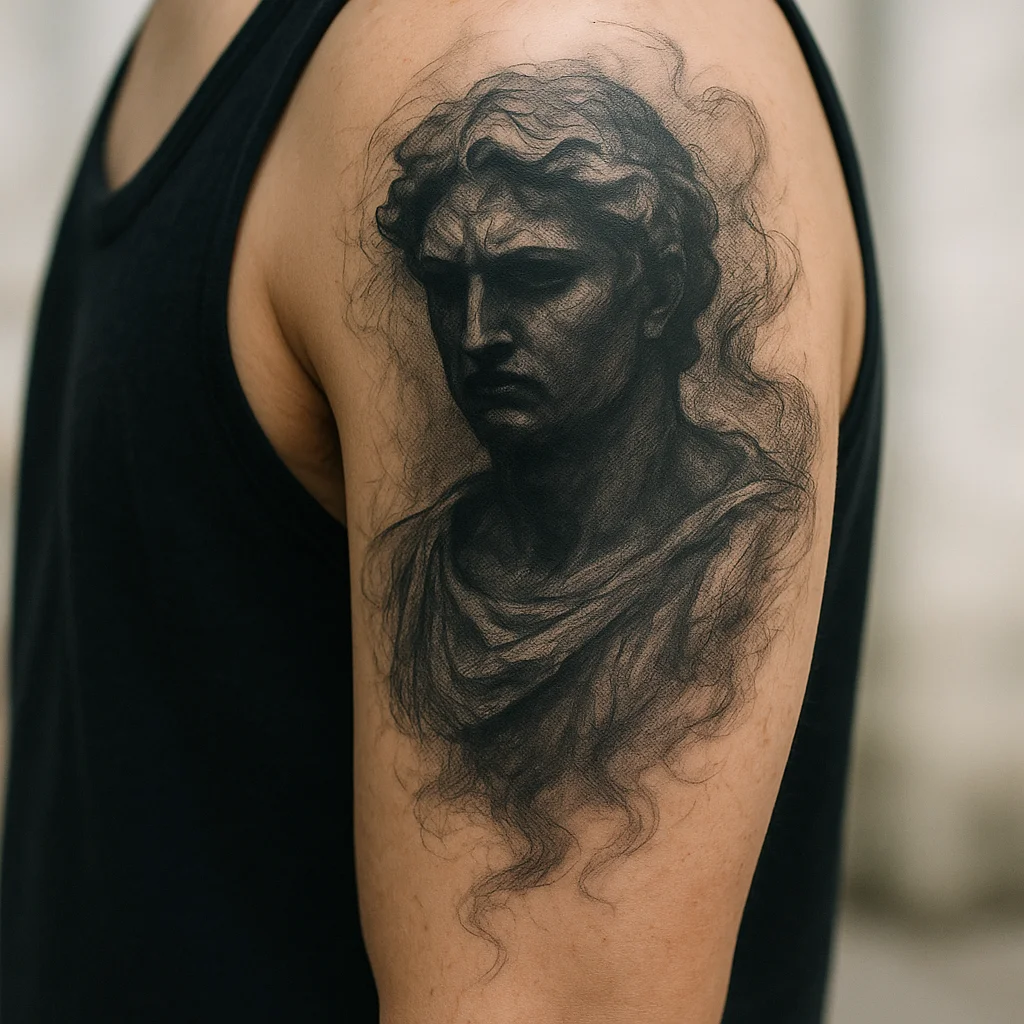
9. Greek statue bust with drapery
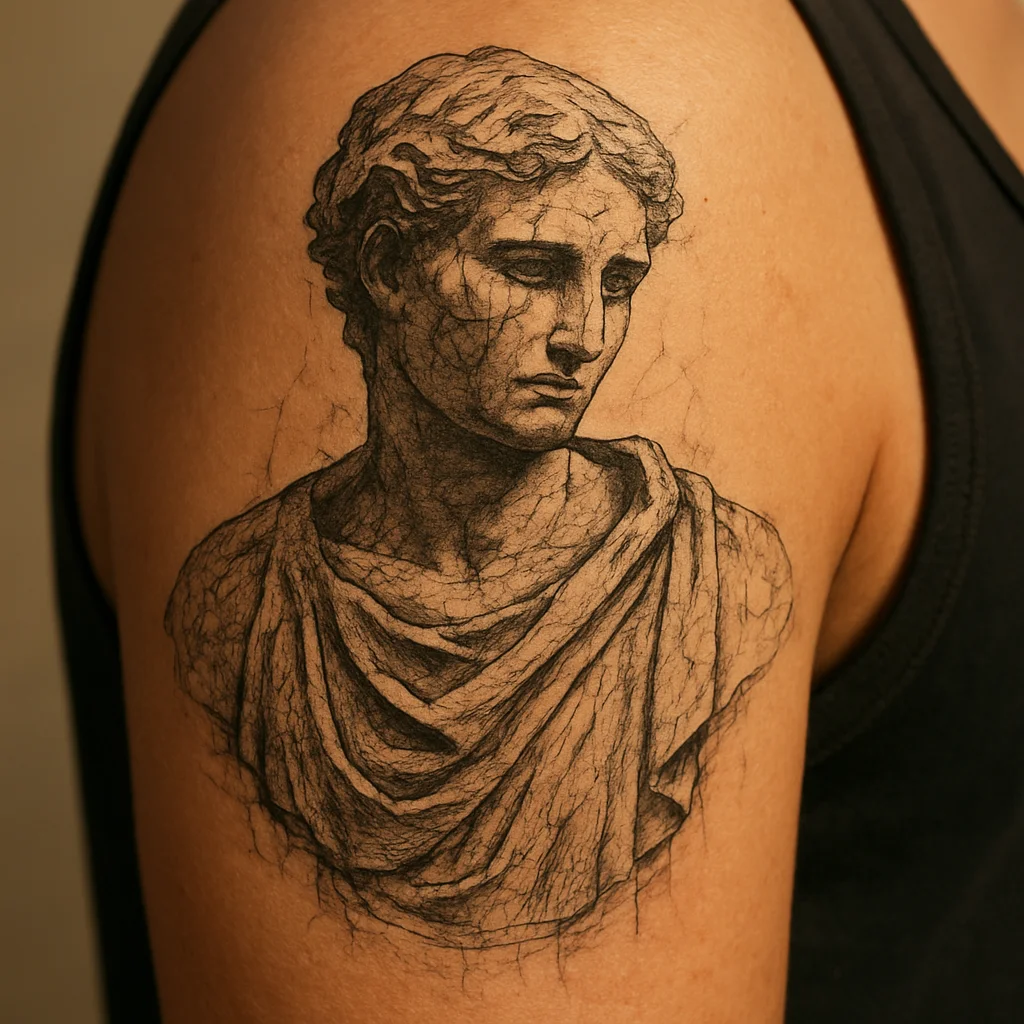
A weathered marble bust, chin slightly turned, with carved drapery folding down toward the elbow. The appeal is texture: chipped stone, hairline cracks, soft shadow in the eye sockets. It fills an upper arm panel comfortably and suits anyone who wants classical without religious overtones.
10. Wolf head emerging from mist
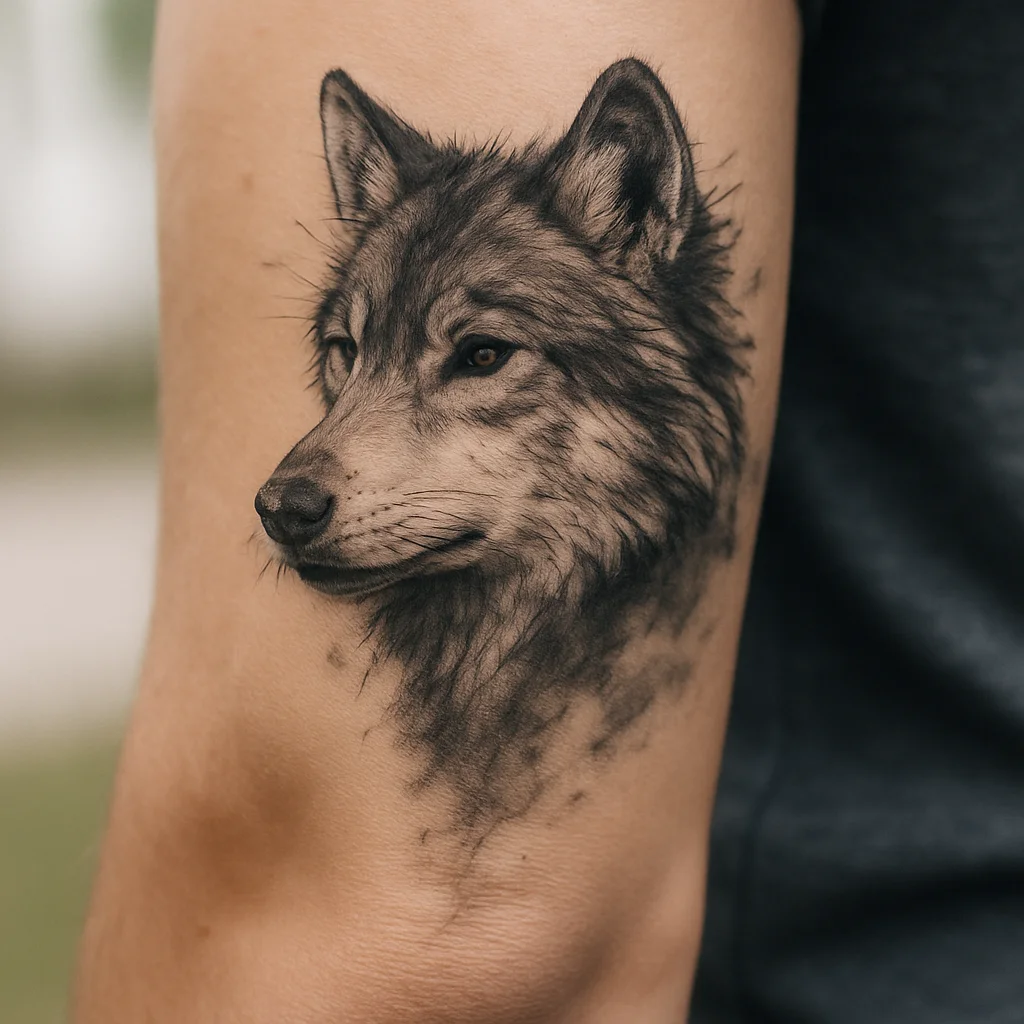
A wolf rendered in full detail at the muzzle and eyes, with the ruff dissolving into a bank of grey mist. The mist is your filler — it links the wolf to the rest of the sleeve without adding another subject. Wrapping the outer forearm, it keeps the wolf's face on the visible plane.
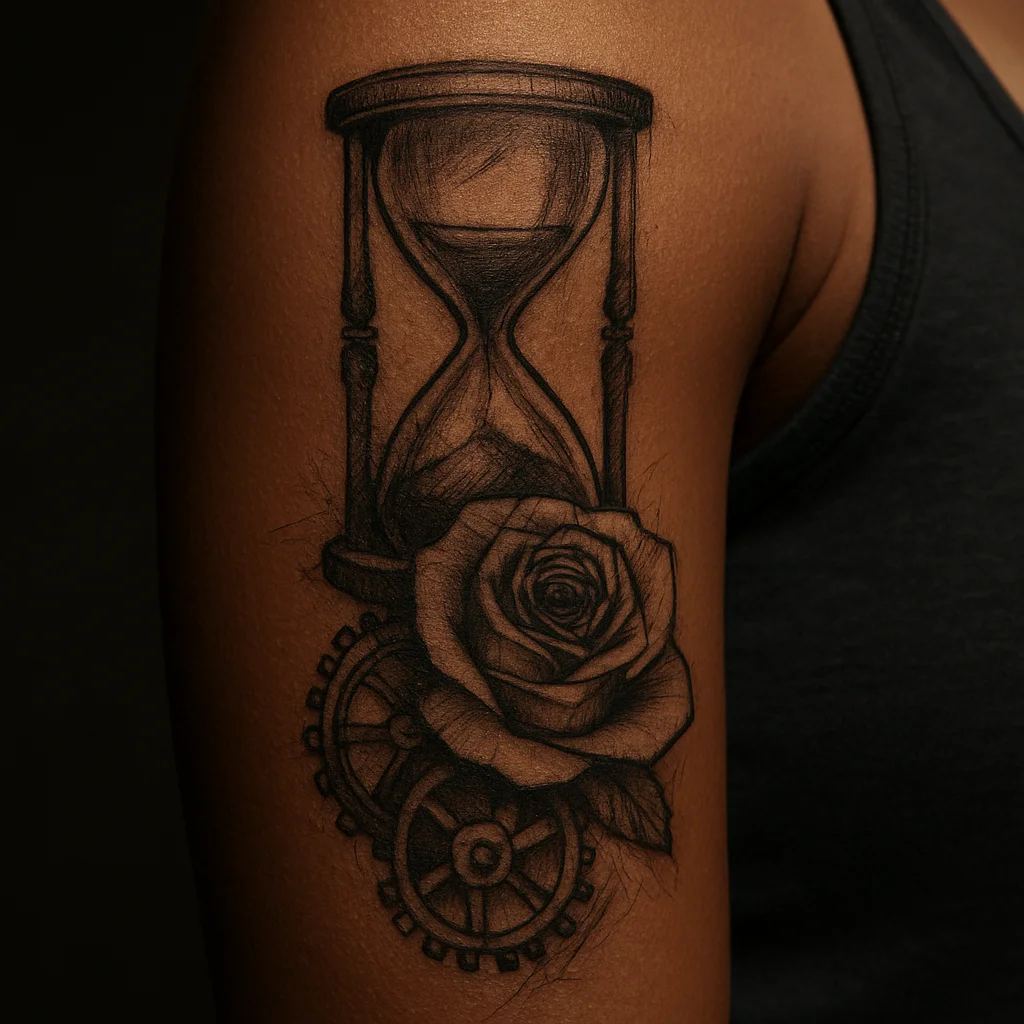
11. Hourglass, rose and clockwork, sequenced
The familiar trio, but stacked deliberately: hourglass as the dark anchor near the shoulder, rose mid-arm at half value, clock gears trailing pale toward the elbow. Sequencing the values is what stops this combo looking like a flash sheet stapled together. Ideal for a first upper-arm half sleeve because each element can be tattooed in its own session.
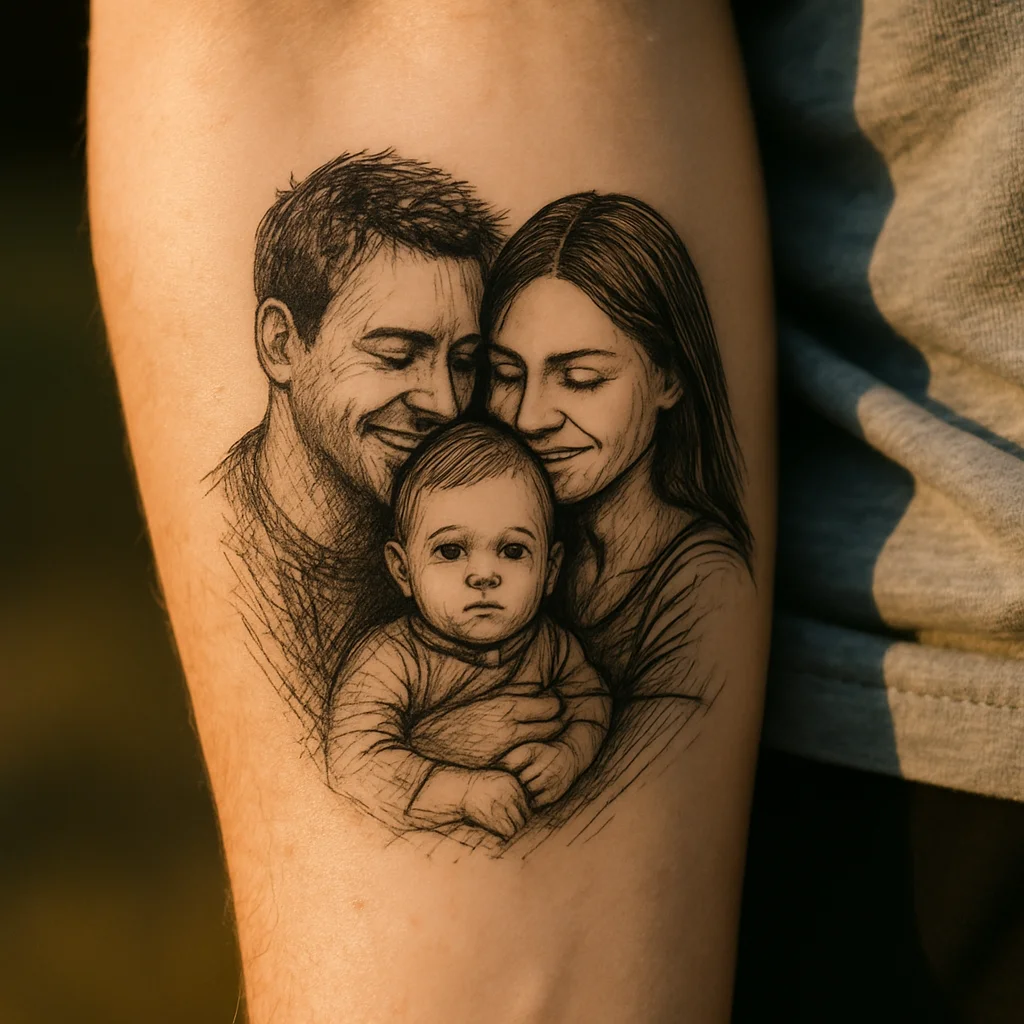
12. Tight family portrait
A small, high-fidelity portrait of one or two faces, rendered with restrained contrast and no background beyond a soft vignette. Keep it on the inner forearm where the skin is smooth and the piece stays close to you rather than on display. Bring a high-resolution, well-lit photo — bad reference is the number one reason portraits fail.
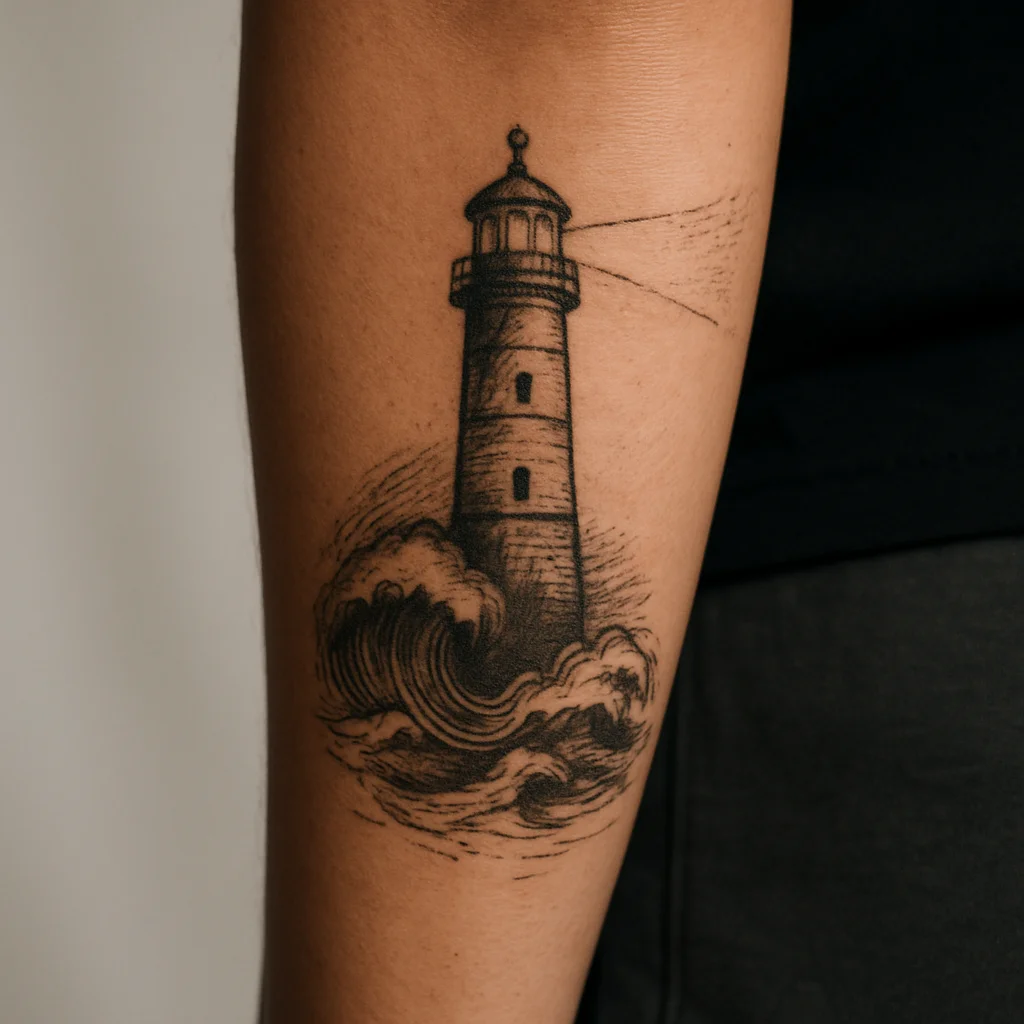
13. Lighthouse against a storm sea
A lighthouse with its beam cutting through churning water, the waves worked in mid-grey and the beam left almost bare. The vertical subject suits the long shape of the outer forearm and gives the sleeve a natural top-to-bottom flow. Ask for the rocks to carry the darkest values so the tower stays legible.
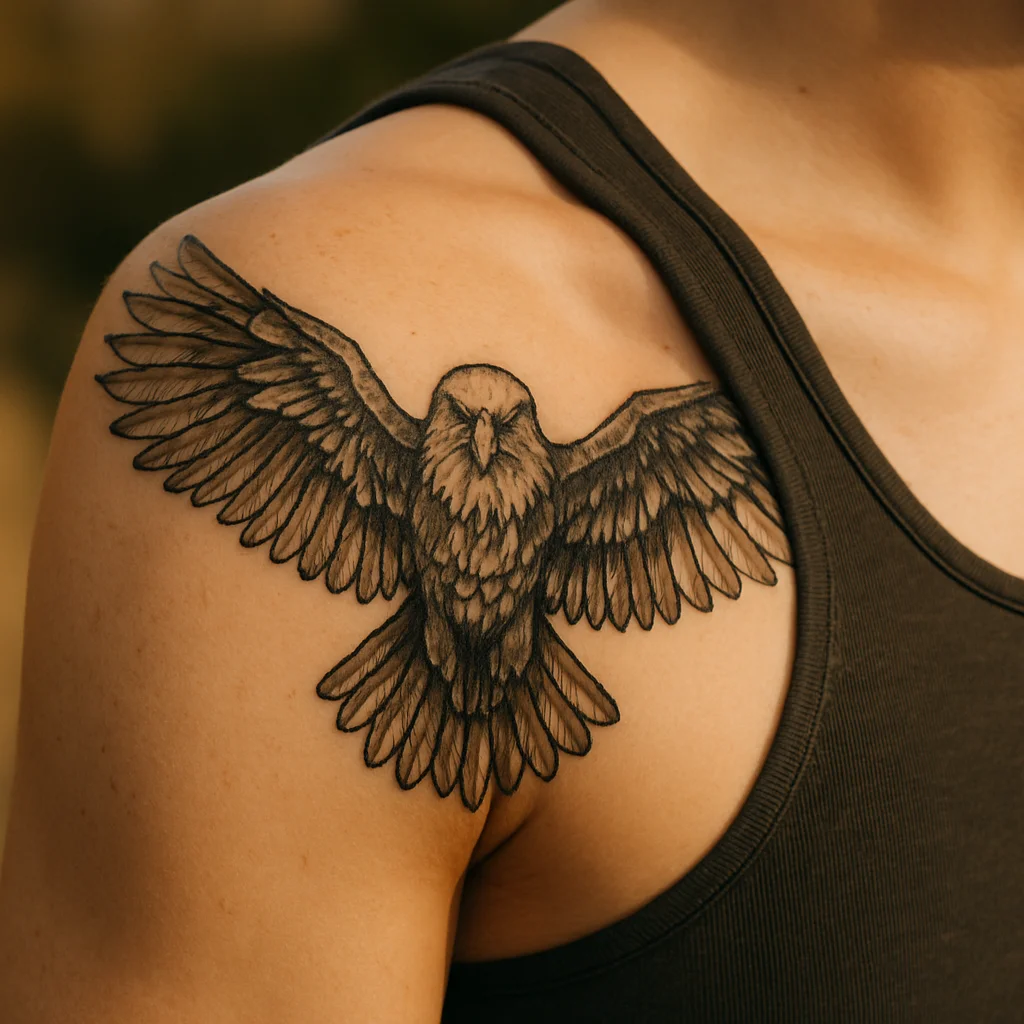
14. Eagle with feather texture
A head-on eagle with each feather group shaded separately, the wings spreading across the shoulder cap. Texture, not outline, defines the bird — which is why it needs a wide, flat surface. Great choice if you want something bold without going into solid black.
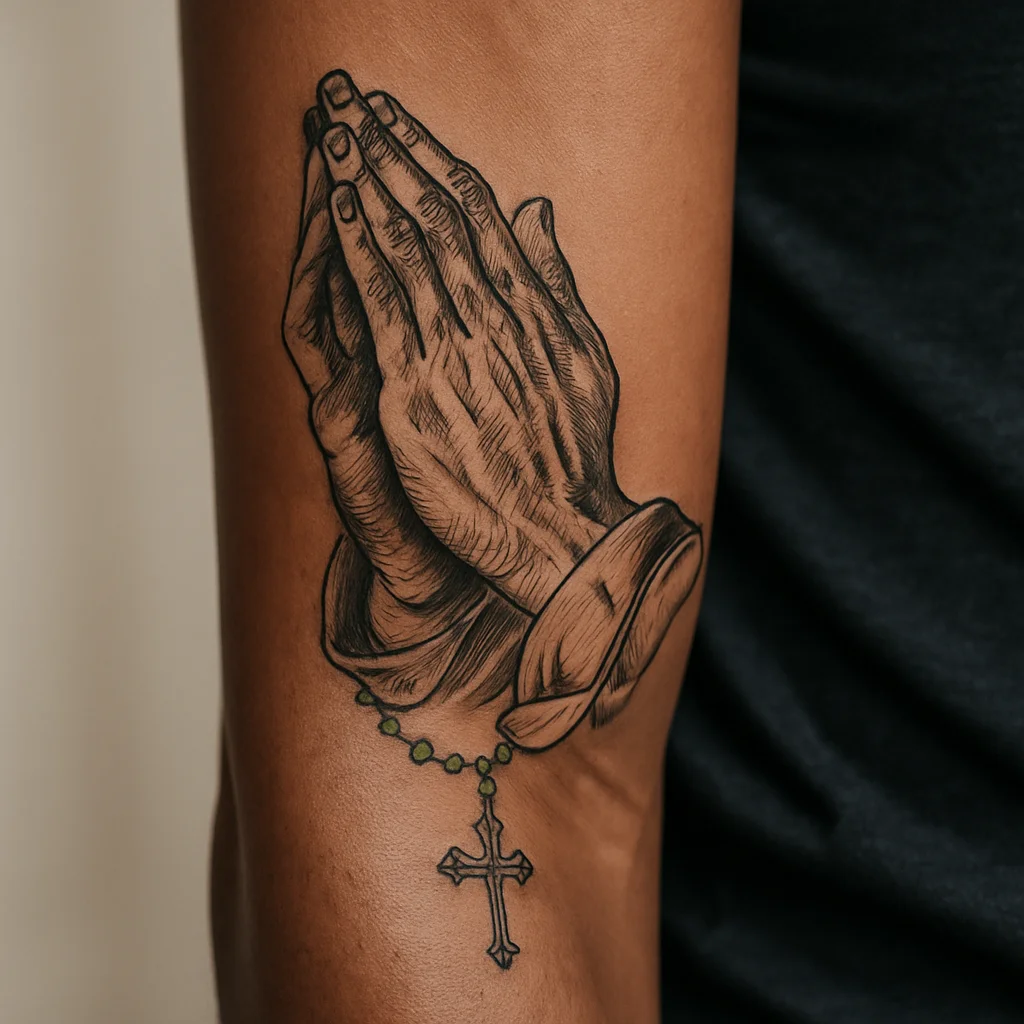
15. Praying hands with a rosary
Clasped hands in three-quarter view with a rosary looping down and swinging past the wrist. Skin texture and knuckle shadow carry the realism; the beads give you tiny points of high contrast. On the inner forearm it reads as personal rather than declarative.
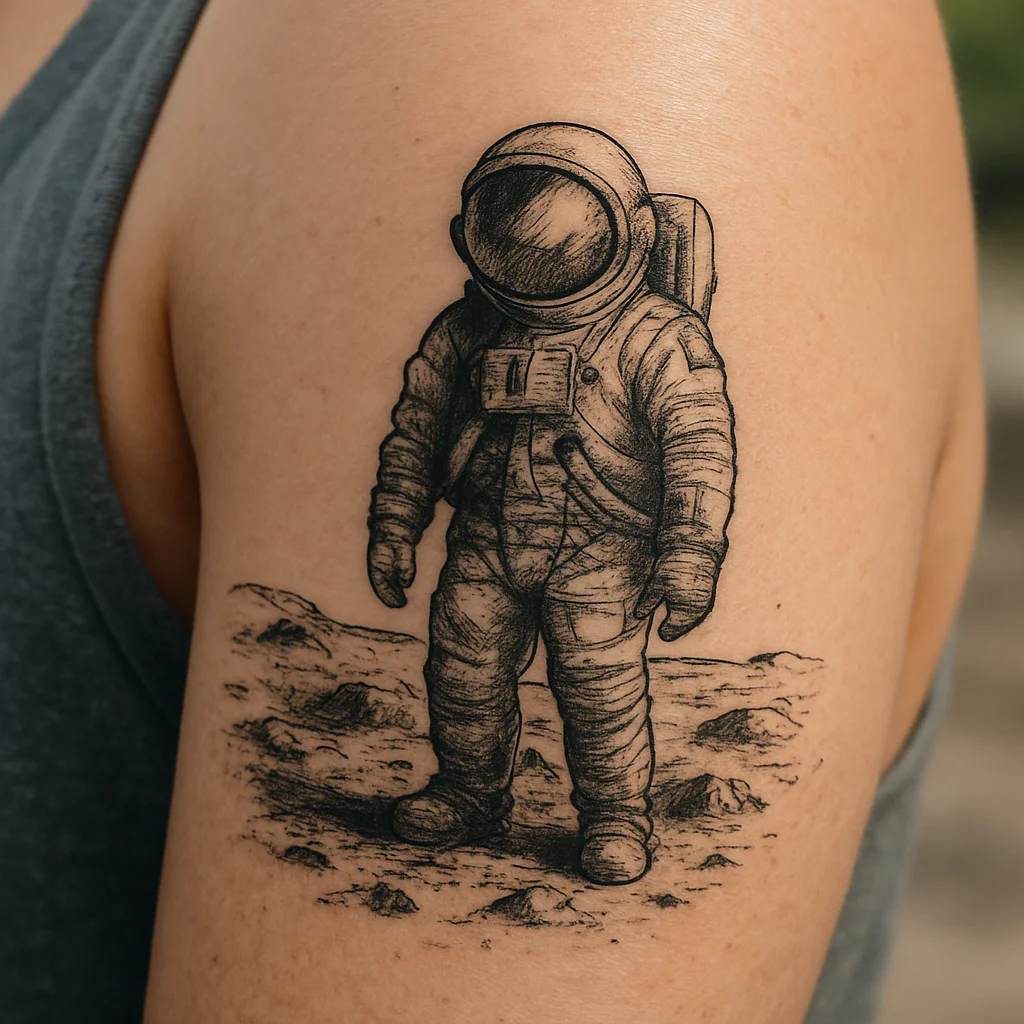
16. Astronaut on a lunar surface
A helmeted figure standing on cratered ground with a reflective visor catching a distant light source. The visor is the trick — it is where your artist gets to show off. Sits well on the upper arm at 18 to 20 cm, with the crater field wrapping toward the tricep.
Heavy black and hard contrast (17–24)
Saturated black is the most durable ink on skin. These sleeves look the same at fifteen years as they do at two, provided the artist leaves breathing room between the dark masses. If you have a physical job, sun exposure, or simply want something that never looks washed out, start here.
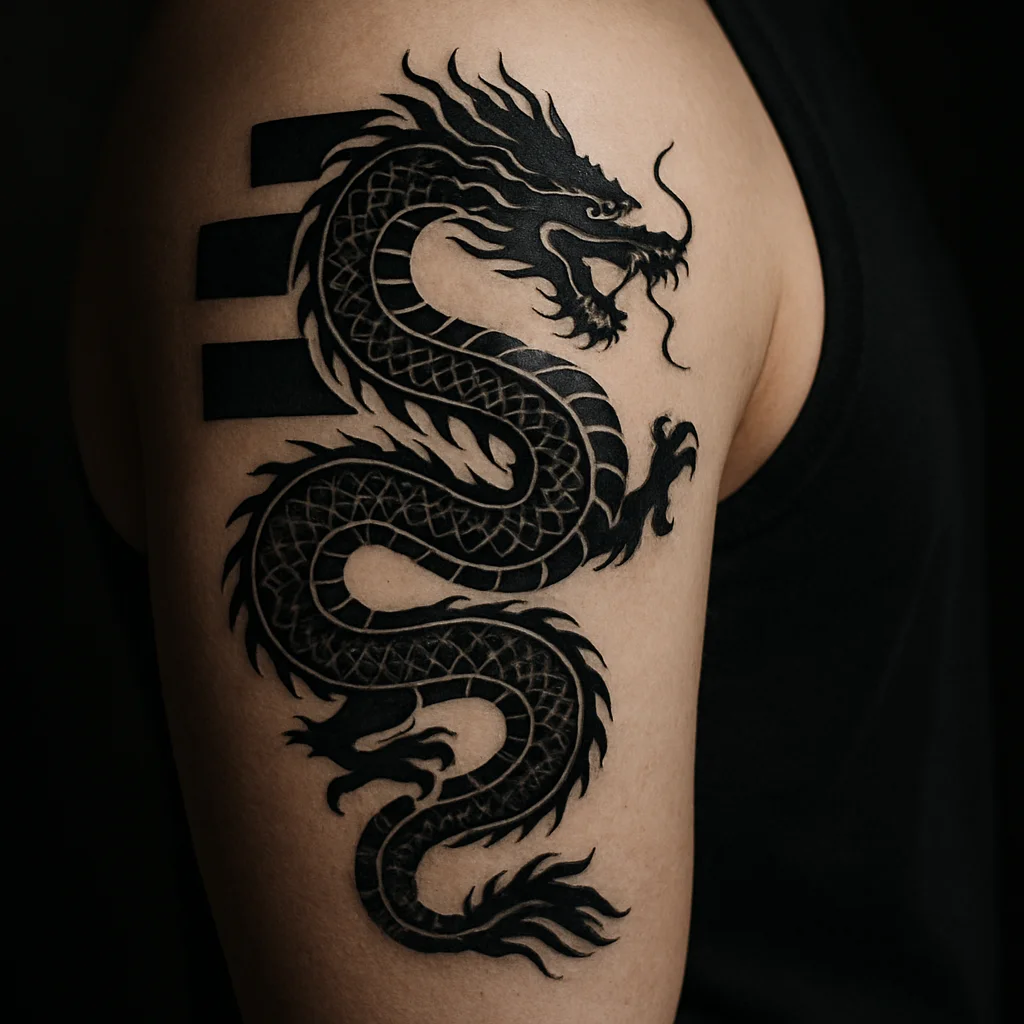
17. Japanese-style dragon with bold outlines
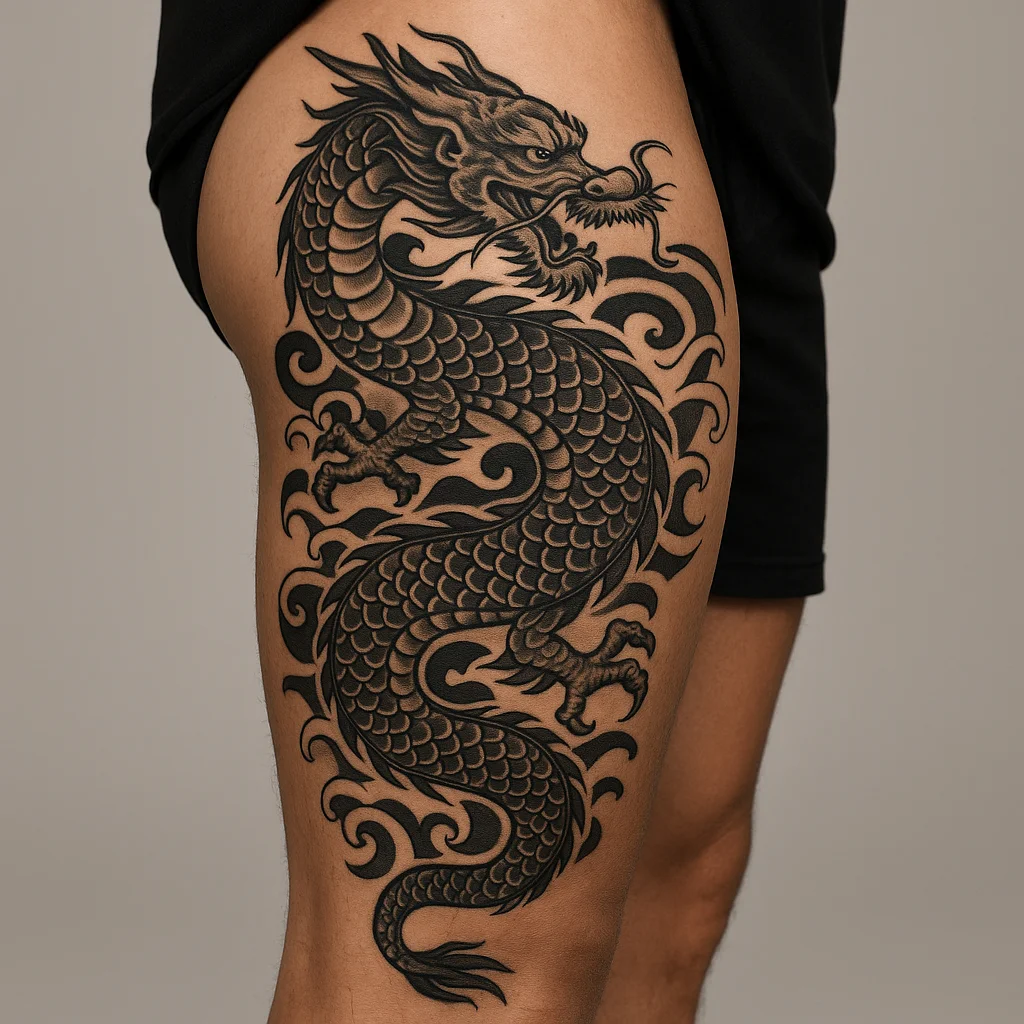
A dragon coiling shoulder to elbow, drawn with confident black outlines, grey scale shading and solid black wind bars behind it. Traditional Japanese structure is designed to wrap the arm and stay readable at distance, which is exactly what a half sleeve needs. Expect five or more sittings and commit to one artist for the whole piece.
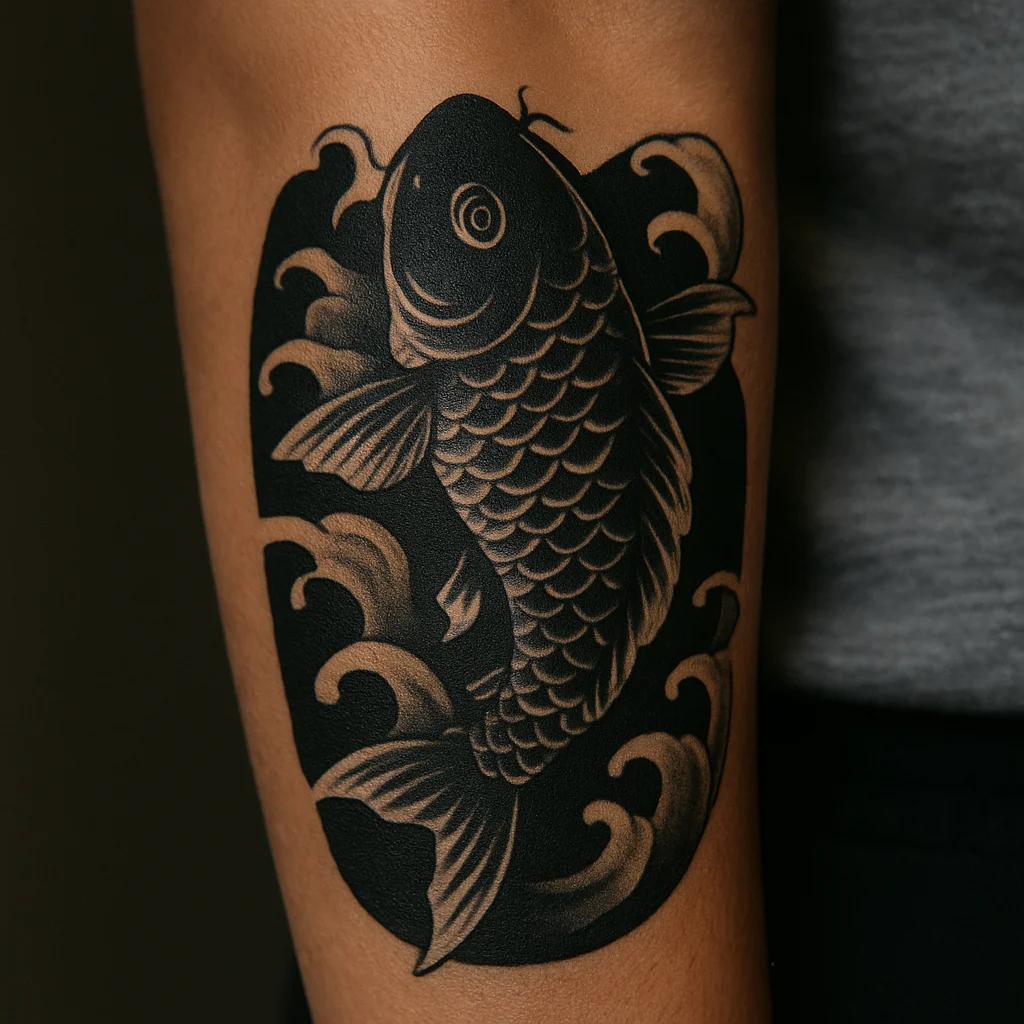
18. Koi and waves on a black background
A single koi fighting upstream with the water rendered in grey and the negative areas blacked out completely. The blackout background is what makes the fish glow. On the outer forearm it wraps naturally, and the hard border at the elbow gives the sleeve a clean finish line.
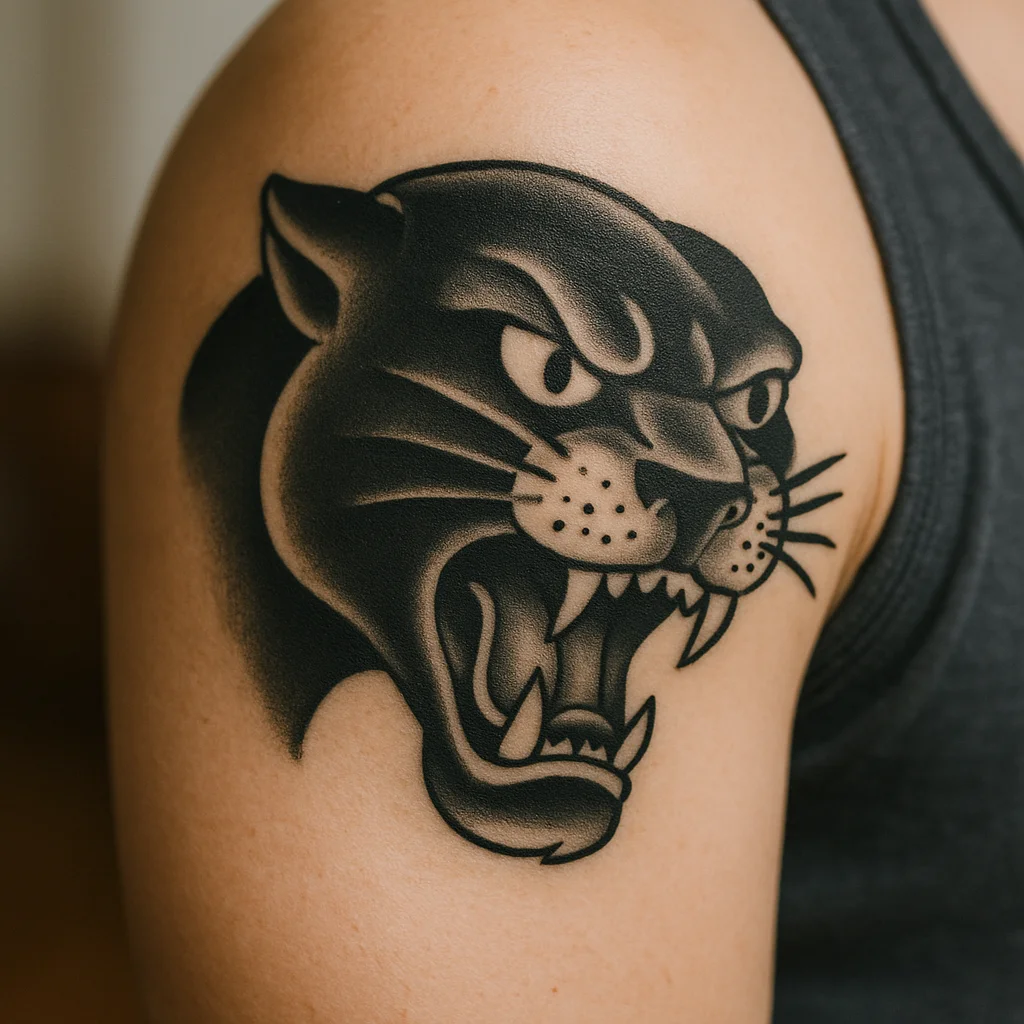
19. Panther head with old-school forms
Traditional panther shapes — heavy claws, snarl, bold silhouette — shaded in smooth black and grey instead of colour packing. It ages better than almost anything else on this list because the design was built for bold lines in the first place. Suits the outer bicep at around 15 cm.
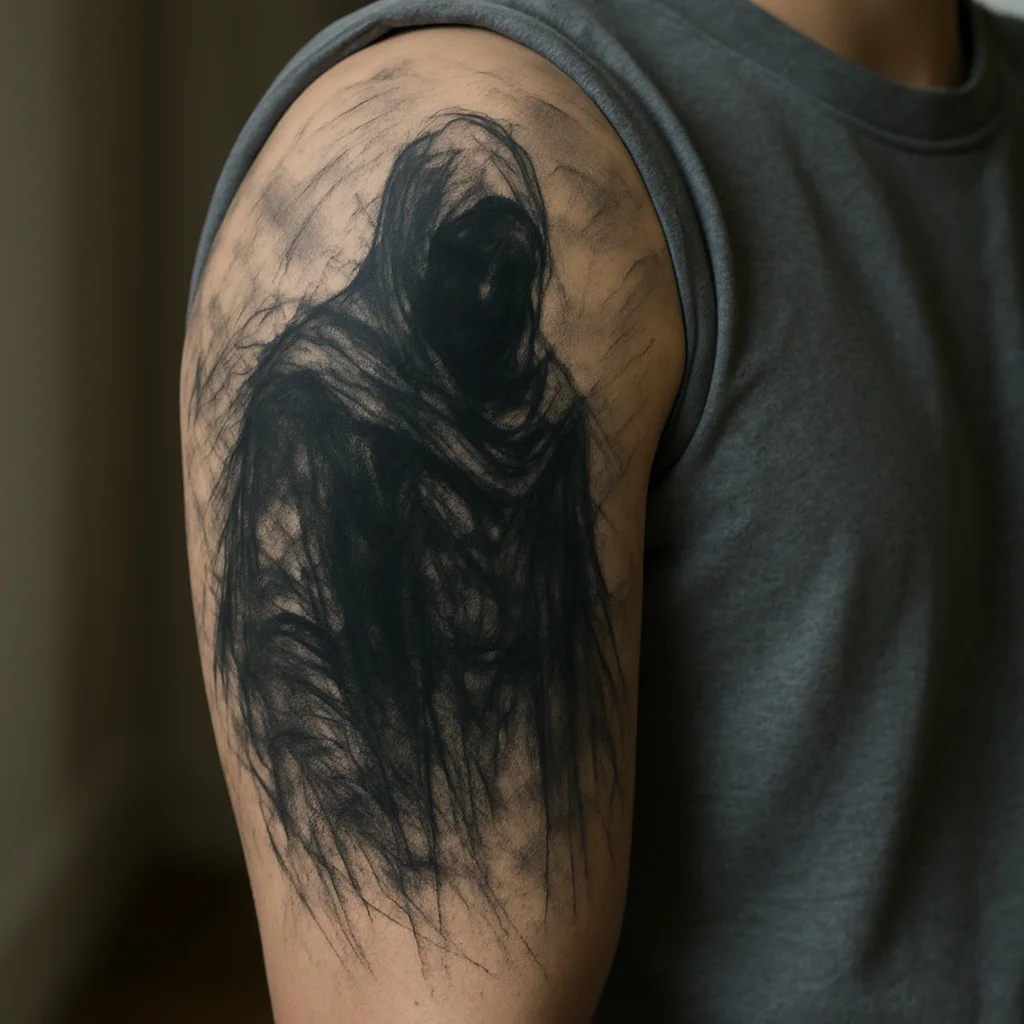
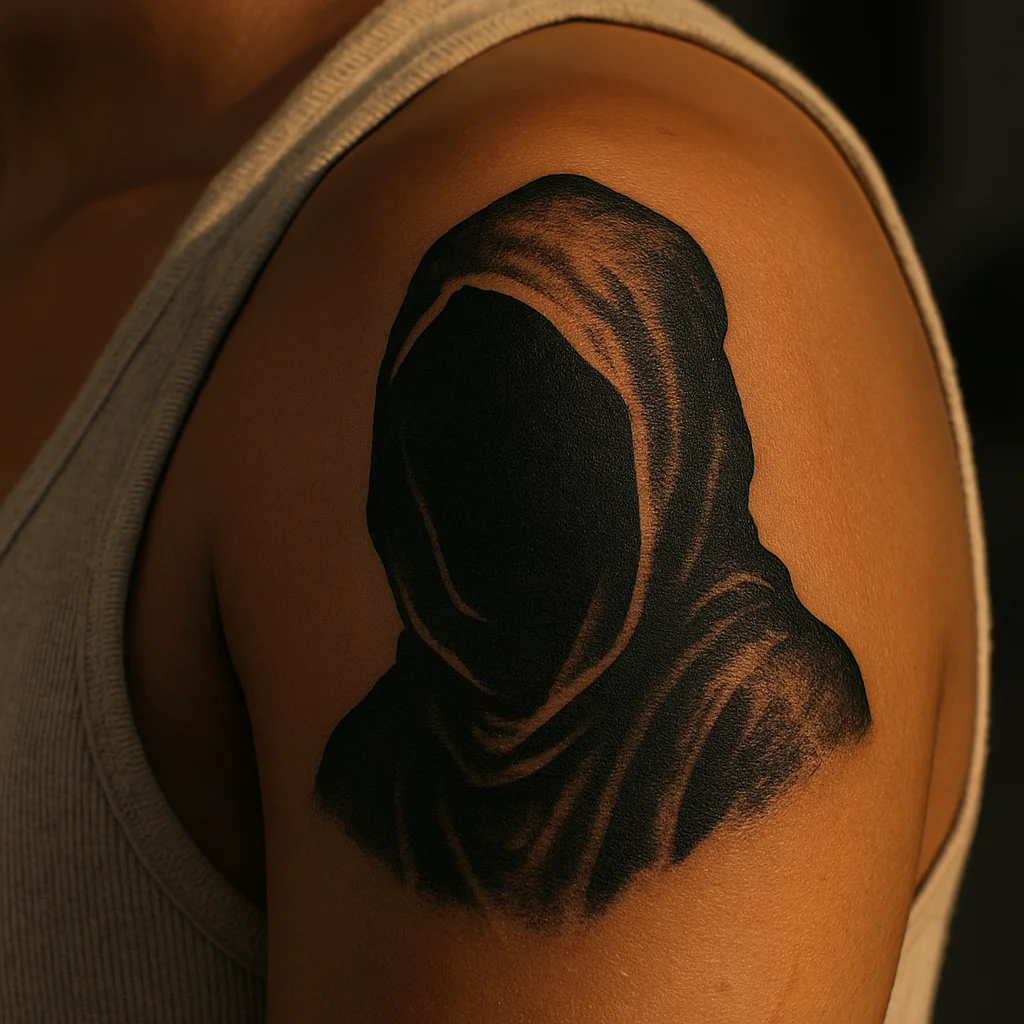
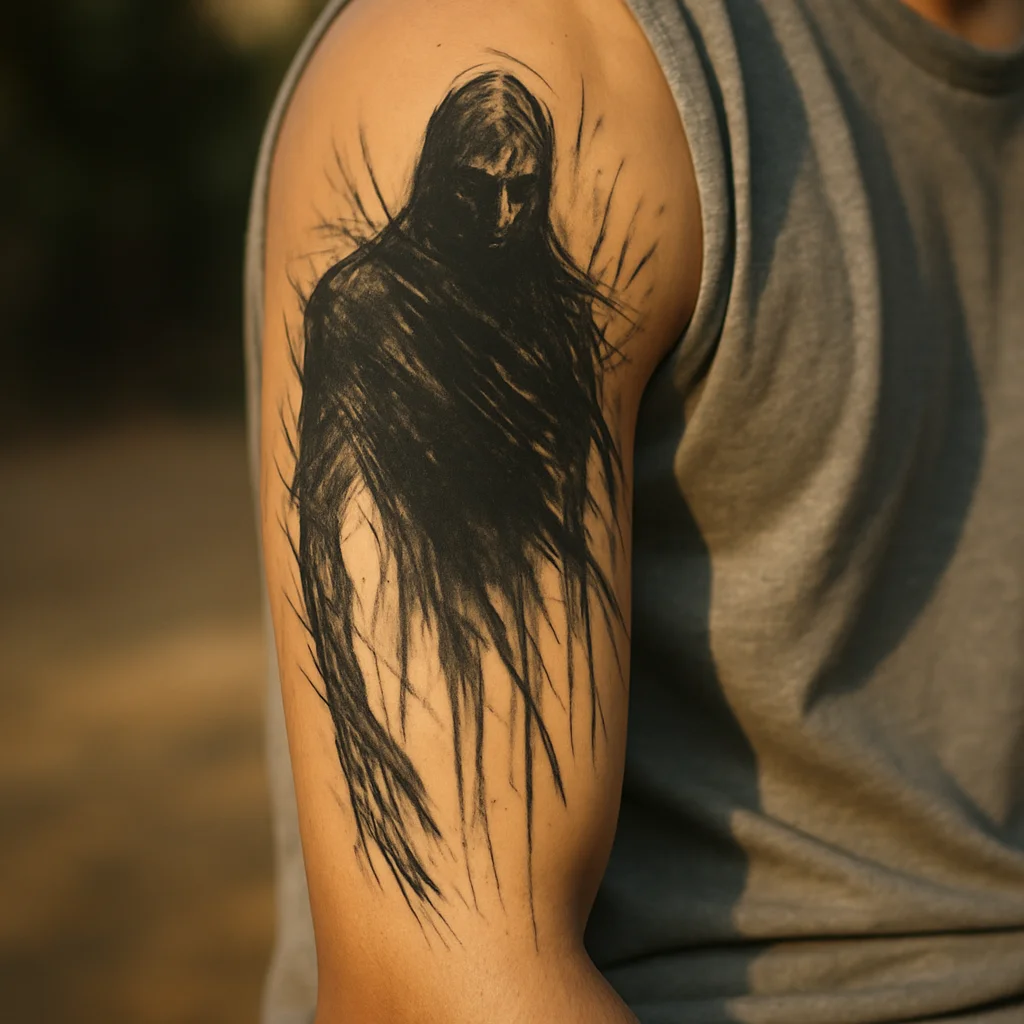
20. Hooded figure in deep shadow
A cloaked reaper or monk where the face is pure black void and only the hands and hem carry detail. Restraint is the point: the darker the hood, the more unsettling it reads. Draped over the shoulder it uses the natural roundness to suggest a body turning away.
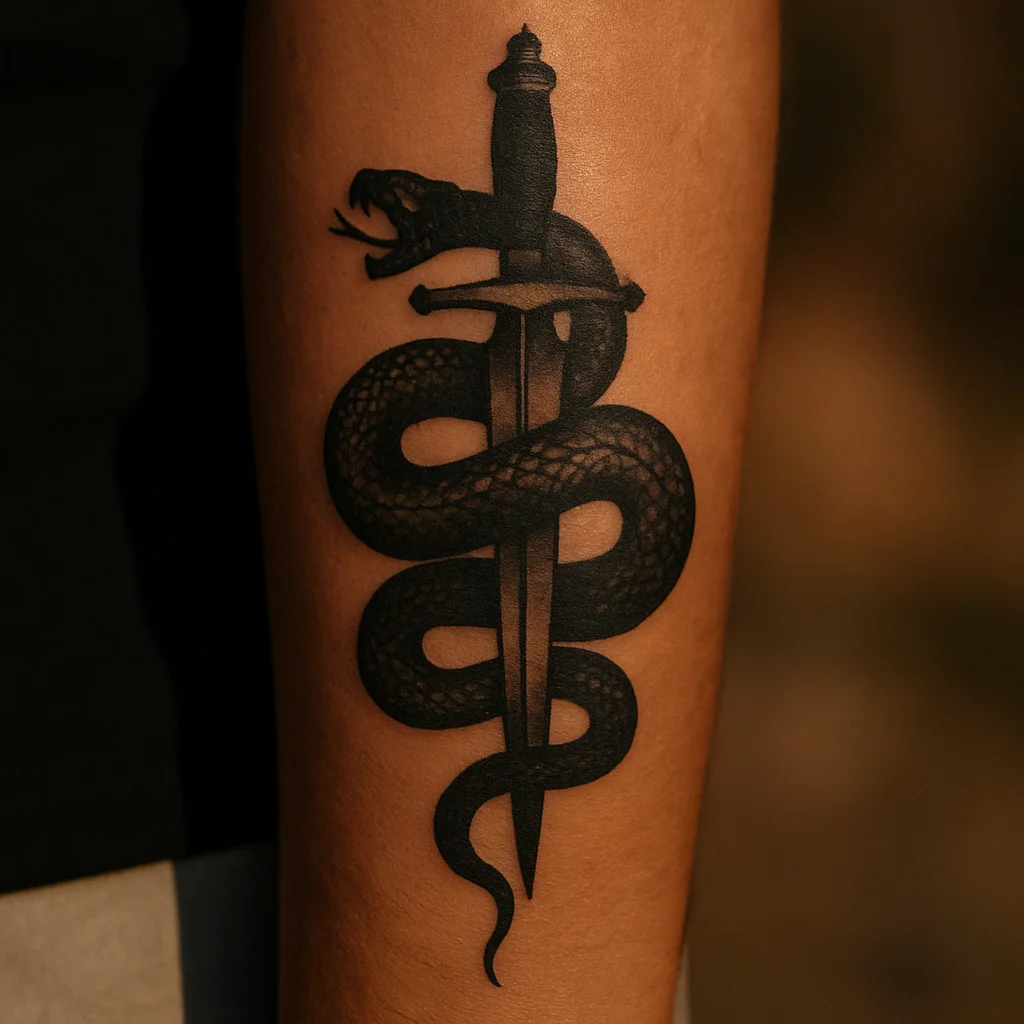
21. Snake coiled around a dagger
A thick-bodied serpent wound down a blade, scales stippled in dense black and the blade left bright. The vertical composition suits the forearm perfectly and the contrast between scale texture and clean steel does all the visual work. If you want the symbolism side of it, the snake tattoo guide is worth a read before your consult.
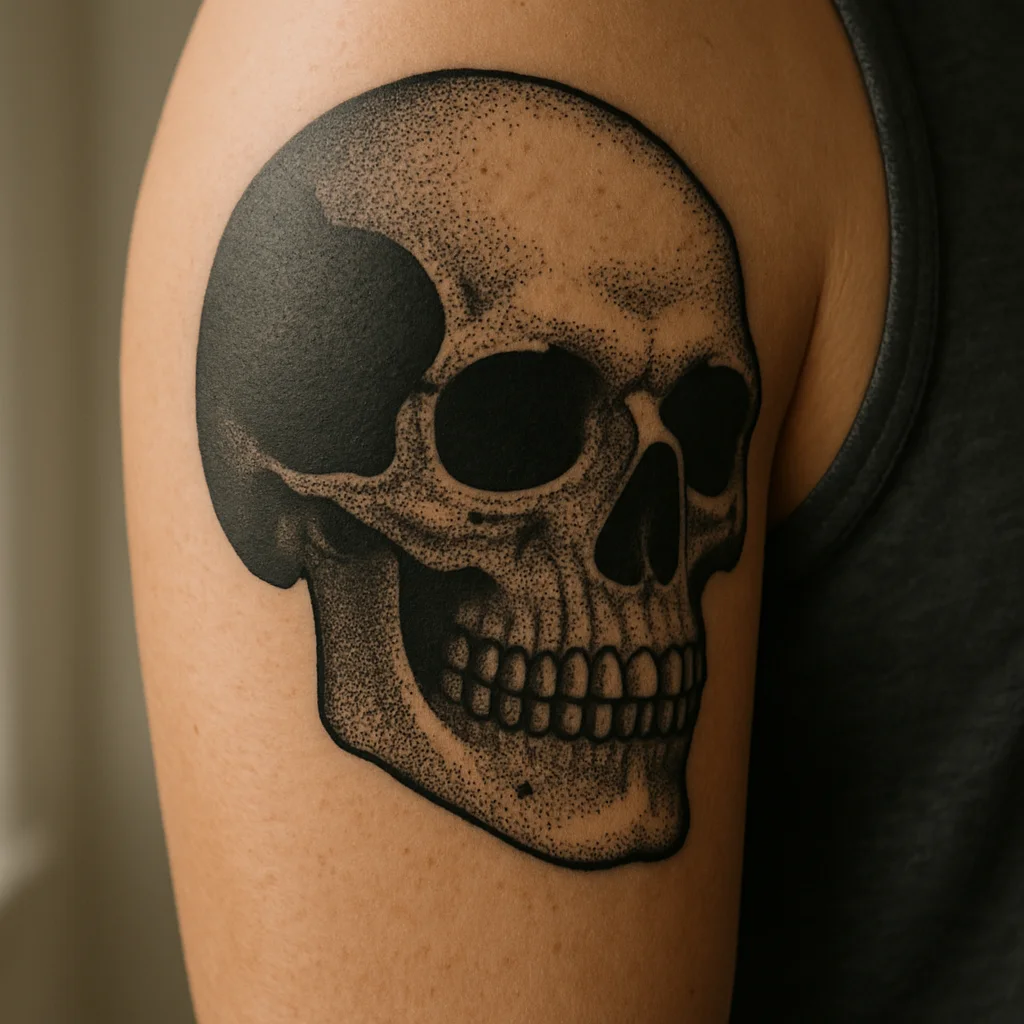
22. Skull with stippled shadow
An anatomical skull three-quarter turned, eye sockets solid black, cheekbones built from tight stipple. Skulls fail when they are shaded too evenly — insist on hard darks in the recesses and bare skin on the brow ridge. A strong upper-arm anchor for a larger sleeve later.
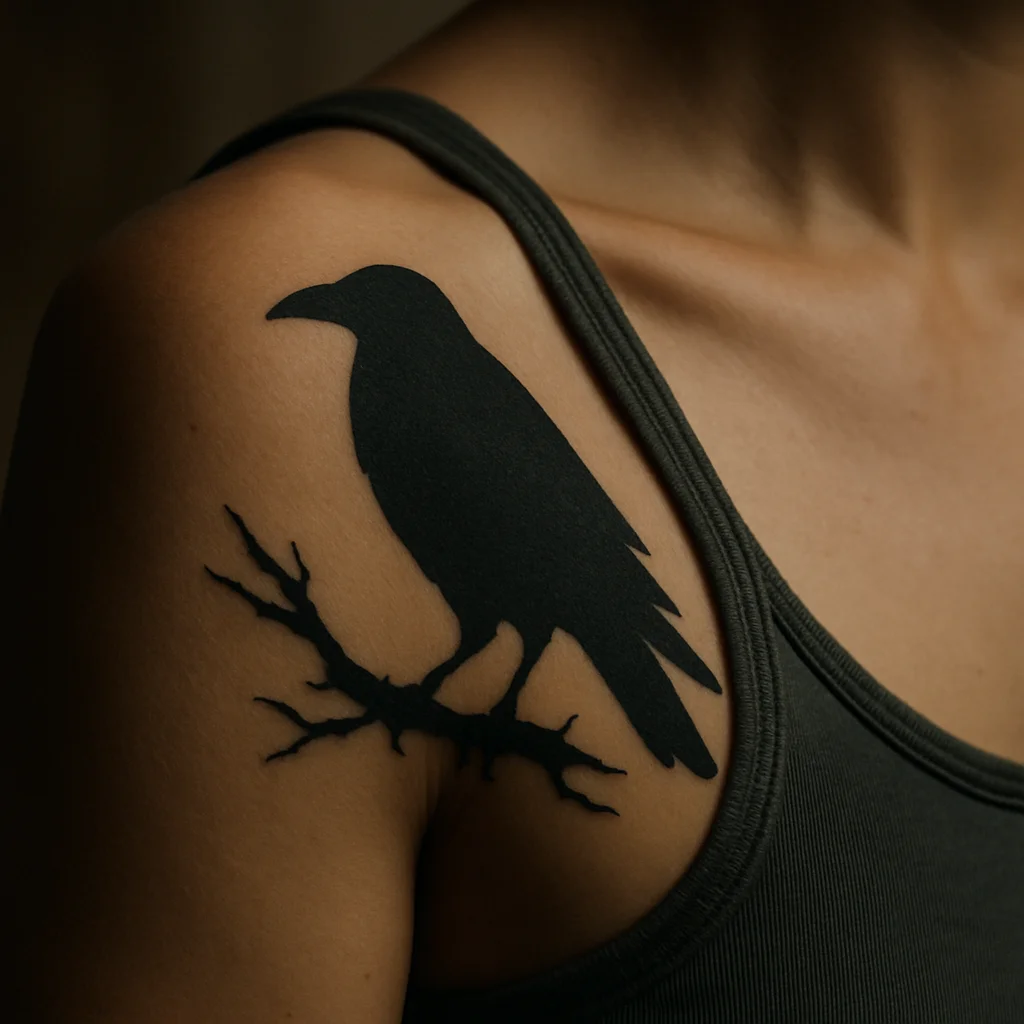
23. Raven on a bare branch
Solid black wings and body against pale scratchy branch work, with a few loose feathers falling toward the elbow. The bird is essentially a silhouette, so it reads instantly at any distance. Sits well on the shoulder and rear deltoid where the wing shape can spread.
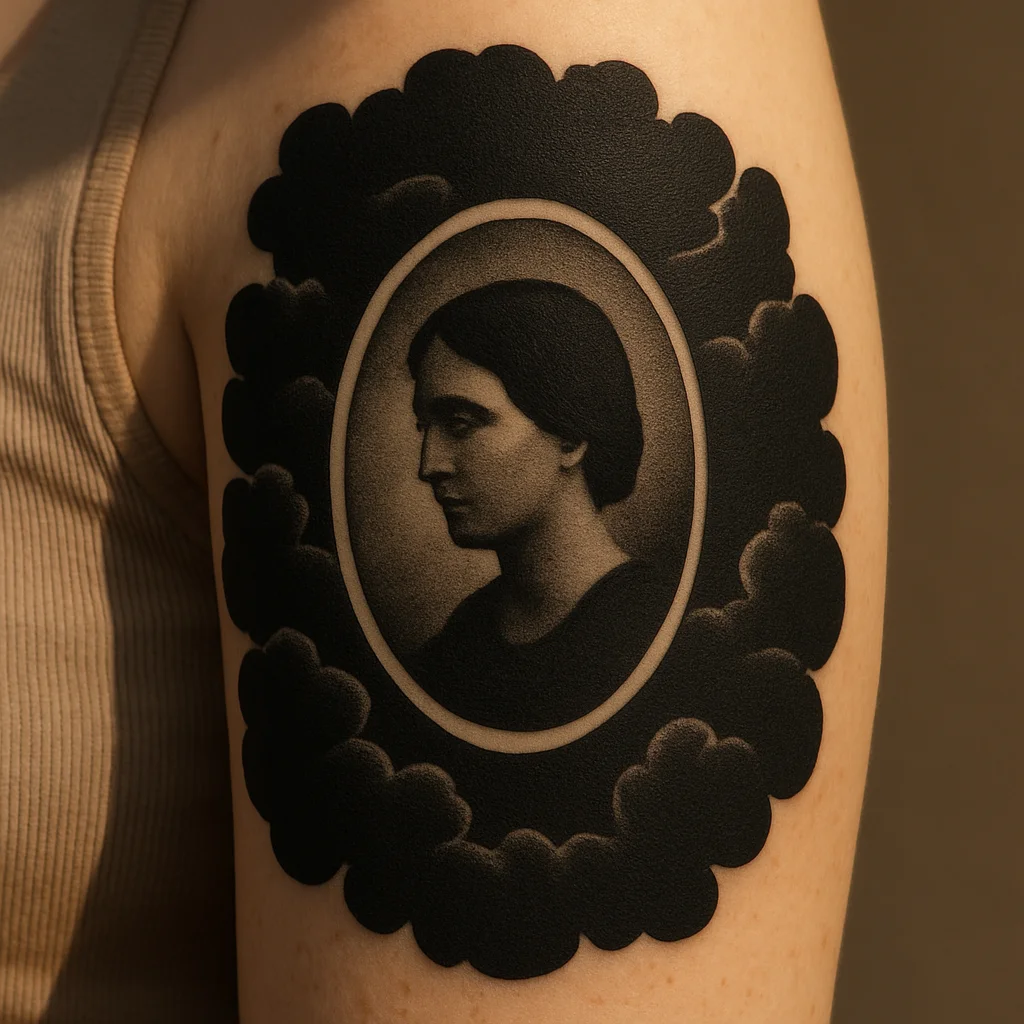
24. Blackout clouds framing a portrait window
Dense black cloud banks with a clean oval opening in the middle holding a detailed grey portrait, statue or animal. The heavy frame protects the soft centre and keeps the whole panel cohesive. This is the most reliable structure for a half sleeve that will be extended later.
Ornamental, geometric and pattern-led (25–32)
Pattern sleeves solve a problem realism cannot: they follow the body instead of sitting on it. Because they are built from repeated units, they also age with unusual grace — a slightly softened line inside a dense pattern is invisible.
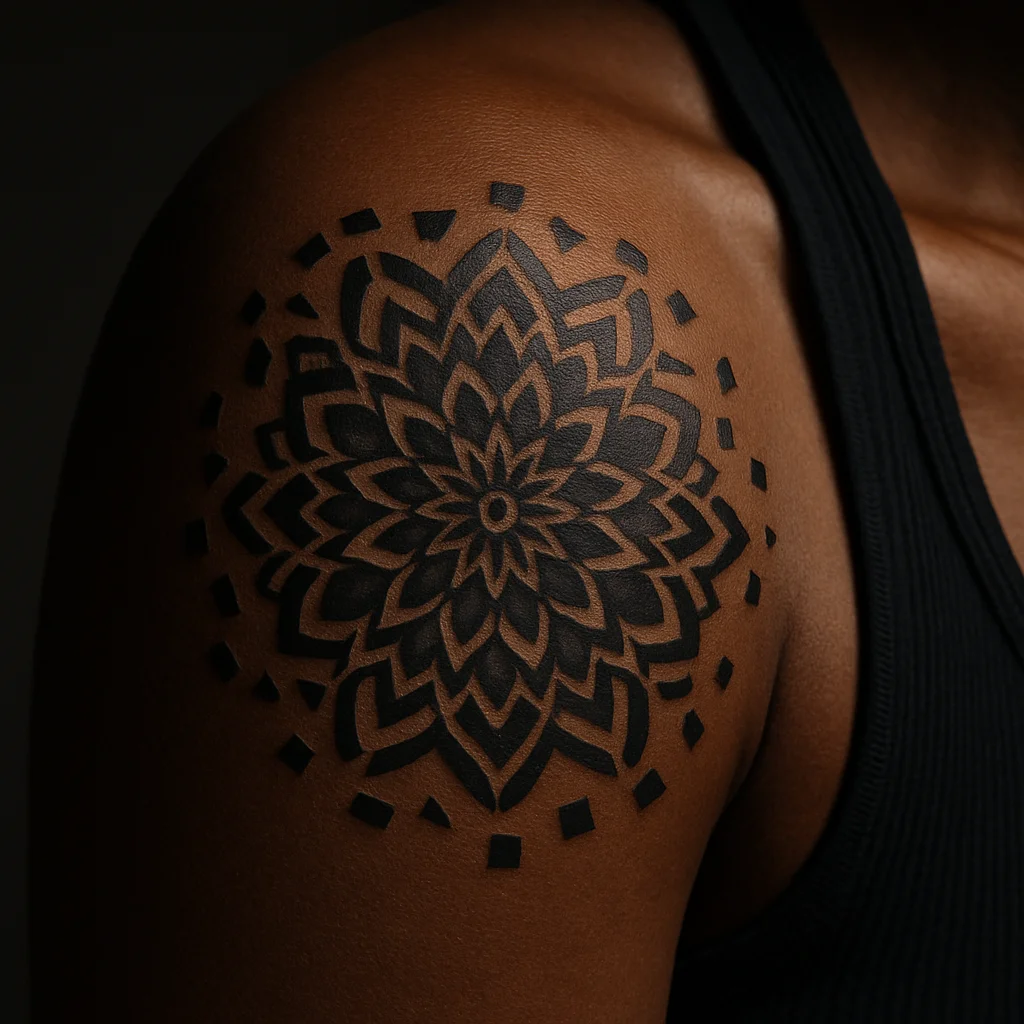
25. Mandala shoulder cap
A radial mandala centred on the point of the deltoid, with the outer rings breaking apart as they run down toward the bicep. The symmetry needs a skilled freehand stencil placement; on a rounded shoulder a printed stencil will distort. Excellent as the top anchor of a longer sleeve.
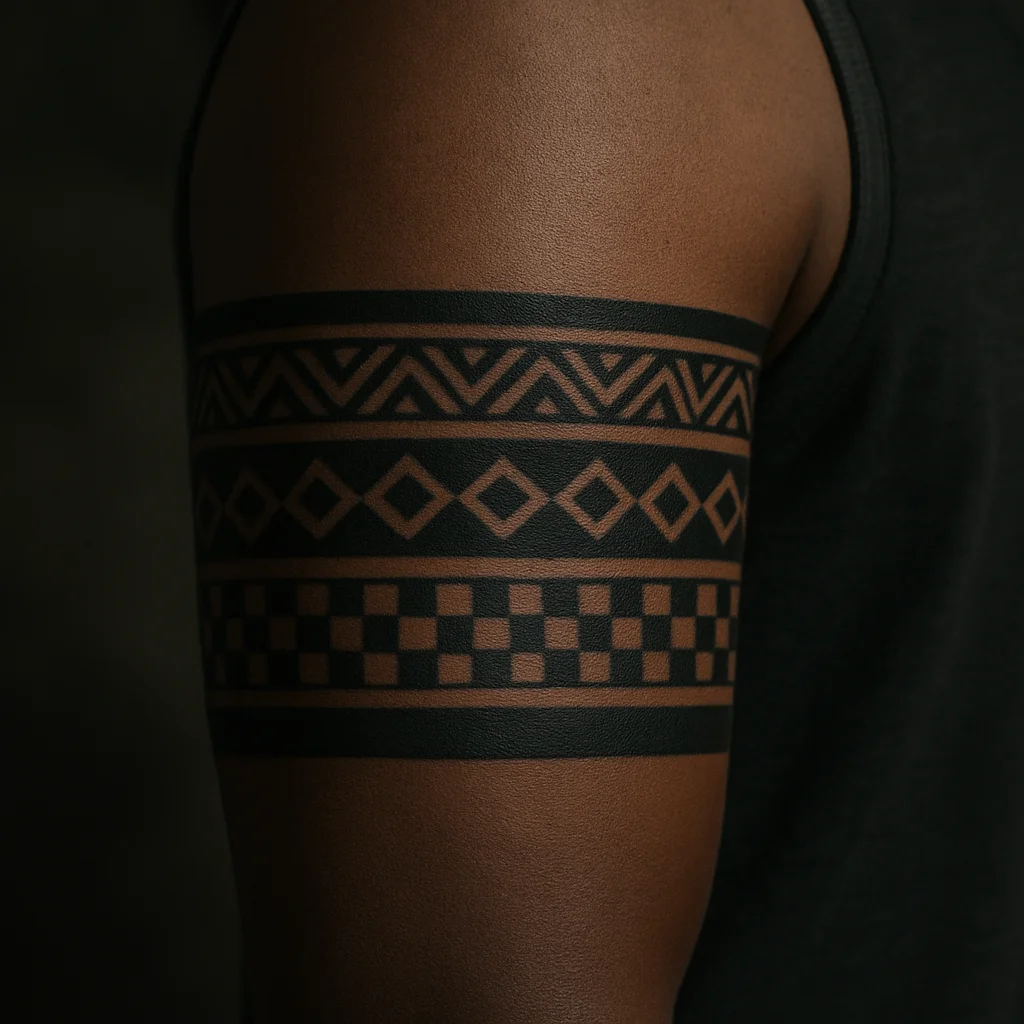
26. Geometric band-work around the bicep
Stacked bands of repeated geometric motifs circling the upper arm, with varied band widths so it does not read as a barcode. If you are drawn to Polynesian or Marquesan-style patterning, work with an artist from or trained in that tradition and discuss what the motifs mean rather than lifting them from a search result.
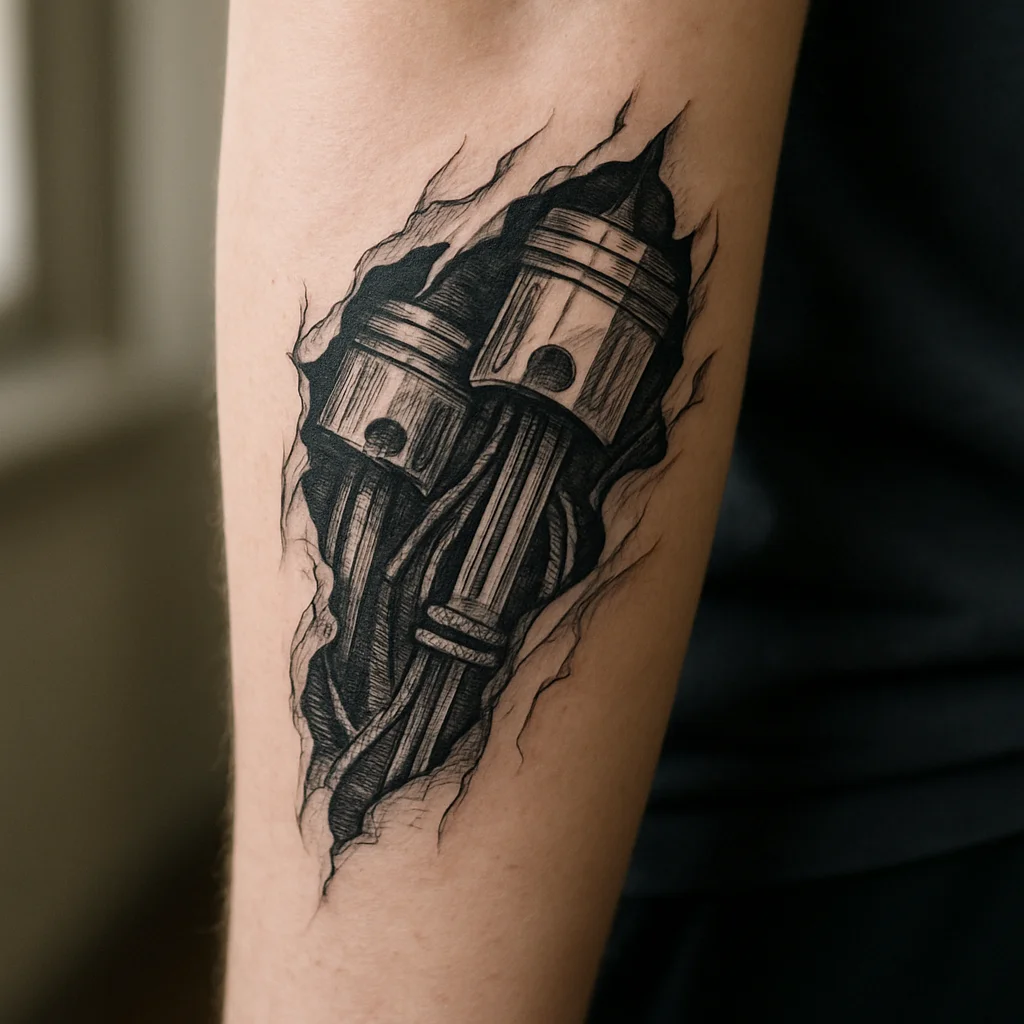
27. Biomechanical torn skin
Ripped skin edges revealing machined parts, pistons and cabling beneath, shaded with hard specular highlights. It needs strong contrast to sell the illusion of depth, so this is a heavy-black job. The outer forearm suits it because the tendons already suggest underlying structure.
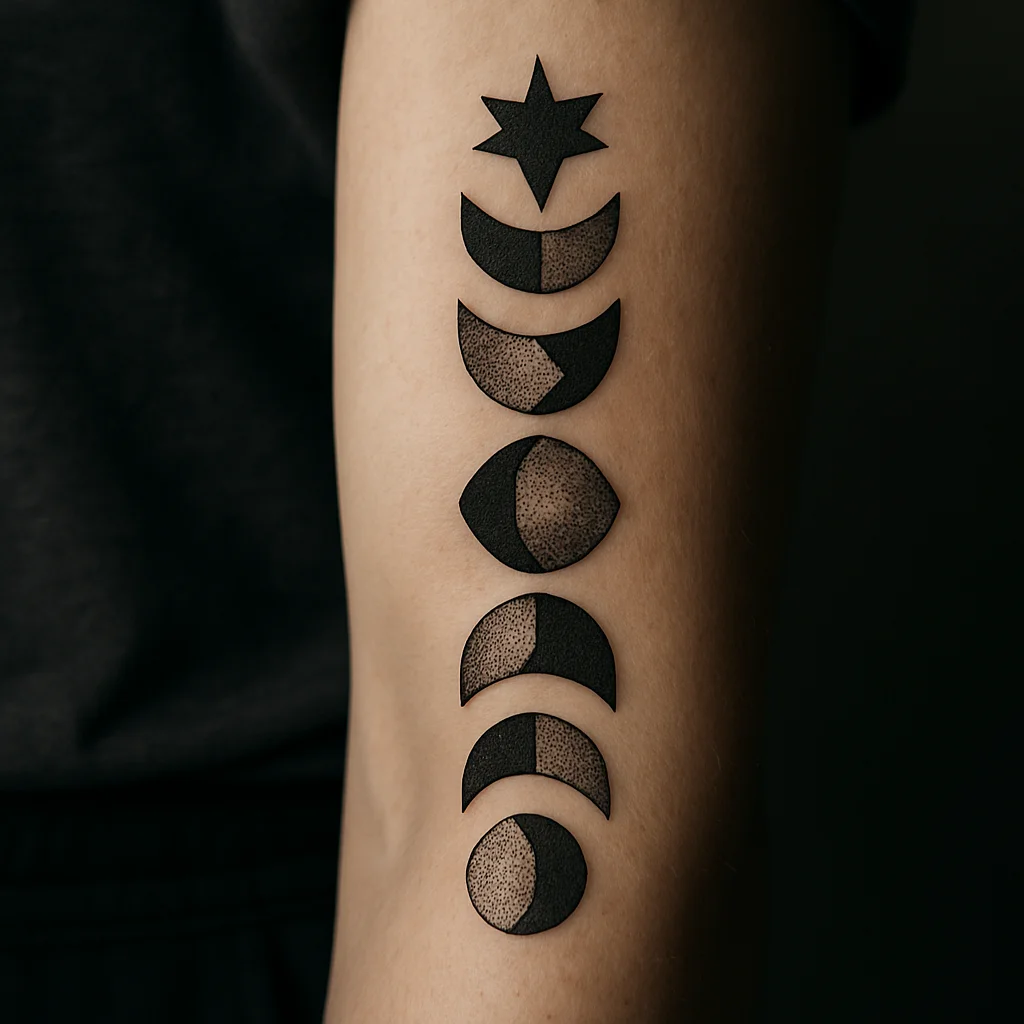
28. Dotwork moon phases
Eight moons in a vertical column, each built from stippling that grows denser toward the new moon. Simple, cheap in hours compared with realism, and it fills the inner forearm without shouting. Give each moon at least 4 cm of diameter or the stipple merges.
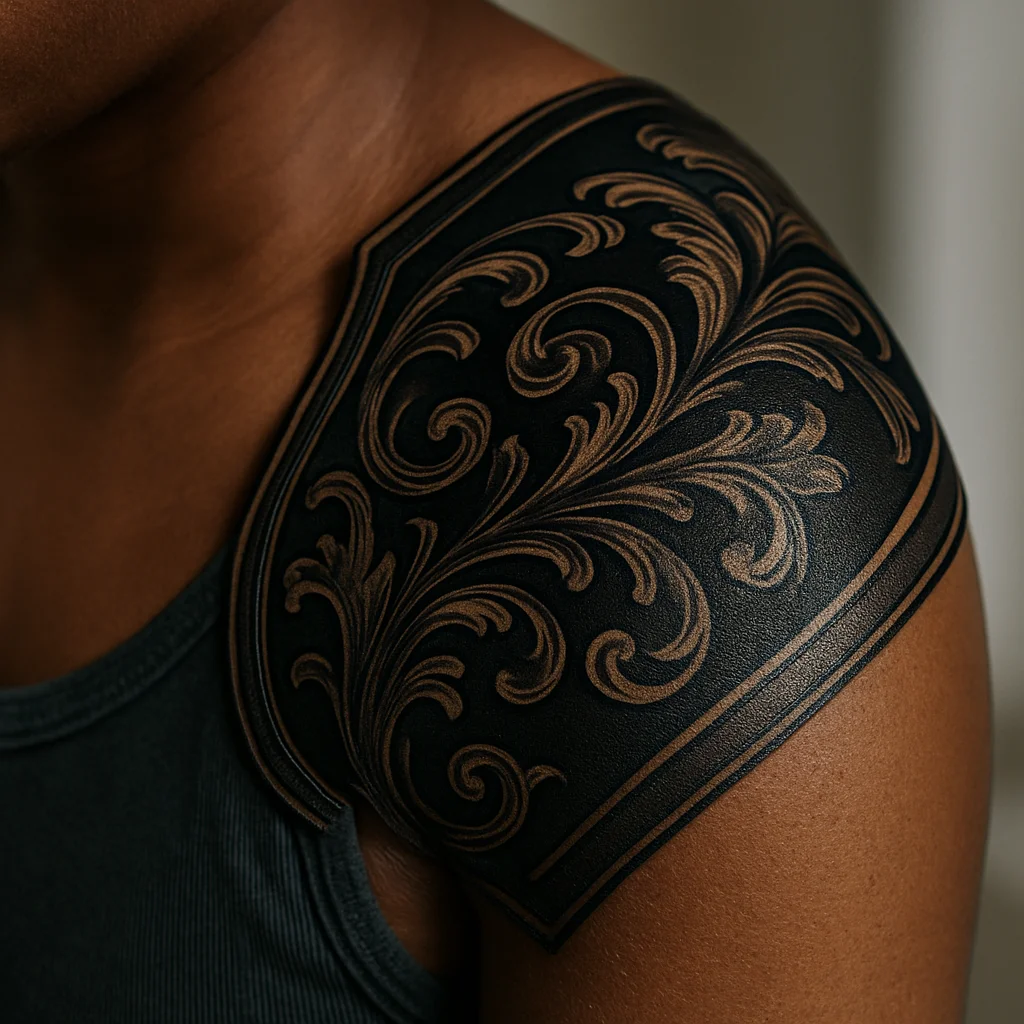
29. Ornamental filigree armour plating
Scrolling filigree shaped like a shoulder pauldron, with etched engraving lines and small black gaps between plates. It flatters the deltoid and upper chest border and it reads as decorative rather than narrative — a good route if you want a sleeve with no story attached.
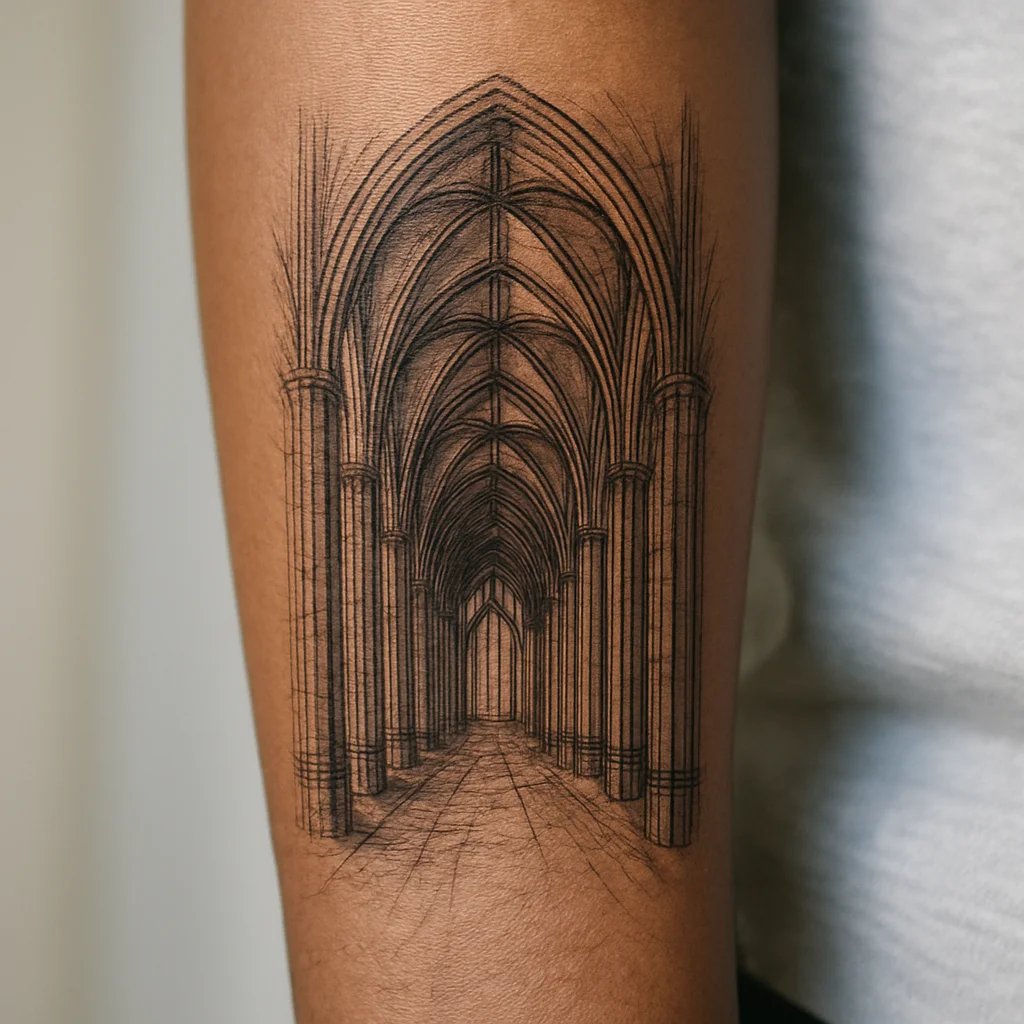
30. Cathedral arch panel
A gothic arch with ribbed vaulting drawn in strict one-point perspective, running up the outer forearm so the ceiling recedes toward the elbow. Architecture is a gift for black and grey: all those flat planes give the artist clean value steps. Keep the stonework grey and the window openings black.
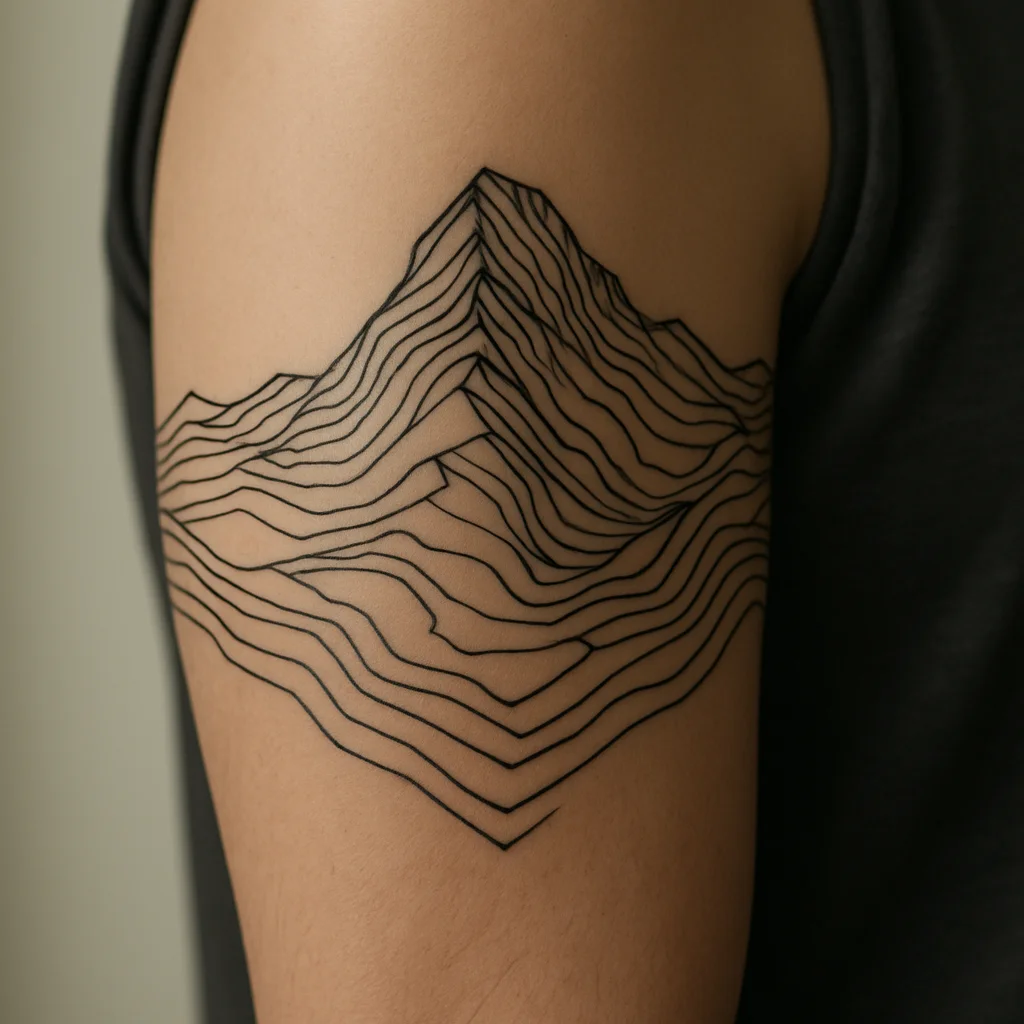
31. Topographic contour lines
Contour lines of a real place — a mountain, a coastline, a hometown map — flowing around the upper arm like a fingerprint. Subtle, abstract to strangers, and personal to you. Ask for varied line weight so the elevation reads rather than looking like a maze.
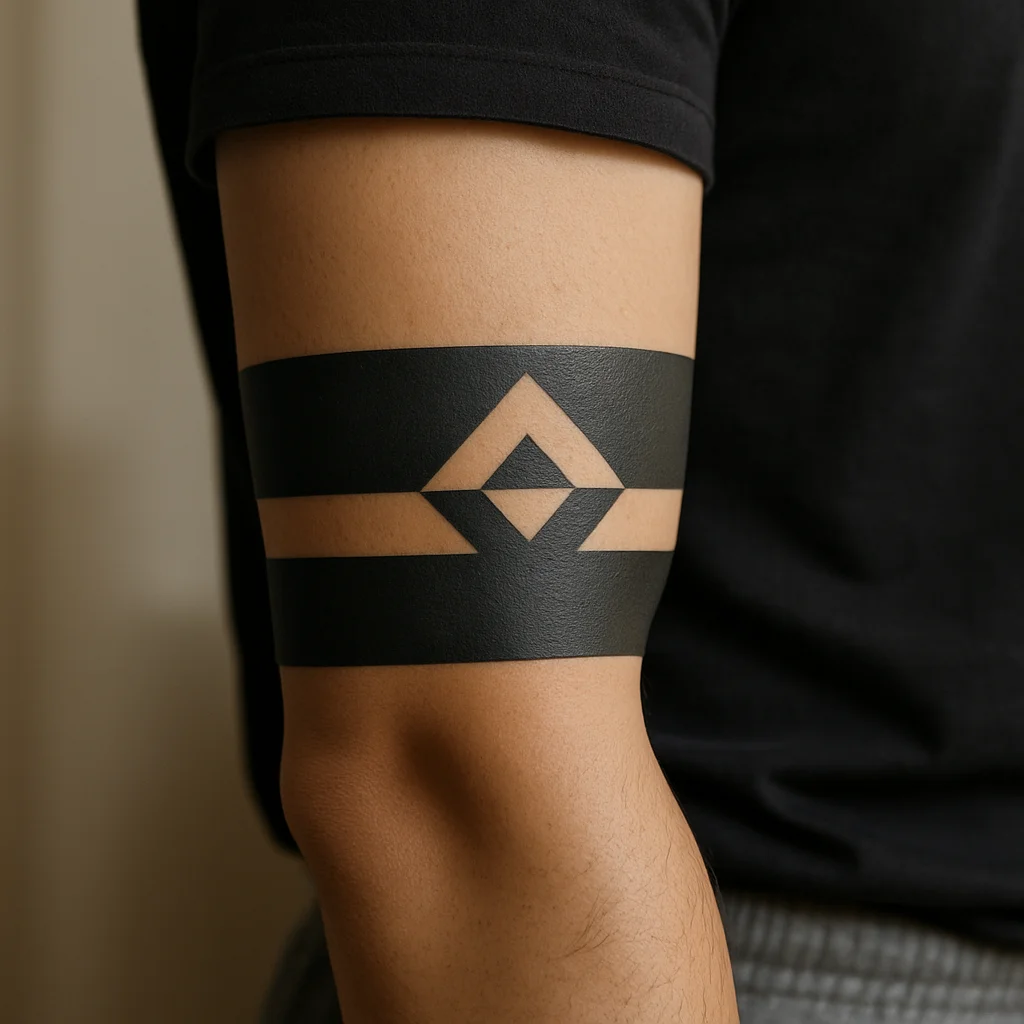
32. Negative-space band closing the sleeve
A solid black band interrupted by fine geometric shapes left as bare skin, wrapped just above the elbow to terminate the sleeve. It gives an unfinished half sleeve a deliberate ending instead of a fade-out. Two to five centimetres tall is enough, and it hurts less than the ditch itself.
Laying the sleeve out so it flows
A half sleeve is not a big tattoo, it is several tattoos sharing a stage. What separates a strong arm from a busy one is layout, and layout gets decided at the consultation, not the first needle.
Pick the wrap. Outer-arm-only sleeves look clean in short sleeves but read as a patch when you raise your arm. Full-wrap sleeves cost more hours and hurt more on the inner bicep, but they never look half-finished. Decide this before your artist draws anything.
Give it one boss. One element should be the largest and darkest — usually placed on the outer bicep or outer forearm, sitting at eye level when your arms hang. Everything else supports it. Two competing focal points on one panel is the most common mistake in amateur sleeve design.
Leave open skin on purpose. Untattooed channels, typically running through the inner arm and around the elbow ditch, let the eye rest and stop the sleeve reading as a grey blur from three metres away. Around 20 to 30 percent bare skin is a healthy target for black and grey.
Brief with values, not just subjects. Bring reference images that show the lighting you want as well as the content: high-contrast noir, soft studio grey, hard directional shadow. Say what you do not want too — many men dislike heavy black filler and only realise it once it is on them.
Plan the borders. Decide now how the sleeve ends at the shoulder, the chest line and the elbow. A cloud edge, a geometric band or a clean gradient all work; an accidental stop looks like you ran out of money. If you might extend to a full sleeve later, keep the elbow area open and read up on what a full sleeve actually costs before you start, so the plan matches the budget.
Hours, pain, money and how grey ages
Time. Most black and grey half sleeves land somewhere between 10 and 25 hours. Simple pattern or light-wash work sits at the bottom of that; photorealistic portraits with dense backgrounds sit at the top. Artists typically break it into three to six sittings of four to six hours, spaced two to four weeks apart so each area heals before the next pass.
Cost. Rates vary hugely by city and reputation, but in most Western markets you are looking at a mid-range hourly figure with well-known black and grey specialists charging several times that, or quoting a flat day rate. Multiply hours by rate for a rough total, add a deposit, and budget a tip. If a quote comes in far below everyone else in town, that is information, not a bargain.
Pain. The outer bicep and outer forearm are the easiest real estate on the body — most men can sit four hours there comfortably. The inner bicep, the armpit edge and the elbow ditch are a different story: thin skin, nerves and no muscle padding. Grey wash passes over already-tattooed skin also sting more than the initial linework. Eat properly beforehand, avoid alcohol the night before, and tell your artist when you need five minutes.
Healing and aging. Wash gently twice a day, moisturise thin, and expect grey areas to look patchy and cloudy around days five to twelve before they settle. Do not judge the tonal range until at least six weeks. Long term, sunlight is the enemy of black and grey more than of anything else — UV lifts the pale washes first, flattening the contrast you paid for. Daily SPF on exposed arms and an occasional touch-up every several years will keep a light-wash sleeve looking like it did in the healed photos.
Frequently asked questions
Does black and grey fade faster than colour?
Solid black is the most durable ink there is, but diluted grey washes are the first thing to lift under UV exposure. A heavy-black sleeve can look sharp for decades with minimal care, while a delicate light-wash sleeve may need a touch-up every five to ten years. Daily sunscreen on exposed arms makes more difference than any aftercare product.
How many sessions does a black and grey half sleeve take?
Usually three to six sittings of four to six hours, totalling roughly 10 to 25 hours depending on detail. Artists space sessions two to four weeks apart so each area heals before shading passes over it. Realistic portraits and dense backgrounds push you toward the higher end.
Should I start at the shoulder or the elbow?
Most artists start with the largest, darkest focal element and build outward, which usually means the outer bicep for an upper half sleeve. Starting with the anchor lets everything else be drawn to fit it. If you are unsure about committing to a whole sleeve, start with a standalone piece that can be framed and connected later.
Can I mix realism with geometric or blackwork in one half sleeve?
Yes, and it often works better than pure realism because the pattern gives the eye somewhere to rest. The key is a single artist handling both so the tonal values match. Ask to see a healed example where they have combined the two before booking.
What should I bring to the consultation?
Reference images for both subject and lighting, a note of what you dislike (heavy black filler, script, skulls, whatever it is), your rough budget, and a clear idea of whether you want the arm fully wrapped. Photograph your bare arm from four angles and bring those too. Good briefs get better tattoos.
The conversation
No comments yet. Got a thought about these designs? Start us off.
Want to weigh in? Join the community to comment, save designs and try them on your skin.