30 Floral Full Sleeves for Women, Bloom by Bloom
A floral full sleeve lives or dies on how the stems travel around the arm. Here are 30 designs sorted by structure, from wrapping vines to oversized single blooms, with placement, sizing and session advice for each.
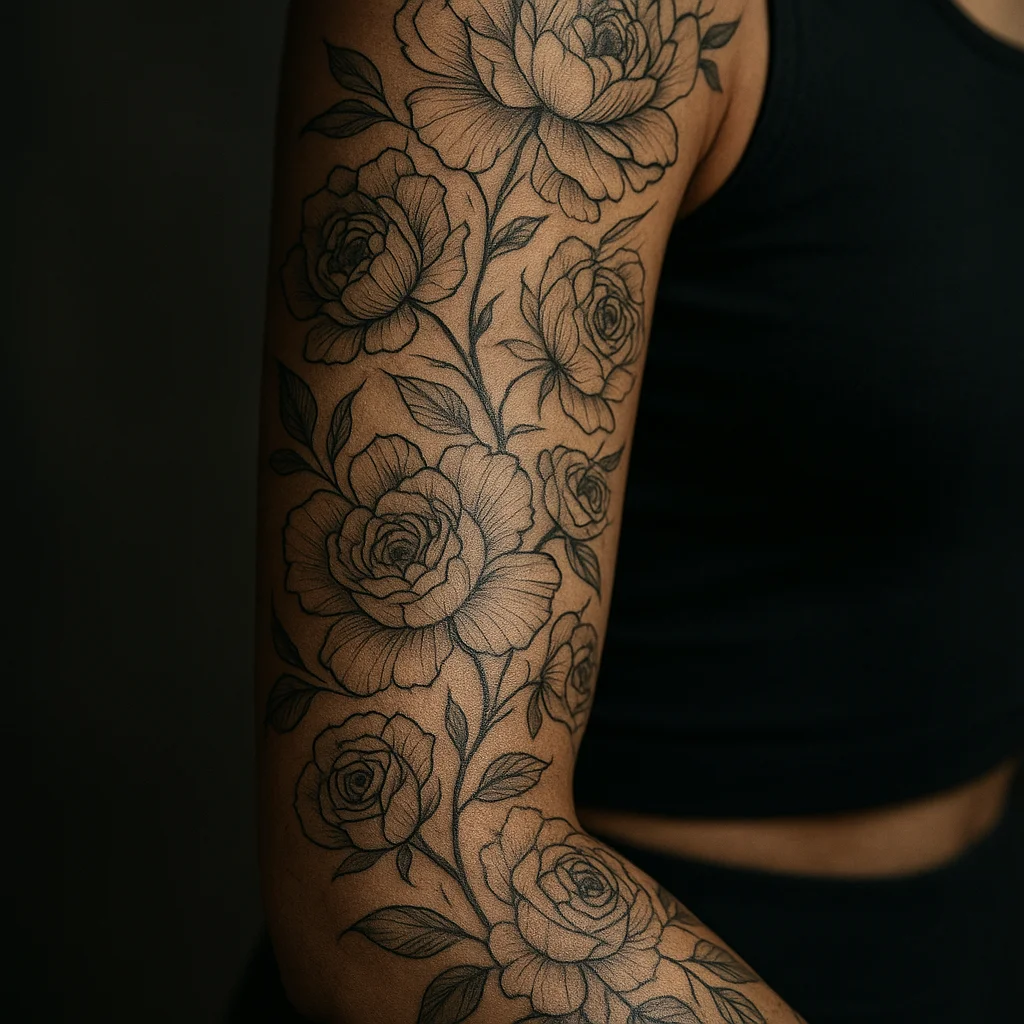
How a Floral Sleeve Is Actually Built
A flower sleeve is not a collection of separate tattoos crowded together. The good ones have a flow line: a single imagined stem or ribbon of movement that travels from the shoulder to the wrist, usually spiralling so it crosses the arm at a diagonal. Everything else hangs off that line. Artists mark it in pen on your skin before a single needle comes out, and you should stand up, drop your arm naturally and look in a mirror before you approve it.
From there the composition works in three tiers. Anchor blooms are the two or three largest flowers, placed on the flat, roomy planes: the shoulder cap, the outer bicep, the top of the forearm. Mid-tier buds and half-open flowers bridge between them. Filler is leaves, tendrils, seed heads, dotwork shading or soft grey wash, and it is what turns scattered flowers into a sleeve.
Three structural decisions matter more than which flower you pick:
- The joints. Elbow ditch and armpit-side inner bicep stretch and crease. Leaves, stems and open negative space belong there; fine detail does not.
- The wrist cuff. Do you want a clean stopping band, a fade into petals, or blooms running onto the back of the hand? Decide before session one, because the whole taper is planned backward from it.
- Density. A sleeve that is 70 percent ink reads bold and ages beautifully. A sleeve that is 30 percent ink reads like jewellery but needs more skill to keep from looking unfinished.
Ask for a full arm mock-up on photos of your own arm, not a flat sheet of paper. Flowers drawn flat always look wider than they do wrapped.
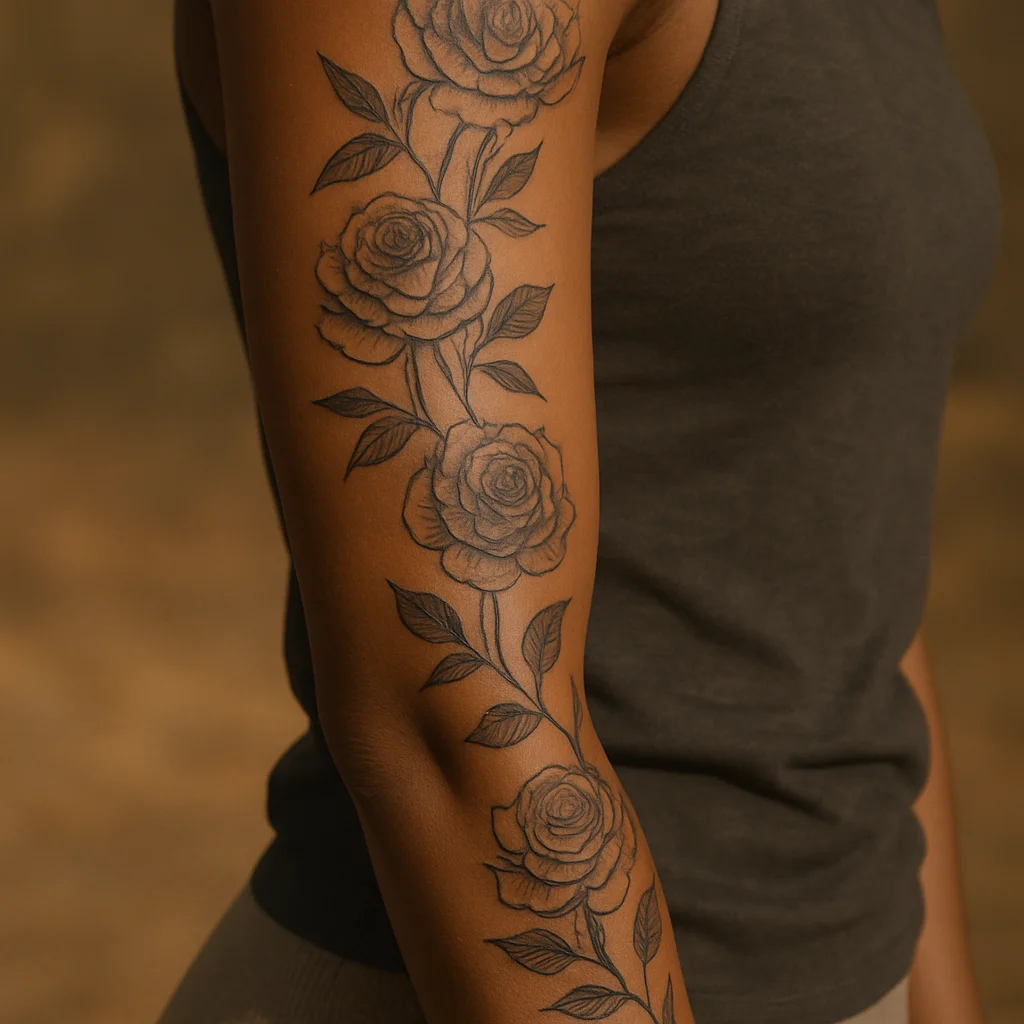
Wrapping Vines and Climbing Stems (1-8)
Vine-led sleeves are the easiest floral structure to get right, because the plant itself supplies the flow line. They also grow well: you can add blooms along the stem for years.
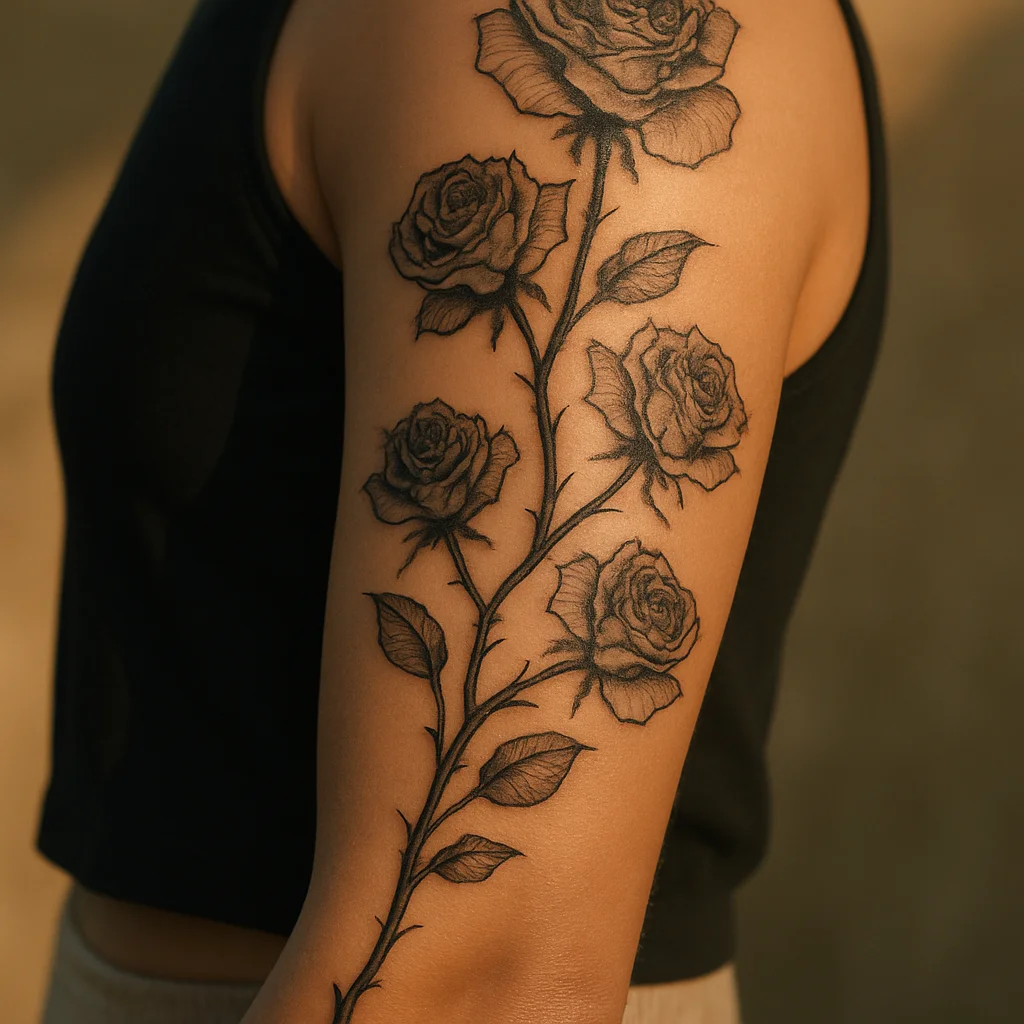
1. Thorned climbing rose, wrist to shoulder
A single thorned stem spirals up the arm with five or six open roses spaced along it, biggest at the shoulder, smallest at the wrist. Black and grey keeps it timeless; the thorns give the shading somewhere to bite. Suits anyone who wants one recognisable subject rather than a mixed garden.
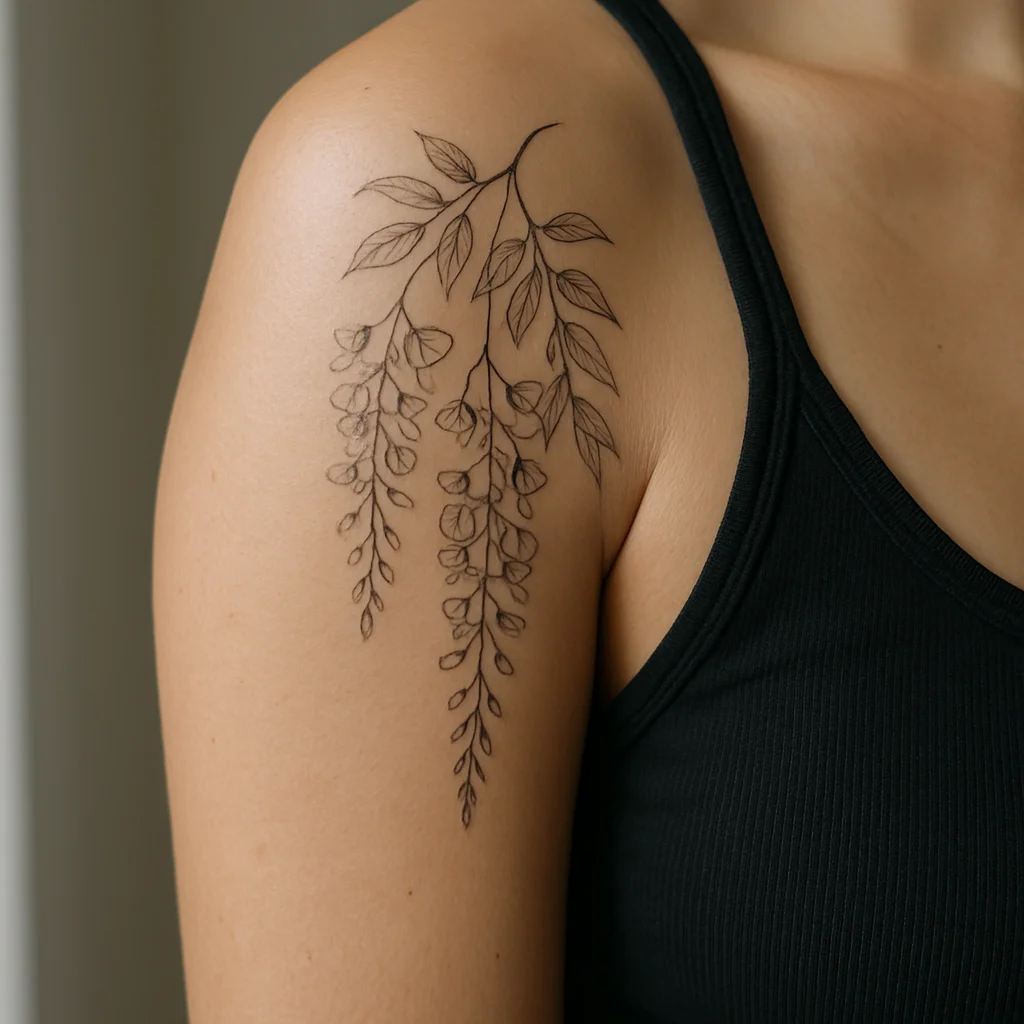
2. Wisteria drape over the shoulder cap
Racemes of wisteria hang from the shoulder down the outer arm like curtain fringe, tapering into a few loose strands at the forearm. It is a soft, feminine silhouette that follows gravity, so it reads correctly when your arm is down. Budget extra time: each cluster is hundreds of small petals.
3. Honeysuckle and ivy forearm wrap
Ivy leaves in solid black with honeysuckle trumpets in fine line, wrapping the forearm in two tight turns. The leaves carry the sleeve at a distance and the flowers reward close inspection. Great for arms with a lot of taper, since ivy hides awkward width changes.
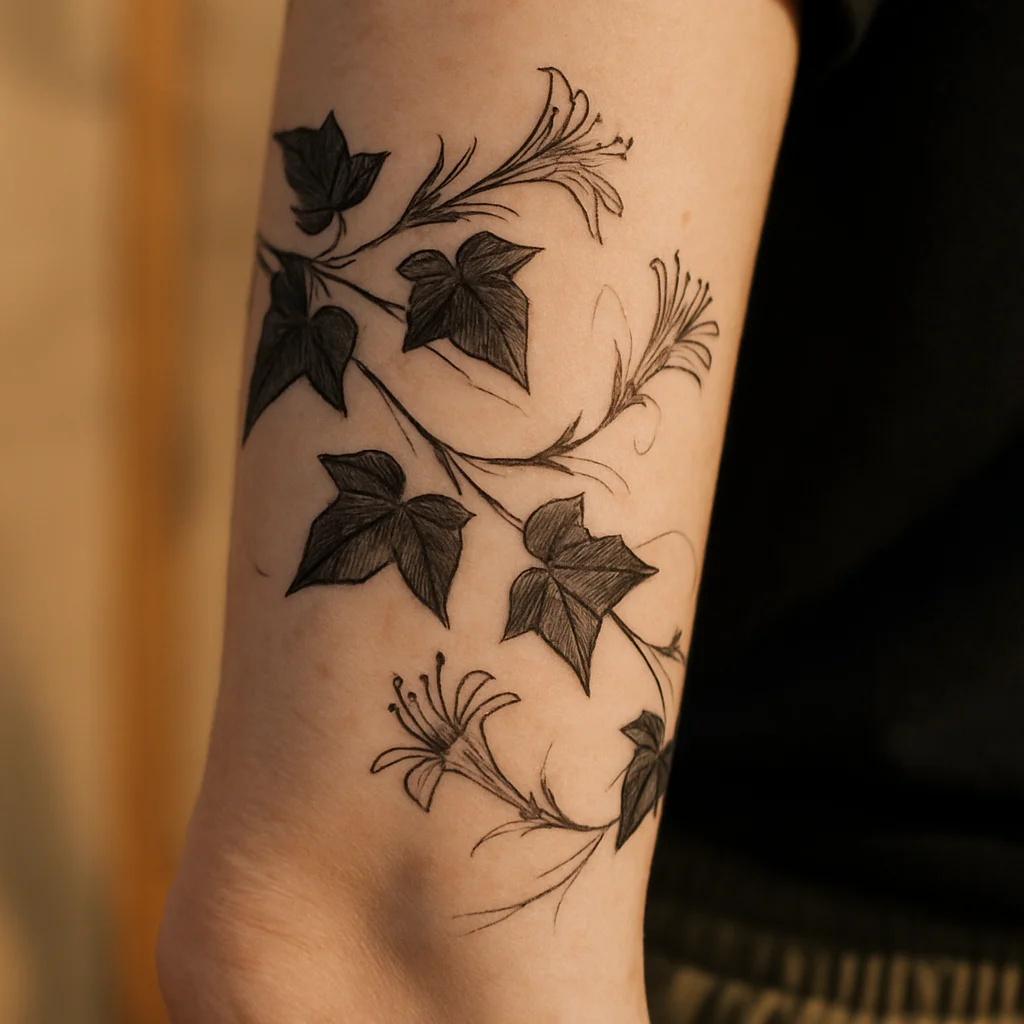
4. Sweet pea tendrils on the inner arm
Delicate sweet pea flowers with curling tendrils running up the softer inner arm, leaving generous skin between stems. Quiet, romantic and easy to cover with a sleeve of the fabric kind. Keep petals at least the width of a fingernail so they hold shape.
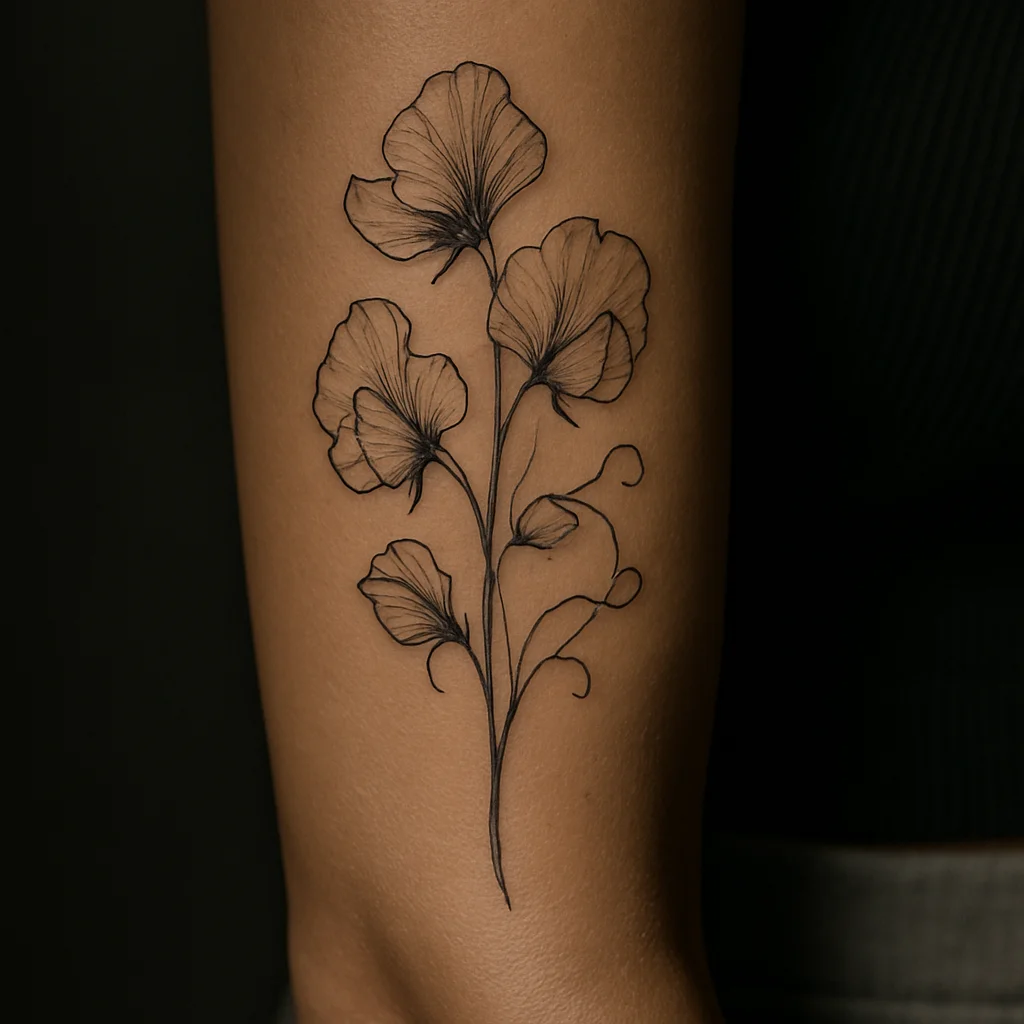
5. Jasmine spray through the elbow ditch
Small five-petal jasmine flowers and slim leaves crossing the elbow ditch on the diagonal, deliberately airy so the crease has nowhere to distort. This is a smart way to solve the hardest zone of any sleeve rather than fight it.
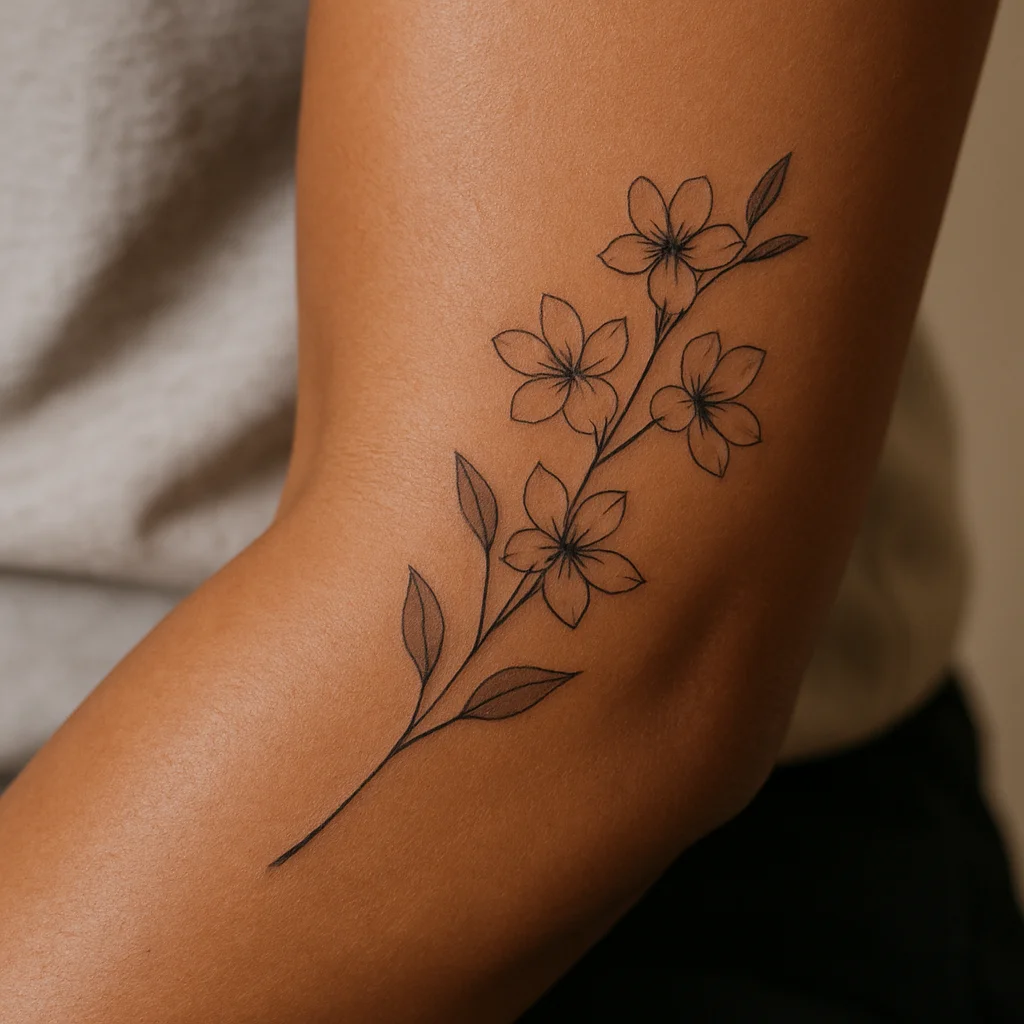
6. Clematis on a hairline stem
Big flat clematis faces on a stem drawn barely thicker than a hair, so the blooms look like they are floating in a spiral. Works best in single needle with soft grey centres. Best for people who want maximum visual impact from minimum black.
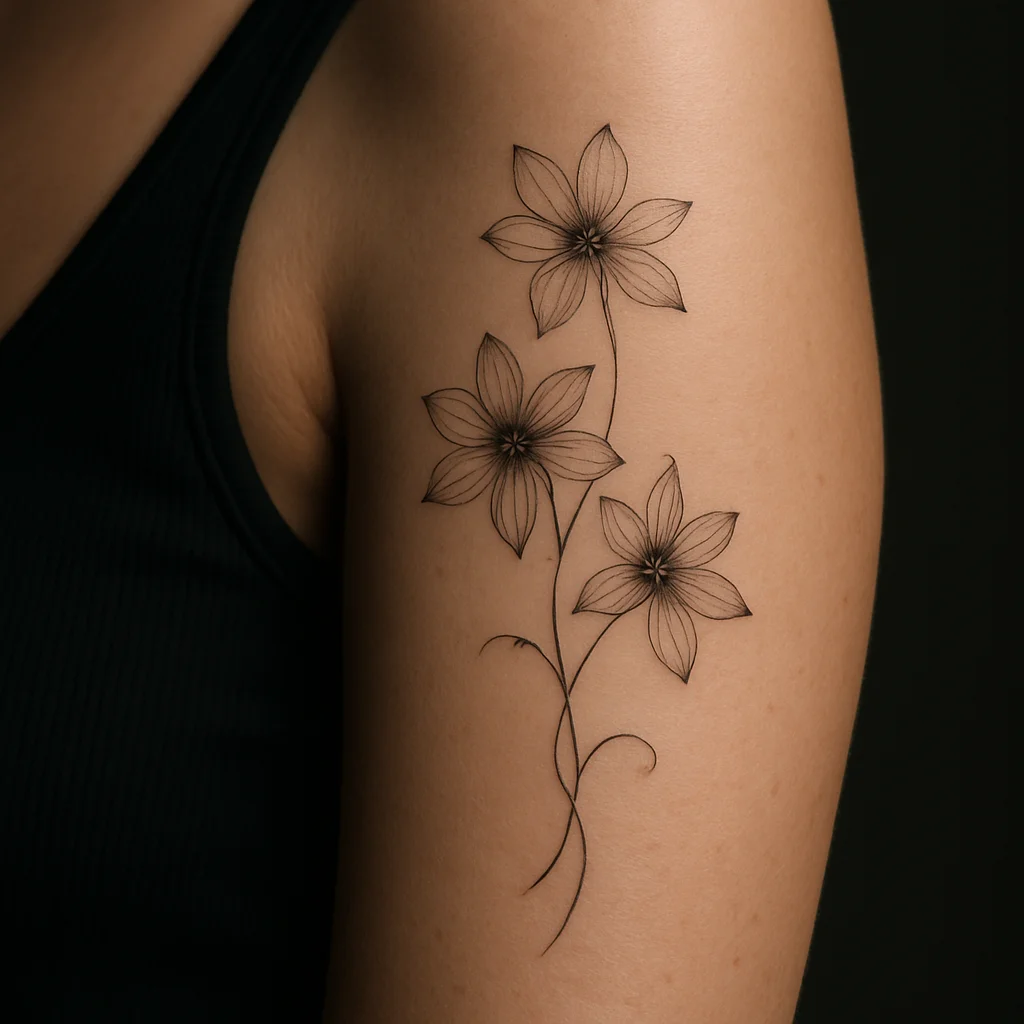
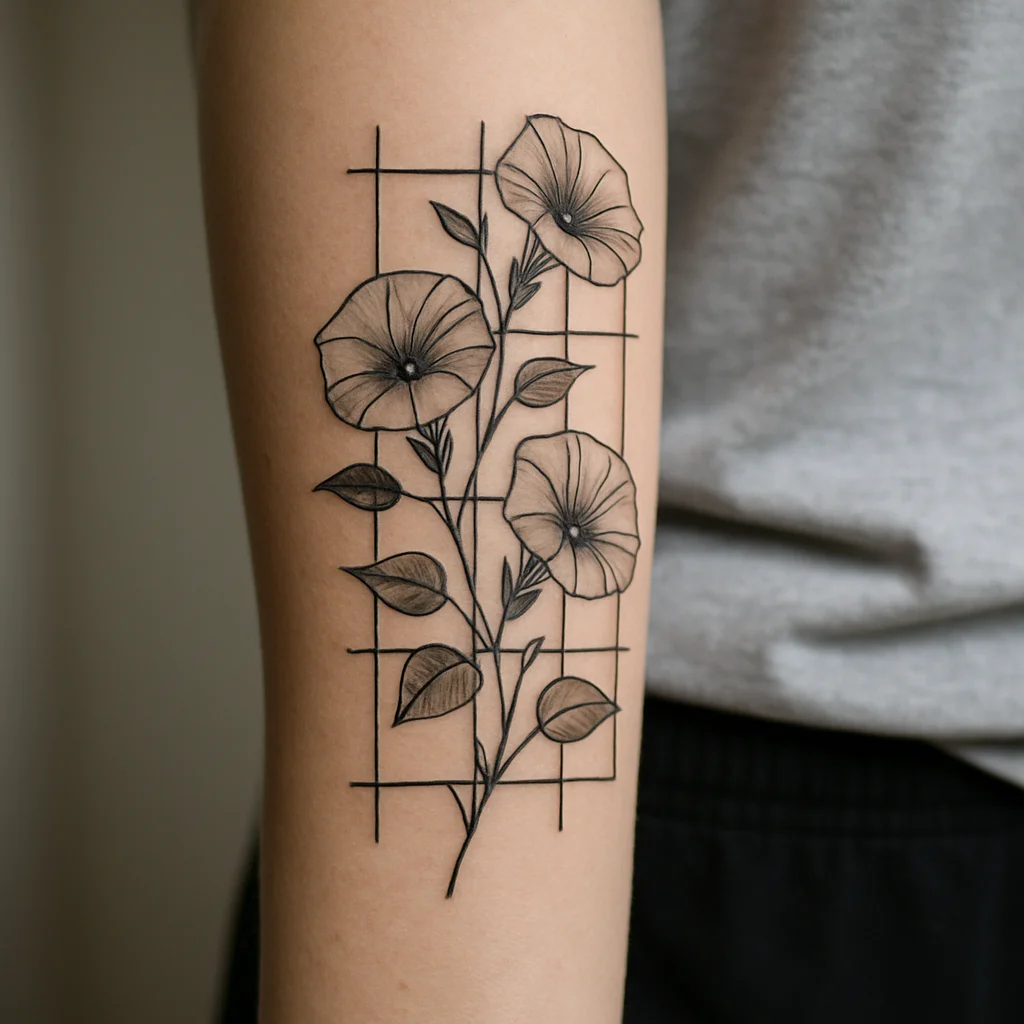
7. Morning glory on a fine-line trellis
A geometric lattice of thin straight lines runs the length of the arm and morning glory vines climb through it. The trellis gives structure to an otherwise loose design and looks striking on the outer forearm where the grid stays straight.
8. Trailing nasturtium with round leaves
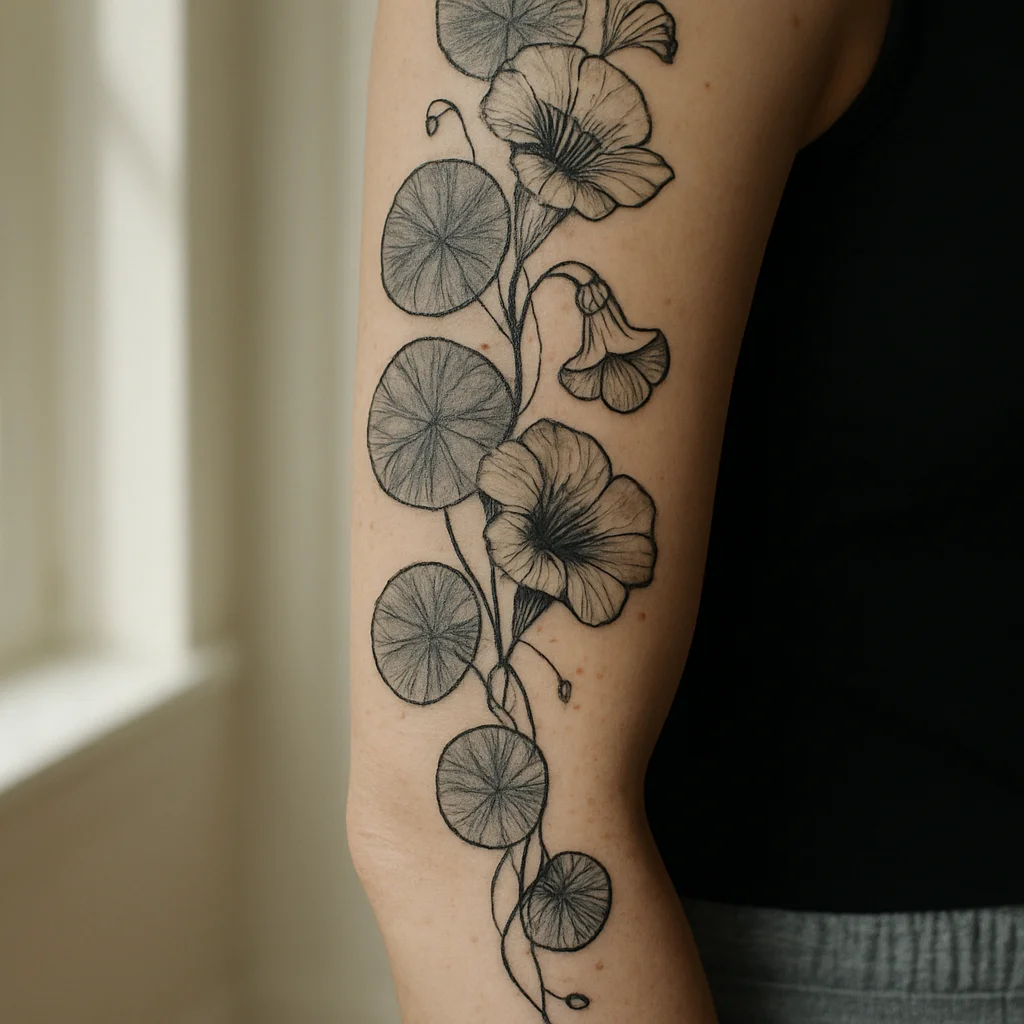
Coin-round nasturtium leaves and horn-shaped orange flowers tumbling down from the upper arm. The circular leaves are excellent filler for gaps, and the shape reads clearly even at small sizes near the wrist.
Big-Bloom Statement Sleeves (9-15)
If you want your sleeve readable from across a room, scale up. Two or three oversized flowers plus supporting shade will always out-punch twenty small ones, and they hold their edges for decades.
9. Peony cluster on the shoulder cap
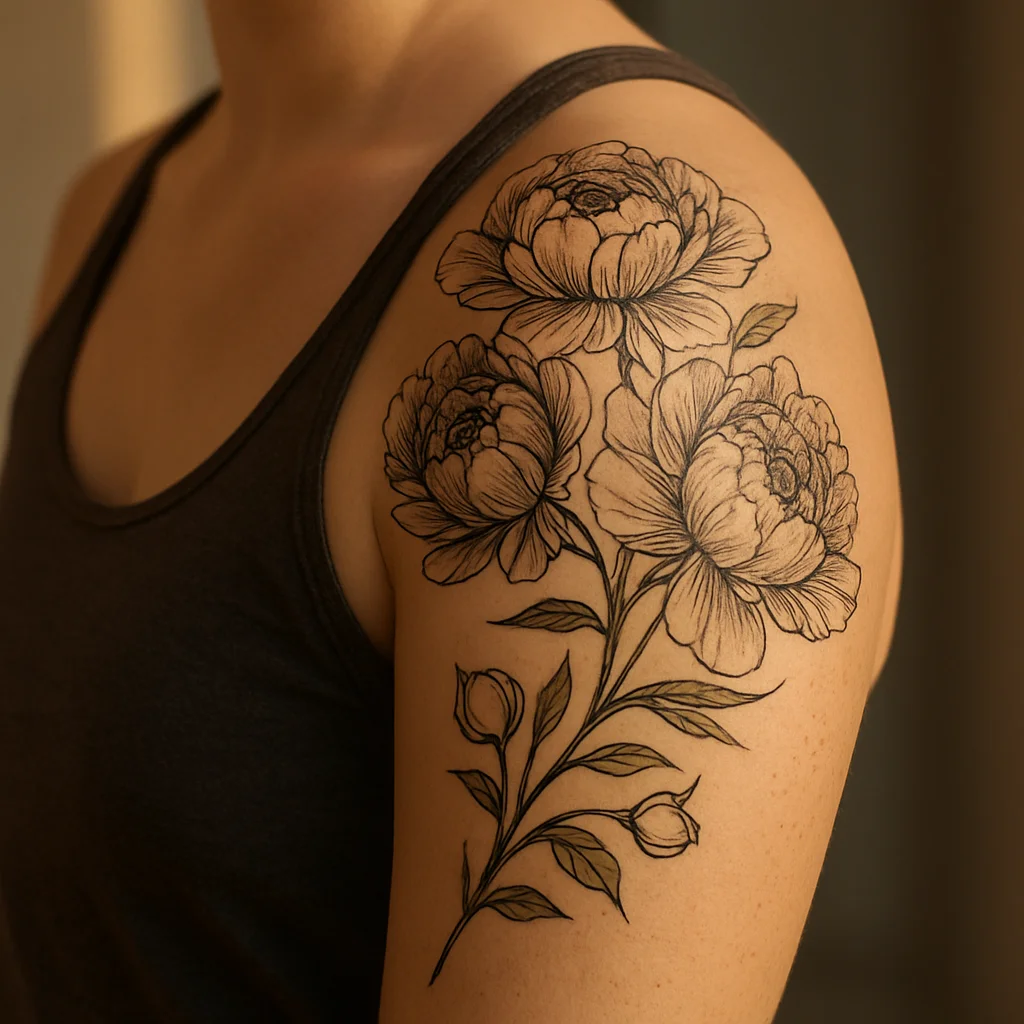
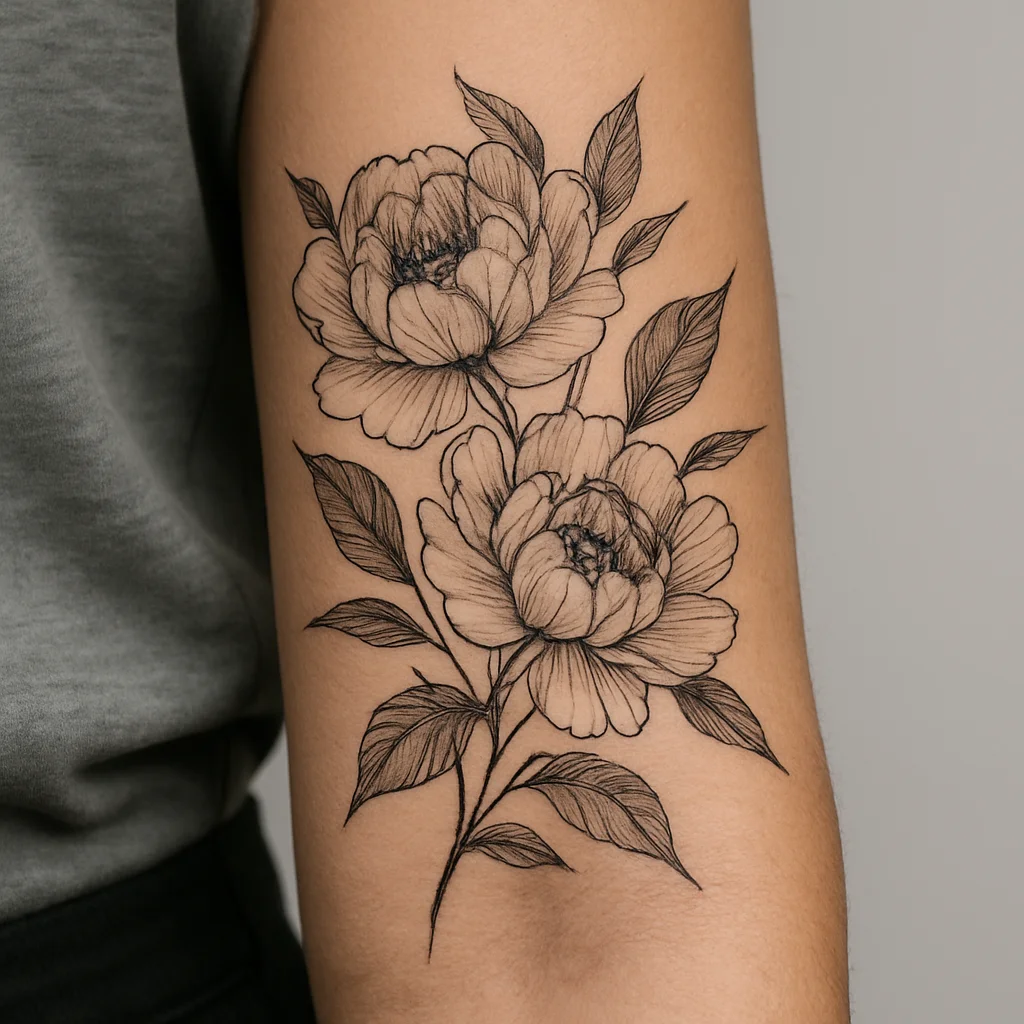
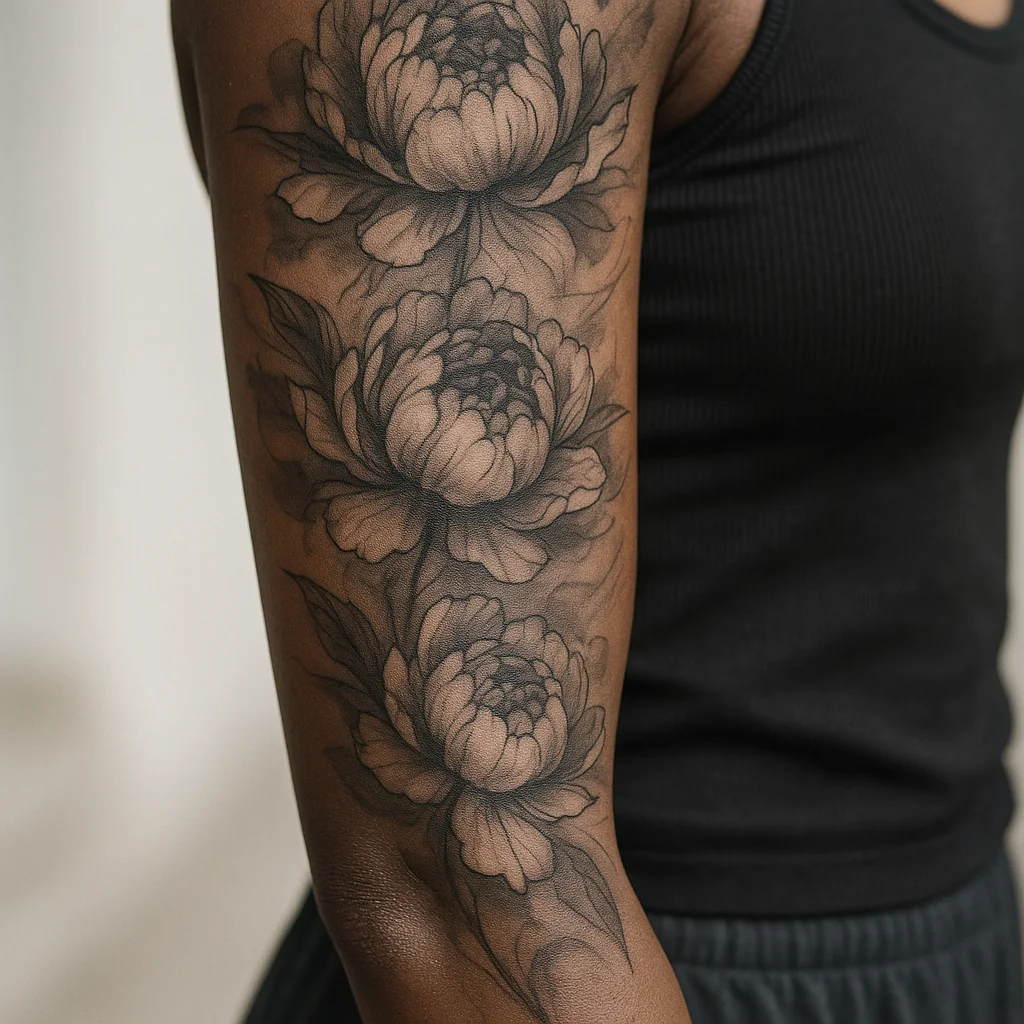
Three fat peonies filling the shoulder and outer bicep, with buds cascading toward the elbow and a single half-open bloom on the forearm. Peony petals are all soft curves, which means the artist can shade with grey wash and no hard outlines. A classic choice that suits broad shoulders especially well.
10. Magnolia branch across the outer arm
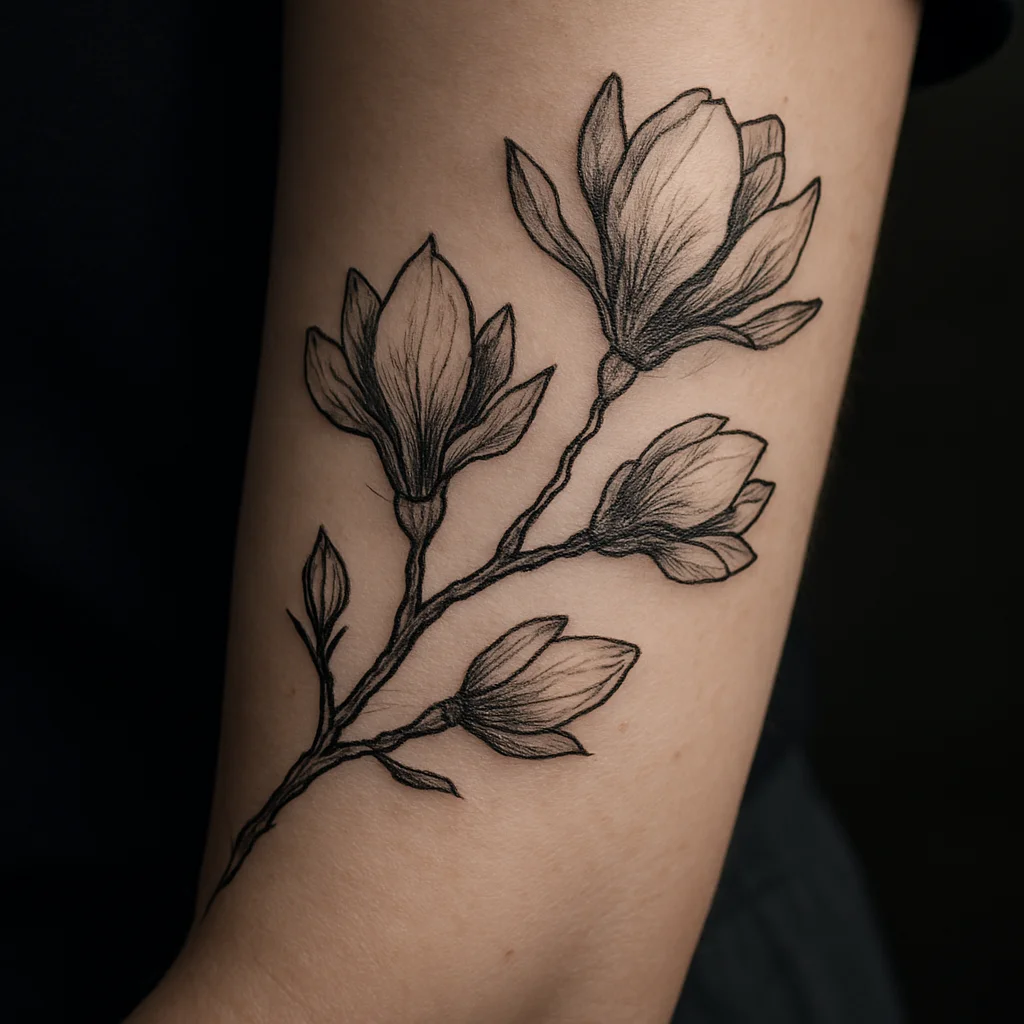
A woody branch cuts diagonally across the outer arm with waxy magnolia flowers at the shoulder and wrist. The bare branch sections act as breathing room, so a large sleeve still feels calm. Pairs beautifully with a soft sepia or warm grey palette.
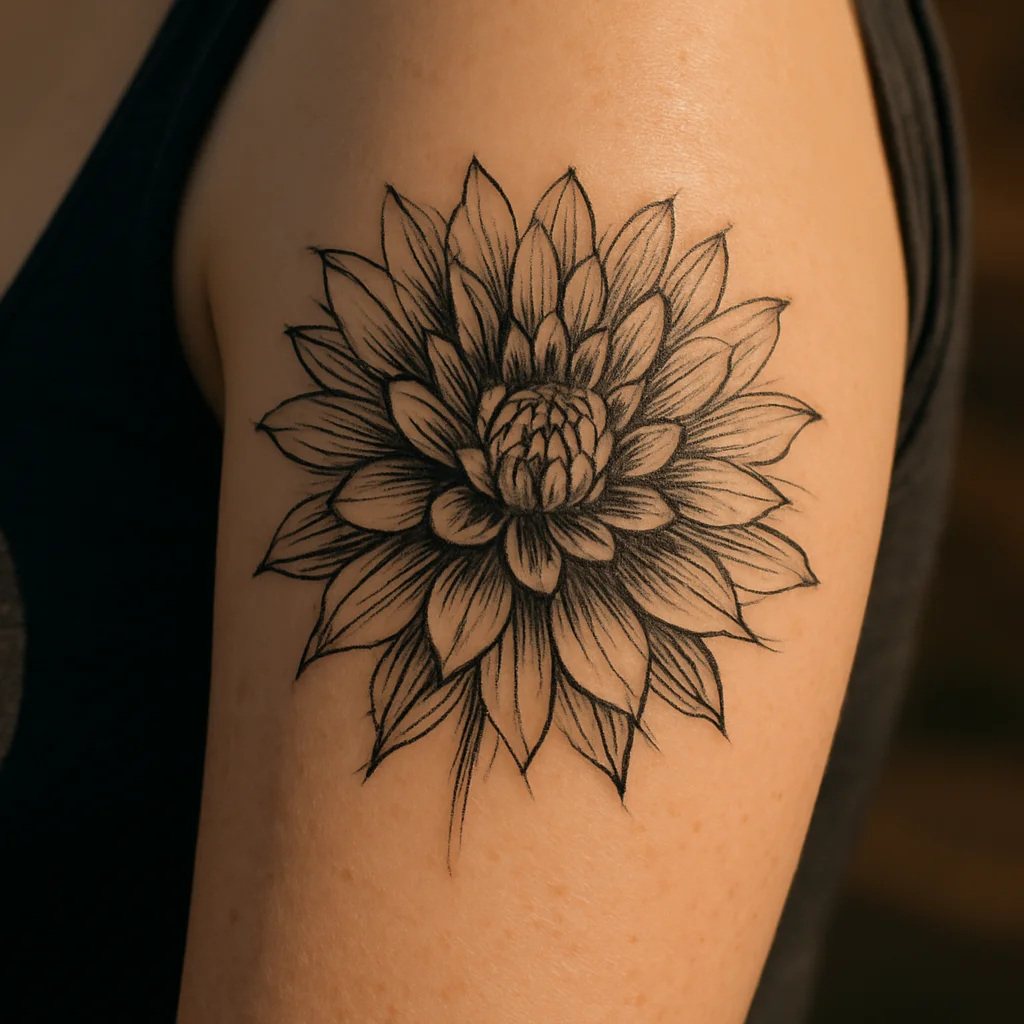
11. Oversized dahlia as the elbow anchor
One dahlia the size of a fist sits just above the elbow, its concentric petals radiating out into smaller blooms above and below. Placing your biggest flower at the elbow solves the hardest transition in the sleeve. Expect a long, tender session in that zone.
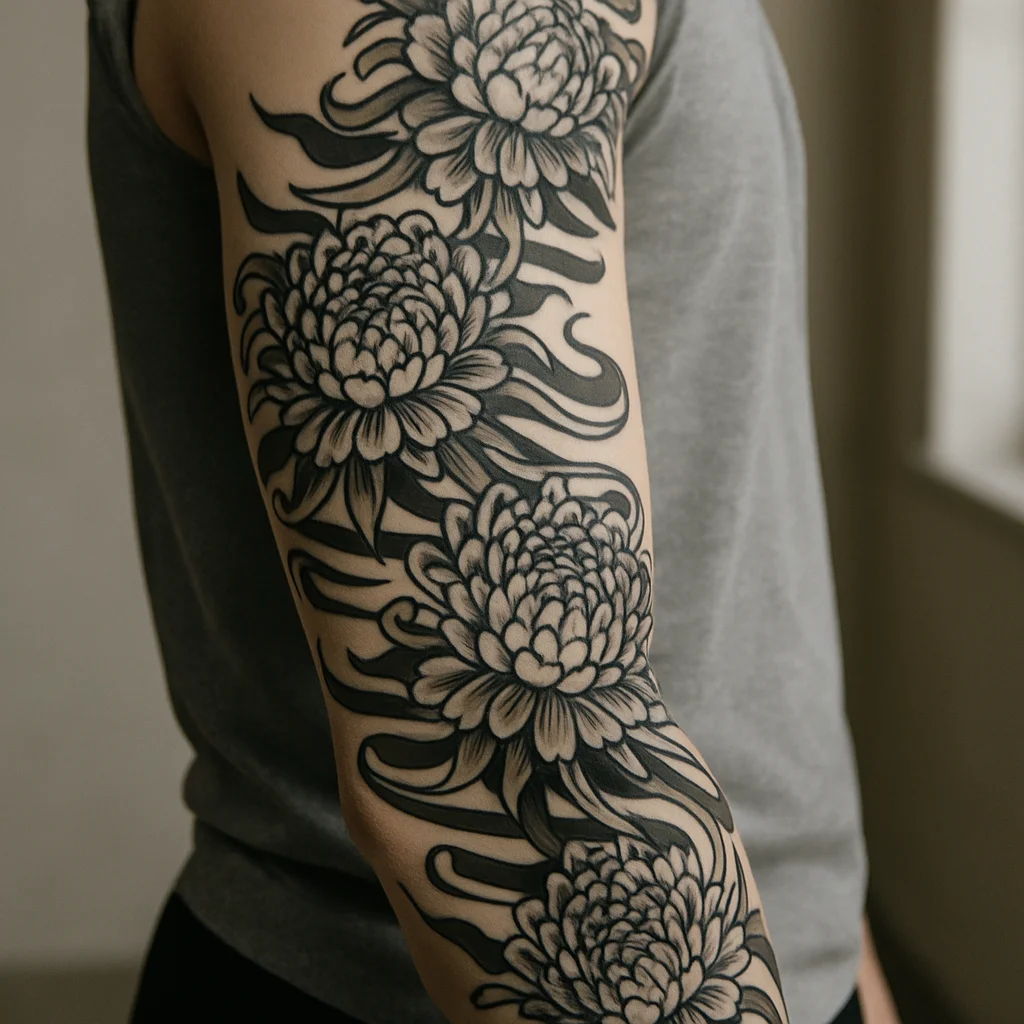
12. Chrysanthemum sleeve with wind bars
Japanese-influenced chrysanthemums with layered petals, connected by wind bars and stylised leaves that wrap the whole arm. Bold outlines and heavy black keep it legible at twenty years old. Best if you like structure and can commit to full coverage.
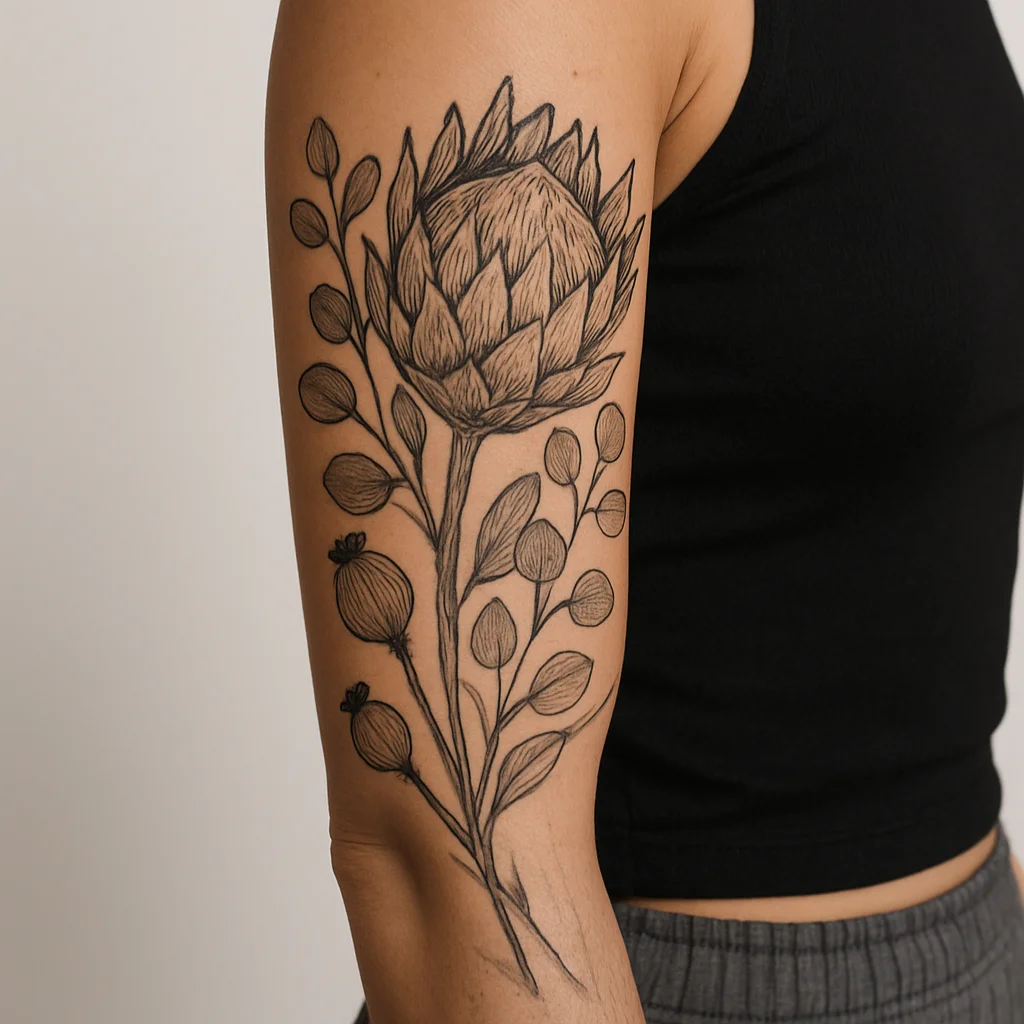
13. Protea, eucalyptus and dried seed heads
A modern, slightly architectural sleeve: king protea at the shoulder, eucalyptus sprigs trailing down, dried poppy pods near the wrist. Muted grey with a hint of dusty pink keeps it contemporary. Suits anyone who finds roses too traditional.
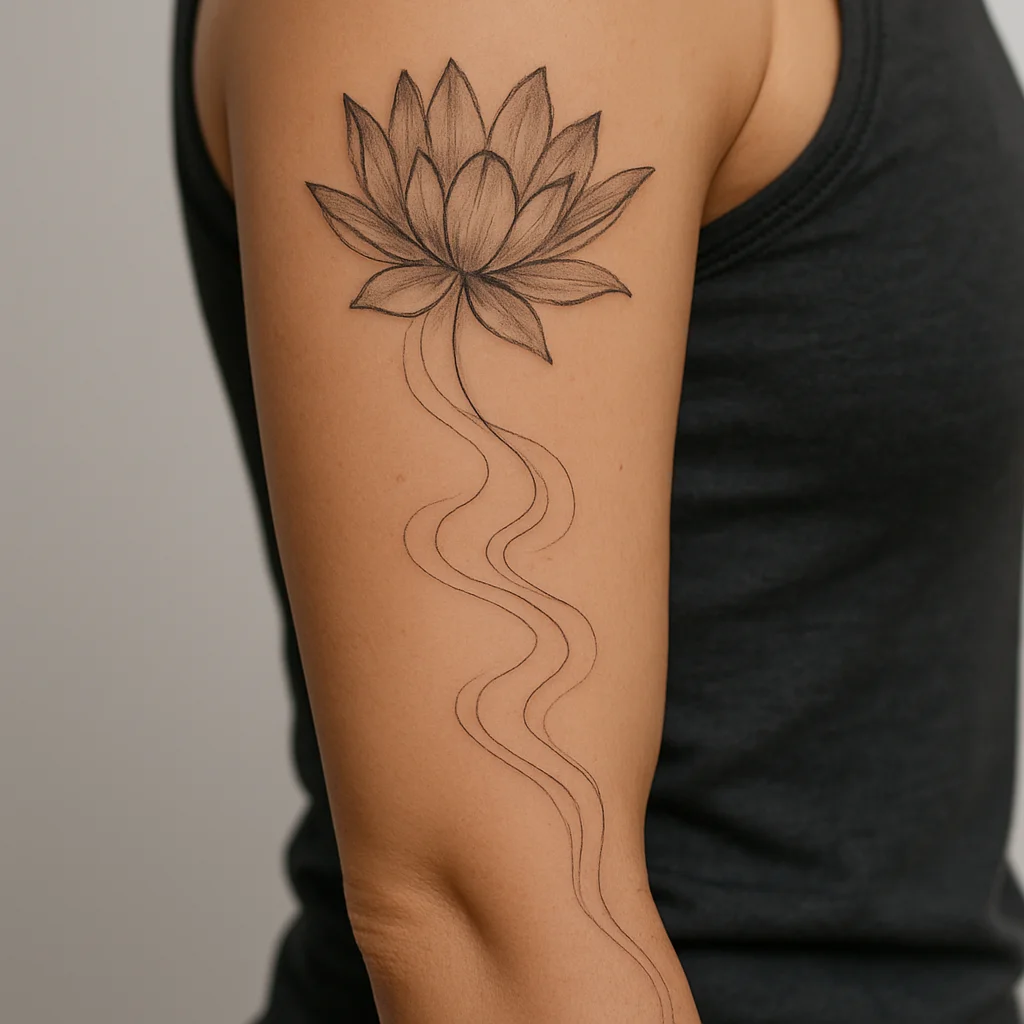
14. Lotus rising out of water lines
An open lotus on the shoulder with pads, ripples and fine water lines flowing down the arm to the wrist. The water gives you free filler and a beautiful excuse for negative space. Reads as meditative rather than decorative.
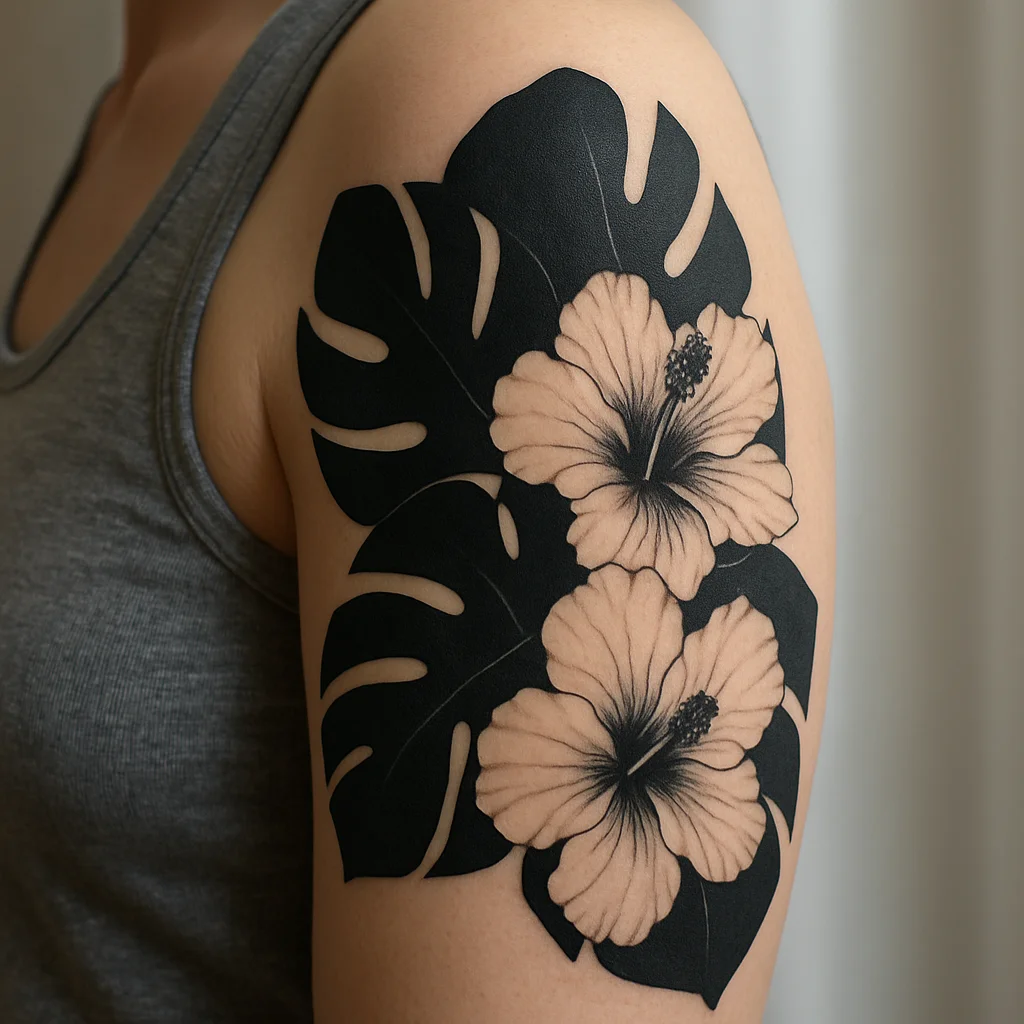
15. Hibiscus and monstera tropical sleeve
Split monstera leaves in solid blackwork with hibiscus blooms punching through in colour or bold grey. The huge leaves cover ground fast, which makes this one of the quicker large-scale florals to finish. Striking on fuller arms where the leaf shapes have room to spread.
Fine-Line, Negative-Space and Botanical Sleeves (16-23)
Light, airy floral sleeves are having a long moment, and they can be gorgeous. Just go in knowing the trade-off: thin lines and tiny gaps need an artist who genuinely specialises in single needle, and touch-ups after five to ten years are normal.
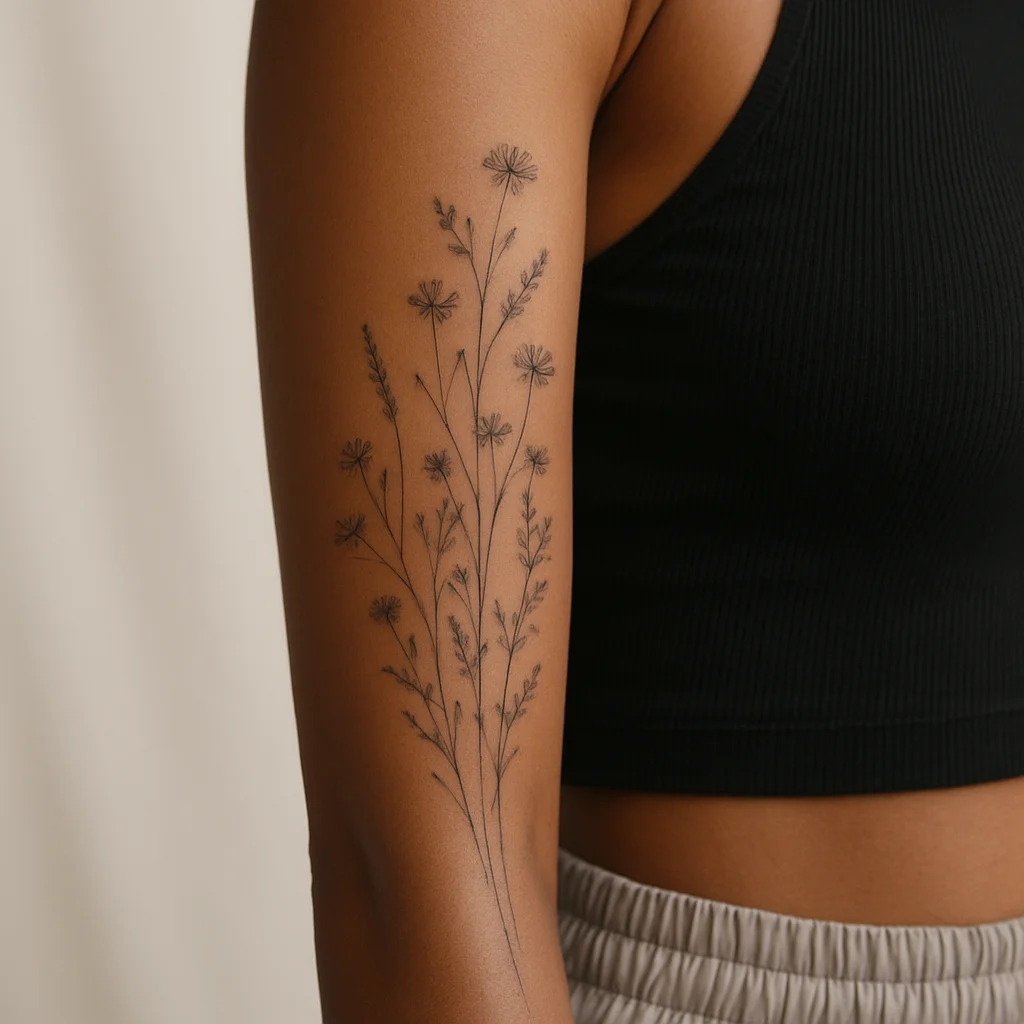
16. Ascending wildflower meadow
Cornflowers, yarrow, grasses and clover rising from a soft baseline at the wrist and thinning out toward the shoulder, all in single-needle black. The stems all point the same way, which is what stops it looking chaotic. A favourite for anyone who wants a sleeve that whispers.
17. Poppy field with white gaps
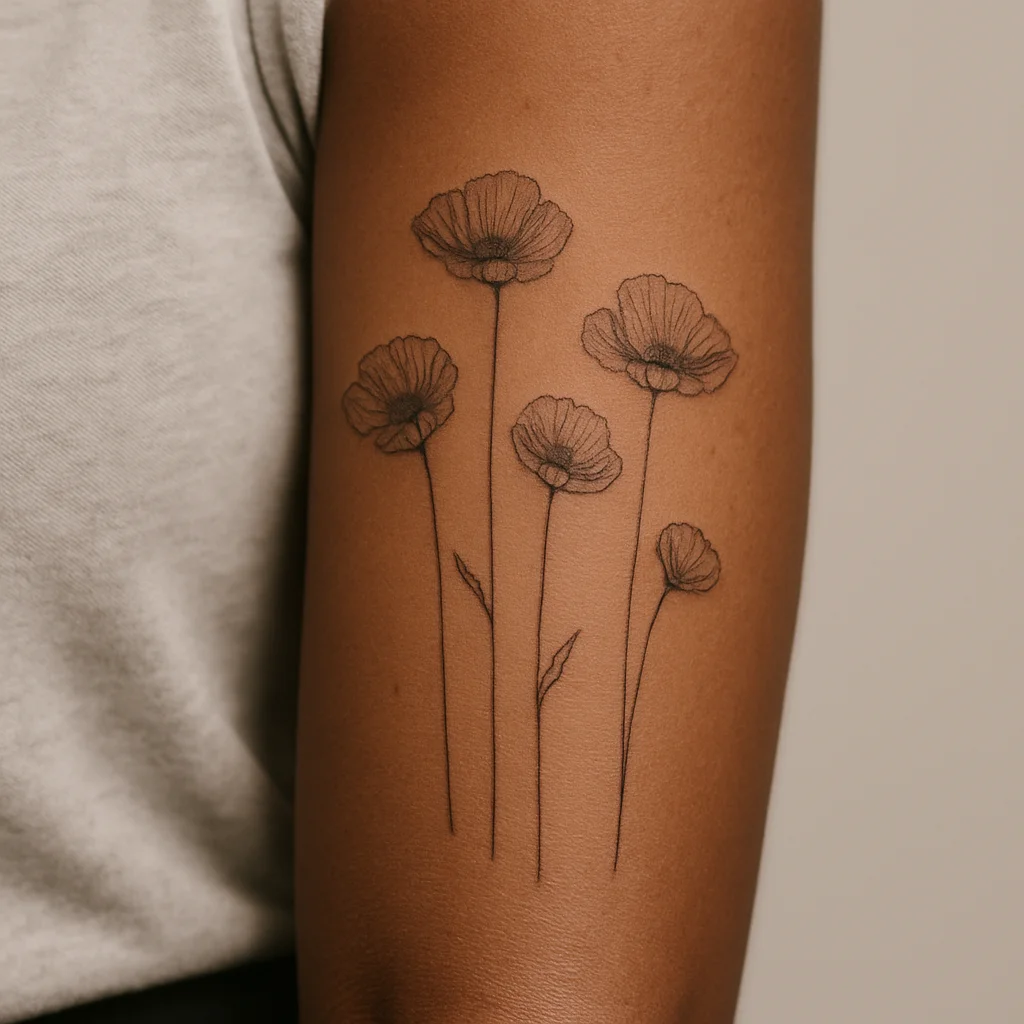
Tall poppies with crinkled petals and hairy stems, spaced widely so skin does most of the work. Keep at least a finger-width of clean skin between stems or it will blur into a smudge as it settles. Beautiful on the inner arm where the skin is pale.
18. Lily of the valley column on the inner arm
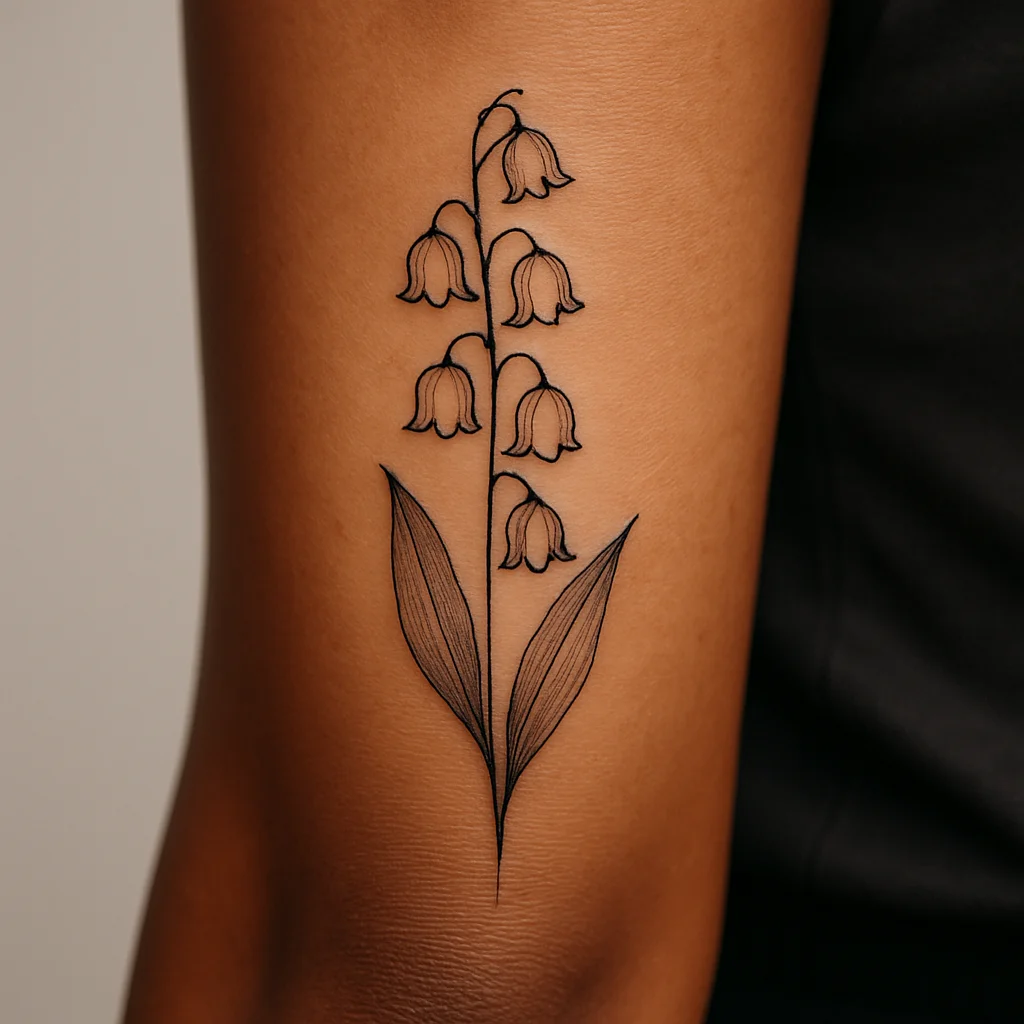
A vertical run of nodding bells from wrist to inner elbow, with two broad leaves at the base. It suits May birthdays and reads as delicate rather than decorative; see more lily of the valley designs if that is your month. Have the bells drawn slightly larger than feels necessary.
19. Birth-flower stack for the family
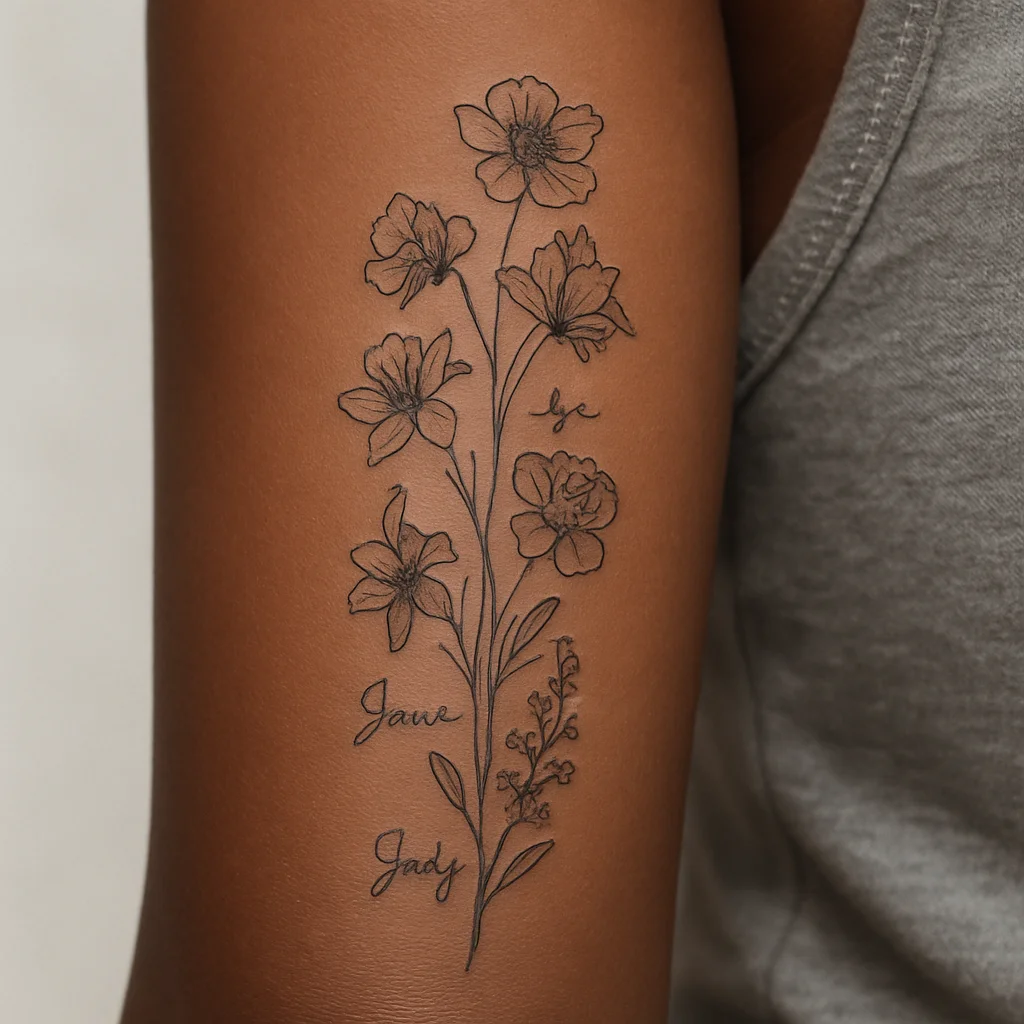
One birth flower per person, stacked up the arm in order of birthday with names or initials in small script at each stem. Because the flowers differ in shape, the artist should unify them with a consistent line weight and one shared stem line. Endlessly extendable as the family grows.
20. Antique botanical plate sleeve
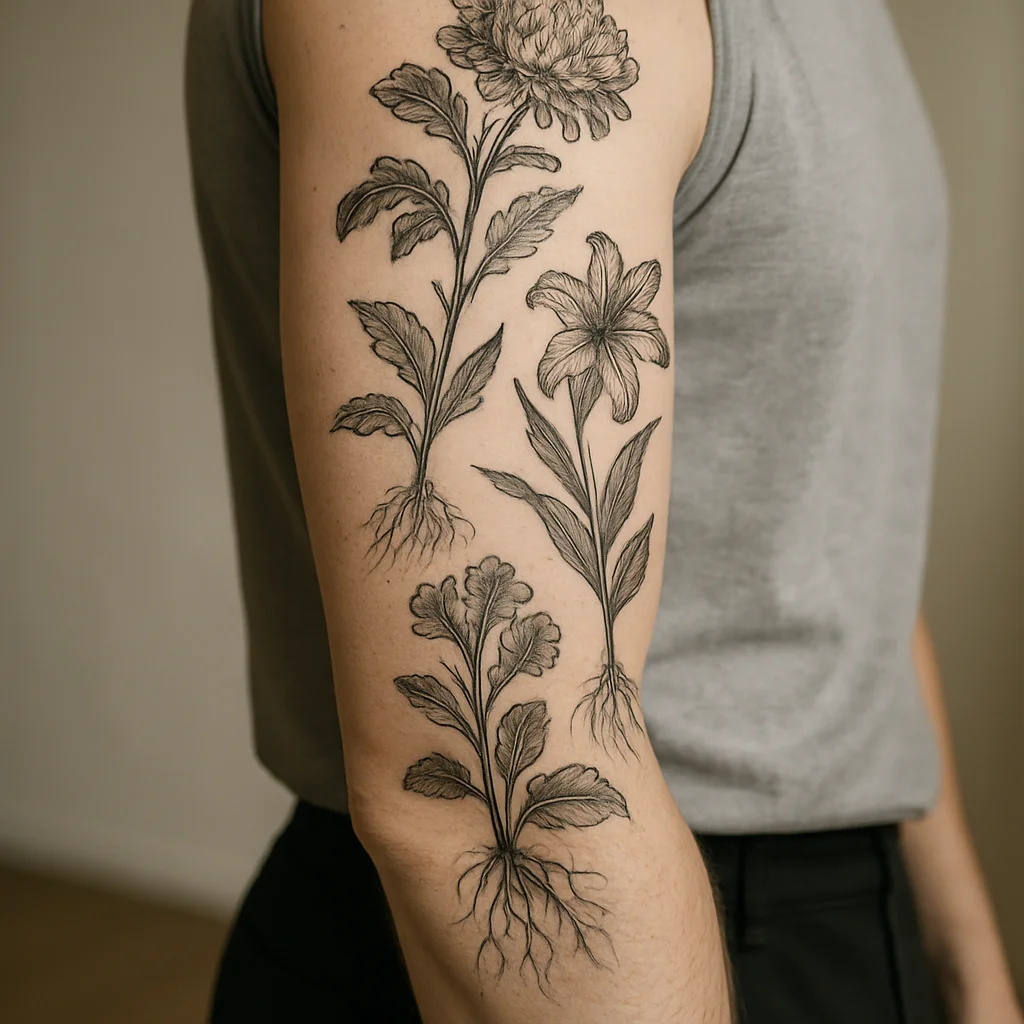
Flowers rendered like nineteenth-century engravings, with cross-hatched shading, cut stems, root balls and tiny Latin labels. It looks like a page from a herbarium wrapped around your arm. Choose this if you love detail and are patient with long, dense sessions.
21. Negative-space blossoms in a black field
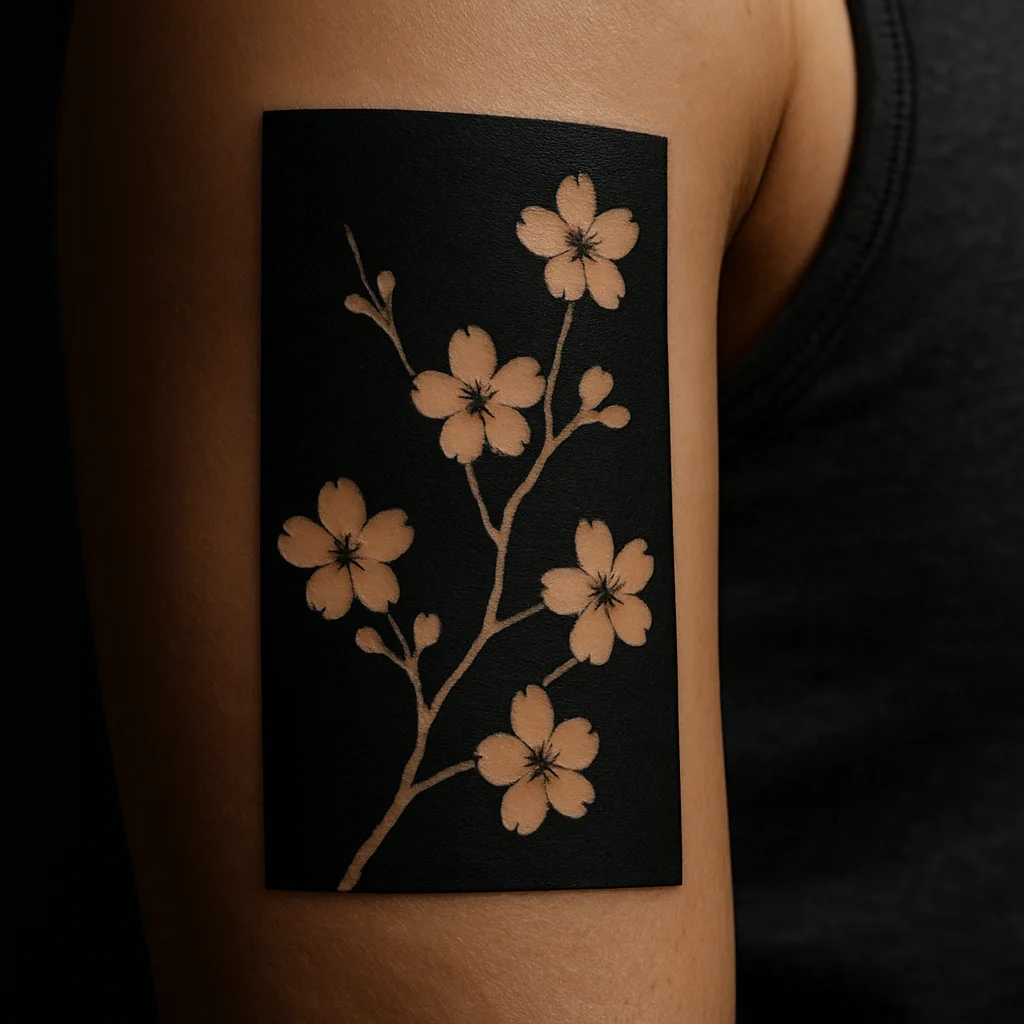
The arm is filled with smooth solid black and the flowers exist only as unshaded skin: cherry blossom or dogwood silhouettes glowing out of the dark. Dramatic, extremely durable and unforgiving of hesitation, so pick an artist with a strong blackwork portfolio.
22. Dotwork mandala and roses
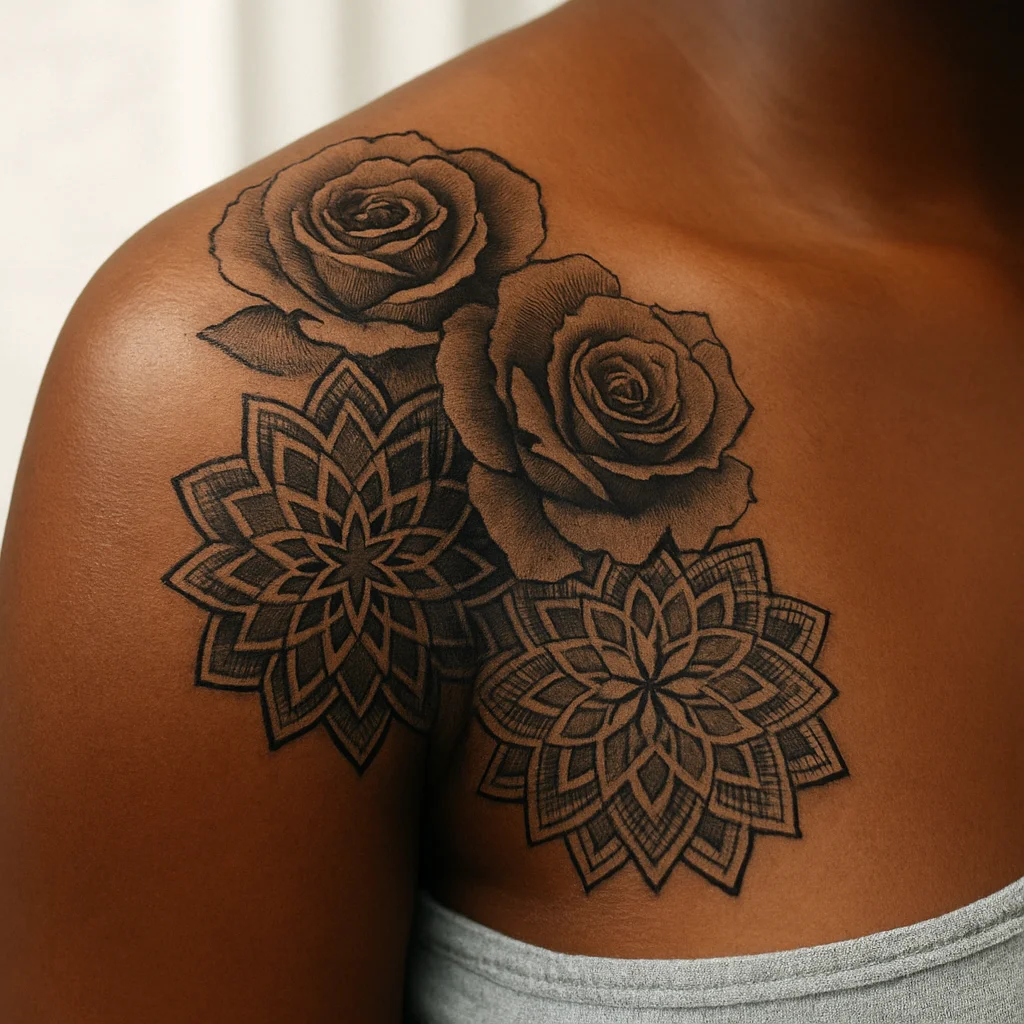
Geometric mandalas on the shoulder and elbow with realistic roses spilling out of them, connected by dotted shading. The hard geometry frames the soft petals and gives the sleeve a spine. Works particularly well on arms with defined deltoid shape.
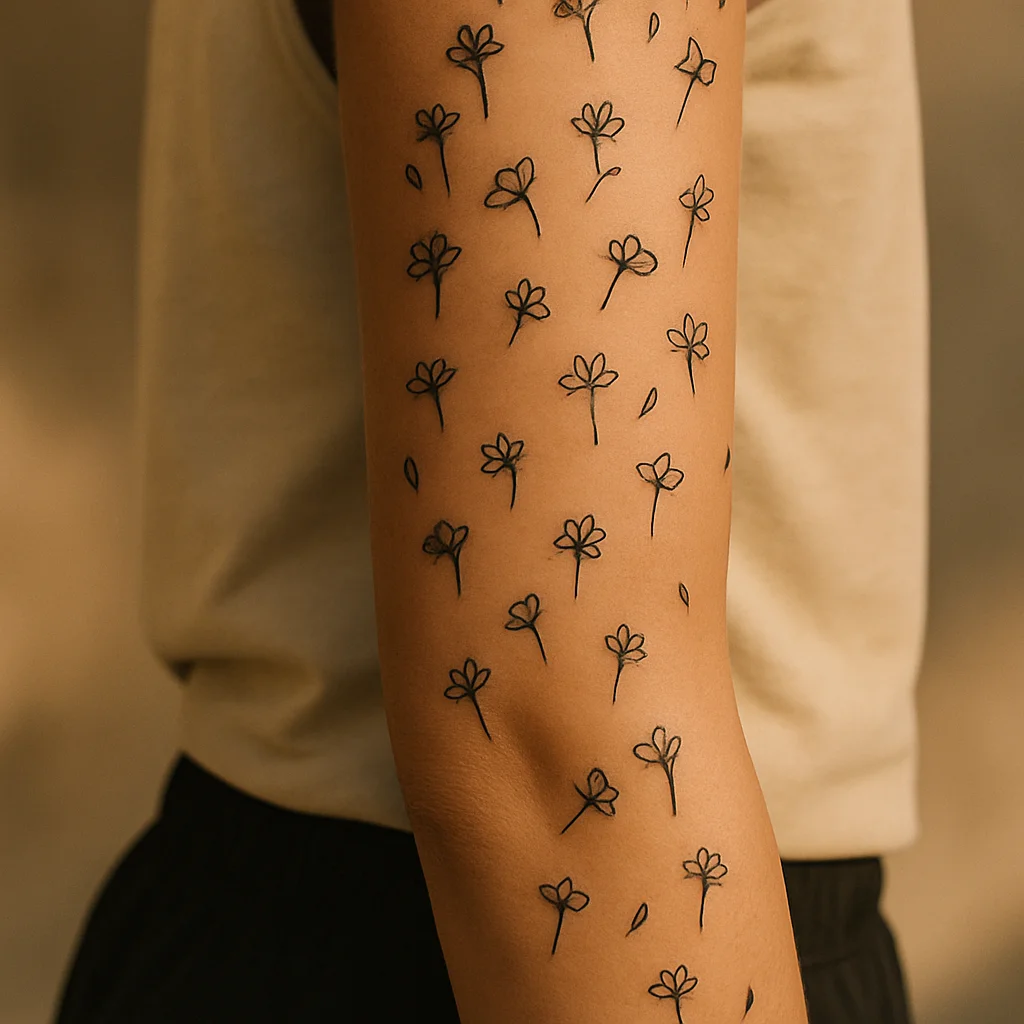
23. Scattered micro-floral confetti
Two dozen tiny individual blooms, sprigs and single petals dotted over the whole arm with no connecting stems, like pressed flowers on skin. Spacing is everything: they should get smaller and sparser toward the wrist. Easy to build across many short sessions.
Colour and Mixed-Motif Floral Sleeves (24-30)
Flowers rarely have to carry a sleeve alone. Adding one animal, one object or one strong palette gives the eye somewhere to land and makes the piece feel personal rather than pretty. If you would rather stay monochrome, our guide to black and grey sleeves for women covers the same structures without colour.
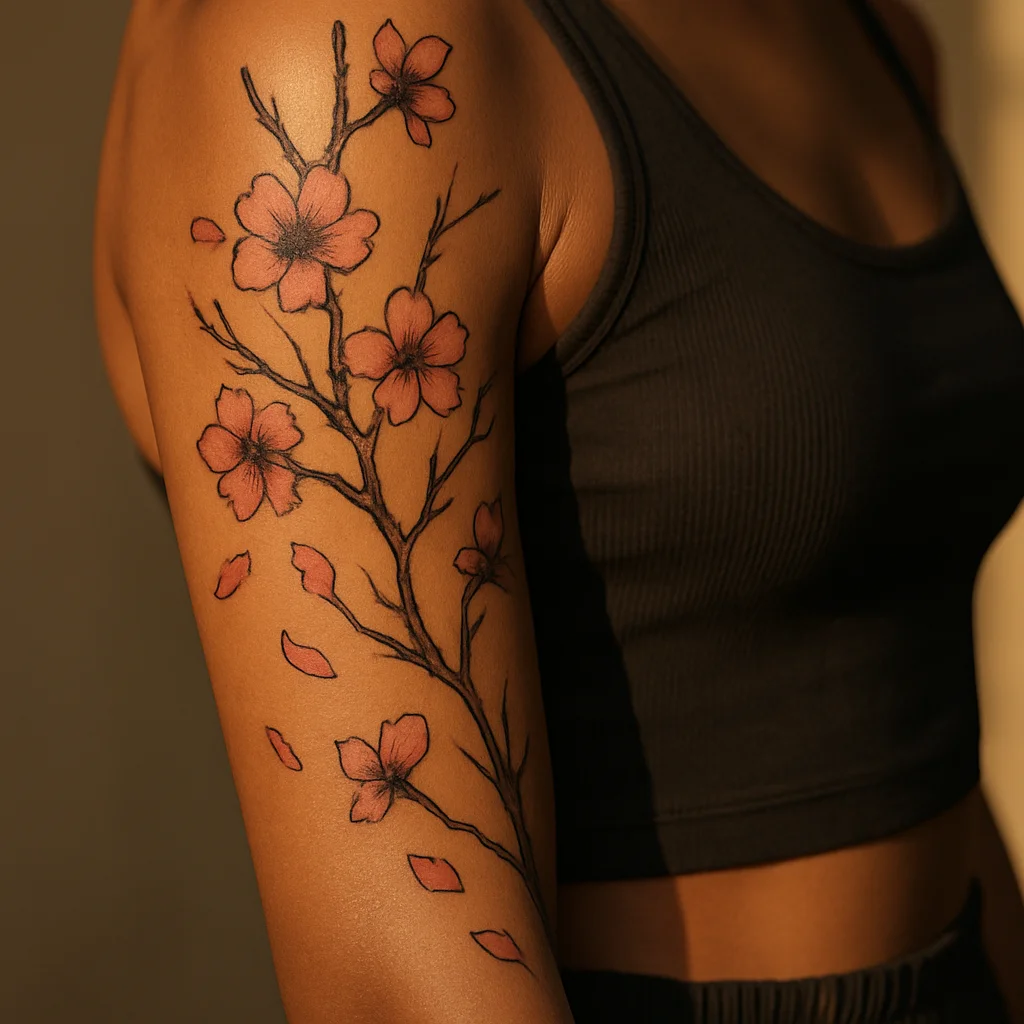
24. Cherry blossom with drifting petals
Branches at the shoulder and wrist with loose petals drifting across the empty middle of the arm in soft pink. The drifting petals are the trick: they fill space without adding weight. Reapply sunscreen religiously, because pale pinks fade first.
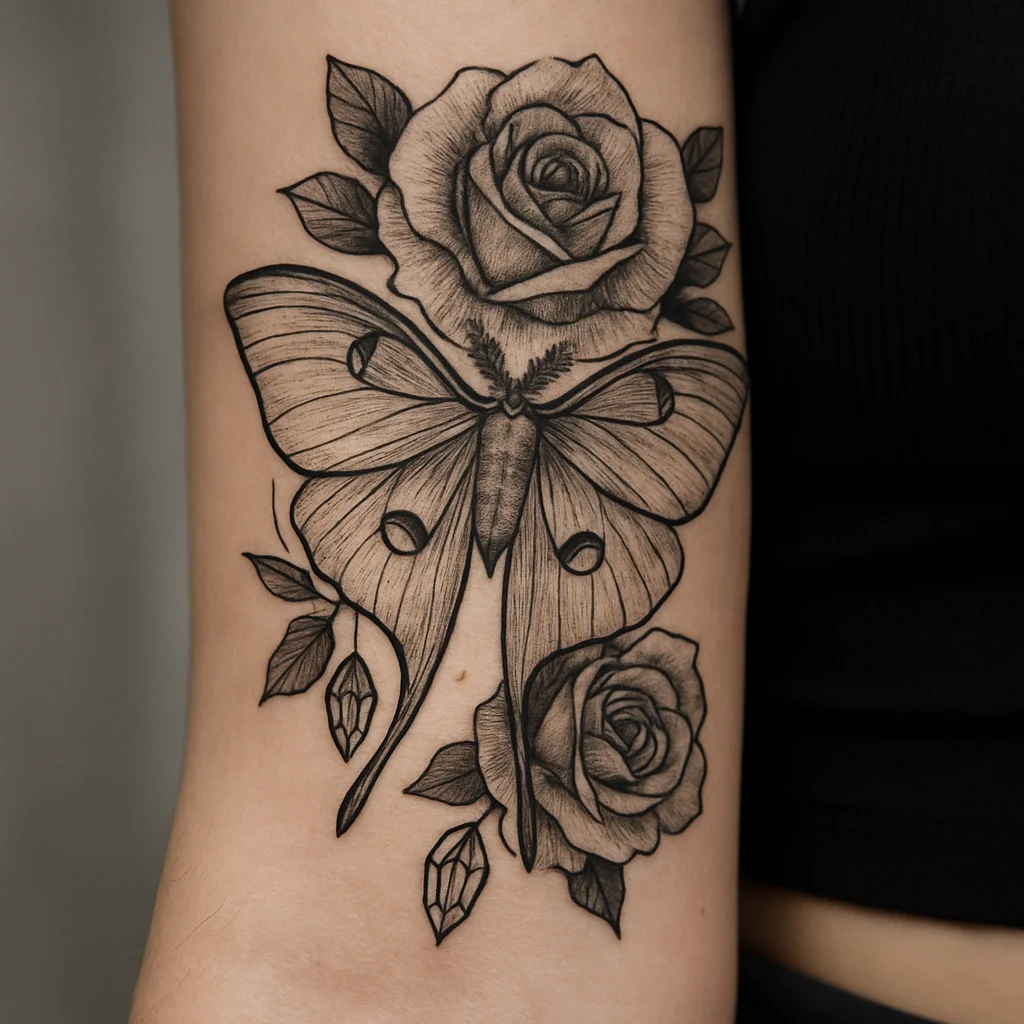
25. Neo-traditional rose and moth
A luna moth at the inner elbow with roses above and below, bold outlines, jewel tones and small gem or pearl details. Neo-traditional holds its shape better than watercolour and still delivers colour. A strong pick for a first big colour piece.
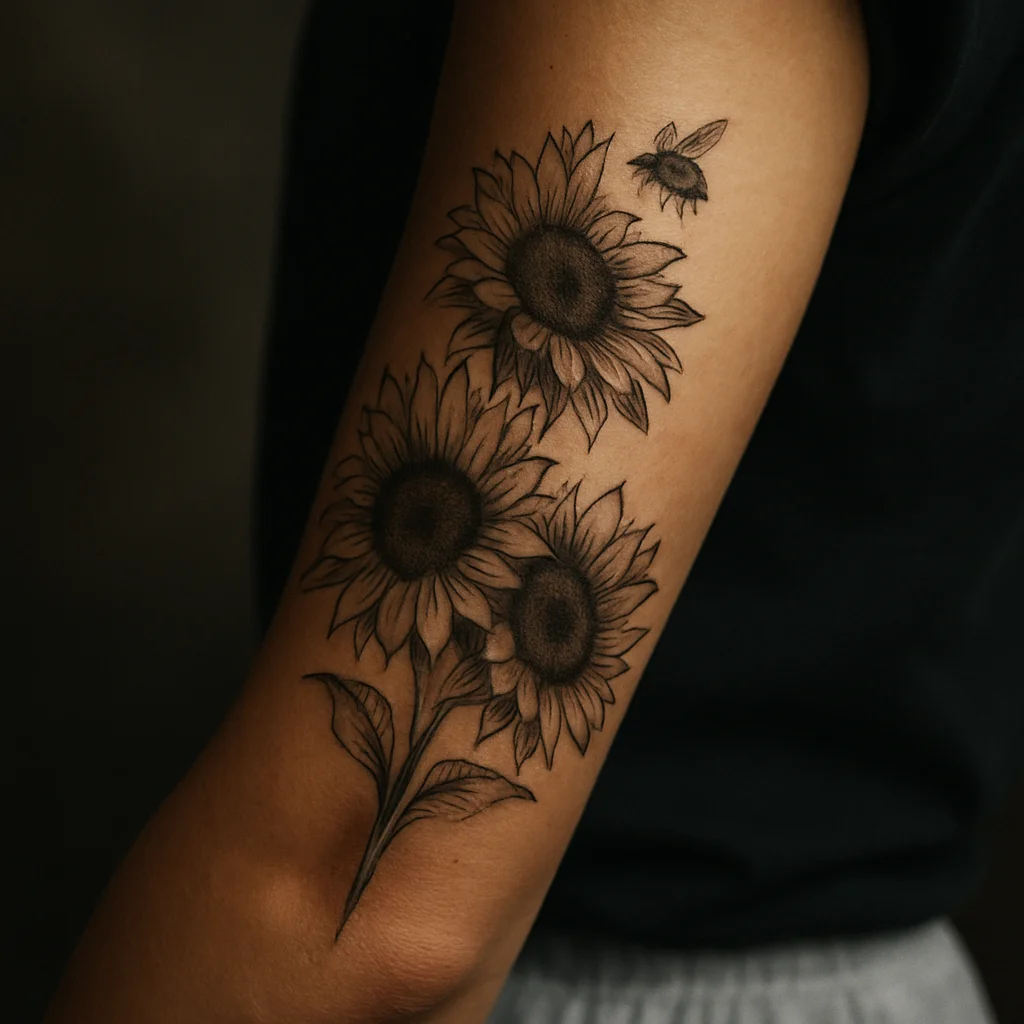
26. Sunflowers and a single bee
Three sunflowers turning up the arm toward the shoulder with one small bee in flight and warm ochre shading. Sunflowers read instantly even from a distance, and their dark centres give the composition anchors. Cheerful without tipping into cartoonish.
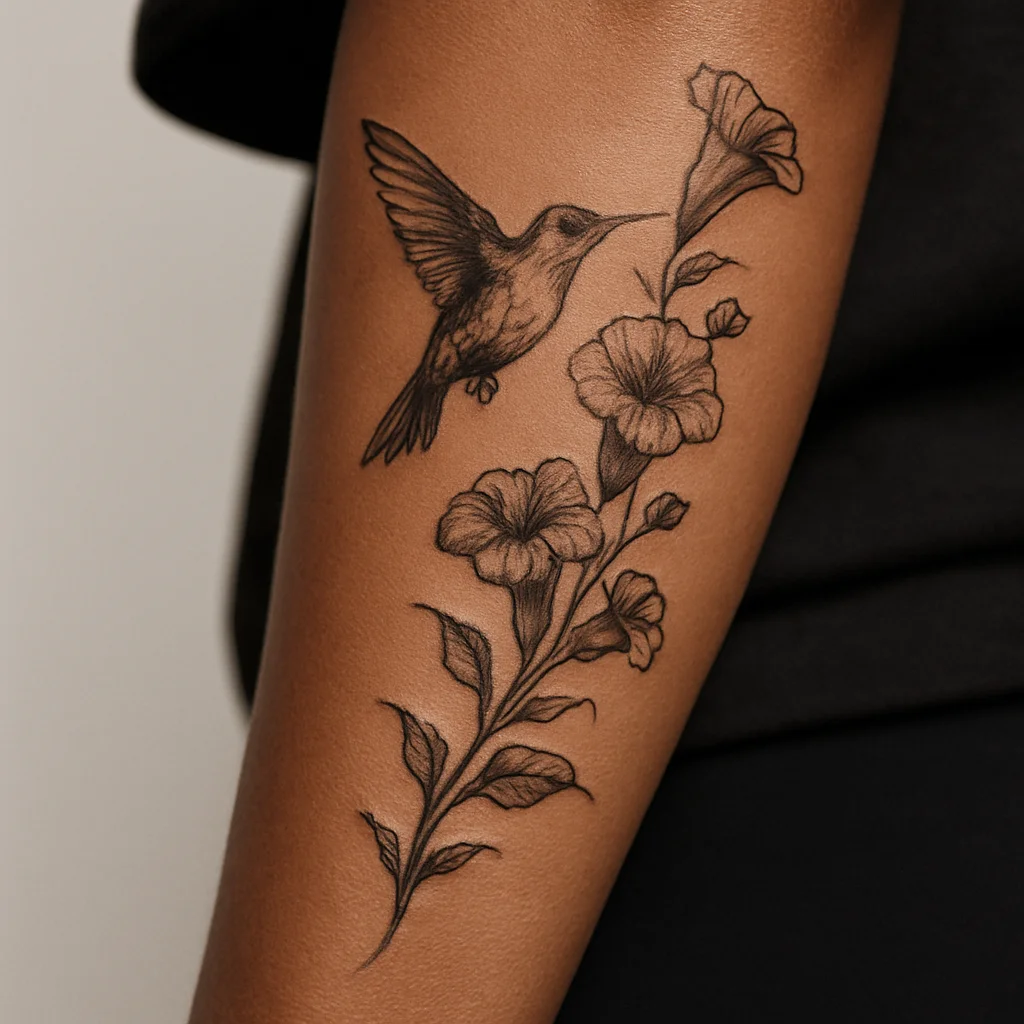
27. Hummingbird through trumpet vine
A hovering hummingbird at the outer forearm with trumpet vine flowers spiralling up to the shoulder. Movement is the whole point, so ask for the bird placed where your arm naturally faces outward. Iridescent greens and reds keep it lively.
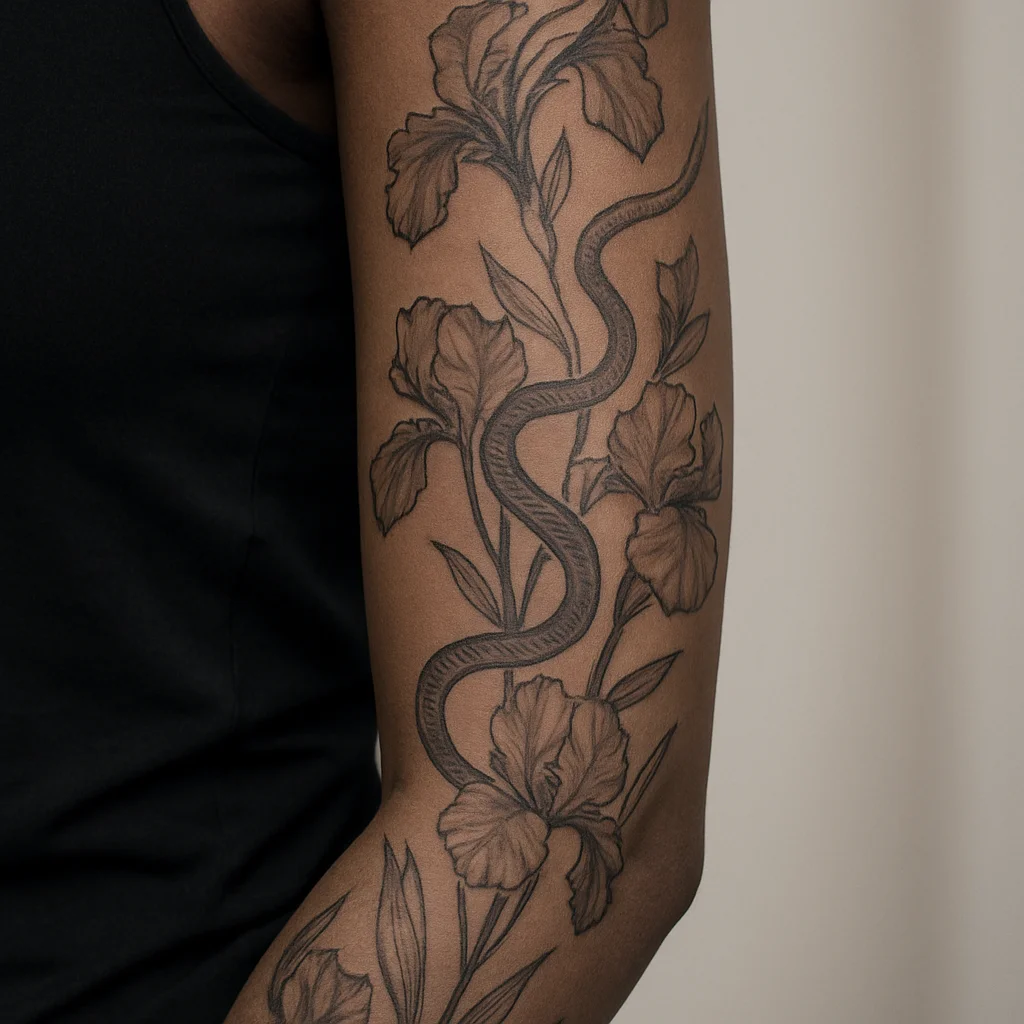
28. Snake winding through irises
A slim snake follows the sleeve's flow line while iris blooms crowd the shoulder and wrist. The snake gives you a built-in, elegant reason for the design to wrap the arm. Equal parts soft and sharp, which is exactly why it works.
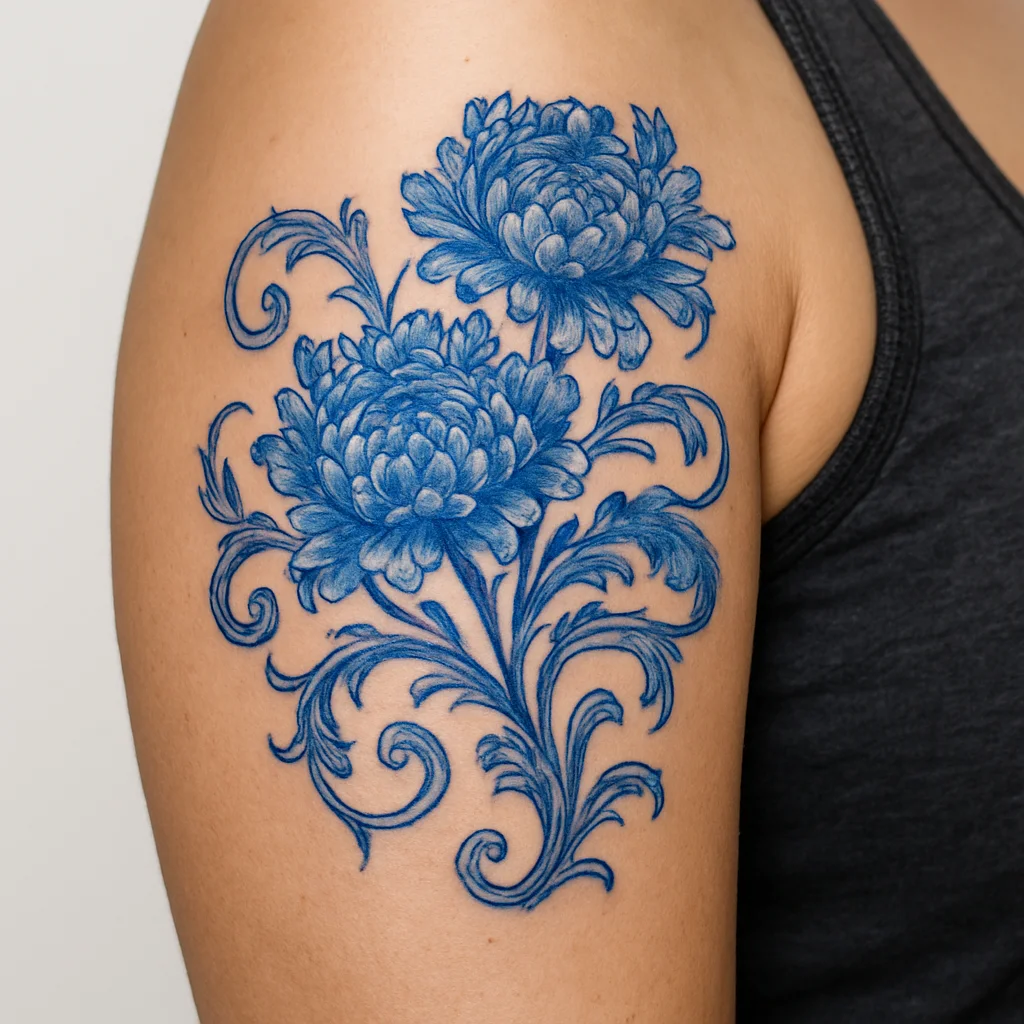
29. Blue and white porcelain florals
Chrysanthemums, peonies and scrollwork inked in cobalt blue only, like a porcelain vase pattern wrapped around the arm. The limited palette is what makes it look designed rather than collected. Blue holds up well over time, which is a bonus.
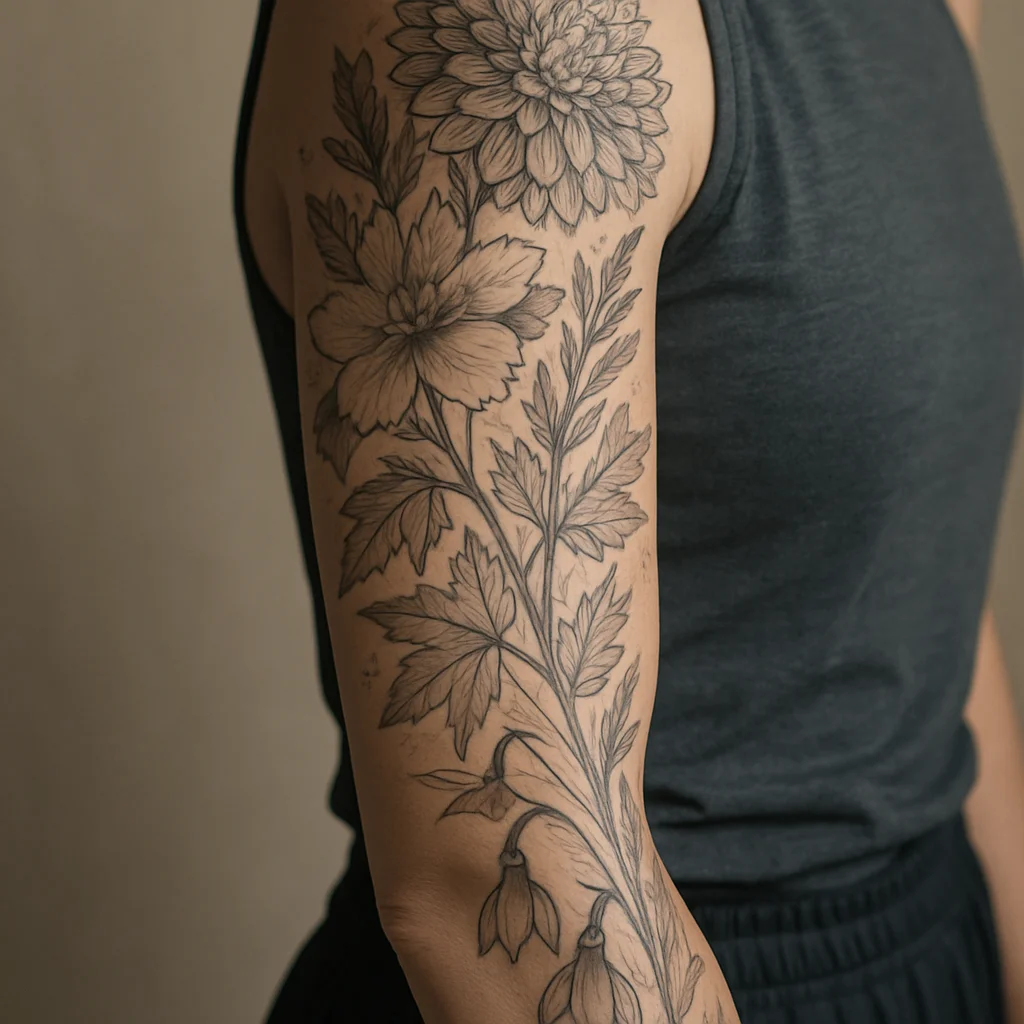
30. Four-season garden, quarter by quarter
The sleeve is divided into four soft zones: snowdrops at the wrist, tulips on the lower arm, roses at the elbow, chrysanthemums and dried seed heads at the shoulder. It tells a story as your eye travels up and makes the sleeve easy to build one season per session. Ideal for a long-term project you want to plan properly from the start.
Pain, Sessions, Cost and Healing a Full Sleeve
A floral full sleeve is a project, not an appointment. Most are finished in four to eight sittings of four to six hours, spaced two to four weeks apart so each panel heals before the next. Colour and dense blackwork sit at the longer end; airy fine line can go faster but often needs more careful, slower line work.
Pain is not evenly distributed. Ranked roughly from easiest to hardest:
- Outer forearm and outer bicep: the friendliest zones, muscle and thicker skin.
- Shoulder cap: manageable, though long shading sessions get achy.
- Inner forearm: tender but tolerable; more of a hot sting.
- Elbow ditch, inner bicep near the armpit, wrist bones and the point of the elbow: genuinely sharp. Schedule these early in a session while your adrenaline is up, and eat properly beforehand.
On cost, think in hourly terms rather than a single number. Studio rates commonly run from moderate for a newer artist to several times that for a sought-after specialist, and a full sleeve typically lands somewhere in the low-to-mid four figures in most markets, higher for a name artist or heavy colour. Ask for the hourly rate, the estimated total hours and the deposit policy in writing at consultation. Beware of quotes far below your local range for a large piece.
Healing is standard but repeated: wash gently twice a day with unscented soap, keep a thin layer of ointment on for the first few days, then switch to plain lotion. Expect flaking around day four to seven and dullness for a few weeks after that. The one non-negotiable for florals is sun protection: fine lines and pale petals are the first things UV eats. Wear SPF 50 on finished panels forever, and never expose a healing section.
How to Brief Your Artist So the Sleeve Comes Out Yours
The difference between a floral sleeve you love and one that is merely fine is usually the consultation. Bring three things: photographs of the actual plants you want (not other people's tattoos), three to five tattoos whose line weight and shading style you admire, and an honest statement of how bold you want it to read at arm's length.
Then work through this checklist together:
- Direction of growth. Should the flowers grow upward toward the shoulder or hang downward toward the hand? This single choice changes the whole mood.
- Where it stops. Wrist cuff, mid-hand, or a fade. Also confirm the inner-armpit edge, which is easy to forget and awkward to add later.
- Sleeveless test. Ask to see the pen mock-up while wearing a tank top and while wearing a short-sleeve tee, so you know how it frames in real clothes.
- Meaning without clutter. If flowers carry personal significance, pick a maximum of three; a sleeve of twelve symbolic blooms reads as a list, not a design.
- Future-proofing. Say out loud if you might want to extend onto the chest or hand. Your artist will leave the shoulder edge open rather than closing it with a hard border.
One more piece of practical advice: choose the artist for their existing florals, then let them lead the composition. Reference-matching a design from someone else's portfolio almost always produces a stiffer tattoo than giving a specialist your plants, your palette and your permission. If you are still deciding scale, starting with a strong upper arm piece designed as the top of a future sleeve is a low-risk way in.
Frequently asked questions
How long does a floral full sleeve take to finish?
Most floral sleeves take four to eight sessions of four to six hours, spread over three to nine months. Dense colour or heavy blackwork sits at the longer end, and each panel needs two to four weeks of healing before the next sitting. Booking your dates in advance keeps the project moving instead of stalling for a year.
Do fine-line floral sleeves age well?
They age acceptably rather than perfectly. Very thin lines soften and tiny gaps between petals can close up over ten to fifteen years, so leave generous negative space and avoid detail smaller than a grain of rice. Daily SPF and a touch-up appointment every five to ten years keep them crisp.
Which part of a flower sleeve hurts the most?
The elbow ditch, the inner bicep near the armpit, the point of the elbow and the wrist bones are the sharpest spots. Outer forearm and outer bicep are far easier. Ask your artist to tackle the tender zones early in a session, and eat a proper meal beforehand.
Should I plan the whole sleeve before the first session?
Yes, at least the structure. You do not need every flower chosen, but you do need the flow line, the anchor bloom placements, the wrist ending and the overall density agreed. Sleeves built one random tattoo at a time almost always need cover-up work later to connect them.
Black and grey or colour for a floral sleeve?
Black and grey holds contrast longest and suits botanical and negative-space styles beautifully. Colour gives instant impact, and neo-traditional palettes with bold outlines hold up much better than soft watercolour washes. If you love colour but worry about fading, ask for strong black line work underneath it.
The conversation
No comments yet. Got a thought about these designs? Start us off.
Want to weigh in? Join the community to comment, save designs and try them on your skin.