30 Leg Sleeve Ideas for Men, Built Joint to Joint
A leg sleeve is the biggest single canvas most men will ever commit to, and the leg fights back in ways an arm never does. Here are 30 designs sorted by how far they run, plus how to plan the sessions, the cost and the awkward zones.
What a leg sleeve has to do that an arm sleeve doesn't
The leg is not a smooth cylinder. It's a cone at the thigh, a hinge at the knee, a bony ridge down the shin, a muscle that swells and shrinks at the calf, and a knuckle of bone at the ankle. A design that ignores that geometry ends up with a face stretched across the kneecap and a beautiful centrepiece hidden on the inner calf where nobody will ever see it.
Three practical rules artists come back to again and again:
- Build around the outer leg. The outer thigh and outer calf are your gallery walls. Put the focal points there, and let water, smoke, foliage or geometry carry across the inner leg where the skin is softer and the view is limited.
- Let the joints breathe. Knees and ankles move constantly and hold ink less predictably. Wrapping elements, background texture and negative space work there; fine detail and portraits do not.
- Design vertically, view horizontally. A leg sleeve is mostly seen from the side at walking distance. Long diagonals read; small stacked images turn into visual noise.
Also plan for real life. Legs swell after long sessions, healing is slower below the knee because of gravity and circulation, and shins get sun-battered in summer. If you cycle, run, or spend the day on your feet, tell your artist before they book a nine-hour thigh session. And decide early whether you want the sleeve to stop above the shorts line or run past the ankle — that single choice changes the whole composition.
Full-leg sleeves: hip to ankle
These are the marathon builds — usually eight to fifteen sessions, planned as one drawing from the start. Commit to a single style and a single light source, and the leg reads as one object instead of a patchwork.
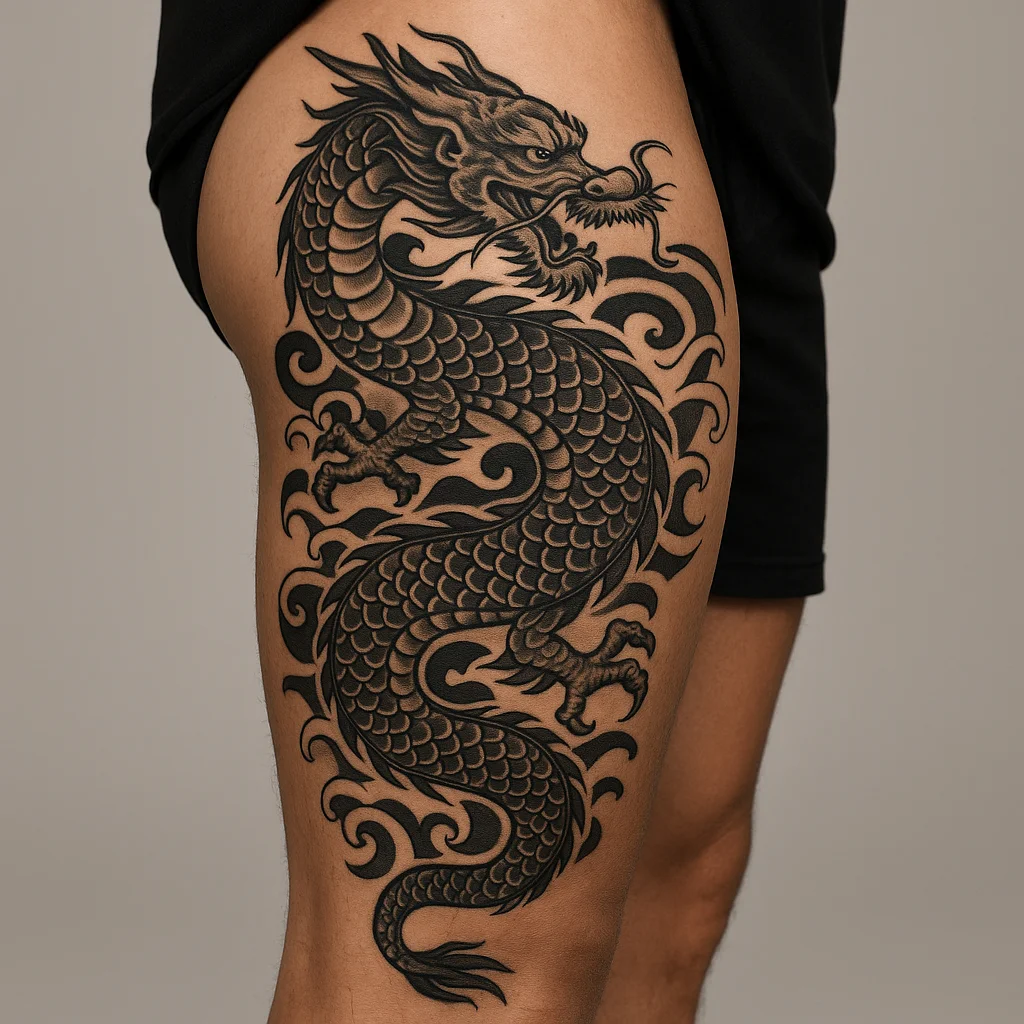
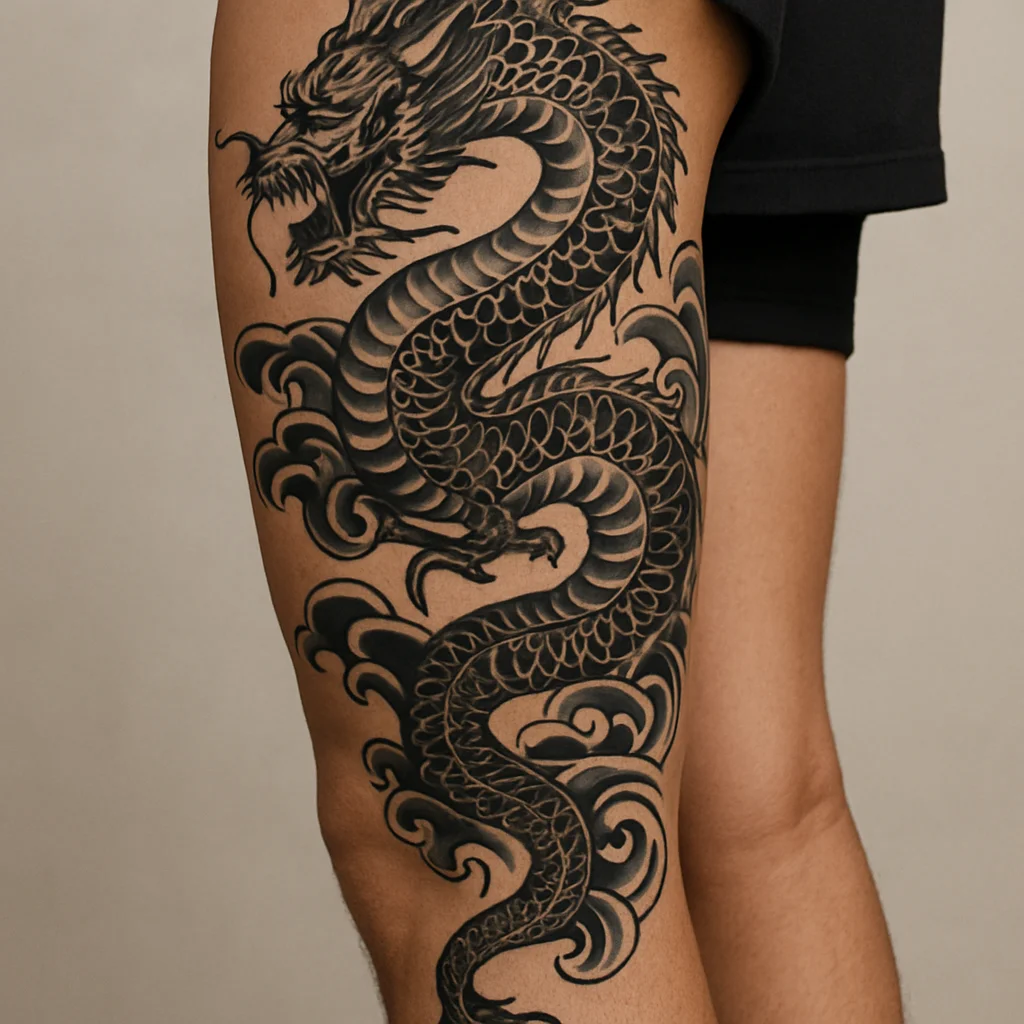
1. Japanese dragon spiralling hip to ankle
The classic full-leg solution: the dragon's head sits on the outer thigh or knee, the body corkscrews down the calf, and the tail resolves at the ankle with wind bars and waves filling the gaps. Because the background does the wrapping, the inner leg never looks empty. It suits men who want one committed statement rather than a collection.
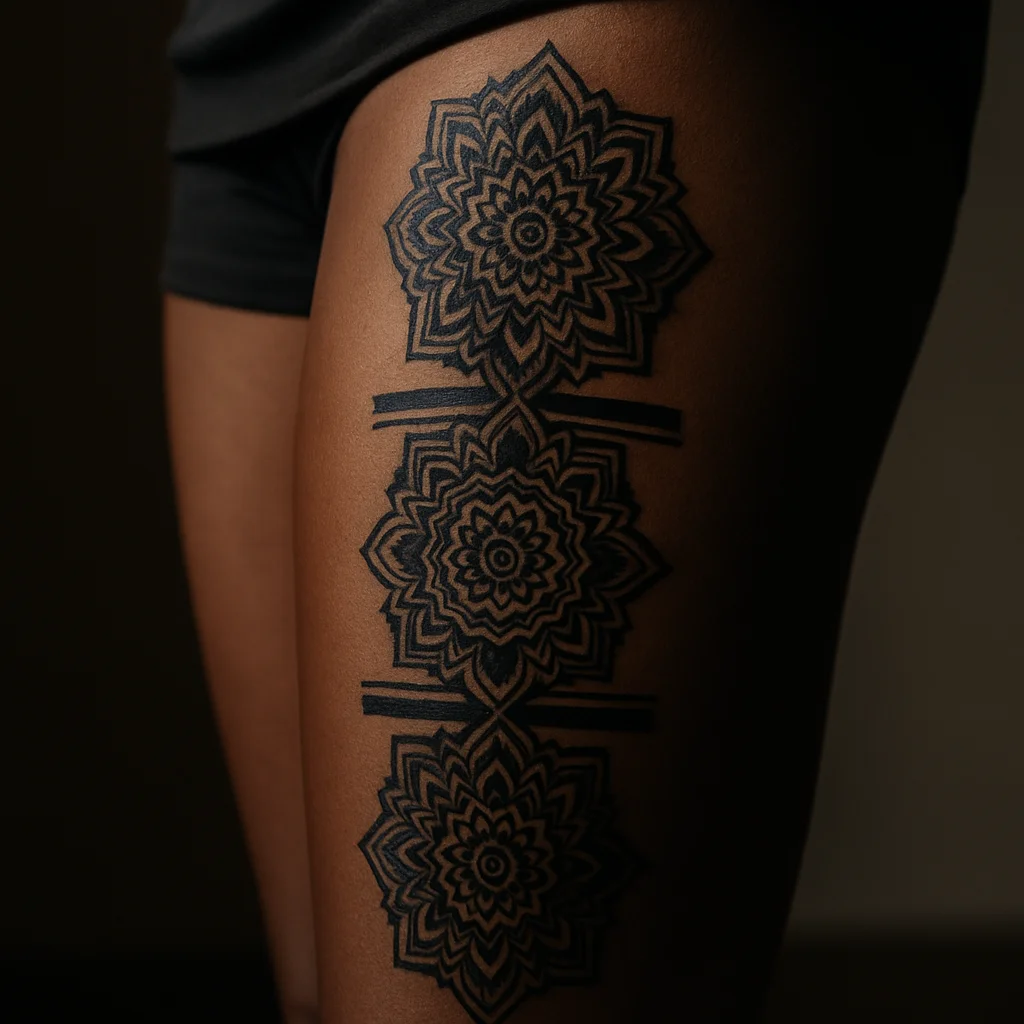
2. Blackwork mandala column
Stacked ornamental medallions running down the leg — a large rosette on the outer thigh, a smaller one on the knee, a third on the calf — connected by linework bands. Heavy black ages superbly on the thigh and reads from across a room. Ask for a hand-drawn layout on your leg rather than a printed stencil so the medallions sit true to your muscle shape.
3. Norse mythology full leg
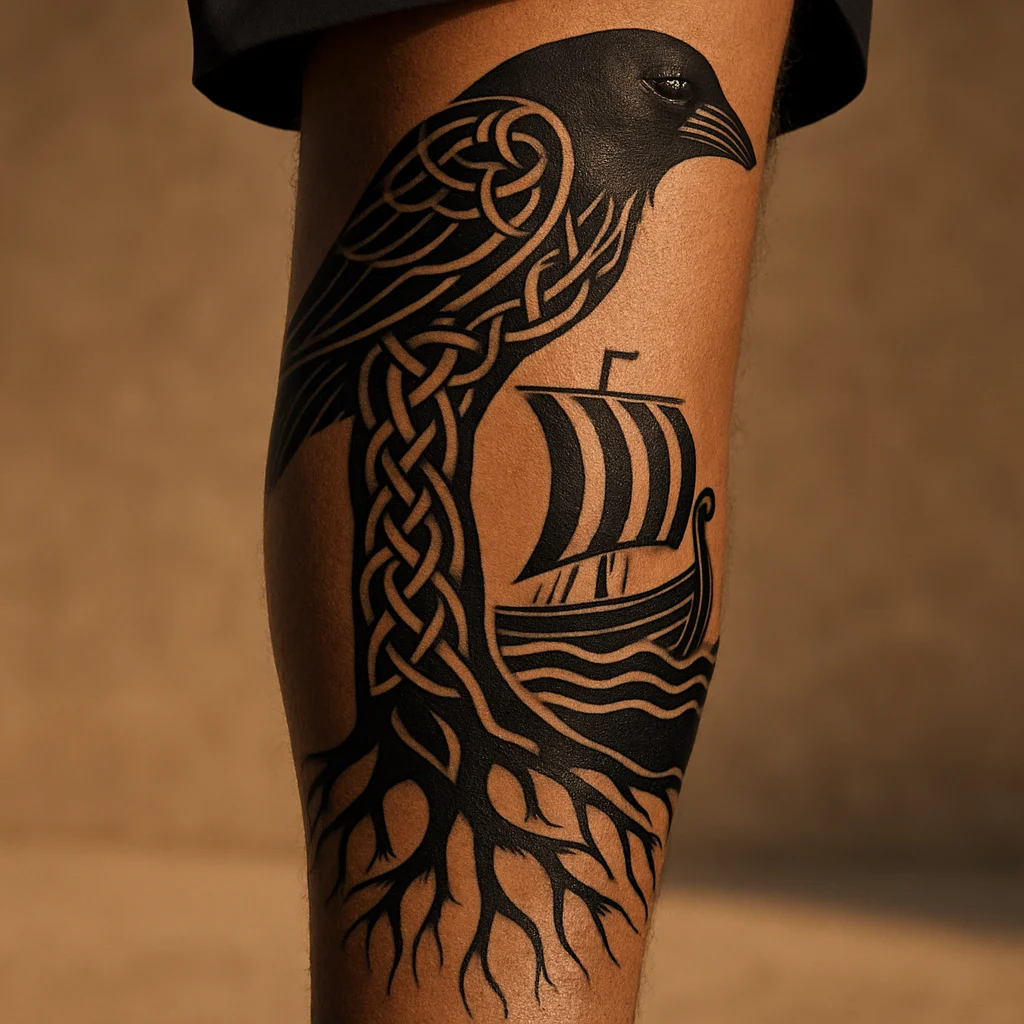
Yggdrasil roots wrapping the ankle, a longship crossing the calf, a helmeted figure or raven on the outer thigh, all tied together with knotwork and runic banding. Works best in bold blackwork or heavy neo-traditional so the imagery survives at a distance. Bring source references for the specific myths you want; "Viking stuff" gets you generic filler.
4. Biomechanical leg
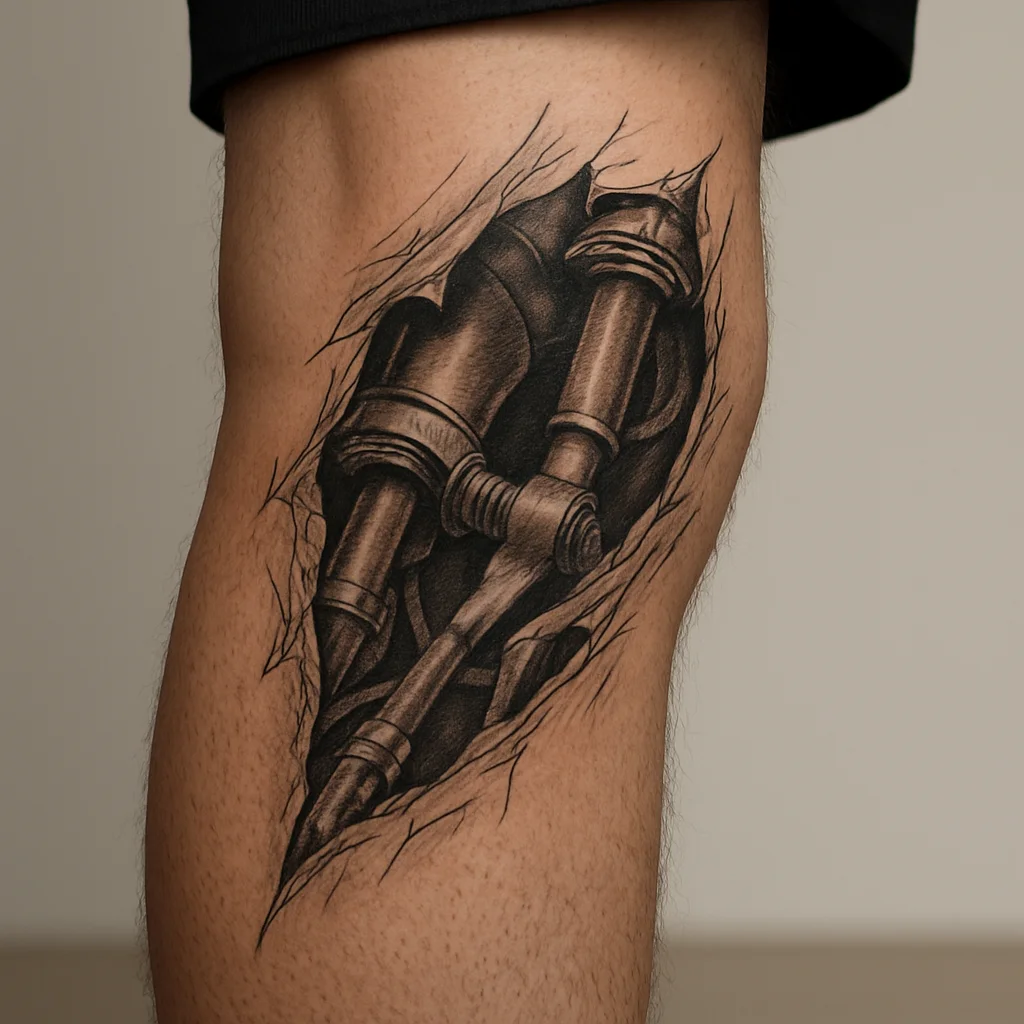
Torn skin revealing pistons, cables and machined joints, with the real mechanics of your leg guiding the fake ones — hinge at the knee, cabling behind the calf. Grey wash realism makes it convincing, and it's forgiving on the knee since machinery is meant to bend there. Best for men happy with a dense, dark leg.
5. Vertical mountain landscape
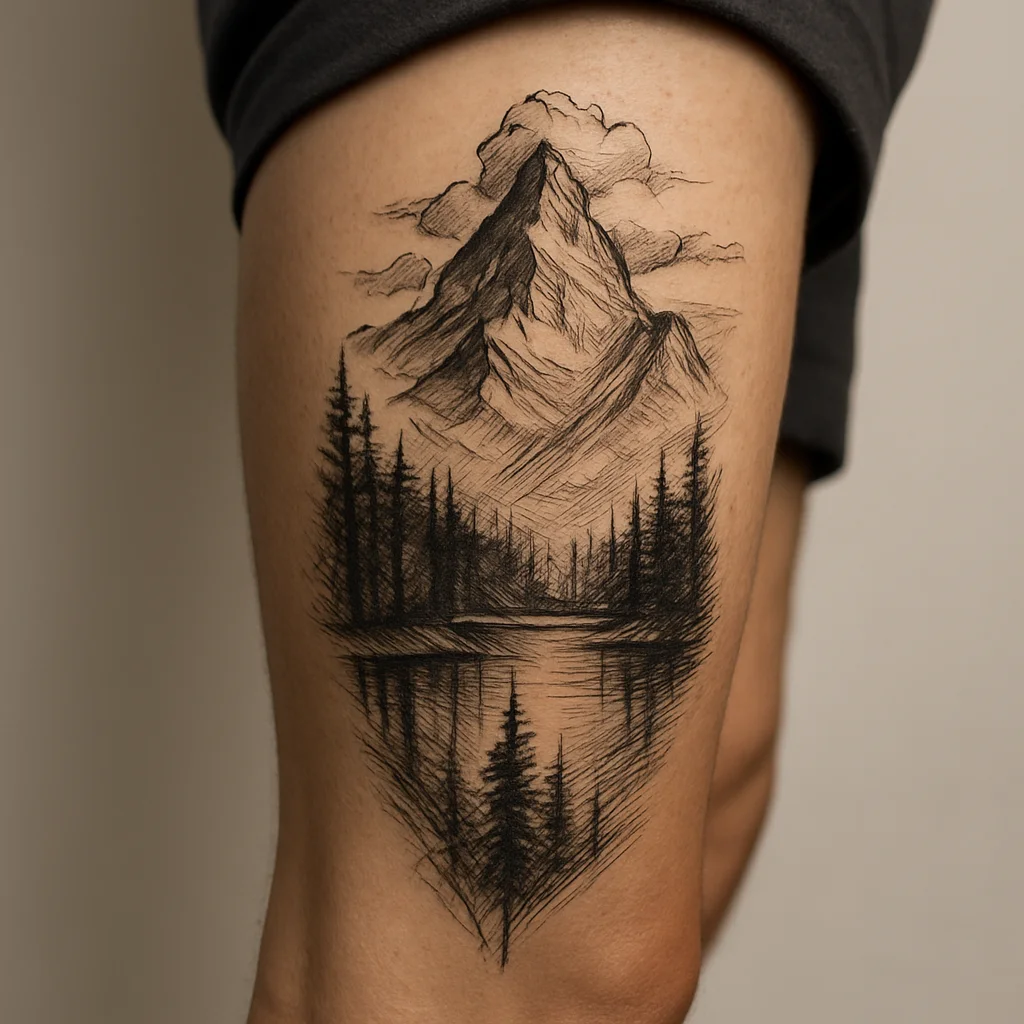
A ridgeline that climbs the leg: pine forest and river at the ankle, alpine lake at the calf, summit and clouds across the thigh. The trick is a consistent horizon angle, usually a diagonal wrap, so it doesn't look like three separate photos. Softer grey values here keep it from turning into a black mass.
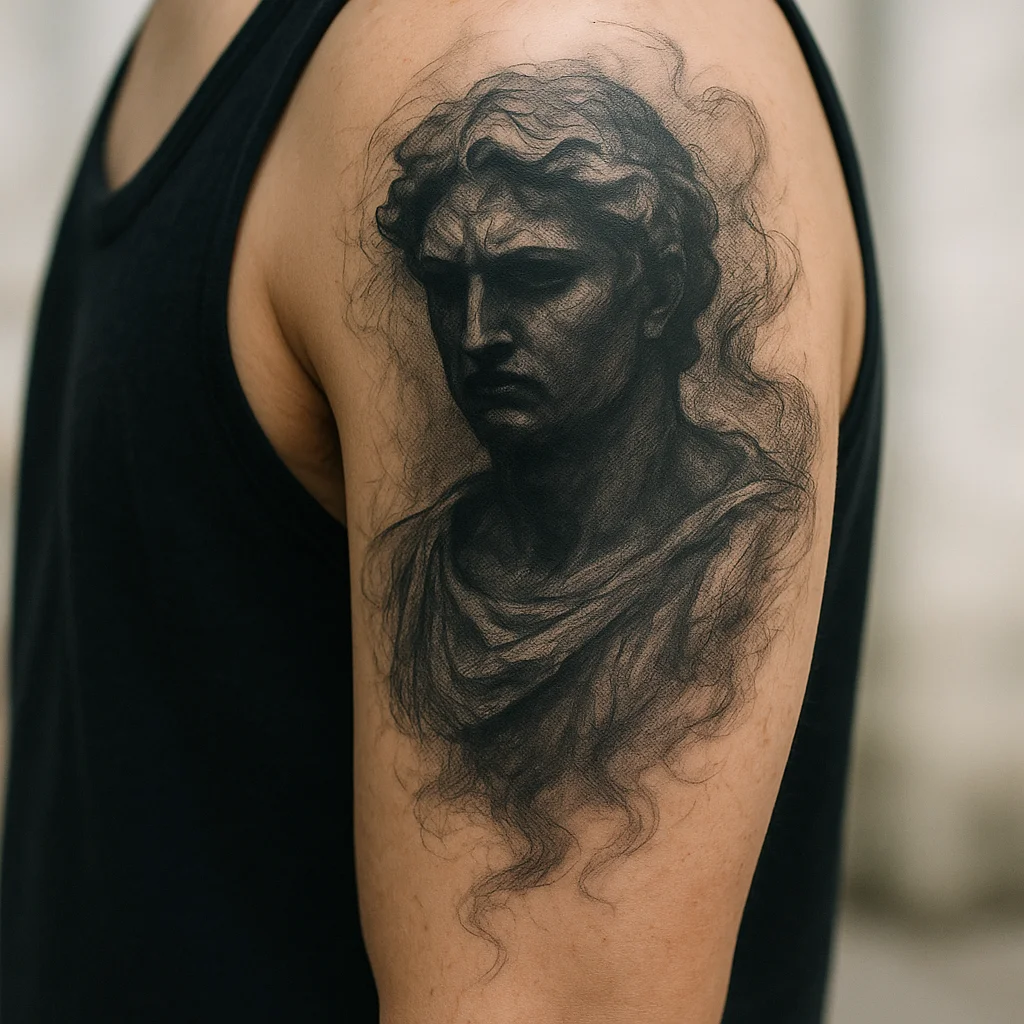
6. Greco-Roman statue and architecture
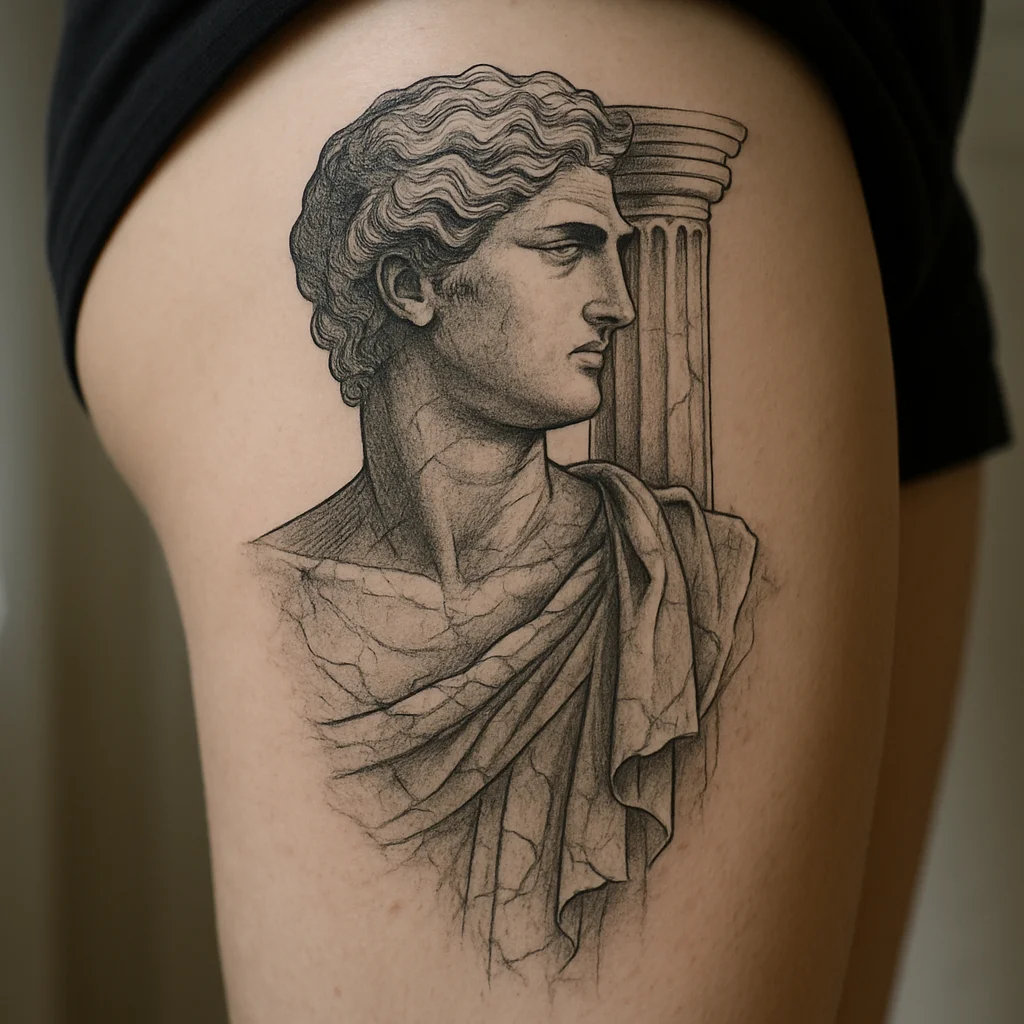
A marble bust or statue hand on the outer thigh, fluted column running the shin, cracked stone and drapery filling between. Smooth grey shading makes the marble effect work, so budget extra sessions for blending. It's a strong choice for men who want realism without a portrait of anything personal.
7. Neo-traditional hunt scene
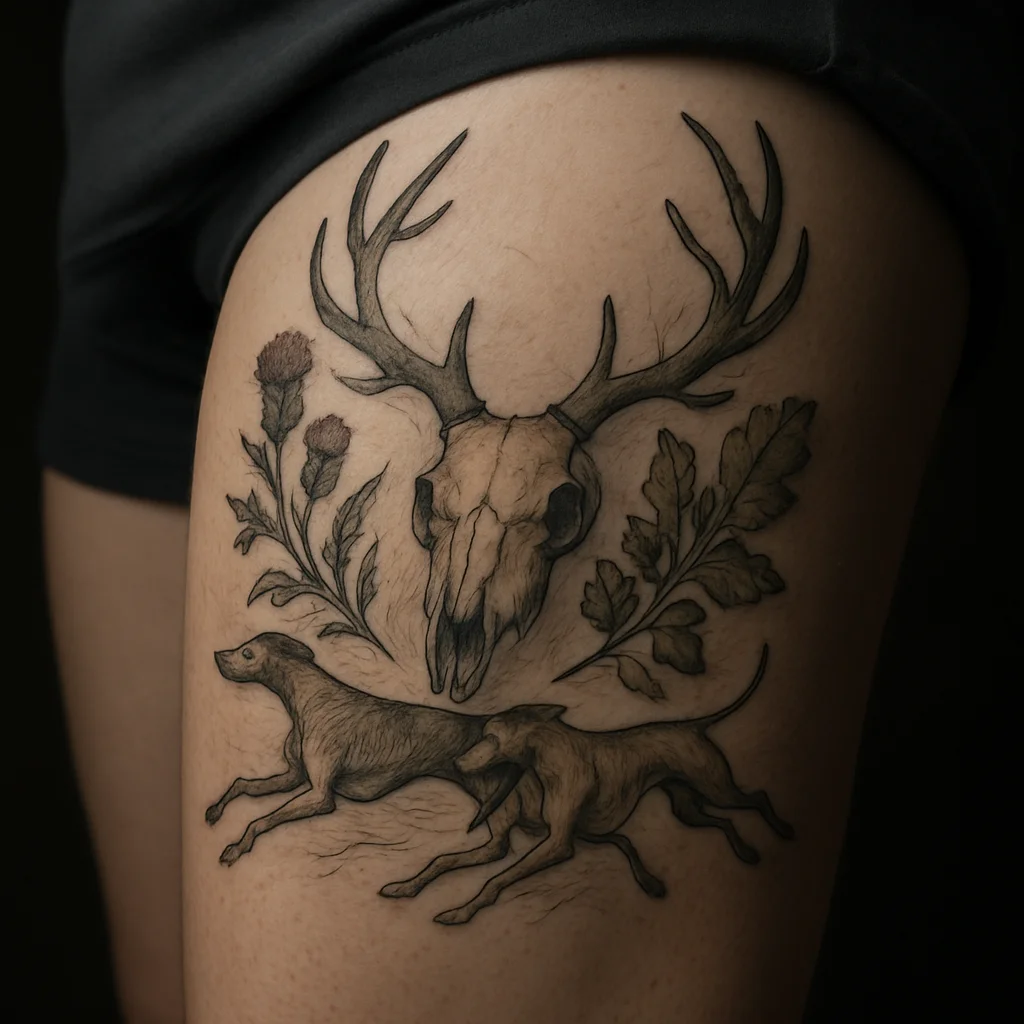
A stag skull on the thigh, hounds or a hare mid-run on the calf, oak leaves and thistles as the connective tissue, all in muted greens, ochres and deep reds. The heavier outlines mean it will still read cleanly in fifteen years. Expect the colour packing to be the longest part of each session.
Lower-leg sleeves: knee to ankle
The most popular real-world leg sleeve, because it finishes in one visible block, costs roughly half a full leg, and disappears under trousers at work. Keep the composition centred on the outer calf and let the shin carry the lighter linework.
8. Koi and water wrapping the calf
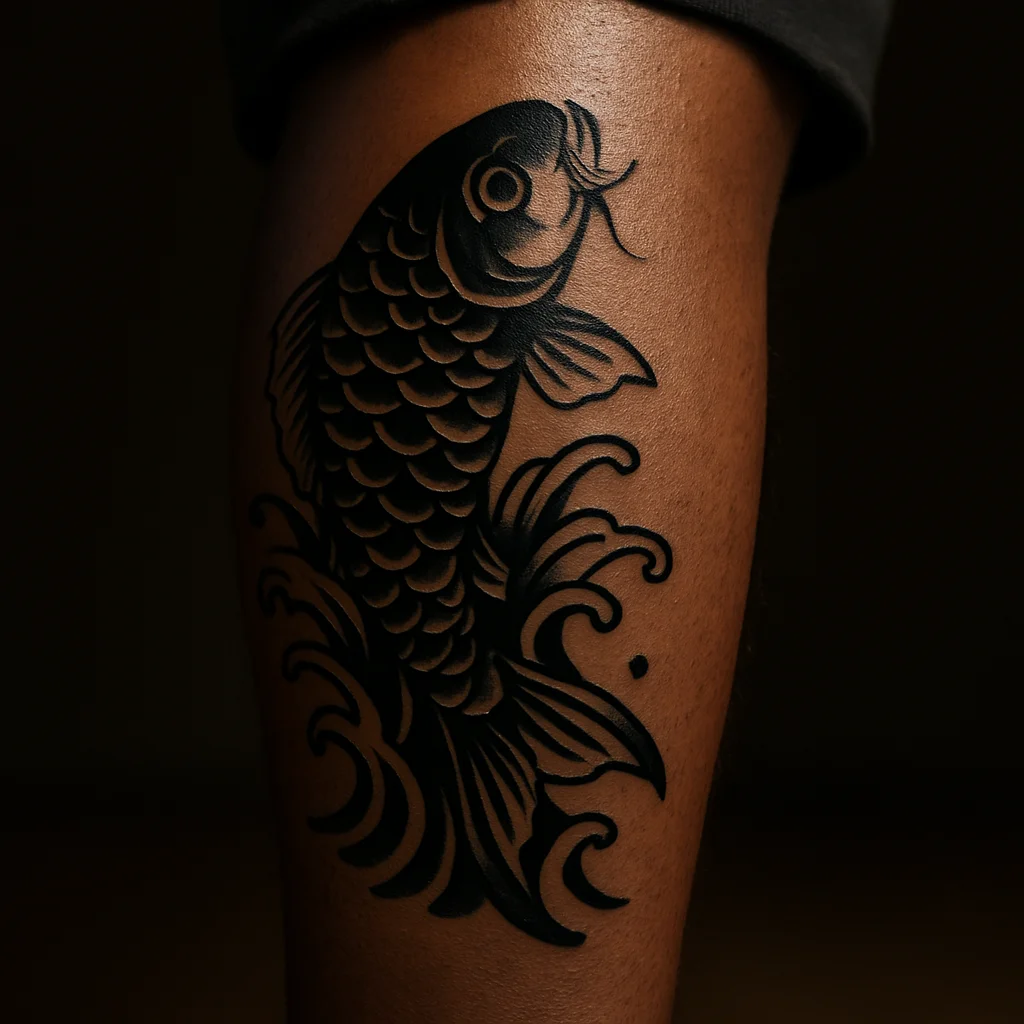
A single koi swimming upward across the calf muscle, with wave crests and finger sprays filling the shin and inner leg. The upward swim reads as struggle and persistence, and the water gives your artist total freedom on the wrap. Colour koi on grey water is the most durable combination here.
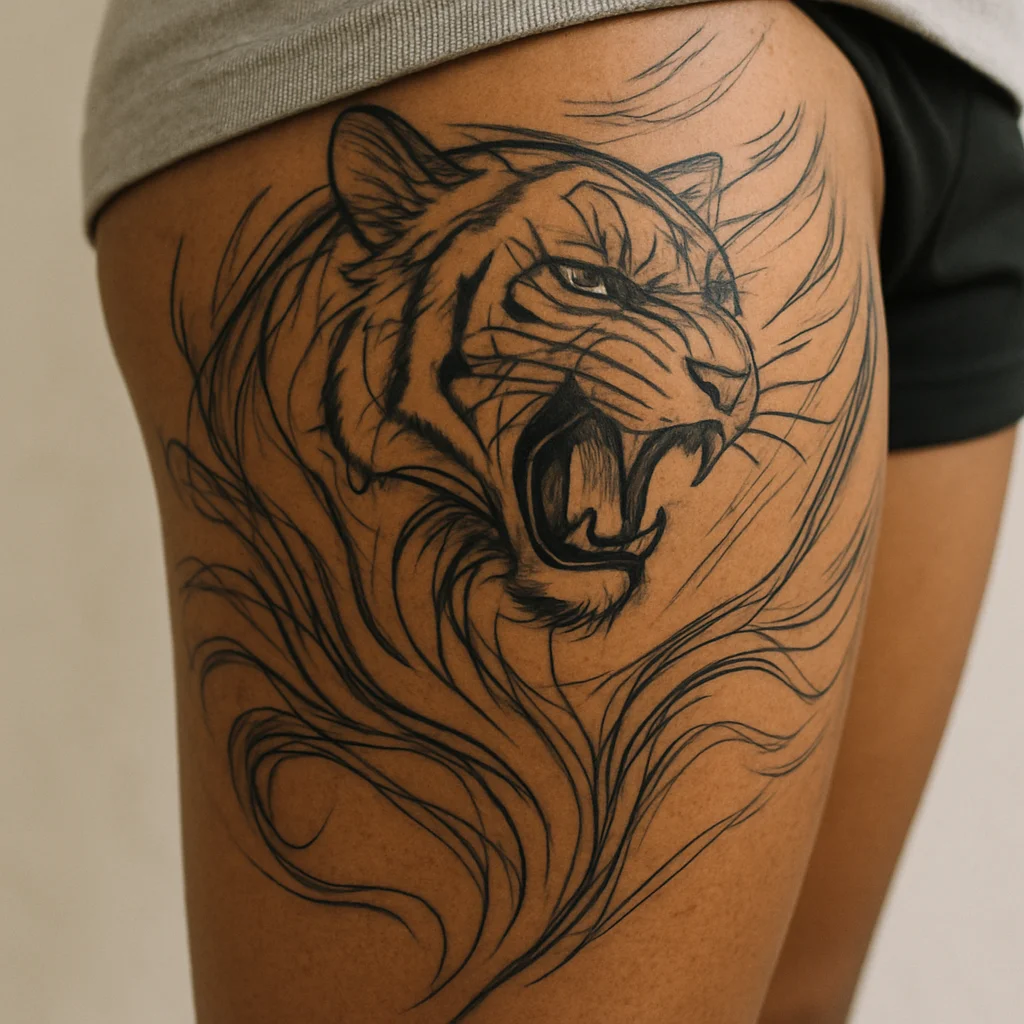
9. Tiger crawling down the shin
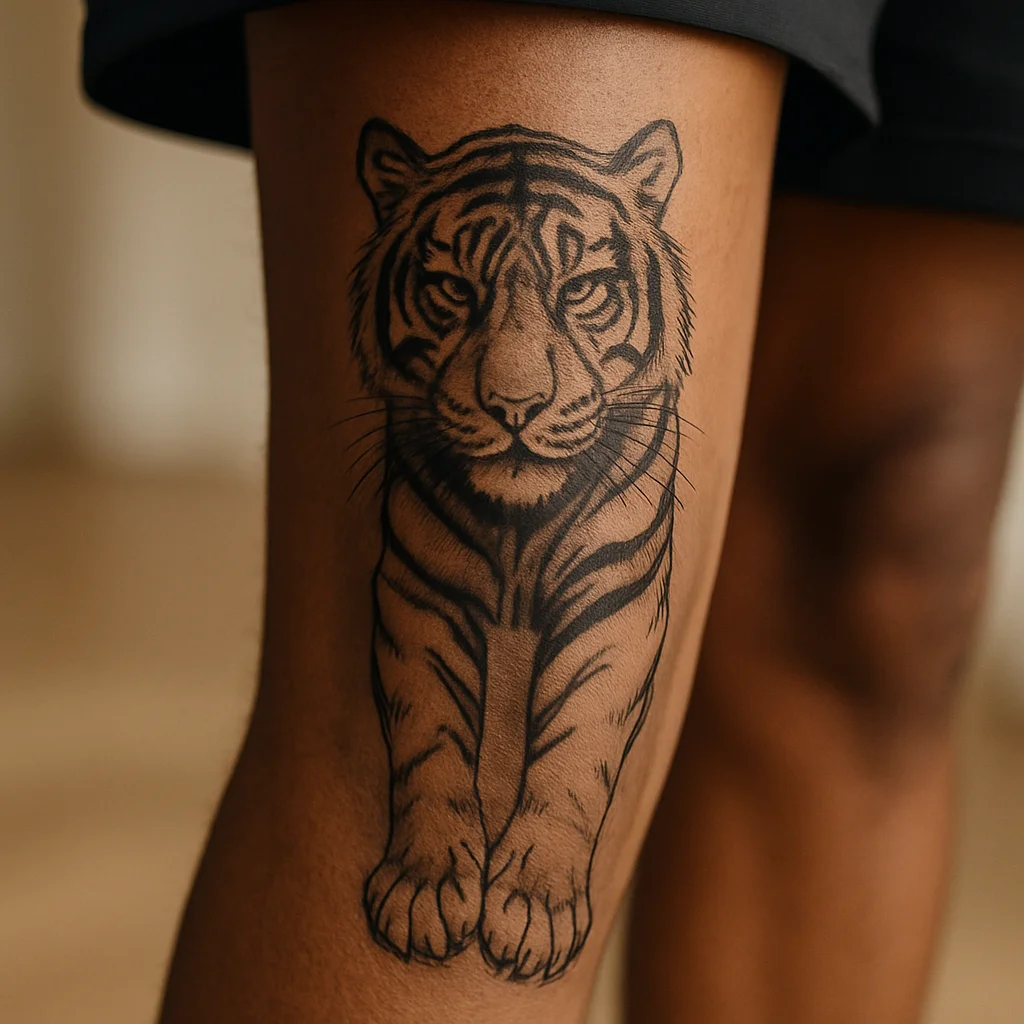
The head sits just below the knee, forelegs and stripes stretching down the shin toward the ankle. It uses the leg's natural taper as perspective, so the animal looks like it's actually descending. Ask for the head weighted slightly to the outer side so it isn't cut in half by the shin bone.
10. Blackout band with negative-space botanicals
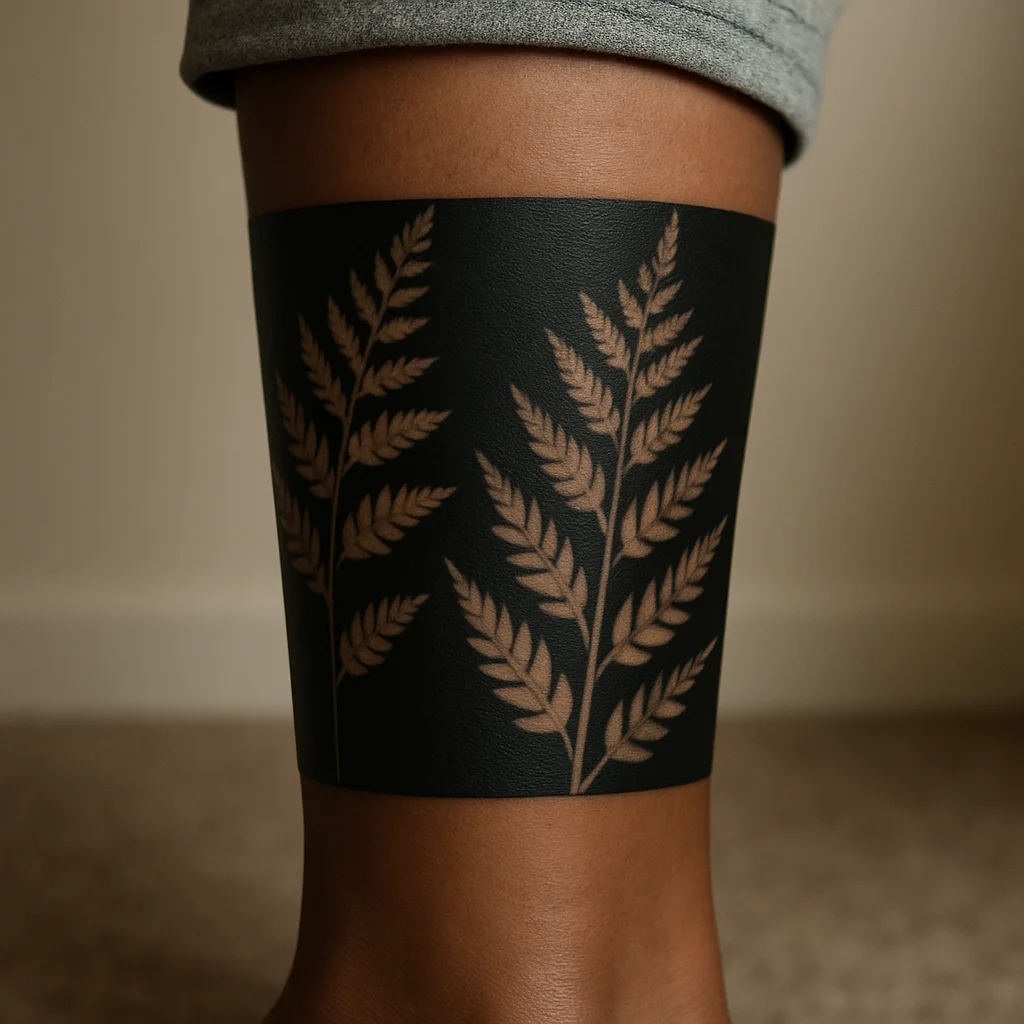
A solid black cuff from mid-calf to just above the ankle, with leaves, ferns or cranes left in untouched skin. Ruthlessly modern, extremely visible, and genuinely painful over the shin and ankle bone. Only book it with an artist who has healed photos of large blackout work.
11. Americana patchwork knee to ankle
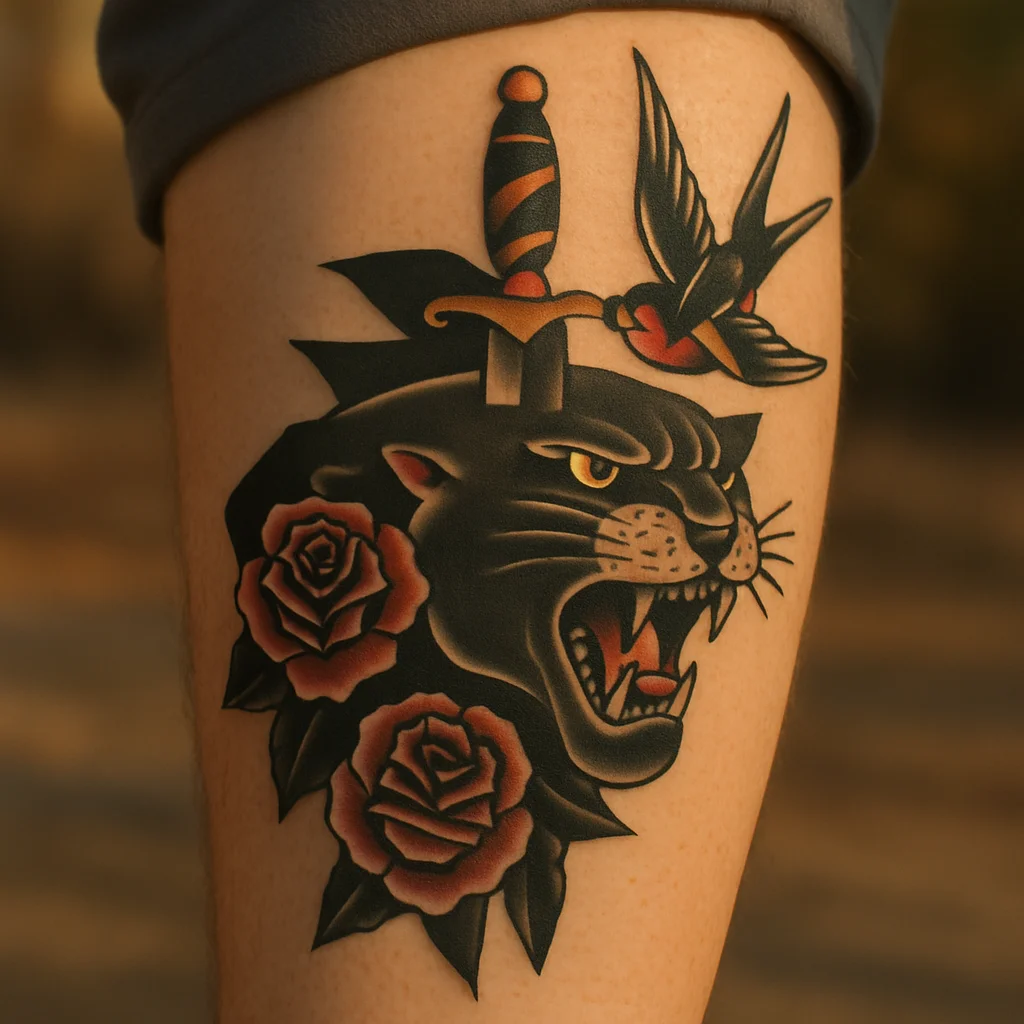
Bold traditional pieces — panther head, dagger, swallow, ship, roses — placed with deliberate gaps and black filler between them. Because each piece is a self-contained tattoo, you can build it over years without a master plan. Read up on how coverage stacks on the muscle in our calf tattoo guide before you place the first one.
12. Nautical chart and compass
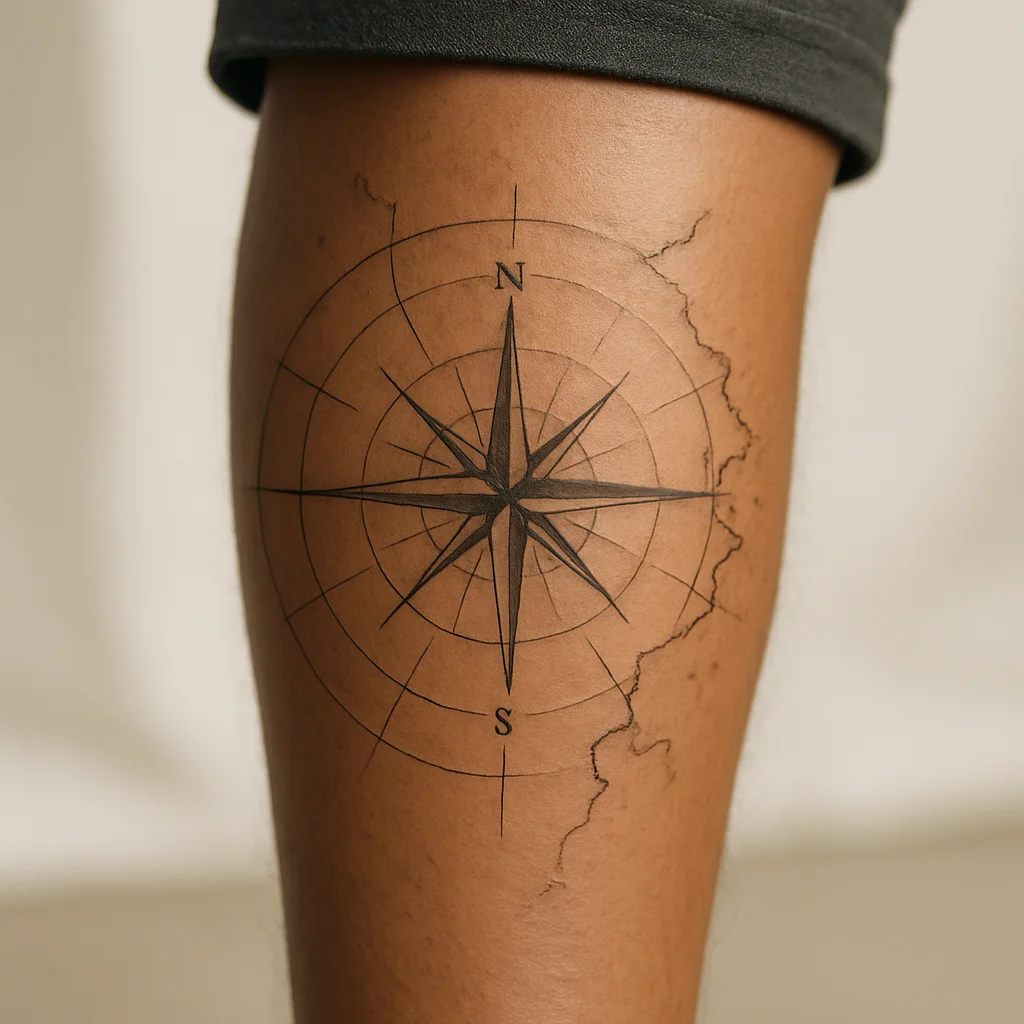
A rose compass on the outer calf, latitude lines and coastline fragments wrapping the shin, a sextant or anchor near the ankle. Fine linework keeps it from crowding, but plan the line weight carefully — anything under a hair's width will soften on the shin over a decade. Great for travellers and ex-navy readers who want meaning without portraits.
13. Snake spiralling shin to ankle
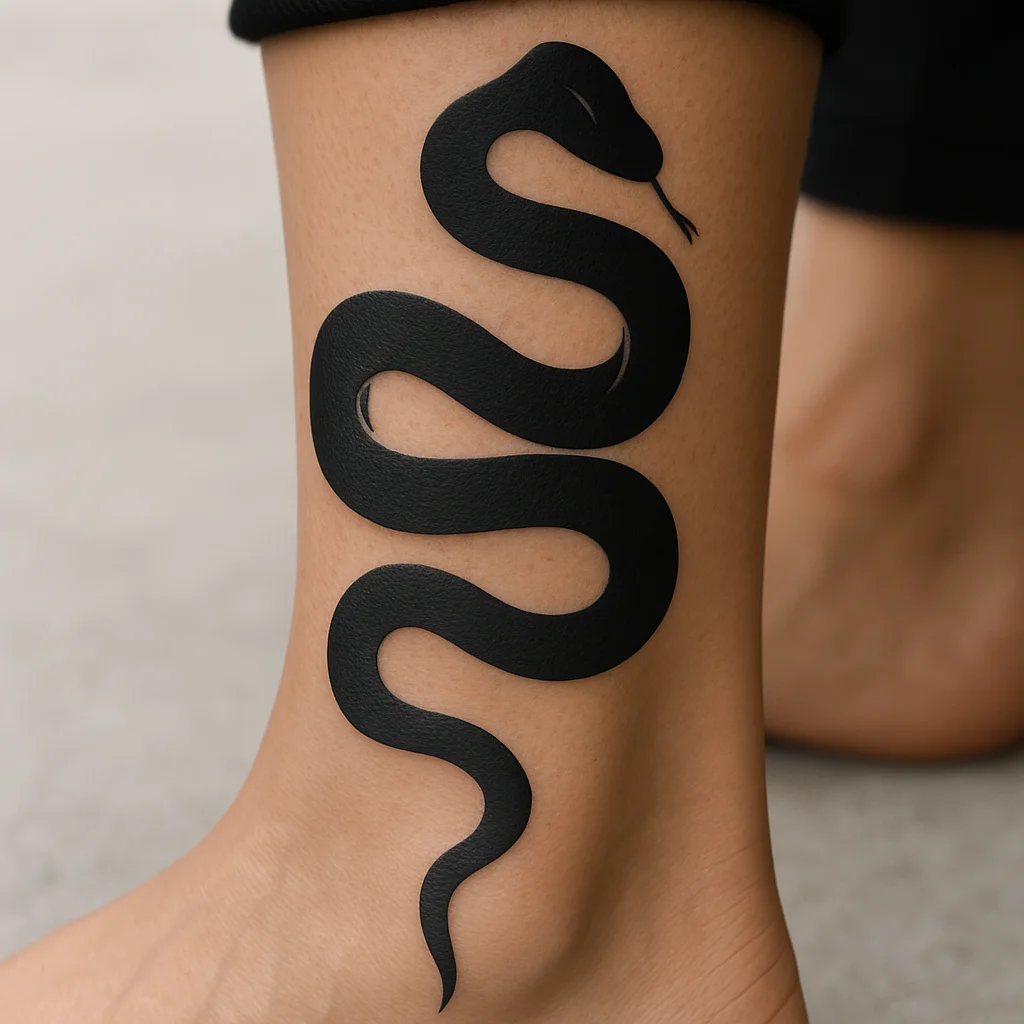
A serpent coiling down the front of the leg with the head resting on the ankle bone or the top of the foot. The body's curve solves the shin's flat, awkward plane, and the scale texture ages well in solid black. Expect a sharp jolt when the needle crosses the ankle.
14. Pine treeline ankle band
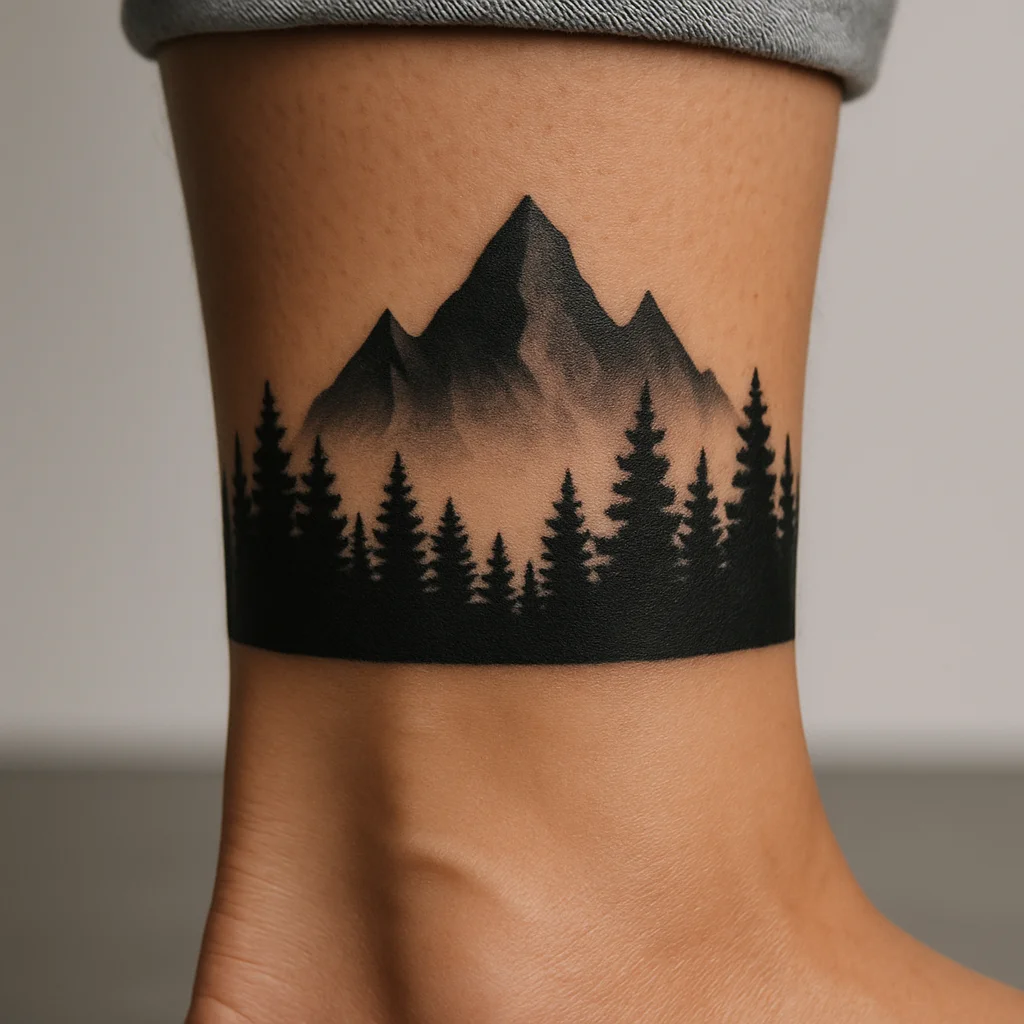
A silhouetted forest ring at the ankle with peaks rising unevenly into the calf, sometimes with a mist gradient above. It's the cheapest way to make a lower-leg piece feel complete — a strong bottom border with room to build upward later. Solid black silhouettes stay crisp for decades.
Shorts-length sleeves: thigh to knee
Everything covered by a pair of gym shorts. Less pain than the shin, far more room for detail, and the fastest way to get a large tattoo that nobody at work ever sees. The catch is visibility — design for the outer thigh unless you genuinely want a private piece.
15. Panther head with drapery
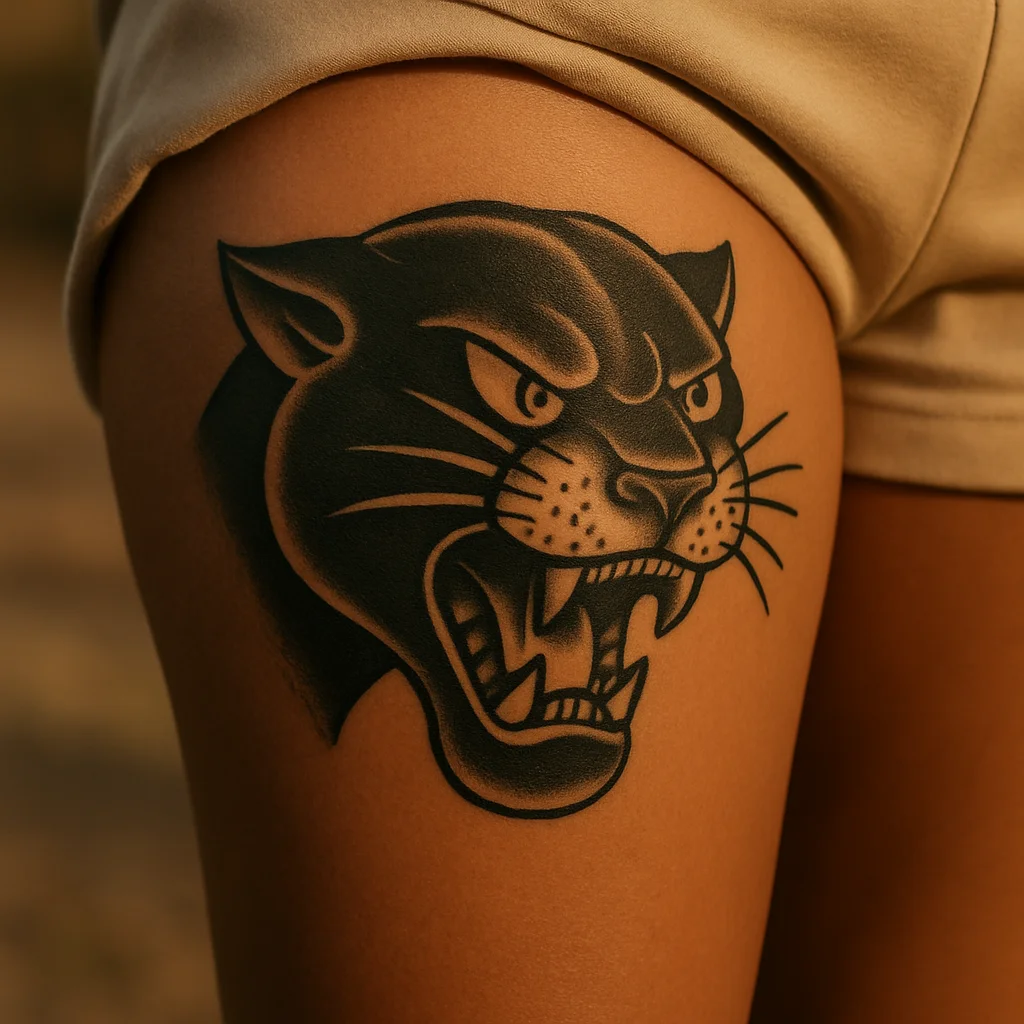
A snarling panther on the outer thigh, oversized, with fabric folds or smoke filling toward the knee. The thigh's flat outer plane is the closest thing on the body to a canvas, so this is where bold traditional imagery hits hardest. Scale it big — a panther under palm-size on a thigh looks lost.
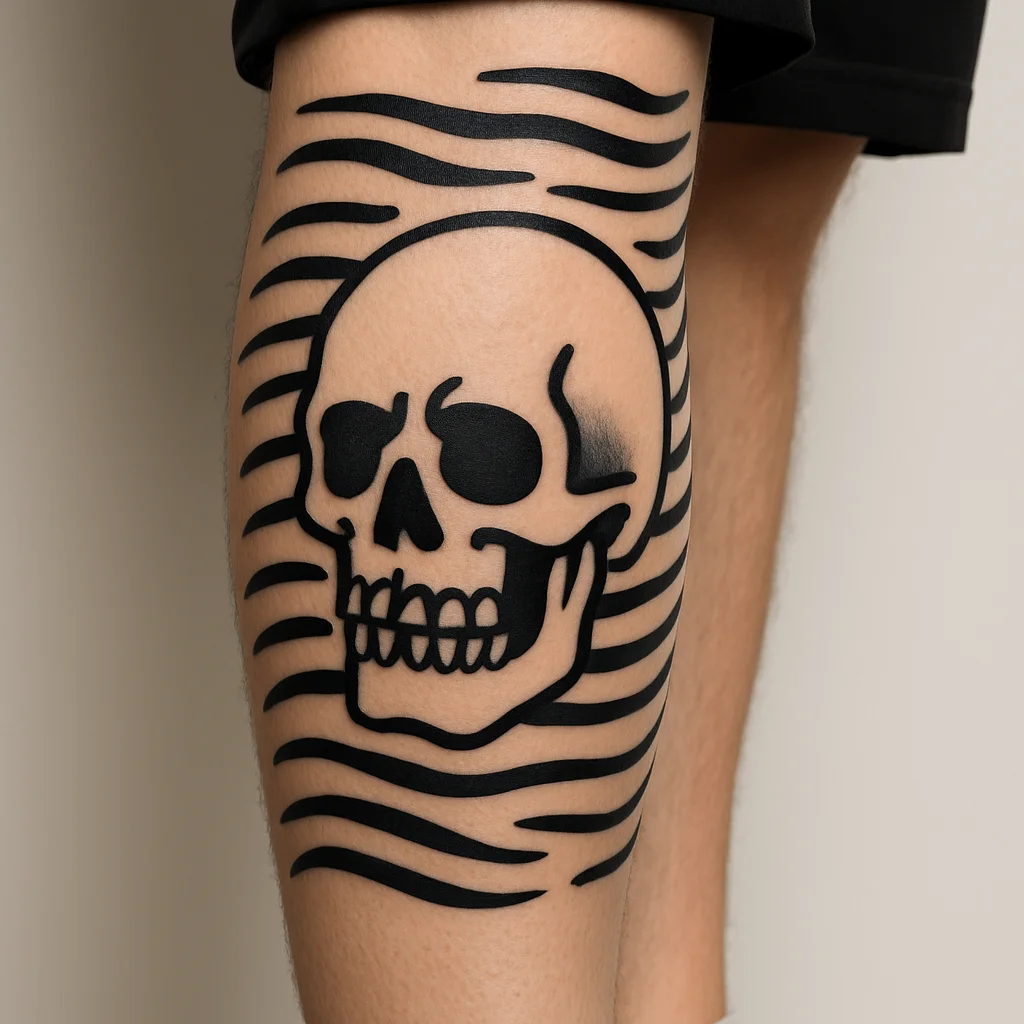
16. Skull and roses across the quad
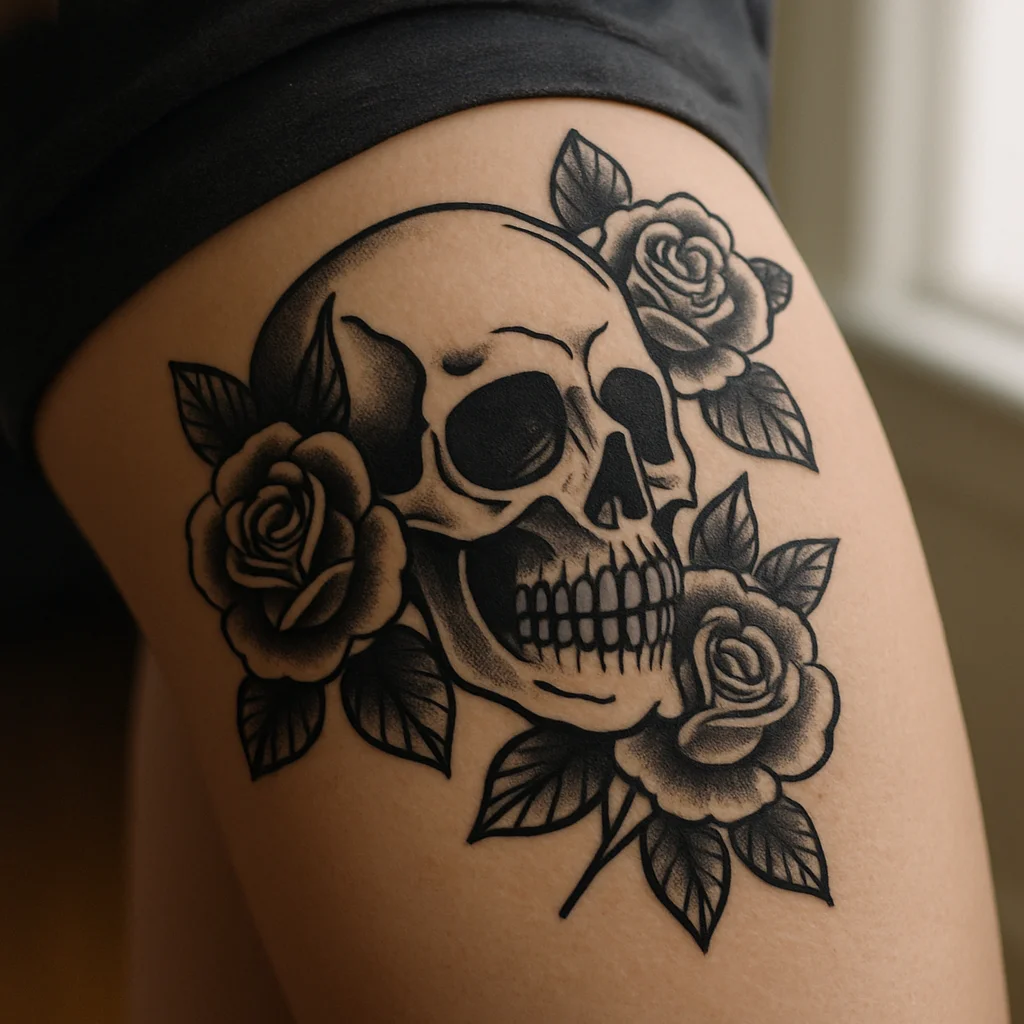
A skull angled across the front of the thigh with roses and leaves breaking the outline, running toward the knee. It's a timeless combination that suits both traditional bold-line work and heavier black-and-grey. The quad is one of the most tolerable spots on the whole body, so long sittings are realistic here.
17. Statue hand reaching down the thigh
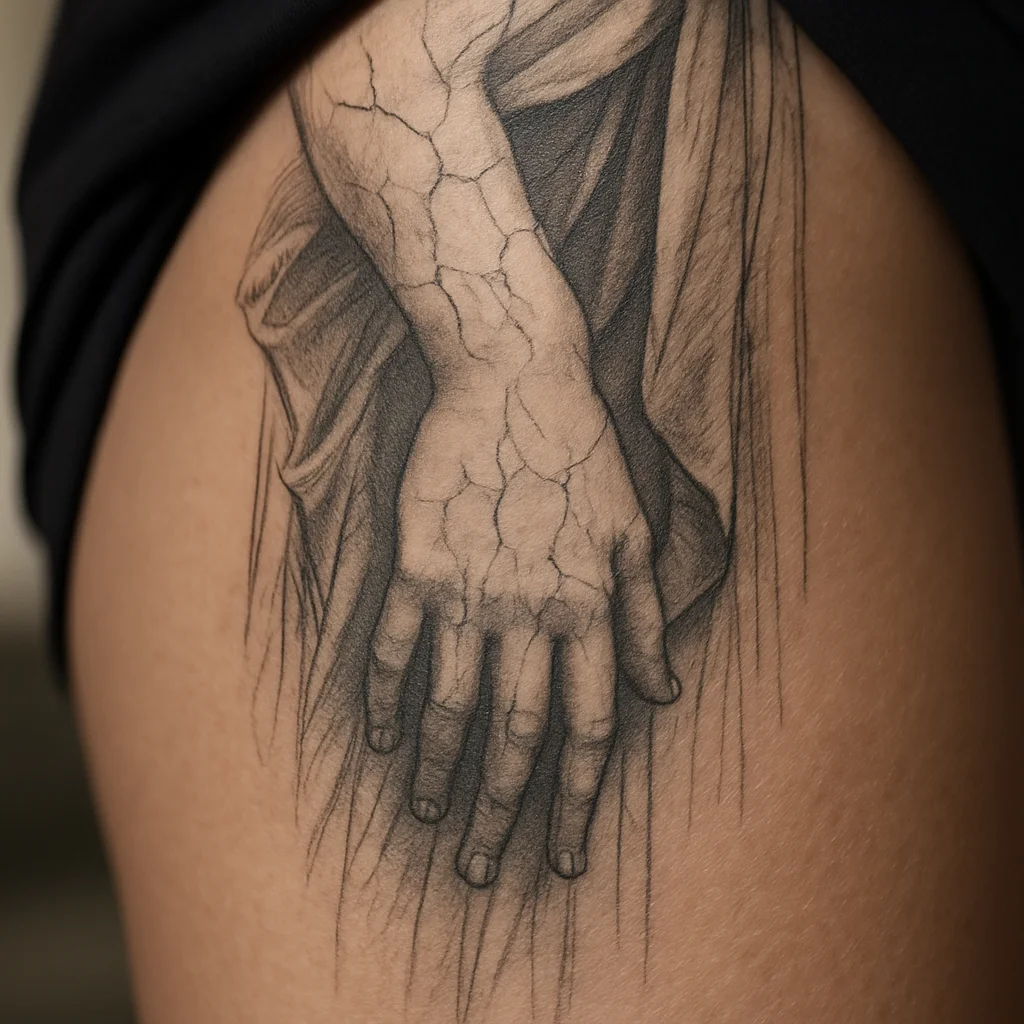
A marble hand and forearm, cracked at the wrist, reaching down toward the knee with drapery behind it. The vertical shape suits the thigh's length perfectly and needs no wrap to look finished. Ask for high-contrast shading so the marble doesn't flatten out as it settles.
18. Wolf portrait on the outer thigh
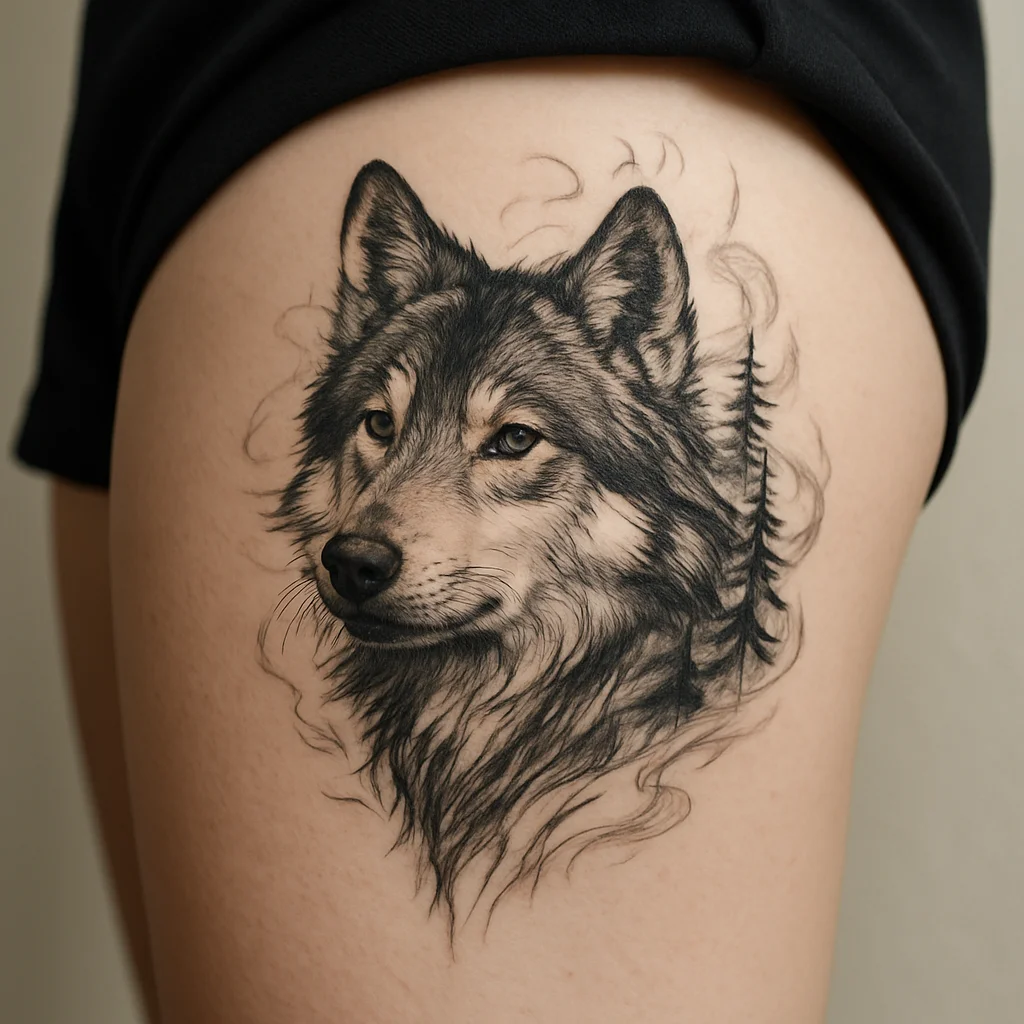
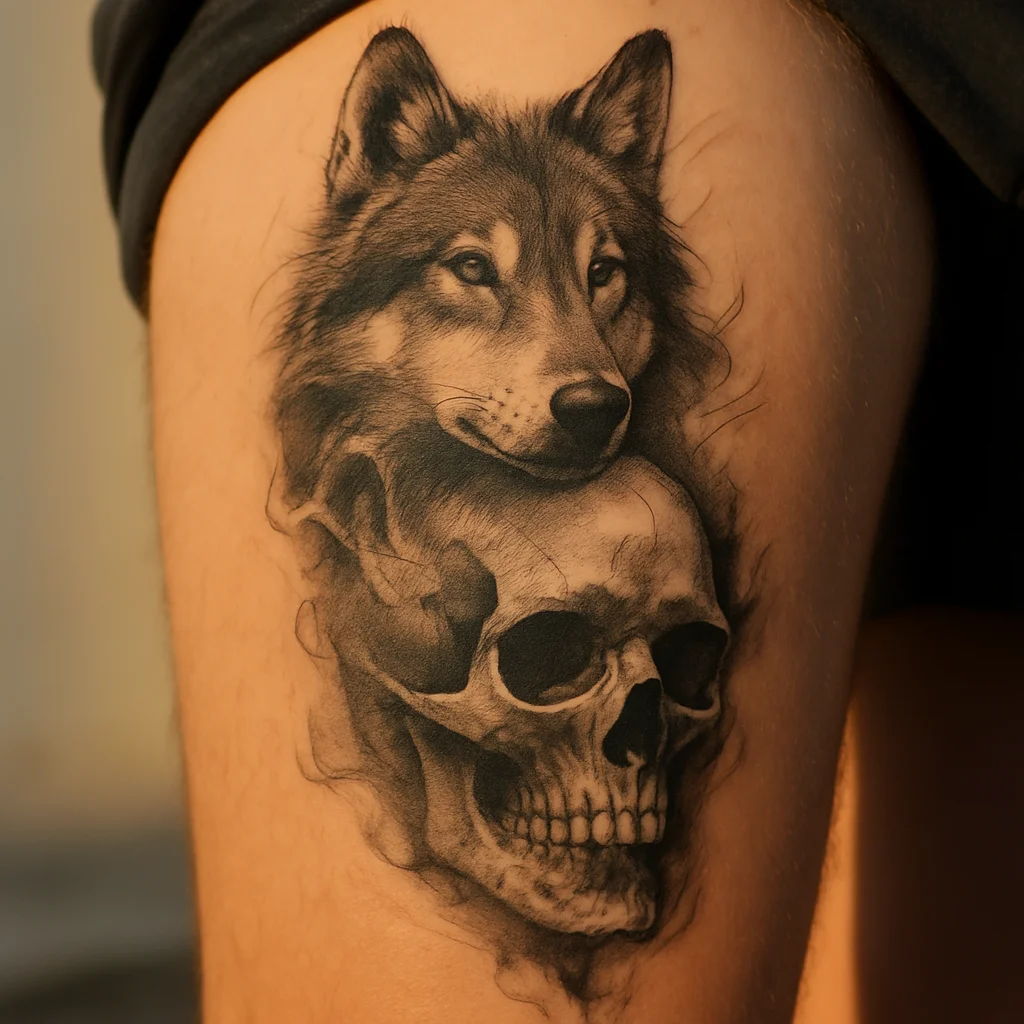
Head and shoulders, three-quarter angle, with pine or smoke behind to anchor it. Realism needs space to breathe, and the thigh gives you more than any other leg zone. Keep the eyes above the halfway point of the thigh so the portrait isn't distorted when you sit.
19. Ornamental filigree wrapping inner to outer
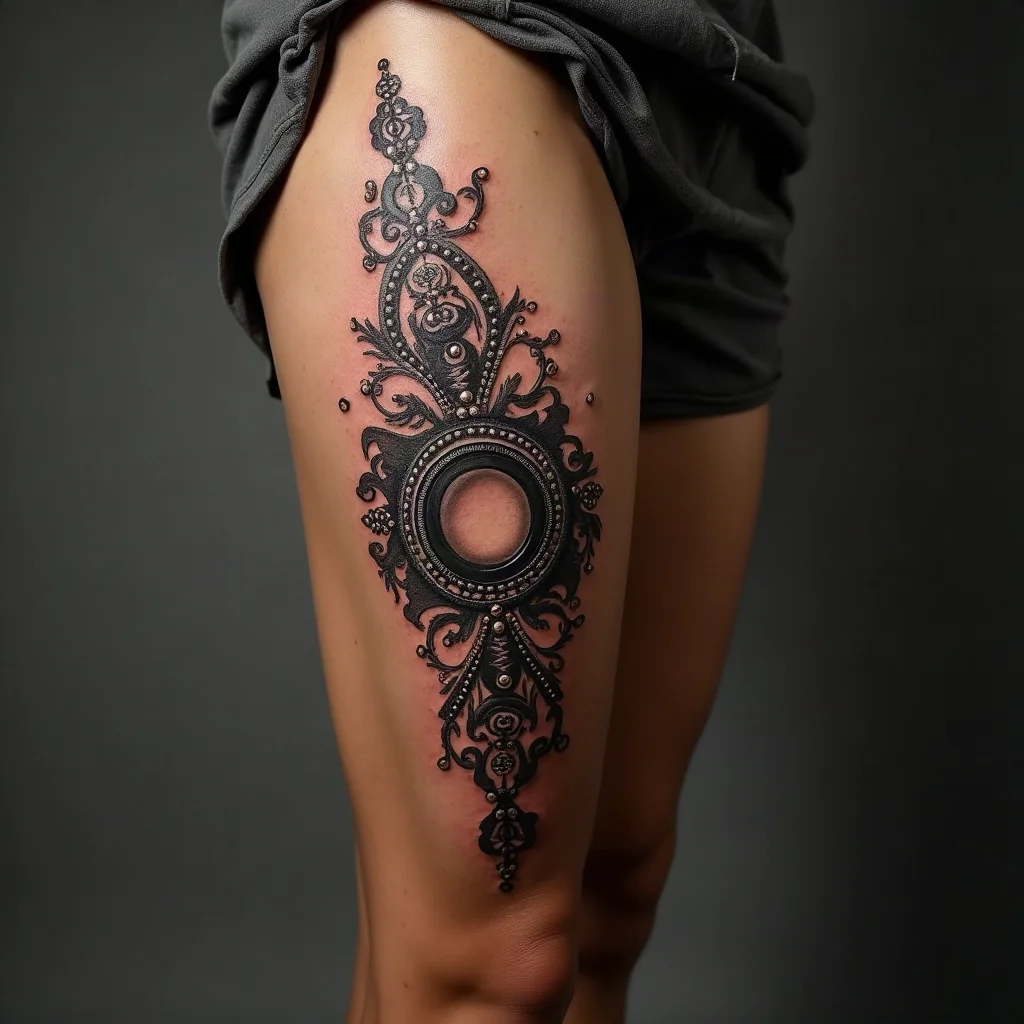
Baroque scrollwork, chains and beadwork that starts at the inner thigh and sweeps around to the outside, framing a small gemstone or crest. It suits men who want density and craftsmanship without any literal imagery. Inner-thigh work stings noticeably more than the outer side — expect that to be the hardest hour.
20. Lettering arch above the knee
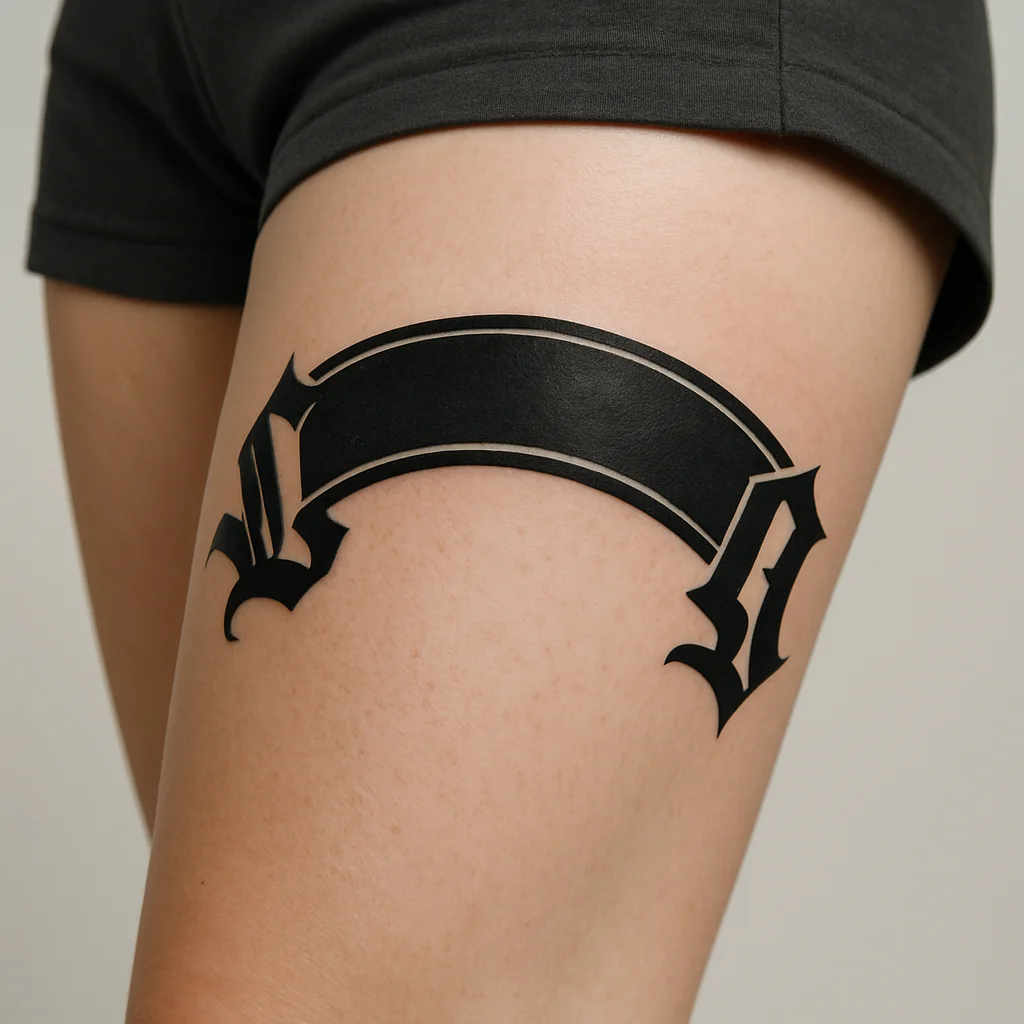
A banner, script line or blackletter phrase curved across the lower thigh, sitting like a border above the knee. It closes off a thigh piece cleanly and gives future work a natural stopping line. Keep letter heights generous; thin script on a joint-adjacent area is the first thing to blur.
Style-driven sleeves for men who care more about the look than the subject
Some men come in with a subject; others come in knowing exactly how they want the leg to feel. These six are chosen by execution first, and the imagery gets fitted to the style.
21. Black-and-grey realism with smoke transitions
Two or three photorealistic focal images — a face, a clock, a lion — floating in smoke that carries the eye down the leg. Smoke is the most flexible connector in the business: it hides awkward joins and heals softly. Insist on seeing your artist's healed grey work, not just fresh photos.
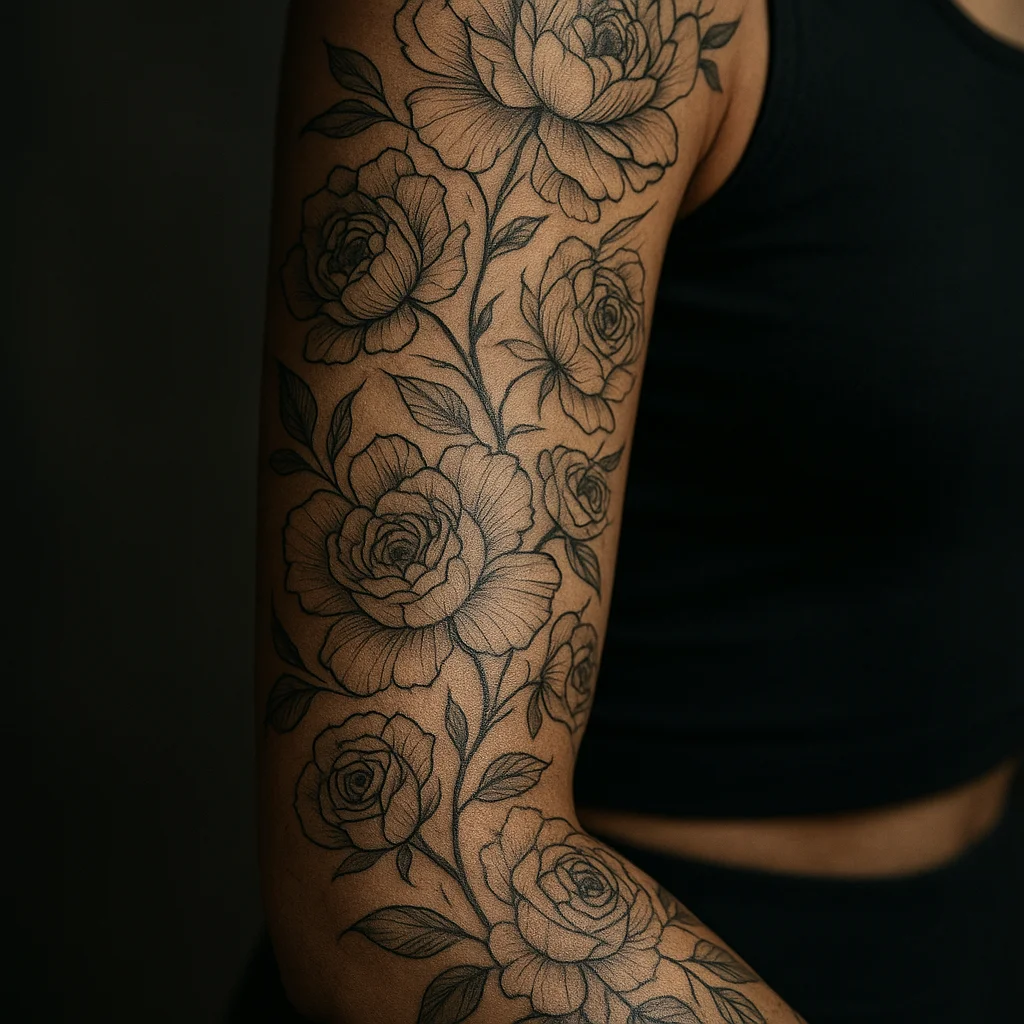
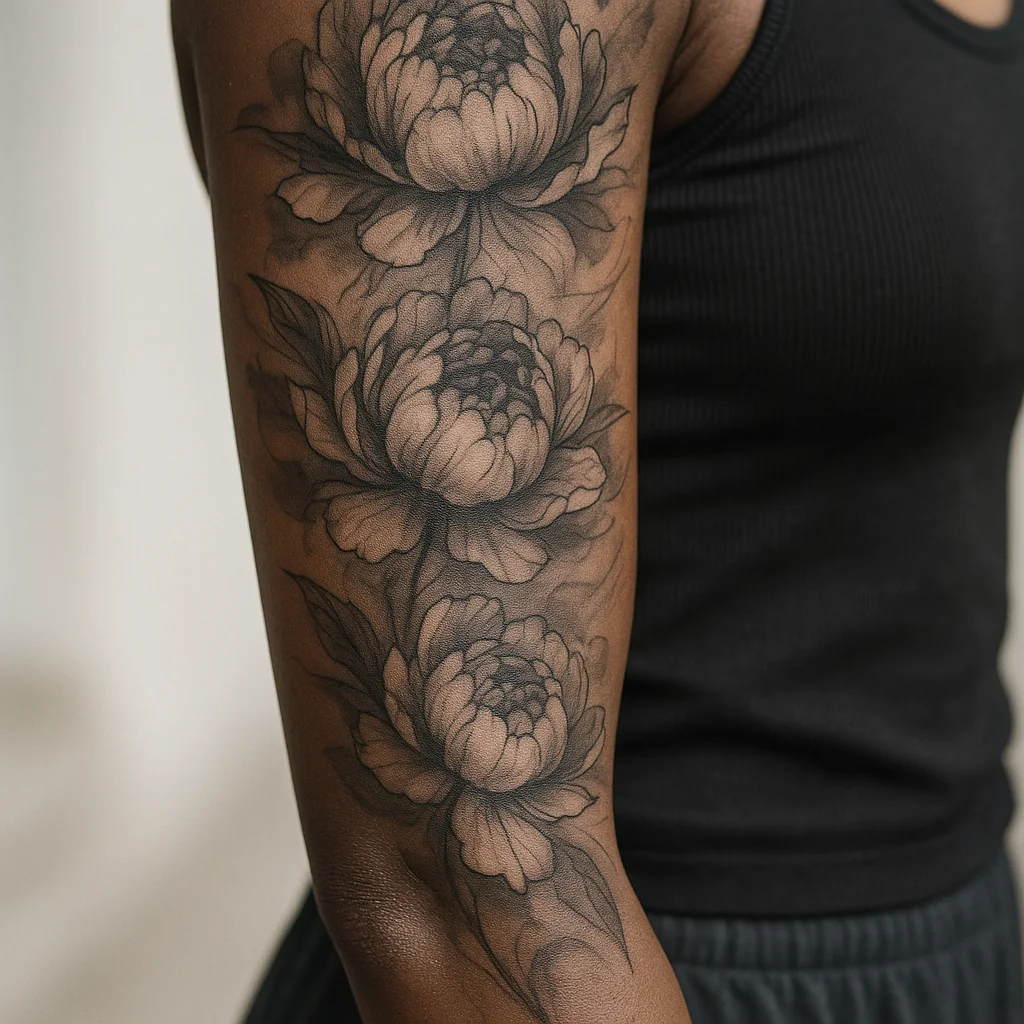
22. Fine-line botanical leg
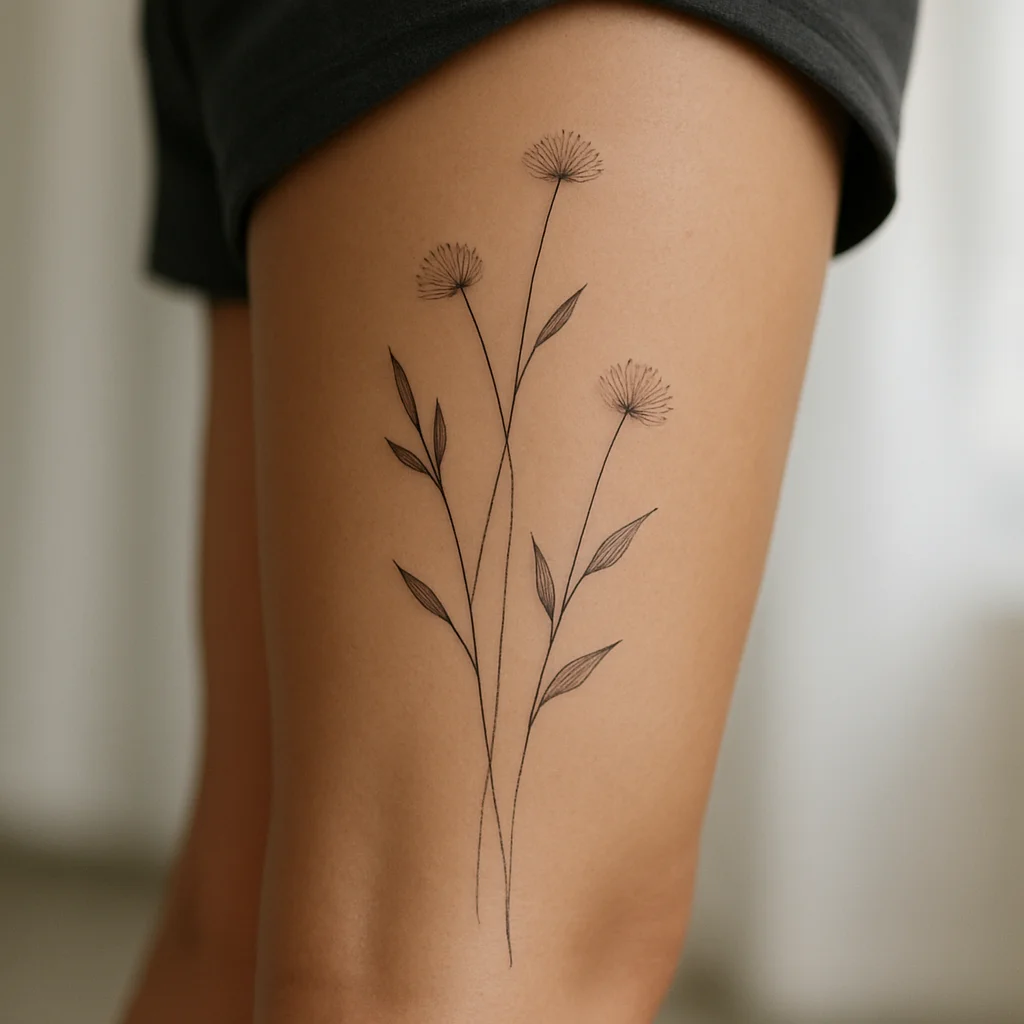
Delicate stems, seed heads and leaves tracing the whole leg with big gaps of bare skin. It's the lightest-looking full leg you can get, and the most vulnerable — fine lines on the shin need sunscreen forever and possibly a touch-up in a decade. Beautiful on lean, low-hair legs.
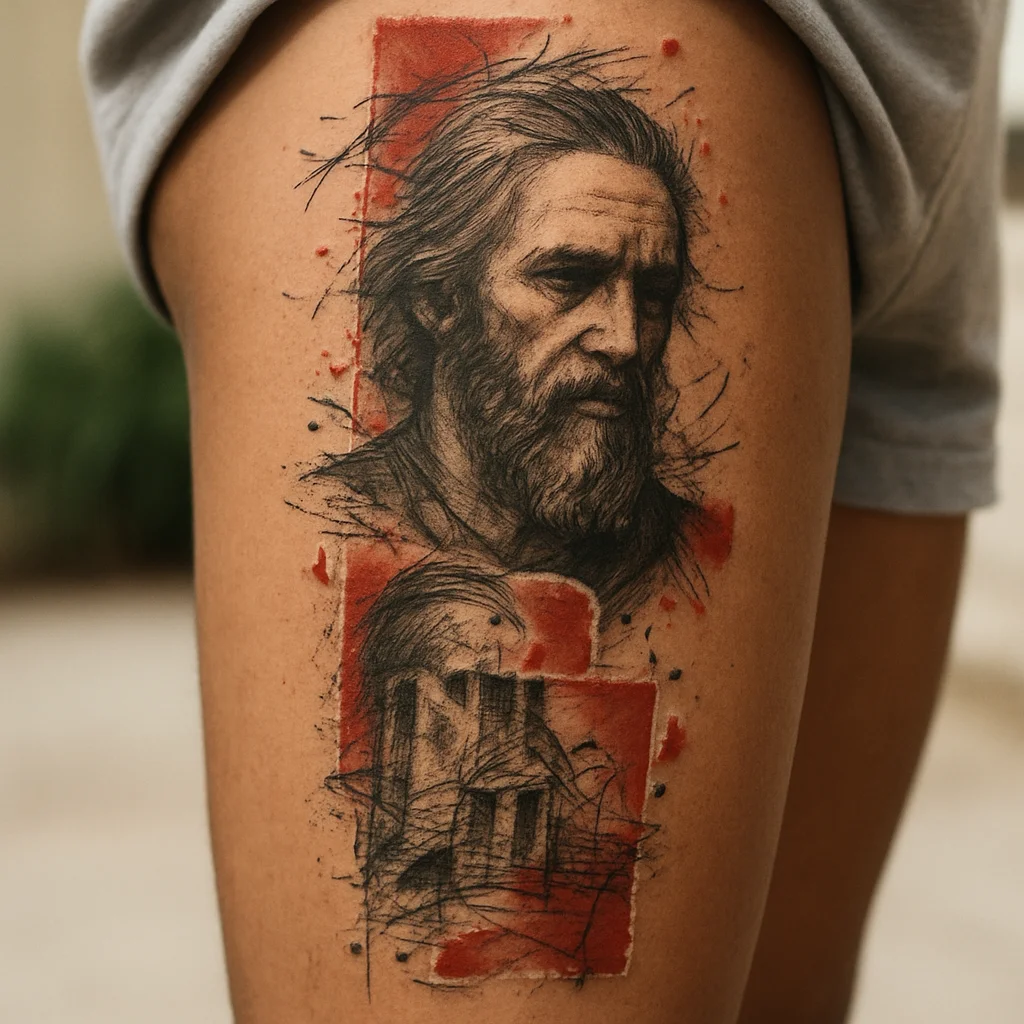
23. Trash polka leg
Black realism collaged with red blocks, splatters, barcodes and torn text, running as one chaotic column. The style needs a big canvas to work, which makes the leg ideal. Because red pigment fades differently to black, ask how the artist plans the balance over the long term.
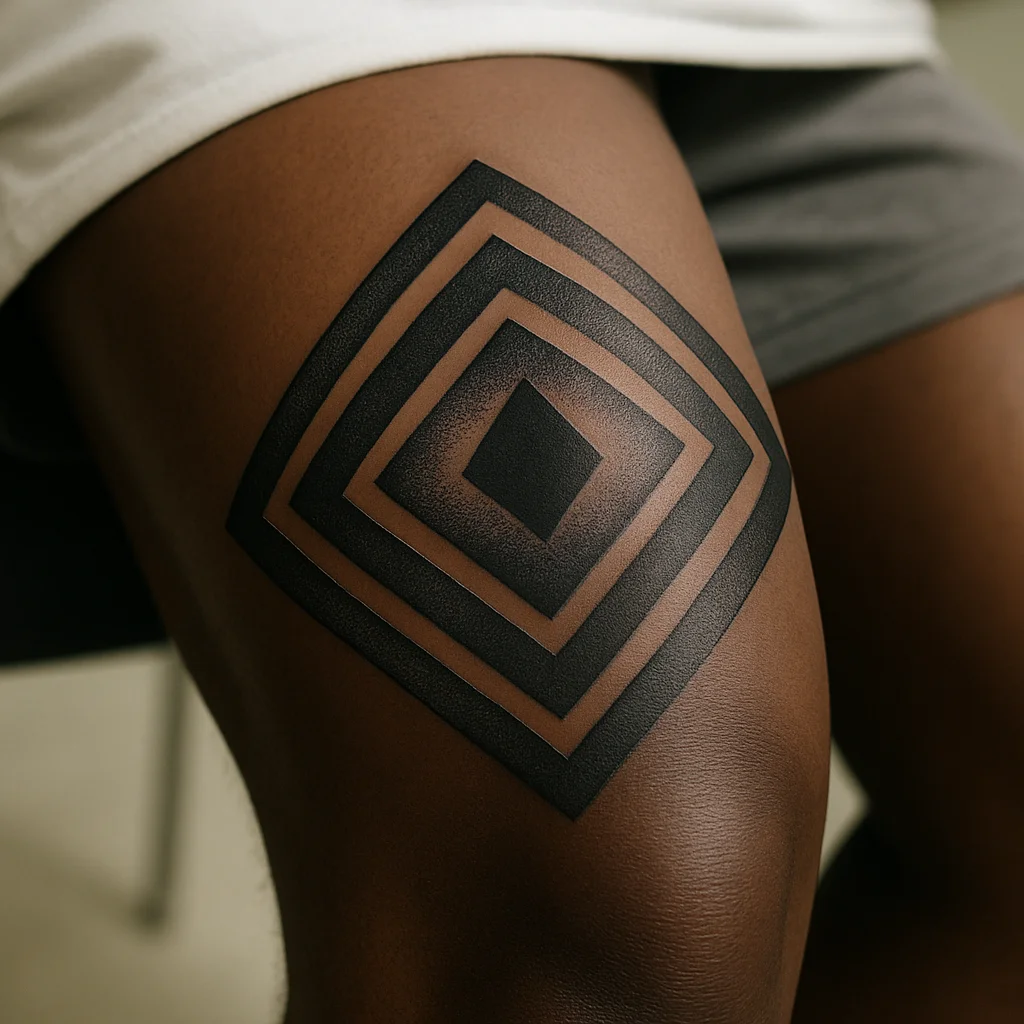
24. Dotwork sacred geometry
Concentric shapes, platonic solids and stippled gradients built around the knee as the visual centre. The soft dotted shading looks incredible on the thigh and demands patience — dotwork sessions are slower per square inch than almost anything else. Best on skin that heals cleanly, since stipple relies on even saturation.
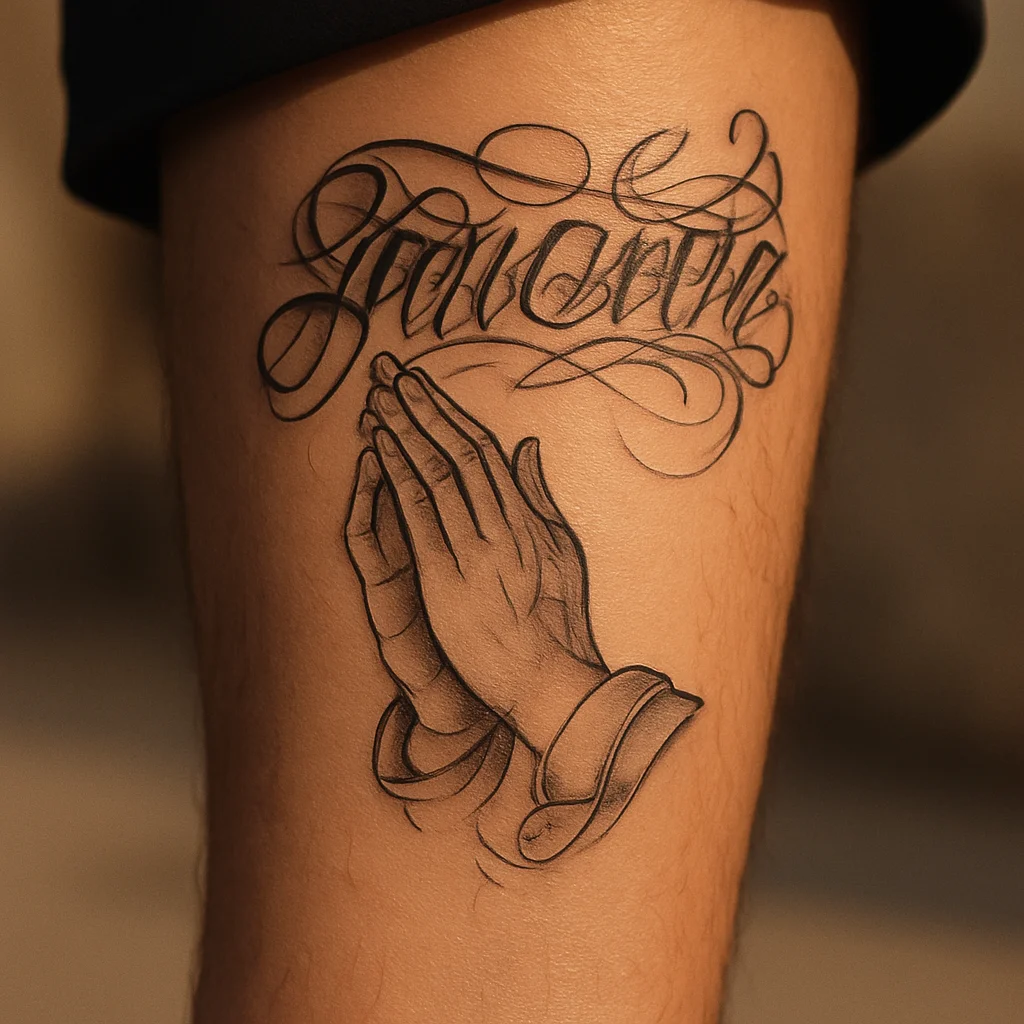
25. Chicano-style script and portrait leg
Fine black-and-grey script, praying hands, a lowrider detail or a portrait, arranged with generous negative space and razor-sharp lettering. Lettering placement matters more than size here; run the script along the leg's length, never across the shin bone. Go to a specialist — this style is unforgiving of sloppy line weight.
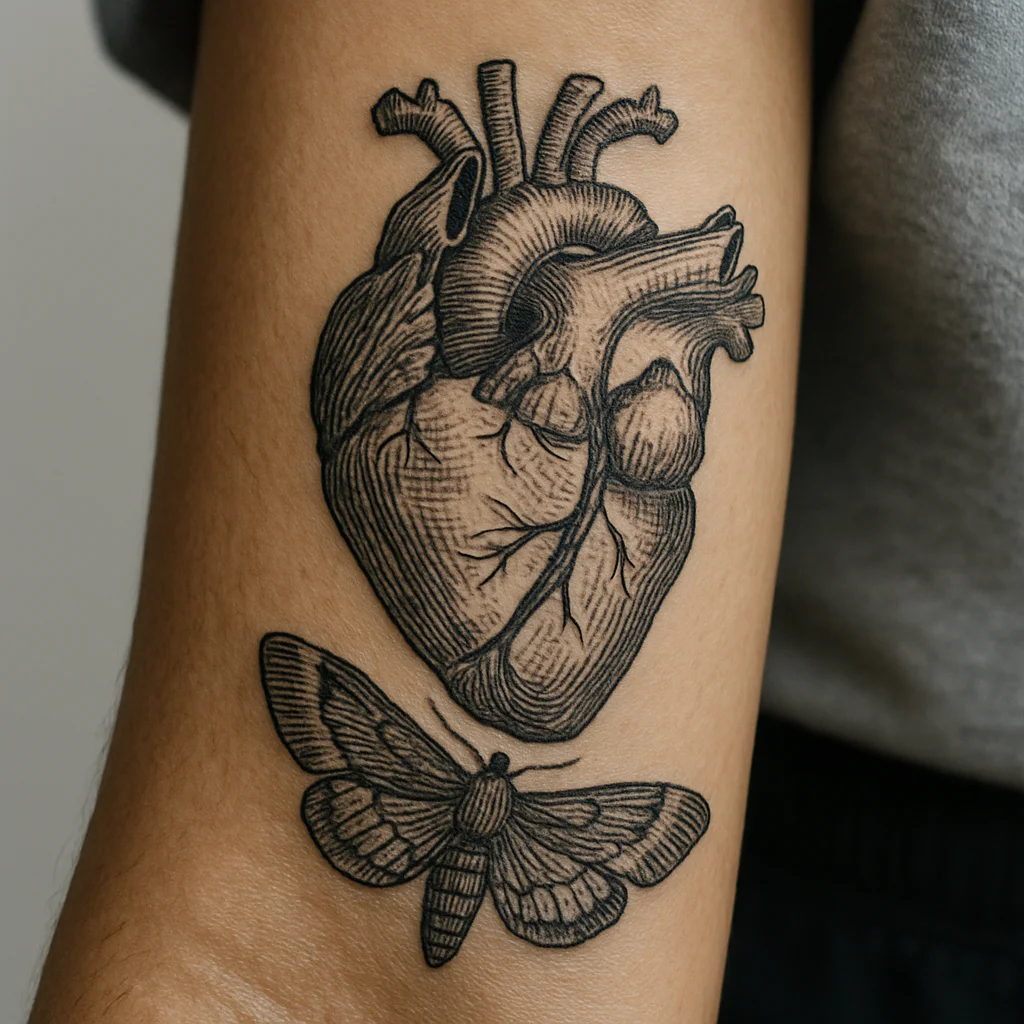
26. Woodcut engraving leg
Everything rendered in hatched and cross-hatched lines like an old scientific etching: an anatomical heart, a moth, a sailing ship, a skeleton. The hatching gives you tone without solid black, so the leg stays lighter than a blackwork sleeve. It ages honestly, as long as the hatching isn't packed too tight.
The awkward zones: knee, shin bone and ankle
These four solve the spots that ruin otherwise good leg sleeves. Get them planned in from the start rather than patched in at the end.
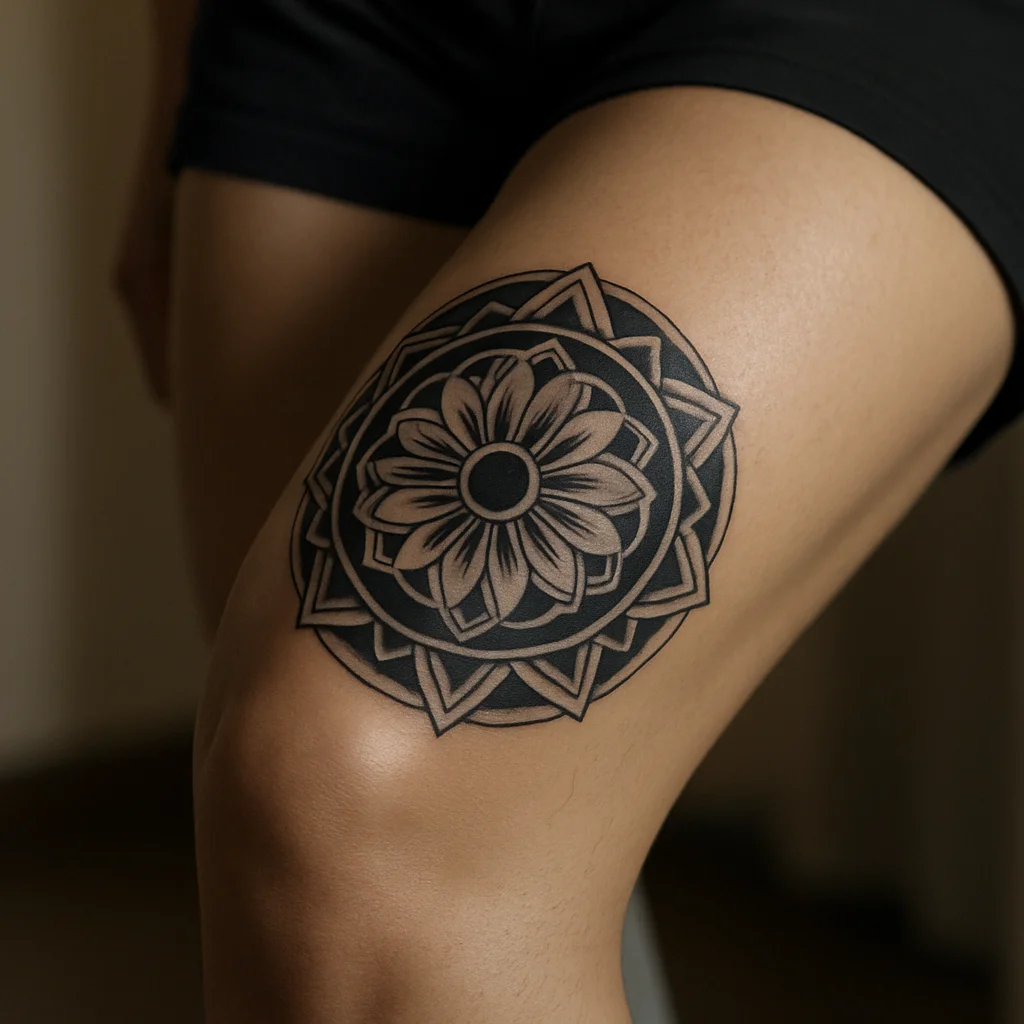
27. Kneecap rosette as a hinge
A circular ornamental rosette or spiderweb sitting directly over the kneecap, acting as the pivot between thigh and calf designs. Radial patterns tolerate the skin's stretching far better than any figurative image. It hurts — thin skin over bone — but it's a short, contained session.
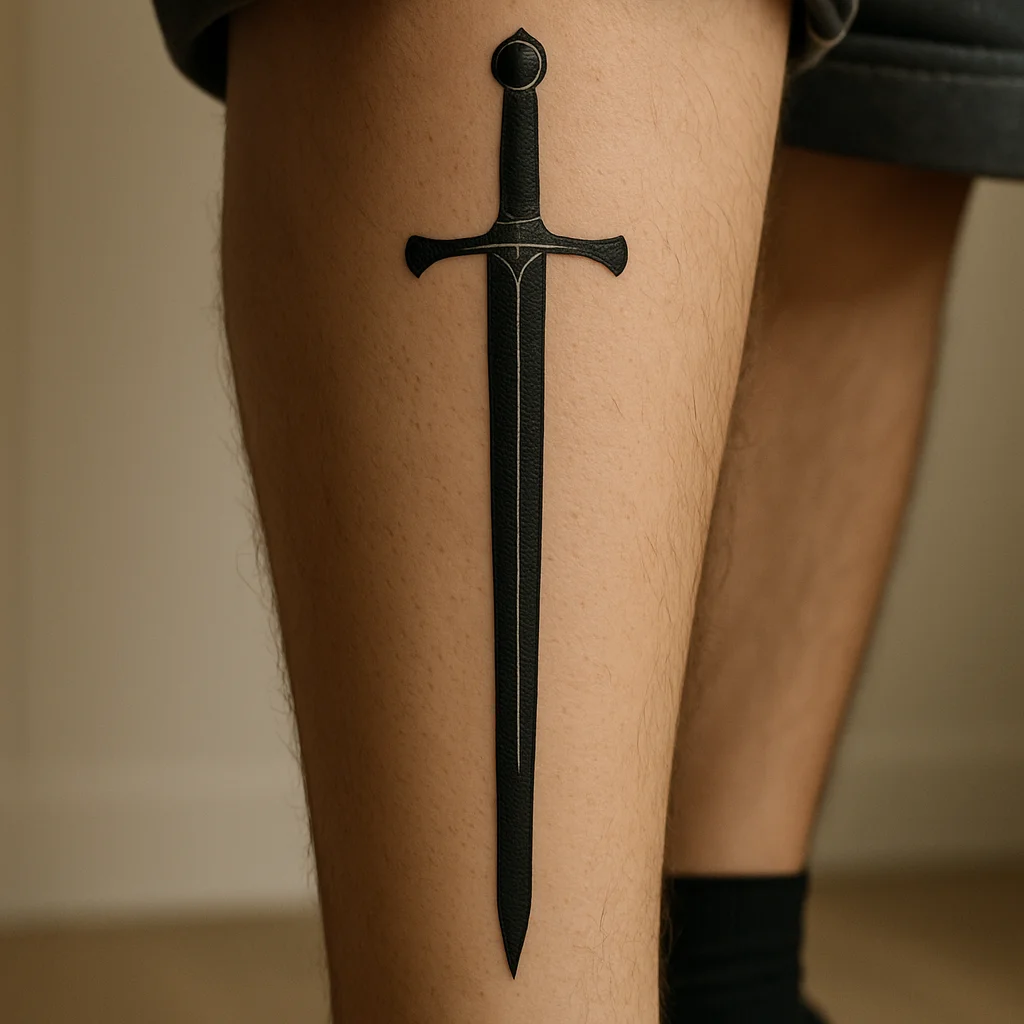
28. Shin-bone centred vertical object
A sword, arrow, feather or lit match running straight down the shin, using the bone's ridge as its spine. Placing a single long object there beats trying to shade across a plane that catches every bit of light. Expect the sharpest pain of the whole sleeve along the lower shin.
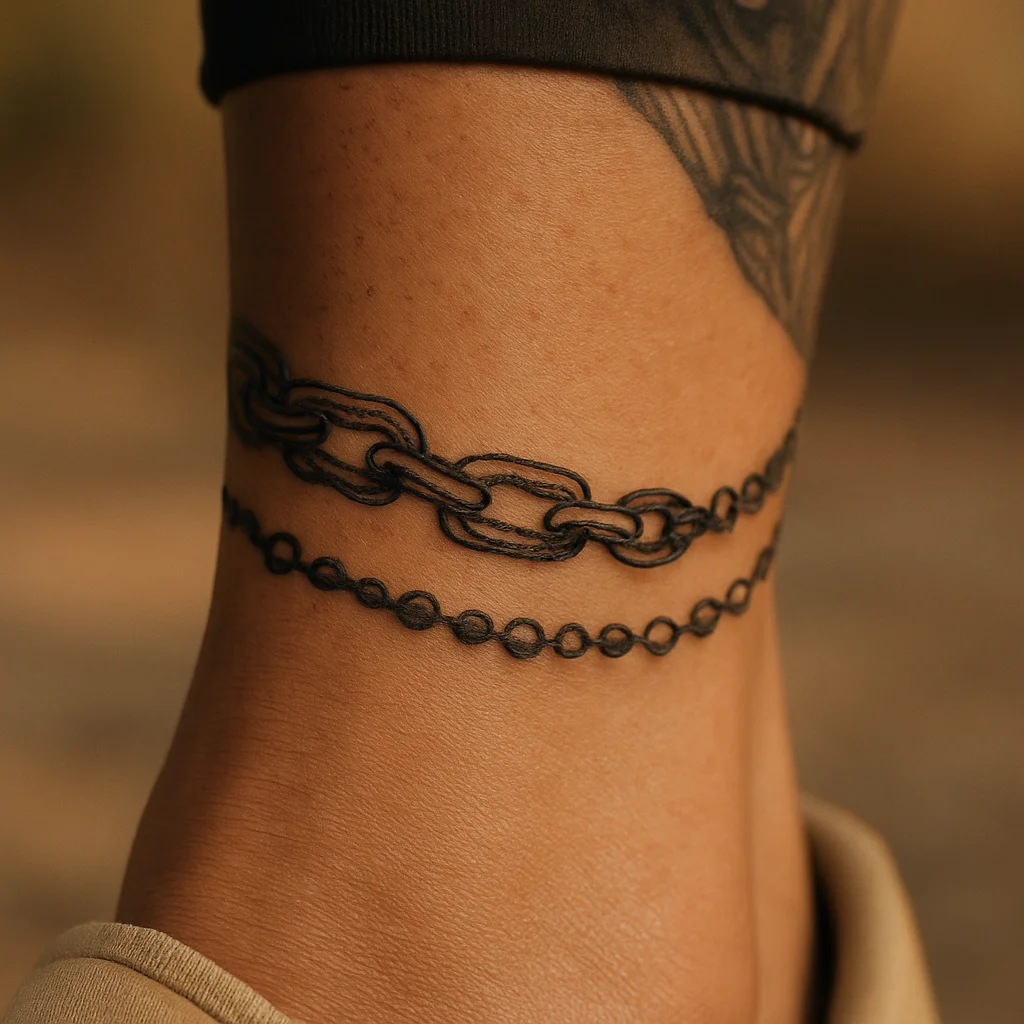
29. Ankle chain or cuff to close the sleeve
A wrapped chain, rope, bead strand or barbed band circling the ankle to give the sleeve a defined end. Without a closer, lower-leg sleeves tend to fade out and look unfinished above the sock line. Keep it just above the ankle bone rather than directly on it if you want an easier session.
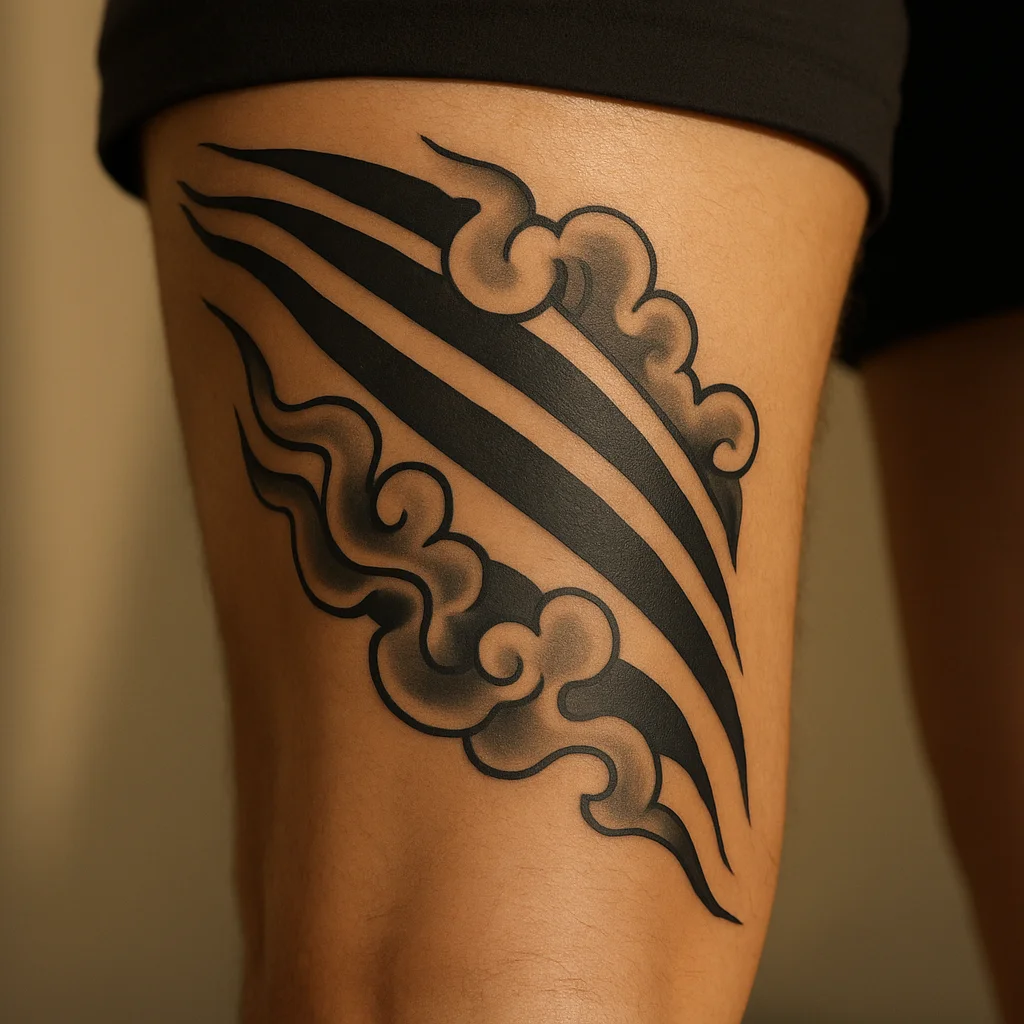
30. Wind bars and negative-space filler behind the knee
Curved black wind bars, waves or smoke wrapping the back of the leg and the soft crease behind the knee — pure connective tissue, no focal detail. It's the traditional Japanese answer to the leg's hardest area, and it makes everything else look intentional. Budget a session for filler alone; it's what separates a sleeve from a pile of tattoos.
Pain, sessions, cost and healing a leg
Pain, honestly. The outer thigh and quad are among the friendliest places on the body — many men find these sessions almost meditative. The calf muscle is moderate, with a strange deep ache rather than sharpness. The shin, ankle bone, top of the foot, inner thigh and the crease behind the knee are the genuinely rough parts. Nothing on the leg comes close to ribs or sternum, but shin lining at hour six is a test of character.
Sessions. Most artists work a leg in four to six hour blocks. A lower-leg sleeve typically takes three to six of those; a full leg runs eight to fifteen, spaced two to four weeks apart. Book the outline early, then fill and shade in order from top to bottom so you're never sitting on a fresh area.
Cost. Think in hours, not pieces. Leg sleeves are priced at hourly or day rates that vary hugely by city and artist reputation, so a lower leg with a solid local artist and a full leg with a heavily booked specialist can differ by several multiples. Ask for a day rate and an honest session estimate up front — our breakdown of full sleeve costs applies almost directly to legs. Budget a little extra for touch-ups on the shin and knee.
Healing. Legs swell more than arms because of gravity, so elevate when you can, and expect the ankle to puff up after a lower-leg session. Loose shorts or joggers only, no tight jeans on fresh work. Skip the gym for leg day, running and cycling for at least a week — sweat and friction on a healing calf invites trouble. Shave the area before each session if you're hairy, keep it moisturised lightly rather than thickly, and once healed, treat sunscreen on the shins as part of the maintenance plan.
Frequently asked questions
How long does a leg sleeve take to finish?
A knee-to-ankle sleeve usually takes three to six sessions of four to six hours, while a full leg from hip to ankle commonly runs eight to fifteen sessions. Most artists space them two to four weeks apart to let each area heal. Expect the whole project to span several months to a couple of years depending on your artist's availability and your budget.
Does a leg sleeve hurt more than an arm sleeve?
Overall it's easier. The thigh and calf muscle are more forgiving than the inner arm or elbow ditch, but the shin, ankle bone and inner thigh are genuinely sharp because the skin sits close to bone or is very thin. Long sessions on the lower leg also create a deep, tiring ache rather than a stinging pain.
Should I start at the top or the bottom of the leg?
Most artists start with the largest focal piece, usually the outer thigh or outer calf, then build outward with background and filler. If you're not sure you want a full leg yet, get a self-contained lower-leg or thigh section designed with a clean border so it can either stand alone or extend later. Tell your artist your long-term plan at the first consultation, even if it's tentative.
Will hair or shorts season ruin a leg tattoo?
Hair grows back through healed tattoos without damaging them, though very dense hair does soften how the design reads from a distance. Sun is the real enemy: shins and calves take more UV than almost any other body part, so daily sunscreen once healed keeps blacks from turning grey and fine lines from blurring.
How much of a leg sleeve can I hide at work?
A thigh-to-knee sleeve disappears under any trousers and most shorts, which makes it the most discreet large tattoo you can get. A knee-to-ankle sleeve is hidden by long trousers but visible in shorts and often above a low sock. If total coverage matters, keep the design above the shorts line and avoid work that crosses the ankle or foot.
The conversation
No comments yet. Got a thought about these designs? Start us off.
Want to weigh in? Join the community to comment, save designs and try them on your skin.