30 Black and Grey Sleeves for Women, by Theme
Black and grey sleeves live or die on value planning, not motif choice. Here are 30 ideas grouped by theme, plus what to expect from sessions, pain and price.
What Makes a Black and Grey Sleeve Work
Black and grey is not a colour palette so much as a lighting plan. Every good sleeve in this style has three tonal jobs happening at once: solid black that anchors the eye, mid-greys that carry the shapes, and pale wash or bare skin that lets the arm breathe. If all thirty ideas below were tattooed by a technician who skipped the third job, they would read as one grey smudge from three feet away.
Ask your artist how they build greys. Some dilute black ink into wash trays and lay smooth gradients, which suits realism, moons, drapery and smoke. Others build tone with whip shading or dotwork, which reads crisper and holds its texture better on softer skin. Both age well; they just age differently. Diluted greys soften and lift a little in the first year or two, so the design needs strong black somewhere to keep its structure. Dotwork keeps its bite but can look busier on a small arm.
Flow matters more than any single motif. Arms rotate, so a sleeve has to look composed from the front, from the side and with your hand on your hip. Practical rules artists actually use:
- Put your largest, most detailed element on the outer upper arm — it is the most visible and the least painful zone.
- Leave the inner bicep and elbow ditch lighter; they blur and hurt more.
- Keep the wrist cuff simple so the sleeve ends deliberately instead of trailing off.
- Plan negative-space channels early. Skin breaks are a design element, not leftover space.
Bring reference for mood, not just subjects: three photos showing the contrast level you want will steer your artist better than twenty flowers.
Botanical Sleeves: Flowers That Read From Across the Room
Florals dominate this style for a reason — petals are pure tonal practice, and stems give an artist ready-made routes around the arm. The trick is scale discipline: two or three hero blooms beat ten small ones.
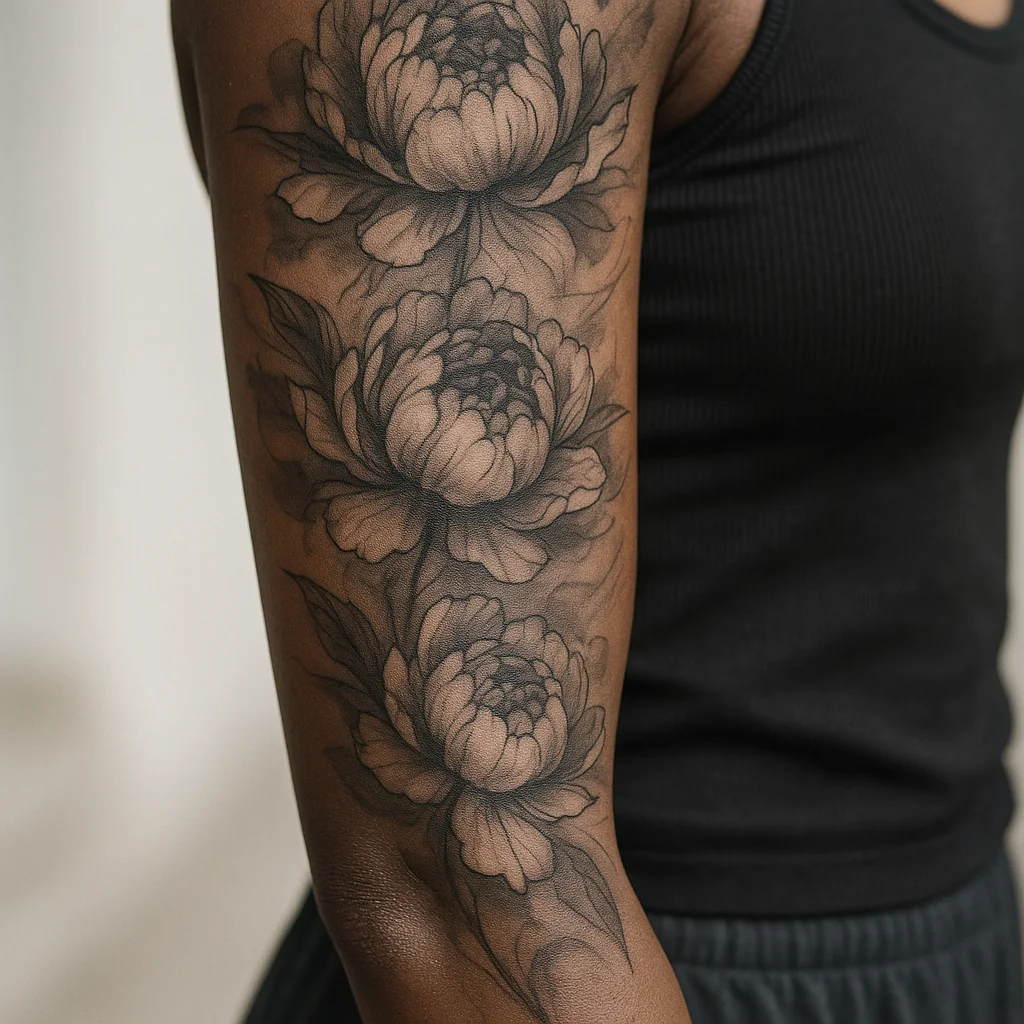
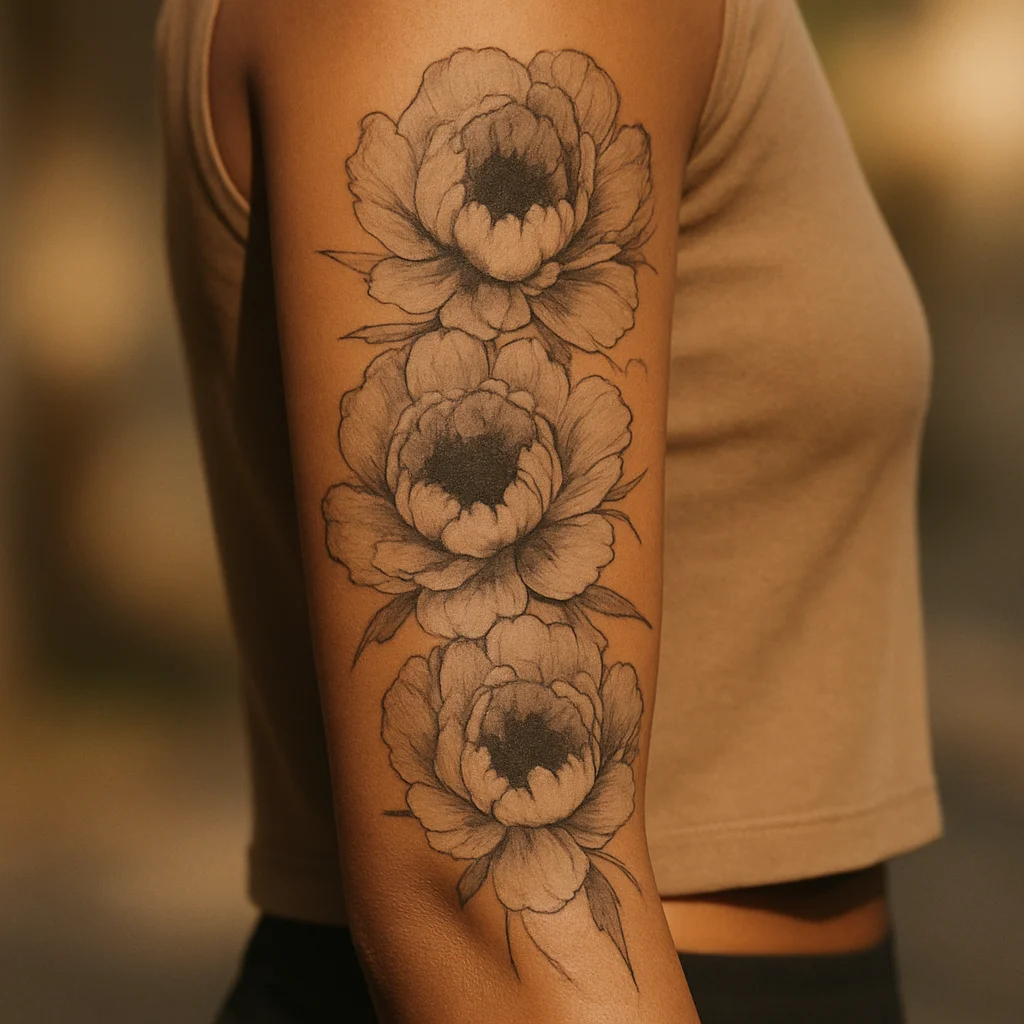
1. Grey-wash peony column
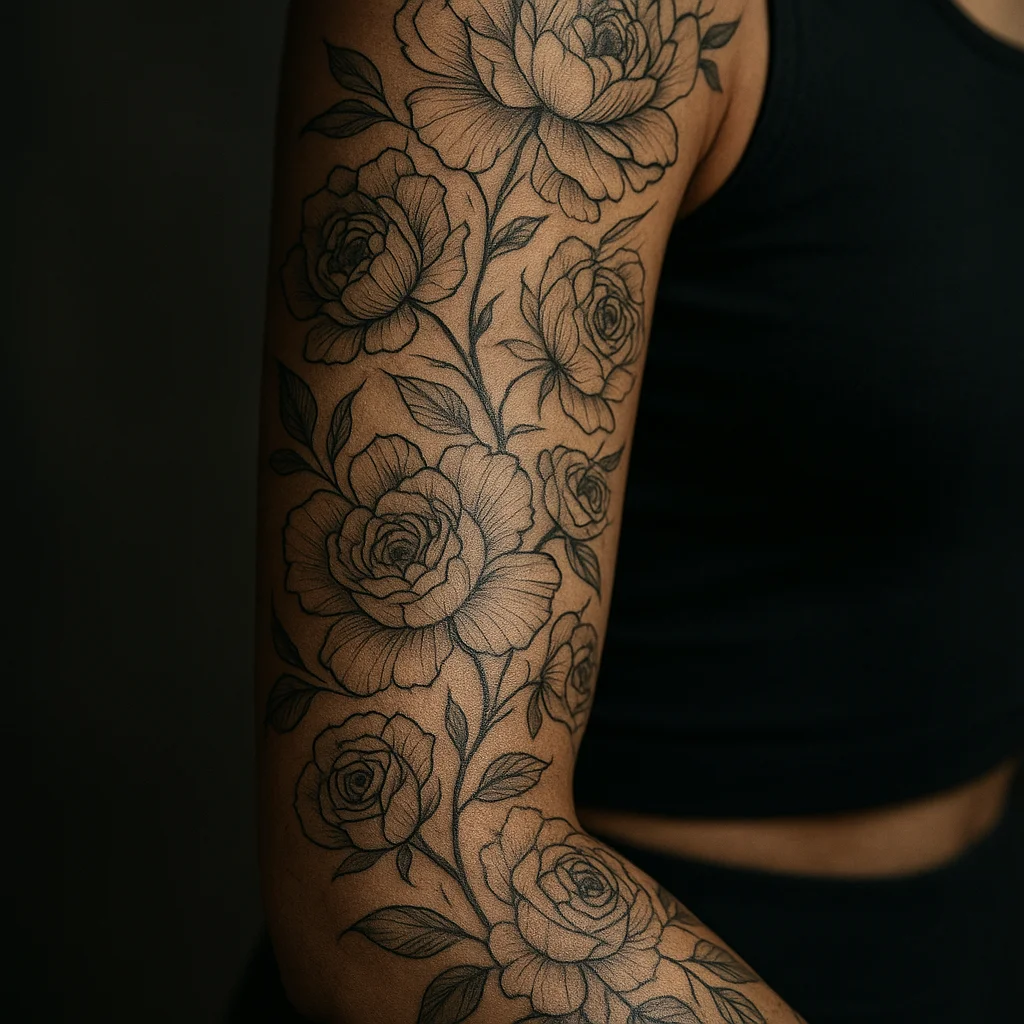
Three oversized peonies stacked from the shoulder cap to the mid-forearm, each with smoky grey petals and one or two black shadow pockets deep in the centre. The blooms overlap slightly so the eye travels down the arm in a curve rather than a straight line. This is the safest full-sleeve starter for anyone unsure about themes, and it ages beautifully because the petal edges stay defined.
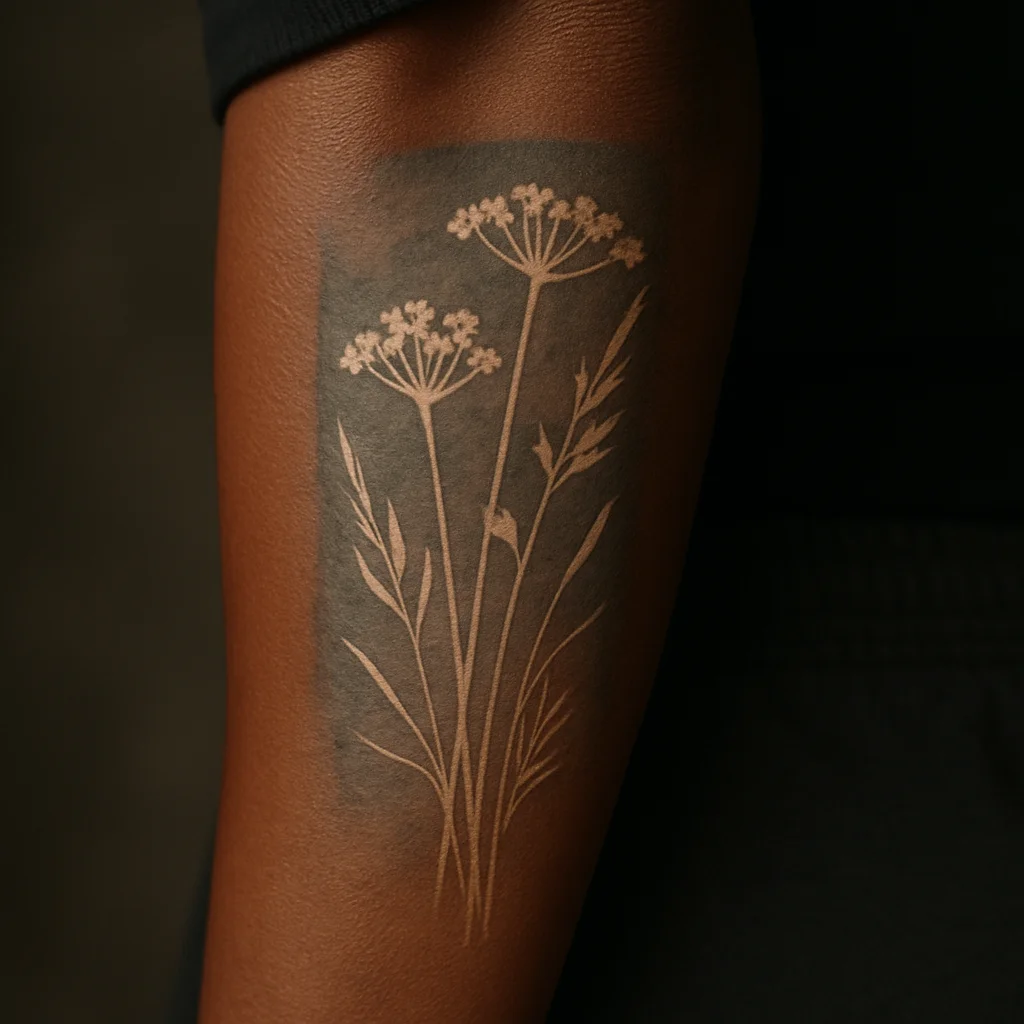
2. Wild meadow with negative-space stems
Cow parsley, grasses and seed heads drawn as pale silhouettes against light grey wash, so the plants read as untattooed skin. Soft, airy and closer to a drawing than a tattoo. Best for readers who want coverage without weight, though it needs an artist confident with reverse shading.
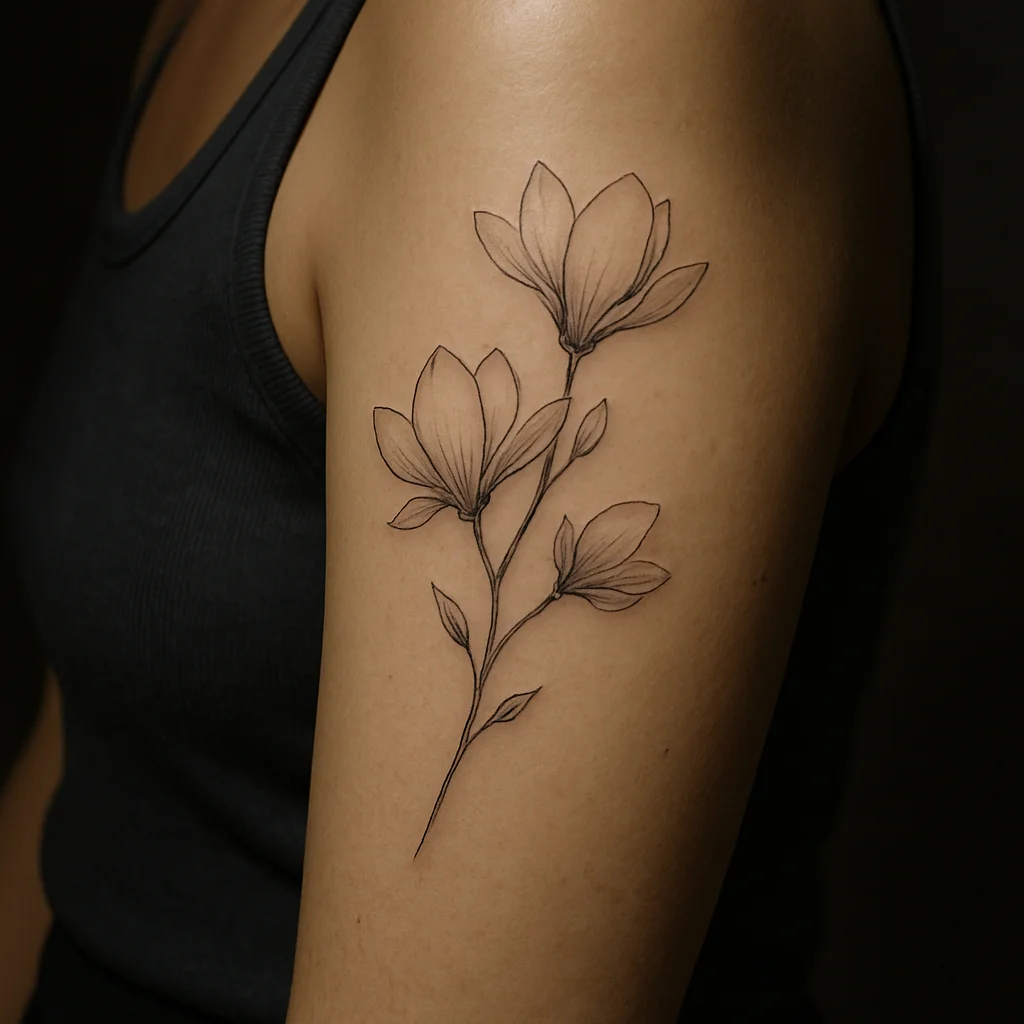
3. Single-needle magnolia branch
One branch climbing the outer arm, with delicate open blossoms and huge skin breaks between clusters. Fine-line botanicals like this suit slim arms and pale-to-medium skin especially well. Expect to book a touch-up around the year mark — hairline greys are the first thing to soften.
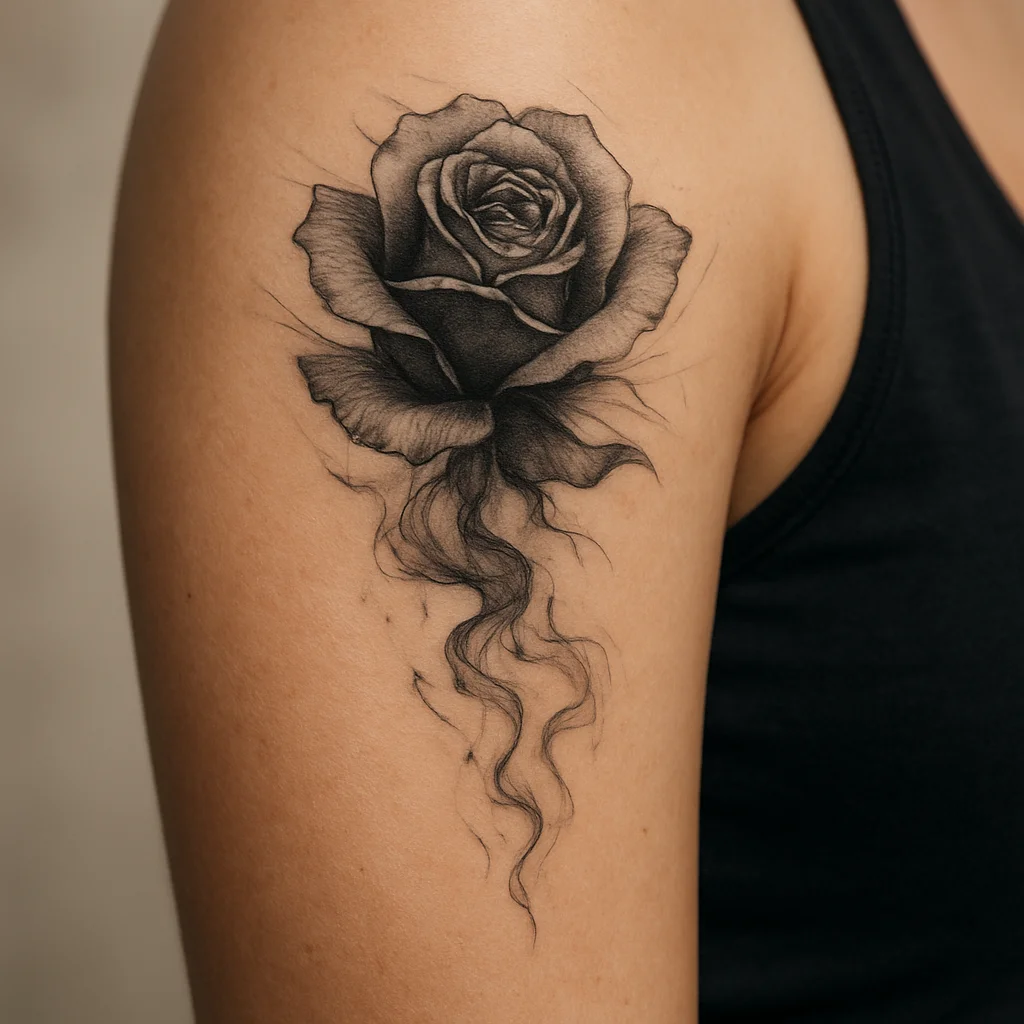
4. Rose dissolving into smoke
A tightly shaded rose on the outer bicep whose lower petals break apart into a drifting grey smoke wash that carries down to the elbow. The transition solves the classic sleeve problem of what to put in the awkward middle. Very forgiving as a cover-up over older work.
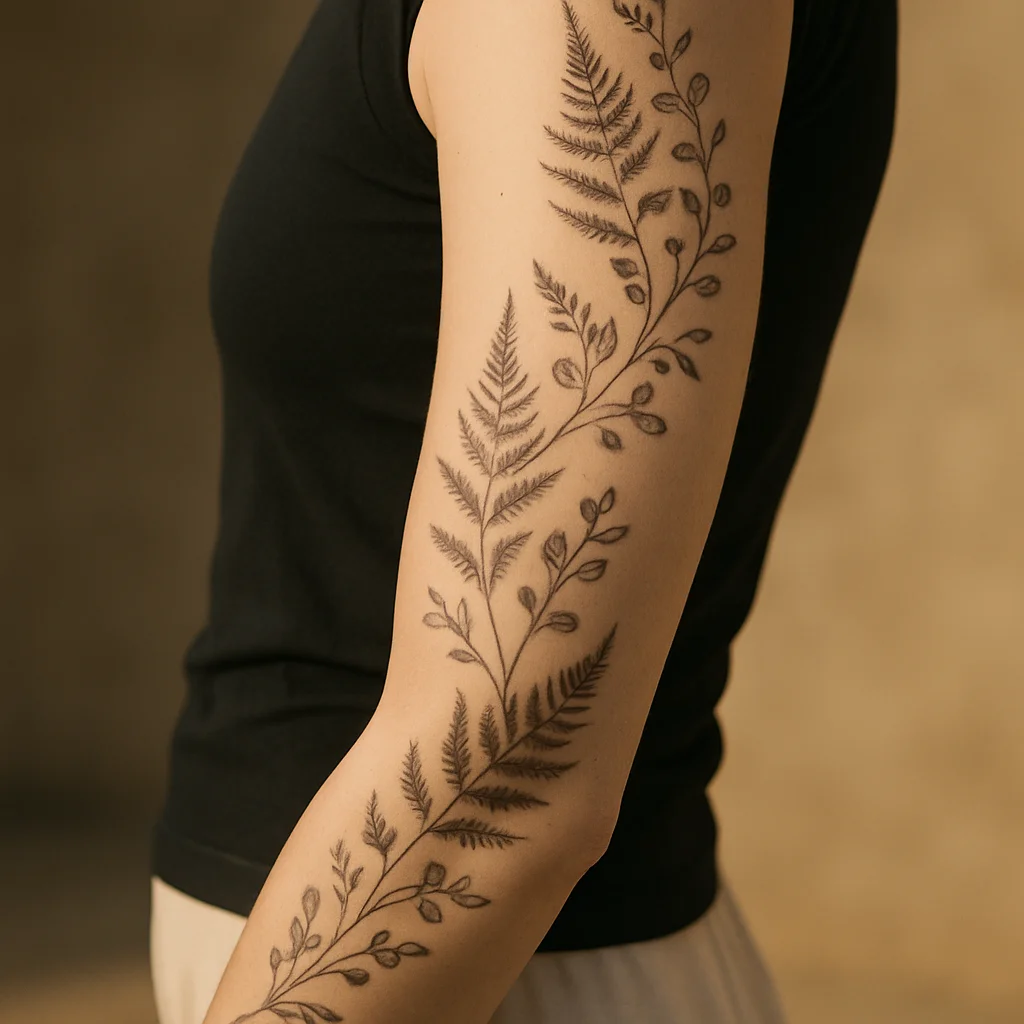
5. Fern and eucalyptus wrap
Trailing fern fronds and eucalyptus sprigs that spiral the arm on a diagonal, following the natural twist of the limb. Reads green-adjacent even in grey because of the leaf shapes. A great choice for a three-quarter sleeve that stops just above the wrist bone.
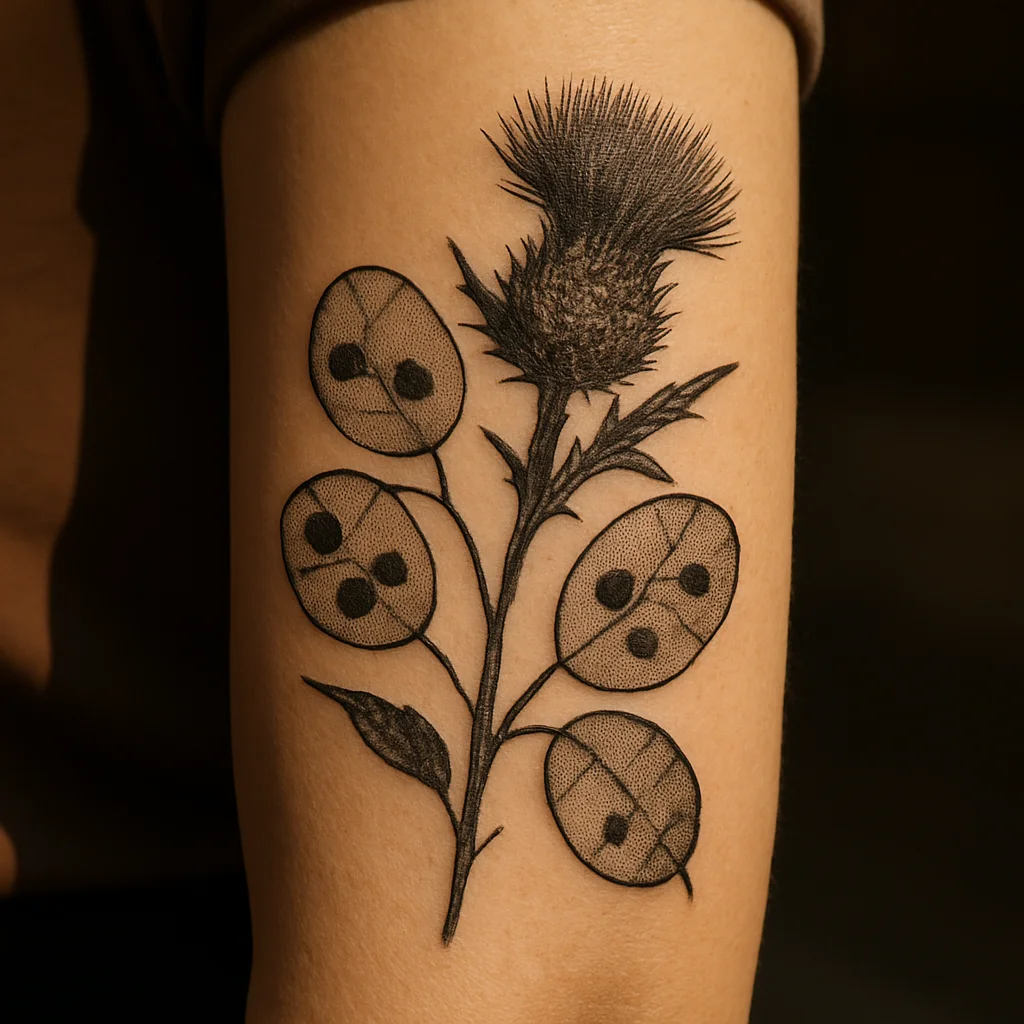
6. Dotwork thistle and dried seed heads
Scottish thistle, honesty pods and papery seed heads built entirely from stippling, with no solid fill anywhere. The texture is gorgeous in person and holds its crispness for years. Sitting time is long — dotwork is slow — so plan for extra sessions.
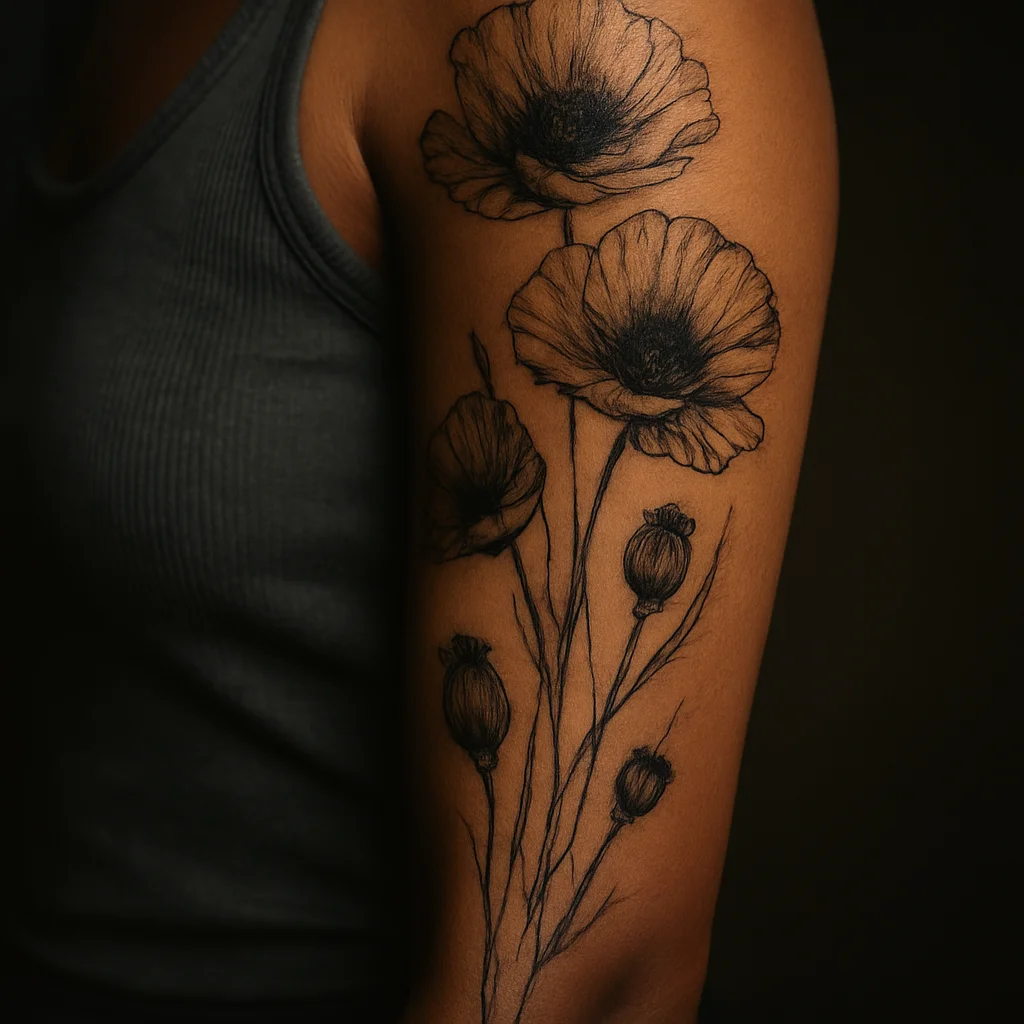
7. Poppy field with whip-shaded pods
Open poppies at the shoulder, closed pods and thin stems tapering toward the wrist, all shaded with fast whipped greys that fade to nothing at the edges. It gives the sleeve a top-heavy, blossoming shape that flatters the deltoid. Memorial-friendly if that meaning matters to you.
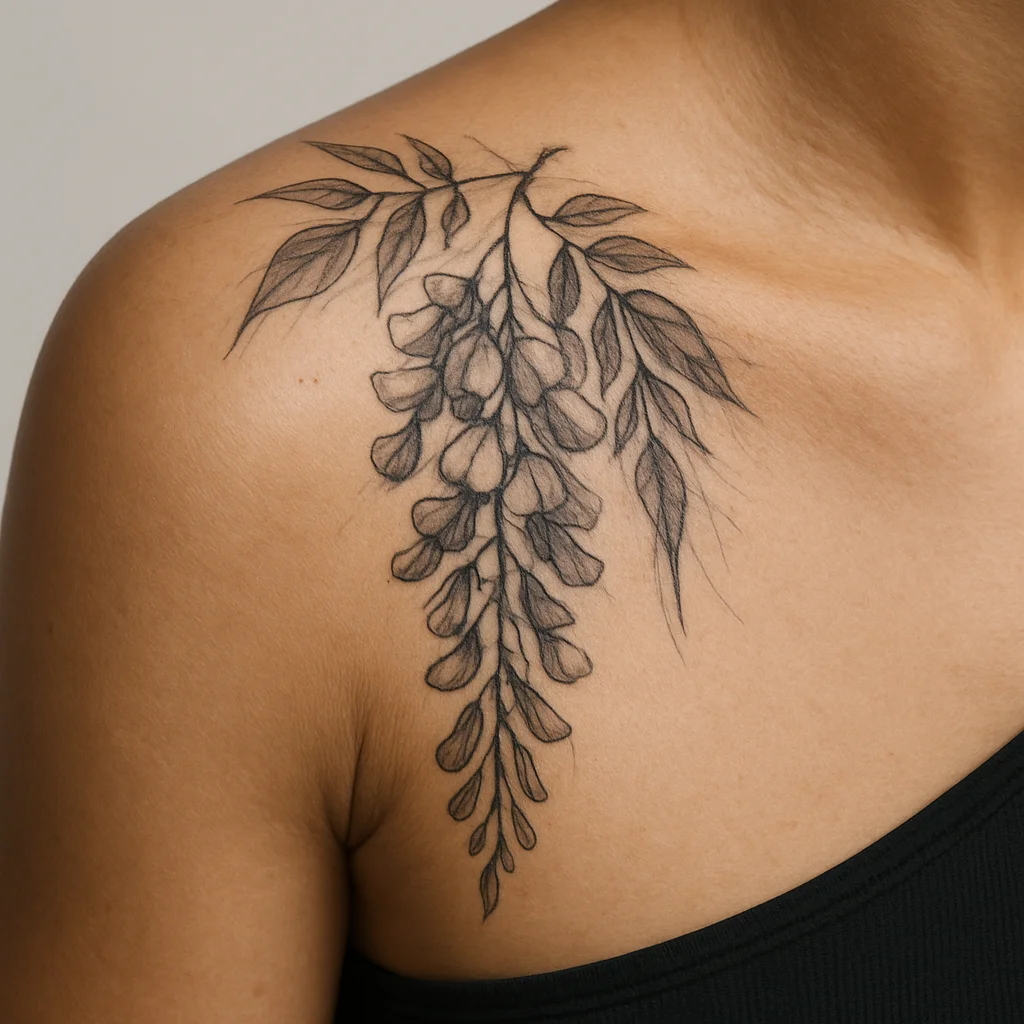
8. Wisteria drip from the shoulder cap
Hanging wisteria racemes spilling off the shoulder and down the outer arm like a curtain, each cluster shaded from near-black at the top to pale grey at the tips. The vertical drip lengthens the arm visually. Beautiful with a bare inner arm left completely untouched.
Celestial Sleeves: Moons, Maps and Soft Space
Celestial work is where grey wash genuinely outperforms colour — craters, haze and starlight are all tonal. Keep at least one hard-edged element so the sleeve does not float away.
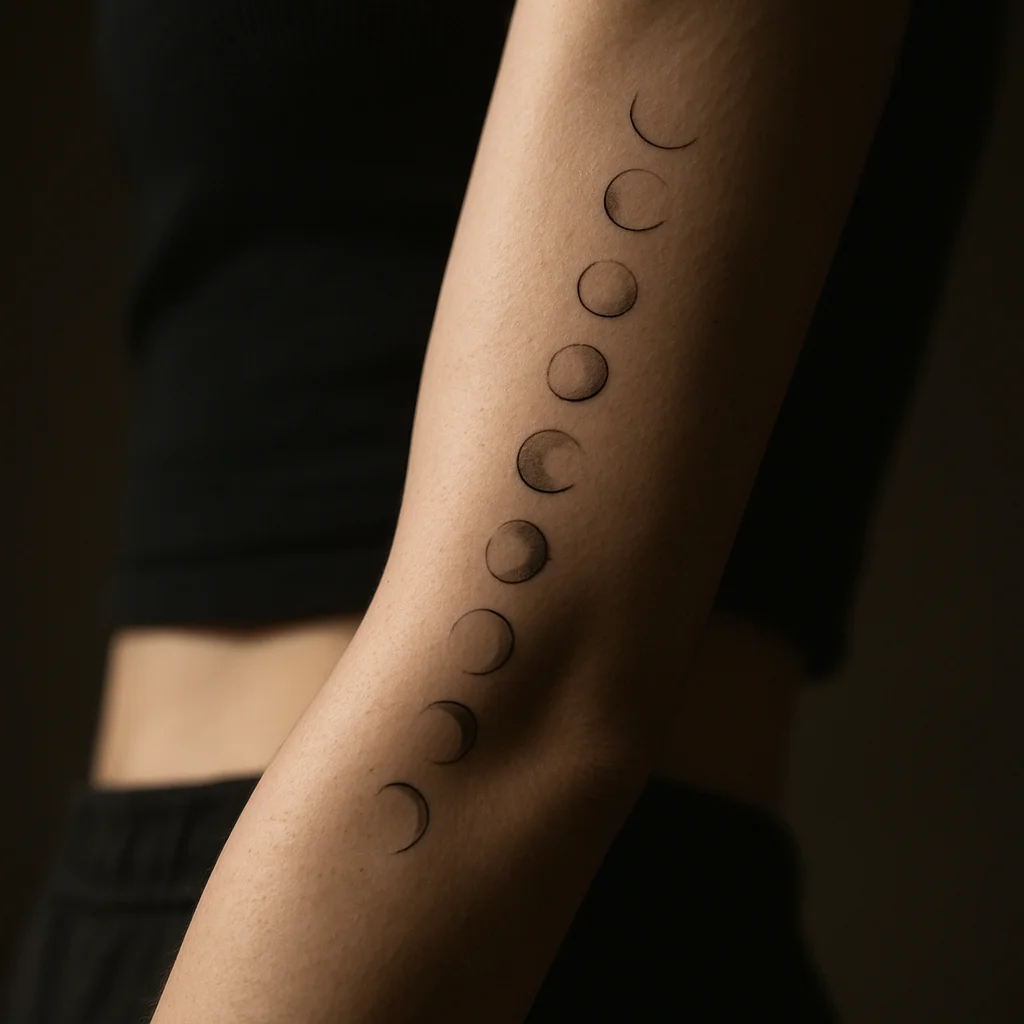
9. Moon phase ribbon on the inner arm
Eight phases running from armpit to wrist along the soft inner arm, each moon no bigger than a coin, shaded with fine gradients and a black outer void. Quiet, personal, easy to hide under a sleeve. The inner bicep stings, but each moon is a short pass.
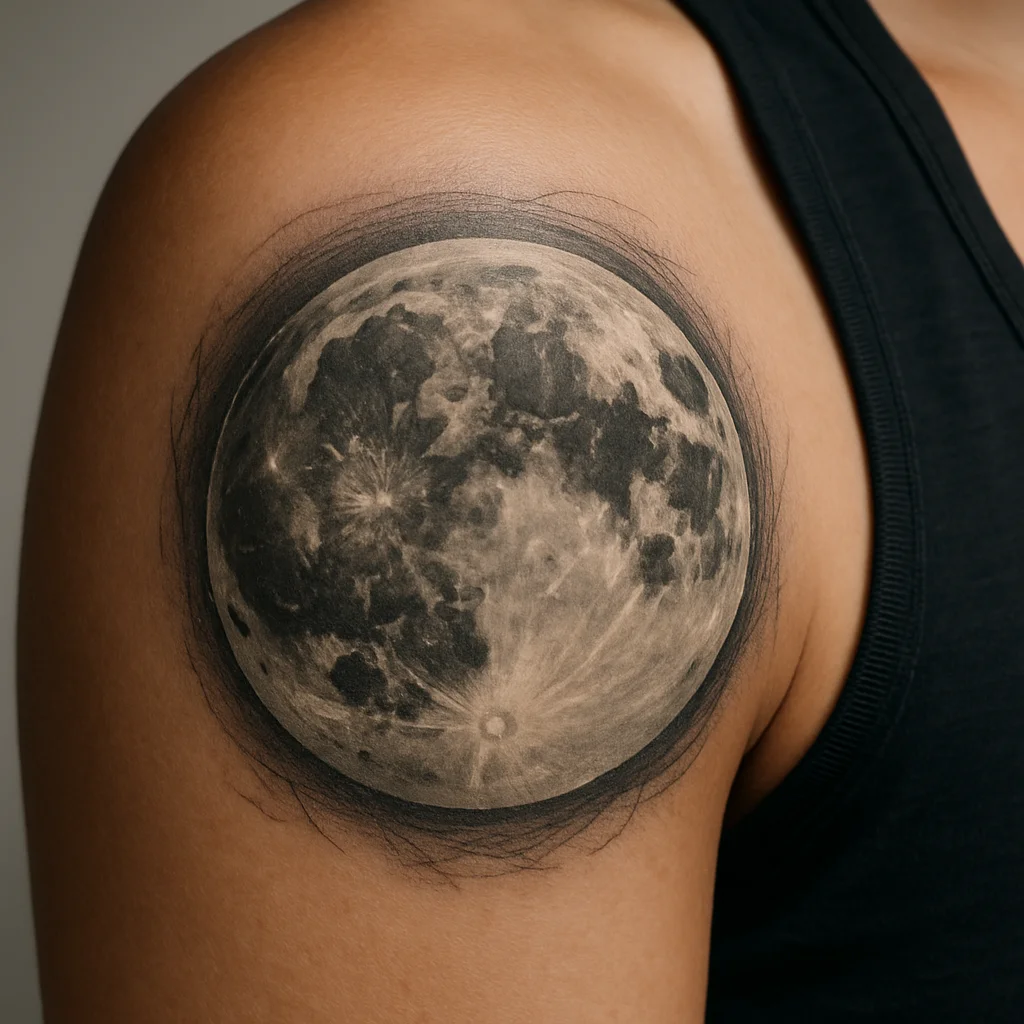
10. Photoreal full moon on the shoulder cap
One large crater-detailed moon sitting on the deltoid, with a soft grey halo dispersing outward into the skin. It works as the anchor for an otherwise sparse sleeve and looks intentional even before you add anything else. Ask for real lunar reference, not a stylised circle.
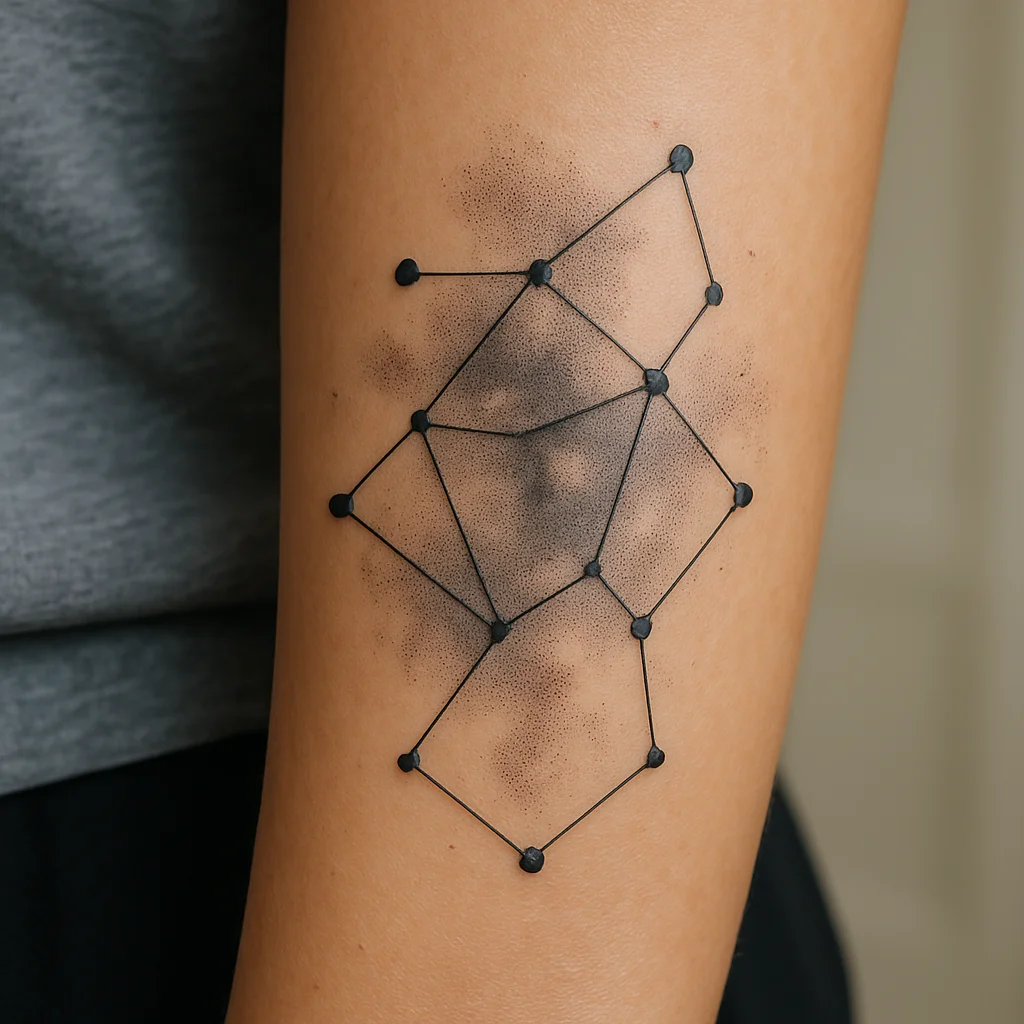
11. Constellation and star-chart dotwork
Thin connecting lines and stippled stars laid over faint grey nebula clouds, mapped so your own birth constellation sits on the outer forearm. It fills a sleeve without weight and reads elegant at conversational distance. Fine lines this thin need sun discipline.
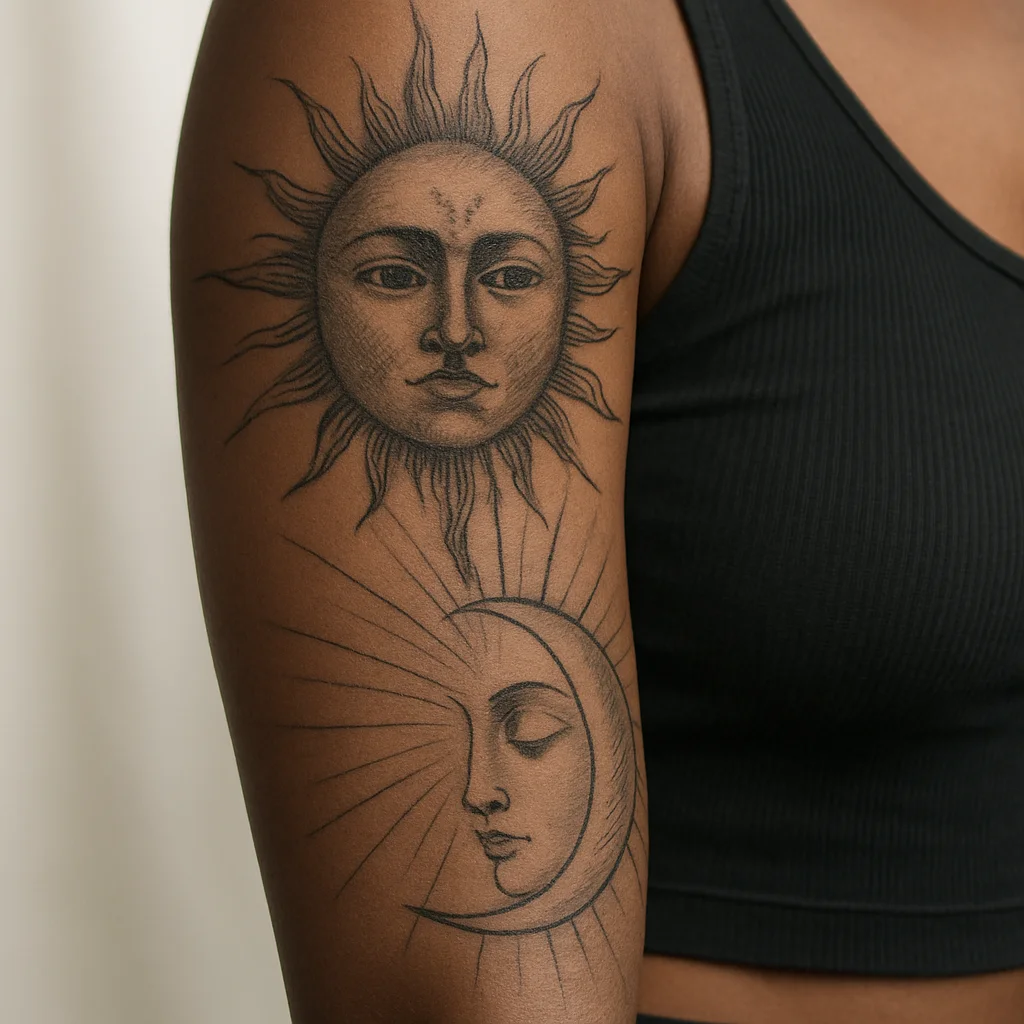
12. Sun and moon faces, front and back
A shaded sun face on the outer deltoid and a serene moon face on the inner forearm, joined by thin ray lines and drifting cloud wash. Splitting the pair means the sleeve tells a different story depending on how you hold your arm. Suits anyone who likes symmetry with a twist.
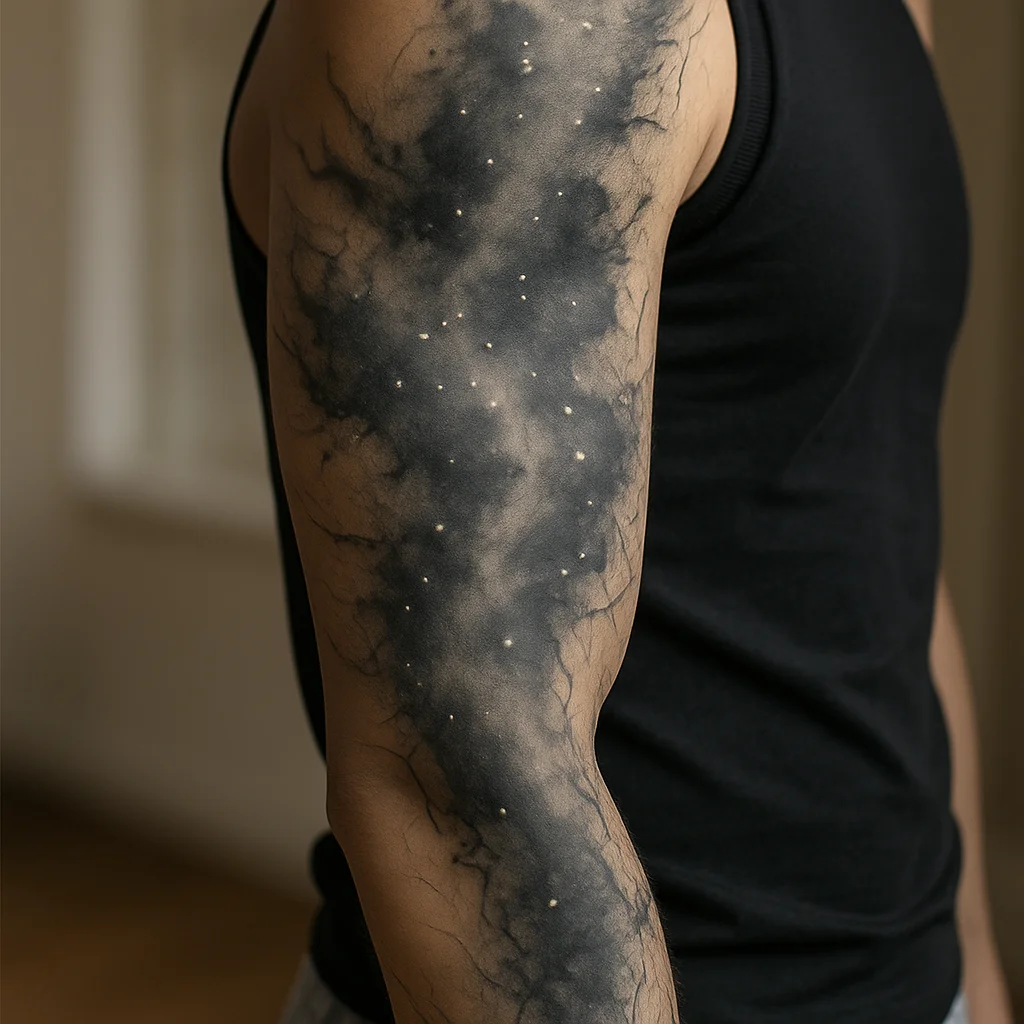
13. Nebula wash with negative-space stars
Deep smoky greys pushed almost to black in places, with stars left as untattooed dots and pin-scratches. The most dramatic option here and the biggest commitment — heavy wash needs an artist with a proven healed portfolio. Stunning on medium to deep skin tones when the black is packed properly.
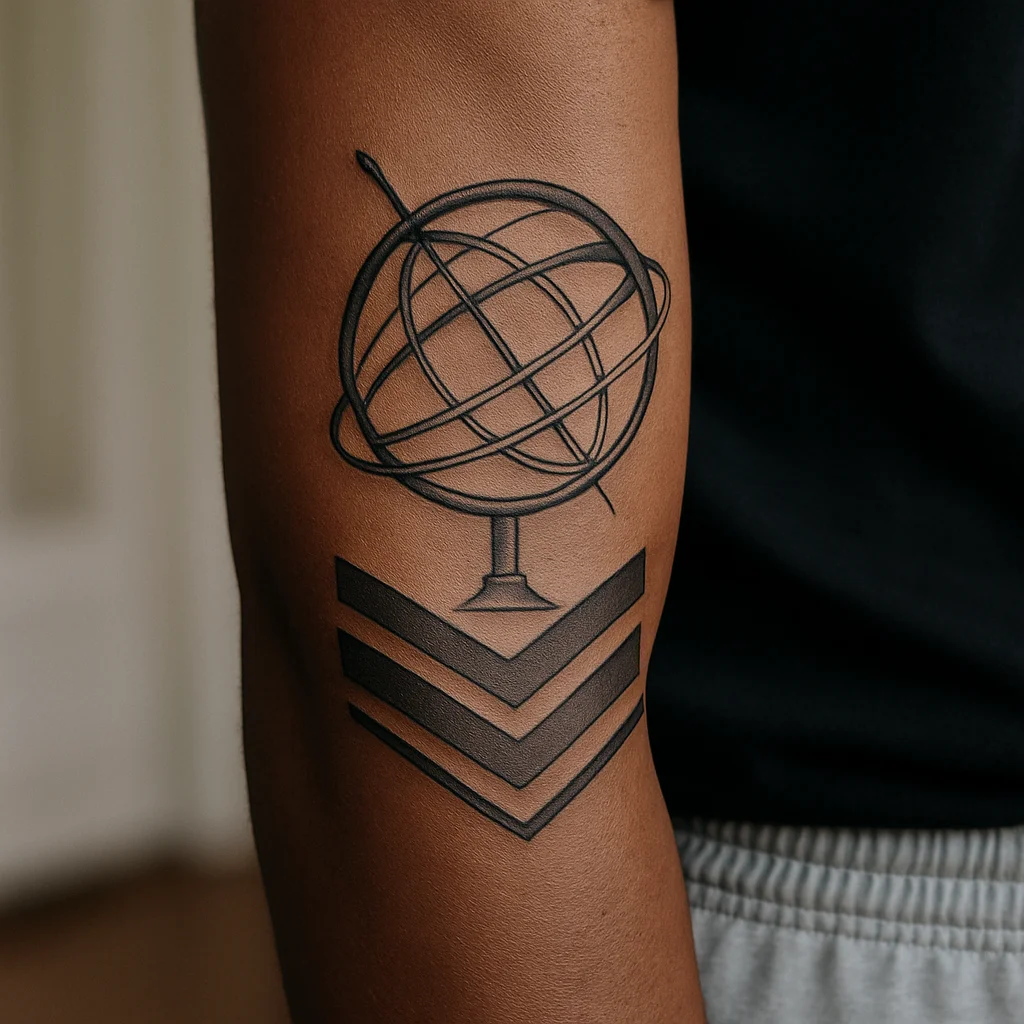
14. Armillary sphere and geometric rings
An astrolabe-style sphere on the outer bicep with thin metallic-grey rings that continue as clean geometric bands down the forearm. The hard geometry contrasts beautifully with any soft cloud wash nearby. Straight lines on a curved arm are hard — see healed examples first.
Animals and Landscape: Sleeves With a Living Focal Point
A creature or a horizon gives a sleeve a subject rather than a pattern. These are the designs people ask about in the street, so pick one you will still like explaining in ten years.
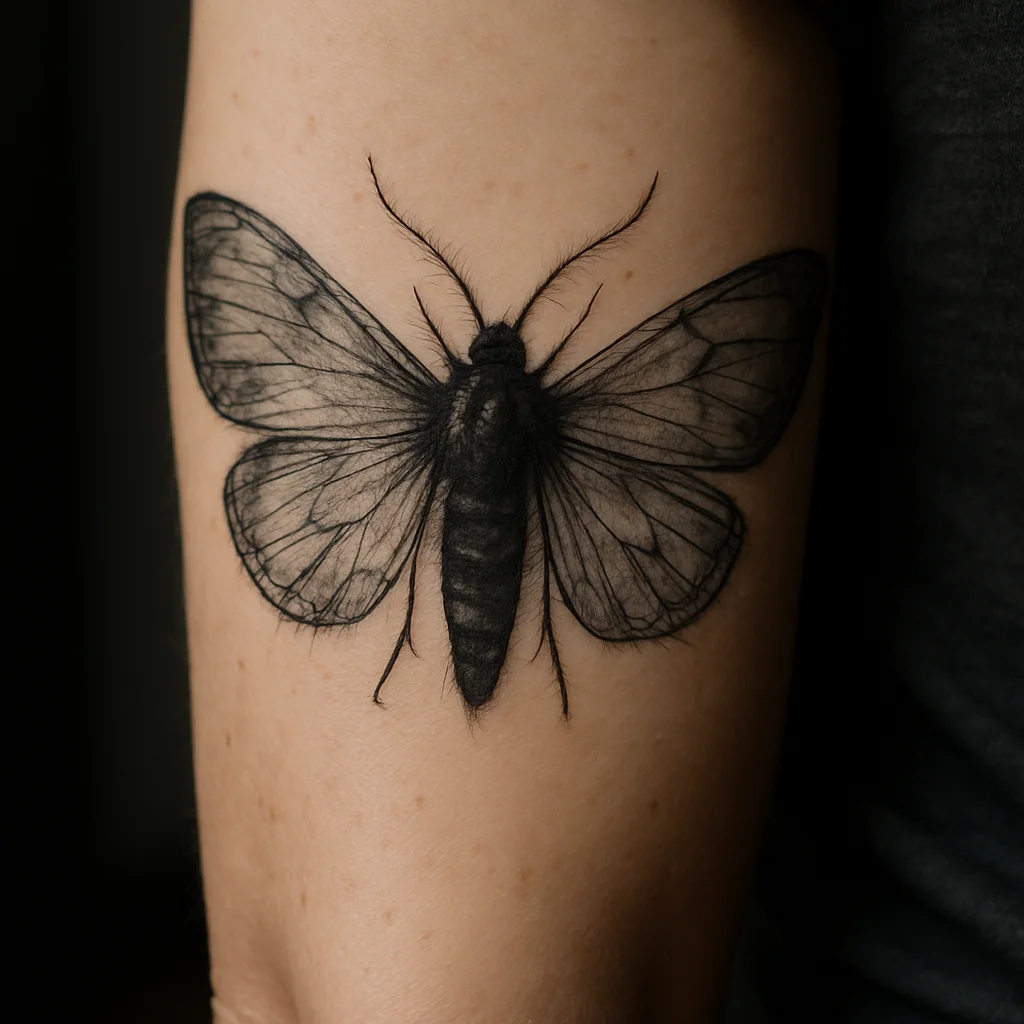
15. Moth with dust-soft wings
A large moth centred on the inner forearm, wings rendered in powdery greys with the body in near-black, antennae reaching toward the wrist. Symmetrical subjects sit perfectly on the inner arm, and the softness reads as almost velvety when healed. Pairs naturally with dried botanicals above it.
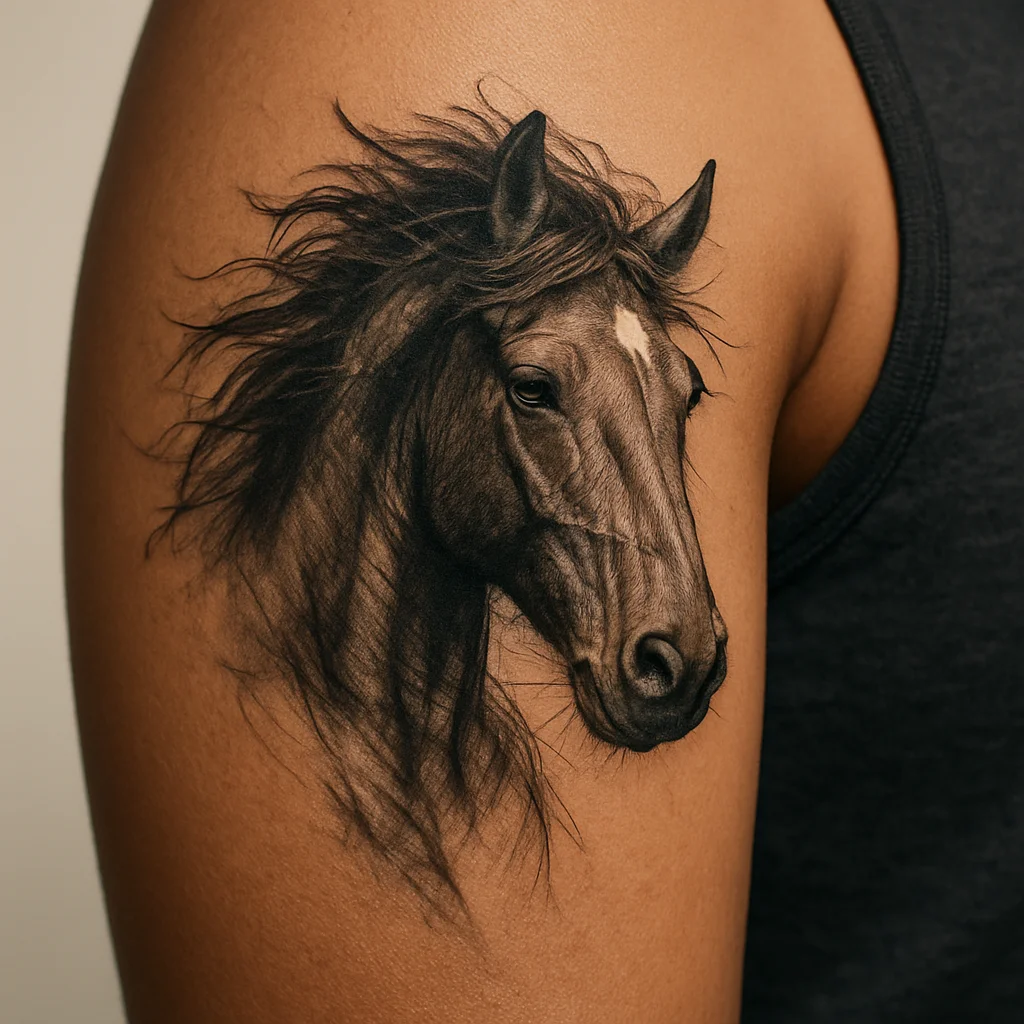
16. Horse portrait on the upper arm
A head-and-neck study in true black and grey realism, mane blown sideways so the strands break up the edge of the piece. Realism needs space — plan for the whole outer upper arm and resist shrinking it. Book with a specialist and expect several long sessions on this element alone.
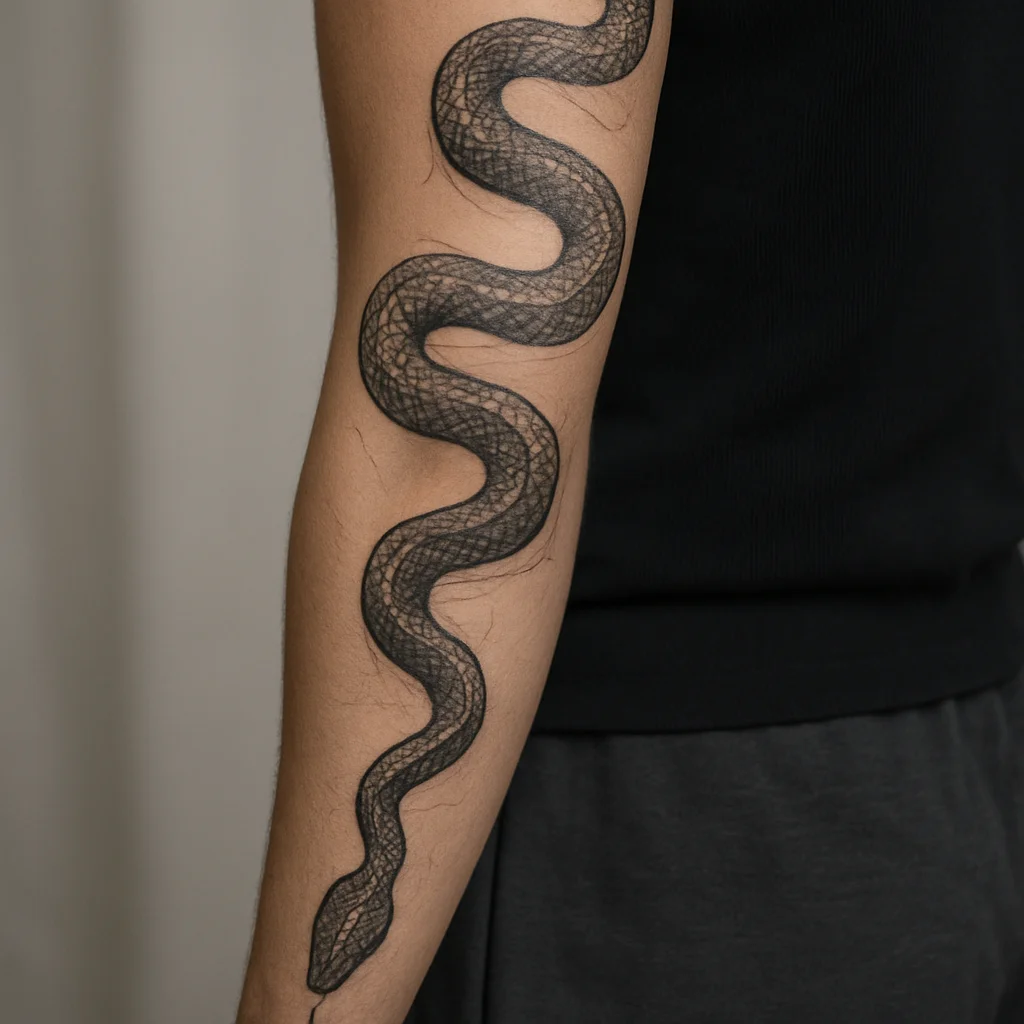
17. Snake as the sleeve's backbone
A single serpent coiling from the shoulder to the back of the wrist, its scales textured in mid-greys with heavy black shadow underneath the body. Because it wraps, it solves flow for the entire arm and lets you tuck florals or moons into the gaps later. One of the strongest choices for a sleeve built in stages.
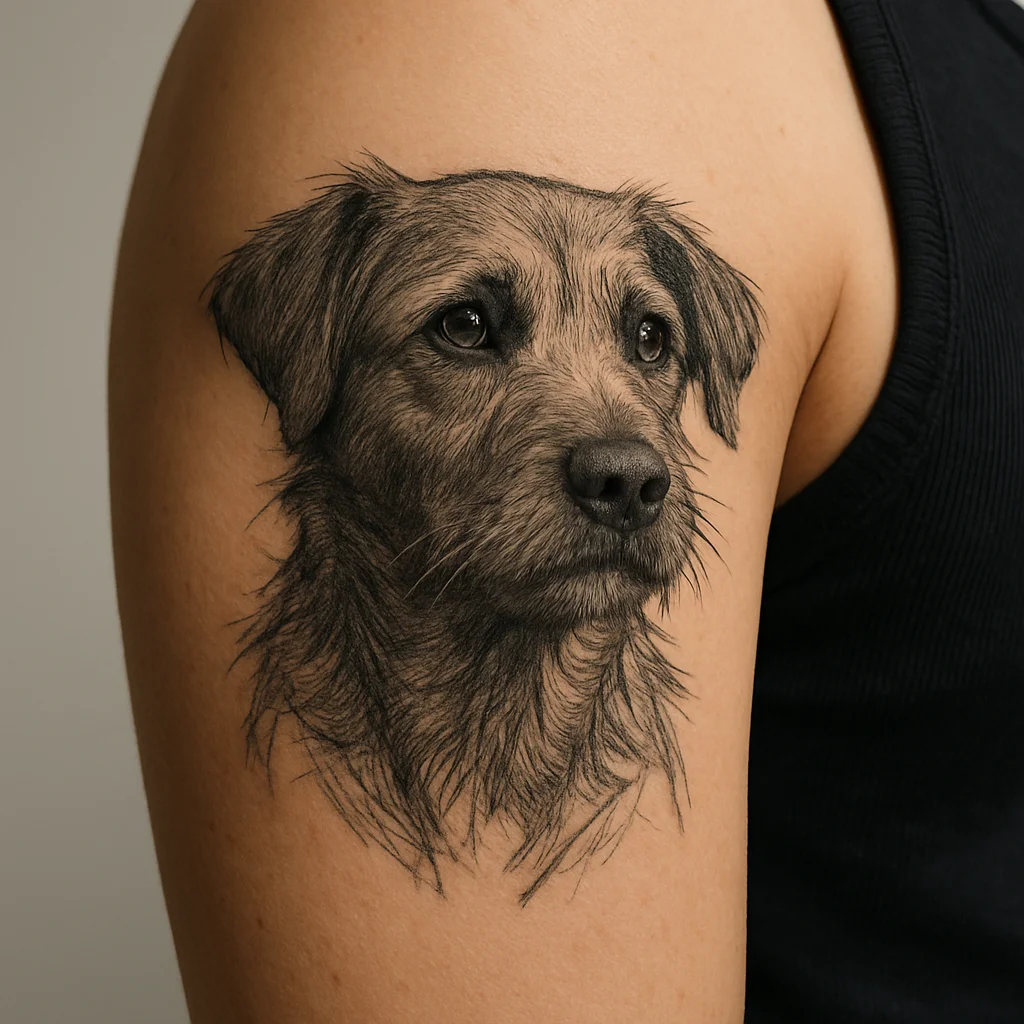
18. Pet portrait with grey fur
Your own dog or cat rendered from a good photo, placed on the outer bicep where it stays readable and undistorted. Fur is all about tonal separation — bring a high-resolution, well-lit picture and let the artist crop it. Keep the background minimal so the portrait carries the sleeve.
19. Ocean swell and whale fluke
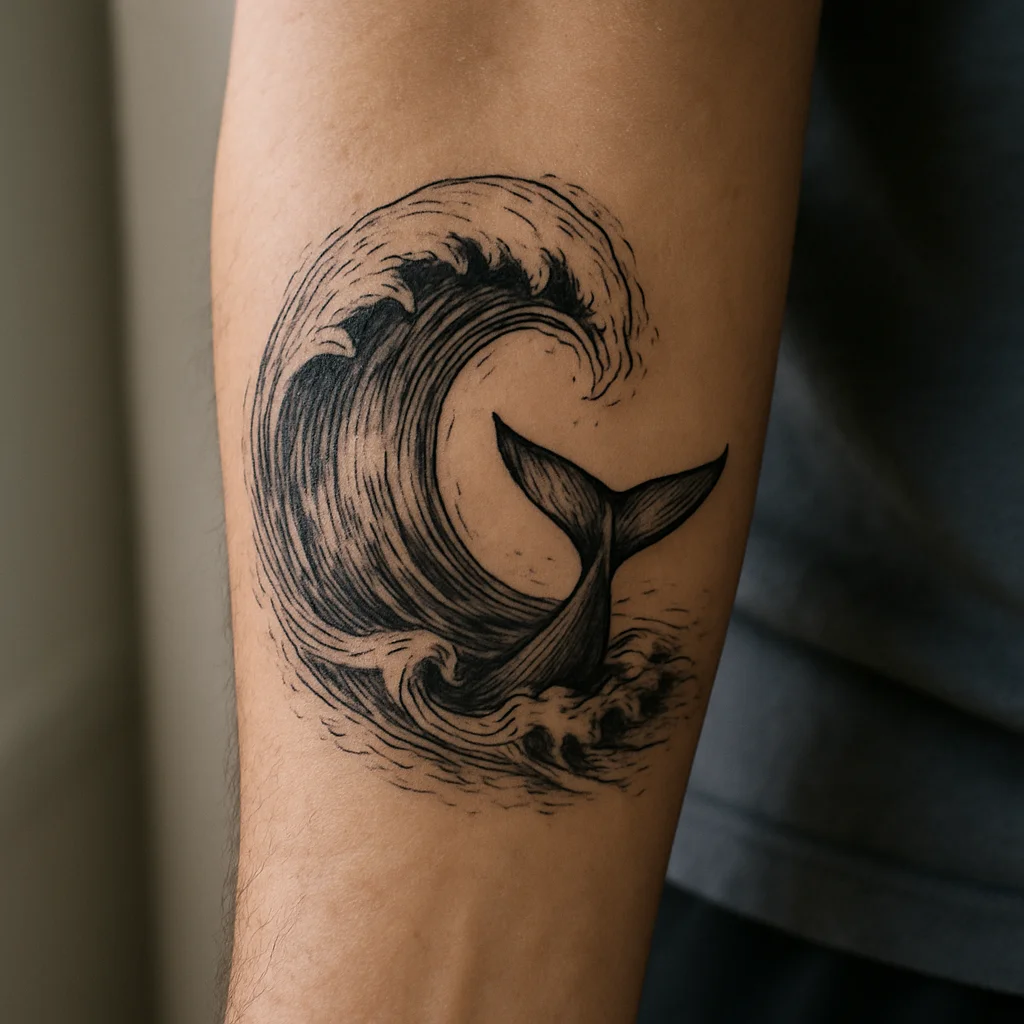
A breaking wave curling around the forearm with a whale tail lifting from the foam, all in low-key greys with sprayed white-space droplets. The wave's curve follows the arm naturally and hides the elbow transition well. Deeply satisfying for anyone with a sea attachment.
20. Mountain range with pine treeline
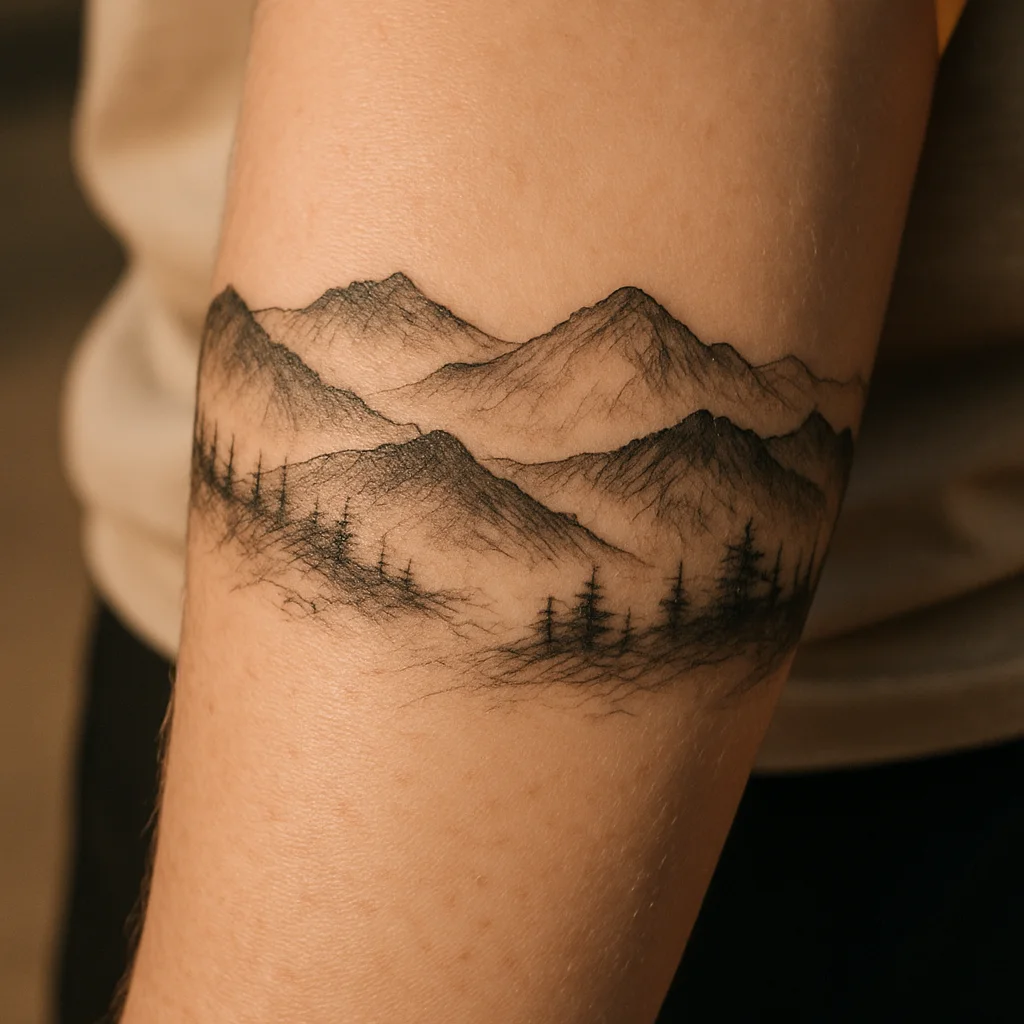
A wraparound band of ridgelines and small pines circling the mid-forearm, shaded like a misty morning with the far peaks left pale. Bands like this frame the sleeve and give it a defined lower edge. Works as a standalone half sleeve if you are not ready to commit to the full arm.
Ornamental Sleeves: Lace, Filigree and Geometry
Ornamental work is the most flattering category for the female arm because it is designed around the body's shape instead of fighting it. It is also the easiest to build symmetrically, which makes stencil day much smoother.
21. Filigree cuff at the bicep
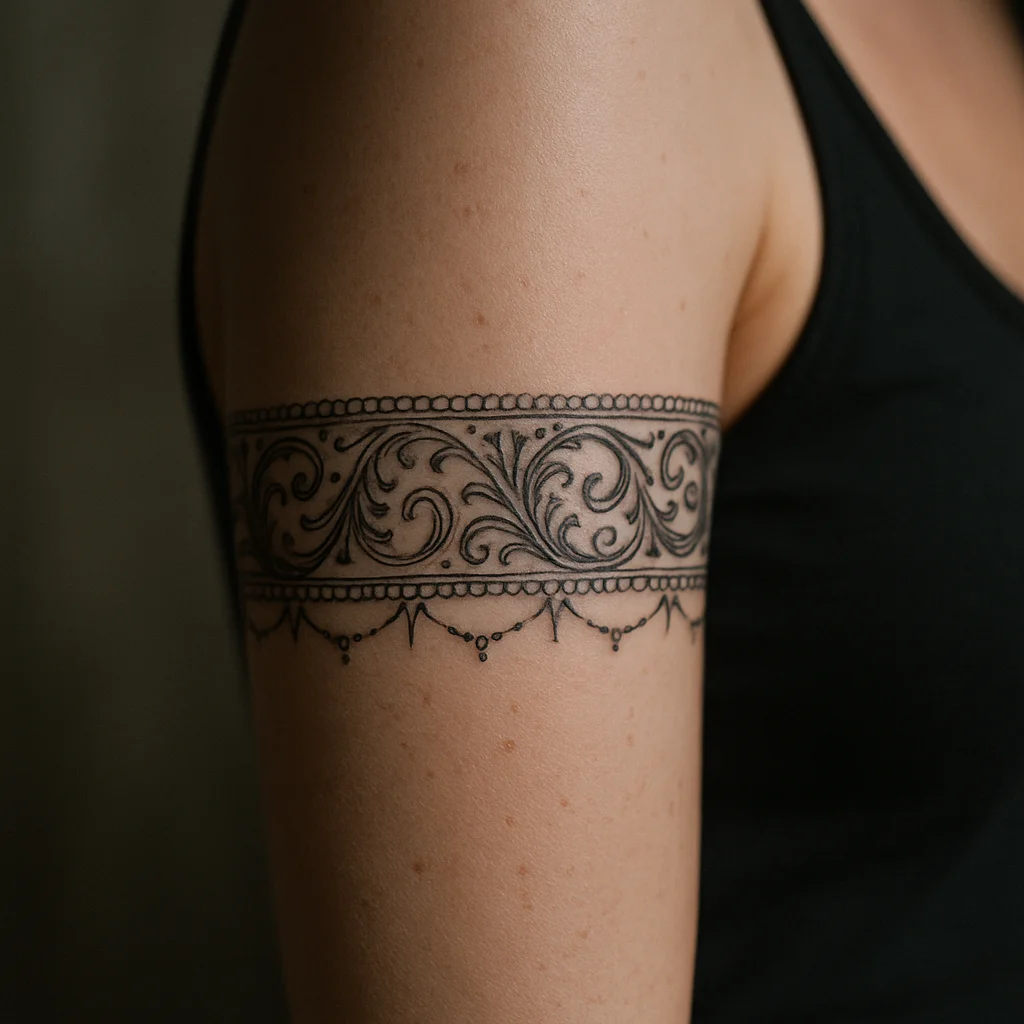
A lace garter of scrollwork and tiny pearl dots circling the upper arm, with a small drop hanging toward the inside. Reads as jewellery rather than a tattoo and finishes an upper sleeve cleanly. Sizing tip: keep the band no wider than three fingers or it starts to look like a tourniquet.
22. Mandala shoulder cap with rays
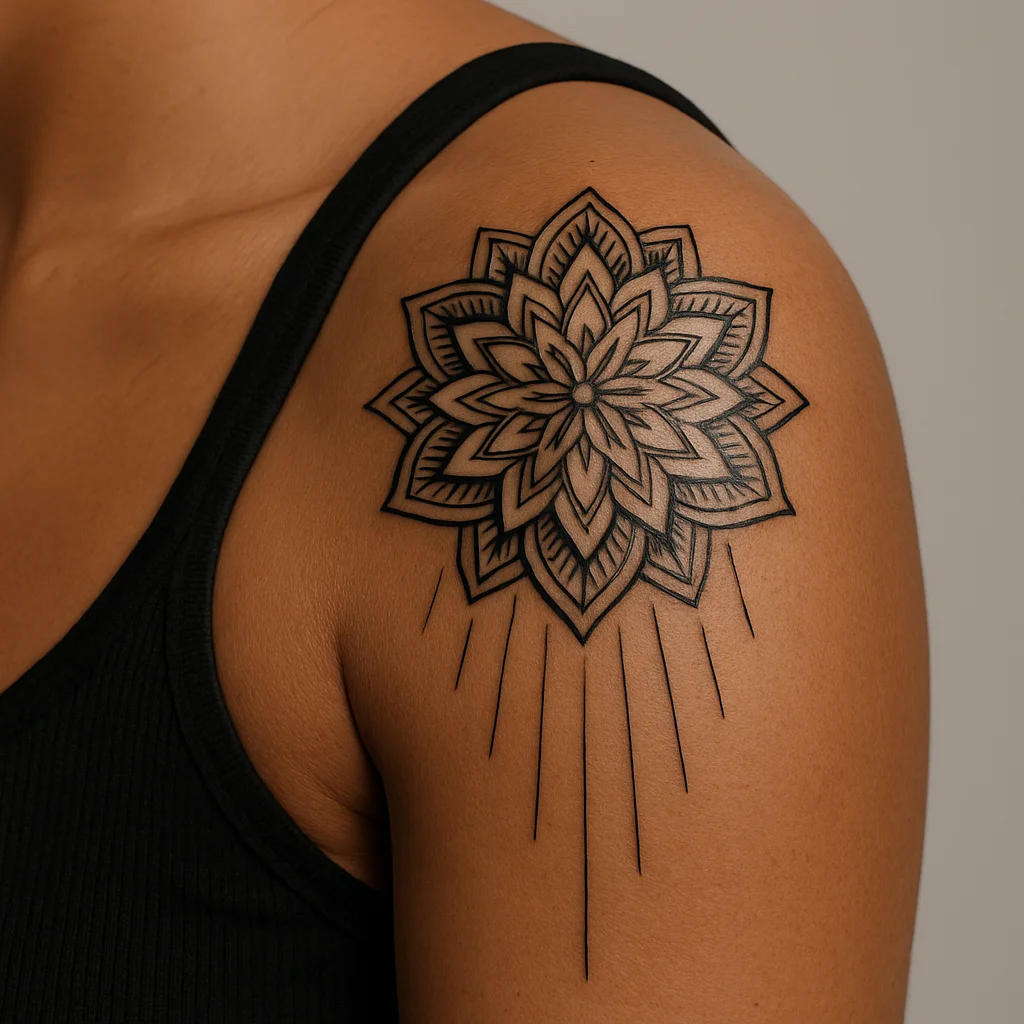
A full mandala sitting on the point of the shoulder, its outer petals stretching into thin linework rays that trickle down the outer arm. Bold and structural, and the shoulder is one of the more tolerable areas to sit through. Line precision is everything here — inspect healed photos for wobble.
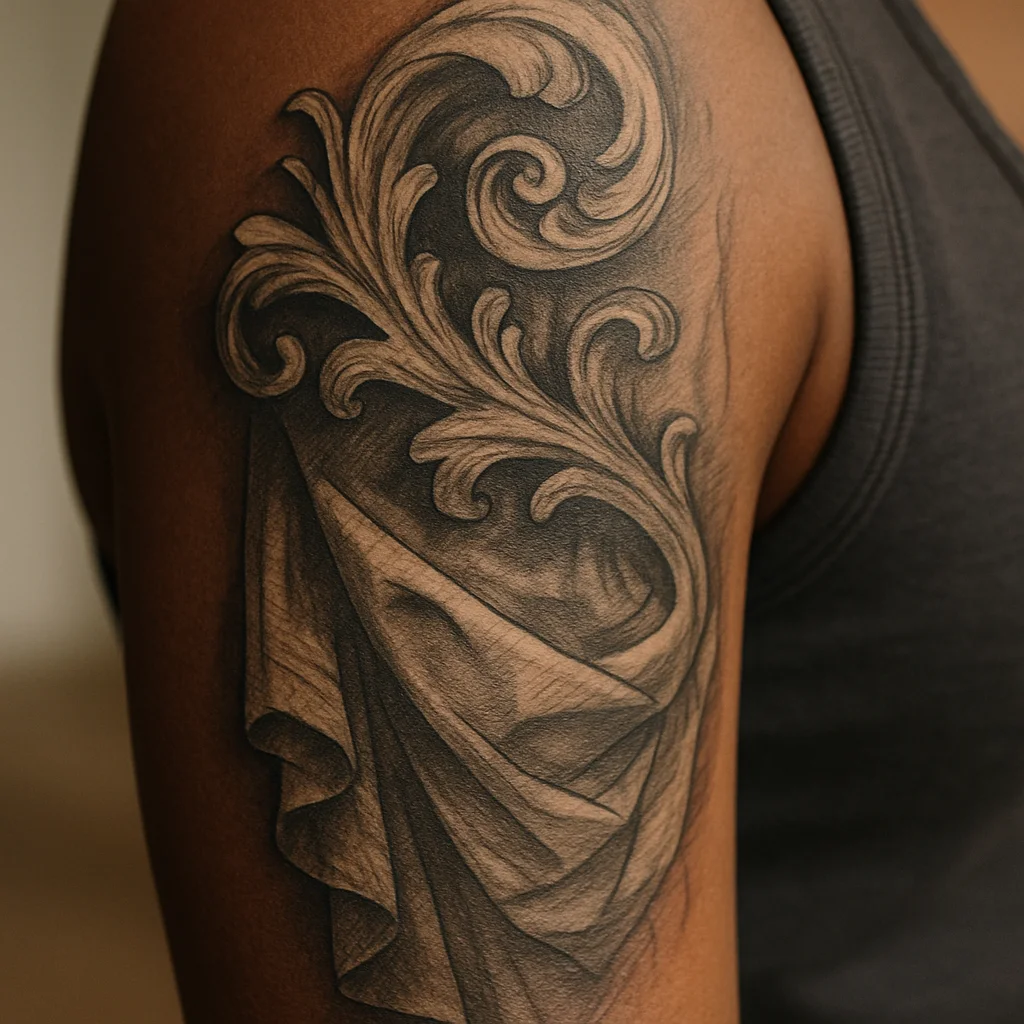
23. Baroque scrollwork with drapery
Carved-stone acanthus scrolls and folded fabric rendered in smooth greys, as if a piece of architecture were wrapped around the arm. Heavier and more dramatic than lace, with real black shadow in the folds. Beautiful on a three-quarter sleeve that ends mid-forearm.
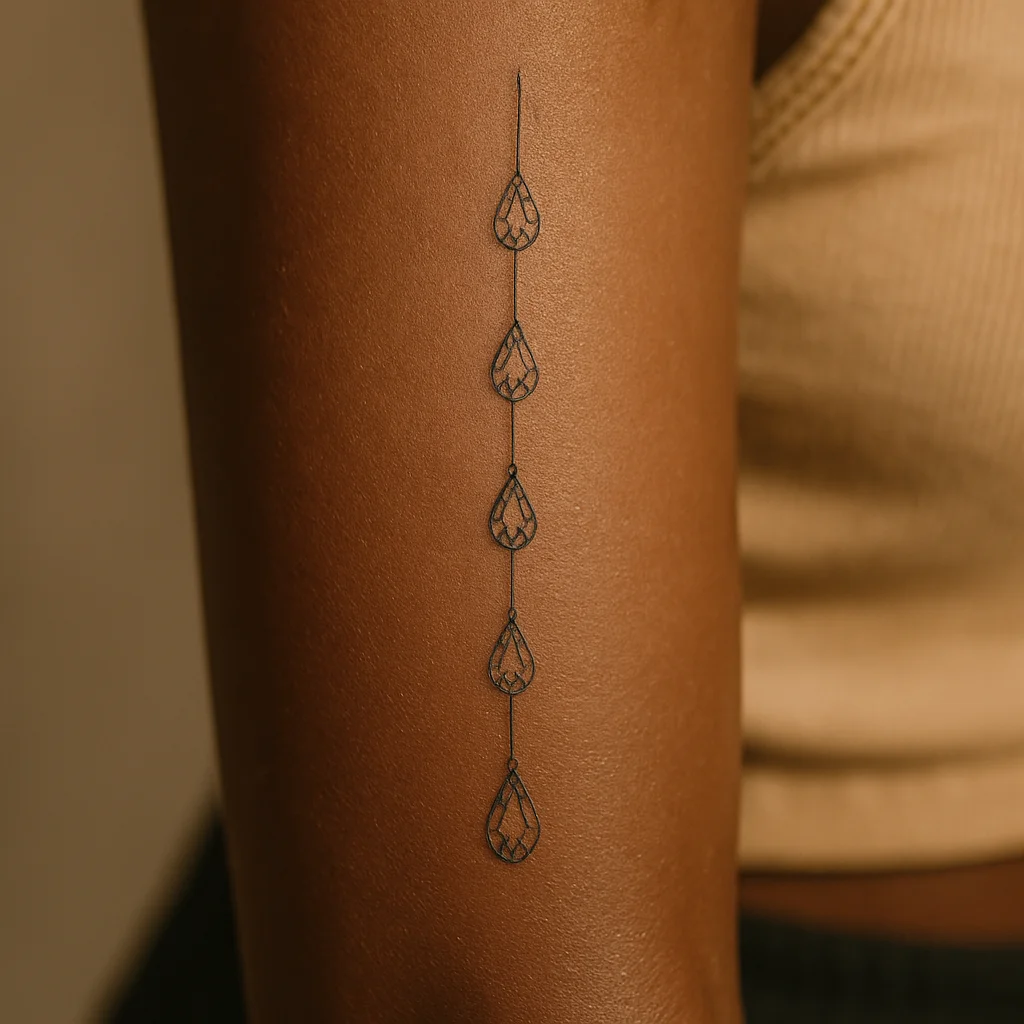
24. Chandelier drop from armpit to ditch
A fine chain of jewel drops and teardrop gems running down the inner arm, each stone faceted with sharp grey highlights. Delicate, discreet and unexpected when you raise your arm. The inner arm is tender, so expect a short, sharp session.
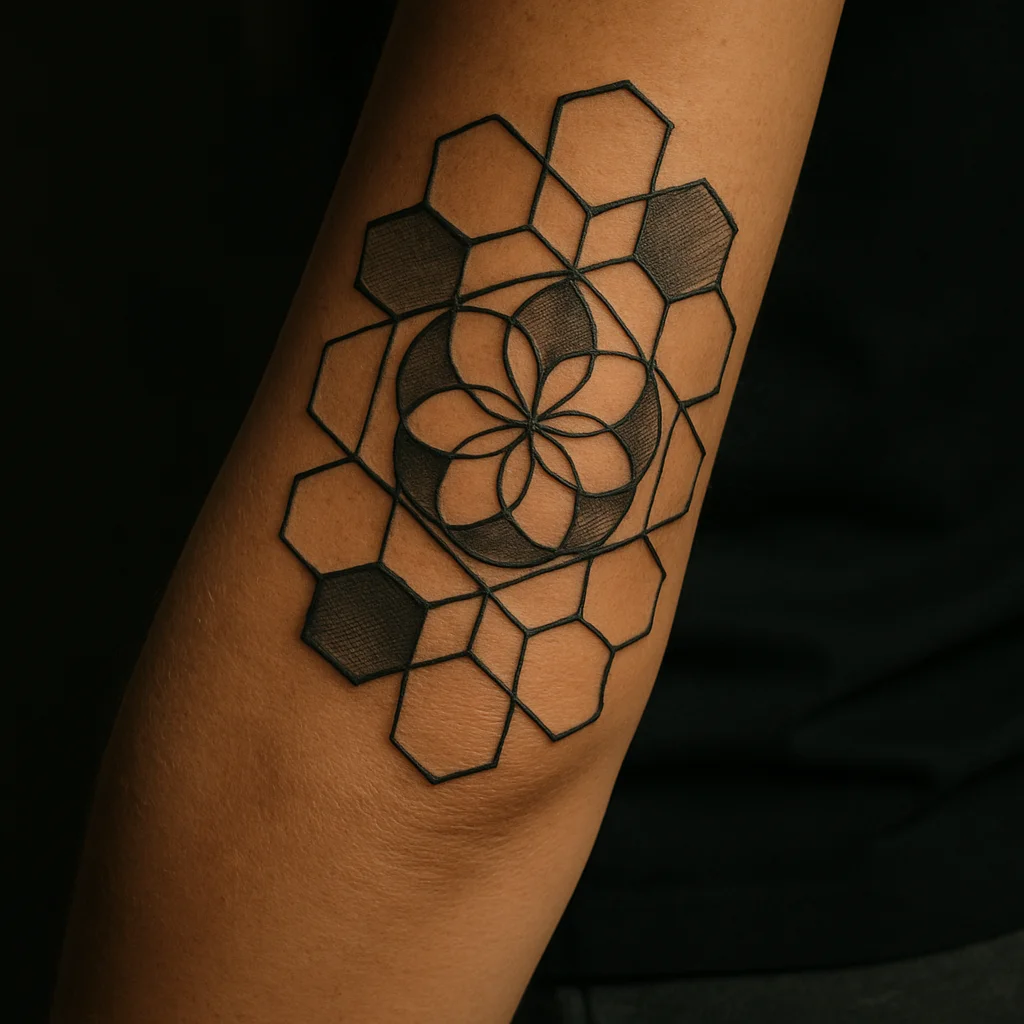
25. Sacred geometry with gradient fills
Interlocking hexagons, arcs and a central seed-of-life motif, some cells left blank and others filled with graduated grey. The mix of empty and filled shapes is what keeps geometric sleeves from turning into wallpaper. Best on the outer arm where the surface curves gently.
Surreal and Figurative Sleeves: Sleeves That Tell Something
This last group asks more of both you and your artist, because the composition has to carry an idea. If you are still deciding how far up the arm to go, our guide to half sleeve designs for women covers stopping points in more detail.
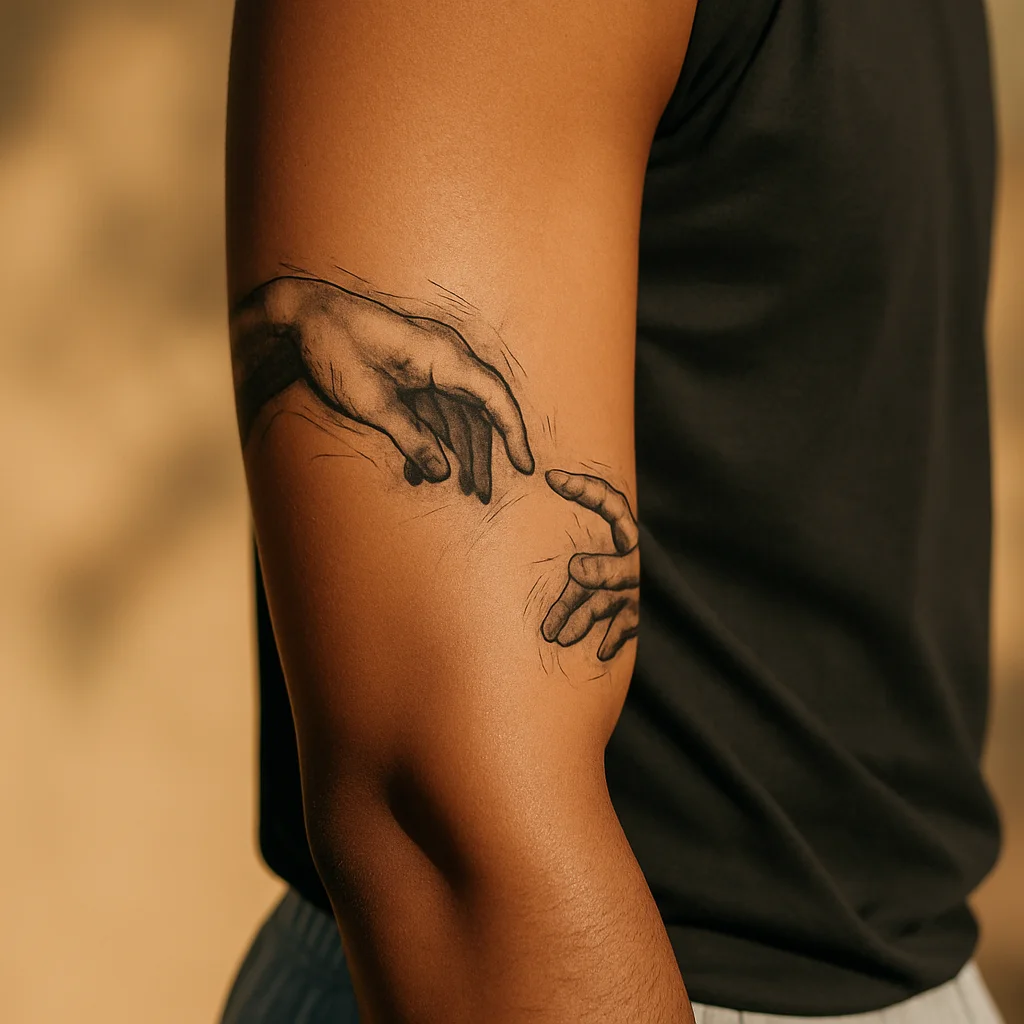
26. Marble statue hands
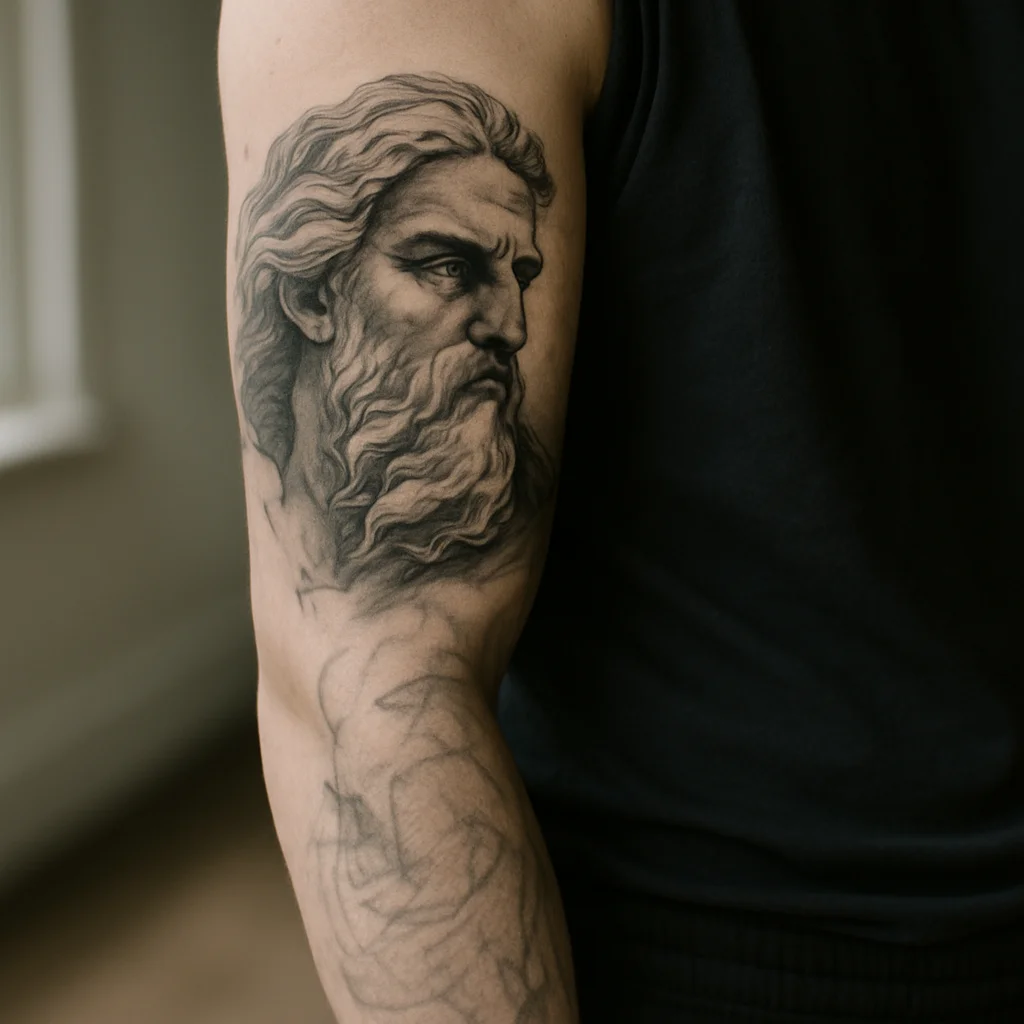
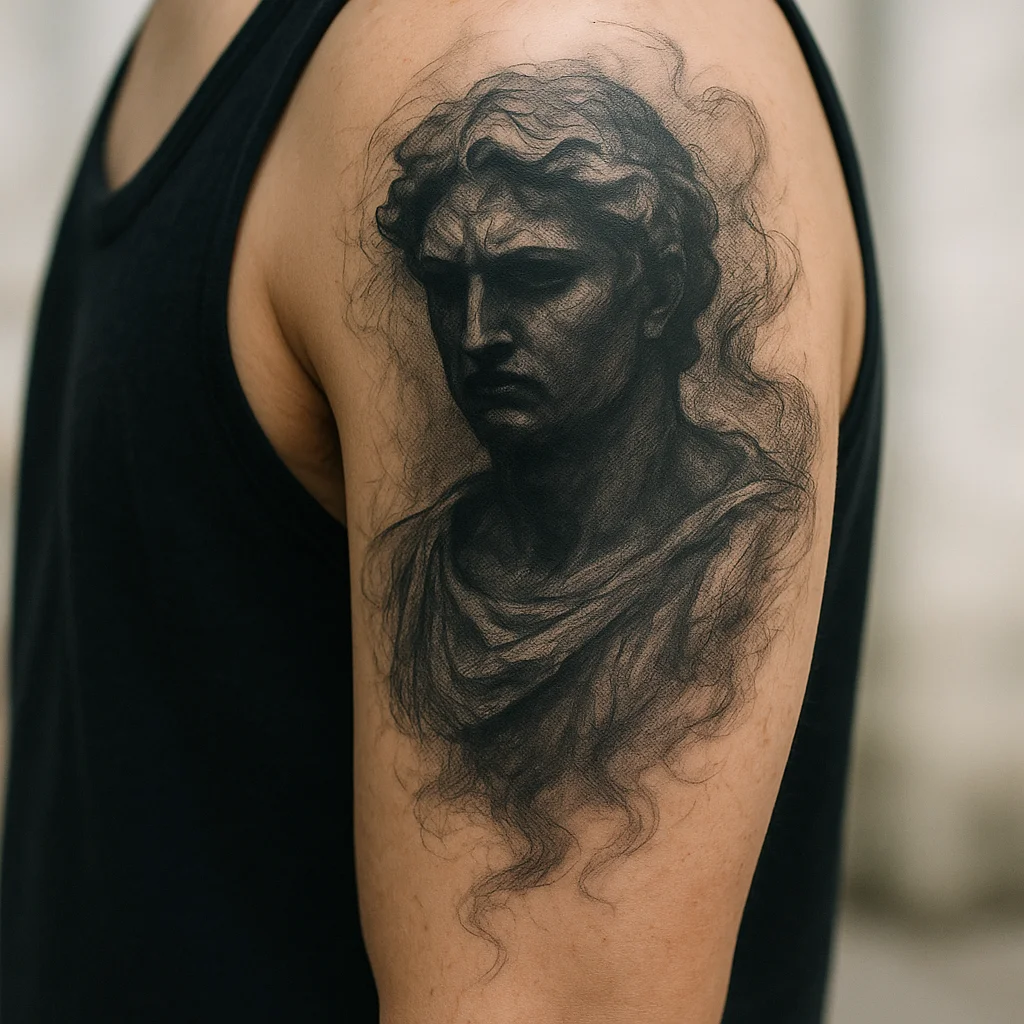
Two sculpted hands reaching toward each other across the elbow, carved in the flat greys of Renaissance stone with faint cracks in the surface. The elbow gap becomes the point of the piece rather than a problem. Realism-heavy, so budget accordingly.
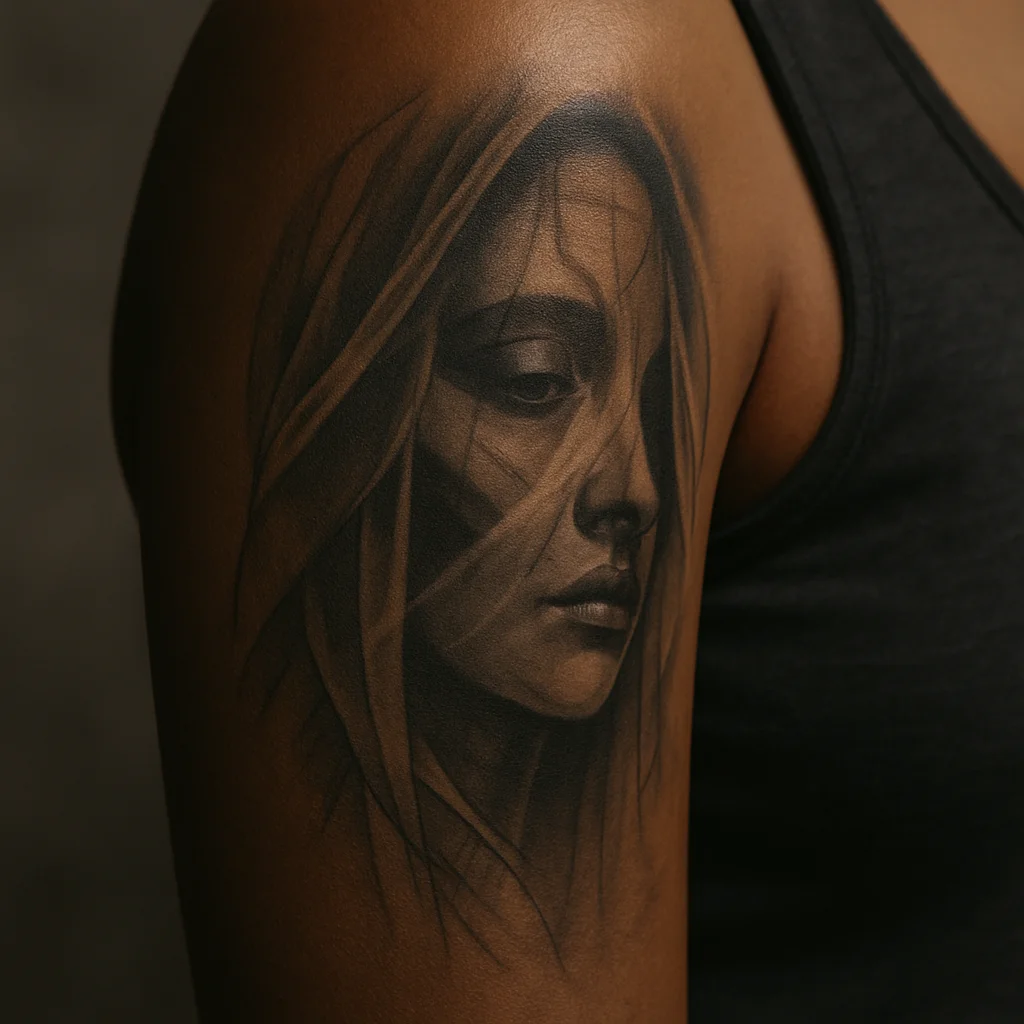
27. Veiled portrait with drapery
A woman's face on the outer bicep, half obscured by translucent fabric drawn in layered grey wash. Portraits demand a specialist; a mediocre one never recovers. Keep the surrounding arm quiet so nothing competes with the eyes.
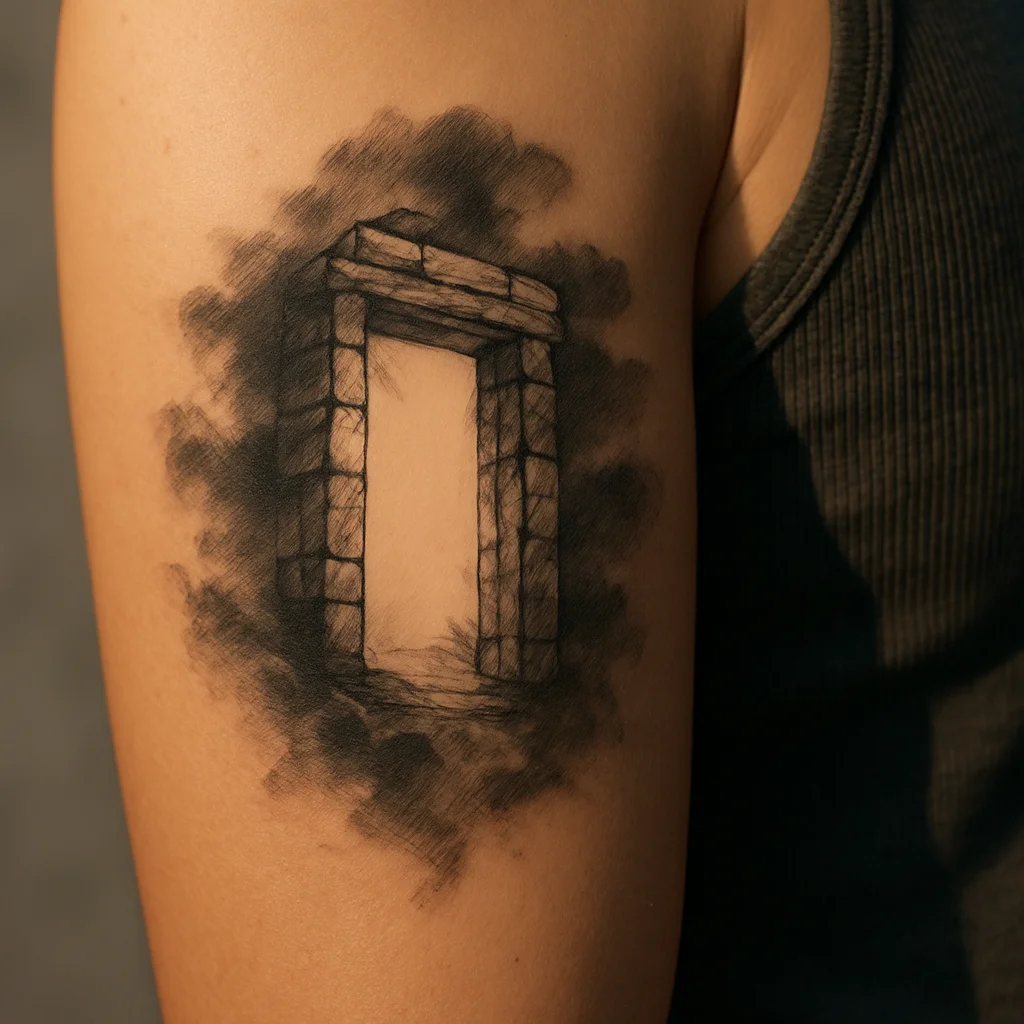
28. Doorway in the clouds
An open stone doorway floating in a bank of grey cloud wash on the upper arm, with light spilling out as negative space. Surreal, symbolic and easy to expand later with birds or falling petals. A favourite for marking a life change.
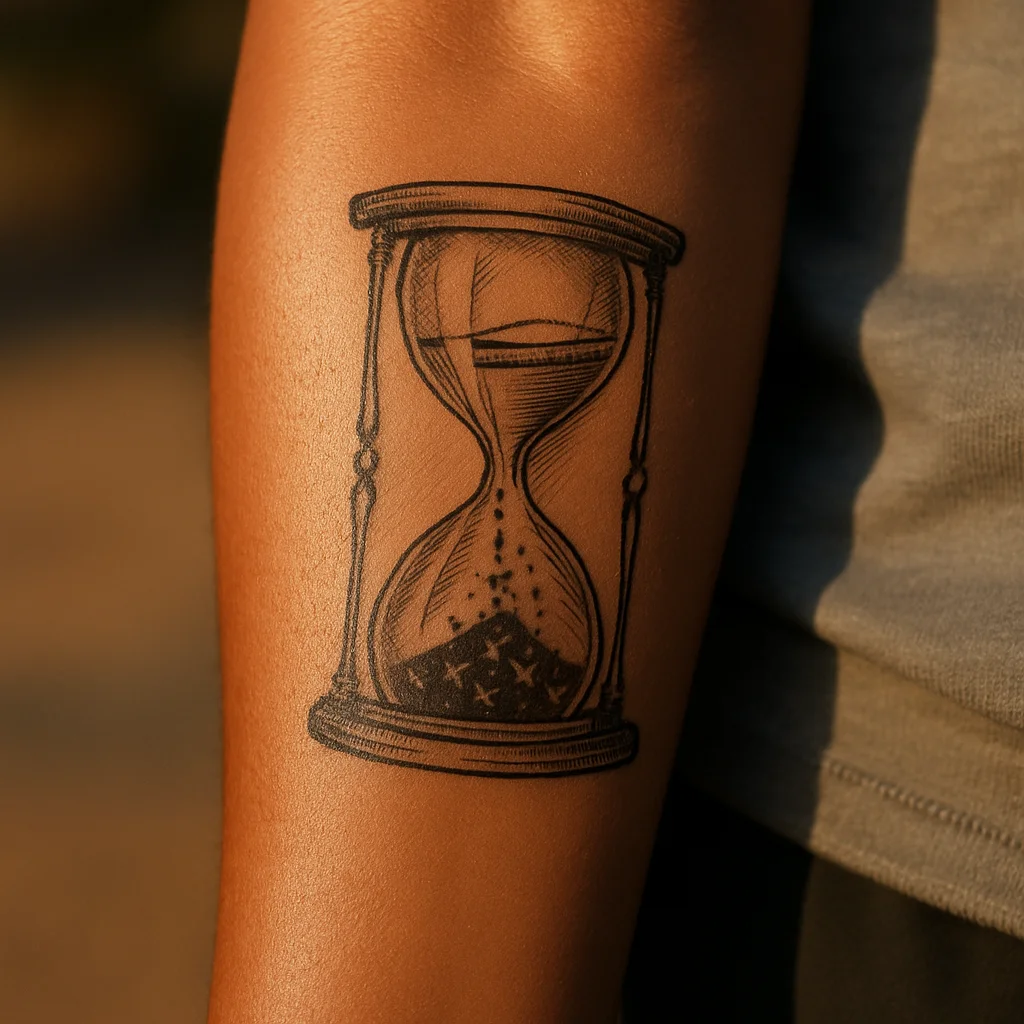
29. Hourglass with a star-filled base
An hourglass on the outer forearm where the falling sand becomes tiny stars pooling at the bottom, framed by soft smoke. Mid-size, self-contained and readable from across a table. Pairs well with a moon phase line above it.
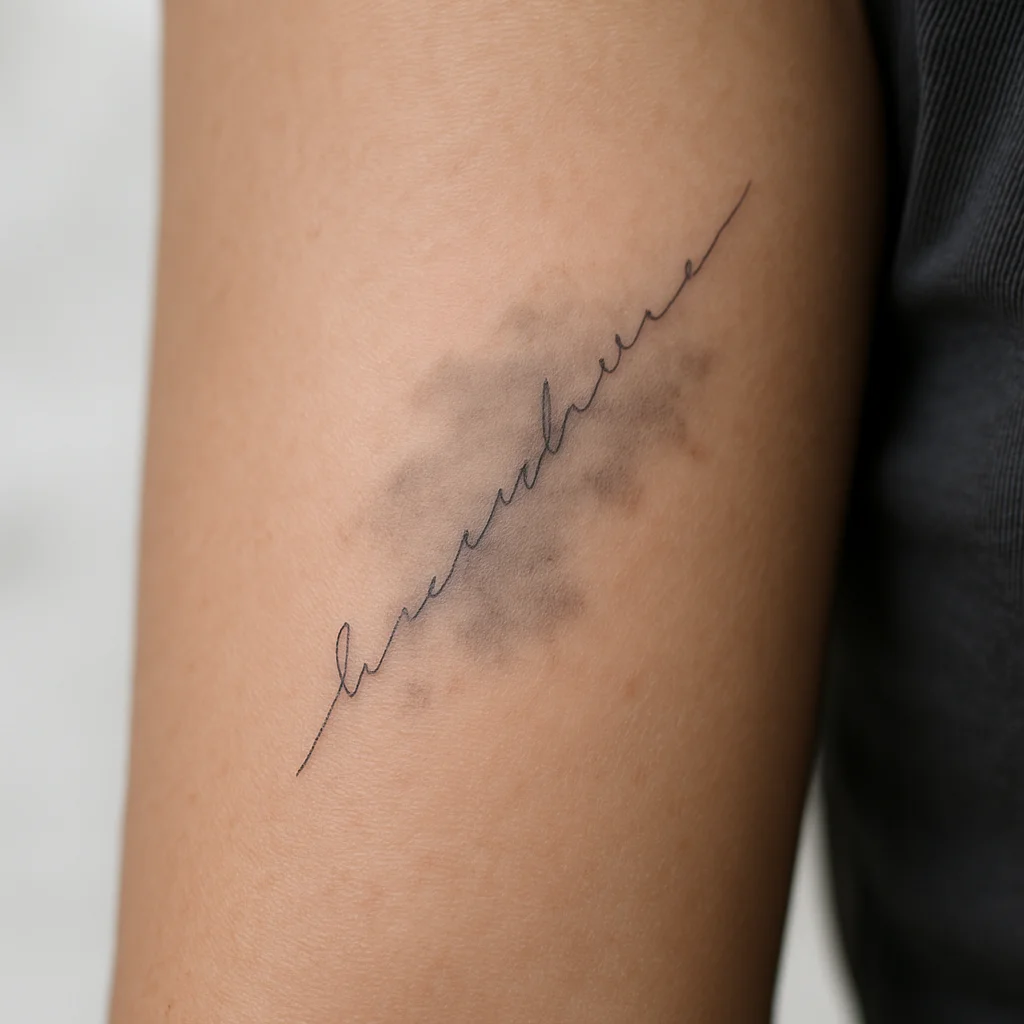
30. Handwriting woven through cloud wash
A short line in a loved one's real handwriting laid over drifting grey clouds, running diagonally across the inner forearm so it reads when your palm faces up. Scan the original writing at high resolution rather than photographing it. Ask for slightly thicker strokes than the original — thin script thickens and blurs a little over the years.
Sessions, Pain, Cost and Keeping the Greys Crisp
A full black and grey sleeve is usually four to eight sessions of four to six hours, depending on how much realism and packed shading it contains. Most artists outline and build the largest element first, then work outward so the sleeve looks intentional between appointments. Space sittings three to five weeks apart; shading over half-healed skin is miserable and takes ink unevenly.
Pain is zone-specific, and on an arm it is genuinely manageable. The outer bicep and outer forearm are the easy stretches. The inner bicep, elbow ditch and the thin skin over the wrist and the back of the elbow are where people go quiet. Eat properly beforehand, bring sugar and snacks, and tell your artist early if you need to break rather than gritting through the last hour when the skin is already raw.
Price varies enormously by city and by artist reputation, so think in ranges: a session with a solid mid-level artist is typically a few hundred, while a sought-after realism specialist can charge a multiple of that and books a year out. Many artists offer a flat sleeve price that works out cheaper than hourly. Our breakdown of what a full sleeve actually costs covers how quotes are built.
Aftercare is where greys are won or lost. Wash gently twice daily, moisturise thinly, and avoid gym sessions that soak fresh work in sweat for the first week. Then, forever: sunscreen. Nothing greys out grey wash faster than UV. Expect one touch-up on the softest gradients around the twelve-month mark, and treat that as part of the plan rather than a failure.
Frequently asked questions
Does black and grey fade faster than colour?
Diluted grey wash lifts and softens more than solid black, so a very pale sleeve can look hazier after a couple of years. The fix is structural: make sure the design includes real black anchors and clear tonal separation rather than one flat mid-grey. Daily sunscreen and one touch-up around the year mark keep it looking sharp for decades.
How many sessions does a full black and grey sleeve take?
Typically four to eight sessions of four to six hours, though heavy realism or dense dotwork can push it higher. Artists usually finish one major element per sitting so the arm never looks random between appointments. Leave three to five weeks between sessions so skin is fully healed before more shading goes over it.
Where does an arm sleeve hurt the most?
The inner bicep, the elbow ditch and the thin skin around the wrist and the back of the elbow are the sharpest zones. The outer upper arm and outer forearm are comfortable enough that many people manage long sittings there. Plan your hardest areas for the start of a session while you are fresh.
Can I add colour to a black and grey sleeve later?
Yes, but tell your artist up front so they leave the right areas lighter. Colour laid over dark grey wash goes muddy, whereas colour dropped into pale or negative-space areas stays vivid. Many people add a single accent tone — one flower or one gem — rather than converting the whole sleeve.
Should I plan the whole sleeve before the first session?
You need a plan for the overall flow, even if individual motifs stay flexible. Ask your artist for a rough map showing where the heavy black sits, where the skin breaks go and how the piece ends at the wrist and shoulder. Sleeves built purely one tattoo at a time usually end up needing filler to tie mismatched pieces together.
The conversation
No comments yet. Got a thought about these designs? Start us off.
Want to weigh in? Join the community to comment, save designs and try them on your skin.