Half Sleeve Tattoos for Women: 30 Ideas That Flow
A half sleeve lives or dies on where it starts and stops. Here are 30 designs mapped to the upper arm, lower arm, wraps and negative-space layouts, plus what the sessions, pain and cost actually look like.
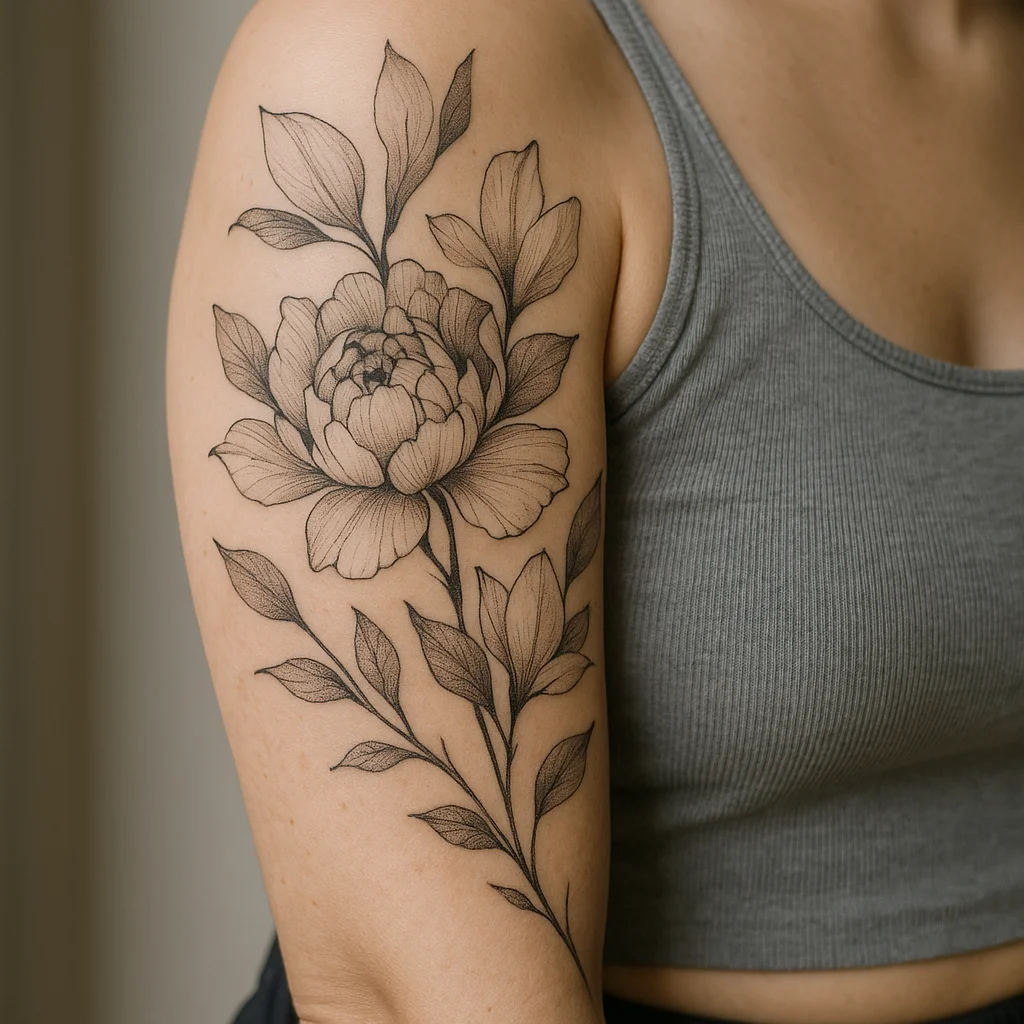
What a half sleeve actually covers (and where to end it)
A half sleeve is roughly half the arm's length, and it comes in two basic maps: upper half, from the shoulder cap down to the elbow ditch, and lower half, from just below the elbow to the wrist. Both give you around 8 to 12 inches of vertical canvas and a full 360 degrees if you want it, which is enough for a real composition rather than a collection of unrelated pieces.
The edges matter more than most people expect. A design that fades out with scattered petals, dots or wisps of smoke looks organic and leaves you room to extend later. A design with a hard border — a clean band above the elbow, a defined cuff at the wrist — looks intentional and tailored, but it locks you in. Ask your artist to draw the stopping lines on your skin with a marker and then look at your arm relaxed, raised and bent. That five-minute test prevents years of regret.
Practical notes worth knowing before you book:
- Coverage-friendly: an upper half sleeve disappears under a t-shirt sleeve; a lower half sleeve is visible in almost everything.
- Ageing: the outer upper arm and outer forearm hold detail best. The inner bicep and elbow ditch are softer, move more and blur fine detail faster, so keep delicate line work off the crease.
- Sizing: fine line reads beautifully at a distance of a metre; from across a room, bold shapes and value contrast are what carry an arm.
If you want the deeper mechanics of building a cohesive arm, our guide to planning a sleeve that flows pairs well with the design ideas below.
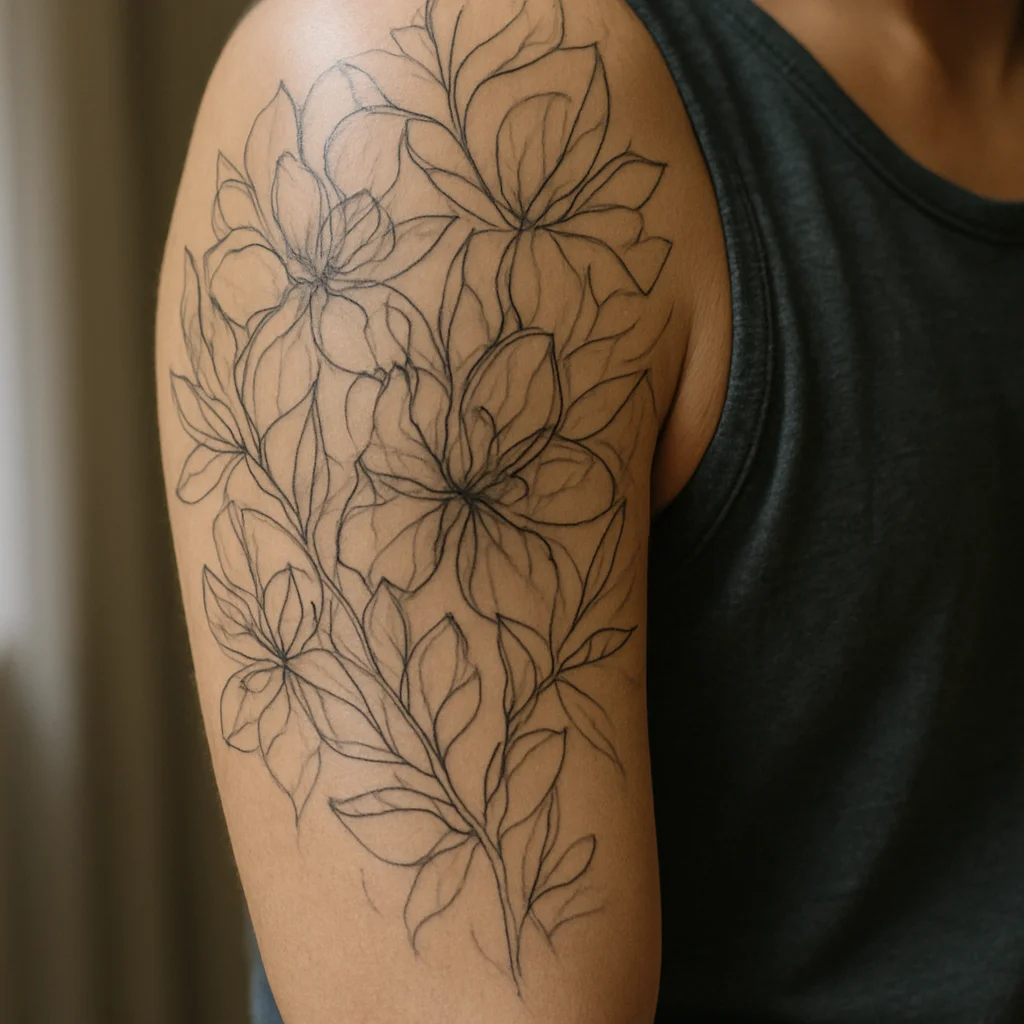
Upper half sleeves: shoulder cap to elbow
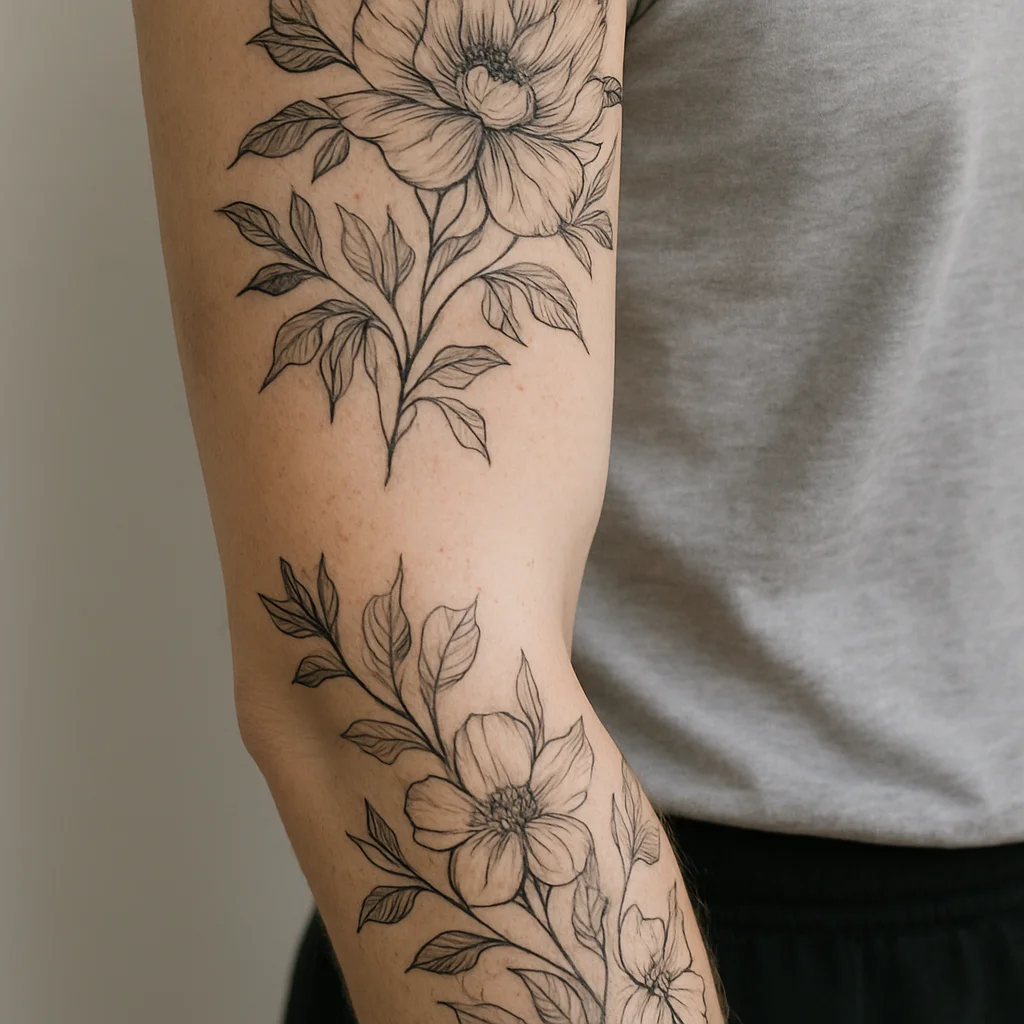
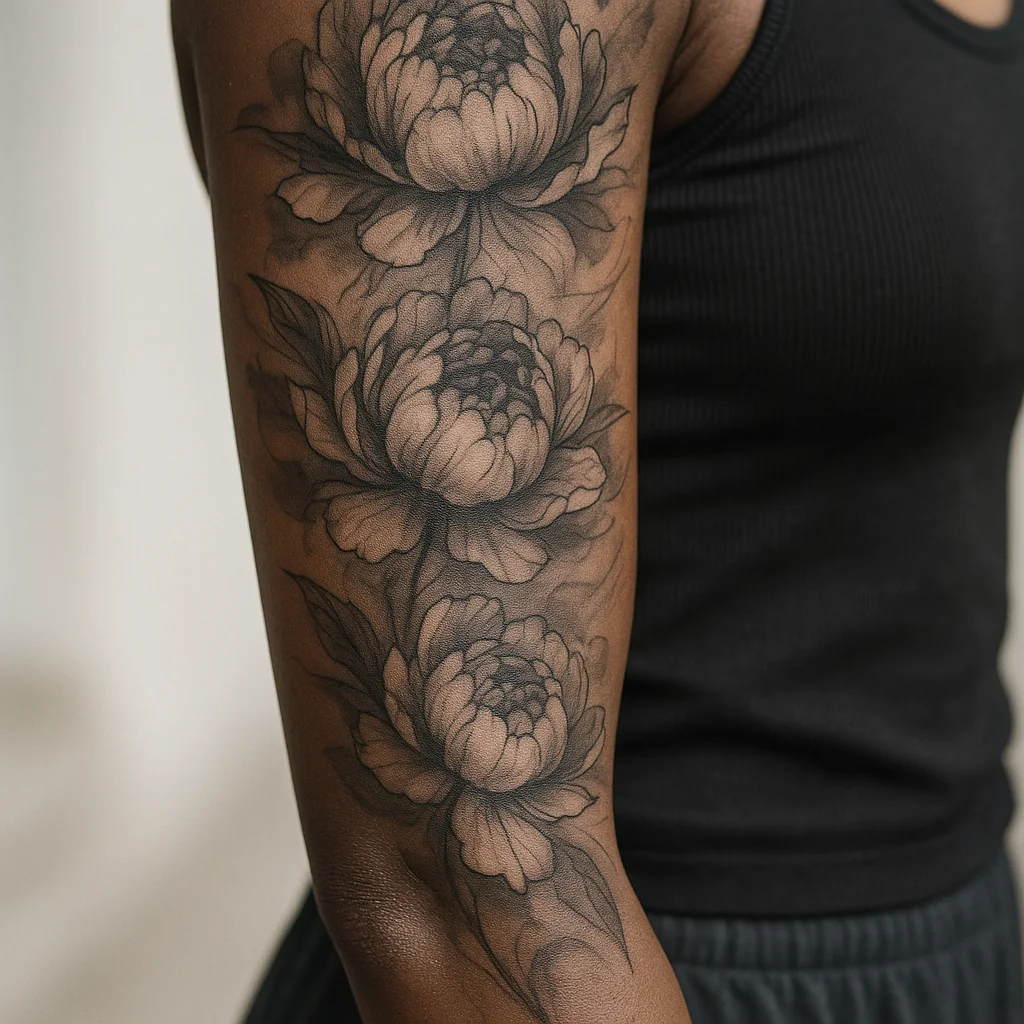
1. Peony and magnolia cluster wrapping the deltoid
Two large blooms sit on the shoulder cap with a third tucked behind the arm, so the composition reads whether you are facing forward or turned away. Magnolia branches carry the eye down the outer arm and taper into buds above the elbow. This is the classic women's half sleeve for a reason — big soft shapes age gracefully and the branch structure gives your artist a natural flow line.
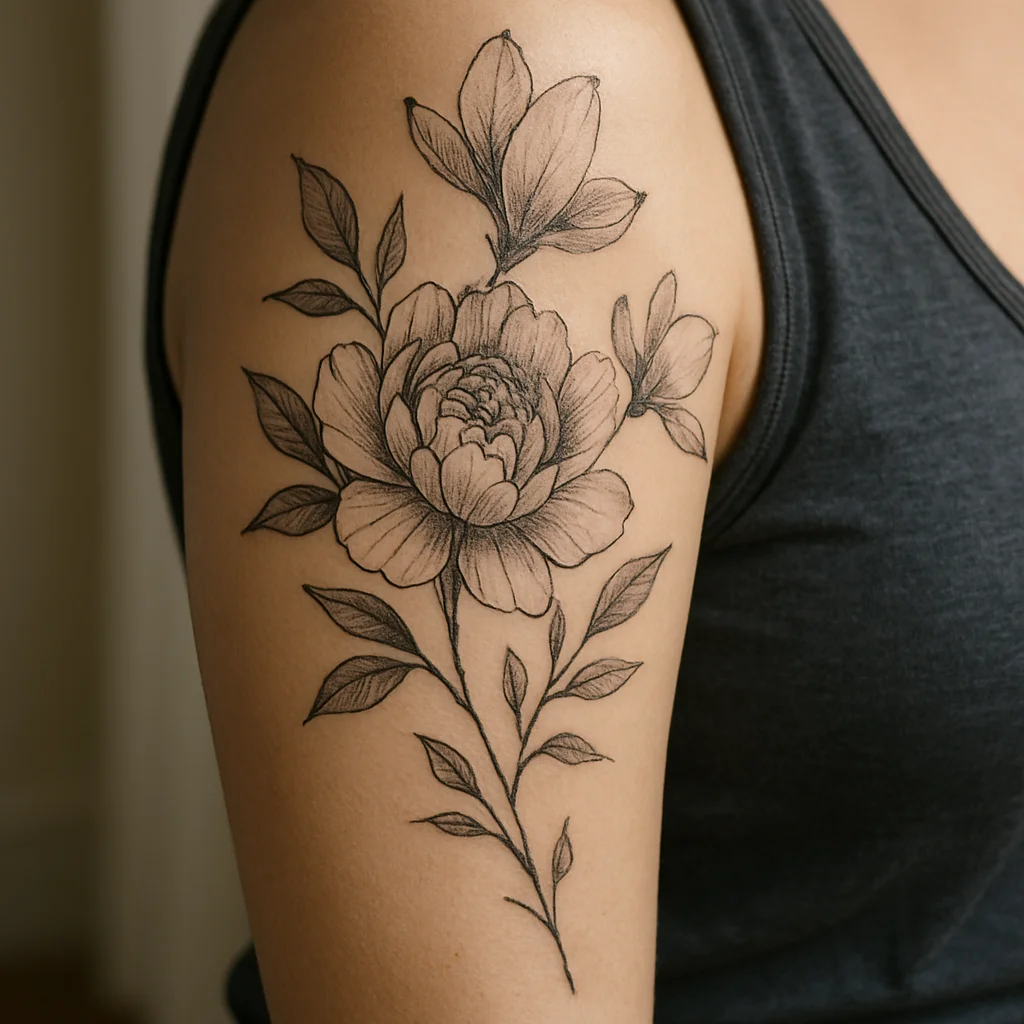
2. Illustrative moth with wings framing the shoulder
A single large moth, wings spread across the deltoid, works like a pauldron: the body follows the arm's centre line and the wing tips wrap toward front and back. Fill the wing pattern with dotwork and small crescent moons rather than solid black so it stays soft on skin. Suits anyone who wants one bold focal image instead of a busy scene.
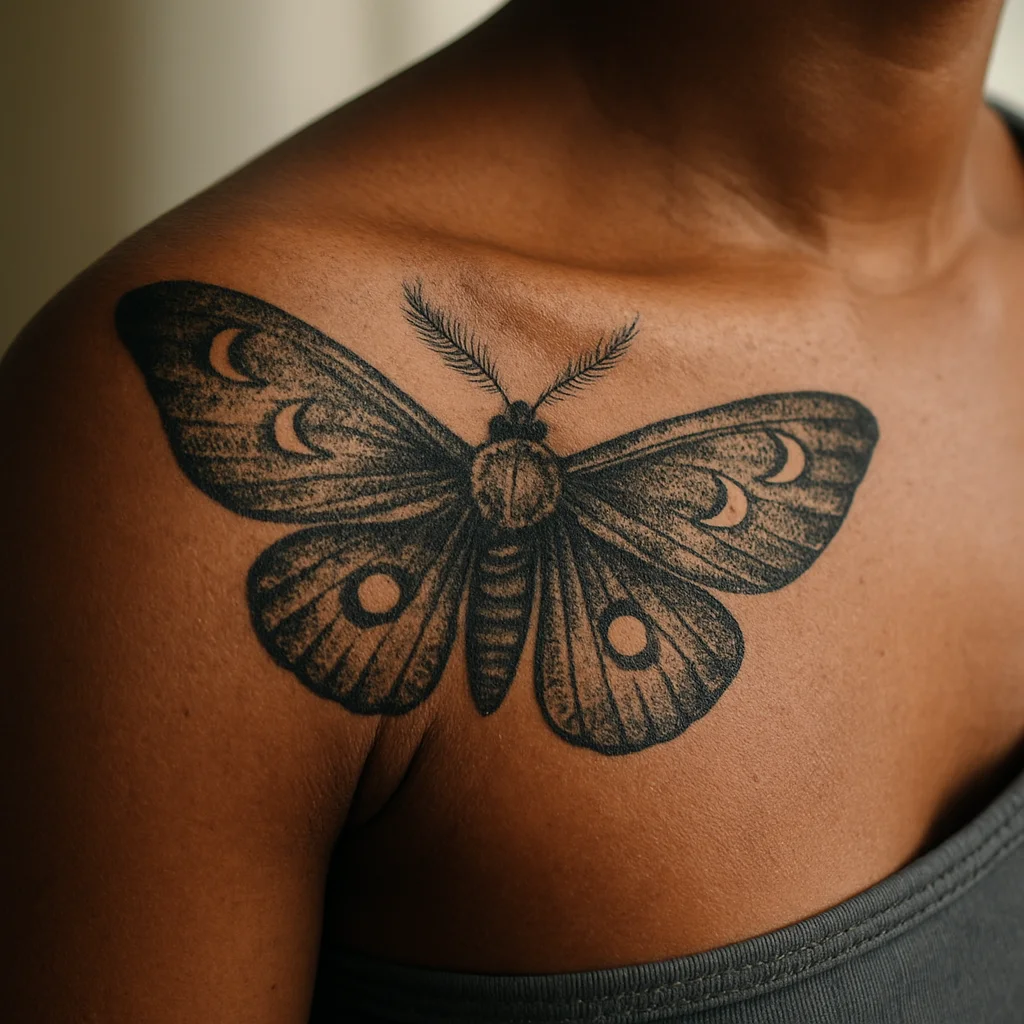
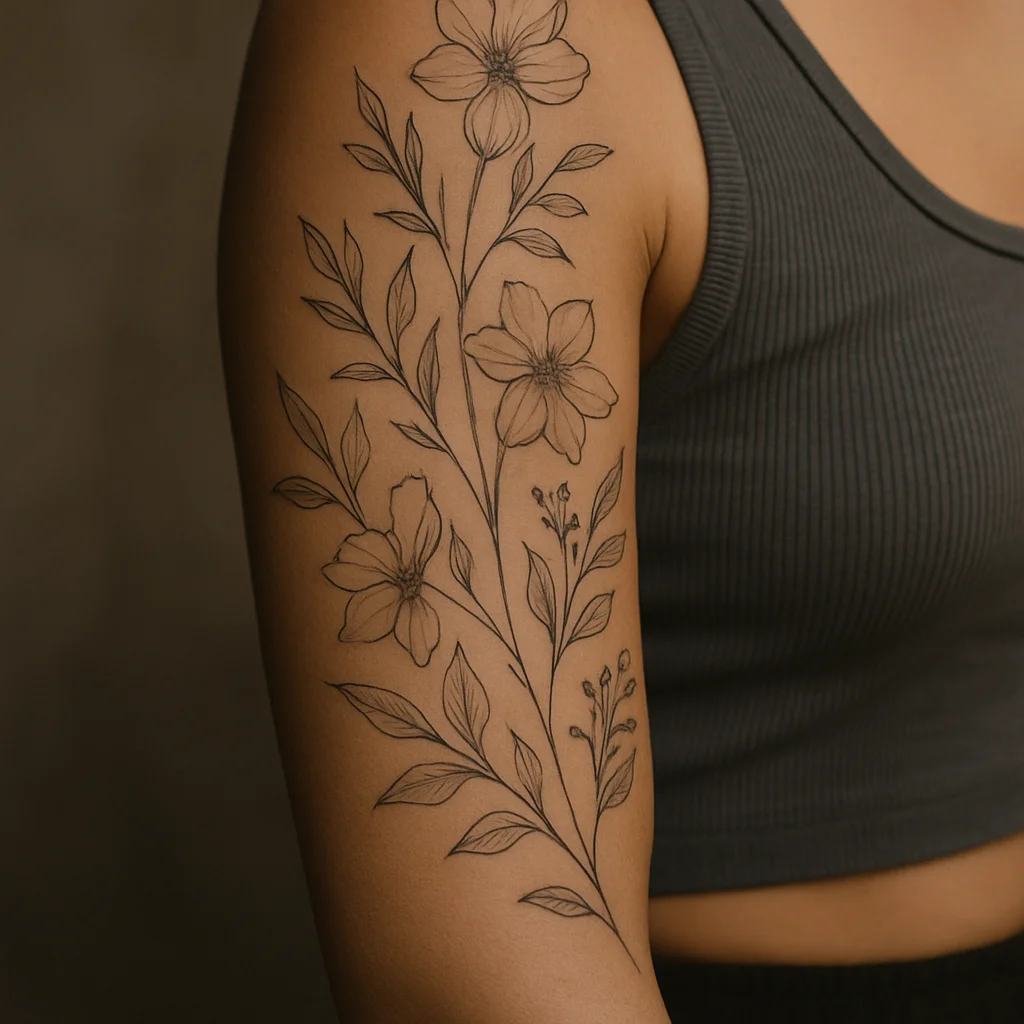
3. Fine-line florals with a deliberate gap of bare skin
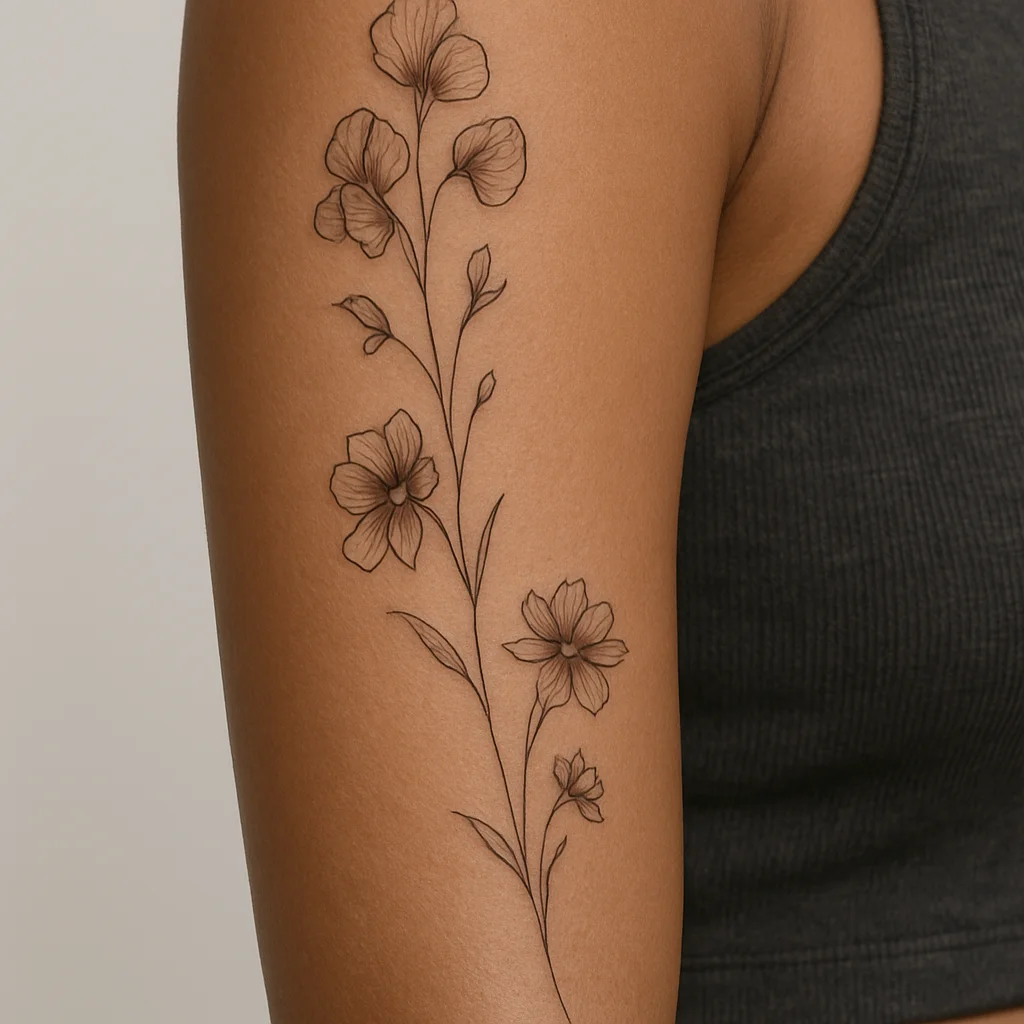
Sweet peas and cosmos trail down the outer arm in single-needle line work, then stop, leaving a hand-width of untouched skin before a smaller cluster picks up above the elbow. The blank stretch makes the whole arm feel airy and is the trick that keeps delicate work from looking crowded. Plan the gap on purpose or it looks unfinished.
4. Blackwork ornamental cap with a mandala centre
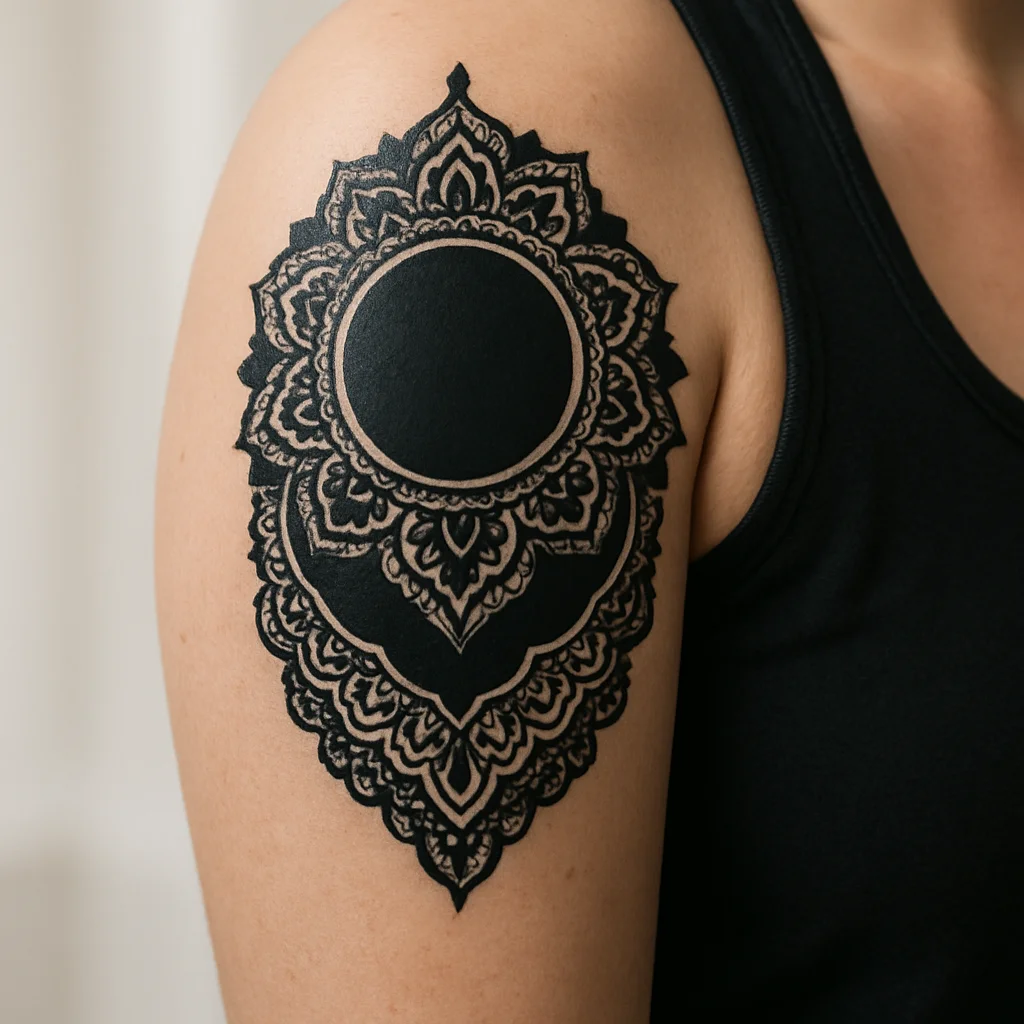
An ornamental medallion sits on top of the shoulder, with lace-like patterning falling in a scalloped hem partway down the bicep. Symmetry is the point here, so it needs an artist who can freehand geometry onto a curved surface. Heavy black holds up superbly over decades but limits what you can add later.
5. Greenhouse column of ferns and monstera
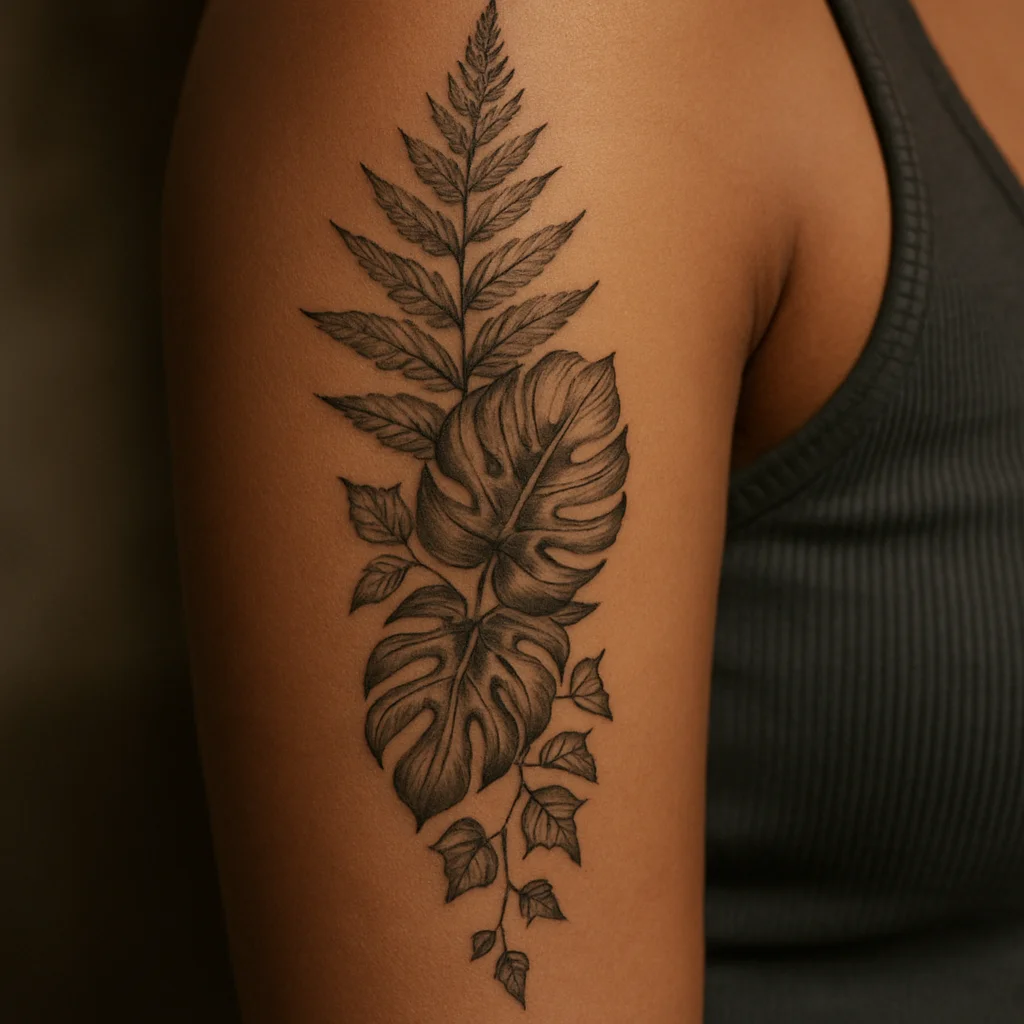
Layered foliage — fern fronds, monstera leaves, trailing ivy — stacked vertically with grey wash depth behind the front leaves. No flowers, no focal point, just green architecture, which suits people who like plants but not romance. It also hides gaps well if you later want to add a bird or insect.
6. Marble statue hand and drapery in soft grey wash
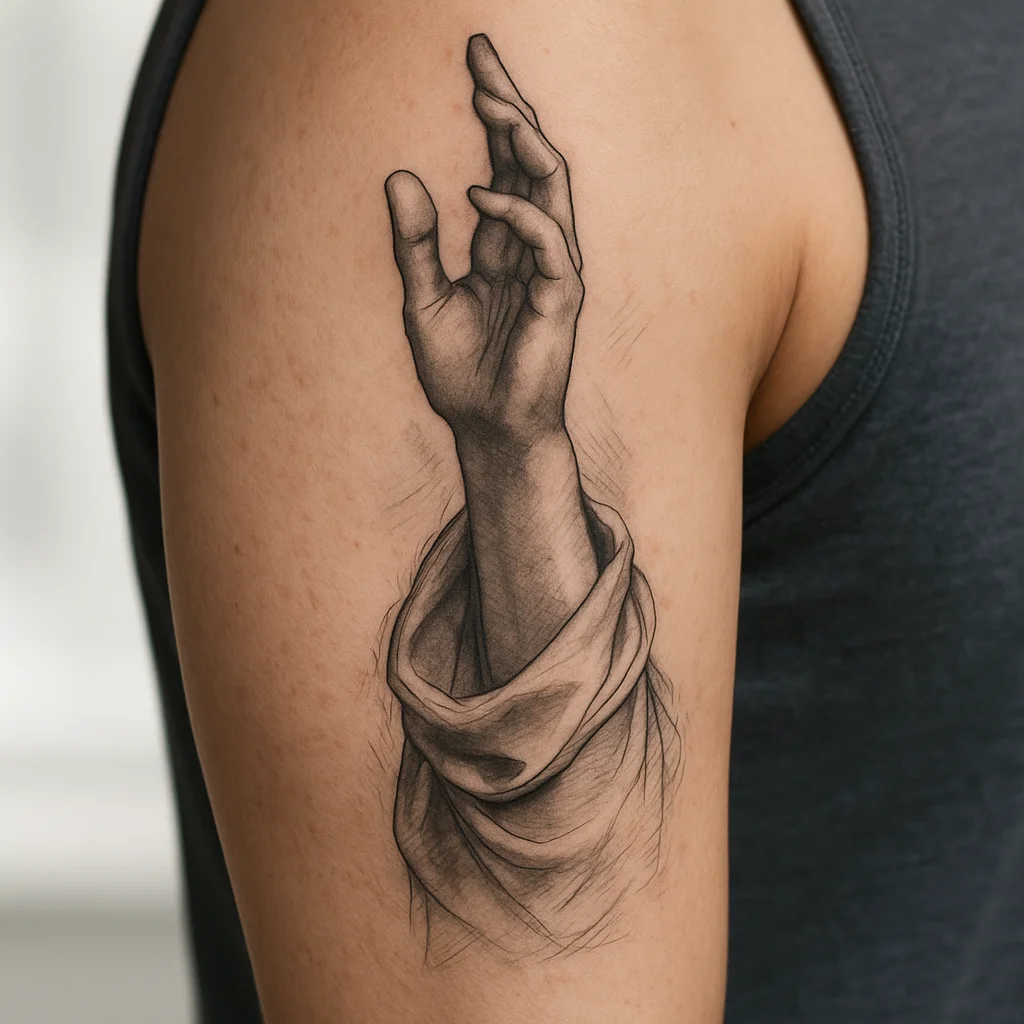
A sculptural hand reaching up the outer arm, with carved fabric folds cascading toward the elbow, all rendered in smooth grey shading with almost no black outline. Highly dependent on your artist's shading control — ask for healed photos of their grey wash, not fresh ones. Reads as art history rather than portraiture.
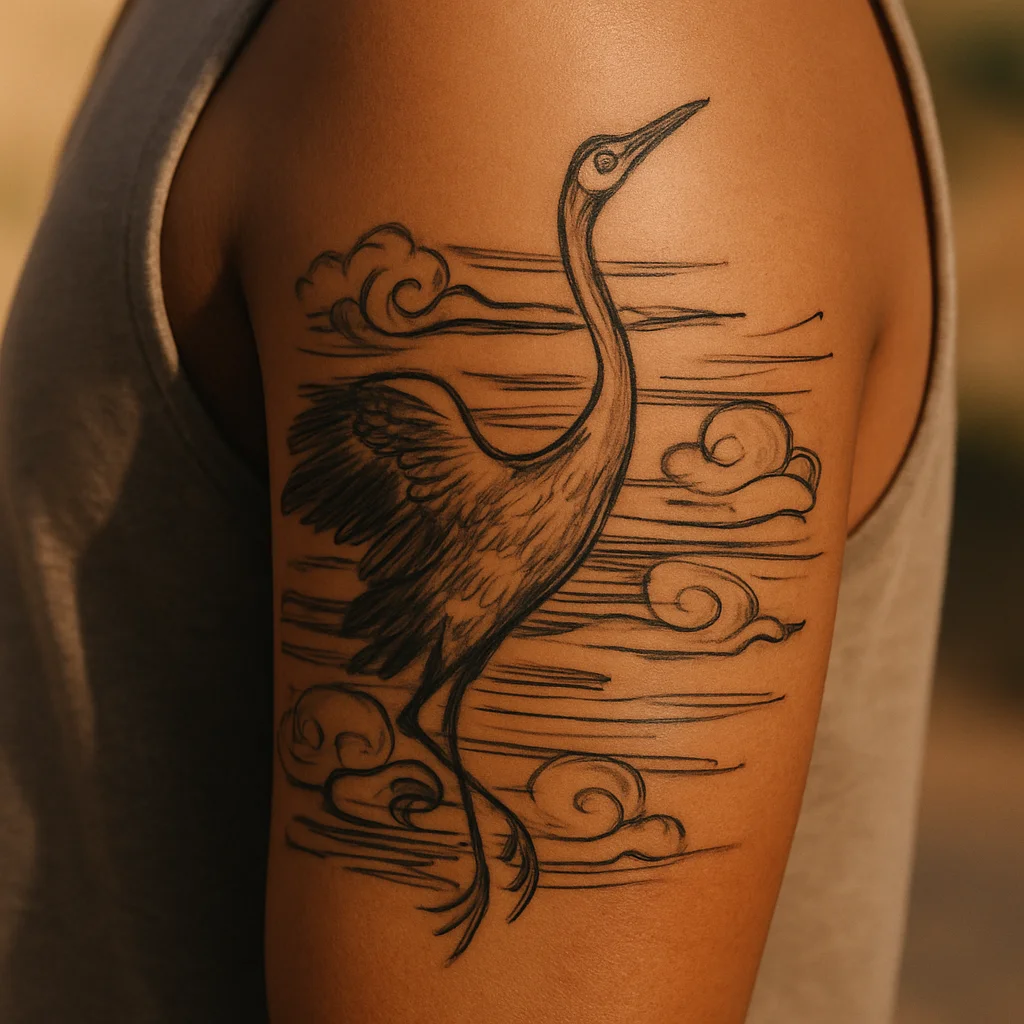
7. Crane rising through wind bars
A crane with outstretched neck on the outer deltoid, its wings breaking into stylised wind bars and cloud forms that wrap the arm. Borrowed from Japanese composition logic, it uses background elements to fill space so nothing floats awkwardly. Excellent choice if you might extend to a full sleeve, since wind and cloud continue naturally past the elbow.
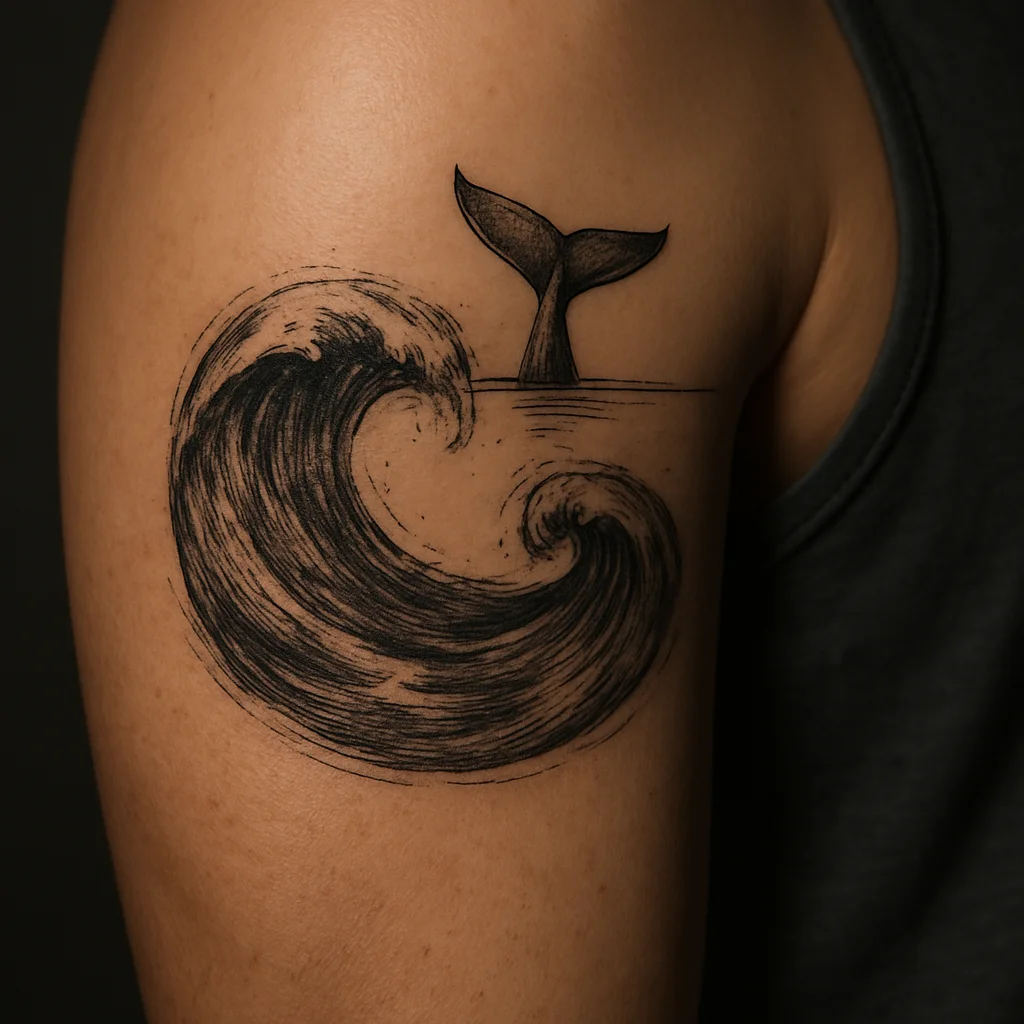
8. Coastal seascape with a breaching whale
A curl of wave circles the bicep with a humpback tail breaking the surface on the outer arm and a thin horizon line at the top. Keep the water mostly line work with selective black in the wave troughs so it does not read as one dark mass. Beautiful for anyone whose meaning lives in a specific coastline.
Lower half sleeves: elbow to wrist
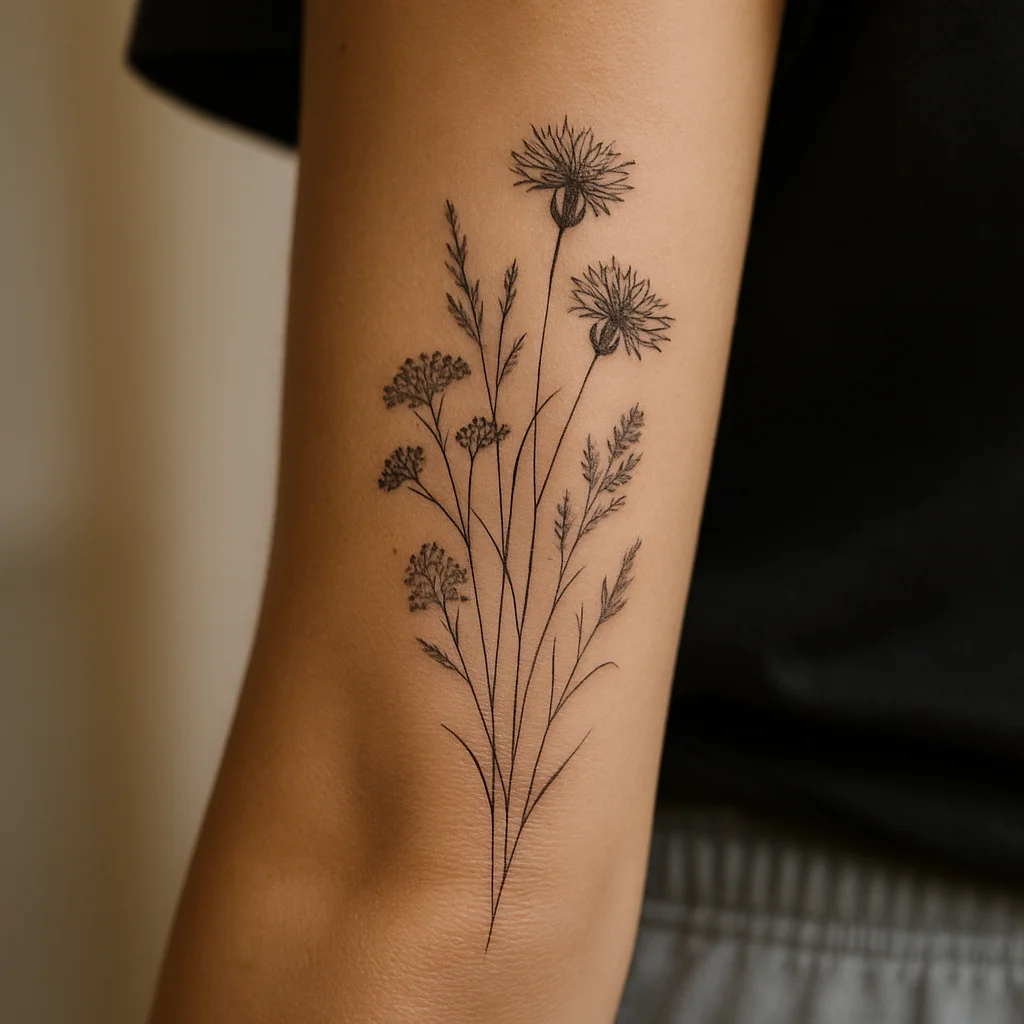
9. Wildflower meadow climbing the inner forearm
Cornflowers, yarrow and grasses rise from the wrist toward the elbow ditch, tallest stems at the top so the shape narrows where your arm narrows. The inner forearm is tender but relatively quick, and the low-contrast look suits anyone who wants soft rather than statement. Keep the top of the stems just short of the crease so nothing distorts when you bend.
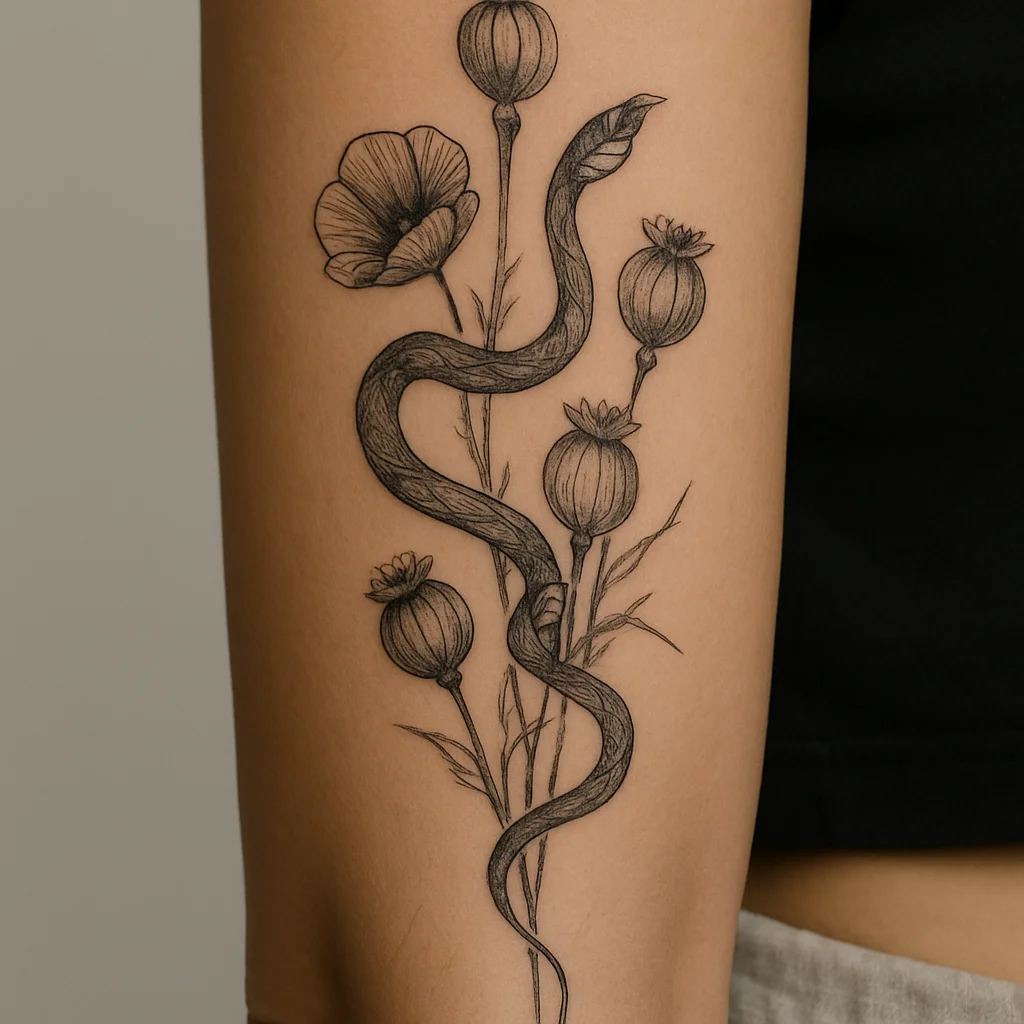
10. Snake coiled through a bunch of poppies
A slim serpent winds up the outer forearm with poppy heads and seed pods breaking up its body, giving you movement without needing a full wrap. The snake's curve is the composition — everything else fills around it. If the symbolism matters to you, our snake tattoo guide covers what different coils and postures traditionally read as.
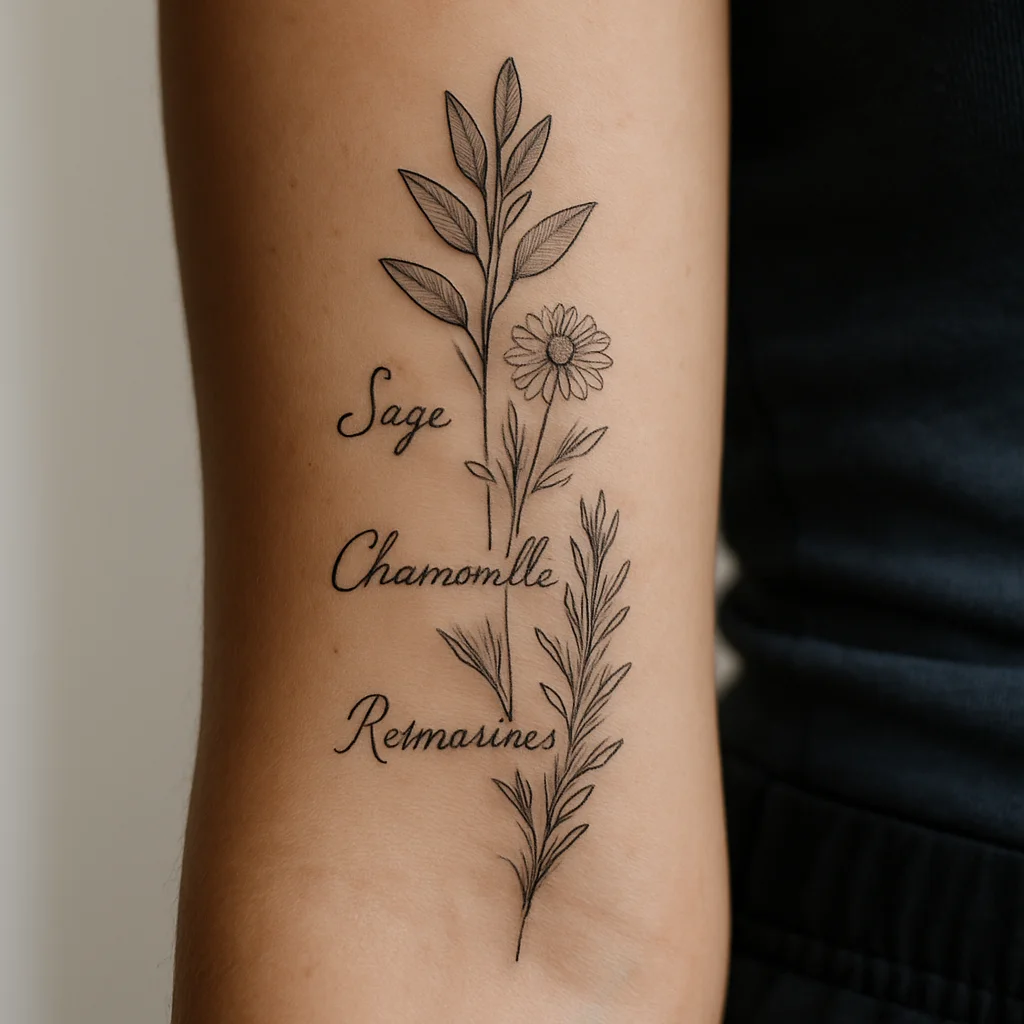
11. Botanical stack with an apothecary label
Three or four plants drawn as botanical illustrations — sage, chamomile, rosemary — stacked with fine hand-lettered Latin names between them. It looks like a page from an old herbal, which gives even a modest forearm a considered, collected feel. Ask for the script slightly bolder than feels right; tiny lettering on the forearm softens with time.
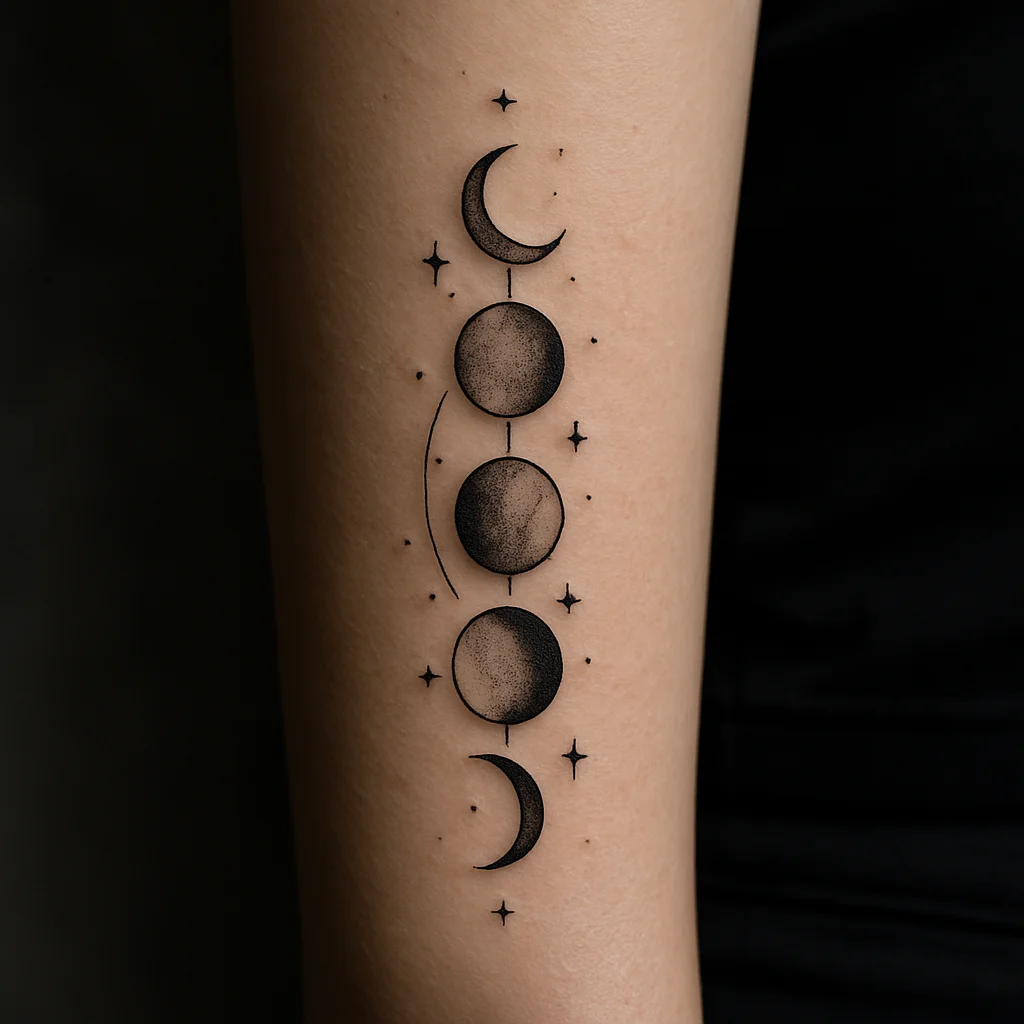
12. Celestial column of moon phases and stars
A vertical run of moons from crescent to full along the outer forearm, with a scatter of small stars and a thin arc connecting them. Simple, symmetrical and endlessly readable — the reason it keeps selling out artists' books. Best kept to one line weight so it stays clean at a glance.
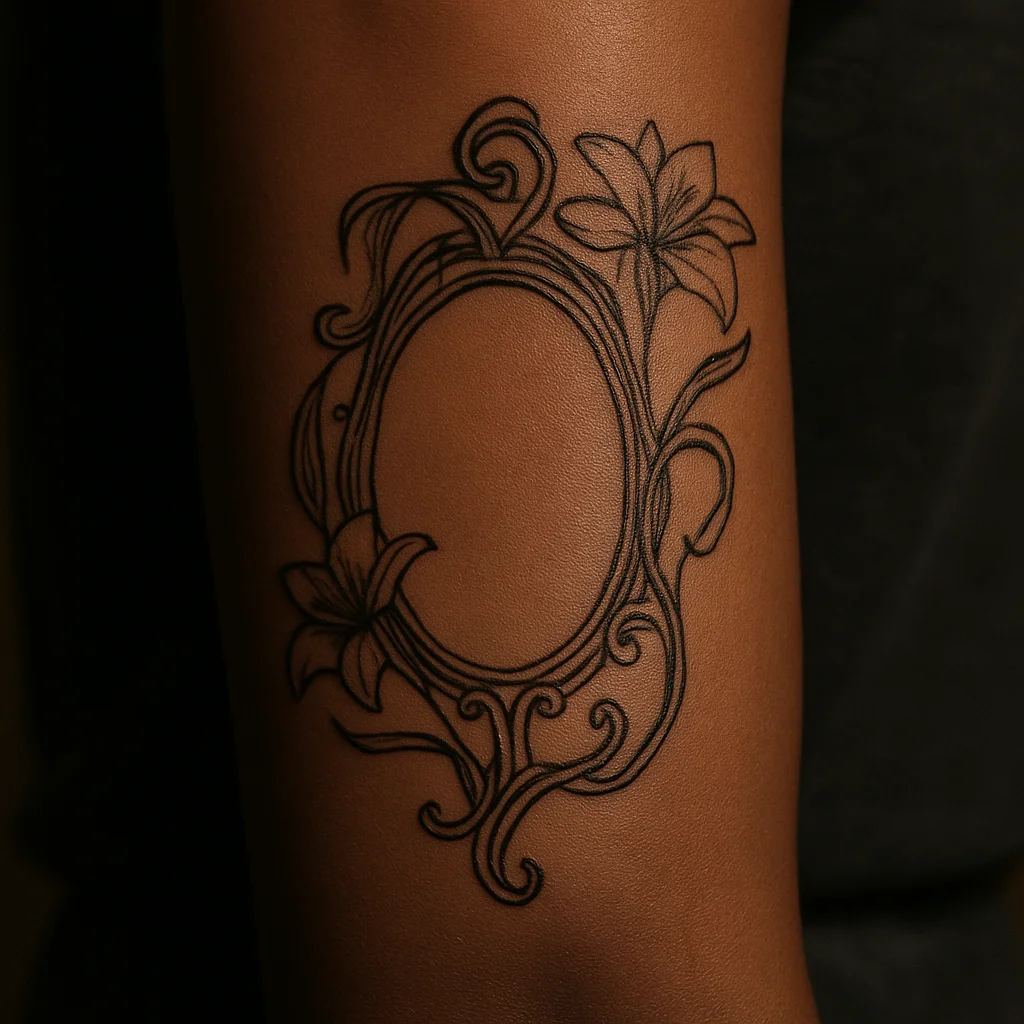
13. Art nouveau frame around a mirror
An ornate oval mirror sits mid-forearm, framed by whiplash curves and stylised lilies that stretch toward wrist and elbow. Leave the mirror's interior mostly bare skin or lightly stippled so it reads as reflective glass. Suits people who want ornament with a subject rather than pure pattern.
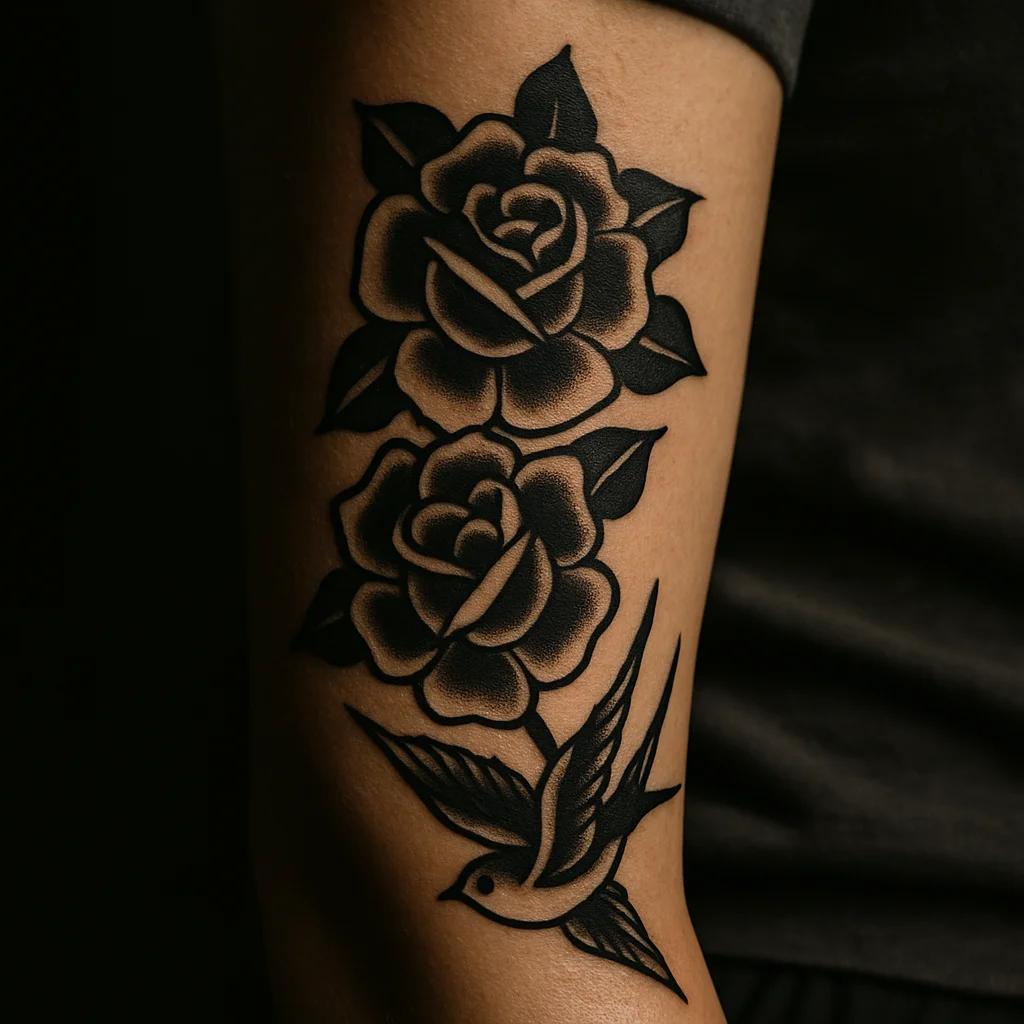
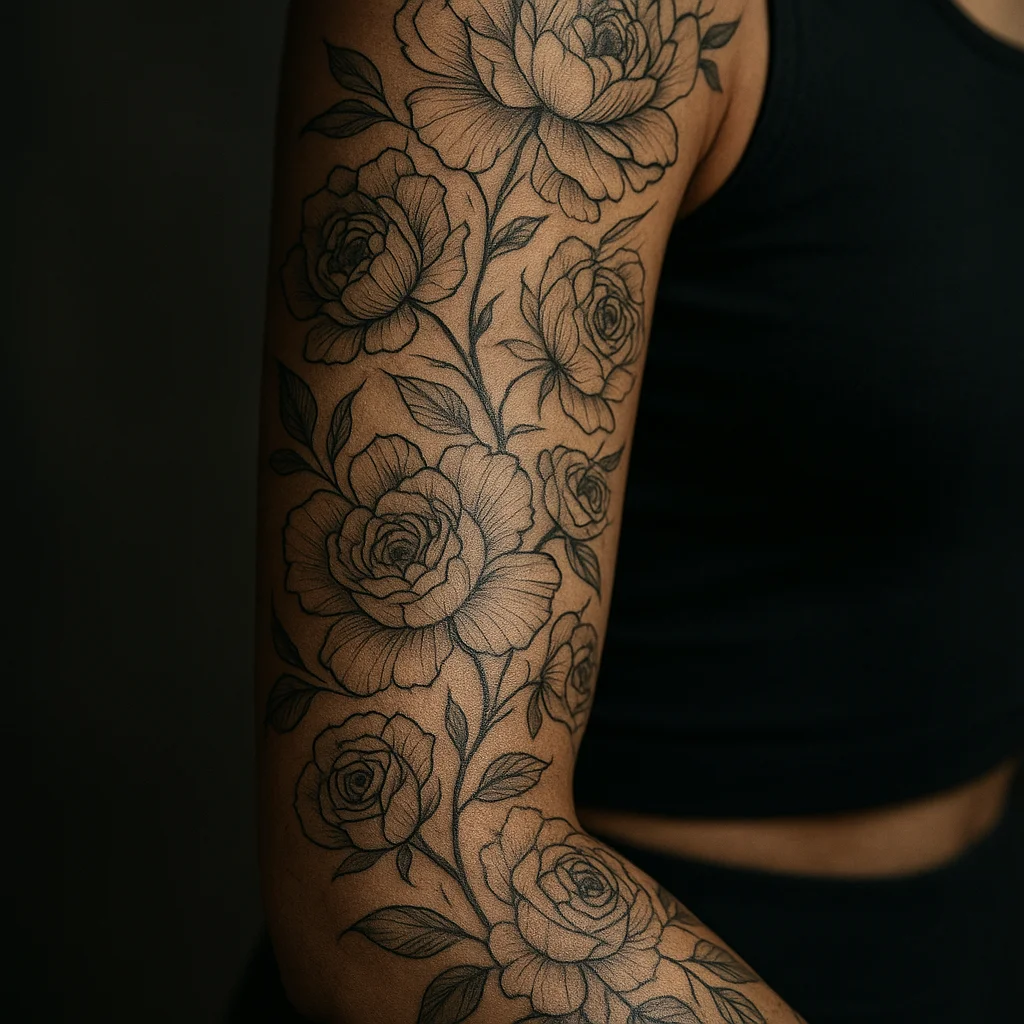
14. Bold traditional roses with a swallow at the cuff
Two open roses stacked on the outer forearm in heavy black outline and saturated red, with a swallow tucked at the wrist to close the design. Traditional work is built for longevity — thick lines, clear shapes, no fine detail to lose. Also the most forgiving choice if you have deeper skin tone or scar tissue on the arm.
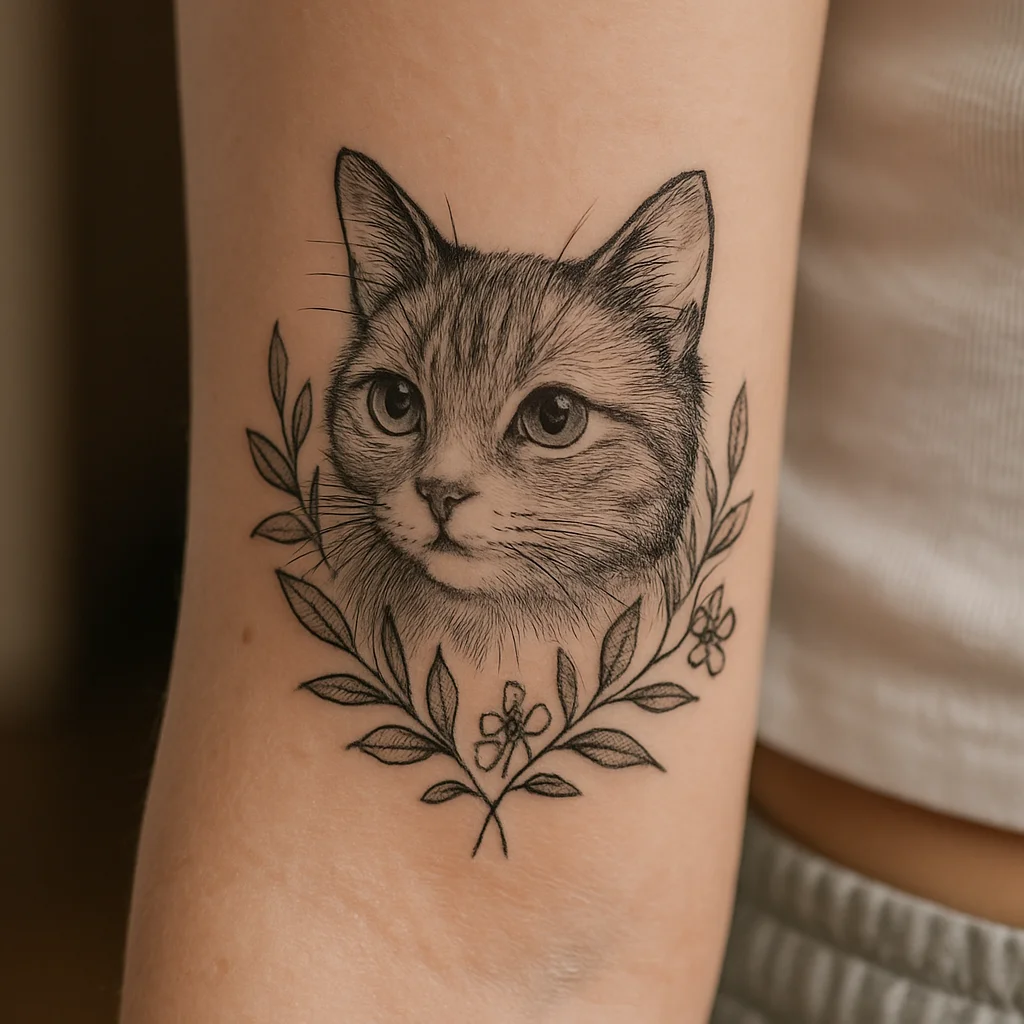
15. Cat portrait nestled in leaves
A soft micro-realistic pet portrait on the inner forearm, framed by leaves and a few flowers so it does not float in blank space. Bring several high-resolution photos in natural light, ideally at the animal's eye level. Sizing matters: below about four inches, eyes and whisker detail will not hold.
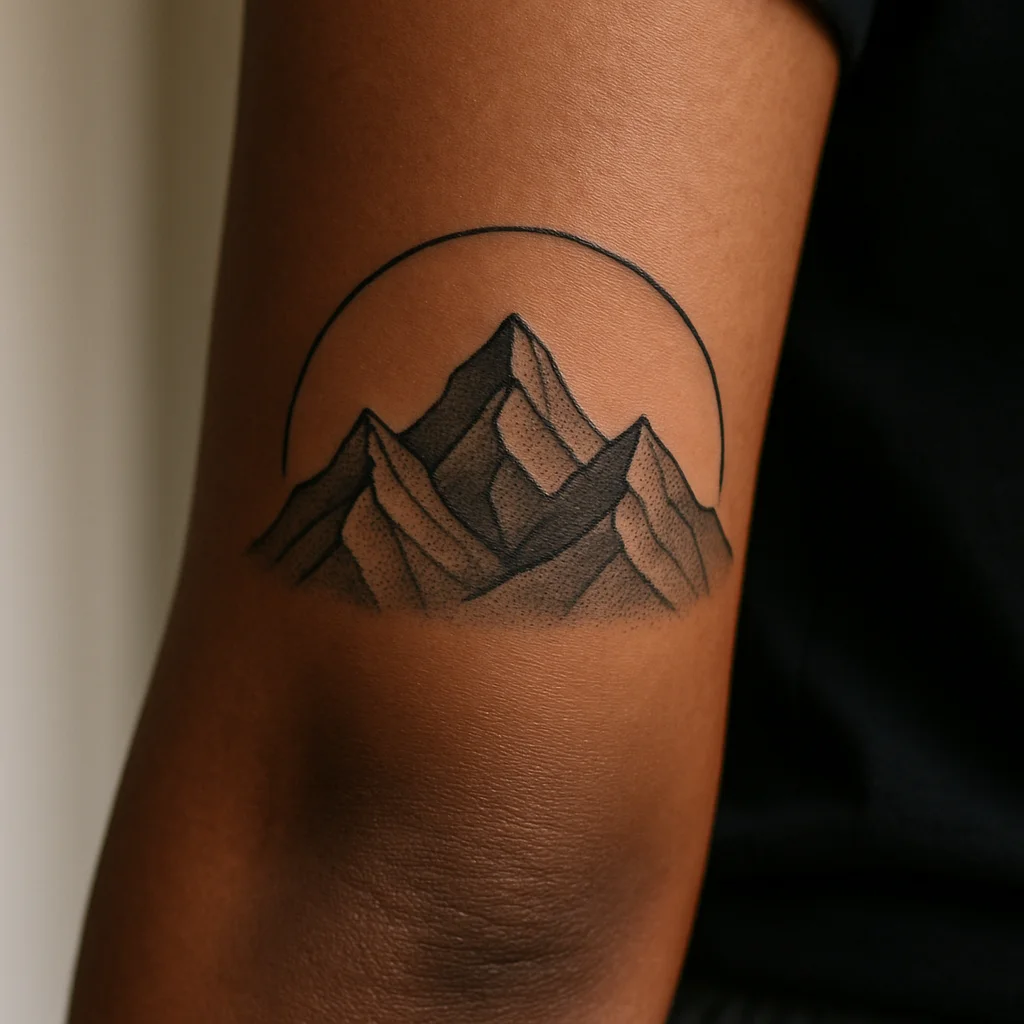
16. Dotwork mountain range with a geometric horizon
A ridge line rendered in stippling with a thin geometric circle or arc cutting behind it, running the length of the outer forearm. The dotwork keeps it light while the hard geometry gives it structure. Ask for slightly denser dots than the stencil suggests, since stippling opens up over the years.
Wraps, bands and negative space
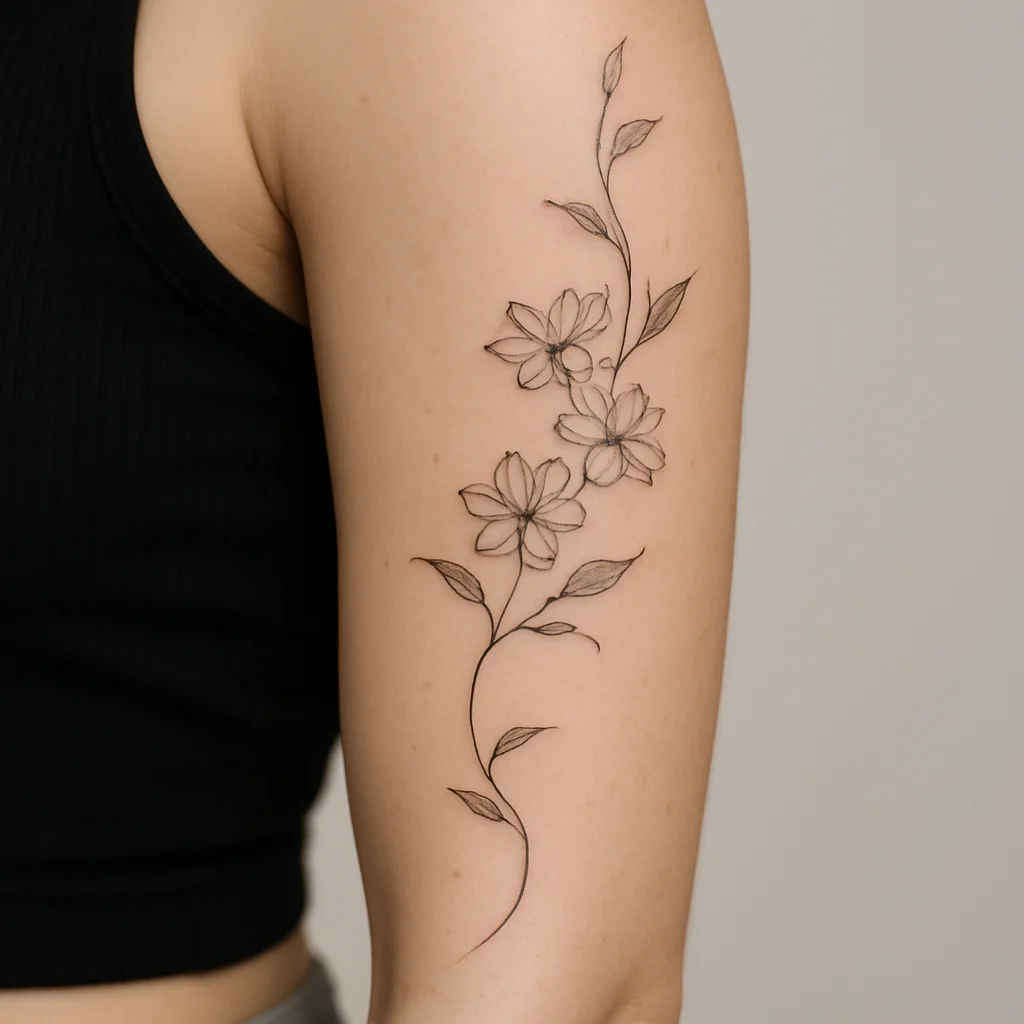
17. One continuous vine spiralling the arm
A single climbing stem — jasmine, sweet pea or passionflower — spirals from shoulder to elbow with leaves and blooms clustered on the outer curve. Because it is one line of movement, it feels lighter than a filled sleeve while still covering the full circumference. Ask your artist to plan the spiral so the densest cluster lands where people see you most.
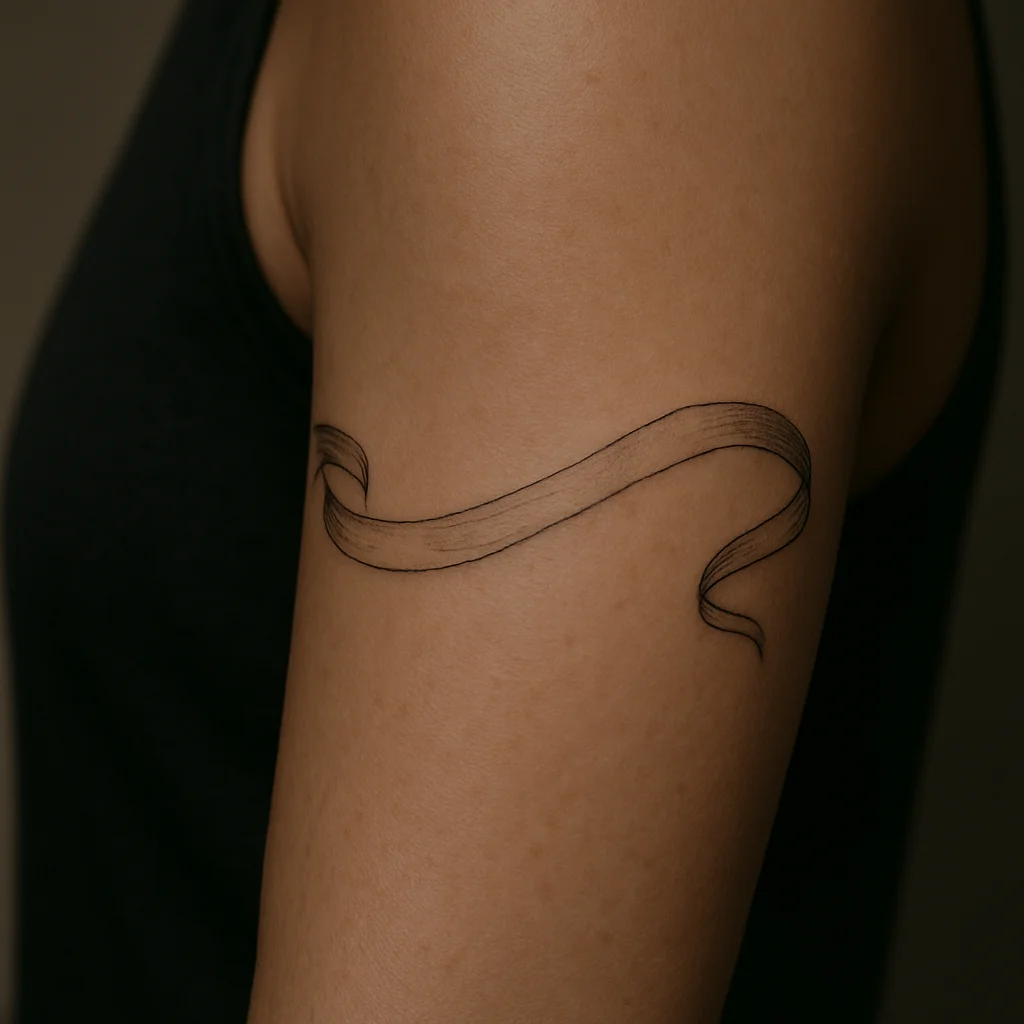
18. Script ribbon wrapping like a bandeau
A line of text on a flowing ribbon that circles the upper arm once, angled slightly so it follows the muscle rather than cutting straight across. Keep the phrase short enough to fit in one pass — text that has to double back gets hard to read. Serif or copperplate holds up better long term than very thin script.
19. Two-part sleeve with a bracelet of bare skin
Design above the elbow and again on the lower forearm, with a deliberate untouched band across the elbow crease. You dodge the most painful, fastest-blurring zone and get a layout that looks styled rather than incomplete. This is a smart route if you are still deciding whether you want a full sleeve.
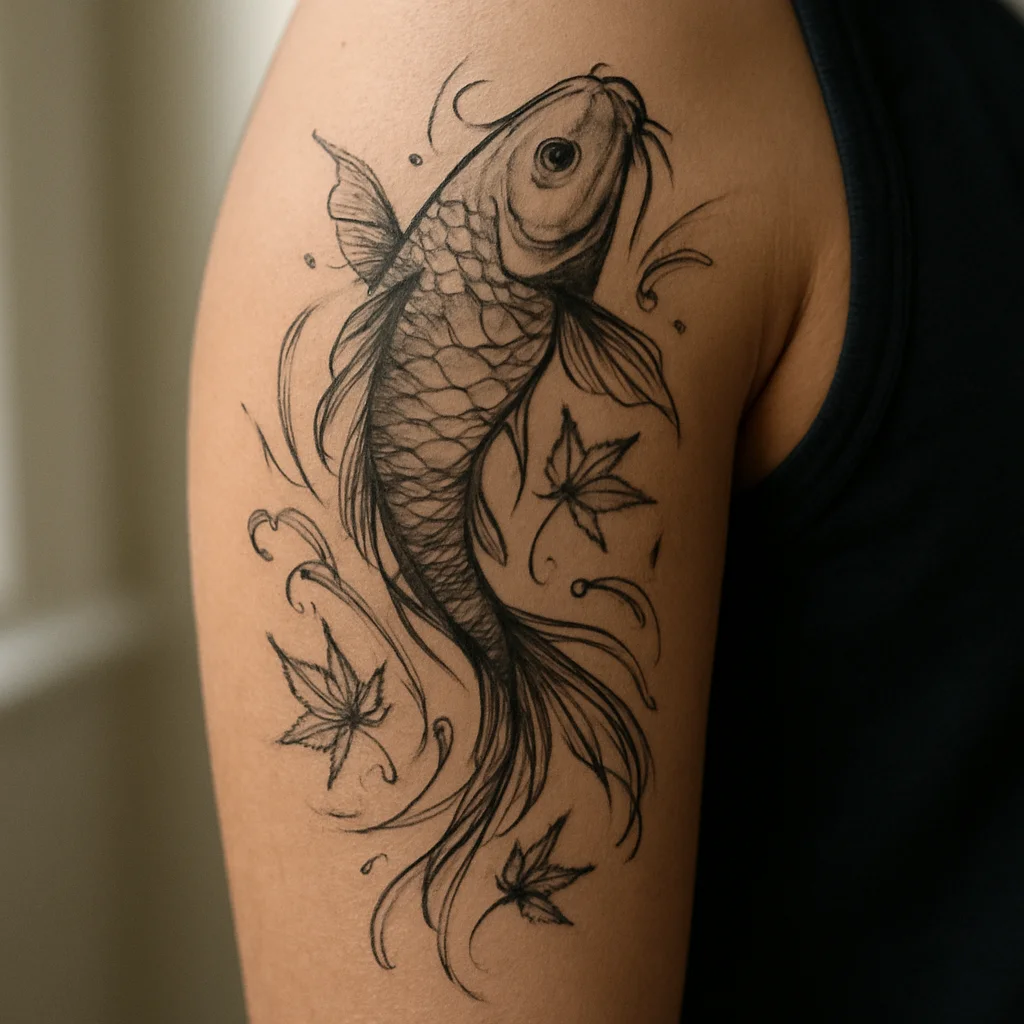
20. Koi turning in a water wrap
A koi swimming upward on the outer arm with water lines, splashes and a few maple leaves circling the limb completely. Full wraps need a session dedicated purely to the inner arm, which is the tender part — worth knowing so you can pace it. The reward is a piece with no bad angle.
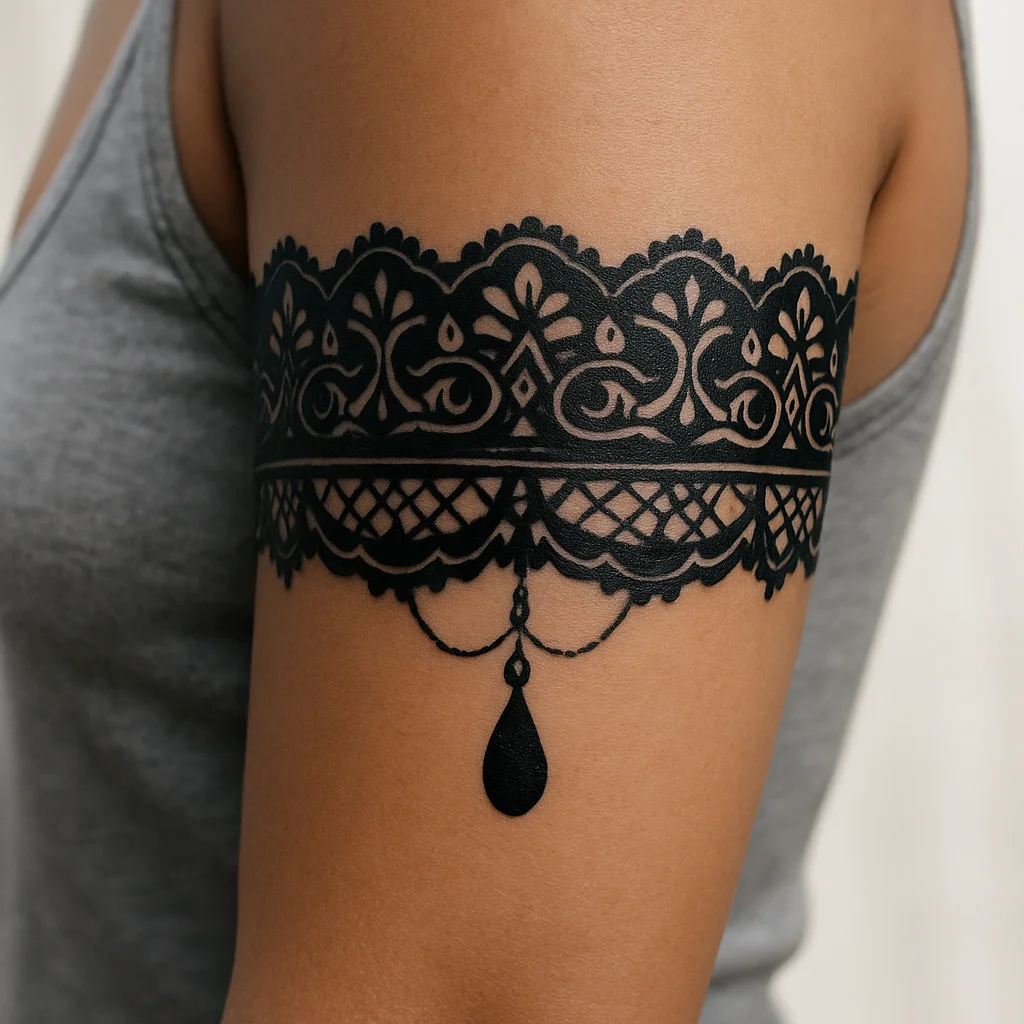
21. Ornamental garter band with a hanging pendant
A lace-like band circles the mid-bicep with a small teardrop pendant or chain dropping toward the elbow. It has jewellery logic: symmetry, repetition and one point of interest. Excellent for people who want something decorative and abstract with no narrative to explain.
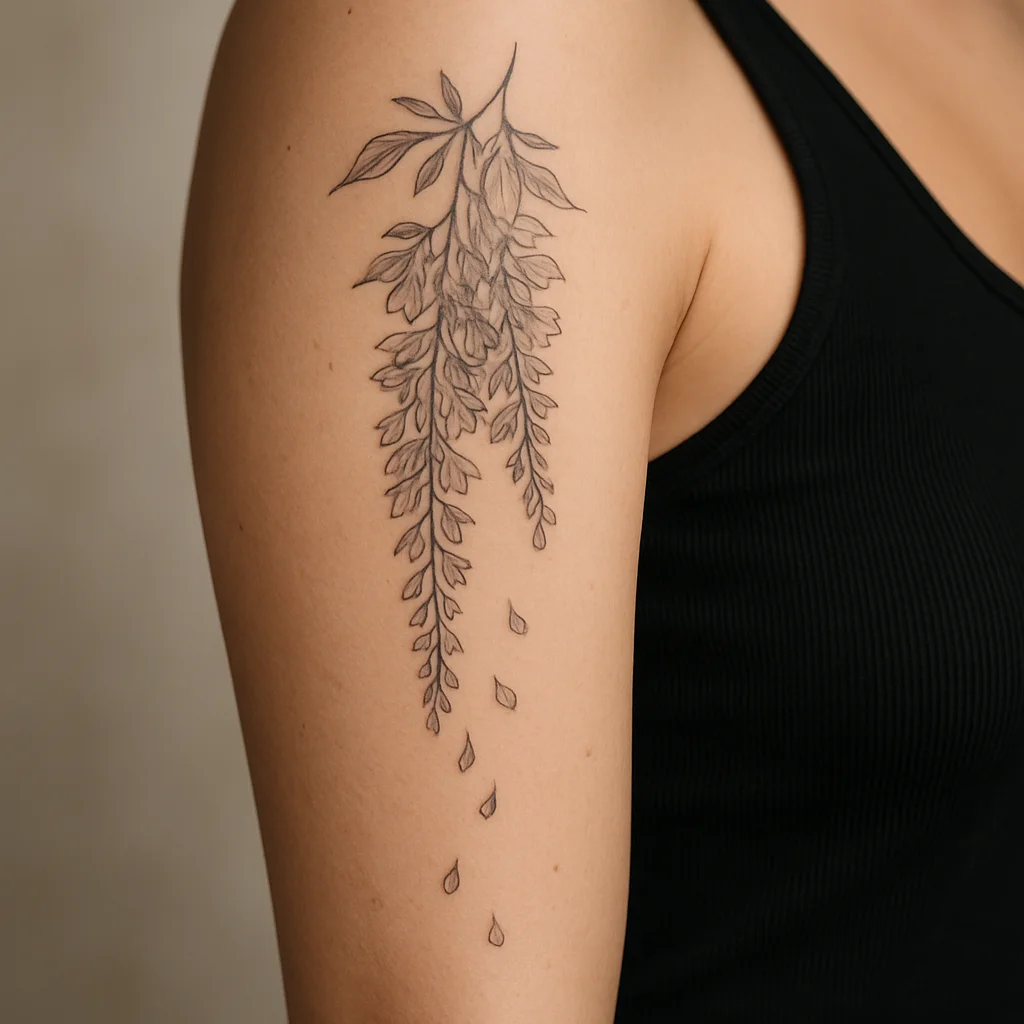
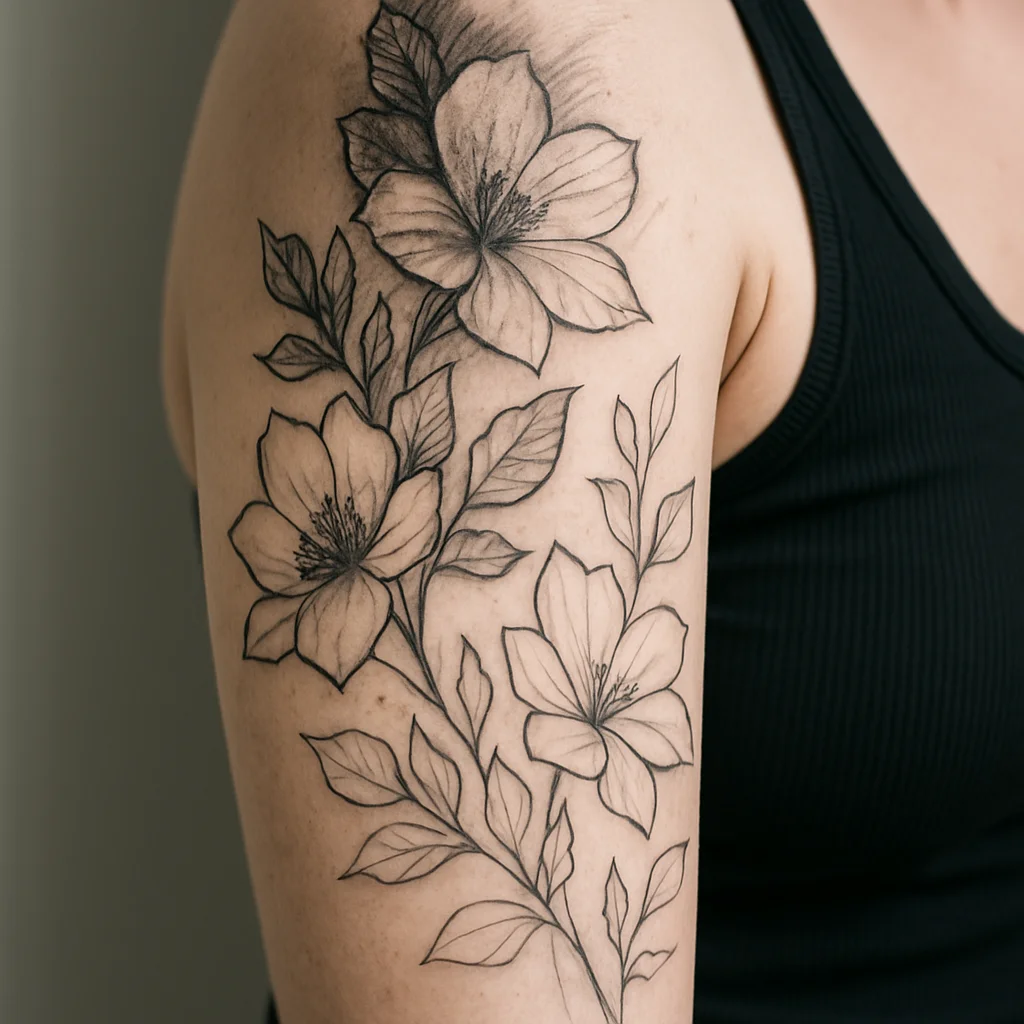
22. Wisteria falling from the shoulder
Trailing racemes hang down the arm, dense at the shoulder and dissolving into single petals near the elbow ditch. Falling florals suit the arm's taper better than almost anything else, and the fade-out edge means you can add underneath later without a redesign. Grey wash keeps it soft; muted violet keeps it romantic.
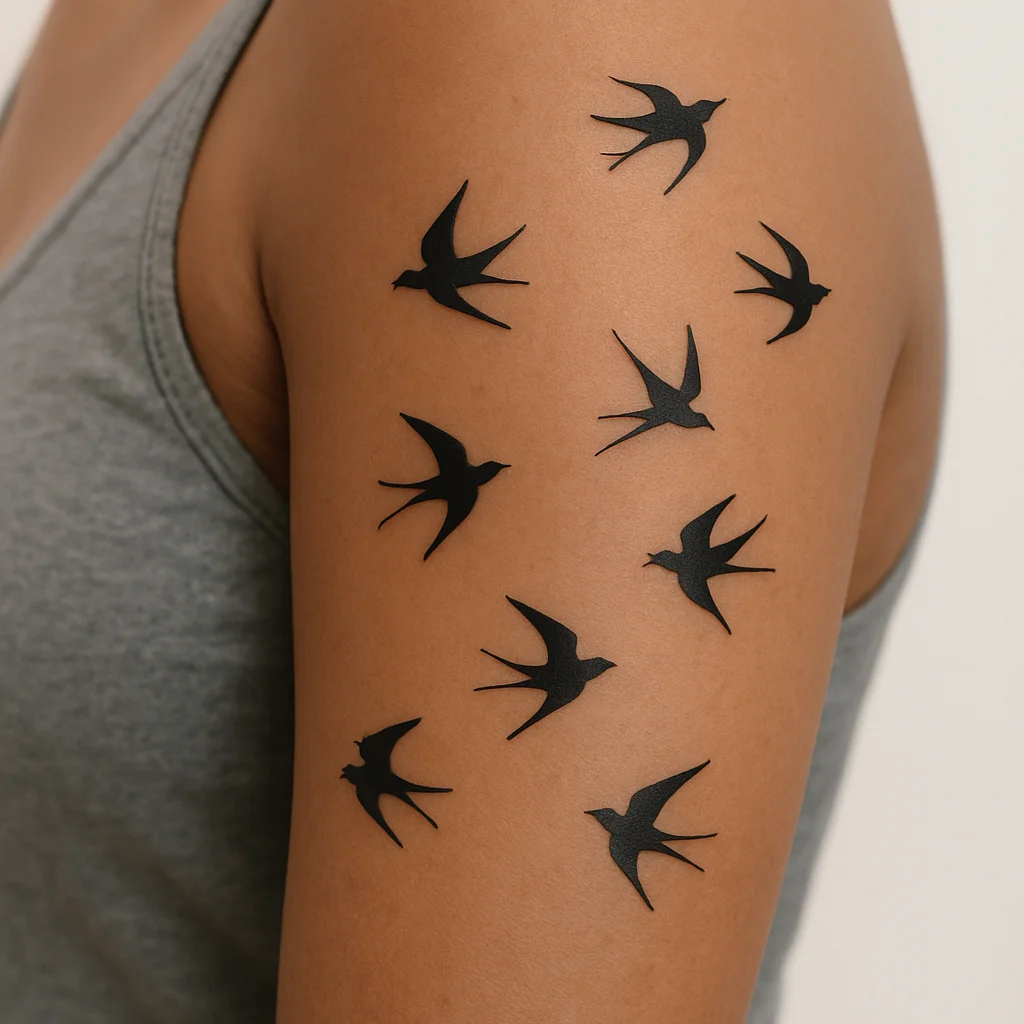
23. Scattered birds across mostly bare skin
Seven or eight small silhouetted swallows placed with intentional spacing from shoulder to elbow, largest at the top. It is technically a half sleeve because it occupies the whole zone, yet it takes a fraction of the time and cost. Placement is everything — have them stencilled and walk around with them before any needle touches skin.
Style pairings worth stealing
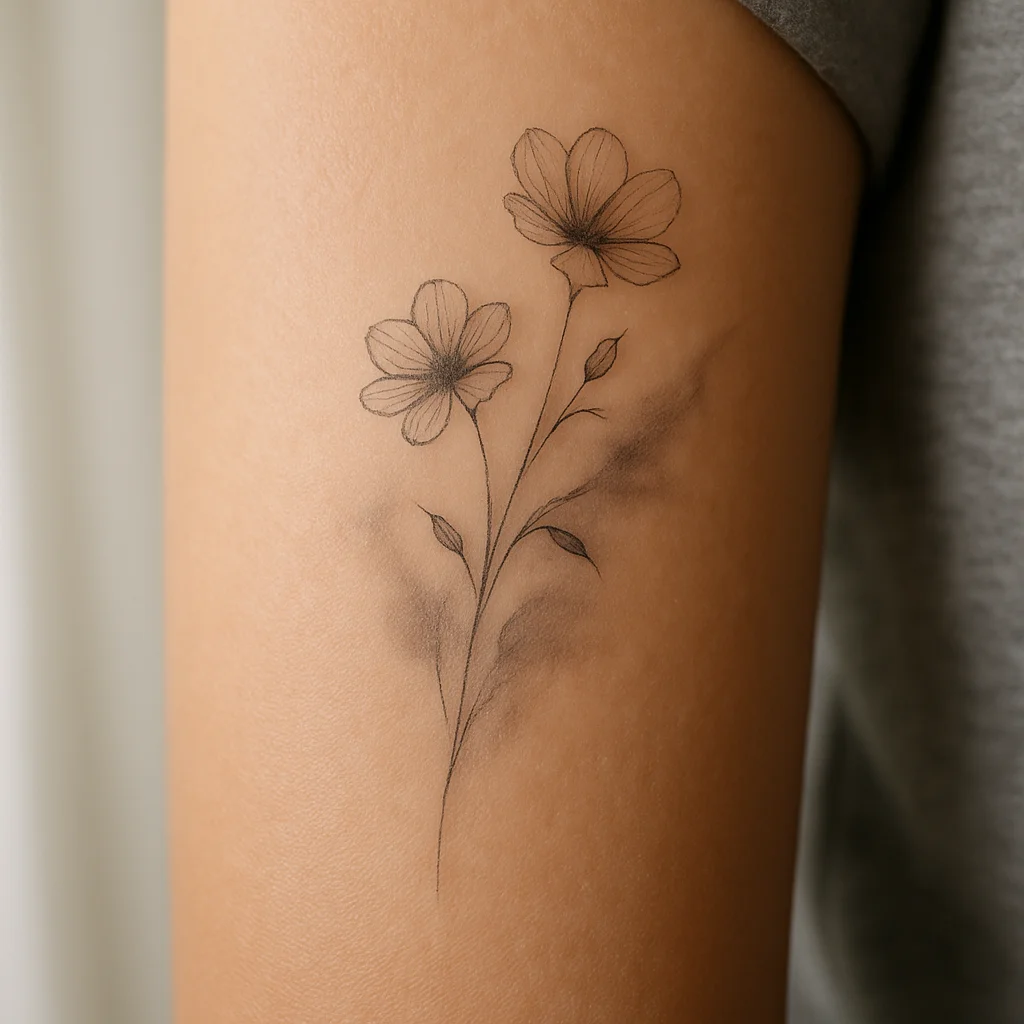
24. Fine line florals drifting into grey smoke
Delicate single-needle blooms sitting in soft airbrush-like smoke, so the flowers stay crisp while the background carries the arm from a distance. The contrast solves the biggest weakness of all-fine-line sleeves, which can read as faint from more than a metre away. Ask for the smoke to be built in light passes rather than one heavy layer.
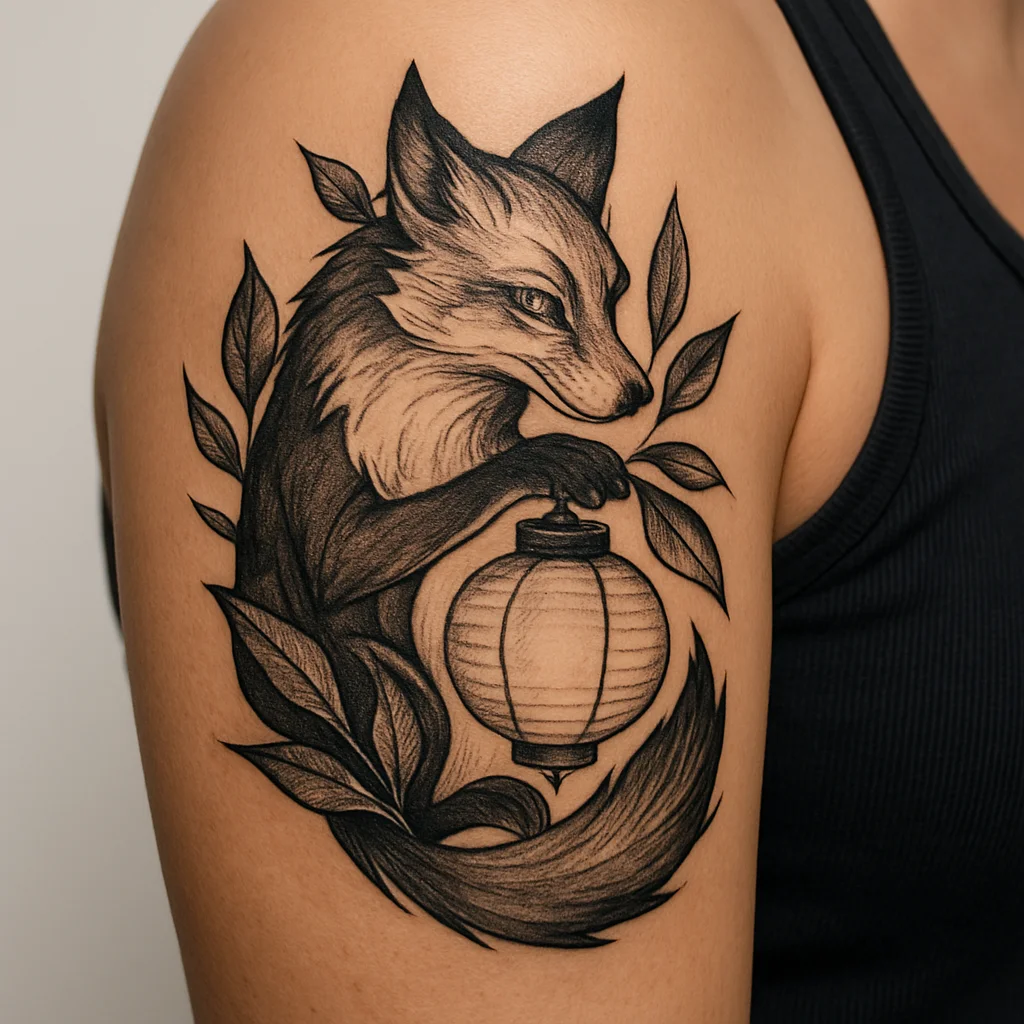
25. Neo-traditional fox with a paper lantern
Rich outlines, bold colour and a folkloric subject — a fox curled around a glowing lantern, framed by stylised leaves. Neo-trad gives you saturated colour with the structural strength of traditional work, which means it holds shape for decades. Perfect for storytelling arms with a fairytale streak.
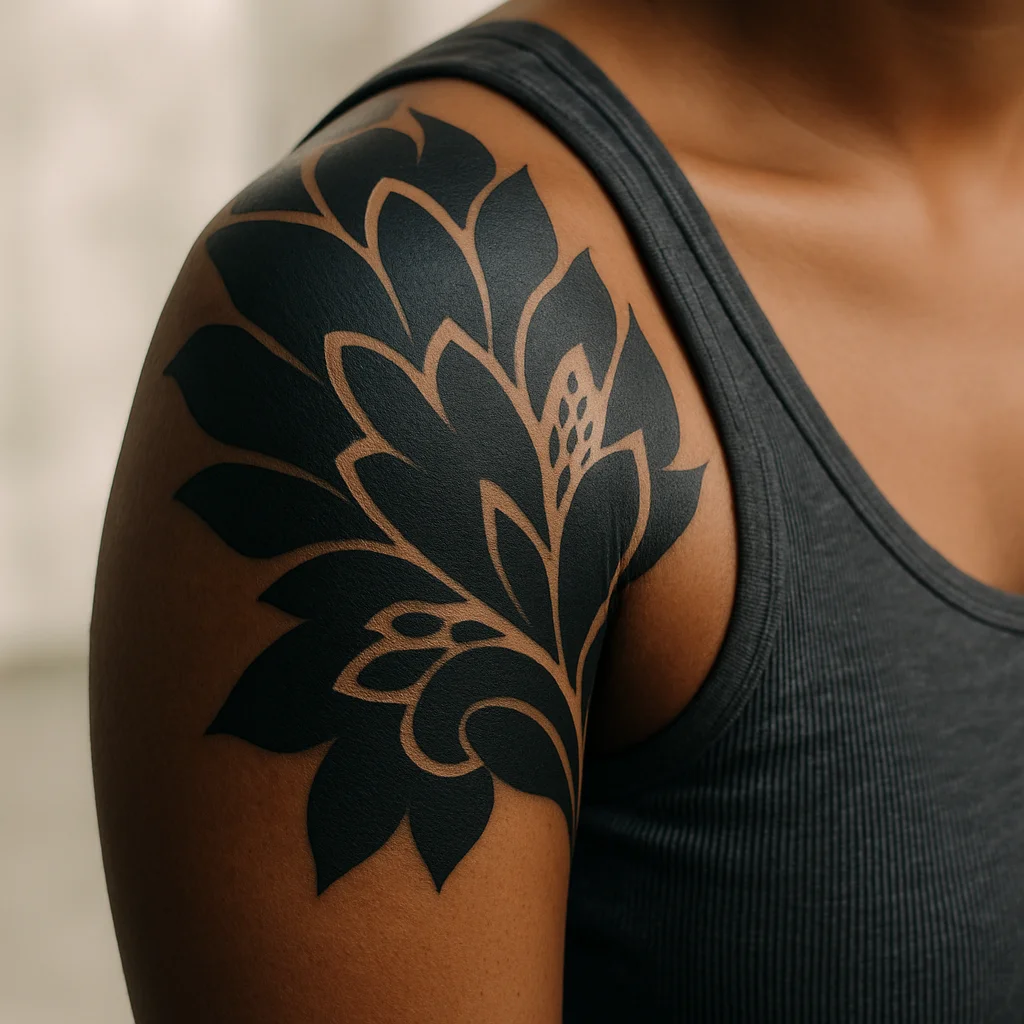
26. Blackwork with white highlight accents
Solid black ornamental shapes and negative-space patterning, finished with sparing white ink for glints on petals or feathers. Understand that white fades unevenly and may need refreshing, so it should be a bonus, never the load-bearing element. Striking on every skin tone when the black is well saturated.
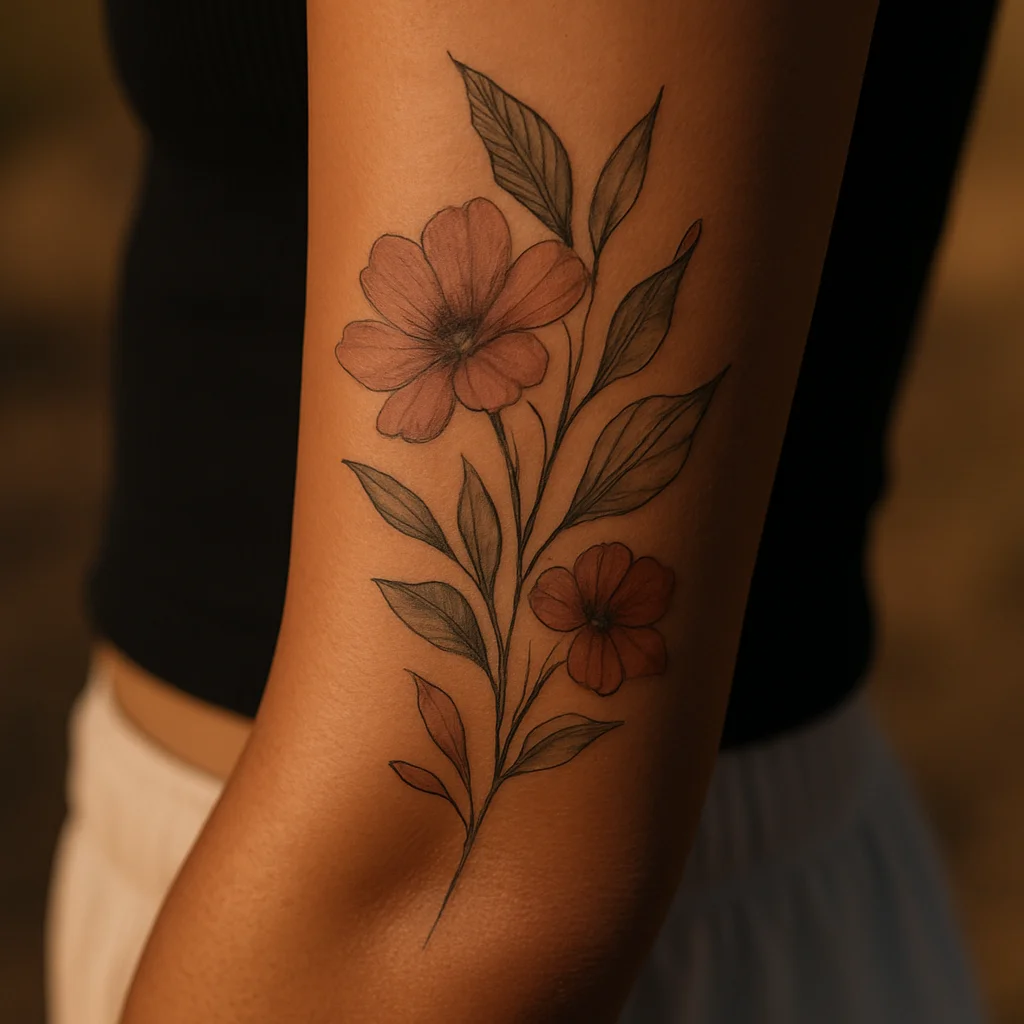
27. Muted palette botanical, dusty rose and sage
Same floral composition as a classic sleeve, but the colours are desaturated — dusty pink, sage, terracotta, soft grey. It reads modern and quiet rather than bright, and it photographs beautifully. Ask specifically for healed muted-palette work, as very pale pigments can look washy in some hands.
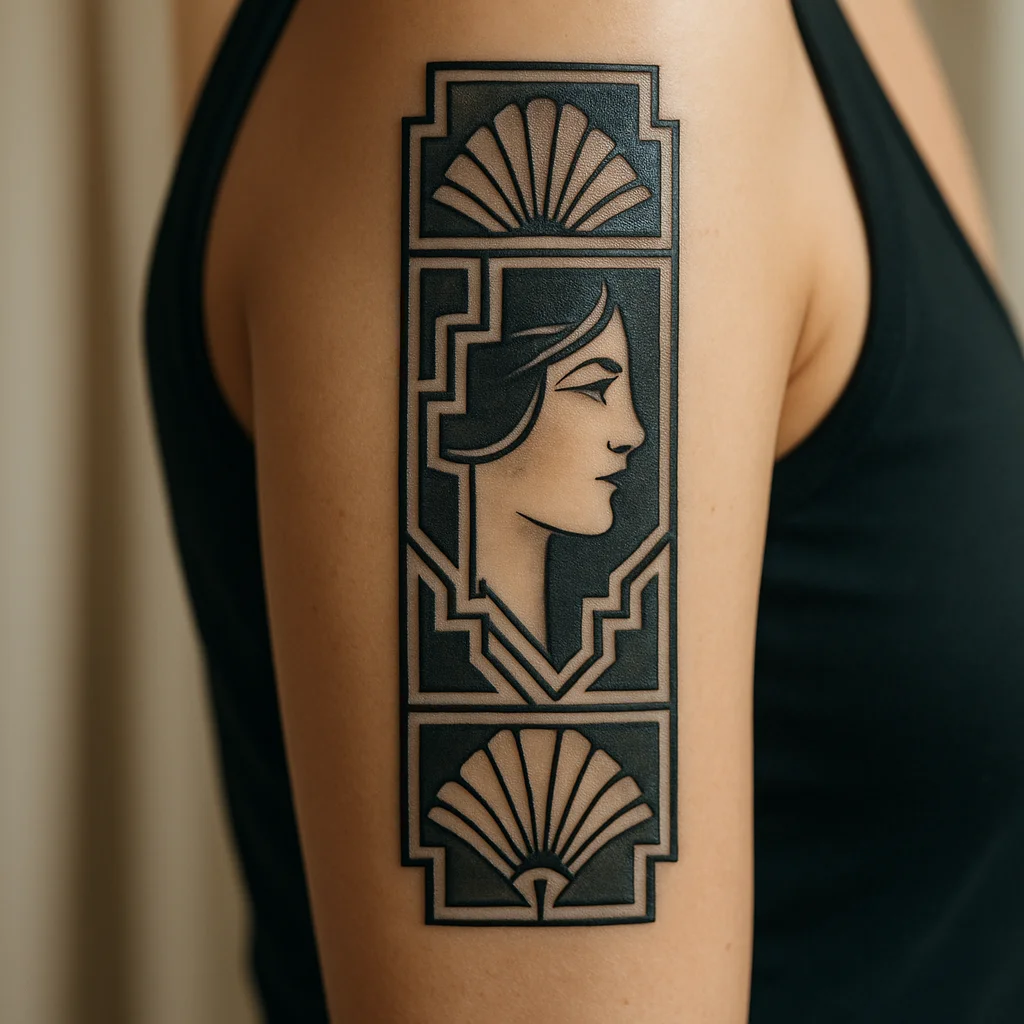
28. Art deco geometry with fan motifs
Stepped lines, sunburst fans and repeating arcs arranged in vertical panels down the arm, with a single figurative element like a woman's profile or a peacock feather. Deco composition suits the arm's cylinder because repetition wraps naturally. Precision matters, so choose an artist with confident straight lines.
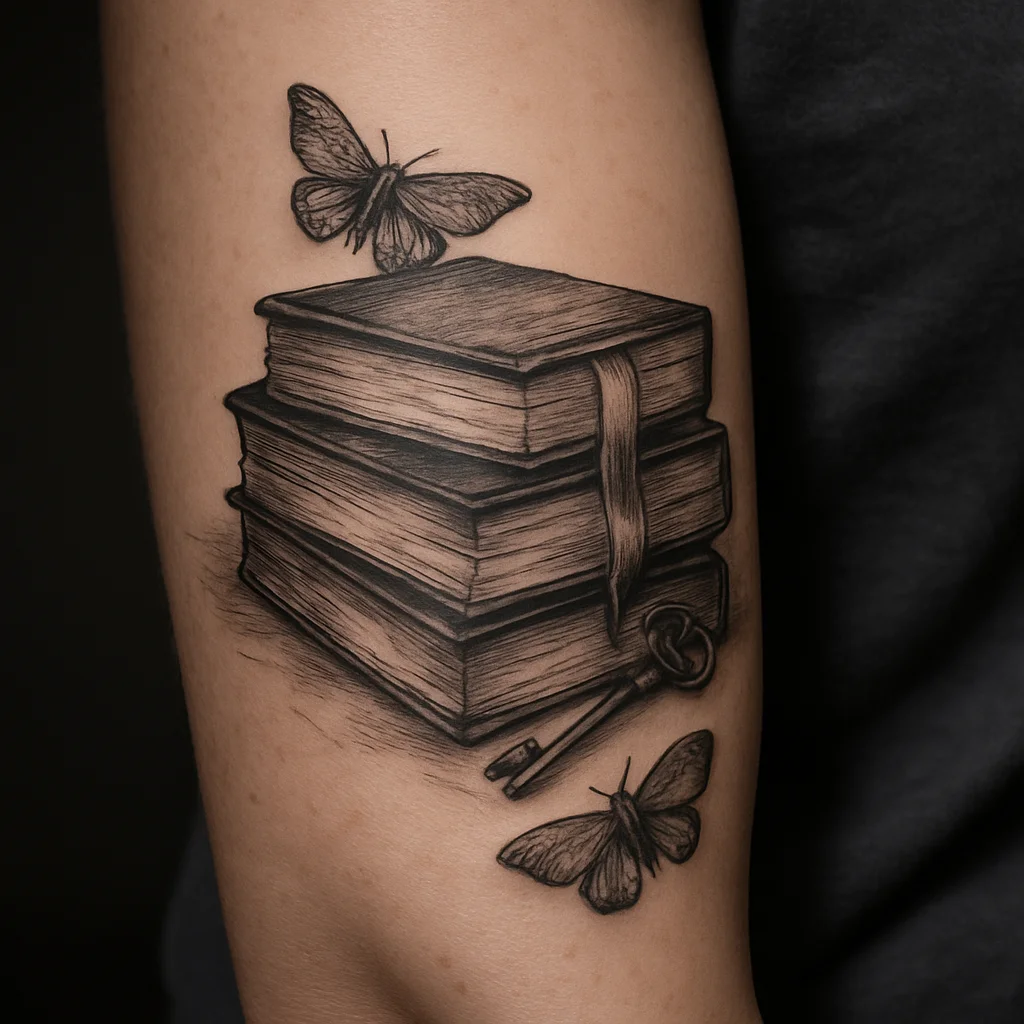
29. Storybook stack: books, keys and moths
Objects layered like a still life — a stack of worn books, a ribbon bookmark, a skeleton key, two moths in flight — held together by grey wash shadow rather than a background scene. Object sleeves are easy to build in stages because each item is a discrete session. Great for people whose meaning lives in symbols, not scenery.
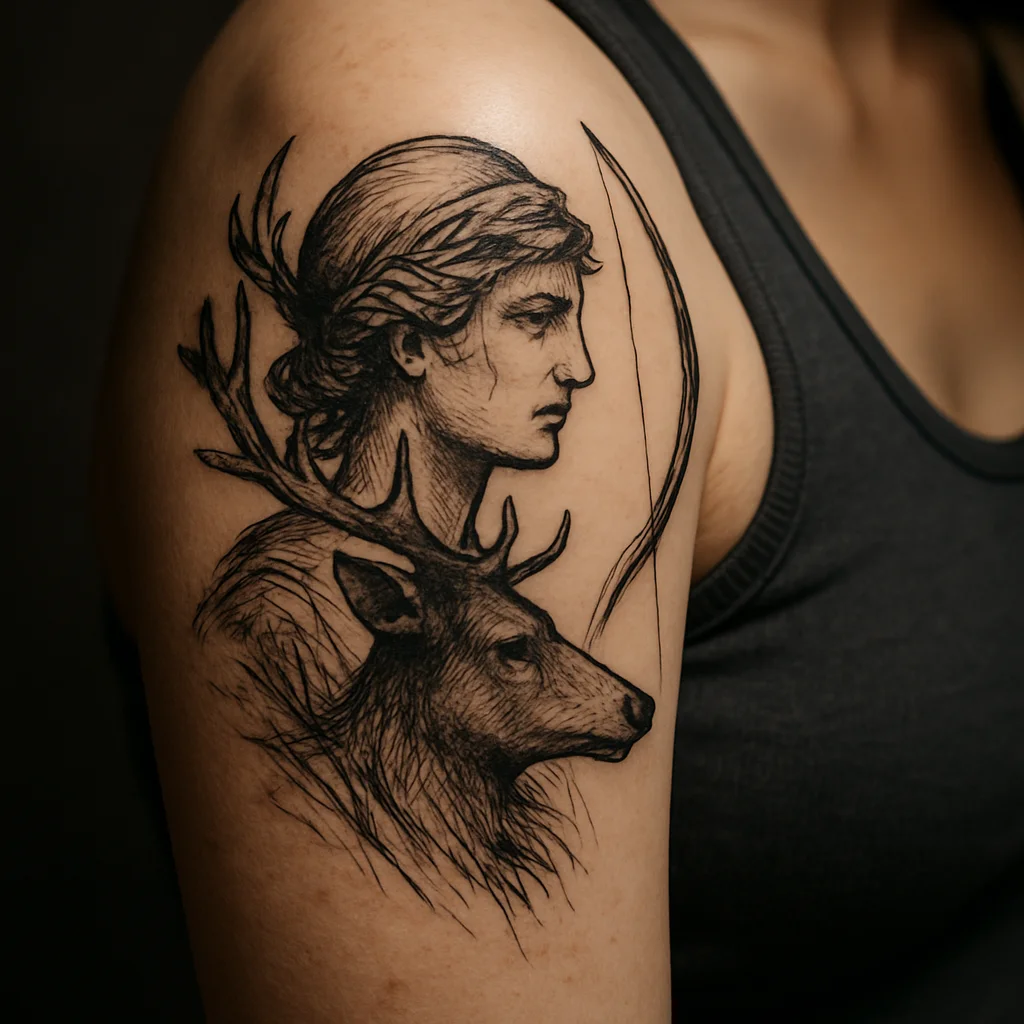
30. Mythic huntress with a stag and crescent bow
A classical figure in profile at the shoulder, a stag's head lower on the arm and a slim crescent-shaped bow tying the two together diagonally. Illustrative shading with limited colour keeps it sculptural rather than fantasy-poster. This is the most ambitious build on the list — expect multiple long sessions and a proper drawing consultation first.
Sessions, pain and what it costs
Most half sleeves land somewhere between two and five appointments. A line-heavy fine-line upper arm can be done in one long day; a wrapped, shaded, colour-packed piece routinely takes four or five sessions with two to four weeks of healing between them. Book them in advance as a series — good artists get busy, and dragging a sleeve out over eighteen months makes the older sections look faded next to the fresh ones.
Pain, honestly, varies by zone more than by person:
- Outer upper arm and outer forearm: the easiest real estate on the body. Most people describe it as hot scratching and can sit for hours.
- Inner bicep and inner forearm: thin skin, more nerves, noticeably sharper. Manageable, but you will feel every pass.
- Elbow ditch and the bony point of the elbow: the worst of it. Short bursts, and worth planning as the last twenty minutes of a session rather than the first hour.
- Armpit edge and inner shoulder: spicy if your design wraps that far. Tell your artist you want it done early while your tolerance is high.
On cost: reputable artists charge either by the hour or as a day rate, and a half sleeve is typically quoted in day rates rather than per-piece. Expect a range that reflects your city and the artist's demand — a mid-level artist in a smaller market will come in at a fraction of a heavily booked specialist in a major city, and colour or dense blackwork costs more because it takes more chair time. Budget for a deposit at booking, tips if that is the custom where you live, and one possible touch-up session. If you want the arithmetic laid out properly, our breakdown of full sleeve tattoo cost scales down neatly: a half sleeve usually runs a bit under half a full sleeve, since you skip the trickiest wrap zones.
Briefing your artist and healing it well
The best half sleeves start with a brief that gives direction without dictating every line. Bring three things: a short list of subjects that genuinely matter to you, five to ten reference images that show the style you want rather than tattoos you want copied, and a clear note on what you do not want. Saying "no script, no colour, nothing on the inner elbow" is more useful to an artist than twenty pinned photos.
Also tell them about clothing and lifestyle. If you wear short sleeves at work, that changes where the top border sits. If you swim competitively or work outdoors, they will steer you toward bolder line weight and less fragile detail. And be explicit about future plans — an artist designing a piece that might become a full sleeve will lay the flow lines differently from day one.
Healing a half sleeve is the same protocol as any tattoo, just across more skin at once:
- Keep the wrap on as long as your artist instructs, then wash gently with unscented soap and lukewarm water two or three times a day.
- Use a thin layer of fragrance-free ointment or lotion — thin enough that the skin looks matte, not shiny.
- Expect flaking and itching from roughly day four to day ten. Do not scratch, do not pick, do not shave the area until it is fully closed.
- No pools, baths, saunas or sea swimming for two to three weeks, and no gym sessions that grind the fresh area against equipment.
- Once healed, sunscreen is the single biggest factor in how sharp your arm looks in ten years. Arms get more UV than almost anywhere else on the body.
Book your touch-up assessment at least six to eight weeks out, when the skin has settled. Small gaps in solid black or a soft spot in a fine line are normal and usually a quick fix.
Frequently asked questions
How many sessions does a half sleeve take?
Usually two to five, depending on density and colour. A light fine-line or scattered design can be finished in one long day, while a fully wrapped shaded piece takes four or five appointments spaced two to four weeks apart. Book the whole series upfront so the sections heal at a similar pace and match in tone.
Is an upper or lower half sleeve less painful?
Upper, generally. The outer upper arm has more muscle and fat and fewer nerve endings, while the inner forearm, wrist and elbow ditch are noticeably sharper. If your design wraps the inner arm, ask your artist to tackle that area early in the session while your tolerance is highest.
Can I extend a half sleeve into a full sleeve later?
Yes, if you plan the edges for it. Designs that fade out with petals, dots, smoke or water lines blend into new work easily, while hard borders and symmetrical ornamental bands are much harder to continue convincingly. Tell your artist at the consultation that a full sleeve is possible so they lay the flow lines accordingly.
Does a half sleeve have to follow one theme?
It needs one visual logic, not one subject. Consistent line weight, a single shading approach and shared background elements like leaves, smoke or water will hold unrelated motifs together. A collection of pieces done in different styles by different artists rarely reads as a sleeve, even if the individual tattoos are good.
How much should I budget for a half sleeve?
Most artists quote half sleeves in day rates rather than per piece, so cost tracks the number of days plus your city and the artist's demand. Colour and dense blackwork sit at the higher end because they need more chair time. Plan for a booking deposit, gratuity where customary, and one touch-up session after healing.
The conversation
No comments yet. Got a thought about these designs? Start us off.
Want to weigh in? Join the community to comment, save designs and try them on your skin.