Lily of the Valley Tattoos: 26 May Flower Ideas
The May birth flower is a nodding stem of tiny white bells, and it only looks delicate when it is drawn correctly. Here are 26 lily of the valley designs, from single-needle sprigs to bold blackwork, with honest notes on sizing, placement and how each one ages.
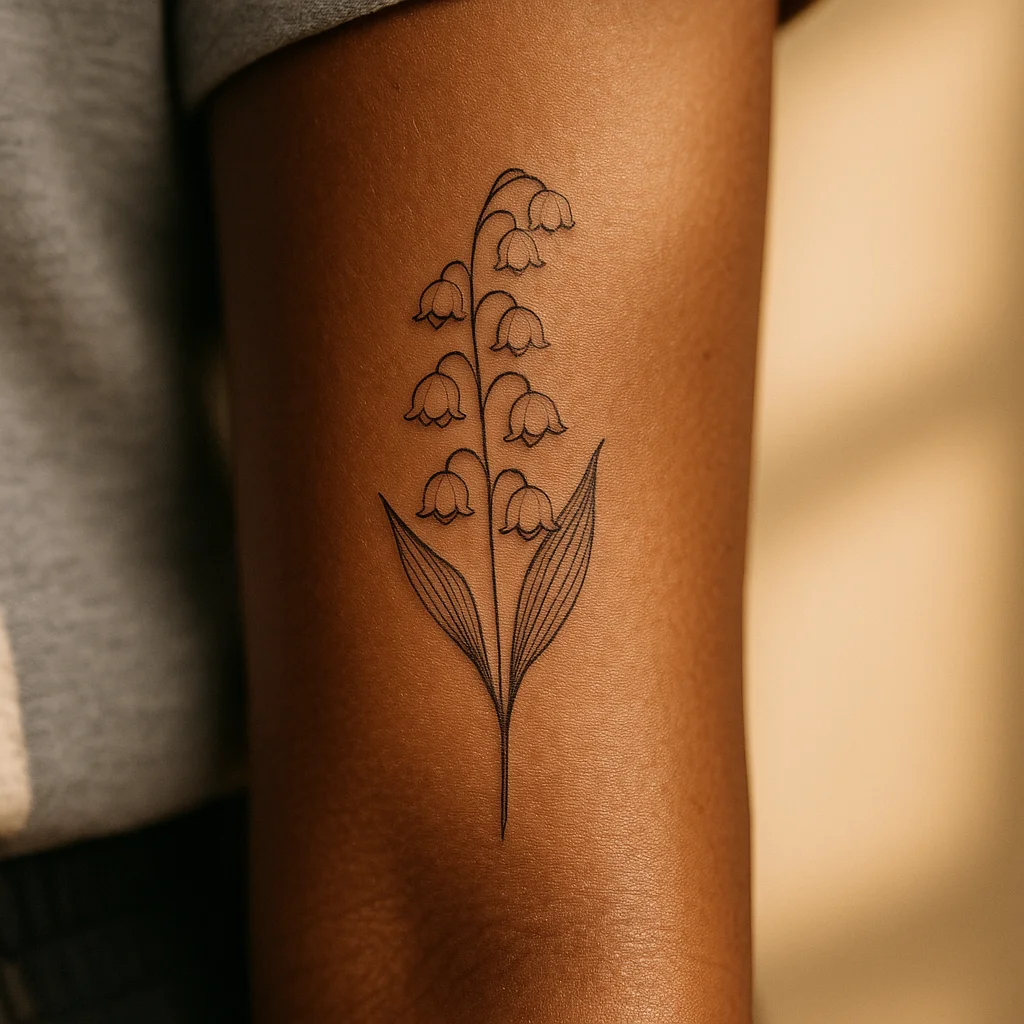
The May Flower That Punishes Sloppy Linework
Lily of the valley (Convallaria majalis) is the May birth flower, and it carries one of the warmest meanings in the birth-flower calendar: the return of happiness. Folklore piles on more — humility, renewed luck, sweetness after a hard season, and in Christian imagery the tears of Mary, which is why it shows up so often in tattoos about motherhood. In France it is muguet, handed out in small tied posies on the first of May for good fortune. There is also a quiet edge to it: every part of the plant is toxic. Sweet-looking, not harmless. Plenty of people choose it precisely for that double reading.
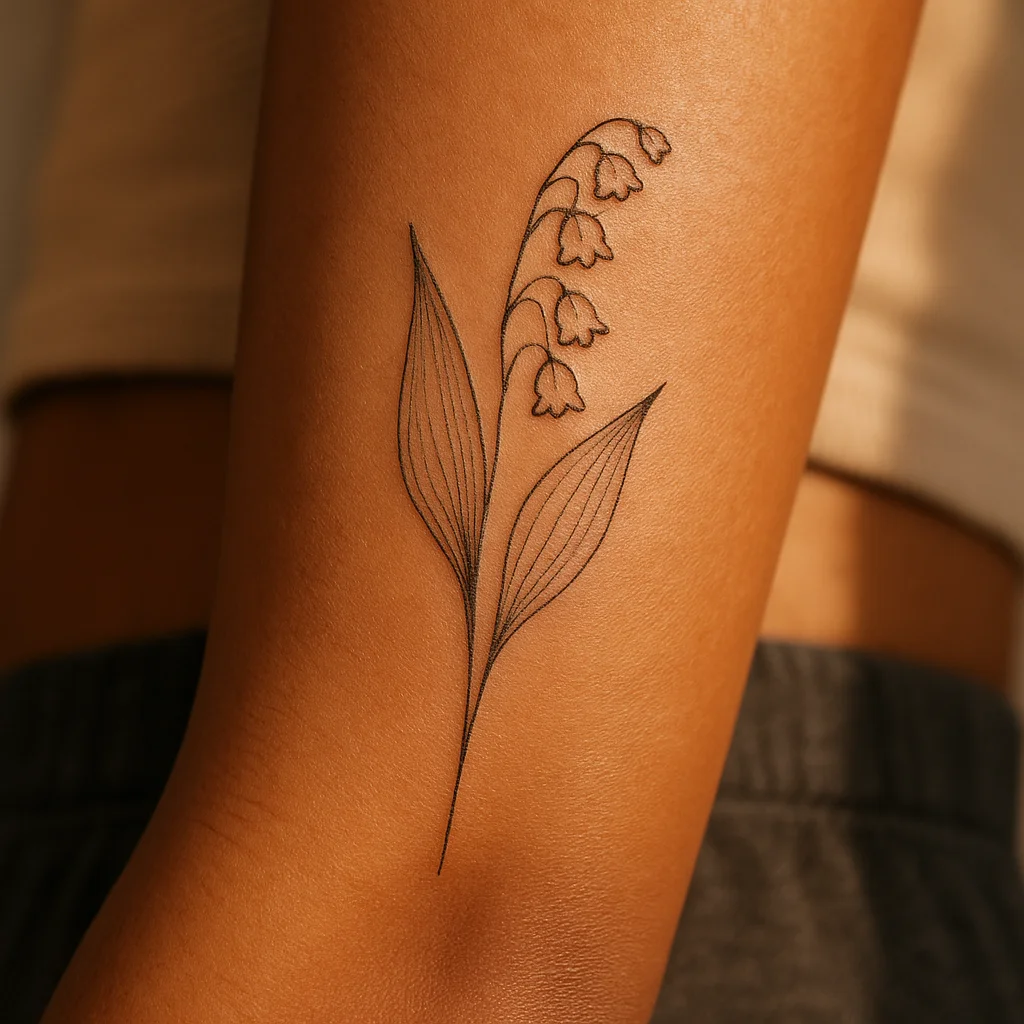
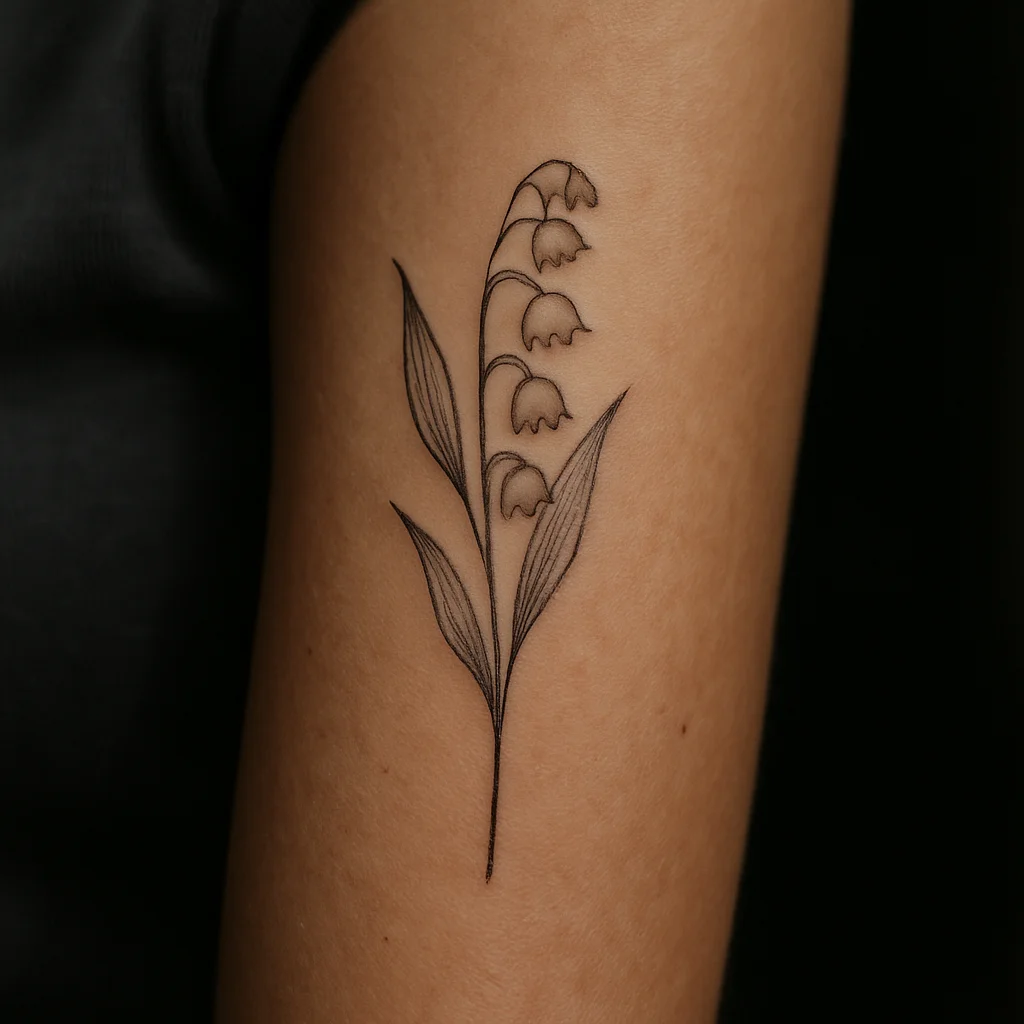
Botanically, it is a specific shape and worth briefing your artist on. A single arching stem (a raceme) carries roughly six to twelve bells hanging from short pedicels, alternating left and right, biggest at the bottom, smallest and still closed at the tip. Each bell is a rounded cup with a scalloped, slightly flared rim. Two broad, ribbed basal leaves sheathe the base. Get the alternation and the nod of the stem right and the tattoo reads instantly; draw the bells symmetrically on both sides like a hanging ladder and it reads as a generic bud plant.
The craft problem is scale. Real bells are the size of a pencil eraser, and tattooers cannot shrink detail forever. Give each bell at least a few millimetres of interior space so the rim, the shadow inside the cup and the tiny gap between bell and stem survive the ink spread that happens over years. A stem with nine bells crammed into an inch will close into a grey caterpillar by year five. Fewer, larger bells always age better than more, tinier ones.
Single-Stem Designs That Follow the Arc
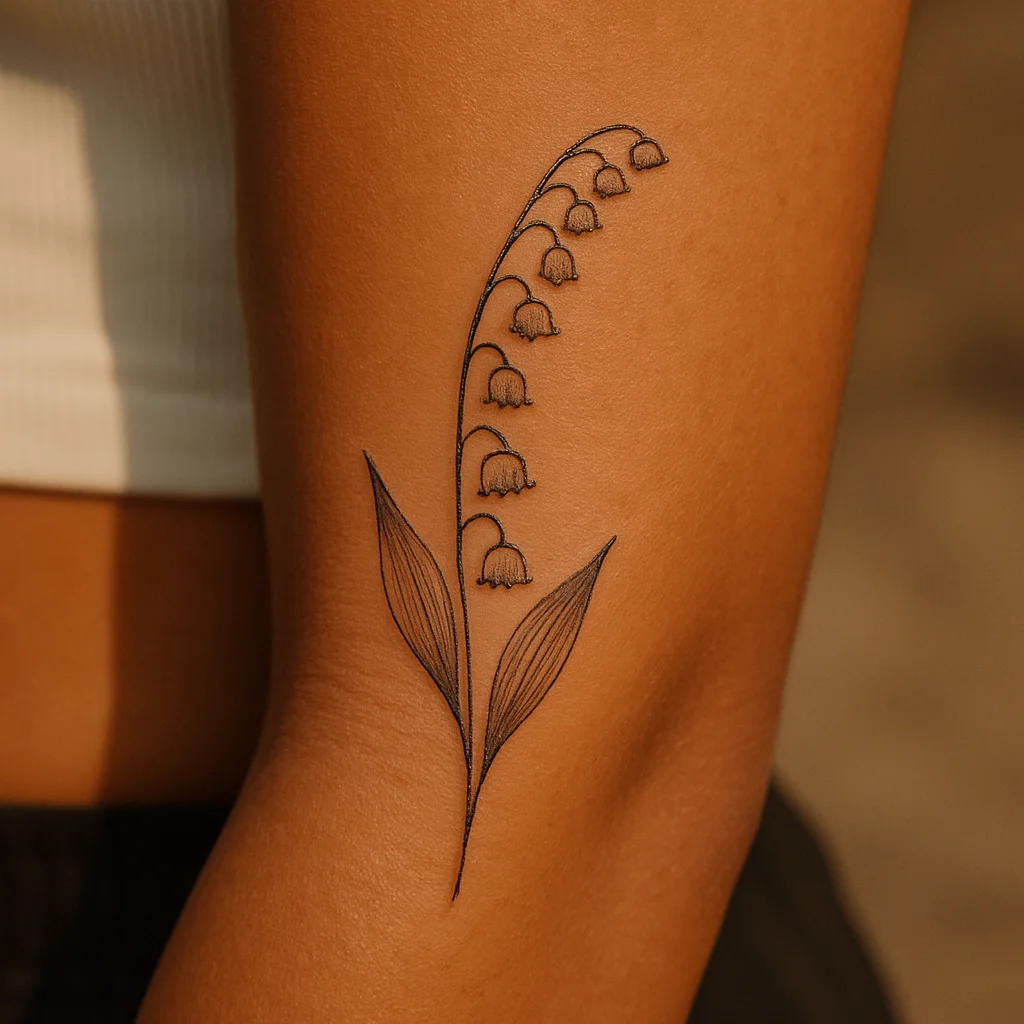
1. Single-needle nodding stem on the inner forearm
One stem, seven bells, two leaves at the base, drawn about four to five inches so the bells stay open and legible. Run it along the arm rather than across it and the natural curve of the raceme mirrors the limb. The inner forearm is flat, low-friction skin, which is why single-needle botanical work holds up here better than almost anywhere else.
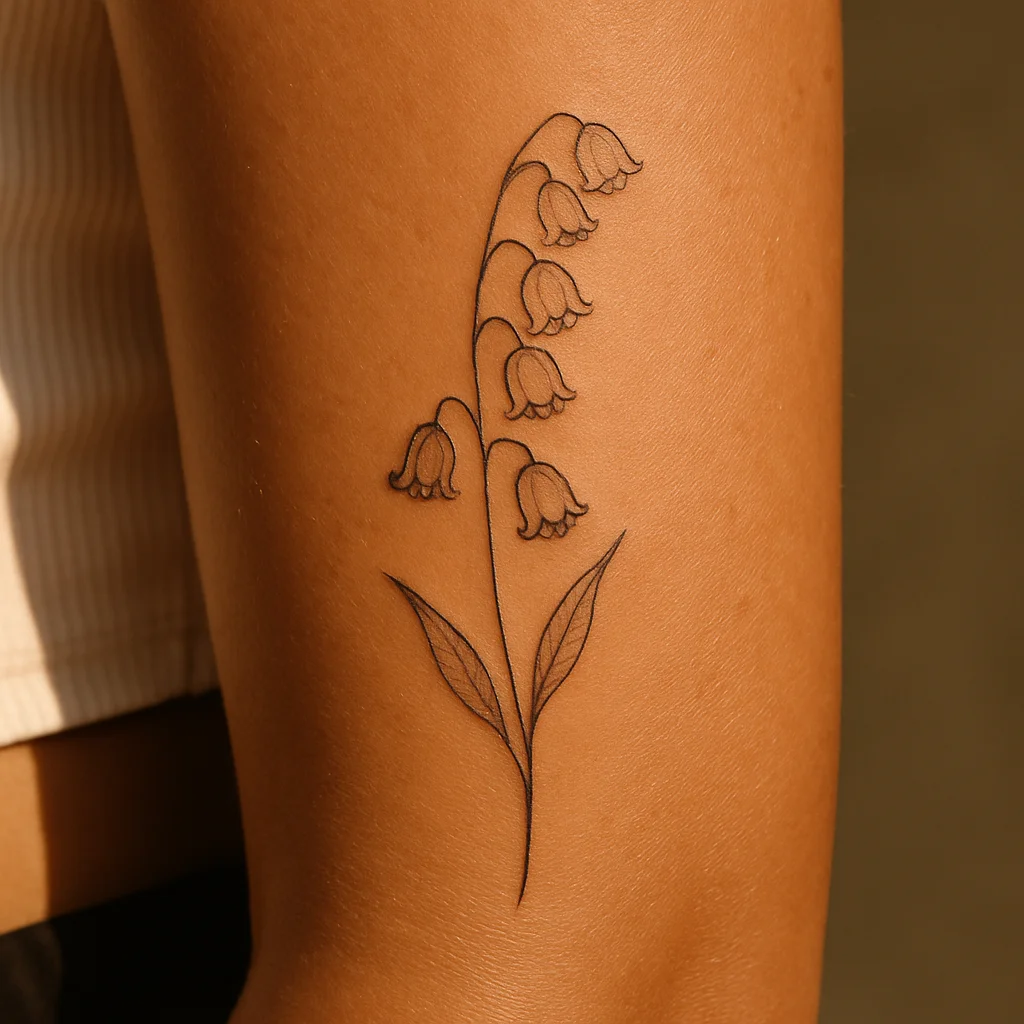
2. Wrist-side sprig that curls with the tendon
A short three-bell stem tucked on the outer edge of the wrist, following the tendon line toward the thumb. Keep it under two inches and use a slightly heavier needle grouping than you would on the forearm, because the wrist edge sees constant movement and cuff friction. It is a five-minute tattoo with a surprisingly sharp sting over the bone.
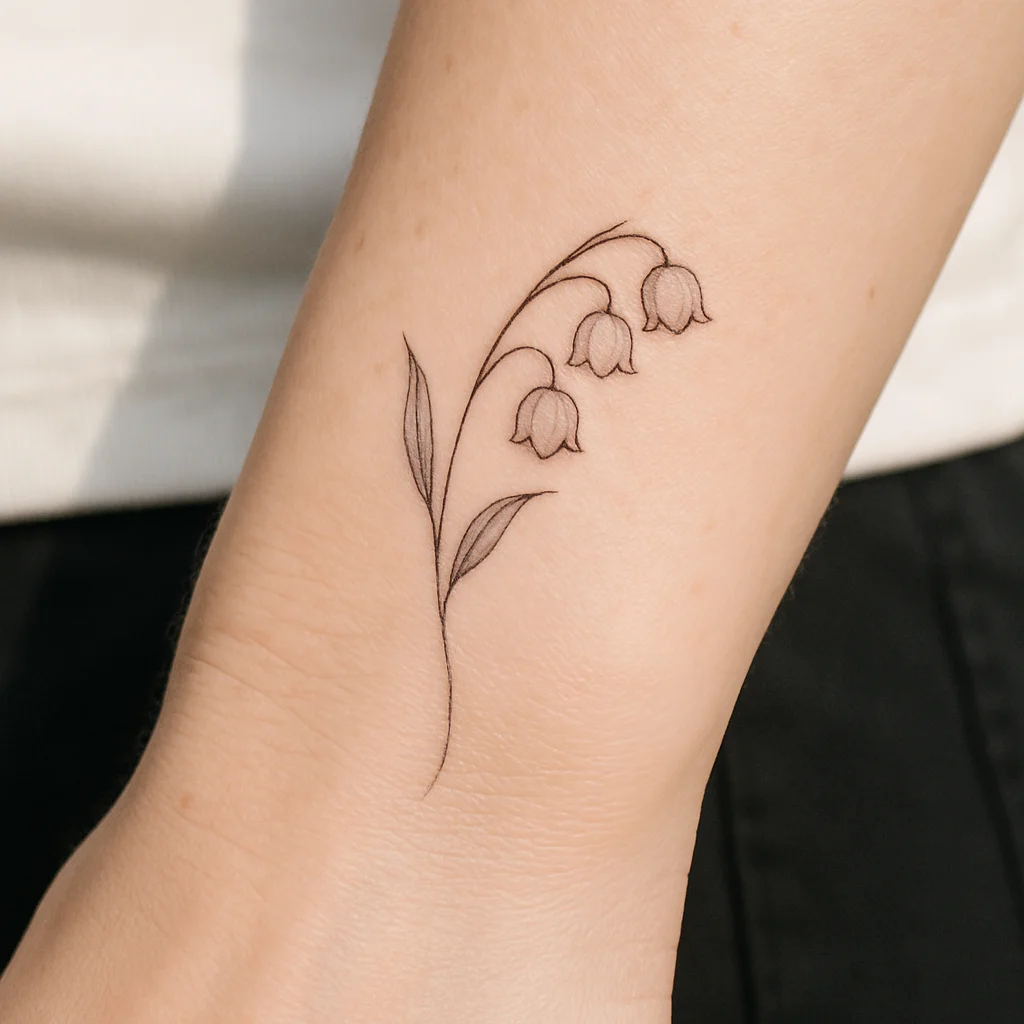
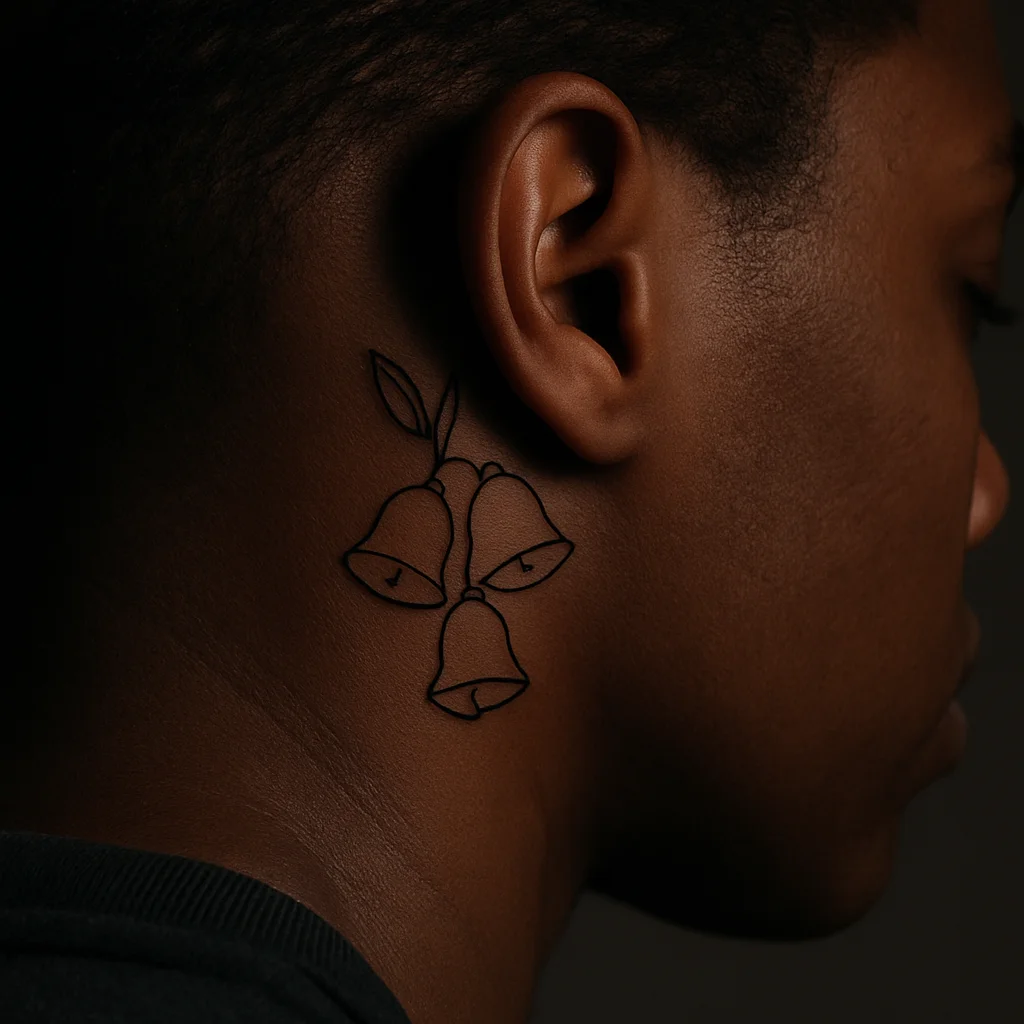
3. Behind-the-ear three-bell sprig
Three bells and a single leaf, no more, sitting in the soft hollow behind the earlobe rather than up on the hard mastoid bone. Hidden by hair when you want it hidden, framed by an updo when you don't. Ask for open bells with visible rims; miniature closed buds back there turn into dots within a couple of years.
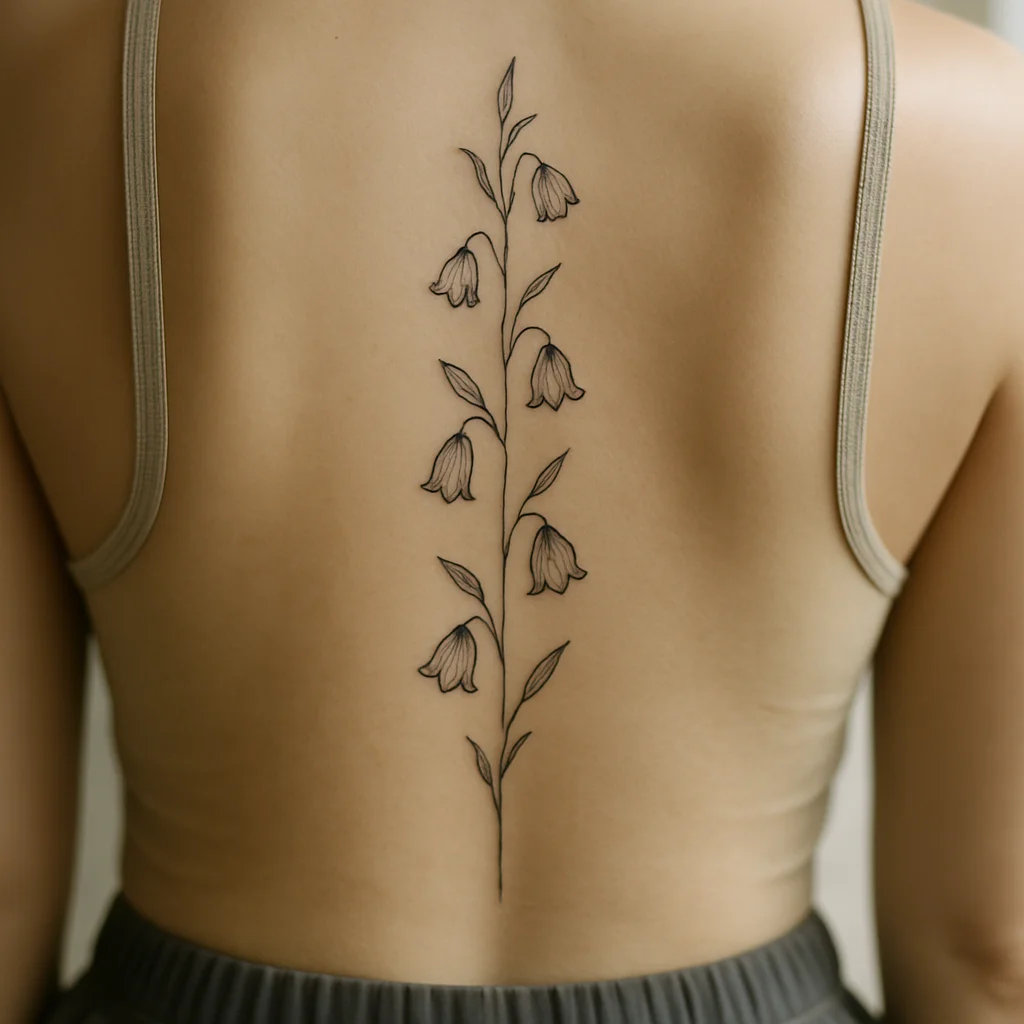
4. Spine stem down the vertebrae
A long, elegant version: one stem tracing the spine from nape to mid-back with bells alternating either side of the vertebrae, six to ten inches. The alternating botany does the composition work for you. Expect a bony, vibration-heavy sitting, and expect to lie still for it.
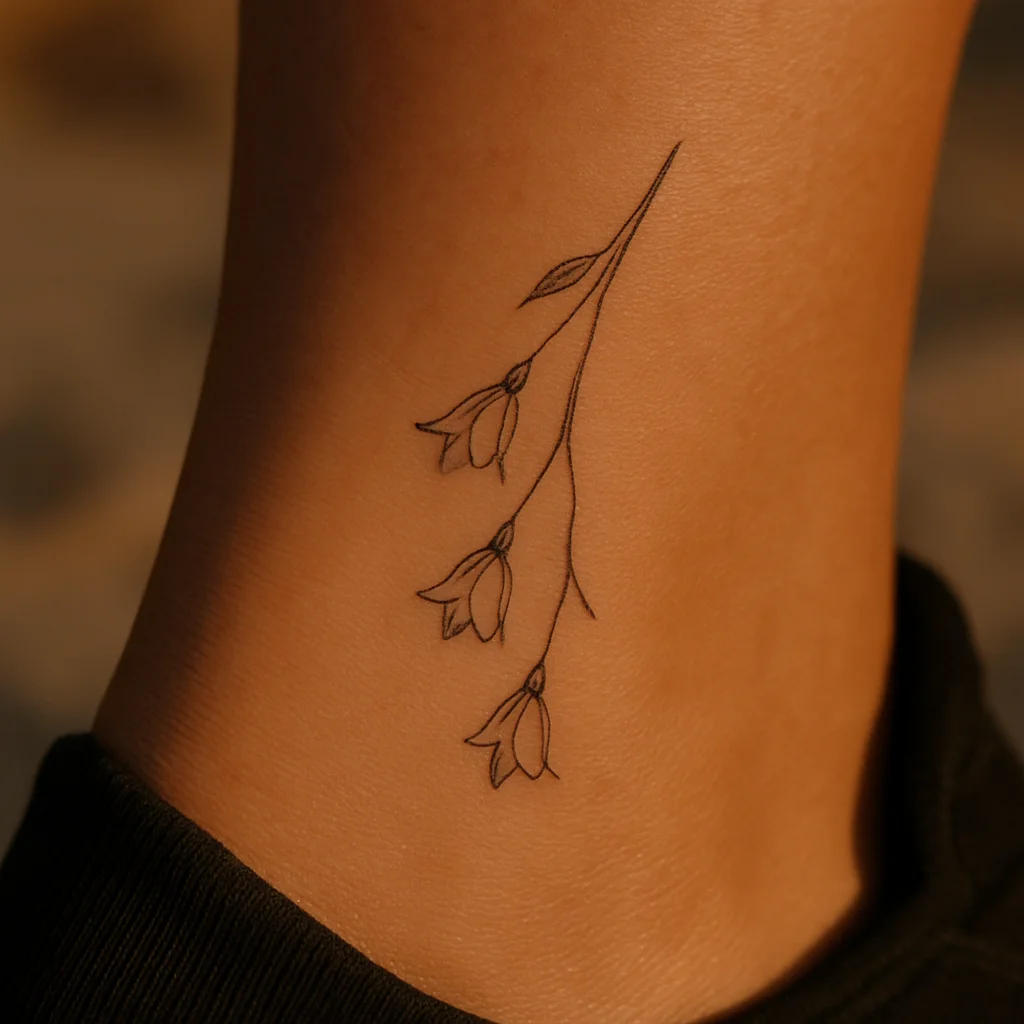
5. Ankle stem wrapping the bone
A short stem curving around the inside ankle bone with the bells falling toward the arch. Sit it above the sock line if you want it visible year-round. Ankles are bony and blood-shy at the edges, so this one stings and can heal patchy — a stem with slightly thicker linework forgives that better.
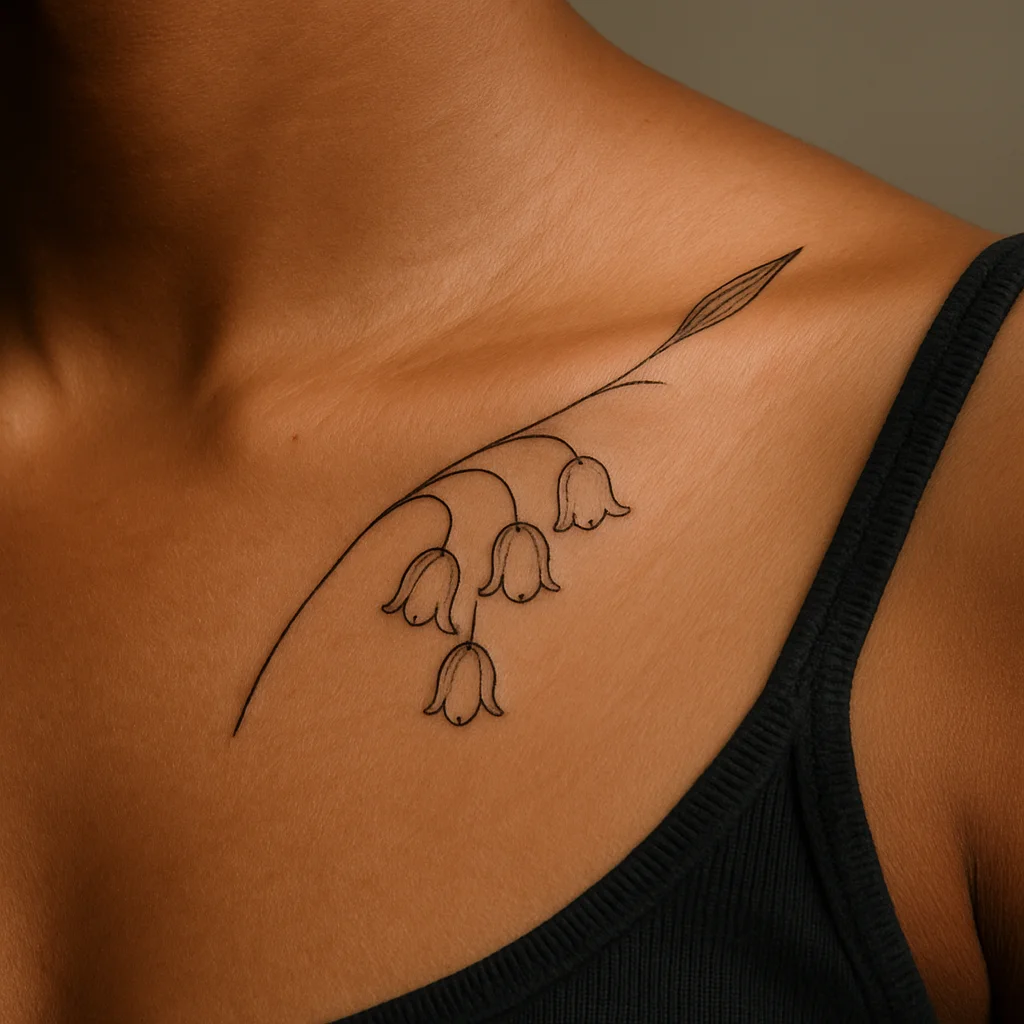
6. Collarbone stem along the bone
Lay the stem directly along the collarbone with the bells hanging down into the hollow beneath it, three to four inches. The design borrows the bone's own arc, which is why it looks composed rather than stuck on. Fine-line here ages well provided you keep the piece out of the sun.
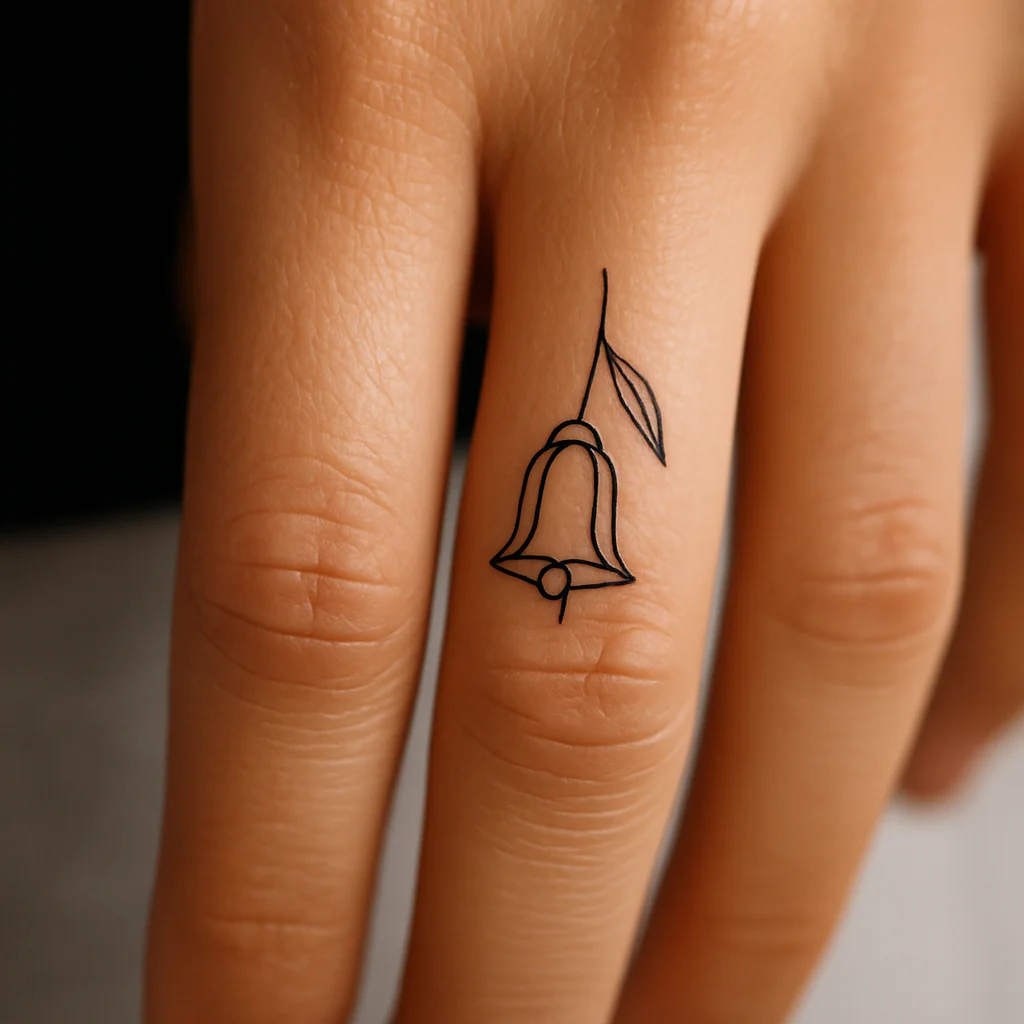
7. Minimal one-bell-and-leaf on the finger
The smallest honest version: a single bell with one narrow leaf on the side of a finger, done in one clean pass. Be realistic — finger skin regenerates fast and rejects fine detail, so plan on a touch-up within a year and accept some softening. Choose it because you love the idea, not because you want it crisp forever.
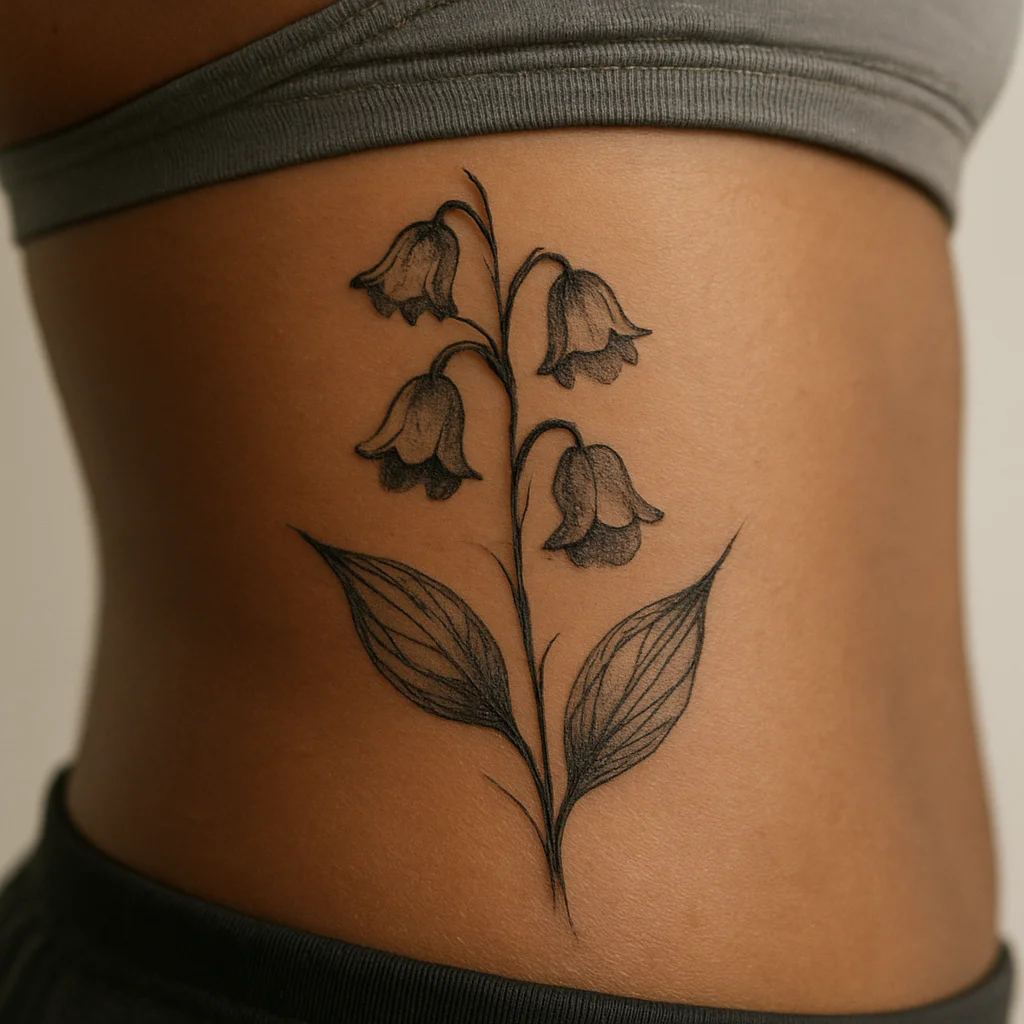
8. Full ribcage stem with leaves
A five- to six-inch stem running down the side of the ribs, bells nodding forward, both basal leaves drawn broad and ribbed at the bottom. The extra length lets an artist add stipple shading inside each bell so the flowers read as three-dimensional cups. Ribs are one of the sharper sittings on the body, but the payoff is a piece that stays hidden and out of the sun.
Names, Dates and Personalized May Versions
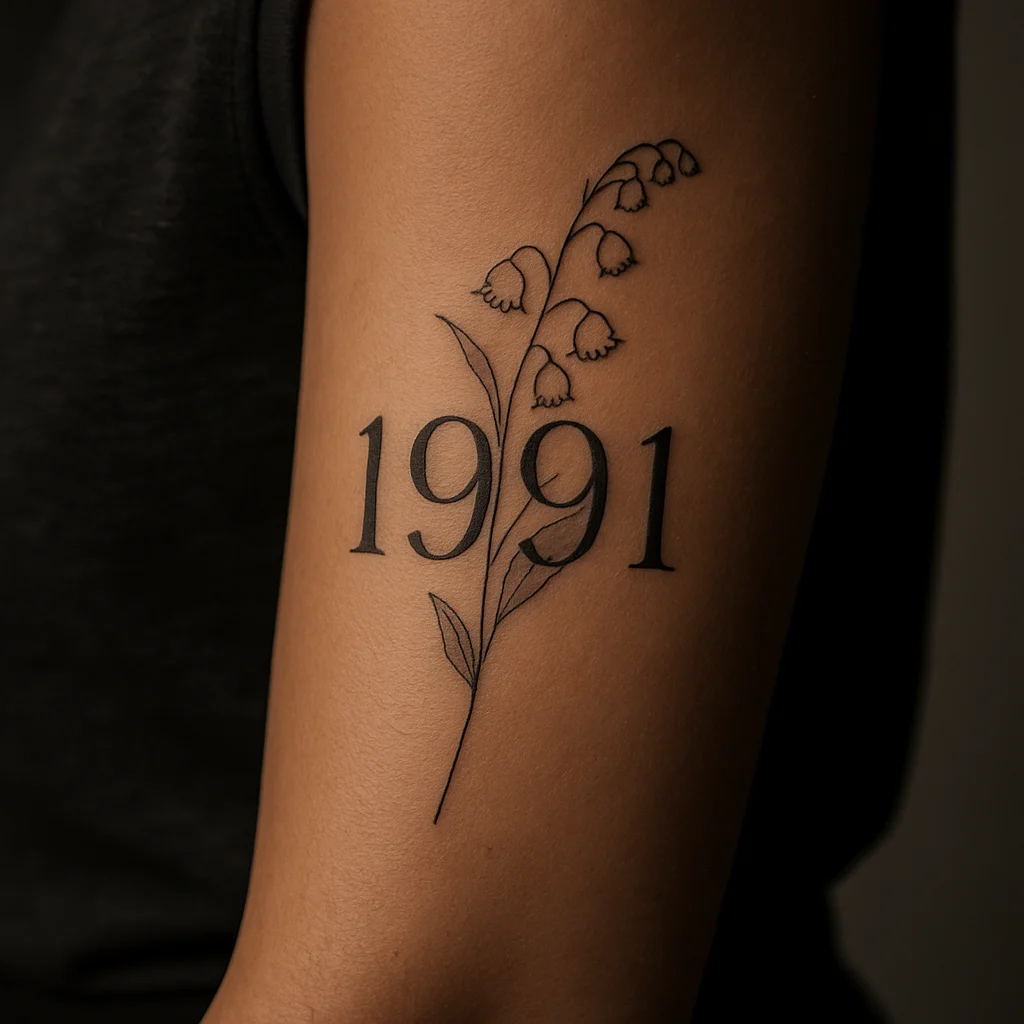
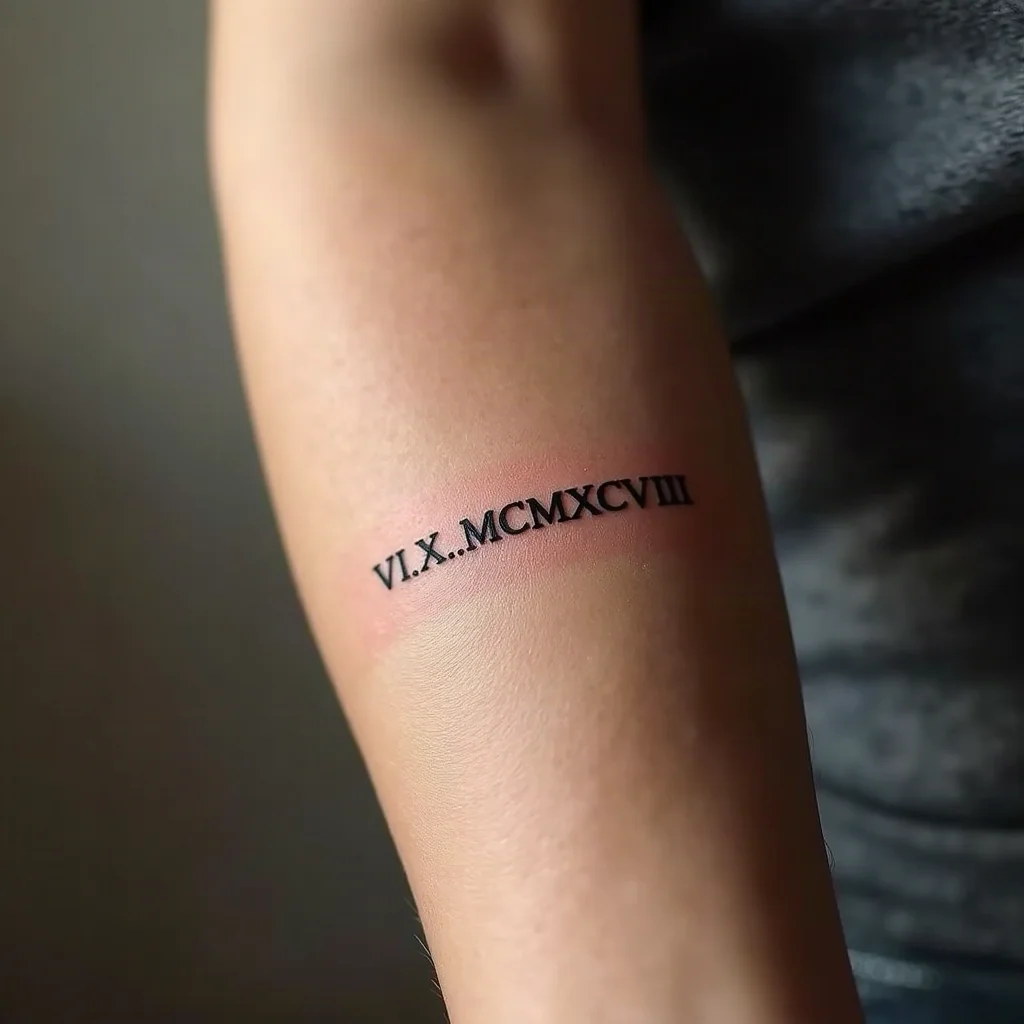
9. Stem threaded through a birth year
Thin serif numerals for the year with the stem passing behind the digits and one bell overlapping the front of a number. The overlap is what sells it as one drawing instead of a flower plus text. Keep numerals at least a centimetre tall so the counters inside the 0s and 8s stay open.
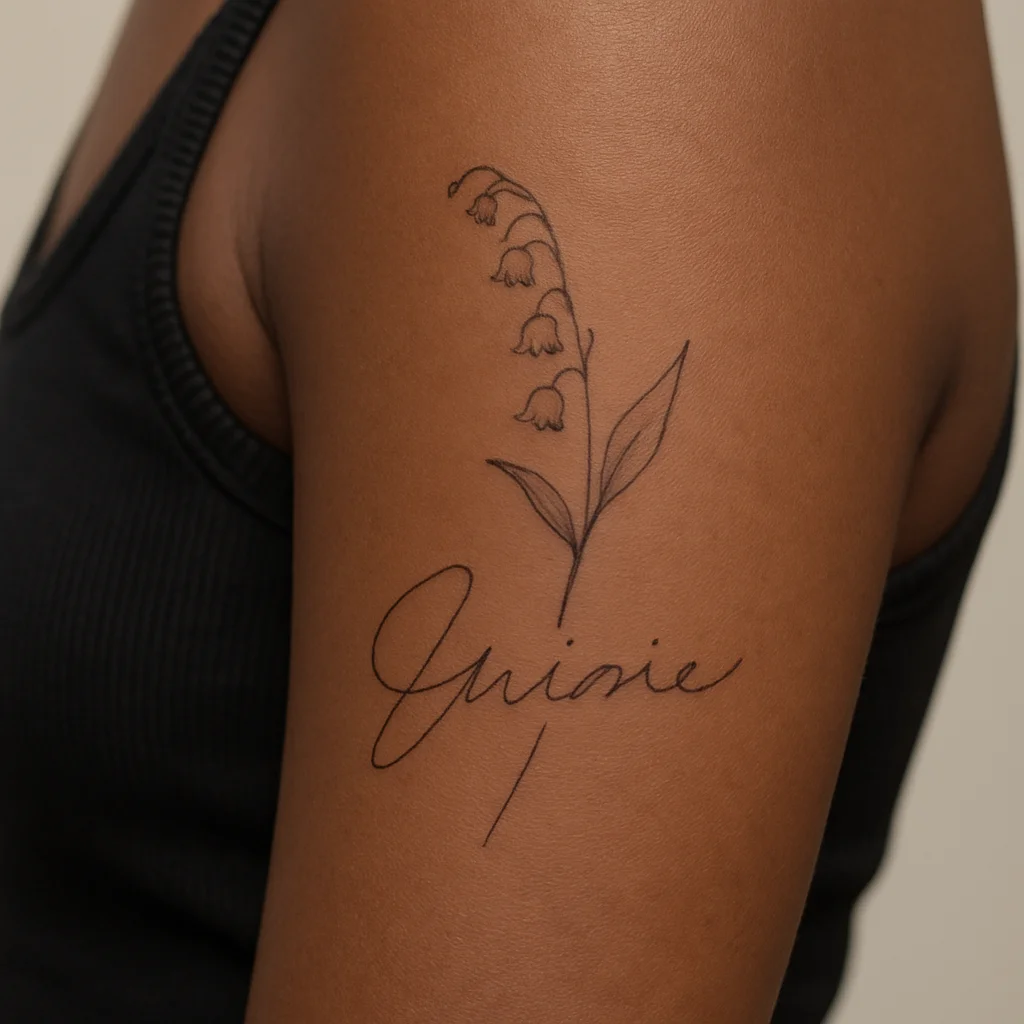
10. Handwriting plus a sprig
A traced signature or a short line in a parent's own handwriting, with a small five-bell stem anchoring one end. The flower carries the May birthday, the script carries the voice. If you are going this route, the details on scanning and cleaning up real handwriting matter — our guide to handwriting tattoos that age well covers how to prep the source image.
11. One bell per child
A single stem where the number of bells equals the number of children, or the number of May birthdays in the family. Sized around three to four inches on the shoulder blade so each bell stays distinct and countable. Simple concept, and it never needs explaining twice.
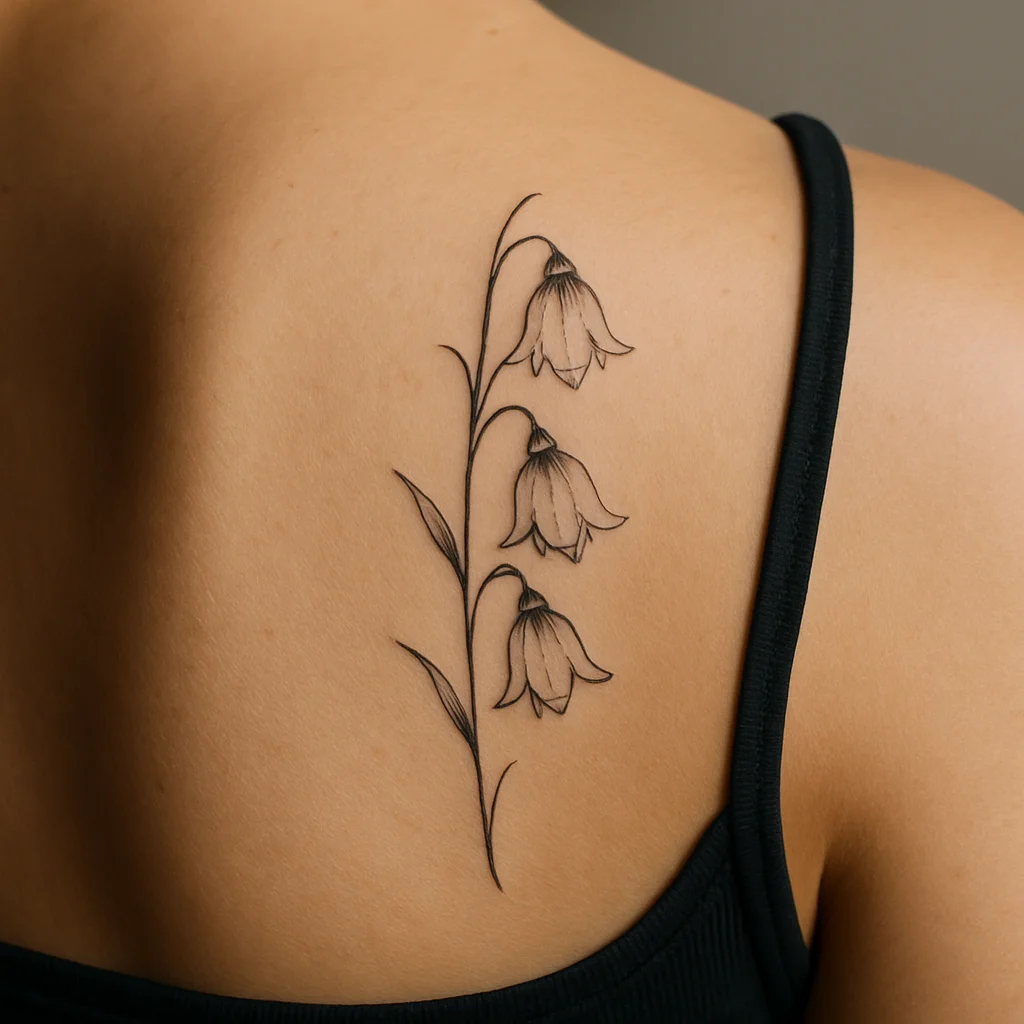
12. Bracelet of bells around the wrist
A continuous ring of stem and leaf circling the inner wrist with bells hanging inward, drawn thinner where it crosses the tendon on the underside. Ask for the ring to break rather than meet, so the line looks botanical rather than mechanical. Wrap tattoos need a clean stencil session with your arm in a relaxed position, not stretched flat.
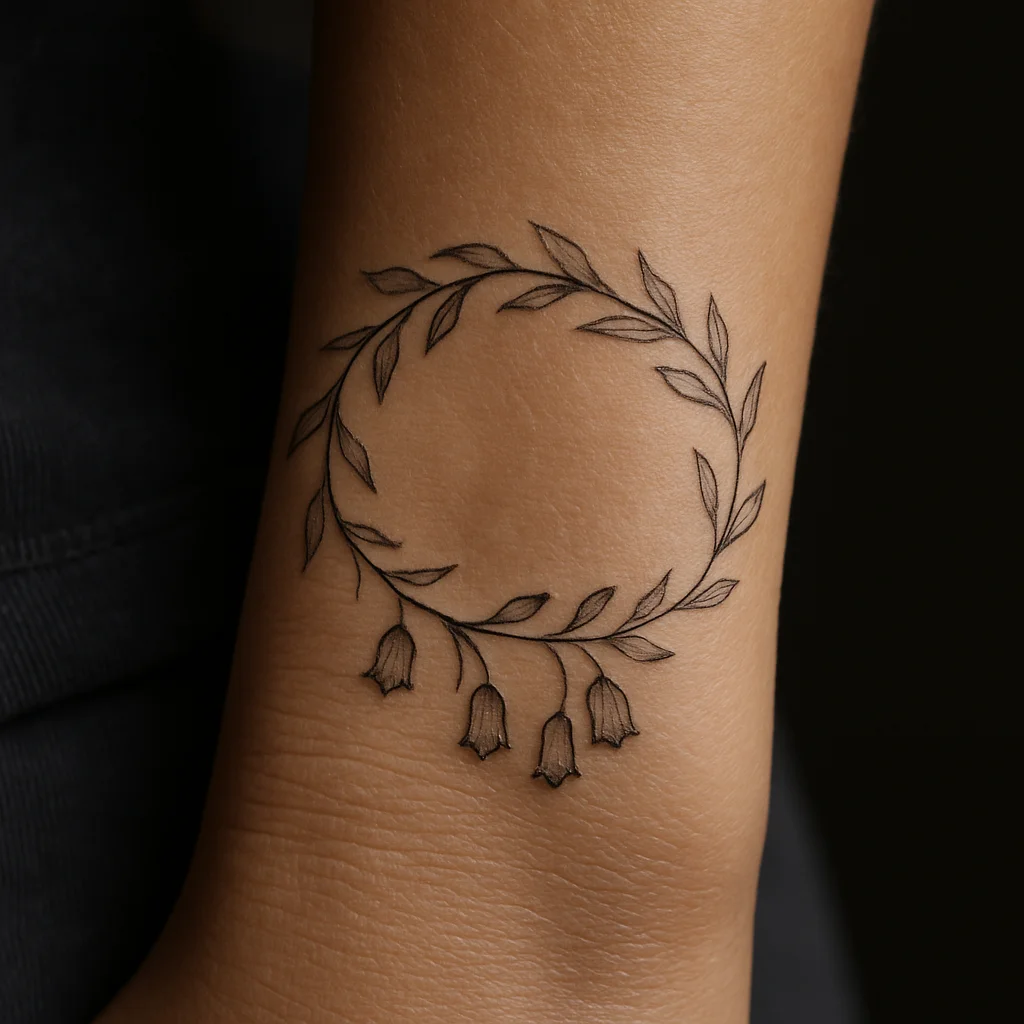
13. Botanical plate framing
The stem drawn as a specimen inside a slim oval or rectangular frame, with a hairline latin caption — Convallaria majalis — under it. This suits the outer forearm, where the flat plane keeps the frame from distorting. Fine caption text should be no smaller than about four millimetres cap height.
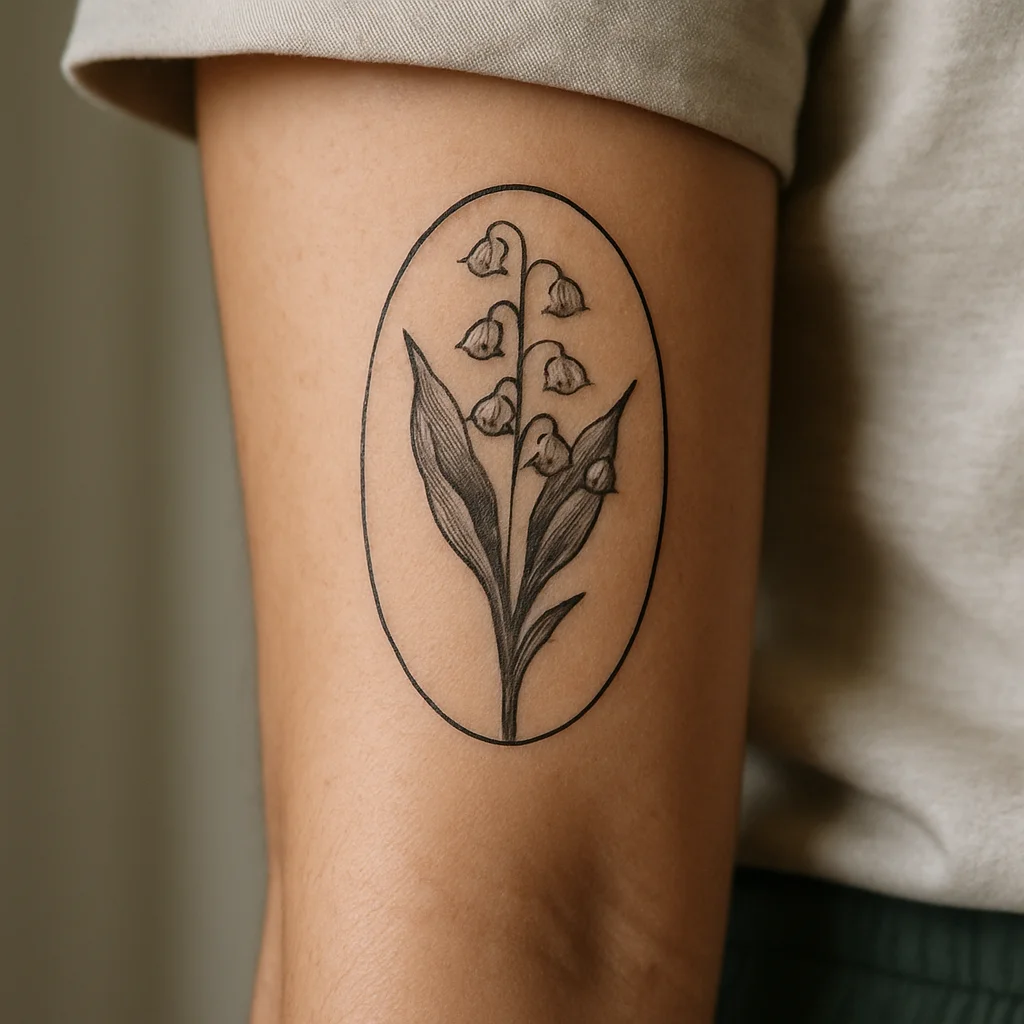
14. Mirrored stems for two people
Two identical stems that arc toward each other, one on each person, so they meet when arms sit side by side. Popular for a mother and a May-born daughter. There are more ways to build a pair that matches without being identical in our roundup of small mother-daughter tattoos.
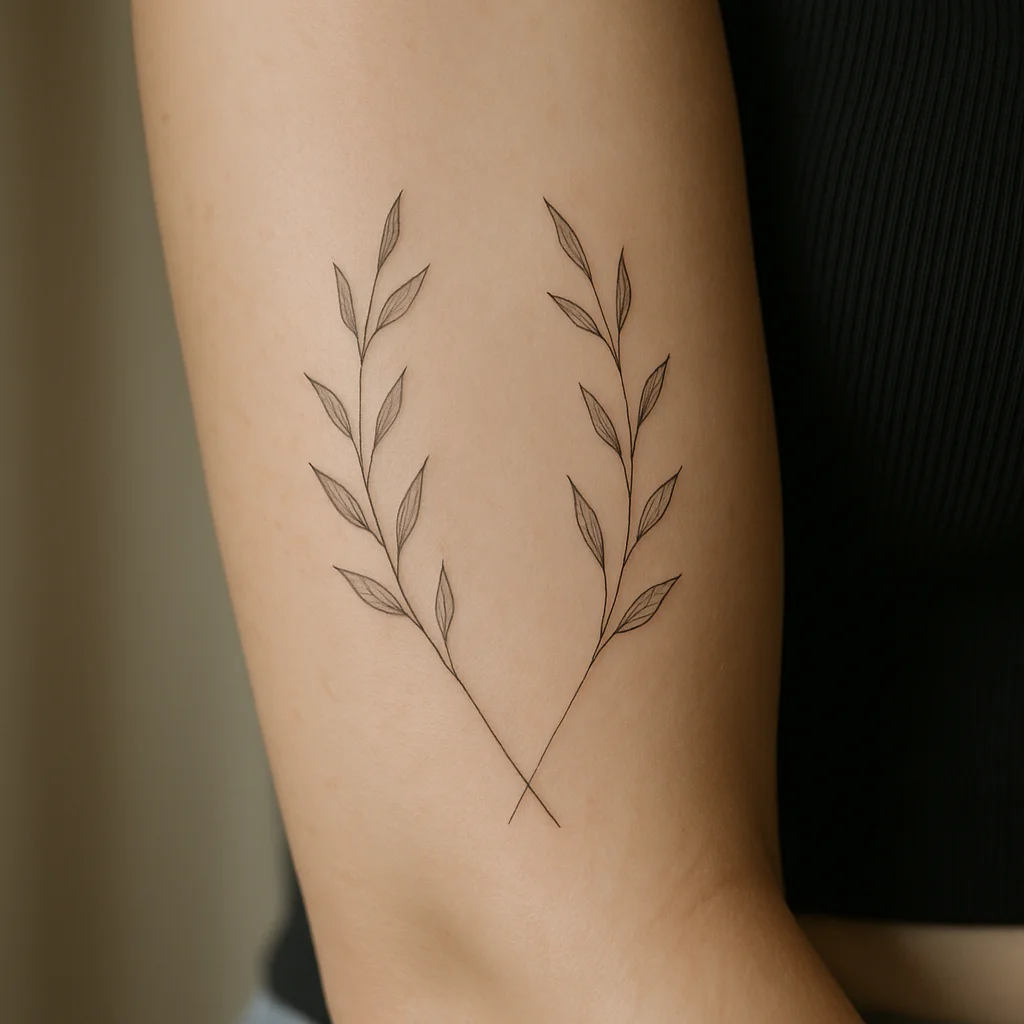
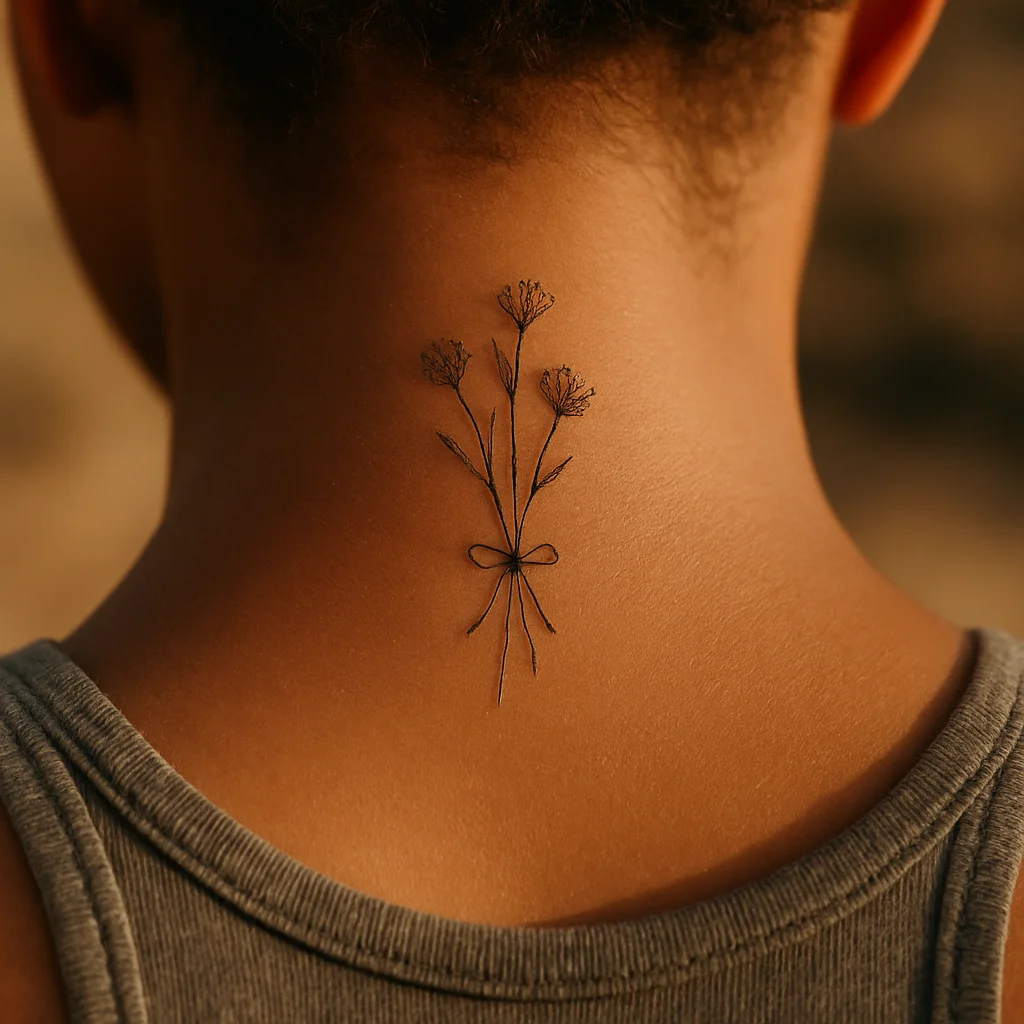
15. Tied muguet posy with a bow
Three short stems gathered and tied with a thin ribbon, the way muguet is sold on the first of May. It sits beautifully at the nape of the neck, small and centred, about two inches. Ask for the ribbon ends to be loose and uneven — perfect symmetry kills the hand-picked feel.
Pairings With Other Flowers and Motifs
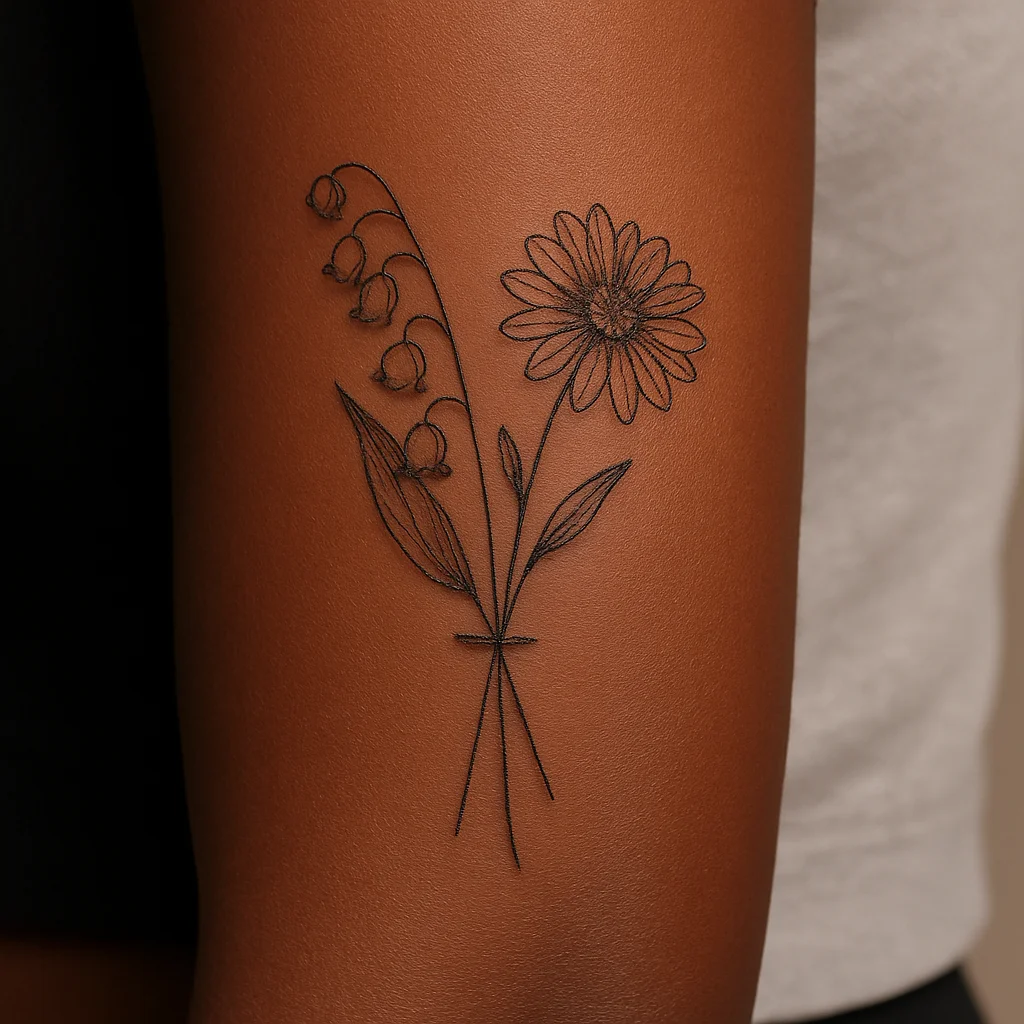
16. Crossed stems with a second birth month
Lily of the valley crossed at the base with another month's flower — narcissus, marigold, larkspur — tied with a single hairline band. The trick is contrast: keep the bells small and round, and choose a partner flower with a different silhouette so the two never blur together. Four to six inches on the inner forearm gives both stems room to breathe.
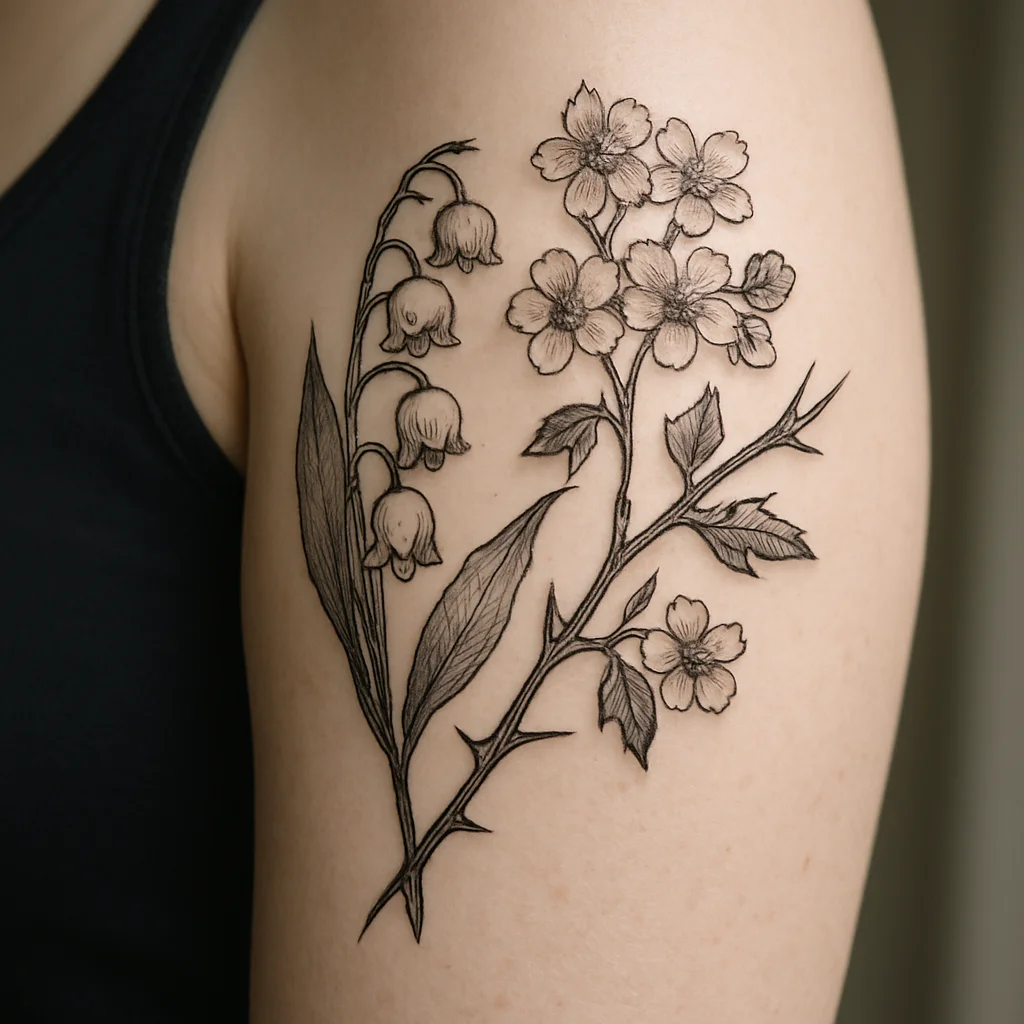
17. Lily of the valley with hawthorn
May has two traditional flowers, and pairing the bells with hawthorn blossom and its thorny twig makes a richer, more grown-up piece. The hawthorn gives you texture and shadow; the lily of the valley gives you the soft focal point. Reads well as a four- to five-inch cluster on the upper arm.
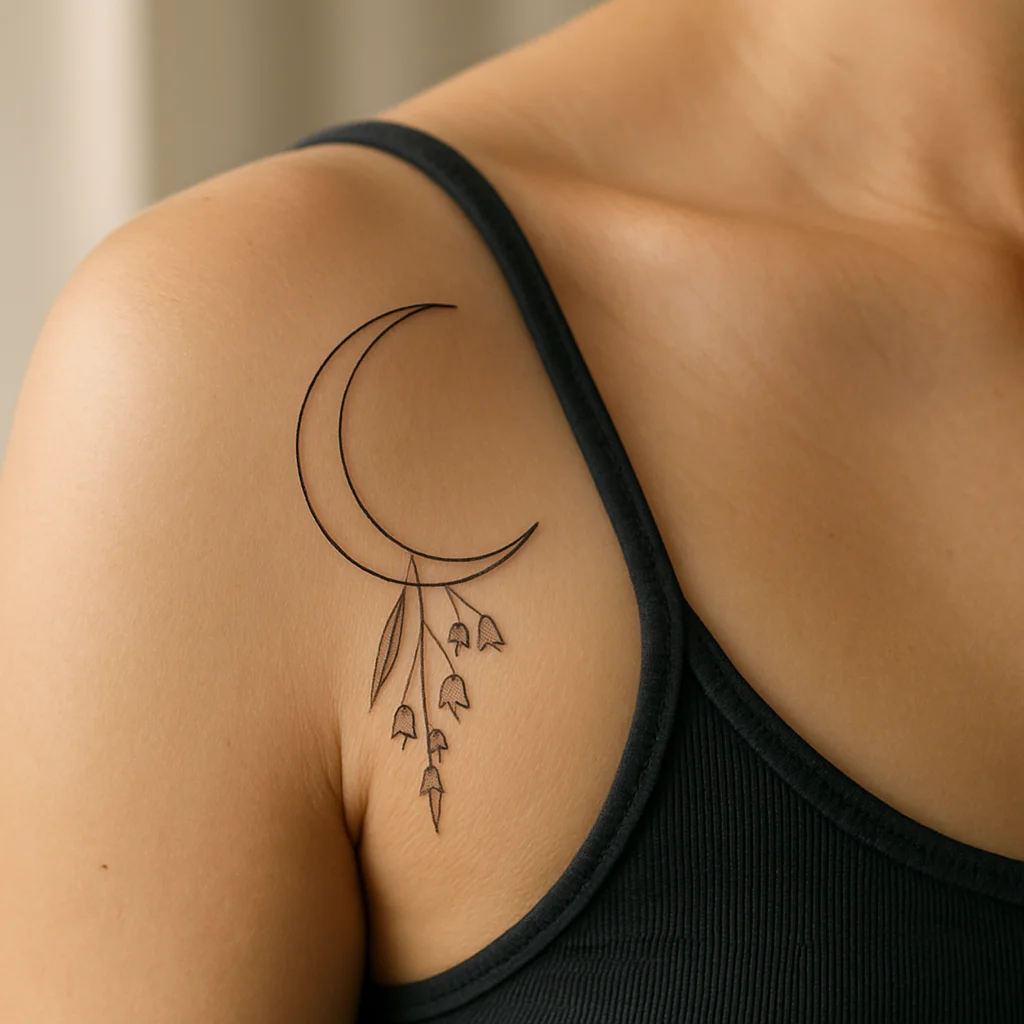
18. Bells hanging from a crescent moon
A slim crescent with two or three stems suspended from its lower horn, bells falling naturally with gravity. Keep the moon as an open line rather than a solid black shape so the flowers stay the hero. Good on the shoulder, where the round plane suits the curve.
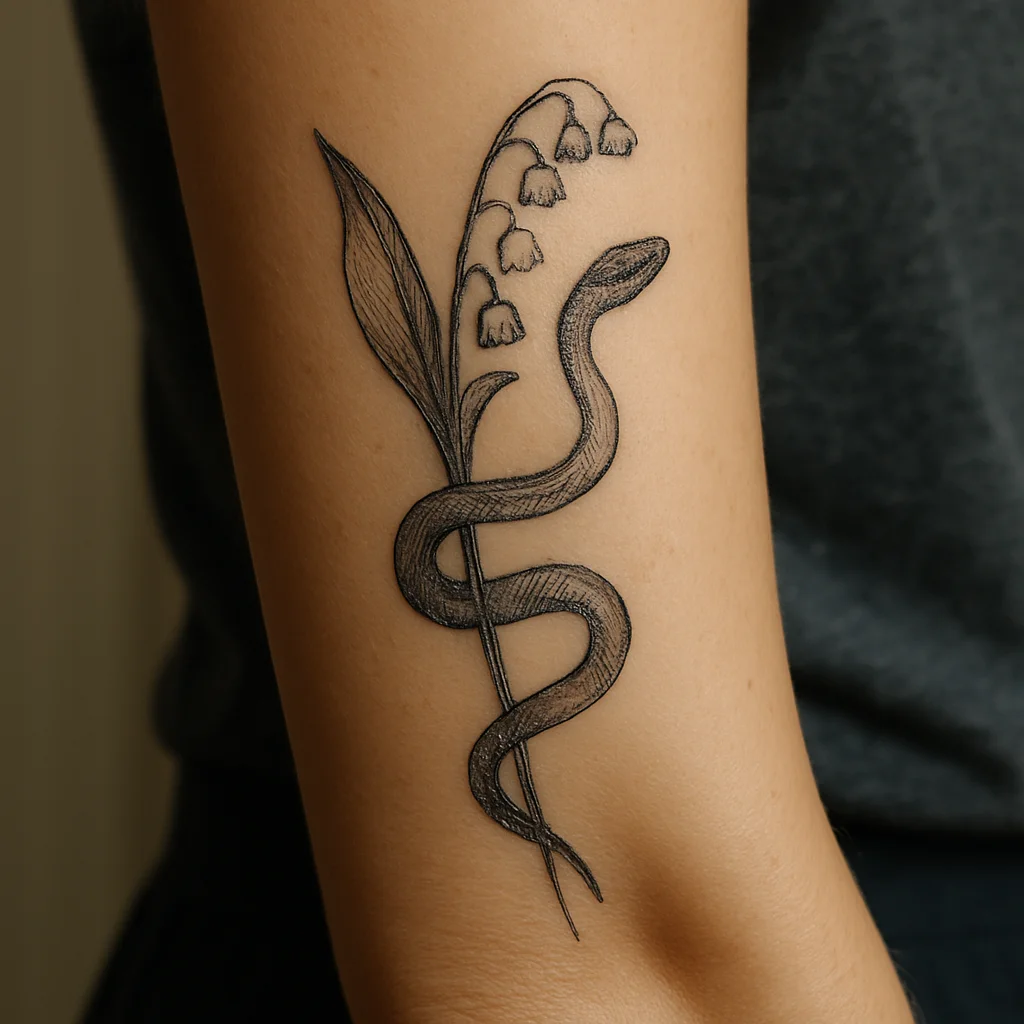
19. Stem coiled with a small snake
A slender snake winding up a lily of the valley stem, playing on the plant's hidden toxicity. Ask for the snake in slightly heavier line weight so it sits visually behind or in front of the flowers instead of tangling with them. Six or seven inches on the outer forearm gives the coil somewhere to go.
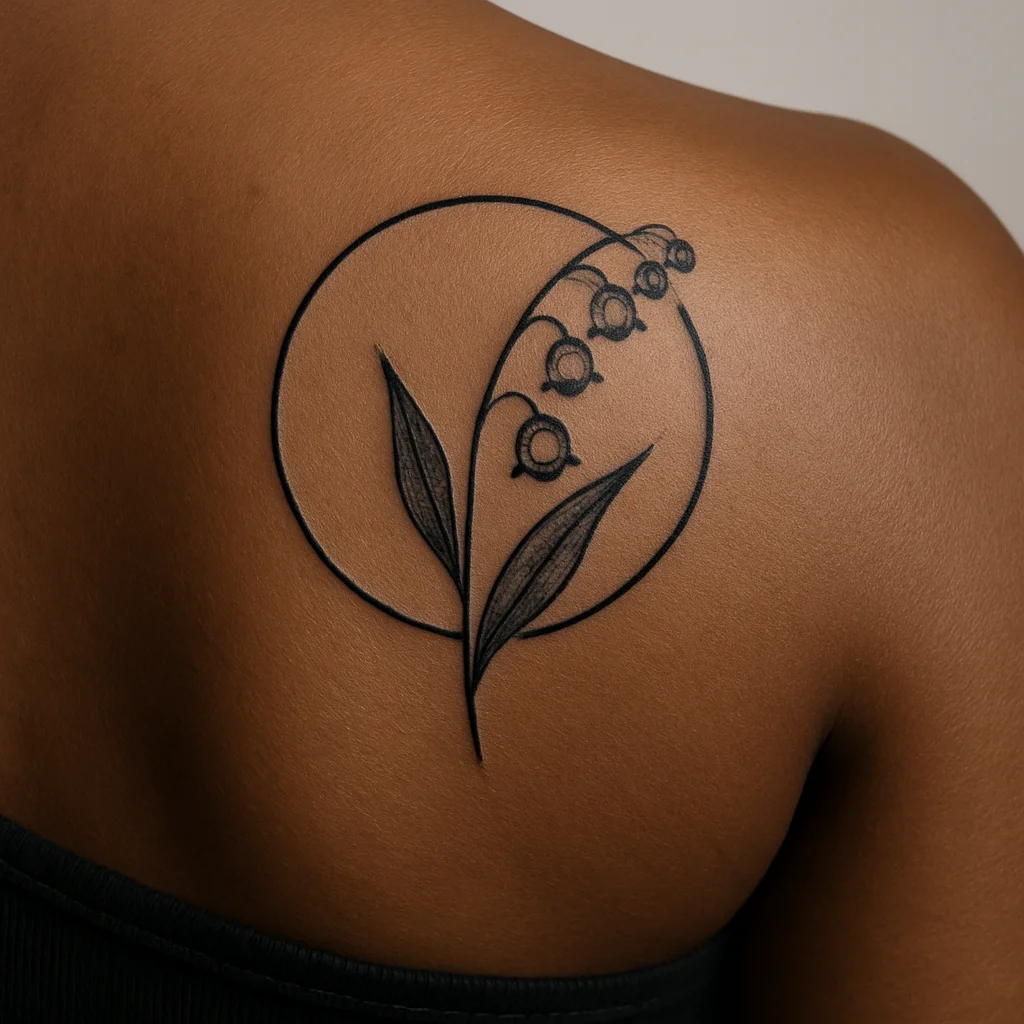
20. Bells in a geometric hoop
A thin circle or hexagon with the stem entering from one side and the bells dropping across the negative space, nothing filled in. It flatters the shoulder blade because the frame stays undistorted on that flat plate of skin. Choose a diameter of three inches or more, or the frame lines and flower lines start to fight.
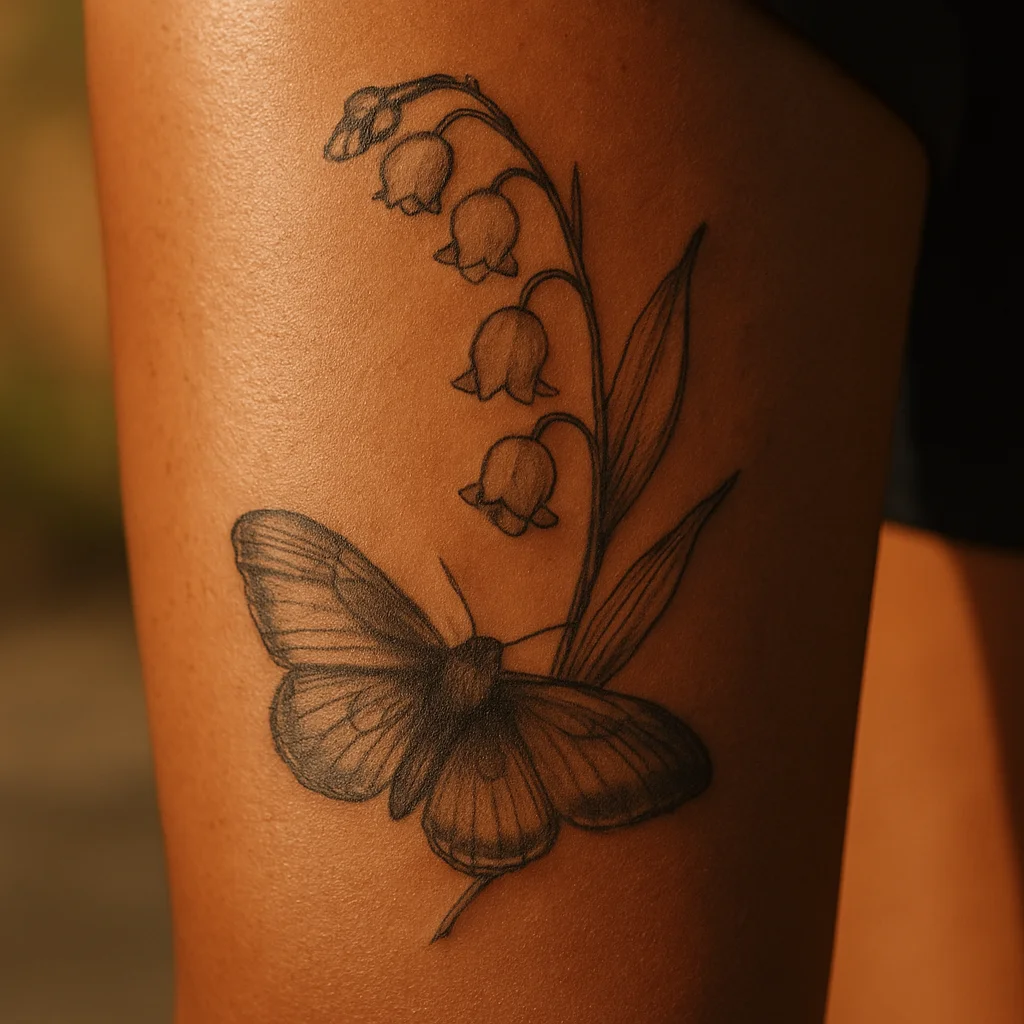
21. Bells with a moth or a bee
A single dusty moth resting near the lowest bell, or a bee mid-flight above the tip. The insect adds mass and shading, which stops an all-line floral from looking thin. Calves take shading well and heal easily, and this one sizes comfortably at five to seven inches.
Bolder Takes: Blackwork, Traditional and Color
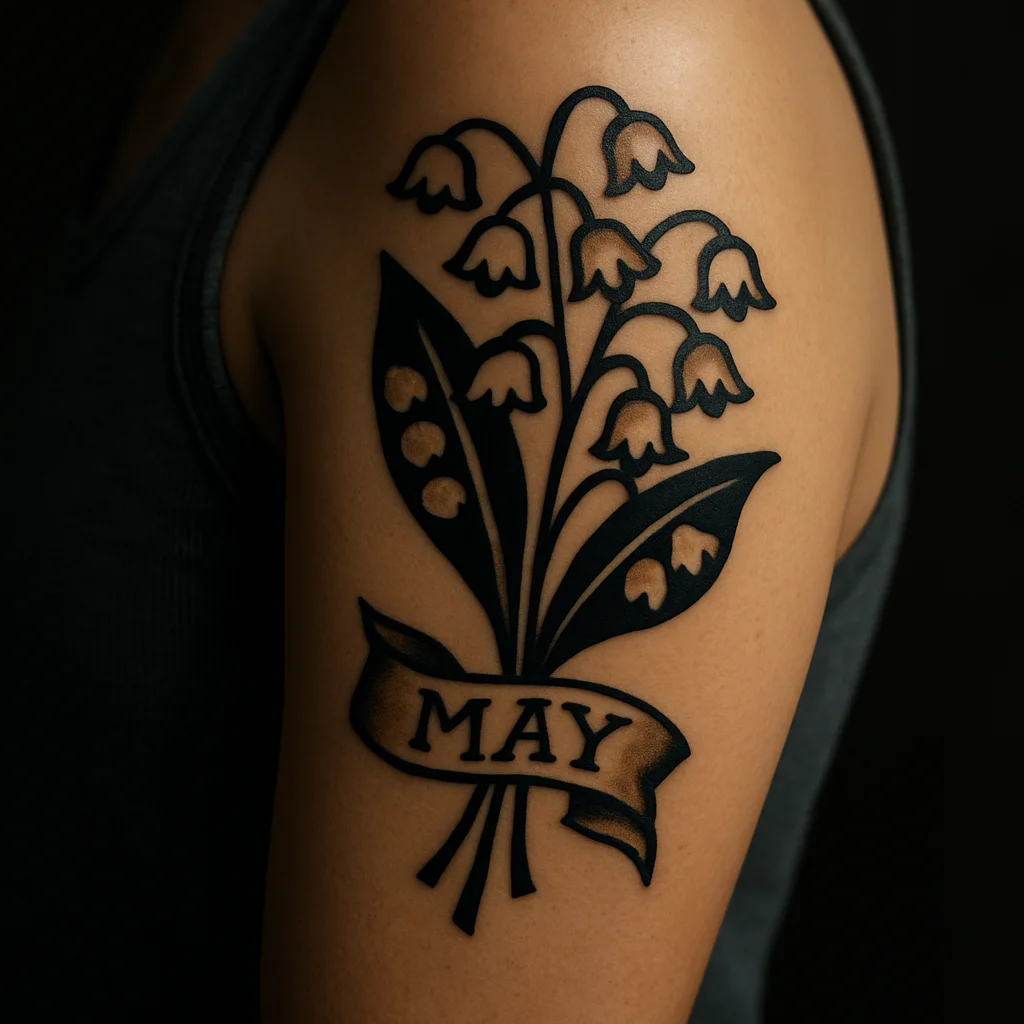
22. Traditional bouquet with a MAY banner
Bold black outlines, solid leaf fills, bells drawn as simplified cups with a single highlight, and a small ribbon banner reading MAY. It is the least botanically fussy version and by far the most durable — old-school line weight is designed to survive decades. Four to six inches on the upper arm, and it will still read clearly across a room in twenty years.
23. Negative-space stem in a black panel
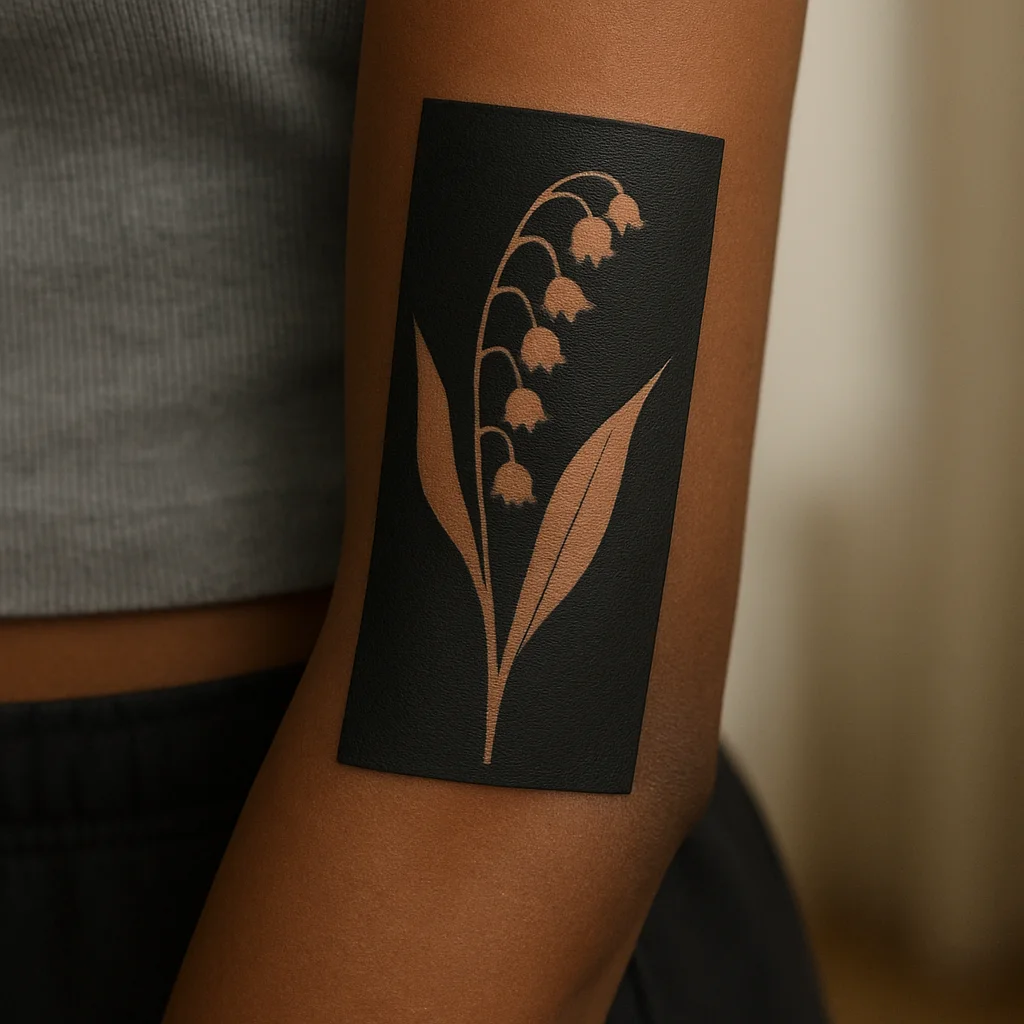
A solid blackwork rectangle or arch with the stem, bells and leaves left as untouched skin. High contrast, extremely legible, and it ages differently than line work: the panel edges soften while the shapes stay readable. Needs a confident blackwork artist and a good two to four hours of packing, so plan the sitting.
24. Botanical-plate illustration with roots
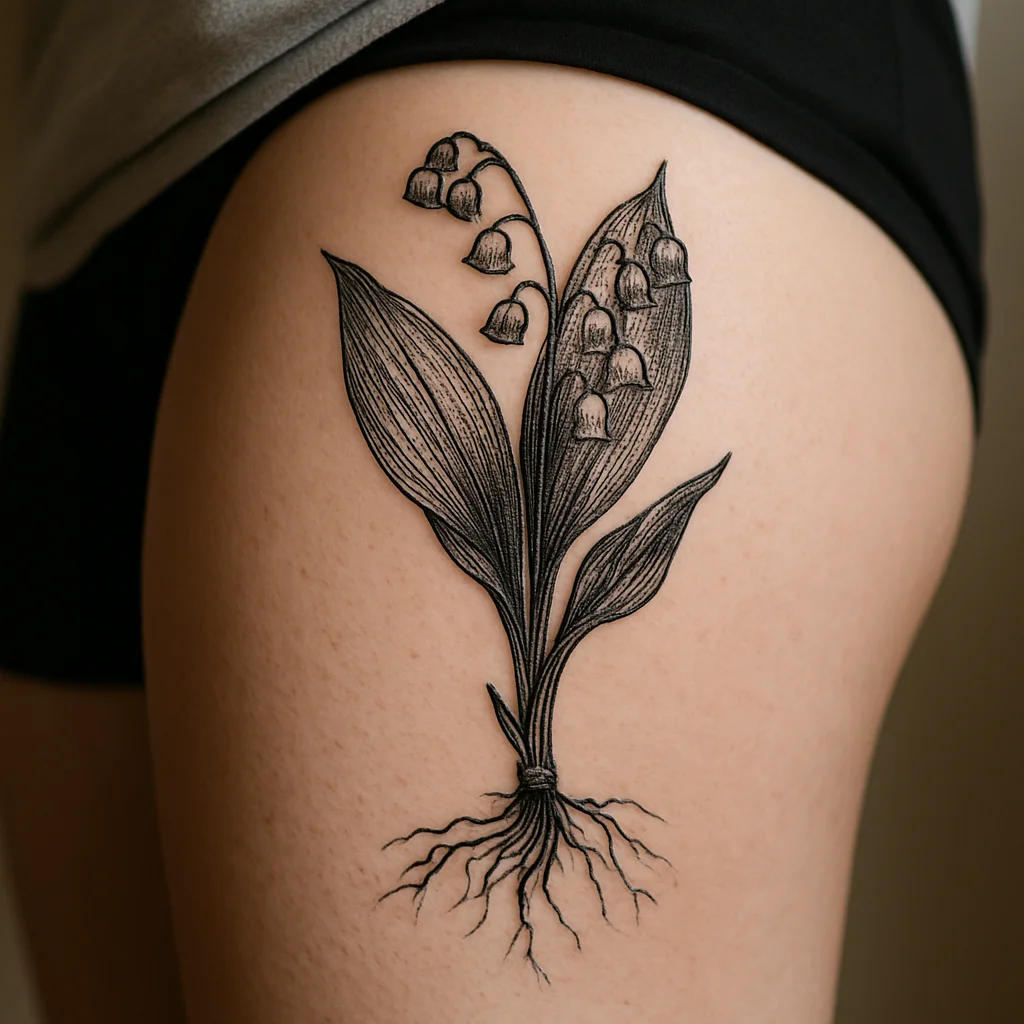
The full plant — bells, leaves, rhizome and hair roots — rendered with stipple and fine hatching like a 19th-century engraving. Six to nine inches on the thigh gives the roots space to spread and the shading room to build depth. Thighs are forgiving to sit and slow to fade, which makes them the right home for detail-heavy work.
25. Soft green and white color version
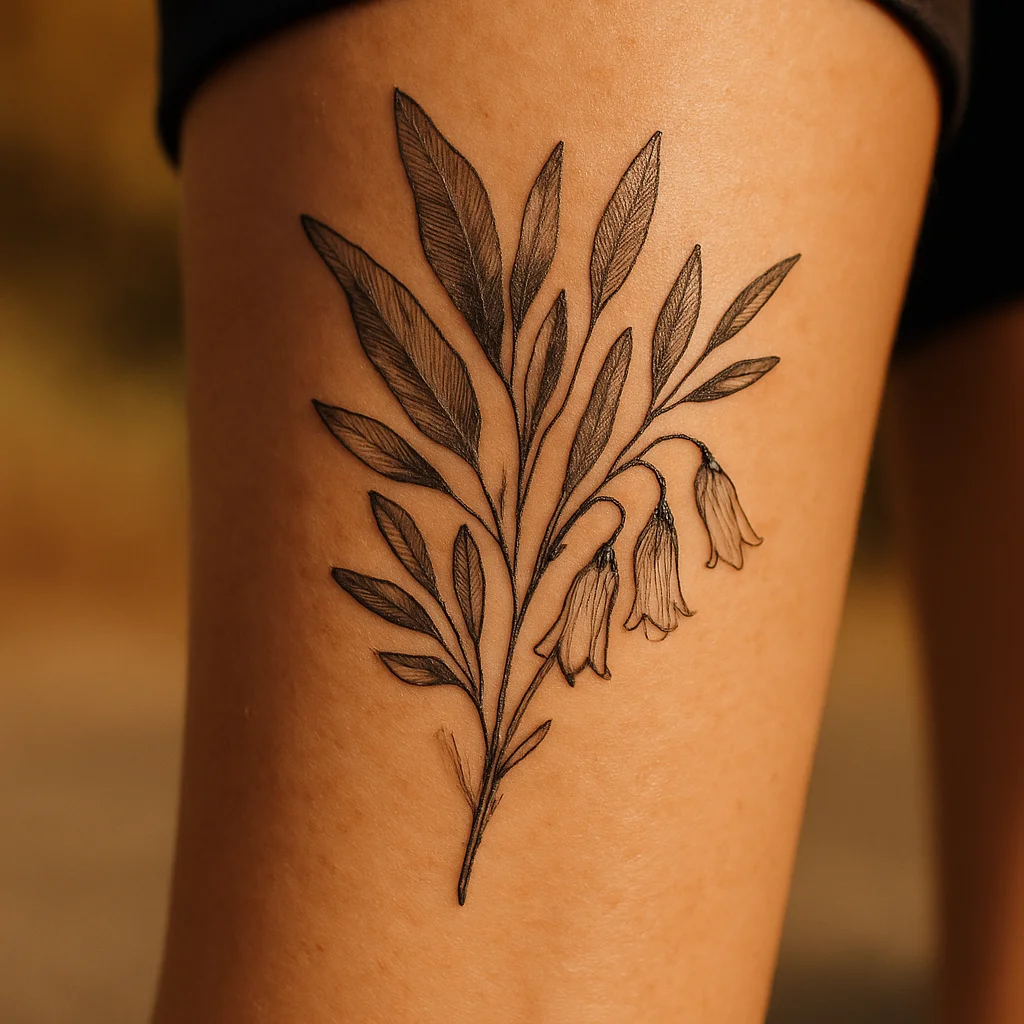
Muted sage and olive leaves with the bells left mostly open skin, edged in the faintest grey and lifted with tiny white highlights. Ask about white ink honestly: it sits under the skin's own tone and mellows, so it should be an accent, never the structure of the flower. Calves and thighs keep color longest because they see the least sun.
26. Climbing stems from wrist to shoulder
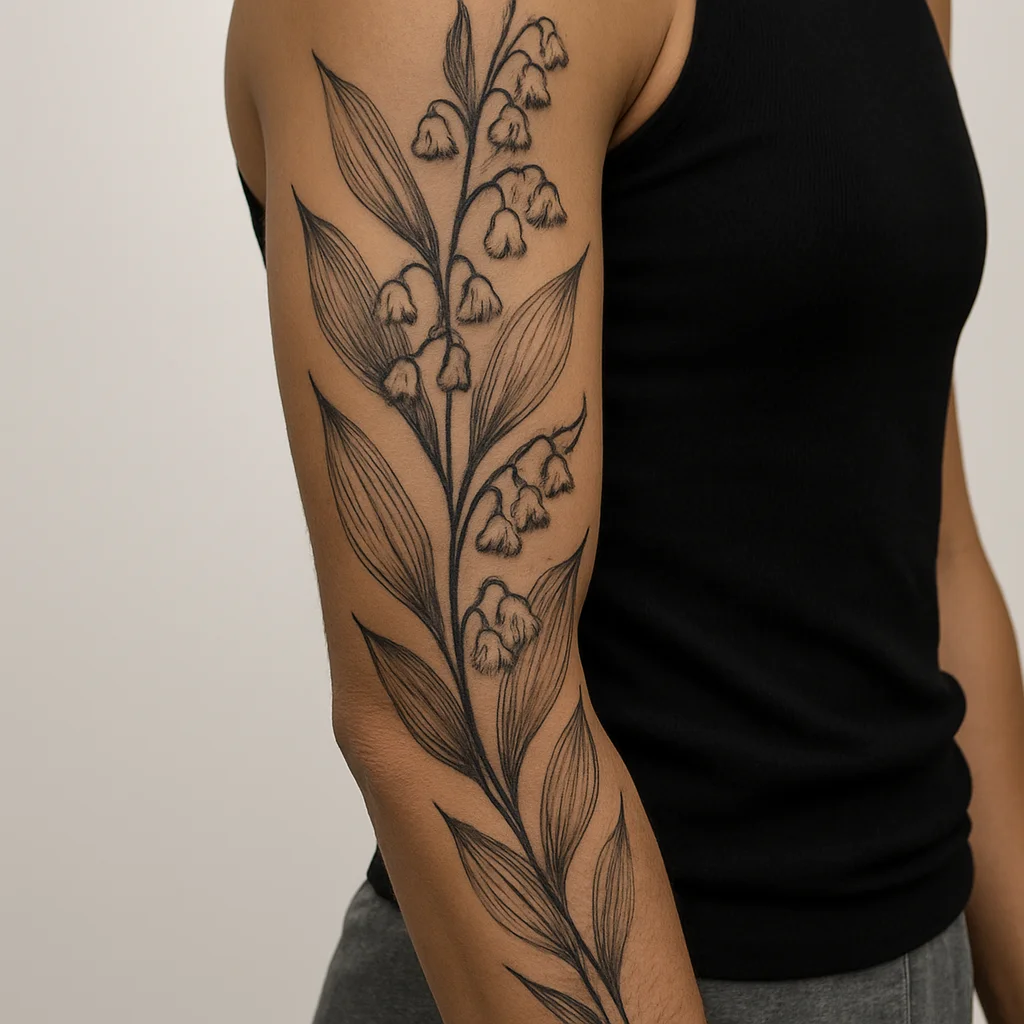
A full-arm panel where several stems climb upward, bells nodding outward, leaves overlapping to fill the gaps, with negative skin doing the work between clusters. Built over multiple sessions and mapped to the arm's twist so the composition reads from the front. This is the version for someone who wants the May flower as a statement rather than a whisper.
Sizing, Placement, Pain and What It Costs
Size first, placement second. The workable minimum for a recognisable stem is roughly two inches with three to five bells. Below that you are buying a suggestion of a flower, which is a legitimate choice but should be a conscious one. Three to five inches is the sweet spot: bells stay open, leaves get ribbing, and shading inside each cup survives. Anything past six inches, add roots, a second stem, or a frame so the composition does not float.
Placement and aging. Inner forearm, upper arm, shoulder blade, ribs, thigh and calf are the reliable homes for fine botanical line work — flat or gently curved, low friction, easy to keep out of the sun. Hands, fingers, feet and the inner wrist crease all move and shed faster, so expect softening and budget for a touch-up. Sun is the real enemy of a thin white-and-grey flower; a shaded placement will outlast a sunny one by years.
Pain, honestly. Outer thigh, calf and upper arm sit at the easy end. Inner forearm is mild but tickly. Collarbone, ribs, spine, ankle and the top of the foot are bony and sharp, though small sprigs there are over in fifteen to thirty minutes. Behind the ear is more strange than painful: loud, vibrating, and quick.
Cost. A tiny sprig usually lands at a shop's minimum, which in most cities is a modest flat fee rather than an hourly charge. A mid-size single stem with shading typically falls in the low-to-mid hundreds. Botanical plates, negative-space panels and color pieces are hourly work and can run several hundred to over a thousand depending on the artist's rate and how many sessions it takes. Get the quote in writing, and never shop a delicate floral on price alone — fine line is the style where a cheap hand shows up fastest.
Keeping the Bells Crisp for Years
Fine botanical work heals fast and fades quietly, which is a dangerous combination — nothing dramatic happens, and then one day the bells have merged. A few habits make the difference.
- Wash and thin-layer only. Clean with fingertips and unscented soap, pat dry, and use a very thin film of fragrance-free ointment or lotion for the first week. Thick greasy layers trap moisture and can soften crisp lines.
- No picking, no scrubbing. Thin lines flake in tiny specks. Pull a scab early and the line comes with it, which is how gaps appear in a stem.
- Sunscreen forever, not just while healing. Once fully healed, SPF 30 or higher on the piece any day it is uncovered. This is the single biggest factor in whether a delicate white-and-grey floral still looks sharp in a decade.
- Expect one touch-up. Most artists include or discount a first touch-up in the months after healing. Book it — small dropouts inside bell rims are normal and quick to fix.
- Plan a refresh, not a rescue. Around the seven-to-ten year mark, many fine-line florals benefit from a light re-line. That is far easier than trying to reopen a design that has closed up entirely.
When you brief your artist, bring a photo of the real plant, say how many bells you want, and tell them plainly that you would rather have fewer, larger, more open flowers than a tight cluster. Any good botanical tattooer will nod at that. It is the same advice they give when a client asks for nine bells inside an inch.
Frequently asked questions
What does a lily of the valley tattoo mean?
As the May birth flower it stands for the return of happiness, plus humility, sweetness and renewal. It has strong associations with motherhood through the Christian image of Mary's tears, and in France it is a first-of-May good-luck gift. Because the whole plant is toxic, many people also read it as beauty with a hidden edge.
How small can a lily of the valley tattoo be and still look good?
About two inches with three to five bells is the realistic floor for a stem that stays readable. Smaller than that and the bell rims, the gap between bell and stem, and any interior shading tend to close up as the ink spreads. If you want something tiny, ask for a single bell with one leaf rather than a shrunken full stem.
Should I get it in black and grey or in color?
Black and grey with the bells left as open skin is the most durable choice and reads clearly for decades. Soft green leaves are a lovely addition if the piece lives somewhere shaded, like a calf, thigh or ribs. Treat white ink as a highlight only — it mellows under the skin and should never be what defines the flower's shape.
Where does a lily of the valley tattoo age best?
Inner and outer forearm, upper arm, shoulder blade, ribs, thigh and calf all hold fine botanical line work well because the skin is stable and easy to keep covered. Hands, fingers, feet and the wrist crease move and shed faster, so plan on softening and touch-ups. Consistent sunscreen matters more than placement for long-term crispness.
How long does one take and what will I pay?
A small sprig is a fifteen-to-thirty minute tattoo and usually costs a shop's minimum. A mid-size shaded stem takes one to two hours and typically lands in the low-to-mid hundreds. Botanical plates, blackwork panels and sleeve-scale work are hourly and multi-session, so ranges climb into the high hundreds or more depending on the artist.
The conversation
No comments yet. Got a thought about these designs? Start us off.
Want to weigh in? Join the community to comment, save designs and try them on your skin.