29 Family Tattoos for Men That Skip the Names
Name script is the obvious way to tattoo your family, but it is rarely the most interesting one. These 29 symbol-first designs carry the same weight and look better on a man's arm, chest or back a decade from now.
Start with the story, not the symbol
Most men walk into a shop asking for names in script, then leave with something better once the artist starts asking questions. The useful question is never "what symbol means family?" It is: what is the one scene you would describe if you had to explain your family to a stranger in thirty seconds? Answer that honestly and the imagery designs itself.
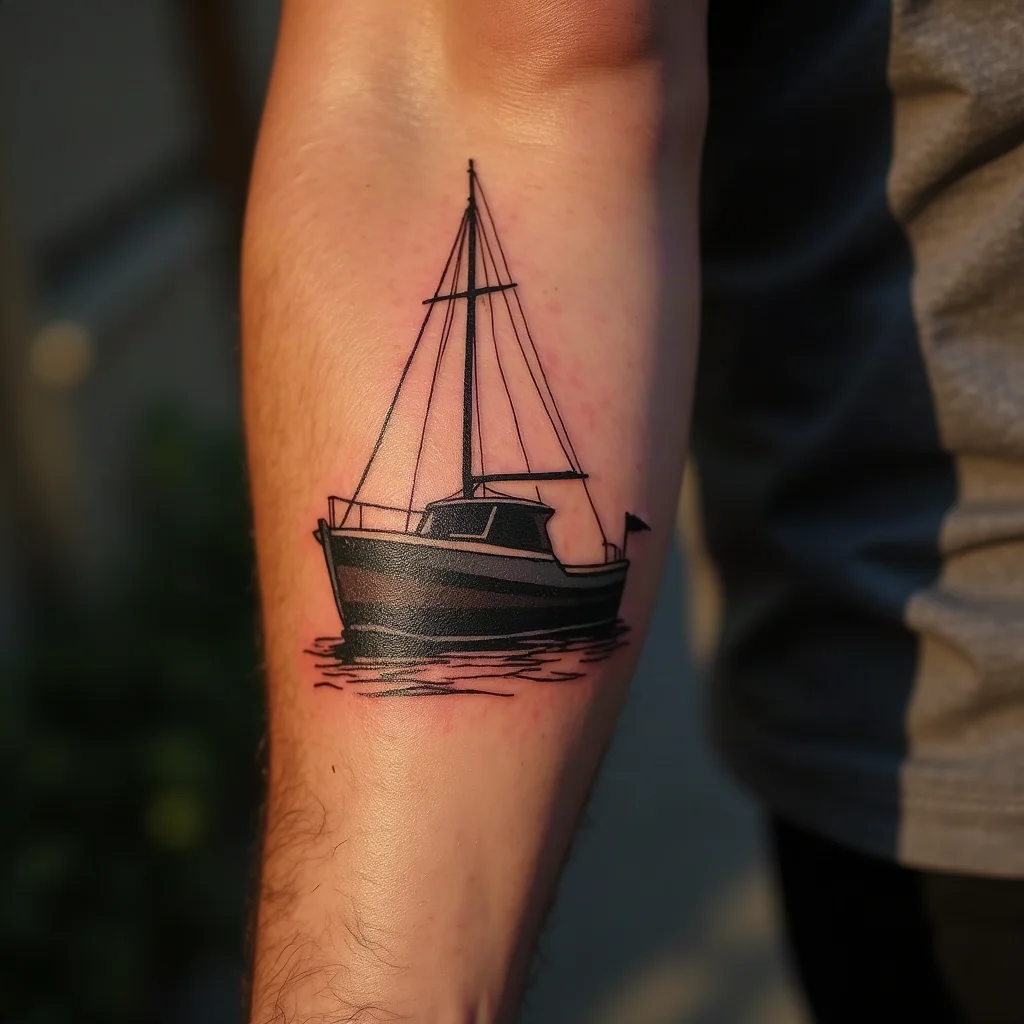
One client came in wanting his father's name across his forearm. Two minutes of conversation later it became the outline of his dad's fishing boat, hull and single mast, six inches down the outer forearm in bold line. Anyone who knows him recognises it instantly. Everyone else just sees a good tattoo. That is the sweet spot for family work: private meaning, public composition.
A few filters worth applying before you commit:
- Will it survive the relationship changing? Symbols of roots, lineage and provision hold up better than anything tied to one dynamic that may shift.
- Can it be read at arm's length? If a design only works when someone leans in, it will not work at all in fifteen years.
- Does it need to be literal? A tree ring, a tool, a boat, a bird — objects age better on skin than tiny faces do.
- Is there room to add? Families grow. Compositions that accept another branch, ring or bird are worth planning now.
If names and dates genuinely are the point for you, that is a different build — our guide to kids' names and birthdates covers how to letter them so they stay legible. Everything below is for men who want the meaning without the text.
Roots, trees and bloodlines
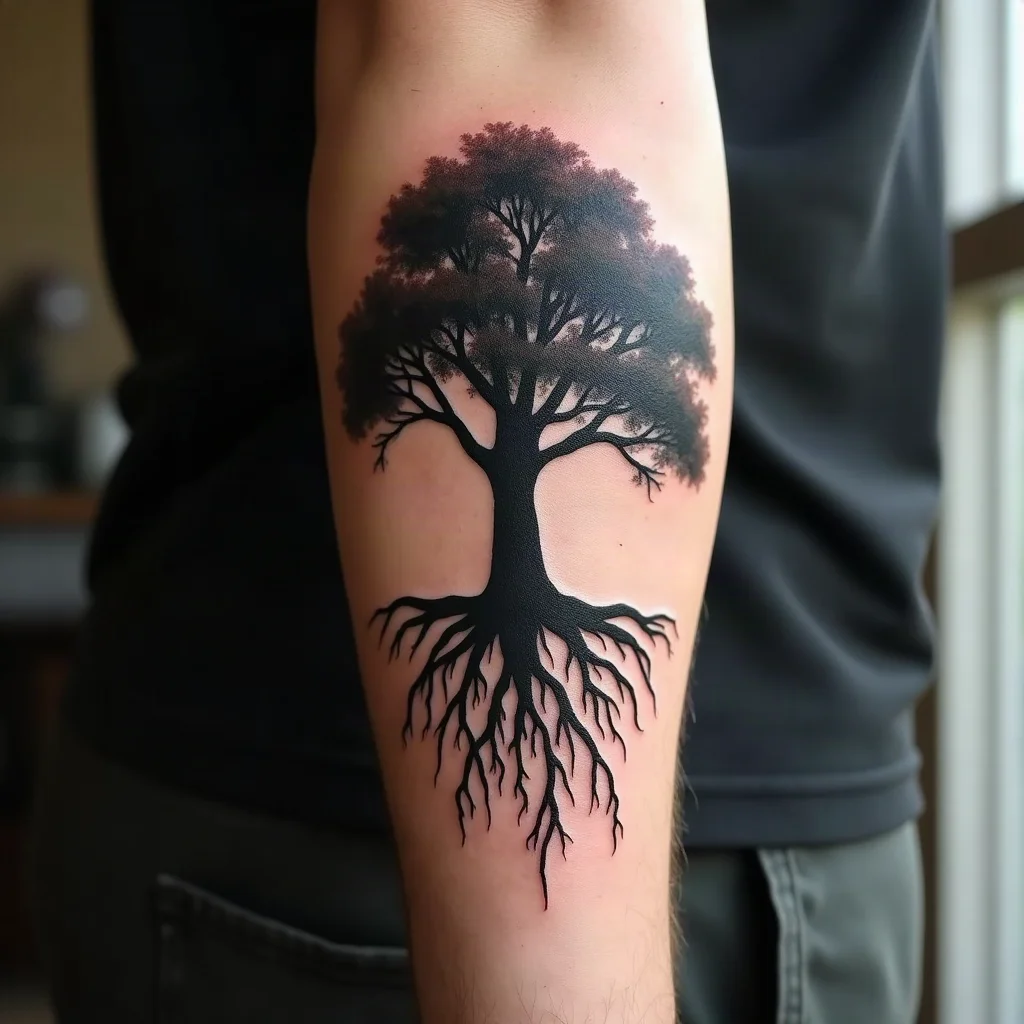
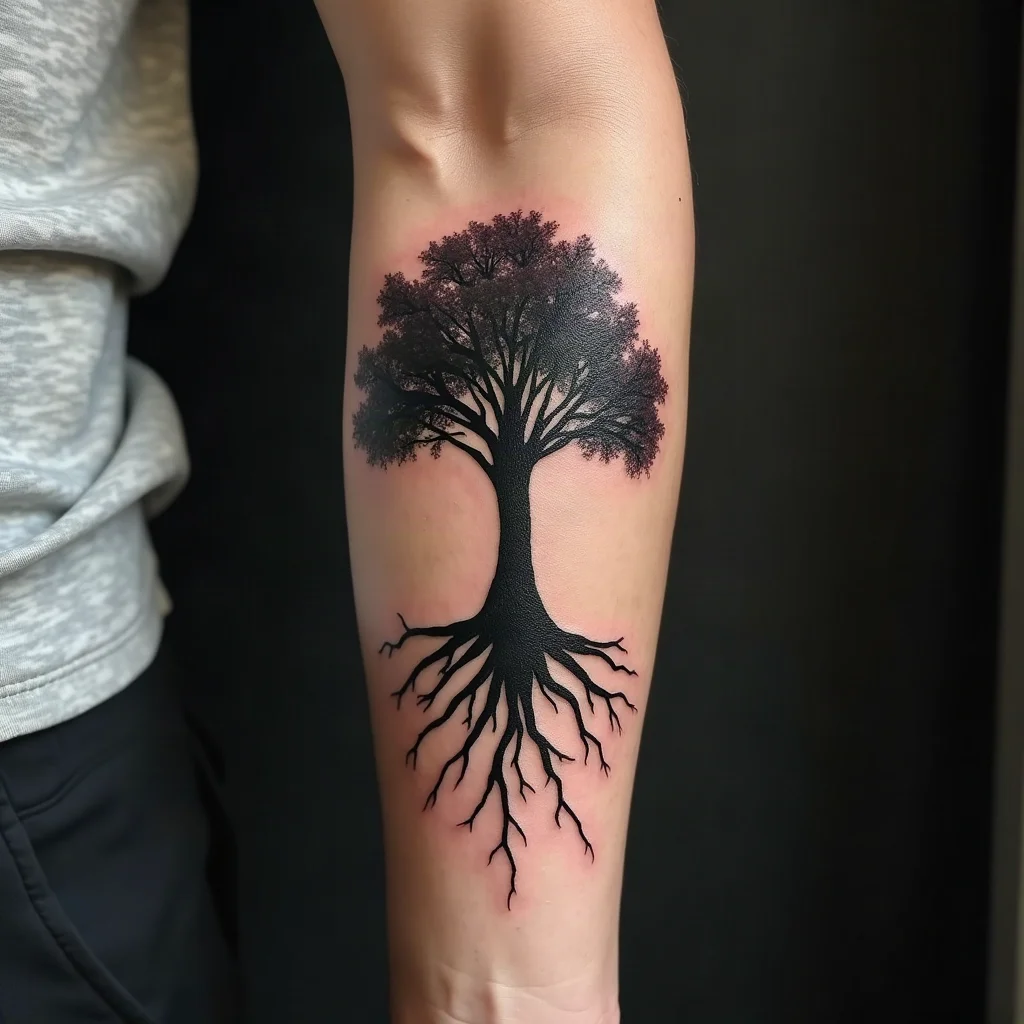
1. Oak with exposed roots
A stout oak with the root system fully drawn out below the trunk is the workhorse of family tattoos, and for good reason: canopy for the living, roots for the ones who came before. Run it vertically 6–7 inches down the outer forearm so the roots sit near the wrist and the branches break at the elbow crease. Ask for chunky root lines rather than hairline detail — this design blurs fast when the roots are drawn too fine.
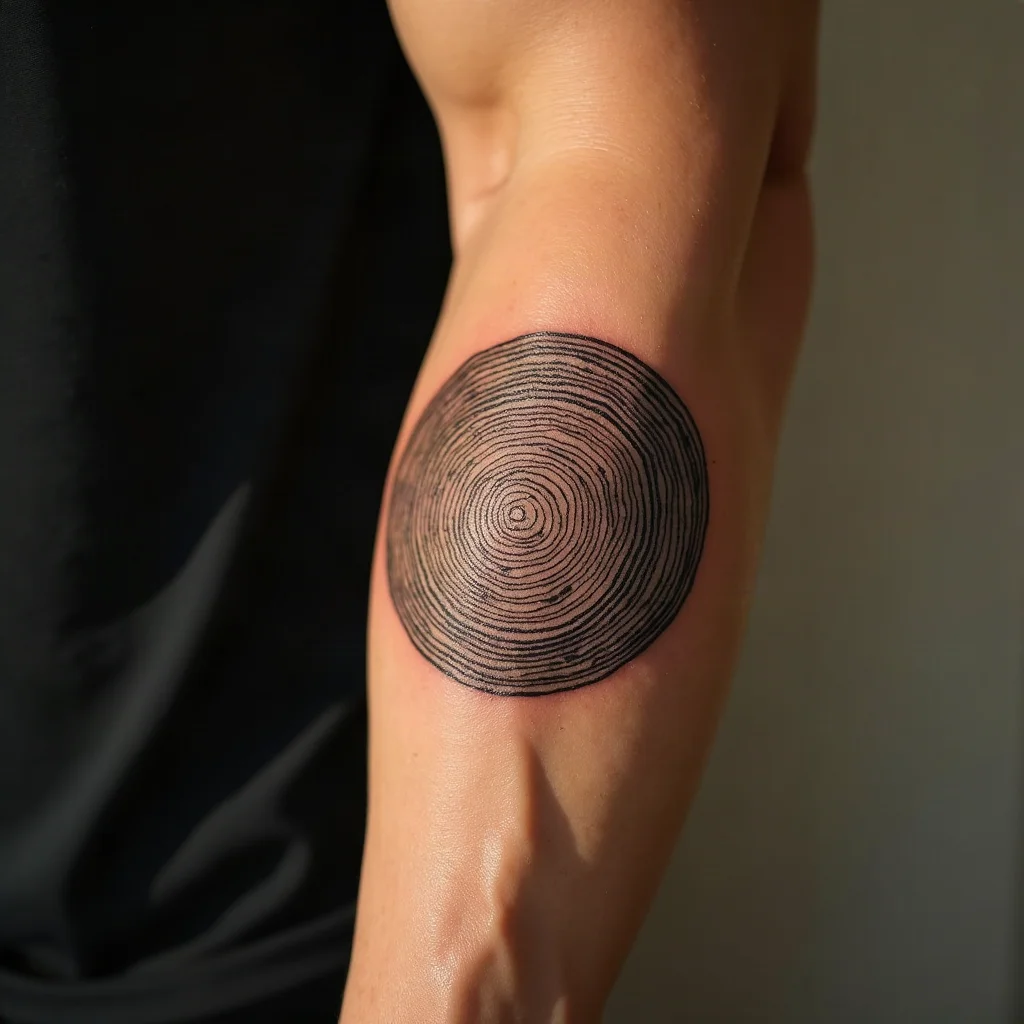
2. Tree-ring cross-section
Instead of a whole tree, tattoo the cut end of the trunk: concentric growth rings with one heavier ring for each person in your household. It reads as a clean geometric circle from a distance, so it suits men who want minimal visual noise. Three to four inches on the inner forearm is enough, and the ring count can be extended later without redrawing anything.
3. Roots that become a river
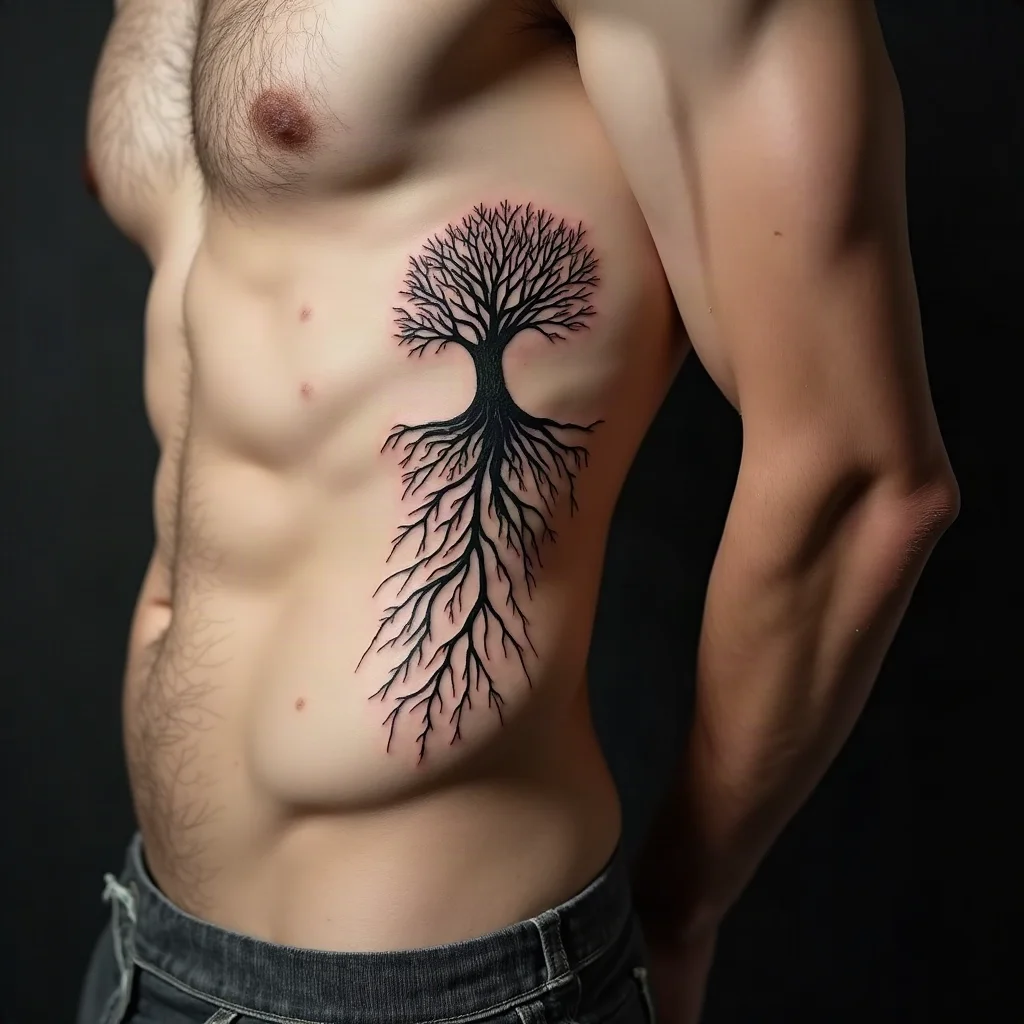
Draw the root system flowing downward until the roots turn into water, then into a river bend you actually know — the one behind your grandparents' house, the one you learned to swim in. It wraps beautifully along the side of the ribcage where the vertical space lets it stretch 8–10 inches. Expect a spicy session; ribs are one of the sharper spots on the body.
4. Mangrove roots wrapping the bicep
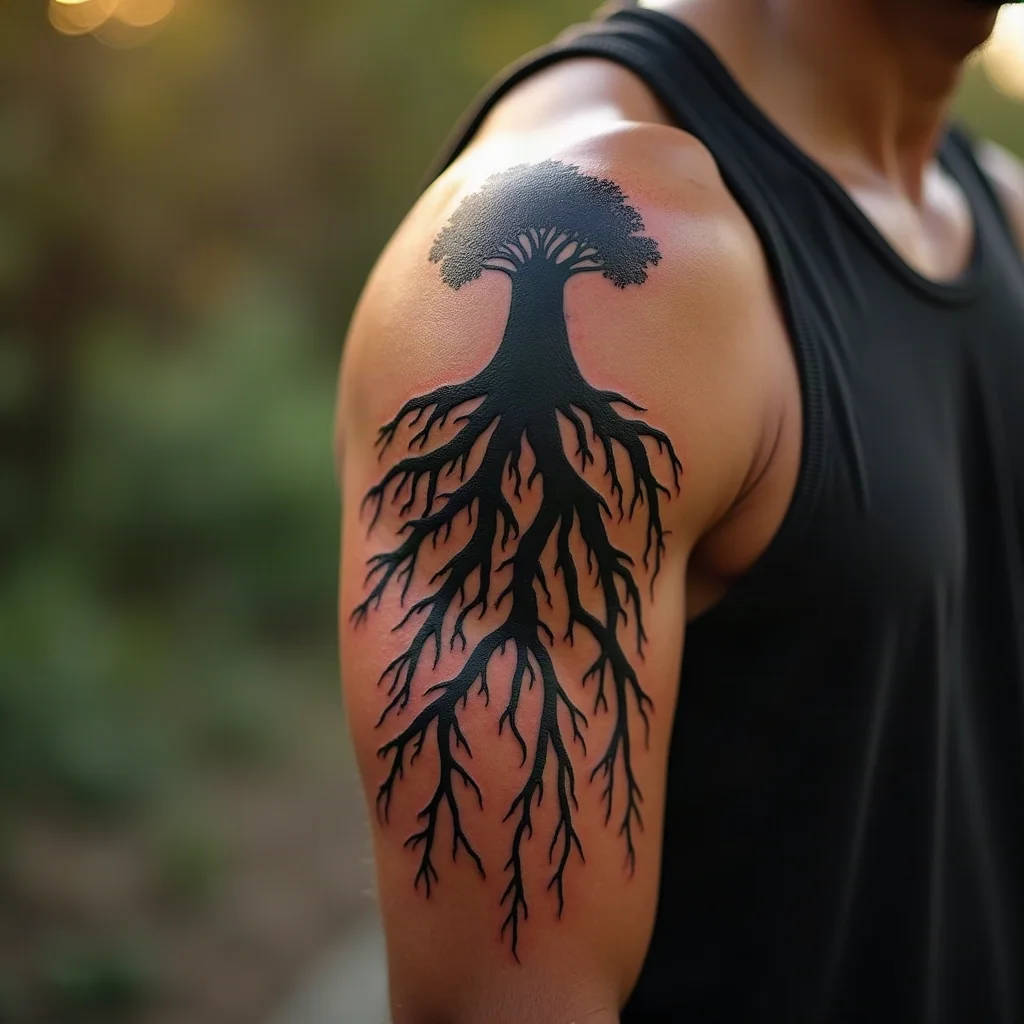
Mangrove and banyan roots tangle in a way that suits a wrapped upper-arm band far better than a single tree does. Have the artist build it as a half-wrap so the tangle sits on the outer bicep and thins out toward the inner arm. Heavy blackwork here holds up for decades and pairs well with a future sleeve.
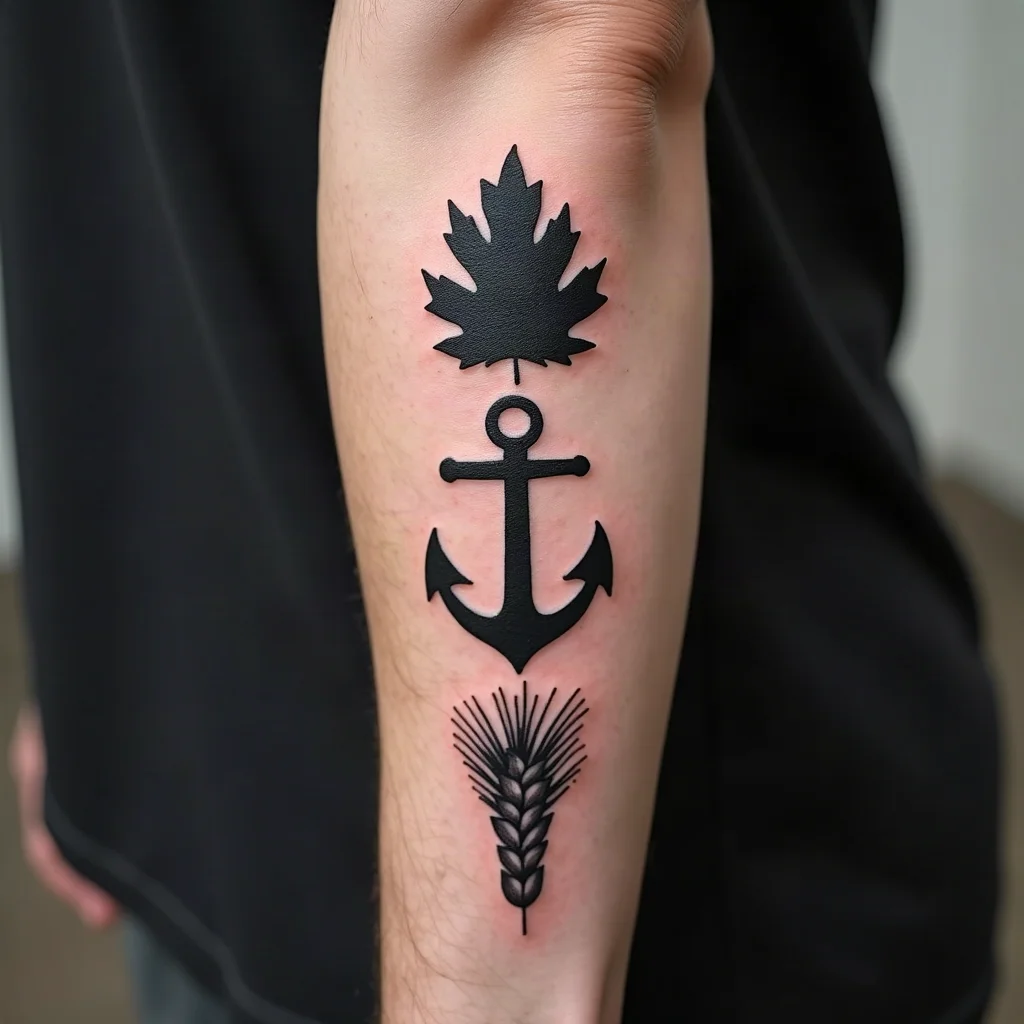
5. Bundled wheat stalks
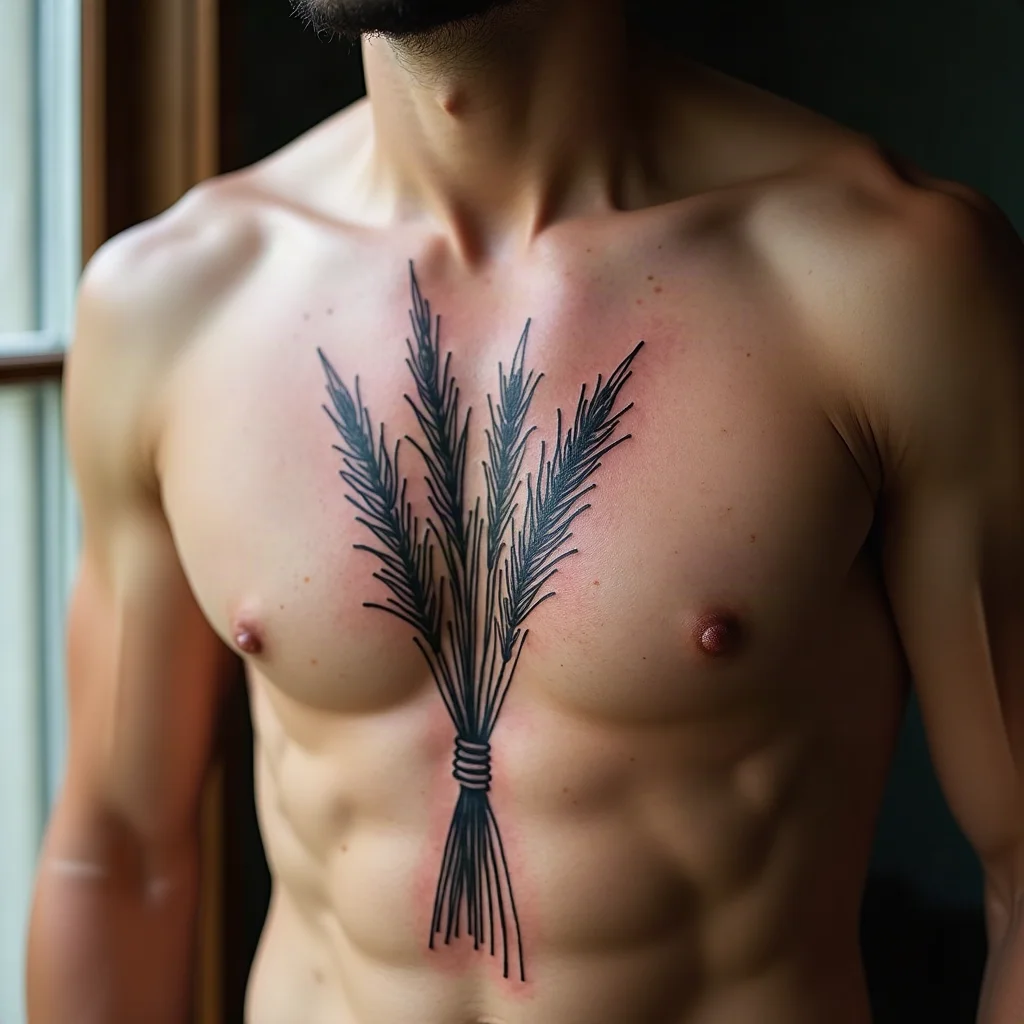
Wheat is the old symbol of provision and harvest — the man who feeds people. A tied bundle of five or six stalks across the upper chest, done in traditional bold line with minimal shading, has a quiet farm-and-family weight to it. Keep the stalk count meaningful if you like, but let the artist adjust for balance.
6. Ridgeline in birth order
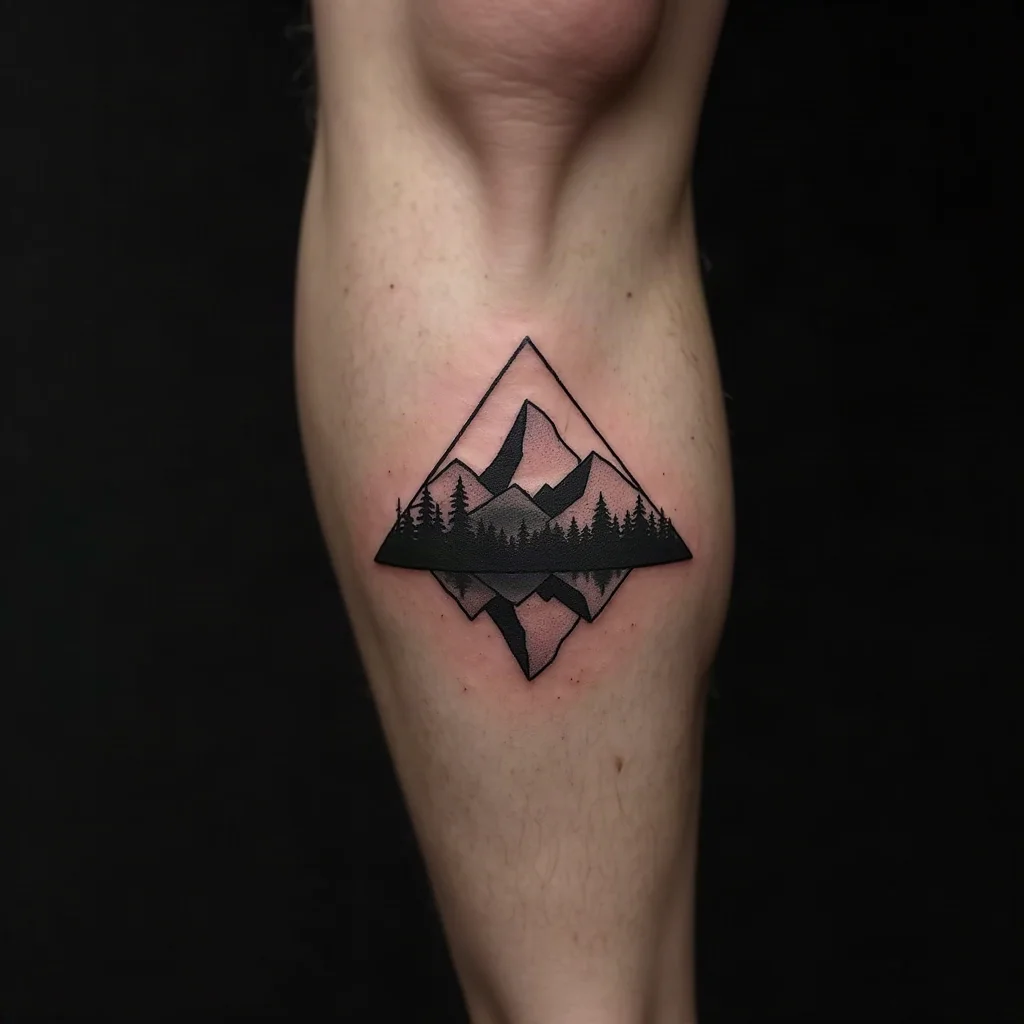
A geometric mountain range where each peak's height matches a sibling or child's birth order is one of the most read-proof family symbols going. On the calf, an 8-inch horizontal ridgeline sits nicely along the muscle and takes ink well. Fine hatching for shadow ages better here than large solid gradients.
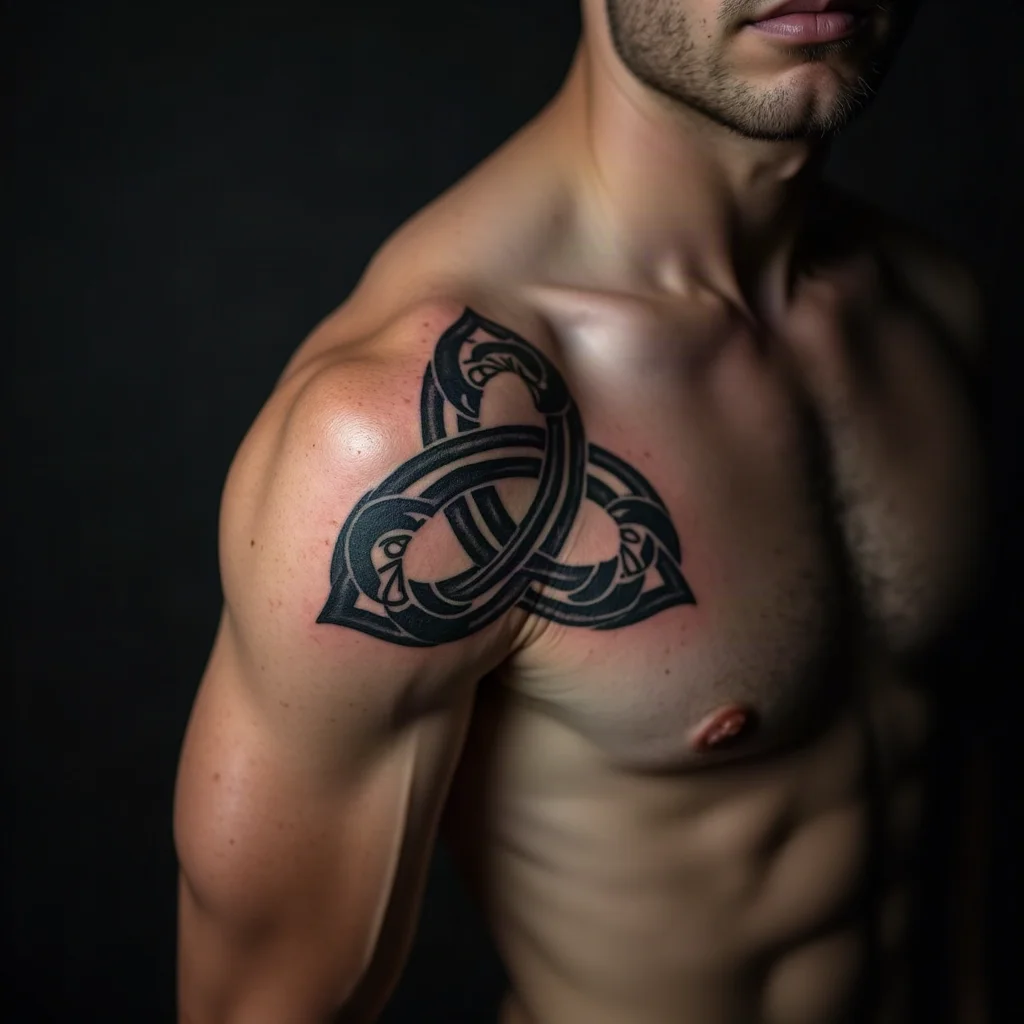
7. Interlocked trinity knot
For a family of three, a Celtic trinity knot or three interlocking triangles in solid blackwork says it without a single letter. Four to five inches on the shoulder blade keeps it out of daily view but easy to show. Insist on generous gaps between the bands — knotwork with tight negative space closes up as ink spreads.
Protection, provision and the guard-dog symbols
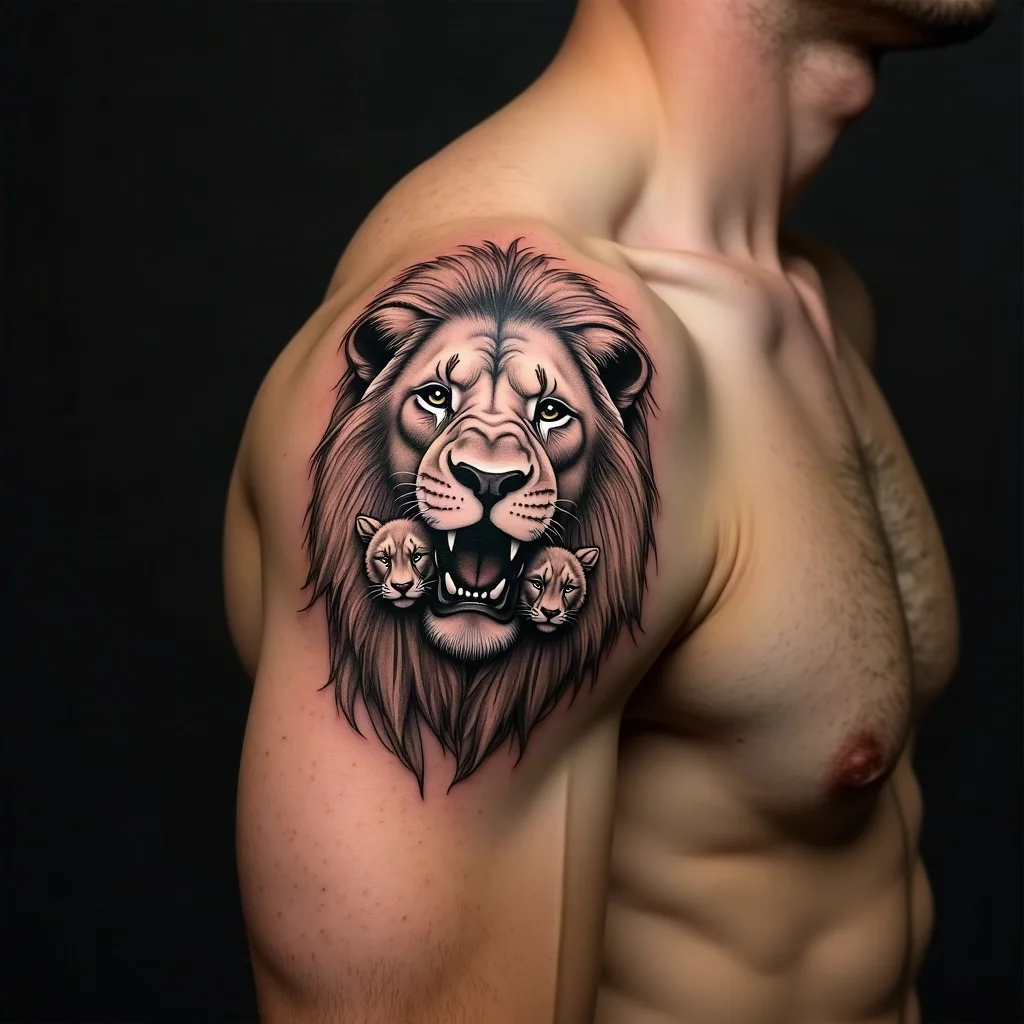
8. Lion with two cubs
A lion's head with two cubs tucked at the jawline is the classic protector piece, and it works because the scale contrast does the storytelling. Give it real estate: the shoulder cap into the deltoid, 6 inches minimum, illustrative black and grey with soft mane shading. Cheap versions fail here — pick an artist whose healed animal work you have actually seen.
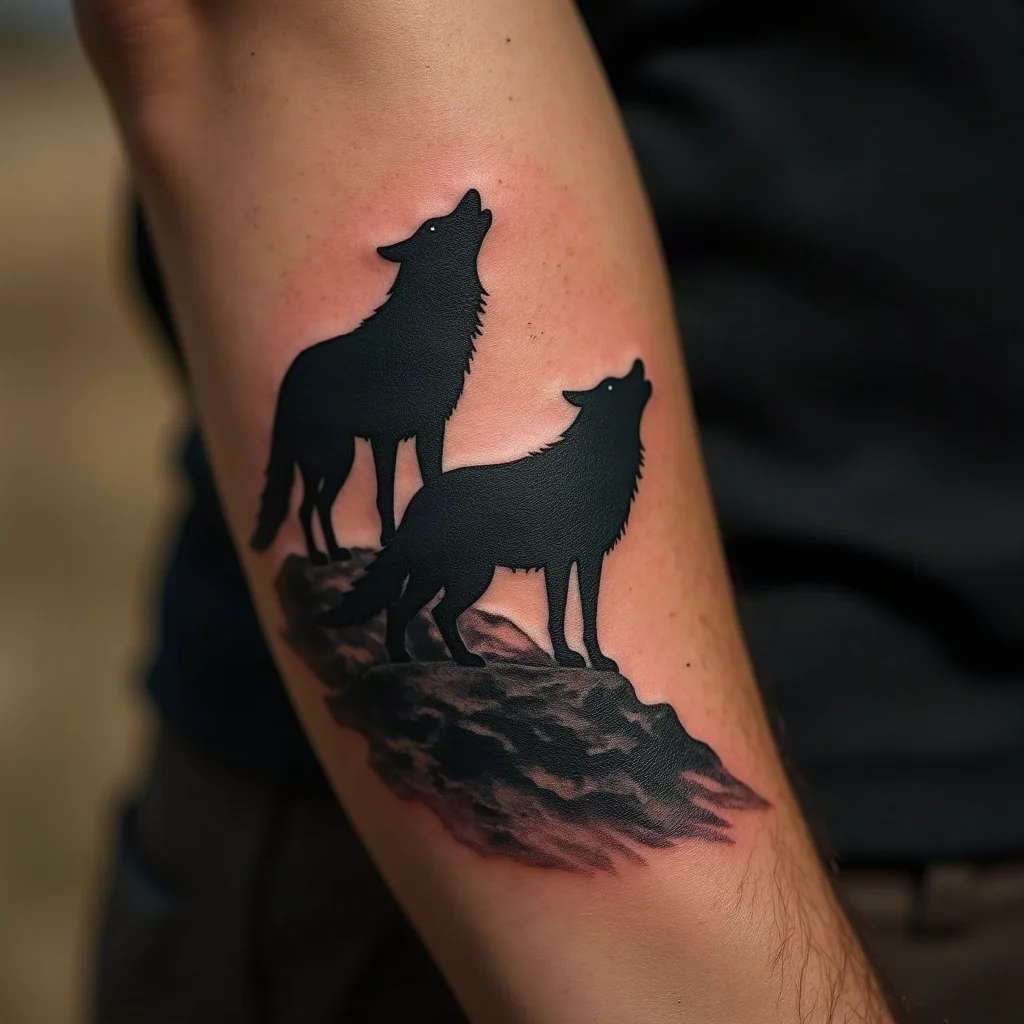
9. Three wolves on a ridge
Silhouetted wolves standing on a rock line, one leading and two behind, is a leaner alternative to the lion and far quicker to sit for. Six to seven inches across the outer forearm in flat blackwork silhouette keeps it crisp for years since there is no fine gradient to lose. Add a wolf per child later without touching the original composition.
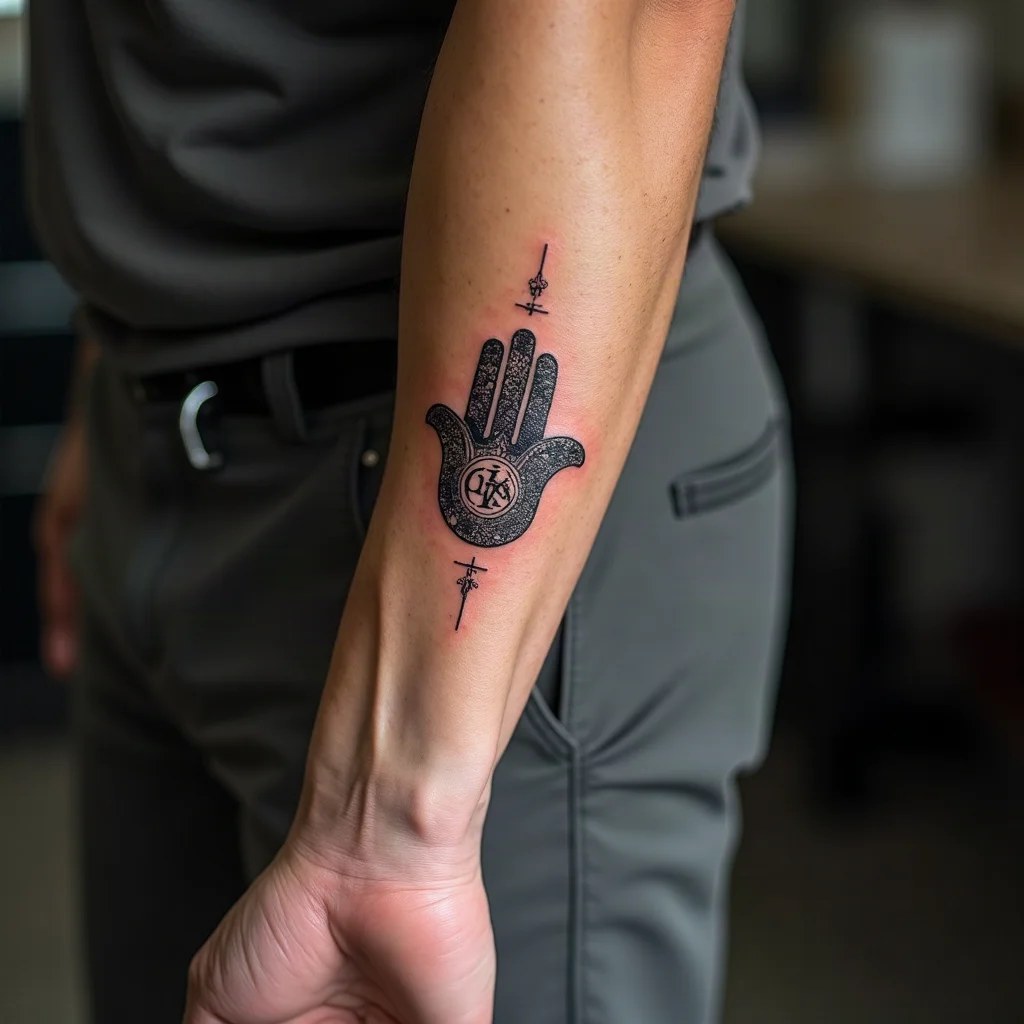
10. Hamsa with initials in the linework
A fine-line hamsa hand where the decorative henna-style pattern inside the palm conceals your family's initials gives you name meaning without name script. Four inches on the inner forearm, single needle, and make sure the hidden letters sit in the thickest lines so they survive healing. This one suits men who want detail up close and abstraction from across a room.
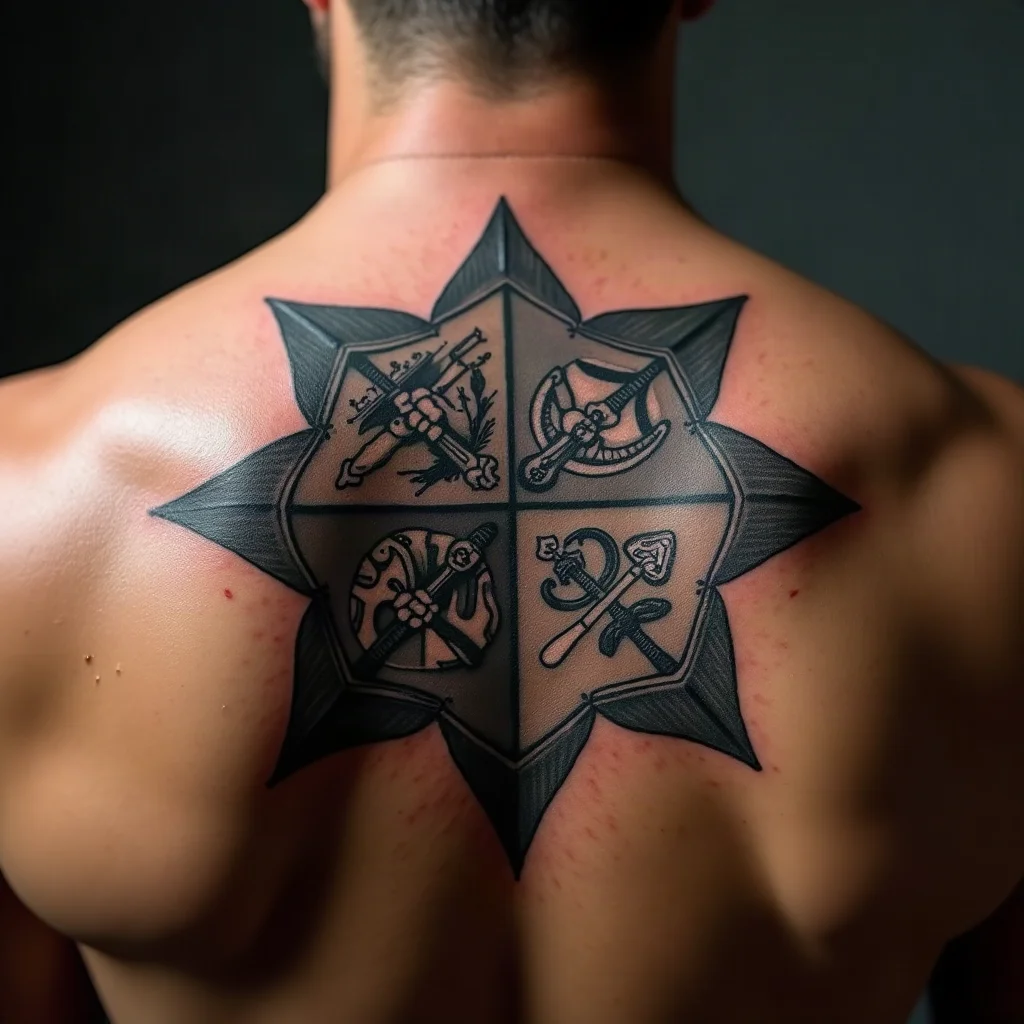
11. Quartered family crest
Build a heraldic shield split into four quarters, each holding one object from your family's story — a trade tool, an animal, a plant, a landmark. Across the upper back you have space for a 7–9 inch shield with bold outline and mantling. Bring your own object list to the consult; the artist will handle the heraldry conventions.
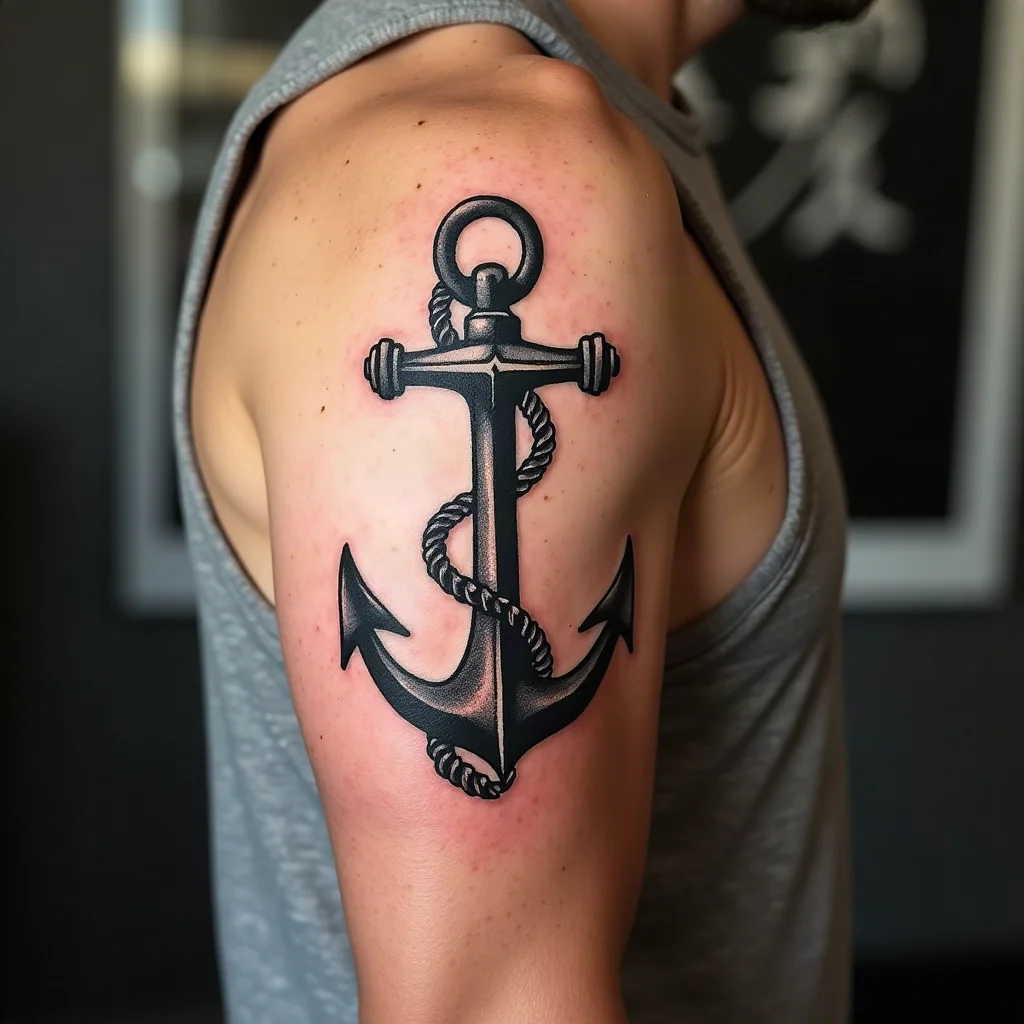
12. Anchor with a looped rope
The anchor is old-school shorthand for the person who keeps everyone steady, and the looped rope lets you add one turn per family member. Five inches on the upper arm in traditional bold line and solid black holds its shape better than almost any other design in this list. It is also one of the friendlier spots to sit for if this is your first piece.
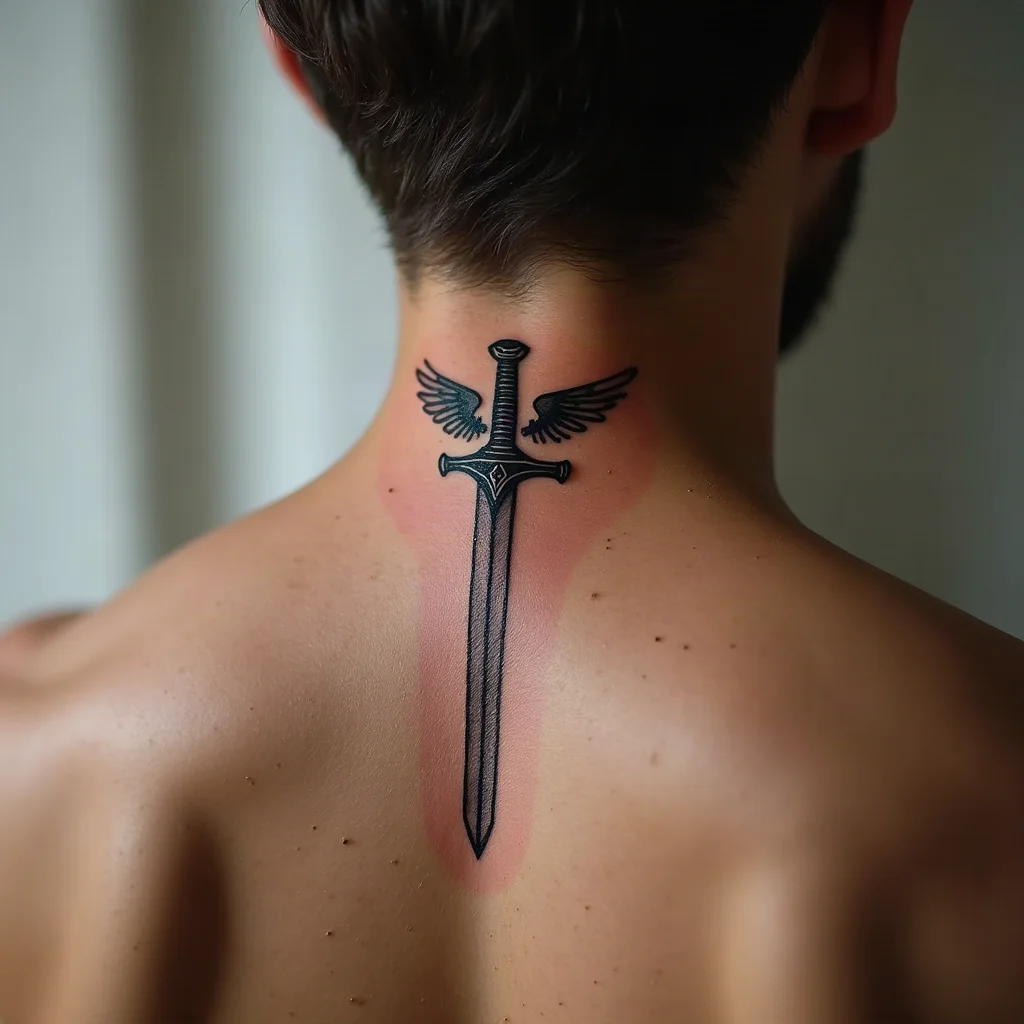
13. Guardian's sword down the spine
A downward sword with small wings at the crossguard — the St. Michael idea, stripped to its essentials — reads as protection without needing a full religious scene. Along the spine it can run 10–12 inches, following the vertebrae, which is visually dramatic and genuinely spicy to sit through. Break it into two sittings if your pain tolerance is unproven.
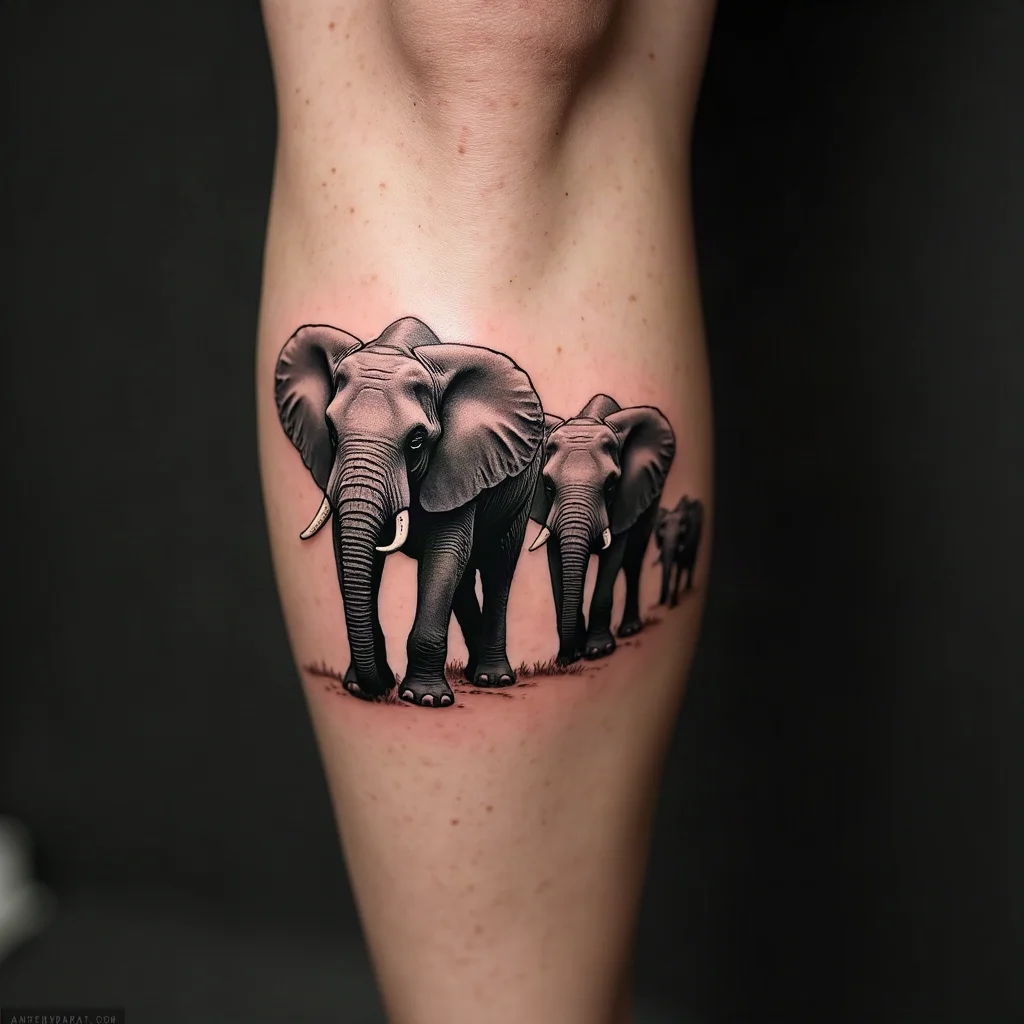
14. Elephant herd, trunk to tail
Elephants travelling in a line with the calves shielded between adults is one of the truest family images in nature. Wrapping the calf muscle, a herd of three or four at 7 inches works well in illustrative grey wash with heavier outlines on the lead animal. Ask for the skin texture suggested rather than fully rendered — over-detailed wrinkles turn to mush.
Heirlooms, hands and everyday objects
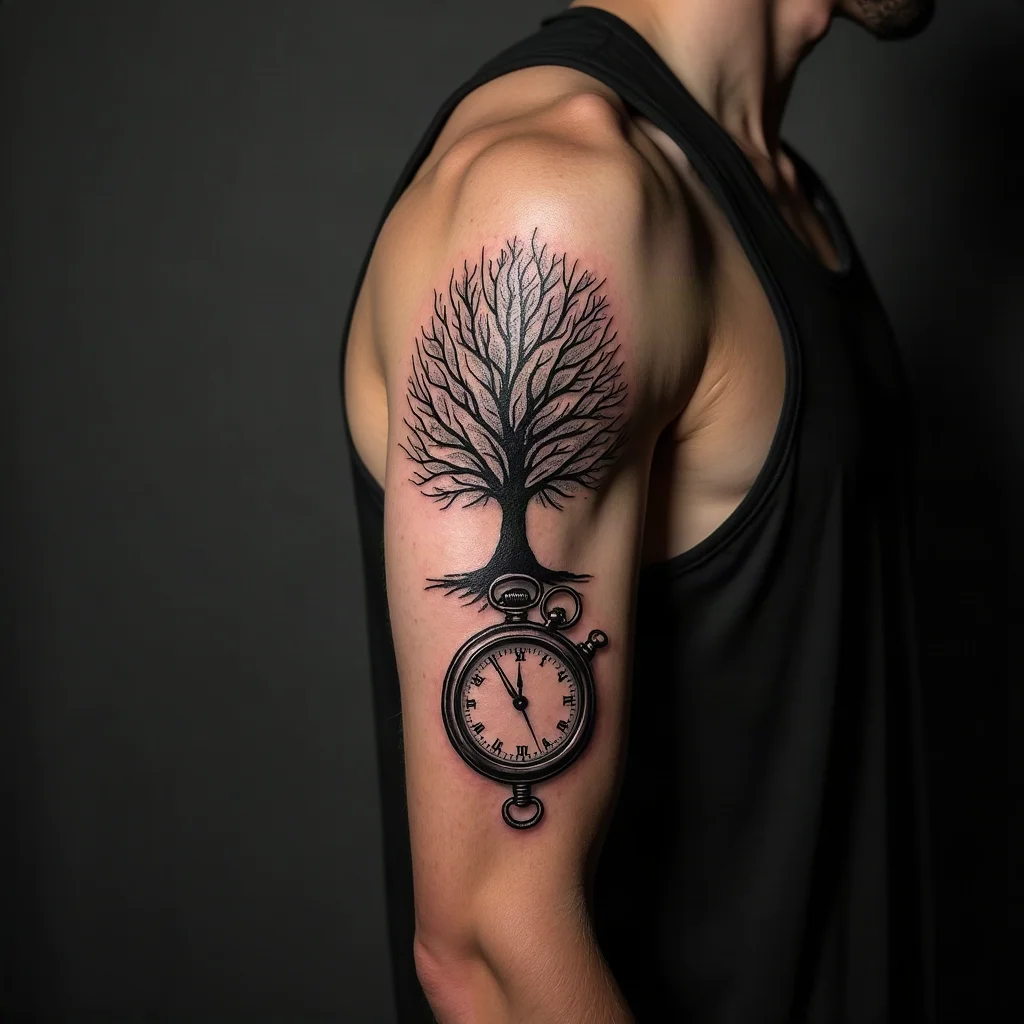
15. Pocket watch stopped at a birth hour
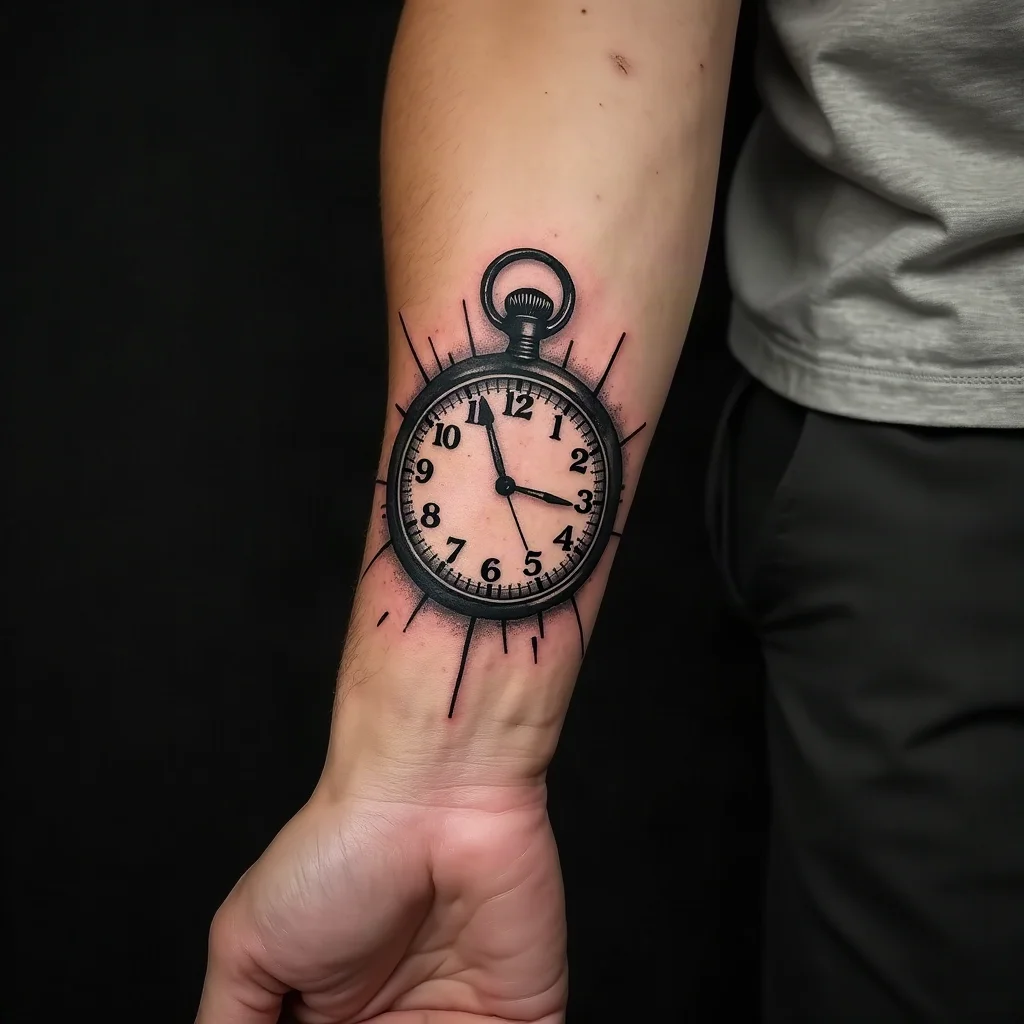
Your grandfather's pocket watch, drawn from the actual object rather than a stock reference, with the hands set to the hour a child was born. Five inches on the inner forearm, illustrative with a bold case outline and restrained engraving on the face. Bring the watch to the consult if you still have it — the dents and worn hinge are what make it yours.
16. Clasped hands
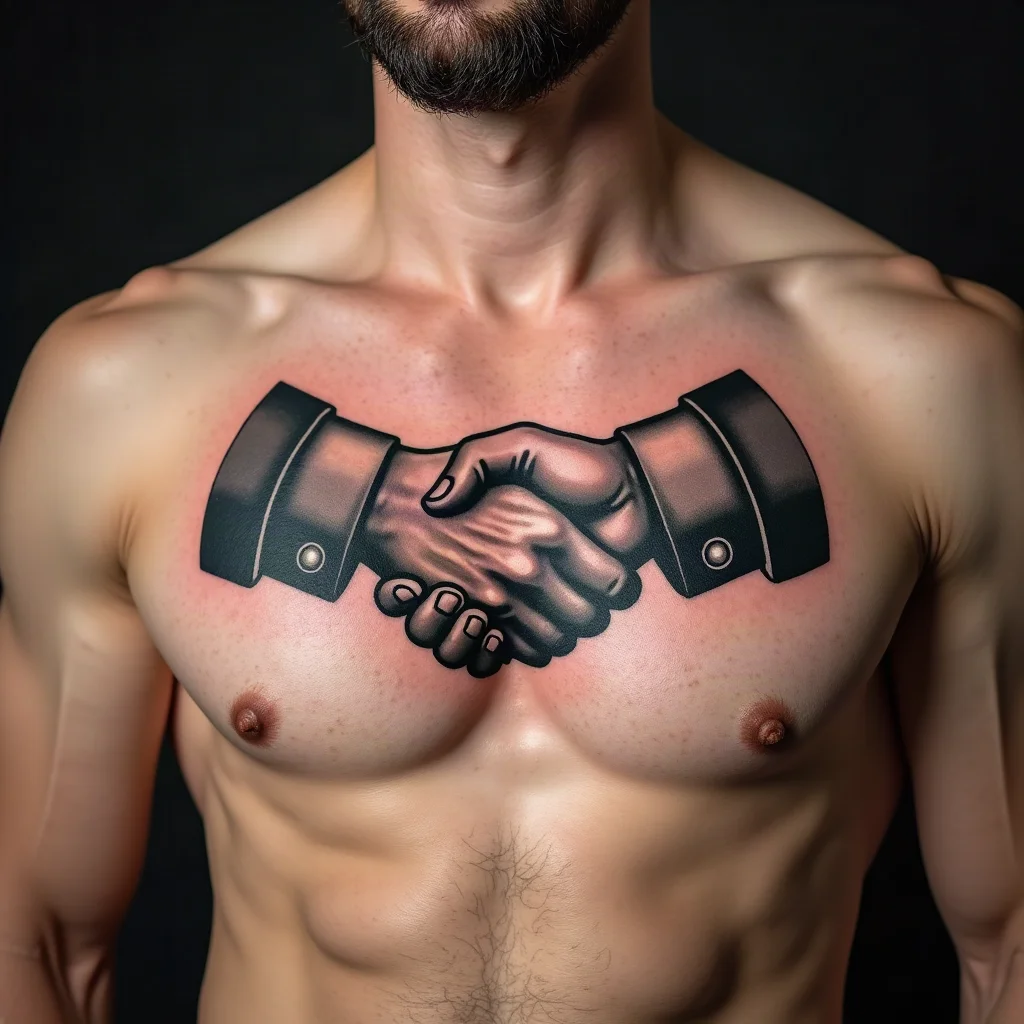
Two hands gripped in a firm handshake is a genuinely old tattoo motif for loyalty and kinship, and it hits differently when the cuffs are drawn as your father's work shirt. Across the upper chest at 5–6 inches, traditional bold line with black shading, it reads clearly for a lifetime. Skip the added ribbon banner unless you actually want text.
17. Inherited tools
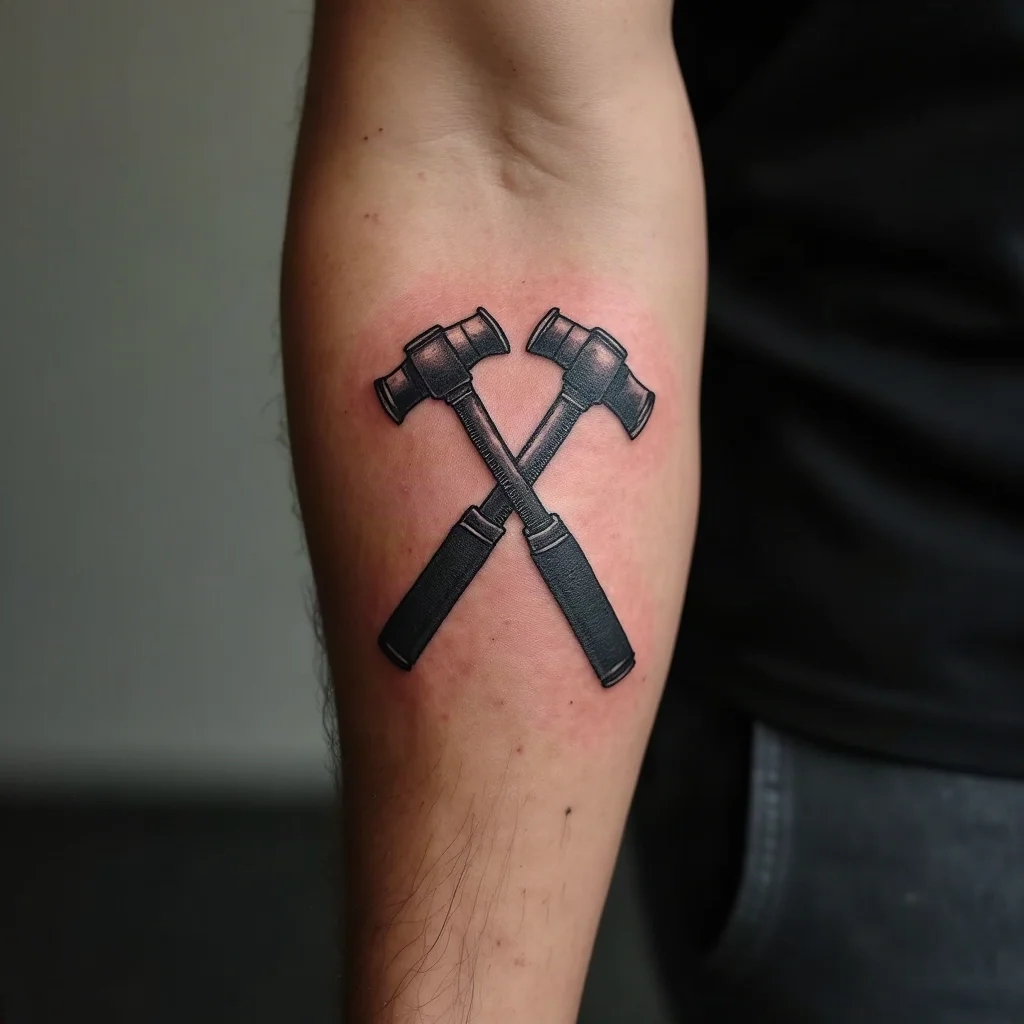
A crossed hammer and folding rule, or a worn adjustable wrench, honours a family trade better than any abstract symbol. Down the outer forearm at 5 inches, illustrative with heavy outlines and just enough grey to suggest steel. Have the artist add the specific nicks and tape on the handle — that detail is the whole tattoo.
18. A recipe card in real handwriting
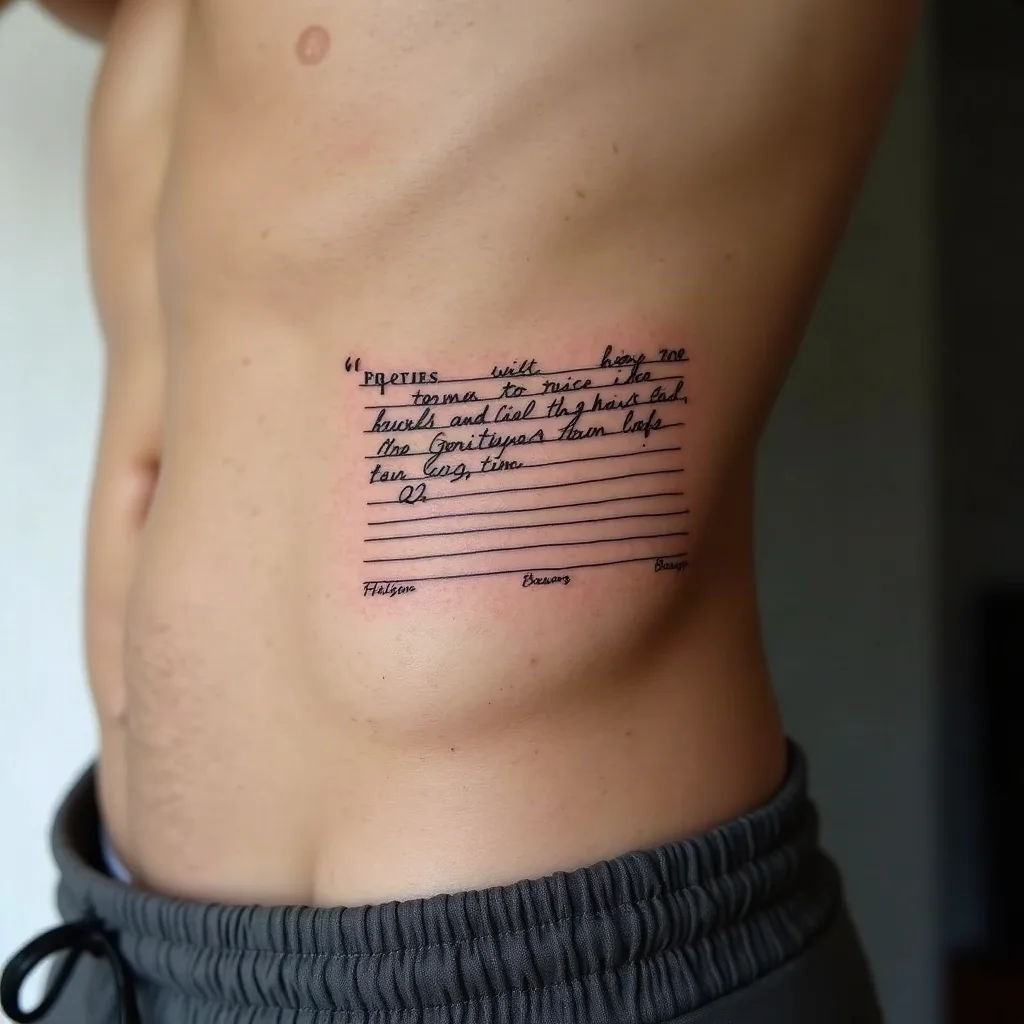
Trace an actual index card — the shortbread, the sauce, the marinade — in the original hand, and tattoo it as a card outline with the first few lines of script. On the side of the ribcage a 4–5 inch card sits well and stays private. Fine-line handwriting needs a competent single-needle artist and a touch-up appointment budgeted in.
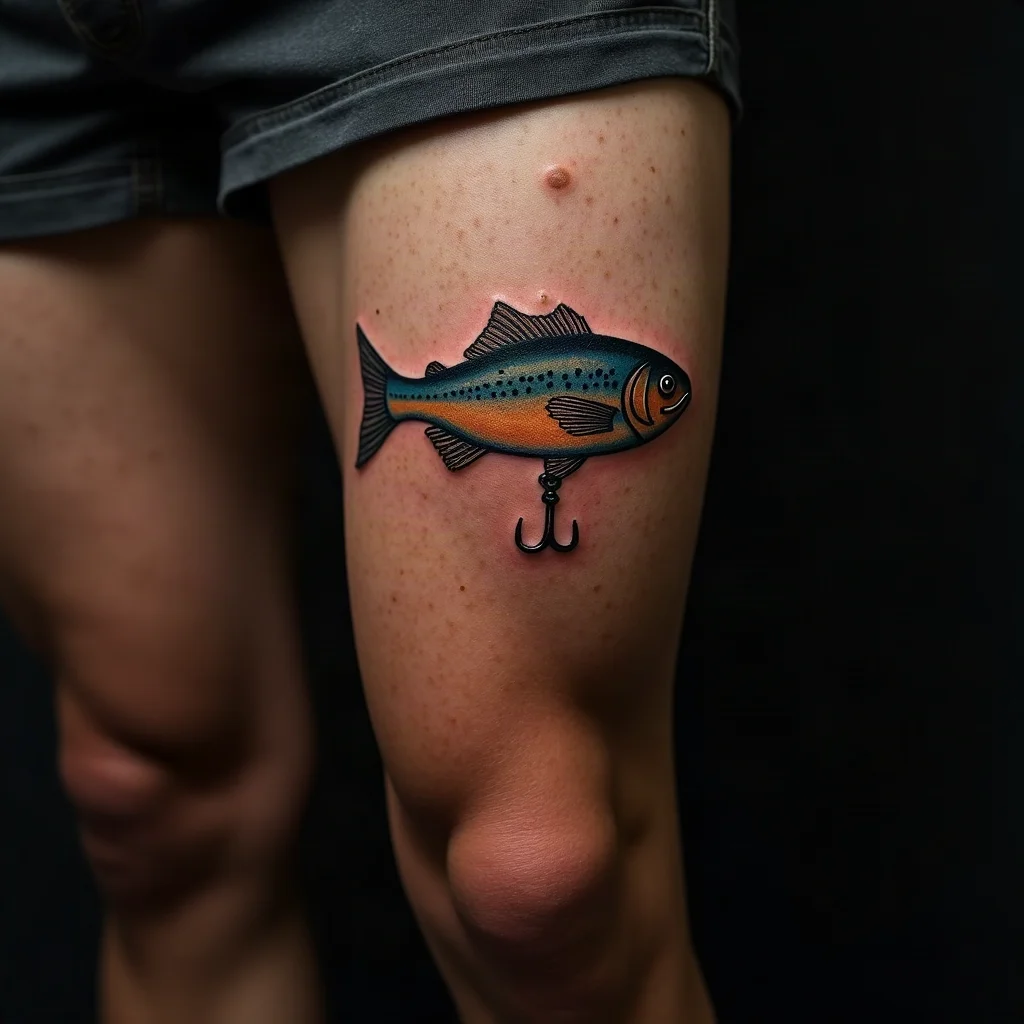
19. The family fishing lure
A single classic lure with treble hooks, or the float you learned to fish with, is a sharp piece of shorthand for summers with your dad and grandad. Four inches on the thigh in traditional style, bold outline and two or three flat blacks, no gradients. The thigh is roomy, forgiving and easy to keep covered.
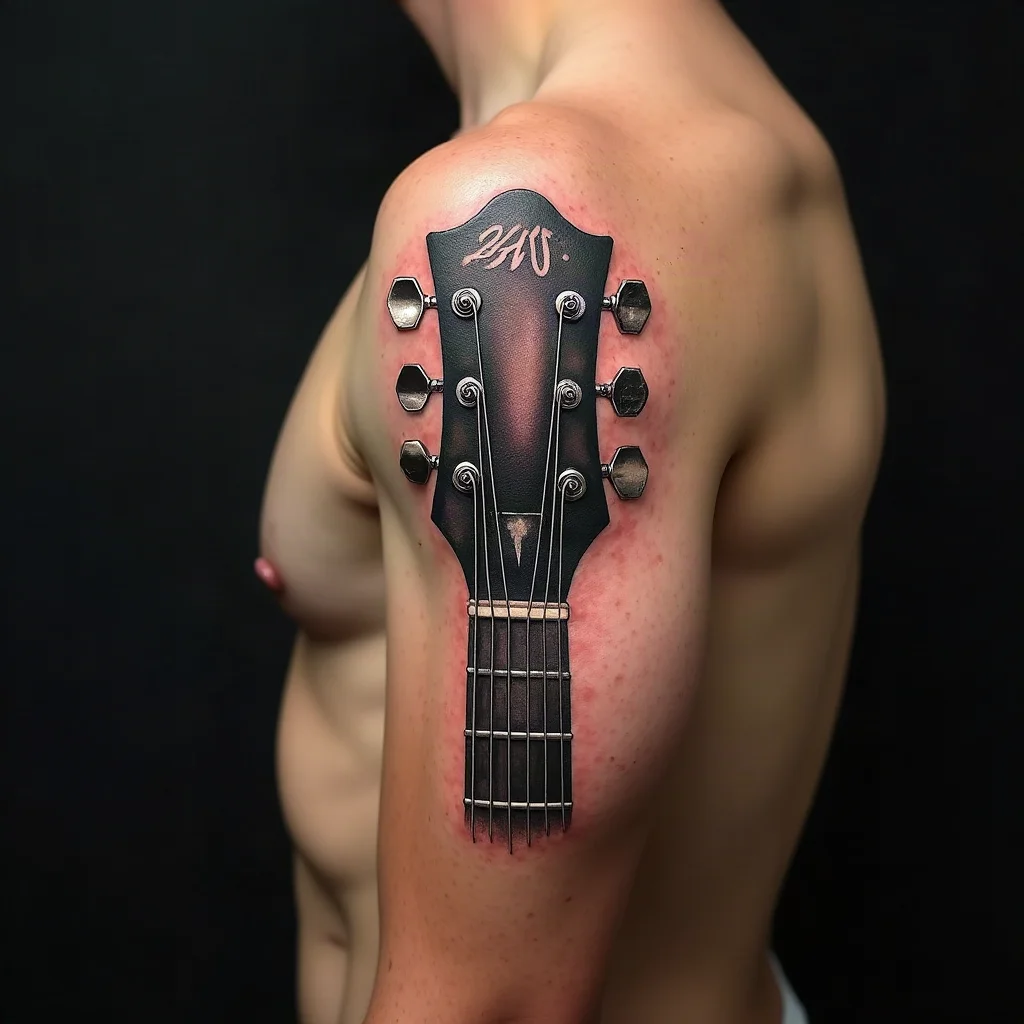
20. Your dad's guitar headstock
Rather than a whole instrument, tattoo the headstock — the tuners, the logo silhouette, the worn nut — of the guitar that was always in the house. Five inches on the upper arm in illustrative line with light shading keeps it graphic rather than fussy. Works well as the first panel of a music-and-family half sleeve.
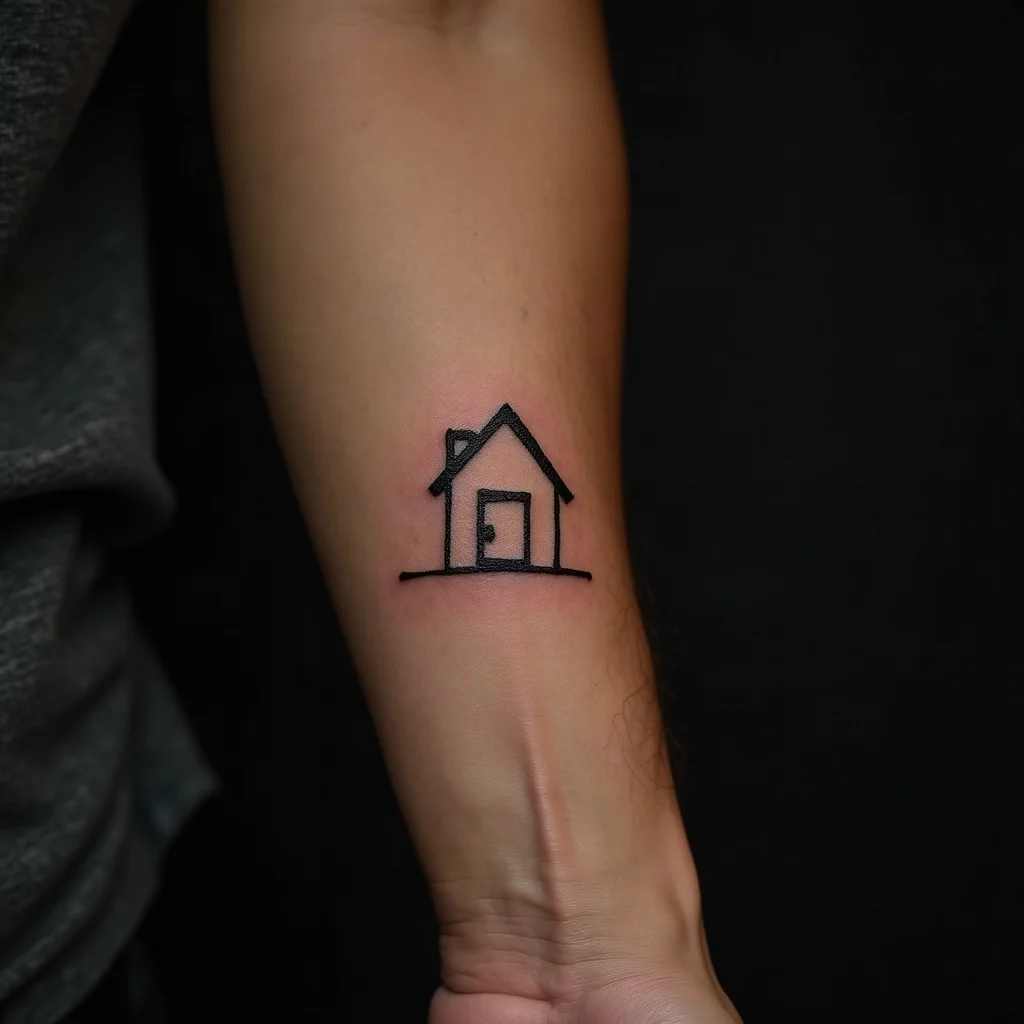
21. Single-line childhood home
The outline of the house you grew up in, drawn in one unbroken minimalist line, roofline and chimney included. Two to three inches on the inner wrist makes it a quiet everyday reminder, and it is a short, cheap sitting. Ask for slightly thicker line weight than you think you need — wrists spread ink more than most placements.
Memorials, legacy and the pieces that carry someone forward
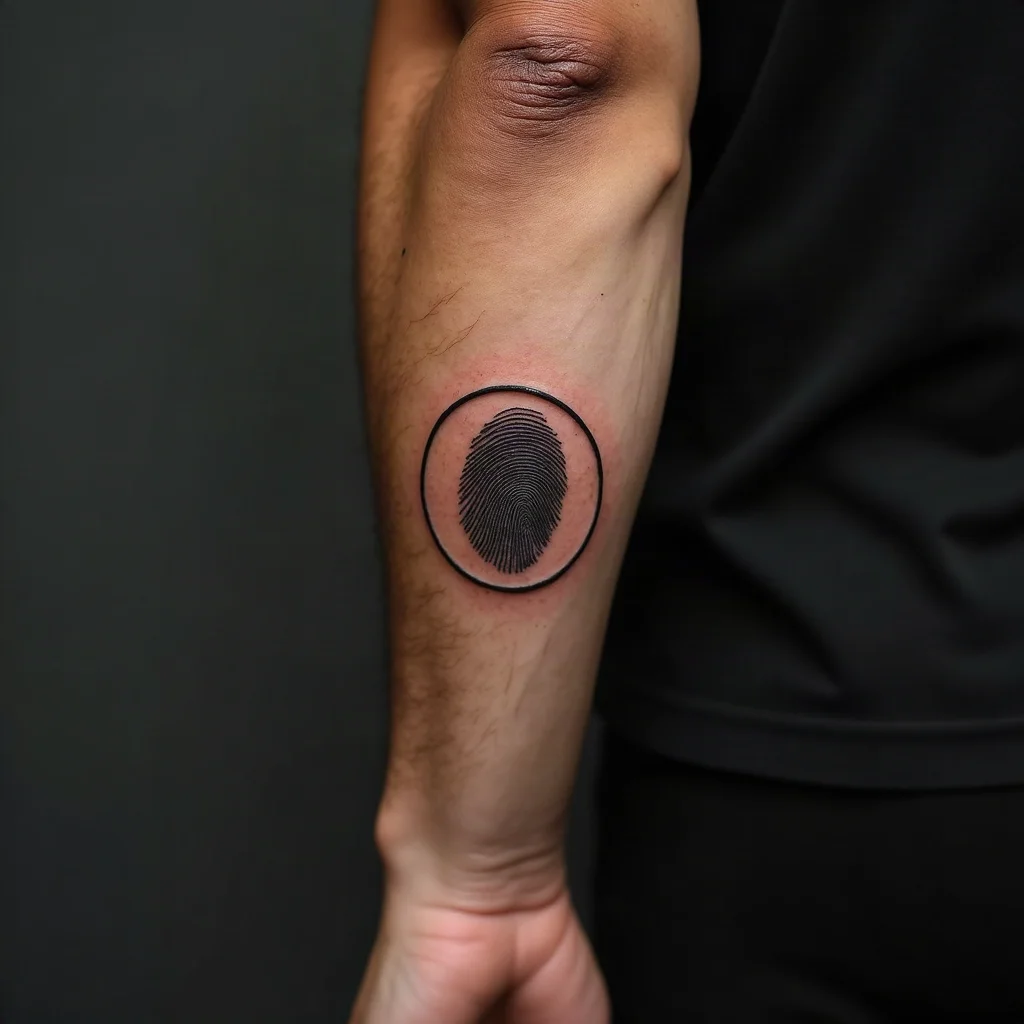
22. A real fingerprint
Your father's or grandfather's actual fingerprint, scanned from a card or a document, tattooed at true size inside a simple frame or a plain circle. Three inches on the inner forearm, and the artist should thicken the ridge lines slightly so they do not merge as they heal. It is the most personal mark available and nobody outside your family will decode it.
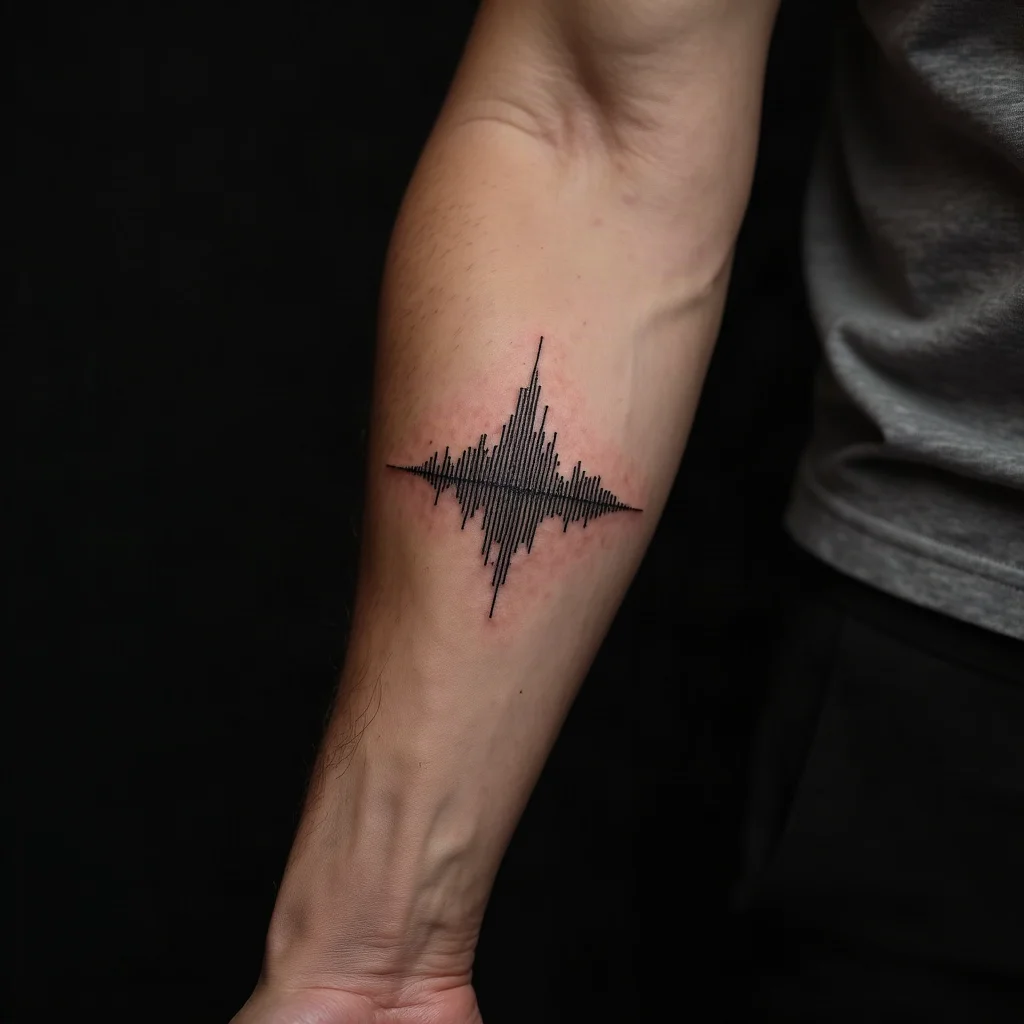
23. A voicemail waveform
The soundwave of a saved voicemail — five or six seconds of it — rendered as clean vertical bars. Six inches along the outer forearm reads as a graphic band rather than an obvious memorial. Keep the bars at least a couple of millimetres wide; hairline waveforms are one of the most common family tattoos that needs reworking later.
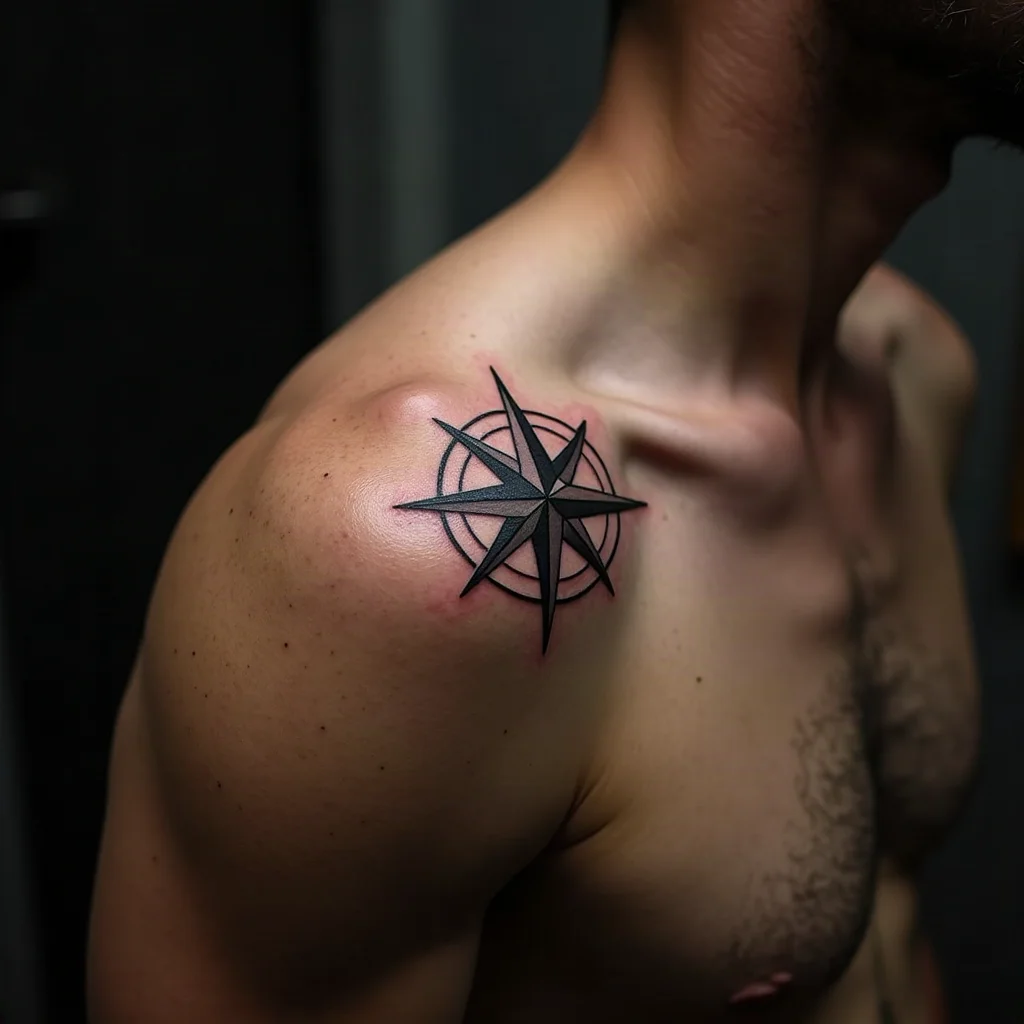
24. Compass rose over home coordinates
A geometric compass rose with the needle locked toward the place your family comes from, coordinates optional and small. Five inches on the shoulder cap, clean straight lines and crisp negative space. Ask the artist to lay the stencil while you are standing so the vertical axis is true on a moving shoulder.
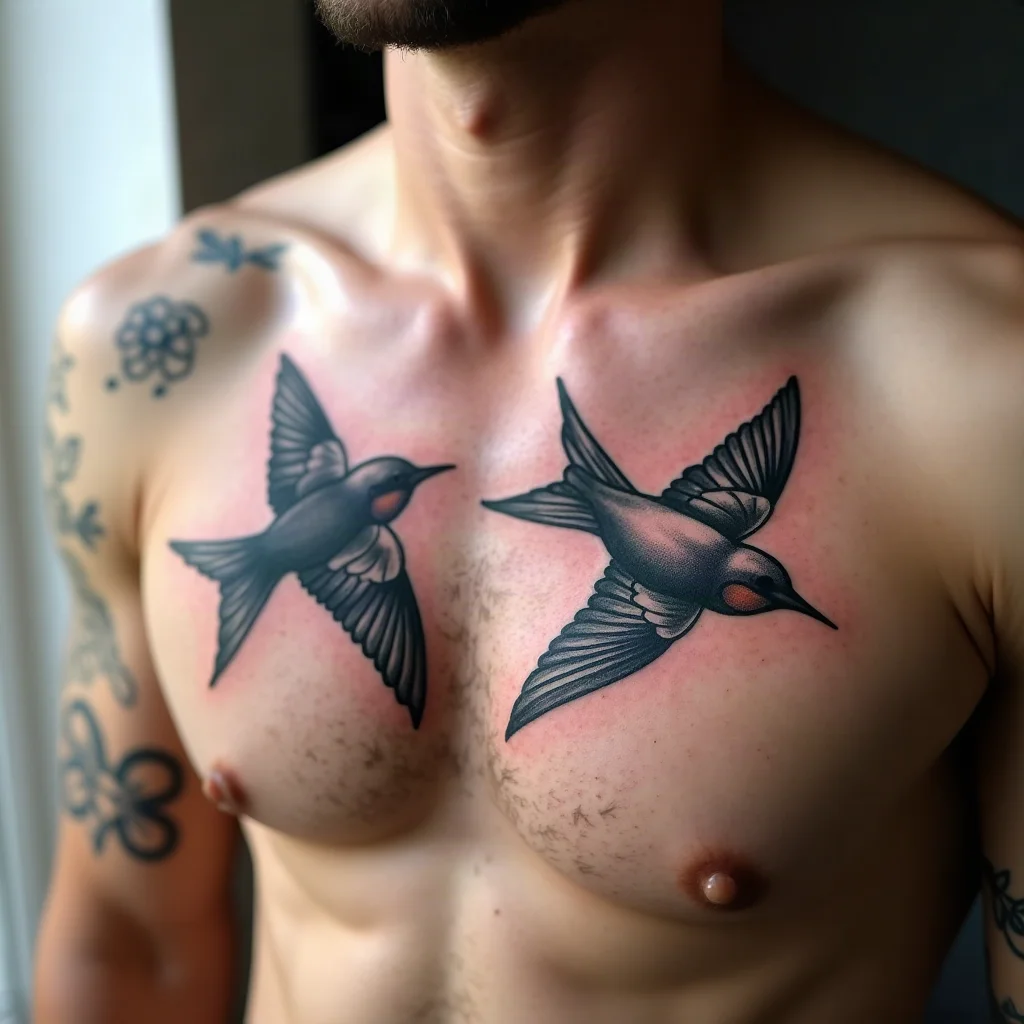
25. Two swallows coming home
Swallows return to the same nest, which is exactly why sailors wore them. A pair angled inward on the upper chest, 4 inches each in traditional style with bold outlines, makes a warm and very legible family statement. Symmetry matters here — have the stencil checked in a mirror before the needle goes in.
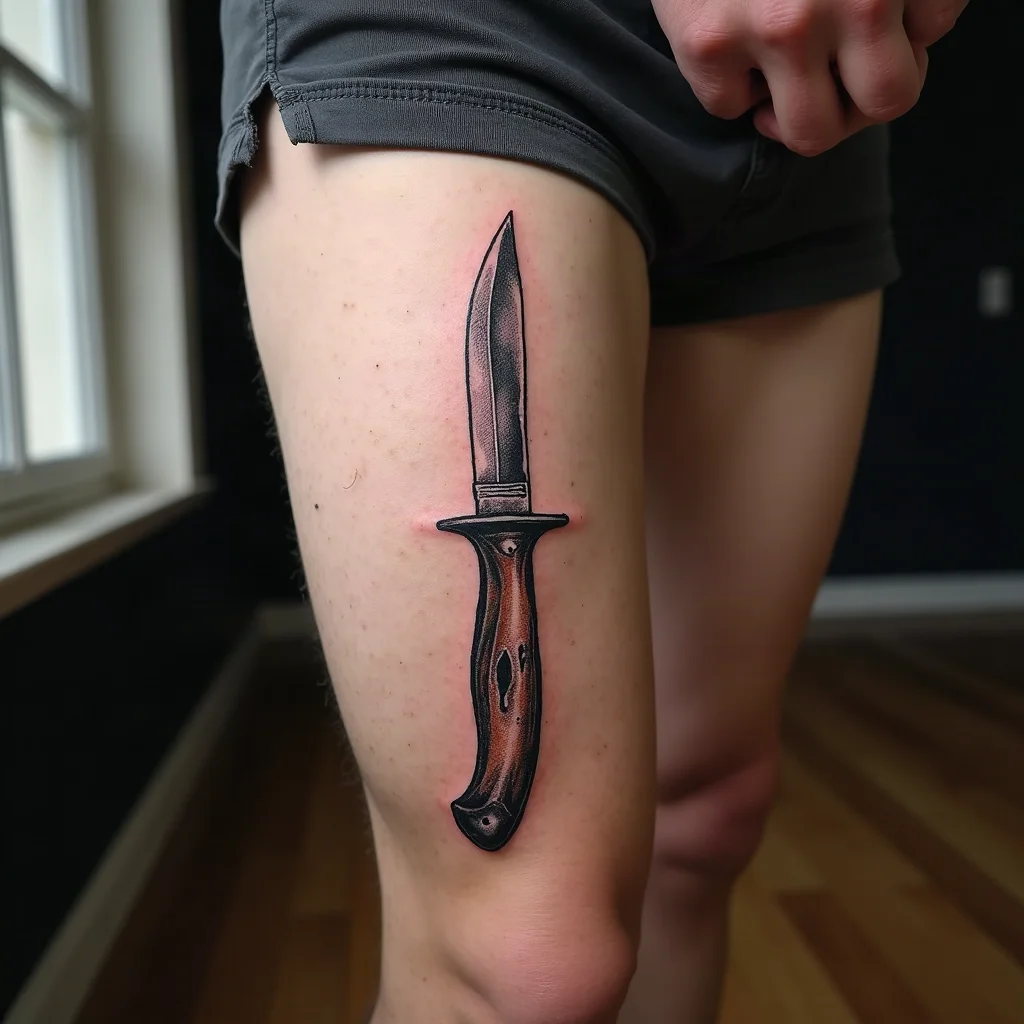
26. A handed-down pocket knife
The specific knife your grandfather carried: worn bone handle, half-open blade, the scratch on the bolster. Illustrative at 5 inches on the thigh, with texture in the handle and clean highlights on the steel. Objects like this survive on skin far better than portraits do, and they say the same thing.
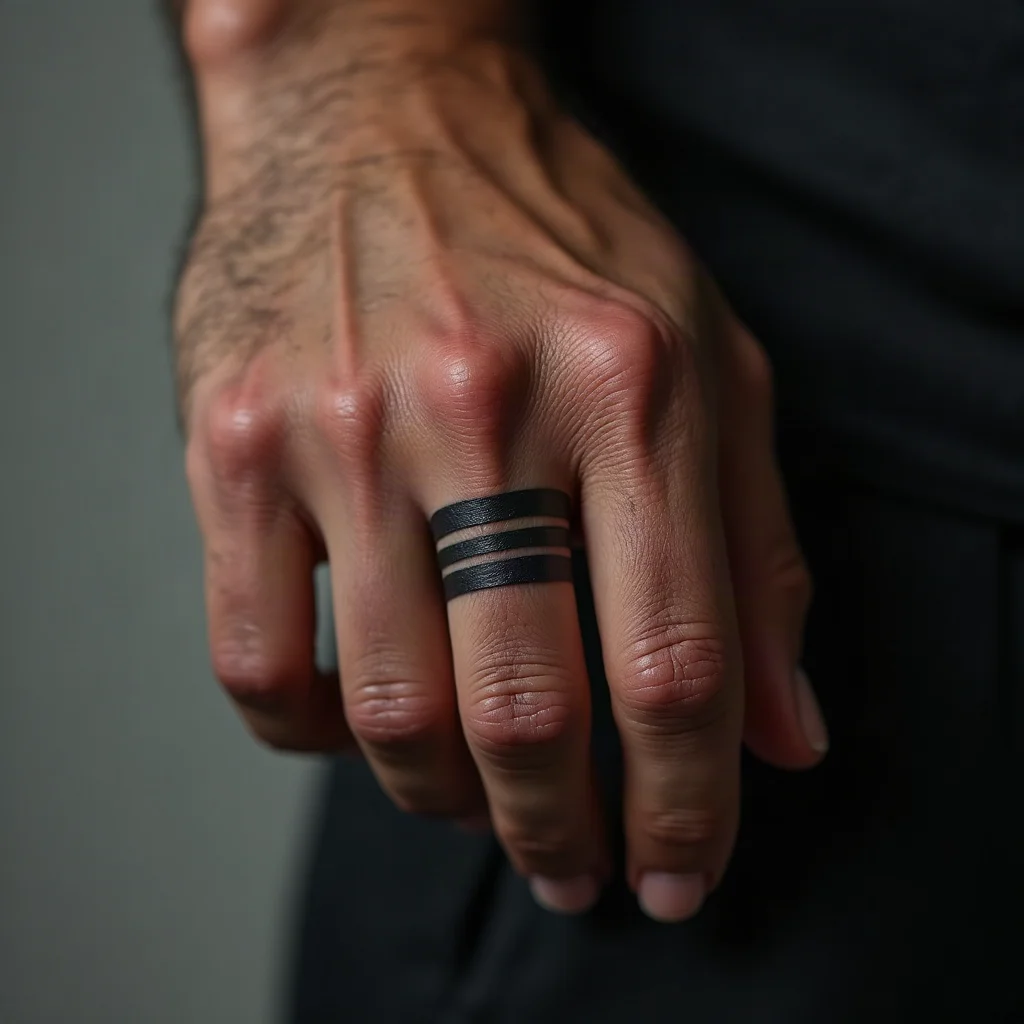
27. Nested bands
Three or four thin bands stacked and interlocking on a single finger — one per generation, or one per household in a blended family. Minimalist, quick, and easy to add to. Be realistic about fingers: they fade and blur faster than anywhere else, so budget for a refresh every few years.
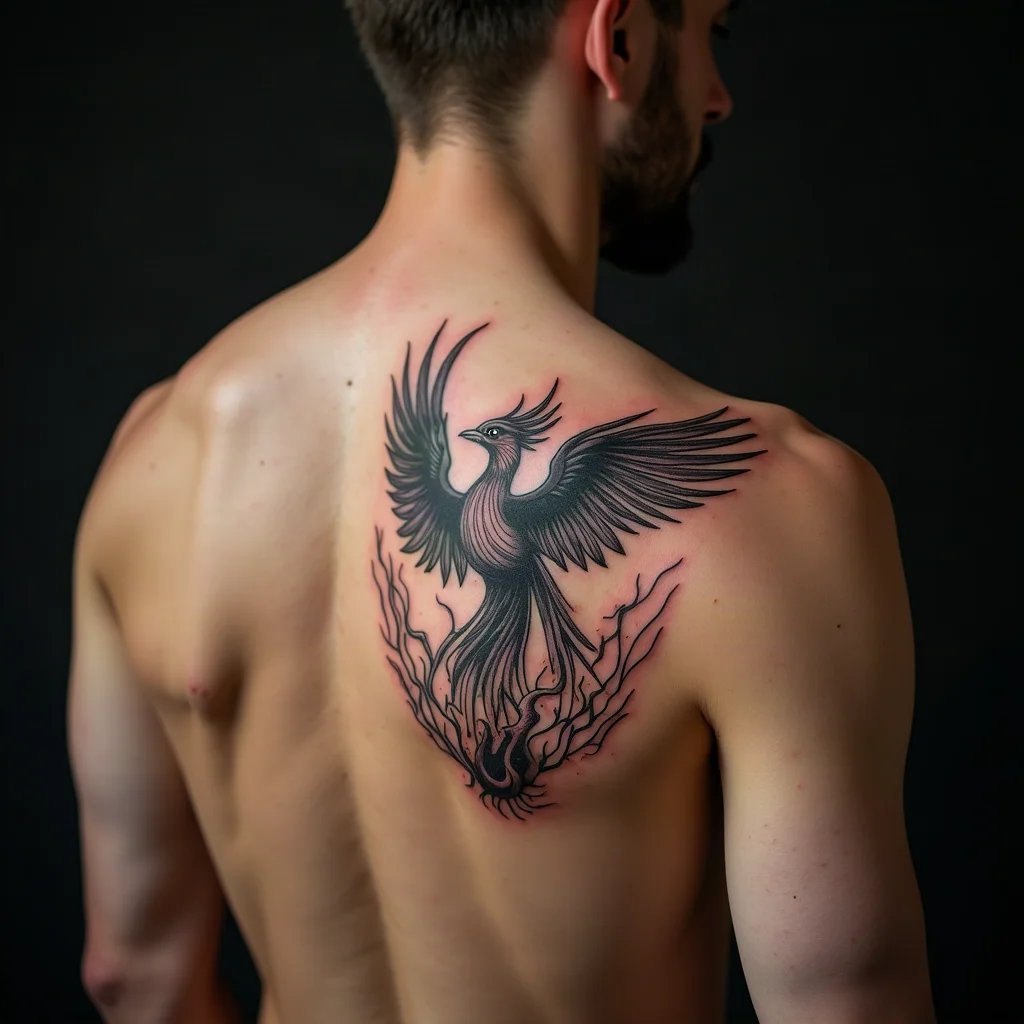
28. Phoenix over a hearth
For men whose family had to rebuild itself, a phoenix rising out of a stylised hearth fire says it without explanation. This is a big statement piece — 10 inches or more across the upper back, illustrative with strong blacks in the wings. Plan two sessions and a solid healing window before summer.
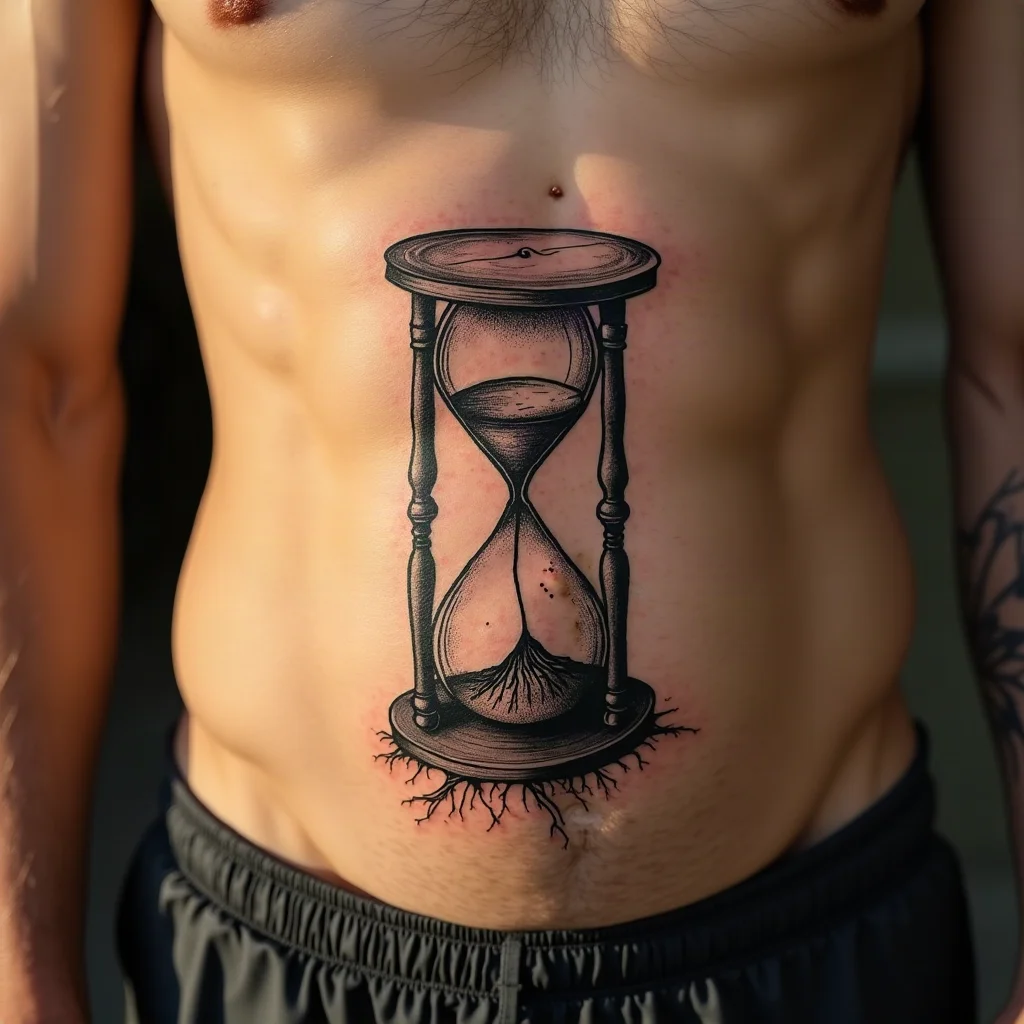
29. Hourglass with roots in the sand
An hourglass where the fallen sand has grown roots in the lower bulb: time passing, family continuing. Seven to eight inches down the side of the ribcage, illustrative with bold frame lines and light stipple in the sand. It is a striking piece and a genuinely uncomfortable placement, so eat properly beforehand and expect a long sitting.
Where to put it, how it will feel, how it will age
Family pieces get looked at more than any other tattoo you own, so placement should account for both visibility and how the design holds up.
- Outer forearm — the best all-round home for symbol work. Flat, stable, sun-exposed but easy to protect, and it reads well at conversation distance. Pain is moderate; most men describe it as an annoying scratch rather than anything worse.
- Upper arm and shoulder — the most forgiving spots for detailed illustrative work, and among the least painful. Skin here stays put over the years, so lions, crests and portraits of objects keep their shape.
- Chest — great for symmetrical designs like swallows or clasped hands. Sternum and collarbone edges bite; the outer pec is fine. Body composition changes affect chest tattoos more than arms, so avoid dense geometry.
- Ribcage — the most private placement and the most vertical space, which suits rivers, hourglasses and long compositions. Also one of the sharpest sittings on the body; break long pieces into sessions.
- Back — unbeatable canvas size for crests and phoenixes, and mostly manageable pain apart from the spine and shoulder blades.
- Hands, fingers and wrists — high impact, low longevity. Expect fading and plan refreshes.
Sizing is where most family tattoos go wrong. Any design with internal detail — root systems, knotwork, a crest, engraving on a watch face — needs at least 4–5 inches of width to survive a decade. Below that, the artist has to drop detail or the lines merge as they heal. If you want several symbols, do not shrink them all: build a stacked quarter-sleeve on the upper arm where an oak, a compass and a pocket watch each get their own breathing room, tied together with grey wash background instead of crammed into one small badge.
Cost, sessions and briefing your artist properly
Pricing varies hugely by city and artist reputation, so treat all of this as ranges rather than quotes. Small symbol work — a single-line house, nested finger bands, a fingerprint — usually lands at a shop minimum, which in most markets is roughly the cost of a nice dinner out. A detailed 5–6 inch forearm piece typically means two to four hours of work and is quoted either hourly or as a flat piece price. Larger back and rib compositions get quoted per session or per day, and it is normal to pay a deposit that comes off the final total. Custom drawing time is usually included in the price; asking for three unrelated concepts drawn up is not.
What actually makes the consult productive:
- Bring the objects and documents. Photograph the pocket watch, the tools, the handwriting, the boat. Real reference beats Pinterest every time for family work.
- Say what must be readable. If the hidden initials or the ridge count matter, tell the artist so they scale the design around that.
- Name the placement early. A design drawn for a forearm rarely transfers cleanly to ribs, and vice versa.
- Leave room to grow. Tell them if another child, branch or wolf may be added — a good artist will compose with that gap in mind.
Healing is straightforward if you are boring about it: keep the wrap on as instructed, wash gently with unscented soap, moisturise thinly, no gym for a few days, no pools or direct sun for two to three weeks. Fine-line handwriting and any hand or finger placement should be reviewed at the six-to-eight-week mark for a touch-up, which reputable shops usually cover once. If you and a relative want to build matching pieces from the same symbol, the layouts in our father and son matching tattoos piece pair well with everything on this list. Longer term, the only real maintenance is sunscreen — nothing dulls a family tattoo faster than a decade of unprotected forearm.
Frequently asked questions
What family symbol works if I do not want a tree?
Objects usually beat botanicals for men who want something less common. An inherited tool, a pocket watch set to a birth hour, a boat outline, an anchor with one rope loop per person, or a compass locked toward where your family comes from all carry the same meaning with a sharper look. They also age better than fine botanical linework because the shapes are bold and simple.
Are names really a bad idea?
Not bad, just harder to do well and easier to regret stylistically. Script needs correct sizing and a lettering-strong artist, and small script blurs faster than bold imagery. If names matter to you, consider hiding initials inside a pattern or tattooing genuine handwriting rather than a font.
How much should I budget for a meaningful forearm piece?
A detailed 5–6 inch forearm design is usually two to four hours of work, quoted hourly or as a flat piece price that varies widely between markets and artists. Small symbol pieces often come in at the shop minimum. Always ask whether the quote includes drawing time and a free touch-up.
Which placement hurts least for a first family tattoo?
The outer upper arm and shoulder are the most comfortable spots with plenty of room for detail, followed by the outer forearm and calf. Ribs, sternum and spine are noticeably sharper and better suited to a second or third tattoo. Eat a proper meal beforehand and book a shorter first session if you are unsure.
Can I add to a family tattoo when the family grows?
Yes, if you plan for it at the design stage. Tell your artist that more branches, roots, wolves, swallows or rope loops may be added later, and they will leave deliberate negative space and compose with an open edge. Retrofitting additions into a closed, tightly packed design usually means reworking the original.
The conversation
No comments yet. Got a thought about these designs? Start us off.
Want to weigh in? Join the community to comment, save designs and try them on your skin.