Kids' Names and Birthdates: 27 Family Tattoo Ideas
Names and dates are the hardest tattoos to get right, because tiny lettering is the first thing to blur. Here are 27 layouts, date formats and expandable compositions that stay sharp and leave room for whoever comes next.
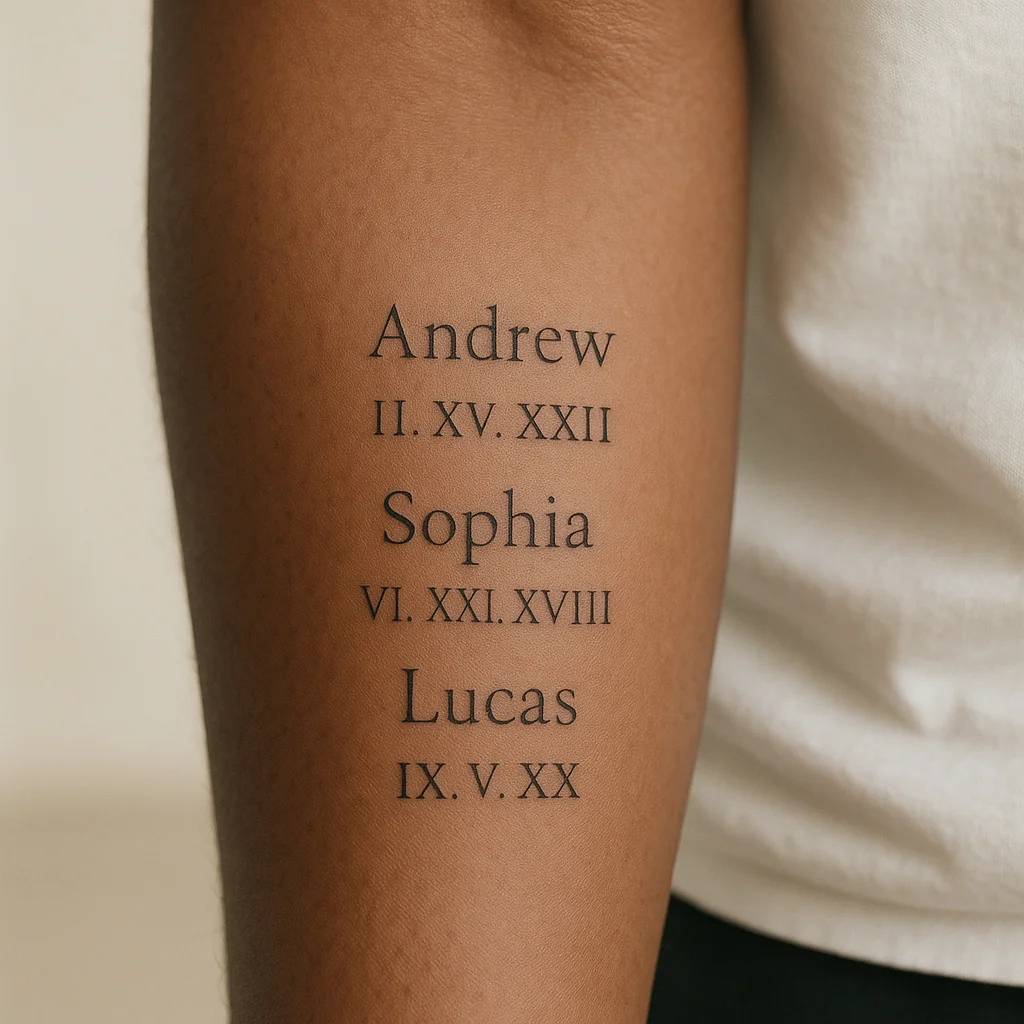
Before you pick a font: five decisions that make or break a name-and-date tattoo
Names and numbers are unforgiving. A rose can blur a little and still read as a rose; a 3 that softens into an 8 changes the meaning of the whole piece. Every good children's-name tattoo starts with the same five choices, and they matter more than the design itself.
- Size floor. Ask your artist for the smallest size they will guarantee, not the smallest that fits. As a rule of thumb, capital letters under about 4-5 mm tall and numerals under about 5 mm start fighting a losing battle with skin over the decades. Roman numerals need extra height because the strokes sit so close together.
- Stroke weight over style. Single-needle script looks exquisite on day one. A slightly heavier fine line, with real space between letters, looks like the same tattoo in fifteen years. Thin plus tiny plus tight spacing is the combination that fails.
- Date format. Numerals (08.14.19), Roman numerals (VIII.XIV.MMXIX), written out (14 August 2019), or coded (Morse, barcode, constellation). Roman numerals of a full year are long, so plan the composition around the longest child's date, not the shortest.
- Room to grow. If more kids are even a possibility, choose a design with an obvious slot for another element: a branch with space on the stem, a column that can add a line, a row that can extend.
- Proofing. Read the stencil out loud, letter by letter, then check the dates against a document. Do it twice, in daylight, before the needle touches you. Artists will happily reprint; nobody enjoys the alternative.
One more practical note: places that fold or rub - inner fingers, the outer edge of the hand, the top of the foot - are the worst homes for small lettering. Save those for symbols and put the words somewhere flat.
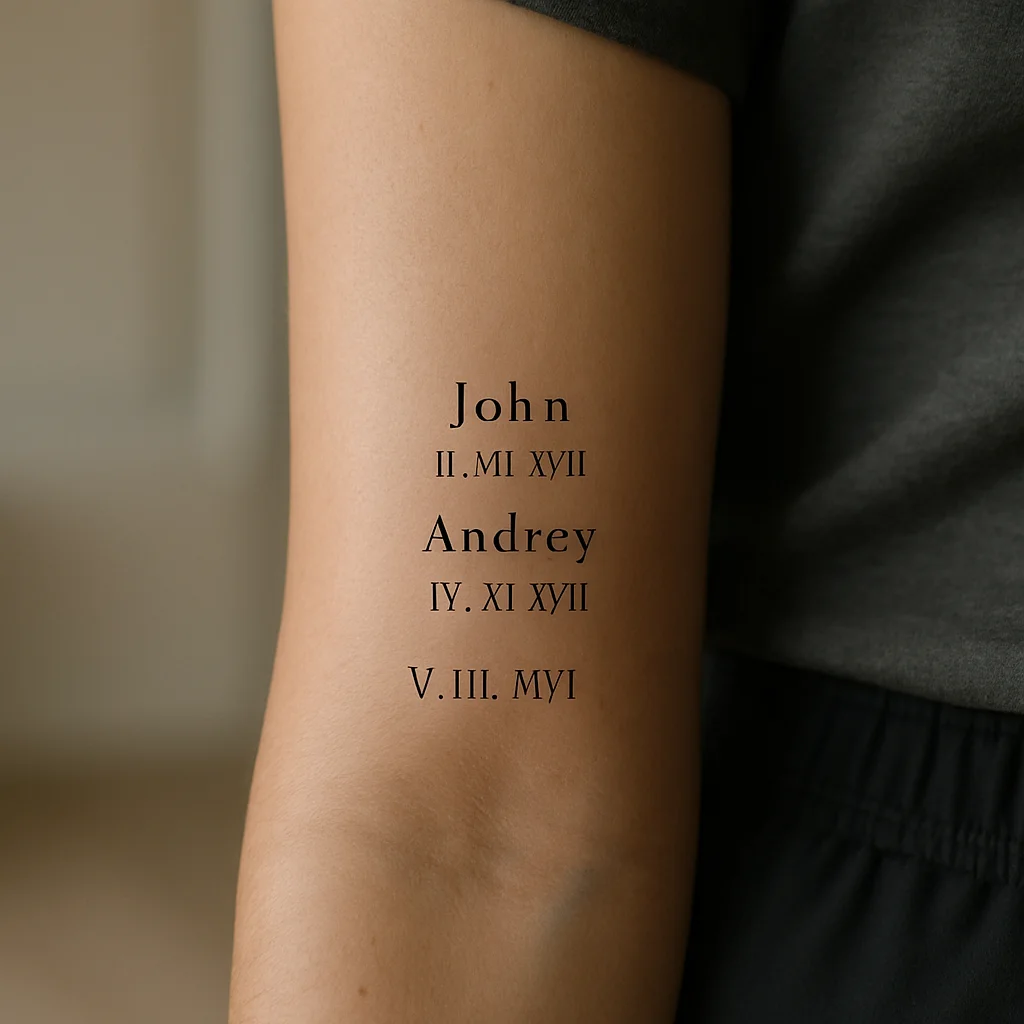
Names, made legible: 7 lettering layouts that hold up
1. Stacked first names down the inner forearm
Names left-aligned in a clean column, one per line, oldest at the top, with generous leading between lines so the descenders never touch. The inner forearm is flat, low-friction and shaded from sun, which is why it ages better than almost anywhere else for lettering. Budget roughly 10-12 cm of length for three names at a comfortable size.
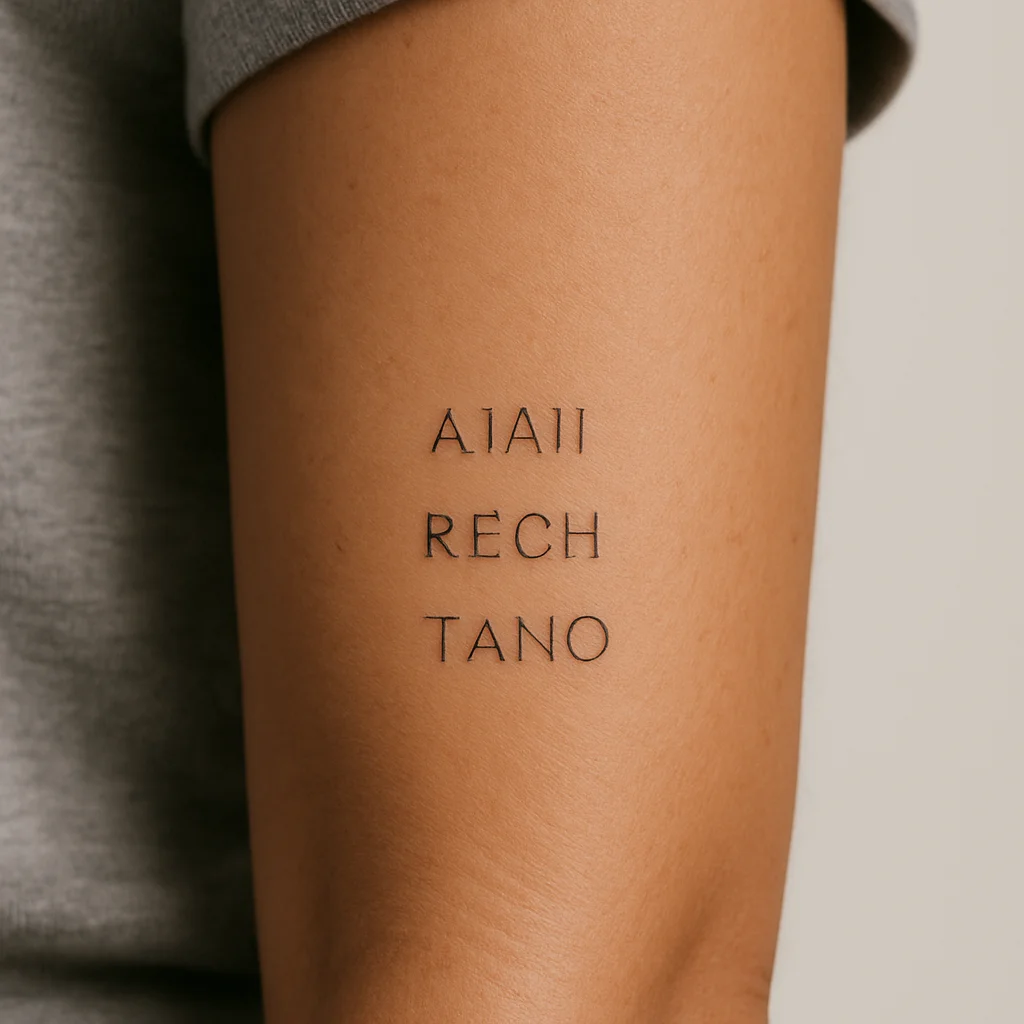
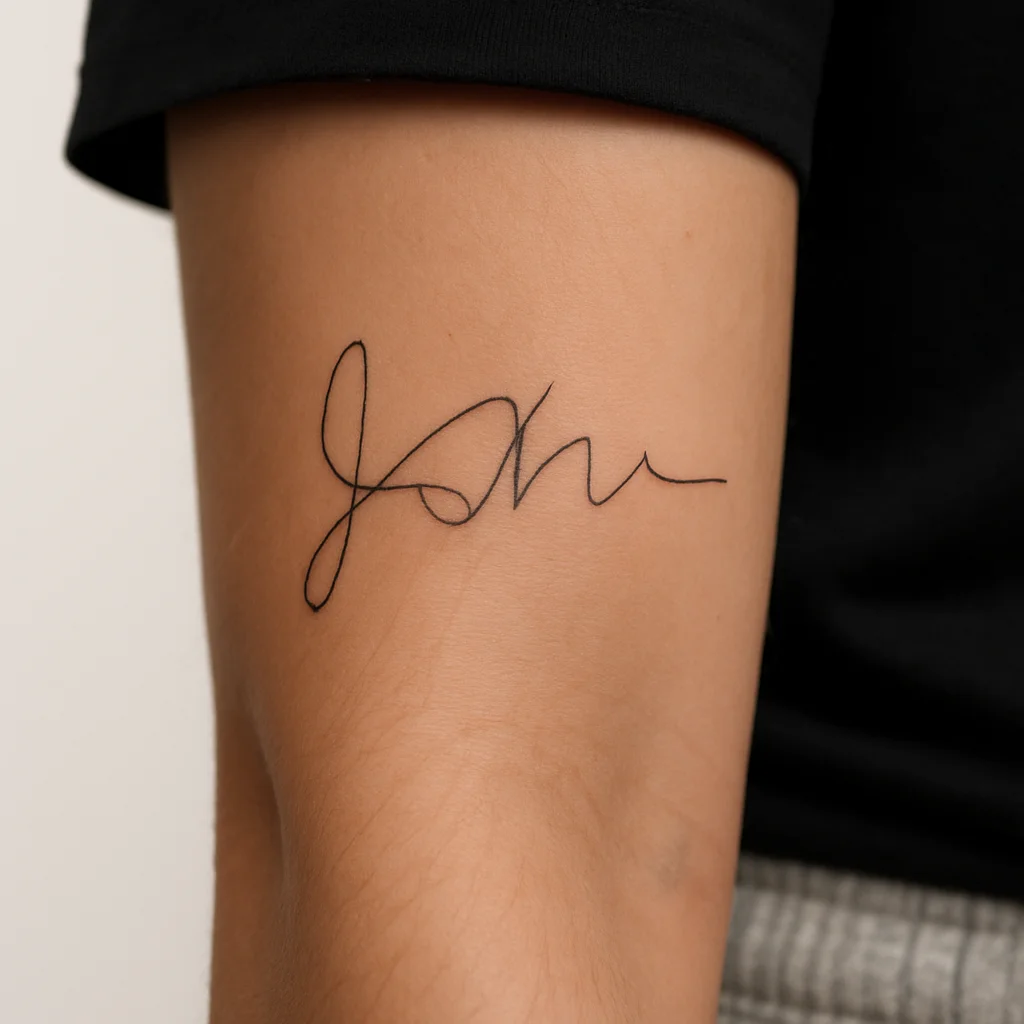
2. Traced handwriting, one signature per child
Have each kid write their own name on plain paper with a felt-tip pen, then photograph it flat and hand it to your artist to redraw. The wobble of a five-year-old's letters is the entire point, and it dates the tattoo to that exact age forever. Ask for a slightly thickened trace so the shakiest strokes survive healing.
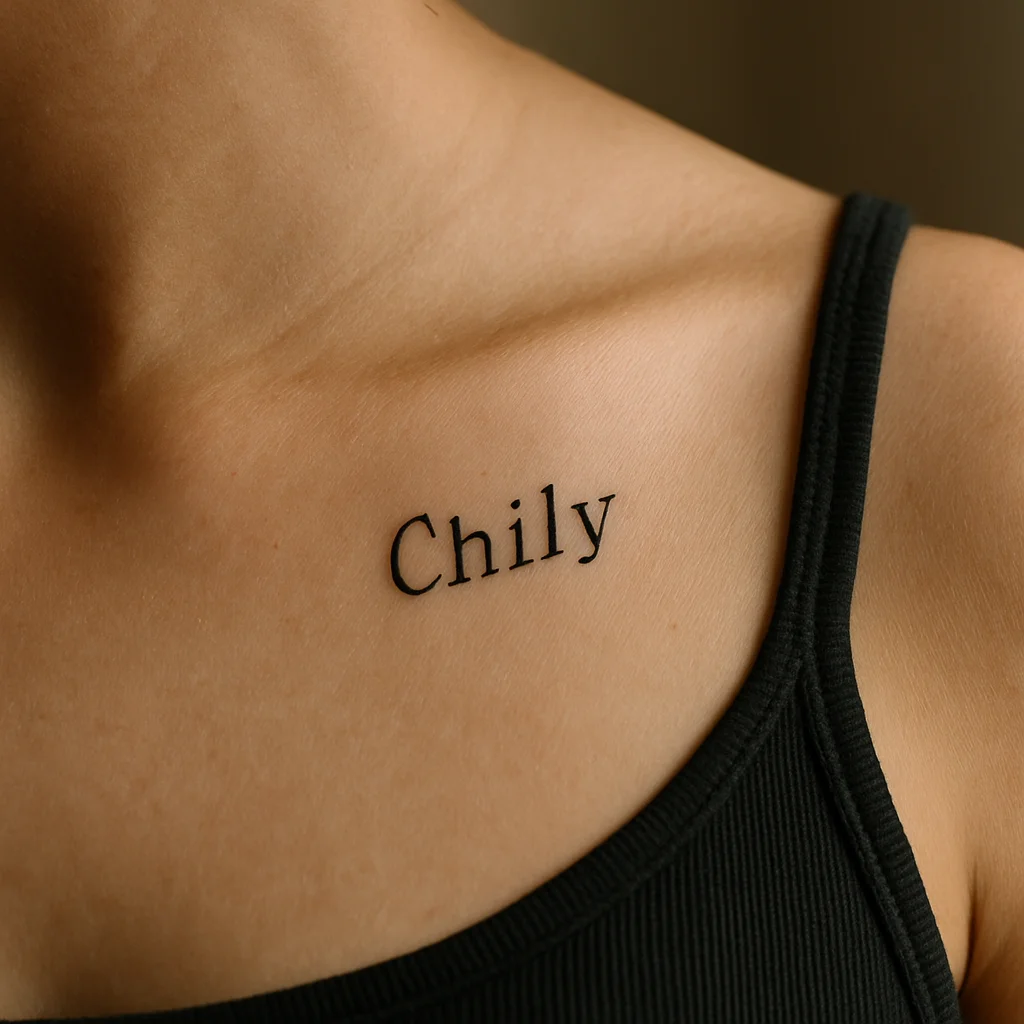
3. Serif nameplate along the collarbone
A single name in a small classical serif, following the bone line from the sternum outward. Serifs give the eye anchor points, so this reads clearly even at modest size. Expect a sharper sting where the skin sits directly over bone - short session, though, usually under an hour.
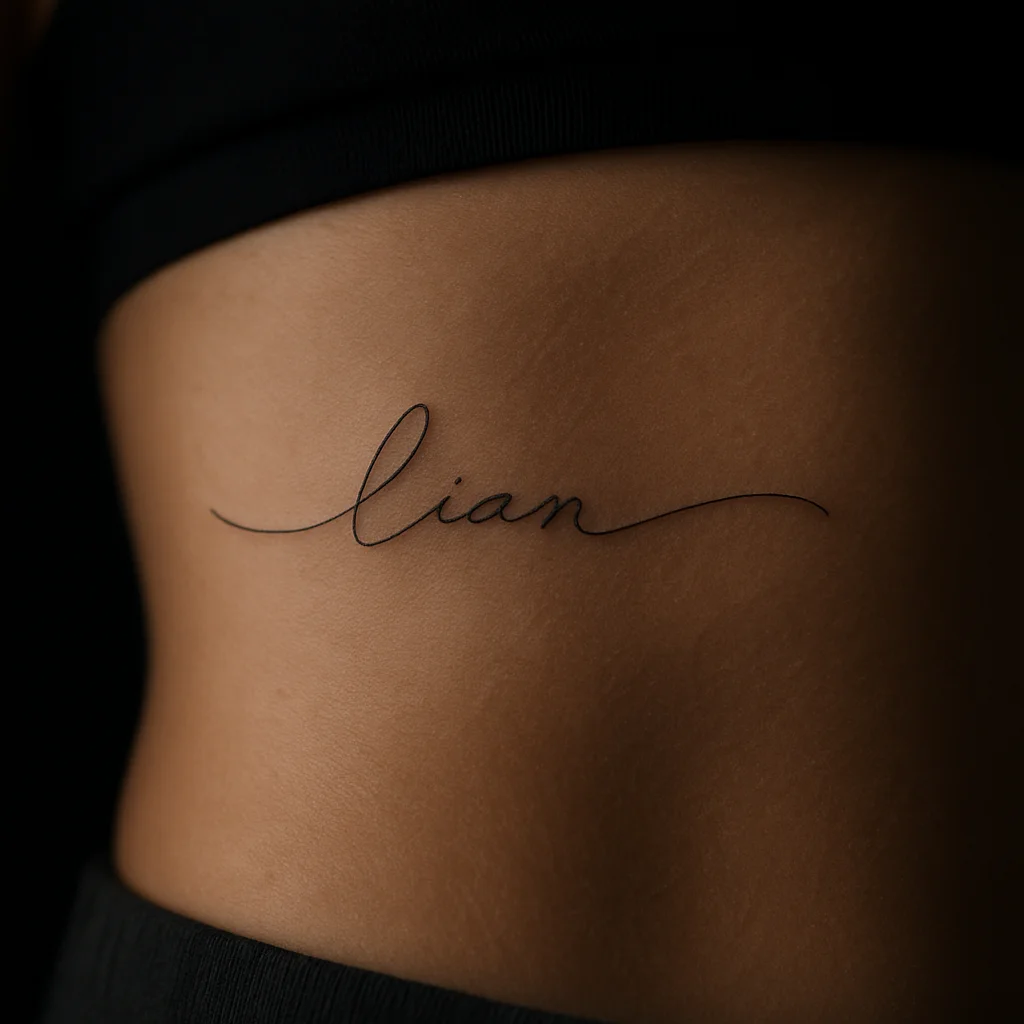
4. Names threaded into a single continuous line
One unbroken cursive line where the tail of the first name becomes the lead-in of the next, running horizontally under the collarbone or along the ribs. It looks like one drawing rather than a list. Insist on a printed stencil proof, because linked script is where letters most often get quietly lost.
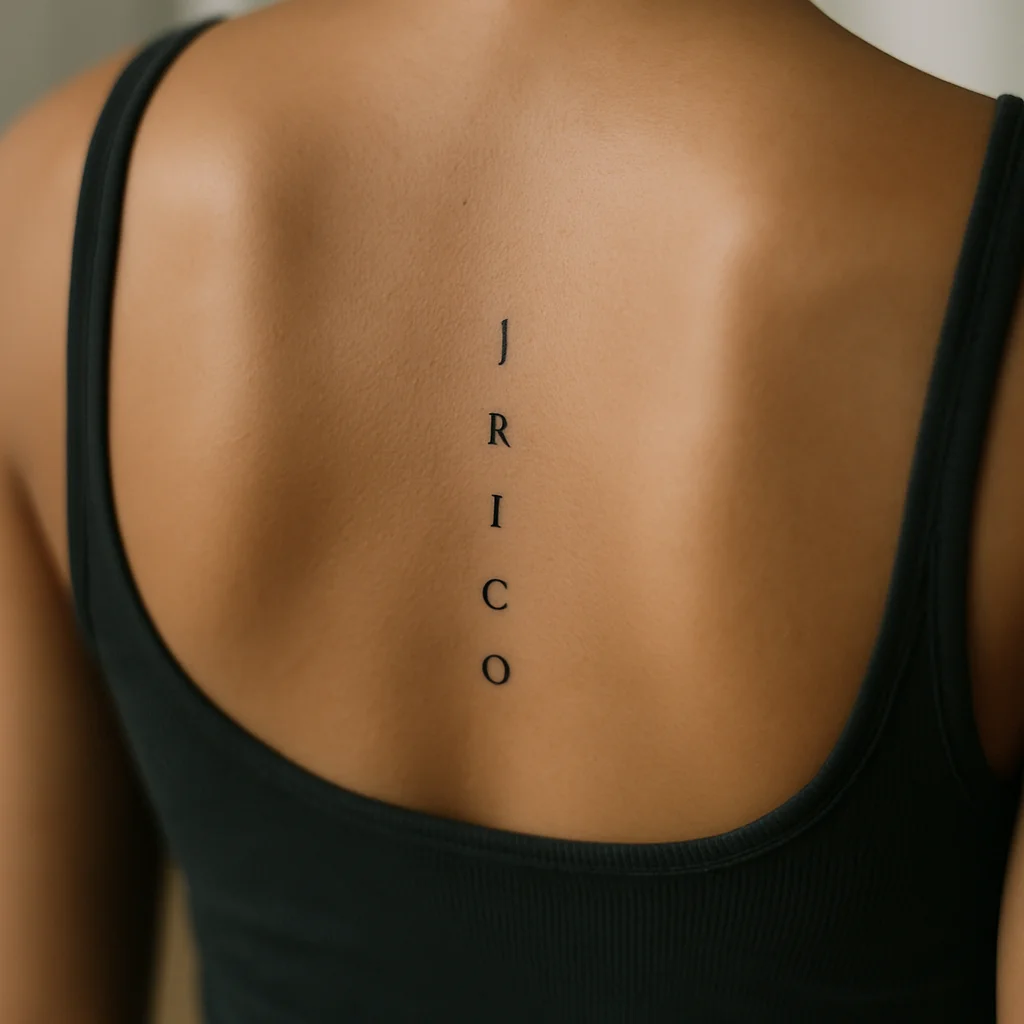
5. Vertical spine column, oldest to youngest
Names running down the spine in small caps, each centred on the vertebrae, birth order top to bottom. The spine reads like a natural list and there's always room to add another line below. It's a bony, buzzy placement - real but brief pain per name.
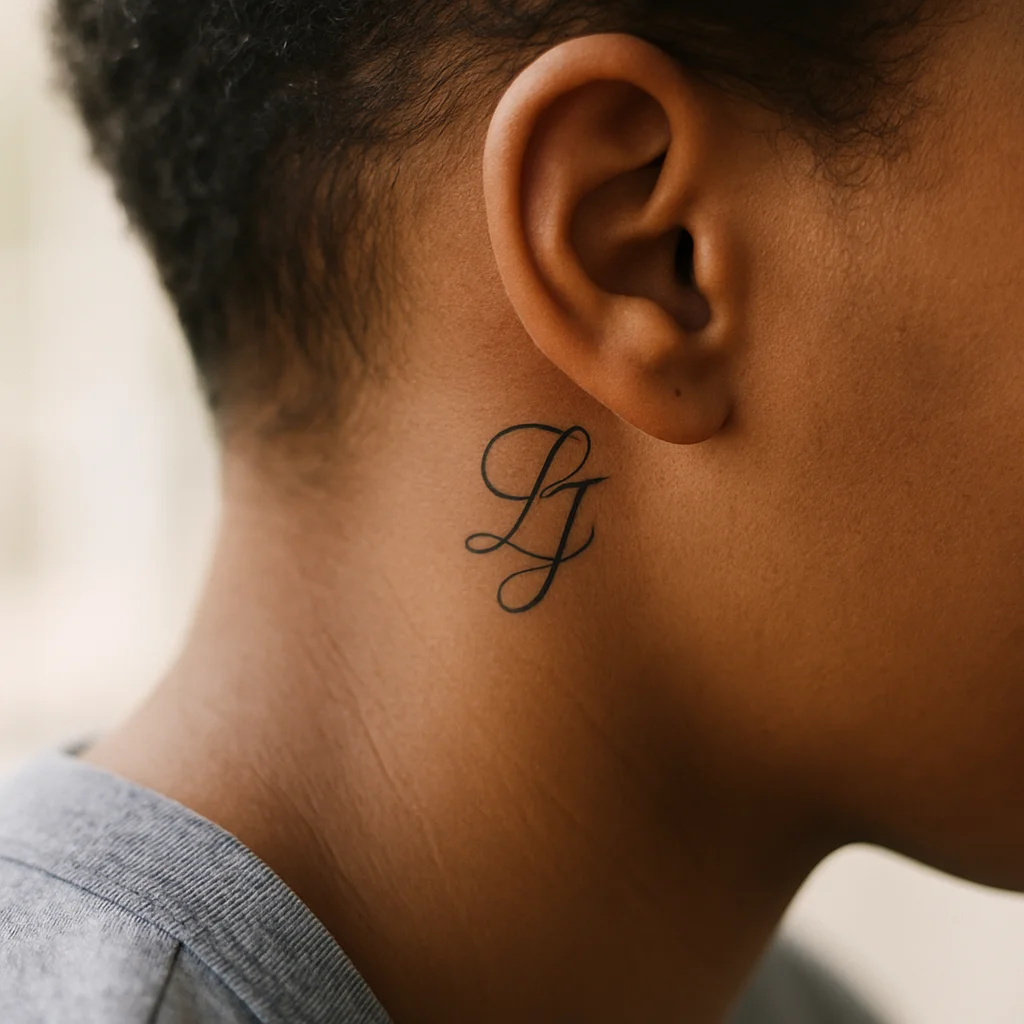
6. Initial monogram behind the ear
Two or three initials interlocked into a compact monogram, tucked in the hollow behind the ear where hair can cover it. Keep it to letters with distinct silhouettes; three tangled capitals in 1.5 cm turns into a smudge. If you like discreet spots, our guide to behind-the-ear designs covers how they wear over time.
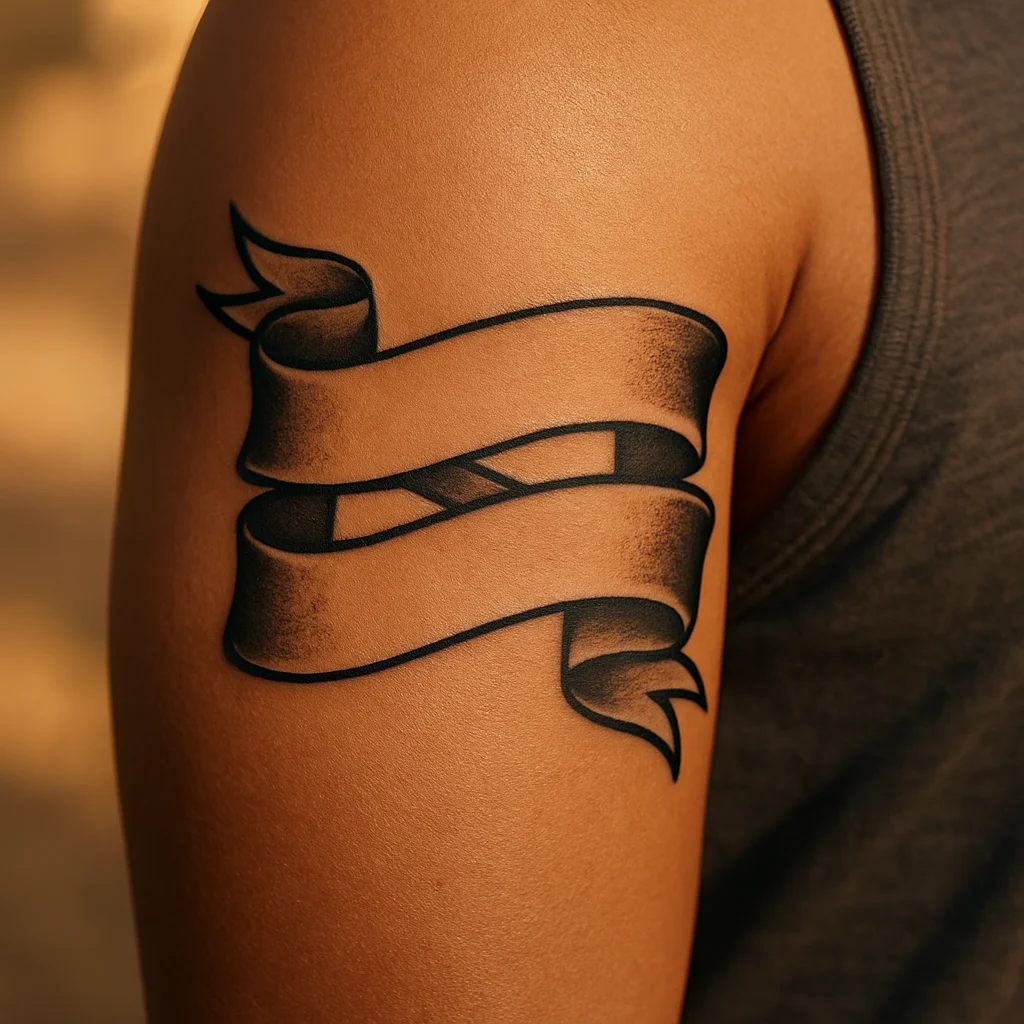
7. Traditional banner with names inside
A bold-outlined ribbon curling across the upper arm, names lettered inside in classic block. Traditional banners were built for exactly this job: heavy outlines and open counters mean the text still reads across a room in twenty years. Best choice if you want family names to be unmistakably visible rather than intimate.
Birthdates that don't crowd the design: 7 formats
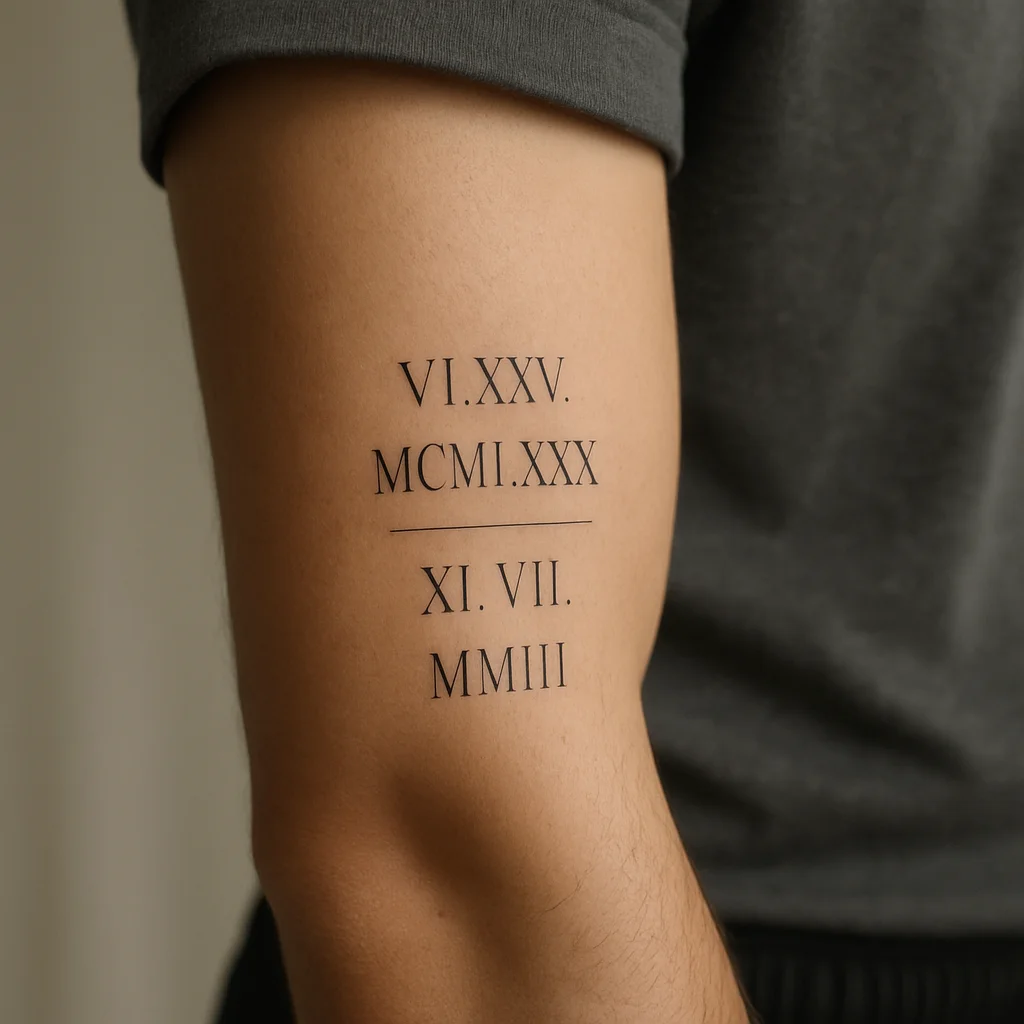
8. Roman numerals in a stacked column
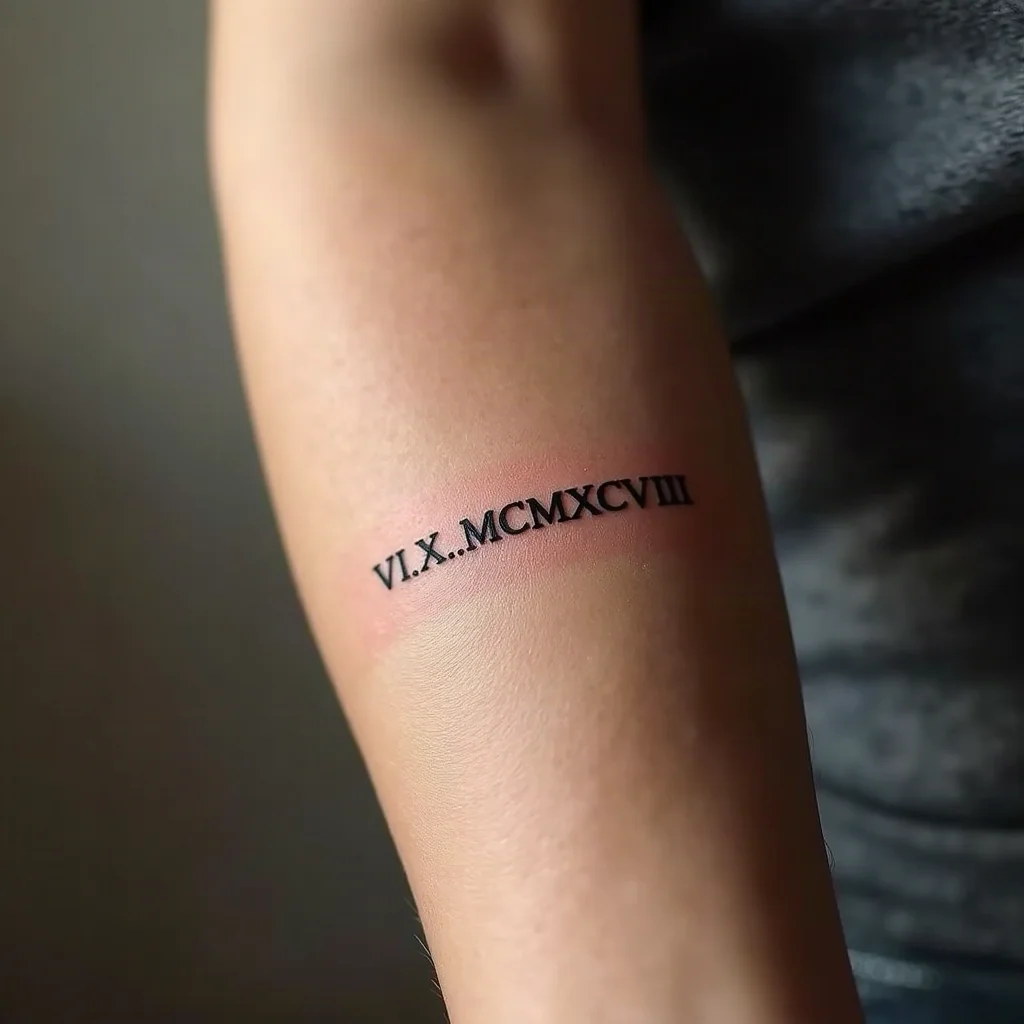
Each child's date as its own line - VIII.XIV.MMXIX - stacked down the outer forearm with a hairline rule between them. Roman years are long, so this needs width; measure the longest date first and size everything to that. Use dots or small separators, never slashes, which close up as they heal.
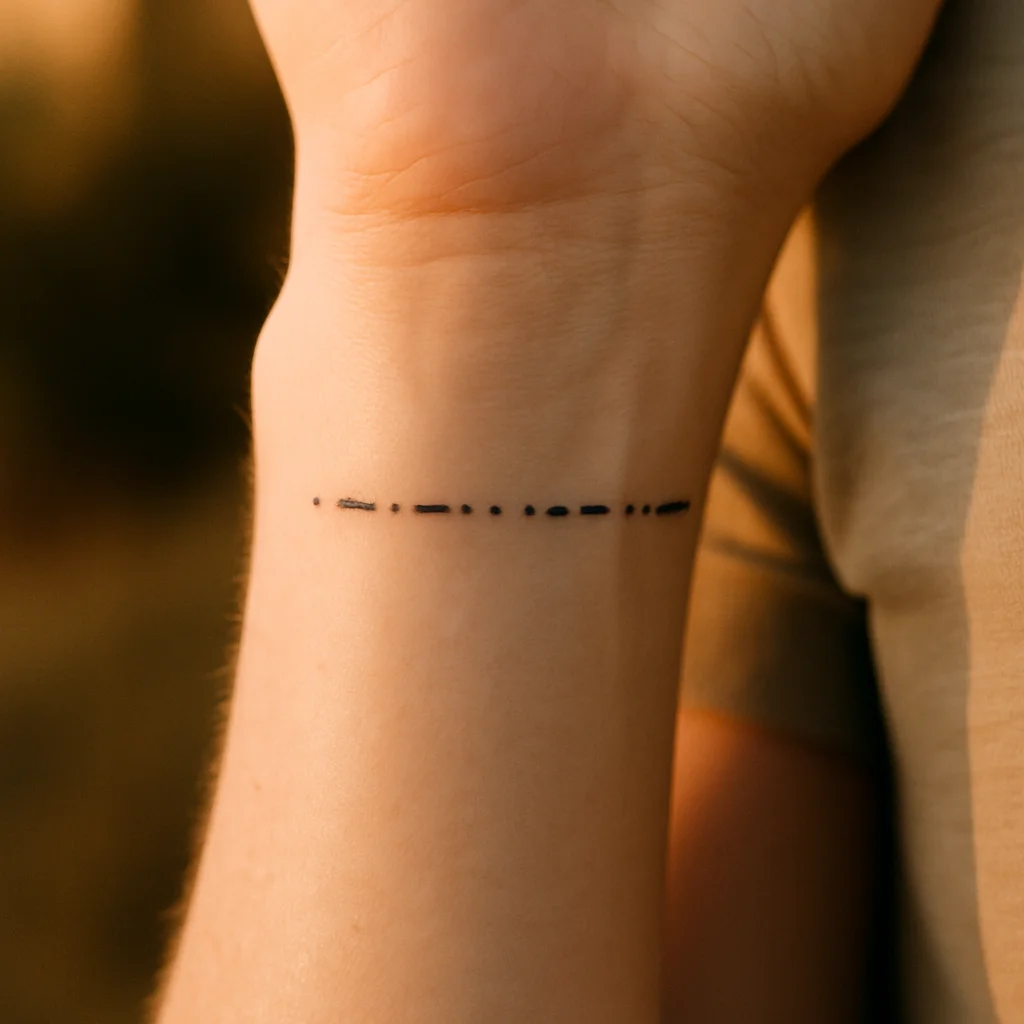
9. Morse code dots and dashes
The date translated into Morse and laid out as a single line of dots and dashes along the wrist or under the collarbone. It's private by nature - nobody reads it unless you explain it - and dots and dashes are far more blur-proof than tiny numerals. Have your artist keep each dot round and clearly separated rather than dainty.
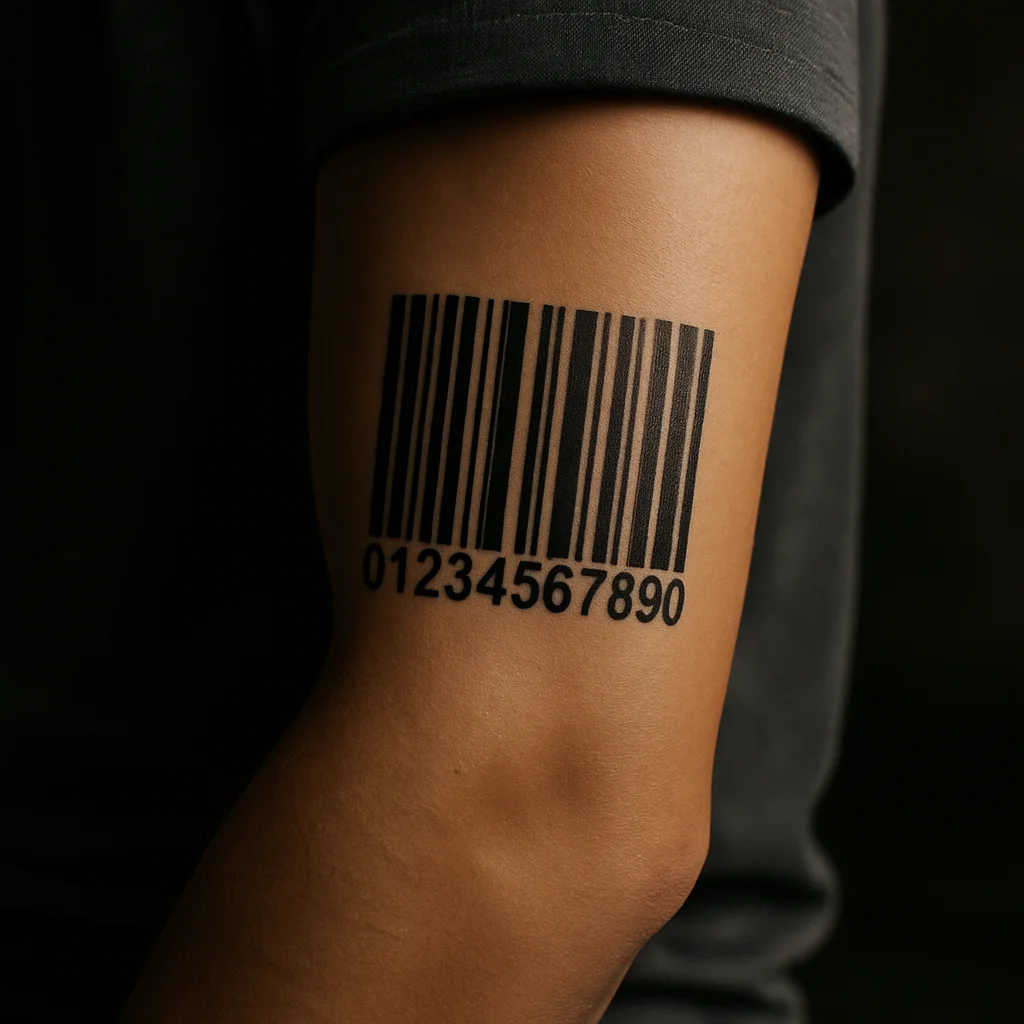
10. Barcode bars for each birth year
Vertical bars of varying thickness encoding the date, with the plain numerals printed small underneath, like a real barcode. Works beautifully on the outer forearm or the back of the upper arm, and stays crisp because the design is mostly solid black. Ask for the numerals no smaller than 5 mm.
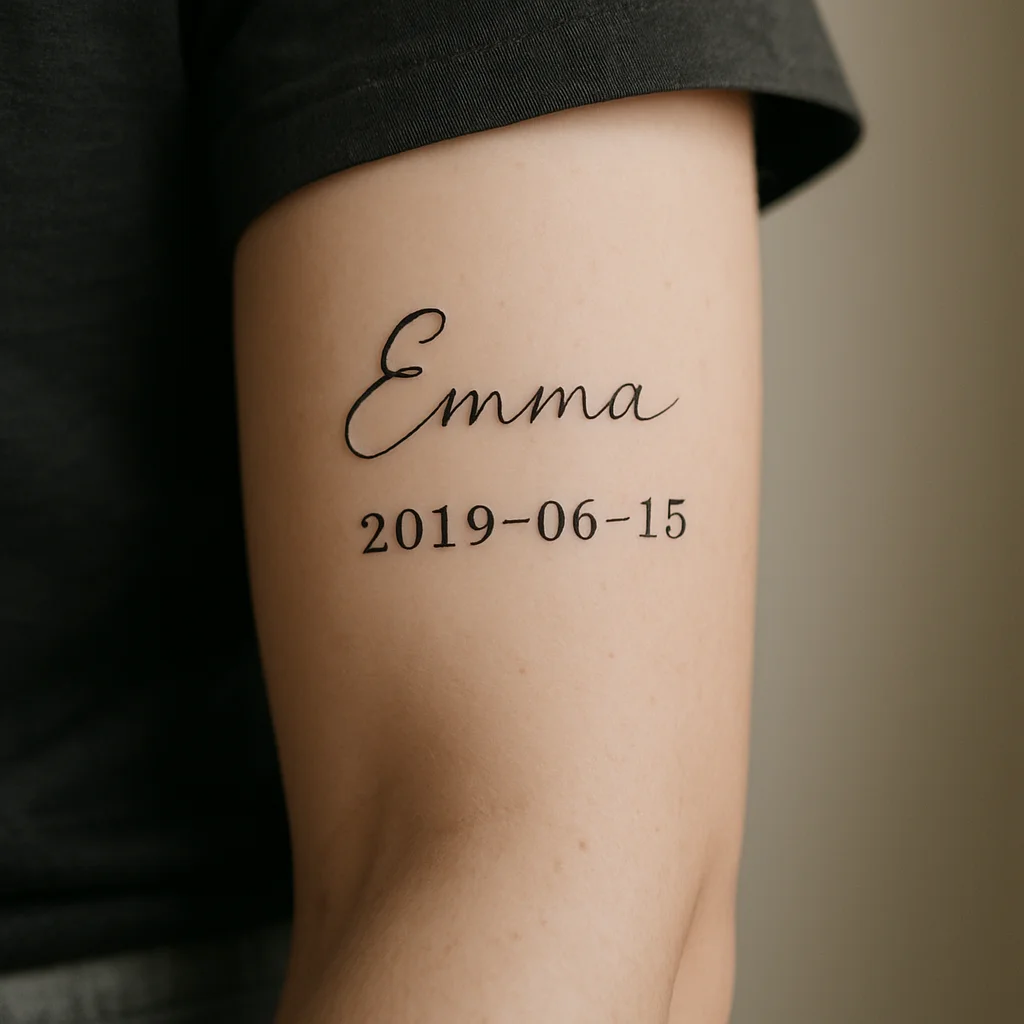
11. Typewriter numerals under each name
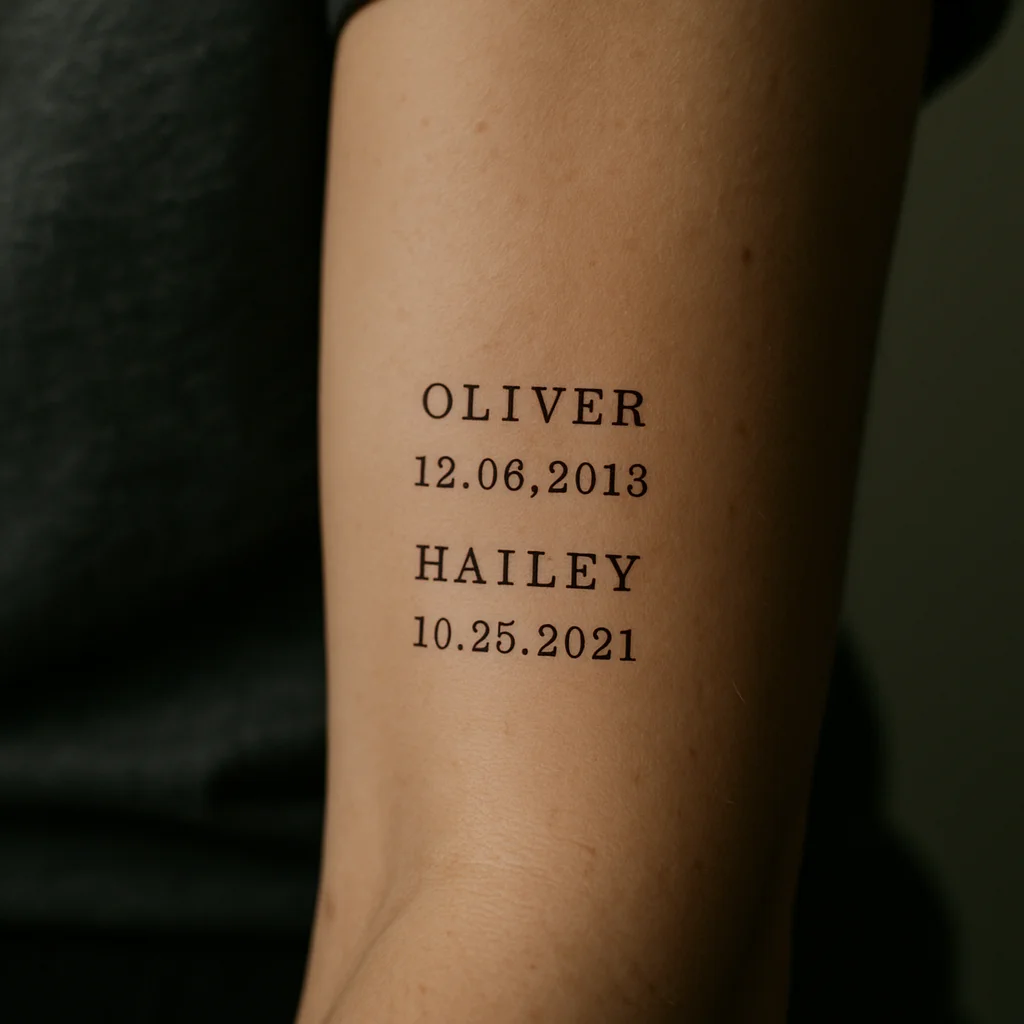
Name in script above, date in a small monospaced typewriter face below, separated by a thin line. The contrast between the two faces stops the block looking like one grey smudge, and monospaced digits keep even spacing as they spread. This is the most reliable name-plus-date pairing there is.
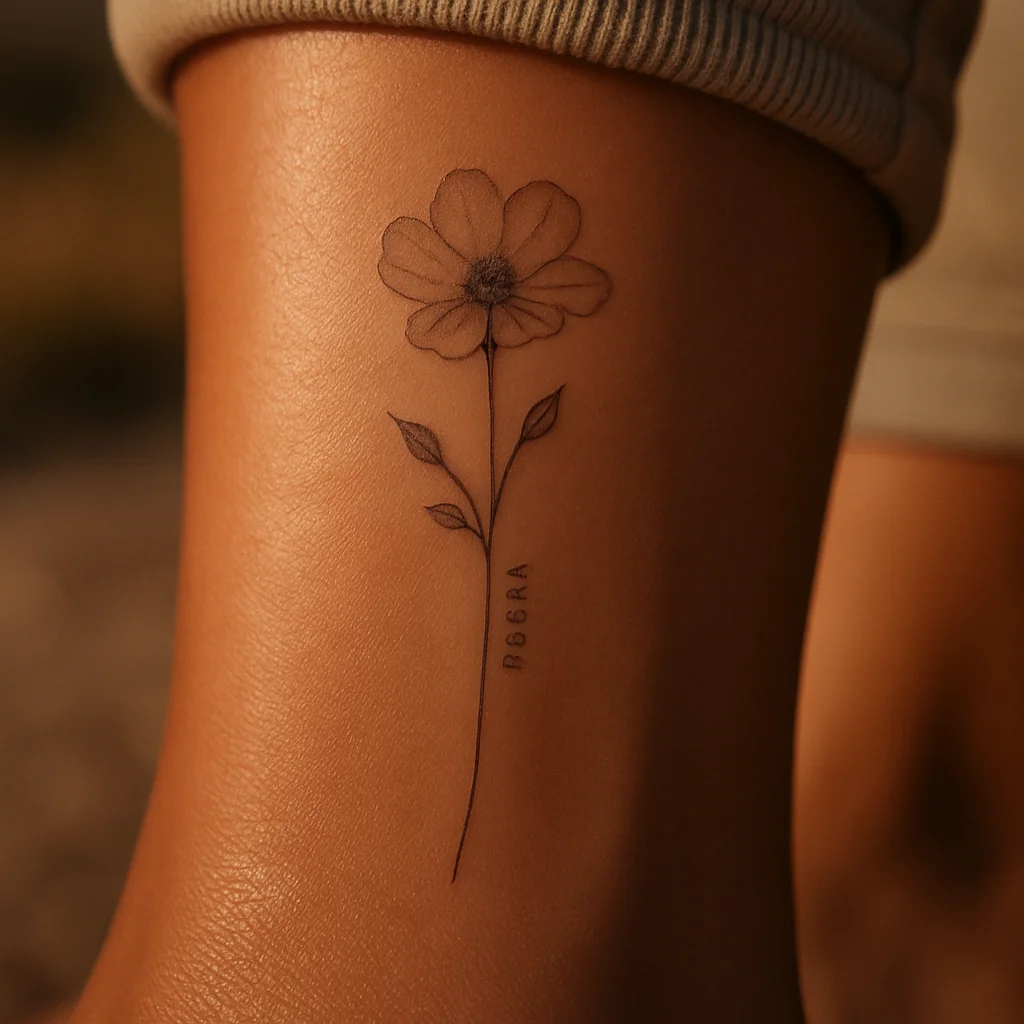
12. Birth-month flower with the date on the stem
A single stem - larkspur for July, aster for September, narcissus for December - with the numeric date micro-lettered along the stem line. The flower carries the meaning; the numbers just confirm it. Great on the ankle or inner arm, and easy to repeat once per child in a matching series.
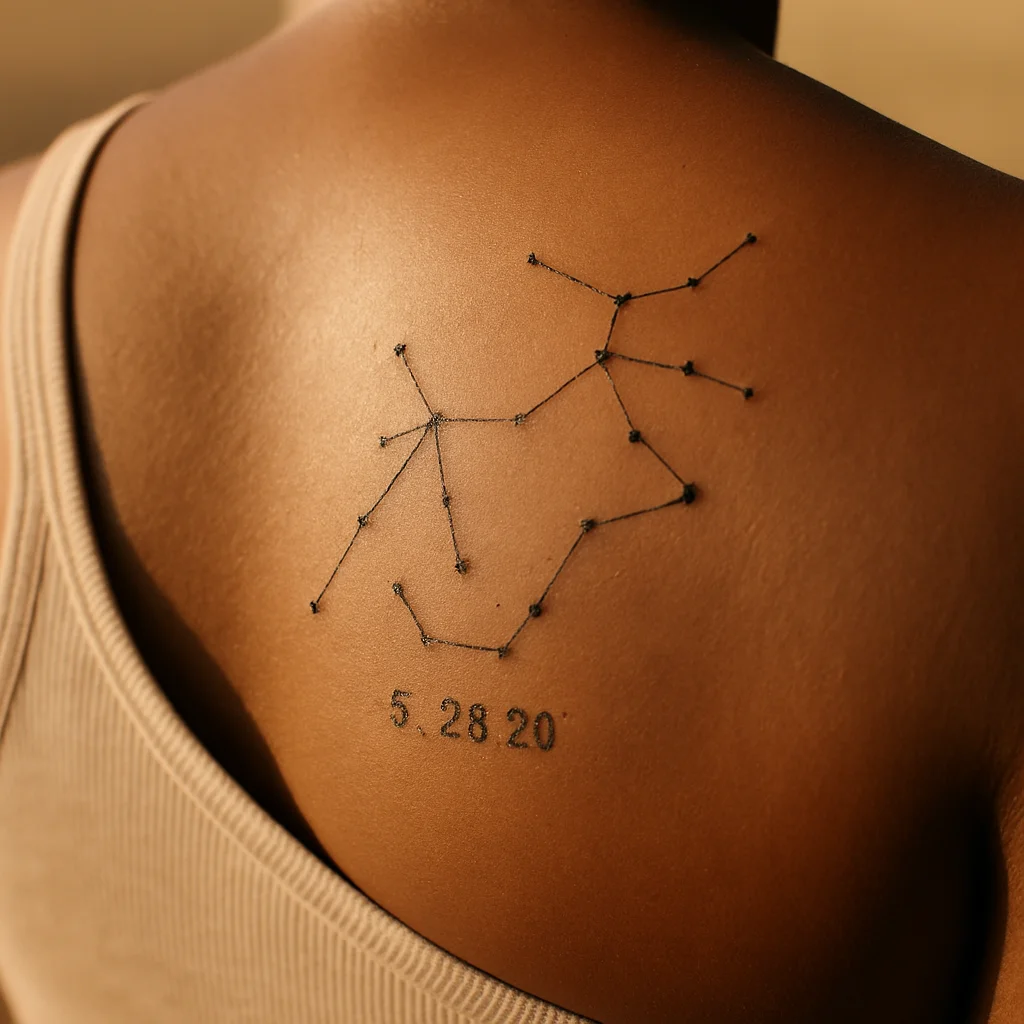
13. Star chart of the birth night
The constellation as it sat over your city on the night they were born, dots and connecting lines, with the date in tiny numerals beneath. Shoulder blade and upper back both give you the open space this needs to breathe. Ask for slightly oversized dots - single pinpricks fade first.
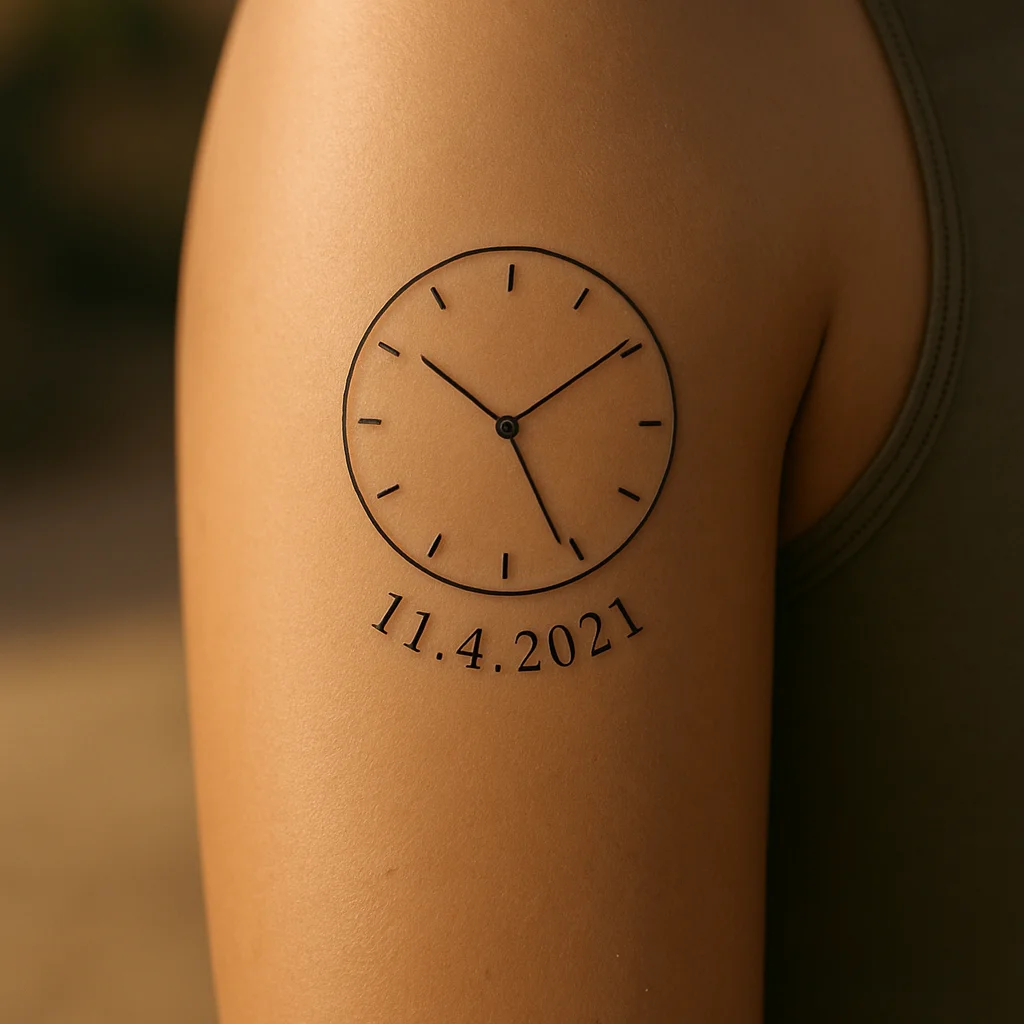
14. Clock hands set to the birth time
A minimal circle with two hands frozen at the exact minute of birth, date arced under the dial. Two or three of these in a row, one per child, reads like a set of small portraits. Keep each dial at least 3 cm across so the hands stay distinct from the rim.
Built to expand: 7 designs with room for the next kid
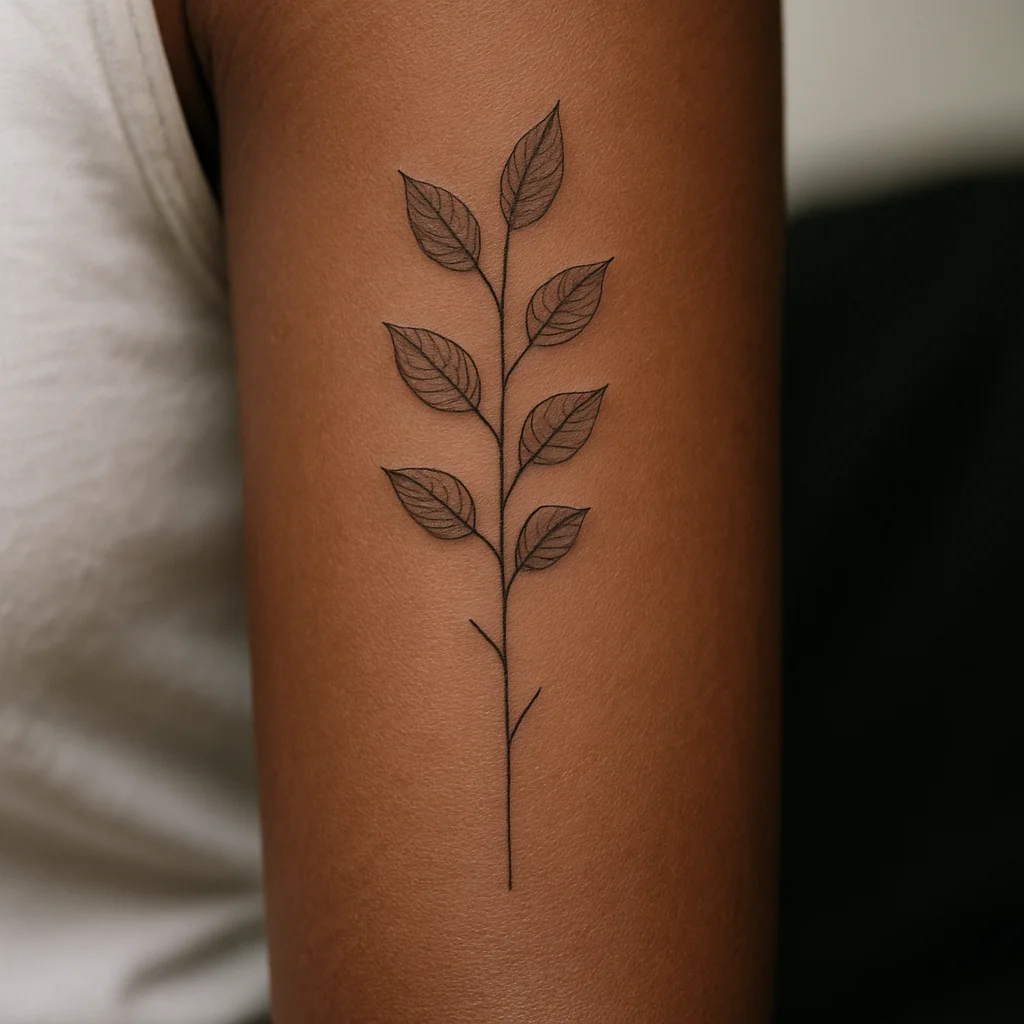
15. Branch with one leaf per child
A slim branch running along the forearm, each leaf carrying an initial or a date on its underside, with bare stem deliberately left at the end. Adding a leaf later takes twenty minutes and blends invisibly. Tell your artist explicitly how many future slots you want, or they'll balance the composition as finished.
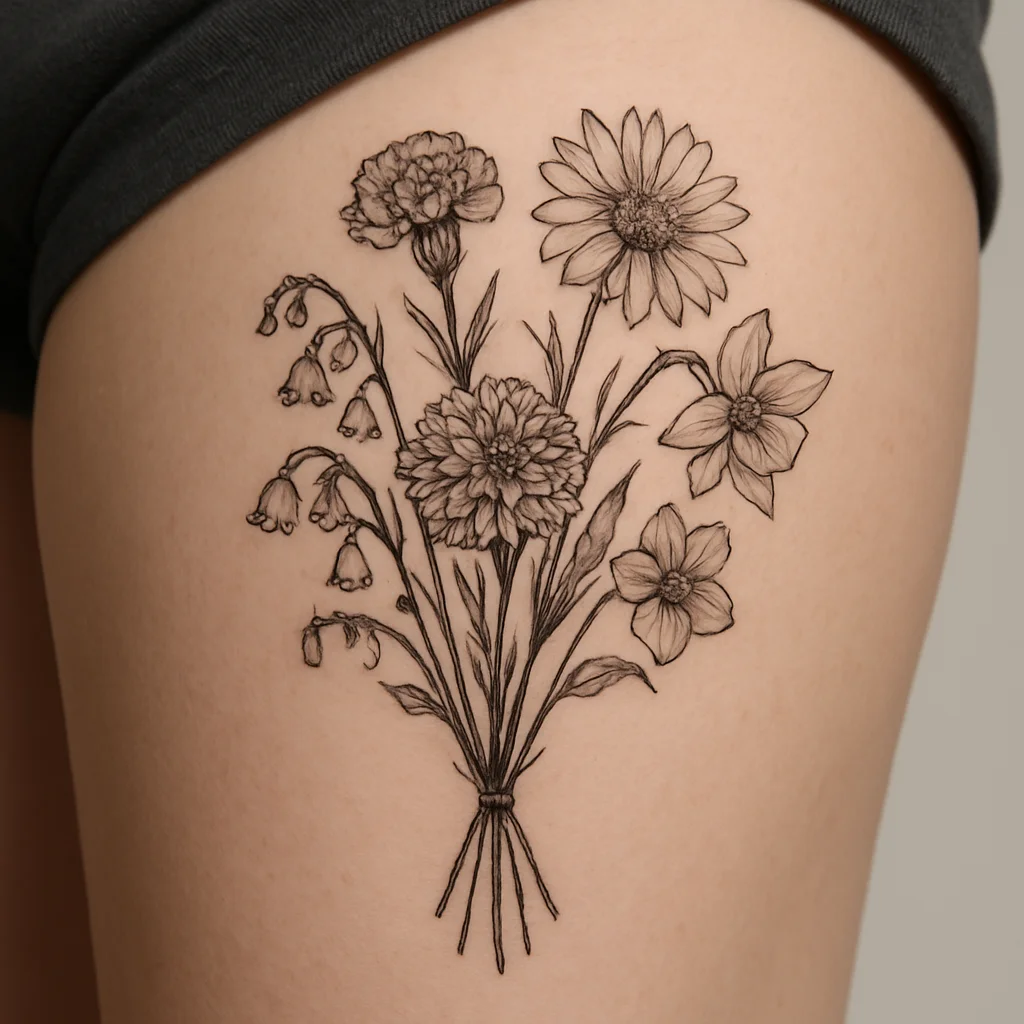
16. Wildflower bouquet, one stem per child
Loose stems gathered at a single point on the outer thigh or upper arm, one birth-month flower each, dates tucked at the base of the bundle. Bouquets absorb new stems gracefully because nature isn't symmetrical. Scale it generously - about 15 cm tall for three flowers gives each one recognisable shape.
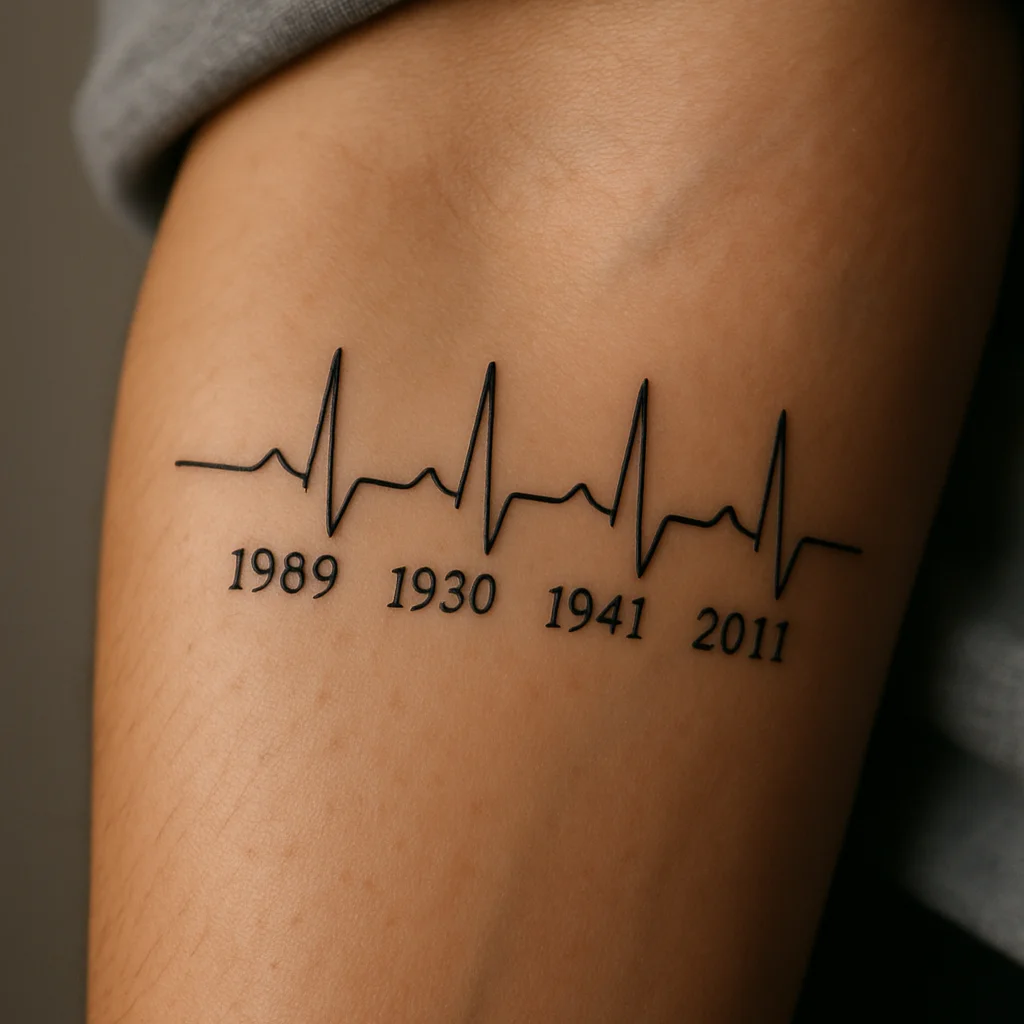
17. Heartbeat line with a peak per birth year
A single ECG line crossing the inner forearm, each spike labelled with a year in small numerals. It reads as one continuous rhythm rather than a list, and you extend it by carrying the line further along the arm. Keep the baseline dead straight so the spikes stay meaningful.
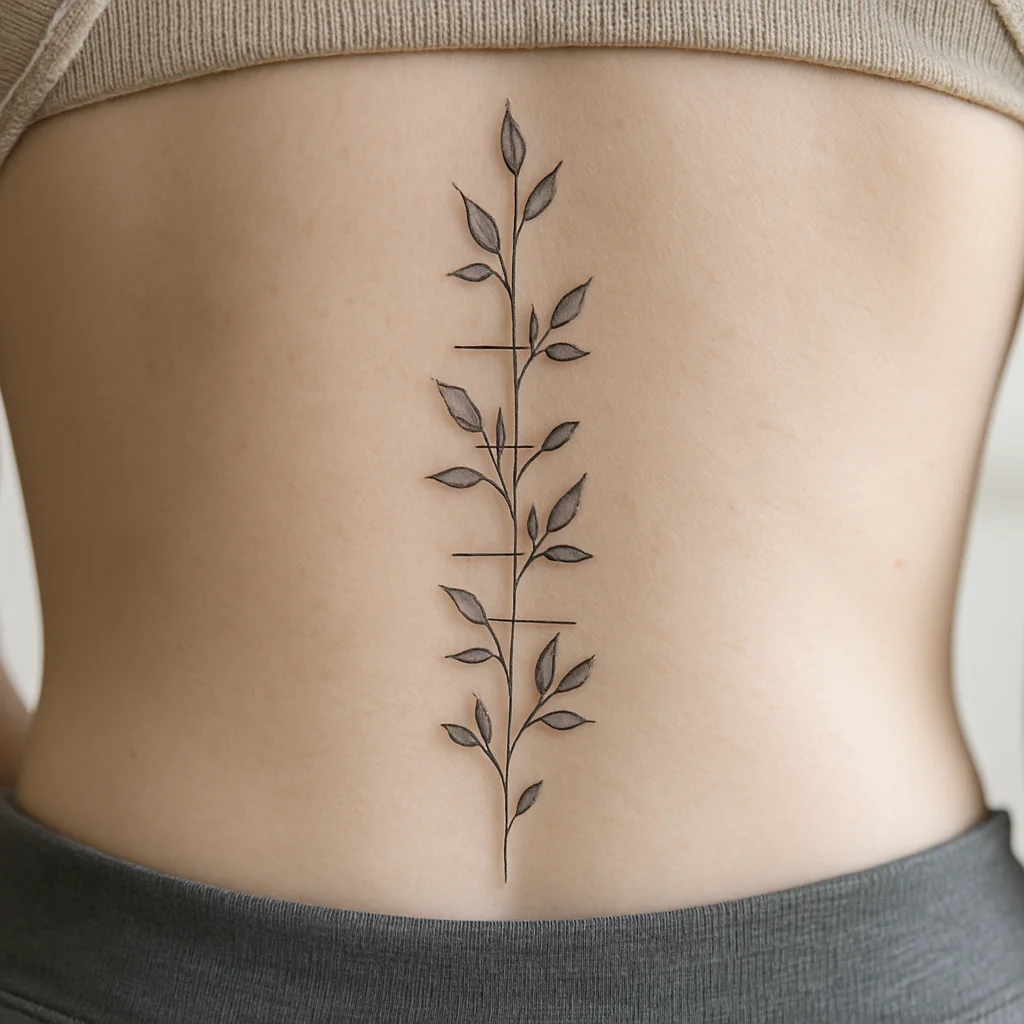
18. Vine climbing the spine, dates as rungs
A thin vine up the spine with small Roman numeral dates set horizontally at intervals, like markers on a growing plant. Vertical designs are the easiest of all to extend upward or downward. Sessions here are bony but quick per date.
19. Compass ring of birth-month flowers
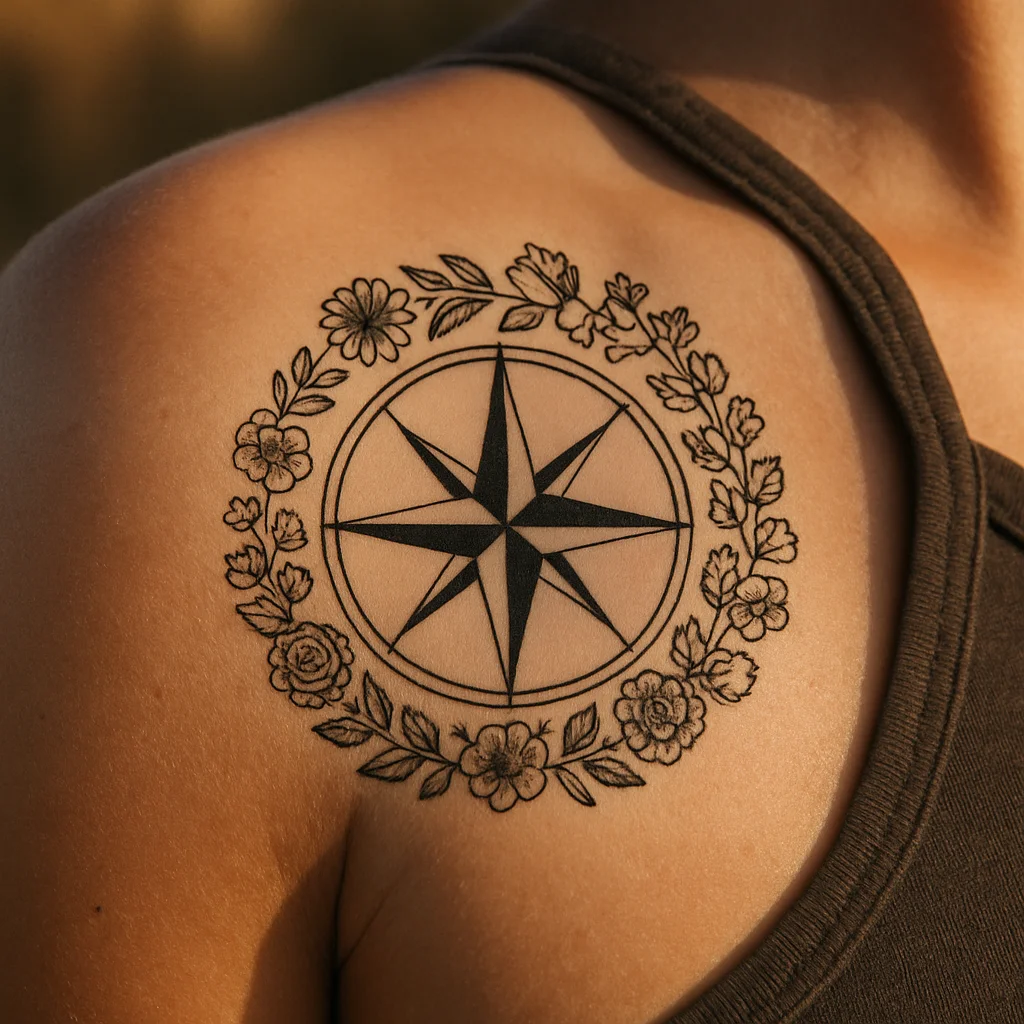
A circular composition with a small compass rose at the centre and birth-month flowers arranged around the rim at cardinal points, dates lettered on the outer edge. Four positions gives four obvious slots. Beautiful on the shoulder cap, where the round shape suits the muscle.
20. Flock of birds, one per child
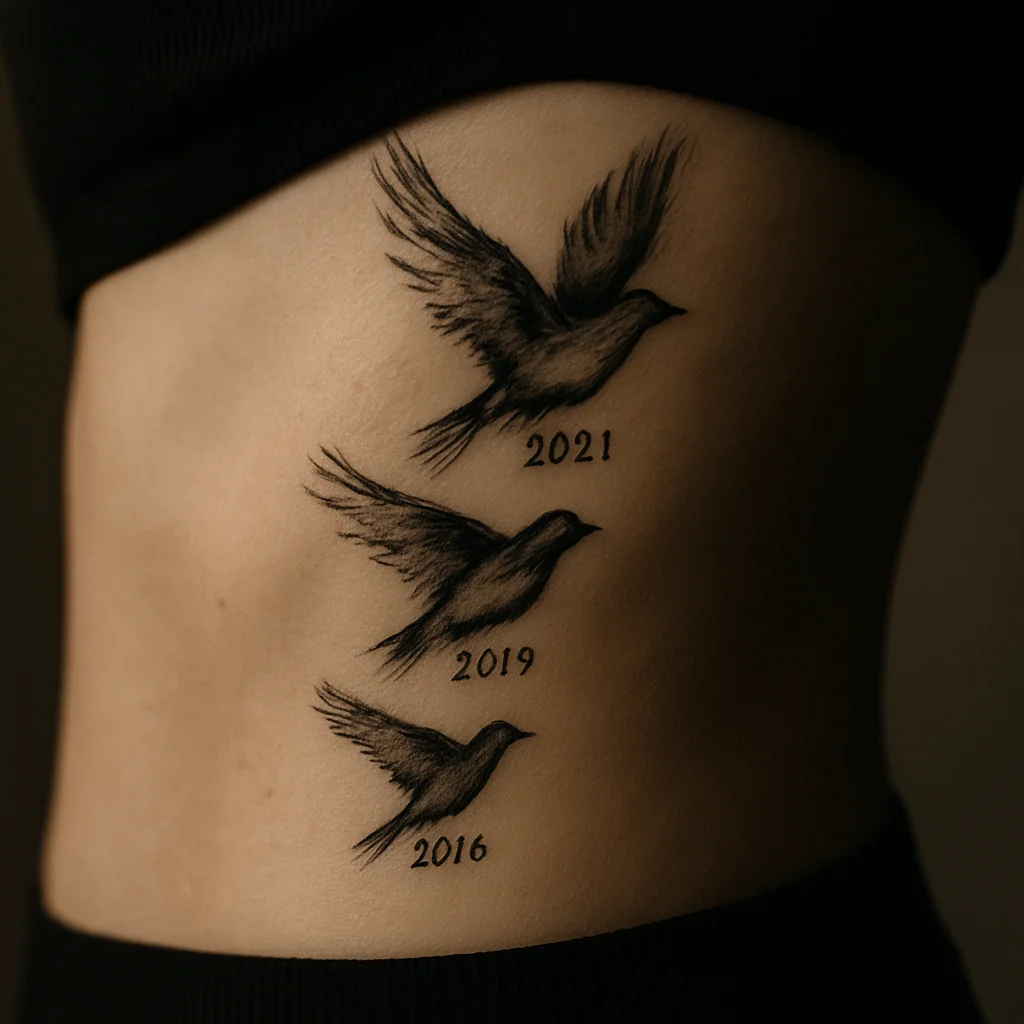
Three or four birds in flight rising across the ribs or shoulder, each with a date micro-lettered beneath its wing. Add another bird whenever you need to and the flock only looks more natural. Keep the birds illustrative rather than tiny silhouettes so the shapes stay distinct.
21. Mountain range with peaks by birth order
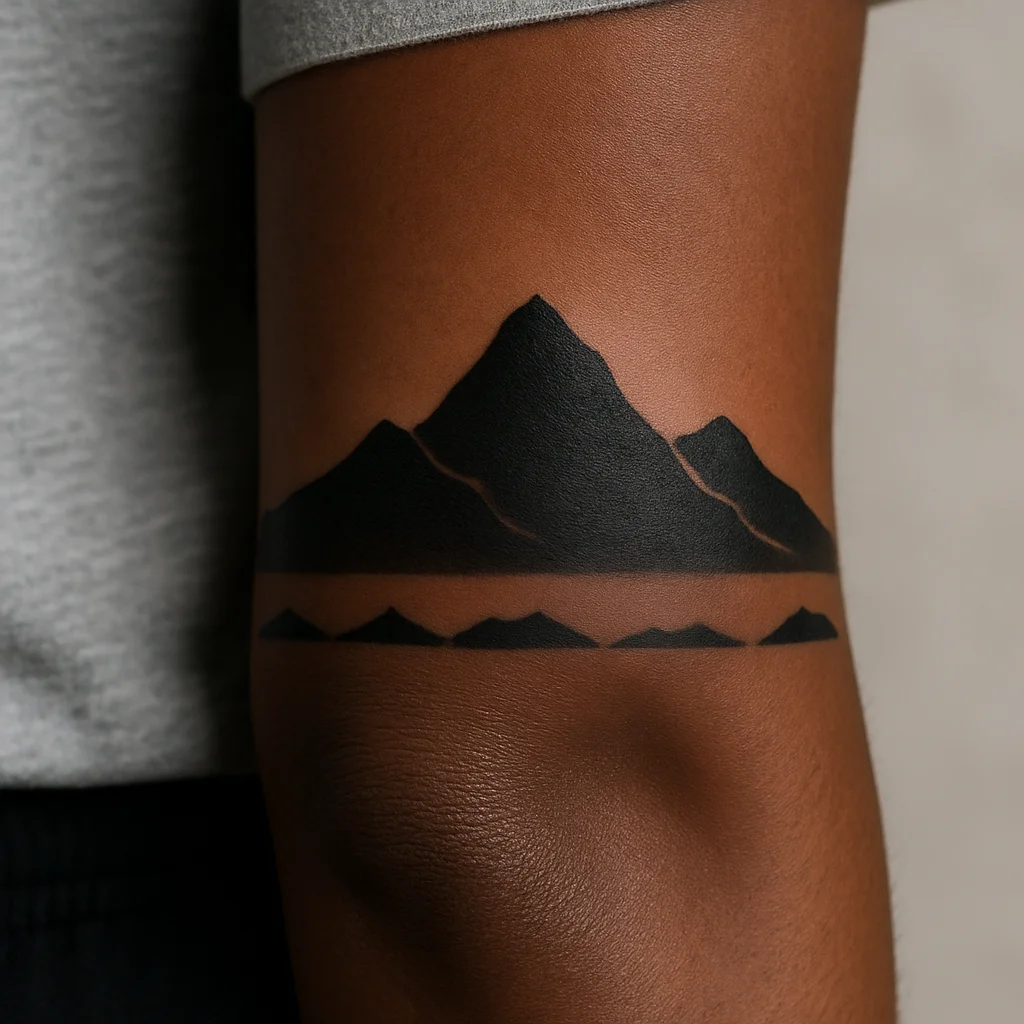
A ridgeline where each peak's height matches birth order, dates along the base like a survey line. It works on the outer forearm as a band or across the upper back at scale. The horizon line at the bottom is what makes new peaks easy to add later.
Whole-family pieces: 6 bigger compositions
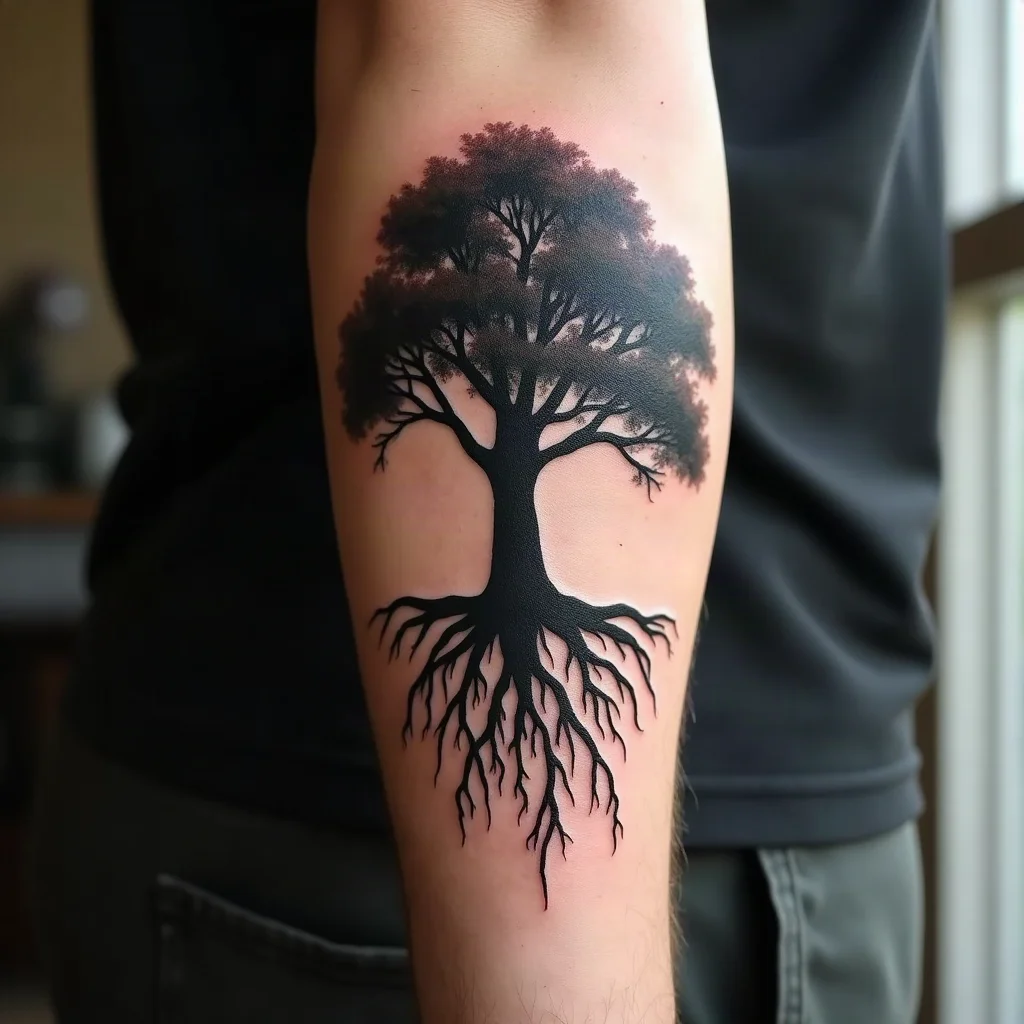
22. Family tree with names on the roots
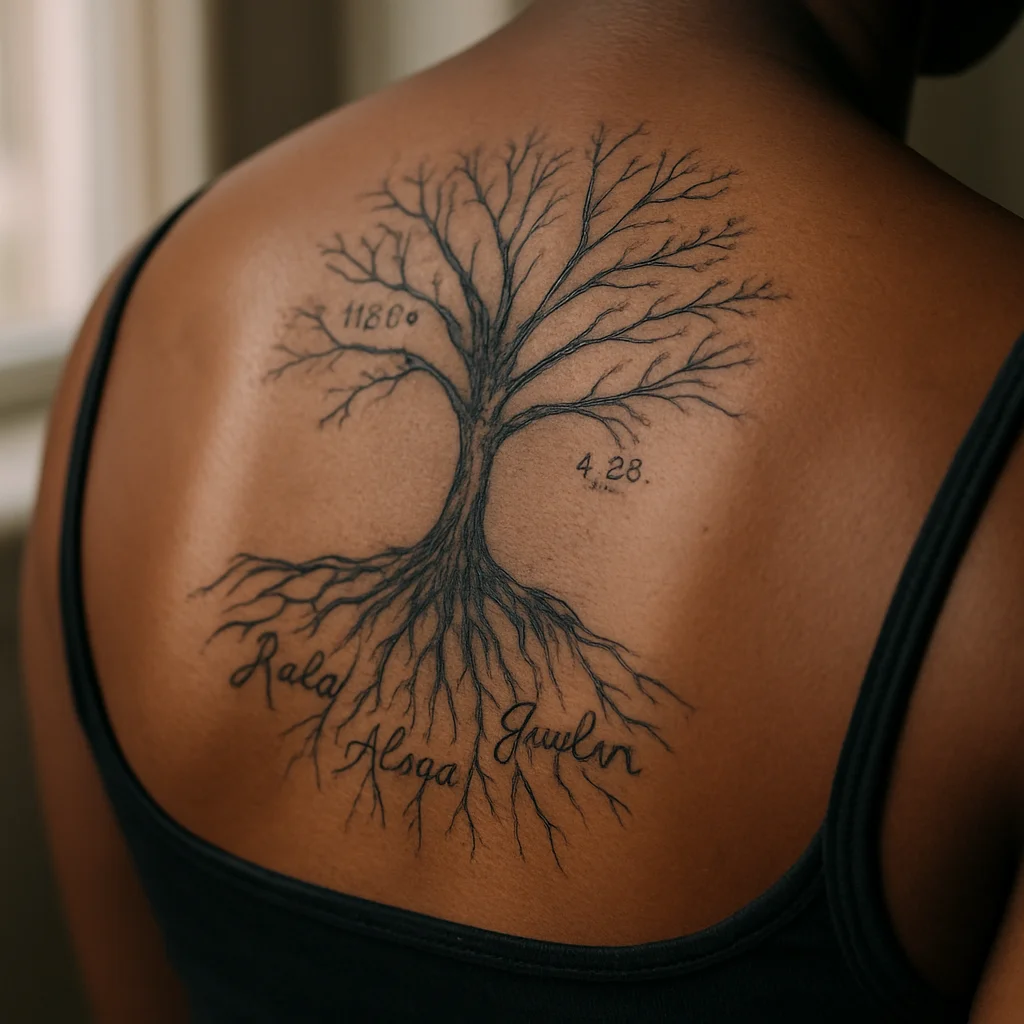
A tree on the shoulder blade with parents' initials in the trunk and children's names lettered along the exposed roots, dates on the branch tips. At 18-20 cm you get real detail; smaller than that and the root lettering is doomed. This is a two-session piece for most artists - outline, then a fill sitting.
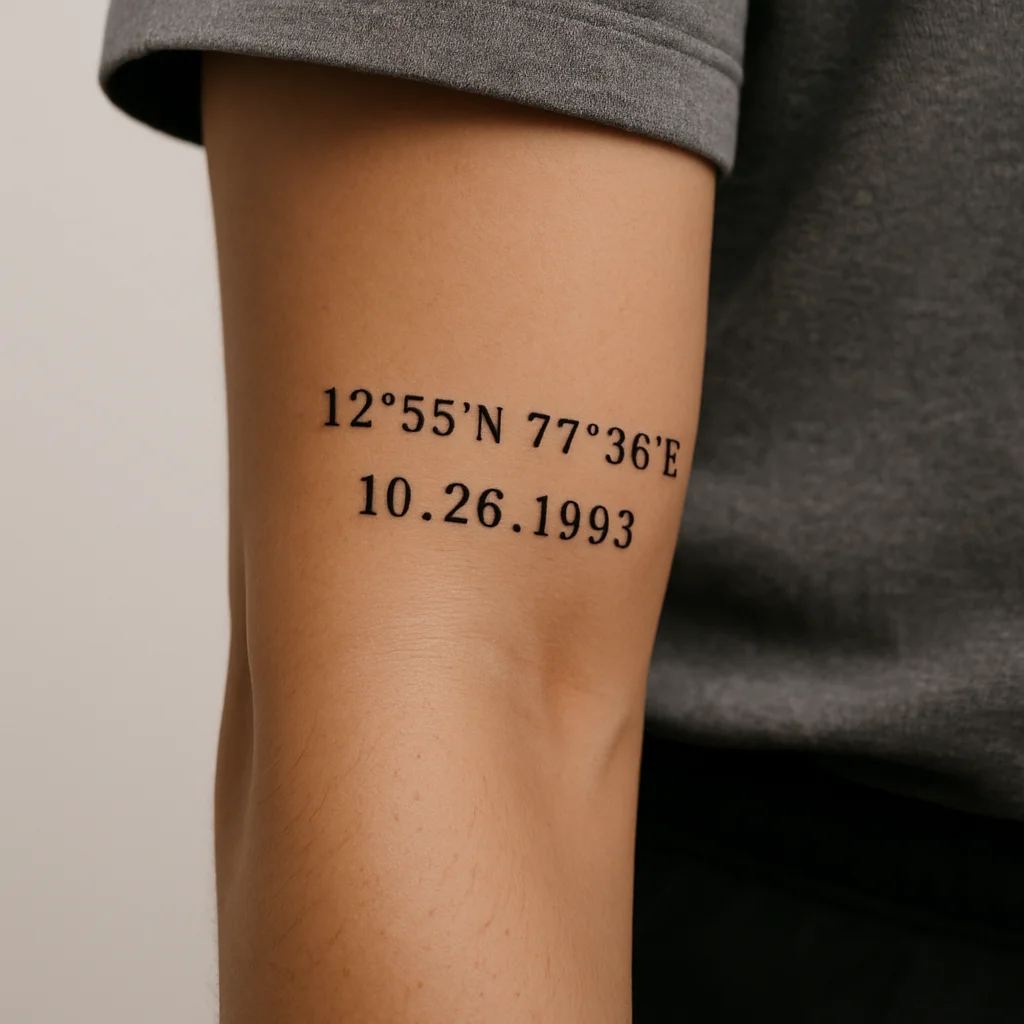
23. Birth coordinates paired with the date
Latitude and longitude of the hospital or house where each child was born, set above the date in matching monospaced type. Coordinates are long, so give them a straight run - inner forearm, ribs, or under the collarbone. It's the most quietly personal format on this list.
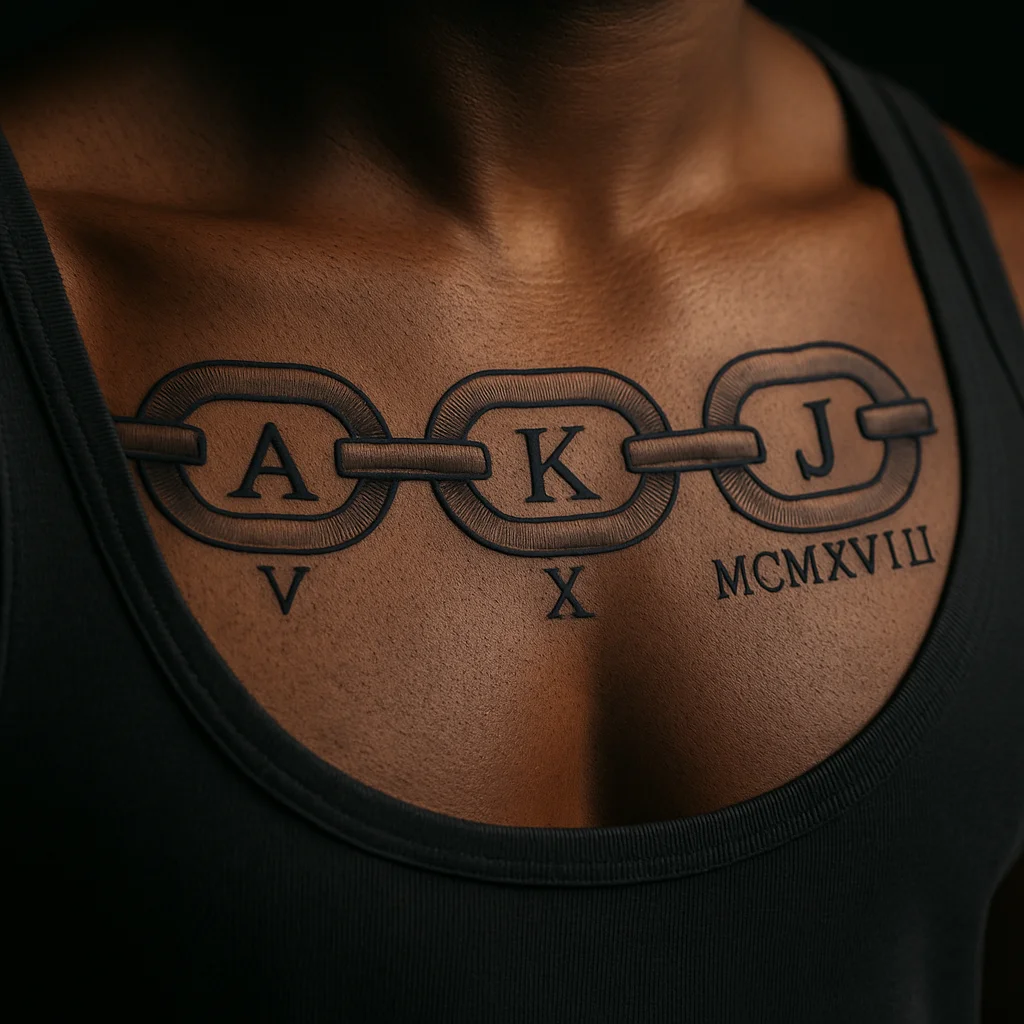
24. Interlocking rings with initials
Chain-linked circles across the chest, one per child, each holding a single initial and a Roman numeral year. Add a ring to the chain and nothing else needs redrawing. The chest gives symmetry but bring patience for the sternum area, which stings.
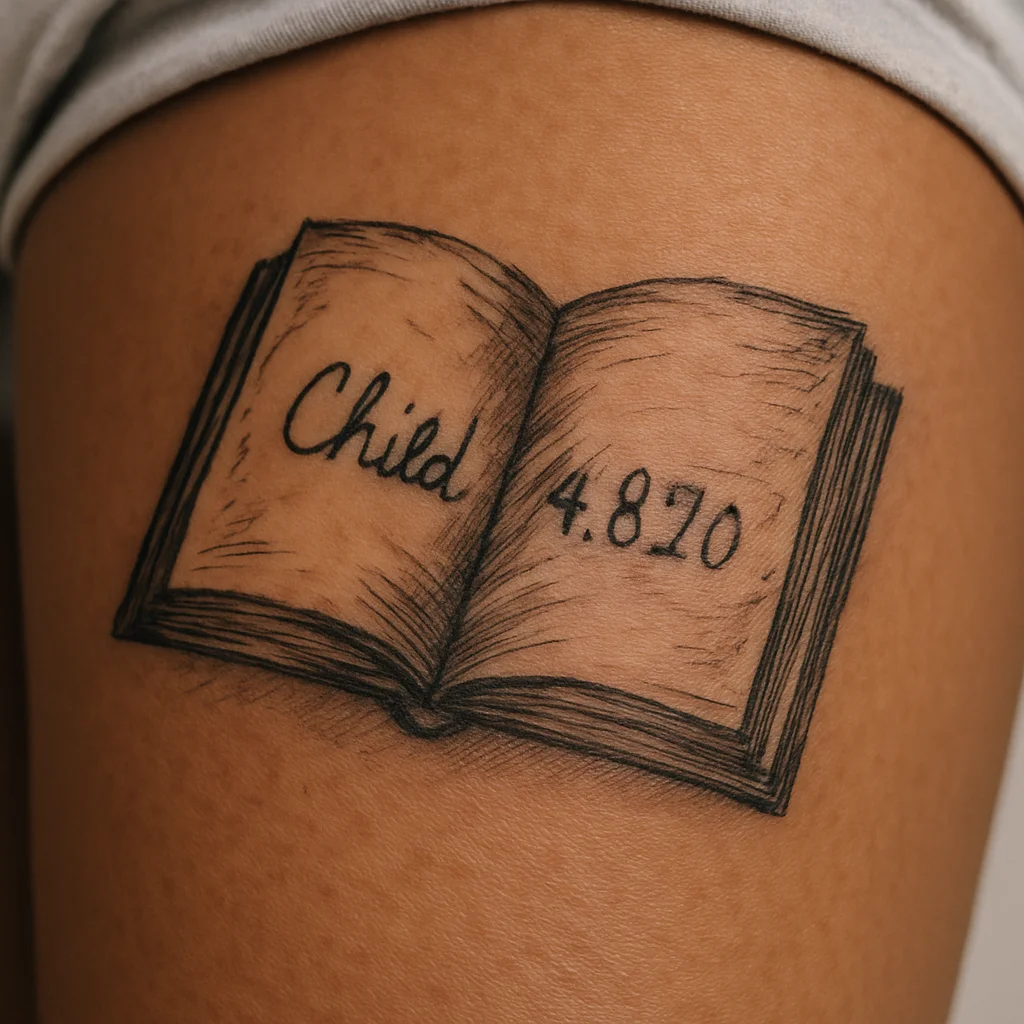
25. Open book with a page per child
An illustrative open book on the thigh, each visible page carrying a name and a date in small handwritten script. It suits people who want the concept to read at a glance and the details to reward a closer look. Ask for the page text slightly larger than feels necessary - it always shrinks in the drawing.
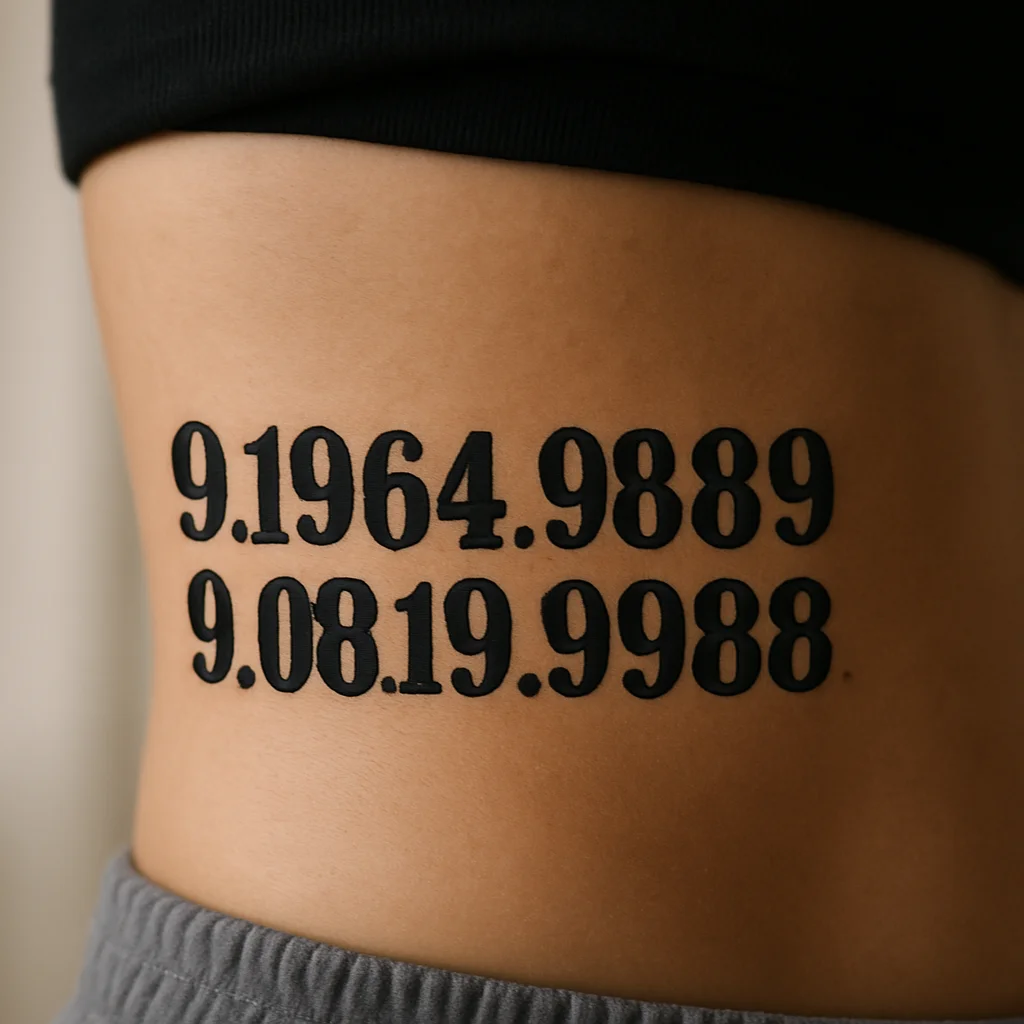
26. Blackwork date band across the ribs
All the birthdates in one horizontal row of bold numerals, separated by small solid diamonds, running along the ribcage. Heavy weight means it will still read cleanly decades out, and the rhythm of repeated dates is the design. Ribs are among the sharper placements, so plan a session of an hour or two, not four.
27. Half-sleeve panel built around the dates
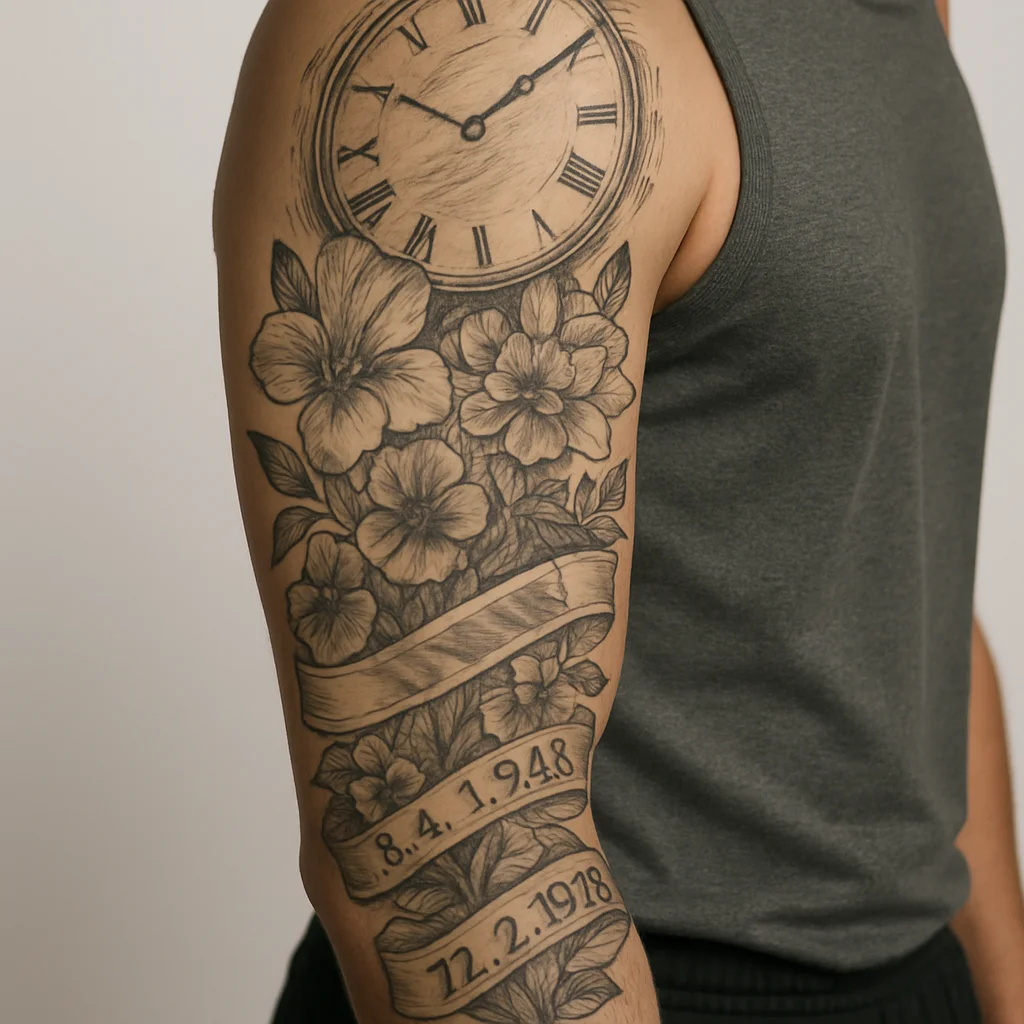
A shoulder-to-elbow composition - clock face, flowers for each birth month, banner ribbons carrying names, dates worked into the negative space between elements. This is the version to choose if you want every child represented at scale rather than in miniature. Expect multiple sessions and a real design consultation before any needle work.
Placement, pain, cost and keeping the letters crisp
Where lettering ages best. Flat, sun-shaded, low-friction skin wins every time: inner forearm, inner upper arm, ribs, shoulder blade, spine, upper back. Skip fingers, the outer edge of the hand and the top of the foot for anything with words - they rub against everything and hold ink unevenly. Curved areas like the shoulder cap and calf are fine as long as the text follows the curve rather than fighting it; ask to see the stencil while you move your arm through its full range.
Pain, honestly. Inner forearm and outer arm are the easy end - short, tolerable, and small name pieces are often done in under thirty minutes. Collarbone, sternum, ribs and spine are sharp because the needle is essentially working over bone, though a single date rarely takes long enough for it to become a problem. Thigh and upper back sit comfortably in the middle and handle longer sittings, which is why the bigger family compositions live there.
Cost. Most studios have a shop minimum, and a small name-and-date will usually land at or slightly above it. A single name with a date typically falls in the low end of small-tattoo pricing; a stacked column of three names with Roman numerals moves into a half-hour-to-hour rate; family trees, ribbed date bands and sleeve panels are priced by the session and add up across multiple visits. Fine-line lettering specialists often charge more than a general shop, and for something you must be able to read forever, that premium is well spent.
Aftercare that protects thin lines. Keep it clean, keep it lightly moisturised, and keep it out of the sun - UV is what turns crisp black letters into soft grey ones. No soaking for two to three weeks, no picking, and no scratching when the itch arrives around day five. Once healed, sunscreen on exposed lettering is the single highest-return habit you have.
Briefing your artist. Bring the exact spellings typed out, the dates from a document, a note of how many future slots you want, and a measurement of the space you have in mind. Say out loud that legibility matters more to you than delicacy - artists will happily thicken a line if they know that's your priority. Then read the stencil back once more before you settle in.
Frequently asked questions
Will tiny names and dates blur over time?
Very small, very thin lettering does soften, especially on high-friction or sun-exposed skin. The fixes are practical: keep capitals and numerals around 5 mm or taller, give letters real space between them, use a slightly heavier line than looks necessary, and place the piece on flat, shaded skin. Daily sunscreen once healed does more for sharpness than anything else.
Should I use numerals or Roman numerals for a birthdate?
Plain numerals are shorter and easiest to read; Roman numerals look more classical but take up far more width, particularly for the year. If you're doing several children in one composition, lay out the longest date first and size everything to that. Whichever you choose, use dots or small separators rather than slashes, which tend to close up as the tattoo heals.
What if I have another child later?
Choose a design with an obvious extension point and tell your artist about it during the consultation. Branches with bare stem, vertical columns, ECG lines, chain-linked rings, bird flocks and mountain ridgelines all accept a new element without redrawing anything. Adding one later is usually a short, inexpensive sitting.
How do I avoid a spelling or date mistake?
Bring the names typed out and the dates copied from an official document rather than from memory. Read the stencil aloud letter by letter and digit by digit, in good light, then check it a second time before you lie down. Reputable artists expect this and will reprint the stencil as many times as it takes.
Is a handwriting tattoo of my child's name a good idea?
It's one of the most personal options available, and it captures their handwriting at a specific age permanently. Get them to write it large on plain white paper with a felt-tip pen, then photograph it flat. Ask your artist to thicken the shakiest strokes slightly so the character survives healing without any part dropping out.
The conversation
No comments yet. Got a thought about these designs? Start us off.
Want to weigh in? Join the community to comment, save designs and try them on your skin.