27 Mother Son Tattoos That Fit Two Styles
Twenty-seven mother-son tattoo pairings built around one honest problem: her taste and his taste are rarely the same. Each idea comes with a way to scale, split or restyle it so both pieces look right on their own skin.
Match the meaning, not the millimeters
The most common mistake in mother-son tattoos is copying one design twice at the same size in the same style. She often wants something quiet on a wrist or forearm; he often wants something with weight to it, sitting on a bicep or ribcage. Force a single drawing onto both bodies and one of you ends up with a tattoo that looks borrowed.
The fix is to agree on the symbol first and negotiate everything else. Ask your artist for one motif rendered two ways: a single-needle version at 4-6 cm for her, a bolder version with heavier line weight and some solid black at 8-12 cm for him. Same shape, same story, two pieces that each look native to their owner.
Three questions worth settling before the consultation:
- Is this a split design or a scaled one? Split pieces (two halves of one image) are romantic but only read as a pair when you stand together. Scaled pieces work independently, forever.
- How visible does each of you need it? Her office and his job site may have very different tolerances.
- Who is drawing it? Book both of you with the same artist, ideally back to back, so line weight and styling stay consistent.
Bring reference photos of both bodies to the consult. An artist who can see the arm and the wrist together will spec sizes far more accurately than one working from a phone screen.
Split designs: two halves that finish each other
These are the pieces that click when you put your arms side by side. Keep them simple in outline, since split imagery loses its punch when the halves get busy.
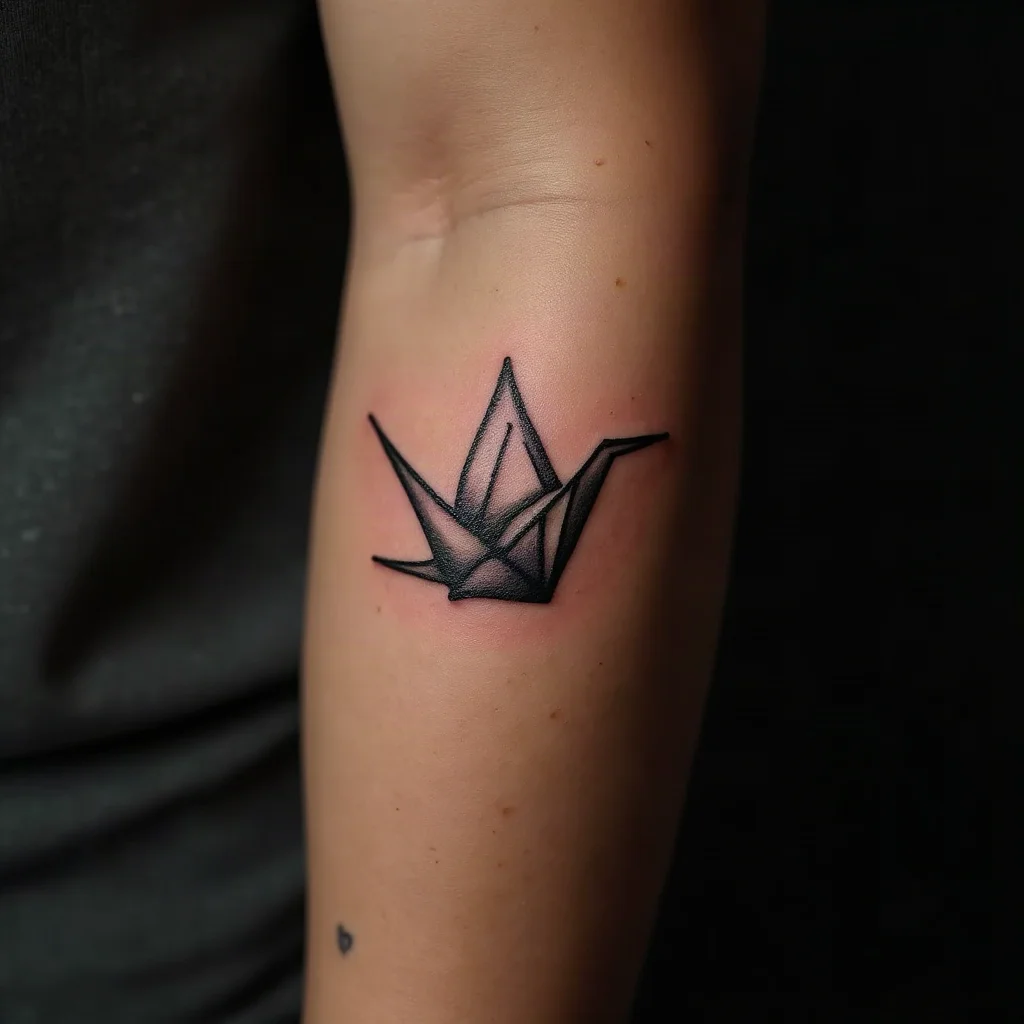
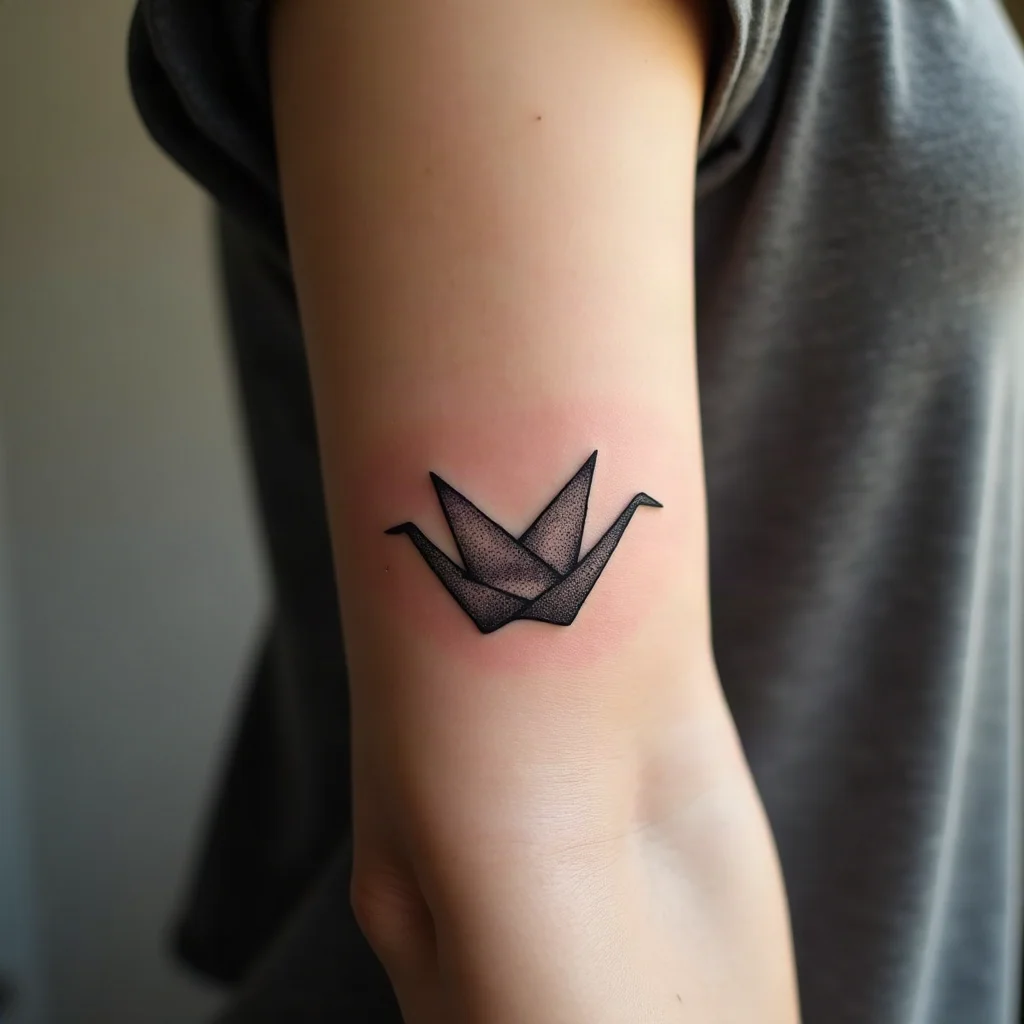
1. Two halves of a paper crane
One wing and half a body on her inner forearm, the mirrored half on his. Line-only, no shading, so the break line reads clean when the arms meet. At around 5 cm each it stays delicate; going bigger makes the empty half look unfinished on its own.
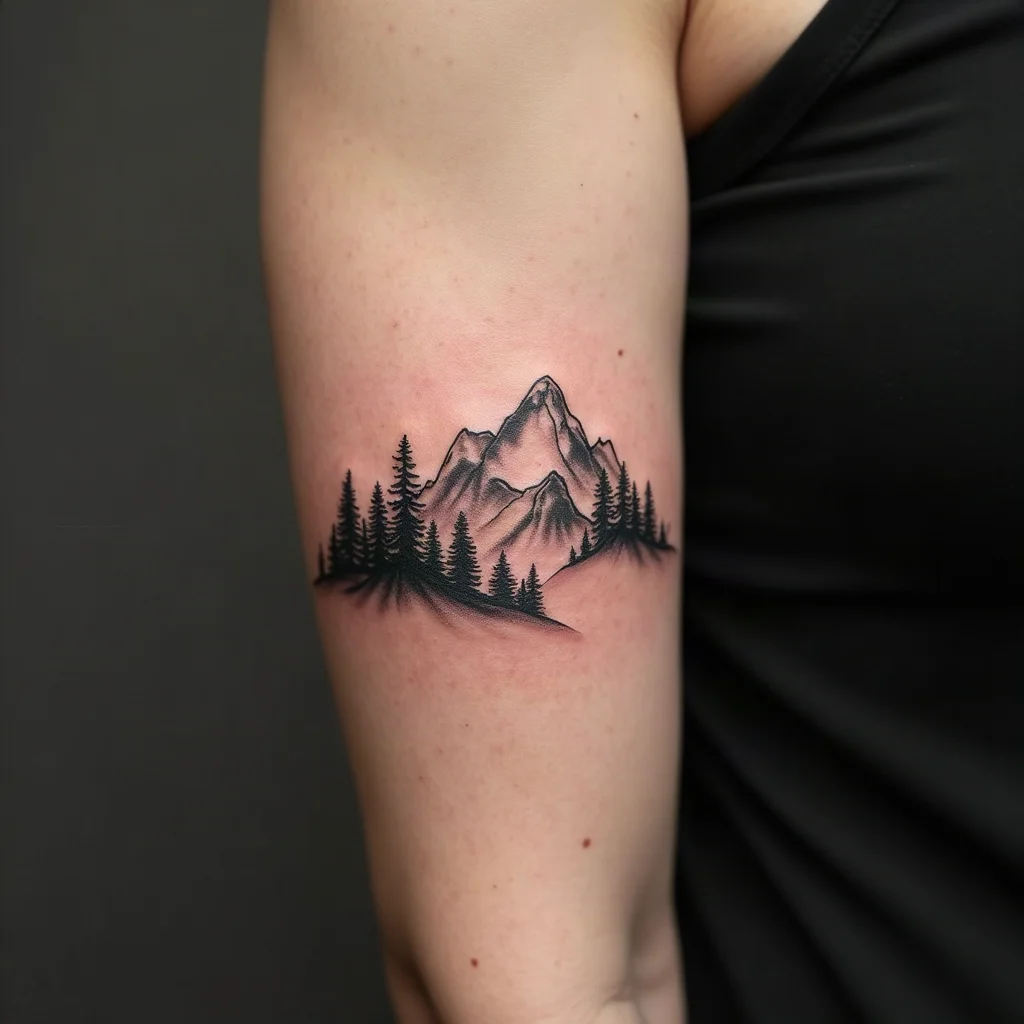
2. A mountain range split at the ridge
The ridge continues from her forearm onto his, with the summit landing on the taller of the two pieces. Ask for a small horizon line and a couple of pine silhouettes so each half still works alone. This one ages beautifully because it is mostly straight linework with no fine gradients.
3. Sun for her, moon for him
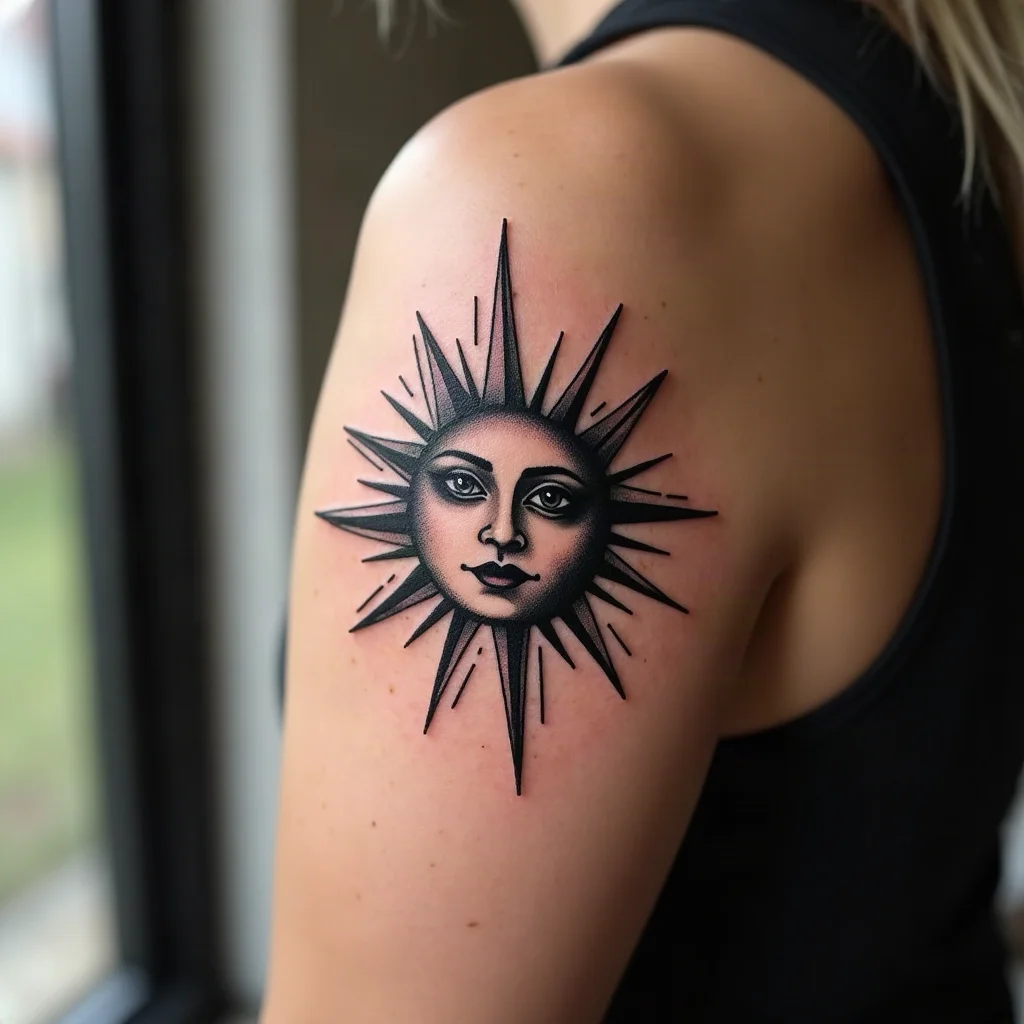
An old pairing that never gets tired: a rayed sun face on one, a crescent with the same rays on the other. Traditional styling with a bold outline suits a son's upper arm, while a slimmer engraved version sits well on a mother's shoulder blade. Have both drawn by the same hand so the ray spacing matches.
4. Lighthouse and wave
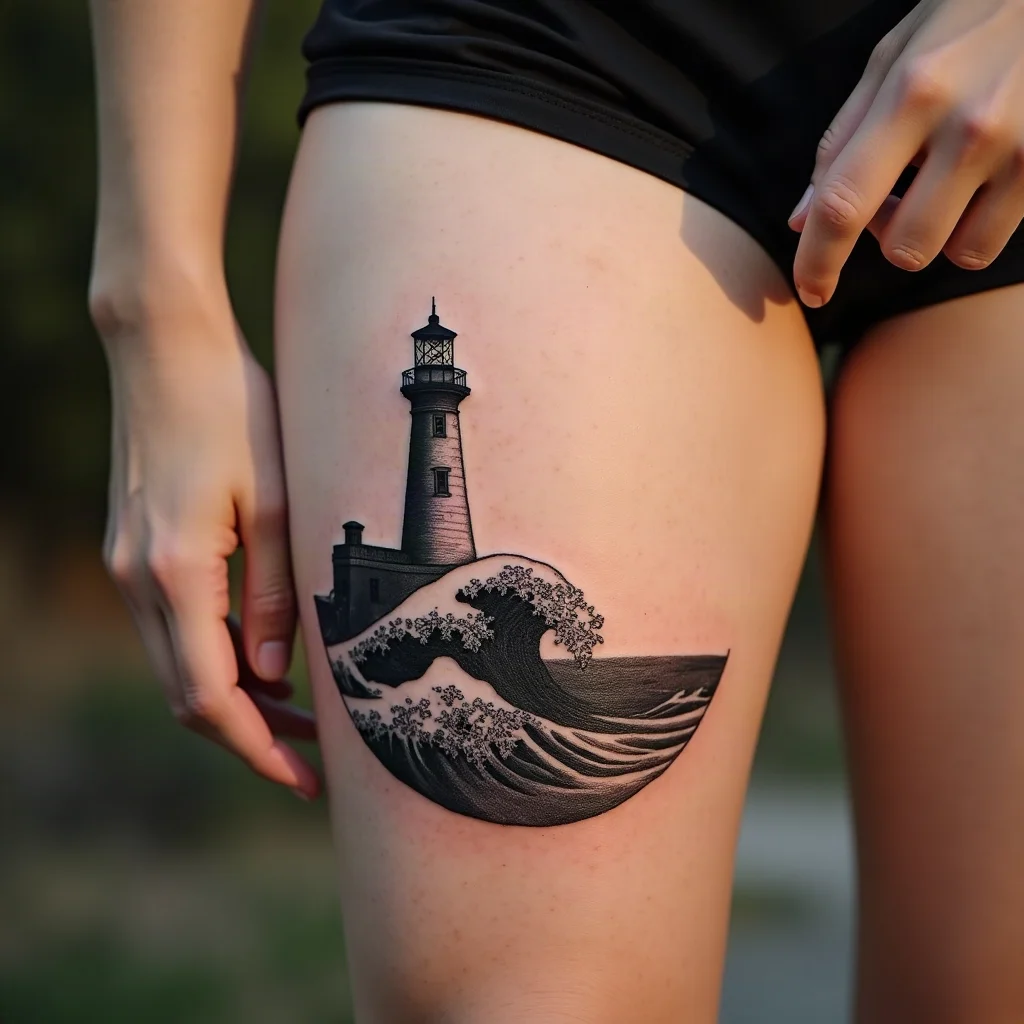
He takes the lighthouse, she takes the wave curling toward it, or reverse it if she was the steady one. Blackwork with heavy sea texture reads well at 10-14 cm on a calf; her wave can be a single fine curl at 5 cm on the wrist. The metaphor is obvious, which is exactly why it lands with family.
5. Compass rose and north star
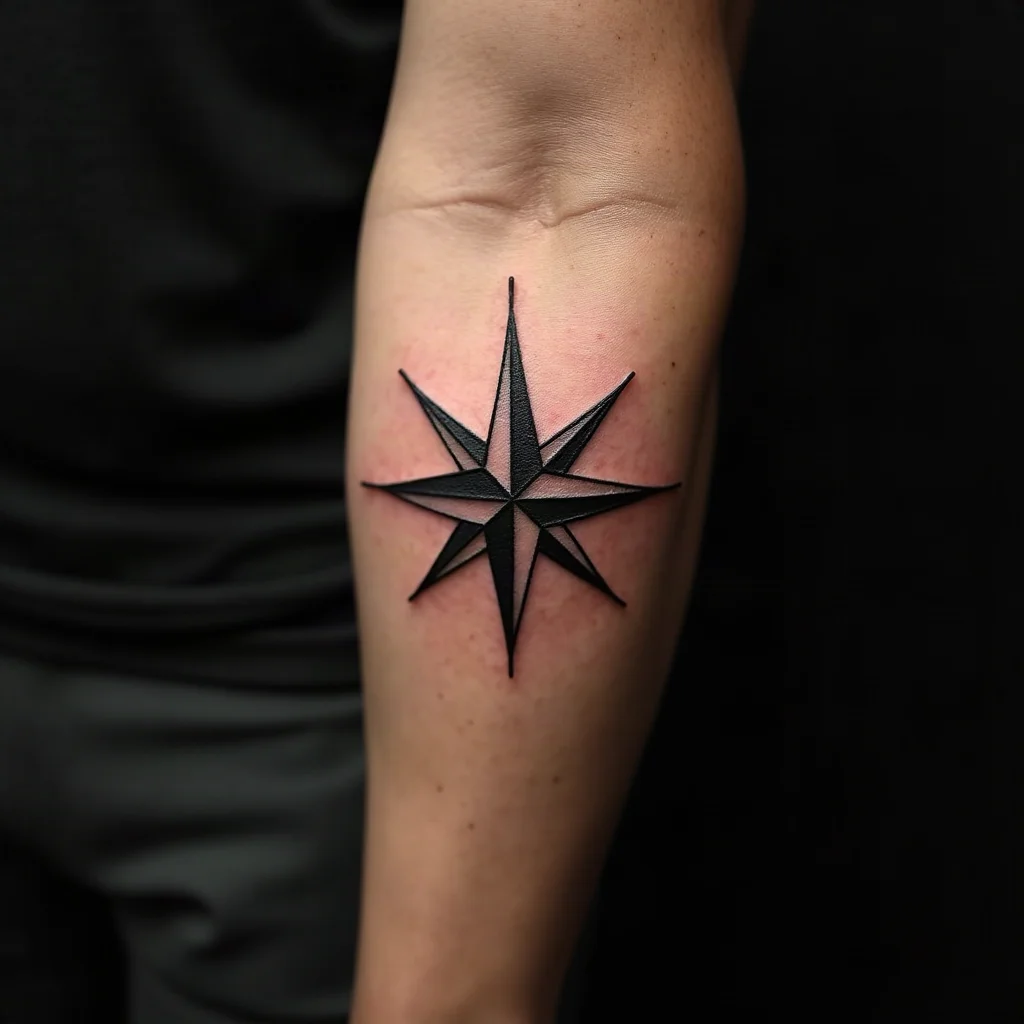
His compass rose sits on the outer forearm with crisp geometric spokes; her north star, drawn in the same eight-point geometry, tucks behind the ear or on the collarbone. It reads as guidance in both directions rather than one person leading the other.
6. Needle and thread
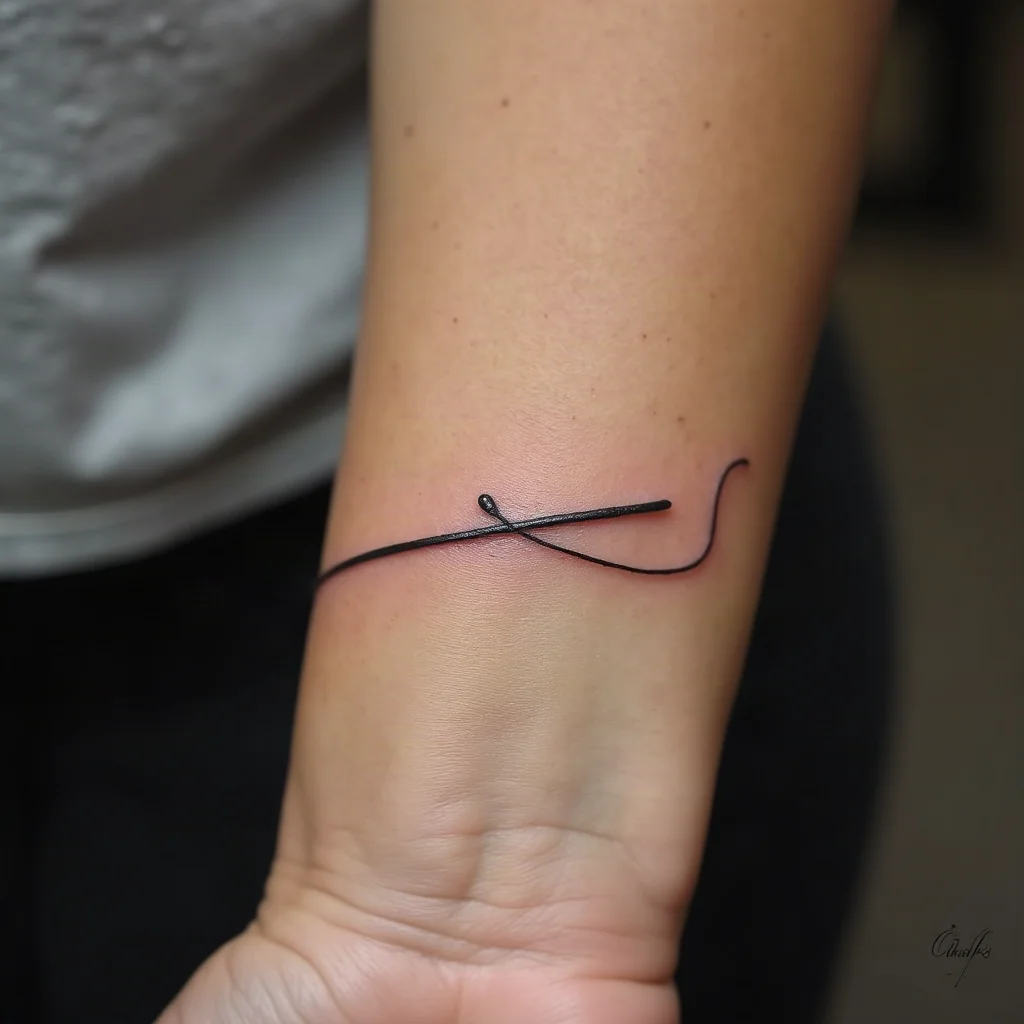
If she taught him to sew, mend, or simply keep things together, a small needle on her wrist and a loop of thread trailing across his forearm makes a quiet, unusual pair. Fine-line only, and keep the thread at least 1 mm thick so it does not fade into a smudge over a decade.
7. A soundwave split down the middle
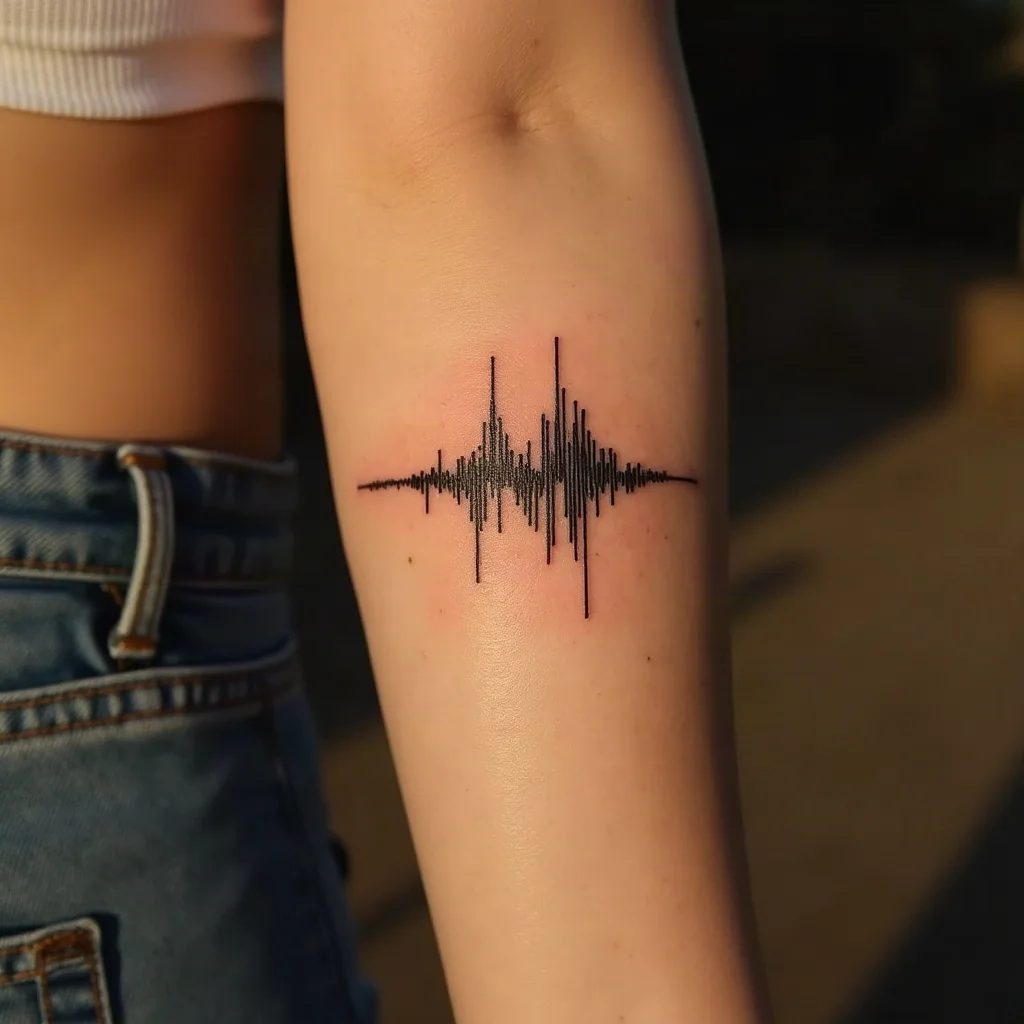
Take a two-second recording of one of you saying something the other has heard a thousand times, and split the waveform: the first half on her, the second on his. Have the artist thicken every bar slightly, because thin vertical strokes packed close together will blur as they settle. Best on the outer forearm where the skin stays flat.
One symbol, two styles: scaled pairs that stand alone
These work when you want tattoos that make sense even when you are in different cities. Same motif, different rendering, sized to each body.
8. Lioness and cub
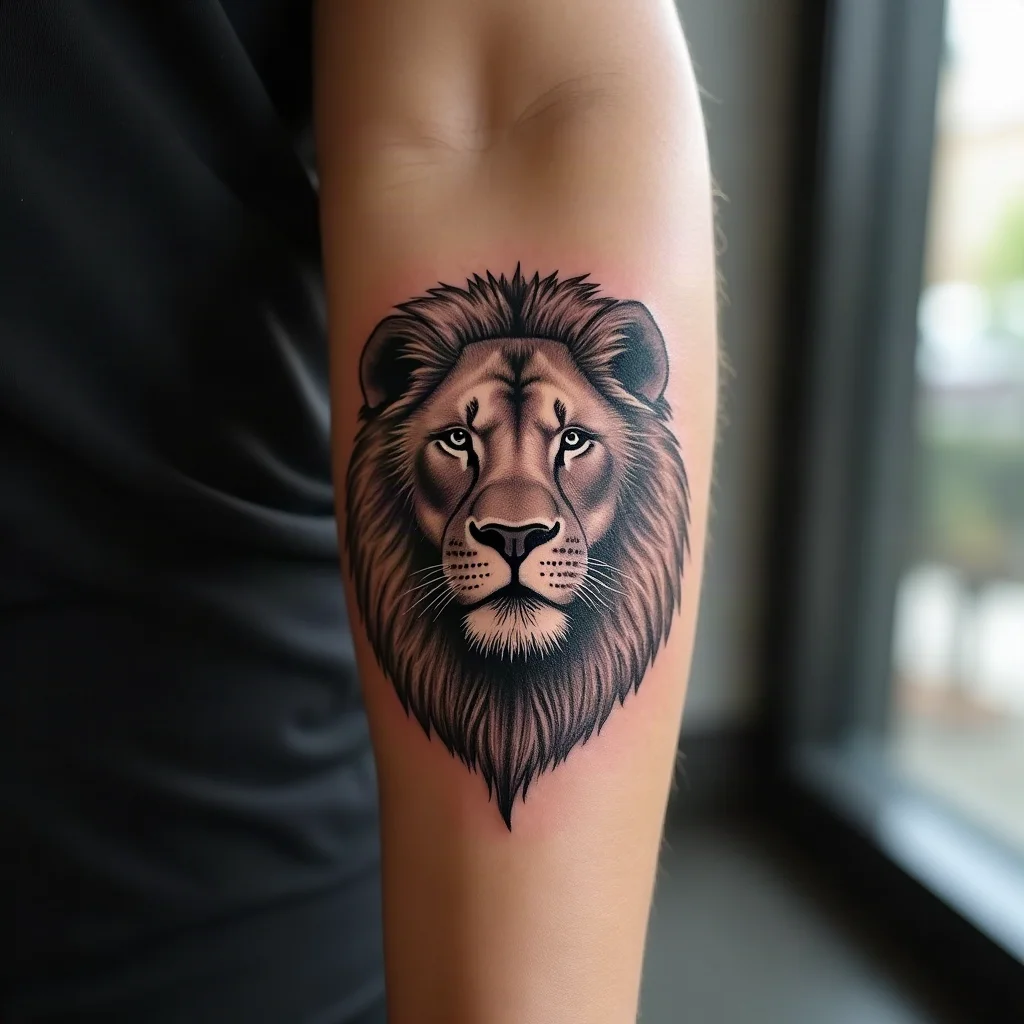
Her lioness in soft fine-line stipple on the forearm, his cub in heavier illustrative linework on the bicep, or flip the scale for a joke you will both enjoy. Ask for identical eye placement and mane direction so a stranger can see they came from one artist. Budget for detail: animal faces need more time than people expect, usually a half day for the larger piece.
9. Elephant mother and calf
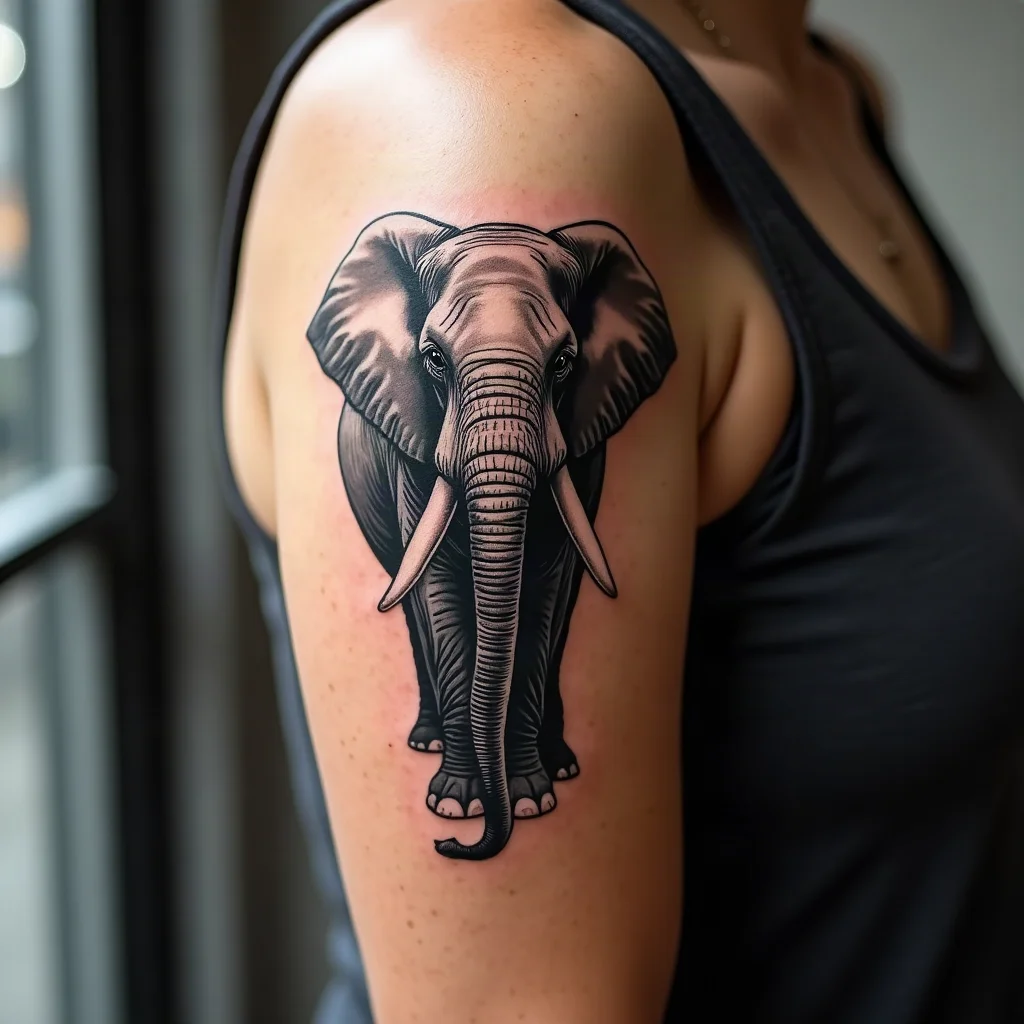
She takes the adult with the trunk curved down, he takes the calf reaching up. Elephants carry the family-loyalty meaning without any text, and they hold up at small sizes if the artist keeps the ear shape simple. Around 6 cm on her inner arm and 12 cm on his shoulder is a comfortable pairing.
10. Acorn and oak
An acorn on her wrist, a full oak with visible roots on his ribcage or thigh. It is the clearest growth metaphor available and nobody has to explain it at Thanksgiving. Keep her acorn line-only and let his tree carry all the texture.
11. A pair of traditional swallows
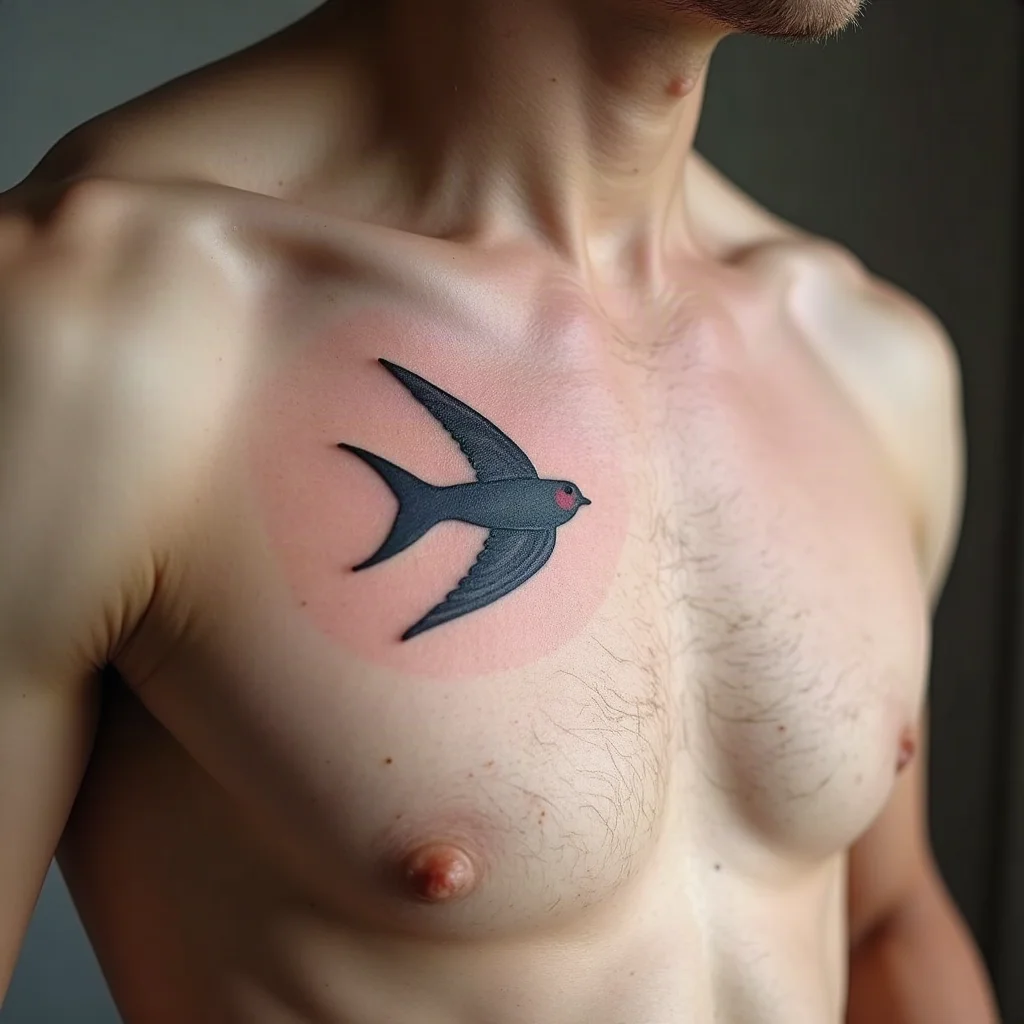
Two swallows in classic old-school styling, one facing left and one facing right, so when you stand together they fly toward each other. Bold outlines and a limited palette age better than anything else on this list. Chest or upper arm for him, collarbone or shoulder for her.
12. Anchor with a rope
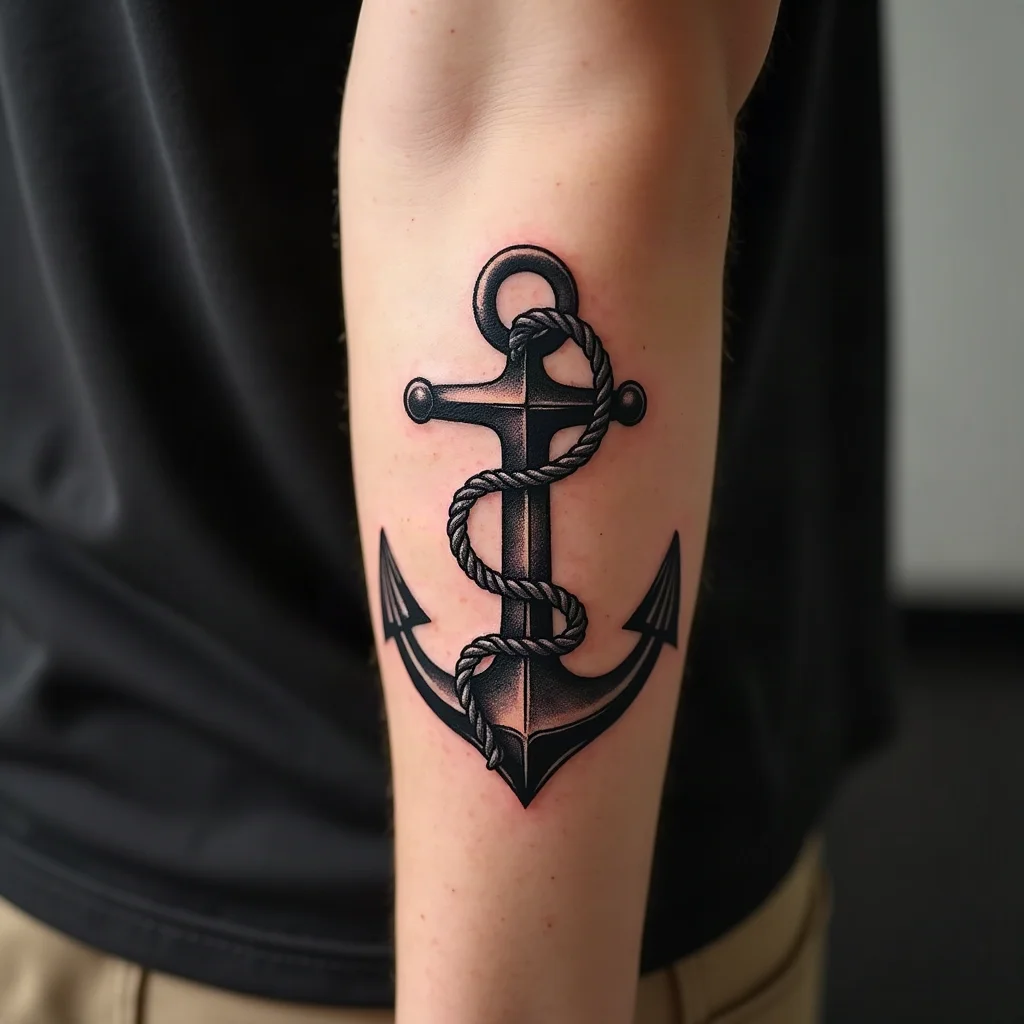
His anchor solid and heavy on the forearm, her anchor reduced to a single continuous line on the ankle. It says the same thing at two volumes. If she wants a nod to his version, have the rope loop repeated identically on both.
13. Origami paper boat
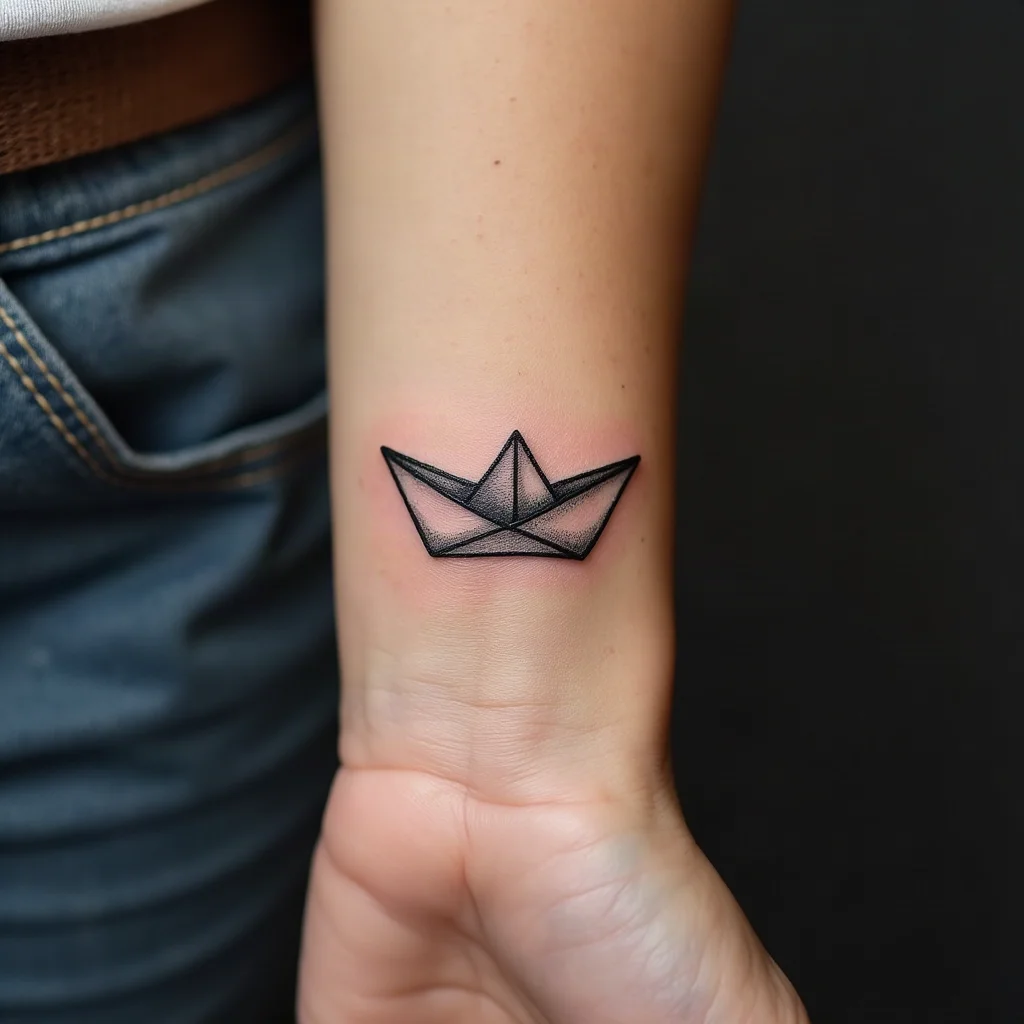
Nostalgic if you ever floated one in a gutter after rain, and it is one of the few motifs that looks as good at 3 cm as at 12 cm. Geometric folds mean crisp straight lines only, so this suits an artist with a steady ruler hand. Great as a first tattoo for a nervous mother.
14. A single bee
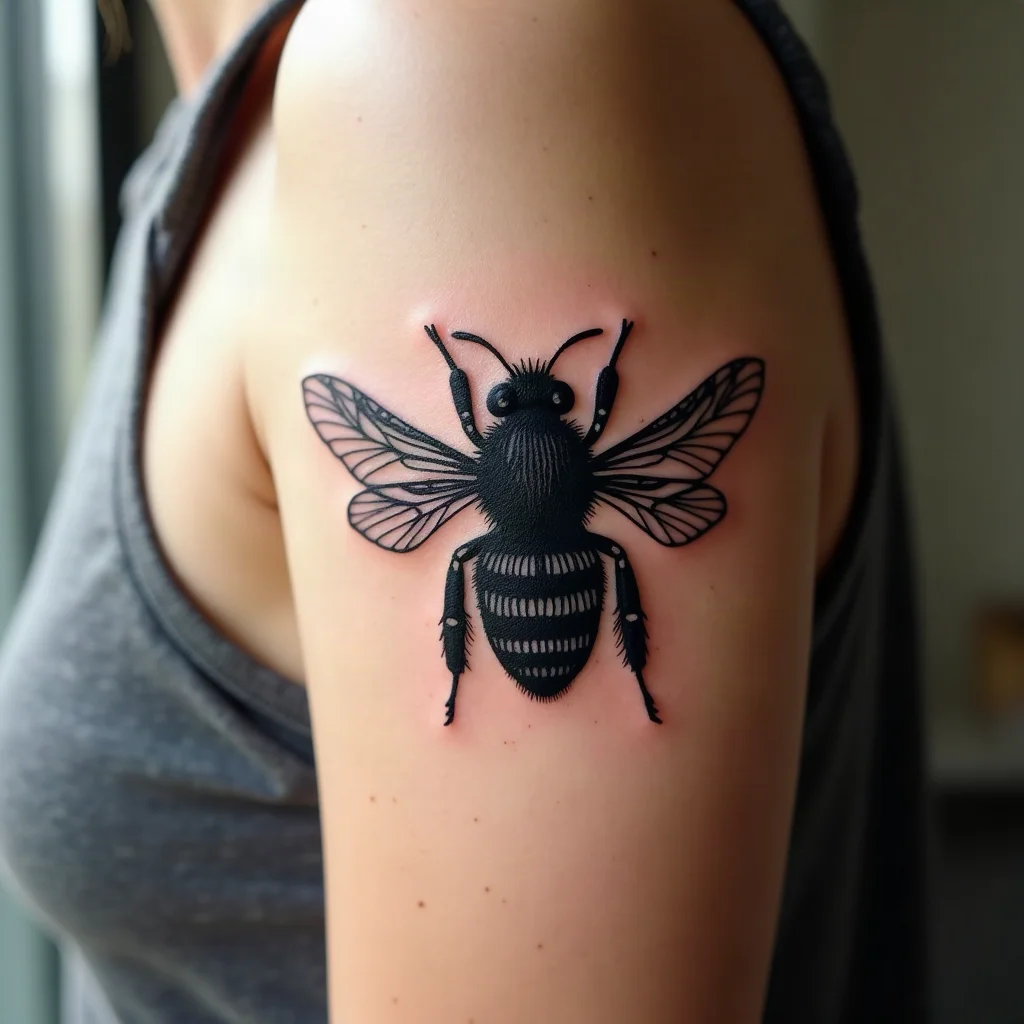
Hers on the back of the arm at thumbprint size, his larger with dense blackwork on the wings, both from the same drawing. Bees carry the work-and-home symbolism families like, and they survive shrinking better than butterflies because the body reads as one solid shape.
Handwriting, words and dates
Text is the most personal category and the least forgiving technically. Insist on generous letter spacing and no strokes thinner than the artist's finest reliable line, because script closes up as it heals.
15. Her handwriting on him, his on her
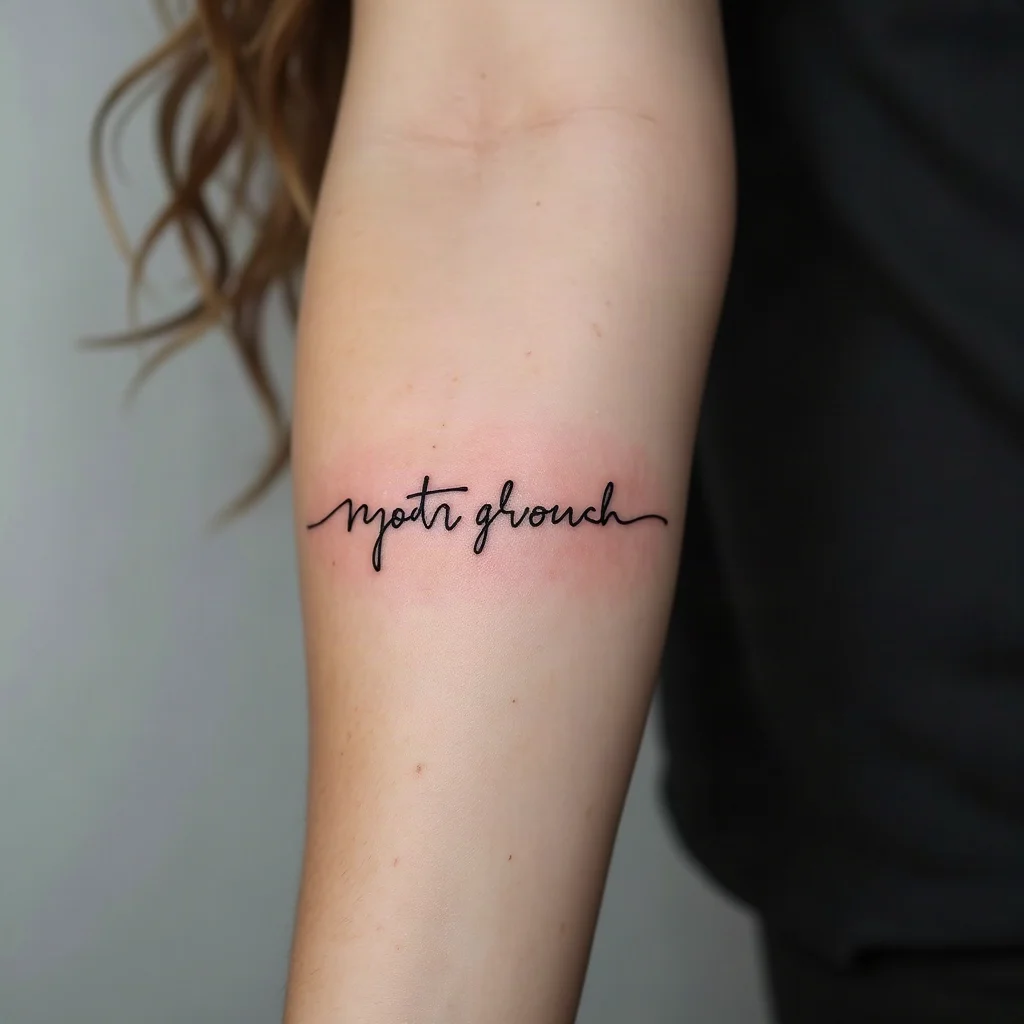
Have her write a short phrase she has said his whole life, and have him write one back, then swap them onto skin. Scanned handwriting needs cleaning up by the artist, so send it in as a photo weeks ahead. Inner forearm for him, inner wrist or ribcage for her, both around 6-10 cm wide.
16. His birth date in Roman numerals
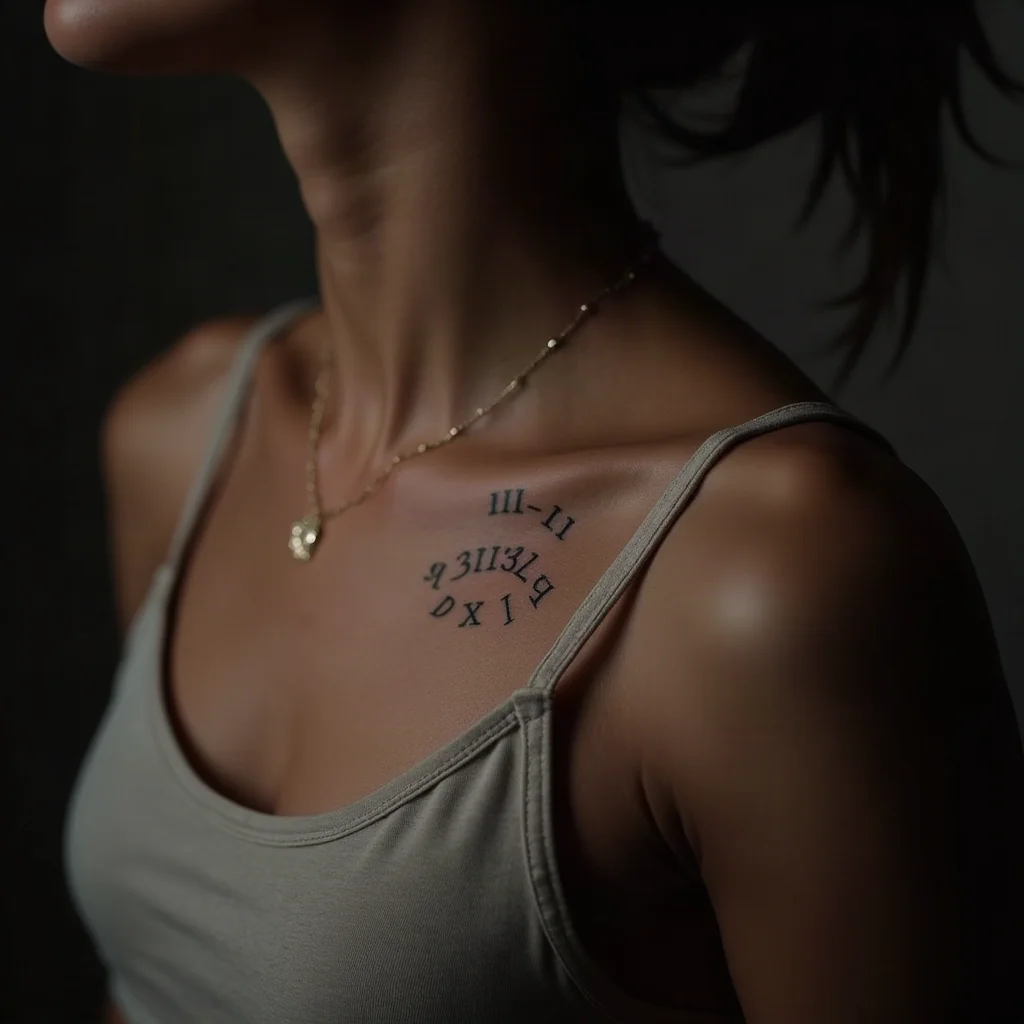
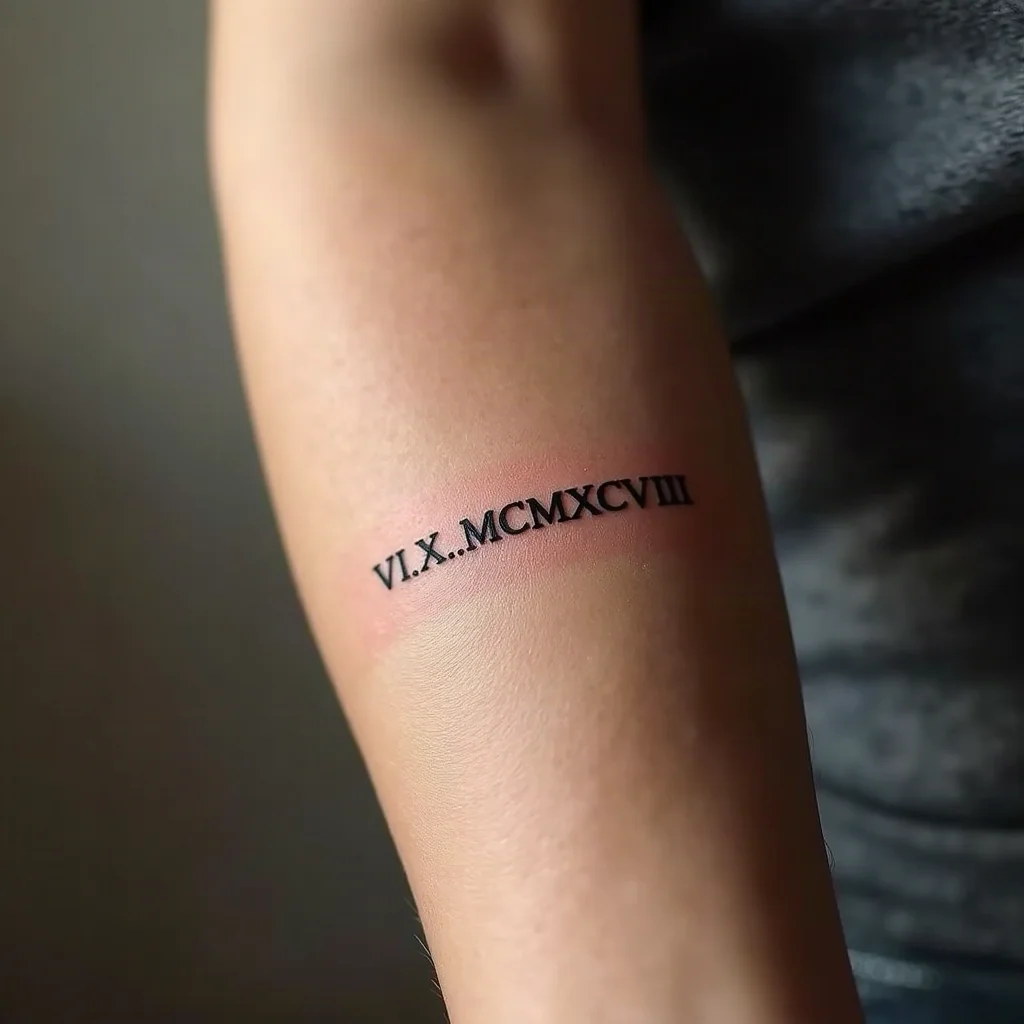
She wears the date he arrived; he wears the same numerals, sometimes with her birth year added underneath. Roman numerals stay legible at small sizes better than digits and look at home in a fine serif. Along the forearm or under the collarbone are the two placements that stay straight as bodies change.
17. Coordinates of the house you grew up in
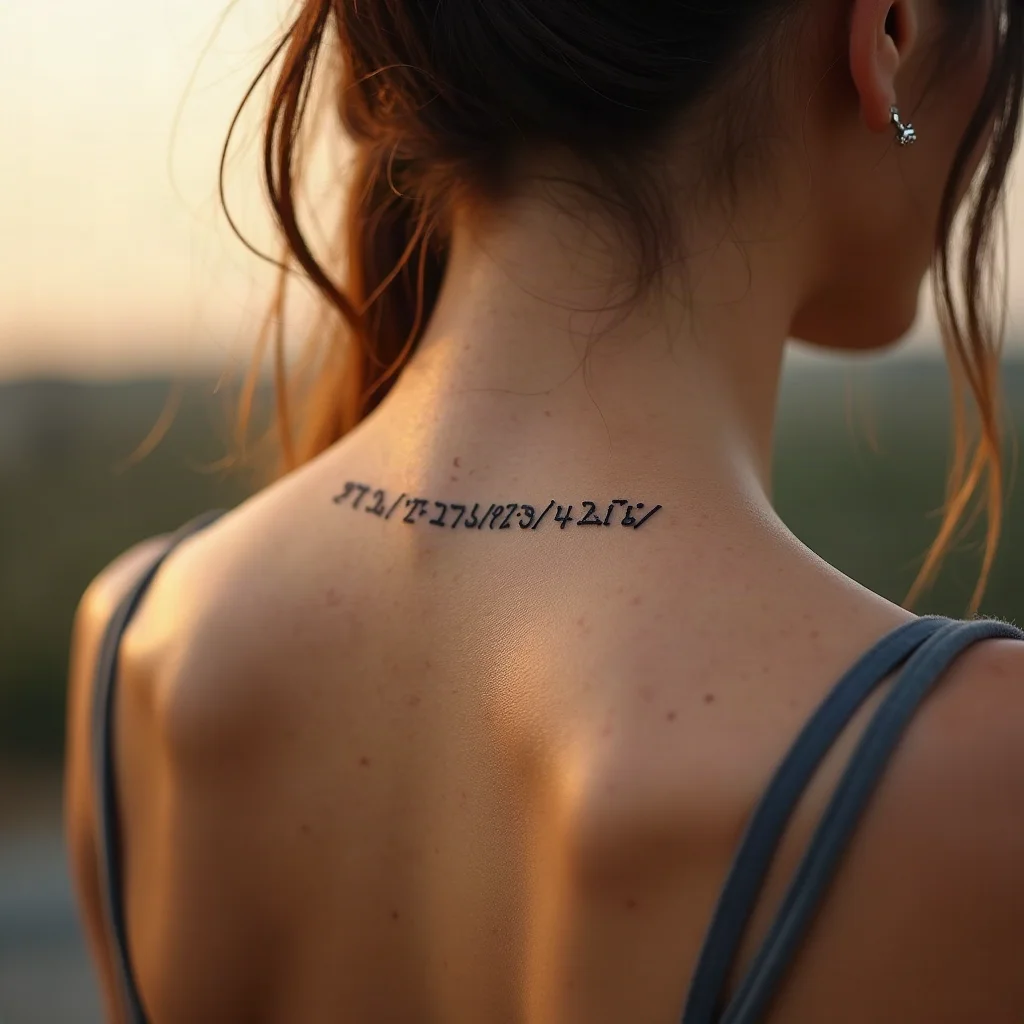
Two lines of numbers, no explanation needed, and no one at work will ask. Ask for a monospaced or typewriter face and keep the whole block under 8 cm so the digits do not crowd. Works especially well down the spine for her and along the ribs for him.
18. One word in her mother tongue
If your family speaks something other than English at home, a single word in that script carries more than a whole sentence in translation. Get spelling and diacritics confirmed by two people who read the language before the needle touches skin. Non-Latin scripts need an artist who has done them before, so ask to see healed photos.
19. A lyric split across two arms
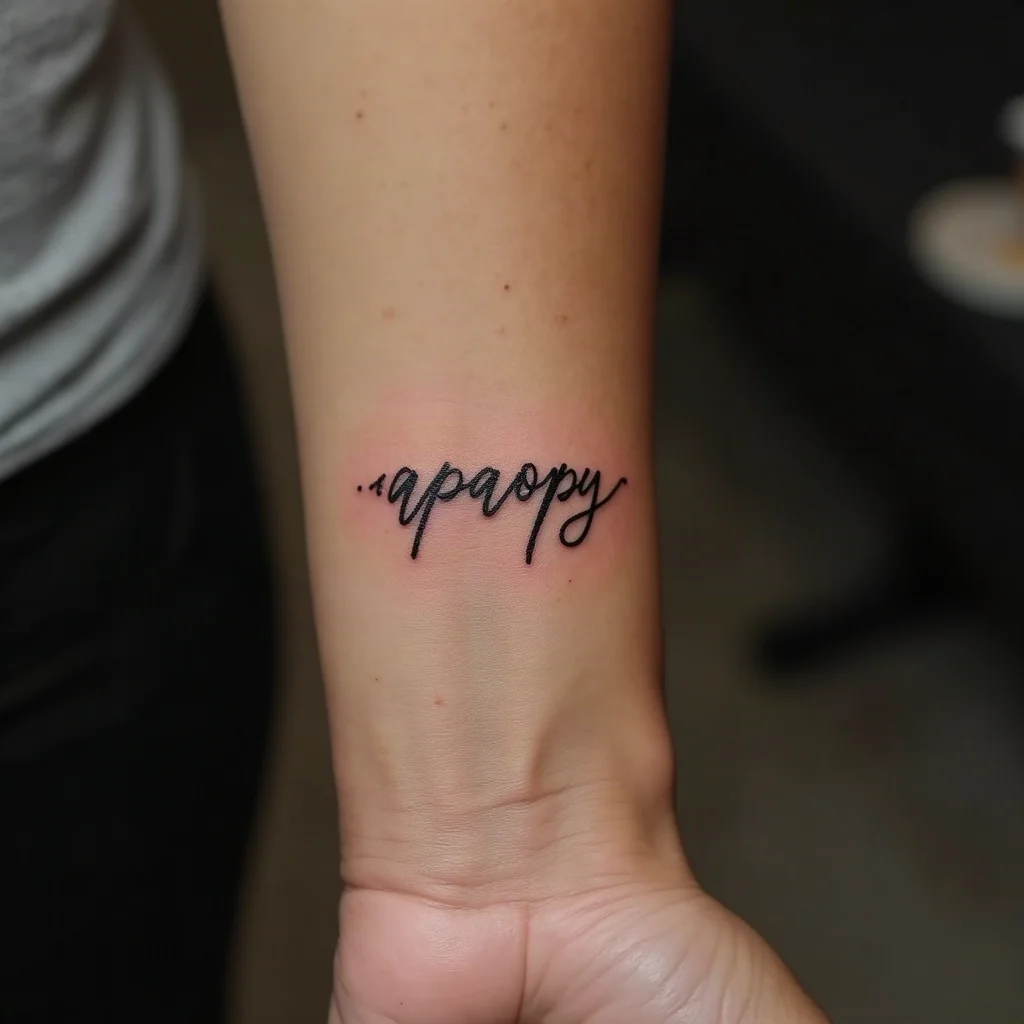
Half a line from the song that was always on in the car goes on her, the second half on his, so the sentence only completes when you hug. Keep each half to three or four words. Script tattoos on the inner bicep hide easily and hurt less than most people fear.
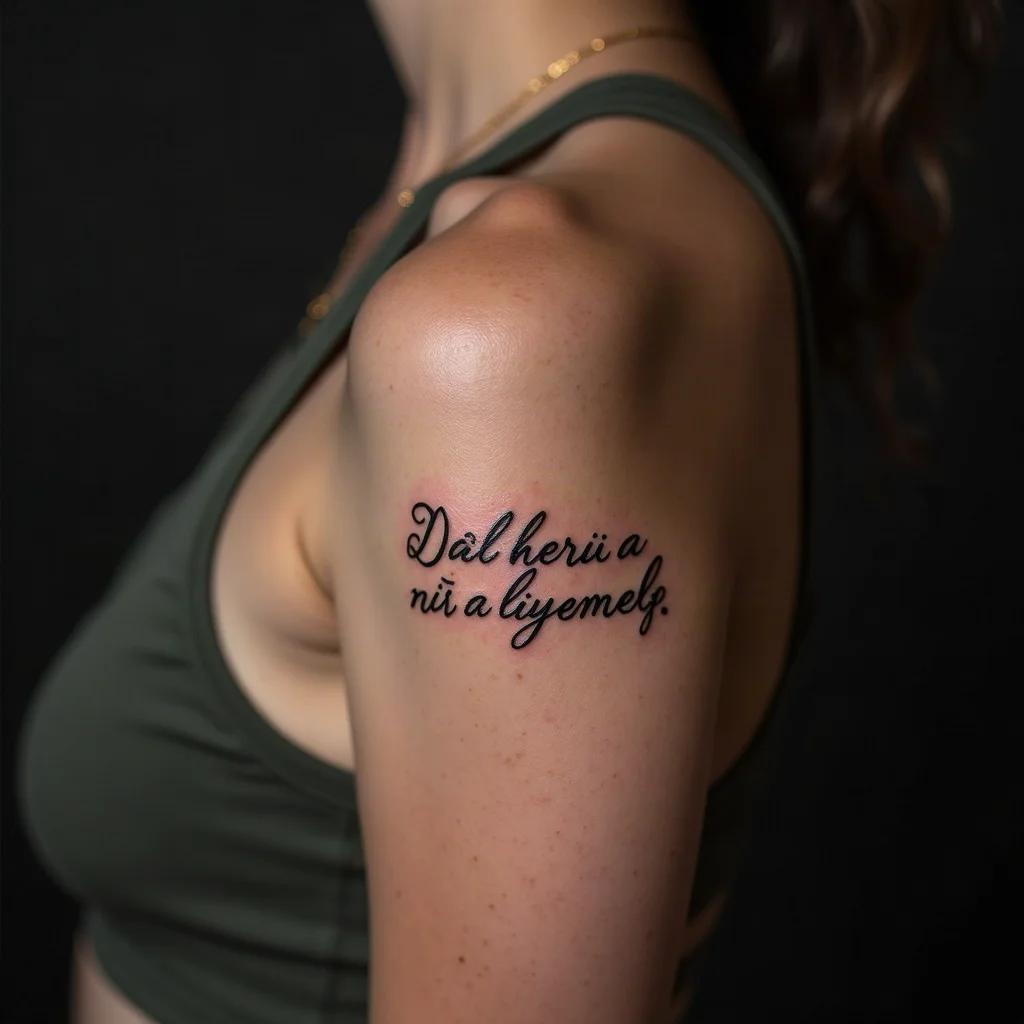
20. Interlocking initials
A small serif monogram of both initials, drawn once and inked twice, is the least fussy version of a matching tattoo there is. At 2-3 cm it fits behind the ear or on a finger, though finger ink fades fast and needs touch-ups every few years. Ask for slightly heavier serifs than look right on paper.
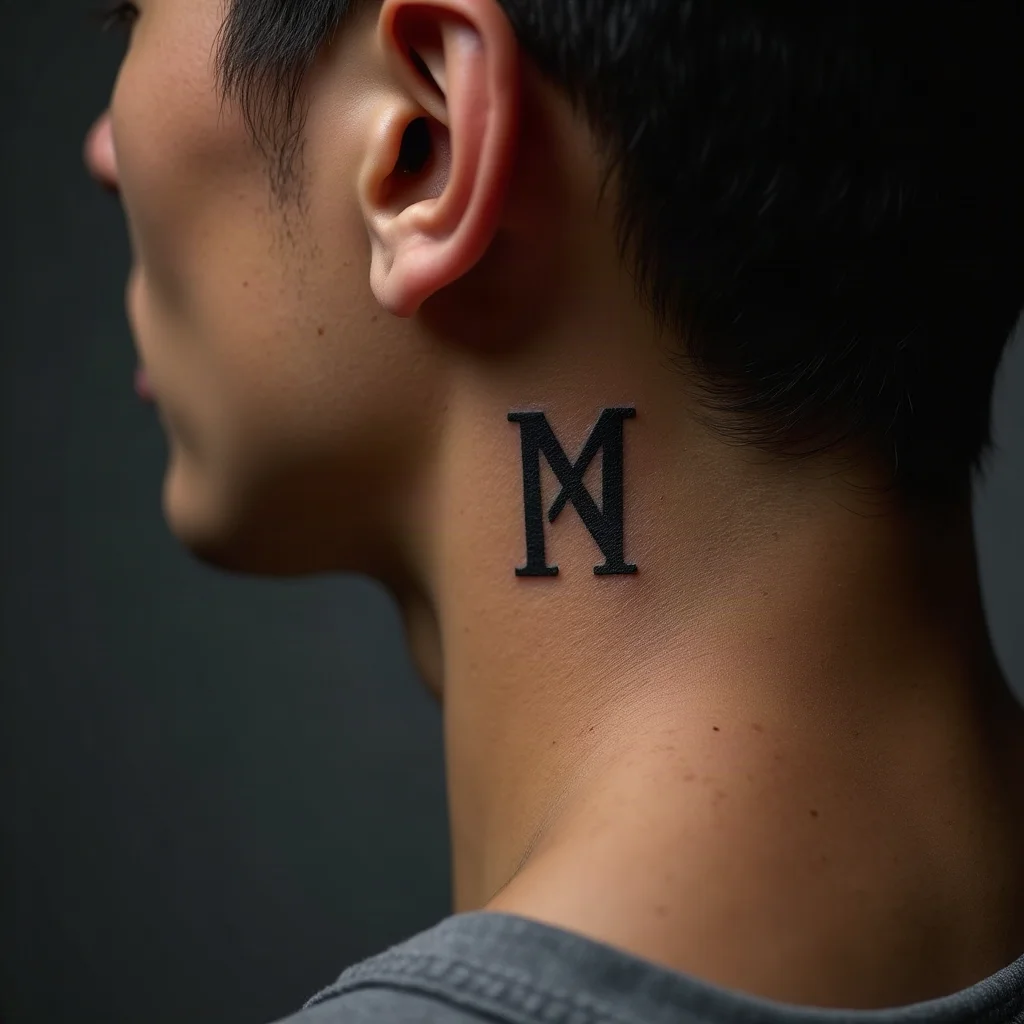
Nature pairs with room to grow
Botanical and animal motifs give you the easiest route to two sizes of the same idea, and they layer well if either of you adds more work later.
21. Swapped birth flowers
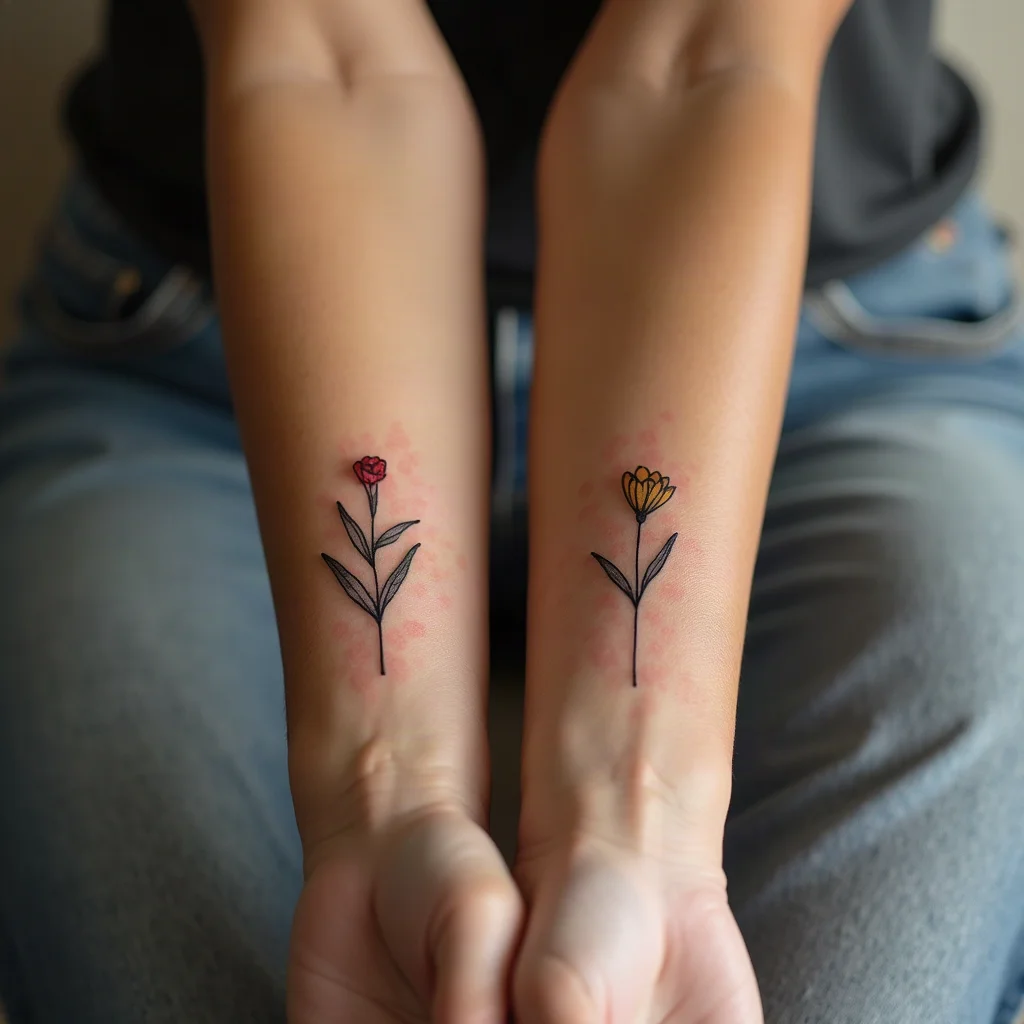
She wears his birth month flower, he wears hers. A single stem at 7-9 cm on the inner forearm reads cleanly for both, and if she has other children the stems can be bundled later without redrawing anything.
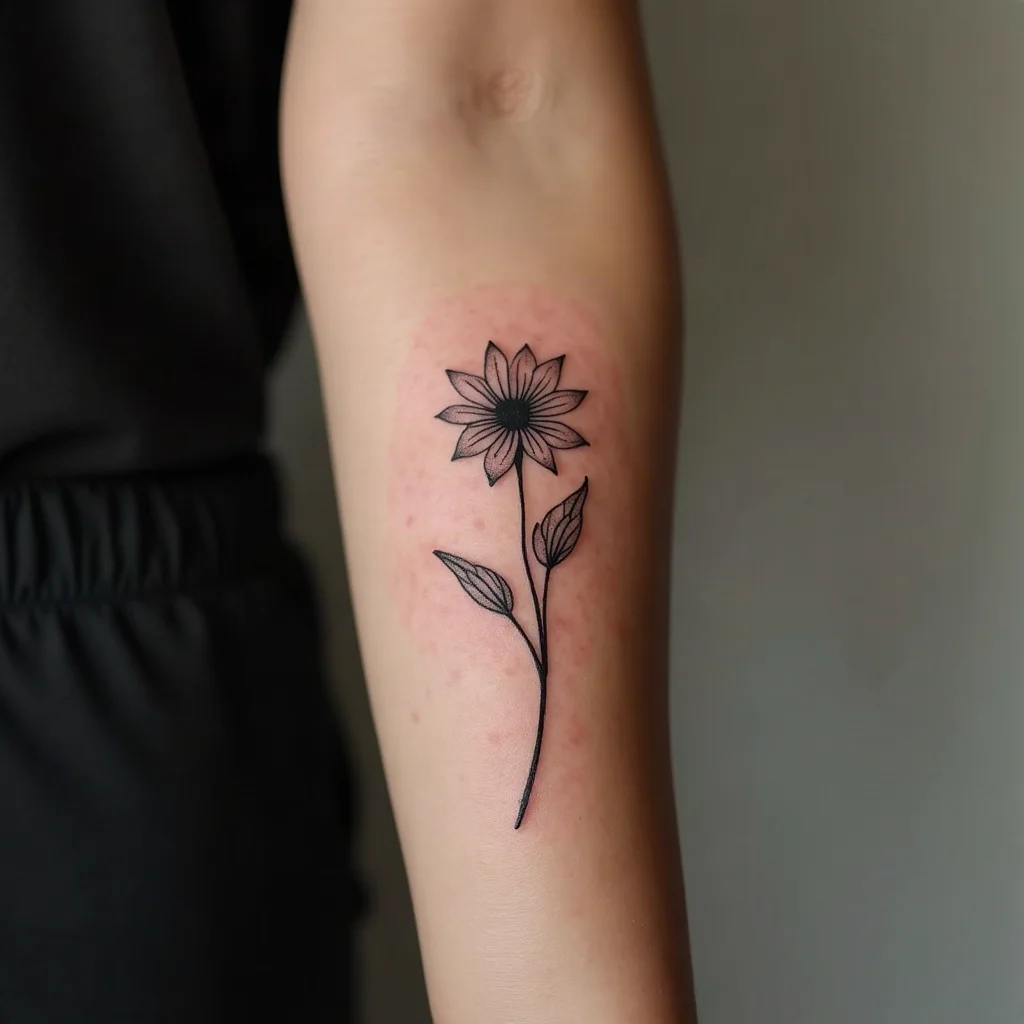
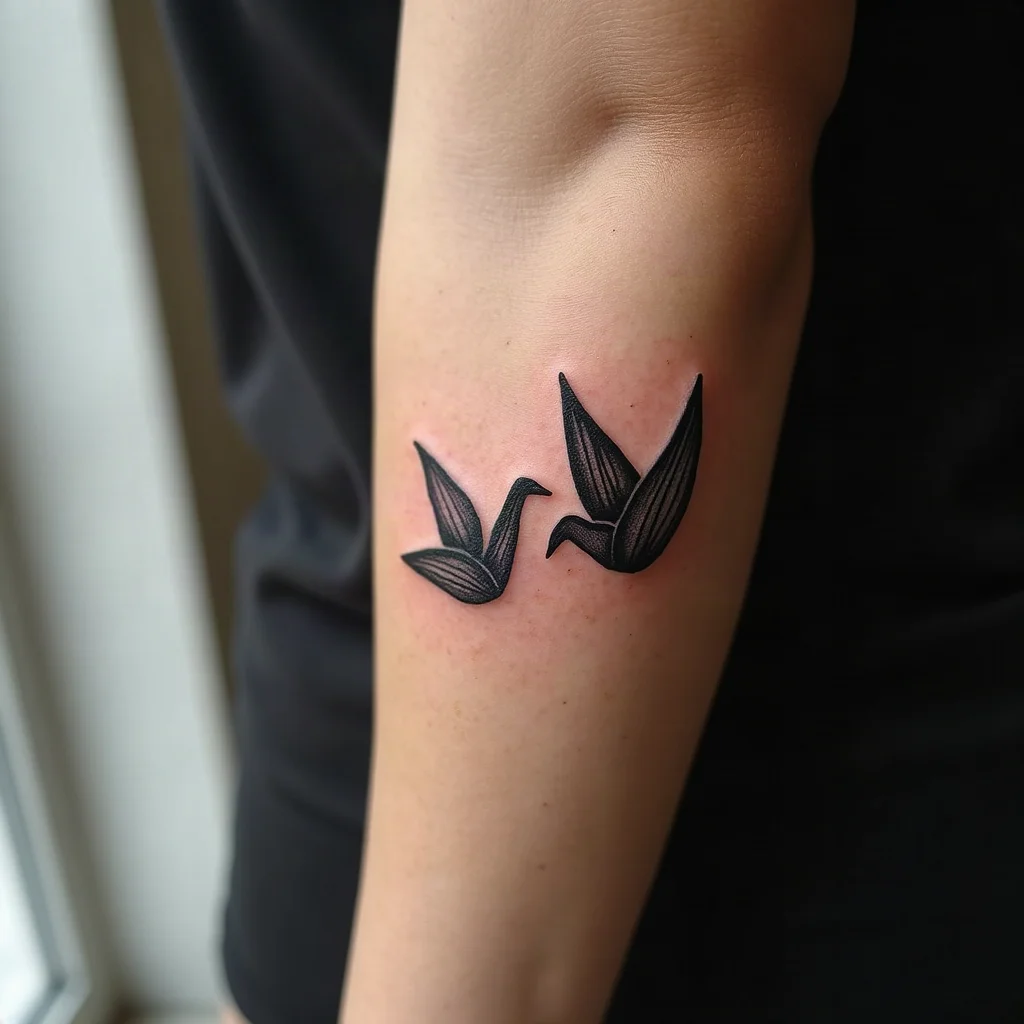
22. Two birds at different scales
One larger bird and one smaller, wings mid-beat, both drawn from the same sketch so the silhouette matches. Put the smaller one on her wrist and the larger on his shoulder blade, or reverse it once he outgrew the nest. Simple silhouettes hold their shape for decades.
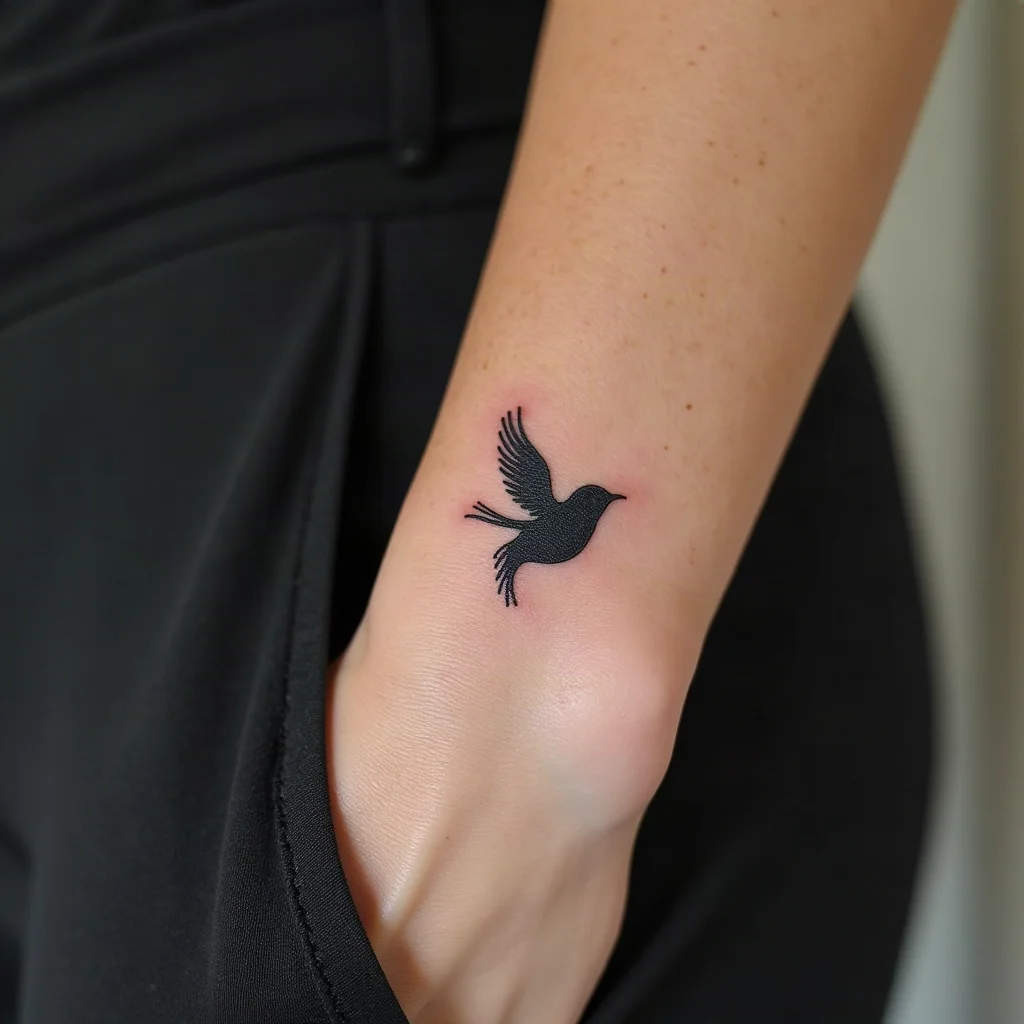
23. A treeline horizon
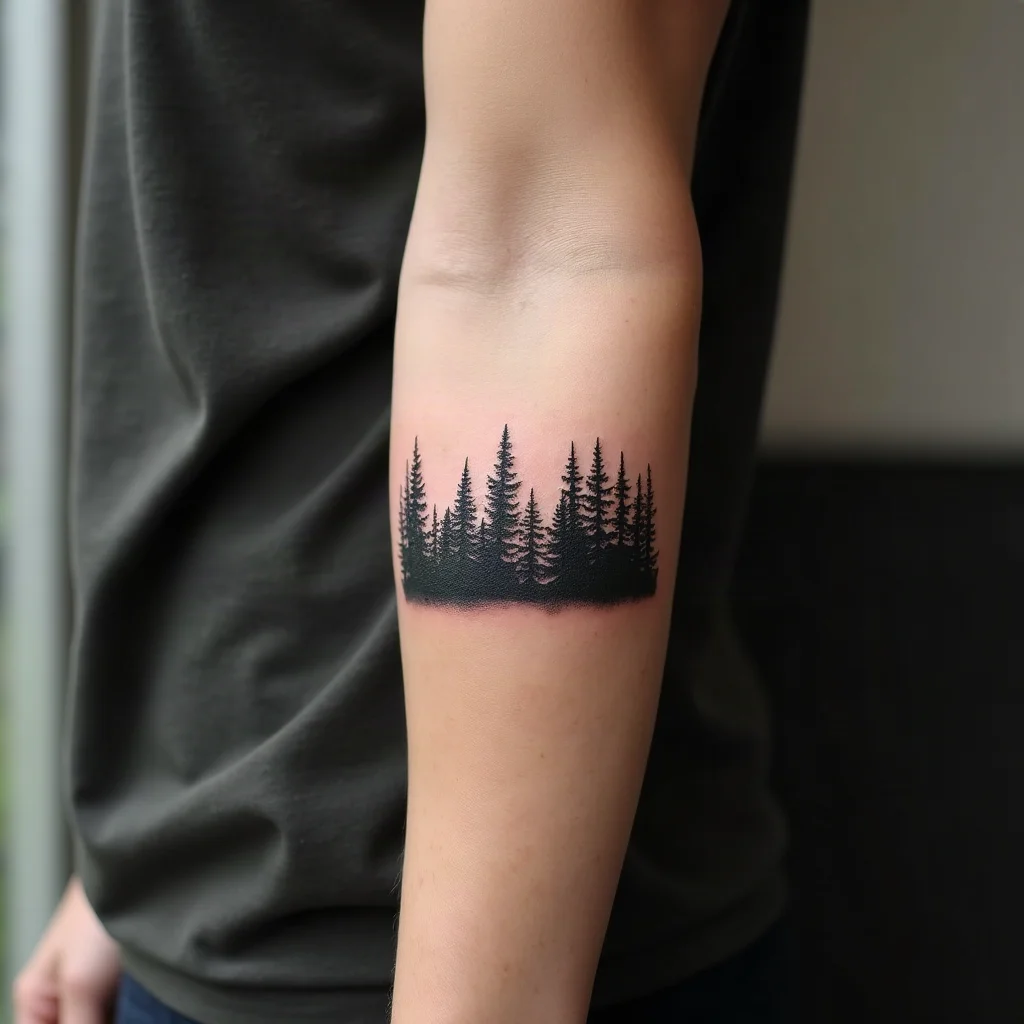
A thin strip of pine forest, identical width on both of you, wrapping the outer forearm like a soft band. It is one of the few matching designs that suits a son who wants something that reads as decoration rather than sentiment. Around 2-3 cm tall is the sweet spot.
24. Sea turtle and hatchling
Her adult turtle with a patterned shell, his hatchling mid-crawl, or the other way round. The shell pattern gives an artist somewhere to put detail without adding size. Thigh and calf both take this well and stay out of the sun, which keeps the linework crisp.
25. Sunflower and single seed
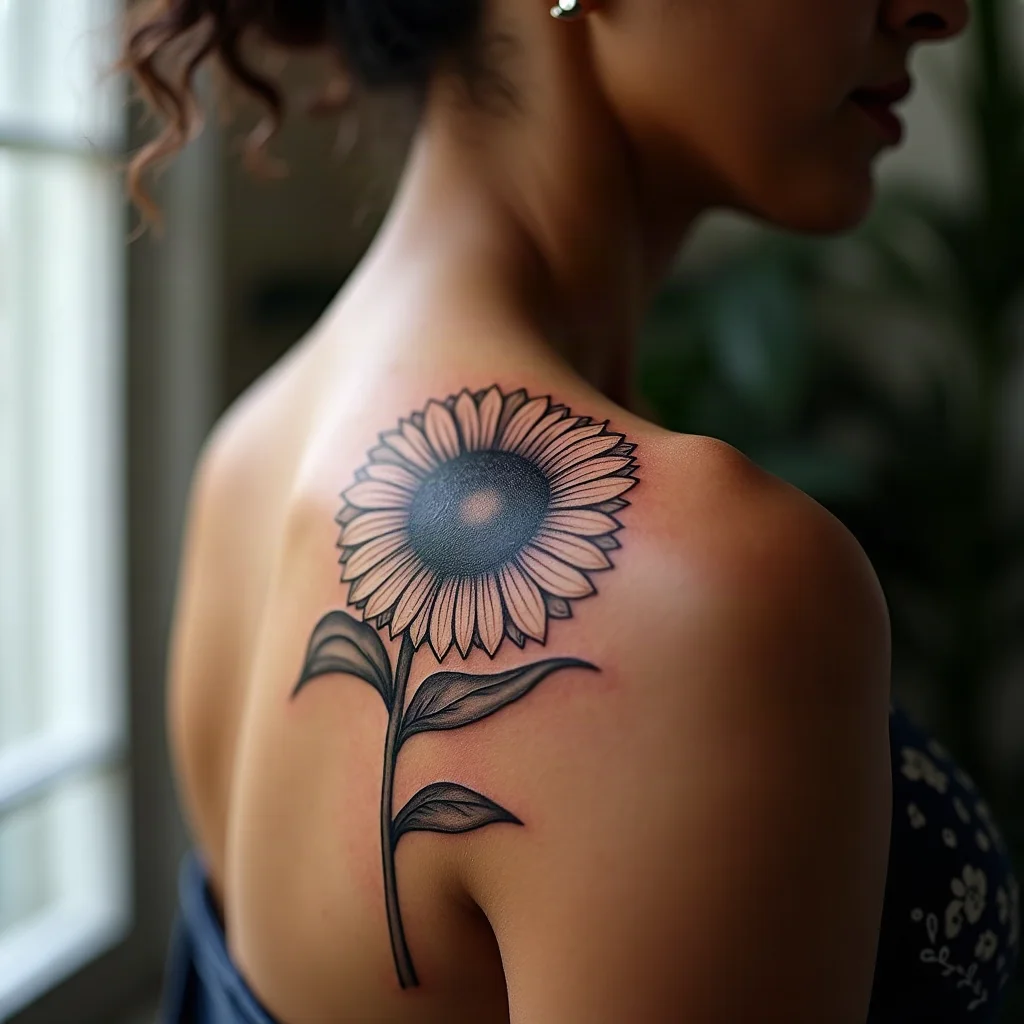
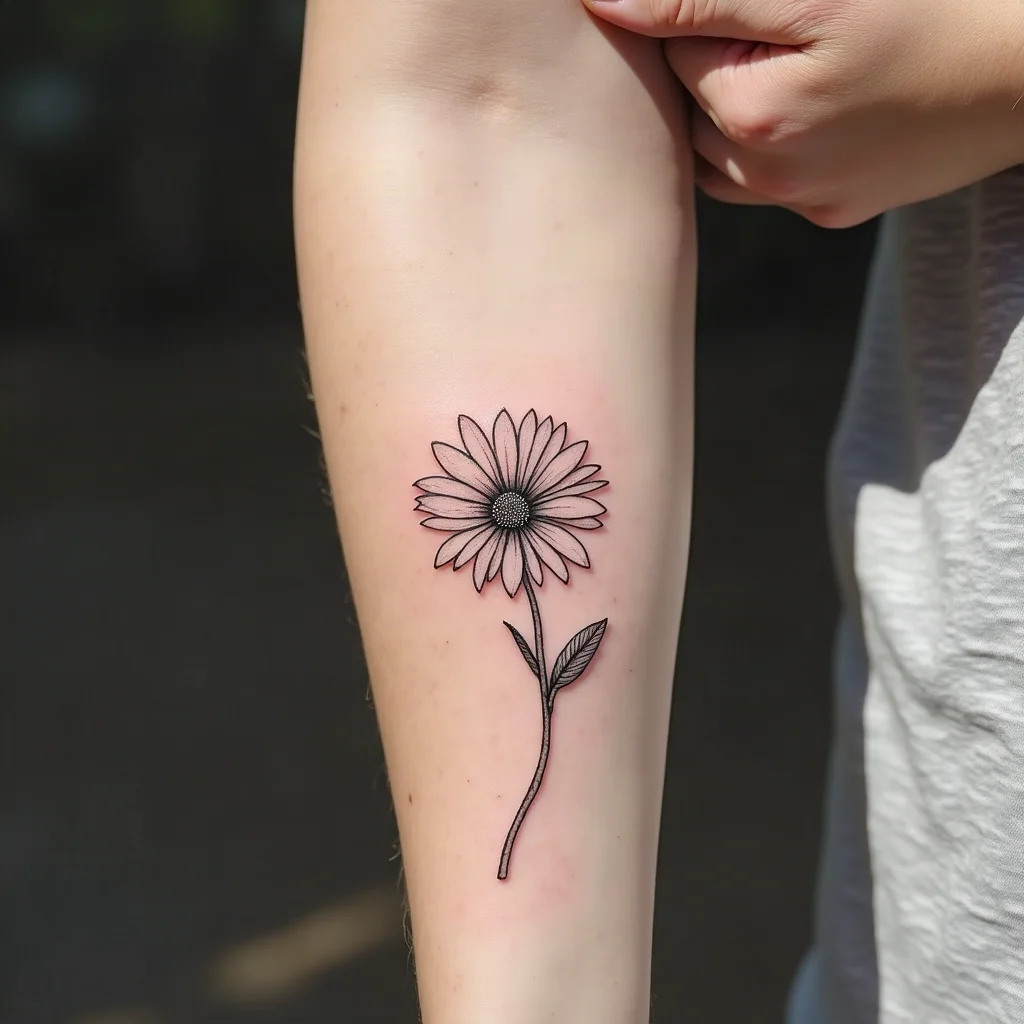
A full sunflower head on her shoulder, one seed rendered at 2 cm on his wrist or the side of a finger. It is the smallest commitment on this list for a son who is not sure about visible ink, and it still means something. Ask for the seed to be outlined, not solid, so it does not blur.
26. Constellations of both star signs
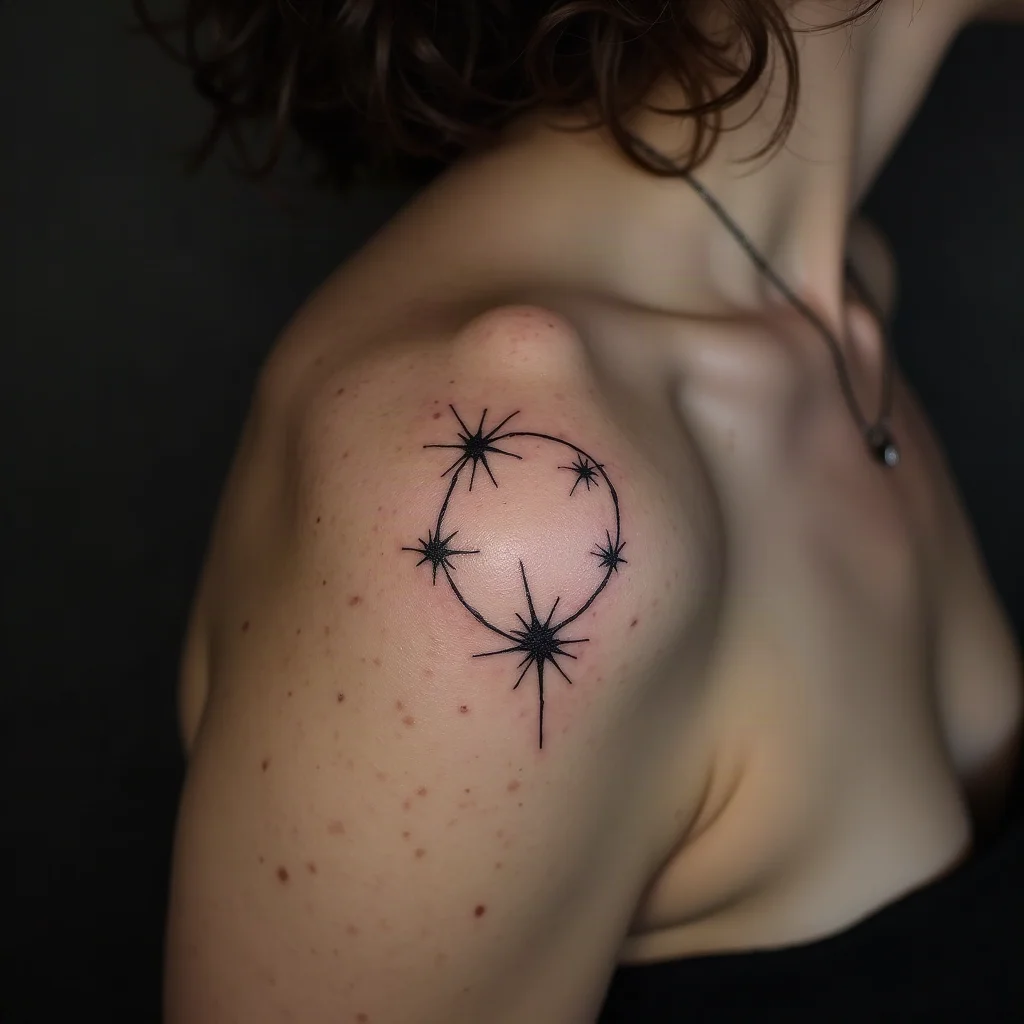
Her constellation on him, his on her, drawn in matching dot-and-line geometry with identical dot sizes. Keep dots at least 1.5 mm across or they will spread into blobs. Collarbone, shoulder blade and ribs all suit the loose scatter of a star map.
27. A tree divided at the trunk
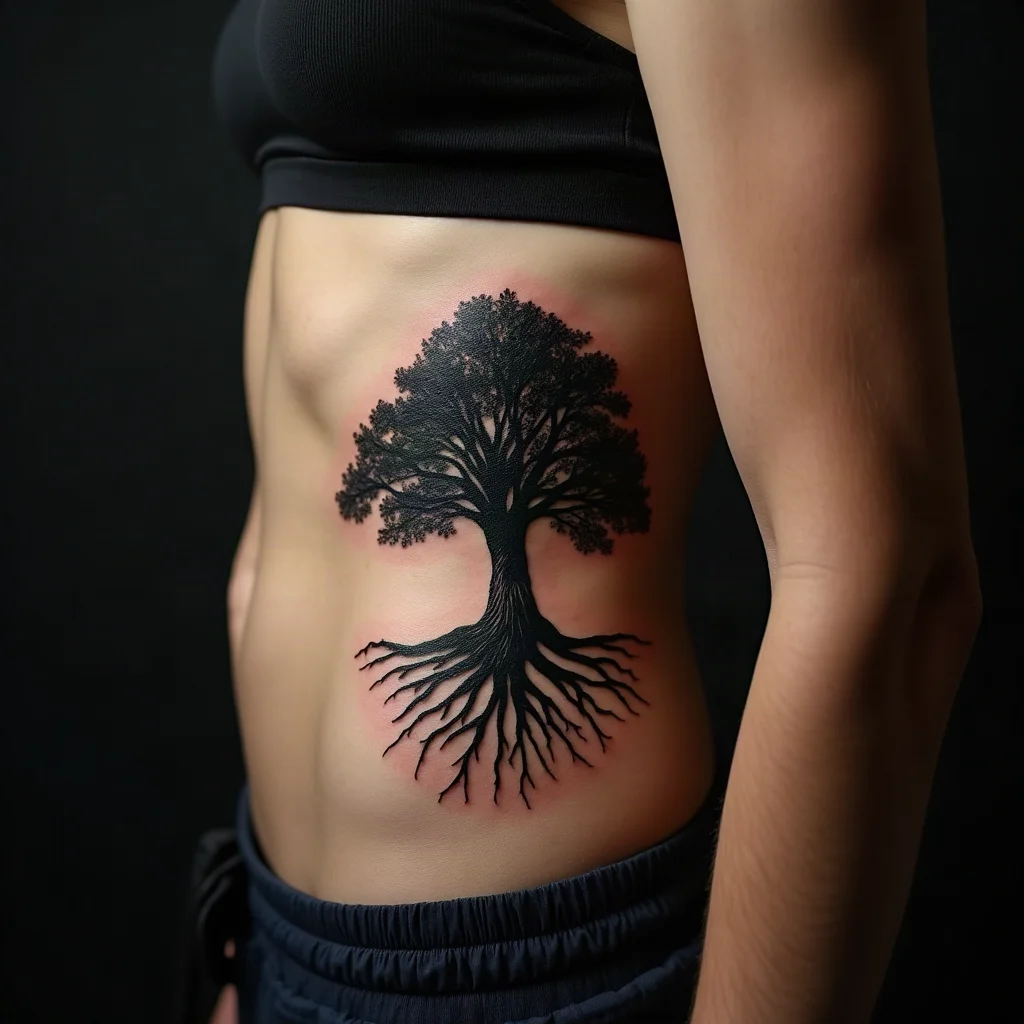
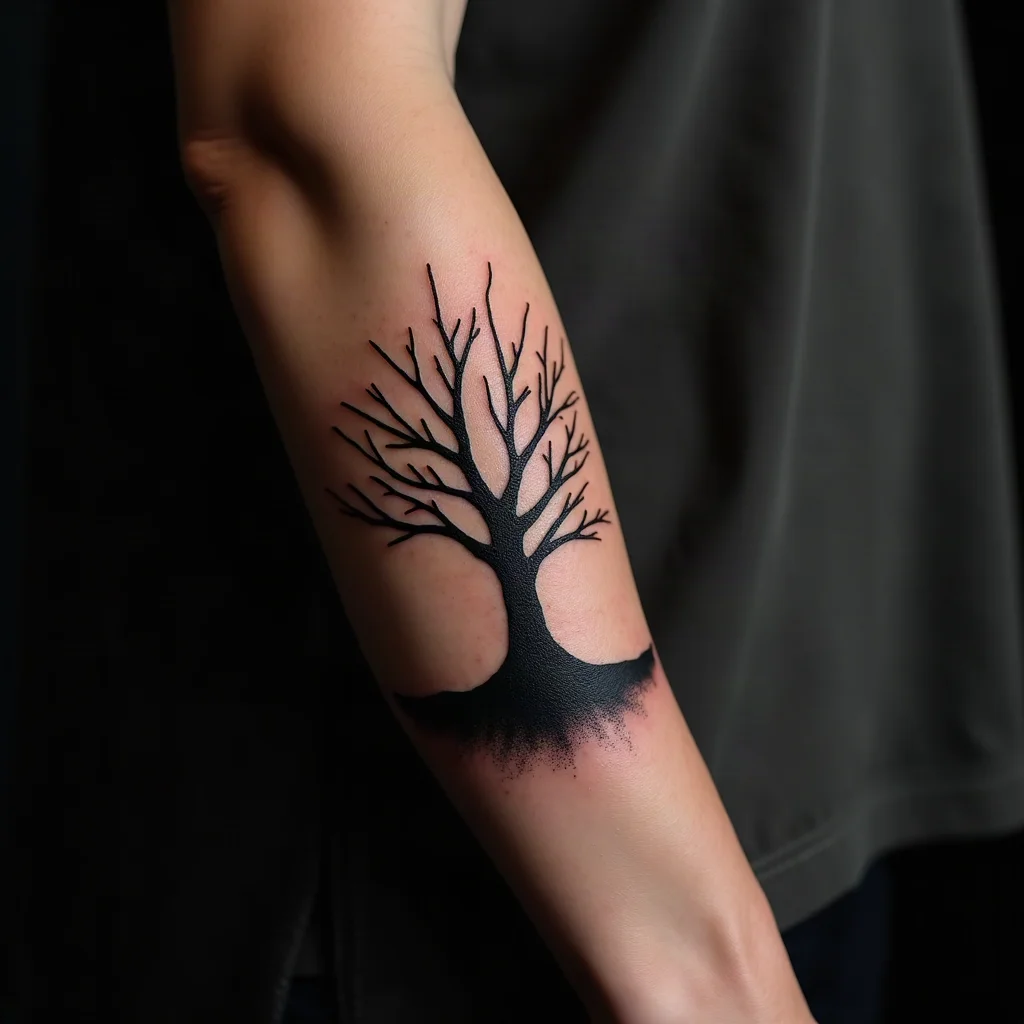
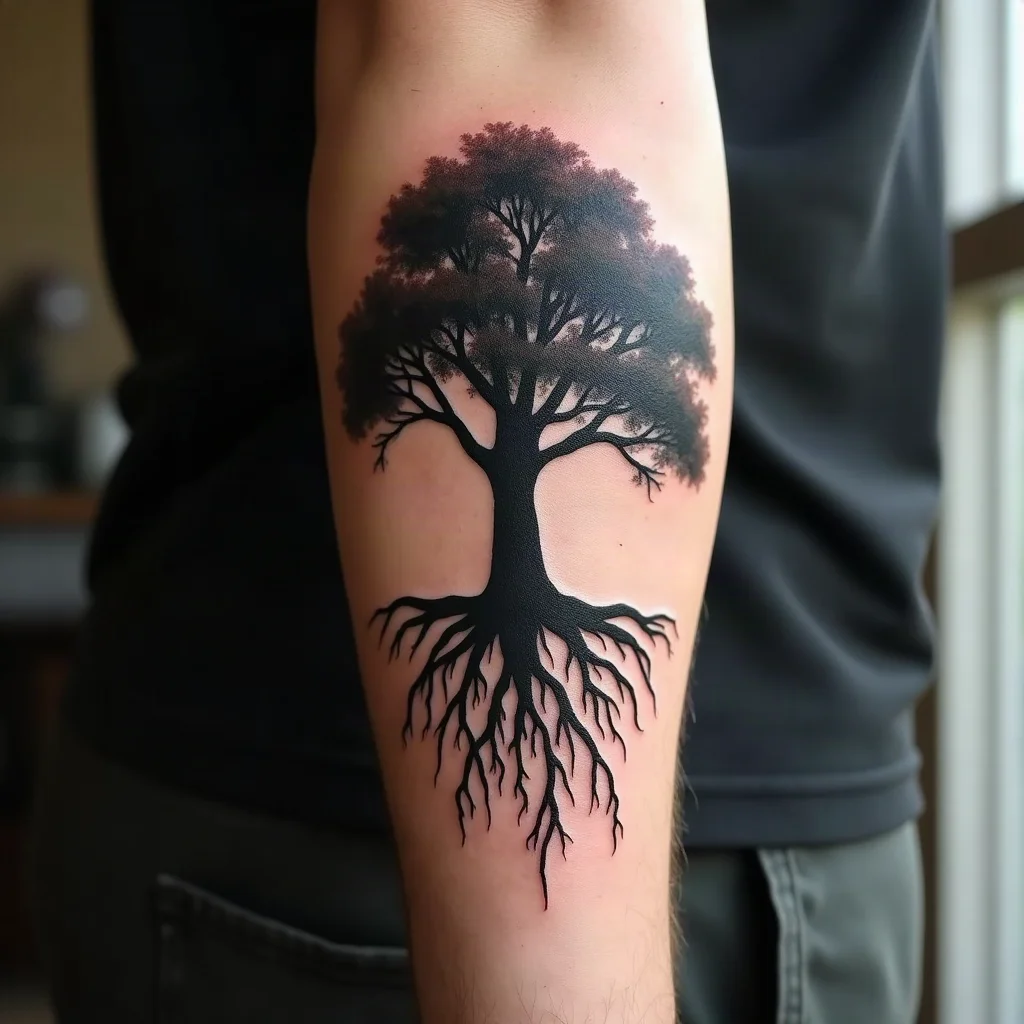
Roots on her, branches on him, split exactly at the ground line so the two pieces stack when you hold your forearms together. This is the most literal version of the whole idea and, done in clean blackwork, the most striking. Give it room: 12 cm minimum per half, or the root and branch tips turn to mush.
Placement, pain and what a pair actually costs
Placement is where most mother-son plans quietly go wrong, because the two of you rarely have the same pain tolerance or the same reason to hide ink. Start with visibility, then work backwards.
Easiest placements for a first-timer (which is often the mother): outer forearm, upper arm, shoulder blade, calf. These have enough padding that the session feels like a persistent scratch rather than anything sharp, and they heal without much drama. Placements to think twice about: ribs, sternum, inner bicep near the armpit, and the top of the foot, all of which run hot. If either of you is nervous, our tattoo pain chart is a useful reality check before you commit to a spot.
On sizing, resist going too small on the mother's piece just because it is her first. A 3 cm design with five internal details will close up within a few years; 6-8 cm with fewer lines will still look sharp at twenty. Forearms and calves hold detail best over time. Hands, fingers and feet fade fastest and need touch-ups.
Cost depends on your city and the artist's reputation, but plan in ranges rather than exact numbers. Two small, simple matching pieces booked in the same appointment usually land near a studio's minimum each, sometimes with a modest break for the pair. A fine-line forearm piece plus a larger illustrative version for him is more likely a half-day booking and priced by the hour or as a flat day rate. Custom drawing time for a split design may add a deposit-level design fee, since the artist is effectively drawing two tattoos. Ask for the quote as one number covering both people so nobody is surprised at the counter.
Booking the appointment and healing together
Do it in one session if you can. Booking back to back means one consultation, one drawing session, one stencil language across both pieces, and photos of two fresh tattoos at the same time. If your son is getting the larger piece, put him second so he is not sitting sore while she goes under the needle.
A few things that make the day go smoothly:
- Eat properly beforehand, both of you. Low blood sugar is the number one reason someone goes pale in the chair.
- Bring the reference photo of the other person's arm. Stencils get placed better when the artist can see how the two pieces will line up in real life.
- Agree on the break line before the stencil goes on, not after. Split designs are the hardest to adjust once the transfer is down.
- Skip alcohol the night before and take blood-thinning painkillers off the table.
Aftercare is identical for both of you and worth doing in step, because two people reminding each other actually works. Leave the wrap on as long as your artist specifies, wash gently with clean hands and unscented soap, pat dry, and use a thin layer of fragrance-free moisturiser two or three times a day. No pools, no baths, no gym sweat sessions for two weeks, and no direct sun on a healing piece at all. Flaking around day five to ten is normal; picking it is how you get a patchy line that needs a touch-up.
Most studios include one free touch-up within a few months. Book it for both of you at once. Fine-line pieces on a mother's wrist and a son's heavier blackwork settle at different rates, and seeing them side by side at the three-month mark is the best way to judge whether anything needs a second pass.
If the rest of the family wants in, the same logic scales: one motif, several renderings. Our guide to father and son tattoos covers pairings that sit comfortably alongside these.
Frequently asked questions
Do mother and son tattoos have to be identical?
No, and identical rarely looks best. The strongest pairs share a motif and an artist but differ in size, line weight and styling so each piece suits the person wearing it. A fine-line 5 cm version for her and a bolder 10 cm version for him will read as a set to anyone who sees them together.
What is a good first matching tattoo for a mother who has never been tattooed?
Choose a simple, mostly line-based design of about 6-8 cm on the outer forearm, upper arm or shoulder blade. Those spots are among the more comfortable to sit through and they hold detail well over decades. Avoid ribs, feet and fingers for a first piece.
How much do two matching tattoos cost?
Small, simple pairs usually land close to the studio's minimum charge per person, sometimes with a small discount when booked together. Larger or custom split designs are priced by the hour or as a half-day rate, and a split piece may carry extra design time because the artist is drawing two tattoos. Always ask for one quote covering both people up front.
Are split designs a bad idea if we live far apart?
They are only a problem if you need the tattoo to make sense on its own. Ask your artist to design each half so it still reads as a complete image, for example a mountain ridge with its own horizon line rather than a shape that ends mid-air. Otherwise choose a scaled pair instead.
Can we get matching tattoos in different styles?
Yes, as long as the same artist draws both. Shared proportions, matching details and consistent line spacing are what make two pieces feel connected, not identical shading. A blackwork version and a fine-line version of the same animal will look like siblings if they come from one drawing.
The conversation
No comments yet. Got a thought about these designs? Start us off.
Want to weigh in? Join the community to comment, save designs and try them on your skin.