28 Spine Tattoos for Women That Follow the Centre Line
The spine is the one placement where symmetry, posture and design all have to agree. Here are 28 spine tattoo ideas for women that work with the body's centre line, plus what to expect on pain, sizing and healing.
What the Spine Does to a Design
A spine tattoo is a vertical composition on a surface that moves. Bend forward and the design stretches; stand tall and it compresses slightly. That is not a problem, it is the appeal — but it does mean the design has to be built for a long, narrow, slightly mobile canvas rather than squeezed into one.
Three things matter more here than almost anywhere else on the body:
- Centring. Your spine is the visual midline of your whole body, so a millimetre of drift reads as crooked. Good artists mark the stencil with you standing relaxed, not lying down, then re-check from a few steps back with your shoulders level.
- Line weight. Skin over the vertebrae is thin and sits directly on bone. Hair-thin single-needle work can heal patchy over the bony ridges, so most artists push for a line just slightly heavier than they would use on a forearm.
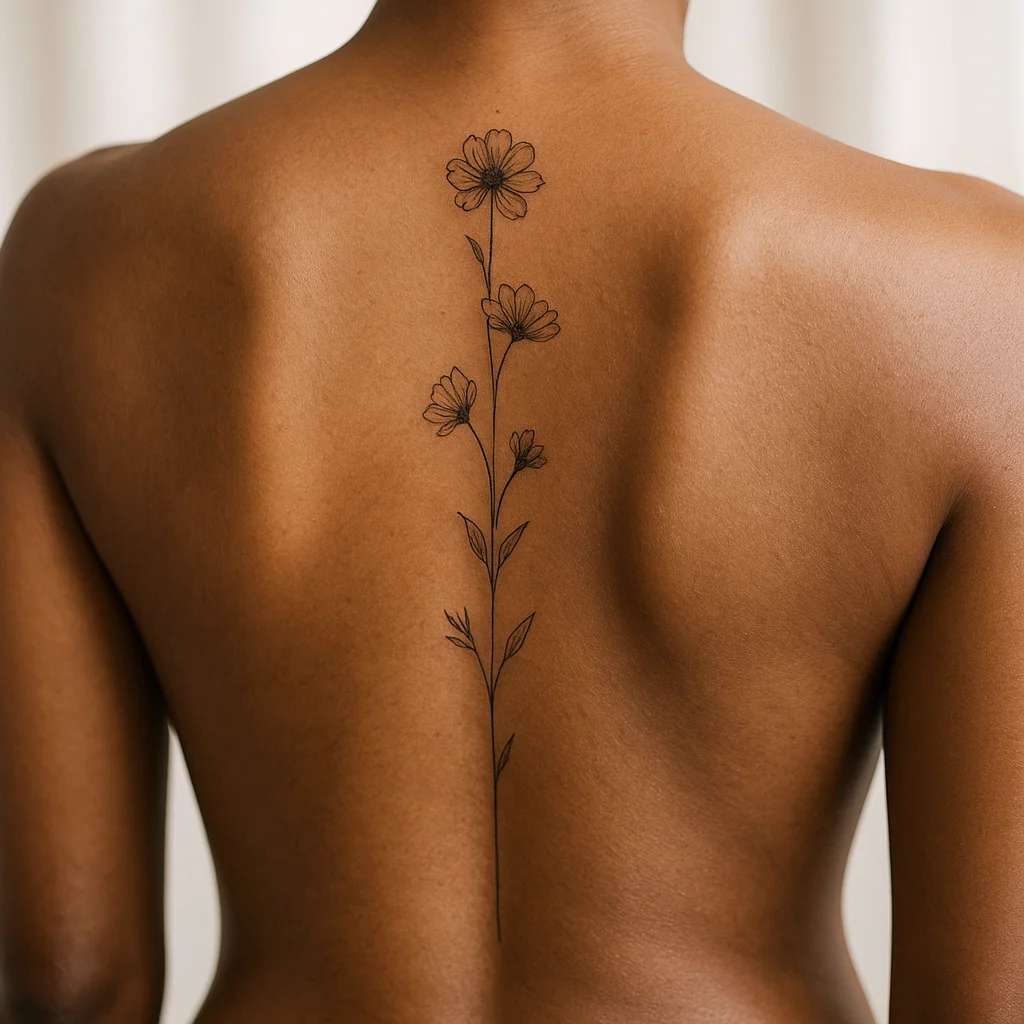
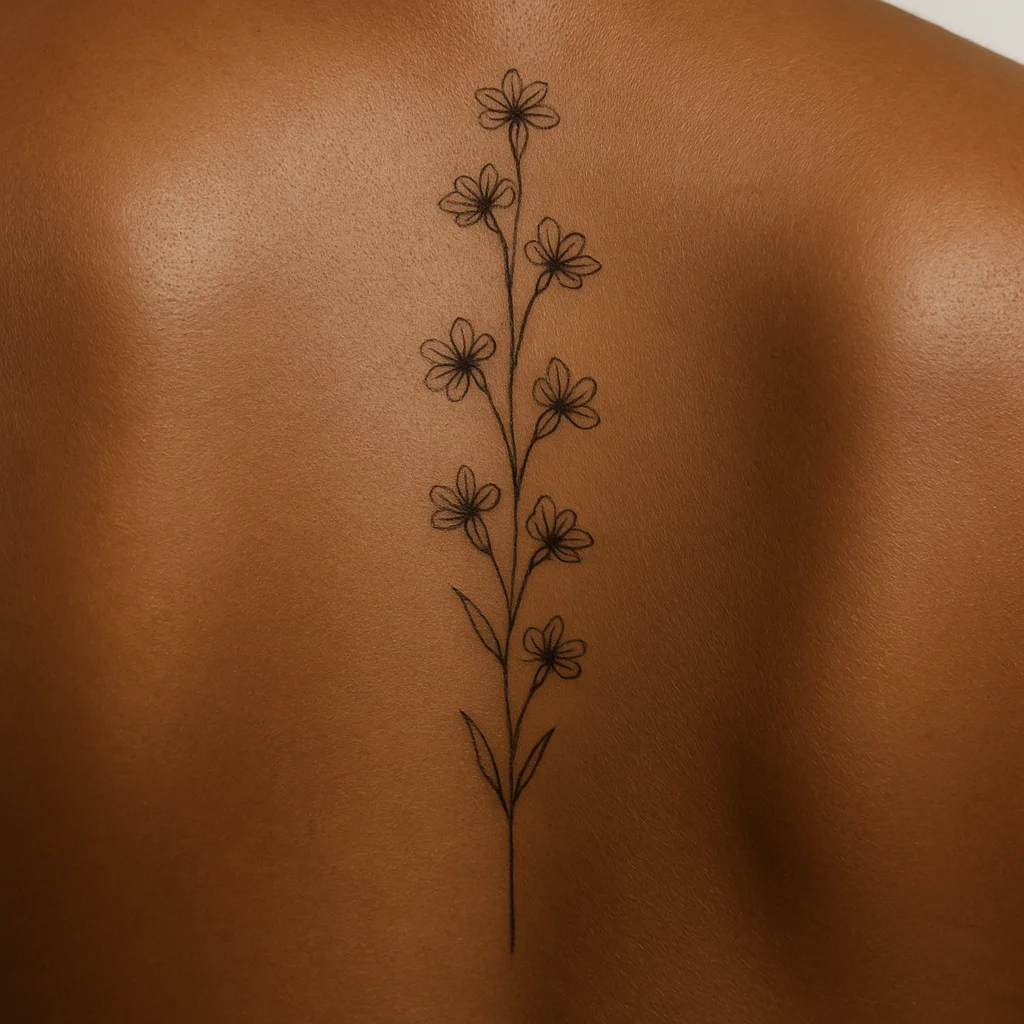
- Length discipline. A design that runs from the nape to the lumbar dimples is a long sitting. Many people are happier starting with a section — say a single fine-line wildflower stem from the nape to mid-back — and extending it later.
Ageing is generally kind to this placement. It is rarely sun-exposed, rarely rubbed by clothing seams, and the skin does not crease the way an inner elbow does. The main variable is skin stretch across the lower back, which can shift over pregnancy or significant weight change; simple, spaced motifs handle that far better than dense detail.
Botanical Spines: Stems, Branches and Sprigs
Plants are the natural fit here because so many of them already grow along a central stalk. The vertebrae give you a rhythm to hang leaves and blooms from, and negative space between them keeps the whole thing from looking heavy.
1. Fine-line wildflower stem, nape to mid-back
One slim stem with five or six small blooms — cosmos, chamomile, forget-me-not — spaced so each flower sits between vertebrae. Usually 15 to 25 cm long. It is the safest first spine tattoo: readable, quick to heal, and easy to extend downward in a second session.
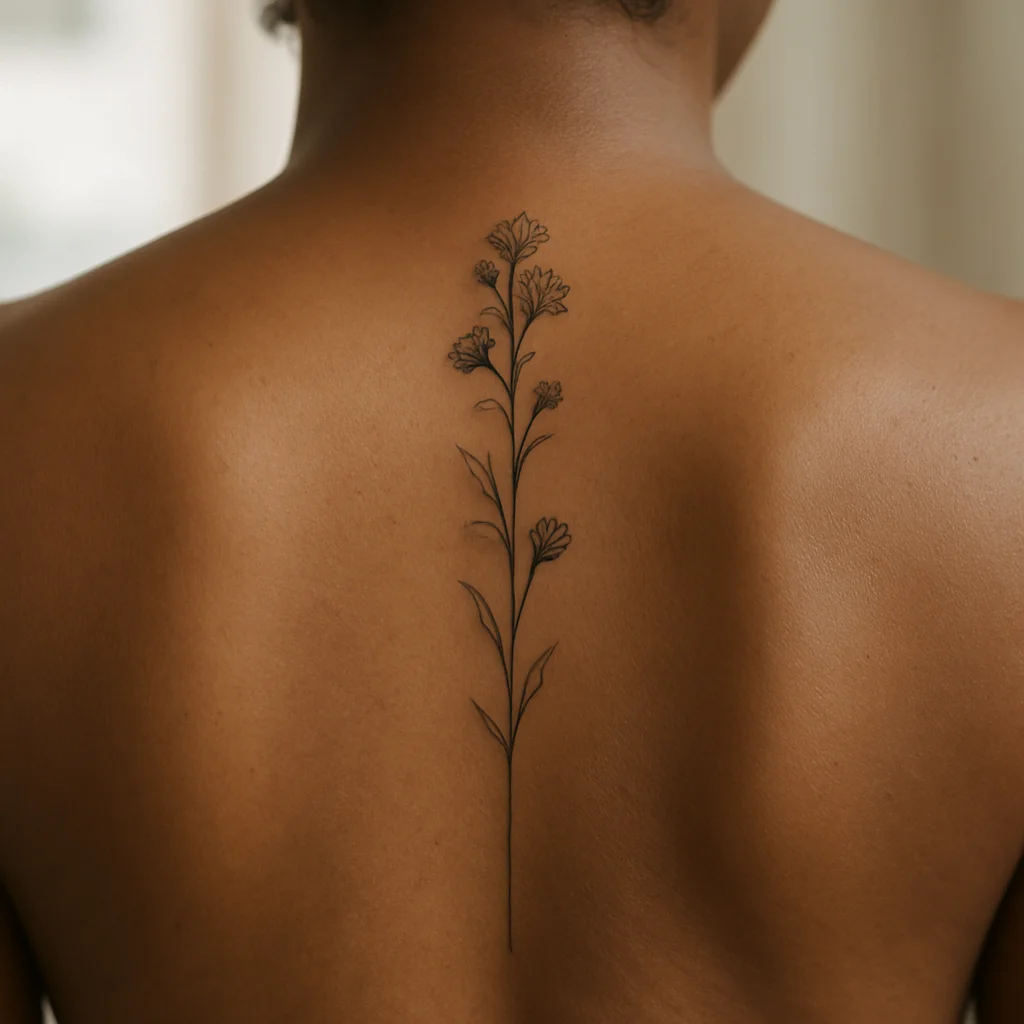
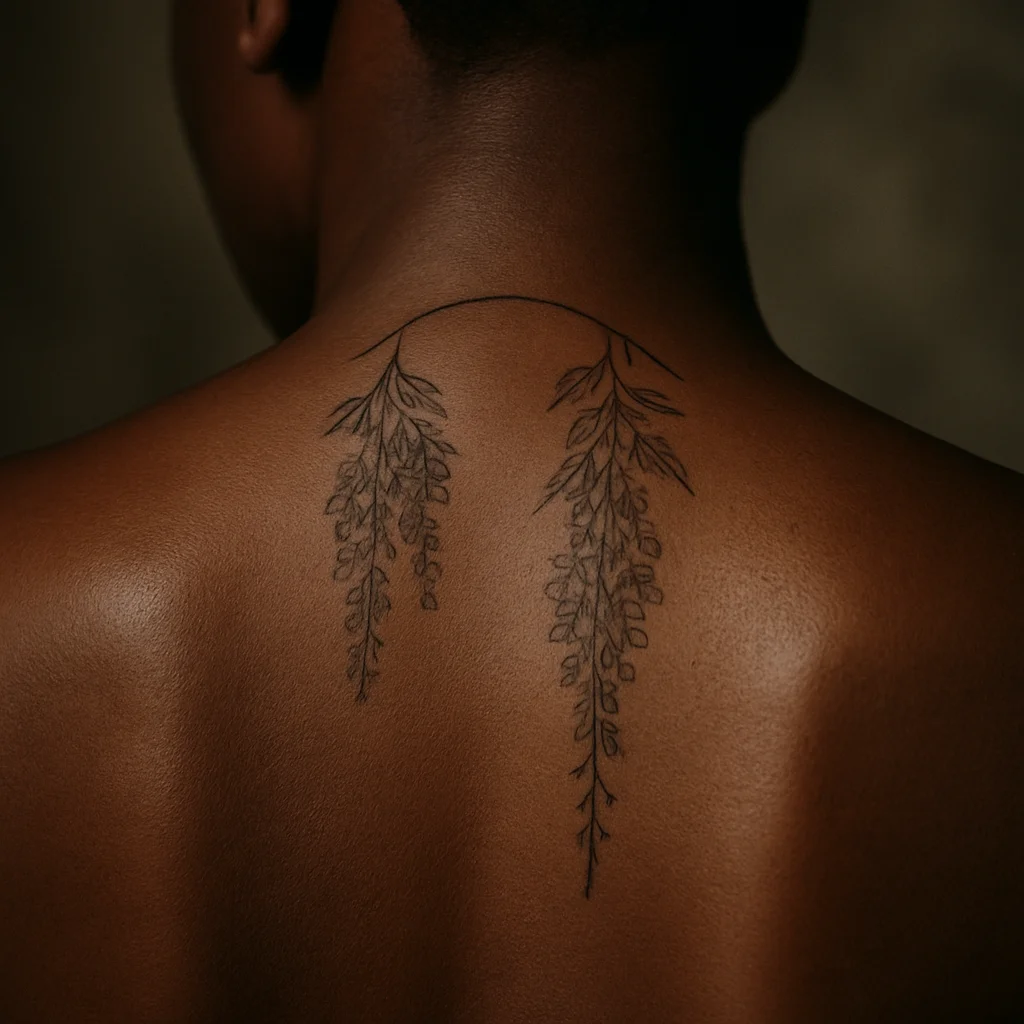
2. Trailing wisteria
Hanging clusters that fall from a thin arched line at the nape, tapering as they descend. The downward drape flatters a long back and looks intentional whether you are standing or seated. Ask for varied cluster sizes; identical repeats look like wallpaper.
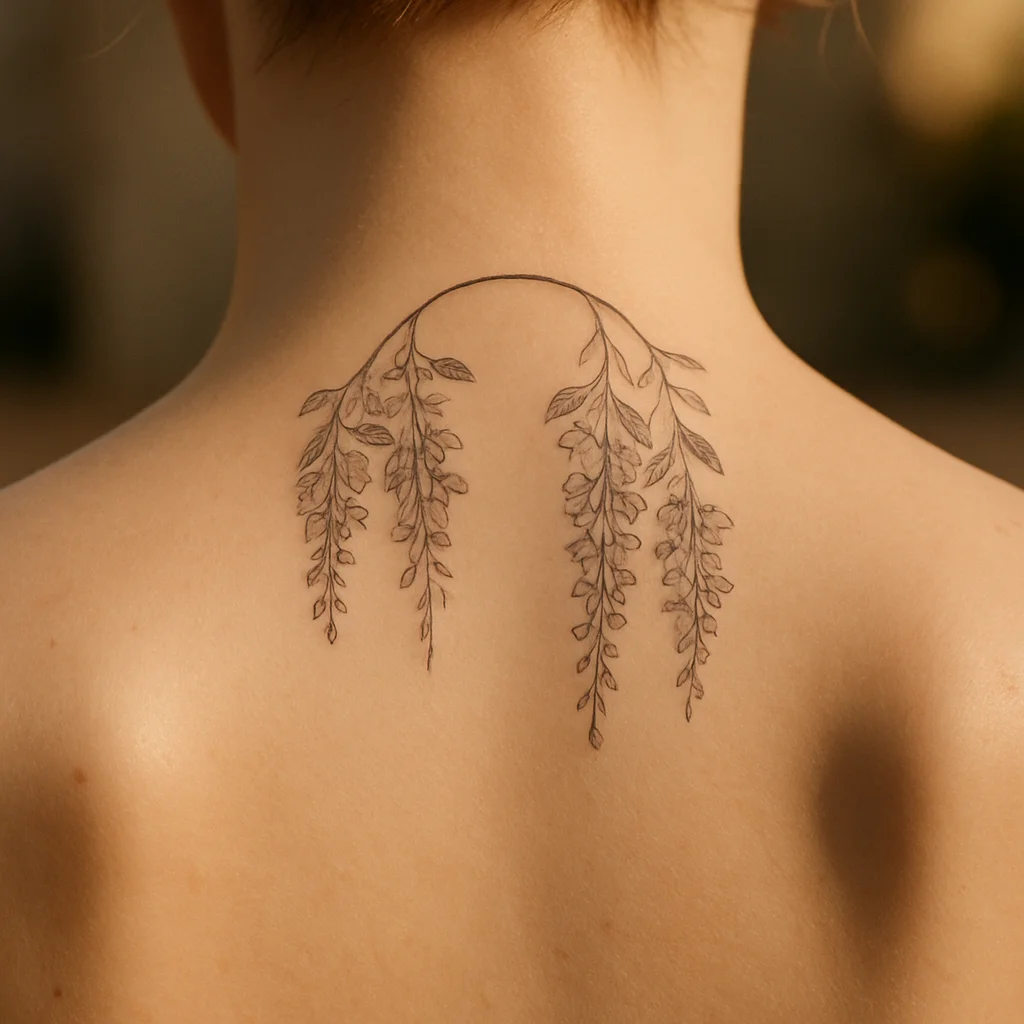
3. Fern frond mirroring the vertebrae
A single fern with pinnae stepping out in pairs, one pair per vertebra. Extremely satisfying anatomically and forgiving in ageing because the shapes are simple. Suits anyone who wants something botanical but not floral.
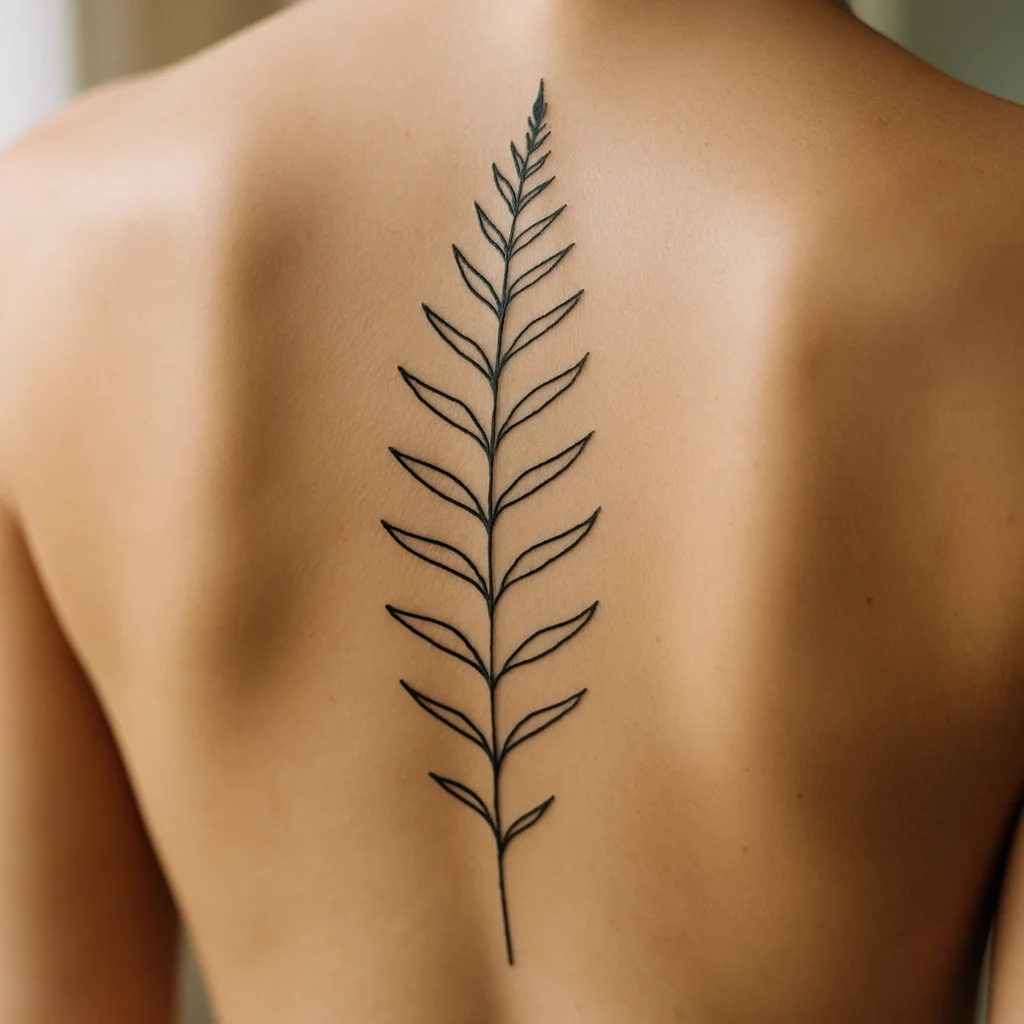
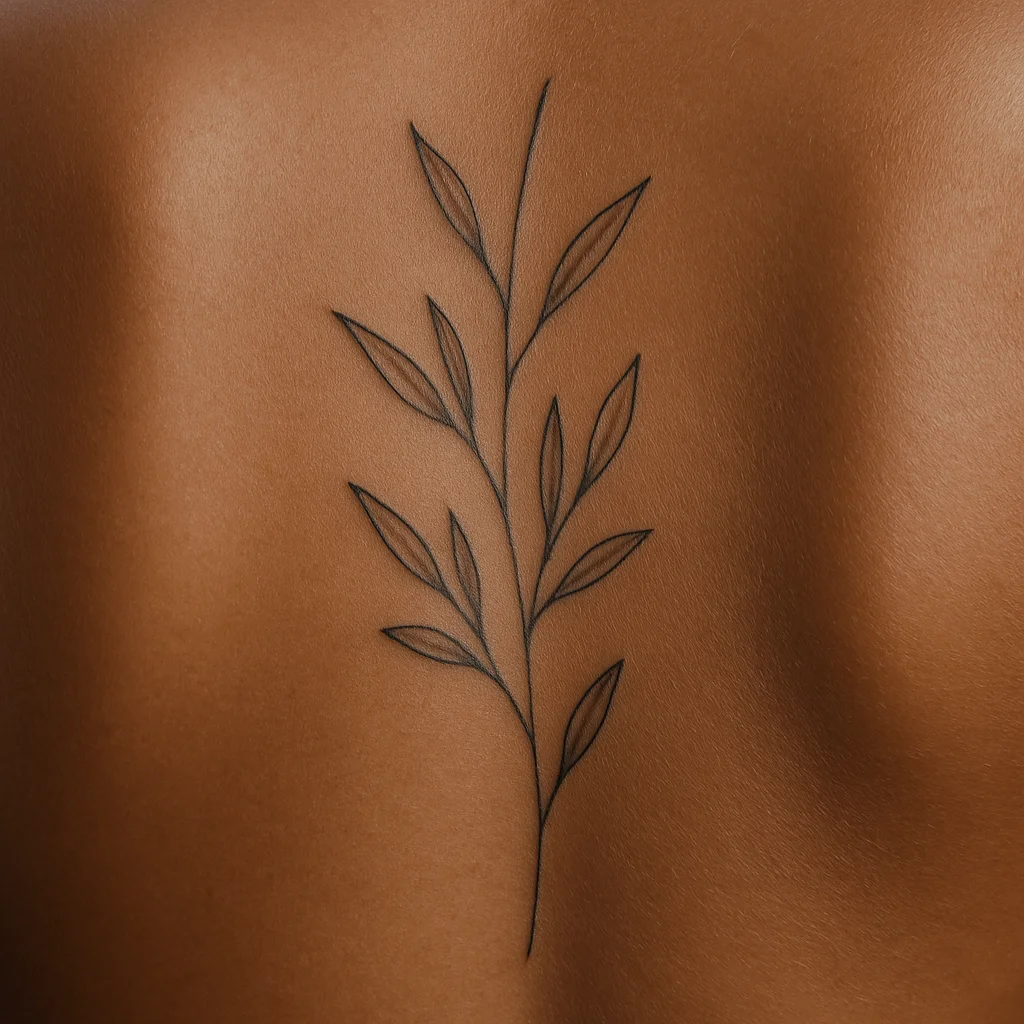
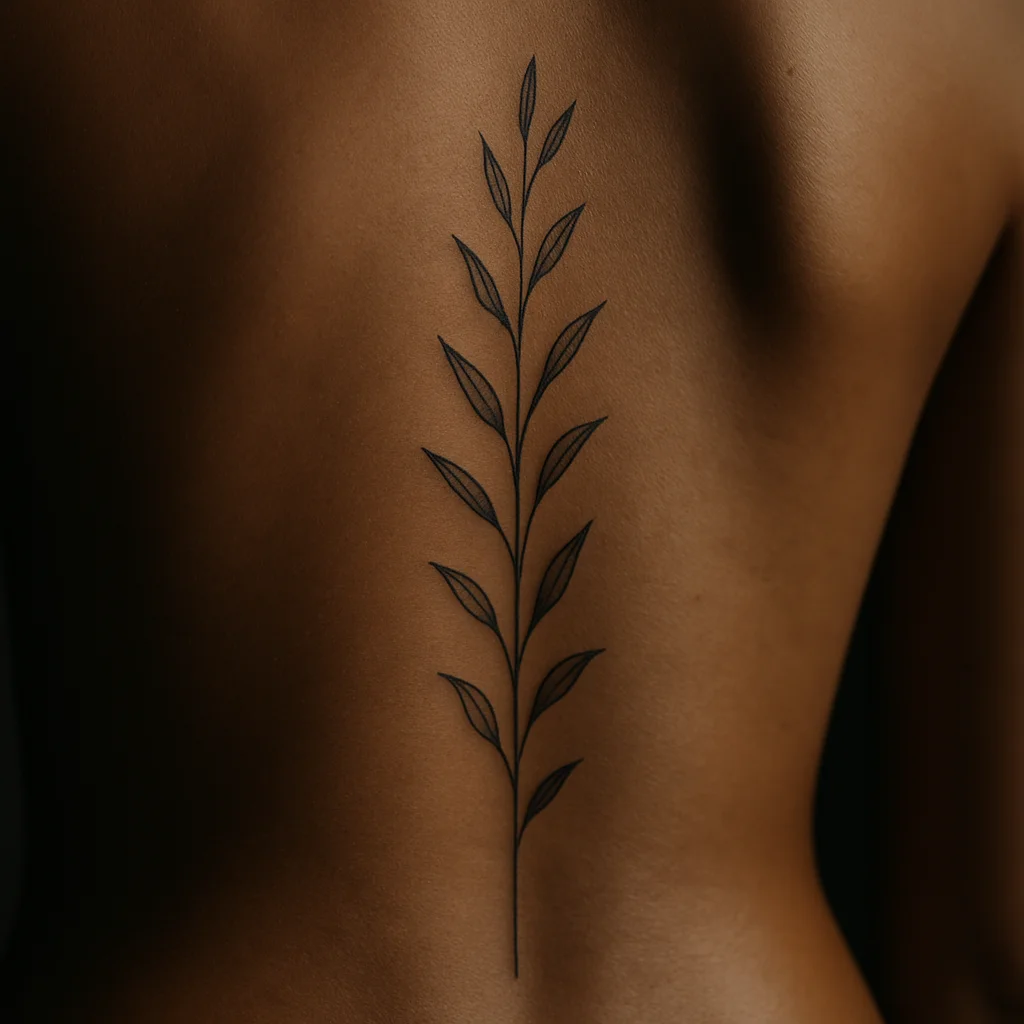
4. Sparse olive branch
Two thin branches crossing near the top, leaves left unshaded with a small gap of skin at each stem join. Reads calm and classical at 20 cm. Great for readers who want meaning without symbolism that needs explaining.
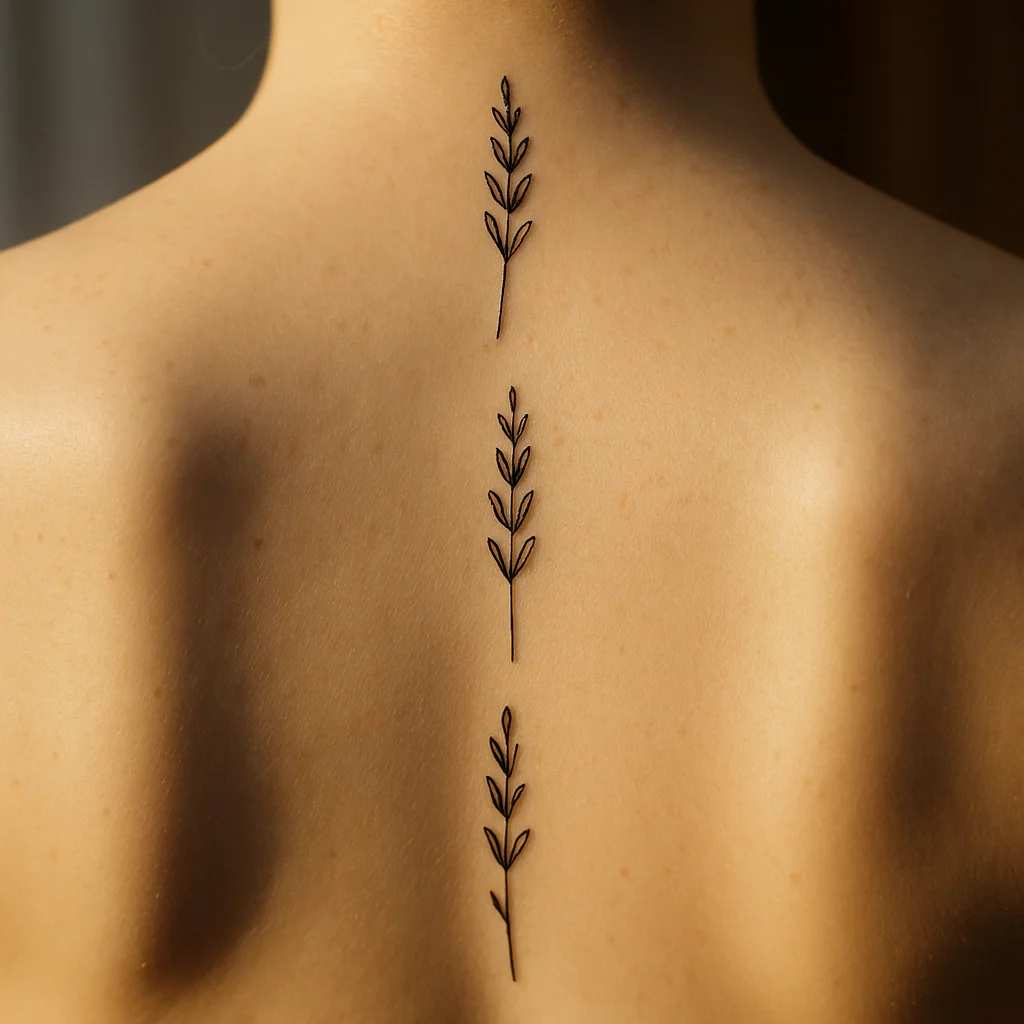
5. Three lavender sprigs, spaced
Not one long design — three separate small sprigs, one at the base of the neck, one mid-back, one at the lumbar curve. The gaps do the work, and each piece takes twenty minutes. Ideal if you want the spine line implied rather than filled.
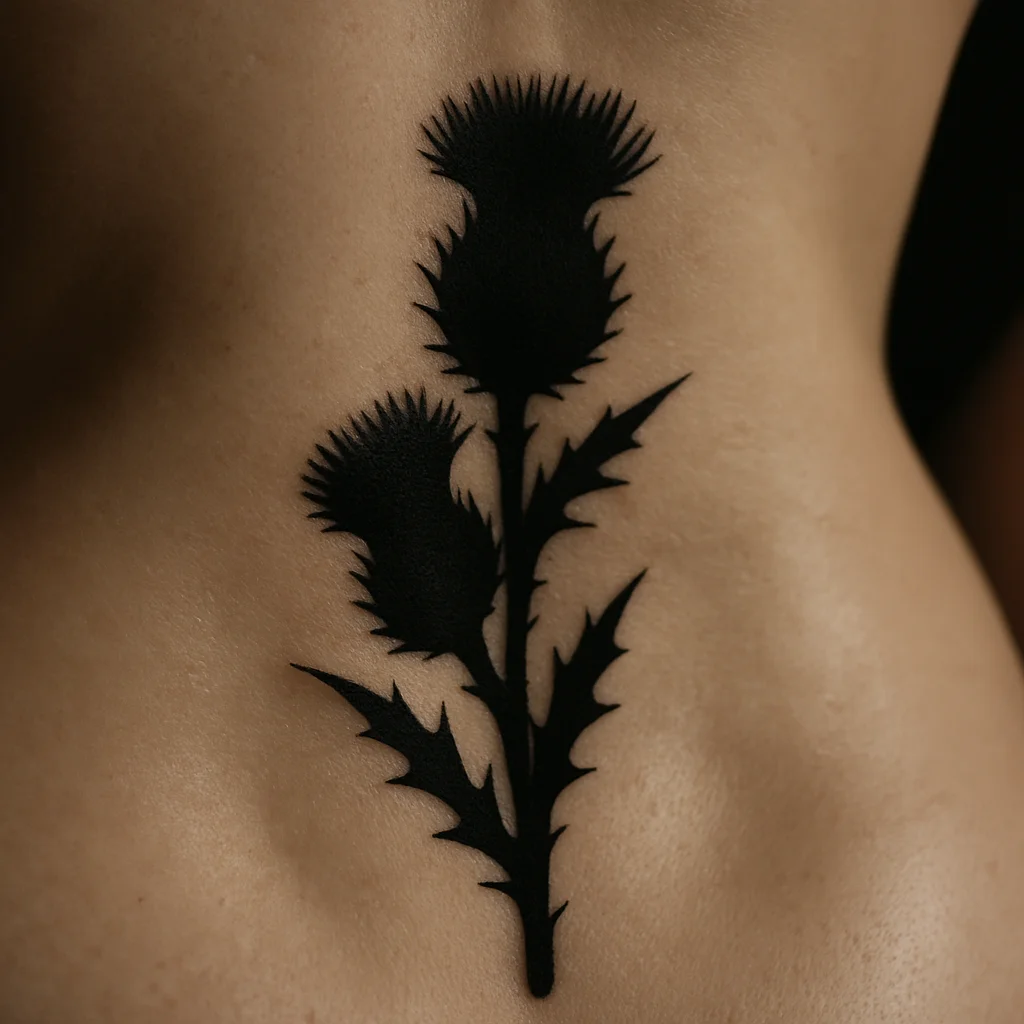
6. Blackwork thistle climbing from the sacrum
A bolder option: solid black thistle heads at the low back with a spiked stem rising toward the waist. The heavier weight suits people who dislike delicate work and want something that will still read strongly in fifteen years.
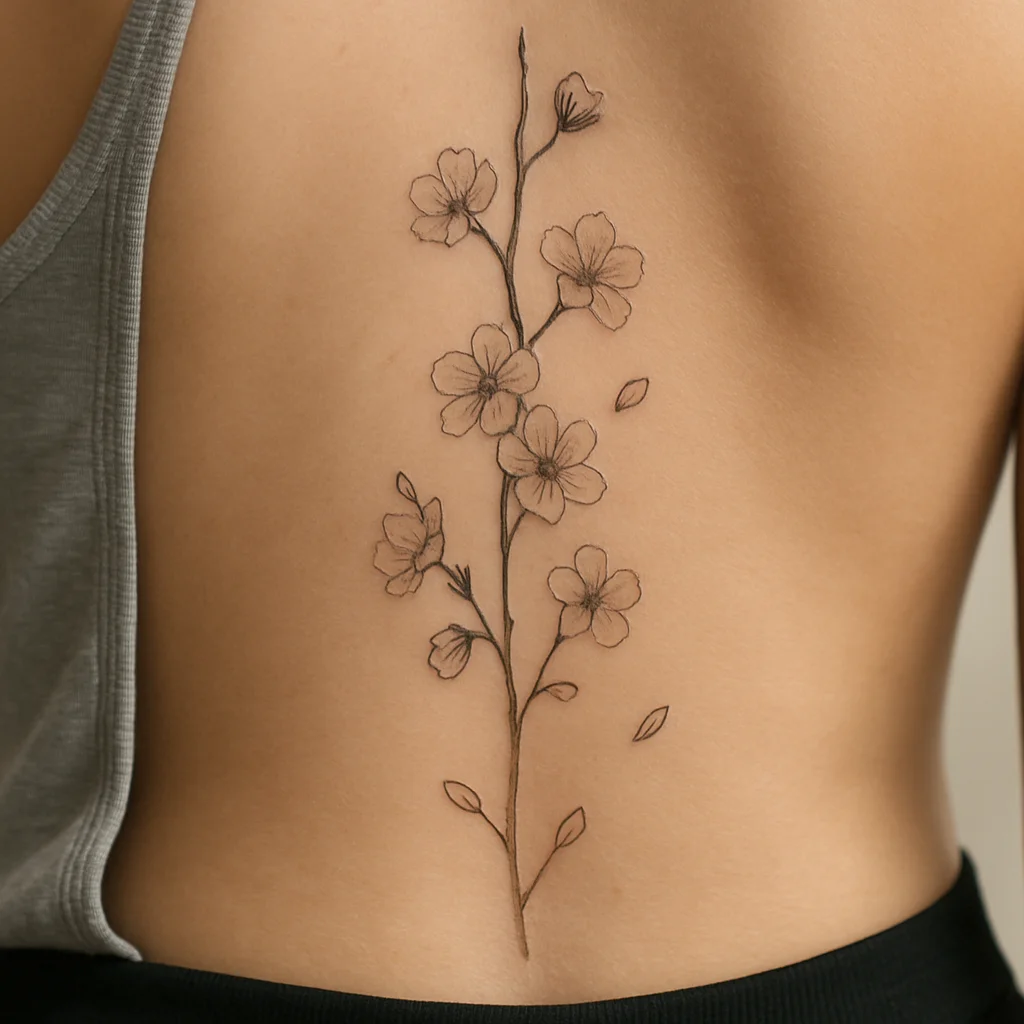
7. Off-centre cherry blossom branch
Instead of dead-centre, the branch runs parallel a couple of centimetres to one side of the spine, with a few petals drifting across the midline. It breaks the symmetry deliberately, which reads more like an illustration than a decoration.
Script Down the Centre Line
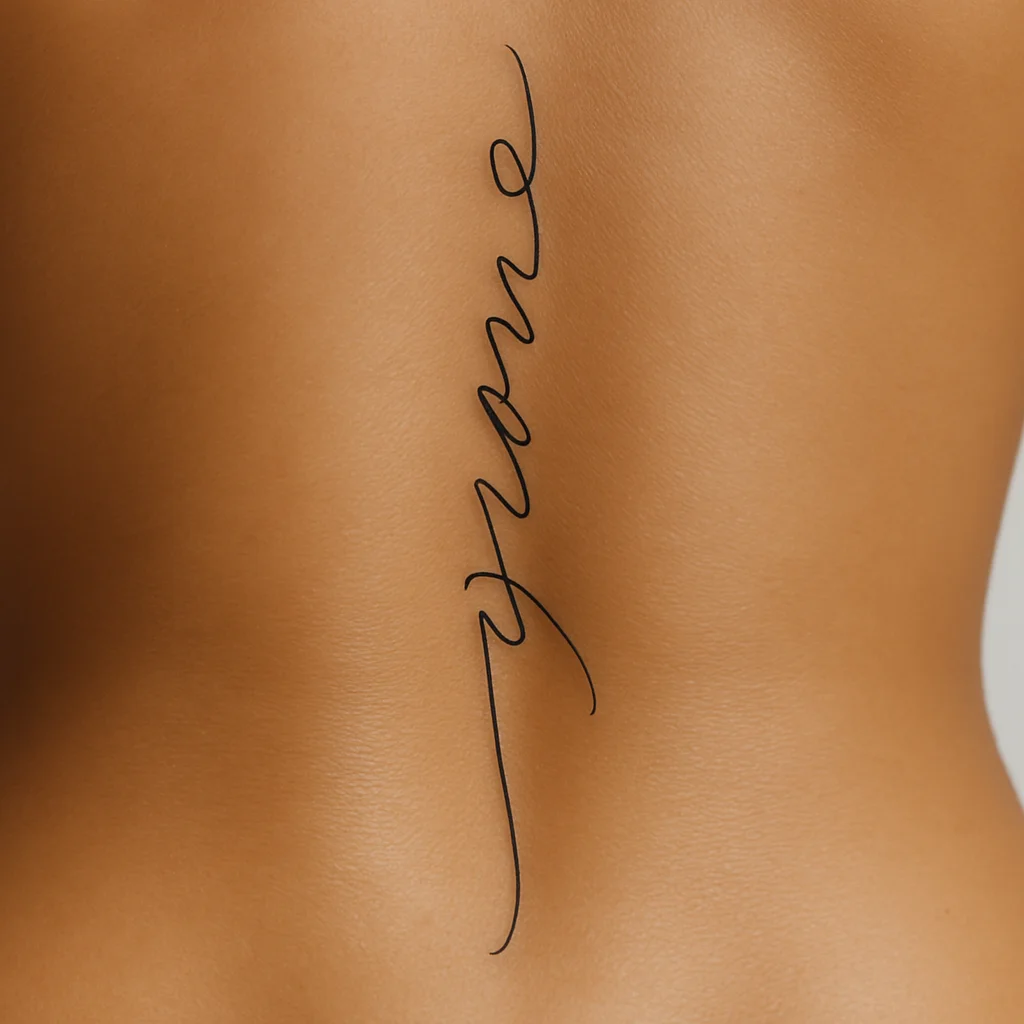
Vertical lettering is the most requested spine tattoo and the easiest to get wrong. Long sentences in thin script turn into a smudge over a decade, and letters set too tightly close up as they heal. Keep the line count low, the letters generous, and the spacing wider than feels necessary on paper.
8. One word in flowing cursive
A single word — a name, a value, a language you grew up with — running down the lumbar spine at around 10 to 14 cm. Because it is short, the artist can give each letter real size and weight. This is the version that ages best.
9. A full sentence in thin serif
One line of text, letters stacked upright rather than rotated, reading top to bottom. Choose a serif with actual contrast so the letterforms survive; a monoline sans at tiny scale blurs. Expect 25 to 35 cm and a genuinely long sitting over the bony middle back.
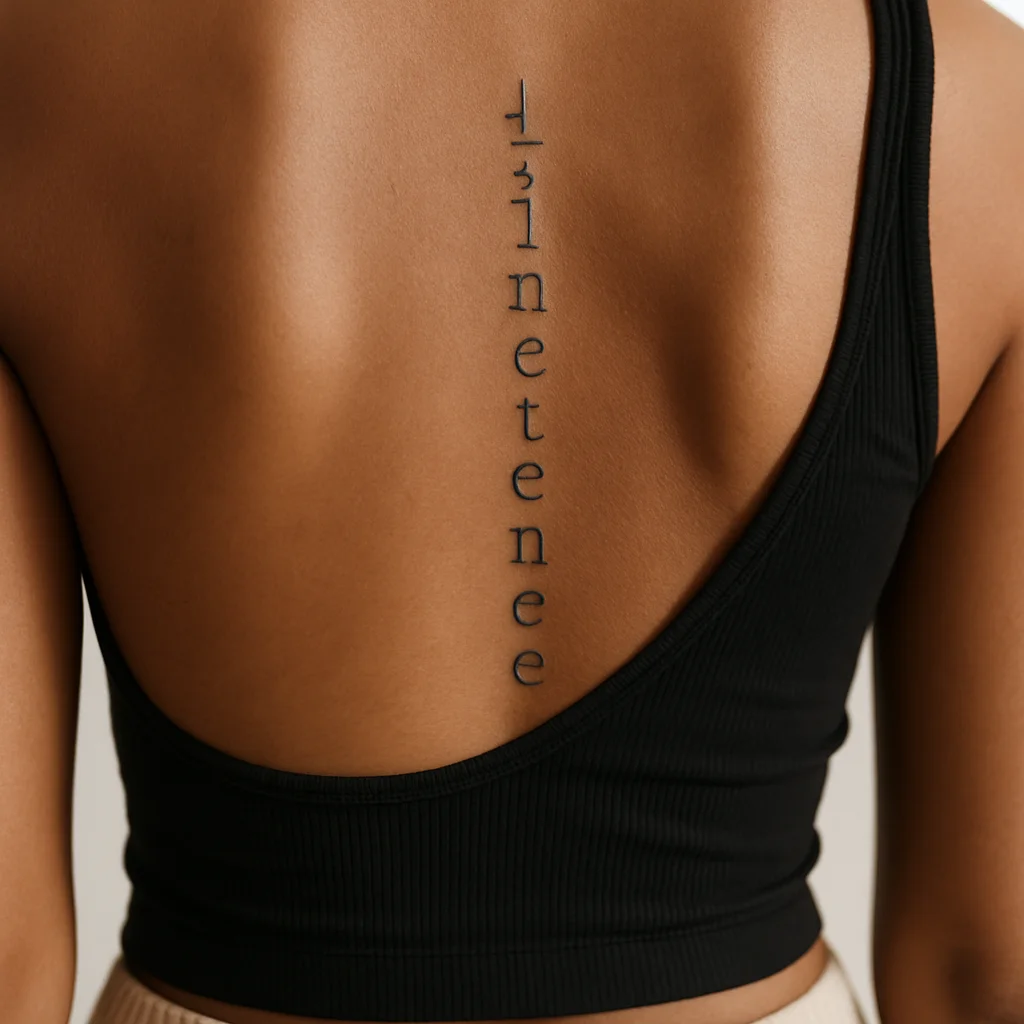
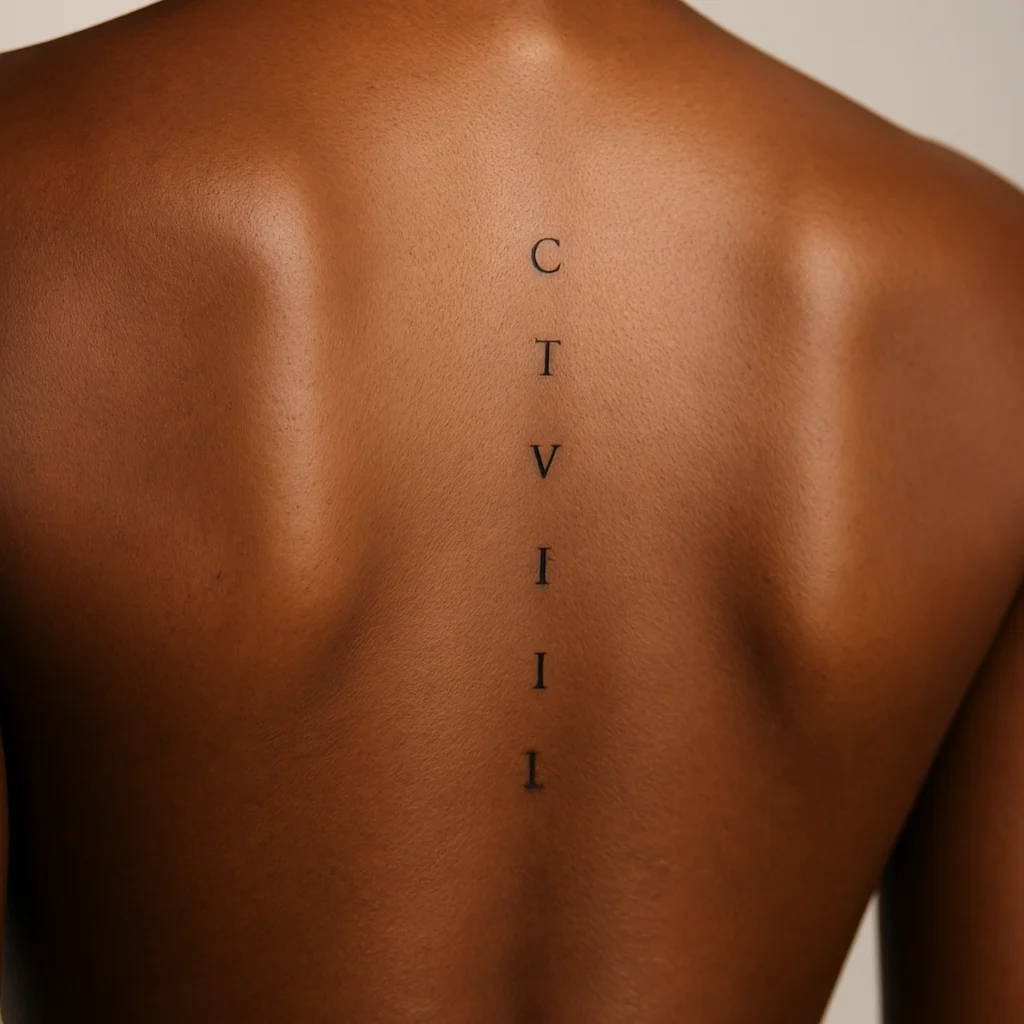
10. Stacked small caps
A short Latin or English phrase set in small capitals, one letter per line, evenly spaced from C7 down. Architectural, unfussy, and immune to the script-illegibility problem. Very flattering on a straight, long back.
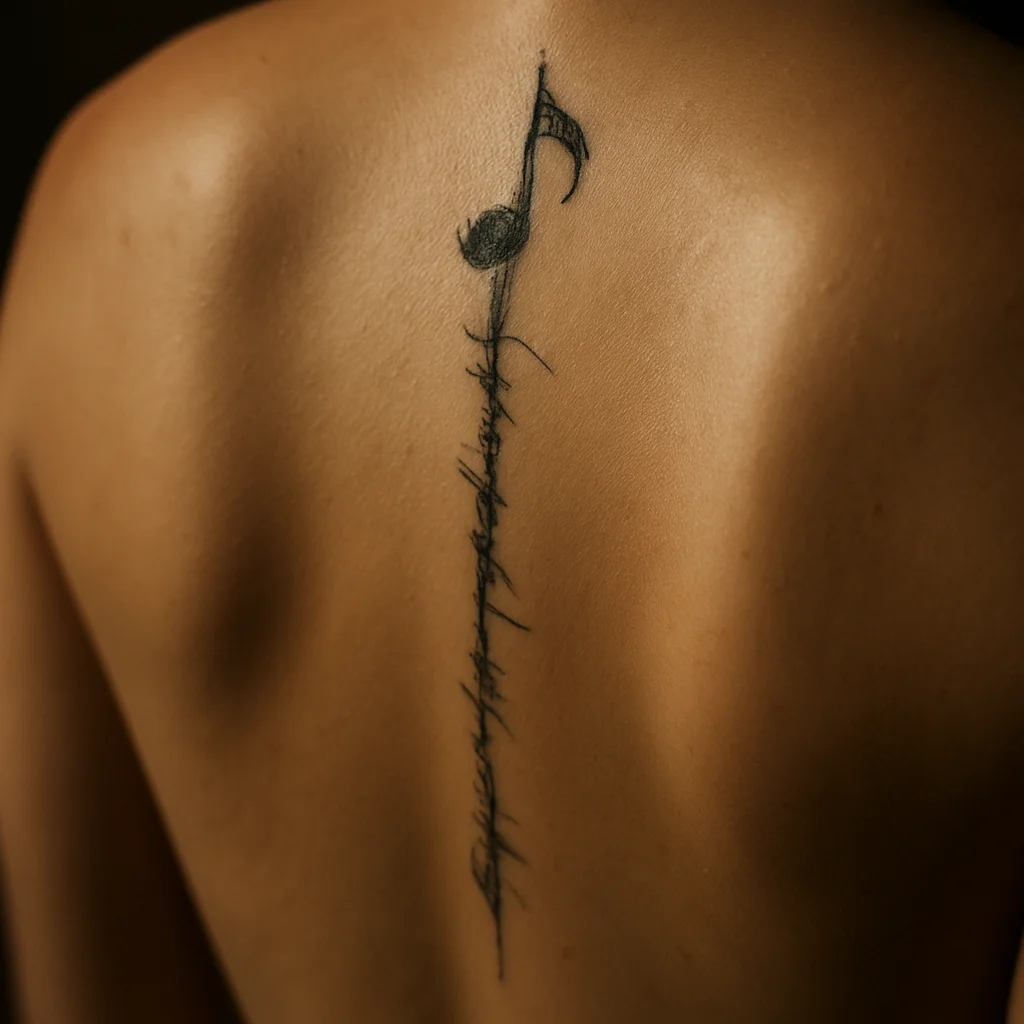
11. Lyric with a single notation mark
A half-line of a lyric, with one small musical mark — a rest, a fermata — set at the top as an anchor. The graphic element stops it from looking purely like text and gives the artist something to balance the composition around.
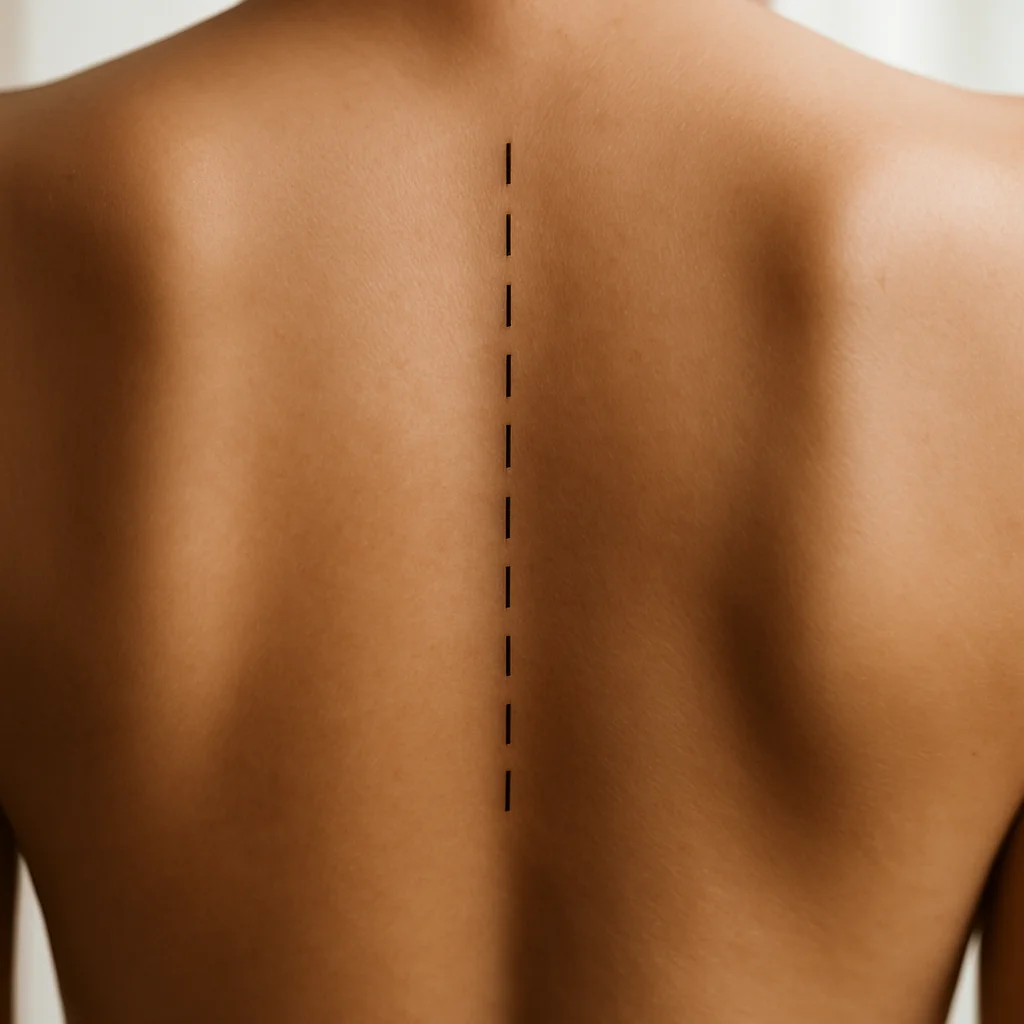
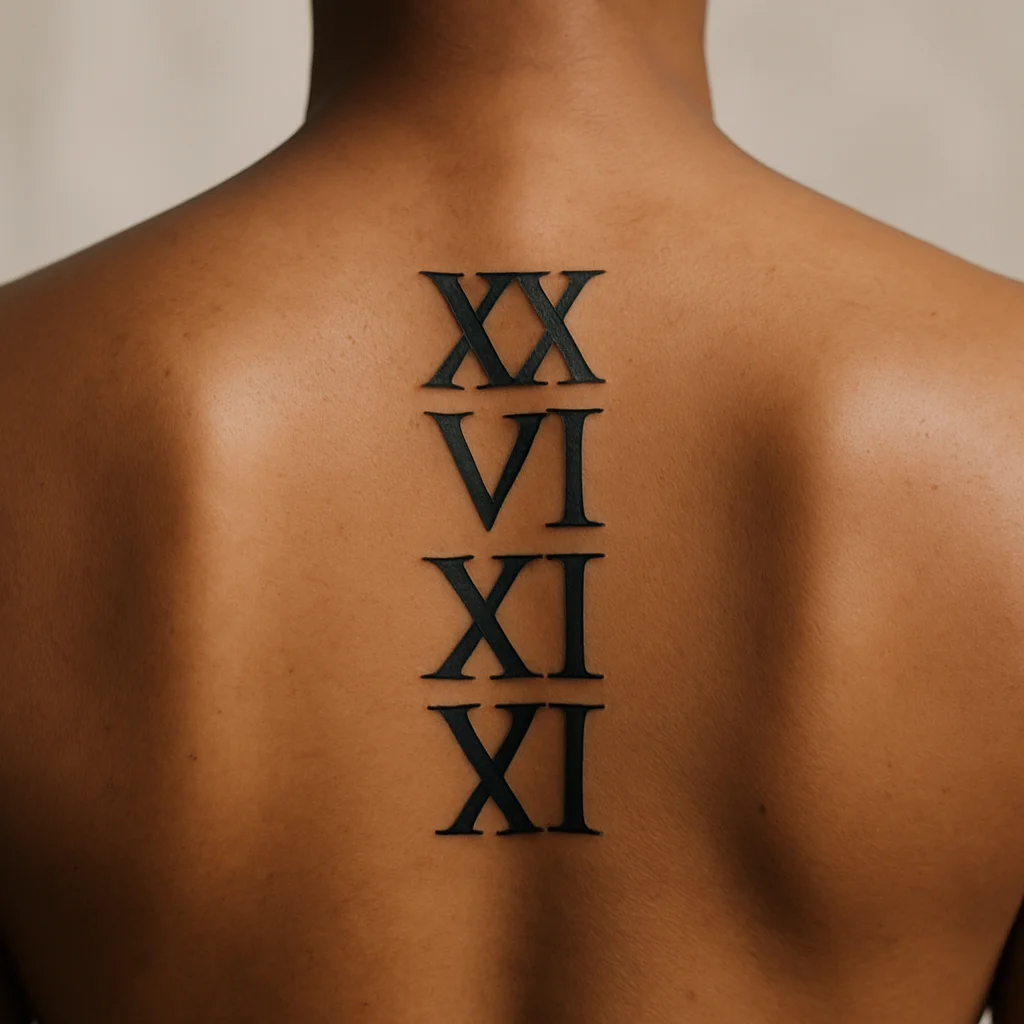
12. Roman numerals or coordinates, stacked
A date in Roman numerals or a set of coordinates split across stacked rows at the mid-back. Numerals hold up beautifully because they are geometric. Keep the digits at least 8 mm tall so the strokes never merge.
13. Two words, split top and bottom
One word at the nape, its pair at the lumbar dimples, bare skin between them. It turns the whole spine into part of the design without covering it, and it is two short appointments instead of one marathon.
Celestial, Geometric and Dotwork Columns
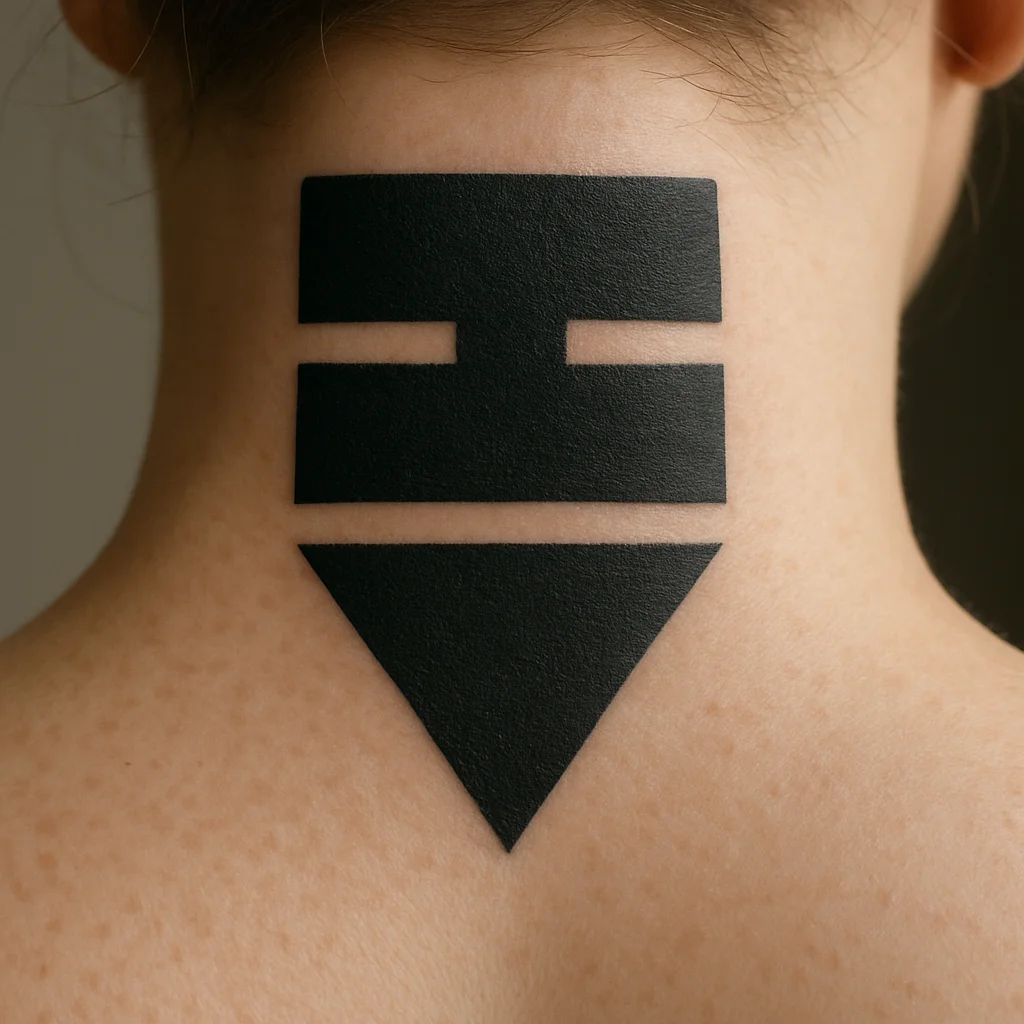
The spine is a ready-made axis, which is why anything ordered — phases, constellations, repeating shapes — sits so comfortably along it. Dotwork in particular loves this placement, because stippling reads softly over bone where solid black can look harsh.
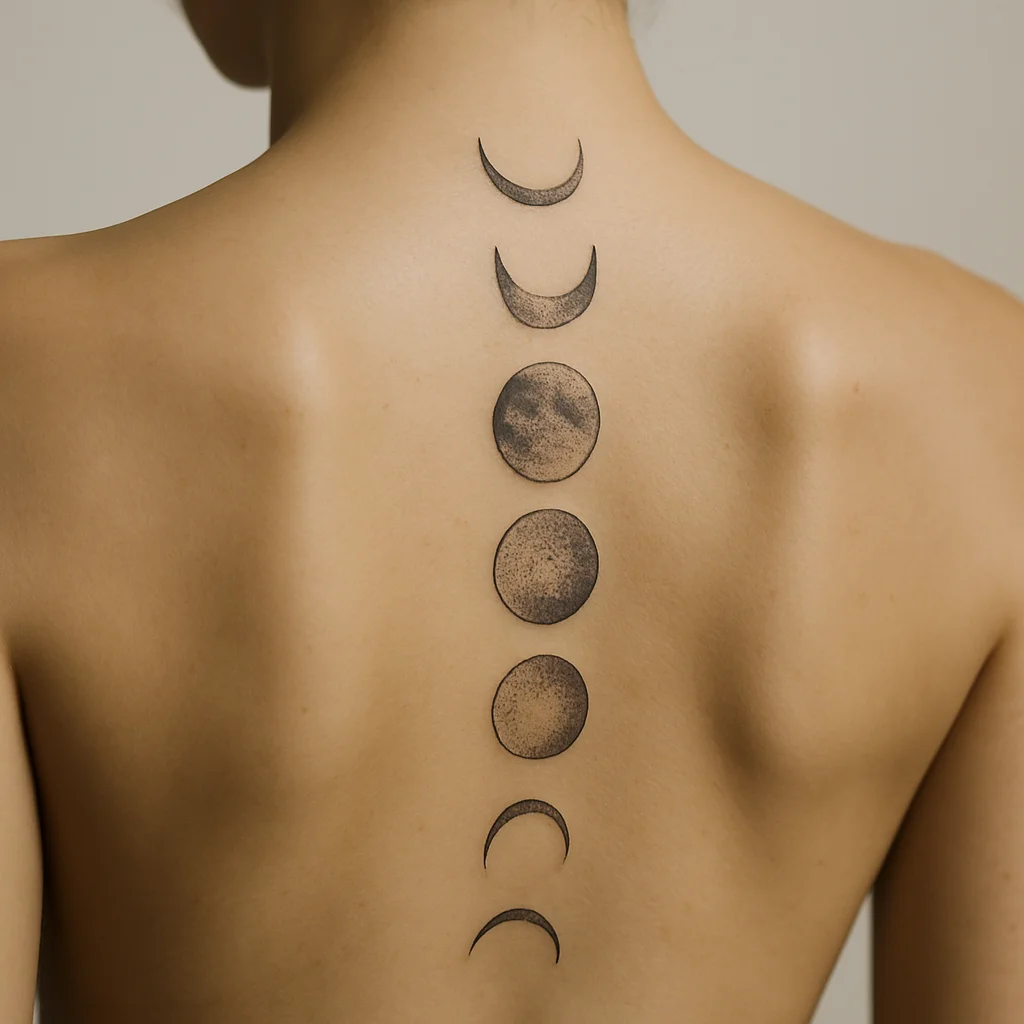
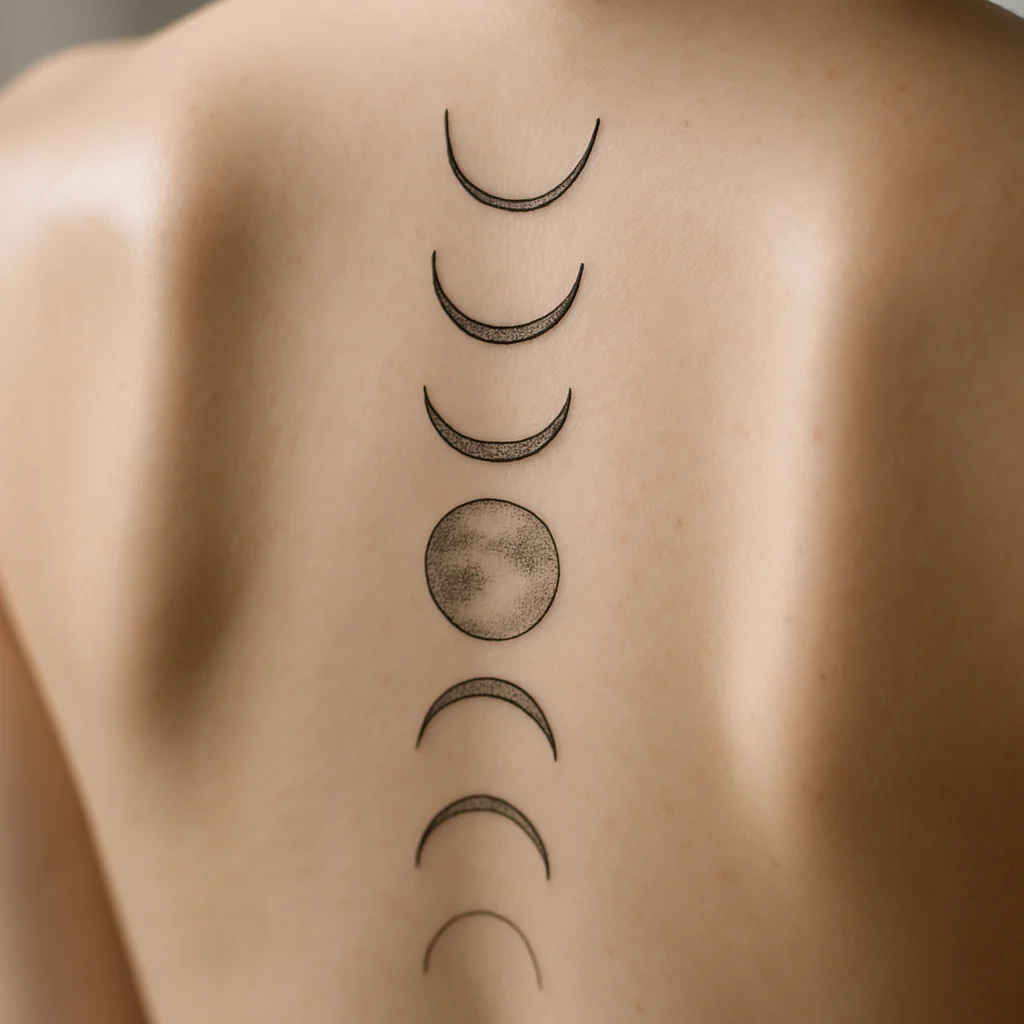
14. Descending moon phases
Waxing to waning, five to eight moons from nape to mid-back, each about the width of your thumb. Keep the crescents fine-lined and the full moon lightly stippled rather than solid, so the column does not turn top-heavy.
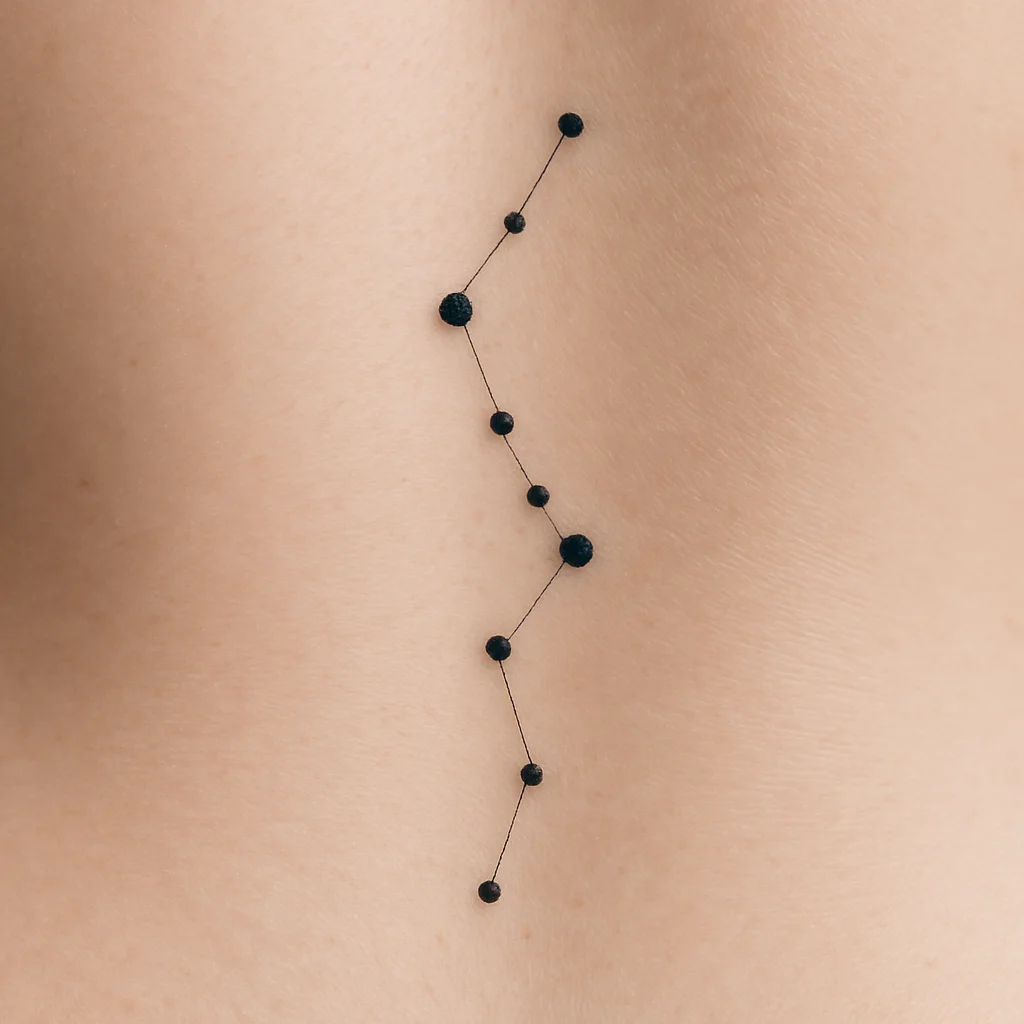
15. Dotwork constellation with a connecting thread
Your chosen star pattern rendered as varied dot sizes, linked by the faintest line, running the length of the thoracic spine. Ask for at least three dot weights — uniform dots flatten the whole thing.
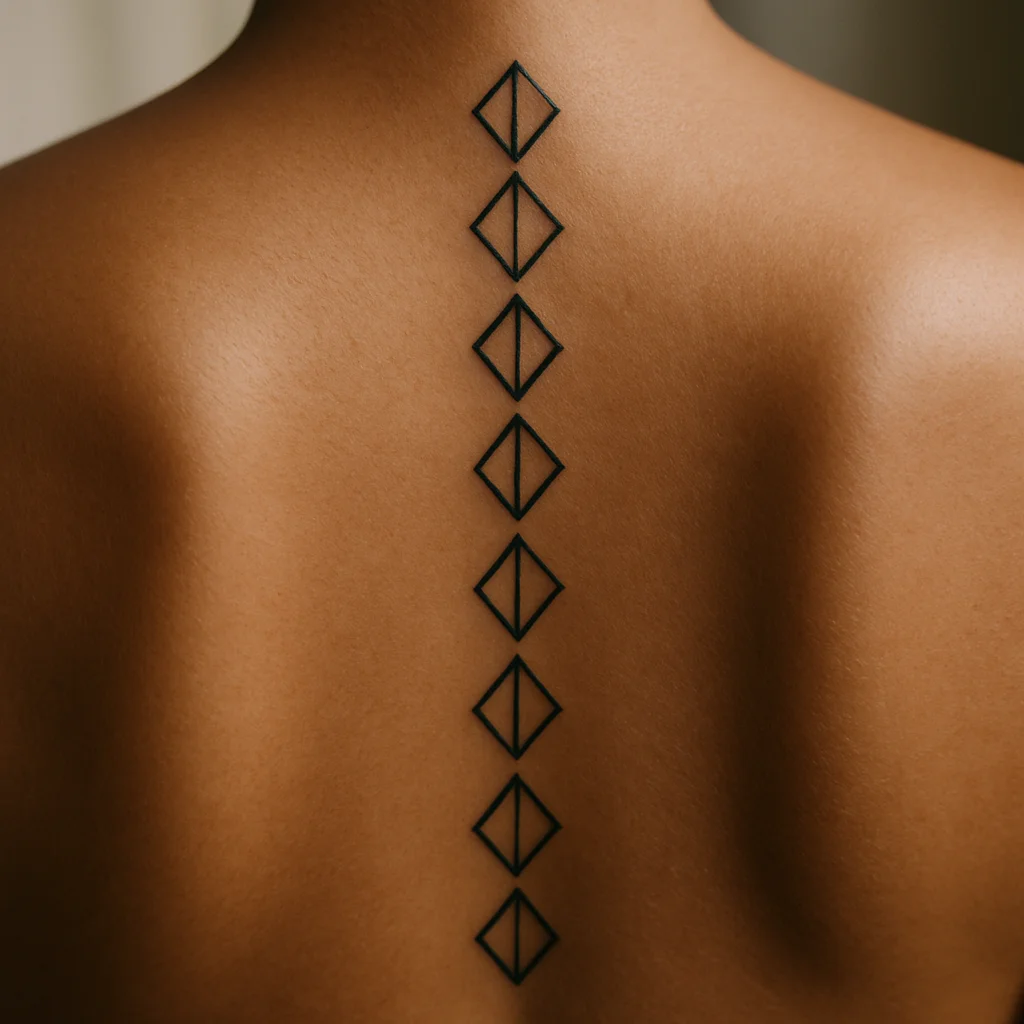
16. Chain of geometric diamonds
Small open rhombuses stacked point to point, one per vertebra, from C7 to the waist. Almost tribal in its simplicity and unbelievably clean on a bare back. Works on any body type because it follows the bone exactly.
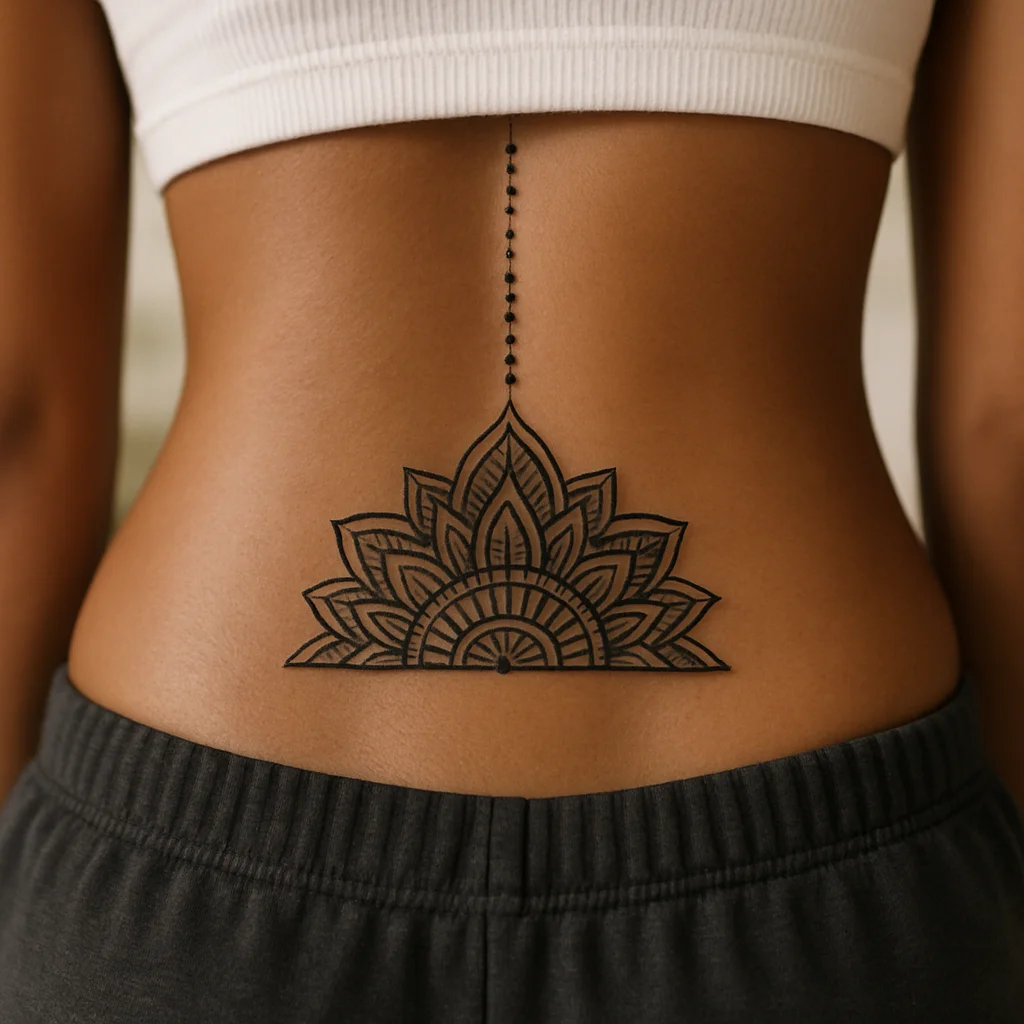
17. Sacrum mandala with a beaded line rising
A half-mandala centred on the sacrum, with a thin beaded line climbing the lower spine out of its crown. The mandala anchors the design low, where the skin is softer and the detail heals more evenly.
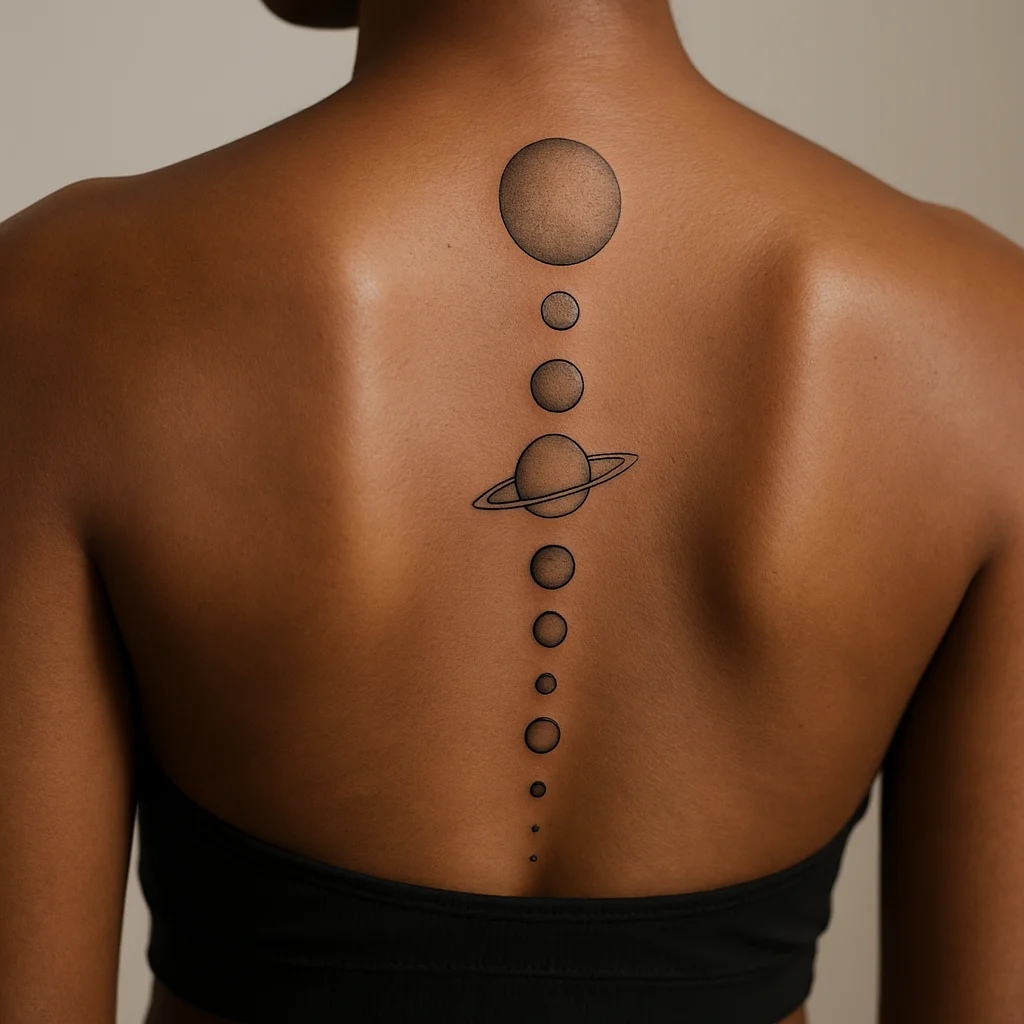
18. Planets in scale
The solar system, largest at the top, shrinking downward — or reversed, which reads more dramatically. Give the ringed planet enough size to be recognisable, roughly 3 cm, or skip it.
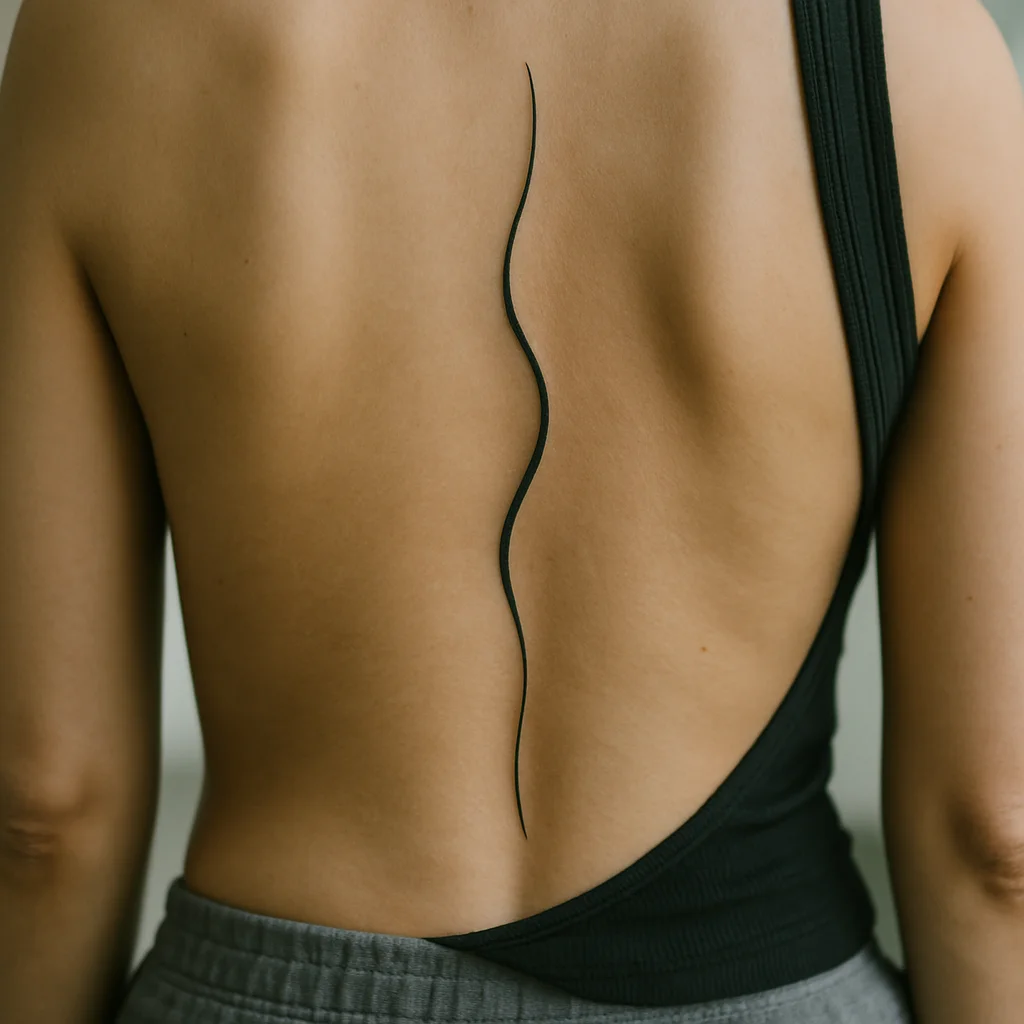
19. One unbroken line that swells and tapers
A single continuous stroke that thickens through the mid-back and narrows at both ends, drawn freehand to your own curve. Abstract, modern, and shockingly effective at 30 cm. Best done freehand rather than from a stencil.
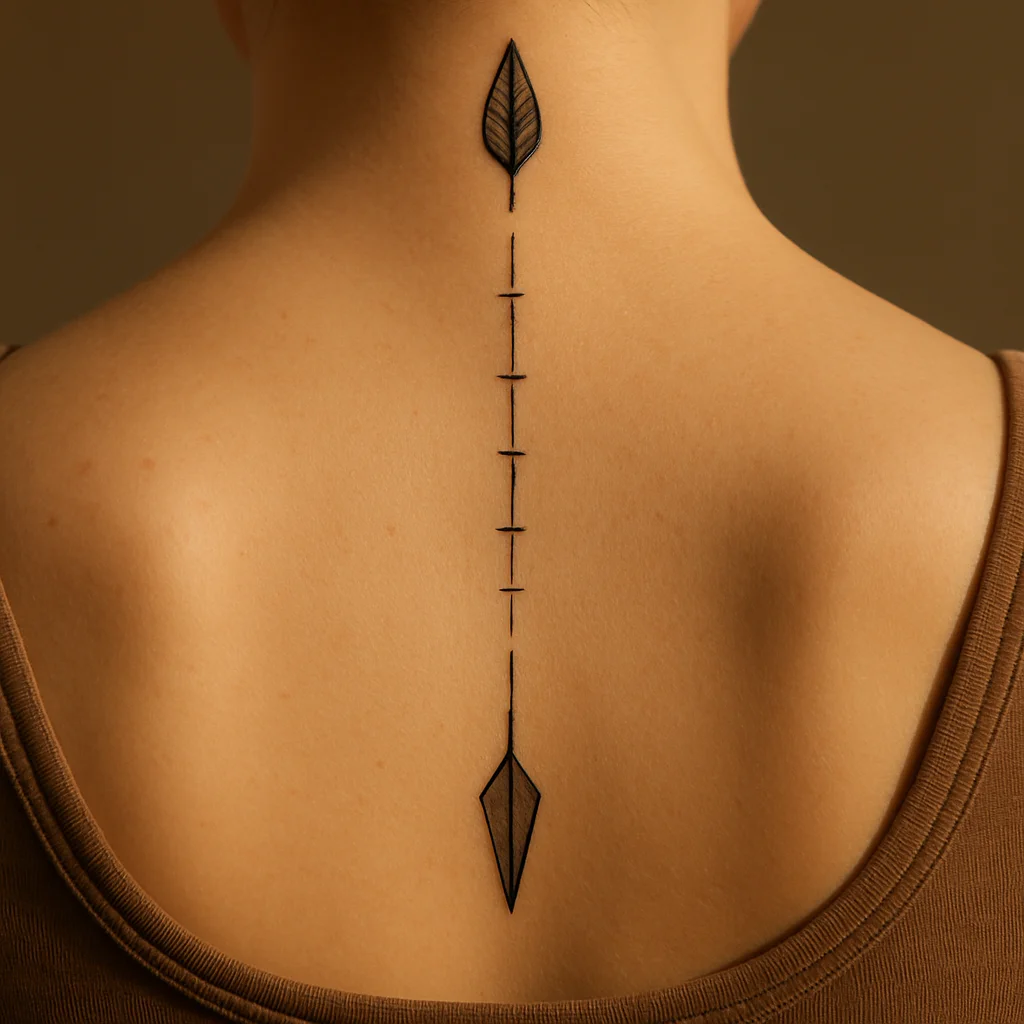
20. Arrow spine with fletching
A long shaft down the centre with the fletching at the nape and the point aimed at the sacrum, the shaft interrupted by small gaps at each vertebra. Simple to execute, striking on tank-top days.
Bolder Work: Ornamental and Blackwork Spines
If you want a spine tattoo that carries across a room rather than whispering from close range, weight is your friend. Blackwork and ornamental pieces also solve the long-term legibility question outright: there is simply more ink holding the shape together.
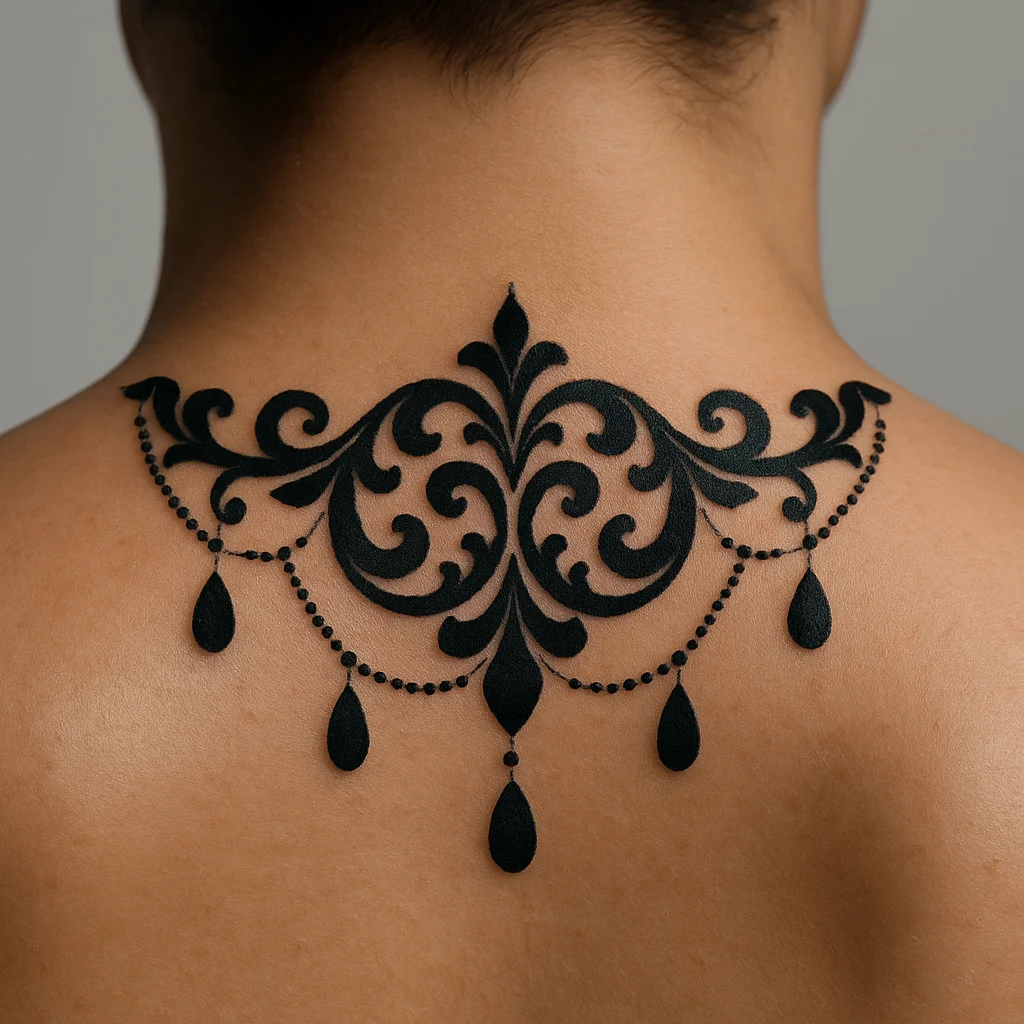
21. Ornamental jewellery drape
Filigree strands with teardrop pendants hanging from a fine chain at the nape, widening across the upper back before narrowing again. Deliberately looks like worn jewellery. Plan for multiple sessions — ornamental detail is slow work.
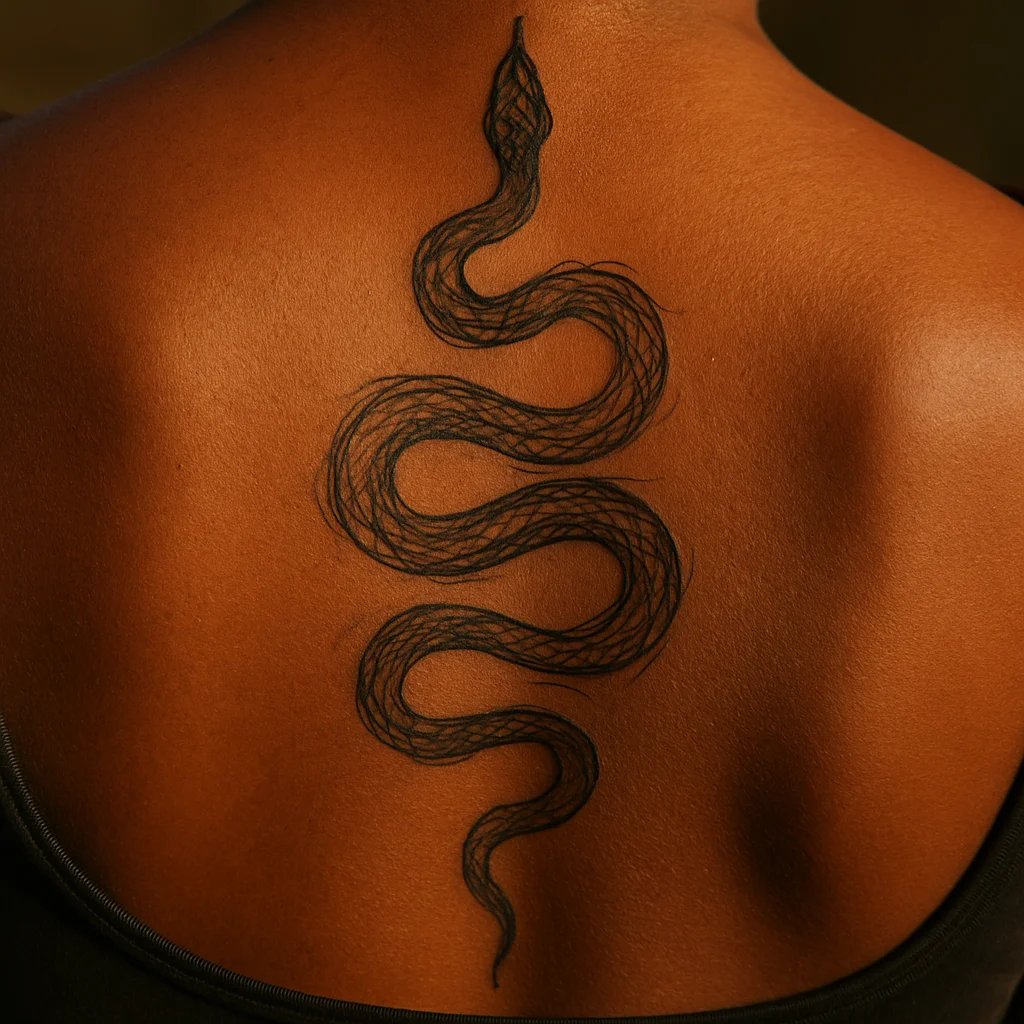
22. Serpent following the spine
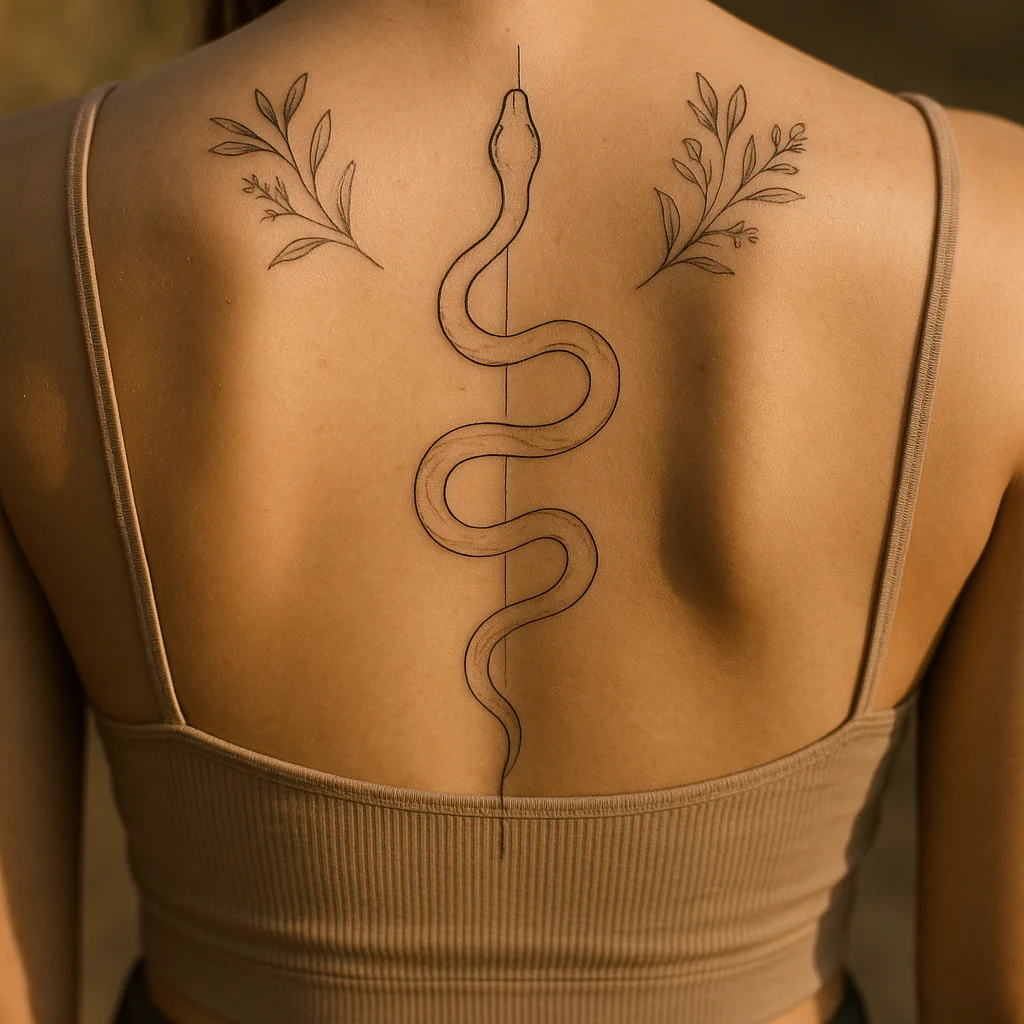
A snake descending the centre line with its coils crossing side to side and its head resting at the nape or the sacrum. The body's natural curve does half the design work. If you like the symbolism, our snake tattoo guide goes deeper on how the motif reads.
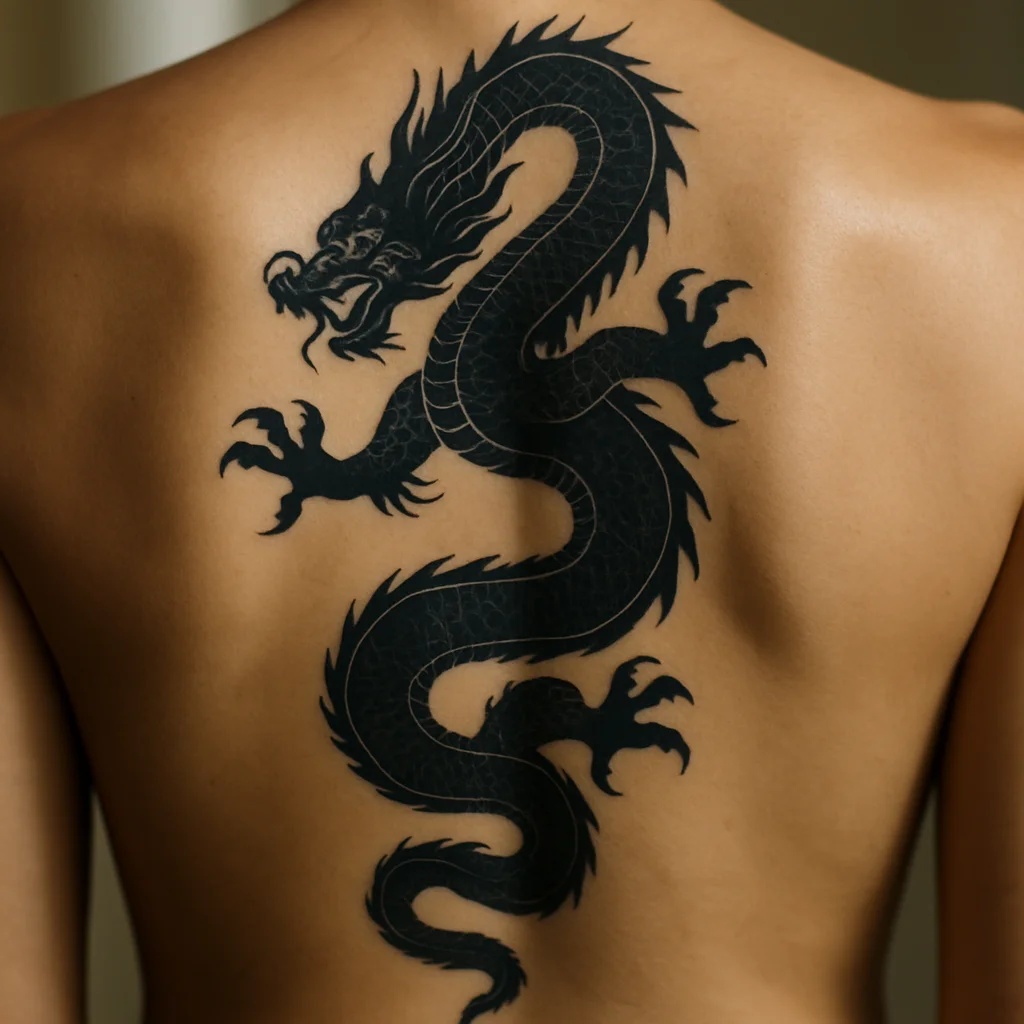
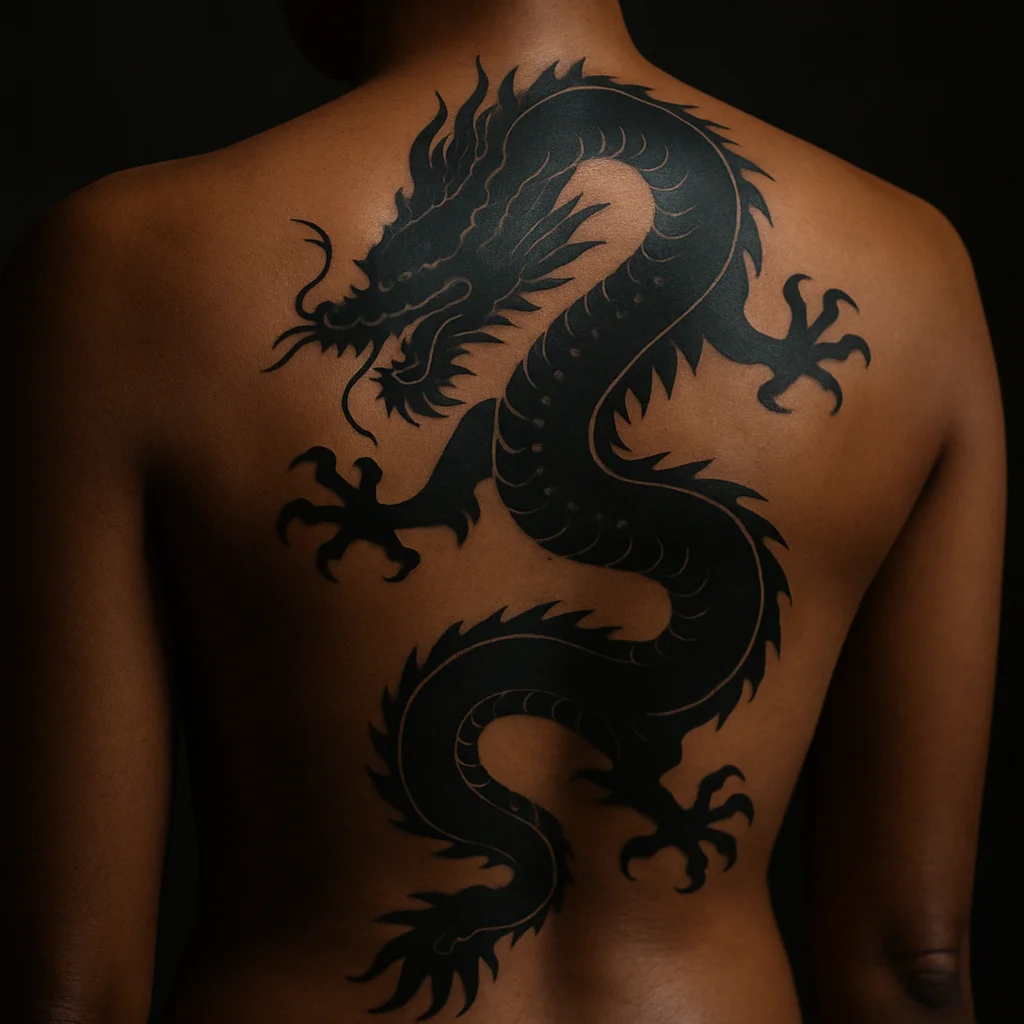
23. Vertical blackwork dragon
An eastern-style dragon threading the spine with claws and whiskers spilling onto the shoulder blades. This is a committed piece — usually 35 cm plus and several sittings — but it uses the placement better than almost anything else.
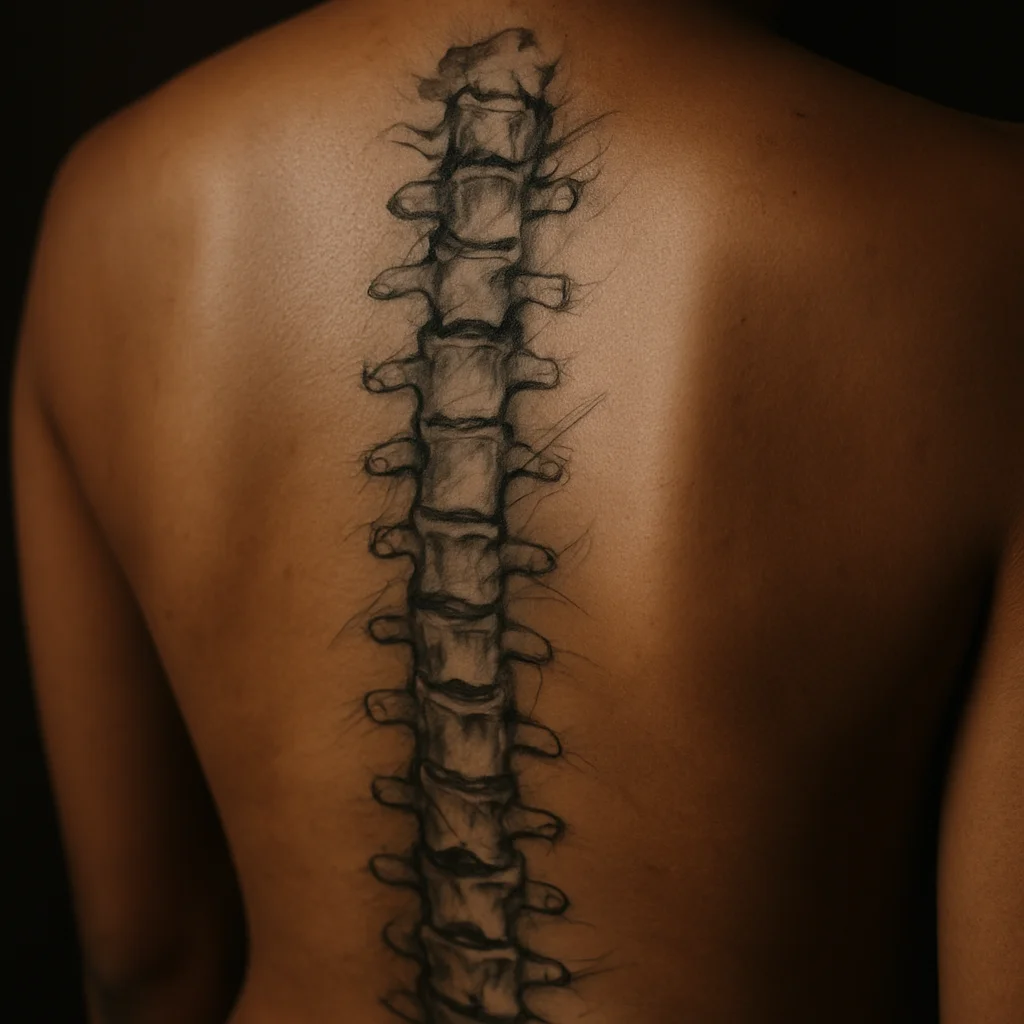
24. Anatomical vertebrae
An illustrative rendering of the spine itself, sat directly over your own bones, shaded in soft grey wash. Unsettling in the best way, and a favourite among medical students and anatomy nerds. Precision of placement is everything here.
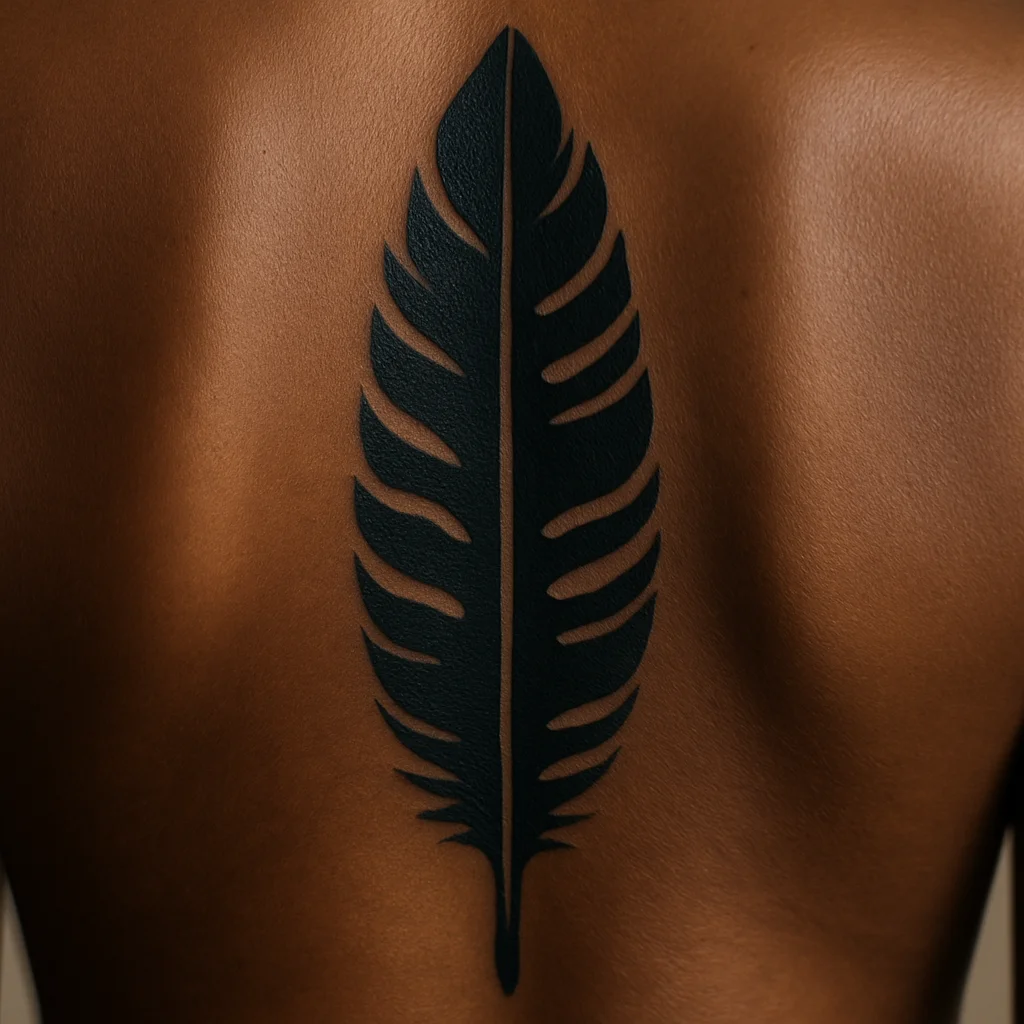
25. Feather column with negative space
A long feather where the quill follows the spine and the barbs are cut with white gaps that echo the vertebrae. The negative space keeps a large black shape from reading as a solid slab.
Small Spine Tattoos That Do Not Run the Whole Back
You do not need 30 cm of ink to use this placement well. Some of the most elegant spine tattoos are a single motif sitting exactly on the midline, letting the bone and posture supply the rest of the drama. These are also the cheapest and least painful entry points.
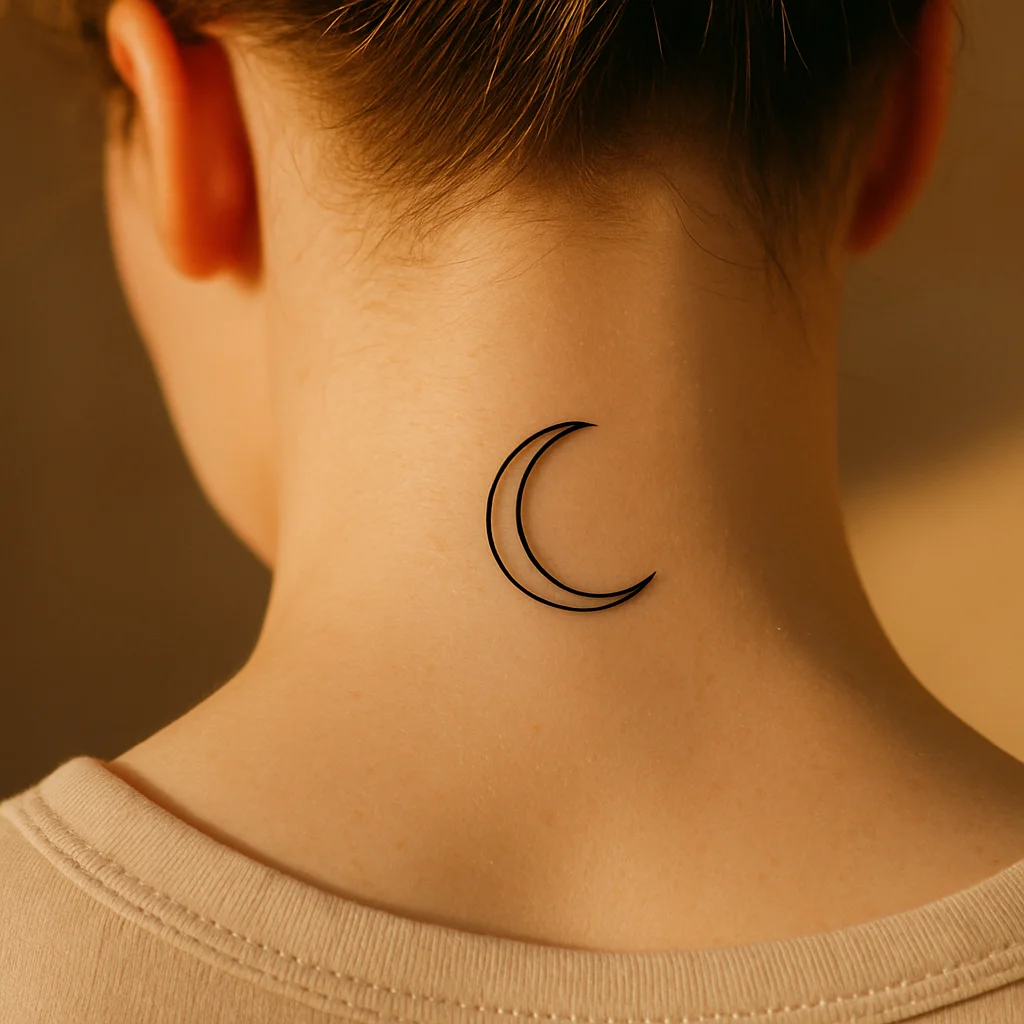
26. Crescent at the nape
A 2 to 3 cm crescent or small sun sitting just above the collar line, visible with your hair up and gone with it down. Fifteen minutes of work, and the nape heals fast because the skin there is used to friction.
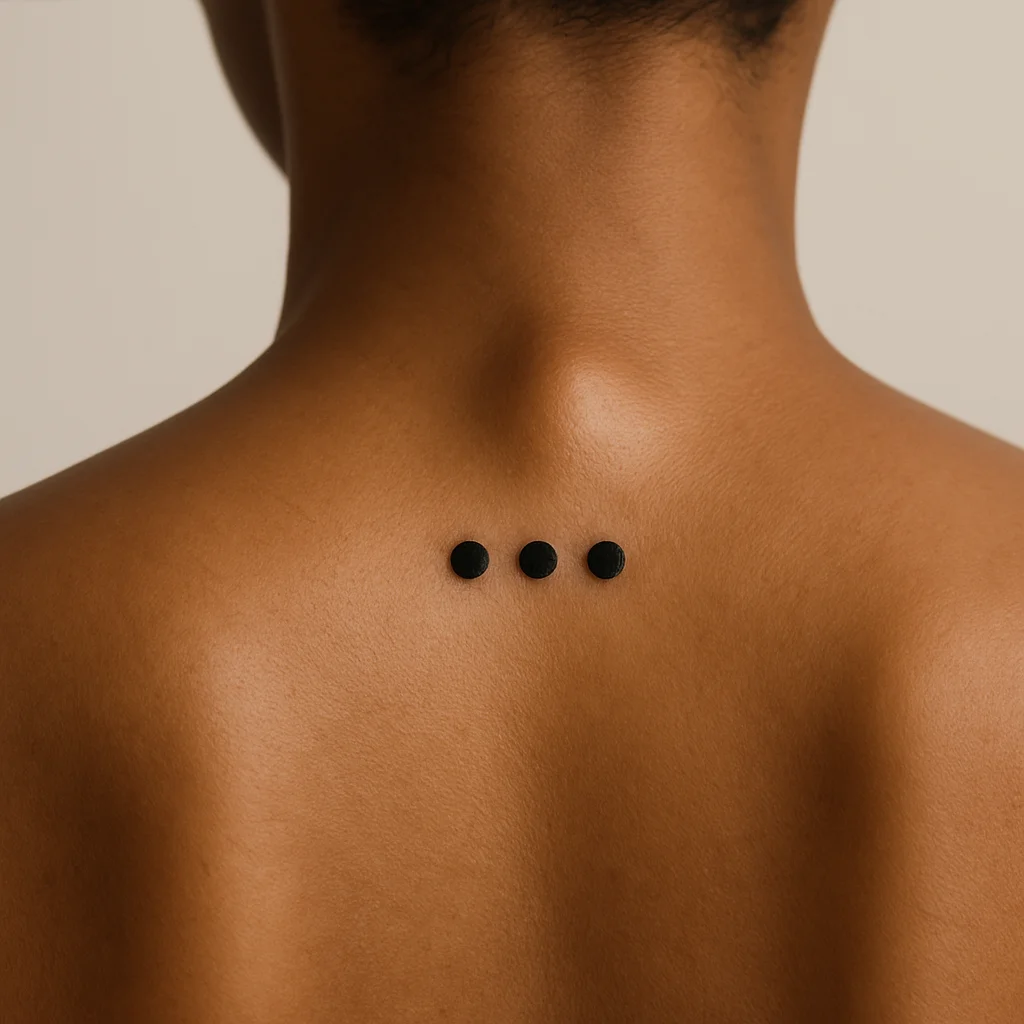
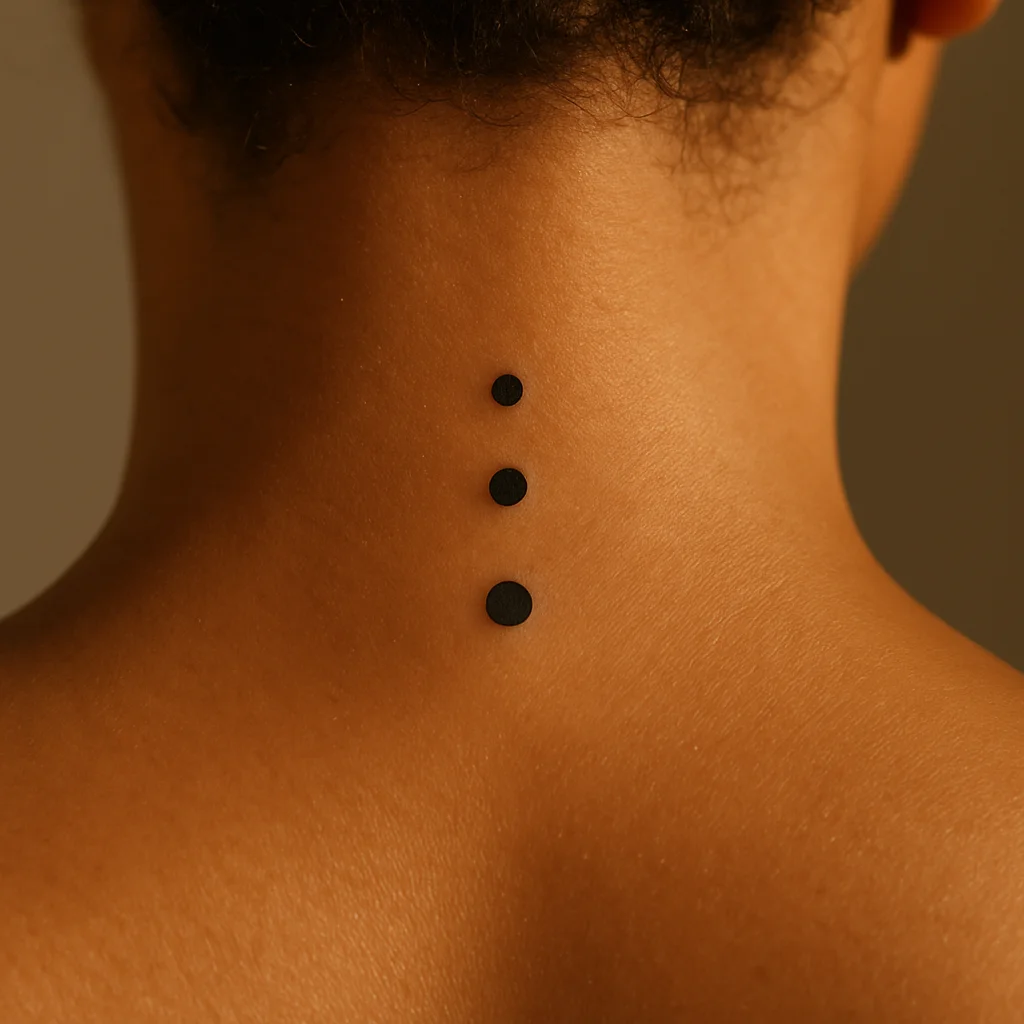
27. Three dots at C7
An ellipsis of three graduated dots on the prominent bump at the base of the neck. Quietly deliberate, universally readable, and a favourite pairing with existing back or shoulder pieces. Dots need proper depth or they fade — a good artist will not rush them.
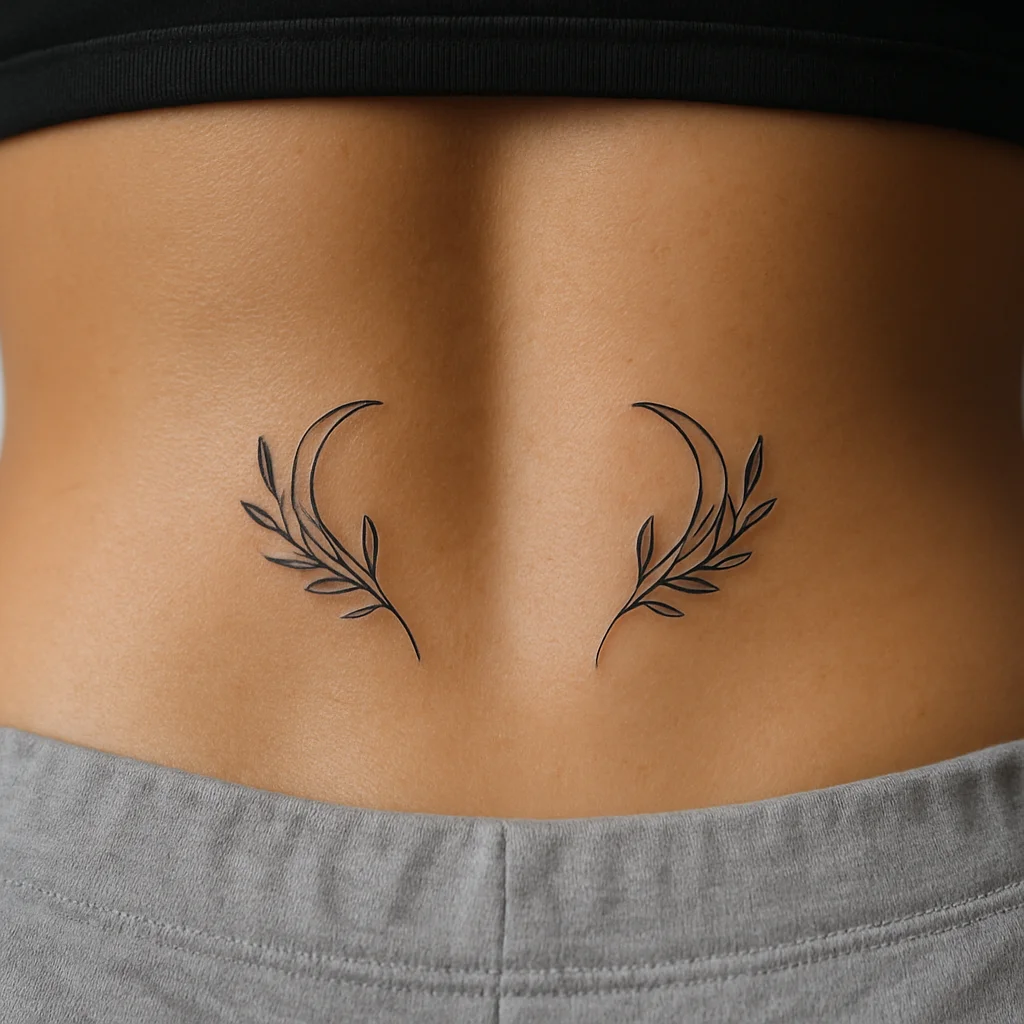
28. Matched pair at the lumbar dimples
Two small mirrored motifs — leaves, crescents, tiny keys — placed on the sacral dimples with the spine between them. It draws the eye to the lower back without the retro connotations of a full lumbar piece, and it stretches gracefully over time.
If understated is your goal generally, it is worth browsing fine line ideas before you settle on a motif — many translate straight to the spine with a small bump in line weight.
Pain, Price and Healing on the Spine
Honest version: the spine is in the upper tier of tattoo pain, but not uniformly. Over the vertebrae themselves the needle is working on skin stretched directly over bone, which produces a sharp, rattling sensation — some people describe it as vibrating through the jaw. The nape and the sacrum are the sharpest spots. The paravertebral muscle on either side of the midline is noticeably softer, which is one practical argument for off-centre designs.
A few things that genuinely reduce the misery:
- Eat properly beforehand and bring sugar. Bony placements hit blood sugar hard.
- Position matters. You will be face-down or leaning over a chair back for hours. Ask for a pillow under your hips and take a stand-up break every 45 minutes.
- Split long designs. Two three-hour sessions beats one six-hour session on the spine almost every time, and the linework stays cleaner because you stay still.
What it costs
Pricing follows time, not romance. A small nape or lumbar motif usually sits near a studio's minimum charge. A 20 cm fine-line botanical or a short script commonly lands in the low-to-mid hundreds. Full-length ornamental, dragon or dense dotwork columns are multi-session projects priced by day rate, and can run well into four figures with a sought-after artist. Get the estimate in the consult, and expect the higher end of any range if the artist is redrawing the design freehand to your anatomy.
Healing notes specific to this placement
You cannot see it, so recruit help or use two mirrors. Bra bands, backpack straps and chair backs all sit exactly where a spine tattoo does — plan loose clothing for a week and no gym bags. Sleeping on your front is fine; sleeping on your back on clean sheets is fine too. Follow the usual routine from our aftercare guide, and if you have any chance of needing an epidural in the next year, mention the tattoo to your anaesthetist — fully healed skin is generally not an issue, but they like to know, and some prefer to place the needle through unpigmented skin.
Briefing your artist
Bring reference for weight and mood, not just motif: say whether you want it visible in a backless dress or hidden under a t-shirt, name the top and bottom anchor points on your body, and be clear about how thin you are willing to go. Then let them freehand or adjust the stencil to your curve. Ask to see it in the mirror standing up, and if it looks off by a hair, say so — that is the single easiest thing to fix before the machine starts.
Frequently asked questions
How badly do spine tattoos hurt compared with other placements?
Expect it to be more intense than a forearm or thigh and comparable to the ribs. The sharpest points are the nape, the bony ridge of each vertebra and the sacrum, where skin sits directly on bone. The muscle just to either side of the midline is noticeably more tolerable, so an off-centre design is a legitimate way to reduce the sting. Splitting a long piece into two sessions makes a bigger difference than any numbing product.
How long does a full-length spine tattoo take?
A simple fine-line stem or short script from nape to mid-back is often two to four hours. A full-length ornamental piece, dragon or dense dotwork column is typically two or more sessions of three to five hours each. Most artists prefer to split it because holding a still position over bone for six hours degrades line quality.
Will a spine tattoo stretch if I gain weight or get pregnant?
The thoracic spine changes very little, but the lower back can stretch with pregnancy or significant weight change. Simple, spaced designs with breathing room between elements absorb that far better than tightly packed detail or tiny lettering. If you know big changes are likely, keep the lumbar section minimal and build upward.
Can I still have an epidural if I have a spine tattoo?
In most cases yes. Anaesthetists are generally comfortable with fully healed tattooed skin, though many prefer to insert the needle through an area of unpigmented skin where possible. Tell them you have the tattoo, avoid getting fresh lower-back work late in a pregnancy, and leave small gaps of bare skin in a lumbar design if this is a concern for you.
What line weight should I ask for on the spine?
Slightly heavier than you would choose for a wrist or forearm. Hair-thin single-needle lines can heal patchy or blow out over the bony ridges, and very fine detail closes up over the years. A good compromise is fine linework with a little variation in weight, plus generous spacing between elements so nothing merges as it settles.
More designs to save
28 Spine Tattoos for Women That Follow the Centre Line
28 Spine Tattoos for Women That Follow the Centre Line
28 Spine Tattoos for Women That Follow the Centre Line
28 Spine Tattoos for Women That Follow the Centre Line
28 Spine Tattoos for Women That Follow the Centre Line
28 Spine Tattoos for Women That Follow the Centre Line
The conversation
No comments yet. Got a thought about these designs? Start us off.
Want to weigh in? Join the community to comment, save designs and try them on your skin.