28 Collarbone Tattoos for Women, Bone by Bone
The collarbone isn't one placement, it's four: the bone line, the hollow above it, the sternum notch and the outer end that spills onto the shoulder. Here are 28 designs sorted by where they actually sit, plus what each zone costs, hurts and looks like in five years.
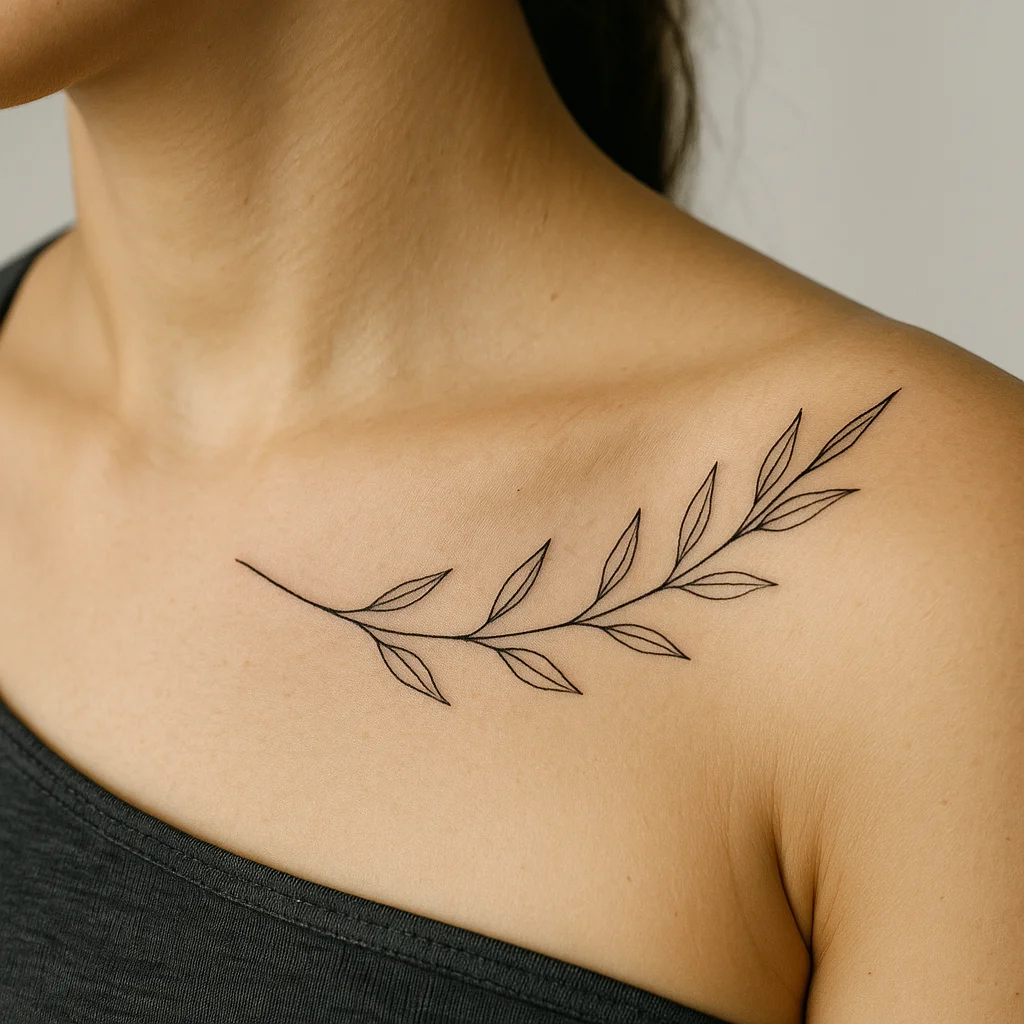
How the Collarbone Actually Reads
Most people picture the clavicle as a straight bar. It isn't. It's a shallow S: it rises out of the sternal notch, curves forward, then dips back as it meets the shoulder. Any design drawn as a straight line across it will look crooked the moment you relax your shoulders, which is why the best collarbone work is stencilled on a standing client, arms down, not on someone lying flat.
Think of the area as four separate canvases, each with its own personality:
- The bone line itself — a hard, raised ridge with almost no fat under the skin. Best for linear, horizontal designs that borrow the bone's curve.
- The hollow above it — the soft dip between the clavicle and the neck muscle. Softer to tattoo, and it frames small motifs beautifully.
- The sternum end — the centre notch where both collarbones meet. This is where symmetry lives, and where necklaces sit.
- The outer end — where the bone disappears into the shoulder cap. The only zone with room to go big, and the natural bridge into a shoulder or half sleeve later.
Visibility matters too. A collarbone piece is hidden by a crew neck, half-revealed by a scoop, and fully on display in anything strapless. If you dress mostly in high necklines for work, keep the design in the outer third so it doesn't get permanently swallowed. If you want it seen, the sternum end and bone line do the most work per square inch. It's the same logic as choosing back placements by neckline, only running in the opposite direction.
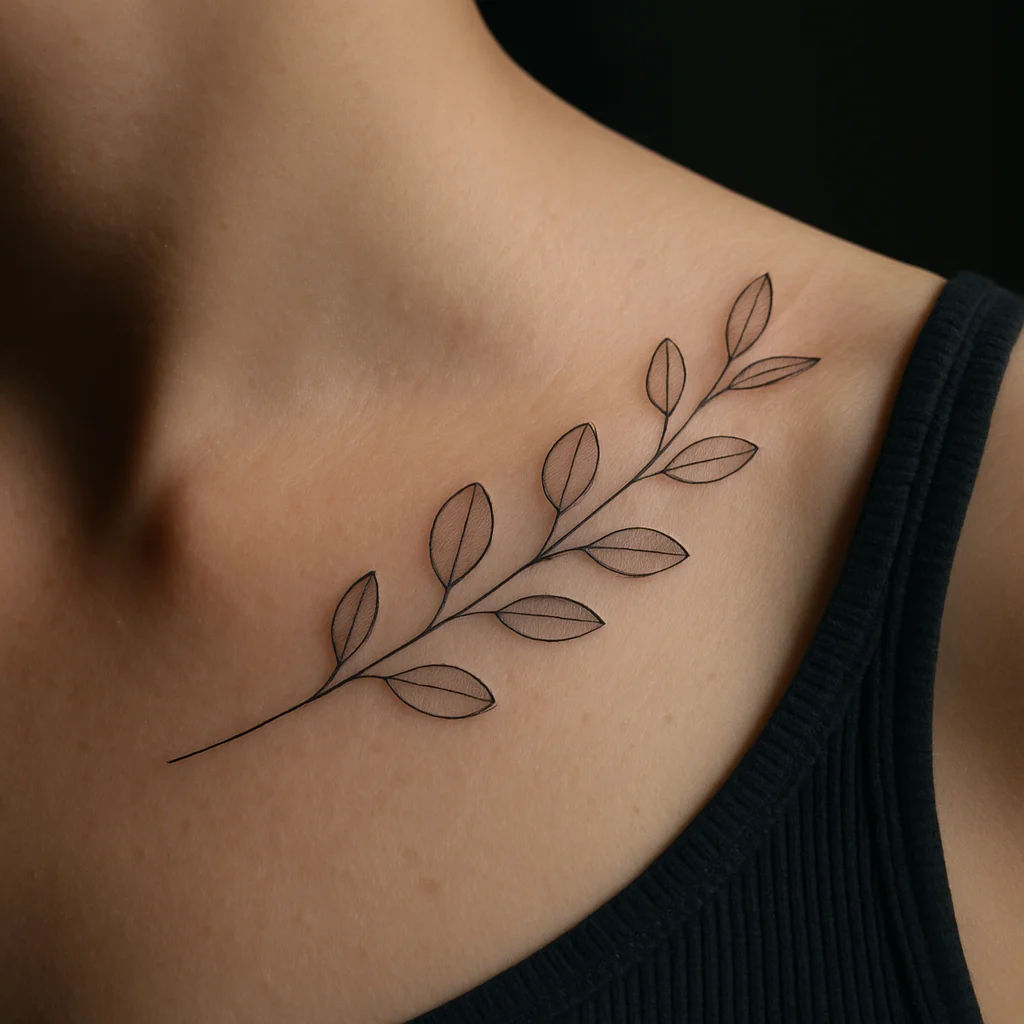
Along the Bone Line: 7 Designs That Follow the Ridge
Anything sitting directly on the bone should be horizontal, low-contrast and forgiving. Skin here is thin and stretched over hard bone, so heavy black packing and tight detail struggle. Linear designs that echo the curve age best.
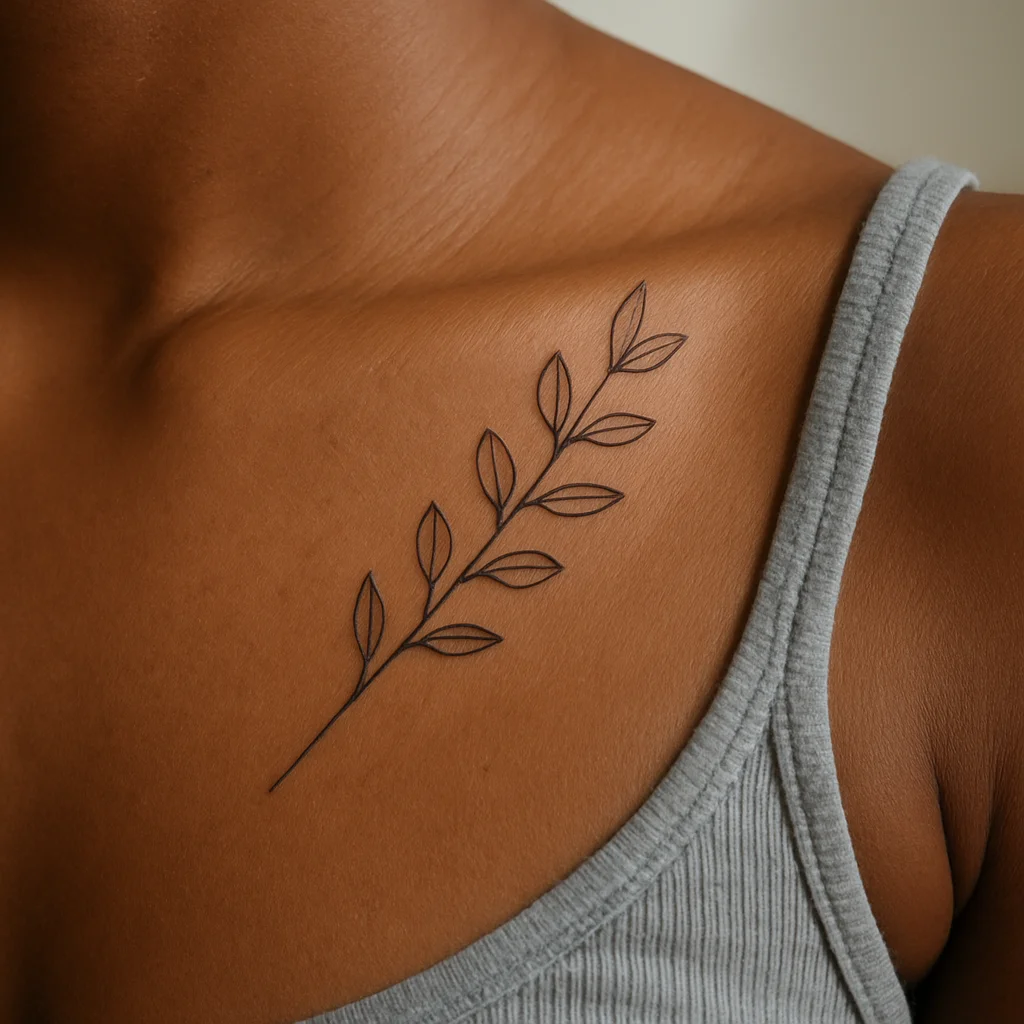
1. A single-line branch that follows the curve
An olive or eucalyptus sprig, drawn as one continuous stem with leaves alternating above and below, running from the sternum end out toward the shoulder. Around 10–14 cm long, it reads as intentional rather than floating. Ask for the stem to arc with the bone, not across it, and for leaves spaced wide enough to stay separate as the ink softens.
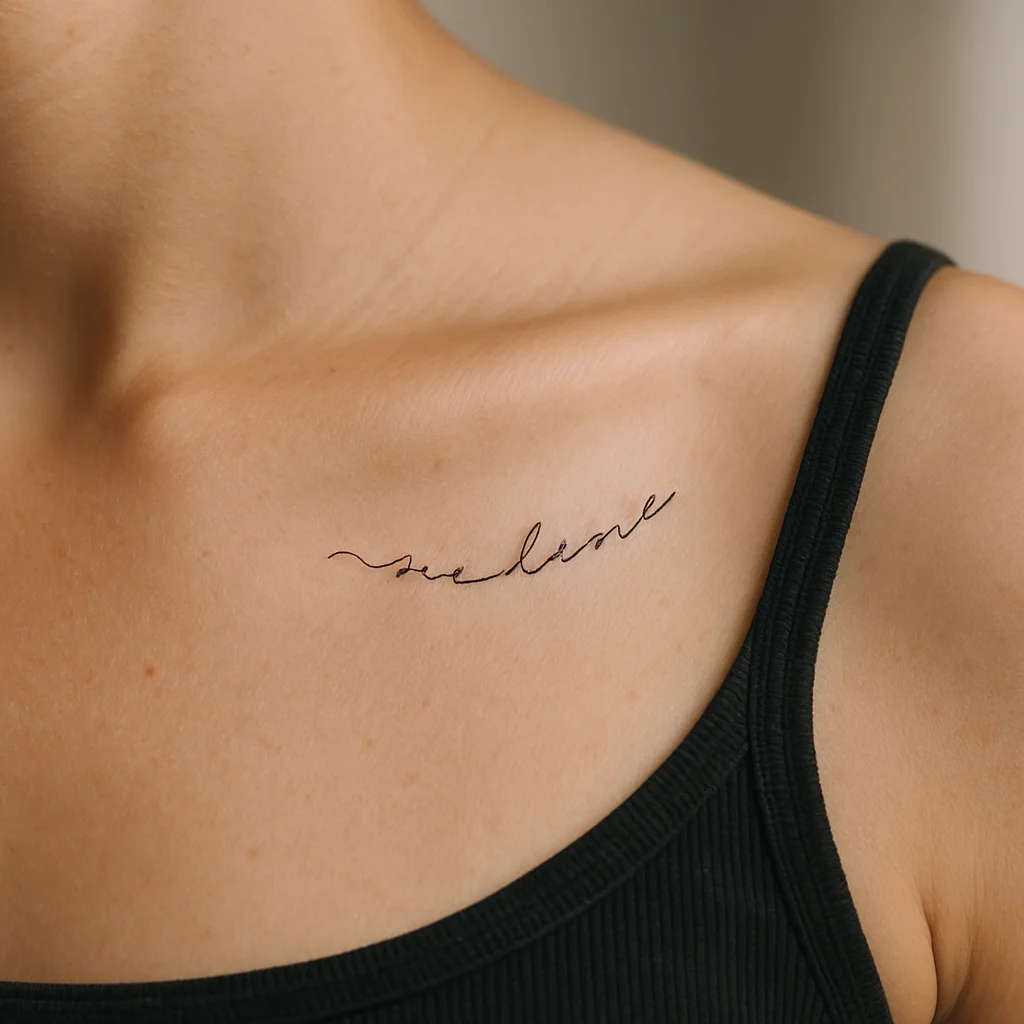
2. Fine-line script in a low, wide arc
A short phrase or single word set in a shallow curve just below the ridge. Keep it to two or three words at 8–12 mm letter height; anything smaller in a connected script will blur into a grey line within a decade. Suits anyone who wants the piece legible in the mirror but invisible under a t-shirt.
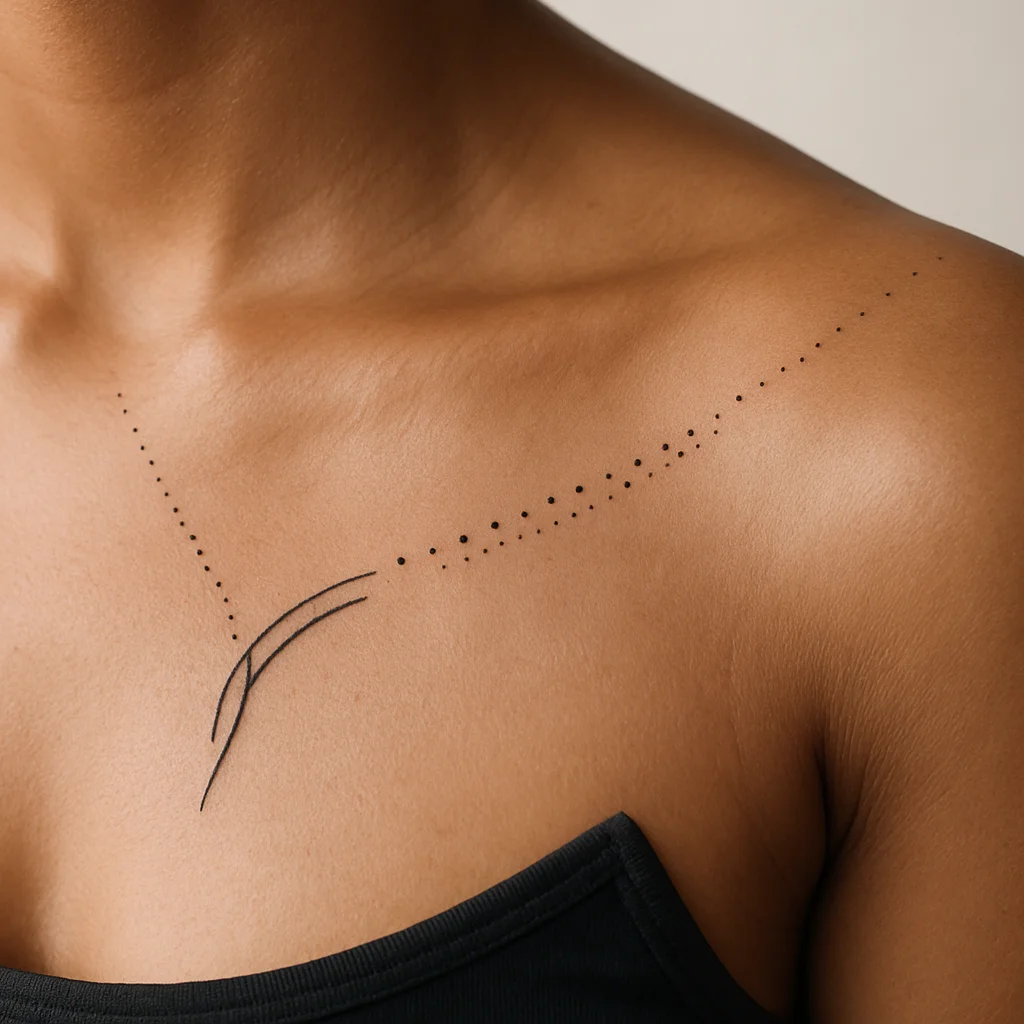
3. A fading dot gradient from sternum to shoulder
A run of dots that starts dense and pea-sized near the centre and thins to pinpricks at the outer end. It's abstract, it flatters the bone's taper, and it's one of the few designs that genuinely looks better as it softens. Great first tattoo: short sitting, cheap, no line to go wonky.
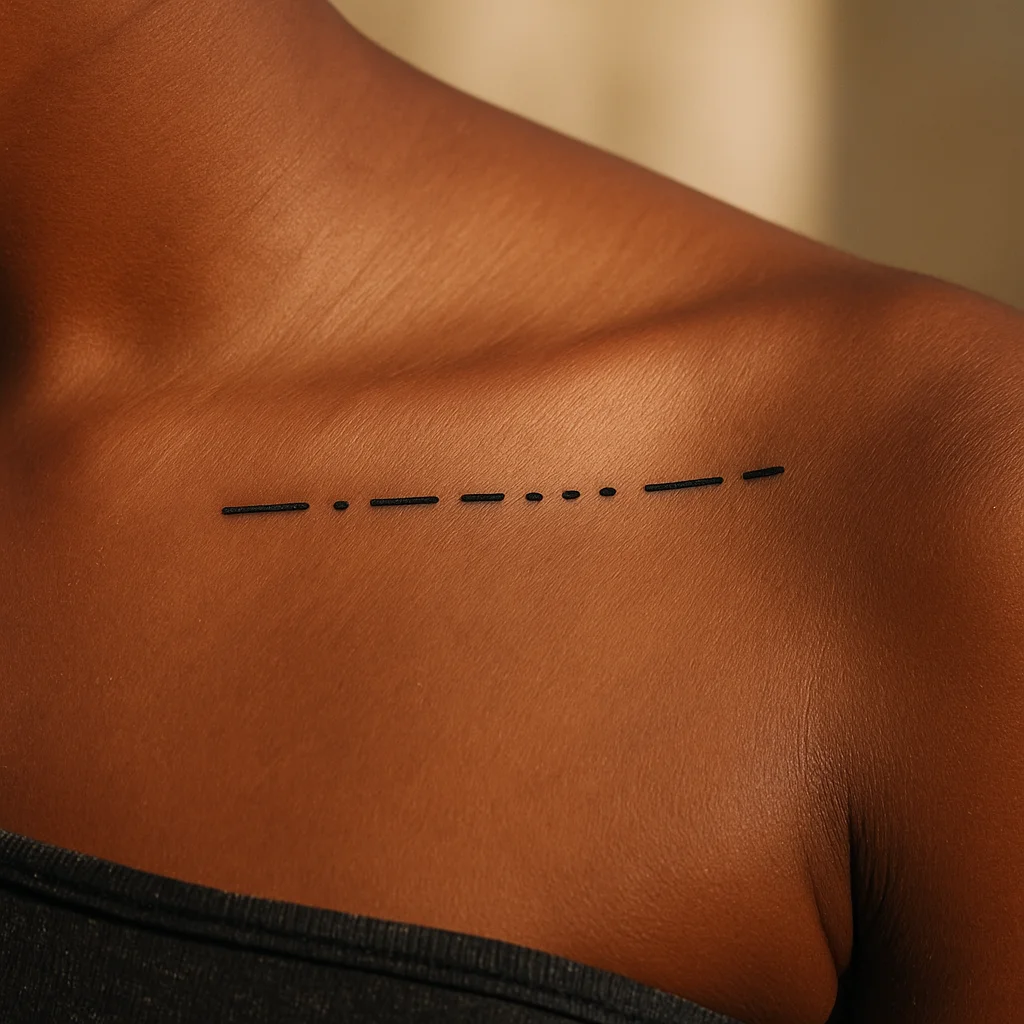
4. Morse code dashes
A name, a date or a word coded as a row of dots and bars along the bone, usually 6–10 cm. Ask for the bars to be at least 2 mm thick and the gaps generous, because Morse turns into a dotted mess if the spacing is tight. Bring the exact translation written out so nothing gets mis-keyed.
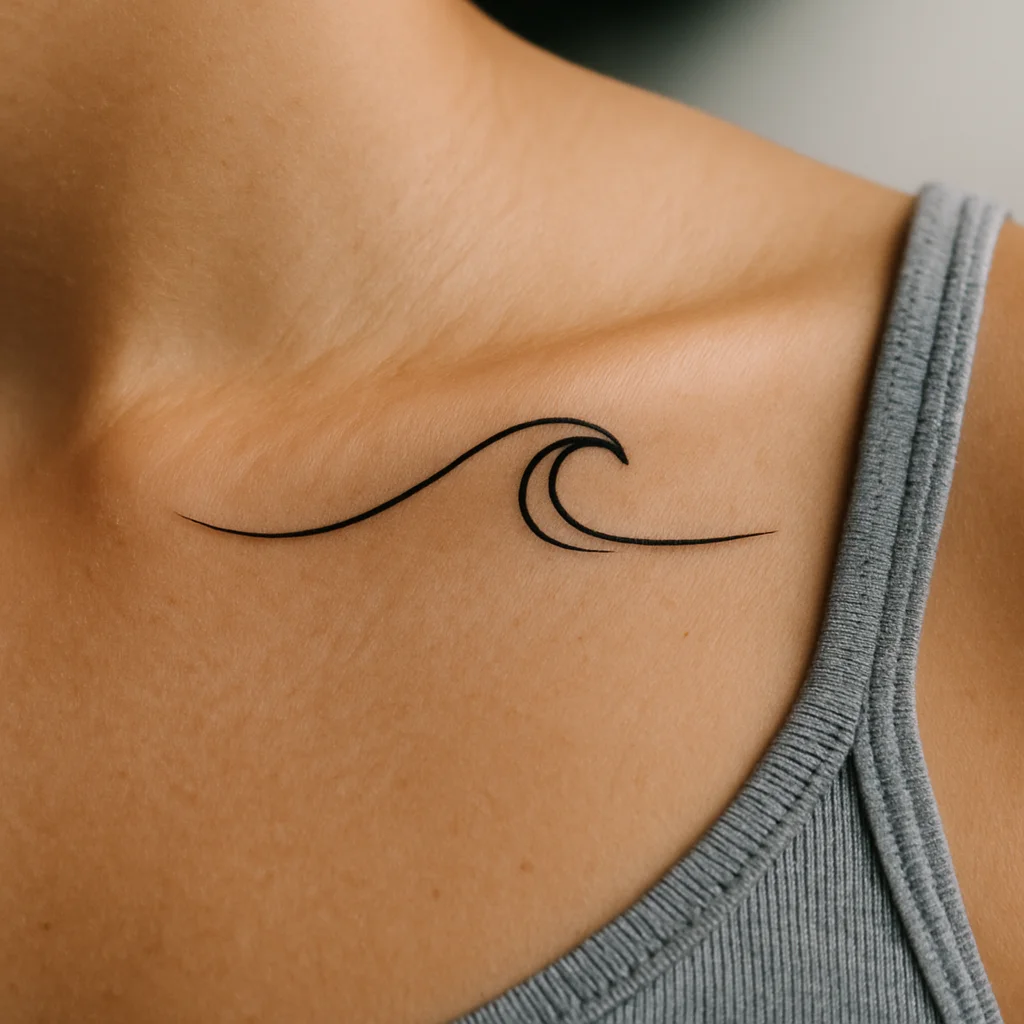
5. A minimal wave that peaks over the bone
One unbroken line drawn as a swell that crests where the clavicle is highest and flattens at both ends. Reads as water, mountains or a heartbeat depending on how the artist shapes it. Works on every body type because it exaggerates a line you already have.
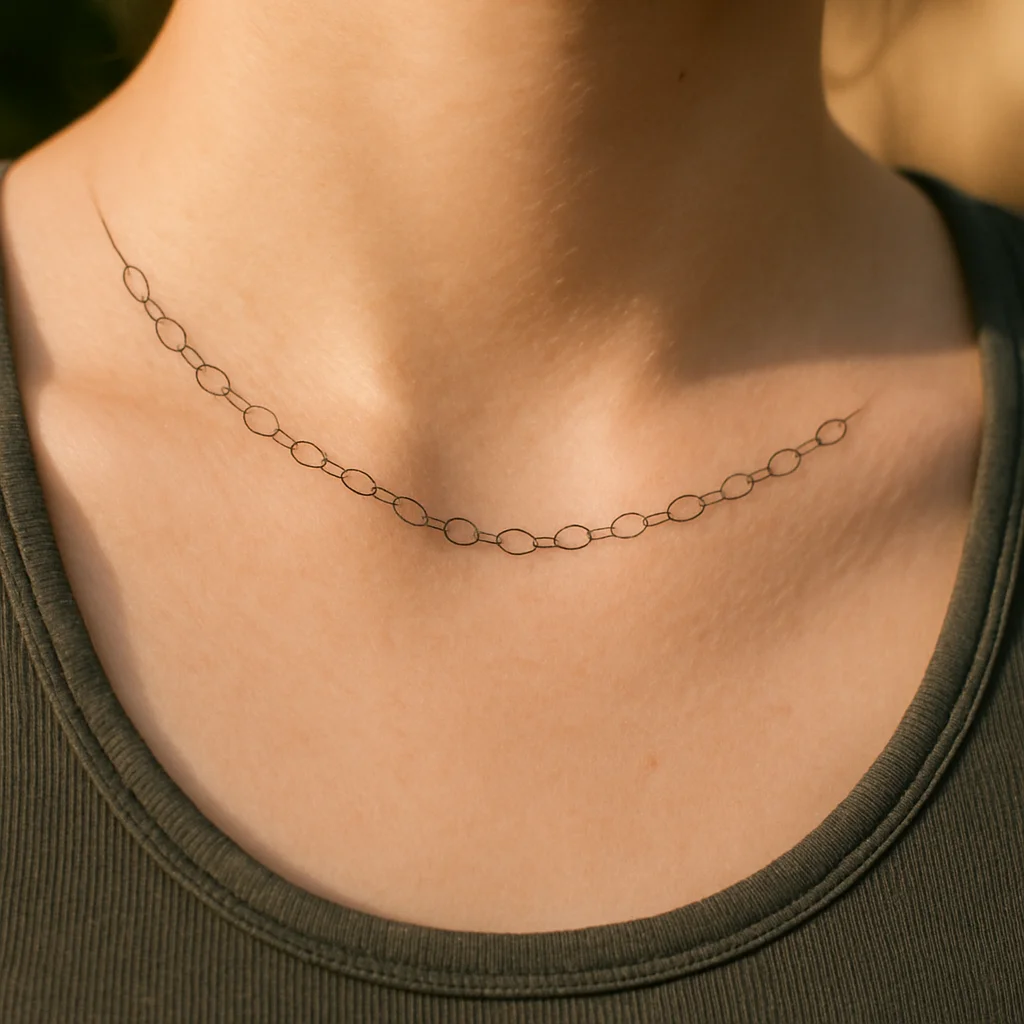
6. A chain of tiny linked circles
Small interlocking rings running the length of the bone so it sits like a permanent fine necklace. Keep the rings 4–6 mm across with visible gaps between them. Beautiful on collarbones that are already defined, and a favourite for people who wear a lot of open necklines.
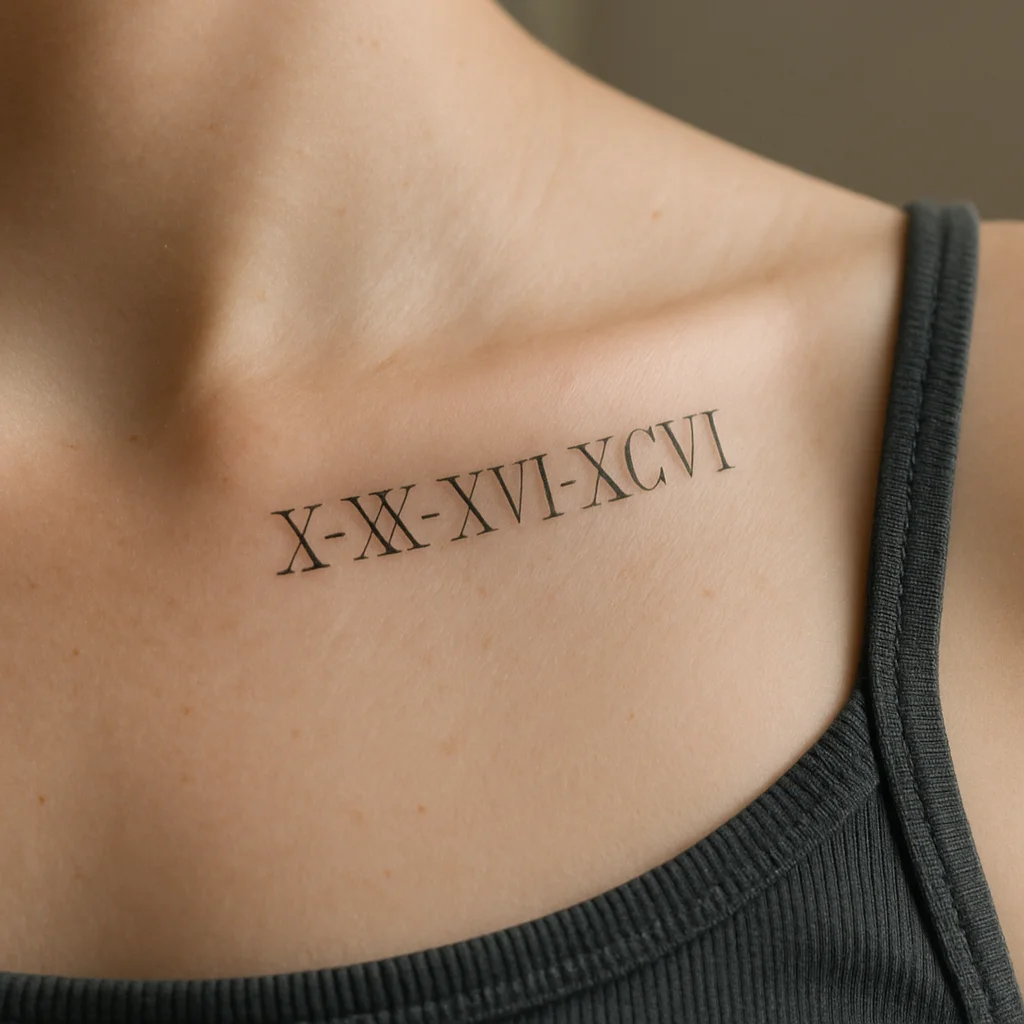
7. Roman numerals tight to the bone
A date in slim serif numerals, 8–10 mm tall, aligned along the ridge rather than centred on the chest. The rigid vertical strokes hold up better on bony skin than curved script does. Ask for a hairline serif rather than an ultra-thin sans, which tends to fade patchy here.
The Hollow Above: 7 Small Motifs for the Soft Dip
The pocket between the collarbone and the neck is softer, slightly protected from sun, and takes detail better than the ridge. It's the zone for a single small motif with air around it — crowding it kills the effect.
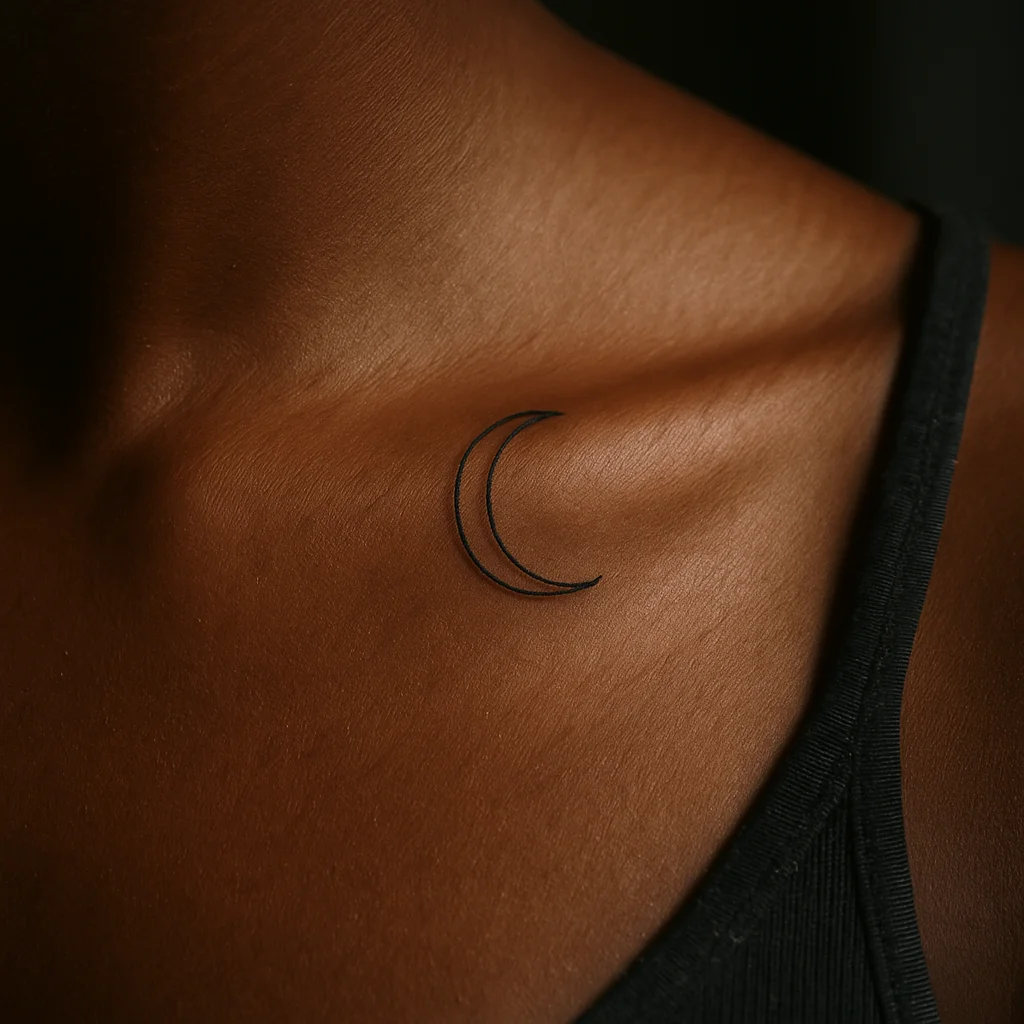
8. A crescent moon nested in the dip
A slim outlined crescent, 2–3 cm tall, tilted so its horns follow the angle of the hollow. Left plain it's quiet; add three pin dots trailing off the lower horn and it feels considered. One of the most flattering tiny pieces on the whole upper body.
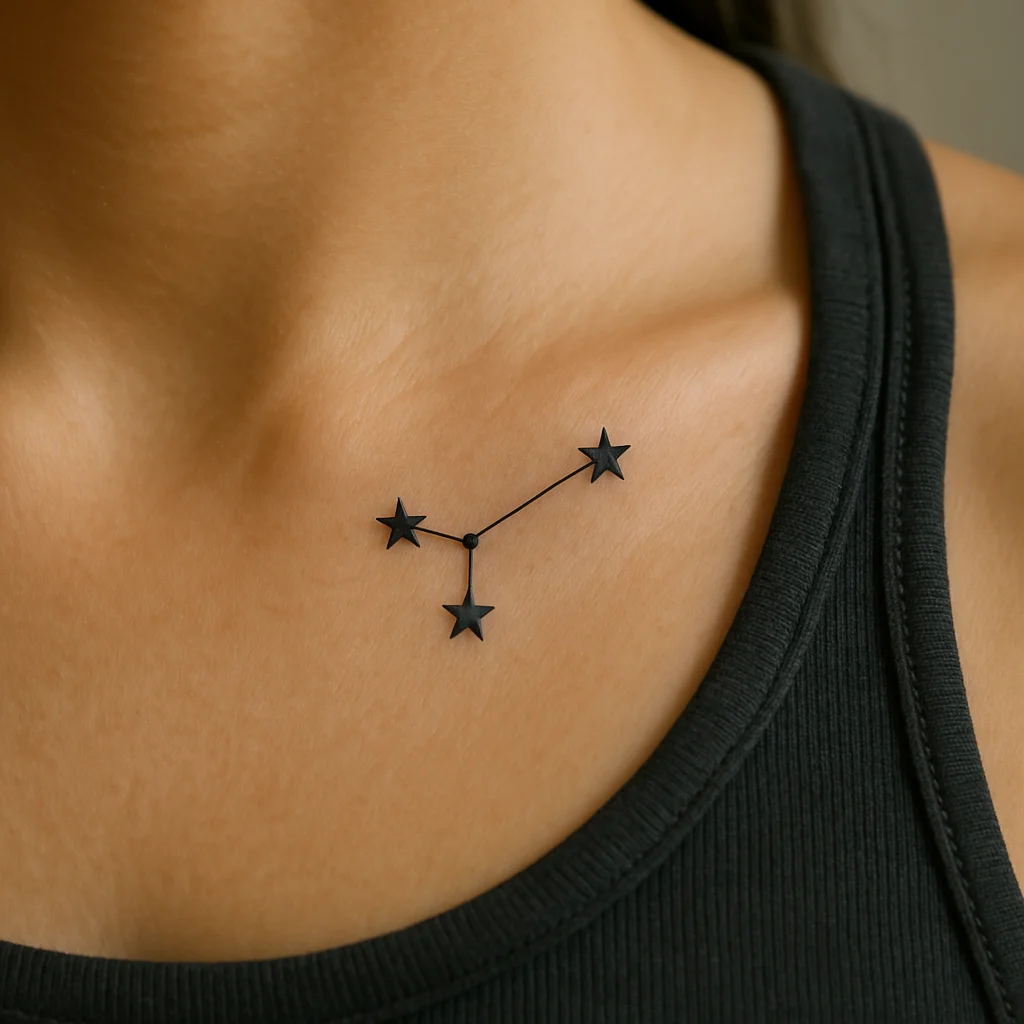
9. A three-star constellation
Three to five small stars connected by hairline strokes, mapped to a real constellation or just arranged to fit the pocket. Keep the whole cluster inside 4 cm so it doesn't creep onto the neck. Ask for star points to be tiny solid triangles rather than sparkles, which mush together over time.
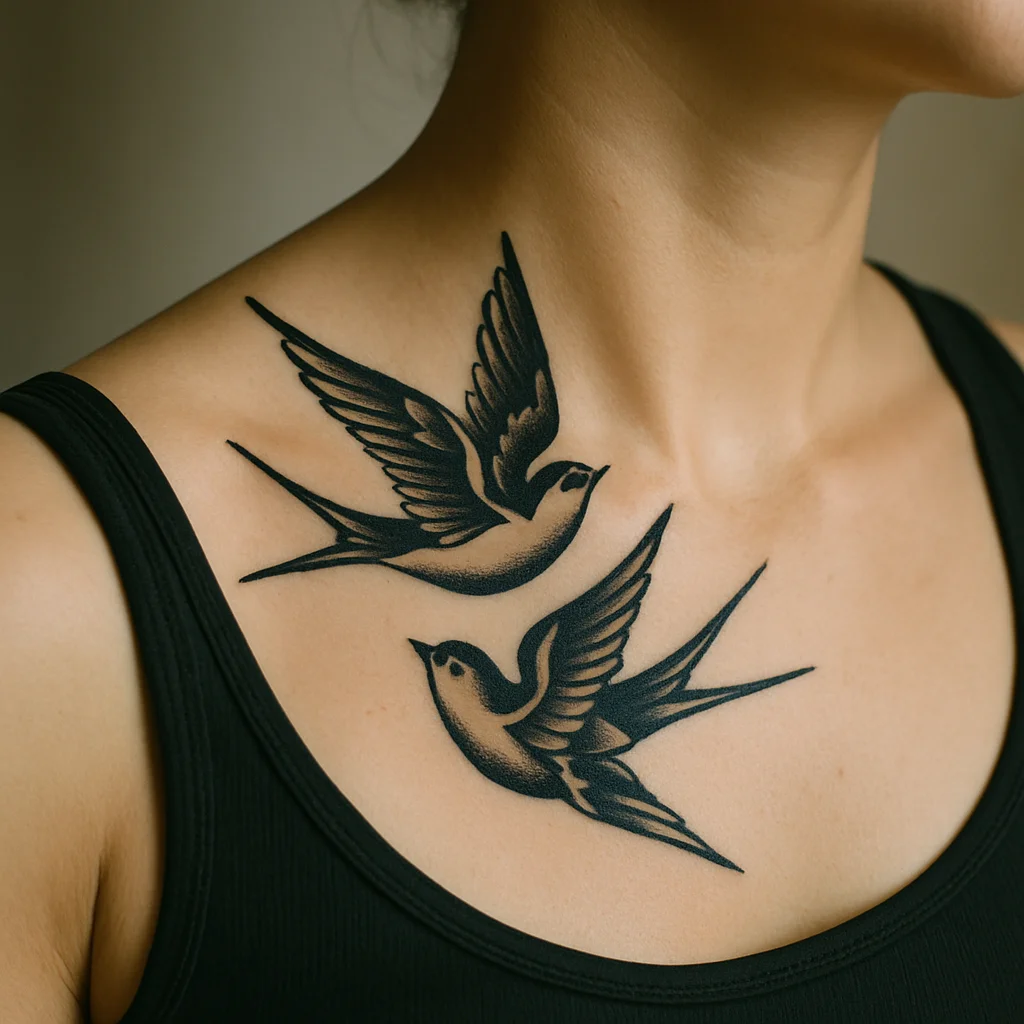
10. Two swallows tucked into the hollow
A pair of birds mid-flight, one slightly ahead of the other, angled up toward the jaw. At 2–3 cm each they can be done fine-line, but a bold traditional pair with solid wing blocks will still be crisp in twenty years. Choose based on how much upkeep you want.
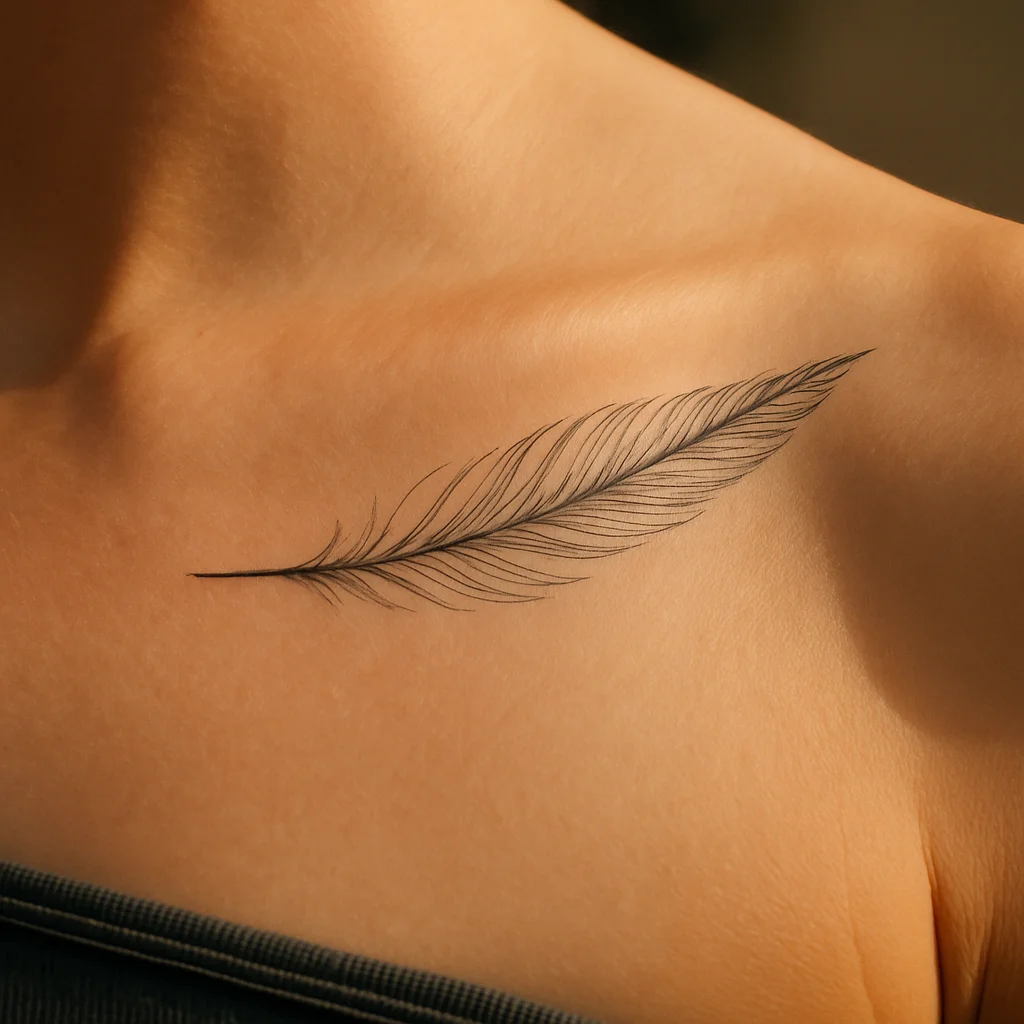
11. A single feather angled with the muscle
A slim feather, 5–7 cm, laid along the line of the trapezius so it appears to rest in the hollow. Ask for open barbs — small gaps between the strokes — rather than a solid outline, so it stays light. Suits longer necks especially well.
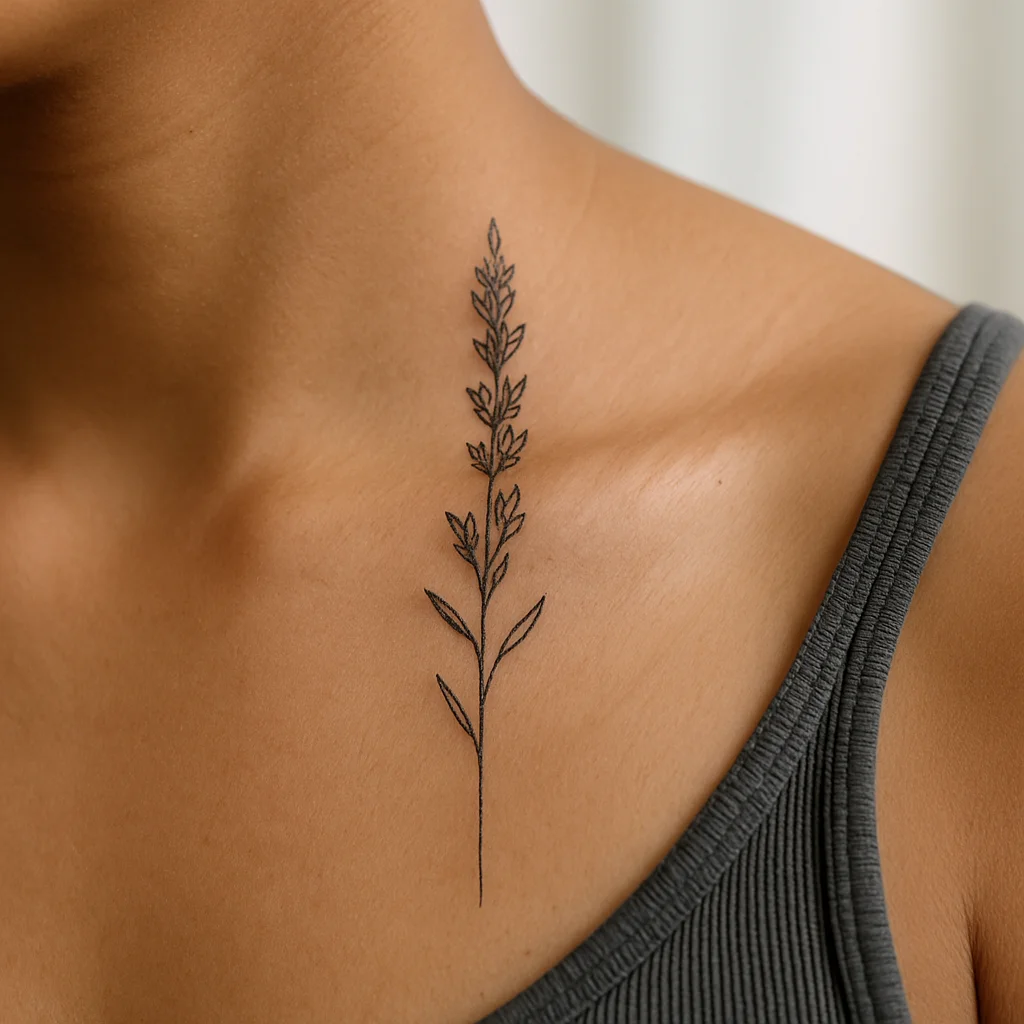
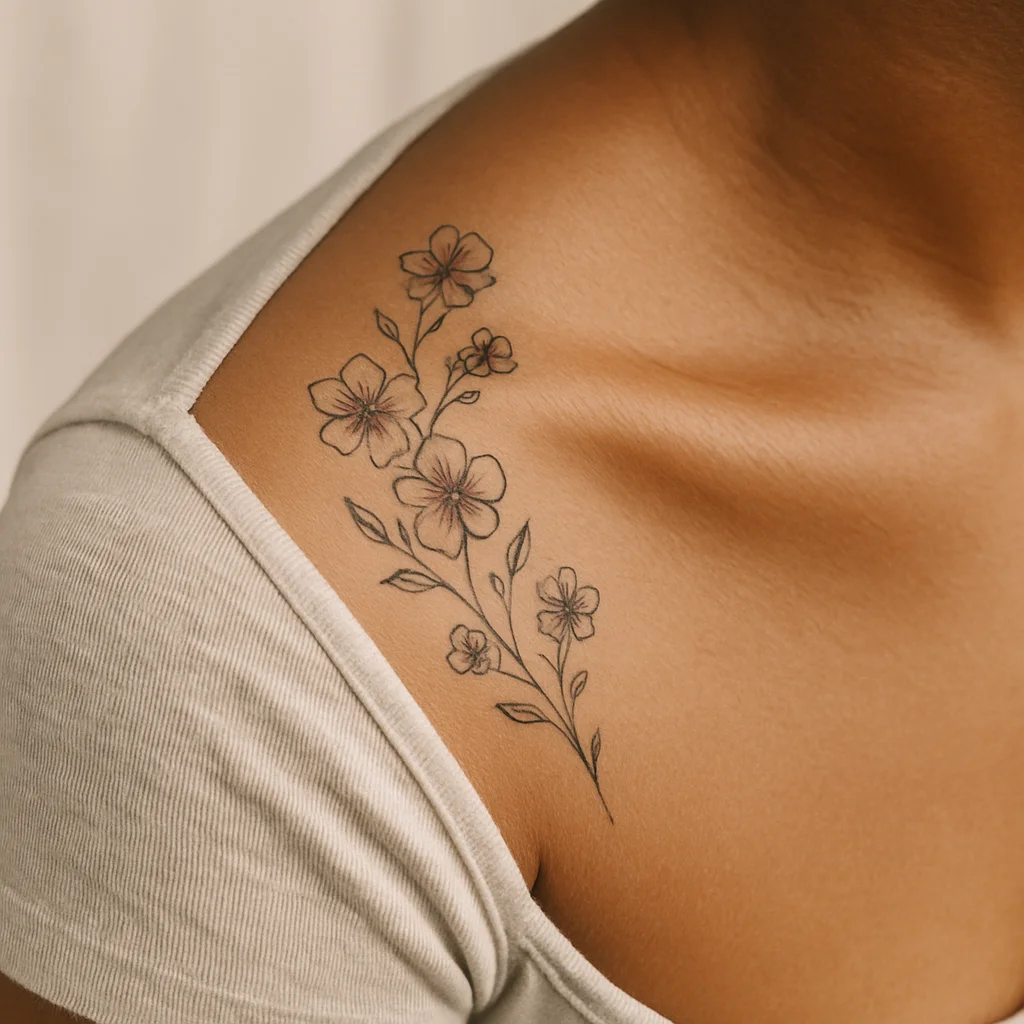
12. A lavender sprig rising toward the neck
A vertical stem with clustered buds, growing up out of the collarbone rather than lying across it. It draws the eye upward and looks intentional with an open shirt collar. Around 6–8 cm, with the top of the sprig stopping well below the hairline.
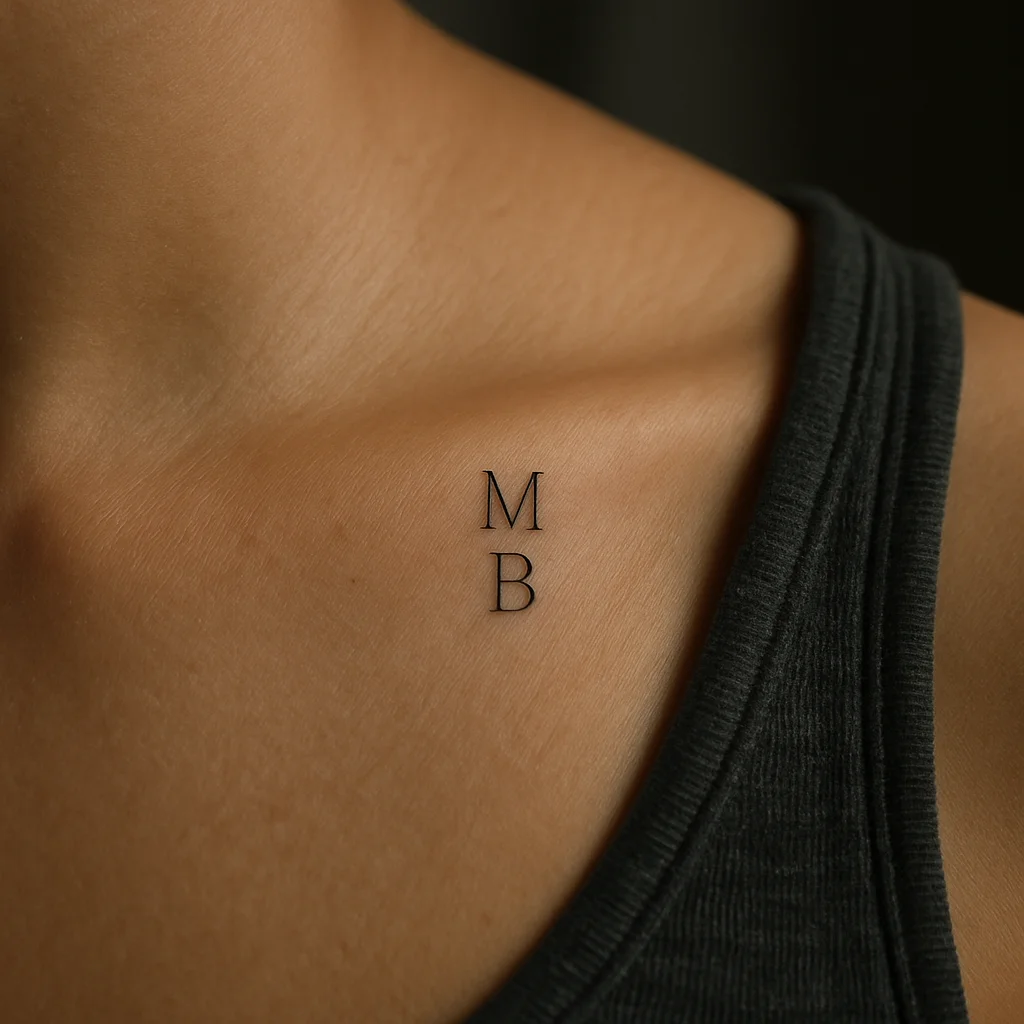
13. Two initials in tiny script
Letters at 10–15 mm, set one above the other or side by side with a hairline between them. This is a common memorial and partner placement because it sits close to the throat and stays private under most tops. Insist on a real typeface reference — hand-lettered initials at this size vary wildly between artists.
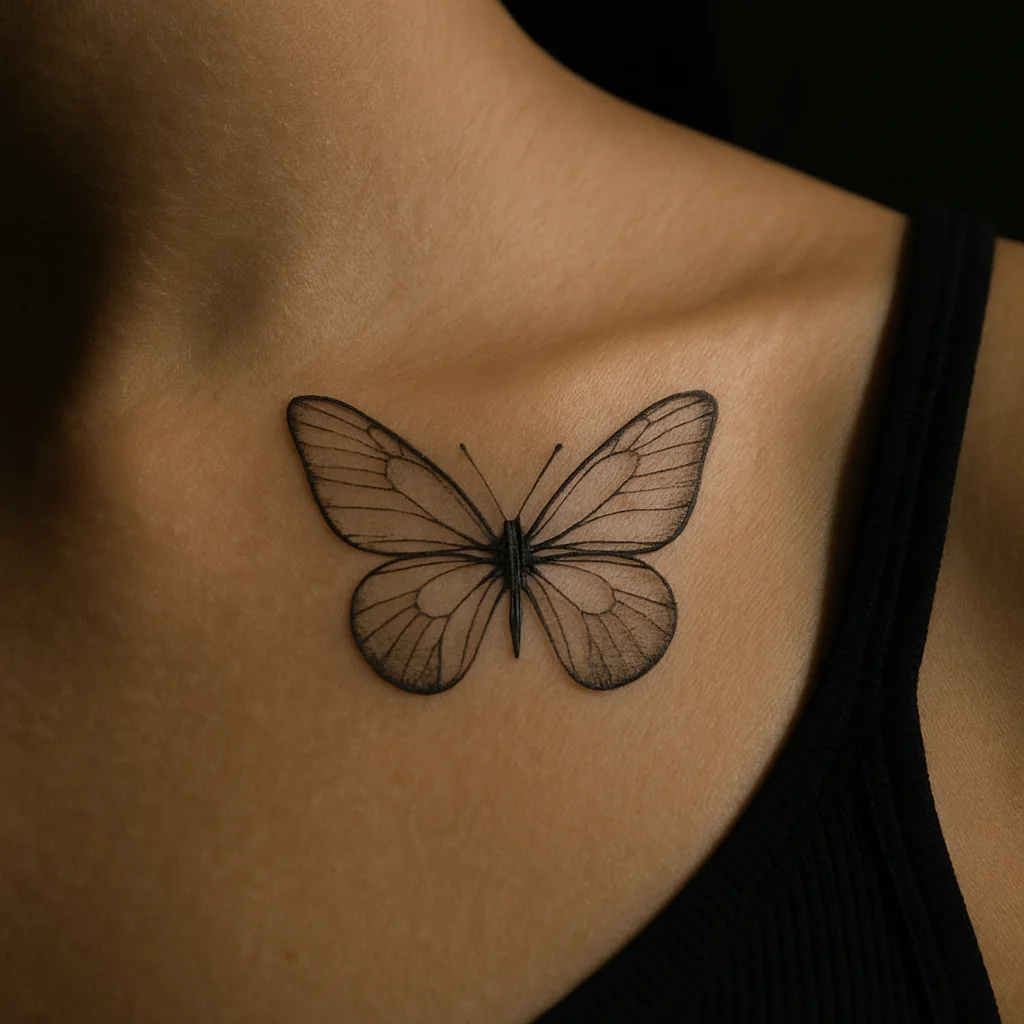
14. A small open-winged butterfly
Wings spread 3–4 cm across, body aligned with the dip so the shape sits level. Fine-line with dotwork shading in the lower wings gives depth without heavy black. If you want it to last, ask for the wing outline to be a touch thicker than the interior detail.
The Sternum End: 7 Symmetrical Pieces for the Centre
Where the two collarbones meet, symmetry becomes the whole point. It's also the most sensitive spot in the zone — thin skin, bone directly underneath, and nerves close to the surface. Keep centre pieces compact and let the design breathe.
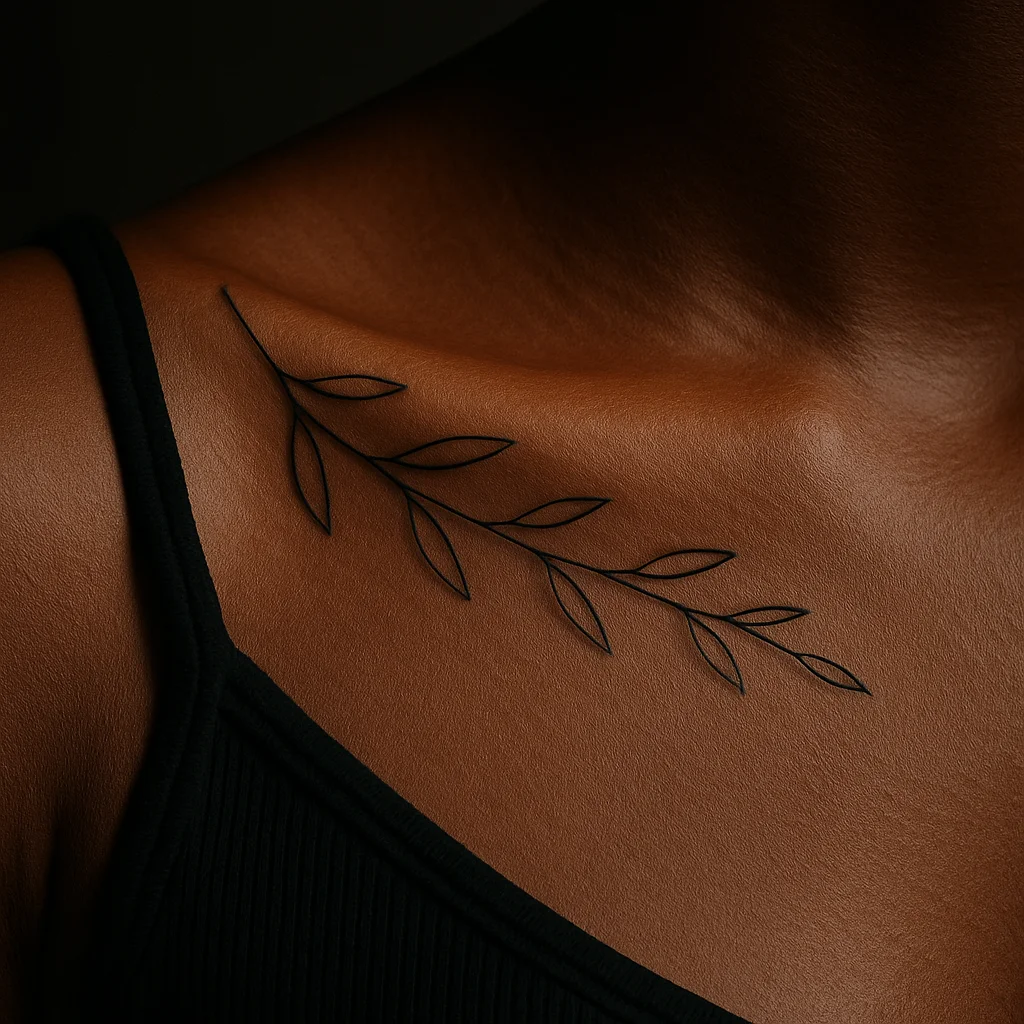
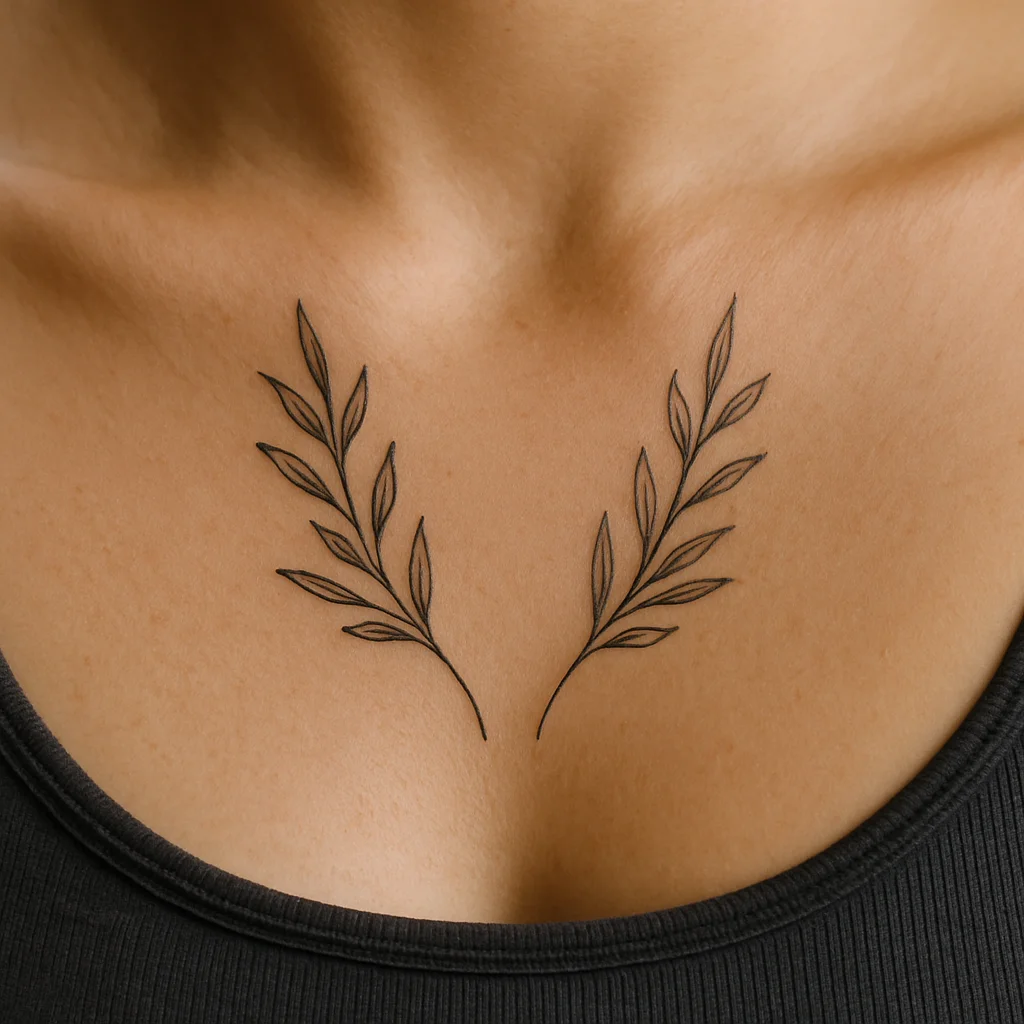
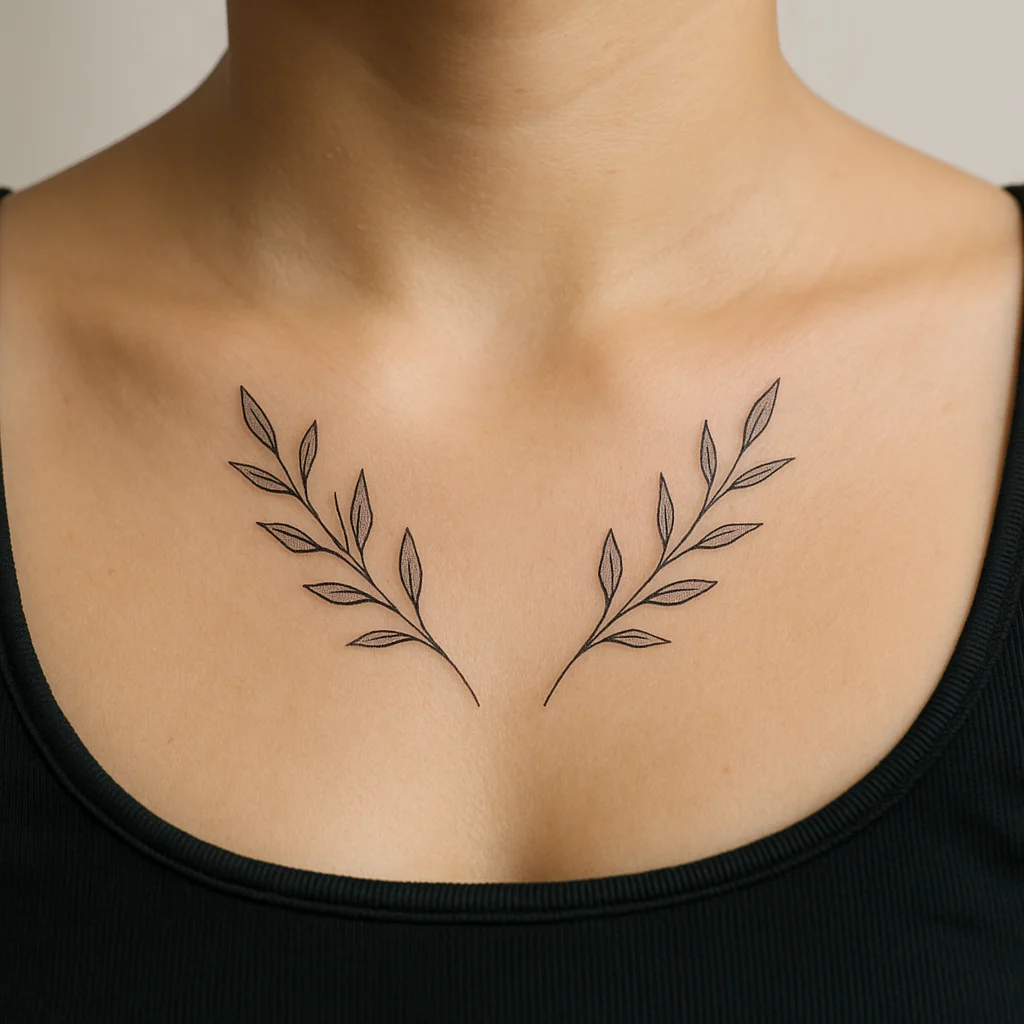
15. Mirrored sprigs framing the notch
Two identical stems, one on each collarbone, curving inward so they almost touch above the hollow. Around 6 cm per side. The gap between them is the design, so tell your artist you want the notch left empty rather than filled.
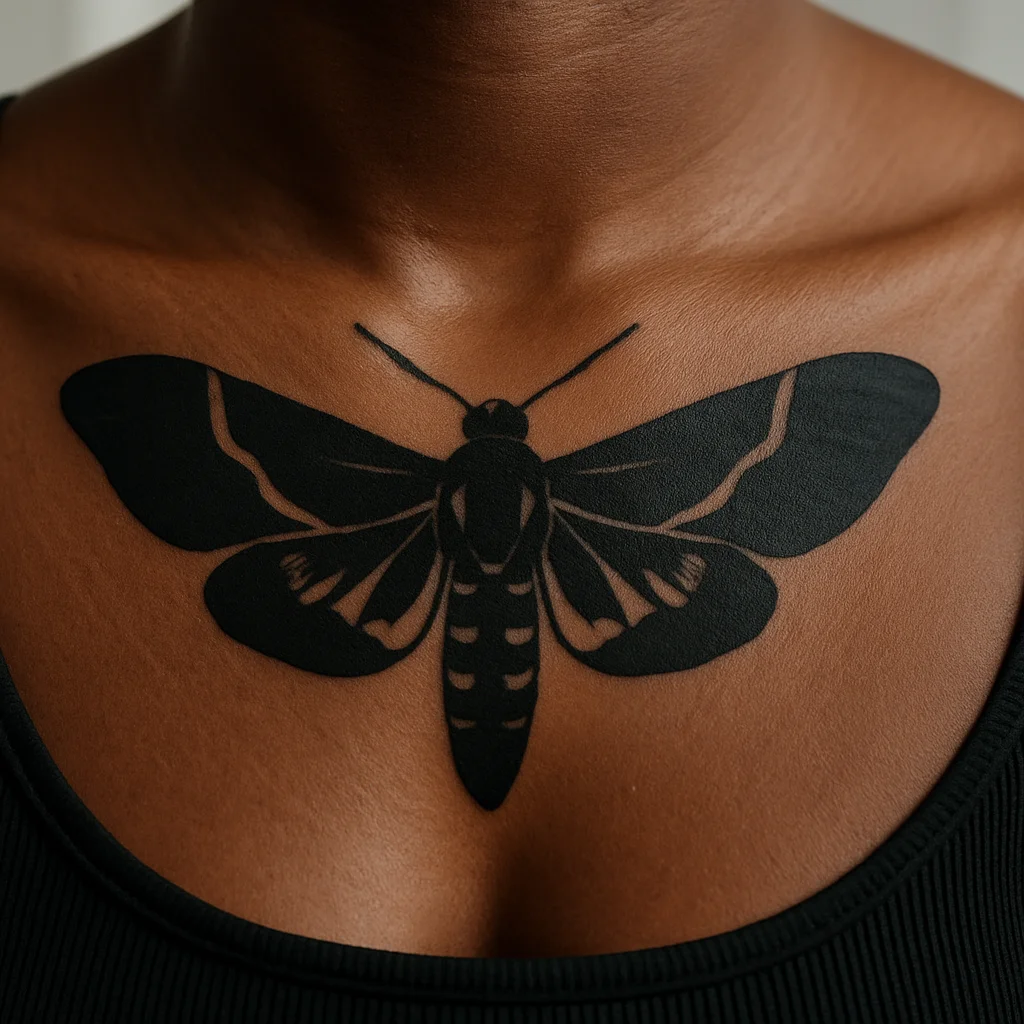
16. An open-winged moth centred on the notch
Body running vertically down the sternum, wings spreading onto the inner ends of both collarbones. Anywhere from 6 to 12 cm wide depending on how bold you want it. Fine-line with soft grey wash keeps it delicate; blackwork with solid wing panels makes it a statement piece you'll never hide.
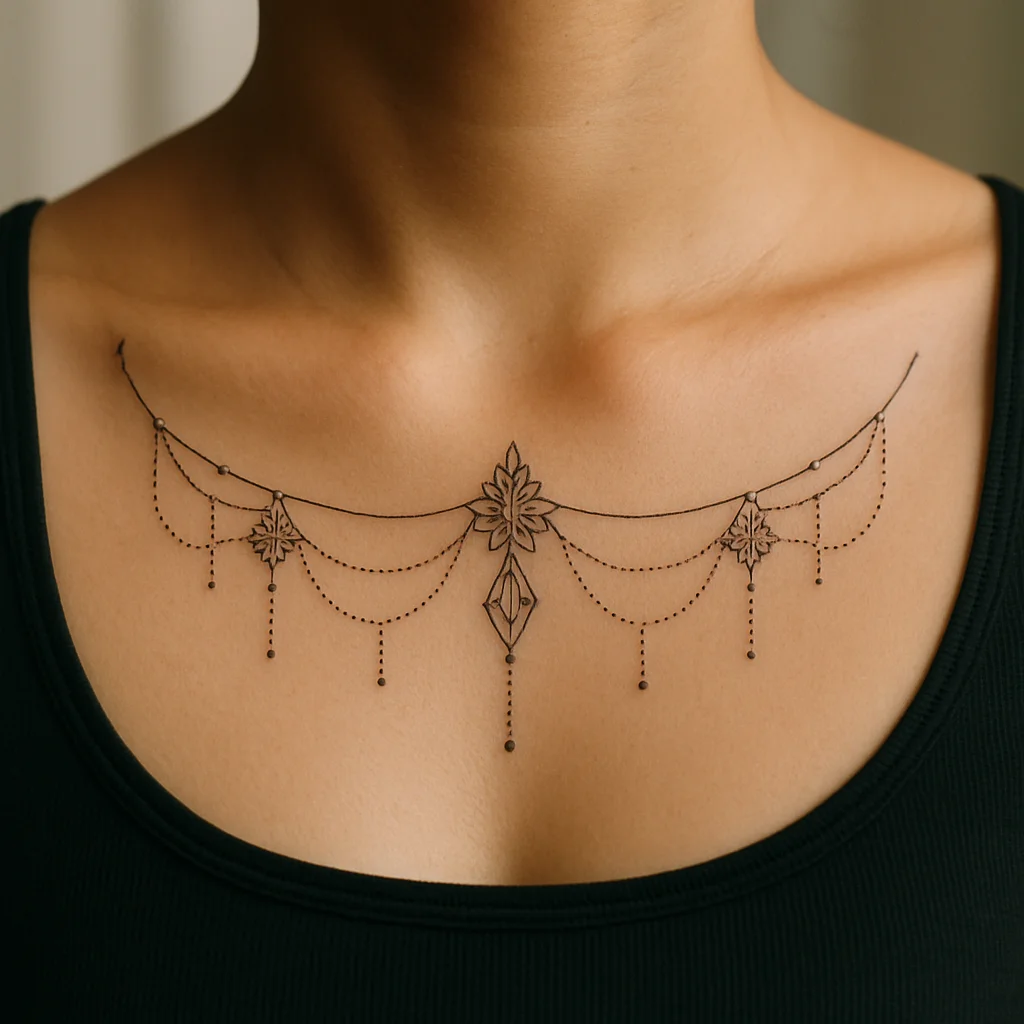
17. An ornamental drape with dangling dot chains
A jewellery-inspired garland that hangs between the collarbones, with fine strands and tiny teardrop shapes falling toward the sternum. It works because it mimics a necklace your body already suggests. Ask the artist to build it in dots and hairlines only — heavy line weight makes it look like armour, not lace.
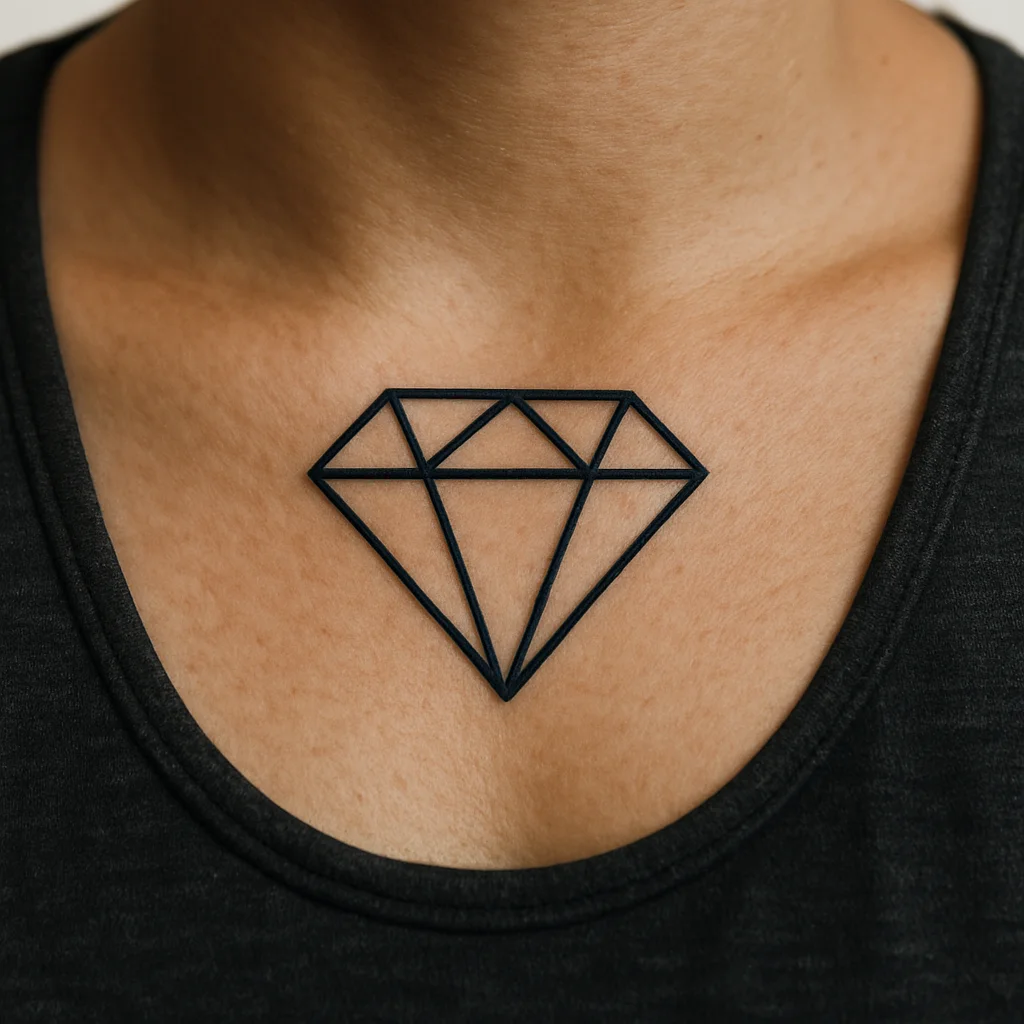
18. A hollow geometric diamond in the notch
A single outlined rhombus, 2–3 cm, sitting exactly in the dip with two short lines radiating from each point. Clean, modern, and quick to sit through. It also anchors any future chest or sternum work you add later.
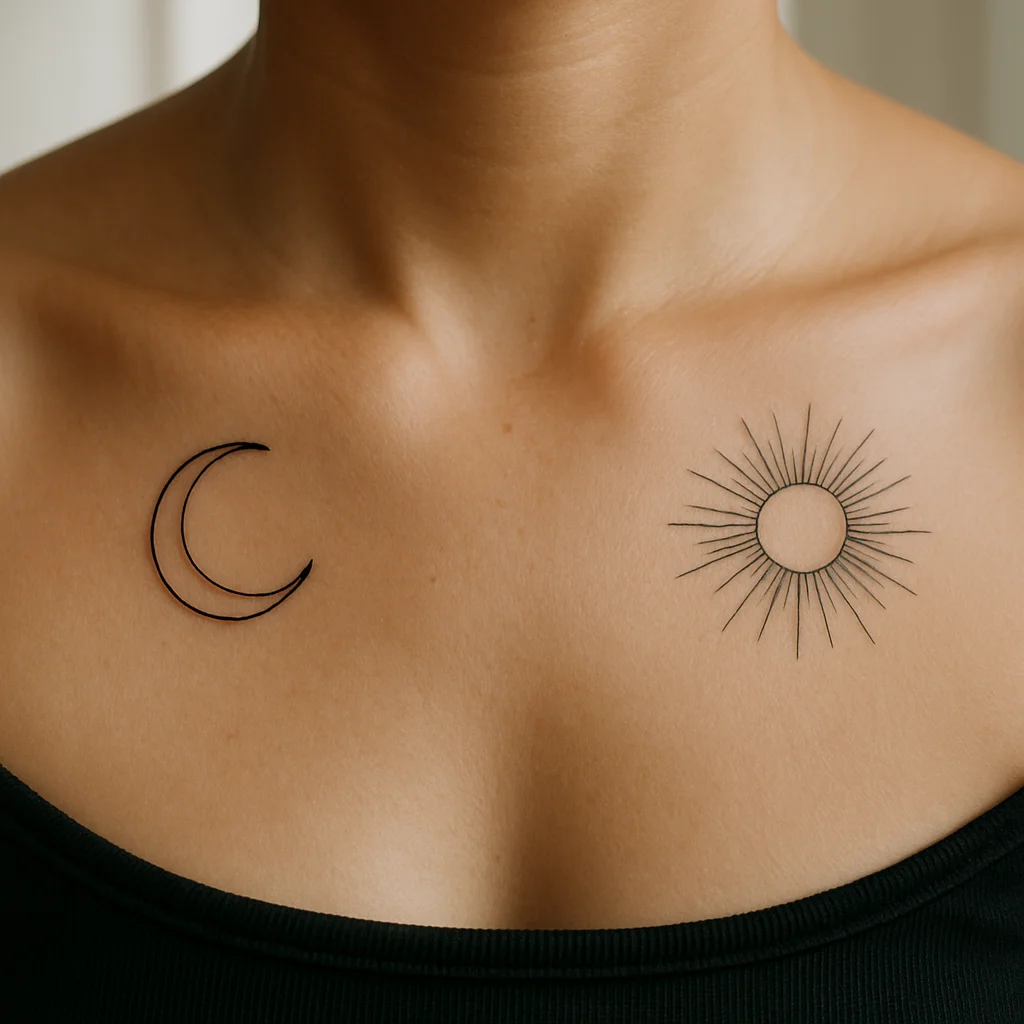
19. Sun and moon mirrored across the centre
A fine-ray sun on one collarbone, a crescent on the other, both about 3 cm and set the same distance from the midline. Balance is everything here — have the stencil placed while you stand square in front of a mirror, and check it yourself before the needle starts.
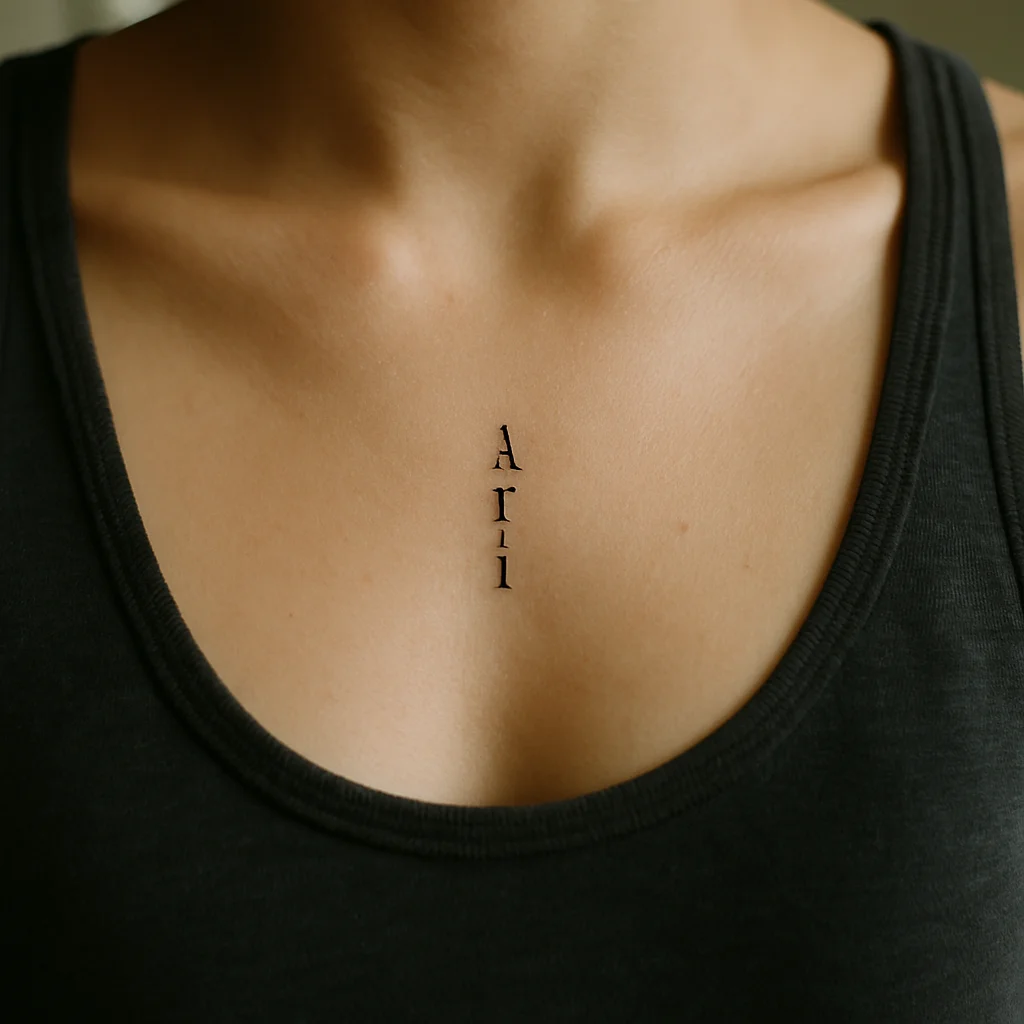
20. A short word set vertically down the sternum
Three or four letters running down from the notch, 12–15 mm each, in a clean serif. Vertical text reads well here because the sternum gives it a natural column. Keep it short: longer words start pulling onto the breastbone, where healing is fussier.
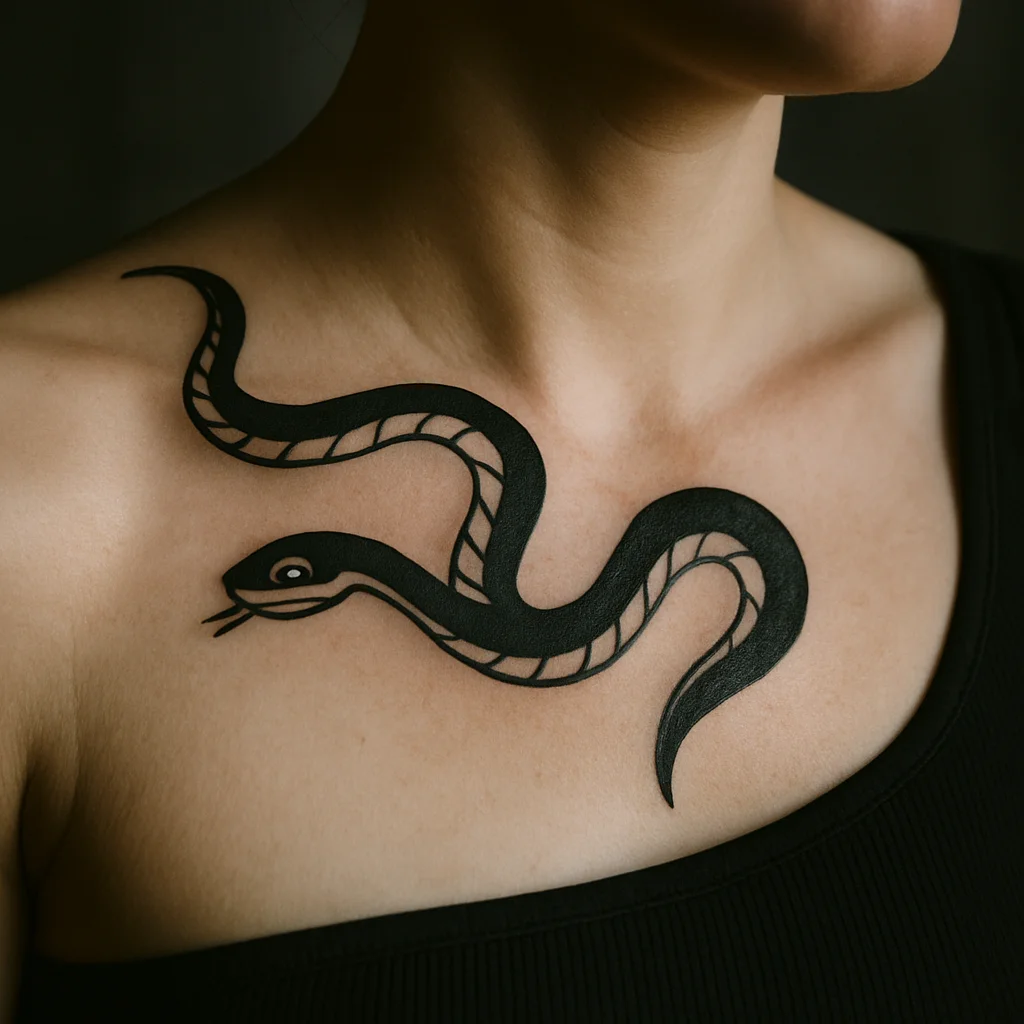
21. A snake looping across the notch
A slim serpent whose body crosses the centre and tapers along one collarbone, head resting near the inner shoulder. Around 12–16 cm end to end. Traditional-leaning line weight with a little solid black on the belly scales keeps it readable long-term.
The Outer End: 7 Designs That Spill onto the Shoulder
Past the bone's outer third, you finally get soft tissue and room to work. This is where collarbone tattoos stop being tiny and start being compositions — and where you can plan for something bigger down the line.
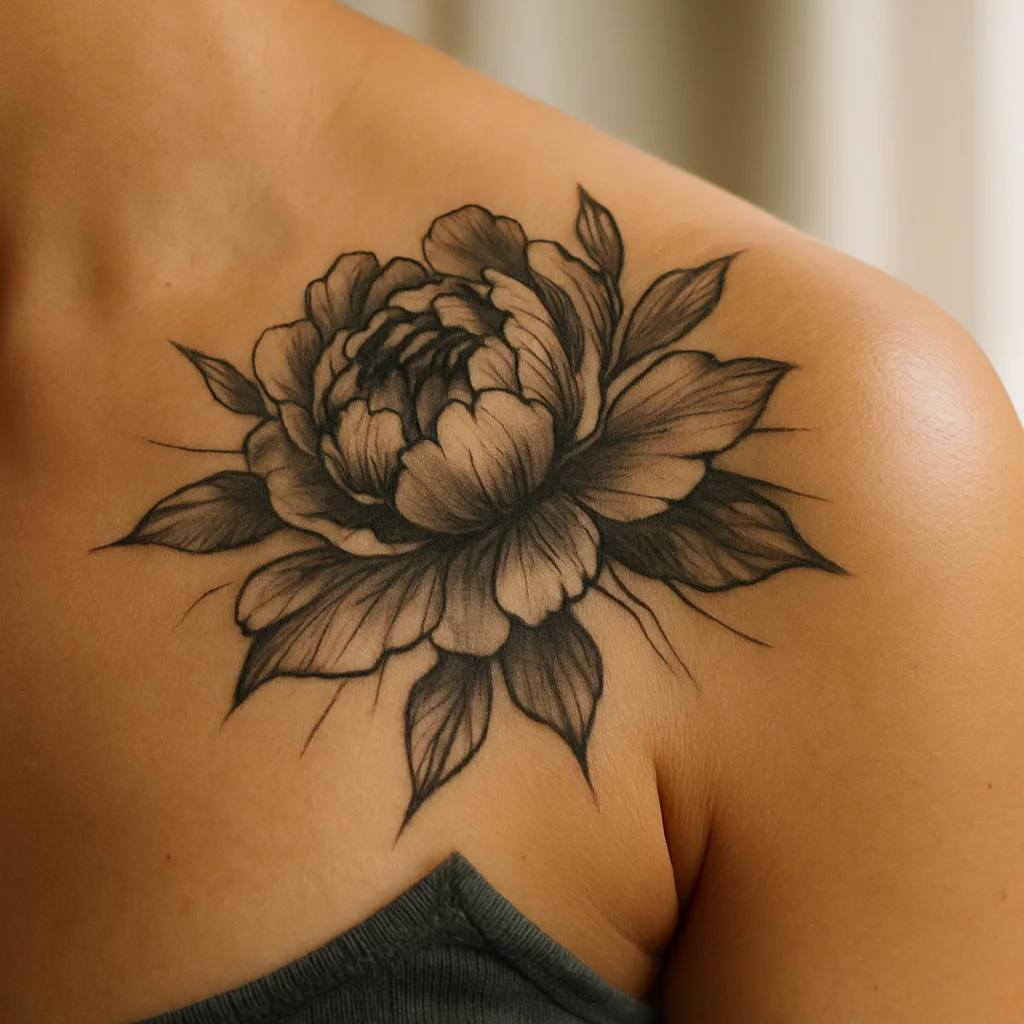
22. A peony rolling from bone to deltoid
The bloom sits on the shoulder cap with a few petals and one leaf reaching back over the end of the collarbone. Usually 10–15 cm, black and grey with soft shading. It flatters a rounded shoulder and looks deliberate in a strappy top rather than accidental.
23. A floral epaulette across the shoulder corner
A cluster of small blooms and buds that follows the seam of a t-shirt sleeve, starting at the collarbone end and curving over the top. Because it traces where clothing already sits, it reads as designed for your body. Expect two shortish sessions rather than one long one.
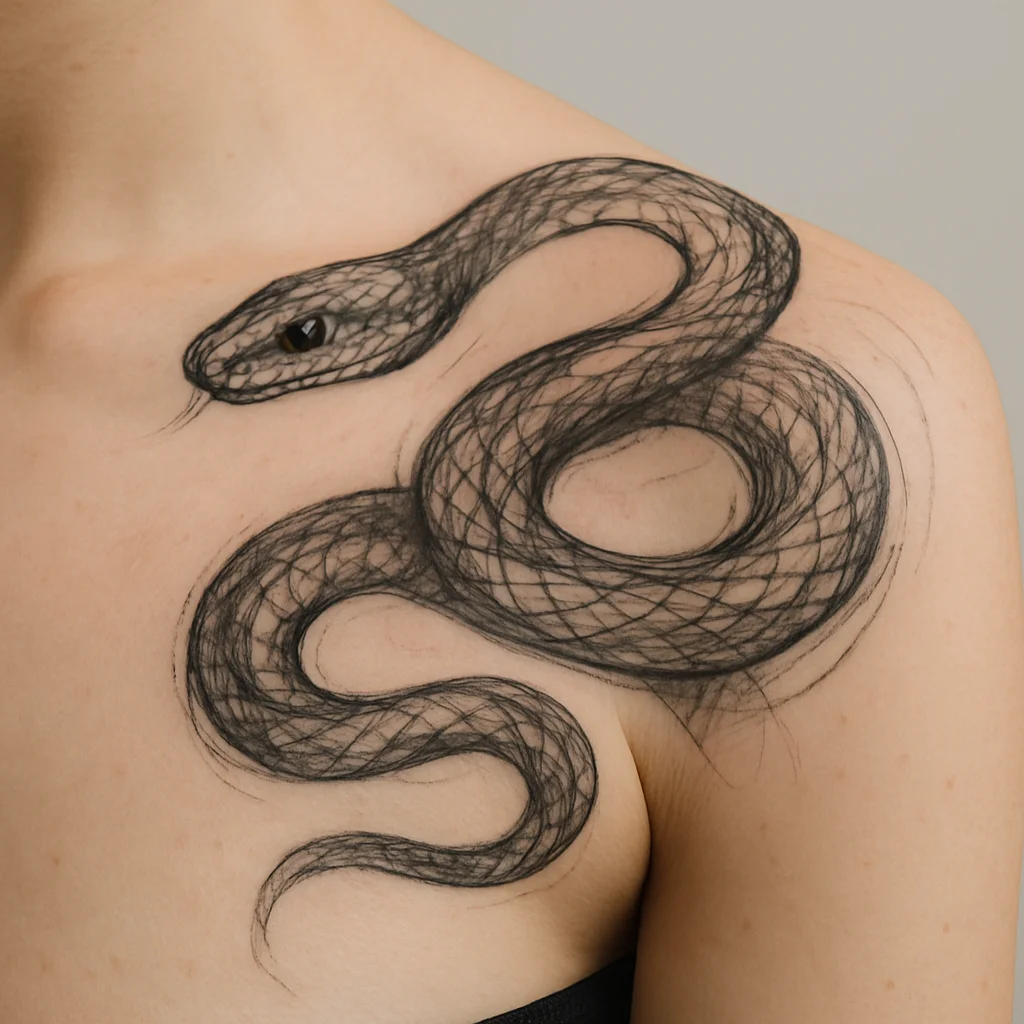
24. A snake winding over the shoulder
Head resting near the outer collarbone, body coiling up and over the deltoid toward the back. It's the single best starter for a future half sleeve because it establishes flow across the joint. Ask for the widest part of the body to sit on muscle, not bone.
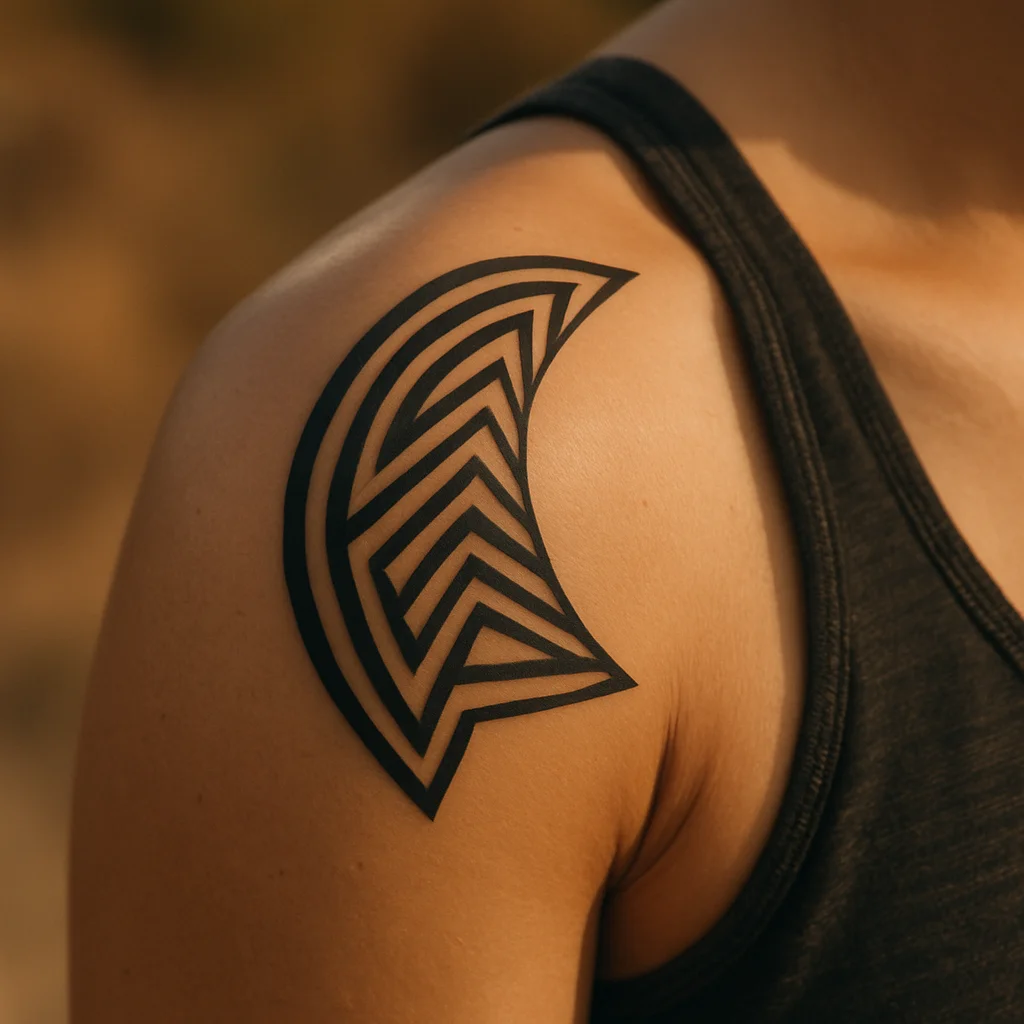
25. An arc of geometric triangles
A crescent-shaped band of nested triangles and thin arcs sweeping from the bone end onto the shoulder cap, 8–12 cm. Sharp, graphic, and it holds shape well because the linework is straight. Best on artists who work with rulers and stencils, not freehand.
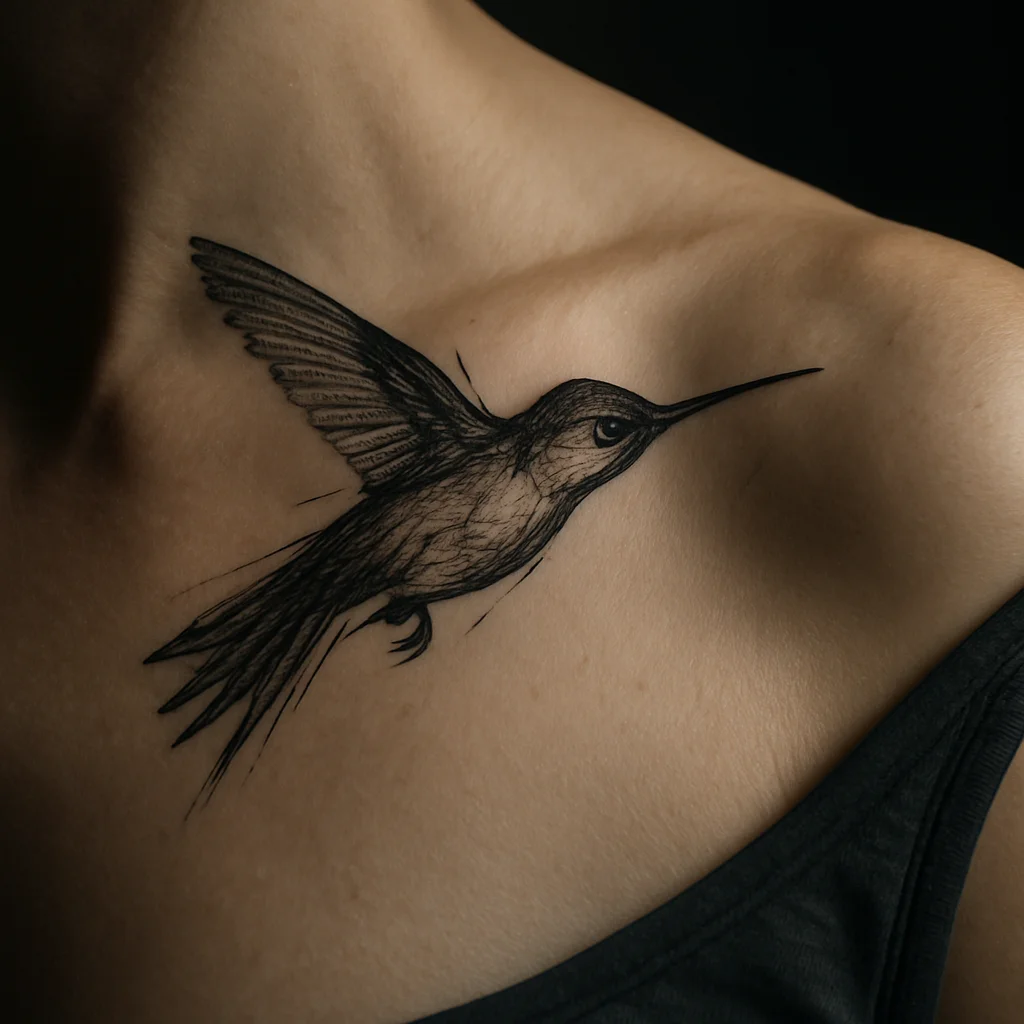
26. A hummingbird diving toward the bone end
Wings blurred with fine stippling, beak pointing down toward the clavicle, body on the softer shoulder tissue. Around 7–9 cm. The diagonal energy suits this corner of the body better than anything static.
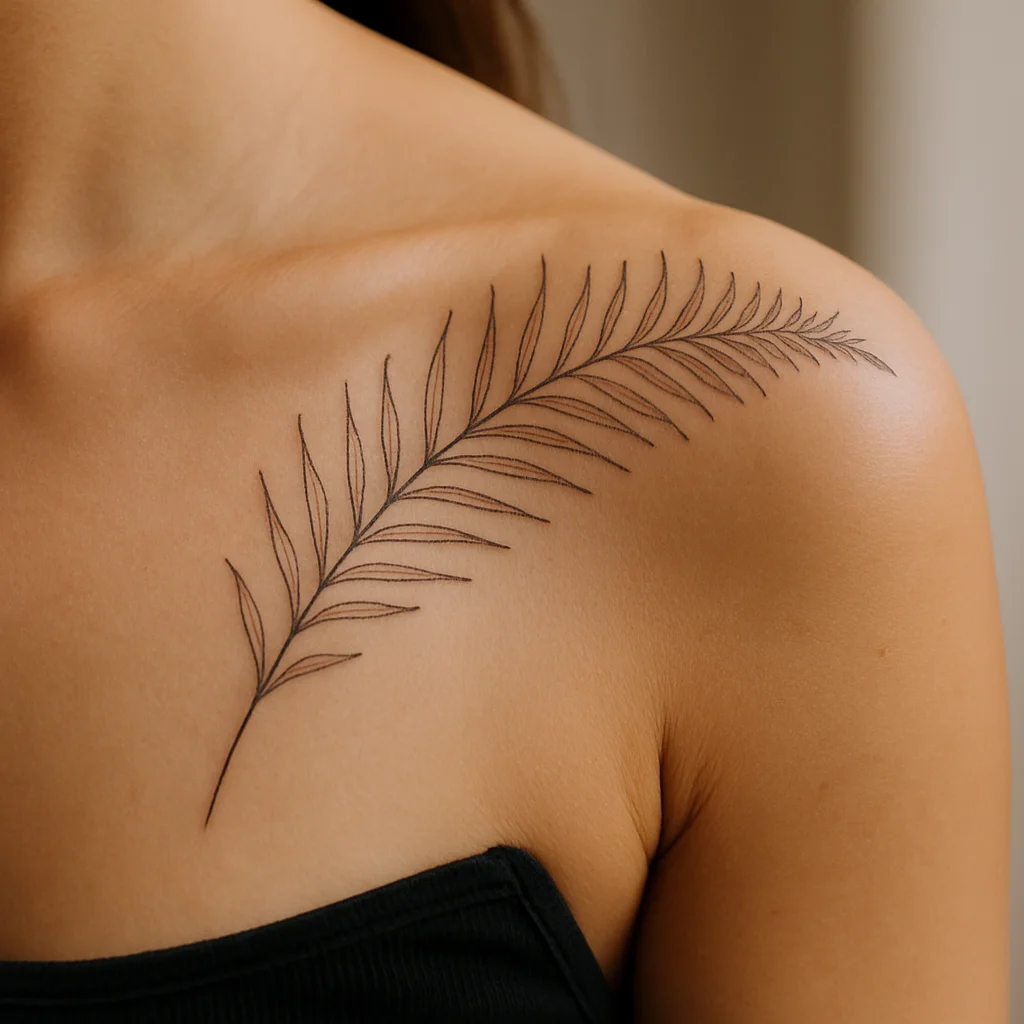
27. A fern frond curving over the deltoid
One long frond arching from the outer collarbone across the shoulder, leaflets thinning to a point. Keep the leaflets separated by clear gaps of a couple of millimetres — fern tattoos are the classic case of detail that merges into a solid blob over the years.
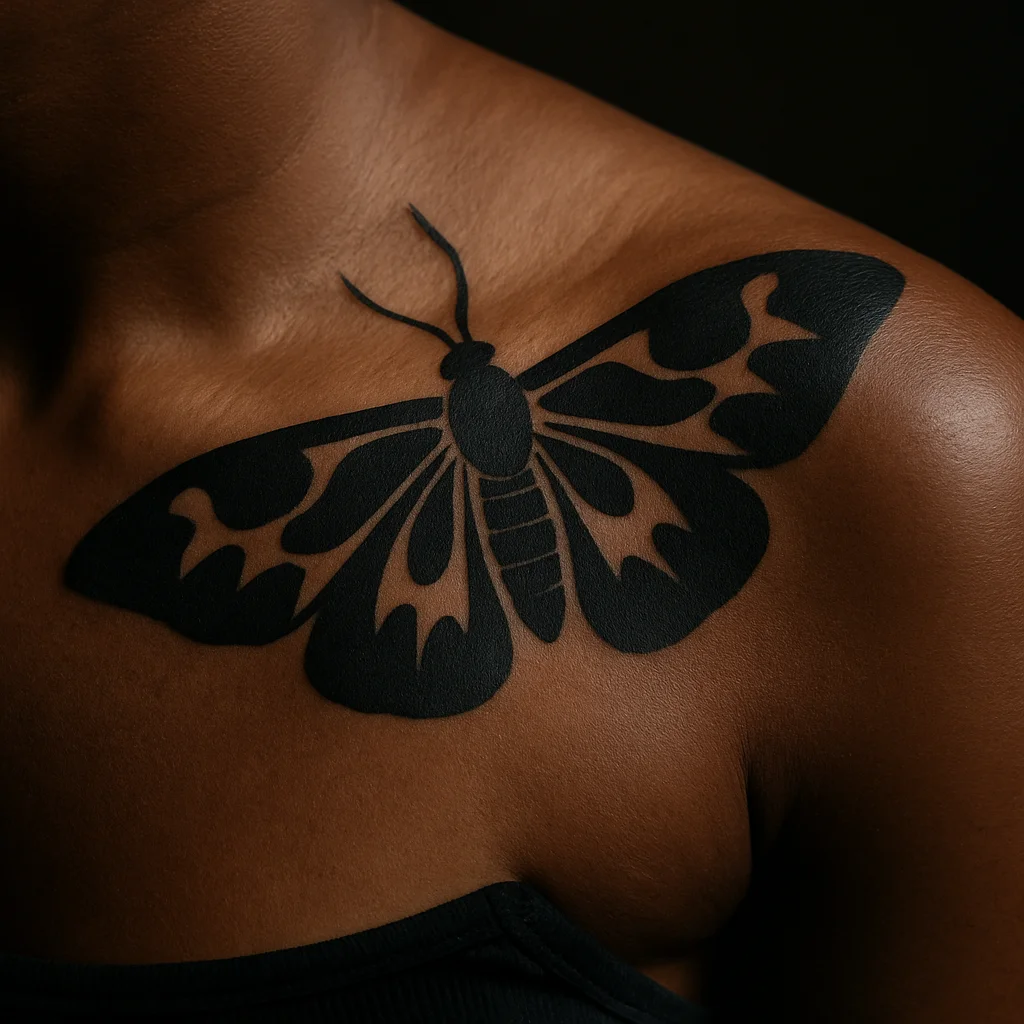
28. A moth spanning the bone-to-shoulder corner
Wings open across the angle where clavicle meets deltoid, body on the bone end, antennae reaching toward the neck. At 10–14 cm it's the largest piece on this list and the one that most rewards a strong artist. Blackwork with negative-space patterning in the wings ages far better than heavy grey wash on this sun-exposed corner.
Pain, Healing and How Collarbone Ink Ages
Let's be honest about the sitting. Directly on the bone, the needle vibrates against a hard surface with barely a millimetre of tissue in between, and most people describe it as sharp and rattly rather than burning. The sternal notch is the worst spot in the zone — nerve-dense and hollow, so it hums through your chest. The hollow above the bone and the outer shoulder end are noticeably easier. The saving grace is duration: most collarbone pieces are 45 minutes to two hours, so you're not enduring it all day.
Healing is straightforward but the location is annoying. Bra straps, tote bags, seatbelts and collars all rub exactly where you've just been tattooed. Plan for loose scoop necks and strapless bras for a week, and switch your bag to the other shoulder. Sleep on your back if you can. Standard care applies — wash gently twice a day, thin moisturiser, no soaking — and our 30-day aftercare guide covers the timeline in detail.
Long-term, sun is the real enemy. This zone catches direct light in every summer top, and unprotected fine-line work here greys out faster than the same design on an inner forearm. Two practical defences: ask for slightly heavier line weight than you think you need, and get in the habit of SPF on your chest year-round. Skin over bone also has less padding to hold crisp detail, so anything with lines closer than about 2 mm apart will eventually merge. Design with gaps and you'll still be able to read it in fifteen years.
Sizing, Cost and How to Brief Your Artist
Collarbone work sits at the affordable end of the scale because it's small and quick. A tiny motif in the hollow or a short numeral run usually lands at or just above a studio's minimum charge. A full-length bone-line design or a symmetrical sternum piece typically runs into the low hundreds, and a peony or moth spilling onto the shoulder moves into half-day territory. Rates swing hugely by city and by artist reputation, so treat any figure you see online as a starting point and ask for a quote against your actual reference.
Three things to say when you book:
- "Please stencil me standing." Shoulder position changes everything here. Stand naturally, arms at your sides, and check the placement in a full-length mirror before you commit.
- "Wear-test it for me." Bring the top you wear most and hold it up against the stencil. Half-hidden collarbone tattoos are the most common regret in this zone.
- "Design for the curve, not the photo." Reference images are almost always flat. A good artist will redraw a straight motif so it bends with your clavicle, and that redraw is what makes it look custom.
If you think you'll want more later, say so at the consultation. A design that ends cleanly at the outer third leaves the shoulder open; a design that already climbs onto the deltoid commits you to a direction. Both are fine — just choose deliberately instead of discovering it two years in.
One last note on symmetry: perfectly matched pieces on both collarbones are harder than they look, because almost nobody is symmetrical. Ask your artist to measure from the notch rather than from the shoulders, and accept a millimetre of variance. Nobody sees it but you.
Frequently asked questions
How much do collarbone tattoos hurt compared to other placements?
Directly on the bone it's a sharp, vibrating pain most people rate as high but very manageable because the sessions are short. The sternal notch is the most sensitive spot in the area, while the soft hollow above the bone and the outer shoulder end are considerably milder. Eat beforehand and expect 45 minutes to two hours for most designs.
Do fine-line collarbone tattoos fade faster than other placements?
They can, mainly because the chest gets a lot of direct sun and the skin over bone has little padding to hold fine detail. Ask for slightly heavier line weight than a reference photo shows, keep at least a couple of millimetres between lines, and use SPF on your chest year-round. With those three habits, fine-line work here holds up well.
What size works best on the collarbone?
Small motifs in the hollow above the bone read best at 2 to 4 cm, linear designs along the bone at 8 to 14 cm, and pieces that cross onto the shoulder at 10 to 15 cm. Going too small on a bone-line design makes it look like a smudge from a normal conversational distance. When in doubt, size up slightly rather than down.
Can I get matching tattoos on both collarbones?
Yes, and it looks striking, but ask your artist to measure outward from the sternal notch rather than from your shoulders, since most bodies aren't perfectly symmetrical. Have the stencils placed while you stand square in front of a mirror and check both sides yourself before starting. Expect a millimetre or two of natural variance.
How long before I can wear a bra or bag strap normally again?
Give it at least a week of loose scoop necks and strapless or wide-set straps so nothing rubs the fresh tattoo. Switch your bag to the opposite shoulder for the first two weeks. Once the surface has finished flaking and stops feeling tender, normal clothing is fine again.
The conversation
No comments yet. Got a thought about these designs? Start us off.
Want to weigh in? Join the community to comment, save designs and try them on your skin.