Thigh Tattoo Cost: 10 Real Quote Breakdowns
Thigh tattoo pricing makes more sense once you see it broken down design by design: here are ten realistic quotes, from a palm-sized moth to a multi-session Japanese panel, plus the costs most people forget to budget for.
What you're actually paying for
No artist charges by body part. They charge for time, skill and ink coverage — the thigh just happens to be a canvas big enough that most designs grow, and growing designs cost more. A 3-inch moth on your outer thigh costs roughly what the same moth costs on a forearm. A 10-inch moth costs four times that, because it takes four times as long to line, shade and finish.
The variables that move a thigh quote the most:
- Size in inches. Bring a number, not a vibe. "Hand-sized" and "about 6 inches tall" get very different quotes.
- Detail density. Stippled ornamental work and photo-realistic texture eat hours. Bold traditional linework with flat fill covers the same area far faster.
- Colour vs black and grey. Colour usually adds time: more needle changes, more passes, and often a second sitting for saturation.
- Artist demand. A resident artist two years in and a fully booked specialist with a waitlist can differ by two or three times per hour.
- City. Big-city studios with high rent quote higher than small-town shops, sometimes dramatically.
- Session count. Anything past four or five hours usually gets split, and each sitting means fresh setup, fresh supplies, fresh booking.
The thigh does have one genuine cost advantage: it's a forgiving surface. Flat, meaty, low-friction skin holds ink well and heals cleanly, which means fewer patchy areas to fix and less risk of paying for a heavy touch-up later.
Hourly rates, day rates and shop minimums
Three pricing models cover almost every studio you'll walk into.
The shop minimum
Every studio has a floor price, usually somewhere in the range of a low three-figure sum, that covers needles, ink, tubes, gloves, sterilisation and the artist's setup time. If your thigh tattoo takes twenty minutes, you still pay the minimum. This is why tiny thigh tattoos are rarely the bargain people expect — the sterile setup costs the same whether the tattoo is two inches or six.
Hourly
Most artists quote hourly for anything open-ended. Apprentices and newer artists typically sit at the bottom of the market, experienced residents in the middle, and in-demand specialists or travelling guest artists at the top — the spread between those tiers in a single city can easily be double or triple. Ask what the hourly rate is and whether it's charged in full hours or prorated.
Flat and day rates
For a piece the artist has already designed, many will quote a flat price so you both know where you stand. For big thigh work, day rates are common: you book a full sitting, often five to seven hours of needle time, at a discount against the pure hourly figure. Day rates are the best value per square inch of thigh you'll find.
Deposits are near-universal — a modest sum that secures the date and comes off the final bill. Miss the appointment without notice and you lose it. Reschedule with a week's warning and most shops move it once for free.
5 small-to-mid thigh quotes, broken down
Here's how real designs translate into real numbers. Every figure below is a range in US dollars, because your city, your artist's tier and your own skin all shift the total. Use them to sanity-check a quote, not to argue with one.
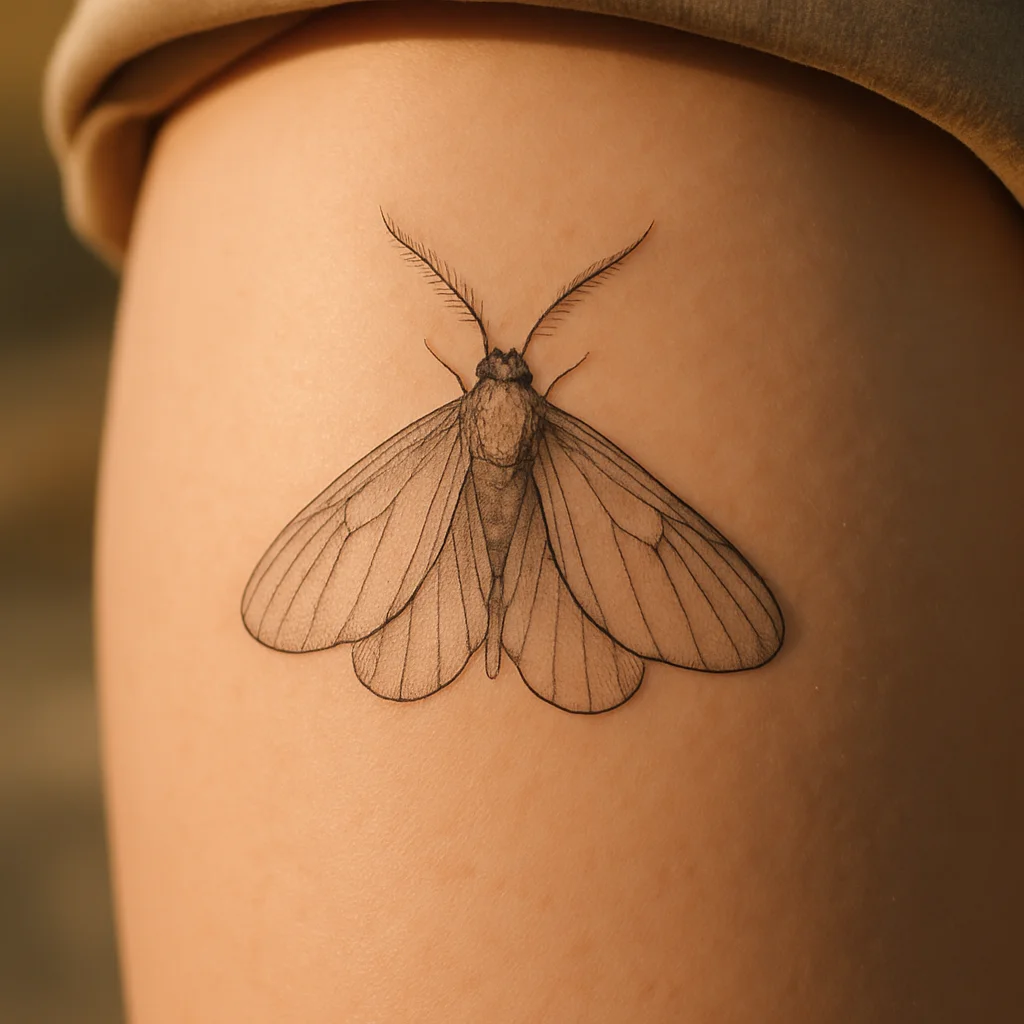
1. Palm-sized fine-line moth on the outer thigh
Roughly 3 to 4 inches tall, single-needle linework with light stipple shading, done in well under an hour. Expect to pay the shop minimum up to around $200, since setup time dominates. This is the classic first thigh tattoo: cheap, low-pain, and easy to build around later.
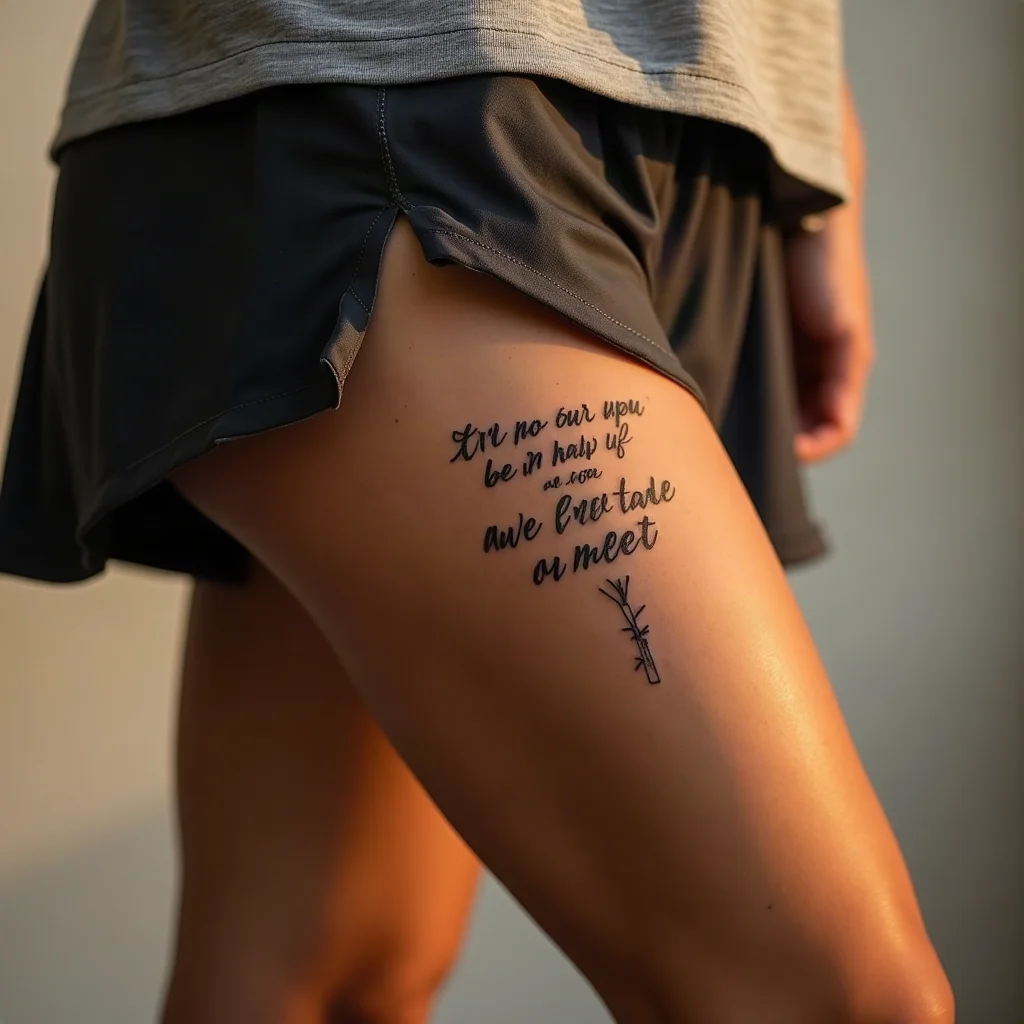
2. A short script quote down the inner thigh
Two or three lines of handwriting-style script running vertically, around 5 inches long. Budget $120 to $300; the linework is quick but placement is fiddly and the inner thigh is tender, so the artist works in shorter passes. Keep letters at least a quarter-inch tall or the script will blur into a smudge within a decade.
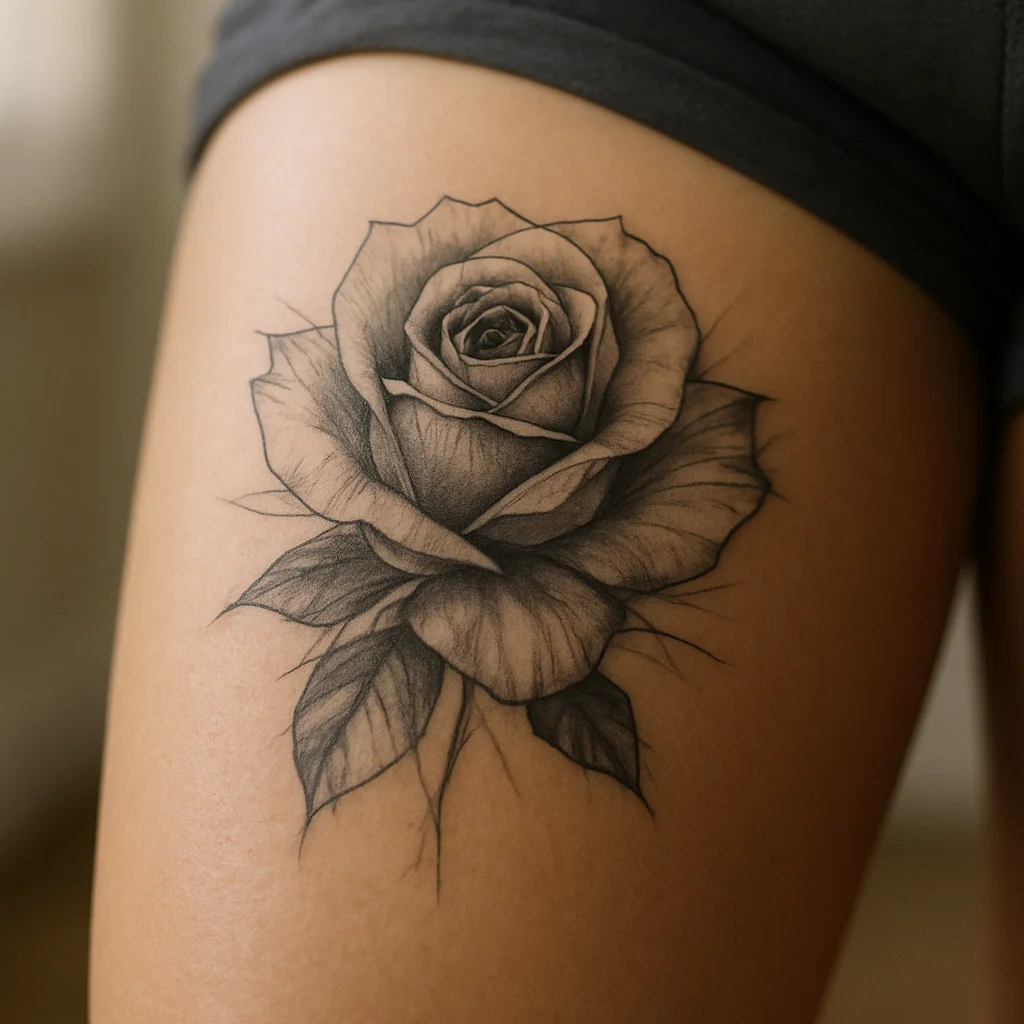
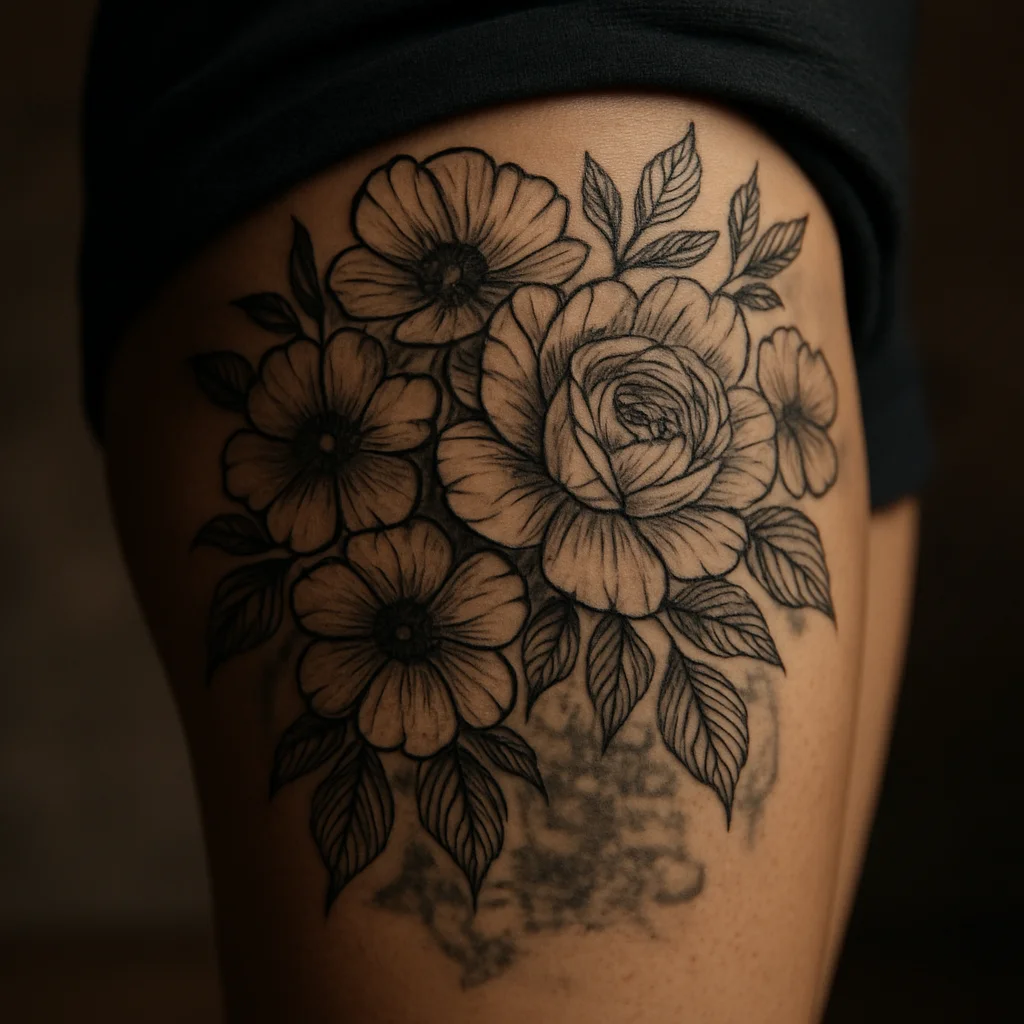
3. Black and grey rose above the knee
Hand-sized, maybe 4 to 5 inches, with soft grey wash petals and a defined black outline. Two to three hours of work puts this at $250 to $550. Sitting just above the knee means a sharper sting near the end and a slightly slower heal thanks to constant bending.
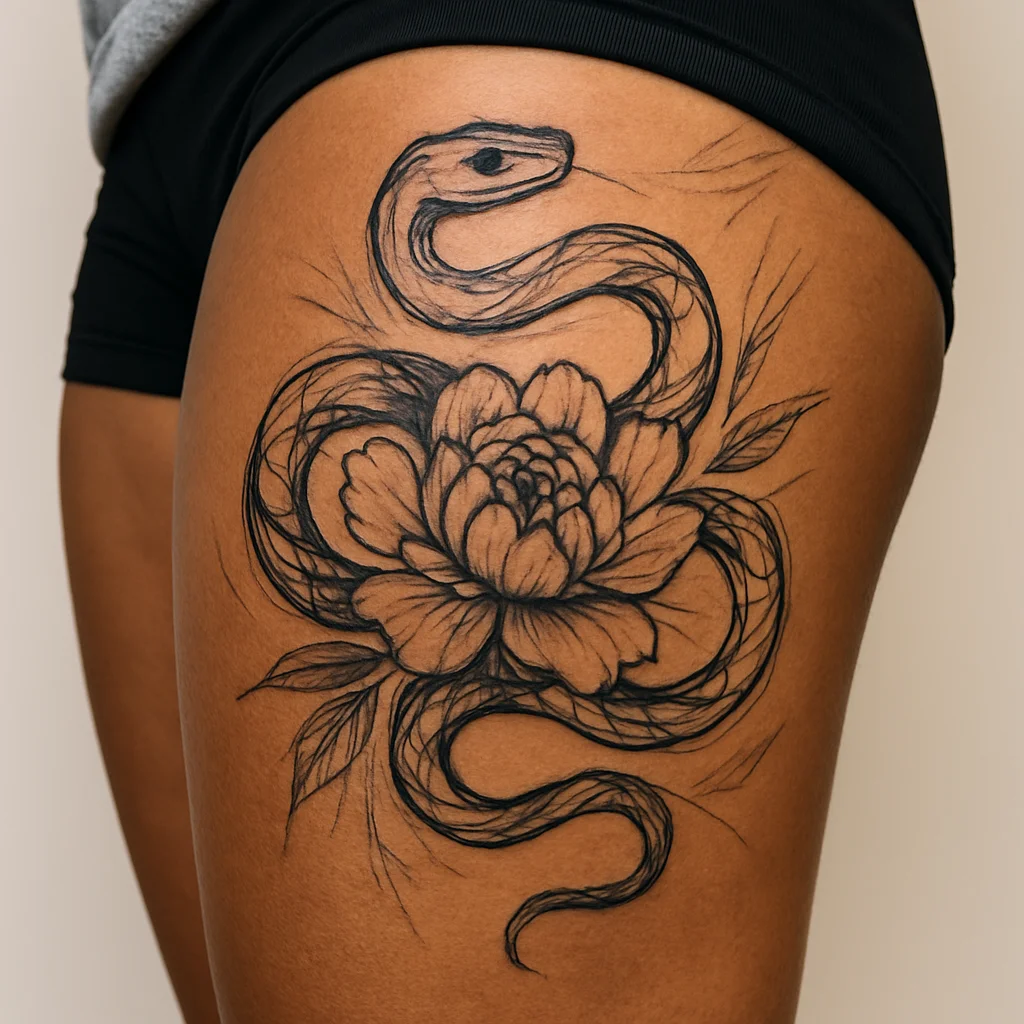
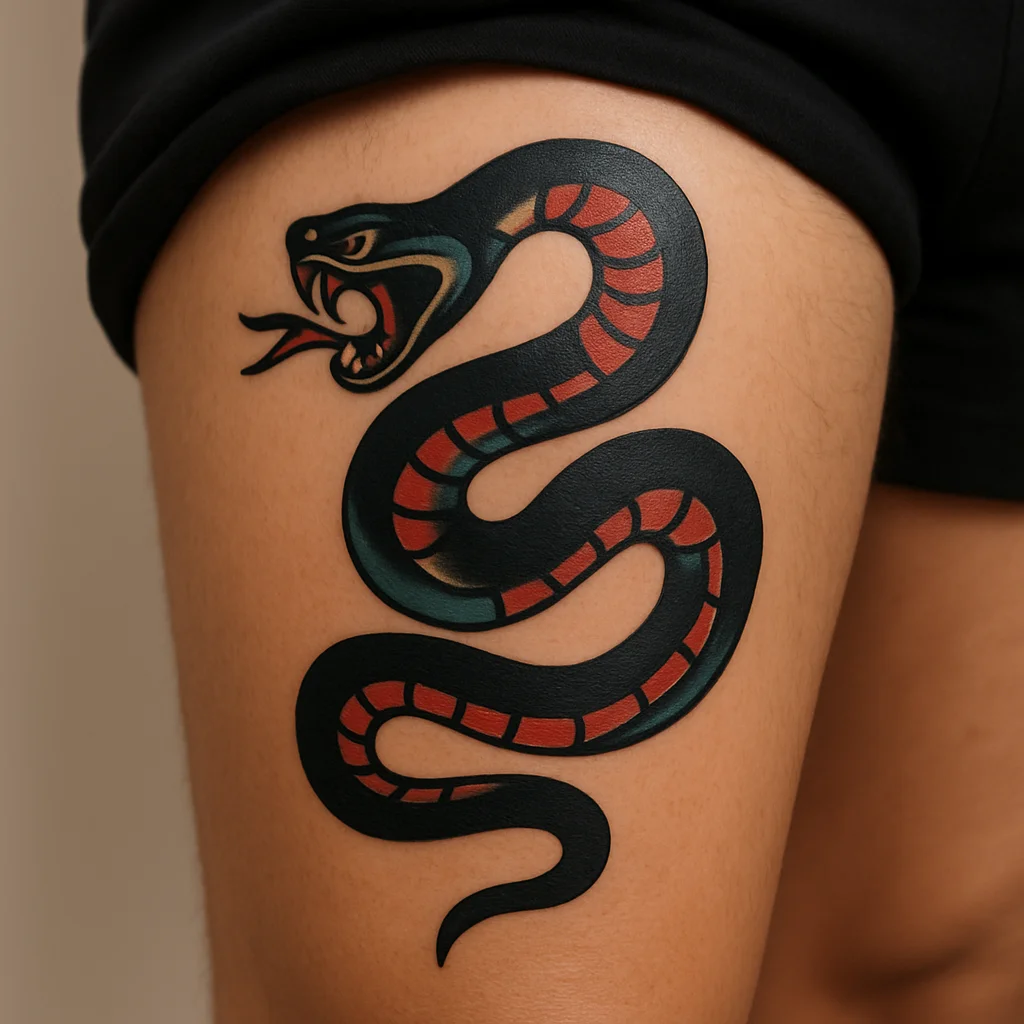
4. Bold traditional snake coiling around the outer thigh
A classic American traditional snake, roughly 8 inches, with heavy black outlines, red tongue and solid green or yellow fill. Four to five hours, so $450 to $900. Traditional pricing is efficient value — bold lines and flat colour cover a lot of thigh per hour and read clearly for thirty years.
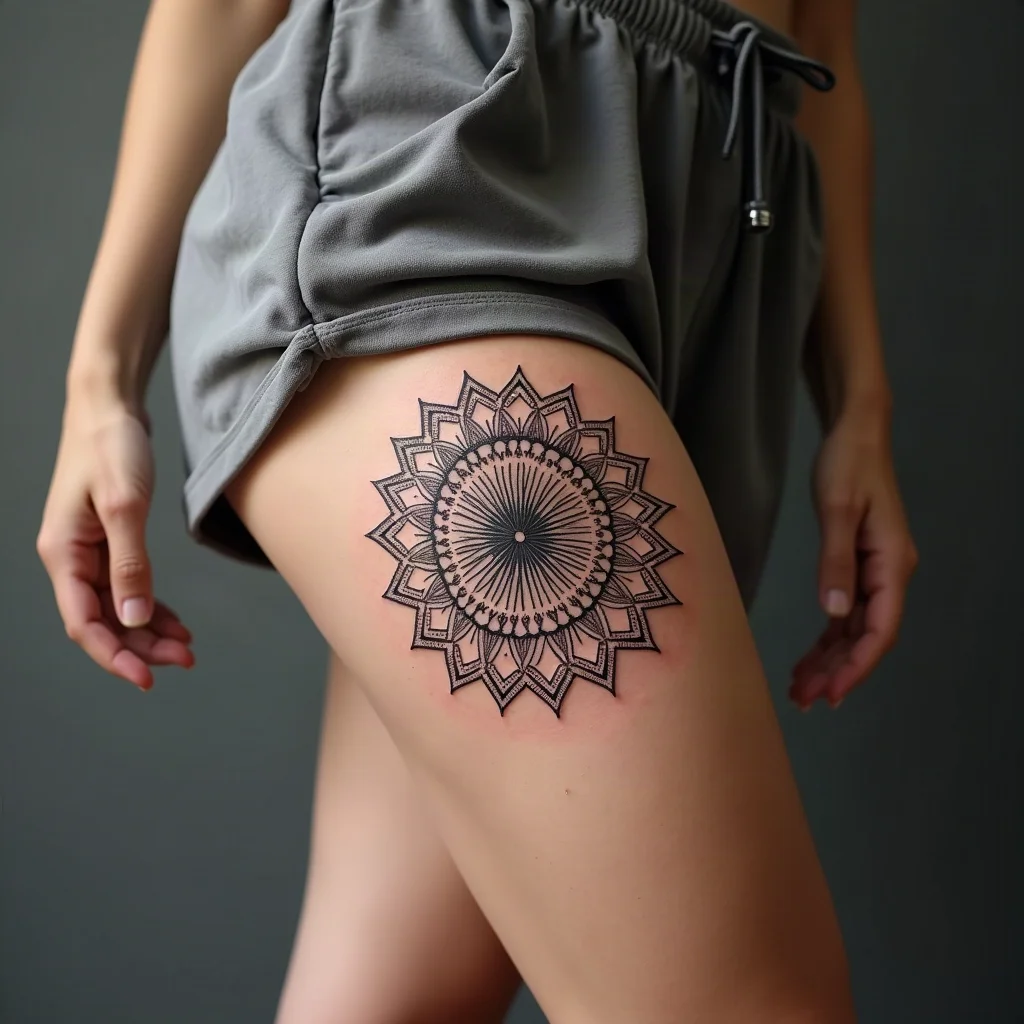
5. Geometric mandala on the front of the thigh
A 7-inch symmetrical mandala with dotwork shading and negative-space petals. Precision costs time: five to six hours across one long sitting or two short ones, landing at $550 to $1,100. Symmetry is unforgiving, so pay for an artist whose healed dotwork you've actually seen.
5 large thigh quotes, broken down
Once a design crosses about six hours, artists stop thinking in tattoos and start thinking in sittings. These are the projects where day rates, deposits and a session plan matter more than the sticker price.
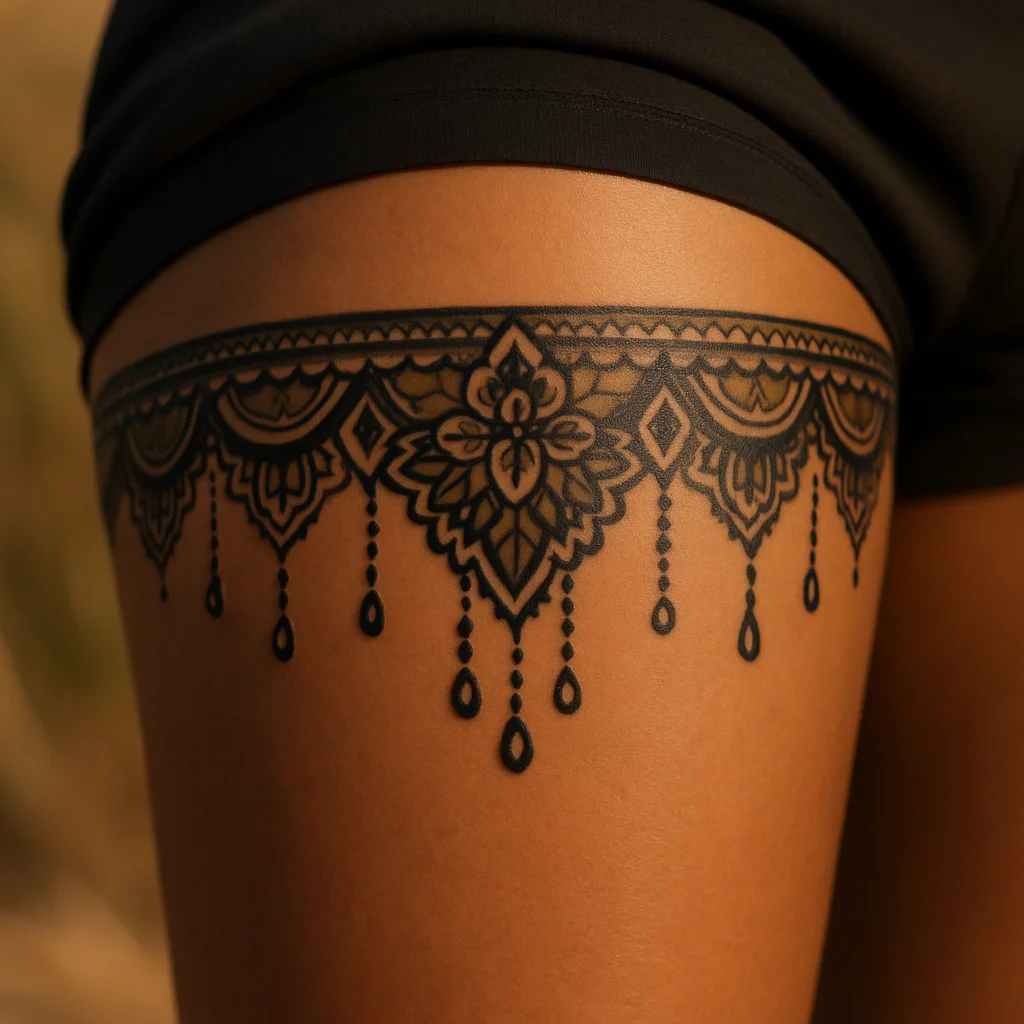
6. Ornamental garter band wrapping the whole thigh
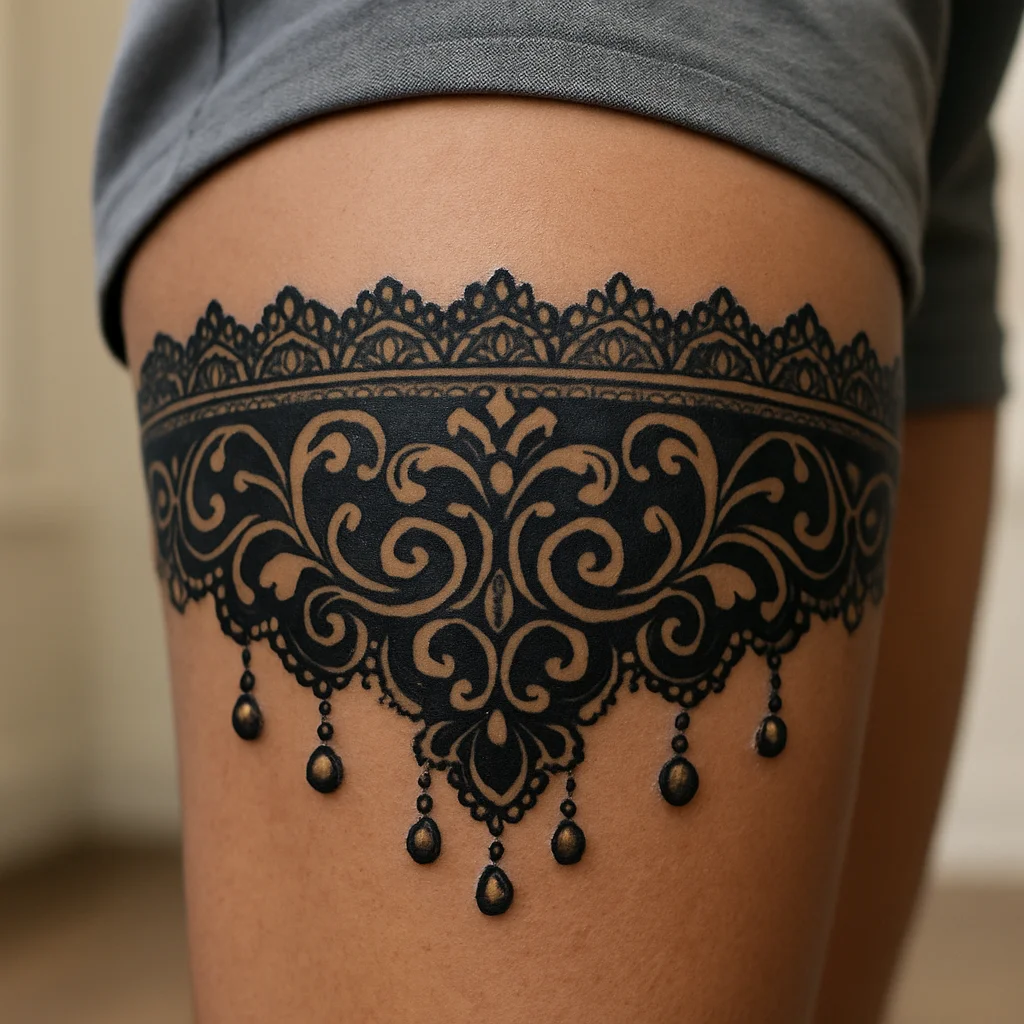
Lace, pearls and filigree circling the leg means working all the way around, including the tender inner crease. Six to ten hours over one or two sittings puts this at $900 to $2,200. Wrapping designs cost more per inch than flat panels because the artist has to reposition you constantly.
7. Black and grey animal portrait covering half the thigh
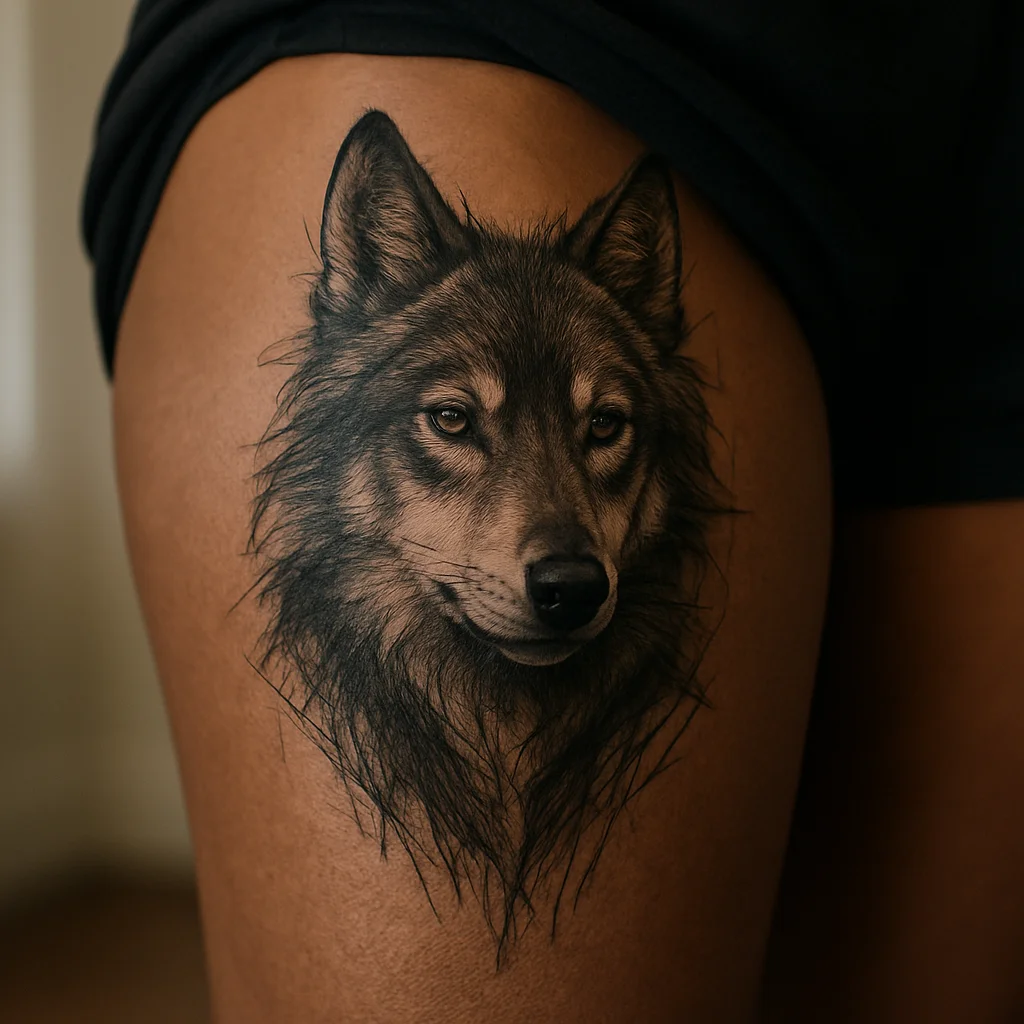
A wolf, horse or big cat rendered with realistic fur texture across roughly 10 by 8 inches. Eight to twelve hours across two sittings, so $1,200 to $2,800. Realism is the least forgiving style there is — this is the category where paying a specialist genuinely saves money, because a weak portrait costs more to fix than it did to get.
8. Full-colour Japanese panel from hip to knee
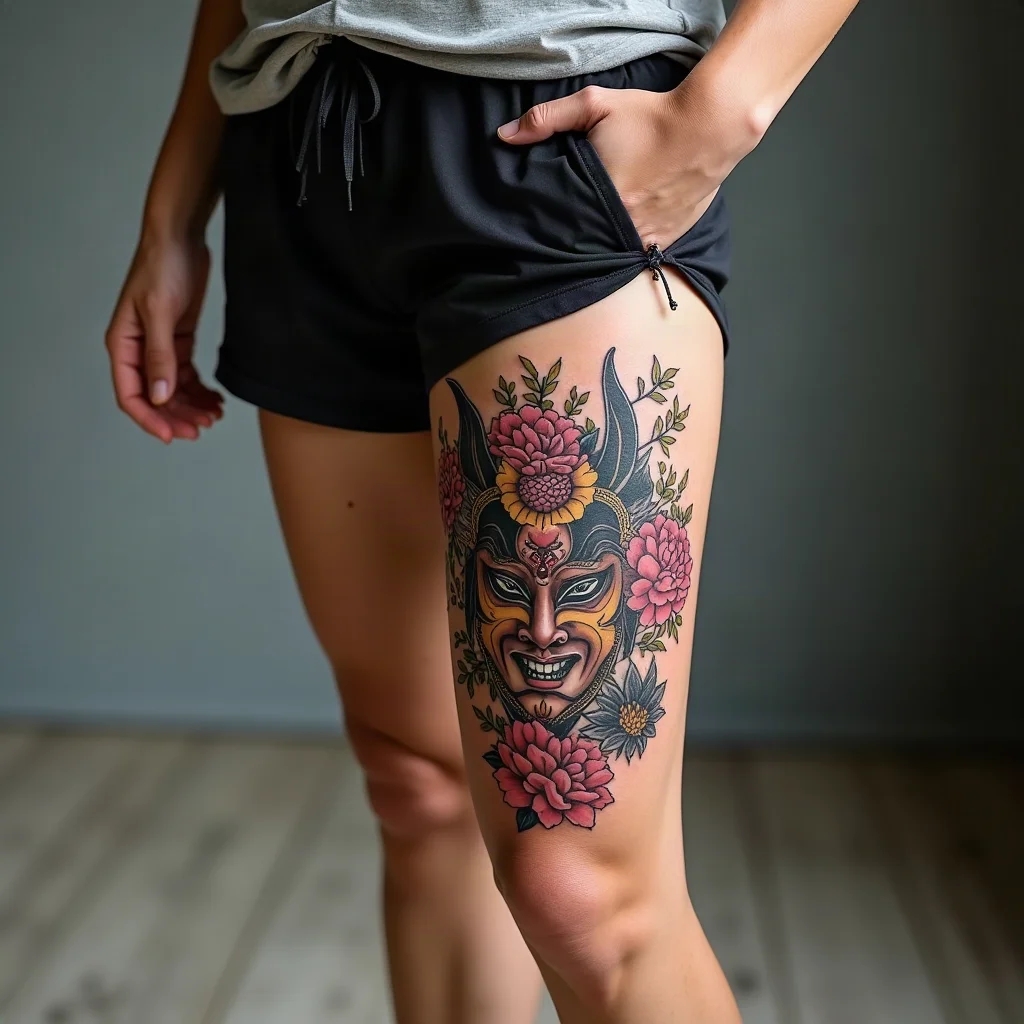
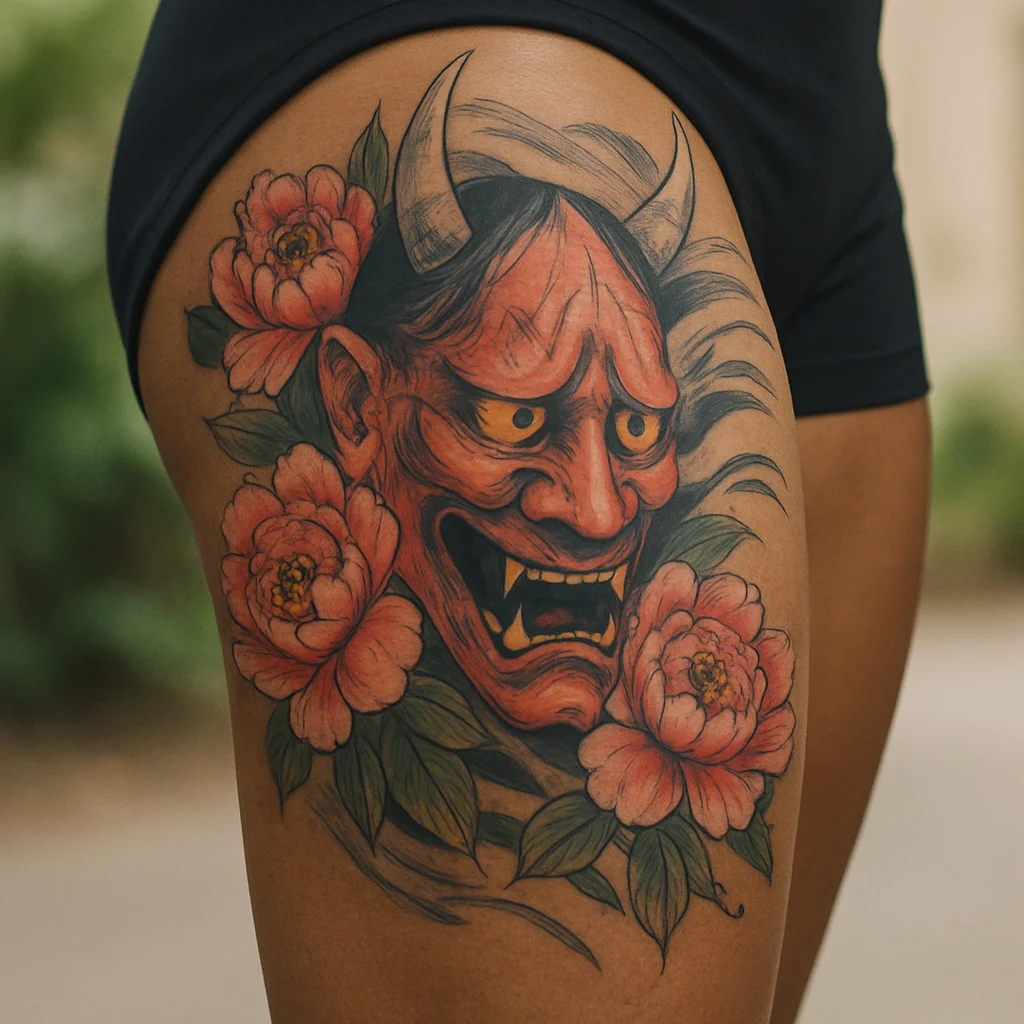
Hannya mask, peonies, wind bars and background finger waves filling the outer thigh. Fifteen to twenty-five hours across three to five sittings: $2,000 to $5,500, often booked as day rates. Ask upfront whether background and colour packing are quoted separately, because that's where the hours quietly pile up.
9. Heavy blackwork panel with negative-space linework
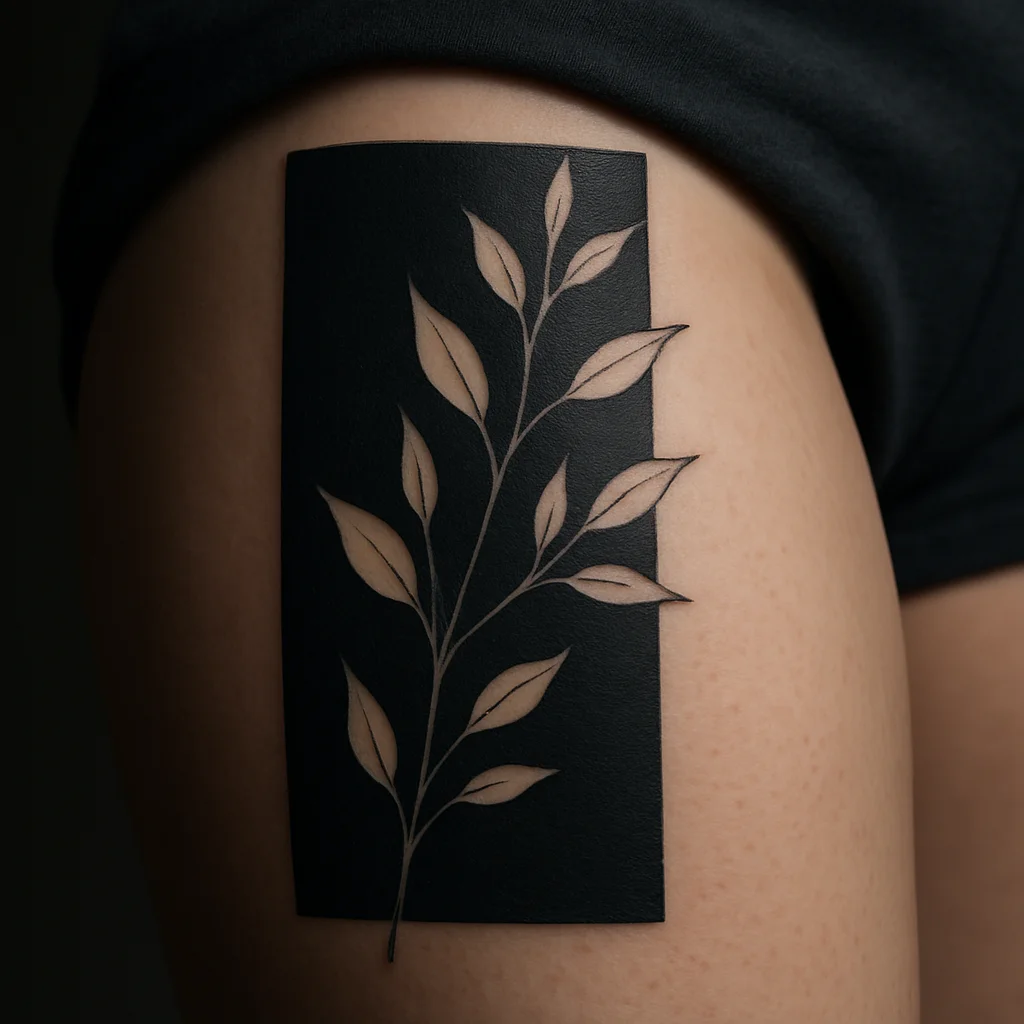
Solid black fields broken by fine negative-space botanicals, covering the outer and front thigh. Twelve to twenty hours minimum at $1,500 to $4,000, and almost always multi-session — saturated black needs healing time between passes. Budget for one paid touch-up sitting; large blackwork frequently needs a second pass on the edges.
10. Cover-up over an old thigh tattoo
A faded name or a dated tribal band being buried under a floral or ornamental design. Cover-ups usually run 30 to 60 percent above the same design on clean skin, because the new piece must be bigger, darker and denser, and often follows two or three laser fading sessions billed separately. A realistic cover-up of a medium old piece lands around $800 to $2,500 all in.
The costs that don't appear in the quote
Plenty of people budget the tattoo and get blindsided by everything around it. Add these to your number before you book.
- Deposit. Paid at booking, usually deducted from the final total. Non-refundable almost everywhere. If you cancel late or no-show, you'll pay it again to rebook.
- Tip. In the US, 15 to 25 percent is standard and expected. On a $2,000 thigh panel, that's real money, so factor it in from the start rather than scrambling at the counter. On multi-session work, most people tip at the end of each sitting.
- Redraw fees. Minor tweaks are free. Scrapping an approved design on the day and asking for something new can carry a drawing fee, or cost you the deposit.
- Touch-ups. Many shops offer one free touch-up within a few months, but not for hand, foot or self-inflicted healing damage. Beyond that window, expect the shop minimum or an hourly charge.
- Numbing cream. Some artists allow it, some refuse it because it changes how skin takes ink. Where it's permitted, a quality tube is an extra cost and often has to be bought in advance.
- Aftercare supplies. Fragrance-free soap, unscented lotion and second-skin film. Modest, but on a full thigh you'll go through more film than you think.
- Travel and time off. Chasing a specialist in another city means transport, possibly a hotel, and a day of unpaid leave per sitting. On a big project that can rival the tattoo cost.
A useful rule: take the artist's quote, add 25 percent, and treat that as your true budget. If you can't comfortably cover that figure, size the design down rather than shopping for a cheaper artist.
How to get an accurate quote the first time
Vague enquiries get vague answers. Artists quote conservatively when they don't know what they're walking into, so the more precise your brief, the tighter and usually the lower your number.
Send a message that includes all of this:
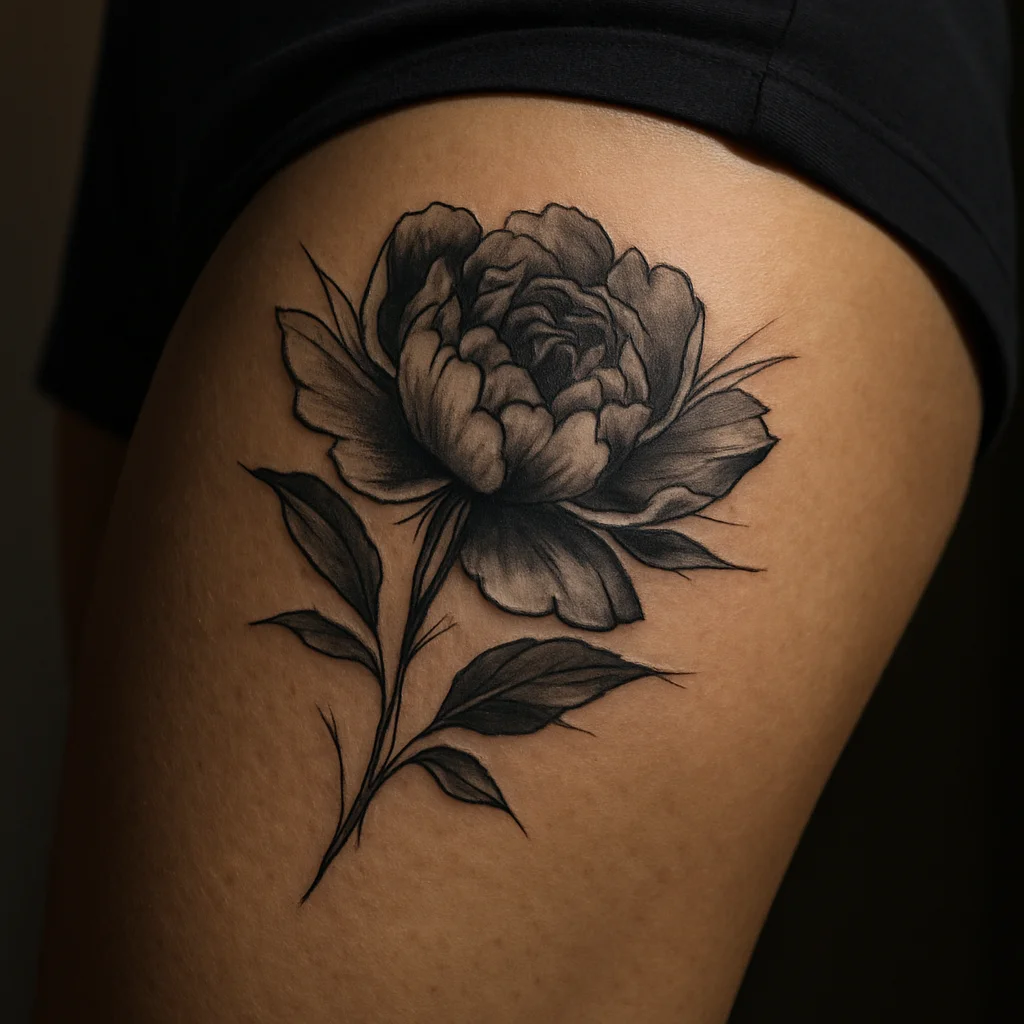
- The design in words. Two or three sentences: subject, mood, what matters most. "A hand-sized black and grey peony with soft shading, no outline, sitting above the knee."
- Two or three reference images. Not ten. Say specifically what you like in each — the composition in one, the shading weight in another.
- Size in inches or centimetres. Measure it on your own leg with a tape measure and tell them the number.
- A photo of the actual thigh, in daylight, from the angle the tattoo will be viewed. This tells them about curve, existing tattoos, scars and skin tone, all of which affect timing.
- Colour or black and grey, plus whether you're flexible.
- Your real budget. Saying "I can spend up to X" isn't gauche — it lets a good artist design to fit, usually by adjusting scale or simplifying background rather than cutting quality.
Then ask three questions back: is this flat or hourly, how many sittings do you expect, and what's your touch-up policy? If the answer to the second is more than one, ask how far apart the sessions should be and whether the deposit covers the whole project or just the first date. And be honest if you're pain-sensitive — an artist who knows you'll need breaks can quote the extra time instead of resenting it.
Still deciding on the design itself? Browsing by scale helps you pick something your budget can actually finish; there are useful starting points in our roundups of thigh tattoos sorted by scale and inner thigh designs from crease to knee.
Pain, healing and whether the money holds its value
The thigh is one of the better-value canvases on the body, and that's not just about price per hour. It's flat, padded and mostly out of the sun, which means the ink you pay for stays looking like the ink you paid for.
On pain: the outer thigh is genuinely one of the easiest spots on the body — dull and hot rather than sharp, and most people sit three or four hours comfortably. The front quad is similar, with a little more sting on the muscle. The inner thigh is a different animal: thin skin, dense nerves, and a real burn near the crease. The last few inches above the knee are sharp because the flesh thins out. Plan long sittings for the outer thigh and short ones for the inner.
Healing is straightforward if you dress for it. Loose trousers or shorts for a week, no gym for the first several days, and expect a large thigh piece to weep more than a small arm tattoo simply because of surface area. Chafing between the thighs is the main risk on inner placements — keep the area clean, dry and unwrapped once the film comes off, and skip long walks in tight jeans.
Long term, thigh tattoos age well because they see so little UV. The two things that do move them are significant weight change and pregnancy, both of which can soften edges on the outer thigh. Fine, tightly spaced detail is what suffers first, so if you're planning big body changes, spend your budget on bolder linework and generous spacing rather than microscopic stippling. A well-built thigh piece that costs more upfront and needs no rescue work at year eight is the cheaper tattoo.
Frequently asked questions
How much does a small thigh tattoo cost?
Most small thigh tattoos land between the shop minimum and roughly $250, because setup time rather than needle time drives the price. A 3-inch fine-line design usually takes under an hour, so you'll pay the studio's floor price regardless of how quick it is. Getting two or three small pieces in one sitting is often better value than booking them separately.
How much is a full thigh tattoo?
A full thigh piece from hip to knee typically runs from around $1,500 for efficient blackwork or bold traditional up to $5,000 or more for full-colour Japanese or realism. Expect three to five sittings, often booked as day rates that cost less per hour than standard hourly pricing. Ask whether the quote includes background and colour packing, since those are where the hours accumulate.
Is a thigh tattoo cheaper than the same design on the arm?
Not usually. Artists price by time and complexity, not by body part, so an identical design costs about the same anywhere. The thigh only looks more expensive because people scale designs up to fill the space — and because large flat areas invite backgrounds and framing that add hours.
Should I tip on a multi-session thigh tattoo?
Yes, and most people tip at the end of each sitting rather than saving it all for the final one. In the US, 15 to 25 percent of that session's cost is normal. If cash is tight, it's better to book a slightly smaller design and tip properly than to stretch to a big piece you can't tip on.
Can I negotiate a thigh tattoo quote?
You can't really haggle the hourly rate, but you can absolutely shape the design to fit a budget. Tell the artist your ceiling and ask what they'd adjust — usually scale, background density or dropping colour for black and grey. Booking a full-day session instead of several short ones also lowers the effective hourly cost at most studios.
The conversation
No comments yet. Got a thought about these designs? Start us off.
Want to weigh in? Join the community to comment, save designs and try them on your skin.