26 Small Wrist Tattoos for Men, Under the Cuff
Twenty-six small wrist tattoos for men, organized by what a watch case, a band line or a shirt cuff will actually cover, with honest notes on sizing, pain and how each one ages.
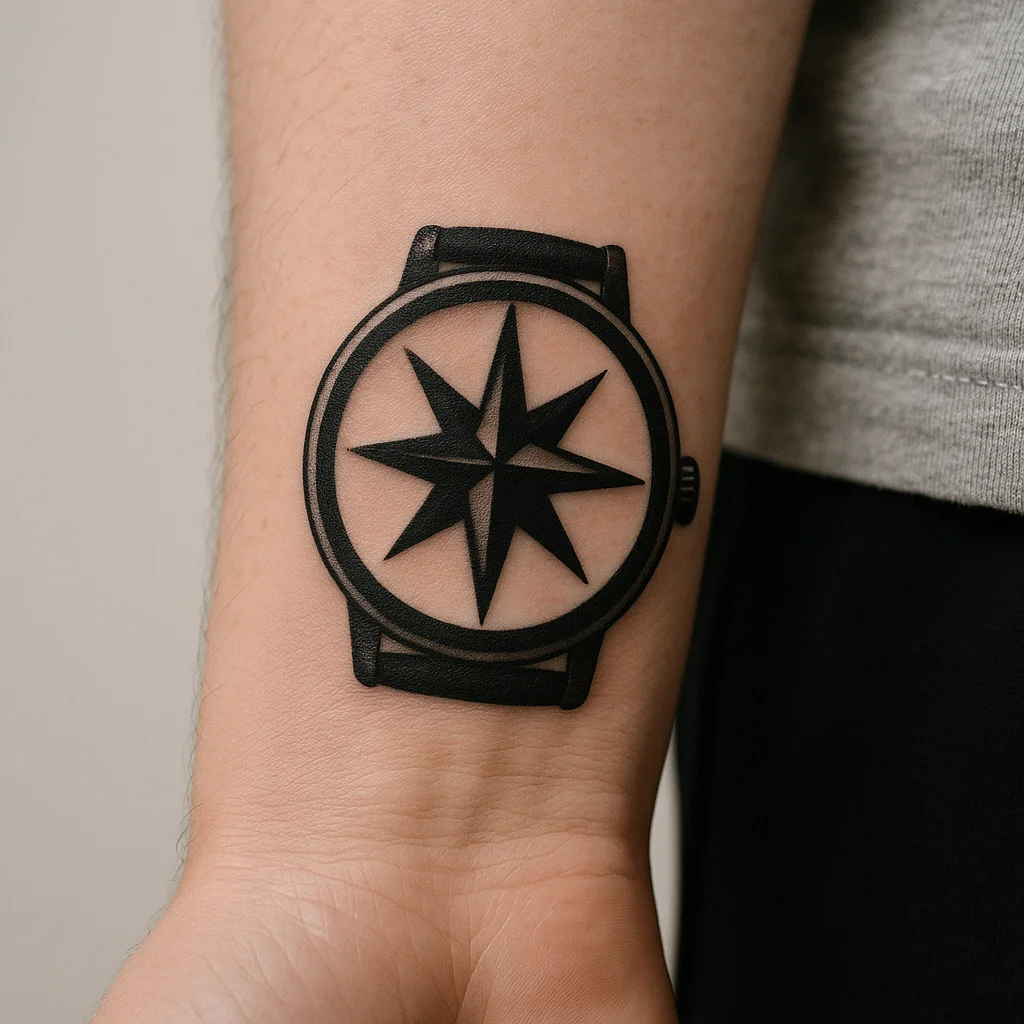
The wrist is small real estate — plan around the watch, not the skin
A man's wrist gives you roughly a two-inch band of usable skin between the base of the hand and the point where the forearm starts to widen. That is it. Everything you choose has to live inside that window, and the single biggest factor in whether the tattoo works is where your watch and shirt cuff sit. Put a watch on, push your sleeve down, and mark the visible skin with a pen. That outline is your canvas.
Three practical truths shape every design below:
- Wrist skin is thin and mobile. Fine detail packed into a half-inch space blurs faster here than almost anywhere else on the body. Lines want to be at least as thick as a fine-tip pen stroke, with breathing room between them.
- The inner wrist fades and the outer wrist scuffs. Inner skin sees less sun but more flex; the outer wrist bone gets knocked against desks, steering wheels and door frames. Both zones age better with simple, high-contrast shapes.
- Small does not mean quick. A one-inch piece with clean linework can take 30 to 45 minutes because the artist is stretching skin, working around tendons and stopping to check symmetry.
If you want the full anatomy breakdown of every wrist surface, our guide to wrist tattoo ideas sorted by zone maps them side by side. Here, we are going narrower: small designs for men, grouped by whether they hide under a watch case, ring the wrist like a band, sit on the tender inner face, or ride the bone on the outside.
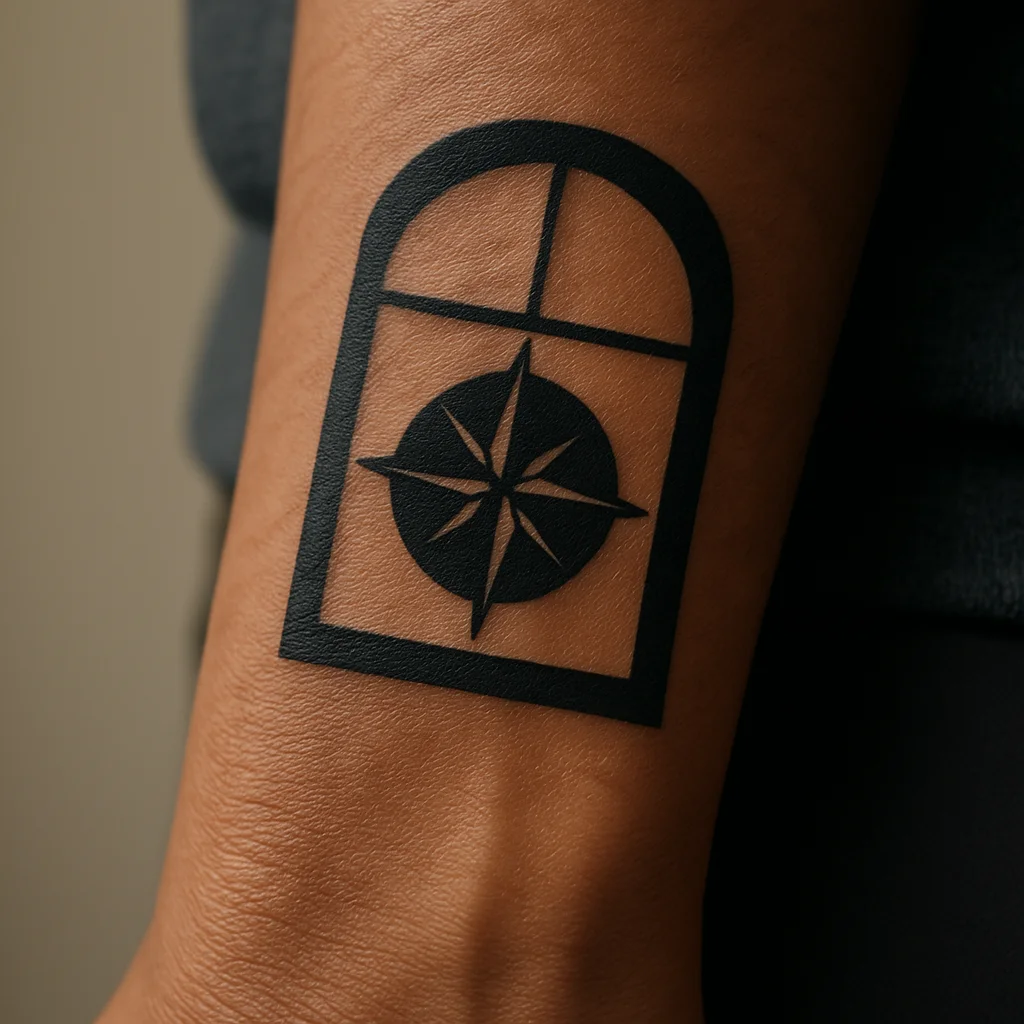
Under the watch case: six designs a dial hides completely
These sit in a circle roughly 1 to 1.5 inches across, on the top or inner face of the wrist, so a watch case covers them entirely at work and reveals them the moment you unbuckle. Keep the composition round or square — it reads as intentional rather than cropped.
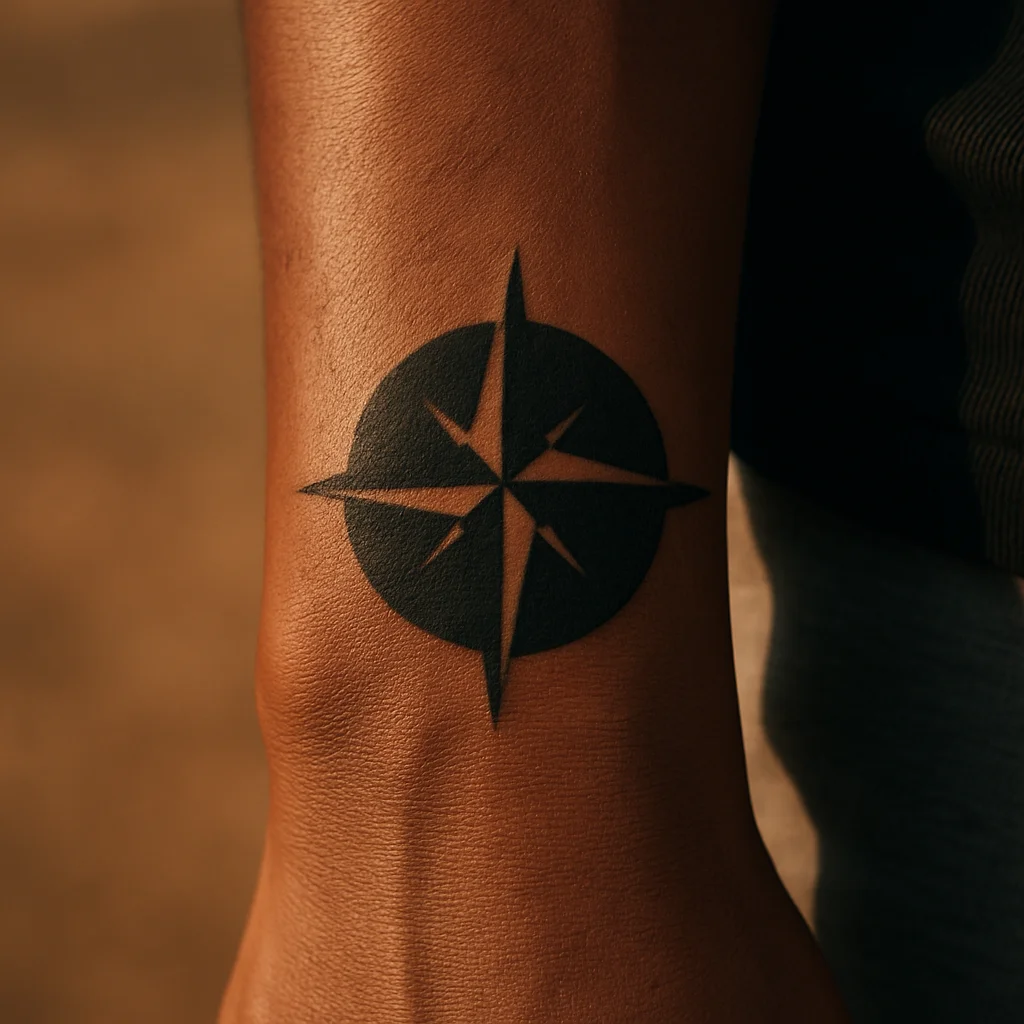
1. Solid black compass rose the size of a watch dial
Four heavy points, four thin points, no internal detail. At around 1.25 inches it holds its shape for decades because there is nothing small enough to close up. Best on the top of the wrist where a watch case sits flush.
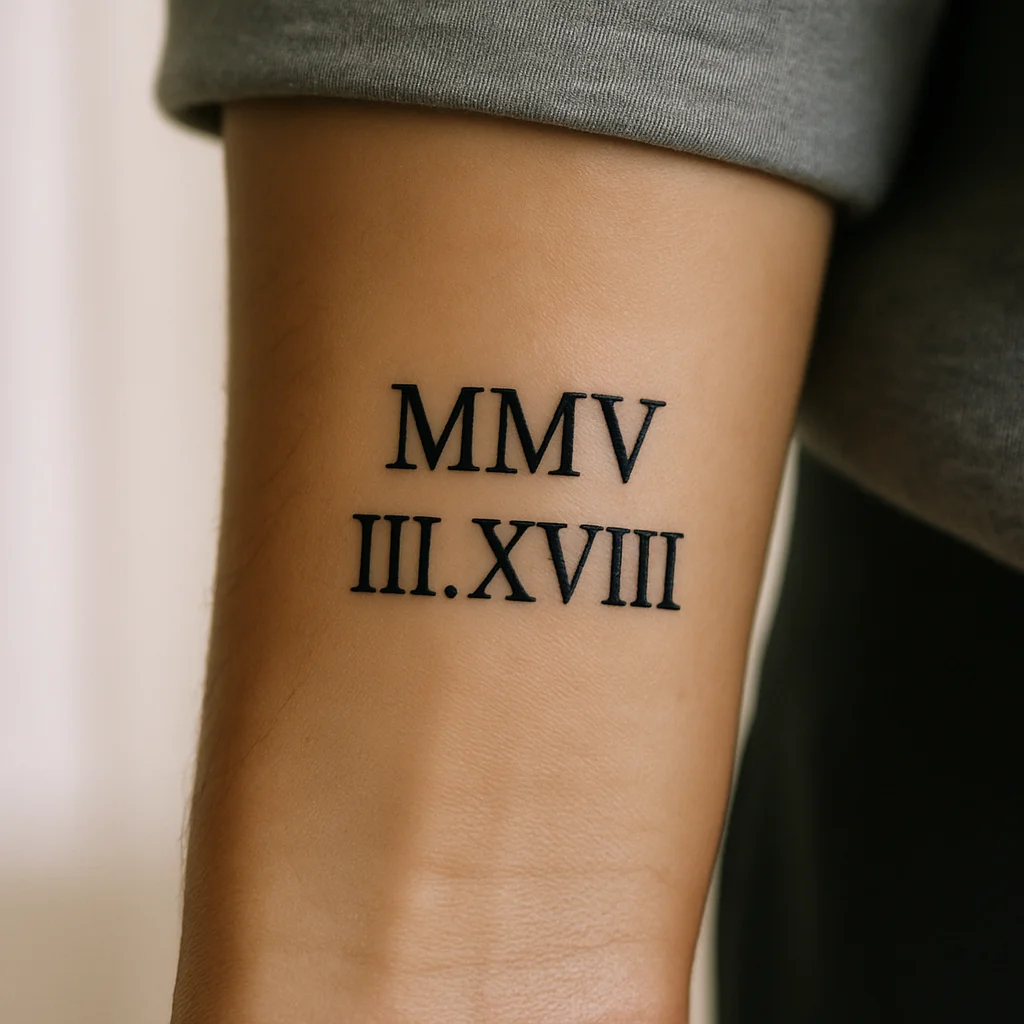
2. A date in Roman numerals, stacked in two short rows
Splitting the numerals into two lines keeps the block compact instead of stretching it wide across the tendons. Ask for a slab serif rather than a hairline font — the tiny feet on the letters help the numerals stay legible as they soften. Suits anyone marking a wedding, a birth or a sobriety date.
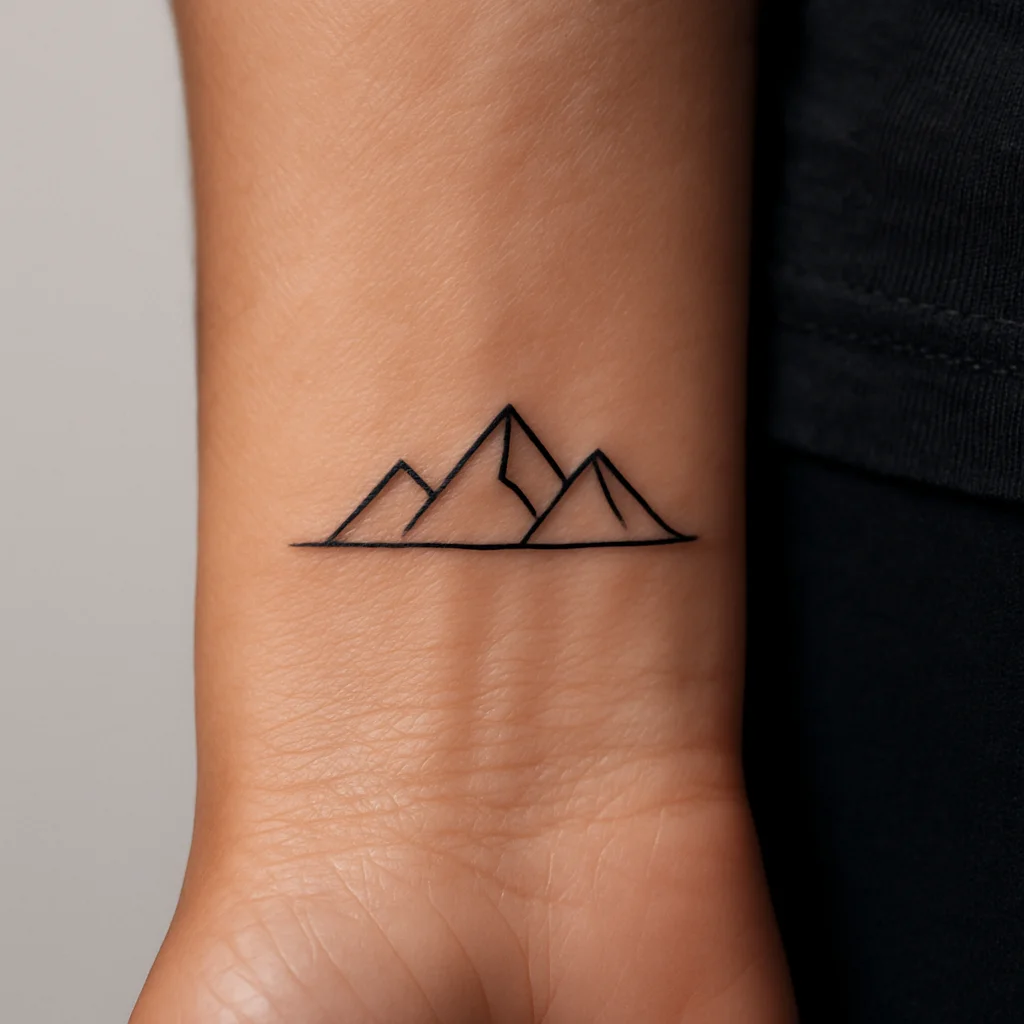
3. Micro mountain range silhouette
Three peaks in solid black with a single thin horizon line under them, about an inch wide. It reads as a landscape from arm's length and as an abstract shape up close, which is exactly what you want in a small tattoo. Great first tattoo for outdoor types.
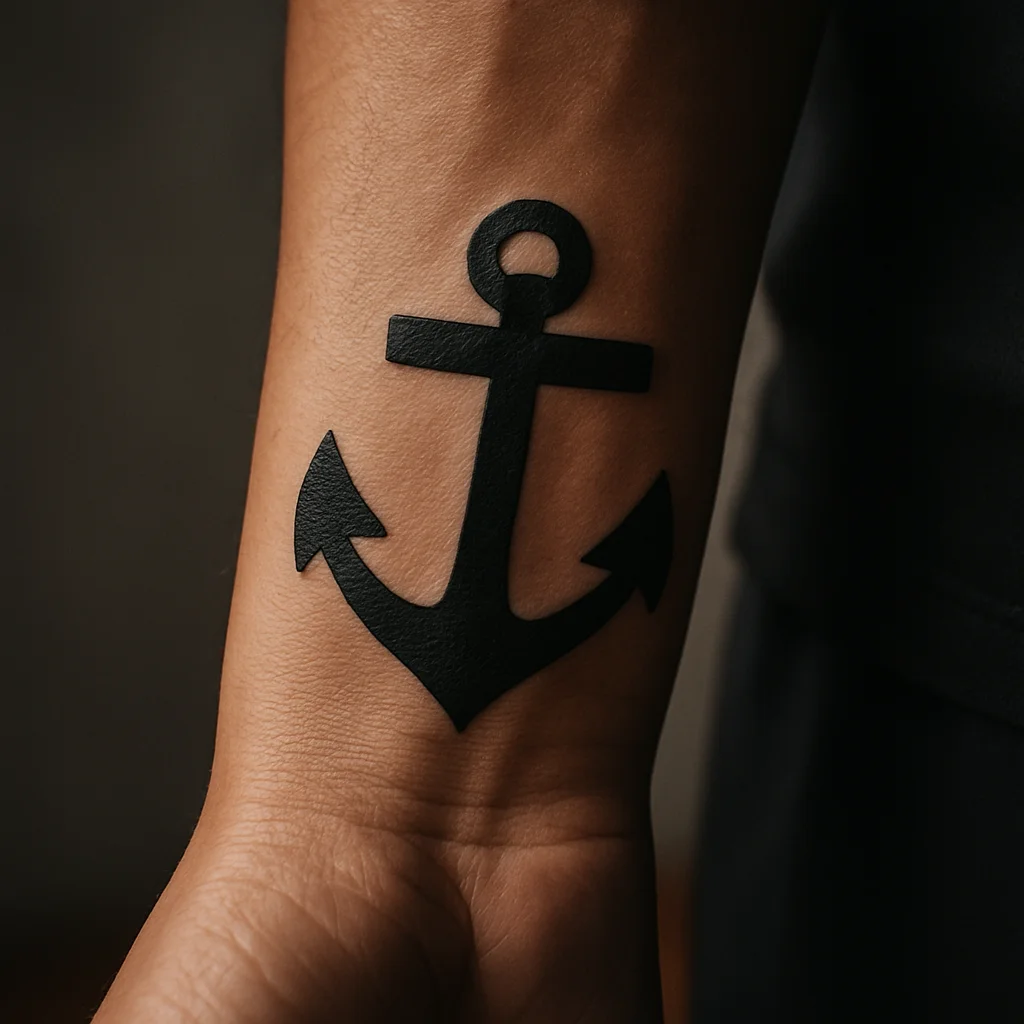
4. Simple anchor, no rope
Old-school anchors were designed to be small and bold, which makes them ideal wrist material. Drop the rope and the banner, keep the crossbar and flukes thick, and it will still read clearly in twenty years. Works especially well on the underside of the wrist near the base of the palm.
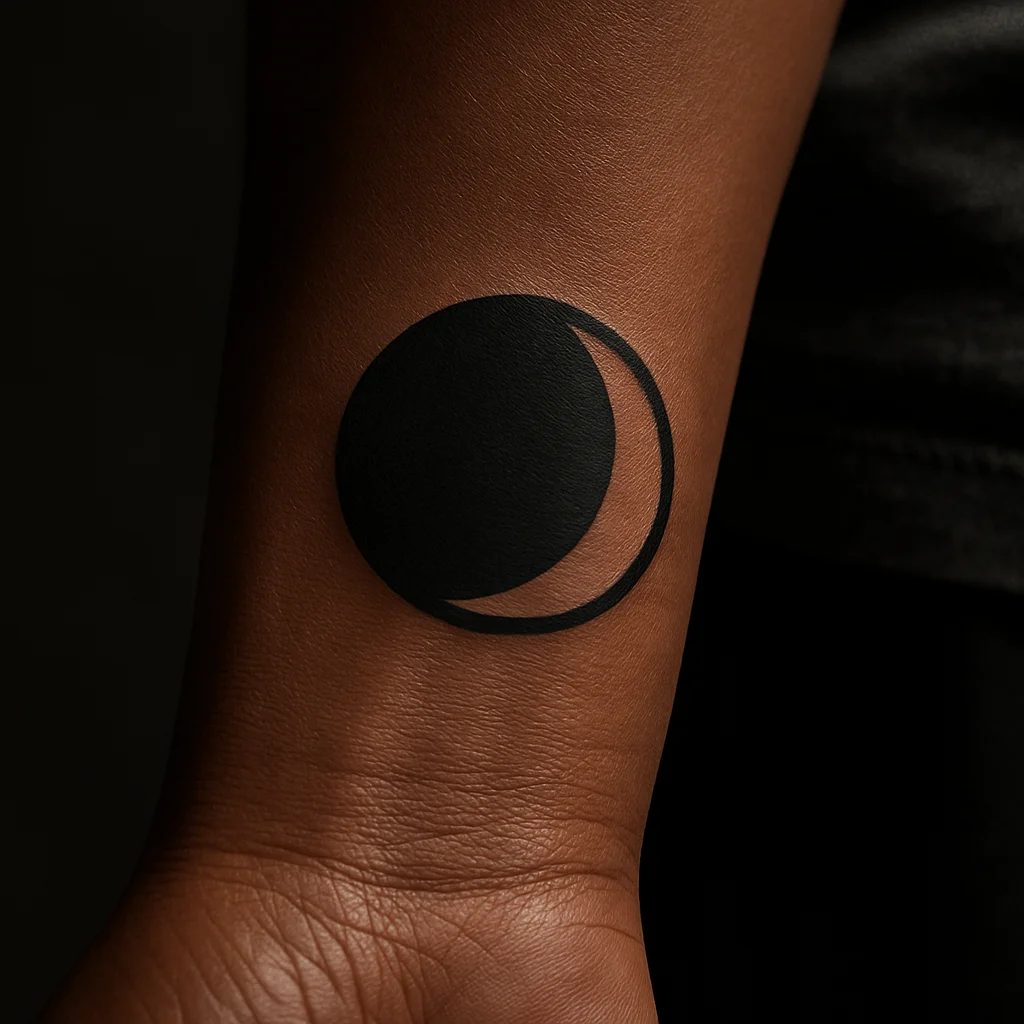
5. Eclipse — solid circle with a crescent bite taken out
Pure geometry: one filled black disc, one clean negative crescent. It is the most forgiving small design on this list because the whole piece is a shape, not a set of lines. Looks sharp centered on the top of the wrist under a round watch case.
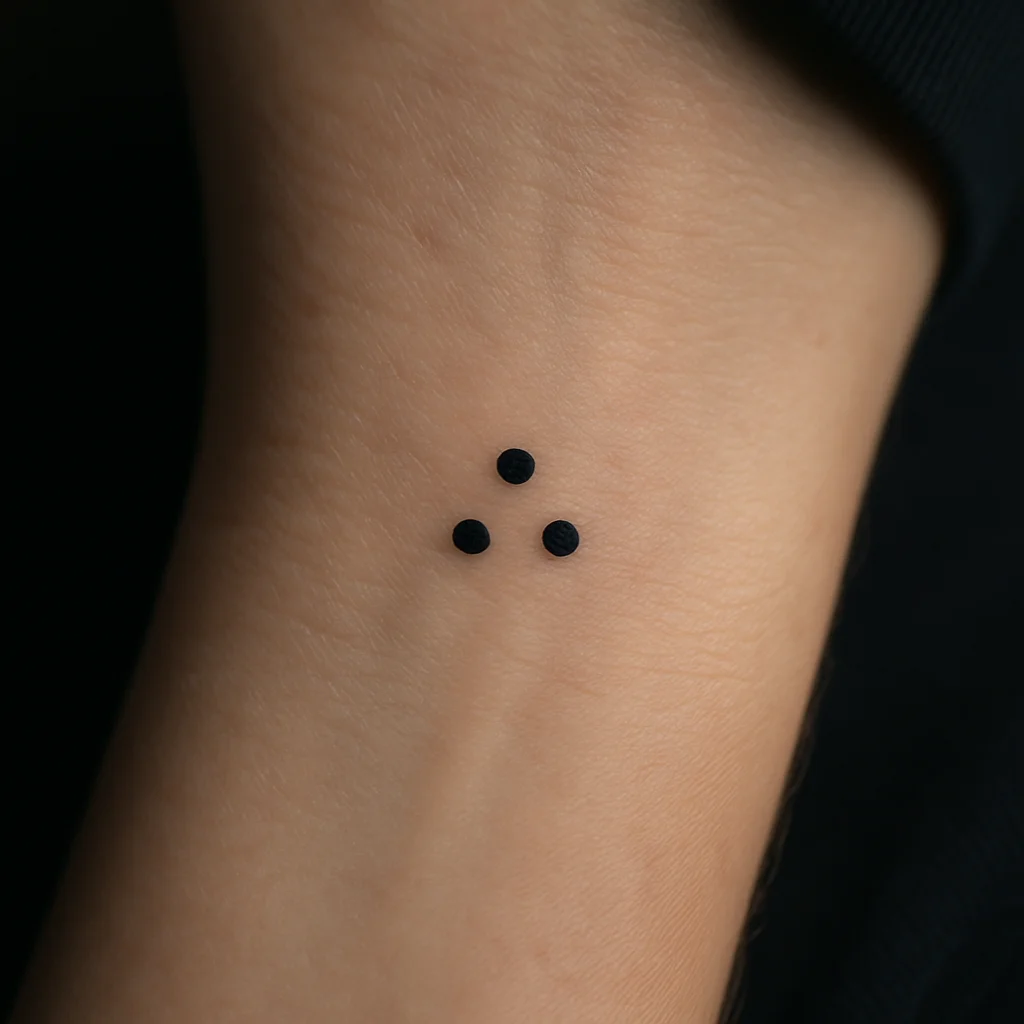
6. Three dots in a triangle
Quietly loaded — read it as mind, body, spirit, or as three people, or as nothing at all. Ask for dots around 2 to 3 mm so they stay crisp circles instead of spreading into blobs. This is a ten-minute tattoo and often the cheapest thing on a shop's board.
Band designs: six wraps that follow the cuff line
A band is the most masculine small wrist tattoo there is, and the most technically fussy. It must sit perpendicular to the forearm, not tilted, or your eye catches the error every time you look down. Ask your artist to stencil it, then check it in a mirror with your arm relaxed at your side — not held up in front of you.
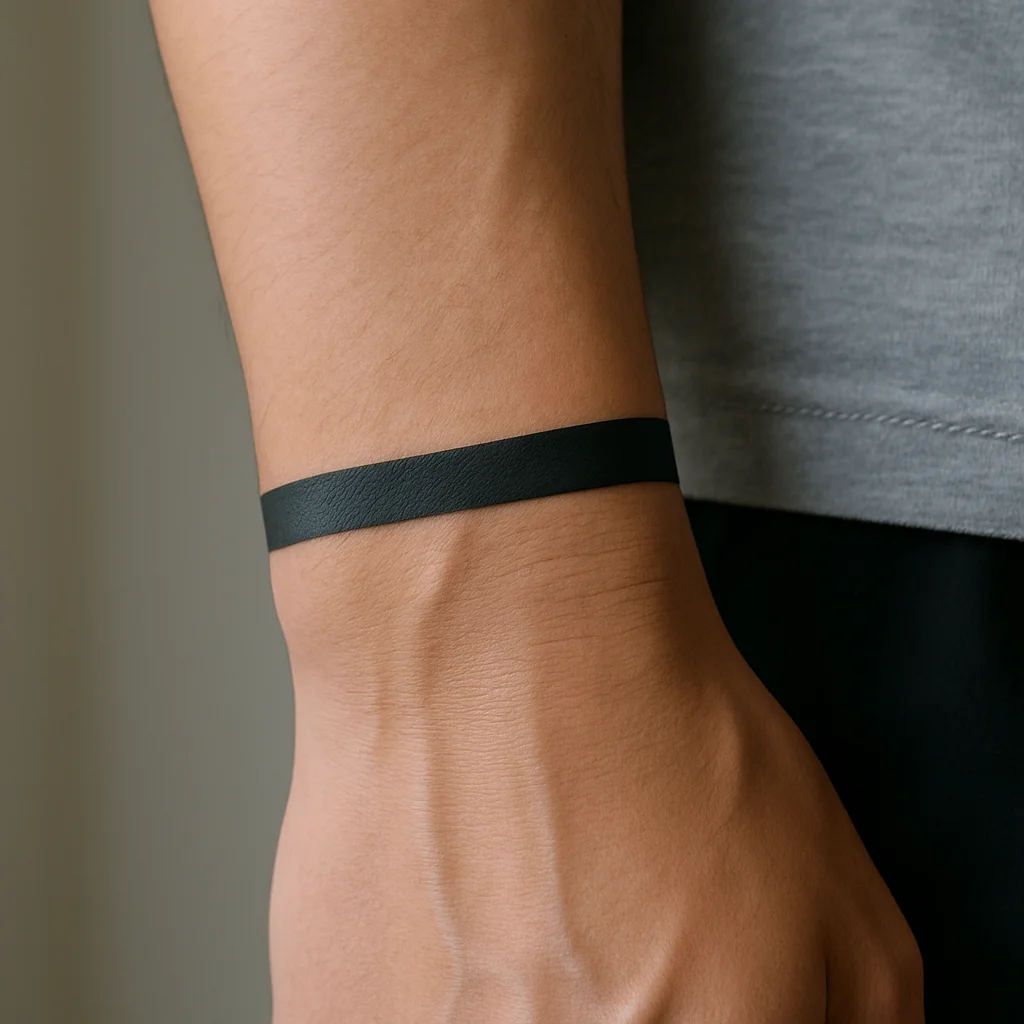
7. Single black band, 3 to 5 mm wide
Fully wrapped or stopped short on the inner wrist, which is a smart move if you want the option of hiding it. Solid black bands need a confident hand and often a light second pass to look truly even. Expect the inner-wrist section to sting more than the rest of the circle.
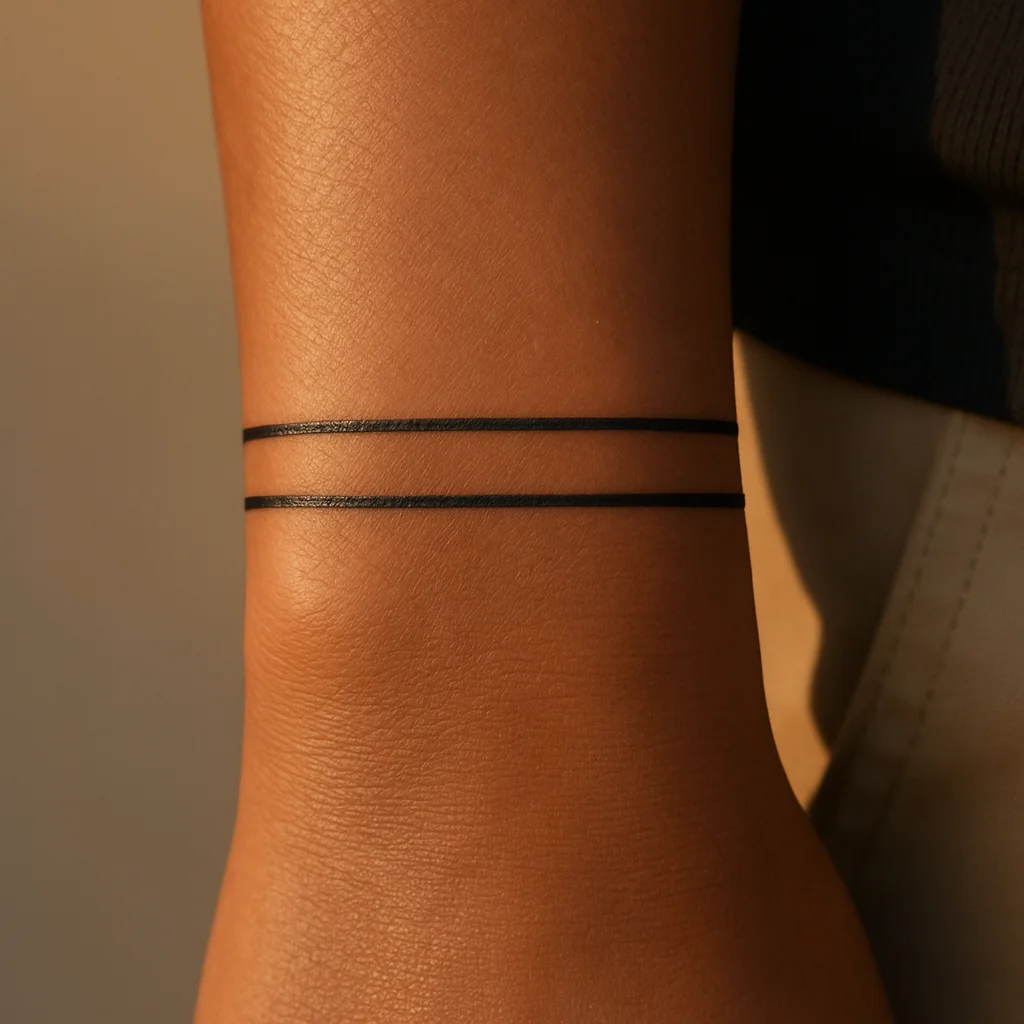
8. Double band with a gap
Two thin lines with a clean space between them, often used to mark two people or two chapters. The gap is where cheap work shows: it has to stay the same width all the way around. Sits beautifully just above the wrist bone where a watch strap would rest.
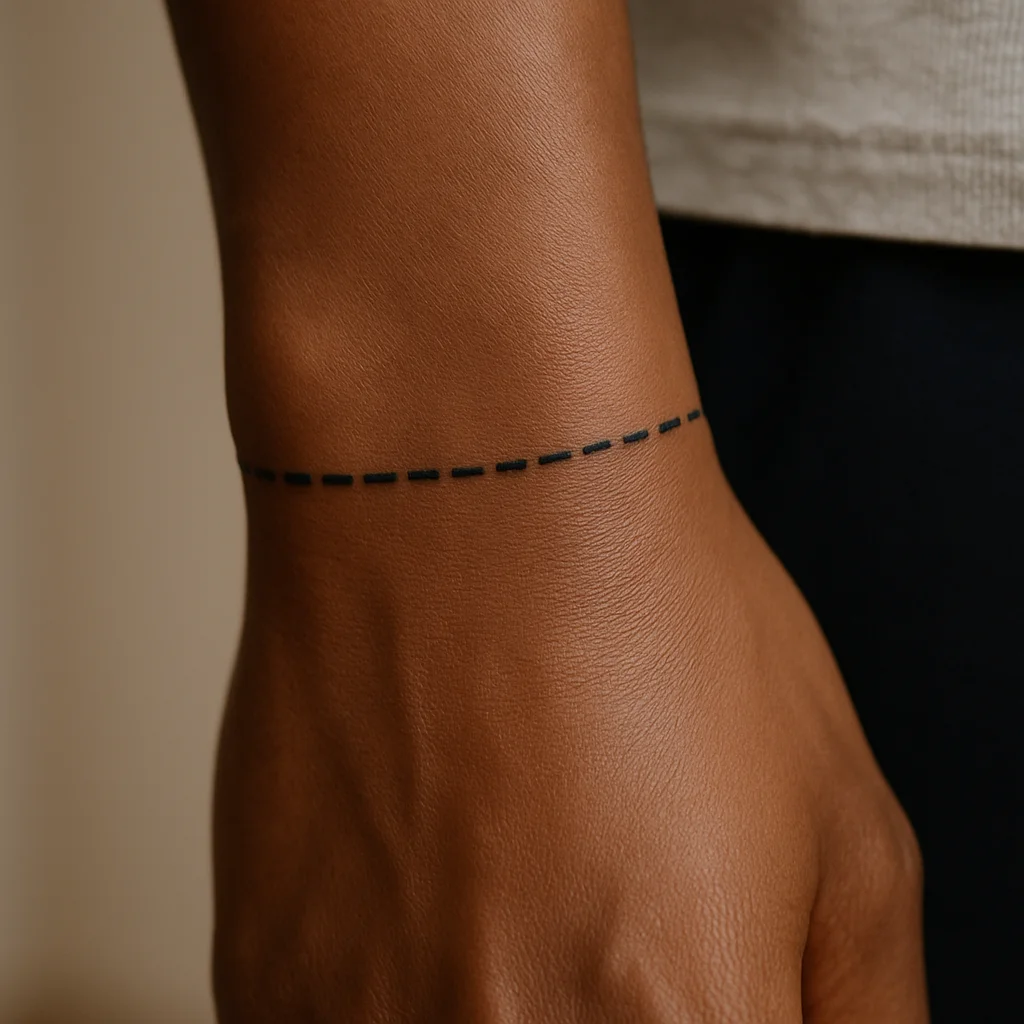
9. Dashed or dotted band
A ring of short dashes reads lighter than solid black and ages surprisingly well because each mark has room around it. It also hurts less — the needle is not grinding continuously over the inner wrist. Good pick if you want a band that does not shout.
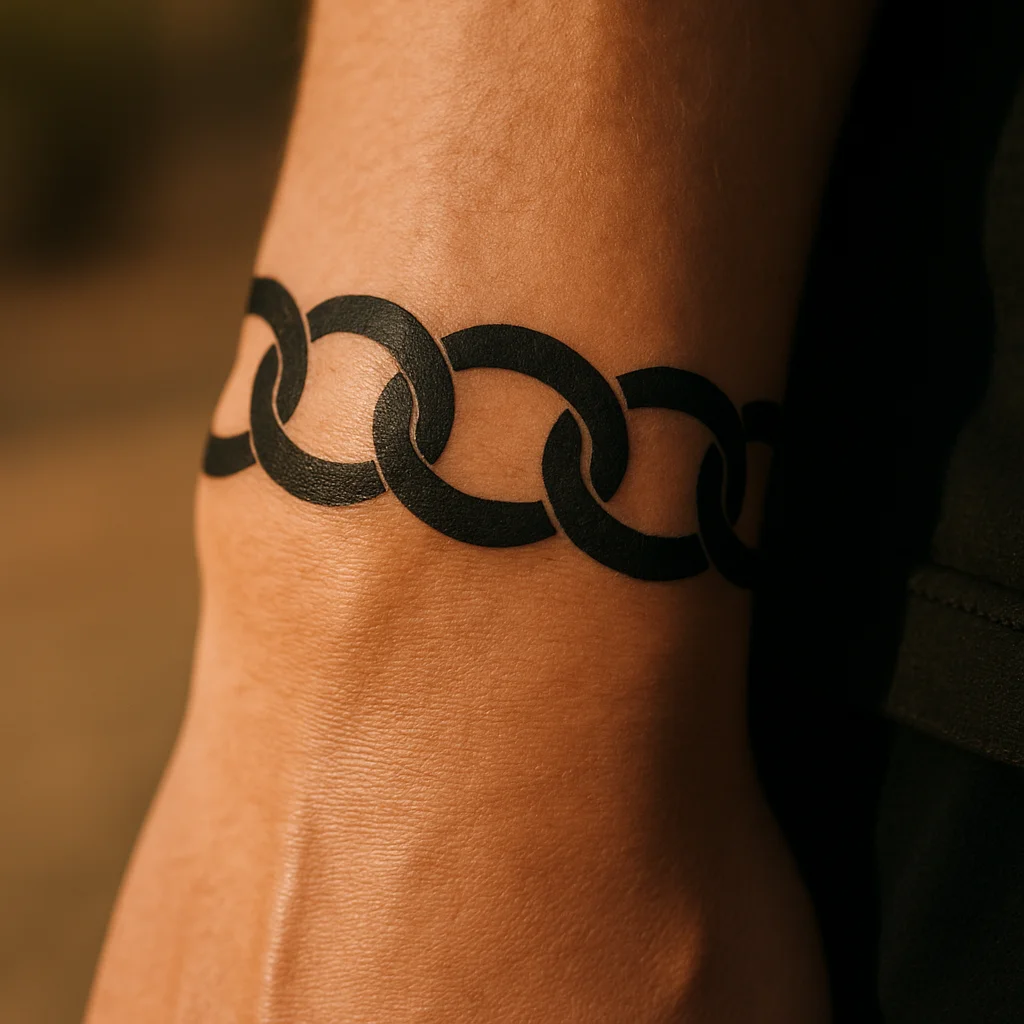
10. Chain-link band
Six or seven interlocking oval links, each about 8 mm long, running around the wrist. Keep the links open and simple; heavy shading inside a link that small will fill in over time. Reads as strength and connection without being a full biker piece.
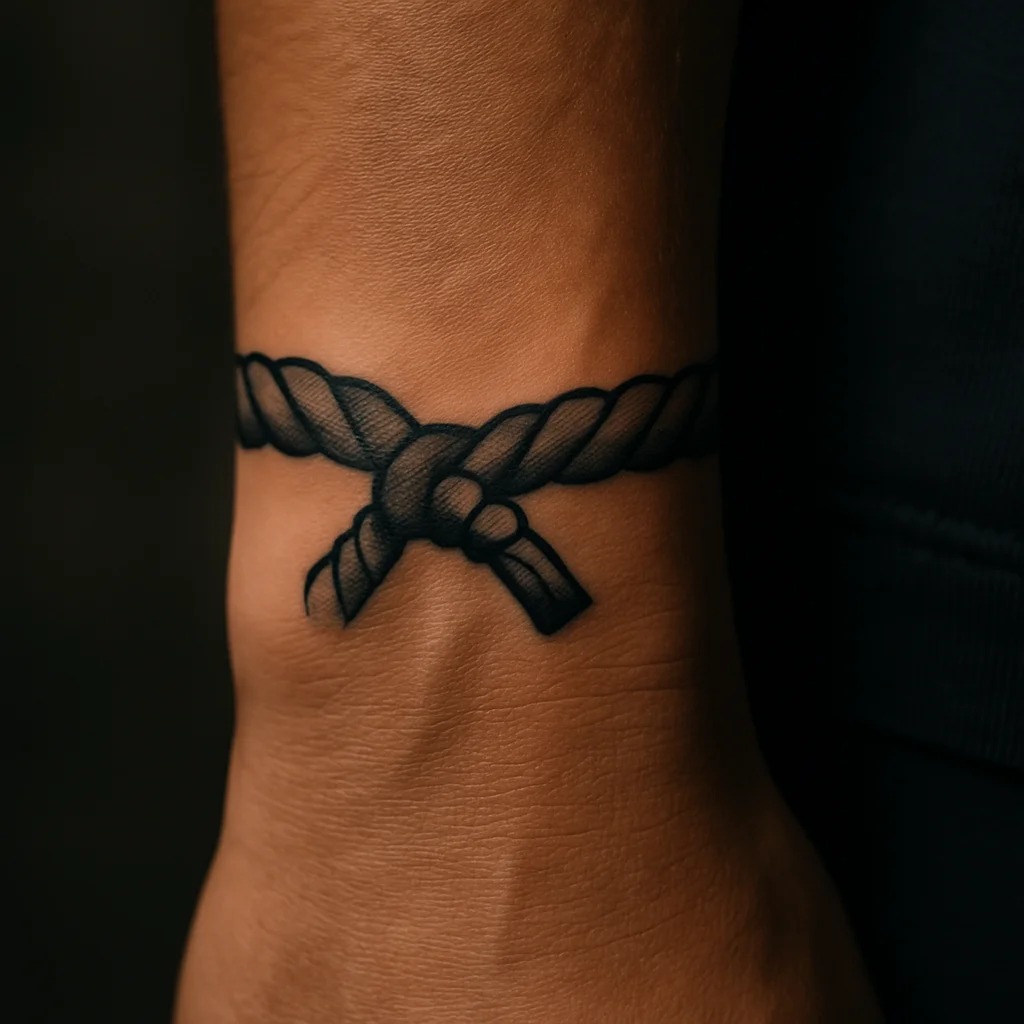
11. Nautical rope band
Two twisted strands with a small knot placed on the outer wrist as a focal point. The knot gives the band a front and a back, so it looks deliberate rather than machine-printed. Pairs naturally with the anchor above if you ever build toward a small nautical set.
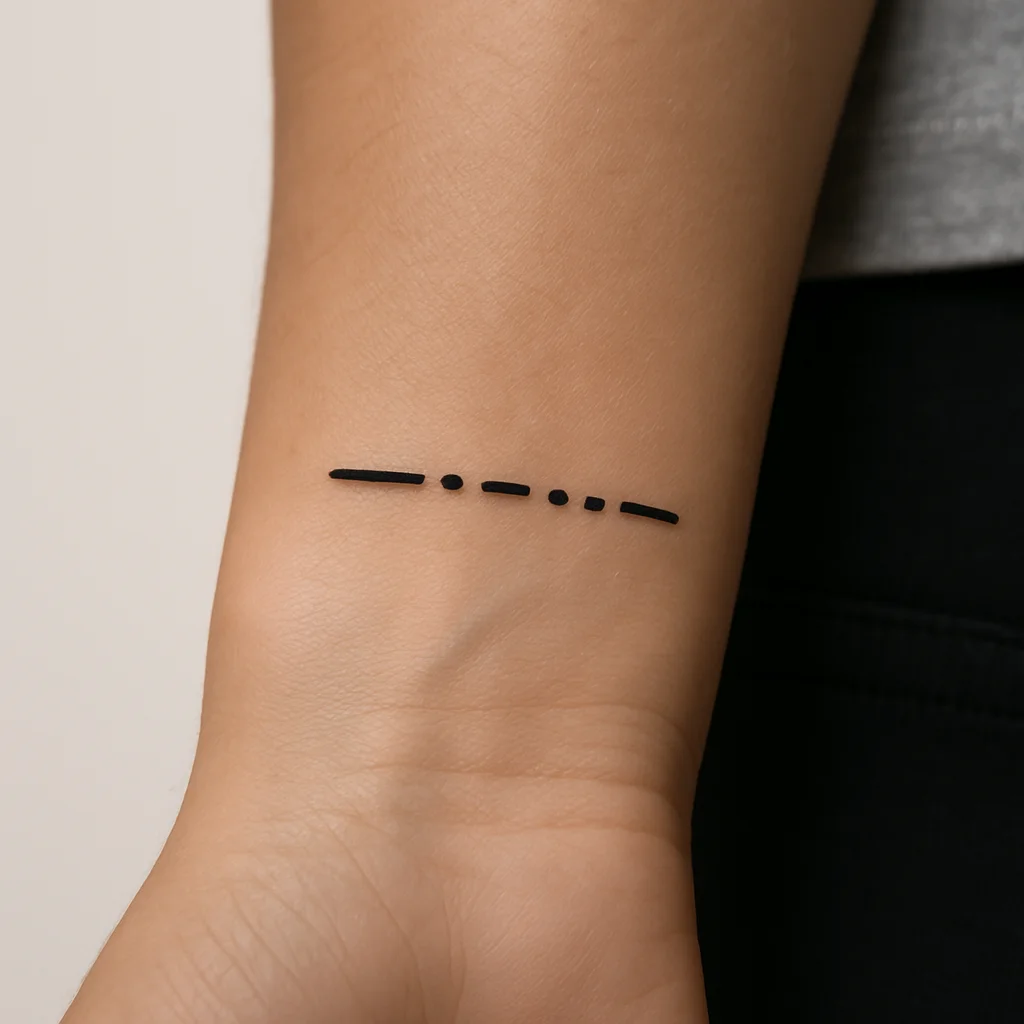
12. Morse code band
Dots and dashes spelling a name, a word or a place, spaced evenly around the wrist. Bring the translated code written out on paper and have the artist read it back to you before stenciling — mistakes here are invisible to everyone but you, and permanent. Ask for slightly longer dashes than feel natural so the rhythm survives fading.
Inner wrist: seven designs for the tender side
The inner wrist is the most personal surface on the arm — you see it constantly, other people barely do. It is also the most sensitive spot in this article, and it fades a shade faster than the outer wrist because the skin is thinner and it takes more friction from sleeves and desks. Vertical designs that run with the tendons age better than wide ones that fight across them.
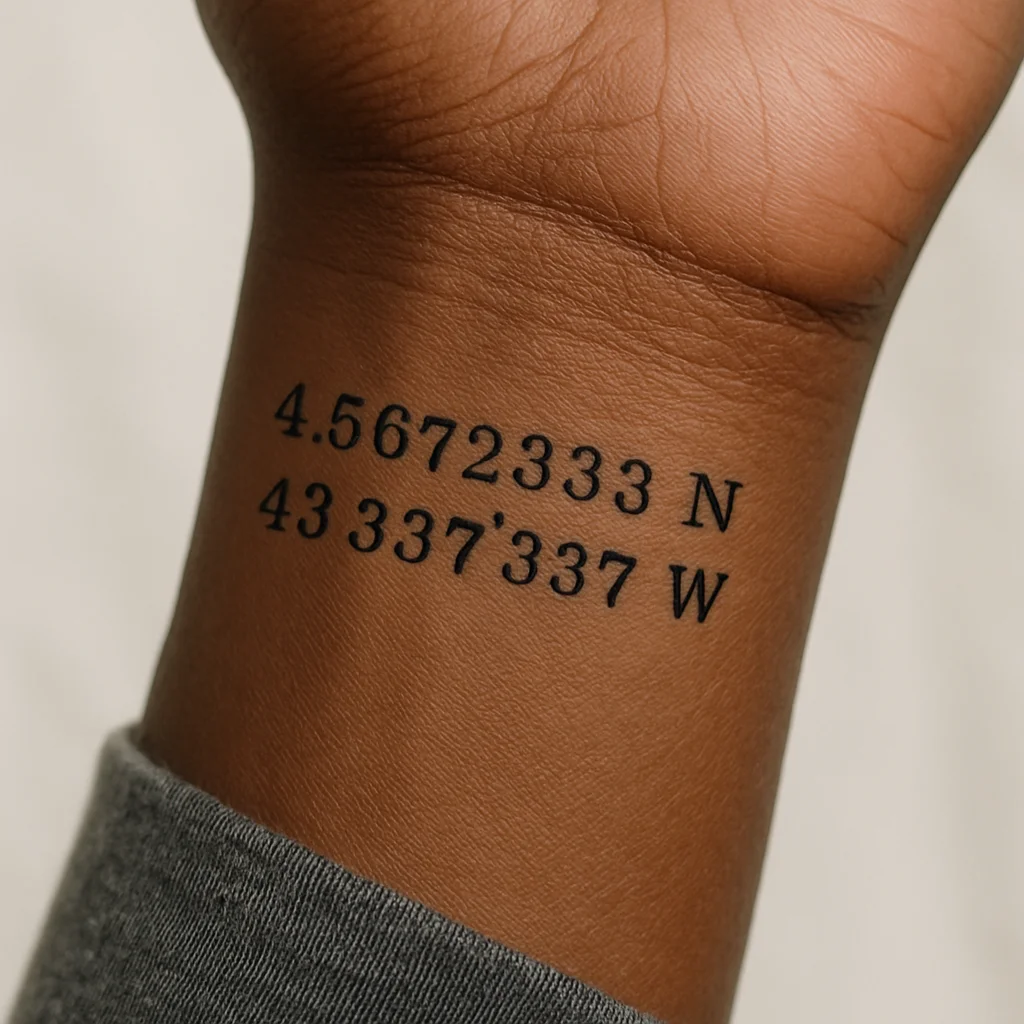
13. Coordinates in a typewriter font
One line of numbers, around 1.5 inches wide, marking a hometown, a summit or a hospital. Typewriter and slab fonts hold up far better at this size than script, because the strokes are uniform. Have your artist print it at actual size so you can see the numbers are readable before committing.
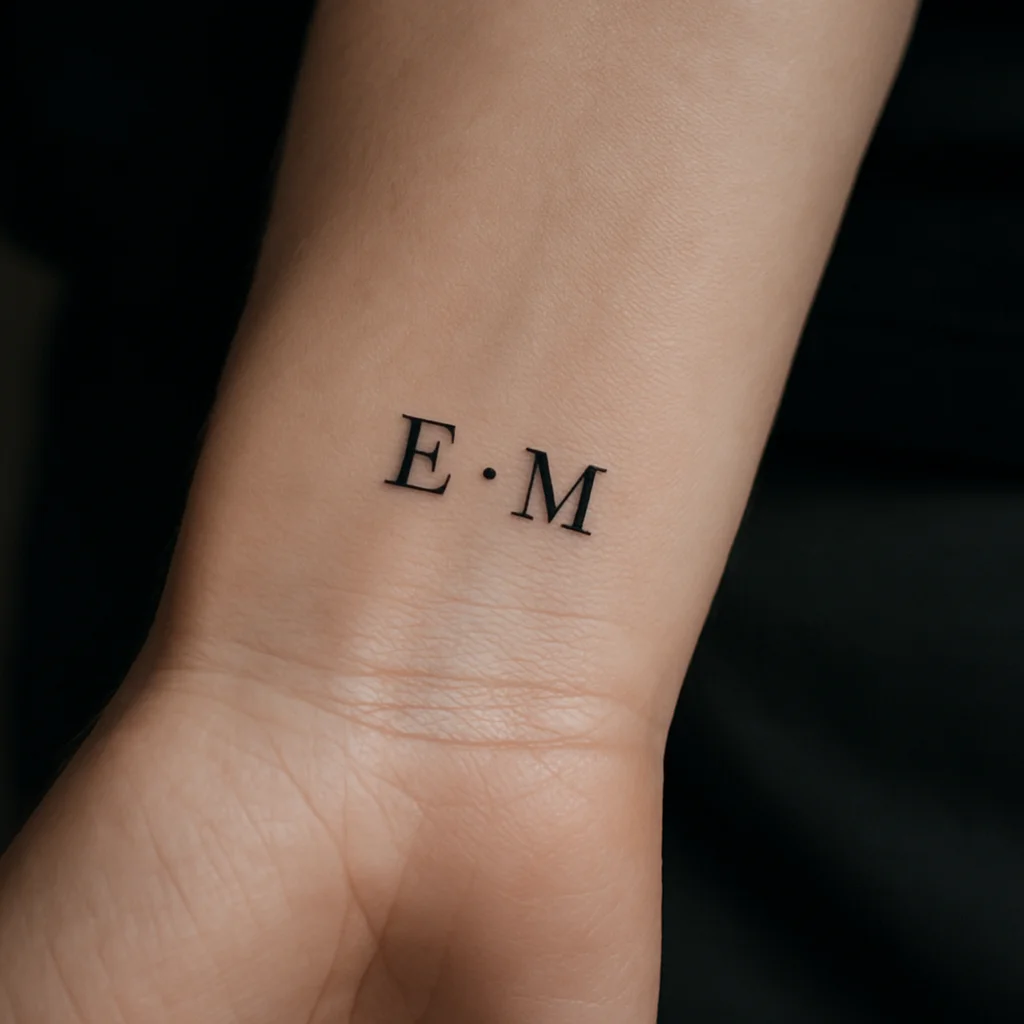
14. Children's initials in a small serif
Two or three capitals stacked or set in a row on the inner wrist, each about 8 mm tall. Serif capitals keep their identity as they soften; hairline calligraphy does not. Add a tiny dot between initials rather than a slash — it stays cleaner.
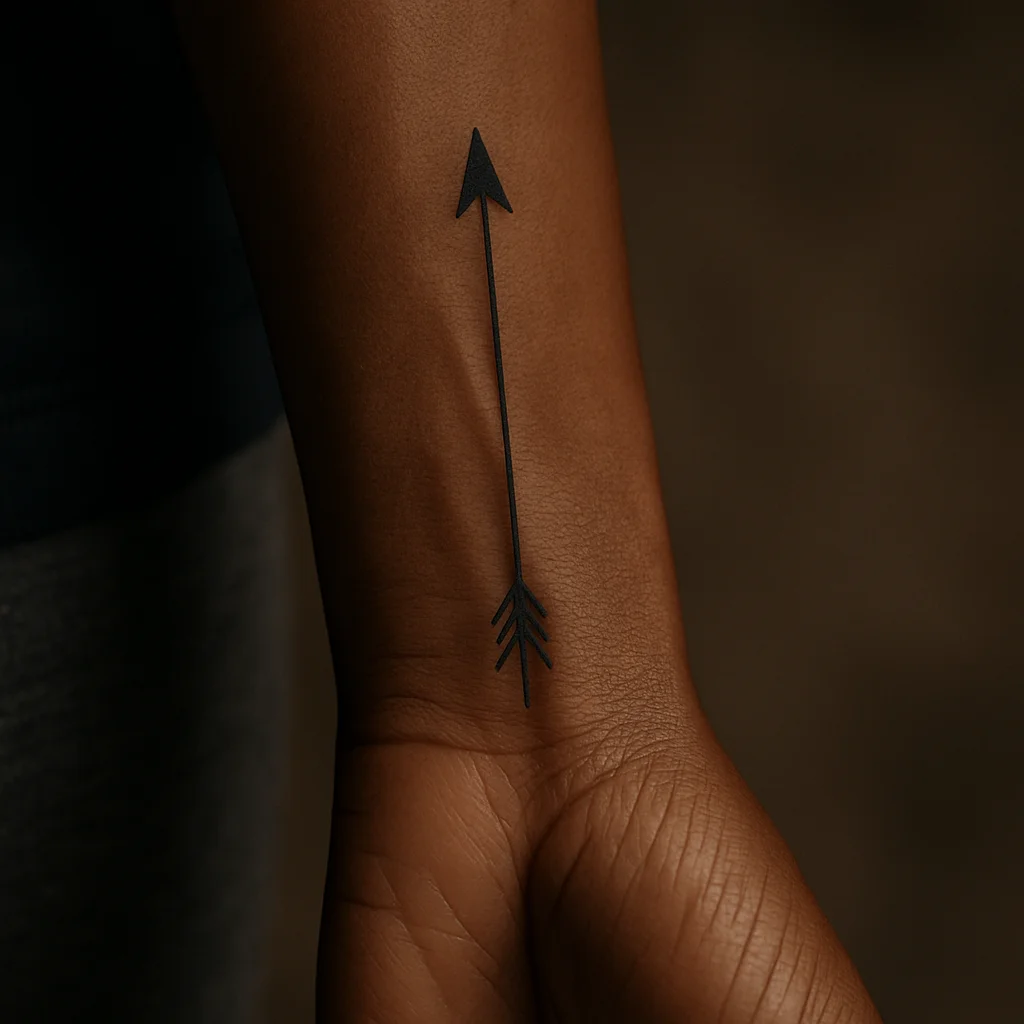
15. Arrow running along the tendon line
A single shaft with a simple head and two fletching lines, pointing toward the hand. The vertical orientation flatters the narrow inner wrist and looks intentional under a rolled sleeve. Easy to extend later into a longer forearm piece if you catch the bug.
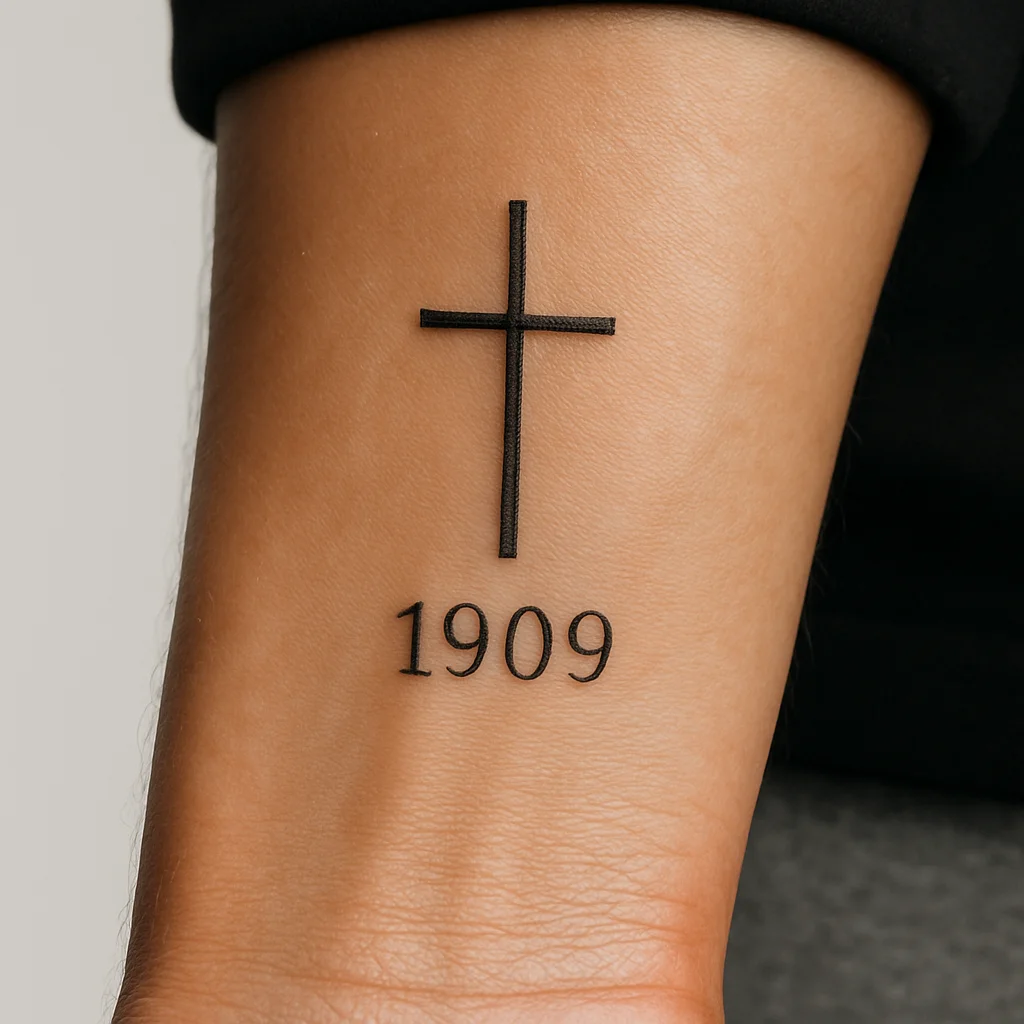
16. Small cross with a date beneath it
A plain latin cross around an inch tall with four numerals under the base. The strength here is restraint: no shading, no rays, no banner. Common memorial choice and one of the fastest, cheapest pieces a shop will do.
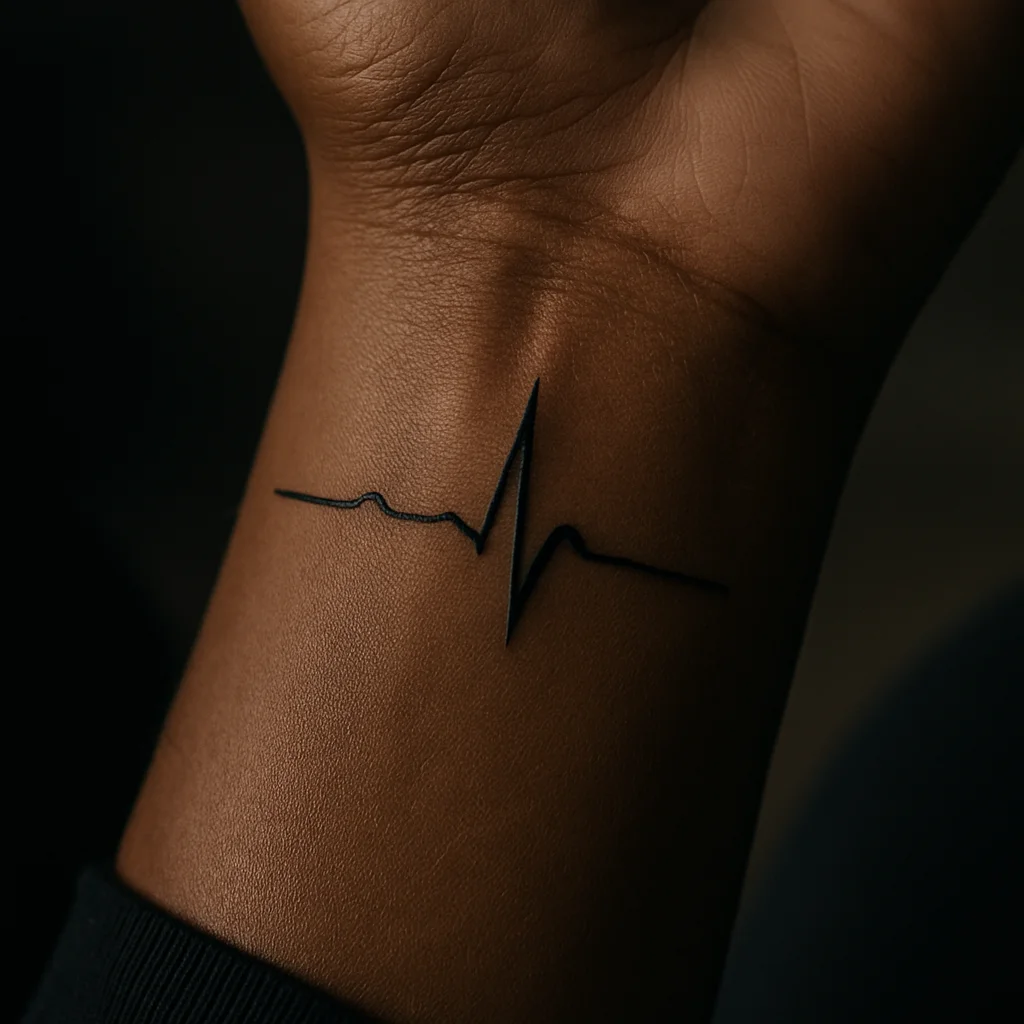
17. Heartbeat line with a single dip
One continuous stroke with a sharp spike, roughly 1.75 inches wide, sitting horizontally just above the palm. Ask for a slightly heavier weight than the reference photo — thin single-needle versions of this line often go patchy in the wrist crease. Popular with medics, fathers and anyone who has had a close call.
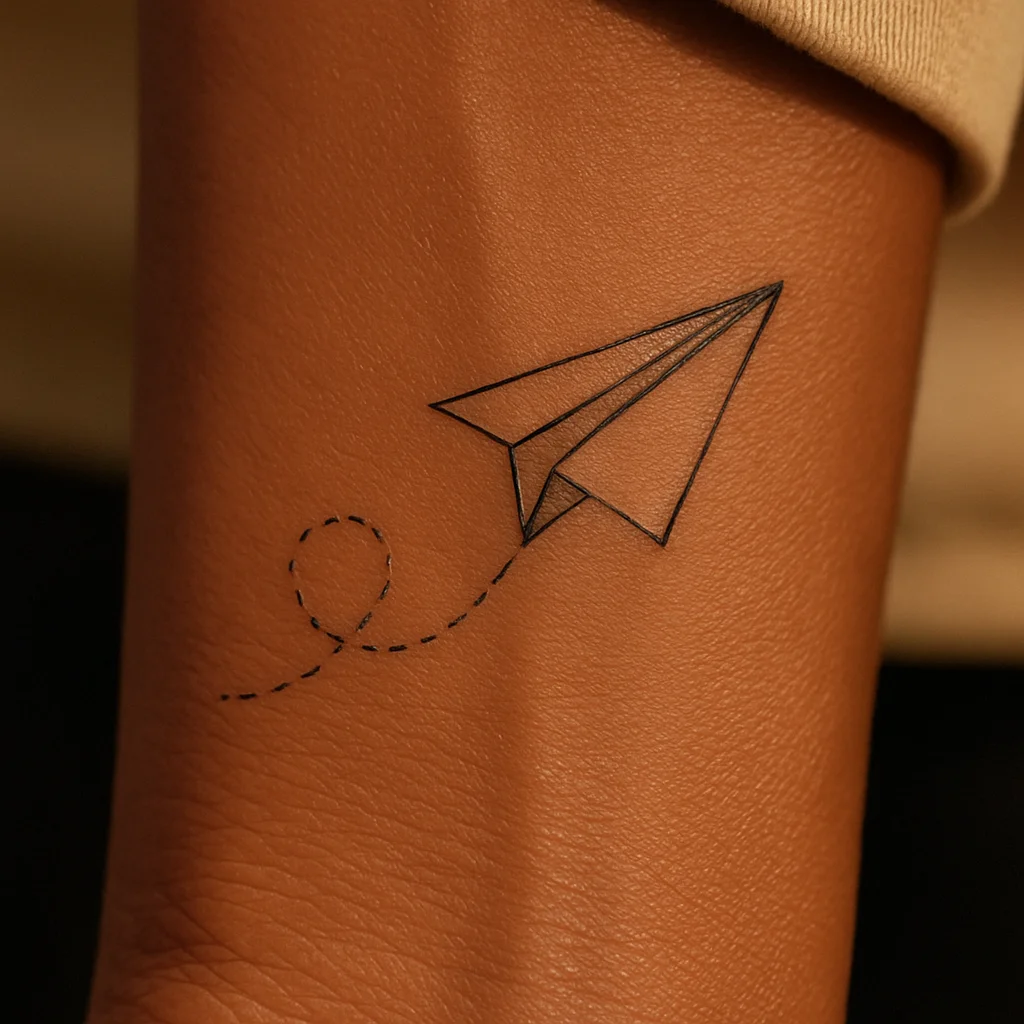
18. Paper plane with a dotted flight path
A folded plane no bigger than a thumbnail with three or four dashes trailing behind it. The dashes must be spaced generously or they merge into a smudge within a few years. Reads as travel, restlessness or a fresh start.
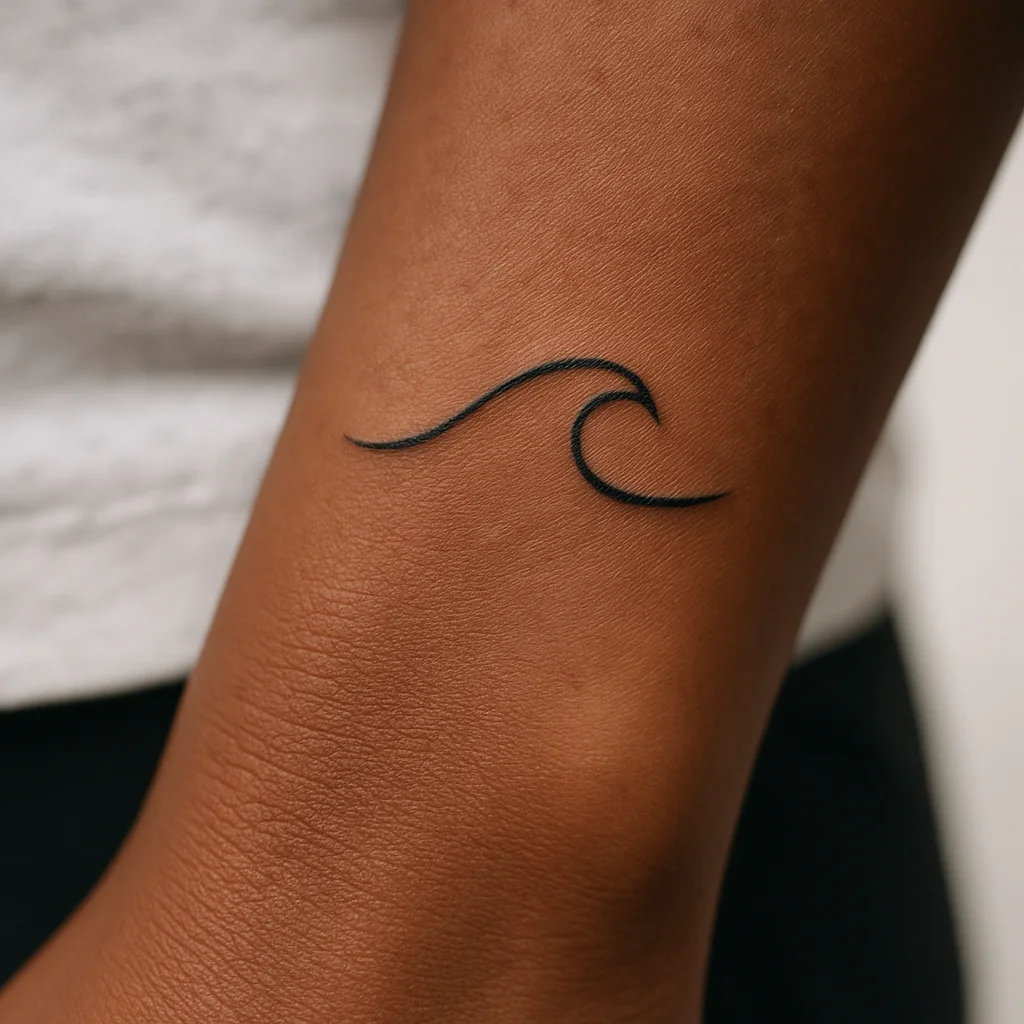
19. Single-line wave
One curved stroke with a small break in it to suggest breaking water, sitting horizontally on the inner wrist. It is minimal enough for someone who wants a first tattoo they can live with quietly. Surfers often place it so a watch strap frames it rather than hides it.
Outer wrist and the bone: seven designs that take the light
The outer wrist and the side over the ulna bone are your public-facing options — visible with a watch on, visible in a short sleeve, and the first thing a handshake shows. Skin here is tougher and holds ink slightly better, but it sits directly over bone, so the buzz is sharper and more rattling than on the fleshy inner side.
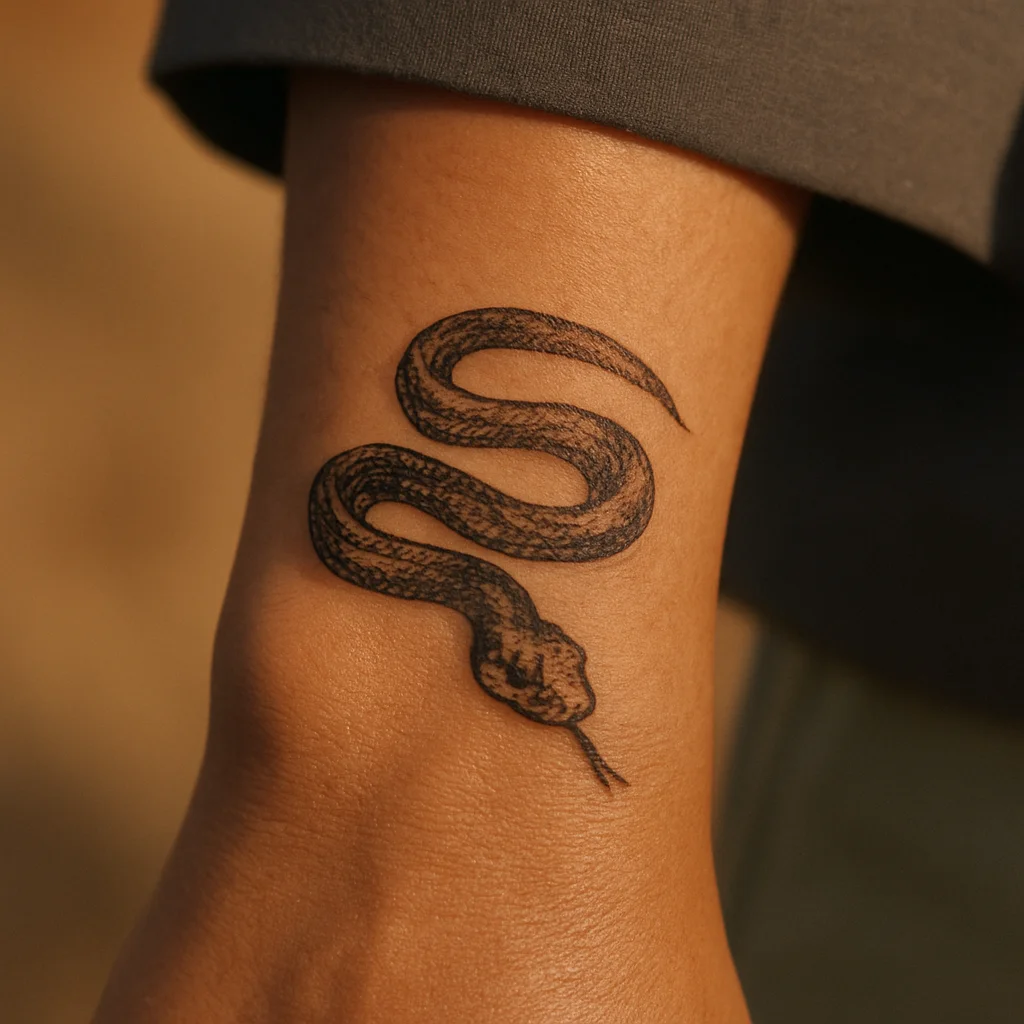
20. Snake curling around the wrist bone
A small viper, two to three inches nose to tail, wrapping from the outer wrist onto the side so the head rests on the bone. Keeping the body a simple S-curve with a few belly lines beats attempting realistic scales at this size. One of the strongest small designs for men because the shape flatters the joint.
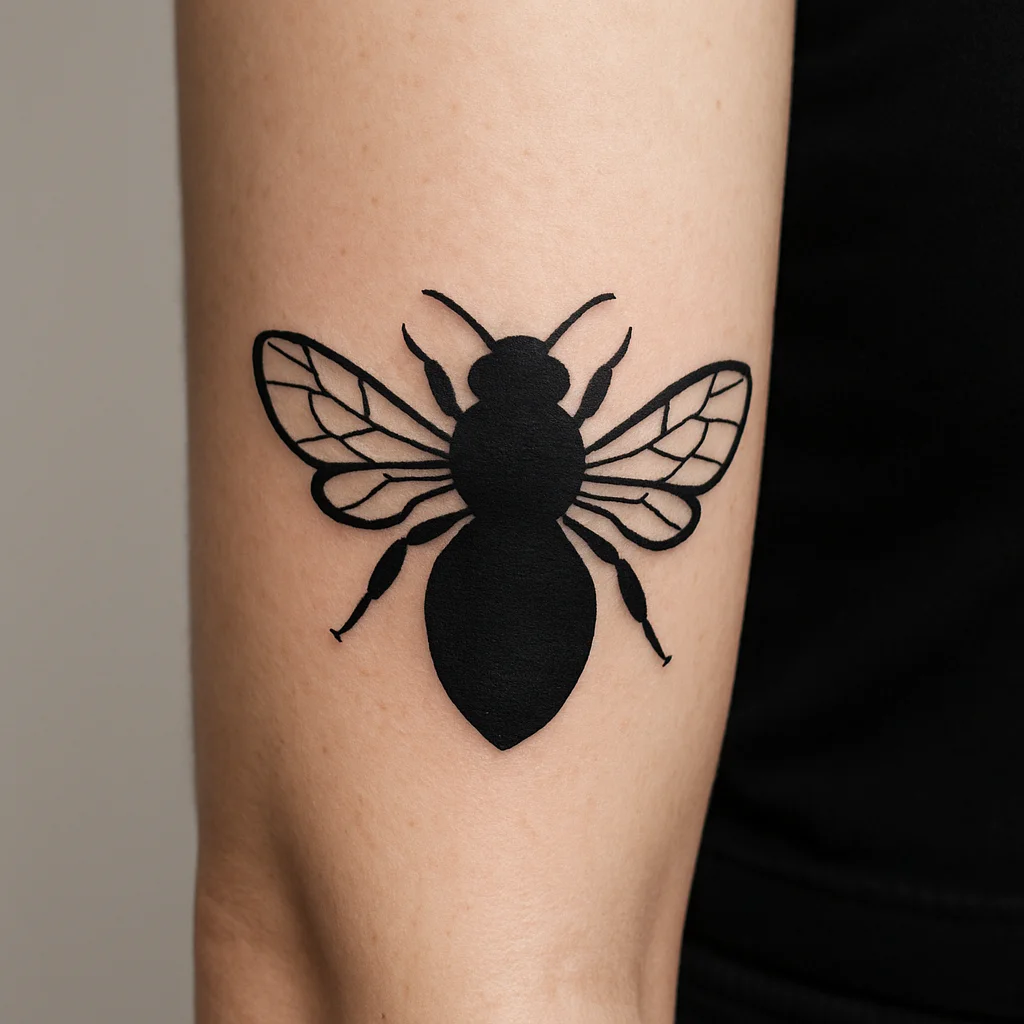
21. Blackwork bee
Solid body, two open wings, roughly 20 mm across, sitting on the flat of the outer wrist. Bees work small because the design is already high-contrast stripes and shapes. Ask for the wings to be outlined only, not stippled, so they do not grey out.
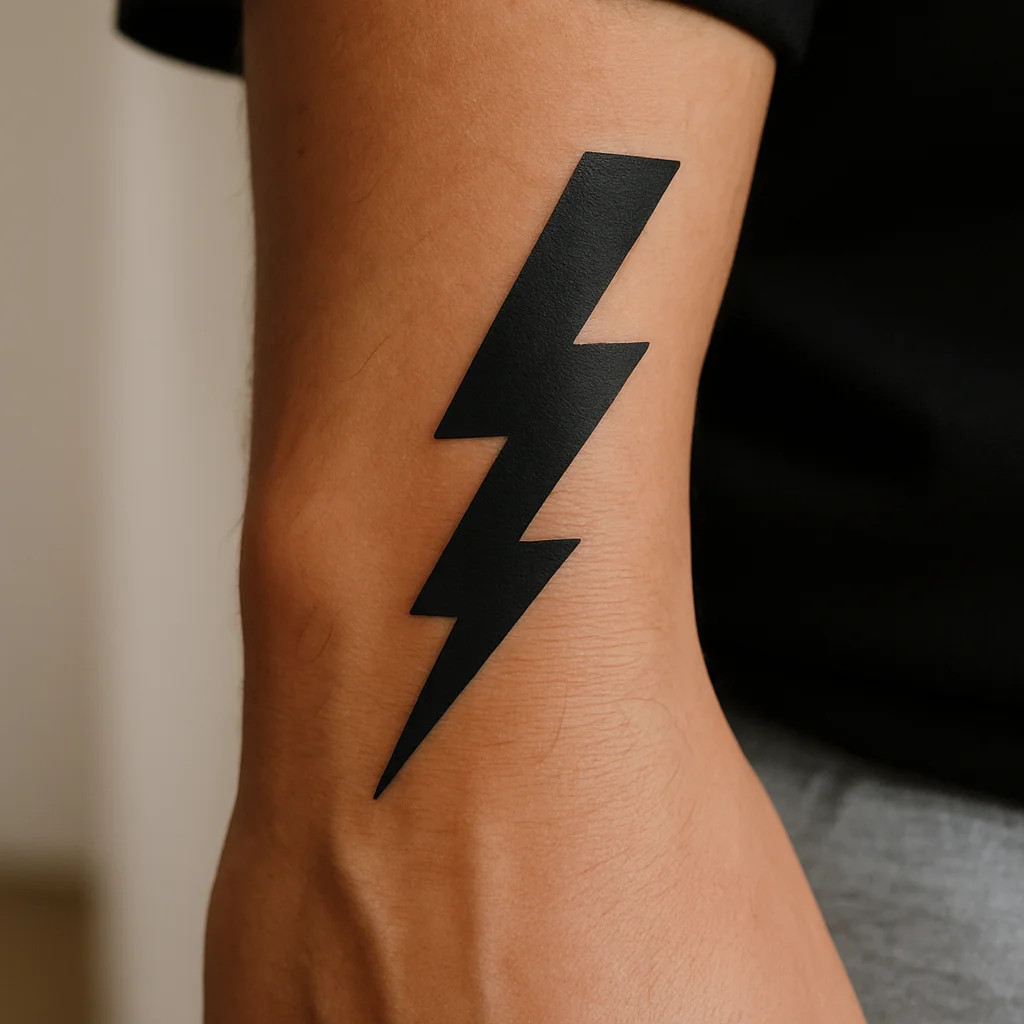
22. Lightning bolt
A single jagged shape in solid black, an inch to an inch and a half tall, angled along the wrist. It is bold, cheap, fast and essentially fade-proof. Good gateway tattoo if you are not sure you want ink at all.
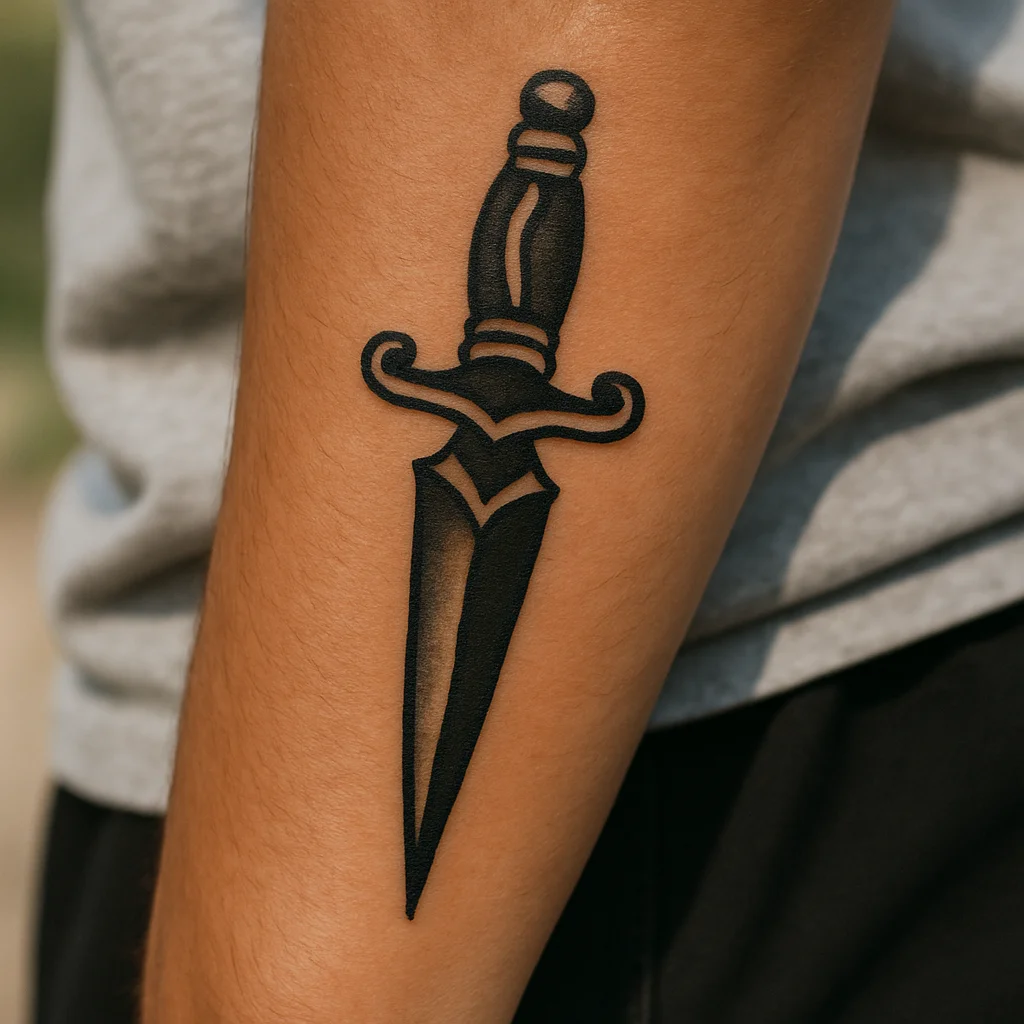
23. Small dagger pointing toward the hand
Classic traditional motif shrunk down: bold blade outline, simple crossguard, minimal shading. Pointing down the arm keeps the composition long and narrow, which suits the wrist far better than a horizontal blade. Ages like a stone because the linework is heavy by design.
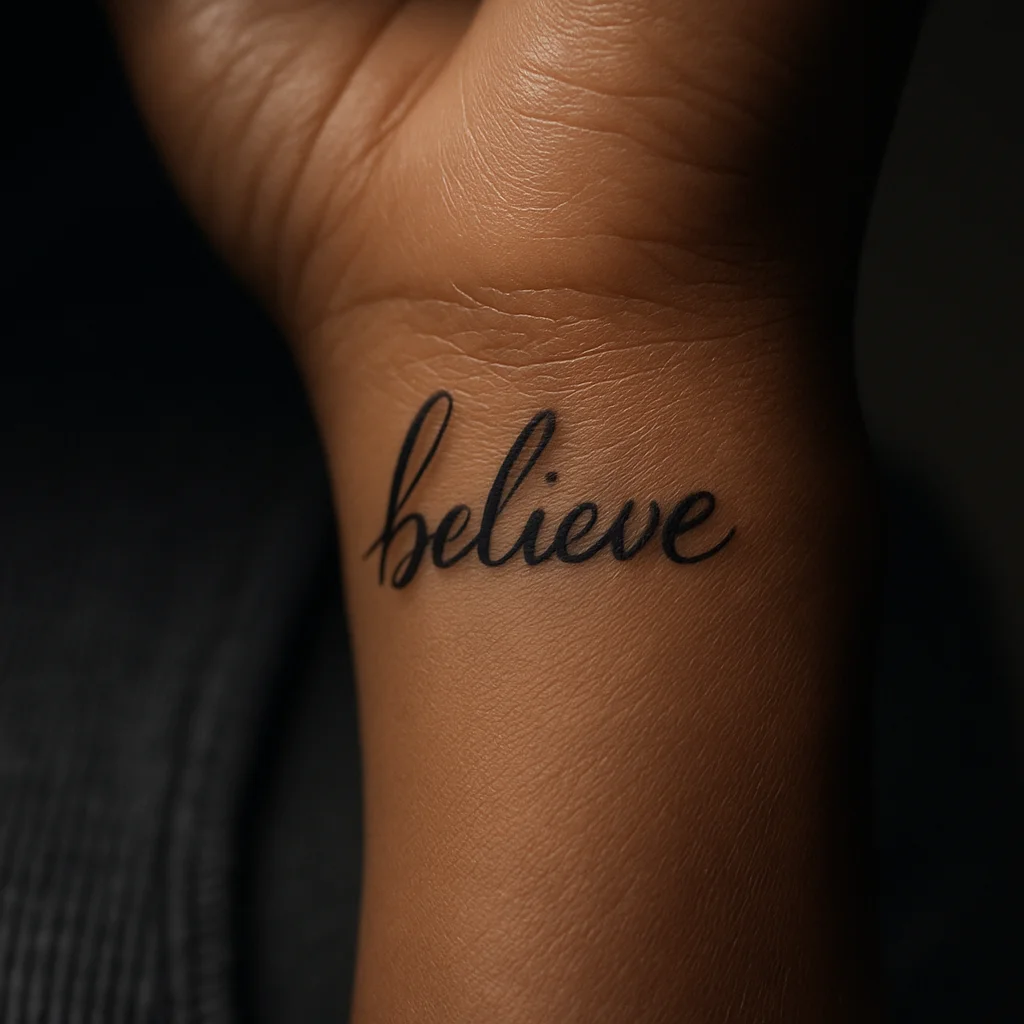
24. One-word script below the thumb
A single word — a family name, a motto, a place — running along the side of the wrist under the base of the thumb. Keep it under an inch and a half and choose a bold script with visible thick-thin contrast rather than a wispy signature style. Check it upside down too, since that is how others read it.
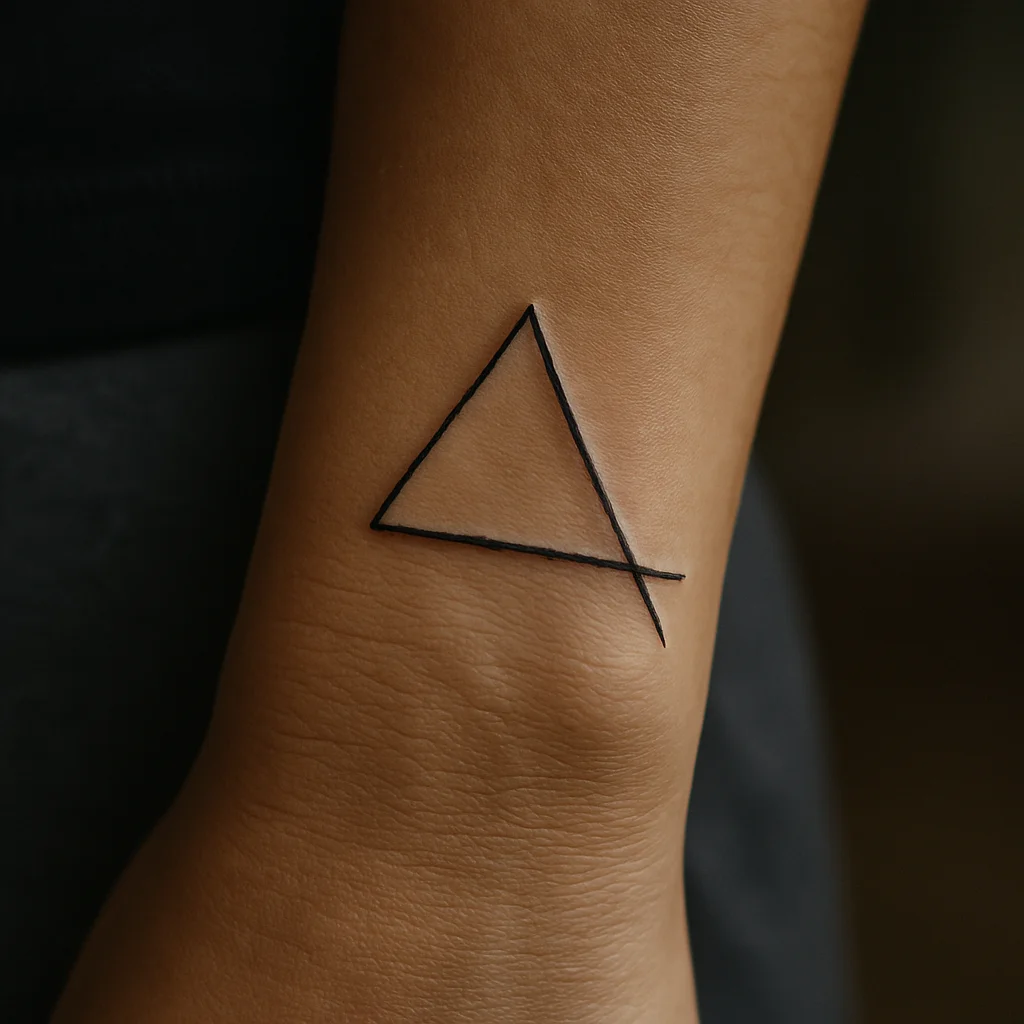
25. Open geometric triangle over the bone
An unfilled equilateral triangle around 20 mm per side with one line extending past a corner. Pure geometry sits well on the bony wrist because straight lines look right against a hard edge. Pairs neatly with a thin band if you build a set later.
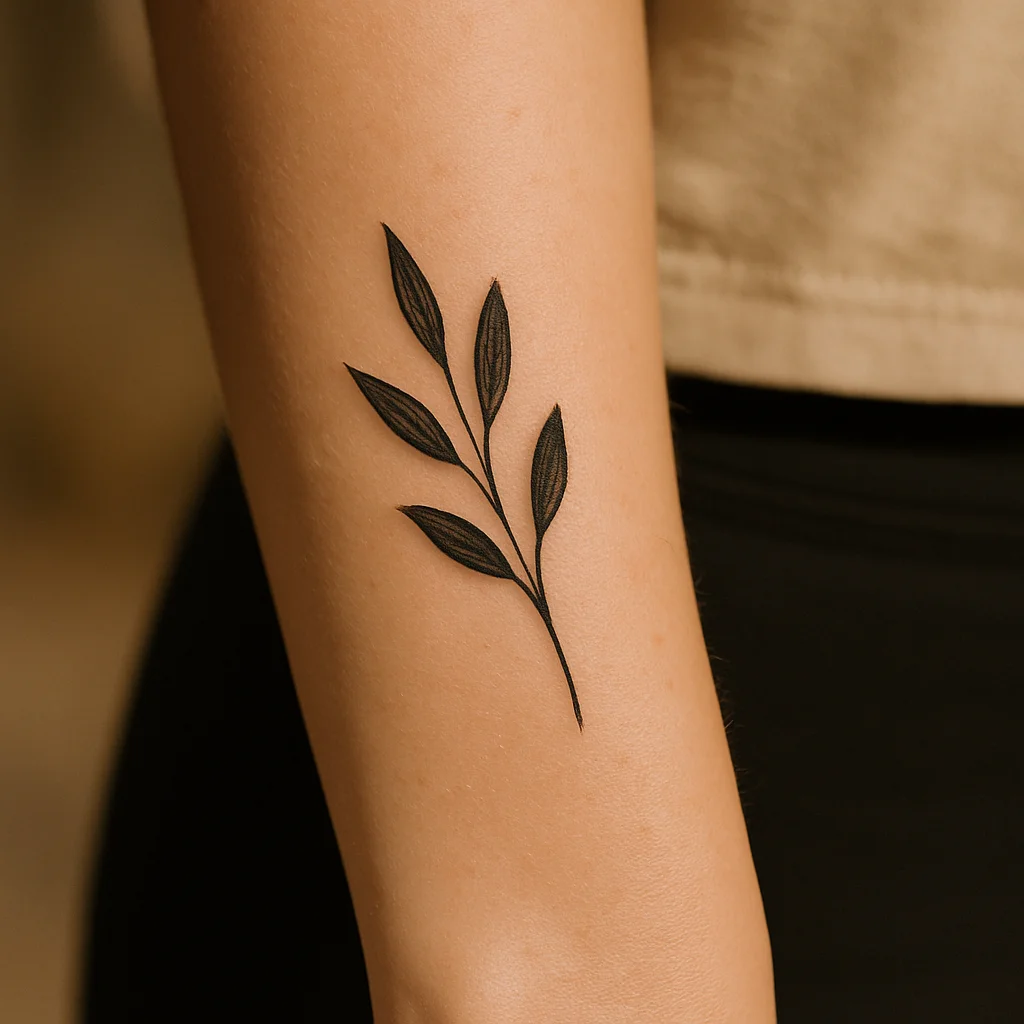
26. Olive branch along the ulna
A slim stem with five or six leaves curving with the bone, about two inches long. It is the softest design on this list and the one men most often come back for as a second piece — peace, patience, a nod to someone's heritage. Ask for solid leaves rather than outlined ones; they hold their shape longer at this scale.
Once you have two or three of these on one arm, the natural next question is how they connect. Our breakdown of arm tattoo ideas sorted by sitting length covers how small wrist pieces grow upward without looking random.
Pain, price and how small wrist work actually ages
Pain. The wrist is genuinely spicy, but the sitting is short. On a rough scale, the fleshy inner wrist near the palm is moderate — a hot, scratchy sting. Directly over the wrist bone and the bony side is sharper and more vibrating; most men describe it as bearable but not something they would want for two hours. A one-inch design is 10 to 40 minutes of actual needle time. Eat beforehand, keep your arm relaxed and let the artist support your hand rather than holding it rigid yourself.
Price. Almost every design here lands at or near a shop's minimum, because studios charge for setup and chair time, not square inches. In most Western cities that minimum sits somewhere in the rough range of a mid-priced restaurant dinner to a couple hundred, and fine-line specialists or in-demand artists charge above it. A fully wrapped band or a detailed snake pushes into an hourly rate. Never negotiate a wrist tattoo down — this is a high-visibility, technically demanding spot and cheap work shows.
Aging. Wrists are among the faster-fading placements: sun exposure, hand washing, sleeve friction and thin skin all conspire. Expect a small wrist piece to want a touch-up somewhere in the five-to-ten-year window, sooner for hairline fine-line work. Build in longevity now by asking for slightly thicker lines than the reference photo, at least 2 to 3 mm of clear space between elements, and no lettering under about 6 mm tall.
Briefing your artist. Bring your watch to the consultation. Say out loud whether it must be coverable by a cuff, and ask for the stencil to be placed with your arm hanging naturally. Then ask two questions: "Will this detail still read in ten years?" and "Would you change anything to make it hold better?" A good artist will simplify your idea, and that is the advice you are paying for.
Healing a wrist tattoo when you use your hands all day
The wrist heals fast — small designs are usually settled in two to three weeks — but it is a high-motion, high-contamination area, so the first week takes discipline.
- Ditch the watch and bracelets for two weeks. A strap sitting on fresh ink traps moisture and rubs pigment out of the top layer. This is the single most common cause of patchy healing on wrist tattoos.
- Wash your hands without soaking the tattoo. Angle your wrist away from the tap, and pat the area dry with paper towel rather than a shared hand towel.
- Second skin can be excellent here because it shields the tattoo from sleeves and steering wheels. If yours lifts at an edge or fills with cloudy fluid, take it off, wash gently and switch to dry healing with a thin ointment.
- Expect flex-related flaking in the wrist crease. Do not stretch or pick at it; let the skin shed on its own schedule.
- Manual labour, gym work and gloves: if your job involves grip, dirt or tight cuffs, book the tattoo before two days off. Chalk, sawdust and sweat under a glove are all bad news on day three.
- Sunscreen forever after. Once healed, the wrist is one of the most sun-exposed patches of skin you own. SPF on the tattoo whenever your sleeve is up will buy you years of crisp linework.
One more habit worth building: photograph the tattoo at one month, then annually in the same light. When you eventually debate a touch-up, that record tells you whether the design has actually softened or you have just stopped seeing it fresh.
Frequently asked questions
What size should a small men's wrist tattoo be?
Most designs that work well here fall between 1 and 2 inches on their longest side, which fits the band of skin between the hand and the widening forearm. Anything under about three quarters of an inch struggles to hold internal detail, and lettering should stay above roughly 6 mm tall. If a watch case is your cover, measure the dial and design inside that circle.
Do small wrist tattoos hurt a lot?
They sting, but not for long. The fleshy inner wrist feels hot and scratchy, while the area directly over the wrist bone is sharper and more rattling because there is little padding. Since most of these designs take 10 to 40 minutes, even the tender spots are over quickly.
Will a wrist tattoo fade faster than one on my arm?
Usually yes. Thin skin, constant sun exposure, hand washing and sleeve friction all speed up fading, so plan on a possible touch-up in the five-to-ten-year range. You can slow it down considerably by asking for slightly thicker lines, keeping space between elements, and using sunscreen on the tattoo once it is healed.
Can I hide a small wrist tattoo at work?
Often, but only if you plan it. A watch case covers a circular design about 1 to 1.5 inches wide, and a buttoned shirt cuff hides most of the wrist band. Designs on the inner wrist near the palm and bands that wrap fully are the hardest to conceal, so tell your artist up front if coverability matters.
How much does a small wrist tattoo cost?
Nearly all of these land at or just above a studio's minimum charge, since shops price by setup and chair time rather than size. Expect the minimum in most cities to cover a simple bolt, cross or dot design, with fine-line specialists and busy artists charging above it. Full wrap-around bands and detailed pieces like a snake move into hourly pricing.
The conversation
No comments yet. Got a thought about these designs? Start us off.
Want to weigh in? Join the community to comment, save designs and try them on your skin.