28 Small Neck Tattoos for Women, Zone by Zone
The neck isn't one placement, it's four, and each one wears, hides and ages differently. Here are 28 small designs sorted by zone, with honest notes on pain, price and what still reads in five years.
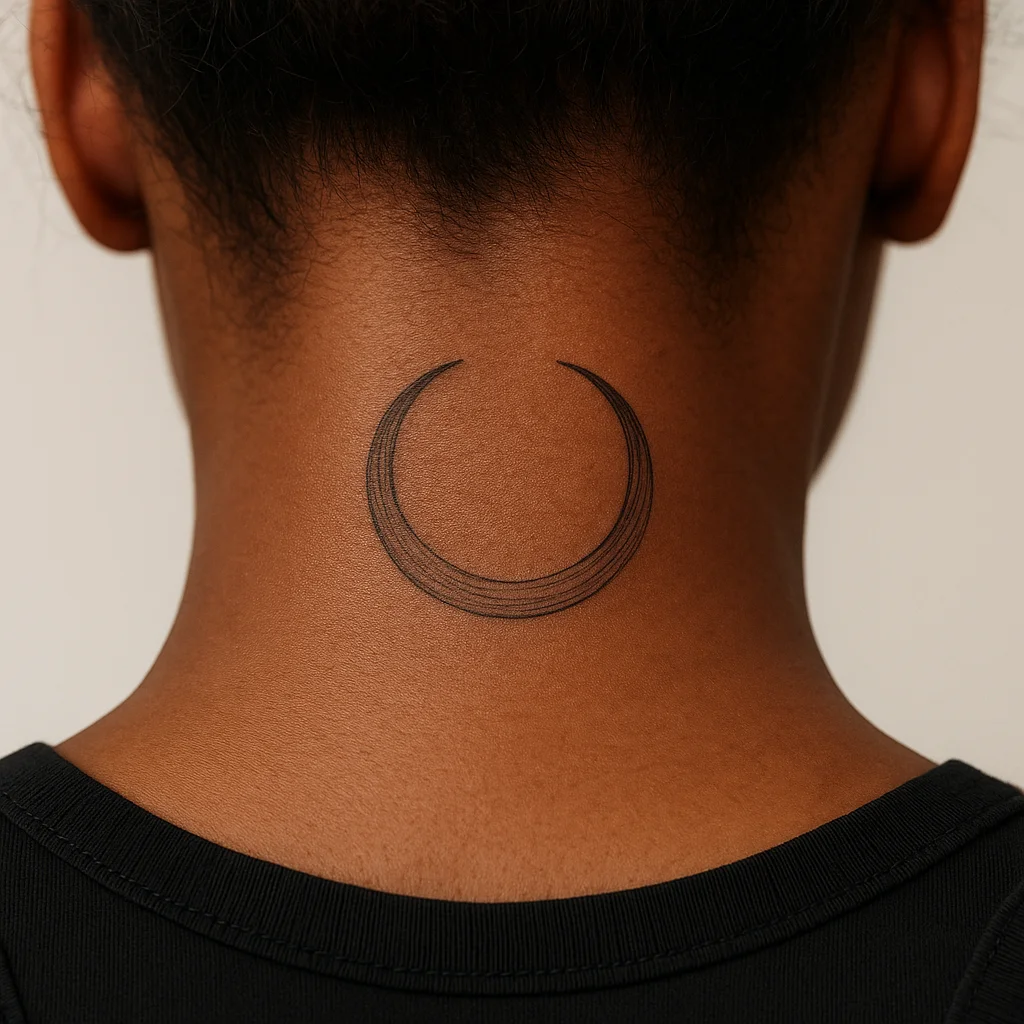
The neck is four placements, not one
Ask for "a small neck tattoo" and a good artist will immediately ask where, because the neck behaves like four separate canvases stacked around a cylinder. Knowing which one you want before you walk in changes the design, the price and how often your boss sees it.
- The nape. Flat, forgiving, low-movement skin at the base of the skull. Hair down hides it completely, hair up frames it. This is the easiest neck zone to heal and the one that holds detail best.
- The side column. The strip from under the ear down the sternocleidomastoid tendon to the collarbone. It stretches and creases every time you turn your head, so vertical designs work and wide horizontal ones warp.
- The ear hollow and hairline edge. The soft dip behind the lobe and the fuzzy border where hair starts. Semi-hidden, very popular, and thin-skinned enough that line weight matters more than size.
- The front and throat. The notch between the collarbones and the tendons either side of it. Highest visibility, highest pain, and the zone most people should sit on for a few months before committing.
Small on the neck means smaller than you think. A piece that measures 4 to 7 cm reads as bold here, while 2 to 3 cm reads as a whisper. Anything under 2 cm needs to be a simple silhouette or a dot cluster, because the neck's thin, mobile skin blurs micro-detail faster than a forearm does. Sun is the other factor: this area catches daylight year-round, so plan on sunscreen becoming a permanent habit.
Nape: the safest place to start (1-7)
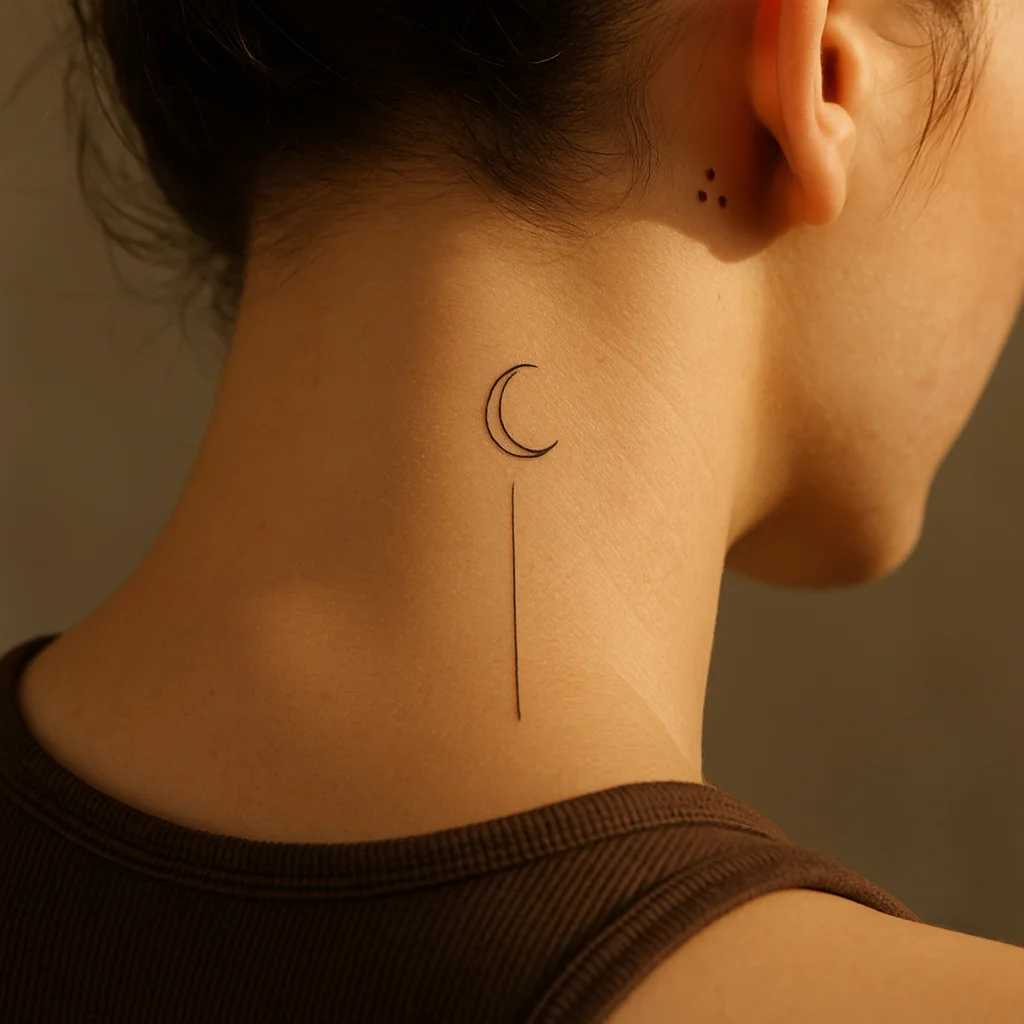
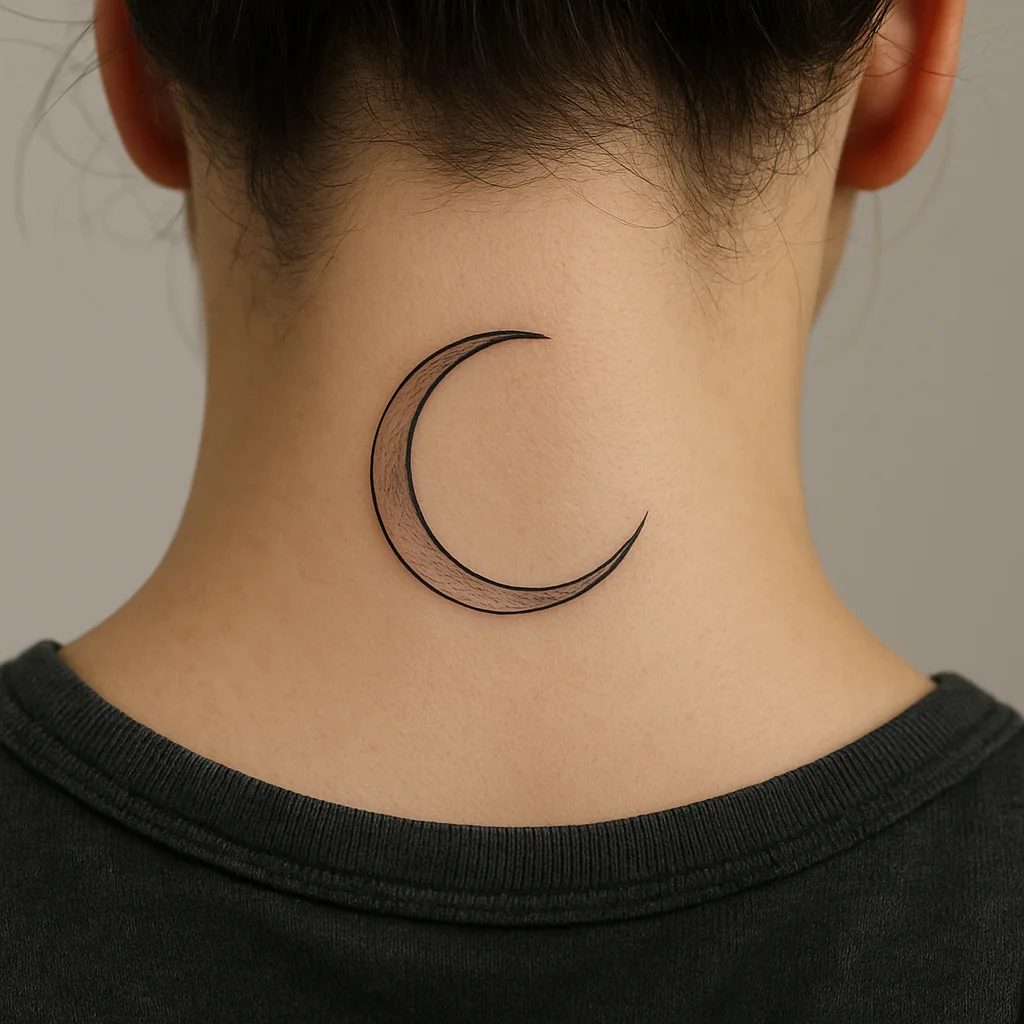
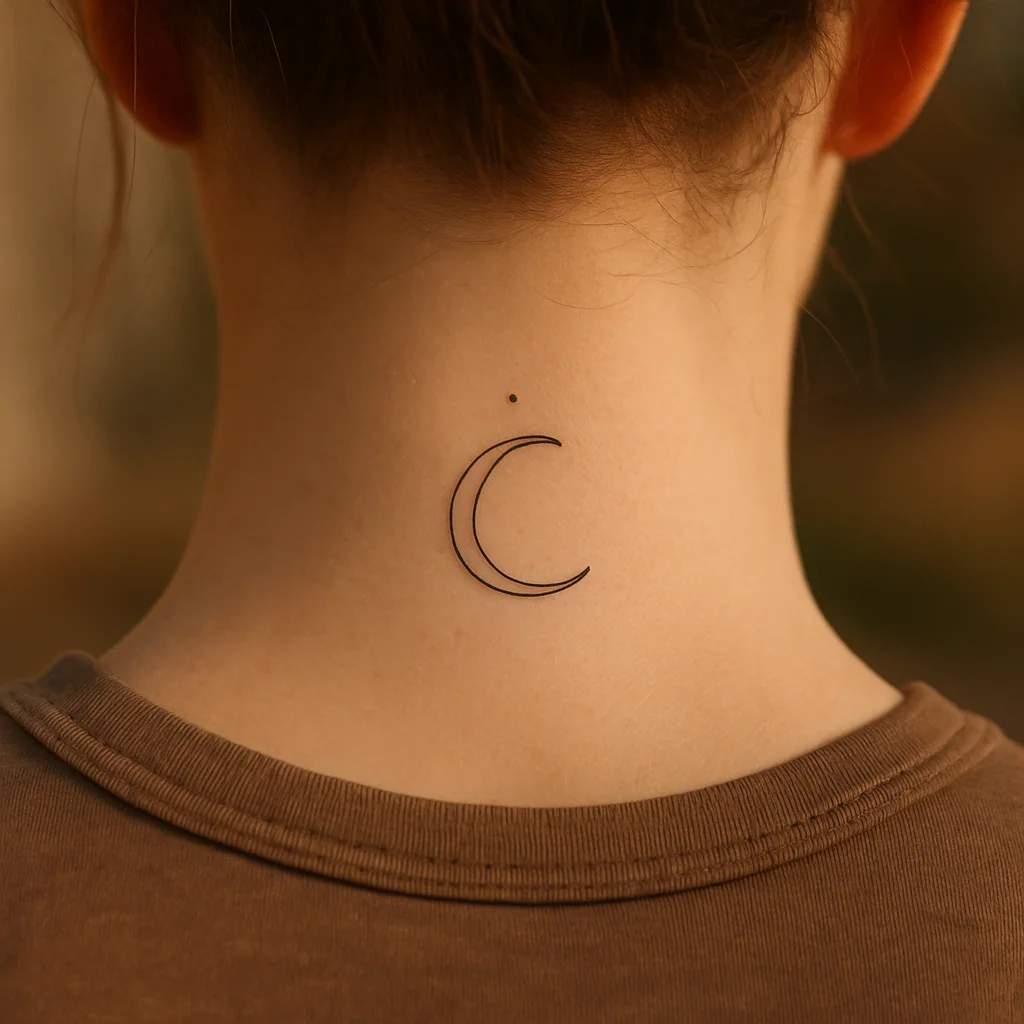
1. Crescent moon at the hairline
A 2 to 3 cm open crescent sitting just below where the hair starts, tips pointing up. It disappears under loose hair and appears the second you tie a bun, which is exactly why it's the most requested nape piece in most studios. Keep the line weight medium rather than hair-thin so the curve stays crisp as it settles.
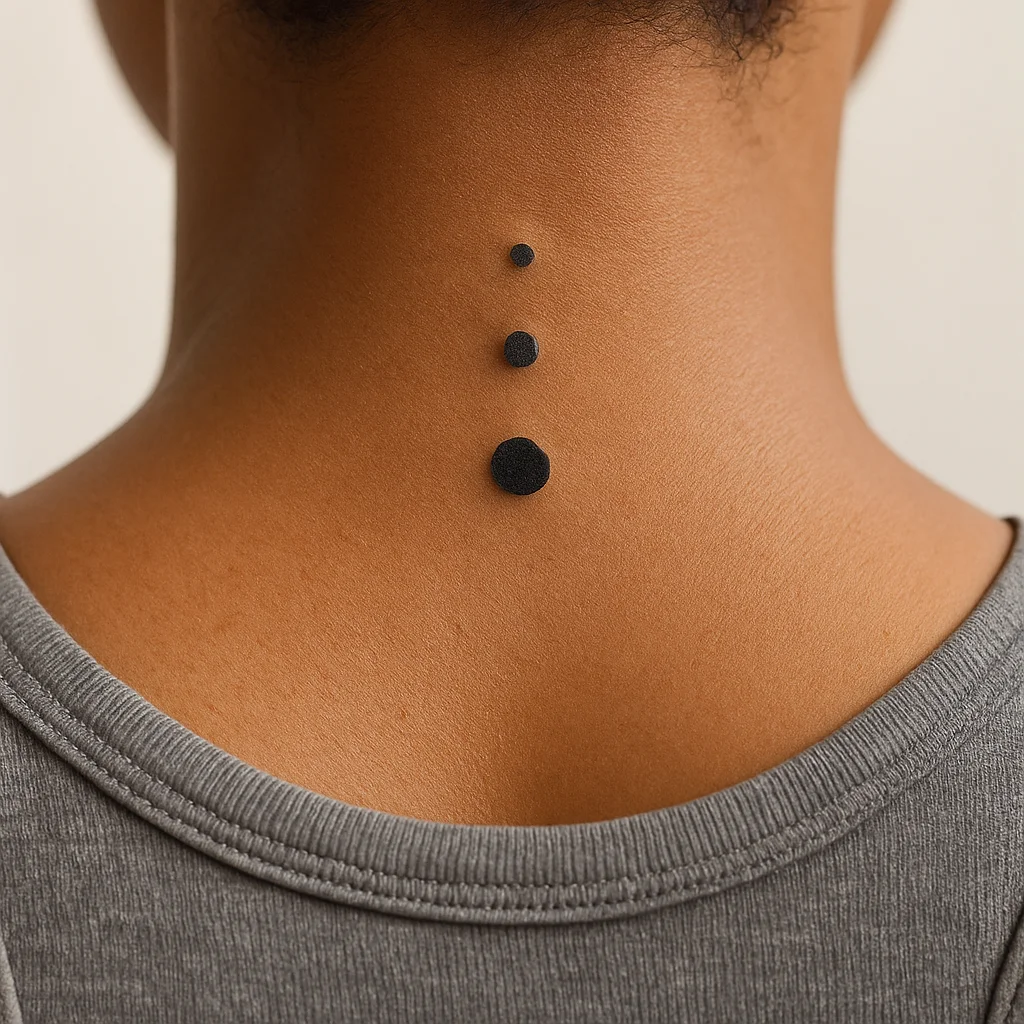
2. Three-dot vertical column
Three graduated dots running down the centre line, largest at the top, spaced roughly a finger-width apart. It's quiet, it costs very little, and it reads as intentional punctuation rather than a stray mark. Ask for solid, well-packed dots between 3 and 6 mm, because tiny under-packed dots grey out first.
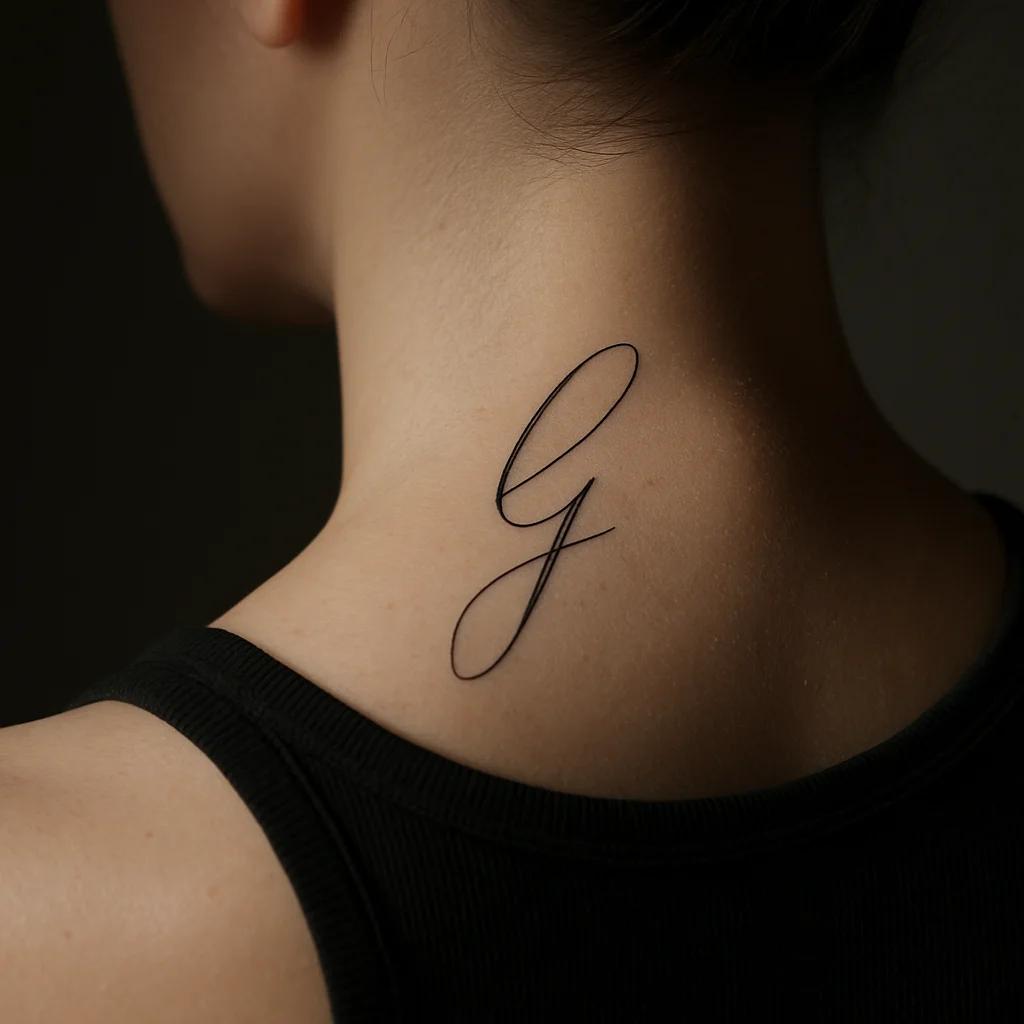
3. Single-needle initial in cursive
One letter, 2 to 4 cm tall, drawn in a slim script with a long tail that trails toward the spine. Initials work here because the flat nape doesn't distort letterforms the way the side of the neck does. Avoid ultra-fine serifs and closed loops at small scale, they fill in over the years.
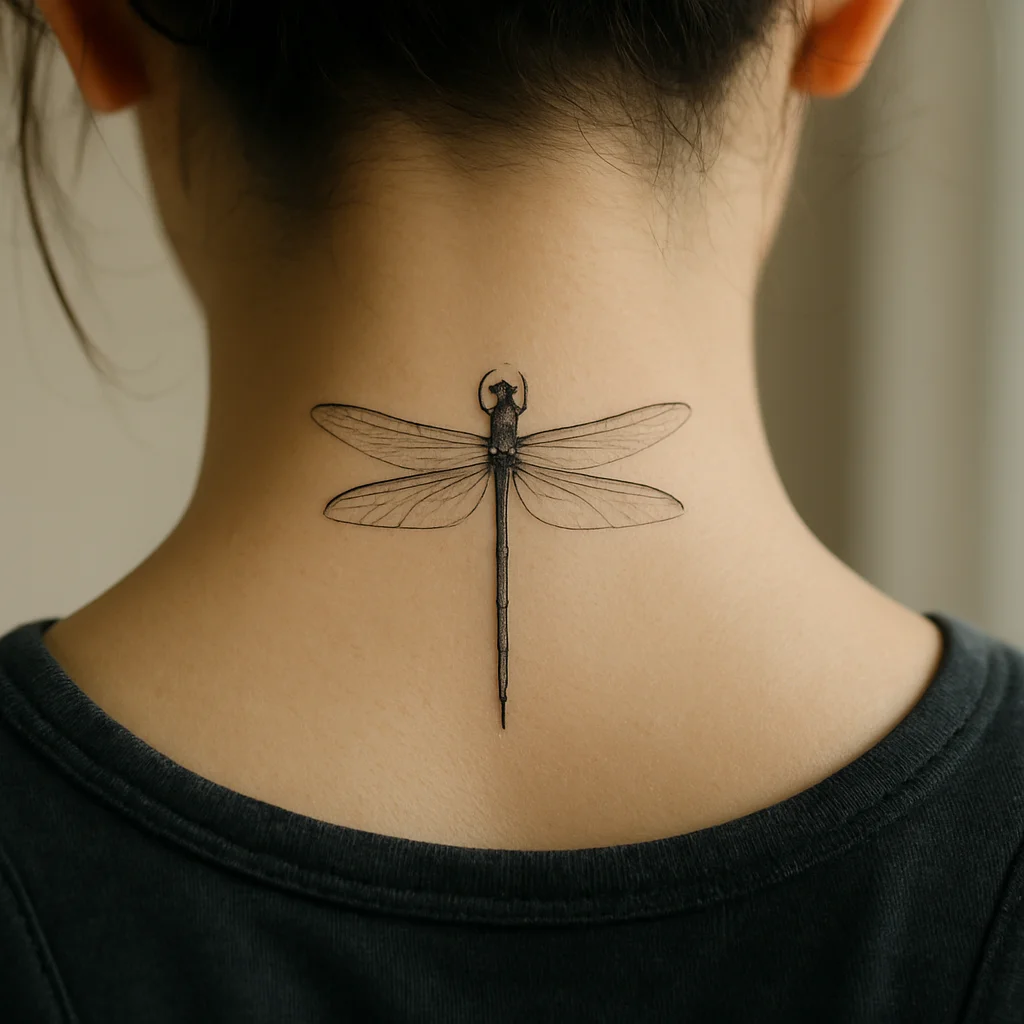
4. Dragonfly with folded wings
A slender dragonfly, body along the centre line, wings swept back rather than spread wide. Around 4 cm long it keeps the wing veining legible and still tucks under a collar. Good pick if you want something figurative that isn't a butterfly.
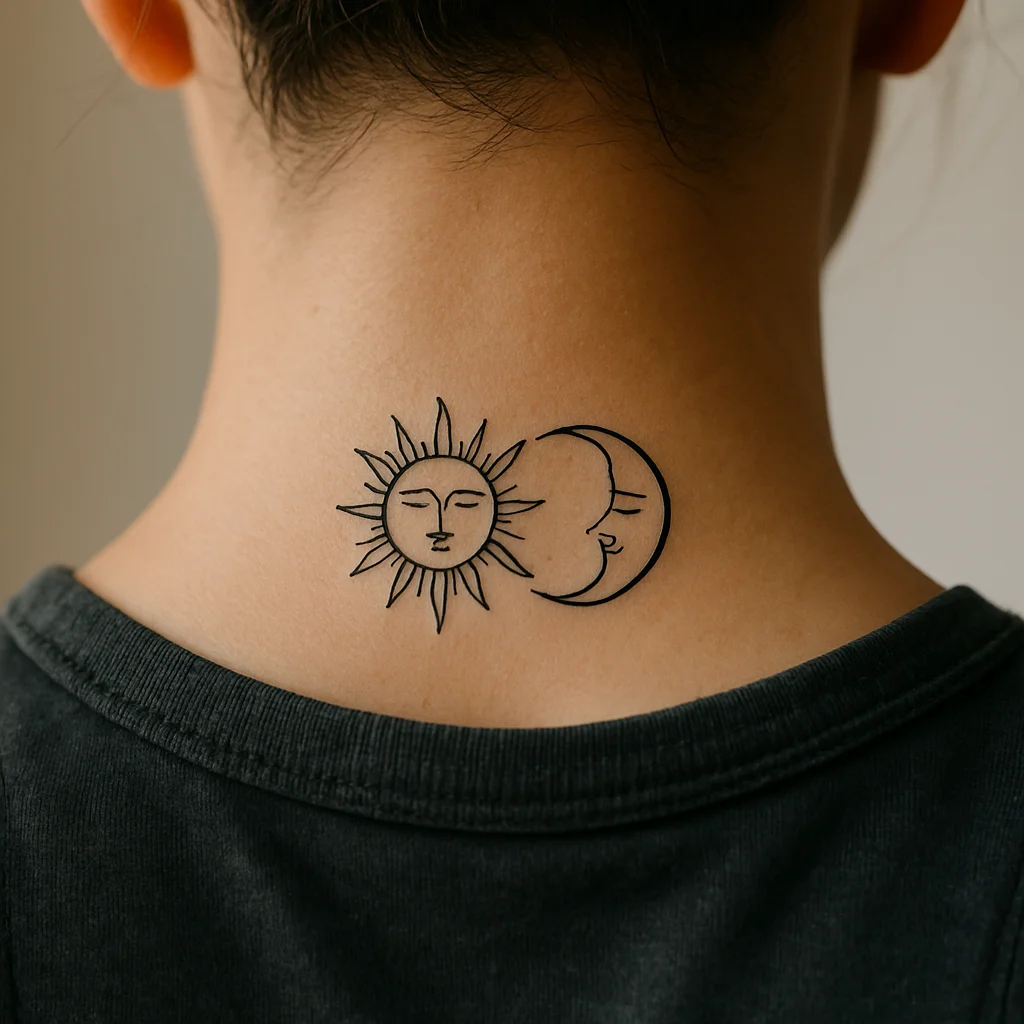
5. Sun and moon flanking the vertebra
Two coin-sized symbols, one either side of the bony bump at the base of the neck, small enough that a crew neck covers both. The symmetry looks deliberate when your hair is up and reads as a soft pair when it's down. Ask for slightly heavier weight on the sun's rays so they don't vanish.
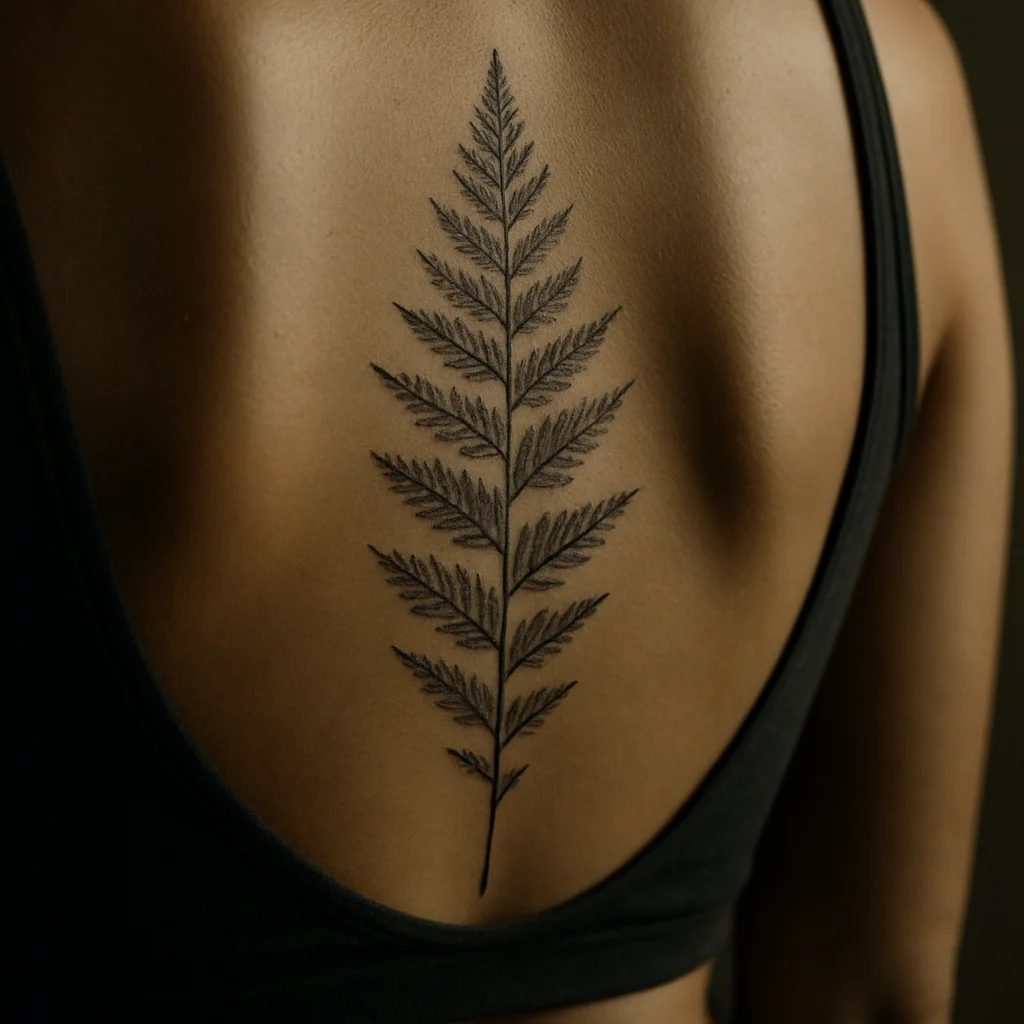
6. Fern frond pointing down the spine
A single frond, 5 to 7 cm, leaflets getting smaller as it descends toward the spine. It follows the body's natural line and ages beautifully because the shape survives even if fine leaflet tips soften. Suits anyone who wants botanical without a full floral piece.
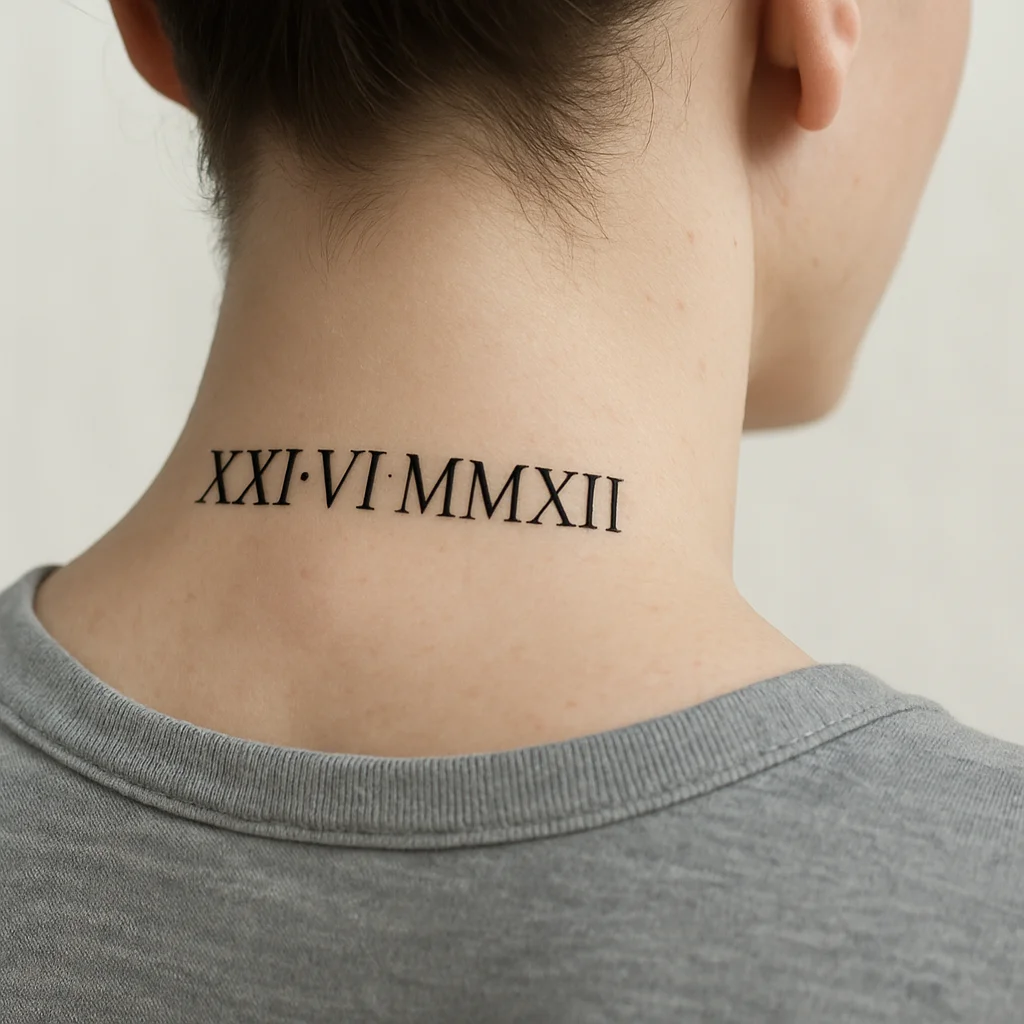
7. Roman numeral date in fine serif
A date rendered as clean Roman numerals in a single horizontal line, 4 to 6 cm wide, sitting a couple of centimetres below the hairline. Numerals hold up far better than tiny cursive dates because every stroke is straight. Keep the character height at least 6 mm and leave real space between letters.
Side column: designs that move with the tendon (8-14)
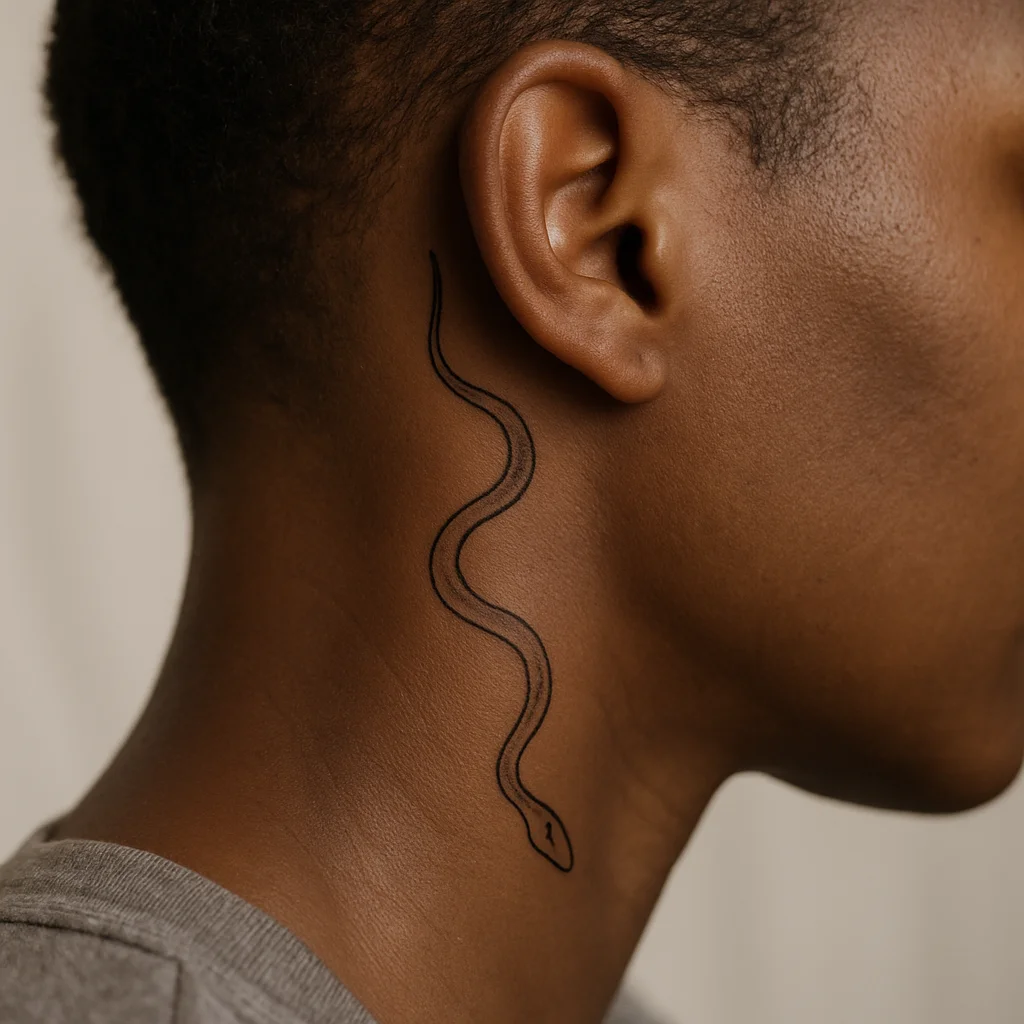
8. Snake curling under the jawline
A slim serpent, 6 to 8 cm, following the tendon with its head tucked just below the ear. The vertical S-curve suits this zone because the shape stretches gracefully when you turn your head. Keep the belly scales suggested with a few strokes rather than fully rendered.
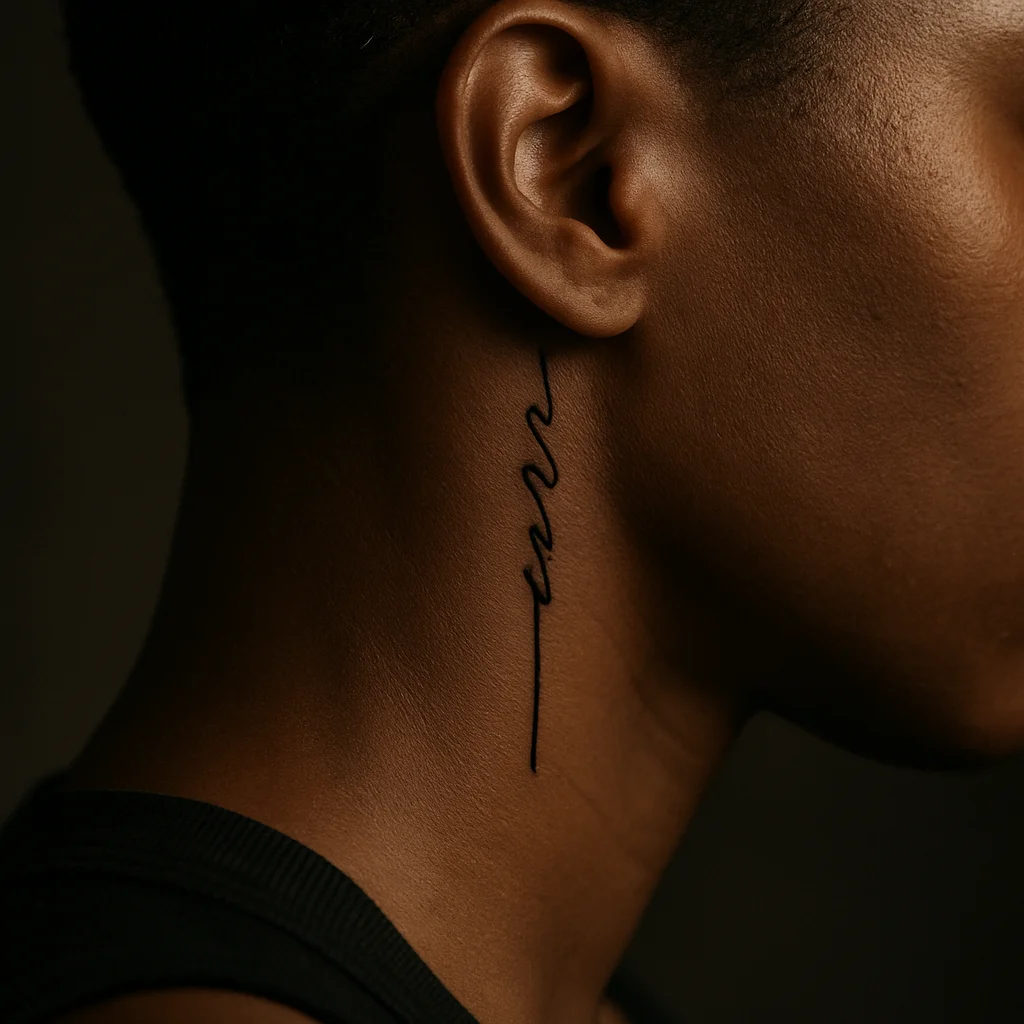
9. One word in vertical script
A single short word running top to bottom along the tendon, letters stacked or set in a slim italic. Vertical placement is the trick here, horizontal words on the side of the neck bend and crowd. Choose a word of six letters or fewer and ask for at least 8 mm letter height.
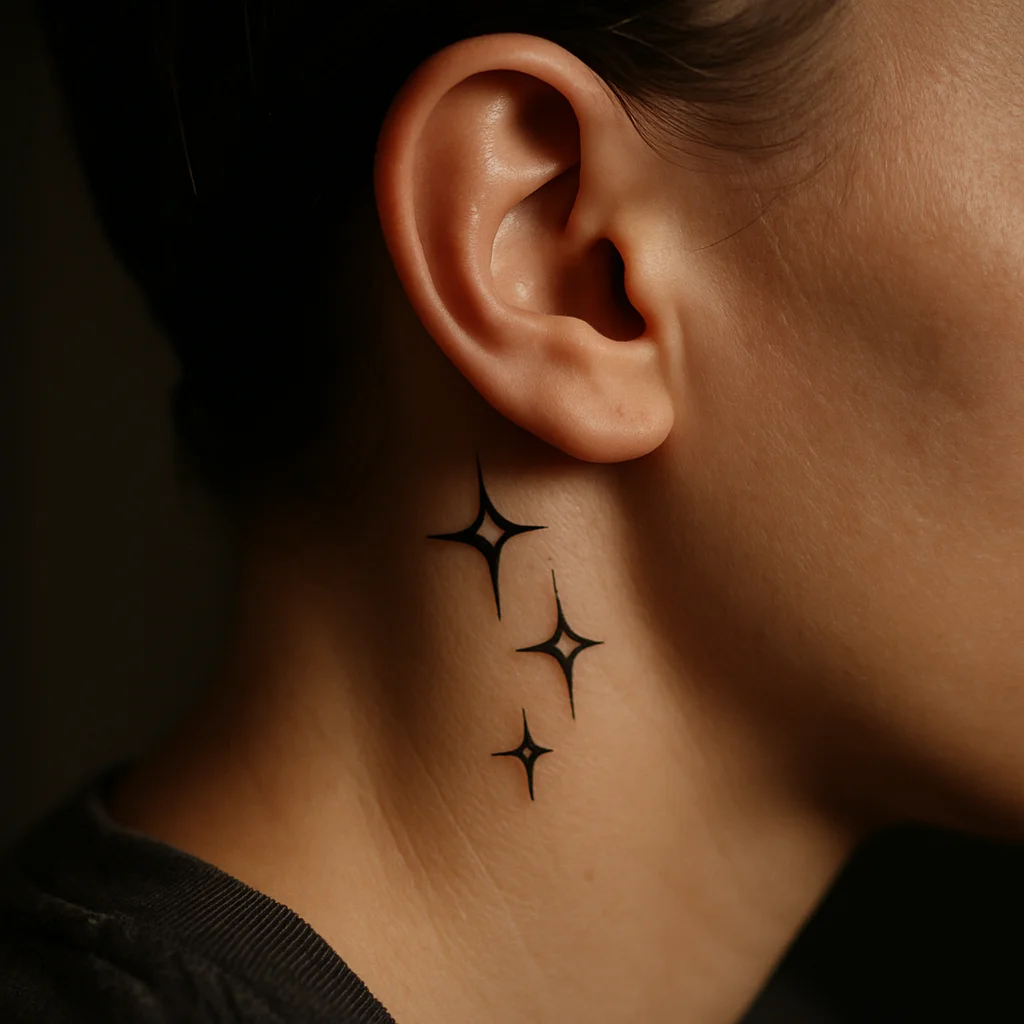
10. Stack of three tiny stars
Three four-point stars in decreasing size, scattered on a slight diagonal from under the ear toward the collar. Simple, fast, and easy to add to later if you want to build a small constellation. Solid black fills hold better than open outlines at this size.
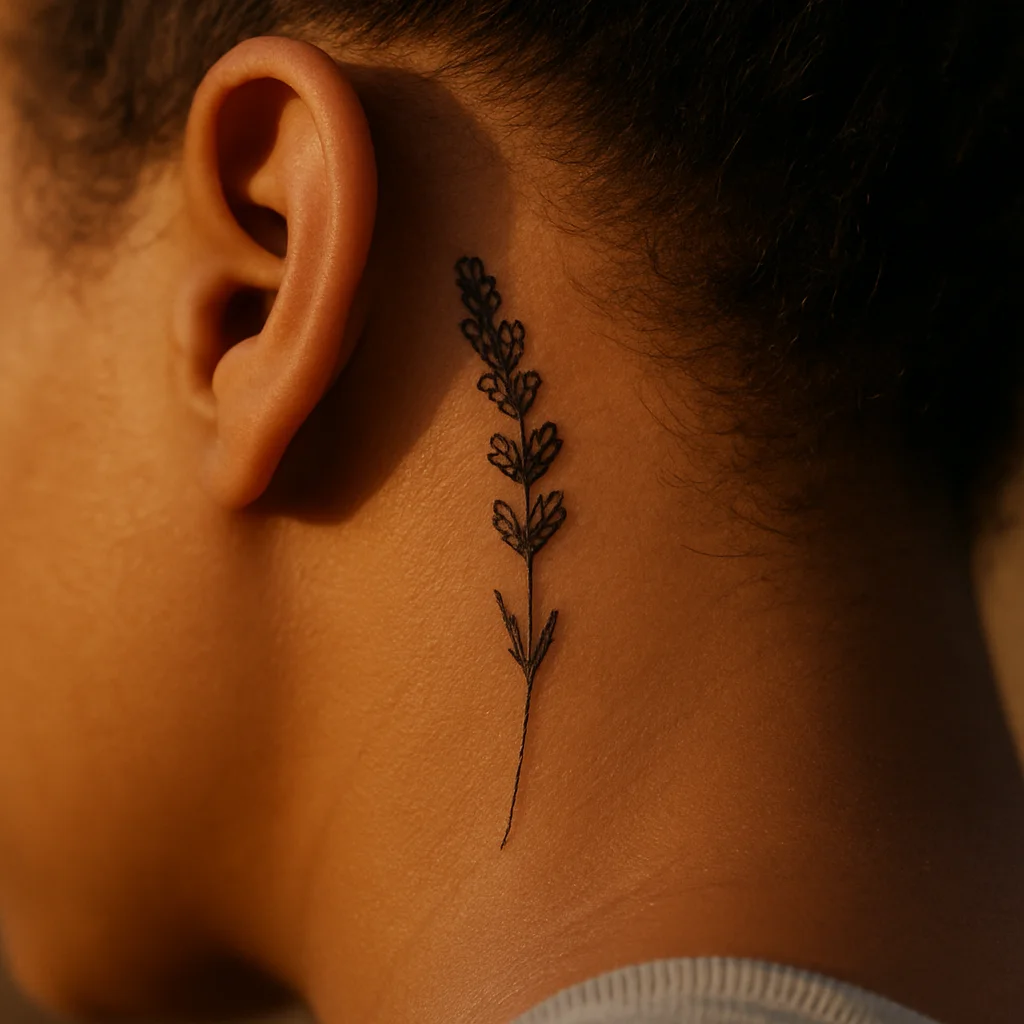
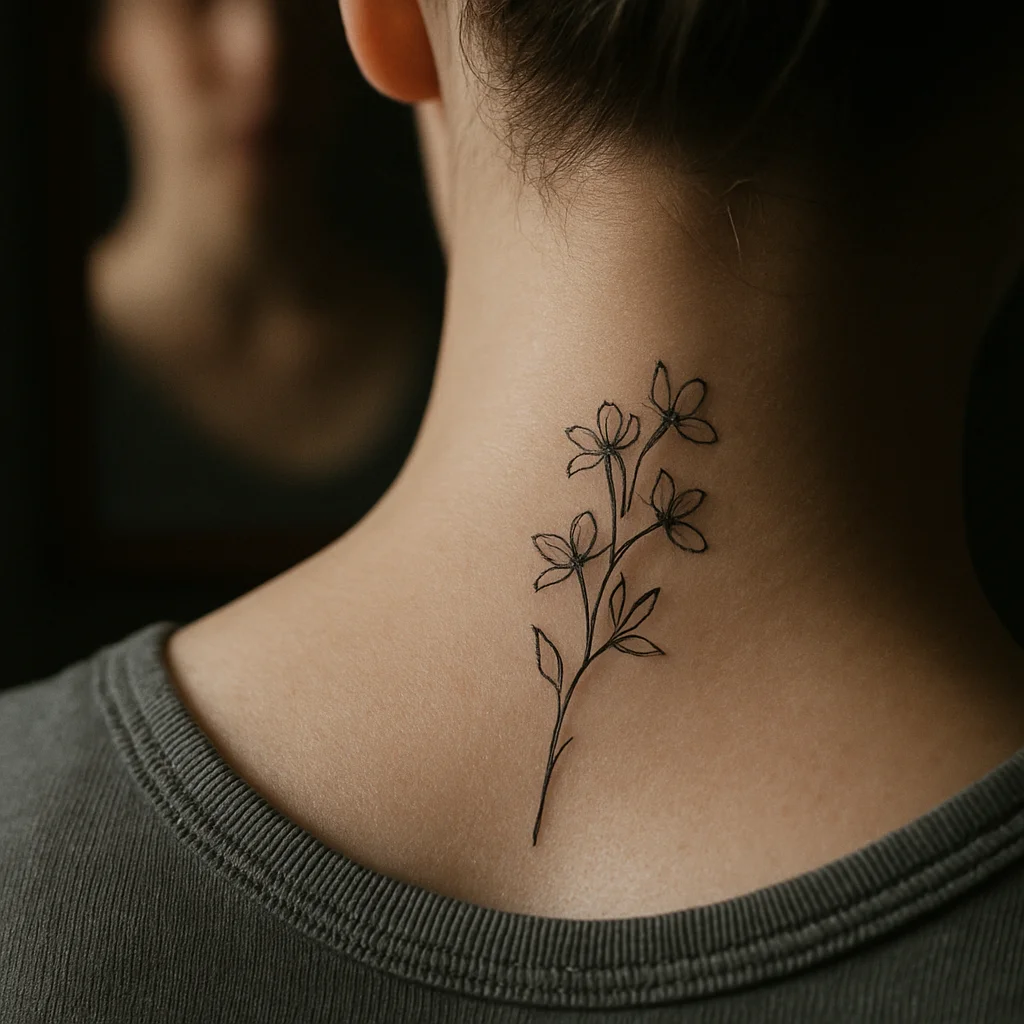
11. Lavender sprig along the tendon
A single stem, 5 to 6 cm, with tiny buds clustered at the top and a bare stalk descending. Botanicals with a clear vertical axis are the best floral choice for this zone. Ask for buds as small filled shapes rather than outlined ones so they stay defined.
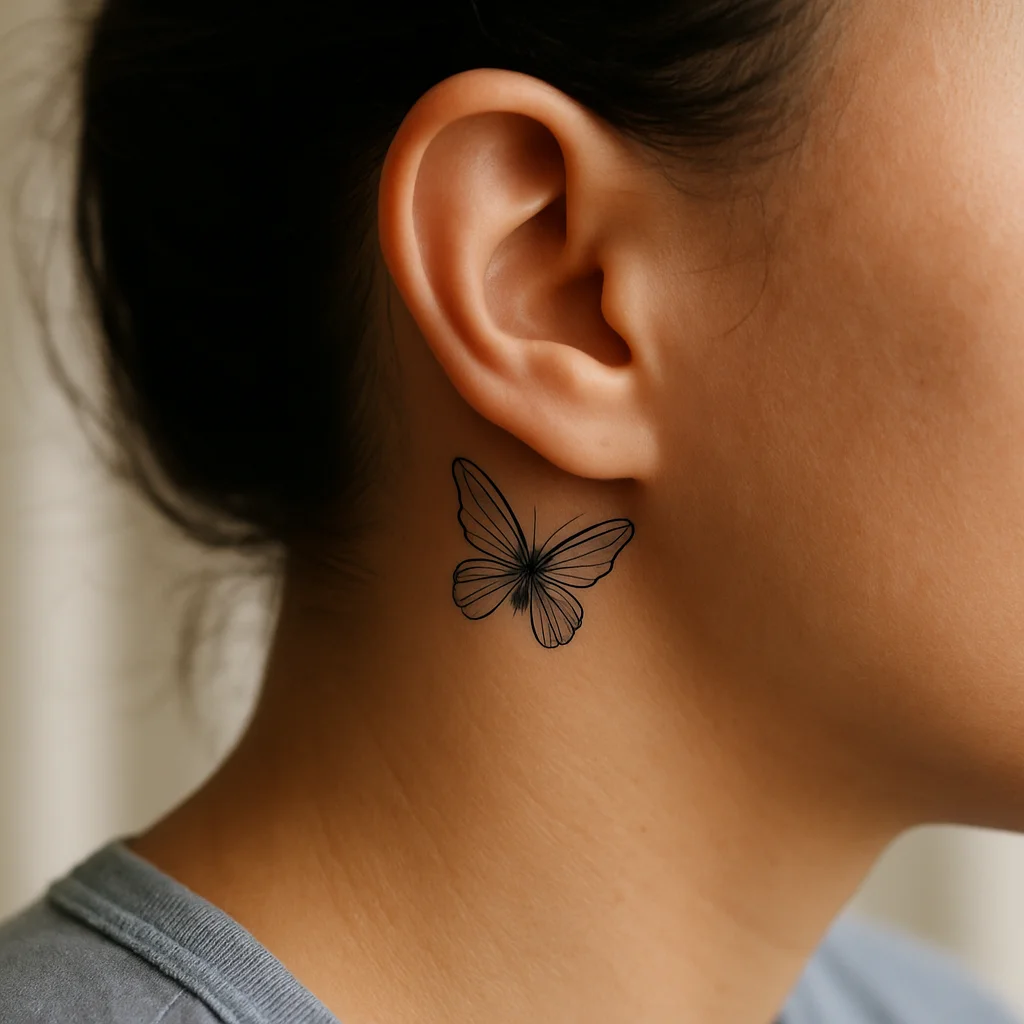
12. Butterfly at the jaw hinge
A 3 cm butterfly angled at the soft hollow just below the jaw hinge, wings open but drawn with minimal internal detail. Tilt it slightly so the wings follow the jaw rather than fighting it. Best for anyone happy with a piece that's fully visible with hair up.
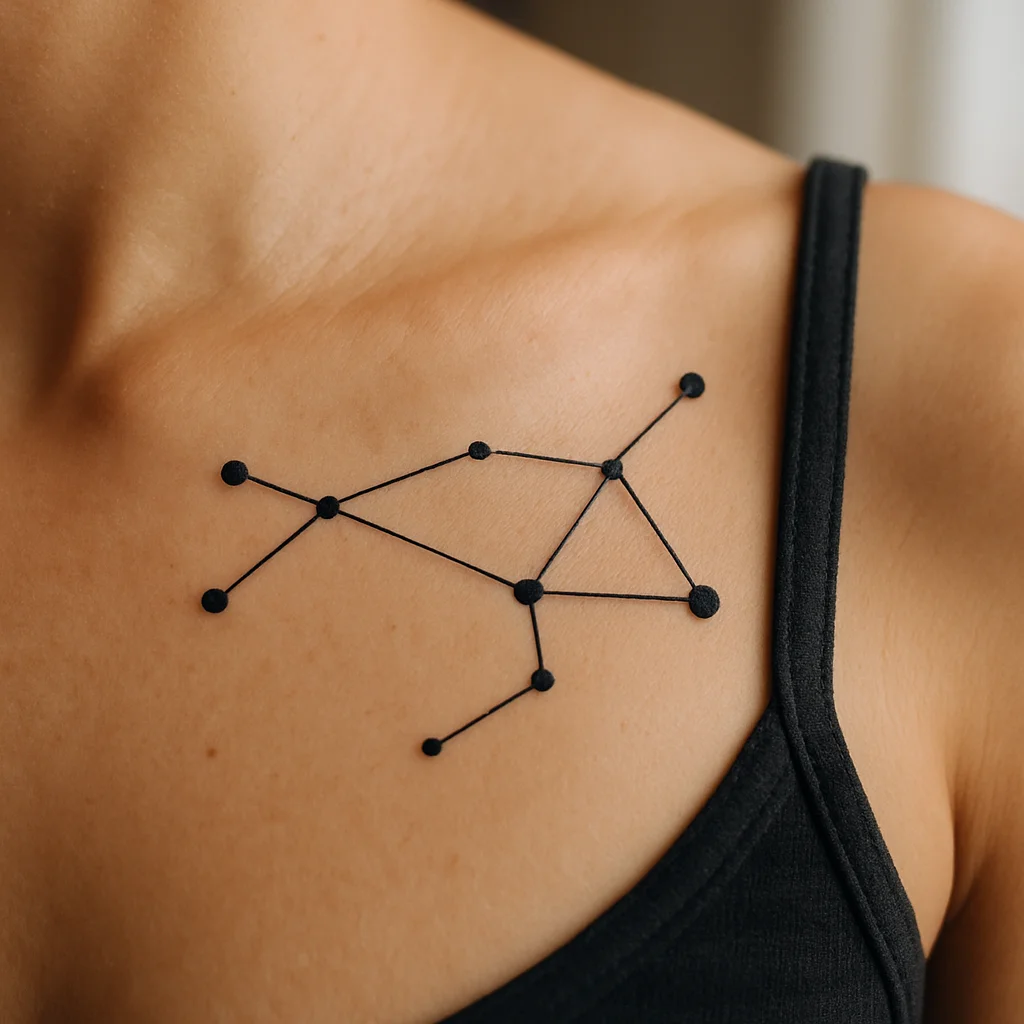
13. Personal constellation in dotwork
Your star sign or a meaningful star pattern as dots joined by hair-thin lines, spanning 5 to 7 cm down the side. Ask for varied dot sizes to suggest brightness, it's what stops it reading as random specks. This one photographs beautifully and stays subtle in person.
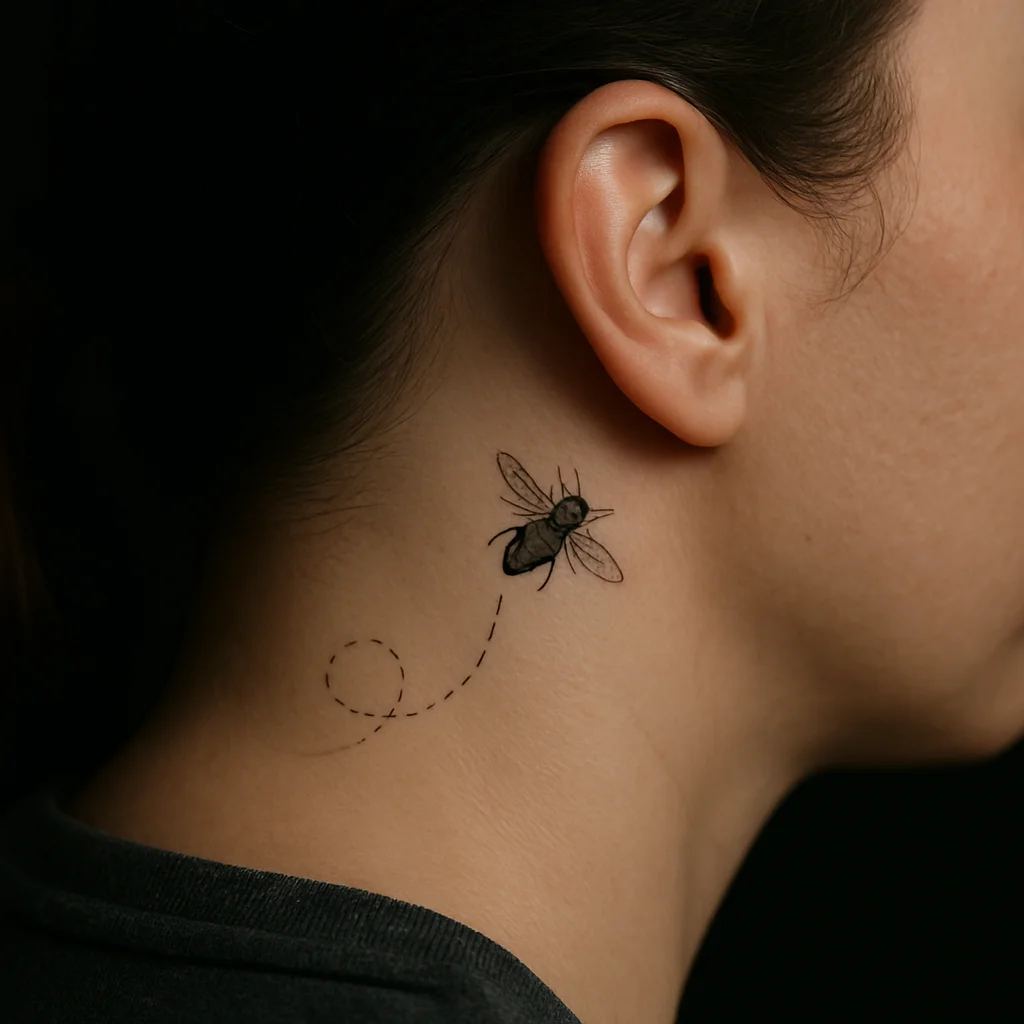
14. A single bee under the ear
A 2 cm bee with a softly striped body and two suggested wings, sitting high on the neck where a shirt collar can't reach. Small insects are perfect neck subjects because their silhouettes stay recognisable even when detail softens. Add a dashed flight path curving toward the hairline if you want movement.
Ear hollow and hairline edge: half-hidden by design (15-20)
This is the zone people choose when they want ink they can switch on and off. Hair down, gone. Hair up, a small surprise. Because the skin here is thin and sits over cartilage, keep pieces under about 4 cm and insist on breathing room between elements. If this zone is the whole plan, our deeper guide to behind-the-ear tattoos that actually hold up goes further on longevity.
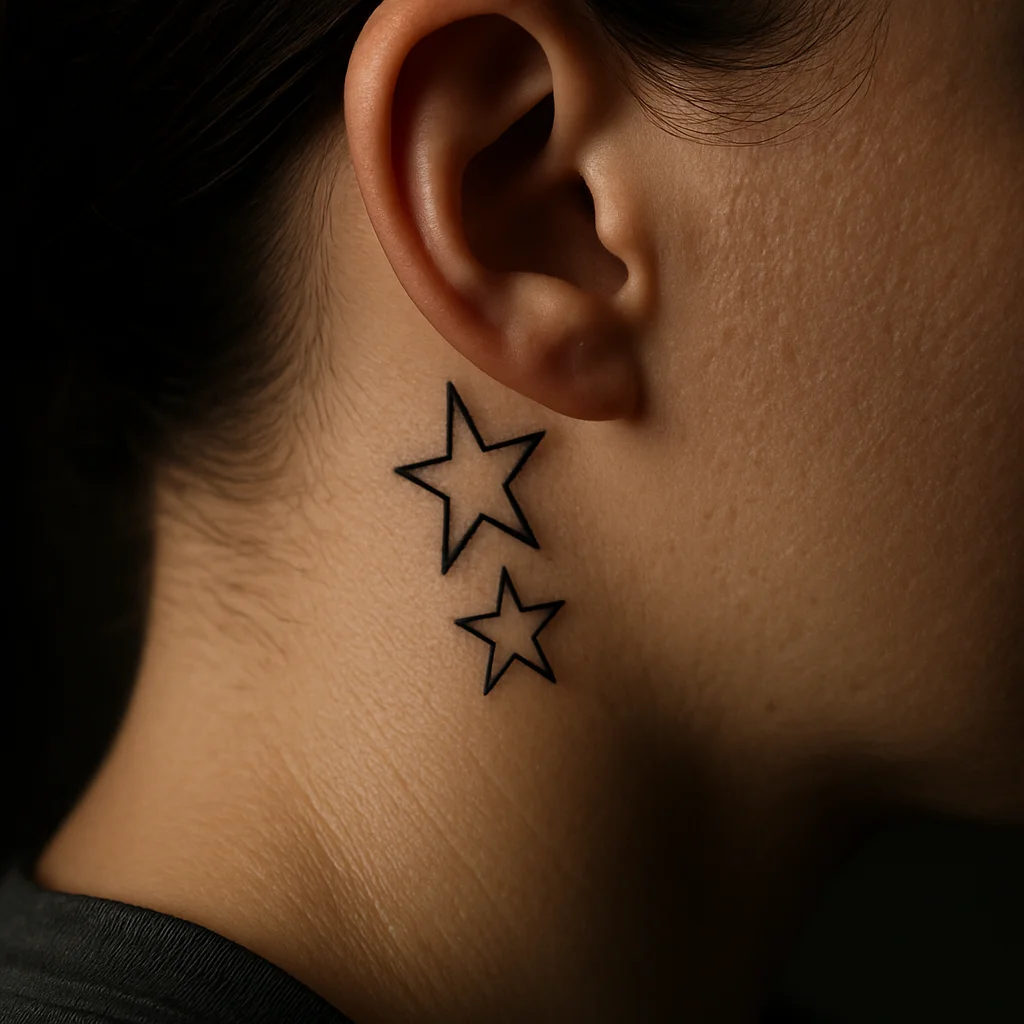
15. Graduated three-star cluster
Three stars in different sizes filling the hollow behind the lobe, the largest no more than 12 mm. The size variation does the work, three identical stars look like a sticker. It's a five-minute tattoo and often lands at a shop minimum.
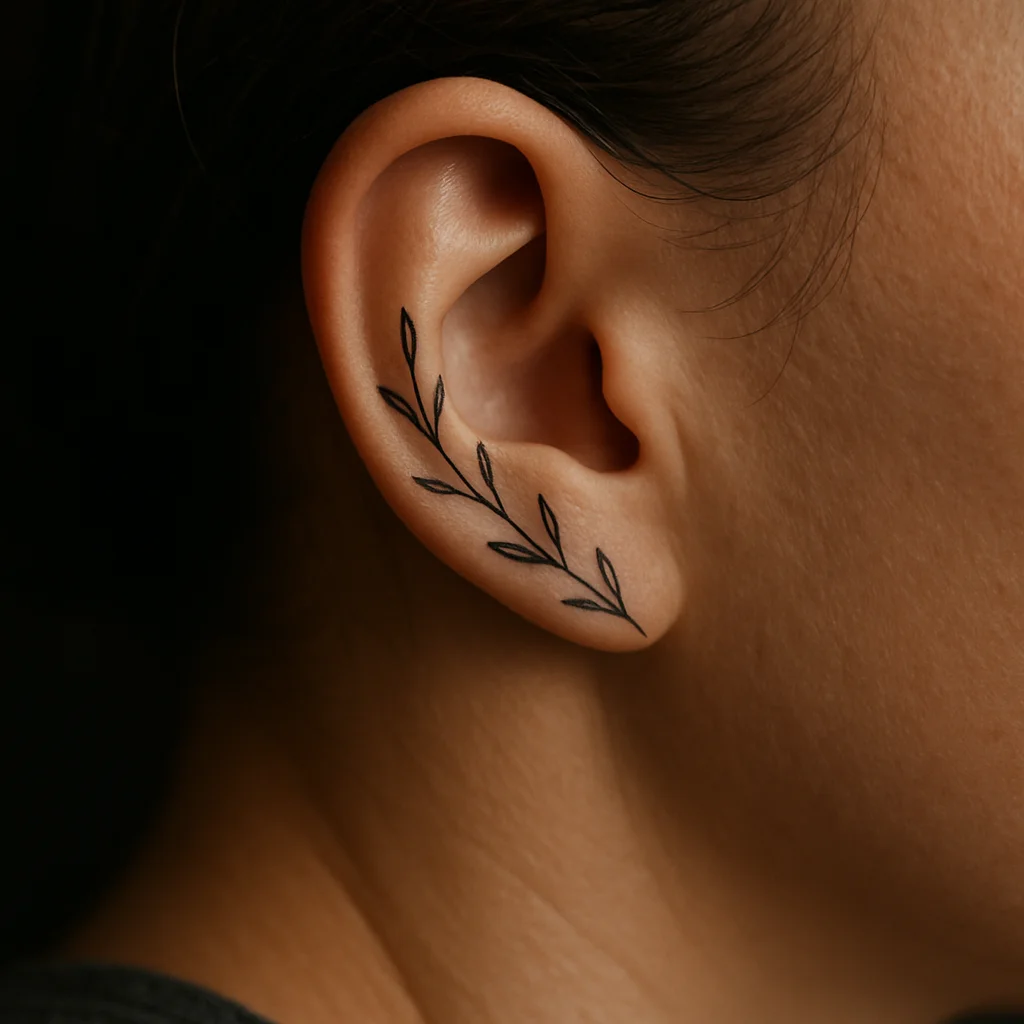
16. Vine that follows the ear curve
A hair-thin stem with five or six small leaves tracing the outer edge of the ear from lobe to mid-cartilage. The curve makes it feel custom-fitted to your ear rather than stamped on. Ask the artist to stencil it with your hair pinned exactly as you usually wear it.
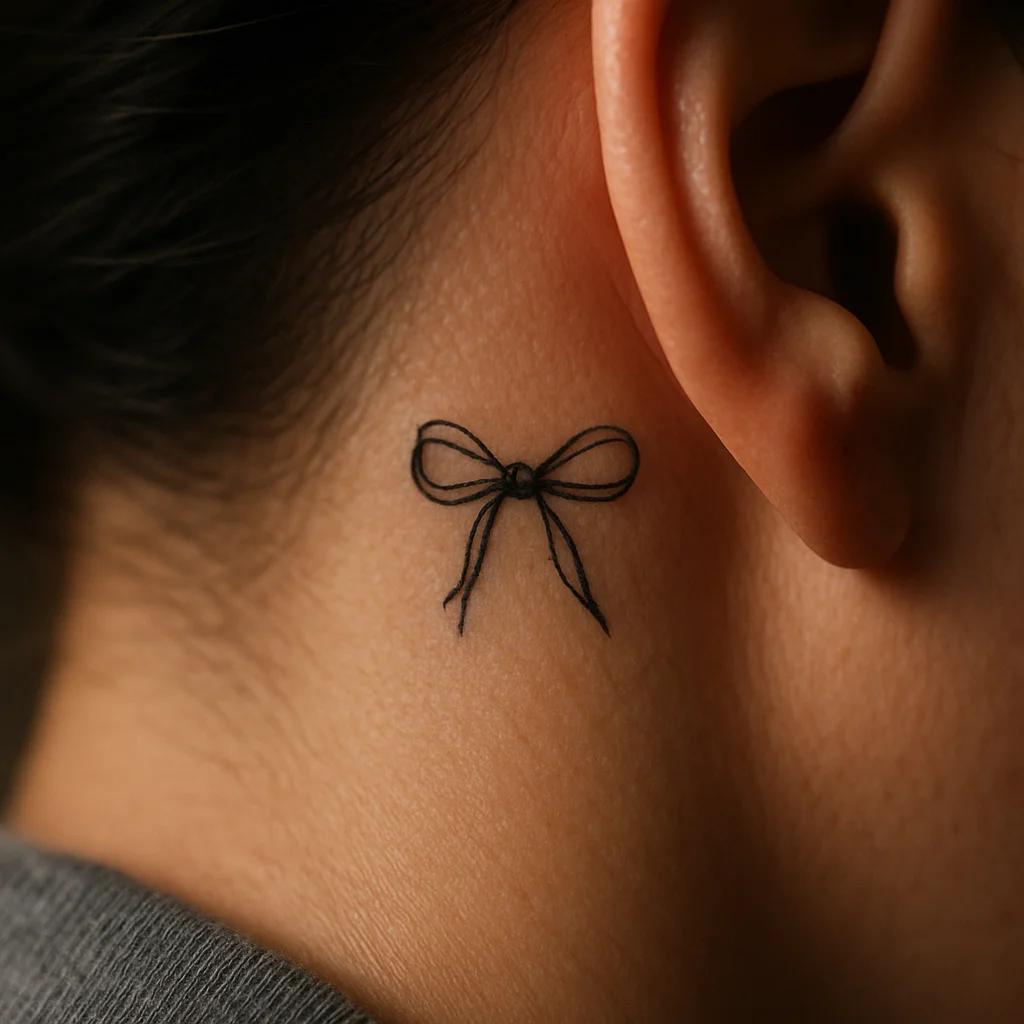
17. Tiny ribbon bow in the hollow
A 1.5 to 2 cm bow with two short trailing ends, sitting in the dip right behind the lobe. It's playful, deeply on-trend, and small enough to age well if the loops aren't drawn too tight. Ask for open loops with visible gaps.
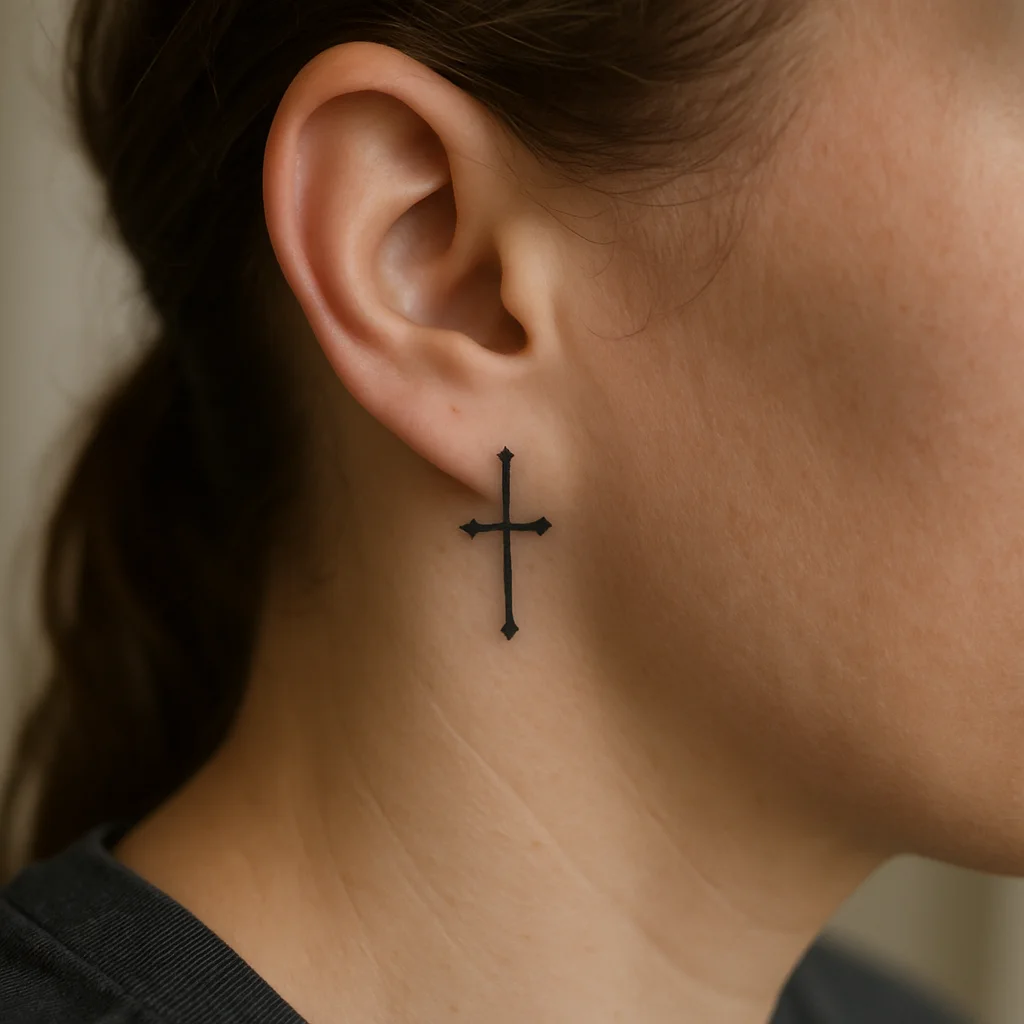
18. Micro cross in fine serif
A simple 2 cm cross with slightly flared ends, placed vertically behind the ear. Faith pieces work well here because the placement feels personal rather than declarative. Solid, even line weight matters more than any decorative detail.
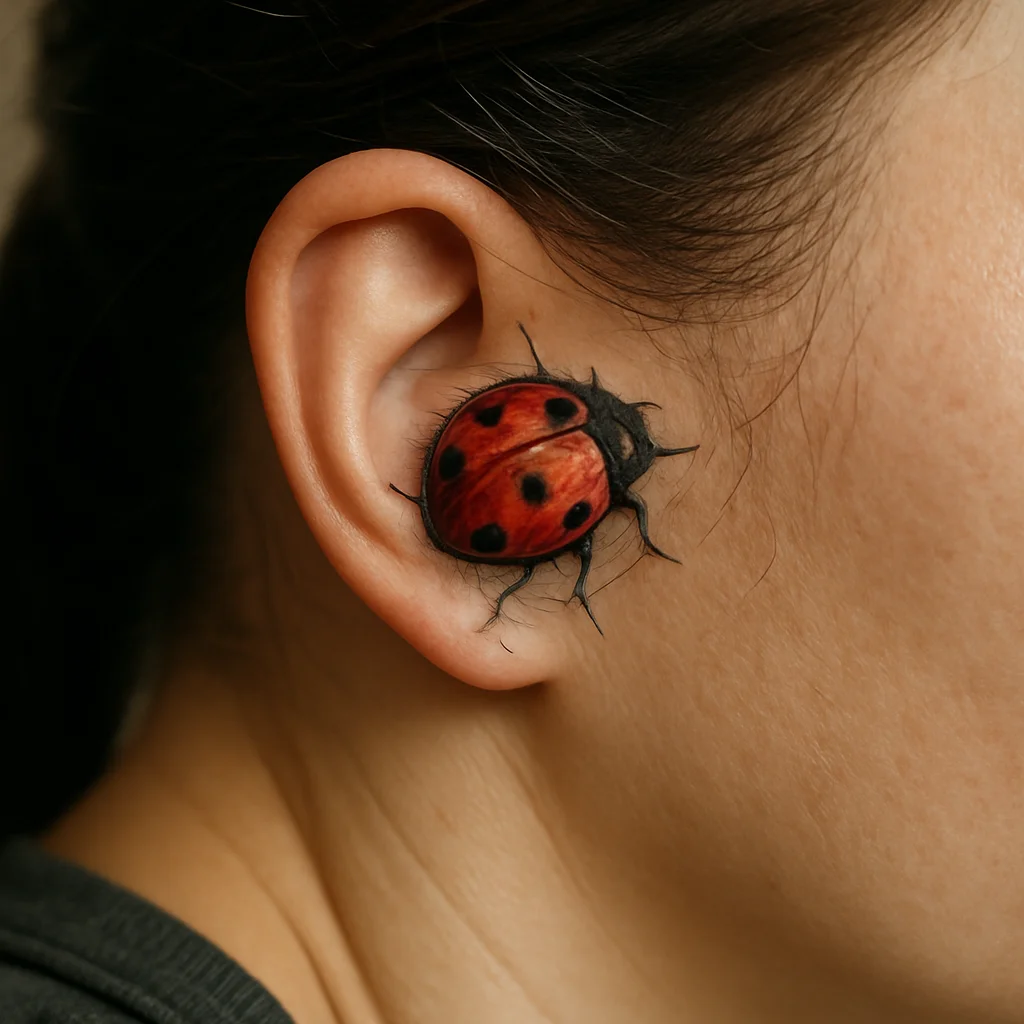
19. Ladybird as a speck of colour
A single red-and-black ladybird, roughly 1 cm, tucked at the hairline. It's one of the few spots where a tiny hit of colour reads clearly instead of muddying, since there's nothing else competing with it. Expect the red to need a touch-up sooner than the black.
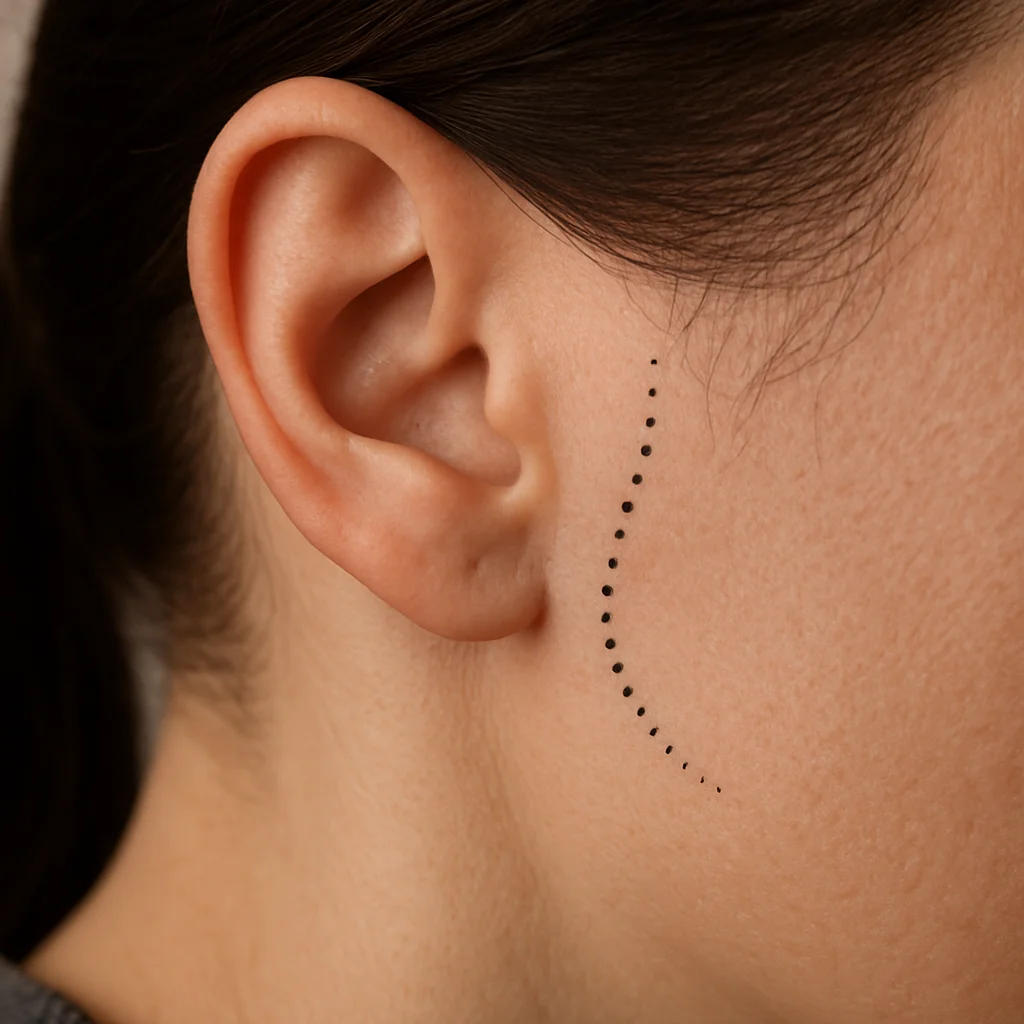
20. Dotted trail into the hairline
A curved line of fading dots running from the ear hollow up and back into the hair. It suggests movement and pairs perfectly with an existing behind-the-ear piece. Cheap, quick, and endlessly extendable later.
Front, throat and collar edge: the bold end (21-28)
21. Chain necklace with a pendant
A hair-thin chain drawn across the base of the throat with one small charm resting at the notch. Sized to sit exactly where a favourite necklace falls, it looks like jewellery you never take off. Have the artist stencil it while you're standing, seated skin sits differently.
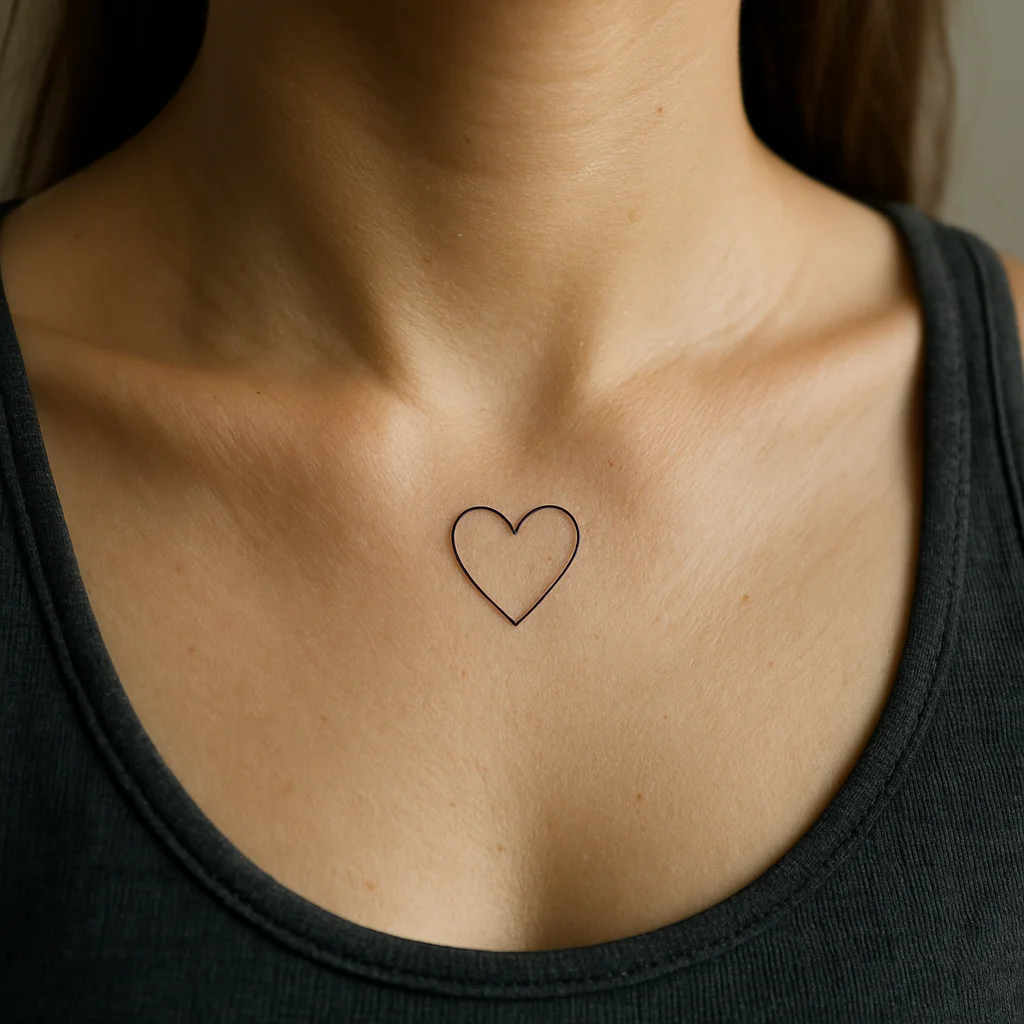
22. Heart outline in the throat notch
A 1.5 cm open heart in the dip between the collarbones. It's the most visible piece on this list and there's no hiding it with hair, so it belongs to people already comfortable with visible ink. Keep the outline clean and slightly weighted, the notch skin folds and thin lines can break up.
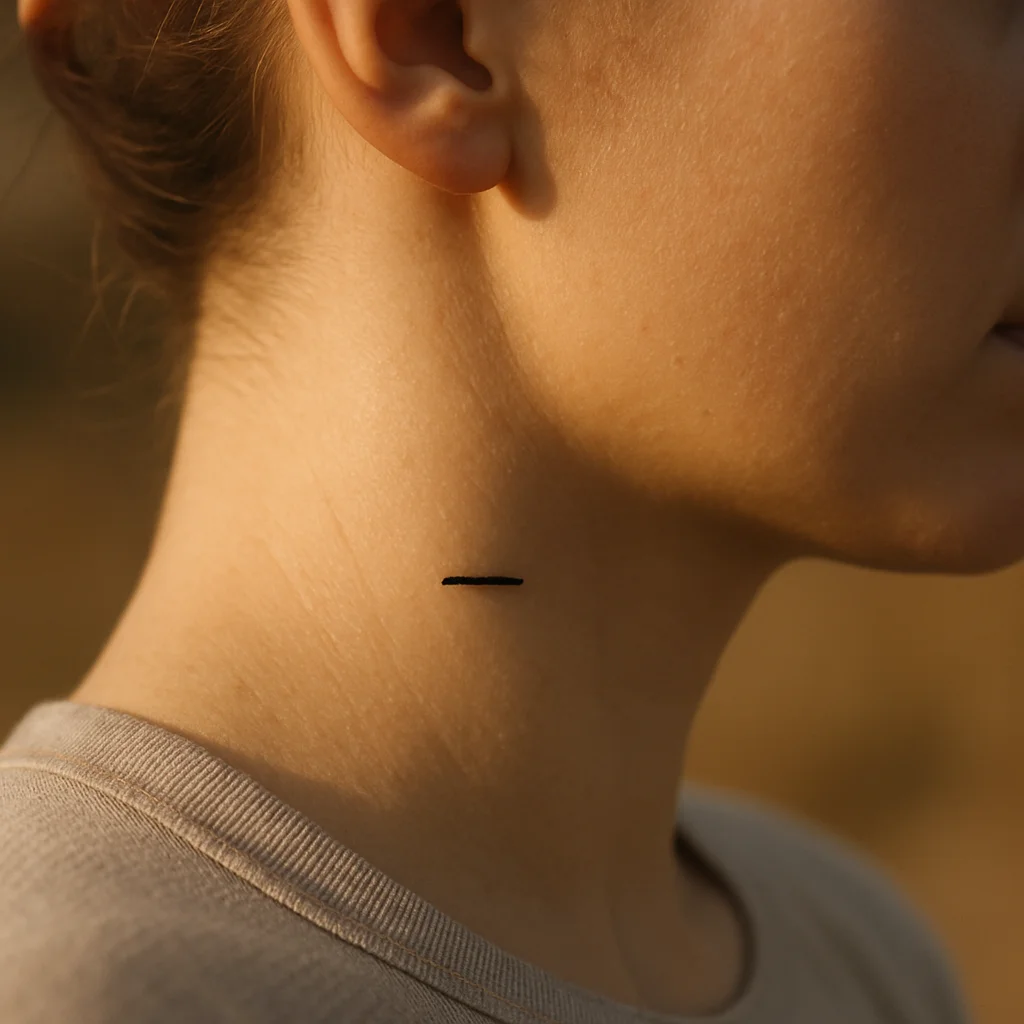
23. One word under the jaw, front side
A short word in small caps or a slim sans-serif, set horizontally on the soft front-side panel below the jaw. Small caps survive at neck scale much better than cursive. Six letters maximum, and check how it reads in a mirror before committing.
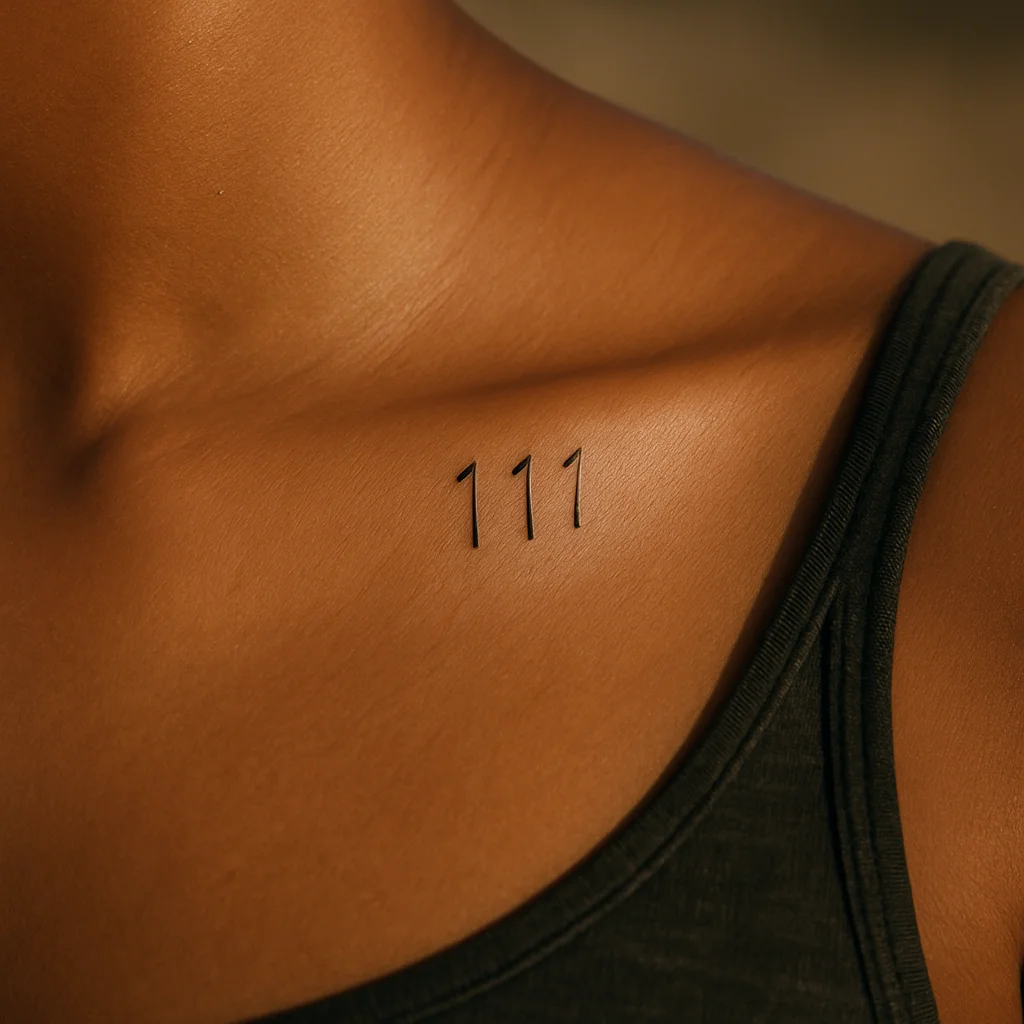
24. Angel numbers along the collar ridge
Three or four digits, 6 to 8 mm tall, following the top edge of the collarbone where it meets the neck. Numerals are all straight strokes, which makes them one of the most durable tiny designs anywhere on the body. Space them generously so they don't merge.
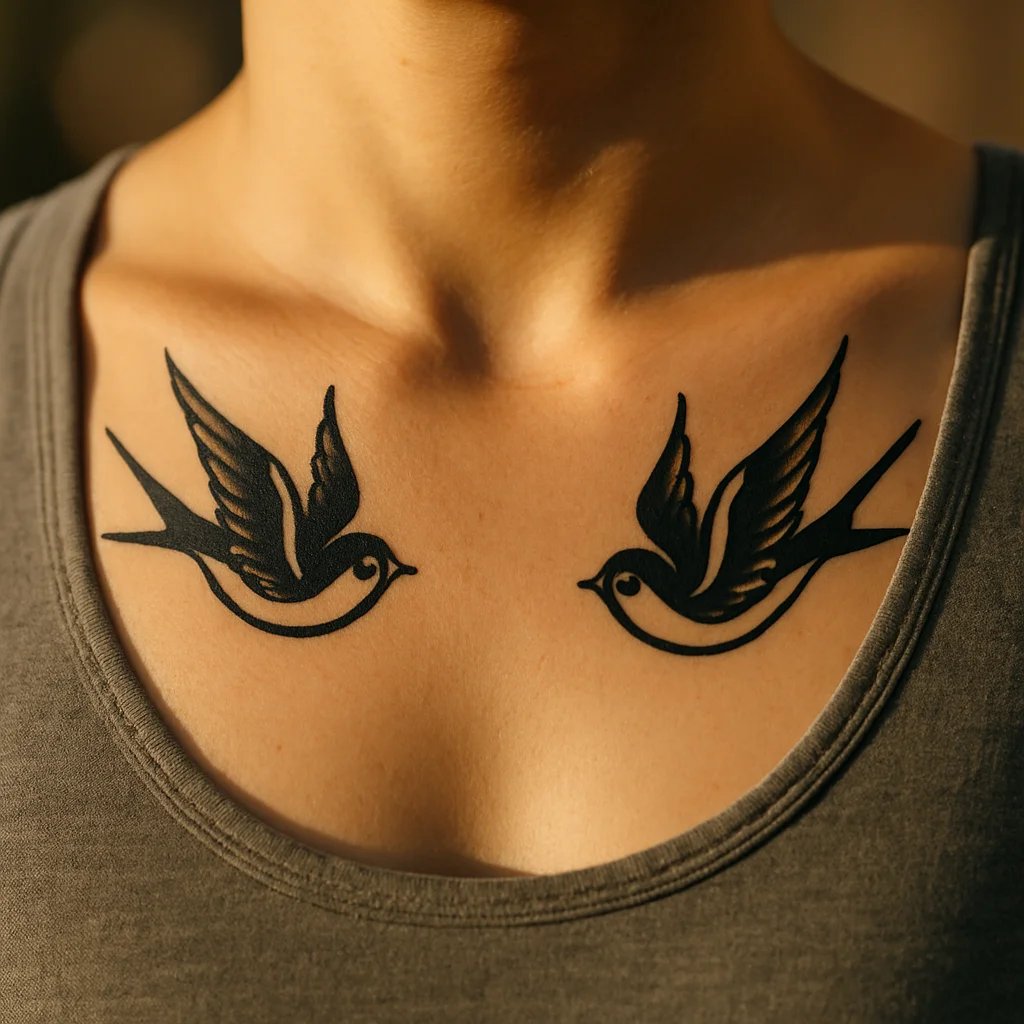
25. Two swallows flanking the notch
A pair of small silhouetted birds, one either side of the throat hollow, wings mid-beat. At 2 cm each they read as symmetry from across a room rather than as two separate tattoos. Traditional-style solid black shapes age better here than delicate outlines.
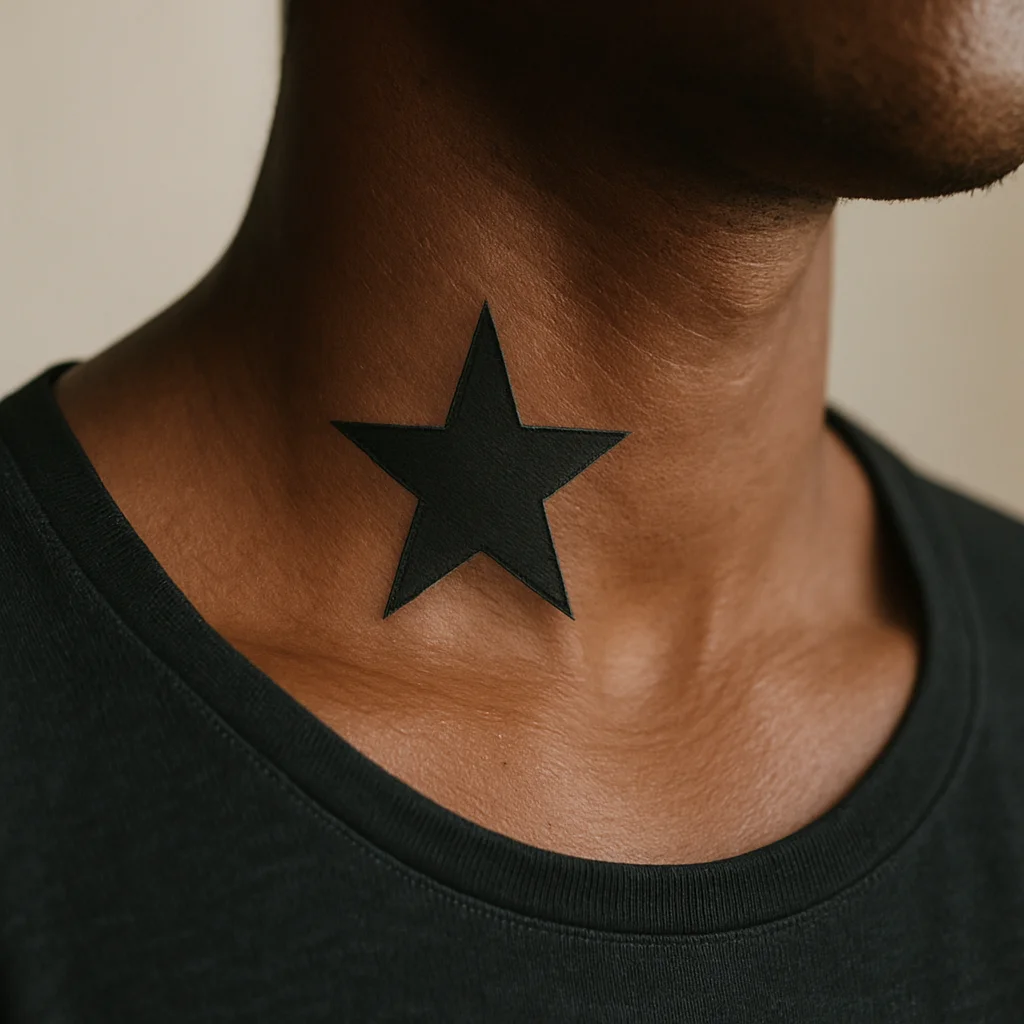
26. Single star on the front tendon
One filled five-point star, around 1.5 cm, set high on the front tendon where a shirt collar just covers it. Minimal, punky, and easy to live with because it's one solid shape. A good first neck tattoo if you want the zone without the commitment of lettering.
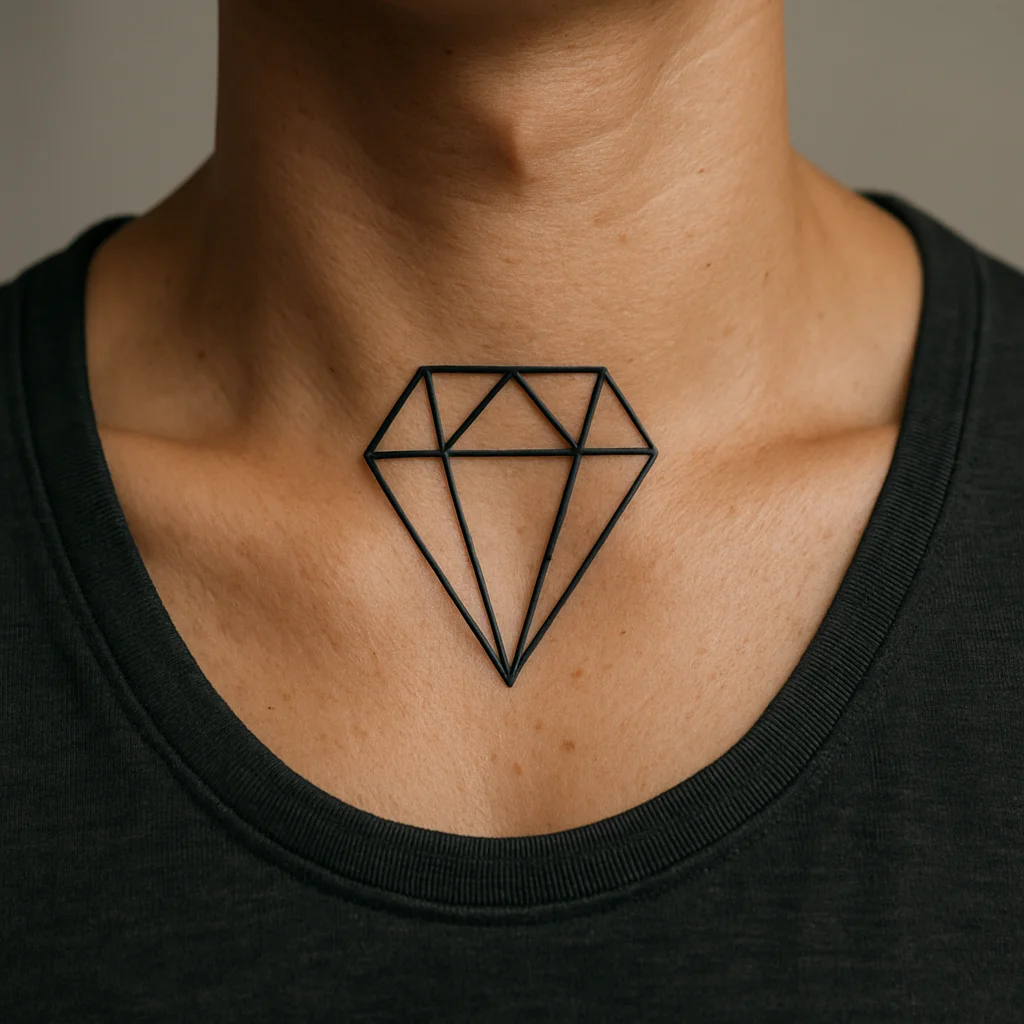
27. Geometric diamond at the notch
An open diamond or elongated rhombus outline, 2 to 3 cm tall, centred in the hollow. Geometry suits the symmetry of the throat and needs no internal detail to look finished. Ask for a consistent line weight, uneven geometry is unforgiving.
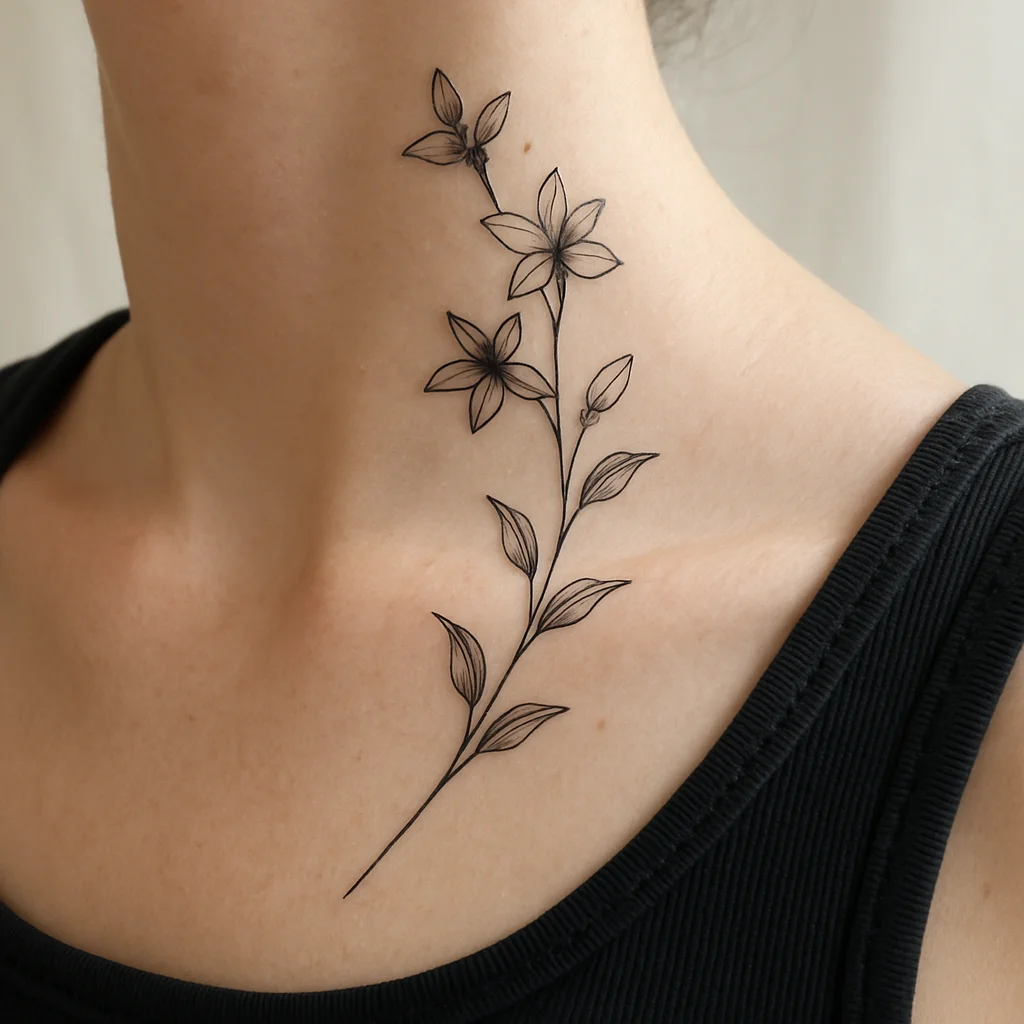
28. Jasmine stem climbing from the collarbone
A slim flowering stem starting on the collarbone and curving up the side of the throat, 8 to 10 cm end to end. It's the largest piece here and the one that best links a neck tattoo to future chest or shoulder work. Place the flowers low and let the stem taper as it rises, so the delicate end sits where the skin moves most.
Pain, healing and how neck ink actually ages
Neck pain is real but short, which is the saving grace of small designs here. The nape is the mildest, a dull scratchy burn over flat muscle, with a sharper bite directly over the bony vertebra at the bottom. The side column is buzzy and intensely ticklish, and the vibration travels into the ear in a way most people find stranger than painful. The front of the throat is the hard one: thin skin over cartilage, an involuntary swallow reflex, and no muscle padding. Most small neck pieces are done in 20 to 60 minutes, so even the worst zone is over quickly.
Healing has its own quirks. Collars rub, hair traps moisture and product, and you cannot see the tattoo to check on it. Practical fixes: wear wide-neck tops for a week, tie long hair up and away, shampoo with your head tipped back so nothing runs over the fresh work, and swap your pillowcase daily. Skip perfume, dry shampoo and hair spray anywhere near the area for at least two weeks. If you want the full timeline, our 30-day aftercare guide covers each stage.
Long term, two things fade neck tattoos: sun and line weight. This area is exposed almost every day of the year, so daily SPF once healed is the single biggest factor in how sharp your piece stays. Hair-thin single-needle work on thin, mobile neck skin will soften sooner than the same design on a forearm, so many artists will nudge you up half a needle size. Expect to consider a light touch-up somewhere around the five-year mark, and treat that as normal maintenance rather than a failure.
Sizing, cost and how to brief your artist
Most small neck tattoos land at or just above a studio's minimum charge. In much of the US and UK that minimum sits somewhere in the low-to-mid three figures, and a simple dot cluster or 2 cm symbol will often cost exactly that regardless of how fast it is, because setup takes longer than the tattoo. Step up to a 6 to 8 cm fine-line snake, jasmine stem or custom constellation and you're into a short hourly booking, typically one to two hours at the artist's rate. Highly sought-after fine-line specialists in big cities charge considerably more, and their waiting lists are the real cost.
Briefing well saves money and regret. Bring three things: a reference for the style, a reference for the size against a body, and a clear answer on visibility. Tell the artist how you wear your hair, whether you need it covered by a collared shirt, and whether you plan to extend the piece later, because that changes where they place it by a crucial centimetre or two.
- Ask for the stencil twice, once seated and once standing, and check it in a mirror with your hair in its usual position.
- Ask about line weight specifically. Say you want it to still read in ten years and let them adjust.
- Ask what they'd remove. Small neck designs almost always improve when one element is dropped.
- Book the touch-up conversation early, so you know whether it's included and for how long.
One last honest note: many artists won't tattoo the front of the throat on someone with no other visible work, and that's a sign of a good studio rather than an obstacle. Start at the nape or behind the ear, live with it for a year, and see how you feel about going further forward.
Frequently asked questions
Do small neck tattoos hurt more than other placements?
They hurt more than a forearm but less than most people fear, mainly because small designs are over in under an hour. The nape is the mildest zone, the side of the neck is buzzy and ticklish, and the front of the throat is genuinely sharp because the skin is thin with no muscle underneath. Eat beforehand and avoid alcohol the night before, since the vibration near the ear can make you lightheaded.
Can I hide a small neck tattoo at work?
It depends entirely on the zone. Nape and behind-the-ear pieces vanish under loose hair or a collared shirt, side-column pieces are visible whenever your hair is up, and anything on the front of the throat cannot be hidden. If discretion matters, tell the artist and have them place the stencil while you're wearing your usual work clothes.
How fast do fine-line neck tattoos fade?
Faster than the same design on an arm, because neck skin is thin, mobile and exposed to sun almost daily. Well-executed work with sensible line weight and spacing stays sharp for years, while hair-thin micro-detail can soften noticeably within a few. Daily sunscreen once healed is the single best thing you can do, and a light touch-up every few years is normal.
What size should a small neck tattoo be?
Roughly 2 to 4 cm for behind-the-ear and throat pieces, and up to 6 to 8 cm for vertical designs on the nape or side column. Anything under 2 cm should be a single solid shape or a dot cluster rather than something with internal detail. Vertical compositions almost always sit better than wide horizontal ones.
How much does a small neck tattoo cost?
Most simple pieces sit at the studio minimum, which in many shops falls in the low-to-mid three figures once you factor in setup and time. Larger fine-line work such as a snake or floral stem usually books as one to two hours at the artist's hourly rate. Specialist fine-line artists in major cities charge well above average, so ask for a quote with your reference images attached.
The conversation
No comments yet. Got a thought about these designs? Start us off.
Want to weigh in? Join the community to comment, save designs and try them on your skin.