Finger Tattoos for Women: 26 Ideas That Last
Finger tattoos are the most charming and the most stubborn tattoos you can get. Here are 26 designs sorted by zone, with straight answers on which spots hold ink and which ones will need a touch-up.
What Nobody Tells You About Fingers
Fingers are the hardest real estate on the body to tattoo well, and that has nothing to do with the artist's talent. The skin there is thin, constantly moving, and regenerating faster than almost anywhere else. You wash your hands, you carry bags, you jam your knuckles into pockets. Ink that would sit untouched for decades on a shoulder gets sanded down on a finger.
That doesn't mean don't get one. It means get one knowing the deal:
- Zones that hold best: the top (back) surface of the finger between the knuckles, and the outer side of the index or the pinky. Firm skin, less friction, decent pigment retention.
- Zones that fade fastest: the palm-side of any finger, the crease of a knuckle, and the inner sides that rub against neighbouring fingers. Expect patchiness within a year or two.
- Zones that blow out: anywhere the skin is loose over tendon and joint. Lines can spread and soften, so hairline-thin work needs an artist who has done a lot of hands.
Design rules follow from that. Keep it simple, keep negative space generous, avoid tiny lettering with enclosed loops, and accept one touch-up as part of the price rather than a failure. Most artists will tell you upfront they don't guarantee finger work, and the honest ones will offer a cheap or free first refresh.
Side-of-Finger Designs (1-6)
The outer side of a finger is the quietest placement on the hand. It disappears when your hands are at rest and shows when you gesture, which is exactly why it's the go-to for anyone who wants a hand tattoo without a hand tattoo. Sizing here is tight: roughly 1 to 2.5 cm of usable length per segment.
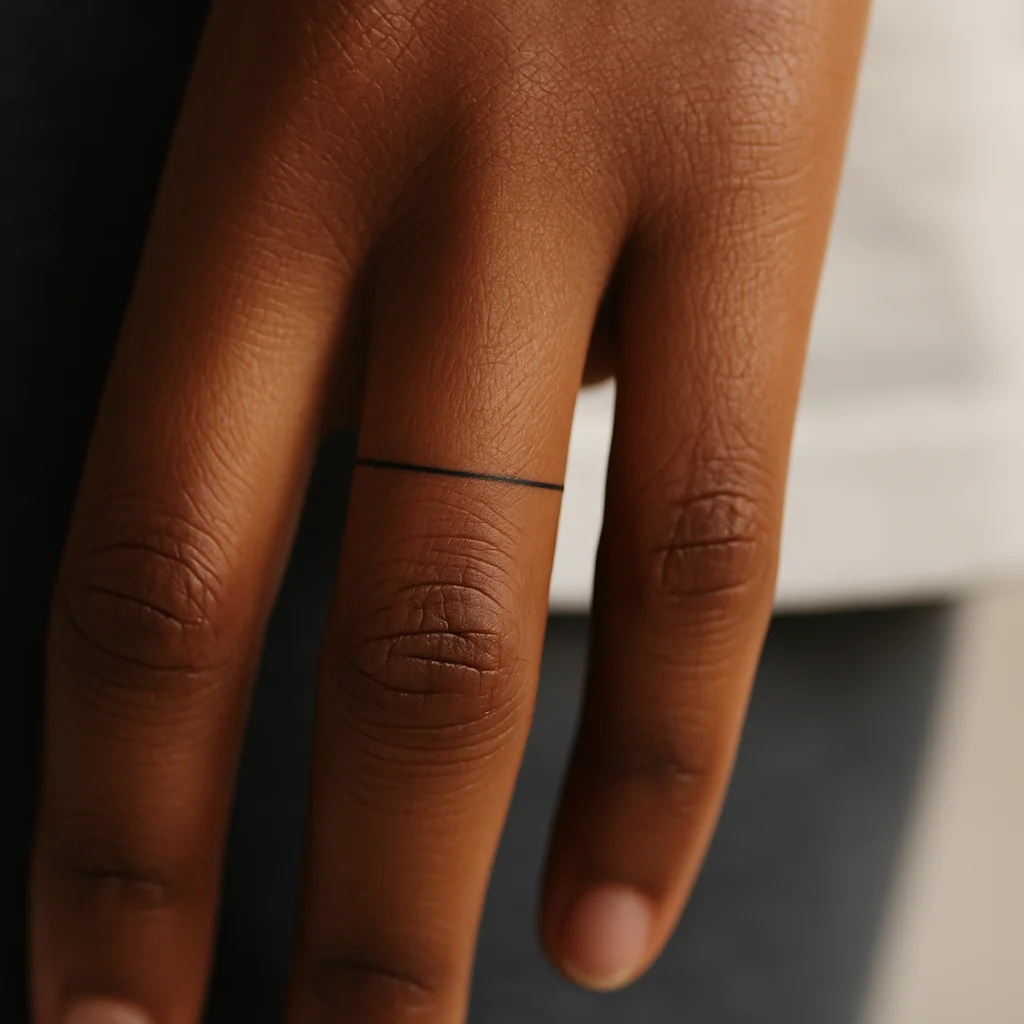
1. Hairline band on the side of the ring finger
A single fine line that stops before it wraps fully around, so it reads as a mark rather than a ring. It sits under a real ring beautifully and heals faster than a full wrap because there's no palm-side crossing. Ask for a line with a touch of weight to it, not the thinnest possible needle, or it will ghost out within a year.
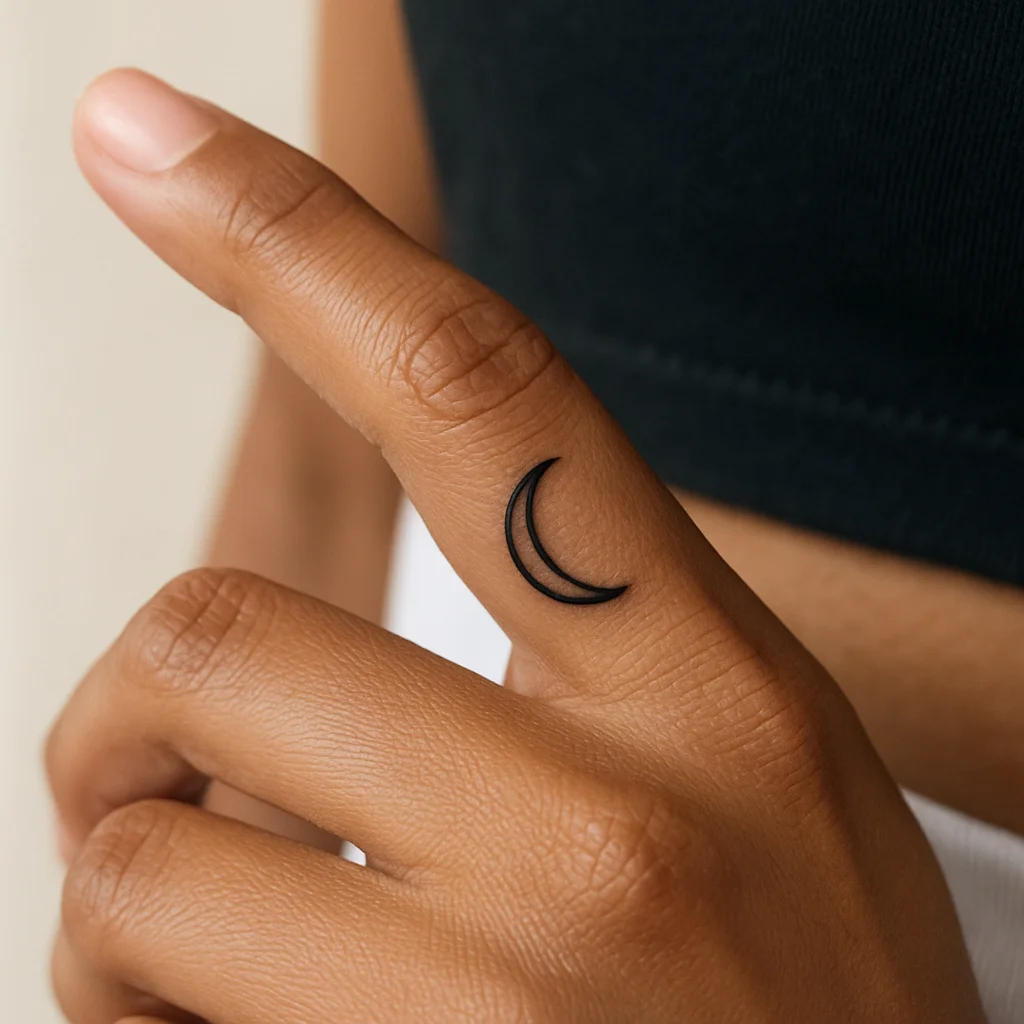
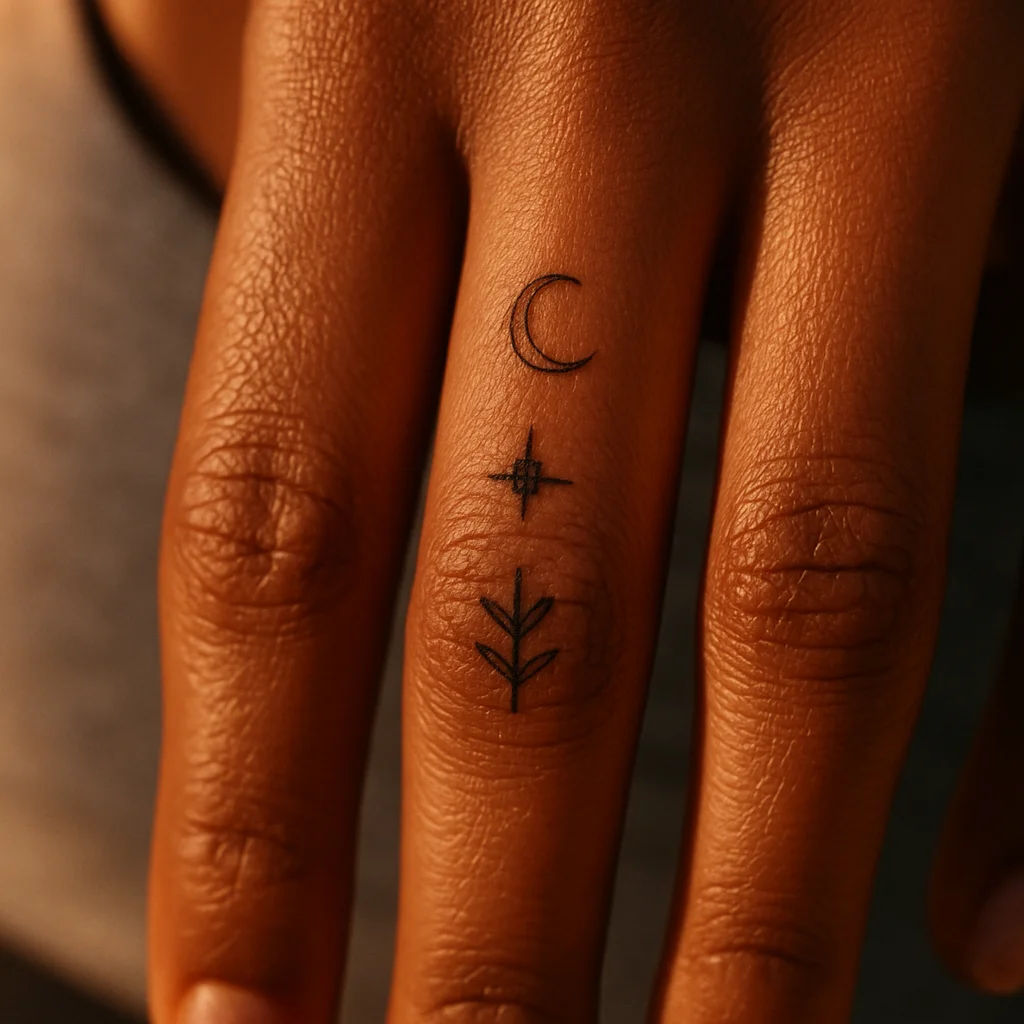
2. Crescent moon on the side of the index
A slim waxing crescent, about 8 to 12 mm tall, tucked along the outer edge of the index finger where the skin is firmest. The open shape means fading softens it rather than muddying it. Suits anyone who wants something symbolic that isn't legible as a word.
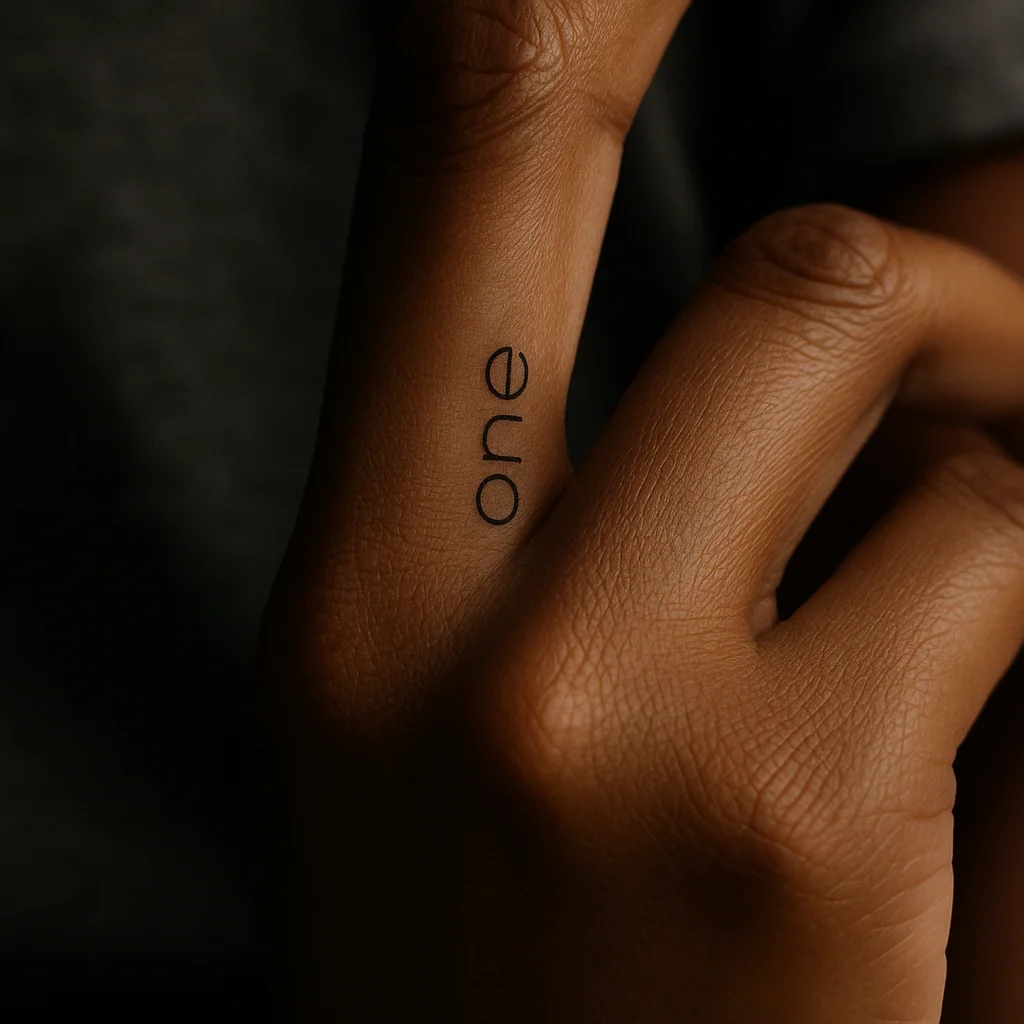
3. Vertical microscript along the middle finger
One short word running lengthwise down the outer side, in a clean sans-serif with no loops or tails. Three to six letters is the ceiling; anything longer and the letters compress into a smudge as the skin recovers. Bring the exact word written out and ask your artist to size it so the letter interiors stay open.
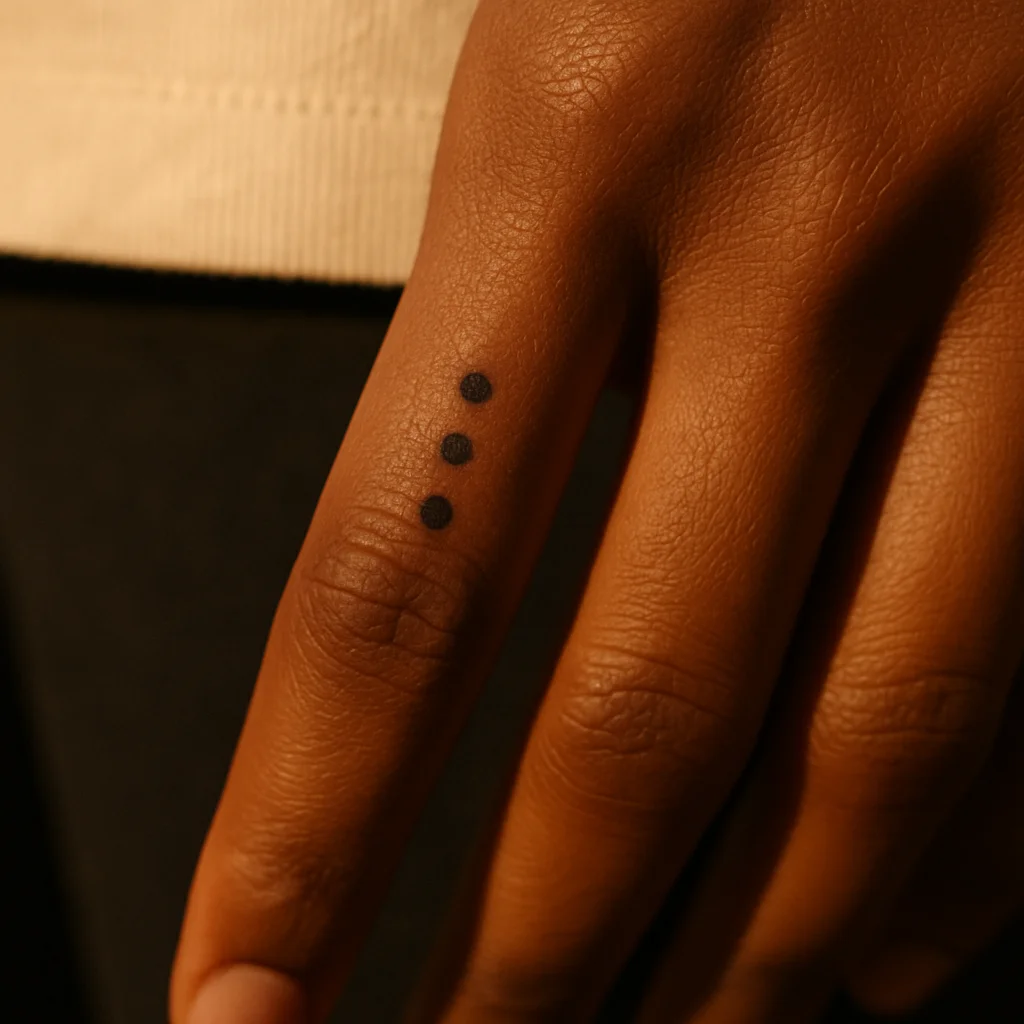
4. Stacked dots on the pinky
Three small solid dots in a vertical line, spaced roughly a dot-width apart, on the outer edge of the little finger. Dots are the single most fade-resistant finger design because there are no thin lines to break up. Great first hand tattoo, and it costs almost nothing to refresh.
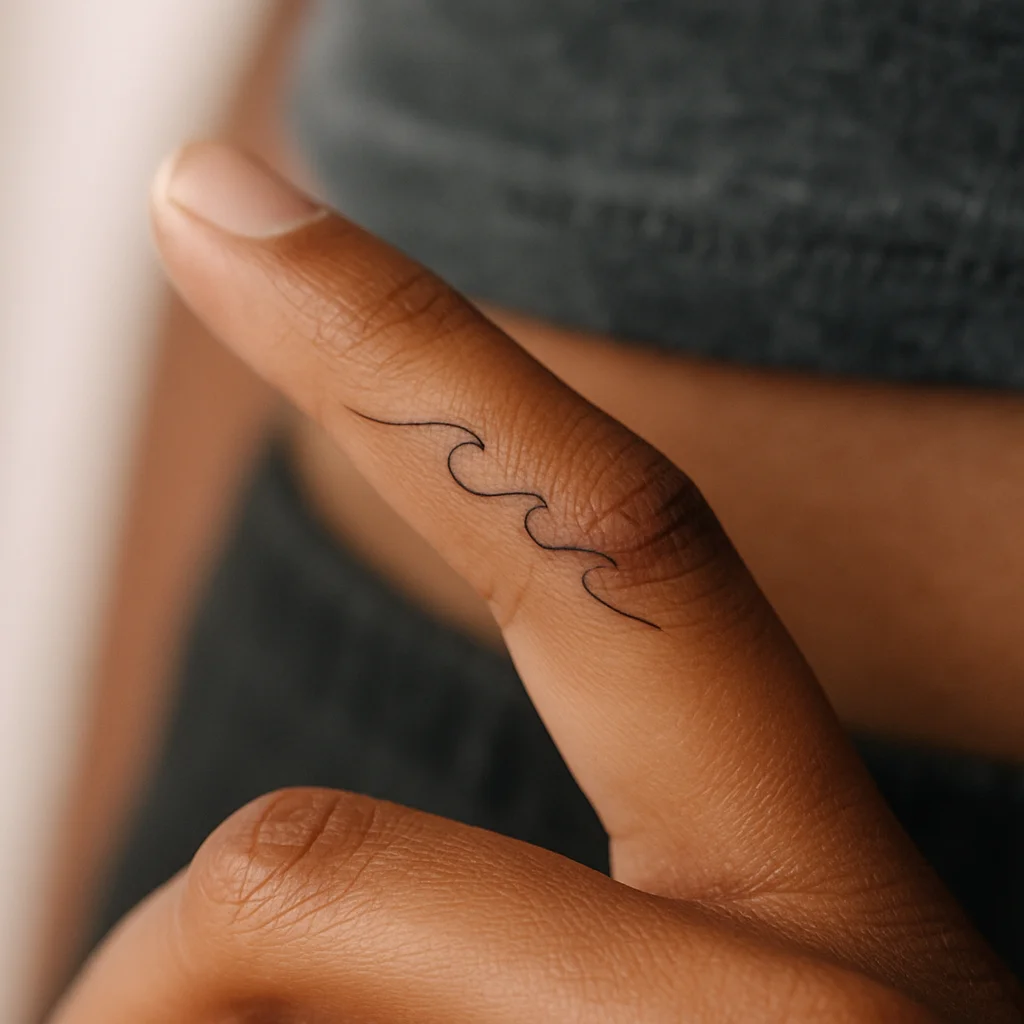
5. Wave line down the little finger
A single flowing wave, two or three crests, tracing the outer edge from base to first knuckle. It reads as movement rather than an object, which keeps it looking intentional even when the line softens. Pairs nicely with an existing wrist or ankle piece.
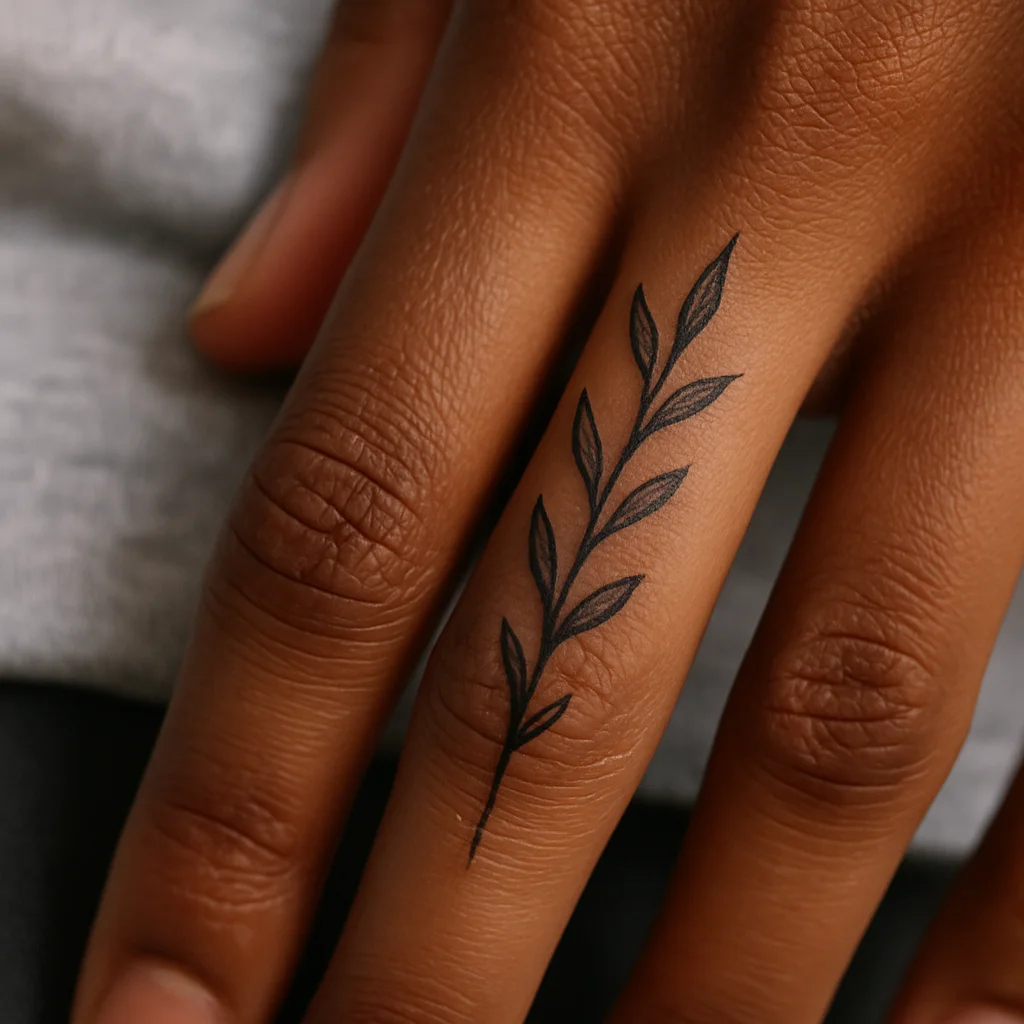
6. Olive sprig on the outer index
A slim stem with four or five leaves running along the side of the finger, leaves alternating so nothing crowds. Ask for open leaf outlines rather than solid fills at this scale so the shape doesn't close up during healing. Delicate, botanical, and it doesn't look bridal.
Between the Knuckles (7-13)
The flat top surface of a finger segment is the most visible finger placement and the one that behaves most like normal skin. You get a neat rectangle of canvas, roughly 1.5 by 1.5 cm, which suits bold simple icons far better than detail. This is where old-school stick-and-poke hand tattoos have lived for a century, and there's a reason those still read decades later: thick lines, few of them.
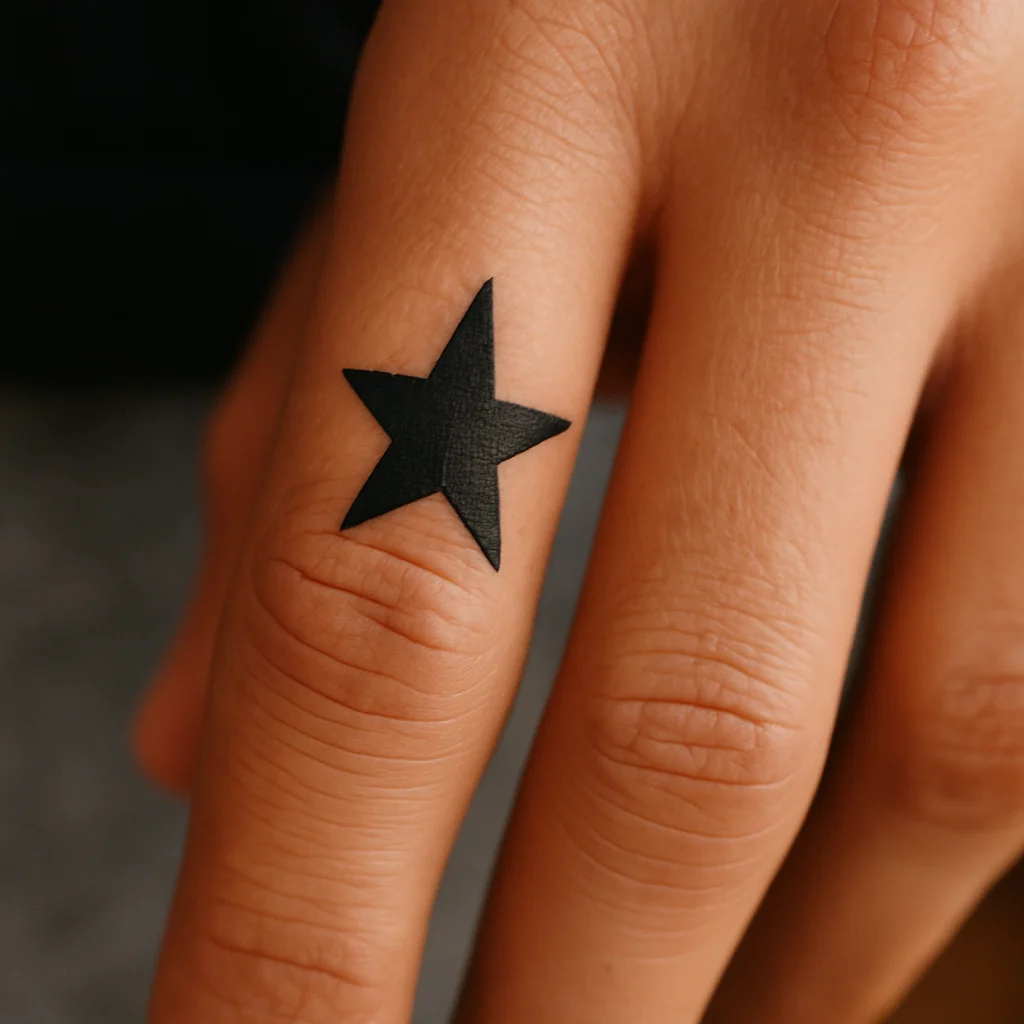
7. Five-point star between the knuckles
A small solid or outlined star centred on the middle segment of the middle finger. Classic hand-poke energy, instantly readable, and it holds up because the shape survives even if the edges soften. Works especially well as a matching tattoo with a friend or sibling.
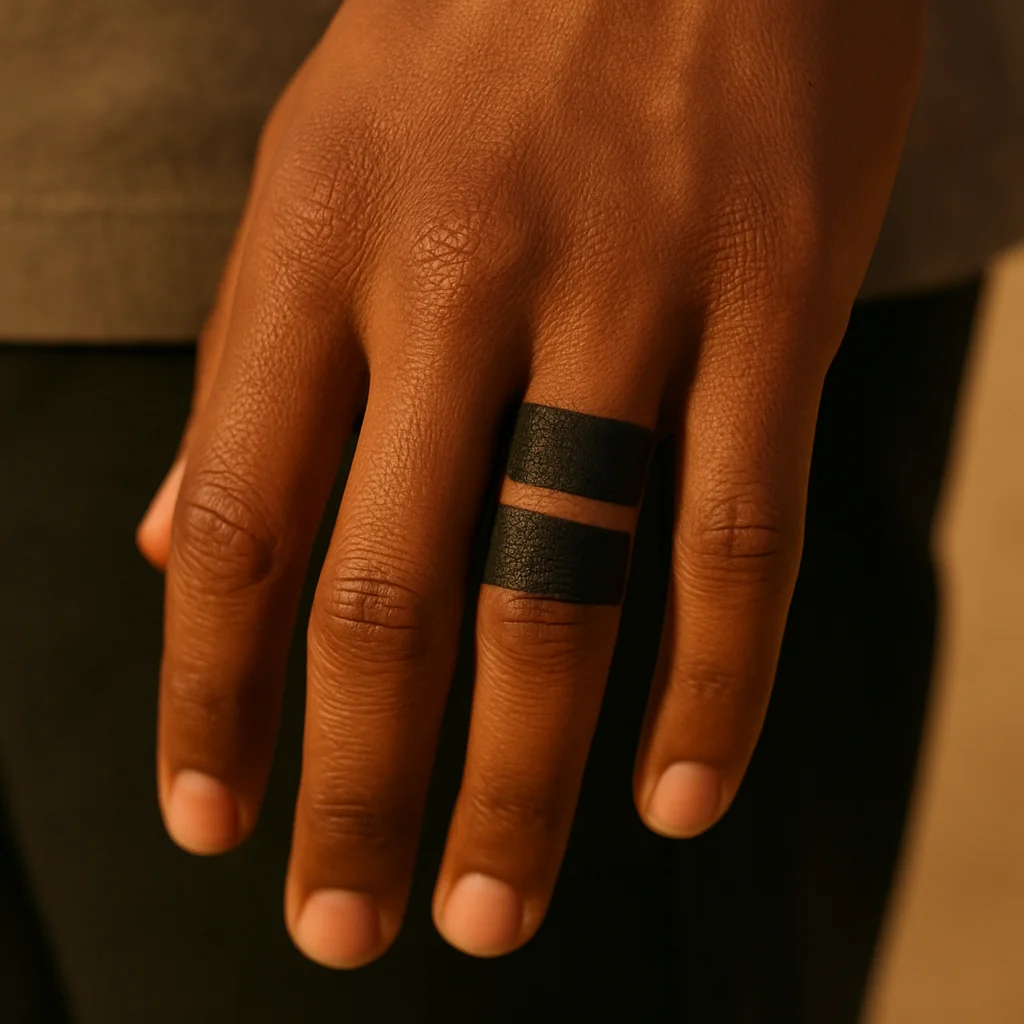
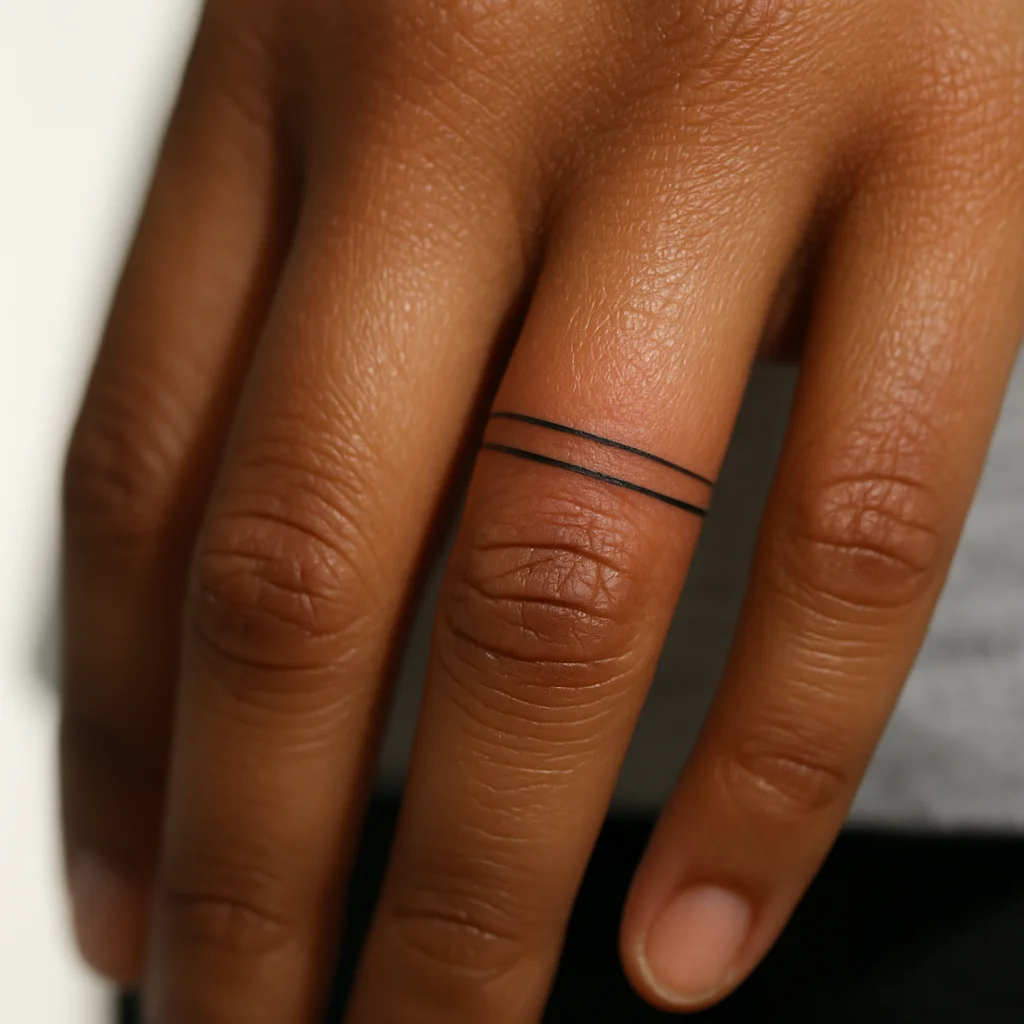
8. Double solid band on the middle finger
Two bold black bands, each 3 to 5 mm wide, wrapping the segment with a clear gap between them. Solid black is the most durable choice on a finger, but insist on a single clean pass rather than heavy repeated packing, which fingers don't forgive. Graphic, a little tough, and it flatters long fingers.
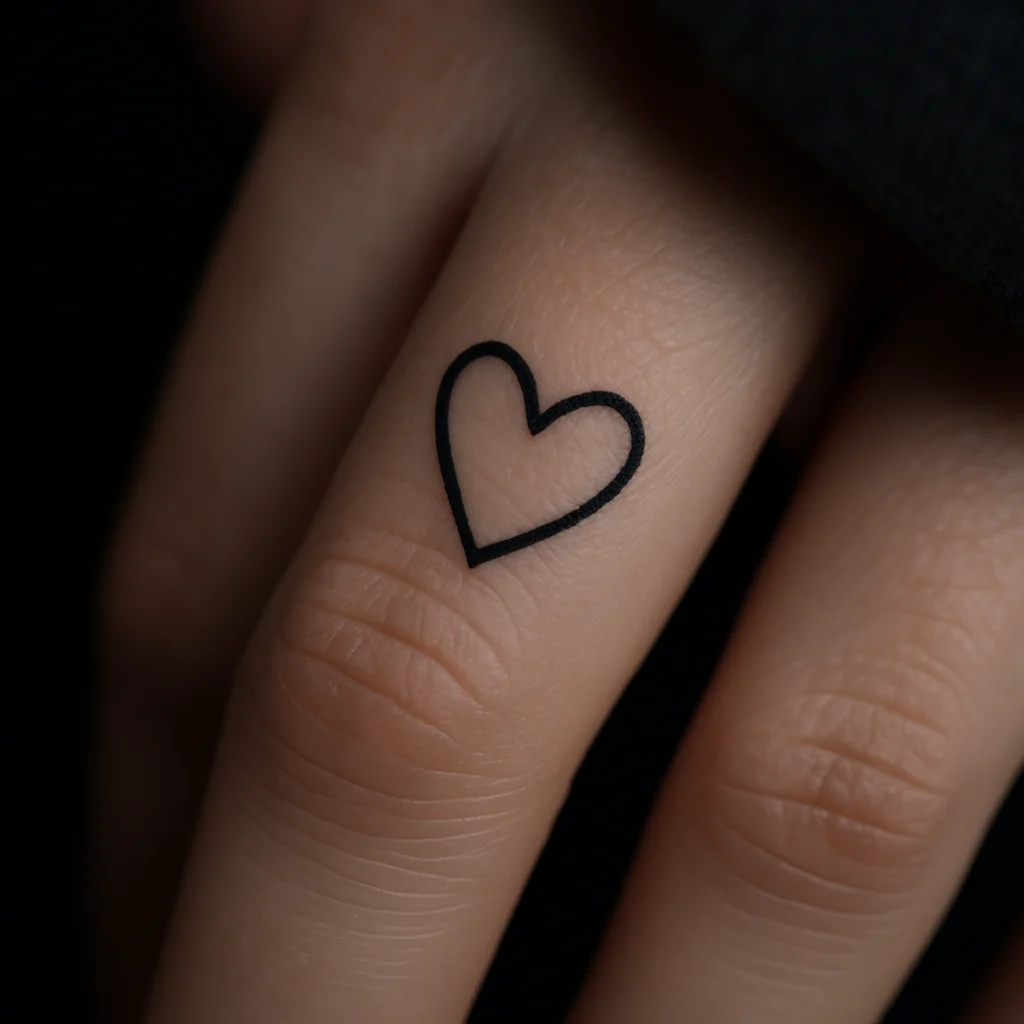
9. Open heart outline on the index
A simple two-stroke heart, no fill, about 10 mm across, sitting on the segment above the first knuckle. Keep the point soft rather than sharp so the lines don't converge into a blob. A sweet, unfussy option if you want warmth without a full sentimental piece.
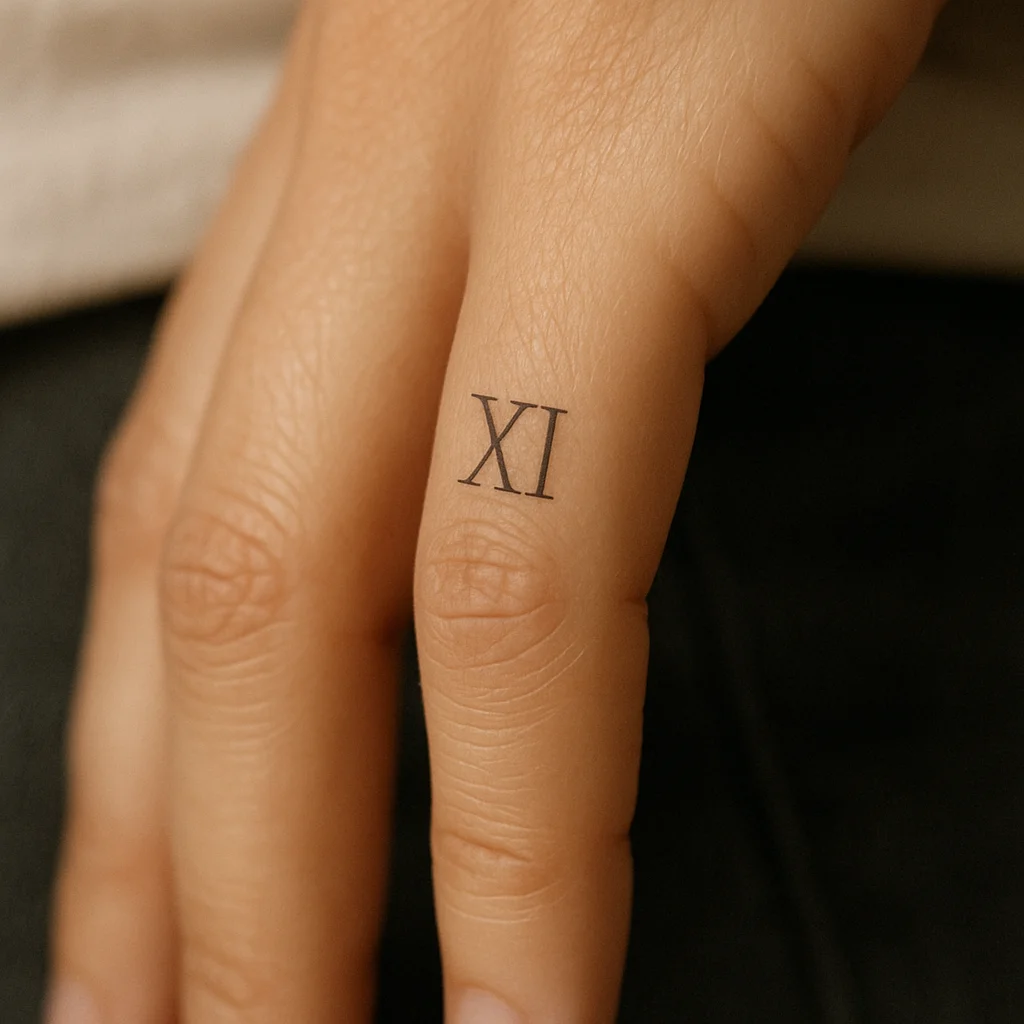
10. Roman numeral on the middle segment
A short numeral for a date or an age, in plain strokes with no serifs. Stick to four characters maximum and space them generously; crowded numerals are the most common finger regret. Reads as a private code rather than a date to anyone who doesn't know.
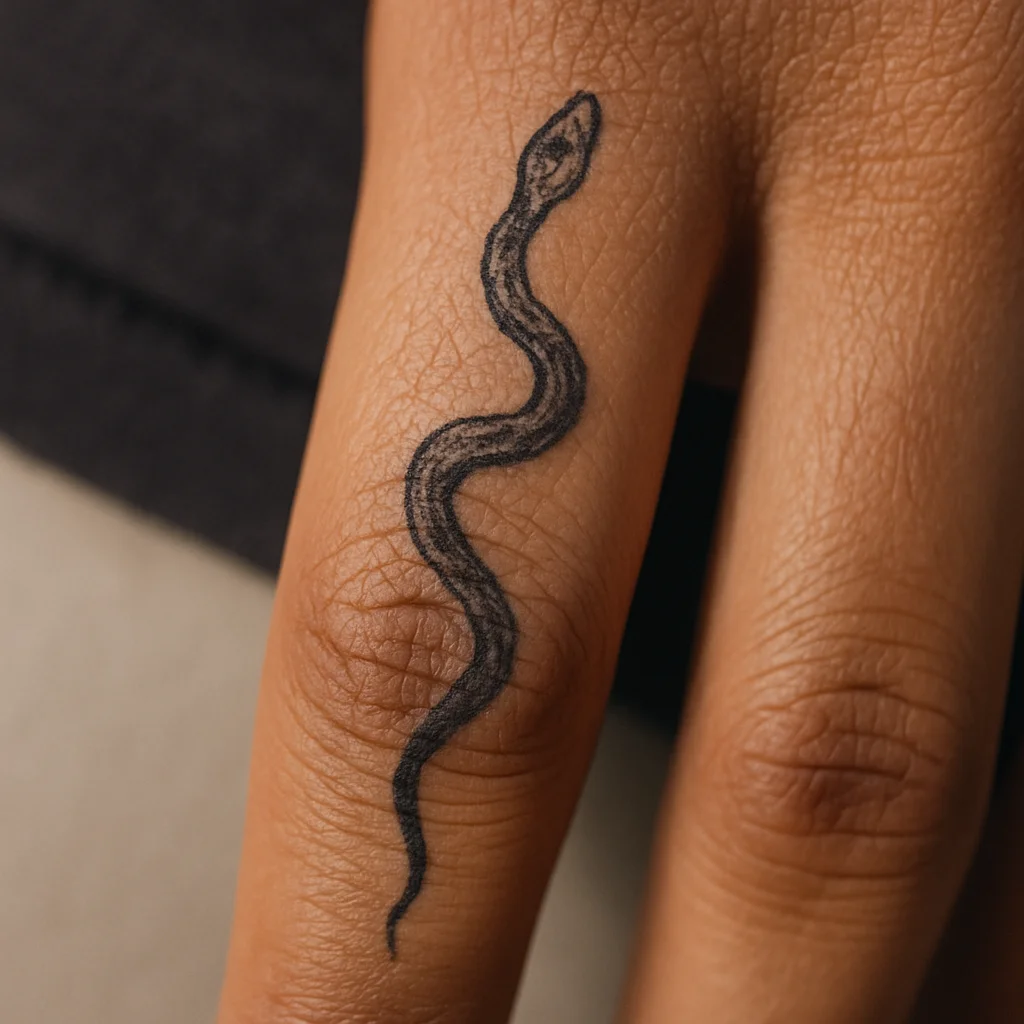
11. Snake winding down the top of the finger
A slim serpent starting at the base knuckle and curving down toward the nail, body drawn as two tapering lines with a dot for an eye. The curve uses the length of the finger instead of fighting it, and the taper keeps the ink from crowding at the tip. If you like the motif, our snake tattoo guide covers how it scales up elsewhere.
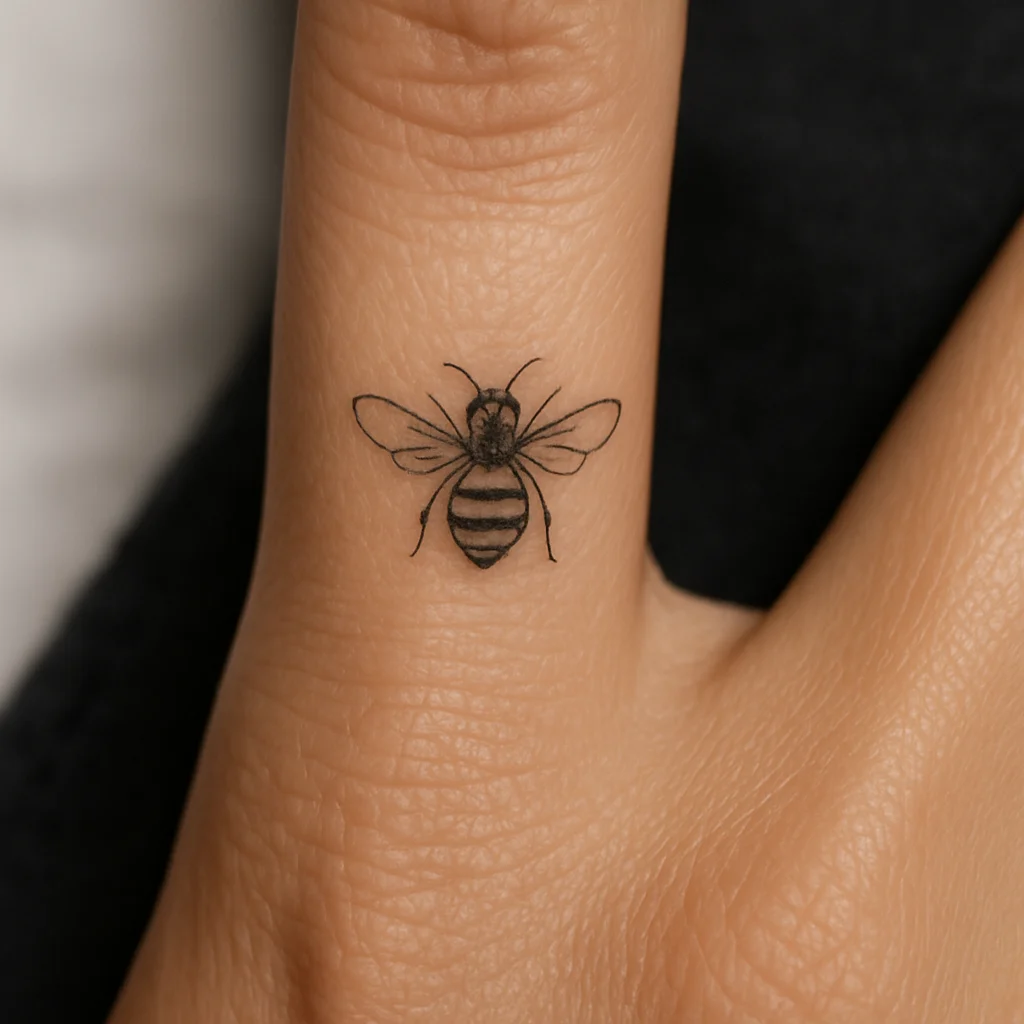
12. Bee on the ring finger
A tiny bee with a striped body and two open wings, centred on the top of the middle segment. Ask for the stripes as three chunky bars rather than fine hatching, or they'll merge. Charming without being twee, and it ages better than a butterfly at this size.
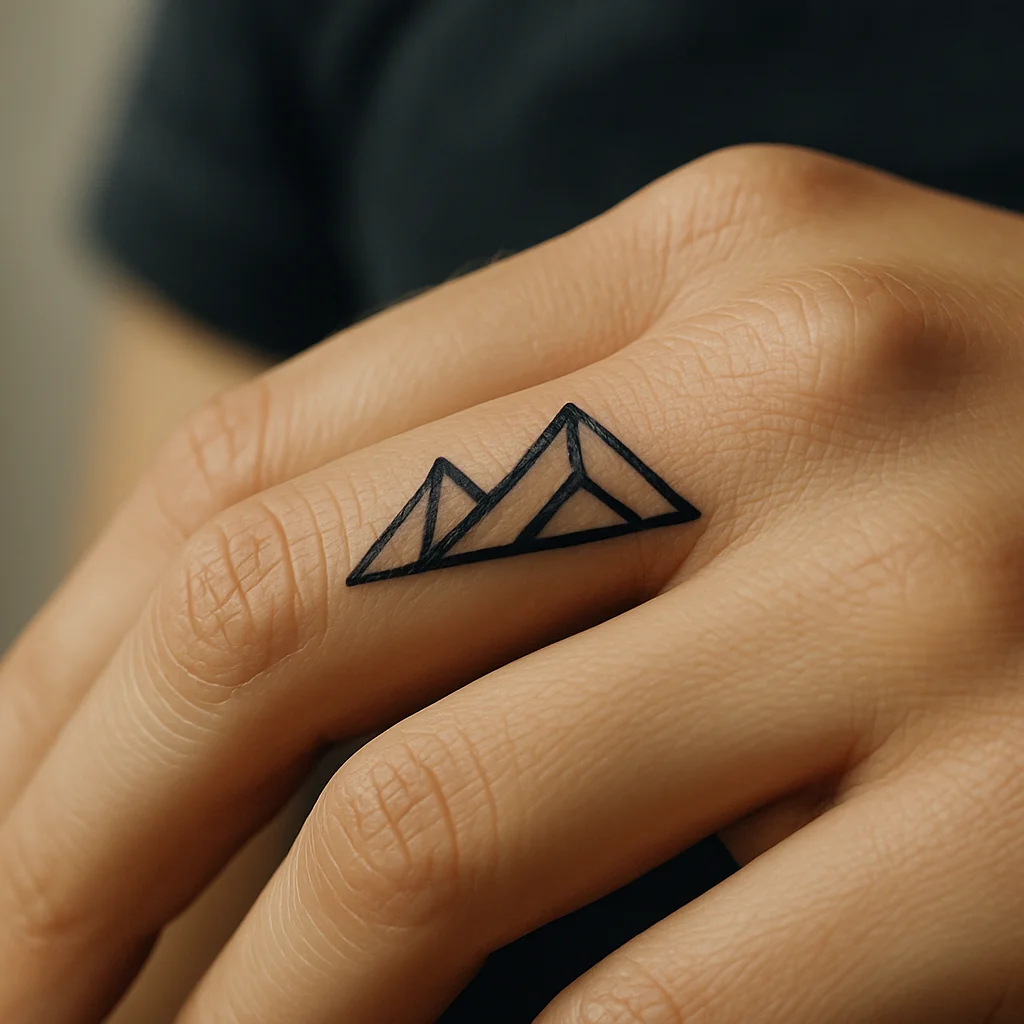
13. Chevron mountain peaks
Two or three angular peaks in single lines across the top of the index or middle finger. Geometry is forgiving on fingers because straight lines fade evenly rather than losing their shape. A good pick if you want something outdoorsy that isn't a literal landscape.
Base-of-Finger and Ring Alternatives (14-19)
The base of the finger, where it meets the hand, is the most protected finger placement you can choose. There's slightly more tissue, less bending, and the whole area sits under a real ring if you ever want it hidden. It's the natural home for anything that functions as jewellery.
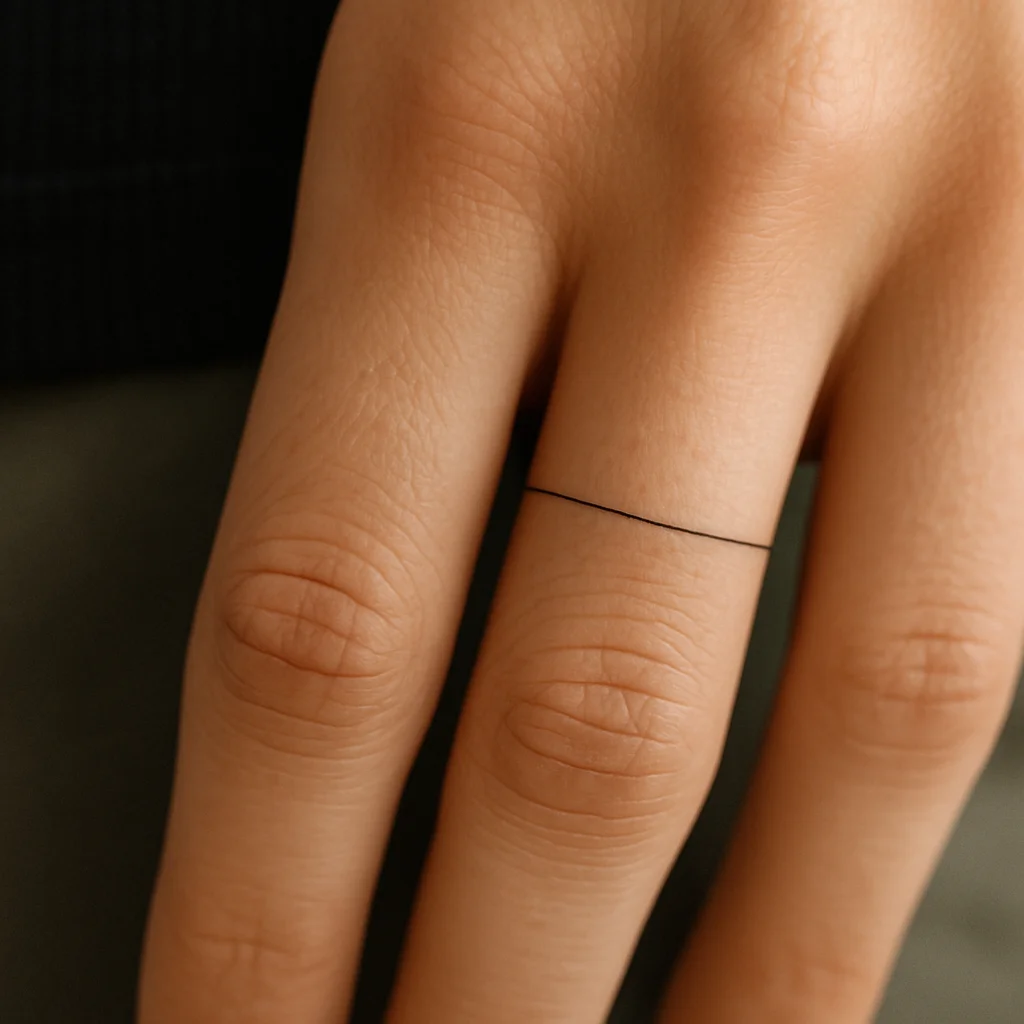
14. Fine-line wedding band
A continuous thin line all the way around the base of the ring finger, ideally with a slightly weighted line so the palm-side portion survives. The underside will always fade first, so plan on a refresh every couple of years. Ask your artist to warn you honestly about the palm-side crossing before you commit.
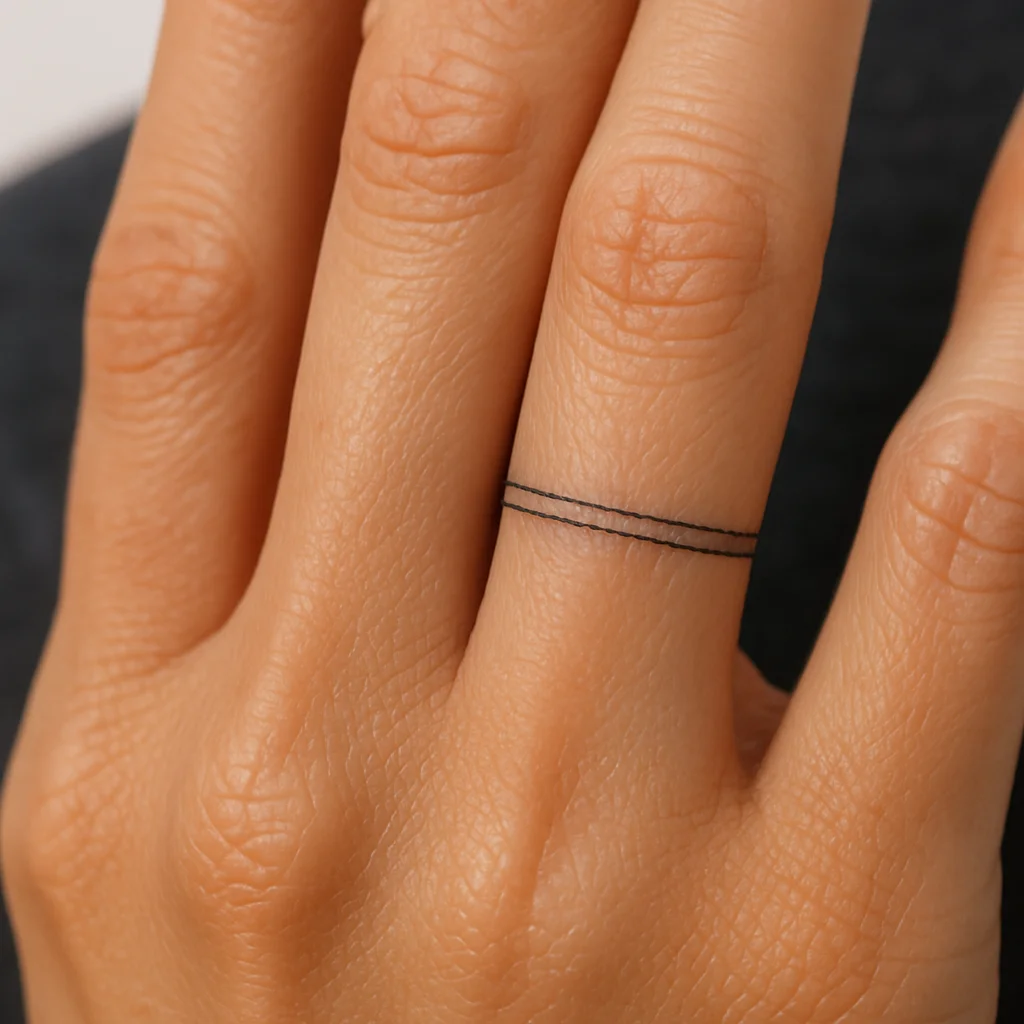
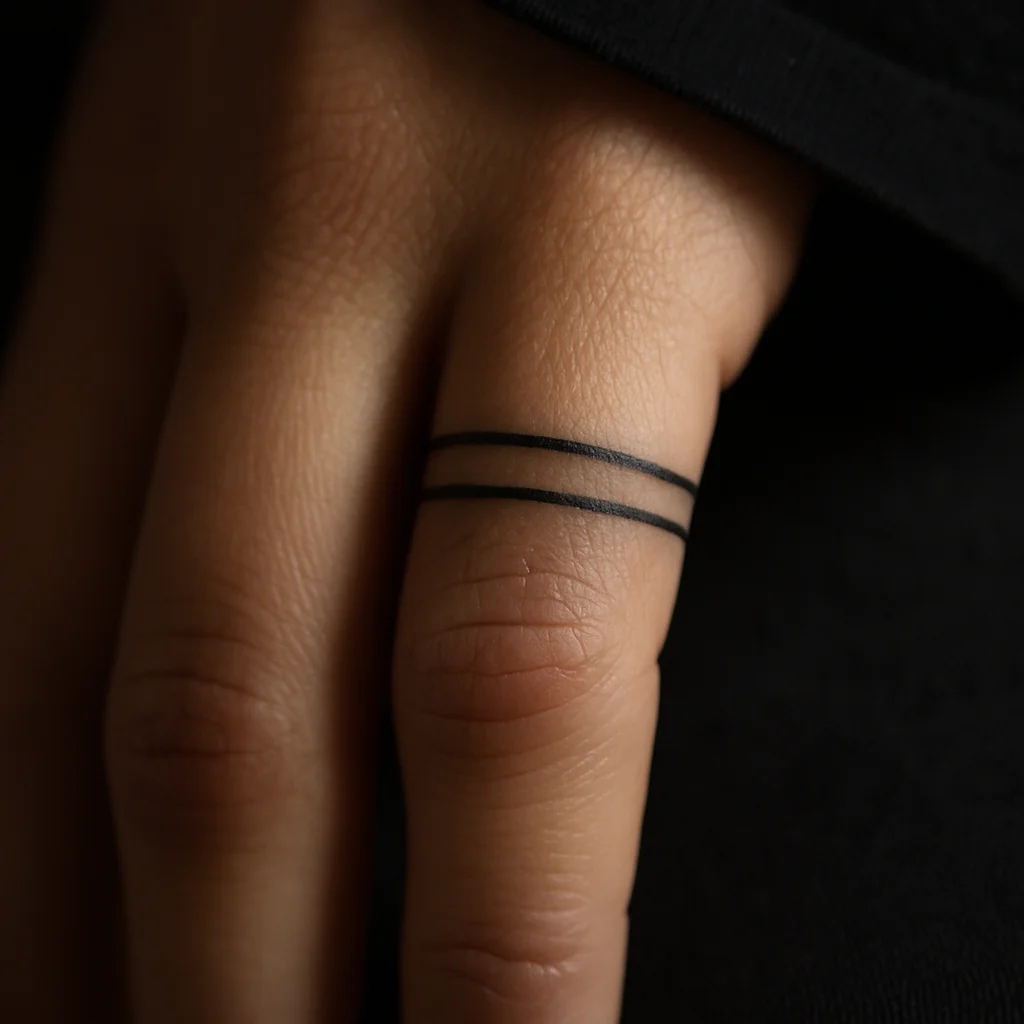
15. Twin bands with a hairline gap
Two parallel lines at the base with a 3 mm space between them, the gap reading as intentional negative space. This carries more visual weight than a single line without going fully solid, so it stays legible longer. A popular matching option for couples who each take one variation.
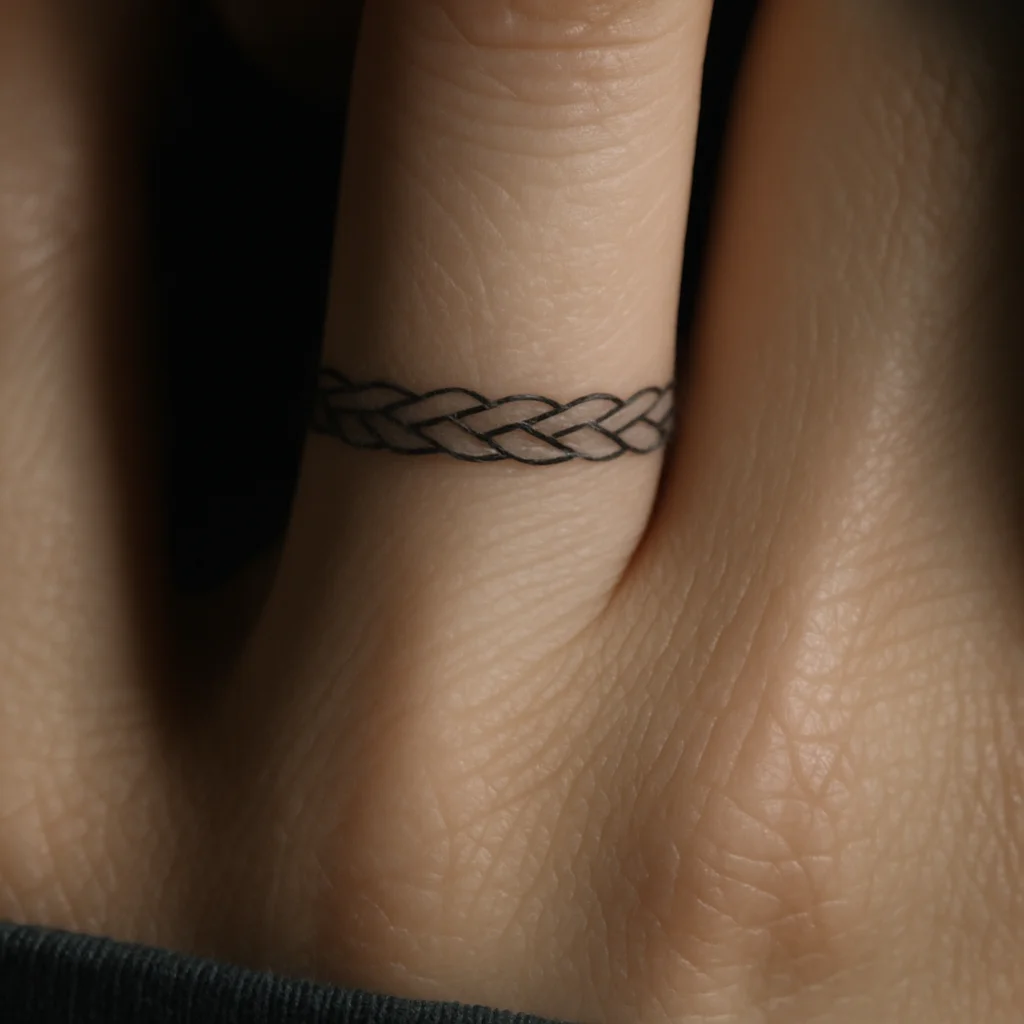
16. Braided rope band
A simple over-under braid running around the base, drawn with just three or four repeats rather than a continuous weave. Detail is the enemy here; a loose braid with visible gaps ages far better than a tight one. Suits anyone who wants texture instead of a plain line.
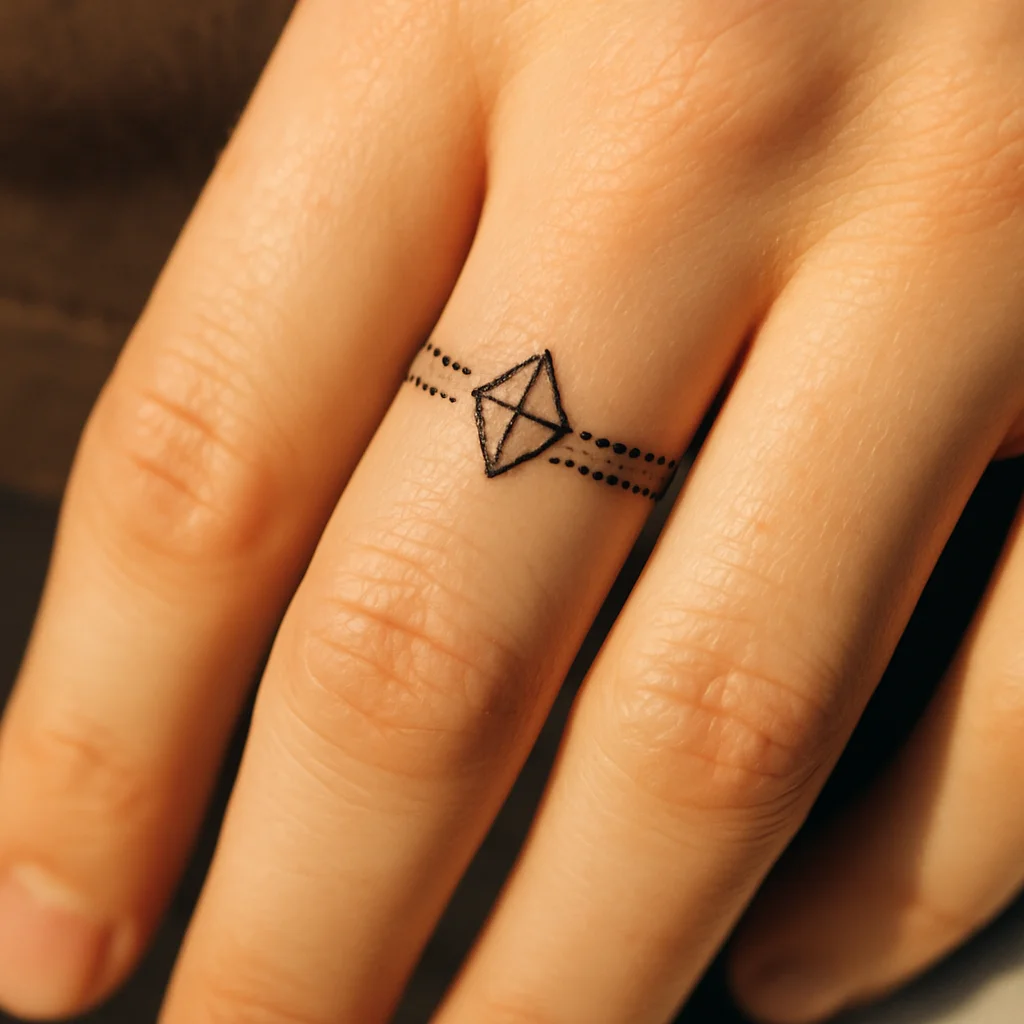
17. Dotted band with a single diamond
A row of evenly spaced dots circling the base, interrupted by one small outlined diamond or rhombus on top of the finger. It mimics a pavé ring without pretending to be one, and dots are the most fade-resistant mark you can put on a hand. Fun as a self-gift piece.
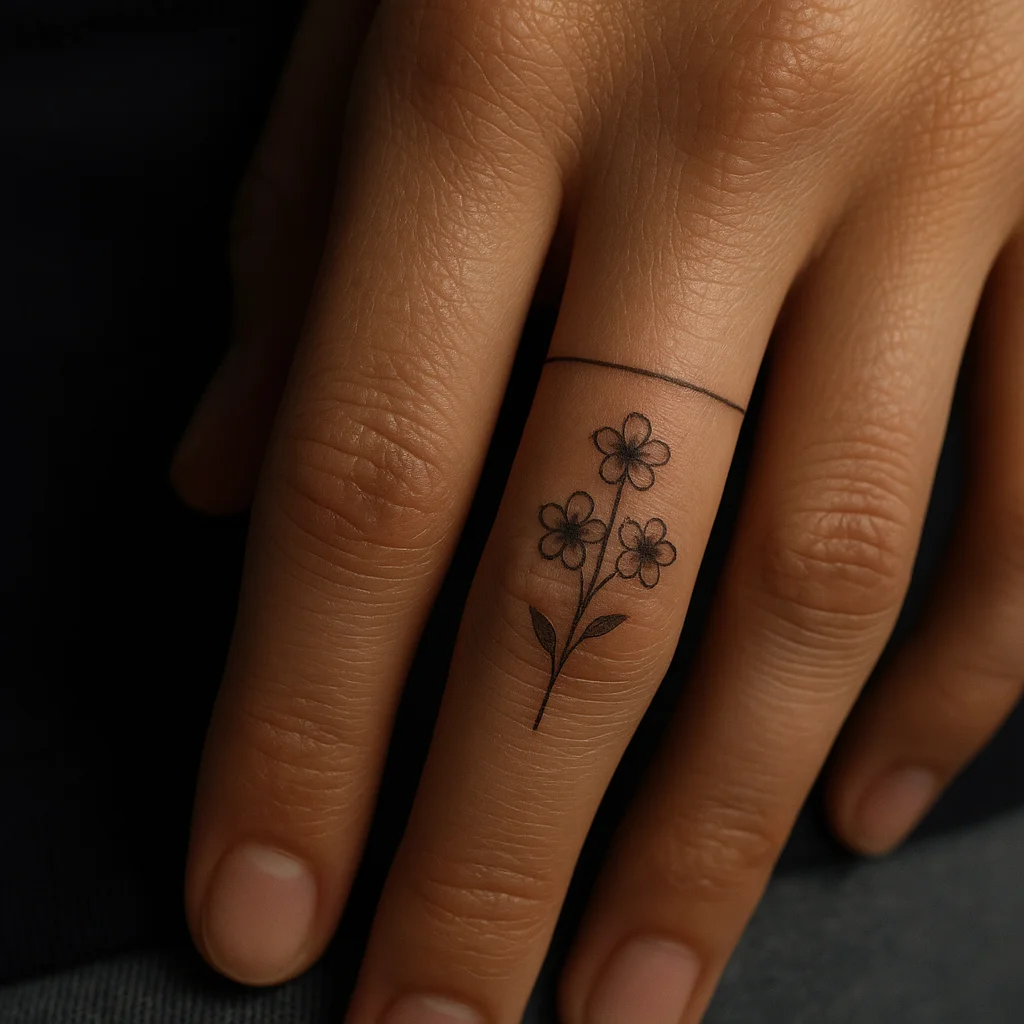
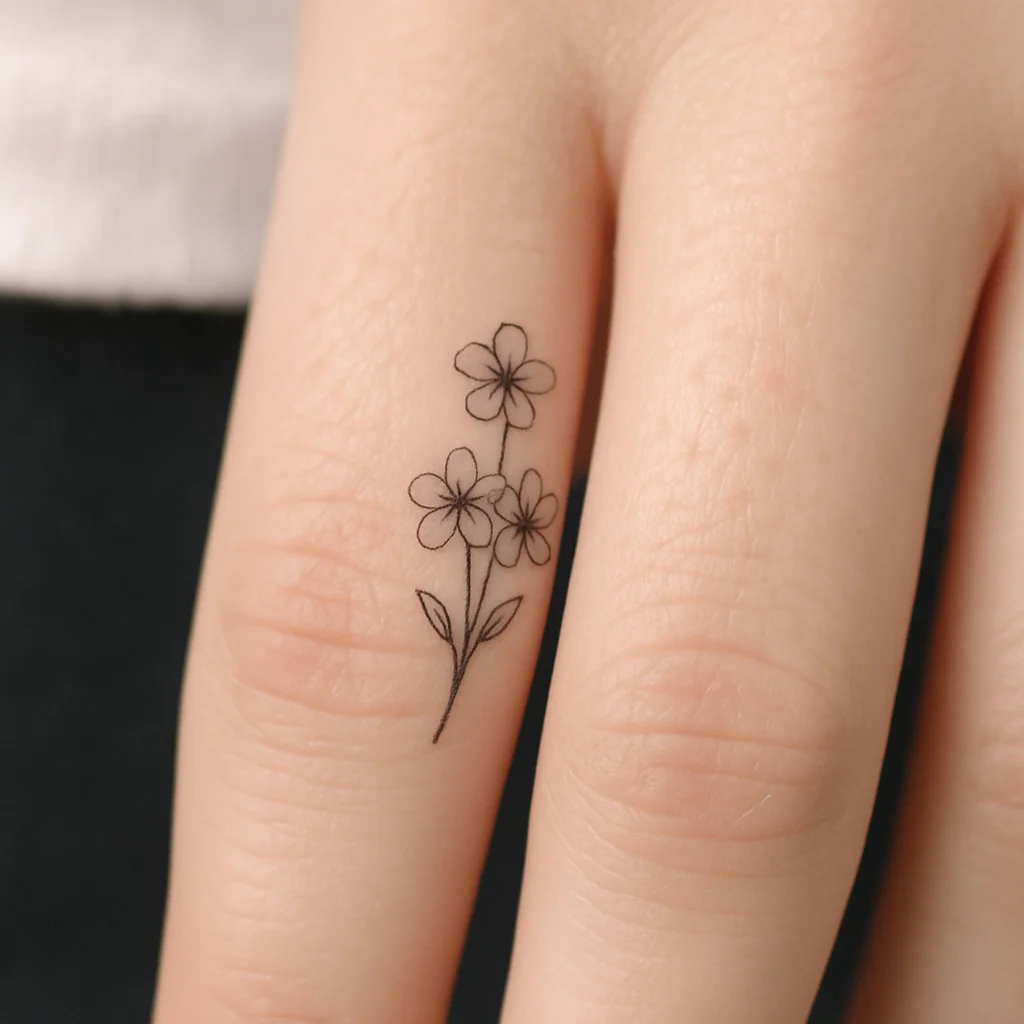
18. Flower cluster at the base of the ring finger
Three tiny five-petal blooms with a couple of leaves, sitting on the top of the finger at the knuckle base rather than wrapping. Ask for petals as open loops with breathing room in the centre, no stippled shading. Roughly 12 to 15 mm wide, and it works beautifully alongside stacked rings.
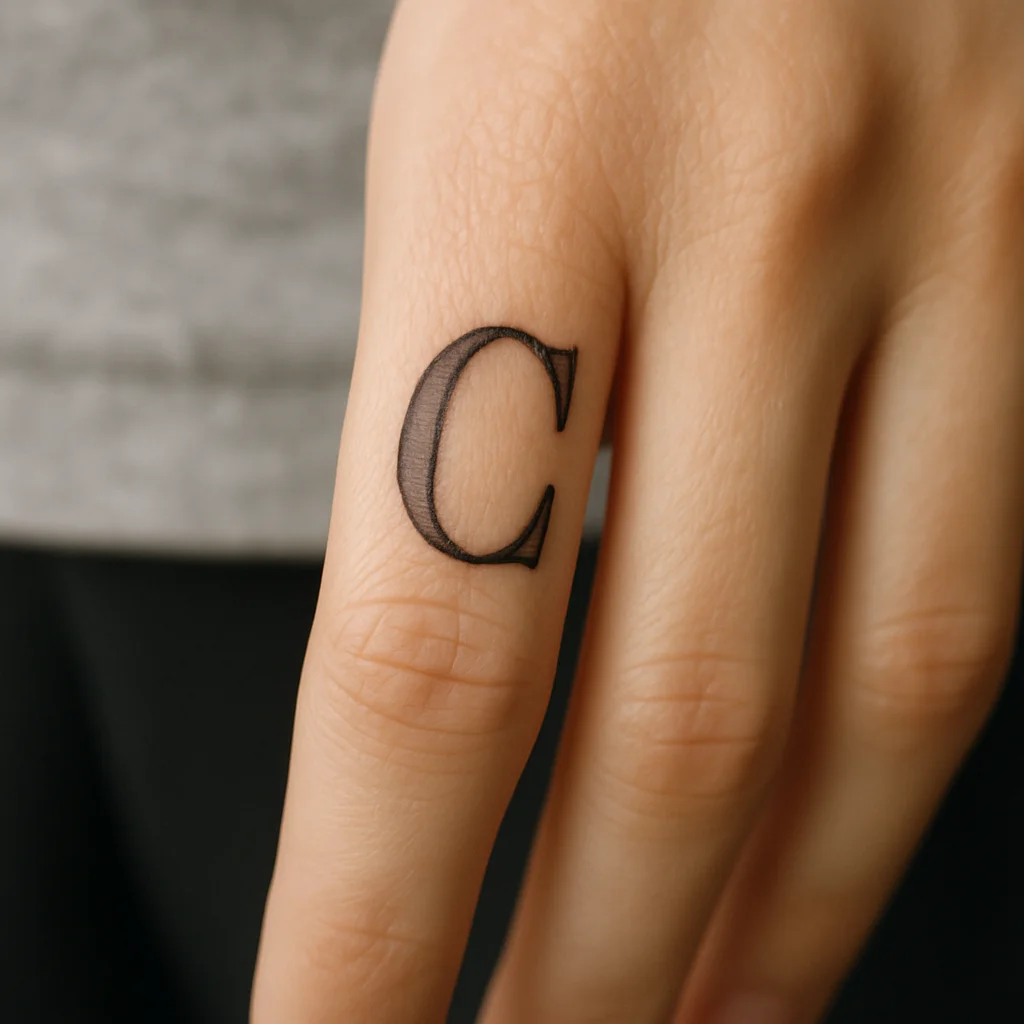
19. Serif initial at the base
A single capital letter in a classic serif, 8 to 10 mm tall, centred on the top of the finger base. One letter is the safe limit for lettering on a hand; two crammed together will bleed into each other. Keep the serifs chunky and the counters open, and it can look like an heirloom monogram.
Thumbs, Inner Fingers and Hand-Adjacent (20-26)
The thumb behaves differently from the other four: thicker skin, a broader flat plane on the outer edge, and less rubbing from neighbours. It's underrated. And if you want something with actual detail, the smartest move is to start the design at the base of a finger and let it spill onto the back of the hand, where the ink will genuinely last.
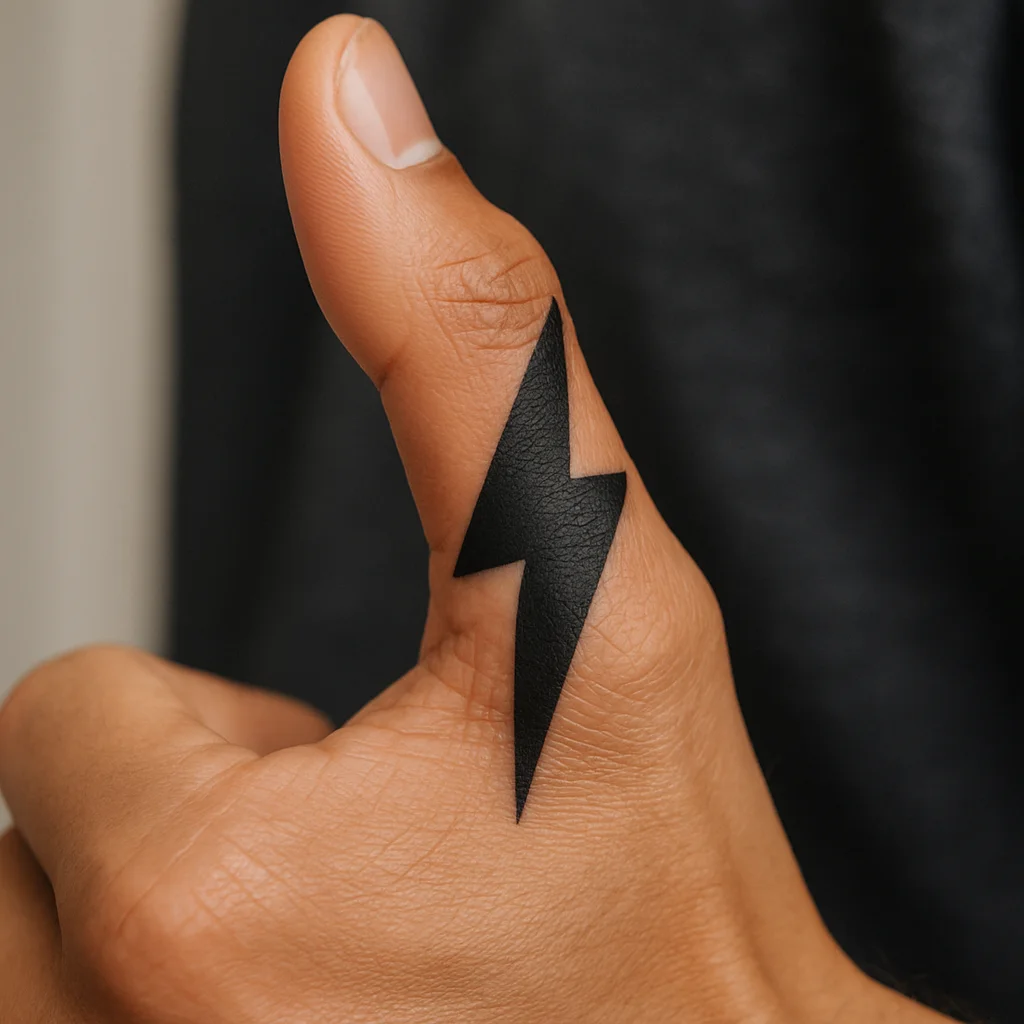
20. Lightning bolt on the outer thumb
A sharp two- or three-angle bolt, about 15 mm long, running down the outer edge of the thumb. The extra thickness of thumb skin holds a bold line noticeably better than a pinky does. Bring a reference for the angle you want, because a slightly-off bolt looks accidental.
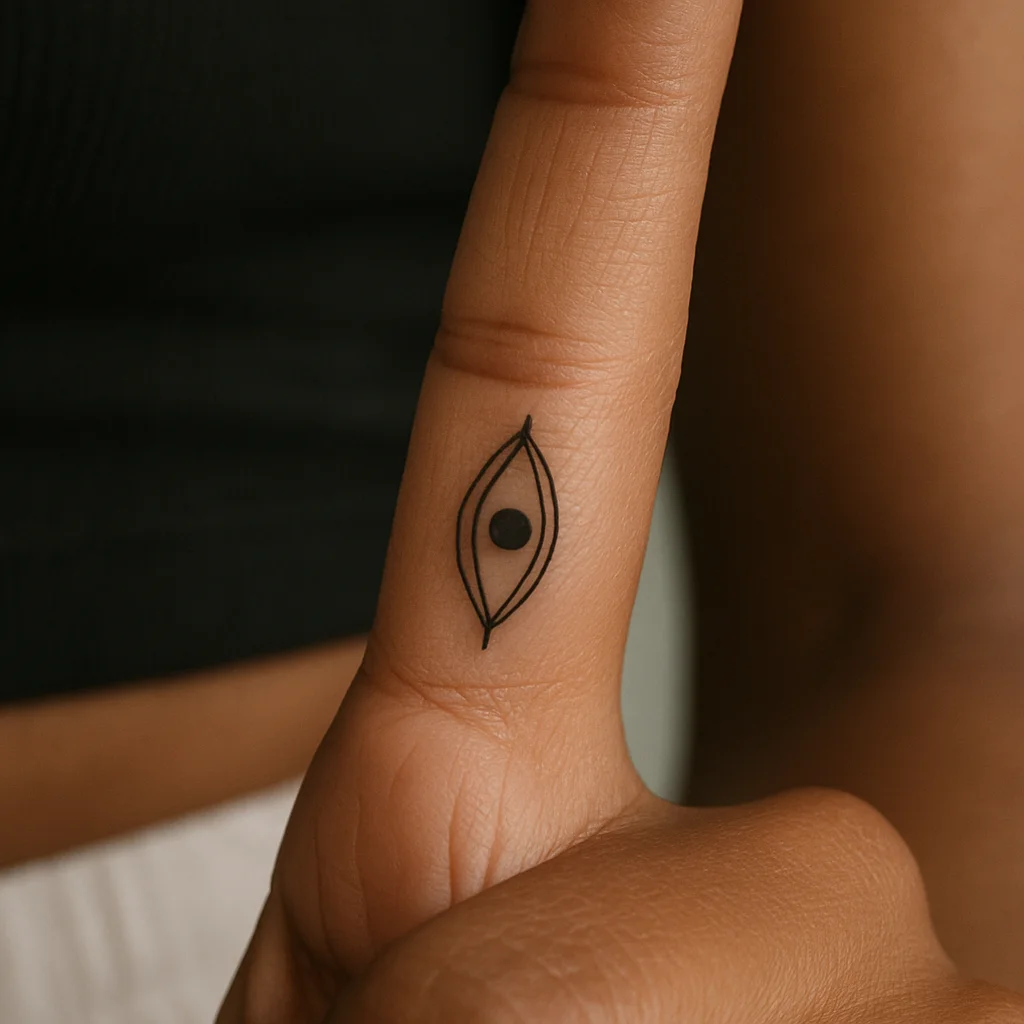
21. Evil eye on the inner index base
An almond eye with a solid pupil and one or two lash strokes, tucked at the base of the index finger on the palm-facing side. It's a protective symbol you see rather than show, which is part of the appeal. Accept that this is a fade-prone zone and treat refreshes as maintenance.
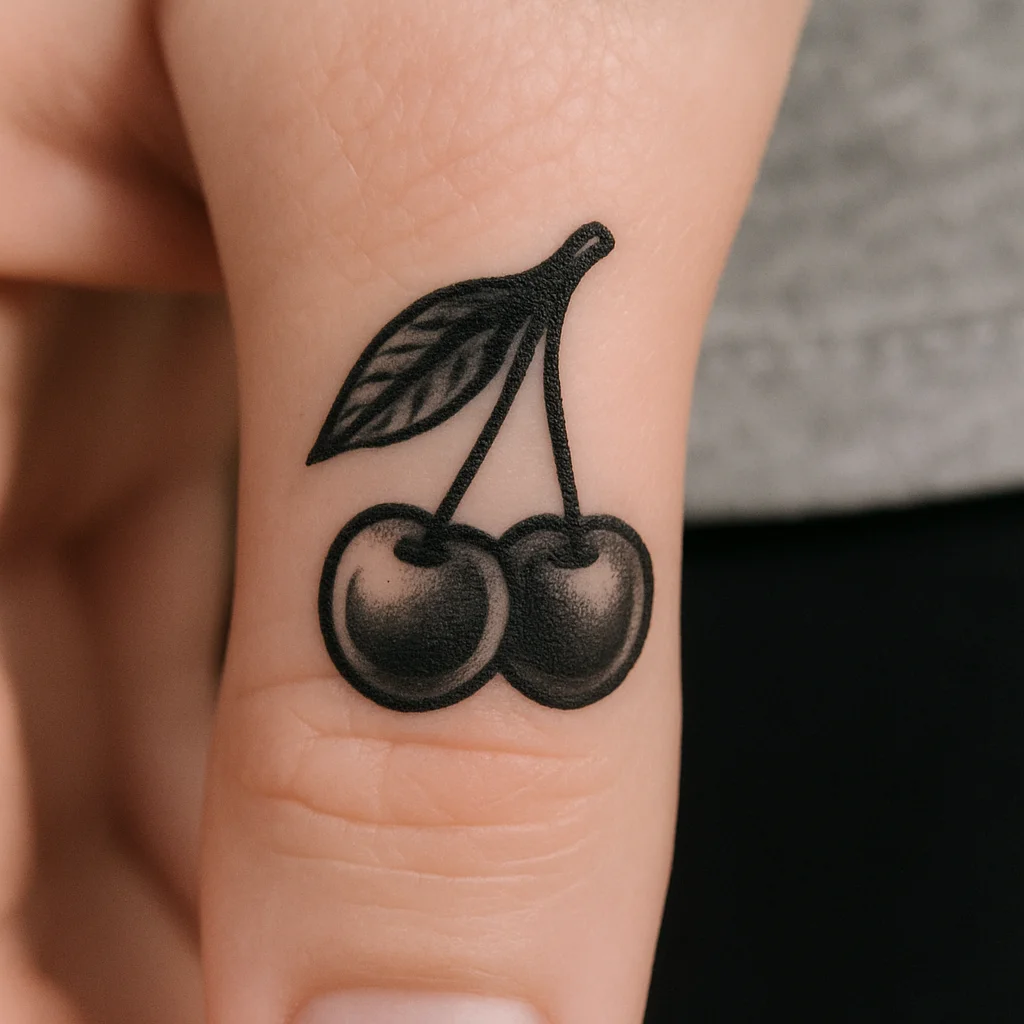
22. Cherry pair on the side of the thumb
Two small circles on a curved double stem with a single leaf, sitting on the outer thumb. Ask for the cherries as clean outlines or a light solid fill; heavy black at this size will spread slightly as it heals. Playful, retro, and it photographs well when you hold a coffee.
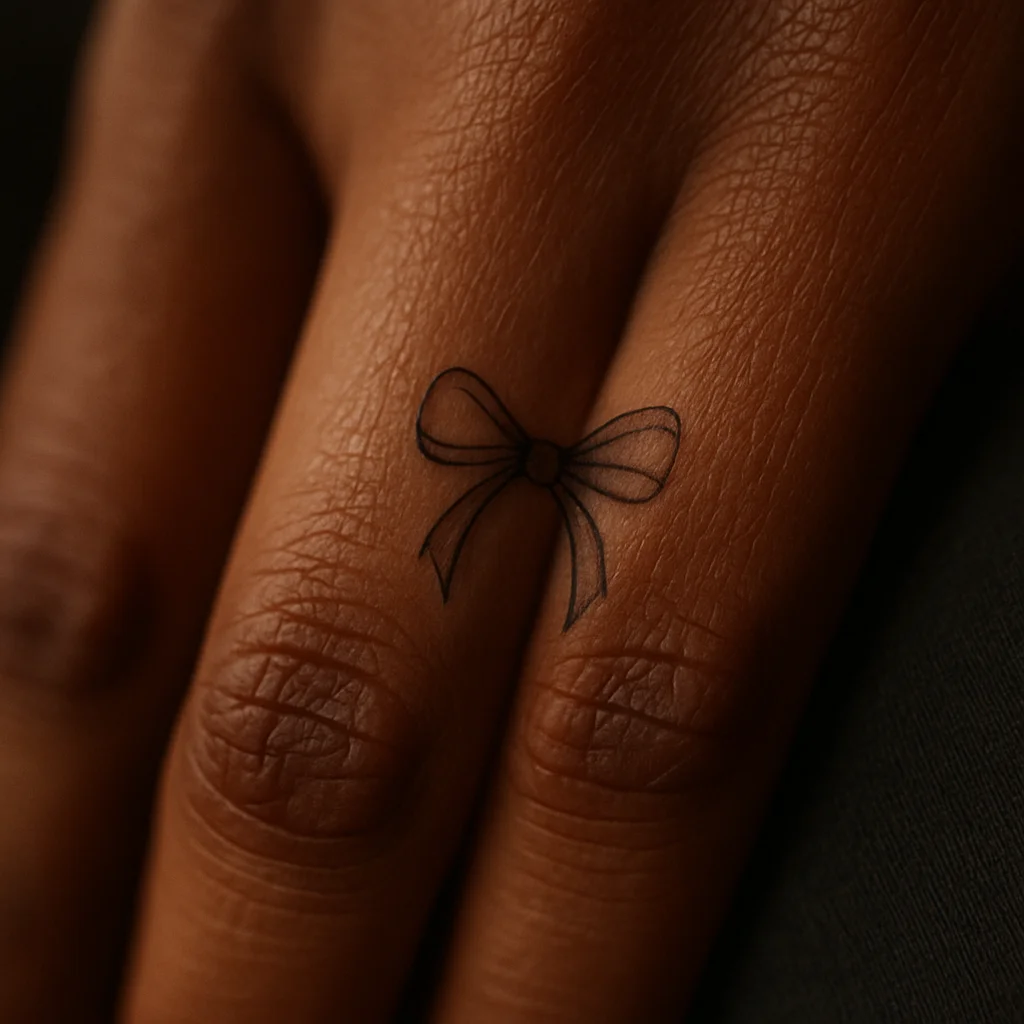
23. Bow at the base of the finger
A neat little ribbon bow with two loops and short tails, sitting where a ring would sit on the middle or ring finger. The trick is asking for only four or five strokes total, so it stays crisp instead of turning into a knot. Very much the soft, feminine end of hand tattoos.
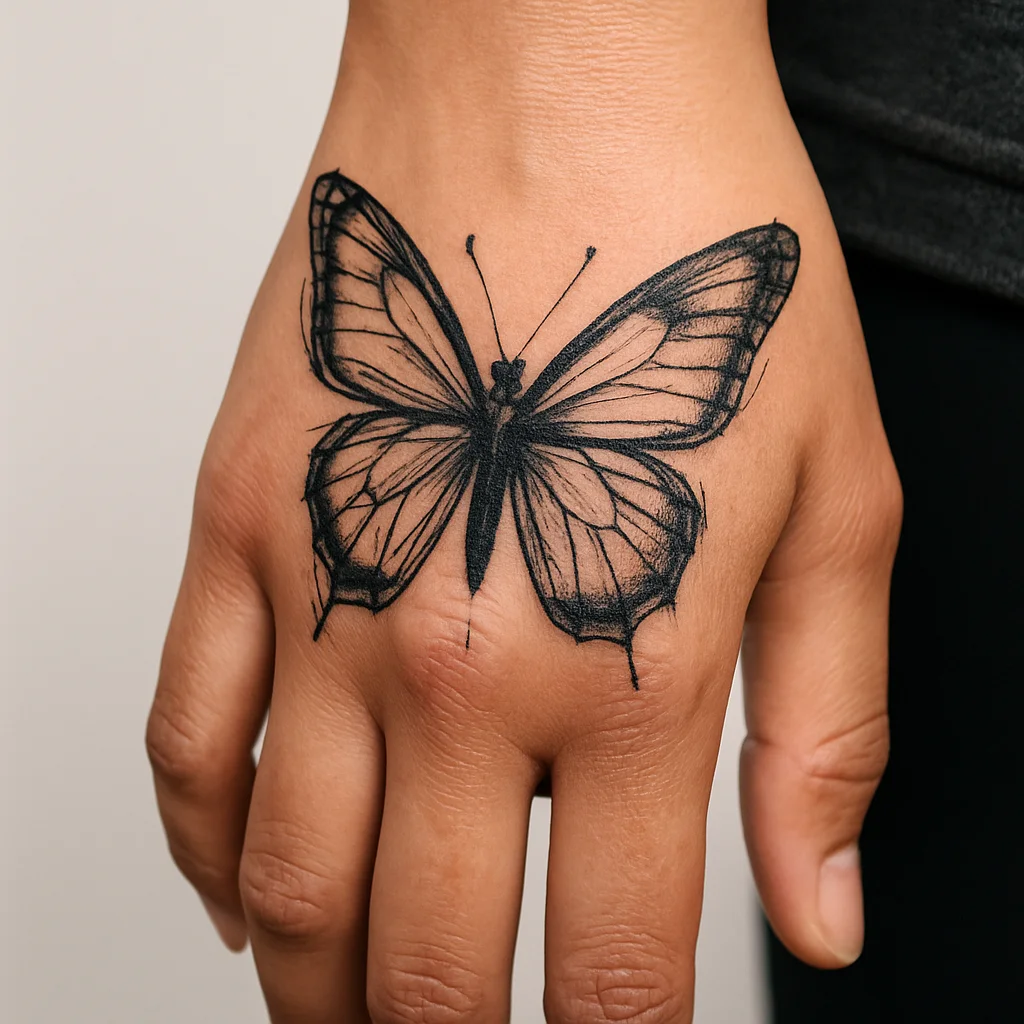
24. Butterfly bridging finger and hand
A butterfly with its body along the base of the middle finger and wings opening onto the back of the hand. Putting the detail on the hand and only the simple body on the finger is what makes this survive. Plan for 4 to 6 cm across so the wing shapes stay readable.
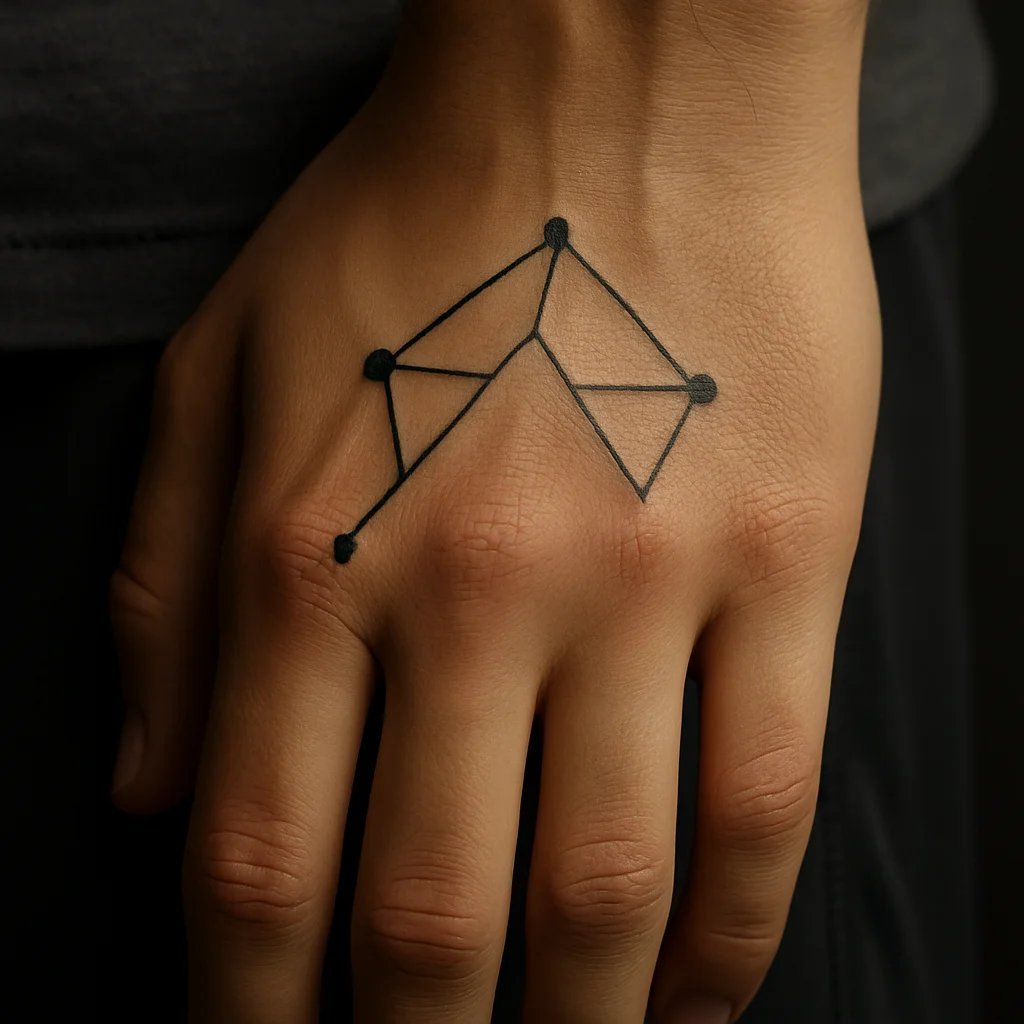
25. Constellation across the knuckles
Small dots placed one per knuckle across three or four fingers, joined by hairline connecting strokes, matching a real star pattern. It only works if you're comfortable with a design that reads as a full hand piece when you make a fist. Ask for slightly larger dots than you think you need, since the knuckle crease eats pigment.
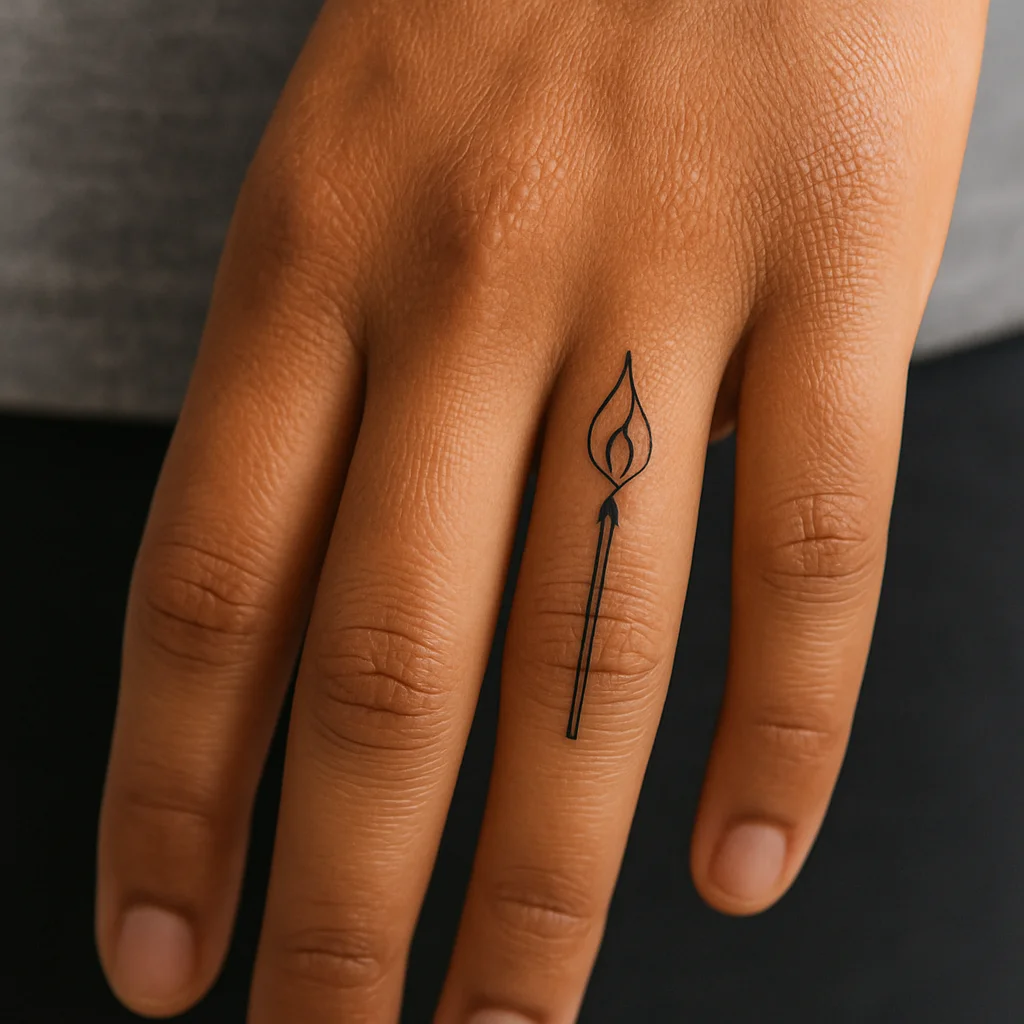
26. Matchstick or candle on the inner finger
A slim upright stem with a small flame at the tip, running along the palm-facing side of the middle or ring finger. It's a private piece, visible only to you and whoever you hand something to. Palm-side placements fade the fastest of anything here, so choose it because you love it, not because you want it forever untouched.
Pain, Healing and the Touch-Up Conversation
Fingers rank high on most people's pain scale, but not in the way you'd expect. The sting is sharp and bright rather than deep and grinding, and because the tattoo takes ten to twenty minutes, it's over before you settle into it. The worst moments are the sides near the webbing and anything directly over a knuckle, where the needle is working almost on bone. Most people describe it as intense but entirely manageable, and far easier than a ribcage session simply because of the duration.
Healing is where fingers get demanding:
- Days 1-3: expect mild swelling and stiffness. Wash gently with unscented soap after anything dirty, pat dry, and apply the thinnest possible layer of ointment.
- Days 3-10: flaking, and this is the risky window. Every hand wash pulls at healing skin, so re-moisturise after each one and resist picking. Hand sanitiser on a fresh finger tattoo stings and dries the skin badly.
- Weeks 2-4: the design may look faded or patchy. Do not panic and do not book a touch-up yet. Fingers often come back as the deeper layers settle.
- Week 6-8 onward: now judge it. If lines have broken, this is when a refresh makes sense.
Keep hands out of dishwater, gym chalk, gardening soil and long hot showers for the first two weeks, and wear gloves for anything abrasive. Our full tattoo aftercare guide covers the timeline in more depth. One thing worth saying plainly: even a perfectly healed finger tattoo is a long-term relationship. Assume a touch-up every two to four years for line work, less often for dots and solid bands.
Cost, Sizing and How to Brief Your Artist
Most finger tattoos land at a studio's minimum charge, which typically runs somewhere in the range of a modest flat fee equivalent to 30 to 60 minutes of shop time, depending on your city and the artist's reputation. Two or three tiny pieces done in the same sitting usually cost less per piece than booking them separately, so batch them if you know you want a set. Specialist fine-line artists in big cities charge more, and they're worth it on hands specifically, because experience with finger skin is the whole game.
Sizing guidance that saves regret:
- One segment of a finger gives you about 1.5 cm of height. Anything with more than five or six distinct elements will not read.
- Line weight should be at least slightly heavier than you'd use on a forearm. Ultra-thin single-needle work on a hand is the most common cause of disappointment at the six-month mark.
- Leave gaps. Negative space between elements is what stops a design from closing into a smudge as ink spreads a little over time.
When you brief the artist, say three things: where exactly you want it (point at the segment), how bold you're willing to go, and whether you understand it will need maintenance. Ask to see healed photos of their finger work, not fresh ones — fresh finger tattoos always look perfect. If an artist declines to tattoo a specific spot, especially the palm side or between fingers, that's a good sign about their standards, not a rejection. And think about your work: hands are still the least concealable placement there is, so check your own comfort with that before you sit down.
Frequently asked questions
Do finger tattoos fade completely?
They rarely vanish entirely, but they do lighten and soften noticeably, especially on the palm side and over knuckle creases. Solid dots, bold bands and simple geometric shapes hold up best; hairline script and dense detail lose definition fastest. Plan on a touch-up every couple of years if you want it looking sharp.
How much does a small finger tattoo cost?
Almost all finger tattoos fall under a studio's minimum charge, which is usually the equivalent of a short hourly booking rather than a per-piece price. Getting two or three at once in the same session is more economical than separate appointments. Many artists offer a discounted or free first touch-up on hands, so ask before you book.
How badly do finger tattoos hurt?
The sensation is sharp and quite intense, particularly over the knuckles and near the webbing, but the session is short enough that most people handle it easily. It feels less like a dull ache and more like a bright scratch on bone. Eat beforehand and skip alcohol the night before to keep bleeding down.
Which finger placement lasts the longest?
The top surface of a finger between the knuckles and the outer side of the index or pinky retain ink best, followed by the base of the finger where it meets the hand. The palm-facing side and the inner sides that rub against neighbouring fingers fade fastest. Choose the durable zones for anything you want to stay legible.
Can I get a finger tattoo as my first tattoo?
You can, and plenty of people do, but go in knowing hands are the least concealable placement and the most maintenance-heavy. If visibility at work is a concern, the outer side of a finger or a design that hides under a ring is the safer starting point. Pick an artist who regularly tattoos hands and can show you healed results.
The conversation
No comments yet. Got a thought about these designs? Start us off.
Want to weigh in? Join the community to comment, save designs and try them on your skin.