Sister Tattoos for Three: 27 Ideas That Split Evenly
Three is an awkward number for matching tattoos until you stop trying to copy-paste one design. Here are 27 ideas built specifically for trios, from identical daisies to a single rose cut into three stages.
Three Ways to Match When There Are Three of You
Pairs have it easy. Two people can get the identical design, hold their wrists together, and it reads instantly. Three bodies introduce a middle — someone is always in the center of the photo, someone always ends up on the end — and the designs that survive that are the ones planned around it.
Almost every good trio tattoo falls into one of three structures:
- Identical. The same drawing, same size, same line weight, on all three sisters. Simple, unfussy, and the safest choice if one of you may move away or change artists later — a clean fine-line daisy is reproducible anywhere.
- Split. One image cut into three parts, so each sister carries a fragment and the whole thing only exists when you stand together. Highest emotional payoff, but each piece has to look intentional on its own.
- Sequenced. Three variations on one theme, assigned by birth order or personality — three moon phases, three growth stages, three birds at different heights. This is the structure most trios end up loving, because nobody has to be a duplicate.
Whichever route you take, agree on two technical things before you book: line weight and size band. If one sister gets a hairline single-needle version and another gets a bold 3RL, they will not read as a set in five years, because heavier lines hold their shape while ultra-fine ones soften. Ask the artist to draw all three at once, on the same digital canvas, so proportions match even if the bodies do not. And keep the size band tight — say, everything between 4 and 7 cm — rather than letting one sister scale hers up to fill a forearm.
One more piece of etiquette: book the whole trio in one appointment block with the same artist if you can. It costs the same, it saves three separate consultation fees, and it means all three tattoos come out of the same hand on the same day.
Identical Trios: One Design, Three Bodies
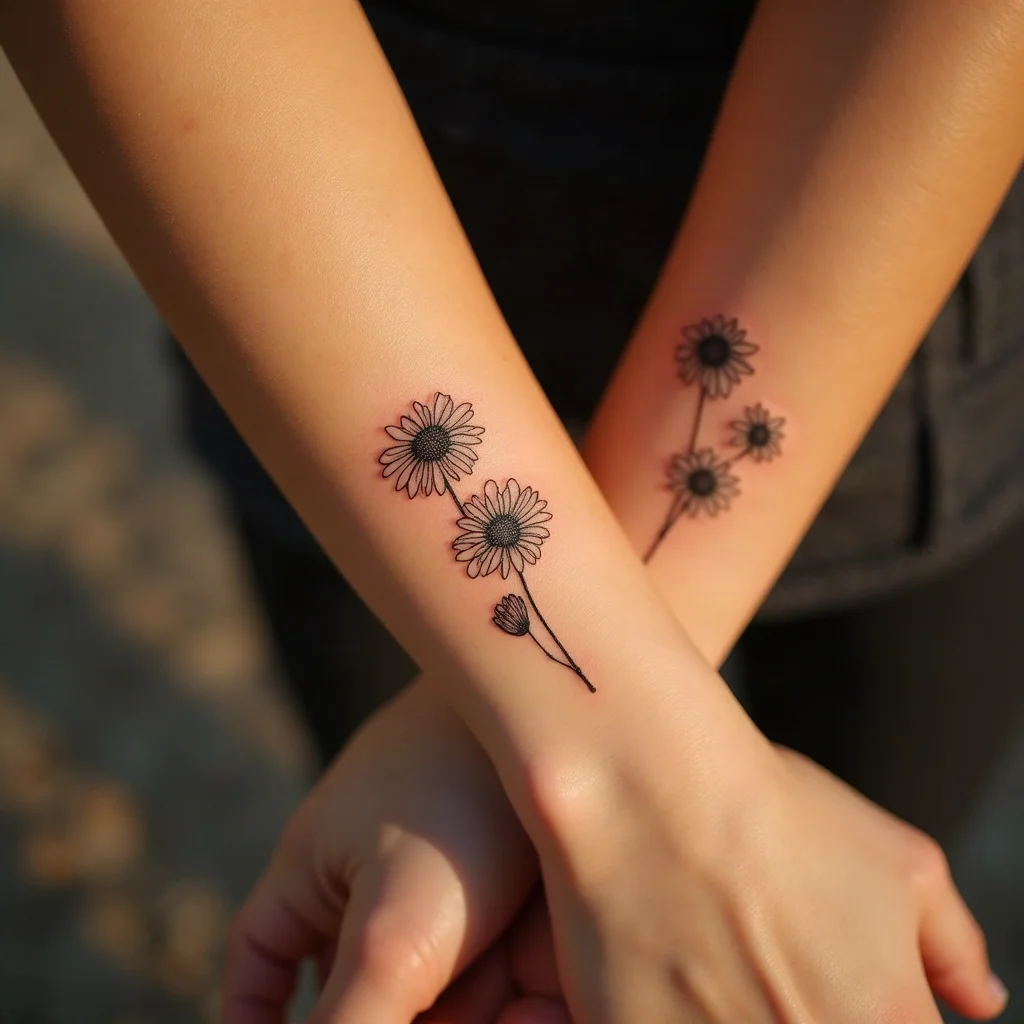
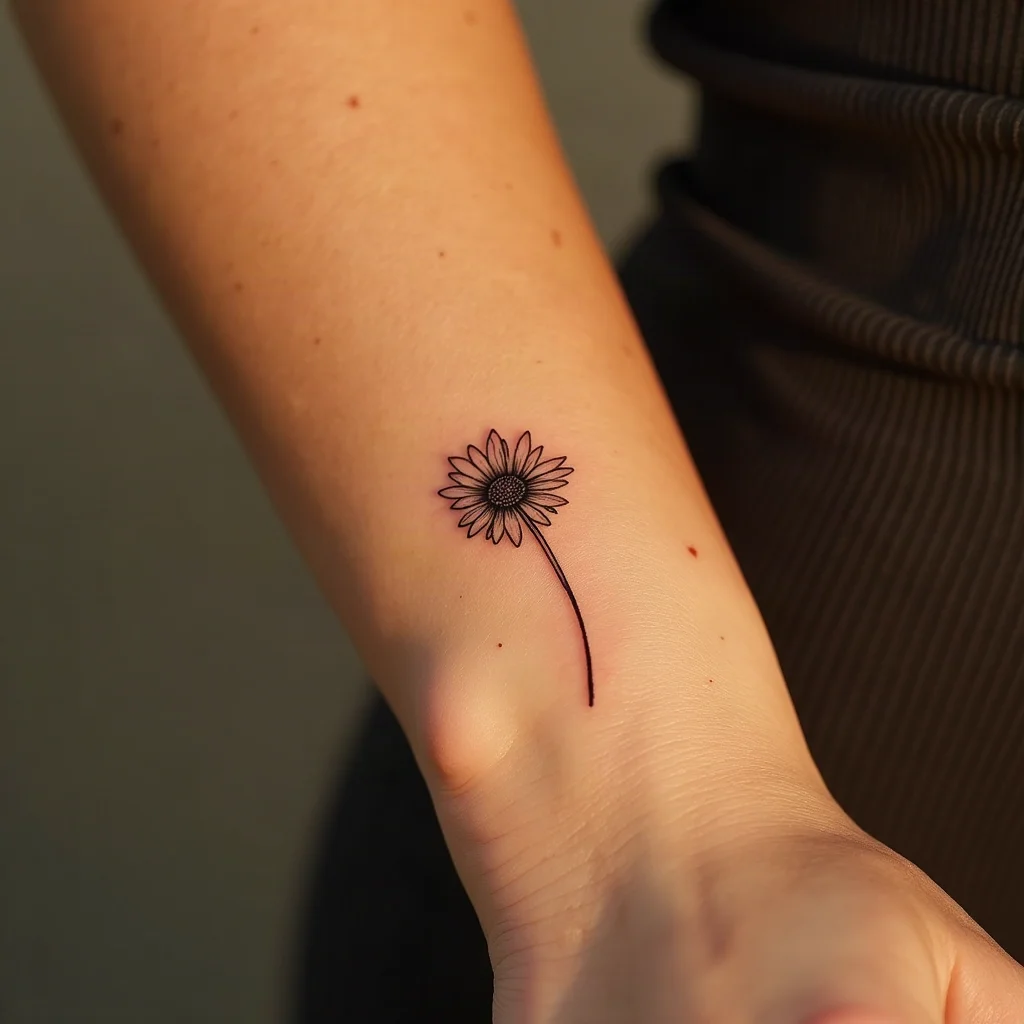
1. The same daisy on all three inner wrists
A single-needle daisy about the size of a thumbprint, drawn once and repeated exactly — same petal count, same tilt of the stem. It is the most reproducible design on this list, which matters if one sister is getting hers in a different city. Sits well on the inner wrist, though expect the line to soften slightly there over a decade; the wrist zone you choose changes how much it stretches.
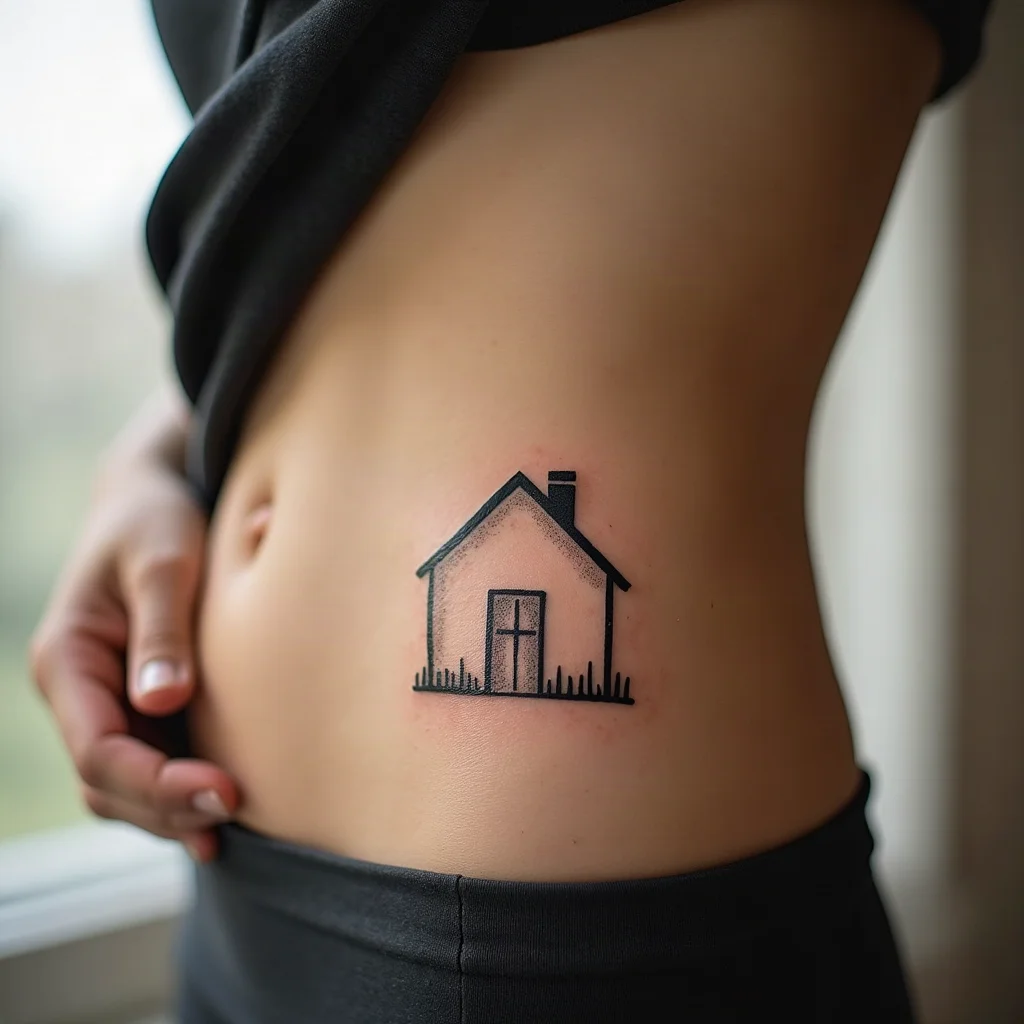
2. The outline of your childhood house
Trace the roofline, the front door and one window from an old photograph and reduce it to eight or nine lines. At around 6 cm on the ribcage it stays private and reads as architecture rather than sentiment to anyone else. Ask the artist to simplify aggressively — brick texture and shrubs will blur into a smudge within a few years.
3. A single wave line above the ankle bone
One continuous horizontal squiggle, 4 to 5 cm wide, sitting just above the ankle bone where a sock will not sit on it. Best for sisters who grew up near water or spent every summer at the same lake. Minimal enough that three of them in a row photograph beautifully.
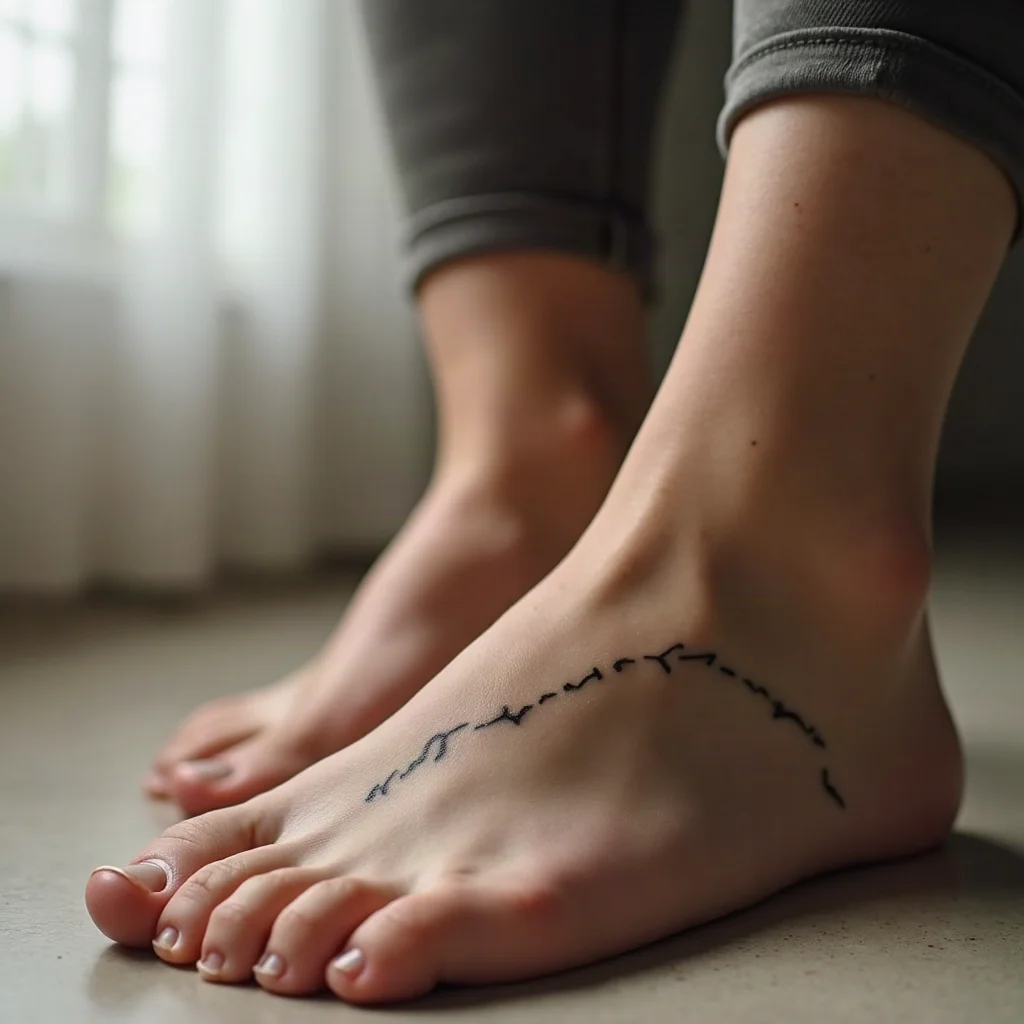
4. One word in your mother's handwriting
Pull a single word from a card or note — a nickname she used for all three of you — and have it traced at collarbone scale. Keep it under 8 cm and insist the artist preserves the wobble in her letters instead of smoothing them out. That imperfection is the whole point.
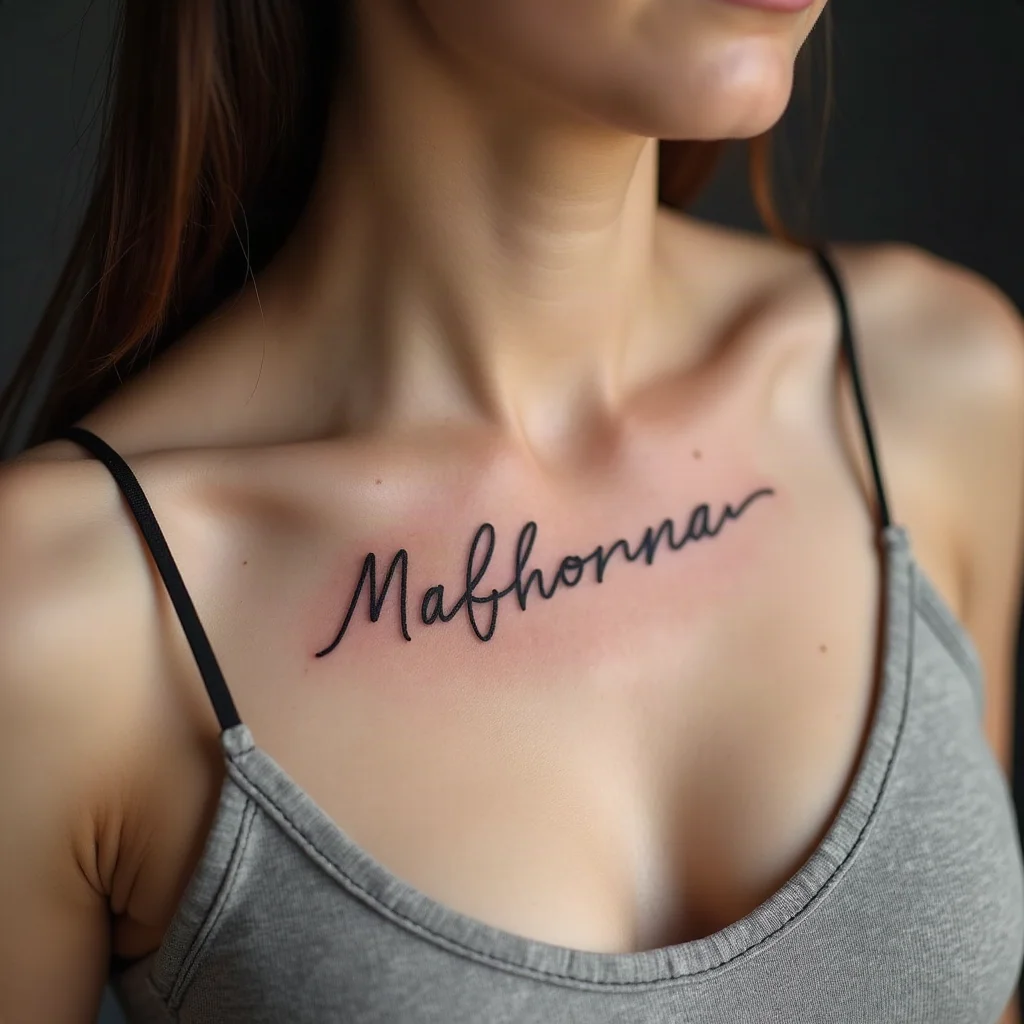
5. Matching paper cranes on the shoulder blade
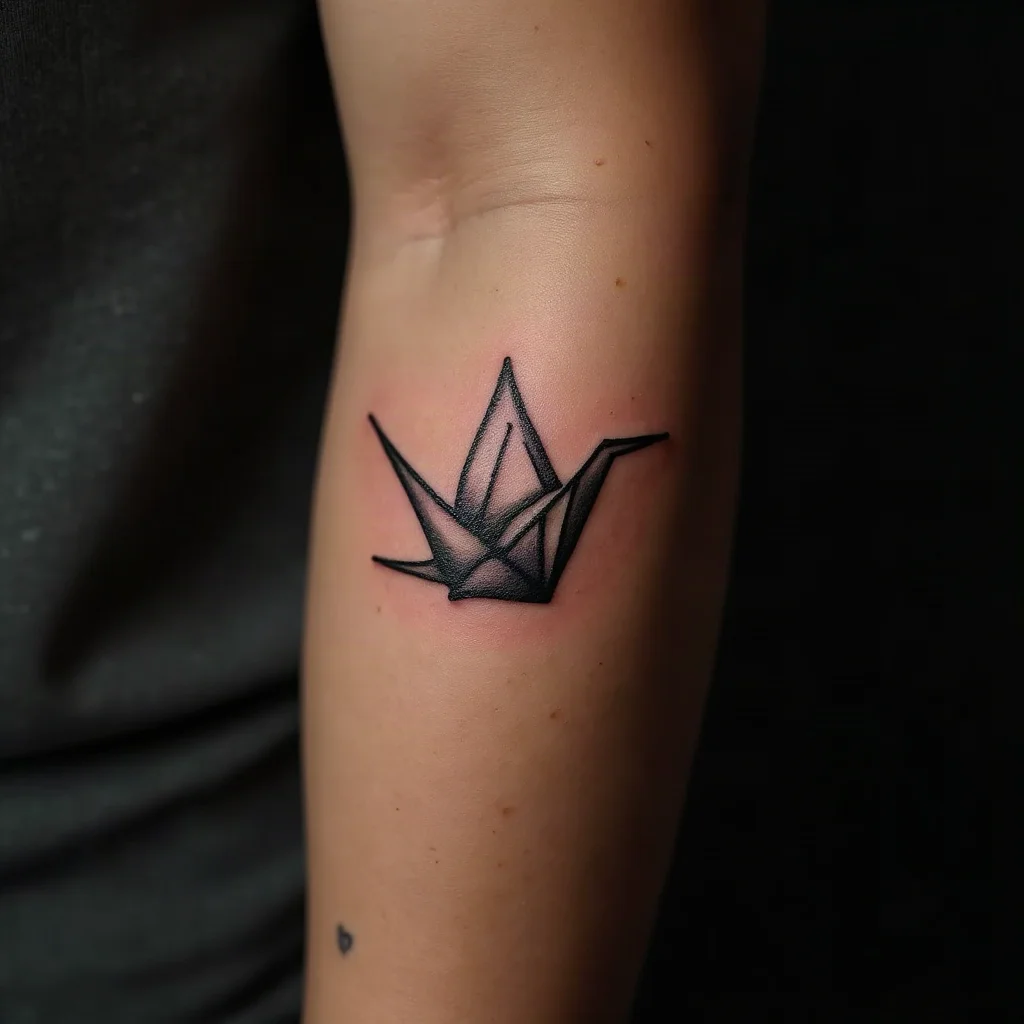
An illustrative crane with clean fold lines and one small area of solid black in the wing. Shoulder blades give the artist a flat, low-stretch canvas, so the geometry stays crisp for years. Around 7 cm each keeps the folds legible.
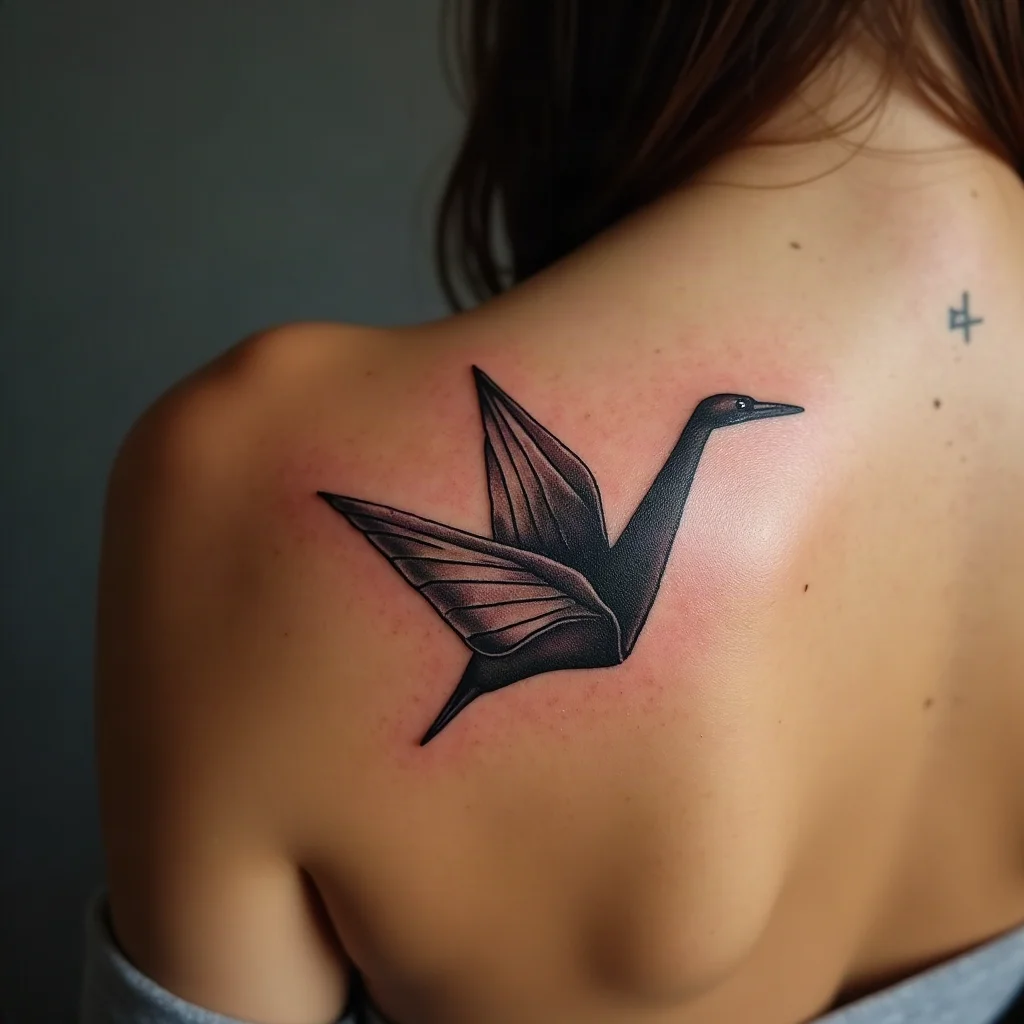
6. The constellation you all learned to find
Orion, the Big Dipper, whichever one your dad pointed at from the driveway. Dots of two different sizes connected by the thinnest possible lines, placed on the upper back. Ask for the stars to be true dots rather than tiny stars — five-pointed stars at that scale turn into blobs.
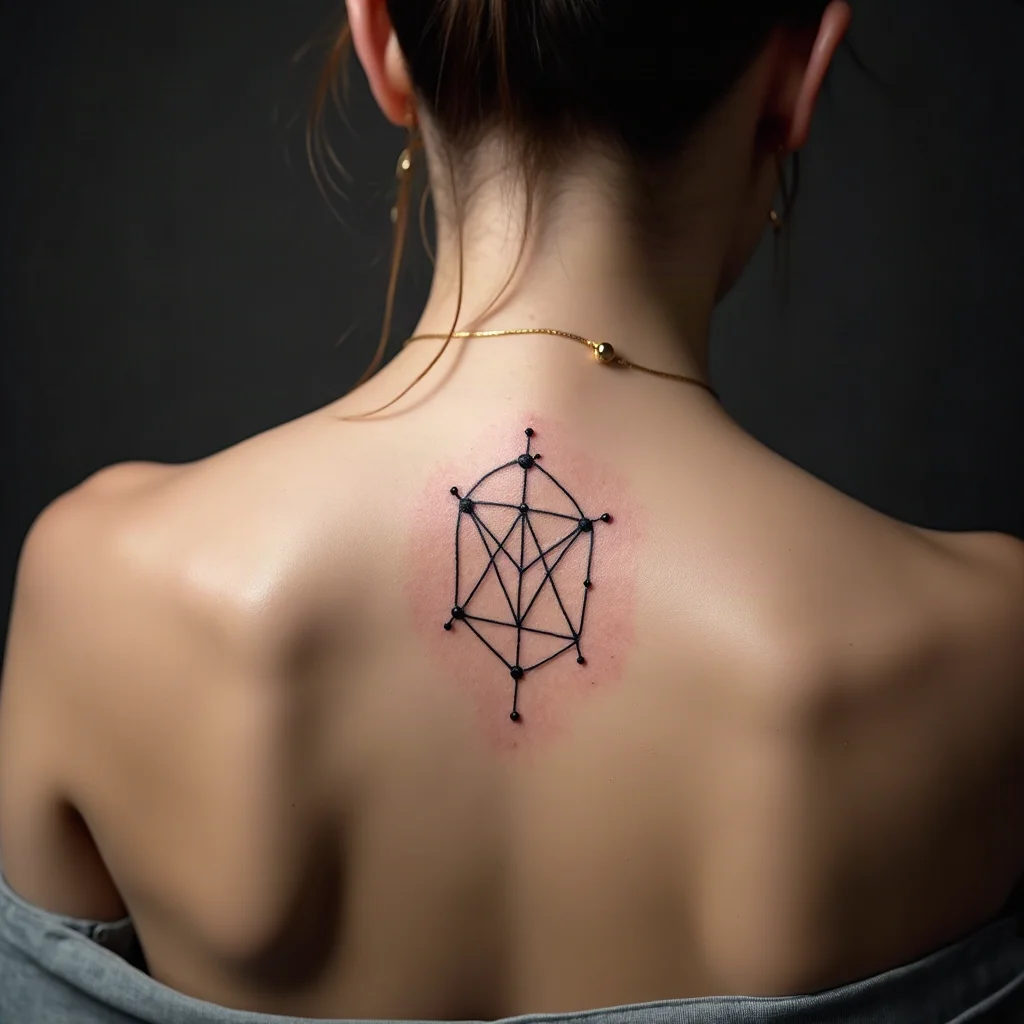
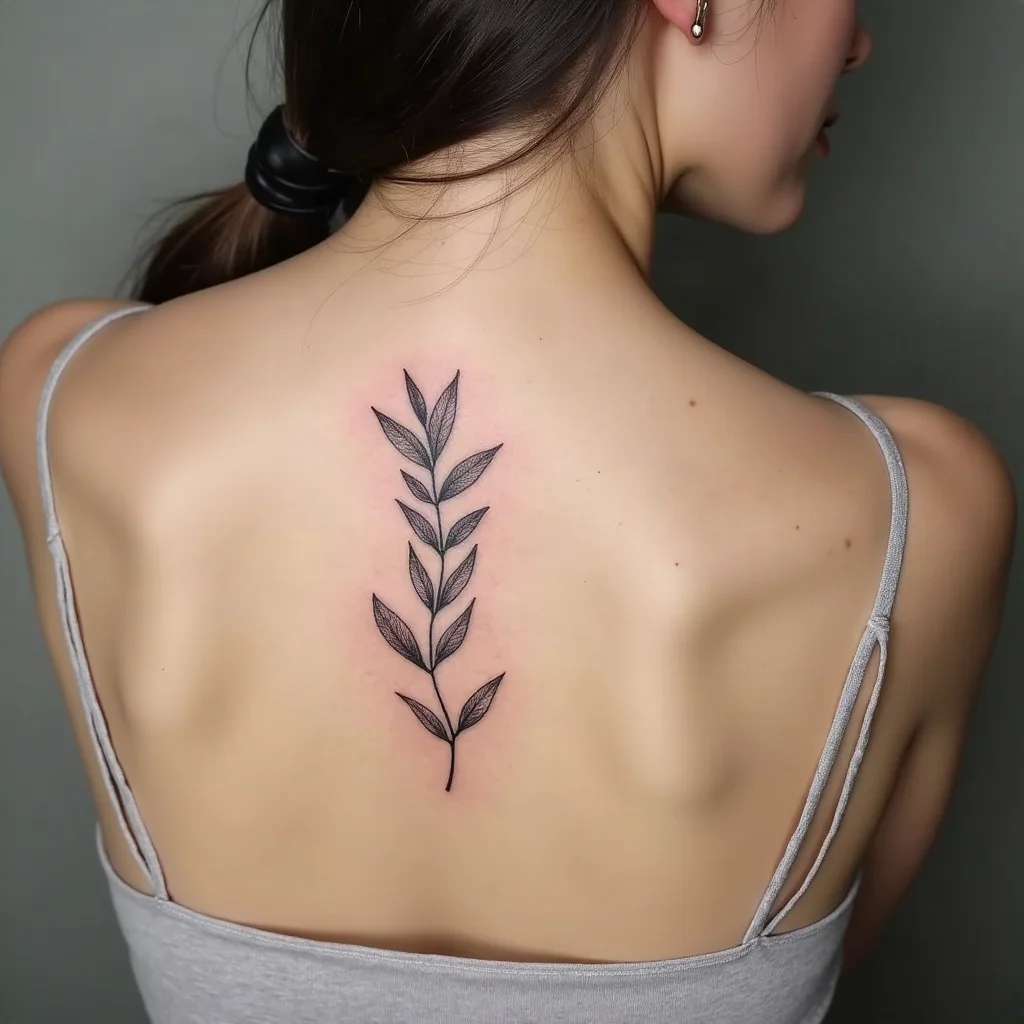
7. The same botanical sprig, scaled to fit
An olive branch or a rosemary sprig, drawn once and then sized to each sister's placement — 6 cm along a wrist, 12 cm along a spine. This is the compromise for trios with very different body sizes and pain thresholds, because the drawing is identical even when the scale is not.
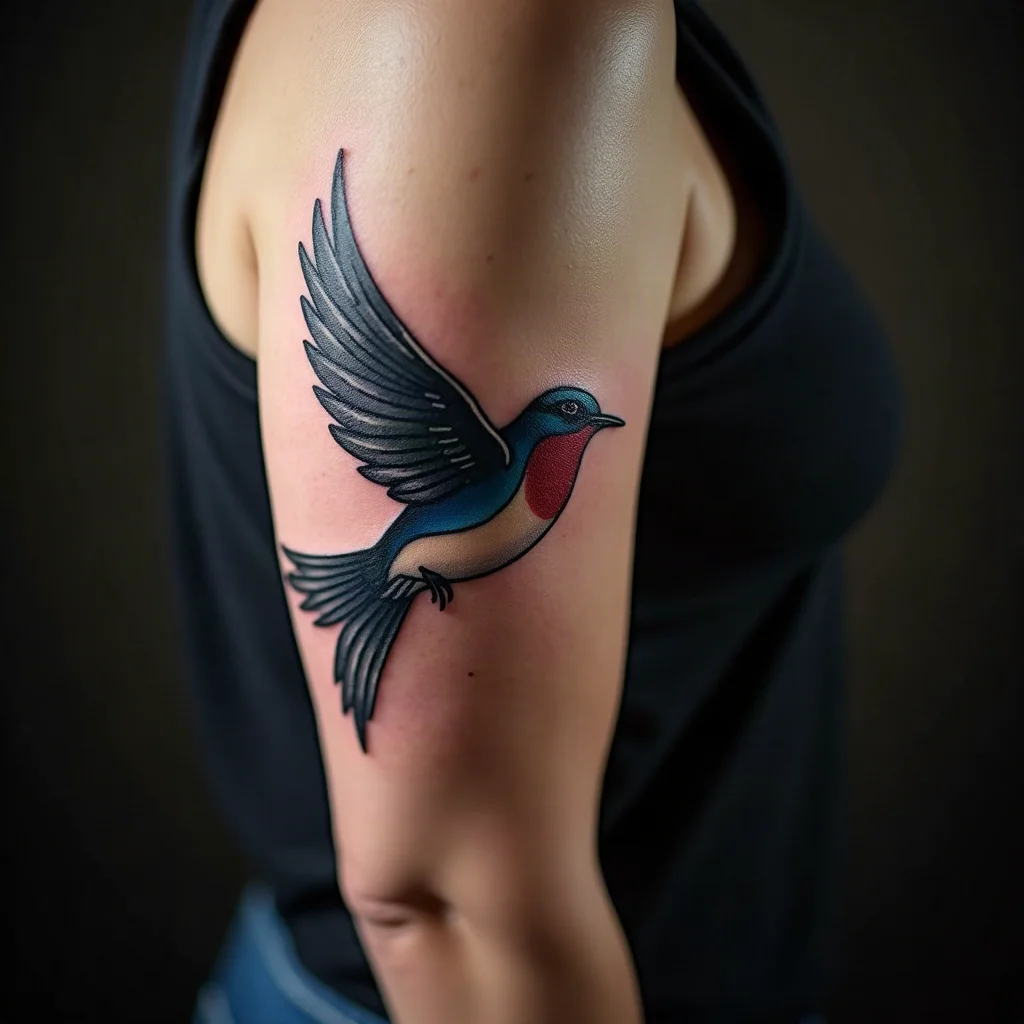
8. Traditional swallows on the upper arm
Three bold-line swallows with the same colour palette — classic red breast, blue-grey wing — placed identically on the outer upper arm. Traditional work is the single most durable style on this list; the heavy outlines and packed colour will still be readable in thirty years. Budget more chair time than a fine-line piece, since colour packing takes longer.
Split Designs: One Image Cut Into Three
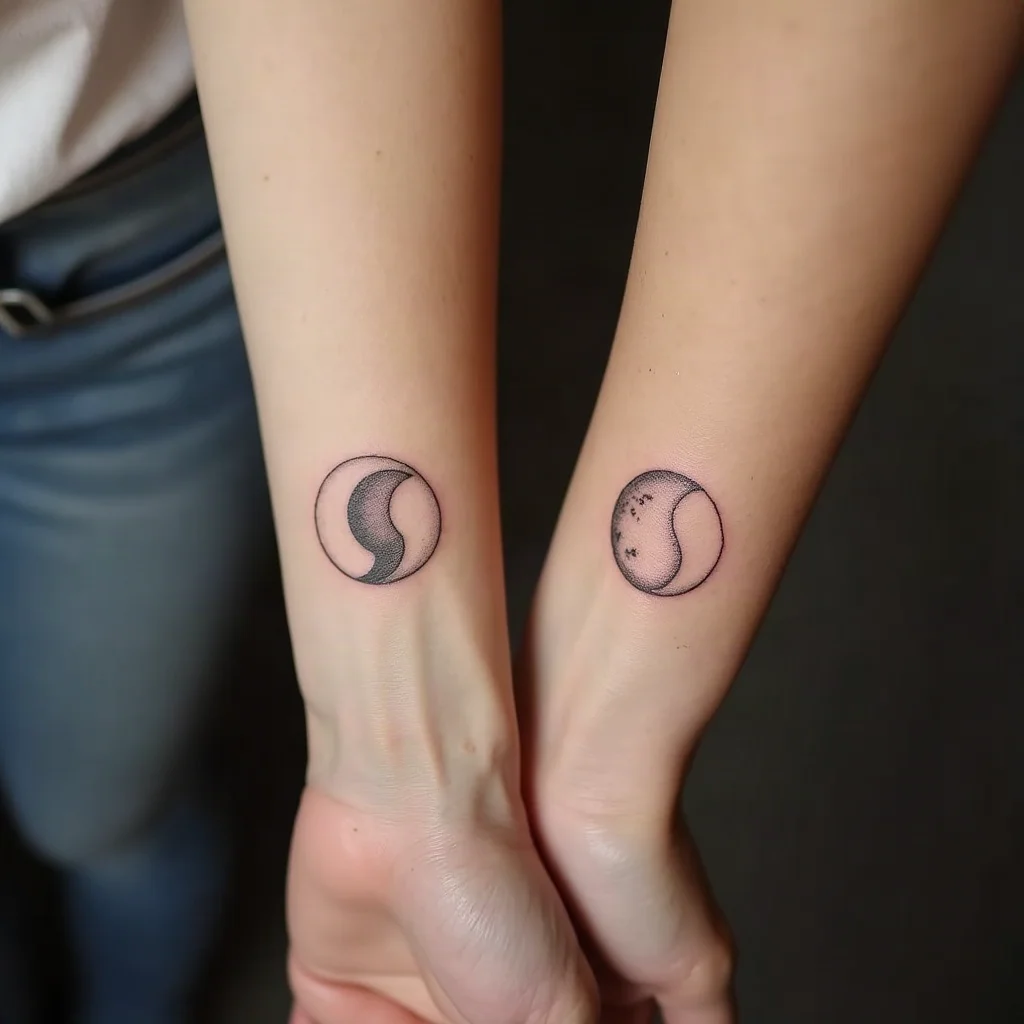
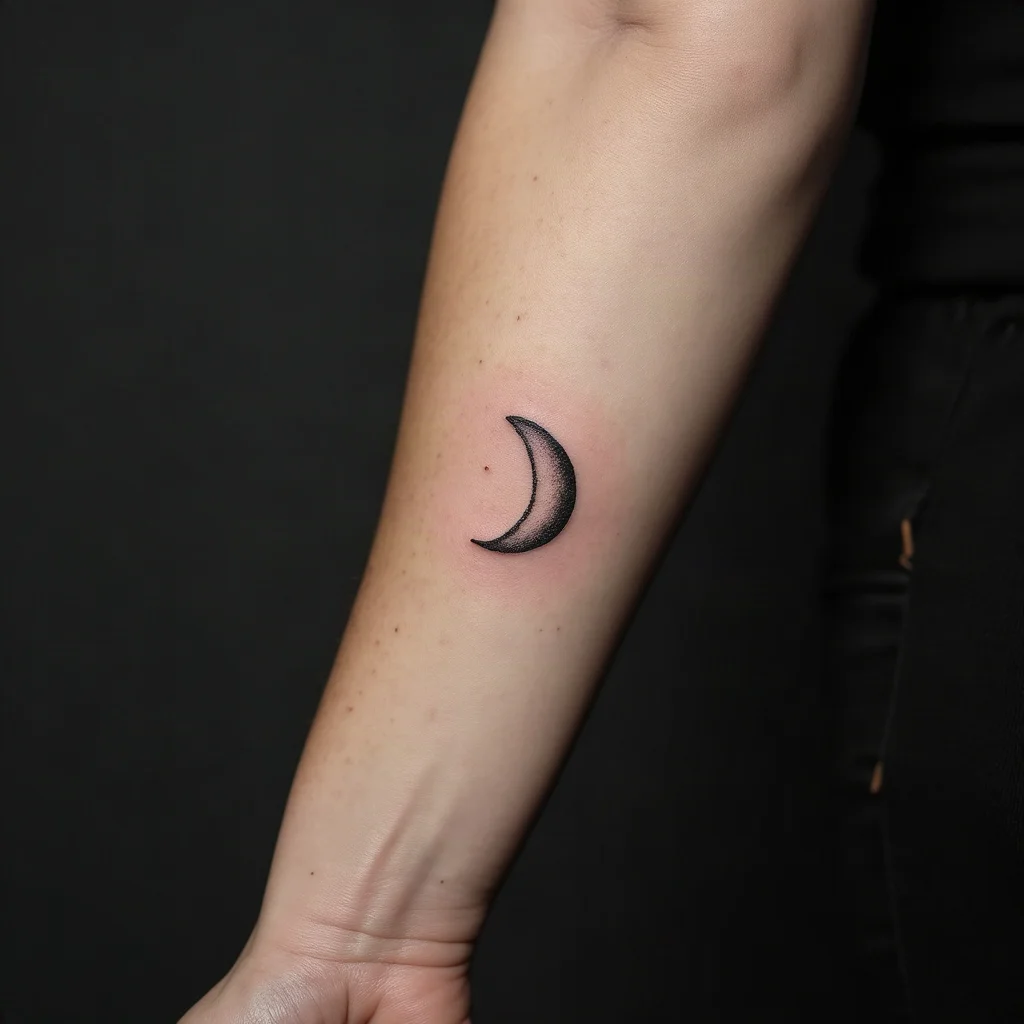
9. Waxing, full and waning moon
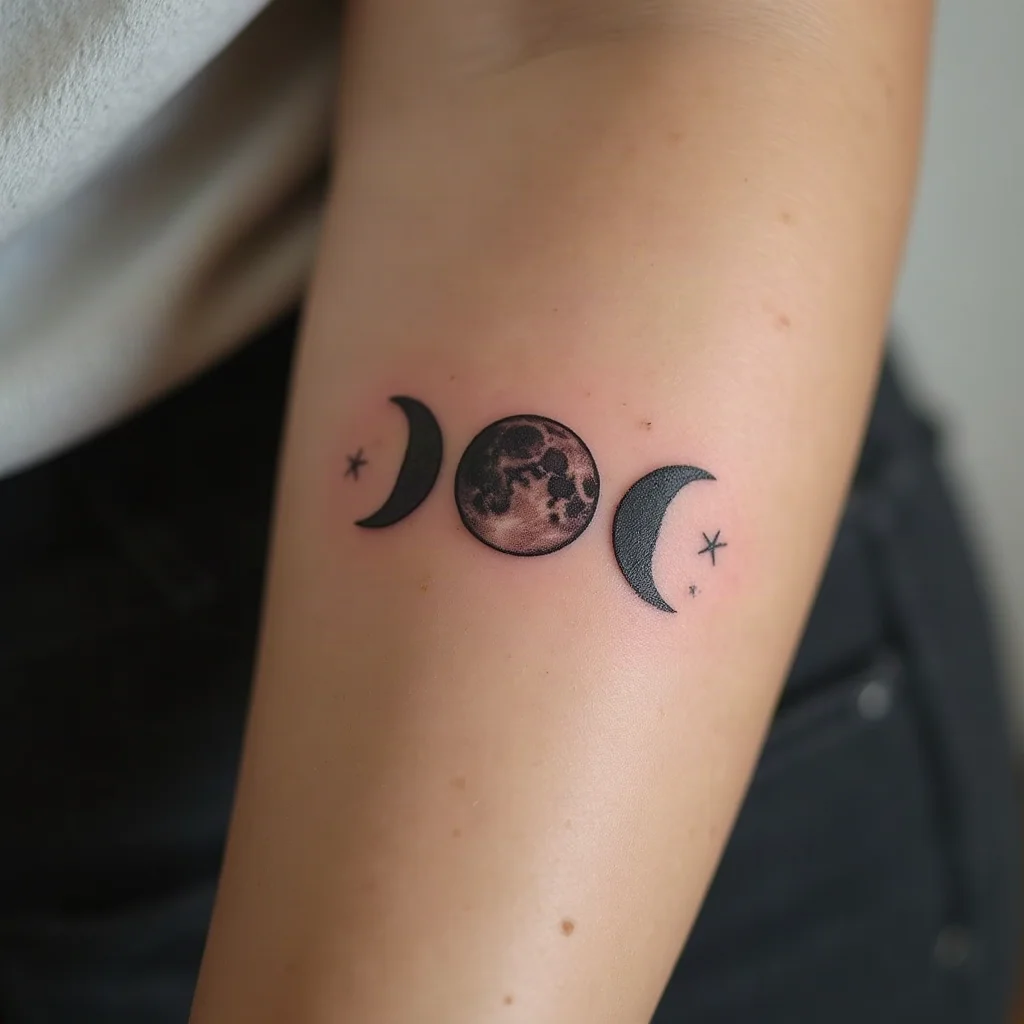
The cleanest three-way split there is, because the phases already come in an order and none of them is the leftover piece. Each moon sits about 4 cm on the inner forearm, and when you line your arms up the cycle completes. Let the eldest take the waxing crescent if you want a story attached, or draw for it.
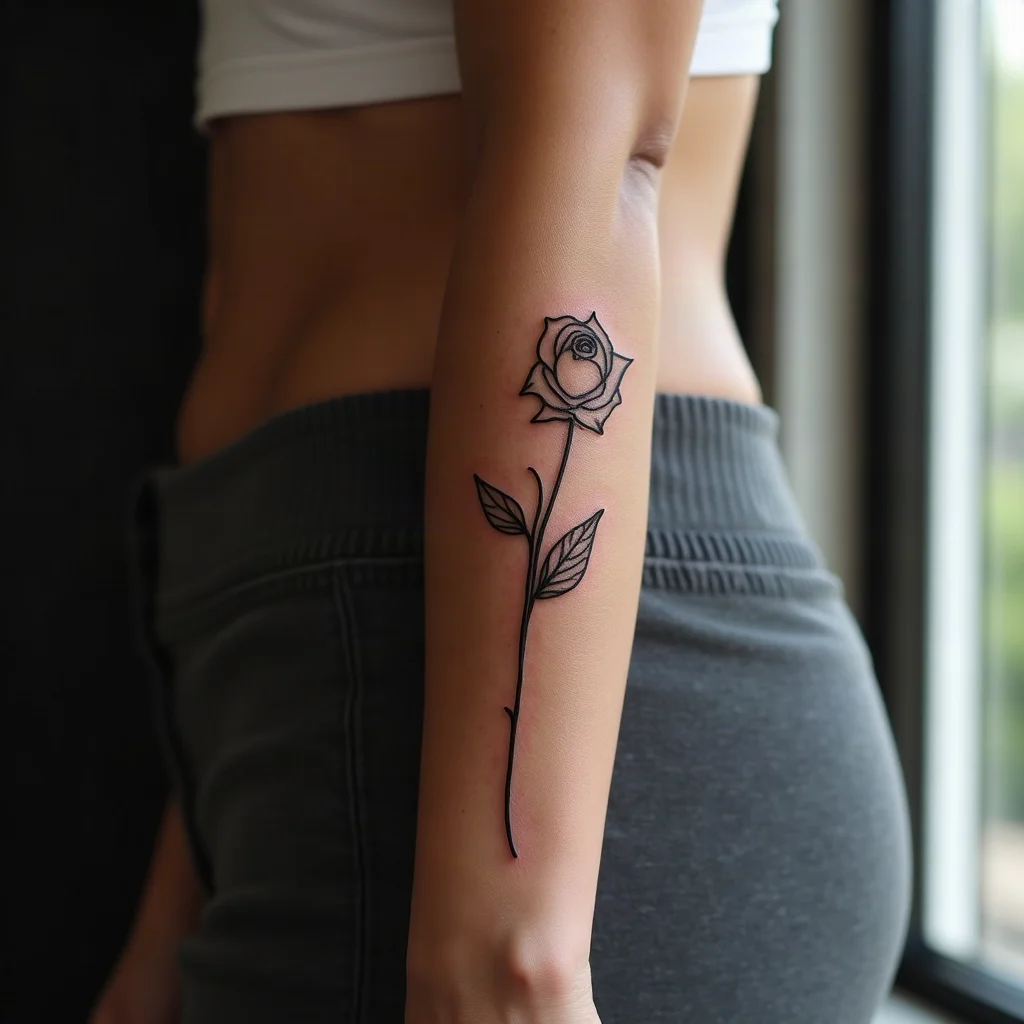
10. One rose in three stages
Bud, open bloom, and a single falling petal with a bare stem — the same flower drawn at three moments. Fine-line and about 7 cm each on the outer forearm. It handles the birth-order question gracefully without anyone being labelled the baby.
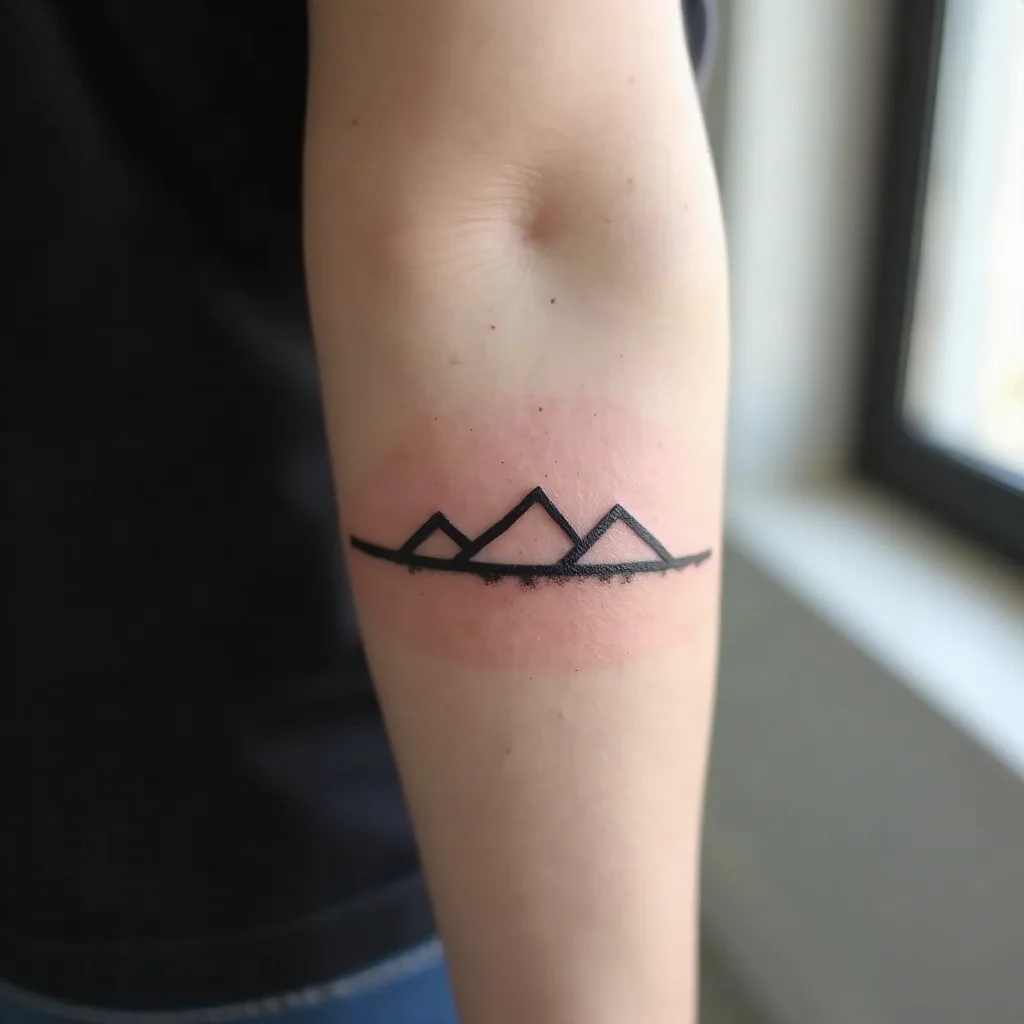
11. A mountain range broken into three peaks
Take one skyline, slice it vertically, and give each sister a segment with the horizon line ending flush at both edges. Held together forearm to forearm, the ridge runs continuous. Ask the artist to keep the horizon at the exact same height on all three bodies — that alignment is the whole trick.
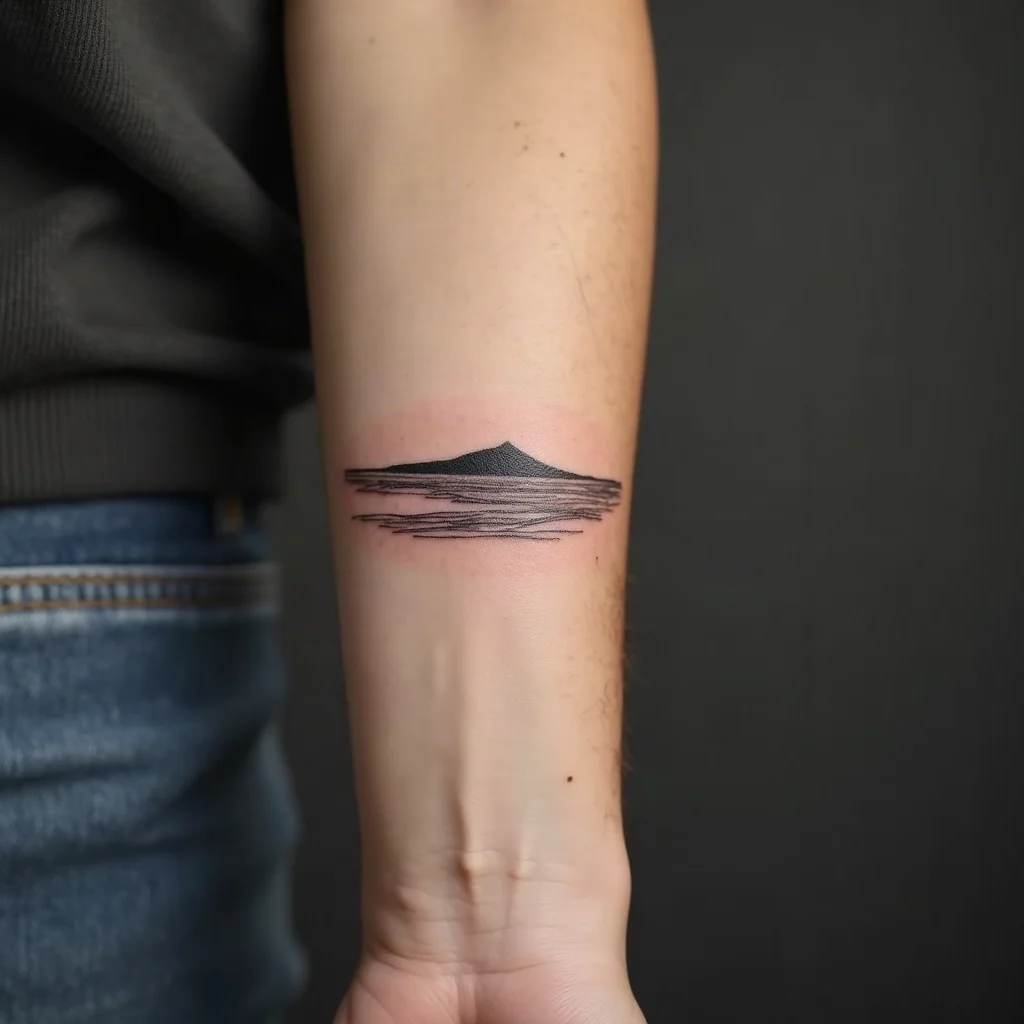
12. A shoreline divided three ways
Same principle, softer subject: one long wave-and-shore line split into thirds, each about 5 cm along the side of the wrist. Works especially well on sisters who want something visible but nearly abstract on its own.
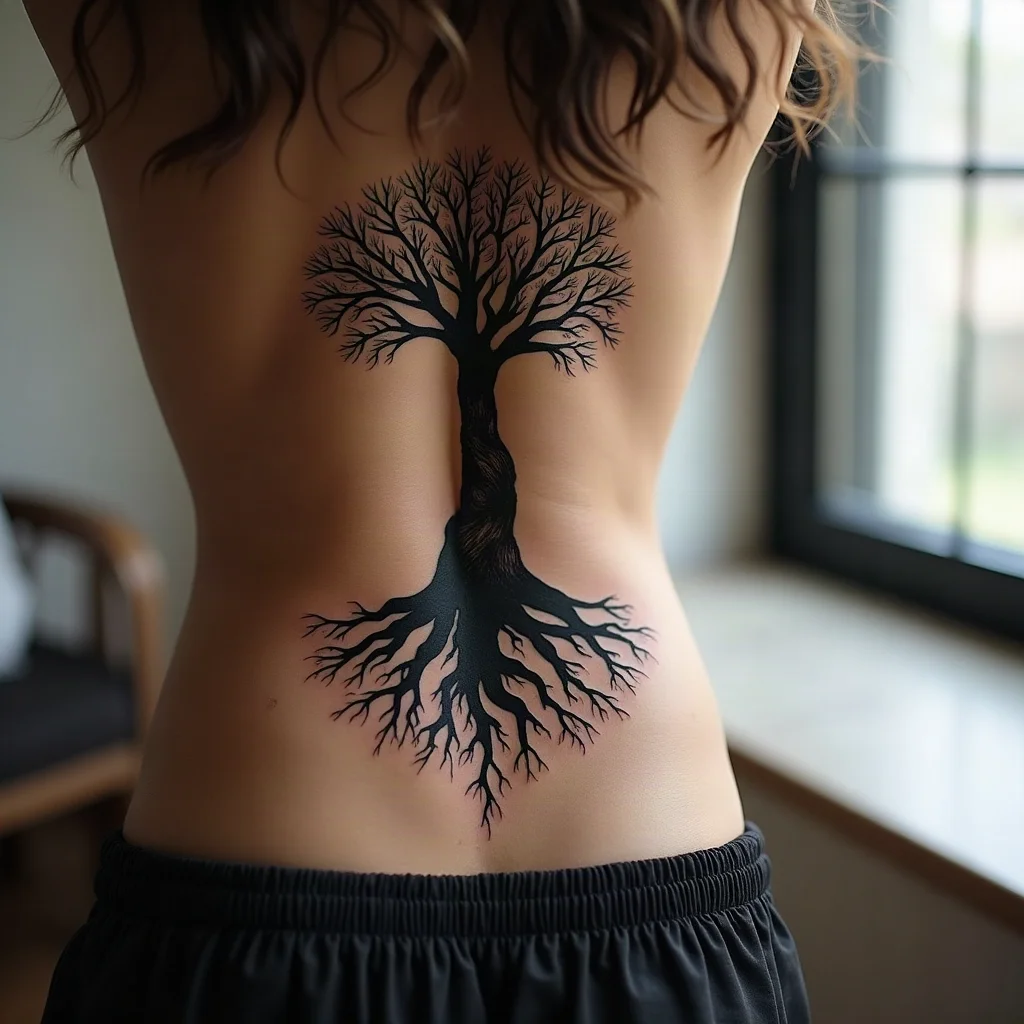
13. Roots, trunk and canopy
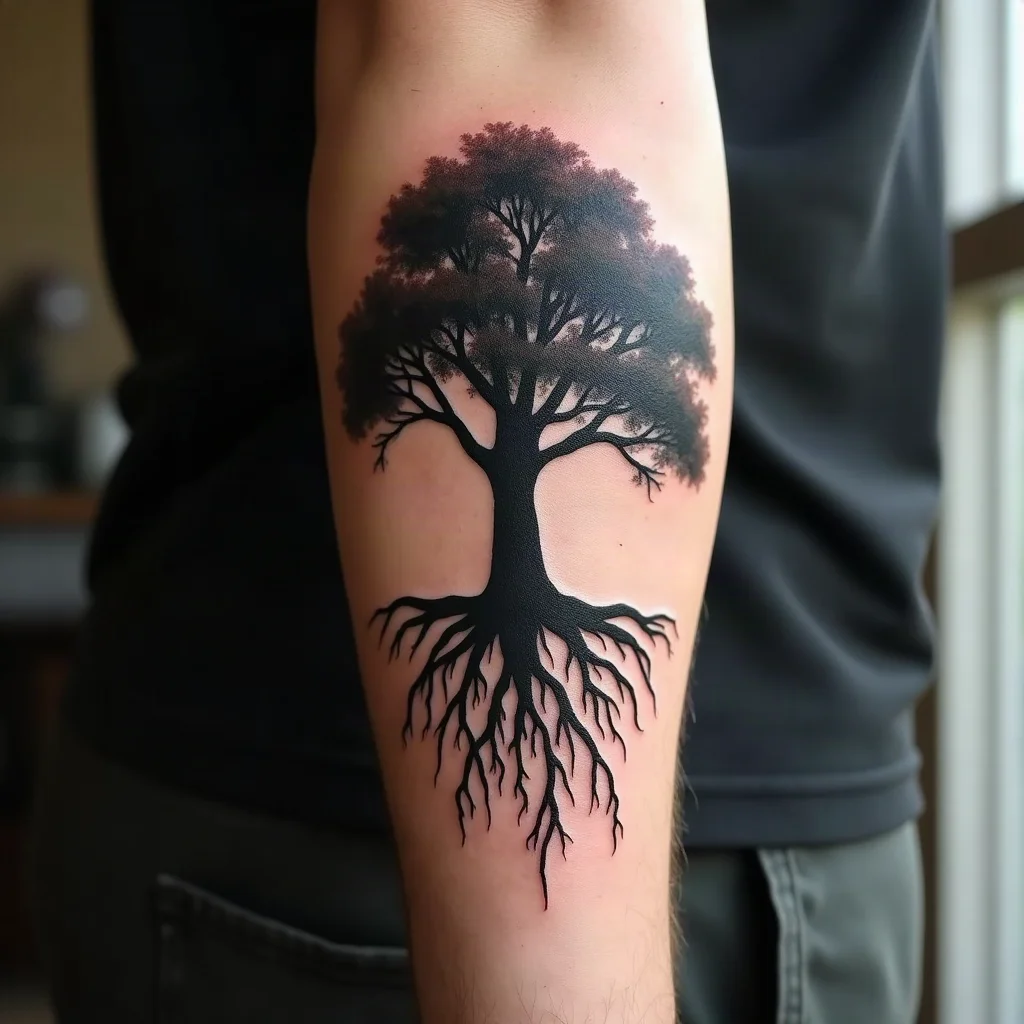
One tree pulled apart — the youngest carries the roots, the middle the trunk, the eldest the branches, or any order that means something to you. Blackwork along the spine gives each piece enough vertical room to look finished by itself. This is a bigger commitment: expect a couple of hours each.
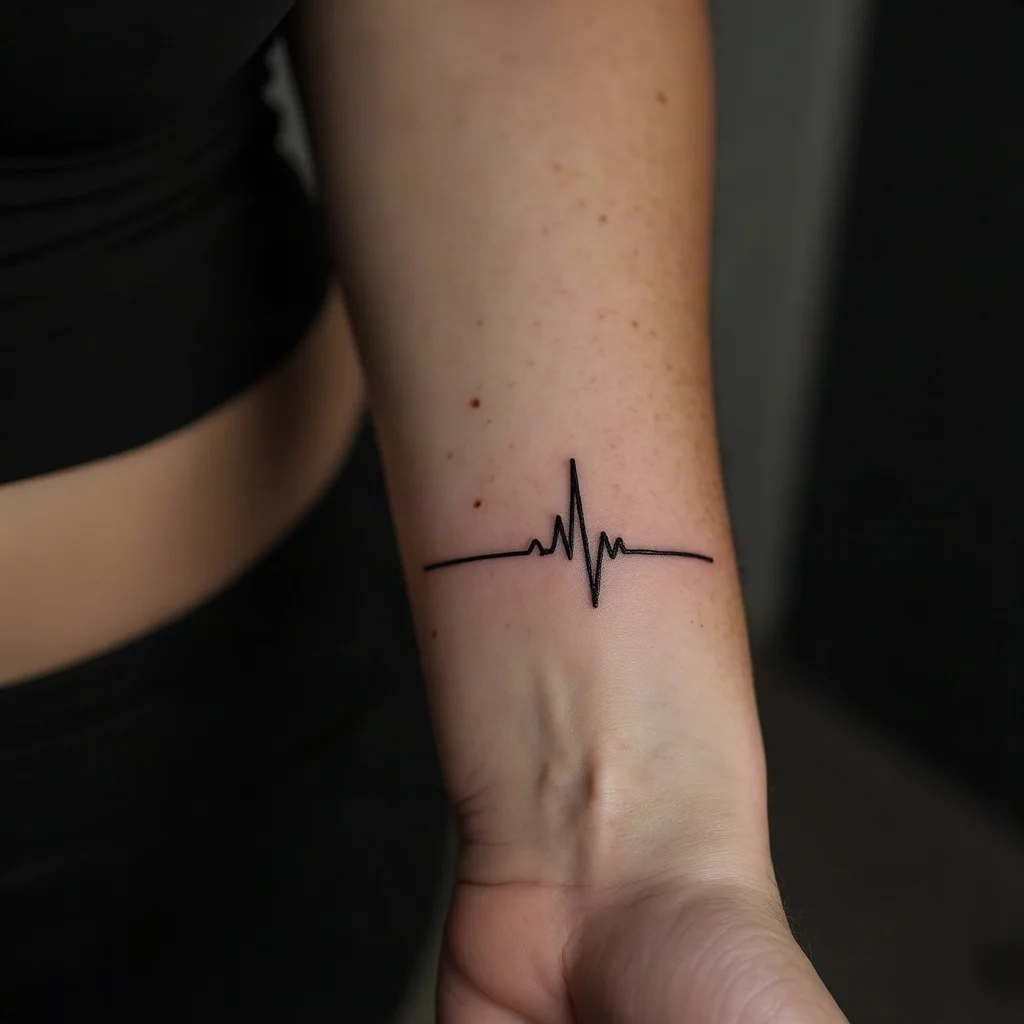
14. A heartbeat line across three wrists
One EKG trace chopped into three sections, with the actual spike falling on the middle sister. Thin, horizontal, around 5 cm. It is the most literal split on the list and it photographs perfectly when three wrists are stacked.
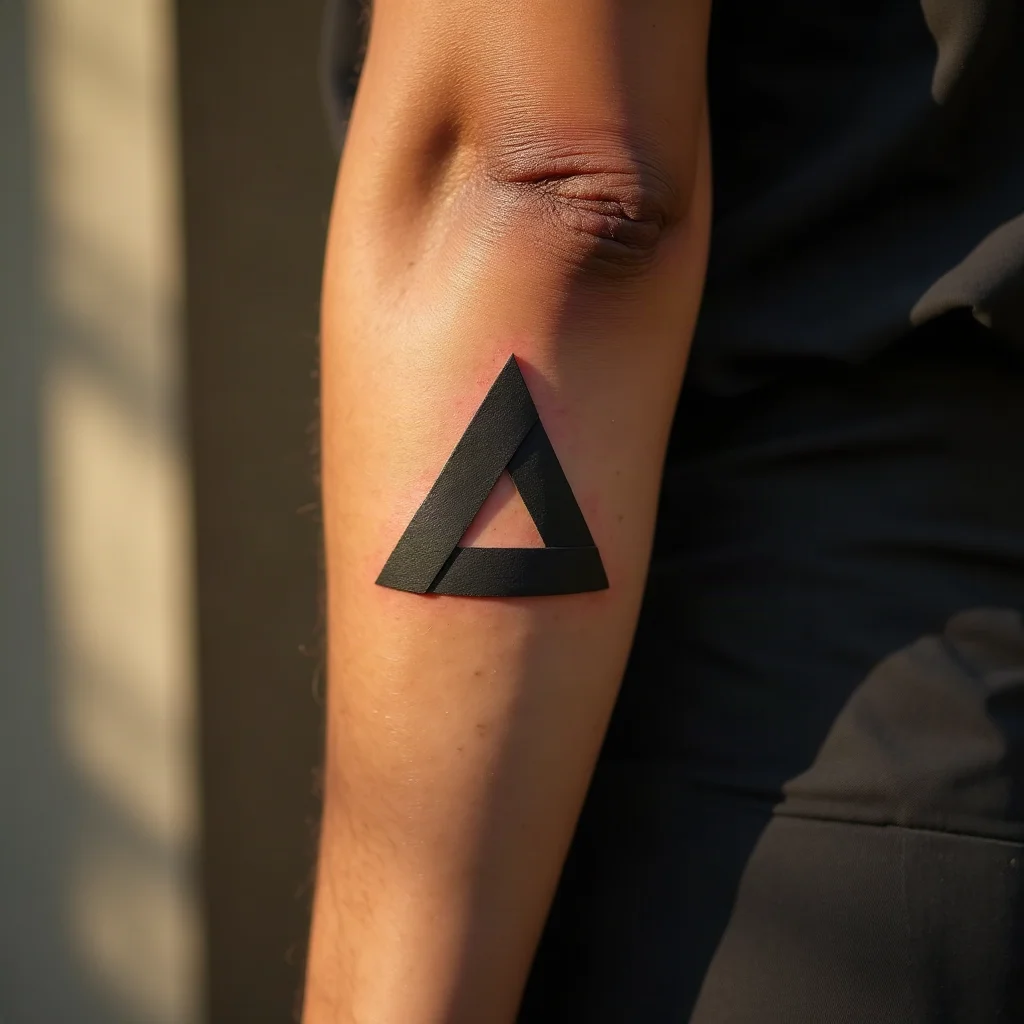
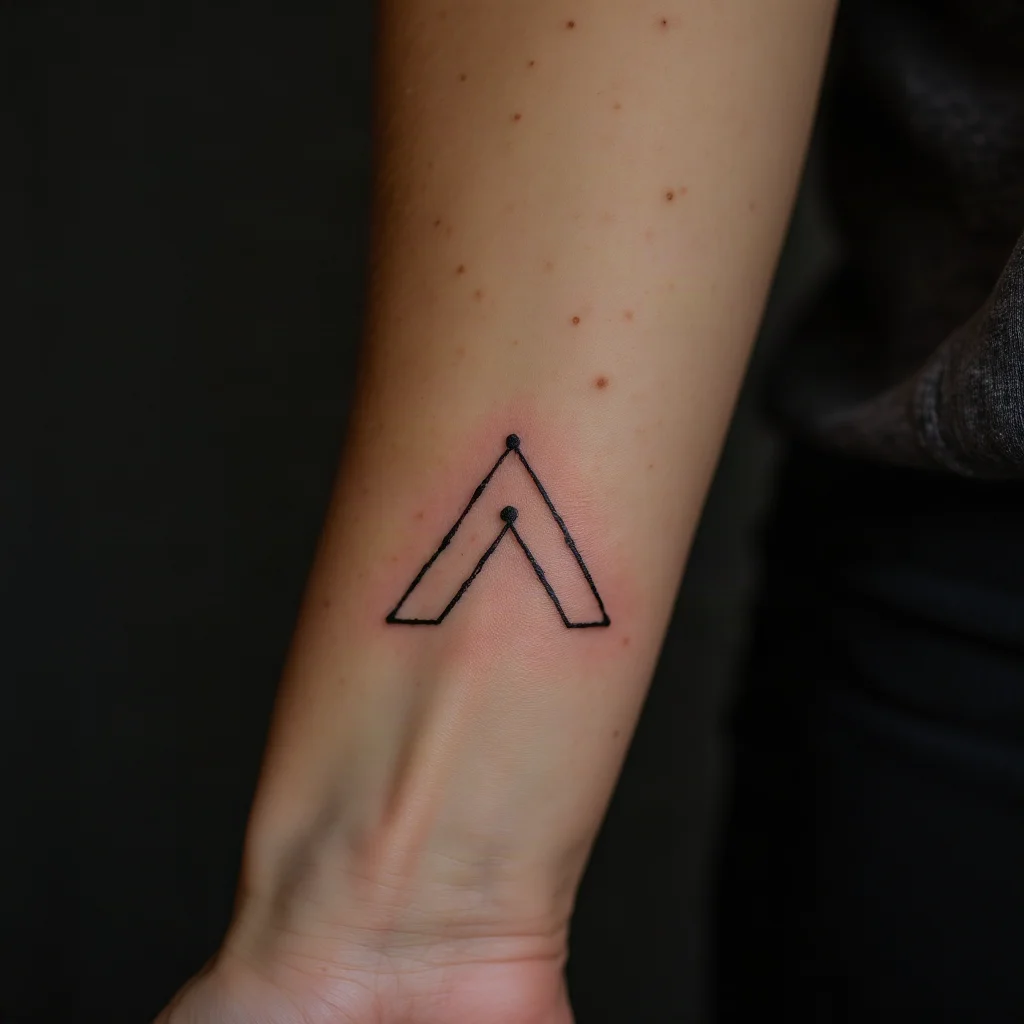
15. Three triangles that lock into one
A single geometric triangle divided into three interlocking shards, each sister taking one piece. Placed on the outer forearm at about 6 cm, the shards read as clean geometry alone and as a completed form together. Ask for consistent line weight; geometric work is unforgiving of wobble.
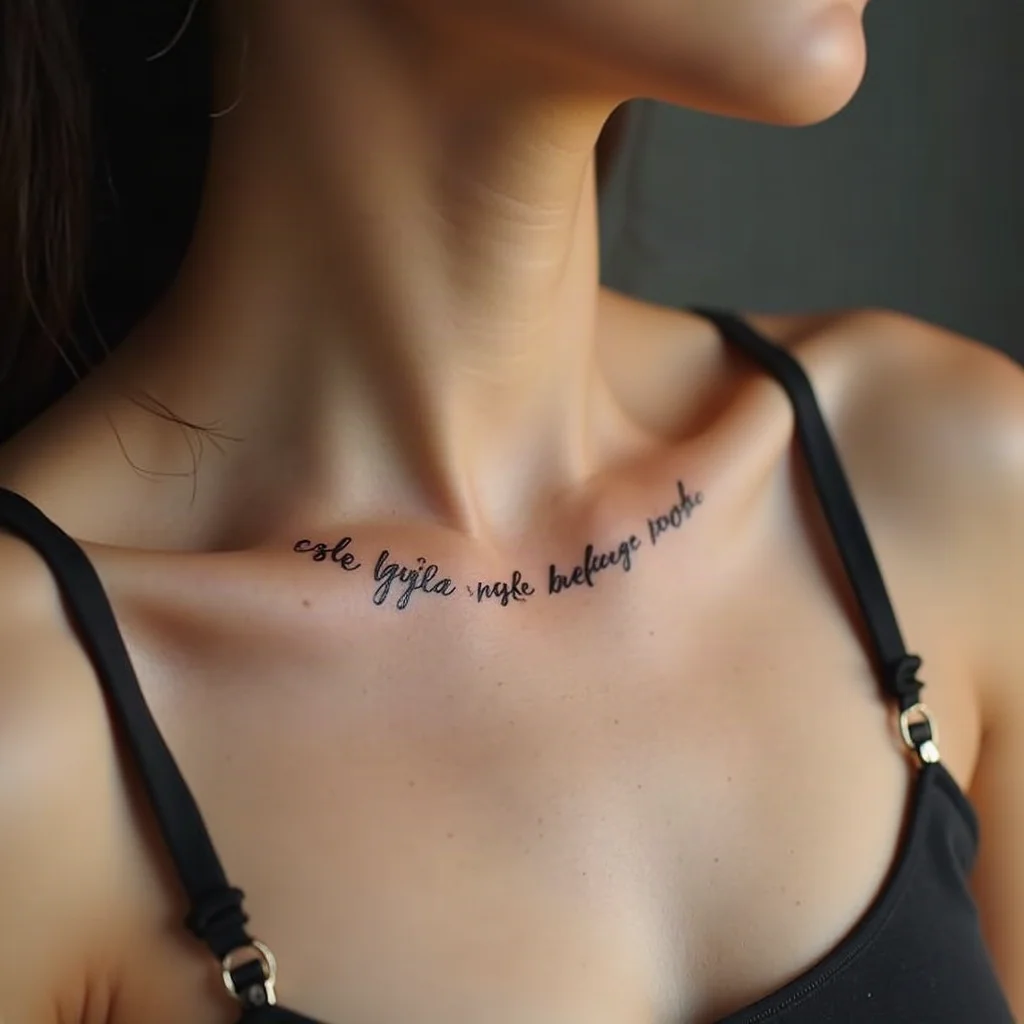
16. A sentence split into three lines
Take a line you all quote — a lyric, something your grandmother said — and break it across three collarbones, one phrase each. Keep each fragment to three or four words so the type stays large enough to survive. Sans-serif or a light script both work; avoid anything with hairline serifs at small sizes.
Sequenced Sets: Designs That Carry Birth Order
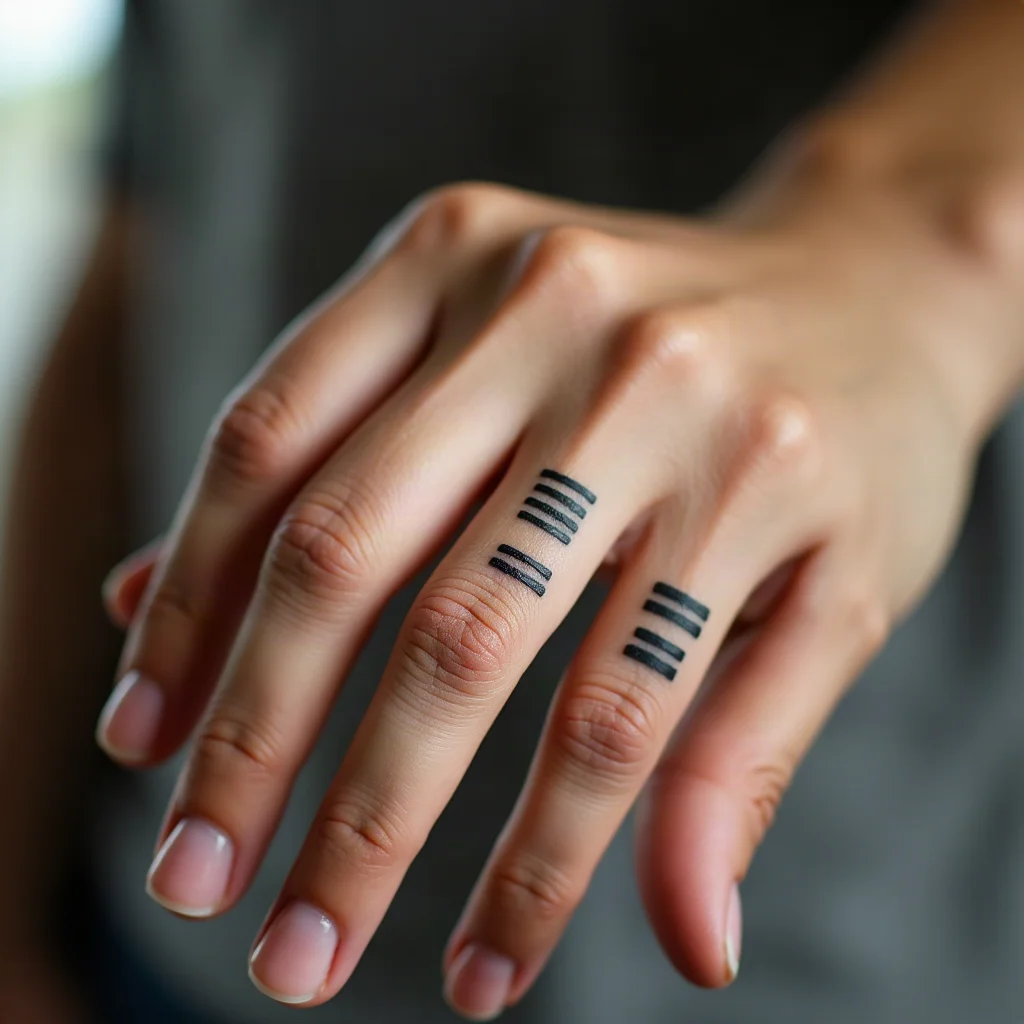
17. Tally marks by birth order
One dash for the eldest, two for the middle, three for the youngest — vertical strokes about 1 cm long on the side of a finger or the inner wrist. It is the smallest, cheapest, fastest matching set here and it is genuinely clever in person. Finger placement fades faster than anywhere else, so plan on a touch-up every few years or move it to the wrist.
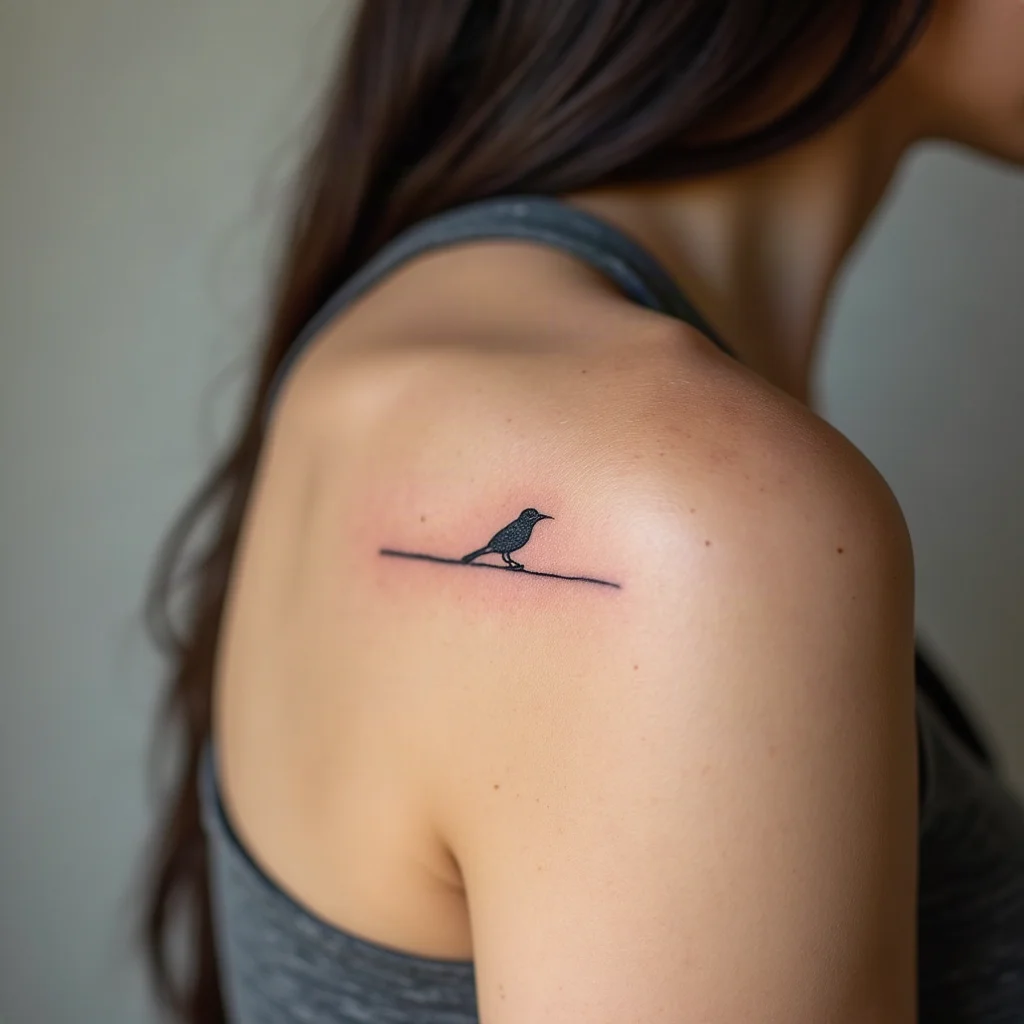
18. Three birds at three heights
Same bird, same silhouette, but each sister's sits at a different altitude relative to a shared faint horizon line. On the shoulder blade at 6 to 8 cm, the negative space around it does a lot of the work. Fits sisters who want something readable from across a room.
19. Each sister's birth flower, one artist's hand
Three different blooms — say larkspur, marigold, narcissus — drawn in identical line weight, identical size, identical framing. The match is the style, not the subject, which makes this the best option when personalities differ wildly. Inner forearm at around 8 cm gives each flower room to breathe.
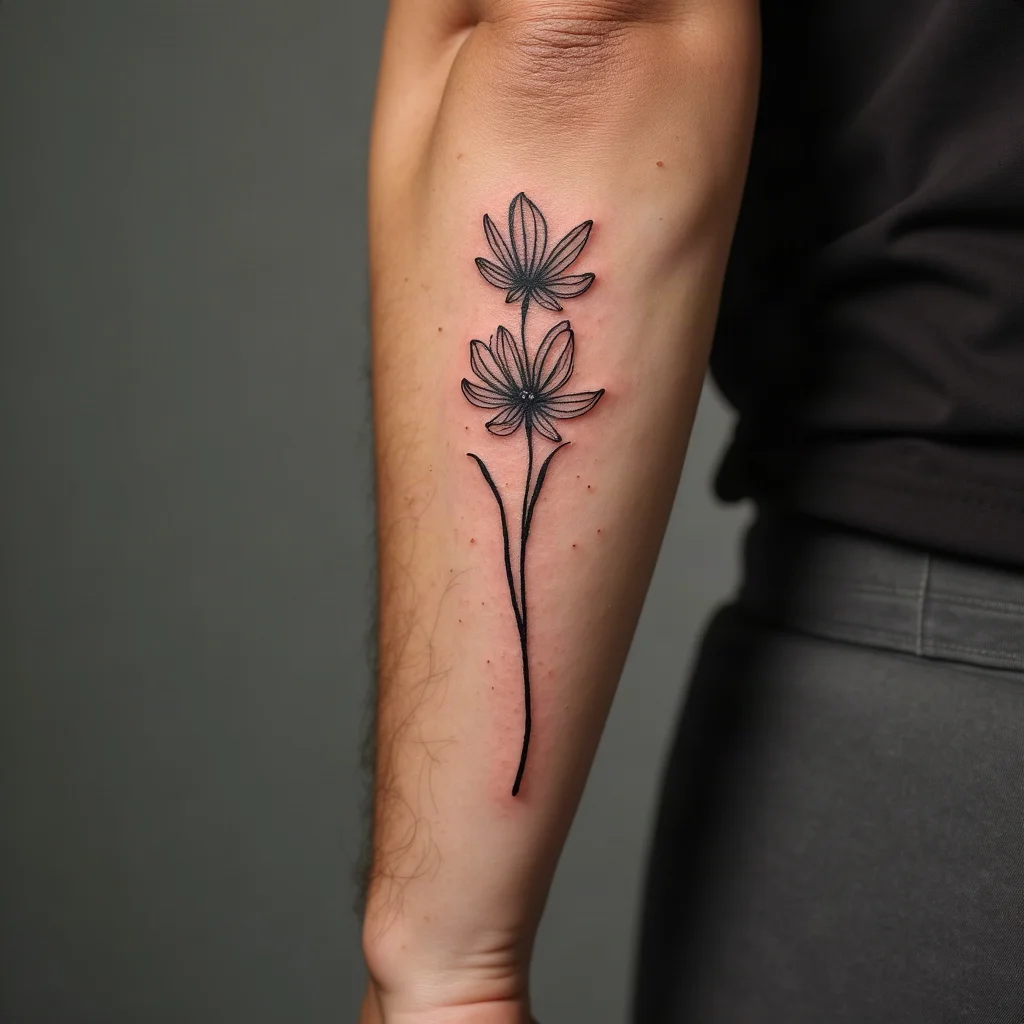
20. Seed, sprout, bloom
A three-stage growth sequence assigned by age: a seed with a single root hair, a two-leaf sprout, a full flower head. Tiny, 3 to 4 cm, above the ankle. Sweet without being saccharine, and it ages well because there is very little detail to lose.
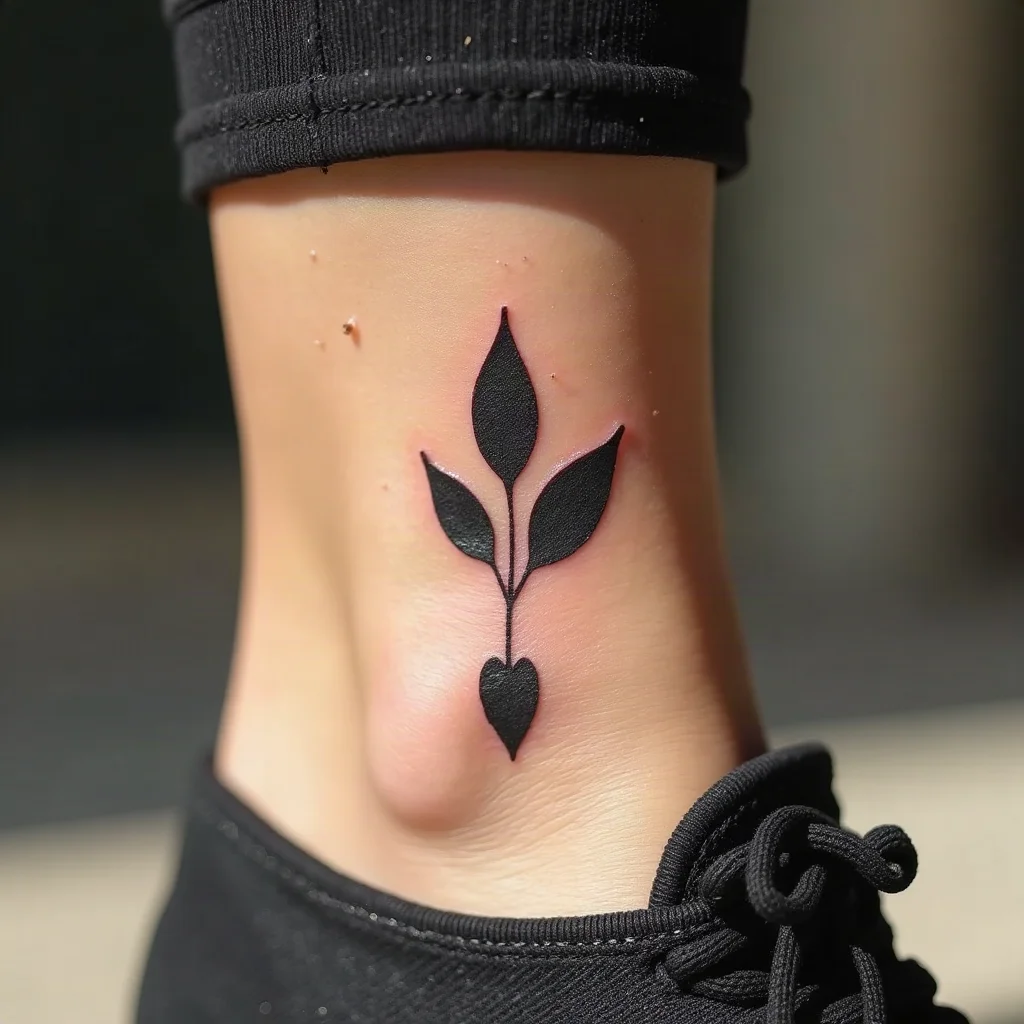
21. Sun, moon and star
The oldest sibling shorthand for a reason. Give each celestial body the same drawing treatment — all three with dotwork shading, or all three as pure outline — so they sit as a family instead of three unrelated stickers. Behind the ear at 3 to 4 cm keeps them discreet; the upper arm lets the linework carry more detail.
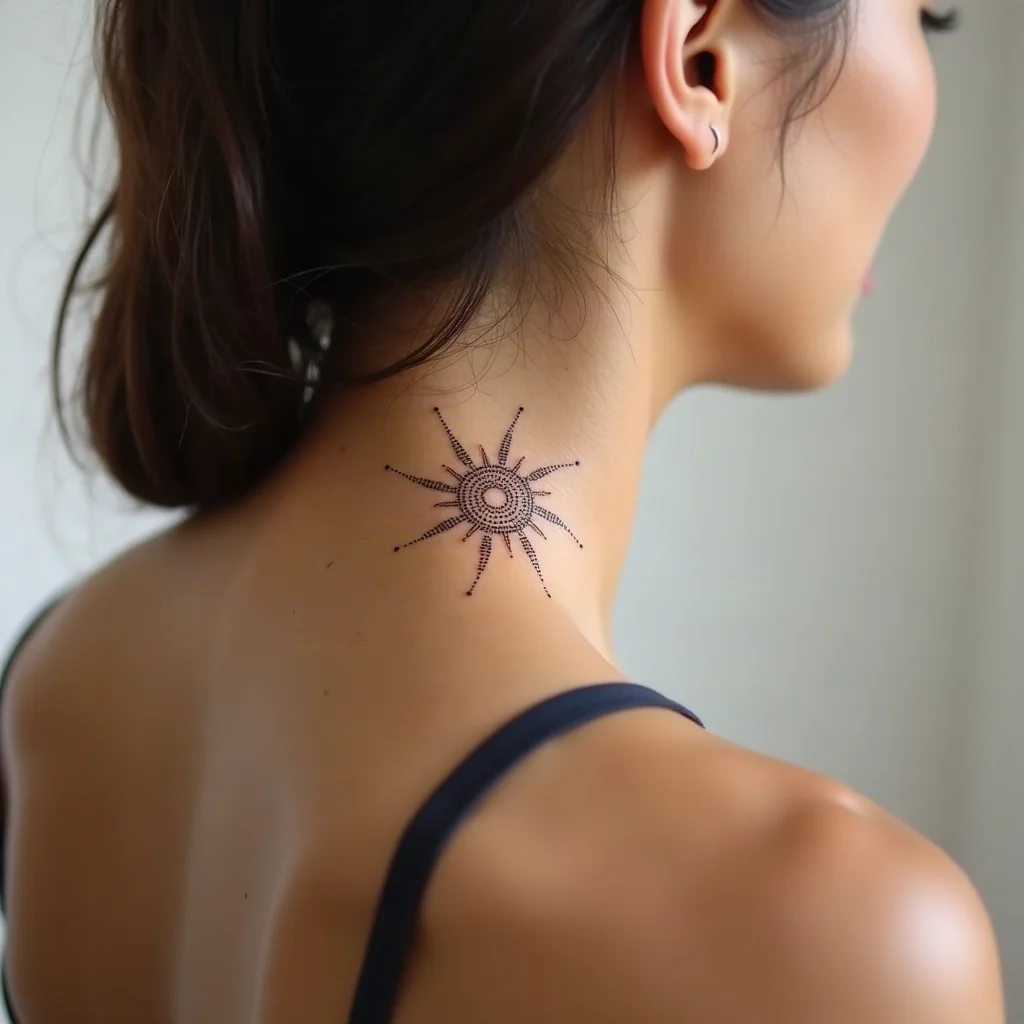
22. Three keys, three different bows
Same shank and shaft, but the decorative bow at the top of each key is unique to its owner. Traditional style with bold outlines on the thigh, around 10 cm, gives the ornamental detail somewhere to live. A good pick for sisters who want colour and a bit of old-school character.
Symbols and Script With Three Built In
23. The Roman numeral III
Three strokes, nothing else. At 2 cm behind the ear it disappears under hair entirely; at 4 cm on the inner wrist it becomes a quiet daily reminder. Ask for slight serifs at the top and bottom of each stroke so it reads as a numeral rather than three stray lines.
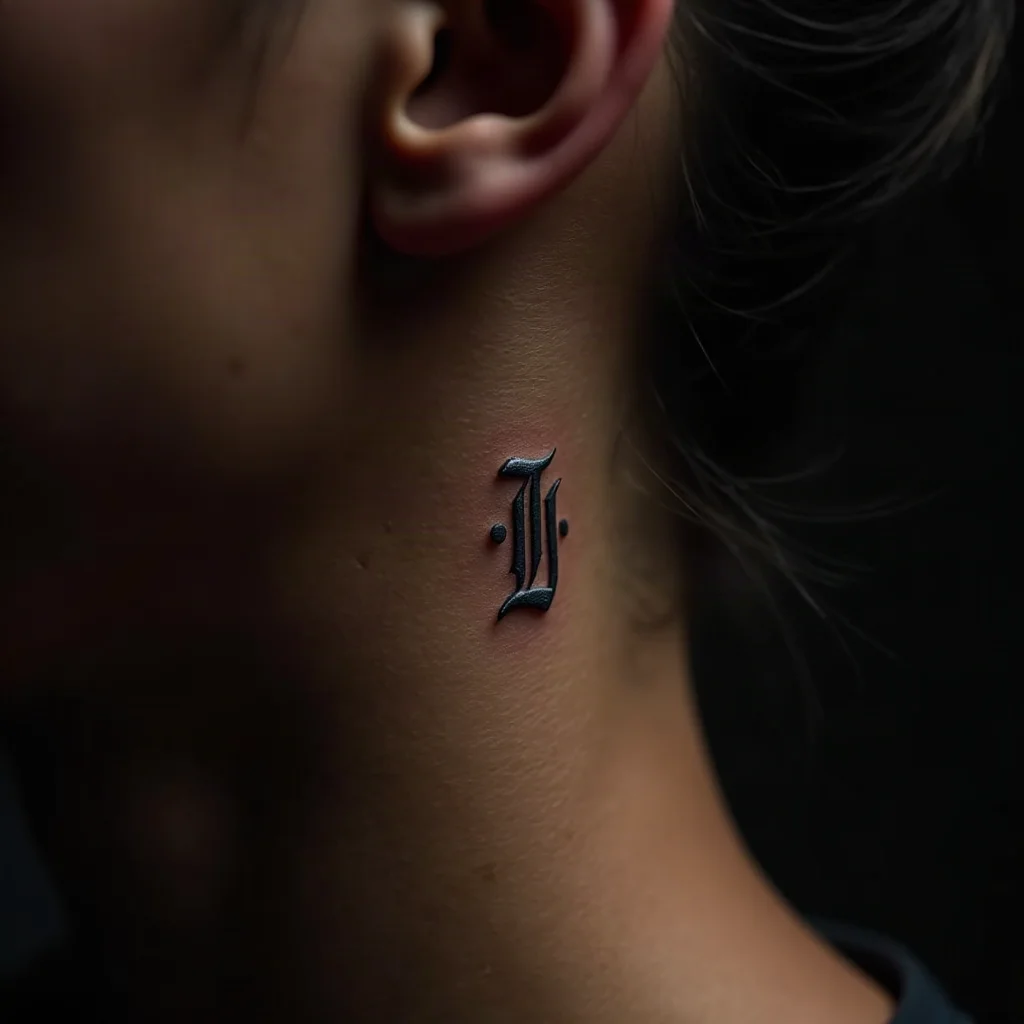
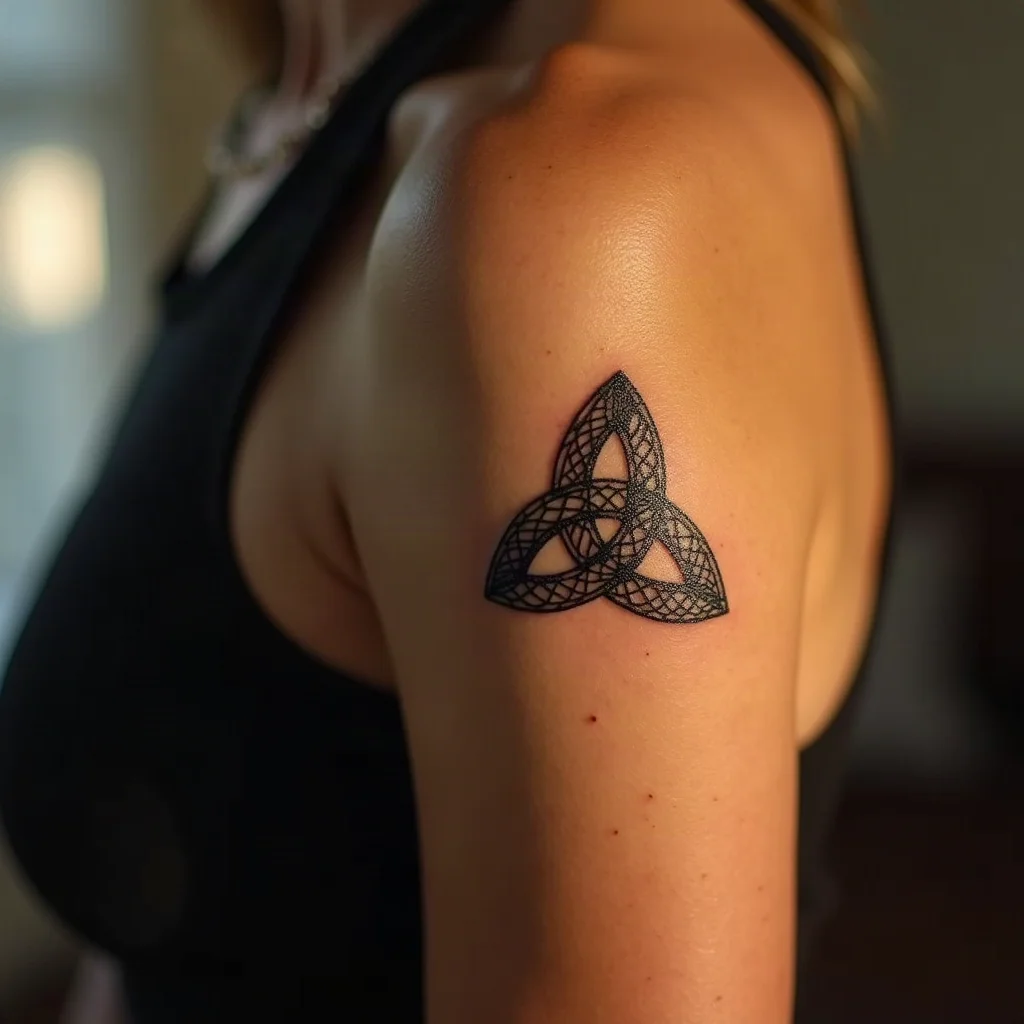
24. A triquetra on the upper arm
The three-cornered knot has meant a lot of things across a lot of cultures, but structurally it is one continuous line with three equal loops — a genuinely elegant sibling symbol. Blackwork at 6 to 8 cm on the outer upper arm keeps the weave legible. Do not go smaller than about 5 cm or the interior gaps close up as the ink settles.
25. Three dots in a triangle
The simplest possible version: three solid dots arranged as an equilateral triangle, 2 to 3 cm across, on the side of the wrist or the back of the hand. Take the placement seriously — small dot clusters have specific readings in some contexts, so talk it through with your artist about positioning. Cheap enough that three of you will likely hit a studio minimum rather than an hourly rate.
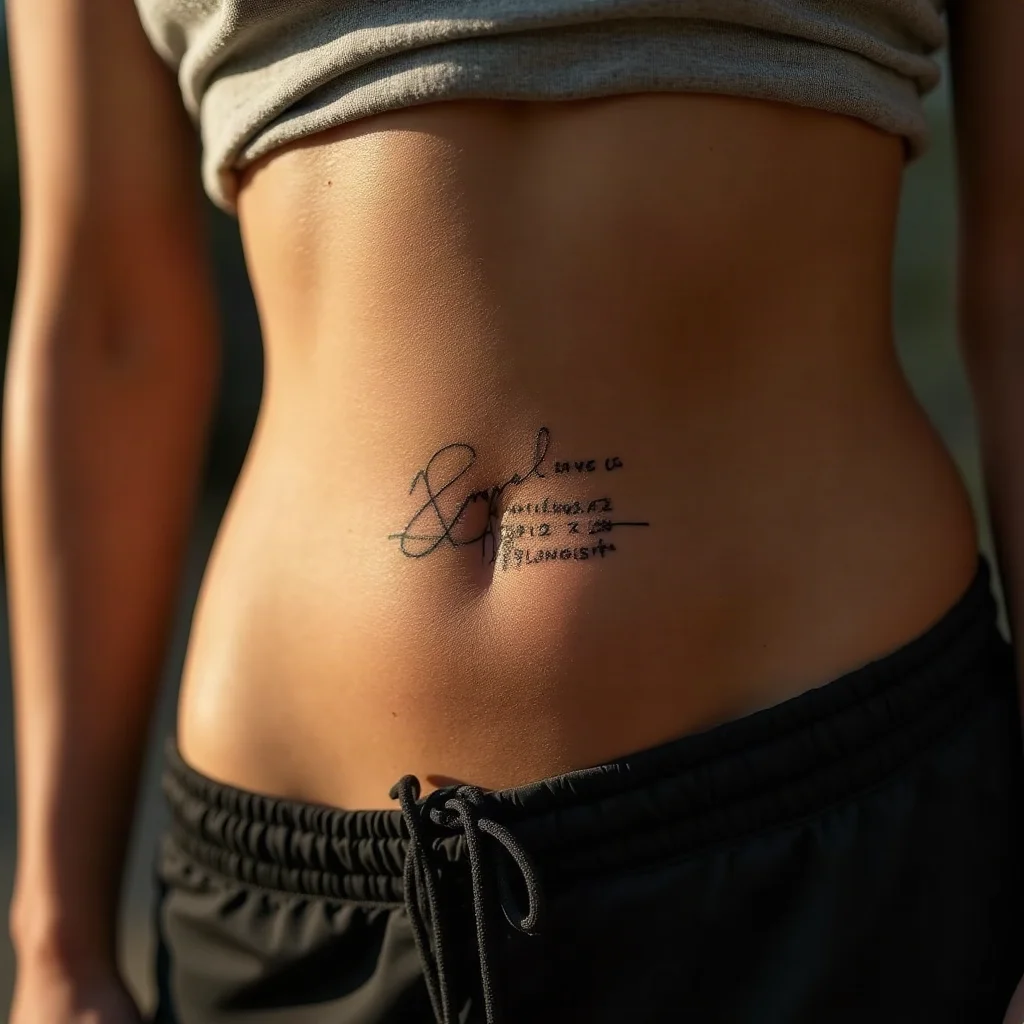
26. The coordinates of one address
The latitude and longitude of the house you all grew up in, set in small clean type along the ribcage or the inner forearm. Keep the numerals at least 5 mm tall — decimals and degree symbols are the first thing to blur. Have the artist print the stencil at final size and hold it against your skin before committing.
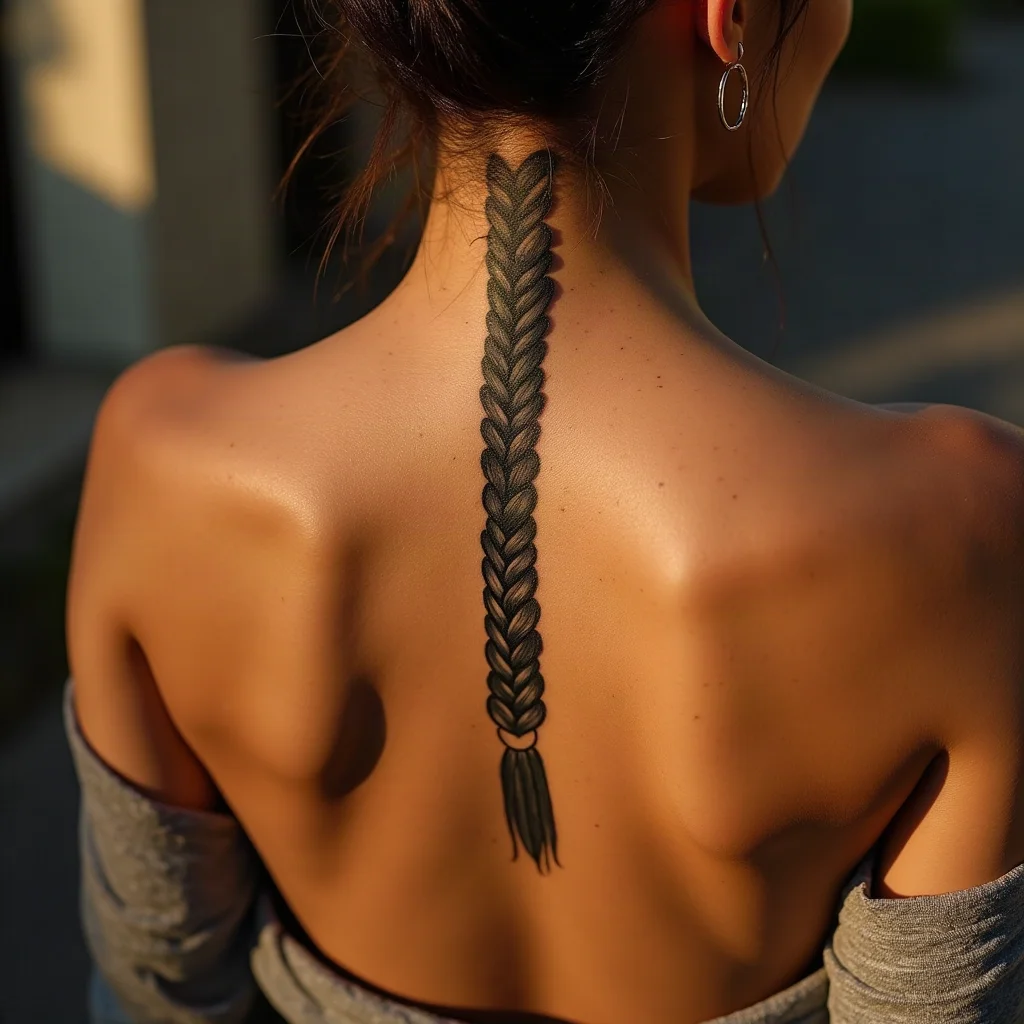
27. A three-strand braid
Three lines woven into a single cord, running 10 to 15 cm down the spine or wrapping the ankle. It is the most literal reading of the trio idea and, drawn well, one of the most beautiful — the eye follows the weave and never quite finds the beginning. Blackwork or heavy fine-line both hold up; ask for enough space between strands that the braid does not fill in over time.
Booking Three at Once: Cost, Pain and Practicalities
Three small tattoos in one sitting is a normal studio day, but it goes smoothly only if you plan it like one appointment instead of three.
Cost. Most small matching pieces land at or just above a studio's shop minimum, which in most cities sits somewhere in the low-to-mid three figures per person for a simple 4 to 7 cm design. Larger work — the split tree, the traditional keys, anything with packed colour — moves onto an hourly rate and can run several hours per sister. Ask for a quote on all three together; some artists will price the set as a block since the drawing work is shared. Budget separately for tips, and remember that three people tipping on three small tattoos adds up to a real number for the artist.
Pain. Be honest with each other about thresholds before you pick placement, because nobody wants to be the sister who taps out. Outer forearm, outer upper arm and shoulder blade are the friendliest spots. Ribcage, spine, collarbone, ankle bone and the top of the foot are all noticeably sharper — thin skin over bone, and the vibration carries. If one of you is anxious, go first: waiting while your sisters get tattooed is worse than the needle.
Order of play. Eat properly beforehand, all three of you. Have the artist stencil all three at once and check the alignment together in a mirror before any needle touches skin — this is your last chance to fix a mountain horizon that sits 2 cm too high on one arm.
Aftercare. Same rules for everyone: clean with fragrance-free soap, thin layer of ointment or a healing balm two or three times a day, no soaking, no direct sun, no picking at the flake. Surface healing takes about two to three weeks; the deeper settling continues for months. Sunscreen once healed is the single biggest factor in whether three matching tattoos still look matched a decade from now — if one sister sunbathes and two do not, the set drifts apart.
And if one sister lives elsewhere, send her the final artwork file at true scale along with a note on line weight and needle configuration. A competent artist anywhere can reproduce a clean design; they cannot guess what the other two look like.
Frequently asked questions
Should three sisters get identical tattoos or variations?
Variations usually hold up better socially and visually. Identical designs are the safest if you want an obvious match and may use different artists later, but a sequenced set — three moon phases, three growth stages, three birth flowers in one line weight — lets each sister keep some individuality while still reading as a set. The unifying element should be style and scale, not necessarily the subject.
What if one sister lives in another city?
Have the lead artist finalise the artwork as a print-ready file at true size, then send it to the remote sister's artist along with the line weight and needle size used. Ask her to send a healed photo a month later so you know the set actually matches. Avoid ultra-fine single-needle work in this scenario, since reproduction varies most at that scale.
How much does a matching tattoo set for three cost?
Small pieces of 4 to 7 cm typically hit the studio minimum, which varies widely by city and artist demand. Larger or colour-packed designs shift to an hourly rate and can run several hours per person. Ask for a single quote covering all three, since the design work is shared, and factor in a tip for each tattoo.
Which placements work best for a trio photo?
Inner forearms, wrists and ankles are the easiest to line up side by side, which matters enormously for split designs where the image only completes when you're together. Collarbones and shoulder blades photograph well too but are harder to align precisely. Whatever you choose, put all three tattoos on the same side of the body — three right forearms, not two rights and a left.
What if we fall out later?
It happens, and it is worth thinking about before the needle. Designs that stand alone as good tattoos — a rose, a mountain line, a constellation — carry no obligation if relationships change. Split designs and anything with names or dates are the ones that become awkward, so weigh how literal you want to be.
The conversation
No comments yet. Got a thought about these designs? Start us off.
Want to weigh in? Join the community to comment, save designs and try them on your skin.