Paw Print Memorial Tattoos: 27 Ways to Carry a Pet
A paw print is the one piece of a pet you can copy exactly, line for line. Here are 27 ways artists build a memorial tattoo around it, plus how to capture the print before you book.
Get the Print Before You Design Anything
The whole point of a paw print memorial is that it is your animal's paw, not a stock shape. So the print comes first and the design comes second.
If your pet is still with you, a pet-safe ink pad from a craft or vet supply shop takes two minutes. Press each pad and toe separately rather than mashing the whole foot down at once, and take five or six impressions on plain white paper so you can pick the cleanest one. If you are working after a loss, ask the clinic: many keep a clay or ink keepsake as standard, and a lot of crematoriums will make one on request. Older photos work too, but only if the paw is flat to a surface and shot straight on, not angled.
Scan the print at high resolution, black on white, and send the artist the file rather than a phone photo of the paper. Then make one decision together: keep the texture or clean it up. A raw print has speckles, ink bleed and a soft ragged edge, which reads as genuinely real. Very fine speckling can soften over ten years, so most artists keep the shape and edge authentic while thickening any dot smaller than a pinhead.
Size honestly. A Labrador's front pad is roughly two and a half to three inches across, which is a natural inner-forearm piece. A cat paw is closer to an inch, which suits a wrist, ankle or behind the ear. Scaling a dog print down to cat size closes the gaps between the toe pads and turns it into a blob.
The Print Itself, Straight to Skin (1–6)
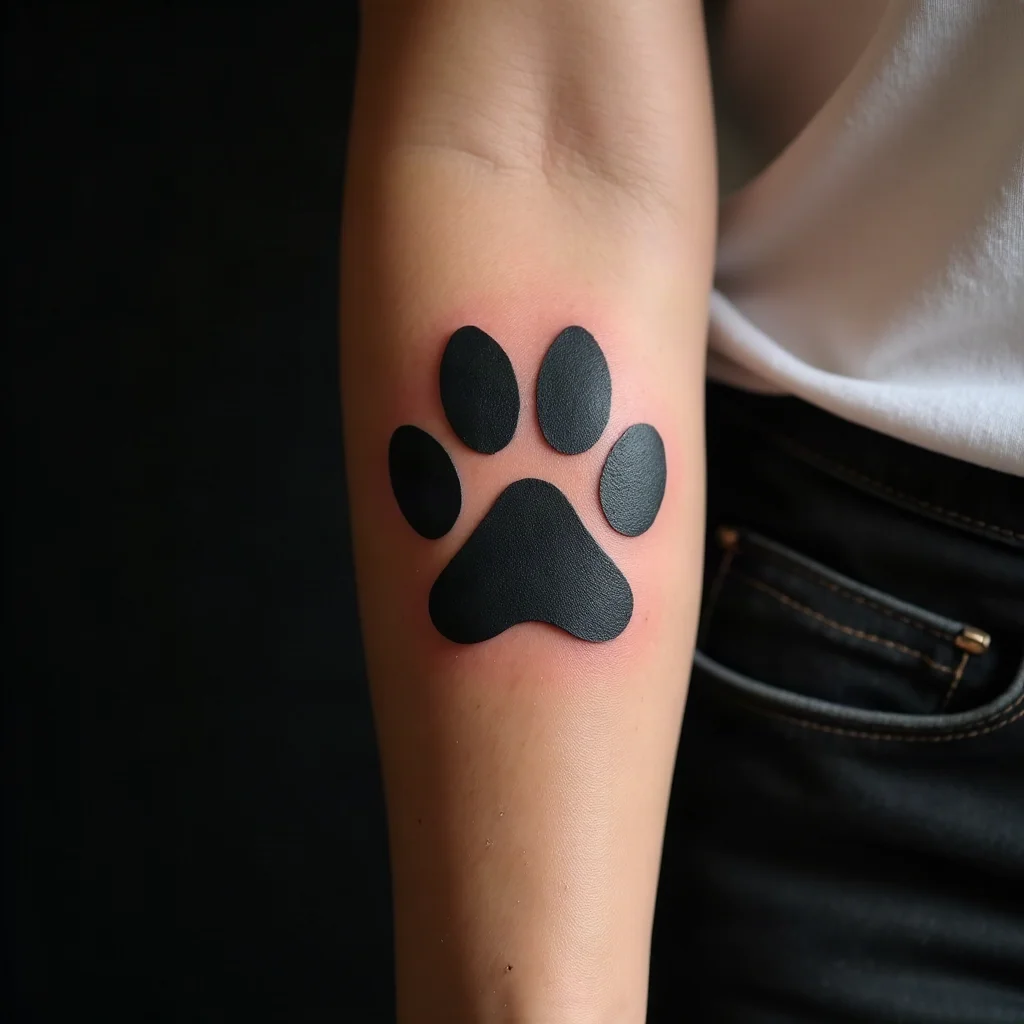
1. The unretouched ink-pad print
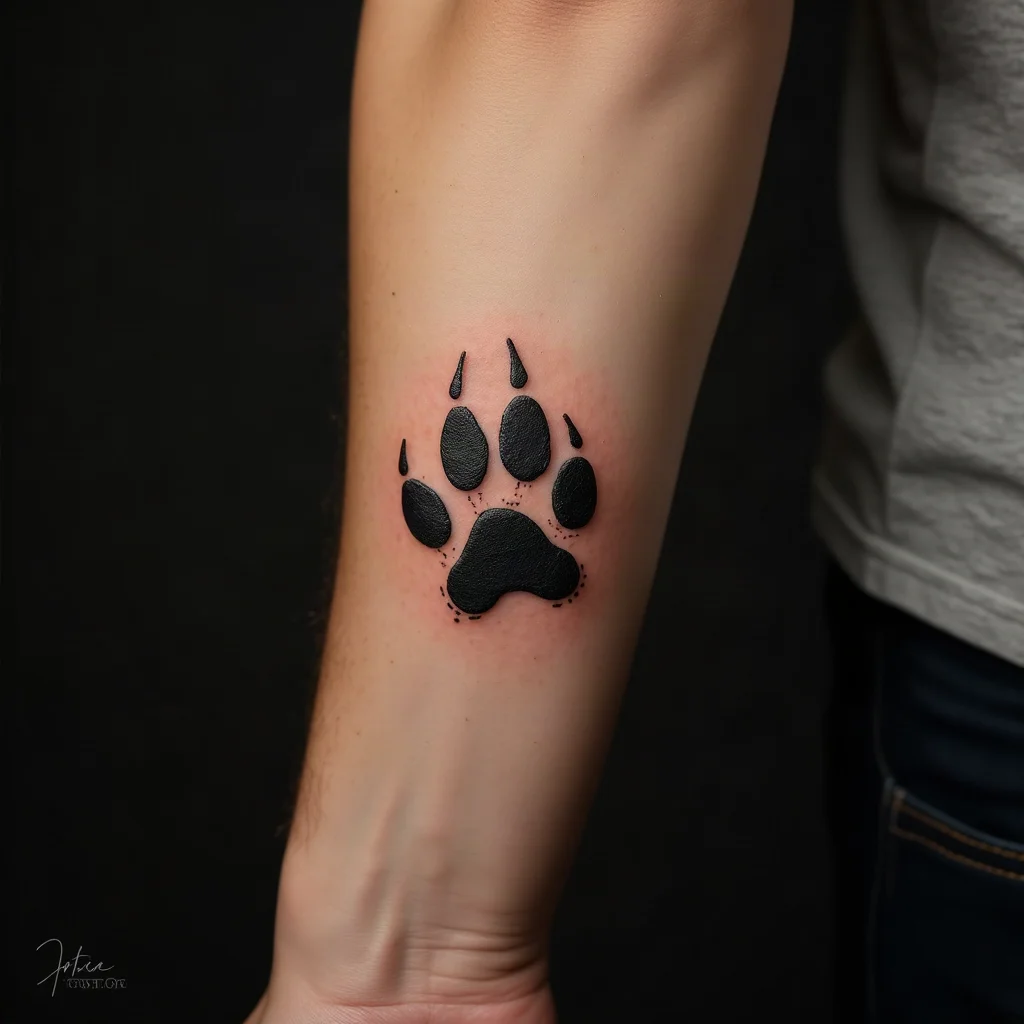
Tattooed exactly as it came off the paper: soft edges, speckles, one toe pad lighter than the rest because he pulled his foot away. At two to three inches on the inner forearm it reads as a real stamp rather than a graphic. Ask for solid black with no outline so nothing looks drawn.
2. The clay keepsake, shaded in grey
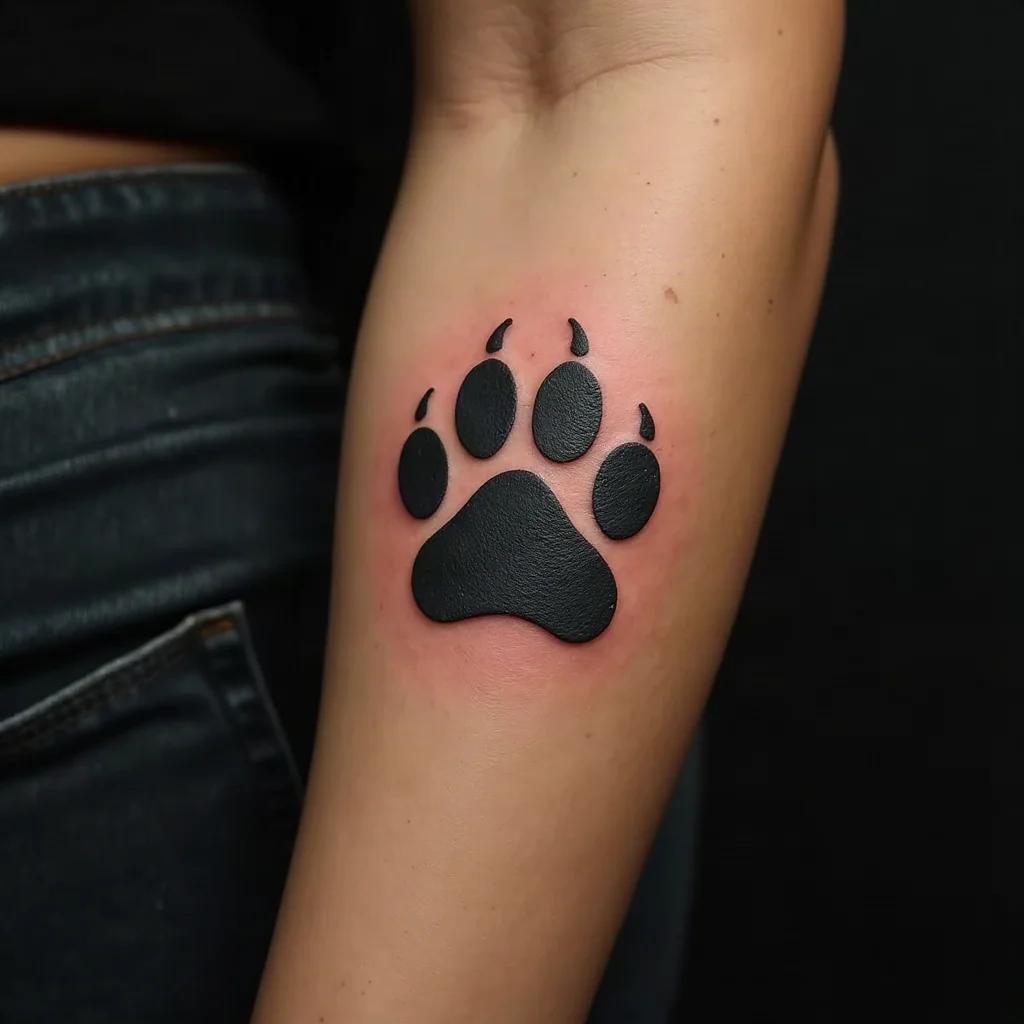
Instead of flat black, the artist renders the impression as a pressed clay disc with soft grey shading and a subtle shadow inside each pad. It sits beautifully on a shoulder blade at three to four inches, where there is room for the tonal work. This one suits people who already have the physical keepsake on a shelf.
3. Single-needle outline traced from the print
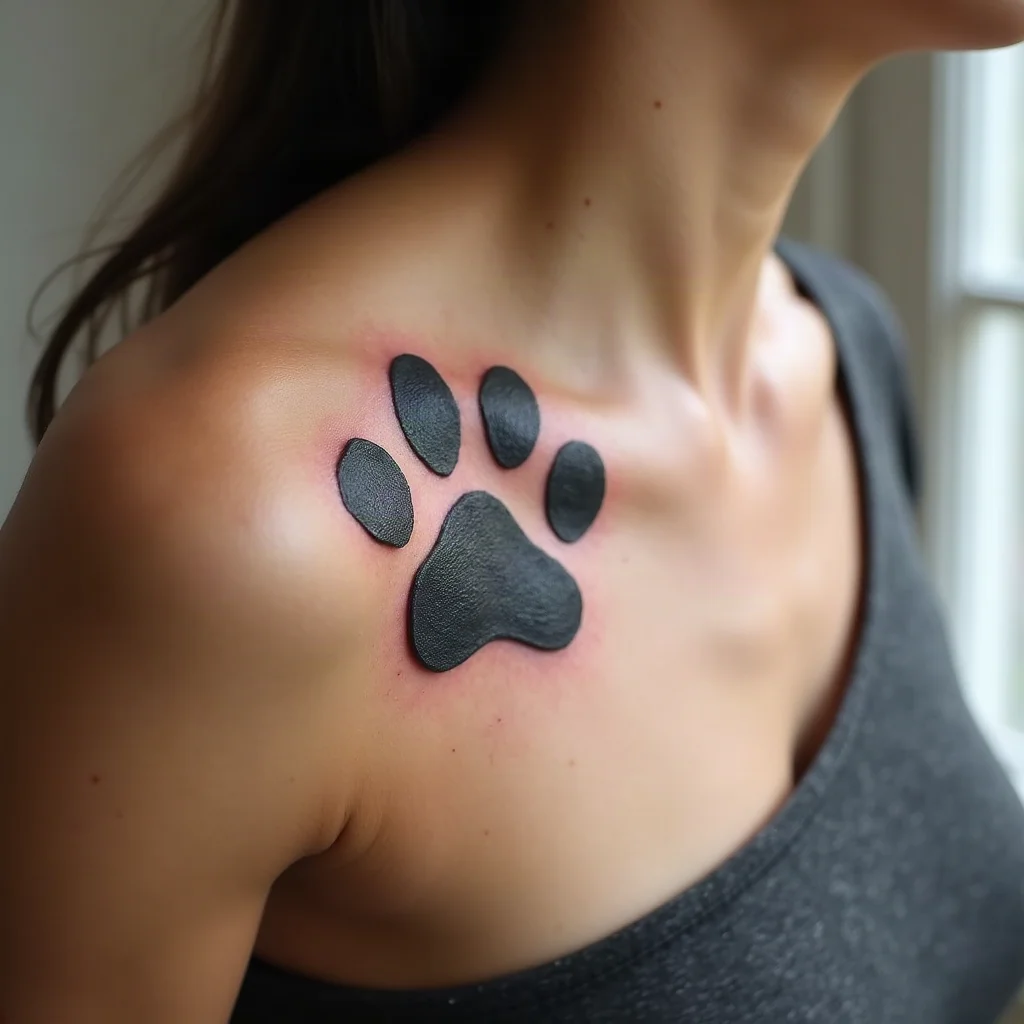
Just the contour of the pads, no fill, in a hairline weight. Small and quiet on the inner wrist at about an inch and a half, it is the least literal version and the easiest to hide. Insist on at least a millimetre and a half of clean skin between the toe outlines so they stay separate as the lines settle.
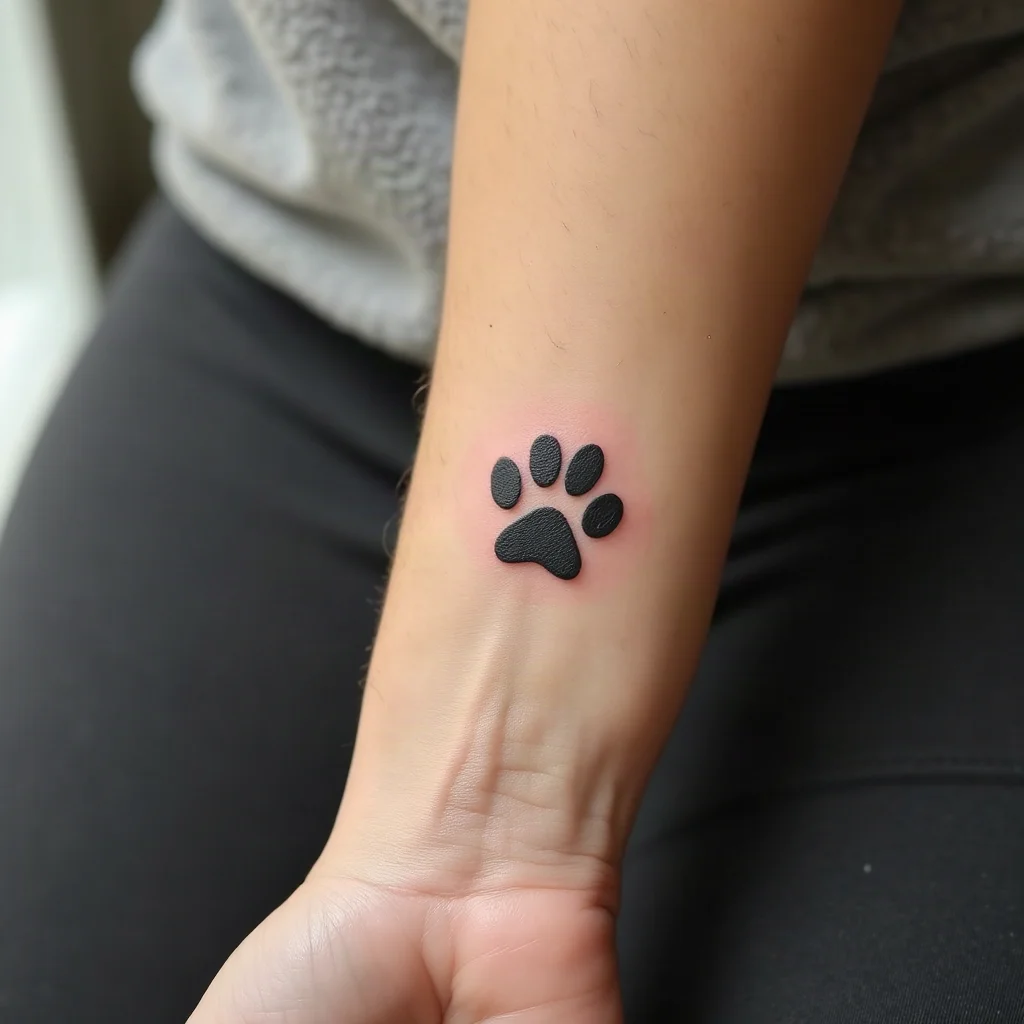
4. Cat paw at true size
Four toe beans and one triangular pad, printed one-to-one, tucked behind the ear or on the side of the wrist. Cat prints are naturally tiny, so this is one of the few memorials that genuinely works under an inch. Solid black holds better than delicate outline at that scale.
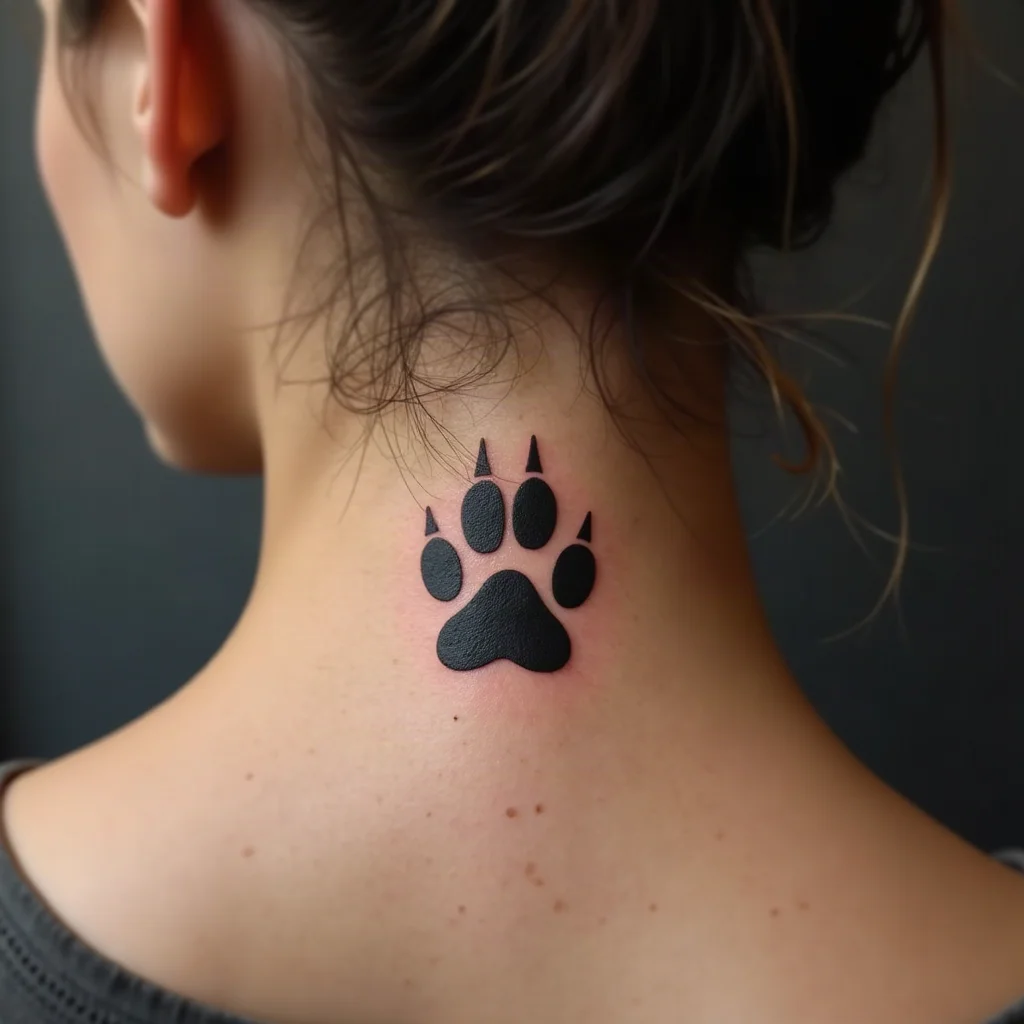
5. Two prints, big dog over small dog
One paw stamped above the other on the calf, actual relative sizes preserved, so a Great Dane dwarfs a terrier. It is a clean way to memorialise two pets without repeating the same design twice. Leave a finger's width between them so they never merge visually.
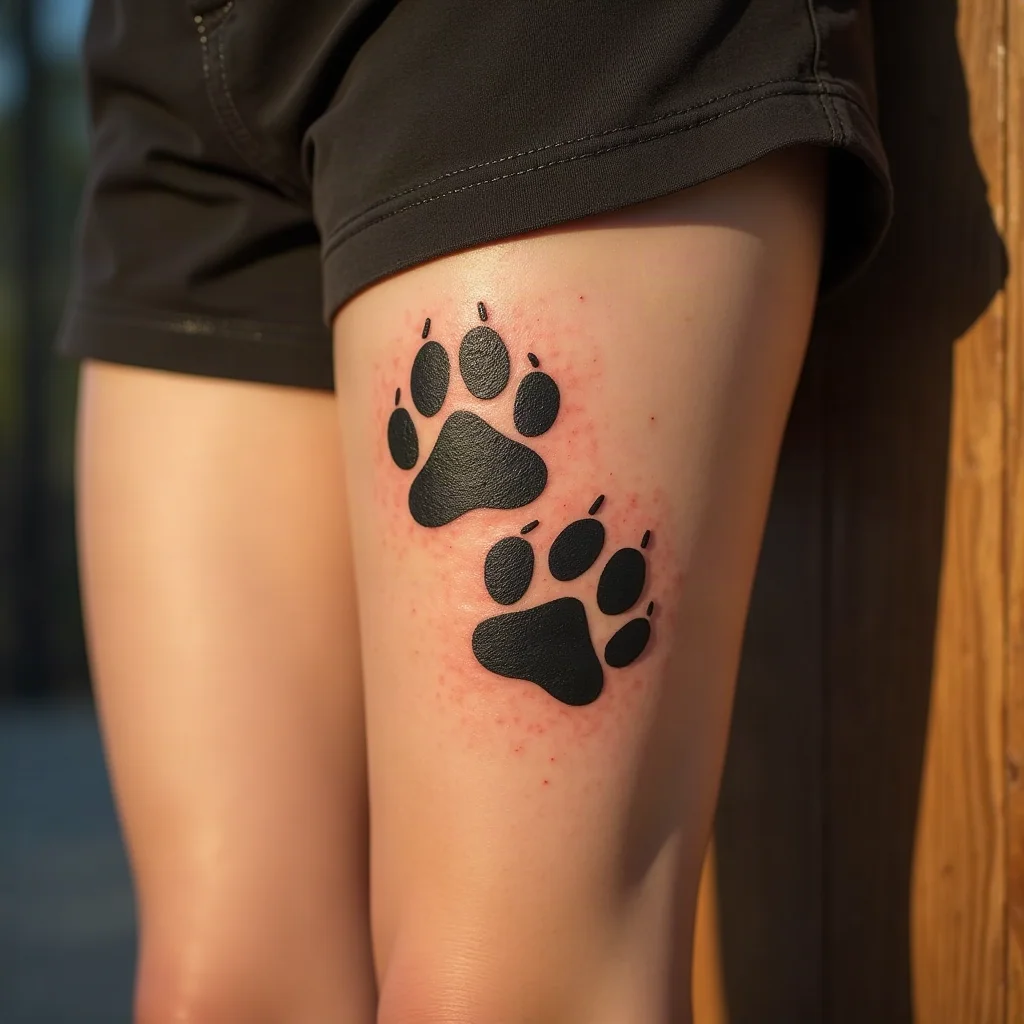
6. Paw in negative space inside a solid disc
The pads are left as bare skin inside a filled black circle, like a stamp pressed into ink. Bold, graphic and extremely readable from across a room, which makes it a good outer-arm or calf piece at three inches or more. Negative-space work needs strong pads and clean gaps, so it favours chunky dog prints over dainty cat ones.
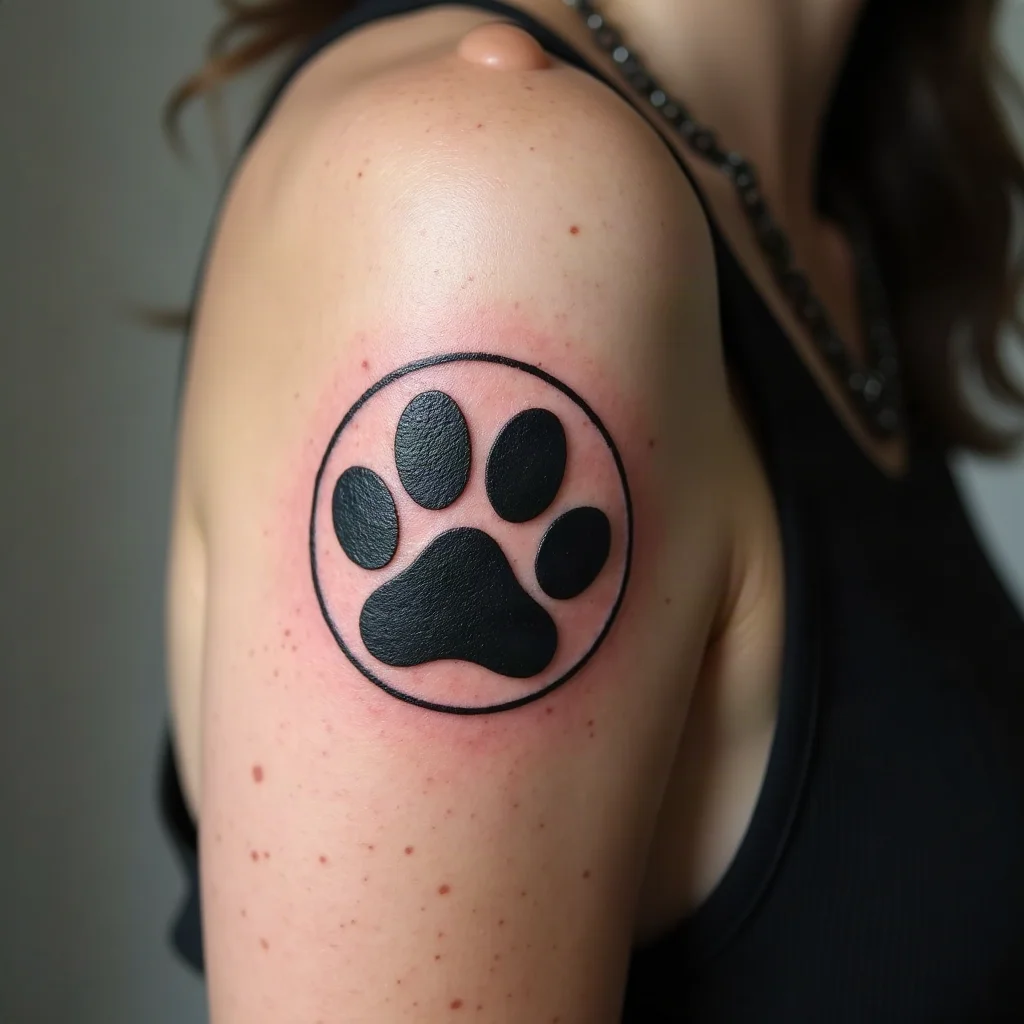
Prints With Names, Dates and Handwriting (7–13)
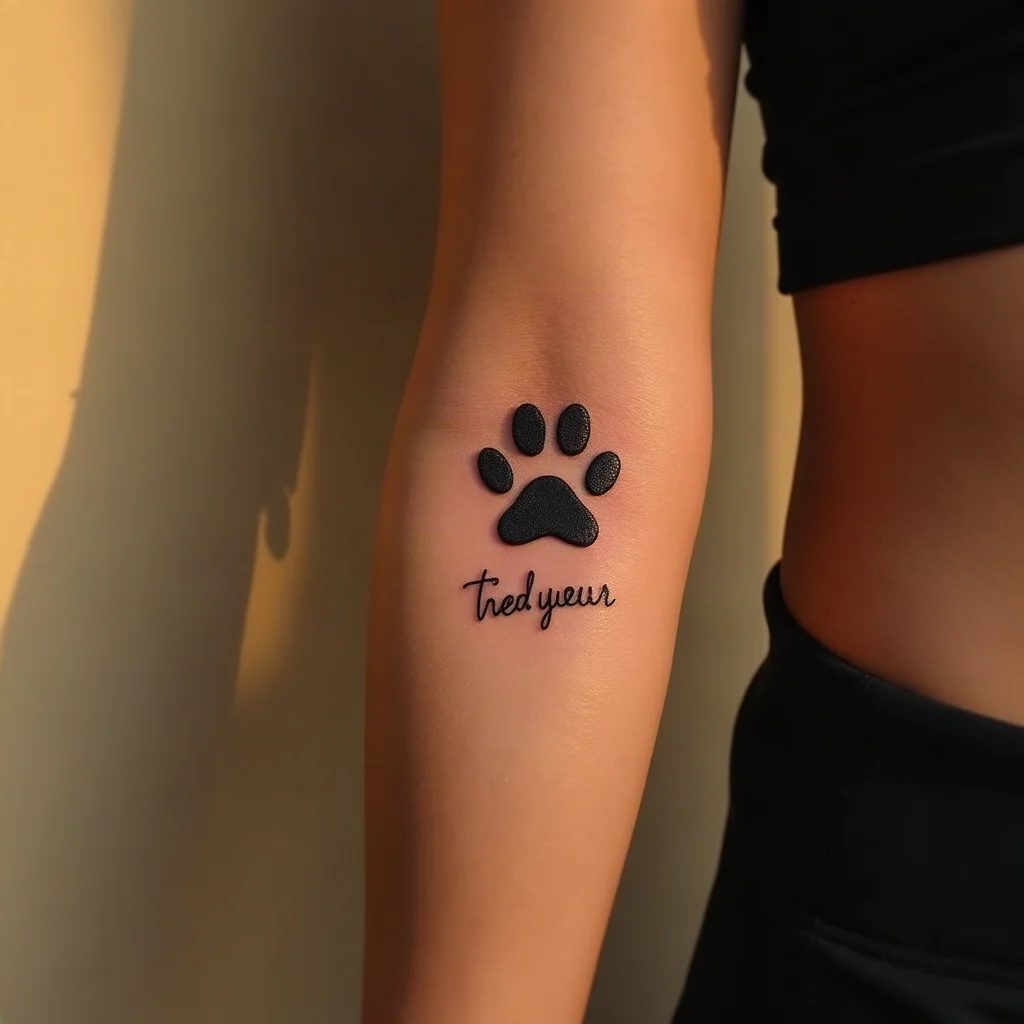
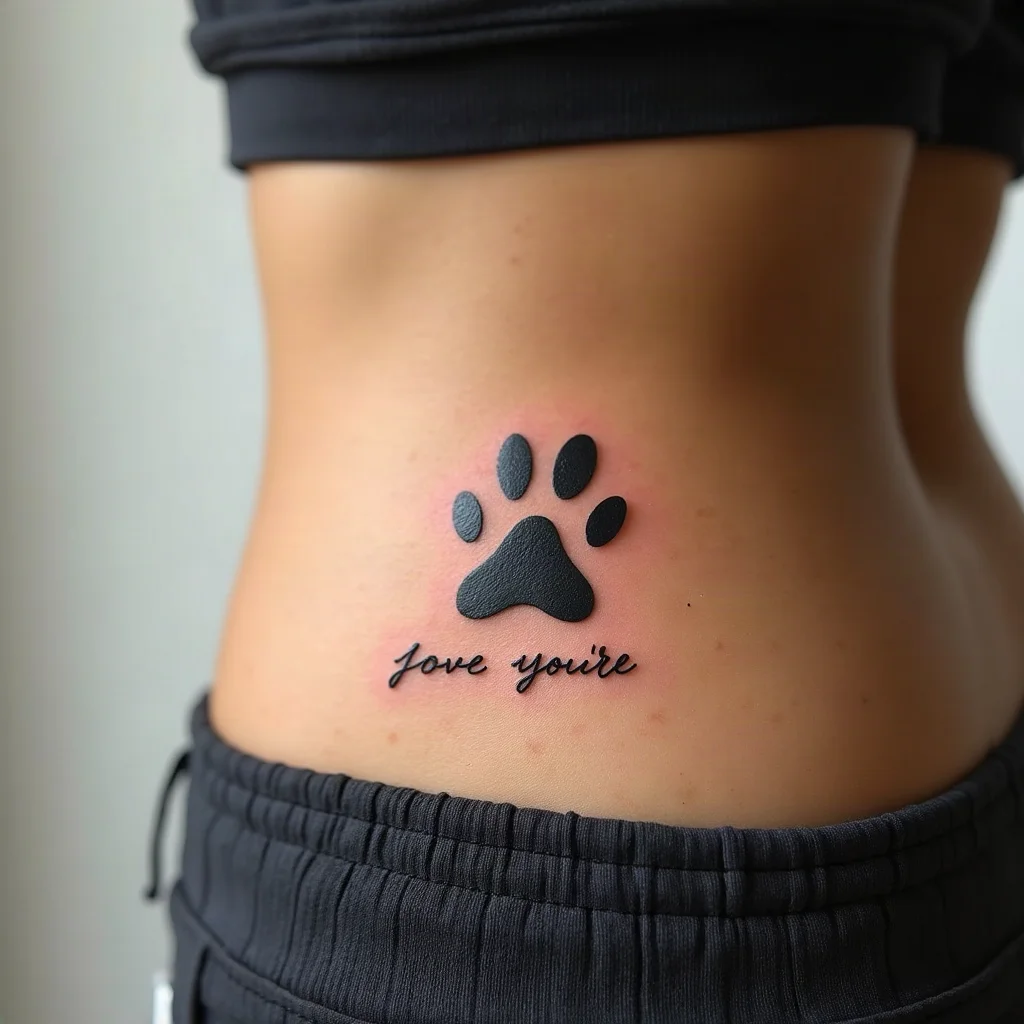
7. Print above a script name
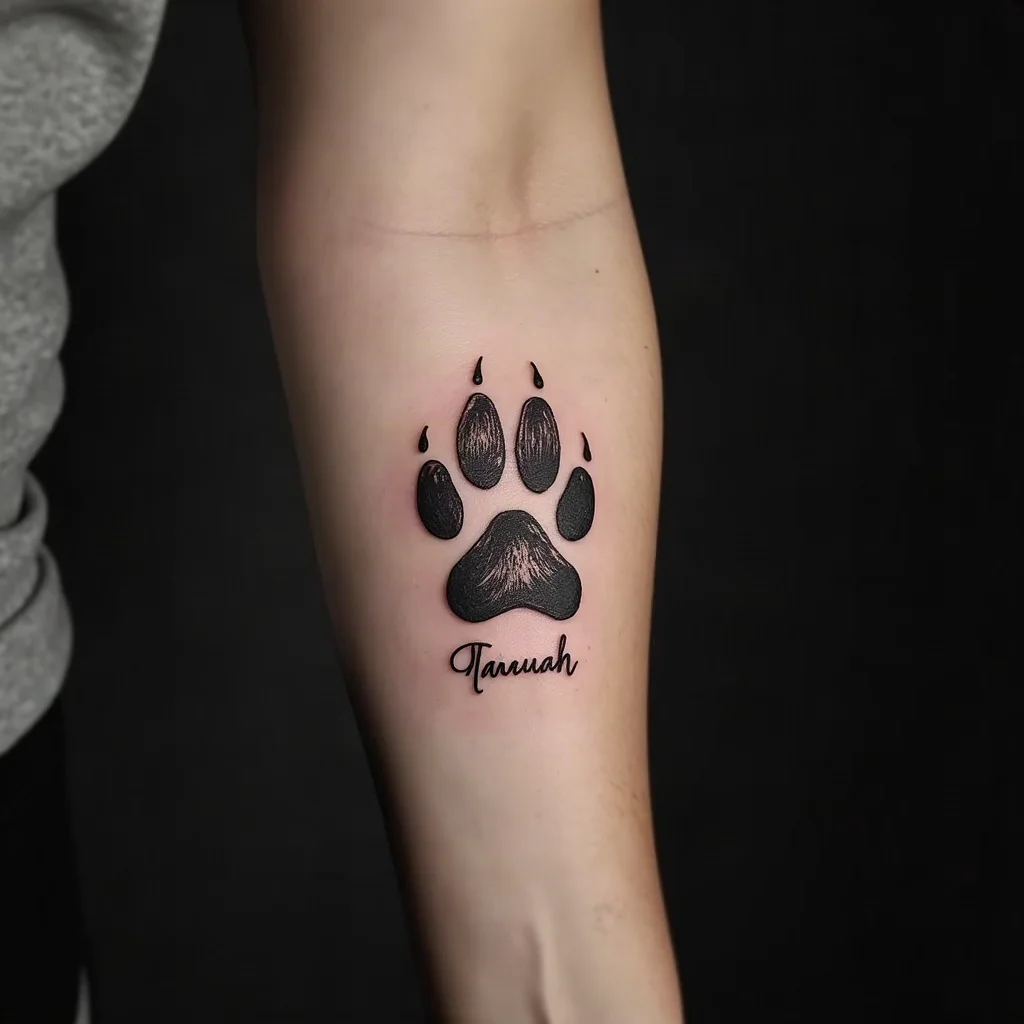
The classic, and it earns its popularity: paw on top, the name in a soft script underneath, centred to the widest toe pads. On the inner forearm the pairing sits comfortably at around three inches tall. Ask for the lettering to be at least as tall as one toe pad so it never looks like an afterthought.
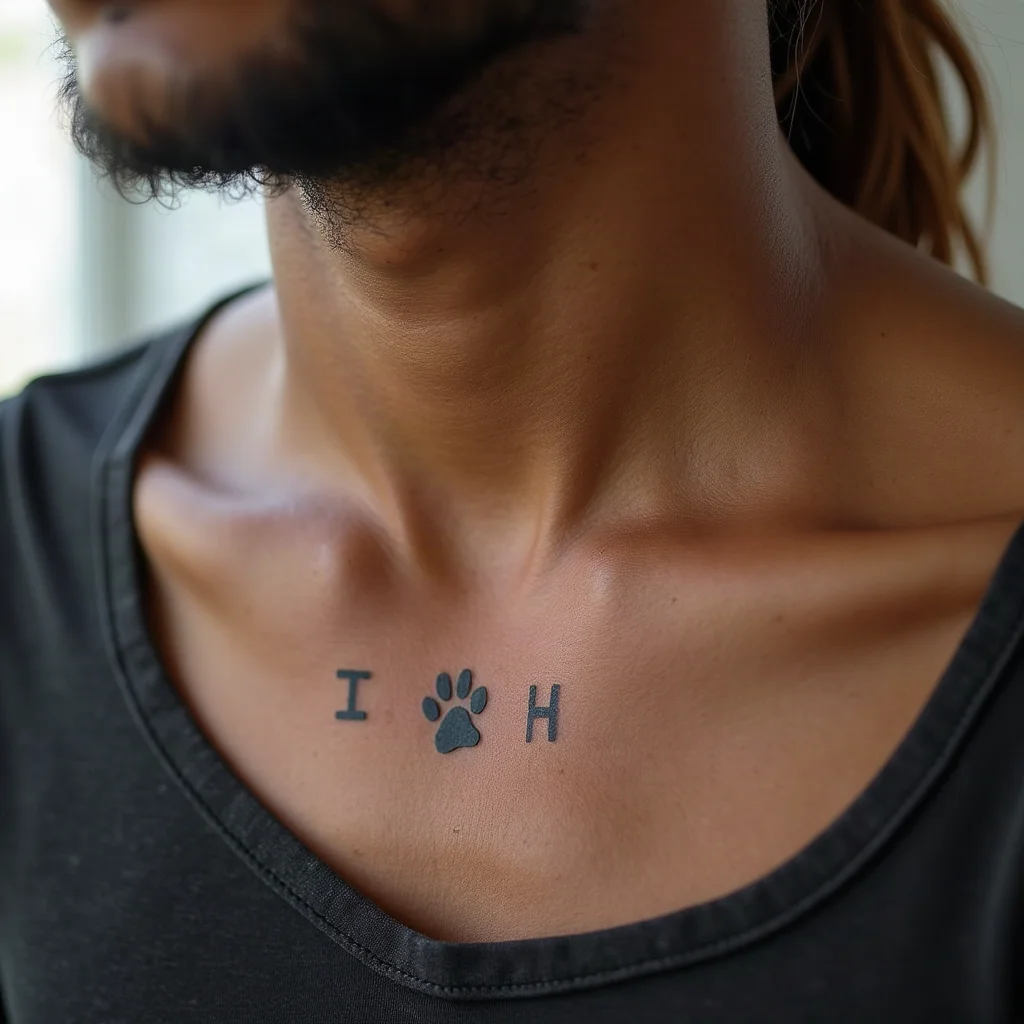
8. Paw replacing a letter
The name is set in clean type and a small print stands in for the O in Bodhi or Coco, or drops into the counter of a lowercase e. It works best on the collarbone where the name can run horizontally along the bone. Keep the paw the same visual weight as the letters so it reads as part of the word.
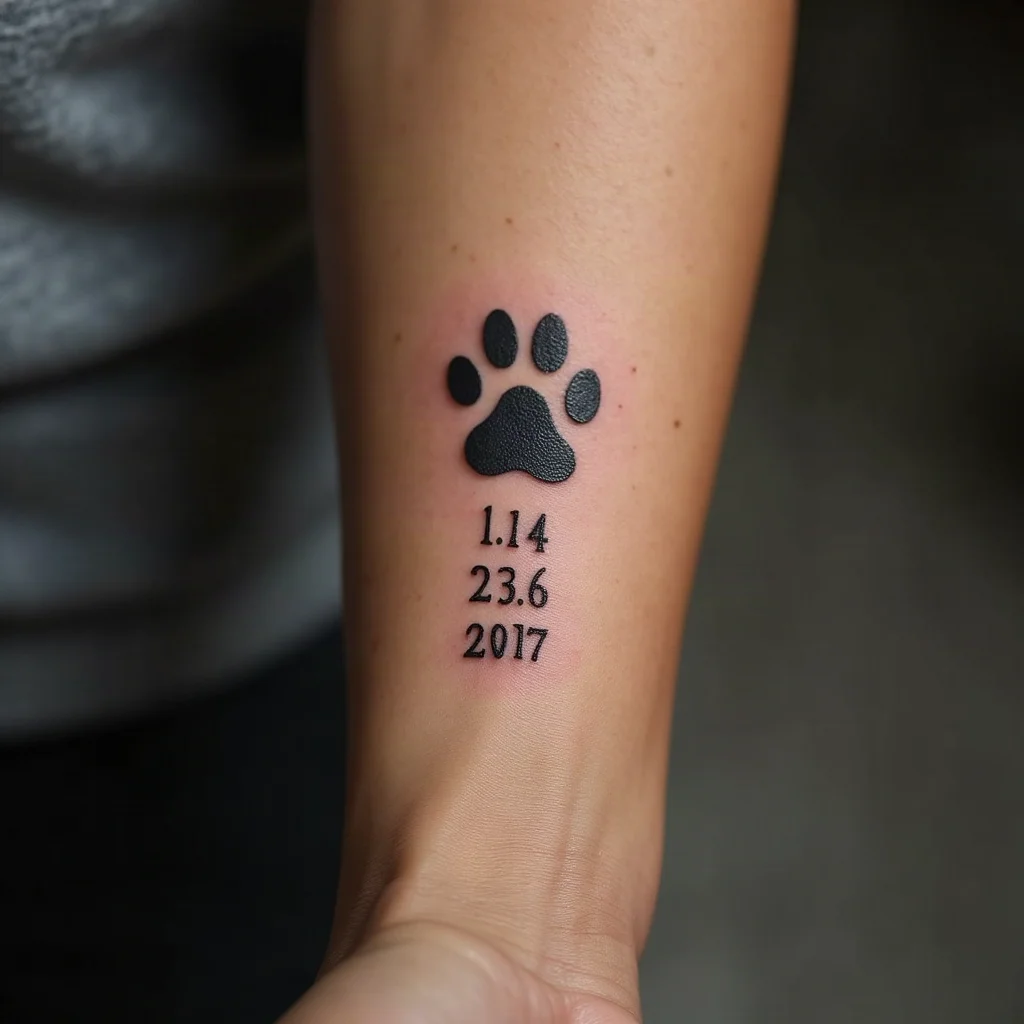
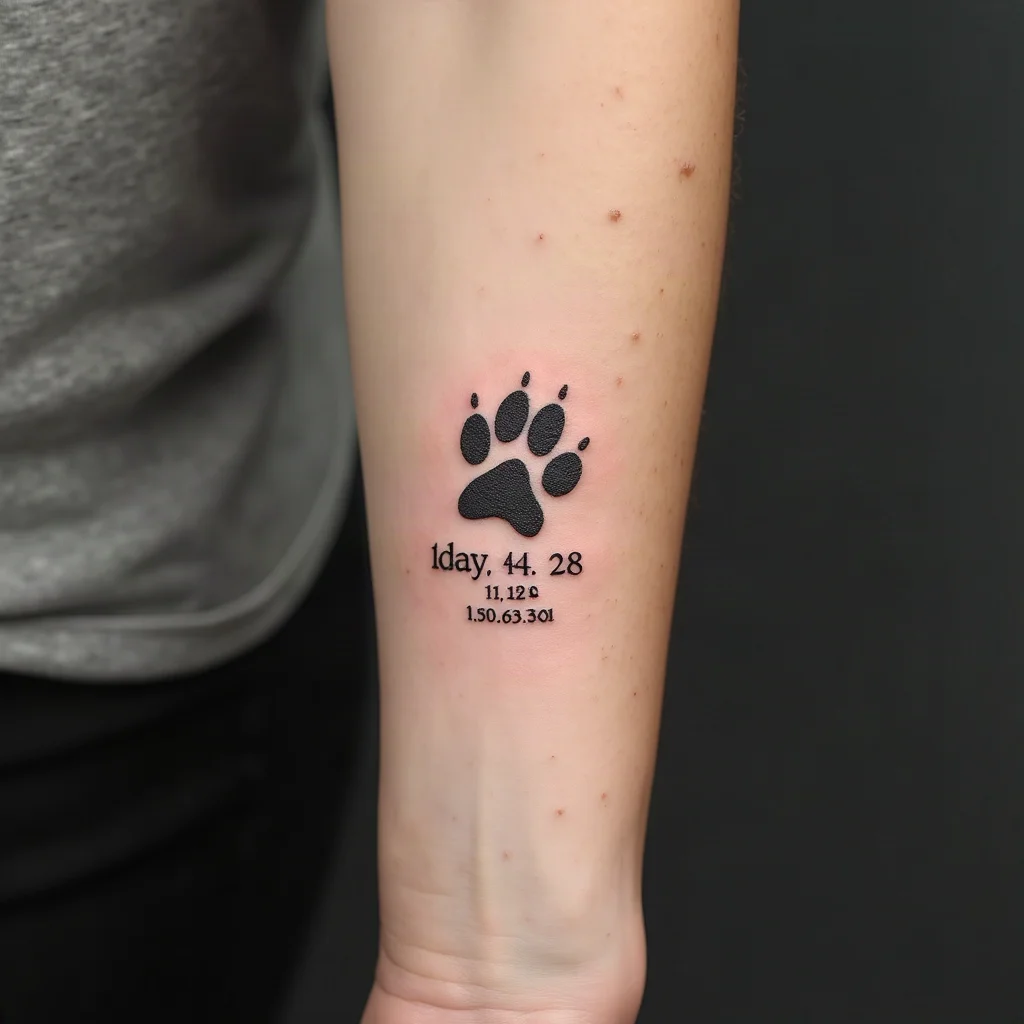
9. Paw with two small dates
A print with the adoption year and the goodbye year in tiny numerals stacked to one side, or roman numerals for a quieter look. On the side of the wrist this stays under two inches total. Numerals under about four millimetres tall are the first thing to blur, so push the artist for legible spacing.
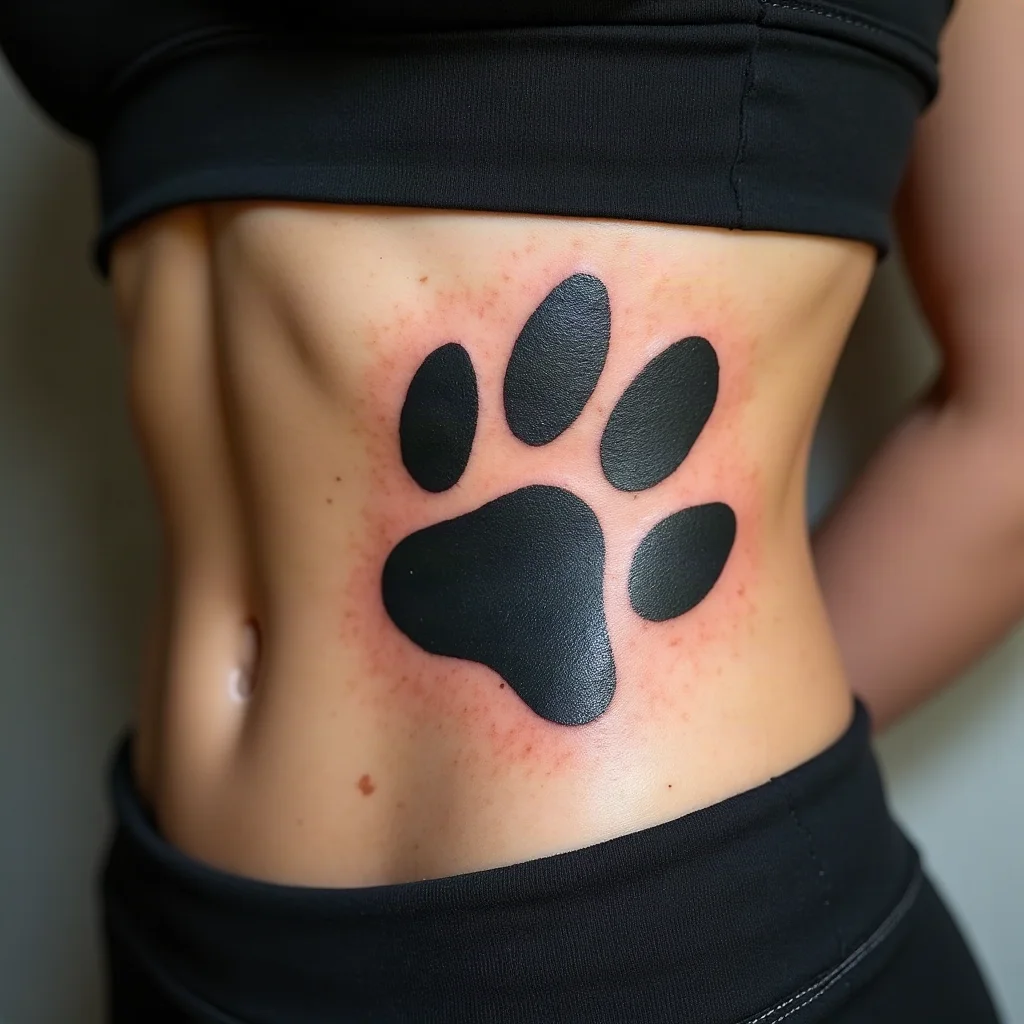
10. Name curving through the print
Script runs diagonally across the pads themselves, the letters knocked out in negative space so the name is carved into the paw. Along the ribcage it can sit four or five inches and follow the bone line. It is a single-session piece but a tender placement — expect a sharp, buzzy sting.
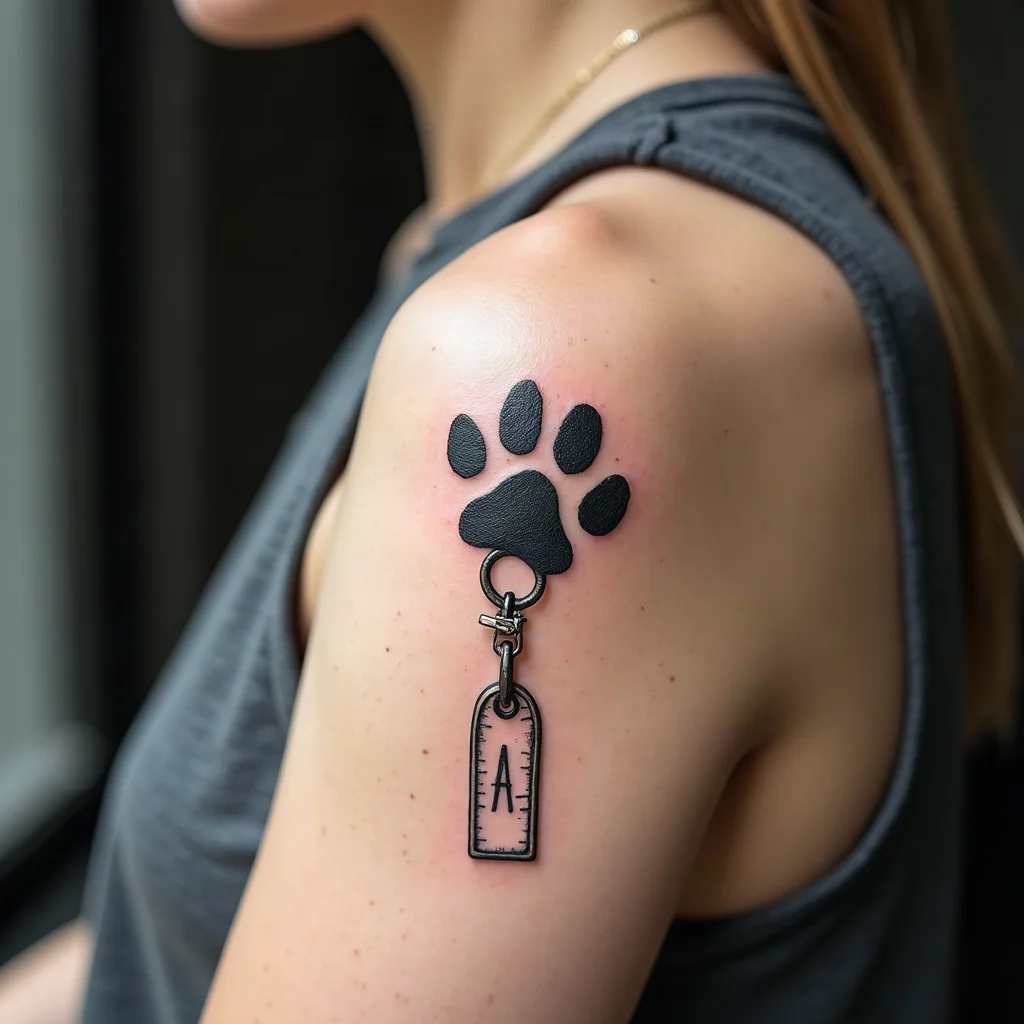
11. Paw over a hanging collar tag
The print sits above a small engraved ID tag, complete with the split ring and a fragment of collar strap. Rendered illustratively on the upper arm at three to four inches, the tag can carry the name and your phone number's last digits if you want the real thing. This one flatters a bolder, more traditional line weight.
12. Your own handwriting under the print
Write the name yourself, on paper, with the pen you actually use — the wobble is the point. Down the spine it makes a long, narrow memorial with the paw at the top. The same sourcing logic applies as in handwriting memorial tattoos: send the artist a scan, not a screenshot.
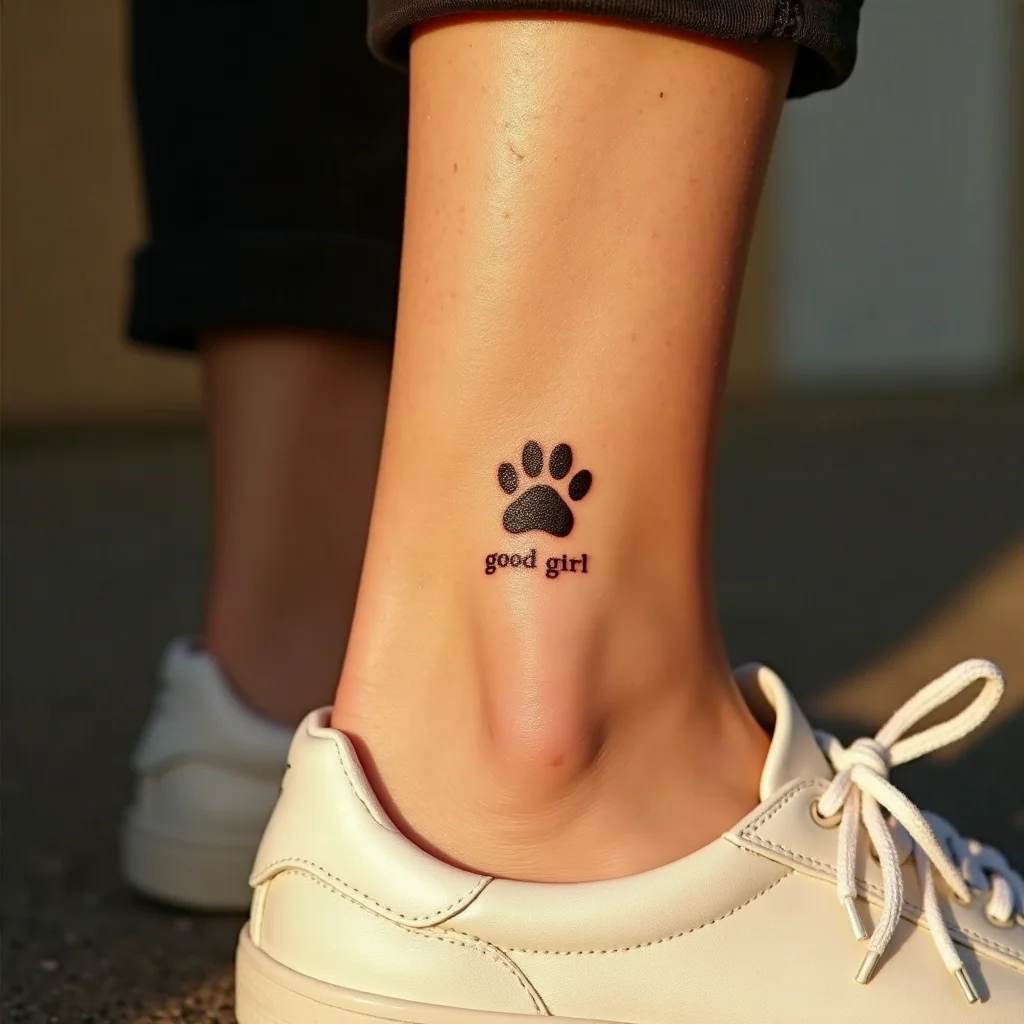
13. Paw with two words
Just the print and "good girl" or "best boy" in small lowercase type, nothing else. On the ankle at an inch and a half it is the kind of tattoo you catch by accident and smile at. Sans-serif type holds up better than script at this size.
Trails, Motion and Heartbeats (14–19)
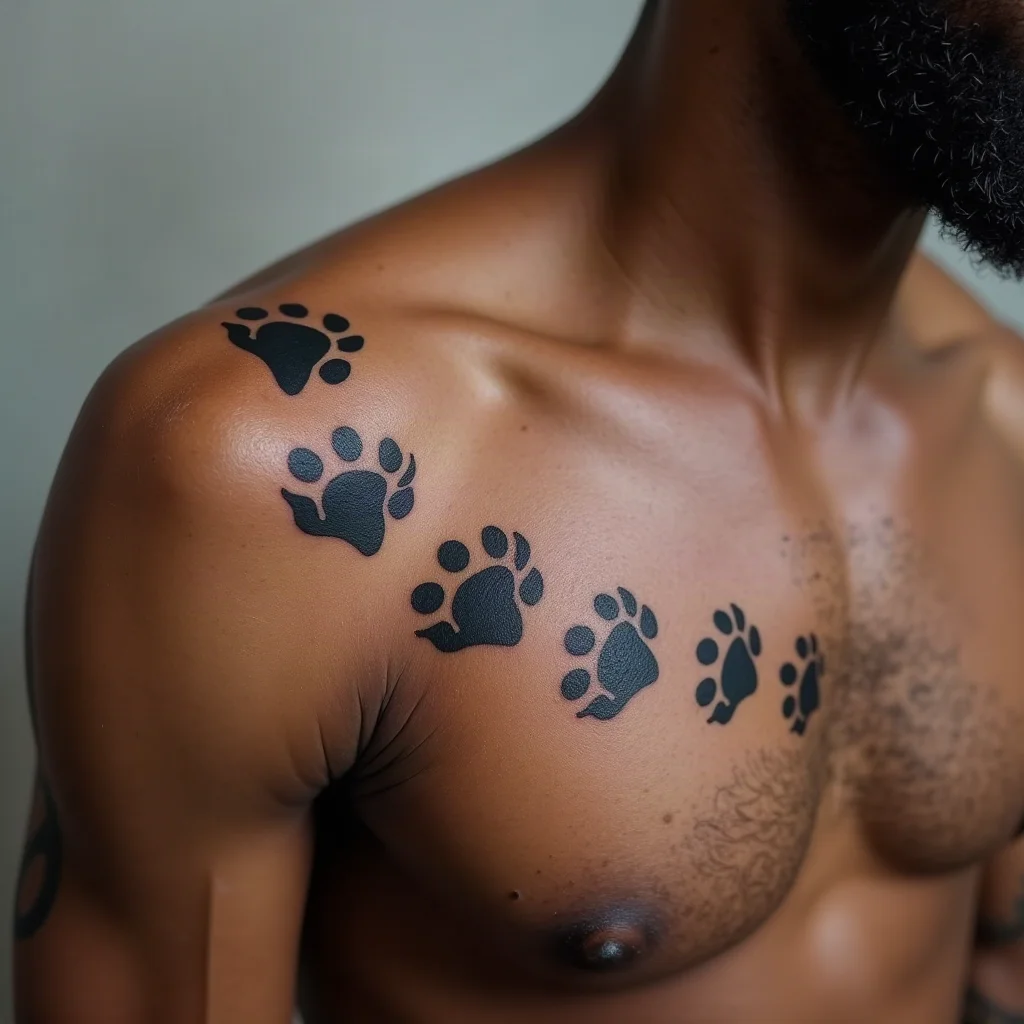
14. A walking trail over the shoulder
Four or five prints spaced at a real gait, front and back paws alternating, travelling over the shoulder cap toward the chest. Ask your artist to stagger them off a centre line — evenly spaced prints in a straight row look like wallpaper. Around six to eight inches of travel gives the walk enough room to read.
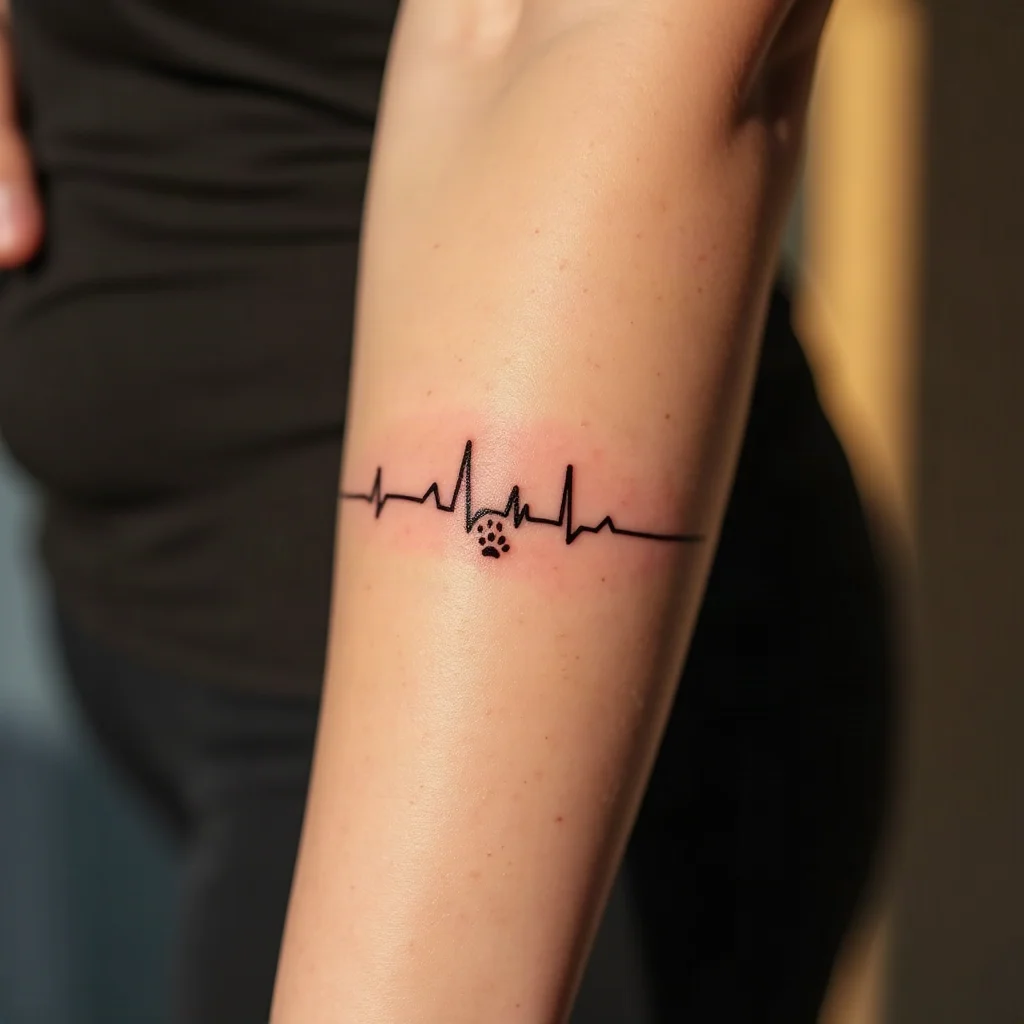
15. Heartbeat line into a paw
An EKG trace runs along the inner forearm, spikes once, then flattens into a paw print at the end. Keep the line weight consistent and the flatline long enough to land emotionally. At four to five inches it is a quick session and one of the most requested pet memorials going.
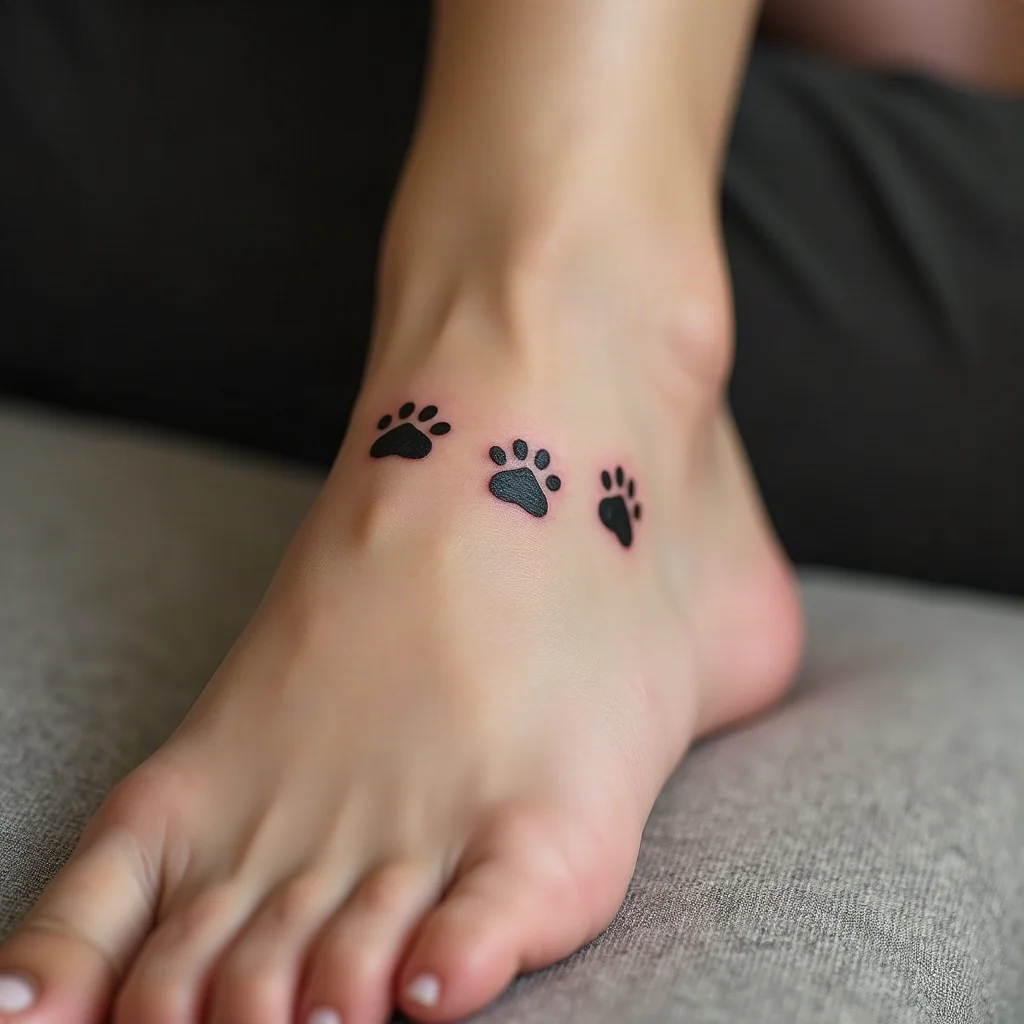
16. Prints walking off the foot
Three small prints crossing the top of the foot, angled as if the animal just trotted past your ankle. Foot placement stings over the tendons and needs disciplined aftercare with loose shoes, but the shape of the foot suits a diagonal trail perfectly. Keep each print around an inch.
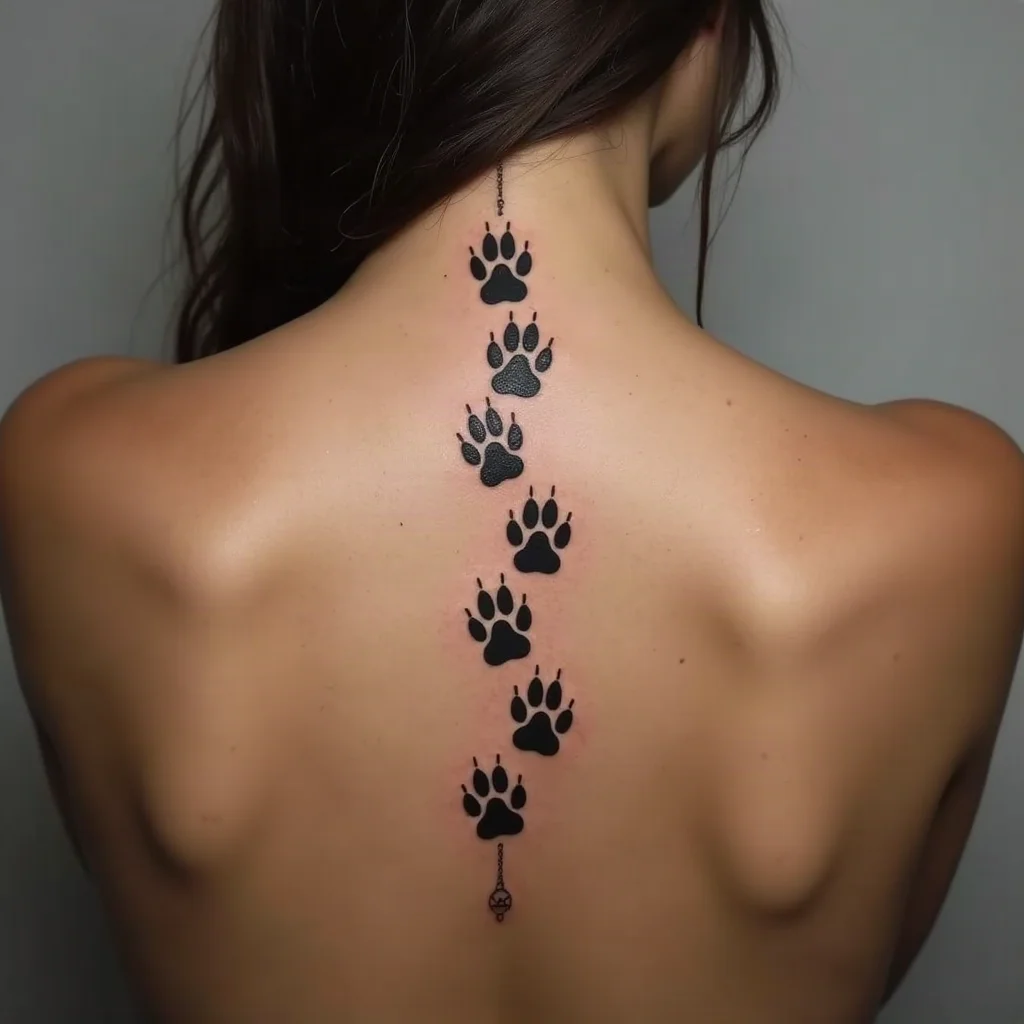
17. The fading trail
Prints that start solid at the base of the spine and get progressively lighter and greyer until the last one is barely there. It is the most literal image of an animal walking away, and it needs an artist confident with grey wash. Budget for a longer session than the size suggests, since the gradient is the whole job.
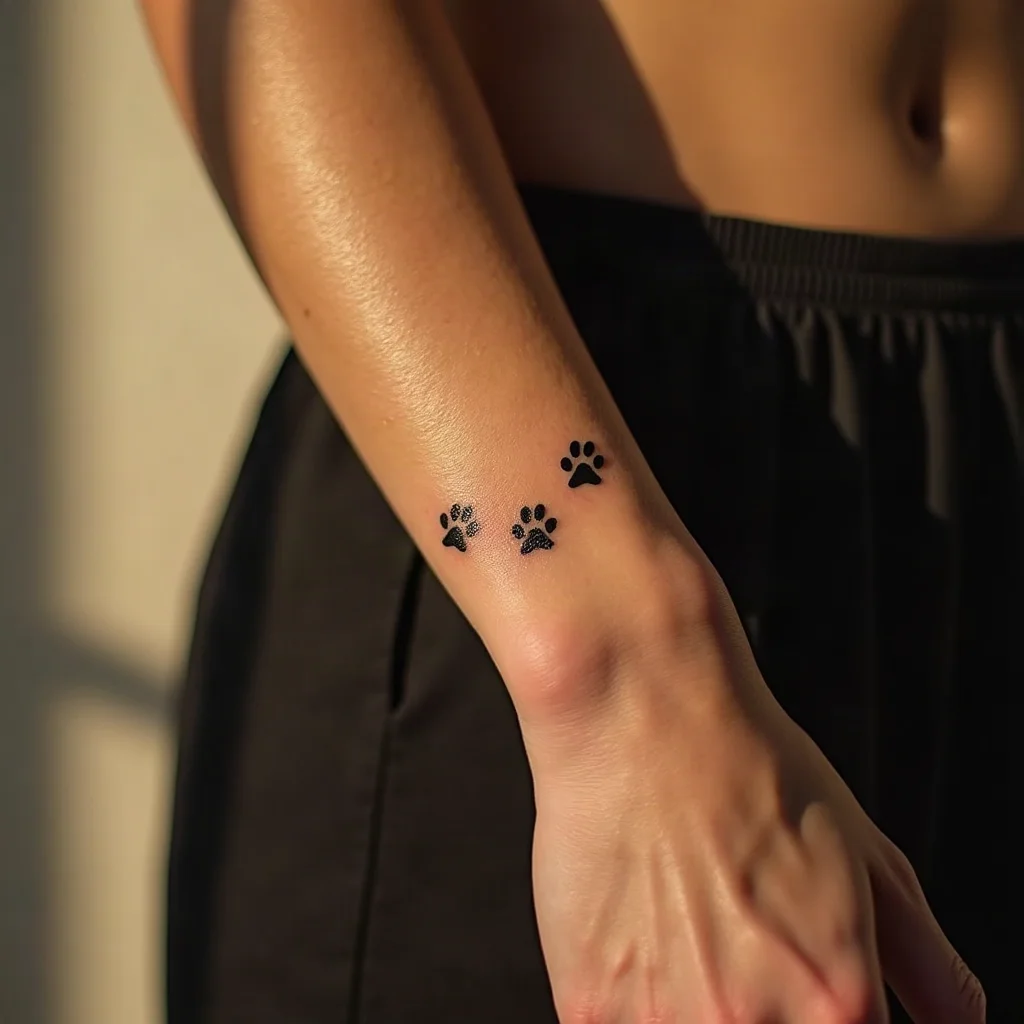
18. A paw trail as a wrist band
Small prints circling the wrist, evenly spaced with a clasp point on the outer side where the trail begins and ends. Six to eight prints usually complete a lap. If you like the format, the zone-by-zone breakdown in our wrist tattoo guide is worth a read before you commit to a full circle.
19. Prints dissolving into birds
The trail climbs the upper back and the last two or three prints break apart into small flying birds. Done illustratively across six to ten inches, it gives a memorial an upward motion instead of a downward one. Ask for the transition to happen over at least two shapes so it does not look abrupt.
Prints With Portraits, Flowers and Symbols (20–27)
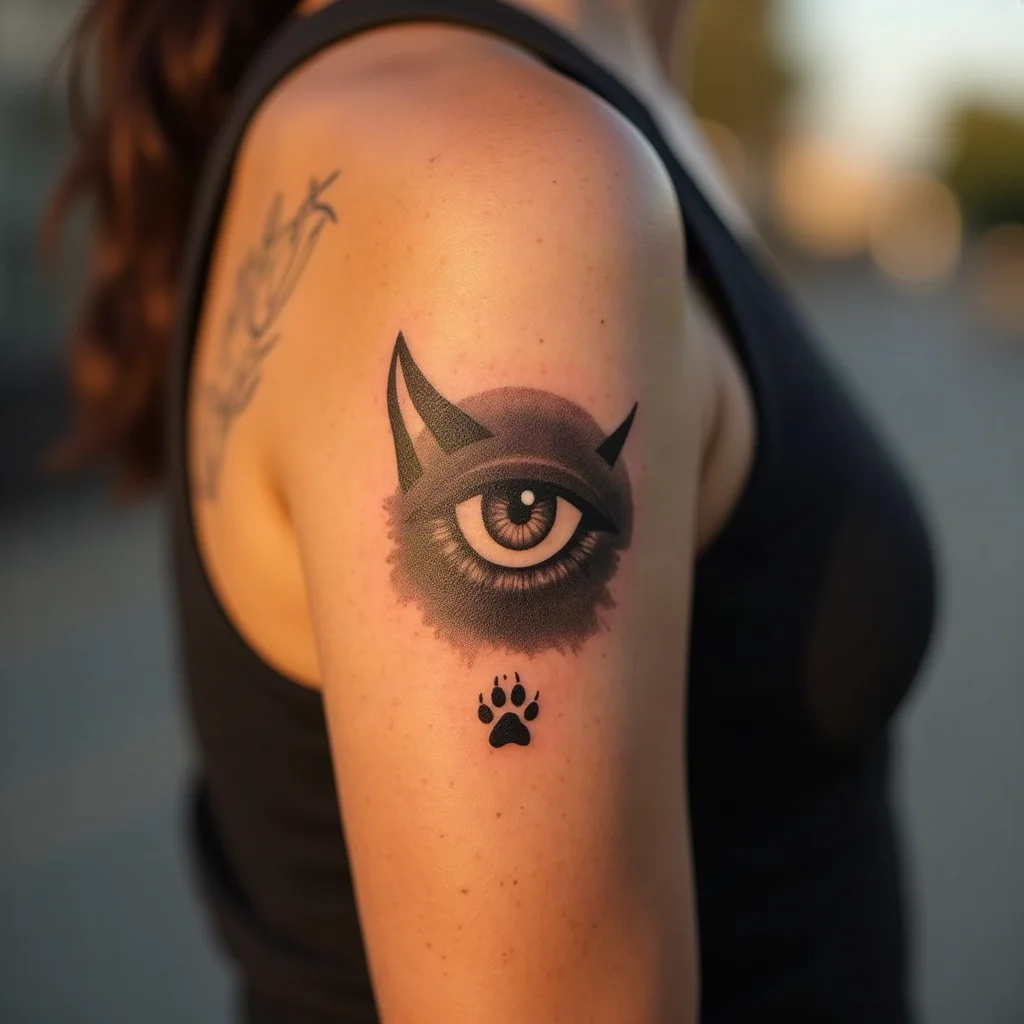
20. Print under a micro-realism eye
Just one eye of your pet, rendered in soft grey realism, with the actual paw print stamped below it. The eye carries the likeness without the risk of a full portrait going slightly wrong. On the upper arm this wants four to six inches and an artist whose healed realism you have seen in person.
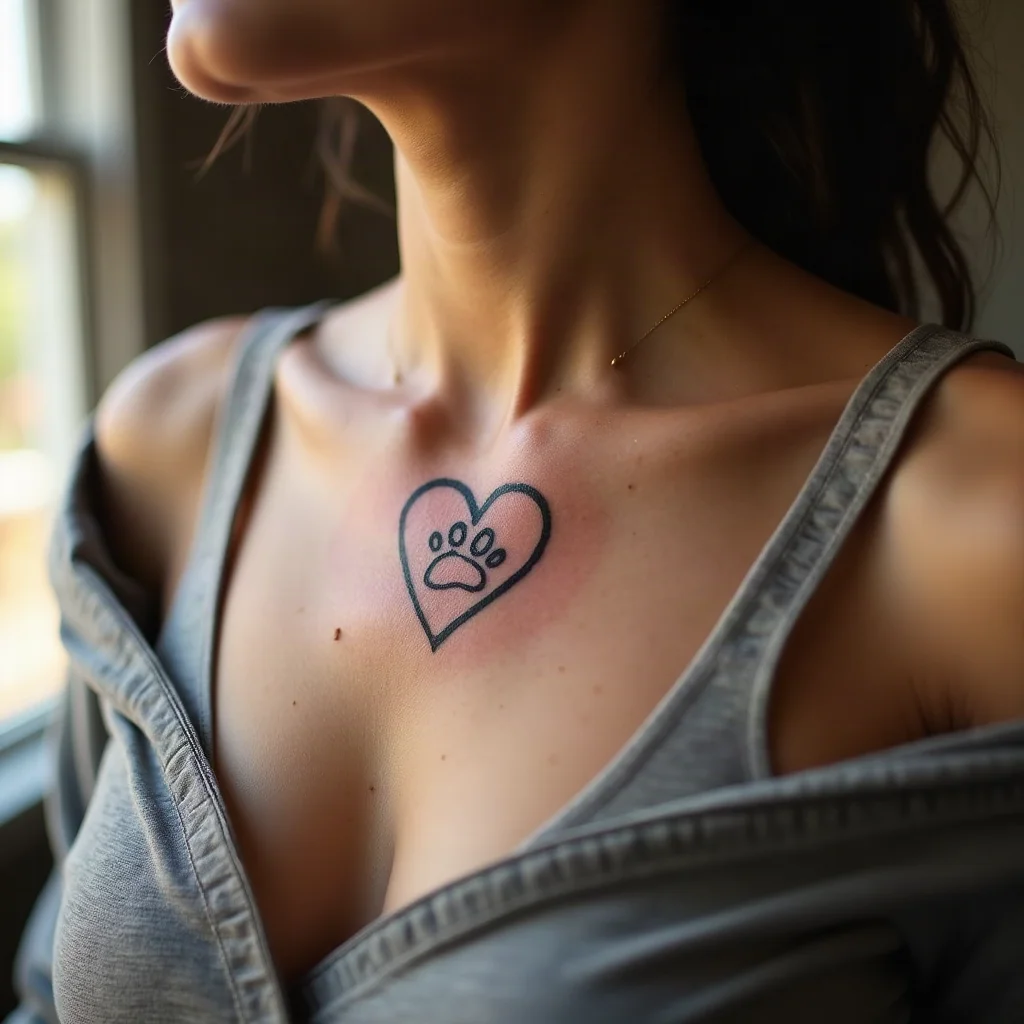
21. Paw inside a heart
A simple heart outline with the print sitting in negative space at its centre, placed over the chest. It is sentimental on purpose and it ages well because it is built from two strong shapes. Three inches is plenty; smaller and the pads start fighting the heart's inner curve.
22. Night sky inside the pads
The paw shape is filled with a starfield and a soft nebula wash instead of flat black, so the print becomes a window. It suits a thigh at five or six inches, where there is room for depth without crowding. Add the constellation that was overhead on the day they died if you want a private detail.
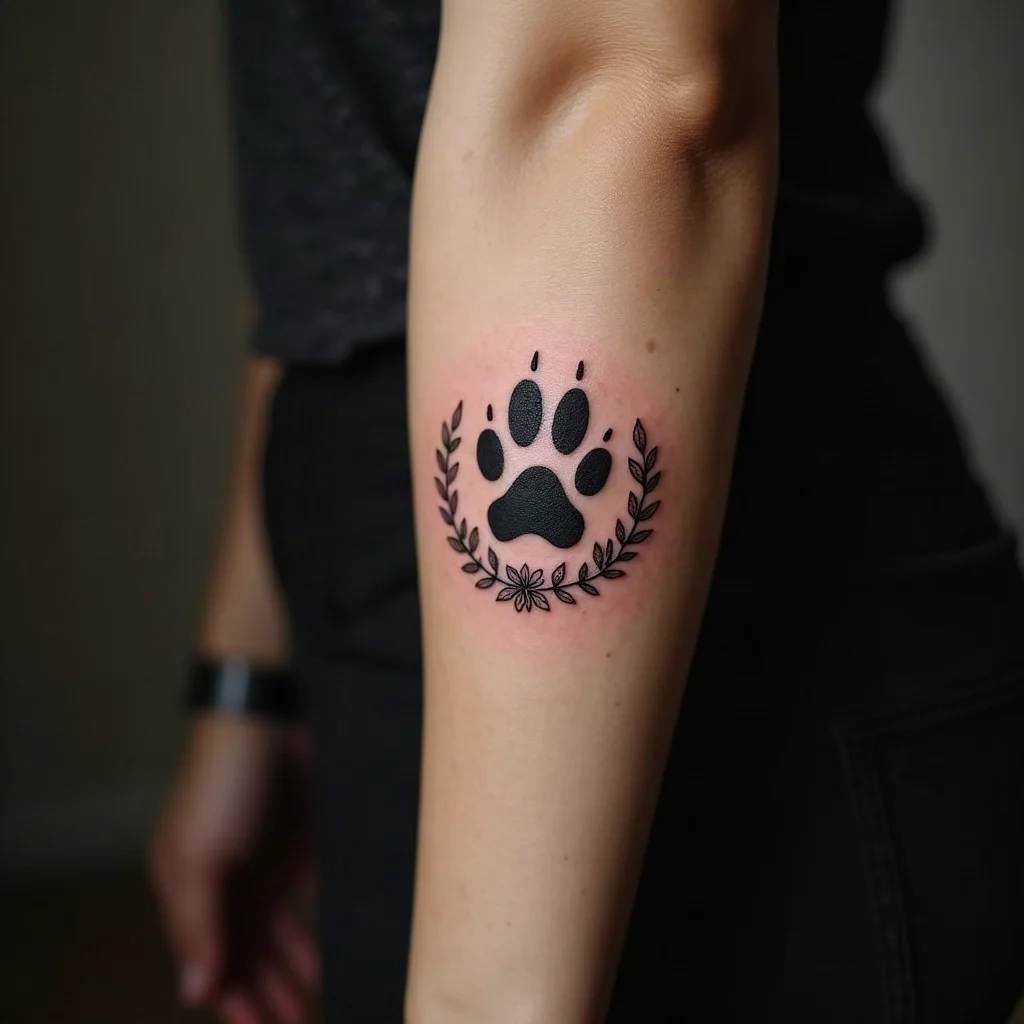
23. Print ringed with birth-month flowers
A wreath of small blooms circling the paw — daisies, cosmos, forget-me-nots — using the month you brought them home. On the outer forearm at three to four inches it softens what is otherwise a stark black shape. Keep the florals in the same line weight as the print so nothing dominates.
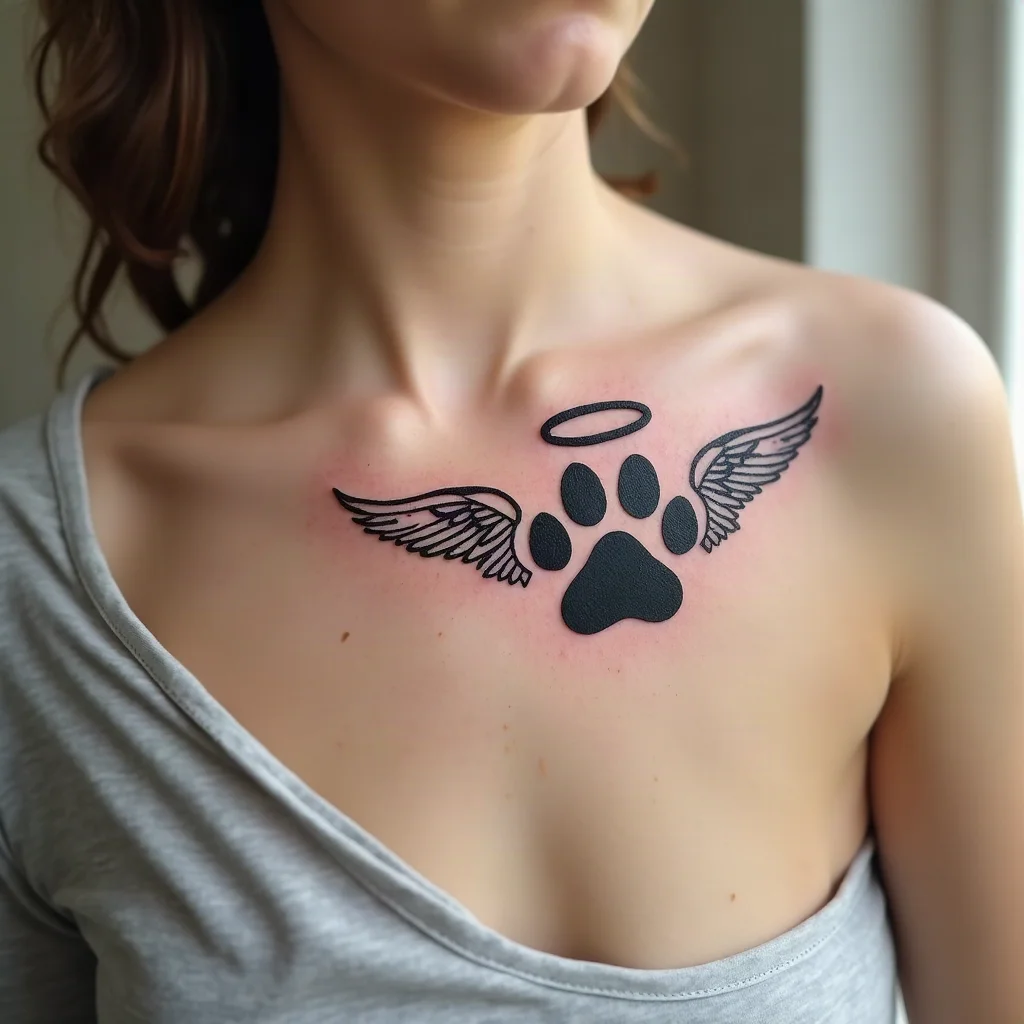
24. Paw with wings and a halo
A print with two small feathered wings and a thin halo floating above the top toe. Sitting on the shoulder at three inches, it is the most openly sentimental option here and it reads instantly. Ask for the wings to be simplified rather than fully feathered, or they will overwhelm the paw.
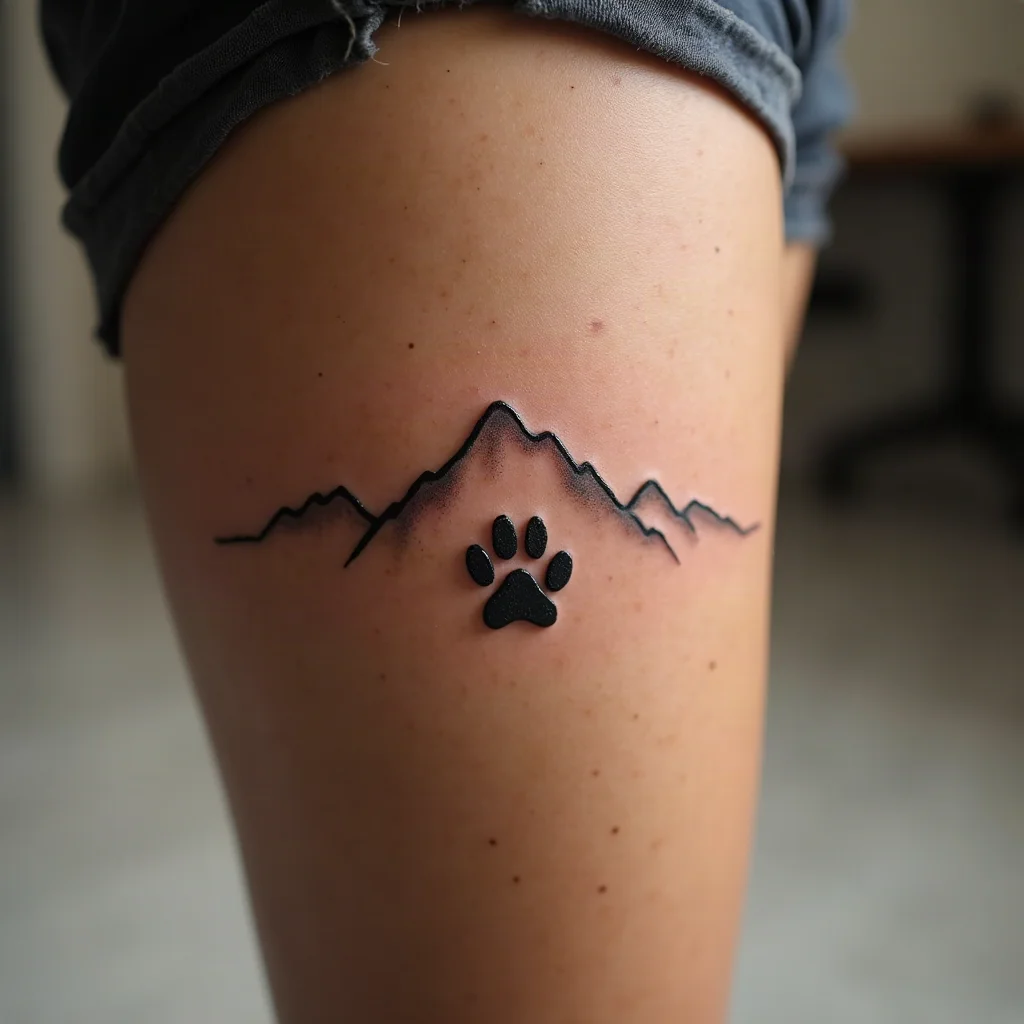
25. Print over a landscape you shared
The ridgeline you hiked together, drawn in fine line, with the paw print stamped over it like a mark on a map. Six inches on the calf gives the horizon somewhere to go. Bring a photograph of the actual place — a generic mountain range will not feel like anything in ten years.
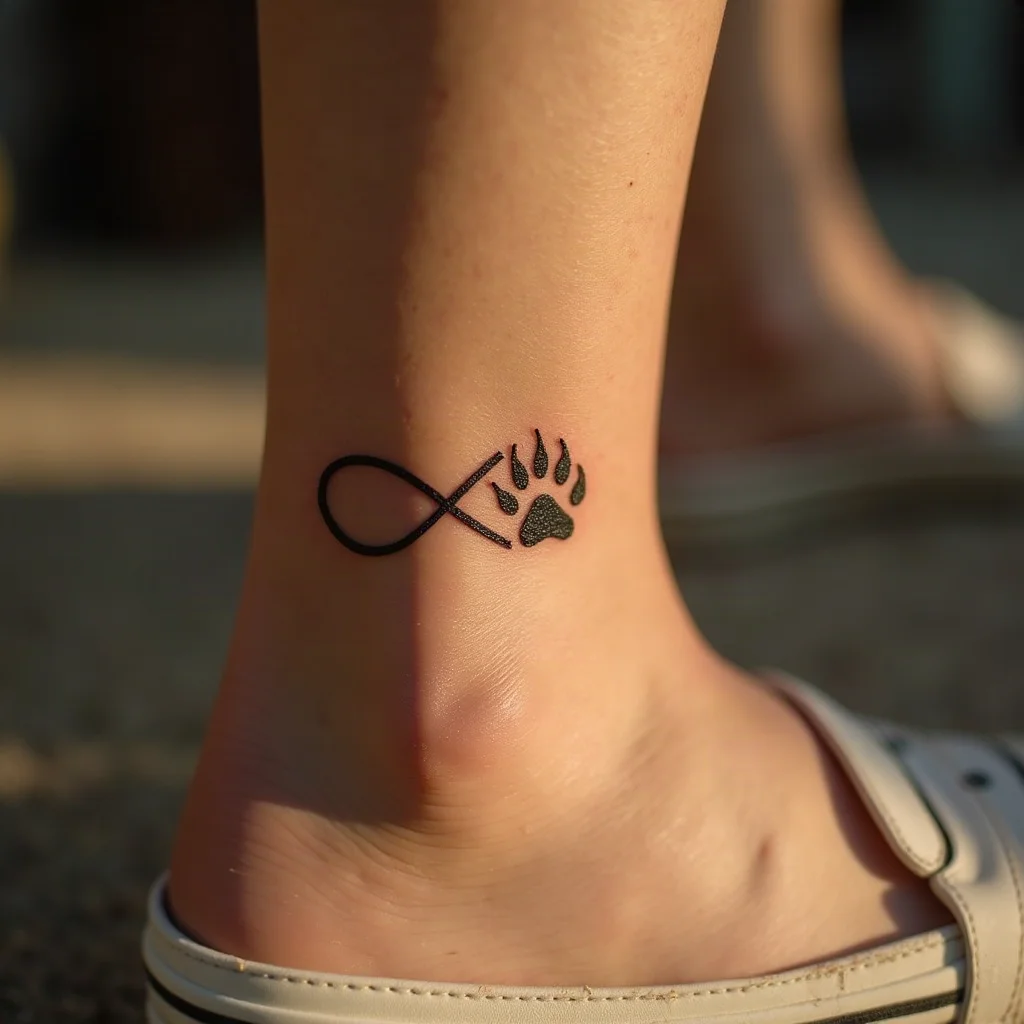
26. Paw folded into an infinity loop
A continuous line loops into a figure eight and one bend of it becomes the outline of a paw. Small and linear, it sits neatly on the ankle at around two inches. Best for people who want the reference to be readable to them and quiet to everyone else.
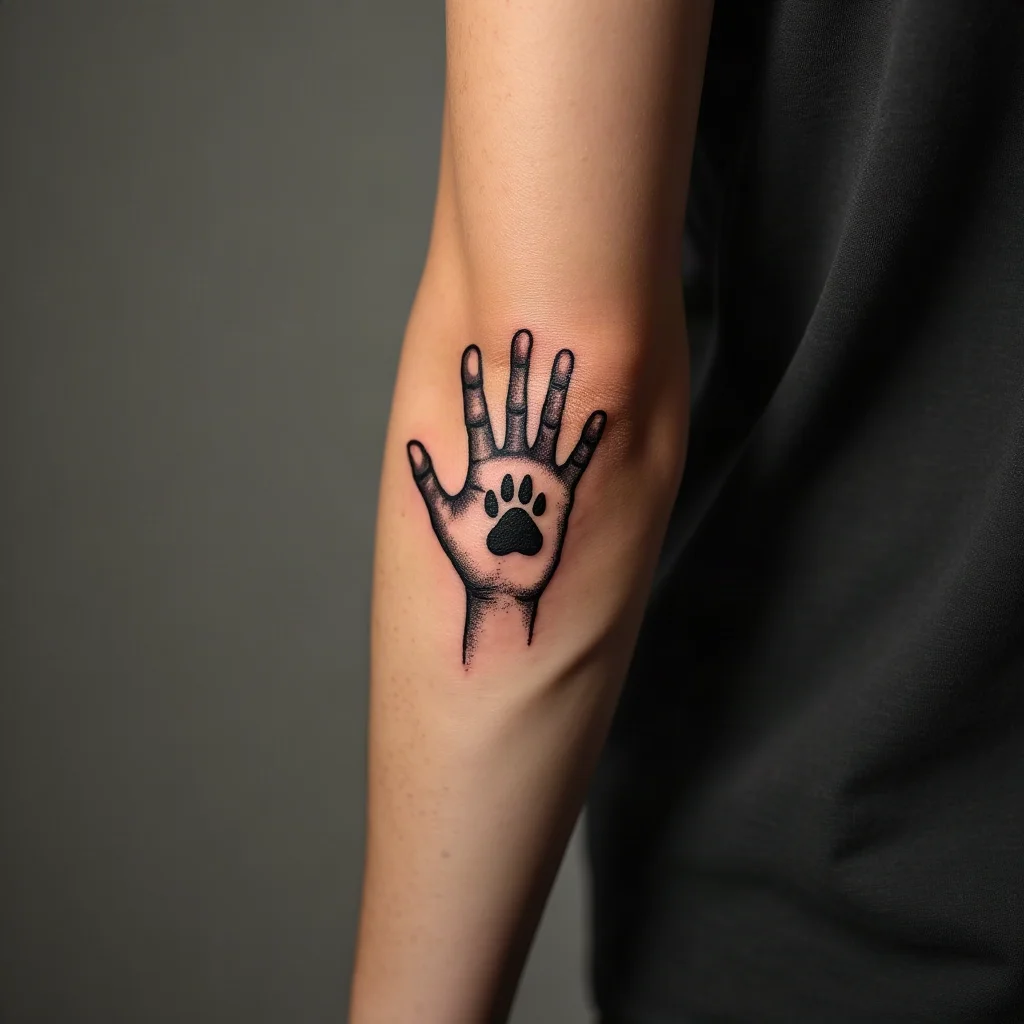
27. A human palm meeting a paw
Your own hand outline pressed against your pet's print, palm to pads, so the two shapes overlap. On the inner forearm at four inches it is a strong, story-carrying image and it uses two real sources instead of one. Have your handprint taken the same way you take the paw print, ink on plain paper.
Where to Put It, and How It Will Age
Paw prints are forgiving shapes — thick pads, clear gaps, no tiny internal detail — which means placement is more about visibility and daily life than technical risk.
Inner forearm is the sweet spot for a life-size dog print: flat, low-stretch skin, easy to see yourself, and a moderate sting. Chest over the heart is the emotional favourite and holds solid black well, though the sternum is bony and sharp for most people. Wrist, ankle and behind the ear suit cat prints and small trails; they are quick, but the ankle bone bites and healing there is slower because of shoes and socks.
Shoulder blade and upper back give you room for trails, grey wash and florals with almost no sun exposure, which is the single biggest factor in how black ages. Ribcage flatters long vertical name-and-paw compositions but is the most painful common placement in this list.
Two placements to think twice about: fingers and the outer edge of the foot. Finger paws look charming for six months and then blur into a smudge as the skin turns over — if you want one anyway, go bigger and bolder than feels right and accept touch-ups. Solid black on any part of the body spreads slightly over decades, so keep at least a millimetre and a half of clean skin between toe pads and between the pads and the main pad. That gap is what keeps a paw looking like a paw at year fifteen instead of a dark oval.
Cost, Pain and Getting the Brief Right
A single small print — cat-sized, black, no lettering — usually lands at the studio minimum, which in most cities sits somewhere in the low-to-mid three figures once you factor in setup and sterile supplies. A forearm print with a name and dates typically runs a few hundred; a portrait-and-paw panel with grey shading, a starfield or a landscape moves into the several-hundred-to-four-figure range because it is hours of work, not minutes. Ask for a quote based on the reference file, not a verbal description.
Pain is mild on the outer arm and shoulder, moderate on the inner forearm and calf, and genuinely sharp on ribs, sternum, foot and ankle bone. Most paw memorials are short sessions, which matters more than the placement rating — thirty minutes on the ribs is survivable in a way that three hours is not.
What to send your artist
- A high-resolution scan of the print, black on white, uncropped
- Two or three photos of the pet for proportion and character, even if there is no portrait
- The exact spelling of the name and any dates, typed out, so nothing is misread
- A measurement in inches or centimetres of how wide you want the paw, marked on your own skin if you can
- Whether you want the print's texture kept or cleaned up — say it out loud
Aftercare is standard: keep the wrap on as instructed, wash gently with unscented soap, apply a thin layer of ointment for the first few days, then switch to plain lotion. Do not let a dog lick it, which sounds obvious and happens constantly. Keep it out of direct sun for the first month and use sunscreen on it forever — a solid black paw on a forearm fades faster from summers than from age.
Frequently asked questions
Can my artist tattoo my pet's actual paw print exactly?
Yes, and most artists prefer it to a drawn paw. Send a high-resolution scan of an ink-pad or clay impression, black on white, and they will size it to your skin. They may thicken any speckles smaller than a pinhead so the print stays readable as it ages, but the shape and edge stay authentically yours.
How do I get a paw print if my pet has already passed?
Ask your veterinary clinic or the crematorium — many take a clay or ink keepsake as standard practice and can send you the file or the physical impression. If nothing was taken, an artist can trace a paw from a straight-on photo where the pad is flat against the ground. It is less exact but still specific to your animal.
How much does a paw print memorial tattoo cost?
A small single print usually comes in at the studio minimum, since even a ten-minute tattoo requires a full setup. Adding a name and dates typically pushes it into the low hundreds, while a shaded portrait, starfield or landscape composition runs into several hours of work and prices accordingly. Always get the quote from the actual reference file.
Will a small paw print tattoo blur over time?
Only if the gaps are too tight. Solid black spreads a little over decades, so keep at least a millimetre and a half of clean skin between the toe pads and the main pad and the shape will still read clearly in fifteen years. Fingers and the edges of the feet are the exception — those blur regardless and need touch-ups.
Can I have my pet's ashes mixed into the ink?
Some studios offer it and many refuse on sterility grounds, so ask before you build your heart around the idea. If your artist declines, that is a professional judgement about infection risk, not a lack of sympathy. An exact paw print carries the same meaning with none of the risk.
The conversation
No comments yet. Got a thought about these designs? Start us off.
Want to weigh in? Join the community to comment, save designs and try them on your skin.