28 Rib Tattoo Ideas for Women, Curve by Curve
The ribcage rewards designs built around its curve and punishes ones that fight it. Here are 28 rib tattoo ideas for women grouped by flow, with real talk on pain, sizing and how side pieces age.
What the ribcage does to a design
Ribs are one of the few places on the body with a built-in grid. Under the skin you have hard bone, soft intercostal gaps, and a curve that runs diagonally from under the armpit down toward the front of the waist. A design that ignores that diagonal tends to look tilted the moment you stand up straight, even if it looked perfect on the stencil while you were lying down.
Three practical things to know before you pick a motif:
- The skin moves a lot. Breathing, twisting and posture all stretch the area. Long straight lines, tight geometric grids and perfectly even circles are the hardest things to keep looking clean here. Organic shapes forgive far more.
- Position gets checked standing. Ask your artist to place the stencil while you are upright with arms relaxed, then again with your arm raised. Anything that lands right under the armpit will shift several centimetres between those two positions.
- Fine detail on bone can soften. Directly over the lower ribs, where skin is thin and stretched over bone, very tight stippling and hair-thin script sometimes blurs a little more than it would on a forearm. Slightly thicker linework and more spacing between elements buys you years.
Size-wise, ribs are generous. A palm-sized piece reads as small here. Most women who get a rib tattoo end up going a bit bigger than planned, because the space between the underarm and the hip bone can comfortably hold something 20 to 30 cm tall without looking crowded.
Vertical designs that run with the rib line
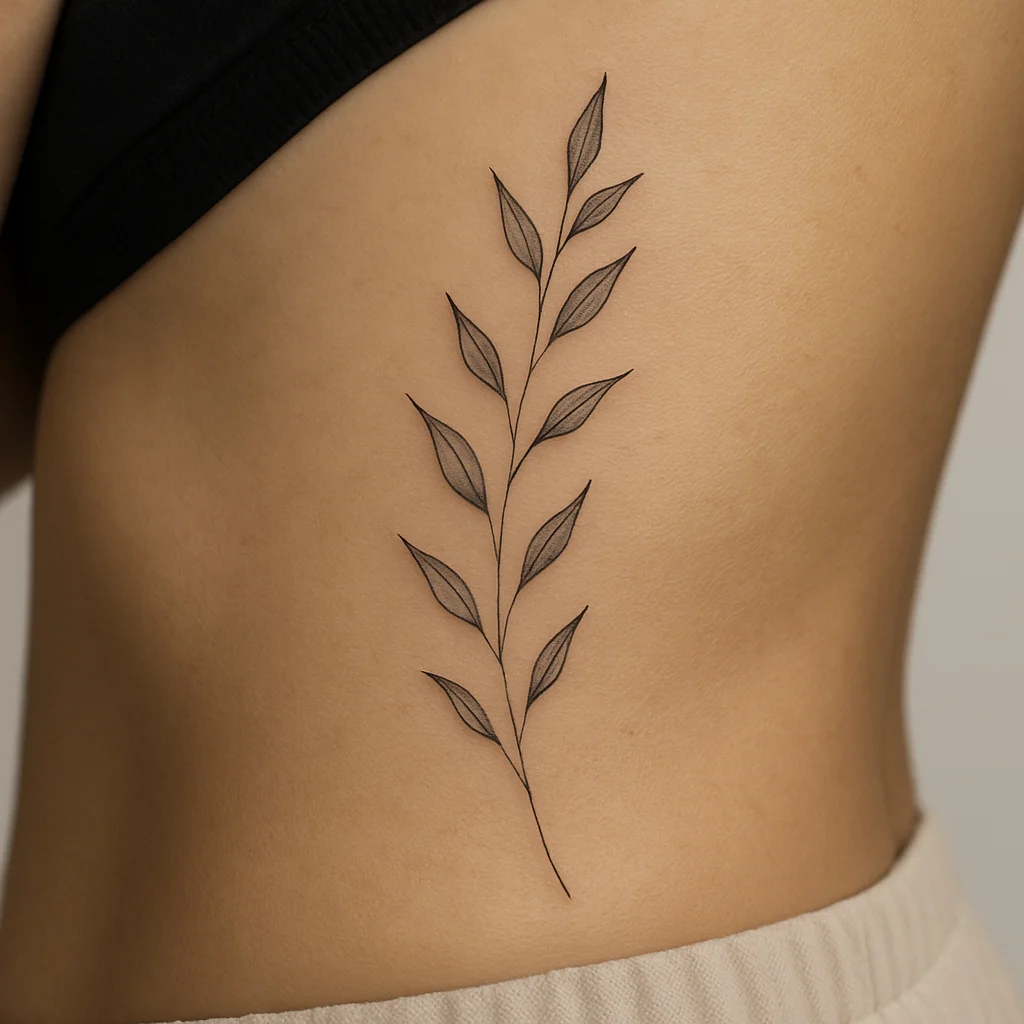
The strongest rib placement is often the simplest: a narrow design that drops down the side of the torso, angled slightly forward so it echoes the ribs instead of cutting across them. These read as elegant rather than loud, and they sit comfortably under a bra strap or bikini side.
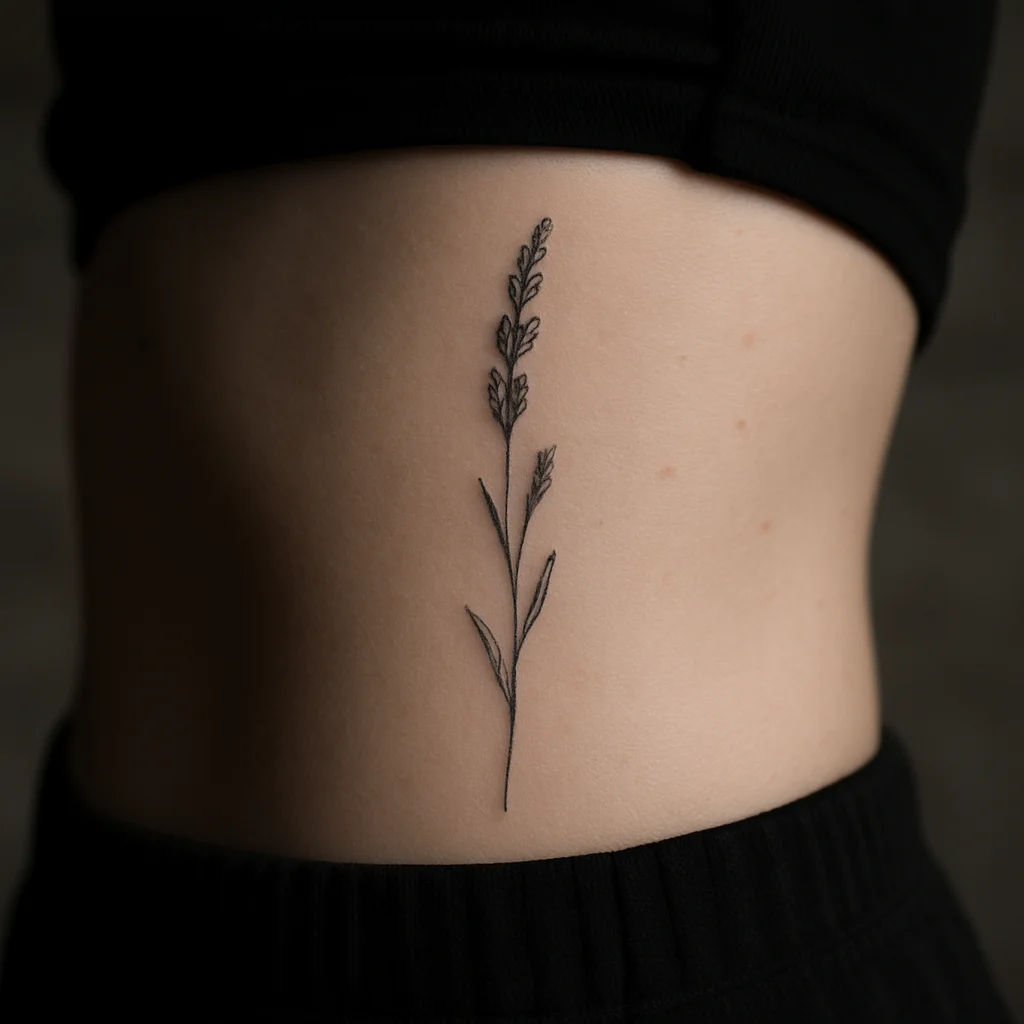
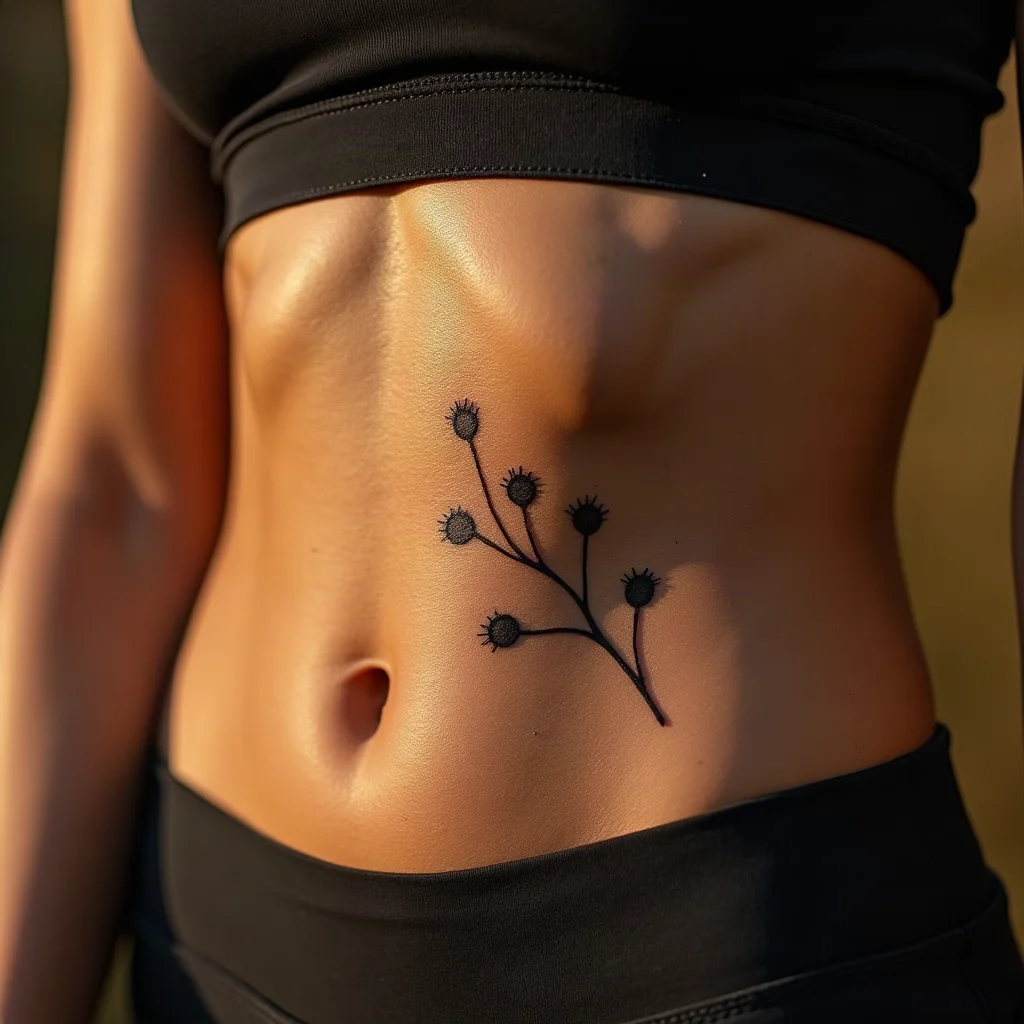
1. Single lavender sprig down the rib line
One stem, three or four buds, no leaves cluttering the base. Around 12 to 18 cm long, it sits neatly in the soft channel between the ribs and the waist. It suits anyone who wants a first rib piece that stays discreet and heals fast.
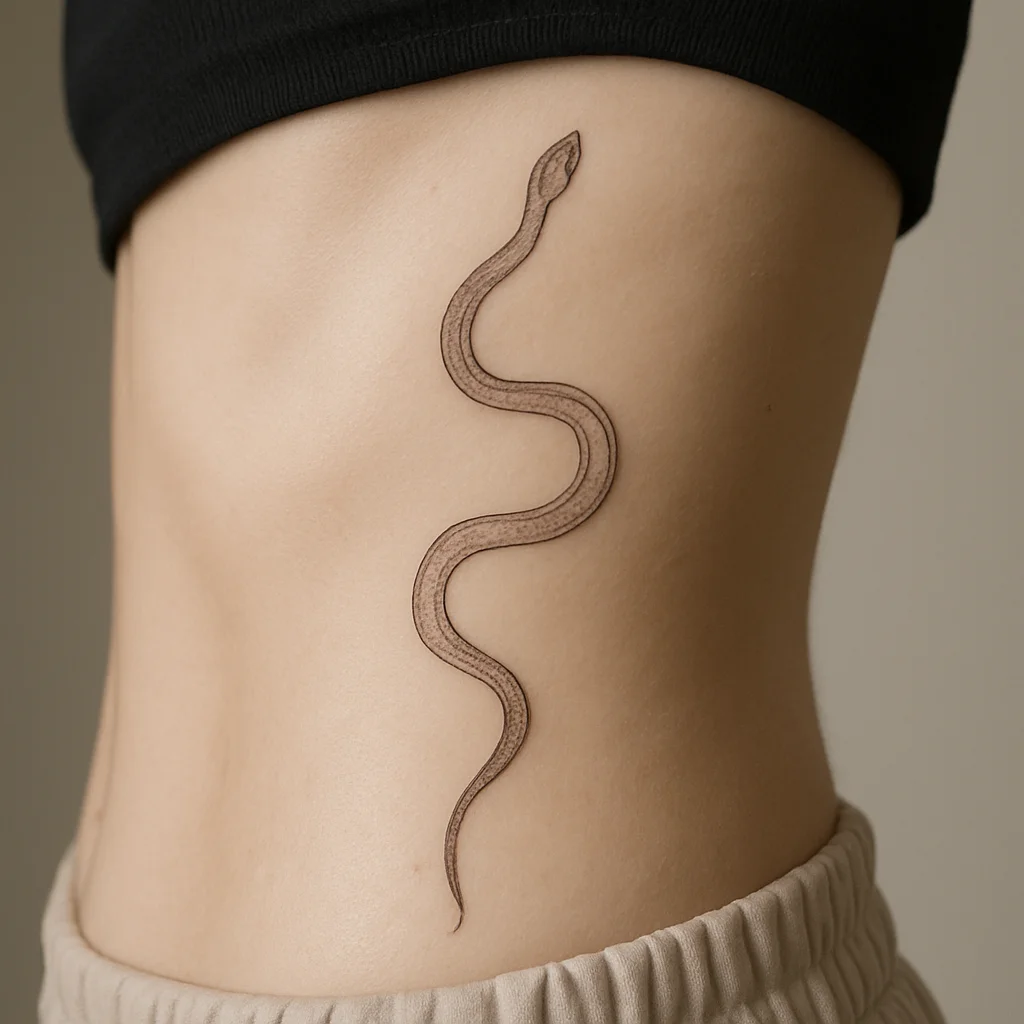
2. Fine-line snake winding vertically
A slim serpent with an S-curve body uses the natural flex of the side beautifully, because the curve absorbs skin movement rather than resisting it. Keep the scales suggested rather than fully drawn so the belly doesn't muddy over time. Best at 20 cm or longer, with the head near the underarm and tail tapering to the hip.
3. Falling feather from the underarm
A single feather drawn as if drifting downward, barbs slightly separated at the bottom. Illustrative shading on one side gives it dimension without needing a lot of black. Because the widest part sits high, it flatters a narrow waist.
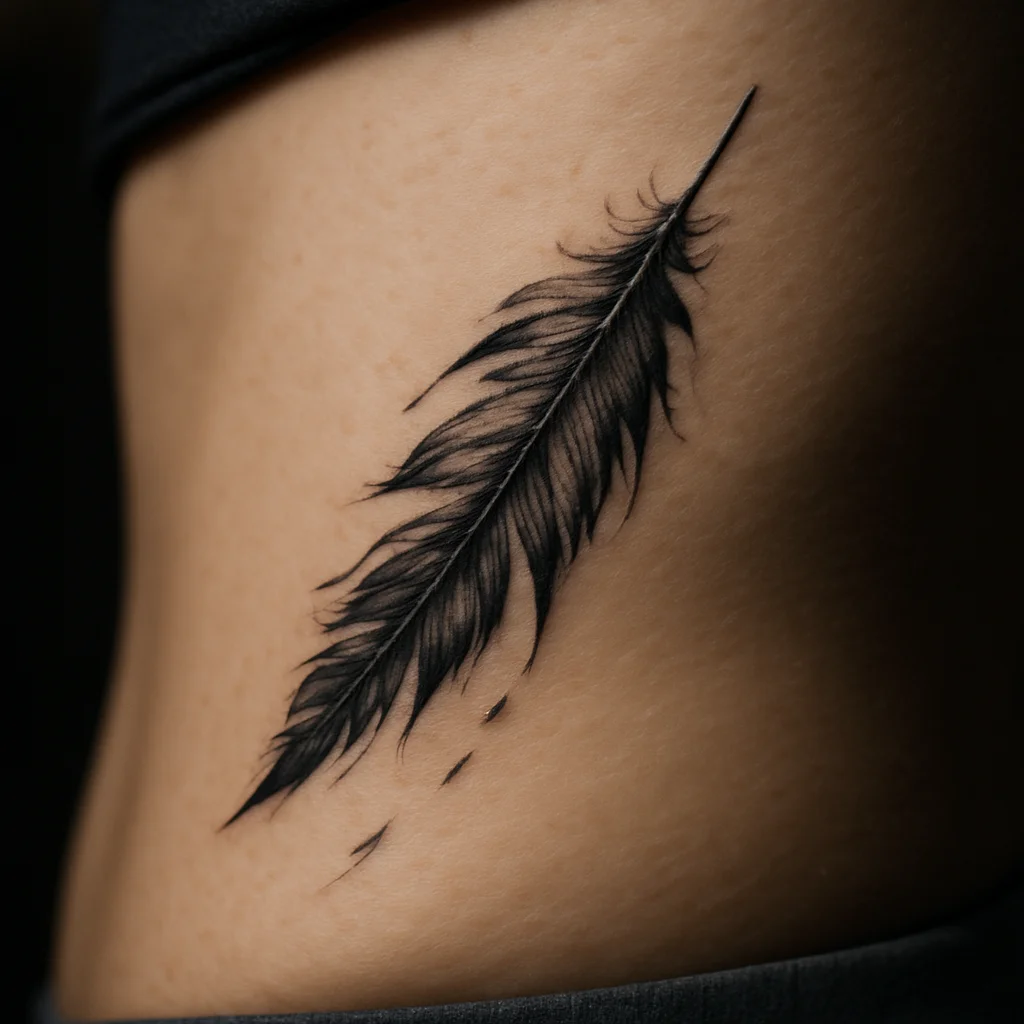
4. Vertical constellation with hairline links
Stars as small solid dots, connected by lines thin enough to be barely there, running from just below the armpit to the last rib. Ask for the dots to be slightly larger than feels necessary — tiny dots on rib skin can fade to faint grey. Perfect for a birth-month or partner constellation.
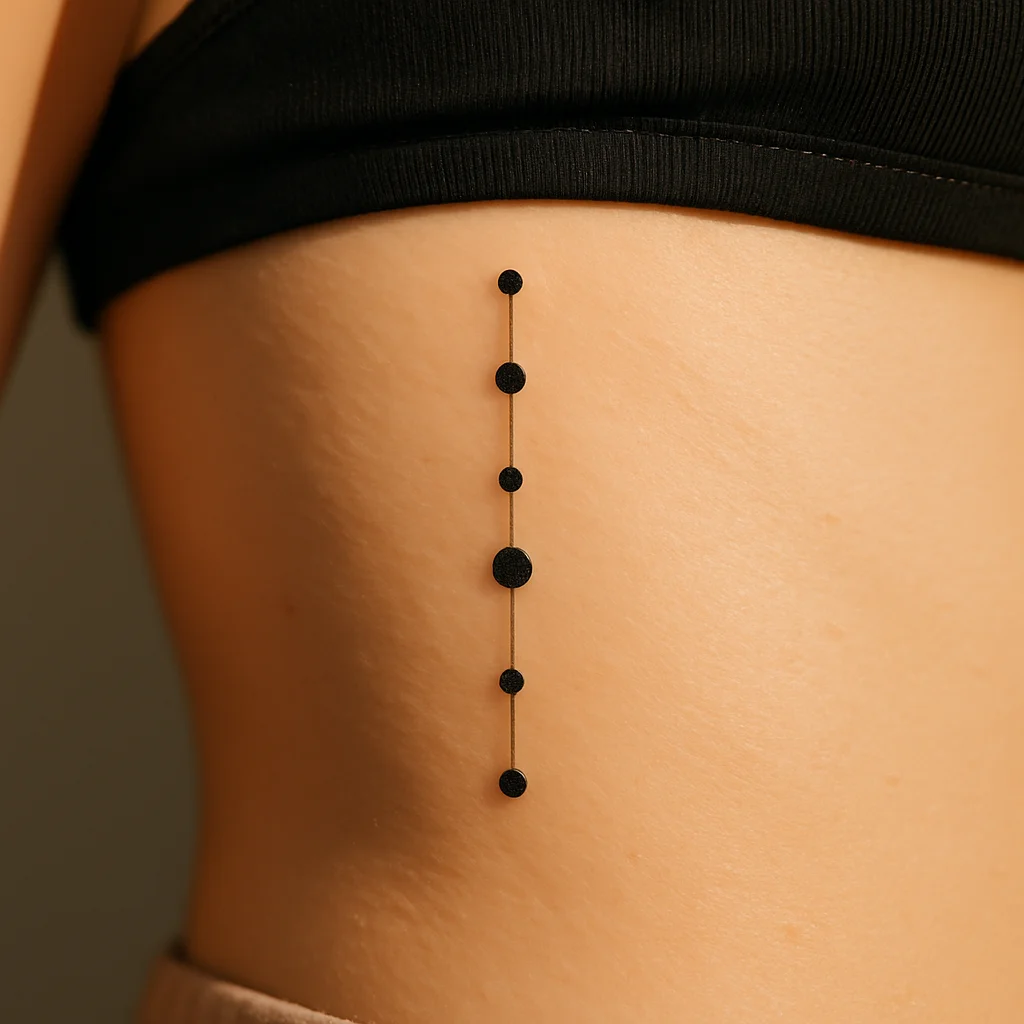
5. Slim dagger pointing down
The blade follows the vertical line, the crossguard sits just under the bust, and the tip ends around the natural waist. In traditional style with bold outline and simple shading, it holds up for decades. Reads as sharp and confident without needing colour.
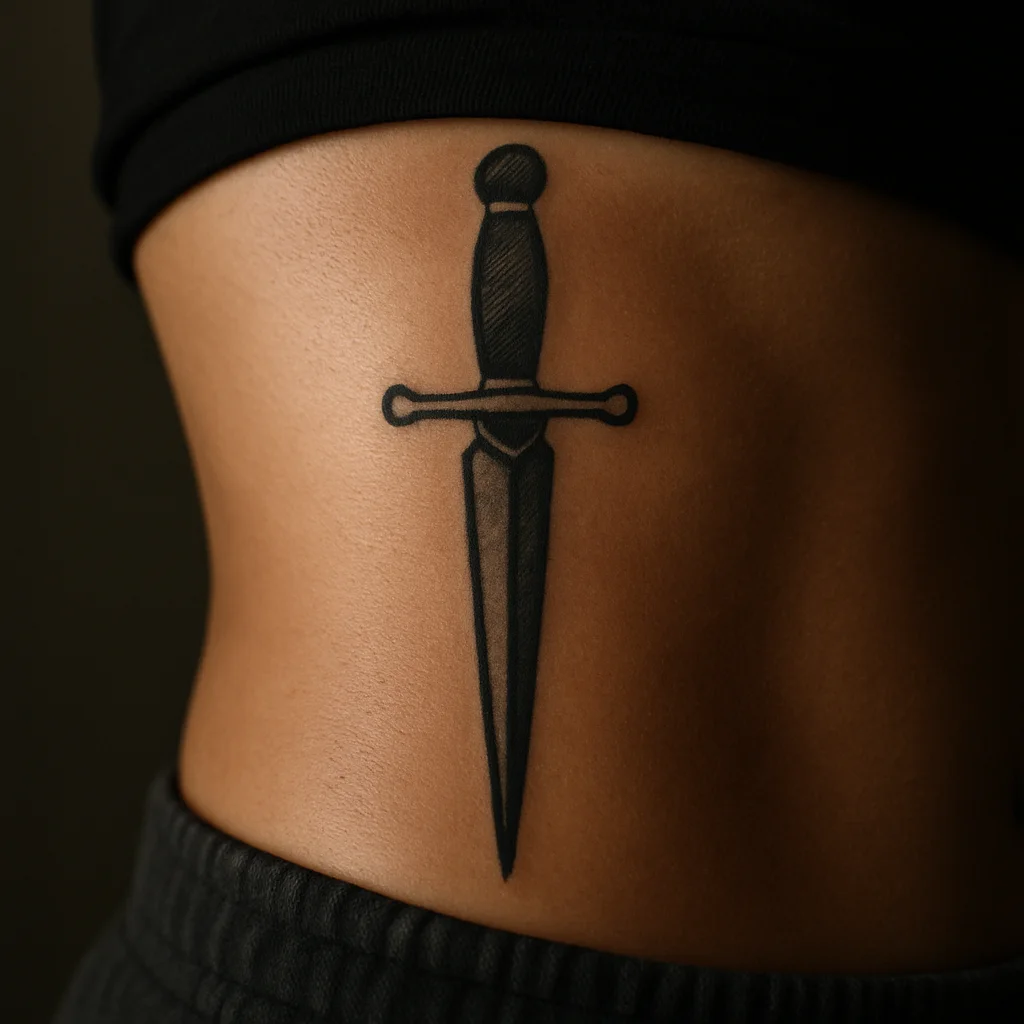
6. Trailing wisteria vine
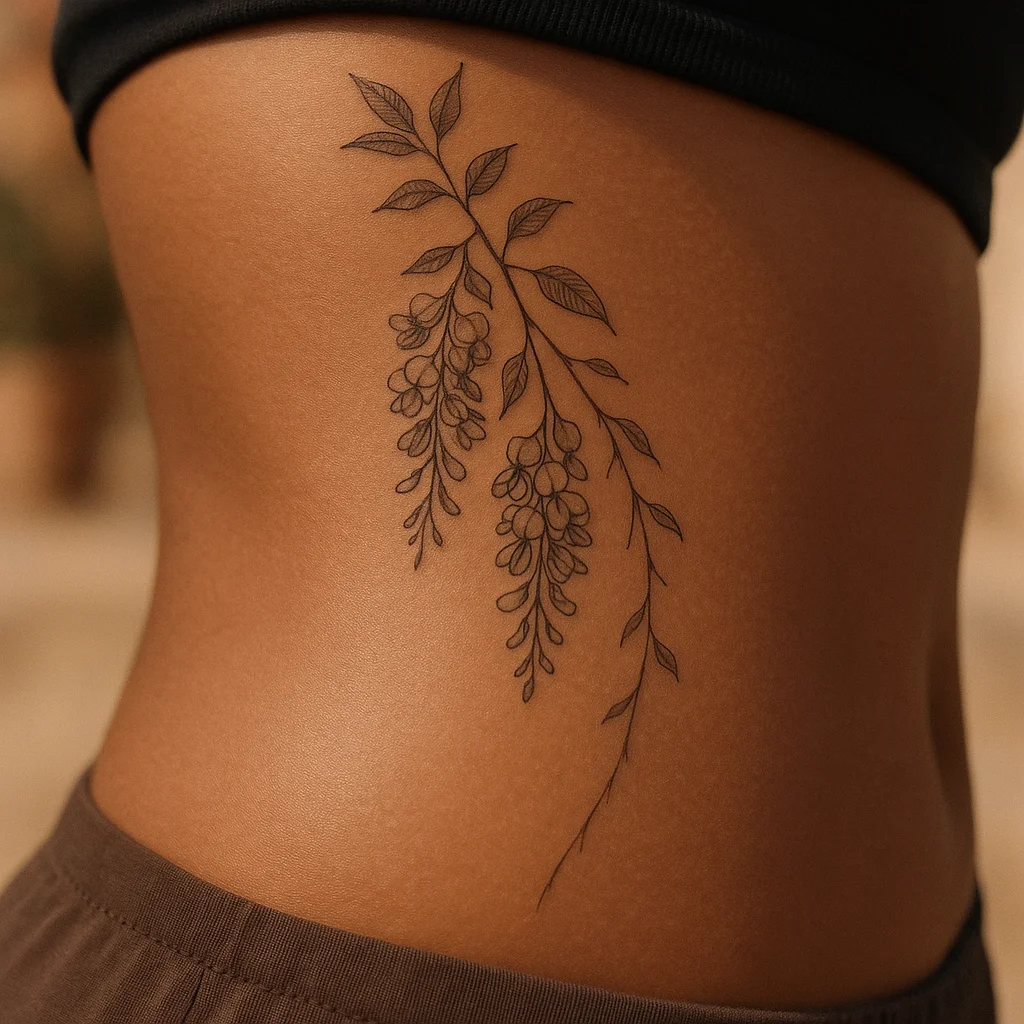
Hanging clusters of small blossoms cascading down, thickest at the top and thinning to a few loose petals near the hip. This is the design that most often convinces people to size up, and rightly so — at 25 cm it looks intentional, at 10 cm it looks unfinished.
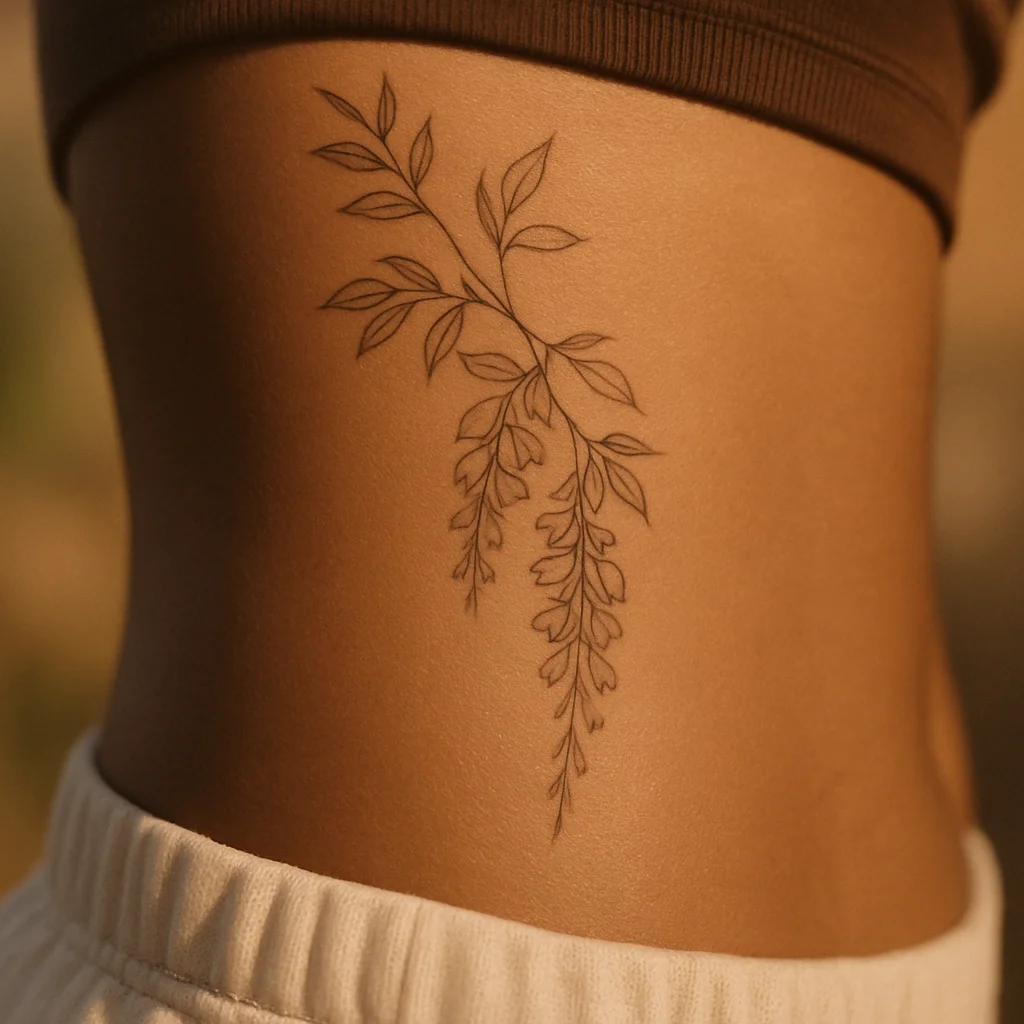
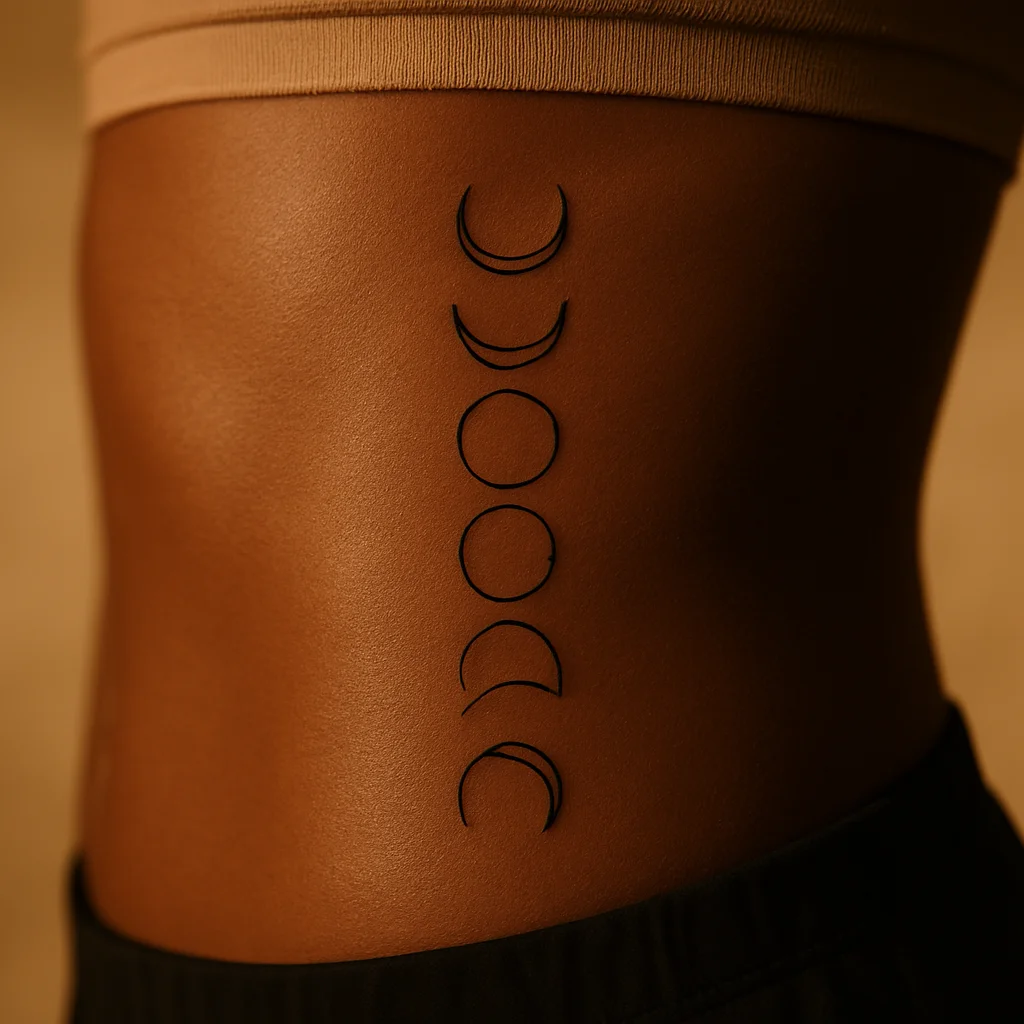
7. Column of moon phases
Five to seven moons stacked vertically down the rib line, from new to full and back. Keep the circles small, around 2 cm each, with generous gaps; that spacing is what keeps them from smudging into one another over the years. A quiet, symmetrical option that suits minimalist collections.
Curved pieces that follow the ribs and under-bust line
The other way to work with rib anatomy is to lay the design along a rib rather than across several. These arcs hug the under-bust line or sweep sideways toward the back, and because they follow an existing body line they tend to look like they belong there from day one.
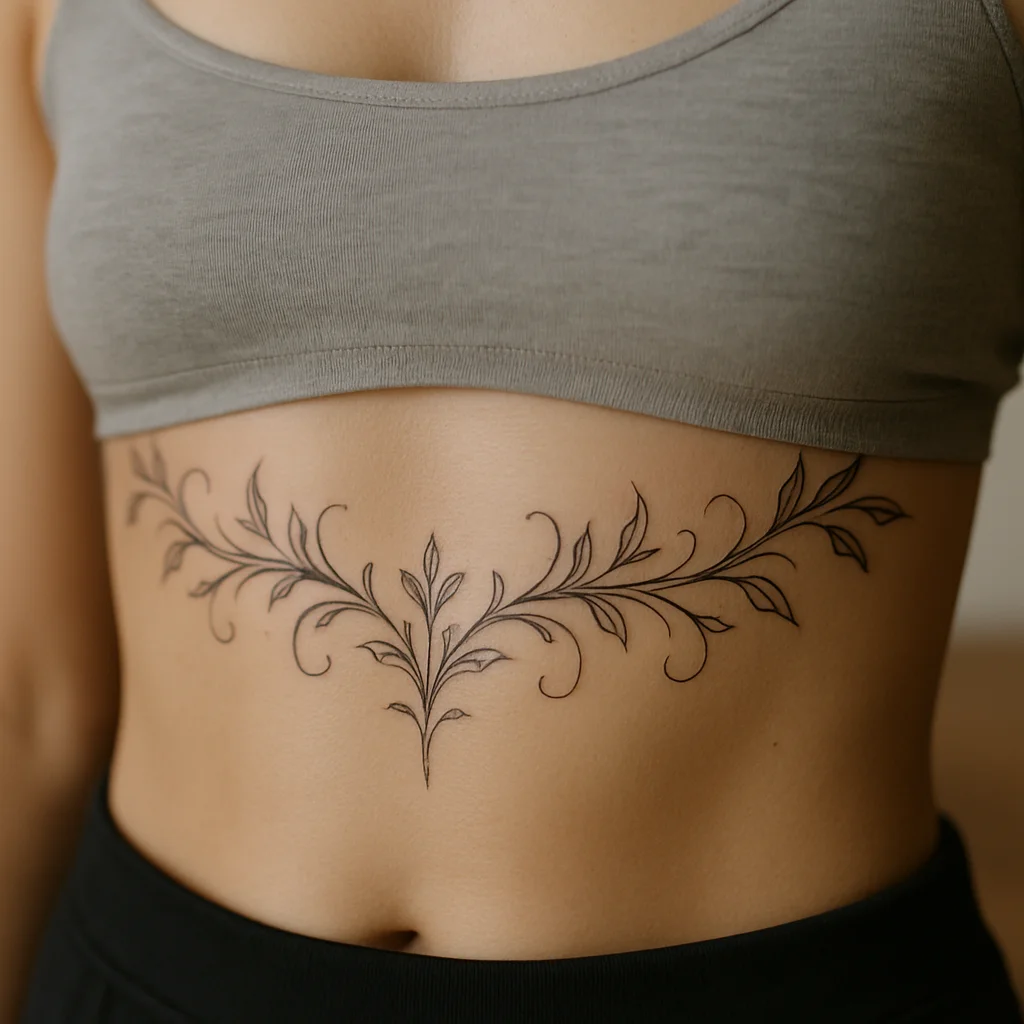
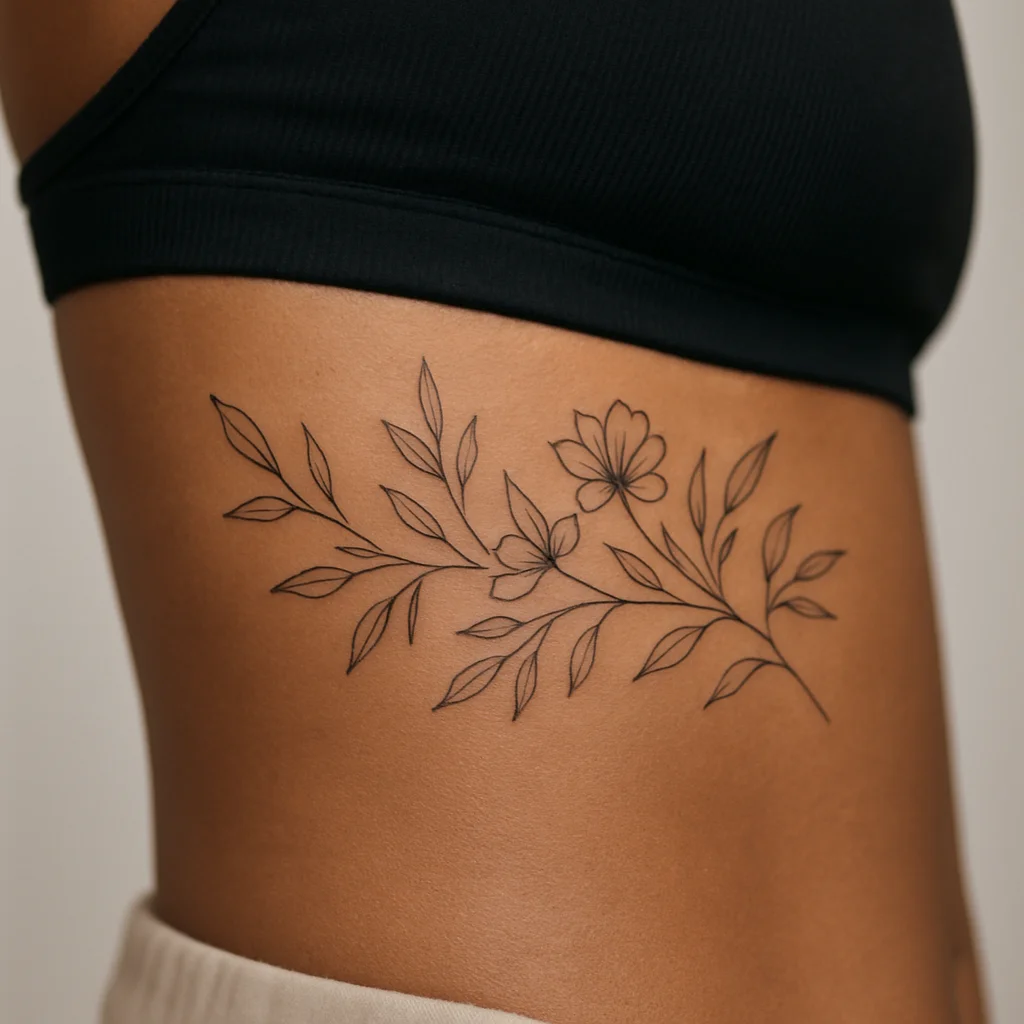
8. Under-bust botanical filigree arc
Ornamental scrollwork and small leaves curving along the under-bust line, mirrored on both sides if you want the full frame. Line weight should vary — thicker at the centre, tapering out — so it looks drawn rather than stamped. This is a longer sitting and a genuinely spicy one, so plan two sessions if you're doing both sides.
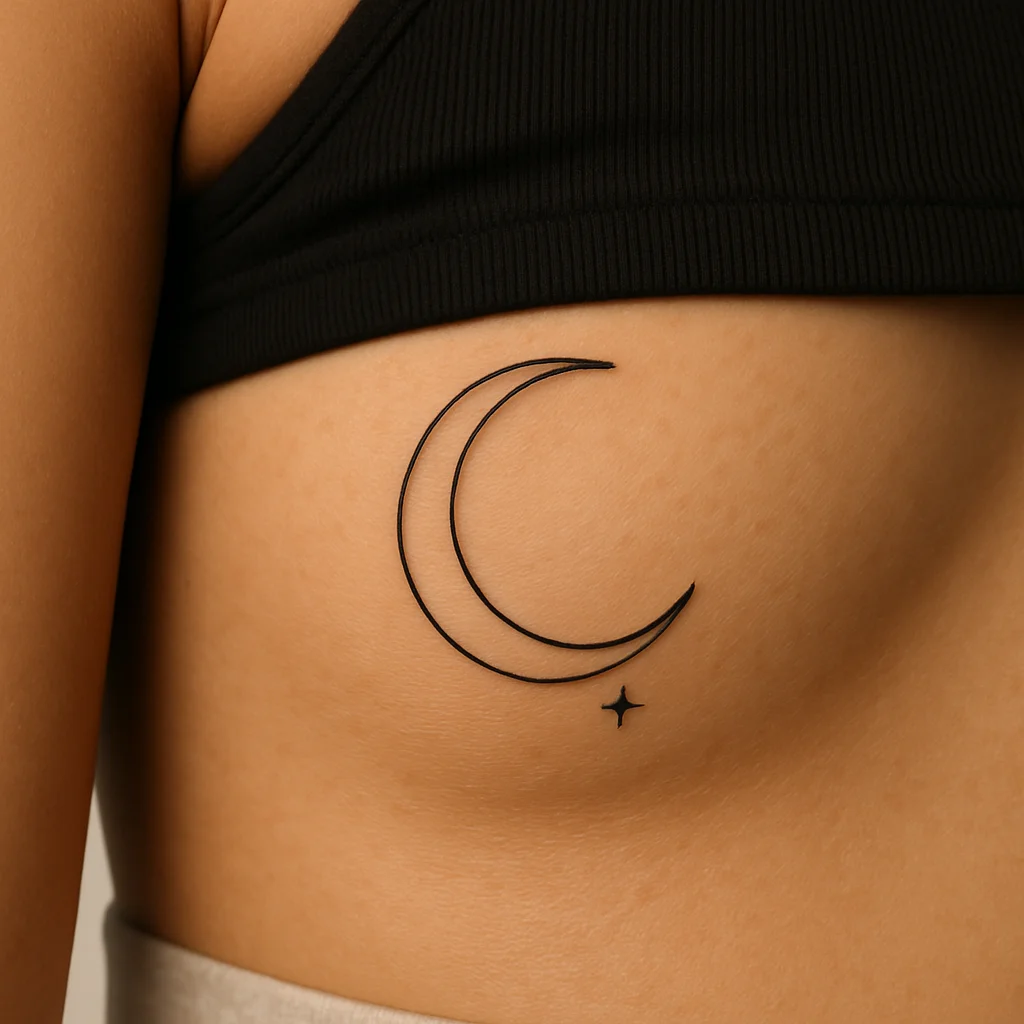
9. Crescent moon hooking under the bust
A single crescent, tips pointing up, tucked into the curve below the bust with maybe one small star inside the hollow. Around 8 to 12 cm across. It's a great option if you want something intimate and mostly private.
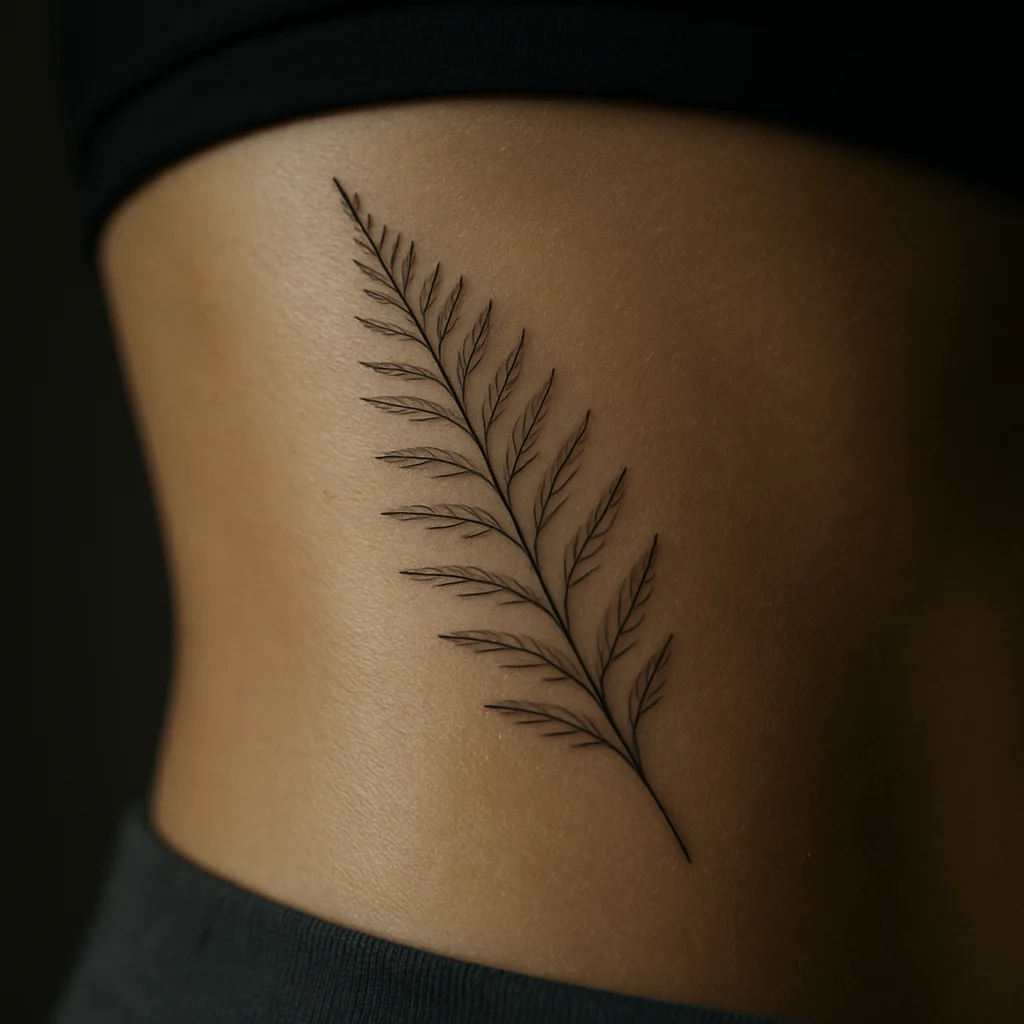
10. Fern frond laid along one rib
A frond drawn to follow the exact diagonal of a single rib, leaflets alternating along the stem. Because it sits parallel to the bone, the movement of your torso barely distorts it. Delicate but with enough structure to still read at arm's length.
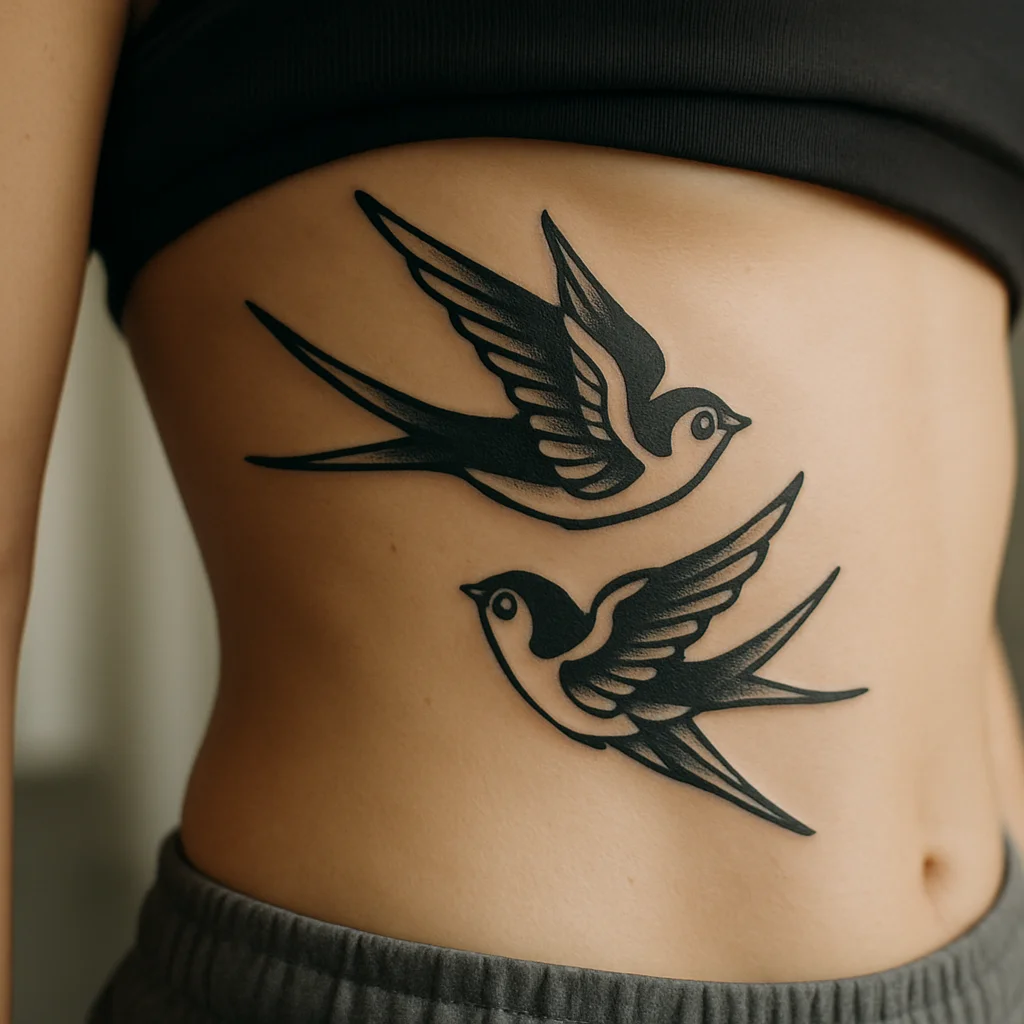
11. Swallow pair angled with the rib slope
Two birds, one slightly ahead of the other, wings tilted to match the rib diagonal. Traditional styling with solid black wing shading and a small amount of colour on the breast ages beautifully in this spot. A nice nod to old-school work in a modern placement.
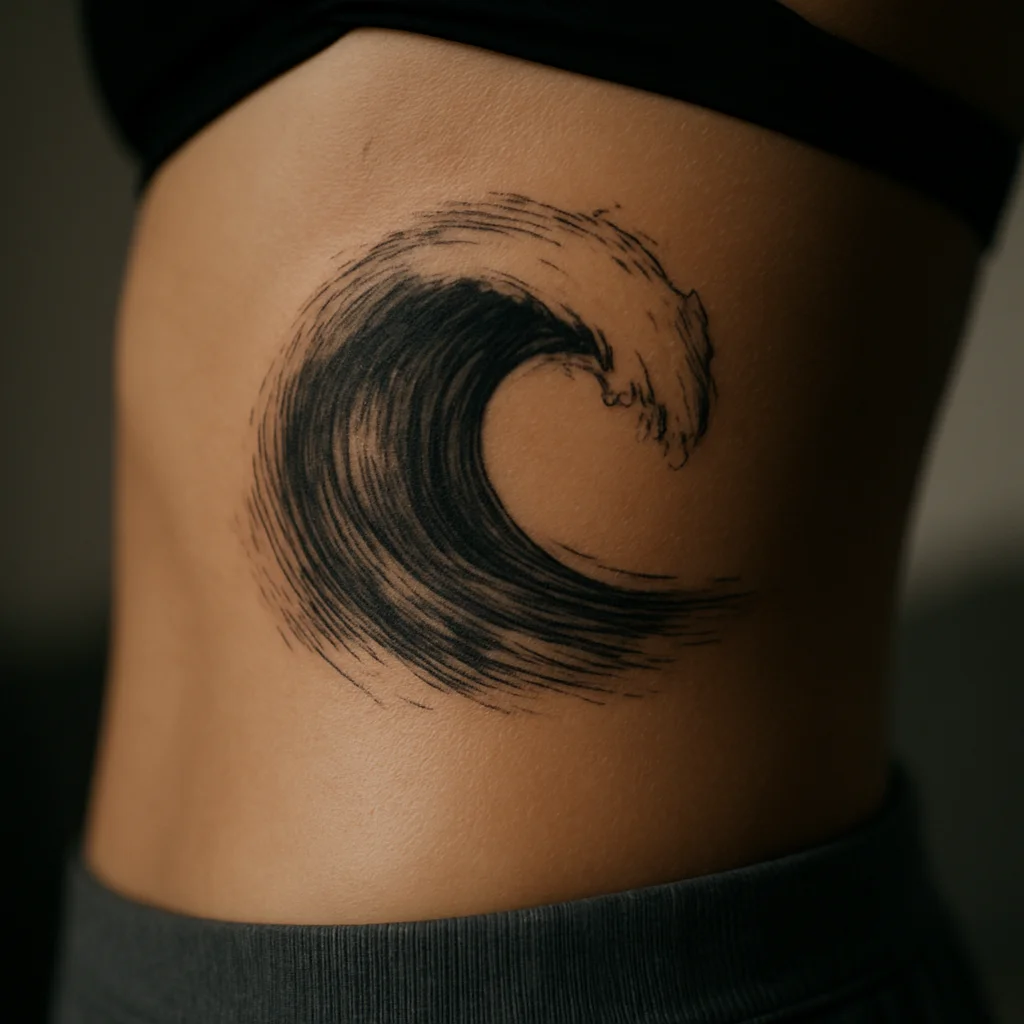
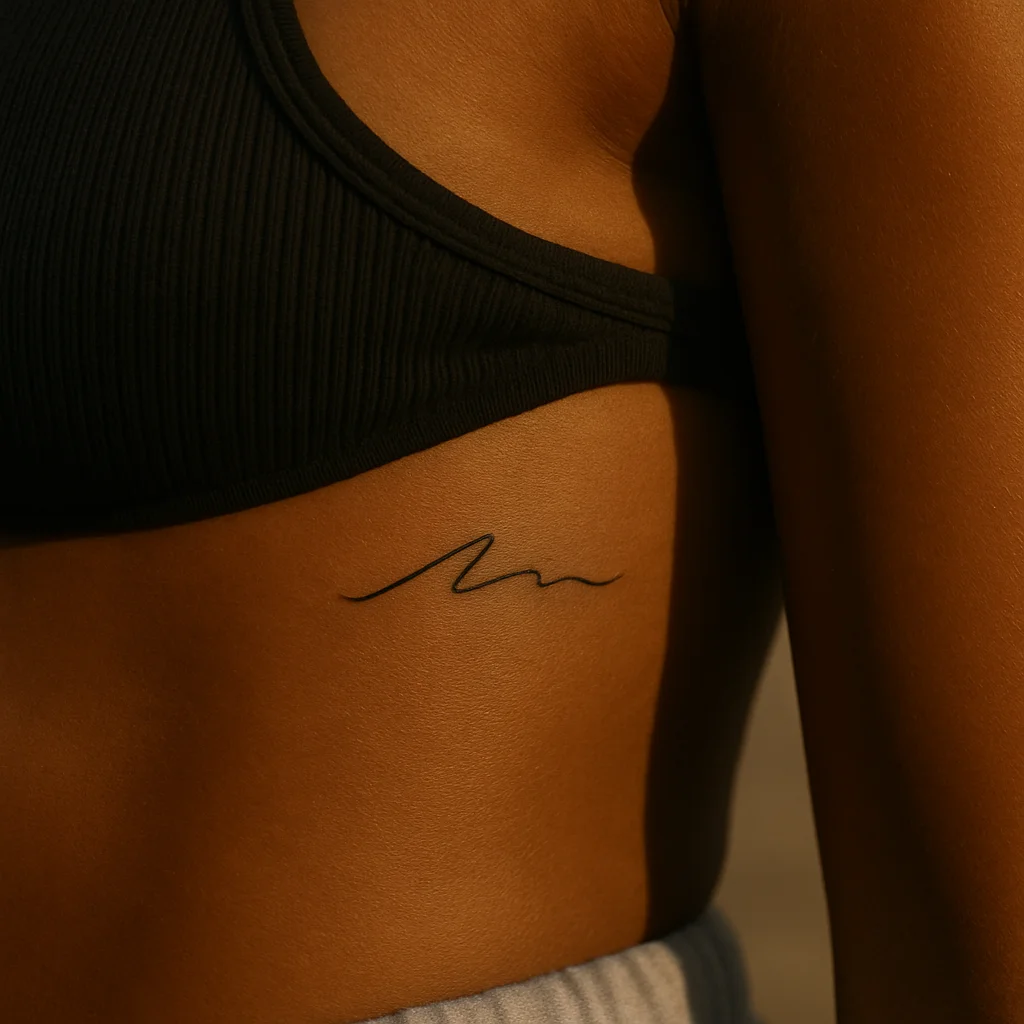
12. Wave curling toward the waist
A Japanese-influenced wave with a curling crest, following the rib line and breaking near the front of the waist. Use whitespace instead of dense grey for the foam so it stays crisp. Works especially well at 15 to 20 cm wide.
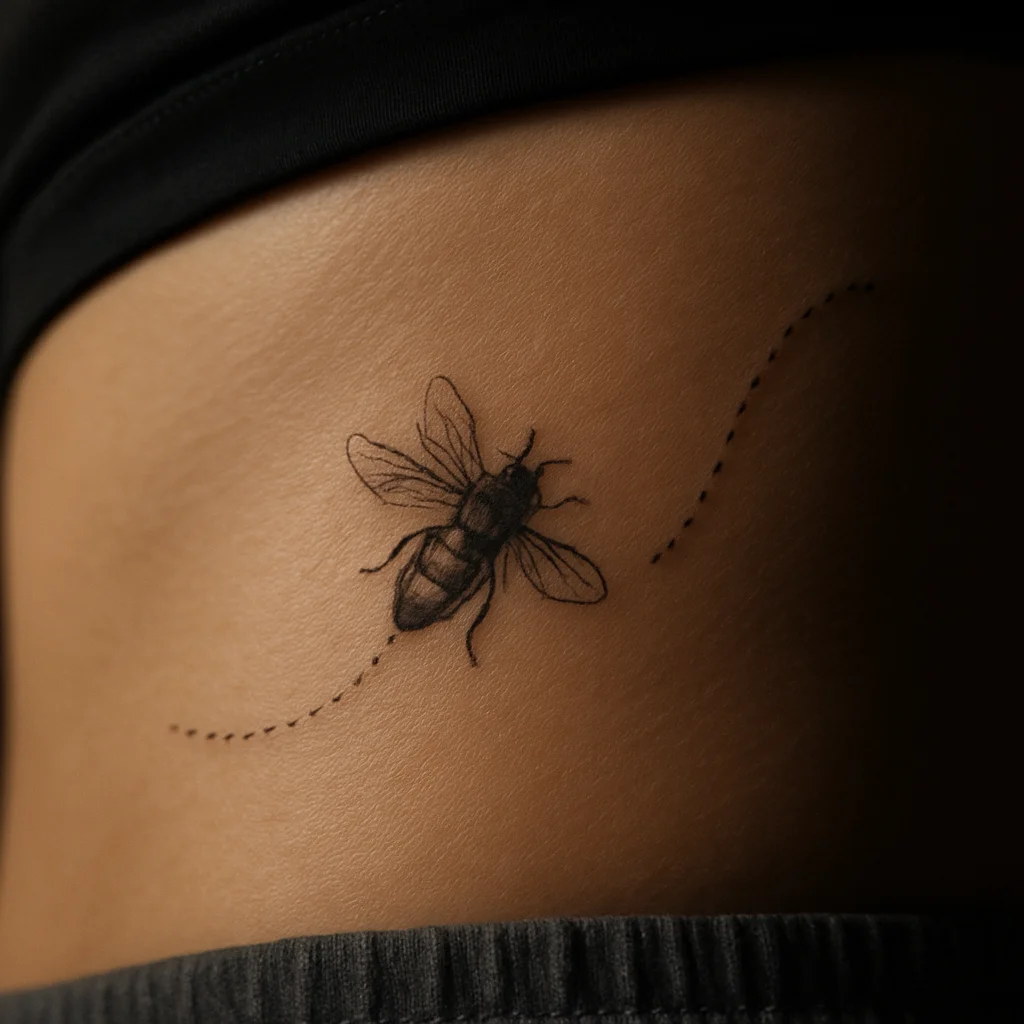
13. Bee with a dotted flight path
A small illustrative bee at one end, a fine dotted loop arcing along the ribs behind it. The dotted line does the flattering work by tracing the body's curve. Under 10 cm total and one of the fastest rib pieces you can get.
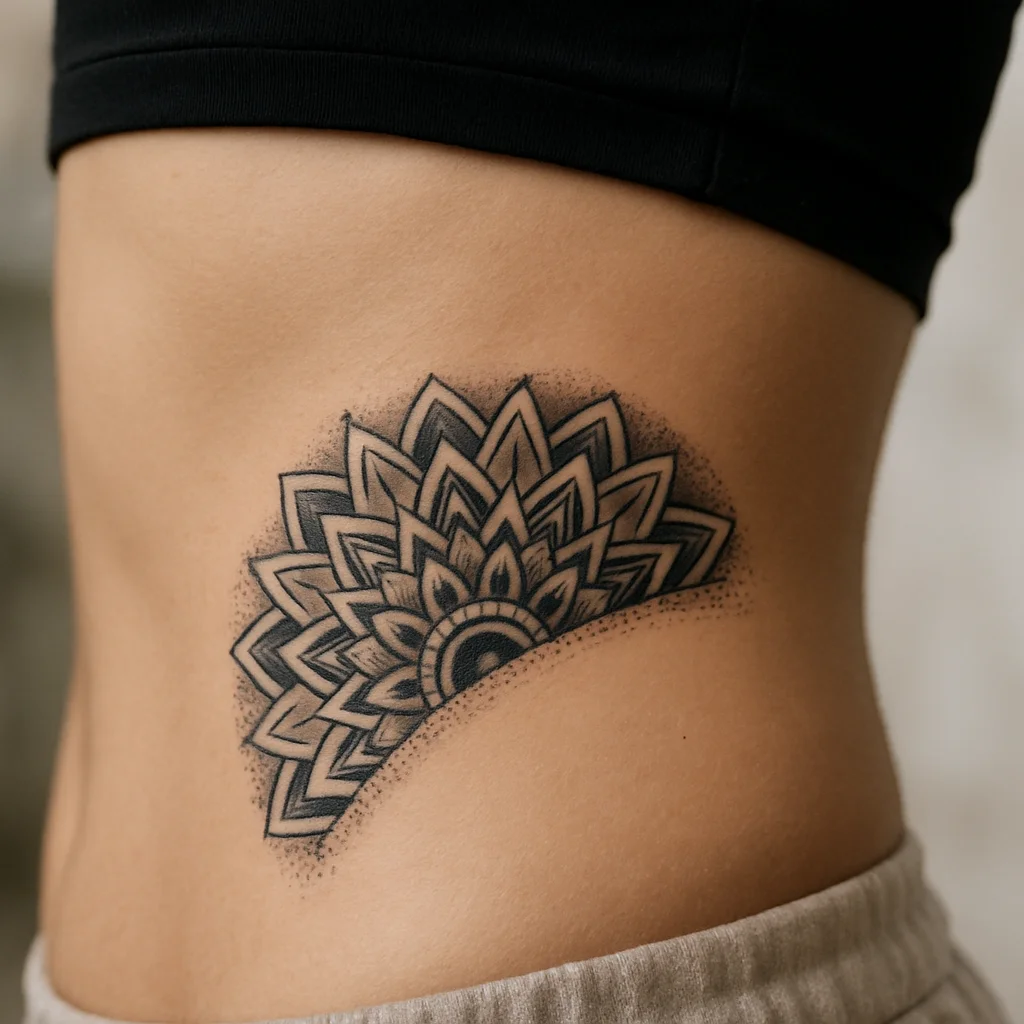
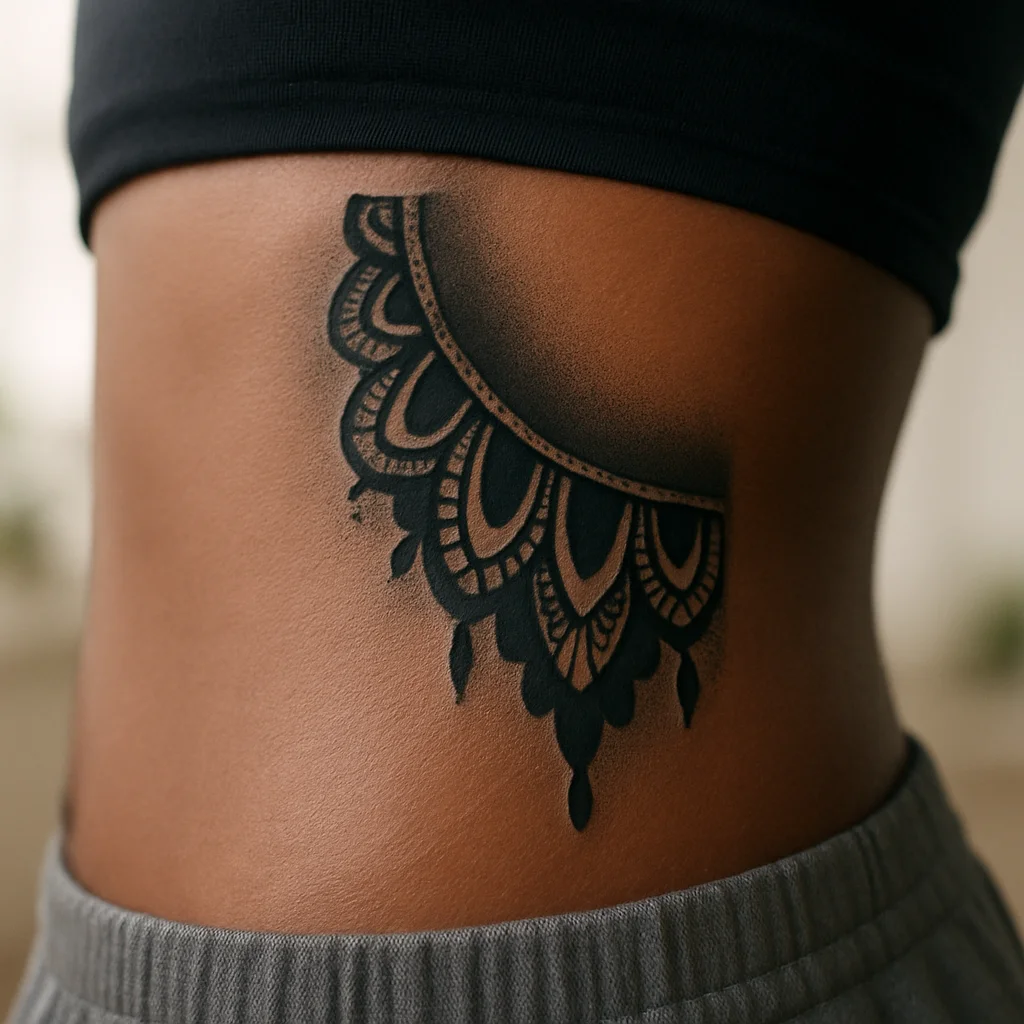
14. Ornamental half-mandala arc
A semicircular ornamental panel opening toward the back, built from repeated petals and dotwork. Ask for the geometry to be drawn freehand on the body rather than transferred flat, otherwise the symmetry warps. Suits anyone building toward a larger side or back piece later.
Script and words that sit where you can read them
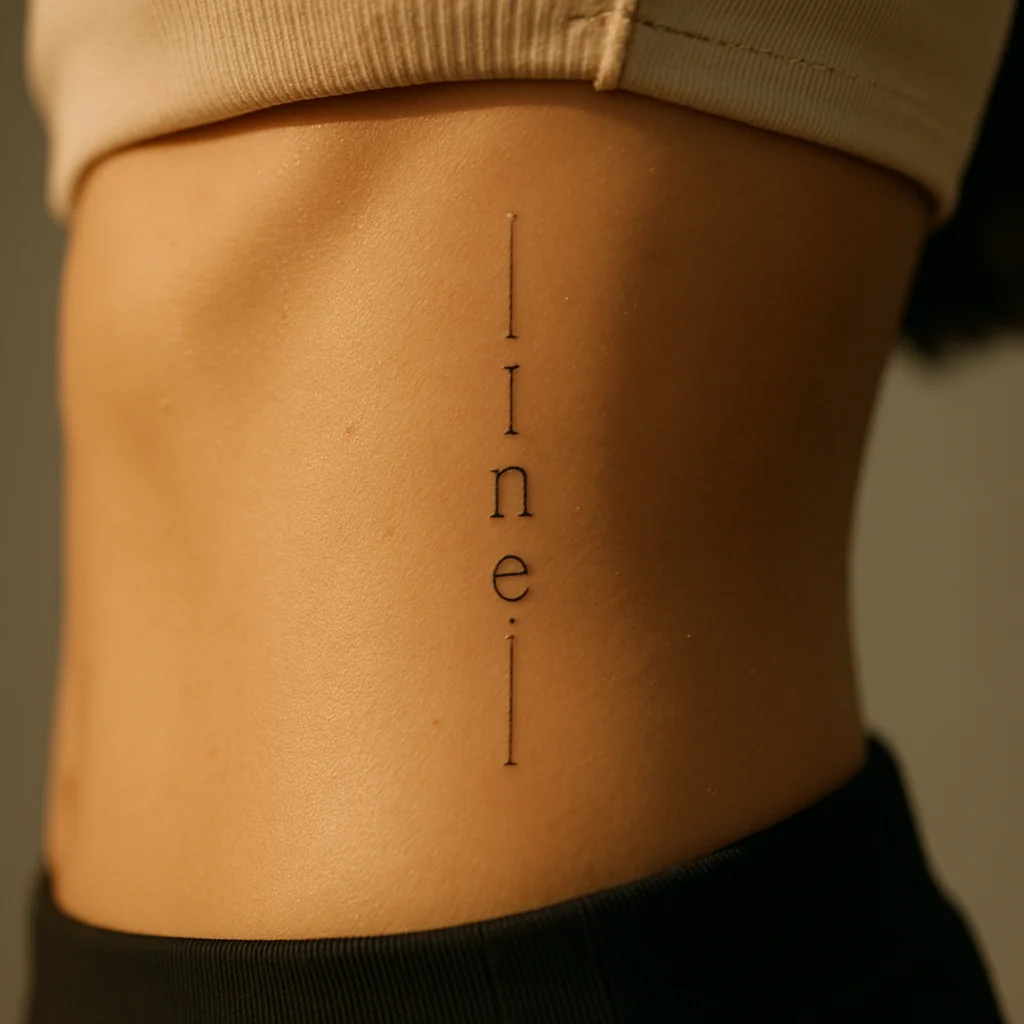
Ribs are the classic home for lettering, and also where lettering most often goes wrong. Two rules save most rib script: keep it short, and set the baseline on the rib diagonal rather than dead vertical or dead horizontal. Ask your artist for a printed stencil at two sizes and pick the larger one — script on ribs looks smaller in place than it does on paper.
15. Short phrase in fine serif running downward
Three or four words set vertically, letters upright, reading top to bottom along the rib line. A serif with modest contrast holds better than a hairline modern face. Around 15 cm of length keeps the letters big enough to stay legible.
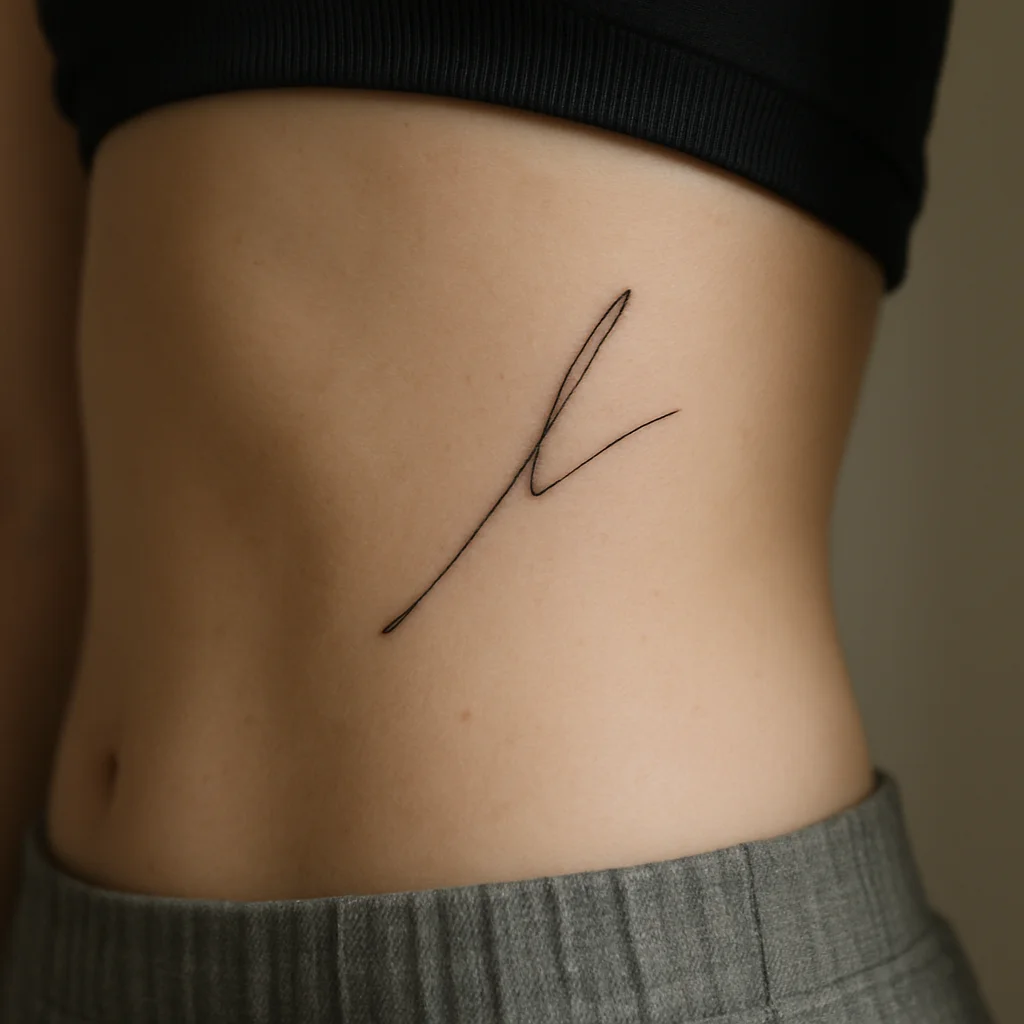
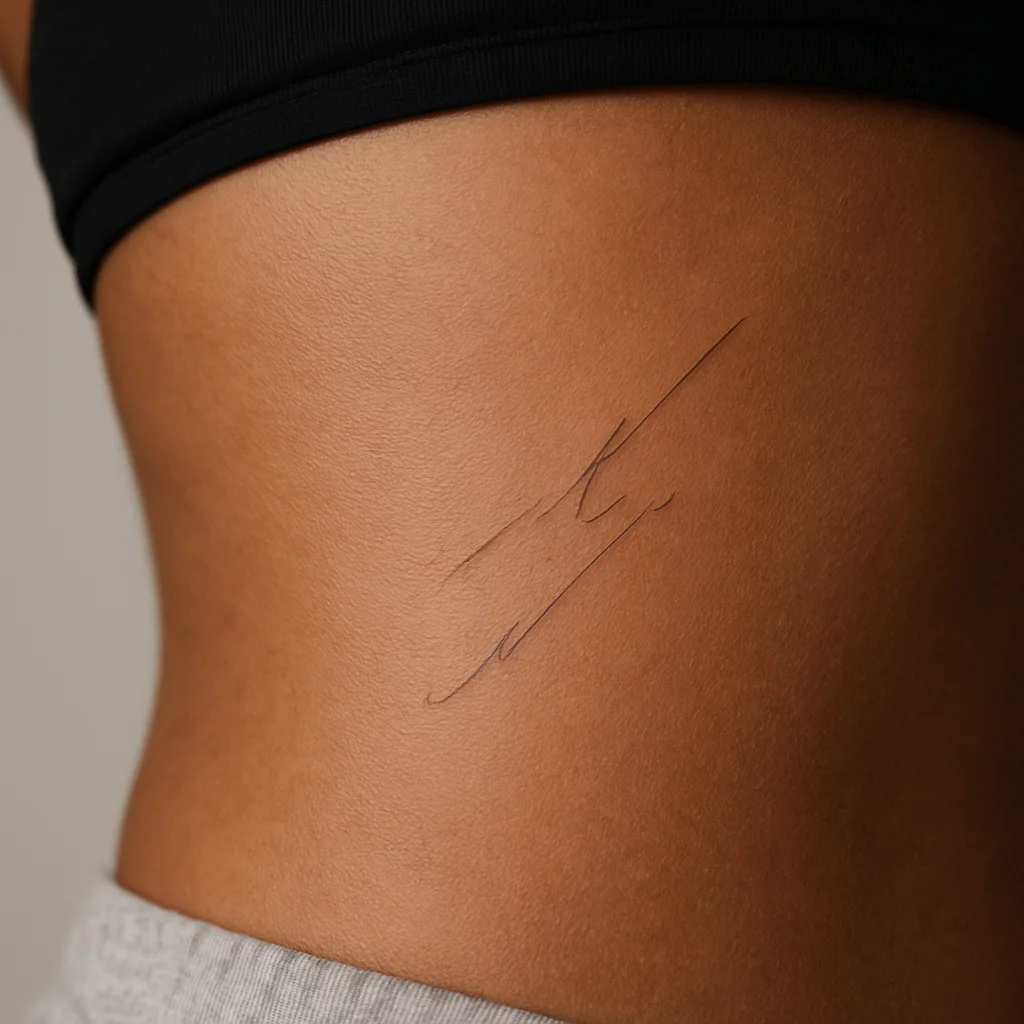
16. One word in loose handwriting
A single word — a name, a place, an anchor word — in relaxed handwriting angled to match the ribs. The looseness is the point: it should look jotted, not typeset. Small enough to sit between two ribs, around 6 to 9 cm.
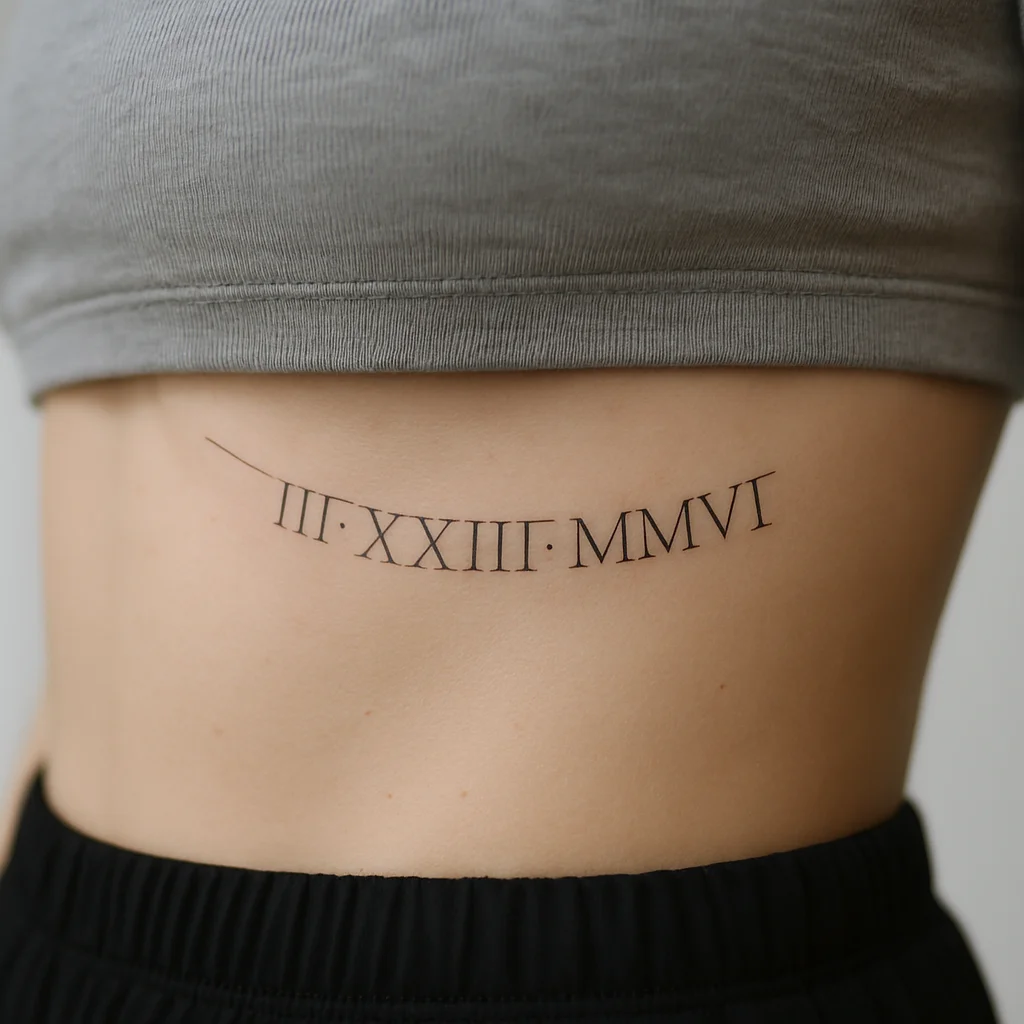
17. Roman numeral date under the bust
A date in slim Roman numerals following the under-bust curve, with small dots or short bars separating the groups. Keep numeral height around 1.5 cm minimum so the thin strokes survive. A discreet way to carry a birth, a loss or an anniversary.
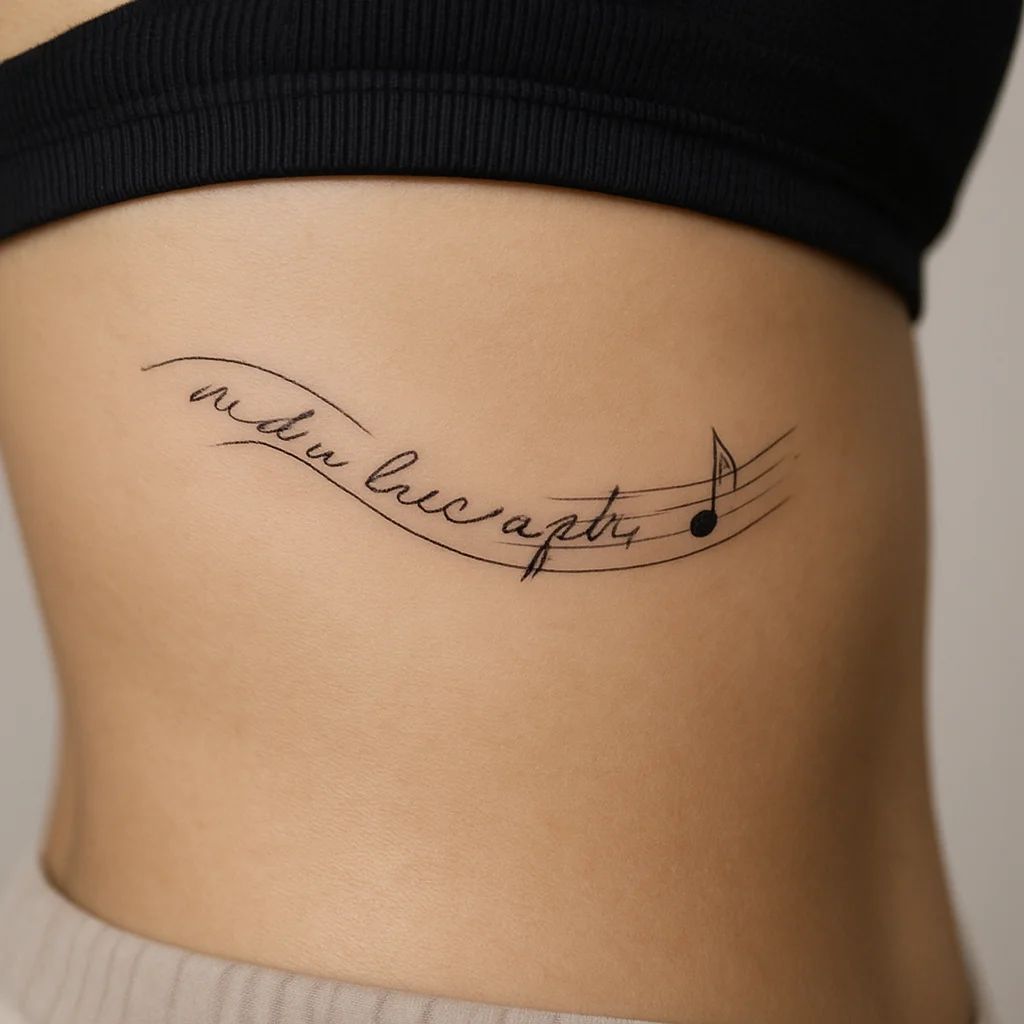
18. Lyric fragment on a staff line
A few words riding along a single music staff line that curves with the ribs, with one small note as punctuation. It gives the text a reason to bend, which is what makes curved script look deliberate. Best around 18 cm long.
19. Name in tiny script tucked near the sternum
Set close to the front edge of the ribs, just where the side meets the chest. This is one of the sharper spots pain-wise but it's also the most private, which is often exactly the trade people want. Two or three centimetres of letter height is plenty.
20. Two-language phrase in delicate italics
The same short phrase in two scripts, stacked as two lines along the rib diagonal. Bring your artist a clear reference for any non-Latin characters and have a native reader check spelling before the needle comes out. Italic slant naturally complements the rib angle.
Bigger side pieces that use the whole panel
If you're willing to sit longer, the side of the torso is one of the best canvases on the body: a tall, slightly curved rectangle that can hold a real composition. Larger rib pieces also tend to age better than tiny ones, because the linework is heavier and the shading has room to breathe. Expect multiple sessions and budget in the range of a half-day to a full day of studio time per session, priced by hourly or day rate depending on your artist.
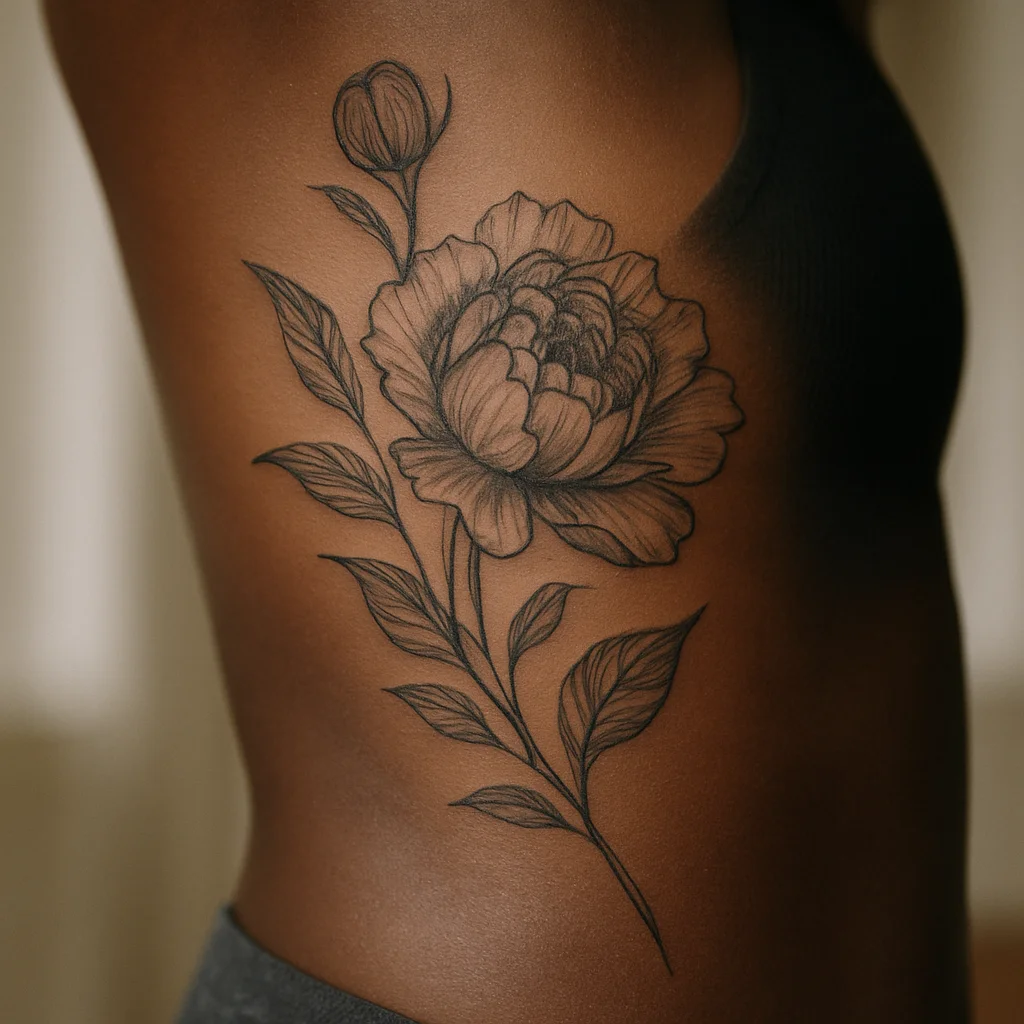
21. Peony and leaf cluster from underarm to waist
One large open bloom high on the ribs, a bud below it, leaves filling the taper toward the hip. Soft black-and-grey shading keeps it romantic; a single muted colour in the petals makes it pop. This is the most requested large rib piece for good reason — it fits the space almost perfectly.
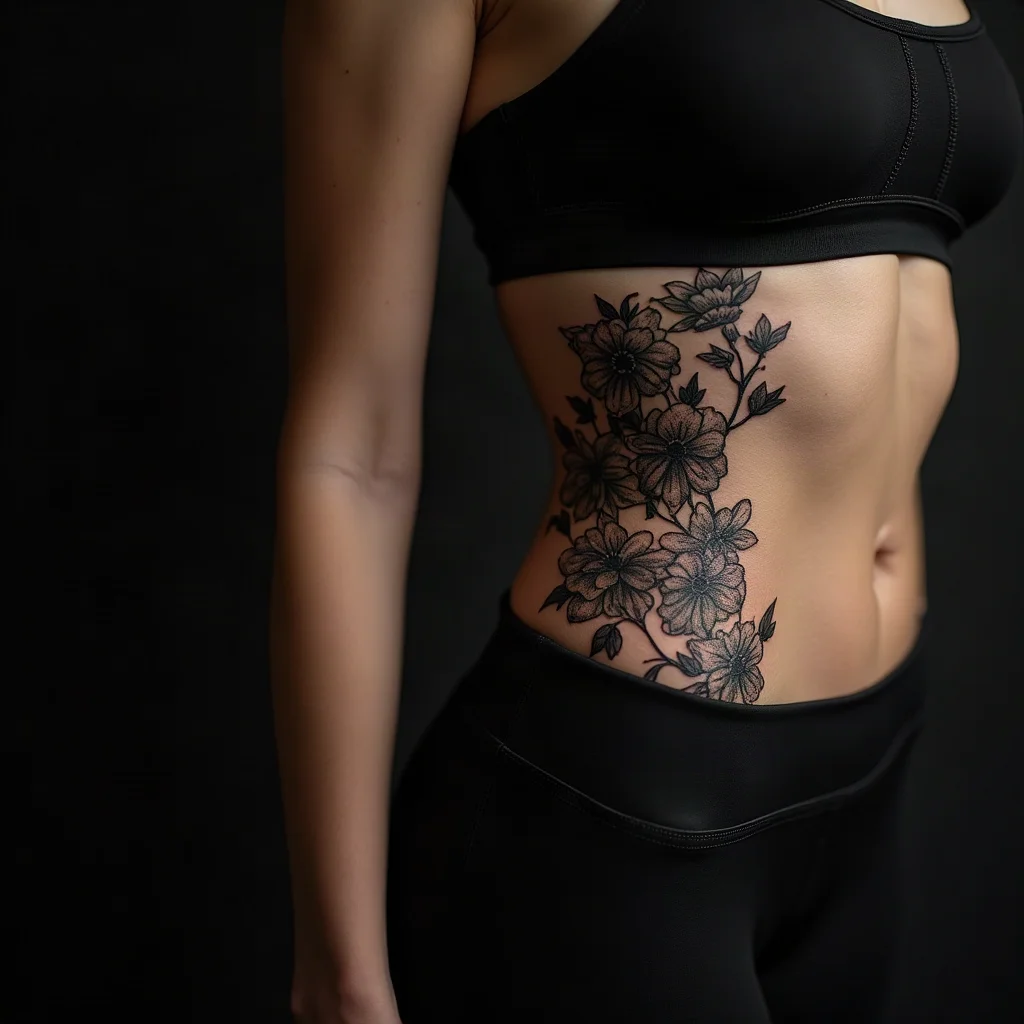
22. Blackwork floral panel wrapping to the back
Dense black leaves and silhouette flowers starting at the front of the ribs and carrying around toward the shoulder blade. The solid black is a longer, more intense sitting but it's incredibly durable. Ask for negative-space gaps so the panel doesn't read as one flat mass.
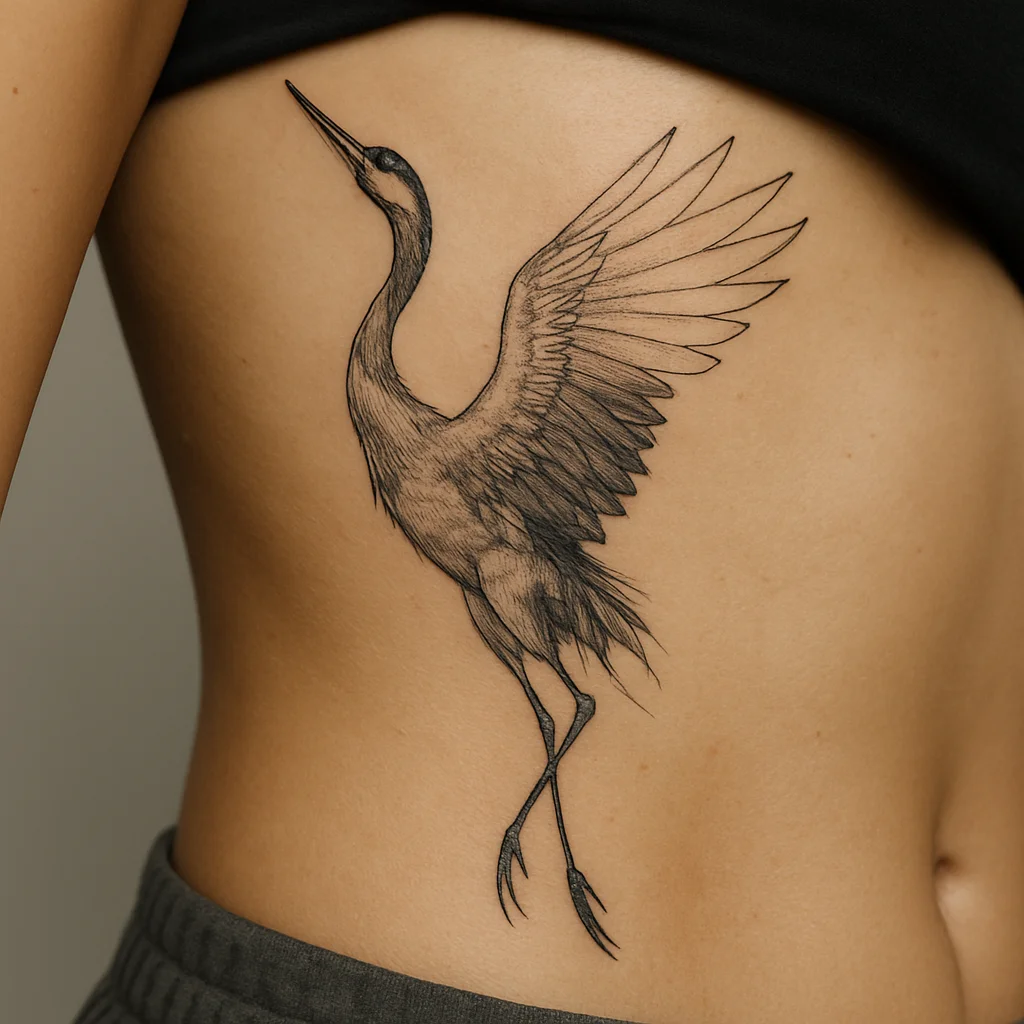
23. Bird in flight with negative-space wings
A heron or crane rising up the ribs, body illustrated in fine detail and the outer wing feathers left mostly as open skin. The vertical lift suits the torso's proportions and makes the waist look longer. Around 25 to 30 cm tall.
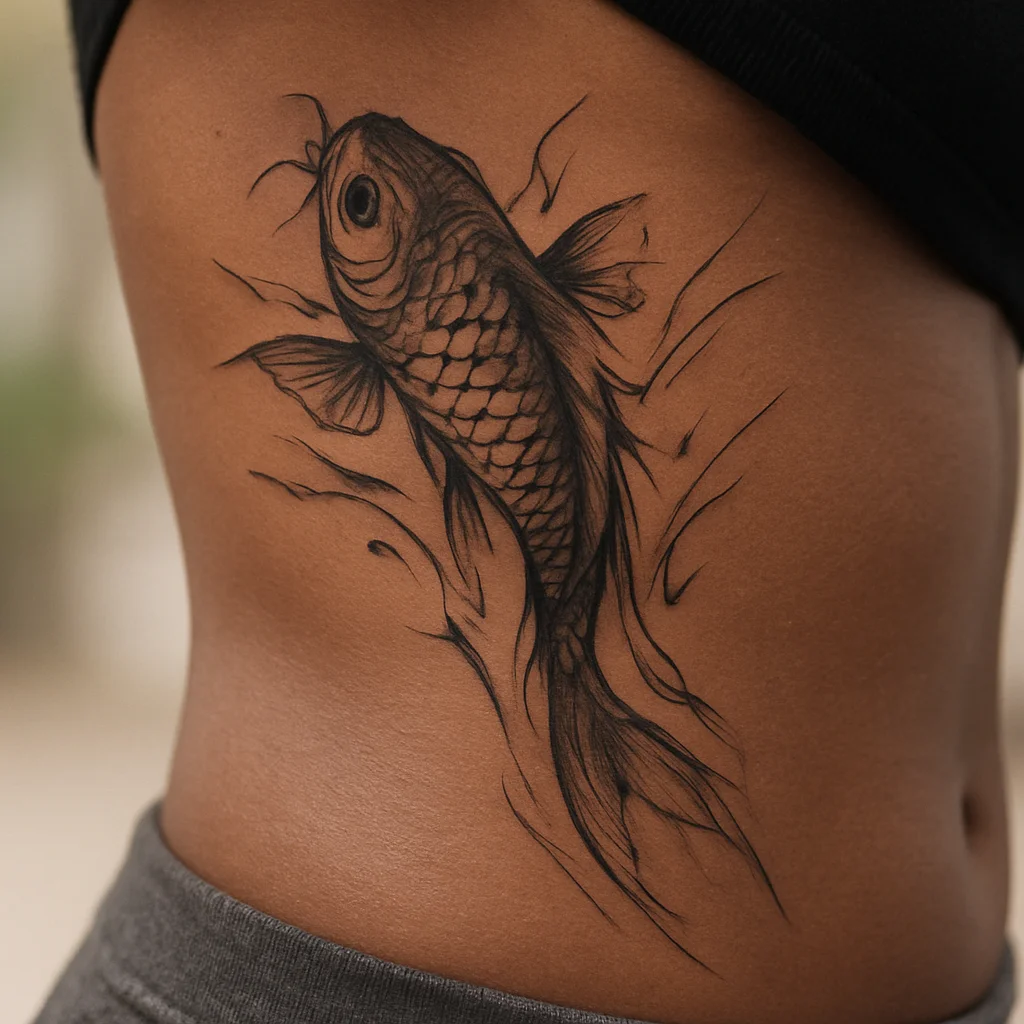
24. Koi swimming up the ribcage
Head near the underarm, tail flicking toward the hip, water lines following the rib diagonals. Japanese-style rib work is a classic pairing because the wave and wind elements are designed to follow body curves. Plan for at least two or three sessions.
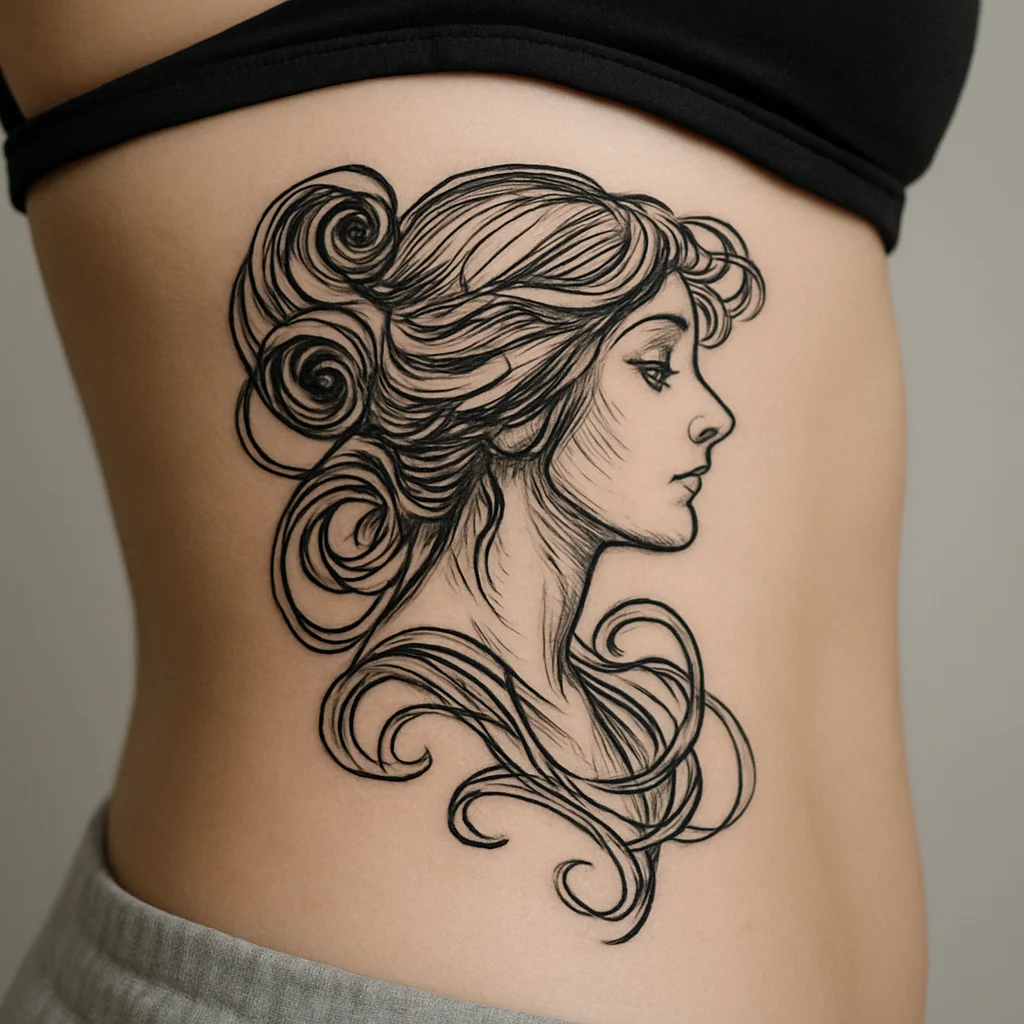
25. Art nouveau profile with flowing hair
A woman's face in profile near the top of the ribs, hair unspooling downward into decorative curves and small flowers. The flowing hair is the trick — it lets the piece taper naturally instead of ending abruptly. Needs an artist confident with faces at this scale.
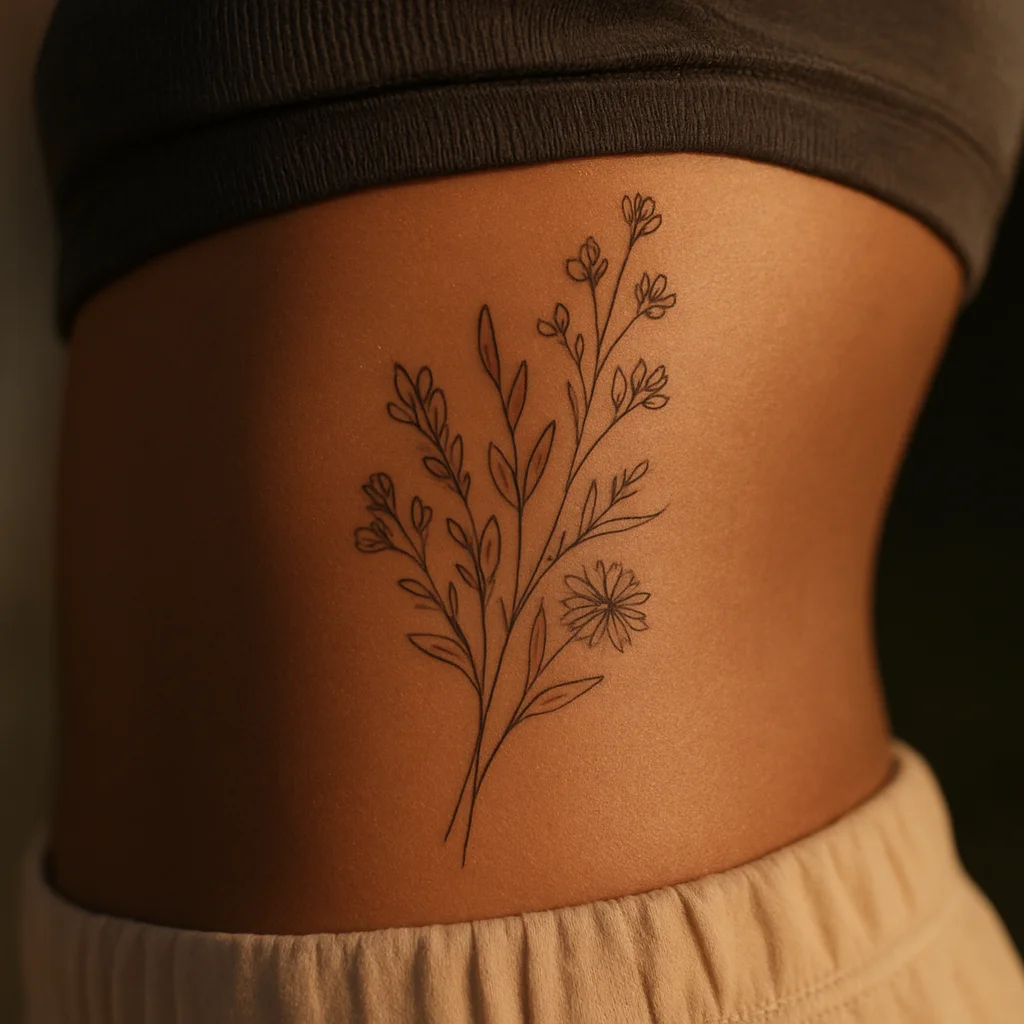
26. Botanical bouquet framing the waistline
Stems gathered at the lowest rib and fanning upward, so the narrowest point of the design sits at the narrowest point of your waist. Mixed flowers with different textures — poppy, thistle, grasses — keep it visually interesting. A good long-term project you can add to season by season.
27. Geometric line-and-dot panel
Long tapered lines and dot gradients running the length of the ribs, echoing the bones underneath rather than copying them. Because it's abstract, minor stretch distortion reads as intentional. Suits anyone who wants something bold but not figurative.
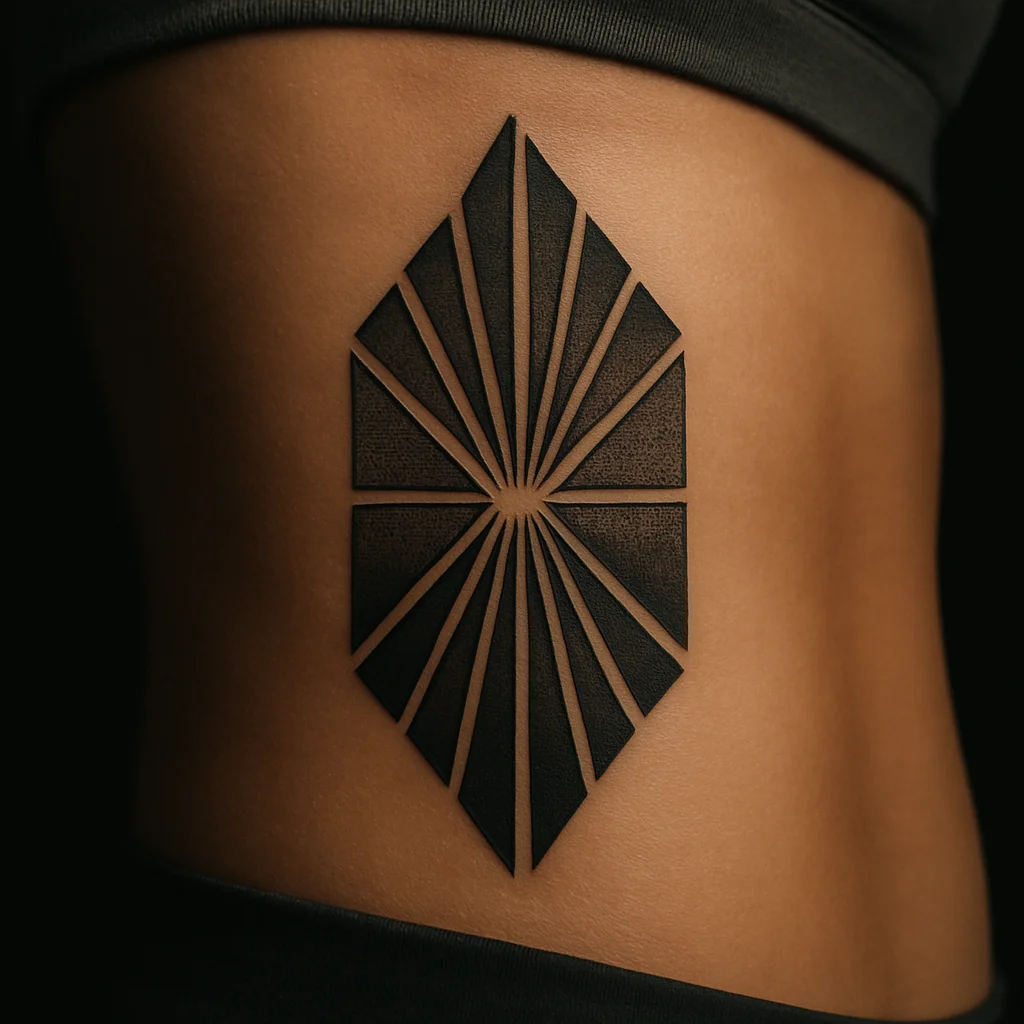
28. Ornamental lace panel with stipple shading
A drapery-like ornamental panel, scalloped edges, stippled shadow behind it so it looks slightly lifted off the skin. It flatters the curve of the ribs the way a garment would. Heavier on the pain scale because of the stipple passes, but the payoff is a piece that looks tailored to your body.
Pain, healing and how to brief your artist
Ribs earn their reputation. Skin is thin, bone is close, and there's no muscle padding to absorb the vibration. Most people describe it as a hot scraping that gets harder to sit through as the session goes on rather than a single sharp spike. The worst zones are directly on bone at the front, right under the armpit, and along the under-bust line. The softest patch is the fleshier stretch above the hip, which many clients say is no worse than an outer thigh.
Making the session easier
- Eat a real meal beforehand and bring sugar. Blood sugar crashes hit hard on ribs.
- Wear a button-front shirt or a bralette you can shift, and bring a spare — ointment stains.
- Practise breathing steadily. Holding your breath tenses the intercostals and makes lining harder for your artist.
- Book a shorter first session if it's your first rib piece. Three hours of good, still sitting beats six hours of squirming.
Healing on a spot that never stops moving
Rib tattoos scab in the flex lines first, usually along the under-bust band where clothing rubs. Go bra-free or wear something loose for the first week if you can, sleep on the opposite side, and keep the ointment layer thin so the skin can breathe. Peeling is often patchier here than on limbs, which can make the piece look uneven around day eight — it evens out. The full routine in our 30-day aftercare guide applies, with extra attention to friction.
What to bring to the consultation
Reference images, yes, but also a photo of your own torso standing relaxed, and a note about what clothing you want the piece visible in. Tell your artist whether you plan to extend the design later toward the back or hip; that changes how they shape the edges now. And be honest about your pain tolerance and time budget — a good artist will restructure a large piece into sensible sessions rather than pushing through a nine-hour marathon.
Frequently asked questions
How much do rib tattoos hurt compared to other placements?
Ribs sit near the top of most people's pain lists because the skin is thin and directly over bone with no muscle padding. The front of the ribs, the area just under the armpit and the under-bust line are the sharpest; the fleshier area above the hip is noticeably easier. It's usually described as a persistent hot scrape rather than a sudden stab, and it gets harder the longer you sit, so shorter sessions help a lot.
What size works best for a rib tattoo?
The space between the underarm and hip bone easily holds a design 20 to 30 cm tall, so pieces that feel big on paper often read as modest in place. Very small rib tattoos work best as script or single motifs placed between two ribs. If you're torn between two sizes, go with the larger one — heavier linework also holds up better against skin stretch.
Do rib tattoos fade or blur more than other tattoos?
They can, especially very fine detail placed directly over bone, and anything that rubs constantly against a bra band. The area also stretches with breathing and weight changes. Choosing slightly thicker lines, leaving space between elements and staying consistent with sunscreen keeps a rib piece crisp far longer.
How long does a rib tattoo take to heal?
Surface healing takes about two to three weeks, with full settling closer to two or three months. The friction from clothing is the main complication, so wear loose tops, skip the underwire where possible in the first week, and sleep on the opposite side. Patchy peeling around day eight is normal on ribs and evens out.
What should I wear to a rib tattoo appointment?
Something you can open or shift easily — a button-front shirt, a loose bralette or a strapless top — plus a spare because ointment and ink transfer onto fabric. Avoid anything tight around the ribs for the trip home. Bring a snack and water, since sessions in this area feel longer than they are.
The conversation
No comments yet. Got a thought about these designs? Start us off.
Want to weigh in? Join the community to comment, save designs and try them on your skin.