30 Thigh Tattoo Ideas for Women, Sorted by Zone
The thigh is the biggest, most forgiving canvas most people never use properly. Here are 30 designs sorted by zone, plus honest notes on pain, aging and what to ask your artist for.
What the Thigh Actually Gives You
Ask any artist which placement they wish more clients would consider and the thigh comes up fast. It is broad, mostly flat where it counts, low on nerve-ending drama compared to ribs or knees, and it holds ink beautifully because the skin sees very little sun and very little friction from bags, watches and sleeves.
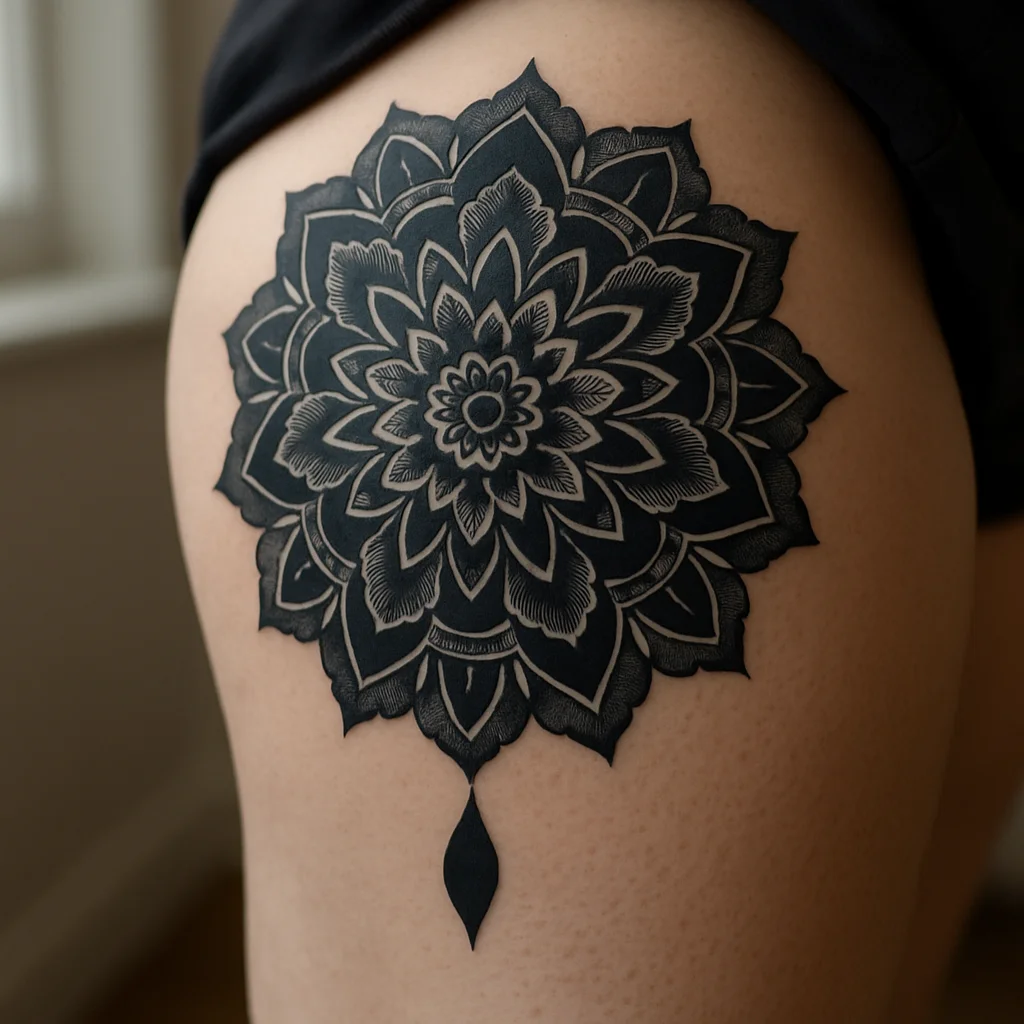
Scale is the real gift. A front-of-thigh canvas comfortably takes an ornamental mandala the size of a dinner plate — a centered rosette with layered petals, dot-shaded rings and a fine drop-point falling toward the knee. That kind of design would be a cramped mess on a forearm; on a quad it has room to breathe, and the symmetry sits naturally over the muscle.
Practical realities worth knowing before you book
- Pain, zone by zone: the outer thigh is one of the mildest spots on the body. The front of the quad is moderate and mostly just repetitive. The inner thigh and the crease under the glute are genuinely tender — thin skin, more nerves, and a position you have to hold while someone works close to it.
- Session length: because the area tolerates pain well, artists often book longer sittings here. Four to six hours on a thigh is normal. Eat beforehand and wear something you can push up or take off comfortably; bring shorts you do not mind ruining.
- Sizing: go bigger than your instinct says. A design that looks bold on paper reads small once it is on a curved, wide surface. Palm-size is the practical minimum for anything with internal detail.
- Cost: small fine-line pieces on the inner thigh usually land in the low hundreds, while a full thigh panel is a multi-session project billed by day rate. If you want the maths spelled out, our honest look at tattoo pricing breaks down how artists actually quote large work.
- Aging: thigh skin stretches with weight changes and pregnancy more than an arm does, so linework that is too fine and too tightly packed can soften. Ask for slightly heavier outer lines than you would choose for a wrist piece.
Stretch marks, scars and cellulite are not obstacles. Textured skin takes ink fine; artists just adjust needle depth and avoid ultra-fine single-needle detail directly over deep striae. Say it out loud at the consult so your artist can plan the composition rather than discover it on the day.
Front of the Thigh: 6 Designs Built for a Flat, Bold Canvas
The quad is the closest thing the leg has to a poster wall. It faces forward, it stays relatively flat when you stand, and it is the one thigh zone you can see properly in a mirror without twisting. Vertical compositions work best — they follow the muscle instead of fighting it.
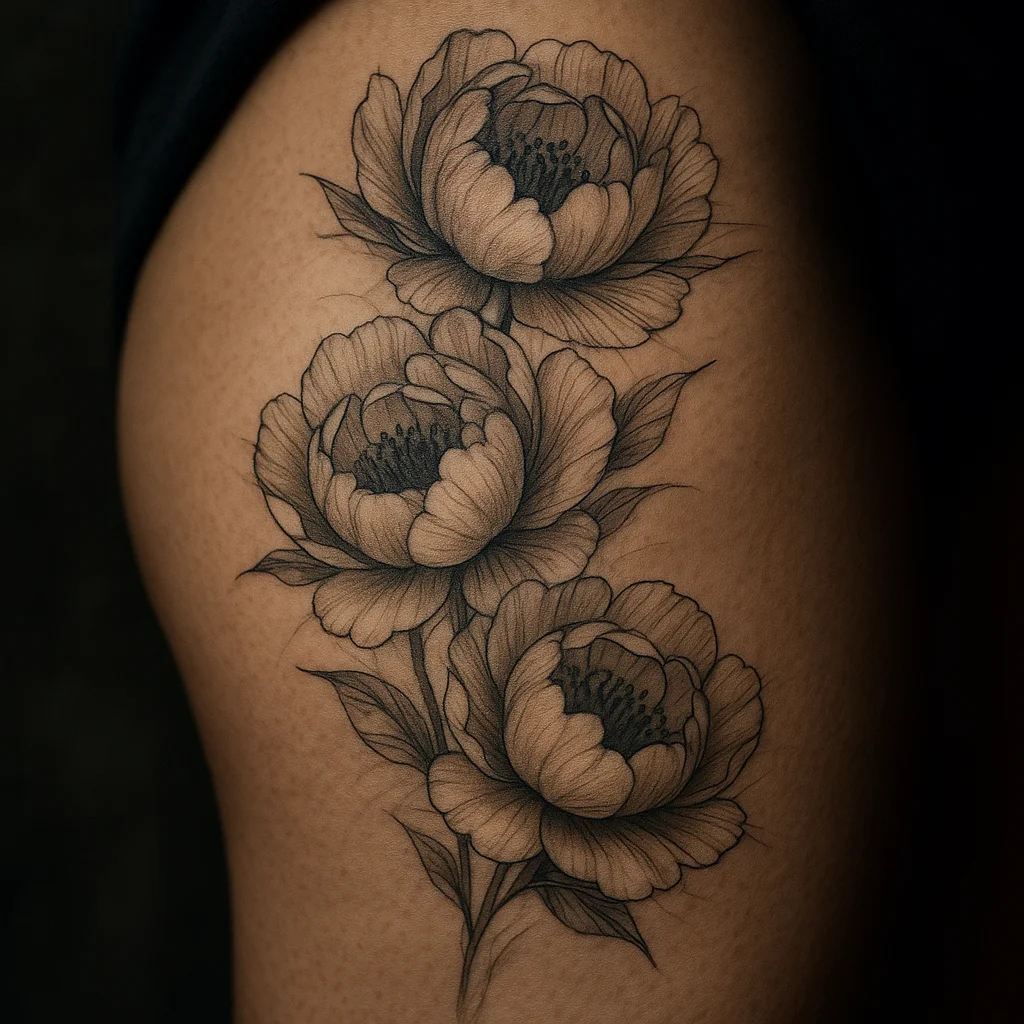
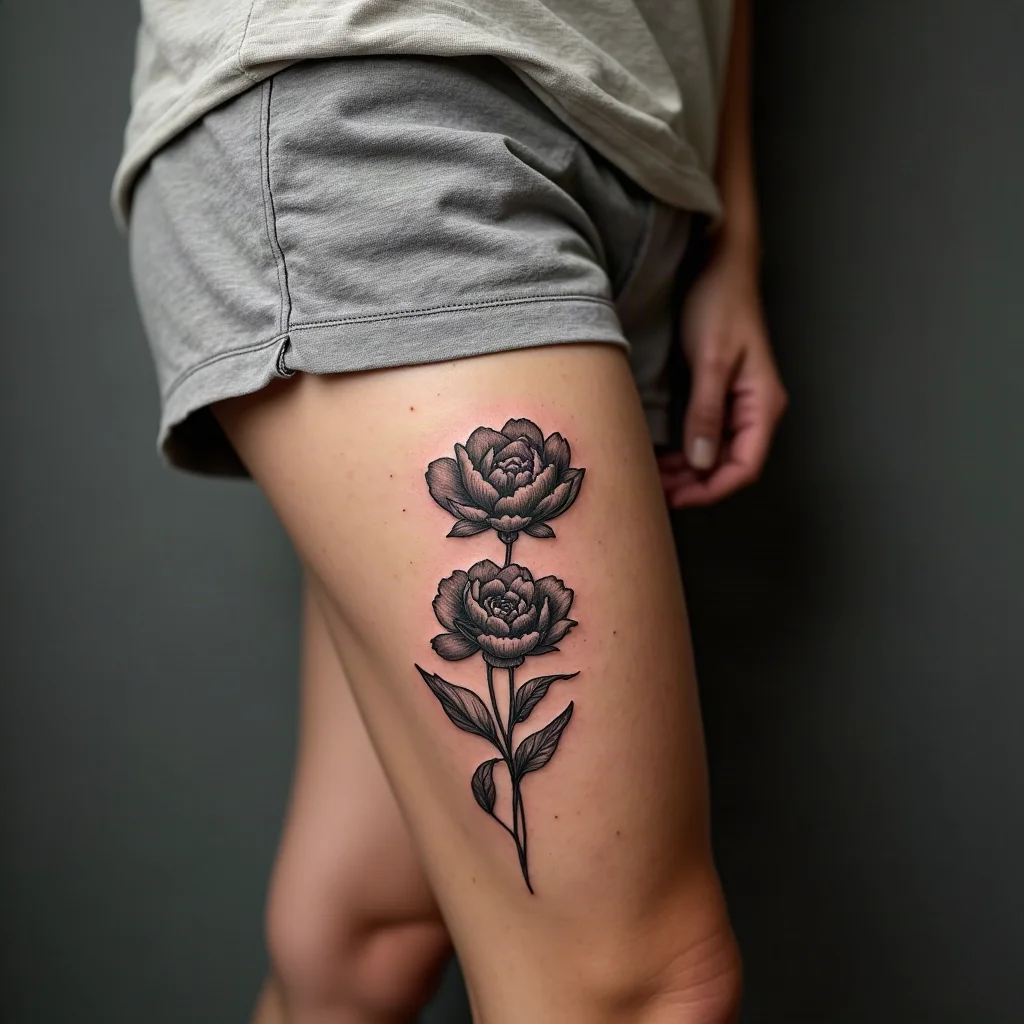
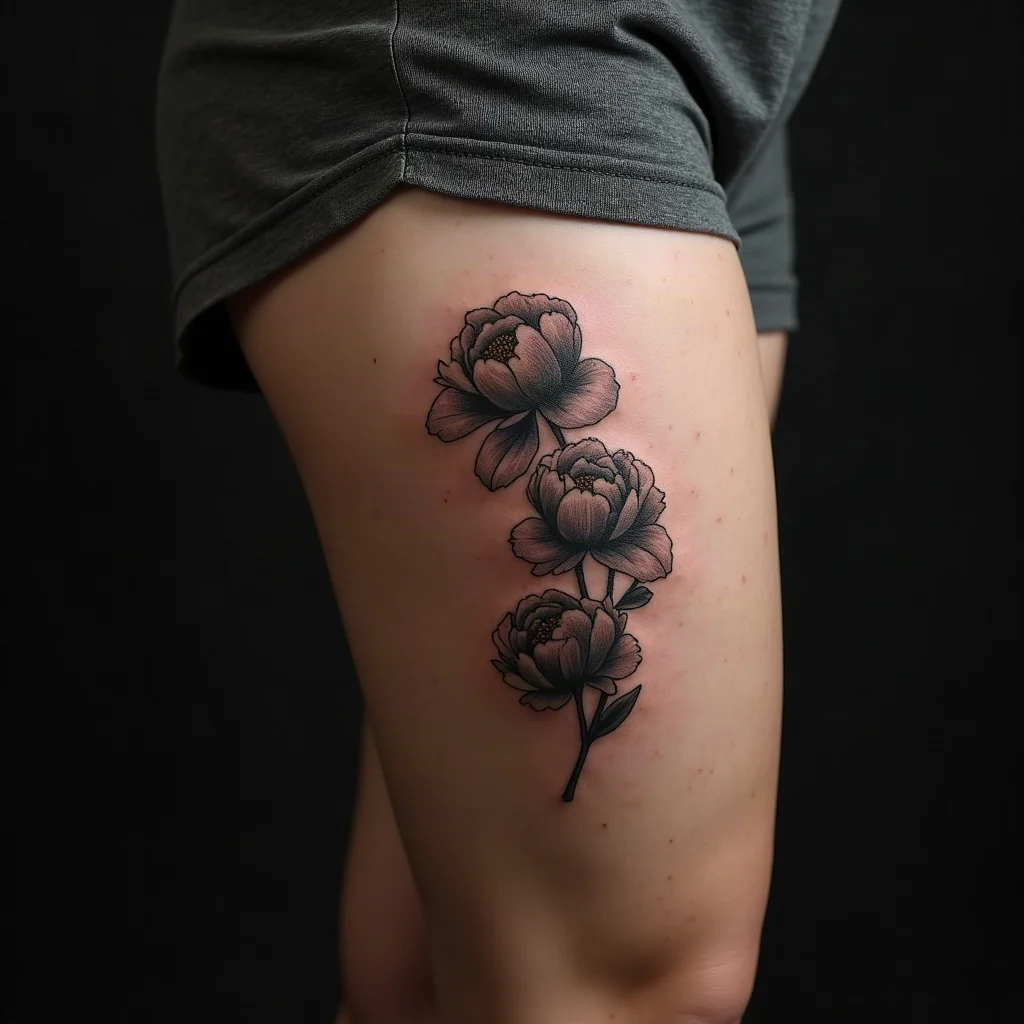
1. Peony cluster down the quad
Three open peonies stacked from hip to mid-thigh, with the largest bloom at the top and the petals loosening as they descend. Ask for soft grey wash shading and a few negative-space gaps so it does not read as one solid mass. Roughly 20 to 25 cm tall, one long session, and it flatters almost every leg shape.
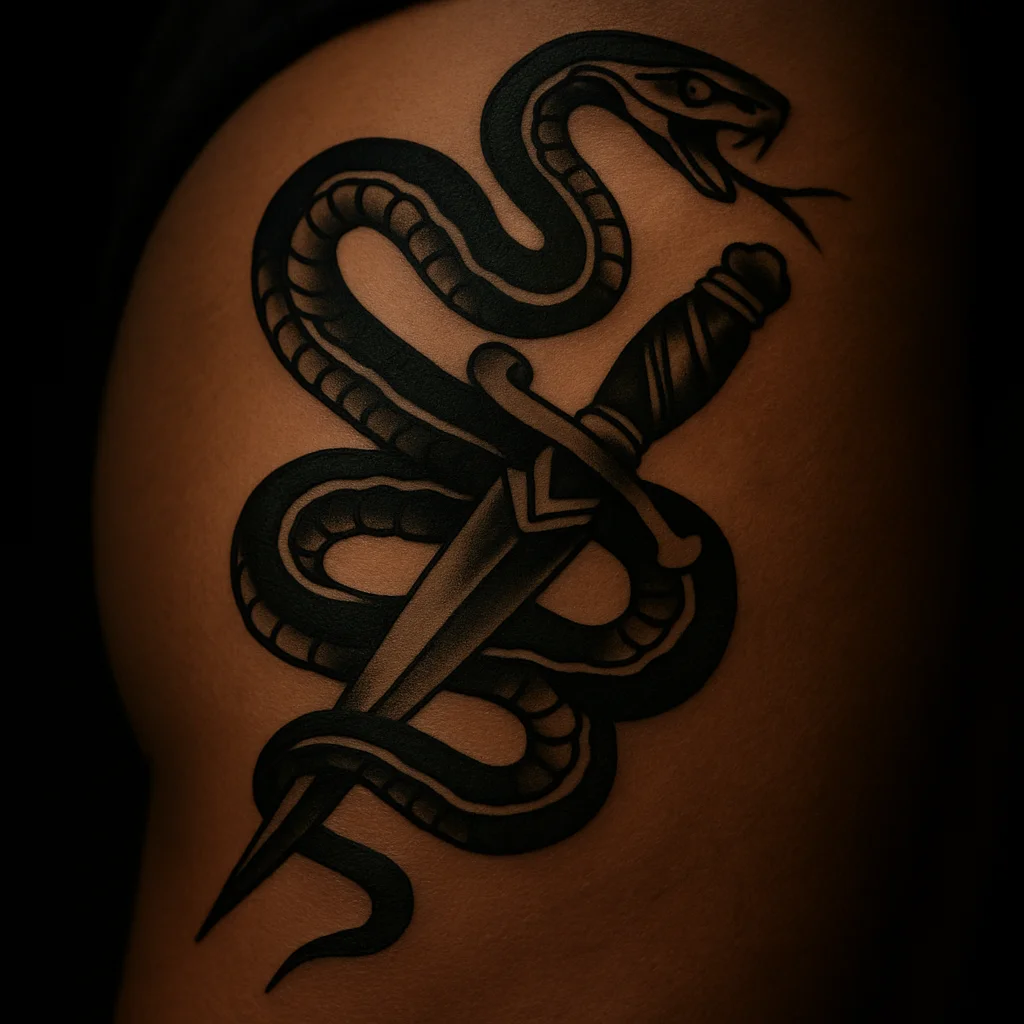
2. Snake coiled around a dagger
A classic vertical pairing: blade tip toward the knee, snake body spiralling up the hilt, head turning outward at the hip. It suits the quad because the length gives the snake room to actually coil rather than kink. Bold traditional linework here ages exceptionally well.
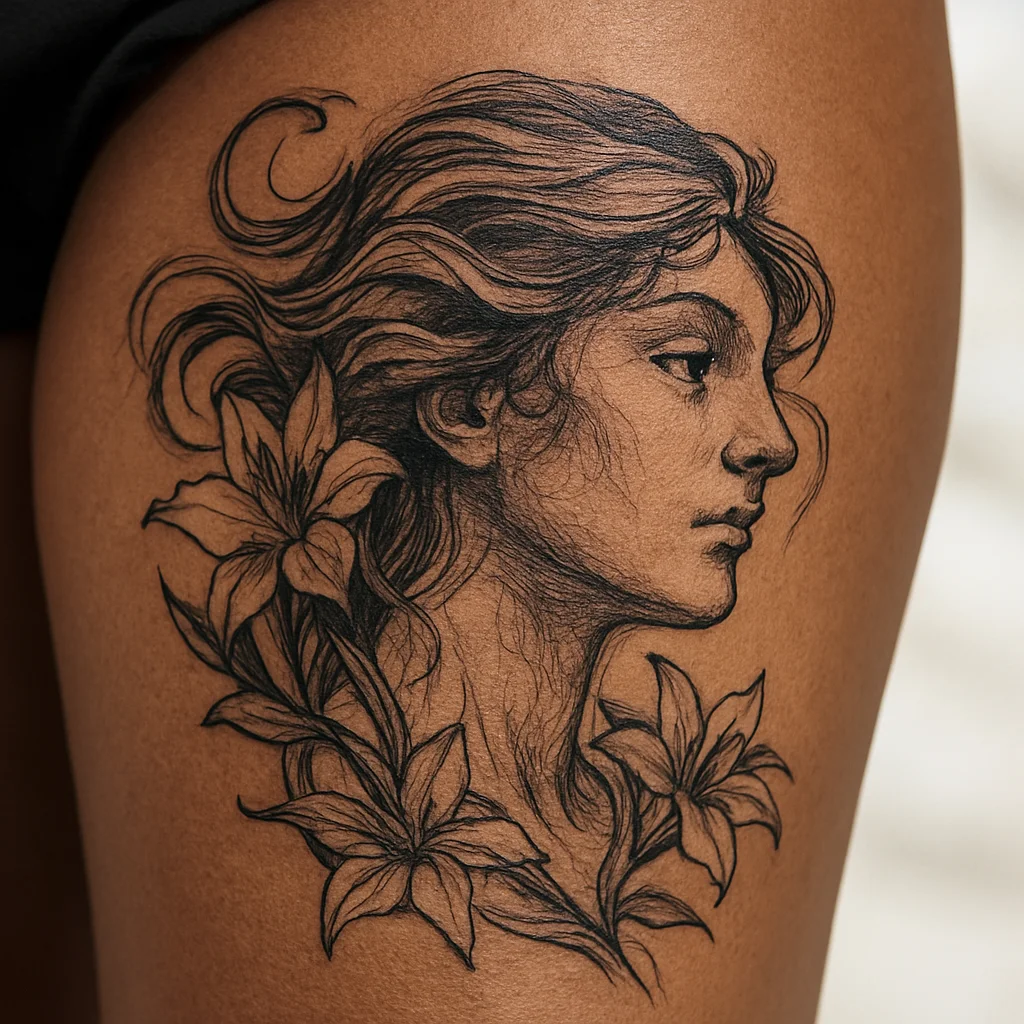
3. Art nouveau profile with flowing hair
A woman's face in three-quarter profile, hair dissolving into whiplash curves and stylised lilies that fill the width of the thigh. This needs an artist who draws faces confidently — bring two or three reference portraits so the features match what you have in your head, not theirs.
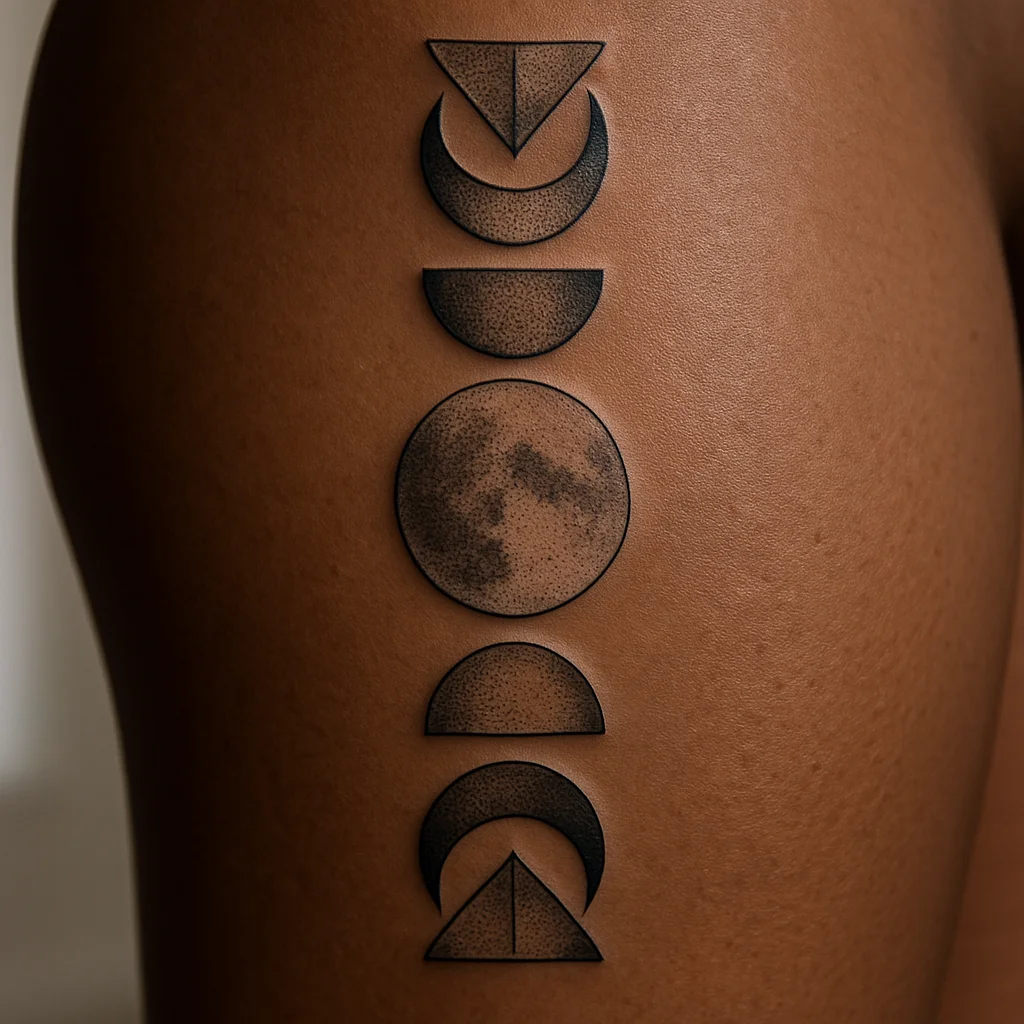
4. Moon phase column
Five to seven moons descending in a straight vertical line, each one 4 to 6 cm across, with the full moon centered on the widest part of the quad. Geometric fine dot shading keeps it clean. Beautiful on its own and a great spine for later additions on either side.
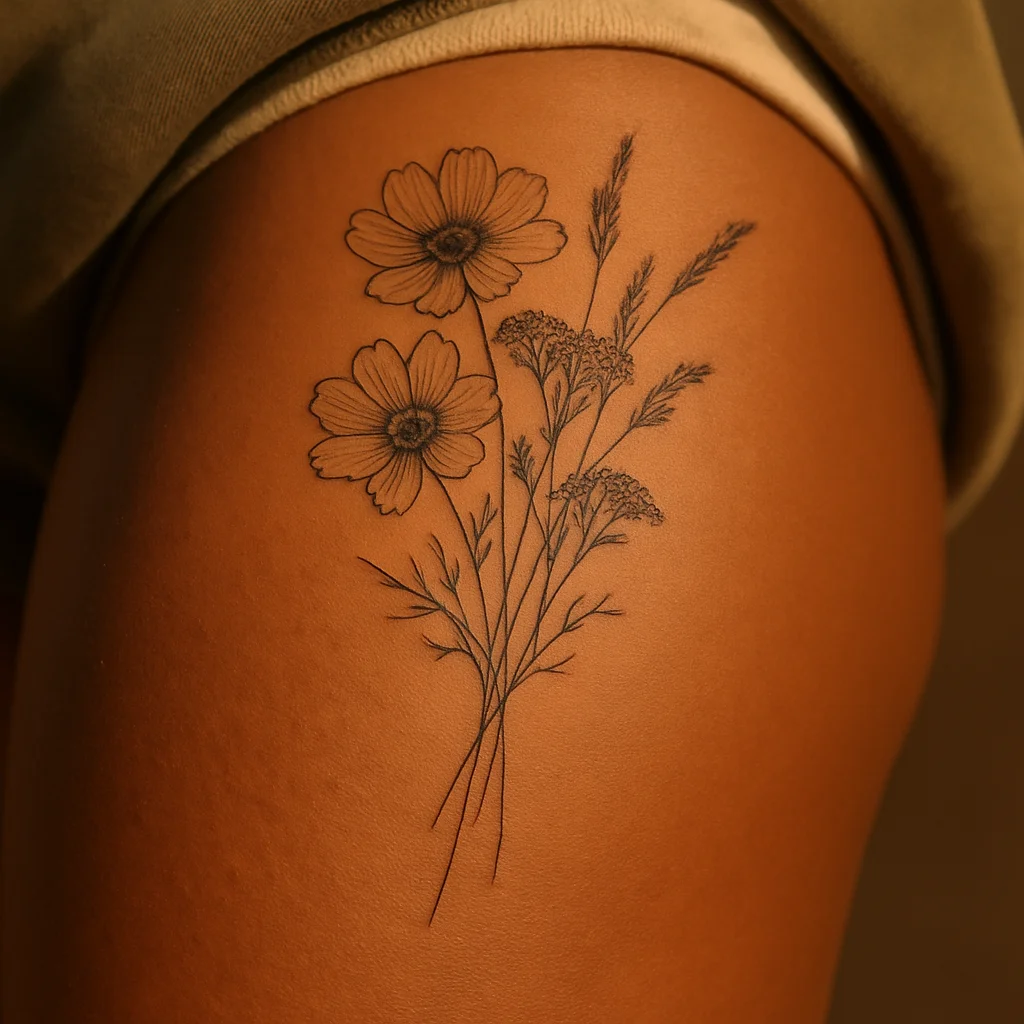
5. Wildflower bouquet with trailing stems
Cosmos, yarrow and a few grass heads gathered as if freshly picked, stems trailing loosely toward the knee. Fine-line with almost no shading, which keeps it airy — just ask for varied line weights so the stems do not all read the same at ten paces.
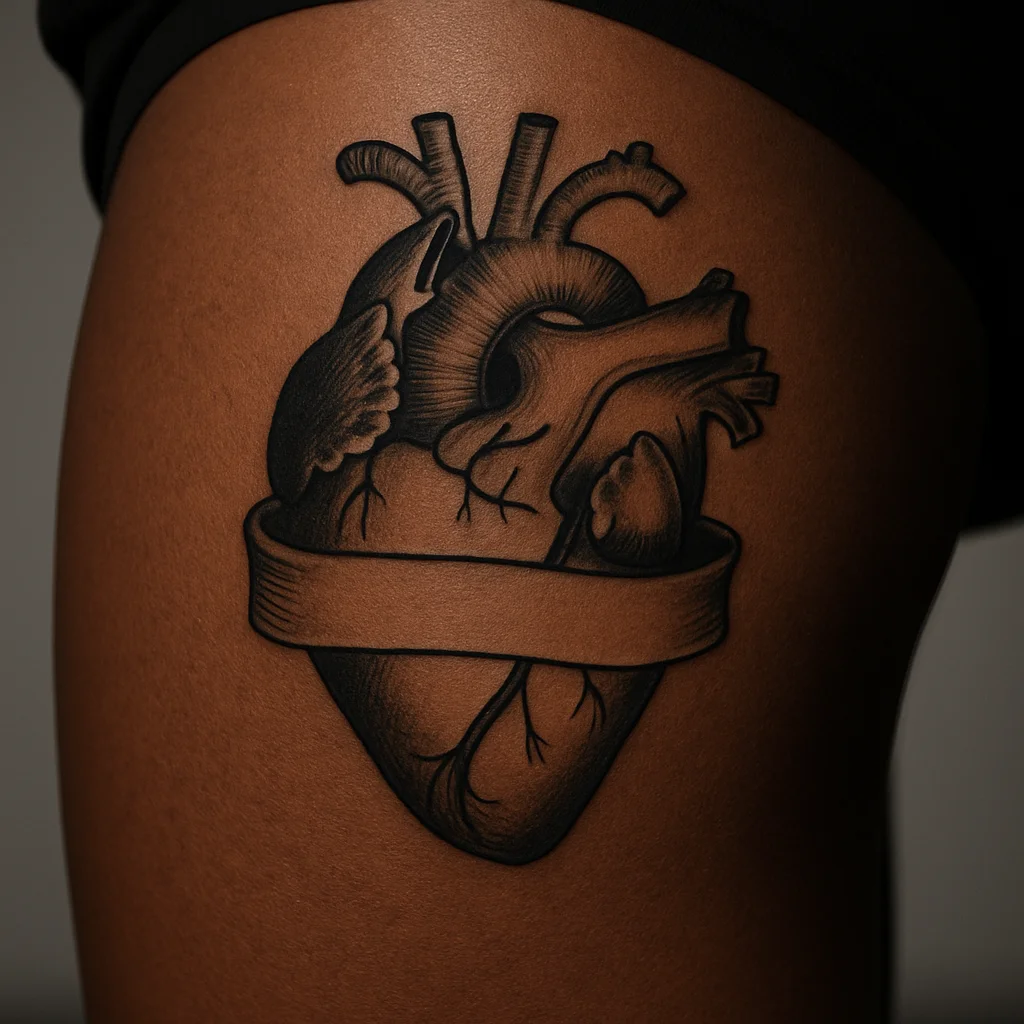
6. Anatomical heart with a ribbon banner
An old-school anatomical heart, vessels and all, with a banner carrying a name or a date. The front thigh gives the banner enough horizontal room to stay legible, which is exactly where small versions of this design fail on arms.
Outer Thigh: 7 Ideas for the Least Painful Big Statement
If you want scale without the suffering, this is your zone. The outer thigh has a thick fascia layer and fewer nerve endings, so long sessions are far more tolerable. It also runs from hip to knee in one uninterrupted sweep, which makes it the best place on the body for a tall narrative panel.
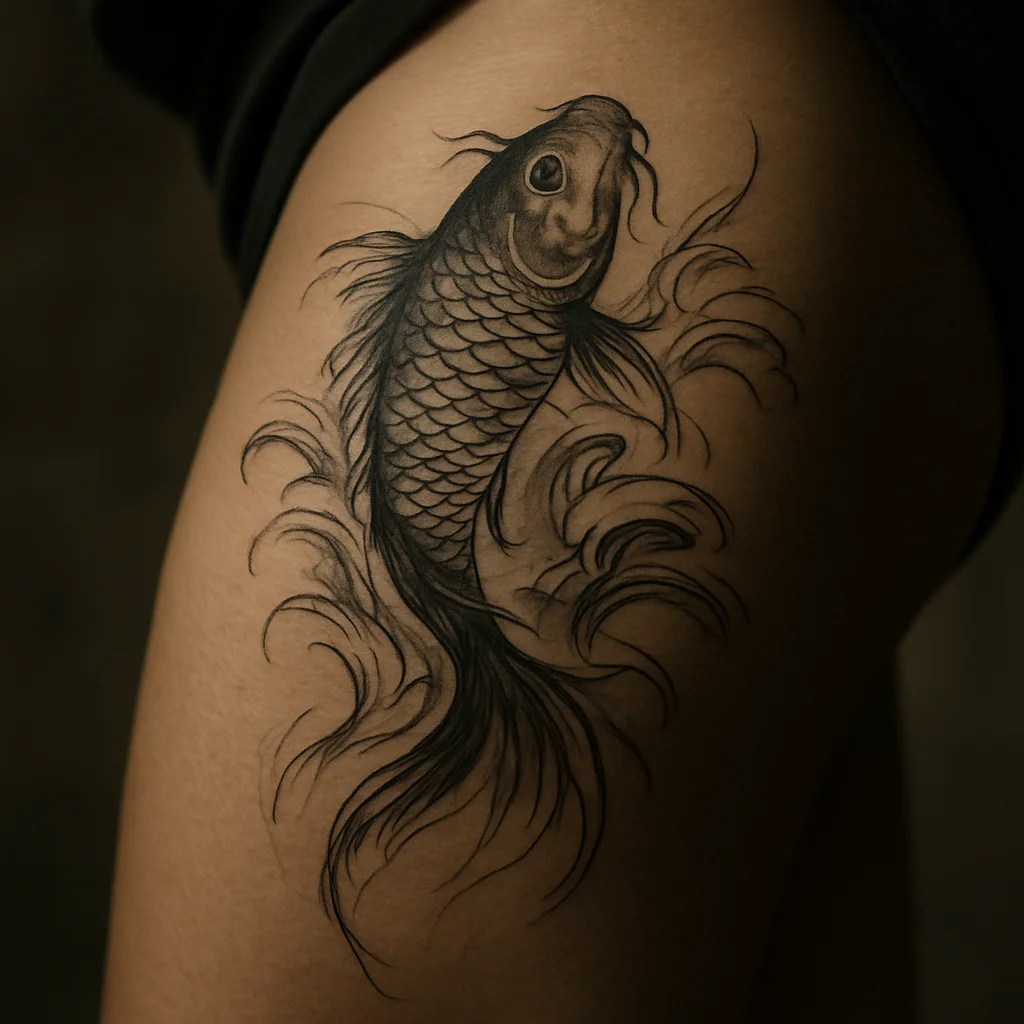
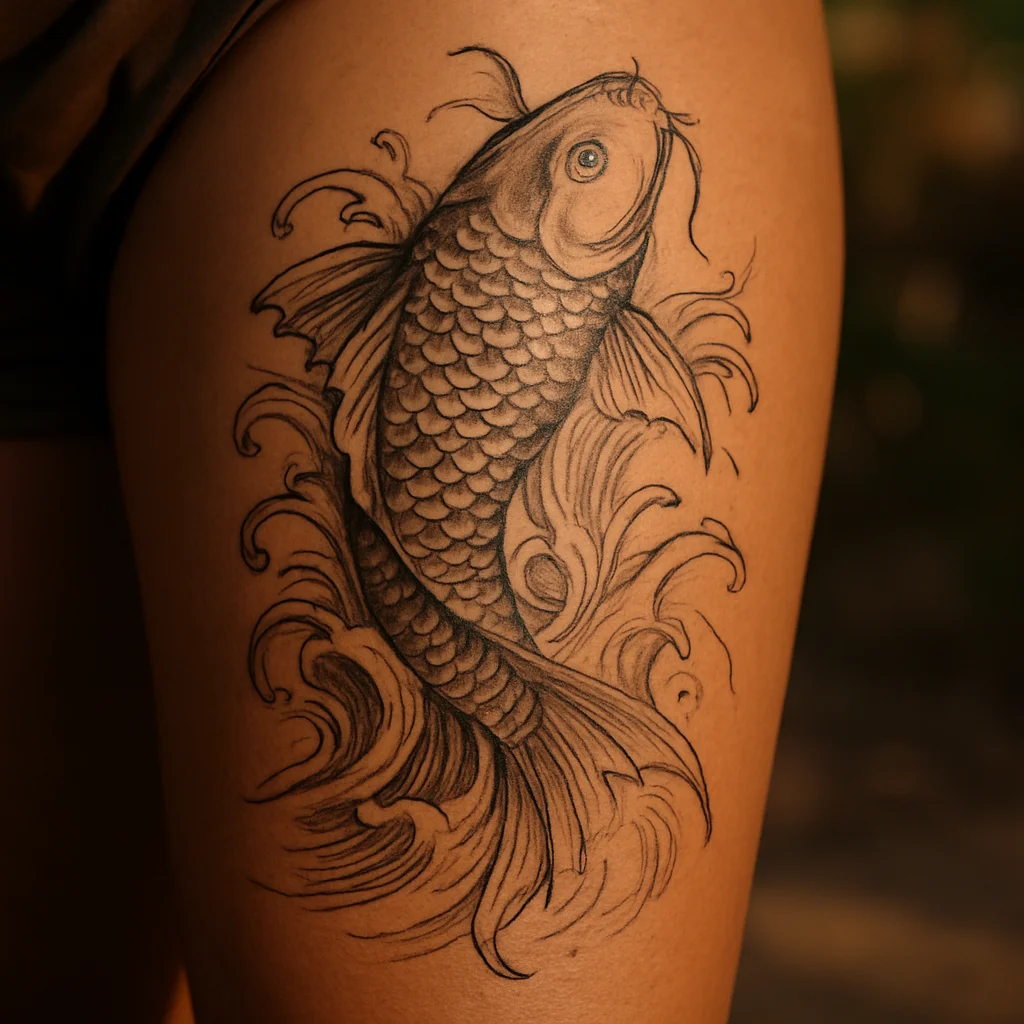
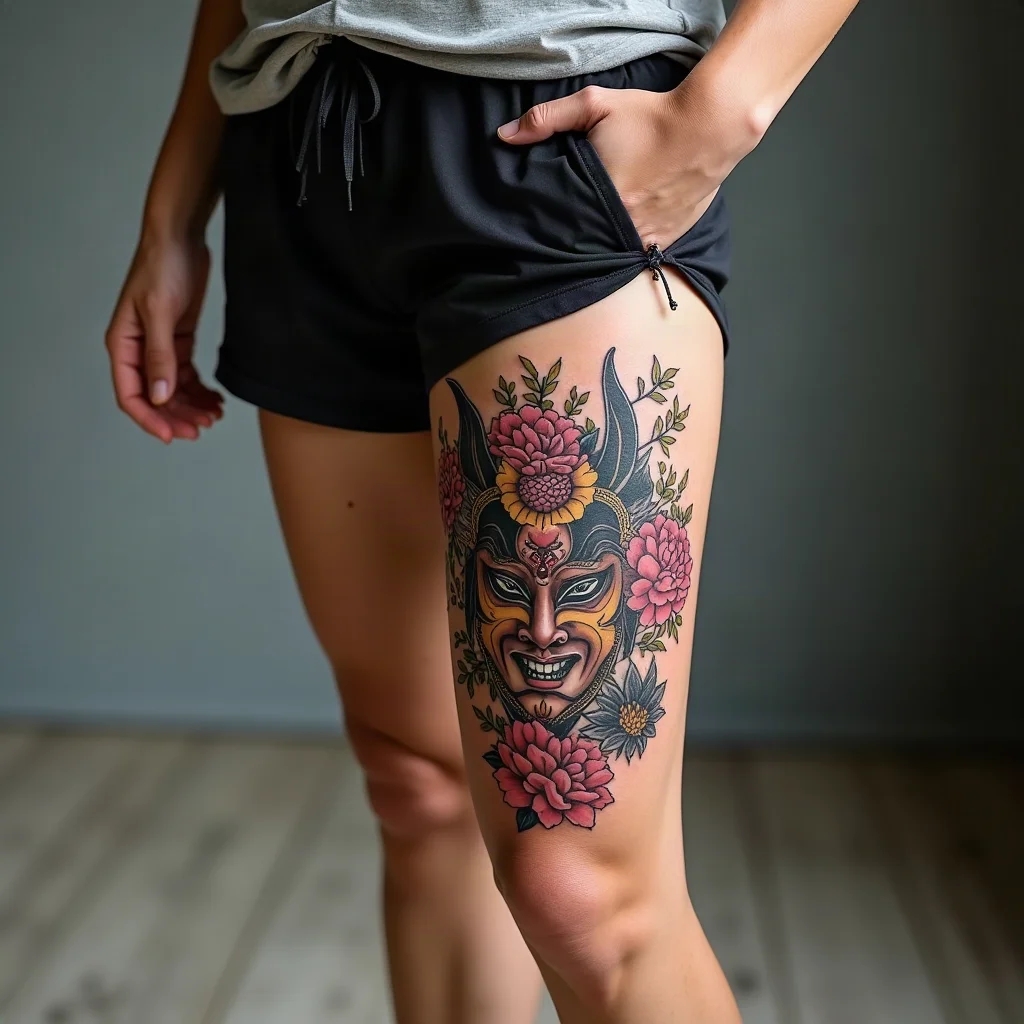
7. Hip-to-knee koi and waves
A single koi swimming upward against stylised waves, with the tail near the knee and the head cresting at the hip. Expect two to three sessions. The length of this zone is what makes the movement believable — squeezed onto a calf, the same design loses its current.
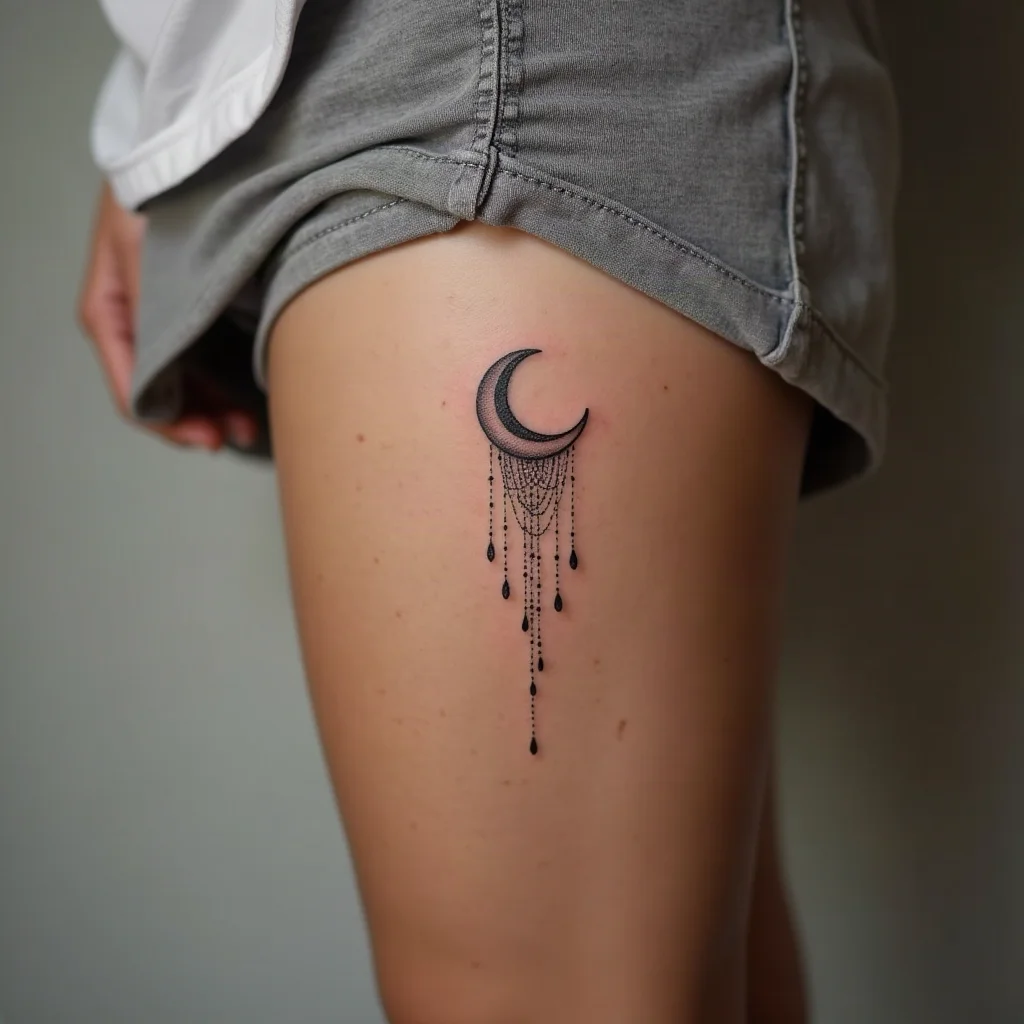
8. Crescent moon with ornamental filigree drop
A crescent at the top of the thigh with a chandelier of fine chains, teardrops and dots hanging beneath it. Reads like jewellery worn under a dress. Keep the drop narrow, around 8 cm wide, so it stays elegant rather than heavy.
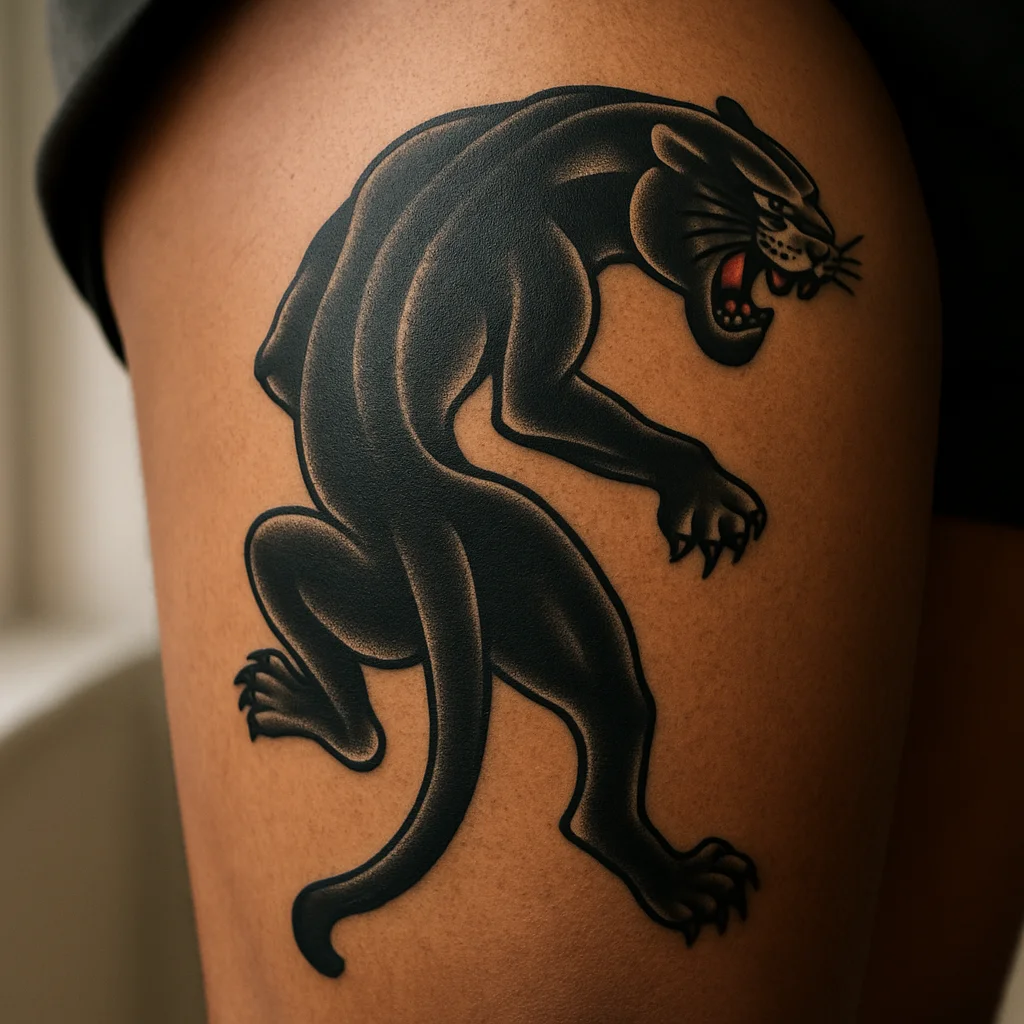
9. Panther crawling downward
A black panther in descent, shoulders bunched at the hip and front paw reaching toward the knee, head turned outward with a snarl. Traditional black and grey with a little red in the mouth. This is a big commitment piece and it looks phenomenal in motion when you walk.
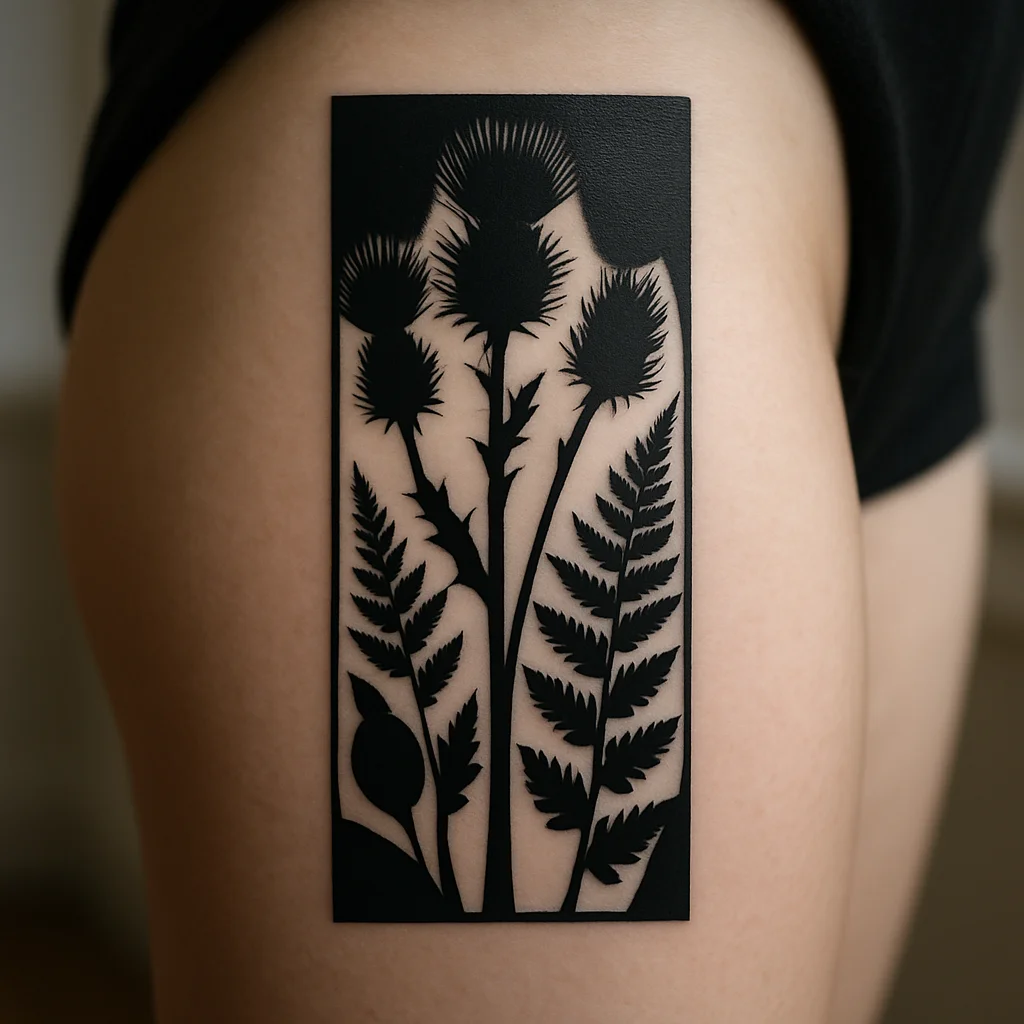
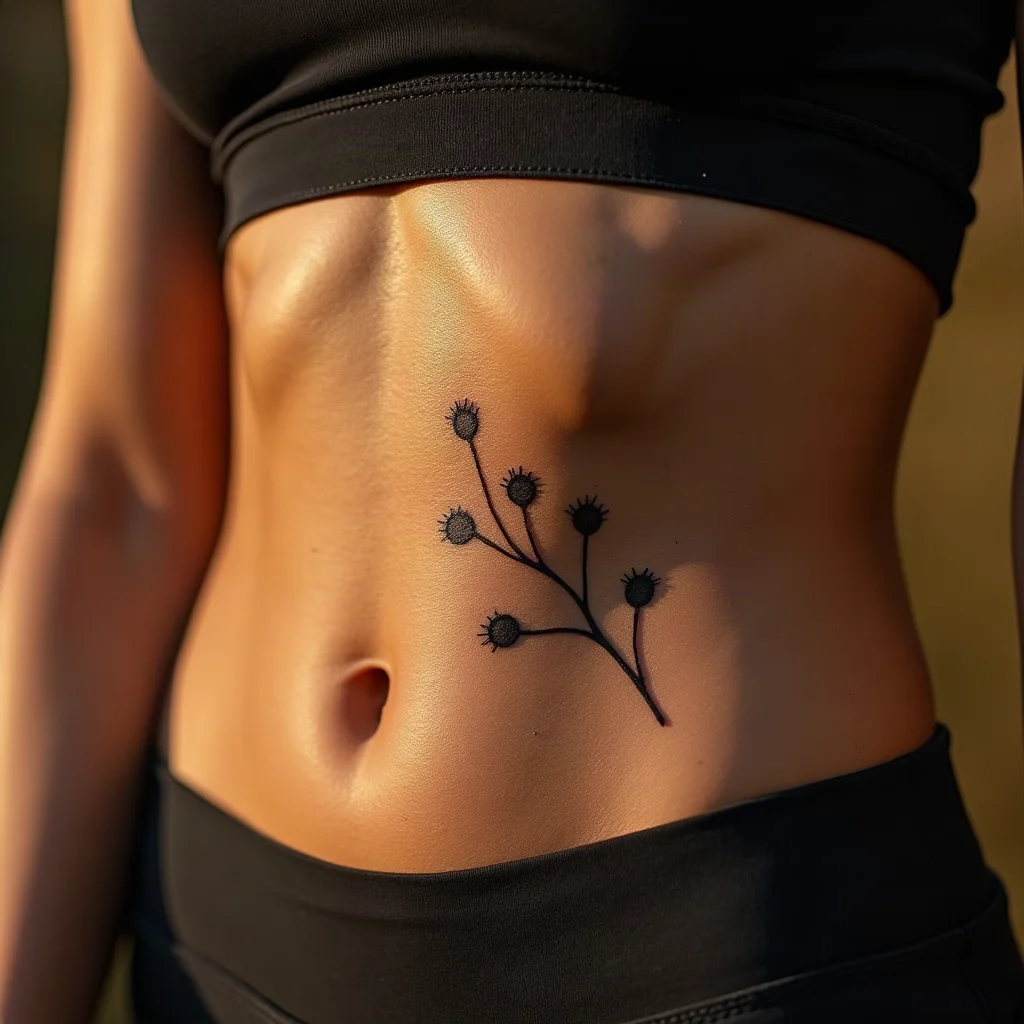
10. Blackwork thistle and fern panel
Solid silhouettes of thistle heads, bracken and seed pods filling a tall rectangle with clean negative space between them. Because it is pure black shapes with no delicate gradient, it is one of the most bulletproof choices on this whole list for long-term aging.
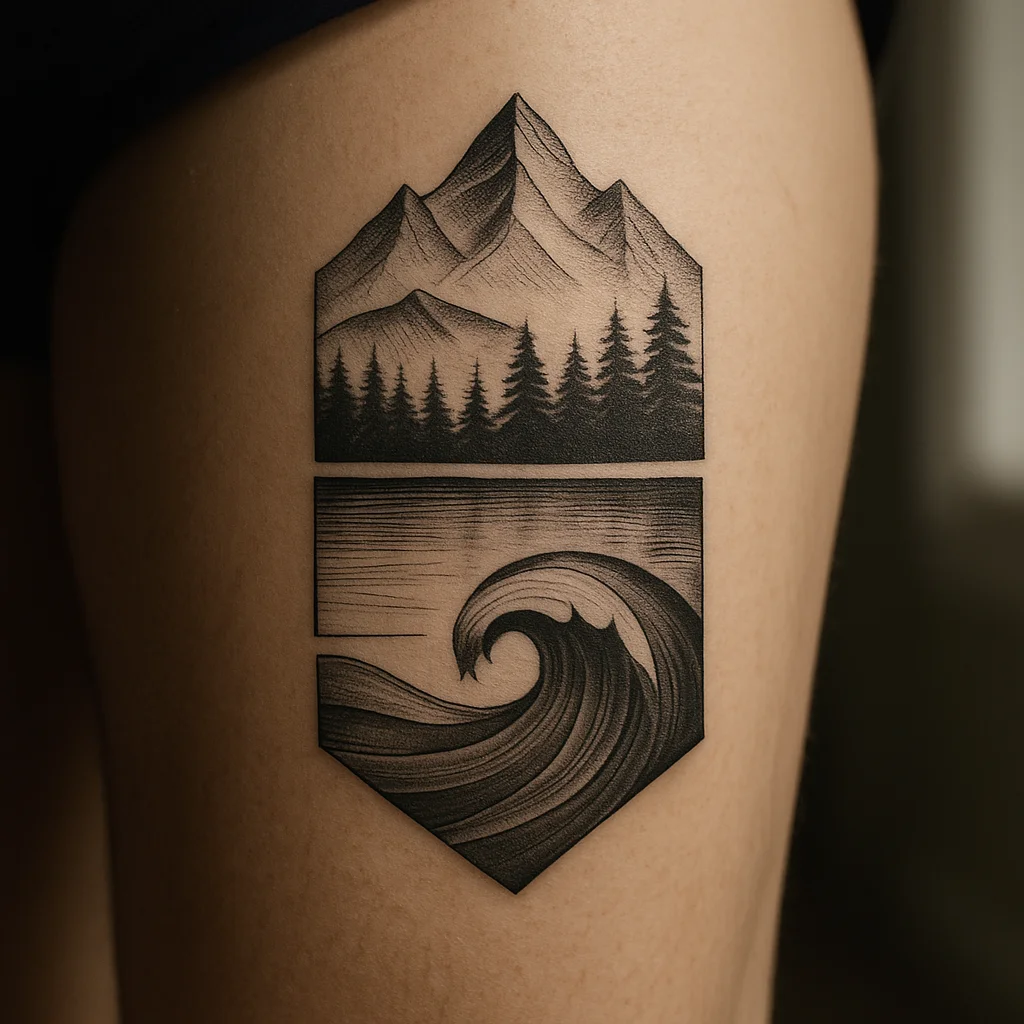
11. Wave and mountain landscape band
A horizontal-feeling landscape stacked vertically: a mountain ridge, a band of pines, a lake, a wave curling at the base. Works best 25 cm plus so each layer stays readable. Good option if you want scenery without a full colour realism budget.
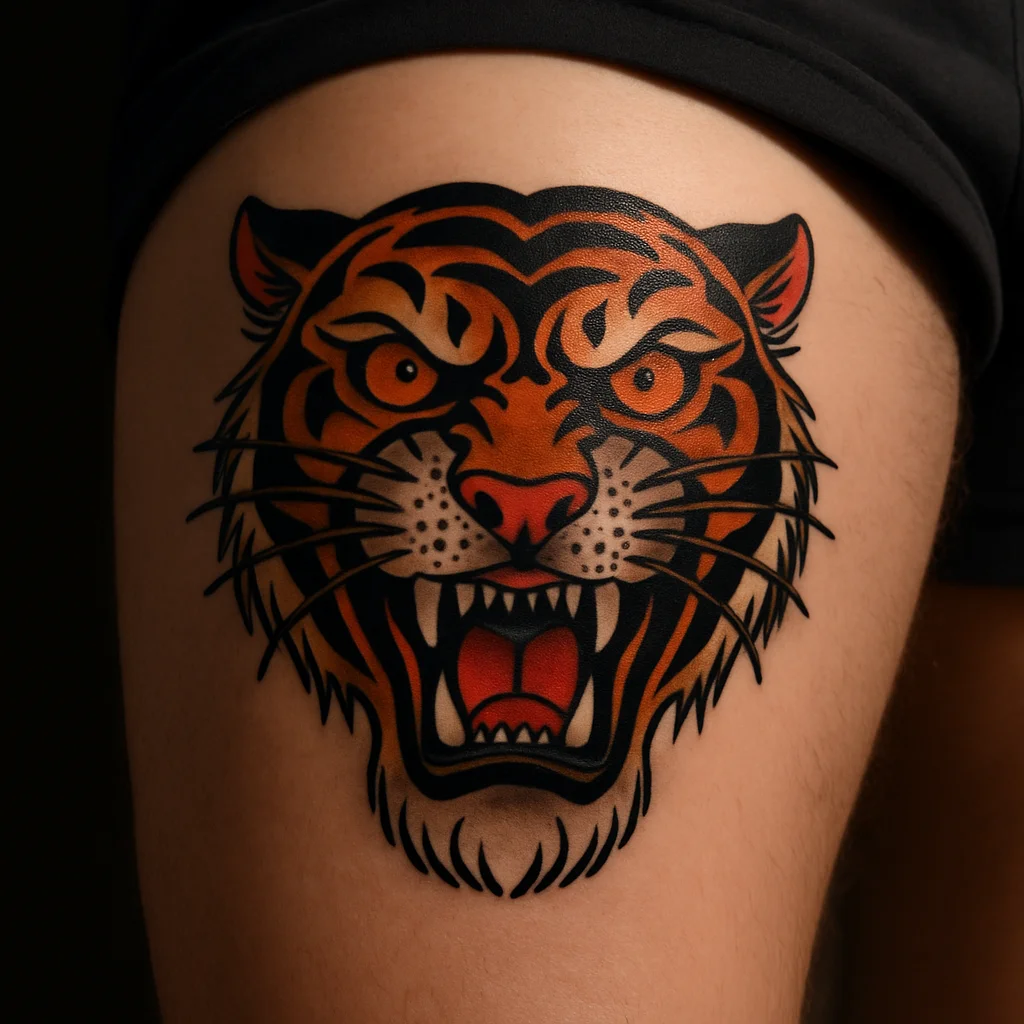
12. Traditional tiger head
A front-facing tiger, teeth bared, filling the widest part of the outer thigh at around 18 cm across. Bold outlines, orange and black, minimal background. Cheap to maintain visually — this style still looks correct in twenty years.
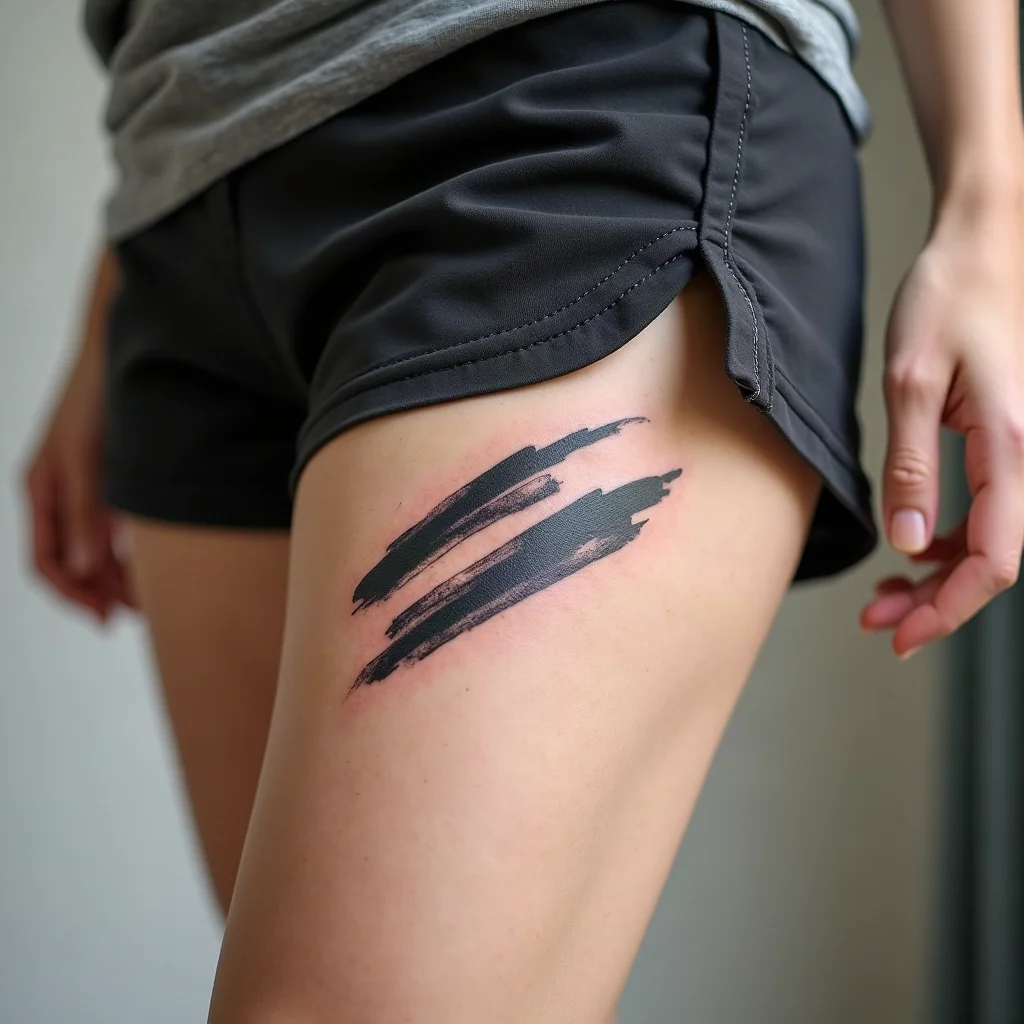
13. Calligraphic brushstroke abstract
Two or three sweeping ink strokes with dry-brush texture at the tails, arranged to follow the curve from hip to knee. It sounds simple and it is not: the artist needs to understand gesture. Ask for a full-size stencil placed on your standing body before any needle touches skin.
Inner Thigh: 6 Small, Private Pieces That Suit Tender Skin
The inner thigh is the most private placement on the leg and the most sensitive. Skin here is thin and mobile, so keep designs modest in size and simple in structure — dense micro-detail tends to blur faster in this zone than anywhere else on the thigh. Sessions are short by design, usually well under an hour, which is honestly a mercy.
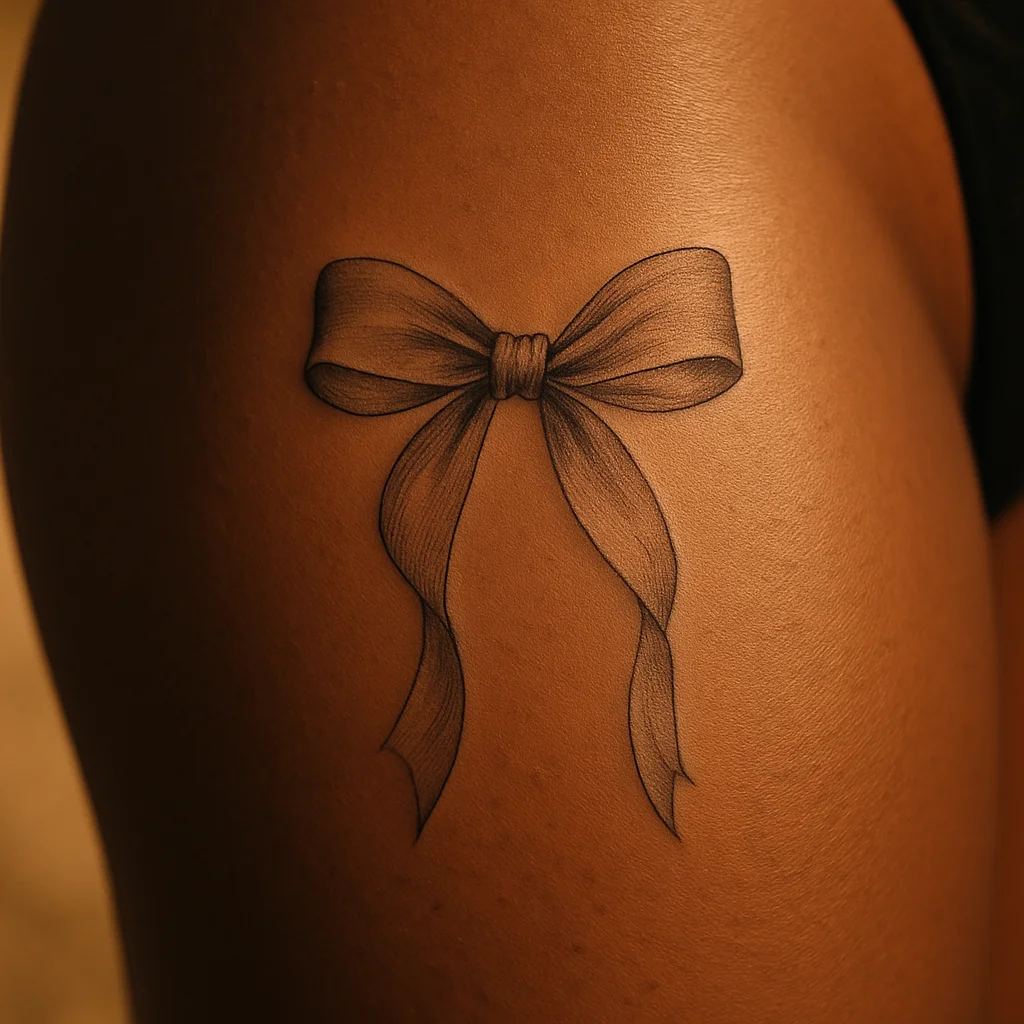
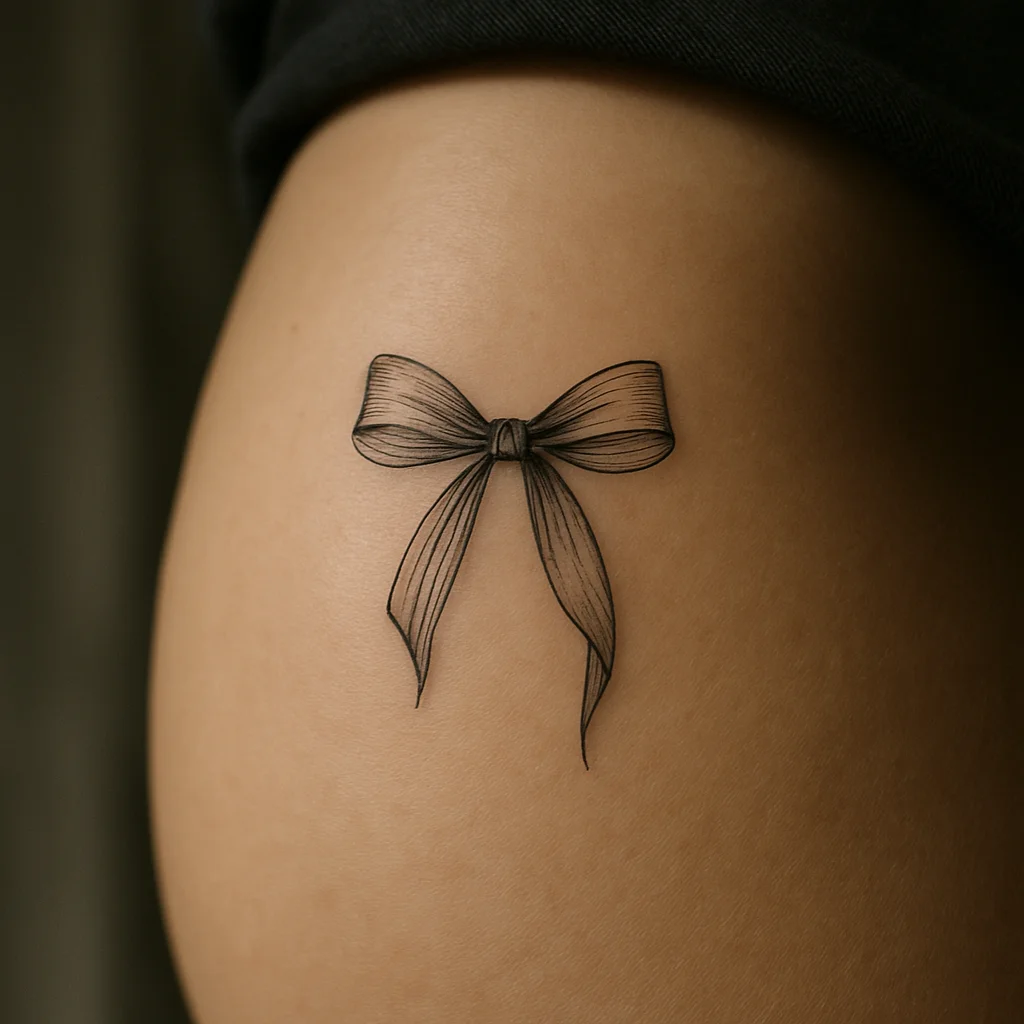
14. Ribbon bow with trailing tails
A small satin bow, 4 to 6 cm wide, with two tails falling toward the knee. The coquette classic, and it earns its popularity here: soft shading on the ribbon folds gives it dimension without needing many lines.
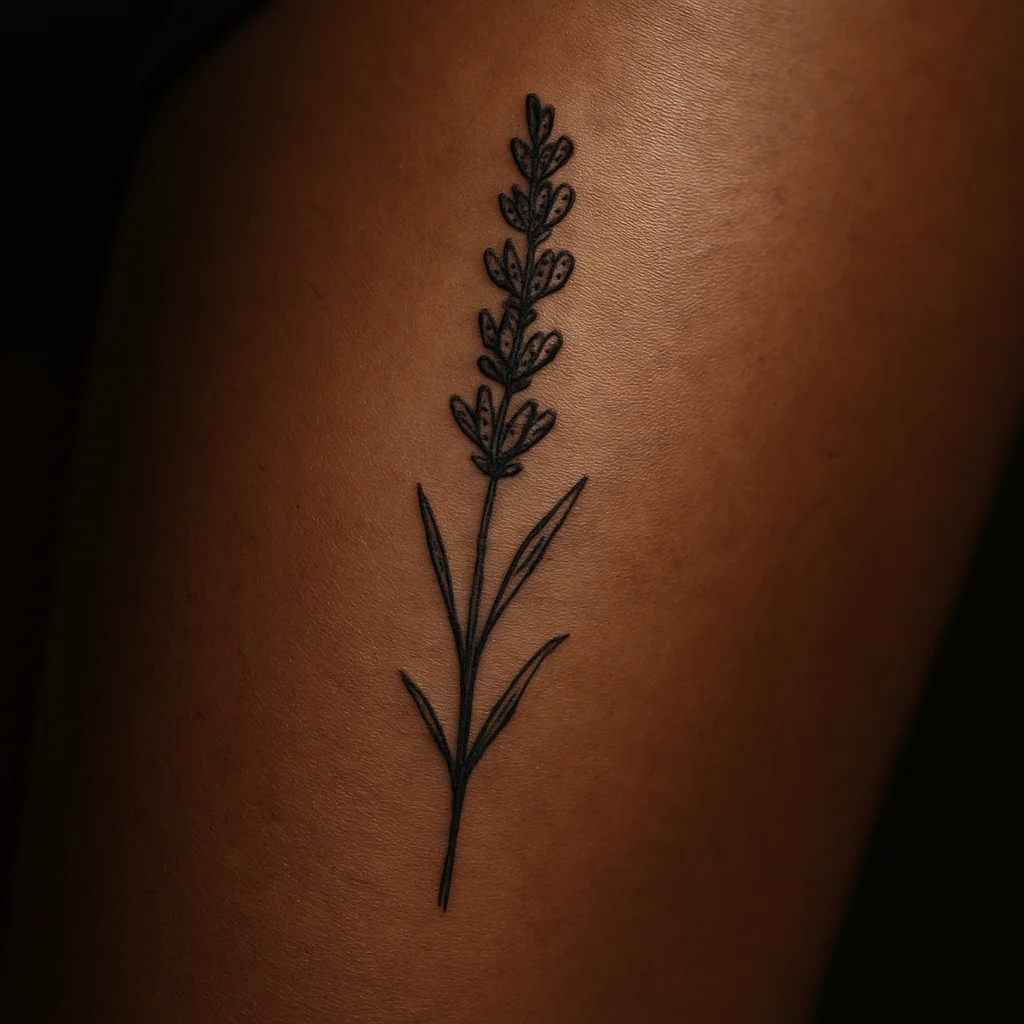
15. Lavender sprig
A single stem, 7 to 9 cm, buds stippled rather than solid, sitting just above the knee on the inner line of the leg. Ask for slightly firmer outer stem lines than a wrist version would need so it stays crisp through years of movement.
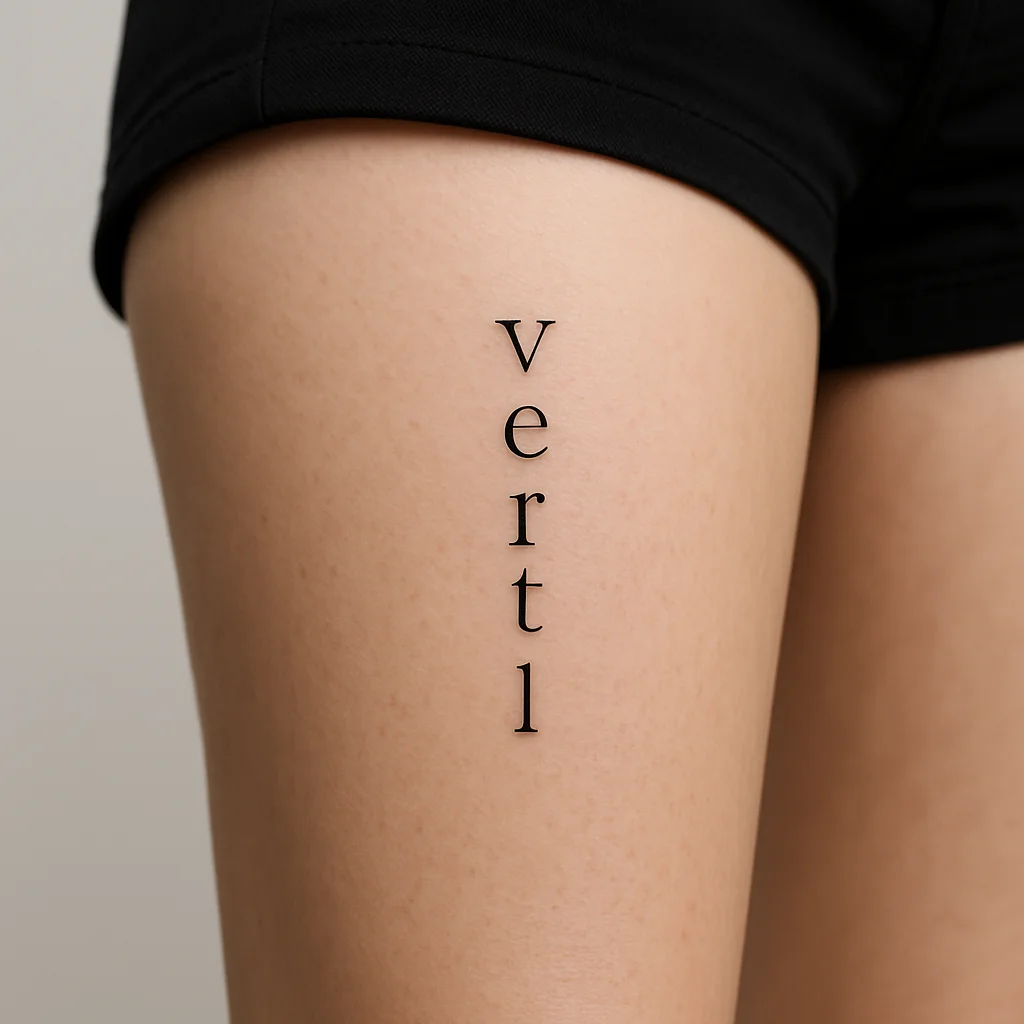
16. Short vertical word or phrase
One or two words in a small serif or a spare handwritten script, running down rather than across. Keep the letter height at least 8 mm — thin script at 5 mm on inner-thigh skin is the single most common regret artists see in this zone.
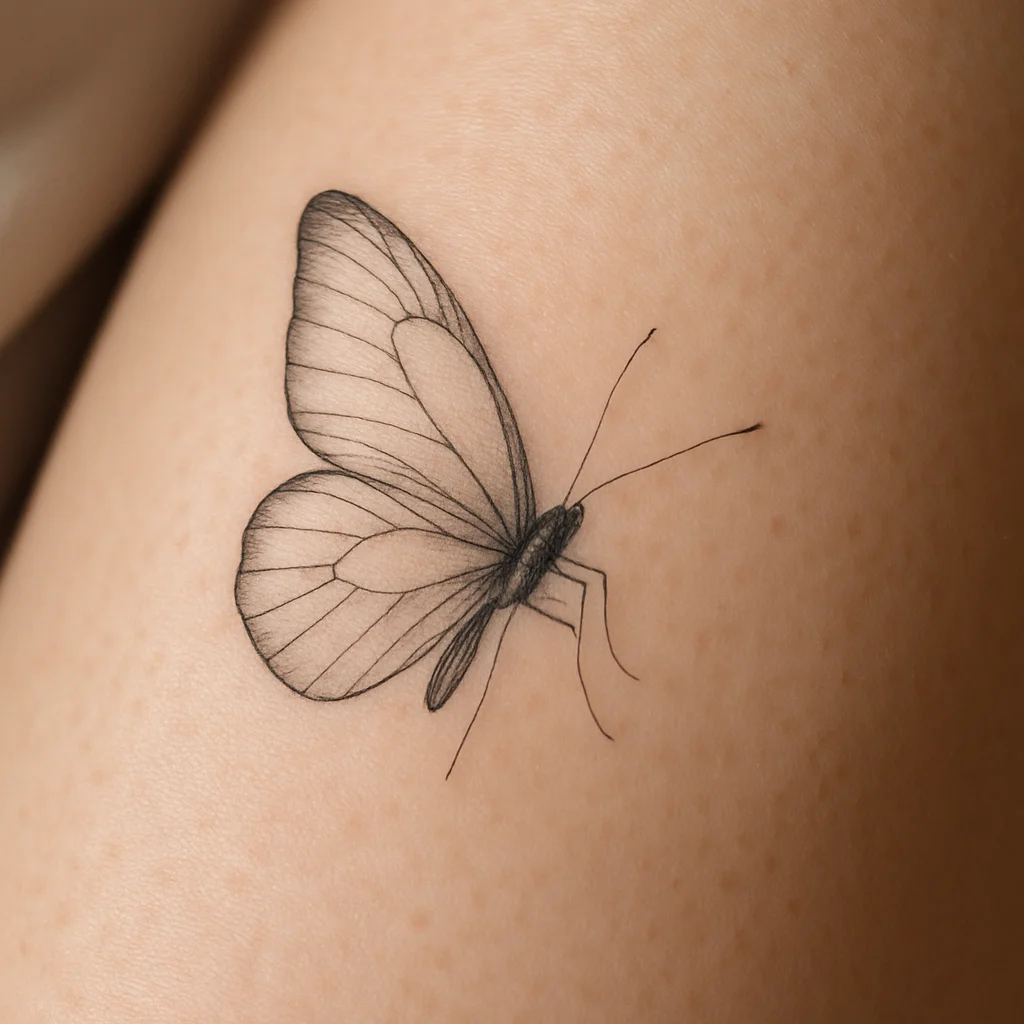
17. Single-needle butterfly
A butterfly with wings half-open, about 5 cm, tilted so it looks like it landed rather than being pinned to a chart. Lovely as a pair, one on each inner thigh, mirrored.
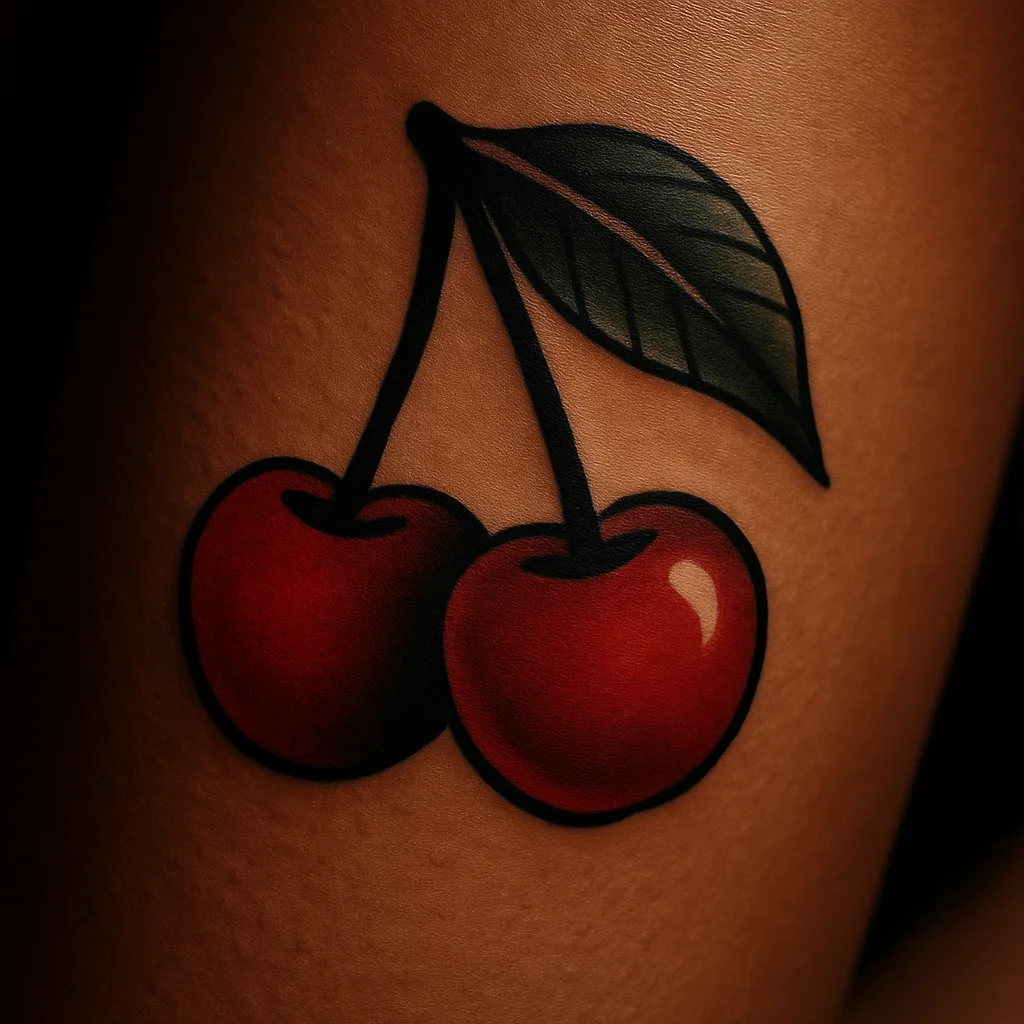
18. Traditional cherries
Two cherries with a joined stem and a bold leaf, filled solid red with a single white highlight. Tiny, cheeky, and structurally solid — heavy line, flat fill, nothing to lose.
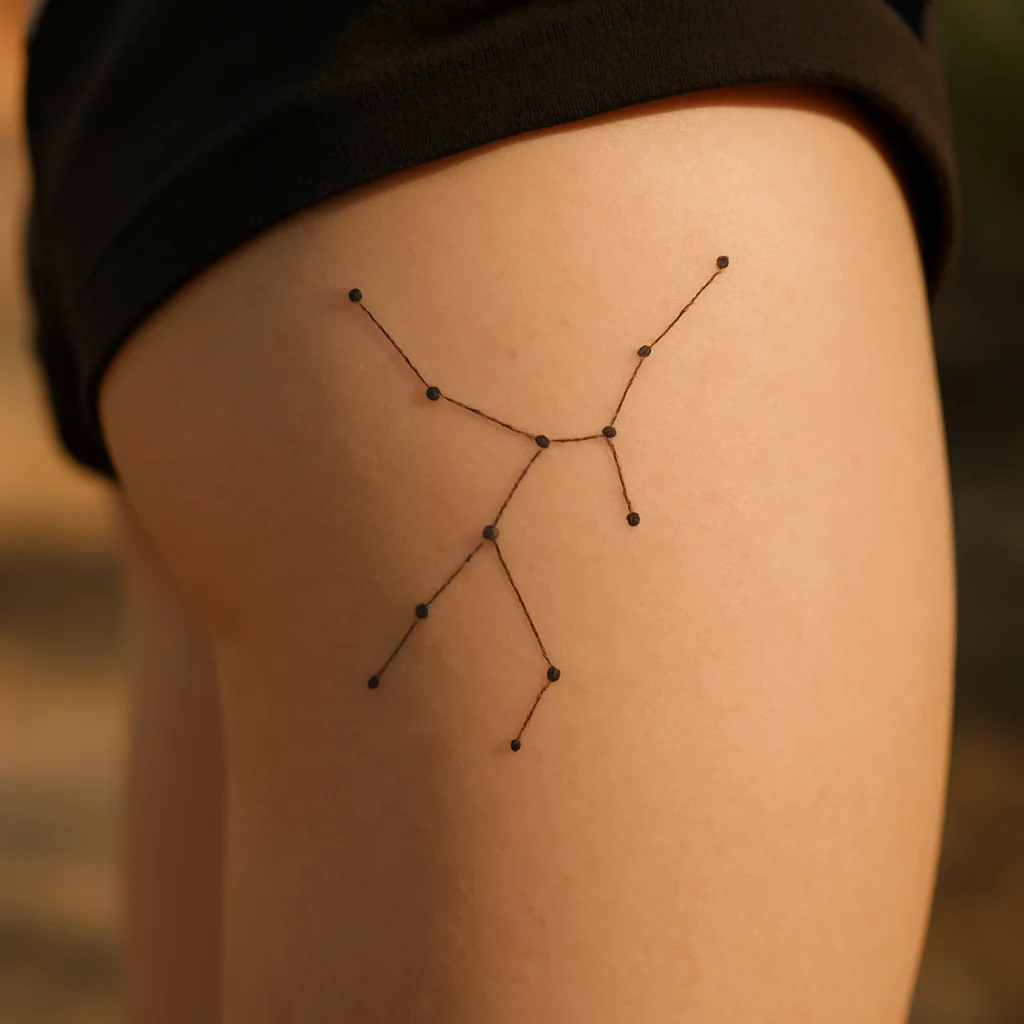
19. Constellation of dots
Your chosen star pattern as fine dots with hairline connectors, spread over 8 to 10 cm. Ask for slightly larger dots than feel right on paper; dots that are too fine soften into blur here more than elsewhere.
Back of the Thigh: 5 Designs You Reveal on Your Own Terms
The hamstring is an underrated stage. It curves gently, it is hidden by almost everything you wear, and it appears only when you choose — which gives designs here a quiet confidence. Pain climbs as you move up toward the glute crease, where the skin is thin and the sensation is sharp but brief.
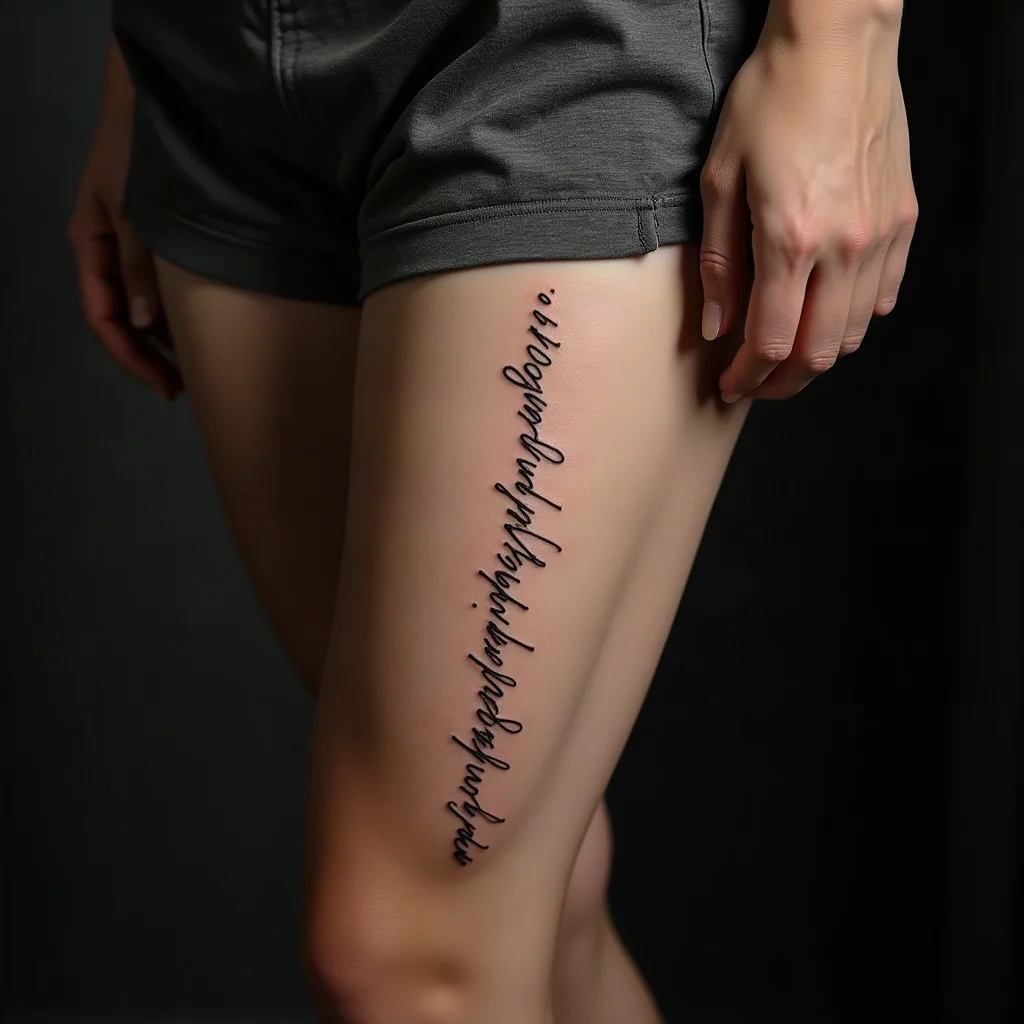
20. Vertical script down the hamstring
A line of text set to run from just under the glute toward the back of the knee, following the natural centerline of the muscle. Longer quotes work here because you have real length to play with. Have the stencil applied while you stand and then again while you sit — text that looks straight on a lying body can skew badly upright.
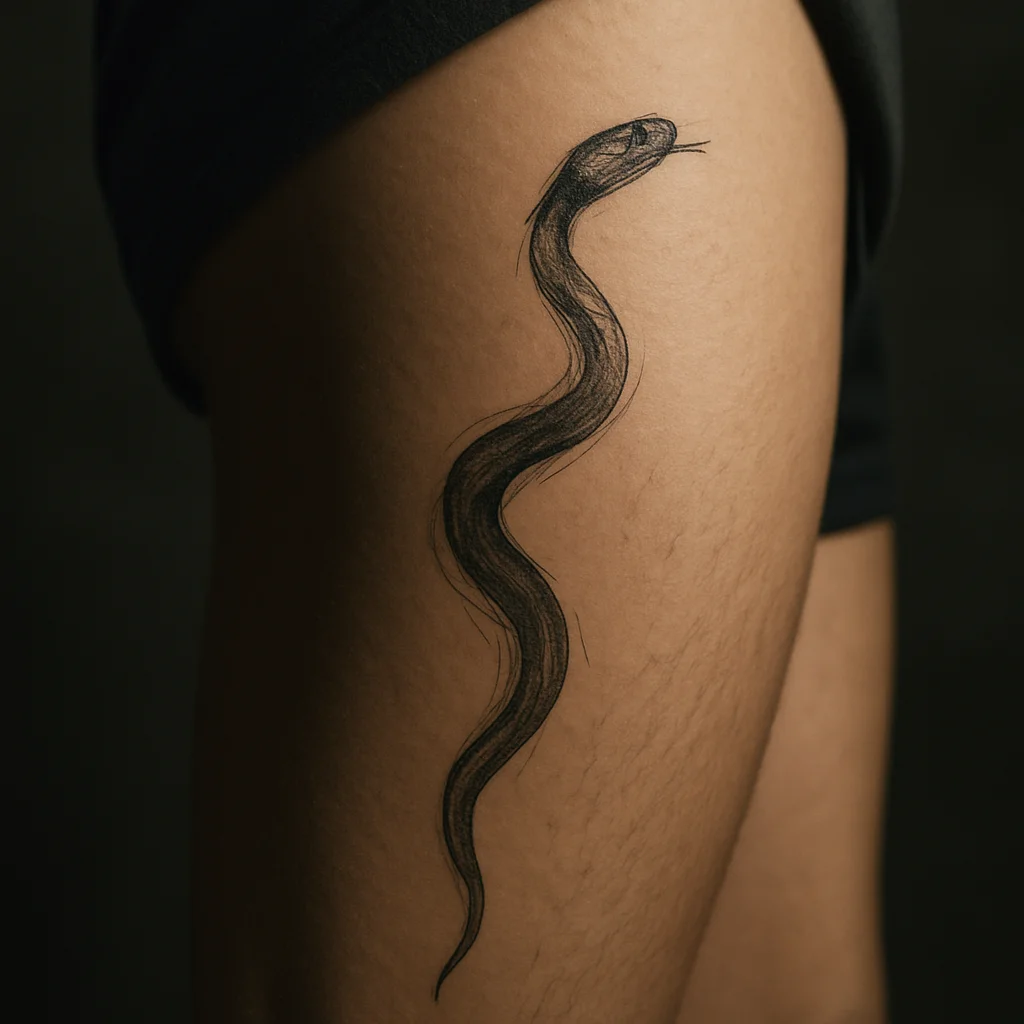
21. Snake descending toward the knee
A slim serpent flowing down the back of the thigh, body curving with the hamstring and head lifting slightly near the knee. The gentle S-curve of this zone does half the compositional work for you.
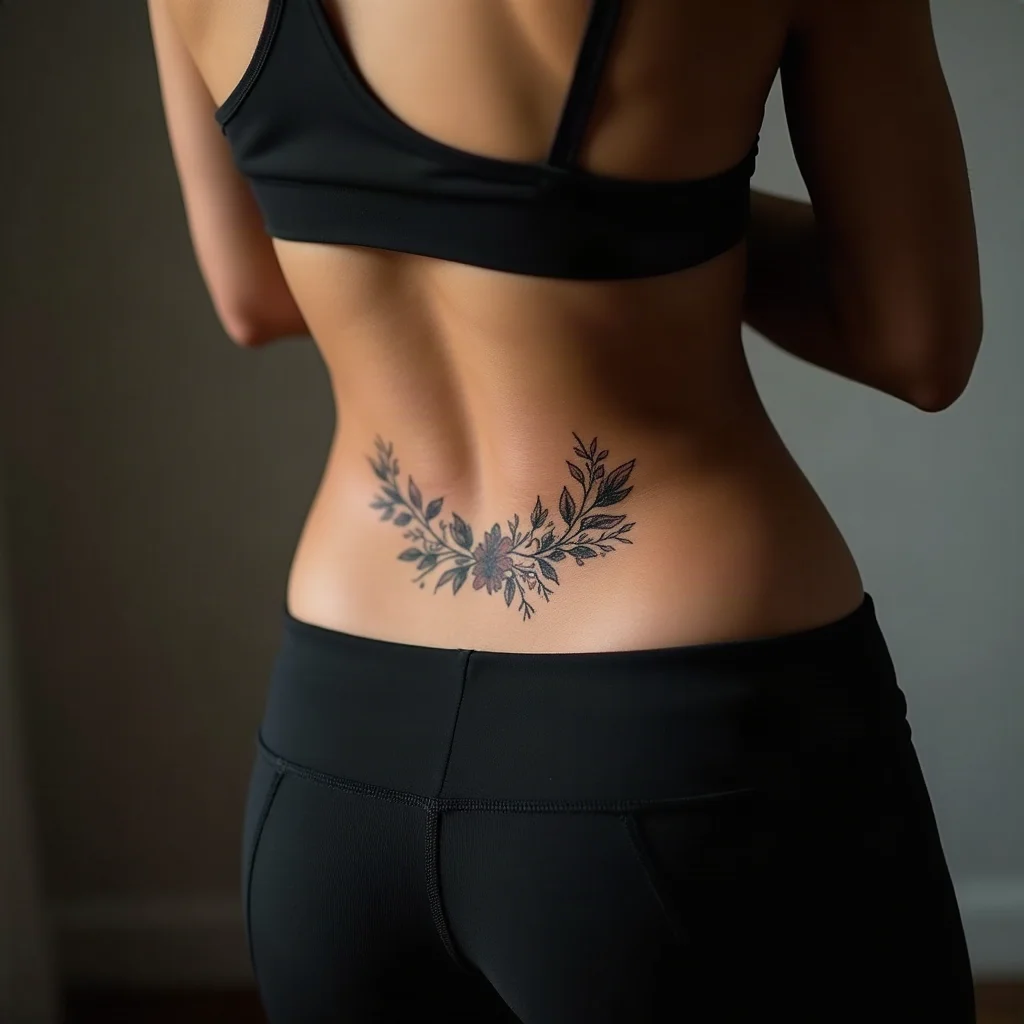
22. Floral crescent under the glute
A curved sweep of small blooms and leaves following the glute crease like a hem. Around 15 cm wide and 5 cm deep, delicate rather than dense. Sharp on the needle, quick to finish, and stunning in a swimsuit.
23. Moth with spread wings
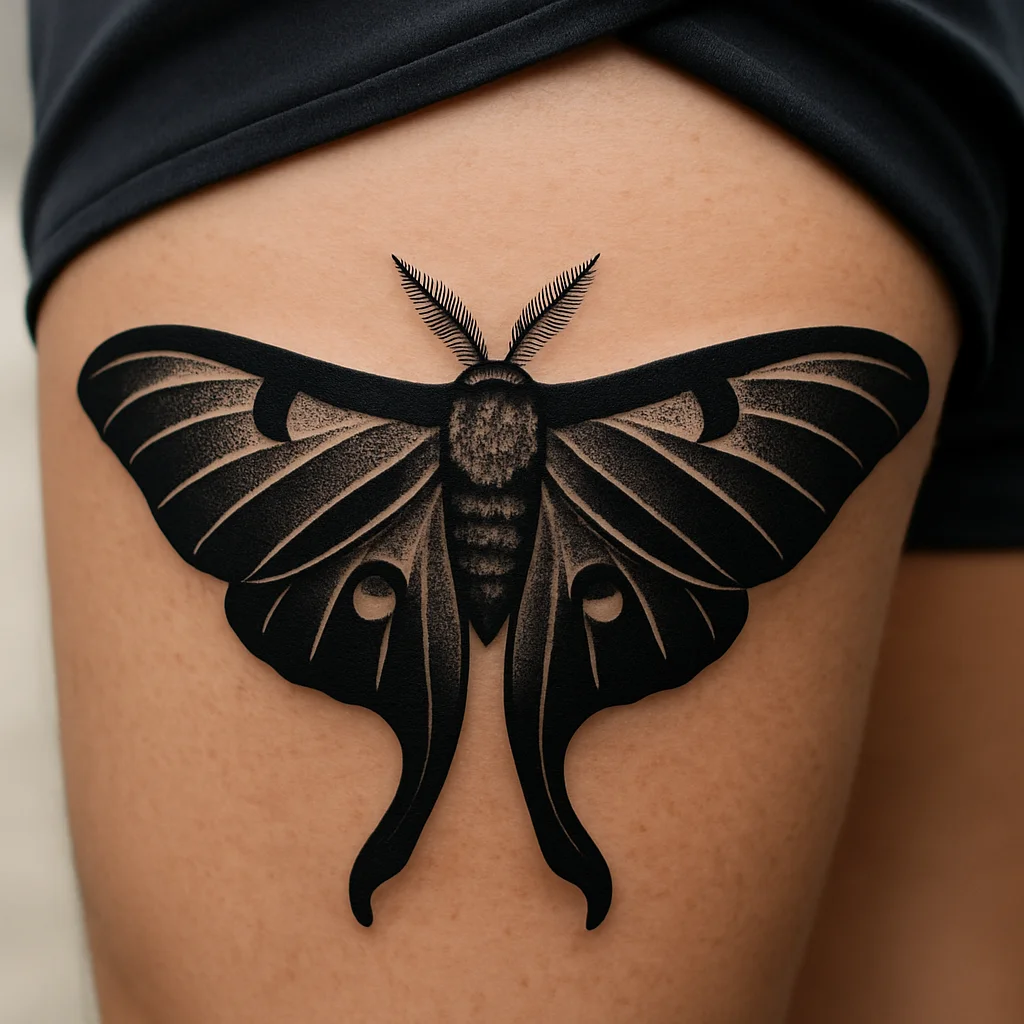
A luna or death's-head moth positioned horizontally across the upper hamstring, wings 14 to 18 cm tip to tip, with heavy black wing bars and stippled body fur. The symmetry sits beautifully across the muscle.
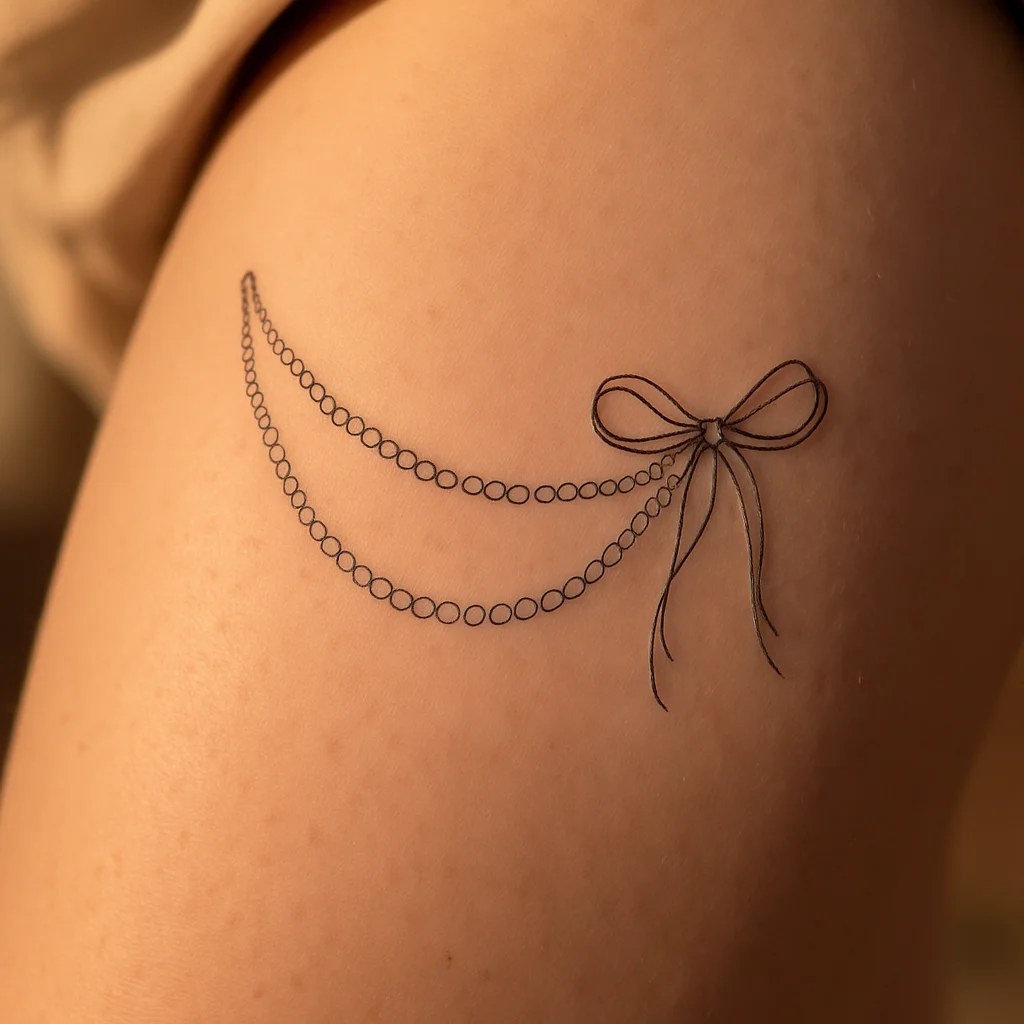
24. Pearl-string swag
Two ornamental anchor points with a draped string of pearls between them, curving across the back of the thigh. Simple, jewellery-like, and endlessly extendable if you later want to wrap it into a full band.
Wraps, Garters and Full Thigh Projects: 6 Bigger Commitments
Once a design goes around the leg rather than sitting on one face of it, planning changes. Your artist has to work with you standing, sitting and lying, and the seam where the band closes needs to land somewhere it will not distort — usually the outer or back of the thigh, never the inner crease. These are the pieces worth booking a proper consult for.
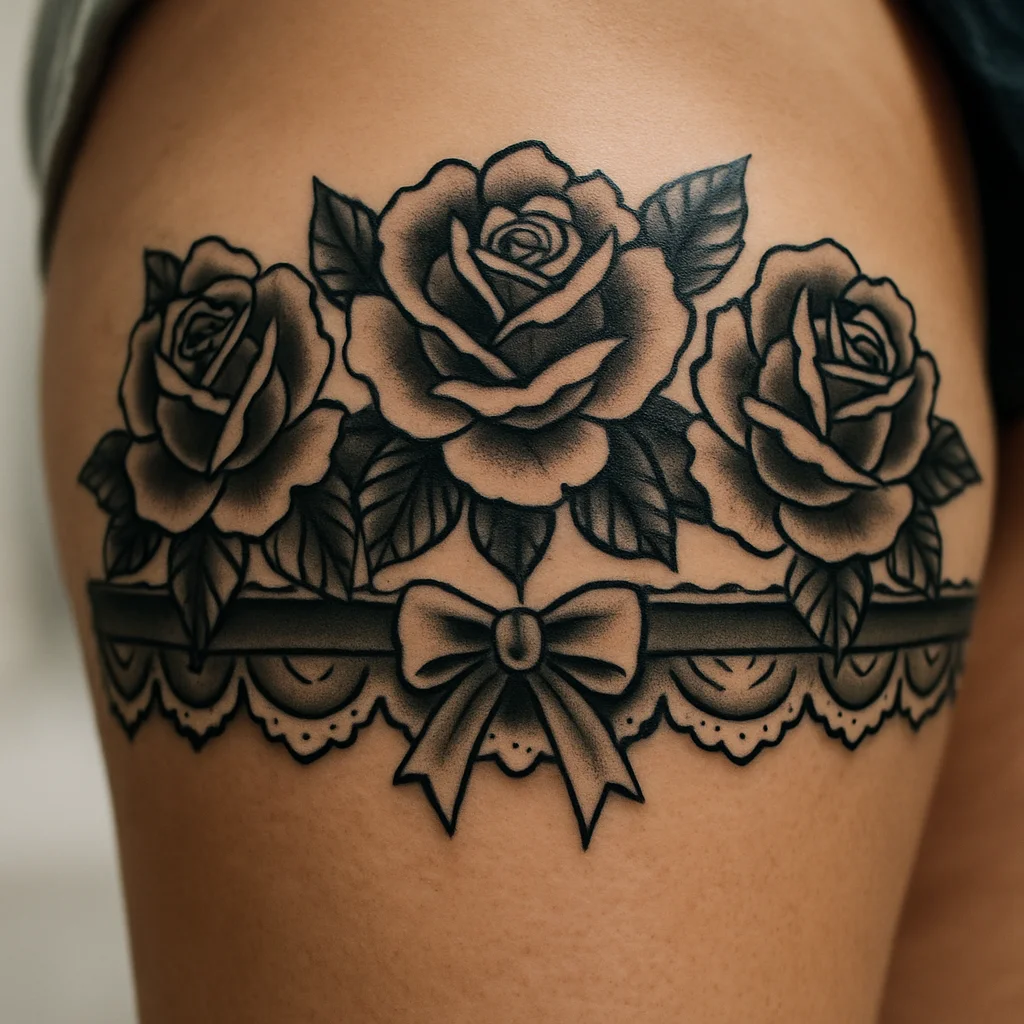
25. Rose and lace garter band
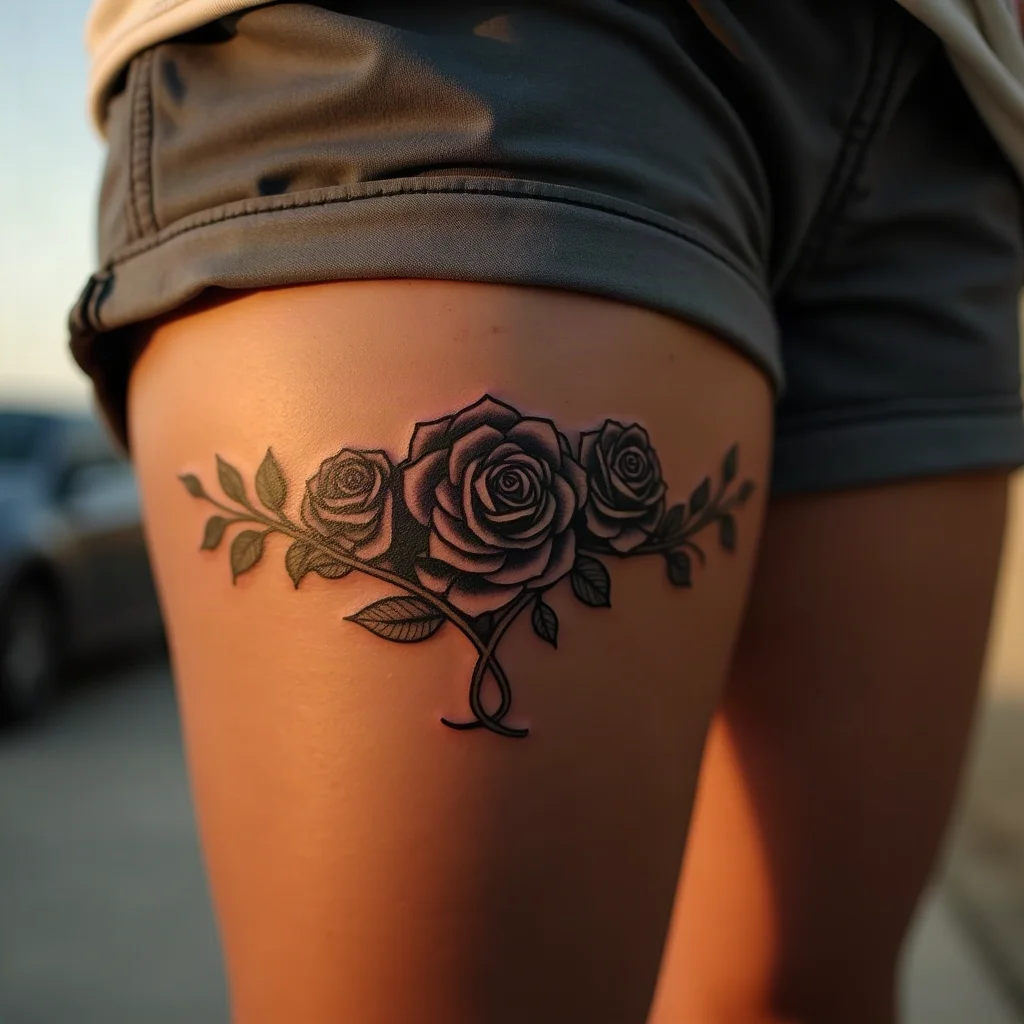
Three roses set into a band of lace scallops that circles the thigh, with a small ribbon detail at the front. Bold enough at 10 to 12 cm deep to hold its shape for decades. Usually two sessions, and the second one is where the closing seam gets resolved.
26. Chain link band with a padlock
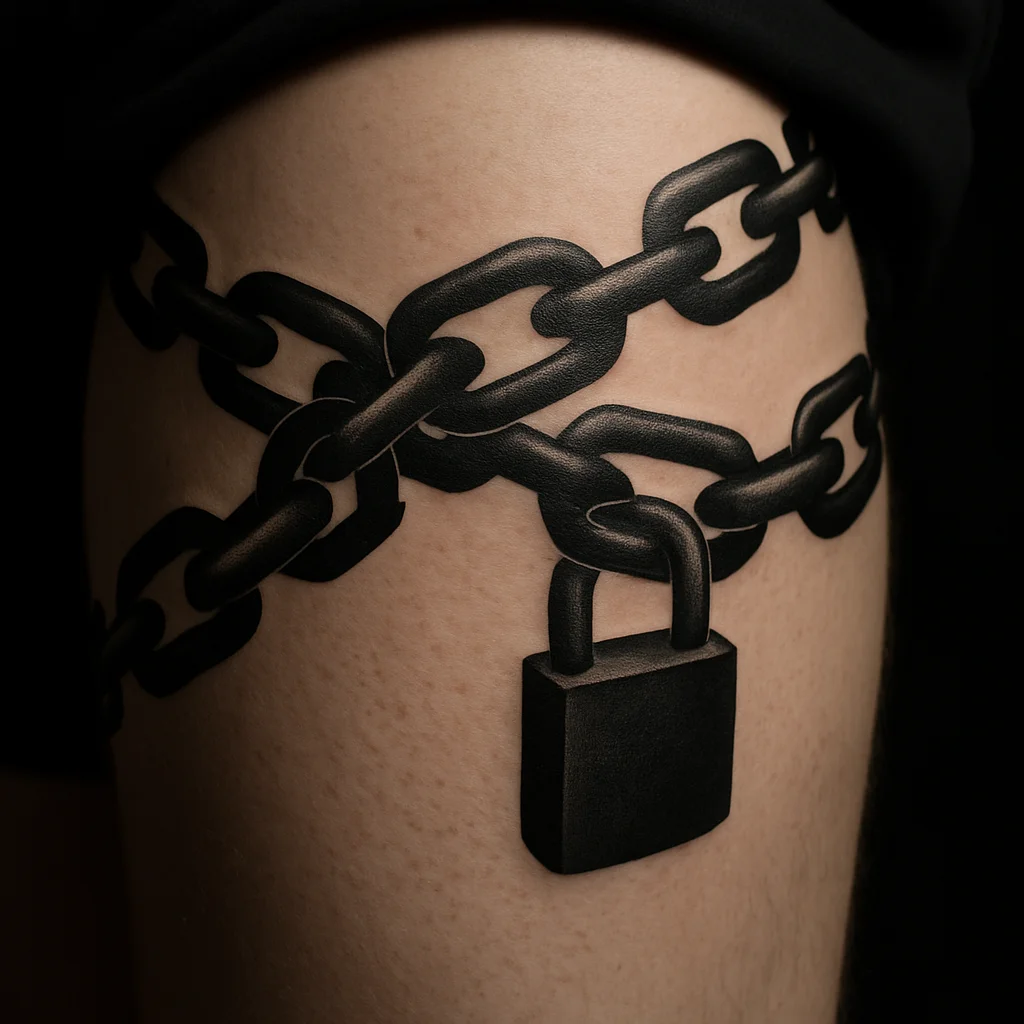
Heavy chain links wrapping the thigh with a single padlock hanging at the outer side. Highly graphic, mostly solid black, and it ages like iron. Ask for the links to shift in perspective as they curve around the leg — flat repeated links look printed on.
27. Ouroboros band
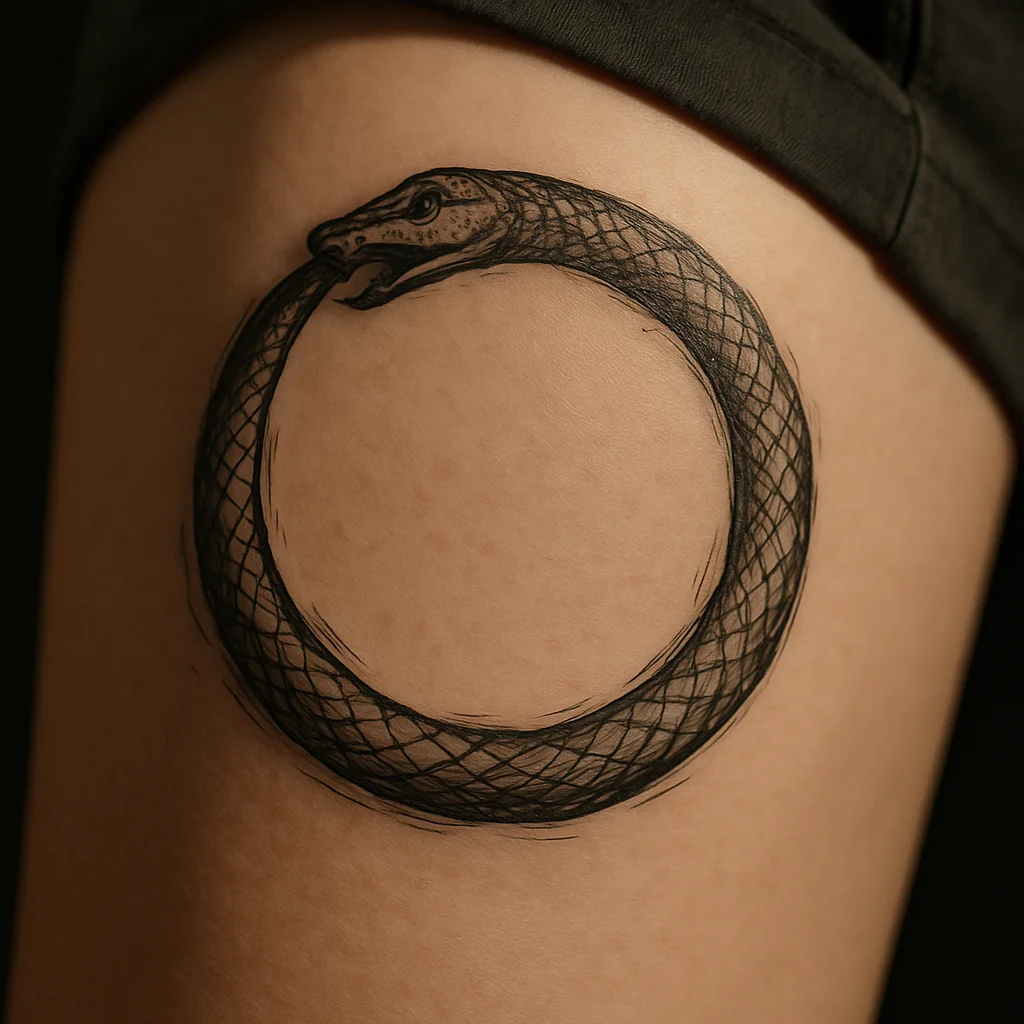
A snake circling the thigh, tail in mouth, joint hidden at the outer seam. Symbolically dense and structurally clean, and it reads as one continuous line from every angle — which is exactly why it is harder to draw than it looks.
28. Pearl and bow garter
A double string of pearls with a slack drape at the front of the thigh and a soft ribbon bow on the outer side. Lighter and more delicate than the lace version, and a good entry point if you want the garter idea without a solid black band.
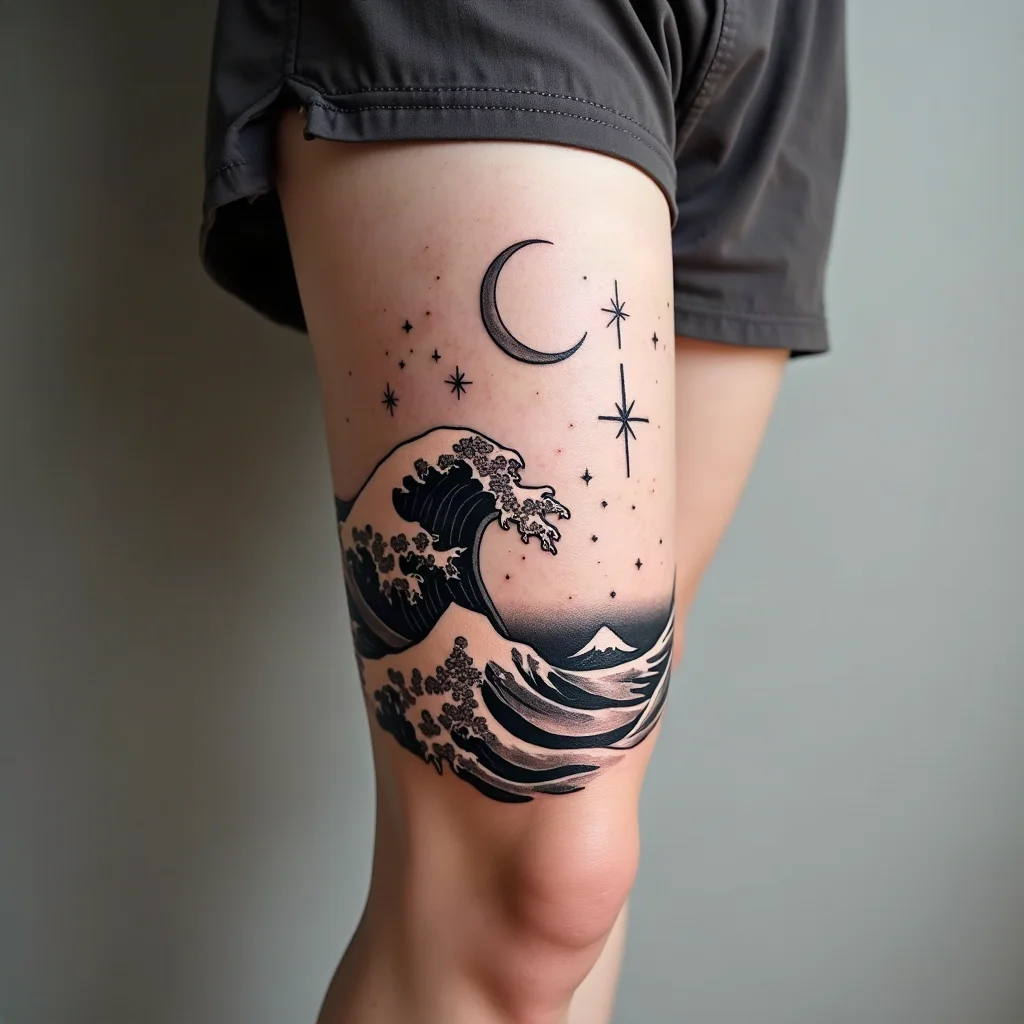
29. Ocean-to-sky full thigh wrap
A wrapped composition that moves from breaking waves at the knee, through cloud banks mid-thigh, to stars and a crescent at the hip. Three to five sessions and a proper spacing plan. Sketch the flow with your artist on your own leg with a marker before anything is finalised.
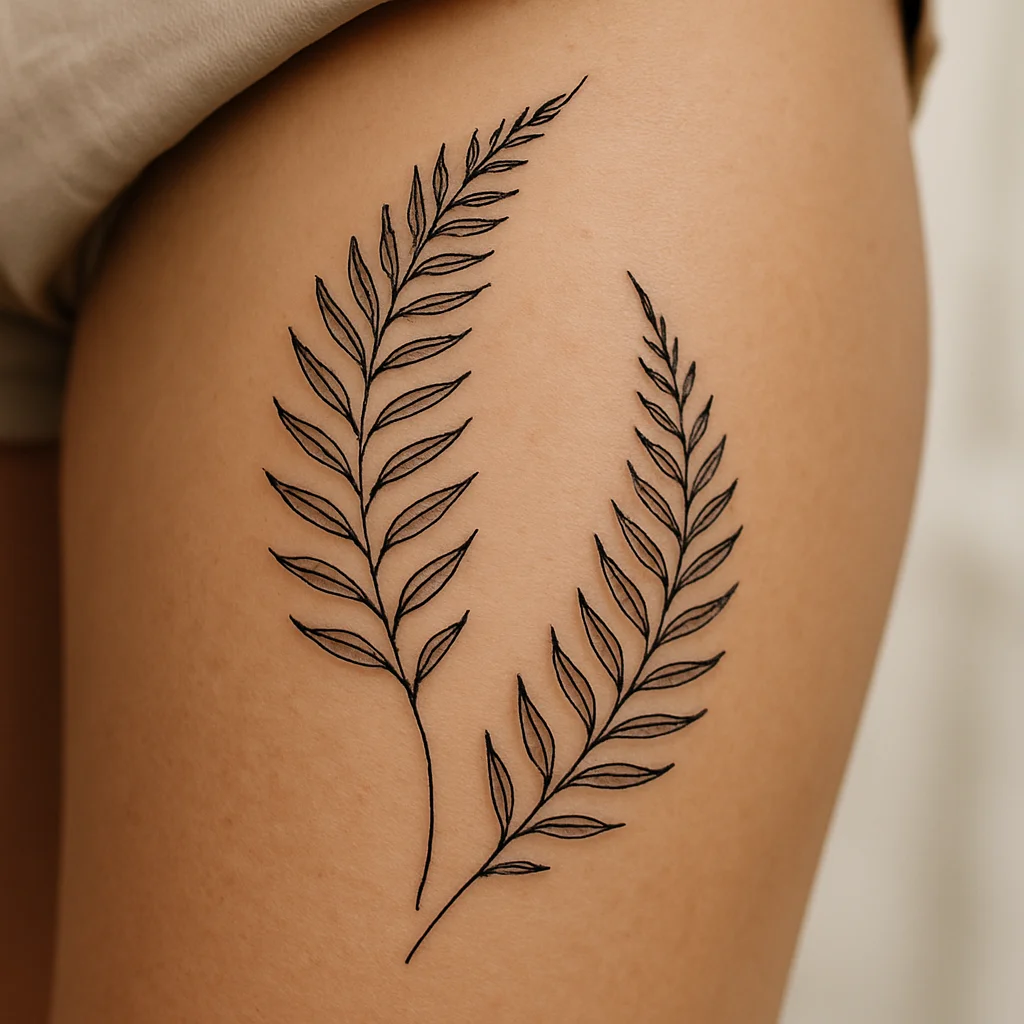
30. Mirrored botanical panels on both thighs
Two matching panels — say fern fronds curving inward on each outer thigh — designed as a pair so they frame the body when you stand. Book them close together so healing and fading stay in step, and expect to pay per side. It is the boldest thing on this list and the one that makes the strongest impression.
Healing a Thigh Piece and Keeping It Sharp
Thighs heal well but they live a hard life: waistbands, seams, gym leggings, car seats and skin-on-skin contact all rub exactly where fresh ink sits. Plan for looser clothing for at least a week, and if the piece sits high on the inner thigh, expect some chafing and give yourself a couple of low-movement days.
Wrapping matters more here than on an arm. Many artists will send you home in a breathable adhesive film for a few days, which is a genuine advantage on a leg you cannot keep uncovered. Whatever your artist recommends, follow their instructions over anything you read online, and use our 30-day aftercare walkthrough as the baseline for the weeks that follow.
Choices that decide how it looks in fifteen years
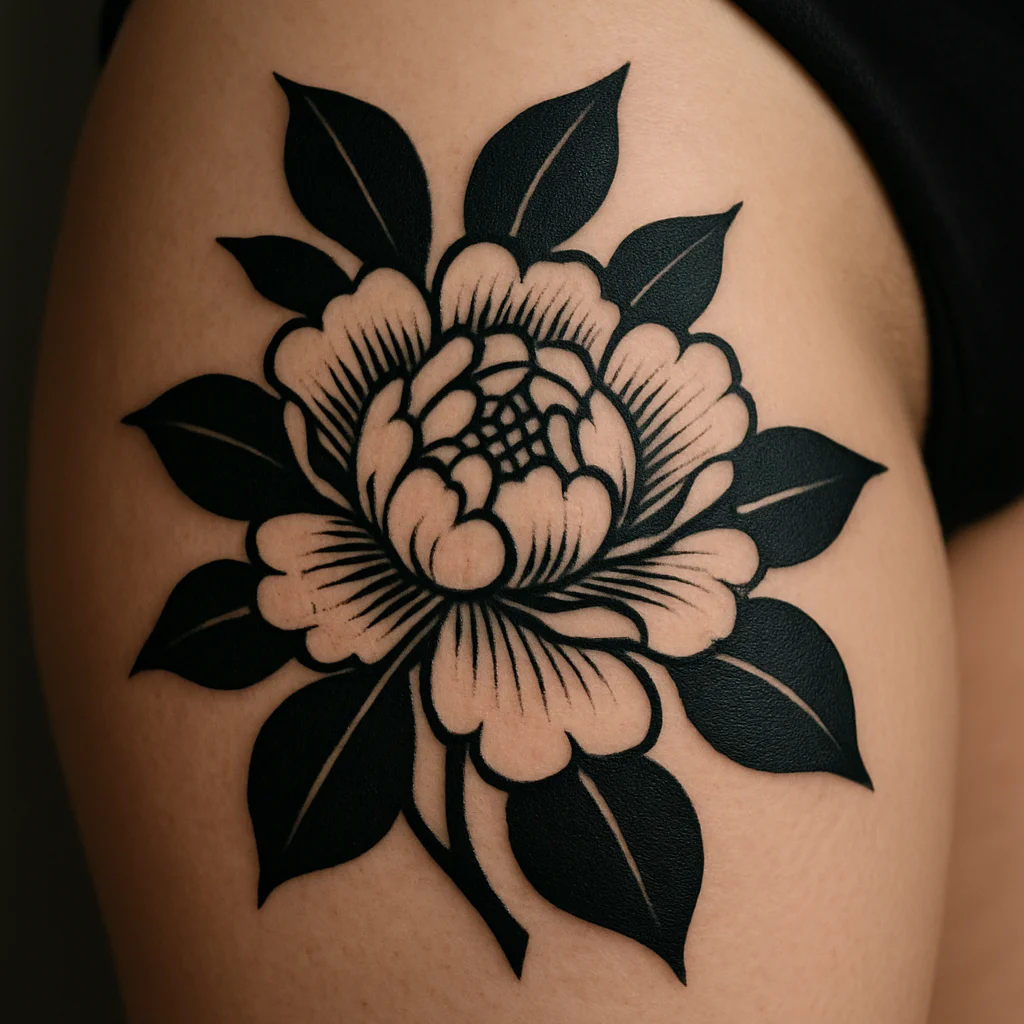
- Line weight over line count. A bold-line peony with heavy solid black leaves and open negative space will still read cleanly long after a tightly packed micro-detailed version has softened. If longevity is your priority, this is the trade to make.
- Respect the curve. Have the stencil checked standing, sitting and walking. A design aligned on a lying body can pull sideways the moment you stand up.
- Sun is the enemy. Thighs get sun in exactly one season and get it hard. High-factor sunscreen every beach day is the whole maintenance plan.
- Leave breathing room. If there is any chance you will extend into a full leg later, ask your artist to leave clean space at the hip and above the knee rather than filling the zone edge to edge.
- Brief with three things: reference images you like, a clear size in centimetres, and an honest note about your skin — scars, stretch marks, previous tattoos or laser work. Artists solve those easily when they know in advance.
Frequently asked questions
How much do thigh tattoos hurt compared to other placements?
The outer thigh is one of the least painful areas on the body, and the front of the quad is moderate and mostly just repetitive. The inner thigh and the crease under the glute are noticeably sharper because the skin is thinner and more sensitive. Most people find thighs far more manageable than ribs, knees or the top of the foot, which is why artists often book longer sessions there.
How big should a thigh tattoo be?
Bigger than you first think. The thigh is wide and curved, so designs shrink visually once they are on the body. Palm-size is the practical minimum for anything with internal detail, and a front or outer thigh panel usually looks best at 20 to 30 cm tall.
Will a thigh tattoo stretch or distort over time?
Thigh skin changes more than an arm with weight fluctuation and pregnancy, so ink can soften slightly. Choosing bolder outer lines, leaving negative space and avoiding ultra-dense micro-detail keeps a design readable through those changes. Placement on the outer thigh tends to hold up marginally better than the very inner surface.
Can I get a thigh tattoo over stretch marks or cellulite?
Yes. Textured skin takes ink fine; your artist simply adjusts needle depth and avoids the most delicate single-needle work directly over deep marks. Mention it at the consultation so the composition can be planned around it rather than improvised on the day.
How long does a full thigh piece take to complete?
A palm-size fine-line design is often a single sitting of an hour or two. A large front or outer thigh panel usually takes one to three sessions of four to six hours, and a full wrap from hip to knee is commonly a three-to-five-session project spaced a few weeks apart for healing.
The conversation
No comments yet. Got a thought about these designs? Start us off.
Want to weigh in? Join the community to comment, save designs and try them on your skin.