28 Small Hand Tattoos for Women That Stay Sharp
Hands fade faster than anywhere else on the body, so a small hand tattoo has to be designed for it. Here are 28 tiny designs mapped to the zones that actually hold ink, plus the sizing and touch-up talk artists wish you'd have before you book.
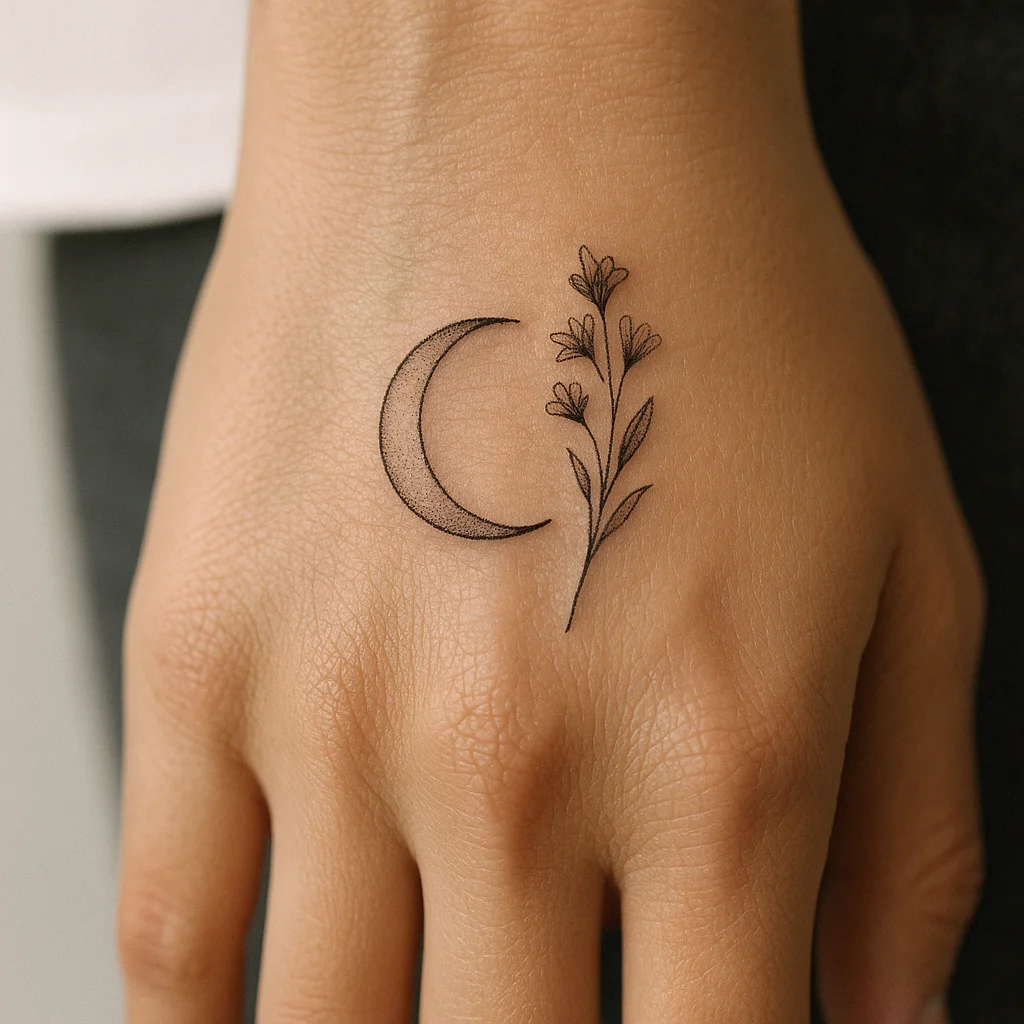
What hands do to small tattoos (and how to design around it)
Hands are the most demanding canvas on the body, and the reason is boring: you use them constantly. The skin on the back of the hand is thin and stretched over moving tendons, the palm side sheds cells at a rate no other skin matches, and your hands get more sun, soap and friction in a week than your ribs get in a year. All of that adds up to faster fading, softer edges and patchy healing, especially on anything under two centimetres.
You can still get a beautiful small hand tattoo. You just have to design it knowing that:
- Line weight beats detail. A single-needle hair-thin line on a hand can vanish or blur within a year. Ask for a slightly heavier line than you'd use on a forearm, and let the artist space elements a few millimetres wider than looks necessary on paper.
- Negative space is your friend. Tiny shapes with gaps between them stay legible. Dense micro-detail, tight lettering and shading gradients close up as they settle.
- Touch-ups are part of the deal. Most small hand pieces want a refresh somewhere between one and three years, and many artists offer the first one at a reduced rate. Budget for it emotionally as well as financially.
- Some zones are more reliable than others. The back of the hand and the blade (pinky) edge hold ink best. Palms, thumb pads and the sides of fingers that rub together hold it worst.
One more practical note: plenty of artists decline hand tattoos on clients who don't already have visible work, not out of snobbery but because hands are seen by everyone, every day. If yours is a first tattoo, expect a conversation about it, and don't take it personally.
Back of the hand: 7 small designs that read clearly
This is the classic spot, and the most visible one. The trick is to sit your design in the soft valley between two tendons rather than straight over a bone, so the shape doesn't distort when you make a fist. Aim for 3-5 cm as a sweet spot: big enough to survive fading, small enough to stay quiet.
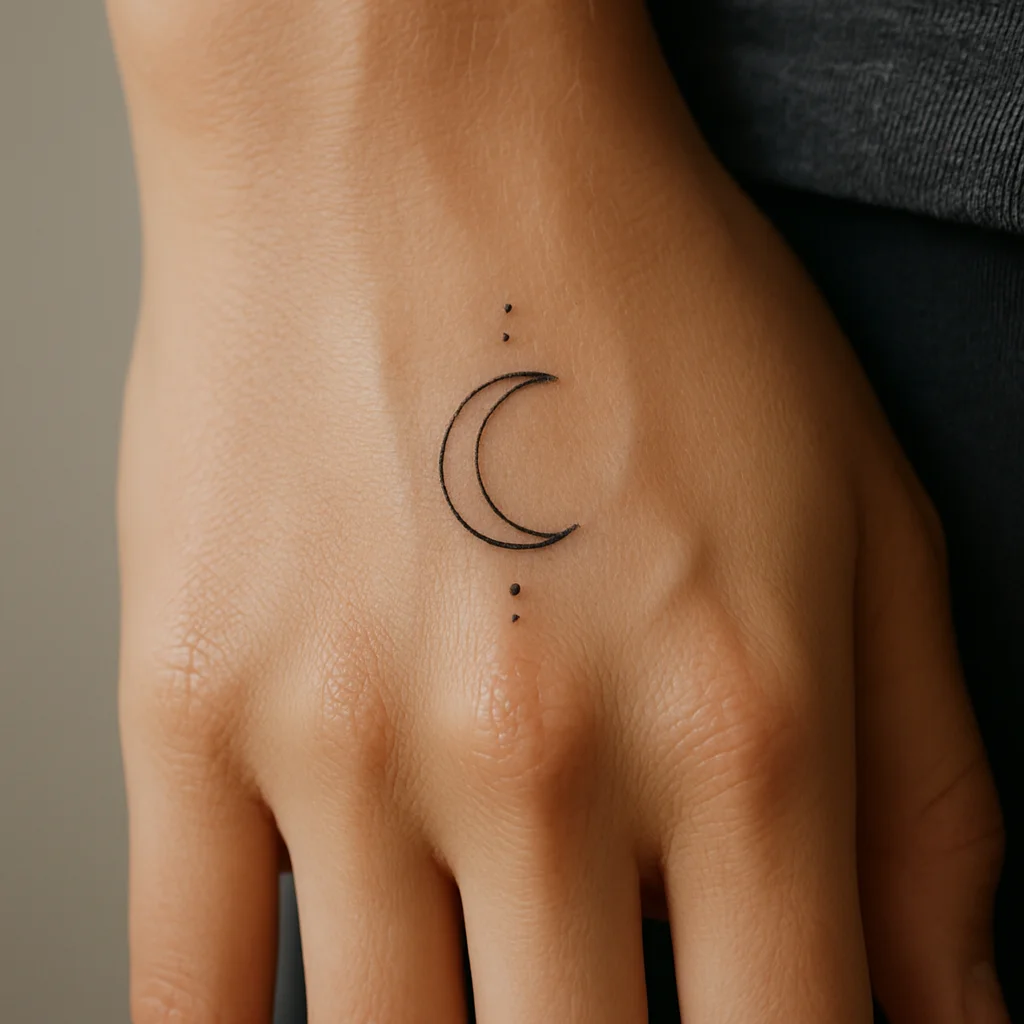
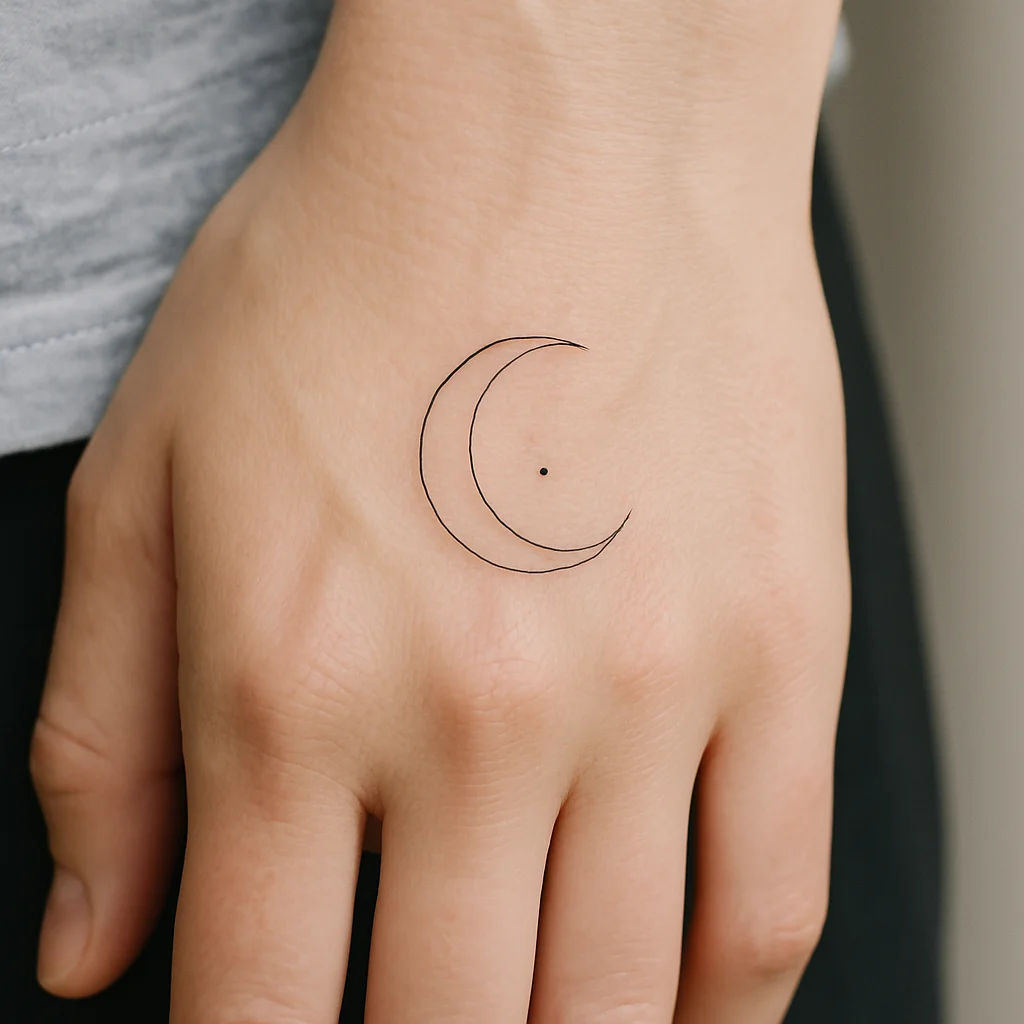
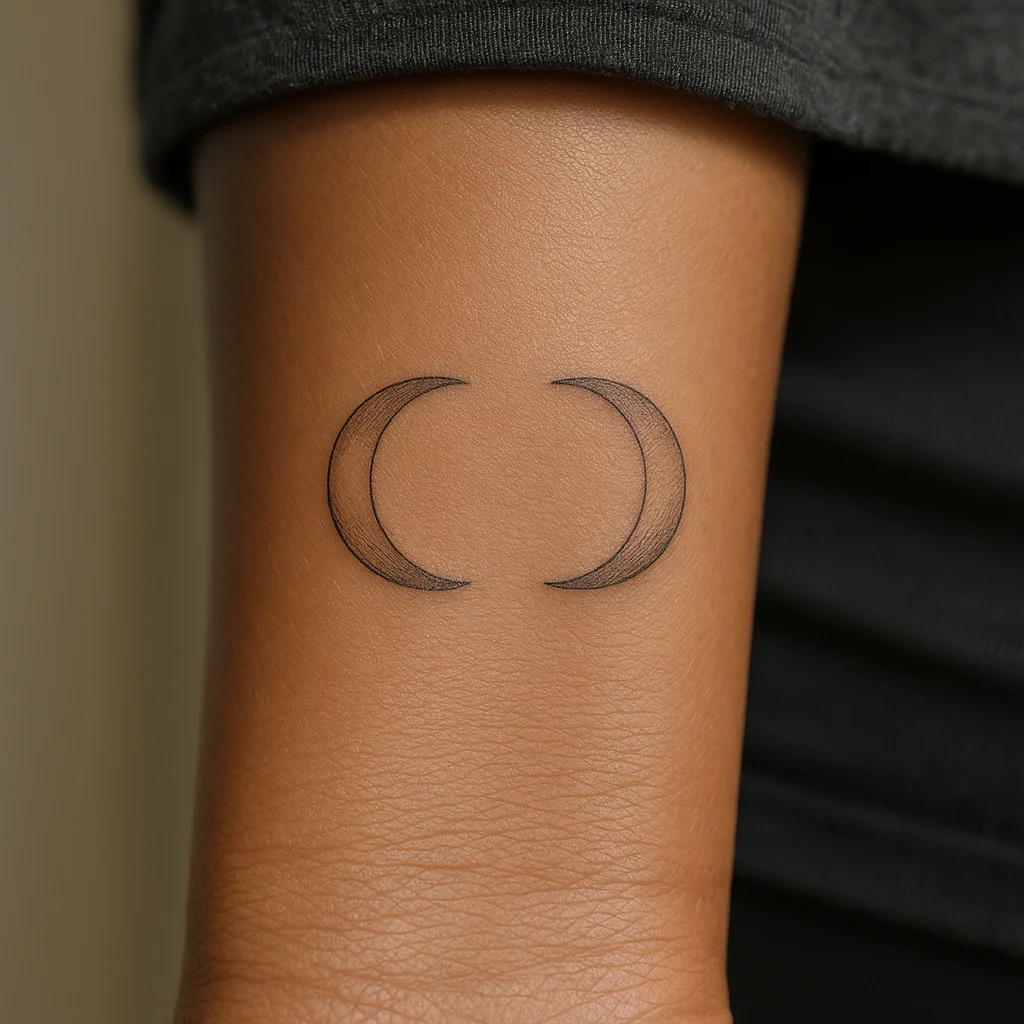
1. Crescent moon between the tendons
A simple outlined crescent, about the width of your thumbnail, tucked between the index and middle tendon. It follows the natural channel of the hand, so it doesn't warp when you flex. Add a single dot inside the curve if you want a bit more weight without more detail.
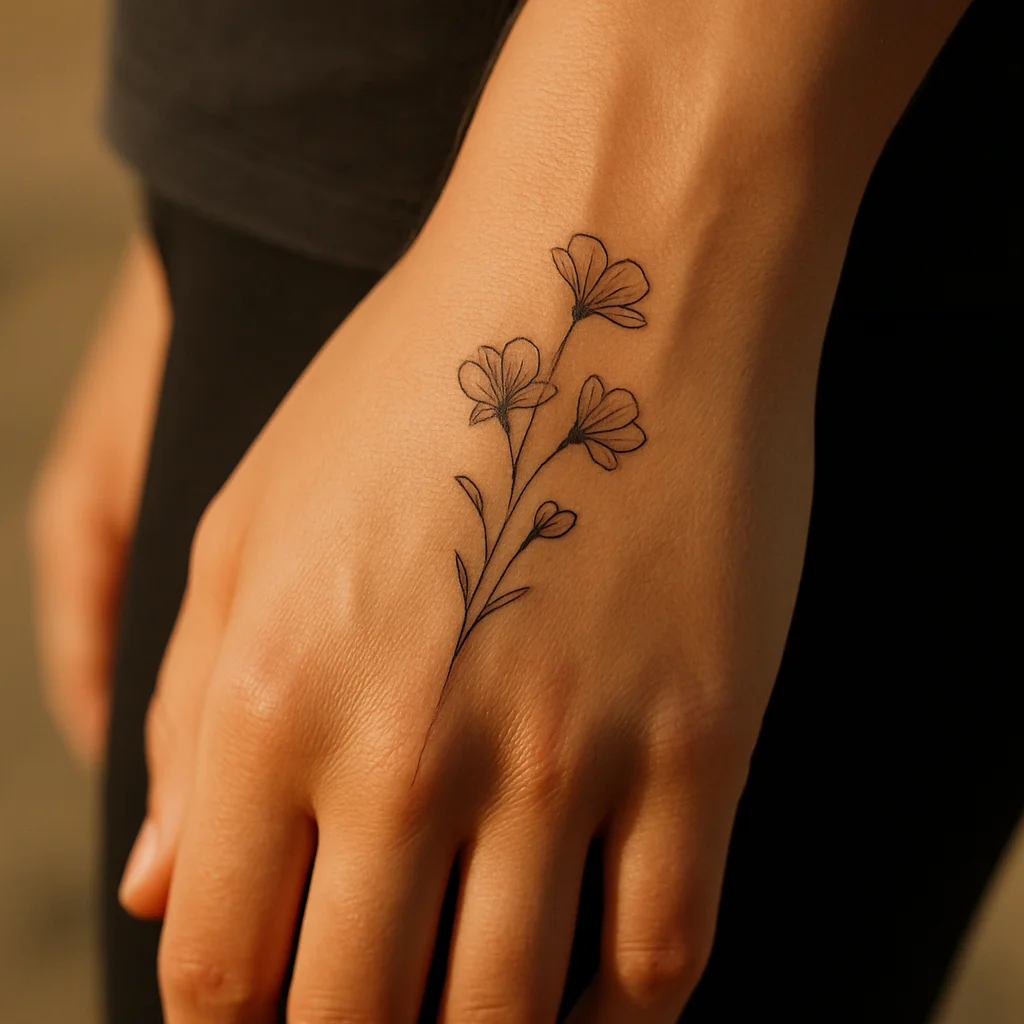
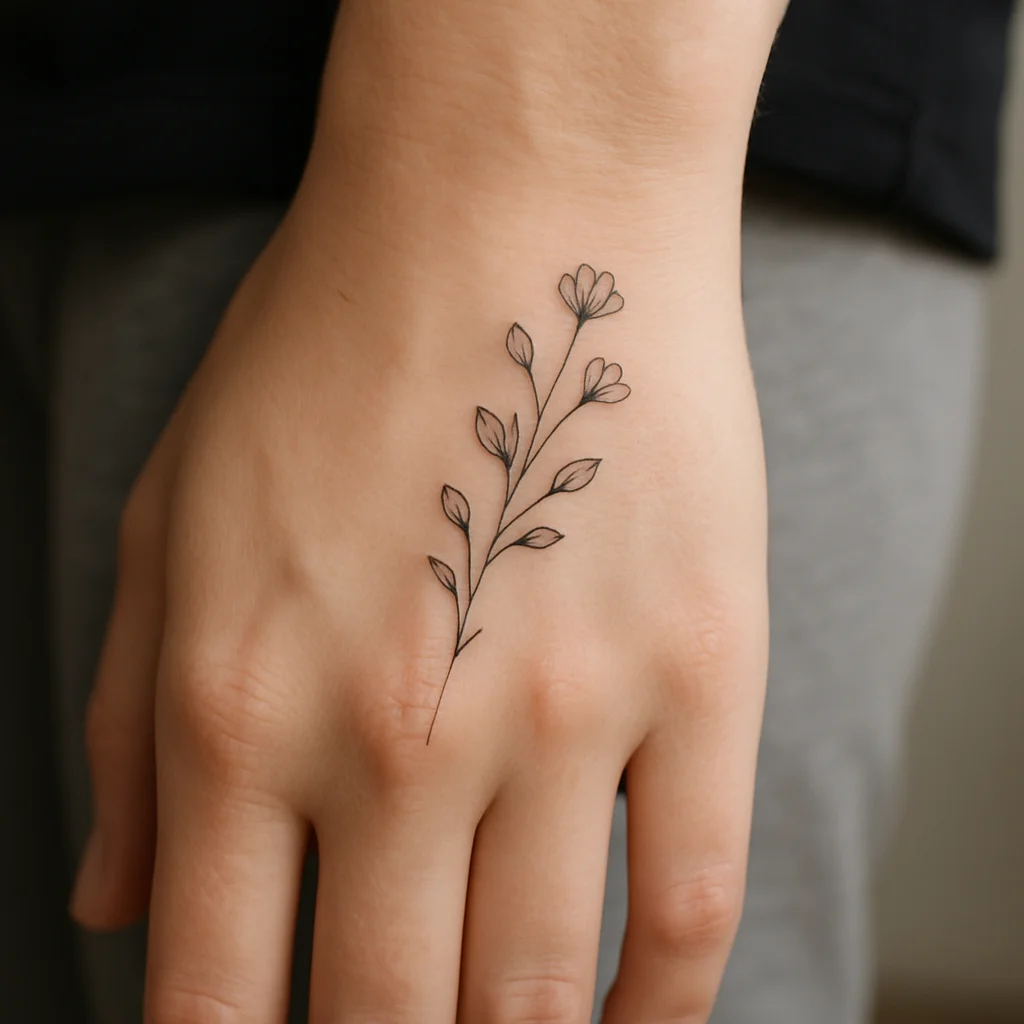
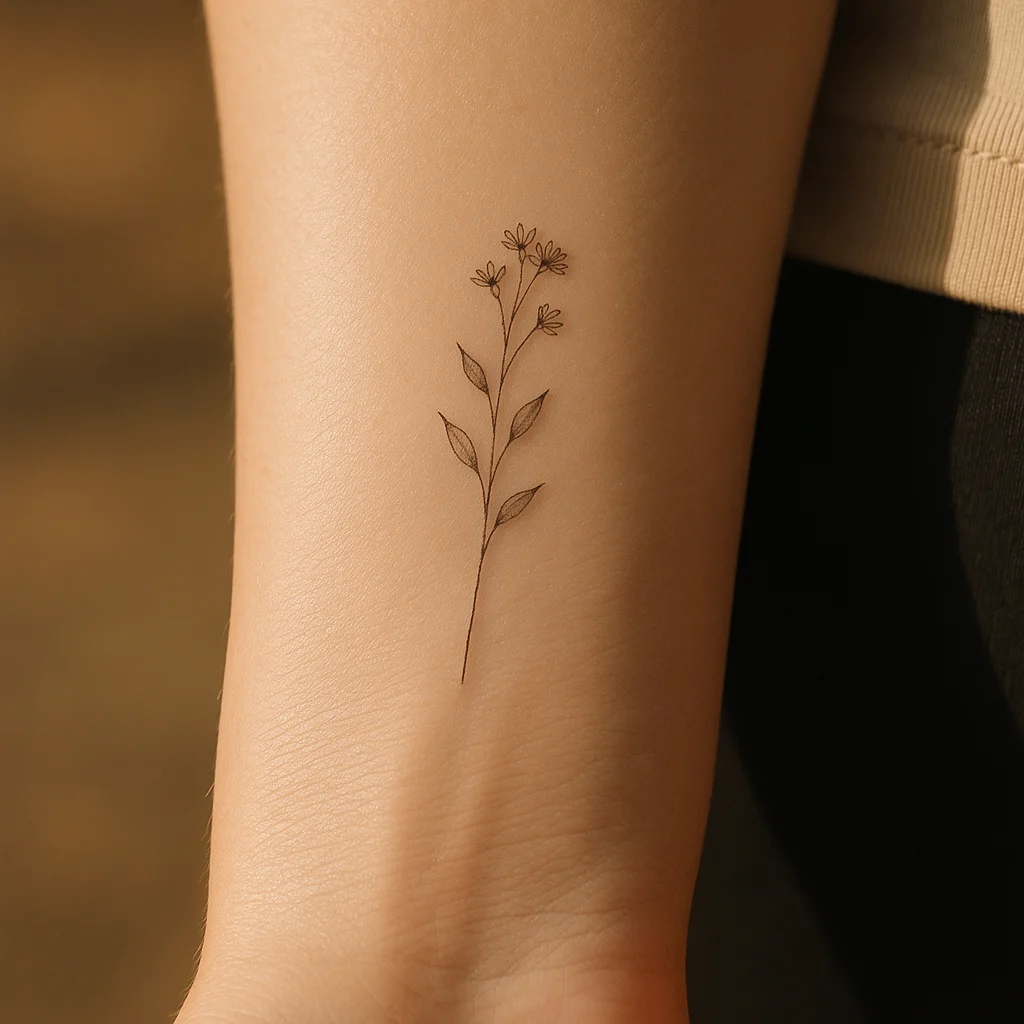
2. Wildflower sprig along the index tendon
One stem, three or four small blooms, running from the wrist end toward the knuckle. The vertical layout suits the hand's shape and keeps the piece narrow, which reads more elegant than a wide cluster. Ask for petals as open shapes rather than filled dots so it doesn't blur into a smudge.
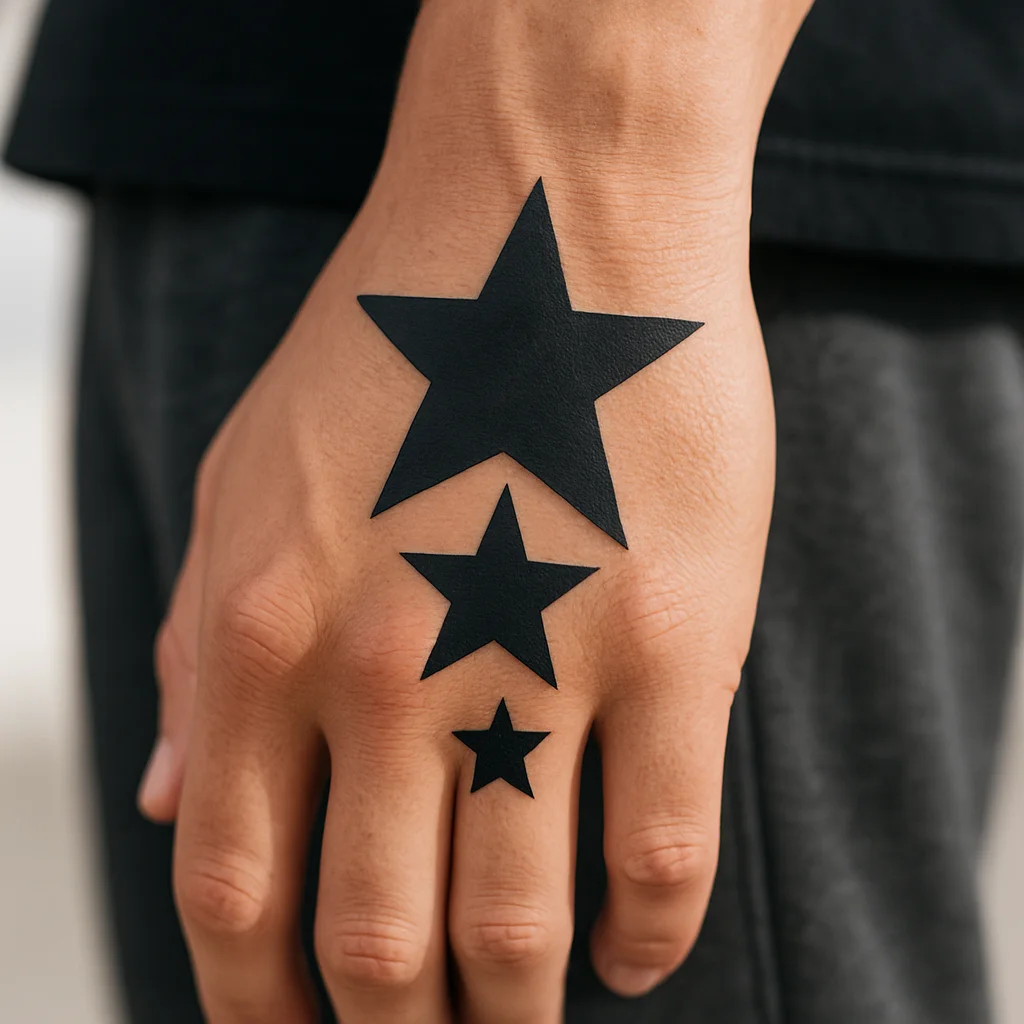
3. Solid black star cluster
Three little five-point stars in graduated sizes, each fully filled. Solid black shapes are the most fade-resistant thing you can put on a hand, and this composition looks intentional rather than sticker-ish. Great if you want something that will still be crisp in five years with one touch-up.
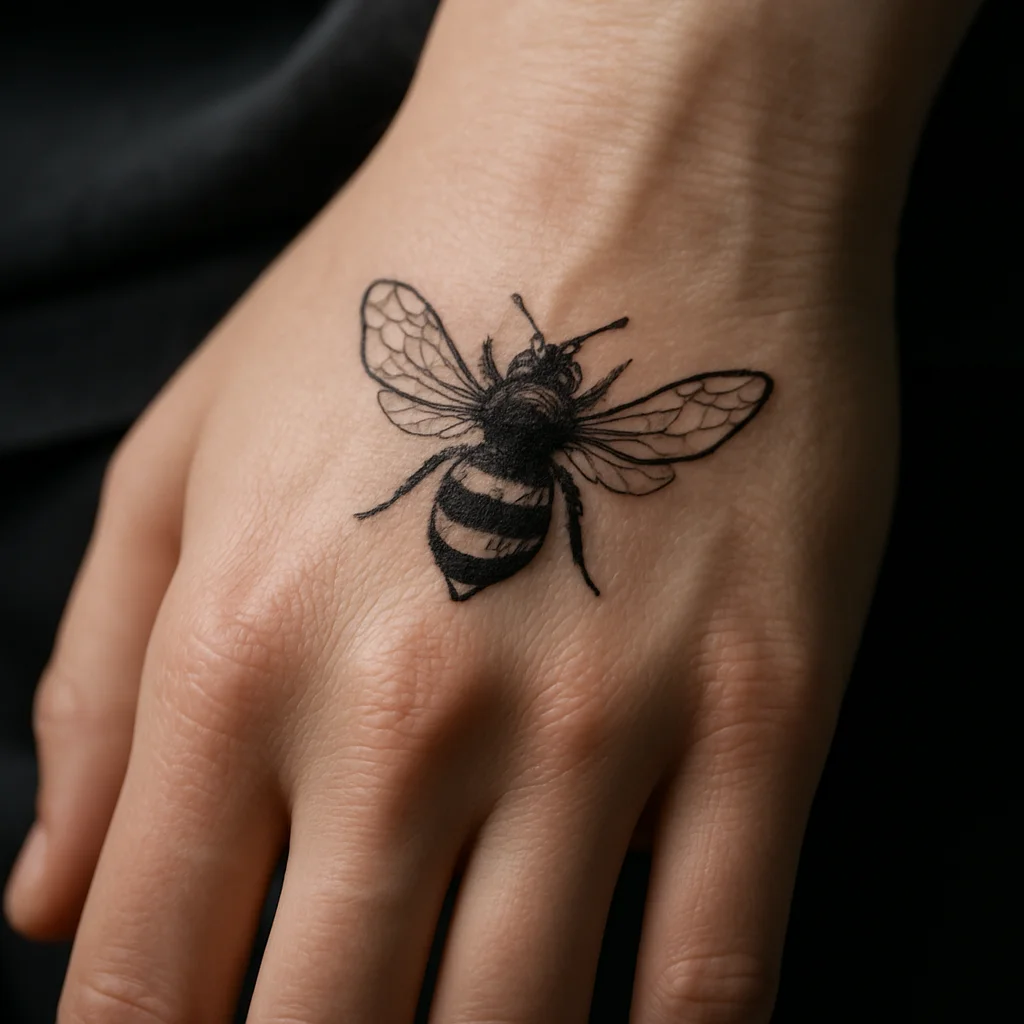
4. Bee above the thumb knuckle
A small bee, body striped in short solid bands, wings drawn as open outlines. The thumb knuckle area is fleshy enough to take ink well and the shape suits a compact, rounded motif. Keep it under 3 cm and skip the flight-path dotted line, which is usually the first thing to fade.
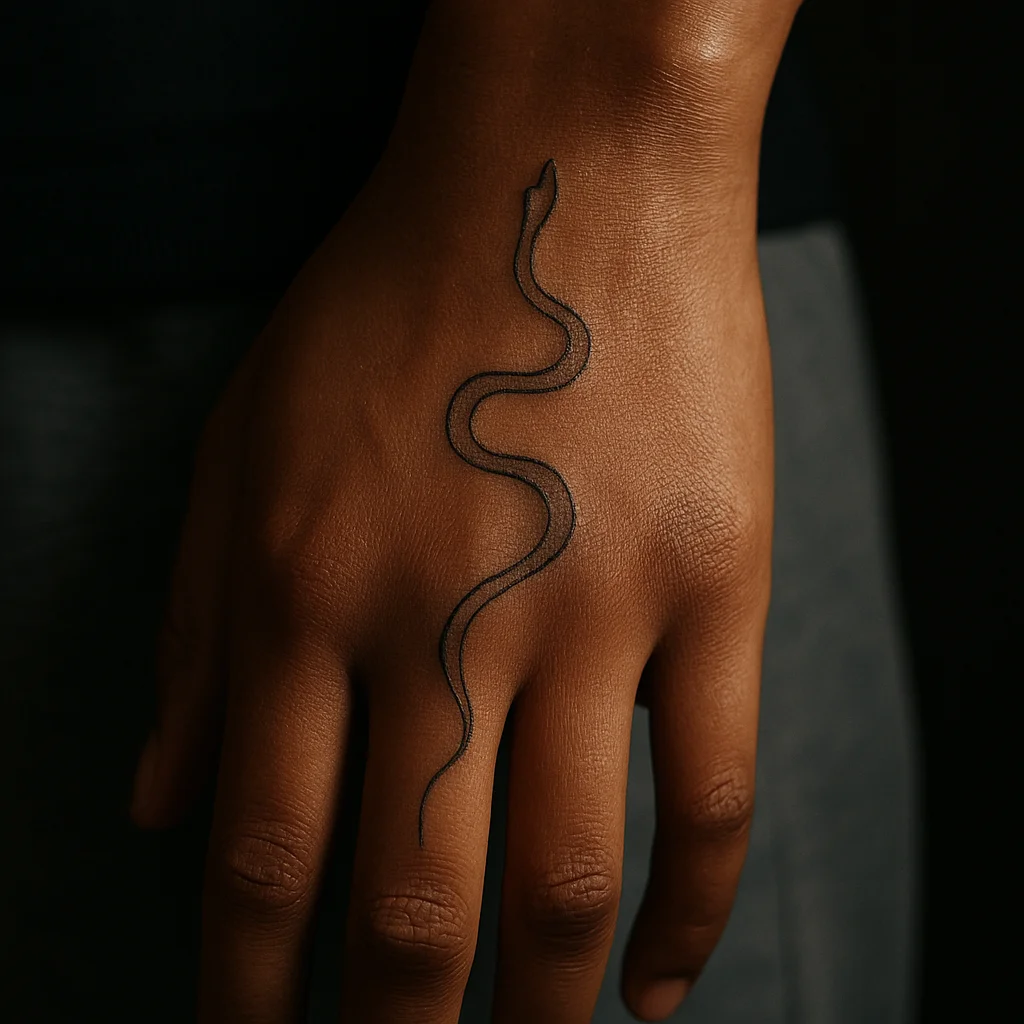
5. Snake curving toward the wrist
A slim serpent that starts near the base of the middle finger and coils gently down to the wrist. The S-curve echoes the tendon lines, so it looks like it belongs there rather than being stamped on. Ask for a bold outline and minimal internal scale detail.
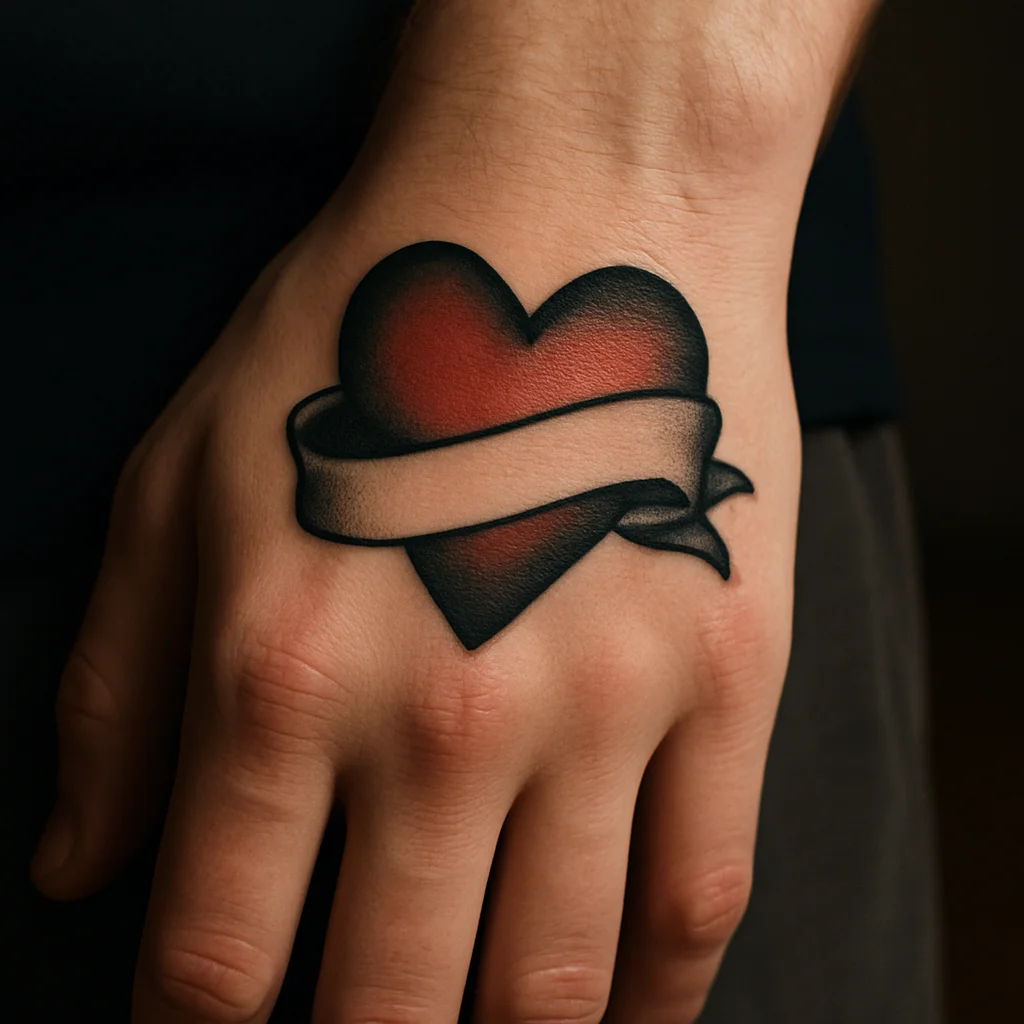
6. Traditional heart with a banner
Old-school heart, thick outline, a sliver of solid black shading and a tiny blank or lettered banner across it. Traditional was built for exactly this problem: bold lines that survive decades of wear. Roughly matchbox-sized works best.
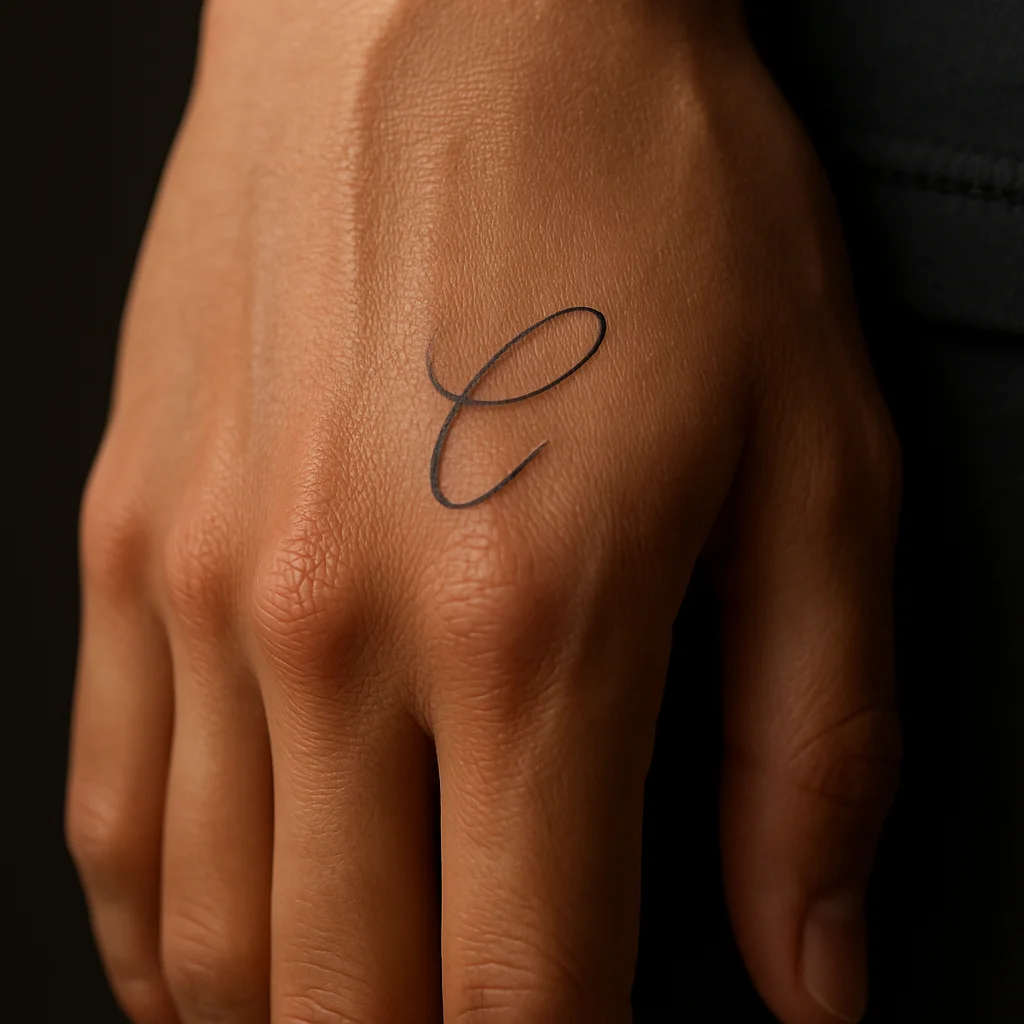
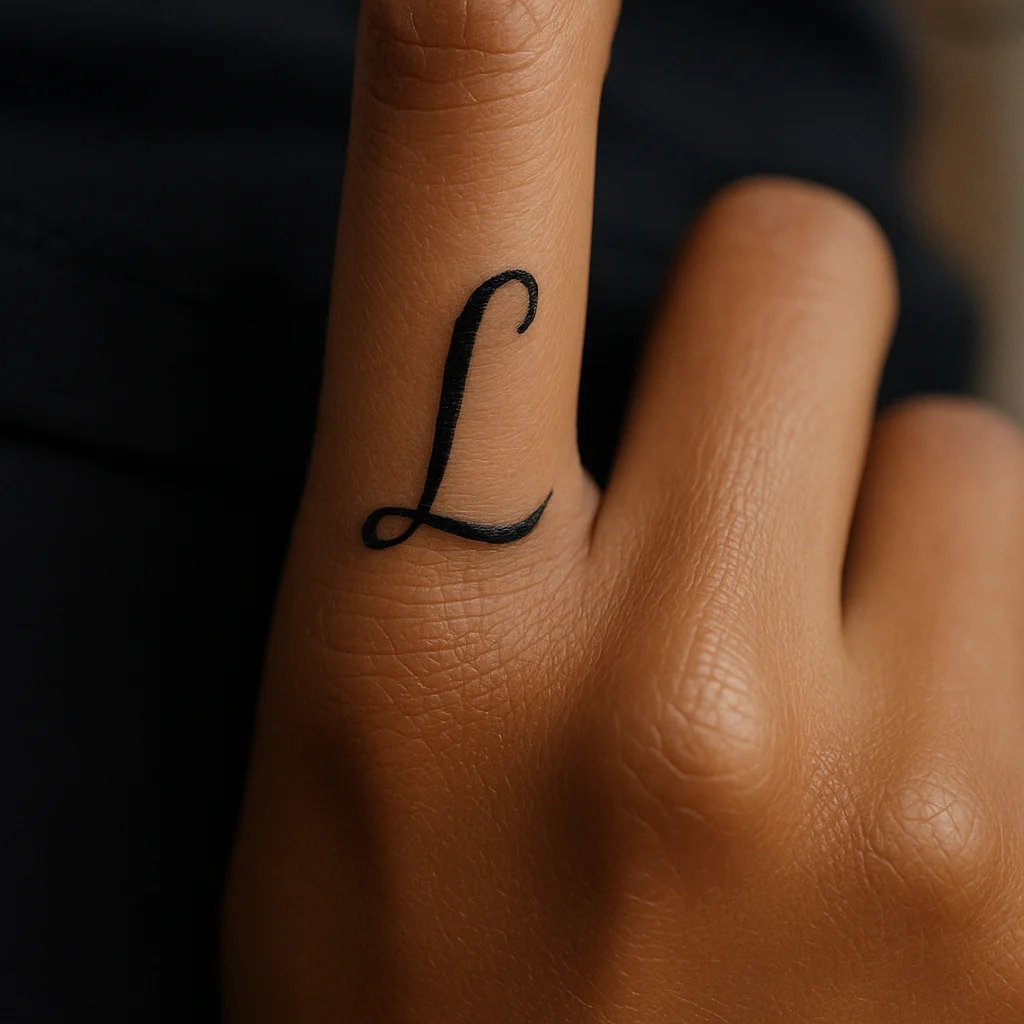
7. Single initial in fine script
One letter, drawn in a flowing script with a thicker downstroke, placed in the tendon valley below the ring finger. Single letters age far better than words on hands because there's no tight spacing to close up. Have your artist print it at actual size and hold it against your skin before committing.
The blade and wrist edge: 6 designs for the quietest hand spot
The outer edge of the hand, from the pinky knuckle down to the wrist bone, is the most underrated placement going. It's hidden when your arms hang naturally, visible when you gesture, and the skin there takes ink better than the palm side. Long, narrow designs win here.
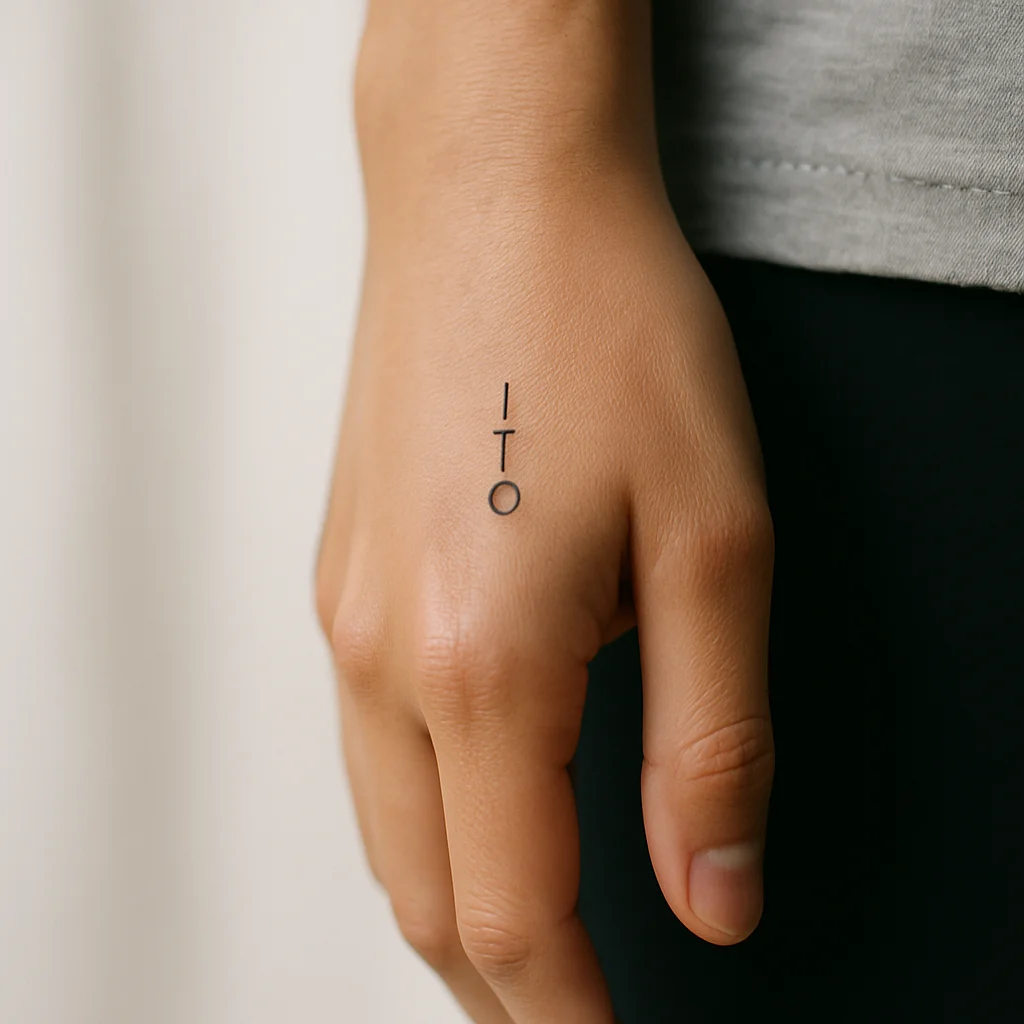
8. One word down the blade
A short word running vertically along the pinky edge, read from wrist to knuckle. Keep it to five or six letters and ask for a font with open counters (the holes in letters like a and e) so it doesn't fill in. Sans-serif or a simple typewriter face holds up better than tight script.
9. Miniature mountain range
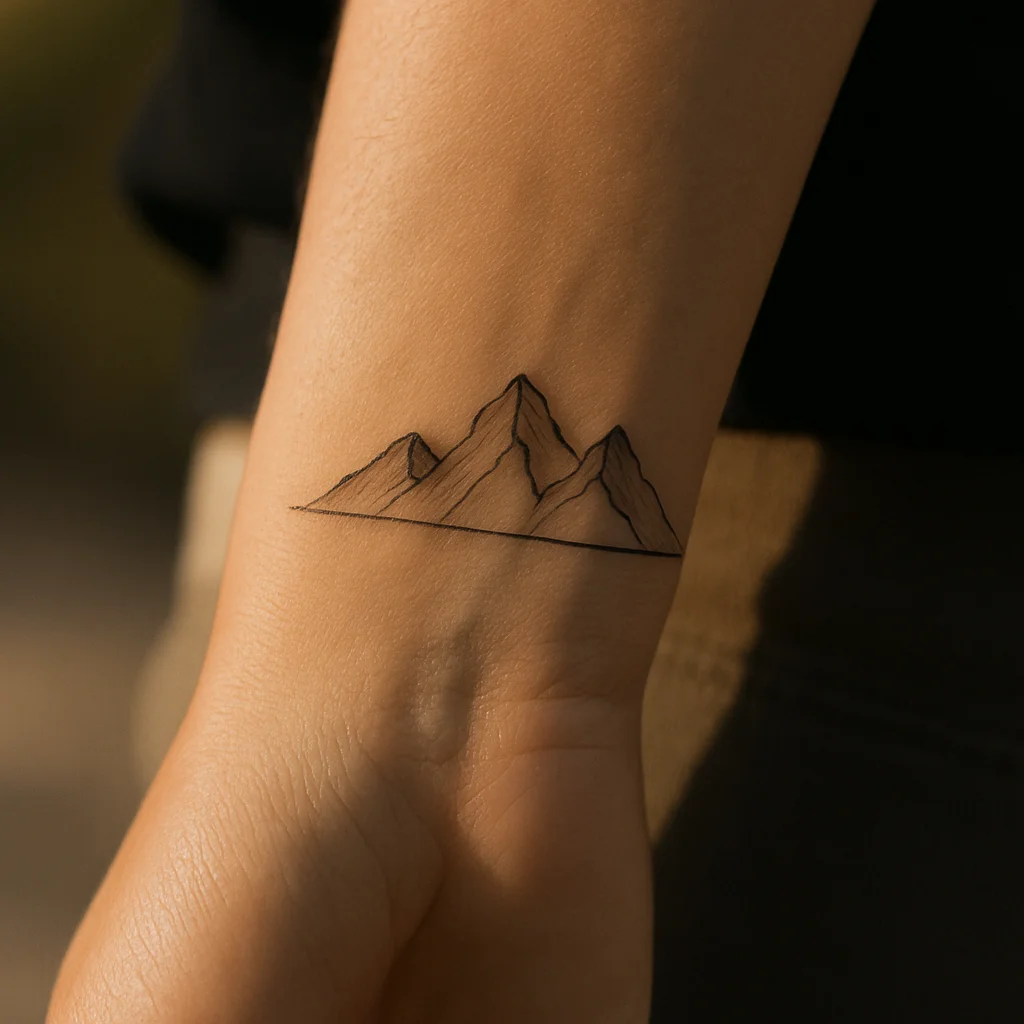
Three peaks in clean outline, sitting along the edge just above the wrist bone. The horizontal-turned-vertical orientation makes it feel like a landscape glimpsed sideways. Add a thin baseline to ground it and skip the sun.
10. Constellation of dots and hairlines
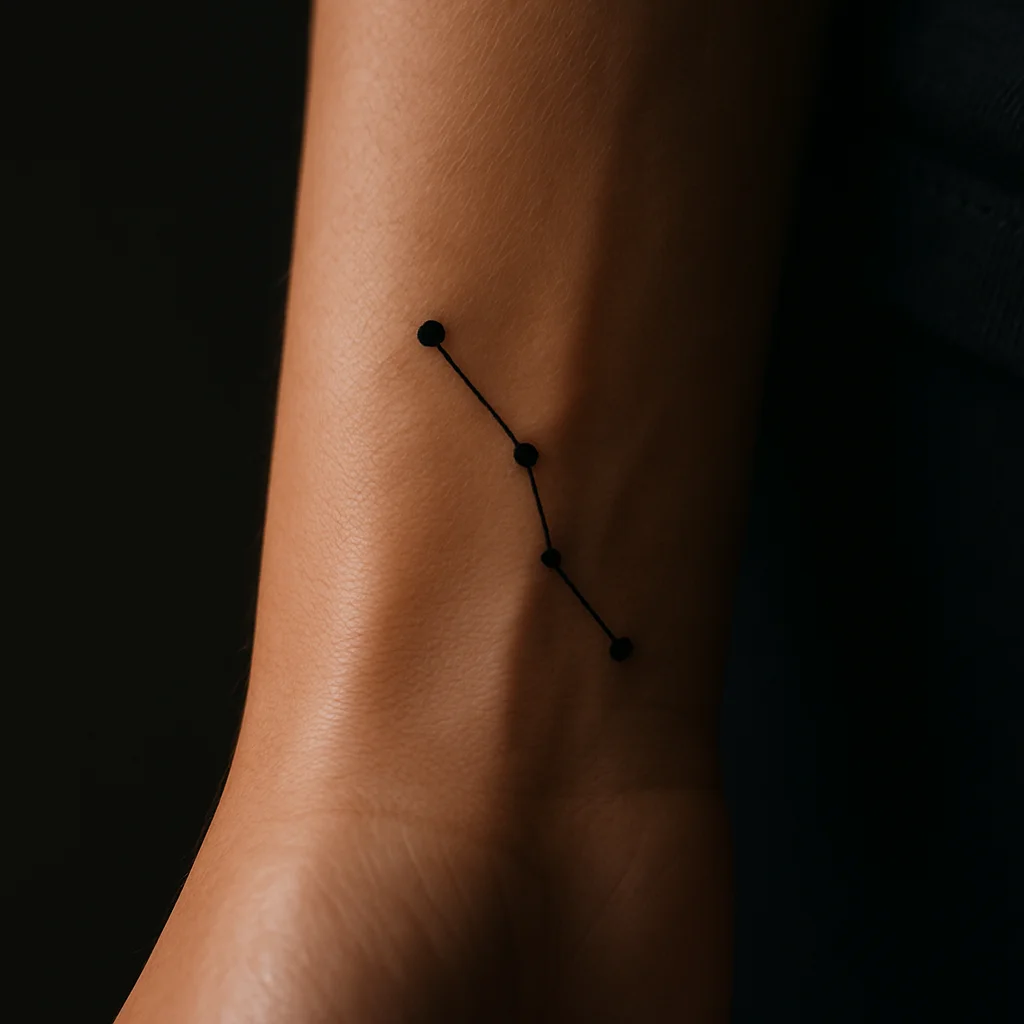
Four or five dots of varying size connected by faint lines, following the blade like a small star map. Dots are the single most durable mark on a hand, so this ages better than most fine-line work. Have the artist go slightly larger on the dots than you think you want.
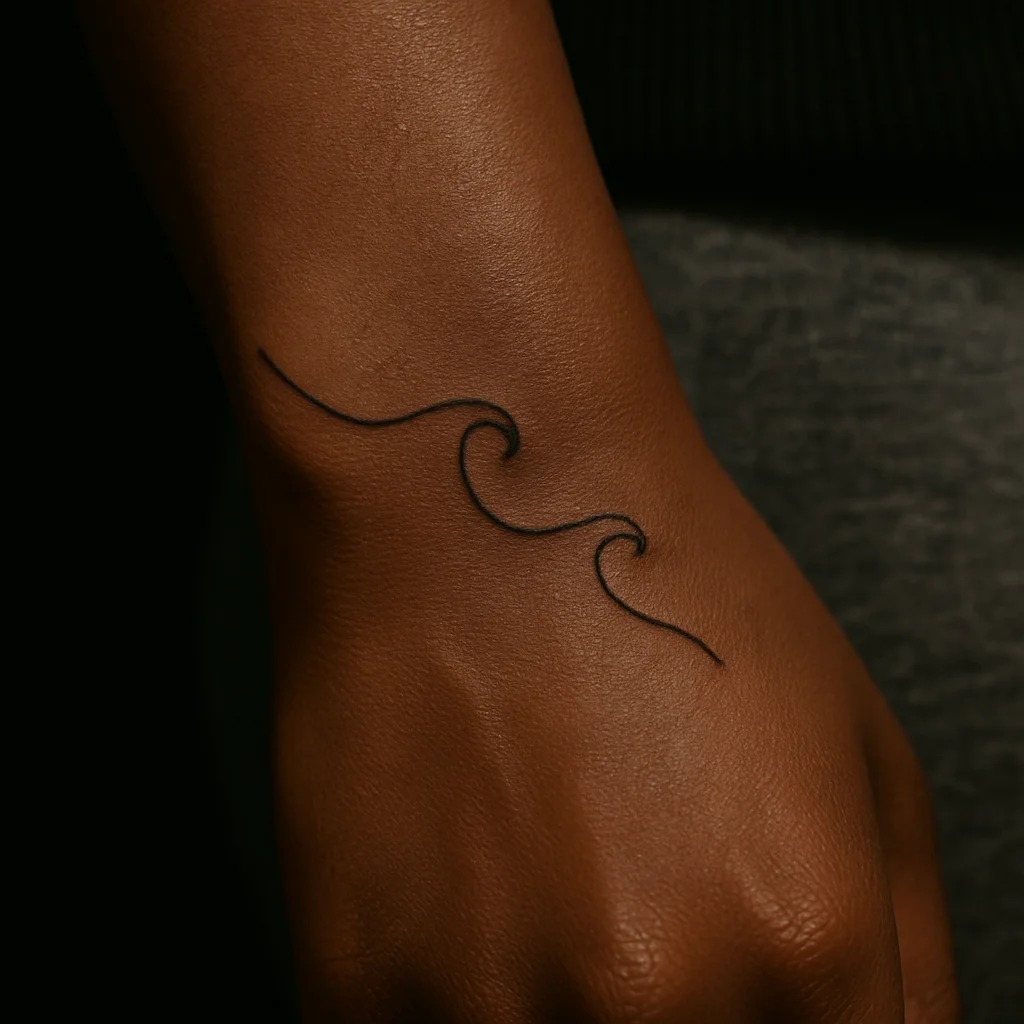
11. Single wave line
One continuous line with two or three curls, running along the outer edge. It reads as water, as a breath, or as nothing in particular, which is the point. Around 4-6 cm long keeps it graceful without crowding the wrist.
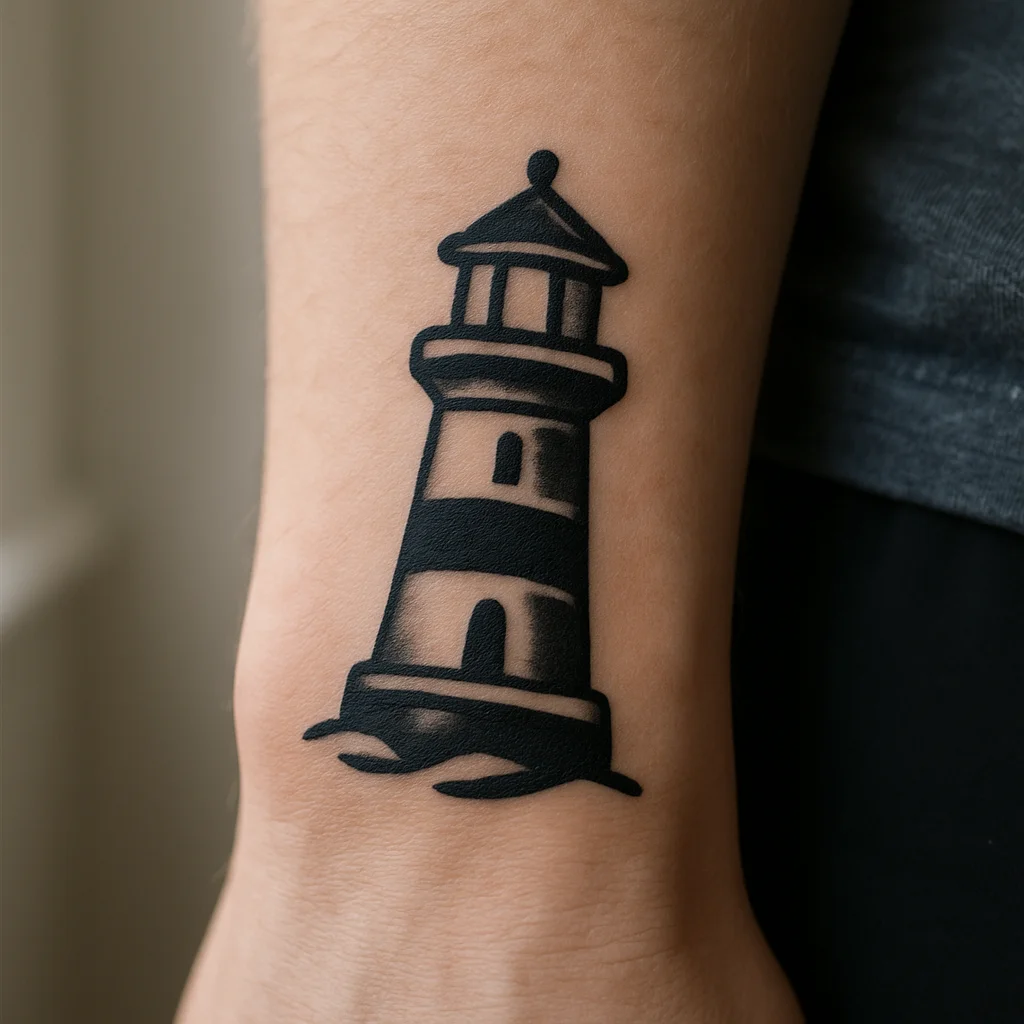
12. Tiny lighthouse at the wrist junction
A compact lighthouse where the hand meets the wrist, using strong verticals and a couple of solid black bands. The narrow silhouette fits the edge perfectly and the bold blocks give it staying power. Suits anyone who wants a symbol with a story rather than an abstract shape.
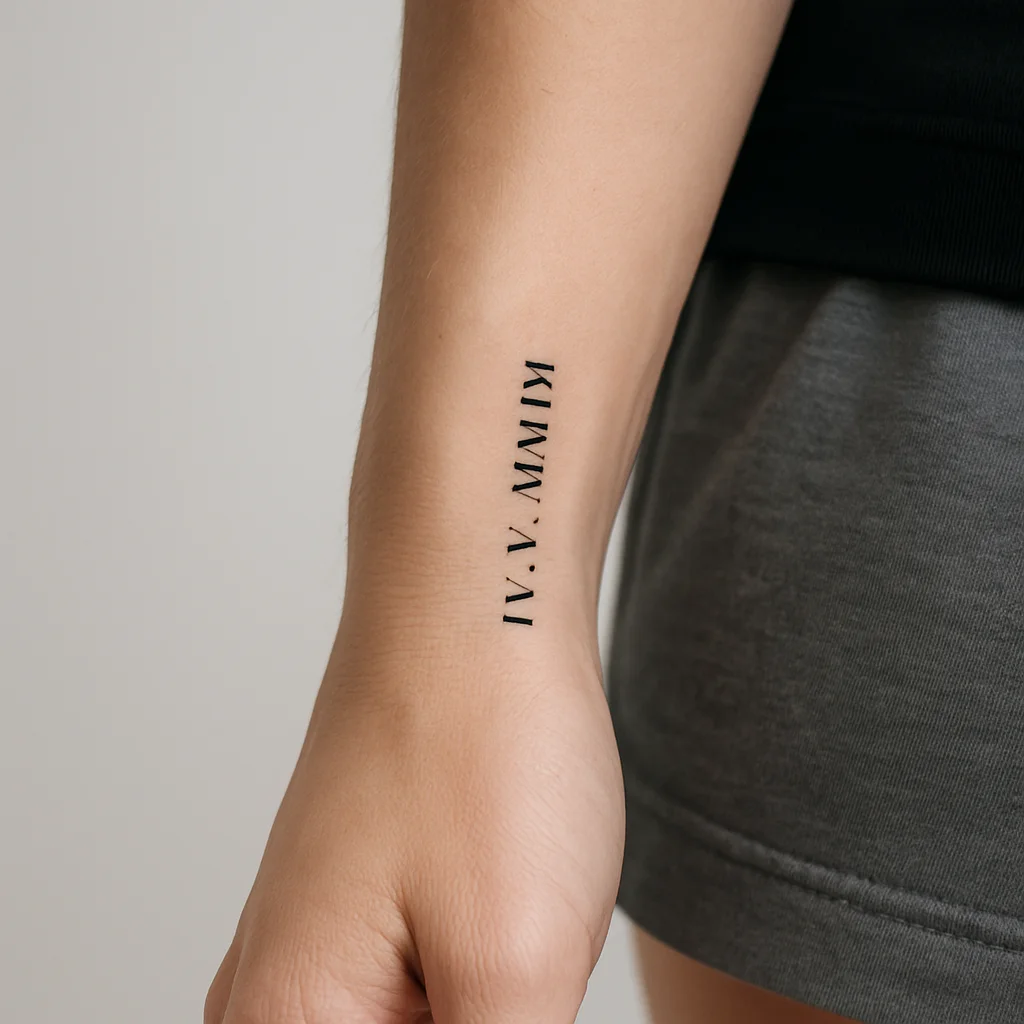
13. Roman numeral date
A short date in slim Roman numerals along the blade, no more than six or seven characters. It's discreet from the front and instantly readable when you turn your hand. Ask for a little extra space between characters; hand lettering closes up more than anywhere else.
Thumb web and inner hand: 5 designs for the half-hidden spots
The web between thumb and index finger is a favourite for tiny work: it's soft, it's easy to hide with a closed hand, and the pain is surprisingly manageable compared to the knuckles. The catch is movement. This skin stretches constantly, so shapes need to be simple and slightly bolder than you'd expect.
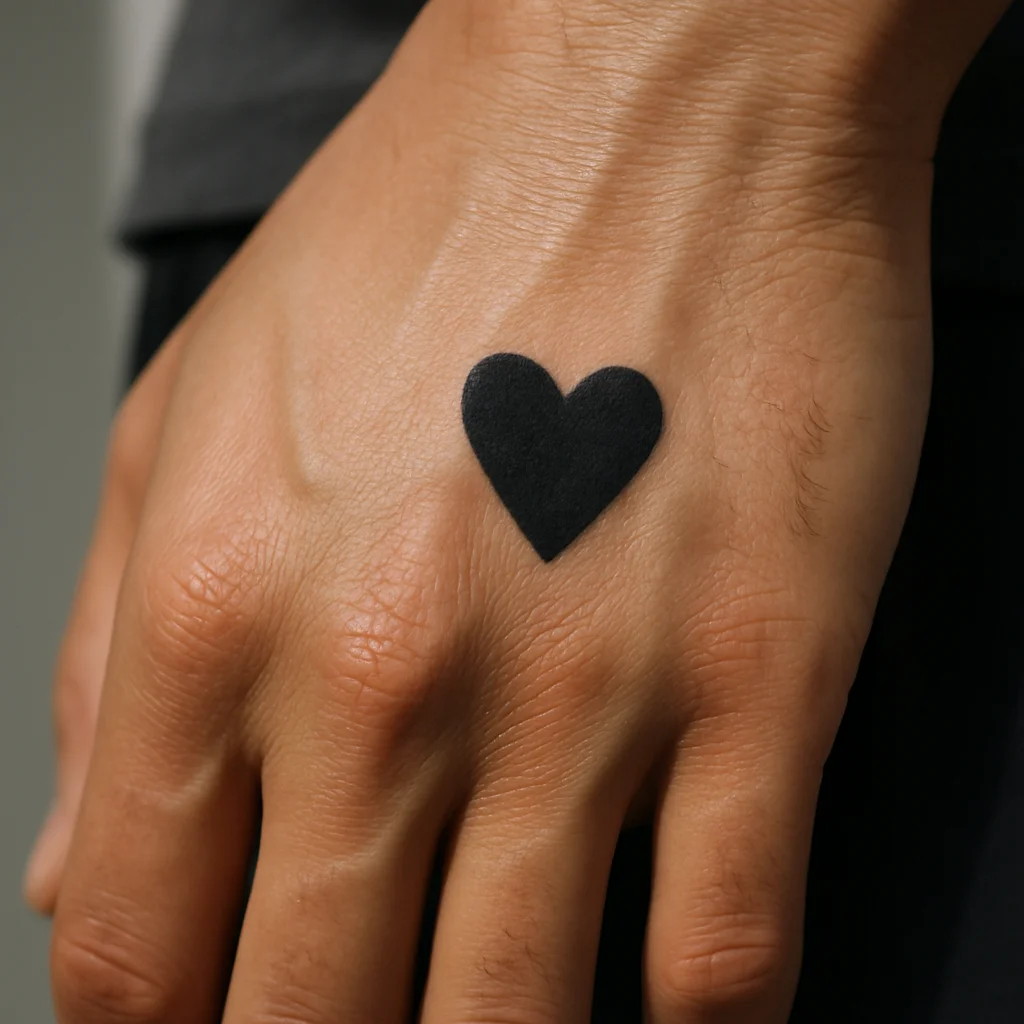
14. Solid heart in the thumb web
A filled heart the size of a pea, sitting in the middle of the web. Fully solid means there's nothing to blur, and it stays charming even as the edges soften. This is one of the most requested tiny hand tattoos for a reason.
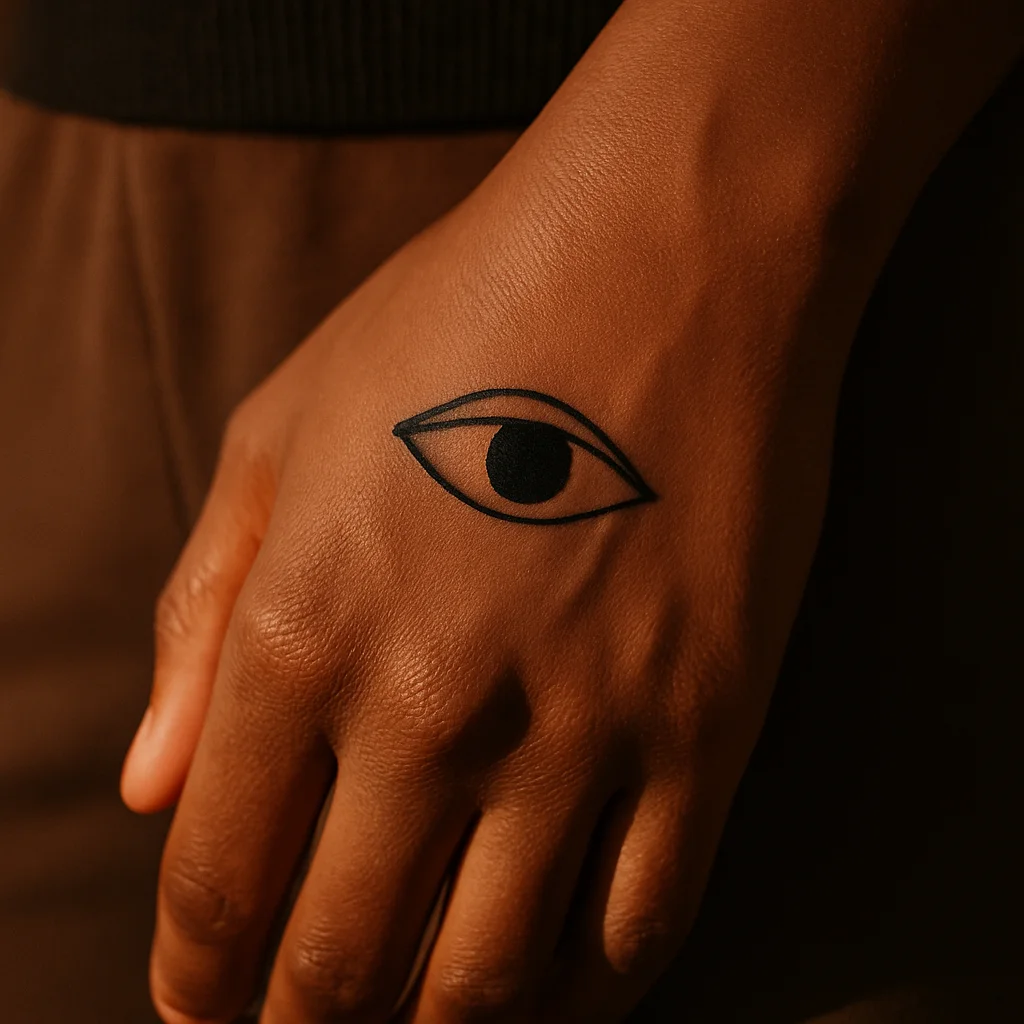
15. Minimalist eye
A simple almond outline with a filled pupil, no lashes, no shading. The stretch of the web actually suits an eye shape, which flexes convincingly when you move your thumb. Keep it around 2 cm wide so the outline doesn't collapse.
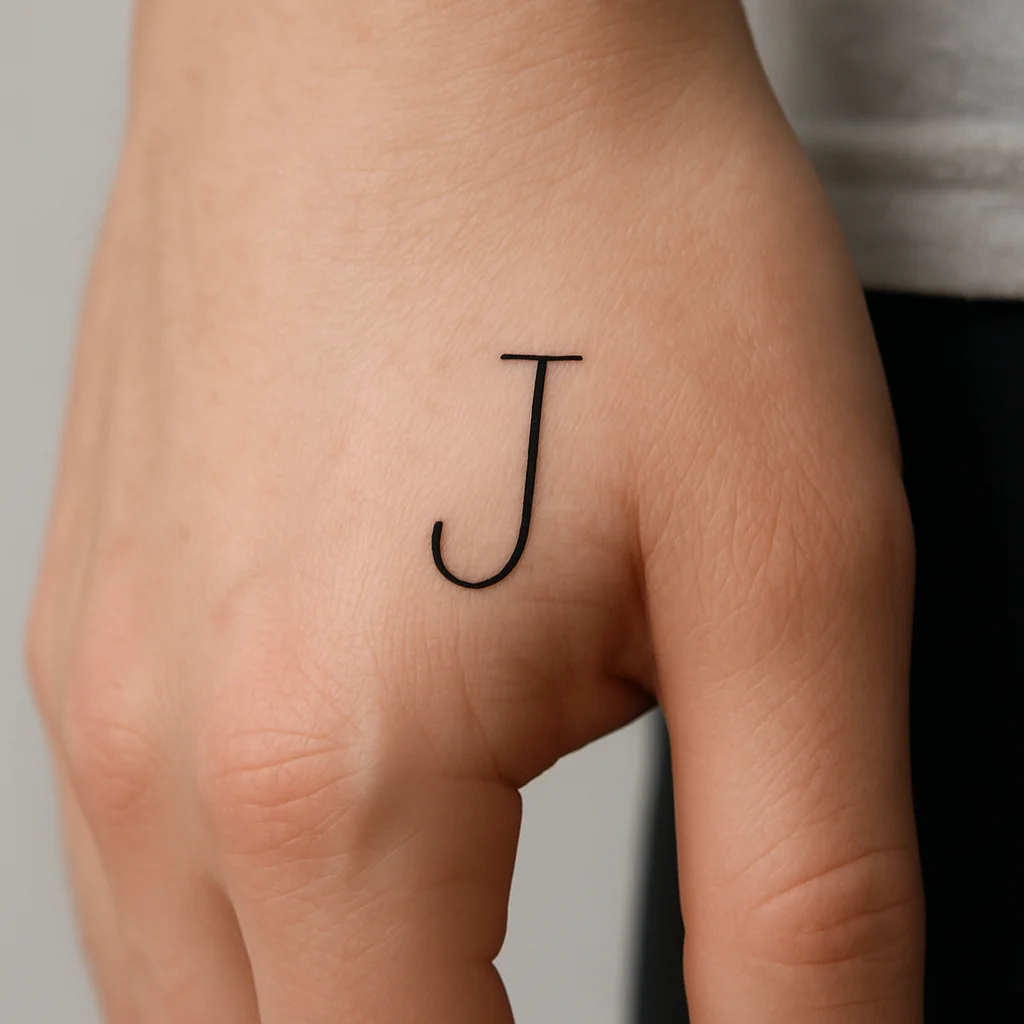
16. Single letter at the base of the thumb
One initial, printed rather than scripted, tucked just above the thumb joint. It's a subtle way to carry someone with you without a visible name on your hand. Print letterforms survive fading far better than looping cursive at this size.
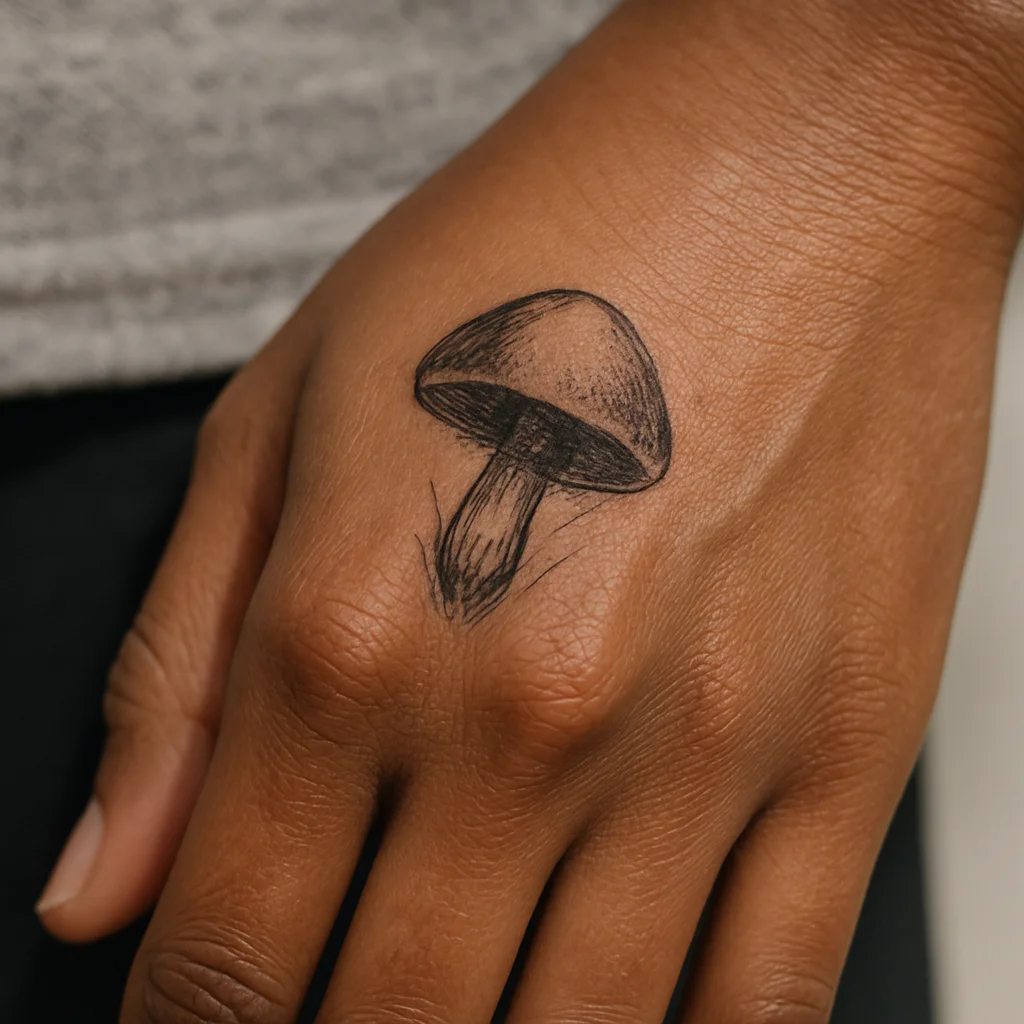
17. Small mushroom on the fleshy thumb pad edge
A tiny toadstool with a solid cap and a couple of dots, placed on the outer curve of the thumb pad. It's playful, it fits a rounded space, and the solid cap gives it durability. Expect this one to need a touch-up sooner than the back of the hand.
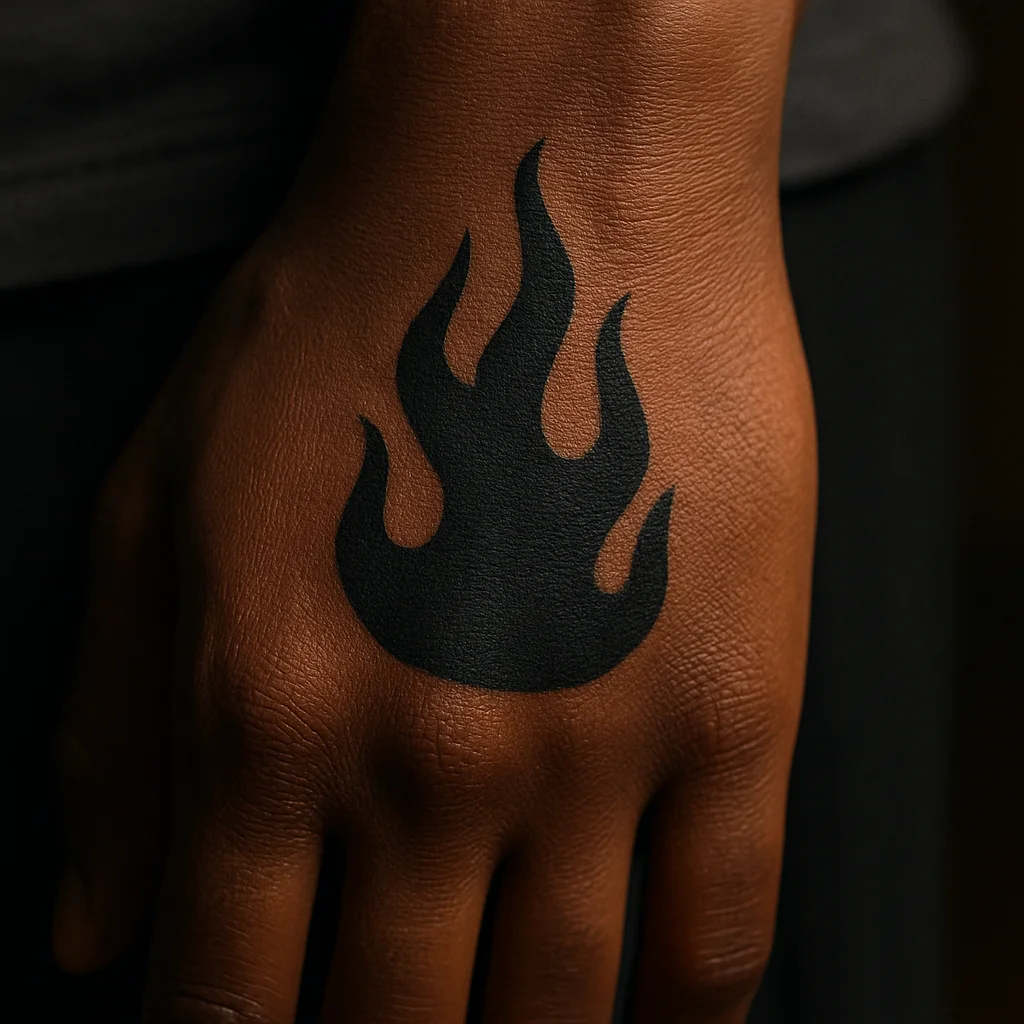
18. Flame or star on the palm heel
A small bold flame or a filled four-point star at the heel of the palm, just below the thumb. Be clear-eyed here: palm skin sheds ink fast, and this may heal patchy or need two sessions. Choose it only if you like the worn, faded look as much as the fresh one.
Knuckles and fingers, kept deliberately tiny: 6 designs
Finger work is the most fade-prone thing on the hand, and knuckles are the sharpest sitting on the whole body — thin skin straight over bone. That doesn't make them off-limits, it just means going smaller, bolder and simpler. If you want to go deeper on this zone specifically, our guide to finger tattoos for women covers the longevity side in detail.
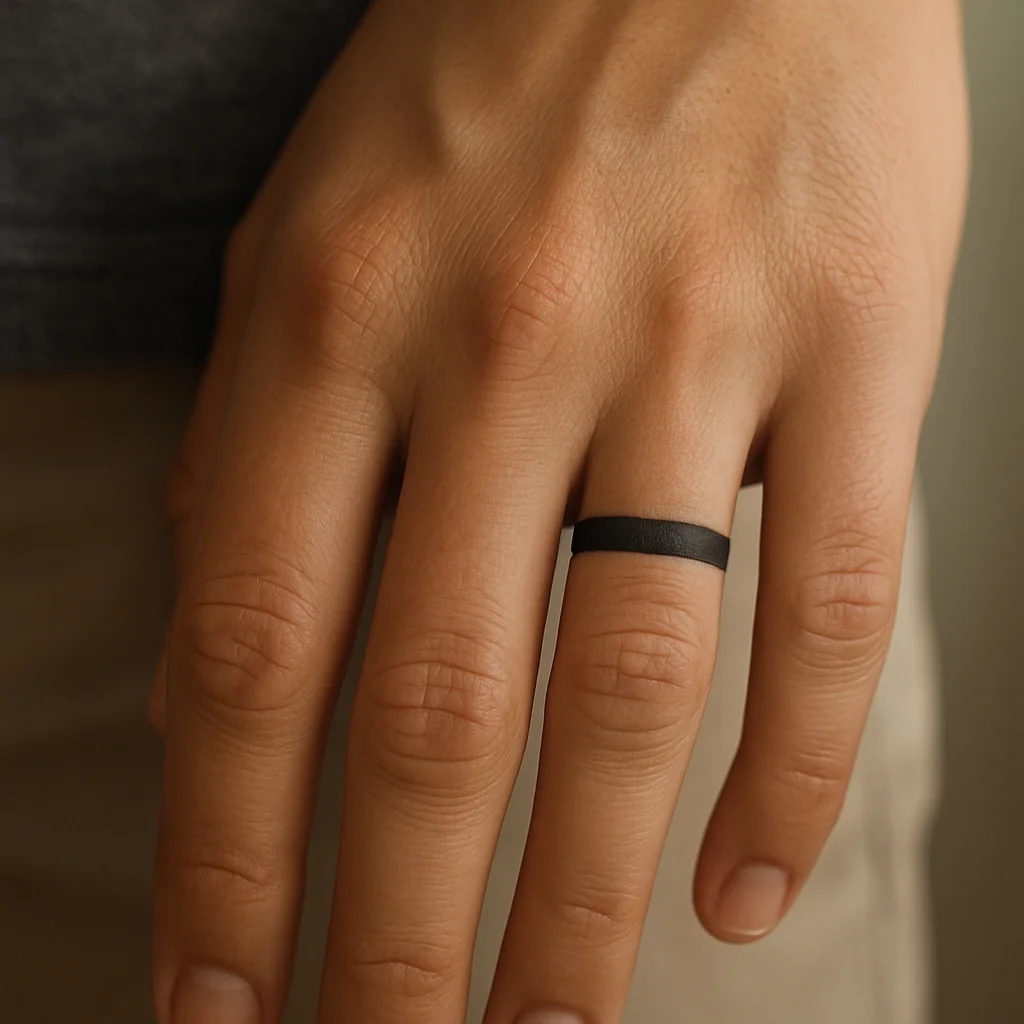
19. Single band on the ring finger
One clean line wrapping the base of the ring finger, roughly 2-3 mm thick. Thickness matters: a hairline band tends to break up, while a proper solid band holds. It's the most wearable finger tattoo there is, and it sits beautifully with or without an actual ring.
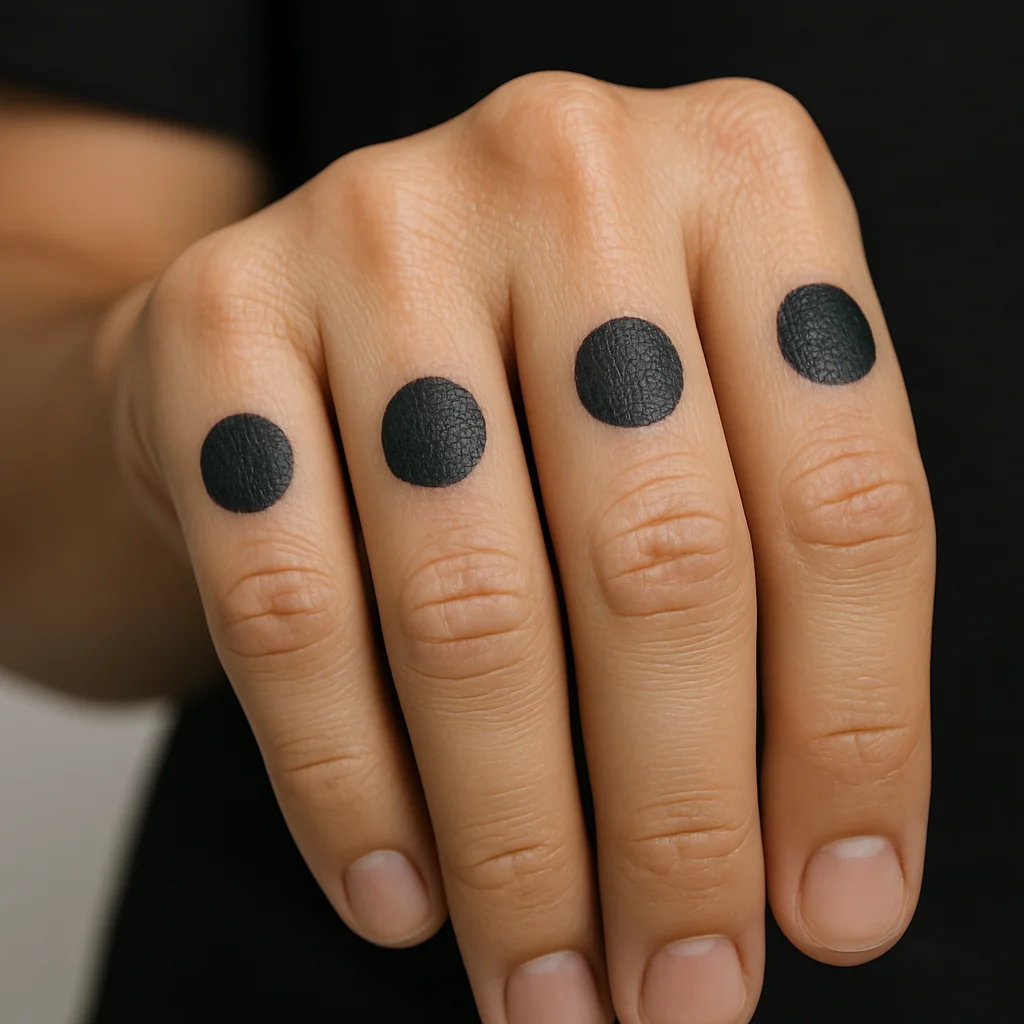
20. One dot per knuckle
Three or four small filled dots, one on each knuckle of the same hand. Minimal, rhythmic and about as fade-resistant as finger work gets. Expect the sitting to be quick but sharp — each dot takes seconds.
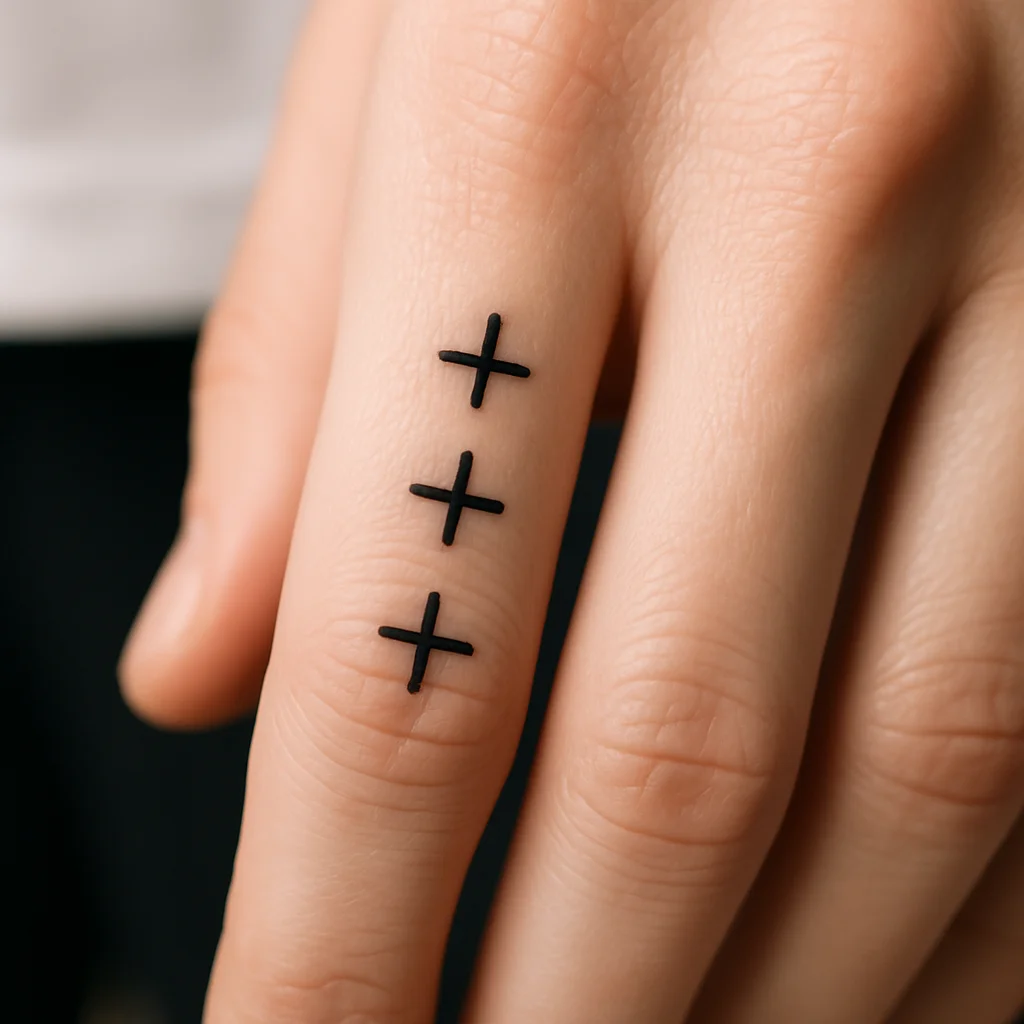
21. Tiny cross or plus signs above the knuckles
Small equal-armed crosses inked just above two or three knuckles, each no bigger than a grain of rice. The geometry stays readable even as lines soften. Keep them on the flat plane above the joint rather than directly on the crease.
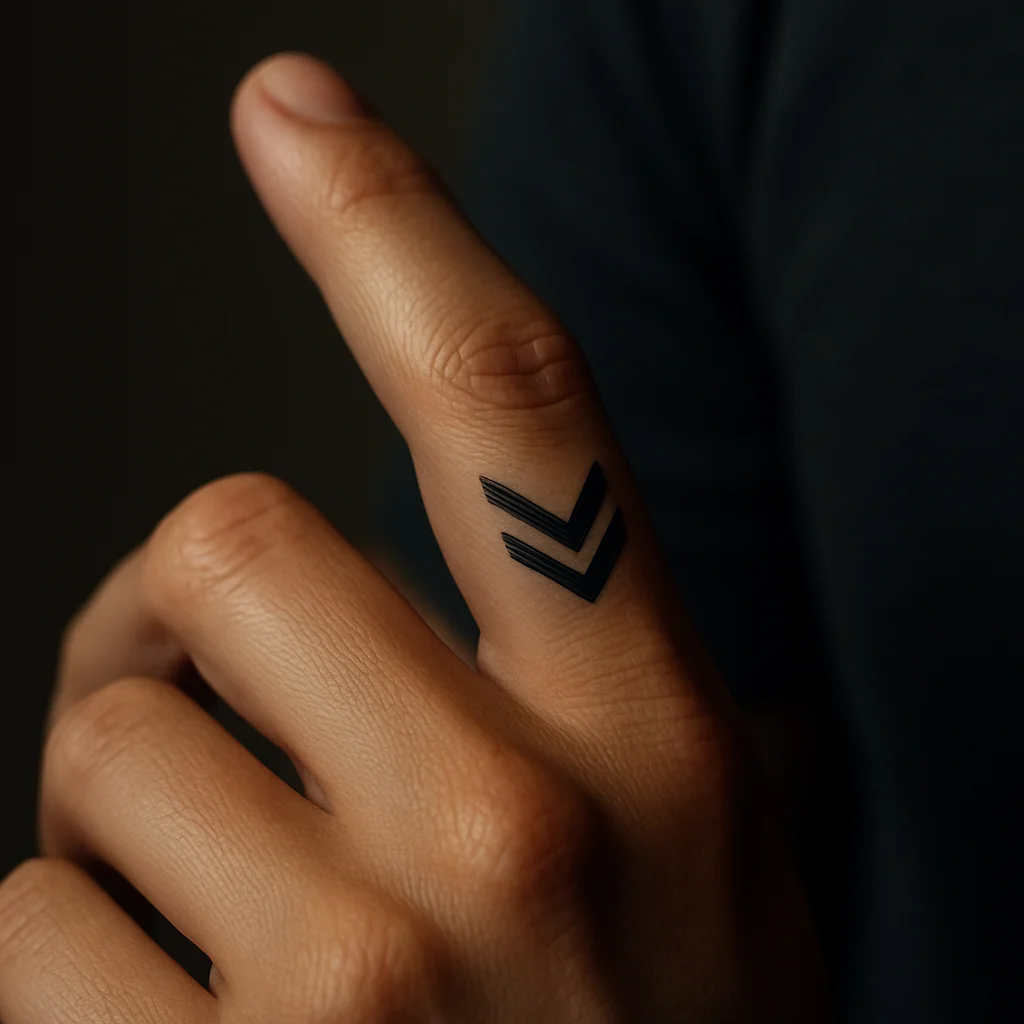
22. Chevron on the side of the finger
A simple V or double chevron on the outer side of the index finger, where it doesn't rub against a neighbour. Side placements on the outer edges of the index and pinky are the only finger spots that don't get constant friction. Small and solid is the brief.
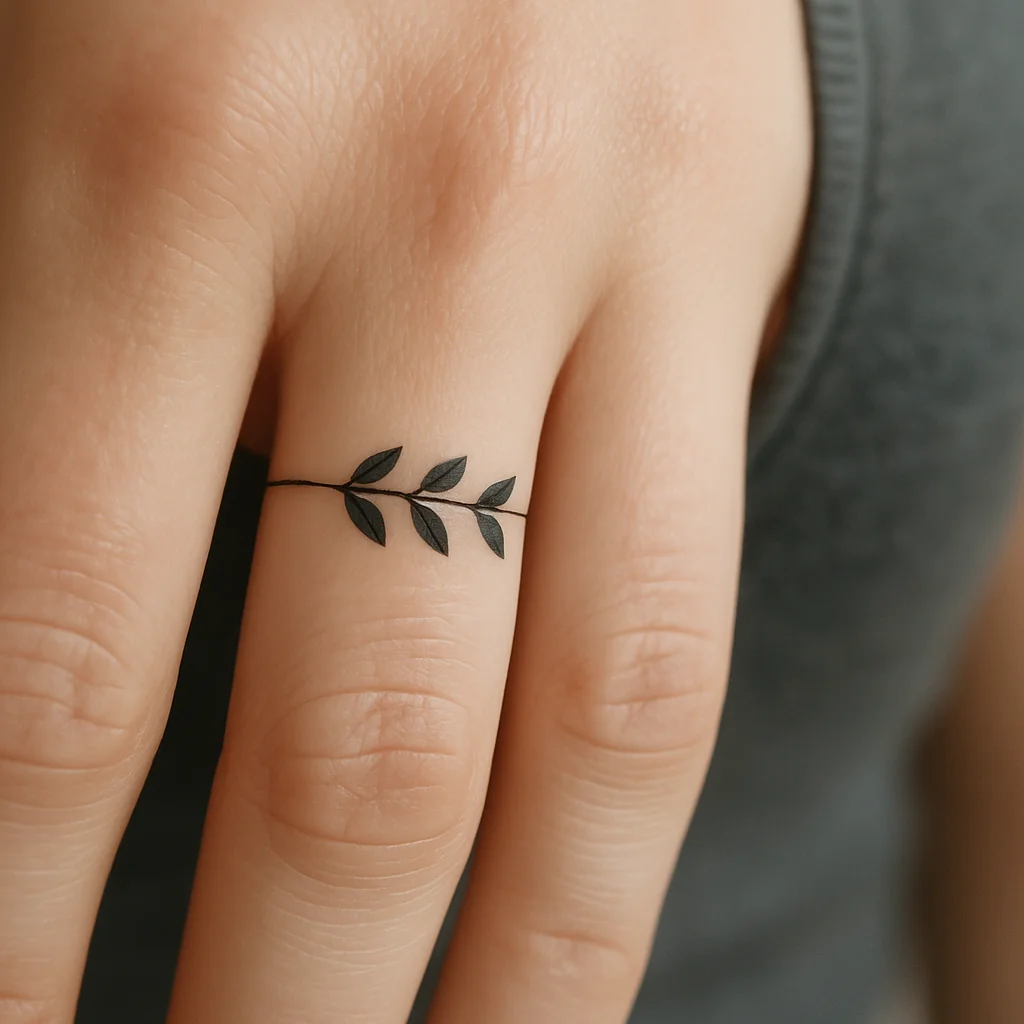
23. Floral micro-band
A ring band made of three or four tiny leaf shapes instead of a continuous line. It softens the look while keeping the durable, repeated-shape structure. Ask for the leaves solid-filled rather than outlined.
24. Initial on the inner side of the finger
One letter on the inward-facing side of the middle or ring finger, visible only when you turn your hand. Very discreet, but it will need refreshing more often than anything on the back of the hand. Go a size up from your instinct.
Matching micro sets: 4 ideas for two hands or two people
Small hand tattoos work unusually well as pairs, because the hand is the part of the body other people actually see up close. Split designs across two hands, or across two people, and the tiny scale stops feeling like a compromise and starts feeling like a system.
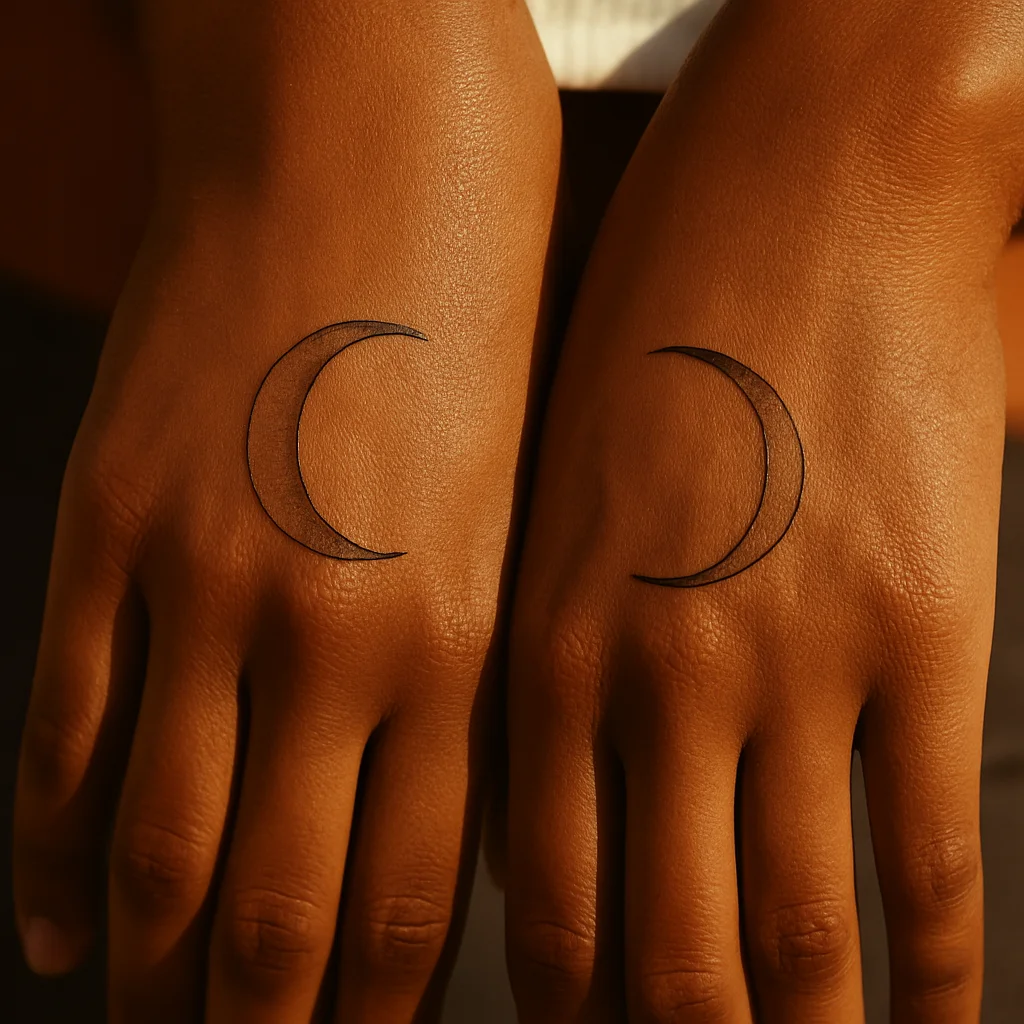
25. Mirrored crescents on both hands
A waxing moon on the left hand, a waning moon on the right, each about 2 cm, placed symmetrically in the tendon valleys. When you bring your hands together the shapes close into a circle. Book both in one sitting so the placement matches exactly.
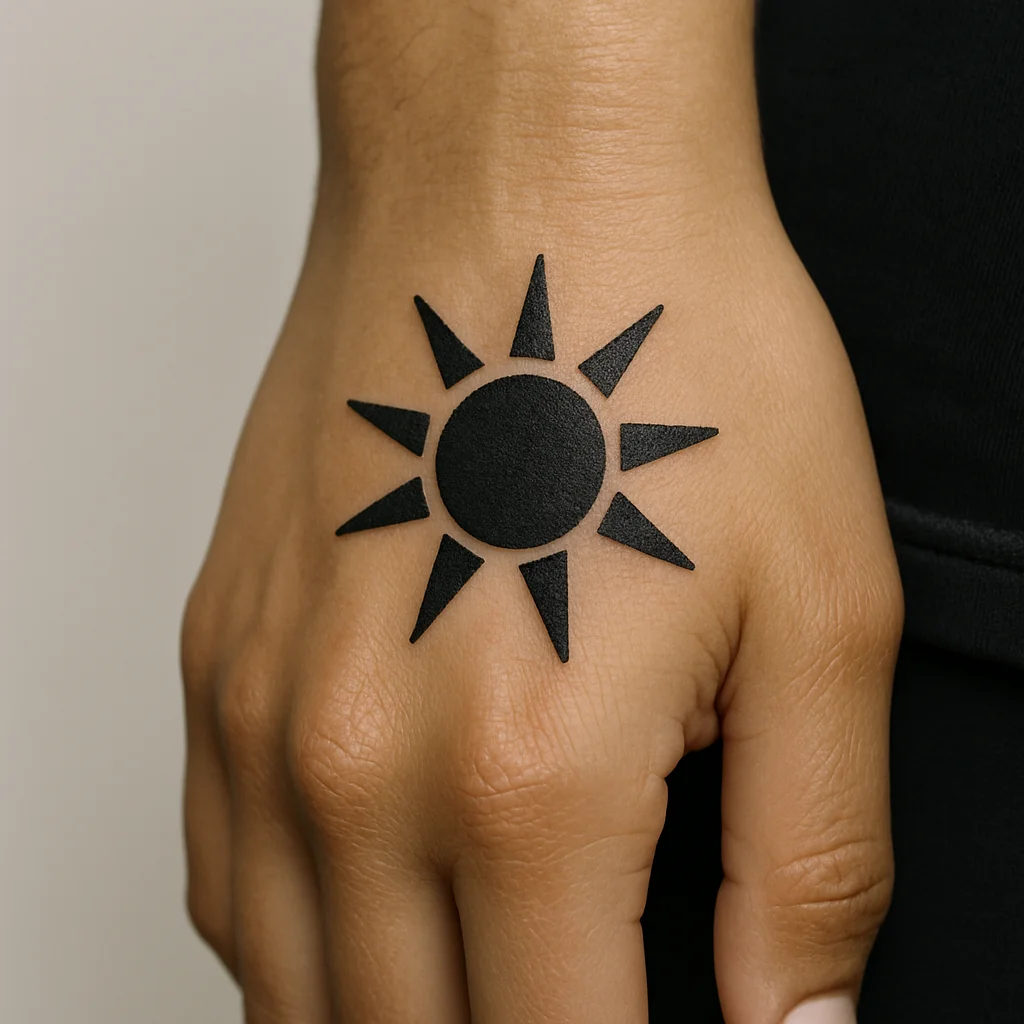
26. Sun and moon across a friendship pair
One person takes a solid little sun on the thumb web, the other takes a crescent moon in the same spot. Identical placement and size is what makes matching sets read as intentional. Solid black on both keeps them ageing at the same rate.
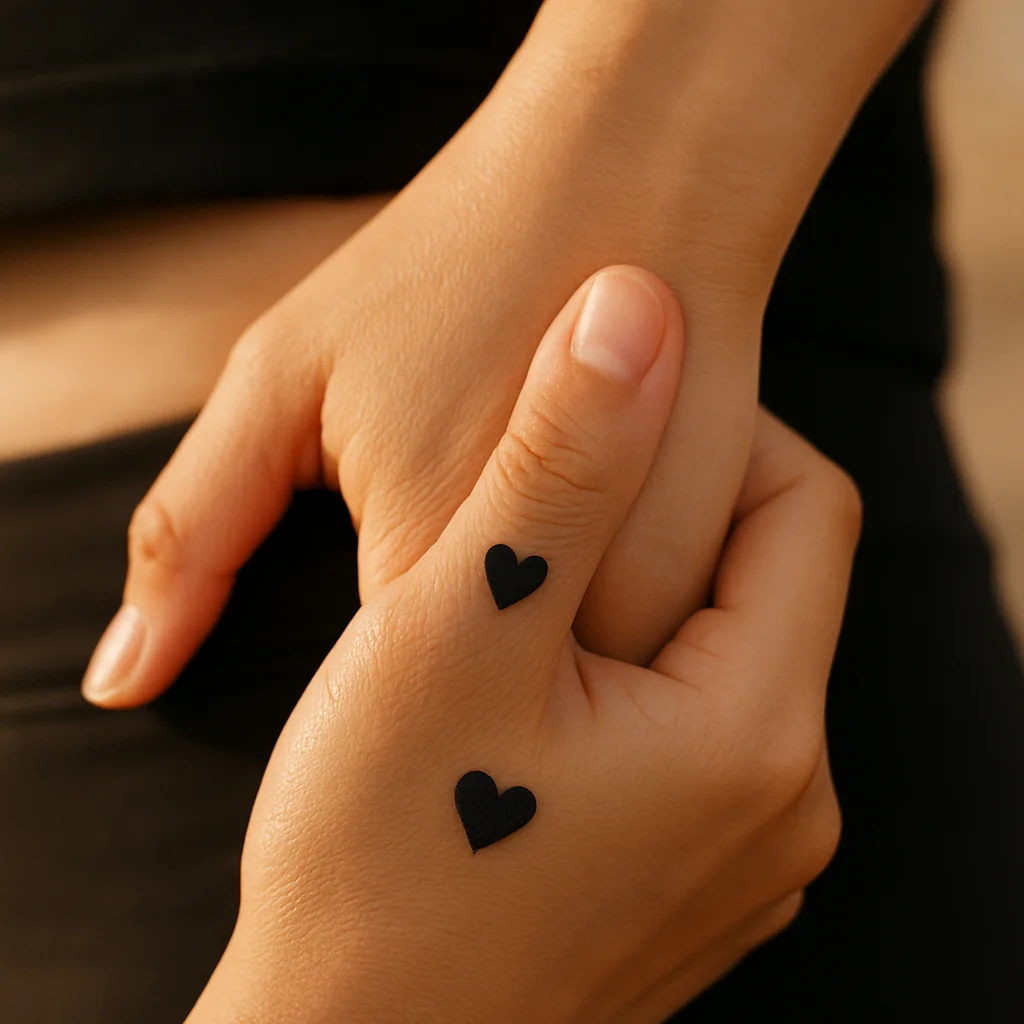
27. Two hearts, mother and daughter
A tiny filled heart in the thumb web for each of you, same size, same position, no lettering. It's a version that works across generations because there's nothing trendy to date it — see our small mother-daughter tattoo ideas if you want variations on the theme.
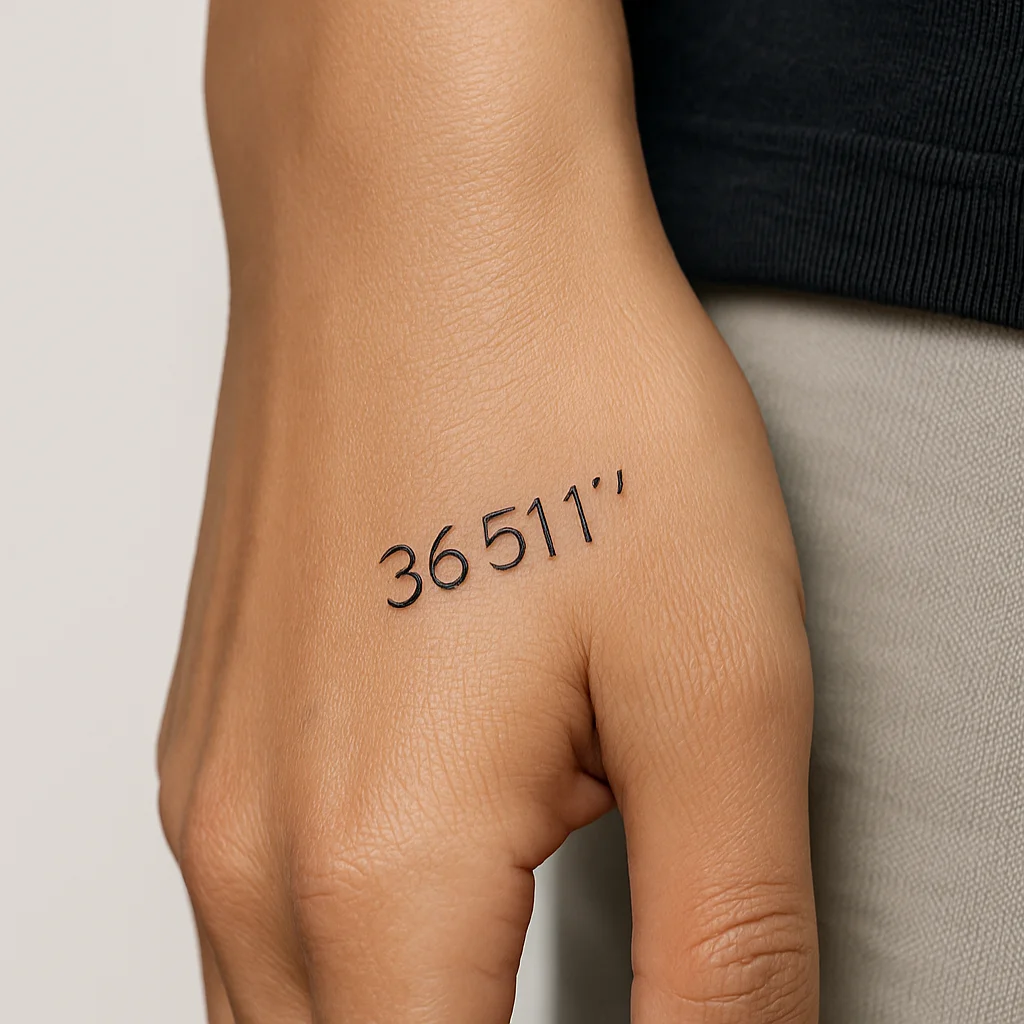
28. Split coordinates across two hands
Latitude on one blade edge, longitude on the other, in slim spaced numerals. Reading the full location takes both hands, which is the charm of it. Keep each line short and ask for generous character spacing so the numbers stay legible for years.
Pain, cost, healing and how to brief your artist
Pain. Hands rank on the higher end, but the sitting is short, which changes everything. The fleshy thumb web and the tendon valleys on the back of the hand are surprisingly tolerable — a hot scratch. Knuckles, the wrist bone and the very edge of the hand are sharper, with a bony vibration you feel through the joint. A tiny design is usually done in ten to thirty minutes, so it's over before it becomes an endurance test.
Cost. Nearly every small hand tattoo lands at the studio minimum, which in most cities sits somewhere in the low-to-mid three figures for a reputable artist, and higher in major metros or with in-demand names. Paying more for someone with a hand-tattoo portfolio is genuinely worth it: hand skin punishes inexperience, and a blown-out line here is on display permanently. Ask whether a touch-up within the first year is included or discounted before you book.
Healing. Expect two to three weeks before it's settled, and treat washing as the main challenge. Wash gently with unscented soap, pat dry, apply the thinnest possible layer of ointment, and reapply after every hand wash for the first week. Avoid dish gloves, gym bars, gardening and anything that soaks or scrapes for two weeks. Once healed, daily SPF on the back of the hand is the single biggest thing you can do to slow fading.
Briefing your artist. Bring reference, then bring your hand. Ask them to place the stencil and have you make a fist, spread your fingers and hold your phone before you approve it. Say out loud that you want it sized and weighted to last on a hand — a good artist will bump the line weight and open the spacing without being asked, but saying it invites the conversation. And ask them directly which parts of your design they'd expect to fade first; the honest answer tells you a lot about who you're sitting with.
Frequently asked questions
How long do small hand tattoos actually last?
The design itself is permanent, but hand tattoos lose crispness faster than anywhere else because of sun, washing and constant skin movement. Most small hand pieces look their best for one to three years before wanting a touch-up, and fine-line work at the shorter end of that range. Bolder lines, solid shapes and daily sunscreen buy you significantly more time.
Which part of the hand holds ink best?
The back of the hand, in the soft valleys between the tendons, and the outer blade edge from the pinky knuckle to the wrist. Those areas have enough tissue under the skin to settle ink well. Palms, thumb pads and the rubbing sides of adjacent fingers are the least reliable and often heal patchy.
Will artists refuse to tattoo my hands?
Some will, particularly if you have no other visible tattoos, because hands can't be covered for work or family occasions. It's usually a conversation rather than a flat no — explain your job situation and that you understand the fading and touch-up commitment. If an artist still declines, it's a sign they care about the outcome, not a judgement on you.
How small can a hand tattoo realistically be?
Around two centimetres is a sensible floor for anything with internal detail, and about one centimetre for a simple solid shape like a heart, star or dot. Below that, lines sit too close together and blur into a smudge as the tattoo settles. If you love a tiny design, go up one size and let the artist widen the spacing.
Does a hand tattoo hurt more than a wrist tattoo?
Generally yes, especially over the knuckles and the wrist bone where skin sits directly on bone. The thumb web and tendon valleys are closer to wrist-level discomfort. The saving grace is duration: most small hand designs take under half an hour, so the sharp part is brief.
The conversation
No comments yet. Got a thought about these designs? Start us off.
Want to weigh in? Join the community to comment, save designs and try them on your skin.