Father Daughter Tattoos: 26 Ideas With Real Meaning
Twenty-six father-daughter tattoo ideas organized by the chapter of the bond they mark, from tiny traced handprints to symbols that only make sense when two arms meet, with honest advice on placement, pain and getting inked on the same day.
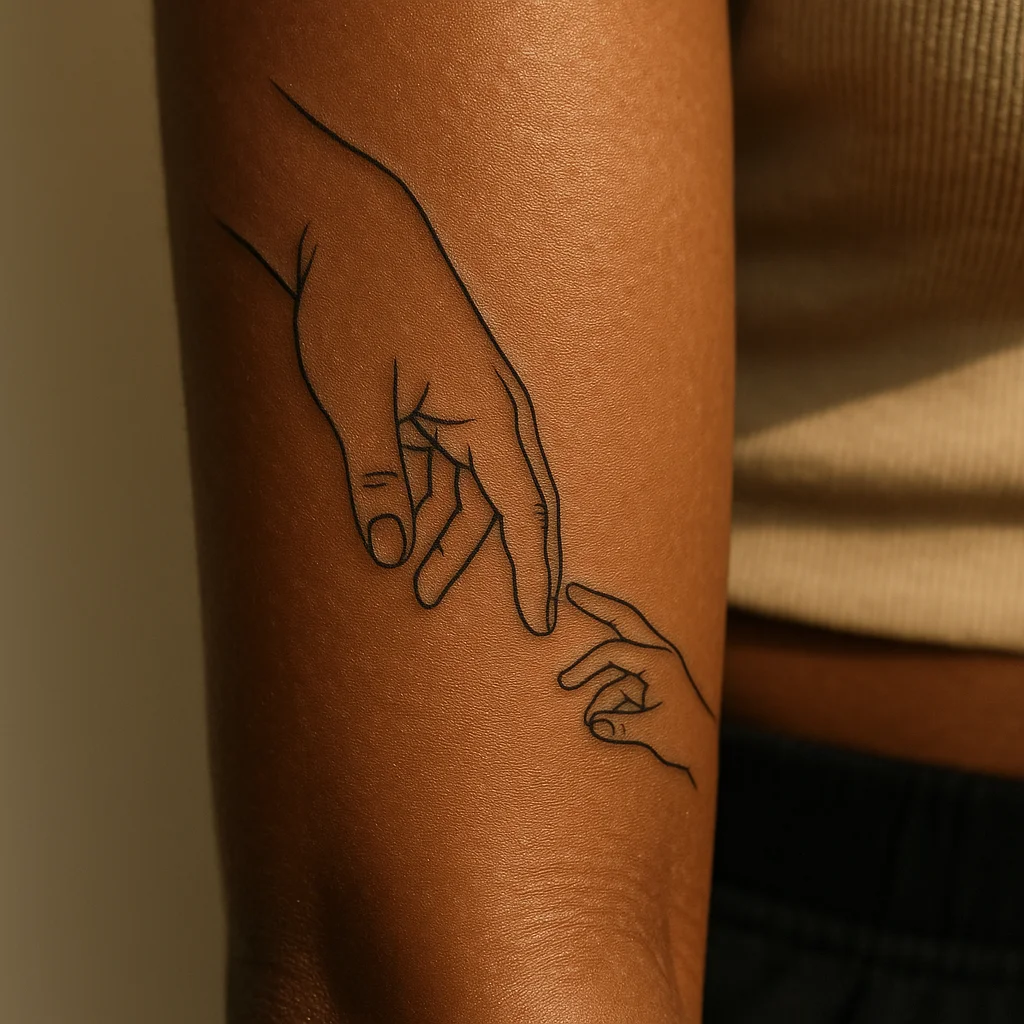
Start With the Story, Not the Symbol
The father-daughter tattoos that still land ten years later almost never start with a Pinterest motif. They start with one specific, unglamorous memory: the way he mangled the words to a bedtime song, the pencil marks on a kitchen door frame, the phone call at 2 a.m. from a highway rest stop. Bring the memory to the artist and let them find the image. Bring the image first and you often end up with a symbol that could belong to anyone.
A few filters worth applying before you book:
- Can it survive being small? Most people want these tattoos under four inches. If the concept needs a face, fine shading, or six elements to read, it will blur into a smudge by year five. Simplify now, not later.
- Does it work apart as well as together? Matching pieces get photographed side by side once and then live separately on two bodies. Each half should look intentional on its own.
- Is it his taste too? Plenty of dads who'd never choose fine-line script will happily wear a bold, simple line drawing. Style mismatch is the most common reason one person quietly regrets the pairing.
- Does it hold up if the relationship changes? Words like always age harder than a date, a place, or an object you both actually touched.
One more practical note: if a parent has passed, the design brief shifts. Memorial pieces carry different weight and usually want more room. We covered that separately in dad memorial tattoo ideas. Everything below assumes a bond that's still being lived.
Ideas Rooted in the Early Years
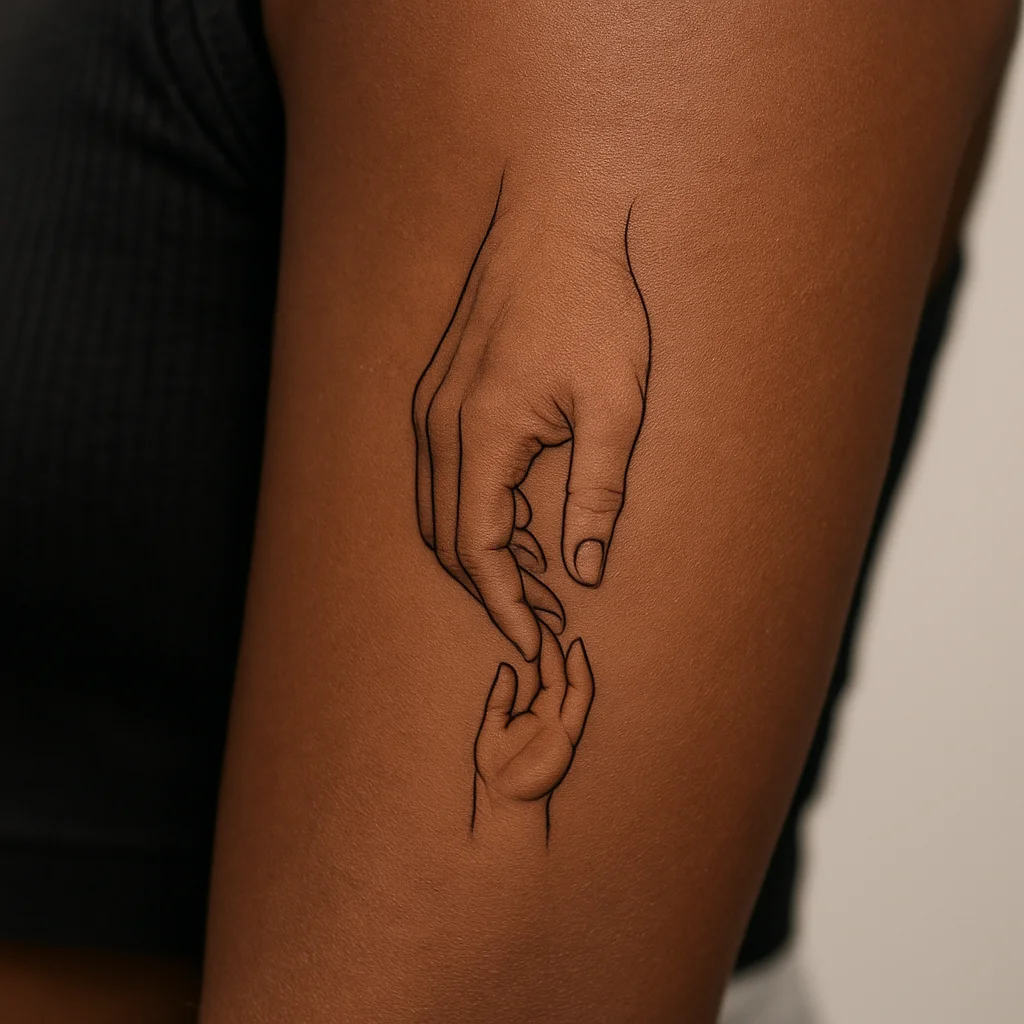
1. Her traced preschool handprint
Scan an actual crayon handprint from a school folder and have the artist trace its outline in a single clean line, wobbles included. The imperfection is the point — a perfectly symmetrical hand reads like clip art. Palm-sized on the inner forearm or over the heart, it stays legible for decades because there's nothing fine to lose.
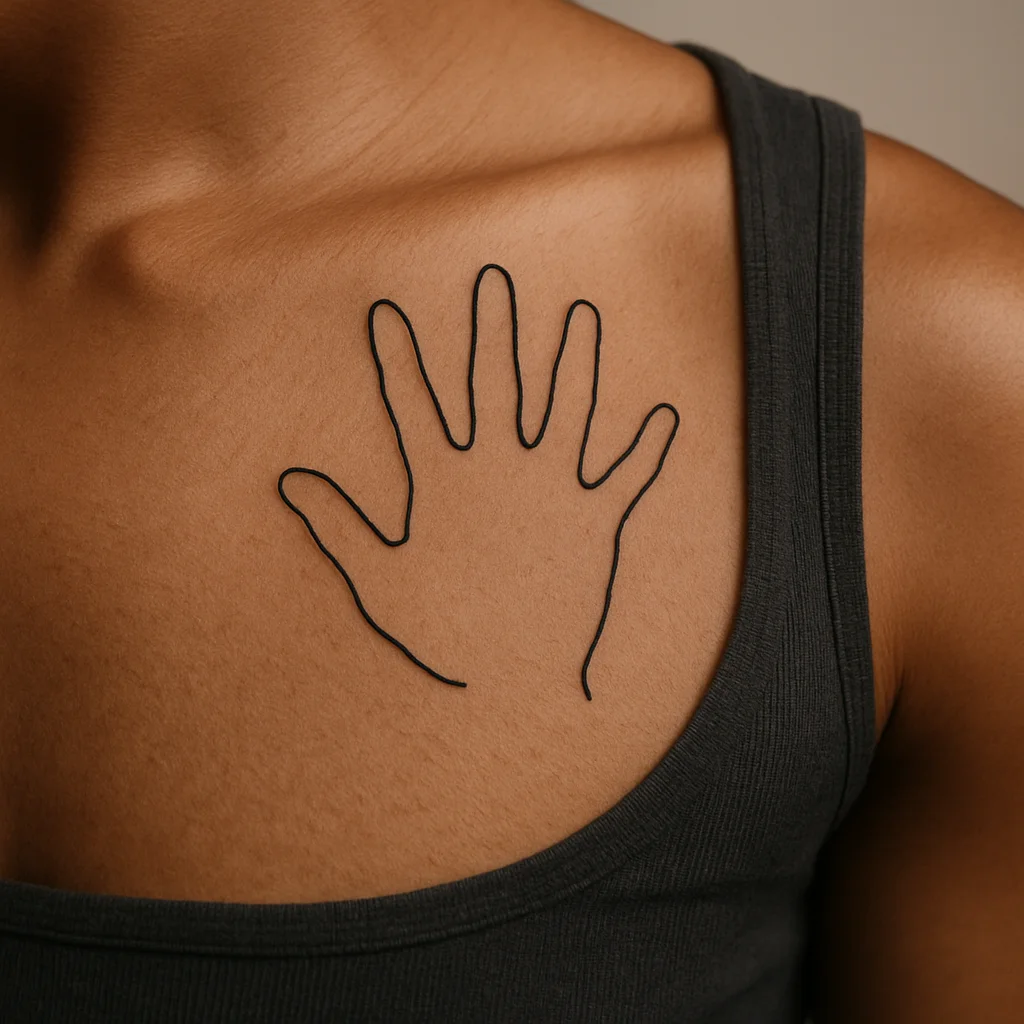
2. Two hands, fingertip to fingertip
A big hand and a small hand drawn in profile, index fingers just touching, like the ET frame everyone recognizes. Keep both hands as outlines with no interior detail so the negative space carries it. Around two to three inches on the inner forearm; ideal as his tattoo while she takes the mirrored version.
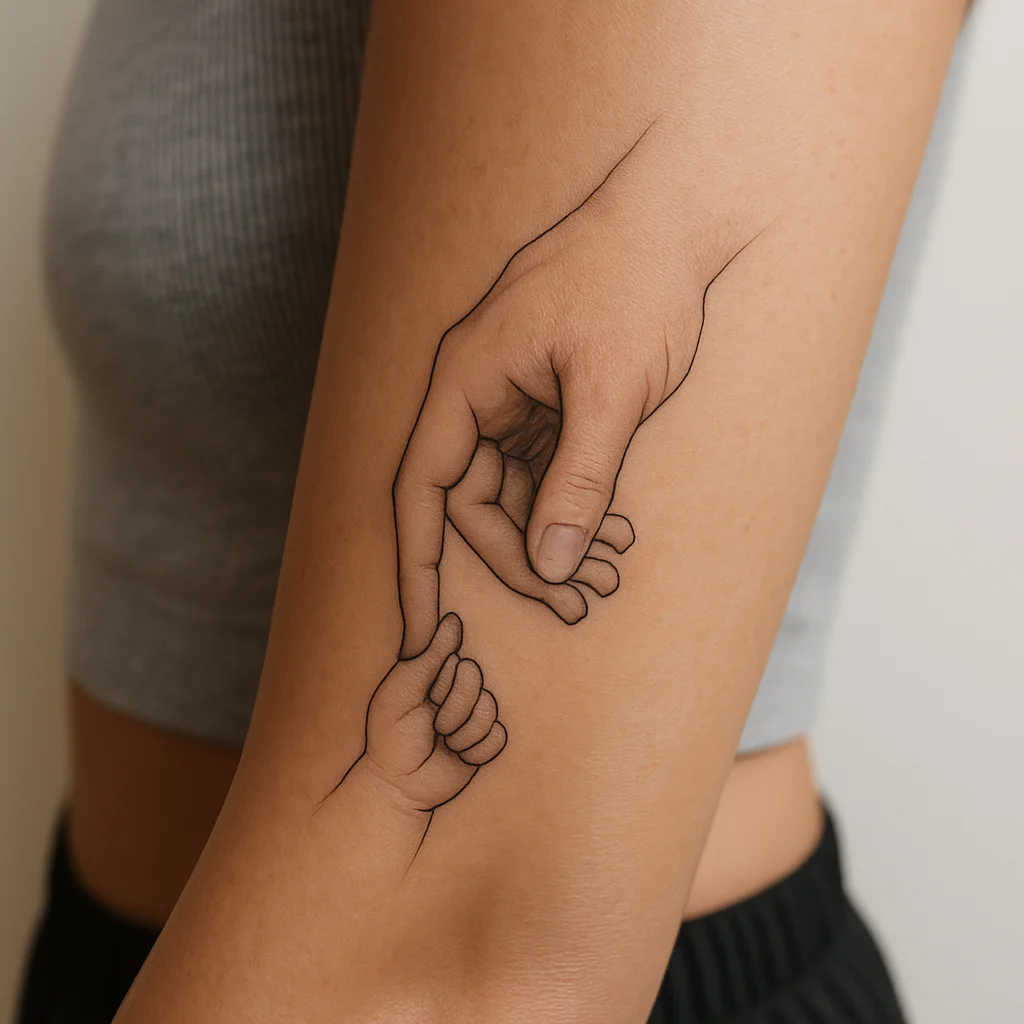
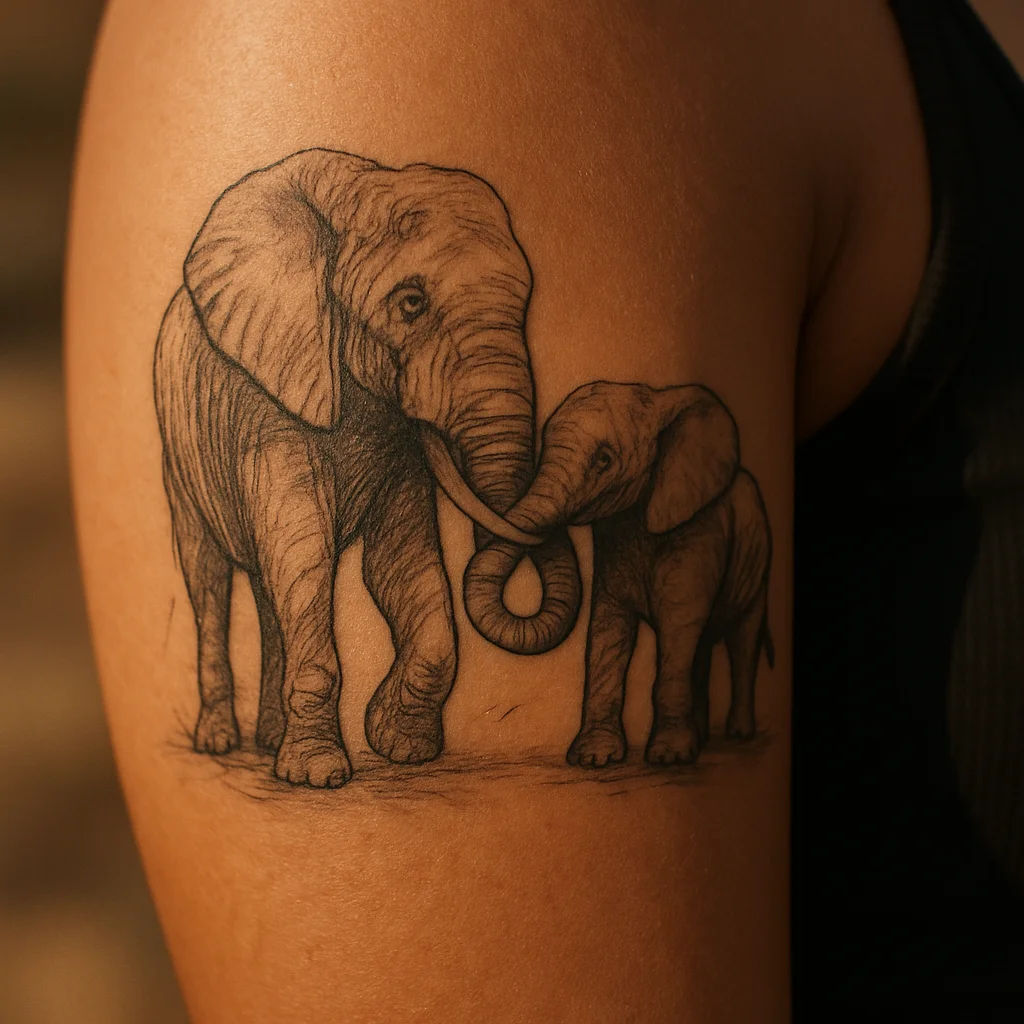
3. Elephant and calf with linked trunks
Elephants are the go-to father-daughter animal for good reason: the herd imagery is real, and two linked trunks make a natural loop for a small composition. Ask for heavy outlines and minimal shading, and let the calf tuck under the adult's chin. Works beautifully at three to four inches on the upper arm.
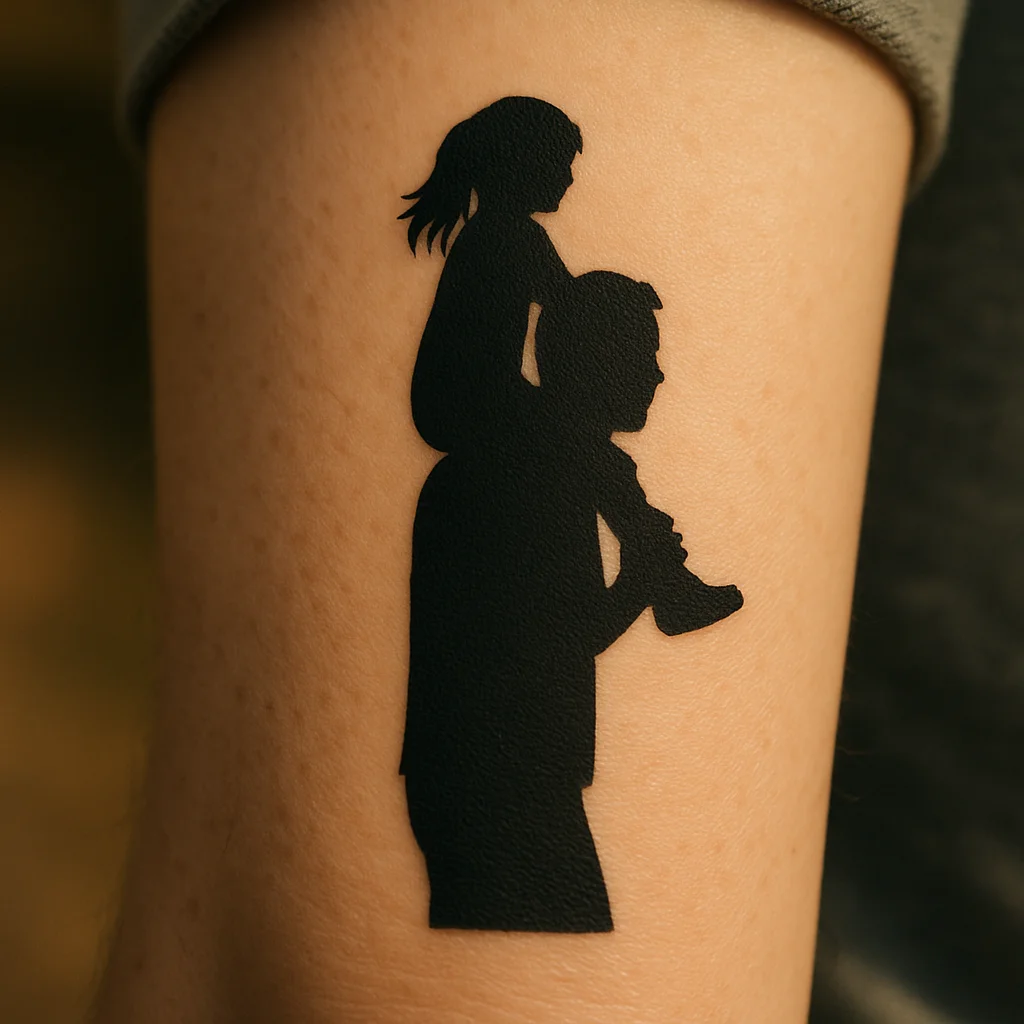
4. The piggyback silhouette
A solid black silhouette of a man walking with a small girl on his shoulders, both arms out. Silhouettes are forgiving — they hold their shape as ink spreads, unlike detailed portraits. Two inches tall on the outer forearm or the side of the calf reads instantly from across a room.
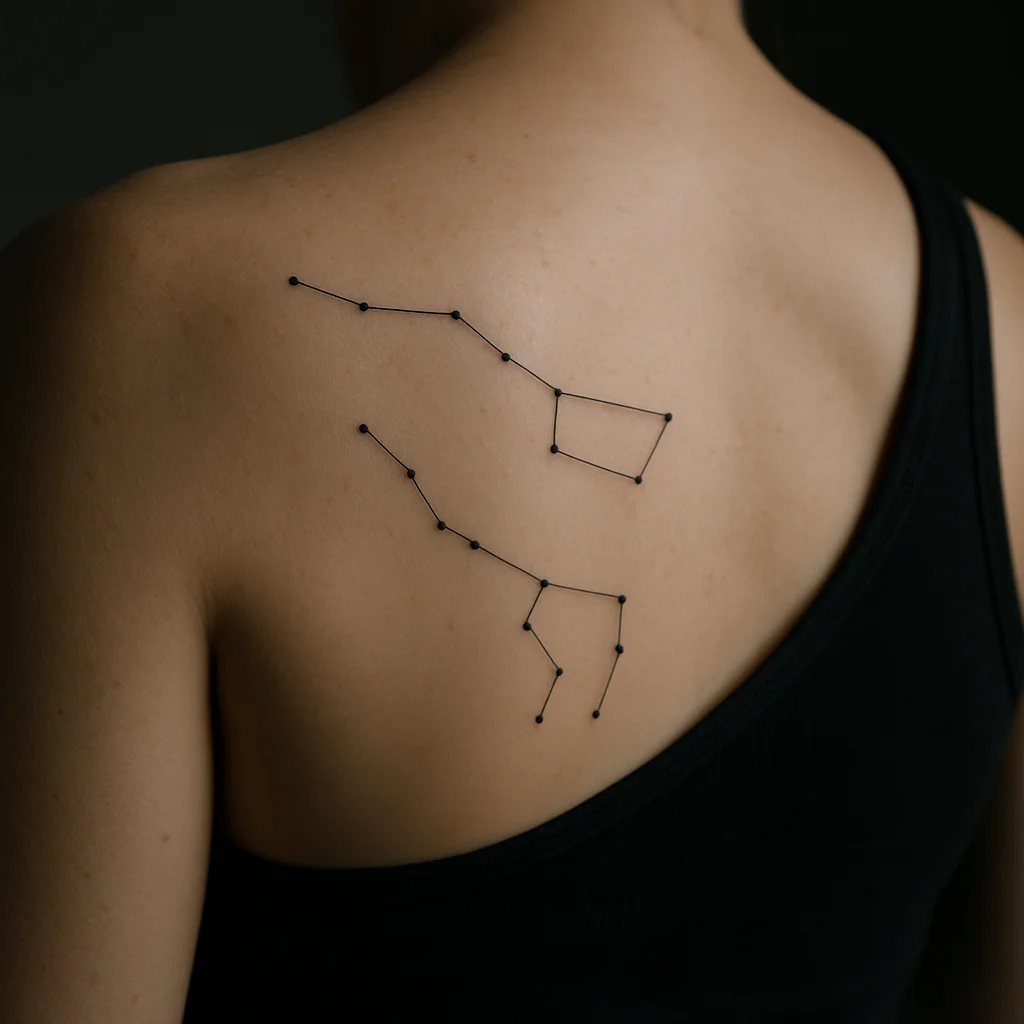
5. Ursa Major and Ursa Minor
Big Bear and Little Bear as dot-and-line constellations, one on each of you, or both together on a single shoulder blade. It's the rare celestial tattoo with a built-in father-daughter meaning rather than a borrowed one. Ask for solid dots at least 1.5 mm wide so the stars don't fade into freckles.
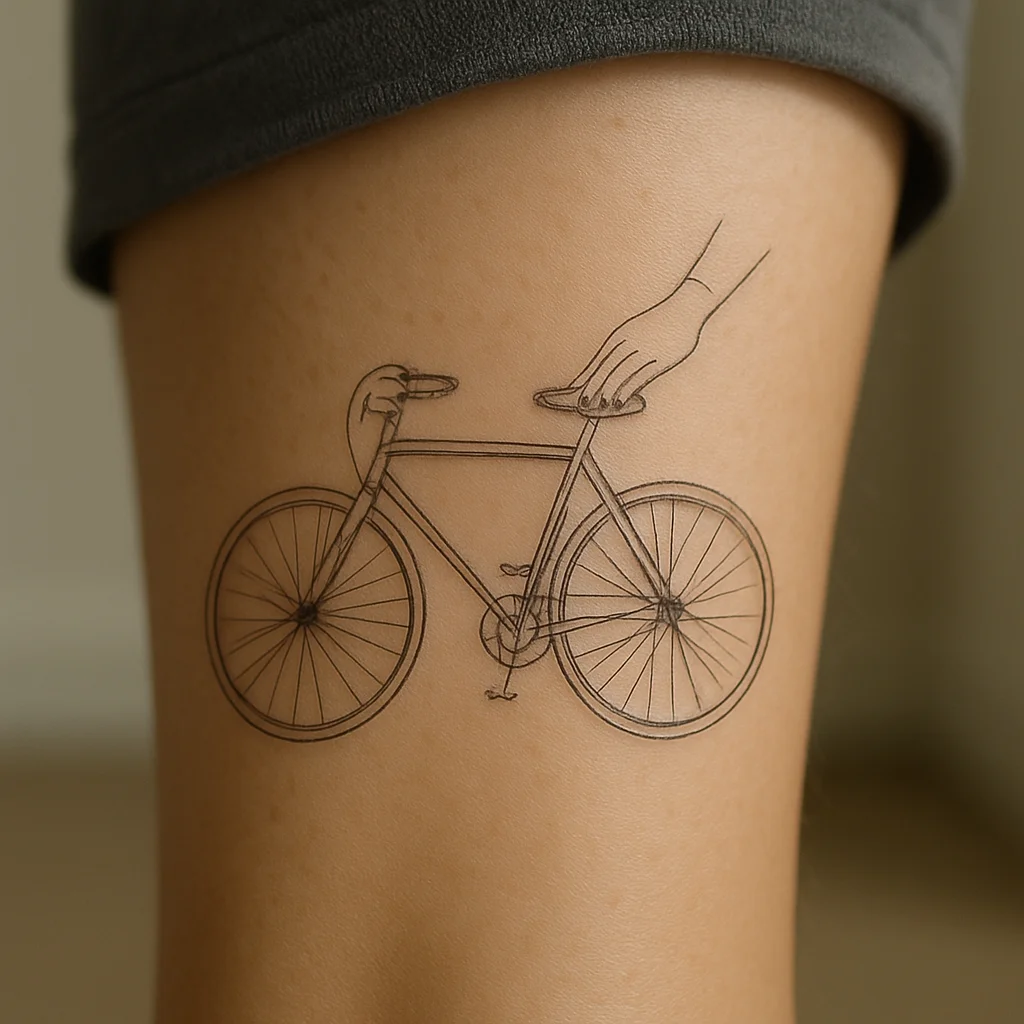
6. Bike with a steadying hand
A stripped-down line-art bicycle with one adult hand resting on the back of the seat — the moment before he let go. Three to four inches on the calf gives the frame enough length to stay readable. Skip spokes; suggest wheels with clean circles and one or two lines.
Matching Pairs That Only Make Sense Together
7. Lighthouse and paper boat
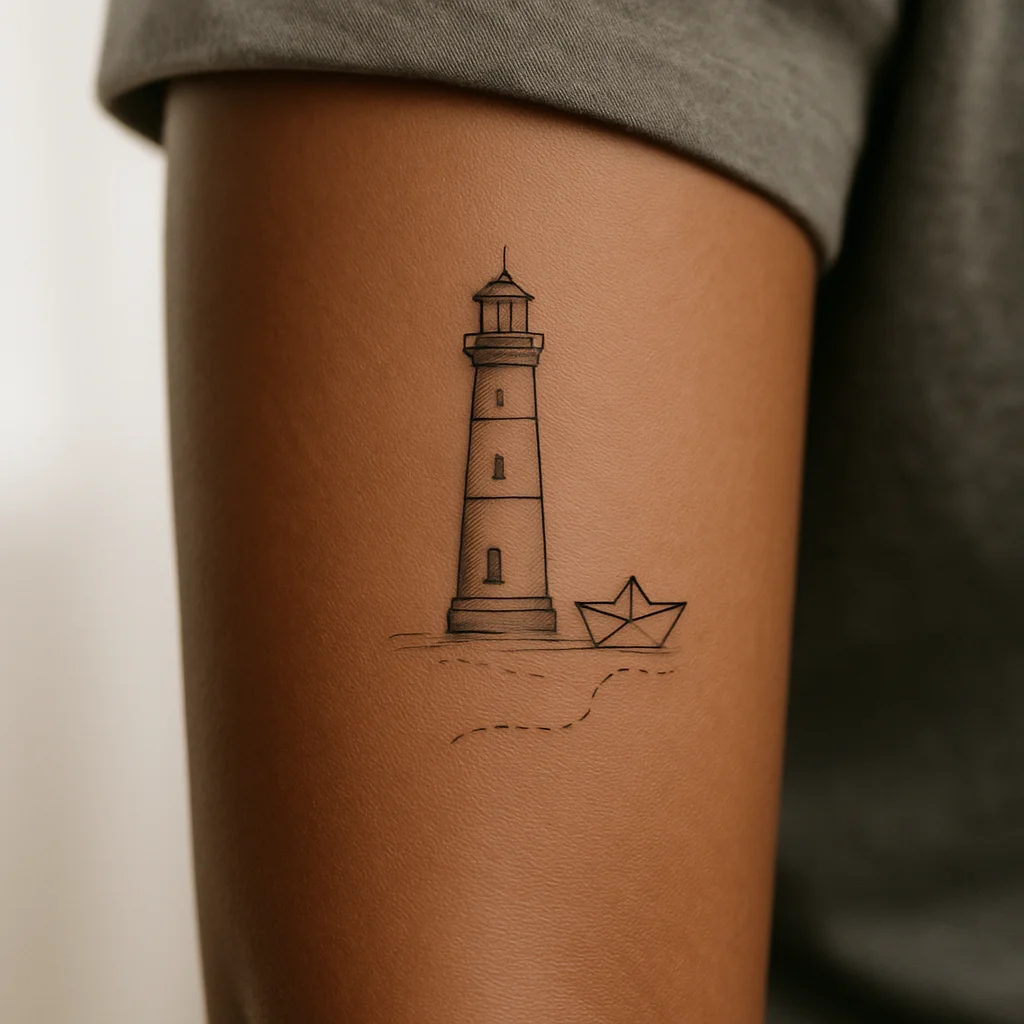
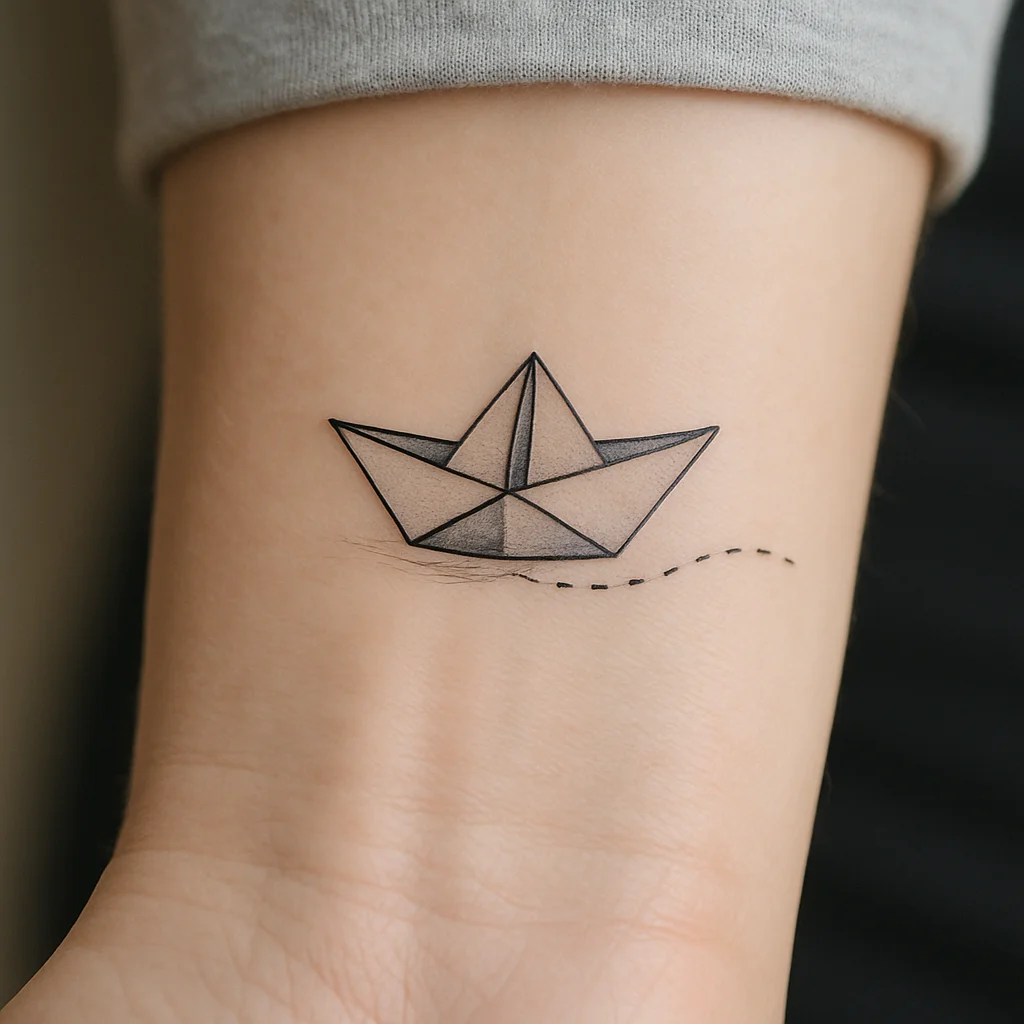
He takes a compact lighthouse, she takes a small paper boat with a short dashed wake — the fixed point and the one who sails. Both halves are simple enough to sit at two inches, and both stand alone without looking like they're missing a partner. Inner forearm on him, inner wrist or ankle on her.
8. The kite and the hand holding the string
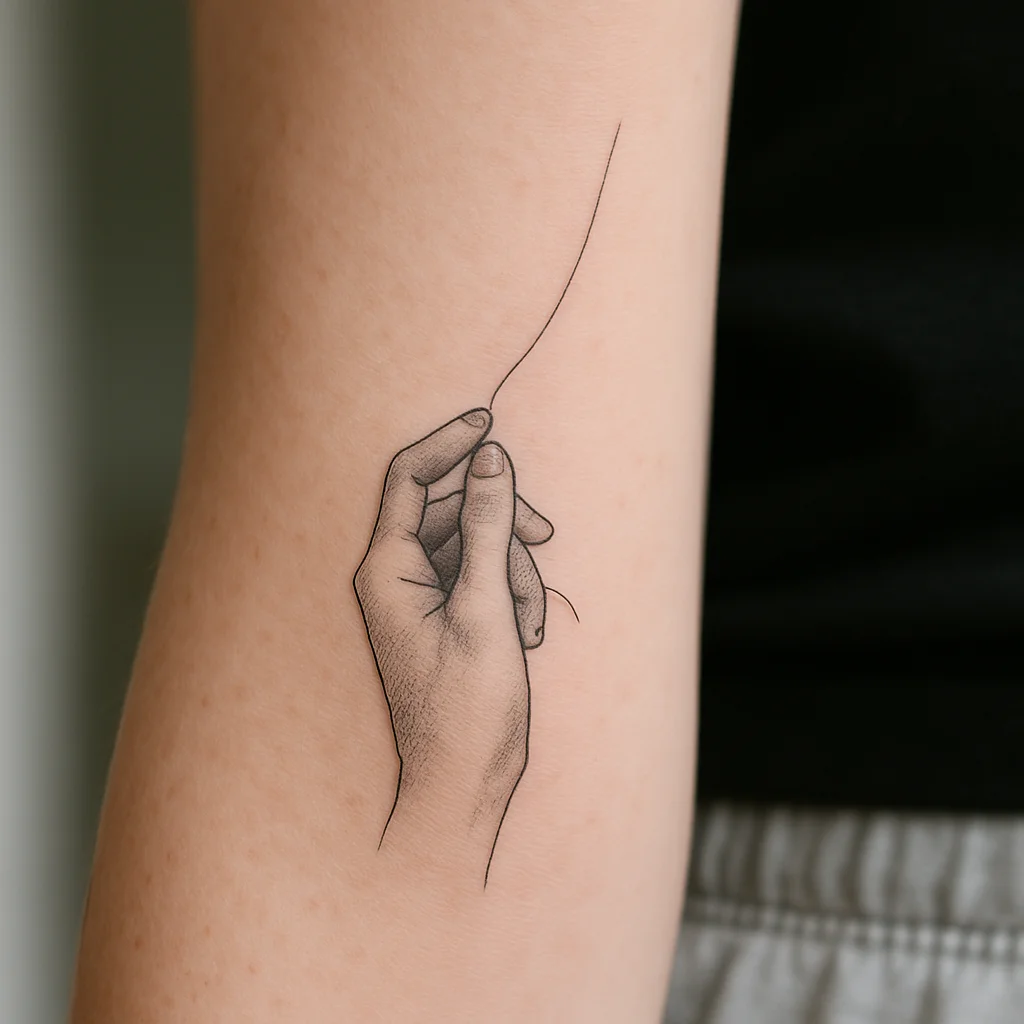
One of the best split concepts going: his tattoo is a hand with a taut string running off the edge of the design, hers is the kite with the string trailing down. Align them and the line connects. Ask the artist to end each string with a slight taper rather than a hard stop so the illusion works.
9. Sun and moon, one each
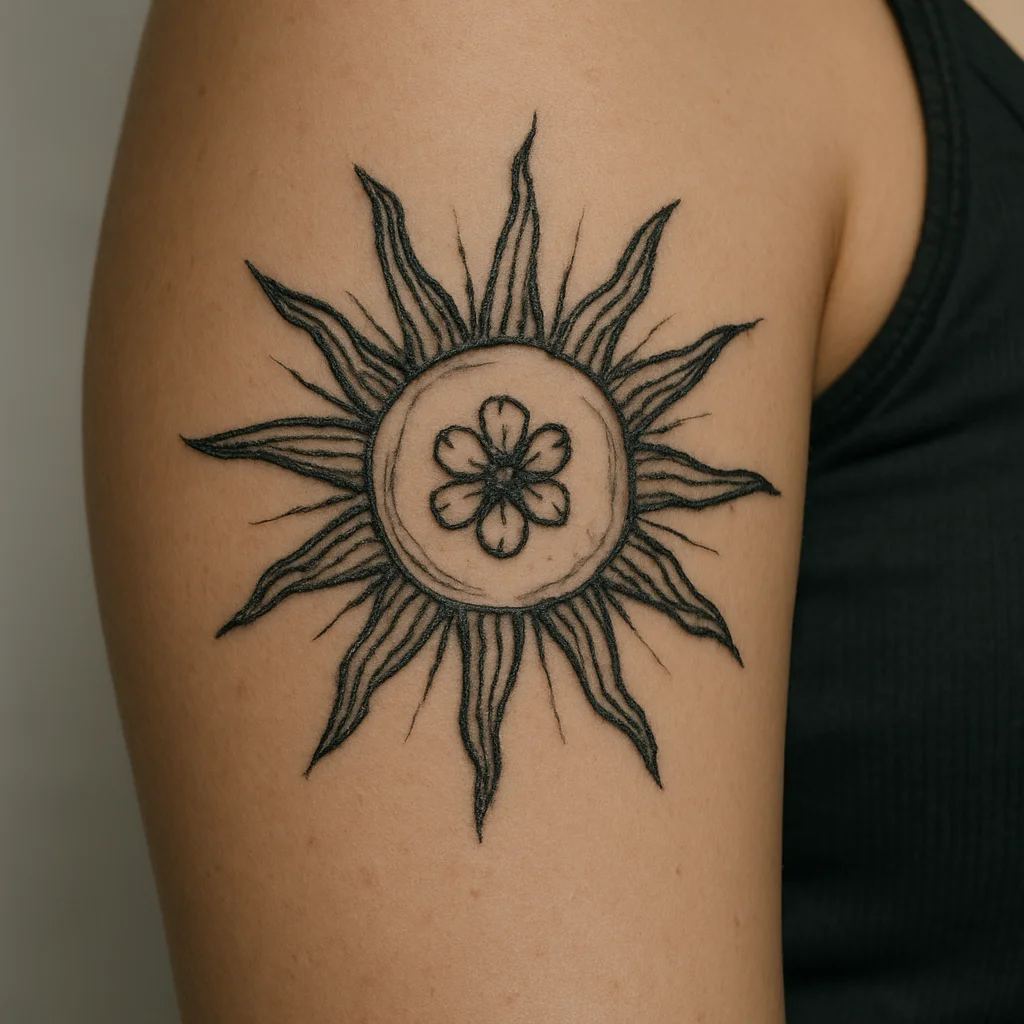
Overdone as a generic pair, excellent when personalized — put his birth month's flower inside the sun's disc and hers inside the crescent, or set both against the same dot pattern. Keep the rays chunky; hair-thin rays are the first thing to vanish. Collarbone for her, upper arm for him.
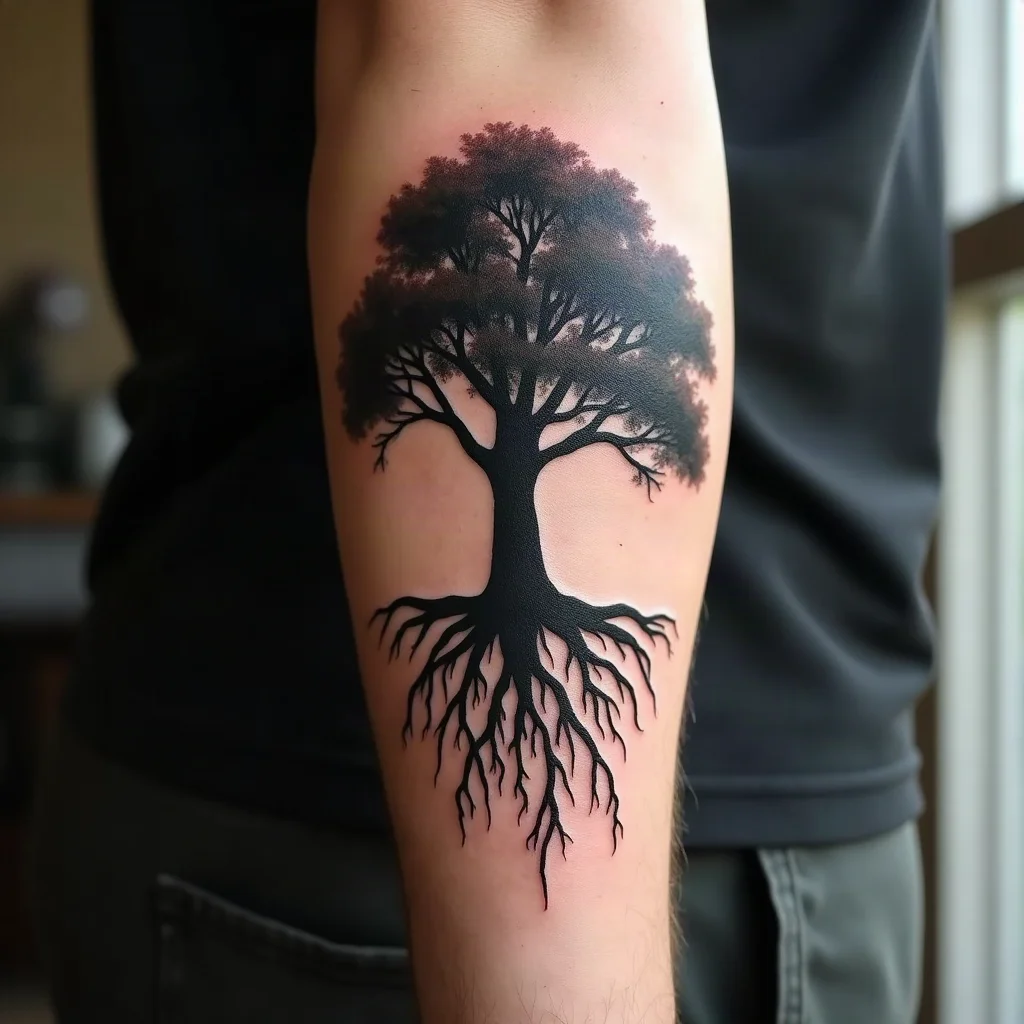
10. Roots and a single branch
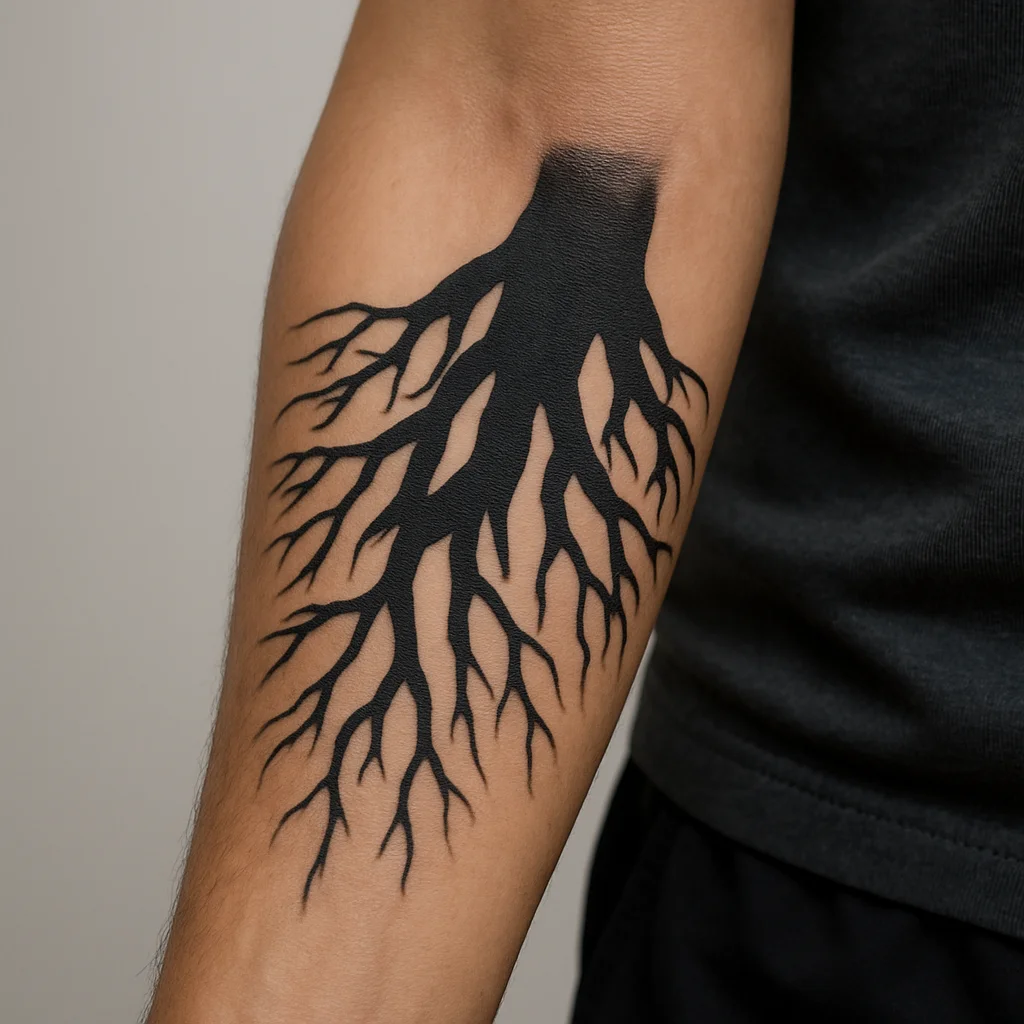
He wears a spread of roots reaching downward on the inner forearm; she wears one branch with three leaves growing upward. Placed on facing arms, they meet at the wrist when you stand side by side. It's a quieter alternative to the full family tree, which almost always ages into a black blob.
11. Split mountain range
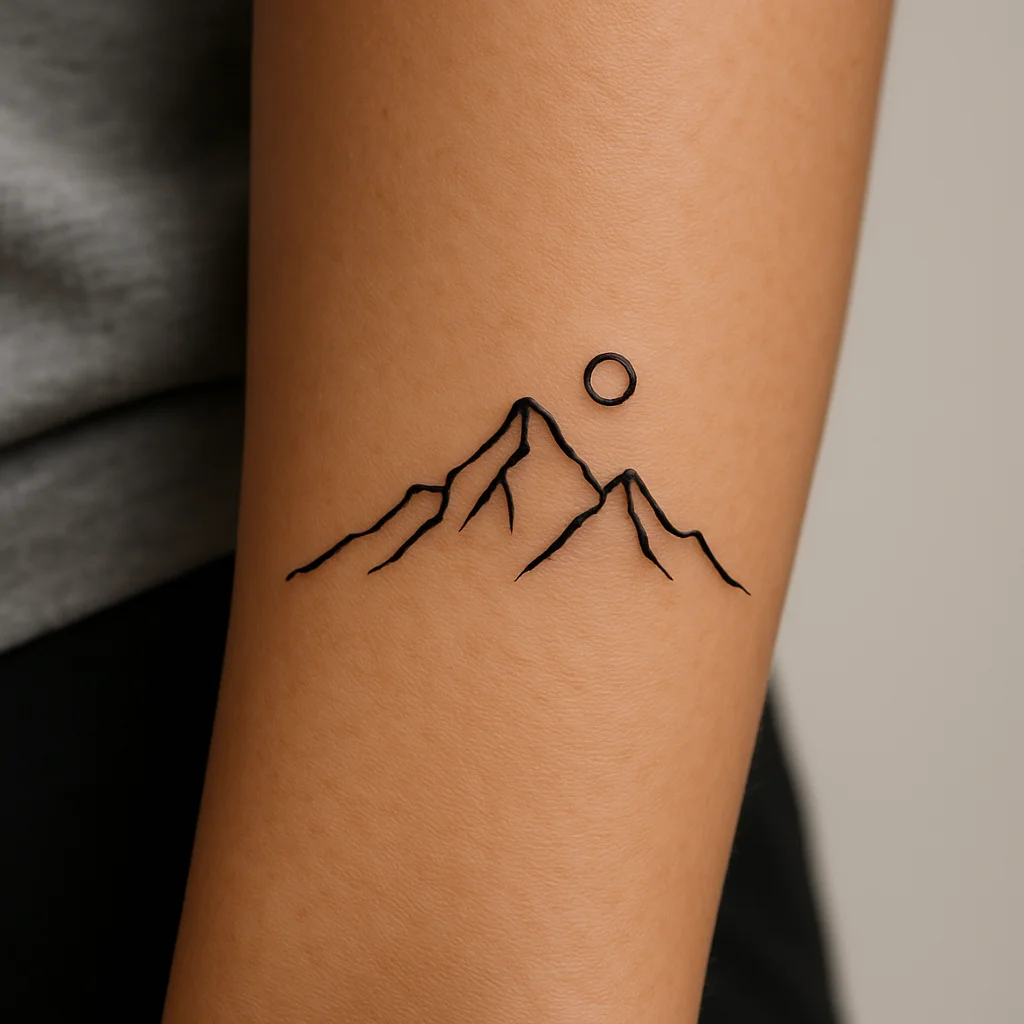
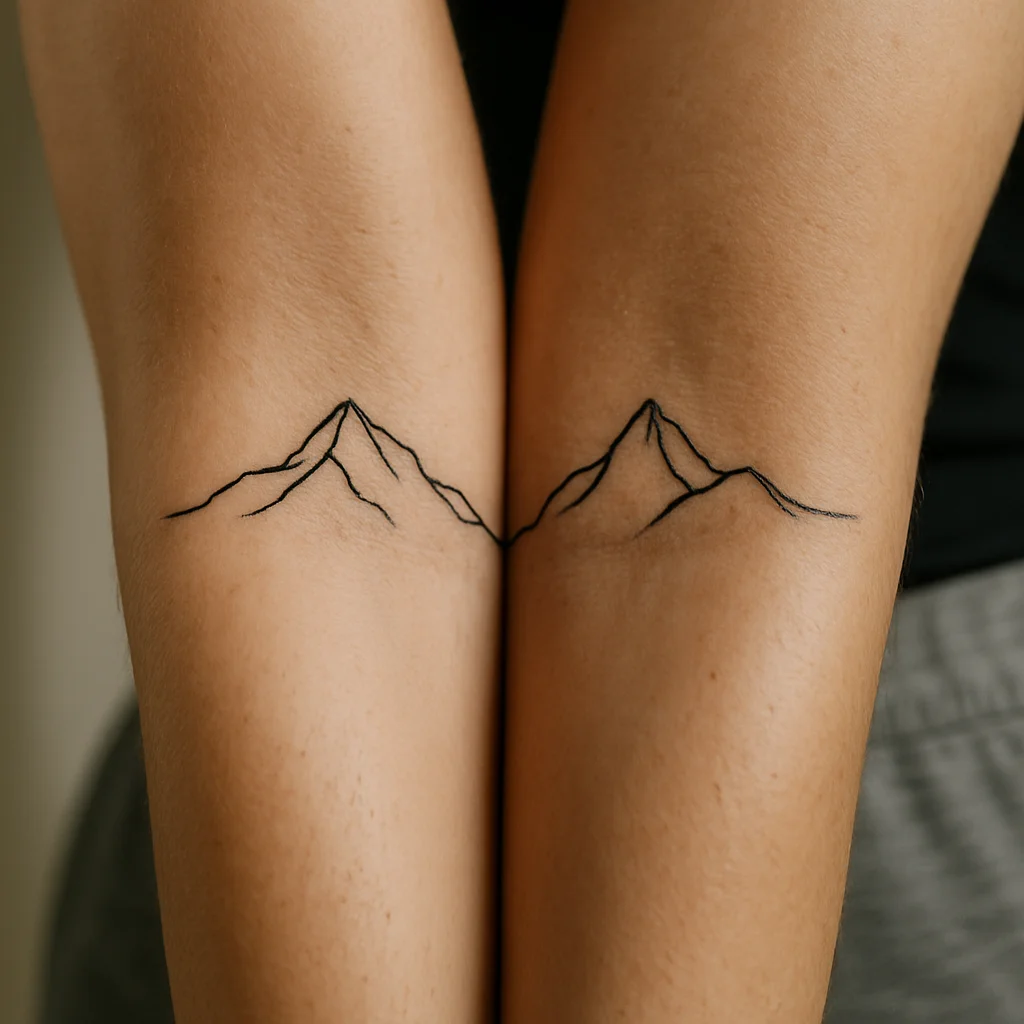
Have one artist draw a single ridgeline, then cut it in two. His half carries the taller peaks, hers the descending slope, and the horizon lines up when your forearms touch. Add a tiny sun on one side so each piece has a focal point of its own.
12. Morse code for a shared word
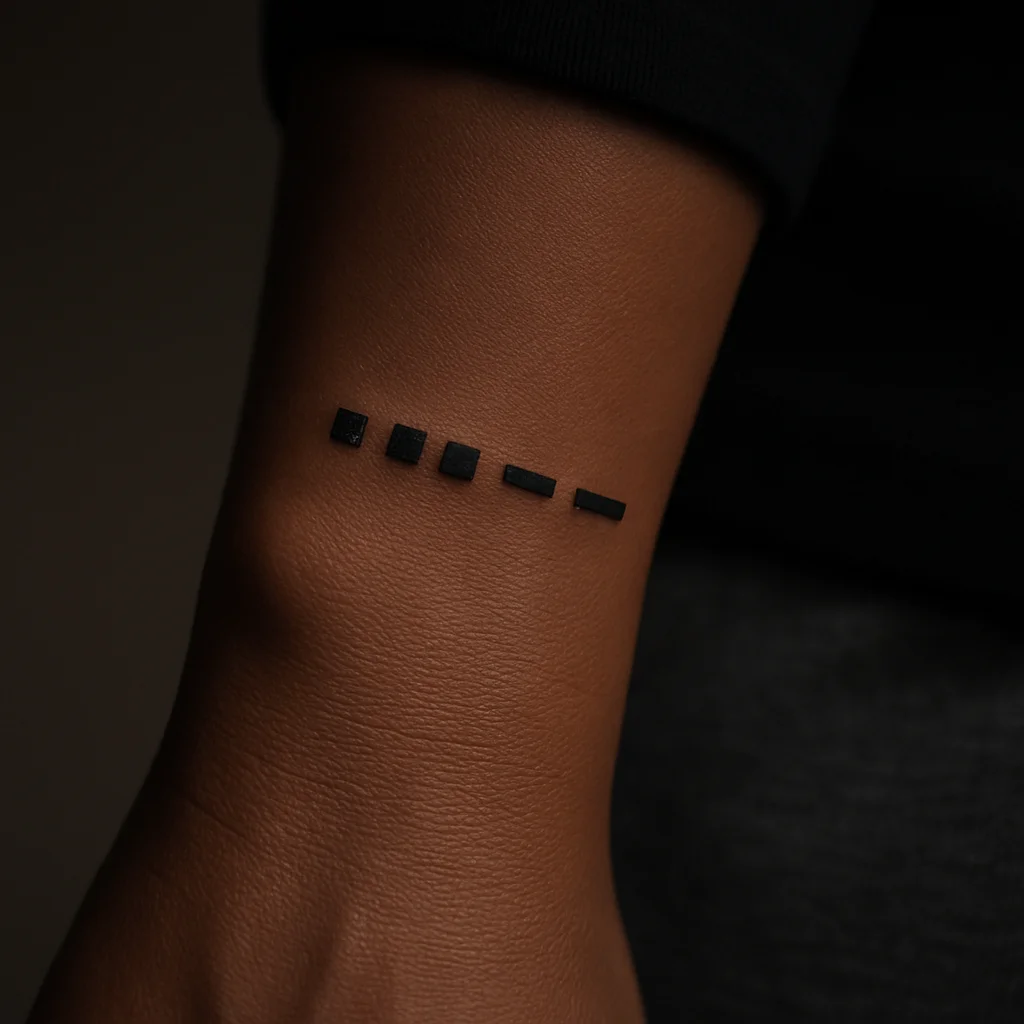
Dots and dashes for a nickname, a place, or the one word you both use — rendered as small solid squares and rectangles rather than delicate ticks. Runs beautifully along the side of the wrist or a finger. Confirm the translation twice and have the artist print it as a stencil, never freehand.
13. Key and keyhole, reworked
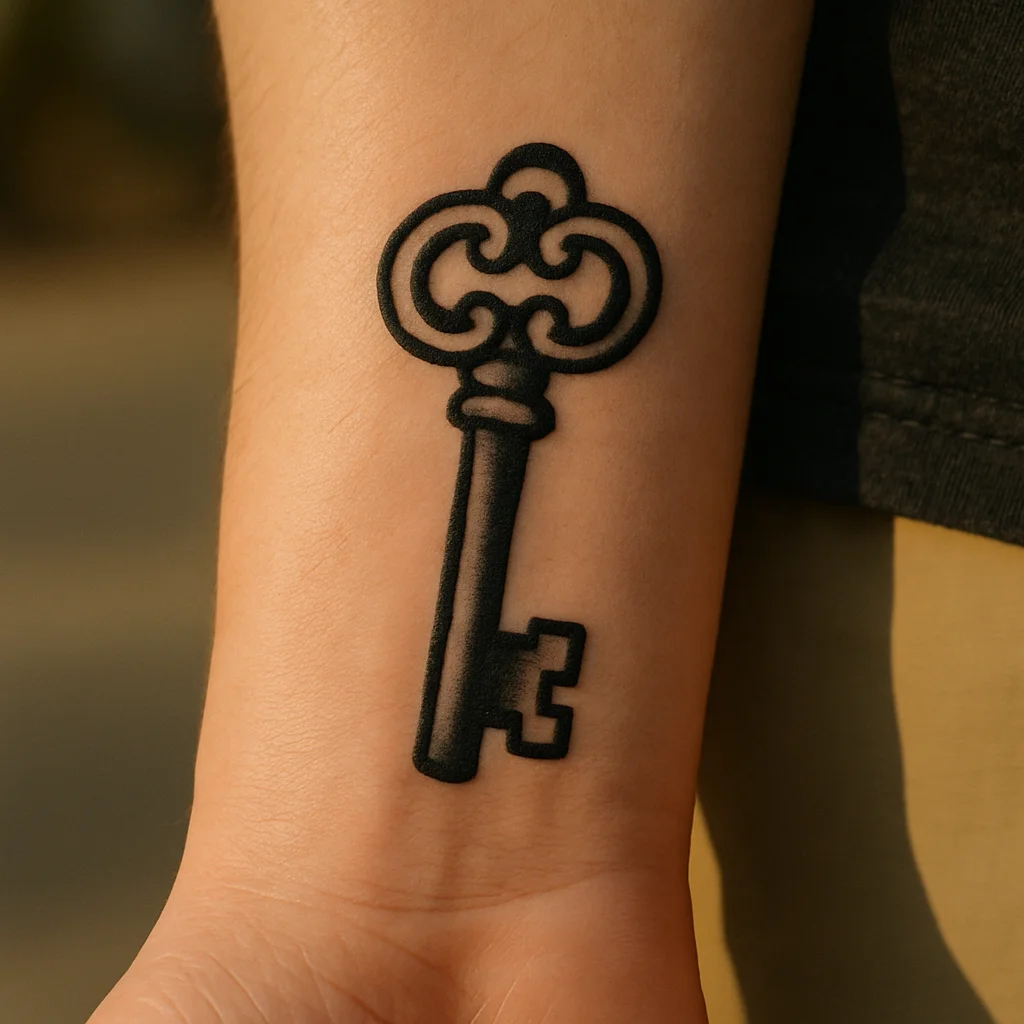
Instead of the usual lock-and-key valentine, try an antique key on him and a keyhole shaped like a house door on her. It says you always have a way back in without a single word. Two to three inches, heavier traditional linework, ankle or inner bicep.
Growing Up, Leaving, and Letting Go
14. Dandelion releasing seeds
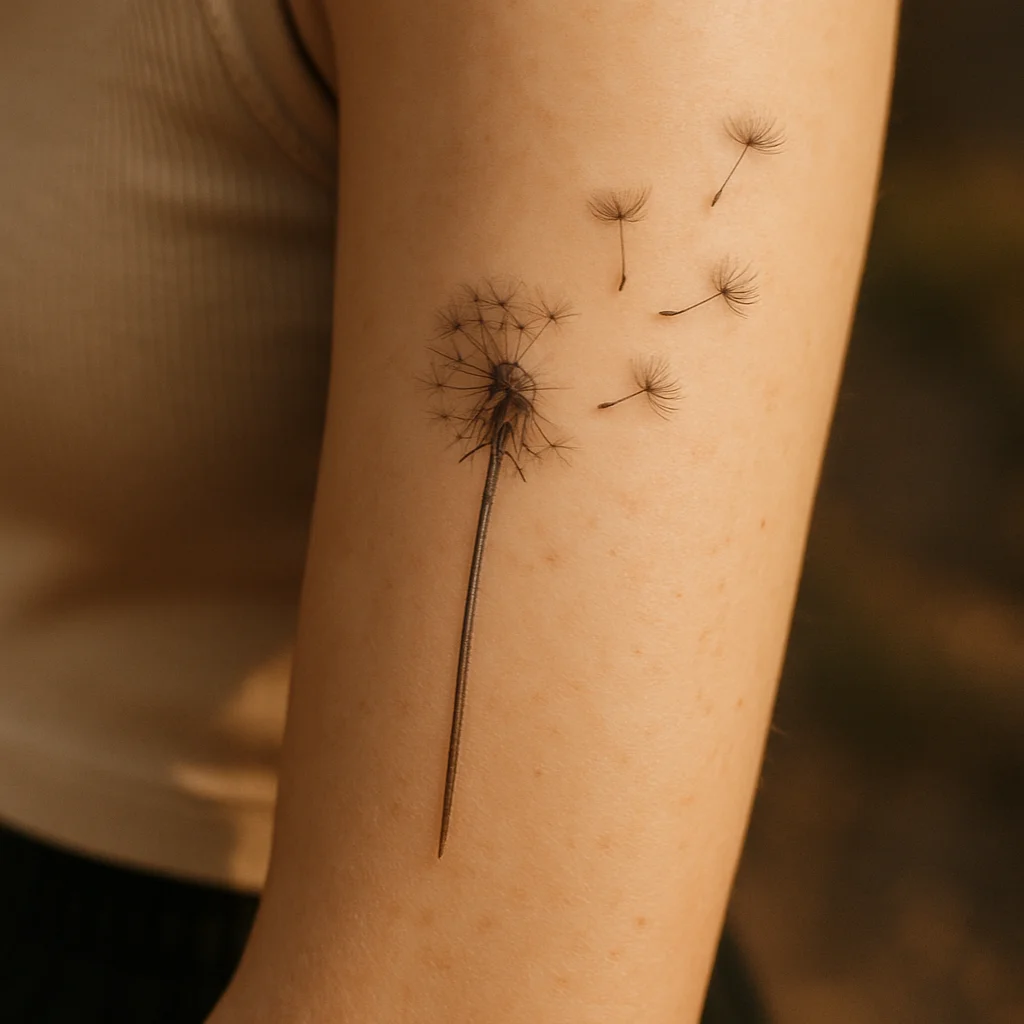
The classic split with actual emotional logic: he keeps the stem and half-empty head, she takes three or four drifting seeds. Have the artist draw the seeds as small solid teardrops with short whiskers rather than feathery wisps, which fade fastest. His on the inner forearm, hers behind the ear or on the collarbone.
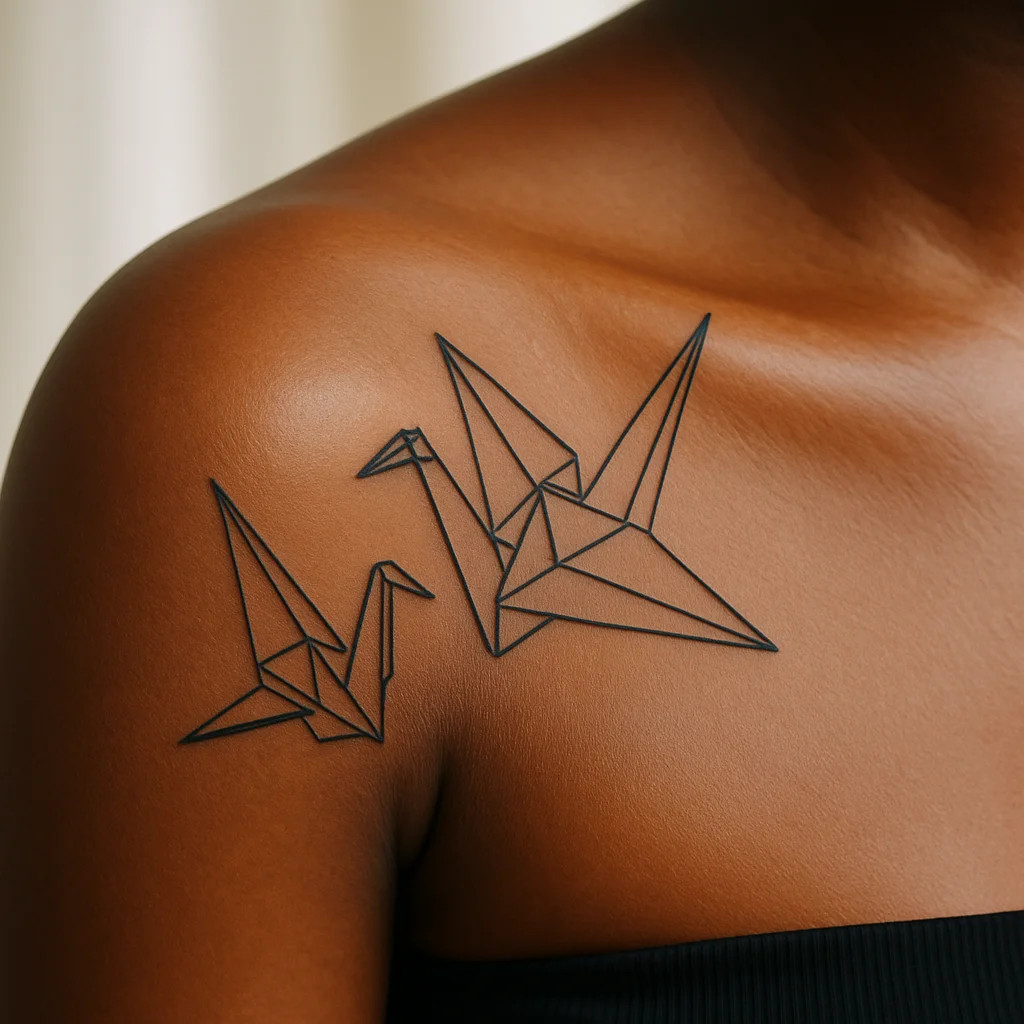
15. Origami cranes, one still folding
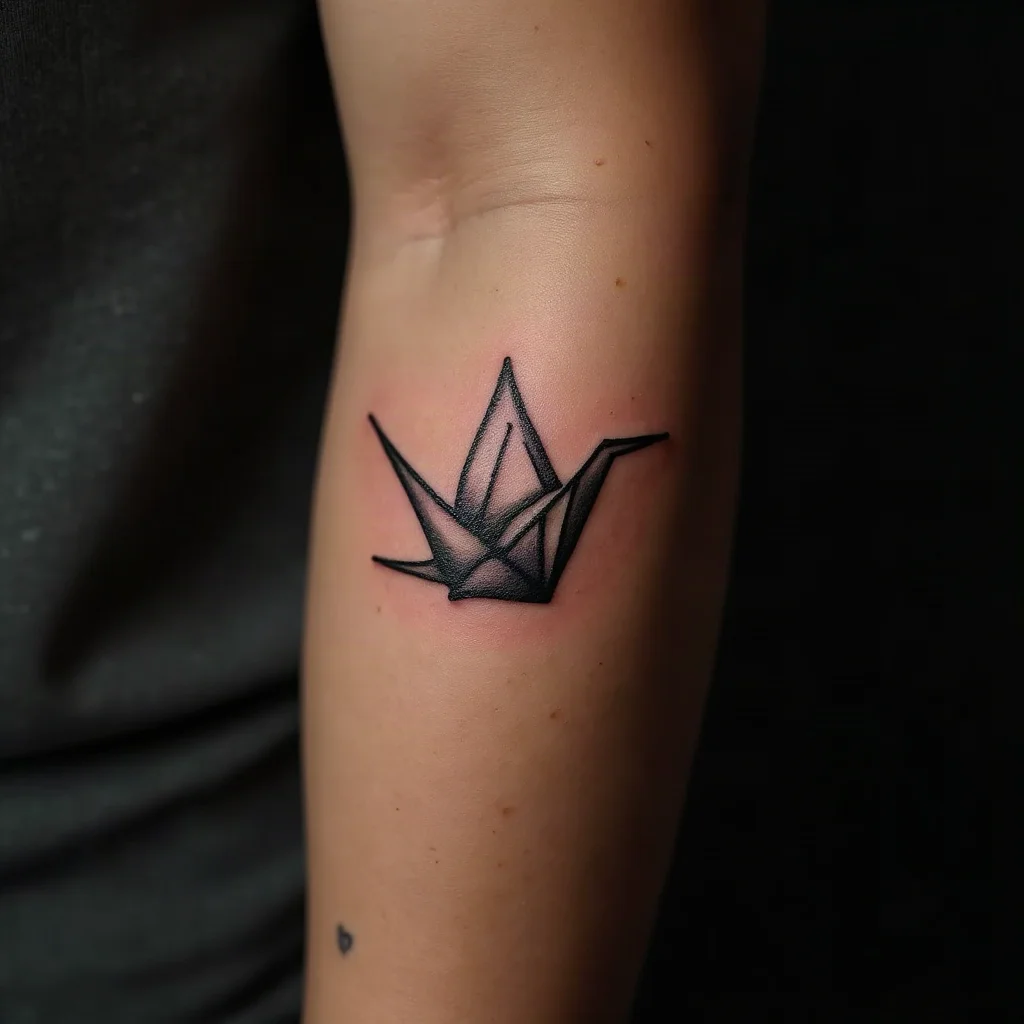
Two paper cranes in clean geometric linework — his finished, hers mid-fold with one wing still flat. It reads as a work in progress, which is the honest version of raising someone. Keep each crane at two inches minimum so the fold creases stay distinct.
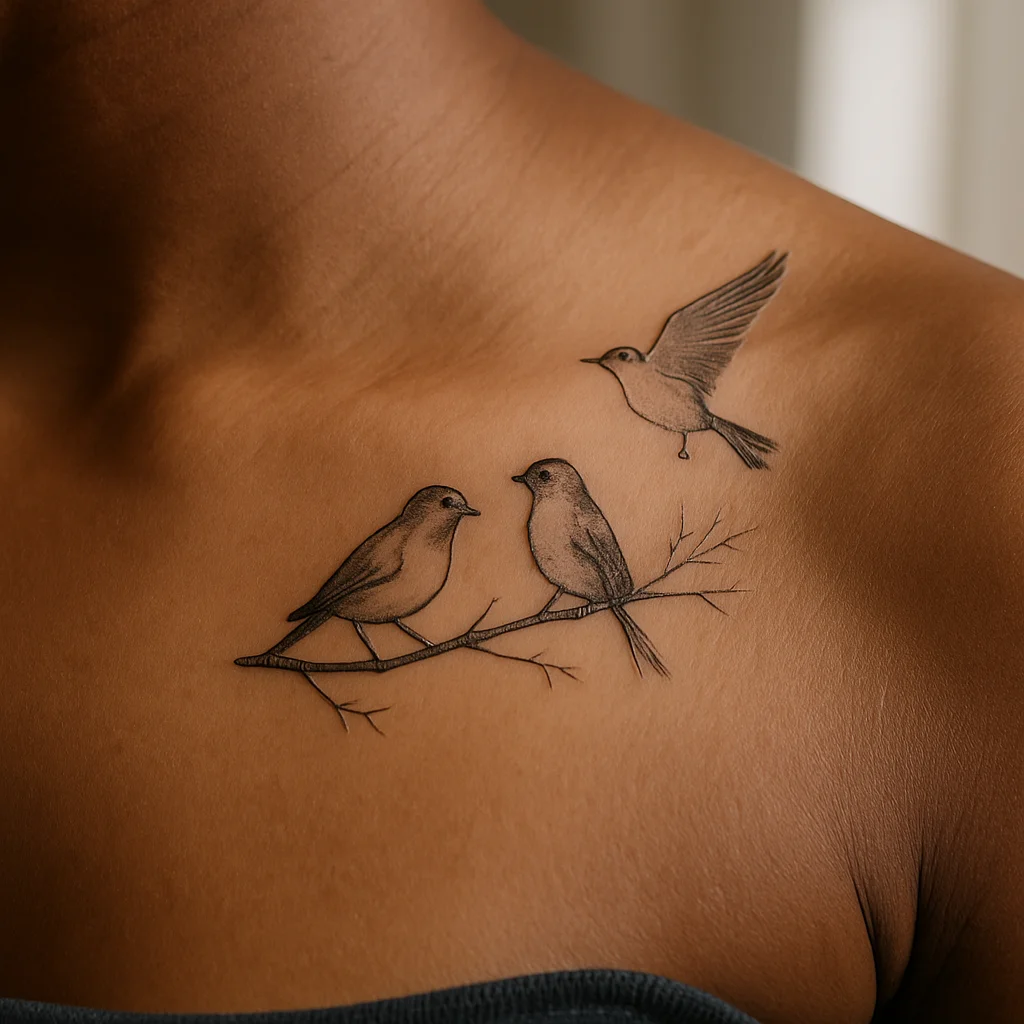
16. Branch with one bird already gone
A short horizontal branch, two birds perched, one bird in flight a few centimetres above. Placed along the collarbone or under the ribcage, the horizontal composition follows the body's lines instead of fighting them. Ask for the flying bird to be the smallest element so your eye lands on the branch first.
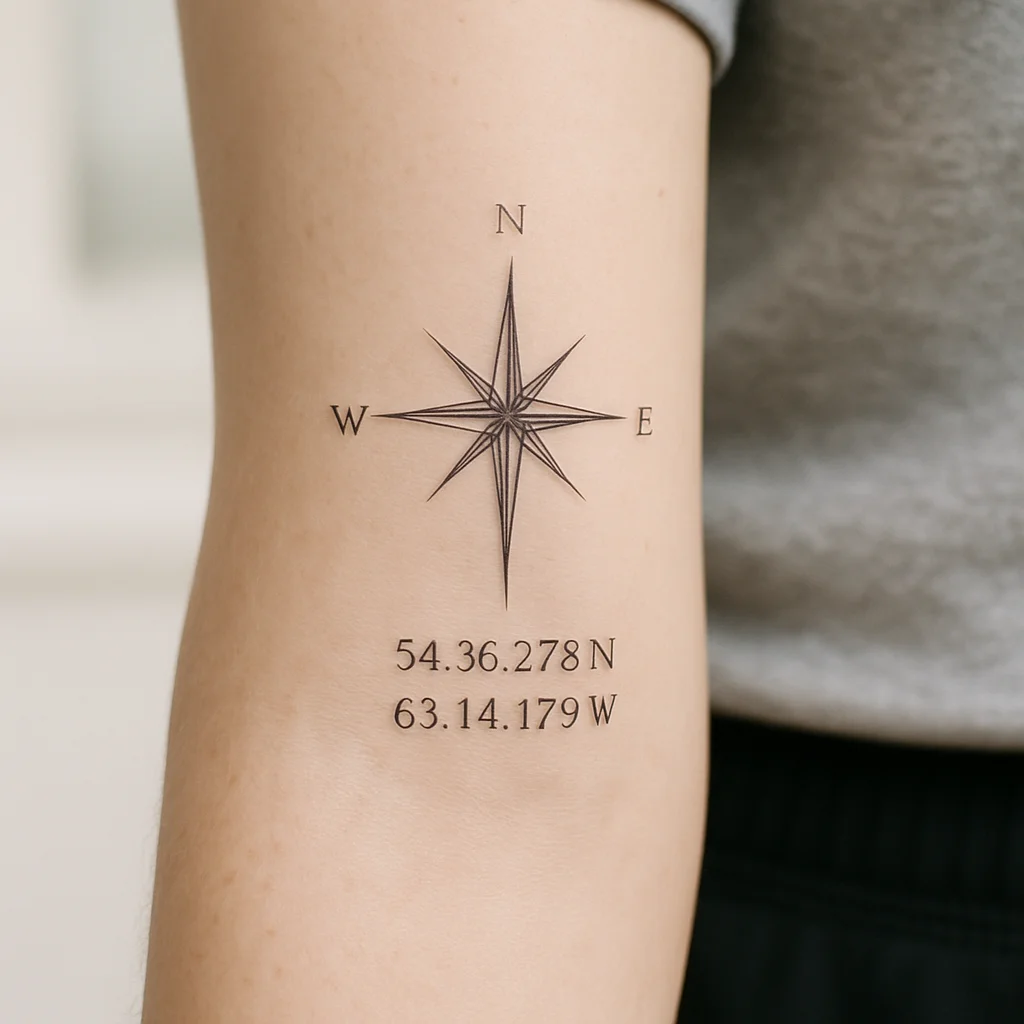
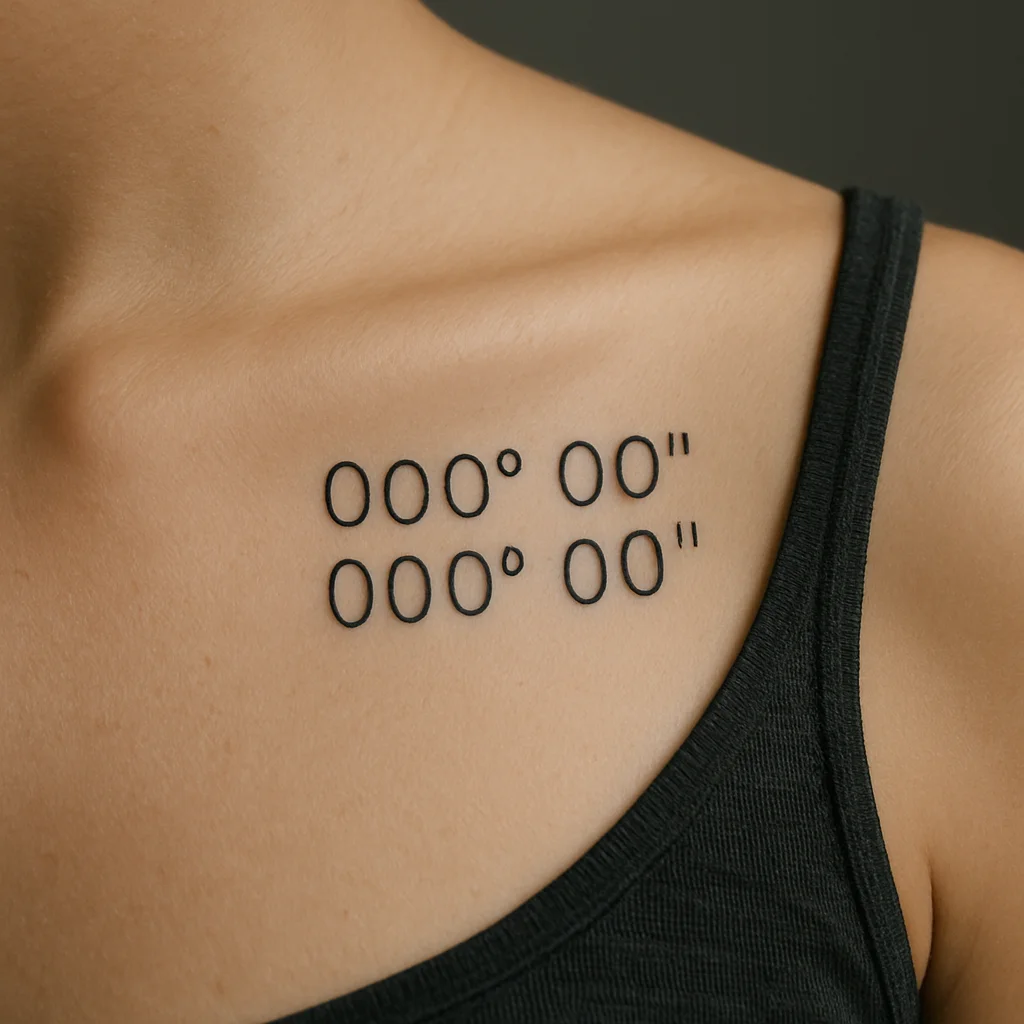
17. Compass with childhood coordinates
A simple four-point compass rose with the latitude and longitude of the house she grew up in tucked beneath it. Numbers need to be at least 3 mm tall to stay crisp — anything smaller closes up as the ink settles. Excellent on the outer forearm where there's room for a straight numeral line.
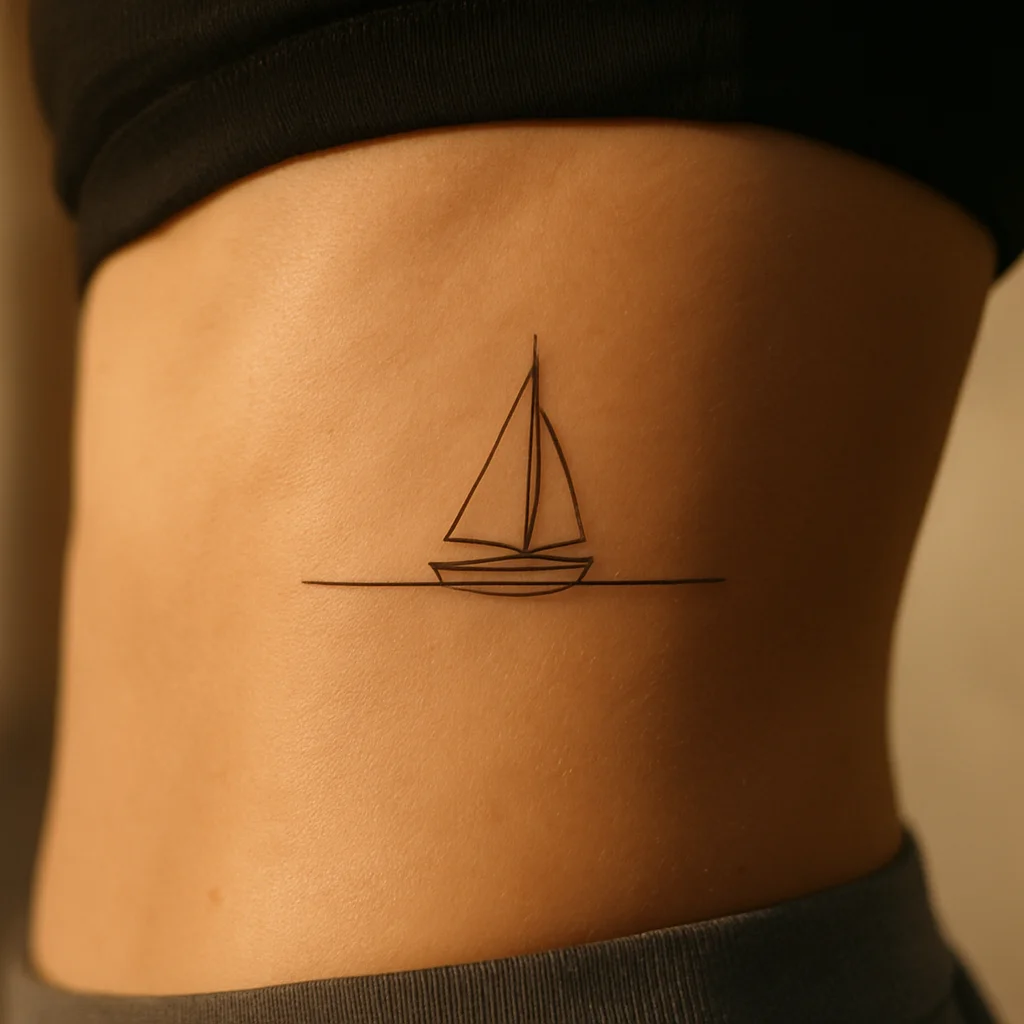
18. Sailboat on a single horizon line
One long horizontal line for the horizon, a small boat sitting on it, nothing else. It's minimal to the point of austere, and that's why it lasts. Beautiful running along a collarbone or the side of the ribcage where a five-inch line has somewhere to go.
19. Door-frame height marks
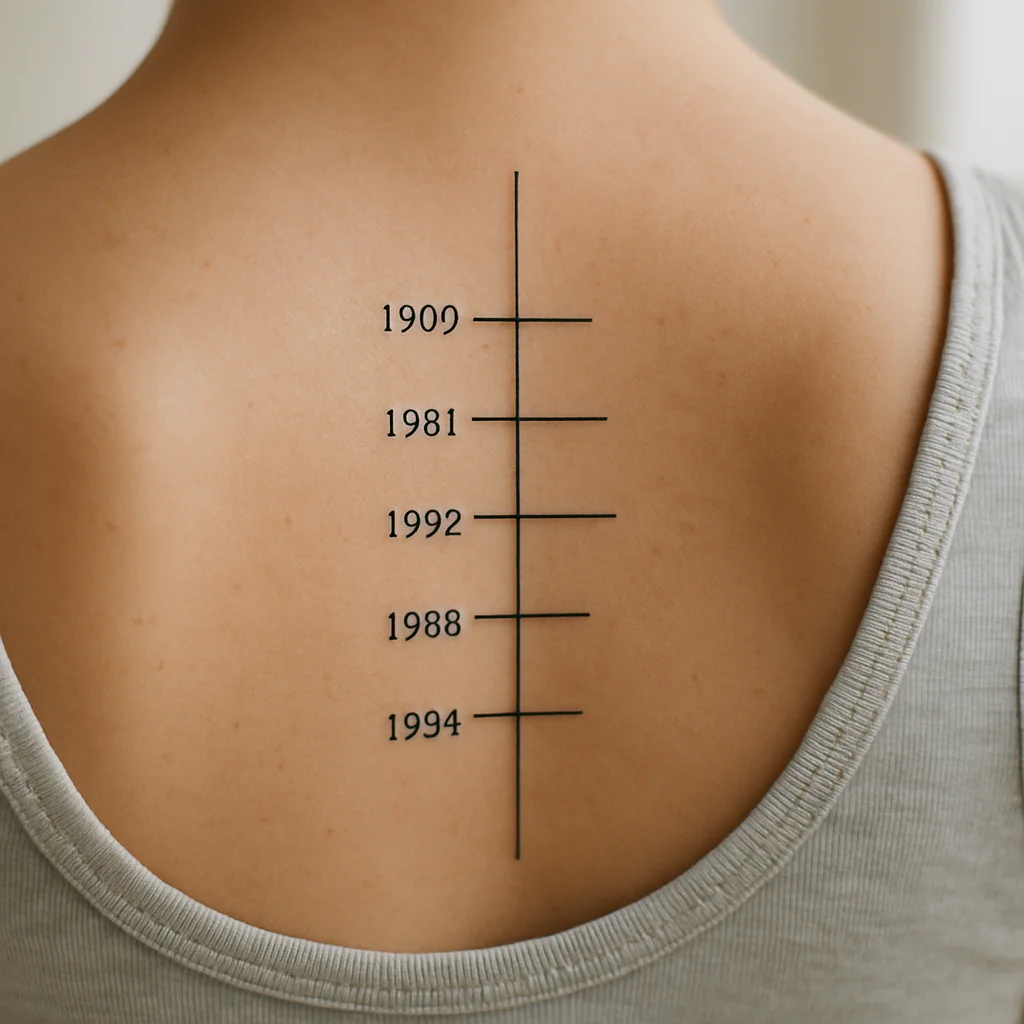
Three or four small horizontal dashes stacked vertically, each with a tiny year beside it, like the pencil marks on a kitchen door frame. He wears the marks, she wears the same set — or the last one, the one where she stopped growing. Vertical placements like the spine or the inner bicep suit it perfectly.
Handwriting, Words and Numbers
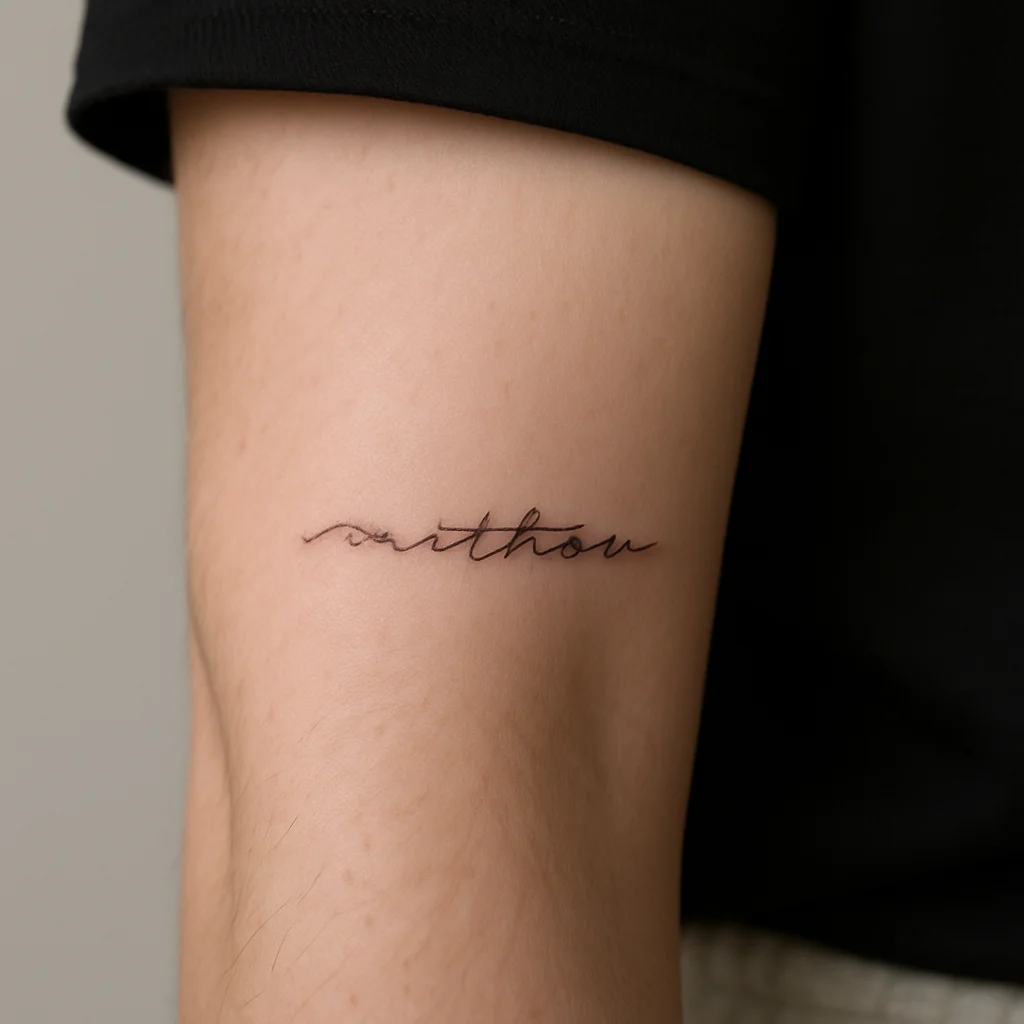
20. His handwriting from a birthday card
Four words in his actual hand, photographed flat under a window, no flash. Artists can clean up a shaky scan but they can't invent the character of someone's letters, so choose a card where he wasn't rushing. Two to four inches on the inner forearm; expect the letters to soften slightly over years, which is why thin strokes should be avoided in favour of his natural pen weight.
21. Her childhood signature on him
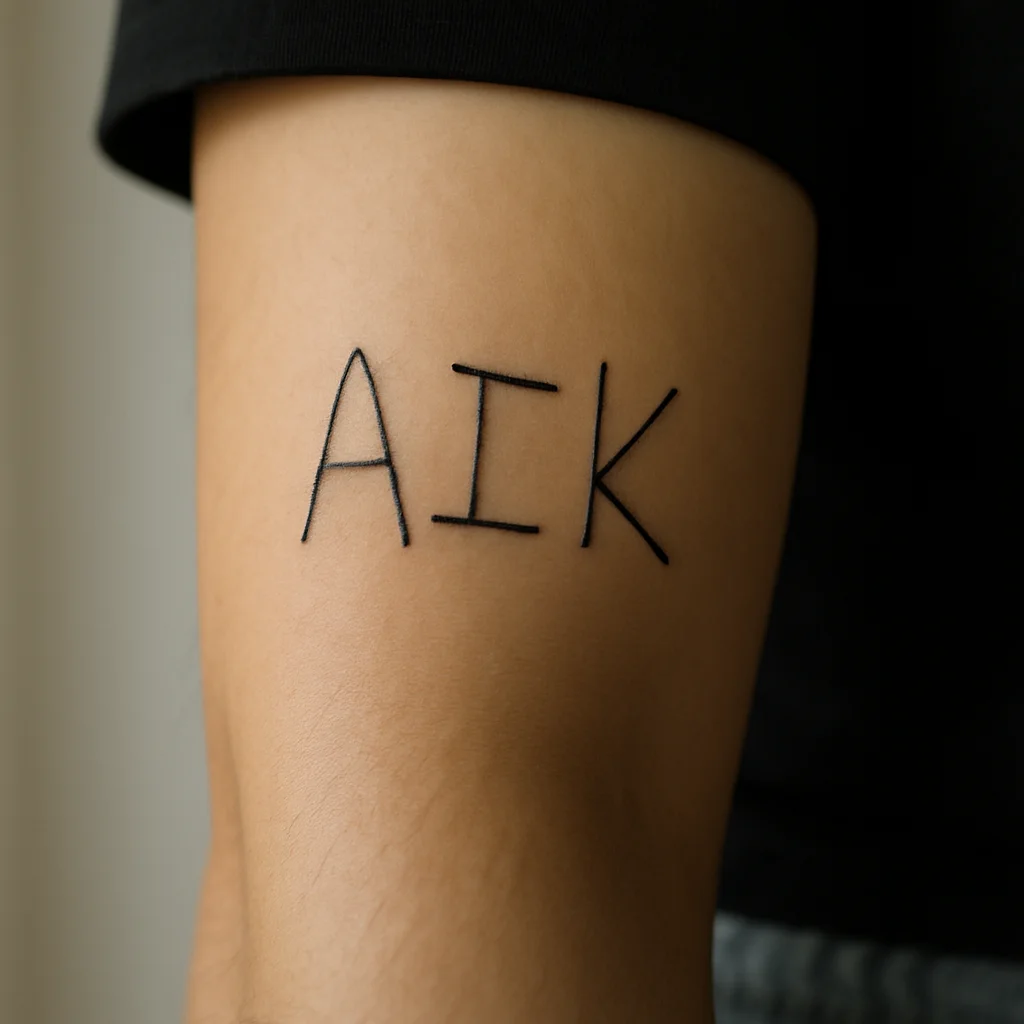
The reverse gift, and often the more moving one: a seven-year-old's name in oversized uneven capitals, tattooed on his forearm exactly as she wrote it. Backwards letters stay in. If you have several samples, pick the one with the most personality rather than the neatest.
22. A split birthdate in Roman numerals
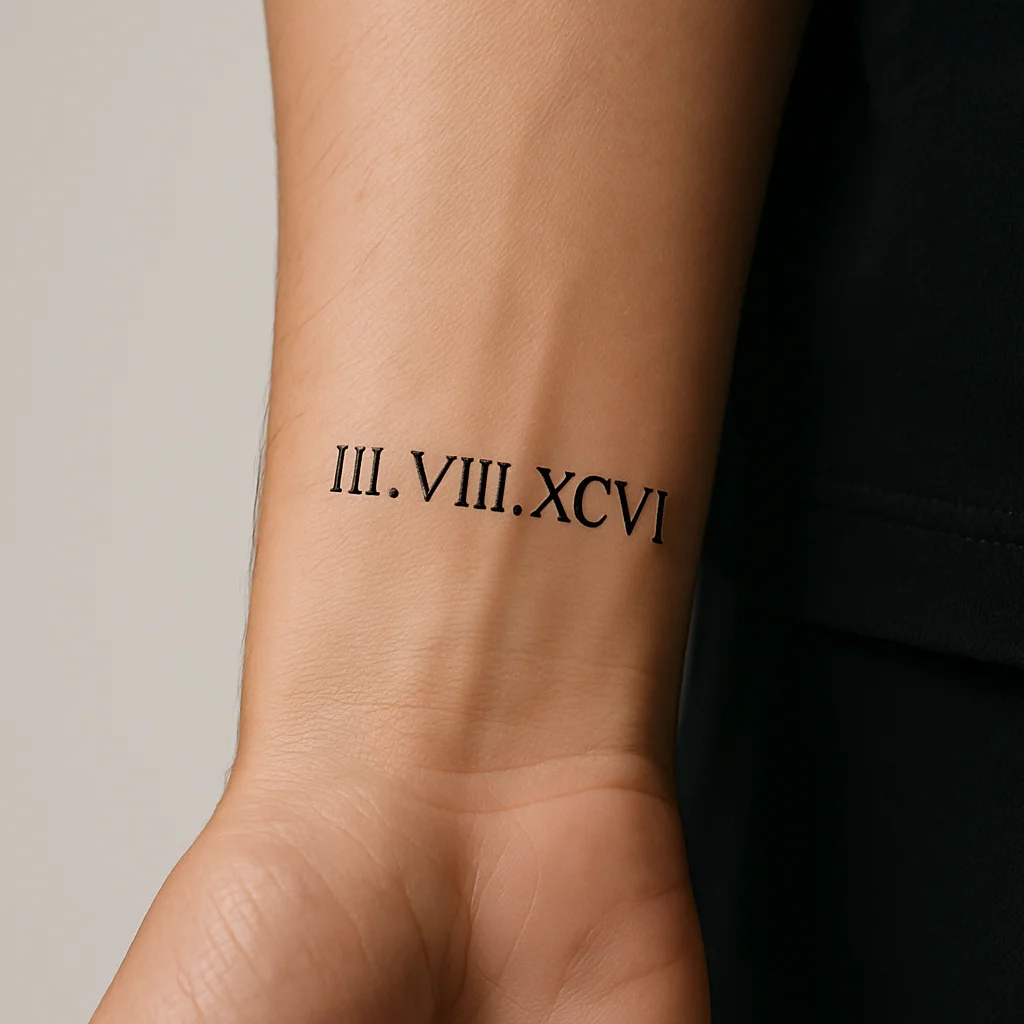
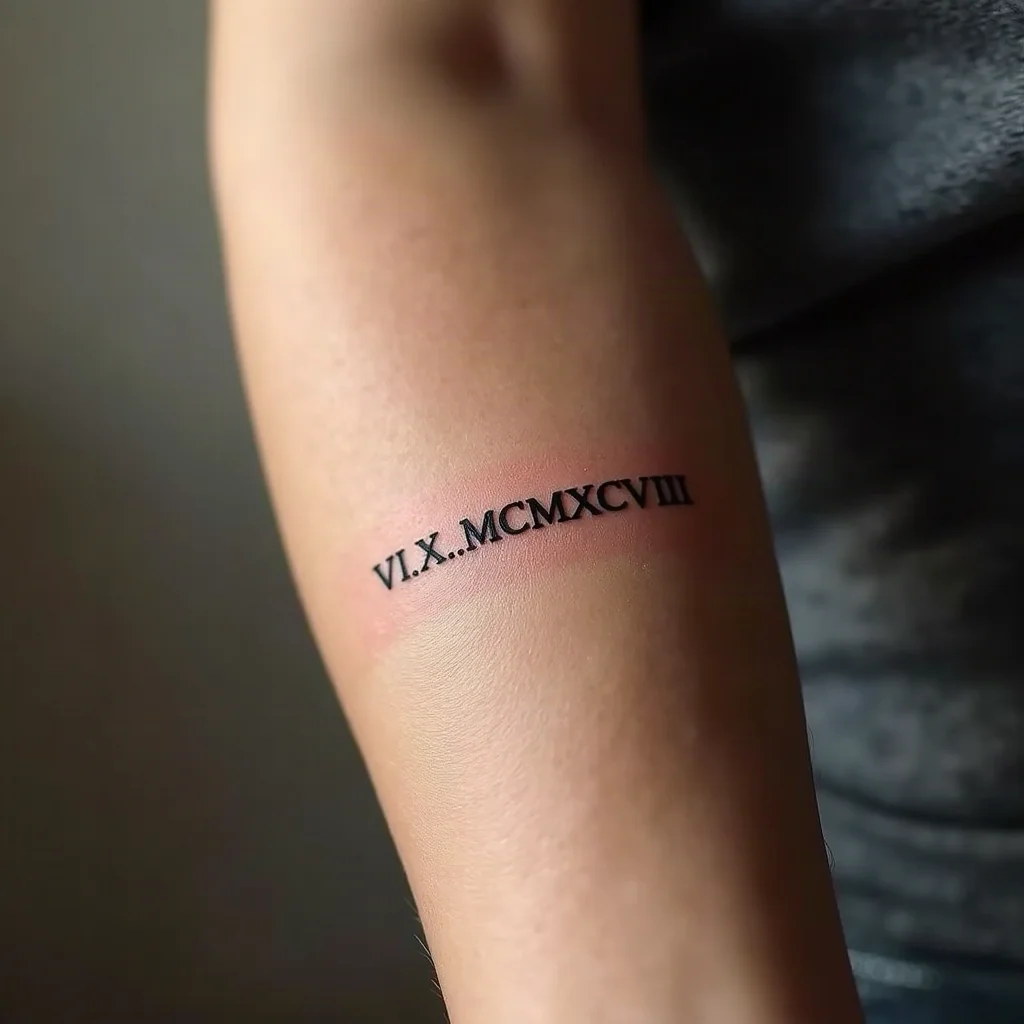
Her birthdate cut across two inner wrists — day and month on hers, year on his, or the whole string mirrored on both. Roman numerals hold up well at small sizes because they're all straight strokes. If you'd rather build out a wider family set, our guide to names and birthdate tattoos covers layout options.
23. Hospital coordinates
The latitude and longitude of where she was born, set in a single clean sans-serif line. It's a date without looking like a date, which suits people who'd rather not explain their tattoo at every barbecue. Along the outer forearm or under the collarbone, roughly three inches wide.
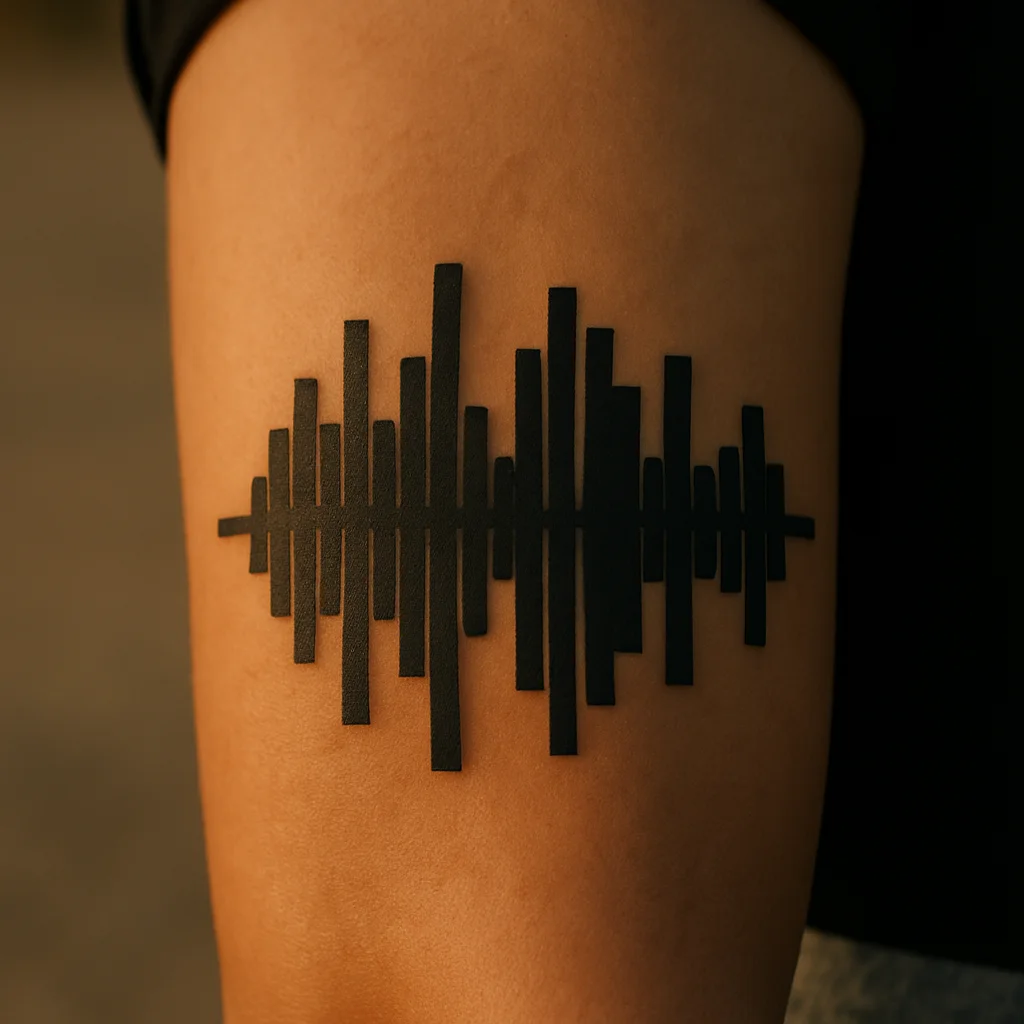
24. Your song as a waveform bar
Two seconds of the chorus rendered as a soundwave — vertical bars of varying height along a baseline. Ask for solid, chunky bars with clear gaps; hairline bars merge into a grey stripe within a few years. Four to five inches on the outer forearm gives the shape breathing room.
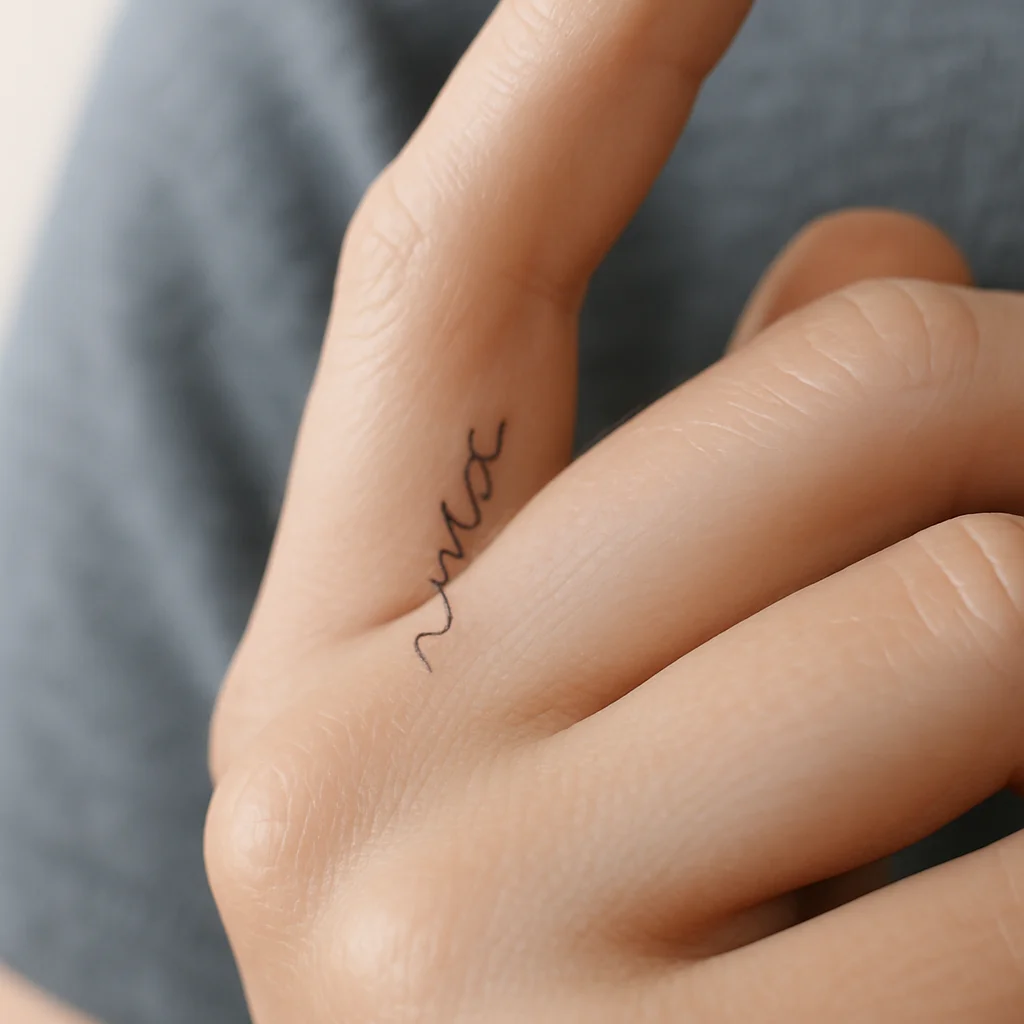
25. Nickname inside a ring on the finger
The name he's called her since she was two, in small fine-line script wrapping the side of a finger. Be honest with yourself: finger tattoos fade faster than anywhere else on the body and often need a touch-up within a couple of years. If that bothers you, move it to the side of the wrist.
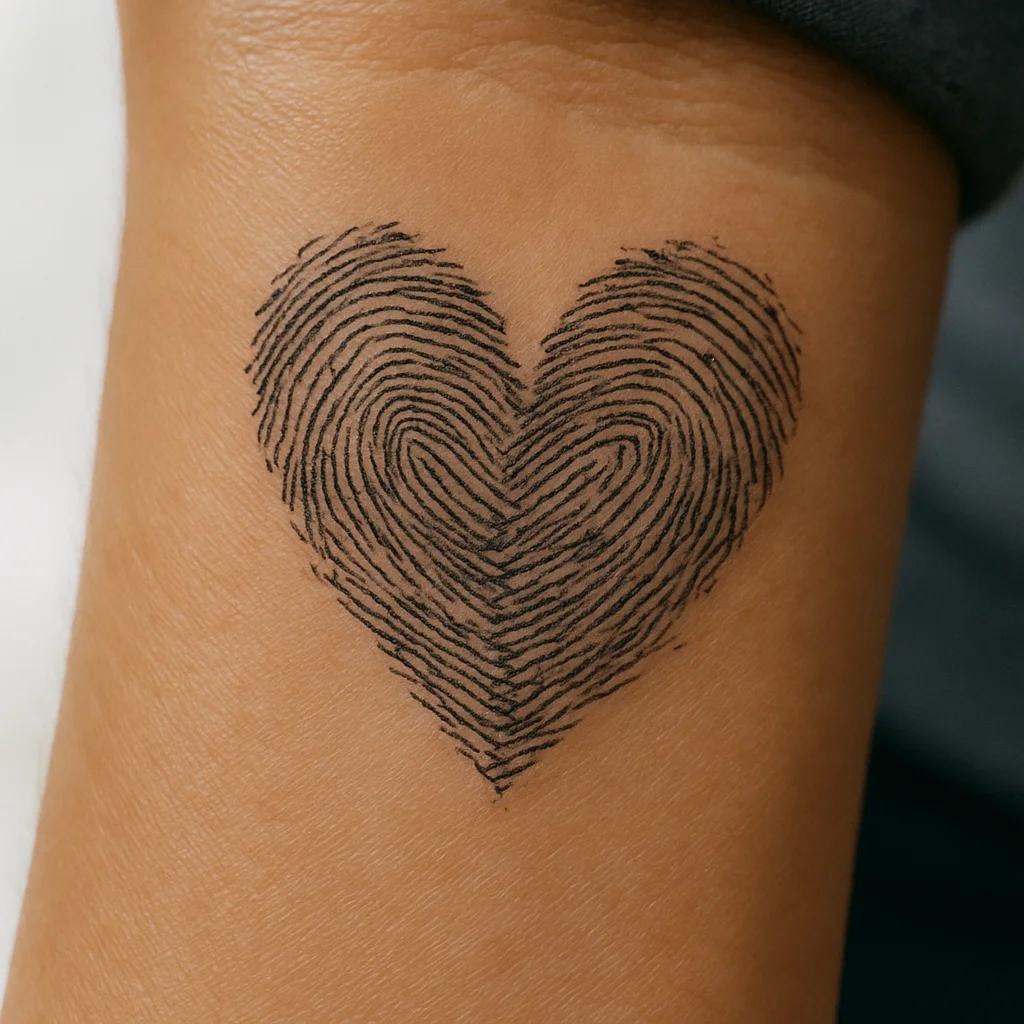
26. Thumbprint heart
His thumbprint and hers pressed together to form a heart shape, or a single print with a heart lifted out of the centre in negative space. Ridge detail is delicate work — keep the whole piece at least two inches and accept that it will read as texture rather than a forensic match. Inner wrist, chest, or behind the ear.
Placement, Pain and What It Costs
Father-daughter pieces are usually small and visible-by-choice, which narrows placement to a handful of reliable spots. Inner forearm is the workhorse: flat, low-friction, easy to show or cover, and it holds fine linework better than almost anywhere else. Outer forearm takes wider horizontal designs like soundwaves and coordinates. Inner wrist is perfect for two-inch symbols but sits on thin skin that stings. Collarbone and ribcage suit long horizontal lines. Upper arm and shoulder are the most comfortable sittings and age the slowest, since they see less sun and less stretch.
On pain, be straight with each other before the appointment. Upper arm and outer forearm are genuinely mild — most people describe it as hot scratching. Inner wrist, ribcage, collarbone and the tops of the feet run sharper because the needle is working close to bone. Fingers are quick but unpleasant, and they fade. If one of you is nervous, book that person second so they can watch the other survive it first.
Cost varies wildly by city and artist reputation, but for planning purposes: a small single-needle symbol usually lands in the shop-minimum-to-modest range, and most studios have a minimum charge that a one-inch tattoo won't get you under. Two matching pieces done back to back in one appointment often work out cheaper per person than two separate visits, since you're sharing setup time. Fine-line specialists and heavily booked artists charge more, and they're worth it for handwriting and tiny numerals where a millimetre of line weight decides whether it's still readable in 2040.
Going In Together: How to Brief the Artist
Book one appointment for both of you with the same artist. Two artists means two interpretations of the same line weight, and split designs stop lining up. Send reference material ahead of time rather than pulling it up on your phone in the chair.
What to send:
- Flat, well-lit photos of any handwriting or handprint, shot straight down in daylight, not at an angle.
- A note on line weight. Say plainly: bold enough to last twenty years. Good artists will push back on anything too delicate for the placement, but say it anyway.
- Both placements, measured. Tell them where each piece goes and how big, so they can scale the halves to two different-sized limbs. A design sized for a broad forearm looks clumsy on a slim wrist.
- Whether you want them to physically connect. If the halves should meet when your arms touch, the artist needs to know so they can position each stencil at the right angle on the arm.
Aftercare is the same for both of you, and it's worth agreeing on it out loud so nobody skips it. Keep the wrap on as long as your artist says, wash gently with unscented soap twice a day, and use a thin layer of plain moisturiser — thin enough that the skin looks matte, not shiny. No swimming, no gym, no sun for two to three weeks. Fine-line work on wrists and fingers is the most likely to need a touch-up around the three-month mark; most artists include one free, and going in together for that too makes a decent second chapter to the story.
Frequently asked questions
What is the most meaningful father-daughter tattoo?
The most meaningful ones come from something you both actually lived rather than a generic symbol. Traced childhood handprints, a phrase in his real handwriting, and split designs like the kite and the hand holding the string consistently mean the most to the people wearing them. If a stranger can guess the story from the image alone, it's probably too generic to be personal.
Do father-daughter tattoos have to match exactly?
No, and matching exactly is often the weaker choice. Complementary halves — a lighthouse and a paper boat, roots and a branch, a sun and a moon — let each person wear something that suits their own style and body. They also photograph better side by side than two identical stamps.
How small can a meaningful father-daughter tattoo go?
Around two inches is the practical floor for anything with interior detail like handwriting, numerals or fingerprint ridges. Below that, lines sit too close together and merge as the ink settles into the skin over the years. Pure outlines and silhouettes can go smaller, closer to an inch, and still read clearly.
Should we get tattooed at the same appointment?
Yes, if you can. One artist working in one session keeps the line weight and scale consistent, which matters enormously for split designs that need to align. It also usually costs less per person than two separate bookings because you share the setup time.
Which placement ages best for a small matching tattoo?
The inner forearm and upper arm age the best: less sun exposure, less friction and stable skin. Fingers, hands and the tops of the feet fade fastest and often need touch-ups within a year or two. If longevity is your priority over visibility, pick the upper arm.
The conversation
No comments yet. Got a thought about these designs? Start us off.
Want to weigh in? Join the community to comment, save designs and try them on your skin.