34 Forearm Tattoo Ideas for Men, Sorted by Shape
The forearm is a long, tapering panel with two very different faces, and the designs that look best are the ones built for that shape. Here are 34 ideas sorted by geometry, with placement, sizing and pain notes for each.
Read the forearm before you pick the design
The forearm is not one canvas, it is two. The outer forearm is a firm, slightly convex panel you see every time your arm hangs at your side, and it takes bold linework and heavy black beautifully. The inner forearm is flatter, softer, paler, and it faces you rather than the world, which makes it the natural home for lettering, portraits and anything you want to read yourself.
Shape matters more than subject. The forearm runs roughly 25 to 30 cm from elbow crease to wrist and tapers noticeably, so designs fall into four honest categories: vertical columns that use the length, bands that wrap the circumference, compact single motifs that sit in one zone, and full panels that fill the whole face of the arm. Fighting the shape is the single most common mistake, usually a wide square design squeezed onto a narrowing wrist.
Pain is manageable here, which is why so many men start on the forearm. The outer forearm is one of the friendlier spots on the body, a steady scratch over muscle. The inner forearm is more tender, especially the soft strip near the elbow ditch and the last few centimetres before the wrist, where bone and tendon sit close to the surface. Ageing is generally kind on both faces as long as you respect line weight: anything finer than about 0.3 mm of spacing tends to blur, and the inner forearm sees enough sun and friction to soften fast if you skip sunscreen.
One practical note before you book. Decide now whether this piece is standalone or the first panel of a future sleeve, because a well-placed forearm tattoo can anchor a full arm, while a badly placed one becomes the thing everything else has to dodge.
Vertical columns that use the arm's length
These designs run with the grain of the arm, elbow to wrist. They are the most flattering shape for the forearm because the taper becomes part of the composition instead of a problem.
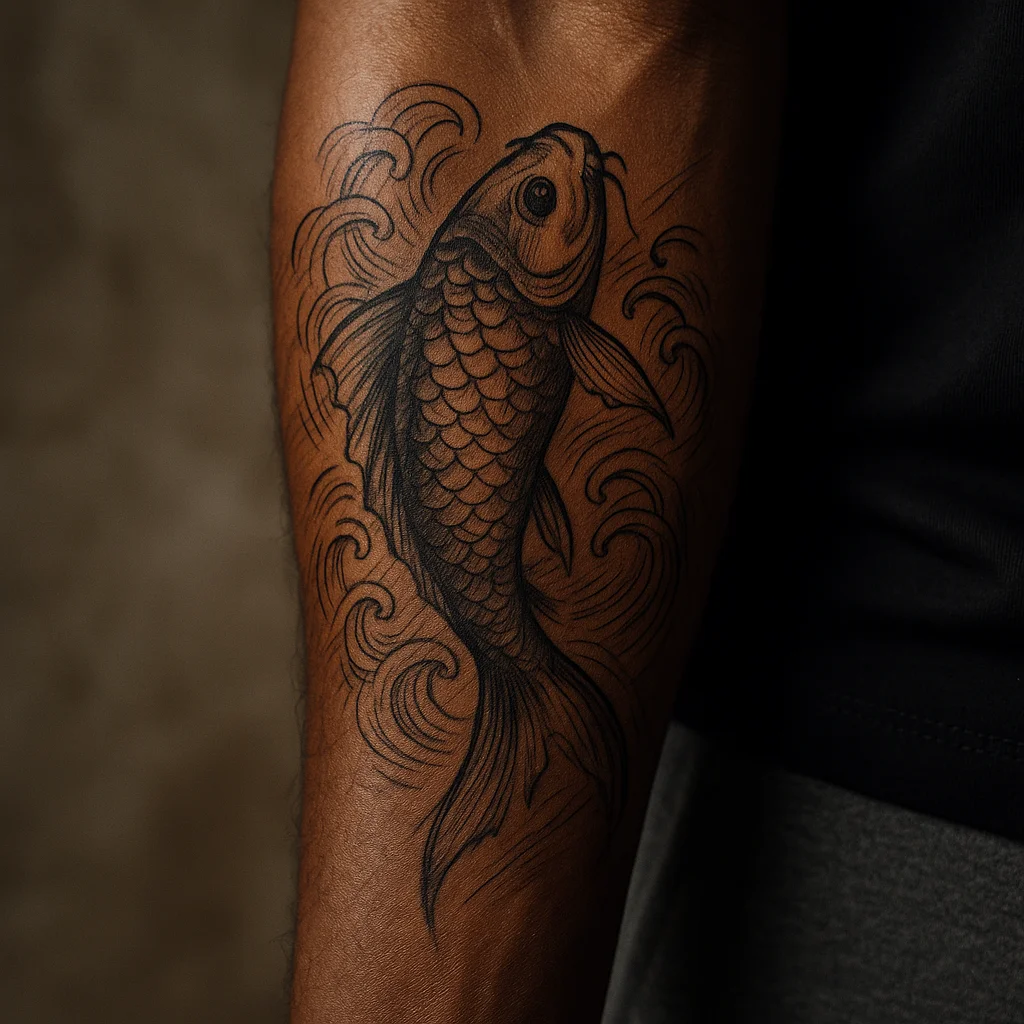
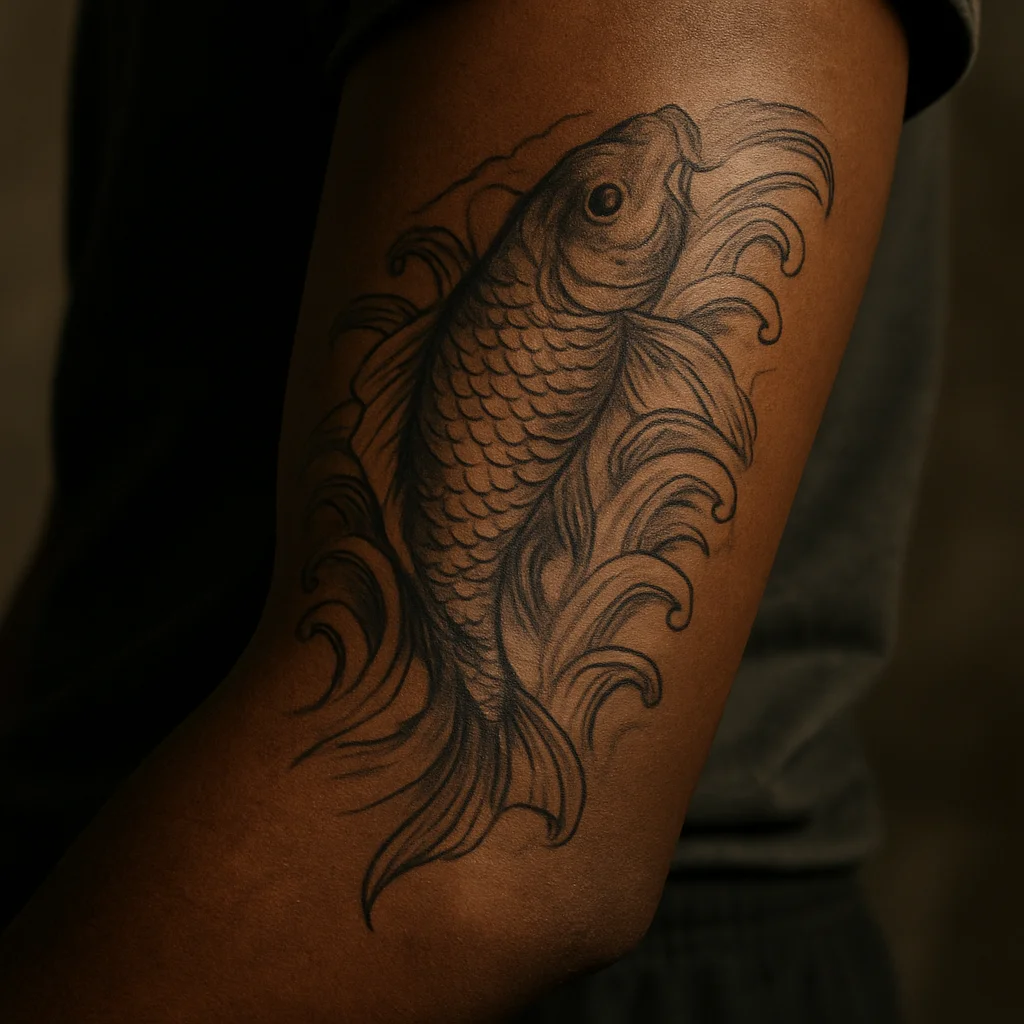
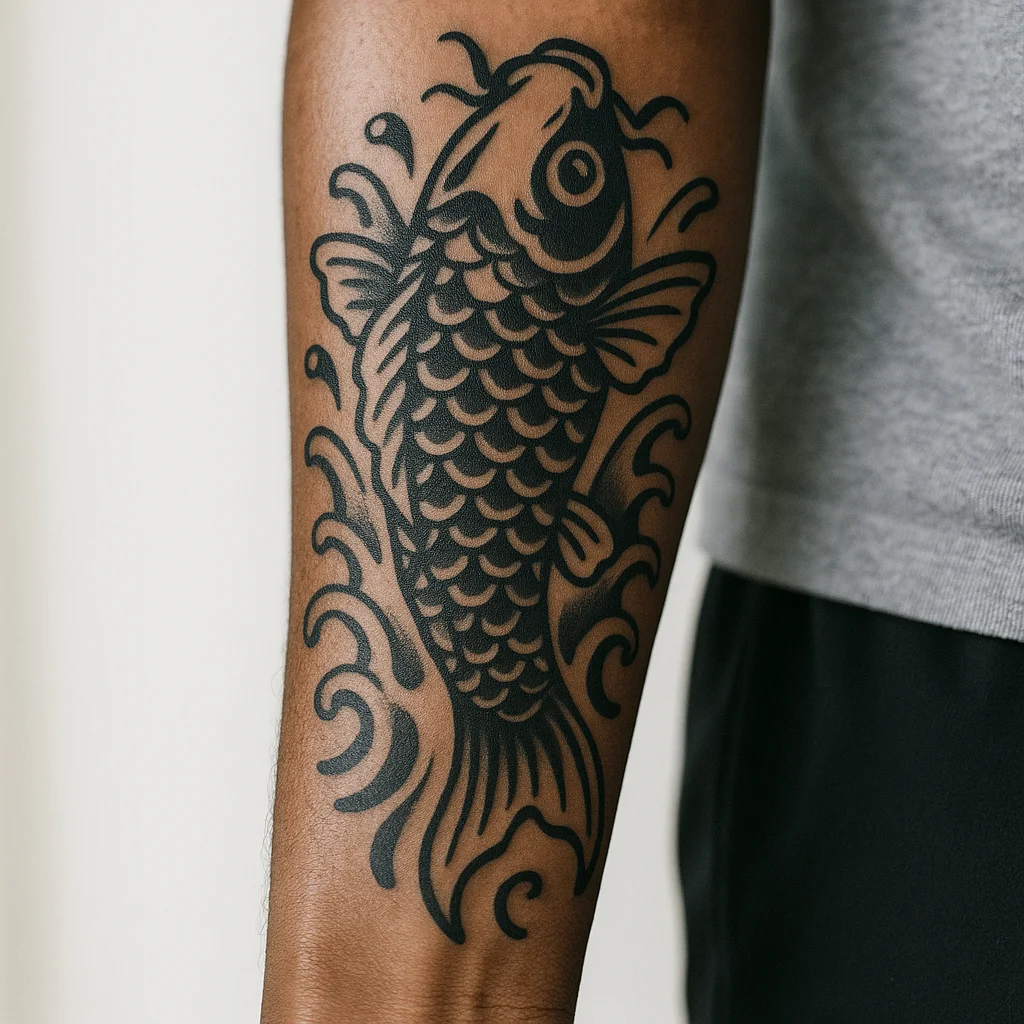
1. Koi ascending the outer forearm
A single koi with its head near the elbow and tail flicking toward the wrist, set in Japanese finger waves that fill the negative space. The upward direction reads as struggle and persistence, and the waves give the artist room to shade the taper naturally. Plan on 20 to 25 cm tall and multiple sessions if you want colour.
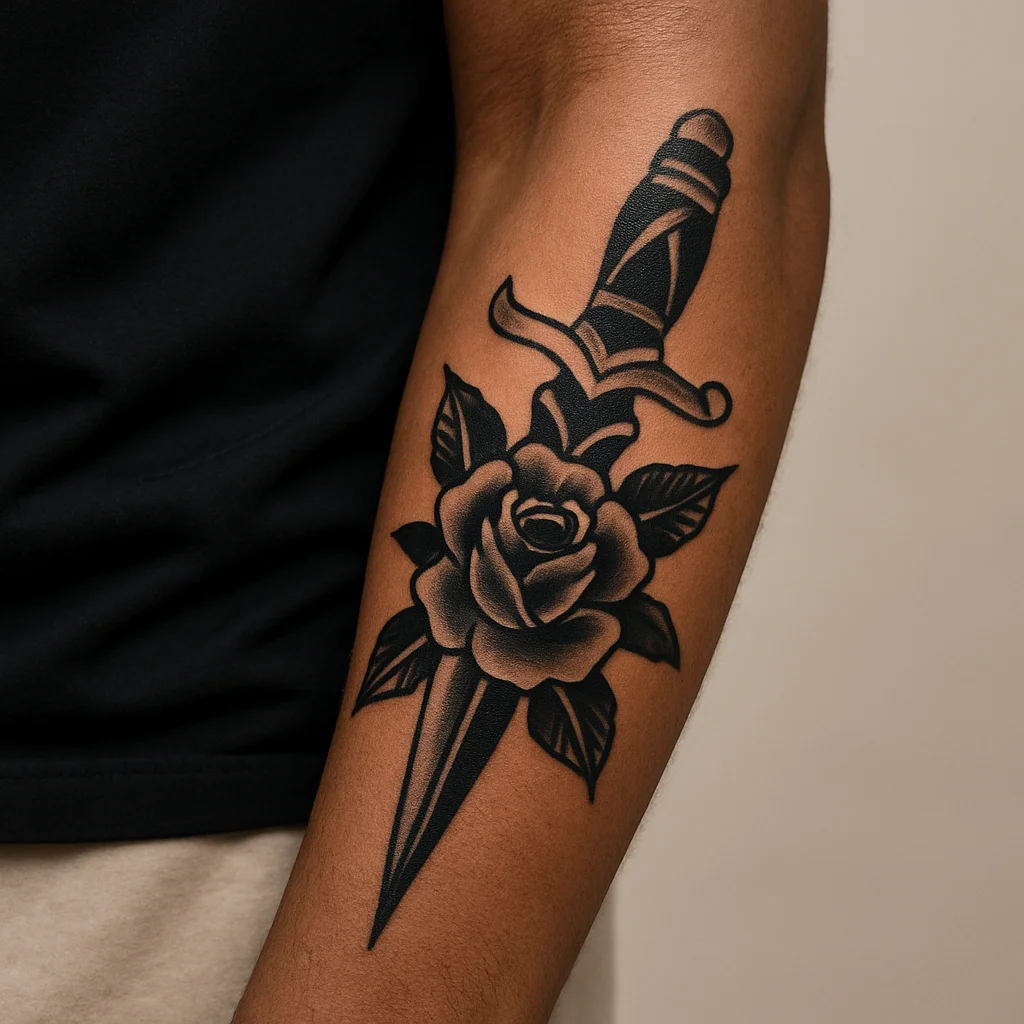
2. Traditional dagger down the inner forearm
Point toward the wrist, handle just below the elbow crease, with a thin banner or a rose crossing the blade. It is the cleanest use of a narrow vertical space in the traditional playbook, and the bold outline holds up for decades. Works especially well at 15 to 18 cm on a slimmer arm.
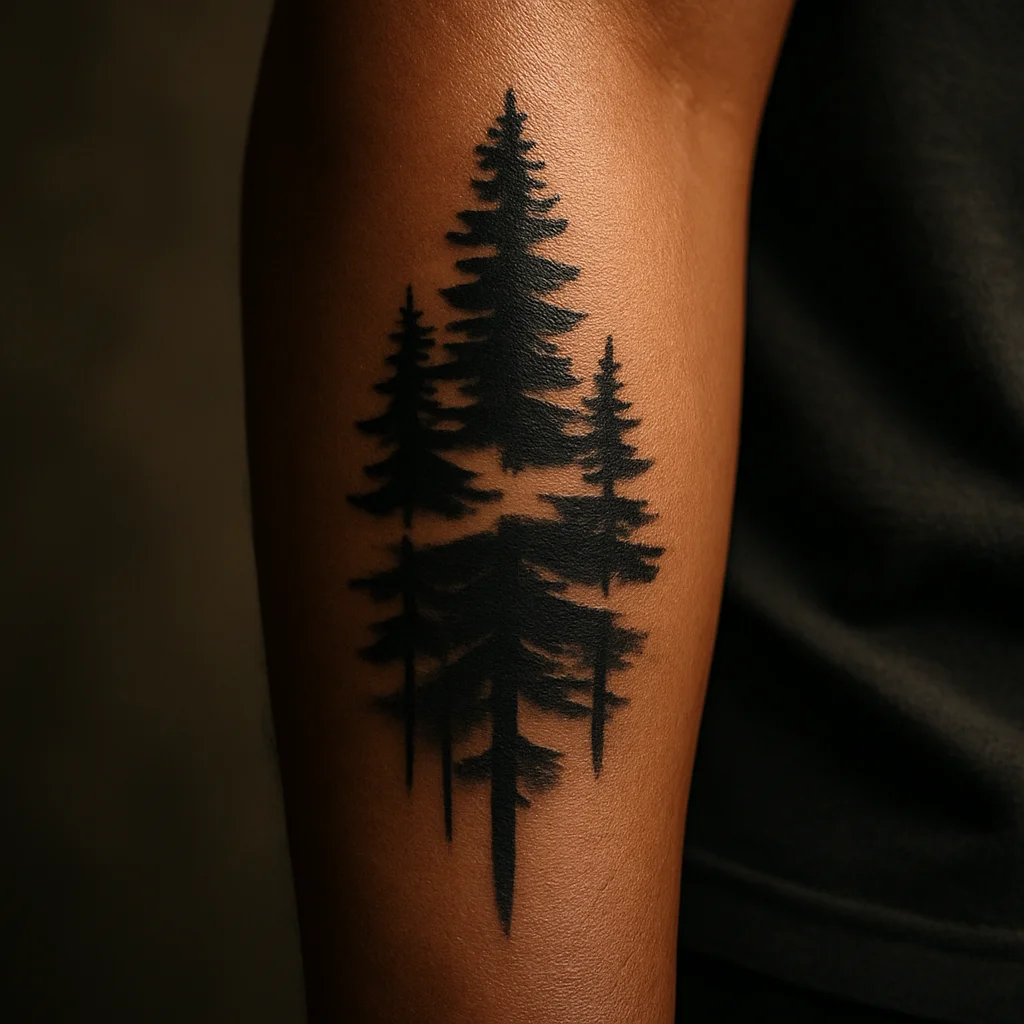
3. Pine treeline with negative-space mist
A column of blackwork conifers with horizontal gaps of untouched skin cutting through them like fog. The trick is asymmetry, taller trees near the elbow, thinning to a couple of small ones at the wrist. Reads instantly from across a room and needs no colour.
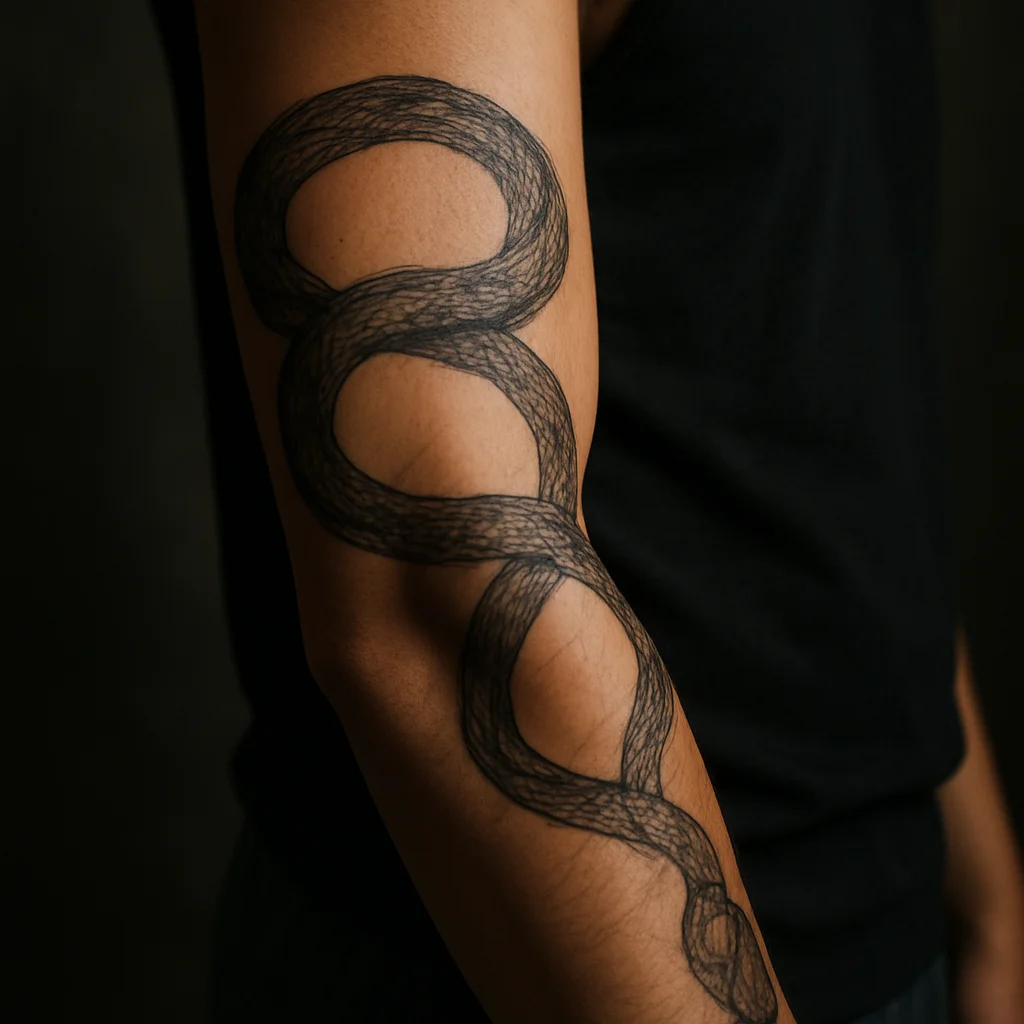
4. Snake spiralling elbow to wrist
The body loops around the forearm two or three times so parts vanish and reappear as you turn your arm, head resting on the outer wrist. It is one of the few motifs that genuinely improves when it wraps, and it suits both traditional and illustrative treatment. If you want the symbolism side of it, our snake tattoo guide covers the range.
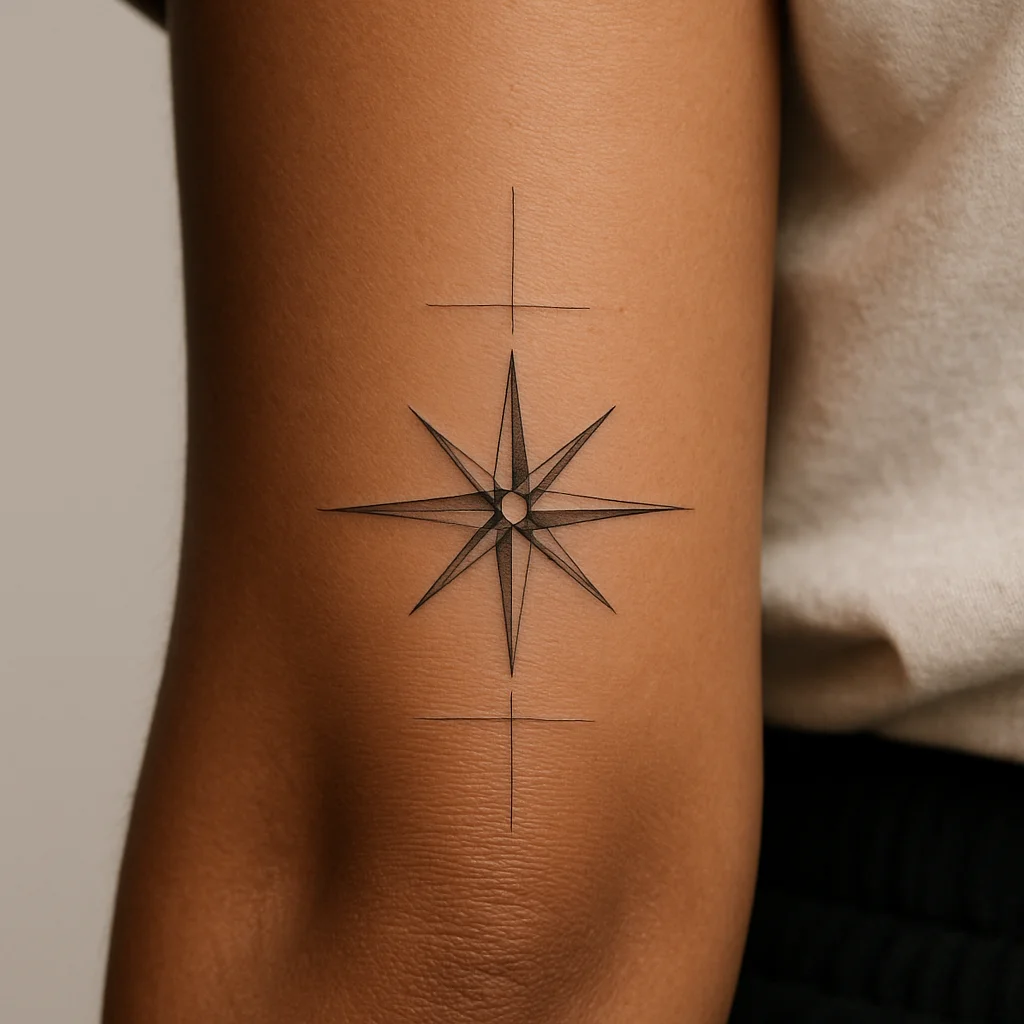
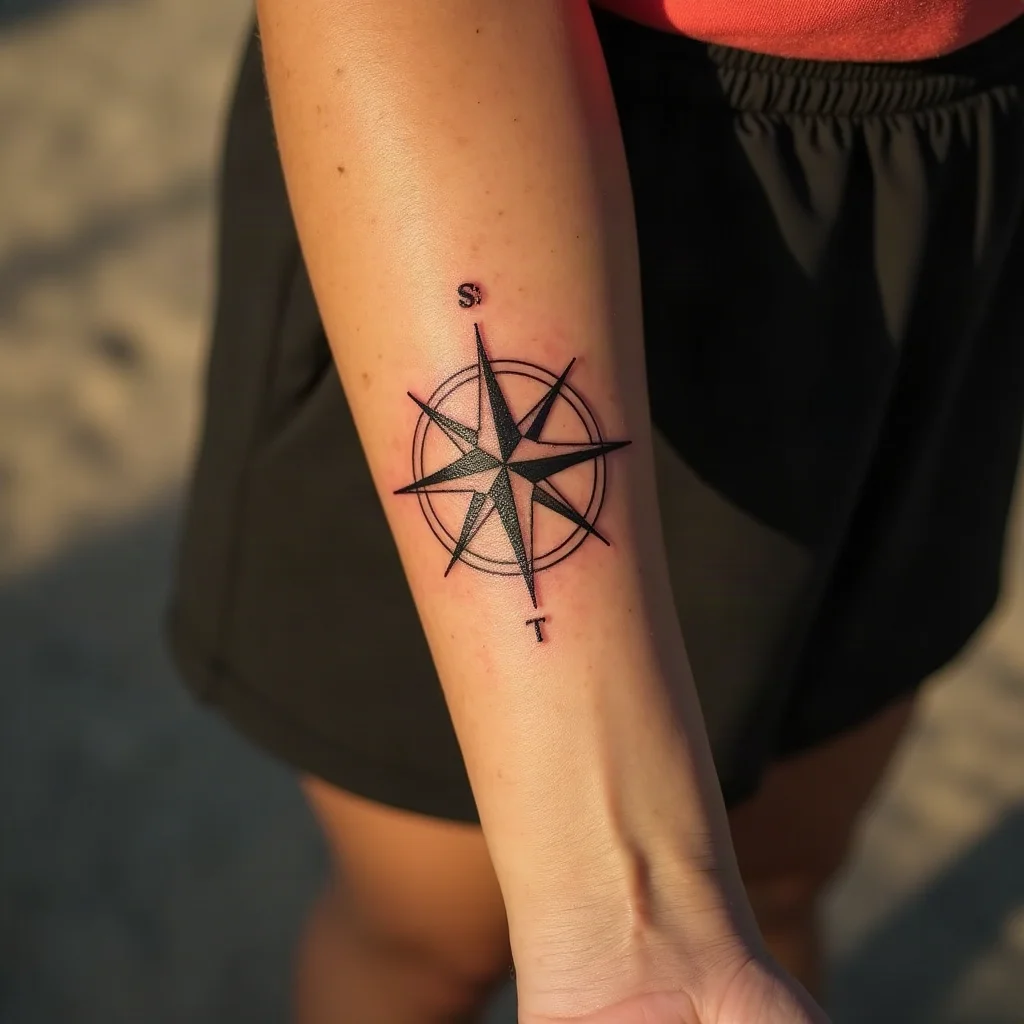
5. Fine-line compass with latitude lines
A thin compass rose at the centre of the inner forearm with faint parallel latitude rules running toward elbow and wrist. Keep it single-needle but not hair-thin, and skip micro text inside the dial, it closes up within a few years. A quiet choice at 10 to 14 cm.
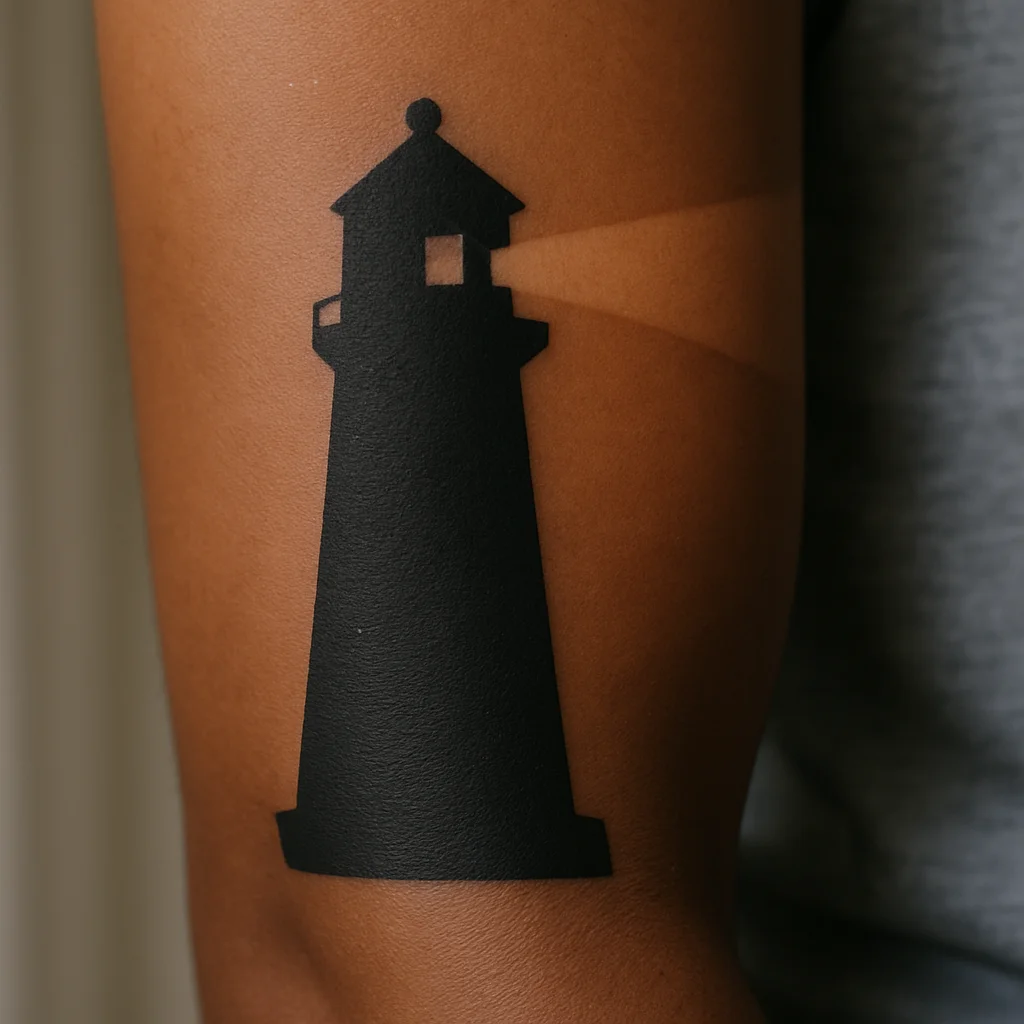
6. Blackwork lighthouse with a cut-out beam
Solid black tower on the outer forearm with the light rendered as a wedge of bare skin slicing across the fill. High contrast, ages extremely well, and the vertical tower shape was made for this placement. Ask for the beam to widen toward the elbow so it does not collide with the wrist taper.
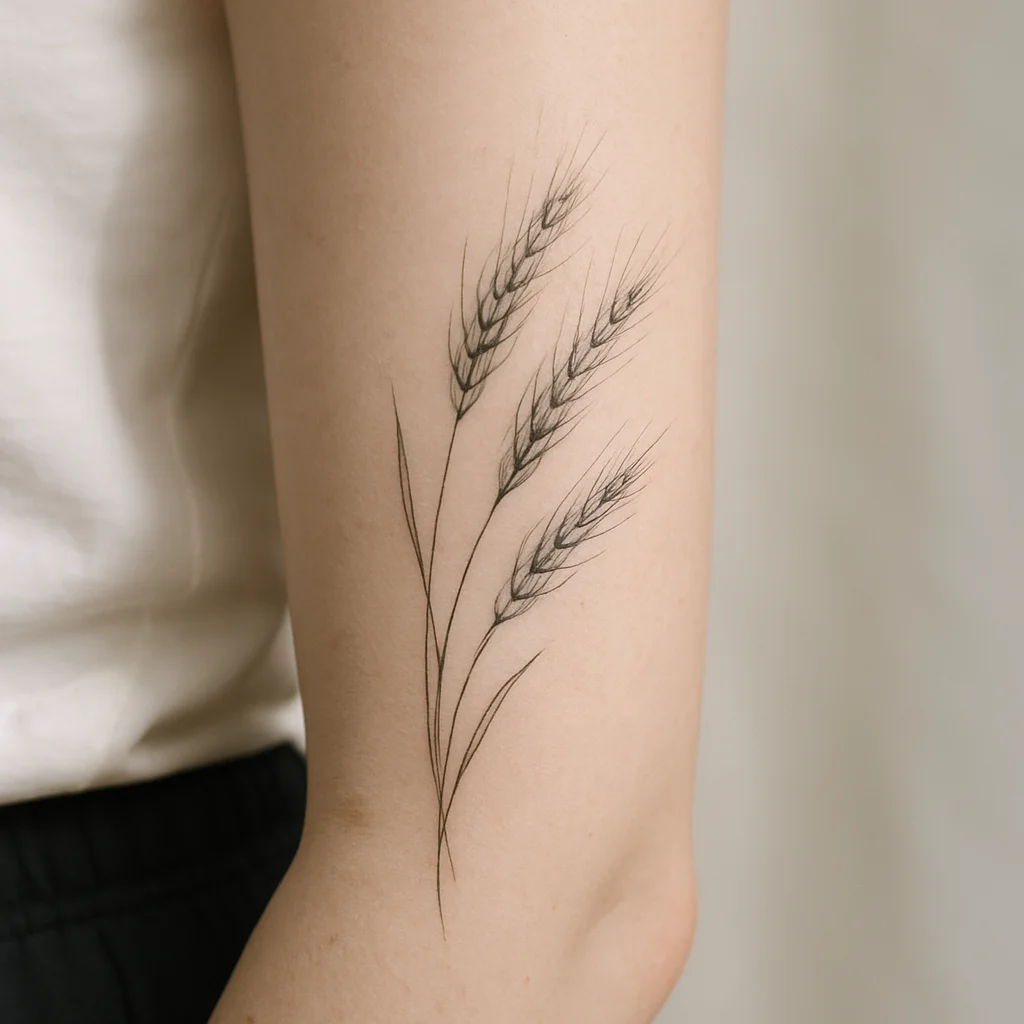
7. Wheat stalks along the inner forearm
Three stalks of wheat or barley bending slightly with the arm's curve, drawn in delicate but confident line weight. Understated, agricultural, and often chosen for family or hometown reasons. At 12 to 16 cm it stays subtle enough for conservative workplaces when sleeves are down.
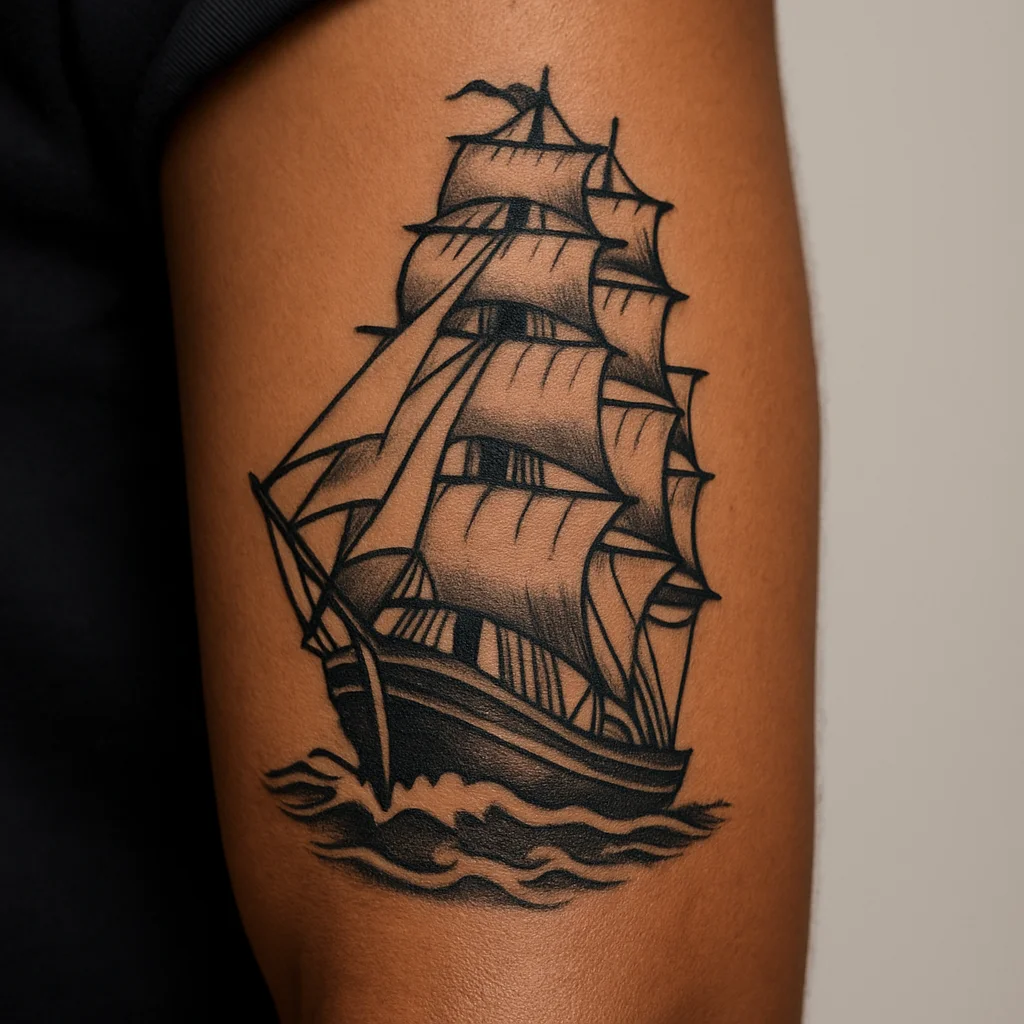
8. Ship under full sail, traditional style
Hull low near the wrist, masts reaching for the elbow, water breaking around the base. Bold outlines and limited colour keep it legible at arm's length, and the mast structure fills the narrowing lower forearm without crowding. A classic that never looks dated because it was never trendy.
Bands and wraps that circle the arm
Bands solve a specific problem: you want something visible and deliberate without committing a whole panel. They also set a clean edge for a future sleeve. Get the height right, anything under 2 cm can read as a mistake, anything over 8 cm starts behaving like a cuff.
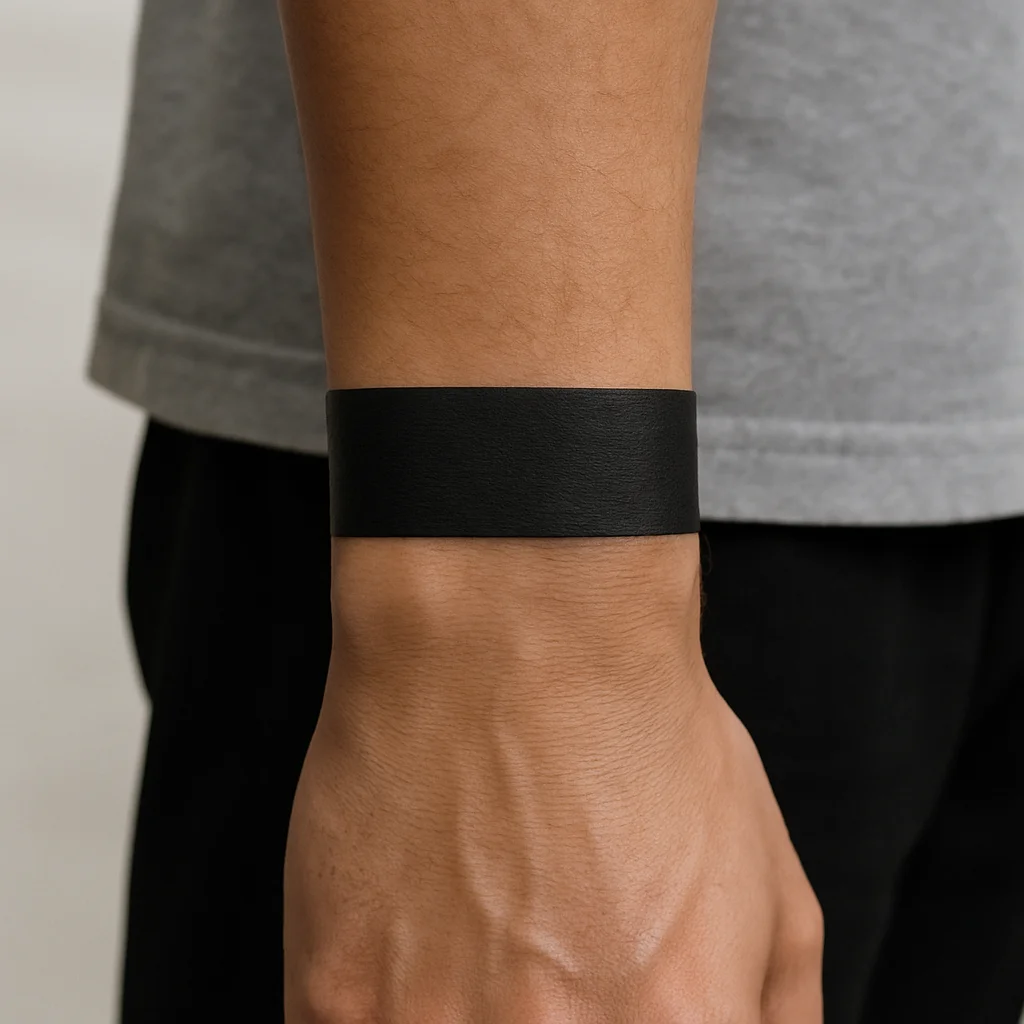
9. Solid blackwork band above the wrist
One clean stripe of saturated black, usually 3 to 5 cm tall, sitting two fingers up from the wrist bone. It is graphic, permanent-looking in the best way, and it hurts more than people expect because it crosses the inner wrist. Insist on seeing healed photos of the artist's solid black work first.
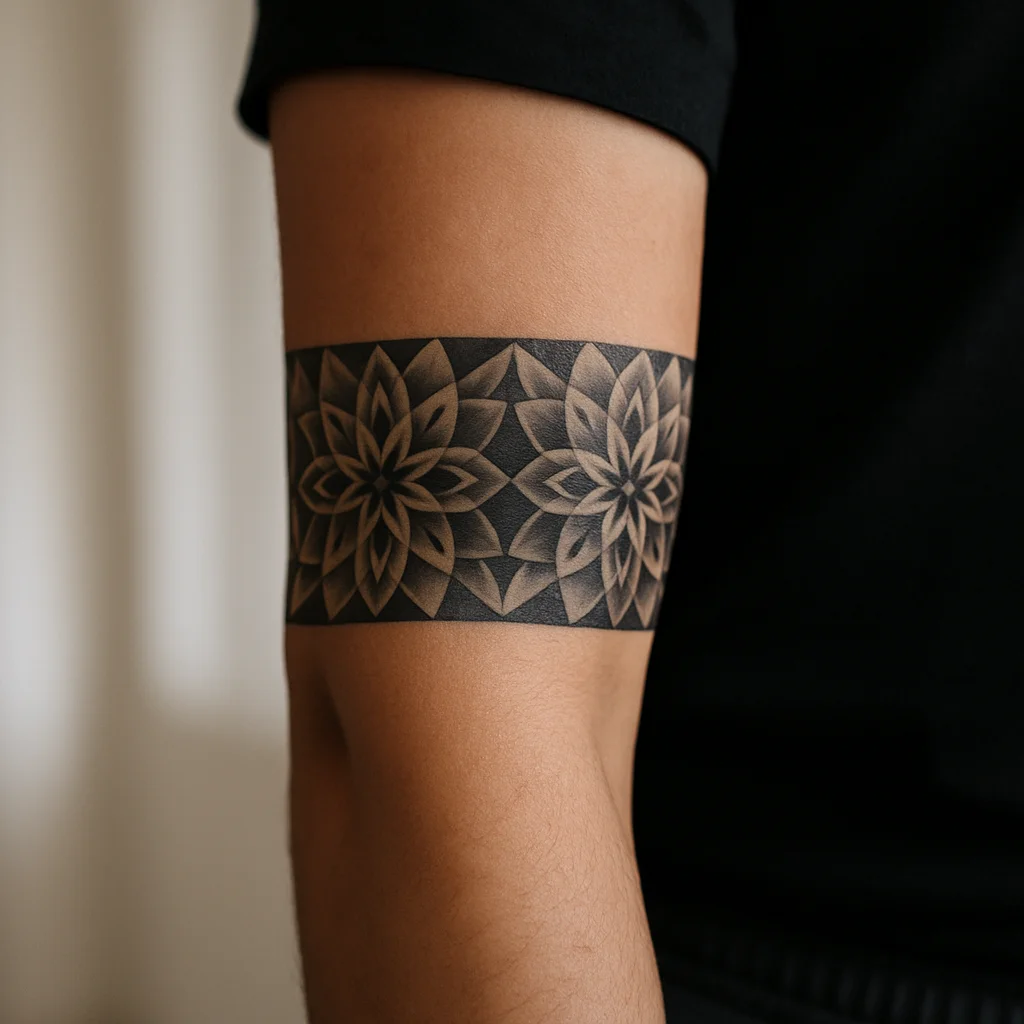
10. Geometric mandala band
A repeating geometric pattern that meets seamlessly at the underside of the arm. Precision is everything here, so bring reference and expect the artist to draw it on freehand or with a custom stencil wrap. Dotwork shading inside the pattern adds depth without extra width.
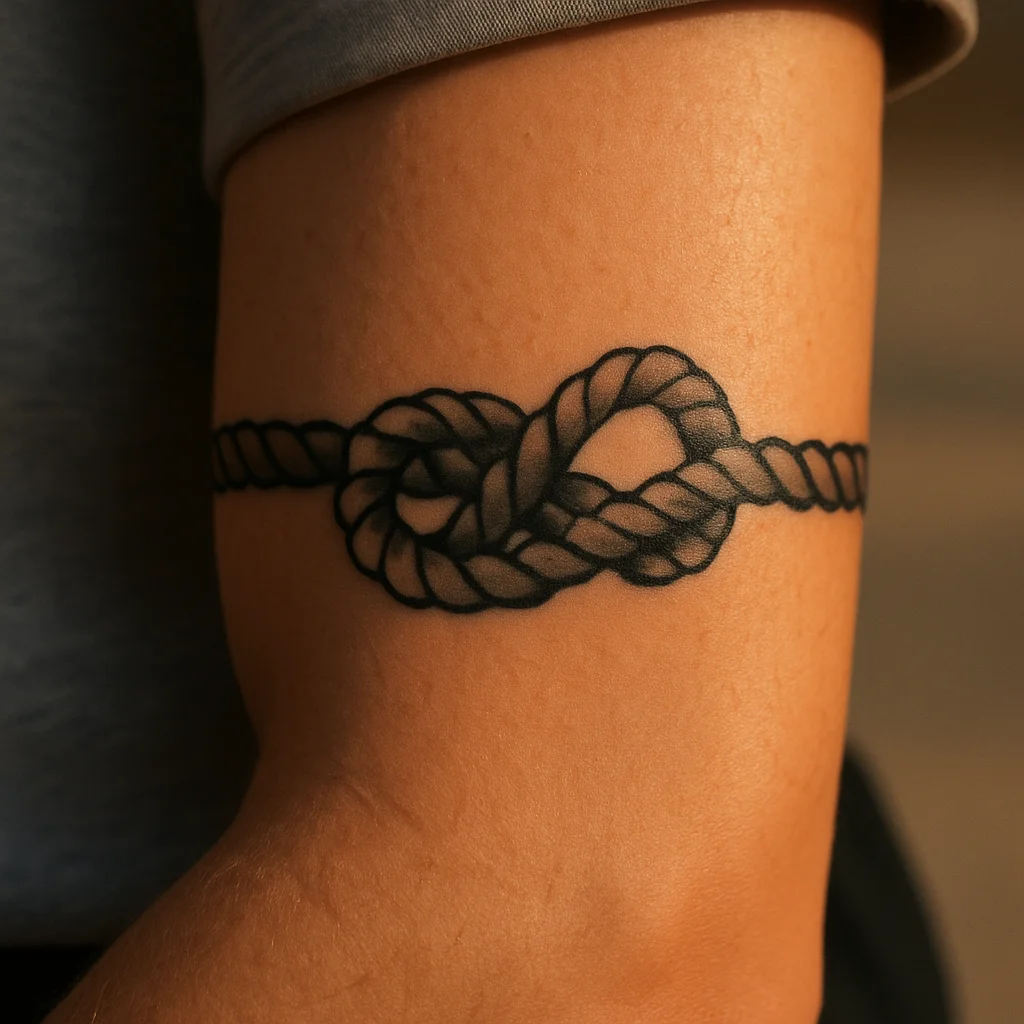
11. Rope and knot band
A twisted rope circling the forearm with a single figure-eight knot facing outward. Traditional shading makes the rope feel three-dimensional as it disappears around the arm. Suits anyone with a maritime, climbing or rigging connection, and it stays legible small.
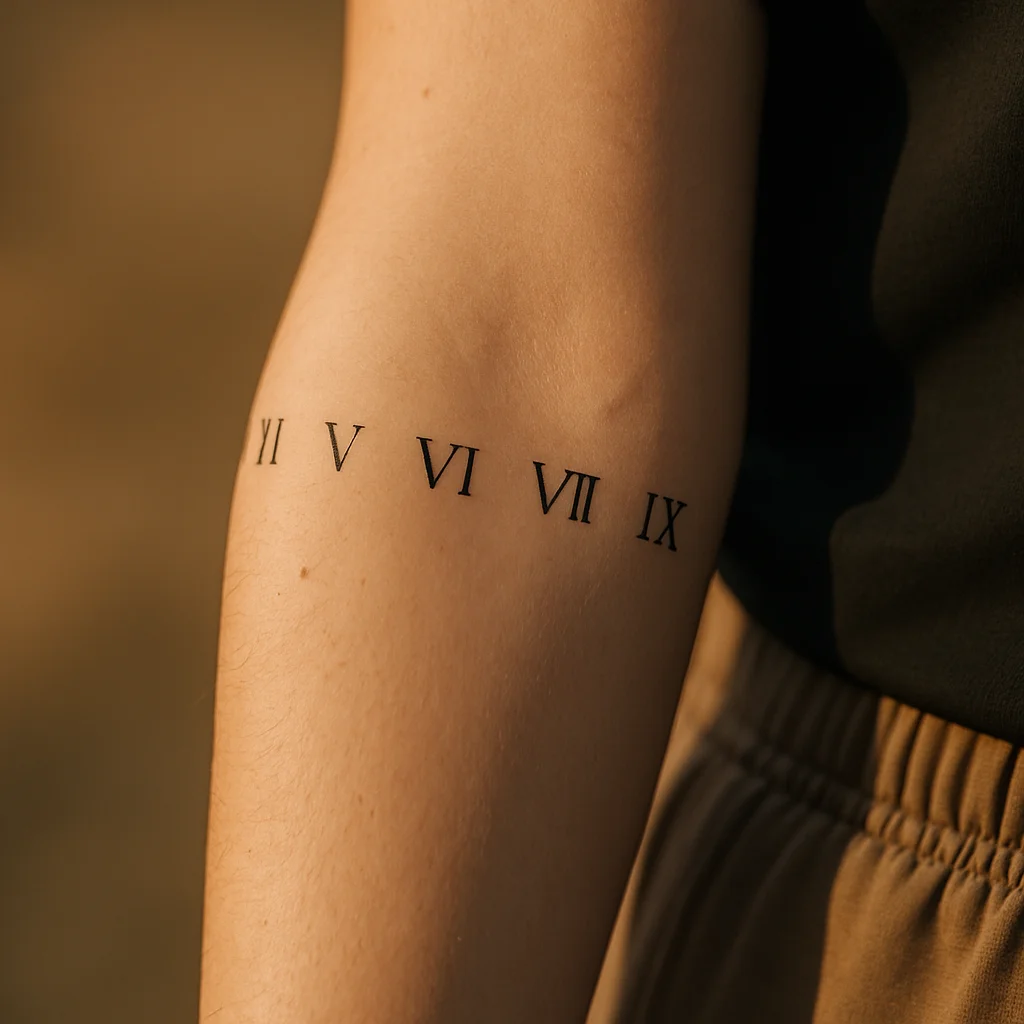
12. Roman numeral date band
Numerals spaced evenly around the circumference so no single view shows the whole date, which is exactly the appeal for some men. Keep letter height at 1.5 cm or more and avoid serif fonts that thin out to nothing. A discreet way to carry a birth or memorial date.
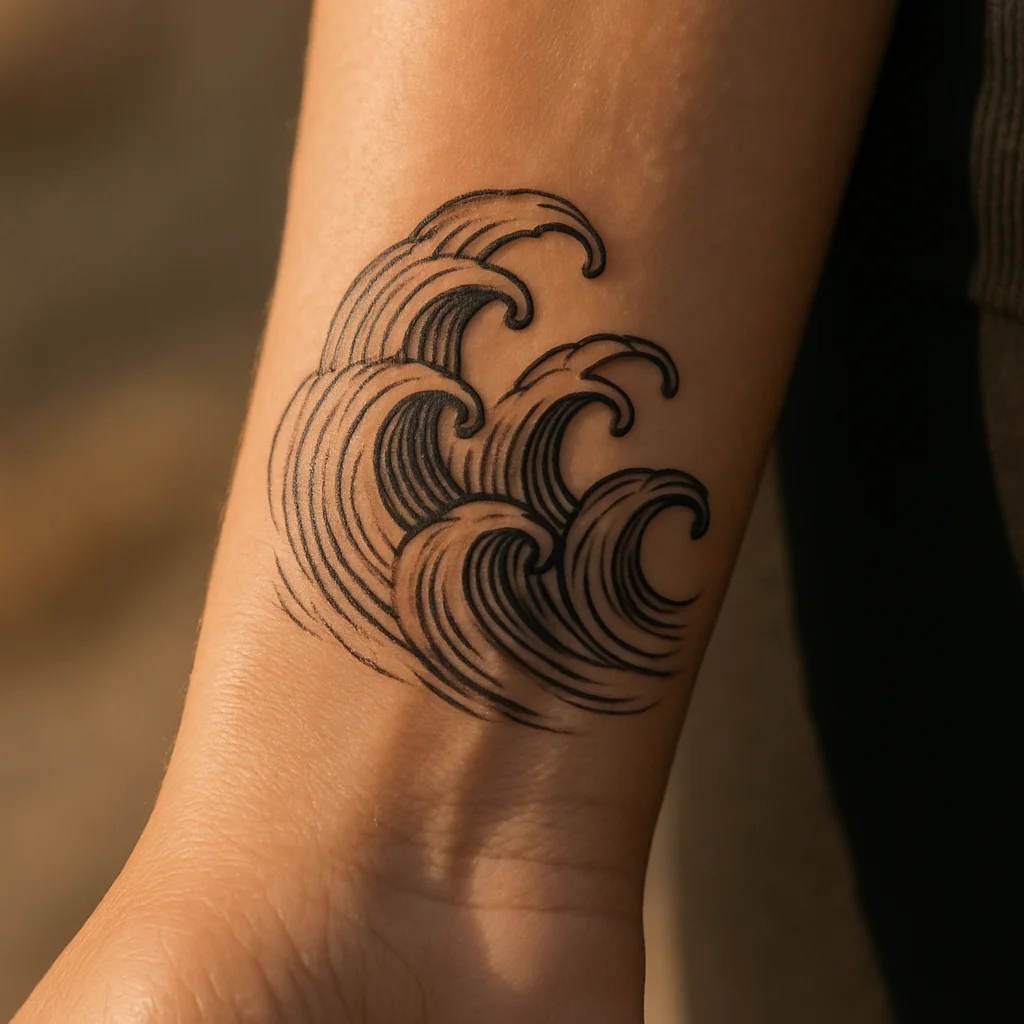
13. Japanese wave band at the wrist
Stylised finger waves with curling crests, wrapping the lower forearm like water rising. This is the ideal cuff if you plan a Japanese sleeve later because it already speaks the same visual language. Around 6 to 8 cm tall gives the waves room to move.
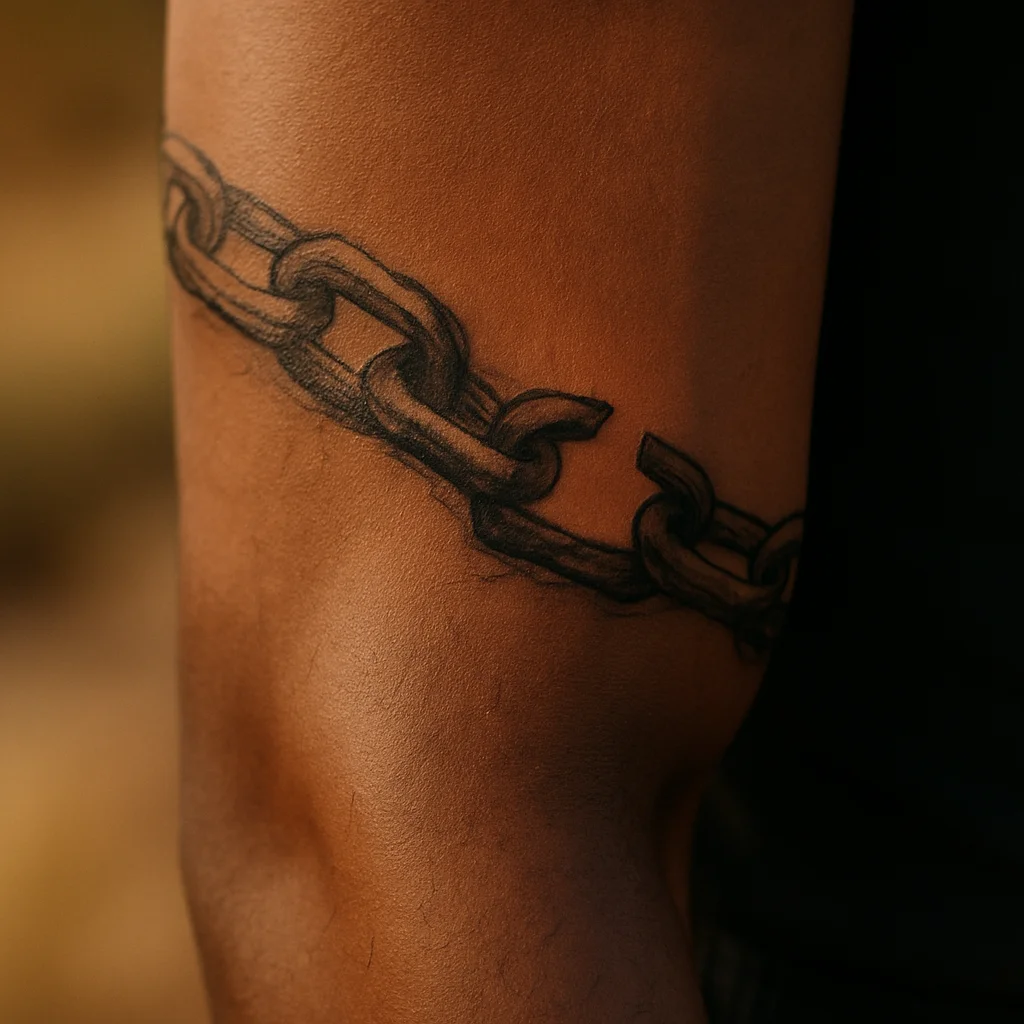
14. Chain link wrap
Heavy realistic links circling the forearm, with one link broken or open on the outer face. The broken-link detail carries obvious meaning and gives the eye somewhere to land. Needs strong shading to avoid looking flat, so budget for a longer session.
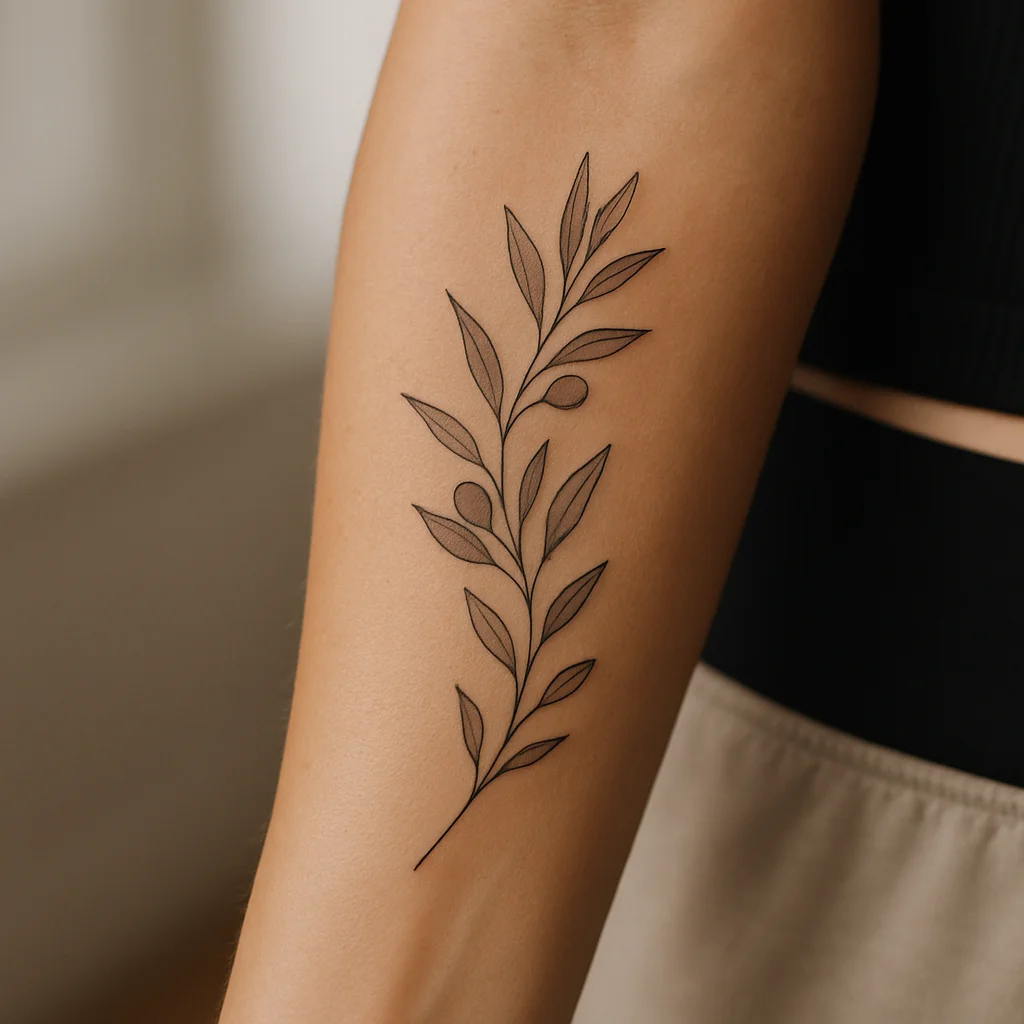
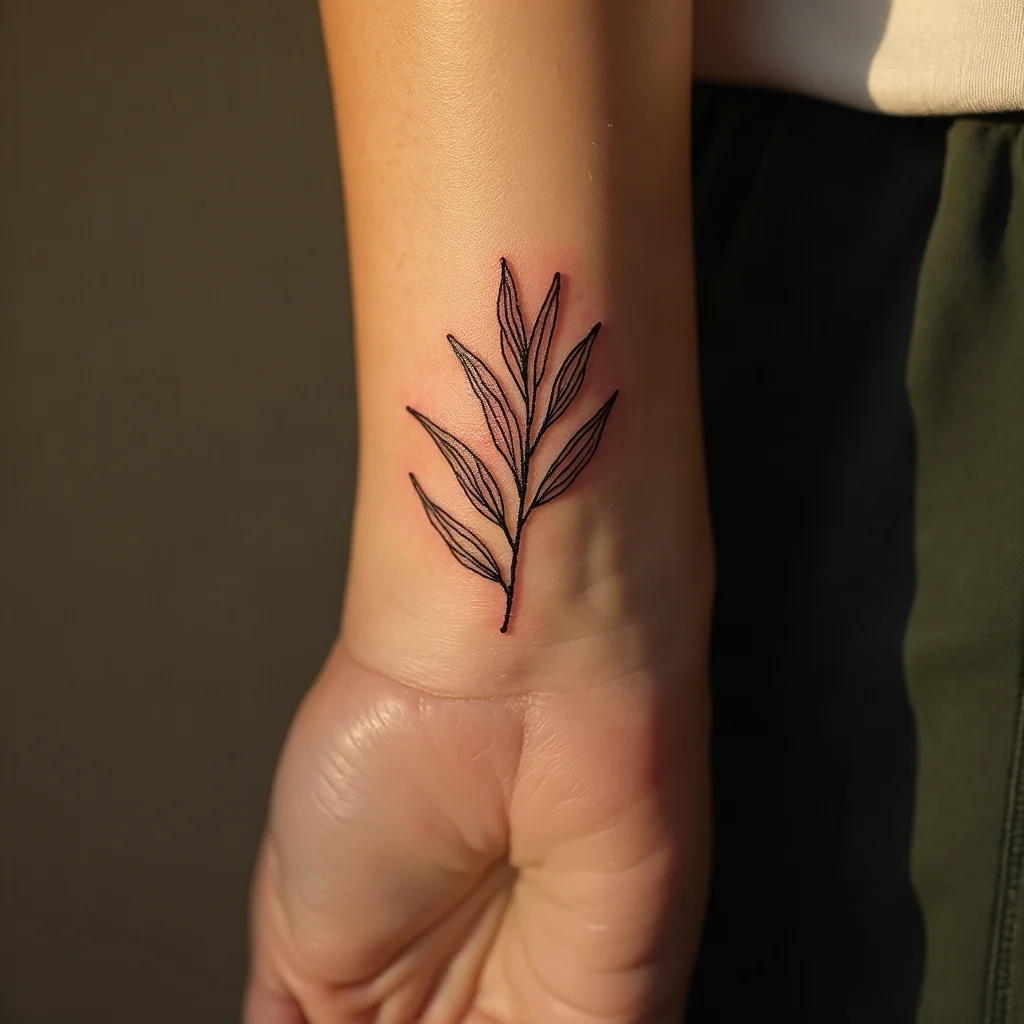
15. Olive branch wrap
A single branch spiralling loosely from inner wrist up to the outer forearm, leaves alternating around the arm. Softer than a hard band and easier to extend later. Fine-line works, but medium line weight holds its shape better over ten years.
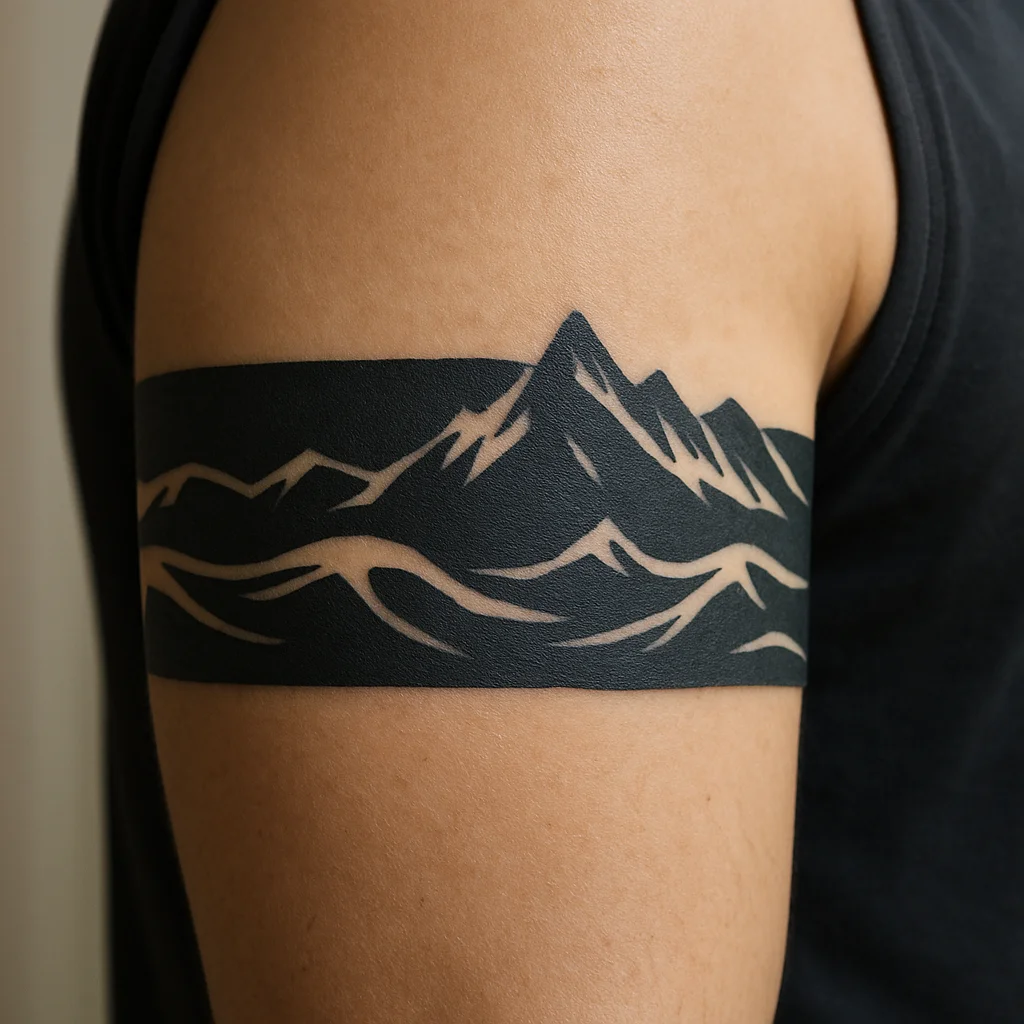
16. Patterned band with personal motifs
A wide graphic band built from repeated shapes that mean something to you, waves, tools, mountains, whatever your story is. If you are drawn to Polynesian or other Indigenous styles, talk to an artist who works within that tradition and can advise on what is appropriate to wear. Custom pattern work is the difference between a band and a placeholder.
Compact motifs for one zone of the arm
Small does not mean timid on the forearm. A single well-drawn motif at 6 to 10 cm, placed with intent, often looks sharper than a half-finished panel. These sit in one zone and leave the rest of the arm open.
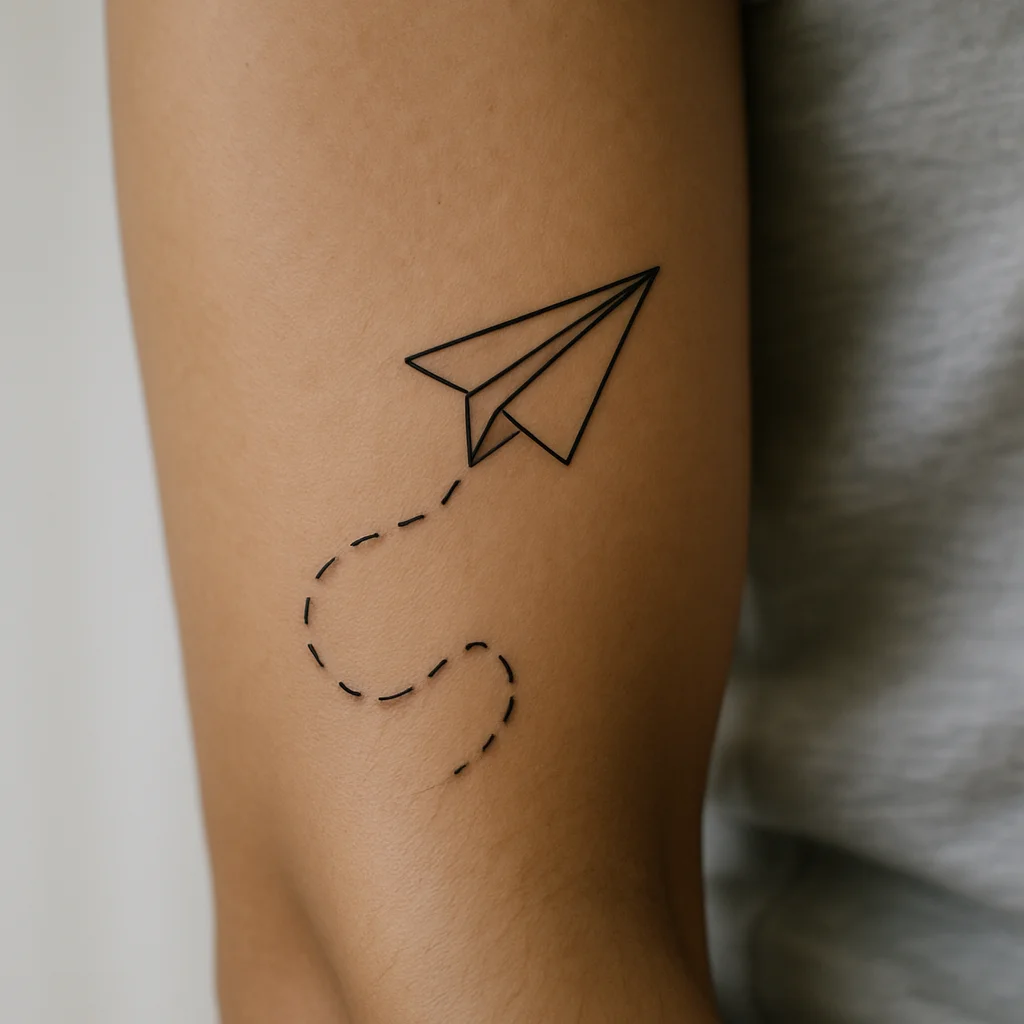
17. Paper plane with a dotted flight path
A small folded plane trailing a dashed arc that curves toward the wrist. Clean, quiet, and a common choice for anyone who moves for work or left home young. Keep the dashes chunky enough to survive healing.
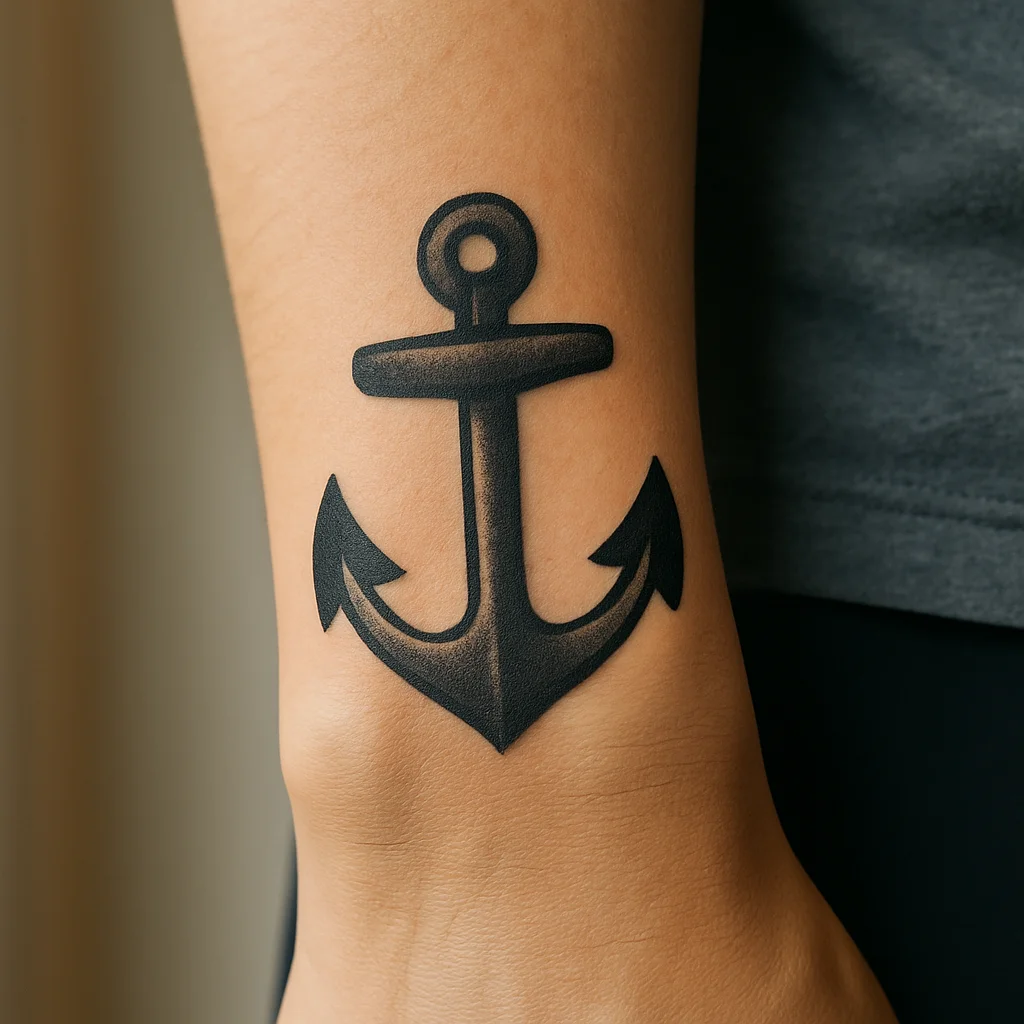
18. Traditional anchor near the wrist
Bold outline, minimal shading, sitting on the outer forearm a few centimetres above the wrist bone. It is small, cheap, fast and effectively indestructible as far as ageing goes. A genuinely good first tattoo at 6 to 8 cm.
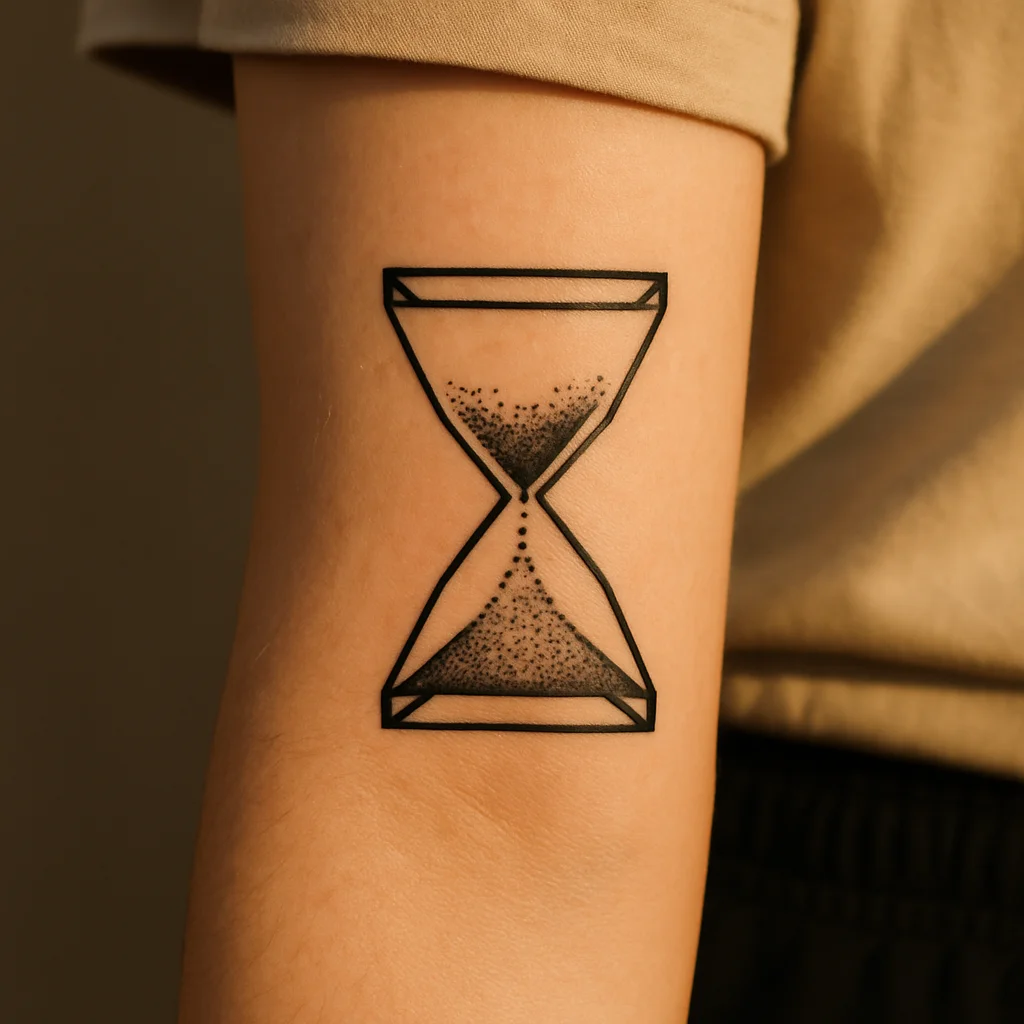
19. Geometric hourglass with dotted sand
Straight-edged frame with the falling sand rendered as loose dots gathering in the base. The shape mirrors the taper of the forearm, so it sits comfortably on the inner face. Around 8 cm tall keeps the dotwork readable.
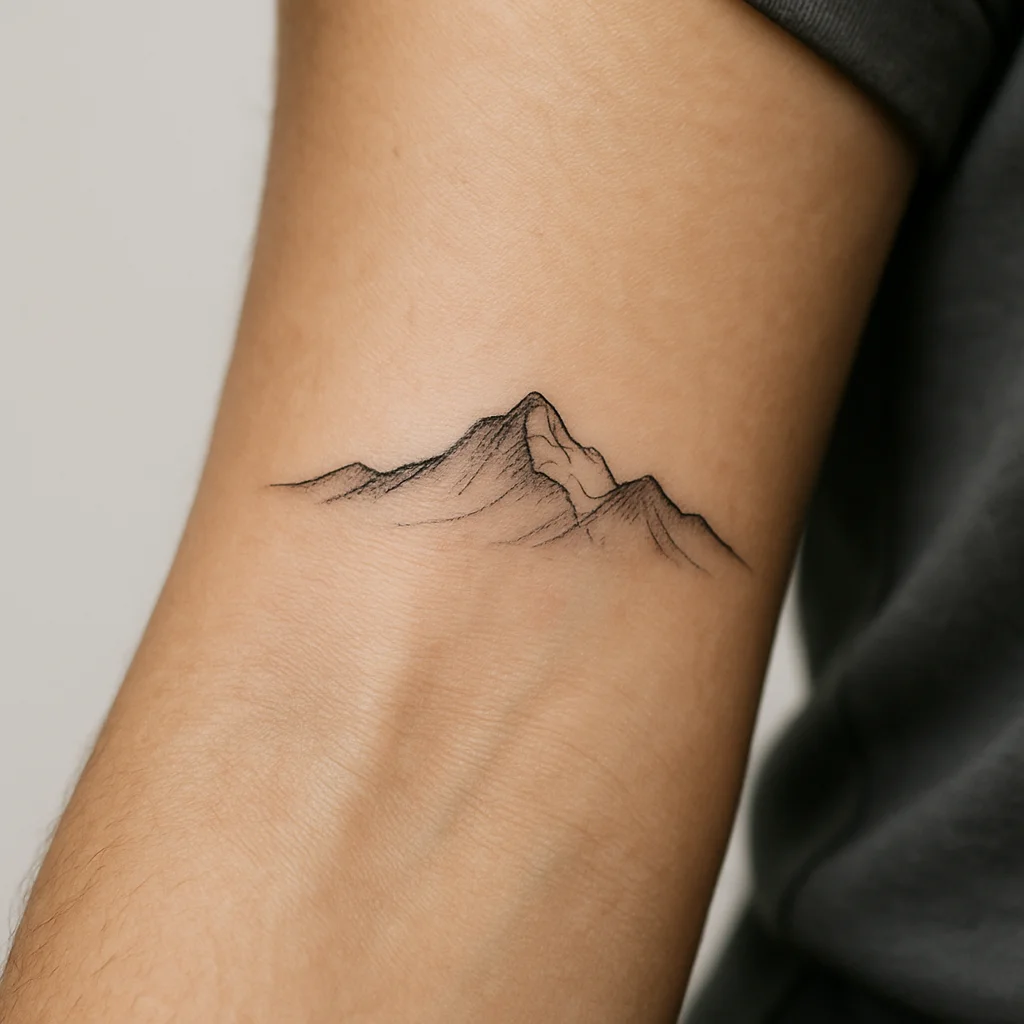
20. Single-needle mountain peak at the wrist
One ridge line with a thin snow break near the summit, tucked just below the wrist crease on the inner side. Tiny, personal, and quick, though this zone is tender and fades faster than the outer arm. Refresh expectations: a touch-up somewhere around the five-year mark is normal.
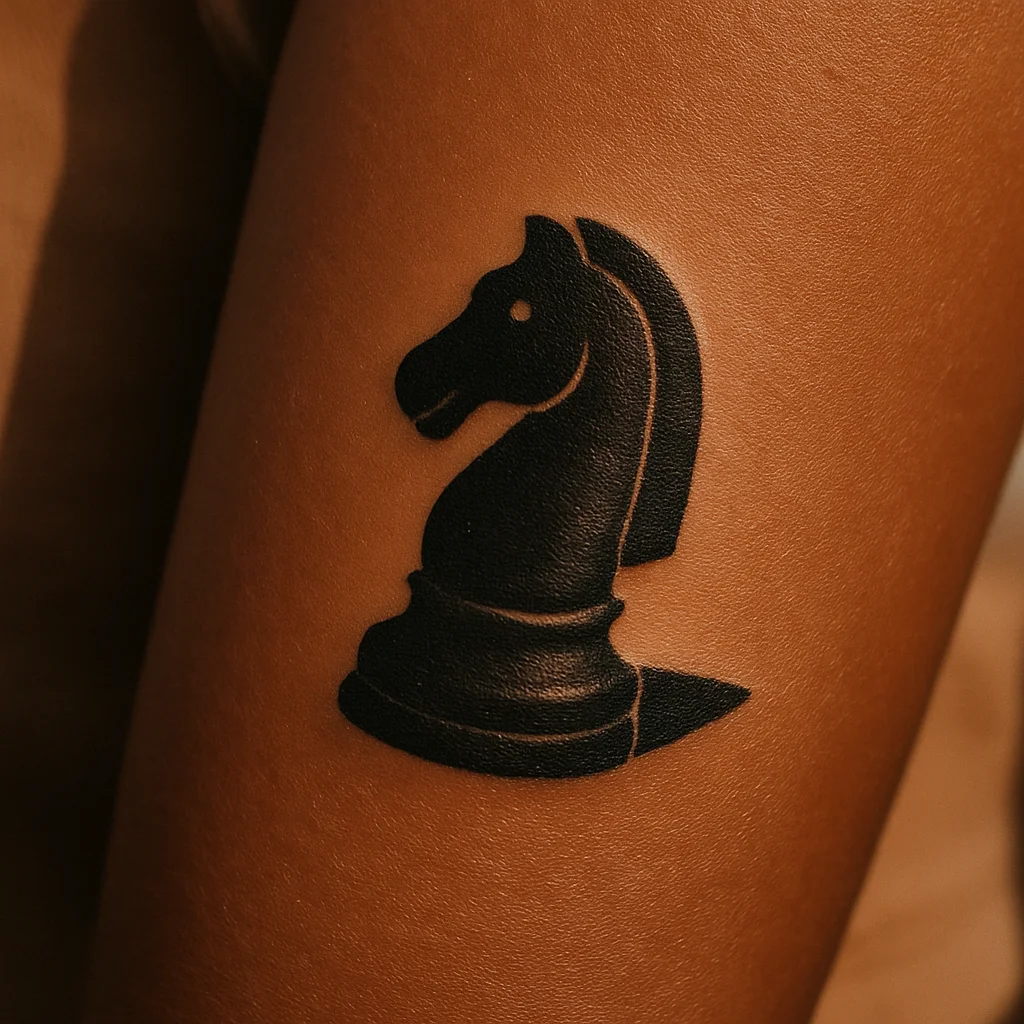
21. Micro chess knight
A blackwork knight with heavy solid shadow rather than fine detail, about 5 cm tall on the inner forearm. Strategy, patience, a nod to the game itself. Solid black beats delicate line here because it survives at small scale.
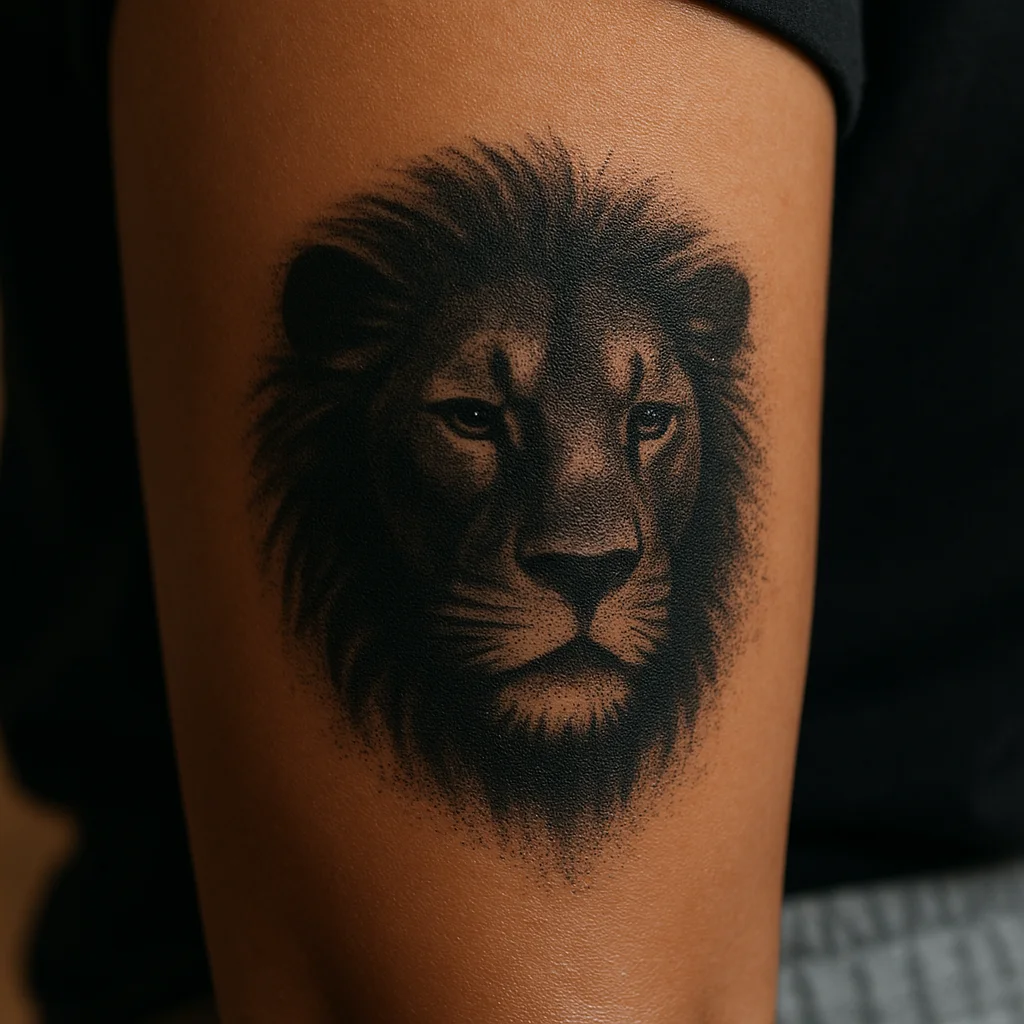
22. Dotwork lion head
Palm-sized lion built from stippled shading with almost no outline, mane fading into bare skin. It takes a specialist, and it takes time, but the result looks like an engraving rather than a sticker. Best on the flatter middle third of the outer forearm.
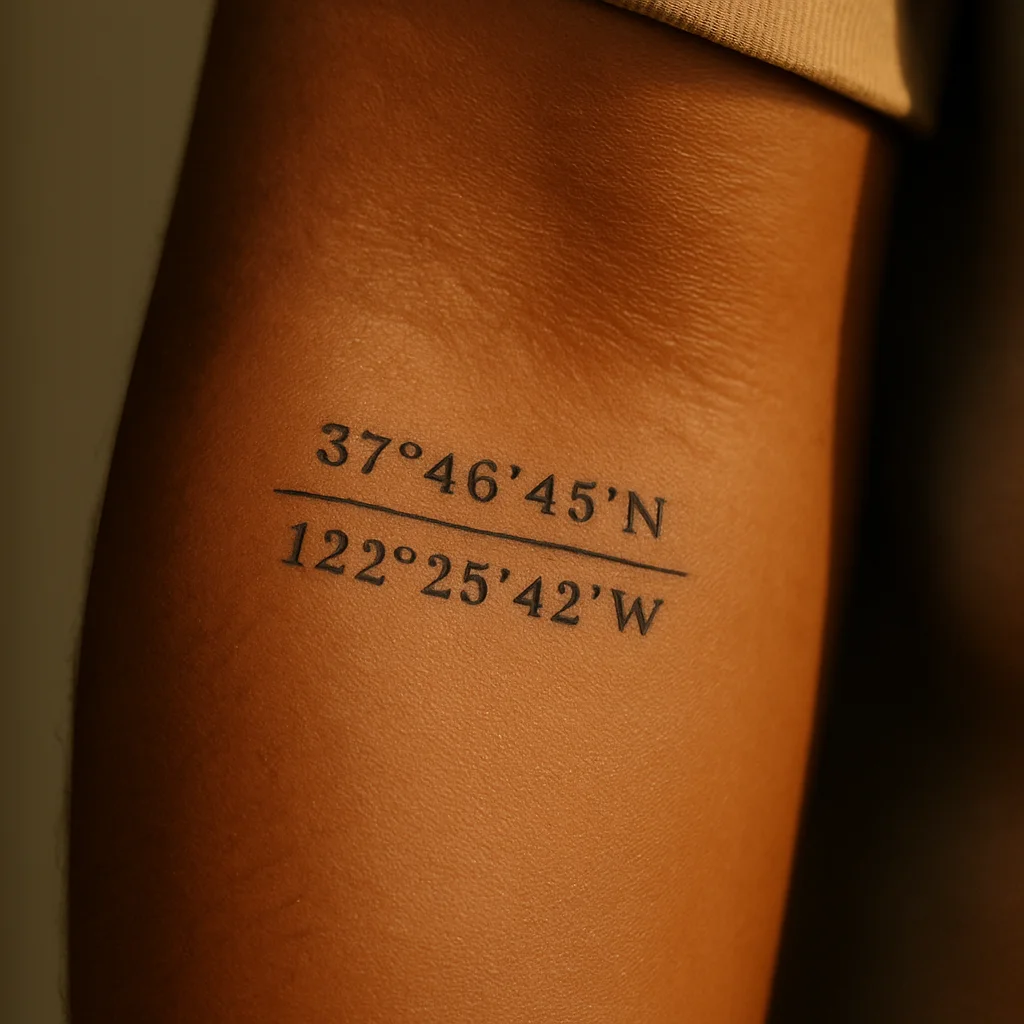
23. Coordinates with a single horizon line
Numbers in small caps sitting above a thin ruled line, marking a place that matters. Understated enough for a first piece and easy to add to later. Ask for at least 1.2 cm character height so the digits stay separate.
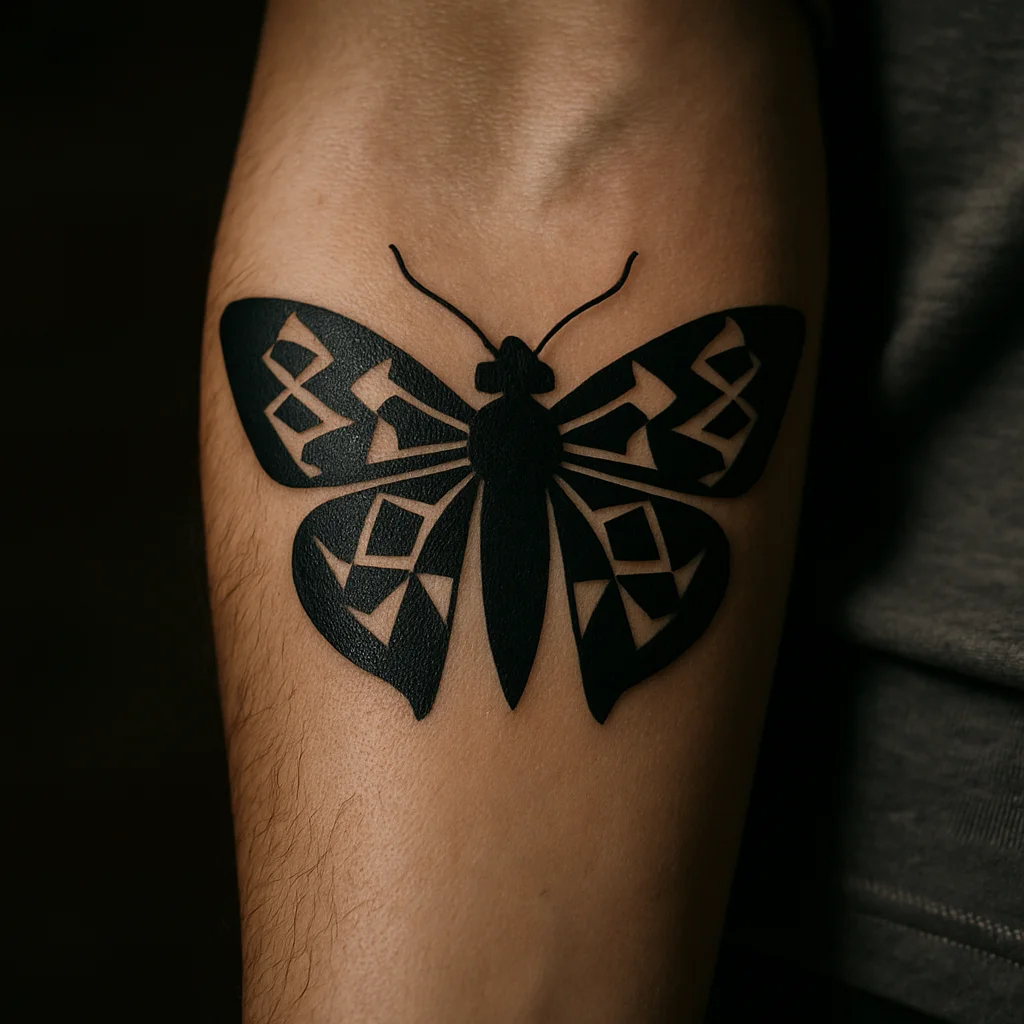
24. Blackwork moth with mapped wings
A symmetrical moth with geometric patterning inside the wings, wings spread across the width of the inner forearm. Moths read as transformation without the overused butterfly baggage. Sizing at 8 to 10 cm wide fits most arms without crowding the edges.
Full-panel statements for the whole forearm
These fill one face of the arm from elbow to wrist and behave like half a sleeve. Expect two to four sessions, real money, and a design conversation that starts with your arm rather than a saved photo.
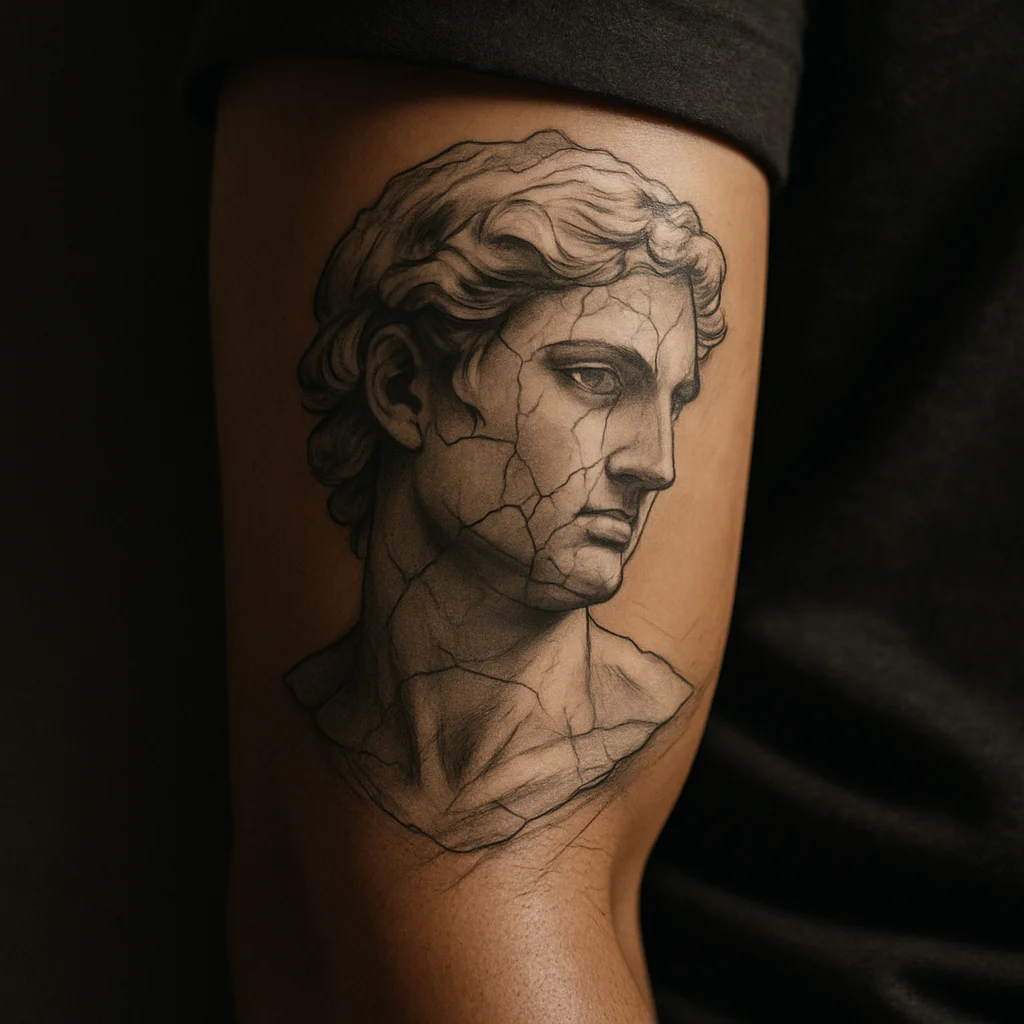
25. Greek statue portrait on the inner forearm
A cracked marble bust in smooth greywash, cropped so the shoulder line meets the elbow crease and the gaze angles toward the wrist. The inner forearm's flat, pale surface is the best real estate on the body for soft grey shading. Sun protection is non-negotiable if you want the mid-tones to survive.
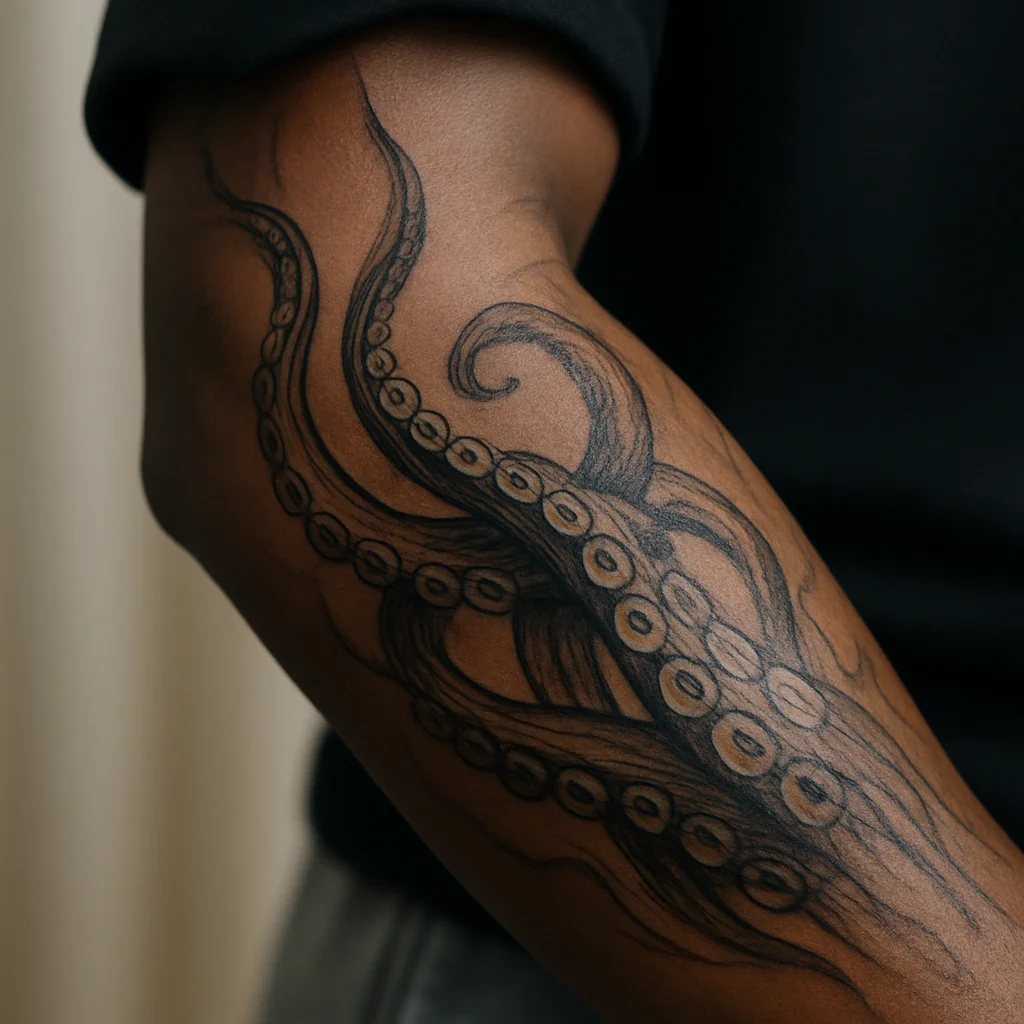
26. Kraken tentacles gripping the arm
Suckered arms wrapping from the underside up over the outer forearm, with one tentacle curling toward the wrist. The wrap makes the arm itself part of the illustration, and the design naturally accommodates the taper. Bold black with heavy shadow ages far better than fine detail here.
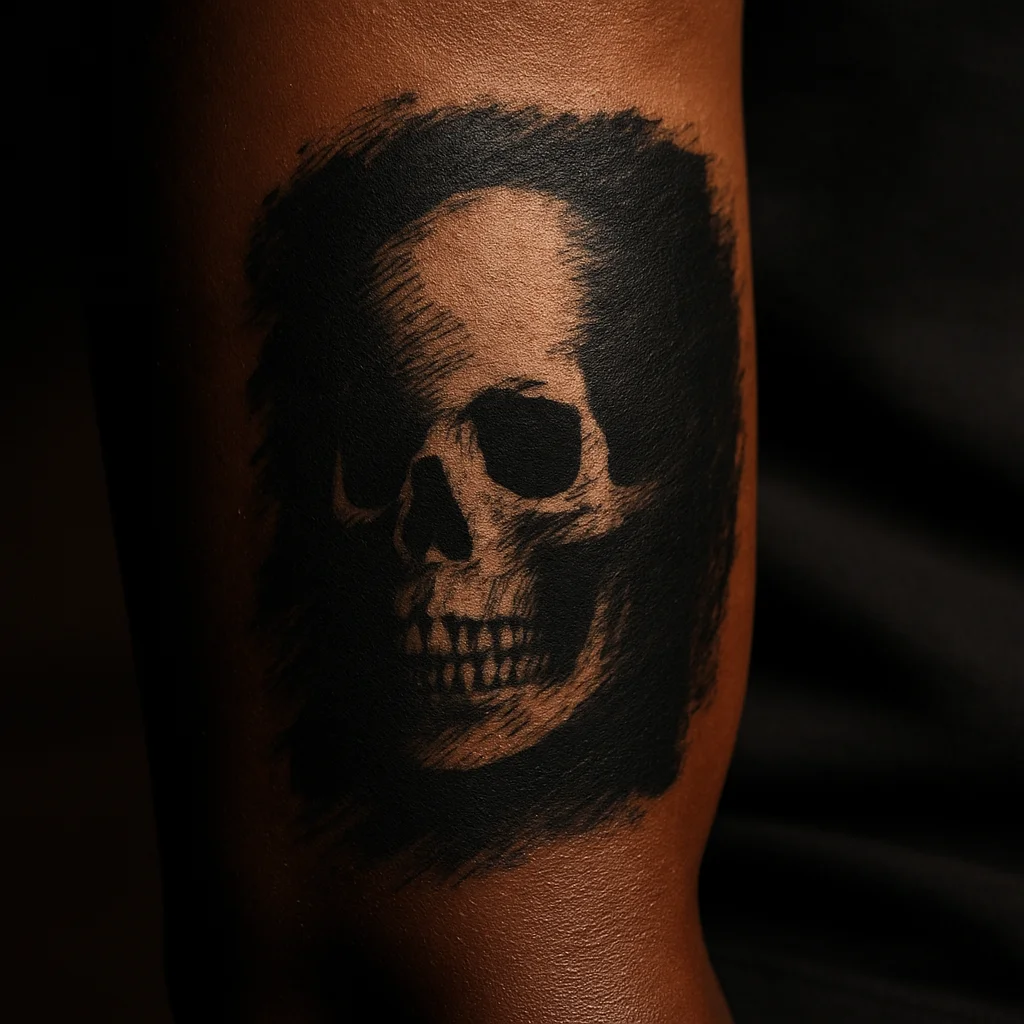
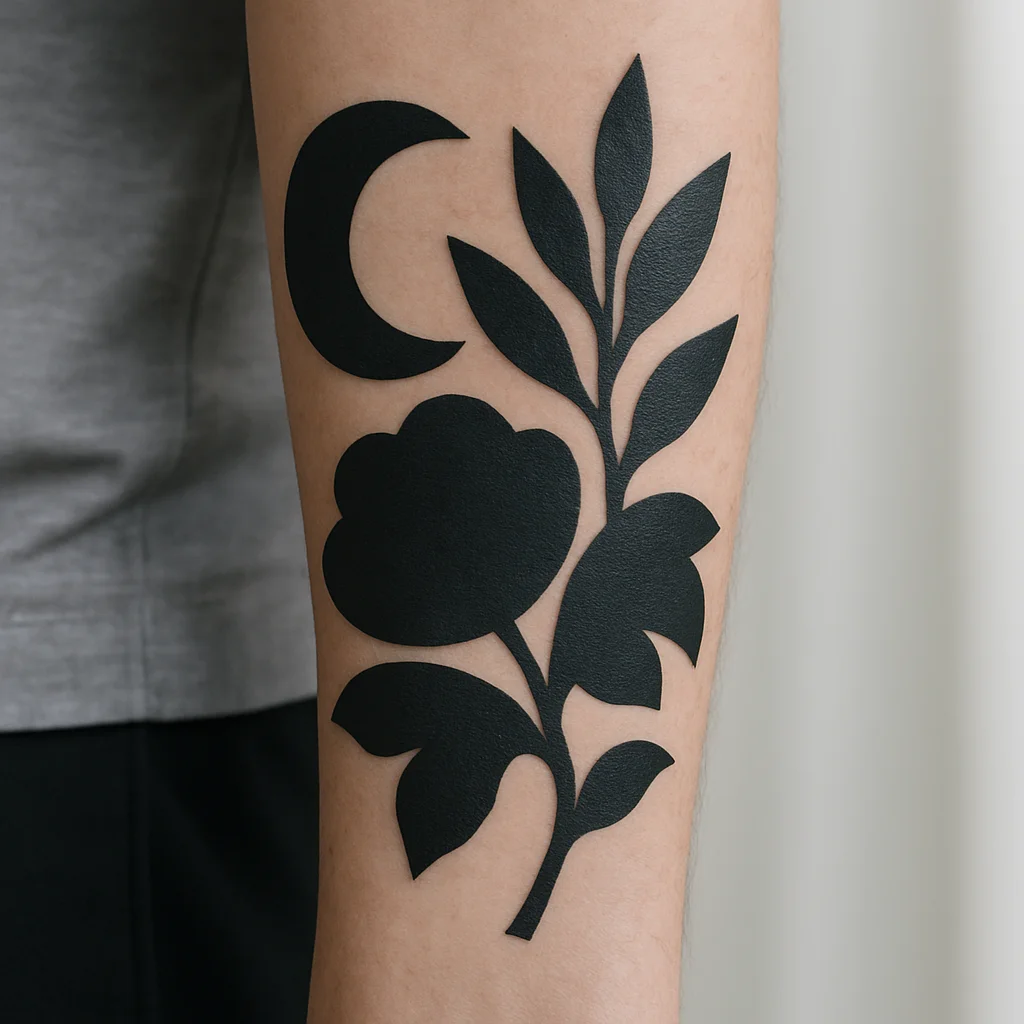
27. Negative-space skull with brushstroke fill
A large area of textured black with the skull emerging as untouched skin, edges broken up with dry-brush marks. Extremely graphic and legible from metres away. Ask to see the artist's healed heavy-black work, patchy saturation is the usual failure mode.
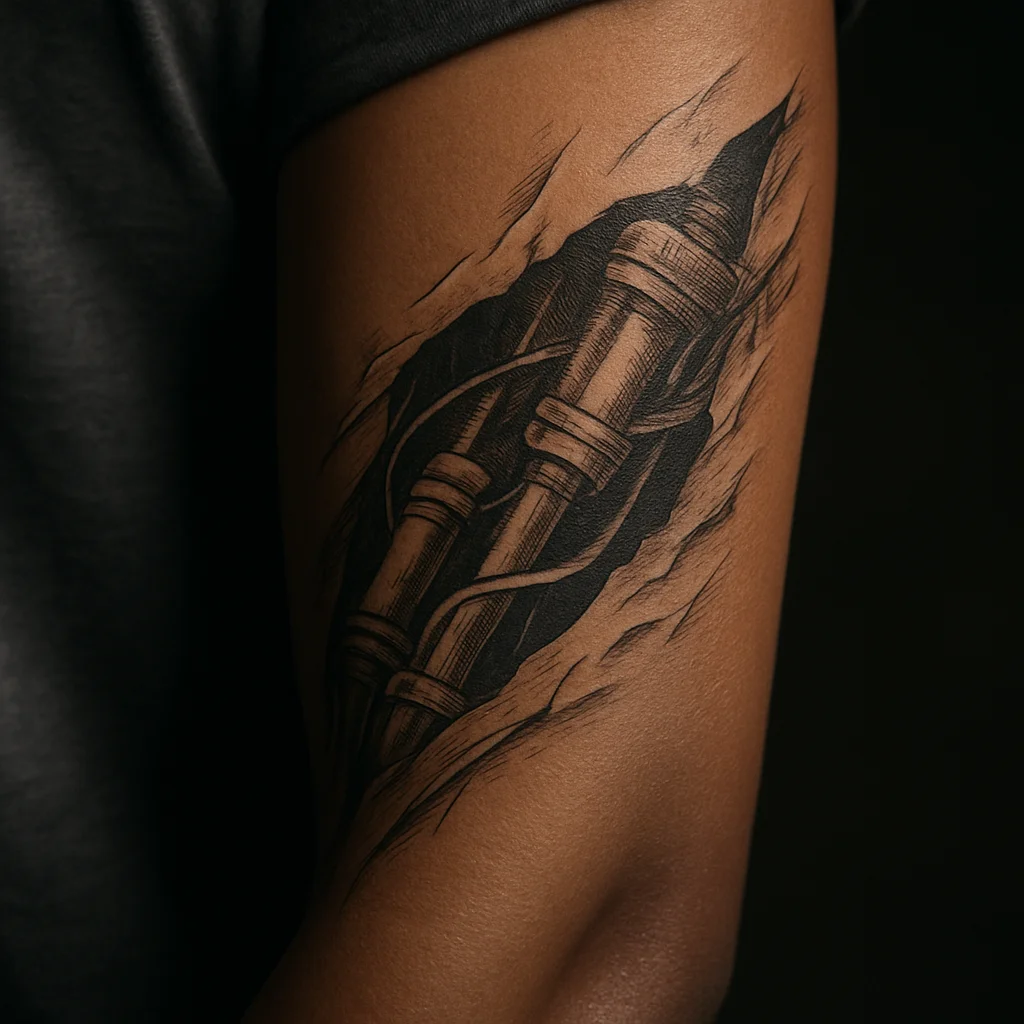
28. Biomechanical panel
Skin appearing to peel back to reveal machined parts, pistons and cabling, following the actual muscle lines of the forearm. This style lives or dies on anatomy, so it must be drawn on your arm, never stencilled from a stock design. A commitment piece in both hours and cost.
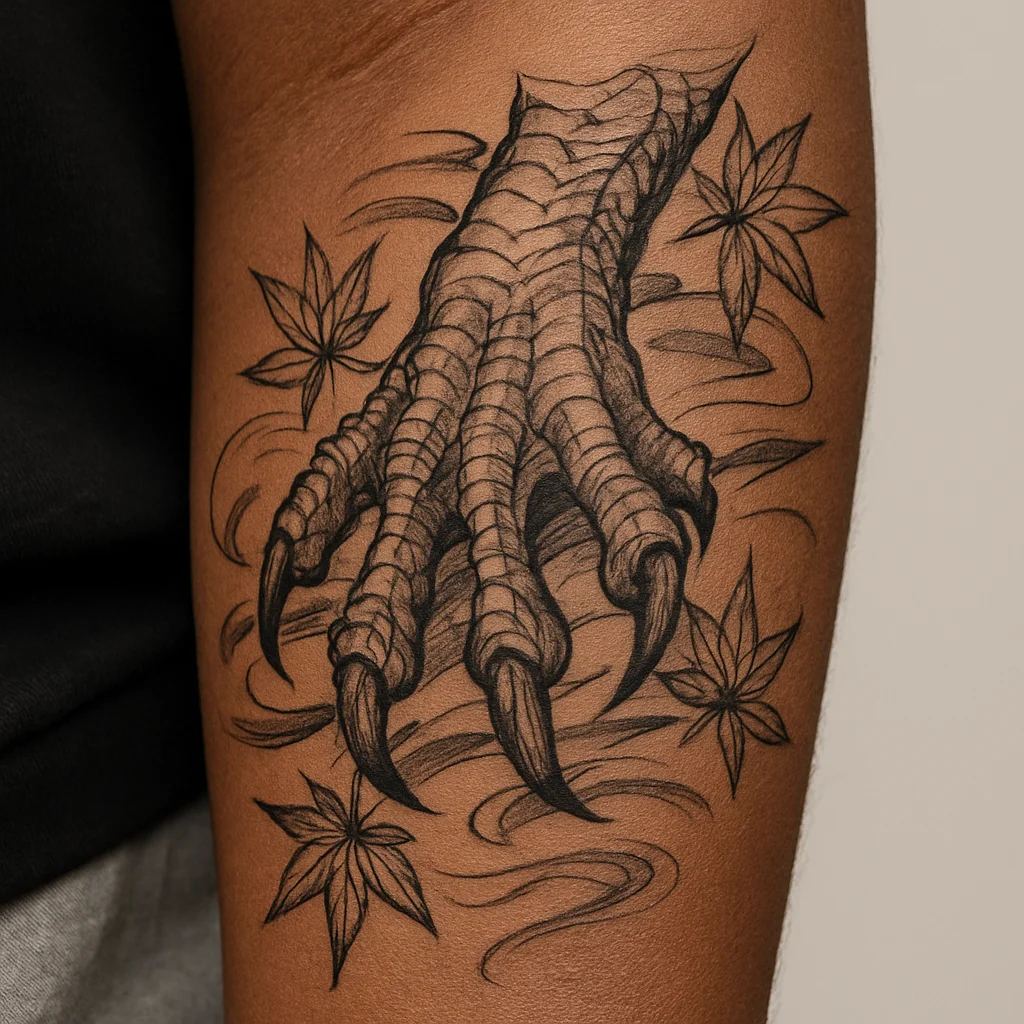
29. Dragon claw with maple leaves
A Japanese dragon's forearm and claw reaching down the outer arm, maple leaves and wind bars filling the gaps. It is the cleanest way to get dragon imagery on a forearm without cramming the whole beast in. Reads best as the lower half of a future sleeve.
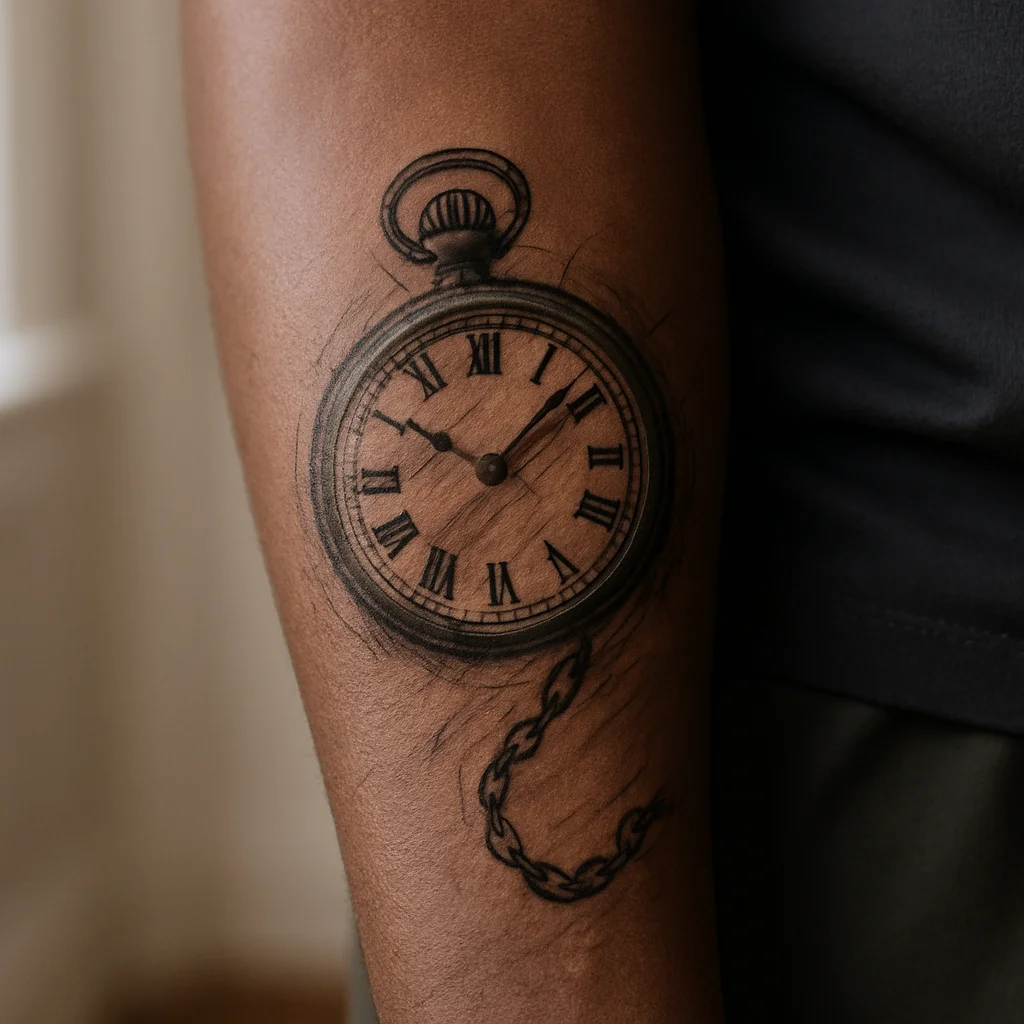
30. Pocket watch with a broken chain
A realistic watch face set near the elbow, Roman numerals and hands frozen at a meaningful time, chain trailing toward the wrist. Get the numerals large and the shading strong so the dial does not turn into a grey blob in ten years. A memorial motif that manages not to be maudlin.
Lettering that survives twenty years
The inner forearm is the best lettering placement on the body, because you read it in the same orientation the world does when you turn your palm up. It is also where bad font choices go to die, so weight and spacing matter more than the words.
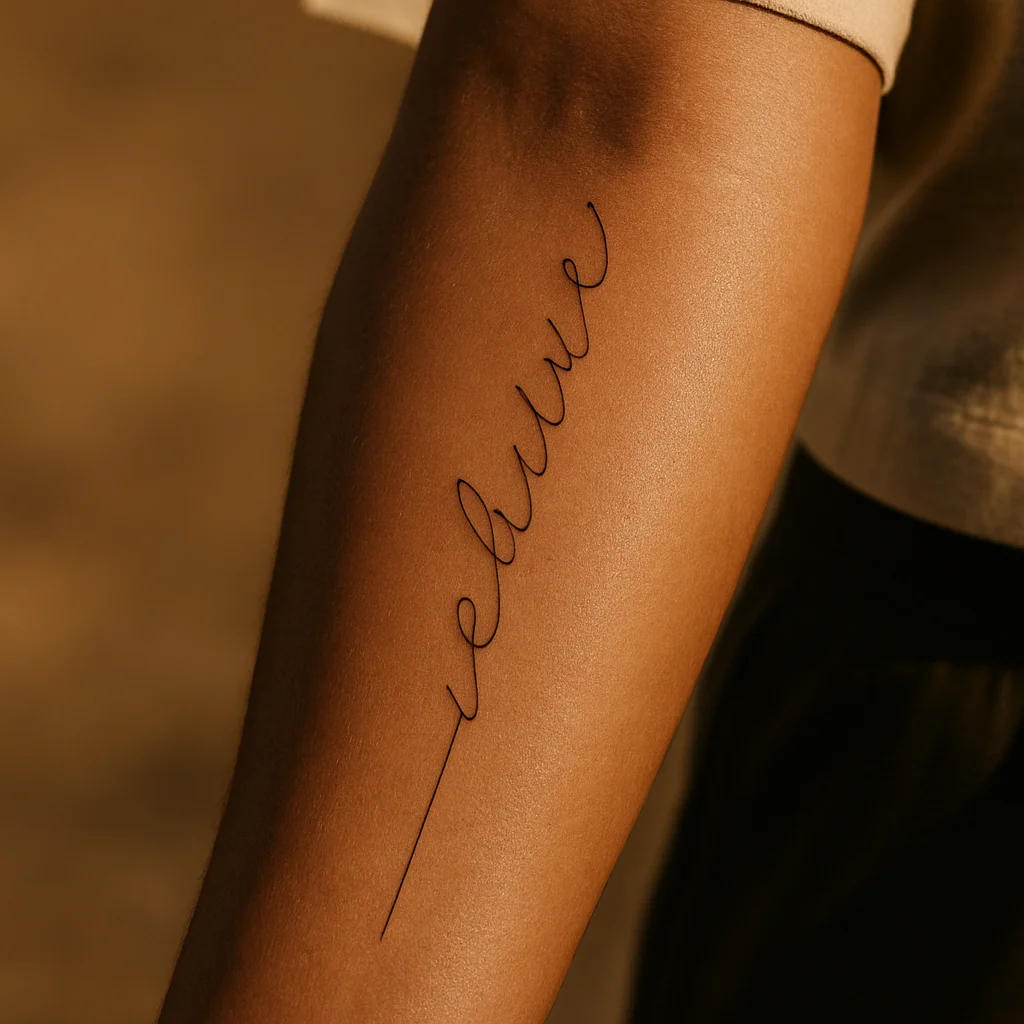
31. One word in vertical script
A single word running elbow to wrist, letters connected in a confident hand rather than a computer font. Vertical reading suits the arm's shape and needs no filler. Keep strokes medium weight, hairline script blurs into an illegible smudge within years.
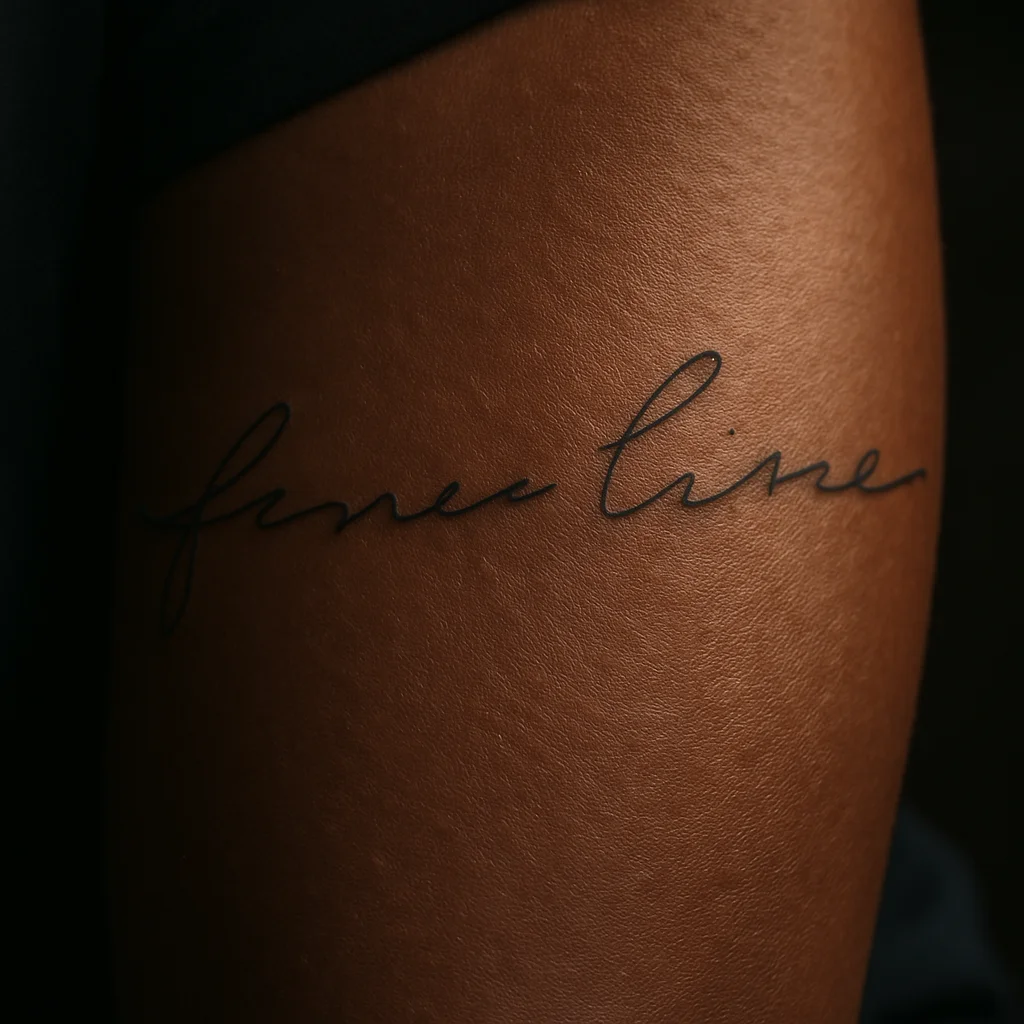
32. Traced handwriting from a family note
A short line lifted directly from a letter, card or recipe, scanned and reproduced at 1.5 to 2 cm letter height across the inner forearm. Bring the original, not a photo of a photo. The imperfections are the point, so ask the artist to trace faithfully rather than tidy it up.
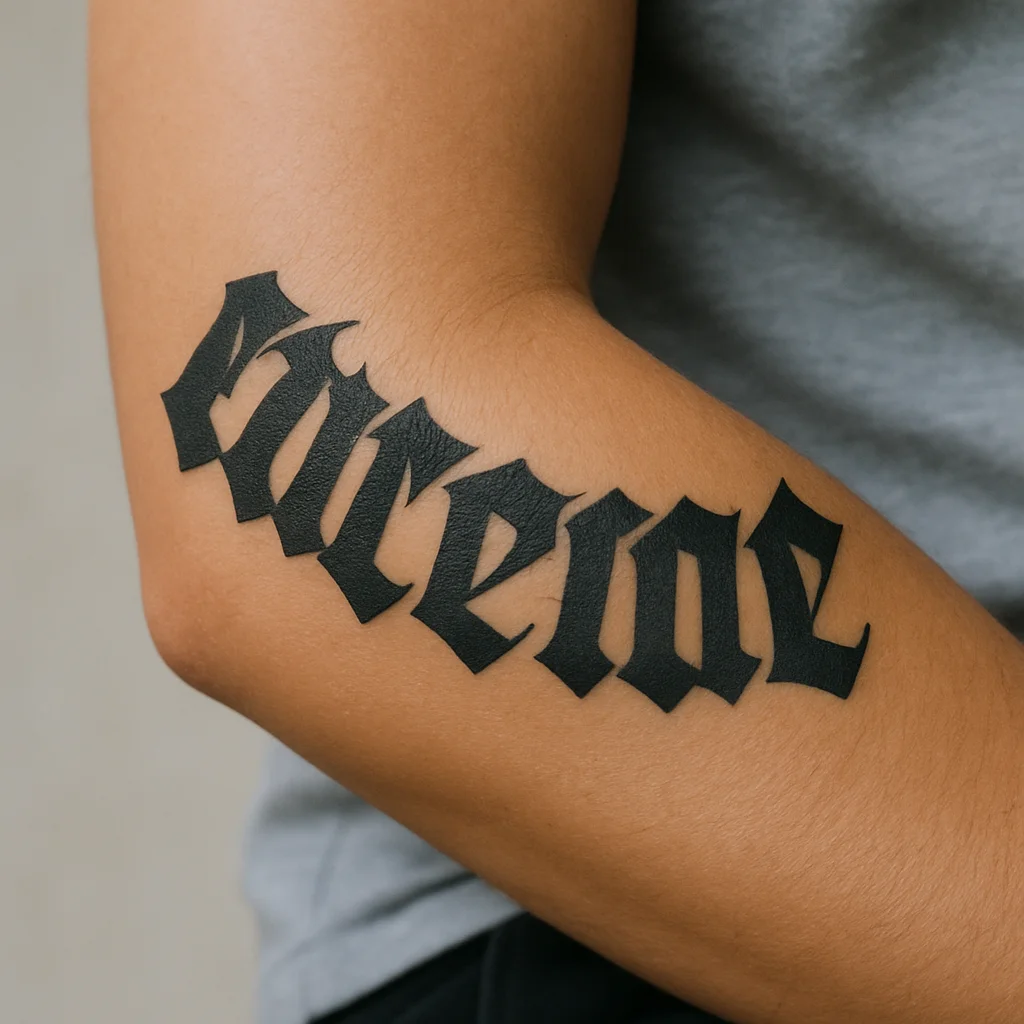
33. Blackletter phrase across the outer forearm
Three or four words in heavy blackletter, arced slightly to follow the muscle, set horizontally on the outer arm. Bold and unmistakably tattoo-looking, and it holds its shape better than any thin script. Have the artist print it at full size and hold it against your arm before you commit.
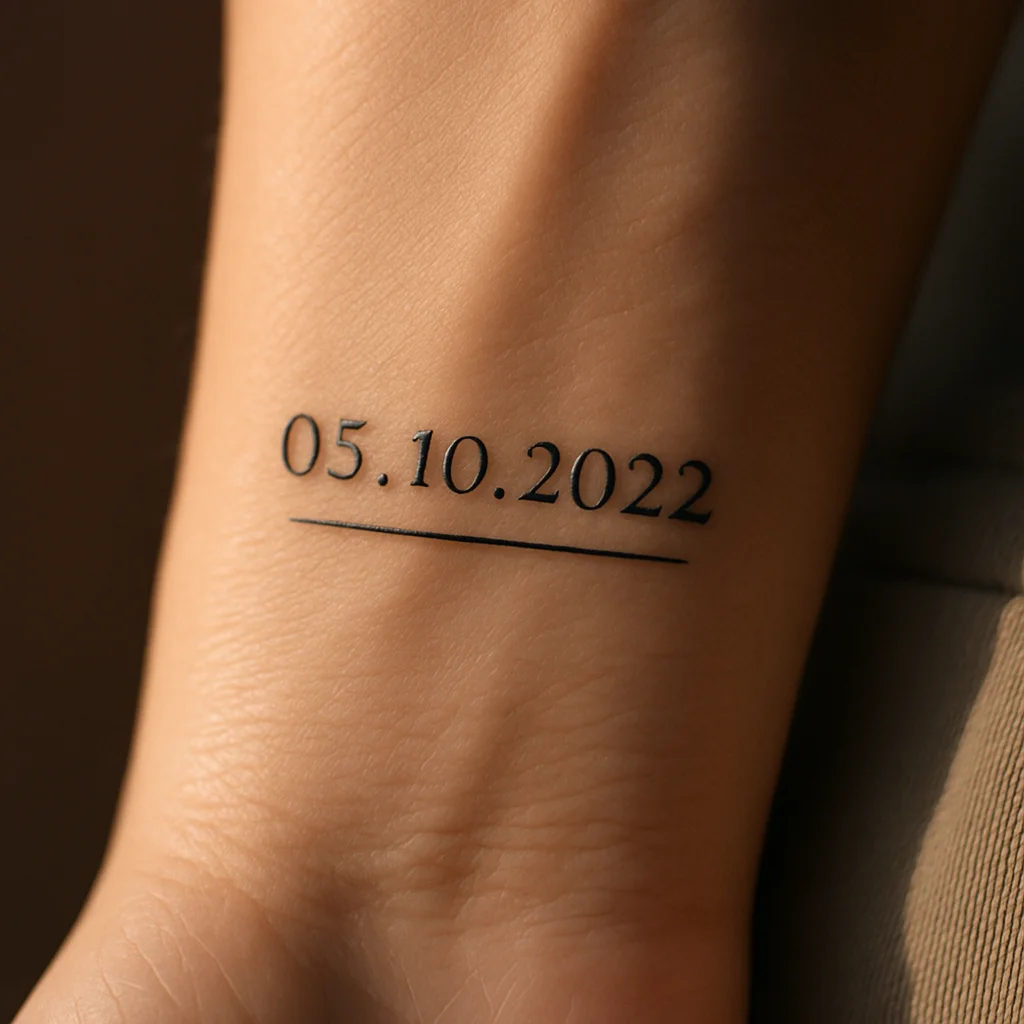
34. Date in small caps under a thin rule
Numerals in clean small capitals with a single hairline rule beneath, tucked near the wrist. It is the most workplace-friendly lettering option and takes twenty minutes to tattoo. Avoid stacking multiple dates too close together, they blend visually as the ink softens.
Pain, cost and briefing your artist
Pain, honestly. The outer forearm is among the easier places on the body, a persistent hot scratch most people handle for two to three hours without drama. The inner forearm is a step up, and there are two hotspots: the soft crease near the elbow, and the last 5 cm before the wrist where bone sits directly under thin skin. Wrapping designs cross the underside of the arm, which is the tenderest part of all. Eat properly beforehand, avoid alcohol the night before, and tell your artist when you need a break rather than gritting through it.
Cost, realistically. Small compact motifs usually land in the shop-minimum to low-hundreds range. A clean band or a mid-size vertical piece typically means a half day. Full panels, portraits and biomechanical work run into multiple sessions and are priced by the day at most reputable studios, with day rates varying enormously by city and artist demand. Colour, heavy black saturation and photorealism all add hours. For a fuller breakdown of what drives the number, see our guide to what tattoos actually cost.
Briefing. Send the artist a photo of your bare forearm from three angles plus a measurement from elbow crease to wrist bone. Say which face you want it on, whether it should be visible with sleeves rolled, and whether a sleeve is in your future. Bring two or three references for mood and one for composition, then let the artist redraw it for your anatomy.
Aftercare that matters here. Forearms get knocked, washed, and shoved into sleeves constantly. Keep it clean and lightly moisturised, skip the gym for the first week, and be careful with long sleeves rubbing a fresh piece. Once healed, sunscreen is the single biggest factor in how sharp your forearm tattoo looks a decade from now, because this is the part of your body the sun sees most.
Frequently asked questions
Is the inner or outer forearm better for a first tattoo?
The outer forearm is the easier ride and it takes bold linework well, so it suits a first piece with strong outlines. The inner forearm is more tender but gives a flatter, paler surface that is ideal for lettering and soft greywash. If you want to hide the tattoo at work, both disappear under a long sleeve, so choose based on who you want to see it most.
How big should a forearm tattoo be?
A single compact motif reads well at 6 to 10 cm, a band usually works at 3 to 8 cm tall, and a vertical piece using the arm's length typically lands between 15 and 25 cm. Have the artist print the design at full size and tape it to your arm before the stencil goes on. Sizing up slightly is almost always the safer call, since detail crammed too small closes up as it heals.
Will a forearm tattoo ruin my chances of a full sleeve later?
Not if you place it deliberately. Keep a standalone piece centred on one face of the arm and leave the elbow area and the wrist edge clear, so a future sleeve has room to flow around it. Tell your artist up front that a sleeve is possible, and they will size and position the piece to work as a future anchor rather than an obstacle.
How much does a forearm tattoo hurt compared with other placements?
It sits in the mild-to-moderate range. The outer forearm is one of the most comfortable areas on the body, while the inner forearm, the elbow ditch and the last few centimetres near the wrist are noticeably sharper. Compared with ribs, sternum or inner bicep, most people find forearm work very manageable for a few hours.
Do forearm tattoos fade faster because of sun exposure?
They can, since the forearm gets more daily sun than almost anywhere else. Heavy black and bold lines hold up best, while fine hairline work and delicate greywash soften soonest. Daily sunscreen once fully healed makes a genuine visible difference over ten to twenty years, and a light touch-up every several years keeps small pieces crisp.
The conversation
No comments yet. Got a thought about these designs? Start us off.
Want to weigh in? Join the community to comment, save designs and try them on your skin.