30 Arm Tattoo Ideas, From Wrist to Shoulder Cap
The arm is not one canvas but six, and each zone takes line, shading and scale differently. Here are 30 arm tattoo ideas sorted by where they actually sit best, with honest notes on pain, sizing and how each spot ages.
How the Arm Changes a Design
Artists rarely talk about "the arm" as a single place. They talk about the inner forearm, the outer forearm, the ditch of the elbow, the bicep, the tricep and the shoulder cap, because each behaves differently under a needle and over a decade.
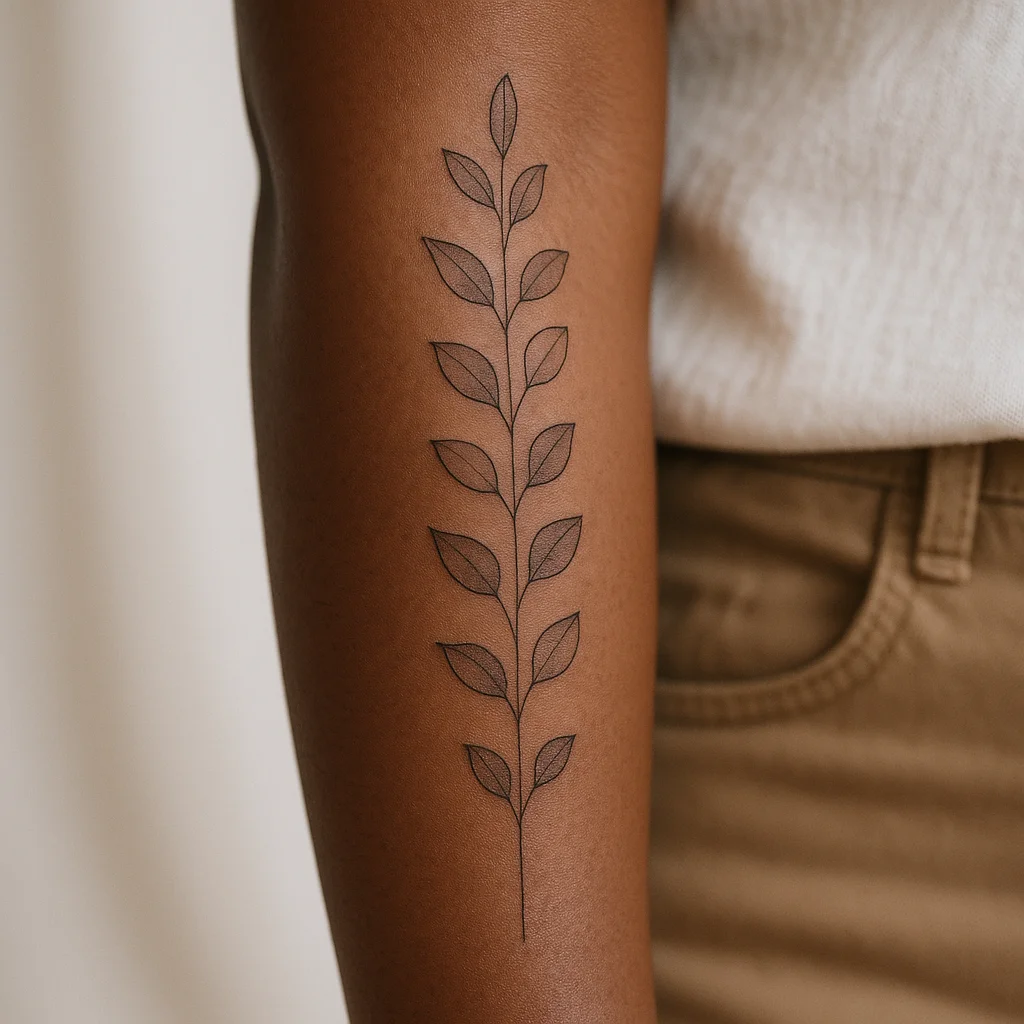
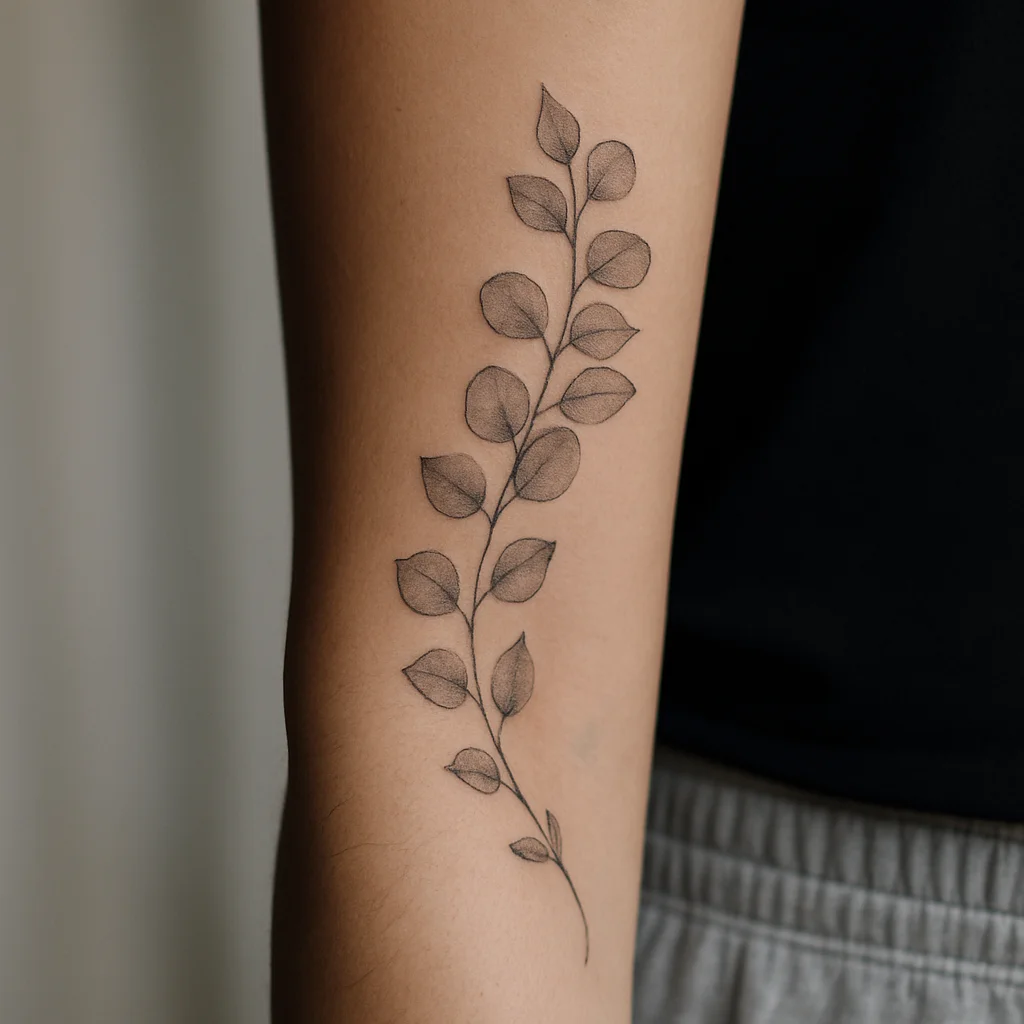
The outer forearm and outer bicep are the workhorses: flat-ish, fleshy, easy to reach, and they hold crisp line work for years. The inner forearm is soft and low-friction, which is why it is the classic home for a slim botanical stem that follows the centre line of the arm from wrist to elbow ditch. The inner bicep is tender and slightly stretchier, so it forgives bold shapes better than tiny detail. The elbow ditch and elbow point move constantly and heal unevenly, so they suit ornamental filler and negative space rather than a portrait. The wrist and hand edge see the most sun, soap and friction of anywhere on the body, and they fade fastest.
Two more things worth deciding before you pick a motif. First, direction: does the design read to you looking down at your own arm, or to the person facing you? Inner forearm pieces usually face the wearer, outer forearm pieces face the world. Second, flow: the arm is a cylinder, so anything wider than about four fingers will wrap, and wrapping means part of the design is always hidden. Long vertical or diagonal compositions almost always sit better than wide horizontal ones.
6 Inner Forearm Tattoo Ideas
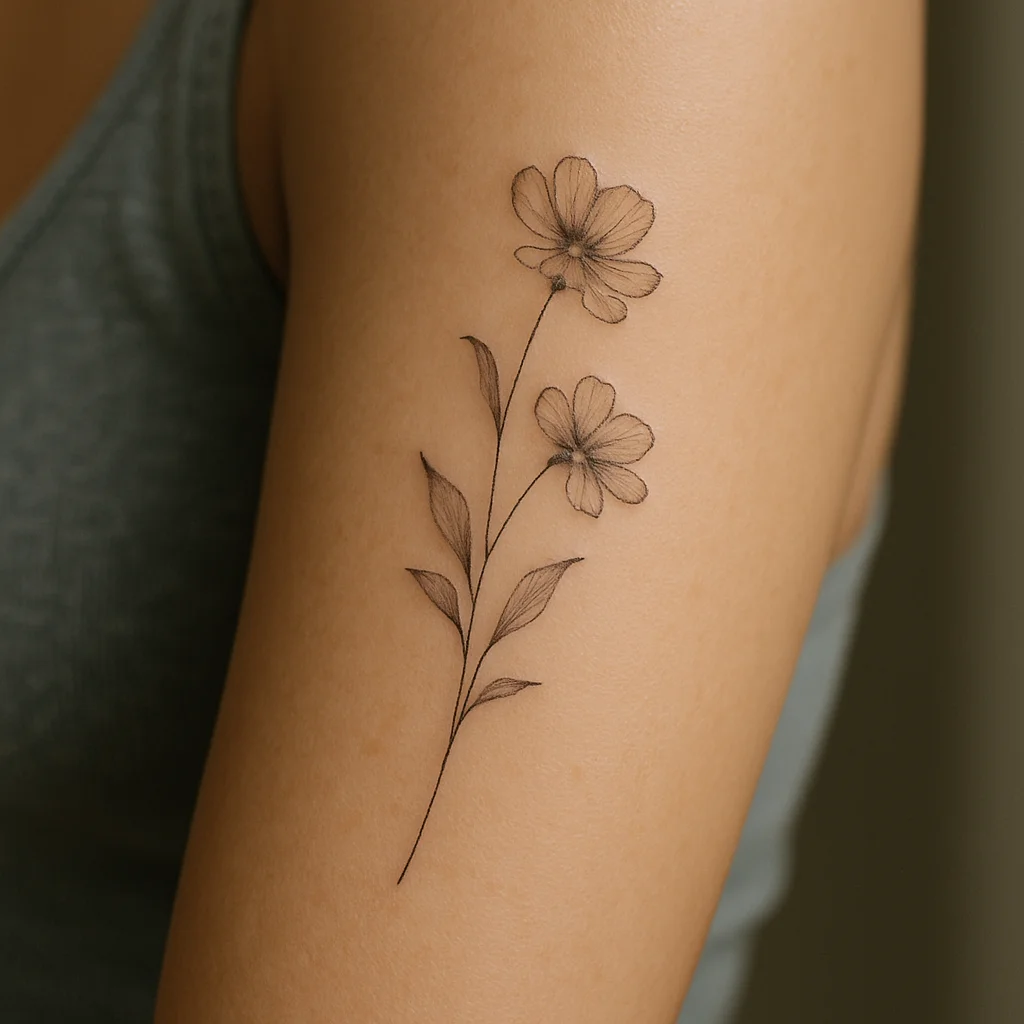
1. Single-stem wildflower tracing the tendon
One stem, two or three blooms, leaves drifting off to one side, running vertically along the tendon line. At 12 to 18 cm it fills the space without wrapping, and it keeps the arm looking longer. Ideal for a first medium-sized piece because the inner forearm is one of the calmer spots to sit through.
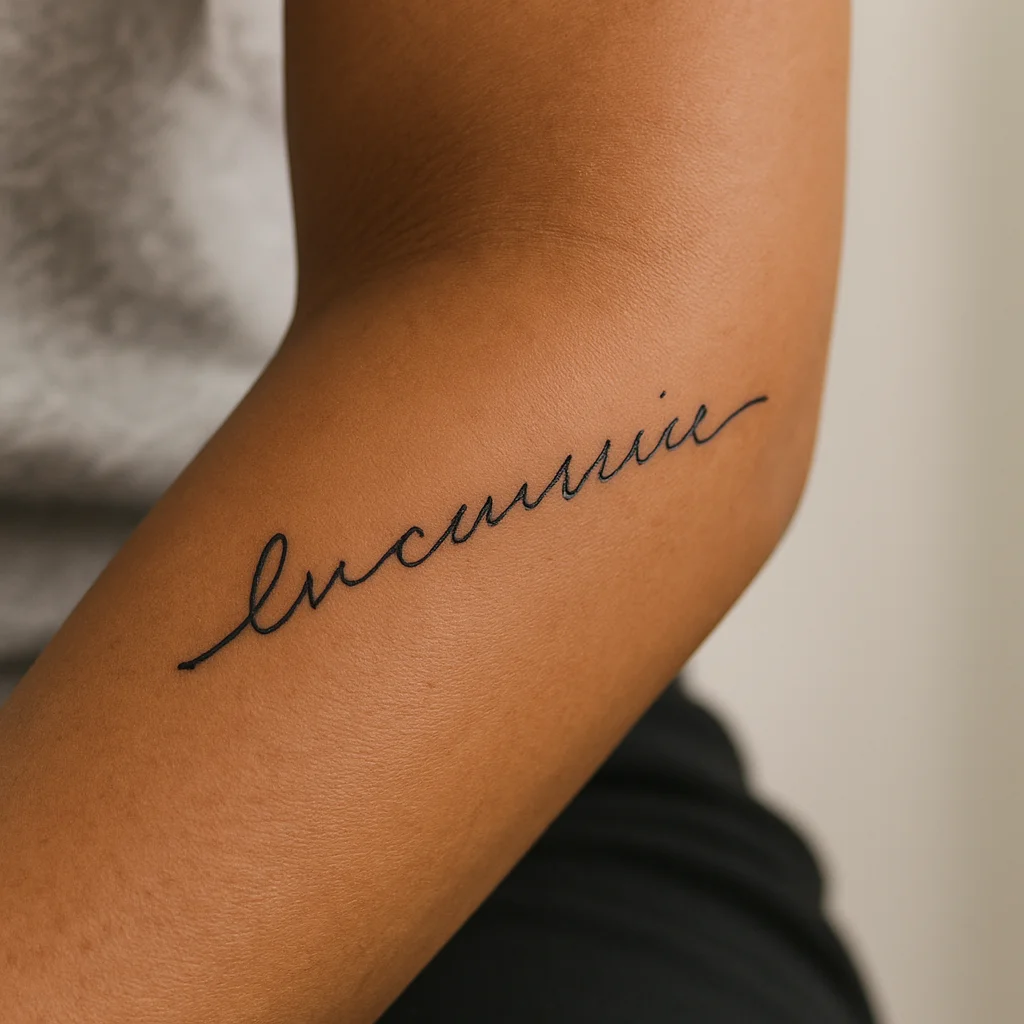
2. A single line of handwriting along the arm's axis
Script laid along the length of the arm rather than across it stays legible as skin creases. Keep it to one line, ask for slightly thicker strokes than the sketch suggests, and avoid tiny serifs that blur. Around 10 to 14 cm reads clearly at conversational distance.
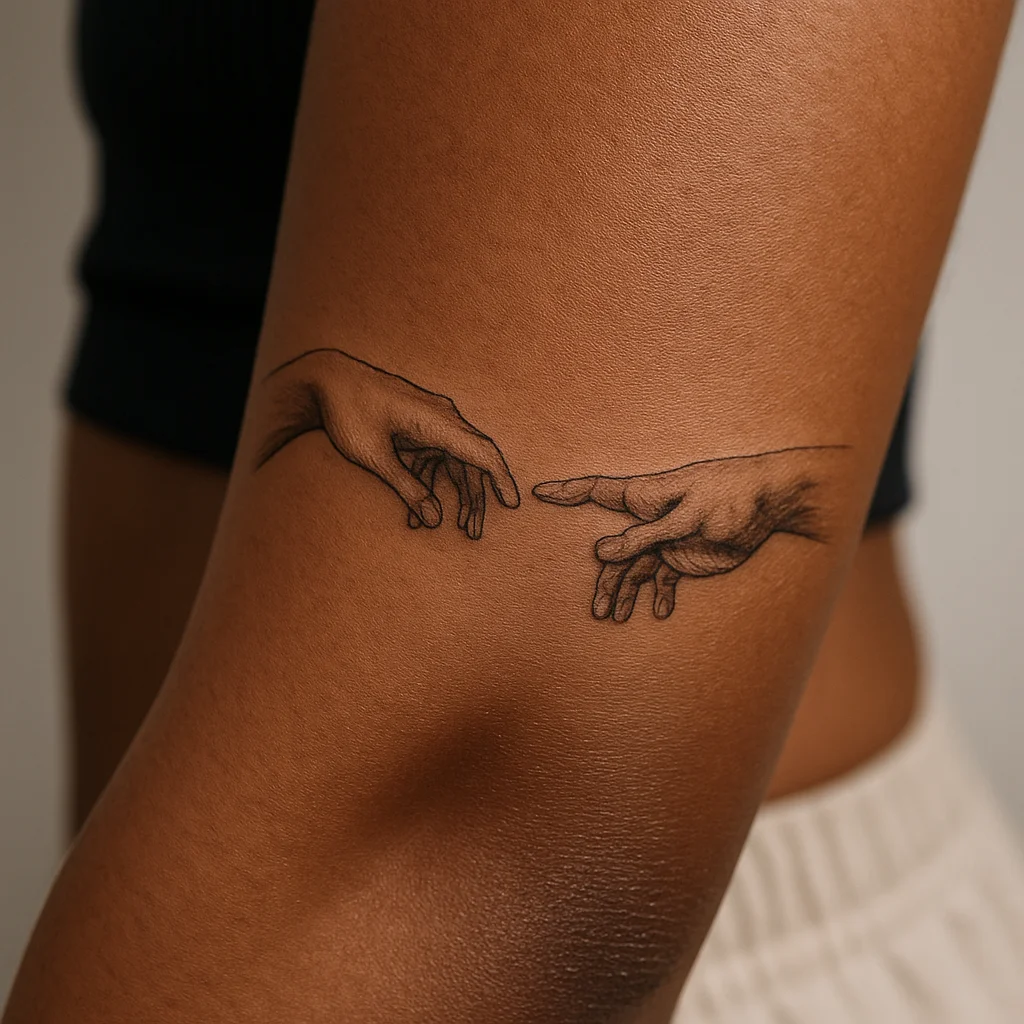
3. Two hands almost touching, fine-line
A soft single-needle study of hands reaching toward one another, positioned mid-forearm so the gap between them sits over the flattest skin. Sizing around 9 to 12 cm keeps the fingers from merging over time. Suits people who want something quietly figurative rather than symbolic shorthand.
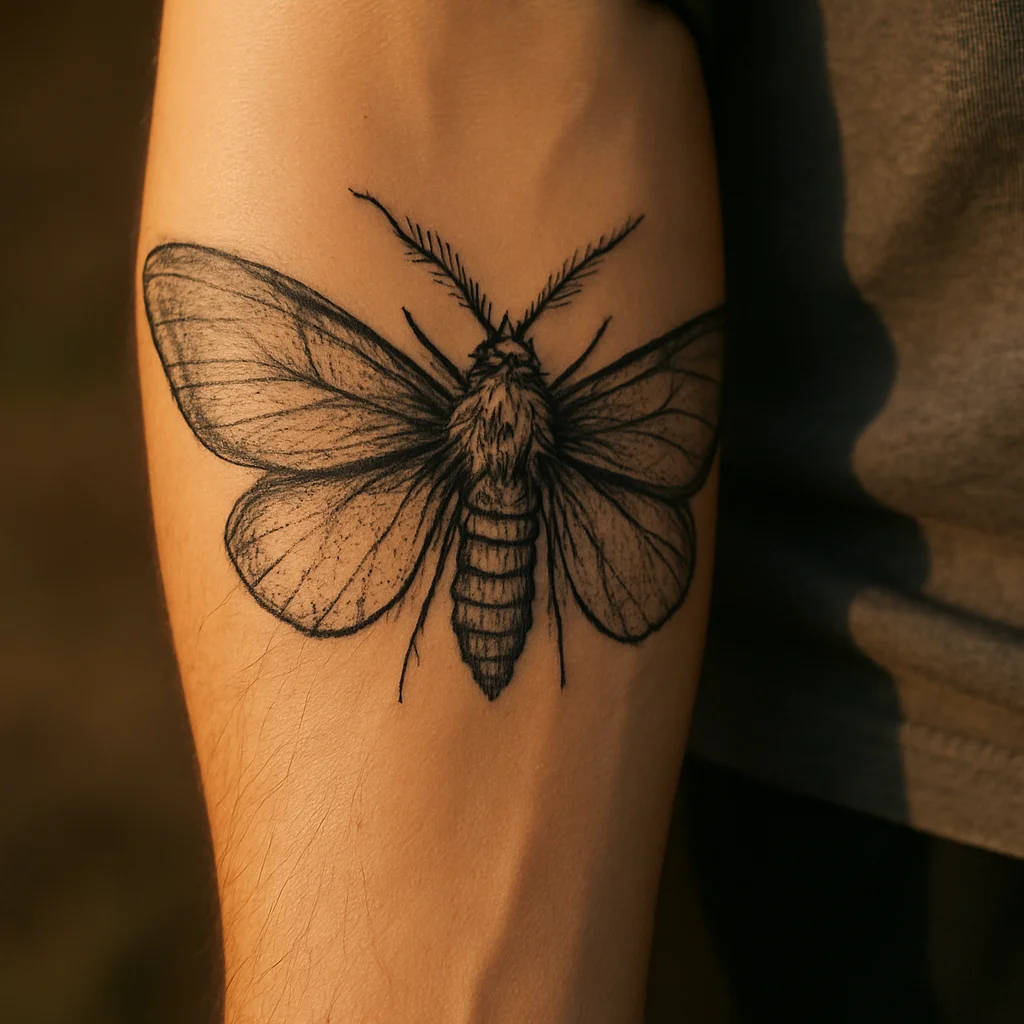
4. Moth with wings spanning the arm's width
A moth is one of the few symmetrical motifs that genuinely fits the inner forearm, because the wingspan matches the width of the limb. Ask for open wing interiors with a little dotwork instead of solid black so it stays soft against pale inner-arm skin. Best at 8 to 11 cm across.
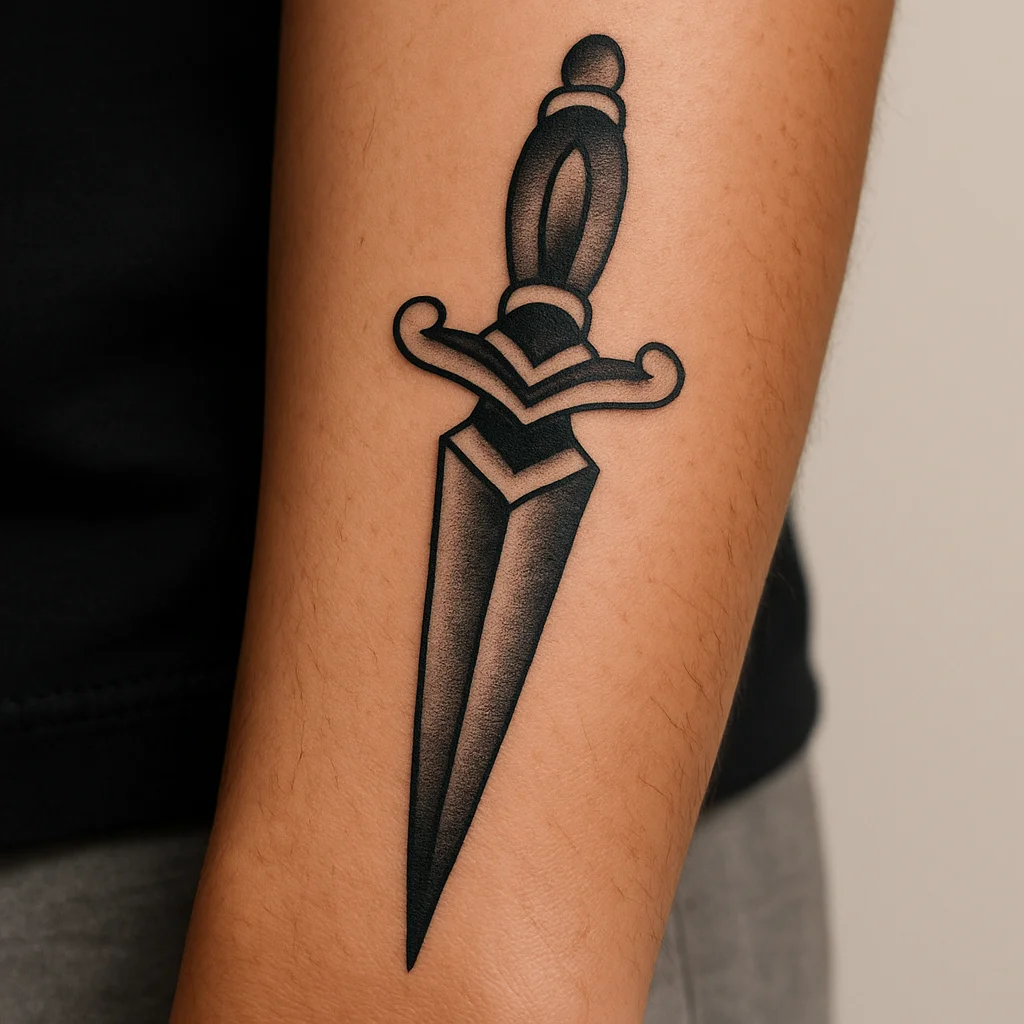
5. Traditional dagger pointing toward the wrist
Bold outline, simple shading, tip angled down the arm so it follows the natural direction of the limb. At 13 to 16 cm it looks intentional rather than decorative, and heavy traditional line work on the inner forearm ages exceptionally well. A strong choice if you want one piece that can later anchor a larger arrangement.
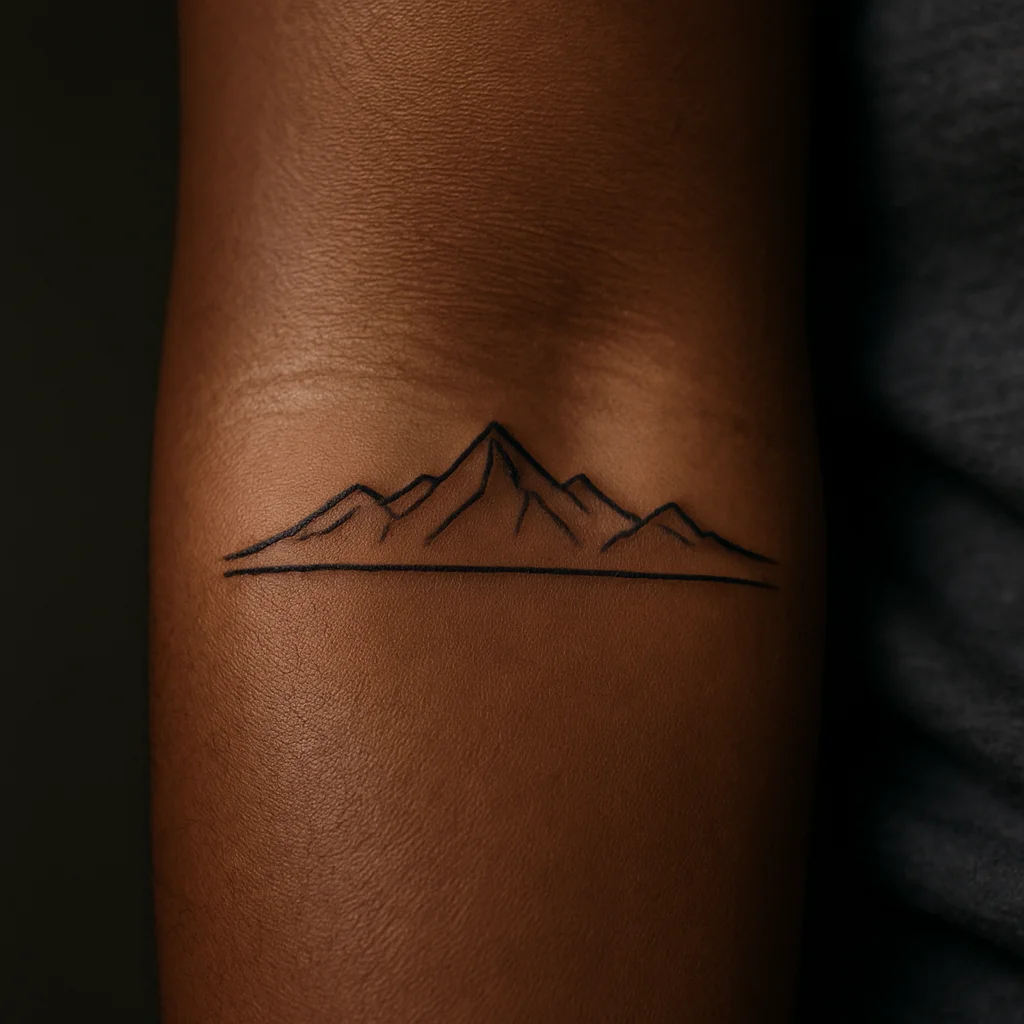
6. Fine horizon line with a mountain silhouette
A slim range with one clean horizon rule, set just below the elbow ditch so the flat skin carries the straight line. Small at 7 to 9 cm, it works as a standalone or as the top note of a future stack of narrow bands. Keep the linework crisp and skip heavy grey wash, which softens fastest here.
6 Outer Forearm and Elbow Ideas
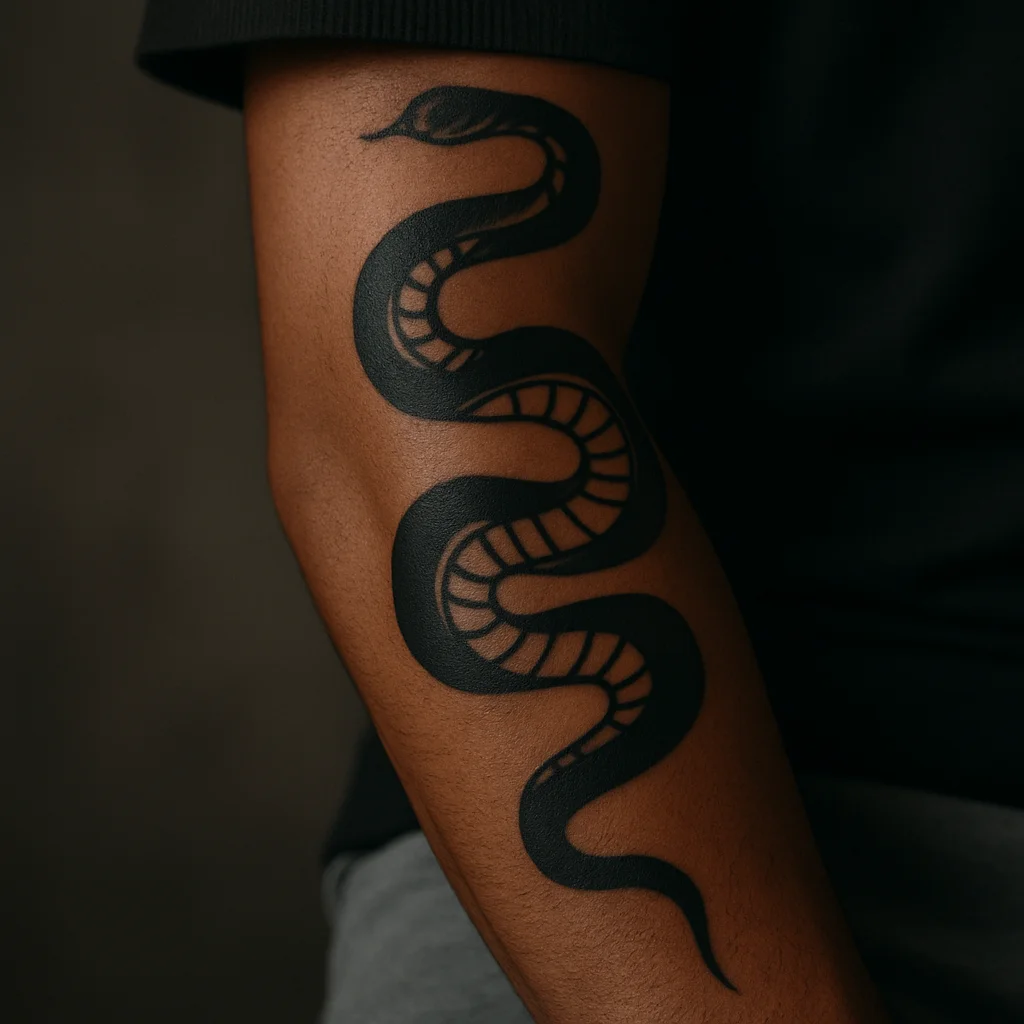
7. Snake coiling around the outer forearm
A serpent is built for a cylinder: the body can spiral from the elbow down toward the wrist, disappearing around the side and reappearing. Traditional or neo-traditional treatment with bold belly scales holds up best. Expect 20 to 25 cm of length and a session of three to four hours.
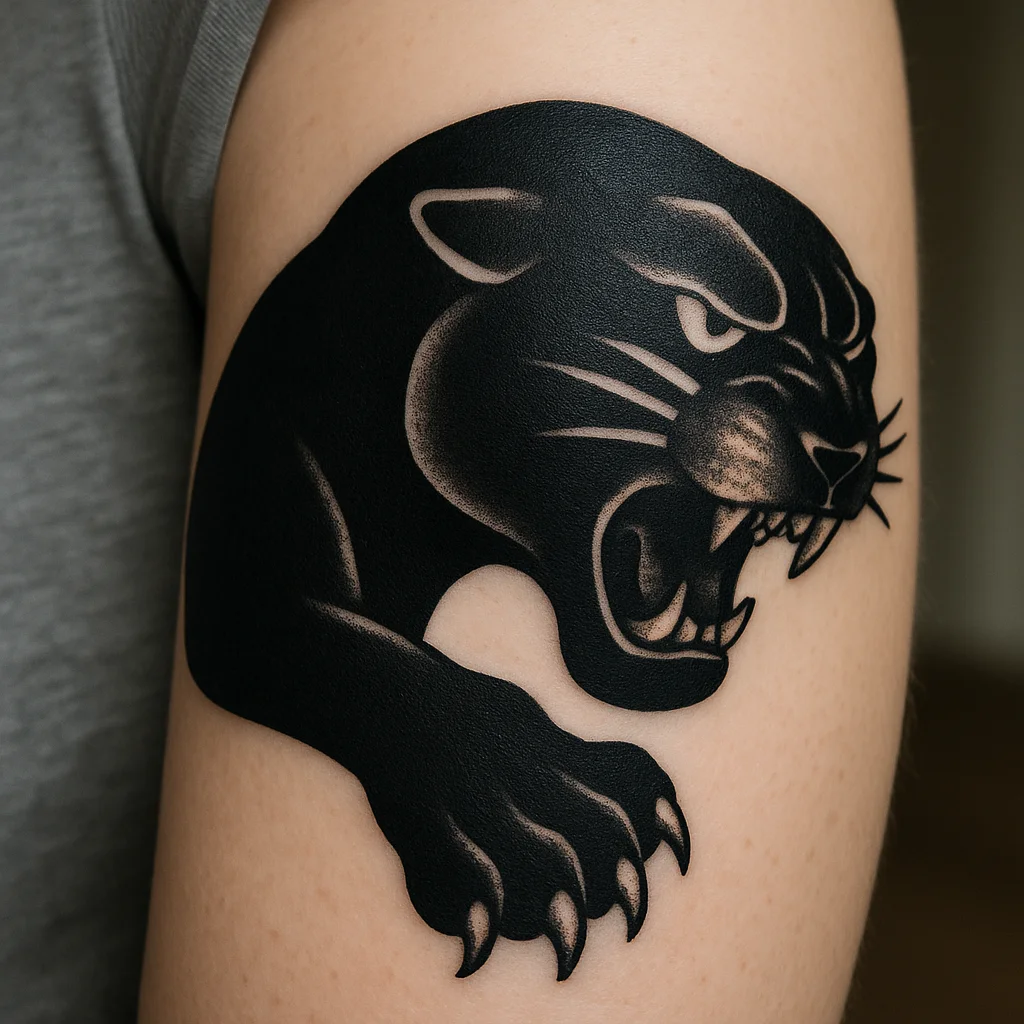
8. Blackwork panther head facing down the arm
Solid black mass, a growl, one claw if you want it, angled so the head reads right-side-up to anyone looking at you. Panthers were designed for high-contrast healing and they still look sharp decades later. Palm-sized to 15 cm is the sweet spot on an average forearm.
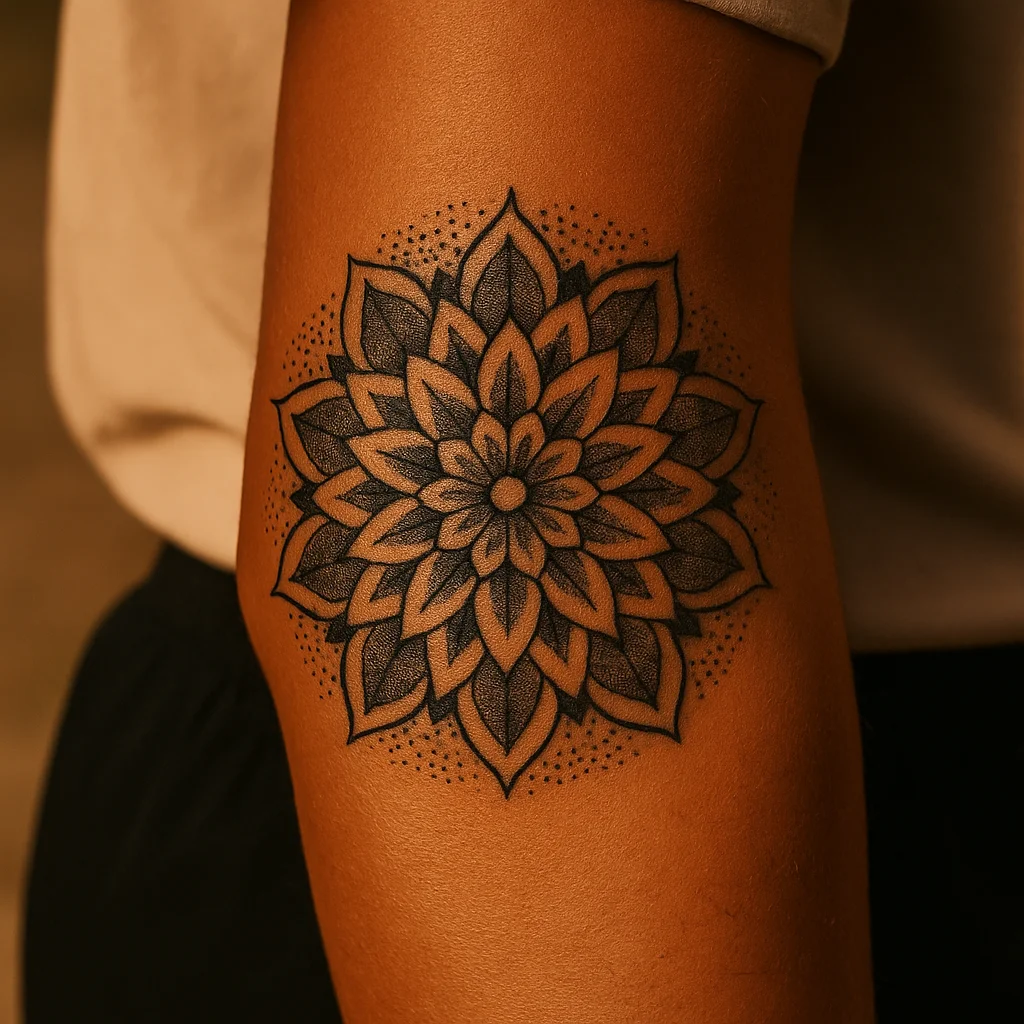
9. Ornamental cap over the elbow point
A radiating ornamental rosette centred on the elbow, built from repeated petals and dotwork so uneven healing reads as texture rather than damage. It links an upper and lower arm design without demanding fine detail. The elbow point is genuinely sharp to tattoo, so book it short.
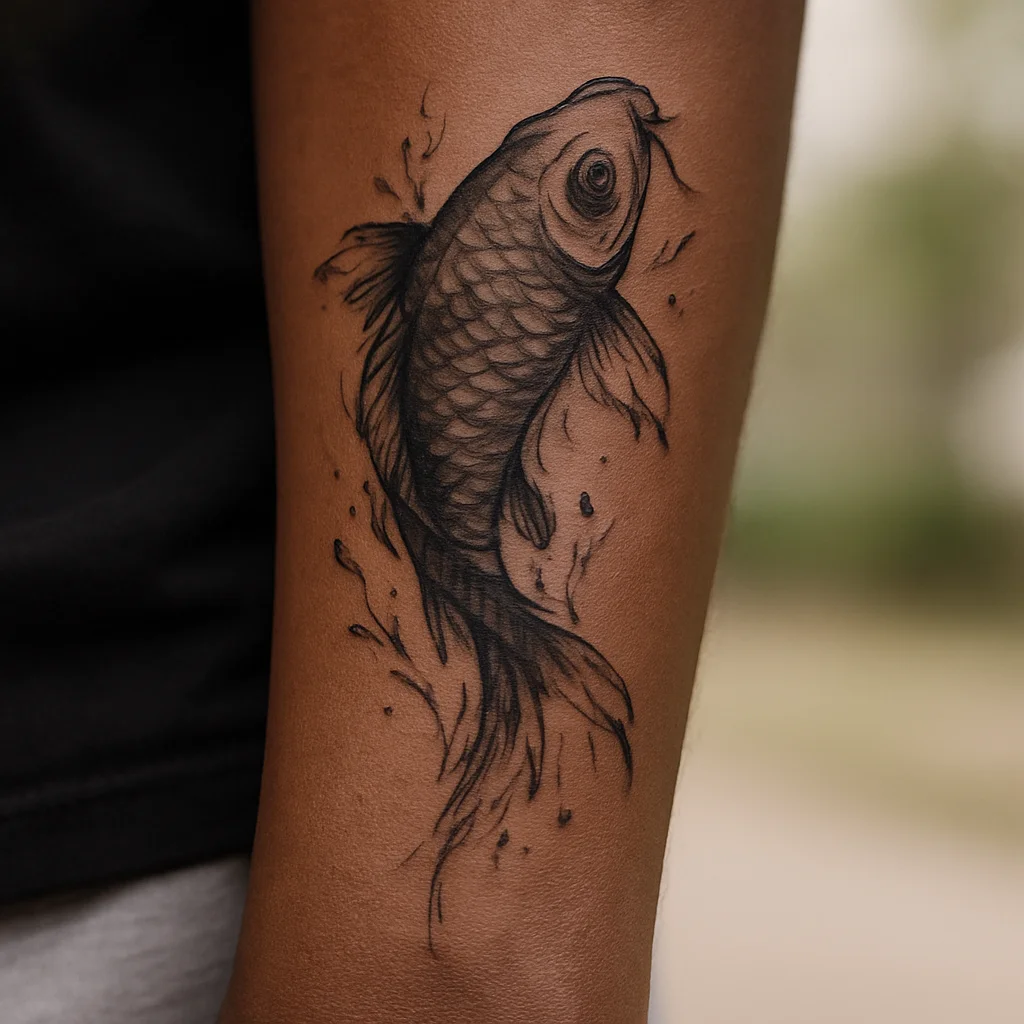
10. Koi swimming up toward the elbow
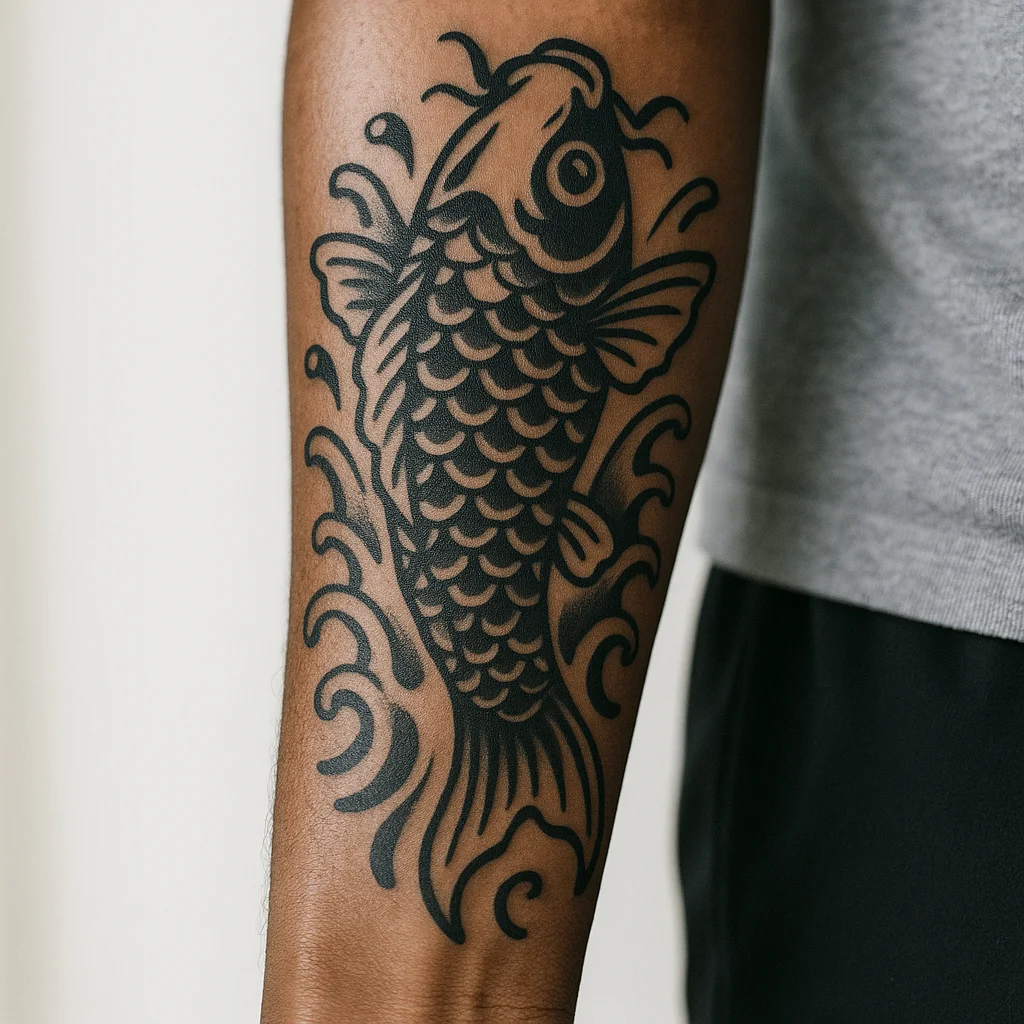
A koi angled upward along the outer forearm, with water spray filling the taper toward the wrist. Direction matters here: swimming up traditionally reads as struggle and ambition. Plan for 20 cm plus and a colour pass in a second session.
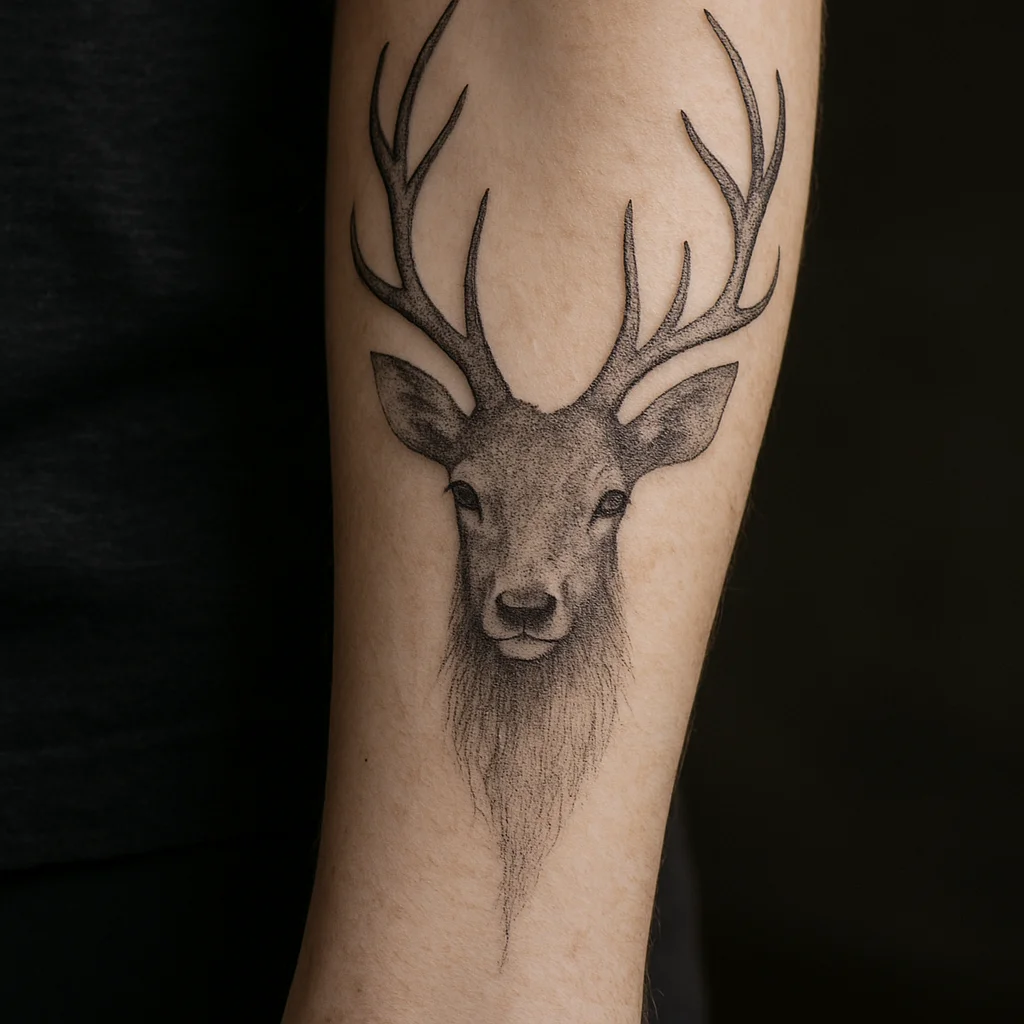
11. Dotwork stag head with antlers reaching the elbow
The antlers can spread into the wider skin near the elbow while the muzzle narrows toward the wrist, using the arm's natural taper. Dotwork shading keeps it airy and avoids the heavy black slab a solid stag would need. Suits anyone who wants an animal piece that stays quiet from a distance.
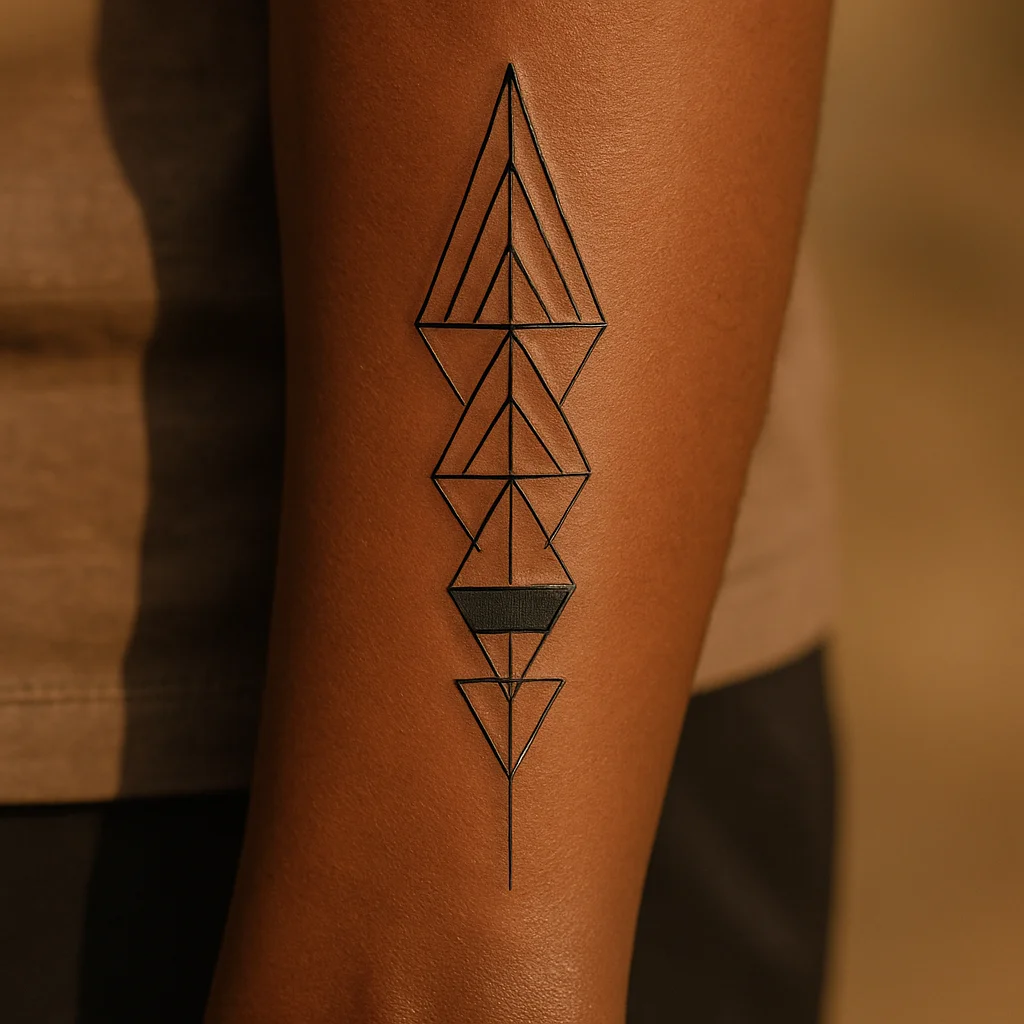
12. Geometric spire of stacked shapes
Nested triangles, thin rules and a single shaded band, drawn as one vertical column up the centre of the outer forearm. Straight lines on the outer forearm are safe because the skin barely creases there. Around 15 cm, and worth having the artist stencil it while your arm hangs naturally so the lines stay true in motion.
6 Upper Arm, Bicep and Shoulder Cap Ideas
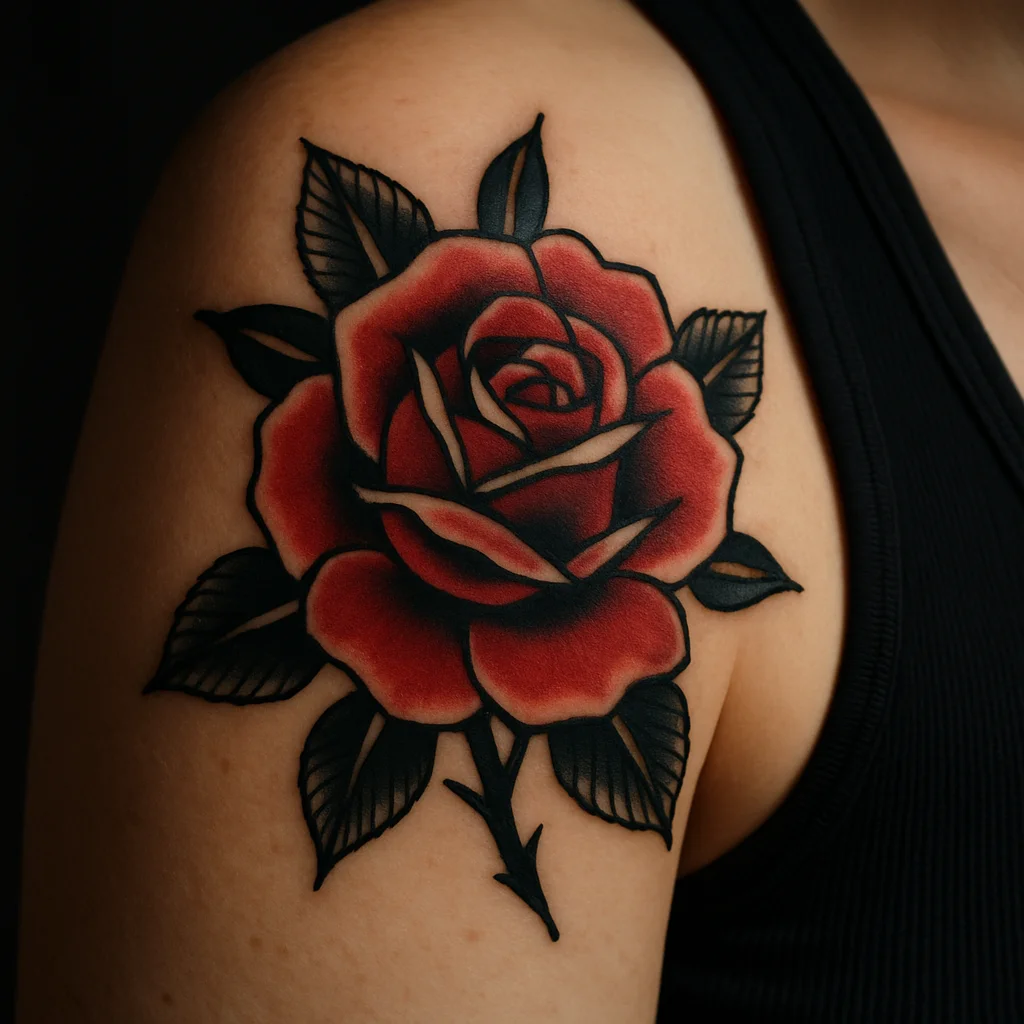
13. Traditional rose on the shoulder cap
The rounded deltoid holds a circular motif better than anywhere else on the body, which is why the shoulder-cap rose has survived a century of fashion. Bold outline, two-tone shading, roughly 10 to 13 cm. It is also one of the least painful places to start, with muscle underneath and no bone right at the surface.
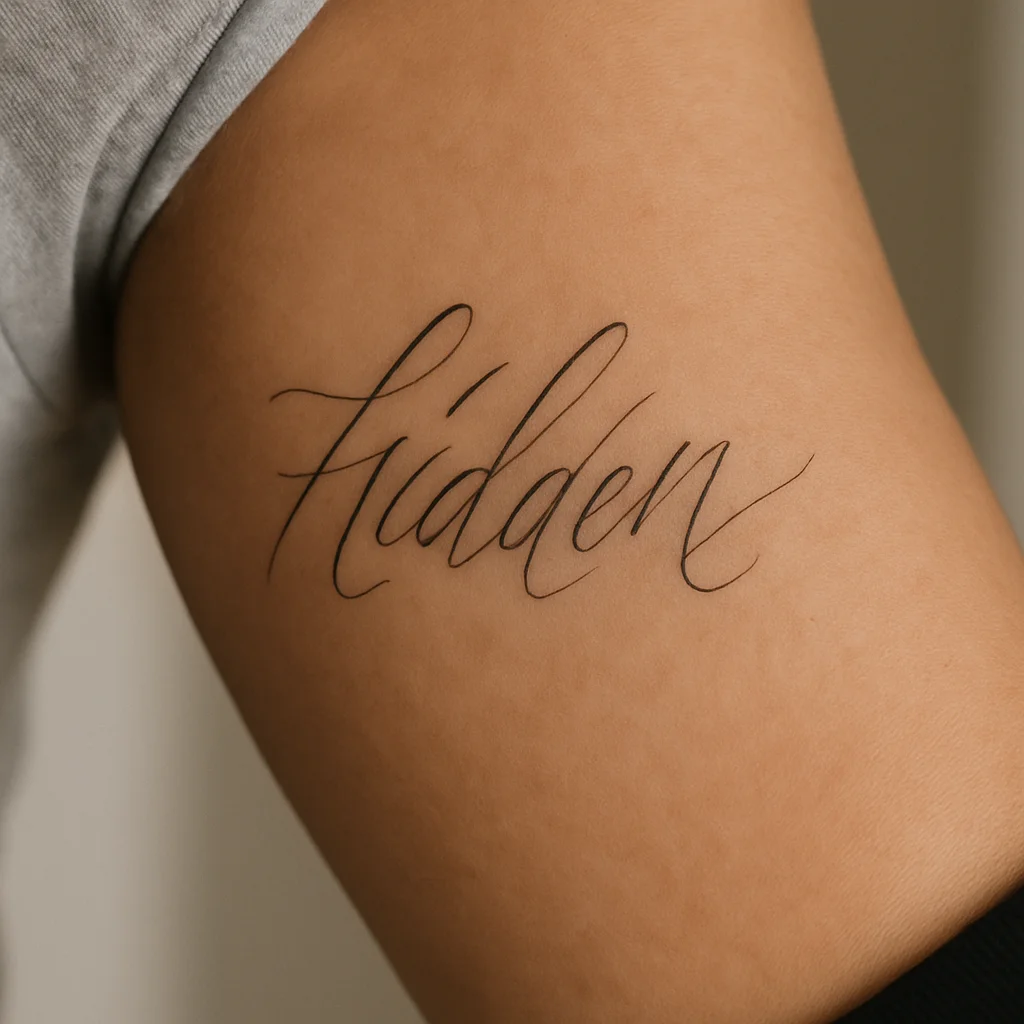
14. Hidden script on the inner bicep
The inner bicep is the arm's private drawer: invisible with your arms down, visible when you choose. Keep letters a touch larger and bolder than you would elsewhere, since the softer skin here spreads fine strokes over time. Be warned that it is one of the more tender spots on the arm.
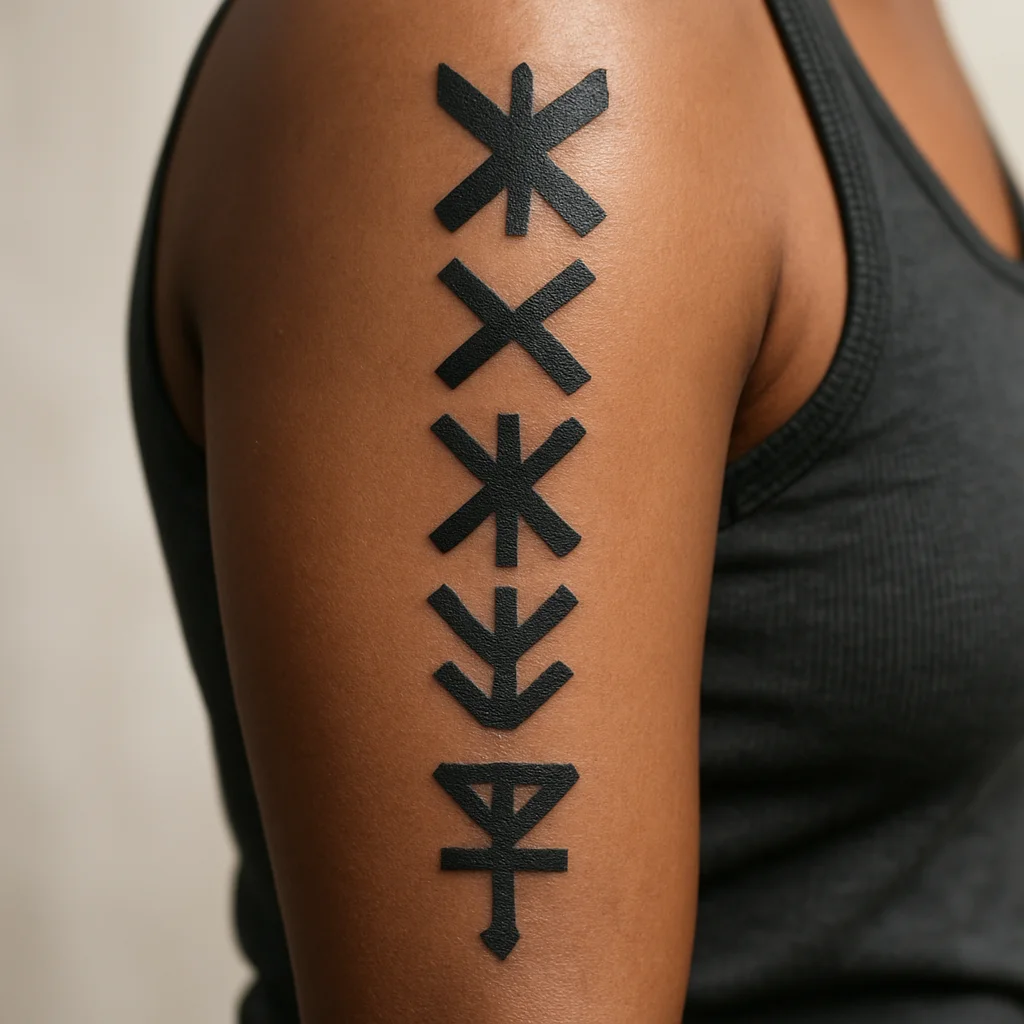
15. A vertical column down the tricep
Stacked symbols, a runic-looking alphabet or a narrow ornamental strip running from the back of the shoulder toward the elbow. The tricep is flat, hard to see on yourself and rarely sunburned, so it holds detail well. Great for people who want something substantial that stays out of the way at work.
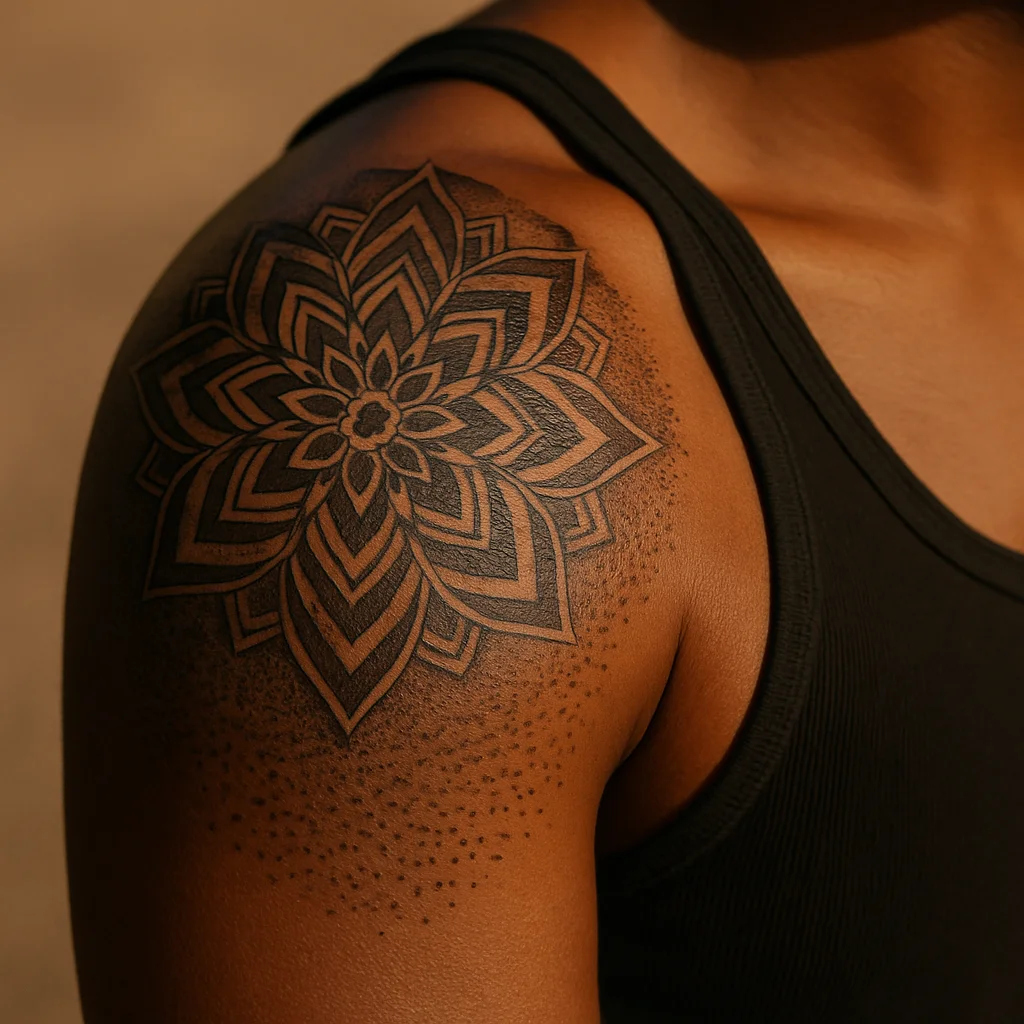
16. Mandala shield over the deltoid
A half or three-quarter mandala centred on the shoulder cap, with the outer rings fading into dotwork as they approach the bicep. It reads as armour and it is a natural anchor point if you ever extend into a full sleeve. Budget four hours plus for anything over 15 cm.
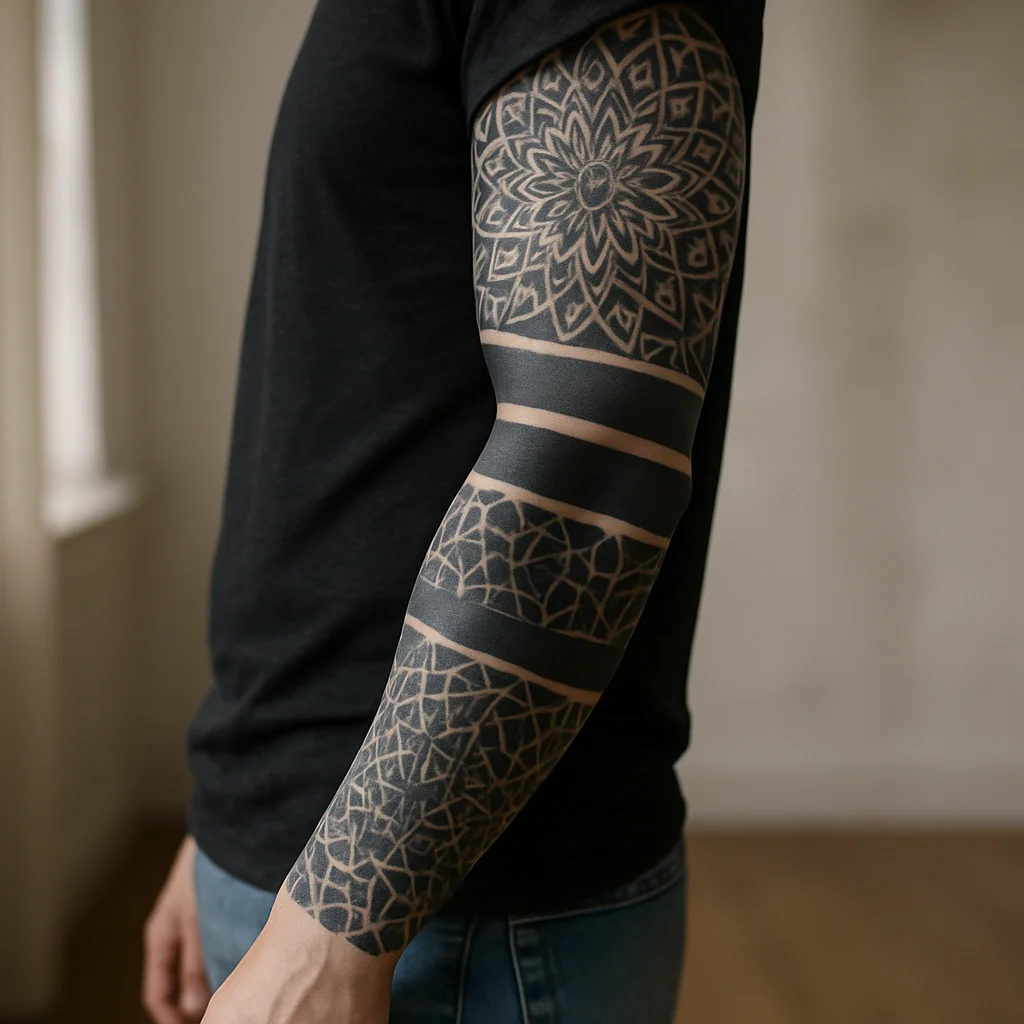
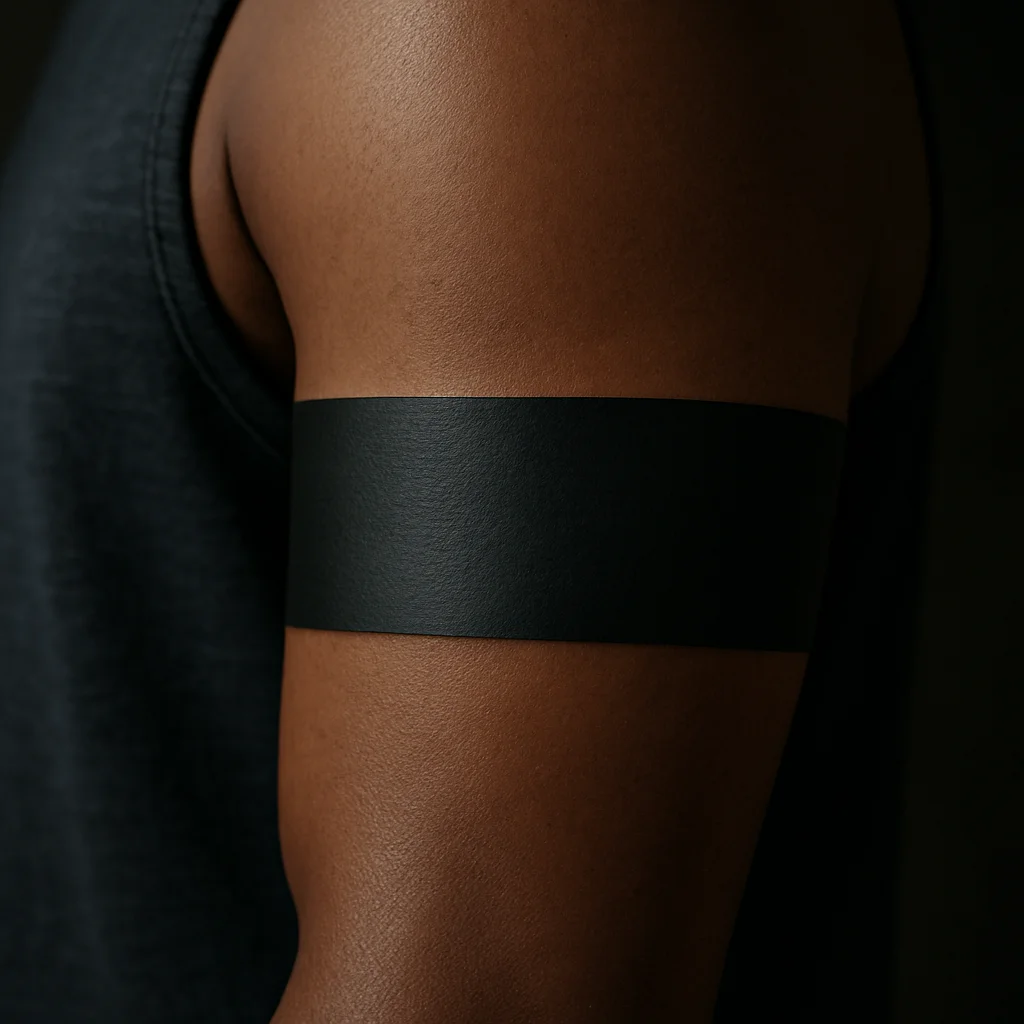
17. Solid blackwork band around the bicep
A clean band, 3 to 6 cm wide, wrapping the whole bicep. Simple in concept, unforgiving in practice: solid black needs a steady hand and often a touch-up, and the inner-arm portion stings. When it heals well, nothing looks more decisive.
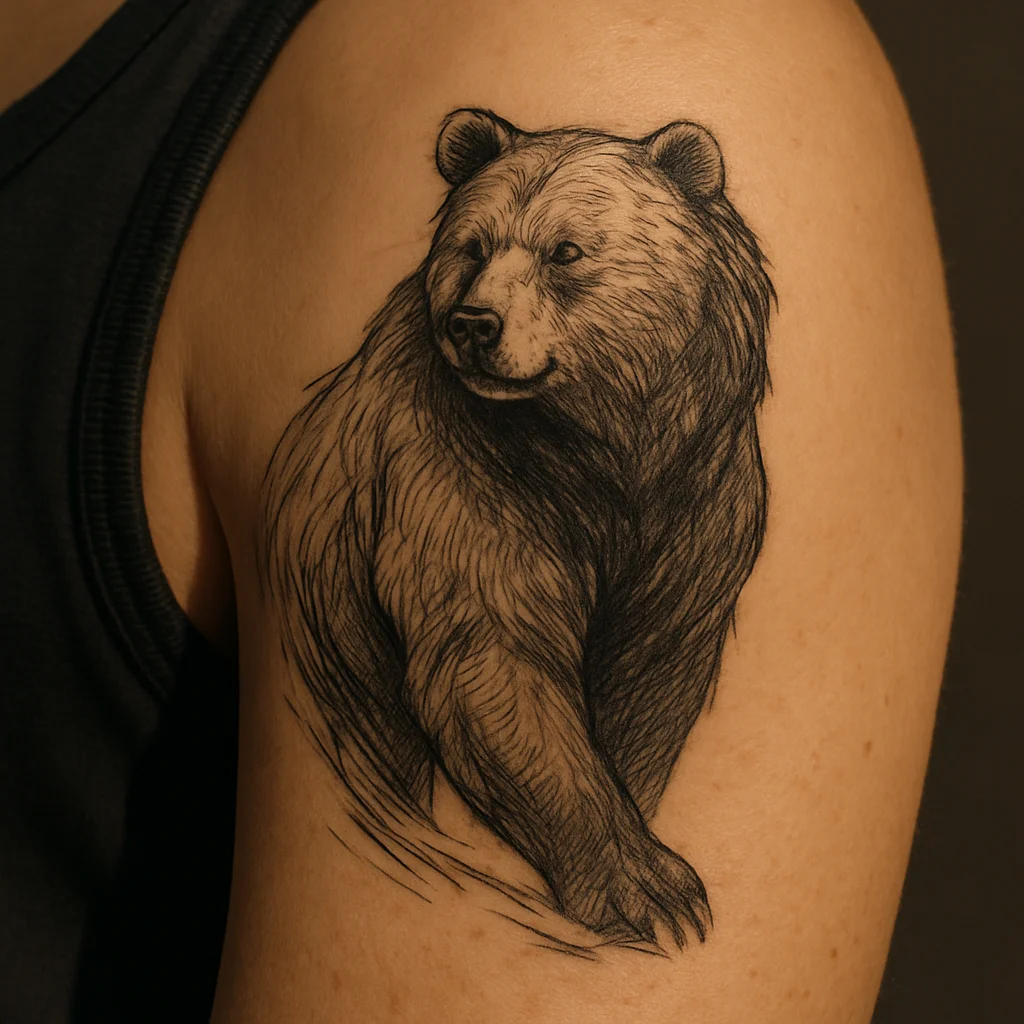
18. Illustrative bear on the outer bicep
The outer bicep gives you a broad, gently curved panel that suits a single large animal at 15 to 20 cm. Ask for the head turned slightly so the shape follows the muscle's curve rather than fighting it. This zone also ages beautifully, because it gets moderate sun and little stretching.
6 Wrist and Hand-Edge Ideas
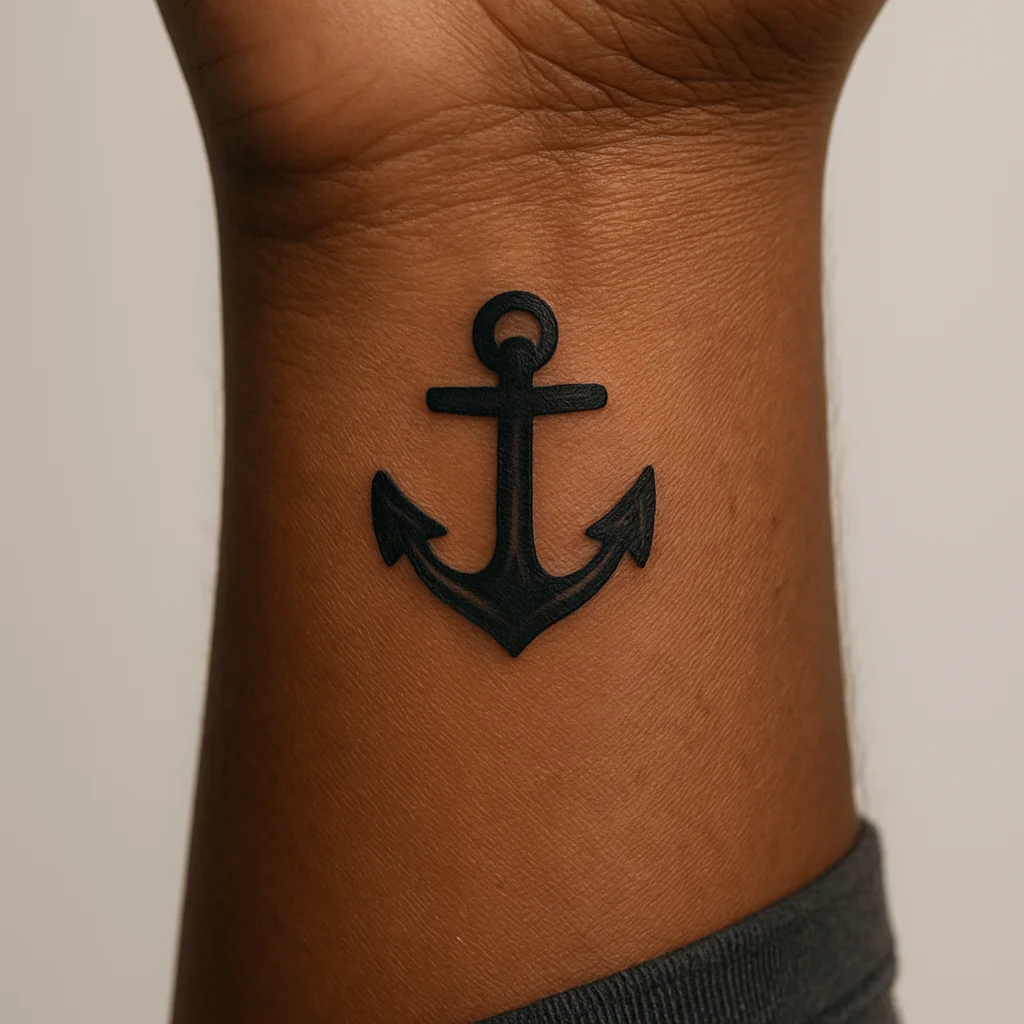
19. Tiny anchor on the inner wrist
A 3 to 4 cm anchor with a slightly heavier outline than looks necessary on paper. The inner wrist takes ink well but the skin is thin over tendons, so expect a sharp, quick sting. Small, bold and simple is the only formula that survives here long-term.
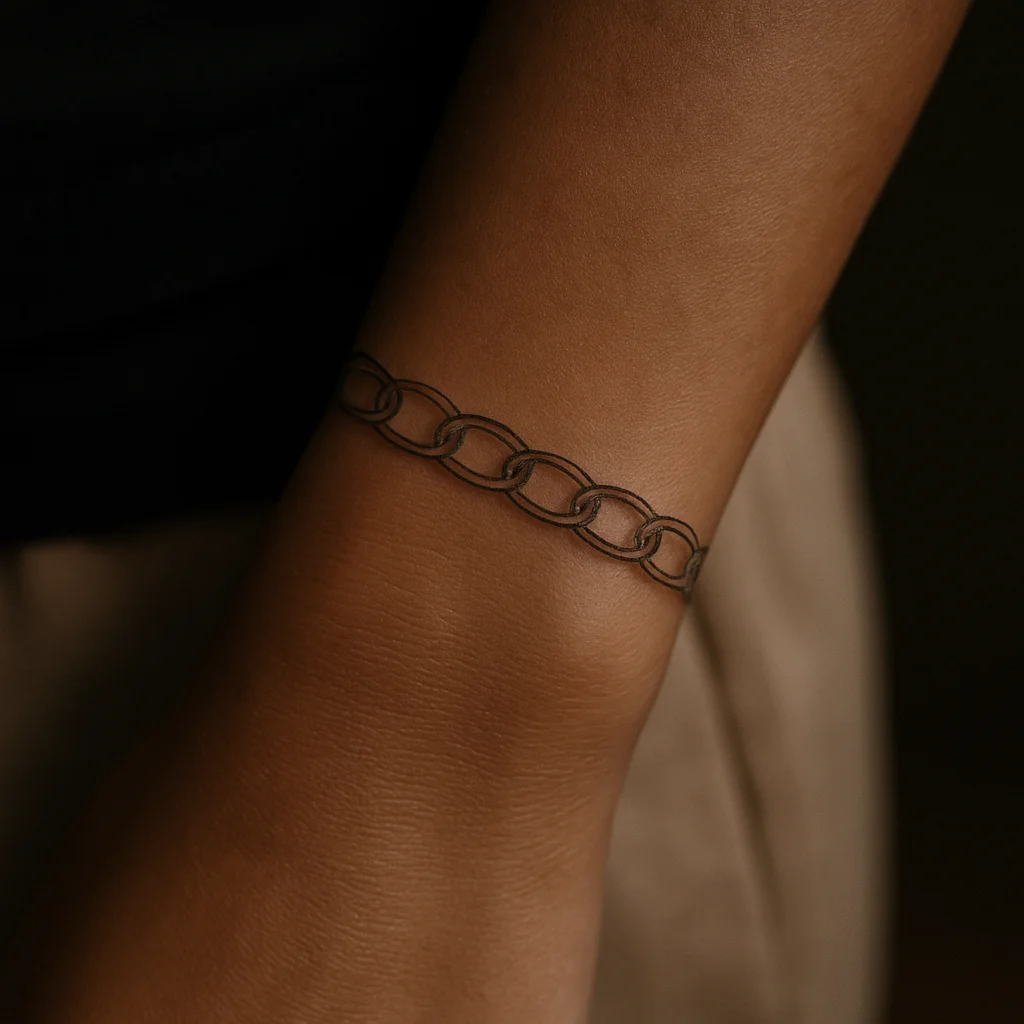
20. Thin chain bracelet along the side of the wrist
A single row of interlocking links running along the wrist's outer edge, stopping before the bone. Because it sits at the edge rather than the front, it half-disappears when your hands are at rest. Ask for links large enough to keep visible gaps as the lines soften.
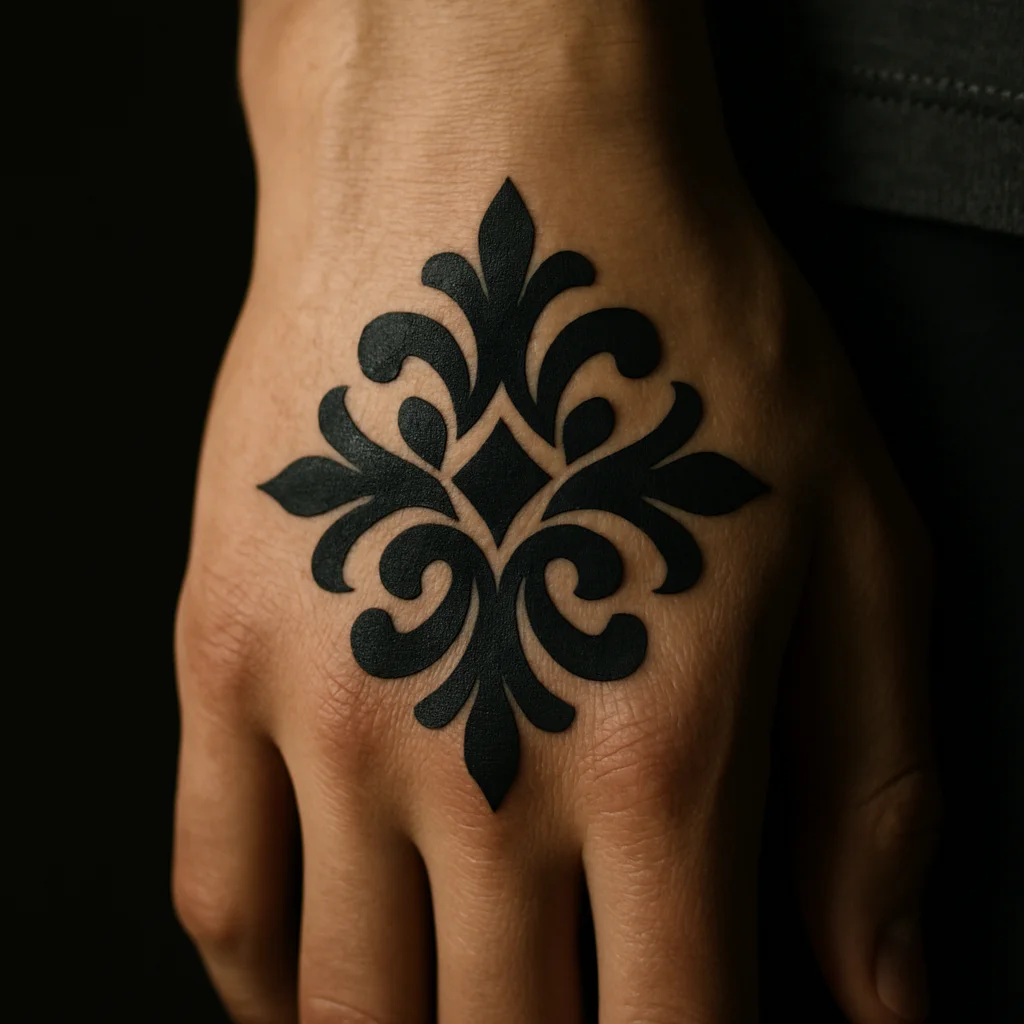
21. Small ornamental motif on the back of the hand
A compact blackwork ornament, no wider than three fingers, set between the knuckles and the wrist. Hands fade faster than anywhere and touch-ups are part of the deal, so choose shapes that still read when slightly blurred. Many artists will only do hands on clients who already have visible work.
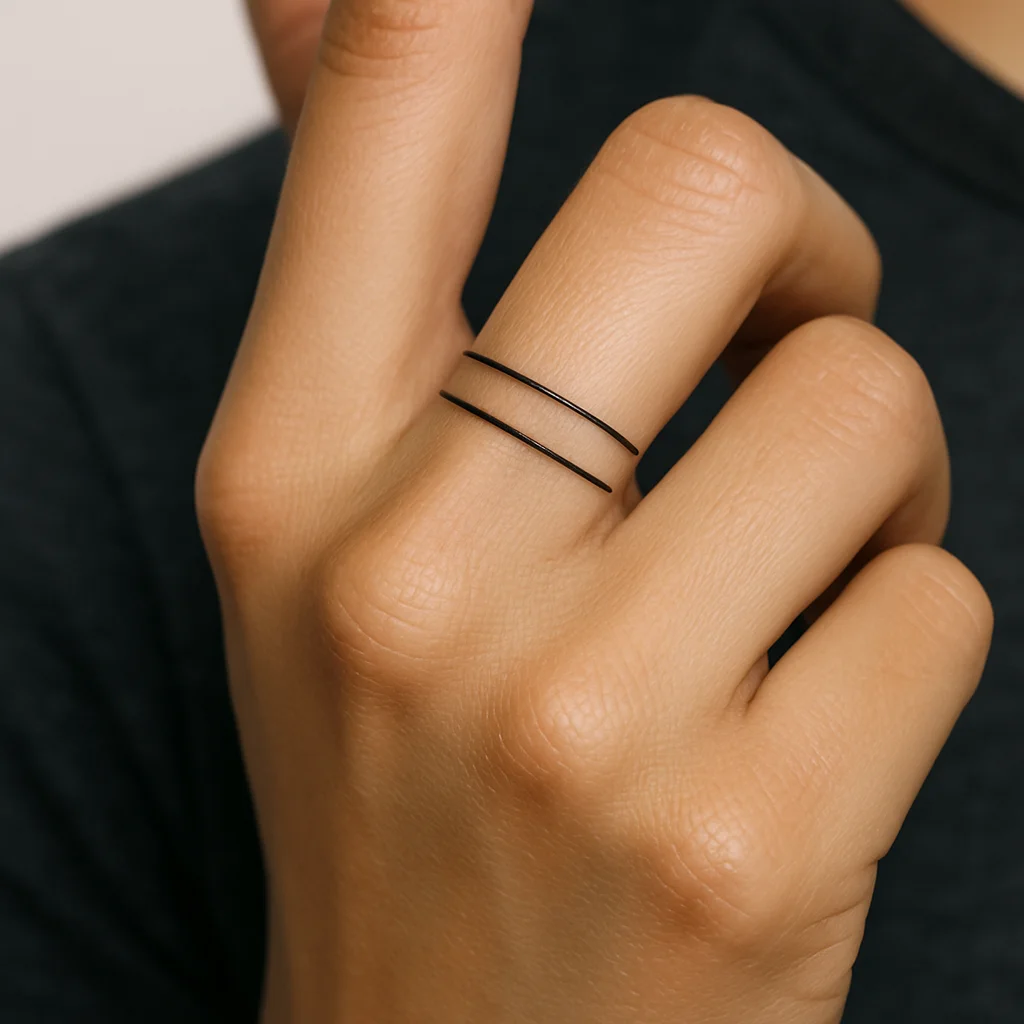
22. Fine band around one finger
One or two clean rules around the base of a finger, or a tiny repeated dash pattern. Fingers are quick, sharp and famously patchy on healing, so go in expecting a second pass. The side of the finger holds better than the top.
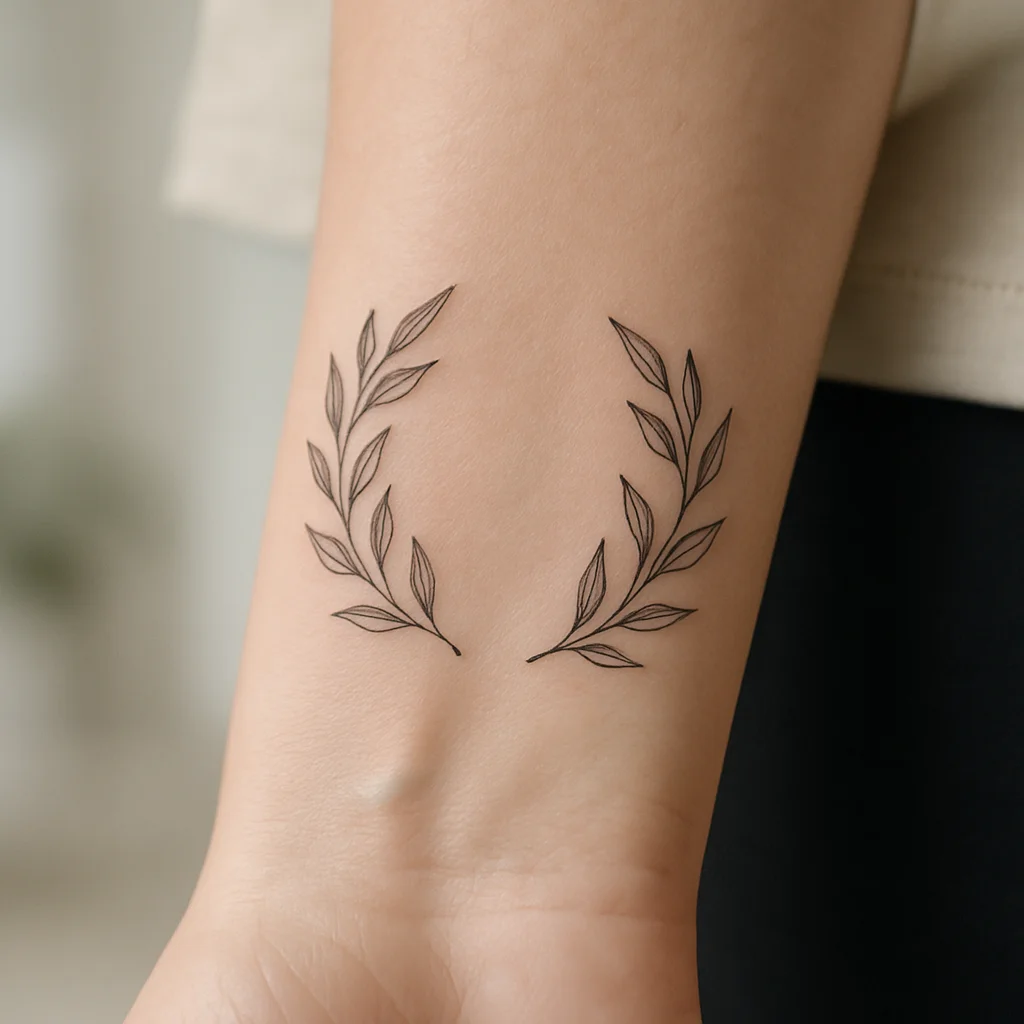
23. Laurel cuff around the wrist
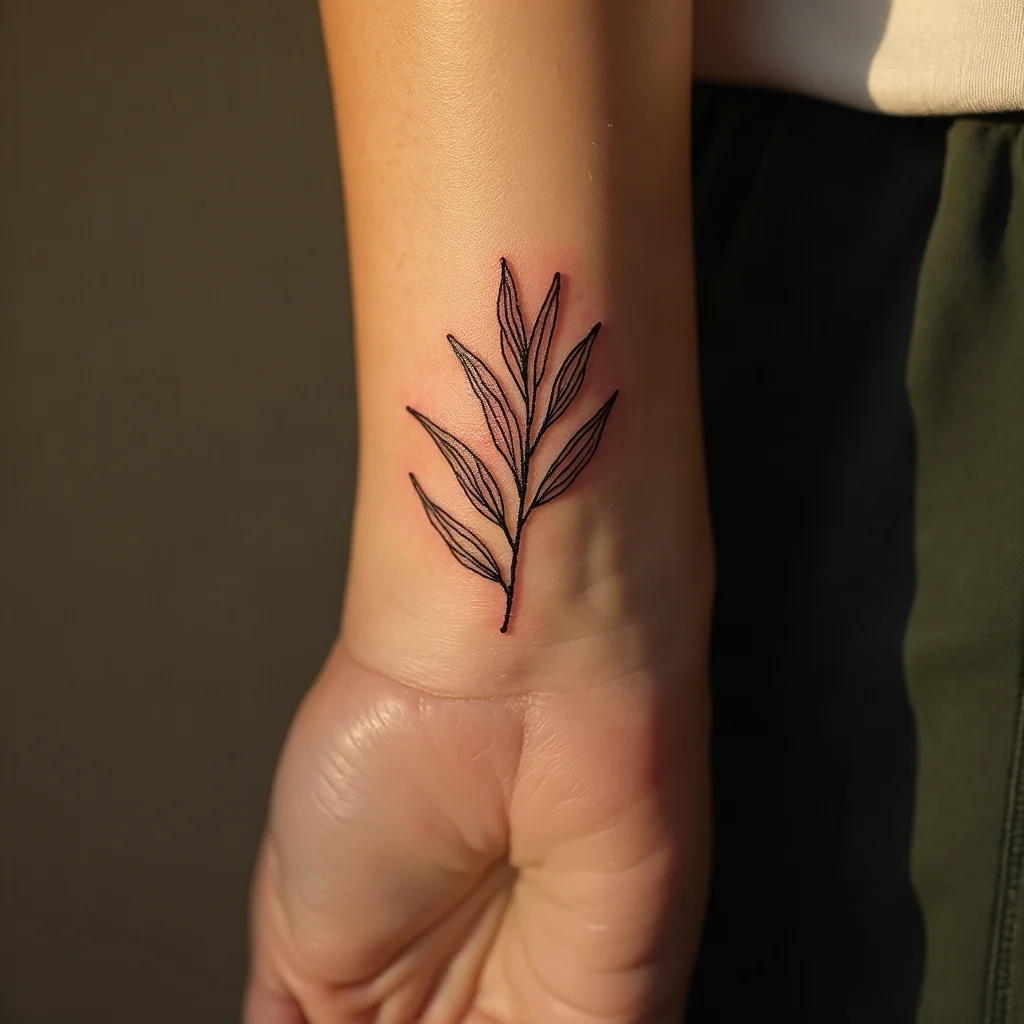
Two sprigs of laurel meeting at the inside of the wrist, forming a bracelet with an intentional gap at the front. At 1.5 to 2 cm tall it stays delicate, and the open gap keeps it from looking like a hospital band. Popular as a second tattoo once someone knows they like the feeling.
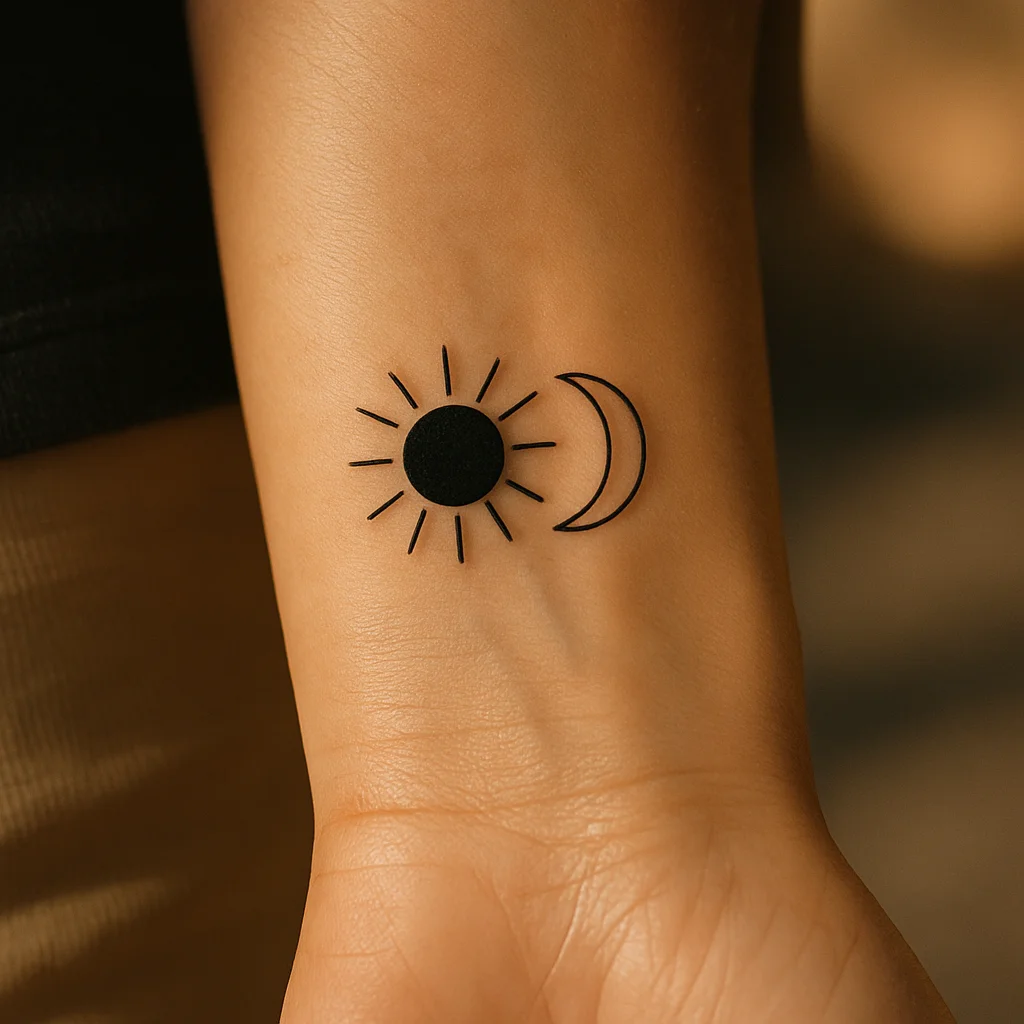
24. Sun and moon on the wrist's underside
Two small facing shapes, one filled and one outlined, sitting side by side just above the palm crease. Around 4 cm total, it faces the wearer rather than the room. Keep it above the crease itself, because tattoos across a flexing fold rarely stay solid.
6 Full-Arm and Wrap Compositions
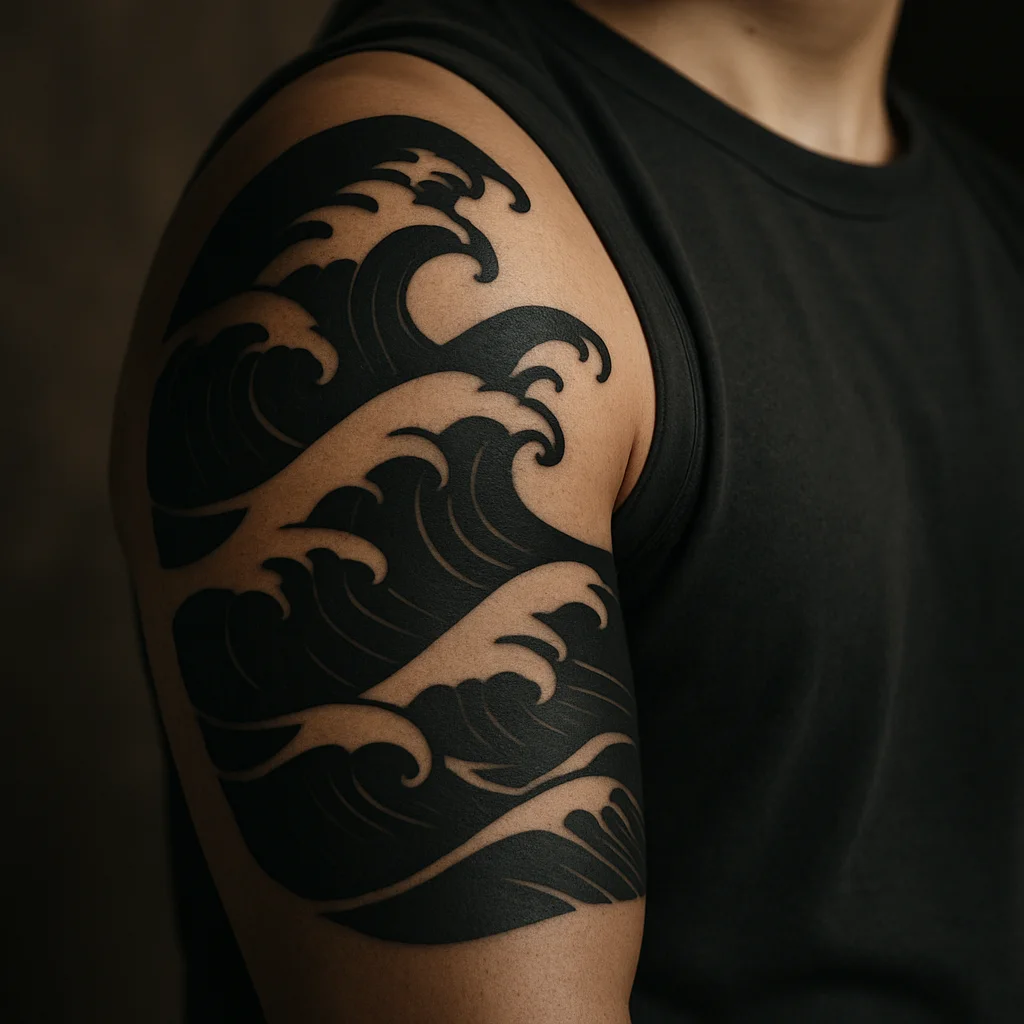
25. Blackwork wave half sleeve
Stylised waves from the shoulder to the elbow, linked by deliberate negative space so skin becomes part of the design. Because the pattern is abstract, the artist can adjust it live to your arm's shape. Usually two to four sessions, and it hides scars or older work well.
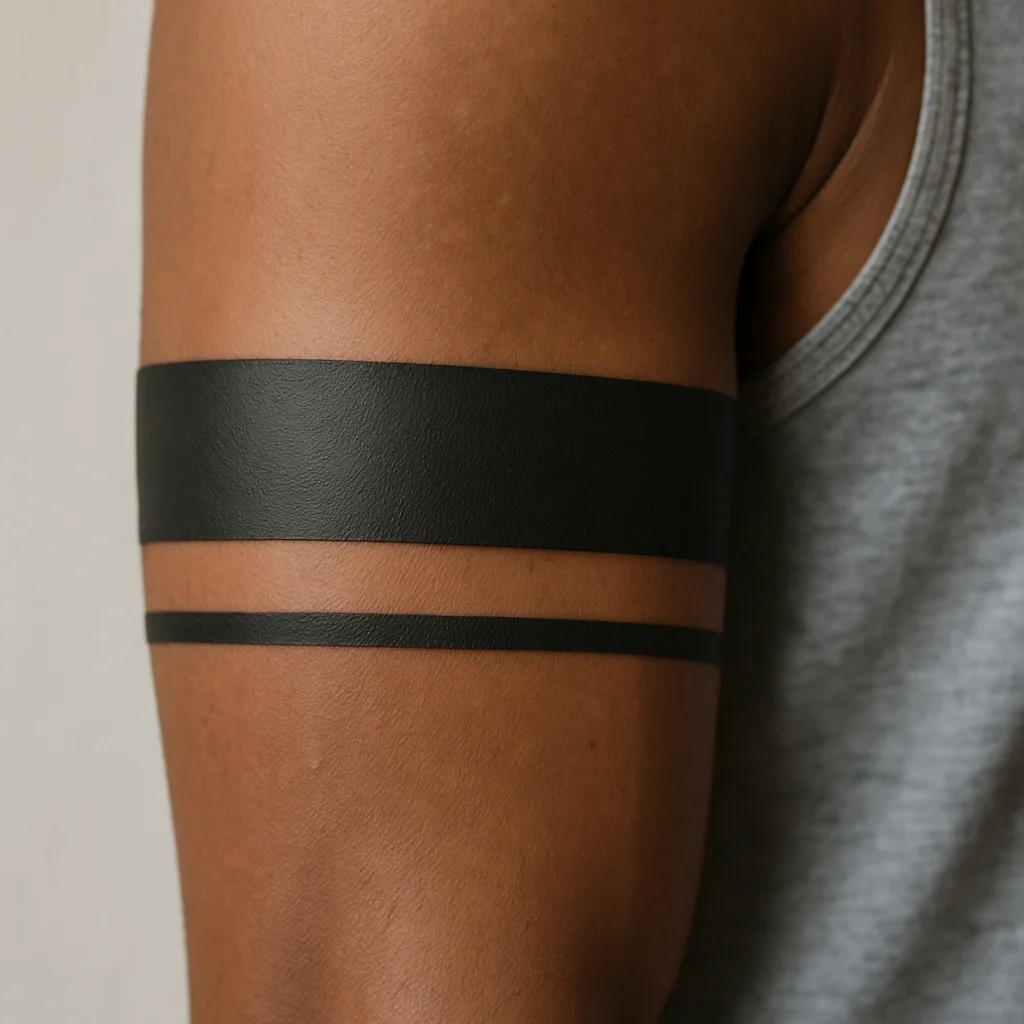
26. Two-tier armband above the bicep
One wide solid band with a thinner rule below it, sitting high on the upper arm where a T-shirt sleeve ends. The proportion trick is to make the gap between bands narrower than either band. Clean, graphic and surprisingly flattering on a muscular arm.
27. Botanical wrap from wrist to elbow
A vine or eucalyptus branch spiralling once or twice around the forearm, with leaves thinning as it approaches the wrist. It gives you movement without committing to a dense sleeve. Ask the artist to stencil it with your arm relaxed at your side, then check it with the arm raised.
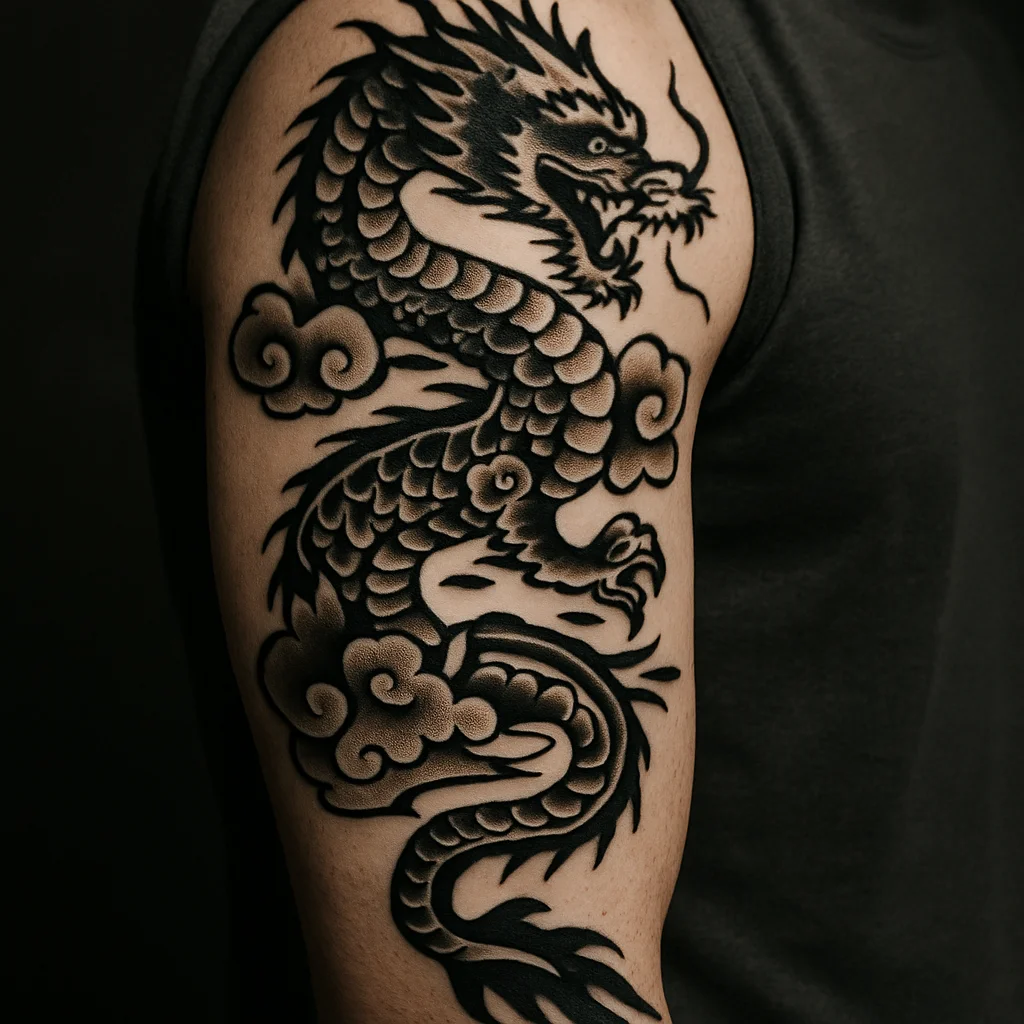
28. Dragon running shoulder to wrist
The classic full-arm solution: head on the shoulder or the back of the hand, body spiralling along the limb, filler clouds or wind bars carrying it through the elbow. It is the single most reliable way to make an entire arm read as one piece. Expect multiple long sessions and a real budget.
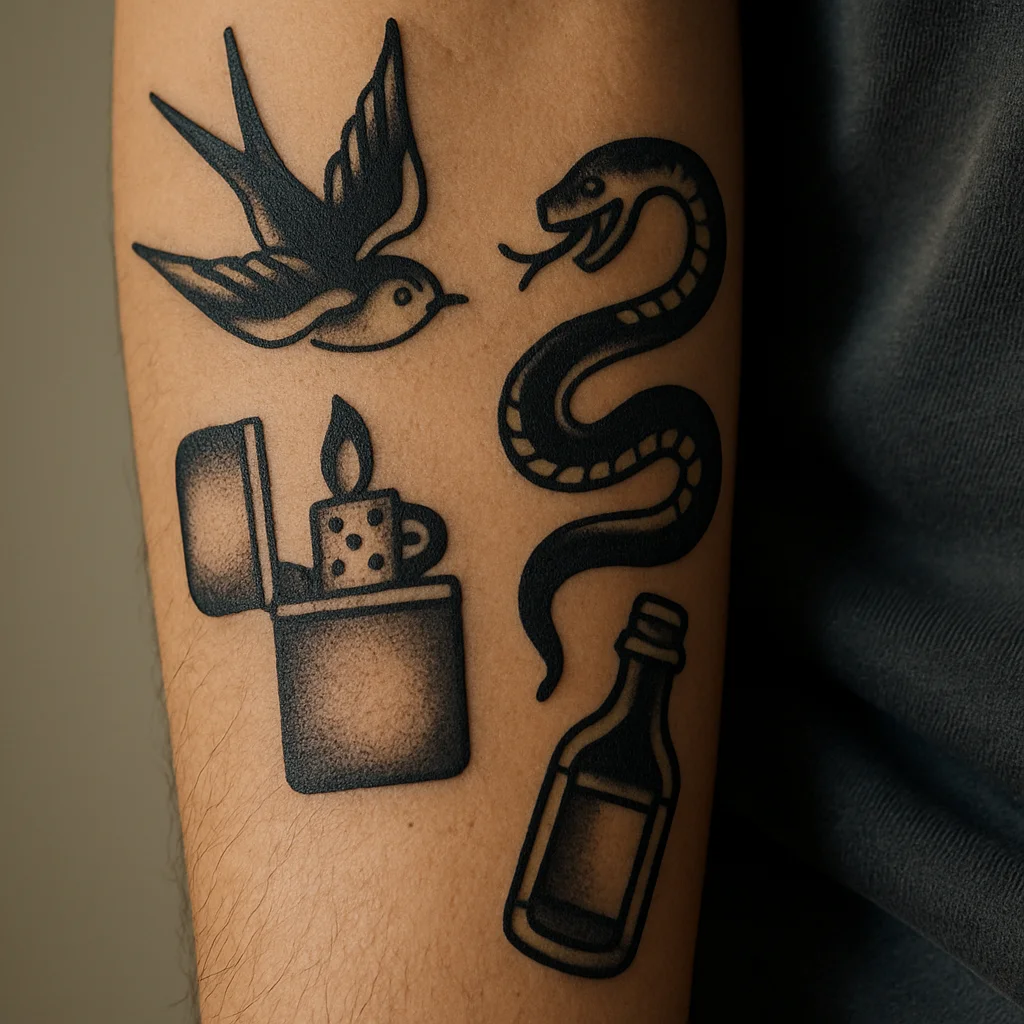
29. Patchwork arm of separate traditional pieces
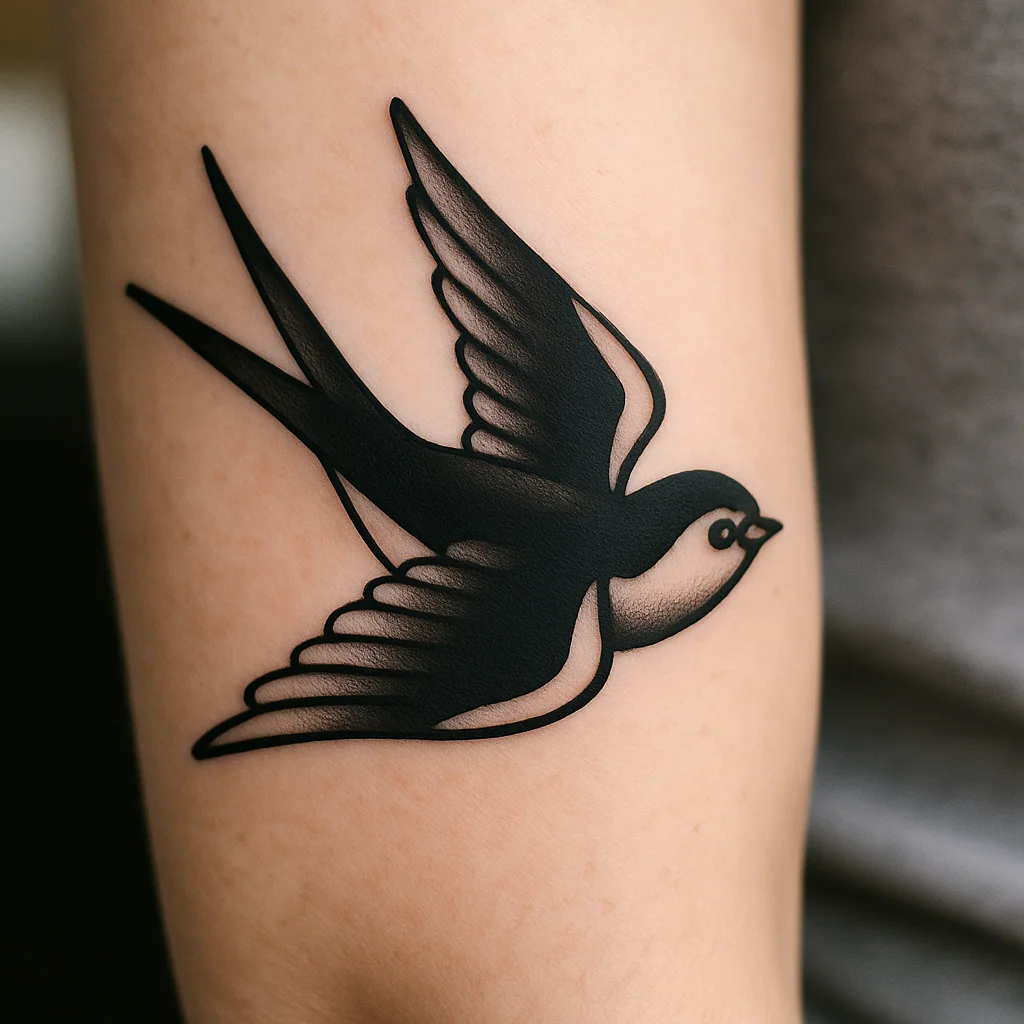
A swallow, a lighter, a snake, a bottle, each with its own outline and open skin between them, spread across the forearm and bicep. It grows tattoo by tattoo, which suits people who collect rather than plan. Keep line weights and colour palette consistent so it looks curated instead of accidental.
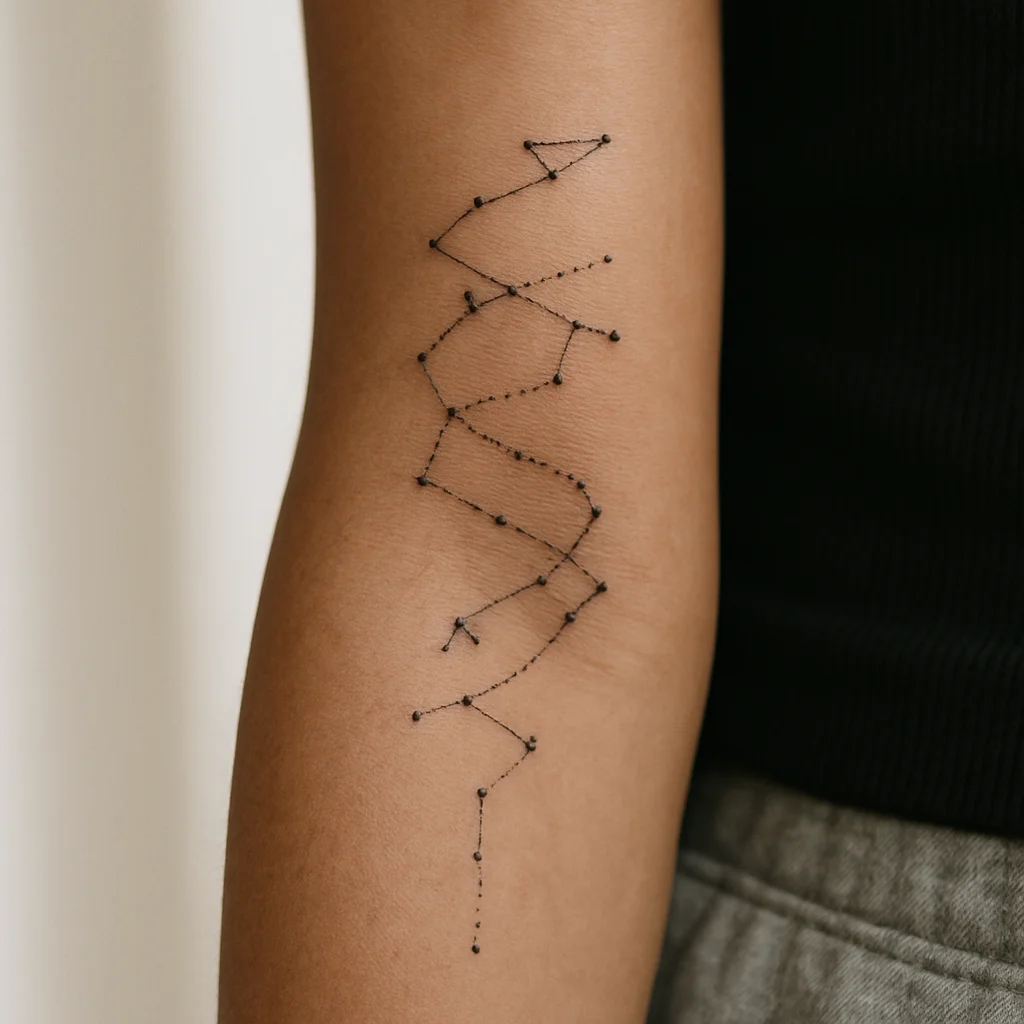
30. Spiralling constellation column
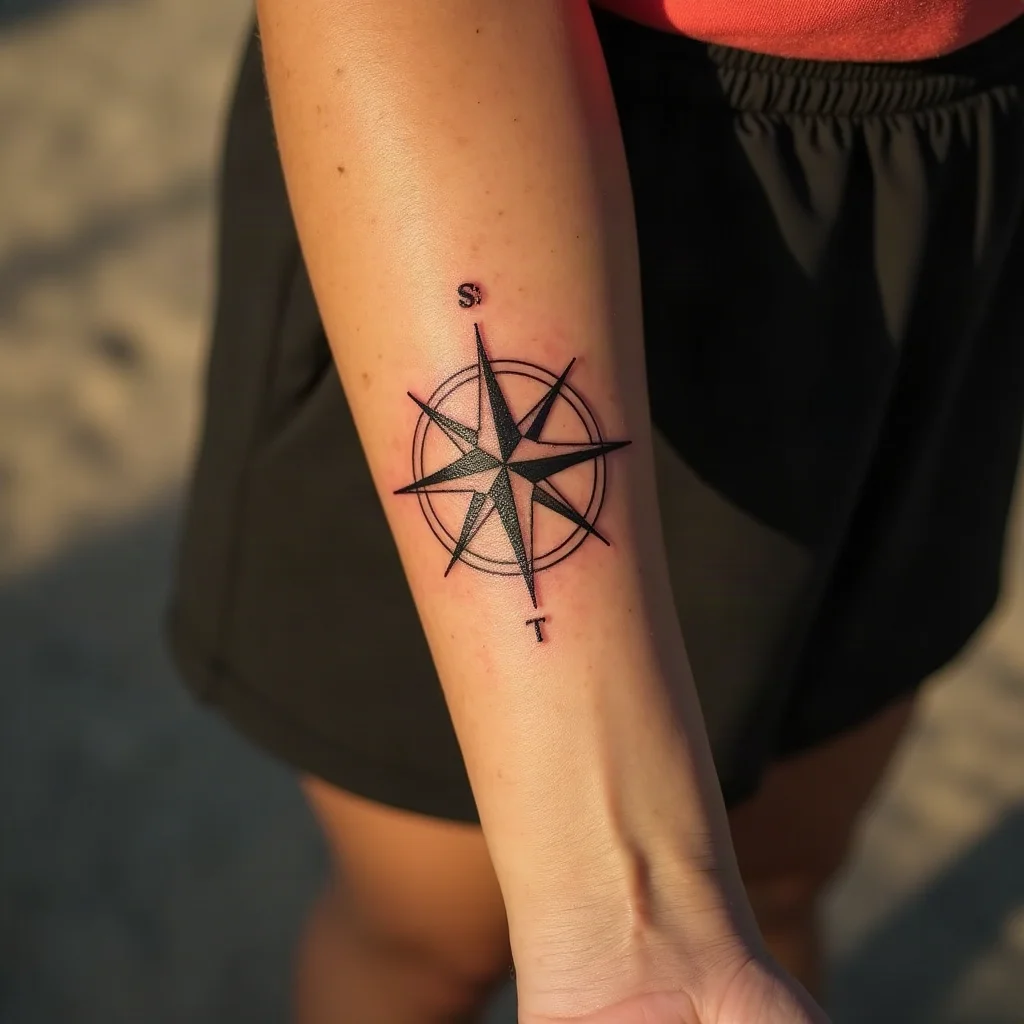
Fine dots and hairline links forming star patterns that wind from the inner wrist up around the forearm to the bicep. Delicate at close range, almost jewellery-like at a distance. Build in touch-ups from the start, because the thinnest single-needle dots are the first details to soften.
Pain, Cost and Aftercare on the Arm
The arm is the most-tattooed limb for good reason, but it is not uniformly comfortable. Roughly in order of easiest to hardest: outer bicep and shoulder cap, outer forearm, tricep, inner forearm, inner bicep, elbow ditch, elbow point, wrist and hand. Bone-close spots feel sharp and vibrate; soft inner-arm skin feels hot and stingy. Most people find a two to three hour forearm session very manageable.
On money, think in ranges. A small bold piece on the forearm usually lands in the low hundreds thanks to shop minimums, a detailed half-day forearm design runs several hundred, and a full arm built over multiple sessions climbs into the low thousands, more with a sought-after artist or heavy colour. Hourly rates vary hugely by city, so ask for an estimate in sessions, not just per hour.
Healing on the arm is straightforward if you respect two things: friction and sun. Long sleeves rub, gym equipment presses, and car-window sunlight hits the outer forearm daily. Wash gently twice a day, keep the moisturiser thin, and stay out of pools and direct sun for two to three weeks. Once healed, sunscreen is the difference between crisp lines at ten years and a soft grey smudge. Our 30-day aftercare guide covers the timeline in detail.
If you are unsure where to start, book a palm-sized bold traditional swallow on the outer forearm. It teaches you what the needle feels like, heals fast, sits in a zone that ages well, and it can later be absorbed into a bigger arrangement rather than blocking it.
Frequently asked questions
Which part of the arm hurts least for a first tattoo?
The outer bicep, shoulder cap and outer forearm are the kindest spots, with muscle underneath and no bone right at the surface. The inner bicep, elbow ditch, elbow point and wrist are noticeably sharper. If you are nervous, start on the outer forearm with a session under three hours.
Do inner bicep and inner forearm tattoos blur faster?
Inner-arm skin is softer and slightly stretchier, so very fine detail can spread there more than on the outer forearm. It is not a reason to avoid the area, just a reason to size up a little and ask for slightly heavier line weights. Bold, simple shapes on the inner bicep stay readable for decades.
How big should a forearm tattoo be?
Most standalone forearm designs work between 10 and 20 cm along the length of the arm. Anything wider than about four fingers will start to wrap around the limb, meaning part of it is always hidden. Vertical and diagonal compositions almost always sit better than wide horizontal ones.
Can I start with one arm tattoo and turn it into a sleeve later?
Yes, if you place the first piece thoughtfully. Tell your artist at the consultation that a sleeve is possible so they can position it as an anchor rather than an obstacle, ideally on the outer forearm or shoulder cap. Consistent line weight and a shared style across early pieces make later connecting work far easier.
How do I keep an arm tattoo looking sharp?
Daily sunscreen once healed is the single biggest factor, especially on the outer forearm, which catches sunlight constantly. Keep the skin moisturised, avoid long sun exposure, and expect hand, wrist and finger work to need touch-ups every few years. Bold linework holds up better than the thinnest single-needle detail.
The conversation
No comments yet. Got a thought about these designs? Start us off.
Want to weigh in? Join the community to comment, save designs and try them on your skin.