Hand Tattoos for Men: 26 Ideas Built to Last
Hands fade faster than anywhere else on the body, so the design has to be built for it. Here are 26 hand tattoo ideas for men sorted by zone, with real guidance on line weight, pain, cost and touch-ups.
Why the hand punishes bad design choices
Hand skin behaves differently from anywhere else you can get tattooed. It regenerates quickly, it gets washed and scrubbed dozens of times a day, it lives in direct sun on the steering wheel, and it stretches and folds constantly across the knuckles and thumb web. All of that works against ink. A hand piece that looked crisp at three weeks can look soft and patchy at three years unless the design was drawn with that fade built in.
The practical translation is simple: bold lines, generous spacing, big shapes. Anything that relies on hairline detail, tight parallel lines, or delicate grey wash will blur into a smudge. Artists who do a lot of hands usually work with a heavier line weight than they'd use on a forearm, and they leave visible gaps between elements so the design still separates once everything spreads a little.
Two other realities worth knowing before you book. First, plenty of respected artists won't tattoo hands on someone with no other visible work, not out of snobbery but because they've watched people regret the most visible tattoo they own. Second, the sides of the hand, the palm, and the inner surfaces of the fingers hold ink worst of all. Those spots can drop 30 to 60 percent of their crispness on the first heal, and one or two touch-ups is normal, not a failure.
Also think about your job honestly. Hands are the one placement long sleeves can't cover.
Back of the hand: the eight designs that hold up best
The back of the hand is the most forgiving surface you've got here — reasonable skin thickness, a flat-ish plane, and enough room for a single strong image. Treat it as one composition rather than a collection of small pieces.
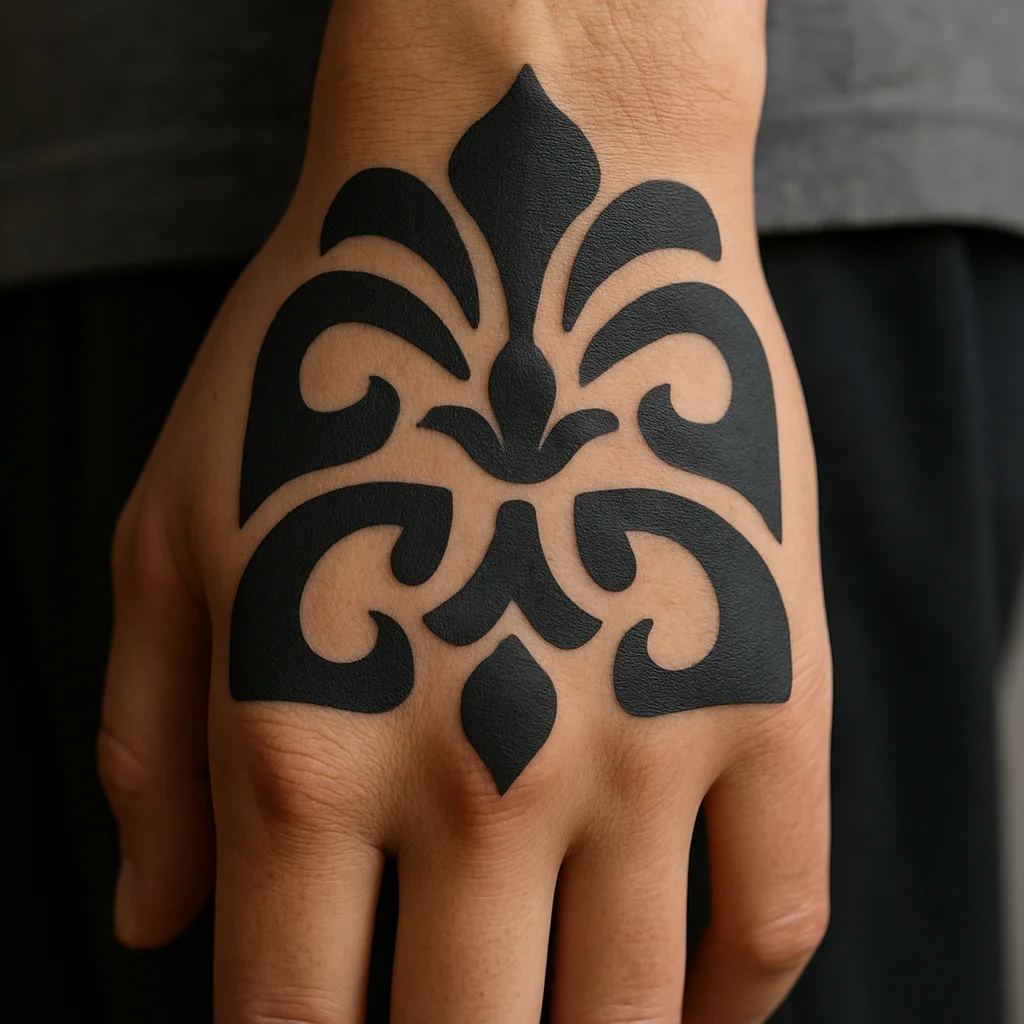
1. Ornamental shield across the metacarpals
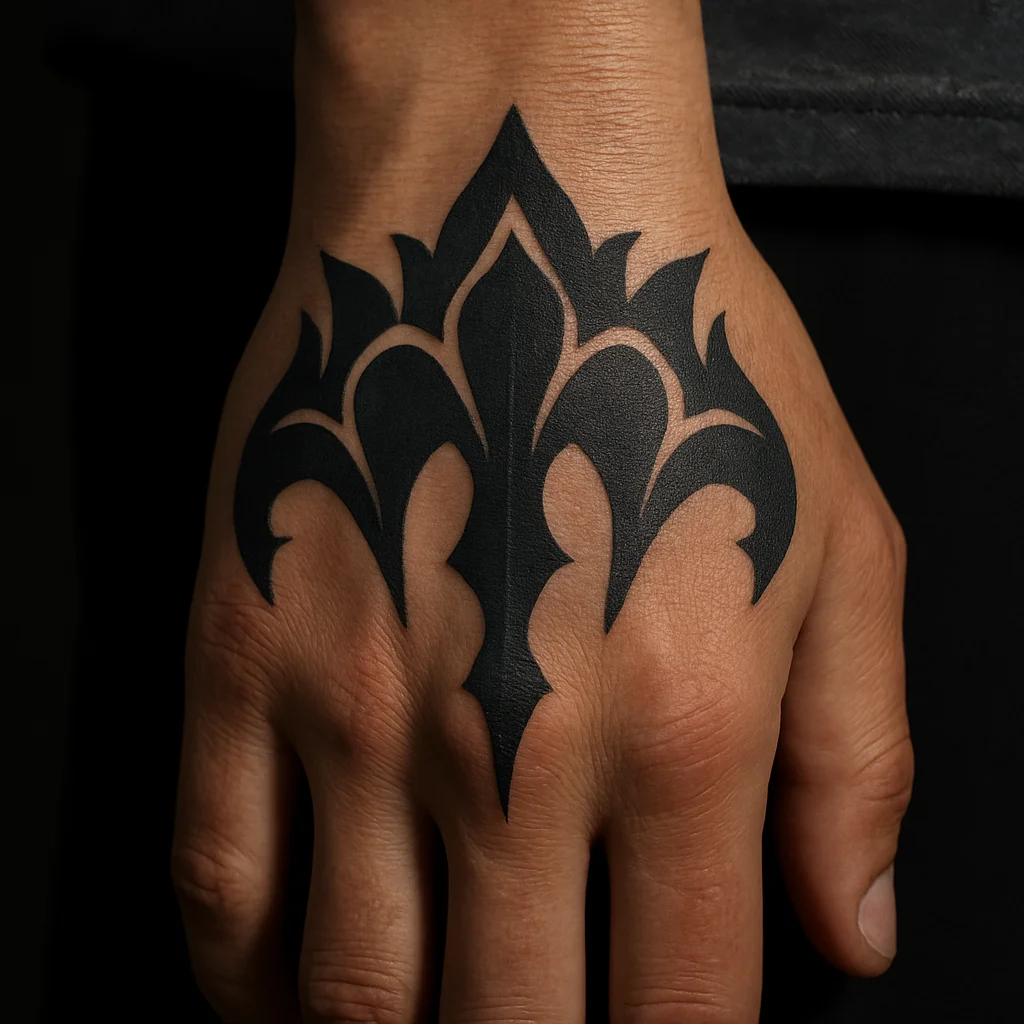
A symmetrical blackwork ornament — think dagger-tip arches, paisley curls and solid black wedges — laid over the back of the hand and pointing toward the wrist. It reads as intentional jewellery rather than a random image, and the heavy black areas age better than fine filigree. Best for men who already have forearm work to lead into it.
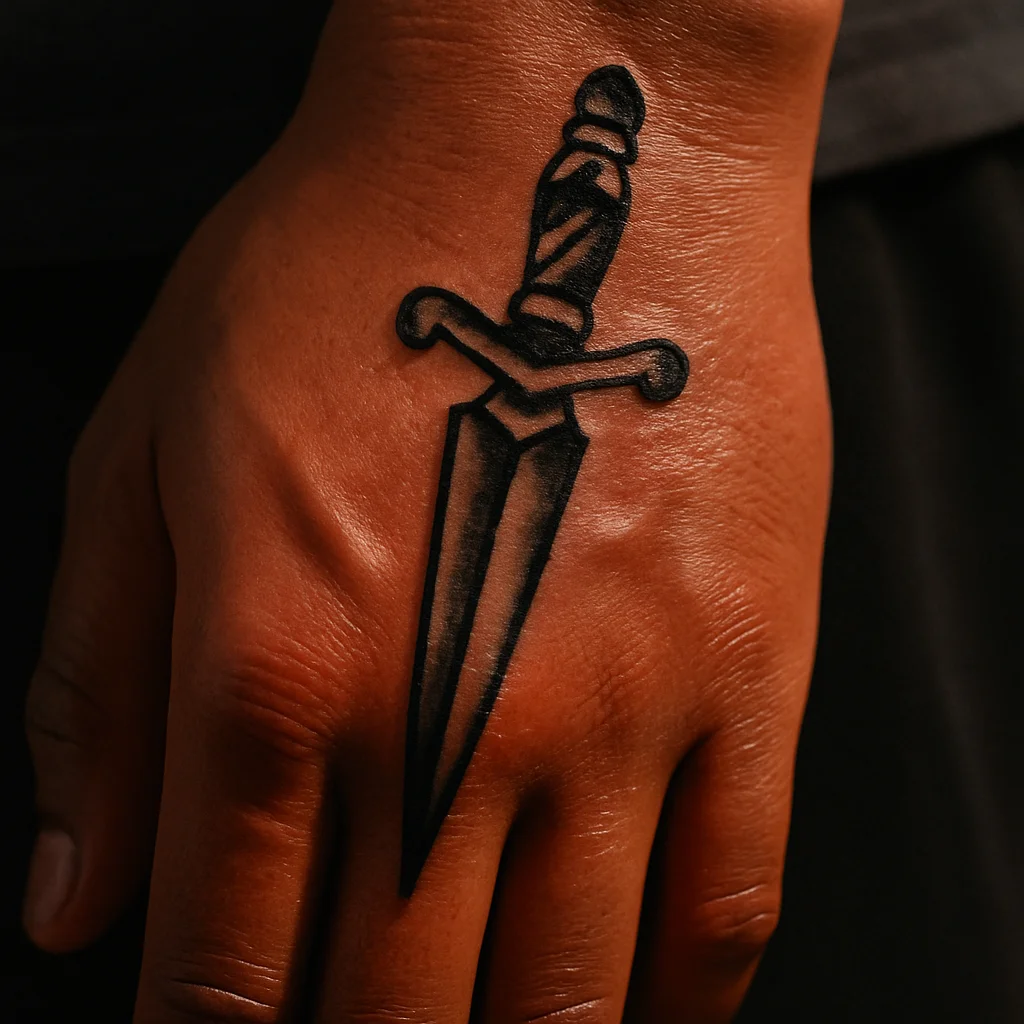
2. Traditional dagger pointing toward the wrist
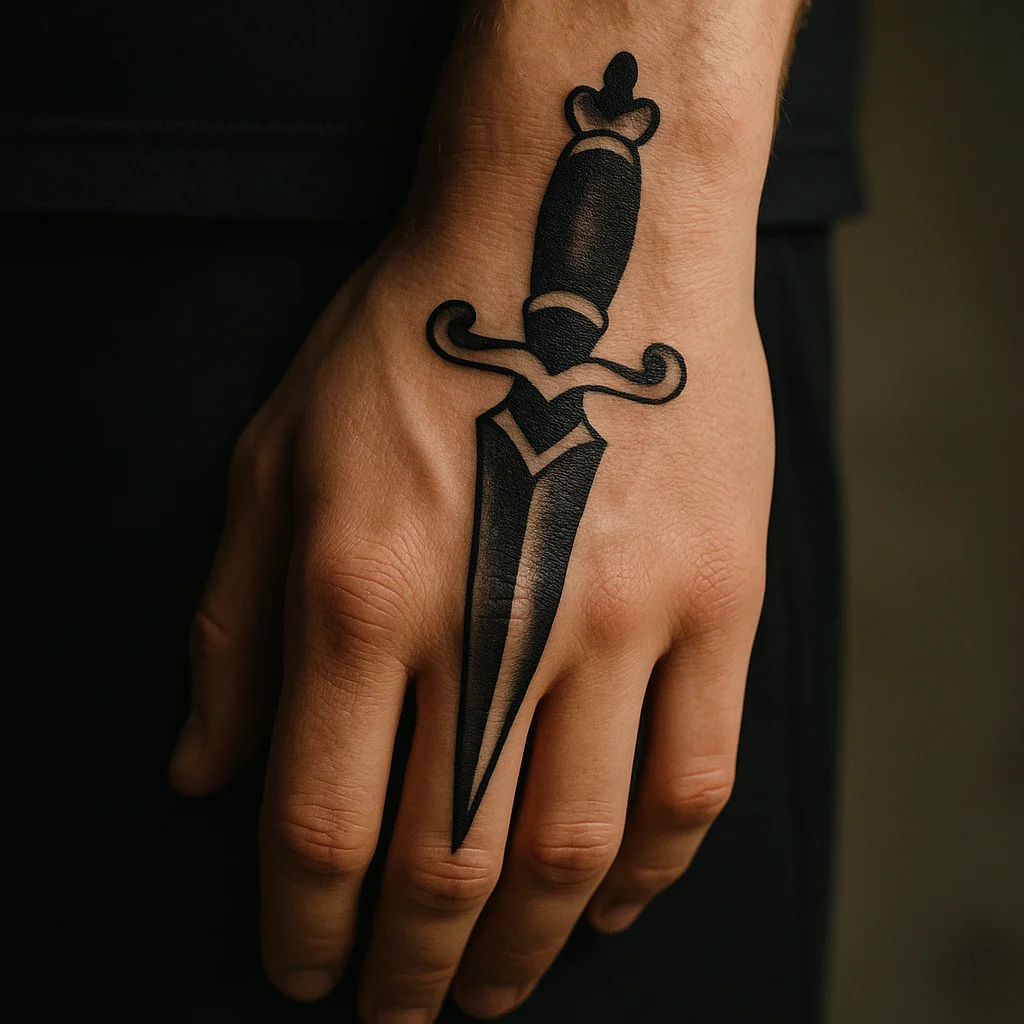
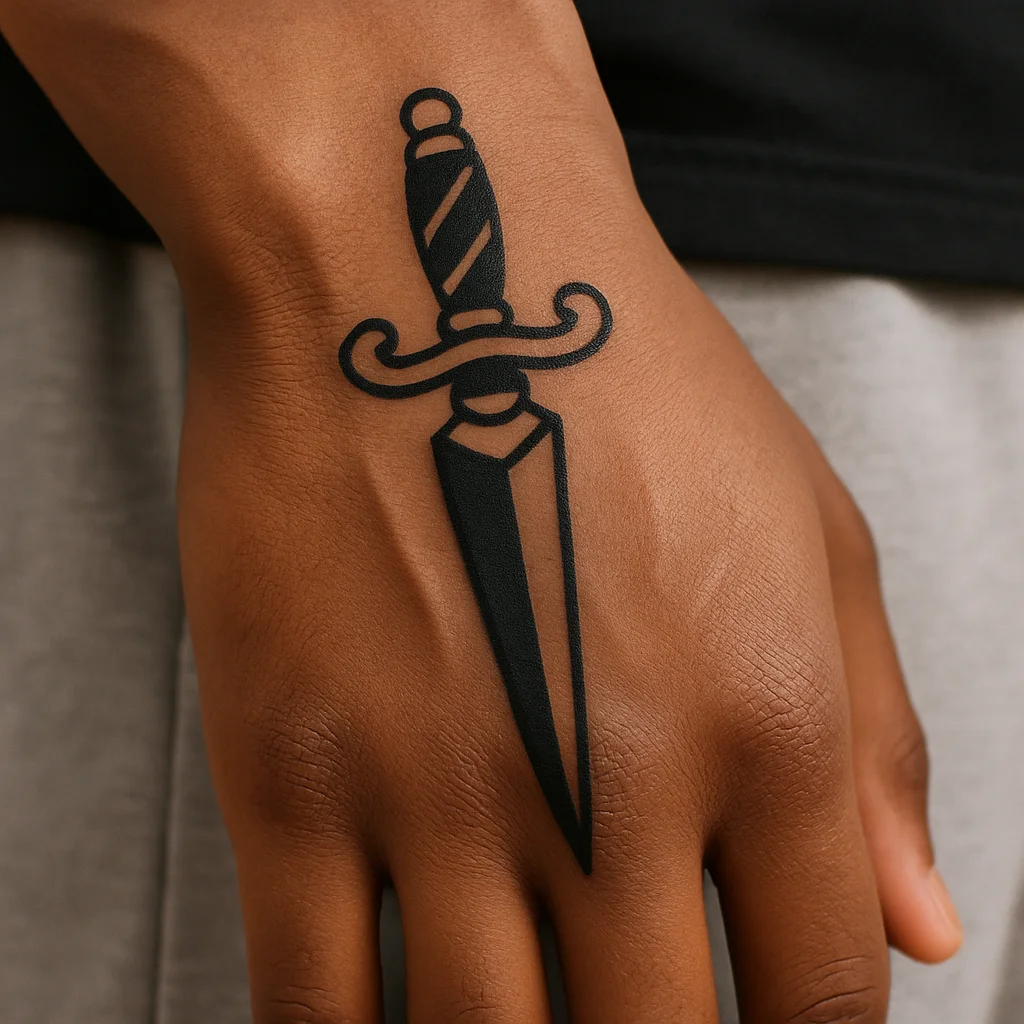
A classic bold-line dagger, blade down, running from the base of the middle finger to the wrist crease. Thick outlines, a small amount of solid black shading on the handle, no colour blending. It suits narrow hands because the vertical shape flatters the tendons instead of fighting them.
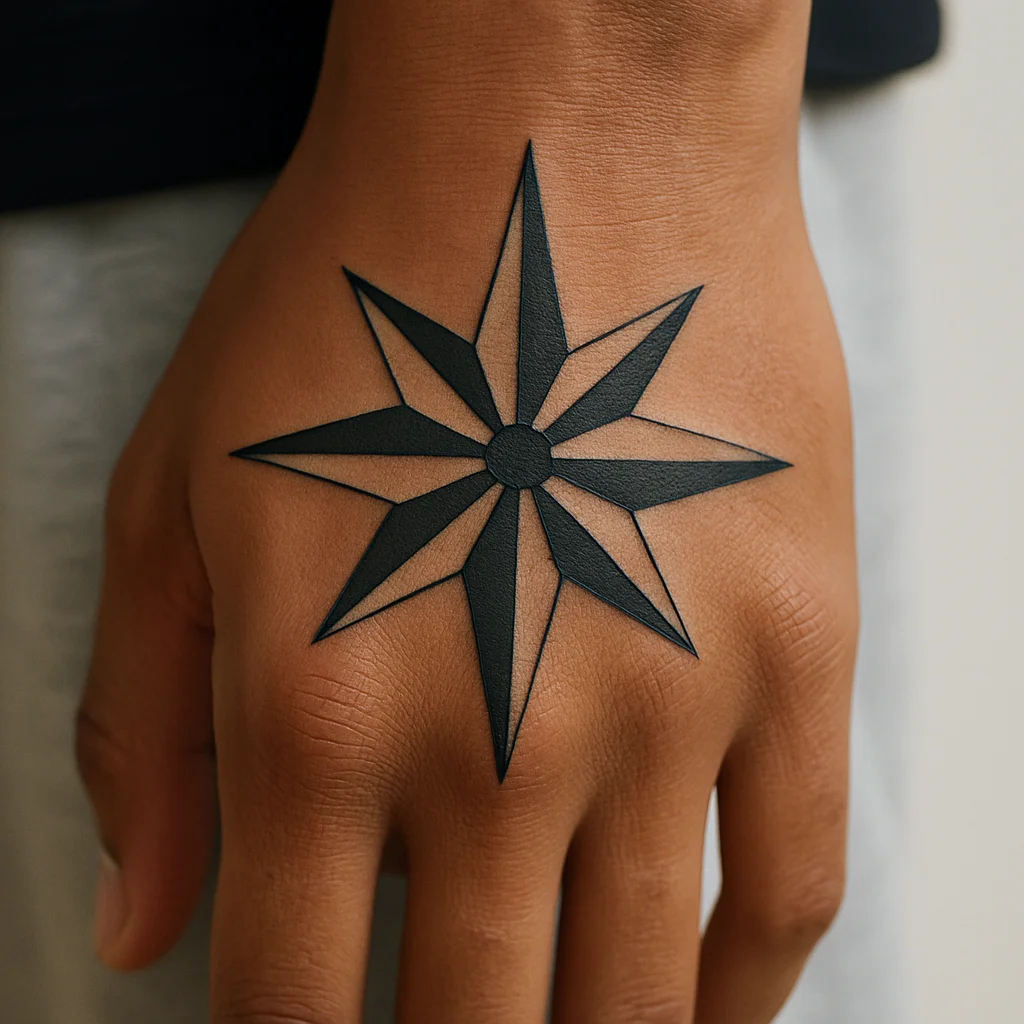
3. Geometric compass rose centred on the hand
Eight points, a solid black centre, and clean straight rays that stop before the knuckles. Geometry lives or dies on symmetry, so ask your artist to stencil it with your hand flat and again with your fist closed. Works especially well for travel-themed arms already in progress.
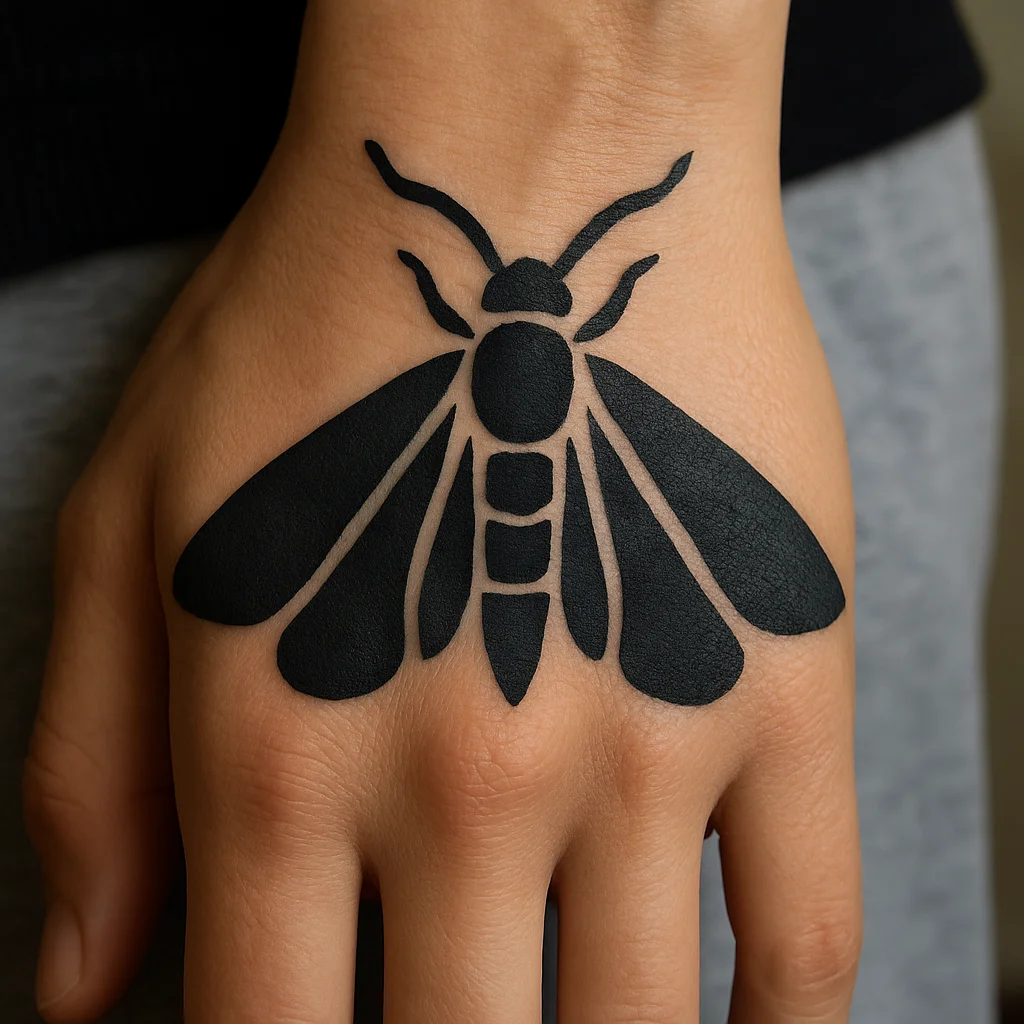
4. Bold-line moth with wings across the tendons
A moth with the body running down the centre line and wings spreading toward the thumb and pinky edges. Keep the wing pattern chunky — two or three shapes per wing, not twenty. It fills the hand generously without needing a single fine line.
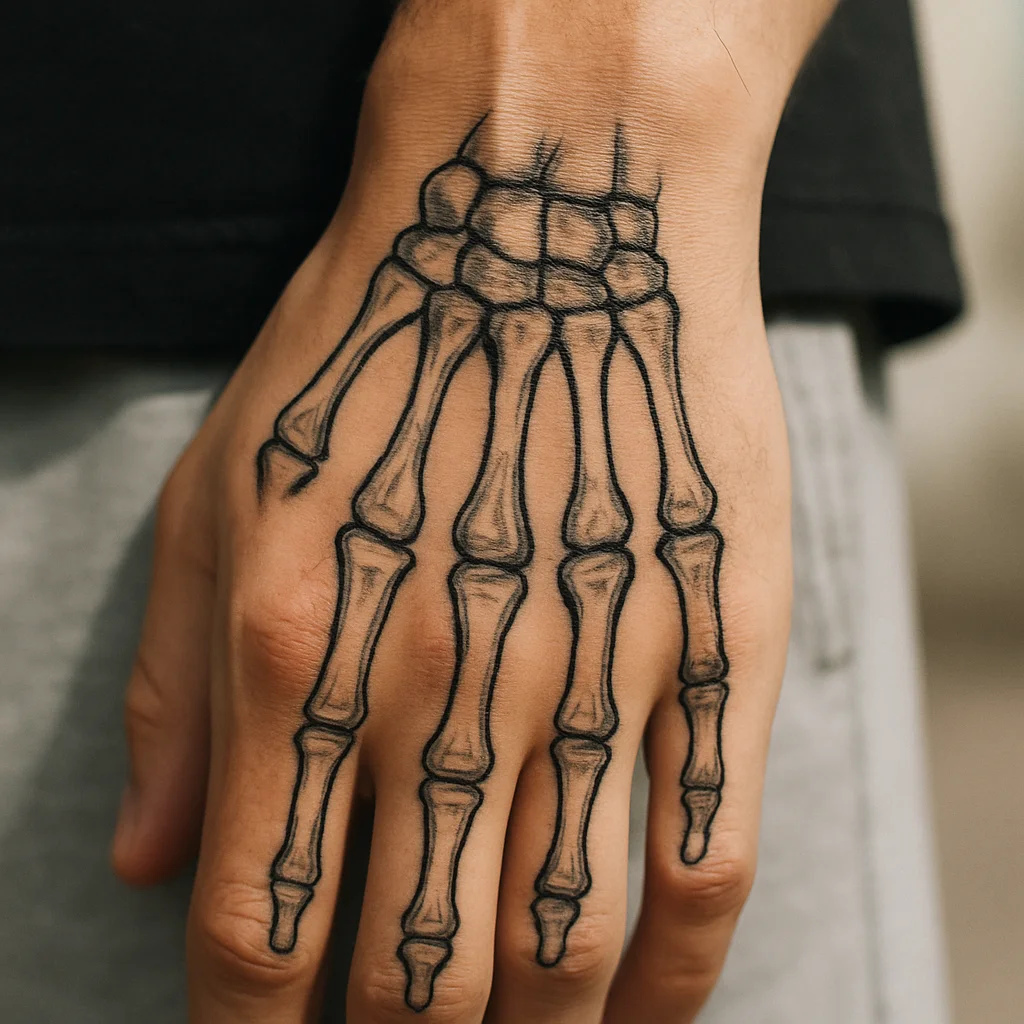
5. Skeleton hand overlay
Anatomical bones drawn to sit roughly over your own metacarpals and finger joints. It's a commitment piece and a favourite in blackwork circles because thick bone outlines and solid black gaps between them age unusually well. Ask for slight stylisation rather than a medical illustration.
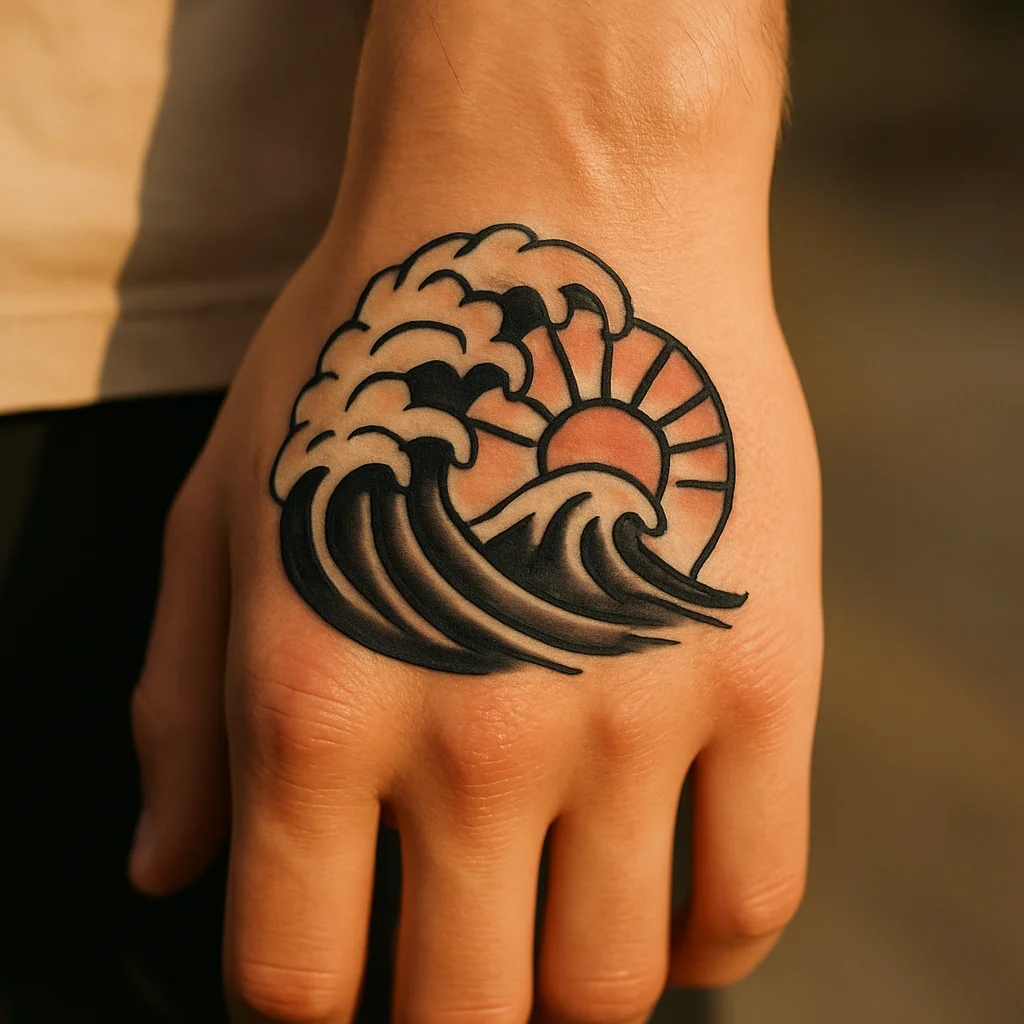
6. Japanese wave with a rising sun
A single curling wave with a few bold foam claws and a sunburst behind it, sized to the back of the hand as one panel. This is the standard way Japanese sleeves finish, and the strong outline-plus-black-fill logic of the style is exactly what hands need. Plan it with whatever is already on your forearm.
7. Blackout wedge with negative-space linework
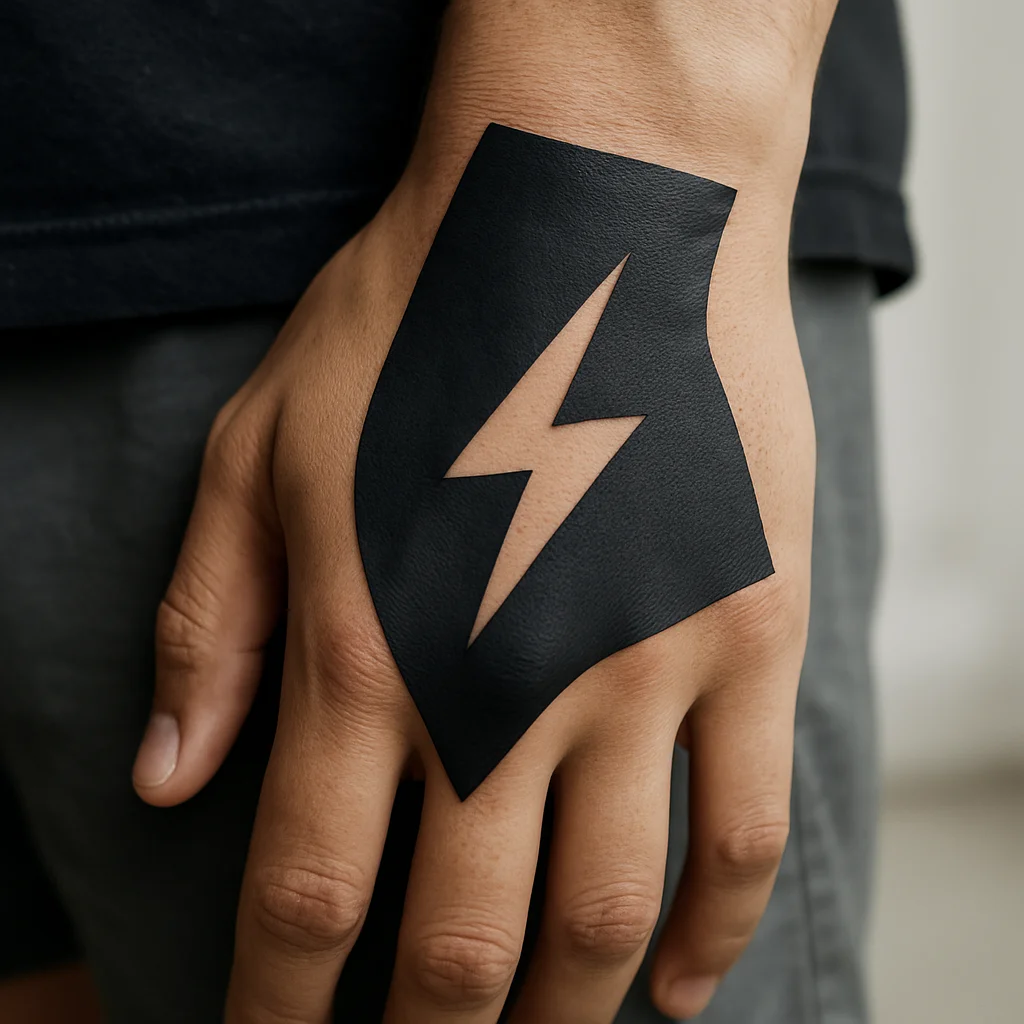
A solid black block covering the outer third of the hand, with the design carved out in negative space — lightning, a wave line, or a simple crescent. Bold, modern, and completely fade-proof in the sense that solid black stays solid. Note that blackwork on hands often needs a second pass to look truly even.
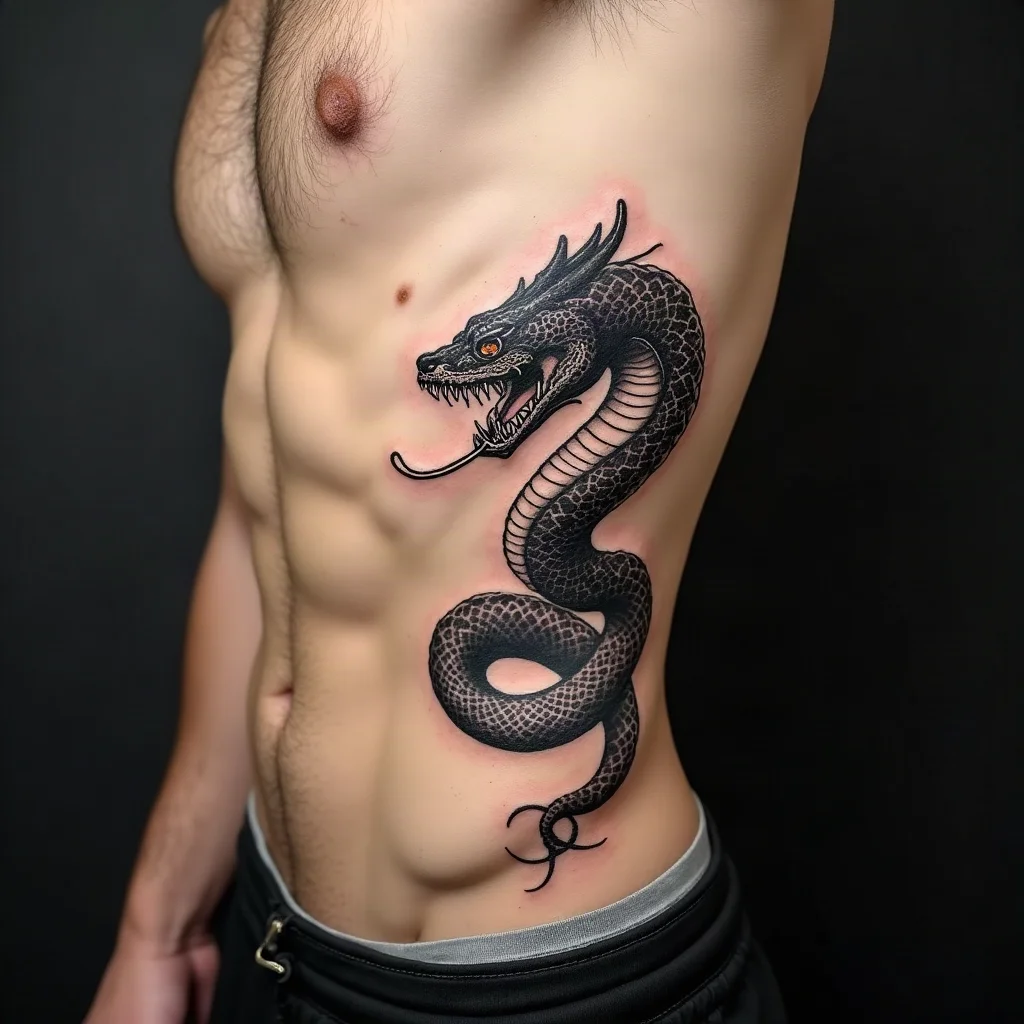
8. Snake head coming down from the wrist
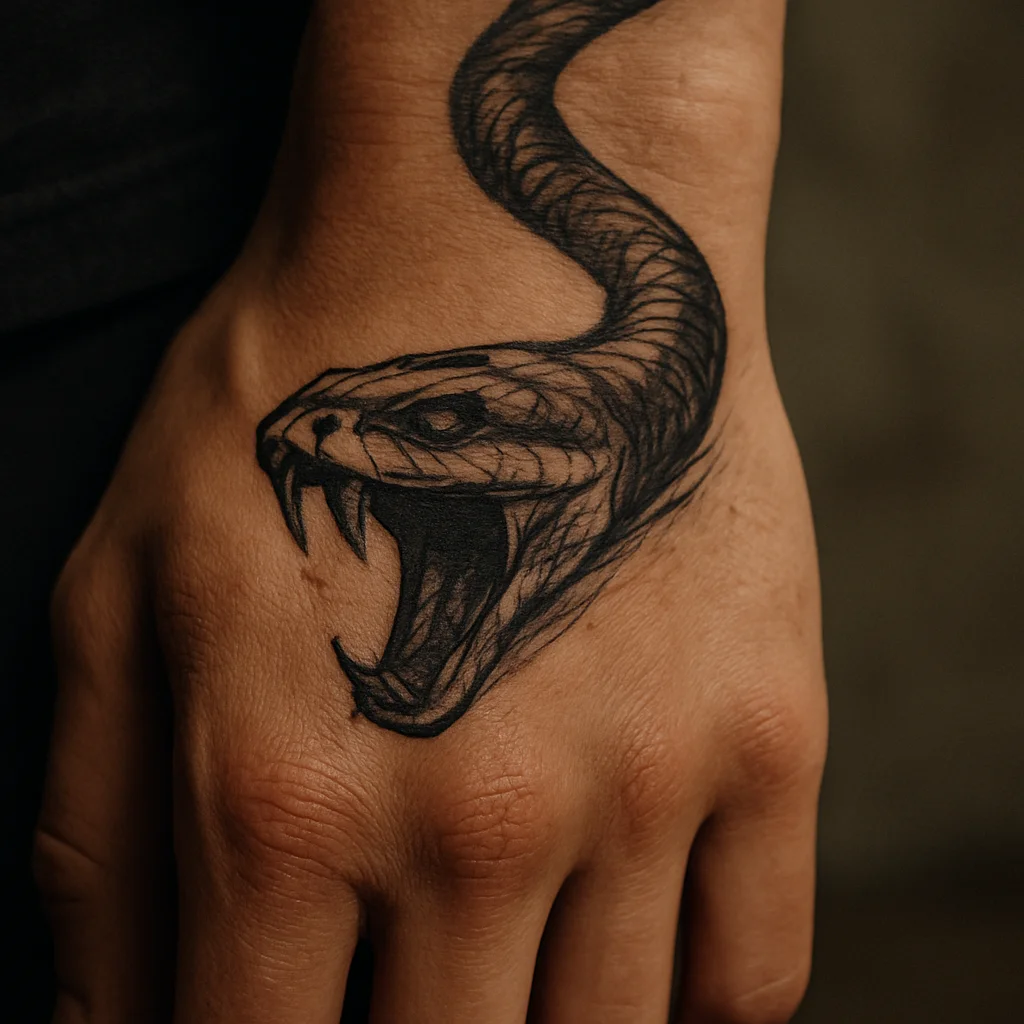
The body wraps the forearm and the head lands on the back of the hand, jaw open toward the fingers. It gives you movement and an obvious reason for the tattoo to continue past the wrist instead of stopping dead. If you like the motif, our snake tattoo guide covers how the coil should follow the limb.
Knuckles and fingers: eight small pieces that survive
Fingers are the fastest-fading real estate on the body and the most likely to need touch-ups. The trick is choosing motifs where a little blur doesn't destroy the read: single letters, solid bands, simple silhouettes.
9. Four-letter knuckle lettering
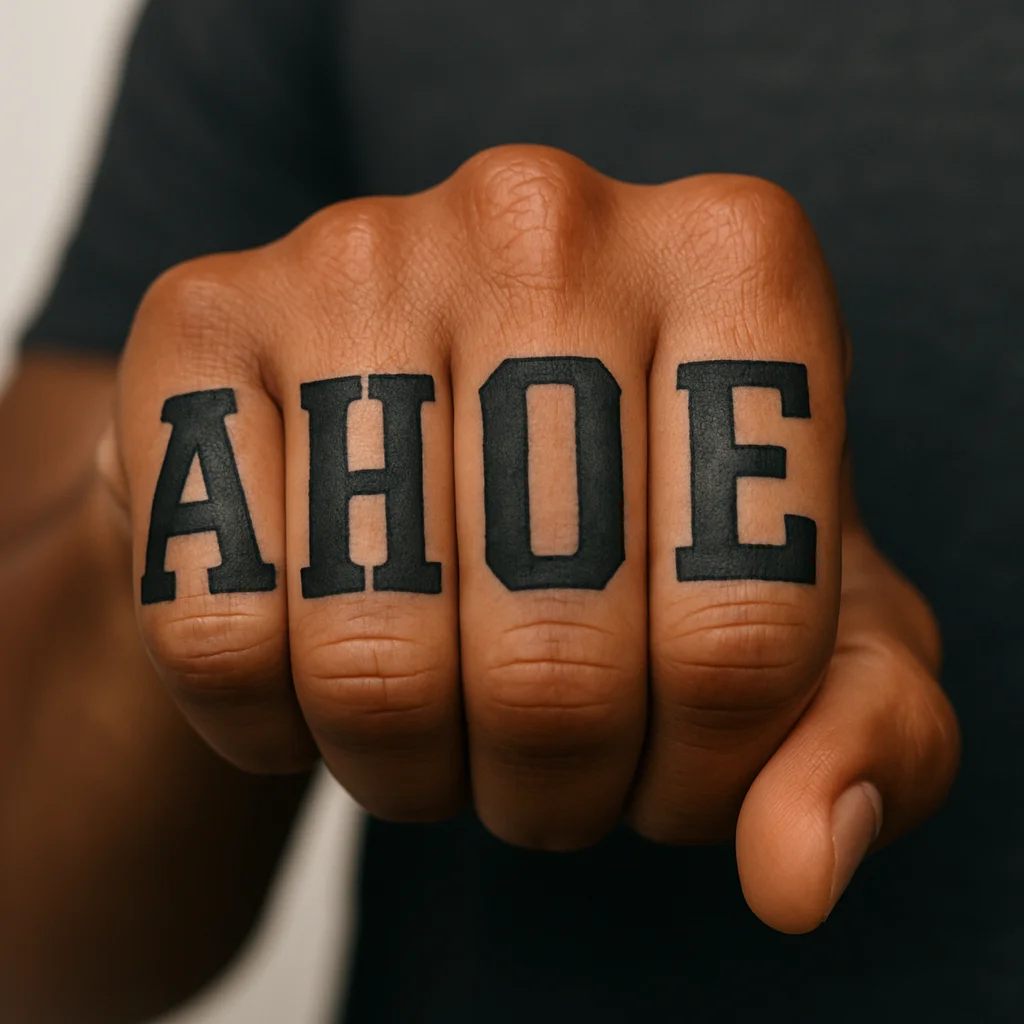
One bold letter per knuckle across four fingers — HOLD FAST split over both hands is the traditional version, and your own four-letter word works the same way. Ask for a heavy sans or a classic block serif, sized to fill the knuckle pad rather than sit above it. Expect to reline it once.
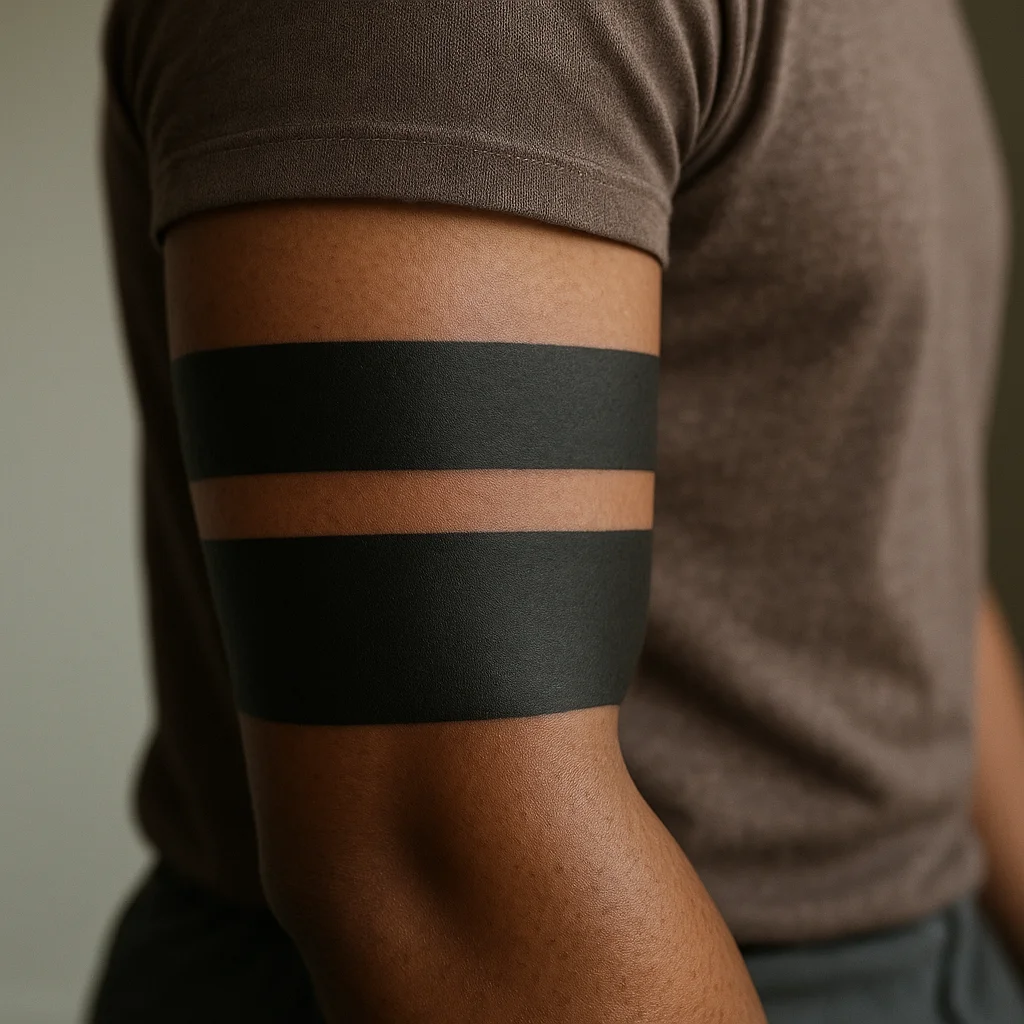
10. Solid band on the ring finger
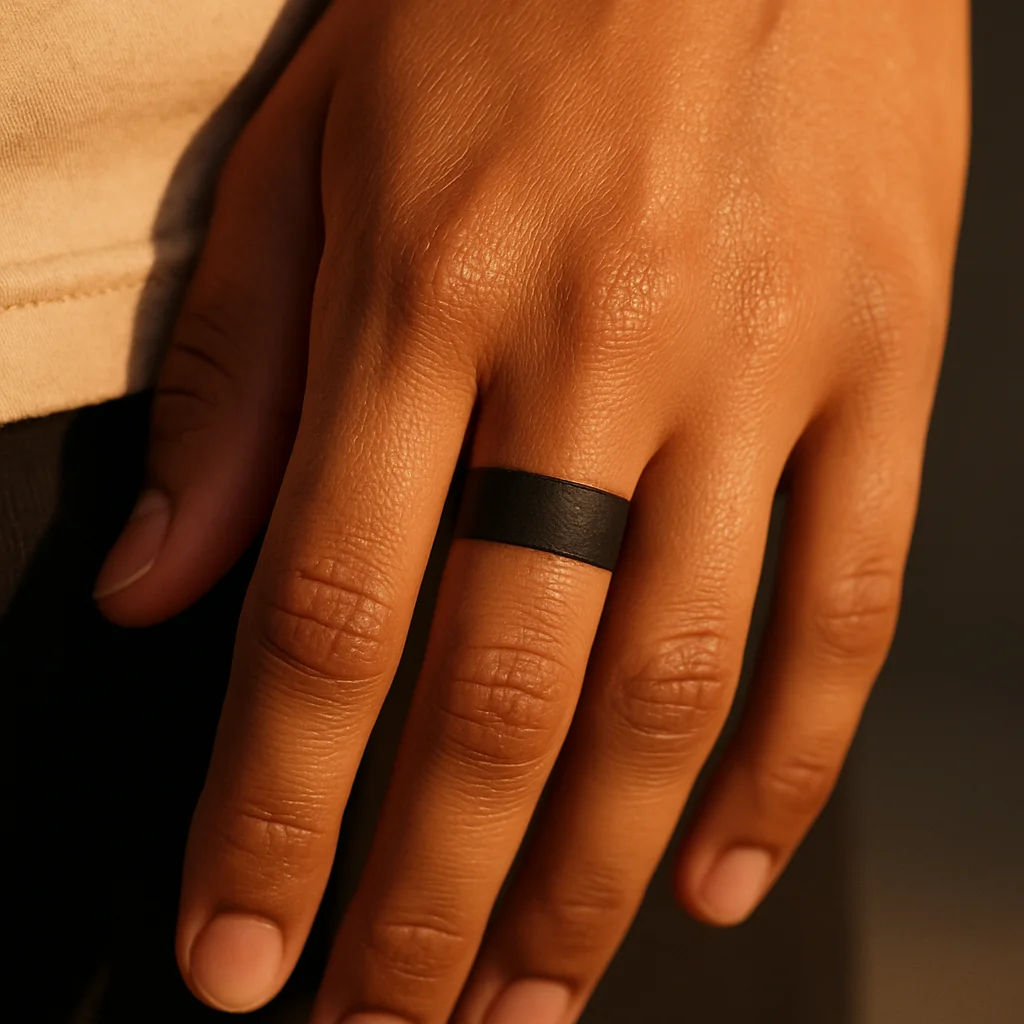
A single 6–10 mm solid black band, or two thinner bands with a gap between them, wrapped fully around the finger. It's the most requested men's finger tattoo for a reason: nothing to distort, and it holds shape better than any image. The underside of the finger will always fade fastest.
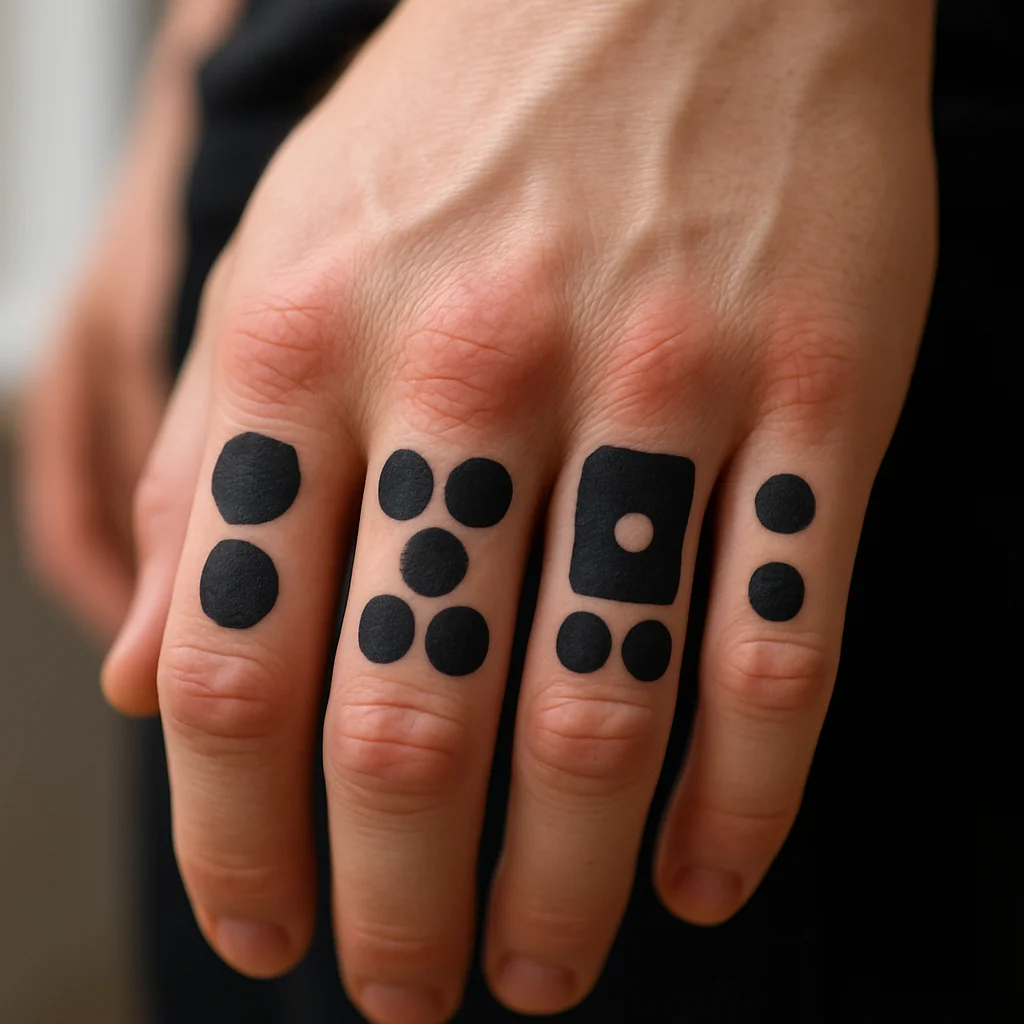
11. Dice pips across the knuckles
Three, four or five solid dots arranged like dice faces, one cluster per knuckle. Dots are pure black mass, so they age far better than the tiny symbols people usually try in the same spot. Cheap, quick, and easy to add to over time.
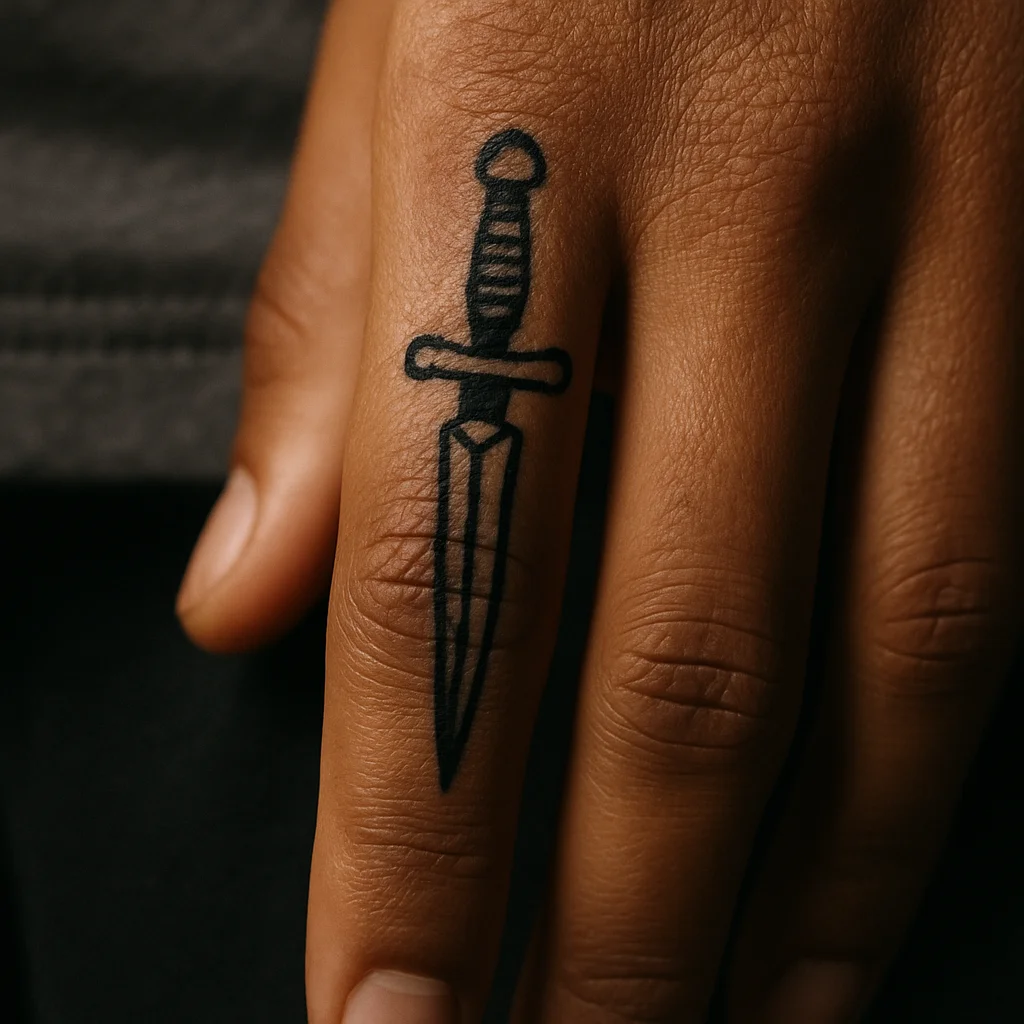
12. Small dagger down the middle finger
A slim bold-line dagger running from the base knuckle to just below the nail, blade pointing to the fingertip. Keep the crossguard chunky and skip the wrapping ribbon — it'll close up. Suits men who want something visible but easy to hide in a closed fist.
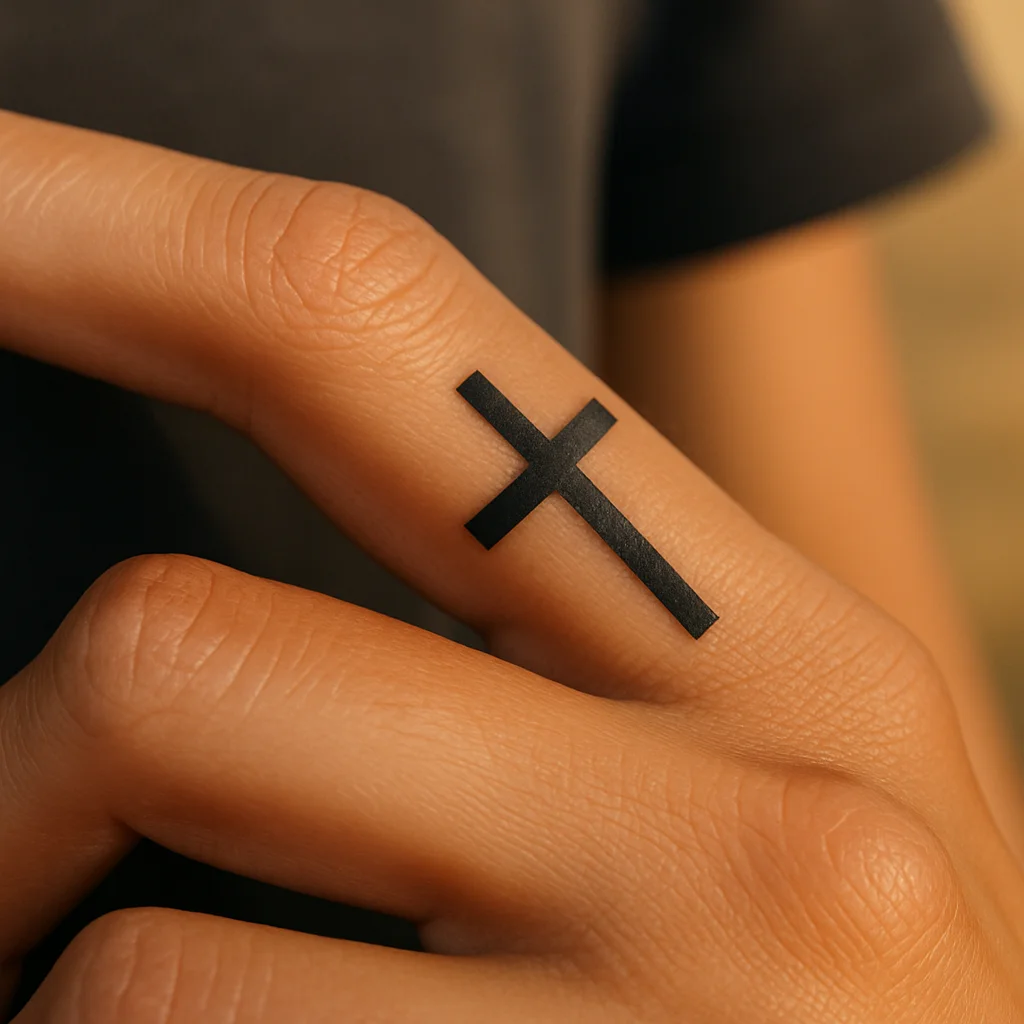
13. Cross on the side of the index finger
A simple bold cross on the outer edge of the index finger, where it's visible when you hold a cup or a phone. Two thick strokes, nothing else. Small enough to be a shop-minimum job and one of the most common first hand pieces.
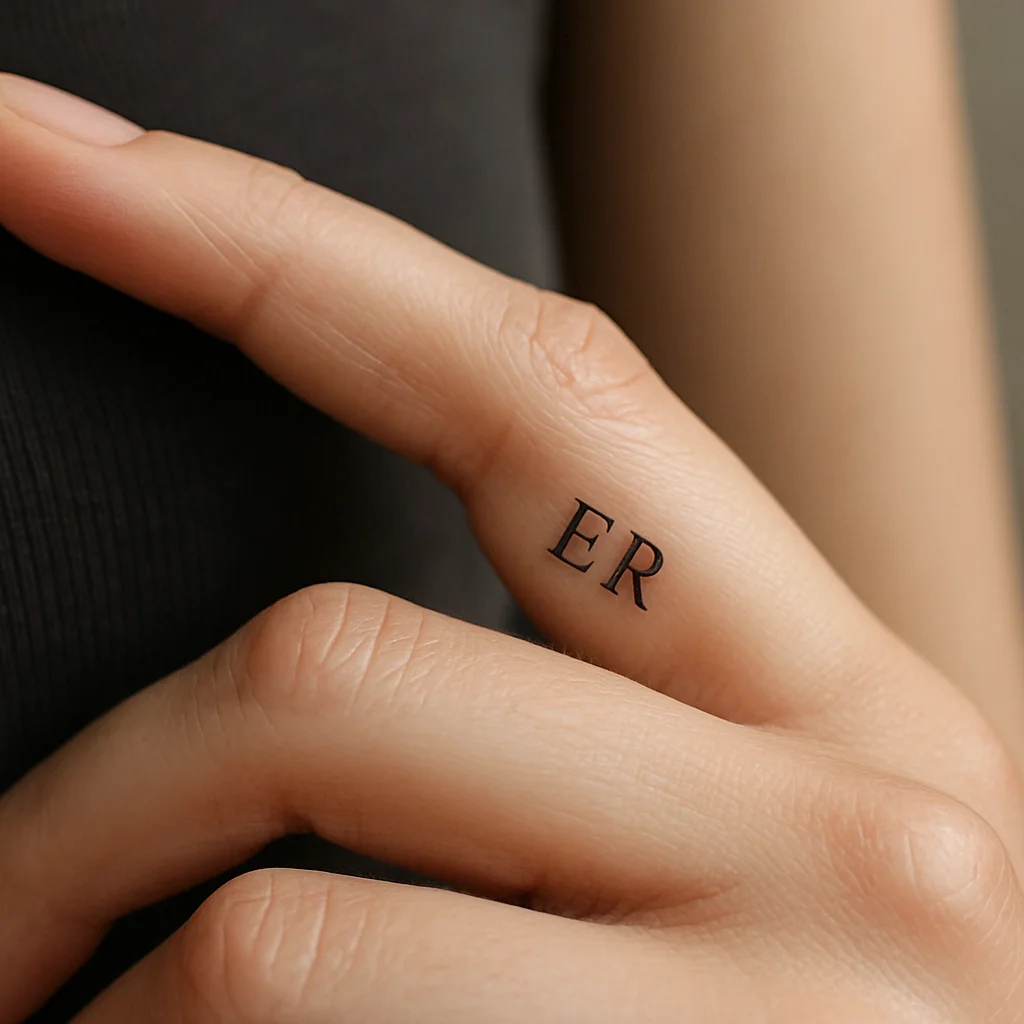
14. Initials on the inner finger
Two or three letters on the palm side of the finger, usually for a partner or a child. Beautiful for the first year, honestly patchy after that — inner fingers reject ink harder than anywhere else. Go in knowing you'll be back for retouches, or move it to the outer edge instead.
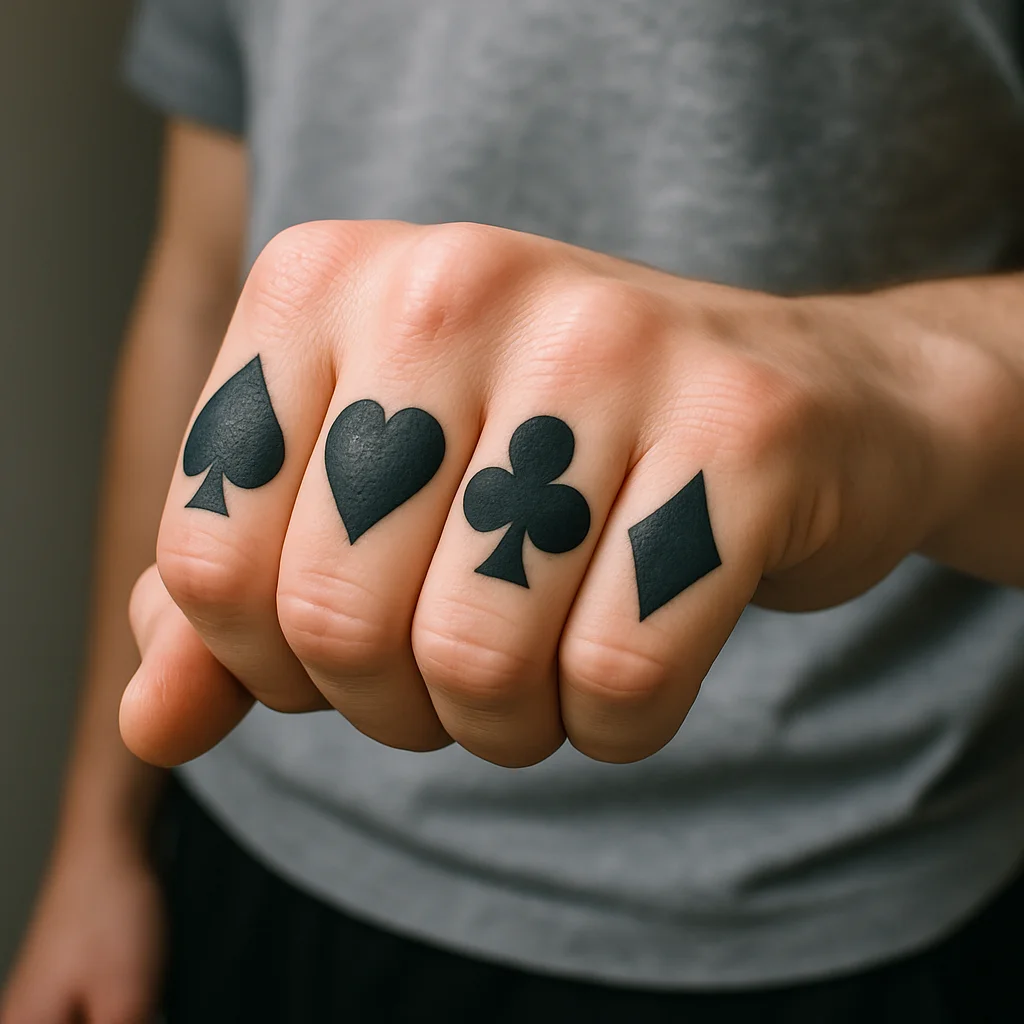
15. Card suits, one per knuckle
Spade, heart, club and diamond in solid black across four knuckles, all sized to match. The shapes are instantly readable even when soft, which is exactly the quality you want here. Traditional artists love this one and can usually knock it out in an hour.
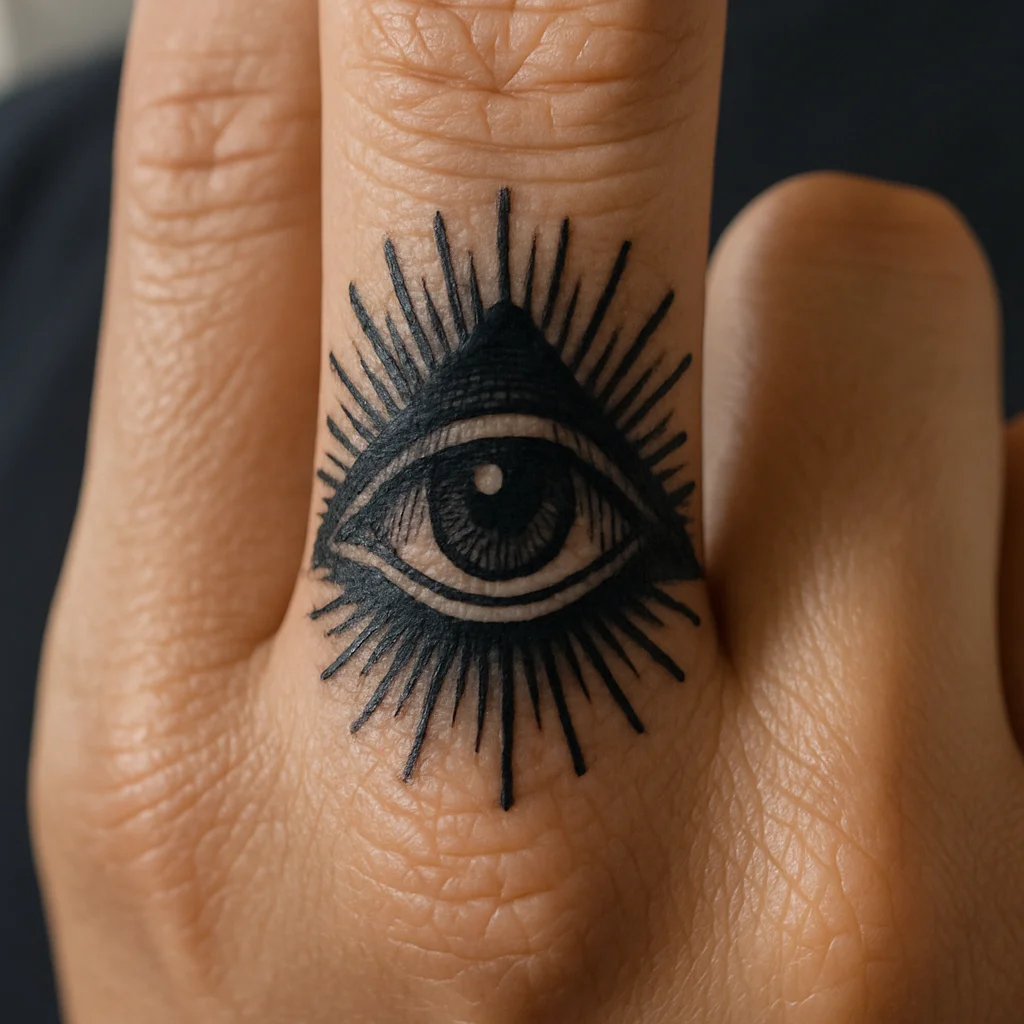
16. All-seeing eye on the middle knuckle
A single eye with a bold triangle or radiating lines around it, centred on the middle finger's base knuckle. Keep the iris solid and the lashes thick; anything delicate around the lid will blur. A strong choice if you want one statement finger rather than a full set.
Side of the hand, thumb and web: six spots most men overlook
The outer edges of the hand give you visibility without covering the whole back, and they're the classic sailor spots. Ink retention on the thumb web is genuinely unpredictable, so pick designs that stay legible even at 60 percent.
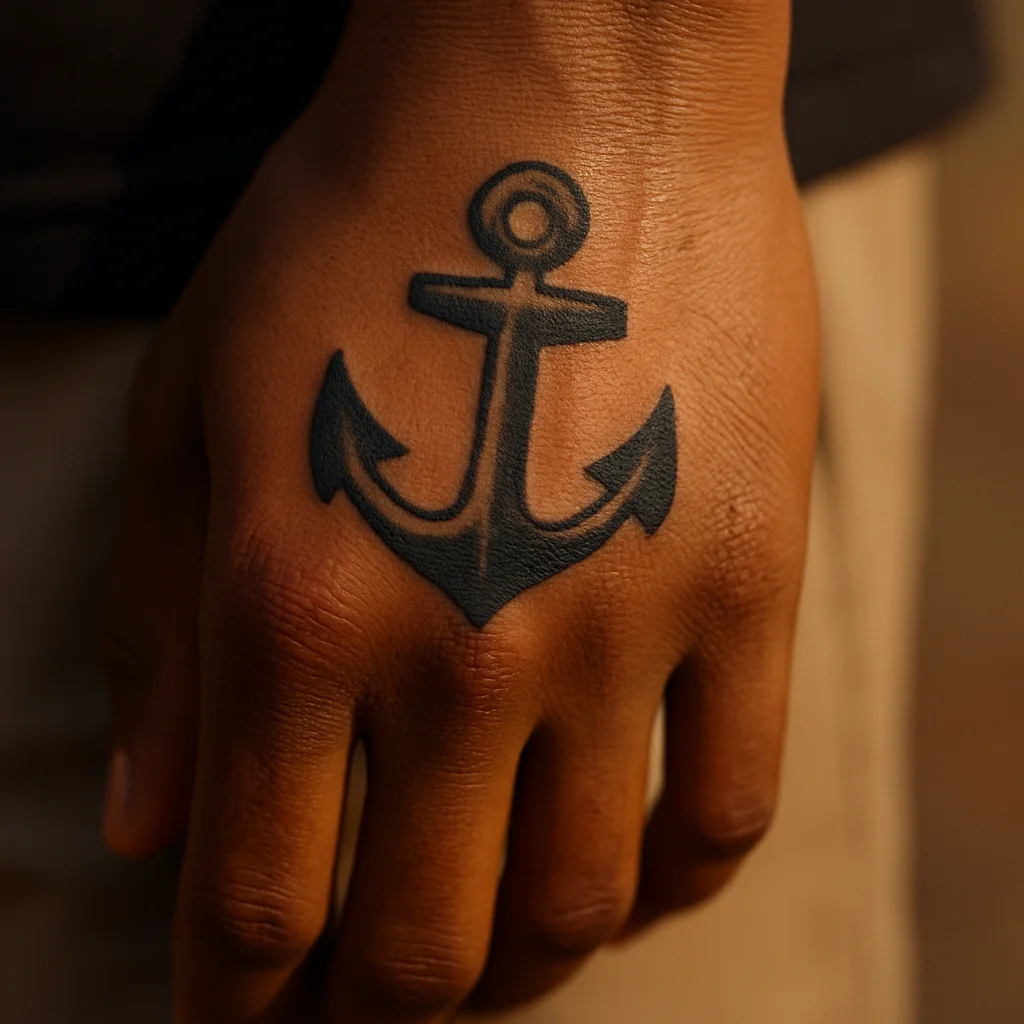
17. Traditional anchor on the side of the thumb
A small bold anchor with a chunky ring and a simple rope loop, sitting on the outer face of the thumb between the base joint and the knuckle. The thumb moves constantly, so keep the whole thing under about 4 cm. Old-school linework is the only style that behaves here.
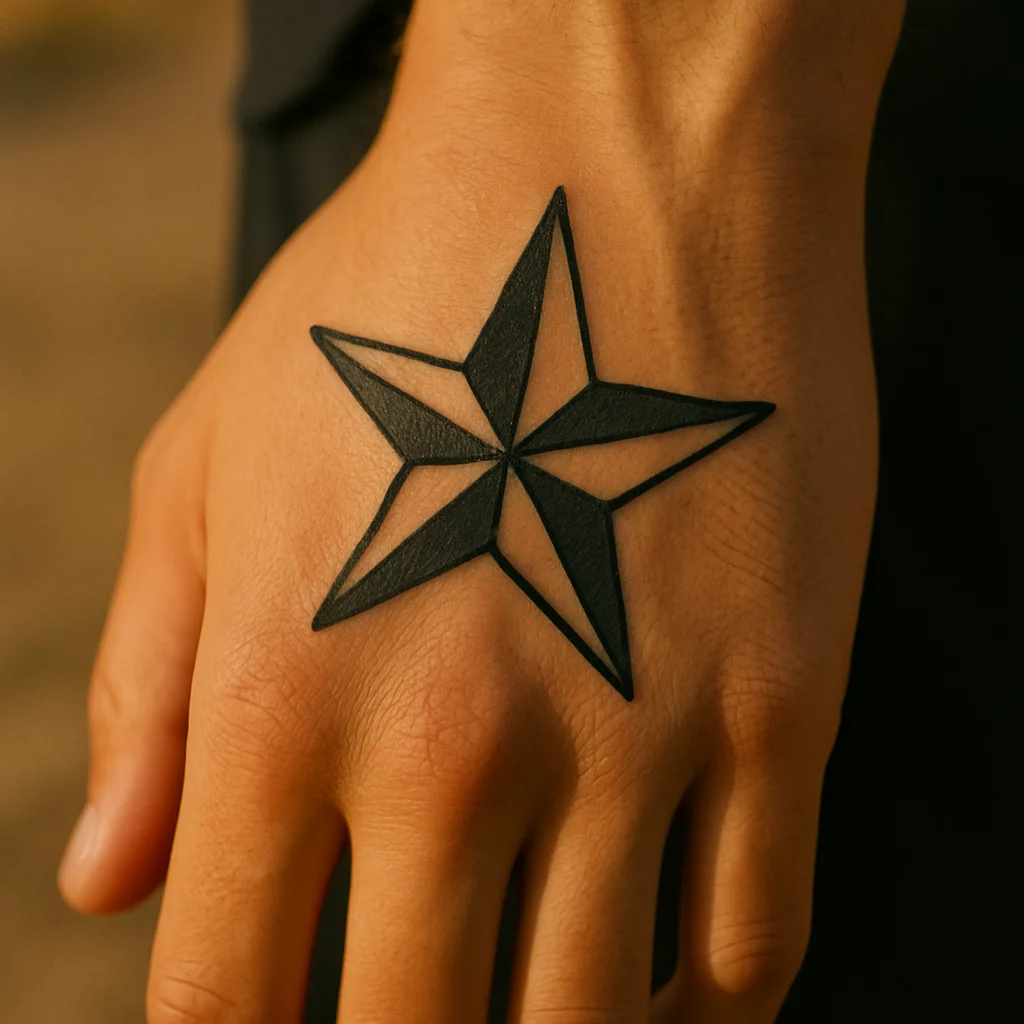
18. Nautical star in the thumb web
The five-point star with alternating solid and open segments, tucked into the web between thumb and index finger. It's an old sailor placement and one of the most famous fast-faders on the body — many artists will tell you upfront it needs a redo. Worth it if you like the history.
19. Single word along the outer index finger
One short word in bold caps running lengthwise down the outer edge of the index finger — STAY, TRUE, ONWARD. The outer edge holds ink noticeably better than the inner side, so this beats an inner-finger script every time. Keep it to five or six letters maximum.
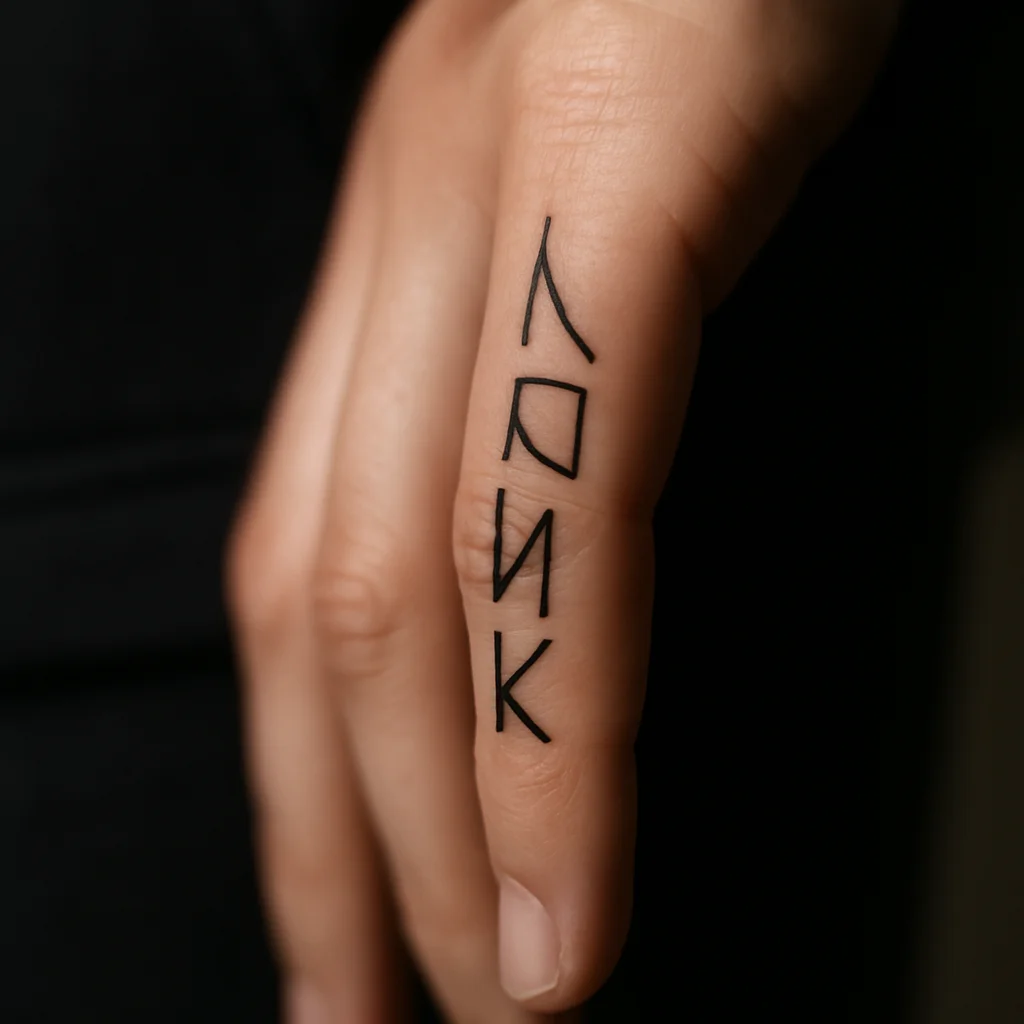
20. Small spider on the web
A compact spider with thick legs radiating from a solid body, positioned so the legs bend with the web when you spread your fingers. Bold, slightly menacing, and cheap to place. Ask for fewer, thicker legs than the reference photo probably shows.
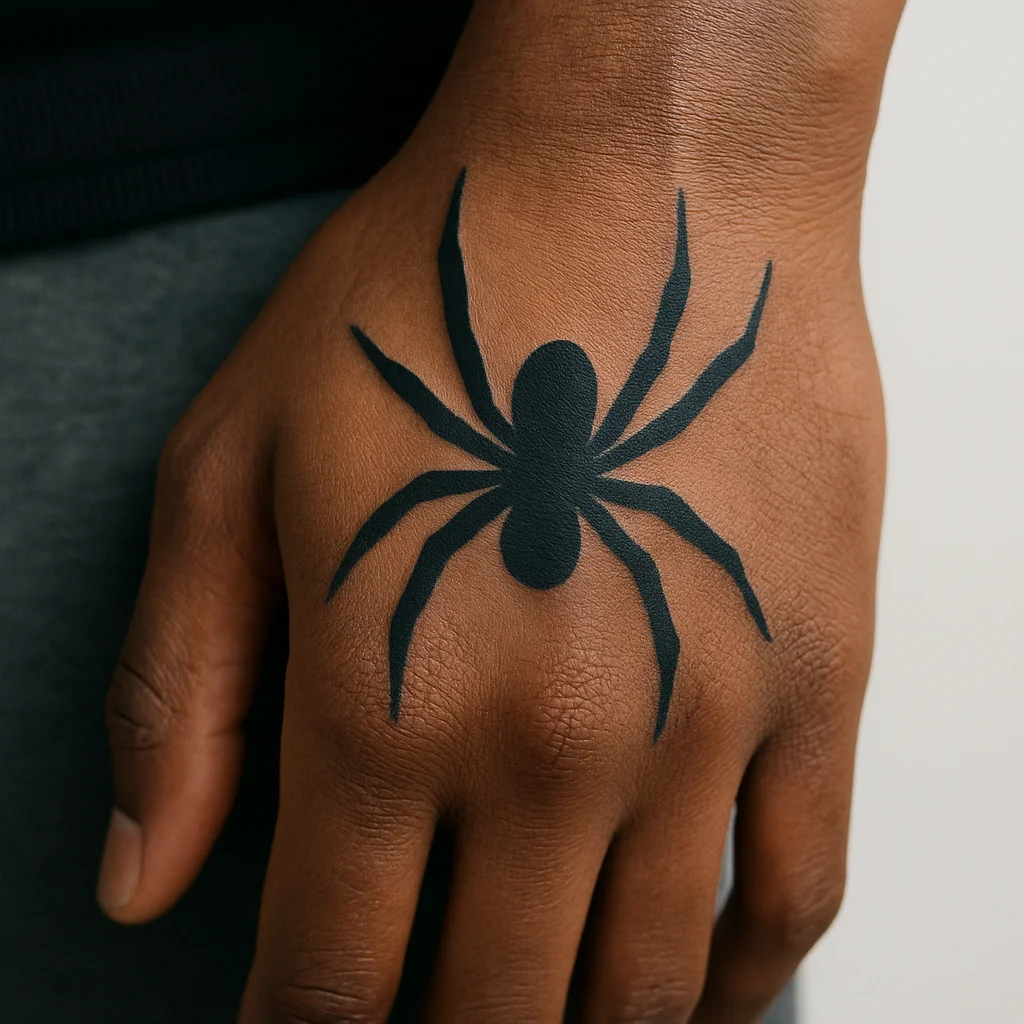
21. Wave line along the pinky edge
A single flowing wave or a stylised ridge line running down the outer edge of the hand from the little finger toward the wrist. It follows a natural boundary, which makes it look deliberate rather than pasted on, and it's easy to build on later. Great low-commitment first hand piece.
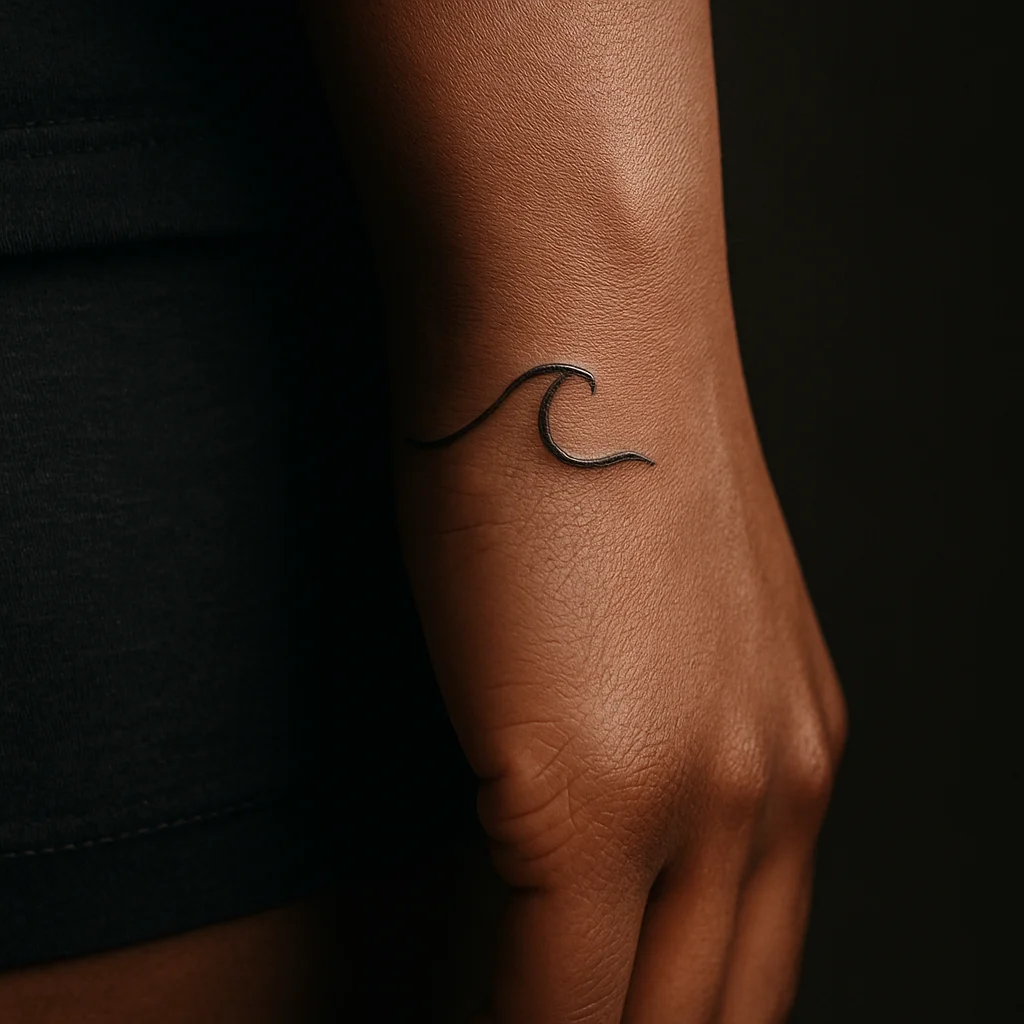
22. Bracelet band across the wrist edge
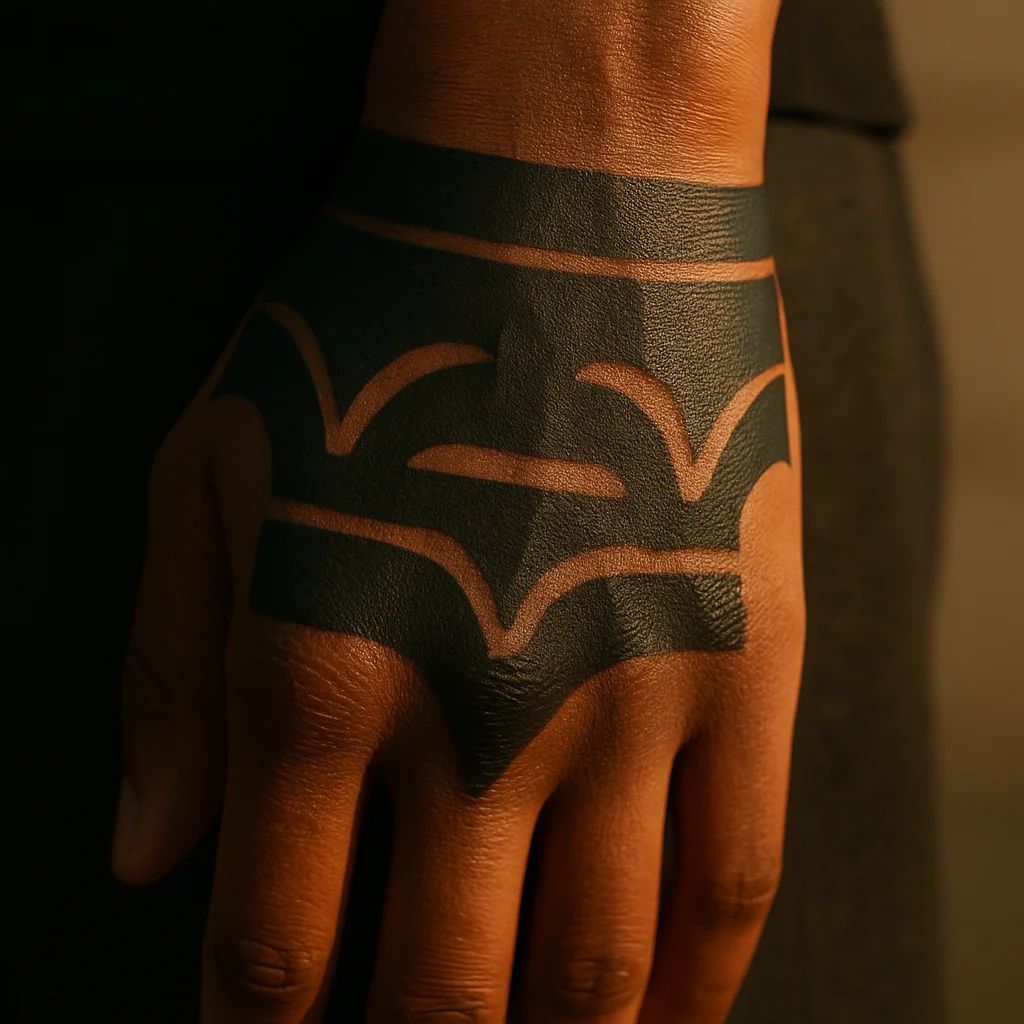
A geometric or ornamental band that crosses the wrist and hooks slightly onto the side of the hand, giving the illusion of a cuff. It reads as jewellery, sits mostly in tougher skin, and works as a clean stopping point if you're not ready for the full hand. Two to three centimetres wide is the sweet spot.
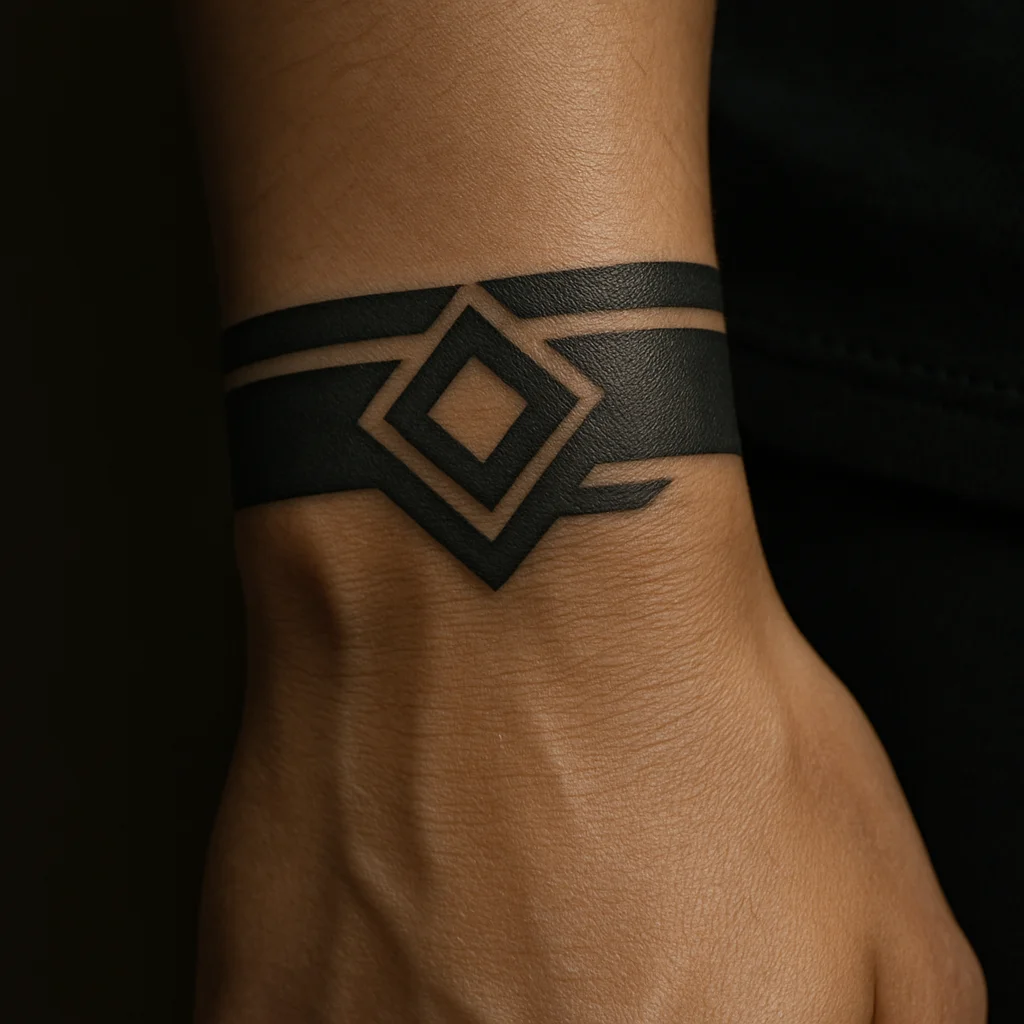
Four ways to bridge the wrist without a dead stop
The most common mistake in hand tattooing isn't the hand piece — it's the gap. A great forearm that ends at the wrist crease with a floating hand image underneath looks like two unrelated tattoos. These four solutions fix that.
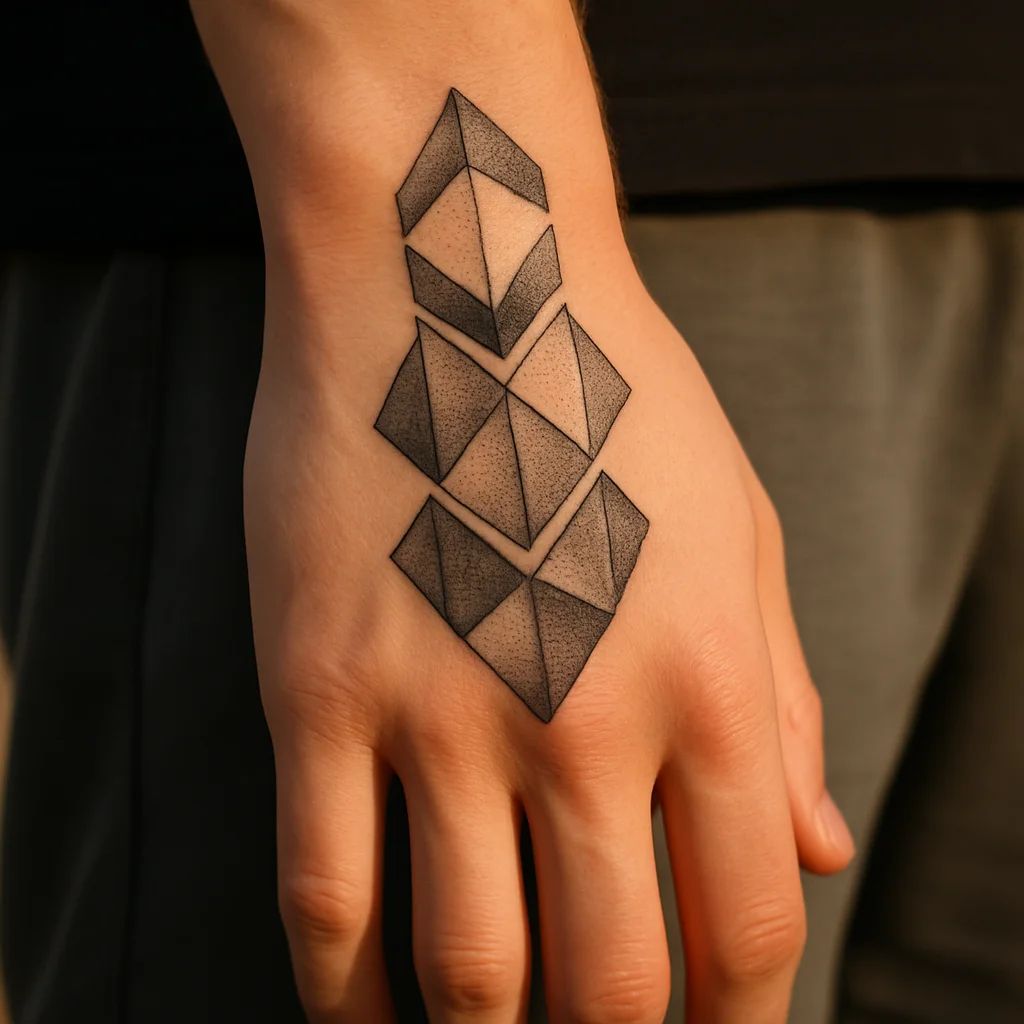
23. Geometric shading spilling from wrist to hand
Dot-shaded or line-hatched geometric panels that cross the wrist crease and taper as they reach the knuckles. The taper is the whole point: density drops as the shapes move onto thinner skin, which also helps the piece heal evenly. Best if your forearm work is already geometric or blackwork.
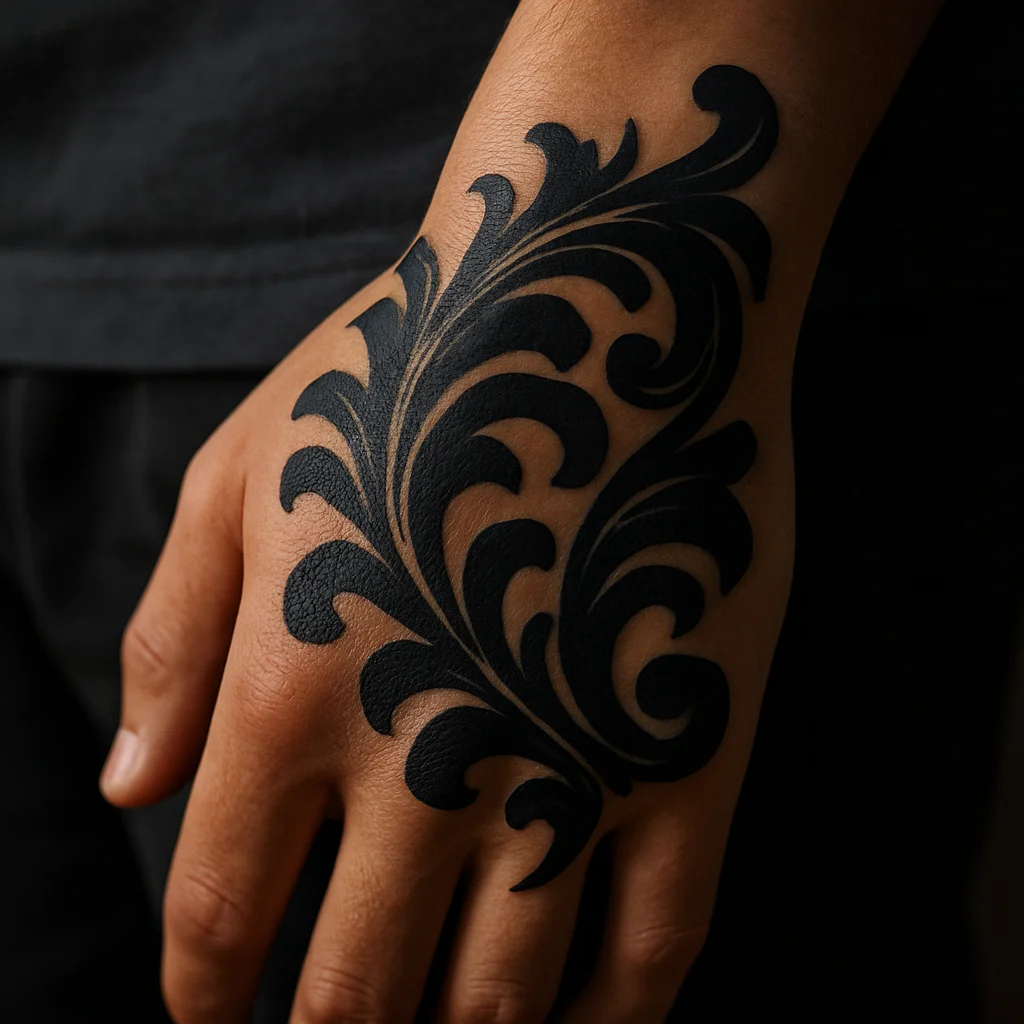
24. Ornamental filigree over the thumb web
Curling ornamental scrollwork that starts on the wrist and reaches over the base of the thumb, following the muscle pad rather than crossing it. It softens the hard edge of a sleeve ending and covers the awkward area between wrist and thumb that images rarely fit. Keep the strokes thick and the negative gaps wide.
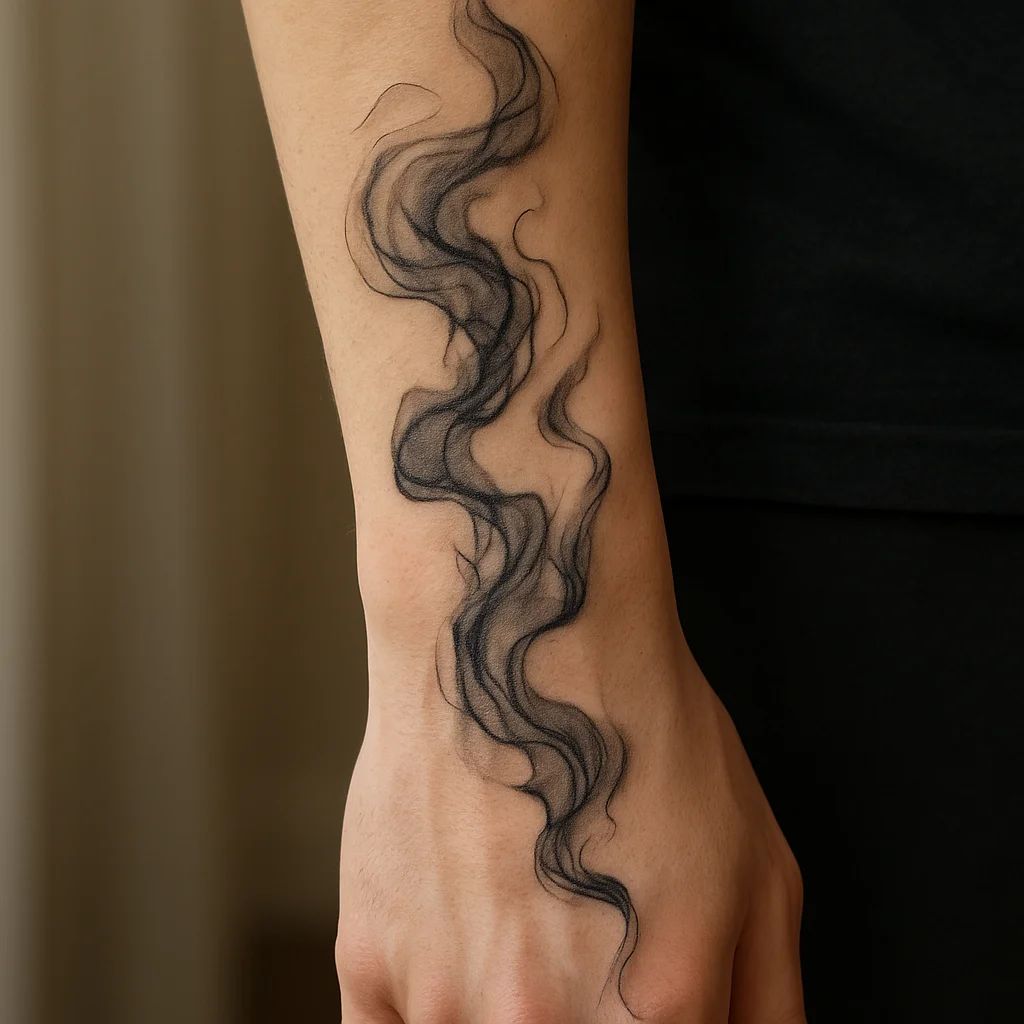
25. Negative-space smoke linking forearm to hand
Soft black smoke or cloud forms drawn as outlines and solid blocks that carry an existing forearm design across the wrist. Traditional Japanese wind bars do the same job with more structure. This is the most flexible bridge because it can be added years after the sleeve.
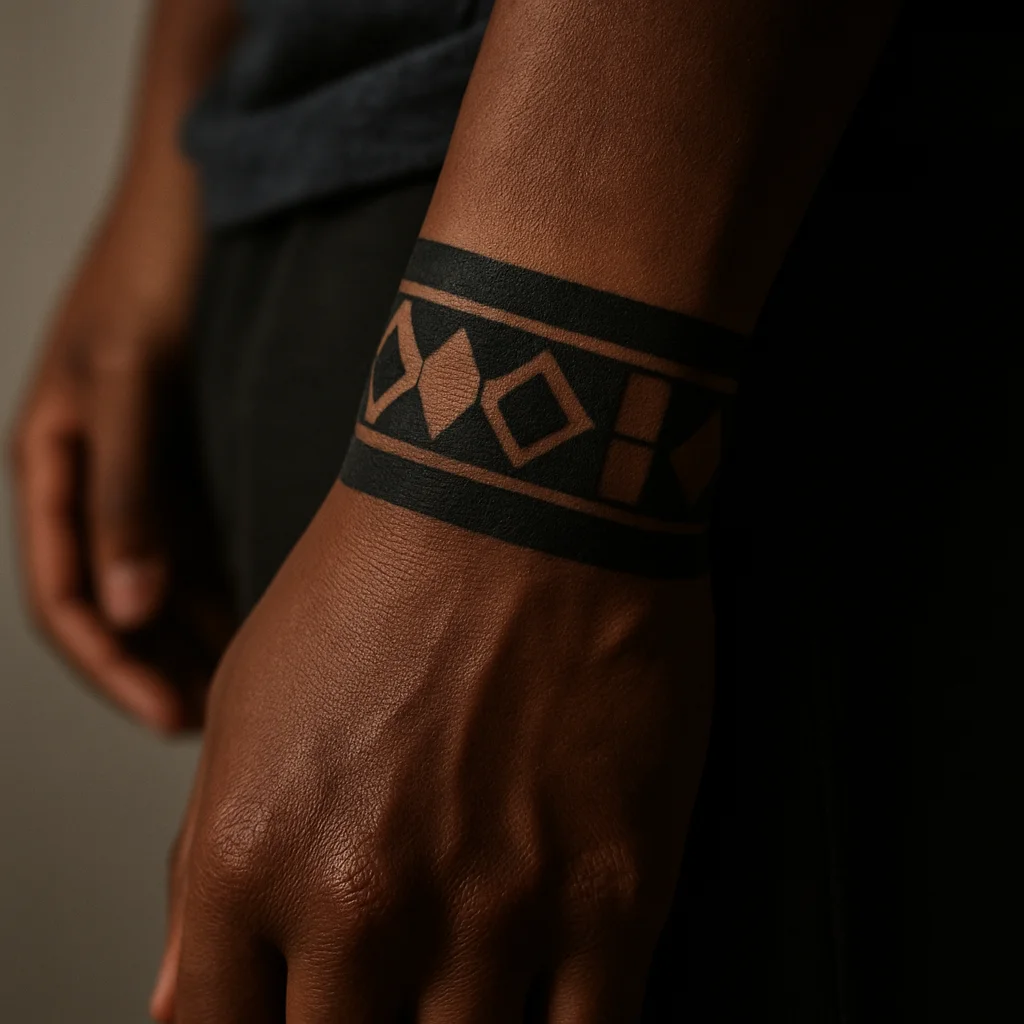
26. A deliberate wrist cuff as a hard border
If you want the hand left blank for now, a solid or patterned band around the wrist gives your sleeve a proper ending instead of a ragged one. It also leaves the option open — you can extend past it later and the band becomes a design element rather than a scar in the composition. Popular with men whose workplaces sit on the fence about visible ink.
Pain, cost and what healing actually looks like
Hands hurt. Not the worst pain on the body, but firmly in the top tier: thin skin, bone directly underneath, tendons that transmit every vibration, and nerve-dense fingertips. The back of the hand is manageable — sharp and buzzy, like tattooing over your shin. The knuckles, the finger sides and the thumb web are worse, with a bright, nervy sting that most men find harder to sit through than a rib session, even though it lasts far less time.
The good news is that duration saves you. A finger band is 15 minutes. Knuckle lettering across four fingers is often under an hour. A full back-of-hand panel usually runs one to three hours, and no reputable artist will keep you in the chair for six hours on a hand because the swelling makes late-session work unreliable.
On cost, expect small finger pieces to land at the shop minimum, which in most Western cities sits somewhere in the range of a modest flat fee rather than an hourly charge. Knuckle sets and side-of-hand pieces typically fall in the low-to-mid hundreds. A detailed back-of-hand panel or a solid blackout section is usually a few hundred to over a thousand depending on the artist's rate and whether it needs a second pass. Budget for that second pass from the start — many artists include one touch-up free within a few months, and hands are the placement most likely to use it.
Healing runs faster and messier than a forearm. Expect noticeable swelling for two or three days, more peeling than you're used to, and patchy spots appearing around week three that only settle by week six. Keep the hand elevated when you can, wash gently but often, and skip gym gripping, ladders and dishwater for about two weeks. The general rules in our tattoo aftercare guide still apply — hands just test your discipline harder because you can't stop using them.
How to brief an artist so it still reads in ten years
Finding the right artist matters more here than for any other placement. Ask specifically to see healed hand work in their portfolio, not fresh photos — fresh hands always look sharp. If someone has three years of healed hand tattoos on their own clients, you're in good company. If every hand photo is shot the day it was done, keep looking.
Things worth raising at the consultation:
- Line weight. Ask them to draw it heavier than they would on your forearm. On hands, a line that looks slightly too thick on paper looks correct in five years.
- Stencil in motion. Have the stencil checked with your hand flat, in a fist, and with fingers spread. Knuckle designs in particular shift dramatically between those positions.
- Spacing. Insist on visible gaps between separate elements. Ink spreads outward on hands; touching lines eventually merge into a blob.
- Colour, honestly. Colour on hands fades hardest, and white ink and soft grey wash barely survive. If you want colour, keep it to bold blocks inside strong black outlines.
- Dominant hand. Whichever hand you use more — writing, tools, gym — will wear faster. If you only want one hand done, that's an argument for the other one.
Bring reference photos of the general feel rather than a design you want copied exactly, and be clear about what your work does day to day. An artist who knows you're a bricklayer will build the tattoo differently than one who assumes you sit at a desk. If you're still building out the arm above it, plan the hand and the forearm as one conversation rather than two — the same logic that makes a cohesive sleeve work applies at the wrist.
Frequently asked questions
Do hand tattoos really fade faster than other placements?
Yes, and noticeably so. Hand skin regenerates quickly, gets washed constantly and takes daily sun and friction, so lines soften and small details close up sooner than on an arm or back. Fingers, palms and the thumb web are the worst offenders and often need one or two touch-ups within the first couple of years.
Will artists refuse to tattoo my hands?
Some will, especially if you have no other visible tattoos or if you're asking for something too fine to survive there. It's usually about protecting you from a regret you can't cover, not gatekeeping. If an artist declines, ask what they would do instead — many will happily do a wrist cuff or side-of-hand piece as a first step.
How much does a hand tattoo cost?
Small finger pieces like a band, a cross or dice pips typically fall at the shop minimum. Knuckle sets and side-of-hand designs usually land in the low-to-mid hundreds, while a full back-of-hand panel or blackout section runs from a few hundred up past a thousand depending on the artist's rate. Budget for a touch-up session too, since hands need them more often than any other placement.
How bad is the pain on knuckles and fingers?
Sharper than most people expect. Thin skin over bone plus dense nerves makes knuckles, finger sides and the thumb web sting brightly, though sessions are short enough that it rarely becomes unbearable. The back of the hand is much more tolerable — comparable to tattooing over the shin.
What designs work best if I want something small and subtle?
Stick to solid, simple shapes: a band around the ring finger, a bold cross on the outer index finger, dice pips on the knuckles, or a single wave line down the pinky edge. These read clearly even after fading because there's no fine detail to lose. Avoid tiny script on the inner fingers if you want it to look good long term.
The conversation
No comments yet. Got a thought about these designs? Start us off.
Want to weigh in? Join the community to comment, save designs and try them on your skin.